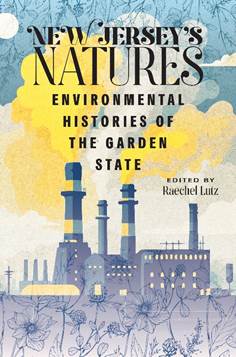
New Jersey’s NaturesEnvironmental Histories of the Garden State
By Raechel Lutz
Reviewed by Hank Bitten, NJCSS Executive Director
The names of the Copper Tree Mall, Powder Mill Lane, Cannonball Trail, and Campgaw Mountain in Oakland, New Jersey reveal the mysteries of the environmental history of the town where I live. When a new septic was installed on our property, the excavation revealed sand about ten feet under the soil. This discovery explained why half of the houses on our block did not have full basements and why homes with basements often had water seepage from a hidden underground stream.
Environmental history is exciting for students who enjoy the role of historical detective. The names on our street signs, the boardwalk, the Great Swamp, and utility poles, train tracks, and churches are evidence of environmental history. There is likely evidence of trees where you live that are 300 years old and the trees that are less than 100 years old reveal evidence of deforestation or the presence of invasive species. The names of many places in New Jersey reveal an environmental history of past centuries from the Native Americans who walked on the land where we walk or drive today:
Absecon (little stream)
Mahwah (meeting place)
Passaic (valley)
Paramus (wild turkeys)
Pequannock (cleared land)
Piscataway (large deer)
Pompton (place of soft fish)
Wyckoff (high ground)
“In the twenty-first century, the state has it all: protected ecological environments, active agricultural tracts, preserved farmland, contemporary industrial landscapes, postindustrial landscapes, mid-century Levittown-inspired suburbs, elite rolling estates, historic sites, tribal lands, massive interstate highways, and many, many other features of a cultural landscape that has been inexorably changed by humanity. These factors make New Jersey, as this book argues, a prime site for the study of environmental history.” (page 2)
The articles in New Jersey’s Natures are organized geographically. They reveal a history that has been ignored, unimagined, or recently revealed. The stories of the Meadowlands and Pinelands may be familiar, the articles on the forests of Joseph Bonaparte and the landscape of the diaries of William Livingston may be new, and the research on industrial pollution, agricultural economics, and the migration of populations may prove shocking.
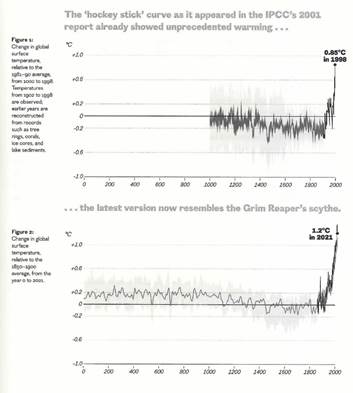
The environmental history of New Jersey (and the world) is dramatically changing as we are already living in a world that is 1.2C degrees warmer than when most of us were born. A warmer climate leads to atmospheric changes affecting crops and trees, rising sea levels, droughts, fires, and the migration of populations. The evidence we currently have in the oral histories of our collective memories, historical sites, landscape paintings, photographs, and newspaper articles are in need of documentation, organization, and publication. Teachers are the catalyst for inspiring and encouraging this in their school and community.
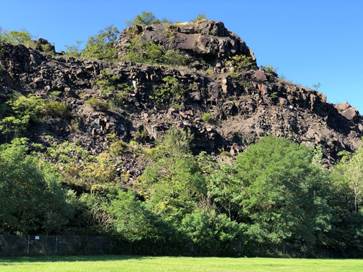
For example, perhaps every person living in New Jersey has looked out of the window in their vehicle when driving on the New Jersey Turnpike between Exit 15 and 16. They see the landscape of Jersey City and New York City and the strange landscape of the rock known as Snake Hill or Laurel Hill. The environmental history of the roads and railroads, the memories of people seeking cleaner air for relief from lung diseases and the importance of this rock as a sacred place for burial, the presence of water snakes, oysters, clams, and fish are part of the story of our history. Raechel Lutz inspires us to think and discover.
Snake Hill Rock
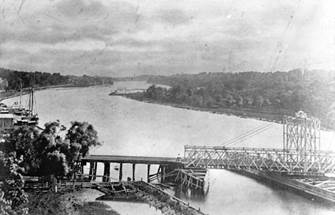
My early years were in Paterson, and I watched the construction of Route 20 and 21 along the banks of the Passaic River. Many American cities constructed highways next to rivers to avoid the demolition of neighborhoods in towns that were established before the automobile. These highways were built at the time Rachel Carson was writing about water runoff and the pollution of rivers. I remember the clean and clear waters of Greenwood Lake before the speedboats came, the fresh waters of the reservoirs that provided potable water to Newark, Hackensack, Jersey City, and Paterson, and the dangers of eating fish or swimming in the Passaic River. Unfortunately, the pollution of this scenic river uncovers a frightening history.
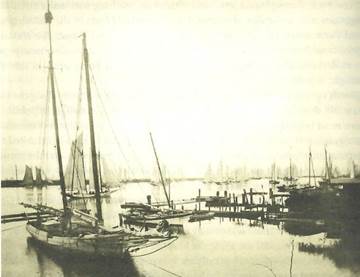
Passaic River in Newark, circa, 1875
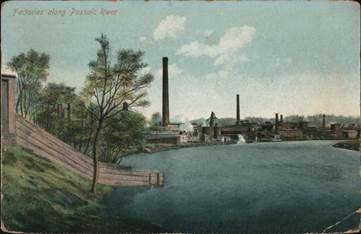
“The river’s pollution problems worsened right around the time the Essex County Park Commission first convened, in 1894, as oil refining and trade activities in the Newark area picked up and a drought lowered water levels in the Passaic. That summer, acid fumes caused paint to peel from riverside structures, triggering nosebleeds and nausea. Meanwhile, oil products, sewage, and factory waste continued to cause the river’s quality to plummet, so that by 1897 the local sewerage commission declared its “fisheries…destroyed.” The river’s recreational value also declined: Boating clubs stopped holding regattas along the Lower Passaic in 1900, children swimming in its waters at the turn of the century emerged “covered with oil and tar,” and many residents living along the river abandoned their homes.” (page 43)
Passaic River in Newark, circa 1940
New Jersey is the most densely populated state in the United States and one of the most densely populated regions in the world. The people of New Jersey depend on reservoirs and ground water for potable drinking water. Our potable water is threatened by droughts, the movement of salt water into ground water, pollution, and depleted oxygen from warmer temperatures. The effects of a changing climate are the biggest threat to New Jersey, which makes the study of our environmental history an urgent priority.
The two chapters on agricultural history include information on Seabrook Farms, the challenges facing small truck farms in New Jersey, and the conditions experienced by migrant workers from the South, Italy, and the Caribbean. For social studies teachers these chapters provide a perspective on loans provided by the Reconstruction Finance Corporation in the Hoover Administration and the effects of the Great Depression, wars, technology, and weather on Seabrook Farms and New Jersey agriculture. The research is commended and the personal stories and images are powerful.
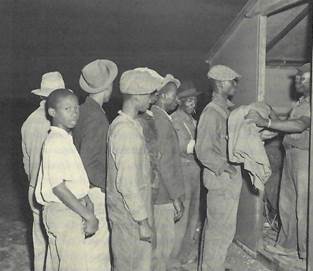
Migrant workers receiving blankets in 1942 (page 123)
The New Jersey Social Studies Standards provide sufficient emphasis on labor history, transportation history, and immigration history. The chapters in New Jersey’s Natures on the agricultural history of New Jersey and the debate over state financial assistance to control the mosquito and drain the stagnant water of our salt marshes provide information leading to the decisions of local, county, and state governments regarding the Jersey shore, agriculture, and fisheries. Social Studies instruction about the significance of the Morrill Act (1862) and the Smith-Lever Act (1914) should include the contributions of Rutgers University to dairy and vegetable farmers today as each year average temperatures are increasing and sea levels rising. The environmental history of New Jersey in the next decade is likely to see dramatic changes and challenges for our state government.
“In the 20th century, sea level rose by 12 inches at bedrock locations (Bayonne, Trenton, and Camden). Along the Jersey shore from Sandy Hook to Cape May, it rose an additional four inches due to compaction of sediments caused by natural effects and groundwater withdrawal. There is a 95% probability that the 20th century rate of sea-level rise along the New Jersey shore was faster than it was in any century in the last 4,000 years.”Source (Rutgers University)
The teaching of the market revolution in middle and high school focuses on the Erie Canal and manufacturing in New England. An important contribution in this book is the forgotten story of oysters, muskrats, and sturgeons in Delaware Bay. Bivalve was the center of the oyster market and with the Central Railroad connections to major carriers, annual production exceeded one million oysters annually. Teachers looking for a local history lesson emphasizing the importance of civic engagement will also find the chapter on the arguments for and against a jetport in the Pine Barrens to have value. The information in “The End of These Woods: The Pinelands Jetport and Grassroots Environmentalism in the New Jersey Pine Barrens” will find the debate over housing, economic growth, and the need for a large airport to serve Atlantic City and Philadelphia to be informative. The Pine Barrens are a protected area that comprises 20% of the land in our state and includes populated towns in seven counties. In New Jersey, then and today, the protection of the environment appears to be a lower priority in the debate for economic growth and personal opportunity. The debate regarding the development of the Pine Barrens did not end with Governor William Cahill in the 1960s and the current threats from recreation, pollution, illegal dumping, lack of leadership, fires, and water use are topics every student needs to be informed about.
Photograph by Harvey W. Porch, (c. 1905-1915(page 178)
The Beach Park Act of 1894 from an environmental perspective provides another opportunity for analysis of the Jersey shore economy over time. The Jersey Shore is the one geographic location in New Jersey that every student from kindergarten through college can identify with. The article “Reclaiming the Boardwalk” includes case studies of Atlantic City and Asbury Park. The development of these resorts’ centers on the issue of private v. public ownership. For teachers who value interdisciplinary instruction during the Industrial Revolution and the Progressive Era, this article prompts a search for literature, Protestant religion (Methodist Church), economics, art, music, and science.
I was impressed with the number of questions that came to my mind as I was reading New Jersey’s Natures. Some of my questions were:
How have people used this brook, stream, or river over time?
Why does the Garden State Parkway divide a cemetery in Newark?
Why do our state roads have many curves?
Why do many towns in New Jersey have names with Biblical references? (Zarephath, Mount Olive, Asbury, Shiloh, Tabernacle, Brainard, Churchtown, Galilee, etc.)
What did people from the past see and think as they travel through New Jersey?
What changes have I seen to the landscape of New Jersey in my lifetime?
Environmental history prompts thinking about the human impact on place, the shaping of policy decisions by government over time, and the importance of nature in shaping the historical record.
New Jersey’s Natures: Environmental Histories of the Garden State is available from Rutgers University press, ISBN: 9781978836433 Published: May 12, 2026, 280 pages.
Jared Diamond’s Guns, Germs, and Steel (New York: Norton, 1997) is one of those books that feels revelatory the first time you read it. It takes a question that most people rarely stop to ask, “Why some societies ended up rich and powerful while others did not?,” and reframes it in a way that is both unsettling and reassuring. Unsettling, because it strips away comforting myths about cultural superiority and human exceptionalism, and reassuring, because it offers an explanation that does not rely on racism, divine favor, or civilizational destiny. Diamond’s central claim is that geography, rather than biology or culture, played the decisive role in shaping global inequality. In the epilogue, he steps back to defend this framework, clarify its limits, and argue that history itself can be studied scientifically.
Diamond’s ambition is enormous; he is trying to explain a great deal of human history with a single organizing framework. Geography, in his telling, shapes the availability of domesticable plants and animals, the timing of agriculture, population density, technological development, and ultimately conquest. By the time Europeans reached the Americas, the outcome was already largely predetermined by thousands of years of environmental advantage. Diamond is careful to insist that geography constrains rather than dictates outcomes, but it is hard to miss how much explanatory weight geography is made to carry.
In the epilogue, Diamond anticipates the charge of environmental determinism and pushes back. History, he argues, can still be studied scientifically, even if we cannot run controlled experiments. Continents and societies function as natural experiments, allowing historians to compare different environments and identify broad, recurring patterns. Diamond is explicit about what he believes his framework does and does not explain. He is not accounting for individual leaders, specific events, or moral responsibility. Instead he is explaining why some societies had early advantages and others did not.
When Diamond stays within these bounds, his arguments are often extremely persuasive. His comparison between Eurasia and the Americas is a good example. Eurasia benefited from an abundance of domesticable plants and animals, including wheat, barley, cattle, pigs, and horses, which supported early agriculture, large populations, and dense settlements. Dense populations, in turn, produced epidemic diseases, and over time, immunity. When Europeans arrived in the Americas, they brought not only steel weapons and guns, but germs to which they had long been exposed. Indigenous populations, lacking similar disease histories, were devastated. Diamond’s point is not that Europeans were smarter or more capable, but that they inherited a vastly different historical trajectory shaped by their environment.
The same logic applies to Diamond’s discussion of continental axes, particularly the contrast between Eurasia’s east-west orientation and the Americas’ north-south orientation. Eurasia’s east-west axis allowed crops, animals, and technologies to spread across similar latitudes and climates with relative ease. Innovations could diffuse over thousands of miles without needing to adapt to radically different environments. In the Americas, by contrast, north-south diffusion meant crossing deserts, jungles, mountains, and sharp climatic transitions. This slowed the spread of agriculture and technology and limited large scale integration. Over millennia, these differences compounded. Geography, in Diamond’s account, does not merely shape local conditions, it shapes connectivity itself.
Where Diamond’s framework begins to strain is when it starts to feel like a master key rather than one tool among many. In the epilogue, he insists that geography is not destiny, yet culture often appears in his account as a thin downstream effect of environmental constraints. Culture adapts to geography, rather than actively shaping how societies respond once similar options exist. This is where the model starts to feel incomplete. Culture is not just decoration layered on top of material conditions. It is the air we breathe, the water we swim in, and the lens through which material realities are interpreted. Societies facing similar geographic constraints can still make very different choices, build different institutions, and value different outcomes.
Diamond acknowledges this problem in theory but tends to underplay it in practice. He is strongest at explaining origins and weakest at explaining persistence and divergence. Geography helps explain why certain possibilities existed, but it does not fully explain why some societies embraced particular paths while others did not, even when those paths were available. Once agriculture, technology, and states exist, culture feeds back into material conditions in complex ways. Institutions, norms, and values can amplify or blunt geographic advantages, and these feedback loops receive less attention than they deserve.
This tension becomes even more apparent when Diamond’s framework is applied to contemporary global developments. Geography still matters enormously. Climate vulnerability, access to arable land, exposure to disease, and proximity to trade routes continue to shape global inequality. The uneven impact of climate change, for example, follows geographic lines Diamond would immediately recognize. At the same time, globalization, technology, and political institutions complicate the picture. Some societies have used technology and collective action to mitigate geographic disadvantages, while others have failed to do so despite favorable conditions. Here again, culture and politics mediate geography’s effects.
Diamond deserves credit for what he is trying to do. He offers a corrective to explanations that blame the victims of history for their own misfortune or attribute inequality to inherent superiority. His framework insists that history’s winners were not morally better or biologically superior, merely luckier in where they happened to have been born. That insight alone makes Guns, Germs, and Steel worth reading.
The epilogue clarifies what Diamond believes his project to be. Geography is not the whole story, but it is an essential part of it. Diamond is at his best when he treats geography as an ingredient rather than a recipe. History is shaped by environments, material conditions, and culture together. No single theory explains everything. Diamond’s contribution is to remind us how much of the story begins long before anyone makes a conscious choice, and how deeply the ground beneath our feet has shaped the world we inherited.
These books are first-person testimonies from survivors of the World War II European Holocaust. Most, but not all, of the survivor stories were written by Jews. The ability of students to meet survivors will soon end, so these accounts take on even greater historical and educational significance. The reviews are ordered by publication date.
The books reviewed are:
Smoke Over Birkenau, Seweryna Szmaglewska
Five Chimneys, Olga Lengyel
The Diary of a Young Girl, Anne Frank
Man’s Search for Meaning, Viktor Frankl
Night, Elie Wiesel
Auschwitz, Miklos Nyiszli
I Cannot Forgive, Rudolf Vrba and Alan Bestic
Auschwitz and After, Charlotte Delbo
Eyewitness Auschwitz, Filip Müller
Survival in Auschwitz, Primo Levi
Smoke Over Birkenau, Liana Millu
There Is a Place on Earth: A Woman in Birkenau, Giuliana Tedeschi
Europa, Europa, Shlomo Perel
A Gypsy in Auschwitz, Otto Rosenberg
People in Auschwitz, Hermann Langbein
A Lucky Child, Thomas Buergenthal
At the Mind’s Limits, Jean Amery
First One In, Last One Out, Marilyn Shimon
The Survivor, Josef Lewkowicz with Michael Calvin
Lipstick in Auschwitz, Miriam Nick Smoke Over Birkenau, Seweryna Szmaglewska (Holt, 1945)
Seweryna Szmaglewska was a Polish Catholic writer and journalist arrested in 1942 and imprisoned at Auschwitz-Birkenau. She survived and was liberated in January 1945. Her account of the camp was published in Polish in 1945 making it one of the earliest first-hand descriptions of the extermination process to reach the public. She later testified before the Nuremberg Military Tribunal where her book was entered into the trial record as evidence. Her account focuses on daily life in the women’s section of Birkenau. She explores the routines, the hunger, the selections, and the constant visibility of death. The title of the book refers to the smoke rising continuously from the crematoria that prisoners could see from across the camp. This account shaped the historical and legal understanding of the Holocaust in the years following the war. Its use at Nuremberg gives it a significance beyond testimony alone.
Five Chimneys, Olga Lengyel (Original English edition, Ziff-Davis, 1947)
Five Chimneys: The Story of Auschwitz is a memoir by Olga Lengyel, a Jewish woman from Transylvania who survived the Auschwitz-Birkenau concentration camp. Lengyel was deported to Auschwitz in 1944 along with her parents, husband, and two young sons. Upon arrival, her children and parents were immediately murdered in the gas chambers. Lengyel was assigned to the women’s section of the camp where she endured forced labor, starvation, disease, and constant terror. The title of the book refers to the crematoria at Auschwitz, whose chimneys continually released smoke from the bodies of murdered prisoners. In her memoir, Lengyel describes the daily life of female prisoners and the brutal system that governed the camp. She recounts the roles played by prisoner functionaries, including kapos, as well as the complex moral choices people faced in order to survive. The book also describes the medical experiments and mass killings carried out by the Nazis. Published shortly after the war in 1947, Five Chimneys was one of the earliest detailed accounts of Auschwitz written by a survivor. Lengyel later devoted much of her life to Holocaust education and remembrance. Her memoir remains an important testimony about the experiences of women in Nazi concentration camps.
The Diary of a Young Girl, by Anne Frank (Original English edition, New York: Doubleday, 1952 with an introduction by Eleanor Roosevelt)
The Diary of a Young Girl by Anne Frank was originally published in The Netherlands in 1947 as The Annex (Het Achterhuis). Anne Frank was a thirteen-year-old Jewish girl who hid from the Nazis with her family and others in Amsterdam during occupation by Nazi Germany. Anne’s diary documents life in hiding ranging from the food they ate to the interpersonal dynamics within the Annex. The diary serves as a historical document, but also a deeply personal narrative that brings to life the fears of a young person amidst the Holocaust. Anne was captured in a Nazi raid on the secret annex in August 1944 and she died in Bergen-Belsen concentration camp in either February or March 1945.
Man’s Search for Meaning, Viktor Frankl (Original English edition, Beacon, 1959)
Man’s Search for Meaning by Viktor Frankl combines memoir and psychological reflection based on the author’s experiences in Nazi concentration camps during World War II. Frankl was an Austrian psychiatrist who was deported to camps including Auschwitz, Dachau, and other Nazi labor camps between 1942 and 1945. Much of his family perished in the Holocaust, including his parents and pregnant wife. In the first section of the book, Frankl describes daily life in the camps, including forced labor, starvation, disease, and the constant presence of death. He recounts how prisoners struggled to maintain hope and dignity under brutal conditions. Frankl observed that, while prisoners could not control their circumstances, they could still choose their attitude toward suffering. The second part of the book introduces Frankl’s psychological theory known as logotherapy, which argues that the primary human drive is the search for meaning in life. According to Frankl, individuals who were able to find purpose, whether through love, faith, or future goals, were often better able to endure the extreme hardships of camp life. First published in 1946, Man’s Search for Meaning became one of the most influential psychological and philosophical works of the twentieth century. It offers both a personal account of survival and a reflection on how humans can find meaning in even the most tragic of circumstances.
Night, Elie Wiesel (Original English edition, Hill and Wang, 1960)
Elie Wiesel’s Night is one of the most widely read Holocaust memoirs and recounts his experiences as a Jewish teenager during the Nazi genocide. Wiesel grew up in Sighet, a small town in Transylvania that was then part of Romania. In 1940 the village became part of Hungary and in 1944, when he was fifteen, German forces occupied Hungary and quickly began deporting Jews to concentration camps. Wiesel and his family were sent to Auschwitz, where his mother and younger sister were immediately murdered in the gas chambers. Wiesel remained with his father and endured forced labor, starvation, brutality, and constant fear of death. The memoir follows his movement from Auschwitz to the Buchenwald concentration camp as the Nazis evacuated prisoners during the final months of the war. Throughout the narrative, Wiesel describes the physical and psychological trauma of camp life, including the breakdown of moral norms among prisoners struggling to survive. The book also explores Wiesel’s crisis of faith as he witnesses immense suffering and cruelty. His relationship with his father becomes the emotional center of the story as they try to survive together in the camps. Published in 1956 in Yiddish and later translated into many languages, Night became one of the defining literary accounts of the Holocaust and is widely used in schools to teach about genocide and memory. After reading Night in its original Yiddish, I understand why the versions meant for mass consumption were heavily edited. Setting aside the length, the Yiddish version is more than 800 pages, the content, style and references are way too Jewish for a non-Jewish audience, and way too subversive and racy for the Orthodox world. I suspected few religious Jews could appreciate his yeshiva boy style, while not being scandalized at references to sex, or confronting God, or some Jews for not being “ideal victims.”
Auschwitz: A Doctor’s Eyewitness Account, Miklos Nyiszli (Original English edition, Crest, 1961)
Auschwitz: A Doctor’s Eyewitness Account is the memoir of Miklos Nyiszli, a Hungarian Jewish doctor who was deported to Auschwitz in 1944. Upon arrival, Nyiszli was selected to work as a pathologist for the notorious SS doctor Josef Mengele. Because of his medical training, Nyiszli was forced to assist Mengele with examinations and autopsies related to the doctor’s experiments on prisoners. This position allowed Nyiszli to witness many aspects of the camp’s operations, including medical experiments and the functioning of the crematoria. Although his role gave him slightly better living conditions than most prisoners, Nyiszli remained a prisoner under constant threat of death. His memoir describes both the horrors of the camp and the moral dilemmas he faced while being forced to participate in the Nazi system. Nyiszli’s testimony provides a rare perspective on the camp from the viewpoint of a prisoner who worked within the medical system of the camp administration. The memoir remains an important historical source about the activities of Nazi doctors during the Holocaust.
I Cannot Forgive, Rudolf Vrba and Alan Bestic (Sidgwick and Jackson, 1963)
Rudolf Vrba was a Slovakian Jew born Walter Rosenberg in 1924. He was deported to Auschwitz in 1942 where he worked in various parts of the camp including the section where arriving transports were processed. In April 1944, he and fellow prisoner Alfred Wetzler successfully escaped from Auschwitz. After their escape, Vrba and Wetzler compiled a detailed thirty-page report documenting the layout of the camp and the systematic mass murder taking place there. The Vrba-Wetzler Report was delivered to Allied governments and Jewish leaders. Vrba spent the rest of his life as a scientist and pharmacologist and died in 2006. His memoir was written with journalist Alan Bestic. I Cannot Forgive recounts Vrba’s two years inside Auschwitz and the planning and execution of the escape. This book addresses the role of bystanders and the failure of international institutions to respond. It questions the moral responsibilities of governments and organizations that received evidence of genocide and did not act.
Auschwitz and After, Charlotte Delbo (French edition, 1965. Original English Edition, Yale University Press, 1995)
Charlotte Delbo was a French writer and member of the resistance. She was arrested in 1942 and was deported to Auschwitz as part of a convoy of 230 French women. Of the 230 women only 49 survived. Delbo was later transferred to Ravensbrück before being released through a Red Cross negotiation in April 1945. She wrote her account of the camps immediately after the war but chose not to publish it until 1965, believing the story needed time after the war to be fully understood. She went on to write plays and essays and remained a committed voice against fascism until her death in 1985. Auschwitz and After is a three-part work that combines prose and poetry to recount Delbo’s experience in Birkenau. The story explores her transfer, death march, and the long years of psychological aftermath that followed liberation. The final section deals with the difficulty of returning to ordinary life and is one of the most powerful literary testaments of survivor trauma ever written. This account is significant because Delbo approached the Holocaust not only as a witness, but also as a literary artist. The book supports interdisciplinary instruction across history and literature. Her poem “O You Who Know,” (“Vous qui saviez”) challenges the reader to consider the inadequacy of what they think they understand. “O you who know / Could you know that hunger makes the eyes sparkle? / While thirst makes them dim? / You who know, / Could you know that you can see your mother dead, / Without shedding a tear? / You who know, / Could you know how in the morning you crave death, / Only to fear it by evening?”
Eyewitness Auschwitz: Three Years in the Gas Chambers, Filip Müller (Original English edition, Stein, 1979)
Eyewitness Auschwitz is the memoir of Filip Müller, one of the very few members of the Sonderkommando who survived the Holocaust. Müller was a Slovak Jewish prisoner deported to Auschwitz in 1942. Shortly after arriving, he was forced into the Sonderkommando, a special unit of prisoners compelled to work in the gas chambers and crematoria. Members of the Sonderkommando were forced to remove bodies from the gas chambers, extract gold teeth, and burn the corpses in crematoria. Because they witnessed the mass murder of prisoners, the Nazis regularly killed Sonderkommando workers to eliminate witnesses. Müller survived this position for three years, an extremely rare occurrence. In his memoir, Müller provides one of the most detailed first-hand descriptions of how the extermination process at Auschwitz functioned. He describes the arrival of transports, the deception used to send victims into gas chambers, and the mechanics of the crematoria. The book is particularly significant because it reveals the psychological burden faced by prisoners forced to assist in the killing process. Müller’s testimony became an important historical source and was later used in trials against Nazi war criminals. His memoir remains one of the most powerful and disturbing eyewitness accounts of the Holocaust.
Survival in Auschwitz, Primo Levi (Original English edition, Summit, 1986)
Survival in Auschwitz, also known as If This Is a Man, is a memoir by Italian Jewish chemist Primo Levi about his imprisonment in the Auschwitz concentration camp. Levi was arrested by Italian Fascists in 1943 and deported to Auschwitz the following year. Upon arrival, most of the people on his transport were immediately murdered, while Levi was selected for forced labor. Levi spent approximately eleven months in Auschwitz before the camp was liberated by Soviet forces in January 1945. His background as a chemist eventually allowed him to work in a laboratory, which slightly improved his chances of survival. In the memoir, Levi describes the harsh realities of camp life, including starvation, disease, violence from guards, and the constant struggle among prisoners for survival. Unlike some memoirs that focus mainly on emotional responses, Levi carefully analyzes the social structure of the camp system. He explains how the Nazis created a brutal hierarchy among prisoners and how survival often depended on luck, resourcefulness, and small advantages. First published in Italy in 1947, the book is widely considered one of the most important literary testimonies of the Holocaust. Levi’s clear and analytical writing style provides readers with a detailed picture of the daily functioning of Auschwitz and the moral challenges faced by those imprisoned there.
Smoke Over Birkenau, Liana Millu (Original English edition, Jewish Publication Society, 1991)
Smoke Over Birkenau is a collection of short memoir stories written by Liana Millu, an Italian Jewish survivor of the Auschwitz-Birkenau concentration camp. Millu was deported to Auschwitz in 1944 after being arrested for her involvement with the Italian resistance against Nazi occupation. Unlike many memoirs that follow a single chronological narrative, this book consists of several short accounts describing the lives of women prisoners in Birkenau. Each story focuses on a different individual and highlights the emotional struggles faced by women trying to survive in the camp. Millu writes about friendships, hopes, betrayals, and the desperate attempts by prisoners to maintain dignity in an environment designed to destroy humanity. The stories reveal how small acts of kindness or solidarity sometimes helped prisoners endure the brutal conditions of camp life. First published in Italy in 1947, the book was one of the earliest literary accounts of women’s experiences in Auschwitz. Millu’s writing combines personal memory with a reflective style that captures the emotional impact of life in the camp. The memoir remains an important contribution to Holocaust literature, particularly for its focus on the perspective of female prisoners.
There Is a Place on Earth: A Woman in Birkenau, Giuliana Tedeschi (Random House, 1993)
Giuliana Tedeschi was an Italian Jewish woman and mother of two from Turin who was a teacher and a writer. She was deported from Italy to Auschwitz in April 1944 along with her husband and mother-in-law. Neither of them survived the Holocaust. After liberation, she returned to Italy and dedicated much of her life to Holocaust education and public testimony. Tedeschi died in 2010 at the age of 96. In her memoir, Tedeschi described the squalor, starvation, and torment of the camps and living in the shadow of the crematorium. She explored the daily struggle for survival, the solidarity formed between women prisoners, and the effort to hold onto identity and dignity inside a system built to destroy both. It is an important memoir because it describes relationships between women and solidarity as the basis for psychological survival. During her imprisonment, Tedesci’s daughters were hidden by a Catholic family. Mother and daughters were reunited after the war.
Europa, Europa, Shlomo Perel (Original English edition, Trade Paper, 1999)
Europa, Europa is the memoir of Shlomo Perel, a Jewish boy who survived the Holocaust by hiding his identity and posing as a German. Perel was born in Germany in 1925 to a Jewish family. When the Nazis came to power, his family fled to Poland to escape persecution. After Germany invaded Poland in 1939, Perel became separated from his family and was captured by Soviet forces. Later he fell into German hands but managed to convince them that he was an ethnic German rather than a Jew. Because he spoke fluent German and knew the culture, the Nazis accepted his claim. Perel spent several years living among Germans, even attending a Hitler Youth school while hiding the fact that he was Jewish. His survival depended on constant deception and the fear that his identity might be discovered at any moment. The memoir describes the strange and dangerous situation of a Jewish teenager living inside Nazi society while secretly belonging to the group the Nazis sought to destroy. After the war, Perel eventually emigrated to Israel. His story was later adapted into a successful film, also titled Europa, Europa, which helped bring his extraordinary survival story to a wider audience.
A Gypsy in Auschwitz, Otto Rosenberg (Original English edition, Allison and Busby, 2001)
A Gypsy in Auschwitz is the memoir of Otto Rosenberg, a member of the Roma community who survived Nazi persecution during the Holocaust. Rosenberg was born in Germany in 1927 and was targeted by the Nazi regime because the Roma were considered racially inferior under Nazi ideology. During World War II, Rosenberg was arrested and eventually deported to Auschwitz-Birkenau, where the Nazis had established a special section for Roma prisoners known as the “Gypsy camp.” Conditions in this camp were extremely harsh, with overcrowding, disease, and starvation common among prisoners. Rosenberg describes witnessing the destruction of the Roma section of the camp in 1944, when thousands of Roma men, women, and children were murdered in the gas chambers. He survived by being transferred to other camps, including Buchenwald, before eventually being liberated near the end of the war. His memoir highlights the often overlooked genocide of the Roma people during the Holocaust. After the war, Rosenberg became an advocate for Roma rights and worked to educate others about the persecution his community suffered under the Nazi regime.
People in Auschwitz, Hermann Langbein (North Carolina Press, 2004)
Hermann Langbein was an Austrian communist who was imprisoned at Dachau before being transferred to Auschwitz. At Auschwitz he worked as a clerk for SS physician Dr. Eduard Wirths. His administrative position gave him access to records, personnel, and encounters with both perpetrators and prisoners. After the war he became one of the most important figures in documenting Nazi crimes and played a central role in organizing the Frankfurt Auschwitz Trials of the 1960s. While Langbein draws on his own experience, People in Auschwitz is not a personal memoir, but a sweeping historical account of the entire Auschwitz camp complex that covers its administration, its prisoner population, its SS personnel, and the social structures that developed within its walls. This account is important because it documents how Auschwitz functioned as a system, bureaucratic, hierarchical, and deliberately organized. It is an invaluable reference for teachers and students engaged in serious research about the Holocaust.
A Lucky Child: A Memoir of Surviving Auschwitz as a Young Boy, Thomas Buergenthal (Original English edition, Hachette, 2007)
A Lucky Child tells the story of Thomas Buergenthal, who survived the Holocaust as a young boy. Buergenthal was born in 1934 to a Jewish family in Czechoslovakia. When the Nazis occupied the region during World War II, his family was forced into a Jewish ghetto and later deported to Auschwitz. At Auschwitz, Buergenthal was separated from his mother and endured harsh conditions typical of concentration camps, including forced labor, starvation, and illness. As a child prisoner, survival was especially difficult, yet Buergenthal managed to endure through a combination of luck, resilience, and help from other prisoners. Later in the war, he was transferred to another camp and eventually survived a Nazi death march before being liberated by Allied forces. After the war, Buergenthal eventually emigrated to the United States. He went on to become an important figure in international law and human rights, serving as a judge on the International Court of Justice. His memoir reflects not only on his childhood survival, but also on how those experiences shaped his later commitment to justice and human rights. The book provides a unique perspective on the Holocaust through the eyes of a child survivor.
At the Mind’s Limits: Contemplations by a Survivor on Auschwitz and Its Realities, Jean Amery (Indiana University Press, 2009)
Jean Amery was born Hans Maier in Vienna in 1912. After Nazi Germany annexed Austria, he joined the Belgian resistance and was ultimately captured by the Gestapo in 1943. He was tortured by the SS and then deported to Auschwitz and later Bergen-Belsen. He did not publish his reflections on Auschwitz until 1966 and he took his own life in 1978. The book was written under a French name he adopted to conceal his German and Jewish origins. At the Mind’s Limits is a collection of philosophical essays where Amery explores what the Holocaust did to human consciousness. He writes about torture, about being a Jewish intellectual in the camps, about the experience of aging as a survivor, and about resentment. He argued that survivors have a moral obligation not to forgive their persecutors. His essay on torture, in which he wrote, “I dare to assert that torture is the most horrible event a human being can retain within himself,” is considered one of the most important texts ever written on the subject. He argued that “torture was not an accidental quality of this Third Reich, but its essence” and compares it to “rape, a sexual act without the consent of one of the two partners.” This account is important because it moves beyond testimony into analysis.
First One In, Last One Out: Auschwitz Survivor 31321, Marilyn Shimon (Create Space, 2016)
Marilyn Shimon is a Holocaust educator, retired teacher, and volunteer gallery educator at the Museum of Jewish Heritage in New York. She holds a certificate in Holocaust and Genocide Studies from Georgetown University as well as a master’s degree from Hofstra University. Her book explores the story of her own uncle, Murray Scheinberg. Scheinberg was a Polish Jew who received prisoner number 31321 and was among the first eight men to enter Auschwitz as a political prisoner in 1940 and was also among the last to escape Dachau in 1945. The memoir traces Scheinberg’s journey through a variety of locations including Pawiak prison in Warsaw, Tarnow prison, Auschwitz-Birkenau, Sachsenhausen, and Dachau. Shimon reconstructed this story from various sources including family testimony and historical records. A publisher originally rejected the manuscript in the 1960s finding the details too extraordinary to be believed. Scheinberg was one of Auschwitz’s earliest prisoners which helps to offer a rare chronological view of how the camp system was built and expanded. The book illustrates how the Holocaust did not begin with gas chambers but with a deliberate and escalating system of imprisonment and dehumanization.
The Survivor: How I Survived Six Concentration Camps and Became a Nazi Hunter, Josef Lewkowicz with Michael Calvin (HarperCollins, 2025)
Josef Lewkowicz was a Polish Jew who was born near Krakow, Poland in 1926. When German forces occupied Poland in 1939, Lewkowicz was just thirteen years old and he and his family were deported to a Nazi concentration camp. Before being liberated by Allied forces in 1945, Lewkowicz passed through six concentration camps. He was the only member of his extended family of 150 people to survive. After the war Lewkowicz became a Nazi hunter who worked to identify and bring SS perpetrators to justice. Among those he pursued was Amon Goeth, the SS commandant of the Plaszow camp who was later depicted in the film Schindler’s List. Goeth was tried by a Polish court and executed in 1946. Lewkowicz passed away in December 2024 at the age of 98, just weeks before his memoir was published. The memoir was co-written with British journalist Michael Calvin and follows Lewkowicz from the occupation of Krakow through liberation and his postwar pursuit of Nazi perpetrators. The book is as much an account of survival as it is a story of justice. The book is exceptionally useful because it raises questions that go beyond survival. What does justice look like after genocide? What is the difference between simply getting revenge and accountability? The connection to Schindler’s List provides students with a recognizable cultural entry point into a deeper historical discussion.
Lipstick in Auschwitz, Miriam Nick (Valcal, 2025)
Miriam Nick was born and raised in Krakow, Poland and was seventeen when Germany invaded in 1939. She was relocated to the Krakow ghetto with her mother and subsequently deported through a series of seven concentration camps. She survived two death marches over five years of imprisonment. After the war, she studied at the Paris Academy of Arts and later taught art history in Israel. The memoir was originally written for her grandchildren before she died in 2012. The book centers on Nick’s experience alongside her mother in Auschwitz and other camps. The title refers to a pivotal moment upon arrival: facing the SS selection process that would determine whether they lived or died, Nick found a discarded tube of lipstick and applied it to both their cheeks to make them appear healthier and more capable of work. That small act may have saved both their lives. The book is particularly effective for discussing woman centric experiences in the Holocaust, the moral weight of everyday decisions under Nazi rule, and the meaning of resistance.
Future-Proofing Civic Literacy: A CAPTIVATE Approach to AI in Social Studies
Andy Szeto
Students today are navigating an information landscape unlike any generation before them. In an era of fake news, viral misinformation, and convincing deepfakes, they must decide what to believe, who to trust, and how to act as citizens. AI now sits at the center of this challenge. On one hand, it generates tools that make learning faster and more efficient. On the other, it can fabricate images, alter video, or spread misinformation at a scale that tests even the most skilled fact-checker.
For social studies educators, the stakes are high. Will students use AI merely as a shortcut for homework, or will they learn to interrogate it as part of building civic literacy? If AI is framed only as a time-saver, students miss the struggle that cultivates curiosity, stamina, and democratic habits. But if schools position AI as a partner in inquiry and civic reasoning, it can help prepare students for the future of democracy.
The civic cost of shortcuts
When students turn to AI for quick answers, they risk losing more than depth of knowledge. In social studies, this habit undermines the very practices democracy depends on: questioning evidence, weighing competing narratives, and engaging with diverse perspectives.
As Jessica Grose (2025) noted in the New York Times, “A.I. encourages surface perfectionism without developing the tools and stamina necessary for true critical thinking.” If students use AI to bypass the work of analyzing primary sources or debating policy trade-offs, they lose opportunities to develop civic persistence and deliberation. Research shows that heavy reliance on AI during practice can weaken independent performance (Vasconcelos et al., 2022). In the civic realm, the danger is greater: shallow engagement leaves students vulnerable to misinformation and less prepared to evaluate claims about history, politics, or public life. These risks highlight why social studies cannot treat AI as a novelty or a quick fix. Instead, it must be framed as part of a broader effort to prepare students for a civic landscape where information is contested and solutions demand resilience. That preparation is what educational thought leaders call future-proofing.
Future-proofing learning
Future-proofing is not about chasing the newest device but about cultivating higher-order thinking, authentic application, and purposeful use of technology (Sheninger, 2025). Michael Fullan warned long before AI that relying on tools alone would never deliver meaningful outcomes. As he put it, “The notion that having a laptop computer or hand-held device for every student will make her or him smarter, or even more knowledgeable is pedagogically vapid” (2011, p. 15). His later work on deep learning reinforced that the most powerful drivers of growth are collaboration, critical thinking, creativity, and character. In his view, technology only matters when it amplifies these human capacities (Fullan, Quinn, & McEachen, 2018).
For social studies, this means using AI not as a shortcut for facts, but as a catalyst for the habits that sustain democracy. Students need to weigh evidence, test competing claims, and deliberate across differences. These are capacities that technology should support rather than weaken. The OECD’s Learning Compass emphasizes adaptability, agency, and lifelong learning as the keys to thriving in uncertainty. Similarly, the World Economic Forum projects that by 2030 the most valued skills will combine technical and human capacities: AI literacy, analytical and creative thinking, resilience, curiosity, leadership, and systems awareness. These frameworks confirm that the very skills social studies aims to cultivate, such as critical inquiry, civic reasoning, and responsible action, are also those most urgently needed for the future. They also align closely with design thinking, where empathy, problem definition, prototyping, and iteration guide the search for solutions to complex social and civic problems.
The CAPTIVATE Framework
To translate this vision into practice, social studies classrooms need a structure that emphasizes inquiry and civic readiness. The CAPTIVATE framework offers such a path. It positions AI not as a replacement for judgment but as a partner for deeper reasoning and action. The framework includes nine elements, grouped into three clusters: Civic Habits (Collaboration, Accountability, Perspectives), Critical Reasoning Skills (Testing Bias, Iteration, Verification), and Future Orientation (Application, Transformation, Empowerment).
Civic Habits
C- Collaboration: AI should enrich, not replace, human collaboration. In social studies, collaboration builds civic discourse. Case in point: A class uses AI to draft multiple versions of an immigration policy. Students work in groups to compare drafts, critique assumptions, and present a balanced proposal.
A- Accountability: Responsibility cannot be outsourced to machines. Students must consider accountability in historical and civic contexts. Case in point: In a unit on environmental justice, AI generates policy options for pollution reduction. Students debate which groups would bear responsibility if the proposals failed.
P – Perspectives: Social studies thrives on multiple viewpoints. AI can surface them, but students must analyze what is emphasized or excluded. Case in point: In history class, AI provides different accounts of the Civil Rights Movement from politicians, activists, and journalists. Students examine which voices are centered and which are marginalized.
Critical Reasoning Skills
T- Testing Bias: All AI reflects the data it is trained on, making algorithmic bias inevitable. Students must learn to uncover and question it. Case in point: In civics, AI generates sample campaign ads for fictional candidates. Students analyze tone and imagery to identify how bias may advantage or disadvantage candidates.
I – Iteration: Democracy itself is iterative, and students benefit from revision and refinement. Case in point: In economics, AI drafts a city budget proposal. Students adjust priorities for education, housing, and healthcare until the budget reflects real-world trade-offs.
V- Verification: AI can be convincing but wrong. In social studies, where misinformation and deepfakes spread easily, fact-checking is essential. Case in point: In media literacy, students ask AI to generate a news story about a current conflict. They then verify details with reputable sources and test AI generated images for authenticity.
Future Orientation
A- Application: Learning deepens when applied to civic life. Case in point: In geography, students use AI to generate strategies for addressing food insecurity, then design proposals tailored to their local community.
T- Transformation and Ethics: AI has the power to reshape society. Students must explore its ethical and transformative dimensions. Case in point: In government class, students use AI to examine surveillance policies. They debate trade-offs between security and civil liberties, linking technology to democratic values.
E- Empowerment: The ultimate goal of social studies is civic empowerment. AI should help students see themselves as capable of change. Case in point: In a capstone civic action project, students combine AI analysis of voting patterns with community research to propose strategies for increasing youth voter turnout.
From classroom to leadership
CAPTIVATE is also a tool for instructional leaders. It can guide professional learning, coaching, and curriculum planning. ● In professional learning, workshops can be framed around CAPTIVATE to show teachers how AI can deepen inquiry rather than replace it. ● In classroom observations, CAPTIVATE can be used as a lens during walkthroughs to highlight collaboration, perspective-taking, and ethical reflection. ● In curriculum design, CAPTIVATE can be mapped to NCSS C3 standards so AI integration strengthens inquiry-based instruction. Scaling CAPTIVATE across professional practice helps ensure AI strengthens human judgment rather than diminishes it.
The new readiness
Past readiness meant memorizing facts. Future readiness in social studies means using AI to ask critical questions, evaluate evidence, and apply learning to civic life. If students are not taught to go beyond convenience, they risk becoming passive consumers of machine-generated narratives. But when inquiry, reflection, design thinking, and CAPTIVATE skills are emphasized, students are equipped to navigate democracy in a complex world.
A call to instructional leaders
The CAPTIVATE framework aligns with the NCSS C3 Inquiry Arc: developing questions and planning inquiries, applying disciplinary concepts, evaluating sources, communicating conclusions, and taking informed action. AI can either erode these practices if used superficially, or strengthen them when guided by CAPTIVATE. The challenge is not whether students will encounter AI; they already do. The challenge is whether schools will prepare them to engage it with wisdom, creativity, and civic responsibility. That preparation is the key to future-proofing civic literacy in an age of misinformation and uncertainty.
References
Fullan, M. (2011). Choosing the wrong drivers for whole system reform. Centre for Strategic Education. 13396088160.pdf
Fullan, M., Quinn, J., & McEachen, J. (2018). Deep learning: Engage the world change the world. Corwin Press.
Organisation for Economic Co-operation and Development. (2023). AI and the future of skills, volume 2: Methods for evaluating AI capabilities. OECD Publishing. AI and the Future of Skills, Volume 2 | OECD
Vasconcelos, H., Jörke, M., Grunde-McLaughlin, M., Gerstenberg, T., Bernstein, M., & Krishna, R. (2022). Explanations can reduce overreliance on AI systems during decision-making (arXiv preprint No.arXiv:2212.06823). arXiv. https://doi.org/10.48550/arXiv.2212.06823
In 2097, on the 100th anniversary of the Kyoto Protocol, historians will ask why did we not do something to prevent the warming of the planet. After all, we experienced record breaking temperatures every year, were the most educated population in world history, and had the technology and economic resources to reduce carbon emissions. They will likely establish an historical argument based on our obsession with laissez-faire economics and consumer spending.
Will the people at the beginning of the 21st century blame the scientists, economists, and politicians or will they blame misinformation, self-interest, and neglect of spiritual perspective? Fortunately, there is substantial evidence to support the contributions of the government, business, and educational leaders from New Jersey and New York in addressing the crisis of climate that has already defined the 21st century.
Greta Thunberg’s The Climate Book is a collection of articles that future historians will read in their inquiry into the decisions of the top 1% of the population of the “Global North” and everyone else with a net worth over $1 million in 2026. The data will serve as evidence of how we abused carbon. In 1900- the cumulative carbon emissions totaled 45 billion tons and in 2000 it was1,000 gigatons. In 2026, it doubled to 2,000 gigatons. (Page 14) The question on the 2097 AP World History exam will be, “Why?”
This book is the “go to” book for educators. Climate education is relevant to history, science, economics, sociology, literature, art, math, and civics. The problem of climate cannot be debated as there is no place for compromise. Greta Thunberg’s analogy made this clear to me:
“It is like walking on thin ice – either it carries your weight, or it does not. Either you make it to the shore, or you fall into the deep dark, cold waters.”(page 2)
Teachers are the first responders who need to make students aware by teaching the importance of sustainability, understanding that the economic freedom we value is changing our environment, that the problem with carbon is one of chemistry and physics. The slightest increase in temperature changes the composition of oceans and our atmosphere. According to Thuberg, since most political and business leaders are not able to address the problem; the collective action of the global population is our best hope. This is why teachers and curriculum matter!
The book is organized into five sections with concise articles of three or four pages explaining and analyzing the theme of each section. Each article provides excellent information for discussion, further exploration, and cooperative learning. For example, Section 2, “How Our Planet is Changing”, includes articles on heat, methane, air pollution, clouds, the jet stream, polar ice caps, acidification, droughts, floods, fresh water, and microplastics. These articles explain the fragile nature of our atmosphere, how small changes over time lead to major changes in food production, and the economic and human cost of extreme weather events.
“A new line of research has also uncovered a summer connection that contributes to recent severe heatwaves, wildfires, droughts and deluges. These extreme events are more likely when the jet stream splits, with one branch flowing across the middle of the continent and another along the Arctic coast. These splits tend to occur when the spring snow cover on high-latitude land areas melts earlier than normal, a strong trend observed in recent decades. When the snow disappears early, underlying soils dry out and warm sooner, creating a belt of abnormally high temperatures over high latitude land areas. This warm belt favors jet-stream splits. Rossby waves can then become trapped between the two jet-stream branches, causing stagnant weather conditions that can cause persistent heatwaves, dry periods and rain spells, often leading to extreme summer events.” (Page 65)
If all the ice in Greenland and Antarctica melt, sea levels have the potential to rise by 65 meters or 200 feet. (page 83) According to the New Jersey Department of Environmental Protection, “As identified in the New Jersey’s Rising Seas and Changing Coastal Storms: Report of the Science and Technical Advisory Panel and the New Jersey Scientific Report on Climate Change, sea-levels are increasing at a greater rate in New Jersey than other parts of the world. By 2050, it is likely that sea-level rise will meet or exceed 1.7 feet and increase to 3.8 feet by the end of the century. “Sunny day flooding” will occur more often across the entire coastal area with Atlantic City experiencing “sunny day flooding” 131 days a year and a 50% chance it will experience 326 days a year by 2100.” (A sea level rise of 1.7 feet is less than one meter.) Source
Every article in Chapter 3, “How It Affects US” explicitly documents the reality of climate change. Here are some examples:
“Up to one fifth of the global land surface was affected by extreme drought in 2020, leading to a stark rise in food and water shortages.” (page 134)
“Anthropogenic climate change is responsible for one in three deaths due to heat today – accounting for 37 percent of heat-related deaths between 1991 and 2018.” (page 137)
“Malaria and dengue may spread into temperate areas such as France, Bulgaria, Hungary, Germany and the eastern coast of the Ununited states extending from south of Atlanta to north of Boston.” (page 245)
“We grew crops at a carbon dioxide concentration of 550 parts per million (ppm), the level the world is expected to reach around the middle of this century. We found that crops grown at these elevated CO2 concentrations had significantly lower amounts of iron, zinc and protein than identical cultivators of those crops grown at today’s CO2 levels.” (page 149)
“The fact that 3 billion people use less energy, on an annual per capita basis, than a standard American refrigerator gives you an idea of how far away from global equity and climate justice we currently are.” (page 154)
“With current warming trends, 1.2 billion people could be forced to migrate by 2050.” (page 180)
The content in this chapter relating to disappearing insects, deforestation, rising sea levels, psychology of violence related to temperature increases, and political instability should be considered as essential reading. Although our goal is to keep temperatures below 1.50C in this century, Greta Thunberg explains that this is an average and some areas will see up to 4.0oC temperatures and others closer to 10C. “In 2021, Moody Analytics estimated that the global economic toll of 20C of warming would be $69 trillion.” (page 192)
Chapter 4 provided me with valuable insights that I can use as a social studies teacher. These insights provide information on the changes in carbon emissions between 1970 and 2025 and how consumption in OECD countries is contributing to the coming crisis on our planet. The information in this section is also important if individuals are going to educate the adult population. The population of the United States is in denial about what is happening and the fact that in approximately 20 years, 1.5 billion people will need to relocate to a different location within the United States as a result of water shortages, transportation costs, rising sea levels, crop failures, dangerous insects, extreme heat, and unprecedented storms! The target of a 1.5oC increase by 2050 is likely unattainable and we need to expect an average temperature increase of 2.5oC or higher by 2100. While civic engagement by individuals and families is important, the hope for the future will require action by local, state, and national governments.
“The carbon dioxide safety level for such climate stability is often considered to be around 350 parts per million (ppm) – a level we passed in around 1987. In February 2022, we surpassed 421 ppm. At current emission levels, our remaining carbon budgets for a decent change of staying below 1.5oC and, by doing so, minimizing the risk of setting off irreversible chain reactions beyond human control, will be gone before the end of this decade. There are no effective policies in place.” (page 241)
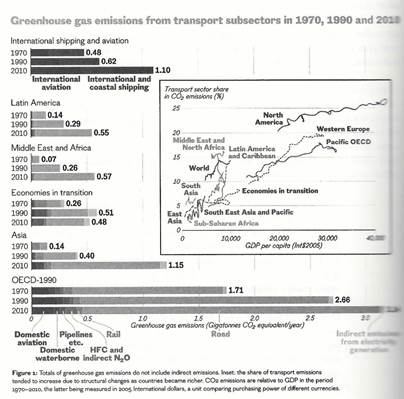
The complexity of the problem is difficult to understand. As populations increase, food production requires more land for agricultural production. As a result species migrate, trees are removed, fertilizer production increases, and the shipping of food to where the people are living increases. The two graphs below include significant data. The first graph, “Greenhouse gas emissions from transport subsectors in 1970, 1990, and 2010” provides evidence on the increase in emissions as the population of the world increased from approximately 3 billion in 1970 to 8 billion today. The graph also provides evidence of the problem of global equity as the amount of emissions in 2010 is that to the total emissions from Latin America, Middle East and Africa, and Asia total 2.75 gigatons is less than the amount of 3.14 gigatons emitted from the 38 OECD countries with market-based economies and democratic forms of government.
(page 266)
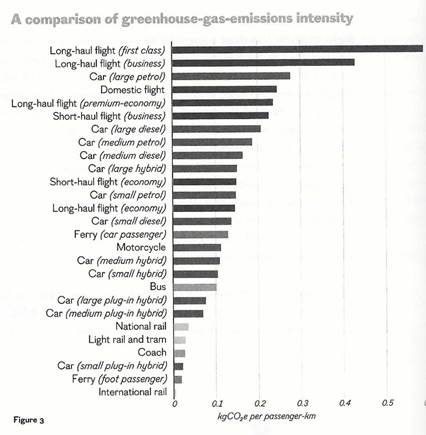
The second graph, “A comparison of greenhouse-gas-emissions intensity”, illustrates the emissions from airplanes, automobiles, and trains. The graph does not include the cost of international shipping, a decision made by the Kyoto Protocol in 1997. “This is extremely problematic since international aviation and shipping together contribute the equivalent amount of CO2 as Japan, the fifth biggest CO2-emitting nation in the world.” (page 269)
The greenhouse gas emissions form airplanes is greater than the emissions from automobiles. Students need to understand the paradox of buying an EV or hybrid vehicle for transportation to reduce carbon emissions and then taking a plane to the Caribbean for Spring Break or a trip to Europe is counterproductive. We need to change our behavior. Education has the potential to change behavior!
(page 267)
Perhaps the most important insight for me in this section was the information on consumerism. A household in the United States contains, on average, 300,000 individual items,…” (page 282) Teachers need to bring awareness about human behavior and the impact of production and disposal, and life expectancy and efficiency.
“An American one-percenter accounts for ten times the greenhouse gas emissions of the average American; the average American is responsible for three times the emissions of the average person in France; the average French person accounts for ten times that of the typical person in Bangladesh.” (page 282) This section provides perspectives that are excellent resources for teachers.
Students need information about solutions for living in a world that is 1.5oC warmer and likely closer to 2.0oC. Solutions are more than wind turbines, solar panels, and electric vehicles. The psychology of human behavior, the importance of civic engagement, preparation for a sudden crisis, the economic potential of incentives, awareness of the role of the media, and an understanding of the actions of citizens are essential understandings for students.
“The wealthiest 10 percent of people globally produce around half of all greenhouse gas emissions, as well as having more to do to achieve a sustainable way of life,….” (page 330) The graph below clearly explains why climate education for students in the United States should be a curriculum mandate. The graph also illustrates the problems of inequality and injustice as a result of the economic system that currently dominates our world. An understanding of the big picture from 19th century colonialism and imperialism to the global supply chains of the 21st century are essential for understanding the invisible atmospheric changes that have been taking place for 150 years. The existential crisis that threatens to disrupt the comfortable lives of the students we are teaching will take place in the next few years or decades. This is the “inconvenient truth!”
As social studies educators we are responsible for teaching the lessons of the past, especially as they relate to the rise and fall of civilizations. The discovery of fire, writing, cement, crop rotation, the three-part plow, animal, water, and steam power, fossil fuels, electricity, nuclear energy, the automobile, department stores, credit cards, e-commerce, and artificial intelligence are curriculum topics that need to be carefully reviewed in how we are teaching them because they cumulatively contribute to a warmer planet. The graph below illustrates why this is a critical curriculum topic for social studies educators.
The great migrations in history are the result of wars, trade, investments, escape from authoritarian rulers, genocide, poverty, and extreme weather events. We teach about the migrations from the Irish famine, religious wars in Europe, African Slave Trade, European migration to the United States, Harlem Renaissance, Dust Bowl, Partition of India, Resettlement after World War II, and the urbanization of China. If history is a guide, the largest migration will occur in the 21st century because of the impact of extreme weather on agriculture, potable water, heat-related deaths, and higher sea levels.
The Climate Book is essential reading for teachers. The section on solutions (Chapter 5) provides critical information for debate and discussion with your students.
Jared Diamond’s Guns, Germs, and Steel (New York: Norton, 1997) is one of those books that feels revelatory the first time you read it. It takes a question that most people rarely stop to ask, “Why some societies ended up rich and powerful while others did not?,” and reframes it in a way that is both unsettling and reassuring. Unsettling, because it strips away comforting myths about cultural superiority and human exceptionalism, and reassuring, because it offers an explanation that does not rely on racism, divine favor, or civilizational destiny. Diamond’s central claim is that geography, rather than biology or culture, played the decisive role in shaping global inequality. In the epilogue, he steps back to defend this framework, clarify its limits, and argue that history itself can be studied scientifically.
Diamond’s ambition is enormous; he is trying to explain a great deal of human history with a single organizing framework. Geography, in his telling, shapes the availability of domesticable plants and animals, the timing of agriculture, population density, technological development, and ultimately conquest. By the time Europeans reached the Americas, the outcome was already largely predetermined by thousands of years of environmental advantage. Diamond is careful to insist that geography constrains rather than dictates outcomes, but it is hard to miss how much explanatory weight geography is made to carry.
In the epilogue, Diamond anticipates the charge of environmental determinism and pushes back. History, he argues, can still be studied scientifically, even if we cannot run controlled experiments. Continents and societies function as natural experiments, allowing historians to compare different environments and identify broad, recurring patterns. Diamond is explicit about what he believes his framework does and does not explain. He is not accounting for individual leaders, specific events, or moral responsibility.Instead he is explaining why some societies had early advantages and others did not.
When Diamond stays within these bounds, his arguments are often extremely persuasive. His comparison between Eurasia and the Americas is a good example. Eurasia benefited from an abundance of domesticable plants and animals, including wheat, barley, cattle, pigs, and horses, which supported early agriculture, large populations, and dense settlements. Dense populations, in turn, produced epidemic diseases, and over time, immunity. When Europeans arrived in the Americas, they brought not only steel weapons and guns, but germs to which they had long been exposed. Indigenous populations, lacking similar disease histories, were devastated. Diamond’s point is not that Europeans were smarter or more capable, but that they inherited a vastly different historical trajectory shaped by their environment.
The same logic applies to Diamond’s discussion of continental axes, particularly the contrast between Eurasia’s east-west orientation and the Americas’ north-south orientation. Eurasia’s east-west axis allowed crops, animals, and technologies to spread across similar latitudes and climates with relative ease. Innovations could diffuse over thousands of miles without needing to adapt to radically different environments. In the Americas, by contrast, north-south diffusion meant crossing deserts, jungles, mountains, and sharp climatic transitions. This slowed the spread of agriculture and technology and limited large scale integration. Over millennia, these differences compounded. Geography, in Diamond’s account, does not merely shape local conditions, it shapes connectivity itself.
Where Diamond’s framework begins to strain is when it starts to feel like a master key rather than one tool among many. In the epilogue, he insists that geography is not destiny, yet culture often appears in his account as a thin downstream effect of environmental constraints. Culture adapts to geography, rather than actively shaping how societies respond once similar options exist. This is where the model starts to feel incomplete. Culture is not just decoration layered on top of material conditions. It is the air we breathe, the water we swim in, and the lens through which material realities are interpreted. Societies facing similar geographic constraints can still make very different choices, build different institutions, and value different outcomes.
Diamond acknowledges this problem in theory but tends to underplay it in practice. He is strongest at explaining origins and weakest at explaining persistence and divergence. Geography helps explain why certain possibilities existed, but it does not fully explain why some societies embraced particular paths while others did not, even when those paths were available. Once agriculture, technology, and states exist, culture feeds back into material conditions in complex ways. Institutions, norms, and values can amplify or blunt geographic advantages, and these feedback loops receive less attention than they deserve.
This tension becomes even more apparent when Diamond’s framework is applied to contemporary global developments. Geography still matters enormously. Climate vulnerability, access to arable land, exposure to disease, and proximity to trade routes continue to shape global inequality. The uneven impact of climate change, for example, follows geographic lines Diamond would immediately recognize. At the same time, globalization, technology, and political institutions complicate the picture. Some societies have used technology and collective action to mitigate geographic disadvantages, while others have failed to do so despite favorable conditions. Here again, culture and politics mediate geography’s effects.
Diamond deserves credit for what he is trying to do. He offers a corrective to explanations that blame the victims of history for their own misfortune or attribute inequality to inherent superiority. His framework insists that history’s winners were not morally better or biologically superior, merely luckier in where they happened to have been born. That insight alone makes Guns, Germs, and Steel worth reading.
The epilogue clarifies what Diamond believes his project to be. Geography is not the whole story, but it is an essential part of it. Diamond is at his best when he treats geography as an ingredient rather than a recipe. History is shaped by environments, material conditions, and culture together. No single theory explains everything. Diamond’s contribution is to remind us how much of the story begins long before anyone makes a conscious choice, and how deeply the ground beneath our feet has shaped the world we inherited.
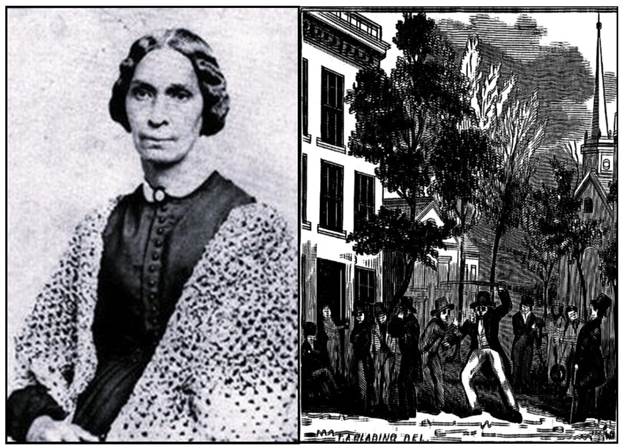
From left: Carloyn E. Storum Loguen about 1860; Mary Ann Brigham Brown’s husband Rev. Abel Brown under assault in Westfield NY about 1835.
Chautauqua County women Carolyn Loguen (1817-1867) and Mary Ann Brown (1814-1842) were active in New York state’s anti-slavery movement and in the Underground Railroad. Working mostly in the shadows of their widely known husbands, the women themselves were locally famous for their own efforts in the cause of freedom.
Carolyn E. Storum Loguen of Busti married the formerly enslaved minister Jermain Wesley Loguen (1813-1872). The couple then operated an Underground Railroad station in Syracuse. They had six children, and their daughter, Amelia, married the eldest son of the nationally known abolitionist Frederick Douglass (1818-1895), who also was formerly enslaved.
In 1851, the Rev. Loguen assisted in the rescue of William Henry, a formerly enslaved cooper working in Syracuse. Henry had been arrested under America’s Fugitive Slave Law of 1850, but he was rescued by abolitionists and then sheltered in Canada. Also in 1851, Harrison Williams was arrested under the same law, on Carolyn’s childhood farm in Busti, where her parents operated an Underground Railroad Station. In spite of several attempts to rescue him, Harrison Williams was returned to slavery. The historical marker paying tribute to Harrison Williams and the Storums stands today on Sanbury Road near Northrup Road in Busti. Another historical marker, to both Caroline Loguen and her husband, stands today at NYS Route 92 and Pine Street in Syracuse.
In 1854, Carolyn’s parents coordinated the widely attended Anti-Slavery Convention in Sugar Grove Pa., near Busti. Both Rev. Loguen and Frederick Douglass were featured speakers at that major event. However, Mary Ann Brigham Brown and her husband had been deceased long before the significant convention in Sugar Grove. Mary Ann was from nearby Fredonia, and she married another famous abolitionist, Rev. Abel Brown, Jr. (1810-1844) of nearby Forestville.
In the early 1830s, Mary Ann had met her future husband, while both attended the Fredonia Academy, which formerly stood on the site of today’s Opera House and Village Hall. The couple then traveled throughout the northeast, active in the Underground Railroad. Scholars have speculated that when the Western New Yorker Eber M. Pettit mentioned in his 1879 anti-slavery memoir that there was a “President” of the Underground Railroad, he was referring to the martyr Rev. Brown. Rev. Brown was so outspoken in his beliefs that he was often beaten by angry dissenters. His 1844 death in Canandaigua was said to have been from injuries sustained in just such a beating.
Another assault upon Brown had occurred in Chautauqua County a few years earlier, while he was preaching in Westfield. That was the period when New York State’s Anti-Slavery Society was being organized in central New York State, an endeavor also met with violent protests. However, within a few years of Brown’s beating in Westfield, the collected voices of Chautauqua County’s other abolitionists attracted increasingly more of their neighbors into what became known as “the liberty cause,” and the Underground Railroad became more safely active here, until the 1850 law. Although that law, signed by New York’s own Millard Filmore, generally made life dangerous for those involved in the Underground Railroad, the same law actually backfired in Chautauqua County, by drawing even more people into the anti-slavery movement.
Mary Ann died two years before her husband, shortly after the birth of their second child. Her children were then raised in Fredonia by her mother Mary (Polly) Dix Brigham Taylor (1790-1857), who also opened her home to a freedom seeker in 1844. There is no historical marker to memorialize Mary Ann, her husband, her children, or her mother, but a Fredonia mansion stands today where Mary Ann’s children grew up. The former Taylor farm is located on U.S. Route 20, just west of Fredonia.
After the Civil War, Daniel Fairbanks greatly expanded and modernized the former Taylor home. For the 1881 Chautauqua County Atlas, the elegant, new house was illustrated in the name of Sayles Aldrich.
In the late 20th and early 21st centuries, Wilda B. and J. Carter Rowland operated a gift shop behind the mansion, at the approximate location of part of the former Taylor home.
Hidden Histories: What the Slave Masters of the Bronx Left Us
By Alice Augustine, Reposted from Amsterdam News, February 5, 2026
This fall, I introduced 42 Lehman College honors students to the Enslaved African Burial Ground at Van Cortlandt Park. As the college’s director of Campus Honors and Scholar Engagement, I have made it mandatory that all Campus Honors students participate in this project, Hidden Histories, in their first year.
Colleagues and students are often surprised to learn that there were enslaved people as far north as the Bronx. However, Jacobus Van Cortlandt, who served two terms as mayor of New York City, profited from the buying and selling of Africans in Manhattan’s markets. A walk through the Bronx reveals streets and parks named after other plantation owners — the Pells, the Morrises, and the Fords.
My students learn firsthand how difficult it is to find information on people of African descent who lived in the colonial Bronx. But it is not impossible. Over the last two years, they have dug through original documents to learn about the talented and resourceful Africans whose labor contributed significantly to making early Bronx residents among the wealthiest in the state.
Their stories are hidden in bills of lading, records of sale, runaway ads, wills, legal actions, and diaries. Little Haneh, age 52; Hager, age 42; Long Betty, age 31; Zibia, age 27 — these are four of over 90 names of enslaved people my students have identified and geotagged on a digital map of the colonial Bronx.
When we started, our goal was to contribute to the Northeast Slavery Record Index at John Jay College. Our initial search yielded little, but we gravitated toward wills after reading “Blacks in the Colonial Bronx”by Lloyd Ultan. The enslaved mostly appeared in recorded history only when wealth changed hands. Ironically, those diligent records of property are now the cracks where history lets in the light.
There were no birth certificates for Africans enslaved in the colonial Bronx and neither were there recordings of deaths. However, the heirs of enslavers were not deprived of their property. In wills, we learned of bequests of linen, kitchenware, land, rugs, and enslaved Africans that heirs would receive. Bequests quickly became our most trusted source of information on the people we have come to see as our ancestors.
My hope is that more students sign up for the research-intensive phase of the project — the ongoing module invested in unearthing the hidden stories of highly-skilled enslaved Africans. It is too easy to forget the contributions of Blacks in the Bronx when negative and untrue stereotypes of this borough roll off tongues with reckless abandon.
The project is in its third cycle of joint stewardship with volunteers from the Van Cortlandt Park Alliance, which has done much to increase awareness. In 2021, Van Cortlandt Lake was renamed the Hester and Piero’s Mill Pond in honor of an enslaved couple — Piero the Miller and his wife Hester. The park now celebrates Juneteenth and Pinkster, an African American holiday which was originally a Dutch celebration of Pentecost. In 2024, the Mellon Foundation awarded a grant to the alliance to engage the community on ideas for a memorial at the Burial Ground. I serve on an advisory council for the construction, along with four of my students.
However, too much remains unknown. My students and the wider Bronx community deserve the chance to know, mourn, and celebrate our ancestors. My students are not historians; their majors span disciplines from biology to art. But almost all have incorporated lessons from this project as they go on to conduct research in their respective fields.
At the northeast corner of the burial ground, my students created an unofficial altar on top of a jagged rock shaped like a bench. They and community members have left flowers and photos of deceased loved ones there. We pour libations with water from Hester and Piero’s lake and call their names aloud as a collective.
Our hearts are filled with love as we continue to build the project even as funding sources become scarcer. In July, our digital map disappeared from the StoryMaps website after the free version we used was retired. We are currently seeking grants for software to support our findings long-term. Our goal is to make this a community-based research initiative that can be replicated at other colleges and perhaps high schools.
I created Hidden Histories knowing that the answers we seek may take decades to uncover. The process is beautiful and heart-wrenching. We are eager to learn everything we can about the enslaved in the colonial Bronx, even as we are deeply shaken by the cruelty of enslavement. We are, however, clear that our ancestors wanted us to find them and share their stories, and we will keep learning and searching and listening.
The Price of Silence – The Forgotten Story of New Jersey’s Enslaved People
“New Jersey is known as the Garden State,” says author Beverly Mills in the two-part documentary The Price of Silence. “We’re known for our blueberries. We’re known for our corn. We’re known for our peaches. But we’re not known for the slaves that were here tilling the soil. We’re not known for the whole history of slavery connected to New Jersey and how slavery was the underpinning of much of the wealth of New Jersey.” Enslavement was prolific from the very founding of New Jersey in the 1600s as a colony and eventual manufacturing hub that supplied the Southern states with leather goods and other products. Its eye on production and profit created a demand for the cost-effective services of the enslaved, a demand that only grew as New Jersey developed into a major maritime port. What’s more, white slave owners at the time could receive the equivalent of land rebates based upon the number of enslaved working their land. “New Jersey was the last Northern state to even attempt to abolish slavery,” says Linda Caldwell Epps, Ph.D. and CEO of 1804 Consultants, in the film. Mills reports New Jersey “was probably the Northern state with the strongest sympathies towards the South. Because it was the Southern-most Northern state, it had a lucrative trade policy with the Southern states.” She remembers “I never learned about this in school. … If anything, we were taught to feel shame. And today…I feel nothing but pride and I feel empowered.”
Part one of the documentary, “The Forgotten Story of New Jersey’s Enslaved People,” begins the series with the stunning fact that by the time New Jersey started the slow process of abolishing slavery in 1804, the state had 12,000 men, women, and children in bondage. The film reveals that New Jersey depended profoundly on enslaved people to drive agricultural and economic growth, was sympathetic to the South, and was the last of the Northeastern states to eliminate this heinous practice. https://www.pbs.org/video/price-of-silence-izsgr1/
Part two, “The Lasting Impact of Slavery in New Jersey,” continues with New Jersey’s history of bondage and expounds on the fact that the African American community is still feeling the effects of slavery today due to disparities with the White community in median income, criminal justice, and healthcare.
Part three, “The Search for Freedom in New Jersey,” examines the Black community’s Great Migration from the Jim Crow South to Newark, New Jersey, during the early years of the 20th century and tells the story through the eyes of descendants of individuals who made the Great Migration North and found life here to be a far cry from what they had hoped for.
By telling these fascinating stories through the eyes of descendants of slavery and individuals who have lived through the heartbreaking events depicted in the films, the audience will most certainly be captivated and inspired to learn more.
The Hidden History of Slavery in New York
The Hidden History of Slavery in New York is an Emmy award-winning 30-minute documentary produced by Larry Epstein and narrated by Richard French, a student at Rye Country Day School. The film features EJI founder Bryan Stevenson. Larry Epstein, an Emmy award-winning journalist and documentary writer/producer, is available to speak at schools and colleges. He can be contacted at larryep13@gmail.com. The Hidden History of Slavery in New York is available on YouTube. https://www.youtube.com/watch?v=gUzlcZXBHAM
Harlem Urban Civil Rights Museum
The museum is set to open in Fall 2026 in an approximately 20,000-square-foot space within the Urban Justice League’s new 400,000-square-foot Manhattan headquarters at 117 West 125th St., across the street from the Studio Museum. The Urban Civil Rights Museum in Harlem presents the history of the Northern civil rights movement. It is a cultural institution that educates, inspires, and activates visitors through powerful storytelling, cultural engagement, and collective action. Rooted in history and in Harlem, it stands as a local anchor and a global destination for learning, reflection, and empowerment.
Morven house in Princeton, NJ was home to Richard Stockon one the New Jersey’s signers of the Declaration of Independence and five early governors of New Jersey. Morven house’s current exhibit as part of the national celebration of the 250th anniversary of the signing of the Declaration of Independence is Five Independent Souls highlighting the lives of the five men from New Jersey who voted for independence including Richard Stockon. As wealthy lawyers, the first two generations of Stocktons at Morven enslaved men, women, and children on site. At the expense of the enslaved, the Stocktons lived a comfortable lifestyle and increased their wealth with forced labor. Like other signers of the Declaration of Independence, Richard Stockton held people in bondage while signing a document that declared “that all men are created equal, that they are endowed by their Creator with certain unalienable Rights, that among these are Life, Liberty and the pursuit of Happiness.” The rhetoric of revolutionary America—freedom, equality, and liberty—was inescapably intertwined with the practice of slavery. In 1804, the State of New Jersey passed an act for the Gradual Abolition of Slavery, making it the last northern state to do so. Records indicate that by the time the third generation of Stocktons took ownership of Morven in 1840, enslaved people no longer lived on the property. At first, they were replaced by free African Americans, and then eventually by immigrants from Ireland and Germany. Morven house’s permanent exhibition is “Historic Morven: A Window into America’s Past.”
NY State Parks Launches ‘Enslavement to Freedom 1627-1827-2027’ Initiative
In 2027, New York State will recognize the 200th anniversary of the end of legalized slavery in the state (1827) and the 400th anniversary of the arrival of the first Africans enslaved in the former New Netherland colony (1627). The New York State Office of Parks, Recreation, and Historic Preservation is working with partners across the state to share new research and resources that explore early Black American history in New York as part of its “Enslavement to Freedom: 1627-1827-2027” initiative. Collaborations include exhibition displays with the Office of General Services, educational resources with ConsidertheSourceNY.org, events and programs, and traveling exhibitions available for non-profit and educational organizations throughout the state. During this multi-year interpretive initiative, State Parks and relevant state historic sites are planning will develop exhibits, public programs, and other educational resources. These are expected to explore New York’s history with the institution of slavery and a pivotal period of transition for the Black community in early New York. It provides better context and understanding for later historic movements, like abolition and the Underground Railroad. State Parks is also inviting educational and nonprofit organizations to host one or more of the four available traveling banner exhibitions:
1) Poisonous Seeds: The Dutch and the Institution of Slavery in New York
2) Redefining the Family: One Descendant’s Journey into History
3) Another Face of War: Enslaved and Free Blacks in the Revolution and
4) Many and Varied Hands: The Work and Labor of the Enslaved.
Compact enough to be displayed in various environments, the traveling exhibitions tell stories from the past that center Black experience. “Enslavement to Freedom: 1627-1827-2027” resources and activities are expected to continue to be developed and shared with the public over the next several years. For up-to-date information about this and other Black history initiatives at State Parks, including how to request the “Enslavement to Freedom” traveling banner exhibitions, visit this website.
Manhattan’s Merchant’s House was an UGRR Safehouse
The Merchant House (https://merchantshouse.org/) at 29 East Fourth Street in New York City is a 19th century brick and marble landmark rowhouse that is now a museum. It was built in 1832 by hatter and merchant Joseph Brewster and sold to the Tredwell family three years later. An Underground Railroad safe space was recently discovered underneath the drawers of a second floor built-in dresser. A cut in the floorboards leads to an enclosed space about 2ft by 2ft with a ladder down to the ground floor. Brewster was a leading New York City abolitionist. There is evidence that he signed at least two antislavery petitions and played a prominent role in three antislavery churches. When a church was being constructed on Rivington Street, he had builders include a false floor there as well.
A Protest History of the United States(Beacon Press, 2025) by Gloria J. Browne-Marshall
The book chronicles the history of protest and resistance in America, from Indigenous peoples’ resistance to colonization through modern movements like Black Lives Matter and climate activism. It highlights both known and forgotten figures and movements. Drawing on legal documents, archives, and personal accounts to show how dissent has shaped the nation, it argues that protest is a vital force for change. It is part of Beacon’s ReVisioning History series. Browne-Marshall expands the definition of protest beyond traditional marches and rallies. Acts of resistance include journalism, legal battles, boycotts, everyday defiance, and more. There are sections on abolitionist John Brown, who was executed for initiating the 1859 slave revolt at Harpers Ferry; labor organizer Mother Jones, who fought for the enforcement of the 8-hour workday; and civil rights activist Daisy Bates, who played a leading role in the 1957 Little Rock school integration crisis. Gloria J. Browne-Marshall is a writer, educator, legal advocate, and playwright. She is a professor of Constitutional Law and African Studies at John Jay College (CUNY). Her books include She Took Justice: The Black Woman, Law, and Power, The Voting Rights War, and Race, Law, and American Society.
New York City Monuments of Black Americans: A History and Guide (New York: The History Press, 2025) by David Felsen (Reprinted from New York Almanack, December 10, 2025)
“New York City got its first monument of a real Black American in 1946 when the Hall of Fame for Great Americans in the Bronx dedicated a bronze bust to Booker T. Washington,” David Felsen, a history teacher at Avenues: The World School, writes in the introduction to New York City Monuments of Black Americans: A History and Guide (History Press, 2025). He believes n“Behind every first is a story of triumph over adversity and exclusion.” A 2021 study of the nation’s monuments found that 50% of the top 50 most memorialized people enslaved other people and that only 10% of the top 50 most memorialized people are Black/Indigenous. Just six percent of the Top 50 nationwide are women. It wasn’t until 2007 that the city dedicated its first monument to a Black woman, Harriet Tubman. “At this time, when the media and academics were paying so much attention to problematic Confederate monuments and the white men on them, it seemed too little attention was being paid to the representation of Black people in monuments,” writes Felsen. “As a history teacher living in New York City, I began to wonder how many monuments of Black Americans there were in the city. Who was the first Black American honored, and when did it happen? Who were the artists, activists and civic leaders behind these monuments? Why did they get made? And what could they teach us about New York history, Black history, art history and American history?” According to Felsen, the first Black American represented on a monument in New York City is “a nameless, shoeless former slave help[ing] a Union widow to find her husband’s grave in the South” at the base of the 1876 Civil War Soldiers’ Monument in Brooklyn’s Green-Wood Cemetery. Felsen’s new guide identifies and tells the stories of thirty statues and monuments of Black Americans in the city. It includes maps, and photos and a detailed history of each. This book provides a refreshing take on a subject that has been on the minds of many Americans.
Black Legacy: A History of New York’s African Americans(Seven Stories Press, New Edition, 2026)
by William Loren Katz
Discover the complete Black history of New York — from 1609 to the present — by the award-winning author of Breaking the Chains and Black Indians. For readers 12 and up. Includes a new intro and last chapter with insights on modern-day movements like Black Lives Matter, plus 50+ historical maps, illustrations, and photos. Essential for NY teachers, librarians and teens. From the arrival of the first enslaved Africans in New Amsterdam in 1609, to the Harlem Renaissance, to the impact of Black Lives Matter, here is a concise and newly updated history of Black Americans in New York for readers 12 and up. Black Legacy reasserts the essential work of teacher and historian William Loren Katz, who was committed to documenting and uplifting the stories of Black Americans’ courage and creativity, resilience and rebellion, especially for younger readers. A new introduction by award-winning journalist Herb Boyd gives context to Katz’s “full tableau of Black accomplishments and aspirations,” and a new chapter by historian Alan Singer and social studies teacher Imani Hinson brings the book up to the present day, considering the changing economic, cultural and political influences on Black New Yorkers. Black Legacy includes Black politicians and poets, abolitionists and athletes and activists, and the first Black children to attend public schools; Sojourner Truth, Paul Robeson, W.E.B. DuBois, Frederick Douglass, Marcus Garvey, Malcolm X, the Black Panthers, and others who fought for Black freedom; Shirley Chisholm, Madame C.J. Walker, NY’s first Black mayor David Dinkins and many other businesspeople and politicians who brought dignity through their work toward equality; and the Black history of Seneca Village and Weeksville, the Savoy and Cotton clubs of the Jazz Age, Harlem Hospital where Martin Luther King Jr. nearly died, the African burial site at Trinity Church, and so much more. Written with economy and flair, Black Legacy is a fascinating read, a necessary teaching tool, and a great addition to the literature of the Black history of New York and of America. According to Haley Pessin, co-editor of Voices of a People’s History of the United States in the 21st Century: Documents of Hope and Resistance, “Dispelling the myth of Northern progressivism, Katz offers a far more compelling account of the bravery and perseverance through which Black people resisted their own subjugation and, in so doing, indelibly altered New York history. Katz reminds us that New York history is Black history, and Black history is the history of New York. This is a book that should be read by all New Yorkers.”
The Power of Quiet Courage(North Carolina Office of Archives, 2025) by Amy Nathan and Sarah Keys Evans; Illustrated by Jermaine Powell Sarah Keys Evans wasn’t a person anyone thought would spend a night in a jail cell or change the world. But trouble came Sarah’s way in 1952 at a North Carolina bus station. Dressed in her Women’s Army Corps uniform, she was arrested for not moving to the back of a bus, three years before it happened to another Black woman, Rosa Parks. Sarah Keys Evans: The Power of Quiet Courage tells how Sarah stood up for what’s right and helped end that kind of unfairness. Others have now honored her by creating a monument that calls her a “Trailblazer for Justice.” Deborah Menkart wrote, “Sarah Key Evans’ story, along with many others who protested racism on public transportation in the 19th and 20th centuries, are omitted from most history books. Thankfully, Amy Nathan and Evans have broken that silence in a beautifully written book for upper elementary students. Readers learn that standing up for justice requires years’ worth of determination, patience, and courage. Evans was brave when she righteously refused to move on the bus, but there would have been no legal victory were it not for her continued bravery to pursue the case, to face lies about her actions, and to testify at hearings. As the book also makes clear, Evans’ family and attorney Dovey Johnson Roundtree provided crucial support. Evans’s story will inspire readers and offer a roadmap of the pitfalls and possibilities when pursuing justice.”
The Sewards of New York: A Biography of a Leading American Political Family (Ithica, NY: Cornell University Press) by Thomas Slaughter
The Sewards of New Yorkshines a light on one of the most important and fascinating political families of the nineteenth century. Through recently discovered family correspondence, Thomas P. Slaughter unveils the inner lives of the Seward family, tracing their joys and sorrows as the nation grappled with rapid expansion and deepening divisions on its path to the Civil War. William Henry Seward, the family’s most prominent member, was a state senator, governor, U.S. senator, and Secretary of State. Henry, as his family knew him, was often absent from their Auburn, NY, home, serving in Albany or Washington, DC, and remained connected to the family through the long letters numbering in the thousands that they exchanged. These writings reveal Henry as a son, brother, husband, and father, as much as they show him as a politician and statesman. His wife Frances is the hub around which this family story revolves. Slaughter explores the extended Auburn family during a half century of profound change in American homes, marriage, and childrearing. With an eye for the provocative and revealing, Slaughter takes us behind the curtain of the early Victorian era’s private sphere. The Sewards of New York paints a rich portrait of an extraordinary family that played a key role in nineteenth-century New York and national politics.
Women, Immigrants, and the Working-Class Battle in Little Falls, New York: The Textile Strike of 1912-1913 (New York: Algora Publishing) by J.N. Cheney
J.N. Cheney recounts the political and cultural origins that created the conditions for the strike including factors such as immigration law and the 1911 Triangle Shirtwaist factory fire. It carefully considers the plight of the primarily working-class immigrant women from Eastern and Southern Europe (mostly Italy, Poland and Slovakia) and their pursuit of better wages and improved working and living conditions.
The book details the horrific conditions they endured including dangerous, unsanitary factories, rampant tuberculosis, and dilapidated tenement housing, which were courageously exposed by nurse, social reformer, and suffragist M. Helen Schloss. When the workers in two Little Falls mills organized to improve their conditions with the help of the Industrial Workers of the World and the Socialist Party of America, they were met with a brutal campaign of repression. This new research exposes the police violence, the suppression of free speech by local authorities, and the hostile media coverage that sought to demonize the strikers as dangerous agitators.
Jamie’s Decisions (TrueFiktion) by Joe Visconti
The graphic novel follows Jamie, a skilled laborer and formerly enslaved person in Virginia who found refuge in Syracuse, New York. His world is shattered when the federal government passes the Fugitive Slave Act of 1850 and the U.S. Marshals capture his formerly enslaved friend, Jerry, under the law. Now, Jamie must decide whether to put his own freedom at risk to help the community save Jerry. This graphic novel focuses on the Jerry Rescue, an event that happened in Syracuse on October 1, 1851. A group of abolitionists forcibly liberated William “Jerry” Henry from U.S. custody after he was arrested under the Fugitive Slave Act of 1850. Jamie’s Decisions explores the Jerry Rescue and the Syracuse abolitionist movement to highlight how community members – sometimes with different motives – can come together to seek justice for all.
Sag Harbor in the Revolution (Sag Harbor Museum) edited by Zachary Studenroth
Have you heard of the Battle of Sag Harbor, the heroic raid on the British fort that still lies beneath our feet in the Old Burying Ground? Or of the mass exodus to Connecticut from Sag Harbor in September 1776, when local residents escaped the British occupation? Or do you know how our village rebuilt its economy after the Revolutionary War? These and many other questions will be answered in “Sag Harbor in the Revolution,” a book that the Museum is publishing to celebrate the 250th anniversary of the Declaration of Independence. Thirteen authors, all distinguished historians or specialists in their fields, have been brought together to contribute new research on the subject of Sag Harbor’s role in the American Revolution.
Until the Last Gun is Silent (New York: Viking, 2026) by Matthew Delmont
The book is sub-titled “A Story of Patriotism, The Vietnam War, and the Fight to Save America’s Soul.” While over 300,000 African American young men and women were serving in Vietnam, African Americans stateside played an important role in the anti-war movement, despite facing severe criticism in the media, by government officials, and by prominent leaders of civil rights groups. Anti-war activists included the Rev. Dr. Martin Luther King Jr., Coretta Scott King, and Medal of Honor recipient Dwight “Skip” Johnson. Much of the book focuses on Coretta Scott King, who the author credits with convincing her husband to support the anti-war movement, and Johnson’s family and friends, who fought to have him receive full honors and his family to receive full benefits. Matthew Delmont is a Professor of History at Dartmouth College.
Plantation Goods: A Material History of American Slavery (Chicago University Press, 2024) by Seth Rockman.
Rockman uses the exchange of products between the North and South to present a fuller picture of slavery as a national institution with economic ties binding different regions of the country. Examples include cloth and shoes manufactured in Massachusetts worn by enslaved Africans on Southern cotton plantations, tools like axes, hoes, and shovels manufactured in the North for sale to Southern planters, slave-produced commodities marketed by Northern companies, and a Northern ship construction industry building vessels to transport cotton to European markets. Seth Rockman is a Professor of History at Brown University.
Stitching Freedom: A True Story of Injustice, Defiance, and Hope in Angola Prison (New York: One Signal, 2025) by Gary Tyler with Ellen Bravo
This book is the memoir of Gary Tyler, written with the assistance of Ellen Bravo, an anti-racist activist involved in campaigns for fair trials and prison reform. In 1975, seventeen-year-old Gary Tyler was sentenced to death, a sentence later commuted to life in prison without the possibility of parole at the notorious Angola Prison in Louisiana. Tyler, who is African American, was convicted of the murder of a white teenager by an all-white jury. His case was picked up by Amnesty International, and he was recommended for parole three times; each time the Governor of Louisiana rejected the recommendation. He spent four decades in prison for a crime he did not commit until he was released in 2016. While in prison Tyler took up quilting to remain sane, hence the book’s title Stitching Freedom.
Capitalism: A Global History (New York: Penguin 2025) by Sven Beckert
The text of this book is 1,087 pages. The total book with references, footnotes, and index is 1,325 pages. It is too heavy to hold so you can only read from it if it is positioned on your desk. For global history teachers, it acts more as a reference encyclopedia rather than a book, but it is an incredibly valuable reference. Beckert argues that no phenomenon has shaped human history as powerfully as capitalism. He believes capitalism shapes every facet of human existence including work, leisure, politics, values, and self-definition. Rather than centering the history of capitalism in Western Europe, Beckert examines islands of capitalism emerging all over the world starting about 1,000 AD with the development of trading centers, markets, and long distance merchants. The book starts at the port of Aden on the southern tip of the Arabian peninsula and ends as globalization transforms rural, previously isolated regions of Southeast Asia. Along the way we learn how capitalism reshapes the world with the conquest of the Americas, the trans-Atlantic trade in human beings and slave-produced commodities, the Industrial Revolution, and a “neo-liberal age” of unfettered borders and instantaneous electronic transfers of capital around the globe. Key to the development of capitalism is the alliance of producers and traders with states that facilitate commerce and industry. This massive work draws on archives from six continents and countless countries. Sven Beckert is a Professor of History at Harvard University.
Teaching about the Holocaust and Challenging Antisemitism
by Cynthia Vitere
For more than a decade, I have been teaching an International Baccalaureate curriculum focusing on authoritarian states and twentieth-century wars. As part of this class, I lead students through a months-long exploration of the emergence German fascism, its promotion and weaponization of antisemitism as a means for consolidating power, and the implementation of the Holocaust within the broader context of World War II. Over the years, I have found my students to be curious and willing partners in our exploration of this essential subject. Our study of Nazism, antisemitism, and the Holocaust has included hosting in-person survivor testimonials and expanded to include a comparative analysis of the Rwandan genocide. This year, students and teachers participated in a three-day workshop with Carl Wilkens, the only American to remain in Rwanda during the genocide. While grounded in historical understanding, this workshop emphasized the possibility of peace and reconciliation through restorative justice practices. Students were eager to engage with history and to imagine peaceful outcomes through direct interaction with those who experienced it firsthand.
New York State’s mandate for Holocaust education and the requirements of the IB curriculum has made this work possible. In its absence, teachers would find it difficult to address antisemitism in a sustained and substantive way. Long Island communities have a proud history of supporting the Civil Rights Movement of the 1960s. However, as that era grows more distant and our demographics shift, that support has evolved in complex ways. In my own classroom I have witnessed student discomfort, especially among Jewish students who are in the minority, when these topics are addressed. Cast as representatives of Jewish identity within their peer groups, they sometimes encounter subtle antisemitic comments or assumptions.
In the aftermath of the October 7, 2023 attack on Israel and the ongoing war involving the Unted States, Israel, and Iran, the potential for such dynamics have intensified. While students filter their assumptions and comments within the classroom, it is clear that beyond the classroom, they are being exposed to the familiar conspiracy theories of the “Jewish banker” and “international globalist” that are circulating across their social media feeds. In a recent poll I conducted with my own students, more than 65% acknowledged that they had regularly encountered these types of posts.
Educators must recognize the powerful role these online narratives play in the lives of our students. Their continuous exposure to misinformation and antisemitic tropes requires more than historical instruction alone. We must help students identify and deconstruct these viral feeds – treating digital content as a modern form of antisemitic propaganda, in the same way that we challenge the work of Goebbels and Hitler.
This work calls for a curriculum that connects media literacy and historical study to the students’ lived experience. I recognize that this work is fraught with pedagogical and political hurdles, but it is a task worth addressing. Teachers, working collaboratively, can and must create safe spaces to examine these controversial issues, past and present. Within these spaces, students may express conspiracy theories and biases, but we cannot ignore them. Rather, these teachable moments are ripe for critical engagement. Together, we can examine the history and contemporary dangers of scapegoating and practice a civic minded response that nurtures our democracy.