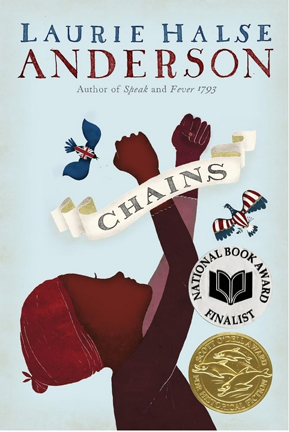
Review by Linda Rice (reposted from the Journal of the American Revolution)
Set in New York at the time of the American Revolution, Chains spans May 27, 1776 to January 19, 1777. As the novel opens, the young teenage protagonist, Isabel, is optimistic about her future as her owner, Miss Mary Finch, has died and had let Isabel know beforehand that she and her five-year old sister Ruth would be free upon her passing. Unfortunately, no lawyer is present to produce the will that shows Miss Finch’s wishes. Mr. Robert Finch, Mary’s nephew and only surviving relative, has come to claim Isabel and Ruth and accuses Isabel of lying about the will. He proceeds to sell Isabel and her sister to Elihu and Anne Lockton from New York. The couple are Loyalists, and while Mrs. Lockton treats Ruth as a kind of pet that she shows off to friends she entertains, she treats Isabel, whom she refers to as “Sal,” in a harsh and degrading fashion, always showing her disfavor.
Isabel has two aims: to protect her sister and to gain freedom. She lives in fear that the Locktons will sell Ruth and thus separate them. At one point Mrs. Lockton provides sweets to them, something that was unusual. But she had laced them with something to make Isabel fall into a deep sleep. When Isabel awakens she learns that Mrs. Lockton has sold Ruth into slavery in the West Indies. This crushes Isabel, who is unable to escape due to constant monitoring by the Locktons.
While doing errands in town for Mrs. Lockton, Isabel meets Curzon, a teenage slave of Mr. Bellingham, a Patriot. Curzon asks Isabel if she would be willing to spy on the Locktons to get information to the Patriots. Initially Isabel refuses but then begins doing so. Mrs. Lockton finds out and punishes her by branding her cheek with an “I” for “insolence.” It takes Isabela six days to regain consciousness after the branding.
Mrs. Lockton makes Isabel care for Lady Seymour, Elihu’s aunt, who lives in town. As Isabel goes to town she is able to deliver messages about Loyalist activities to the Patriot soldiers. Lady Seymour has compassion for Isabel, treating her with kindness and feeding her well. Her house burned in the great fire of New York (September 21, 1776), and Isabel saves her as well as a portrait of her husband and some letters that were dear to her. This becomes important late in the book as Lady Seymour, then an invalid and unable to speak, gestures to Isabel that she approves of her taking coins that she had saved.
The Locktons don’t recognize Isabel as intelligent, which works to her advantage when she is in the room delivering food or waiting for orders when Mr. Lockton is talking with other Loyalists. Isabel learns of the plot to kill Gen. George Washington and shares this with Patriots who come and arrest Mr. Lockton. However, he is soon released and later escapes by hiding in a barrel of cheese. Readers learn that Ruth has not been sold to the West Indies but rather sent to Charleston, South Carolina. Isabel plots her escape for the night that people are distracted by a celebration of Queen Charlotte of Great Britain’s birthday. Though Mrs. Lockton had Isabel locked in a potato bin during the ceremonies, she manages to dig her way out, find a pass and forge papers showing she is free.
Curzon, who had fought in battle for the Patriots, was shot in the leg and held at Bridewell as a prisoner of war. Isabel is able to see him by bribing the guards with food. On the night of her escape, she goes to Bridewell and says she was sent to clean the cells where “prisoners been dropping dead like flies. Fever.” “Curzon lay insensible, his skin burning with fever, his eyes rolled up into his head. I called his name and pinched him, but he did not look my way nor speak a word.” Isabel claims Curzon is dead, loads him in a wheelbarrow and covers him with a filthy blanket. The two manage to make it to the wharf and to a boat. “I rowed that river like it was a horse delivering me from the Devil. My hands blistered, the blisters popped, they re-formed and popped again. I rowed with my hands slick with blood … The sun rose beyond the water, at the other side of the river. I was on the west bank. I was in Jersey. I had set myself free.” At this point Curzon awakes asking where they are, and Isabel replies “I think we just crossed the river Jordan.” The book ends with Isabel asking Curzon if he can walk and with an advertisement for the sequel Forge that gives the account of Isabel Gardner (formerly Sal Lockton) and companion Curzon Bellingham.
The first teaching strategy for Chains is a set of ten questions designed to guide students in a close reading and deeper study of the novel. These questions may be used as the basis of class discussions, exams or essays.
Questions for Study and Discussion for Chains 1. How do Isabel’s and Curzon’s views of freedom differ in chapter 6? Also consider whether this changes as the novel progresses. 2. What evidence exists that Mr. Lockton is conspiring against the Patriots? Trace his journey from the point that he is arrested to the last mention of him. 3. In chapter 29 Isabel speaks of being “chained between two nations.” What does this mean? 4. Isabel’s grandfather speaks to her about the river Jordan in chapter 26, and in the last paragraph of the book, Isabel states “I think we just crossed the river Jordan.” What is the significance of the river Jordan?
5. Discuss the circumstances by which Isabel secures a copy of Thomas Paine’s Common Sense in chapter 39. How does the pamphlet influence her in later chapters? 6. How does the author contrast Lady Seymour and Mrs. Lockton in chapter 41? 7. In what ways was the relationship between Isabel and Lady Seymour a reciprocal one where each benefited? Consider especially the events of chapters 31 and 44. 8. It may be said that at the time of Chains, both Isabel and America are rebellious, young, and conflicted. Explain. 9. Identify three scenes that you believe are the most important in Chains and explain why each is key to the novel. 10. The trilogy of which Chains is book one is called Seeds of America. What role do seeds play in the novel?
While these questions help to ensure close reading and provide opportunities to check for student understanding in a traditional way, the next activity engages students in a more creative, nontraditional manner as they use symbolic thinking and hands-on creativity.
Coat of Arms Overview and Instructions
A coat of arms is a visual design in the form of a shield, that goes back to Medieval days when families and communities used them to show their identity. The coat of arms includes a motto or slogan that captures the important essence of the family, nation, school, or in our case, Chains. A coat of arms can be elaborate, including features such as “supporters” (visuals on each side of the shield) and “toppers” (one or more visuals at the top such as a crest, torse, helmet, or crown).
This assignment consists of three parts: 1) Pre-writing via the writing frames for the coat of arms; 2) The visual coat of arms; 3) A paper that explains the symbols chosen in connection with the character the student chose from Chains.
Visual Coat of Arms
The slogan “Per Aspera ad Astra” is Latin for “Through hardships to the stars” which is why the top of the crest features stars. There are three stars, each with an initial, representing Isabel in the middle and Curzon and Ruth on each side. The pre-writing in Table 1 provides additional insights about the symbols and colors used in Isabel’s shield.
Ever since the atomic bombings of Japanese cities in August 1945, the world has been living on borrowed time. The indications, then and since, that the development of nuclear weapons did not bode well for human survival, were clear enough. The two small atomic bombs dropped on the cities of Hiroshima and Nagasaki killed between 110,000 and 210,000 people and wounded many others, almost all of them civilians. In subsequent years, hundreds of thousands more people around the world lost their lives thanks to the radioactive fallout from nuclear weapons testing, while substantial numbers also died from the mining of uranium for the building of nuclear weapons. Most startlingly, the construction of nuclear weapons armadas against the backdrop of thousands of years of international conflict portended human extinction. Amid the escalating nuclear terror, Einstein declared: “General annihilation beckons.”
Despite the enormity of the nuclear danger, major governments, in the decades after 1945, were too committed to traditional thinking about international relations to resist the temptation to build nuclear weapons to safeguard what they considered their national security. Whatever the dangers, they concluded, military power still counted in an anarchic world. Consequently, they plunged into a nuclear arms race and, on occasion, threatened one another with nuclear war. At times, they came perilously close to it―not only during the 1962Cuban missile crisis, but during the October 1973 Arab-Israeli war and on numerous other occasions.
By contrast, much of the public found nuclear weapons and the prospect of nuclear war very unappealing. Appalled by the nuclear menace, they rallied behind organizations like the National Committee for a Sane Nuclear Policy in the United States, the Campaign for Nuclear Disarmament in Britain, and comparable groups elsewhere that pressed for nuclear arms control and disarmament measures. This popular uprising secured its first clear triumph when, in the fall of 1958, the governments of the United States, the Soviet Union, and Britain agreed to halt nuclear weapons testing as they negotiated a test ban treaty. As the movement crested, it played an important role in securing the Partial Test Ban Treaty of 1963 and a cascade of nuclear arms control measures that followed.
Even when U.S. and Soviet officials revived the nuclear arms race in the late 1970s and early 1980s, a massive public uprising halted and reversed the situation, leading to the advent of major nuclear disarmament measures. As a result, the number of nuclear weapons in the world’s arsenals plummeted from about 70,000 to about 12,240 between 1986 and 2025. At a special meeting of the UN Security Council in 2009, the leaders of the major nuclear powers called for the building of a nuclear weapons-free world.
In recent decades, however, the dwindling of the popular movement and the heightening of international conflict have led to a revival of the nuclear arms race. As three nuclear experts from the Federation of American Scientists reported last June: “Every nuclear country is improving its weapons systems, while some are growing their arsenals. Others are doing both.” The new nuclear weaponry currently being tested includes “cruise missiles that can fly for days before hitting their targets; underwater unmanned nuclear torpedoes; fast-flying maneuverable glide vehicles that can evade defenses; and nuclear weapons in space that can attack satellites or targets on Earth without warning.” The financial costs of the nuclear buildup by the nine nuclear powers (the United States, Russia, China, Britain, France, Israel, India, Pakistan, and North Korea) will be immense. The U.S. government will reportedly spend over $1.7 trillion on its nuclear “modernization.”
Furthermore, over the past decade, the governments of North Korea, the United States, and Russia have issued public threats of nuclear war. In line with its threats, the Russian government announced in late 2024 that it had lowered its threshold for using nuclear weapons. In response to these developments, the Doomsday Clock of the Bulletin of the Atomic Scientists has been set at 89 seconds to midnight, the most dangerous level in its 79-year history.
As the record of the years since 1945 indicates, the catastrophe of nuclear war can be averted. To accomplish this, however, a revival of public pressure for nuclear disarmament is essential, for otherwise governments easily slip into the traditional trap of enhancing military “strength” to cope with a conflict-ridden world―a practice that, in the nuclear age, is a recipe for disaster.
This public pressure could begin, as the Nuclear Freeze movement of the 1980s did, with a call to halt the nuclear arms race, and could continue with the demand for specific nuclear arms control and disarmament measures. But, simultaneously, the movement needs to champion the strengthening of global institutions―institutions that can provide greater international security than presently exists. The existence of these strengthened institutions―for example, a stronger United Nations―would help resolve the violent conflicts among nations that spawn arms races and would undermine lingering public and official beliefs that nuclear weapons are essential to safeguard national security.
Once the world is back on track toward nuclear disarmament, the movement could focus on its campaign for the signing and ratification of the Treaty on the Prohibition of Nuclear Weapons. This treaty, providing the framework for a nuclear weapons-free world, was adopted in 2017 by most of the world’s nations and went into force in 2021. Thus far, it has been signed by 94 nations and ratified by 73 of them.
Given recent international circumstances, none of the nuclear powers has signed it. But with widespread popular pressure and enhanced international security, they could ultimately be brought on board.
They certainly should be, for human survival depends upon ending the nuclear terror.
How Rightwing Money Tries to Shape the Teaching of American History
By Alan Singer
The Bill of Rights Institute sponsors events and provides scholarships for the annual conference of the National Council for the Social Studies. On the face of it, it seems innocuous, until you dig a little deeper. The NCSS sells sponsorships, display booths, and sessions that combined can cost a publisher or an organization almost $15,000 which it uses to cover the cost of the convention. At the 2024 NCSS National Conference in Boston, Bill of Rights Institute representatives conducted ten sessions. I have no idea what the Bill of Rights Institute actually pays, but I do know the money and their curriculum initiatives come from the rightwing Koch Foundation and its network of aligned organizations including Americans for Prosperity and the Stand Together Trust. In a 2017 interview with the conservative research group Accuracy in Academia, the President of the Bill of Rights Institute claimed it was working with “approximately one-quarter of the nation’s secondary school teachers in American history, civics, and social studies.”
Koch Industries, the second largest privately held company in the United States, is a $115 billion conglomerate that owns oil refineries and pipelines, markets oil, coal, and chemicals, wood pulp and paper. It uses the Koch Foundation and network to fund conservative causes including challenges to climate science, support for corporate tax cuts, and eliminating federal regulations and environmental controls. The Koch network channeled over $9 million to Project 2025 advisory groups. Other major financial backers of the Bill of Rights Institute include the Adolph Coors Foundation, the Lynde and Harry Bradley Foundation and the Bradley Impact Fund, and the Sarah Scaife Foundation, all donors to the Heritage Foundation for creation of Project 2025. Much of that money was channeled through and the Donors Capital Fund.
In 2014, Bill Bigelow, writing for the Zinn Education Project, accused the Koch Brothers of trying to shape social studies curriculum through their Arlington, Virginia-based Bill of Rights Institute, founded in 1999. According to Bigelow, the Bill of Rights Institute’s tactics to infiltrate social studies include presentations at conferences, essay contests for students, and free seminars for teachers on topics like “Being an American,” “Preserving the Bill of Rights,” and “Heroes and Villains: The Quest for Civic Virtue.” Bigelow argued that their curriculum material “cherry-picks the Constitution, history, and current events to hammer home its libertarian message that the owners of private property should be free to manage their wealth as they see fit.” In one lesson students learn, “The Founders considered industry and property rights critical to the happiness of society.” Of course in many cases their belief in individual property rights included the right to enslave Africans and confiscate land from North America’s indigenous population. In his review of Bill of Rights Institute curriculum and background material, Bigelow found “nothing that could help teachers show students how race and social class shaped the U.S. Constitution” and “nothing that invites students to think about the Constitution from the point of view of anyone other than the elites who drafted it,” including the new nation’s enslaved population.
I attended a regional social studies council conference where a representative from the Bill of Rights Institute made multiple presentations including one on African American participation in the American War for Independence. The lesson plan and supplementary material is available of the Bill of Rights Institute’s website (https://billofrightsinstitute.org/lessons/paths-to-freedom-african-americans-and-the-revolutionary-war). With the Trump administration’s war on museum displays and social studies curriculum that portray negative aspects of U.S. history like the brutality of chattel slavery, I think it is a good example of how the Bill of Rights Institute skews the teaching of American history in line with patriotic history as championed by Project 2025 and the Trump administration’s The 1776 Report. This lesson acknowledges slavery but emphasizes, I believe incorrectly, how the American Revolution was a significant step towards emancipation using isolated examples to support its contentions. The reality is that with the development of the cotton gin in the 1790s and the expansion of cotton production and textile manufacturing at the start of the 19th century slavery in the United States expanded exponentially.
Excerpts from a statement by the Bill of Rights Institute followed by my comments in italics.
The resistance against Great Britain and the Revolutionary War inspired American colonists to think about their natural and constitutional rights. The language and principles of liberty, equality, and self-governance led White and Black Americans to question the institution of slavery and to challenge it more directly. Their diverse efforts led to the largest emancipation in world history at that time and freed an estimated 100,000 enslaved people.
This is misleading. Neither the Declaration of Independence nor the Constitution challenged the existence of slavery in what would become the United States. A majority of the men who wrote both documents were slaveholders. A statement blaming the King of England for imposing the slave trade on British colonies was removed from the Declaration of Independence. The Constitution indirectly acknowledged the legitimacy of slavery with the three-fifth compromise and provisions for the capture and return of freedom-seekers.
Some colonists acknowledged the moral wrong of slavery while protesting British violations of their rights in the 1760s and 1770s. Pamphleteer James Otis wrote that, “The Colonists are by the law of nature free born, as indeed all men are, white or black.” Pennsylvanian Benjamin Rush wrote, “It would be useless for us to denounce the servitude to which the Parliament of Great Britain wishes to reduce us, while we continue to keep our fellow creatures in slavery just because their color is different from ours.” While some colonists addressed the contradiction of slavery and freedom, Black Americans challenged the institution.
Neither George Washington nor Thomas Jefferson freed enslaved Africans that they owned during their lifetimes. A 1773 letter written by Patrick Henry, who is remembered for declaring “Give Me Liberty Or Give Me Death,” is telling about the attitudes of white colonialists about the institution of slavery. In the letter, Henry wrote “Would any one believe that I am Master of Slaves of my own purchase! I am drawn along by ye. general inconvenience of living without them.”
Enslaved persons appealed to revolutionary ideals to argue for their natural rights. In 1773, four enslaved persons in Massachusetts petitioned the legislature for their freedom “which, as men, we have a natural right to.” The following year, a group of enslaved men presented a freedom petition claiming their natural rights and right to consent. “We have in common with all other men a natural right to our freedom without being deprived of them by our fellow men.” The legislature did not yet act upon the petitions, but Black Americans continued to petition for their freedom during the war as did Nero Brewster and 19 other enslaved individuals in New Hampshire in 1779.
The petitions were almost always unsuccessful.Only one of the original thirteen colonies, Massachusetts, outlawed slavery. Most of the enslaved Africans emancipated during the war were emancipated by the British.
Once the Revolutionary War began in 1775 at Lexington and Concord, free and enslaved Blacks joined both the patriot and British sides. Several Black patriots fought bravely at the Battle of Bunker Hill alongside White soldiers, but General George Washington forbade their service in the Continental Army that fall. However, dire manpower needs caused Washington and Congress soon to reverse that policy. The differing states had varied recruiting policies during the war: only South Carolina and Georgia prevented all Blacks from serving. A total of 5,000 free and enslaved Blacks fought for the patriot side throughout the war.
After Lord Dunmore offered freedom to any enslaved Africans who escaped to the British lines, an estimated 20,000 former slaves fought for their freedom by joining the British. The most famous of these was Titus Cornelius, Colonel Tye, who initially fought with Virginia’s Ethiopian Regiment and later led the New Jersey region’s Black Brigade.
Three Pounds Reward – Run away from the subscriber, living in Shrewsbury, in the county of Monmouth, New Jersey, a Negroe man, named Titus, but may probably change his name; he is about 21 years of age, not very black, near 6 feet high; had on a grey homespun coat, brown breeches, blue and white stockings, and took with him a wallet, drawn up at one end with a string, in which was a quantity of clothes. Whoever takes said Negroe, and secures him in any gaol, or brings him to me, shall be entitled to the above reward of Three Pounds, proc. And all reasonable charges paid by John Corlis. Nov. 8, 1775.
The British consistently encouraged enslaved persons to escape to support the British war effort and disrupt the American cause rather than out of a sincere desire for Black freedom.
During peace negotiations George Washington demanded that the British return formerly enslaved Africans including people he claimed to own as contraband. The British refused and evacuated as many as 20,000 Black Loyalists to Nova Scotia and other parts of the British empire.
During the war, General Washington’s aides, John Laurens and his friend Alexander Hamilton, developed an emancipation plan. In 1779, Congress endorsed their plan to raise a contingent of 3,000 enslaved men in South Carolina and Georgia who would be granted their freedom in exchange for military service. The legislatures of those two southern states rejected the scheme because of their opposition to emancipation and to arming enslaved persons.
In November 1775, George Washington issued an order barring both free and enslaved Black men from serving in the colonial army. In January 1776, Washington permitted the enlistment of free Black men who already were serving in the army and in 1777, all free Black men were permitted to join. Only Rhode Island offered freedom to enslaved men who joined the army. In a letter to Laurens’ father, Washington explained his fear that if the colonists did not arm enslaved Africans and offer them freedom, the British would and the war could be lost. Despite Washington’s pragmatic change of position, the plan was never implemented.
Bill of Rights Institute Guiding Questions:
How did African Americans participate in the Revolutionary War?
How did their actions reflect a desire to enjoy their natural rights?
Objectives:
Students will be able to connect actions taken by African Americans during the Revolutionary War to an understanding of natural rights of equality and justice.
Students will summarize the main ideas of historic texts.
Students will create an argument supported by evidence from primary sources. How did African Americans participate in the Revolutionary War? How did their actions reflect a desire to enjoy their natural rights?
These materials are missing from the Bill of Rights Institute’s suggested documents.
A. This charge against the King of England was removed from the original draft of the Declaration of Independence before it was signed on July 4, 1776:“He has waged cruel war against human nature itself, violating its most sacred rights of life and liberty in the persons of a distant people who never offended him, captivating and carrying them into slavery in another hemisphere, or to incur miserable death in their transportation thither . . . Determined to keep open a market where men should be bought and sold, he has suppressed every legislative attempt to prohibit or to restrain this execrable commerce.”
B. Boston King’s Escape to the British Lines (1779): “As I was at prayer one evening, I thought the Lord Heard Me, and would mercifully deliver me. [P]utting my confidence in him, about one o’clock in the morning, I went down to the river side and found the guards were either asleep or in the tavern. I instantly entered the water, but when I was a little distance from the opposite shore, I heard the sentinels disputing among themselves. One said, I am sure I saw a man cross the river. Another replied, there is no such thing. When I got a little distance from the shore I got down on my knees and thanked God for this deliver-ance. I traveled until five o’clock in the morning and then concealed myself until seven o’clock at night, when I proceeded forward thro’ brushes and marshes for fear of being discovered. When I came to the river, opposite Staten Island, I found a boat and altho it was near a whale-boat, I ventured into it and cutting the rope, I got safe over. The commanding officer, when informed of my case, gave me a passport and I proceeded to New York.”
C. Pennsylvania Gazette on April 12, 1780 reported on a Monmouth County raid led by Colonel Tye:On the 30th ult. a party of Negroes and Refugees, from the Hook, landed at Shrewsbury in order to plunder. During their excursion, a Mr. Russel, who attempted to make some resistance to their depredations, was killed, and his grandchild had five balls shot through him, but is yet living.” On September 9, 1780, Philadelphia Gazette reported: “One of these attempts (and one which very nearly proved successful) was made about the 1st of September, 1780, by a body of Refugees black and white, including among the former the mulatto leader known as “Colonel Tye.” The party made an unexpected attack on Huddy’s house, which was bravely defended by himself and a girl of about twenty years of age, named Lucretia Emmons. The house had been a station for a detachment of the militia, and fortunately the guard had left there several muskets, which the girl now loaded as rapidly as possible and handed to Huddy, who fired them successively from different windows, wounding several of the assailants and causing them to greatly overestimate the number of defenders. This caused them to shrink from further direct attack, and they then set fire to the house, which, of course, ended all hope of successful resistance on Huddy’s part, and seeing the flames beginning to spread, he, to save his house, agreed to surrender on condition that they would extinguish the fire, which terms they accepted.”
D. George Washington, while headquartered at Newburgh, New York, objected to British plans to evacuate formerly enslaved Africans as a violation of the provisional peace agreement and he sought to find and reacquire people he claimed as his own property. In an April 1783 letter to Benjamin Harrison, the Governor of Virginia, Washington wrote: “I transmitted the list of your Slaves to a Gentleman; a worthy active Man, of my acquaintance in New York and requested him to use his endeavors to obtain and forward them to you. All that can be done, I am sure he will do, but I have but little expectation that many will be recovered; several of my own are with the Enemy but I scarce ever bestowed a thought on them; they have so many doors through which they can escape from New York, that scarce any thing but an inclination to return, or voluntarily surrender of themselves will restore many to their former Masters, even supposing every disposition on the part of the Enemy to deliver them.”
E. Virginians Petition to Protect Slavery (1784):“Some men of considerable weight to wrestle from us, by an Act of the legislature, the most valuable and indispensable Article of our Property, our SLAVES by general emancipation of them. … such a scheme indeed consists very well with the principles and designs of the North, whose Finger is sufficiently visible in it. … No language can express our indignation, Contempt and Detestation of the apostate wretches. … It therefore cannot be admitted that any man had a right … to divest us of our known rights to property which are so clearly defined.”
F. Article in the New-York Packet, April 4, 1785:“It would be greatly injurous to this state if all the Negroes should be allowed the privileges of white men, unless there could be derived some possible means consistent with liberty, to separate them from white people, and prevent them from having any connection or intercourse with them . … [I]f they are emancipated on any other terms, it must be evident to the most common understanding, what will be the consequence in a short time; besides the shame we should most inevitably incur from a mixture of complexions, and their participating in government, … still greater consequence is to be dreaded, which is a total subversion of our liberties.”
G. Jupiter Hammon, poet and minister, was enslaved on Long Island. In 1786, he addressed this statement on slavery to the African population of New York State:“Now I acknowledge that liberty is a great thing, and worth seeking for, if we can get it honestly, and by our good conduct, prevail on our masters to set us free. That liberty is a great thing we may know from our own feelings, and we may likewise judge so from the conduct of the white people, in the late war. How much money has been spent, and how many lives have been lost, to defend their liberty. I must say that I have hoped that God would open their eyes, when they were so much engaged for liberty, to think of the state of the poor blacks, and to pity us. He has done it in some measure, and has raised us up many friends, for which we have reason to be thankful, and to hope in his mercy.”
H. According to the Mount Vernon library, seventeen members of the Mount Vernon enslaved population, fourteen men and three women escaped, many to a British warship anchored in the Potomac River. Hercules Posey, George Washington’s cook, and Ona Judge, Martha Washington’s personal servant successfully escaped bondage during Washington’s Presidency while the family was in Philadelphia. They fled to freedom when Washington tried to rotate them back to Virginia to avoid Pennsylvania’s emancipation laws. Posey was later sighted in New York City. Frederick Kitt, who oversaw the executive residence in Philadelphia, placed an advertisement in the Philadelphia Gazette and Daily Advertiser offering a $10 reward for Judge’s capture. In 1847, The Liberator published a letter from Reverend Benjamin Chase describing a visit with Ona Judge Staines who was now elderly where she recounted her escape. From Philadelphia Judge secured passage on a ship bound for Portsmouth, New Hampshire. A few months after arriving in Portsmouth, Judge was recognized by a friend of Martha Washington’s granddaughter and George Washington enlisted the customs collector there, a federal employee, in an unsuccessful effort to capture Judge. The runaway slave ad and The Liberator article are included on the Bill of Rights Institute web page as “Further Reading,” but not the letter from Washington to the Portsmouth Customs Collector.
I. Letter from President George Washington to Joseph Whipple, Customs Collector, Portsmouth, New Hampshire, November 28, 1796:I regret that the attempt you made to restore the girl (Oney Judge as she called herself while with us, and who, without the least provocation absconded from her Mistress) should have been attended with so little success. To enter into such a compromise, as she has suggested to you, is totally inadmissible, for reasons that must strike at first view: for however well disposed I might be to a gradual abolition, or even to an entire emancipation of that description of People (if the latter was in itself practicable at this Moment) it would neither be politic or just, to reward unfaithfulness with a premature preference; and thereby discontent, beforehand, the minds of all her fellow Servants; who by their steady adherence, are far more deserving than herself, of favor. … If she will return to her former Service, without obliging me to resort to compulsory means to effect it, her late conduct will be forgiven by her Mistress; and she will meet with the same treatment from me, that all the rest of her family (which is a very numerous one) shall receive. If she will not, you would oblige me, by pursuing such measures as are proper, to put her on board a Vessel bound either to Alexandria or the Federal City.”
James Arnett Friesen Press 384 pages, hardcover, softcover, and ebook
Reviewed by Emily Mernin
It may be hard for modern readers to imagine Manhattan as a rural island or New York City, now home to over eight million, as “a mere smudge along the shore far across the bay.” It might be difficult, too, for anyone who has travelled through New Jersey — the most tightly packed state, according to the U.S. Census Bureau — to picture it as it once was: a sparsely populated British colony of rolling hills, farmland, and small villages.
This year marks the semiquincentennial of the start of the American Revolution, the brutal eight-year war that resulted in independence from Great Britain. Much of the conflict unfolded in Philadelphia and in what are now the five boroughs of New York, plus the verdant land between the two cities: the Garden State. In his second novel, The Monmouth Manifesto, James Arnett immerses readers in this landscape as he follows two yeoman farmers who enlist to fight as Loyalists.
Arnett’s plot and characters are drawn entirely from historical accounts, all of which are refer enced in his epilogue, afterword, and appendix; he changes few names and dates. The narrative begins with Richard Lippincott in early July 1776 at a Quaker meeting house in Shrewsbury, on the “northeastern coastal plain.” Described as “even- featured, lean, and about five-foot-nine,” the thirty- one-year-old listens intently to a discussion of “the current chaotic conditions of the Province of New Jersey”— specifically the spreading power of George Washington’s Continental Army. One of the meeting’s elders rattles off James and Richard fight side by side in the Battle of Staten Island in August 1777 and become unexpectedly close, even if James is “one of those polished arrogant Anglicans” and Richard is “one of those prickly sanctimonious Dissenters.” As the years pass — and their home lives feel increasingly distant — they influence each other greatly. Despite a series of rebel advances and London’s declining interest in its restless colonies, they help each other stay loyal to the cause. In 1781, after he learns of Maggie’s death, Richard rents a room for himself and Esther in Manhattan, where most of the Loyalists in the region have taken refuge. Although charting the moral evolution of multiple characters, Arnett zeroes in especially on Richard’s slow acceptance of bloodshed, military life, and revenge.
In 1782, Richard’s eventual comfort with violence culminates in his desire to person ally execute the rebel captain Joshua “Jack” Huddy. Richard organizes the prisoner of war’s hanging without the proper orders — a dangerous decision that surprises himself, Esther, and even James (who later resettles in Nova Scotia). The unwarranted murder of Huddy enrages the Patriots. They write the Monmouth Manifesto, a document “demanding that Washington retaliate” by executing someone on the British side. The future president selects a young officer, Charles Asgill, who (as in reality) ultimately sails back to London after six months of imprisonment.
Arnett’s rendering of this dramatic event, which came to be remembered as the Asgill Affair, is suggestive of the futile desperation of the British and Loyalist forces toward the end of the war, along with the self- abandonment required to commit senseless violence. I grew up in A hillside town in Essex county, recent advancements of the rebel cause, including an attempt to establish a “so-called State” and a “Declaration of Independence from Great Britain.” He then asks a question that rings throughout the novel: “How do we pacifists withstand the demands of a violent society?”
For Arnett, the short answer seems to be that they can’t. Within weeks of this gathering, Richard abandons his 100-acre farm “with its many saltwater marshes and estuaries,” his wife, Esther, and their daughter, Maggie, to join the Skinners, a volunteer regiment forming on Staten Island. Arnett writes long, reflective passages on Richard’s internal struggle to reconcile his peace- loving religious views with his new-found commitment to serve the Crown. After a failed attempt to challenge his slave-owning bunkmate, James Moody, Richard thinks, “Maybe I’m just not cut out to be a Friend. Not everyone is ”just a few kilometres west of Newark, facing the ever- changing Manhattan skyline. When I go back to visit, I inevitably drive past the many strip malls of Galloping Hill Road (down which the British retreated during the Battle of Springfield in 1780), catch the eastbound commuter train in Morristown (where Washington’s army headquarters were located), and run along the Palisades — a thirty- two- kilometre stretch of steep cliffs — near Fort Lee (where Thomas Paine composed much of The American Crisis).
Over the last 250 years, these places, like the notion of patriotism, have changed profoundly. It is compelling to find them reimagined here, as part of a richly drawn backdrop for a book about those on “the wrong side of history” (as the cover copy reads). In revisiting this chapter of civil strife, Arnett reminds his readers how careful we must be with what enthralls, ensnares, and enrages us.
The first pages of On This Ground engage the reader in the spiritual identity of children seeking an understanding about life in the world into which they were born. It is also an eyewitness account about how Newark became ‘the worst city in America’ in the 1960s. The first pages of this book provide an historical understanding of Newark but also of cities throughout New Jersey and the United States.
The reflections on education at St. Benedict Prep have value regarding an understanding of the core values, purpose, mission, and vision of all schools. Every teacher will find lessons in the passion and dedication of the faculty who are committed to caring, serving, and teaching. By Page 21, I was reliving the movie of “Sister Act” regarding the passion of nuns serving the people of Los Angeles. Also, my memories of “Welcome Back Kotter”, “Abbot Elementary”, “School of Rock”, “Mr. Holland’s Opus”, “Stand and Deliver”, “Dead Poet’s Society”, and “Up the Down Staircase” each flashed across my mind as I began reading On This Ground! It was an amazing flashback to my own experiences as a teacher.
Chapter 2 is the historical account of the 1967 Newark riots. In this chapter we learn of the German immigrant population that came to Newark in the 19th century, the dominance of the beer industry, the migration in the 1920’s to Newark from the South, and the flight to the suburbs that came with interstate highways and airports. It is one of the best descriptive accounts of continuity and change over time of an American city because of its conciseness and accuracy.
The account of the riots is important for the story of St. Benedict’s Prep School but also for every resident in New Jersey to understand and synthesize. The riots left 26 people dead and 700 injured. Entire blocks were destroyed with property damage totaling $10 million or about $100 million in today’s money. Over 1,400 residents were arrested. Teenage unemployment was about 50%. The white landlords and store owners moved out of Newark to the suburbs and local taxes to fund the essential services and public schools disappeared. The pain of the “Long hot summer of 1967” continued for years. The local government had limited authority and resources, the state government formed the Lilley Commission which identified social, political, and economic issues to be the underlying causes for the riots, and the Kerner Commission led to a national conversation about race and poverty, concluding that in the United States we had two separate and unequal societies.
We walk through the halls of St. Benedict’s Prep with Anthony DePalma to the Shanley Gym where the voices of students from the past and present are heard. Everyone who reads On This Ground will discover the power of love in the culture of this school, the importance of empowering students to make decisions, and how a cohesive community unites and energizes young scholars and athletes. When teachers care and listen to their students, everyone works toward the same goal. Through situations involving cheating, vaping, and texting inappropriate messages, Anthony DePalma guides us through the steps that make a difference in the lives of students; even those who are resistant.
The stories of the hardships of students, disciplinary decisions, the integration of girls from a small Roman Catholic school in neighboring Elizabeth, helping families with limited financial resources, and prayers for healing are not unique to St. Benedict’s. The strategies of how the faculty and headmaster handled these situations is unique. St. Benedict’s connects students and teachers as a community of learners. Anthony DePalma explicitly illustrates the dedication of the educators at St. Benedict’s in an environment where teachers are ‘called’ to serve, even though their college education may not include preparation for urban schools. Other schools will find value in learning how the daily morning faculty meeting discusses the needs of students, the importance of the ‘convocation’ that gathers students together with opportunities for leadership, the overnight experience in the mountains that brings the students together, and how problem-solving includes conversations between students, parents, and administrators.
Beyond the journey through the halls and classrooms are the insights into the lives of young children facing the addictive behaviors of parents, injuries from gun wounds, foster care homes, temporary living conditions, food insecurity, and unemployment. The crisis in our schools and cities is not part of the evening news or the discussions around the dinner table, office, or places of worship. Illiteracy is a crisis in America and perhaps this book will awaken interest.
In New Jersey, 3% of high school students drop out of school by their sophomore year in high school. Source
In New Jersey, 437,000 students (26%) are receiving supplemental food daily. Source
Approximately 1/3 of students in New Jersey are living with single parents or their parents are in prison, rehabilitation, or are unemployed. Source
In New York City, 45% of the students are ‘chronically absent.’ Source
17% of third through eighth graders in the United States are chronically absent because of mental health issues. Many are from suburban homes and excellent school districts. Source
Examine the data (2023) from the Federal Reserve Bank of St. Louis below: Source
On This Ground engages readers to think about the moral and spiritual poverty that is in our country. Towards the end of the book there is an account of a freshman girl who loved to dance but had been disadvantaged in many ways. She overcame several obstacles in her persistence to establish the first cheerleading team at St. Benedict’s. It is a story of moral and spiritual strength and the power of perseverance and determination. The stories of alumni, Anthony Badger, Bob Brennan, and Leon McBurrows remind us that life is challenging because we are human and our humanity is complex.
As I am reading the words of Anthony DePalma, I am thinking of the children who are disconnected from reality. I am also thinking of the 14-year-old freshman entering high school in September 2026 who will only be age 28 in the year 2040. The message for me in On This Ground is the importance of teaching about character, kindness, self-esteem, decision-making, and personal identity. The institutions for helping children and their families with these lessons are our local schools and places of worship. The importance of teachers, clergy, custodians, crossing guards, cafeteria workers, bus drivers, coaches, are essential to connecting young people to a productive life.
America is faced with a crisis of illiteracy and the adage that schools teach reading, writing, and arithmetic is for a different time in our history. The challenges of artificial intelligence, substances, obesity, food insecurity, a warmer climate, and what we spend our money on, are overwhelming!
The story of St. Benedict’s Preparatory School provides optimism and hope. The links below are videos about the story in On This Ground.
Four books that have influenced my teaching of U.S. history are: the volumes in the Jefferson Papers Project, The Life of Henry Adams, The Life of Arthur Schlesinger, and Our Fragile Freedoms. These books have left a profound influence on me because each of them included a perspective of 50 years or more.
Eric Foner’s Our Fragile Freedoms is a series of selected documents and book reviews that he has authored over 250 years of our history. It is a collection of human stories in addition to documents, perspectives, historiography, and scholarly insights. In my reading I discovered new information and perspectives about enslaved persons, laborers, immigrants, and women. I have also met Eric Foner, our lives share a similar chronology of the second half of the 20th century and the first 25 years of the 21st century. Just when I thought I had mastered everything that needs to be taught in high schools, colleges, and in public discussions, I discovered somethings that are new and important in his book.
“Our Fragile Freedoms gathers together nearly sixty book reviews and opinion pieces I have written over the past quarter century, Originally published in venues such as the New York Review of Books, London Review of Books, The Nation, and The New York Times, they reflect a period of remarkable creativity among American historians but also intense controversy over the teaching, writing and public presentation of history. The book examines history as refracted through the prism of some of the most influential recent works of scholarship, while at the same time shedding light on my own evolution as an historian.” (Introduction, page xv)
The insights into the U.S. history curriculum are helpful to teachers who want to engage their students in investigating history and discussing the concept of freedom. Here are some examples:
1.Colonial America:“In South Carolina and Georgia, however, the disruption of the War for independence produced not a weakening of commitment to slavery, but the demand that the Atlantic slave trade be reopened. At the insistence of these states, the Constitutional Convention of 1787 forbade Congress from abolishing the importation of slaves until 1808. Given this window of opportunity, South Carolina brought in tens of thousands of new slaves, further reinforcing the African presence in the low country Black society.” (page 22)
2.President Washington:“Thompson (Mary Thompson, author of “The Only Unavoidable Subject of Regret: George Washington, Slavery, and the Enslaved Community at Mount Vernon”, 2019) offers various explanations for Washington’s refusal to speak or act publicly against slavery. She points out that freeing his slaves would have meant financial disaster for his family. Like other Virginia planters, Washington was chronically in debt, largely because of his taste for luxury goods imported from Britain. Indeed, in 1789 he had to borrow money to pay for his journey to New York where his inauguration as the first president was to take place.” (page 35)
3. Fugitive Slave Law:“The first arrest under the Fugitive Slave Act of 1850 took place in New York-a city whose economic fortunes were closely tied to the cotton trade, and whose political establishment was decidedly pro-southern. On September 16, 1850, eight days after President Millard Fillmore signed the measure, two deputy U.S. marshals arrested James Hamlet at his job as a porter in a local store. Hamlet had escaped from Baltimore two years earlier and settled in Williamsburg, a Brooklyn village with a small Black population, along with his wife and three children, all born in Maryland.” (page 53)
4. Emancipation Proclamation: “’I cannot make it better known than it already is, that I strongly favor colonization,” Lincoln said in a message to Congress less than a month before he issued the Emancipation Proclamation. Oakes (Professor James Oakes, CUNY) calls Lincoln’s August 1862 meeting with Black leaders (not including Douglass), where he urged them to support colonization, “bizarre,” and explains it as an effort to “make emancipation more palatable to white racists.” And he notes, Douglass reacted with one of his most bitter criticisms of the president, “Mr. Lincoln,” he wrote, “assumes the language and arguments of an itinerant colonization lecturer shows all his inconsistencies, his pride of race and blood, his contempt for Negroes and his canting hypocrisy. (page 72)
5. Reconstruction:“Grant’s contemporaries recognized the Civil War as an event of international significance. One hundred and fifty years after the conflict began, the meanings they ascribed to it offer a useful way if outlining why it was so pivotal in our own history. The Civil War changed the nature of warfare, gave rise to an empowered nation-state, vindicated the idea of free labor, and destroyed the modern world’s greatest slave society. Each of these outcomes laid the foundation for the country we live in today. But as with all historical events, each outcome carried with it ambiguous, even contradictory, consequences.” (page 85)
As teachers, we need to understand the big picture of historical decisions and events over time. This is why it is important for students to learn about continuity and change as one of the core skills of our discipline. Our Fragile Freedoms helped me to grasp the complexity of the concepts of freedom and equality that social studies teachers introduce in kindergarten.
An important article and commentary in the book is “Everyday Violence in the Jim Crow South.” (pp. 201-210) This review of By Hands Now Known: Jim Crow’s Legal Executioners, by Margaret A. Burnham, New York Review of Books, April 6, 2023, provides specific examples of the abuse of power by people in local and state government against innocent citizens.
“In Westfield, a town near Birmingham, a female white clerk at a local store, claiming that a Black customer, William Daniel, had insulted her, called the police. When an officer arrived, he almost immediately shot and killed the alleged offender, even though, as Burnham laconically remarks, Daniel had committed no crime: ‘even in Alabama, there was no law against, ‘insulting a white woman.’” (p. 203)
Another commentary that engaged my interest as a high school teacher was “Tulsa: Forgetting and Remembering.”(pp. 211-220) The information in the Review of The Ground Breaking: An American City and Its Search for Justice by Scott Ellsworth in the London Review of Books, September 9, 2011, provides new insights and perspectives to this horrific tragedy that began with a minor encounter between two teenagers. Scott Ellswoth is from Tulsa and became interested in this race riot in his research for a high school history paper. He pursued his passion of this massacre as a college student at Reed College, and throughout his adult life. The discussion about the importance of local research has relevance to the teaching of history and its relevance to project-based learning.
The review of Half American: The Epic Story of African Americans Fighting World War II at Home and Abroad by Matthew F. Delmont and An Army Afire: How the U.S. Army Confronted Its Racial Crisis in the Vietnam Era by Beth Bailey 2023) left me feeling uncomfortable. I think many teachers emphasize the role of the Tuskegee Airmen in teaching World War II and follow it up with a five-minute talk on President Truman’s Executive Order to embrace “equality of treatment and opportunity” in the military regardless of race, religion, and national origin. Because of my ignorance in this area, I never included examples of Jim Crow discrimination and the race problem in our armed forces. Our Fragile Freedoms provides graphic examples. (pp. 232-243)
In the middle of the book there are some of the most important insights and perspectives for teachers of 20th century United States History. They have a direct relationship to what students are thinking about today as they listen to or witness events that are challenging the values of liberty, equality and social justice. They offer teachers critical questions of inquiry regarding the continuity and change of America’s core values from the Declaration of Independence, Reconstruction Era, and Civil Rights movement. Allow me to summarize from examples on the New Deal and Civil Rights era from pages 243-267.
“We will never know precisely why Parks refused to leave her seat when ordered to do so, her decision was not premeditated but neither was it completely spontaneous. Perhaps it was because an all-white jury in Mississippi had just acquitted the murderers of Emmett Till, a Black teenager who had allegedly whistled at a white woman. Perhaps the reason was that she had inadvertently boarded a bus driven by the same driver who had evicted her twelve years earlier. Parks knew that talk of a boycott was in the air. In any event, in the wake of her arrest the boycott began.” (p. 248)
In the review of Riding for Freedom, teachers might ask if the foreign policy of the Kennedy Administration on the Cold War was mutually exclusive from the domestic policy of integration and racial justice. Many American presidents have faced challenging decisions regarding their promise for domestic reforms and unexpected international conflicts. Kennedy experienced this in his first year as president.
“Certainly, the photographs that flashed across the world embarrassed the White House. But the conflict with the Soviets also inspired deep distrust of any movement that included critics of American foreign policy. After a telephone conversation in which he urged Martin Luther King Jr. to restrain the riders, Robert Kennedy remarked to an aide, ‘I wonder whether they have the best interest of their country at heart.’” (pp. 253-254).
“The continuing distortion of the period (Reconstruction) by historians raised a troubling question, King had long identified the movement with core American values inherited from the nation’s founding. But what, in fact, were the nation’s deepest values? All men are created equal? Or something more sinister, exemplified by Reconstruction’s violent overthrow? King had originally believed, he told the journalist David Halberstam, that American society could be reformed through many small changes. Now, he said, he felt ‘quite differently,’ ‘I think you’ve got to have a reconstruction of the entire society, a revolution of values.’ Was the movement the fulfilment of American values or their repudiation?” (pp. 263-264)
These excerpts are only appetizers for the full meal that is within each review and the entire book. As students think about and debate the civil rights era, they gain an understanding of the civil rights movement, its brutality, its injustice, its inequality, and its struggle. Unfortunately, too many students only know one sentence from Martin Luther King’s speech, “I have a dream….” Teachers should have students read or watch the entire speech.
“We must forever conduct our struggle on the high plane of dignity and discipline. We must not allow our creative protests to degenerate into physical violence. . . . The marvelous new militancy which has engulfed the Negro community must not lead us to distrust all white people, for many of our white brothers, as evidenced by their presence here today, have come to realize that their destiny is tied up with our destiny. . . .
We cannot walk alone. And as we walk we must make the pledge that we shall always march ahead. We cannot turn back. There are those who are asking the devotees of civil rights, “When will you be satisfied?” We can never be satisfied as long as the Negro is the victim of the unspeakable horrors of police brutality.
The genius of this book is that each chapter offers a new insight, a scholarly perspective, and a valuable lesson. I learned something new about integration, voting, the censorship of speech, the Chicago riots in 1968, and progressivism. The section on History, Memory, Historians is a must read for every pre-service teacher and every social studies teacher. The lessons here about historical omissions, social and intellectual history, and the lessons of history. Our Fragile Freedoms should shape the generation of social studies/history teachers who will be teaching students in the second quarter of the 21st century!
This lesson plan on the History of European Antisemitism is a critical tool for social studies teachers, empowering students with the context and critical skills to analyze the evolution of deep-seated hatred. The lesson is indispensable for World History by demonstrating how the Holocaust was the result of centuries of cumulative antisemitism. Furthermore, it strengthens U.S. History curricula by providing the historical framework needed to study WWII and genocide.
Essential Questions
What is antisemitism?
What are four historical forms of antisemitism?
How have these four forms of antisemitism been expressed throughout history?
How can these four forms of antisemitism be expressed in modern times?
What does modern antisemitism, or anti-Jew hate look like?
Learning Objectives
Students will be able to:
Define antisemitism.
Identify four forms of antisemitism (religious, economic, political, and racial) which are interconnected and have manifested in various ways over time.
Trace the evolution of antisemitism from pre-Christian to modern times.
Understand that anti-Jew hate evolves and manifests in ways that don’t fit into the historical forms.
Materials Needed
PRIMARY SOURCES
This slide deck contains the nine primary source examples below. The speaker notes on each slide explain the type of historical form of antisemitism the source represents, as well as offer guides for analysis of each source. Additional context and suggested use for them can be found in the lesson plan, beginning at Section 4.
SOURCE 1: Ecclesia And Synagoga, 1300 CE
SOURCE 2: (optional) Excerpt from Law of Theodosius II, 438 CE
SOURCE 3: German depiction of Blood Libel and Judensau, 15th century
SOURCE 4: (optional) Excerpt from Solomon bar Simson Chronicle, 1140
SOURCE 5 Excerpt from Henry Ford’s The International Jew, 1920
SOURCE 6: Political cartoon “Metamorphosis” from Simplicissmus, 1903
SOURCE 7: Excerpt from a letter written by Hitler to Adolf Geimlich, 1919
SOURCE 8: Magazine cover of the French publication “La Libre Parole,” 1893
SOURCE 9: Excerpt from speech by Senator Ellison DuRant Smith of South Carolina in support of the 1924 Federal Immigration Act
This lesson contains information, images, and text that reveal the extensive discrimination that Jews have faced historically and continue to face in the modern world.
This information can be difficult; allow time to reflect and process.
The term “anti-Jew hate” is a synonym for antisemitism, and both terms are used throughout the lesson. Simply put, antisemitism is anti-Jew hate.
Education about history is key to learning from society’s past injustices and creating a more equitable society. By educating students about anti-Jew hate, we can help them understand the harmful effects of prejudice and encourage them to work towards creating a more tolerant and inclusive society. Here are some specific reasons why we should teach students about antisemitism:
To raise awareness: Many students may not know what antisemitism is or how it manifests in our society. By teaching them about anti-Jew hate, teachers can help raise awareness and encourage students to recognize and challenge instances of antisemitism when they encounter them.To encourage critical thinking: Learning about antisemitism can help students develop critical thinking skills. They can analyze the historical and cultural contexts that have contributed to anti-Jew hate and evaluate the different and evolving ways that it manifests in our society.To promote empathy: Learning about anti-Jew hate can help students develop empathy for those who have experienced discrimination and prejudice. This can help students better understand the experiences of others and become more compassionate and tolerant individuals.
To prevent hate crimes: Antisemitism is a form of hate that can lead to violence and discrimination. By teaching students about it, teachers and students can help prevent hate crimes and create a safer and more inclusive community.
Lesson Plan
1. INTRODUCTION
It’s important to learn about the wider context – the various historical events – which have influenced the evolution of antisemitism.
The following points may be helpful as you introduce the topic:
Today, we will be learning about the history of European antisemitism, including its origins in the ancient Mediterranean world, its evolution through European history, and its manifestations in modern culture. Many people think that antisemitism started with Hitler and the Nazis. However, antisemitism goes back to ancient times.
Unfortunately, antisemitism continues today – both abroad and in the United States. In fact, there are sometimes incidents of antisemitism in countries with very few or no Jews.
Antisemitism is complex and has a number of forms. Antisemitism cannot be properly understood without understanding its religious roots, which is where this lesson begins.
Understanding lesson structure: The following content of the lesson plan is directly mirrored in the presentation deck, which is available on the website. As you are reviewing this lesson plan, please make sure you are referring to the Google Slides Deck for Classroom Presentation to familiarize yourself with the full content and its presentation.
2. DEFINING THE TERM “ANTISEMITISM”
Before diving into the history of antisemitism, it’s important to first define the term and ensure that everyone has a clear understanding of what it means. You can begin by asking your students how they would define antisemitism. Then, ask them to consider their answers in light of the definition of antisemitism outlined below. You will find a slide with the definition in the Google Slides Deck for Classroom Presentationas well as the Antisemitism Glossary of Terms (PDF).
Definitions for antisemitism vary, but ultimately, they all come down to the same thing: Antisemitism is hatred, discrimination, fear, and prejudice against Jews based on stereotypes and myths that target their ethnicity, culture, religion, traditions, right to self-determination, or connection to the State of Israel.
The term Jew-hate can be used interchangeably with the word antisemitism, as they both mean the same thing.
To best communicate that antisemitism is a word for anti-Jew hate, ICS, along with the US Holocaust Memorial Museum, the Associated Press, and the New York Times all use the single-word spelling.
3. ASSESS PRIOR KNOWLEDGE
Before jumping into the history of antisemitism, begin with what students may already know about this particular type of hatred. Choose one of the following activities to introduce the topic:
Option 1: Using the Prior Knowledge Handout, assess prior knowledge and particular areas of interest among students.
Option 2: More informally, have a brief class discussion around the topic. Some possible questions for starting the conversation can include the following questions. You may want to consider allowing your students time to process these questions in writing first, so that they feel more prepared to share their thoughts.
How long do you think anti-Jew hate has been around?
Where have you learned about antisemitism or past antisemitic events?
Why do you think it is important to learn about antisemitism?
What does it mean for a group of people to feel “othered”?
What do you know about how anti-Jew hate looks today?
Next, explain to your students that you’ll be exploring the history of this hatred. As you go through the presentation, students will see how and why the various stereotypes and myths developed. Understanding this history will also help students to identify antisemitism in their own world, especially as they see the modern examples in the closing activity.
Note:As you go through the Google Slides Deck for Classroom Presentation, you can have your students take notes using the graphic organizers. There are two versions of the organizer – one that has specific prompts to help students look out for key information, and the other is open-ended and allows students to jot down whatever notes they feel are most important.
Judaism originated in the Land of Israel around the 12th century BCE.
Judaism’s notion of monotheism was seen as a radical departure from the polytheistic beliefs that were prevalent in ancient times. This difference in belief, as well as distinct religious practices, often set Jews apart, leading them to be viewed as “other” in the societies in which they lived.
The destruction of the Second Jewish Temple and the creation of the JewishDiaspora in 70 CE furthered the“othering” of Jews. Jews became viewed as outsiders, with their safety and well-being dependent on the tolerance of others.
Meanwhile, upon the Roman crucifixion of Jesus in 30 CE, Christianity began to spread. One of the ways that Christianity distinguished itself from Judaism was through the concept of replacement theology.
In 380 CE, Christianity became the official religion of Rome. In 438 CE, the Roman Empire codified anti-Jewish laws through the Theodosian Code, which established Christianity’s legal dominance over Judaism.
Even after the Roman empire dissolved in the 5th century, succeeding kingdoms and monarchs continued to use the anti-Jewish legal codes of the Roman Empire.
Tell students that this pair of figures personifies the Christian Church (Ecclesia) and Judaism (Synagoga). In the medieval period, they often appeared sculpted as large figures on either side of a church or cathedral entry, and still exist at some places like Notre Dame Cathedral in Paris. Use the “see-think-wonder” structure to have students analyze what these sculptures are communicating. Facilitation instructions for this primary source analysis discussion are included in the Google Slides Deck for Classroom Presentation.
Primary Source:
Step 1: SEE – What do you notice about the figures? Possible responses:
Ecclesia
Young, attractive, adorned with a crown
Holding a chalice and cross-topped staff
Looking confidently forward
Synagoga
Blindfolded and drooping/hunched over a bit
Carrying a broken lance (possibly an allusion to the Holy Lance that stabbed Jesus) and the tablets of Jewish Law that may be slipping from her hand
Step 2: THINK – What do these details suggest? What message do you think these details communicate?
Elicit student ideas and guide students in their thinking to understand that this is a visual representation of replacement theology. Judaism is being portrayed as an obsolete or flawed religion that is “blind” to the “true” revelation of Christianity.
Step 3: WONDER – What questions do you have?
Students may wonder about the objects in their hands, or they may wonder about the difference in dress. These are great opportunities for further student inquiry.
Optional: Share SOURCE 2: Excerpt from Law of Theodosius II
Context:
The Theodosian Code, which codified anti-Jewish laws, was adopted in 438 CE, roughly 60 years after Christianity became the official religion of the Roman Empire. The following excerpt reveals some of its concrete prohibitions against Jews, as well as some of the attitudes that formed their basis.
Primary Source:
“Wherefore, although according to an old saying ‘no cure is to be applied in desperate sicknesses,’ nevertheless, in order that these dangerous sects which are unmindful of our times may not spread into life the more freely, in indiscriminate disorder as it were, we ordain by this law to be valid for all time: No Jew – or no Samaritan who subscribes to neither religion – shall obtain offices and dignities… Indeed, we believe it sinful that the enemies of the heavenly majesty and of the Roman laws should become the executors of our laws – the administration of which they have slyly obtained… should have the power to judge or decide as they wish against Christians…, and thus, as it were, insult our faith.” [2]
First, consider guiding a discussion allowing students to again share what they see – what stands out to them from this quote. Then, ask students to more specifically identify:
How are Jews being described/perceived by Roman law?
sly/untrustworthy
dangerous
Where do you see elements of a Christian theological view?
Jews being described as “enemies of the heavenly majesty,” and “insult to our faith”
What are Jews prohibited from doing?
serving in public office, presiding in courts → in other words, having any kind of authority over Christians
Explain to students that the ancient origins of antisemitism laid the groundwork for the emergence and persistence of various forms of antisemitism throughout history. In the remainder of this lesson, we will explore four forms of antisemitism – religious, economic, political, and racial – and how they were expressed in the past. It’s important to note that, even though some forms developed earlier than others, there is often overlap or a combination of multiple forms.
5. HISTORICAL FORM OF ANTISEMITISM: RELIGIOUS
Guiding Questions: How did Christianity depict Jews as a threat? What are some historical examples of religious antisemitism?
The notes below, as well as additional content, are presented through correlating slides in the Google Slides Deck for Classroom Presentation. Please refer to the Antisemitism Glossary of Terms for additional definitions of the bolded words below.
● By the early medieval period, Christianity had emerged as the dominant force in both daily and political European life. This power structure reinforced the belief that Christians were superior to Jews. Depicting Jews as a threat to the social order became central to European culture, as the following examples illustrate:
Jews were accused of deicide
The deicide charge was used to justify the murder and forced conversion of Jews during the Crusades (1096-1272)
Jews were seen as a threat to Christian purity
Jews were forced to wear identifying markers (such as yellow badges or special hats) to ensure that a Christian would not accidentally marry a Jew (1215)
Jews were forced to live in segregated areas known as ghettos and were excluded from all activities in mainstream society (13th century)
Jews were associated with the devil and evil
Jews were commonly depicted as having devilish features (e.g., horns, forked tail); Judensau (pronounced you-den-saw) became a category of art portraying Jews engaging in derogatory interactions with pigs
Jewish customs were seen as nefarious, for example, Christians claimed Jews used the blood of Christian children in baking matzah for Passover
The blood libel accusation resulted in the blame and killing of Jews when a Christian child would go missing
Share SOURCE 3: German depiction of Blood Libel and Judensau.
Context:
The artwork below from Medieval Germany displays several of the elements of religious antisemitism described above, including blood libel, Judensau, associations with the devil and evil, and Jews being forced to mark their identity through their clothing. Ask students to carefully examine the visual and describe the connections they make to religious antisemitism.
*Important Teacher Note – Content Warning: Please note that the visual content in this source contains more mature elements. Please consider if this is appropriate for the age group and setting in which you teach. Consider using the alternate image provided below.
Questions for students: How are Jews being depicted in the image? What harmful myth about Jews is represented? How does an image like this reinforce religious antisemitic views?
Possible Responses:
On top is an image of Simon of Trent, reinforcing the blood libel myth
Below, Jews are depicted as being engaged in disgusting and lewd actions with a pig (considered an unclean animal in Jewish tradition) – this represents the idea of Judensau:
A Jewish man is placing his mouth on a pig’s anus
A Jewish child is suckling from the pig
A Jewish man is riding backwards on the pig, alluding to his “backwards” nature in his rejection of Christianity
Both the Jews and the devil are wearing circular badges (one of the identifying markers that Jews were forced to wear in parts of Europe)
Optional: Share SOURCE 4: Excerpt from Solomon bar Simson Chronicle[5].
Context:
By the 11th century, as a result of becoming a diaspora, Jews had settled across many regions of Europe and the Middle East. In 1096, Pope Urban II launched the First Crusade to regain the Holy Land from Muslim rule. Unfortunately, a number of Jewish communities lay en route to the Eastern Mediterranean and were attacked by the Crusaders. Many Christians viewed Jews negatively because they did not embrace Jesus. So, although the Crusaders set off to fight “enemy Muslims,” they quickly incorporated attacking “enemy Jews” as part of their mission. As the Crusaders made their way through France and Germany, they burned synagogues, forced conversions, brutally massacred Jews, and incited anti-Jewish riots.
The following excerpt is from a source known as the “Solomon bar Simson Chronicle.” The chronicle is a Jewish account of the First Crusade.
Primary Source:
“Now it came to pass that as they [the Crusaders] passed through the towns where Jews dwelled, they said to one another: “Look now, we are going a long way to seek out the profane shrine [Jerusalem] and to avenge ourselves on the Ishmaelites [Muslims], when here, in our very midst, are the Jews—they whose forefathers murdered and crucified him [Jesus] for no reason.” Let us first avenge ourselves on them and exterminate them from among the nations so that the name of Israel will no longer be remembered, or let them adopt our faith and acknowledge the offspring of promiscuity.”
First, consider guiding a discussion, allowing students to again share what they see – what stands out to them from this quote? Then, ask students to specifically discuss:
According to this quote, what did the Crusaders want to do to the Jews?
Kill them all (“exterminate them from among the nations”)
What religious antisemitic notions did the Crusaders use to justify their actions?
Deicide charge (“those whose forefathers murdered and crucified him for no reason”)
Jews being evil (“offspring of promiscuity”)
Optional: The graphic organizer gives students space to reflect after learning about each historical form of antisemitism. If time permits, give students a few moments to reflect, either through writing or discussion, about what they have learned in this part of the lesson.
Transition: Explain that the second form of antisemitism we will be discussing is economic antisemitism. The image of the “greedy Jew” may be the most enduring antisemitic stereotype of all. It is during the medieval period that economic antisemitism began to take on forms that are familiar to us today.
6. HISTORICAL FORM OF ANTISEMITISM: ECONOMIC
Guiding Questions: How did Jews first become associated with money/money lending? What are some historical examples of religious antisemitism?
● Starting in the 11th century, many medieval European legal systems prohibited Jews from owning land, farming, or joining craft guilds. These legal systems were based on the types of legal codes from the Roman period, like the Theodosian Code, which were designed to limit Jews religiously and economically.
● With few economic opportunities available, many Jews turned to marginalized occupations, such as tax/rent collecting and money lending on behalf of wealthier Christians. Many Christian lords would use Jews as middlemen to bypass the Christian religious prohibition on usury.
● As a result, the Christian populace depended on Jewish moneylenders, which resulted in resentment and hostility towards Jewish debt collectors (rather than the rulers who were enacting the taxes or charging high interest in the first place).
● Christian leadership exacerbated these tensions by positioning Jews as a scapegoat for the common person’s financial troubles. Though Jews were not the only ones involved in lending money at interest during the Middle Ages, eventually usury – and finance more generally – became identified as a “Jewish practice.”
● This association between Jews and money became deeply entrenched in Western society to the point where it is now a Jewish stereotype.
o Shylock – perhaps the most notorious Jewish moneylender – is a fictional character created by William Shakespeare. It’s important to note that Shakespeare debuted this play at a time when nearly no Jews were living in England – they had all been expelled 300 years earlier. However, the stereotype of the Jewish moneylender was so entrenched by this point that audiences didn’t need to have Jews around for the caricature to resonate.
o Hundreds of years later, Henry Ford, founder of the Ford Motor Company, propagated virulently antisemitic notions about Jews in his newspaper The Dearborn Independent, in the 1920s, drawing on medieval tropes that described Jews as ruthless, money-hungry, and in control of the world’s finances. The antisemitic content that was published in Ford’s newspaper had a significant impact because of its vast readership, with articles being picked up by other news outlets across America. Consequently, Ford’s published works played a role in the rise of antisemitism in the United States.
Share SOURCE 5: Excerpt from The International Jew.
Context:
The following excerpt is an illustration of the ideas propagated by Henry Ford in his newspaper, The Dearborn Independent. He collected and published his articles in a book entitled The International Jew: The World’s Foremost Problem. The book became widely read, was translated into several languages, and served as a point of inspiration for later Nazi leadership.
Primary Source:
“Business is to [a Jew] a matter of goods and money, not of people. If you are in distress and suffering, the Jewish heart would have sympathy for you; but if your house were involved in the matter, you and your house would be two separate entities…the Jew would naturally find it difficult, in his theory of business, to humanize the house…he would say that it was only “business.” (June 5, 1920)[6]
Ask students:
● How are Jews being portrayed in this quote?
o Cruel, heartless, entirely driven by greed
o Incapable of displaying “sympathy” or “humanizing” situations if money is involved
Optional: The graphic organizer gives students space to reflect after learning about each historical form of antisemitism. If time permits, give students a few moments to reflect, either through writing or discussion, about what they have learned in this part of the lesson.
Transition: Explain that the third form of antisemitism we will be unpacking is political antisemitism. To understand the roots of this kind of anti-Jewish thought, we need to go back to the French Revolution and the rise of the modern nation-state.
7. HISTORICAL FORM OF ANTISEMITISM: POLITICAL
Guiding Questions: What is the “Jewish Question”? How did the political situation differ for the Jews of Western and Central Europe compared to the situation of those in Eastern Europe? How did the backlash to Jewish emancipation in Europe contribute to political antisemitism? What are some historical examples of political antisemitism?
In the late 1700s and 1800s, the cultural and political status of Jews in Western and Central Europe would begin to change.
The French Revolution created a new category of “citizen” that granted equal rights to everyone (at least in theory). However, some French people wondered whether Jews were capable of really being “French enough” to be entitled to political rights like other citizens of France. This became known as the “Jewish Question.”
In the end, France decided to emancipate its Jewish population in 1791. However, in return, Jews were expected to make changes to various aspects of their cultural and communal life (e.g., stop using traditional Jewish names, refrain from using Hebrew/Yiddish in business transactions, keep their Jewishness private and out of the public sphere).
However, in Eastern Europe (where the majority of European Jews lived) the political situation was very different. Jews in Eastern Europe were not emancipated until 126 years later in 1917.
In Imperial Russia in the 19th and early 20th centuries:
Jews were only allowed to live in the so-called “Pale of Settlement.”
Russian authorities encouraged antisemitic violence and riots known as pogroms.
By the mid-19th century in Western and Central Europe, objections to emancipation began to grow. Resentment and fear helped fuel the prejudices that would manifest into political antisemitism.
Resentment of perceived economic success among Jews fueled false notions that Jews were stealing jobs from Christians and were over-represented in important fields.
As Jews became politically active, they were viewed as proponents of radical/dangerous political views – those held by whatever the powers that be feared.
For example, because figures like Karl Marx and Leon Trotsky were of Jewish descent, this led people to closely associate Jews with communism (even though most Jews were not communists).
More broadly, however, there were widespread conspiracy theories throughout Europe about Jewish governmental and economic control, which hinged on small numbers of Jews in positions of power.
The Protocols of the Elders of Zion, published in Russia in 1905, is one of the most widely cited pieces of political antisemitism to this day.
Despite efforts to assimilate and become part of their host societies, Jews continued to stay connected to their own communities and retain aspects of their cultural identities. This led critics to believe that Jews were benefiting from emancipation while remaining a separate group – a group whose loyalty would always be questioned. Jews, therefore, continued to be perceived as “other” and as a threat to European society.
Share SOURCE 6: Political Cartoon – “Metamorphosis”
Context:
The following political cartoon, printed in 1903, comes from a German weekly satirical magazine called Simplicissimus.[7] Explain that metamorphosis means a thing/person changing from one thing to something completely different (such as a caterpillar becoming a butterfly). Then have students take a look at the image below.
Primary Source:
First, consider guiding a discussion allowing students to share what they see – what do they notice when first examining this cartoon? Then ask students more specifically:
What is going on in this cartoon?
A Jewish immigrant is transforming himself from a pauper into a well-respected and affluent member of society
What about the way the Jewish man is portrayed stays the same throughout the three pictures? What changes?
The exaggerated and distorted features remain (hooked nose)
The clothes are more expensive and modern
The items he holds become more valuable and modern
What is this cartoon implying about Jewish emancipation?
That a Jew will always be a Jew – an “other” – no matter how much he changes externally and tries to assimilate
Reinforce the point that many in European society opposed emancipation because their prejudice against Jews led them to interpret Jewish efforts to join society as being motivated by ill intent. Additionally, the reference to the Jewish nose is based on pseudo-scientific notions of Jews being an inferior race, which will be addressed in the final form of antisemitism outlined in this lesson plan.
Optional: The graphic organizer gives students space to reflect after learning about each historical form of antisemitism. If time permits, give students a few moments to reflect, either through writing or discussion, about what they have learned in this part of the lesson.
Transition: Explain to students that the last form of antisemitism you’re going to examine is called racialized antisemitism. While political antisemites fear a “Jewish” political agenda for “world domination”, racial antisemites claim that there is a Jewish agenda for “racial domination.”
8. HISTORICAL FORM OF ANTISEMITISM: RACIAL
Guiding Questions: What term did Wilhelm Marr coin, and what did the term describe? How were the scientific concepts of natural selection and biological inheritance misappropriated by antisemites? What are some historical examples of racial antisemitism?
● In 1859, Charles Darwin debuted his theory of evolution and natural selection. In 1865, Gregor Mendel introduced the concept of biological inheritance – the basis for what we now call genetics.
● Racists and antisemites misappropriated these notions to support their beliefs in white superiority.
● In 1879, German journalist Wilhelm Marr introduced the term “antisemitism” to describe his opposition to Jews as a supposed inferior “race” (please reference the Appendix for more information). Soon, Marr’s new term was being used throughout Europe.
● Marr’s notion of Jews being an inferior race marked a dangerous turn. According to Marr, Jews were a problem because of innate and unchangeable biological differences.
● Racial antisemitism was the primary manifestation of antisemitism in Nazi Germany.
● According to Nazi racial theory, Jews constituted a biologically inferior race which was thought to corrupt the pure German-Aryan stock through “race-mixing” and intermarriage. It became extremely important to the Third Reich to distinguish between those with Jewish and “Aryan” ancestry.
● In 1935, the Nazi government passed the Nuremberg Laws, which legally made Jewish Germans different from non-Jewish Germans. They restricted marriages and sexual relations between those deemed racially German and those with Jewish backgrounds. Under the Nuremberg Laws, only “Aryans” were allowed citizenship. Jews were stripped of citizenship and denied their political rights, and their passports invalidated.
● Eventually, the Nazis passed more discriminatory laws that forced Jews out of many professions, severely limited their movements, and required them to self-identify in public with the infamous yellow stars.
● The Nazis made a great effort to define who was and was not racially acceptable. Their racialized understanding applied to: religious Jews, non-religious Jews, converts from Judaism to other religions, those who were not considered Jewish according to Jewish law but had some amount of Jewish ancestry.
Share SOURCE 7: Excerpt from a letter written by Adolf Hitler to Adolf Geimlich.[8]
Context:
In the politically unsettled period after World War I, the Bavarian state government in Germany established a group on May 11, 1919, to keep an eye on political groups and to carry out “educational work” in order to combat revolutionary activities among disgruntled army veterans. Adolf Hitler joined the “Information Department” as a propaganda writer and informant and participated in education courses organized by the department. Because of his noted rhetorical gifts, Hitler was appointed as a lecturer. He was asked to respond to Adolf Gemlich, a course participant, on September 16, 1919, on the government’s position on the so-called “Jewish Question.”
The letter is an early example of Hitler’s views on Jews before he became the leader of the National Socialist Democratic Party, also known as the Nazi Party, in 1921. The full letter builds on all of the types of antisemitism explored in this lesson. To analyze racial antisemitism, please examine the following excerpt with students:
Primary Source:
“Through a thousand years of inbreeding, often practiced within a very narrow circle, the Jew has in general preserved his race and character much more rigorously than many of the peoples among whom he lives. And as a result, there is living amongst us a non-German, foreign race, unwilling and unable to sacrifice its racial characteristics, to deny its own feeling, thinking and striving, and which nonetheless possesses all the political rights that we ourselves have. The feelings of the Jew are concerned with purely material things; his thoughts and desires even more so…His activities produce a racial tuberculosis among nations…”
Then, discuss the following questions with students:
Where do you see racialized antisemitism expressed?
“thousand years of inbreeding”, “the Jew has preserved his race and character”, “non-German, foreign race, unwilling and unable to sacrifice its racial characteristics”
reveals the thought that Jews are a ‘foreign race’ with undesirable traits, and that they cannot be changed
“the feelings of the Jew are concerned with purely material things”
claims that the so-called greediness of Jews is in fact an inalterable racial characteristic
“his activities produce a racial tuberculosis”
Jews are described as causing disease in society – something malignant and insidious
What other types of antisemitism does Hitler express in this passage?
“possesses all the political rights that we ourselves have”
Disturbed that Jews have equal political rights – echoes the idea that Jews use political rights for nefarious gain
“the feelings of the Jew are concerned with purely material things”
ties in racialized perception of Jews with economic antisemitism
Share SOURCE 8: Speech by Ellison DuRant Smith”[9]
Context:
The Jewish immigrant population in the U.S. significantly grew between 1880-1924. Fears that immigrants posed a threat to the racial and cultural makeup of the U.S. led to efforts to keep Jews out. As a result, America created a new federal law that primarily aimed to exclude Eastern European Jews and Southern Italian Catholics from immigrating to the country: the 1924 Immigration Act. Many of the arguments put forward in support of the law, like this one, were explicitly racist. While the text does not name Jews specifically (aside from Son of a German Immigrant), it’s important to note that this is the kind of thinking that went along with racialized antisemitism – a belief in white superiority above ALL other “races”.
Primary Source:
“Who is an American? … If you were to go abroad and someone were to meet you and say, ‘I met a typical American,’ what would flash into your mind as a typical American, the typical representative of that new Nation? Would it be the son of an Italian immigrant, the son of a German immigrant, the son of any of the breeds from the Orient, the son of the denizens of Africa? …Thank God we have in America perhaps the largest percentage of any country in the world of the pure, unadulterated Anglo-Saxon stock…It is for the preservation of that splendid stock that has characterized us that I would make this not an asylum for the oppressed of all countries, but a country to assimilate and perfect that splendid type of manhood that has made America the foremost Nation in her progress and in her power… [L]et us shut the door and assimilate what we have, and let us breed pure American citizens and develop our own American resources.”
Then, discuss the following questions with students:
How does DuRant Smith express racialized antisemitism?
That only true Americans should only come from “pure” Anglo-Saxon (meaning mostly English) families. They even want to “breed” more of these “pure” Americans.
This idea is part of a bigger way of thinking where people are judged and ranked based on their race. By saying what they think is the “right” race for America, they are automatically saying that other races are “wrong” or “less than.”
How do these ideas suggest a specific, and potentially harmful, vision for who should be considered truly “American” and how immigrants should be treated?
These ideas are harmful because they basically say that only people who are from a specific background (Anglo-Saxon) are truly American and valuable. Everyone else, especially immigrants, is seen as “less than” or a “problem” that needs to be changed.
Share SOURCE 9: Magazine cover of “La Libre Parole”[10]
As a final primary source analysis activity, ask students to look for the four forms of antisemitism they have learned about in a single source, which demonstrates the idea that these types of antisemitism are often interconnected and influence each other. Use the Library of Congress analysis method, “Observe, Reflect, Question,” to analyze the following magazine cover, which reflects many of the concepts from this lesson and can help students visually synthesize those ideas.
Context:
This magazine cover is from a French publication called La Libre Parole. It was printed on October 28, 1893 (just over 100 years after the emancipation of Jews in France).The editor and founder of this magazine was Edouard Drumont, who founded the Antisemitic League of France in 1889. Consider how this cover reflects antisemitic ideas held by parts of French society at the time.
Primary Source:
Step 1 – OBSERVE: Start by having students make observations, focusing on concrete details that they notice.
Observations may include: Tattered clothes, enlarged nose, animalistic/dehumanized features like claws, the money stuffed in his pockets and coming out of the world, he seems to be doing harm to the planet. He’s also in the dark – the sun is on the other side.
Step 2 – REFLECT: Next, ask students to reflect and use the prompt questions to help guide their thinking. What do the details suggest? What stereotypes are represented? In what ways are the four forms of antisemitism discussed in this lesson represented in this one image?
Reflections might include: If you recognize the stereotyped features, then we know this is a dehumanizing depiction of a Jew. Clearly, the illustrator believed that this man is harming the world in multiple ways. That he’s in the dark, along with the claw-like hands, suggests evil activity.
As for how the four types of antisemitism manifest in this image, here are some possible insights:
Political antisemitism. The figure appears to be maliciously grabbing onto the globe, eagerly climbing his way as far as he can go. This reflects a perceived threat of Jewish world domination.
Racialized stereotypes – the enlarged nose, the pointy beard, the beastly features – all exaggerated, and are reminiscent of the idea that Jews are less human and an inferior race trying to soil the purity of white Europeans.
Economic stereotype of the greedy Jew with money stuffed in his pockets echoes the idea that Jews perform harmful economic activities.
While not as overtly featured as the other forms of antisemitism, we can still see representations of religious antisemitism. First, there is the association between Jews and darkness, and therefore evil – a common trope in religious antisemitism. The man also covers his head, something that marks him as a religious Jew.
Step 3 – QUESTION: Finally, encourage students to ask additional questions to help further their learning. Possible questions might include: Why does the figure have exaggerated features? Why does he have on ragged clothes, while shown with an excessive amount of money in his pockets? Why is he illustrated as doing some sort of harm to the world?
Transition to Gallery Walk Activity: Explain to students that, like in the La Libre Parole image, the four forms of antisemitism continue to manifest in society, which will be demonstrated in the following activity. However, as important as it is to be able to recognize these influences, sometimes the way antisemitism is expressed in the current context does not fit neatly into the four historical forms. Today, we are seeing unprecedented levels of anti-Jew hate showing up in schools, sports, social media, and more, with the intent to hurt, intimidate, and marginalize Jews. In the following activity, we will refer to some examples as Evolving Anti-Jew Hate when they do not distinctly fit into the four categories we have learned about.
9. GALLERY WALK ACTIVITY
This activity may be used as a final assignment or as a lesson wrap-up. Students will apply what they have learned through direct instruction in the lesson to modern examples of antisemitism, or anti-Jew hate, that they will analyze independently.
Objective
Through close examination of primary source documents and collaborative group work, this activity will enrich student understanding of how the four forms of antisemitism have manifested in the past as well as the present.
Display the primary sources around the classroom. These primary sources should be displayed “gallery style,” at different stations in a way that allows students to disperse themselves around the room. The primary sources can be arranged in any order. They can be hung on walls or placed on tables. The most important factor is that the stations are spread far enough apart to reduce significant crowding.
There are 14 stations for this activity, so you may want to divide the class into groups and assign each group two or three stations, depending on the number of students in the class. Of course, you may decide to use fewer primary sources, depending upon the amount of time you have to spend on this lesson or what content you want to emphasize.
Instructions
Explain to the students that they will participate in a “gallery walk activity.” Students will move around from station to station, like in a museum or art gallery. They will review the source at each station and answer a few questions per station. Students should write their responses in the space provided on the Gallery Walk Note-Catcher (included in the PDF).
Alternative Gallery Walk Experience: Interactive Digital Gallery
Then, instruct students to click on each image to interact with it by reading an example, answering a self-assessment question about the form of historical antisemitism shown, and considering discussion questions. Teachers can further assess understanding through class discussions or by collecting individual responses to provided prompts. Note that student responses entered on the slide identifying the historical form of antisemitism will not be available to the teacher.
10. CONCLUSION
Have students fill out the exit slip (PDF | Google Doc) or use the questions to hold a class discussion.
Appendix: Race vs. Ethnicity
The term ‘ethnicity’ falls short when describing Jewish identity. The more fitting, ancient term is Am (people). This category predates and differs from later social constructs like race, religion, and ethnicity, explaining why Jewish people don’t fit neatly into any of them.
However, to help students better understand how to define Jews as a group of people, it can be helpful to understand the difference between race and ethnicity, since Jews are often classified as an ethnic and/or a religious group, but NOT a race.
Ethnicity refers to a people’s shared cultural identity, often based on factors such as ancestry, language, religion, customs, and a sense of common history or heritage. It distinguishes one group of people from another based on these cultural characteristics.
The term race is often used to categorize and differentiate people based on physical traits such as skin color, facial features, and hair texture. However, it’s important to note that the concept of race is a social construct and not a scientifically valid biological category. All people are part of the human race.
It’s inaccurate to call Jews a race because they come from a wide variety of backgrounds and exhibit significant physical and visible diversity. This is why ethnicity is the preferred term to describe the Jewish people.
[1] Statues of Ecclesia and Synogoga in Freiburg Germany Cathedral Entrance, c. 1300
[5] Source: Shlomo Eidelberg, The Jews and the Crusaders: The Hebrew Chronicles of the First and Second Crusades (Madison, WI: The University of Wisconsin Press, 1977), pg. 22.
[7] Harris, Constance. The Way Jews Lived: Five Hundred Years of Printed Words and Images. McFarland, 2008. p. 335.
[8] Source of English translation: Jeremy Noakes and Geoffrey Pridham, eds., Nazism 1919-1945, Vol. 1, The Rise to Power 1919-1934. Exeter: University of Exeter Press, 1998, pp. 12-14.
[9] Speech by Ellison DuRant Smith, April 9, 1924, Congressional Record, 68th Congress, 1st Session (Washington DC: Government Printing Office, 1924), vol. 65, 5961–5962. https://shec.ashp.cuny.edu/items/show/1249
Aztecs, Moors, and Christians: Festivals of Reconquest in Mexico and Spain, by Max Harris. Austin: University of Texas Press. 2000, paper, 309 pages.
Review by Thomas Hansen, Ph.D.
Max Harris gives us a thorough recounting of several interesting local festivals—some of which are still in existence—that show the influence of the Moors on Spain and the efforts of the Christians to rid the country of their dominance. Harris also shows us how parallel festivals have existed for hundreds of years in Mexico—with similar themes and players.
Although the native peoples of Mexico already had their own festivals, some of which were connected strongly to war and invasion, with the advent of the Spaniards came additional festivals focusing on the dangerous Moors, in some cases the Turks, and in some other cases unknown invaders. Harris gives us several different time periods of festivals to consider here.
Harris first tells of the importance of understanding the Moorish influence on Spanish culture and how it had to be fought back. He gives us one chapter each on beheadings of the Moors and on understanding the importance of the masks in the festivals. The more gruesome and bizarre the masks, the more frenzied the spectators watching the parading Moors and the zealous Christians who rout them.
Without giving all the content of the book away, I will say that the author paints very vivid descriptions of the masks, weapons, decorations, dances, music, chants, and cheering indeed. Each locale has its own flavor of festival, and the events are celebrated with great gusto in each case. The author does a very good job of explaining possible origins of some of the stranger customs and decorations, in addition to give giving a strong cultural and historical framework for all the events. Harris beings a great deal of expertise to this discussion.
Harris divides his content on the rest of the festivals this way: Spain 1150-1521; Mexico 1320-1521; Mexico 1521-1600; and Spain 1521-1600. The author has an obvious in-depth knowledge of Spanish, Mexican, and native peoples and their customs and beliefs. He also shows a facility for other languages and this helps him explain the festivals, in some cases adding possible origins of some of the events, traditions, and decorations being used.
Teachers of social studies will profit from using this text as background reading for units on religion, culture, and interaction among peoples from different continents. There are also clear uses for this book in history units, geography units, and world language projects for more advanced students. It is also perhaps interesting personal reading for teachers and administrators with an interest in history, Latino culture, and related topics.
I recommend the book for those uses and also as interesting reading for professional development discussions for teachers of social studies and other subjects. Harris provides a very thorough picture of several festivals in both Mexico and Spain. Certainly units and lessons on those countries can be based on information in this book.
The discussion of the Moors as “dangerous other” threatening other cultures is timely right now, given the fears of Muslim persons harbored by some persons who do not have a complete understanding of the religion and who have heard only parts of what has been happening in world events involving a very small number of Muslims. The fear of diverse people and different religions and customs is an important force to be understood in social studies lessons and units.
A New History of Life: The Radical New Discoveries about the Origins and Evolution of Life on Earth, by Peter Ward & Joe Kischvink. New York: Bloomsbury Press, 2015, cloth, 391 pages.
Review by Thomas Hansen, Ph.D.
The authors have a great time presenting their exciting theories and arguments in this informative book. You can tell they really love the topics in this book and enjoy discussing them. This really comes out clearly upon reading.
Whether you are a botany teacher or a fan of dinosaurs, you also will enjoy the discussion of how life started on this planet. Without giving all the content away, I will say that even though my science background is limited (undergrad minor) I got a lot out of the book. It is entertaining and very interesting.
Some background in a lot of different science areas would be helpful for the readers, for the authors talk about Jurassic Park, plants, dinosaurs, oxygen, plate tectonics, chemistry, geology, paleontology, and on and on. The authors obviously have a great deal of interdisciplinary background and and make good use of their facility with many types of data, theories, schools of thought, and science traditions.
The authors make good use of humor, also, in putting forth their ideas. For example, they mention the period of time when many scientists feel nothing was happening in terms of major biological change, some calling this the boring billion years. The authors respond to this notion by saying, “A billion years is a long time for nothing to happen. But like so much else, the boring billion has recently been shown to be not so boring. New discoveries are showing us that life was not resting at all” (p. 90).
They mention on page 93 that there was no oxygen available during this same time, using a chart and this clever explanation: “Zero. Really zero. No whiffs.”
Regarding a theory about tectonic plate movement, they stress on page 141, “However, this would work only if Laurentia and Australia were roughly ninety degrees away from each other at the time (which—duh—had to be true if Australia was on the equator and Laurentia on the pole!)” as a way to emphasize their opinion about
On the same point, they joke, “With apologies to Tolkien, “One motion to move them all, one rotation to spin them, one translation from the pole, and on the globe we’ll find them!”
I recommend this book for several types of readers. Certainly, fans of evolution theories and science in general will want to grab a copy of this book. Teachers of science will also find a lot of interesting passages and theories to consider. Science in its many subfields will come into play for the reader, for the authors discuss planets, geology, meteorology, primates, amphibians, and a host of other characters and developments in the scheme of life on this planet.
The book contains some content that will dovetail into units and lessons on science language and technical content. The book can be used as background reading for the teacher, reference material for the classroom, and suggested reading for student projects and reports on evolution because of the information, theories, arguments, and conclusions set forth. For example, the book may connect to the following Common Core Standards for Grades 11-12:
CCSS.ELA-Literacy.RST.11-12.8 Evaluate the hypotheses, data, analysis, and conclusions in a science or technical text, verifying the data when possible and corroborating or challenging conclusions with other sources of information.
CCSS.ELA-Literacy.RST.11-12.9 Synthesize information from a range of sources (e.g., texts, experiments, simulations) into a coherent understanding of a process, phenomenon, or concept, resolving conflicting information when possible.
For more advanced students and for those in honors and college-prep courses, the book can be used in relation to this standard:
CCSS.ELA-Literacy.RST.11-12.10 By the end of grade 12, read and comprehend science/technical texts in the grades 11-CCR text complexity band independently and proficiently.
The book can also be used as required reading for graduate and advanced undergraduate science courses, suggested reading for seminars on evolution, and additional reading in a professional development (PD) session for teachers of science. As always, follow-up sessions, group discussions, interdisciplinary research, and self-reflection are beneficial additional activities for any advanced text being used in PD sessions over the summer or on several Saturdays during the school year.
Review of A New History of Life: The Radical New Discoveries about the Origins and Evolution of Life on Earth, by Peter Ward & Joe Kischvink. New York: Bloomsbury Press, 2015, cloth, 391 pages.
The authors have a great time presenting their exciting theories and arguments in this informative book. You can tell they really love the topics in this book and enjoy discussing them. This really comes out clearly upon reading.
Whether you are a botany teacher or a fan of dinosaurs, you also will enjoy the discussion of how life started on this planet. Without giving all the content away, I will say that even though my science background is limited (undergrad minor) I got a lot out of the book. It is entertaining and very interesting.
Some background in a lot of different science areas would be helpful for the readers, for the authors talk about Jurassic Park, plants, dinosaurs, oxygen, plate tectonics, chemistry, geology, paleontology, and on and on. The authors obviously have a great deal of interdisciplinary background and and make good use of their facility with many types of data, theories, schools of thought, and science traditions.
The authors make good use of humor, also, in putting forth their ideas. For example, they mention the period of time when many scientists feel nothing was happening in terms of major biological change, some calling this the boring billion years. The authors respond to this notion by saying, “A billion years is a long time for nothing to happen. But like so much else, the boring billion has recently been shown to be not so boring. New discoveries are showing us that life was not resting at all” (p. 90).
They mention on page 93 that there was no oxygen available during this same time, using a chart and this clever explanation: “Zero. Really zero. No whiffs.”
Regarding a theory about tectonic plate movement, they stress on page 141, “However, this would work only if Laurentia and Australia were roughly ninety degrees away from each other at the time (which—duh—had to be true if Australia was on the equator and Laurentia on the pole!)” as a way to emphasize their opinion about
On the same point, they joke, “With apologies to Tolkien, “One motion to move them all, one rotation to spin them, one translation from the pole, and on the globe we’ll find them!”
I recommend this book for several types of readers. Certainly, fans of evolution theories and science in general will want to grab a copy of this book. Teachers of science will also find a lot of interesting passages and theories to consider. Science in its many subfields will come into play for the reader, for the authors discuss planets, geology, meteorology, primates, amphibians, and a host of other characters and developments in the scheme of life on this planet.
The book contains some content that will dovetail into units and lessons on science language and technical content. The book can be used as background reading for the teacher, reference material for the classroom, and suggested reading for student projects and reports on evolution because of the information, theories, arguments, and conclusions set forth. For example, the book may connect to the following Common Core Standards for Grades 11-12:
CCSS.ELA-Literacy.RST.11-12.8 Evaluate the hypotheses, data, analysis, and conclusions in a science or technical text, verifying the data when possible and corroborating or challenging conclusions with other sources of information.
CCSS.ELA-Literacy.RST.11-12.9 Synthesize information from a range of sources (e.g., texts, experiments, simulations) into a coherent understanding of a process, phenomenon, or concept, resolving conflicting information when possible.
For more advanced students and for those in honors and college-prep courses, the book can be used in relation to this standard:
CCSS.ELA-Literacy.RST.11-12.10 By the end of grade 12, read and comprehend science/technical texts in the grades 11-CCR text complexity band independently and proficiently.
The book can also be used as required reading for graduate and advanced undergraduate science courses, suggested reading for seminars on evolution, and additional reading in a professional development (PD) session for teachers of science. As always, follow-up sessions, group discussions, interdisciplinary research, and self-reflection are beneficial additional activities for any advanced text being used in PD sessions over the summer or on several Saturdays during the school year.
Review of A New History of Life: The Radical New Discoveries about the Origins and Evolution of Life on Earth, by Peter Ward & Joe Kischvink. New York: Bloomsbury Press, 2015, cloth, 391 pages.
Review by Thomas Hansen, Ph.D.
The authors have a great time presenting their exciting theories and arguments in this informative book. You can tell they really love the topics in this book and enjoy discussing them. This really comes out clearly upon reading.
Whether you are a botany teacher or a fan of dinosaurs, you also will enjoy the discussion of how life started on this planet. Without giving all the content away, I will say that even though my science background is limited (undergrad minor) I got a lot out of the book. It is entertaining and very interesting.
Some background in a lot of different science areas would be helpful for the readers, for the authors talk about Jurassic Park, plants, dinosaurs, oxygen, plate tectonics, chemistry, geology, paleontology, and on and on. The authors obviously have a great deal of interdisciplinary background and and make good use of their facility with many types of data, theories, schools of thought, and science traditions.
The authors make good use of humor, also, in putting forth their ideas. For example, they mention the period of time when many scientists feel nothing was happening in terms of major biological change, some calling this the boring billion years. The authors respond to this notion by saying, “A billion years is a long time for nothing to happen. But like so much else, the boring billion has recently been shown to be not so boring. New discoveries are showing us that life was not resting at all” (p. 90).
They mention on page 93 that there was no oxygen available during this same time, using a chart and this clever explanation: “Zero. Really zero. No whiffs.”
Regarding a theory about tectonic plate movement, they stress on page 141, “However, this would work only if Laurentia and Australia were roughly ninety degrees away from each other at the time (which—duh—had to be true if Australia was on the equator and Laurentia on the pole!)” as a way to emphasize their opinion about
On the same point, they joke, “With apologies to Tolkien, “One motion to move them all, one rotation to spin them, one translation from the pole, and on the globe we’ll find them!”
I recommend this book for several types of readers. Certainly, fans of evolution theories and science in general will want to grab a copy of this book. Teachers of science will also find a lot of interesting passages and theories to consider. Science in its many subfields will come into play for the reader, for the authors discuss planets, geology, meteorology, primates, amphibians, and a host of other characters and developments in the scheme of life on this planet.
The book contains some content that will dovetail into units and lessons on science language and technical content. The book can be used as background reading for the teacher, reference material for the classroom, and suggested reading for student projects and reports on evolution because of the information, theories, arguments, and conclusions set forth. For example, the book may connect to the following Common Core Standards for Grades 11-12:
CCSS.ELA-Literacy.RST.11-12.8 Evaluate the hypotheses, data, analysis, and conclusions in a science or technical text, verifying the data when possible and corroborating or challenging conclusions with other sources of information.
CCSS.ELA-Literacy.RST.11-12.9 Synthesize information from a range of sources (e.g., texts, experiments, simulations) into a coherent understanding of a process, phenomenon, or concept, resolving conflicting information when possible.
For more advanced students and for those in honors and college-prep courses, the book can be used in relation to this standard:
CCSS.ELA-Literacy.RST.11-12.10 By the end of grade 12, read and comprehend science/technical texts in the grades 11-CCR text complexity band independently and proficiently.
The book can also be used as required reading for graduate and advanced undergraduate science courses, suggested reading for seminars on evolution, and additional reading in a professional development (PD) session for teachers of science. As always, follow-up sessions, group discussions, interdisciplinary research, and self-reflection are beneficial additional activities for any advanced text being used in PD sessions over the summer or on several Saturdays during the school year.
Review of From the Republic of the Rio Grande: A Personal History of the Place and the People, by Beatriz de la Garza. Austin: University of Texas Press. 2013.
Reviewed by Thomas Hansen. Ph.D.
This interesting account of a small republic that existed only briefly between Mexico and the USA shows some very interesting histories and traditions that can teach us a lot. From 1839 to 1840, there was a nation between Mexico and the Republic of Texas called the Republic of the Rio Grande, with its capital in Laredo. Some do not know of this temporary republic, jostled between two mega-powers but firmly connected to both by trade, tradition, and blood.
Families from this region had connections to both other republics, often, and there are many documents still in existence showing sale and purchase of land, marriages, and bills becoming laws—all relating to the inhabitants of the area that was called briefly the Republic of the Rio Grande. The author does a very good job of painting a full picture that not involves commerce, history, culture, and politics, but also connects the story of this republic to the author’s own family.
De la Garza mixes the history of the republic with the family history she is able to ascertain through personal records, archives, and the story of the region as found on legal and financial documents. The story is very important to the author, and it can tell us very much about human nature—and about different political forces brought into conflict by a variety of factors: war, environment, need, tradition, and hope.
The author uses vivid language to tell us of the days of the republic, explaining details down to how the dwellings were constructed and including notes on dating, courting, and marriage traditions. The author also shows us the connections among families and the ironic way in which things can change over time, enemies becoming connected in ways their ancestors would have never imagined. There are also stories of love, of loss, and of hope.
The author provides a very valuable service indeed, reminding us of the republic and explaining so much about its short life. We owe her a lot, and we need to teach young people about this important chapter in history lest it be forgotten.
I will not give away the content of the book, something I always avoid doing in my reviews, but will urge teachers of history, of social studies, and of geography to consider reading the book. Both cultural and physical geography are involved in the story, as the people in the region had come from different lands to reach the site and the environment plays a huge role in the commerce and the very existence of the republic. The damming of rivers and the role of agriculture are two central issues in the story of this region.
I would recommend this story be read by all educators near where the republic once existed. It is important history and it is also an important way to enrich one’s perspective of the region. In addition, teachers of the subjects mentioned above can use the book as background reading, to build lessons and units on the history and geography of the area, and to enrich the curriculum on Texas, Mexico, and immigration.



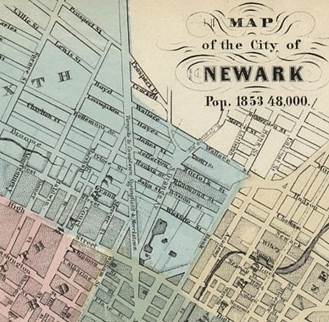
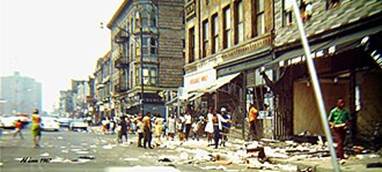


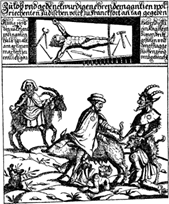


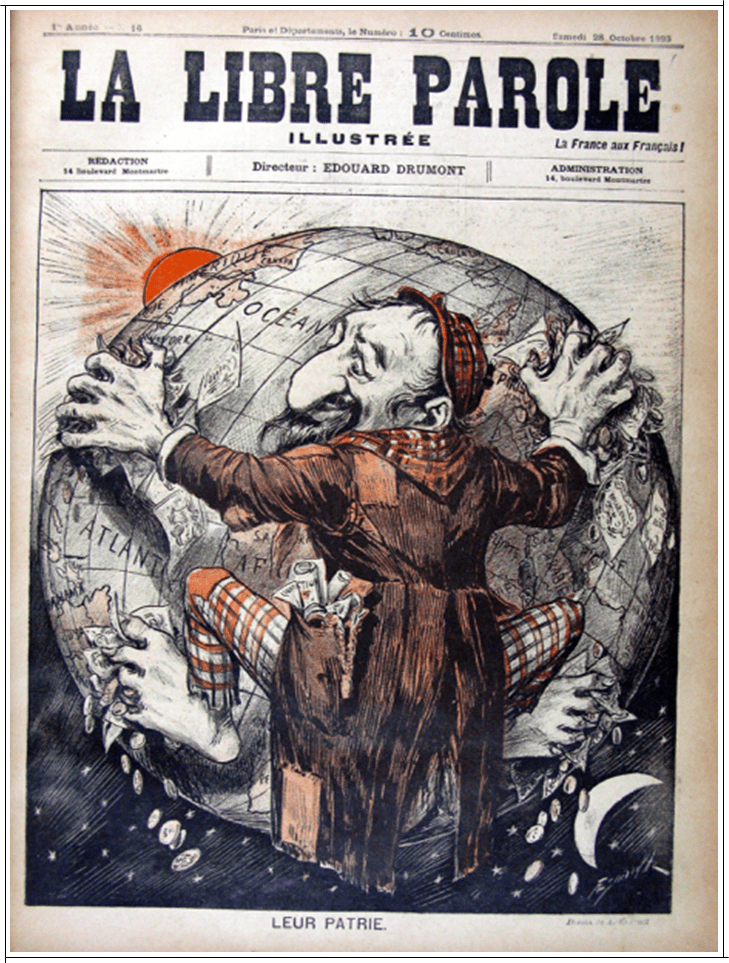
 njcssjournal