Ms. Aquino is an eighth grade student at Montclair Kimberley Academy in Montclair, NJ
Sally Hemings led an extraordinarily complex life, yet her story inspires thousands of women, myself included. Despite the intricacies, she fought against the notion of becoming just another enslaved individual in her family’s generational cycle. Sally sought to change the trajectory of her children’s lives, offering them opportunities beyond enslavement. Instead of securing her own freedom, she made a selfless choice to promise freedom to her future children—a decision that stands out as a remarkable act of heroism. Sally Hemings’s life, sacrifices, and ability to persuade Thomas Jefferson into making her a promise was an act of heroism towards her children. Her story is a testament to the profound strength of a mother’s love and the power of quiet rebellion against an oppressive system.
Born into slavery, Sally began her journey as one of Polly’s , Thomas Jefferson’s daughter, maid, and caretaker. Over time, she developed a close relationship with Polly, potentially even her aunt as well.[1] During their time in Paris, where Sally accompanied Polly in her studies, Thomas Jefferson expressed reservations about Sally’s ability to care for his daughter because she was so young, fourteen at the time. However, although she was well-trained in caring for people, Thomas Jefferson expressed that she was “wholly incapable of looking after” his daughter and could not do it “without some superior to direct her.”[2] Despite Jefferson’s doubts about her abilities, Sally gracefully navigated the unfamiliar Parisian landscape and spent twenty-six months in Paris, also reuniting with her brother James. She contracted smallpox but received proper care and was compensated for her work. Sally also learned French during her stay, though her literacy in both languages remains uncertain.[3]
In Paris, at the age of fourteen, Sally’s involvement in a sexual relationship with Thomas Jefferson, whose wife died in 1782, resulted in her pregnancy, which shifted her trajectory dramatically. While accompanying Thomas Jefferson’s daughter, Polly, to Paris, Hemings was caught in a complex web of power dynamics and his unspoken desires. Yet, a fateful encounter with Jefferson forever altered her life. Madison Hemings, Sally Hemings’s son, stated that his mother became Mr. Jefferson’s concubine in France. Though in France, slavery was not legal, so Sally was considered a free person. Torn between the possibility of freedom in Paris and the promise of a better future for her children, Sally made a heart-wrenching choice. She negotiated an extraordinary deal: freedom for her future children at 21, sacrificing her own chance at escape. In the face of unimaginable hardship, this selflessness began her quiet rebellion. She did not try to negotiate for freedom for herself.[4] Additionally, Thomas Jefferson wrote about Sally as they continued their “relationship” after returning to Monticello. He wrote, “It is well known that the man whom it delighted the people to honor, keeps, and for many years past has kept, as his concubine, her name is Sally.”[5] Jefferson clearly stated that Sally was his concubine, his mistress. In his eyes, Sally was just another woman.
After returning to Monticello with Jefferson and his daughters in 1789, she became a household servant and lady’s maid.[6] In addition, Madison Hemings stated, “It was her duty, all her life which I can remember, up to the time of father’s death, to take care of his chamber and wardrobe, look after us children and do such light work as sewing.” As well as being a maid, Sally’s job was cleaning Jefferson’s closet and sewing. Also, upon returning to Monticello, Sally’s relationship with Jefferson, though shrouded in secrecy, was an undeniable reality. Sally Hemings’s relationship with Thomas Jefferson was well-known throughout Monticello. Some of Jefferson’s friends and even political colleagues knew about them. However, this new sexual relationship did not come as a surprise to people. It was, unfortunately, widespread for white men to have sexual activity with enslaved women, let alone enslavers with enslaved women. However, society could ignore Thomas Jefferson and Sally Hemings if he kept them discreet, so he never acknowledged the rumors, and they continued their “relationship.”[7] Their relationship lasted until Jefferson died on July 4, 1826.
She bore him six children, each carrying the weight of their father’s legacy and the burden of slavery. Although, only four survived to adulthood, Harried, Beverly, Madison and Eston. Despite her duties as a servant and Jefferson’s “concubine,” Sally nurtured her children with unwavering love and a fierce determination to see them free. Madison Hemings said, “She gave birth to four others, and Jefferson was the father of all. They were Beverly, Harriet, Madison (myself), and Eston – three sons and one daughter.”[8] The oldest, Beverly Hemings, worked as a carpenter for the duration of his enslaving. He was also into music, more specifically, the violin.[9] Harriet Hemings was born a few years after Beverly in 1801. She grew up enslaved, spinning wood. After Harriet, Madison is the child that had the most to say about his mother’s life and what he thinks about their relationship. Lastly, there is Eston Hemings, the youngest son out of them all. He obtained knowledge in woodworking and was granted freedom in 1829. After Jefferson’s death, Martha, his daughter, allowed Sally to leave the plantation to live with her younger sons, Madison and Eston, in Charlottesville, Virginia. Madison and Eston gladly took their mother in with open arms and loving hearts. They initially passed as white for the U.S. Census, but later Sally identified as “free mulatto.” Sally lived freely with her sons until she died in 1835.[10]
Throughout her life, Sally Hemings made decisions that transformed her children’s lives and impacted women at large. Her selfless act in Paris, negotiating freedom for her unborn children, inspires women and their own children. In the course of her life, just like many other enslaved women, Sally Hemings’s children were fathered by her owner. In the context of the era where enslaved women lacked legal rights,[11] Sally’s story reflects the harsh reality of exploitation. The dynamic between her and Jefferson can vary, though, taking into consideration age and consent. Sally was fourteen, and Jefferson was about forty years old.[12] Additionally, enslaved women often were raped and sexually harassed without being able to speak up or say no. Despite these challenges, she rose above and stands as a stark motivation for women across the globe.
Sally Hemings’s story is a personal triumph and a beacon of hope for all who fight against injustice. Pulitzer Prize-winning historian Annette Gordon-Reed also said, “Though enslaved, Sally Hemings helped shape her life and the lives of her children, who got an almost 50-year head start on emancipation, escaping the system that had engulfed their ancestors and millions of others. Whatever we may feel about it today, this was important to her.” The measures Sally took to ensure emancipation for her children were significant and display the unconditional love she had for them. For a mother to surrender her own freedom, her only chance to escape, for her children was selfless. Her quiet defiance, her unwavering love for her children, and her ability to negotiate freedom within the confines of slavery inspire generations of women and mothers. Her life, sacrifices, and ability to persuade Thomas Jefferson into making her a promise was an act of heroism towards her kids. While inspiring many women worldwide, the most significant impact was on her children. Ones who exclaimed the great things she did for them. On the other hand, her children were not the only ones who spoke highly of her. Her story carries a historical significance and profound lessons about the human spirit’s capacity for resilience and love. A woman who defied the odds and shaped the destiny of her children, leaving behind a legacy that continues to resonate with many women and children today.
The Social Cost of Deindustrialization: Postwar Trenton, New Jersey
Patrick Luckie
Studying local history is something that is often overlooked and underestimated in social studies classrooms around the country. Think about it—do you have any memory of learning about your own local community in a coordinated school or social studies effort? Big ideas like imperialism, global culture, and other themes of the past and present usually take precedence over learning about one’s own local history in the high school. As part of my undergraduate senior research project at Rider University, I grappled with this fact and produced a short study of my own local history which I used to inform my instruction in the classroom. This article will present the research I have done and will end with a short analysis of how my research project on local history has affected my instruction in Ewing High School and how it can change the way we think about teaching local history in all American high school social studies classrooms.
“Trenton’s uniqueness cannot be found anywhere in the world, for the lessons learned cannot be duplicated at any price”[1]
These powerful words were written by Dr. Jack Washington, a teacher of Social Studies in Trenton public schools for over 40 years and author of, The Quest for Equality: Trenton’s Black Community 1890-1965 which traces racial struggle and movements for equality over the city’s history. Trenton’s uniqueness as Washington describes, is a product of its deep history, rooted in the American Revolution, World War II, and the Civil Rights Movement of the 1960s. Trenton was once a manufacturing powerhouse, home to multiple industries which forged the urban landscape of the state’s capital and produced thousands of union jobs for its inhabitants. These included the mighty John A. Roebling’s Sons Company, which aided in the creation of the Brooklyn Bridge and whose factory in West Chambersburg served as a symbol of innovation and opportunity for decades. Trenton’s pottery industry was also one of the largest and most successful in the whole nation alongside its iron, steel, rubber, and textile companies. Together, these industries provided enough stable employment and pay to support a rapidly growing population of mostly first and second generation European immigrants from Italy, Ireland, Germany, Poland, and Hungary, to name a few. Trenton’s manufacturing prowess was best showcased in 1917 with the first lighting of the famous “Trenton Makes, The World Takes” sign on the Lower Trenton Bridge, a symbol which still stands today in 2023.
The “golden age” of the city, as historian John T. Cumbler describes it, lasted from around 1850 to 1920 when Trenton established itself as one of the manufacturing capitals of the nation.[2] Almost perfectly situated between two of America’s largest cities in New York and Philadelphia, Trenton industrialists used its strategic geographic location along the Delaware River to tap into large markets and supply the massive manufacturing needs of the east coast. Trenton at this time was truly a symbol of the American dream, and people flocked to the city in search of opportunities. By 1920, the population of the city surpassed 119,000 people and it was amongst the most densely populated places in the state of New Jersey.[3]
The first signs of the city’s decline came with the weakening of its labor movement. By the 1920s, the age of mechanization had begun and the economic shift from factory work to mechanized manufacturing began weakening labor unions overtime. Worker’s unions and cooperation between owners and workers alike had been central to the functioning of the local economy and the glue by which the city binded itself together. Overtime, businesses could no longer maintain the standards of work they had previously upheld and conditions within the city started to slowly deteriorate. From 1910-1920 Trenton underwent its largest leap in population within a decade and shortly thereafter it began experiencing some of its greatest economic struggles. Plants began relocating outside of the city and unionized jobs were becoming more and more difficult to attain. Economic historians have grappled with this shift in the post-war era, claiming “US corporations aggressively sought to break free of expensive union contracts and to seek out ways to pay lower wages and allied social costs in order to increase profits.”[4] This is a persistent trend in this study. With great increases in population and the changing state of the local and national economy, Trenton suffered meaningful losses in employment and manufacturing output.
With the Great Depression beginning in 1929 and the waging of the Second World War in 1939, Trenton retreated back to manufacturing and away from addressing the issues surrounding labor which had marked its initial decline. The waging of the war meant a massive nation-wide mobilization of industry towards fueling the war effort. The war-time economy of Trenton temporarily revitalized the city. Roebling’s Sons employed droves of new workers, opportunities for overtime became more available, unions strengthened, worker’s pay went up, and the largest wave of black migrants in the city’s history began making their way to Trenton beginning in the 1940s.[5] These migrants came to Trenton and other cities in what is known as The Great Migration. That is the movement of millions of African Americans predominantly from the rural southern states to the urban north and midwest between 1910-1970.
This temporary boom did not yield long-term progress for Trenton in the post-war period. During the 1950s, many of the city’s largest industries began relocating outside the city limits and the economy did not adequately support its largest ever population of over 129,000 people.[6]In 1952, Trenton’s most popular employer Roebling’s Sons was sold to Colorado Fuel and Iron Company which over the next decade cut its employment numbers in Trenton and relocated its major manufacturing and business centers outside the city limits. This was the fate for many of the most popular industries within the city which sold their shares to larger corporations after WWII, leaving the fate of the city’s economy in the hands of interests which had little to no connection to it. The rubber, steel, iron, and pottery industries which had defined the city of Trenton and produced its “golden age” became shadows of their former selves and the physical conditions of the city reflected this change. Overtime, thousands of industrial jobs were lost and the population of Trenton dropped 13,382 people from 1950 to 1960 and an additional 9,381 people the following decade.[7] Population decline continued to the year 2000 and stabilized between 80,000 to 90,000 in the 21st century.
This study seeks to answer two fundamental questions: 1) What were the major effects of deindustrialization on Trenton, NJ in the decades immediately following WWIII? 2) How were these effects felt by the people living within the city at this time? In answering these questions, this study will provide a lens through which race and class come to the forefront of the discussion. Trenton’s decline overlaps with the migration of thousands of African Americans to the city in search of economic opportunities. This demographic shift was the largest in the city’s history and was not met with opportunity but rather inequality and increased racial tension. The major effects of deindustrialization on Trenton, NJ in the post-war period were economic destabilization, movement to the suburbs, and increased racial tensions between white and black Trentonians. Each subsection of this work will dive into these effects individually as well as their overall impact on life in Trenton. It is important to recognize that this movement away from manufacturing and its effects were not phenomena restricted to certain areas or regions. Rather it was a national trend which all rust belt cities like Trenton grappled with in the 21st century. In addition to deindustrialization broadly, the age of mechanized labor, the shifting of the U.S. economy towards greater support for large corporations, and the social movements of the 1960s all played extremely important roles in shaping American cities in the post-war era.
Historiography
Secondary source literature on the decline of U.S. cities in the post-WWII period falls into the fields of American urban, economic, and social history. One of the most popular works on these subjects is historian Thomas J. Sugrue’s The Origins of the Urban Crisis: Race and Inequality in Postwar Detroit, which examines the many ways in which American cities began to decline following WWII with specific focus on racial inequality and division. In his work, Sugrue states that Trenton, like Detroit and other rust belt cities of the time, experienced hundreds of thousands of layoffs in manufacturing jobs nationwide due to the changing state of the U.S. economy and the lack of government spending allocated towards Northern cities.[8] These conditions radically transformed urban environments into almost unrecognizable versions of their industrial heights. Sugrue explores the connections between suburbanization, demographic change, and the racial attitudes of northern whites to produce an all-encompassing case study of the decline of Detroit. At the heart of his argument is that racial segregation and inadequate political responses to signs of crisis determined the fate of the city. The importance of this historical research cannot be overstated. Before this book was originally published in 1996, the stories of Detroit and other American cities who suffered from the consequences of deindustrialization and racial division in the post-war period were largely untold. The Origins of Urban Crisis continues to be one of the most influential modern studies of American urban history and is without doubt one of the most cited pieces of literature in the field.
Jefferson Cowie and Joseph Heathcott, who together produced Beyond the Ruins: The Meanings of Deindustrialization,built on the historical research of Sugrue by studying the impact of post-war deindustrialization across the nation. This book seeks to progress the conversation of historic decline to modern solutions for urban decay and economic instability. In doing so, it compiles a collection of essays from historians and other professionals to further explore deindustrialization and its impact on American cities.[9] From this perspective, the authors identify a complexity of causes and effects of urban decline which vary from city to city but share many similarities nationally. The value of this work is in its wide-scope. By compiling essays from multiple professionals in a variety of related disciplines, the image of declining cities in the U.S. following WWII becomes more clear than ever.
The most recognized work on post-war deindustrialization in specifically Trenton, New Jersey lies within historian John T. Cumbler’s A Social History of Economic Decline: Business, Politics, and Work in Trenton. This book outlines a long trajectory of economic conditions in Trenton beginning in the 1920s with focus on the Great Depression and researches the changing nature of the city up until the book’s publishing in 1989. One of Cumbler’s main arguments includes the notion that America experienced a gradual economic shift from civic to national capitalism following the Great Depression which empowered large corporations while simultaneously destroying the small businesses which held many industrial cities together.[10] He also explores the rich history of the city’s most impactful industries, politicians, union leaders, and manufacturing workers to provide a comprehensive view of Trenton’s economic and social decline. This work provides the foundation of historical knowledge on Trenton required to produce further research on this topic. However, Cumbler’s history of Trenton does not extend as far into the social consequences and effects of deindustrialization as one might expect. Nevertheless, virtually any modern historical literature on the city of Trenton cites this work. This points to the undying credibility of Cumbler as a historian and shows the importance and relevance of his arguments to the continued study of the city’s history.
More recent historical literature on related topics has largely focused on national trends of suburbanization and racial conflict. One such journal article titled “The Rural Past-in-Present and Postwar Suburban Progress” by University of Waterloo professor Stacy Denton studies the shift towards suburbanization following WWII. The author highlights the transformation of previously rural spaces to suburban landscapes and the implications of such transformations on national attitudes and beliefs towards race, culture, and class.[11] In a similar light, economic historian Leah Platt Bouston’s 2007 work “Black Migration, White Flight: The Effect of Black Migration on Northern Cities and Labor Markets” studies the effects of The Great Migration on northern cities and their economies. She also dives into the racist attitudes of northern whites which manifested themselves in movements out of increasingly diversifying cities and into the surrounding suburbs as part of a process termed “white flight.”[12] Both these works of history are incredibly valuable to this study of post-war Trenton for the topics and findings of their research are amongst the greatest effects of deindustrialization on the city.
The research done in this paper will synthesize the secondary source material on the decline of U.S. cities and apply their findings to a specific case study of Trenton, New Jersey. In doing so, it will paint a clearer picture of the more immediate social and economic effects of deindustrialization on the city in the decades following WWII. This will add to the historiography of urban history and Trenton historical study by compiling primary and secondary source documents to more deeply understand the major effects of deindustrialization and economic transformation on the city. These major effects include economic destabilization, massive suburbanization, and increased racial tension. These symptoms of deindustrialization were felt most harshly by the city’s poor ethnic-white and growing black population. More specifically, economic decline in Trenton coincided with the arrival of black migrants which compounded racist attitudes and practices within the city. This is most clear in workplace and housing segregation which new migrants had to face upon their arrival.
Economic instability
Industry leaving Trenton following WWII radically changed the city’s local economy. Unionized factory jobs became harder to attain, poor residents were left with fewer options, and Trenton’s growing black community was segregated in their employment. Long-time union workers like those who worked in the pottery and steel plants found themselves in an unfamiliar situation. As Cumbler explained, “Those workers thrown out of work by plant closings had the hardest time finding work and represented the largest number of Trenton’s unemployed.”[13]
The selling of corporations like Roebling’s Sons produced a much weaker focus on the city’s manufacturing growth and output and instead, large corporations sought for the relocation of facilities and workers to outside the city. This left the existing workforce in the city out to dry and decreased options for employment, especially among the lower-income white and minority black populations.
One action taken by the state and local government to fill this gap created by fleeing industry was growth in the employment of state workers and other public jobs. New Jersey state workers were in the 1950s and 60s, as they still are in the present day, centralized in the capital city of Trenton. Cumbler described this shift from manufacturing to public work as, “Blue Collar to White Collar and White Smock.”[14] This provided some relief to the city’s unemployment problem which exceeded the national average through the 1950s and 60s but it did not come close to meeting the pay and benefit standards that manufacturing jobs had produced just a decade prior. Additionally, the large majority of state workers employed at this time were disproportionately white men. Despite these changes, public and state employment was not enough to lift the city out of its economic slump nor its inherent issues with workplace discrimination.
A large part of the story of economic destabilization in Trenton as a product of deindustrialization was the negative consequences on its black community. Former Trentonian and author Helen Lee Jackson published her autobiography in 1978 charting her experience with racial discrimination as a black woman seeking meaningful employment in the city. Her description of Trenton reads as follows:
In 1940, Trenton was an industrial city with many potteries. Steel mills, factories, and a large auto plant, but the production lines were almost solidly white. Black men swept the floors, moved heavy equipment and shipping crates, and performed other burdensome tasks. In the business sections, they were almost invisible except as window cleaners, janitors, or elevator operators. There were no black salespeople in the stores, banks, or business offices. They were hired as maids, package wrappers, or seamstress. Even the five-and-ten-cent stores refused to hire blacks, except to sweep, dust, or move stock.[15]
Jackson’s firsthand experience with racial segregation and inequality in the city in the 1940s is a reflection of the racial attitudes and prejudices in Trenton and other northern cities earlier in the 20th century. Racist attitudes towards black migrants who largely came from the south was a characteristic of many industrial cities in the U.S. at this time as is highlighted in Sugrue’s work on Detroit and other rust belt cities. With greater numbers of black migrants entering northern cities, the problem of racial discrimination and inequality intensified and the competition for jobs in short supply fuel racist attitudes. According to Sugrue, a combination of factors including employer bias, the structure of the industrial work place, and the overarching ideologies and beliefs of racism and black inferiority contributed to this workplace segregation.[16] For Trenton, these differences in employment were visible to the observer and significantly impacted the lives of those seeking stable income. With the collapse of industry happening simultaneously with a dramatic increase in the city’s black population, this problem compounded. Black residents were not only excluded from whatever factory jobs were left on the basis of their race but they were also labeled as the source of the city’s problems altogether.
In a 1953 study of community services in Trenton, researchers found that the average black resident experienced twice as much unemployment and earned on average 30% less total income than the average white person at this time despite only a one year difference in their average acquired education.[17] These statistics are proof of income inequality and workplace discrimination and provide insight into the lived experiences of black people in Trenton at this time. Furthermore, research from The Journal of Economic History, suggests “black workers were channeled into negro jobs and faced limited opportunities for promotion.”[18] Access to financial resources and meaningful employment were among the largest reasons for black migration to Trenton and other northern cities. Upon their arrival however, they were met with egregious workplace discrimination and were given very little opportunities to climb the economic ladder. Black women specifically made up, “The least utilized pool of potential industrial labor power having much less than proportionate representation with her white counterpart” according to a 1950s study titled, The Negro in the Trenton Labor Market.[19] Many black women, including Helen Lee Jackson, struggled even more so than black men to find employment within the city. These conditions forced economically disadvantaged men and women alike to scramble for jobs and income in order to support themselves and their families.
Changes to the manufacturing economy and workplace discrimination created great instability in Trenton during the 1950s and 60s. Old union workers were suddenly left jobless and the fruits of their loyal labor to the city’s largest industries were now gone. Attempts to revitalize the economy largely failed and economic decline impacted the poor and minority black population of the city more harshly than anyone else in the form of unequal pay and limited job opportunities. With this knowledge, it becomes clear that deindustrialization and the exodus of industry destroyed the economy of Trenton that was historically forged by large-scale manufacturing and robust labor unions and disproportionately affected the new and growing black community.
Suburbanization
Another major consequence of postwar deindustrialization on America’s rustbelt cities was the creation of and migration to the suburbs. Suburbs are the areas where urban centers like Trenton, NJ extend into previously rural environments where new housing developments, industries, and townships began to populate with greater and greater numbers of prior city-dwelling individuals. Historian Kenneth T. Jackson’s work on suburbanization titled,
Crabgrass Frontier: The Suburbanization of the United States, provides the best historical analysis of this phenomenon which swept the nation in the 20th century. Among many important factors, he claims that the roots of suburbanization can be traced to the boom of the automobile industry in the 1920s which enabled those who could afford it to move further and further away from the cities in which they worked. Jackson states, “Indeed the automobile had a greater spatial and social impact on cities than any technological innovation since the development of the wheel” He goes further to explain, “After 1920 suburbanization began to acquire a new character as residential developments multiplied, as cities expanded far beyond their old boundaries, and as the old distinctions between city and country began to erode.”[20]
For Trenton NJ, this shift towards the suburbs was gradual beginning in the 1920s and peaking during the 1950s. It is important to note that suburbanization in Trenton and in cities across the nation happened gradually into the late 20th century. This coincided with a decline in major industries and jobs. Historical research on suburbanization has also revealed that many of these white suburbanites moved to the suburbs to create a physical barrier between them and their racial counterparts.[21] As a result of these factors, thousands of residents with the financial freedom to do so began expanding into the towns on the periphery like Hamilton, Ewing, and Lawrence. Many of whom continued to work as state workers or in other capacities inside Trenton while living outside the city. These towns saw unprecedented growth in the post-WWII years in housing developments thanks to VA and FHA loans which were granted to veterans of the war as part of president Franklin Delano Roosevelt’s New Deal Reforms.[22] It is important to note that these New Deal programs were especially beneficial to white service members and much historical literature has been written about the exclusionary practices associated with housing loans in relation to African Americans. This is relevant because during and shortly after WWII, the largest wave of black migrants traveled from predominantly southern states to Trenton and other northern cities in search of employment opportunities associated with the mobilization of industry towards the war effort. This search for opportunity overlapped with the decay of Trenton’s largest industries, leaving many black migrants below the poverty line, working menial jobs as opposed to fruitful unionized jobs, and in some cases, out of work completely. Compounding these issues was the inaccessibility of reasonable home loans for members of the black community.
The effects of suburbanization on the local economy of Trenton and its inhabitants can be seen through analysis of the popular media. Pride Magazine was a Trenton-based publication which centered its content around black businesses and black business owners. This specific magazine concerned itself with the failure of local politicians to enact positive change in the form of urban renewal plans which were targeted at improving the infrastructure, housing, and employment opportunities within the city. In March of 1972, Pride Magazine issued a publication titled, “Black Businesses Need Your Help!” which featured a section written by the magazine’s publisher Vance Phillips, who received his college education in Trenton. He wrote, “What are we doing to fill the vacuum of the cities which was created by relocation of the established business” He then goes on to say, “After spending 5 years of planning and developing new programs for structural and economic changes, Trenton Model Cities program has failed to meet the potential growth of new and old businesses in our community.”[23] Phillips like many black Americans living in Trenton during the 1970s saw visible signs of the city’s decline through the failure of local businesses. He believed what was needed to fix this problem was a stronger government response along with increased civic action from specifically the black community.[24]
In this same publication, Phillips expressed his belief that, “a person who lives within the city should have preference over persons living outside of the cities in terms of employment.”[25] Here the author is addressing those who live in the surrounding suburbs but continue to fill job positions within the city limits. This would have been a popular message to Trenton’s black business owning population due to the negative effects that rapid suburbanization had on small businesses within the city. In this magazine article, Phillips touches on an number of topics which are extremely relevant to this study. For one, the instability of small businesses in the wake of mass-suburbanization which he observed was largely due to the relocation of both industry and people to outside the city. Mostly ethnically-white Trentonians were leaving the city for the suburbs and taking with them their spending power. With population decline being spearheaded by movements to the suburbs, there simply was not enough money being circulated throughout the city to adequately support the small businesses which propped up its local economy.
Another popular message within this passage highlights that with most of Trenton’s workforce shifting into the surrounding suburbs, so too did its voting power.[26] This left black communities who resided within the urban centers even more powerless as a minority to change their own political environment. Suburbanization brought with it a massive decrease to the city’s population and tax-base. The previously 100,000+ populated city now had just around 80,000 inhabitants by 1970.[27] This rapid population decrease meant that the tax revenue generated was not enough to effectively grapple with the issues facing the economy and the evolving workforce.
Furthermore, local culture within the city which had been forged by America’s largest waves of European immigration in the 19th and early 20th century suffered as a result of deindustrialization and suburbanization. Many of the small businesses and social institutions which had historically characterized the city of Trenton were established by first and second generation Italian, Irish, Polish, and Hungarian immigrants. Many of whom traveled from the larger cities of New York and Philadelphia to find industrial jobs in Trenton. Dennis J. Starr’s book, The Italians of New Jersey, outlines the effects of suburbanization on the “old immigrants” of New Jersey, stating:
The movement to the suburbs and smaller urban places paralleled a major transformation of the state’s urban political economy. Following the war, the state’s largest cities did not participate in the postwar prosperity and economic development. Instead, their industrial bases eroded, their mercantile bases moved to suburban shopping malls and their overall, especially affluent white, populations shrank.[28]
The effect of suburbanization on the local culture of Trenton’s longest serving residents is a source of some historical debate. Cumbler notes that, “Despite suburbanization of the more successful Italians and Slavs, many of Trenton’s ethnic neighborhoods seemed as entrenched as ever in the 1950s.”[29] However, the following decades of the 1950s would see even more of Trenton’s staple “old immigrant” communities relocating to the suburbs and with them their cultural values and traditions. That being said, the cultural diversity of Trenton, New Jersey created by its ethnic melting pot of a history can still be felt today in 2023. Walking the streets of some of its most popular neighborhoods like Chambersburg, one can still see and feel the Italian influence of churches, social clubs, and bar-restaurants in the area. The main point here is that culture did suffer as a result of suburbanization and population decline, but it did not die, it rather faded into a less obvious and less present version of its former self.
Looking at suburbanization as a major effect of postwar de-industrialization on the city of Trenton provides valuable insight into the cities rise and decline as a manufacturing powerhouse. Like many other rust belt cities of this time period, the trend of suburbanization caused unprecedented changes to the city’s local economy and demographics. The loss of unionized industry jobs encouraged many Trentonians to relocate to the surrounding towns which had recently seen great increases in housing development. In the process, those who left the city unintendedly left Trenton out to dry. Money from the pockets of those who moved to the suburbs was desperately needed to support small businesses in the city and their tax dollars could have been used to make meaningful change to the city’s failing infrastructure. As previously discussed, the local culture of the city also suffered as a result of these consequences which only compounded with each decade of further suburbanization and relocation away from the city. With a decreasing population, aging workforce, and a new wave of migrants without sufficient employment opportunities, the city began to decline into an unrecognizable version of its “Golden Age” of the 1920s.
Racial tension
Trenton’s deindustrialization and its history of racism and inequality are inextricably linked. In 1986, Historian Dennis J. Starr published, History of Ethnic and Racial Groups in Trenton, New Jersey: 1900 – 1960, which acts as one of the foremost important pieces of historical literature on Trenton race-relations. This research clearly establishes a link between deindustrialization and increased racial tensions by claiming:
As industries closed down or reduced their work force it became harder for Afro-American migrants to get a toe hold on the traditional ladder of social mobility–a factory job. Meanwhile the city’s sizable Italian, Polish and Hungarian communities became fearful lest their jobs be eliminated, their neighborhoods integrated. A siege mentality developed in light of the population shifts and exodus of industries, commercial businesses, colleges and government offices.[30]
This “siege mentality” was amplified overtime with the overcrowding of black communities in Trenton and the extension of black-owned or rented residences into shrinking ethnically white neighborhoods.
Between 1950 and 1960, Trenton’s black population rose to 22.8 percent of the total population. As discussed earlier, Trenton was a historically segregated city but in the 1950s and 60s this racial division took on a whole new light given the increases in population and decreases in economic opportunities and industry.[31] Trenton historian Jack Washington described Trenton following WWII stating, “That the 1950s was a period of benign neglect for the Black community is an understatement, for Black people were forgotten while their economic and political troubles continued to mount.”[32] These economic troubles can be seen most clearly through examination of housing segregation in the city and its continued influence on the lives of Trentonians. Along with housing and workplace discrimination, ethnically white residents used black migrants as scapegoats for their city’s economic misfortunes and decline.
Housing in Trenton, NJ after the postwar years can be characterized as both segregated and worse for wear. Following the largest influx of black immigrants to the city in the late 1940s and early 50s, this new population was largely forced to live in the Coalport and Five Points areas of the city on its interior.[33] Housing opportunities for black residents were few and far between and were in most cases aged and deteriorated. Starr shed light on this inequality revealing, “By 1957 over 80 per cent of the city’s housing was over 50 years old and 20 percent of all housing units were dilapidated or had deficient plumbing.”[34] This was a problem for all city-dwellers and stood as a marker of the city’s decline following deindustrialization. For the black community, this problem was especially real given that the neighborhoods with the worst physical damage and infrastructure were those areas in which they settled. A 1950s survey of the city titled, Negro Housing in Trenton found, “the percentage of substandard housing among the Negro population is four times higher than that for the general population.”[35] Not only were black Trentonians limited in their occupation but also in the location and quality of their housing. This same study of housing in Trenton concluded that 1,200 new residential spaces would have to be erected in order to meet the needs and standards of the city. These spaces were not created and public housing efforts did not meet the requirements of the new growing population.[36]
With little options for housing, a lack of policy action to create new housing, and increases to the population, black migrants had no choice but to expand into Trenton’s old ethnically-white neighborhoods. In the eyes of many in the white majority, black migrants were the corrupting force which acted to take down their beloved city. Declining social and economic conditions in the city paired with old racist tendencies to produce conflict between ethnic groups. Cumbler eloquently explains this clash stating:
The decline of their industrial base narrowed the boundaries of choice for both white and black Trentonians, and in doing so it intensified conflict between them. Increasingly, Trenton’s problems became defined by the city’s white residents in terms of growth of its black population. Actually, its problems had other sources: the loss of its tax base with the closing down of factories, dilapidation of the existing housing stock, and the declining income of its citizens of whatever color.[37]
This excerpt captures the situation in Trenton during the 1950s and 60s in terms of race relations and the overall decline of the city. Racist attitudes were not a new trend in Trenton but were compounded with the arrival of large populations of black migrants. From the white perspective, black migrants were aiding in the destruction of the city. From the black perspective, Trenton did not provide the necessary resources for which they traveled north in search of in the first place.
The 1960s and the Civil Rights era was the historical boiling point for racial tensions and division in Trenton. The influence of the NAACP and other organizations for the advancement of racial equality along with intense riots brought race and class to the forefront of Trenton’s post-industrial issues. Most impactful, Trenton race riots following the assassination of Dr. Martin Luther King Jr. exploded in early April of 1968. These riots lasted for multiple days and resulted in fires erupting around the city as well as over 7 million dollars in damage to over 200 different businesses in Trenton at the time. During the chaos, around 300 mostly young black men were arrested by Trenton Police. The devastating damage to the downtown section of the city caused many to flee and abandon it altogether in the years that followed.[38] It would be unfair to say that these riots were a direct result of deindustrialization in postwar Trenton. However, the city’s history of racial inequality and the compounding forces of racial tension as a result of deindustrialization point to the creation of fertile ground for public outrage. Of course, the assassination of Dr. Martin Luther King Jr. served as the catalyst for race riots in the city but the broader history of discrimination and inequality in Trenton suggests an intense decades-long build up to the events that unfolded in April of 1968.
Conclusion
Trenton’s rise and fall as an American industrial city is truly a fascinating case study of the post-war era in U.S. history. What was once a manufacturing powerhouse along the Delaware River strategically placed between the two large cities of New York and Philadelphia was reduced to a shadow of its former glory by the 1950s and 60s. The causes of this decline can be found in the removal of industry away from the city following the war effort and signs of economic decline can be traced as far back as the 1920s. The effects of this shift however, remain the most significant in the broader history of the city. Rapid deindustrialization meant that wages and opportunities were significantly limited for all Trentonians but especially for its segregated black community. Many of those who could afford it elected to move to the surrounding suburbs, bringing with them their tax dollars, their votes, and their culture. Lastly, deindustrialization and the consequences of a radically transformed Trenton increased racial tensions in the form of housing and workplace discrimination.
These effects offer new insights into the Trenton of today. Trenton now has a black majority and interestingly, those same areas which housed black migrants in the 1950s on the city’s interior are still today in 2023 the site of high unemployment and low opportunities. Walking the streets of Trenton, one is quickly reminded of its rich history with many of its houses and abandoned factories still standing today as a reminder of the city’s complicated history. A hopeful message could be that a greater understanding of Trenton’s post-war history could provide the necessary insight to create better living conditions and opportunities for all its residents. However, today Trenton remains a city in an intense state of recovery from its industrial past. Historical research has been done to show that urban renewal plans have largely failed to revitalize the city’s economy in the 20th and 21st centuries and issues such as crime, poverty, drug abuse, poor infrastructure, among others continue to loom over the once prosperous city.
Today, the “Trenton Makes, The World Takes” sign on the Lower Trenton Bridge still stands bright but its meaning has drastically changed since the last century. What was once a beacon of promise and stability is now a constant reminder of how far the city has fallen from its industrial and manufacturing heights.
Findings and value to teaching
Upon completing this research paper on Trenton, I gave a lesson to high school world history students at Ewing High school as part of my undergraduate co-teaching field work. Ewing is one of the border towns to the city of Trenton and was one of the most popular destinations for suburbanites who left the city in the 20th century at least in part because of deindustrialization and the city’s overall decline. The proximity of the topic and the familiarity students had with popular street names, businesses, and buildings in the city created a feeling of relevance that sparked engagement. Students were surprised to be learning about a topic so close to home and they responded with passionate discussion and the creation of meaningful connections which were sparked through a mix of group and whole class discussions.
For social studies teachers, this successful shift from world history topics to a more grass roots approach to teaching local history can be used as a template for future lessons. Topics frequently come up during different units throughout the school year which deeply relate to the local history of wherever kids go to school. For Ewing students, Trenton’s decline as an industrial city directly related to their lived experiences. Many of my students had lived in or around Trenton for most of their lives. This practice of teaching local history to students is not overwhelming nor is it undoable. The same amount of effort it takes to create a lesson in a world history or AP class can be channeled into research dealing with one’s own local environment and history.
This template for teaching local history can be used to generate engagement in the classroom which is unique to any other topic. Once students are given the opportunity to learn and ask questions about their own town, city, home, etc. they begin to view the world through a more historical lens which is the goal of many if not all high school social studies teachers. Overall, my experience with this approach was overwhelmingly positive and I encourage any and all educators to shift their focus for at least one day of the year towards exploring their own local history and connecting it to larger themes within our discipline.
Dwyer, William. This Is The Task. Findings of the Trenton, New Jersey Human Relations Self-Survey (Nashville: Fisk University, 1955).
Lee, Helen J. Nigger in the Window. Library of Congress, Internet Archive 1978.
Negro Housing in Trenton: The Housing Committee of the Self Survey. Trenton Public Library. Trentoniana Collection. Ca 1950.
“Negro in the Trenton Labor Market,” Folder: Community Services in Trenton, Box: Trenton Council on Human Relations, Trentoniana Collection, Trenton Public Library.
“Study of Community Services in Trenton,” Folder: Community Services in Trenton, Box: Trenton Council on Human Relations, Trentoniana Collection, Trenton Public Library.
Trenton Council of Social Agencies, Study of Northeast Trenton: Population, Housing, Economic, Social and Physical Aspects of the Area. Folder: Study of Northeast Trenton. Box 1: African American Experience. Trentoniana Collection. Trenton Public Library. 1958.
Secondary Sources
Boustan, Leah Platt. “Black Migration, White Flight: The Effect of Black Migration on Northern Cities and Labor Markets.” The Journal of Economic History 67, no. 2 (2007): 484–88. http://www.jstor.org/stable/4501161.
Cowie, J. & Heathcott, J. Beyond the Ruins: The Meaning of Deindustrialization. Cornell University Press, 2003.
Cumbler, John T. A Social History of Economic Decline: Business, Politics, and Work in Trenton (New Brunswick: Rutgers University Press, 1989).
Denton, Stacy. “The Rural Past-in-Present and Postwar Sub/Urban Progress.” American Studies 53, no. 2 (2014): 119–40. http://www.jstor.org/stable/24589591.
Division of Labor Market and Demographic Research. New Jersey Population Trends 1790 to 2000 (Trenton, NJ: New Jersey State Data Center, August 2001).
Gibson, Campbell. U.S. Bureau of the Census: Population of the 100 Largest Cities and Other Urban Places in the United States: 1790 – 1990, (Washington D.C.: U.S. Bureau of the Census, 1998).
Jackson, Kenneth T. Crabgrass Frontier: The Suburbanization of the United States. Oxford University Press, 1985.
Leynes, Jennifer B. “Three Centuries of African-American History in Trenton.” Trentoniana Collection. Trenton Historical Society. 2011.
Starr, Dennis J. “History of Ethnic and Racial Groups in Trenton, New Jersey, 1900-1960,” Trentoniana Collection. 1986.
Starr, Dennis J. The Italians of New Jersey: A Historical Introduction and Bibliography. New Jersey Historical Society. Newark, NJ. 1985.
Strangleman, Tim, James Rhodes, and Sherry Linkon. “Introduction to Crumbling Cultures: Deindustrialization, Class, and Memory.” International Labor and Working-Class History, no. 84 (2013): 7–22. http://www.jstor.org/stable/43302724.
Sugrue, Thomas J. The Origins of the Urban Crisis: Race and Inequality in Postwar Detroit. (Revised Ed.). Princeton University Press, 2005. Originally published 1996.
Washington, Jack. The Quest for Equality: Trenton’s Black Community 1890-1965. Africa World Press. 1993.
[1] Jack Washington, The Quest for Equality: Trenton’s Black Community 1890-1965, Africa World Press, 1993, 56.
[2] John T. Cumbler, A Social History of Economic Decline: Business, Politics, and Work in Trenton, (New Brunswick: Rutgers University Press, 1989), 9.
[3] Division of Labor Market and Demographic Research, New Jersey Population Trends 1790 to 2000 (Trenton, NJ: New Jersey State Data Center, August 2001), 23.
[4] Tim Strangleman, James Rhodes, and Sherry Linkon, “Introduction to Crumbling Cultures: Deindustrialization, Class, and Memory.” International Labor and Working-Class History, no. 84 (2013), 19.
[6] Campbell Gibson, U.S. Bureau of the Census: Population of the 100 Largest Cities and Other Urban Places in the United States: 1790 – 1990, (Washington D.C.: U.S. Bureau of the Census, 1998)
[7] Division of Labor, New Jersey Population Trends, 26.
[8] Thomas J. Sugrue, The Origins of the Urban Crisis: Race and Inequality in Postwar Detroit, (Revised Ed.), Princeton University Press, 2005, Originally published 1996, 128.
[9] Jefferson, Cowie & Joseph Heathcott, Beyond the Ruins: The Meaning of Deindustrialization, Cornell University Press, 2003. 1-3.
[11]Stacy Denton, “The Rural Past-in-Present and Postwar Sub/Urban Progress,” American Studies 53, no. 2 (2014): 119.
[12]Leah P. Boustan, “Black Migration, White Flight: The Effect of Black Migration on Northern Cities and Labor Markets.” The Journal of Economic History 67, no. 2 (2007): 484-485.
[17] “Study of Community Services in Trenton,” Folder: Community Services in Trenton, Box: Trenton Council on Human Relations, Trentoniana Collection, Trenton Public Library, 8.
[18] Leah P. Boustan, “Black Migration, White Flight” 485-486.
[19] “Negro in the Trenton Labor Market,” Folder: Community Services in Trenton, Box: Trenton Council on Human Relations, Trentoniana Collection, Trenton Public Library, 33-34.
[20] Kenneth T. Jackson. Crabgrass Frontier: The Suburbanization of the United States, Oxford University Press, 1985, 188.
[21] Stacy Denton, “The Rural Past-in-Present,” 119.
[33] Trenton Council of Social Agencies, Study of Northeast Trenton: Population, Housing, Economic, Social and Physical Aspects of the Area, Folder: Study of Northeast Trenton, Box 1: African American Experience, Trentoniana Collection, Trenton Public Library, 1958, 53-54.
[34] Starr, Ethnic and Racial Groups in Trenton, 15.
[35] Negro Housing in Trenton: The Housing Committee of the Self Survey, Trenton Public Library, Trentoniana Collection, ca 1950s , 63.
Edwin Black is author of IBM and the Holocaust, The Strategic Alliance between Nazi Germany and America’s Most Powerful Corporation (Crown Publishers 2001 and Three Rivers Press 2002). This article is drawn from Mr. Black’s just released and updated German paperback edition. The new edition includes the discovery of hard evidence linking IBM to Auschwitz. The evidence, detailed here, will be appended to his English language editions at the next reprinting in the new future.
The infamous Auschwitz tattoo began as an IBM number. In August 1943, a timber merchant from Bendzin, Poland, arrived at Auschwitz. He was among a group of 400 inmates, mostly Jews. First, a doctor examined him briefly to determine his fitness for work. His physical information was noted on a medical record. Second, his full prisoner registration was completed with all personal details. Third, his name was checked against the indices of the Political Section to see if he would be subjected to special punishment. Finally, he was registered in the Labor Assignment Office and assigned a characteristic five-digit IBM Hollerith number, 44673.
The five-digit Hollerith number was part of a custom punch card system devised by IBM to track prisoners in Nazi concentration camps, including the slave labor at Auschwitz.
The Polish timber merchant’s punch card number would follow him from labor assignment to labor assignment as Hollerith systems tracked him and his availability for work, and reported the data to the central inmate file eventually kept at Department DII. Department DII of the SS Economics Administration in Oranienburg oversaw all camp slave labor assignments, utilizing elaborate IBM systems.
Later in the summer of 1943, the Polish timber merchant’s same five-digit Hollerith number, 44673, was tattooed on his forearm. Eventually, during the summer of 1943, all non-Germans at Auschwitz were similarly tattooed. Tattoos, however, quickly evolved at Auschwitz. Soon, they bore no further relation to Hollerith compatibility for one reason: the Hollerith number was designed to track a working inmate—not a dead one. Once the daily death rate at Auschwitz climbed, Hollerith-based numbering simply became outmoded. Soon, ad hoc numbering systems were inaugurated at Auschwitz. Various number ranges, often with letters attached, were assigned to prisoners in ascending sequence. Dr. Josef Mengele, who performed cruel experiments, tattooed his own distinct number series on “patients.” Tattoo numbering schemes ultimately took on a chaotic incongruity all its own as an internal Auschwitz-specific identification system.
However, Hollerith numbers remained the chief method Berlin employed to centrally identify and track prisoners at Auschwitz. For example, in late 1943, some 6,500 healthy, working Jews were ordered to the gas chamber by the SS. But their murder was delayed for two days as the Political Section meticulously checked each of their numbers against the Section’s own card index. The Section was under orders to temporarily reprieve any Jews with traces of Aryan parentage.
Sigismund Gajda was another Auschwitz inmate processed by the Hollerith system. Born in Kielce, Poland, Gajda was about 40 years of age when on May 18, 1943, he arrived at Auschwitz. A plain paper form, labeled “Personal Inmate Card,” listed all of Gajda’s personal information. He professed Roman Catholicism, had two children, and his work skill was marked”mechanic.” The reverse side of his Personal Inmate Card listed nine previous work assignments. Once Gajda’s card was processed by IBM equipment, a large indicia in typical Nazi Gothic script was rubber-stamped at the bottom: “Hollerith erfasst,” or “Hollerith registered.” Indeed, that designation was stamped in large letters on hundreds of thousands of processed Personal Inmate Cards at camps all across Europe. The Extermination by Labor campaign itself depended upon specially designed IBM systems that matched worker skills and locations with labor needs across Nazi-dominated Europe. Once the prisoner was too exhausted to work, he was murdered by gas or bullet. Exterminated prisoners were coded “six” in the IBM system.
The Polish timber merchant’s Hollerith tattoo, Sigismund Gajda’s inmate form, and the victimization of millions more at Auschwitz live on as dark icons of IBM’s conscious 12-year business alliance with Nazi Germany. IBM’s custom-designed prisoner-tracking Hollerith punch card equipment allowed the Nazis to efficiently manage the hundreds of concentration camps and sub-camps throughout Europe, as well as the millions who passed through them. Auschwitz’ camp code in the IBM tabulation system was 001.8
Nearly every Nazi concentration camp operated a Hollerith Department known as the Hollerith Abteilung. The three-part Hollerith system of paper forms, punch cards and processing machines varied from camp to camp and from year to year, depending upon conditions. In some camps, such as Dachau and Storkow, as many as two dozen IBM sorters, tabulators, and printers were installed. Other facilities operated punchers only and submitted their cards to central locations such as Mauthausen or Berlin. In some camps, such as Stuthoff, the plain paper forms were coded and processed elsewhere. Hollerith activity, whether paper, punching or processing, was frequently—but not always–located within the camp itself, consigned to a special bureau called the Labor Assignment Office, known in German as the Arbeitseinatz. The Arbeitseinsatz issued the all-important life-sustaining daily work assignments, and processed all inmate cards and labor transfer rosters.
IBM did not sell any of its punch card machines to Nazi Germany. The equipment was leased by the month. Each month, often more frequently, authorized repairmen, working directly for or trained by IBM, serviced the machines on-site–whether in the middle of Berlin or at a concentration camp. In addition, all spare parts were supplied by IBM factories located throughout Europe. Of course, the billions of punch cards continually devoured by the machines, available exclusively from IBM, were extra.
IBM’s extensive technological support for Hitler’s conquest of Europe and genocide against the Jews was extensively documented in my book, IBM and the Holocaust, published in February 2001 and updated in a paperback edition. In March of this year, The Village Voice broke exclusive new details of a special IBM wartime subsidiary set up in Poland by IBM’s New York headquarters shortly after Hitler’s 1939 invasion. In 1939, America had not entered the war, and it was still legal to trade with Nazi Germany. IBM’s new Polish subsidiary, Watson Business Machines, helped Germany automate the rape of Poland. The subsidiary was named for its president Thomas J. Watson.
Central to the Nazi effort was a massive 500-man Hollerith Gruppe, installed in a looming brown building at 24 Murnerstrasse in Krakow. The Hollerith Gruppe of the Nazi Statistical Office crunched all the numbers of plunder and genocide that allowed the Nazis to systematically starve the Jews, meter them out of the ghettos and then transport them to either work camps or death camps. The trains running to Auschwitz were tracked by a special guarded IBM customer site facility at 22 Pawia in Krakow. The millions of punch cards the Nazis in Poland required were obtained exclusively from IBM, including one company print shop at 6 Rymarska Street across the street from the Warsaw Ghetto. The entire Polish subsidiary was overseen by an IBM administrative facility at 24 Kreuz in Warsaw.
The exact address and equipment arrays of the key IBM offices and customer sites in Nazi-occupied Poland have been discovered. But no one has ever been able to locate an IBM facility at, or even near, Auschwitz. Until now. Auschwitz chief archivist Piotr Setkiewicz finally pinpointed the first such IBM customer site. The newly unearthed IBM customer site was a huge Hollerith Büro. It was situated in the I.G. Farben factory complex, housed in Barracks 18, next to German Civil Worker Camp 7, about two kilometers from Auschwitz III, also known as Monowitz Concentration Camp. Auschwitz’ Setkiewicz explains, “The Hollerith office at IG Farben in Monowitz used the IBM machines as a system of computerization of civil and slave labor resources. This gave Farben the opportunity to identify people with certain skills, primarily skills needed for the construction of certain buildings in Monowitz.”
By way of background, what most people call “Auschwitz” was actually a sprawling hell comprised of three concentration camps, surrounded by some 40 subcamps, numerous factories and a collection of farms in a surrounding captive commercial zone. The original Auschwitz became known simply as Auschwitz I, and functioned as a diversified camp for transit, labor and detention. Auschwitz II, also called Birkenau, became the infamous extermination center, operating gas chambers and ovens. Nearby Auschwitz III, known as Monowitz, existed primarily as a slave labor camp. Monowitz is where IBM’s bustling customer site functioned.
Many of the long-known paper prisoner forms stamped Hollerith Erfasst, or” registered by Hollerith,” indicated the prisoners were from Auschwitz III, that is, Monowitz. Now Auschwitz archivist Setkiewicz has also discovered about 100 Hollerith machine summary printouts of Monowitz prisoner assignments and details generated by the I.G. Farben customer site. For example, Alexander Kuciel, born August 12, 1889, was in 1944 deployed as a slave carpenter, skill coded 0149, and his Hollerith printout is marked “Sch/P,” the Reich abbreviation for Schutzhäftling/Pole. Schutzhäftling/Pole means “Polish political prisoner.” The giant Farben facilities, also known as “I.G. Werk Auschwitz,” maintained two Hollerith Büro staff contacts, Herr Hirsch and Herr Husch. One key man running the card index systems was Eduard Müller. Müller was a fat, aging, ill-kempt man, with brown hair and brown eyes. Some said, “He stank like a polecat.” A rabid Nazi, Müller took special delight in harming inmates from his all-important position in camp administration.
Comparison of the new printouts to other typical camp cards shows the Monowitz systems were customized for the specific coding Farben needed to process the thousands of slave workers who labored and died there. The machines were probably also used to manage and develop manufacturing processes and ordinary business applications. The machines almost certainly did not maintain extermination totals, which were calculated as “evacuations” by the Hollerith Gruppe in Krakow. At press time, the diverse Farben codes and range of machine uses are still being studied. It is not known how many additional IBM customer sites researchers will discover in the cold ashes of the expansive commercial Auschwitz zone.
A Hollerith Büro, such as the one at Auschwitz III, was larger than a typical mechanized concentration camp Hollerith Department. A Büro was generally comprised of more than a dozen punching machines, a sorter and one tabulator. Leon Krzemieniecki was a compulsory worker who operated a tabulator at the IBM customer site at the Polish railways office in Krakow that kept track of trains going to and from Auschwitz. He recalls, “I know that trains were constantly going from Krakow to Auschwitz–not only passenger trains, but cargo trains as well.” Krzemieniecki, who worked for two years with IBM punchers, card sorters and tabulators, estimates that a punch card operation for so large a manufacturing complex as Farben “would probably require at least two high-speed tabulators, four sorters, and perhaps 20 punchers.” He added, “The whole thing would probably require 30-40 persons, plus their German supervisors.”
The new revelation of IBM technology in the Auschwitz area constitutes the final link in the chain of documentation surrounding Big Blue’s vast enterprise in Nazi-occupied Poland, supervised at first directly from its New York headquarters, and later through its Geneva office. Jewish leaders and human rights activists were again outraged. “This latest disclosure removes any pretext of deniability and completes the puzzle that has been IBM and Auschwitz: New Evidence.
“When put together about IBM in Poland,” declared Malcolm Hoenlein, vice president of the New York-based Conference of Presidents of Major Jewish Organizations. “The picture that emerges is most disturbing,” added Hoenlein.” IBM must confront this matter honestly if there is to be any closure.”
Marek Orski, state historian of the museum at Poland’s Stuthoff Concentration Camp, has distinguished himself as that country’s leading expert on the use of IBM technology at Polish concentration camps. “This latest information,” asserts Orski,”proves once more that IBM’s Hollerith machines in occupied Poland were functioning in the area of yet another concentration camp, in this case Auschwitz-Monowitz–something completely unknown until now. It is yet another significant revelation in what has become the undoubted fact of IBM’s involvement in Poland. Now we need to compile more documents identifying the exact activity of this Hollerith Büro in Auschwitz Monowitz.”
Krzemieniecki is convinced obtaining such documents would be difficult. “It would be great to have access to those documents,” he said, “but where are they?” He added, “Please remember, I witnessed in 1944, when the war front came closer to Poland, that all the IBM machines in Krakow were removed. I’m sure the Farben machines were being moved at the same time. Plus, the Germans were busy destroying all the records. Even still,” he continues, “what has been revealed thus far is a great achievement.”
Auschwitz historians were originally convinced that there were no machines at Auschwitz, that all the prisoner documents were processed at a remote location, primarily because they could find no trace of the equipment in the area. They even speculated that the stamped forms from Auschwitz III were actually punched at the massive Hollerith service at Mauthausen concentration camp. Indeed, even the Farben Hollerith documents had been identified some time ago at Auschwitz, but were not understood as IBM printouts. That is, not until the Hollerith Büro itself was discovered. Archivists only found the Büro because it was listed in the I.G. Werk Auschwitz phone book on page 50. The phone extension was 4496.”I was looking for something else,” recalls Auschwitz’ Setkiewicz,”and there it was.” Once the printouts were reexamined in the light of IBM punch card revelations, the connection became clear.
Setkiewicz says, “We still need to find more similar identification cards and printouts, and try to find just how extensive was the usage in the whole I.G. Farben administration and employment of workers. But no one among historians has had success in finding these documents.”
In the current climate of intense public scrutiny of corporate subsidiaries, IBM’s evasive response has aroused a renewed demand for accountability. “In the day of Enron and Tyco,” says Robert Urekew, a University of Louisville professor of business ethics, “we now know these are not impersonal entities. They are directed by people with names and faces.” Prof. Urekew, who has studied IBM’s Hitler-era activities, continued, “The news that IBM machines were at Auschwitz is just the latest smoking gun. For IBM to continue to stonewall and hinder access to its New York archives flies in the face of the focus on accountability in business ethics today. Since the United States was not technically at war with Nazi Germany in 1939, it may have been legal for IBM to do business with the Third Reich and its camps in Poland. But was it moral?”
Even some IBM employees are frustrated by IBM’s silence. Michael Zamczyk, for example, is a long-time IBM employee in San Jose, California, working on business controls. A loyal IBMer, Zamczyk has worked for the company for some 28 years. He is also probably the only IBM employee who survived the Krakow ghetto in 1941 and 1942. Since revelations about IBM’s ties to Hitler exploded into public view in February 2001, Zamczyk has been demanding answers—and an apology–from IBM senior management.
“Originally,” says Zamczyk,”I was just trying to determine if it was IBM equipment that helped select my father to be shipped to Auschwitz, and if the machines were used to schedule the trains to Auschwitz.
Zamczyk started writing letters and emails, but to no avail. He could not get any concrete response about IBM’s activities during the Hitler era.”I contacted senior management, all the way up to the president, trying to get an answer,”states Zamczyk. “Since then, I have read the facts about IBM in Poland, about the railroad department at 22 Pawia Street in Krakow, and I read about the eyewitnesses. Now I feel that IBM owes me, as an IBM employee, an apology. And that is all I am looking for.”
Zamczyk was met by stony silence from IBM executives.” The only response I got,” he relates, “was basically telling me there would be no public or private apology. But I am still waiting for that apology and debating what to do next.”
Repeated attempts to obtain IBM reaction to the newest disclosure were rebuffed by IBM spokesman Carol Makovich. I phoned her more than a dozen times, but she did not respond, or grant me permission to examine Polish, Brazilian and French subsidiary documents at the company’s Somers, New York archives. Nor has the company been forthcoming to numerous Jewish leaders, consumers and members of the media who have demanded answers.
At one point, Makovich quipped to a Reuters correspondent, “We are a technology company, we are not historians.”
Engaging High School Students in Global Civic Education Lessons in U.S. History
The relationship between the individual and the state is present in every country, society, and civilization. Relevant questions about individual liberty, civic engagement, government authority, equality and justice, and protection are important for every demographic group in the population. In your teaching of World History, consider the examples and questions provided below that should be familiar to students in the history of the United States with application to the experiences of others around the world.
These civic activities are designed to present civics in a global context as civic education happens in every country. The design is flexible regarding using one of the activities, allowing students to explore multiple activities in groups, and as a lesson for a substitute teacher. The lessons are free, although a donation to the New Jersey Council for the Social Studies is greatly appreciated. www.njcss.org
Era 5 The Development of the Industrial United States (1870–1900)
The development of the industrial United States is a transformational period in our history. The United States became more industrial, urban, and diverse during the last quarter of the 19th century. The use of fossil fuels for energy led to mechanized farming, railroads changed the way people traveled and transported raw materials and goods, the demand for labor saw one of the largest migrations in world history to America, and laissez-faire economics provided opportunities for wealth while increasing the divide between the poor and rich. During this period local governments were challenged to meet the needs of large populations in urban areas regarding their health, safety, and education.
Activity #1: The Granger Movement in America (1875) and the Yellow Vests in France (2019)
The Patrons of Husbandry, or the Grange, was founded in 1867 to advance methods of agriculture, as well as to promote the social and economic needs of farmers in the United States. The financial crisis of 1873, along with falling crop prices, increases in railroad fees to ship crops, and Congress’s reduction of paper money in favor of gold and silver devastated farmers’ livelihoods and caused a surge in Grange membership in the mid-1870s. Both at the state and national level, Grangers gave their support to reform-minded groups such as the Greenback Party, the Populist Party, and, eventually, the Progressives.
The social turmoil that the Western farmers were in was mainly a result of the complete dependence on outside markets for the selling of their produce. This meant that they had to rely on corporately owned railroads and grain elevators for the transport of their crops. To make matters worse, “elevators, often themselves owned by railroads, charged high prices for their services, weighed and graded grain without supervision, and used their influence with the railroads to ensure that cars were not available to farmers who sought to evade elevator service.” In 1871, Illinois created a new constitution allowing the state to set maximum freight rates but the railroads simply refused to follow the mandates of the state government.
The Grangers became political by encouraging friends to elect only those officials with the same views. Furthermore, while Republicans and Democrats had already been bought out by corporations looking to curry favor in the government, Grangers vowed to create their own independent party devoted to upholding the rights of the general populace.
On Independence Day, 1873 (known as the Farmer’s Fourth of July), the Grangers read their Farmer’s Declaration of Independence, which cited all of their grievances and in which they vowed to free themselves from the tyranny of monopoly. The Supreme Court decision in Munn v. Illinois stated that businesses of a public nature could, in accordance with the federal constitution, be subject to state regulation. Following this ruling, several pieces of legislation, collectively known as the Granger Laws, were passed. Unfortunately, many of these laws were repealed.
Though the organization did not last, it demonstrated the effects that monopolies have on society. It subjugated these individuals to its whims, and then forced them to take action against it.
The Yellow Vests Protest in France
Donning the now-famous fluorescent waistcoats that are mandatory in French cars, the Yellow Vests staged 52 consecutive weeks of protests against economic hardship, mounting inequality and a discredited political establishment. They manned roundabouts across the country night and day, took to the streets on every Saturday since November 17, and at their peak in December even stormed the Arc de Triomphe in central Paris, amid scenes of chaos not witnessed since May ’68. The movement had an indelible mark on France, forcing the government into billions of euros of tax breaks.
“The picture that emerged was that of a movement made up largely of workers and former workers in a situation of financial insecurity, with relatively few unemployed,” said Gonthier. Yellow Vests were present across France, but strongest in small towns and rural areas. They came from all walks of life, but liberal professions were underrepresented, while small business owners and employees, craftspeople and care workers formed the bulk of the movement. About two thirds of respondents earned less than the average wage, and a slightly higher percentage registered as having a “deficit of cultural resources and social links”. This in turn “conditioned the way they defined themselves, and helped distance them from traditional social movements”, Gonthier added.
Another defining feature was the high proportion of women, who made up roughly half the Yellow Vests, whereas social movements traditionally tend to be male-dominated. Gonthier said this reflected the significant mobilization of women in care work, “most notably hospital workers from a public health sector that is plunging deeper into crisis”. They included a high number of single mothers who couldn’t go out and protest, or were scared away by the police’s heavy-handed response, but who supported the movement online.
Questions:
Are monopolies harmful to a growing economy or are they a necessary ‘evil’?
Is it inevitable that an oppressed people will revolt and attempt to destroy that which has kept them down?
How can governments best address poverty and inequality?
If a significant minority feels oppressed, do they have a right to overthrow their government by protest or violence if they cannot get satisfaction through the process of elections?
Do you support the Grangers, Yellow Vests, both or neither?
Activity #2: Munn-Wabash Railroad in Illinois and the Trans-Siberian Railroad in Russia
Route of the Wabash Railroad in the Midwest
The Wabash Railroad Company went bankrupt and was sold. The new Toledo and Wabash Railroad Company was chartered October 7, 1858. The Wabash and Western Railroad was chartered on September 27 and acquired the Indiana portion on October 5. On December 15, the two companies merged as the Toledo and Wabash Railway, which merged with the Great Western Railway of Illinois. The right of continuous transportation from one end of the country to the other is essential in modern times to that freedom of commerce. The Commerce Clause in the U.S. Constitution gives Congress the power to regulate commerce among the States and with foreign nations. If Illinois or any other state within whose were permitted to impose regulations concerning the price, compensation, or taxation, or any other restrictive regulation it would be harmful to commerce between states.
The Trans-Siberian Road in Russia
Trans-Siberian Railroad Crossing a large river in Siberia
The construction of the longest railway in the world was launched in April 1891 and was completed in 1894. Three years later the section between Vladivostok to Khabarovsk with a length of 772km was opened in November 1897. The Central Siberian Railway from the River Ob to Irkutsk with a length of 1839km was built in 1899. The construction involved more than 100,000 workers, including prisoners, and the work was carried out by hand using shovels, axes, crowbars, saws. Despite the many challenges of the taiga, mountains, wide rivers, deep lakes, and floods, the tracks were built with amazing speed – around 740km per year.
Questions:
Does the protection of technology for the efficiency of commerce justify federal regulations over state regulations?
If a corporation is losing money, do they have a right or obligation to raise rates to become profitable?
Do authoritarian governments have an advantage or disadvantage in the construction of large infrastructure projects?
Activity #3: The Debt Crisis of the U.S. Government in 1894 and Inflation in Weimar Germany in 1923.
No crisis of the Cleveland presidencies exceeded the magnitude of the financial panic that gripped the nation at the start of his second term in 1893, and which presaged a depression that still lingered when he left office in March 1897.
The Constitution granted Congress the power “to coin money, regulate the value thereof, and of foreign coin, and fix the standard of weights and measures.” (Article 1, Section 8) Article I, Section 8, and Clause 2 The Congress shall have power to borrow money on the credit of the United States. In the 14th Amendment, Section 4, it states that “the validity of the public debt of the United States, authorized by law … shall not be questioned.”
In the century preceding 1893, Congress experimented with two central banks, a national banking system, laws regulating so-called “wildcat banks,” paper money issues, legalized suspension of specie payments, and fixed ratios of gold and silver. Gold and silver rose to prominence as the predominant monies of the civilized world because of their scarcity and value. Under the direction of Alexander Hamilton, the federal government adopted an official policy of bimetallism and a fixed ratio of 15 to 1 in 1792.
In 1875, the newly-formed National Greenback Party called for currency inflation through the issuance of paper money tied, at best, only minimally to the stock of specie. The proposal attracted widespread support in the West and South where many farmers and debtors joined associations to lobby for inflation, knowing that a reduction in the value of the currency unit would alleviate the burden of their debts.
When President Cleveland assumed office on March 4, 1893, the Treasury’s gold reserve stood at the historic low of $100,982,410 — slightly above the $100 million minimum required for protecting the supply of greenbacks. The Panic of 1893 began when the gold reserves fell below $100,000,000. Stocks fell and factories closed with many going bankrupt. Unemployment rose to 9.6%, nearly three times the rate for 1892. By 1894, the unemployment rate was almost 17%. The Sherman Silver Purchase Act was repealed in support of gold as a stable currency.
Cleveland’s position on sound money was not supported by his Democratic Party. The Gold Standard Act of 1900 resulted in a stable gold standard and economic growth. Cleveland’s position on sound money worked.
Hyperinflation in Germany
Under the Treaty of Versailles Germany was forced to make a reparations payment in gold-backed Marks. On June 24, 1922, Walter Rathenau, the foreign minister was assassinated. The French sent their army into the Ruhr to enforce their demands for reparations and the Germans were powerless to resist. More than inflation, the Germans feared unemployment. A cheaper Mark, they reasoned, would make German goods cheap and easy to export, and they needed the export earnings to buy raw materials abroad. Inflation kept everyone working.
The price increases began to be dizzying. Menus in cafes could not be revised quickly enough. For example, a student at Freiburg University ordered a cup of coffee at a café for 5,000 Marks. He had two cups but when the bill came, it was for 14,000 Marks. When the 1,000-billion Mark note came out, few bothered to collect the change when they spent it. By November 1923, with one dollar equal to one trillion Marks, the breakdown was complete. The currency had lost meaning and value.
Although the currency was worthless, Germany was still a rich country — with mines, farms, factories, forests. The backing for the new Rentenmark was the value of the land for mortgages and bonds for the factories. Since the factories and land couldn’t be turned into cash or used abroad the value of one Rentenmark was equal to one billion of the former Marks. People lost their savings and homes.
Questions:
Is a sound currency policy, where the dollar is backed by gold or some other form of credit, always the best policy for governments to follow?
2. Does the financial debt of a country matter if its economy is growing? Does it matter in times of war or the recovery from a natural disaster?
3. In a financial crisis, a depression, does everyone suffer equally or are some more affected than others?
4. Which problem should the government address first? High Unemployment of 8% or rising inflation of 5%? Why?
5. Is foreign investment in a country’s economy necessary to maintain a balance of payments?
6. Based on the U.S. Constitution, is the debt of our government limited or unlimited?
Activity #4: The debate over Laissez-faire Economics
Historians often call the period between 1870 and the early 1900s the Gilded Age. This was an era of rapid industrialization, laissez-faire capitalism, and no income tax. Captains of industry like John D. Rockefeller and Andrew Carnegie made fortunes. They also preached “survival of the fittest” in business.
By the late 1800s, however, monopolies, not competing companies, increasingly controlled the production and prices of goods in many American industries.
Workers’ wages and working conditions were unregulated. Millions of men, women, and children worked long hours for low pay in dangerous factories and mines. There were few work-safety regulations, no worker compensation laws, no company pensions, and no government social security.
Starting in the 1880s, worker strikes and protests increased and became more violent. Social reformers demanded a tax on large incomes and the breakup of monopolies. They looked to state and federal governments to regulate capitalism. They sought legislation on working conditions, wages, and child labor.
Railroad builders accepted grants of land and public subsidies in the 19th century. Industries facing strong competition from abroad have appealed for higher tariffs. American agriculture benefited with land grants and government support. State governments helped finance canals, railroads, and roads.
It is difficult to separate government intervention, regulation, and laissez-faire in American history. It is likely even more difficult to find the proper balance between government and free enterprise. Perhaps the most serious violations occurred during this era in America’s history with land grants to railroads, regulating the rates railroads could charge, mandating time zones, and allowing paper currency.
Questions:
Why is limited government and laissez-faire economics popular in the United States over time and today?
Should the federal government regulate education and schools or should this be left to the local and state governments?
Does laissez-faire economics bridge or widen the income gap between the social classes?
Who benefits the most from increasing government regulation?
Clifford Case and the Challenge of Liberal Republicanism
By William R. Fernekes
Reviewed by Hank Bitten, NJCSS Executive Director
The first speech Rep. Clifford Case spoke on the floor of the U.S. Capitol on June 11, 1945, should be taught to every student studying World War II and the Civil Rights era. The speech is printed in the opening paragraphs and defines Clifford Case as a public servant and human rights advocate. His statement below was a response to the defense of poll taxes as a voting requirement by Congressman John E. Rankin (D) who advocated for the mass incarceration of Japanese Americans after Pearl Harbor, the mass deportation of Japanese Americans after the war, segregation, attacked Associate Justice Felix Frankfurter, questioned the patriotism of African Americans, and explicitly spoke of racial equality as a slippery slope leading to the end of the white man’s civilization on the planet.
“Mr. Chairman, I am native-born, white, a gentile-a Protestant. That I am these things entitles me to no special status or distinction. Indeed, I had no choice in any of them, except the last.”
“Mr. Chairman, no group in this country has a monopoly on patriotism. Men of all races, colors, and creeds, whether native-or foreign born, have equally sacrificed their lives or given the best years of their youth in this war. The casualty lists show that, as do the gold stars in the windows of homes, both high and humble, in every city, town, and hamlet, and on the farms throughout the land. I suppose there are not many Jews in the State of Mississippi, but I am convinced that their casualties are in proportion to their number in the population, as they are all over the country. And if that be not true of the Negroes, it is due, I am sure to no lack of courage or patriotism on their part, but rather to these two reasons: First, that, because of poverty and lack of equal educational and economic opportunity for generations, the percentage of Negro draft rejections on medical and mental grounds is far above the average for other groups. Second, that, to some extent, they may have been given noncombat service of one kind or another more often than most other groups. Obviously, both of these factors have been quite beyond the control of the Negroes themselves. I am sure the records of this war will vindicate fully the heroism of the Negro combat soldier.” (page 6)
Most students and teachers will have no prior knowledge of Clifford Case. I voted for him in 1972 in my first opportunity to cast a ballot for senator in New Jersey. Who is he and how did his career path lead him to be a public servant for the residents of New Jersey?
Clifford was a preacher’s kid, born in Franklin Park, a small community of farmers, craftsmen, and a few merchants. He was baptized in the historic Six Mile Run Reformed Church, where his father was the pastor. This church dates back to 1710.
His father accepted a call to the Second Reformed Church in Poughkeepsie, NY when he was three years old. Clifford attended the schools in Poughkeepsie. His father unexpectedly died of pneumonia in 1920, when Clifford was age 16 and a junior in high school. His father’s church would merge with the First Reformed Church in Poughkeepsie in 1923, in a newly built church.
Rev. Clifford Case resigned as “Old First” pastor. At the first meeting of the new consistory on January 7 he was called as the pastor of the united congregations. Thus, the Mill Street or Second Reformed Church became the fifth house of worship of The Reformed Dutch Church of Poughkeepsie. Rev. Case remained its pastor until his death on March 7, 1920. His picture hangs at the entrance to the present Reformed Church’s ‘Case Chapel.’ (http://churches.rca.org/poughkeepsierc/Booklet2014A.pdf)
Clifford returned to New Jersey to attend Rutgers University where he enjoyed courses in civics, constitutional history, U.S. history, European history, and literature. He met Ruth Smith, from Linden, NJ, who was a student in the New Jersey College for Women at Rutgers (Douglass), where Barnard College graduate Mabel Smith Douglass was the Dean. They both enjoyed the music and dancing. (After all, this is the ‘Roaring 20’s!) The humor of Bill Fernekes, author, is captured through his interview with Mary Jane Weaver, Clifford and Ruth’s daughter.
“Arriving late “Buddy” Case was slightly embarrassed because his pants were split and he covered the tear with his music folder, a fact detected by the observant Ruth…. She (Ruth Case) would tell me the story of how she met this handsome, athletic Rutgers student, with a strong tenor singing voice. She would plan her departure from her dorm to coincide with him.” (page 14)
Following Rutgers, Clifford attended Columbia Law School and Ruth taught English at Linden High School. They were married in July 1928 and honeymooned in Europe. Columbia law curriculum was unique with its emphasis on interdisciplinary courses and an understanding of the social problems in society. Following his graduation, he joined the law firm of Thatcher, Simpson and Bartlett in Manhattan and worked with Cyrus Vance. Clifford and Ruth moved to Rahway and he commuted to work.
The biography written by Bill Fernekes provides insights into the power of the local and state political party ‘machine’ and why some politicians, like Clifford Case, take positions that are to the left or right of the center. It is a fascinating perspective on competitive democracy, the influence of the Hague machine in the Democratic Party in New Jersey, and the views of the media and residents regarding segregation, foreign policy, labor, health care, to identify a few of the public issues that Clifford Case held liberal Republican views.
His first election to the Rahway Council in 1937 was decided by 311 votes. (page 20) He advocated for transparency in local government and an end to the private caucuses between small groups of council members. The 1930’s was a difficult decade in the United States but in particular this was a time of prosperity for some in New Jersey and poverty for others who were without employment. Teachers in high school emphasize the Great Depression and the New Deal and this book provides some insight into the importance of local government. Rahway was a place for large manufacturing companies and a major station on the Pennsylvania RR. Clifford Case also served on the Board of Foreign missions for the Presbyterian Church, which gave him a valued perspective on the abuses faced by others living in a dangerous world.
Cherry Street in Rahway, NJ, circa, 1920
“Rahway’s municipal government established a separation between a mayor who oversaw daily city operations, and the Common Council, which set priorities, functioned in an oversight role regarding city operations, and provided resources for funding municipal operations and services. With Clifford P. Case and Sherman Lusk as the only two Republican council members, any influence they desired would require coalition building with Democrats.” (page 21)
In 1941, Clifford Case campaigned in the primary election for the Republican Party nomination in the NJ Assembly. The Frank Hague political machine had a powerful influence in New Jersey, making it almost impossible for Republican candidates from northern New Jersey to win. Hague’s influence secured governors from the Democratic Party and Thomas Brogan as Chief Justice, who would dismiss challenges of election fraud at this time. Hague also influenced the candidates for local and state positions in the Republican Party. Although Case did not secure the Republican Party nomination in 1941, he prevailed in 1942. He understood the importance of campaigning on a personal level in towns in Union County, especially Cranford, Elizabeth, Hillside, New Providence, Roselle, and Westfield. The result was a victory with a margin of more than 16,000 votes.
The context of the information in the chapter, “Development of a Political Servant” is important for students studying political institutions and/or local New Jersey history during World War II because of its relevance to voter fraud issues, campaign strategies and promises, the use of voting machines, and the outcome of elections. The lessons in the past provide insight into how fragile democracy has been over time. Case’s term in the NJ Assembly resulted in significant legislation for civil service reforms certification for lawyers, and legal status for ride sharing, which became a necessity with fuel rations during World War II.
The depth of the research and perspective in this book is with the legislative decisions and sponsorships of Congressman and later Senator Clifford Case. The historic context of civil rights, segregation, anti-lynching, and labor bills provide important information for teachers regarding the teaching of these standards-based indicators for high school students. For teachers who are committed to historical inquiry and decision-making lessons, Clifford Case and The Challenge of Liberal Republicanism is a book that must be read! Let’s examine two case studies:
Segregation: The incident of Isaac Woodward (Woodard), a black World War II veteran, who was in his uniform, at a bus stop in Batesburg, South Carolina on February 12, 1946, motivated the first significant legislation proposed by Congressman Case in 1947.
“An especially vicious attack occurred in South Carolina in February 1946, when recently discharged army veteran Isaac Woodward was assaulted by a white sheriff and his deputy after having been pulled off an interstate bus when the driver complained Woodward took too much time during a restroom stop and quarreled with him.,. Woodward was removed from the bus, violently beaten by Sheriff Linwood Shull and his deputy, and permanently blinded when one of his attackers drove a blunt instrument into his eyes. Although tried before a federal court after the NAACP and celebrities such as Orson Welles made a cause celebre about the case, Shull was acquitted.” (page 41)
Although more than 200 federal anti-lynching bills have been introduced since 1918 none of them became a law. The Justice for Victims of Lynching Act of 2018, co-sponsored by NJ Senator Cory Booker and now V.P. Kamala Harris, finally became law in 2022. The Case bill introduced in 1948 (HR3488) is important because of the continuing relevance of this issue which has continued without agreement for over 140 years! Students need to understand the slow process of our Legislative Branch in reaching agreement on controversial issues such as guns, health care, rights of women, and other timely issues. The perspective below leads to historical inquiry in the classroom about continuity and change in history.
“While the legislative efforts of Case and other civil rights supporters generated more frustration than concrete results, their work and Truman’s Committee report were important. Historian Philp Dray stated that while ‘the Dixiecrats torpedoed many of Truman’s good works-the permanent FEPC antilynching legislation, and measures to end the poll tax, the Truman Committee’s report and recommendations, legislative proposals like Case’s bill, and related discussions and debates in the Congress shifted the national conversation about civil rights and racial equality. Dray argues Southern obstructionism to civil rights legislation reinforced the perception by many Americans the South was resistant to change, and lynchings, although less frequent, were now subject to ‘swift national denunciation,’ which ‘helped to convince many Americans that the South was once again carrying the country toward some form of cataclysm.’ Just a few years before the Brown v. Board of Education decision, the seeds of change regarding federal action on civil rights were planted by courageous legislators like Clifford P. Case.” (pp. 44,45) (Philip Dray is an Assistant Professor of History at the Eugene Lang College of Liberal Arts at the New School in New York City)
Clifford Case’s position as a congressman on the Taft Hartley Act provides an opportunity for students to understand the important labor issues of the 20th century. In our current service-sector economy the issues discussed on the classroom are likely a fair minimum wage, medical benefits, and the wage gap between men and women. In the middle of the 20th century, The Taft Hartley Act of 1947 was unpopular with labor and unions. The sponsors were Senator Robert Taft (R-Ohio) and Congressman Fred Hartley (R-New Jersey). New Jersey was a manufacturing state and unions were an important part of life for most families. After World War II there were shortages of many goods and prices were inflated. Unions used this time to expand their membership and there were frequent strikes and boycotts demanding higher pay and better benefits. After Churchill’s Iron Curtain Speech on March 5, 1946, Americans feared communism and strikes and unions were associated with socialism and communism.
In this political climate, Clifford Case introduced a bill to restrict the power of organized labor, co-sponsored a bill with Christian Herter that did not become law, and voted for the Taft Hartley Act and after President Truman’s veto of Taft Hartley he voted to override the president’s veto. Although Case was re-elected in 1948, eighty-two congressmen who supported Taft-Hartley were not re-elected. Labor and the Democratic Party were determined to repeal Taft Hartley and Clifford Case was faced with a difficult decision. He voted against the Wood bill which retained most of the provisions in the Taft Hartley Act. The competitive arguments between the Wagner and Taft Hartley Act, the right to work and the right to strike, are critical issues for workers, public safety, and the American economy. Visit the resources in the Truman Library for the reasons why the Taft Hartley Act was harmful and see if your students agree or disagree with President Truman and Congressman Case.
“When we passed the Taft Hartley Act, we believed it was a good law. But all of us also agreed that if experience should prove it deficient in any respect, such deficiency should be cured by amendment. There is now almost unanimous agreement that a number of the provisions of the Taft Hartley Act are actually or potentially harmful to the legitimate interests of organized labor and hence to the entire economy, and that the Act should be amended to eliminate these defects….
I was convinced that it would be possible to work out and pass a bill which met the legitimate objections to the Taft-Hartley law, which was fair to both management and labor, and a bill which adequately safeguarded the public interest. The Wood bill, despite changes made on the floor in a number of his provisions, including those mentioned, did not satisfy those objectives.” (page 48)
Students in New Jersey, and likely most other states learn about the McCarthy hearings and the threat of communism to the stability of the government of the United States and the spreading of this ideology around the world. Clifford Case became a senator in January 1955 and was faced with the threat of communism in China, Southeast Asia, Africa, and in the United States. Senator McCarthy and Senator Case were members of the Republican Party. The performance expectation for high school students in New Jersey is “Analyze efforts to eliminate communism, such as McCarthyism, and their impact on individual civil liberties.”
The campaign for Senate in New Jersey is a race that teachers should consider including when teaching about communism and McCarthyism. Case stated that if elected he would remove the powerful Senator Joseph McCarthy as chairman of all committees. Case will win the election against Rep. Charles Howell by 3,369 votes which was challenged by a recount that validated a win for Clifford Case by 3,507 votes. The 84th Congress had the Senate divided with 48 Democrats, 47 Republicans, and 1 Independent. Although McCarthy’s influence was declining by the summer of 1954, the media labeled Clifford Case as being soft on communism and Stalin’s choice for Senator. One question for students to explore is: ‘Why did Case take such a strong position against McCarthy when he could have moderated his criticisms and left McCarthy to self-destruct, following President Eisenhower’s lead?
“The evidence suggests Case’s opposition to McCarthy was rooted in deeply held principles of fairness and justice with Case believing his stance would attract support from moderate Republicans, Independents, and possibly even Democrats. Although critical of McCarthy, Howell’s stance was little different from the national Democratic Party’s position on McCarthy. Case’s call to remove McCarthy from any committee chairmanship went much further, highlighting Case’s courage in taking on a well-known and powerful Republican senator.” (page 62) Senator McCarthy was censured after the November 2, 1954 election.
Clifford Case was also confronted with the conservatism of Senator Barry Goldwater and his attempts to eliminate communism in the 1960s and as the Republican Party’s candidate for president in 1964. Again, teachers should consider his positions on civil rights, communism, nuclear weapons, and his vision for the future of the GOP. This is an opportunity to teach the influence of local and state government and the influence of state political leaders in both political parties. There was a price to pay for challenging the powerful and conservative Republican leaders in New Jersey and Senator Case was the only elected Republican who would not endorse Barry Goldwater in 1964.
“My refusal to support Barry Goldwater unless he asserts his leadership, by both word and deed, against attempts to capitalize on the white backlash and against extremist appeals of any sort is based upon a moral principle which I regard as transcendent. No perspective person in attendance, and I should guess no television viewer, could miss the ugly racist undercurrent at the Convention. There is simply no comparison with whatever differences there were between Taft and Dewey or Eisenhower.” (page 150)
One of the hidden gems in this scholarly book is the ‘big picture of American history from Truman to Carter. This includes the period of 1945-1975, which some historians consider the zenith of American power when the world looked to the United States for moral leadership, economic leadership, and as the protector of freedom and democracy from the threats of communism and terrorism.
The opportunity to view this period of American domestic and foreign policy through the lens of a public servant provides an opportunity for inquiry and study by students. For teachers who provide direct instruction through primary source materials, the quotes in this book by Clifford Case provide unique insights into why a Republican congressional representative and senator challenged members within his political party and found ways to educate every president with his perspective. For teachers who differentiate instruction and enable students to investigate essential questions, the quotes and narrative in this book provide a resource for understanding the big picture of American history.
Here is an example from Senator Case on his opposition to President Nixon’s nomination of Clement Haynsworth as Associate Justice to the U.S. Supreme Court in 1969.
“The conclusion is inescapable, I believe, that Judge Haynsworth has shown a persistent reluctance to accept, and considerable legal ingenuity to avoid, the Supreme Court’s unanimous holdings in the Brown case and in subsequent decisions barring discrimination in areas other than the field of education….As late as 1968, Judge Haynsworth was continuing to voice his preference for “freedom of choice” plans in the desegregation of schools even while he reluctantly implemented prior decisions by the Supreme Court. Only last year he was still insisting that the burden of expensive litigation to secure constitutional rights be borne by those seeking relief, even when those people had been upheld in their contentions by his own court.” (page 191)
“I believe there can be no doubt that Judge Haynsworth’s confirmation by the Senate would be taken by great numbers of our people as the elevation of a symbol of resistance to the historic movement toward equal justice for every American citizen. This appointment, at this time, would drive more deeply the wedge between the black community and the other minorities on the one hand, and on the other, the rest of American society. I shall vote against the confirmation.” (page 192)
One of my observations after reading this book is that the challenges facing our government today are different but also very similar to the challenges our democracy faced when Clifford Case served in Congress. The major issues that Senators Clifford Case (R) and Harrison Williams (D) from New Jersey had positions on are the foundation of all curriculum and courses relating to 20th century American history and likely include:
NSC-68 Cuban Missile Crisis Middle East
McCarran Walter Act Southeast Asia Inflation & Recession
Korean Conflict Civil Rights Act Watergate
McCarthy Hearings Voting Rights Act Energy Independence
School Desegregation Immigration and Nationality Act War Powers Act
National Highway Act Environmental Protection Act Human Rights
The three chapters on the Vietnam War (Chapters 14, 15, and 16) provide a comprehensive picture of the conflicts between the legislative and executive branches that has particular utility for teachers of American history and government. Dr. Fernekes provides insights into the debates about funding, responsibilities for declaring and fighting wars, negotiated agreements, the death of civilians, and transparency between the branches. His perspective is scholarly, analytical and clear with carefully numbered observations. Senator Case was an outspoken supporter of American engagement in Vietnam who became an outspoken critic. His perspective is critical to studying this period of history and although Vietnam is different than the Persian Gulf, Iraq, Afghanistan, Syria, Ukraine, and Israel, the similarities of the debate and division provide teachers with an opportunity to gather evidence for inquiry and building a thesis. Here are two examples in the words of Clifford Case:
“The President’s power as commander in chief does not extend to his unilateral decision to protect another government by military action. If it were otherwise, the President would be free to engage our military forces whenever and wherever he pleases. Denying any such unfettered executive authority, our Founding Fathers carefully counterposed against the president’s power as commander in chief of our military forces the Congress’ power to declare war and control the purse strings. We must restore this vital part to our constitutional system of checks and balances.” (page 288)
“I do not accept the suggestion that the only way the peace settlement is going to work is if the North Vietnamese think we are going to intervene, if they violate the agreement. But even if that were so, we have a Constitution; and the question that the Senator from Idaho and I have raised by this bill is not whether we should or should not intervene in particular hypothetical circumstances. The question is: Who should make the decision?….The Founding Fathers not only gave Congress the constitutional authority of parliaments to withhold funds from particular ventures, they gave Congress the power to declare war and to start war, whether the President happened to have money on hand or not.” (page 288)
The second example provides both the context for the continuing support of the United States for Israel and the complexity of debate among members of Congress and the position of the president in the words of Senator Case in 1978 about an arms package to the Middle East.
“Mr. President, I suggest it is time we recognized again and kept bright and shining in our eyes this truth: The existence of Israel, its strength to defend itself, is essential to the preservation of the West, to the preservation of NATO and inevitably, in the end, to the preservation of the United States. More than that, it is essential to the preservation of the moderate Arab regimes.
Can you imagine, if there is no Israel, the kind of fighting that would go on among the various nations and interests and groups within the Middle East? Can you imagine the fertile field for Communist stirring up of strife that would exist if that happened? Can you imagine the possibility-any possibility of moderate leaders such as President Sadat surviving long in such a shambles? I cannot. I think no reasonable people can…. It is time that we restored to our thinking the concept that a strong Israel is not just a beneficiary of the United States. It is essential to the security of the United states and of all the West.“ (page 363, 364).
Senator Case also served during the time when the Republicans controlled the House, Senate, and Executive Brank from 1953-1955 and when the Democrats controlled the House, Senate, and Executive Branch in the Sixties. Clifford Case was also an important voice in defining the vision of the Republican Party after the 1964 election. The perspective of his local New Jersey voice is necessary to grasp the struggle behind each of the issues above. Students should also use the Library of Congress sources of Thomas to and Chronicling America for information.
The book includes excellent photographs and images of political cartoons from newspapers and the Works Cited sources are also helpful. There is a Digital Exhibit at Rutgers that was created by Dr. William Fernekes, the author. https://exhibits.libraries.rutgers.edu/clifford-p-case Although the book is expensive at $135.00, it is a book that should be in every high school, college, and public library in New Jersey. Clifford Case and the Challenge of Liberal Republicanism
Defining American: The Bureau of Naturalization’s Attempt to Standardize Citizenship Education and Inculcate ‘the Soul of America’ in Immigrants during World War 1
Barred Zones, Rising Tides, and Radical Struggles:The Antiradical and Anti-Asian Dimensions of the 1917 Immigration Act
In this wood engraving caricaturing the Chinese Exclusion Act, a well-dress Chinese man embodying “Order” and “Industry” sits outside the Golden Gate of Liberty. The sign to his right declares “Communists, Nihilist, Socialist, Fenian & Hoodlum Welcome but no Admittance to Chinamen.” Below the title, the text reads: “Enlightened American Statesman – “We must draw the line somewhere, you know.” Reprinted from Frank Leslie’s illustrated Newspaper, April 1, 1882. Courtesy Library of Congress, LC-DIG-ds-11861.
U.S. Immigration History – There are 4 eras
Following is a description with vocabulary for each era. Following the four eras mis a collection of data that students can use to learn more about each time period. In each era examine who came to the USA, why, and how did government policy favored or discouraged immigration.
Era #1: Populating the Continent-Colonial to 1875
Authority was with individual states, not the Federal Government. States used what was then called “state police power” to set and enforce rules. States set rules stopping the admission of convicts, free Blacks, paupers, diseased, sick or disabled persons or passengers on ships who tried to enter without the captain posting a bond on their behalf. No free person whether black, mulatto, or colored from a Caribbean country, especially Haiti, could enter some states. Haitian seamen on a ship entering Charleston, S.C., could not leave the ship. These powers were confirmed by a Supreme Court decision (Miln Decision, 1837) and the Passenger Cases decision (1849) approve state laws on bonding and taxing incoming passengers. The 1830 Indian Removal Act was another example of state police power. The movement of free Blacks within Missouri and Ohio was also regulated.
There were also federal laws in 1793, 1842 (Prigg decision), and 1850 concerning the return of runaway slaves to their owners. Legislation in 1809 prevented the importing of additional slaves from west Africa. In 1817 the Liberia colony was established and federally funded for free Black who wished to return to Africa. 13,000 did.
Federal laws permitting or excluding contract labor from China and Europe were enacted. In 1862 the Coolie importation from China was stopped under the logic that since slavery was illegal in northern states and Coolies were slaves therefore, they could not get into the USA. In 1867 contract labor was permitted from Europe. In conclusion, high, consistent demand for labor led to favorable State and federal immigration policies.
Northern European Migration from Ireland, UK, Germany, Netherlands
Era #2: The Opening and Closing the Immigration Doors, 1875 – 1924
During this era, power to legislate and enforce laws came totally to the national government. Immigration power resided in the Federal government’s ability to control commerce, Gibbons v. Ogden (1824) and the theory of national sovereignty critical for national security through border control. Between 1871 and 1914, 23.5 million Europeans entered. Eastern and southern Europeans joined those from Ireland, the U.K. and northern Europe. 1.7 million entered in 1907.
The country was industrializing and urbanizing. Labor demand was high. But gradually laws were established excluding some and regulating the entry of others. Many Americans wanted more immigration. Other Americans were critical of who were admitted. By 1924 the doors were almost closed to many Jews, Catholics, Hindus, and Chinese. See the Page Act (1875) and Chinese Exclusion Act (1882). Research the Foran Act (1885) and the Dillingham Commission (1911).
1917 – Law aimed at South Asians, Indians, who settled in California and Washington and spoke out against British control of their homeland. This was part of a wider American nativist movement merging with white supremacy ideology, anti-communism and earlier opposition to immigrants with physical or mental disabilities. A literacy test was passed. A “barred” zone was created stopping all Asian entry except from the Philippines and Japan, already excluded by an informal 1907 “Gentlemen’s Agreement”, Mexicans were turned into temporary labor migrants. There was also the fear that if the US entered the League of Nations this could endanger national security. In 1920, 16% of the US population was foreign born. Bad foreigners = crime, immorality, and labor conflict.
1921 – First law closing loopholes in the 1917 law and establishing first national origin quotas. This law fused beliefs about eugenics, racial bigotry, anti-disabilities prejudice, mixed racial marriages into a category of undesirable immigrant groups. The Johnson-Reed Act (1924) created quotas by ethnic origin. The Border Patrol created an illegal entry called a misdemeanor and felony (1929) if done twice.
The Johnson-Reed Act (1924) confined immigration to mainly northern Europe. National quotas were based on ethnic origins of the 1890 census. Through the Depression of the 1930s and World War II, immigration was severely curtailed. Following World War II, the law remained intact and parallel laws dealing with World War II refugees were created that bypassed but did not displace the 1925 Law.
In 1948, Congress passed the Displaced Persons Act permitting European refugees to enter. In 1948 the law was amended permitting refugees from camps in west Germany who could not return to former homes in Poland and the USSR to enter the USA. 332,000 arrived including 141,000 Jewish Holocaust survivors between June 1948 and December 1951.
Era #4: The Door Opens to the World, 1965 – Present
The 1925 law was replaced by the Hart/Cellar Act of 1965. Racial and ethnic quotas were eliminated. Numerical quotas were retained. Entrance was open to people from anywhere. The law favored family unification, preference for certain occupations, and a new side variety of visas. In 1950, the USA was 90% white with a European origin. By 2000, 50% of new immigrants were from Latin America and 27% from Asia. In 2020, the USA population was 69% European white.
This law changed the racial composition and, some say, the national identity of the USA. The acrid, hot odor of 1924 bigotry and nativism returned magnified and channeled through social media. By 2020, some Americans were talking of white racial suicide and replacement theory. Politicians pointed to the loss of border control. The 9/11 Attack on America led to Islamophobia and Muslin immigration bans.
Many Americans supported legal immigration and the use of work visas for both unskilled and professional work. Most wanted to stop migration but the government system to judge asylum claims became broken. Since May 2022, 1.85 million border crosses have been permitted to remain in the country following a favorable “credible fear” claim. By September 2022, 86,815 immigrants were deported and 1.7 million were approved to stay. 200,149 immigrants came to New York City.
More Data:
From February 2021 to September 2023, Border Patrol arrested 6 million migrants who crossed the border illegally.
1.7 million immigrants were released to stay in the USA.
There were about 1,500 immigration judges and asylum offices available to decide these immigrant cases.
People apply for asylum at the border or if they are caught illegally in the country or overstay a visa. They have up to one year to apply. 800,000 applied in 2022.
It could cost $2 billion to hire more staff to eliminate the 2 million backlog of cases.
In some cities, it will take up to ten years to hear a case.
1.3 million have been told they must leave the USA. They have 90 days to do so.
Many do not leave and they disappear. There is no national ID in the USA to identify them.
Some marry Americans and become parents of children who are natural born citizens.
All of this data is used by politicians running for federal office. Some promise to clear them ‘out.’ How they will do this is not clear.
Many local officials run to Washington, D.V., seeking money to care for migrants in their cities. There is a deadlock in Washington, D.C. Many do not want to tax the many to pay for the foreign immigrants. The memory of 1924 is in the air and a chaotic border has become a drug channel.
Our laws were not designed to deal with BOTH old and new reasons for migrations. The new reasons are climate change, corruption in many countries, the I-phone which immediately connected migrants with friends already in the USA who send money to assist migrants in their journey. Migration used to be single men seeking jobs who would then return home. Now, it is entire families seeking a new life in the USA. Many Americans do not know what to make of it and they will vote their hopes and fears.
The teaching of history has become a political football in recent years, resulting in efforts by those on both ends of the political spectrum to regulate what appears in classrooms across the country. Lost in this legislation, grandstanding, and punditry is how the American public understands the past, a measurement that was last taken systematically by historians Roy Rosenzweig and David Thelen in their 1998 landmark study, The Presence of the Past. For that reason, the AHA and Fairleigh Dickinson University, with funding from the National Endowment for the Humanities, sought to take America’s historical pulse anew and assess the impact of the cultural changes over the intervening two decades.
In the fall of 2020, we conducted a national survey of 1,816 people using online probability panels. With approximately 40 questions, sometimes our poll results surprised us, but other times they confirmed what we had suspected. The following represents a sampling of what we learned, with the full data set available on the AHA website.
First, our respondents had consistent views on what history is—and those views often ran counter to those of practicing historians. Whereas the latter group usually sees the field as one offering explanations about the past, two-thirds of our survey takers considered history to be little more than an assemblage of names, dates, and events. Little wonder, then, that disputes in the public sphere tend to focus on the “what” of history — particularly what parts of history are taught or not in schools — as opposed to how materials can be interpreted to offer better explanations of the past and present. And even though 62 percent of respondents agreed that what we know about the past should change over time, the primary driver for those changes was believed to be new facts coming to light. In sum, poll results show that, in the minds of our nation’s population, raw facts cast a very long shadow over the field of history and any dynamism therein.
We also learned that the places the public turned to most often for information about the past were not necessarily the sources it deemed most trustworthy. The top three go-to sources for historical knowledge were all in video format, thus being a microcosm of Americans’ general predilection for consuming information from screens. More traditional sources, such as museums, nonfiction books, and college courses, filled out the middle to lower ranks of this hierarchy. (Note that respondents were asked to report on their experiences reaching back to January 2019, so these results are not simply artifacts of the pandemic.) Perhaps this helps explain why 90 percent of survey takers felt that one can learn history anywhere, not just in school, and why 73 percent reported that it is easier to learn about the past when it is presented as entertainment.
But while the most frequently consulted sources of the past were those within easy reach, views were mixed on their reliability to convey accurate information. Whereas fictional films and television were the second-most-popular sources of history, they ranked near the bottom in terms of trustworthiness. Although museums were of only middling popularity, they took the top spot for historical dependability (similar to the results in Rosenzweig and Thelen’s original study). College history professors garnered a respectable fourth position as reliable informants, even though the nonfiction works they produce, let alone the courses they teach, were infrequently consulted by respondents. Similar inversions occurred for TV news, newspapers and newsmagazines, non-Wikipedia web search results, and DNA tests. Social media, the perennial bête noire of truth aficionados, turned out to be a neither popular nor trusted source of historical information.
Some much-welcome news is that the public sees clear value in the study of history, even relative to other fields. Rather than asking whether respondents thought learning history was important—a costless choice—we asked instead how essential history education is, relative to other fields such as engineering and business. The results were encouraging: 84 percent felt history was just as valuable as the professional programs. Moreover, those results held nearly constant across age groups, genders, education levels, races and ethnicities, political-party affiliations, and regions of the country. Much has been written in Perspectives on History about the dismal history-enrollment picture at colleges and universities. Although we acknowledge that work and even see it manifested in our teaching experiences, our survey results suggest this is not for want of society’s value of understanding the past.
To better understand this apparent appreciation for learning history, despite the decline in college enrollments, we gathered a tremendous amount of data on the public’s experiences with learning history at both the high school and college levels. Society’s predominantly facts-centric understanding of history is perhaps partially explained by our educational findings. At the high school level, over three-fourths of respondents reported that history courses were more about names, dates, and other facts than about asking questions about the past. Despite that, 68 percent said that their high school experiences made them want to learn more history. Even for college courses, 44 percent of respondents indicated a continued emphasis on factual material over inquiry, but this was a turnoff to fewer than one-fifth of them. Not all data were so sanguine. One particularly sobering finding was that 8 percent of respondents had no interest in learning about the past.
Whether respondents’ classroom experiences emphasized history as facts turns out to be an important leading indicator in people’s interest in the past. Some of our more interesting cross-tabulations correlated respondents’ conceptions of history with their interest in learning about foreign peoples and places. Only 17 percent of those who viewed history as facts showed great interest in such matters, while double that number of history-as-explanation respondents did. Those trends held steady, though to somewhat lesser degrees, for curiosity about the histories of people perceived as different and about events from over 500 years ago. If wider interests and greater empathy are desired outcomes of history education, then educators might need to rethink the content-mastery versus inquiry environments they foster.
Yet historical inquiry of any quality cannot proceed without content. We therefore provided a list of topics and asked which ones were perceived as being over- or underserved by historians. Such traditional subjects as men, politics, and government were most likely to be seen as receiving too much attention, but they were joined in that sentiment by LGBTQ history. Interestingly, LGBTQ history also ranked third in needing more attention, and it had the fewest respondents indicating historians’ interest devoted to it was about right. This topic’s perception as both over- and underserved suggests that LGBTQ history remains a polarizing area of inquiry in the public’s collective mind. Respondents also said the histories of women and racial or ethnic minorities were most in need of greater consideration.
Furthermore, over three-fourths of respondents, regardless of age group, education level, gender, geographic location, or political affiliation, said it was acceptable to make learners uncomfortable by teaching the harm some people have done to others. The clear call for more investigation of racial and ethnic subgroups, as well as the acceptance of teaching uncomfortable histories, undercuts putative justifications for recent legislative efforts to limit instruction on these topics.
We understand that public perceptions might not be supported by other objective measures, but we argue that those in the historical discipline benefit from the knowledge of such public attitudes. Moreover, findings from our survey hint that approaching polarizing topics as a form of inquiry as opposed to a body of facts is more likely to resonate with learners.
Surveys like ours have their limitations. They are snapshots in time, they cannot easily answer logical follow-up questions, and they might sometimes elicit responses that are more aspirational than reflective of reality. This is why we hope AHA members will both explore and build on our data, contextualizing results for topics of special interest, convening focus groups to put flesh on our findings, and starting conversations about better education and engagement with the public. Let the joy of inquiry begin.
Stalin: Waiting for Hitler, 1929-1941 By Dr. Stephen Kotkin, Princeton University
Application to European and World History by Hank Bitten
The opening sentence, the thesis statement, by Dr. Kotkin is capitalized: “JOSIF STALIN WAS A HUMAN BEING.” This is supported by the evidence that he carried documents wrapped in newspapers, was an avid reader with a personal library of more than 20,000 books, and a man who enjoyed his tobacco from Herzegovina. Throughout the book there are the details of the floor plans of his apartments and hunting lodge, passion for his 1933 Packard Twelve luxury car and relationships with his mother, two wives, and children.
1933 American-made Packard Twelve
This is a fascinating read about Stalin, the ‘seemingly humane man’ and totalitarian ruler, his handling of the failures in agriculture and limited successes in manufacturing, propaganda and party purges, solidification of Party power, perspectives on capitalism, fascism, socialism, and communism, and the threats the U.S.S.R. faced from Germany, Japan, the long civil war in China, and even the small independent state of Poland. As a teacher of U.S., European, and World History, I likely spent too much time on the impact of the Great Depression and the rise of dictatorships than on the global perspective of the new Soviet empire and Japan’s vision in the Far East. The advantage of Stalin: Waiting for Hitler, 1929-1941 is that it provides teachers with examples for decision-making lessons in every year from the first Five Year Plan until the evening of Operation Barbarossa.
The eloquently phrased statement below by Dr. Kotkin is an argument for high school students to analyze and debate. History is about thinking and students need to investigate sources, determine their reliability, and develop their own thesis statement.
“A human being, a Communist and revolutionary a dictator encircled by enemies in a dictatorship circled by enemies, a fearsome contriver of class warfare, an embodiment of the global Communist cause and the Eurasia multinational state, a ferocious champion of Russia’s revival, Stalin did what acclaimed leaders do: he articulated and drove toward a consistent goal, in his case a powerful state backed by a unified society that eradicated capitalism and built industrial socialism. “Murderous” and “mendacious” do not begin to describe the person readers will encounter in this volume. At the same time, Stalin galvanized millions. His colossal authority was rooted in a dedicated faction, which he forged, a formidable apparatus which he built, and Marxist-Leninist ideology, which he helped synthesize. But his power was magnified many times over by ordinary people, who projected onto him their soaring ambitions for justice, peace, and abundance, as well as national greatness. Dictators who amass great power often retreat into pet pursuits, expounding intermittingly about their obsessions, paralyzing the state. But Stalin’s fixation was a socialist great power. In the years 1929-36, covered in part III, he would build that socialist great power with a first-class military. Stalin was a myth, but he proved equal to the myth.” (p. 8)
It is difficult to find humor in a book about a leader responsible for killing (and starving) millions of people but Dr. Kotkin finds the right time to tell us about the goodwill tour of Harpo Marx. In the middle of a counterrevolutionary terrorist plot against Stalin, a possible war with Japan, and FDR trying to save American capitalism from default. Harpo Marx (an American comedian) while interacting with a Soviet family in the audience has 300 table knives cascade from his magical sleeves! (p.145)
The lessons for teachers and students are enriched by the details in this book. For example, Dr. Kotkin’s analysis of the failures of the collective farms in the first four years of the First Five Year Plan provide factual data for teachers and resources for developing engaging decision-making activities for students.
In 1929, the USSR had only 6 million out of 60 million workers employed, an unemployment rate of about 90%! Livestock and grain prices crashed as did the U.S. stock market with a 25% decline in four days of October. But in the USSR, there was a surprise harvest of 13.5 million tons. This led to forced collectivization of 80% of the private farms and the deportation of kulaks as Stalin understood the importance for agricultural security in an insecure state. Food was essential to the industrialization of the Soviet Union and for the police, army, and ordinary people. By contrast, a Soviet worker needed to labor for sixty-two hours to purchase a loaf of bread, versus seventeen minutes for an American. (p.544)
“But the dictator himself would turn out to be the grand saboteur, leading the country and his own regime into catastrophe in 1931-33, despite the intense zeal for building a new world. Rumblings within the party would surface, demanding Stalin’s removal.” (pp. 70-71)
Decision Making Activity:
Should the USSR focus on agricultural reforms before starting a program of industrial reforms? (1929-1934)
The decisions facing Stalin had to be overwhelming:
His government faced increasing debt
There was no organized educational system to assimilate the diverse population
He needed to increase agricultural productivity
The Communist Party was divided between followers of Trotsky and Stalin
The military did not have any airplane or pilots
Peasants were quitting the collectives by the hundreds of thousands in search of food with millions facing starvation.
There were violent protests against local officials as one-third of the livestock perished and inflation soared.
Cholera epidemics killed about one-half million and the catastrophe in the Ukraine resulted in 3.5 million deaths, 10% of the population.
“Collectivization involved the arrest, execution, internal deportation, or incarceration of 4 to 5 million peasants, the effective enslavement of another 100 million; and the loss of tens of millions of head of livestock.” (p.131)
Decision Making Activity:
With military expansion in Japan and Germany, civil war in China, and the Japanese invasion of Manchuria, should Stalin and the USSR focus on investment in military technology and building an army?
The research of Dr. Kotkin offers teachers a treasure of statistical data and insights into these critical years of Stalin’s survival. In 1931, “Japan had 250,000 troops (quarter of a million) in the Soviet Far East and Stalin had 100,000 with no fleet, storage facility or air force. At best they could transport troops on five trains a day.” (p.84). Without exports and with severe budget cuts, the USSR manufactured 2,600 tanks by the end of 1932. This was possible because Stalin secretly increased the budget for military spending from 845 rubles to 2.2 million.
The construction of the White Sea-Baltic Canal (1933) was a significant investment for exporting minerals and increasing state revenue. Stalin’s infrastructure projects illustrate his understanding of the importance of industrialization. Unfortunately, the White-Sea Baltic Canal was less than fifteen feet deep in most places, limiting use to rivercraft. Stalin was said to have been disappointed finding it ‘shallow and narrow.’” In 1937, Stalin celebrated the opening of the Moscow – Volga River canal with a flotilla of forty-four ships and boasting that Moscow was linked to five seas. (White, Black, Baltic, Caspian, and Azov). Sadly, it was built with Gulag prisoners and according to Professor Kotkin, 20,000 perished. (p.404) Stalin also started The Great Fergana Canal (1939) and the Moscow subway system.
The White Sea-Baltic canal system
The personal accounts from diaries and interviews is a reason for teachers to read this book. For example, Stalin’s wife, Nadya, was diagnosed with angina and a defective heart valve. Although Dr. Kotkin notes that Stalin was not a playboy, as was Mussolini, Stalin’s flirtation with a 34-year-old actress after the November 7 Revolution Day parade pushed Nadya over the edge. Her body was found in a pool of blood in her room on the morning of November 9 by Karolina Til, the governess of young Svetlana, Vasily, and Artyom. The cause of death was reported as appendicitis, although it was a suicide. In the middle of this personal tragedy, 9-year-old Svetlana wrote:
“Hello, my Dear Daddy.” I received your letter and I am happy that you allowed me to stay here and wait for you….When you come, you will not recognize me. I got really tanned. Every night I hear the howling of the coyotes. I wait for you in Sochi. I kiss you.” Your Setanka.” (p.135)
Another example of the ‘seemingly human qualities’ of Josif Stalin is a description of an evening birthday celebration for Maria Svanidze, governess, Svetlana said she wanted to ride on the new Moscow metro and Stalin and the family walked on the newly opened subway. It was dark.
Moscow’s subway system
“Stalin ended up surrounded by well-wishers. Bodyguards and police had to bring order. The crowd smashed an enormous metal lamp. Vasily was scared for his life. Svetlana was so frightened, she stayed in the train car. We ‘were intimidated by the uninhibited ecstasy of the crowd,’ Svanidze wrote. “Josif was merry.” (p.234)
By 1933, Stalin’s fortunes were changing for the better. This is why history is often unpredictable. The collectivized fall harvests were good and the unbalanced investments of the first Five-Year Plan finally produced results. Socialism (anti-capitalism) was victorious in the countryside as well as in the city. The USSR joined the League of Nations, Harpo Marx toured the USSR, and the United States sent Ambassador William C. Bullitt to Moscow.
Decision Making Activity:
Did the United States and other countries extend diplomatic recognition to Stalin and the USSR prematurely?
Although Stalin refused to pay (or negotiate) the debt of 8 billion rubles owed to the United States since the end of World War I, he announced debt forgiveness of 10 million gold rubles to Mongolia on January 1, 1934, about 45 days after President Roosevelt agreed to formal recognition. (p.196) In 1983, the USSR repaid its debt to the United States.
The anti-terror law to protect the security of the Soviet Union led to the arrests of 6,500 people following the death of Kirov, a member of the politburo. Gulag camps and colonies together held around 1.2 million forced laborers, while exiled “kulaks” in “special settlements” numbered around 900,000. But the state media was able to boast that there were less murders in all of Soviet Union than in Chicago (p.286) For the two years 1937 and 1938, the NKVD would report 1,575,259 arrests, 87 percent of them for political offenses, and 681,692 executions.” (The number is closer to 830,000 since many more died during interrogation or transit.) (p.305)
Decision Making Activity:
Did Stalin have a reason to fear for his power or did he desire the personal power of a despot?
First, the economy between 1934-36 was relatively good as the Soviet Union escaped the tremendous debts of other countries during the Great Depression because of its limited exposure to global trade, a planned economy, and the famine ended. Stalin was suspicious of the imperialists in Britain and France, feared they would establish an anti-Soviet coalition, and attack through Eastern Europe. He needed to isolate or eliminate potential threats in the military and friends of Trotsky whose publications presented Stalin as a counter-revolutionist and one who betrayed the teachings of Marx. The Soviet empire (USSR) is a large country and assassinations are difficult to prevent.
The influence of Trotsky continued for more than a decade after his exile. Trotsky headed the Red Army until 1925 and everyone worked with him. In 1936, the NKVD arrested 212 Trotyskyites in the military, including 32 officers. (p.350) “After a decree had rescinded Trotsky’s Soviet citizenship, he had written a spirited open letter to the central executive committee of the Soviet…asserting that ‘Stalin has led us to a cul-de-sac….It is necessary, at last, to carry out Lenin’s last insistent advice:remove Stalin.” (p.372) Who could Stalin trust?
In the Middle of the Thirties the World Changed
Dr. Kotkin offers a detailed analysis of how these civil wars impacted the geopolitical balance of the new class of world leaders in Britain, France, and Germany along with the poor military record of Mussolini in Ethiopia. The Spanish and Chinese civil wars in the east and west presented challenges and opportunities for Stalin. Stalin sent 450 pilots and 297 planes, 300 cannons, 82 tanks, 400 vehicles and arms and ammunition. Stalin is the leader of the politburo but none of his top leaders had a university education.
Although these two conflicts are different, they are caused by extreme poverty and the failure of government to solve the social and economic problems. They also involved foreign interference, although in the Chinese civil war, Japan occupied significant areas of the country. Although communism was a political presence in both civil wars, it did not follow the revolutionary reforms of Lenin or Stalin. The situation in Spain likely clarified Stalin’s world view regarding his fear of conspiracies from within, the consequences of a long conflict, and the complexities of revolutionary movements.
An example of scholarship I found useful is the removal of Spain’s gold reserves, estimated at $783 million, dating back to the Aztecs and Incas. (p.343) A significant portion of this money flowed to Moscow financing the costs of new armaments. A second example is the tragic record of genocide resulting in the execution of more than 2,000 prisoners in Madrid’s jails. The human rights abuses involved the evacuation of several thousand innocent people. I was not aware of this organized attempt by Spanish communists and their Soviet advisors. (p.350) but important to classroom instruction.
The madness continued “On April 26, 1937, the German Condor Legion, assisted by Italian aircraft, attacked Guernica, the ancient capital of the Basques, at the behest of the Nationalists, aiming to sow terror in the Republic’s rear. The attack came on a Monday, market day. Not only was the civilian population of some 5,000 to 7,000 (including refugees) carpet-bombed, but as they tried to escape, they were strafed with machine guns mounted on Heinkel He-51s. Some one hundred and fifty were killed.” (p.407)
The Basques surrendered. Every effort was taken to keep Soviet involvement from the people, although Trotsky was able to influence. “He sent a telegram from Mexico to the central executive committee of the Soviet, formally the highest organ of the state, declaring that ‘Stalin’s policies are leading to a crushing defeat, both internally and externally. The only salvation is a turn in the direction of Soviet democracy, beginning with a public review of the last trials. I offer my full support in this endeavor.” (p.434)
Kristallnacht (November 9-10, 1938) is only 18 months into the future.
Guernica by Pablo Picasso, 1937
Some 10,000 miles away in China, the USSR is confronted with the Nanking Massacre, invasion of Mongolia, and continuing fighting between Chiang Kai-shek and Mao Zedong. But in 1936, there was an attempted coup in Tokyo. There was much confusion regarding who in the military was behind this failed attempt because it was clearly anti-capitalist but according to Richard Sorge, the Soviet intelligence officer in the German embassy in Tokyo, it was not connected to any communist or socialist organizations. Stephen Kotkin provides substantial research on the work and missteps of Richard Sorge providing insights into how Soviet intelligence worked during the Stalin years, especially in Berlin and Tokyo. For example, Sorge photographed the full text of a secret document and sent it to a Soviet courier in Shanghai who eventually got it to Moscow stating that “should either Germany or Japan become the object of an unprovoked attack by the USSR,” each “obliges itself to take no measures that would tend to ease the situation in the USSR.” (p.356)
The Capture of Chiang Kai-shek
Stalin in the middle of his “House of Horrors” and the purges of 1937-38 discovered that history would test him as a diplomat, military strategist, and intelligence gatherer even though he had no experience in these areas. One of his first tests came to him on a cold December morning with the capture of Chiang Kai-shek, age 49, in central China. This was a turning point.
“At dawn on December 12, (1937) his scheduled day of departure, a 200- man contingent of Zhang’s personal guard stormed the walled compound. A gun battle killed many of Chiang’s bodyguards. He heard the shots, was told the attackers wore fur caps (the headgear of the Manchurian troops), crawled out a window scaled the compound’s high wall, and ran along a dry moat up a barren hill, accompanied by one bodyguard and one aide. He slipped and fell, losing his false teeth and injuring his back, and sought refuge in a cave on the snow-covered mountain. The next morning, the leader of China-shivering, toothless, barefoot, a robe over his nightshirt-was captured.” (p.360)
The detailed and descriptive connections that teachers love to share with their students, especially Zhang Xueliang’s relationship with Edda Ciano, Mussolini’s daughter and the wife of the Italian minister to China, make the story of history very realistic and relevant!
Decision Making Activity:
Should Stalin support Chiang Kai-shek or order him killed based on Shanghai Massacre in 1927 with the execution of thousands of communists?
If Chiang Kai-shek is killed, will Japan extend its presence in China?
If Chiang Kai-skek is released, will he defeat Mao Zedong, someone Stalin considered influenced by Trotsky?
In the middle of this turning point situation and the continuing fighting in Spain, Stalin’s House of Horrors executed 90 percent of his top military officers in the purges of 1937-38, about 144,000. “Throughout 1937 and 1938, there were on average nearly 2,200 arrests and more than 1,000 executions per day.” (p.347) “The terror’s scale would become crushing. More than 1 million prisoners were conveyed by overloaded rail transport in 1938 alone.” (p.438)
“Violence against the population was a hallmark of the Soviet state nearly from its inception, of course, and had reached its apogee in the collectivization-dekulakization…They would account for 1.1 million of the 1.58 million arrests in 1937-38, and 634,000 or the 682,000 executions.” (p.448). The news of Hitler’s territorial acquisition of Austria (March 12, 1938) and annexation of the Sudetenland (September 30, 1938) will occur within a few weeks and months.
For teachers looking for an inquiry or research-based lesson on Stalin’s purges, consider this statement by Dr. Kotkin: “World history had never before seen such carnage by a regime against itself, as well as its own people-not in the French Revolution, not under Italian fascism or Nazism.” (p. 488) The madness was similar to the spread of a virus with one arrest infecting others. It only required an executive order (or consider it a ‘prescription’) to cure the infection of suspicion.
On the Eve of Destruction
By 1938, Stalin had 11 years of experience as the absolute leader of the Soviet government. During these 11 years he had changed the domestic policy of the Soviet Union. In 1939, Time Magazine honored him as Man of the Year for his accomplishments. The issue characterized Stalin as a man of peace by comparing him to Mussolini, Hitler, and Roosevelt. He was also Man of the Year in 1943. Your students will find this interesting!
Time Magazine’s Man of the Year issue for 1939
This is the year Stalin celebrated his 60th birthday (Dec. 18, 1878) and it is also the time when the world changed. Stalin would begin a journey where he lacked experience and because he arrested and executed 90% of his top military leaders resulting in no one to go to for diplomatic or military advice. Stalin was left with Peter the Great and the realpolitik of Bismarck for the play book on how to handle Mussolini, Hitler, and Chamberlain, Churchill, and Roosevelt.
“Germany’s mobilization was so sudden, ordered by the Fuhrer at 7:00 p.m. on March 10, 1938…Events moved very rapidly. On March 12, a different Habsburg successor state vanished when the Wehrmacht, unopposed, seized Austria, a country of 7 million predominantly German speakers. It was the first time since the Great War that a German army had crossed the state frontier for purposes of conquest, and, in and of itself, it constituted an event of perhaps greater import than the assassination of Archduke Franz Ferdinand, which helped spark the Great War mobilizations of 1914.” (pp.558-559)
The Soviet Union had a border on the west of almost 2,000 miles and a 2,600-mile border in the east with China. The Soviet Union had an inefficient transcontinental railroad, a small air force, an army that did not understand the Russian language, 6,000 nautical miles of coastline, seaports that were easily blocked by mines or ice, and a small navy! Stalin understood the fate of the Soviet Union as Japan had 300,000 forces in Manchukuo and 1,000,000 in northern China and controlled Peking, Tientsin, and Shanghai in less time than it took me to write this review! (p. 457)
The brilliance of this book is in the details and interesting personal stories. In the context of writing about Stalin’s introduction to foreign policy, Dr. Kotkin describes the life of Benito Mussolini in vivid detail with comparisons to Stalin and Hitler.
“On a typical day in 1938, spent an hour or two every afternoon in the downstairs private apartment in the Palazzo Venezia of Claretta Petacci, whom he called little Walewska, after Napoleon’s mistress. The duce would have sex, nap, listen to music on the radio, eat some fruit, reminisce about his wild youth, complain about all the women vying for his attention (including his wife), and have Walewska dress him. Before and after his daily trysts…the duce would call Claretta a dozen times to report his travails and his ulcer.” (p.525)
“Stalin’s world was nothing like the virile Italian’s. Women in his life remained very few. He still did not keep a harem, despite ample opportunities…..If Stalin had a mistress, she may have been a Georgian aviator, Rusudan Pachkoriya, a beauty some twenty years his junior, whom he observed at an exhibition at Tushino airfield.” (p.525)
Decision Making Activity:
Faced with these rapidly changing events as a result of the decisions of Japan and Germany, what should Stalin do?
Seek an alliance with another state?
Change the budget priorities from rebuilding the infrastructure of the Soviet Union to military spending?
Begin a campaign of disinformation to the Soviet people about the international threats?
Double down on finding Trotsky and have him executed to avoid an internal threat of revolution?
Name a possible successor, should something happen to Stalin.
Throughout the book there are provocative claims that should challenge AP European History students to think: For example: “So that was it: Germany foaming at the mouth with anti-Communism and ant-Slav racism, and now armed to the teeth; Britain cautious and aloof in the face of another continental war; and France even more exposed than Britain, yet deferring to London, and wary of its nominal ally, the USSR. Stalin was devastating his own country with mass murders and bald-faced mendacities, but the despot faced a genuine security impasse: German aggression and buck-passing by great powers-himself included.” (p.593)
Investigate or Debate:
Stalin passed the supreme test of state leadership in 1939.
Stalin failed the supreme test of state leadership in 1939.
The first argument should investigate the evidence regarding the risks and rewards of selling resources to Hitler and Germany. Did this enable Hitler to become stronger or did it enable the Soviet Union to gain trade revenue to rebuild its military and infrastructure? The lessons of geography, imperialism, alliances, and military preparation from 1914 are complex and difficult for a state leader to master.
Hitler needed the resources of oil, steel and grain and the Ukraine in the Soviet Union was the treasure. Poland understood Hitler’s motives and knew that an attack on the Soviet Union by Japan would likely extend their short-lived independence. Dating back to the end of World War I, Polish forces still occupied the western Ukraine along with German troops. If the Blitzkrieg was to take place in six months, Germany needed these troops. Meanwhile, the Organization of Ukrainian Nationalists (OUN) desired independence and Pavel Sudoplatov, from the Soviet Union, blew up Yevhen Konovalets, the OUN leader, with a concealed time bomb in a box of chocolates in a Rotterdam restaurant. In two years, he will get to Trotsky. (p.596)
Students should also use the analysis and end notes in this book to determine if Stalin made the right decisions regarding who he trusted. Could he trust President Roosevelt? Neville Chamberlain, Adolph Hitler? Richard Sorge? Edouard Daladier? Stalin: Waiting for Hitler. 1929-1941 is a debater’s dream with 160 pages of notes and a Bibliography of almost 50 pages in size 3 font!
The year, 1939 marked the opening of the World’s Fair in New York City with thousands of visitors; it is also the year when the Nazi’s smashed Jewish owned stores, businesses, and synagogues in November 9-10, killing at least 100 innocent Jewish people. Was Stalin the best person to stop Hitler or did his silence empower him? There is evidence in the book to support both arguments.
These are challenging events for students to grasp and some of the best lessons for historical inquiry and “What If” scenarios. To emphasize the complexities of role-playing history in real time, consider that Lithuania relinquishes the deep-water Baltic port of Memi (Klaipėda) to Hitler’s ultimatum and Romanian businesses negotiate partnerships with Germany providing access to the unlimited oil supplies in the Ploiesti region. (p.613). During these fast-moving events, Stalin promoted Nikita Khrushchev to the politburo (p.605), Alexi Kosygin as commissioner of textile production, and Leonid Brezhnev to party boss in his region. (p.603).
“Khrushchev had to authorize arrests, and, in connection with the onset of ‘mass operations,’ he’d had to submit a list of ‘criminal and kulak elements,’ which in his case carried an expansive 41,305 names; he marked 8,500 of them ‘first category’ (execution). At least 160,000 victims in Moscow and Ukraine, would be arrested under Khrushchev during the terror.” (p.520)
We are now on a countdown of less than six months to Blitzkrieg and two years to Operation Barbarossa.
Historical Claim: “The Fuhrer really be stopped or even deflected?” (p.641)
The arguments below are a sample of the resources in the narrative of Dr. Kotkin’s book.
Hitler’s rearmament starved Germany of resources. This limited Hitler’s ability to fight in a long war and it negatively affected the German people. Hitler could not risk a war with the Soviet Union if his intention was to dominate western Europe.
Three weeks before the planned attack on Poland, Stalin entered into official talks with Germany on August 11, 1939 and by August 20, an economic agreement was finalized.
Mussolini did not sign the Pact of Steel until August 25, less than one week before the invasion.
France had 110 divisions compared to Germany’s 30, with only 2 considered to be combat ready. (p. 680)
The invasion of Poland was planned for August 25 but Hitler got cold feet after he gave the final order. Would Hitler risk a world war over Poland, which he could also obtain by negotiation or ultimatum?
Italy also desperately needed resources. Mussolini told Hitler he needed 7 million tons of gasoline, 6 million tons of coal, and 2 million tons of steel.
The history of the world might have taken a different course. For example, one week before the blitzkrieg of Poland, the Soviet air force fired on Hitler’s personal Condor by mistake when it was flying to Moscow with Joachim von Ribbentrop aboard to sign the German-Soviet Non-Aggression Pact. They missed. (See another example on page 10 about Rudolph Hess’ plane crash in Scotland and the failed assassination plot against Adolph Hitler in Munich)
On September 1, 1939 the blitzkrieg began. “The Germans in Poland, by contrast, had lost between 11,000 and 13,000 killed. At least 70,000 Poles were killed and nearly 700,000 taken prisoner. The atrocities would continue long after the main combat was over. More than a million Poles would be forced to work as slaves in Germany.” (p.688) The day before Hitler gave the order to double the production of the new long-range ‘wonder bomber”, the Ju88 for use against Britain.
Frozen in Finland
On the afternoon of November 26, 1939, five shells and two grenades were fired on Soviet positions at the border, killing four and wounding nine. “An investigation by the Finns indicated that the shots had emanated from the Soviet side. They were right. “The Finns maintained that Soviet troops had not been in range of Finnish batteries, so they could not have been killed by Finnish fire, and suggested a mutual frontier troop withdrawal.” (p.722) The Soviets never issued a formal declaration of war. Hitler would now see the strength of the Soviet armor, even though the Finns were still using 20-year-old tanks from World War I. (p.726)
The Winter War of 1940-41 is a significant event in the timeline of World War II. Unfortunately, it is one that most teachers and students overlook because of the fast-moving events between Blitzkrieg and Barbarossa. The Red Army suffered frostbite in the -45-degree weather, guerrilla attacks with flammable liquids stuffed in bottles and ignited by hand-lit wicks (Molotov cocktails), and stuck on the ice of frozen lakes. (p.727) Would the history of the 20th century be different if Stalin defeated Finland in a matter of weeks and Hitler and Mussolini saw the strength of the Soviet military? Would the history of Europe be different if Finland maintained its independence? Students need to investigate what went wrong with the strategy of the Soviet Union to control Finland and the Baltic Sea. Winston Churchill had limited knowledge of Stalin and the Soviet Union when he made the statement below. In fact, he only gained popularity as few months before as a result of Hitler’s Lebensraum. Given this understanding, how accurate is his statement below?
Winston Churchill stated it clearly on January 20, 1940: “The service rendered by Finland to mankind is magnificent. They have exposed, for all the world to see, the military incapacity of the Red Army and of the Red Air Force. Many illusions about Soviet Russia have been dispelled in these few fierce weeks of fighting in the Arctic Circle.” (p.740)
“Finland paid a heavy price for the avoidable war. Nearly 400,000 Finns (mostly small farmers) upward to 12 percent of its population – voluntarily fled the newly annexed Soviet territories for rump Finland, leaving homes and many possessions behind, and denying the NKVD victims to arrest. Finland suffered at least 26,662 killed and missing, 43,357 wounded, and 847 captured by the Soviets.” (p.748) Finland lost its independence to Nazi Germany.
“Still the Soviets lost an astonishing 131,476 dead and missing; at least 264,908 more were wounded or fell to illness, including the frostbitten, who lost fingers, toes, ears. Total Soviet losses neared 400,000 casualties, out of perhaps 1 million men mobilized – almost 4,000 casualties per day.” (p.748) On March 5, 1940, Stalin approved the execution of 21,857 captured or arrested Polish officers.
Another “What if” situation, similar to the shooting down of the plane taking Ribbentrop to Moscow in August, occurred only two months after the blitzkrieg and during this winter war in Finland when “Georg Elser planted a bomb in one of the columns right behind the podium of the Munich Beer Hall where Hitler was scheduled to speak on November 8, 1939. It was a year-long plot planned by Elser. But fog forced Hitler to travel from Berlin to Munich by a regularly scheduled train. He began his speech early and left ten minutes before the explosion. Eight were killed and 60 were wounded.” (p.700)
If you enjoy these unexpected stories, Dr. Kotkin offers another bizarre account, involving Rudolph Hess, which took place during the Attack on Britain in 1940.
“On May 13, although details were scarce, he (Stalin) learned of a sensation reported out of Berlin the previous night: Rudolf Hess, deputy to the Fuhrer within the Nazi party, had flown to Britain. “Late on May 10, a date chosen on astrological grounds, in a daring, skillful maneuver, he piloted a Messerschmitt Bf-110 bomber across the North Sea toward Britain, some 900 miles, and, in the dark, parachuted into Scotland. His pockets were filled with abundant pills and potions, including opium alkaloids, aspirin, atropine, methamphetamines, barbiturates, caffeine tablets, laxatives, and an elixir from a Tibetan lamasery. He was also carrying a flight map, photos of himself and his son, and the business cards of two German acquaintances, but no identification. Initially, he gave a false name to the Scottish plowman on whose territory he landed; soon members of the local home Guard appeared (with whisky on their breath). The British were not expecting Hess; no secure corridor had been set up. Hess was among the small circle in the know about the firmness of Hitler’s intentions to invade the USSR.” “Hitler stated that Hess had acted without his knowledge, and called him a ‘victim of delusions.’” (pp.866,67)
On the eve of the Battle of Britain and Fall of France, Dr. Kotkin offers a view of the Soviet home front. Stalin, a leader with no military experience, worked aggressively since 1936 to build the largest army in the world. Considering the debt of the Soviet Union during the 1930s, what price did the people pay?
(I apologize that I cannot verify the accuracy of the data below but offer it for the purpose of discussion regarding the changes occurring in the Second Five Year Plan with an emphasis on industrial production.)
Soviet Union GNP, 1928
Soviet Union GNP, 1937
source: (R.W. Davies, Soviet economic development from Lenin to Khrushchev, 40.)
“The Red Army was expanding toward 4 million men (as compared with just 1 million in 1934). Some 11,000 of the 33,000 officers discharged during the terror had been reinstated. Consumer shortages had been worsening since 1938. At the same time, alcohol production reached 250 million gallons, up from 96.5 million gallons in 1932. By 1940, the Soviet Union had more shops selling alcohol than selling meat, vegetables, and fruit combined.” (p.781)
Britain, France and the Fate of the Soviet Union
As the war intensified in 1940 with the attack on France, Stalin was forced to reassess what was developing. He knew, or thought he knew, that the Soviet Union would be safe from German invasion for resources as long as Hitler was fighting in western Europe. But the battle in France began on Mother’s Day and ended shortly after Father’s Day. (May 10 – June 25) The French air force was no match for the Luftwaffe and the French had done little regarding the installation of antitank obstacles and bunkers in the Ardennes. (p.766) “The French lost 124,000 killed and 200,000 wounded, while 1.5 million western troops were taken prisoner; German casualties were fewer than 50,000 dead and wounded.” (pp.767)
What did Stalin think? Stalin depended on the French military and Germany fighting in western Europe. Did Stalin connect the missing pieces of the puzzle regarding the importance of Russian oil and supplies to Germany’s power? Between July 10 and the end of October 1940, Germany bombed Britain. The British lost 915 planes but the Germans lost 1,733 planes, almost double the number. (p.794)
The only silver lining in the storm clouds over western Europe for Stalin was on August 20, 1940. After five years of failed attempts to get Leon Trotsky, including the discharge of 200 bullets into his bedroom on May 27, 1940, Ramon Mercader managed to smash a pick into his head. Nearly 250,000 watched the funeral possession in Mexico City. For Stalin, the revolution was now complete!
Decision-Making Activity:
Meeting of the politburo, January 1941. Have your students prepare a report to Stalin about the best defensive strategy for the Soviet Union for 1941. The members of the politburo have just received an intelligence report from Richard Sorge in the Germany embassy in Tokyo regarding an expected target date for an attack on the Soviet Union on May 15, 1941.
Here are the facts: (pp.819-830)
The Soviet-German Non-Aggression Pact is no longer certain.
The Winter War against Finland was a military disappointment.
Germany controls a significant part of France, including Paris.
It is a risk for Germany to fight a two-front war against Britain and the Soviet Union at the same time.
It is estimated that Germany has 76 divisions in the former Poland and 17 in Romania, with an estimate of 90-100 in western Europe.
The Soviet Union is spending 32 percent of its budget on the military and has the largest army in the world at 5.3 million. Germany spends about 20% of its budget on the military.
Germany and Italy need supplies of oil, steel, and grain.
The USSR promised to ship Germany 2.5 million tons of grain, some from strategic reserves, and 1 million tons of oil by August 1941, in return for machine tools and arms-manufacturing equipment.
The Soviet border from the White Sea to the Black Sea is 2,500 miles and vulnerable to attack at any point.
Franklin Roosevelt will be inaugurated as President of the United States on January 20, 1941 and is committed to supplying Britain with aid as an ‘arsenal for democracy’.
The war in the Balkans began on October 28, 1940 and Italy’s offensive is moving slowly.
The United States broke the Japanese intelligence code, should Stalin explore help from the United States?
The Soviet Union needs to expand the trans-Siberian Railroad.
Stalin does not believe Hitler and the German army are invincible and they can be defeated.
The NKVD captured 66 German spy handlers and 1,596 German agents, including 1,338 in western Ukraine, Belarus, and the Baltics.
Here are the Unknown Factors: “Hitler estimated it would take four months to defeat USSR” (p.882).
Would a blitzkrieg attack on German forces along the Soviet frontier deliver a knockout blow?
Will a surprise Soviet attack on Germany move Britain and Germany to negotiate a settlement.
Should the Soviet Union move back 100 miles to draw the Germany army into Soviet territory and they encircle them?
How will Churchill and Britain react to a German attack on the Soviet Union? How will FDR and the United states react?
Are the Germans secretly moving their army on trains from western Europe to the Soviet frontier?
If Germany intervenes in the Balkans will this enable them to invade the Soviet Union?
Is Richard Sorge a double agent that should not be trusted?
What are Hitler’s plans?
Will a Soviet campaign of disinformation be effective?
Will an accidental war break out with an unknown incident at the border?
This is a fascinating book to read and I have decided to leave the creative and carefully researched Conclusion that Stephen Kotkin has written as a surprise. It is perhaps the best ending of a book or documentary that I have read. I cannot wait to read the third volume of the attack on the Soviet Union and the aftermath.
Regarding my opening statement: “The opening sentence, the thesis statement, by Dr. Kotkin is capitalized: “JOSIF STALIN WAS A HUMAN BEING.” Perhaps the argument is correct. Stalin loved his mother, was the father of three children, and witnessed the unfortunate early deaths of his two wives, Kato Svanidze, at age 22 of illness and Nadezhda Alliluyeva, of suicide at age 31. Even though in my reading of this book, I understood Stalin as stoic and emotionally removed from his executive orders leading to the imprisonment and execution of millions, I kept thinking that he lived with feelings, remorse, and personal guilt. I may never know but I can speculate.
Personal Note:
A thousand-page book is not a quick read. My five grandchildren were impressed with the size of the book and why the grandfather would read about a man who did terrible things. I documented my quotations carefully with the intention that teachers might use them as a reference guide should they purchased this book. I am happy to give them to you upon request.
My first course in Russian history was in 1967. It was a wonderful introduction to Russian culture, geography, socialism, communism, and 20th century foreign policy. As a teacher, I read Professor Kotkin’s books and attended several of his lectures, I never had the luxury of taking a second college course. As a first-year teacher in New York City in 1969, I made arrangements for Alexander Kerensky to speak with my students. Unfortunately, he broke his arm and was hospitalized in April and passed in June 1970. In the 1960s, Stalin’s daughter, Svetlana, moved to Long Island and later to Pennington, NJ and Princeton. Although I never had an opportunity to see her, I was mesmerized by her decision to come to the United states so soon after the Cuban Missile Crisis. In 1999, I had the pleasure of dinner with Sergei Khrushchev, the son of Nikita Khrushchev.
Mark Helmsing and Andrew Vardas-Doane George Mason University, Fairfax VA
Although the period in human history we call the medieval period ended around the year 1500 CE, we are surrounded by medievalism in our lives today. For most history and social studies educators, a claim such as this does not make sense. We accept the end of the medieval period with the Renaissance, ushering in what we teach our students as the early modern period in our human history. Historians and educators position the medieval period, as a “middle” period used to demarcate Western history, occurs after the end of ancient history and before the period in which we currently live (Arnold, 2008). And yet, as we explain in this paper, medievalism—the icons, images, tropes, and representations of how humans think of that time period—permeates our lives today. Learning to understand medievalism in relation to the broadly defined medieval period and from the specific construct of the European Middle Ages enables our students to develop a sharper sense of periodization and significance within their broader historical thinking.
Because of the elision between fact
and fiction, reality and fantasy, history and social studies educators should
take seriously the need to point out medievalism with their students and strive
to make more visible and explicit the historical inspiration for such
representations. In the first half of this article we provide some ways of thinking
about medievalism. In the second half of this article we take these aspects of
historical thinking related to medievalism and examine how they work in a
popular video game and film franchise, Assassin’s
Creed, a form of medieval world building that is popular amongst
adolescents and young adults (Gilbert, 2017; Hammar, 2017). Our aim with this
article to encourage educators to consider some implications for history and
social studies educators related to the intersections of popular culture and
medievalism as history education.
Approaching
Medievalism for Historical Thinking
To assume that the medieval is
irrelevant or antiquated, or to discount how medievalism effects our
contemporary thought and shapes so many images and ideas in popular culture, is
to neglect the significance of properly understanding and accounting for
historical periodization (Cole & Smith, 2010). One may think that
historical periodization is cut-and-dry as a commonplace of historical thinking.
Say “medieval” and we think of courtly love, knights in shining armor, kings
and queens residing in large castles (often with moats and drawbridges). My
(Author 1) thinking about medievalism as an issue worthy of considering in
relation to historical thinking occurred in early 2017 when I spent a semester
away from my university duties teaching 7th graders. The topic of
the HBO television series Game of Thrones
came up in conversation one day and a student remarked that he thought “it
must have been awful living back then.” It took me a few seconds to realize
that he was engaging in two aspects of historical thinking. First, he assumed
that the time period in which the Game of
Thrones world is set was a long time ago, ostensibly linking it to the history
of the Middle Ages. Secondly, and more importantly (or pressingly, depending on
how you look at it), the student was conflating the imaginary fantasy world of Game of Thrones—and entirely fictional
world and text—with ‘actually existing’ medieval history from real life. When I
pressed him on the matter he said that of course he knew the dragons and White
Walkers were not real, but that he assumed what he saw on the television series
was what life was like “back then, with all of the kings and stuff.” This
conversation set me about to think about what it is we may need to be more
explicit about in our curriculum and pedagogy to help students not only to
separate fact from fiction, works of fantasy from works of history, but also to
help our students be more perspicacious and attentive to when, how, and why
aspects of medievalism appear to us throughout art, literature, music, film,
theater, and popular culture at large. In this section we offer some reasons
for why history and social studies educators should investigate (both
professionally for their own historical thinking and with their students)
aspects of medievalism and the medieval world.
Examples of
Encountering Medievalism in Popular Culture
First, we
need to help our students see that we engage with medievalism when we consume
media about actually existing persons and events from the medieval period, as
in Kingdom of Heaven (2005), a
feature film about the Crusades in the 12th century, or in Pippin (1972/2013), a Broadway musical
about the eldest son of Charlemagne in the 8th and 9th
centuries. Yet we also engage with medievalism when we consume media that is
speculative fiction and fantasies using icons, images, tropes, and
representations of the medieval world, as in Game of Thrones, a massively popular book and television series
about feudal royal houses warring with each other, or in King Arthur: Legend of the Sword (2017), only the latest of several
feature films inspired by the Arthurian legends of Camelot, the Round Table,
and the Lady in the Lake.
Secondly, we
and our students engage with medievalism when we encounter phrases, concepts,
and iconographies that remain embedded in Western thought long after the end of
the medieval period. For example, when teaching about torture that occurred in
the Abu Ghraib prison in Iraq or the Guantánamo Bay detention camp in Cuba, we
may describe documented examples of torture as “medieval” in their barbarity,
despite the fact that much of what we think of as medieval torture did not
actually exist until the Tudor period that began with the end of medievalism in
the 1500s (Matthews, 2015). To use another example, our notions of chivalry,
courtship, and courtly love are concepts that took on distinctive forms as part
of a complex code of rules and conduct in the medieval period (Emery & Utz,
2017). These concepts remain in our thought today, as evidenced by news
headlines such as “Chivalry isn’t dead” (Fuller-Hall, 2018) and “Stanford
professor puts desire in a medieval context” (Marian, 2013). Educators can
select some medieval phrases, concepts, and iconographies for students to
identify in our current social and political discourse, helping students map
these concepts back to the actually existing historical medieval world. For
example, in their edited volume Medievalism:
Key Critical Terms, Emery and Utz (2017) survey the significance of terms
such as feast, gothic, heresy, humor, love, purity, and troubadour, connecting
how these concepts existed within the medieval world and how they have
maintained their medieval legacy in our contemporary cultures. In investigating
these and other concepts of the medieval, students are able to examine the
continuity and change of the history of medieval thought in our world. In some
cases, regrettably, medieval concepts, ideas, and iconography are taken up to
promote repellant nationalist, racist, and supremacist beliefs, such as the
adoption of the Templar Knights and runes with Norse warrior mythology and
other medieval marks used to signify racial purity by white supremacists
(Devega, 2017; Livingstone, 2017; Weill, 2018). Such uses and abuses should
also be interrogated and critiqued in history and social studies education,
ranging from how we describe something as violent or regressive as being
“medieval” to invoking language and associations to the Crusades as Holy Wars
with jihads and ISIS/ISIL.
Thirdly,
educators and students should realize we place ourselves within contemporary
medieval worlds that we often visit in the present, such as medieval fairs and
Renaissance fairs or “Ren Fests,” which are anachronistic for many reasons,
least of which is that they visually blur and blend the High Middle Ages with
Elizabethan England and the European Renaissance. I (Author 1) studied the
history of the Middle Ages as a sixth-grade student in a project-based social
studies unit where I and my fellow classmates created and hosted a “medieval
faire” for the entire school (my contribution was learning to walk on stilts
and recite ballads and folk poems). A popular choice for some high school
history and/or British literature classes, Renaissance fairs allow visitors to
dress in robes, boots, and bodices and converse with strolling troubadours and
jolly court jesters. When I (Author 1) taught high school social studies and English
courses, I chaperoned a number of field trips to such fairs, often cringing at
what I perceived as historically inaccurate cross-periodizations of Elizabethan
England, medieval France, and 17th century swashbuckling seafarers
and pirates. Nonetheless, watching students marvel at medieval blacksmiths and
singing troubadours may make up for the lack of precise periodization.
We also consume medievalism when we
cheer on jousting knights while feasting on drumsticks and drinking frothy ales
at one of the Medieval Times Dinner and TournamentÒ locations throughout Canada
and the United States, notable for their scripted performance’s references to
the medieval worlds of the Iberian Peninsula in the characters of King Don
Carlos, Princes Catalina, and Lord Ulrich. These and other examples of medieval
worldbuilding at public events and themed amusement parks offer ample
opportunities for educators to have their students challenge the accuracy,
veracity, and legibility of medieval representations in these spaces, calling
upon students to think critically (and historically) about how such places and
spaces evoke and ‘use’ medievalism.
Finally, medievalism and fantasy as a genre
for fiction and popular culture is fully entangled. The many dragons, elves,
and giants in the fantasy franchise Dungeons & DragonsÒ have no existing evidence
in historical fact, but the bards, monks, and paladins of the fantasy
role-playing game are based on actually existing classes of people in the
medieval period. Indeed, paladins, (with a name that derives from Palantine, a Latin word for servant)
were high-ranking warriors in Charlemagne’s court (Freeman, 2017). The paladins
did not, however, roll multi-sided dice when engaged in battle to the best of
historians’ knowledge. Because representations of fire-breathing dragons often
appear in literature and other mass media in landscapes occupied with castles,
villages, dense forests, and feudal farms and fields. In the following section,
we investigate the play of the medieval in one example: Assassin’s Creed.
Overview of
Assassin’s Creed
With
a global gaming market of $70.6 billion in 2012 to a soaring $121.7 in 2017,
the market for games and gamers is climbing at an exponential rate. Projections
for 2021 peak at over $180 billion dollars spent worldwide. Of the games
produced and developed, many carry a medieval theme that draws millions of
players each year. One game, Assassin’s
Creed serves as an example of how our students may confront medievalism in
their everyday lives. Operating as a medieval historical and science fiction
twist on real-world events, Assassin’s
Creed has sparked a franchise that as of September 2016 has sold over 100
million copies (Makuch, 2016). The latest of ten installments, Assassin’s Creed: Origins ranked as the
eighth bestselling game of 2017. Therefore, based upon these numbers and our
anecdotal experience of having middle and high school students express their
fandom for the video games series and its film adaptation, we use it as an
example of popular culture primed for some historical thinking about
medievalism.
Plot Structure
of Assassin’s Creed
Released in
2007, the first Assassin’s Creed game
features a character, Desmond Miles, who is kidnapped by Absergo Industries.
This multinational corporate conglomerate forces Desmond to use a device called
an animus to (re)live the memories of his ancestors through memories stored in
his genes. He is thrown back in time to the twelfth century following the Third
Crusade to Masyaf Castle (an actual medieval castle in present-day Syria) where
he must live out the life of his ancestor who belongs to the Assassin Order.
The plot revolves around a historical conflict between the Assassins and the
Knights Templar, suggesting that students actively confront historical markers
and significance about the Knights Templar, the Crusades, and Holy Wars in
medieval Europe and what we now identify as the Middle East. In the video game,
the goal of the Templars is to create world peace by subjugating the human race
who they believe are incapable of ruling themselves without barbarism. The
assassins fight against this stripping of free will and believe in the progression
of new ideas and individuality. As a character in the game, the player
progresses the storyline of his forefather, learning more about the history of
the world and the conflict between the two factions (IGN, 2012).
As the player continues through the
game, Desmond finds out Absergo Industries is the modern face of the Knights
Templar who are attempting to have Desmond lead them to ancient objects of
power called Pieces of Eden. These artifacts were created by a primeval race of
Homo sapiens divinus, a highly
advanced humanoid species. This race, termed the Isu, genetically modified the
homo genus species in order to create a force of slave-labor. Using the Pieces
of Eden, devices interacting with neurotransmitters in the minds of humans,
they controlled humans until Adam and Eve escaped and began humanity as it is
known today. The epic battle between the Templars and Assassin Order
exists as a repercussion to the fall of the Isu and the eventual use of Pieces
of Eden by humans against humans. The Templars, believing freedom leads to
chaos, hope to use the artifacts to eliminate autonomy. The Assassins exist to
prevent that dream from becoming a reality (Assassin’s Creed Wiki, 2018).
Problematizing
the Knights Templar in Assassin’s Creed
Using the Assassin’s Creed plotline as a teaching tool for exploring
medievalism encourages teachers and students to enact a critical media literacy
with existing historical thinking skills and approaches. Throughout the
gameplay, many deaths of actually existing historical figures are changed to
assassinations to keep in with the themed narrative of the storyline.
Acknowledging this plot device as an adaptation of history helps students
identify historical errors, but also to be alert to when popular culture gets
the history of the Middle Ages right and when it gets it wrong. Shifting
students’ historical perspectives to view a real military order, the Knights
Templar, portrayed as a power-hungry collection of world dominating fanatics
can confuse and inspire conspiracy where no evidence is evident. The disbanding
of the Knights Templars in 1312 at the behest of Pope Clement V marks the end
of their historical timeline, despite, however, their continued presence in
(questionable) usage amongst contemporary subgroups and populations as
mentioned earlier in this article. This, unsurprisingly, takes on what we deem
to be a concerningly problematic stance within the video game. The
assassinations necessary to complete the game are made out to be necessary
evils in order to protect the human race from the Templars. The historical
record from the Middle Ages informs us that the real ‘assassins’ were a small
Muslim Shiite sect, the Nizari Ismailis. Known as heretics by both Sunnis and
Shiites, this group’s origin can be traced to immediately preceding the First
Crusade during the crisis of the Fatamid Caliphate (Liebel, 2009).
Contextualizing
History in Assassin’s Creed
Almost all the historical content
in the movie is a complete fabrication. Claims that major players in history
such as Alexander the Great, Napoleon Bonaparte, Mahatma Gandhi, and Genghis
Khan used Pieces of Eden to further their agendas can leave players questioning
their understanding of historical reality. There are, however, two accurate
representations that can be used in the social studies classroom to help
further students’ understanding of medieval times and see medievalism in
action.
First, as mentioned previously,
students can learn about the real Masyaf Castle. This castle exists in partial
ruin and is in modern day Syria near the Mediterranean Sea. It served as a base
of operations of sorts for a guild of assassins identified as the Nizari
Ismailis during and following the Third Crusade (1189-1192 CE). The game’s
developers worked tirelessly to make their depictions of main cities
(Jerusalem, Acre, and Damascus) as accurate as possible. Ubisoft hired a team
of historians to advise on their gameplay and narrativization to make sure the
layout and worldbuilding appear historically suitable. Using the game as an
exploration and inquiry tool would be an application of critical media literacy
for exploring medievalism in popular culture.
Standing alone without an educator
to intervene in offering some historical contextualization, Assassin’s Creed is, unsurprisingly, a
weak classroom resource for history and social studies educators. As an example
of medievalism for our students in the 21st century, it offers much
to consider, deconstruct, and critique. We argue the game can be used as a
springboard for students interested in history resulting from their engagement
in the game’s fictitious portrayals of historical events through elements of
historical fantasy and fiction. We urge educators to be cautious in discounting
the game’s appeal to student, suggesting instead that educators become more
alert to which aspects of medievalism appeal to our students and to find out
how and why. Expanding upon this foundation and using the inaccurate storyline
as a method for introducing historical accuracies could be exciting for
students. With ten games set in time periods ranging from Ptolemaic Egypt to
the American and French Revolutions to the Industrial Revolution and the
Russian Revolution, a curriculum created around something akin to “The Truth
Behind the Assassin’s Creed Histories”
could be an engaging and productive avenue for educators. The curriculum would
have the added benefit of exploring historically accurate renditions of cities
such as London, Venice, Florence, Alexandria, Memphis, Jerusalem, Spain,
Istanbul, and Paris.
In closing, we offer a final
thought from medievalist Jeffrey Jerome Cohen. The idea of the medieval and its
immortal memorialization and representation across our cultural, political, and
experiential encounters in everyday life can cultivate in students the idea
that the medieval is “alluringly strange” and also “discomfortingly familiar”
(Cohen, 2000, p. 3). It is something we hope will keep our students’ interests
in the past alive.
References
Arnold, J.H. (2008). What
is medieval history? Cambridge, MA: Polity Press.
Cohen, J.J. (Ed.) (2000). The
postcolonial Middle Ages. New York, NY: Palgrave Macmillan.
Cole, A. & Smith, D.V. (Eds.) (2010). The legitimacy of the Middle Ages: On the
unwritten history of theory. Durham, NC: Duke University Press.
Devega, C. (2017, December 1). Alt-right catches knight
fever—but medieval scholars strike back. Salon.
Online.
Emery, E. & Utz, R. (2017). Medievalism: Key critical terms. Rochester, NY: D.S. Brewer.
Freeman, E. (2017). Charles the Great, or just plain Charles:
Was Charlemagne a great medieval leader? Agora,
52(1), 10-19.
Fuller-Hall, S. (2018, February 13). Chivalry isn’t dead. The Sundial. Online.
Gilbert, L. (2017). “The past is your playground”: The
challenges and possibilities of Assassin’s
Creed: Syndicate for social education. Theory
& Research in Social Education, 45(1), 145-155.
Hammar, E.L. (2017).
Counter-hegemonic commemorative play: Marginalized pasts and the
politics of memory in the digital game Assassin’s
Creed: Freedom Cry. Rethinking
History, 21(3), 372-395.


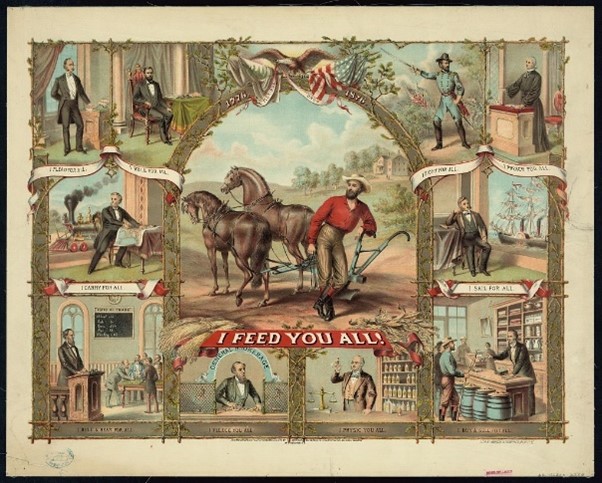

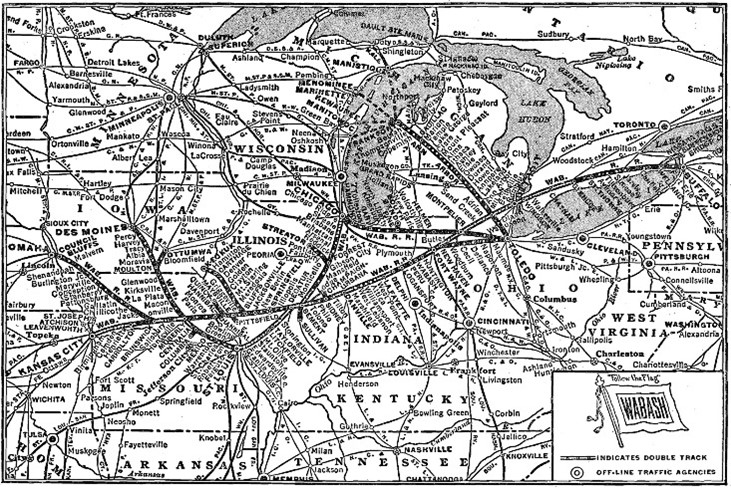

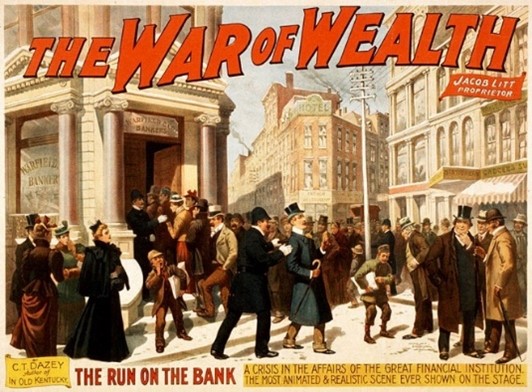


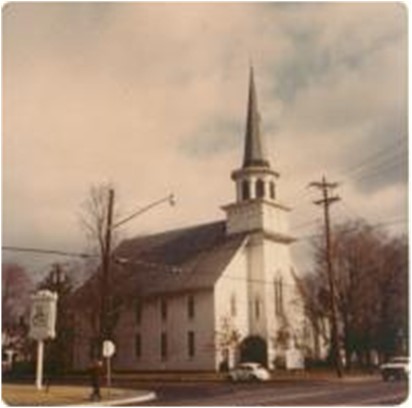


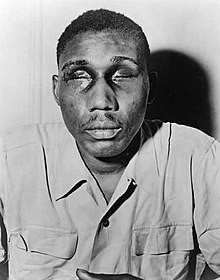

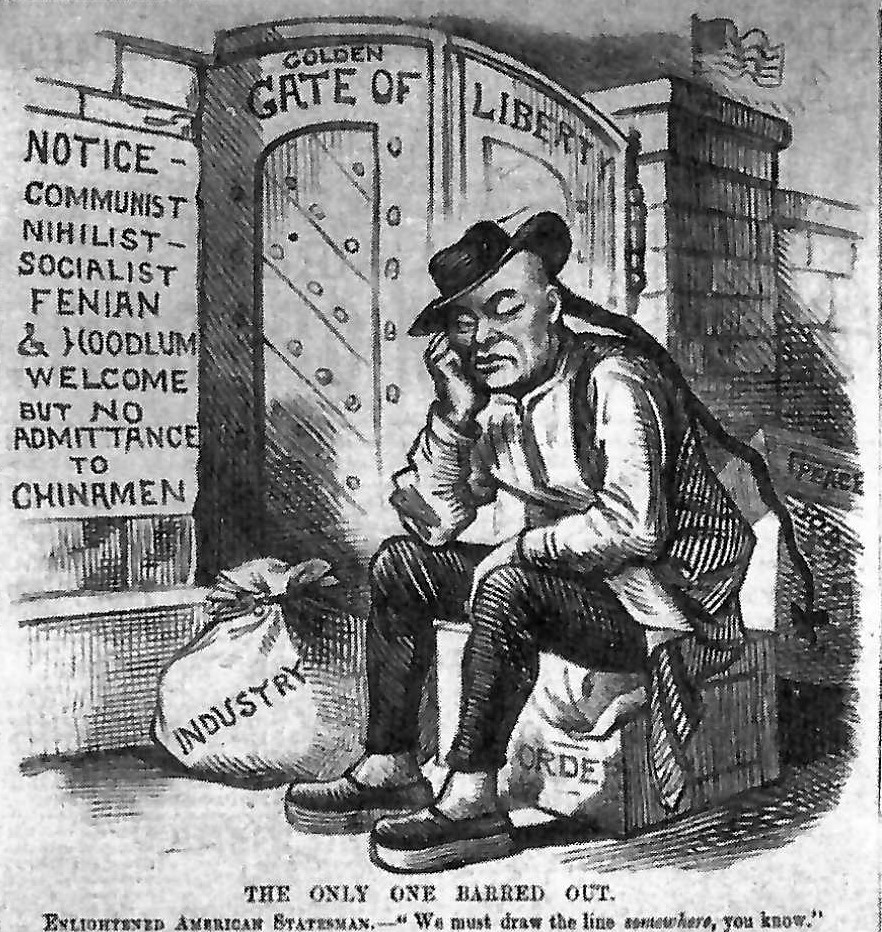


 njcssjournal