The Underground Railroad was a network of churches, safe houses and community centers that led thousands of people escaping slavery to freedom. Northern states like Pennsylvania played a major role in the progression of freedom, and the trail made several stops in New York, including the Southern Tier counties along the Pennsylvania border. Here are some of the local landmarks near Binghamton that played a role in the success of the Underground Railroad, including private homes and churches across the region.
The Seymore Home in Whitney Point, New York
This Whitney Point home was owned by George Seymore in the late 1850s and was a spot along the Underground Railroad network. During that time most people who lived in the area knew the Seymore home was being used to hide and assist escaped enslaved people. According to former Broome County historian Gerald Smith, the home was later converted into an antique shop called the Underground Antiques and eventually turned into a private residence.
Cyrus Gates Farmstead in Maine, New York
The Cyrus Gates Farmstead was once used as a sanctuary along the Underground Railroad. On 30 acres in Maine, Cyrus Gates’ home — referred to as “Gates’ white elephant” — was built in the 1850s by a New York City architect. It was added to the National Register of Historic Places in 1999. Gates was a cartographer and surveyor, as well as a vocal abolitionist. Up in the attic, the Gates home had an emergency hiding place. Tucked behind a hidden panel in the back of a cupboard, escaped slaves could crawl into a 10-by-20 foot secret room in the house’s south wing attic, crouching so as not to hit the four-foot-tall ceiling, when they needed to hide.
Park Church in Elmira, New York
Members of Park Church, originally named the First Independent Congregational Church of Elmira, were active participants in the Underground Railroad. They included John W. Jones, an escaped slave who helped over 800 travel to freedom through Elmira and Jervis Langdon, a local financier who helped Frederick Douglass escape from slavery. The church offered shelter, provided food and finances, and took legal action against slavery. They also prepared a petition to officially record their stance as an anti-slavery church and in 1871, it became Park Church. In 2006, the church was added to the National Park Service’s Network to Freedom program.
Binghamton, New York home of Dr. Stephen D. Hand
During the mid-19th century, the home of Dr. Stephen D. Hand stood at the site of the current Binghamton City Hall. After moving to Binghamton and starting a successful medical practice, he took an active role in the Underground Railroad. Hand opened his doors to those seeking freedom. His home was near two existing African American churches — the Bethel Church and the First Colored Methodist Episcopal Church — which created a trio of spots in close proximity offering help. The home was demolished in the 1960s and Binghamton City Hall took its place. The building has a plaque to recognize the significant role the Hand home placed in the Underground Railroad.
Trinity AME Zion Church of Binghamton
The church, founded in 1838, is a stop on the Downtown Binghamton Freedom Trail, recognized for its role in the Underground Railroad. The historic marker at the site shares its history as originally the AME Zion Church, a site that was a place of worship and safe spot to rest and receive help while traveling. Rev. Jermain Loguen, director of the Underground Railroad in Syracuse, was also pastor at the church in the 1860s.
My partner Felicia Hirata, friends Judy and Ruben Stern, and I were discussing the movie Killers of the Flower Moon and conversation shifted to the 1921 Tulsa Massacre. Felicia, Ruben, and I are all retired New York City high school social studies teachers and we realized we had never taught about the massacre in class, and we were unsure of whether we even knew about it when we were teachers. It had effectively been erased from history.
As a high school teacher, I did introduce my students, almost all African American and Latinx, to post-World War 1 racist attacks on African Americans with the poem “If We Must Die” by Claude McKay that was first published in the July 1919 of The Liberator coupled with photographs and newspaper headlines of the 1919 Chicago race riot showing white mobs and police attacking Blacks in the street. The McKay poem is especially powerful and resonated with students because it is a call for resistance.
I now teach social studies methods at Hofstra University in suburban Long Island, New York. After our discussion of Killers of the Flower Moon and the Tulsa Massacre, I decided to review how the post-World War 1 race riots and the Tulsa massacre were covered in the textbooks I used as a high school teacher and in more recent editions used by teachers today, books my students will likely use when they become teachers, books that continue to minimize the role that race and racism played in American history.
Ruben and I both taught United States history at Franklin K. Lane High School in the 1980s using Lewis Todd and Merle Curti’s Triumph of the American Nation as our primary textbook. Chapter 27 “New Directions in American Life Changing Ways (1900-1920)” ignores race, in fact the book’s index does not include race or racism as a category (Harcourt Brace Jovanovich, 1986). After discussing World War 1, the authors skipped directly to the “Golden Twenties” where the post-war race riots were ignored. In a later chapter, “Decades in Contrast Changing ways (1920-1939),” “Black migration to the North,” “Disappointed hopes,” and “The riots of 1919” are briefly mentioned, but not what happened in Tulsa. Students learned from the book that “Frightened whites, convinced that black Americans were trying to threaten them and gain control, responded with more violence. Police forces, ill-equipped to deal with riots, usually sided with whites” (751). Perhaps even more disturbing than the omissions, is this justification offered for the white rioters.
I also used Thomas Bailey and David Kennedy, The American Pageant, 7th Edition (1983, D.C. Heath) with a college-level dual enrollment class. A section in Chapter 39, “The Politics of Boom and Bust, 1920-1932” titled “The Aftermath of War” includes a paragraph explaining that “Vicious race riots also rocked the Republic in years following the Great War . . . [I]n the immediate post-war period, blacks were brutally taught that the North was not a Promised land. A racial reign of terror descended on Chicago in the summer of 1919, leaving twenty-three blacks and fifteen whites dead. Clashes also inflamed Knoxville, Omaha, Washington, and other cities.” There was also no mention of 1921 and Tulsa massacre in this textbook. Unlike Todd and Curti, Bailey and Kennedy didn’t justify the behavior of the white rioters but by suggesting that these were somehow clashes between Blacks and whites, it takes the onus off white mobs killing African Americans and driving them out of housing and jobs.
Even Howard Zinn’s widely used A People’s History of the United States, first published in 1980 by Harper Collins and reissued most recently in 2015 by Harper Perennial, the most progressive history of the United States that I used as a reference, falls short. Zinn included the post-war strike wave but not the race riots in 1919 or the destruction of the Black community of Tulsa in 1921.
I read From Slavery to Freedom, A History of Negro Americans, 3rd edition by John Hope Franklin and Alfred A. Moss, Jr. (1969, Vintage) as an undergraduate at CCNY in a class on American Nego History during the 1968-1969 school year. Unfortunately, it did not have much influence on the American history curriculum.
In the 7th edition (published in 1994 by Knopf), Franklin and Moss have a chapter “Democracy Escapes” about conditions faced by African Americans in the United States in the post-World War 1 era after approximately 380,000 African Americans served in the army and about 200,000 were stationed in the European theater (346-360; Goldenberg, 2022). Despite welcoming parades in major American cities, The Crisis reported “This country of ours, despite all its better souls have done and dreamed, is yet a shameful land. It lynches . . . It disenfranchises its own citizens . . . It encourages ignorance . . .It steals from us . . . It insults us . . . We return. We return from fighting. We return fighting. Make way for Democracy! We saved it in France, and by the Great Jehovah, we will save it in the U.S.A., or know the reason why” (347).
Between June and December 1919, Red Summer, Franklin and Moss estimate there were twenty-five anti-Black race riots in American cities (349). The most serious riot was in Chicago where there were thirty-eight fatalities, over 500 reported injuries, and 1,000 families left homeless (350-351). The book also briefly describes a “race war” in Tulsa, Oklahoma in June 1921 where nine whites and 21 blacks were killed.
On Long Island, New York, the most widely used United States history textbook is Holt McDougal’s The Americans by Gerald Danzer, Jorge Kor de Alva, Larry Krieger, Louis Wilson, and Nancy Woloch. The 2012 edition has two references to the post-World War I racial climate. A “Historical Spotlight” box in a chapter on “The First World War” explains that “Racial prejudice against African Americans in the North sometimes took violent forms. However, the 1917 East St. Louis riot seems to be excused because “White workers were furious over the hiring of African Americans as strikebreakers at a munitions plant.” The 1919 Chicago riot is also blamed on African Americans who “retaliated” when a Black teenager was stoned to death by “white bathers” after he swam into “water off a ‘white beach’” (600). A later chapter on the Harlem Renaissance mentions that “Northern cities in general had not welcomed the massive influx of African Americans. Tensions had escalated in the years prior to 1920, culminating in the summer of 1919, in approximately 25 urban race riots” (659). This section does not explain who was rioting and who was being attacked.
The 12th edition of The American Pageant (2002), widely used in Advanced Placement classes, added Lisabeth Cohen as a co-author. A section on “Workers in Wartime” included the “sudden appearance” of African Americans in “previously all-white areas sometimes sparked interracial violence,” equally blamed on Blacks and whites (711). A photograph of a victim of the 1919 Chicago race riot lying on the ground face down includes the caption “The policeman arrived too late to spare this victim from being pelted by stones from an angry mob” (711). From the picture, it is difficult to tell that the victim was African American and he is not identified as such in the caption, although the police standing above him are clearly white. Members of the mob and its victims are not identified, and the caption inaccurately suggests that white police were trying to protect the Black community. The 16th edition, published in 2015, notes in Chapter 32 “American Life in the Roaring Twenties, 1919-1929” that a “ new racial pride also blossomed in the northern black communities that burgeoned during and after the war,” but contained no mention of the race riots in 1919 or 1921 (749) and the chapter on “The Politics of Boom and Bust, 1920-1932” dropped the reference to “vicious race riots” in the 1983 edition.
The fourth edition of Making America (Houghton Mifflin, 2006) by Carol Berkin, Christopher Miller, Robert Cherny, and James Gormly references the East St. Louis and Tulsa riots in the index and race riots are paired with lynchings as examples of the conditions faced by returning Black veteran after World War 1. Unlike other texts, this book clearly identifies that “white mobs” were attacking African Americans in East St. Louis, Washington DC, Chicago, Omaha, Tulsa, and Detroit (694, 706, 732). It is also one of the few textbooks to list racism in the index.
America’s History9th edition for the AP Course by James Henretta, Rebecca Edward, Eric Hunderaker and Robert Self, published by Bedford, Freeman & Worth in 2018, includes Chapter 21, “Unsettled Prosperity: From War to Depression, 1919-1932.” This chapter has a section titled “Racial Backlash.” White attacks on Black workers and communities are presented as a response to the Great Migration during World War I and competition for jobs and housing. The section references 1917 riots in East St. Louis, Illinois where white mobs “burned more than 300 black homes and murdered between 50 and 150 black men, women and children”; the Chicago race riot of 1919; the Rosewood, Florida Massacre; and the “horrific incident” in Tulsa. The Tulsa “incident” did receive significant coverage, about half of a paragraph. “Sensational, false reports of an alleged rape helped incite white mobs who resented growing black prosperity. Anger focused on the 8,000 residents of Tulsa’s prosperous Greenwood district, locally known as ‘the black Wall Street.’ The mobs – helped by National Guardsmen, who arrested African Americans who resisted – burned thirty-five blocks of Greenwood and killed several dozen people. The city’s leading paper acknowledged that ‘semi-organized bands of white men systematically applied the torch, while others shot on site men of color.’ It took a decade for black residents to rebuild Greenwood” (653-654).
The best coverage of the 1917-1921 anti-Black race riots is probably Eric Foner’s AP text Give Me Liberty (6th edition, Norton). Chapter 19 “Safe for Democracy: The United States and World War I,” has a section on “Racial Violence, North and South.” It reports on the East St. Louis and Chicago attacks by white mobs on Black workers and communities, lynchings in the South targeting returning Black war veterans, a bloody attack on striking Black sharecroppers in Arkansas, and Tulsa. Foner describes Tulsa as “The worst race riot in American history . . . when more than 300 blacks were killed and over 10,000 left homeless after a white mob, including police and National Guardsmen, burned an all-black section of the city to the ground. The Tulsa riot erupted after s group of black veterans tried to prevent the lynching of a youth who had accidently tripped and fallen on a white female elevator operator, causing rumors of rape to sweep the city” (766).
Over one hundred years after the Tulsa Massacre, the United States needs to stop pretending that racism ended with the American Civil War and take steps to address the lingering impact of slavery and systemic racism on American society. An important step would be to ensure that high school students learn about events from the past that continue to shape the present.
Engaging High School Students in Global Civic Education Lessons in U.S. History
The relationship between the individual and the state is present in every country, society, and civilization. Relevant questions about individual liberty, civic engagement, government authority, equality and justice, and protection are important for every demographic group in the population. In your teaching of World History, consider the examples and questions provided below that should be familiar to students in the history of the United States with application to the experiences of others around the world.
These civic activities are designed to present civics in a global context as civic education happens in every country. The design is flexible regarding using one of the activities, allowing students to explore multiple activities in groups, and as a lesson for a substitute teacher. The lessons are free, although a donation to the New Jersey Council for the Social Studies is greatly appreciated. www.njcss.org
Era 11 The Great Depression and World War II (1929–1945)
*
*
The beginning of the 20th century marks the foundation of the transformation of the United States into a world power by the middle of the century. In this era industrialization, urbanization, and rapid immigration changed America from an agrarian to an urban society as people lived and worked in cities. The development of the new technologies of electricity, transportation, and communication challenged our long-held traditional policies of limited government, neutrality, and laissez-faire capitalism. The lesson of the Great Depression was that capitalism and free markets did not enable everyone to attain the American Dream. As a result, Americans looked to their government for help with the problems of unemployment, poverty, old age. Housing, and the supply of food.
Activity #1: The New Deal vs. a Five-Year Plan?
During the Great Depression, the unemployment rate was 24.9% in the United States (about 13 million people). Without income, there was very limited private consumption. President Roosevelt identified the South as the number one “problem region” of the U.S. for poverty and economic distress. In 1933, President Roosevelt signed the Tennessee Valley Authority Act, a federally funded program to protect the environment from floods, encourage economic development, and produce electric power.
In 1934, Shareholders of the Alabama Power Company sued to prevent the TVA from acquiring over half of the company’s property and equipment. The sale would allow the government agency to allocate electric power to consumers. The shareholders argued that Congress exceeded its authority.
The U.S. Supreme Court in Ashwander v. Tennessee Valley Authority, held that Congress did not abuse its power. Justice Hughes argued that the Wilson Dam, the location where the TVA was in the business of generating electricity, had been built originally in the interest of national defense because it produced materials involved in the production of munitions. The government could sell excess electricity to consumers without violating the Constitution. The majority concluded that Congress had the authority to construct the Wilson Dam. The majority also found that the disposal of the electric energy generated was lawful.
This Supreme Court decision is also known for the reasoning of Justice Louis Brandeis regarding conflicts when one branch exceeds its power and infringes on another branch. Justice Brandeis adopted the criteria which has become known as the ‘avoidance doctrine.’ “One branch of the government cannot encroach upon the domain of another, without danger. The safety of our institutions depends in no small degree on a strict observance of this salutary rule.”
The legacy of the Tennessee Valley Authority brought electricity to the southeastern United States increasing the productivity of farming and transforming this region from poverty to sustainable economic development. Before the Tennessee Valley Authority, electric power was generated by private companies. (e.g. Westinghouse, Edison Electric Illuminating Company, Public Service Corporation, etc.) Private companies are concerned with making a profit instead of investing in public areas such as street lights or rural areas. The first buildings to have electricity around 1880 were often hotels and commercial buildings. Wabash, IN, Appleton, WI, Cleveland, OH, and lower Manhattan were some of the first towns and cities to have electric power. Some members in Congress, namely Senator George Norris, favored public utility companies as the most efficient way to bring this new invention to everyone in the United States.
The Soviet Union’s Five-Year Plan: The Zaporizhzhia Nuclear Power Station in Ukraine
Since the Russian Revolution of 1917, Lenin prioritized the electrification of the Soviet Union as essential for economic and industrial development. Each of the 12 Five Year Plans included the expansion of power through the construction of dams, fossil fuels, natural gas, and since 1975, nuclear energy. The Soviet state planning committee, Gosplan, developed these plans with clearly stated production goals.
One of the problems with the energy plan of the Soviet Union is the transmission of electricity from the generating plant to other regions of the country. Russia depends on a unified power system and the complexity of its geography and use of different energy sources (fossil fuels, hydropower, natural gas, and nuclear) makes it difficult to transfer power from one source to another efficiently. The heaviest demand for electricity is in the western or European side of the country. However, as electricity became accessible to rural areas, agricultural production became dependent on electricity. The largest nuclear power plant in Europe is on the Dnieper River in Ukraine. It was constructed in 1985.
The Soviet Union could benefit from the computer software used in the United States, but the Five-Year Plan model is dependent on Soviet Union computers and boilers. Some of the Five-Year Plans were completed ahead of schedule, some did not meet their goals, and they also included social changes such as closing houses of worship, providing child care, and using large collective farms. The goals of most of the plans were to transform the Soviet Union into a major industrial and economic power.
How is a market economy different from a command economy? What are the advantages and disadvantages of both models?
Why did the United States and Soviet Union experience challenges or problems with electrifying their countries?
Is a monopoly or market competition the most efficient economic model for providing utilities to the people in a country? (water, electric, phone, education, etc.)
Is a market or command economy the most efficient model to address the expected problems from climate change in the next 25 years?
Which economic model (market, command, or mixed) is the most efficient one to increase worker productivity?
Activity #2: Two Perspectives on World War II: DR’s Four Freedoms Speech and Hirohito’s Decree
On January 6, 1940, about three months after Hitler’s attack on Poland, President Franklin Roosevelt gave his Four Freedoms speech as part of his State of the Union address. This was during a time when many people in America wanted to remain neutral and isolated from the European conflict which expanded in September 1939 with Germany’s blitzkrieg attack and occupation of independent Poland.
1940 was also a presidential election year. In the mid-term election of 1938, the Republican Party became the majority in the House and Senate. The Republican Party had several contenders for the nomination, notably Governor Thomas Dewey (NY) Senator Robert Taft (OH), and Wendell Wilkie, a businessman from Kansas. When the Republican Party convention was held in June in Philadelphia, Wendell Wilkie’s popularity had increased significantly, while the popularity of Thomas Dewey and Robert Taft was declining.
Excerpt from the Four Freedoms Speech
“In the future days, which we seek to make secure, we look forward to a world founded upon four essential human freedoms.
The first is freedom of speech and expression–everywhere in the world.
The second is freedom of every person to worship God in his own way–everywhere in the world.
The third is freedom from want–which, translated into world terms, means economic understandings which will secure to every nation a healthy peacetime life for its inhabitants-everywhere in the world.
The fourth is freedom from fear–which, translated into world terms, means a world-wide reduction of armaments to such a point and in such a thorough fashion that no nation will be in a position to commit an act of physical aggression against any neighbor–anywhere in the world.
That is no vision of a distant millennium. It is a definite basis for a kind of world attainable in our own time and generation. That kind of world is the very antithesis of the so-called new order of tyranny which the dictators seek to create with the crash of a bomb.
To that new order we oppose the greater conception–the moral order. A good society is able to face schemes of world domination and foreign revolutions alike without fear.
Since the beginning of our American history, we have been engaged in change — in a perpetual peaceful revolution — a revolution which goes on steadily, quietly adjusting itself to changing conditions–without the concentration camp or the quick-lime in the ditch. The world order which we seek is the cooperation of free countries, working together in a friendly, civilized society.
This nation has placed its destiny in the hands and heads and hearts of its millions of free men and women; and its faith in freedom under the guidance of God. Freedom means the supremacy of human rights everywhere. Our support goes to those who struggle to gain those rights or keep them. Our strength is our unity of purpose. To that high concept there can be no end save victory.”
Historical perspectives were important in 1941, and they are important today. The United States, including President Roosevelt, presented a perspective of Japanese superiority and a destiny to rule the world. He also called America’s citizens to accept the importance of a new moral order that included the religious concept of faith in freedom under the guidance of God. This perspective of American superiority is built on a commitment to an idea and an ideal.
American vs. Japanese Civilian Perspectives
A Life Magazine article about Emperor Hirohito in 1937 stated “To Japanese he is, in all seriousness, a divine descendent of the Sun goddess, the incarnate head of the Japanese divinity idea that makes the conquest of Asia a holy destiny for the Japanese race.” For ordinary Americans, the concept of kami in Japanese culture was not comprehendible. Instead of understanding a perspective of divinity as present everywhere, they accepted Hirohito as a son of a god or goddess or someone connected with divinity.
After the bombing at Pearl Harbor tensions between the United States and Japan escalated. Through the lens of war, the Japanese emperor’s god-like status became a more serious issue because they perceived Japan’s war objectives connected with their religious beliefs. A 1945 United States News story explains, “Shintoism has no religious content and has ethical content to the extent that it is designed to support the idea of the divine origin of the Emperor.” A 1945 article in Life Magazine stated, “The Emperor of Japan is neither a man nor a ruler. Nor is he simply a god living in Tokyo. He is a spiritual institution in which center the energy, the loyalty and even the morality of the Japanese.” He is supreme in all temporal matters of state as well as in all spiritual matters, and he is the foundation of Japanese social and civil morality.
American and Japanese civilians had very opposite reactions following the events of December 7, 1941. For Americans, Pearl Harbor represented “A Day Which Will Live in Infamy.” For citizens of Japan, Pearl Harbor represented the success of a justified military retaliation. The American and Japanese governments both utilized nationalism to their advantage, and implemented various forms of propaganda as tools for shaping their civilians’ perspectives.
Excerpt from Japan’s Announcement Following the Attack on Pearl Harbor
“What an uproar! Japan’s Imperial Forces got things off to a quick start with one splendid strike then another in historic surprise attacks on Pearl Harbor, where the bravado of the US Asia fleet met with sudden defeat, and off the Malaya Coast, where the main forces of the British Asia fleet were utterly annihilated. Word has it that Roosevelt and Churchill were shaken up and went pale upon hearing of the defeats. In a third strike, Hong Kong Island, England’s strategic base for its 100-year exploitation of East Asia, fell into ruin in only a matter of ten days. During this time, Churchill was sent reeling, cutting off contact with others and showing up in Washington.
What these two headstrong countries are striving for will only lead them on a downhill path to military defeat. Our barbaric enemies are already cowering in fear in the Pacific, and the fall of Manila shall mark the day of the Philippines’ subjugation and reversion back to Greater East Asia. The enemy power of Singapore, which was—alas—boasting of its impenetrable stronghold before the Imperial Forces penetrated the jungle area of the Malay Peninsula and advanced southward like a raging tide, shall also vanish into nothingness in the midst of this glorious chapter in history.
The military gains of the glorious Imperial Forces are truly great, and the army, navy, and air force should be given our heartfelt gratitude. We should also honor our courageous men who are ready to lay down their lives when charging enemy lines, as well as those who went out to conquer but never returned.”
Emperor Hirohito’s Decree
On January 1, 1946, four months after the surrender on September 2, 1945, Emperor Hirohito made the following statement in Japan’s newspapers.
“I stand by my people. I am ever ready to share in their joys and sorrows. The ties between me and my people have always been formed by mutual trust and affection. They do not depend upon mere legends or myths. Nor are they predicated on the false conception that the Emperor is divine, and that the Japanese are superior to other races and destined to rule the world.
How was the rise of dictators after World War 1 an existential threat? How did ordinary American citizens understand the conflict in Europe and Asia before and after the attack on Poland and the attack on Pearl Harbor?
If you were the President of the United States in 1940, would you deliver the Four Freedoms speech or one that is similar in content and context?
Do you accept President Roosevelt’s statement following Pearl Harbor that before the attack the United States was at peace with Japan? (see video clip above)
Are elected leaders elevated by people and the press or are they criticized to the extent that their decisions and motives are questioned?
Which government delivered the best message to its citizens based on factual evidence and an understanding of the importance of the attack on Pearl Harbor?
Activity #3: Japanese Internment Camps and Soviet Union Deportation Camps
Japanese Internment Camps
Two months after the attack on Pearl Harbor, February 19, 1942, President Franklin Roosevelt signed Executive Order 9066 to relocate approximately 117,000 Japanese Americans living on the west coast. At first, the order was voluntary and Japanese Americans had time to sell their property and comply in an orderly manner.
Unfortunately, many did not comply voluntarily, and the relocation became mandatory. Thousands of people lost their homes and businesses due to “failure to pay taxes.” The relocation of Japanese Americans in the United States for safety and security reasons was controversial during World War II and for the decades that followed. The internment camps provided educational and recreational activities, adequate heat, and a process to hear complaints and address concerns.
There were 12 camps located all over the United States, with the Seabrook Farms camp in New Jersey.
President Truman rescinded the Executive Order on June 25, 1946 allowing the Japanese Americans to return to their homes. They were in relocation camps for more than four years. When they returned home, most found their belongings stolen and their homes and property sold. They also faced prejudice and discrimination for years, even though Japanese Americans were combat soldiers during the war.
In 1988, President Ronald Reagan signed the Civil Liberties Act. The remaining survivors of the relocation camps were sent formal letters of apology and were awarded $20,000 in restitutions from the United States government.
Soviet Union Deportation Camps During World War II
On February 23, 1944, the Chechens were exiled from their ancestral lands and deported to Siberia and the northern regions of Kazakhstan. The entirety of the Chechen nation was accused of collaborating with the Fascists, even though there is no evidence to support this. The German advance into the Soviet Union never came close to Chechnya. The Chechen deportation of almost 400,000 men, women, and children is the largest Soviet deportation and occurred in a matter of days. Many Chechens had in fact fought on the front lines of the Soviet war against the German aggressor.
On September 1, 1941 the mass evacuation was announced for the approximately 440,000 Volga Germans. Ten days later they began their forced deportation to Kazakhstan and Siberia. Many were forced to work in ‘labor camps’ such as Kolyma. The Volga Germans were then stripped of their citizenship and did not regain their civil rights until after Stalin’s death. Most estimates indicate that close to 40 percent of the affected population perished.
In 1944, Joseph Stalin ordered the deportation of the entire Crimean Tatar community (roughly 200,000), falsely accusing them of collaborating with the Nazis. Reports suggest that nearly half of the deported died during the ordeal. Ukraine, Latvia, Lithuania, and Canada have all formally recognized Stalin’s brutal deportation as a crime of genocide. During this same period, the Soviet Union adopted a policy of “Russification” for the peninsula. Crimea was “Russified” and any study of the Tatar’s native language was banned, ancient Tatar names were erased, Tatar books were burned, and their mosques were destroyed. Nikita Khrushchev transferred Crimea from Soviet Russia to Soviet Ukraine.
Is it possible for a government to correct something it did that was morally or legally wrong?
Do governments need to justify the actions they take during a time of war or a national crisis?
Are there significant differences in the actions of the United States and the Soviet Union in the relocation or deportation of innocent people, many who were citizens?
Do ordinary people have any rights during a war or crisis (i.e. Ukraine, Gaza, Sudan, Congo, Rwanda, etc.)?
How and who determines if and when a government exceeds its authority?
Activity #4: Weapons of Mass Destruction
In World War II, the Japanese were fighting for the Emperor who convinced them that it was better to die than surrender. Women and children had been taught how to kill with basic weapons. kamikaze pilots crashed their planes into American ships. A land invasion would be costly with estimates of more than one million American lives lost.
After a successful test of a nuclear bomb at Los Alamos, New Mexico on July 16, 1945, the United States, China, and the United Kingdom issued the Potsdam Declaration on July 26 demanding the unconditional surrender of the Japanese government, warning of “prompt and utter destruction.” On the morning of August 6, 1945, the first atomic bomb was dropped on Hiroshima. The result was approximately 80,000 deaths in just the first few minutes. Thousands died later from radiation sickness. On August 9, 1945, a second atomic bomb was dropped on Nagasaki. The result was 39,000 men, women and children were killed and 25,000 more were injured. Both cities were leveled and Japan surrendered to the United States.
After the news of the atomic bombs that were dropped on Hiroshima on August 6, 1945 and on Nagasaki on August 9, 1945, Lieutenant General Leslie R Groves, director of the `Manhattan Project’ that had developed the atomic bomb, commented:
“The atomic bombings of Hiroshima and Nagasaki ended World War II. There can be no doubt of that. While they brought death and destruction on a horrifying scale, they averted even greater losses – American, English, and Japanese”.
This justification that the use of the bomb saved lives, even though it killed innocent civilians, has haunted the world into our present time. It was a view that generated controversy then and after as to the justification or otherwise of the use of such weapons on largely defenseless civilian targets, at such Mutual Assured Destruction (MAD) that has haunted the world into our present times.
Following World War 2, there was an arms race between the Soviet Union and the United States. Although there were threats of war and conflicts in Korea, Southeast Asia, the Congo and other places, this period was called the Cold War. Other countries also developed nuclear weapons leading to concerns of a global conflict.
The world came close to a nuclear attack during the Cuban Missile Crisis. In 1962, nuclear weapons could be delivered by airplanes, missiles, and submarines. The Soviet Union placed nuclear warheads in Cuba and the United States had some in Turkey. These missiles could attack cities in both countries within a range of 1,200 miles. Fortunately, the Soviet Union began to withdraw its ships and missiles from Cuba and an agreement was made.
In the 1960s, the military strategy of Mutual Assured Destruction (MAD) was debated, In this strategy, two opposing forces, the Soviet Union and the United States, had enough nuclear weapons to completely destroy each other. This deterrence theory assumed that neither side would initiate a nuclear attack because the resulting retaliation would lead to their own destruction. The concept, first discussed in the 1960s during the Cold War, is based on the idea that the devastating consequences of nuclear war would outweigh any potential gains for either side.
As a result, the United Nations initiated the process to limit the production of nuclear testing and weapons. Since the first test ban treaty, several agreements have been ratified to control the proliferation of nuclear and chemical weapons. The threat from atomic, hydrogen, neutron, and cobalt nuclear weapons is a concern to every person and every country because of the fallout from dangerous levels of radiation. There are still detectable effects of radiation in our atmosphere today from the 1945 explosion. The effects of radiation from a thermonuclear weapon (Hydrogen bomb) will likely last for hundreds of years and affect every living organism and human.
Following the Attack on the World Trade Center on September 11, 2001, the world became concerned about a terrorist group having access to a smaller nuclear weapon, a dirty bomb, that might be detonated in an urban area. The effects of a dirty bomb would likely be limited to the immediate area of the explosion but the damage to property and the cleanup of radioactive elements would be significant and costly.
Why did an arms race between the USA and the USSR begin after 1945?
How sane was the policy of MAD?
What factors sustained the arms race for so long?
Is a limited nuclear war a plausible scenario or would it quickly lead to an all-out war?
What would life on Earth be like after a nuclear war? What geographic regions might have a chance of survival?
Should the civil defense from a nuclear war or dirty bomb explosion be best coordinated by local, state, or the federal government in the United States?
How would the governments of Europe or the Middle East, where there are many countries within a small geographic area respond to a nuclear war or explosion from a bomb or nuclear power plant?
What is the most likely scenario for a nuclear explosion in the 21st century?
Engaging High School Students in Global Civic Education Lessons in U.S. History
The relationship between the individual and the state is present in every country, society, and civilization. Relevant questions about individual liberty, civic engagement, government authority, equality and justice, and protection are important for every demographic group in the population. In your teaching of World History, consider the examples and questions provided below that should be familiar to students in the history of the United States with application to the experiences of others around the world.
These civic activities are designed to present civics in a global context as civic education happens in every country. The design is flexible regarding using one of the activities, allowing students to explore multiple activities in groups, and as a lesson for a substitute teacher. The lessons are free, although a donation to the New Jersey Council for the Social Studies is greatly appreciated. www.njcss.org
Era 9 The Great Depression and World War II (1929–1945)
The Great Depression brought about significant changes in the regulatory power of the federal government of the United States. The reforms of the New Deal were to stabilize the capitalistic economics system of the United States and they also imposed a mild form of welfare state capitalism that was prevalent in European countries. As a result, this era provides students with several opportunities to test their analytical skills regarding presidential power, the effectiveness of a democracy in addressing a major crisis, and the effect of the reforms of the New Deal on racial minorities, women, children and other groups.
Activity #1: The Packing of the U.S. Supreme Court (1937) and the Supreme Court in Ghana
The Constitution does not stipulate the number of Supreme Court Justices; the number is set by Congress. There have been as few as six, but since 1869 there have been nine Justices, including one Chief Justice. All Justices are nominated by the President, confirmed by the Senate, and hold their offices under life tenure. Justices may remain in office until they resign, pass away, or are impeached and convicted by Congress.
After winning a landslide election in 1936, President Franklin D. Roosevelt introduced the Judicial Procedures Reform Act which would allow the president to nominate an additional judge to the Court for every sitting judge who had served at least ten years and reached the age of 70. The initial reason that was explained by President Roosevelt was that the aging justices could not keep up with their caseload. Roosevelt changed his reasoning when this argument appeared flawed because the additional judges would likely increase deliberations and delay the time to make a decision. The new argument that the appointed justices did not reflect the will of the people at a time when the United States faced unprecedented economic problems was explained to the people in a Fireside Chat.
President Roosevelt continued to advocate for the Judicial Procedures Reform Act until the Senate voted 70-20 to send the bill back to committee in July, 1937. It was never passed.
The individual states determine the number of judges on their state supreme courts. The number varies between five and nine justices. The Supreme Court of New Jersey has seven judges.
The Supreme Court of Ghana
The Supreme Court is the highest Court in the administration of justice in Ghana.
The Court is presided over by the Chief Justice and in his absence the most senior of the Justices of the Supreme Court, as constituted shall preside. Judges who sit in the Supreme Court are referred to as Justices of the Supreme Court.
The Supreme Court consists of the Chief Justice and not less than nine Justices. It has exclusive original jurisdiction in all matters relating to the enforcement or interpretation of the 1992 Constitution. It also has supervisory jurisdiction over all the Courts in Ghana. It is located only at the Headquarters in Accra.
Questions:
In the United States, should the final decision on legislation be made by non-elected judges on the U.S. Supreme Court?
If the United States Congress was to reform the U.S. Supreme Court, what changes would you recommend they consider?
Does the Tenth Amendment best serve the interests of representative democracy by allowing the individual states to make decision on issues not specifically delegated to Congress or is popular sovereignty served through the popular vote of the election of congressional representatives and senators?
Do you prefer the structure of the Supreme Court in Ghana, which establishes a minimum number of judges, to be a better plan for decision making than how the United States structures its Supreme Court?
Can Ghana prevent a president from adding judges with a similar political philosophy?
Activity #2: Child Labor Laws in the United States and Côte d’Ivoire
The right of parents to take advantage of the productive capacity of their children was long recognized both in the United States and abroad. The perceived value of the child can be viewed through how the legal system treated the wrongful death of a child and the damages the parents could hope to recover. Courts of that period usually found that the proper amount due was “the probable value of the services of the deceased from the time of his death to the time he would have attained his majority, less the expense of his maintenance during the same time.” The courts recognized that the parent naturally benefited from the productive labors of his child until the child reached the age of majority.
The wages the child earned served the common purpose of supporting the family. The wages of a child generally became the property of the parents and often were the key to survival for many working-class families. Rather than the wife being the secondary wage earner, as became the case in the 1970s, for many families the child performed this role in American history.
Today, states have moved to extending working hours for children, eliminate work permit requirements and lower the age for teens to handle alcohol or work in hazardous industries. At the same time, there has been a 69% increase in children employed illegally by companies since 2018, according to the U.S. Department of Labor.” Source
New Jersey: 34:2-21.2. Minors under 16 not to be employed; exceptions; nonresidents.
“No minor under 16 years of age shall be employed, permitted, or suffered to work in, about, or in connection with any gainful occupation at any time; provided, that minors between 14 and 16 years of age may be employed, permitted or suffered to work outside school hours and during school vacations but not in or for a factory or in any occupation otherwise prohibited by law or by order or regulation made in pursuance of law; and provided, further, that minors under 16 years of age may engage in professional employment in theatrical productions upon the obtaining of a permit therefor and may engage outside school hours and during school vacations in agricultural pursuits or in street trades and as newspaper boys as defined in this act, in accordance with the provisions of section 15 of this act.”
Except as to the employment of a minor for whom a theatrical employment permit has been issued, no minor under 16 years of age not a resident of this State shall be employed, permitted or suffered to work in any occupation or service whatsoever at any time during which the law of the state of his residence required his attendance at school, or at any time during the hours when the public schools in the district in which employment in such occupation or services may be available are in session.
NLS data show that 52 percent of 12- and 13-year-olds in its 1997 cohort had paid work experience. The work performed at these ages was found to be freelance in nature. Babysitting and yardwork accounted for more than 70 percent of the work they performed. For 14- and 15-year-olds, the dominant form of work remains freelancing. When children do work, it is most commonly when school is out of session. Children have largely shifted to the service industries.
Child Labor in Côte d’Ivoire
Due to security issues in both Mali and Burkina Faso, Côte d’Ivoire has an estimated 13,214 refugees (2,489 households), of which an estimated 59 percent are children. Children are also brought to Côte d’Ivoire from those countries for commercial sexual exploitation and forced labor, including in begging, cocoa production, and mining. Children from Côte d’Ivoire are also subjected to human trafficking for forced labor in domestic work within the country and North Africa. Although the minimum age for a child to work is 16, this law lacks enforcement.
School is mandatory for children ages 6 to 16 in Côte d’Ivoire. Although the Law on Education provides for free education, students are often required to pay for textbooks and uniforms, which may be prohibitive to some families. A shortage of teachers, poor school infrastructure, lack of transportation systems in rural areas, and inadequate sanitation facilities have negatively impacted children’s ability to attend school. Research also suggests that some students are physically and sexually abused at school, which may deter some students from attending school. Because of this, roughly one in four girls (25%) in Côte d’Ivoire are not able to attend primary school.
The UN Special Rapporteur, Tomoya Obokata, reported in November 2023 on the progress the government is making:
“I commend Côte d’Ivoire for its solid legal and institutional architecture on child labor and trafficking in persons. But the Government needs to do more to lift people, including in rural areas, out of poverty, promote the economic empowerment of women and ensure access to decent work, particularly for young people,” the expert said.
“Despite the efforts undertaken, I was informed that instances of child labor persist in various sectors of the economy including agriculture, domestic work, street vending and in artisanal gold mining. I am also concerned about the fate of girls who have either been trafficked from countries in the region for the purpose of sexual exploitation or who are subject to forced and early marriage in the country,” Obokata said.”
Questions:
Should the state or federal government regulate child labor laws?
Should the government have any authority over parental decisions regarding child labor?
Should children be protected from working in unhealthy or dangerous occupations? (serving alcohol, casinos, nail salons, landscaping, etc.)
Activity #3: The Power of Government to Control Private Enterprises in the United States and India
The U.S. government influences private business through compulsory taxes by spending the tax revenues on public functions such as parks, roads and other infrastructure, schools, law enforcement, homeland security, and scientific research, as well as welfare and social insurance programs such as Social Security, Medicare, Medicaid, food stamps, and unemployment assistance. The federal government also issues and enforces standards ranging from environmental quality, to consumer protection, business and banking practices, nondiscrimination in employment, Internet privacy, and safety for food, drugs, manufactured products, and the places where people work.
Chinese tech giant ByteDance, in 2017, purchased the popular karaoke app Musical.ly and relaunched the service as TikTok. Since then, the app has been under the microscope of national security officials in Washington fearing possible influence by the Chinese government.
Government Regulation of Private Enterprise in India
India began its regulatory reforms in the early 1990s, reducing state involvement through the privatization of companies, by putting in place independent regulatory mechanisms to boost competition and private-sector-led growth, and to strengthen consumer protection. But the reform efforts lacked coherence and have stalled. Even though the economy grew rapidly over the past decade, the slowing-down of reforms created an image of a country where doing business is difficult.
India lacks a modern regulatory governance regime. Based on the Constitution, all levels of government can regulate, including the Central Government and 29 state governments. Regulatory barriers to competition are high and rule-making in India is complex due to the different layers of government.
India needs to further strengthen the governance of state-owned enterprises, simplify regulations, and reduce administrative burdens on firms. India should develop and implement a regulatory governance system following international good practices such as regulatory impact assessment, public consultation, and administrative simplification. The creation of national Regulatory Commissions since 2005 was a positive move, but there is lack of accountability and consistency of the overall regulatory system.
Establishing a whole-of-government approach to regulation, using international best practice tools and systems such as regulatory impact assessments and public consultation, and building effective institutions for regulatory quality management, are key. In this sense, India needs to catch up with other emerging economies such as China, Mexico and Vietnam, which have already taken important steps in that direction, in line with the OECD’s 2012 Recommendation on Regulatory Policy and Governance.
In 2019, India passed a new Consumer Protection Act which streamlined all methods of exchanges relating to the purchase of merchandise and e-commerce. It also expanded the protections for deceptive trade practices and introduced product liability laws for the first time.
Questions:
Should governments encourage or restrict startup businesses?
Is it possible for governments to regulate the safety of products manufactured and sold withing their country?
Are government requirements for minimum wage, social security, safety, equal opportunity in hiring, necessary or should they be optional?
Activity #4: The Roosevelt Corollary in the Caribbean and China’s Hegemony in the South Pacific
The Roosevelt Corollary signaled an important shift in the economic and diplomatic policy of the United States in Latin America at the beginning of the 20th century. In its efforts to ensure that Latin and Central American governments repaid their debts, the United States also used its military power to protect its hegemony or interests. By doing this the Roosevelt Corollary also negatively affected our diplomatic relations with Europe and set a precedent for the foundation for the Fourteen Points after World War I.
There are different perspectives about the impact of the Roosevelt Corollary in policy regarding its history of imperialism, limitations on self-government, and the impact it had on the social order and culture in Latin and Central America. The U.S. Constitution is silent on a president acting as the international policeman to correct wrong behaviors in another country. President Roosevelt changed the original interpretation of the Monroe Doctrine from keeping foreign powers out of the western Hemisphere to justifying America’s intervention in independent countries in Latin America.
This set a precedent for future presidents who sent American troops into Latin American countries eight times.
China’s Hegemony in the South Pacific
In the beginning of the 21st century, China expanded its naval power and influence in the Pacific and Indian Oceans. Since 2016, China has constructed naval ports in an around the Spratly Islands. China’s actions impinge in the maritime entitlements and legal claims of Malaysia, the Philippines, and Vietnam for fishing and oil exploration. The South China Sea may have billions of barrels of untapped oil and trillions of cubic feet of natural gas.
China should consider the economic cost of its investments in these small islands as the impact of rising sea levels is likely to limit their economy and increase their debt. Will the economic costs weaken instead of strengthening China in the future? The security of Australia, Taiwan, and Japan is a concern as military support from the United States may be limited by China’s presence in this area. The distance from the United States to Japan, Taiwan, and Australia is much further than it is for its rivals of North Korea, Russia, and China.
The novel legal argument is that under the Belt and Road Initiative, China is providing economic assistance to these small island in exchange for a ‘good neighbor’ policy with Beijing.
Questions:
Does the Roosevelt Corollary set a precedent for giving the president of the United States too much authority in foreign affairs?
How should situations of violations of international laws regarding financial matters and human rights be addressed in the 21st century?
Is China’s policy of expanding its military and economic influence into the South China Sea a violation of the UN’s Law of the Sea?
Book Review by Hank Bitten, NJCSS Executive Director
TheLeadership Journey: How Four Kids Became President
Doris Kearns Goodwin
I decided to read this book after listening to Doris Kearns Goodwin speak about this on television following the inauguration of President Donald Trump. After reading the first few pages, I decided to write a review of this book as it should be ‘required’ reading for every social studies teacher, student, parent, and grandparent.
One reason for encouraging teachers, pre-service teachers. students, parents, and grandparents to read this book is in the truisms that are embedded in the stories about each president. For example, in introducing Abraham Lincoln’s decision to enter politics as a Whig candidate, these few sentences should engage young minds in reflective thinking:
“On March 9, 1832, when he declared his intention to run for a seat in the Illinois state legislature just eight months after he arrived in new Salem. ‘Every man is said to have his peculiar ambition,’ Lincoln wrote in a pamphlet announcing his candidacy, as he sought to earn the respect and votes of his neighbors. ‘I have no other so great as that of being truly esteemed of my fellow men, be rendering myself worthy of their esteem. How far I shall succeed in gratifying this ambition is yet to be developed. I am young and unknown to many of you.’” (Pages 25-26)
As a teacher, I would discuss with my class, why did Lincoln join the new Whig Party and not the popular Democratic Party? Why did he announce his decision to run for the assembly in a pamphlet compared to a letter, newspaper, or verbal announcement? How does Lincoln understand public service?
As a parent or grandparent, I would discuss the political parties we have today and what they stand for. How do candidates in our community or state get elected and announce their decision to run for office? Is it possible for elected representatives to represent the interests and needs of the majority in their community or is it best for them to advance their own beliefs on the issues or vote for the position of their political party?
The reading level of TheLeadership Journey: How Four Kids Became President is for middle school students. Each chapter is just a few pages and should take a middle school student about 20-30 minutes to read and comprehend. This book is a valuable resource for a student research assignment, teaching about the reliability of sources, civics, an afterschool history club such as Rho Kappa or Phi Alpha Theta, a summer reading list activity, or a Saturday Seminar roundtable discussion. The applications of this book are unlimited.
One of the hidden gems in the life of Lincoln is with his learning style, character, persistence, and ability to handle disappointments. These examples are often only a few sentences, but they are prompts to initiate discussion and empathy between students in your class. For example, “The key to Lincoln’s success as a lawyer was his ability to break down the most complex case or issue ‘into its simplest elements.’ He never lost a jury by fumbling or reading from a prepared argument, relying instead ‘on his well-trained memory. (Page 47)
Another example that I found interesting was the evolution of how President Lincoln’s views changed about the emancipation of enslaved persons by listening to others.
“On August 14, 1862, during the period in which he was preparing the proclamation, Lincoln held the first meeting of Black leaders at the White House so he could make his case for a voluntary emigration of Black Americans to a different country….Later that year, Lincoln made another case for colonization during his second annual message to Congress on December 1, 1862, during which he proposed a constitutional amendment to colonize Black Americans and provide for them better lives in ‘their long-lost fatherland,’ where they would have access to homes and schools.’” (Pages 79-80)
“Once the Emancipation Proclamation went into effect, he abandoned all efforts at colonization and trained his focus on freedom for the enslaved and keeping the Union whole.” (Page 80)
The second president in Doris Kearns Goodwin’s book is Theodore Roosevelt. There are multiple connections for students in the leadership journey of Teddy Roosevelt. These include living with a disability, coping with personal loss, understanding the issues, the importance of integrity, and the challenges and opportunities of the experiences in one’s life.
Although born into a family with wealth, as a child he faced frightening attacks of bronchial asthma. His childhood and teenage years were limited. By age 10, he had opportunities to be home schooled, enjoy summer vacations on Long Island, and travel to Africa, Europe, and the Middle East. However, participating in activities was limited because of his health.
“’But Teedie’s chronic asthma required more and more days of bed rest. Thee worried that without physical activity Teedie’s weak lungs would continue to worsen and that he would lose all physical ability, but Thee also believed that this outcome was not inevitable. His father said to him, ‘Theodore you have the mind but not the body, and without the help of the body the mind cannot go as far as it should.’” (Page 99)
The lesson of how Teddy Roosevelt voted in the New York State Assembly, especially on the bill to stop the manufacture of cigars in tenement houses is one that will likely engage students in a thoughtful discussion or debate about how elected officials represent constituents today. Roosevelt opposed all government supervision and regulations regarding limiting the hours worked, a minimum wage, or prices. Samuel Gompers invited him to visit the places where the cigars were made.
“Roosevelt was stunned by what he witnessed.: five adults and several children, all immigrants from Bohemia (part of the modern-day Czech Republic) who could barely speak English, living and working in a single room, making cigars sixteen hours a day.” (Page 113)
On February 14, 1884, Valentine’s Day, Teddy Roosevelt place a large X in his diary followed by the words “The light has gone out of my life.” His mother, Mittie, and his wife, Alice Hathaway Lee, died. He was 25 years old and had been married for less than four years.
“His forty-nine-year-old mother, Mittie, still a youthful-looking, beautiful woman, had been suffering from what was considered to be a severe cold, but which turned out to be a deadly case of typhoid fever. Theodore was at his mother’s bedside at three a.m. when she died. Less than 12 hours later, as he held his young wife in his arms, Alice died from what was later diagnosed as acute kidney disease, its symptoms masked by her pregnancy.” (Page 117)
These are stories students relate to. They encourage discussions about loss, grief, empathy, confusion, resilience, and life. The leaders Doris Kearns Goodwin writes about are very human and their experiences in life are similar to those of many young adults. Abraham Lincoln also lost his mother and fiancé and his son, Willie, died at age 11 in the White House.
Three examples from the book that should interest middle and high school students are Teddy Roosevelt’s use of the Executive Order renaming the Executive Mansion to the White House in 1901, his daily schedule, and a bizarre episode running naked in Rock Creek Park. Source
“Roosevelt began each day in the White House by darting ‘into the breakfast room with a cheerful hail to those already there’; then he rushed to his office before the official workday started to tackle his loads of letters, dictating ‘one letter after another’ to his secretary. From ten a.m. to noon, except on cabinet days, the second-floor reception room was crowded with senators with whom Roosevelt met for all manner of official and political business. At noon, the White House doors opened to the public, ‘an overflowing stream’ of people eager to see the most colorful president that ever lived. For an hour, Roosevelt moved speedily around the room, giving each person a dazzling smile and a warm handshake. At one p.m., Roosevelt generally excused himself from the crowd for his midday shave. During the ‘barber’s hour,’ reporters were invited in, permitted to ask questions-or more likely listen-as Roosevelt talked animatedly about any number of subjects while the skillful barber tried not to cut the president’s famous face.” (Pages 151-152)
“Late afternoon was devoted to exercise-a horseback ride or boxing match, a raucous game of tennis or a strenuous hike along the cliffs in nearby Rock Creek Park. Dragging visitors and friends through the wooded sections of the park, Roosevelt had one simple rule: you had to move forward ‘point to point,’ never going around any obstacle. ‘If a creek got in the way, you forded it. If there was a river, you swam it. If there was a rock, you scaled it.’ The Frech ambassador Jean Jules Jusserland provided a celebrated account of his first jaunt with the president. After presenting himself at the White House at 1600 Pennsylvania Avenue ‘in afternoon dress and silk hat,’ he soon found himself in the countryside following Roosevelt ‘at breakneck pace’ through fields and over rocks. When they approached a broad stream, Jusserand assumed the contest had finally ended. ‘Judge of my horror when I saw the President unbutton his clothes and heard him say, ‘We had better strip, so as not to wet our things in the Creek.’ Then I too, for the honor of France, removed my apparel, except for my lavender kid gloves.’ To be without my gloves, he insisted, ‘would be embarrassing if we should meet ladies.’ (Pages 152,153)
The information on the Spanish American War in 1898, settling the coal strike in 1902, nine-week train trip around the United States in 1903, are also presented in a descriptive narrative that will interest students with events in the social studies curriculum.
Although most middle school students do not study Franklin Delano Roosevelt as part of U.S. History, this chapter will engage high school students. The importance of reading is to ignite inquiry through questions and thinking about the historical era, the individual, and American government.
Franklin was born into a wealthy family with a large estate about 90 miles north of New York City, where they also had a home on 65th Street near Fifth Avenue and Central Park.
The chapters about Roosevelt are powerful and insightful because they are filled with stories about his character. While most readers will find value and insights into his youth, college years, marriage and positions in the state legislature and federal government, the chapter on his perseverance regarding his paralysis from polio is unusually compelling. Here is an example of how FDR faced the news of his permanent disability as a 39-year-old man with a promising future:
“Told by doctors that his upper body had the greatest likelihood of recovery, Franklin endured punishing exercises to remake his chest, shoulders, neck, arms, and back. Hour after hour he pulled himself up on a set of rings installed in ‘a trapeze-like contraption’ above his bed, slowly and painfully strengthening his muscles until his upper body came to resemble that of a champion boxer or wrestler….Day after day he would ask to be lifted from the wheelchair and set down on the library floor so that he could further exercise his back and arms by crawling around the room like a child would. He then proceeded to tackle stairs, grabbing railings on either side with his hands, hoisting up his body-step-by-step-to the top, sweat pouring from his face.’” (Page 197)
In another chapter Doris Kearns Goodwin portrays FDR’s trait of courage. His courage was both political courage as he risked everything to hide his disability of crippled legs and physical courage. He was fortunate to have the friendship and guidance of Louis Howe, Sam Rosenman, Frances Perkins, and his wife, Eleanor. Here is an example of how Franklin handled every situation with grace, humor, and strength: (This is six years after he was infected by the polio virus, 1928)
“That Franklin was not yet able to walk unassisted, even with braces and crutches, had been made clear months earlier when he’d ventured forth for the first time since the polio attack to meet with business colleagues at a private luncheon on Wall Street in New York City. An elevator would take him upstairs, but first he had to cross a slippery marble lobby floor to reach the elevator bank. With his chauffer’s assistance, FDR had reached the halfway mark when a crutch slid out from under him. He collapsed in a heap, his hat rolling off to the side. Spectators gathered round as he tried to prop himself into a seated position. ‘Nothing to worry about,’ Franklin announced to reassure the concerned onlookers, bursting into a sudden peal of laughter. He then called for help from two young men who eventually pulled him to a standing position. ‘Let’s go,’ he said to his chauffeur. Someone put his hat on his head. Wearing a big smile, he acknowledged the crowd and made his way toward the elevator.” (Page 207)
These two excerpts are only an introduction to what is revealed in his campaign for governor, acceptance speech in Chicago as the Democratic Party candidate for president, his inauguration speech at the Capitol, and his leadership as president. Facts and historical examples are important, but FDR’s personality traits will likely have a lasting impact on students.
Although many students are likely less familiar with the presidency of Lyndon B. Johnson than the presidency of Lincoln, T.R. or F.D.R., they will identify with his character, commitment to civic engagement, and experience as a teacher. As a young child, he moved from a small cabin in a rural area to Johnson City. For various reasons, Lyndon’s activities changed, and he became interested in the activities of his father who was a member of the state legislature in Texas.
“The only thing Lyndon loved more than accompanying his father to the statehouse was traveling along with him on the campaign trail. ‘We drove in the Model T Ford from farm to farm, up and down the valley, stopping at every door. …When we got tired or hungry, we’d stop by the side of the road. He sliced the bread, smeared it with jam, and split the slices with me. I’d never seen him happier. Families all along the way opened up their homes to us. If it was hot outside, we were invited in for big servings of homemade ice cream. If it was cold, we were given hot tea…sometimes I wished it could go on forever.’” (Page 259)
Lyndon’s Johnson’s role as a teacher and school principal reveals his work ethic and characteristic as a caring and dedicated public servant.
“My students were poor and they often cane to class without breakfast, hungry. And they knew, even in their youth, the pain of prejudice. Because there was no school funding for extracurricular activities, he used half his first month’s salary to buy sports equipment and then badgered the school board to include track-and-field events, baseball games, and volleyball matches in the school budget.” (Pages 265-66)
He was also the debate coach at Sam Houston High School. He coached the debate team through city, district and state tournaments.
“Johnson appeared to his students ‘a human dynamo,’ a steam engine in pants,’ driven by a work ethic and unlimited enthusiasm that proved contagious.” (Page 269)
I enjoyed reading about how he used his social capital in Washington to advance his goals. Lady Bird and Lyndon moved to Washington where he was the chief of staff to a Texas congressman. He became friends with Sam Rayburn who lived alone and invited him to dinner in his home with his wife, Lady Bird. Through this connection, Lyndon became the director of the National Youth Administration in Texas. When his congressman James Buchanan passed away unexpectedly, Johnson campaigned for his seat. Two days before the election he had emergency surgery to remove his appendix. He won, likely on a promise to bring electricity to the farmers in his area of Texas.
Johnson’s personality traits of empathy, enthusiasm, perseverance, and ‘grit’ are important for students to understand, apply to their own experiences, and engage in discussion with their peers. He lost his bid for re-election by 1,311 votes and a few years later won his election as senator by only 87 votes. As a senator, he was the youngest majority leader in the history of the Senate at age 46 and was considered as a presidential candidate for the 1956 election. Then, suddenly everything changed when he had a devasting heart attack. This event transformed his life and behavior. A lesson about the trait of resiliency.
If a teacher elected to use the resource of this book for just one day, perhaps the most compelling pages are found on pages 317-328. His passion, legislative skill, and personal conviction are important for every student to understand. It is also important for students to understand the long struggle to pass and implement civil rights laws. In our classrooms, the lessons of Freedom Riders, marches, boycotts, and the emotional scars of segregation are too often taught passively through slide presentations and vocabulary terms. Doris Kearns Goodwin captures some of the emotion that led to the Civil Rights Act of 1964 and the Voting Rights Act of 1965. Everyone should read Chapter 24.
“Like a tailor stitching a custom suit, Johnson took measure of Dirksen. A decade of working together had taught Johnson that Dirksen had no hesitation asking for ‘a laundry list’ of favors in return for his support on legislation. But this time, Johnson offered Dirksen something far more important than perks and favors; he appealed to Dirksen’s hunger to be remembered, honored. ‘I saw your exhibit at the World’s Fair, and it said, ‘The Land of Lincoln,’ Johnson pointed out. And the man from Lincoln is going to pass this bill and I’m going to see that he gets proper credit. With a gift for flattery equal to Dirksen’s vanity, he assured the senator ‘if you come with me on this bill, two hundred years from now there’ll be only two people they’ll remember from the state of Illinois: Abraham Lincoln and Everett Dirksen!” (Page 321)
I found value in the leadership journey of these four presidents. Although my review focuses on students and teachers, adults will also enjoy reading what Doris Kearns Goodwin has written. In the closing pages, Doris Kearns Goodwin describes a dinner meeting with her “guys.’ What an opportunity to discuss the historical context of 100 years of American history, the goals of the Declaration of Independence, how each president mastered the communication platforms of newspapers, stories, radio, and television. Perhaps the most significant question is what makes a good leader and a good president? What a nice segway to understanding empathy!
The Impact of Economic Decisions by American Presidents Series
Presidents and Labor Strikes
Hank Bitten, NJCSS Executive Director
Most decisions by American presidents and other world leaders do not have an immediate impact on the economy, especially regarding the macroeconomic issues of employment and inflation. For example, President Franklin Roosevelt’s bank holiday, President John Kennedy’s tariff on imported steel, and President Ronald Reagan’s Economic Recovery Tax Act had limited immediate effects on the economy, but their long-term effects were significant. The accomplishments or problems of a previous administration may impact on the administration that follows.
For example, President Biden faced criticism about the economy during his administration. The jobs created with the Bipartisan Infrastructure Law and the interest rate policy of the Federal Reserve Bank to lower inflation did not show results until years later. The drop in Real Disposable Income from the administration of President Trump is another example. Real Disposable Income is a measure of income that is adjusted for inflation. The drop between the administration of President Bident and Trump is the result of extended unemployment benefits, people working from home during the pandemic when businesses were closed, and stimulus checks from the government. The economic transition following the end of the pandemic had a significant impact on the economy.
President
GDP Growth
Unemployment Rate
Inflation Rate
Poverty Rate
Real Disposable Income
Johnson
2.6%
3.4%
4.4%
12.8%
$17,181
Nixon
2.0%
5.5%
10.9%
12.0%
$19,621
Ford
2.8%
7.5%
5.2%
11.9%
$20,780
Carter
4.6%
7.4%
11.8%
13.0%
$21,891
Reagan
2.1%
5.4%
4.7%
13.1%
$27,080
H.W. Bush
0.7%
7.3%
3.3%
14.5%
$27,990
Clinton
0.3%
4.2%
3.7%
11.3%
$34,216
G.W. Bush
-1.2%
7.8%
0.0%
13.2%
$37,814
Obama
1.0%
4.7%
2.5%
14.0%
$42,914
Trump
2.6%
6.4%
1.4%
11.9%
$48,286
Biden
2.6%
3.5%
5.0%
12.8%
$46,682
This series provides a context of important decisions by America’s presidents that are connected to the expected economic decisions under the second administration of President Trump. The background information and questions provide an opportunity for small and large group discussions, structured debate, and additional investigation and research. They may be used for current events, as a substitute lesson activity or integrated into a lesson.
In the case study below, have your students investigate the economic problem, different perspectives on the proposed solution, the short- and long-term impact of the decision, and how the decision affects Americans in the 21st century.
The Economic Problem
One of the first labor strikes in the United States occurred in Paterson, New Jersey on July 3, 1835. About 2,000 textile workers stopped working in about 20 textile mills demanding better hours. Workers, including women and children worked 13 hours a day six days a week and their wages were reduced as fines for infractions. The strike eventually led to a 12-hour day and a nine-hour day on Saturday.
In 1835 carpenters, masons, and stonecutters in Boston staged a seven-month strike in favor of a ten-hour day. The strikers demanded that employers reduce excessively long hours worked in the summer and spread them throughout the year. In Philadelphia, carpenters, bricklayers, plasterers, masons, leather dressers, and blacksmiths went on strike. In Lowell, MA, women also went on strike. The history of labor complaints and strikes date back to the colony of Jamestown. Although the common law in England provided protection for peaceful demonstrations, the courts in the colonies and states often fined workers because their organization as a group was viewed as a ‘restrain of free trade’ or a violation of the right of property for employers. In 1842, the Commonwealth of Massachusetts v. Hunt was a landmark decision that allowed peaceful demonstrations. “In March 1842, Chief Justice Lemuel Shaw ruled that labor combinations were legal provided that they were organized for a legal purpose and used legal means to achieve their goals.”
The economic problem was long hours, low wages, and oppressive working conditions. The market revolution led to the demand for consumer goods. The new inventions of the cotton gin, steamboats, locomotives, and factories. The nature of work was changing and this led to profound changes in society. Employers and entrepreneurs believed this was the idea behind the pursuit of happiness in the declaration of Independence and how a republic was governed. Laborers used the press to voice their concerns which led to the organization of trade unions in Philadelphia.
President Andrew Jackson’s decision to let the charter of the Second Bank of the United States to expire had an unexpected and profound impact on ordinary people. Working conditions continued to decline and President Jackson’s decision led to an increase in paper money and inflation. Higher prices led to unemployment and longer hours for those who were employed. Illness or injury and debt led to homelessness and poverty. According to a New York City physician, the laboring poor in the 1790s lived in “little decayed wooden huts” inhabited by several families, dismal abodes set on muddy alleys and permeated by the stench from “putrefying excrement.” Source
In 1840 the federal government introduced a ten-hour workday on public works projects. In 1847 New Hampshire became the first state to adopt a ten-hour day law. It was followed by Pennsylvania in 1848. Both states’ laws, however, included a clause that allowed workers to voluntarily agree to work more than a ten-hour day. Despite the limitations of these state laws, agitation for a ten-hour day did result in a reduction in the average number of hours worked, to approximately 11 by 1850. On May 19, 1869, President Grant issue Proclamation 182 making an 8-hour day for all federal government employees. This expanded the decision of Congress made in 1868.
After the Civil War, manufacturing and economic growth increased dramatically. There were many strikes as farmers and laborers, both skilled and unskilled, formed associations and unions. Below are examples of larger strikes that are likely part of the high school curriculum.
Haymarket Square:
During the first week of May,1886 workers in Chicago staged demonstrations and strikes demanding an eight-hour day. On May 4 a bomb exploded near Haymarket Square in Chicago. Several police officers and protesters were wounded or killed by the blast, and 8 individuals were arrested and convicted. Source
A day to recognize the rights of workers was first proposed by Matthew Maguire from Paterson, NJ in 1882. The balance between the right to have peaceful demonstrations under the First Amendment was respected but the Haymarket Riot became violent, strikes were costly to the profits of employers, and violence and strikes were a threat to property. President Cleveland was the first president challenged by the threat of anarchy from socialists. After the Haymarket Riot, a few states, including New York and New Jersey, recognized a Labor Day holiday. This was the fourth federal holiday after Independence Day, Christmas Day, and New Year’s Day. Congress considered making Labor Day a federal holiday in May, but President Cleveland feared this would become a recognition of the violence of the Haymarket Riot. President Cleveland was the first president to involve the federal government in resolving issues between labor and business interests or capital. Source
Under what conditions would you support workers on strike? (higher wages, better working conditions, unfair practices by an employer, benefits, job security, etc.)
Are labor strikes a violation of the property rights of employers?
Do workers have a right to disrupt the production of goods or services by a slowdown in the workplace, strict adherence to their contract agreement, coordinating a sick out, making public expressions or statements about their situation, etc.
Do workers need to be paid in wages or can employers also pay them in other ways? (time off, goods produced, etc.)
Should workers receive an annual salary increase based on their months or years of service, inflationary costs of living, or only if they produce more than in the past?
How would you determine a fair wage?
Do the students in your class (or a larger group) support the right to strike workers?
In the months before the presidential election of 1892, President Harrison was faced with a violent strike at the Carnegie Steel Company in Homestead, PA near Pittsburg. The Knights of Labor and the Amalgamated Association of Iron Workers went on strike on June 30 when their contract expired. Workers in Carnegie’s companies in the area supported the striking workers. Henry Clay, the manager of the Homestead plant, hired private Pinkerton guards to protect the plant and keep the striking workers away. President Harrison privately sent Whitelaw Reid to mediate the conflict.
The strikers threw rocks at the guards, the crowd size was estimated to be about 5,000, and gunshots were fired. At one point amid the chaos, shots were fired. The Pinkertons surrendered and the strikers continued with verbal abuse and assaulted them with rocks as they marched them to a local Opera Hall.
On July 12, Pennsylvania Governor Robert Pattison sent 8,500 National Guardsmen to end the strike. In less than 30 minutes the Carnegie mill was under martial law, the strikers were arrested. Sixteen of the strikers were arrested for conspiracy, murder, and inciting riots. The strike ended three months later in November with the workers agreeing to lower wages, the elimination of 500 jobs, and a 12-hour day. The labor unions lost, and their membership declined.
Pullman Company Strike:
President Cleveland faced a nationwide railroad strike that began on May 11, 1894. The American Railway Union went on strike against the Pullman Company and the major railroads. It became a turning point in U.S. labor law. The workers at Pullman protested the layoff of 2,000 workers and wage cuts that amounted to 25%-50% of their wages. The Pullman workers lived in a company town and paid rent to the Pullman Company, which was located near Chicago, Il. The rents were not reduced. The Pullman Company also had a surplus of $4 million at the time of the strike and consistently paid dividends to shareholders.
The Panic or recession of 1893 negatively affected many companies as production declined. The railroads depended on shipping farm products, which were reduced as a result of crop failures. This was the most serious economic recession in the world as investors in Europe purchased gold from U.S. banks, Americans took their savings out of banks, and companies that had speculated in the stock, bond, and commodity markets lost money/ The economic recovery after the recession ended would take several years.
On July 3, 1894, President Cleveland ordered 2,000 armed federal troops to Chicago to end the strike. The strike ended within a few weeks, union leaders were arrested and jailed on charges of conspiracy to obstruct interstate commerce. The justification of using federal troops to move the U.S. mail was based on the Sherman Anti-Trust Act of 1890. This was not the first time federal troops were used to end a strike. President Jackson used troops in 1834 to end the strike by workers building the Chesapeake and Ohio Canal and in 1877 President Hayes send troops to end the violence in Baltimore during the Great Railroad strike.
Coal Strike:
In May 1902 President Teddy Roosevelt was faced with a nationwide strike by coal miners. Many homes were heated by coal and a prolonged strike in the winter could be catastrophic, deadly, and cause riots. On October 3, 1902, with winter weather approaching, President Theodore Roosevelt called a precedent-shattering meeting to negotiate a settlement. The President did not have any legal authority to settle a labor dispute, although Presidents Jackson, Hayes and Cleveland used federal troops to end labor disputes.
President Roosevelt’s administration proposed the Anthracite Coal Commission to complete a fact-finding report and negotiate a settlement. The strike ended on October 20, 1902, and the Commission recommended in March 1903 increasing miners’ pay by ten percent (one-half of their demand) and reducing the working day from ten to nine hours.
Samuel Gompers wrote: “Several times I have been asked what in my opinion was the most important single incident in the labor movement in the United States and I have invariably replied: the strike of the anthracite miners in Pennsylvania … from then on the miners became not merely human machines to produce coal but men and citizens…. The strike was evidence of the effectiveness of trade unions ….
The victory in the anthracite coalfields breathed new life into the American labor movement.55 It strengthened moderate labor leaders and progressive businessmen who championed negotiations as a way to labor peace. It enhanced the reputation of President Theodore Roosevelt. Sometimes overlooked, however, is the change the conflict made in the role of the Federal Government in important national strikes.” Source
Paterson Silk Strike of 1913:
The silk strike began in February 1913 when twenty-five thousand striking silk workers shut down the three hundred silk mills and dye houses in Paterson, New Jersey, for almost five months. There were several textile strikes that preceded the one in Paterson. The Paterson strike was related to an increased workload and the desire for an eight-hour day. The other strikes occurred because of wages. The Industrial Workers of the World (I.W.W.) were active in organizing the strike and produced the “Pageant of the Paterson Strike” in Madison Square Garden on June 7. Pietro Botton opened his home to the labor leaders from New York City and on May 25, a rally of more than 20,000 people took place outside his home. These rallies continued on Sundays until the strike ended in July.
The strikers returned to work without any concessions, although the employers did not implement the plan to have one worker operating four looms instead of two.
What are the differences between skilled and unskilled laborers?
How is an Association different from a labor or trade union?
Who has the advantage in a strike: labor employees or employers?
How do strikes affect the economy and the lives of people who are not associated with the union?
Why do you think the union and workers failed to achieve their goal in the Paterson Strike of 1913?
Activity #2:
Make a list of labor unions and associations in the United States.
Use these sources to categorize the list of strikes by length of time, size of the unions, and frequency? List of Unions (Wikipedia) 200 Years of Labor History (NPS)
The Seattle General Strike, 1919
The Seattle General Strike of February 1919 was the first 20th-century solidarity strike in the United States to be proclaimed a “general strike.” Seattle had 101 unions that were part of the American Federation of Labor (AFL). On the morning of February 6, 1919, over 25,000 union workers stopped working to support the 35,000 shipyard workers who were already on strike. Although wartime inflation created a need for higher wages, the goals of the striking workers were not clearly articulated. Mayor Ole threatened to declare martial law and two battalions (about 3,000) U.S. Army troops arrived. The union members had already implemented a plan to provide food deliveries, transport people to hospitals, and patrol the streets to prevent crime. Below is an image of a soup kitchen. Union members distributed 30,000 meals a day during the strike.
The strike lasted six days and was peaceful. There were minimal gains for the workers, but most returned to work. There were several outside agitators who were identified as “Reds” or communists who were arrested. The strike is generally viewed as unsuccessful.
The Boston Police went on strike on September 9, 1919. Police officers worked long hours, received low wages, and had inadequate working conditions. They worked thirteen-hour days and wanted an eight-hour day. They had to purchase their own uniforms which cost $200 (about two months’ salary), were required to sleep overnight in the police station several nights a month, and they had not received a salary increase in over ten years. They were paid about 25 cents an hour and earned about $1,400 a year.
U.S. Supreme Court Decisions (1905 – 1923)
The three cases below were landmark decisions in the labor movement. The Lochner decision ruled that employers could issue contracts without any restrictions such as an 8- or 10-hour day. The Adkins decision supported this and ruled it was illegal to have a minimum wage for workers. The Muller decision ruled that the hours of women could be less than those of men if their health was at risk.
The general right to make a contract in relation to one’s business is part of the liberty protected by the Fourteenth Amendment, and this includes the right to purchase and sell labor, except as controlled by the state in the legitimate exercise of its police power.
The regulation of the working hours of women falls within the police power of the state, and a statute directed exclusively to such regulation does not conflict with the Due Process or Equal Protection Clauses.
Legislation fixing hours or conditions of work may properly take into account the physical differences between men and women, but the doctrine that women of mature age require (or may be subjected to) restrictions on their liberty of contract that could not lawfully be imposed on men in similar circumstances must be rejected.
Frances Perkins was asked to serve as FDR’s Secretary of Labor. As Secretary, she would pursue: a 40-hour work week; a minimum wage; unemployment compensation; worker’s compensation; abolition of child labor; direct federal aid to the states for unemployment relief; Social Security; a revitalized federal employment service; and universal health insurance. She is the longest serving labor secretary and one of only two cabinet secretaries to serve the entire length of the Roosevelt Presidency.
The Wagner Act (1935) created the National Labor Relations Board to enforce employee rights rather than to mediate disputes. It gave employees the right, under Section 7, to form and join unions, and it obligated employers to bargain collectively with unions selected by a majority of the employees in an appropriate bargaining unit.
The U.S. Supreme Court in NLRB v. Washington Aluminum in 1962 upheld the right of employees to go on strike whether they have a union or not. However, workers and unions still needed to be careful to avoid an unlawful strike.
A strike is likely protected by law if it is in response to “unfair labor practice strikers” or “economic hardship from low wages, excessive hours, or difficult working conditions.”
A strike may be unlawful when it supports an unfair labor practice such as requiring an employer to stop doing business with another company. Workers cannot legally strike if their contract prohibits strikes, although workers can stop working if they are subject to dangerous or unhealthy conditions.
Taft Hartley Act, 1947
After World War II, there were several major strikes and unions were unpopular because of the strikes and fear of the expansion of communism after Churchills’ Iron Curtain speech. The Taft Hartley Act amended the Wagner Act (1935). It was proposed by Rep. Fred Hartley from New Jersey and Senator Robert Taft from Ohio. The Taft-Hartley Act made major changes to the Wagner Act. It was vetoed by President Truman and required a vote by both houses of Congress to override his veto. The Act was amended to protect employees’ rights from unfair practices by unions by making the closed shop and wildcat strikes to be illegal and prohibiting unions from charging excessive fees for membership.
Questions:
What are the differences between a walkout, lockout, strike, and sit-down strike? Do the definitions or labels matter if work stops?
Should certain employees be prevented from having a union to represent their interests?
Should certain employees who serve the public be prevented by law from being able to strike when the public’s safety or interest is at risk? (teachers, bankers, police, sanitation, transportation workers, nurses, etc.)
What is arbitration, fact-finding, and collective bargaining? What is the purpose of each?
What is back pay? Should striking workers be compensated for the days or weeks they did not work?
Activity #3
Interview two or three people or groups of people regarding labor conditions they would like to have negotiated in their favor.
Review the contract between teachers and the Board of Education in your district or another district. Discuss the protections in the contract that are not directly related to salary?
New York City
In January 1966, there was a 13-day transit strike in New York City. The buses and trains were shut down. In 1968, the teachers and sanitation workers went on strike. Thousands of New York City teachers went on strike in 1968 when the local school board of Ocean Hill – Brownsville, fired nineteen teachers and administrators without notice. The newly created school district, in a heavily black neighborhood, was an experiment in community control over schools—those dismissed were almost all Jewish. The strike began in September and ended on November 17. There are many important issues relevant to this strike – civil rights, integrated schools, poor performing districts, and local control vs. a central Board of Education. The strike raised the issue if public sector employees (police, fire, teachers, and private sector employees should have the right to strike over unfair business practices.
On the morning of August 5, 1981, approximately 13,000 workers of the air traffic control facilities called a strike. President Reagan spoke from the Rose Garden at the White House telling them to return to work within 48 hours or be fired. About 2,000 returned to work and the rest were fired. The government used people from the military and retired air traffic controllers to monitor the flights and hired new air traffic controllers. This one event had a proof und effect on the labor movement as workers feared losing their jobs if they went on strike.
The 232-day baseball strike of 1994-95 was the biggest one in professional sports. Although there have been many work stoppages in professional baseball dating back to 1912, the study of this strike is important because of the challenges it presented to labor negotiators. This problem has historical origins and dates back to the Sherman Antitrust Act of 1890. In 1922, the U.S. Supreme Court ruled that professional baseball was exempt from the anti-trust protection because it was not considered to meet the definition of trade or commerce. Federal Baseball Club of Baltimore, Inc. v. National League of Professional Baseball Clubs et al. The case was appealed several times but not reversed. The only option for players was to strike. Source
The strike began on August 12, 1994, and the World Series was cancelled on September 14. One of the main issues was the salary cap that owners placed on the players. The cancellation of the World Series prompted some senators to propose legislation to end the anti-trust exemption given to baseball. This divided the Congress because the protection was favored by owners of smaller teams. President Clinton attempted to intervene but was not able to negotiate a settlement. As the 1995 baseball season was about to begin, baseball owners planned to hire non-union replacement players, a tactic used by the National Football League in 1987. On March 31, 1995, U.S. District Judge Sonia Sotomayor issued an injunction, and the baseball players returned to the field.
A Hudson Valley Reckoning: Discovering the Forgotten History of Slaveholding in My Dutch American Family
by Debra Bruno (Three Hills, 2024)
Reviewed by Imani Hinson
For many, slavery in the North is nothing but a long-ago memory, a story that is often untold due to the cruelties of enslavement in the South and the long-lasting impact of enslavement in the Southern part of the United States. The general public is not always aware of the enslavement of African people in the North with only recent discoveries being brought to light. A Hudson Valley Reckoning: Discovering the Forgotten History of Slaveholding in My Dutch American Family showcases the stories of enslaved people who lived in Greene County, New York. The author, Debra Bruno, offers a new perspective on the enslaved in New York by exploring her own lineage and that of a distant cousin named Eleanor.
In this thirteen-chapter narrative, Bruno tells the story of her slave-holding Dutch family and the connection between her relatives and those who they might have enslaved. Eleanor is a descendant of the individuals whom Bruno’s family enslaved. Bruno discusses how historians, politicians, journalists, and every day people have erased significant features of enslavement in the North and painted a quaint picture of enslaved people helping the Dutch with their farms, houses, and livestock. Bruno, however, provides a much clearer picture of the reality of slavery in Dutch New York. She visited Macon, Georgia, and Curacao as she dug deeper into her family’s history.
In the introduction, Bruno describes her upbringing and the proud nature of her family’s Dutch heritage. She draws the reader in by describing her hometown of Athens and Coxsackie, places located along the Hudson River. Her American family began with Lambert Van Valkenburg, who settled in New Amsterdam in the early 1600s and later sold this land relocated on the North River, now the Hudson River. Her ancestor originally owned land in New Amsterdam where the where Empire State Building is located.
While digging into the history of her family, Bruno decided to explore whether they were enslavers. Bruno used Ancestry.com where she found various records including newspaper clippings, census data, photographs, and wills. Valkenburg did not provide significant results, so she searched under Collier, her grandmother’s family name. Bruno found a will from what would be her Great Grandfather five times back. He had many children and grandchildren around the Coxsackie area and left a will bequeathing much of his property to them. As Bruno combed through the pages of the will she saw it, “detailed like inventory along with his property and cows were slaves” (6).
Chapter four illustrates enslavement in the North with an analysis of a painting. “Van Bergen Overmantel” was commissioned by the Van Bergen family in the early 1700s to hang in the family home. It depicted what life was like in 18th century Hudson Valley and “is the first visual evidence of slavery on a New York farm” (56). According to Bruno, in 1714 Coxsackie’s population was 21% enslaved people. and by the 1790s in places such as Brooklyn, New York that number went up to 30%. In the late 18th century New York had an enslaved population of 319,000 enslaved people.
In the following chapters Bruno describes the challenges she faced in finding sources from the enslaved that could detail what their life was like on these farms. She notes that they were threatened with being sold down South or the Caribbean, some ran away killing their masters in the escape, and these details just go to show that enslaved life in the North was not a cakewalk as some may think. Even after being emancipated, African Americans still struggled in New York as they fought their right to be citizens and gain full citizenship rights as discussed in chapter nine.
In a discussion of why this history was so important to recover, Bruno emphasized that the Declaration of Independence and the Constitution, the nation’s founding documents, not grant the same freedoms to all people living on this land, and that individuals must “accept that only some people have benefited from their promises. To deny that and to distance ourselves from that truth is to misunderstand how our county grew, prospered, and exists today” (233.
What is plagiarism? Generally speaking, plagiarism is the taking of someone else’s ideas or means of expression and passing them off as your own work. In some cases, educational institutions define plagiarism in faculty or student handbooks.
Is plagiarism a crime? There is a fair amount of misunderstanding about this. For an act to be criminal and punishable by law, legislation would need to be passed by either a state legislature or the U.S. Congress. Some sources refer to plagiarism as an “academic crime,” but that should not be confused with state or federal law. If a state were to pass a criminal law that described behavior understood to be plagiarism, that behavior would be a crime under that particular state’s statute. As a matter of federal law, while there is no national crime of plagiarism, there is criminal liability for certain copyright infringement.
Is plagiarism fraud? Plagiarism could be considered a form of “fraud” because you are misrepresenting as your own someone else’s ideas or work product, with the intention that others rely on it. Whether or not it is actionable and can subject you to liability would depend upon the rules and regulations of your academic institution or the laws of the state in which the act occurs. It may also be deemed “misappropriation,” which may also be actionable.
Is plagiarism cheating? The online version of Merriam-Webster Dictionary lists one definition of “cheat” as “to practice fraud or trickery.” Since you are acting dishonestly or fraudulently when you plagiarize, it could be considered cheating. Whether it subjects you to punishment in an academic context would depend on your school’s rules and regulations. Some academic institutions may deem it a “breach of contract” based on an expressed or implied contract between student and school.
Is it considered plagiarism if someone takes parts of an old research paper turned in last year and uses it for a current assignment? Some teachers will look upon plagiarism in its broad sense as representing that you have done work that you really have not done, and may view you as plagiarizing yourself to the extent you try to pass off a paper in one class as new and original, when you previously submitted it in another class. Some may not view this technically as plagiarism since you are not taking someone else’s work product. However, if you do not reference that it is a prior paper, then some may consider it a different form of cheating. Even if you are expanding on a prior paper, it is better to cite your own prior work rather than simply recycle it as a “new” paper. If you are using certain information from your prior paper in an entirely new way it may not need to be referenced, but it is probably better to err on the side of caution and cite it.
How can someone avoid plagiarism when doing research? How can information be rewritten without using some of the original writer’s words? Many academic institutions offer advice on their websites on how to avoid plagiarism. Your teachers may have their own ideas as well. In general terms, you should: (1) take careful notes and citations; (2) put quotation marks around any direct quotations; (3) identify specific citation information when you paraphrase; (4) indicate in your notes where you have injected original thoughts or comments. Because plagiarism can occur even when it is not intentional, you need to be thorough not only in your note taking but in how you reference your sources. Direct quotations, paraphrases, reference to another’s ideas or theories, and use of another’s charts or graphs, for example, must be acknowledged. Common facts do not have to be cited, such as the fact that Abraham Lincoln was assassinated on April 14, 1865. There is probably no one definitive statement as to what is common knowledge; if in doubt, consult your teacher. Even when you use attribution, if you overdo it, and have very little of your own work, it may be considered inappropriate, if not actually plagiarism.
What is the distinction between summarizing and paraphrasing? When you summarize, you are condensing the main points or ideas from someone else. When you paraphrase, you are restating the way someone else expressed something in your own words.
If information is summarized or paraphrased, must the source still be cited? Yes, unless you are summarizing or paraphrasing common facts.
Is an author’s permission needed to use long passages from his or her book or article in a report? The Copyright Act permits you to use appropriately cited material from someone else’s work as “fair use,” if the use is for “purposes such as criticism, comment, news reporting, teaching…scholarship, or research…” However, whether you need permission from an author is not simply a function of the length of a particular passage; it would depend upon the “purpose and character of the use,” the “nature” of the other work, the amount and substantiality of the passages used in relation to the other work as a whole, and the effect of the use on the market or value of the other work. Different journals and academic institutions themselves may have rules of thumb as to how substantial the passage must be in order to require permission. When in doubt, consult your teacher.
What source material needs to be cited in a report to avoid a charge of plagiarism? Different teachers will have different requirements. There are certain reference works, such as TheMLA Handbook for Writers of Research Papers, (MLA), The Chicago Manual of Style, (CMS), or A Manual for Writers of Term Papers, Theses, and Dissertations, (Turabian). These books will tell you what information you’ll need for your bibliography and your footnotes or endnotes, and how citations are used internally and in bibliographies, and in different subject areas. For example, you will generally need to cite in a bibliography the author, title of the work, publisher, city of publication and year of publication.
If parents help to write a paper, is that cheating? Your paper must be your own work product. Most would probably agree that if you write a 20-page paper and ask your father or mother to read it and they say, “It was interesting, but I suggest you rewrite these paragraphs since they are not clear, and you have some spelling errors,” this would not be cheating. However, to the extent your parents actually write part of the paper for you, or give more than the kind of suggestion a teacher might, you are probably crossing the line. Because of the vagueness of the term “help,” there is no hard and fast rule, other than the work must be your own.
What does it mean when someone says to “use your own voice?” You should try to interpret things in your own words and bring your own independent thinking to the subject.
Does writing about personal experiences or thoughts ever require citations? Generally not, unless you are referring to an earlier published or submitted work of your own.
Can you plagiarize facts? Generally, you cannot plagiarize commonly known facts or items of common knowledge, but if the fact itself is someone else’s work product, then failure to cite it appropriately could be considered plagiarism. The University of Pennsylvania calls common knowledge “information that the average, educated reader would accept as reliable without having to look it up.”
What if something is considered common knowledge and is found in several sources? Must each source be cited to avoid a plagiarism charge? You should have a bibliography that refers to all the books you consulted. One school of thought is that if identical information is found in five different sources, then it is common knowledge and does not need to be cited. If the common fact or knowledge, however, is expressed in a particularly different way and you express it that way, you should cite the source of that expression. Again, if in doubt, consult your teacher.
What is the public domain? The public domain refers to works that are no longer copyrighted as a matter of law and that are open to use by anyone. For example, all works published in the United States before 1923 are in the public domain as a result of expiration of copyright.
Is citing material in the public domain necessary? Yes. While you are not subject to copyright infringement issues, if you do not appropriately cite the source, you would be plagiarizing. Consider, in an extreme example, if you are given a creative writing assignment and you turn in Charles Dickens’ A Tale of Two Cities, passing it off as your own. You would not be liable for copyright infringement in that instance, but you would be plagiarizing, because you have passed off someone else’s book as your own.
How do you know if you have “substantially rewritten” information you obtained through research? This is very fact sensitive. There has to be some level of common sense and good judgment. One way to approach this is to ask yourself whether the average, objective reader would think that you have simply copied the passage. If, for some reason, the issue reached the courts, various technical tests would be used to determine if there was any type of infringement. If you have any doubts, you should probably try to rework your writing and/or consult your teacher.
Is copying material from the Internet considered plagiarism? Copying material from the Internet and passing it off as your own and not appropriately explaining it is plagiarism. The same rules apply in determining whether you have engaged in copyright infringement. The words appearing on a website are someone else’s product and should be treated the same as a hard copy source. There is no difference between copying from the Internet and copying out of a book. The only thing that matters is whether or not you are passing off someone else’s work as your own, and the same tests will apply. The fact that it is easier because you can cut-and-paste does not change the principle.
What is the appropriate use of Internet material? The same rules apply as for hard copy sources. It’s another published source. Consult the style manuals noted above for the particular format of such a citation.
Is it illegal to purchase an entire term paper from the Internet? If you purchase a term paper and pass it off as your own product, then it is plagiarism. If you wish, however, to purchase the legitimate work product of another for your own reference, you may do so, assuming that work itself is not infringing and the website or company selling the paper is legitimate. For example, you may be able to purchase a student’s unpublished thesis that is in the library of a university and use it as another source. Note: In some states it is illegal to sell terms papers to students.
Can a teacher tell if a term paper came from the Internet? If so, how? In many cases, teachers can tell. First, there are software programs that teachers may use to analyze your paper. Another way the teacher can tell is if the writing or quality of work is uncharacteristic of the particular student; for example, if the vocabulary reflects words that the teacher has never heard the student use or the writing style is inconsistent with prior work. In other instances, the teacher may be familiar with the idea or theory being passed off as the student’s own.
Can someone be suspended or expelled for purchasing a term paper off the Internet and passing it off as their own? If your school’s disciplinary code indicates that one of the penalties for plagiarism could be suspension, then it doesn’t matter from what source you got the paper. What matters is whether you have plagiarized and violated the school’s rules. Plagiarizing someone else’s work and passing it off as your own can be a serious offense, depending upon your school’s rules. Other penalties may apply depending upon the teacher’s rules or policies, particularly in a high school setting.
Is copying information out of the encyclopedia considered plagiarism? Encyclopedias are treated no differently than any other source. While a fact is a fact and you are entitled to use that fact, you cannot simply copy word for word an entry in an encyclopedia and pass it off as your own.
Is copying information from a sourcebook considered plagiarism? There are two different issues here. If someone has prepared a table or chart of data, you should cite the source of that chart or data. On the other hand, if you are citing a particular fact that is a common fact, it would probably not be plagiarism. For example, if the sourcebook contains the annual rainfall over 10 years in the Brazilian rainforest, you should not just copy that chart and pass it off as your own. If you wanted to refer to the rainfall in one year, that, too, may not be a commonly known fact, and you probably should cite the source—not only for protection against plagiarism, but to identify the source for other interested persons. If the sourcebook places information in a particular or creative form, that, too, should be acknowledged. On the other hand, if the sourcebook lists the presidents of the United States and their terms of office, that information in and of itself is commonly known and should be able to be utilized without concern. Again, when in doubt consult your teacher or your school’s website and plagiarism policies.
How can it be proven that someone did not plagiarize? The proof is going to be a comparison of the source or sources to what you wrote. You would seek to prove that either you documented the source and that you’ve given credit, or that you did not need to because you were referring to common facts, or that you have appropriately utilized your own language and thoughts. In essence, you would need to prove that you did not do any of the things that have been discussed in this brochure.
What are the consequences of plagiarism? It depends on an individual school’s policies. Apart from personal embarrassment and damage to reputation, you may be subject to discipline that could include suspension, expulsion or delay in obtaining your degree; or receive a failing or reduced grade on the paper or in the course.
What does “ignorance of the law is not a defense” mean? What this means is that even if you have inadvertently plagiarized, you may still have a problem. Schools have made clear in their rules and regulations, and on their websites, what is and is not permitted, so it is probably not going to help you to say you did not know, particularly if you have had the opportunity to find out. While it is an oversimplification to say in all instances that ignorance of the law is not a defense, it generally means that you cannot rely on ignorance when you have a responsibility to find out what your obligations are. In some instances where intent is required, ignorance may be a mitigating element.
What if you accidentally plagiarized a passage because you couldn’t remember if you copied it from somewhere or rewrote it in your own words? Are you still liable for plagiarism? Yes, you can be liable for accidental or inadvertent plagiarism. While it might be a mitigating factor, in other words the school may take into account the fact that your plagiarism was accidental, depending upon the school’s rules, you might still be subject to disciplinary procedures.
Who is hurt by plagiarism? You are hurt by plagiarism because you are not learning proper research habits or disciplining yourself in proper research and writing techniques, and you are not fully thinking through your arguments. The integrity of the academic institution is hurt if this kind of behavior is tolerated. Other students are hurt because they are competing against someone who is taking unfair advantage and otherwise cheating.
If someone is accused of plagiarism, must the accuser prove that he or she plagiarized, or must the accused prove that he or she didn’t plagiarize? In an academic context, the institution needs to show that you plagiarized. If someone accuses you of copyright infringement, they have the burden of proof. However, once they prove ownership and substantial copying, you have the burden of proving your defense, such as fair use.
Is it better to try to turn a paper in on time even if you have to plagiarize, rather than get an “F” on an assignment? No, since there is no guarantee you’ll get a failing grade if you discuss the situation with your teacher prior to submitting the assignment. Moreover, if you are caught plagiarizing, you can still receive an “F” anyway. If it is a true emergency, most teachers will probably work with you. If you have simply waited until the last minute, however, then you have brought the problem on yourself. You cannot justify plagiarism to cure your own lack of planning.
If caught, should the plagiarist be publicly identified, or should the matter be handled privately? An honor code may provide for a type of private intervention by one student to another as a means of ensuring compliance, and the school’s disciplinary proceedings may have confidentiality requirements. Sometimes dealing with a situation privately does more good than publicly embarrassing someone. On the other hand, the particular institution may have different policies on how public or private a particular incident becomes. Certainly, in a civil lawsuit for copyright infringement, the allegations are generally public.
What is an honor code? An honor code is a set of commitments you make to honor certain principles, whether you’re at a company or in an academic environment. In some circumstances it might take on contractual status, which if breached can trigger consequences in accordance with a school’s rules and regulations.
Is plagiarism a violation of the honor code? Most honor codes would make plagiarism a violation, but each school’s code would have to be consulted for the particulars. The penalty for plagiarism under an honor code would be for an individual school to decide. An honor code may provide for sequential and increased penalties for subsequent offenses. Offenses can include getting a zero or the equivalent of receiving a failing grade on the particular assignment, withdrawal of school privileges, and suspension or delay in receiving a degree, and may depend on whether the institution is a public or private school.
Steven M. Richman, a commercial lawyer whose practice includes aspects of copyright and international law, provided the legal information contained in this brochure. The New Jersey State Bar Foundation thanks Mr. Richman for his time and diligence in the production of What You Need to Know About Plagiarism. For more information or copies of program materials, visit the New Jersey State Bar Foundation online at http://www.njsbf.org or call 1-800 FREE LAW. Please follow the Bar Foundation on Social Media and invite your friends to like and follow us as well. @NJStateBarFdn can be found on Facebook, Instagram and Twitter. The Foundation also has a YouTube channel.
New York and New Jersey are home to many historical landmarks and sites, some better known than others. Below are several such sites which may not be as familiar to teachers and students.
In 1740, 23-year-old Samuel Townsend purchased the property now known as Raynham Hall, moving from his father’s place in nearby Jericho. His move to Oyster Bay allowed him easier access to the waterfront and benefited his growing shipping business, co-owned with his brother, Jacob, who moved in next door on Main Street. Samuel’s property consisted originally of a four-room frame house on a sizable plot of land, with an apple orchard across the street, hundreds of acres of nearby pasture and woodlands for his livestock, and a meadow leading down to the harbor, where he and Jacob kept their ships.
In short order, Samuel had enlarged the house to eight rooms by building a lean-to addition on the north side, creating a saltbox-style house. This property, then known simply as “The Homestead,” would have been a hub of activity during the years leading up to the Revolutionary War, and was home to Samuel, his wife Sarah Stoddard Townsend, their eight children, and 20 enslaved people.
By 1769, Samuel and his brother Jacob owned five ships, which sailed to Europe, Central America, and the West Indies. They traded in an impressive range of goods, including most importantly logwood (which was and continues today to be a crucial ingredient in the dyeing of textiles), tea, lumber, molasses, sugar, china, wine, textiles, dye and rum. In addition to the shipping business, Samuel operated a general store, providing local access to a wide variety of imported wares. He was an active member of local and state government, as Oyster Bay’s Justice of the Peace and Town Clerk, a member of the New York Provincial Congress from 1774 to 1777, and, after the Revolution, a New York State Senator from 1786 to 1790.
Although most of Oyster Bay sided with the British during the American Revolution, Samuel’s sympathies were with the Patriots, despite the far greater risks those sympathies posed to his position, family and fortune. Following the Patriots’ decisive defeat in 1776 at the Battle of Long Island, British forces occupied all of New York City and Long Island, often brutally. Many people in the area who ran afoul of British authorities were confined to prison ships on which more than 12,000 people would die of illness or starvation by the end of the war in 1783, at a time when Manhattan’s entire population was around 20,000. The Townsend family, unlike many Patriots who fled, decided to stay in their home throughout the occupation.
Typical of wealthy New York families, the Townsends of Raynham Hall held many enslaved people who labored to maintain the house and grounds, the livestock and the fields, as well as possibly working on the Townsends’ ships. Samuel Townsend’s business interests also were intertwined with the economics of slavery, including, as they did, trade in such products as logwood, sugar, rum and tobacco.
The earliest slave record concerning the Townsends is a receipt of the purchase of a man bought by Samuel in 1749 for 37 pounds. No name is listed on the receipt. A Bible in Raynham Hall Museum’s collection contains entries from 1769 to 1795 recording the names, births and deaths of seventeen people held enslaved by the Townsends, as well as a partial genealogy. The record lists first names only, including Hannah, Violet, Susannah, Jeffrey, Susan, Catherine, Lilly, Harry, Gabriel and Jane. When the oldest Townsend son, Solomon, married his cousin Anne in 1782, they were given two people, Gabriel and Jane, as wedding presents. Gabriel and Jane’s children, Nancy, Kate, Jim and Josh, also became enslaved to Solomon, as did several others not listed in the Bible, named Charles, Shadwick, Pricilla, and her unnamed son. Additionally, letters show Samuel also owned a young woman named Elizabeth, who escaped Oyster Bay with the British Queen’s Rangers when they decamped in 1779. Samuel’s daughter Audrey and her husband Capt. James Farley owned a woman named Rachel Parker, and Audrey’s sister Phebe’s husband Ebenezer Seeley held a man named Amos Burling as his property. Interestingly, Robert Townsend was a member of the New York Manumission Society, founded in 1785, which worked towards the abolition of slavery.
Other enslaved people from the Oyster Bay area are recorded as having come to the Townsends’ store to purchase goods for their masters or for themselves, and a ledger now in the collection of the New-York Historical Society, but kept back in the day by sons William and David, records many purchases made during the 1760s and 1770s. In 2015, Raynham Hall Museum’s historian Claire Bellerjeau discovered a document at the New-York Historical Society that was revealed to be the sixth known poem by Jupiter Hammon, the first published African-American author in America, also an enslaved person owned by the Lloyds of Lloyd Harbor.
In September of 1776, British soldiers came to Samuel Townsend’s home in Oyster Bay to arrest him for his outspoken Patriotic beliefs, and to imprison him on one of the notorious prison ships in New York Harbor, where horrendous conditions would result in the deaths of over 12,000 captives by the end of the war. According to the recollection of family members, a British officer in the home smashed a hunting rifle that was mounted above the mantle, declaring that a rebel had no right to possess such a weapon, and then motioned to a portrait of the Townsends’ oldest son, Solomon, demanding to see him as well. When told that Solomon was at sea, he expressed regret that they could not arrest him as well. Outside the house, wife Sarah and daughters Sally and Phebe were frantic, afraid they might never see Samuel again.
Samuel was led away through the village and towards Jericho, traveling up the long hill in Pine Hollow. Coming down the hill in the opposite direction were Thomas Buchanan and his wife Almy, Samuel’s brother Jacob’s daughter, riding in a Phaeton carriage, with Samuel’s daughter Audrey alongside on horseback. Though he was considered a Tory, Buchanan was very close to the Townsends. He was also in the shipping business with the Townsends and had hired Samuel’s oldest son Solomon to captain his merchant ship, the Glasgow.
According to family history, when Buchanan saw Samuel being led away, he took Audrey’s horse and followed the soldiers to Jericho, where he paid a huge sum of money — several thousand pounds — to secure Samuel’s freedom. To the great relief of family and friends in Oyster Bay, Samuel returned home, unharmed, though he was then compelled to sign an oath of allegiance to the king, foreclosing any overt action against the crown. Following the end of the war in 1783, when all British were required to evacuate, Thomas Buchanan’s great loyalty and friendship were remembered, and he was allowed to stay and continue his successful merchant business in New York, unlike many Loyalists who were forced to emigrate, forfeiting their property.
For a six-month period from 1778 to 1779, the Townsend home served as headquarters for a regiment of over 300 British troops called the Queen’s Rangers, and their commander, Lt. Col. John Graves Simcoe, who quartered himself in the house, alongside the family. Daily officers’ meetings were held in the front parlor, and the presence of British officers in the house became an everyday fact of life. In March of 1779, Simcoe was visited for several weeks by a close friend, British officer and intelligence chief Maj. John André, who would later be hanged as a spy for his role in helping Benedict Arnold turn traitor in 1780. André, by all accounts a remarkable charismatic person, and an accomplished amateur artist, was 29 years old at the time of his death. After the war, Lt. Col. Simcoe founded the city of Toronto, where he served as Governor of Upper Canada.
At the time he accepted to join George Washington’s intelligence network in 1779, Robert Townsend operated a Manhattan-based merchant shipping firm with his brother William and cousin John. Using his work as a merchant as a cover, Robert could move about the coffee houses, social events, shops and docks of Manhattan, eavesdropping and observing British troop movements, without arousing suspicion.
Under the code name “Culper Junior,” Robert formed the first link in a chain of agents who came to be known as the Culper Spy Ring. Using a special invisible ink formula, invented by John Jay’s brother Sir James Jay, as well as an elaborate numeric code, the spies supplied Washington with critical information about New York City and Long Island.
Robert Townsend served his country well, and at great risk to himself and his family. Though he moved back to Raynham Hall following his father’s death in 1790 and lived for years with his sisters Sarah and Phebe, he kept his involvement in the Culper Spy Ring a total secret from his family and friends for the remainder of his life. Indeed, Robert’s involvement in the Culper Spy Ring was not uncovered until the 1930s, when historian Morton Pennypacker hired a well-known handwriting analyst to prove the true identity of Culper Junior.
Liberty Hall at Kean College
1003 Morris Avenue Union, NJ 07083
In 1760, when lawyer William Livingston, a member of the prominent Livingston family, was planning to build a country home, he bought 120 acres in what was then sleepy bucolic Elizabethtown, New Jersey, just across the river from his New York home. For the next twelve years, Livingston developed the extensive grounds, gardens and orchards. and oversaw the building of a beautiful fourteen-room Georgian-style home. In 1774, Livingston and his wife, the former Susannah French of New Brunswick, moved to Liberty Hall on a full-time basis with their children and the several people he and his family enslaved. The peace and quiet Livingston sought was short-lived. From 1774 to 1776, Livingston put his retirement on hold and served as a member of the First and Second Continental Congress and as Brigadier General of the New Jersey militia. On August 31, 1776, Livingston became New Jersey’s first elected governor. The ensuing war years were difficult ones for the governor, who spent them on the run from British troops. Finally, after the war in 1783, he was able to return to his home, which was heavily damaged by both British and American troops. Livingston also signed the United States Constitution, in addition to chairing two major committees at the Constitutional Convention. While juggling the demands of governing, Livingston also managed to pursue his great love of gardening and agriculture, utilizing the labor of free and enslaved individuals. Governor Livingston served as governor for fourteen years until his death on July 25, 1790. He is credited with making the New Jersey governorship one of the strongest.
At Liberty Hall, our goal is to deepen our visitors’ understanding of history and nature through the lens of the people who lived and worked in our over 250-year history. We strive to engage with our broader community by providing entertaining and educational programming that will inspire curiosity about the world around them and how that world has changed over time.
Liberty Hall stands at the center of the American Revolution and academic excellence. Home to trailblazing governors, congressmen, senators, assembly persons, philanthropists, and entrepreneurs, its plush gardens have spurred civic change and social innovation for centuries. Inhabited by William Livingston, New Jersey’s first elected governor and a signer of the United States Constitution, the 14-room Georgian-style home evolved over time into a 50-room Victorian mansion.
Liberty Hall began welcoming the public to experience its history and participate in its future in the year 2000. The museum has hosted educational programs, community events, civic ceremonies, and holiday celebrations.
The site is not just home to the stories of public servants and bold industrialists, its magnificent grounds also include an elegant English parterre garden and maze. Visit to view the scenery or explore the collections of antique furniture and decorative artifacts collected by the seven generations, including both the Livingston and Kean families, who called Liberty Hall home.
Newly arrived British immigrants George and Louisa Macculloch built Macculloch Hall in 1810. They expanded their Federal-style mansion in 1812 and 1819, tripling its size, as their family’s prominence in local, state, and national affairs grew. Come explore the largest collection of original work of political cartoonist Thomas Nast (1840-1902), art, and American history where it happened.
In 1810 George and Louisa Macculloch purchased a 26-acre parcel of land on which they built Macculloch Hall. The Maccullochs cultivated the land primarily to feed their family, planting a traditional kitchen garden as well as apple and pear orchards. George Macculloch (1775-1858) loved the gardens and kept meticulous journals. From them we know what was planted when and where, how crops did and what the family ate. Some of Louisa Macculloch’s (1785-1863) recipes are among the family’s papers in the Museum’s Archives. Modern adaptations of many of them are under “Interactive Activities.”
In the span of five generations, the Macculloch/Miller/Post family members went from owning enslaved men, women, and children to donating land for one of Morristown’s first Black churches, to speaking out on the national stage against the expansion of slavery, to commanding Civil War African American soldiers, and to raising money to support an African American industrial school in Georgia—all while the family lived at Macculloch Hall. George and Louisa Macculloch arrived in Morristown in 1810 with their daughter Mary Louisa and son Francis. They also brought with them three enslaved adults: Cato, Susan, and Betty, as well as a toddler, Emma. Since no legal requirements existed to record slave sales, it is not known when or where George purchased them. The Morris County manumission records have not survived, so there is no record of their being freed.
We know from the family Bible the names of the children born into slavery at Macculloch Hall: William (1811), Henry (1814), and Helen (1817). Their Bible does not name the parents. However, there is some additional information in birth certificates filed with the county clerk. This registration was required by the 1804 Gradual Emancipation Act. On January 8, 1812, George Macculloch registered the births of Emma “on or about September 1809, mother Susan”, and William “April 18, 1811, mother Susan”. No record is noted about the father. It also seems that Henry and Helen’s birth were not registered.
Very little is known about the enslaved men, women, and children at Macculloch Hall. With one exception, they are not mentioned in the surviving archive of family letters and documents. Although not mentioned, we know that their forced servitude, together with the paid labor of men and women in the area, enabled the Maccullochs to run their house and farm. Mary Louisa Macculloch Miller (1804-1888), George and Louisa’s daughter, spent her entire life at Macculloch Hall. She and her husband Senator Jacob Miller raised their nine children there. The fact that her family had owned enslaved men, women, and children and that Mary Louisa grew up in a house with enslaved servants, did not preclude her from supporting the African Methodist Episcopal Church, one of the first independent Black churches in Morristown.
Jacob W. Miller (1800-1862), a lawyer from Long Valley, N.J., married Mary Louisa Macculloch in 1825. In 1838 he was sent to the New Jersey Legislature and was elected to the U.S Senate in 1840 where he served two terms as a member of the Whig party. After his defeat in 1852, he joined the newly formed Republican party. Although never a full-fledged abolitionist, he remained a staunch supporter of the Union and was opposed to the extension of slavery into the territories. Views he shared in common with Abraham Lincoln in the 1850s. His feelings on the burning issues of the day were expressed in speeches he delivered on the annexation of Texas, the Mexican War, the Wilmot Proviso, and the Compromise of 1850.
On May 23, 1844, Miller delivered a speech in the Senate opposing the annexation of Texas because it would give an advantage to the slave states. He also saw a danger in the Mexican War arguing that President Polk’s…” conquered peace in Mexico will become the fierce spirit of discord at home.” Following the end of the war in 1846, he supported the Wilmont Proviso that would have prohibited slavery in the territory acquired from Mexico. This proposal never passed into law.
In 1850, Henry Clay attempted to seek a compromise and avert a crisis between North and South on the issue of slavery. Senator Miller opposed the combination of Clay’s recommendations into a single Omnibus bill, but he did support several of these measures when split into separate bills. His speeches on these matters reveals the complex nature of his views on slavery and emancipation reflecting the fact that many anti-slavery advocates opposed the western expansion of slavery, but had little interest in the fate of enslaved people in the South. Miller voted to admit California as a free state, abolish slavery in the District of Columbia, and prohibit slavery in Utah and New Mexico. The results were mixed. California was admitted, Utah and New Mexico could be organized with no restrictions on slavery, and in the District of Columbia slavery was permitted, but the slave trade was outlawed.
In the vote on the Fugitive Slave Act, Miller abstained. However, in the debates he revealed what many of his fellow New Jerseyans thought about the plight of the runaways by stating:
Macculloch Hall Historical Museum’s Historic Archives contain materials from five generations of the descendants of George (1775-1858) and Louisa (1785-1863) Macculloch, United States Senator Jacob Welch Miller (1800-1862), political cartoonist and illustrator Thomas Nast (1840-1902), and museum founder W. Parsons Todd (1877-1976). Garden highlights include the wisteria trellised along the rear porch, given to the Maccullochs by Commodore Matthew Perry in 1857; the sundial on the upper lawn installed in 1876; the sassafras tree at the far end of the lawn, believed to be the second oldest and largest sassafras tree in New Jersey; and many varieties of heirloom roses, meaning their cultivars date to before 1920. Mrs. Macculloch paid Francis Cook $1.00 to plant the first roses in 1810.
Using Stories in History and Social Studies Courses
Bruce W. Dearstyne
Teachers often find that stories are a good way to engage students in their U.S. history and social studies courses. Stories illustrate historical themes, bring historical events and characters to life, and leave a lasting impression. People can sometimes remember a particular story from history years later even if they cannot recall all of the context. There are many stories from New York history that may be of interest to teachers in Grades 4 (local and state history), 7-8 (New York and U.S. history). Lots of them are also useful in Grade 11 (U.S. history) because, while the history-makers were New Yorkers, the stories also illustrate national themes and developments as well.
The historical episodes cited below are all good examples of engaging stories. Each one centers around an event or events, illustrates what led up to the event, and also shows the consequences of it. They all fit into and illustrate broader themes in state and local history. Perhaps best of all, they all have exciting people at their core. In several cases, in fact, the story is best told by the people themselves, through first-hand accounts that students can access and use.
The stories included here – and others — are all covered in my three new books, cited at the end of this article. The first privacy law is included in The Crucible of Public Policy, the others in The Spirit of New York and there is also a Glenn Curtiss document in Progressive New York. But the stories are also covered in many other sources. I have tried to cite some of the most helpful for each story.
New York State’s “Birthday,” April 20, 1777: The upcoming 250th anniversary of the American Revolution is a great time to examine New York’s experiences and its role in the war. At the beginning of 1777, “New York State” did not actually exist yet. A convention elected to draft a constitution worked in Kingston to complete the document on April 20, 1777, in effect New York’s “birthday.” That document laid out state government and powers. The first governor and legislature were elected in the summer and got to work in the fall. Before the end of 1777, New York would survive British onslaughts, including the burning of its temporary capital, Kingston, and invasions from the north, west, and east. 1777 might be called New York’s “miracle year,” an exciting time when the state got started.
“Anti-Rent Wars,” 1839-ca. 1880: New York tenant farmers in the Hudson valley waged one of the largest tenant rebellions in history in these years. They were fighting for the right to purchase and own the farms; where as tenants they had to pay exorbitant rents. They kicked it off with a declaration against the tyranny of landlords on July 4, 1839. The intrepid farmers’ struggle was waged in the courts, the state legislature, a state constitutional convention, and sometimes through armed resistance to sheriffs who tried to evict them for non-payment of rents. By 1880, most owned their farms, but their struggle had been a heroic and exciting one. Henry Christman, Tin Horns and Calico (1945); Charles McCurdy, The Anti-Rent Era in New York Law and Politics (2001).
Elizabeth Cady Stanton led the campaign for women’s rights. This is really two stories in one – the famous 1848 Seneca Falls women’s rights convention, which demanded the right to vote for women, with Stanton as the chief organizer; and Stanton’s long career as an advocate for woman suffrage and women’s rights generally at the state and federal level (she kept working until the time of her death,1902).
Elisabeth Griffith, In Her Own Right: The Life of Elizabeth Cady Stanton (1984); Lori D. Ginsberg, Elizabeth Cady Stanton: An American Life (2009); Elizabeth Cady Stanton, Eighty Years and More: Reminiscences, 1815-1897 1898; reprint, 1993). Women’s Rights National Historical Park. https://www.nps.gov/wori/index.htm
Syracuse citizens rescued a fugitive slave, 1851. On October 3, 1851, a mob of over 2,000 citizens broke down the doors of a Syracuse police station to liberate William “Jerry” Henry, a fugitive slave, who had been arrested by a Deputy U.S. Marshal under the federal Fugitive Slave Law. That law provided for arrest and return of slaves fleeing the oppression of slavery in the south. New York was an important part of the “underground railroad” which helped escaping slaves find new homes in the North (where slavery was illegal) or Canada (which had also abolished it.). The “Jerry Rescue” was one of the most dramatic events in New York’s growing opposition to slavery. Fergus M. Bordewich, Bound for Canaan: The Epic Story of the Underground Railroad, America’s First Civil Rights Movement (2006); Monique Patenaude Roach, “The Rescue of William ‘Jerry’ Henry: Antislavery and Racism in the Burned-Over District, New York History (2001); Gerald Sorin, The New York Abolitionists: A Case Study of Political Radicalism (1970). “Jerry Rescue” historic marker: https://www.hmdb.org/m.asp?m=138797
New York’s – and the nation’s– first personal privacy law, 1903. In the late 19th and early 20th centuries, advertisers widely used the photos of women in ads for their products, without the women’s consent. There was no law against it. That changed when a seventeen-year old Rochester girl, whose photo was being used in ads for flour, went to court to stop it. The Court of Appeals ruled against her in 1902, but, under pressure from the public, the legislature took up the cause and passed a personal privacy law in 1903, the first in the nation. The main provisions of that law are still on the statute books. New York State Archives Partnership Trust, “Who Owns a Photo of Your Face? The Right of Privacy and the Courts,” (Podcast, October 18, 2022. https://www.nysarchivestrust.org/events/recorded-events); Sarah E. Igo, The Known Citizen: A History of Privacy in Modern America (2018); Jessica Lake, The Face That Launched a Thousand Lawsuits: The American Women Who Forged the Right to Privacy (2016).
Hammondsport aviation pioneer Glenn Curtiss made aviation history. Most students probably have heard of the Wright Brothers and their famous flight at Kitty Hawk, NC in 1903. But the story of their contemporary and rival, Glenn Curtiss, is almost equally important and unknown to post[HB1] people. Curtiss developed essential airplane designs and controls, including ailerons – adjustable wing flaps on the trailing edges of wings, essential for take offs and landings — still in use today. He made the first pre-announced, publicly witnessed, professionally certified airplane flight (July 4, 1908), and the first flight from Albany to New York City, May 29, 1910). He made the first amphibious flight and convinced the Navy to buy airplanes and train pilots, earning him the title “The Father of Naval Aviation.” This is a story of invention, daring, and doing what has never been done before. Lawrence Goldstone, Birdmen: The Wright Brothers, Glenn Curtiss, and the Battle to Control the Skies (2915); Seth Shulman, Unlocking the Sky: Glenn Hammond Curtiss and the Race to Invent the Airplane (2002); Glenn H. Curtiss Museum, Hammondsport. https://glennhcurtissmuseum.org
Jackie Robinson broke the color barrier in major league baseball, April 15, 1947. Major league baseball was a whites-only sport until the day in 1947 when Jackie Robinson debuted as the first Black player for a major league team, the Brooklyn Dodgers. Robinson proved to be a stellar player, and his pioneering role paved the way for other Blacks who followed. He also helped undermine racial prejudice and discrimination and was an early example of what would be called the Civil Rights movement. Jackie Robinson and Alfred Duckett, I Never Had it Made: The Autobiography of Jackie Robinson (2003); Carl T. Rowan with Jackie Robinson, Wait Till Next Year: The Life Story of Jackie Robinson (1960); Jules Tygiel, Baseball’s Great Experiment: Jackie Robinson and His Legacy (1983)
Hamilton: An American Musical debuted in New York City. Feb. 17, 2015. The hit musical Hamilton presented the life and achievements of New Yorker Alexander Hamilton, Revolutionary war patriot leader and the first U.S. Secretary of the Treasury, in the form of a lively musical. The play features a multi-ethnic cast, superb acting, smart dialog, humor, and rap and hip-hop musical scores. It recasts Revolutionary era history in the language of today; it is about “America then, as told by America now,” as its writer and lead actor, Lin-Manuel Miranda put it. This is an exciting way to explore history. Students can study the history behind the musical, watch the musical itself, and compare and contrast the two. Sources: Ron Chernow, Alexander Hamilton (2004); Edward Delman, “How Lin-Manuel Miranda Shapes History,” Atlantic September 29, 2015; Lin-Manuel Miranda and Jeremy McCarter, Hamilton the Revolution. Being the Complete Libretto of the Broadway Musical and a True Account of its Creation (2016)


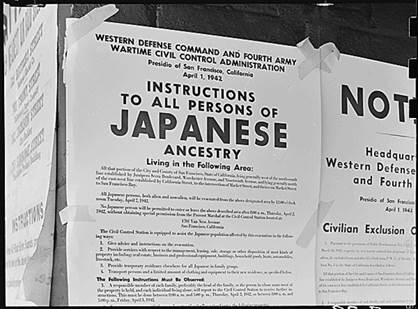
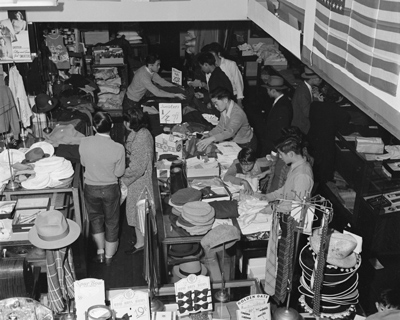
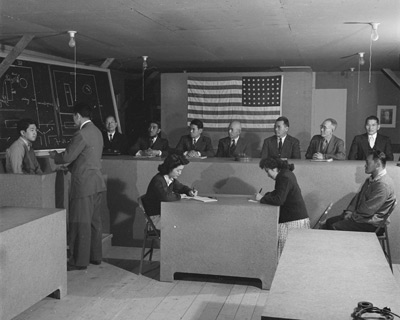

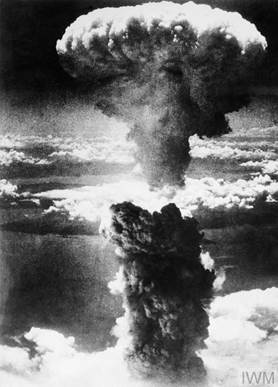

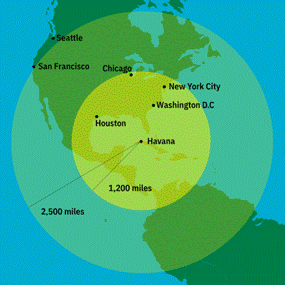




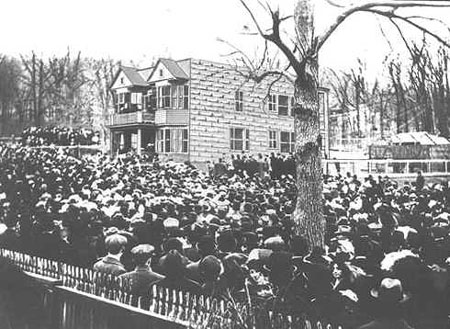


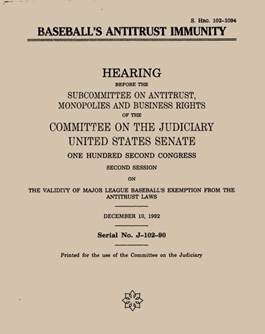


 njcssjournal