In Anna Clark’s The Poisoned City: Flint’s Water and American Urban Tragedy, the Flint, Michigan water crisis began as a result of the combination of historical, political, and social circumstances. Clark’s perspective focuses on the injustices and failures that made the conditions for the crisis to occur and continue. Clark’s analysis identifies important causes of the crisis such as, systematic negligence, environmental racism, government incompetence, and the economic decline of the city of Flint. Clark examines the interconnectedness of these factors that paints a picture of how this crisis unfolded.
Prior to Flint’s water crisis the city’s economic slump and increasing disinvestment cultivated an environment for the crisis to occur. Flint became the center for auto manufacturing for General Motors, which was responsible for the city’s growth in population. Unfortunately, Flint’s economy was destroyed by deindustrialization in the late 20th century which led to General Motors shutting down many of its plants in Flint. This led to mass unemployment and an abrupt decline in the city’s population due to the massive white flight out of Flint. According to Clark, Flint’s tax base shrunk exponentially during this economic downturn making it almost impossible for the city to maintain its infrastructure. In fact, “Flint’s infrastructure was in a death spiral. The water rates were expensive because the pipes were bad because vacancy rates were high because the city had been shrinking for so long” (Clark 36). People who could not afford to leave the city were being crushed by the added expense that came from others leaving. Flint’s pipes (which had been put in at the beginning of the 20th century) were some of the oldest in the nation. This put the city at risk and state authorities’ enforcement of emergency management put financial restraint before the welfare of the city’s population, worsening Flint’s already dire situation. This continued disinvestment was revealed during the crisis according to Clark, “the disparities in the water traced a pattern of inequality and disinvestment that was decades in the making. The whole city was exposed to toxic water– and so were commuters and other visitors– but the people who had it worst lived in the poorer, more decayed neighborhoods. And they tended to be black.” (Clark 43). The residents of Flint that were black were treated differently by the government compared to the wealthier, predominantly white residents. This economic decline coupled with the systematic negligence creates a deeper understanding of the decisions that played into the water crisis.
A number of cost-cutting measures that put financial savings over public health were the core of Flint’s water crisis. The decision to change Flint’s water source from the Detroit Water and Sewerage Department (DWSD) to the Flint River was primarily financial. Flint’s water rates were among the highest in the country, which posed a significant burden given that “42 percent of residents lived below the federal poverty level” (Clark 15). Due to Flint’s decreasing population and unstable financial situation, fewer ratepayers could afford the water infrastructure, creating further pressure on the economy. Clark describes how corrosion inhibitors are a common treatment that stops lead from leaking into drinking water and these inhibitors were not mandated by the Michigan Department of Environmental Quality (MDEQ). Clark mentioned, “the city said again that the water met all safety requirements and that it was continually monitoring for potential power problems… But in fact, there was a problem. A serious one. New water treatment programs did not include corrosion control” (Clark 33). As a result of the corrosive water from the Flint river, the lead pipes in the city of Flint began to deteriorate leading to the introduction of hazardous quantities of lead into the water. After the switch to the Flint river the locals noticed a difference in the water quality right away. One example of the noticeable difference in particular Clark mentions is LeAnne Walters as she described the water as “coming out of the faucet looking like urine” and she shared the frustration of rashes and hair loss in her children” (Clark 65). Despite the complaints, state officials reassured local residents that the water was safe to drink. Clark argues that these decisions and reactions were representative of government neglect and incompetence.
One of Clark’s most important arguments of her analysis was the examination of environmental racism and how it influenced and exacerbated the crisis and the response. Clark uses Flint as an example of the effects of a marginalized community of Black and low-income residents that suffered from systematic neglect. Clark argues that this led to government officials’ dismissive attitude and lack of response to residents’ complaints. The practice of redlining by General Motors in Flint when providing housing for their employees. General Motors constructed homes and sold them to their employees; however, these homes were for white employees. In fact, “Racially restrictive covenants-an agreement, written into deeds, to keep people out based on race-were strictly enforced both in GM neighborhoods and throughout Flint” (Clark 45-46). This left the Black residents of Flint in the less desirable areas of Flint “And, in this self-fulfilling spiral, their houses generated less money in property taxes, which meant fewer resources to invest in school and infrastructure” (Clark 61). Many of the White residents left Flint after the shut down of most of the General Motors plants; this left many houses abandoned and without proper care the pipes were left to corrode. With disinvestment of these neighborhoods this left the Black residents of Flint more vulnerable. Additionally, the lack of urgency to support these deteriorating neighborhoods created a lack of accountability and transparency towards Flint residents. State officials originally dismissed reports by Flint residents of the inadequate water conditions that Clark refers to as “systematic disregard” for Black communities. Clark mentions how “between 1999 and 2004, black children across the country were 1.6 times more likely to test positive for lead than white children, and nearly three times more likely to have very high blood lead levels” showing the disregard for black communities (Clark 98). The human catastrophe of the crisis led to several health issues especially among children who were exposed to toxic levels of lead. This highlights how the lack of information and transparency left the residents of Flint exposed to toxic levels of lead. The structural racism that hampered Black citizens of Flint access to information and resources that could have reduced these health effects and or avoided the disaster. Flint’s environmental racism intensified Flint’s water crisis through the disregard for its community and discriminatory practices.
In Clark’s analysis of the Flint water crisis, she combines historical, political, and social circumstances that intensified the emergency. Through the combination of Flint’s economic downturn, cost cutting measures, and environmental racism through discriminatory practices that led to this catastrophe. Clark draws attention to the human cost of the crisis and its widespread ramifications. Serving as a warning about the repercussions of putting cheap policy in place over the health and welfare of the general public.
The Flint Water Crisis is historically significant because it exemplifies the consequences of systematic negligence, environmental racism, and the prioritization of cost cutting over public health. It demonstrates how historical patterns of segregation, deindustrialization, and government disinvestment can set the stage for a public health catastrophe. As residents and scientists worked together to expose the truth when authorities failed them, the crisis underscores the importance of civic accountability and grassroots activism. Flint’s narrative serves as a prism through which we may analyze broader patterns of injustice in American history and society.
The patterns in the Flint water crisis relate to historical practices like redlining and industrial decline to contemporary concerns like environmental justice, infrastructure decay, and systematic inequality, which would be appropriate to teach in secondary schools. It encourages critical thought on civic duty, race, class, and the function of government. Students would be able to comprehend what transpired in Flint and are better equipped to challenge the choices made by people in authority and recognize the importance of their voices in a democratic society.
References
Clark, Anna. The Poisoned City: Flint’s Water and the American Urban Tragedy. Henry Holt and Company, 2018.
Engaging High School Students in Global Civic Education Lessons in U.S. History
The relationship between the individual and the state is present in every country, society, and civilization. Relevant questions about individual liberty, civic engagement, government authority, equality and justice, and protection are important for every demographic group in the population. In your teaching of World History, consider the examples and questions provided below that should be familiar to students in the history of the United States with application to the experiences of others around the world.
These civic activities are designed to present civics in a global context as civic education happens in every country. The design is flexible regarding using one of the activities, allowing students to explore multiple activities in groups, and as a lesson for a substitute teacher. The lessons are free, although a donation to the New Jersey Council for the Social Studies is greatly appreciated. www.njcss.org
Era 12 Postwar United States: Cold War (1945 to early 1970s)
The middle of the 20th century marks the zenith of American power in the world. Following World War 2, international organizations were established to maintain a stable world order. The United States developed alliances to counter the threat of communism and authoritarian governments. The cost of the arms race and role as ‘global policeman’ was costly for the government of the United States and as a result its defense of democracy and human rights faced criticisms from its elected representatives and people.
Activity #1: Bay of Pigs Invasion and Crimean Peninsula Invasion
In 1959, Fidel Castro came to power in an armed revolt that overthrew Cuban dictator Fulgencio Batista. The U.S. government distrusted Castro and was wary of his relationship with Nikita Khrushchev, the leader of the Soviet Union. President Eisenhower approved the training of a small army for an assault landing and guerilla warfare. The success of the plan depended on the Cuban population joining the invaders.
On April 17, 1961 the Cuban-exile invasion force landed at beaches along the Bay of Pigs and immediately came under heavy fire. Within 24 hours, about 1,200 members of the invasion force surrendered, and more than 100 were killed. The Bay of Pigs invasion was a disaster for the United States and President Kennedy.
In 2014, Russia invaded the Crimean Peninsula in Ukraine. Russia annexed Ukraine but the international community did not support or recognize the actions of Russia. Since 2014, Russia has tightened its grip on Crimea. It has transformed the occupied Ukrainian peninsula into a military base, utilizing it for the full-scale invasion of Ukraine in 2022. Crimea currently serves as an important logistical hub for the Russian military, acting as an airbase and naval base while playing a key role in the resupply of the Russian army in Ukraine.
Did the United States have a right to overthrow an unelected ruler in Cuba who supported the Soviet Union?
To what extent does geography, national security, or economic stability justify actions of large sovereign states interfering in domestic affairs in smaller states?
Why did the international community fail to challenge Russia’s invasion of Ukraine in 2014?
Why does Russia want territory in Crimea and Ukraine?
How can the international community best address the situation in Ukraine?
If the international community accepts Russia’s illegal annexation of territory in a neighboring state, does this allow or encourage other countries to annex territories. (i.e. China, United States, etc.)
Activity #2: Human Rights Issues and Asylum Policies
As Americans enjoyed their new prosperity and role as the leader of the free world, there were voices for equality from women, African Americans, and people of color. The US also embraced global responsibilities and the threat posed by the expansion of communism.
Most Americans believe that freedom is a fundamental human right. In the post-World War 2 era, The United States found that the cost of defending democracy and human rights was expensive and difficult. In the first quarter of the 21st century, the United States experienced a state sponsored terririst attack on New York City and Washington D.C., threats of international terrorism, a divided Congress, unprecedented national debt, and conflicts in the Middle East. In 2025, there were 59 violent conflicts in the world. The interests of Russia and China are in conflict with the interests of the United States to defend democratic values and institutions and human rights.
The United States has not ratified the following international agreements on human rights:
International Criminal Court
Convention on the Elimination of All Forms of Discrimination against Women (CEDAW)
Convention on the Rights of the Child (CRC)
Convention for the Protection of all Persons from Enforced Disappearance
Mine Ban Treaty
Convention on Cluster Munitions
Convention on the Rights of Persons with Disabilities (CRPD)
Optional Protocol to the Convention against Torture
Before 1950, the United States had no stated policy on asylum. However, between 1933-1945, about 200,000 refugees fleeing the violence of war, immigrated to the United States. The American people were opposed to changing the National Origins Quota System enacted in 1924.
The 1952 McCarran-Walter Act was passed over President Truman’s veto. It continues to serve as the basis of our immigration laws and policies.
“The bill would continue, practically without change, the national origins quota system, which was enacted, into law in 1924, and put into effect in 1929. This quota system—always based upon assumptions at variance with our American ideals—is long since out of date and more than ever unrealistic in the face of present world conditions.
This system hinders us in dealing with current immigration problems, and is a constant handicap in the conduct of our foreign relations.”
In 1965 Immigration and Nationality Act (Hart-Celler Act) eliminated the quota system that was part of the McCarran-Walter Act. The Act opened immigration to people of different racial and ethnic populations, especially Asians and Africans, it continued the quotas for Mexicans and Hispanic populations and favored visas for skilled workers over agricultural or domestic workers.
According to the UN refugee agency, a record-breaking 3.6 million new individual asylum applications were registered worldwide in 2023 with most new asylum claims made by nationals of Afghanistan, Colombia, Sudan, Syria, and Venezuela. At the close of 2023, 6.9 million asylum seekers worldwide still had pending asylum claims.
In the United States in 2023, nearly half of all asylum approvals were for people fleeing Afghanistan, China, El Salvador, and Venezuela from violence, poverty, and political upheaval.
Questions:
Why has the United States refused to support international laws on human rights and crimes against humanity since World War 2?
Is there evidence that the United States violates the human rights of some of its own citizens?
Why have the American people reflected a restrictive immigration policy over time, even for refugees facing death or abuse in their home country?
Who should be granted asylum in the United States?
Activity #3: The Deportation of People for Their Political Views
In the years after World War 2, especially after Churchill’s Iron Curtain Speech in 1946, the United States feared a global domination of communism. This belief gained popularity after China became communist in 1949. The current administration of President Trump is identifying the Democratic party with Marxist-Leninist ideology or progressive ideas for universal health care, helping students to repay college loans, raising the minimum wage, labor unions, and deporting immigrants with legal visas and some who are not documented.
This has a ‘chilling effect’ on people, especially educators and college professors who teach about communism and Marxist socialism. It is important to understand the historical perspective over time regarding how the government of the United States has responded to situations which have called for a change in our government through elections and the violent overthrow of our Constitution and democratic institutions.
Historical Context
Congress has the power to protect the Government of the United States from armed rebellion. The Insurrection Act of 1807 combined a series of statues to protect the United States from angry citizens following the Embargo Act. The issue for debate is when does the protection of free speech regarding criticism of government policies and organizing plans to change government policies or elected leaders become a matter permitting the government to use military force to protect itself.
The Posse Comitatus Act forbids the U.S. military, including federal armed forces and National Guard from enforcing civil law. The reason for this is to protect the First Amendment rights of citizens to express their beliefs. The Stafford Act (1988) permits the use of the military in times of natural disasters or public health epidemics.
Section 252 the Insurrection Act allows the president to deploy troops without a request from the state and provides the authority to send in troops against the state’s wishes to enforce the laws of the United States or to suppress rebellion. President Eisenhower used this power to enforce the decision of the U.S. Supreme Court to desegregate the public schools in Little Rock, AK. In 1992, the governor of California requested President George H.W. Bush to send troops to control the rioting in Los Angeles following the acquittal of four white police officers on the beating of Rodney King. Section 253 allows the president to suppress domestic violence, a conspiracy to overthrow the government, or an insurrection. John Brown’s raid in 1859 and the Civil War are examples.
The Smith Act was passed in 1940 making it a crime for any person knowingly or willfully to advocate the overthrow or destruction of the Government of the United States by force or violence. This Act led to the arrest of leaders of the Communist Party who were advocating to overthrow the government of the United States by force.
In 1951, the Court ruled in a 6-2 decision that the conviction of Eugene Dennis of conspiring and organizing for the overthrow and destruction of the United States government by force and violence under provisions of the Smith Act. In 1967, the decision was overturned by the Brandenburg v. Ohio when the Supreme Court held that “mere advocacy” of violence was protected speech.
In New York, the Feinberg Law banned from the teaching of the violent overthrow of the government of the United States. Several other states adopted similar measures. When a group of teachers and parents challenged this law, the Supreme Court upheld it in Adler v. Board of Education of the City of New York, (1952) In 1967, another Supreme Court overturned the Adler decision.
Questions:
If the Declaration of Independence states the right of people to dissent and overthrow an unjust government, should school teachers be allowed to teach this to young students?
“That whenever any Form of Government becomes destructive of these ends, it is the Right of the People to alter or to abolish it, and to institute new Government, laying its foundation on such principles and organizing its powers in such form, as to them shall seem most likely to effect their Safety and Happiness. Prudence, indeed, will dictate that Governments long established should not be changed for light and transient causes; and accordingly all experience hath shewn, that mankind are more disposed to suffer, while evils are sufferable, than to right themselves by abolishing the forms to which they are accustomed. But when a long train of abuses and usurpations, pursuing invariably the same Object evinces a design to reduce them under absolute Despotism, it is their right, it is their duty, to throw off such Government, and to provide new Guards for their future security.”
2. Why do you think the U.S. Supreme Court overturned the Dennis and Adler decisions years later? Do these reversals have a strong foundation in American law?
3. Is it possible to use the Smith Act and the Insurrection Act to bring about a change in government that would embrace a more authoritarian government and a less democratic one?
4. How can the Smith Act and Insurrection Act be abolished? Should they be abolished?
5. What is the biggest threat facing the United States in the future? (natural disaster, political violence, artificial intelligence, public health emergency, economic crisis, etc.) Will the best solutions to this threat come from the Executive, Legislative, or Judicial branch of our government?
Activity #4: The Return of Veterans from World War 2 in the United States and Japan
Japan officially surrendered on September 2, 1945. More than 400,000 Americans, and an estimated 65 million people worldwide, died during the war. After the surrender, the repatriation of the soldiers to their home country began. Refugees also began to return to their homes. The return of the soldiers to Japan, Soviet Union, European countries, and the United States was very different. In this activity, you will compare the return of 7 million soldiers to Japan and the United States. The United States had 16 million soldiers in uniform and 8 million of them were overseas. Operation Magic Carpet was the program to transport Japan’s soldiers to their homeland. There were also millions of Korean and Chinese civilians the Japanese used as slave labor during the war who needed to be repatriated.
Japan’s navy and merchant marine navy had been destroyed during the war. The carriers Hosho and Katsuragi, the destroyer, Yoizuki, and the passenger ship, Hikawa Maru, were able to transport some Japanese soldiers. The United States, Soviet Union, and England used their ships to bring 6.6 million Japanese soldiers back to Japan. The Japanese government designated 18 ports to receive their soldiers. The U.S. role was completed by the end of 1947. The Soviet Union’s role continued through 1957. The port of Maizuru was the largest port.
The Japanese soldiers were sprayed with the chemical DDT (dichloro-diphenyl-trichloro-ethane) to kill fleas and lice. At the time, DDT was considered a ‘safe’ chemical but in 1972 it was known to be harmful. Welcome towers were erected where citizens welcomed the retuning soldiers.
The United States also used Nisei interpreters during the years after the surrender of Japan (1945-1952) to prosecute Japan’s military leaders for war crimes, detect subversive activities and help with the drafting of Japan’s new constitution.
Most cities and homes in Japan were destroyed as a result of the war and the destruction of the two atomic bombs. Almost every family experienced the death of a loved one and they did not have a proper burial or the return of their personal belongings (sword, identification, notebooks, clothing, etc.) The new government in Japan changed the family structure which encouraged marriage and children.
The Return of Soldiers to the United States
The return of veterans to the United States began in 1944, shortly after D-Day. The government instituted a point system based on battles for the return home after the war ended and the GI Bill, which provided for education and vocational training, credit towards loans, one year of unemployment compensation, and counseling. The purpose of the GI Bill was to avoid the high unemployment and inflation that followed World War I.
“Veterans Prepare for Your Future thru Educational Training, Consult Your Nearest Office of the Veterans Administration,” n.d. Courtesy of NARA, 44-PA-2262, NAID
The repatriation of American soldiers was very successful and the income taxes from their wages paid back the cost of the GI Bill within the first few years. Veterans also purchased new homes which also increased the GDP. Similar benefits were provided to American soldiers who served in Korea and Vietnam. New car sales also quadrupled in the first ten years following World War 2 and by 1960 about 75 percent of American households owned a car.
Questions:
Why did the United States spend millions of dollars to repatriate Japanese soldiers to Japan after the surrender and why did our government pay for the inoculations and transportation of Korean and Chinese from Taiwan?
What would the post-war years in Japan be like without the financial and technical assistance of the United States and the Allied Powers?
As a member of Congress, would you have supported the GI Bill in 1944 knowing that the national debt of the United States was 120% above our GDP?
Was it fair to provide ships to transport Japanese soldiers home before all of the American soldiers were repatriated?
Should the United States have done more (or less) to repatriate the soldiers from Japan?
The opening chapters of The Taking of Manhattan provide a descriptive account fitting for a Netflix documentary. The wealth of information about the geography, demography, economy, and social life provides an accurate description for students living in New York and New Jersey today about the changes that have taken place over 400 years.
“New York is all about water. Reasonable people may disagree with this assertion. Surely New York is about trade, finance, power. Fashion food, art, media, design. Fusions and factions. Wall Street and Broadway, Skyscrapers and boroughs.
Yes, but water flows beneath and around all of these. If the coastline of the New York Harbor region were stretched out, it would be loner than the state of California. New York City’s waterfront is bigger than those of Miami, San Francisco, Los Angeles, and Boston combined.” (page 15)
The Taking of Manhattan begins on Tuesday, August 26, 1664. It is a dramatic and enjoyable read that provided me with a fresh perspective of world history in addition to the local history of northern New Jersey, Staten Island, Manhattan, Long Island, and the Hudson River valley north to Beverwijck (Albany.) Regarding world history, it is the story of conflicts and opportunities of numerous indigenous populations bearing the names of local cities, the economic monopoly of the Dutch and British East and West India companies, the military rivalries of the Dutch, British, and French, the trafficking of enslaved persons, and the rivalry between the New England colonists and the Dutch of New Amsterdam.
The events leading to August 27, 1664 around New York Harbor also provide a context for discussing the experiences of the people living in England from 1625 to 1664. In 1603, the Stuart Dynasty began to rule and by 1630 they had three colonies in North America. The book provides a context for a discussion about religious differences, corruption, and political rivalry between the French, Dutch, and British states. The “Make England Great Again Movement” that began in 1649 with Oliver Cromwell had lost the support of the people within a few years and ended in 1660 with the Restoration. Charles II was 19 when his brother, King Charles I, was executed and age 21. He was coronated king in 1651, although living in France. For world history teachers the narrative on the Restoration of the monarchy with Charles II is detailed and informative.
These were challenging and difficult years for ordinary people trying to raise a family and earn a living wage. This was also an opportunity for the Dutch to consolidate their power in Asia, Africa, and the Americas. The first half of the 17th century is the Golden Age for the Dutch!
New York City was the home of the Dutch, thanks to Henry Hudson in1607. Peter Stuyvesant and his wife, Judith, arrived in May 1647. He is a legend in New York history where his name and legacy continue in the neighborhoods of Bedford Stuyvesant, Stuyvesant Town, and Stuyvesant High School. Although disabled with one leg, he built this city into a thriving economic port, made deals with the Native American leaders in this area, traveled to Albany, Staten Island, Long Island, New Jersey, and made the Dutch Reformed church the dominant houses of worship in this area. There are also references to locals living in New Amsterdam and Fort Orange, namely Asser Levy (from Lithuania), Dorothea Angola (born in Africa), and Catalina Trico (from Paris). These references provide insight into the pluralistic society that is an important part of the American experience. He also understood the future threat from the presence of English colonies in Boston and Williamsburg. The narrative includes a perspective of the independence of the Massachusetts Bay Colony and the concerns by the leaders who replaced Cromwell and governed from Whitehall.
New Amsterdam, circa, 1685
The teaching of Native Americans, even the Lenape, is often taught in the limited context of the French and Indian War (1754-63) or the culture of indigenous populations. This book includes narratives of local history that should engage students in reflective thinking about the meeting of different cultures. For example, the attack on Lenape at a fresh water pond on Manhattan in 1626 by Dutch traders who took their beaver pelts. A young boy who witnessed the brutal murder of his uncle recognized the attacker some 15 years later at a tavern in New Amsterdam and viscously murdered him with an axe. The Dutch responded with massacres of Lenape at Pavonia, present day Hoboken and Jersey , and Corlears Hook, just south of the Williamsburg Bridge. Anne Hutchinson, and her five children, were also victims of these Dutch massacres. The impact of diseases on Native Americans is also clearly explained.
Russell Shorto begins the historical account with an understanding of the difficulty of communication in the 17th century. The students we teach receive communications and information instantly and the perspective of the past is important regarding the meaning of words and how time influences the process of making decisions. Today, students are faced with the credibility of information and they need to be taught the skills of discernment and analysis. For Peter Stuyvesant, the calculus was understanding the reasons the British were sending Captain Richard Nicolls and the Guinea across the Atlantic.
The drama begins 18 months before the ships of Richard Nicolls arrive in the last week of August 1664. These events are dramatic, provide information on Dutch spy networks and translators, behind-the-scenes conversations between Peter Stuyvesant and Connecticut’s Governor Jonathan Winthrop, Jr., the financial interests of powerful businessmen in London and Amsterdam, life in New Dorp and Gravesend, and the slave trade port of Goree Island of the African coast. I am a novice regarding these insights that are an important part of the American experience and I also enjoyed the references of the military captains with Isaac Newton, Robert Boyle, and Samuel Hartlib, 17th century names in the social studies curriculum.
The instructions prepared for Richard Nicolls were both public and private. Officially, he was sailing to Boston to bring the ‘independent’ Puritans into the party line of the new king, Charles II. His private instructions were to advance the interests of England and the new king.
“Then there was the second task stipulated in the instructions: the possessing Long Island, and reduceing (sic) that people in an entire submission and obedience to us & and our government…that the Dutch may noe (sic) longer ingrosse (sic) and exercise that trade which they have wrongfully possessed themselves of.” (page 174) (Long Island included the colony of New Amsterdam.) The government of England claimed the charter of the Virginia Company gave them all the land of North America.
This claim provides teachers with the framework for a mini-simulation or a structured decision-making activity is a possible activity based on the information provided in the chapter, “White Flag.” Students might research and discuss some (or all) of these questions:
How would the government of the Netherlands and the West Indies Company react to the decision of Peter Stuyvesant to avoid a fight and give Captain Nicolls and the British control of New Amsterdam?
Would the hired soldiers with Captain Nicolls release canon fire without orders and cause the conflict to escalate?
How would history judge a battle for Manhattan knowing that Peter Stuyvesant and the Dutch lacked the weapons, preparation, and supplies for a reasonable defense?
What could the Dutch gain as a result of a negotiated settlement?
Would the words in the exchange of corresppondence between Stuyvesant and Captain Nicolls be misinterpreted?
“The only part of the letter to which he (Captain Nicolls) felt obliged to pay attention, he said, was the conclusion, in which Stuyvesant declared he had no choice but to defend the island. Nicoll’s answer, therefore, was that he ‘must and should take the place, refusing henceforth to permit any parleys.’”
What would life be like in the future for the 2,500 people living in Manhattan under British rule? How would the decision affect their right to worship freely, conduct business, and personal liberty?
How would the Dutch living along the Hudson River north to Albany react to a negotiated agreement to avoid a military showdown? How did they understand the terms of the First Anglo-Dutch War of 1655 and was the taking of Manhattan a prelude to a Second Anglo-Dutch War?
Would the Council at City Hall view this as a surrender or a corporate merger?
This is a fascinating account of a unique colony in the 17th century with applications to understanding deals, land swaps, negotiations, the role of citizens, and conflict. New York was a pluralistic community then and continues to be a cosmopolitan center of finance and cultures today.
As a social studies teacher I taught the migration of Europeans to the New World, the Atlantic Slave Trade Migration, Oregon Trail, Trail of Tears, construction of canals, steamboats and railroads, land at $1.60 an acre, Underground Railroad, Manifest Destiny, Great Migration after the Civil War, Frederick Jackson Turner’s thesis on the frontier, immigration, analyzed The Warmth of Other Suns, Harlem Renaissance, interstate highway system, Federal Housing Authority, selected excerpts from Crabgrass Frontier, and the migration to the Sun Belt. However, Stuck presented me with a new perspective about the importance of mobility in America and its relationship to the American Dream! This is why I am encouraging every social studies teacher to read Stuck.
Yoni Applebaum clearly presents the economics, sociological, historical perspective to the demographics in the 18th, 19th, and 20th centuries in American history and the opportunities that became available for millions of young Americans. The wealthy Americans remained in Boston, New York, Monticello, Charleston, and Savannah as they had no reason to seek a better life. However, agricultural workers, manufacturing workers, civil servants, and immigrants moved to multiple locations to find better homes, more money, and new social connections. Immigrants moved west and contributed to farming, canals, roads, and railroads. New communities were built on democratic values and traditions and the importance of civics is equally important to the historical, sociological, and economic perspectives.
“Some Americans have become so accustomed to the places with the greatest opportunities being effectively reserved for the rich that it somehow seems natural that they should be. In fact, it represents a recent and profound inversion. For centuries, Americans at the bottom of the economic ladder moved toward such places, not away from them, searching for a foothold on the first rung of that ladder, looking for a chance to climb. Entrepreneurs raced to erect housing to hold them.” (page 4)
“’When the mobility of population was always so great,” the historian Carl Becker observed, “the strange face, the odd speech, the curious custom of dress, and the unaccustomed religious faith ceased to be a matter of comment or concern.” A mobile population opened the possibilities of pluralism as diverse peoples learned to live alongside each other, The term ‘stranger,’ Becker wrote, in other lands synonymous with ‘enemy,’ instead became ‘a common form of friendly salutation.’ In a nation where people are forever arriving and departing, a newcomer can seem less a threat to the settled order than a welcome addition to a growing community: ‘Howdy, stranger.’ Mobility has long been the shaper of American character and the guarantor of its democracy.’” (page 9)
The industrialization of the United States following the Civil War placed us on a trajectory to become more urban and less rural. Frederick Jackson Turner in 1893 presented a thesis based on the 1890 U.S. Census that claimed the frontier of the United States was closed at the 100th meridian. Although his thesis would eventually be challenged, it revealed divisions of values and new ways of living.
Cities also required investments in public utilities, and in finding solutions to poverty, crime, and places for the homeless. The story of the 20th century is one of urban problems, flight to the suburbs, increasing home values as homes were purchased, destroyed, and rebuilt and sold or rented for higher prices. The story of the 21st century is one where housing has become unaffordable for a majority of Americans, who understand what it means to be ‘stuck’ with limited options or no options for the pursuit of happiness.
Stuck also provides an insightful historical context of the historical experiences of Chinese immigrants living in California and Jewish immigrants in New York City in the late 19th and early 20th century. The two chapters dedicated to the personal experiences of immigrants and immigrant families provided me with new information that directly applies to the teaching of immigration in a U.S. History class. The new information that I learned related to the racist decisions of local governments regarding zoning, housing, and the regulation of family-operated businesses. The exposure about immigration for students is at the national level in the news and most classroom lessons. The chapter on “Dirty Laundry” references Modesto, California in 1885.
“In 1884, more than a hundred men in ‘mostly ghostly attire’ wearing black masks and calling themselves the San Joaquin Valley Regulators, rampaged through Chinatown. They raided opium houses, knocked down one Chinese man who attempted to flee, and even assaulted a white police officer who tried to stop them. In June 1885, a washhouse and a store in Chinatown burned down, in an apparent arson attack. Despite the unrelenting assaults, Modesto’s Chinese residents held fast. And following the familiar pattern, they began to set up their laundries in residential neighborhoods….
Two weeks later, the city council obliged, passing its zoning ordinance. The Chinese were not mentioned in the legislation. Instead, it simply designated a district for laundries, one whose boundaries happened to be precisely the same as those of Chinatown. The ghetto that Modesto had failed to impose with violence, it would now attempt to enforce with land-use law.’ (pp. 90-91)
It is important for students to understand the power of local governments and the importance of understanding local laws they may not hear on social media or local news networks. The story of Hang Kie is told as a story that students will find interesting and compelling for discussion and debate. He was arrested within five days of the implementation of Modesto’s new zoning law. His landlord wanted him to continue operating his business to collect the rent. He was arrested, fined $100 dollars (perhaps three months income) and sentenced to 20 days in jail. His case went to the California Supreme Court on the grounds that the Modesto law was unreasonable because it was not applied equally to all residents, and the right to use your own property providing it did not injure others or negatively harm the general population. The California Supreme Court upheld Hang Kie’s conviction as a reasonable exercise of police powers to safeguard the general population of Modesto from the threat of fire. (pp. 94-95). In the middle of the legal arguments, the men in Modesto could not get their white shirts for Sunday worship cleaned so they adopted colored shirts to hide the dirt.
The use of land-use laws spread to other California towns as the state’s population increased by more than two million between 1900 and 1920. In California, 20% were born in another country and 25% had one immigrant parent. The 1906 San Francisco earthquake displaced thousands of Chinese who relocated in communities across the bay. A lesson for students is the context of the expansion of the powers of the executive branch of our federal government is the elasticity of police powers.
The eastern European Jews who immigrated to the Lower East Side of Manhattan presented situations for local government that had not previously been encountered in the United States. The Jewish population was transitory with perhaps 50% returning to their homeland as they accumulated enough cash to travel back to Europe. They crowded into small apartments and were willing to tolerate unsanitary conditions. They valued education and economic success and were passionate about living in America. (p.116) The historical record of the experiences of Jewish immigrants is documented with the photographs of Jacob Riis, personal stories in the Library of Congress resource, Chronicling America, and the National Museum of Immigration (Ellis Island) and the Tenement Museum in New York City.
The issues of immigration, affordable housing, and the segregation of the rich from the poor in 1900 offer interesting lessons for the students of this century, 125 years later. New York City faced a surging population that increased from 3.4 million in 1900 to 4.8 million in 1910. An increase of 67%. The density of population in lower Manhattan increased with the construction of six story apartment buildings on every available piece of vacant land. The area north of 42nd street and areas of Brooklyn saw an increase in single family homes and mansions. The top floor of the mansions were designed for offices. The Panic of 1907 left many of these offices vacant and they became occupied with immigrants in need of places to live.
Henry Sinclair House, Fifth Avenue and 79th Street, NYC (Ukraine Consulate)
There were three solutions to New York’s immigrant problem: exclusion of immigrants with literacy tests and quotas, the expansion of immigrant populations to accelerate economic growth through housing construction and employment opportunities, or regulation regarding labor, health, and zoning. (page 124) Congress created the Dillingham Commission in 1911, which offered a detailed report on the enormous contributions of immigrants but concluded that immigration restriction was in the interest of the country. (Page 125)
Report from the Dillingham Commission
An interesting discussion or debate for students studying the living conditions of immigrants is the argument that fire safety justified the police powers of the state to enforce laws regulating businesses, construction, and population density. In Modesto, California, fire regulations were applied to laundries in buildings and in New York City, fire regulations were applied to the height of buildings. While public safety is in the interest of the public it also justified the power of the state to regulate the free enterprise of individuals and influenced the segregation of neighborhoods by income and ethnicity. These arguments were made by the tenement reformers, although the proposed solutions of the reformers favored one economic group over others.
I included Henry George and the single property tax movement in my U.S. History lessons. My students understood this as a socialist reform to redistribute wealth from the millionaire class to the working class. Yoni Applebaum in Stuck offers this perspective:
“The Georgists argued that if the density of people per acre were to rise, it should be seen not as congestion but as efficiency-with tall buildings allowing families to live in desirable neighborhoods while providing them with ample space, and office skyscrapers doing the same for workers. And if people truly objected to this, well, Bassett‘s commission could impose height limits that would spread the most intensive development over a somewhat broader area. The Georgists were confident in the city’s future and in its capacity to provide opportunities to the next generation of residents. The solution to congestion, they argued, was construction.” (page 126)
The land tax of Henry George lost to the zoning plan of Edward Murray Bassett. The leaders of New York City would decide what could and could not be built on any piece of property. The solution to the influx of immigrants in New York was to limit affordable housing. In 1913, the Woolworth building was built at 233 Broadway, within walking distance of City Hall. It was 60 stories, included both residential and office spaces, and for 17 years it was the tallest building in the world at a height of 792 feet.
F.W. Woolworth Building in New York City
A unique and important perspective of the author, Yoni Applebaum, is the interdisciplinary connections relating to geography, economics, sociology, and civics. These are transparent in the chapter on “Tenementophobia.”
Regarding geography, students can easily follow the building of houses and neighborhoods along colonial post roads, rivers and canals, railroads, and highways. In the 19th century, houses were built near factories and ports enabling workers to walk to work. The Utopian Socialists built model communities where factories were located. With the arrival of the automobile in the 20th century, people with money moved uptown and later to suburbs to escape the sights of factories, apartments, and the noise of densely populated neighborhoods. Students will see the evolution of apartment houses near the business district, then two-family homes, and then single residence homes, perhaps with winding streets aligned with trees.
The economic perspective is very important and interesting. Many immigrants saved money with the hope of renting a larger space for their families and later a home with a backyard play area. These middle-class homes were available to families with incomes that could sustain the expenses of a downpayment, mortgage, taxes, insurance, and repairs. Many of these homes in cities across the United States were built by independent carpenters or homeowners using models in the Sears Catalog. Students can create a digital museum of these houses with images of wider streets with picturesque views as they follow the construction of homes from the central business district to the outer boundaries of the city. Low incomes kept people ‘stuck’ in their neighborhoods. One of the significant contributions of unions was their ability to get living wages for many workers allowing workers to move from crowded apartments to single or double family homes, Unfortunately, the cost of selling a home made movement to a new neighborhood difficult or impossible.
Sears Catalog, circa, 1910
The sociological perspective on the quality of life should prompt an engaging discussion with students leading to relevant applications today.
“Homeownership promoted personal investment in family, child-rearing, school, church, and community; it safeguarded ‘manhood and womanhood’; it protected the ‘civic and social valiues of the American home….” (pages 152-53).
The single-family home, the belief that a ‘home was a castle’ that living in tenements or public housing was harmful, is a critical issue for students to understand even though it likely is not one of the learning standards in the curriculum. Did the zoning laws that were put in place in the early 20th century support the American Dream or did they segregate our population by income, race, ethnicity, and access to education. Students need to search for answers regarding how poverty should be addressed and eradicated. Is the answer with income and property tax policies, the quality of education, affordable housing, higher incomes, or something else? In their search for answers, students should investigate the quality of life regarding marriage, cancer, crime, addiction, mental health, infant mortality, attendance in houses of worship, and life expectancy rates. They also need to discuss how their neighborhood or community has changed in the past 25 years (since 2000) and what it might look like in 2050. They also need to consider the economic and sociological impact of vacant stores in strip malls, where affordable homes are being built, and the quality of life in older homes.
The information about how state and the U.S. Supreme Court viewed zoning laws was fascinating to me. The case study in Stuck references Euclid v. Amber Realty Company (1926). The decision supported the constitutionality of zoning laws at a time when state courts were rejecting them. The basis of this case was the claim that zoning parts of the land owned by Ambler depressed property values by as much as two-thirds. (page 149) Euclid is a community east of Cleveland, Ohio and one of its inner suburbs.
The areas marked U2, U3, and U6 were the areas owned by Ambler Realty. Note the areas across Euclid Avenue with the curved streets with single family residences. If the areas of U2, U3, and U6 were zoned for industry, the view and noise for the residences across the street would see this as undesirable or as a nuisance. What and who determines property use? (1922)
Note the development of the land after the Supreme Court’s decision
Students discussing the implications of police power of the state to determine land use, the public interest regarding health, safety, and welfare. Should the Court protect the public good by limiting the property rights of an individual or should the Court protect the sanctity of the family against unsightly encroachments of noise, traffic, and smoke? Another consideration is that in 1926, the U.S. Supreme justices lived in communities that were zoned with neighborhoods of single-family homes and perhaps large homes for families with wealth.
The chapter titled “Auto Emancipation” offers new insights into the ‘great migration’ that followed Reconstruction. The railroads and manufacturing of automobiles in Michigan provided opportunities for Black Americans that could not be realized because of segregation, low wages, violence, and unfair mortgages. For me, the perspective was a nice addition to my knowledge from reading The Warmth of Other Suns and Caste by Isabel Wilkerson.
The following two quotes might be used for student inquiry and discussion regarding the experiences of Black Americans and today’s immigrants.
“It was mobility-specifically, the defiant exercise of the freedom of movement-that ultimately brough down the slave system. Human beings are difficult to hold in bondage, even if half a continent has been turned into a vast, open-air prison. As long as some place of refuge where people can claim greater freedom and opportunity exists, no system of repression can wholly immobilize a population.” (page 161)
“Black residents earned more than they had in the South, but when housing costs ate up roughly half their gains, they found themselves with few options. They couldn’t build up, and they couldn’t move out. The policy choices made by Flint’s elite left them kettled in a handful of districts, paying high rents for aging homes. But as bad as things were, the federal government was about to make things worse.” (i.e. FHA mortgages) (page 177)
Teaching the domestic issues facing the United States is a challenge for most teachers. This unit includes the civil rights movement, women’s rights, education, space exploration, political challenges, inflation, environment, Great Society, U.S. Supreme Court decisions, and the changes with transportation and communication. The post-World War II economic boom is often lost or marginalized in the teaching of this unit. In my classes, students read excerpts from John Kenneth Galbraith’s The AffluentSociety, Michael Harrington’s The Other America, and Kenneth Jackson’s Crabgrass Frontier. The chapter titled “A Plague of Localists” offers the perspective of Frank Duncan, a working Black American living in Flint, Michigan.
I was not aware of the Edwards. v. California (1941) U.S. Supreme Court decision regarding the freedom of an indigent to move to another state. The Dust Bowl provided an incentive for unemployed and financially challenged U.S. citizens to move to other states. In 1936, the city of Los Angeles police turned indigent migrants away. The U.S. Supreme Court affirmed the right of U.S. citizens to choose where they wanted to live but the conflicting arguments date back to 1823.
“In 1940, America was still a nation of renters-some 56 percent of households leased their dwellings…. The government could have met the demand for rentals by investing in public housing projects or providing cheap loans to real estate developers to build multifamily apartment buildings close to centers of employment. Instead, as the war came to an end, it chose to subsidize the purchase of free standing single-family homes.
Millions of Americans used FHA and VA loans to buy houses. In 1944, America built 114,00 new homes; in 1950 it built 1.7 million.” (page 208)
The economics of housing relating to banks, credit unions, balloon loans, redlining, zero interest loans, mortgage insurance, and itemized tax deductions are essential topics for U.S. History students because they likely are living in communities with public housing, multifamily apartments, gated communities, cape cod houses built after World War 2, and houses in need of repairs.
The study of the housing crisis in America is also one students need to understand because the current scarcity of affordable housing directly affects them. College graduates with a starting salary of $125,000 are not able to save enough money for a downpayment in the community where they are currently living. In fact, they are also unlikely to afford renting at this income level either.
The solutions proposed in the last chapter, “Building a Way Out” include connections to history, civics, economics, and sociology. Some of these solutions include building more housing units to increase supply and reduce the costs of purchase and rent. Another solution is to have consistent rules for housing construction to reduce bureaucracy and encourage affordable housing near employment opportunities. Other solutions include subsidies for housing or increased wages for people below certain income thresholds, tolerance for different kinds of housing, and acceptance of a pluralistic community. The chapter includes case studies of Tokyo and New York City. The bias of the author is that America has a mobility crisis and mobility is what stimulates the American economy.
My partner Felicia Hirata, friends Judy and Ruben Stern, and I were discussing the movie Killers of the Flower Moon and conversation shifted to the 1921 Tulsa Massacre. Felicia, Ruben, and I are all retired New York City high school social studies teachers and we realized we had never taught about the massacre in class, and we were unsure of whether we even knew about it when we were teachers. It had effectively been erased from history.
As a high school teacher, I did introduce my students, almost all African American and Latinx, to post-World War 1 racist attacks on African Americans with the poem “If We Must Die” by Claude McKay that was first published in the July 1919 of The Liberator coupled with photographs and newspaper headlines of the 1919 Chicago race riot showing white mobs and police attacking Blacks in the street. The McKay poem is especially powerful and resonated with students because it is a call for resistance.
I now teach social studies methods at Hofstra University in suburban Long Island, New York. After our discussion of Killers of the Flower Moon and the Tulsa Massacre, I decided to review how the post-World War 1 race riots and the Tulsa massacre were covered in the textbooks I used as a high school teacher and in more recent editions used by teachers today, books my students will likely use when they become teachers, books that continue to minimize the role that race and racism played in American history.
Ruben and I both taught United States history at Franklin K. Lane High School in the 1980s using Lewis Todd and Merle Curti’s Triumph of the American Nation as our primary textbook. Chapter 27 “New Directions in American Life Changing Ways (1900-1920)” ignores race, in fact the book’s index does not include race or racism as a category (Harcourt Brace Jovanovich, 1986). After discussing World War 1, the authors skipped directly to the “Golden Twenties” where the post-war race riots were ignored. In a later chapter, “Decades in Contrast Changing ways (1920-1939),” “Black migration to the North,” “Disappointed hopes,” and “The riots of 1919” are briefly mentioned, but not what happened in Tulsa. Students learned from the book that “Frightened whites, convinced that black Americans were trying to threaten them and gain control, responded with more violence. Police forces, ill-equipped to deal with riots, usually sided with whites” (751). Perhaps even more disturbing than the omissions, is this justification offered for the white rioters.
I also used Thomas Bailey and David Kennedy, The American Pageant, 7th Edition (1983, D.C. Heath) with a college-level dual enrollment class. A section in Chapter 39, “The Politics of Boom and Bust, 1920-1932” titled “The Aftermath of War” includes a paragraph explaining that “Vicious race riots also rocked the Republic in years following the Great War . . . [I]n the immediate post-war period, blacks were brutally taught that the North was not a Promised land. A racial reign of terror descended on Chicago in the summer of 1919, leaving twenty-three blacks and fifteen whites dead. Clashes also inflamed Knoxville, Omaha, Washington, and other cities.” There was also no mention of 1921 and Tulsa massacre in this textbook. Unlike Todd and Curti, Bailey and Kennedy didn’t justify the behavior of the white rioters but by suggesting that these were somehow clashes between Blacks and whites, it takes the onus off white mobs killing African Americans and driving them out of housing and jobs.
Even Howard Zinn’s widely used A People’s History of the United States, first published in 1980 by Harper Collins and reissued most recently in 2015 by Harper Perennial, the most progressive history of the United States that I used as a reference, falls short. Zinn included the post-war strike wave but not the race riots in 1919 or the destruction of the Black community of Tulsa in 1921.
I read From Slavery to Freedom, A History of Negro Americans, 3rd edition by John Hope Franklin and Alfred A. Moss, Jr. (1969, Vintage) as an undergraduate at CCNY in a class on American Nego History during the 1968-1969 school year. Unfortunately, it did not have much influence on the American history curriculum.
In the 7th edition (published in 1994 by Knopf), Franklin and Moss have a chapter “Democracy Escapes” about conditions faced by African Americans in the United States in the post-World War 1 era after approximately 380,000 African Americans served in the army and about 200,000 were stationed in the European theater (346-360; Goldenberg, 2022). Despite welcoming parades in major American cities, The Crisis reported “This country of ours, despite all its better souls have done and dreamed, is yet a shameful land. It lynches . . . It disenfranchises its own citizens . . . It encourages ignorance . . .It steals from us . . . It insults us . . . We return. We return from fighting. We return fighting. Make way for Democracy! We saved it in France, and by the Great Jehovah, we will save it in the U.S.A., or know the reason why” (347).
Between June and December 1919, Red Summer, Franklin and Moss estimate there were twenty-five anti-Black race riots in American cities (349). The most serious riot was in Chicago where there were thirty-eight fatalities, over 500 reported injuries, and 1,000 families left homeless (350-351). The book also briefly describes a “race war” in Tulsa, Oklahoma in June 1921 where nine whites and 21 blacks were killed.
On Long Island, New York, the most widely used United States history textbook is Holt McDougal’s The Americans by Gerald Danzer, Jorge Kor de Alva, Larry Krieger, Louis Wilson, and Nancy Woloch. The 2012 edition has two references to the post-World War I racial climate. A “Historical Spotlight” box in a chapter on “The First World War” explains that “Racial prejudice against African Americans in the North sometimes took violent forms. However, the 1917 East St. Louis riot seems to be excused because “White workers were furious over the hiring of African Americans as strikebreakers at a munitions plant.” The 1919 Chicago riot is also blamed on African Americans who “retaliated” when a Black teenager was stoned to death by “white bathers” after he swam into “water off a ‘white beach’” (600). A later chapter on the Harlem Renaissance mentions that “Northern cities in general had not welcomed the massive influx of African Americans. Tensions had escalated in the years prior to 1920, culminating in the summer of 1919, in approximately 25 urban race riots” (659). This section does not explain who was rioting and who was being attacked.
The 12th edition of The American Pageant (2002), widely used in Advanced Placement classes, added Lisabeth Cohen as a co-author. A section on “Workers in Wartime” included the “sudden appearance” of African Americans in “previously all-white areas sometimes sparked interracial violence,” equally blamed on Blacks and whites (711). A photograph of a victim of the 1919 Chicago race riot lying on the ground face down includes the caption “The policeman arrived too late to spare this victim from being pelted by stones from an angry mob” (711). From the picture, it is difficult to tell that the victim was African American and he is not identified as such in the caption, although the police standing above him are clearly white. Members of the mob and its victims are not identified, and the caption inaccurately suggests that white police were trying to protect the Black community. The 16th edition, published in 2015, notes in Chapter 32 “American Life in the Roaring Twenties, 1919-1929” that a “ new racial pride also blossomed in the northern black communities that burgeoned during and after the war,” but contained no mention of the race riots in 1919 or 1921 (749) and the chapter on “The Politics of Boom and Bust, 1920-1932” dropped the reference to “vicious race riots” in the 1983 edition.
The fourth edition of Making America (Houghton Mifflin, 2006) by Carol Berkin, Christopher Miller, Robert Cherny, and James Gormly references the East St. Louis and Tulsa riots in the index and race riots are paired with lynchings as examples of the conditions faced by returning Black veteran after World War 1. Unlike other texts, this book clearly identifies that “white mobs” were attacking African Americans in East St. Louis, Washington DC, Chicago, Omaha, Tulsa, and Detroit (694, 706, 732). It is also one of the few textbooks to list racism in the index.
America’s History9th edition for the AP Course by James Henretta, Rebecca Edward, Eric Hunderaker and Robert Self, published by Bedford, Freeman & Worth in 2018, includes Chapter 21, “Unsettled Prosperity: From War to Depression, 1919-1932.” This chapter has a section titled “Racial Backlash.” White attacks on Black workers and communities are presented as a response to the Great Migration during World War I and competition for jobs and housing. The section references 1917 riots in East St. Louis, Illinois where white mobs “burned more than 300 black homes and murdered between 50 and 150 black men, women and children”; the Chicago race riot of 1919; the Rosewood, Florida Massacre; and the “horrific incident” in Tulsa. The Tulsa “incident” did receive significant coverage, about half of a paragraph. “Sensational, false reports of an alleged rape helped incite white mobs who resented growing black prosperity. Anger focused on the 8,000 residents of Tulsa’s prosperous Greenwood district, locally known as ‘the black Wall Street.’ The mobs – helped by National Guardsmen, who arrested African Americans who resisted – burned thirty-five blocks of Greenwood and killed several dozen people. The city’s leading paper acknowledged that ‘semi-organized bands of white men systematically applied the torch, while others shot on site men of color.’ It took a decade for black residents to rebuild Greenwood” (653-654).
The best coverage of the 1917-1921 anti-Black race riots is probably Eric Foner’s AP text Give Me Liberty (6th edition, Norton). Chapter 19 “Safe for Democracy: The United States and World War I,” has a section on “Racial Violence, North and South.” It reports on the East St. Louis and Chicago attacks by white mobs on Black workers and communities, lynchings in the South targeting returning Black war veterans, a bloody attack on striking Black sharecroppers in Arkansas, and Tulsa. Foner describes Tulsa as “The worst race riot in American history . . . when more than 300 blacks were killed and over 10,000 left homeless after a white mob, including police and National Guardsmen, burned an all-black section of the city to the ground. The Tulsa riot erupted after s group of black veterans tried to prevent the lynching of a youth who had accidently tripped and fallen on a white female elevator operator, causing rumors of rape to sweep the city” (766).
Over one hundred years after the Tulsa Massacre, the United States needs to stop pretending that racism ended with the American Civil War and take steps to address the lingering impact of slavery and systemic racism on American society. An important step would be to ensure that high school students learn about events from the past that continue to shape the present.
The Hall of Fame for Great Americans in Bronx, New York opened in 1901. It is now located on the Bronx Community College campus. It currently has 96 busts; busts of Southern Generals Robert E. Lee and Stonewall Jackson were removed. Busts for an additional four people elected to the hall were never installed because organizers ran out of money. You can view a virtual tour of the Hall of Fame for Great Americans. https://www.bcc.cuny.edu/wp-content/uploads/2022/04/virtual-hall-of-fame-website.pdf
National Baseball Hall of Fame and Museum in Cooperstown, New York opened in 1939 with its first five inductees, Ty Cobb, Babe Ruth, Honus Wagner, Christy Mathewson, and Walter Johnson. As of July 2024, the hall honored 244 former major league players, 39 Negro league players and executives, 24 managers, 10 umpires, and 36 “pioneers, executives and organizers.” The Hall of Fame includes one female member, Effa Manley, a Negro League executive. The museum displays baseball memorabilia. https://baseballhall.org/
National Women’s Hall of Fame in Seneca Falls, New York opened in 1973. The inaugural Induction Class included Jane Addams, Marian Anderson, Susan B. Anthony, Clara Barton, Mary McLeod Bethune, Elizabeth Blackwell, Pearl Buck, Rachel Carson, Mary Cassatt, Emily Dickinson, Amelia Earhart, Alice Hamilton, Helen Hayes, Helen Keller, Eleanor Roosevelt, Florence Sabin, Margaret Chase Smith, Elizabeth Cady Stanton, Helen Brooke Taussig, and Harriet Tubman. In 2020, it opened to the public in its new home at the former Seneca Knitting Mill. https://www.womenofthehall.org/
A Little Less Famous
North American Fiddlers Hall of Fame is in rural Redfield, New York in the Adirondack region. It is located in a converted farmhouse. It houses artifacts, pictures, AV tapes, records, and memorabilia of old time fiddling & fiddlers and has free concerts. Famous inductees include “Chubby” Wise who recorded nearly 50 albums. https://www.facebook.com/p/North-American-Fiddlers-Hall-of-Fame-and-Museum-100063476745882/
National Abolition Hall of Fame in Peterboro, New York is located near the Finger Lakes region in the building where the first meeting of the New York State Anti-Slavery Society was held in 1835. Currently 28 anti-slavery activists are honored. https://www.nationalabolitionhalloffameandmuseum.org/
National Soaring Hall of Fame and Museum established in 1969 is an aviation museum that preserves the history of motorless flight. It is located on top of Harris Hill near Elmira, New York. https://www.soaringmuseum.org/
National Toy Hall of Fame in Rochester, New York is part of the Strong Museum of Play. It celebrates toys that have inspired creative play and enjoyed popularity. The Magic 8 Ball was inducted in 2018. Millions of the hand-held fortune telling toy have been sold since it was first marketed in 1945.
Bare Knuckle Boxing Hall of Fame is located in Belfast, New York in Allegany County. The museum and Hall of Fame are in the training barns of the great champion John L. Sullivan. Famous Inductees include George Godfrey, “The Leiperville Shadow,” one of the best African American bare knuckle fighters of his era. https://wnywilds.com/listing/bare-knuckle-boxing-hall-of-fame/
D.I.R.T. Stock Car Hall of Fame and Classic Car Museum is located next to the Weedsport Speedway in the Adirondack Park. It honors the achievements of modified stock car drivers. Famous inductees include “Barefoot” Bob McCreadie who broke his back five times while racing. https://www.discoverupstateny.com/packages/3566/dirt-hall-of-fame-classic-car-museum/
International Boxing Hall of Fame in Canastota, New York honors boxers, trainers, and other contributors to the sport. Famous inductees include Muhammed Ali, Carmen Basilo, Ezzard Charles, Joe Frazier, Emile Griffith, Jake LaMotta, Joe Louis, Rocky Marciano, Sugar Ray Robinson, Marvin Hagler, Sugar Ray Leonard, George Foreman, Roberto Duran, and Joe “Newsboy” Brown, who was born in Russia, and boxed at the opening of the Olympic Auditorium in Los Angeles in 1925. http://www.ibhof.com/
International Maple Hall of Fame in Croghan, New York honors people who “excelled in research, development, and leadership in the North American Maple Industry.” Its most famous inductee is Lloyd Sipple of Bainbridge, N.Y. who began making maple syrup during World War II to address a nationwide shortage of sugar. https://maplemuseumcentre.org/post.php?pid=14
National Purple Heart Hall of Honor in New Windsor) New York honors award recipients to “remind us of human sacrifices and the cost of freedom.” Ensign Jesse Brown’s citation (Korea-U.S.N.) reads: “Ensign Jesse L. Brown was the first African American naval aviator. While flying a mission 4 December 1950 his aircraft was hit, causing him to crash land in enemy territory.” https://www.thepurpleheart.com/
Catskill Fly Fishing Hall of Fame in Livingston Manor, New York, preserves the “heritage of fly fishing in the Catskills” and educates the “next generation of anglers.” https://cffcm.com/
New York State Country Music Hall of Fame in Cortland, New York pays tribute to the legacy of New York State and national country music performers. Hall of Fame members include Glen Campbell, Tammy Wynette, and many Grand Ole opry stars. https://www.iloveny.com/listing/new-york-state-country-music-hall-of-fame/2897/
New York State Convenience Store Hall of Fame in Albany, New York was established in 1996 to honor retailers and suppliers for exceptional achievement in and service to New York State’s convenience store industry.” https://nyacs.org/hall-of-fame?layout=adgcreative:grid#
National Stand-Up Comedy Hall of Fame is located in Jamestown, New Yor’s National Comedy Center. Its first inductee’s included George Carlin, Joan Rivers, Richard Pryor, and Robin Williams. https://comedycenter.org/
National Museum of Racing and Hall of Fame in Saratoga Springs, New York was founded in 1950 and is currently located by the Saratoga Race Course. Among the horses inducted here are Man O’ War (1957), Exterminator (1957), Citation (1959), Spectacular Bid (1982), American Pharoah (2021), Secretariat (1974), and Seabiscuit (1958). https://www.racingmuseum.org/
International Professional Wrestling Hall of Fame in Albany, New York was established in 2019. It is located on the mezzanine level of the MVP Arena. Inductees include Bobo Brazil, “Stone Cold” Steve Austin, Bret Hart, and “Gorgeous George” Wagner. International Maple Hall of Fame in Croghan, New York honors people who “excelled in research, development, and leadership in the North American Maple Industry.” Its most famous inductee is Lloyd Sipple of Bainbridge, N.Y. who began making maple syrup during World War II to address a nationwide shortage of sugar.https://maplemuseumcentre.org/post.php?pid=14
Online Halls of Fame
Long Distance Runners Hall of Fame in Utica, New York was formed in 1971. The building is currently closed. Famous inductees include Frank Shorter who won the marathon gold medal at the 1972 Olympics in Munich. This hall of fame can be viewed at https://www.rrca.org/about/hall-of-fame/
New York State Golf Hall of Fame: Famous inductee include Joey Sindelar, a major contender in the U.S. Open and Masters tournaments in early to mid-1990s. Find information and inductees at https://nysga.org/about-hall-of-fame
On April 6, 1917, President Woodrow Wilson declared America’s entrance into the First World War and initiated a nation wide drive to strengthen the armed forces. It was decided that the commemorations of Patriots’ Day on April 19 should coincide with a “Wake up America Day” of recruitment. Every city hosted its own parties and spectacles.
In New York City, festivities were organized with decorated floats, patriotic banners and a grand vaudeville at Carnegie Hall starring Will Rogers, Ethel Barrymore, and others. James Montgomery Flagg designed the posters announcing the event. Fifth Avenue hosted a parade, whilst Army and Navy planes dropped pamphlets encouraging the crowd to summon the “Spirit of 1776.”
The manifestation started with a parade that re-enacted Paul Revere’s legendary “Midnight Ride” in April 1775 to warn the colonial militia of approaching British forces. At midnight the bells at Trinity Church rang whilst, dressed as a Continental soldier, a young feminist named Jean Earle Moehle rode on horseback through Manhattan beckoning both men and women to “wake up” to the fight.
Despite America’s initial neutrality, the conflict was a headache for New York’s authorities. After recent mass arrivals, the city was largely populated by first- or second-generation European immigrants.
With their former homelands at war, residents responded by either declaring allegiance to the “motherland” or by identifying with their adopted nation and engaging in debates regarding the morality of global war.
The arguments were taken outdoors. The fighting front may have been far away, but the battle raged on the streets of the city. The war sharpened the focus on issues of American and civic identity.
A City of foreign villages? New York had grown rapidly with different immigrant nationalities living in a network of small communities. By 1900, the metropolis consisted of multiple foreign “villages” with a population that included 300,000 Germans; 275,000 Irish; 155,000 Russians; 145,000 Italians; 117,000 Austro Hungarians; 90,000 British; 30,000 Polish people and many other smaller groupings.
One of the most extensive communities was Little Germany (Klein Deutschland) in the Lower East Side where German banks, businesses, breweries and newspapers flourished. Little Italy (Piccola Italia) on Mulberry Street was likened to an insular Neapolitan village with its own language, customs, and institutions.
By 1900 there were many other ethnic enclaves dotted around the city. Little Syria was centered on Washington and Rector streets. Its name derived from some 95,000 Arabs who had arrived from Ottoman controlled Greater Syria (covering what is now Syria, Lebanon, Palestine and Jordan) in the Great Migration between 1880 and the early 1920s. In 1892, the first American-Arabic language newspaper Kawkab America (Planet of America) was printed there.
Throughout the nineteenth century New York served as a financial hub for industrial growth and became the nation’s de facto cultural capital. It created a divided city. While Fifth Avenue and the Central Park district were monopolized by the elite, part of Manhattan’s Lower East Side was stricken by poverty. New York’s political landscape became shaped by migration issues in which the Democratic Party and Tammany Hall dominated municipal government.
The loyalty of immigrants to the Democratic Party was born out of the perception that the city’s wealth was not shared, causing stark levels of inequality. The rule of oligarchs also caused the emergence of anarchist groups. It was against this background of social unrest and militancy that New York City was drawn into the war in Europe.
Divided loyalties
The United States initially decided on neutrality for a number of reasons. It was generally expected that the “distant” war would not last long. Politicians agreed that the fragile status quo between communities with ancestral ties to either the Allied or the Central Powers should not be endangered as the war was bringing conflicting ties and allegiances to the fore.
The German-language New Yorker Staats-Zeitung extolled the virtues of the German Kaiser; the Yiddish socialist Forverts(Forward) explained the murder of Austria’s Archduke Franz Ferdinand in Sarajevo as a consequence of social repression; and the Gaelic American complained that Britain’s colonial rule forced Ireland into entering the war. Large crowds with divided loyalties gathered around newspaper offices in Times Square and Herald Square to learn the latest news from the battlefields.
Consulates encouraged patriotic support. Schemes were set up to raise money for war widows and orphans. German-American residents paraded down Fifth Avenue and queued to sign up. City authorities became increasingly concerned that New York’s diverse population could prove to be a tinderbox of a conflict that was ripping Europe apart. Demonstrations of sympathy towards any of the combatants were soon forbidden.
In spite of internal tensions, Woodrow Wilson’s decision not to get involved was shared by many. That consensus changed when both Germany and Britain started targeting enemy supply lines on the high seas. The British North Sea blockade annoyed politicians, but the German move towards “total” submarine warfare became intolerable once American ships were attacked and lives lost at sea. Outrage was expressed after a German U Boat torpedoed the British liner Lusitania off the coast of Ireland on May 7, 1915, killing 1,198 civilians, 128 Americans among them.
Closing ranks
Parades for and against military participation were held around the nation. Woodrow Wilson remained determined not to take sides. Why would a President who was of Ulster-Scottish descent and the son of a Presbyterian minister commit himself to a morally abhorrent conflict that might spill over into the streets of American cities? Why imperil an emerging economy that was heavily dependent on trade with the United Kingdom in particular, closely followed by Germany?
Former President Theodore Roosevelt by contrast advocated expanding the military in anticipation of a widening of hostilities, especially since Wilson’s appeals for peace talks and offers of mediation were ignored.
One effect of growing public anger was unease about New York City’s “American” identity. Addressing an audience at Carnegie Hall in October 1915, Roosevelt stated that “hyphenated Americanism” was no longer tolerable. His words instigated a period of chauvinistic jingoism, accompanied by a campaign of orchestrated propaganda that permeated the city.
With the formation of the Preparedness Movement in August 1915 and the concurrent rise of the National Security League (NSL: a quasi-paramilitary organization which campaigned for the assertion of “American” values), New York’s streets were closely observed by municipal and national authorities. The call for Americanization had a belligerent undertone intended to ensure law and order amongst a split population.
Americans started to doubt Wilson’s policy of “armed neutrality” and were getting ready for intervention. On May 13, 1916, a Preparedness Parade along Fifth Avenue was attended by an estimated 130,000 marchers who joined ranks behind a banner that proclaimed, “Absolute and Unqualified Loyalty to our Country.” The manifestation inspired Childe Hassam’s painting “Flags, Fifth Avenue.” An anti-German Francophile, the artist passionately backed the Allied cause.
Isolated incidents intensified the city’s febrile atmosphere. The Black Tom Island Explosion in New York Harbor on July 30, 1916, which destroyed a large ammunition depot, damaging the Statue of Liberty and buildings in downtown Manhattan, heightened the suspicion that German saboteurs were active in the city (although arrests were made, the culprits were never identified).
Americans & traitors
Responding to recent news of the February Revolution in Russia, New York’s 95th Mayor John Purroy Mitchel stated in an address of March 1917 to a gathering of Russian-Americans that the city’s citizens should be divided in two classes: “Americans and traitors.”
In April 1917, Wilson went before Congress to ask for a declaration of war. He cited Germany’s resumption of submarine warfare, its sabotage, and the revelation of the “Zimmermann Telegram” (an attempt by the German Foreign Office to recruit Mexico to attack the United States) as evidence of the nation’s hostile intent. It was a pivotal moment. For the first time in the nation’s history, America joined a coalition to fight a war not on its own soil or of its own making. The decision transformed life in New York City. All foreign-language publications were monitored; socialist and anarchist newspapers were censored or restricted.
Vigilantes attacked people identified as “pro-German”; schools sacked German teachers; butchers no longer sold Frankfurters; orchestras stopped playing German masterpieces; the German American Bank was re-introduced as the Continental Bank of New York; and countless German-Americans changed their names to demonstrate their loyalty.
Six weeks after formally entering the war, Congress passed the Selective Service Act which authorized the government to impose conscription. Men between the ages of twenty-one and forty five were required to register for military service. The move was widely resisted. As the spectre of the 1863 Draft Riots haunted politicians, the process in New York (and elsewhere) was enforced by a heavy police presence, backed up by NSL volunteers. Patriotism was tightly policed.
Speaking out against the war meant risking prosecution, while posters whipped up emotions and encouraged subjects to enlist, conserve food, buy liberty bonds and keep on the lookout for foreign spies. The (intimidating) calls for loyalty raised the issue of citizenship, especially amongst African-Americans.
By supporting the government’s call many black leaders hoped to gain full citizenship, but others suspected that the war would lead to more injustice. In response to racist perpetrating the East St Louis Massacre, the National Association for the Advancement of Colored People (NAACP) and African-American Churches in Harlem conducted a Silent Parade on July 28, 1917, in which about 10,000 participants marched along Fifth Avenue.
Protesters carried banners and placards that alluded to a draft that demanded African-Americans to fight for freedom and democracy in Europe, whilst they themselves were not only deprived of representation and equal rights, but in danger of being assaulted or lynched.
“Real Americans”
Through conscription, the army grew in a relatively brief period from a constabulary force of some 300,000 troops to an American Expeditionary Force (AEF) of more than four million soldiers. These forces reflected the population’s ethnic and racial diversity.
The slogan “Americans All!” promoted wartime service as a unifying experience that rendered differences in language, culture and religion irrelevant – but race still mattered. The army-at-war remained rigidly segregated.
When American forces arrived in Europe, they quickly turned the tide in favor of Britain and France, leading to an Allied victory in November 1918. They had been engaged in six months of fighting at the cost of 53,000 lives. In addition, nearly 63,000 men died of disease, primarily from influenza (misnamed “the Spanish flu”), and 200,000 veterans returned home wounded.
The number of casualties weighed on Wilson’s conscience. It motivated him to support the creation of an international body based on collective security. Even though joining the League of Nations would require the United States to sacrifice a measure of sovereignty, the President was prepared to pay the price for the sake of peace.
His opponents declared it foolish to relinquish America’s newfound stature as a military superpower. The toxic discussion on what later became known as “America First” has divided opinion ever since.
The marking of the Armistice in November 1918 was a moment that New Yorkers came together to celebrate their collective identity. Whereas in 1914, German-Americans had paraded down Fifth Avenue proclaiming their attachment both to the Fatherland and to the United States, now mobs of cheering citizens kicked effigies of the Kaiser through the city. The war had turned New Yorkers into “real” Americans.
Clearing the Air in Los Angeles: The Fight Against Smog by Carl R. Oliver
Review by Author
Clearing the Air in Los Angeles: The Fight Against Smog tells how the mystery of Los Angeles’ notorious smog was solved. Los Angeles was once known as the Smog Capital of the World. No longer. Today the city has changed “air you can see” into “air you can breathe.” While the fight to eliminate pollution in the city continues, modern smog is not the thick, oppressive, silver-blue haze that drove people to move out of Los Angeles altogether during the mid-twentieth century. Professor Arie Haagen-Smit became a key leader in the fight against smog after making a crucial discovery—what caused it. The last Stage 3 smog, considered the unhealthiest, struck in 1974, and in 2003 the city saw its last Stage 1 smog.
Clearing the Air in Los Angeles uses an organizational development lens to describe how concerned people uncovered the root cause of Los Angeles’ thick silver-blue smog—a serious problem for sixty years, from 1943 to 2003, and the changes they made to eliminate it, changes that to this day also affect the nation and much of the world.
The book supports courses in social studies, business, business ethics, organizational behavior, environmental sustainability, and any course that examines corporate social responsibility and “business for good.”
Breaking the Chains: African American Slave Resistance
William Loren Katz
(reprint of the 1990 edition with a new introduction by Robin D.G. Kelley)
Reviewed by Imani Hinson
When various localities are seeking to return to rhetoric of enslavement being beneficial or benevolent, Breaking the Chains: African American Slave Resistance is a book that is timely and beneficial for both teachers and students to understand the story of African Americans in their time of bondage. William Loren Katz did an amazing job of telling the story of African American enslavement through the eyes of the enslaved. Katz does this by describing a life in which enslaved people were not complacent but rather fought for every freedom awarded to them by their enslavers.
Katz explains, through this history, that African Americans were not only dealt physical blows but also had to fight against the master’s version of history after enslavement ended.
For much of American history enslaved people were described as complacent, willing to work, not upset about their condition or, as historians Allan Nevins and Henry Steele wrote, enslaved people “were cared for and apparently happy” (9).
In other historical texts historians such as W.E. Woodward falsely stated that African Americans “were the only people in the history of the world who became free without any effort of their own” (234).
Although this had been a standard narrative for many years, Katz pushed back on this idea saying that historians had not done enough to find the stories of the enslaved in order to tell the true story of their resistance and their disdain for enslavement. He even goes as far as to say that “most scholars have ignored this mountain of evidence” (13). But Katz refused to be another historian who gets history wrong and he wrote this book to detail the lives of the enslaved through the beginnings of the slave trade in Africa up to the passing of the Emancipation Proclamation.
Shown through many different angles and time periods, Katz described a people who resisted enslavement in every way. The book is broken up into four parts with a varying number of chapters in each part. The book begins with two introductory chapters, one written in 2023 in which Robin G. Kelley does the introduction and the other in which the author opens up the book setting the stage for the first chapter.
With the use of large print and historical images this book could easily be used to teach secondary students in grades 7-12 or could be used in an undergraduate college course. The writing is impeccably understandable and uses various sorts of sources including narratives of the enslaved, accounts from white enslavers, foreign visitors to the United States, reports from the military and government, newspapers, and legal documents. In a society where it feels taboo to talk about the enslavement of African Americans, Katz’s thorough research is paramount to telling the story of African Americans and their refusal to accept bondage.
Chapter two sets up the rest of the book by detailing why African Americans felt they needed to resist. In this chapter, Katz details the re-enslavement of African Americans on a daily basis and the horrors of what enslavement meant to them. He begins the chapter by stating “The reason for enslaved people’s resistance was slavery” (35). Enslavers understood that in order for them to achieve their goal of assimilating formerly free people into bondage, they would need to assert a form of dominance that denied African Americans the right to be human. Enslaved people were viewed as animals, chattel, property, and were purposefully kept from any knowledge beyond the plantations they toiled in. Chapter 2 details the fact that African Americans were not allowed to mourn, to be educated, to have their own thoughts, and were met with violence when they sought to show any form of disobedience to Whiteness. In two narratives shared in this chapter, one Louisiana woman was whipped for saying “‘My mother sent me’” (40) because calling her mother “mother” was akin to claiming the status of Whiteness.
In another story, Roberta Manson expressed that “They said we had no souls, that we were like animals’” and this was shown when her father was whipped for shedding tears after looking at an enslaved person who had been killed (40). Settlers thrived off of this system as they reaped the benefits of this free labor. As Katz explains that the South’s economy depended on the labor of enslaved people and would not have thrived without them. White settlers were not willing to lose their power or control because they understood how vital enslaved people were to their economic prosperity.
While enslavers were concerned about enforcing and safeguarding their dominance, African Americans sought to play on this thought of enslaved people as inferior, dumb, and senile. Enslaved people deceived their masters into thinking they were joyfully working companions who looked forward to plantation labor. As Katz says “Black people pretended to be meek, happy, and dumb. They learned to answer an enslaver’s questions with the words they wanted to hear” (47). While enslavers were working to suppress the knowledge of the world around them, enslaved people worked to combat this through deception. Enslaved people would “forget” about tasks they were told to perform or play dumb stating that they didn’t understand the job they were coerced to do. Enslaved people became the best actors claiming to be ill, not able to work due to a physical body strain, or in some cases even pretending to be pregnant. Enslaved people would smile and laugh with their enslavers before possibly running away that exact night. Although African Americans may have seemed dumb and senile, in reality this was a part of them reclaiming their agency to combat the institution of enslavement.
In the wake of rhetoric that denies African Americans worked tirelessly to undermine the institution of slavery, this book does a great job of bringing to light the various ways in which African Americans resisted. Through the words of the enslaved themselves, as well as other primary source documents, this book does the work of a historian, by uncovering the truth about African American resistance and their role in obtaining their own freedom.

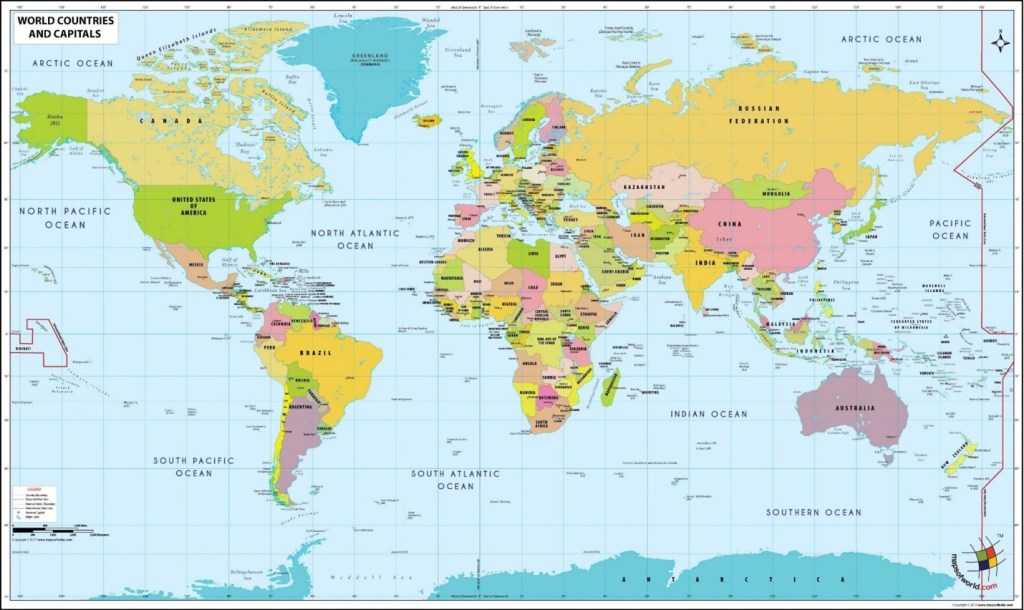
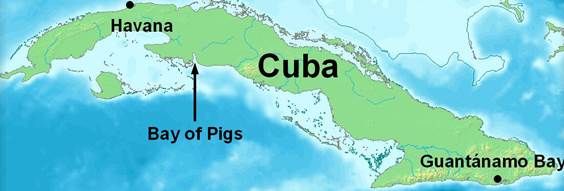

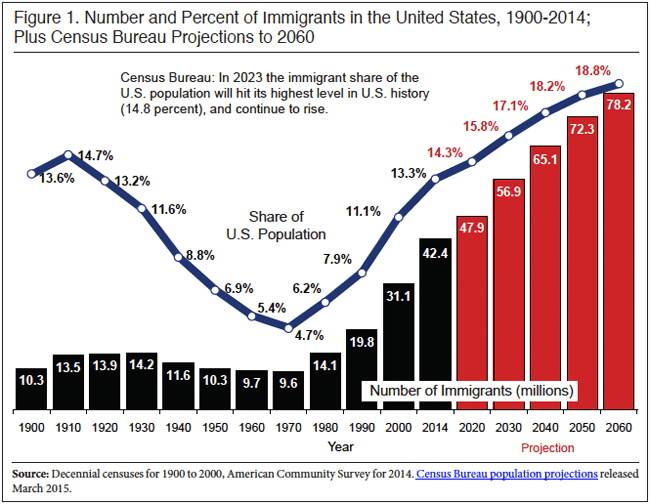
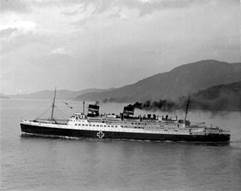
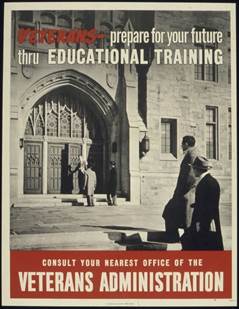


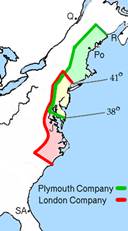


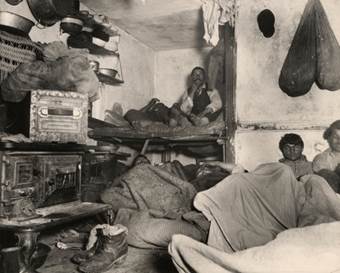
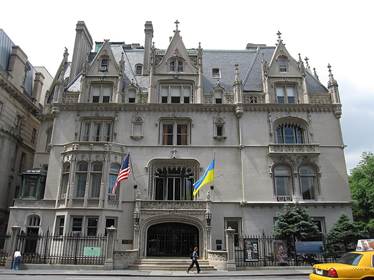

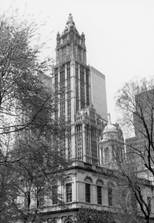


 njcssjournal