Ever since the atomic bombings of Japanese cities in August 1945, the world has been living on borrowed time. The indications, then and since, that the development of nuclear weapons did not bode well for human survival, were clear enough. The two small atomic bombs dropped on the cities of Hiroshima and Nagasaki killed between 110,000 and 210,000 people and wounded many others, almost all of them civilians. In subsequent years, hundreds of thousands more people around the world lost their lives thanks to the radioactive fallout from nuclear weapons testing, while substantial numbers also died from the mining of uranium for the building of nuclear weapons. Most startlingly, the construction of nuclear weapons armadas against the backdrop of thousands of years of international conflict portended human extinction. Amid the escalating nuclear terror, Einstein declared: “General annihilation beckons.”
Despite the enormity of the nuclear danger, major governments, in the decades after 1945, were too committed to traditional thinking about international relations to resist the temptation to build nuclear weapons to safeguard what they considered their national security. Whatever the dangers, they concluded, military power still counted in an anarchic world. Consequently, they plunged into a nuclear arms race and, on occasion, threatened one another with nuclear war. At times, they came perilously close to it―not only during the 1962Cuban missile crisis, but during the October 1973 Arab-Israeli war and on numerous other occasions.
By contrast, much of the public found nuclear weapons and the prospect of nuclear war very unappealing. Appalled by the nuclear menace, they rallied behind organizations like the National Committee for a Sane Nuclear Policy in the United States, the Campaign for Nuclear Disarmament in Britain, and comparable groups elsewhere that pressed for nuclear arms control and disarmament measures. This popular uprising secured its first clear triumph when, in the fall of 1958, the governments of the United States, the Soviet Union, and Britain agreed to halt nuclear weapons testing as they negotiated a test ban treaty. As the movement crested, it played an important role in securing the Partial Test Ban Treaty of 1963 and a cascade of nuclear arms control measures that followed.
Even when U.S. and Soviet officials revived the nuclear arms race in the late 1970s and early 1980s, a massive public uprising halted and reversed the situation, leading to the advent of major nuclear disarmament measures. As a result, the number of nuclear weapons in the world’s arsenals plummeted from about 70,000 to about 12,240 between 1986 and 2025. At a special meeting of the UN Security Council in 2009, the leaders of the major nuclear powers called for the building of a nuclear weapons-free world.
In recent decades, however, the dwindling of the popular movement and the heightening of international conflict have led to a revival of the nuclear arms race. As three nuclear experts from the Federation of American Scientists reported last June: “Every nuclear country is improving its weapons systems, while some are growing their arsenals. Others are doing both.” The new nuclear weaponry currently being tested includes “cruise missiles that can fly for days before hitting their targets; underwater unmanned nuclear torpedoes; fast-flying maneuverable glide vehicles that can evade defenses; and nuclear weapons in space that can attack satellites or targets on Earth without warning.” The financial costs of the nuclear buildup by the nine nuclear powers (the United States, Russia, China, Britain, France, Israel, India, Pakistan, and North Korea) will be immense. The U.S. government will reportedly spend over $1.7 trillion on its nuclear “modernization.”
Furthermore, over the past decade, the governments of North Korea, the United States, and Russia have issued public threats of nuclear war. In line with its threats, the Russian government announced in late 2024 that it had lowered its threshold for using nuclear weapons. In response to these developments, the Doomsday Clock of the Bulletin of the Atomic Scientists has been set at 89 seconds to midnight, the most dangerous level in its 79-year history.
As the record of the years since 1945 indicates, the catastrophe of nuclear war can be averted. To accomplish this, however, a revival of public pressure for nuclear disarmament is essential, for otherwise governments easily slip into the traditional trap of enhancing military “strength” to cope with a conflict-ridden world―a practice that, in the nuclear age, is a recipe for disaster.
This public pressure could begin, as the Nuclear Freeze movement of the 1980s did, with a call to halt the nuclear arms race, and could continue with the demand for specific nuclear arms control and disarmament measures. But, simultaneously, the movement needs to champion the strengthening of global institutions―institutions that can provide greater international security than presently exists. The existence of these strengthened institutions―for example, a stronger United Nations―would help resolve the violent conflicts among nations that spawn arms races and would undermine lingering public and official beliefs that nuclear weapons are essential to safeguard national security.
Once the world is back on track toward nuclear disarmament, the movement could focus on its campaign for the signing and ratification of the Treaty on the Prohibition of Nuclear Weapons. This treaty, providing the framework for a nuclear weapons-free world, was adopted in 2017 by most of the world’s nations and went into force in 2021. Thus far, it has been signed by 94 nations and ratified by 73 of them.
Given recent international circumstances, none of the nuclear powers has signed it. But with widespread popular pressure and enhanced international security, they could ultimately be brought on board.
They certainly should be, for human survival depends upon ending the nuclear terror.
The first pages of On This Ground engage the reader in the spiritual identity of children seeking an understanding about life in the world into which they were born. It is also an eyewitness account about how Newark became ‘the worst city in America’ in the 1960s. The first pages of this book provide an historical understanding of Newark but also of cities throughout New Jersey and the United States.
The reflections on education at St. Benedict Prep have value regarding an understanding of the core values, purpose, mission, and vision of all schools. Every teacher will find lessons in the passion and dedication of the faculty who are committed to caring, serving, and teaching. By Page 21, I was reliving the movie of “Sister Act” regarding the passion of nuns serving the people of Los Angeles. Also, my memories of “Welcome Back Kotter”, “Abbot Elementary”, “School of Rock”, “Mr. Holland’s Opus”, “Stand and Deliver”, “Dead Poet’s Society”, and “Up the Down Staircase” each flashed across my mind as I began reading On This Ground! It was an amazing flashback to my own experiences as a teacher.
Chapter 2 is the historical account of the 1967 Newark riots. In this chapter we learn of the German immigrant population that came to Newark in the 19th century, the dominance of the beer industry, the migration in the 1920’s to Newark from the South, and the flight to the suburbs that came with interstate highways and airports. It is one of the best descriptive accounts of continuity and change over time of an American city because of its conciseness and accuracy.
The account of the riots is important for the story of St. Benedict’s Prep School but also for every resident in New Jersey to understand and synthesize. The riots left 26 people dead and 700 injured. Entire blocks were destroyed with property damage totaling $10 million or about $100 million in today’s money. Over 1,400 residents were arrested. Teenage unemployment was about 50%. The white landlords and store owners moved out of Newark to the suburbs and local taxes to fund the essential services and public schools disappeared. The pain of the “Long hot summer of 1967” continued for years. The local government had limited authority and resources, the state government formed the Lilley Commission which identified social, political, and economic issues to be the underlying causes for the riots, and the Kerner Commission led to a national conversation about race and poverty, concluding that in the United States we had two separate and unequal societies.
We walk through the halls of St. Benedict’s Prep with Anthony DePalma to the Shanley Gym where the voices of students from the past and present are heard. Everyone who reads On This Ground will discover the power of love in the culture of this school, the importance of empowering students to make decisions, and how a cohesive community unites and energizes young scholars and athletes. When teachers care and listen to their students, everyone works toward the same goal. Through situations involving cheating, vaping, and texting inappropriate messages, Anthony DePalma guides us through the steps that make a difference in the lives of students; even those who are resistant.
The stories of the hardships of students, disciplinary decisions, the integration of girls from a small Roman Catholic school in neighboring Elizabeth, helping families with limited financial resources, and prayers for healing are not unique to St. Benedict’s. The strategies of how the faculty and headmaster handled these situations is unique. St. Benedict’s connects students and teachers as a community of learners. Anthony DePalma explicitly illustrates the dedication of the educators at St. Benedict’s in an environment where teachers are ‘called’ to serve, even though their college education may not include preparation for urban schools. Other schools will find value in learning how the daily morning faculty meeting discusses the needs of students, the importance of the ‘convocation’ that gathers students together with opportunities for leadership, the overnight experience in the mountains that brings the students together, and how problem-solving includes conversations between students, parents, and administrators.
Beyond the journey through the halls and classrooms are the insights into the lives of young children facing the addictive behaviors of parents, injuries from gun wounds, foster care homes, temporary living conditions, food insecurity, and unemployment. The crisis in our schools and cities is not part of the evening news or the discussions around the dinner table, office, or places of worship. Illiteracy is a crisis in America and perhaps this book will awaken interest.
In New Jersey, 3% of high school students drop out of school by their sophomore year in high school. Source
In New Jersey, 437,000 students (26%) are receiving supplemental food daily. Source
Approximately 1/3 of students in New Jersey are living with single parents or their parents are in prison, rehabilitation, or are unemployed. Source
In New York City, 45% of the students are ‘chronically absent.’ Source
17% of third through eighth graders in the United States are chronically absent because of mental health issues. Many are from suburban homes and excellent school districts. Source
Examine the data (2023) from the Federal Reserve Bank of St. Louis below: Source
On This Ground engages readers to think about the moral and spiritual poverty that is in our country. Towards the end of the book there is an account of a freshman girl who loved to dance but had been disadvantaged in many ways. She overcame several obstacles in her persistence to establish the first cheerleading team at St. Benedict’s. It is a story of moral and spiritual strength and the power of perseverance and determination. The stories of alumni, Anthony Badger, Bob Brennan, and Leon McBurrows remind us that life is challenging because we are human and our humanity is complex.
As I am reading the words of Anthony DePalma, I am thinking of the children who are disconnected from reality. I am also thinking of the 14-year-old freshman entering high school in September 2026 who will only be age 28 in the year 2040. The message for me in On This Ground is the importance of teaching about character, kindness, self-esteem, decision-making, and personal identity. The institutions for helping children and their families with these lessons are our local schools and places of worship. The importance of teachers, clergy, custodians, crossing guards, cafeteria workers, bus drivers, coaches, are essential to connecting young people to a productive life.
America is faced with a crisis of illiteracy and the adage that schools teach reading, writing, and arithmetic is for a different time in our history. The challenges of artificial intelligence, substances, obesity, food insecurity, a warmer climate, and what we spend our money on, are overwhelming!
The story of St. Benedict’s Preparatory School provides optimism and hope. The links below are videos about the story in On This Ground.
Erasing History: How Fascists Rewrite the Past to Control the Future
By Jason Stanley
Reviewed by Hank Bitten, NJCSS Executive Director
“Wars are won by teachers.” Vladimir Putin
This quote published in the Washington Post on May 7, 2024 is the opening statement in Chapter 1 of Erasing History. It is a powerful statement and thesis for this book and a compelling reason for teachers to read the arguments presented by Jason Stanley, Yale University Professor of Philosophy. There are numerous examples in this book explaining the biased perspective of American history regarding Black Americans, Latinx, Native Americans, women, children, etc. and there are examples of how history has been erased in Kenya, Palestine, India, China, and Ukraine.
Every teacher of U.S. history teaches the different views of Booker T. Washington and W.E.B. Dubois to assimilate into American society at the turn of the 20th century. However, the perspective presented by Jason Stanley offers students in our classes the opportunity for a critical debate regarding two different paths towards assimilation.
“In his public writings, Washington urged Black Americans to prioritize industrial education over political education, and thus to place greater emphasis on their productive potential as workers than on their identity as democratic citizens. As Du Bois saw it, this approach served white supremacy. He counseled Black American citizens instead to seek a liberal education, whose purpose was not only to elevate the soul but also to give them skills to democratically advance their own interests.” (page 39)
Some societies and governments favor a part of their population as the dominant or protected class and discount or “erase” the contributions of other people in their state. The technological advances of artificial intelligence present new challenges for teachers as history can easily be revised from quoting textbooks, historical papers, and extremist views from the past and make them appear as valid scholarship. The increasing popularity of PraegerU is an example of how school districts, Departments of Education, and individual teachers are accepting the information and lessons provided by non-academic institutions. Teachers have a unique responsibility and position because they are trusted by students and what they say is transformed from sight and sound to memory.
Teachers will find the historiography and analysis of the concepts of nationalism, American exceptionalism, and colonialism to be helpful for the development of lesson plans in both U.S. history and world history. It is less about ‘erasing’ history than changing history or emphasizing certain historical themes while ignoring others. Curriculum designers and teachers have both power and responsibility in how lessons are structured, implemented, and assessed. One example from the book is including the “I Have a Dream” speech by Dr. Martin Luther King, Jr. and ignoring his many contributions in the civil rights movement.
This is an important debate regarding assimilation in a society with a dominant class. A current example is the debate of how the working class earning an hourly wage without benefits can assimilate into the middle class. Is the best way to address this through subsidized education, new tax policies, or paying a living wage?
Teachers must have a strong content background in the westward movement, labor, Reconstruction, civil rights, Ukraine, Palestine, etc. to be aware of what is missing in the sources and resources they are using with students. The example below provides different points of view on the 1932-33 engineered famine that killed millions of people in Ukraine.
“The most significant of these omissions pertains to Holodomor a genocide of the Ukrainian people, in which millions of Ukrainian peasants starved to death after Stalin demanded draconian requisitions of grain from them, knowing full well that this would have devastating consequences. In Ukrainian and Russian, the term “Holodomor” consists of two parts: “famine” and “to kill” or “make someone suffer” – the closest translation is essentially “someone making others starve intentionally.” Importantly, although the word “Holodomor” and the tragedy it represents are well known throughout both countries, Russian textbooks describe the event using the generic term for “famine,” implying that Holodomor was merely a bureaucratic accident, and one that affected all of the USSR equally. In Ukrainian textbooks, it is represented as a famine that Stalin inflicted specifically upon the Ukrainians, which is considerably closer to the truth.”(pages 67-68)
Fascism is not taught is most high schools and college courses may not have provided this instruction for teachers. Fascism, socialism, Marxism, communism, and Naziism are critical movements in world history and they are complicated to teach because the are not monolithic. Professor Stanley provides five major themes that are part of a fascist education: (page 78)
National greatness
National purity
National innocence
Strict gender roles
Vilification of the left
The strategy that wins the support of people is often fear and patriotism. In the United States, the theme of national greatness is most visible with “Make America Great Again” and defining the United States as the greatest nation or what is defined as American exceptionalism. However, associating crime, poverty, homelessness, unemployment, etc. with a specific demographic group is part of the fascist goal of national purity. In Germany, it was the Aryan population. In the United States it is critical race theory, structural racism, and making white Americans feel guilty. We see the theme of strict gender roles in the directives to teach traditional roles of women and banning references to the contributions of the LGBTQ persons. The placing of blame for everything on a past president or a specific political party is another effective strategy. Teachers should be aware of these five signs and why populations embrace it.
President Trump delivered a speech in September 2020 when he introduced the White House Conference on American History. Particularly, in the 250th anniversary year of the signing of the declaration of Independence, teachers need to be aware of how President Trump understands the teaching of patriotic history.
“Our mission is to defend the legacy of America’s founding, the virtue of America’s heroes, and the nobility of the American character. We must clear away the twisted web of lies in our schools and classrooms, and teach our children the magnificent truth about our country. We want our sons and daughters to know that they are citizen of the most exceptional nation in the history of the world.” (page 81)
Erasing History dedicates three chapters to the importance of education in both preventing and promoting authoritarian rulers or advocating against democracy and for authoritarianism. Teachers of social studies, history, and literature have a responsibility to recognize bias and ignorance and to select the sources and perspectives that lead to an understanding of the American values of equality, liberty, and the rule of law.
“The dismantling of public education is backed by oligarchs and business elites alike, who see in democracy a threat to their power, and in the taxes required for public goods a threat to their wealth. Public schools are the foundational democratic public good. It is therefore perfectly logical that those who are opposed to democracy, including fascist and fascist-leaning movements, would join forces with right-wing libertarians in undermining the institution of public education entirely.” (pages 121,122)
The movement for school vouchers, criticisms of curriculum, the attack on the 1619 Project, and the emphasis on America’s greatness contribute to distrust about public schools and confuses parents.
“The goal of anti-education is not only to render a population ignorant of the nation’s history and problems but also to fracture those citizens into a multitude of different groups with no possibility of mutual understanding, and hence no possibility of mass unified action. As a consequence, anti-education renders a population apathetic – leaving the task of running the country to others, be they autocrats, plutocrats, or theocrats.” (page 133)
I found Professor Stanley’s analysis of classical education to be exceptional. The extreme right and the extreme left (and those in between) support the teaching of Greek and Roman civilizations. What I found interesting is how each side selects the leaders and documents that support their perspective of government. For example, Pericles Funeral Oration describes Athenian democracy:
“Its administration favors the many instead of the few; this is why it is called a democracy. If we look to the laws, they afford equal justice to all in their private differences; if to social standing, advancement in public life fall to reputation for capacity, class considerations not being allowed to interfere with merit; nor again does poverty bar the way, if a man is able to serve the state, he is not hindered by the obscurity of his condition….We throw open our city to the world, and never by alien acts exclude foreigners from any opportunity of learning or observing…while in education, where our rivals from their very cradles by a painful discipline seek after manliness, at Athens we live exactly as we please, and yet are just as ready to encounter every legitimate danger.” (page 143)
While the above speech favors democracy, others look to Plato as evidence of a strong ruler with a clear authoritarian philosophy. The Greeks and Romans supported gender and racial superiority, owned slaves, favored landowners and intellectuals, and had colonies. These examples support a fascist ideology. Teachers have the responsibility to teach historical context, provide the reasons for social changes, help students to analyze how freedom is related to continuity and change over time, and an understanding of equality, reason, liberty, and power. Concepts we thought had clear definitions have become complicated.
There are more compelling insights in this book than I can comment on in a book review. Teachers of all subjects should read this book, but in particular history, social studies, and teachers of literature. Pre-service teachers also need to read and discuss this book. Let me conclude with these observations:
Critical thinking is essential.
Understanding a point of view and historical perspective are essential.
The current movement away from democracy has been part of our American history for a long time. We see it in the separate but equal policy on race, segregation laws, imperialism, xenophobia, criticisms of the New Deal, Brown v. Board of Education decision, McCarthyism, civil rights protests, Nixon’s imperial presidency, supply-side economics, and in the reaction to the decline of the United States as a world power.
Democracy ended in Athens, and in the Roman Republic. We need to understand how and why this happened.
As a teacher of history and/or social studies, you are on the front line and can expect to be criticized! Our responsibility as teachers is to include the experiences and contributions of all people – especially women, children, immigrants, people of different faiths, Black and Native Americans, laborers, individuals with disabilities, individuals who are LGBTQ, etc. Teaching history includes compassion, empathy, struggles, contributions, and the untold stories that you will discover. Erasing History is about forgotten and neglected history.
Telling School Tales: Rural School History Research
Casey Thomas Jakubowski
In 1998, my first teaching position in Little Valley Central School District in Cattaraugus County New York, as a social studies instructor led to a career exploring the nooks and hollows of educational history across the Empire State (Jakubowski, 2020; 2023). The former school district is part of the Appalachian region of New York State, which includes 14 counties from Lake Erie to the Catskills. This district was undertaking an annexation study, or school district reorganization attempt in my first year. I knew nothing of these events, and was unaware that there was a nearly 100 year history of rural school reform focusing on creating more urban-like schools in rural areas (Jakubowski, 2020). The first major community activity surrounding a reorganization, or merger is the Boards of Education voting to undergo a study. After the districts are presented with the study, the Board then votes to accept the study. If this passes both boards, it is sent to the community in a non binding, or advisory vote (straw). When the straw vote passed in both Cattaraugus and Little Valley, people began to protest outside the school every morning and evening, to “save the panthers” or to “save the heart of LV” as I remember the sign read. My students were pulled from extracurriculars by their parents in order to protest the potential merging of the two districts, Cattaraugus to the north, and Little Valley, a one building K-12 district with just under 300 students. When the “binding vote” happened that year, and the Cattaraugus community defeated the proposed measure, we wondered, “What next?”
I left the district that fall, to move to central New York, and once again, a school centralization impacted my life. A family member’s teaching position was abolished, because the five year moratorium had expired. After a few resignations and retirements, the family member was once again employed. This is an all too unfortunate reality across Appalachia’s schools, as decreasing population, and wealth decline usually results in less money for school budgets, and personnel. I was once again wondering “What next?” This time, I used a Masters level research paper (unpublished, 2004)[1] to begin to pursue what has been a twenty-year scholarly chase through the rural, upstate, and state education department policy of recommending schools which are, according to the 1947 and 1958 Master Plan for School District Reorganization, too small to produce efficient, or effective programming for their children[2]). I also learned that New York State’s policy towards rural districts is as Fulkerson & Thomas (2019) describe it “urban normative” or the urban areas are the norm, and should be promoted as an ideal form of local government.[3] So I dug deep, and researched cases of successfully undertaken and defeated centralizations, or consolidations, or mergers, or reorganizations.[4] The history of why so many reorganizations failed post 1960 became an obsession. I learned from my pursuit of the 20th and 21st century of educational history of New York two major tracks: most educational historians write on the early period (founding of New York as a colony to just after World War I) and second, the state’s citizens have experienced some major fights with the state bureaucratic system in Albany over really basic issues of democracy, local control, and what citizenship means.
Telling tales out of school, as the title implies is often thought of as a negative, and uncivilized approach, yet I view these two tales, about Kiantone and Morganville, as critical, and very necessary to explain some of the basic urban rural divide of New York State, and further the rural anger deployed at government, which observers believe is current, but is actually rooted in Post World War II actions by the the State Education Department.[5]
The State of New York has, as Tracy Steffes writes in her seminal work, been interested since the late 1800s in “reforming” rural schools through strategic aid packages to develop longer terms and more “professional” schools in rural areas.[6] Thomas Mauhs-Pugh described how the local school governing boards were once held as exemplars, because they created “12,000 little republics” that taught governing principles at the local level.[7] Benjamin Justice combed the archive to discover how religious governing practices amongst local Board of Education members often resulted in appeals to the State Education Department.[8] Heffernan’s article on the conflict between State Education Department expectations for school facilities and local board’s realities describe how dissonance started in the early 20th century between the professionals and the public.[9] Chiles’ work on Progressive era school reform describes how Gov. Smith undertook school reform in rural areas as a signature effort among his governorship, and later presidential aspirations.[10] Loveland’s dissertation on the transition between the State Superintendent for Education to the University of the State of New York’s Commissioner of Education and President is a landmark in describing how the first three leaders at the newly created State Education Department had created a policy of rural school reform[11]. As Parkerson & Parkerson wrote in the crucial book on rurals school reform, the “ABCs” or Assessment, bureaucracy and consolidation, have haunted, especially in New York, rural schools who try to survive in the midst of population decline, decreasing wealth, and state policy which relies on a long standing deficit narrative, which Biddle & Azano expose as more than 100 years old.[12]
Having learned about the New York Master Plan for School District Reorganization (which is still in effect in 2023) I began to explore areas close to where I was living at the time, namely Genesee County, and discovered a huge gap in my understanding of the creation of the present day accepted “Central School Districts.” Many New Yorkers take for granted these post-Depression era created districts, many of which did not assume final form until the midst of the Cold War. These often hyphenated schools recall a vague history, or “mystic chords of memory” as Kammen would call it,[13] of the past, prior to the baby boomers (post World War II) entering school and gaining an affiliation as members of those relatively newly created schools. As Osterude describes in a profound work on the Broome County area, identity, and affinity moved from community to the newly created school districts, often built outside of town, and the social hub of the area.[14] Yet I know from my own experience (auto ethnographic history?)[15] the process must not have been smooth, or why would perfectly rational people hold so closely to an identity or mascot, as much of the national research claimed was the reason centralizations/ consolidations/ mergers are defeated?
Seeking to understand school history, as Carol Kammen, or David Kyvig[16] calls “nearby history” led me to the Genesee County Archives, where I discovered the Morganville Question. At the bottom of the Byron Bergen Central School District 1958 Master Plan entry was a footnote, which caught my attention:
By alteration of boundary, effective Sept. 17, 1951, all of the property in the Town of Stafford, formerly C2 Stafford, was transferred from CS 1 Byron to CS 1 Le Roy. (p. 301).[17]
After meeting with the Genesee County historian, and reading the records from the New York State Archive on the town of Stafford, I went to the town historian, and museum and learned a bit about this “school tale.”[18]
Stafford 2, Morganville, was one of the wealthier common schools in the area. A community with a pottery manufacturing center, and a two room schoolhouse, the community provided a grade 1-6 education to their children. In a tuition agreement very common until the creation of centralized school districts, and the birth of a semi modern high school in each C.S.D, Morganville partnered with South Byron by sending their secondary students for instruction. When the Centralization petition was launched, the Stafford 2 district residents overwhelmingly voted no, and wanted to maintain their two room schoolhouse, and independence. In records, memos, telegrams, and newspaper reports of the time period, the fight between Morganville (Stafford 2) and SED heated up, and became a back and forth with the end result of the community locking the South Byron Board of Education employee teacher out of the building. The parents refused to send their children.[19] The local school district superintendent, who is a field based representative of the commissioner of education, was on the side of the Stafford 2 (Morganville) representatives.
The archival records in Genesee county, and the State Archives in Albany record the back and forth memos and telegrams of the bureaucracy and the local residents trying to enter into a positive, less public solution. What became the clue to a second quest was a note on one of the memos from senior SED officials to the bureau and the local superintendent: “We do not need another Kiantone.”[20] More on Kiantone below.
What finally concluded the “Morganville question” was a bit of bureaucracy, and the intervention of a neighboring district. LeRoy, a larger village in Genesee County, had a well developed secondary school, as befitting an Erie Canal town home to the creators of Jell-o. The leaders of LeRoy offered free transportation and free tuition for schooling to any family in Stafford 2 who could transport their children to the boundary line. Using this subtle recruiting technique, the narrative from Morganville changed from “independent” to “LeRoy” as their demands for a school centralization destination. In one of the communications between the Morganville leaders and SED, the justification given for the break in the previous relationship with South Byron was the expectation of a better quality of secondary education for children at the LeRoy schools. South Byron was, in the opinion of the Morganville leaders, too small and not robust enough.[21]
The bureaucratic support arrived in the form of the New York State Thruway Authority, and its construction of the mainline branch from Buffalo to Rochester. The layout of the Eisenhower Interstate system, a divided, limited access highway modeled on the autobahn, was a technology and transportation revolution in the United States post World War II. As the Morganville community and the State were seeking a solution to the “question” of where would the children attend school, the Thruway authority indicated that the disruption caused by construction of the thruway and the needed overpass bridges for state and local routes would be a long term logistical problem for Morganville Children to attend South Byron. The authority provided the State Education Department face saving “cover” to move Morganville (Stafford 2) student population to LeRoy. The Morganville residents celebrated a win, and the State Education Department reaffirmed that the Master Plan was a voluntary policy, and the districts presented in the plan were recommended[22].
This situation was very different than just five years prior, where the Kiantone community south of Jamestown, in the Northern Appalachian region, experienced the wrath of State Education Department, while participating in a “farmers rebellion” that brought to the fore questions of democracy, local self determination and the international questions of communism, and totalitarianism post World War II.
Just south of Jamestown, of the “outlying” urban areas of New York State in the mid 1800s, Kiantone was a farming community along the Kiantone creek, with early settlers engaging in what Fox calls resource clearance in the areas of lumbering and then farming. The Kiantone residents erected seven Common Schools as part of the State enabling legislation. As Jamestown to the north, the residents began a long term tuitioning partnership with the secondary academy in Jamestown. Through World War I, and then World War II, the region provided significant material and manpower, and as a local furniture manufacturing hub in Buffalo, became a large urban center devoted to consumer products, and then the war efforts. At the Fenton- Chautauqua County historical society, the story of Kiantone is well known, and is a special area to the research people, because it represents the hypocrisy of national policy and local actions.[23]
During World War II, the Rapp-Coudert commission was charged by the New York state Legislature with rooting out communists among college professors in New York City. It also became the leading committee examining how to create a more efficient and effective public school system, with a focus on rural districts. After the New York State Board of Regents inquiry into the condition of public schools in the 1930s, at the height of the Great Depression, the report concluded that rural schools were extremely inefficient, and ineffective. Prior to the centralization movements of the 1930s-1970s, New York was home to a large number of smaller common schools, offering grades 1-6, and or tuitioning children out to neighboring districts. The Master Plan for School District Reorganization reported that in 1930, there were over 10,000 districts in New York State. By 1945, there were just over 5,000 (today, there are just under 700). At the secondary or 7-12 levels, parents would send children to villages based or academies for a secondary education focused on the Board of Regents curriculum and end of course exams introduced just after the Civil War, as Beadie describes. The Rapp Coudert commission established minimums to ensure efficient and effective spending on public education in the state. The commission, under the guise of a voluntary or recommended reorganization plan of 1947 (p. 18) created an organized plan to ensure that proposed districts would meet minimums in grades 1-6 and 7-12. Those minimums include 1500 dollars for elementary programming and 1800 for secondary expenditures. The minimums for pupil enrollment recommended at least 1000 students in a district.[24] As these recommendations emerged during the World War II era (1941-1945) the final report and “Master Plan” was released in 1947.[25] As the Master Plan was established, residents in each proposed district could submit to the local District superintendent of schools a request to begin the centralization process. Kiantone, with its long standing relationship to Jamestown, had been included in the Frewsburg Central School District proposed area. After some initial negotiations, one of the Kiantone schools was moved to Jamestown,[26] but the rest were included with Frewsburg.
Trustees of the Common Schools, and residents, vigorously opposed this arrangement, and felt, at the minimum, two major negatives precluded their inclusion with Frewsburg. First, the long relationship with Jamestown was primary. Second, the program in Jamestown was far superior to Frewsburg offerings. The Common School trustees in Kiantone refused to turn the key to the school over, and in August of 1948, the attorney for the Frewsburg Central School, accompanied by a “Phalanx” of New York State Troopers “crashed into a human barricade “ (Jamestown Post Journal, August 24, 1948).[27] A scuffle resulted, with a World War I veteran, who was waving an American Flag, pushed to the ground. In the ensuing media coverage, comparisons with John Paul Jones, a demand for the House Un American Activities Committee to investigate, and a comparison to the totalitarianism of the USSR and Germany were published. Investigations were launched by the American Legion and the New York State Grange into the incident, and then the State Education Department’s response. Deputy Commissioner Jeru, interviewed by the Post Journal, was rather harsh, and described the residents of Kiantone as self-serving, and neglectful of their children’s future.[28] Commissioner of Education Franscis Trow Spaulding, in speeches, referenced troublemakers in rural areas, who did not see the bigger picture of centralization and the need to create more and better training opportunities[29]. Mrs. Potter, of the area, an Albany Normal School trained librarian, became the spokesperson for the community, and led statewide hearings, rallies, and pressures which resulted in some seismic shifts to state law and policy. First, the Kiantone residents created a private school, and the State Appeals court in Buffalo ruled that private, non organization sponsored schools were legal. This legalized schools unaffiliated with formal organizations, such as religious groups to operate. Second the process was altered (after Morganville) so that a majority of voters in the individual, in existence schools were needed to authorize the centralization or consolidation. This home rule precedent was crucial in the slowing down of enabling consolidations.[30]
The story does not end here, as many districts in the Northern Appalachian Region area of New York have experienced this pressure to reorganize, centralize, or consolidate. In every county, districts have faced pressure to examine consolidation. The ongoing drumbeat of efficiency, and effectiveness from the State policy and political leadership is often matched by local and regional media opinions that “bigger is better.” Yet in large urban districts, “smaller is successful” has been supported by politicians, philanthropists, and others. Why this dissonance? As Fulkerson & Thomas have pointed out, the schema of many policy makers supposes that urban is normal, cities are the way, and rural isn’t worth support or investment.
These two examples of school district reorganization, whose stories exist in local archives, which to this point, have not been extensively researched, help fill a research gap into the rural rage and distrust of state officials. The two examples provide a demonstrable dissonance between the words, deeds, and actions of the United States government towards democracy overseas, and the internal state government downplaying local communities concerns that their rights were violated and should be subjected to state level bureaucratic planning. No wonder rural residents in New York view state government promises as fleeting and empty.[31]
I would, in this short essay, recommend that scholars, students, and the curious examine these smaller, more local archives as sources of interesting, compelling, and frankly subaltern histories that do not mirror the narrative which explains the creation of our now taken for granted local governing structures.
References
Primary Archives:
Fenton Historical Society of Chautauqua County. Kiantone history files. Jamestown, NY
Genesee County historical society. Local history files. Batavia, NY.
New York State Archives. Education Department Bureau of School District Organization. File B0477. Albany, NY.
Secondary sources:
Biddle, Catharine, and Amy Price Azano. “Constructing and reconstructing the “rural school problem” a century of rural education research.” Review of Research in Education 40, no. 1 (2016): 298-325.
Chiles, Robert. “SCHOOL REFORM AS PROGRESSIVE STATECRAFT: EDUCATION POLICY IN NEW YORK UNDER GOVERNOR ALFRED E. SMITH, 1919–1928.” The Journal of the Gilded Age and Progressive Era 15, no. 4 (2016): 379-398.
Fulkerson, G. & A. Thomas. Urban normativity. Lexington, 2019.
Heffernan, Karen M. ““Much more chewing”: a case study of resistance to school reform in rural New York during the early twentieth century.” Paedagogica Historica (2021): 1-19.
Jakubowski, C. Rural school consolidation: A case study. Unpublished seminar paper, SUNY Binghamton, 2004.
Jakubowski, C. Hidden Resistance. Unpublished PhD Dissertation, SUNY Albany, 2019.
Jakubowski, C. School Consolidation. New York State Archives Magazine 20.1, 2020.
Jakubowski, C. A Cog in the Machine. Alexandra, VA: Edumatch, 2021.
Jakubowski, C. Rural Education History: State Policy Meets Local Implementation.Lexington, 2023.
Jakubowski, C. Schooling for a Fight. Lexington Press (expected publication 2025).
Justice, Benjamin. The war that wasn’t: Religious conflict and compromise in the common schools of New York state, 1865-1900. SUNY Press, 2009.
Kammen, Carol. On doing local history. Rowman & Littlefield, 2014.
Kammen, Michael. Mystic chords of memory: The transformation of tradition in American culture. Vintage, 2011.
Loveland, Fred Gerald. Victor M. Rice and Andrew S. Draper: the origins of educational centralization in rural New York State. State University of New York at Buffalo, 1993.
Mauhs-Pugh, Thomas J. “12,000 Little Republics: Civic Apprenticeship and the Cult of Efficiency.” New York History 86, no. 3 (2005): 251-287.
New York State. Master Plan for School District Reorganization. Albany, 1947
New York State. Master Plan for School Districts Reorganization. Second Ed. Albany, 1958.
Osterud, Nancy Grey. Putting the Barn Before the House. Cornell University Press, 2012.
Parkerson, Donald, and Jo Ann Parkerson. Assessment, bureaucracy, and consolidation: The issues facing schools today. Rowman & Littlefield, 2015.
Spaulding, Francis Trow. Addresses and Papers of Francis Trow Spaulding ,President of the University of the State of New York and Commissioner of Education from July 1, 1946-March 25, 1950. University of the State of New York, State Education Department, 1967.
Steffes, Tracy L. “Solving the “rural school problem”: New state aid, standards, and supervision of local schools, 1900–1933.” History of Education Quarterly 48, no. 2 (2008): 181-220.
[1] Jakubowski, 2004 (SUNY Binghamton, History Department Masters presentations).
Since Hamas’s attack on October 7, 2023, there has been an increased interest in helping K-12 students understand the historical background and context of the current violence in Israel/Palestine that has now escalated to a war in Lebanon and the possibility of a regional war involving Syria, Yemen, and Iran. On October 20, 2023, The Office of the Texas Governor encouraged schools to use a list of resources shared by the Texas Education Agency “to increase awareness and understanding of the Israel-Hamas war and root causes of conflict in the region” (Office of the Texas Governor, Greg Abbott, 2023). First in a list of four resources hyperlinked to the press release is a document from the Institute of Curriculum Studies (ICS) titled “Support for Classroom Discussion on the Hamas-Israel War,” which in turn includes a link to ICS’s curriculum, “Teaching the History of the Arab-Israeli Conflict Using Primary Sources.”
The Institute for Curriculum Services (ICS) is not new to teacher training. Founded in 2005, their website states that 18,000 teachers have engaged in their workshops, and that all 50 states and D.C. are represented within ICS’s pool of participants. The reach of ICS’s influence in secondary school instruction is further facilitated through cooperation with the National Council of Social Studies and many of their state affiliates and local districts, including New York Department of Education; North Carolina Department of Public Instruction; Iowa Department of Education, among many others (ICS, 2024). ICS published its “Teaching the History of the Arab Israeli Conflict Using Primary Sources” in 2022 and has promoted the curriculum as an effective tool for teachers to help students understand the history of the conflict. In addition to the curriculum, which is accessible for free online and includes worksheets and graphic organizers for students (2022a), ICS offers workshops, both online and in-person in collaboration with public school districts across the country (2024). However, key aspects of ICS’s curriculum are misaligned with standards for the study of history and geography and are not conducive to helping students understand the root causes of Hamas’s attack on October 7, 2023, nor Israel’s widely condemned response. This curriculum, by providing students with insufficient context and inaccurate information, primes students to uncritically condone and support Israel’s ongoing settler colonial violence and dispossession, and contributes to the dissemination of racist, Islamophobic tropes.
Misalignment with C3 Framework for Social Studies State Standards
By using standard curriculum formatting and creating materials and activities that can be easily implemented for class instruction, ICS’s curriculum looks like a credible curriculum, and thus may seem like a legitimate tool for teaching about Israel/Palestine. ICS claims that their curriculum is “guided by, and…in alignment with, state and national standards” (ICS, 2018b). The organization points to the Frameworks in the C3 Framework for Social Studies as supposed guiding principles for the creation of their curricular resources, “with a particular focus on Dimension 2: History and “Dimension 3: Evaluating Sources and Using Evidence” (ICS, 2018b).The National Council for the Social Studies states that the C3 Framework was developed “for states to upgrade their state social studies standards” and “for practitioners…to strengthen their social studies programs” (2013). ICS claims to specifically and particularly align with two Dimensions within the framework: “History” and “Evaluating Sources and Using Evidence” (ICS 2018b). While ICS does not claim to address “Geography,” its substantial use of (political) maps requires attention to the desired learning outcomes of that Dimension as well. An analysis of the ICS curriculum compared to the learning outcomes outlined in the C3 Framework demonstrates the curriculum’s failure to meet standards for social studies education. This article will highlight specific ways in which the ICS curriculum is misaligned with the C3 Framework’s learning outcomes, and will include resources that, had they been included in the curriculum, would meet the expressed skills standards and learning outcomes. The C3 Framework includes learning outcomes which are used as a basis of the critique of ICS’s curriculum.
C3 Framework Learning Outcomes (achieved by end of Grade 12) (National Council for Social Studies, 2013, pp. 42-49) Dimension 1: History Change, Continuity, and Context “Use questions generated about individuals and groups to assess how the significance of their actions changes over time and is shaped by the historical context.” Perspectives “Analyze complex and interacting factors that influenced the perspectives of people during historical eras.” “Analyze how historical contexts shaped and continue to shape people’s perspectives.” Historical Sources and Evidence “Analyze the relationship between historical sources and the secondary interpretations made from them.” “Critique the usefulness of historical sources for a specific historical inquiry based on their maker, date, place or origin, intended audience, and purpose” “Use questions generated about multiple historical sources to pursue further inquiry and investigate additional sources.” “Critique the appropriateness of the historical sources used in a secondary interpretation.” Causation and Argumentation “Analyze multiple and complex causes and effects of events in the past.” “Distinguish between long-term causes and triggering events in developing a historical argument.” “Integrate evidence from multiple relevant historical sources and interpretations into a reasoned argument about the past” “Critique the central argument in secondary works of history on related topics in multiple media in terms of their historical accuracy.” Dimension 2: Geography Human-Environment Interaction “Evaluate how political and economic decisions through time have influenced cultural and environmental characteristics of various places and regions.” Evaluate the impact of human settlement activities on the environmental and cultural characteristics of specific places and regions.” Human Population “Evaluate the impact of economic activities and political decisions on spatial patterns within and among urban, suburban, and rural regions.” Dimension 3: Evaluating Sources & Using Evidence Gathering and Evaluating Sources “Gather relevant information from multiple sources representing a wide range of views while using the origin, authority, structure, context, and corroborative value of the source to guide the selection.”
ICS’s selection and framing of primary source material is misaligned with several learning outcomes outlined within the C3 Framework’s Dimension 2: History. ICS limits the sources provided to official governmental and intragovernmental documents and fails to provide citations for the background information that frames each of the sources and provides the overarching narrative of the curriculum. In this way, ICS fails to provide students with the opportunity to adequately strengthen skills pertaining to the study of history. Furthermore, through their narrow selection of sources, ICS fails to model the effective evaluation of sources and use of evidence for students, as outlined in Dimension 3 of the C3 Framework.
Through its failure to adequately address skills mandates as outlined in the C3 Framework, ICS dangerously misrepresents the historical context and multiple perspectives that are necessary for helping students understand the context of Hamas’s October 7 attack. In order for ICS to meet those standards, it would need to include significantly more primary sources and provide more accurate context. The ICS curriculum implies that Zionist settlers accepted Palestinians as deserving of national sovereignty in their own right and that it was solely Palestinians who rejected Jewish neighbors, beginning with the UN Partition Plan of 1947 (ICS, 2018a). The curriculum emphasizes this implication by providing inaccurate and incomplete information, insufficient, misleading and oversimplified context, and a single perspective of events. Furthermore, it is not grounded in the skills or learning outcomes outlined within the C3 framework, to which ICS claims to adhere.
Inaccurate & Incomplete Information
ICS provides inaccurate and incomplete information within the curriculum, particularly when it comes to the perspectives and experiences of Palestinians. Two serious issues that contribute to this lack of accurate and complete information are the lack of Palestinian-authored sources. Only one source written by a Palestinian is included in the entire curriculum–the Declaration of the State of Palestine (1988), in the final lesson (2022f). The Palestinians are only represented in the curriculum long after decades of representing themselves under the British Mandate. In this way, the designers of the ICS curriculum de-historicize and choose to frame Palestinian “nationalist aspirations” in a document that is comparable to the Israeli Declaration of Independence included in Lesson 4 (2022e). This factually inaccurate portrayal of the inception of the First Intifada misrepresents the most important aspects of the Intifada; namely, that it was a largely nonviolent series of protests and economic boycotts of Israel that were predominantly organized by women, eventually involved the support of Israeli peace organizations and was as much of a surprise to the PLO as it was to the Israeli occupation (Bacha, 2017).
To address the lack of Palestinian perspectives within the curriculum, primary sources that deal with the Palestinian experience of the Nakba should be included to provide an insight into the Palestinian perspective of the 1948 war, particularly given that the Nakba is widely viewed as ongoing to the present day in the context of continued settlement expansion. The Nakba Archive (2002) is a collection of oral history testimony from Palestinian refugees living in Lebanon and provides valuable context for both the Declaration of the Establishment of Israel document and the Arab League Declaration on the Invasion of Palestine, which is the second primary source included in ICS’s Lesson 4 (2022e). Additional incorporation of photographs or videos from the UNRWA Film & Photo Archive, which provides audio and visual documentation of Palestinian refugees since 1948 would provide additional insight into the lived experience of Palestinians during the Nakba and counter the lack of visual representation of Palestinians within the curriculum (UNRWA, 2016).
The inclusion of a wider variety of primary sources such as film, photographs, and posters would provide students with a more accurate representation of the First Intifada and would align with the C3 Framework’s stated learning outcomes. It would also provide insight into the rise of more violent tactics employed by Palestinians since the Second Intifada that would better contextualize the Hamas attack on October 7. ICS states, in framing the First Intifada at the beginning of Lesson 5, that “Palestinians attacked Israelis with improvised weapons and firearms supplied by the Palestinian Liberation Organization (PLO), which organized much of the uprising” (2022f). This factually inaccurate portrayal of the inception of the First Intifada misrepresents the most important aspects of the Intifada. By inaccurately portraying the First Intifada, ICS legitimizes Israel’s violent response to the uprising and lacks context that would help students understand the cause-and-effect relationship between Israeli military and settler violence and the use of violent tactics by some members and groups of the Palestinian resistance.
Lack of Context
Building on the issues that stem from the lack of accurate and complete information, the lack of sufficient context further strengthens ICS’s implication that Palestinians have only been antagonistic aggressors to Israel and their Jewish neighbors. In Lesson 1 of the curriculum (2022b), the excerpt from Theodor Herzl’s “The Jewish State” (1896) lacks contextualization regarding the existing Palestinian population and their historical ties to the land ignoring the settler colonial nature of Zionism and its impact on the indigenous population of Palestine (ICS, 2022b). In Lesson 3, there is a major gap in source material from May 1948 to June 1967 (ICS, 2022d). This gap leads to a total lack of context for the inception of the 1967 war, as well as the experience of Palestinians in the years between 1948 and 1967. This lack of context makes it impossible for students to investigate Palestinian perspectives and understand cause-and-effect relationships between historical events.
The excerpt from “The Jewish State” highlights Herzl’s concerns about antisemitism across Europe, proposing the establishment of a Jewish state as a solution. The document reflects the persecution faced by Jews in Europe and their quest for a sovereign homeland. However, the document lacks contextualization regarding the existing Palestinian population and their historical ties to the land ignoring the settler colonial nature of Zionism and its impact on the indigenous population of Palestine (see Table 1 2a & 6a). It also omits Herzl’s recognition of the need for support from the Great Powers for the successful establishment of a Jewish state.
The gap in source material and information on events that occurred between May 14/15, 1948 and the June 1967 war conveys an inaccurate and incomplete depiction of the experience of Palestinians in the months and years after the creation of the state of Israel. This erasure functions in service of the curriculum’s portrayal of Palestinians as exclusively antagonistic and unwilling participants in peacebuilding. Of course, the entirety of “The Jewish State” (Herzl, 1896) is too long of a document to present to 6th-12th grade students, the target audience of ICS’s curriculum; however, the excerpt excludes text that highlights important context for the document (see Table 1 2b & 3d). An aspect of early Zionism that is also apparent in Herzl’s text but excluded from ICS’s excerpt is that multiple locations were considered for the Jewish state. Herzl highlights Palestine and Argentina (Argentine in the text). The selection of Palestine or Argentina for the Jewish state would be left to the Powers and Jewish consensus, “we shall take what is given us, and what is selected by Jewish public opinion” (American Zionist Emergency Council, 1946). Herzl mentions “the present possessors of the land” in reference to either or both Palestinians and Argentinians already living in areas proposed for the Jewish state, demonstrating his awareness that there were people living in both areas prior to Zionist colonization. By adding a few sentences to the excerpt, ICS could better contextualize the document regarding the existing Palestinian population, the settler colonial nature of Zionism, and the role of European imperialism’s support for the foundation of the Jewish state. Palestinian nationalism shifted away from “Arab/Ottoman” to “Palestinian/Arab” in the context of “watershed events” that included the British control of Palestine and the Balfour Declaration (Khalidi, 1997/2010). The ICS curriculum frames nationalism as only legitimately developing pre-World War I, which severely misrepresents the historical contexts in which Palestinian nationalism developed (see 1a, 4a & 4b). Herzl expresses the need for Great Power intervention for the Zionist project to be reified: “Should the Powers declare themselves willing to admit our sovereignty over a neutral piece of land, then the [Jewish] Society will enter into negotiations for the possession of this land” (American Zionist Emergency Council, 1946). Herzl further elaborates on the necessity of Great Power subscription to the Zionist project, “The Society of Jews… [will put] itself under the protectorate of the European Powers.” Herzl’s document demonstrates an amenability to the colonial mandate system that eventually came into effect after the ratification of the Covenant of the League of Nations in 1922.
Another useful addition to the collection of primary sources that would provide much-needed context for the time during May 1948 and June 1967 are the UN General Assembly Resolution 194 (1948) and UN Security Council Resolution 242 (1967). UN General Assembly Resolution 194 Article III (1948) codifies the right of return for Palestinian refugees who wish “to return to their homes and live at peace with their neighbors” and “that compensation should be paid for the property of those choosing not to return and for loss of or damage to property.” UN Resolution Security Council 242 (1967) of the “withdrawal of Israel armed forces from territories occupied in the recent conflict,” i.e. the 1967 war. and reaffirms the importance of “a just settlement of the refugee problem.” The Israeli unwillingness to honor this right of return coupled with the continuous expansion of settlements since 1967 and continued occupation of the West Bank (and Golan Heights) are major obstacles to peace that are completely ignored by the ICS curriculum.
Single Perspective
The ICS curriculum privileges Great Power perspectives, from which Zionism as a political project was birthed, without providing sufficient information on their imperial context. This serves to legitimize the Great Power intervention in the region beginning after World War I, and the expansion of Israeli settlements since 1967, without providing sufficient information to nuance or question this perspective.
By relying heavily on primary source documents that advance only the Great Power colonial perspective such as the Balfour Declaration, Sykes-Picot Agreement, and Article 22 of the Covenant of the League of Nations, ICS’s curriculum presents the colonial project and interventions advanced by the authors of these documents as legitimate, without giving students the resources or information to question the right or authority of the Great Powers to undermine the sovereignty of people living within the region following the end of World War I. This legitimization of the Great Power’s imperial project in the region after World War I contributes to the portrayal of Palestinians as antagonistic and unwilling to work towards a peaceful resolution to the conflict.
Additionally, the curriculum developers’ decision to use only political maps (themselves crafted by ICS) that do not align with internationally recognized borders and disputed territories, rather than demographic and land use maps, fail to provide information that is essential to understanding Palestinians’ perspectives. ICS’s curriculum completely ignores the expansion of settlements in the West Bank, confiscation of land, demolition of homes, and displacement of civilians, avoiding any discussion of numerous UN resolutions and United States foreign policy over time. By depicting political boundaries that have resulted from military occupation as if they were incontrovertible facts, the maps erase the issue of territorial annexations that have not been recognized under international law. The illegal settlements in the West Bank are legitimized in the video at the beginning of Lesson 4 (ICS, 2019). They are described as “in locations chosen for their strategic security value,” though there is no explanation of what that “value” might be. The video further states that “the number of settlements remained sparse until the late 1970s. They would become a major issue in later negotiations between Israel and the Palestinians.” The illegal settlements and settlement expansion are not mentioned again in the curriculum, despite the fact that settlement expansion and settler violence, along with the right of return for Palestinian refugees, are two of the primary concerns in negotiations with Israelis. Furthermore, settlements have been deemed illegal in successive judgements in institutions of international law, human rights and justice (Amnesty International, 2019).
A primary source that would provide useful insight into the perspectives of people living within Palestine contemporaneous with the other sources included by ICS is the Resolution of the General Syrian Congress at Damascus, which was ratified on July 2, 1919. The congress was composed of members from all regions of Ottoman Greater Syria who described themselves as “provided with credentials and authorizations by the inhabitants of our various districts, Moslems, Christians, and Jews” (1919). The resolution provides important insight into how Arab nationalism was shifting as a result of the dissolution of the Ottoman Empire. Of the ten points included in the resolution, five include important context for several of the primary sources included in ICS’s curriculum, namely the Sykes-Picot Agreement, the Covenant of the League of Nations, the British Mandate for Palestine, the Balfour Declaration, and the Faisal-Weizmann Agreement. Point three is a protest against Article 22 of the Covenant of the League of Nations; the Congress unanimously rejected the institution of a mandate. Point six addresses the issue of Zionism. It states, “We oppose the pretensions of the Zionists to create a Jewish commonwealth in the southern part of Syria, known as Palestine” and that “our Jewish compatriots shall enjoy our common rights and assume the common responsibilities.” The Congress was not opposed to the millennia-long presence of Jewish people in the land of Greater Syria, but soundly opposed to the Zionist settler colonial project, an important distinction left out of the ICS curriculum. Point eight of the resolution rejects the separation of Greater Syria into Lebanon, Syria, and Palestine, as was outlined in the Sykes-Picot agreement. Finally, point ten calls for the annulment of “these conventions and agreements” whose aim is establishment of a Zionist state in Palestine in light of “President Wilson’s condemnation of secret treaties,” seemingly a direct response to both the Sykes-Picot Agreement and the Balfour Declaration.
The inclusion of demographic and land-use maps would provide needed information to contextualize Palestinian resistance, particularly to settlement expansion since 1967. Alex McDonald of the Texas Coalition for Human Rights, in a video lesson titled “Letting Maps Tell the Story” (2020), is a valuable resource for educators seeking to help students employ geographic studies skills to examine the geopolitical context of the conflict. Additionally, the inclusion of UN Resolution 2334 (2016) would provide useful information on the ways in which Israel’s settlement expansion continues to make a two-state solution unviable. This would provide students valuable information on the Palestinian perspectives of Israel’s policy of expansion, and additional context for discussing causes and effects. The ICS curriculum developers chose to use only politically contested maps, rather than the very demographic and land use maps that would illuminate the situation under the Mandate before 1948, and which indeed formed the basis for the UN Partition Plan. For the period after 1948, land use, demographic information, and water resource maps would better align with the C3 Framework and provide context for discussing causes and effects.
Conclusion
Not only is the curriculum misaligned with standards for skill development in history and social studies, but it also fails in its expressed objectives. The stated goal of ICS’s curriculum, entitled “Teaching the Arab-Israeli Conflict” is that “students will become more knowledgeable global citizens and gain confidence in following current world issues” (2022a). Under the FAQ section of the ICS website, under the drop-down menu titled “What is ICS’s commitment to accuracy and balance?” the organization states that “accuracy is a value in itself. At a time when public discourse in America is becoming less committed to accuracy and facts, we think it is all the more important that we study historical documents and ground our understanding of history in them” (2018b). ICS’s curriculum, by providing students with insufficient context and inaccurate information across all five lessons, primes students to uncritically condone and support Israel’s ongoing settler colonial violence and dispossession rather than helping them become “more informed global citizens” (2022a). It fails to meet both its own professed goals and standards for social studies education and skills acquisition. This curriculum prevents students from engaging with the full historical context of the current situation and implicitly claims that the exclusion and erasure of Palestinian voices is an acceptable form of “accuracy.”
References
American Zionist Emergency Council. (1946). Texts Concerning Zionism: “The Jewish
General Syrian Congress (1919 July 2). The resolution of the General Syrian Congress at Damascus proclaims Arab sovereignty over greater Syria (July 2, 1919). In A.F. Khater (Ed.), Sources in the History of the Modern Middle East, 2nd edition (2011) (pp. 158-160). Wadsworth Cengage Learning.
Institute for Curriculum Services. (2018a, June 4). ICS Episode 3: A place to belong. Vimeo. Retrieved November 14, 2024, from https://vimeo.com/273382658.
Institute for Curriculum Services. (2019, September 9). ICS Episode 4: War and Peace. Vimeo. Retrieved November 14, 2024, from https://vimeo.com/358927133.
Given the often-contentious nature of the subject discussed in the article above, editors for Teaching Social Studies solicited comments from teachers and preservice educators. Those responses are below.
Alysse Ginsburg, Uniondale (NY) High School: I am a 12th grade history teacher with 25 years of classroom teaching experience. The editors asked me to respond to this essay in 250-500 words. Of course, I can’t possibly respond thoughtfully or comprehensively to a 5,000 word essay in the allotted space, but I do have a few thoughts to share. Prior to reading the essay, I had not used ICS materials in my classroom. A colleague with experience using them had good things to say, so I investigated further. As a history teacher, I believe it is important to carefully examine the sources of content I might bring into my classroom to be sure they are accurate and align with standards and best practices. Here are a few things I concluded about ICS’s lessons:
The lessons on the Arab-Israeli conflict align well with both the New York Social Studies Framework and New Jersey’s Learning Standards for Social Studies (which are similar to the C3 Framework).
ICS’s lessons rely on primary sources representing different parties. For example, in the lesson on Jewish and Arab nationalism, I noticed the inclusion of primary sources from a mainstream Zionist thinker and a mainstream Arab nationalist thinker and documents from both the first Zionist Congress and the first Arab Congress. The number of sources provided seemed balanced and appropriate for the available time a teacher would have to teach the lesson.
ICS has been around for almost 20 years and has professional development partners in many state and local education agencies; 21,000 teachers have elected to participate in ICS programs; and ICS is a Library of Congress Teaching with Primary Sources Consortium Member.
I was honestly reluctant to submit this response without knowing even more, so I had a call with ICS and asked them to address some of the author’s comments directly. In addition to patiently answering my questions, they said they looked forward to seeing the essay (and even speaking to the writer) so they could understand her concerns and consider improvements, as they often do with teacher input. For example, they told me that they recently updated one of their PD sessions to further clarify the specific reasons why Palestinians and Arabs were opposed to the United Nations Partition plan. I’m an educator who believes in a growth mindset, so this pleased me. Though I had very limited space and time to respond to the essay, I was impressed by what I saw and heard from ICS, and I encourage you to look at their lessons and materials and judge for yourself. My main critique, which I told them, was that they should modify their materials for students at different reading levels. They said they were working on it.
Dianne Pari, former social studies chair, Floral Park (NY) High School: As an educator with experience as a social studies teacher, department chairperson, and currently a supervisor of student teachers, I have observed a growing hesitation among today’s teachers to address the Arab-Israeli conflict in the classroom. Many shy away from student questions about the current situation. Why? There are many complex reasons, but it cannot be overlooked that in today’s politically charged climate, even the most neutral or fact-based responses can be misconstrued, criticized, or politicized. There have been cases where educators have faced backlash from parents and school administrations simply for presenting information that challenges students’ or families’ existing beliefs or biases.
This makes it imperative that curriculum materials on this topic are balanced, historically accurate, and free of bias. I support Chloe Daikh’s assertion that the ICS curriculum on “The Arab-Israeli Conflict” lacks this balance, particularly in its limited inclusion of Palestinian voices and perspectives. Such omissions can unintentionally perpetuate a one-sided narrative, portraying Palestinians predominantly as aggressors and Israelis solely as defenders for example. The Daikh article provides a detailed evaluation of the ICS curriculum, and I agree with her conclusions. Unfortunately, she, nor the ISC, touch upon the issue I raised earlier, that teaching the Arab-Israeli Conflict is so polarizing today, that it is often being avoided altogether.
If I were teaching this topic today, I would begin with two foundational lessons to establish historical context, especially of previous conflicts, and then transition to an analysis of the ongoing Israel-Hamas war. To ensure a broad and balanced understanding, I would incorporate a range of news sources, including major American outlets and international media such as Al Jazeera that offer valuable resources for classroom discussion. Online, Al Jazeera provides “Israel-Gaza War in Maps and Charts: Live Tracker” (https://www.aljazeera.com/news/longform/2023/10/9/israel-hamas-war-in-maps-and-charts-live-tracker).
Students must be provided with balanced, credible, and comprehensive resources that foster critical thinking and informed discussion—especially when addressing complex and emotionally charged global issues such as this one and more importantly, teachers must be supported by school administrators when their lessons are challenged.
John Staudt, The Wheatly School, East Williston, NY: As a teacher and a historian, I largely agree with Chole Daihk’s analysis of the Institute for Curriculum Services (ICS) curriculum on “The Arab-Israeli Conflict.” There are several significant methodological and historiographical shortcomings, including biases that teachers should explore with students when teaching controversial topics.
The ICS prioritizes using state-centric sources while overlooking everyday experiences of the people most impacted by the actions of state characters. It leaves out numerous critical primary sources – most egregiously – from Palestinian voices and perspectives. The exclusive inclusion of mostly official documents is a prime example of what the scholar Edward Said called “textual imperialism.” Textual imperialism is a form of revisionist history written from the perspectives of the victors, while overshadowing the personal experiences of those who lost and suffered the most. (Said, 1993) By excluding Palestinian literature before the 1988 Declaration, the ICS distorts the history of Palestinian nationalism and erases decades of Arab political activism.
The exclusion of nineteen-years of actions, words and events between 1948 to 1967, reveals a broad gap in the literature and obscures crucial historical information including, among other things, evolution of early resistance movements, the formation of Palestinian political consciousness and the fate of Palestinian refugees. These omissions inevitably distort historically crucial links and obscures important continuities underlying present-day controversies and conflicts. These significant oversights also distort the First Intifada as PLO-initiated violence which minimizes its original non-violent, civic nature.
The geographic mapping options Daikh makes note of demonstrate significant bias. By incorporating political maps that legitimize military occupation, the curriculum normalizes settlements that are recognized as illegal under international law. When coupled with the absence of sources featuring Palestinian perspectives this further exacerbates the historical revisionism in the curriculum. By excluding alternative demographic and land-use maps, students do not grasp the circumstances — displacement, resource distribution, fragmentation — underlying Palestinian perspectives and reasons for resistance.
The ICC’s narrative makes Palestinian activism appear violently aggressive, while misinterpreting Israeli policy as almost entirely defensive. A good example of the problem is the exclusion of Israeli historian Ilan Pappé’s “1948 paradigm.” Pappe challenges the mainstream Israeli narrative of the 1948 war as a struggle for independence, instead arguing it was a deliberate campaign of ethnic cleansing to expel and displace Palestinians — a perspective he claims has been suppressed in historical discourse. The ICC approach further obscures the structural, settler-colonialism of the Israeli-Arab conflict (Pappé, 2006). I think it is significant to mention that Pappé was born in Israel after the 1948 war and is a Jew whose parents fled Nazi Germany in the 1930s. Pappé teaches in Great Britain after he was pressured to resign his position at the University of Haifa because of his confrontational views of official Israeli government policies.
As teachers, our goal is to provide students with a range of materials to analyze so they can reach conclusions based on evidence and share with colleagues in respectful conversations. By utilizing selected sources focusing on mostly one perspective of this deeply complicated issue, the ICC’s approach reenforces historical and geographical biases and does a disservice to students and the general public who are interested in learning more about this and other controversial topics. To counter these tendencies, historians and social studies teachers must employ meticulous attention to detail and incorporate perspectives that challenge an educator’s own arguments instead of following preordained interpretive templates.
Erin Smyth, Social Studies Education Student, Hofstra University: As a graduate student pursuing a degree in secondary social studies education, I was asked to review the Institute for Curriculum Services (ICS) curriculum on the Arab-Israeli conflict alongside Chloe Daikh’s critique of it. On the whole, I agree with Daikh’s analysis. The ICS curriculum fails to provide a complete historical account of the conflict. It leaves out essential historical events and excludes sources from individuals, particularly Palestinians, directly affected by the conflict. This omission hinders students from developing a nuanced understanding of a complex historical issue.
My biggest issue with the ICS curriculum is the absence of Palestinian-authored sources. Aside from the one late inclusion in the curriculum which Daikh notes, the 1988 Palestinian Declaration of Independence, there are no primary sources that focus on Palestinian perspectives, even though the curriculum repeatedly includes Zionist and Israeli sources. This imbalance results in a distorted narrative which is evident in the way the Nakba is covered. The curriculum gives little attention to the mass displacement of Palestinians in 1948 and omits oral histories, failing to convey how the Nakba is experienced by generations of Palestinians. As a result, students are denied the opportunity to understand one of the long-lasting impacts of the conflict on Palestinians.
These omissions not only negatively impact students’ ability to understand the Arab-Israeli conflict, but shape how they understand power, legitimacy, and justice in history. The inclusion of oral histories and more balanced source material is crucial. Without doing so, students cannot fully understand the causes and consequences of the conflict, nor can they evaluate historical claims with the critical thinking skills the C3 Framework demands.
As a future educator, I believe I have a responsibility to teach with integrity and eliminate bias in order to give my students the most complete understanding of history I can. That means resisting overly sanitized or one-sided curricula and ensuring my classroom is a space where multiple narratives are included and analyzed. The ICS curriculum, in its current form, does not meet that standard.
Teaching the Unteachable: The Holocaust and Kids These Days
Ari Mandel
The Holocaust is one of the most daunting subjects for teachers to tackle, and it grows more challenging as its survivors and their direct memories fade away. Educational approaches to this profoundly significant chapter of history are constantly evolving, often revealing critical issues about how the Holocaust is presented, the consequences of universalizing its lessons, and the need to balance meaningful engagement with the risk of trivialization or desensitization. While Holocaust education remains an indispensable part of modern curricula, current instructional methods sometimes risk diluting its impact by reducing it to an oversimplified lesson on intolerance, rather than treating it as a distinct historical catastrophe shaped by complex historical, social, and political dynamics.
This paper argues that effective Holocaust education requires maintaining a delicate balance between universal lessons and historical specificity while addressing ongoing issues in its presentation. It examines how educational approaches sometimes fall short in emphasizing the Holocaust’s unique characteristics, critiques the risks of trivialization, and underscores the importance of thoughtful engagement. It argues for interdisciplinary and experiential methods to ensure students engage deeply and critically with this critical subject, fostering both historical and moral awareness.
Andy Pearce writes in The Shapes of Holocaust Education in the Early Twenty-First Century (2022)[1] that despite the increase in Holocaust education, many adults today still have an incomplete or even incorrect understanding of what happened. This is a major paradox – Holocaust education is more widespread than ever, with school programs, museums, documentaries, and memorials, yet people’s understanding of the event seems to be declining. Pearce argues that this may be because we are putting too much focus on quantity over quality. Simply adding more content about the Holocaust – more books, more films, more commemorations – does not necessarily lead to deeper understanding. Instead, there needs to be a shift toward more thoughtful engagement that encourages students to question, reflect, and truly understand the gravity and complexity of what happened.
One of the biggest issues in Holocaust education today is the tendency to universalize it – to present the Holocaust as a symbol of general human suffering or to draw broad lessons about human rights and tolerance. While it is true that the Holocaust contains important universal lessons about prejudice, hate, and what can happen when these go unchecked, there is a risk in oversimplifying it. Historian Peter Novick, in The Holocaust in American Life[2] (2000), argues that the Holocaust has become a “moral and ideological Rorschach test,” meaning that people tend to see in it whatever they want to see, often using it to support their political or social agendas. This way of looking at the Holocaust can make it lose its specificity – the particular historical, ideological, and cultural circumstances that led to this genocide. When we use the Holocaust as a general metaphor for evil or intolerance, we can easily lose sight of the particular factors that allowed it to happen in the first place: the racial theories, the bureaucracy, the complicity of ordinary people, and the very specific political and social context of post-WWI Europe. Without focusing on these details, students may struggle to understand how an advanced, seemingly “civilized” society could systematically plan and execute the murder of six million Jews and millions of other innocent people.
Arthur Chapman, in Learning Lessons of the Holocaust[3](2020), also critiques this trend of framing the Holocaust mainly in terms of human rights or as an example of intolerance. He argues that while connecting the Holocaust to other events or to broader human rights issues can make it feel more relevant to students, it can also obscure what made the Holocaust unique. The Holocaust was not just another example of prejudice – it was a carefully planned and executed genocide, driven by specific racial ideologies, supported by modern technologies, and enabled by the collaboration or indifference of millions of people across Europe. When educators draw too many parallels between the Holocaust and other historical atrocities or present it as just another case of human cruelty, they risk minimizing the specific dangers posed by antisemitism.
Edward Rothstein[4] makes a similar point in his critique of the Museum of Tolerance, where he argues that mixing the Holocaust with contemporary issues like bullying or discrimination creates an oversimplified narrative. When the Holocaust is used as a kind of shorthand for any and all forms of prejudice, we end up losing the specificity of what actually happened, and why it happened. This is not to say that the Holocaust does not have broader lessons – it absolutely does – but those lessons need to be rooted in a deep understanding of the historical facts and circumstances.
Another major problem in Holocaust education is that students often come away with a focus on the perpetrators – on Hitler, the Nazis, and the details of how the genocide was carried out – while the voices and experiences of the victims are sometimes lost in the process. It is crucial to remember that the six million Jews who were murdered were not just numbers. They were individuals, each with a story, a family, hopes, dreams, and a culture that was nearly erased. Jewish communities in Europe were diverse, vibrant centers of culture, religion, art, and intellectual life. Yiddish literature, theater, music, religious study – these were all thriving before the war. Thousands of towns and cities were emptied either partially or entirely, and an entire way of life that had evolved over centuries was violently destroyed. When we reduce the Holocaust to numbers or see it only in terms of evil perpetrators, we risk losing sight of what was really lost – the human beings, the families, and the incredible cultural richness that was almost entirely wiped out. By focusing on the stories of individuals – children whose lives were cut short, artists whose work was lost, religious leaders whose wisdom was extinguished – we can help students understand the profound human cost of the Holocaust.
Teaching the Holocaust effectively also means addressing what made this genocide possible. How could it happen? How could so many people be complicit, either actively or passively? How did a modern, industrialized country like Germany become a place where millions of innocent people were murdered in cold blood? These questions are not easy to answer, but they are essential if students are to truly understand the Holocaust. One key factor was the long history of antisemitism in Europe, which paved the way for the Nazi ideology to take root. Antisemitism was not new – it had been part of European society for centuries, and the Nazis were able to exploit existing prejudices and fears. They used modern technology – propaganda, the radio, the press – to spread their hateful ideology and to dehumanize Jews in the eyes of the German public. Bureaucracy also played a huge role. The Holocaust was, to a large extent, a “bureaucratic genocide,” carried out not by a handful of madmen but by thousands of ordinary clerks, railway workers, policemen, and soldiers, each of whom played a small role in the killing machine.
Historiographical debates surrounding the Holocaust add another layer of complexity to the topic. Two of the most prominent debates are the functionalist versus intentionalist interpretations and the Historikerstreit (“historians’ dispute”) of the 1980s. Functionalists argue that the Holocaust evolved gradually and was not the result of a single, premeditated plan by Adolf Hitler. They emphasize the chaotic and improvised nature of Nazi governance, suggesting that local initiatives and bureaucratic momentum led to the escalation of genocidal policies. Historians such as Hans Mommsen and Martin Broszat represent this view, arguing that Hitler’s role, while significant, was not one of a micromanager dictating every step of the Final Solution.
Intentionalists, on the other hand, maintain that the Holocaust was a deliberate plan masterminded by Hitler from the beginning. This perspective emphasizes Hitler’s ideological obsession with antisemitism, as seen in Mein Kampf and his public speeches, where he frequently referred to the “annihilation of the Jews.” Intentionalist historians, such as Lucy Dawidowicz and Eberhard Jäckel, argue that the Holocaust was the culmination of a long-standing plan to eliminate Europe’s Jewish population. These contrasting views shape how we understand the Holocaust – whether as the result of a chaotic and disorganized regime or as the fulfillment of a clear and unchanging ideological mission.
The Historikerstreit further complicated Holocaust historiography by raising questions about how the Holocaust should be contextualized within broader histories of violence and genocide. German historian Ernst Nolte argued that the Holocaust was not unique but part of a larger pattern of twentieth-century atrocities, including Soviet gulags. Nolte’s views sparked intense backlash, with critics like Jürgen Habermas accusing him of relativizing Nazi crimes and diminishing the Holocaust’s moral and historical significance. The debate highlighted deep divisions among historians over how to approach the Holocaust – as an event that stands apart or as one atrocity among many in an age of ideological conflict.
Understanding these debates is critical for educators because they influence how the Holocaust is taught in classrooms. Should the Holocaust be presented as the inevitable result of Hitler’s ideological hatred, or as a complex process driven by bureaucratic chaos and opportunism? Should it be contextualized within global histories of genocide, or treated as a unique event? These questions shape the narratives students encounter and affect how they interpret the Holocaust’s causes, consequences, and lessons.
In recent years, there has been a troubling rise in Holocaust denial and distortion. Surveys by the Claims Conference reveal that many young people are unaware of basic facts about the Holocaust, such as what Auschwitz was or even the number of Jews killed. This lack of knowledge makes students more susceptible to denialist arguments and misinformation. To combat this, it is crucial to teach students not just what happened during the Holocaust but also how we know what we know. Holocaust denial is not just about denying facts, it is about undermining the credibility of survivors, historians, and the very idea of historical evidence. Teaching students how historians verify facts, how we know what happened, and why it matters is essential. This means incorporating lessons on media literacy, primary and secondary sources, teaching students how to critically evaluate evidence, and showing them why denialist arguments are false. This is especially important in the age of social media, where misinformation can spread so quickly and where conspiracy theories thrive.
Jeffrey Glanz[5], in Ten Suggestions for Teaching the Holocaust (1999), advocates for “hands-on” and “minds-on” learning, emphasizing that students should actively engage with the material through reflective analysis rather than passive learning. Educators must focus on the specific aspects of the Holocaust – its historical context, the entrenched antisemitism that enabled it, and the societal structures that allowed it to happen. Holocaust education should go beyond simply transmitting historical facts, encouraging students to critically engage with how systemic hatred, conspiracy theories, and scapegoating can lead to mass violence. By framing antisemitism as the “oldest and most dangerous conspiracy theory,” educators can help students understand the deep roots of this prejudice and its persistence throughout history.
James Joyce once said, “In the particular is contained the universal.” We don’t need to tell students that the lesson of the Holocaust is not to be a bully – they will come to that conclusion themselves if they are given a deep understanding of what happened. The power of Holocaust education lies in the details – the particular stories of individuals, the specific historical circumstances, the choices people made. If students understand these details, they will understand the broader lessons.
Another key aspect of effective Holocaust education is the use of interdisciplinary methods. The Holocaust is not just a historical event – it is also a deeply moral, psychological, and cultural one. Literature, like the works of Primo Levi, Viktor Frankl or Elie Wiesel, can help students understand the emotional and personal aspects of the Holocaust in a way that pure history might not be able to. These personal accounts give a face to the victims, allowing students to see them not as numbers but as people. Psychology can help explain how ordinary people became complicit in such an atrocity. Studies on obedience, such as those by Stanley Milgram, show how people can be influenced to do things they would not normally do. Philosophy and ethics also play a crucial role in Holocaust education. Discussions about moral responsibility, the nature of evil, and the role of individual agency allow students to grapple with the ethical questions raised by the Holocaust. Was it possible for perpetrators to refuse to participate? What motivated bystanders to remain silent? These questions encourage students to think deeply about moral choices and about the factors that influence human behavior.
Experiential learning – such as visiting Holocaust museums, listening to survivor testimonies, or using virtual reality to explore historical sites – can also make a big difference. These experiences bring history to life and make it more immediate and real. Survivor testimonies, whether read, watched, or listened to, are incredibly powerful. They humanize the history and help students connect to it on an emotional level. They help students see the Holocaust not as an abstract historical event but as something that happened to real people, people like them.
The challenges of teaching the Holocaust in high school revolve around maintaining historical specificity while making the content accessible and impactful for students. The risks of universalizing the Holocaust, of losing its specificity, or of overwhelming students with its horrors, require a thoughtful approach. By using interdisciplinary methods, encouraging critical thinking, and providing meaningful engagement, educators can ensure that Holocaust education respects the memory of the victims and provides students with the understanding they need to recognize and combat hatred and bigotry today, equipping them with a nuanced understanding of one of history’s darkest chapters. Ultimately, the goal is to empower students not only with historical knowledge but also with the intellectual tools needed to recognize and combat the forms of hatred and bigotry that continue to threaten society today.
The stakes for Holocaust education could not be higher. In an era of rising antisemitism, misinformation, and historical revisionism, ensuring that students have a deep, critical, and empathetic understanding of the Holocaust is crucial. This means moving beyond superficial narratives and creating a learning environment that respects the complexity of history and honors the memory of those who suffered. Through thoughtful, reflective, and innovative approaches, educators can play a key role in ensuring that the lessons of the Holocaust continue to resonate with future generations, fostering a commitment to justice, human dignity, and the prevention of future atrocities.
References
Aly, G. (2014). Why the Germans? Why the Jews? Metropolitan Books.
Chapman, A. (2015). Learning lessons of the Holocaust. UCL Press.
Cole, T. (1999). Selling the Holocaust: From Auschwitz to Schindler; how history is bought, packaged, and sold. Routledge.
Dawidowicz, L. S. (1975). The war against the Jews: 1933–1945. Bantam Books.
Feinberg, S., & Totten, S. (Eds.). (2009). Essentials of Holocaust education: Fundamental issues and approaches. Routledge.
Glanz, J. (1995). Ten suggestions for teaching the Holocaust. The Social Studies, 86(3), 111–113.
Habermas, J. (1989). A kind of settlement of damages: The Historikerstreit and the past that will not pass. New German Critique, (44), 25–39. https://doi.org/10.2307/488496
Mommsen, H. (1986). The realization of the unthinkable: The “Final Solution of the Jewish Question” in the Third Reich. Contemporary European History, 1(1), 7–20. https://doi.org/10.1017/S0960777300000045
Novick, P. (1999). The Holocaust in American life. Houghton Mifflin.
Slezkine, Y. (2004). The Jewish century. Princeton University Press.
Stone, D. (2010). Histories of the Holocaust. Oxford University Press.
[1] Pearce, A. (2020). Challenges, issues and controversies: The shapes of ‘Holocaust education’ in the early twenty-first century. In A. Pearce, S. Foster, & A. Pettigrew (Eds.), Holocaust Education: Contemporary challenges and controversies (pp. 1–27). UCL Press. doi.org/10.2307/j.ctv15d7zpf.7
[2] Novick, P. (2000). The Holocaust in American life. Mariner Books.
[3] Chapman, A. (2020). Learning the lessons of the Holocaust: A critical exploration. In S. Foster, A. Pearce, & A. Pettigrew (Eds.), Holocaust Education: Contemporary challenges and controversies (pp. 50–73). UCL Press. doi.org/10.2307/j.ctv15d7zpf.9
Obsolete but Preferable: The Role of Textbooks in the Modern Social Studies Classroom
Mitchell Meyer
Introduction
Despite everything we’ve been led to believe over the past two decades, books have not completely disappeared from our society, nor our schools. Indeed, the world has rapidly moved in the direction of technological reliance at a seemingly infinitely higher rate since it entered the 2020s. This is especially true in educational settings, as teachers have begun to use a vast array of online tools, and many students across the country are more and more completing digital assignments. Yet, with all of this progression, texts themselves have not been completely phased out. No analyzation of the American education system can be generalized for every single school, let alone every single teacher. However, it is clear that the majority are still based on or at least reference some form of text. Still, this begs a question regarding the nature of the role that physical textbooks still play in the modern classroom, especially social studies ones considering so much of said subject is based on text interpretation. Ultimately, it is clear that textbooks generally are no longer the sole basis for classes’ entire curricula but are still used as valuable reference points. In addition, there has been a major shift away from traditional physical textbooks, and a move towards more differentiated options.
Literature Review
To begin my research, I first looked into suggestions on how textbooks could continue to be useful tools. As my research isn’t catered towards one specific grade level, the article “A Content Analysis of Vocabulary Instruction in Social Studies Textbooks for Grades 4-8″ by Janis Harmon, Wanda Hedrick, and Elizabeth Fox from The Elementary School Journal proved a useful starting point. These authors posit that the real issue with the current usage of textbooks is not the book itself, but the way it is used. The primary alternative method of using textbooks regards vocabulary terms. Specifically, the authors claim that “effective practices for promoting vocabulary development stress the importance of instruction that affects comprehension, not just word knowledge alone” (Harmon, Hedrick, and Fox, 254). Thus, textbooks can’t be used to create simple repetition practices, they have to challenge the students in innovative ways which force them to exercise critical thinking skills about the matter at hand. Therefore, vocabulary terms are one of the most essential parts of a textbook, but there must be a dramatic shift away from how this device is being used at present, and how it has been used in the past.
The second article, and perhaps the most important I read, comes from the Georgia Educational Researcher and was written by two professors from Spelman College in Atlanta, Georgia, Dr. Amber Reed and Dr. Bailey Brown. Their article “Divergent Representations of Africa: A Qualitative Analysis of Georgia Social Studies Textbooks” explores the complexities of textbook usage in the deep American South, and how inherent biases towards various cultures is manifested in their content. In their research of Georgia’s public schools, they found that these issues are systemic and institutionalized. As such, they claim that “research also finds that educators are often ill-prepared to teach global perspectives in the social studies curriculum and that teachers’ biases and Eurocentric framework for teaching material can reproduce misconceptions about other countries” (Brown and Reed, 26). Thus, the biased nature of textbooks, at least in Georgia, is almost guaranteed for renewal as such misconceptions are carried down from one generation to the next. Therefore, there is likely little malicious intent in textbook bias, but failing to recognize it plays into the Eurocentric attitude that the American education system has long subscribed to. As such, this article doesn’t necessarily argue for doing away with textbooks altogether, but it does explain the need for a serious overhaul of the “traditional” methods they inspire.
The final article I referenced comes from the Journal of Adolescent & Adult Literacy. Written by Professors Sarah Matthew and Craig McGill, “Honestly, I Had a Very Strong Reaction to This Reading” contrasts to the aforementioned pieces by actually arguing in favor of moving away from traditional textbooks. They explore what the term “graphic” means in a literary context and how it can often be misconstrued. On the one hand, it can immediately act as a scare tactic many use to support banning certain titles as it assumes such content is either violent or pornographic. But in reality, “graphic” doesn’t have to imply any extreme at all, and at its most basic level just refers to the use of imagery or illustrations (Matthew and McGill, 433). As such, Matthew and McGill heavily advocate for the increased use of graphic novels as alternatives for traditional textbooks, arguing that they can bring a new perspective and encourage certain critical thinking skills not found otherwise. Not only that, but they also advocate for teaching banned material itself, in order to show students why titles are challenged, and what implications doing so holds.
Methodology
After doing my preliminary research into contemporary attitudes towards continuing textbook usage, I developed a two-pronged approach for my own research into this topic. The first prong involved transferring my findings from the articles I found into questions for three teachers I interviewed. While only three teachers’ opinions can be difficult to form conclusions upon, they are from different parts of New Jersey, and all teach at different levels. One teaches ninth and eleventh grade social studies at Ewing High School. Another teaches sixth grade ancient civilizations at Community Middle School in West Windsor. The final teaches sixth grade social studies at West Brook Middle School in Paramus. They were each asked the same five questions, three of which pertain to the above articles, and I have decided to retain their names in order to further encourage honesty in their answers. Moreover, they were not shown the data collected or previous teachers’ answers until after the interview was completed thereby ensuring autonomy in their responses. The five questions I asked these teachers were: overall, what do you believe the role of textbooks should be in the contemporary classroom; what kind of textbooks do you use, if any at all; do you believe textbook vocabulary terms can be beneficial if taught the right way; have you found that textbooks are generally more biased or unbiased; and how do you feel about teaching banned books, is it important that students are exposed to such material?
In contrast, the second prong focused on the student perspective. For this part of my research, I created a survey which I used to sample students in the class of the aforementioned teacher from Community Middle School. I was also able to obtain some responses from outside West Windsor from other students I work with, particularly in Byram and Stanhope in Sussex County. However, about 90% of the responses came from Community. As such, again I approached drawing blanket conclusions from this data with caution, but it still provides valuable insight into the direction at least this type of school is moving in. For the students I also asked five questions, inquiring about what type of texts are most appealing to them, which types they have used before, which types they believe would be most beneficial for them going forward, how positive an impact they believe textbooks have been on their education so far, and how strongly they believe textbooks can still play a positive role going forward.
The Results
Surprisingly to me, and with few exceptions, each teacher shared very similar answers to the five questions. The consensus seemed to be that textbooks should only act as complementary material to otherwise well-constructed lessons. Furthermore, you needn’t actively seek out textbooks for the niche purposes of vocabulary terms or just for the sake of teaching banned material. This can be done more organically, which is more beneficial to the fluidity of the unit at large. And textbooks, at least those in use in New Jersey, generally try to present information in unbiased ways, but as with any written material, biases do poke through. Hence why it is again important to not rely upon textbooks, or any one source for that matter, so heavily. Put most straightforwardly, the teachers I interviewed were in general agreement that textbooks can’t be the basis of an entire class but can still serve as one of many important resources for instruction or reference.
Similarly, the data I received from the students was not what I was expecting. In terms of what they found most appealing, graphic novels took about 1/3 of the responses. However, traditional textbooks achieved nearly the same number. Unsurprisingly, traditional textbooks were overwhelmingly the most used type of text, but eBooks fell not far behind, and graphic novels again took about 1/3 of the responses. Most surprising of all, traditional textbooks took the plurality of the responses for what type of text students believed would be most beneficial for them going forward, receiving about 40%. And finally, most of the responses for the final two questions fell somewhere in the middle, with zero responses indicating that they strongly disagreed, and 15% indicating that they strongly agreed.
Conclusion
The twenty-first century so far has seen a dramatic increase in reliance on technology and advancements in this field. And yet despite the seemingly resulting trend that physical textbooks have become obsolete, they can still play a role in the modern classroom. In completing my research, I have found that few have argued that such resources should be done away with entirely. In fact, many authors who have written on this subject have simply made suggestions for alternative practices. In addition, the teachers I spoke to were also generally supportive of continuing usage of textbooks so long as they do not dominate an entire class. Even students, who in general as an entire demographic have long been stereotyped as vehemently anti-textbook, seem not only willing, but happy to continue learning from them going forward. Again, it is important to acknowledge the small sample sizes used to conduct this study, and further research would have to be completed in order to make any type of generalization. But the general conclusion I draw from this project is that not only can textbooks still play a role in the modern classroom, but they must continue to be a commonly used resource.
Implications
The data I received both from the teacher interviews and the student surveys somewhat contradicted the information I found in the articles. First and foremost, it seems that the educators I talked to have few issues with the systematic bias in textbooks. They don’t negate its existence; rather they just see them as any other type of text which has to be approached with caution. They see the bias actually as useful, because any source is going to include it. Thus, it can be beneficial to have their students look for biases and point them out when they find them. The implication of their lack of hesitation in this regard seems to be that the era of fully textbook-based classes is just about over. A simple reliance on one textbook dooms students to a narrow view of the world, especially in social studies settings. Moreover, running your class as such is a dangerous reversal of the current trend which aims to facilitate critical thinking, rather than simple content knowledge.
Furthermore, continued textbook usage is completely acceptable, but it has to be supplemented with abundant material from other sources. And not only do students see continued textbook usage as necessary, but many even see traditional textbooks as having played a significant and even positive role in their education. Thus, while it is important to supplement traditional textbooks with other material, it seems we cannot be so extreme as to throw them out entirely. They serve as a familiar source of knowledge which many might feel lost without. So, to answer the initial question this research was based off of, textbooks can absolutely play an important and expansive role in the modern classroom. We just have to ensure that they are being used the right way and are not the only type of source students are exposed to.
References
Brown, Bailey, and Reed, Amber. 2023. “Divergent Representations of Africa: A Qualitative Analysis of Georgia Social Studies Textbooks.” Georgia Educational Researcher 20 (2): 26–44. doi:10.20429/ger.2023.200202.
Harmon, Janis M., Wanda B. Hedrick, and Elizabeth A. Fox. “A Content Analysis of Vocabulary Instruction in Social Studies Textbooks for Grades 4-8.” The Elementary School Journal 100, no. 3 (2000): 253–71. http://www.jstor.org/stable/1002154.
Mathews, Sarah A., and Craig M. McGill. 2022. “‘Honestly, I Had a Very Strong Reaction to This Reading’: Social Studies Pre‐Service Teachers’ Application of Literacy Frameworks While Engaging with a Graphic Textbook.” Journal of Adolescent & Adult Literacy 65 (5): 431–39. doi:10.1002/jaal.1224.
Personal Stories about the Impact of Climate Change
Edited by Alan Singer
Changes in the global climate exacerbate climate hazards and amplify the risk of extreme weather disasters. Increases of air and water temperatures lead to rising sea levels, supercharged storms and higher wind speeds, more intense and prolonged droughts and wildfire seasons, heavier precipitation and flooding. The number of climate-related disasters has tripled in the last 30 years. The United Nations Environment Programme estimates that adapting to climate change and coping with damages will cost developing countries $140-300 billion per year by 2030.
An annual average of 21.5 million people were forcibly displaced each year by weather-related events – such as floods, storms, wildfires and droughts – between 2008 and 2016, according to the International Displacement Monitoring Centre. This figure reached a record 32.6 million in 2022. The International Environmental Partnership, an international thinktank, expects this number to surge. It predicts that 1.2 billion people could be displaced globally by 2050 due to climate change and natural disasters. Source: https://www.zurich.com/media/magazine/2022/there-could-be-1-2-billion-climate-refugees-by-2050-here-s-what-you-need-to-know
Yolanda del Carmen Marín, Coffee plantation worker, Sonsonate, El Salvador
Source: Rethinking Schools
“These are hard times for people like me who work on coffee farms. I’ve worked here in Sonsonate since I was a kid. I have done pretty much every job there is to do on this farm. There are a lot of problems now — pests, low prices for coffee beans — but the big one is climate change. It used to be that the rainy season would start in May. But with climate change, who knows? The rains sometime come early, and the coffee plants flower, but then the rain will stop and so things dry up. Sometimes the rains come late or don’t come at all. That leads to a terrible harvest. Forty years ago, this farm produced 4,000 tons of coffee. This year? It will produce about 300 tons. In the last 10 years in El Salvador, 80,000 people lost their jobs in the coffee industry. I guess I’m one of the lucky ones, because I still have a job, although it pays only about $30 a week. My daughter couldn’t find any work at all, other than trying to sell food on street corners. So in order to survive, she and her family joined one of the migrant caravans traveling to the United States. What else was she supposed to do? I’m old now, so cannot make the journey north, but if I was younger, I probably would. My friend, Reyna de Jesús López, who works on the coffee farm with me, paid to send her 12-year-old son to the United States. She says that sometimes he calls her to say that he wants to come home, but she tells him, “What are you going to do here? There are no opportunities for young people.” Things here have never been easy, but climate change made them worse. The government in the United States tells Salvadoran migrants to go home. But one of the main reasons migrants can’t go home is because of climate change — caused mostly by the rich countries, like the United States, with all their greenhouse gases.”
Gail Woon, Marine biologist, Freeport, Bahamas
Source: Project Drawdown
“I’m taking action on climate change solutions because I was made homeless three times by climate change, hurricanes hitting my island. So I feel it very personally. I am working on a project to restore the mangroves to a community called Water Key, which was a bone fishing destination. So we’re engaging with the community there, all of whom were also displaced by climate change. Hurricane Dorian in 2019. It is now 2024 and no one has been able to move back yet. They’re living on the main island of Grand Bahama. They go on the weekends to try to rebuild their homes. But we’re hoping now that when we plant thousands, hundreds of thousands of mangroves in and around that area that they will still be able to be a bone fishing destination and that those mangroves will grow. At the same time, the community will be able to move back to the island.
Emilia Aguinaga, Foundation for Louisiana’s Climate Justice
Source: Project Drawdown
“When I was growing up, we didn’t talk about climate change. We talked about global warming, the ice caps and polar bears. Everything changed for me when I moved to New Orleans, just a couple of days before hurricane Katrina hit. Hurricane Katrina was one of the deadliest hurricanes that made landfall in American history, killing over 1800 people. And it was also one of the most expensive disaster recovery efforts that we’ve had to undertake since then, things have only gotten worse. Our climate continues to get warmer and more unpredictable. We have stronger hurricanes, more wildfires, increased droughts and floods. The time to take action was really decades ago. The next best time to take action is now.”
LeMonie Hutt, Hoopa Valley Tribe, Northern California
Source: The Harvard Gazette
I’m a member of the Hoopa Valley Tribe in Northern California, and I live on the reservation, which is about an hour away from an actual Target or Costco, over two mountains. What’s special about the Hoopa tribe is that we’ve never stopped practicing our traditional ceremonies. I grew up in a culturally rich, matriarchal society. We have a woman’s coming-of-age ceremony to celebrate a woman’s coming into a leadership role in the community. We had a lot of women serving on the tribal council; my mom herself also served on the council. Our population is small: 2,000 people. And when I was younger, my family and other families used to rely a lot on natural resources. A lot of our food would come from the environment around us. But that slowly started to dwindle away as I got older because of climate change and the use of our waterways by big agricultural farms. Our water resources also decreased due to fires, and since our culture is so intertwined with our land and natural resources, it has become a lot harder to keep our culture. It is hard to make baskets or jewelry because natural resources are becoming scarce. For the younger generations, it has been hard to grow up without having access to those resources that can allow them to express themselves through culture and art. We see that playing out in a mental health crisis among students because of threats to their culture, which is being taken away.
Kiani Akina, Kahuku, Hawaii
Source: The Harvard Gazette
“I live on the north shore of Oahu, Hawaii, in a very small town called Kahuku. Our population is 2,000. We have one stoplight. We used to have a gas station; now it’s in the town over. Our sense of community identity is strong. As far as the impact of climate change in my community, I’ve seen the way beaches and landscapes have changed tremendously from when I was little to now. Native Hawaiians, and Indigenous folk everywhere, have a deep connection with the land and the water, and this is hard for other people to understand. For us, the land and water are living beings, sort of relatives that hold lots of stories that are so connected to our culture and identities. Hawaiian lives are deeply impacted by climate change and over-tourism, which is not sustainable and is also harmful to the environment. Indigenous people are forced to face the worst and most harmful impacts of climate change when we contribute the least to it.”
Ricardo Marrero-Alattar, Puerto Rico
Source: The Harvard Gazette
“I grew up in Puerto Rico. In the past five years, we faced hurricanes, earthquakes, and COVID. There is no question that the worsening climate on our planet is making it more likely for natural disasters to occur, and I want to make clear the stark difference between the impact of climate change in the Global North and the Global South. What we underestimate, in the U.S. and the Global North, is how climate change worsens natural disasters. To us in the Global North, it means a couple more hurricanes, but for the Global South, where most developing countries are located, natural disasters are not ephemeral. They become significant; their gravity multiplies exponentially. Climate change is worse for the Global South because they are less able to recover from the increased volume and gravity of the impact of natural disasters. Puerto Rico was badly hit by Hurricane Maria five years ago, and people are still suffering to this day because of it. It is because of the catastrophic system failure that took place in the wake of Maria: All systems failed and became too weak to recover, and economically, it made it hard for the island to rebuild. Once the infrastructure is weakened, as well as its ability to recover, the island becomes more vulnerable to the next natural disaster. We just had Hurricane Fiona, which was a Category 1 hurricane, and we felt the damage as if it were Maria, which was Category 5.
Alison Wisely, Knox Petrucci, Felix and Lucas, Hurricane Helene
Source: New York Times
“When the rain began to pour over Green Mountain, N.C., in late September, Alison Wisely kept a close eye on the puddles growing slowly outside her window. Hurricane Helene was churning across the American South, and Ms. Wisely, 42, and her fiancé, Knox Petrucci, 41, were hunkering at home with her two young sons. The house was hundreds of miles from any coastline. On the morning of Sept. 27, a nearby river overflowed, and catastrophe came quickly. Floodwaters rushed toward the couple and the children — Felix, 9, and Lucas, 7. In a frantic effort to escape, all four lost their lives. Their deaths represent only a small fraction of Helene’s terrible toll. The storm has killed more than 200 people, making it the deadliest tropical cyclone to strike the mainland United States since 2005.”
Emma, New South Wales, Australia
Source: Australian Climate Case
“My name is Emma. I’m sixteen years old and I live on the south coast of New South Wales. I’ve always been into nature and the environment. Growing up I used to get really upset when I saw a tree being cut down. Then we learned about climate change in year 7. I remember it being really scary – I thought the world was perfect but really it isn’t. I just thought the way we were living was fine but that was a real eye opener. Climate change is becoming part of our lives now and affecting us directly. I was here when the bushfires happened – it was New Year’s Eve and the smoke was coming from the south and the north. The smoke got thicker and thicker as the day went on. I remember looking at Gulaga and it was just glowing. Everyone was banding together in town and just waiting. Eventually we went home but we couldn’t do anything because the power was out. The next day when we woke up the sky was a dark red and the trees were black. It was surreal – I couldn’t tell what time it was. The wind kept changing direction – the Cobargo fires were coming towards us but we got lucky and the wind changed. Several times we evacuated to the golf course with all of our stuff until the threat had passed.”
Talei Elu, Seisia, Cape York, Far North Queensland, Australia
Source: Australian Climate Case
“My clan is the crocodile clan – Saibai Koedal – on my father’s side and on my mother’s side I’m Fijian. My grandfather and his family left Saibai just after the war. He wouldn’t have called it climate migration, but a key reason for them leaving was that people’s gardens were starting to get inundated with salt water, making it harder to grow crops. He had the foresight to realize that if it got worse then Saibai wouldn’t be able to support us. People say ‘oh it was the 1940s’ but the Industrial Revolution was well underway and the climate was already changing. My family has been away from Saibai for more than 70 years. It’s definitely had an impact on how we use our language and practice our culture. The young boys in Seisia often say ‘one day I’ll get to go to the homeland’ even though we’re only a few islands away. We’re witnessing climate change happening here in Seisia now. We’re seeing more extreme weather and more intense storm surges. Elders say that it’s very different now to the old days. You can see the effects on the shape of the shoreline – the beach used to have a shallow gradient but storm surges and king tides have carved the sand into a steep slope.”
Stories from Asia, Africa, Europe, and North and South America
Source: Global Citizen
Domini J.J., India: “I can’t breathe good air. It’s really difficult to go on about my day to day life, which is why it is so hard to go about my regular chores. I work very hard to be eco-friendly, why am I paying for the mistakes made by others?”
Neha P., India: “Hey! I live in India, and for the past two years the temperatures have been so high in the summers that we can’t step out of the house for more than 10 minutes. The heat exhausts you. This year, 2022, we’re experiencing the highest temperatures ever and it’s only April.”
Vahini C., India: “It affects our health both mentally and physically. It is harder to carry out the daily household chores for my mother. Pollution is everywhere. Fresh air is on its way to becoming a luxury soon. It is important to stop this as soon as possible.”
Aung N., Myanmar: “Climate change affects our lives with huge flooding, tornadoes, storms, and wildfires destroying what we love and value!”
Mayetth P., Philippines: “Global warming is affecting every country in the world! I live in the Philippines and the intensity of typhoons has increased. Look at Typhoon Rai in 2021. I worked with many volunteers providing aid to those islands and provinces that were hit hardest by the typhoon. It will take those islands years to overcome the destruction from Rai.”
Lato K., Kenya: “As pastoralists in Kenya, we are experiencing long periods of drought and short but dangerous rain periods, which bring flooding. The drought causes starvation of our cattle and the rain drowns them.”
Chinasa I. U., Nigeria: “The climate crisis is making it difficult for my family in the rural areas to cultivate their seasonal crops without interruptions, due to both floods and droughts.”
Peter N.,Nigeria: “The climate crisis is affecting my life in so many ways. From the high cost of living due to poor yield from farming caused by damage, to the land and air and water pollution, which has caused some of my friends and neighbours to be hospitalised for various respiratory cases.”
Sanusi H. M., Nigeria: “Personally, I am suffering from the climate crisis and climate change. The weather is so hot that I usually get [bouts of] heat stroke at any moment. Climate crisis is affecting not only the environment but our health too.”
Emmanuel C., South Africa: “My country has seen new levels of floods in the region of KwaZulu-Natal. It’s the biggest natural disaster that has ever hit our country. Global warming is real and we need to take serious action before it’s too late.”
Elif Ü. A., Germany: “In Germany, there were floods last year which caused many deaths. I am scared that it will get worse. People I know and me weren’t affected yet, but if we go on like this, ignoring those dangers, everyone will be in huge danger because of the climate crisis. We ARE in danger NOW.”
Ann P., Greece: “Very unpredictable sudden weather extremes causing chaos, deaths from fires, flooding, falling trees, electricity blackouts, rising prices, unemployment. Mental stress from all this. Women carry the burden as carers.”
Sabine W., Ireland: “I live in the West of Ireland and our weather patterns have changed. More rain, more storms. There is flooding at high tides. Unless there is radical improvement in climate action, a lot of our coastal areas will be reclaimed by the sea.”
Alexa., Poland: “As a woman I think about my family, women tend to worry more about safety especially for their children. When I think of the climate crisis I think of the fact that I don’t even have children yet and the climate situation is already bad. I have every right to worry and do everything I can to ensure that my kids will be able to live their lives appreciating everything I could’ve when I was young so they can have the best careless (in a good way, of course) childhood.”
Ochmanek E., Canada: “In the last eight months I have lived through a heat dome that saw the highest temperatures ever recorded in Canada, a drought that is killing our cedars (the tree of life), waters too warm for salmon to spawn, the flooding of farms that I depend on for food.”
Anvitha J., United States: “It’s affecting the weather around me, the trees and grass and all living beings around me. There’s fewer trees and fewer flowers and it snows in April and it’s boiling hot in October. It just doesn’t make sense because of climate change.”
Angela E., United States: “We just had a massive storm flood that destroyed our neighbourhood causing death, destruction, a major disaster, which most still have not recovered from seven months later and it’s not covered by insurance. It’s exceptionally windy and we are facing strong storms all the time now.”
Lisa-May R., United States: “I live on an island in the intercoastal waterway, my home is 13 feet above sea level and the level is rising. My home insurance has gone up immensely as I am in a flood zone, and the deductible for ‘named storms’, which are every storm, is too high. I stress about everything in regard to the climate crisis.”
Nicole S.,United States: “I am constantly having to deal with wildfires in my vicinity during fire season. The poor air quality from the smoke gives me sore throats. I worry about my respiratory health. This year is another drought year. I’m not looking forward to living in a parched environment. I also worry about fire retardant polluting the local waterways. Our local endangered fish population is already suffering due to the low precipitation. Climate change creates complex environmental challenges that need innovative solutions.”
Melia M., United States: “I live in California so the fires get worse every year and I have to live in fear of losing my house and family.”
Pedro G., Chile: “The area where I live has been in a severe drought for a while. The water dam is at 6% of its total capacity, the worst I have ever seen since the dam was constructed in 1998. I recently visited my sister in the South (the rainy part of the country) and found that the river that used to carry lots of water stopped flowing this summer. Our food and drinking water supply might be affected if conditions don’t improve.”
Elssy R., Honduras: “The climate change is killing my dear coral reefs and everybody should know how important they are.”
Raúl G. F., México: “The climate crisis is limiting our access to safe water and is contributing to increasing water scarcity. This does not affect everyone equally: people with less resources (economic and educational), suffer more than the rich, contributing thus to increasing the social gap between human beings.”
Damaris F., México: “The days are warmer, the nights are colder. The food is more expensive. We can see every day the impacts of the climate crisis but people don’t want to look around.”
Yazmin O., México: “Since I was a child I have lived near a very polluted river, and this gets worse during the hot weather. It’s the Lerma Santiago River in El Salto, Mexico. Among the population, there are a lot of cancer cases and stomach issues.”
Cindy C., México: “The weather is so unpredictable, the whole world is turning inhabitable. So many things have changed, the world is not how it used to be. Where I live it’s much hotter now, and there is less water. It’s difficult to live like this.”
The Underground Railroad was a network of churches, safe houses and community centers that led thousands of people escaping slavery to freedom. Northern states like Pennsylvania played a major role in the progression of freedom, and the trail made several stops in New York, including the Southern Tier counties along the Pennsylvania border. Here are some of the local landmarks near Binghamton that played a role in the success of the Underground Railroad, including private homes and churches across the region.
The Seymore Home in Whitney Point, New York
This Whitney Point home was owned by George Seymore in the late 1850s and was a spot along the Underground Railroad network. During that time most people who lived in the area knew the Seymore home was being used to hide and assist escaped enslaved people. According to former Broome County historian Gerald Smith, the home was later converted into an antique shop called the Underground Antiques and eventually turned into a private residence.
Cyrus Gates Farmstead in Maine, New York
The Cyrus Gates Farmstead was once used as a sanctuary along the Underground Railroad. On 30 acres in Maine, Cyrus Gates’ home — referred to as “Gates’ white elephant” — was built in the 1850s by a New York City architect. It was added to the National Register of Historic Places in 1999. Gates was a cartographer and surveyor, as well as a vocal abolitionist. Up in the attic, the Gates home had an emergency hiding place. Tucked behind a hidden panel in the back of a cupboard, escaped slaves could crawl into a 10-by-20 foot secret room in the house’s south wing attic, crouching so as not to hit the four-foot-tall ceiling, when they needed to hide.
Park Church in Elmira, New York
Members of Park Church, originally named the First Independent Congregational Church of Elmira, were active participants in the Underground Railroad. They included John W. Jones, an escaped slave who helped over 800 travel to freedom through Elmira and Jervis Langdon, a local financier who helped Frederick Douglass escape from slavery. The church offered shelter, provided food and finances, and took legal action against slavery. They also prepared a petition to officially record their stance as an anti-slavery church and in 1871, it became Park Church. In 2006, the church was added to the National Park Service’s Network to Freedom program.
Binghamton, New York home of Dr. Stephen D. Hand
During the mid-19th century, the home of Dr. Stephen D. Hand stood at the site of the current Binghamton City Hall. After moving to Binghamton and starting a successful medical practice, he took an active role in the Underground Railroad. Hand opened his doors to those seeking freedom. His home was near two existing African American churches — the Bethel Church and the First Colored Methodist Episcopal Church — which created a trio of spots in close proximity offering help. The home was demolished in the 1960s and Binghamton City Hall took its place. The building has a plaque to recognize the significant role the Hand home placed in the Underground Railroad.
Trinity AME Zion Church of Binghamton
The church, founded in 1838, is a stop on the Downtown Binghamton Freedom Trail, recognized for its role in the Underground Railroad. The historic marker at the site shares its history as originally the AME Zion Church, a site that was a place of worship and safe spot to rest and receive help while traveling. Rev. Jermain Loguen, director of the Underground Railroad in Syracuse, was also pastor at the church in the 1860s.
My partner Felicia Hirata, friends Judy and Ruben Stern, and I were discussing the movie Killers of the Flower Moon and conversation shifted to the 1921 Tulsa Massacre. Felicia, Ruben, and I are all retired New York City high school social studies teachers and we realized we had never taught about the massacre in class, and we were unsure of whether we even knew about it when we were teachers. It had effectively been erased from history.
As a high school teacher, I did introduce my students, almost all African American and Latinx, to post-World War 1 racist attacks on African Americans with the poem “If We Must Die” by Claude McKay that was first published in the July 1919 of The Liberator coupled with photographs and newspaper headlines of the 1919 Chicago race riot showing white mobs and police attacking Blacks in the street. The McKay poem is especially powerful and resonated with students because it is a call for resistance.
I now teach social studies methods at Hofstra University in suburban Long Island, New York. After our discussion of Killers of the Flower Moon and the Tulsa Massacre, I decided to review how the post-World War 1 race riots and the Tulsa massacre were covered in the textbooks I used as a high school teacher and in more recent editions used by teachers today, books my students will likely use when they become teachers, books that continue to minimize the role that race and racism played in American history.
Ruben and I both taught United States history at Franklin K. Lane High School in the 1980s using Lewis Todd and Merle Curti’s Triumph of the American Nation as our primary textbook. Chapter 27 “New Directions in American Life Changing Ways (1900-1920)” ignores race, in fact the book’s index does not include race or racism as a category (Harcourt Brace Jovanovich, 1986). After discussing World War 1, the authors skipped directly to the “Golden Twenties” where the post-war race riots were ignored. In a later chapter, “Decades in Contrast Changing ways (1920-1939),” “Black migration to the North,” “Disappointed hopes,” and “The riots of 1919” are briefly mentioned, but not what happened in Tulsa. Students learned from the book that “Frightened whites, convinced that black Americans were trying to threaten them and gain control, responded with more violence. Police forces, ill-equipped to deal with riots, usually sided with whites” (751). Perhaps even more disturbing than the omissions, is this justification offered for the white rioters.
I also used Thomas Bailey and David Kennedy, The American Pageant, 7th Edition (1983, D.C. Heath) with a college-level dual enrollment class. A section in Chapter 39, “The Politics of Boom and Bust, 1920-1932” titled “The Aftermath of War” includes a paragraph explaining that “Vicious race riots also rocked the Republic in years following the Great War . . . [I]n the immediate post-war period, blacks were brutally taught that the North was not a Promised land. A racial reign of terror descended on Chicago in the summer of 1919, leaving twenty-three blacks and fifteen whites dead. Clashes also inflamed Knoxville, Omaha, Washington, and other cities.” There was also no mention of 1921 and Tulsa massacre in this textbook. Unlike Todd and Curti, Bailey and Kennedy didn’t justify the behavior of the white rioters but by suggesting that these were somehow clashes between Blacks and whites, it takes the onus off white mobs killing African Americans and driving them out of housing and jobs.
Even Howard Zinn’s widely used A People’s History of the United States, first published in 1980 by Harper Collins and reissued most recently in 2015 by Harper Perennial, the most progressive history of the United States that I used as a reference, falls short. Zinn included the post-war strike wave but not the race riots in 1919 or the destruction of the Black community of Tulsa in 1921.
I read From Slavery to Freedom, A History of Negro Americans, 3rd edition by John Hope Franklin and Alfred A. Moss, Jr. (1969, Vintage) as an undergraduate at CCNY in a class on American Nego History during the 1968-1969 school year. Unfortunately, it did not have much influence on the American history curriculum.
In the 7th edition (published in 1994 by Knopf), Franklin and Moss have a chapter “Democracy Escapes” about conditions faced by African Americans in the United States in the post-World War 1 era after approximately 380,000 African Americans served in the army and about 200,000 were stationed in the European theater (346-360; Goldenberg, 2022). Despite welcoming parades in major American cities, The Crisis reported “This country of ours, despite all its better souls have done and dreamed, is yet a shameful land. It lynches . . . It disenfranchises its own citizens . . . It encourages ignorance . . .It steals from us . . . It insults us . . . We return. We return from fighting. We return fighting. Make way for Democracy! We saved it in France, and by the Great Jehovah, we will save it in the U.S.A., or know the reason why” (347).
Between June and December 1919, Red Summer, Franklin and Moss estimate there were twenty-five anti-Black race riots in American cities (349). The most serious riot was in Chicago where there were thirty-eight fatalities, over 500 reported injuries, and 1,000 families left homeless (350-351). The book also briefly describes a “race war” in Tulsa, Oklahoma in June 1921 where nine whites and 21 blacks were killed.
On Long Island, New York, the most widely used United States history textbook is Holt McDougal’s The Americans by Gerald Danzer, Jorge Kor de Alva, Larry Krieger, Louis Wilson, and Nancy Woloch. The 2012 edition has two references to the post-World War I racial climate. A “Historical Spotlight” box in a chapter on “The First World War” explains that “Racial prejudice against African Americans in the North sometimes took violent forms. However, the 1917 East St. Louis riot seems to be excused because “White workers were furious over the hiring of African Americans as strikebreakers at a munitions plant.” The 1919 Chicago riot is also blamed on African Americans who “retaliated” when a Black teenager was stoned to death by “white bathers” after he swam into “water off a ‘white beach’” (600). A later chapter on the Harlem Renaissance mentions that “Northern cities in general had not welcomed the massive influx of African Americans. Tensions had escalated in the years prior to 1920, culminating in the summer of 1919, in approximately 25 urban race riots” (659). This section does not explain who was rioting and who was being attacked.
The 12th edition of The American Pageant (2002), widely used in Advanced Placement classes, added Lisabeth Cohen as a co-author. A section on “Workers in Wartime” included the “sudden appearance” of African Americans in “previously all-white areas sometimes sparked interracial violence,” equally blamed on Blacks and whites (711). A photograph of a victim of the 1919 Chicago race riot lying on the ground face down includes the caption “The policeman arrived too late to spare this victim from being pelted by stones from an angry mob” (711). From the picture, it is difficult to tell that the victim was African American and he is not identified as such in the caption, although the police standing above him are clearly white. Members of the mob and its victims are not identified, and the caption inaccurately suggests that white police were trying to protect the Black community. The 16th edition, published in 2015, notes in Chapter 32 “American Life in the Roaring Twenties, 1919-1929” that a “ new racial pride also blossomed in the northern black communities that burgeoned during and after the war,” but contained no mention of the race riots in 1919 or 1921 (749) and the chapter on “The Politics of Boom and Bust, 1920-1932” dropped the reference to “vicious race riots” in the 1983 edition.
The fourth edition of Making America (Houghton Mifflin, 2006) by Carol Berkin, Christopher Miller, Robert Cherny, and James Gormly references the East St. Louis and Tulsa riots in the index and race riots are paired with lynchings as examples of the conditions faced by returning Black veteran after World War 1. Unlike other texts, this book clearly identifies that “white mobs” were attacking African Americans in East St. Louis, Washington DC, Chicago, Omaha, Tulsa, and Detroit (694, 706, 732). It is also one of the few textbooks to list racism in the index.
America’s History9th edition for the AP Course by James Henretta, Rebecca Edward, Eric Hunderaker and Robert Self, published by Bedford, Freeman & Worth in 2018, includes Chapter 21, “Unsettled Prosperity: From War to Depression, 1919-1932.” This chapter has a section titled “Racial Backlash.” White attacks on Black workers and communities are presented as a response to the Great Migration during World War I and competition for jobs and housing. The section references 1917 riots in East St. Louis, Illinois where white mobs “burned more than 300 black homes and murdered between 50 and 150 black men, women and children”; the Chicago race riot of 1919; the Rosewood, Florida Massacre; and the “horrific incident” in Tulsa. The Tulsa “incident” did receive significant coverage, about half of a paragraph. “Sensational, false reports of an alleged rape helped incite white mobs who resented growing black prosperity. Anger focused on the 8,000 residents of Tulsa’s prosperous Greenwood district, locally known as ‘the black Wall Street.’ The mobs – helped by National Guardsmen, who arrested African Americans who resisted – burned thirty-five blocks of Greenwood and killed several dozen people. The city’s leading paper acknowledged that ‘semi-organized bands of white men systematically applied the torch, while others shot on site men of color.’ It took a decade for black residents to rebuild Greenwood” (653-654).
The best coverage of the 1917-1921 anti-Black race riots is probably Eric Foner’s AP text Give Me Liberty (6th edition, Norton). Chapter 19 “Safe for Democracy: The United States and World War I,” has a section on “Racial Violence, North and South.” It reports on the East St. Louis and Chicago attacks by white mobs on Black workers and communities, lynchings in the South targeting returning Black war veterans, a bloody attack on striking Black sharecroppers in Arkansas, and Tulsa. Foner describes Tulsa as “The worst race riot in American history . . . when more than 300 blacks were killed and over 10,000 left homeless after a white mob, including police and National Guardsmen, burned an all-black section of the city to the ground. The Tulsa riot erupted after s group of black veterans tried to prevent the lynching of a youth who had accidently tripped and fallen on a white female elevator operator, causing rumors of rape to sweep the city” (766).
Over one hundred years after the Tulsa Massacre, the United States needs to stop pretending that racism ended with the American Civil War and take steps to address the lingering impact of slavery and systemic racism on American society. An important step would be to ensure that high school students learn about events from the past that continue to shape the present.


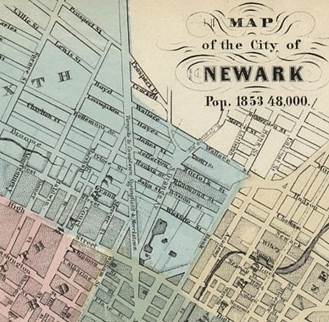
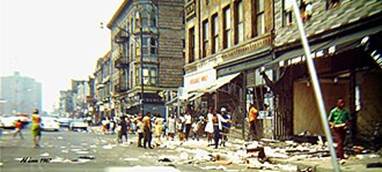


 njcssjournal