Chaim Goldberg: Sharing History

The smooth long edges and rough corners of a crisp white piece of paper are something most people do not value. Paper is a common good that is not given much thought when it is crinkled in a ball and thrown across the room. However, this is not how Chaim Goldberg viewed these simple white things — he knew they could be used to educate the world. Throughout his early artistic career, as early as four years old, he did whatever it took to obtain his medium: plain white paper. While sharing his story in a 1995 interview, Goldberg beamed with pride, knowing he had done all he could to further his career from such a young age. Goldberg was born in 1917 in Kazimierz Dolny, a small, predominantly Jewish town in Poland commonly referred to as a shtetl. In the shtetl, Goldberg spent time during his youth working small jobs in order to obtain an income to buy paper.[1]The paper purchased for sketching evolved to watercolor paper, canvases for oil painting, and materials for sculpture.

Early on in Goldberg’s career he met Saul Silberstein, a wealthy man with a great interest in the arts.[2]According to Goldberg, Silberstein left an everlasting mark on his artistic career and life.[3]Silberstein was impressed by Goldberg’s artistic ability the first time he visited Goldberg’s home, which led him to spend both time and money on elevating Goldberg’s talents.[4]He invited people from a variety of schools to view Goldberg’s art. This helped to catapult Goldberg’s career as he was able to bring his paintings to Warsaw, Poland. While visiting Warsaw he met with contacts of Silberstein who were predominantly doctors and lawyers.[5]They were impressed with Goldberg’s artistic ability, and generously paid for his tuition to art school for five years.[6]An important step in each artist’s career is finding their niche. In order to find his own niche, Goldberg spent his early life creating art through a variety of mediums and subjects. He learned that he needed to refine his subject area and have a common thread throughout his art.[7]While attending art school in Paris, Goldberg met Marc Chagall. It was his relationship with Chagall that solidified Goldberg’s artistic subject area. Chagall felt that there was a need for art that shared the connection of Jewish life, shtetls, and tradition. Goldberg’s art showed Chagall that he was the perfect artist to do so.[8]Chagall showed his support of Goldberg’s art by purchasing his full art portfolio which depicted these images; this collection of art was “the only samples of Goldberg’s early work to survive World War II.”9 The confidence and motivation that Chagall gave Goldberg to create art about Jewish life was a pivotal point in Goldberg’s career.

Goldberg went on to expand his portfolio by sharing the horrors of the Holocaust through his art. Goldberg is one of many artists whose art shares the lives of Jewish people leading up to and during the Holocaust. These artists, poets, and writers shared their art in order to provide an insight into their experience, with the ultimate goal of preventing such an event from occurring again. Scholars have examined many artists’ work that is related to the time directly before and during the Holocaust. These scholars have found that this area of art shows both history and tradition. Goldberg’s art successfully preserves history by depicting the traditions and history of the events of the Holocaust, Jewish Polish shtetls, and the Orthodox Ashkenazi Jews living within them. Goldberg’s art gives a representation of Jewish life before the Holocaust and gives a fuller picture of Jewish life that goes beyond trauma. By examining Goldberg’s art, people can begin to understand the lives of those impacted by the Holocaust.

Goldberg, as well as many other famous artists, was able to use his own accounts and the information he gathered from people to create Holocaust art that shared his experiences with the world. This provided a visual for those who did not experience it firsthand or did not have the artistic talents to express their experiences. The Nazi’s plan and goal for the Holocaust was to “complete [and enforce a] plan for the extermination of the European Jewry.”[9]Hitler and the Nazi Party believed that “Jews’ dangerous qualities were rooted in biology… [and] the inevitable outgrowth of a biological uniqueness that made them less human.”[10]The Nazis, led by Hitler, were instructed to accomplish the goal of exterminating the Jews, and others that they did not classify as part of the superior Aryan race, by facilitating mass murder in concentration camps. Holocaust artists have shared the experience of many Jewish people and others who the Nazis were trying to exterminate.12 It was important for these experiences to be shared via art so that they would be remembered forever.

The History of the Holocaust has been preserved in many ways including poetry, writing, sculptures, and paintings. Art historians have found that through Holocaust art, one can learn about, “the experiences of the exiles… [and] we can learn that there are other ways of feeling, other ways of understanding history, and other ways of using the creative ability for expressive purpose.”13 Art provides insight and a visual snapshot of someone’s life experiences. The Holocaust has been the subject area of many artists, who like writers and poets, use their art to share their life experiences. Holocaust art has an interesting dynamic – some of the pieces aim to use G-d and religion to uplift the horrific events depicted in the art, while others share the events more literally and show the tragedy of the Holocaust.

Art historians have accredited Tibor Jankay with being an influential Holocaust painter; he created an art collection that depicts the atrocities of the time period. Jankay was well-known for relishing in the positives. For this reason, Jankay’s Holocaust art is renowned for its ability to depict the horrors of what occurred during the Holocaust, while also sharing the beauty that surrounded these horrors.[11]Jankay’s Holocaust art was centered around his experiences: his

Cattle Car (figure 1) pencil sketch is an account of the time he spent in a cattle car on the way to Auschwitz.[12]The goal of this piece is to give the viewer an up-close perspective of the uncomfortable and crowded cattle car. The viewer’s understanding of what happened is exacerbated by the faces of horror of those in the cattle car.[13]Jankay’s art uses symbolism for expression.[14]Scholars have found that the symbols that Jankay used throughout his Holocaust art emphasize the connection between Jewish people and G-d. One of the symbols that represent this connection is, “the angel hovering above the ghetto representing nurturing protection.”[15]Jankay’s symbolism of G-d shows the emotions he felt during the Holocaust. However, he is not the only one who had these emotions throughout the Holocaust, which is why his work resonates with many Holocaust survivors. His work serves as a visual representation that survivors can relate to.

The preservation of history and tradition has been done in different ways; similar to art, writing allows the writer to share their experiences through their work. Elie Wiesel is well known for sharing his experiences from the Holocaust in writing. In fact, he is described as being “perhaps the world’s best-known witness to the atrocities of the Holocaust.”[16]Wiesel’s writing is known for depicting and sharing his personal experience in two concentration camps: Auschwitz and Buchenwald. He wrote the well-known Holocaust testimony, La Nuit, which depicts the experience that he and his father had in Auschwitz. Additionally, “Wiesel went on to achieve high visibility as a writer and human rights campaigner, winning the Nobel Peace Prize in 1986.”[17]Wiesel is one of the many writers whose focus on the Holocaust has allowed others to form an understanding of the events, as their work depicts the true tragedy and horrific experiences that millions of people went through. There are also many other written formats that people have used to share their experiences in the Holocaust including poetry and diaries. By sharing their accounts in written format, they are preserved and allow for people to continue to learn and understand what occurred during the Holocaust many years later.[18]No matter how the experiences of those in the Holocaust have been preserved, it is important that it has been documented for future generations to learn from.

Holocaust artists bridge a gap between direct experiences and compiling accounts of other victims. Artists such as Josef Harmen used his “paintings to constitute [his] memory and grieve for the loss of [his] family.”[19]This allowed for the mourning and honoring of loved ones, and for their lives to be shared with the world; therefore these paintings help to educate those who did not experience the Holocaust first-hand. Additionally, this form of art shares the Ashkenazi Jewish culture, which defines many Holocaust survivors and memorializes those who were persecuted, tortured, and murdered at the hands of the Nazi Party.[20]The creation of Holocaust art helps people to understand the tragic events of the Holocaust. Harmen used his art to express his experiences as a refugee, allowing others to understand them. Art that shares the “century marked by war, genocide, and dehumanization” provides the world with personal accounts of the tragedies that will last forever.[21]A unique characteristic of Holocaust art is its ability to depict the disruption and torture of an entire group of people.[22]Furthermore, Holocaust artists and their preservation of history “cannot be separated from [the past and their] identification with family, community, tradition and ritual.”[23]There is a strong overlap between Holocaust art and the art that represents the lives and culture of Jewish people leading up to the Holocaust.

Goldberg’s art shows the contrast between the simplicity of life while living in a shtetl and the tragedy of the Holocaust. Goldberg created a collection of Holocaust art that represents the events that occurred and the torture that the Jewish people experienced. Additionally, it represents the hope that people carried with them throughout the Holocaust with G-d’s guidance. Goldberg’s Holocaust collection started chronologically with people who were forced out of their shtetl homes. In his collection, there were pieces of art that represented the emotions of leaving loved ones.[24]Goldberg’s wood sculpture, Farewell (figure 2), depicts a family hugging goodbye at the start of the Holocaust. It embodies the unknown that people faced throughout the Holocaust, specifically when leaving their loved ones; this is shown through the tight embrace of the three figures.[25]Additionally, as many of Goldberg’s pieces incorporate Jewish traditions, the men in the sculpture are wearing yarmulkes, which are head coverings that Orthodox Jewish men wear as a reminder of their connection to G-d.[26]The Farewell sculpture helps to capture the fear that the Jewish people faced as they were forced from their homes; this helps to preserve these emotions for future generations to learn from.

To the Unknown (figure 3) is another piece of Goldberg’s Holocaust collection that represents the start of the Holocaust. This piece depicts people fleeing their homes to an unknown location to escape Nazi invaded Poland.[27]This painting shows just some of the thousands of people who were forced to leave their shtetls. It is notable that in the hurried rush of people fleeing, they were forced to throw some of their belongings into wagons, as shown in the painting. This piece represents the experience of Goldberg’s in-laws in this time period — they brought belongings with them as they fled Warsaw which they used to bribe the border patrol in order to flee Nazi invaded Poland.[28]This painting allows viewers to have an understanding of the beginning of the Holocaust, the effort it took to flee, as well as the disruption of lives, and the uncertainty that followed. Goldberg’s art continued to depict the experiences of Orthodox Ashkenazi Jews as they were forced to leave their homes.

During the Holocaust, the Nazis forced Jewish people from Poland, Russia, and Germany into ghettos, which were created to contain these people in a specific area. Goldberg’s painting, View in the Warsaw Ghetto 1939 (figure 4), shows what it was like on the streets of these ghettos by depicting children, men, and women. [29] The ghetto was a segregated portion of the city, separated by brick walls and surrounded by Nazi and Polish police.33 Through his art, Goldberg was able to depict the lives of the over 400,000 people who were imprisoned in this ghetto, including Goldberg and his family.[30]He created art that depicted the Warsaw Ghetto from his memory, decades after his time there. Goldberg was able to preserve their experiences and express the history that would stem from the Holocaust through View in the Warsaw Ghetto 1939. By creating imagery that shares what the Warsaw Ghetto was like, Goldberg was able to provide the world with a visual representation of this place and was able to give people a greater understanding of the Holocaust.

Goldberg created paintings that specifically focused on the Nazi’s actions prior to the extermination of people in concentration camps. Under the Gun (figure 5) is a sketch that shows a long, dense line of people being led into a building that is understood to be a gas chamber.[31]The reason this painting was titled Under the Gun was because Goldberg illustrated a Nazi soldier standing tall and holding a gun, which mimics the power they held over those in concentration camps.[32]Goldberg’s painting, Gas Chamber (figure 6) shows the horrors that people experienced in the deadly gas chambers.[33]Goldberg drew the people crouched down and weeping, which showed the horrors that they faced leading up to their imminent death.[34]Some people were shown pleading for their lives while being held at gunpoint, which represented their desperation. Although Goldberg was never in a concentration camp himself, he painted them based on what he had heard from others.[35]Goldberg painted Gas Chambers in 1942 while he was a refugee in Siberia. Specifically, as “the news of the mass exterminations began to trickle in by way of radio and newspaper as early as 1941… the artist, shaken to his core by the news, plunged into making a visual of the horrific news he had heard.”[36] Goldberg created his work to express the experience of Jews during the Holocaust, whether someone else’s or his own. In the case of Gas Chambers, he shared the experiences of those who no longer could.

Some of Goldberg’s most iconic pieces that represent the Holocaust are sculptures that show Jewish people escaping the Nazi control and concentration camps. Triumph I (figure 7), part of a collection of Holocaust sculptures, depicts the freedom from the Nazi’s control through the guidance of G-d and the appreciation that Jewish people had for G-d throughout the Holocaust.[37]Triumph I shows multiple figures emerging from the barbed wire of the concentration camps and climbing up towards G-d. Here, G-d is represented here with a Magen David, Star of David, a symbol that is used to represent Jewish identity and symbolize G-d’s protection of the Jews. This sculpture represents the liberation of the Jewish people from Nazi control, an important turning point in this time period. Goldberg’s Holocaust art is a mix of both literal examples of what occurred in the Holocaust, as well as symbolism that provided hope.

Goldberg served in the Polish army during the Holocaust; during this time he was captured by the Nazi Party and held as a prisoner of war. It was there he decided to continue creating art that shared people’s lives before the war. However, directly after the Holocaust, Goldberg spent his time creating art that depicted his experiences and that of others. After he finished, he ultimately returned to his main artistic passion of creating art to share the lives of those who lived in Polish shtetls. This led Goldberg to the major focus of his career, the shtetl he grew up in, Kazimierz Dolny.

The original subject and setting of Goldberg’s artwork became his lifelong passion. He shared his home, Kazimierz Dolny, and childhood with the world through his art. Much of Goldberg’s inspiration for his art before the Holocaust came from those who visited Kazimierz Dolny, many of which stayed in his family’s clapboard house.[38]These people became his “story” and the base for his “characters.” As he grew up, he continued to create “characters” centered around those who were an integral part of life in Kazimierz Dolny.[39]Unfortunately, virtually all of his work from before the war was destroyed. This includes art from his collection, the art he sold, and the work he was commissioned for. Before the Holocaust, Goldberg traveled to Warsaw to create commissioned art for well-known and wealthy residents. Fortunately, “approximately fifty drawings and watercolors survived due to the fact that they were purchased by Chagall… in

1933.”[40]While this art was saved from being destroyed, it is not readily available to the public. However, Goldberg made it his life’s passion to continue making art that shared his beloved hometown with the world. He successfully shared that there was more to know about Eastern European Jews from the early to mid-nineteenth century than just the Holocaust.

Goldberg was not the only artist to represent shtetl life in their art. Yad Vashem, the World Holocaust Remembrance Museum in Israel, curated a collection of art from Polish shtetls dating back to pre-Holocaust Europe. The curators of this collection explain the importance of understanding what it was like to live in a Jewish shtetl. Jewish culture and tradition are strongly tied to shtetls. This is important for understanding Jewish art as many influential Jewish artists were born and grew up in shtetls, and used their art to share their experiences.[41]The curators at Yad Vashem focused their collection on lesser-known artists which highlights the wide variety of people that centered their work around shtetls.46 The work shared in the collection is focused on many different aspects of shtetl life including “the market, professions, women of the shtetl, and Jewish learning… through the eyes of these Jewish artists.”[42]These aspects of shtetl life are key components in Goldberg’s art, which allow him to share Kazimierz Dolny with the world in great detail. This helps to give viewers a complete understanding of what it would have been like to live there. His art preserved a visual history of Kazimierz Dolny, which allowed for the history of those who lived there to be commemorated.

When Goldberg created shtetl art, he included a variety of characters that depict the people of the shtetl. The goal of his art was to share “Kazimierz Dolny shtetl and gather all his characters to live eternally through his art.”[43]Goldberg highlights the variety of professions within a shtetl through his art. Goldberg was surrounded by people with different professions from a young age and based some of his art on his parents’ professions – his father was a cobbler, and his mother was a seamstress. Goldberg titles a group of his works Parents II (figure 8), which was made up of a variety of pieces including etchings, linocuts, engravings, and oil paintings. In these works of art, the viewer sees Goldberg’s parents working.[44]The watercolor painting My Parents (figure 9) is similar to the collection of pieces titled Parents II as it illustrates each of Goldberg’s parents intently focusing on their work, his father repairing a pair of shoes and his mother sewing a garment.[45]This painting was set in Goldberg’s childhood home; in the background is a piece of art hanging on the wall which is actually another one of Goldberg’s pieces. Oftentimes, Goldberg would add small hidden elements to his work, adding himself or his own paintings within different pieces. By showing his parents’ professions, he was able to share his childhood experiences with the world and preserve the experiences of the people in Kazimierz Donly forever. Typically only one person in each shtetl was responsible for holding a specific job, which is commonly seen in Goldberg’s work. Goldberg’s sketch Blacksmith (figure 10) shows the blacksmith at work in the shtetl and specifically highlights the difficulty of the job and its strain on his life through his hunched position.[46]In the background, the shtetl of Kazimierz Dolny is in view. The blacksmith is an integral component of the shtetl, which is why Goldberg decided to include him in his shtetl art. The blacksmith was one of the many people Goldberg took inspiration from as he successfully illuminated the experiences of those living within the shtetl.

Goldberg created the painting, Teacher (figure 11), to represent his childhood education. The Teacher depicts a Rabbi and a student studying from a prayer book.[47]This is reminiscent of Goldberg’s childhood as Goldberg, like most children in the shtetl, attended a school that was taught by a Rabbi. Further, it was Goldberg’s Rabbi that later hired him to create mezuzah covers, small artistic cases which hold a parchment scroll containing blessings for a house. This Rabbi had enough confidence in Goldberg’s artistic ability to hire him, which afforded Goldberg the opportunity to buy art supplies.[48]Because Goldberg was able to buy art supplies, he was able to hone his artistic abilities and continue his passion for preserving Jewish shtetl life. The goal of Goldberg’s art was to immerse the viewer in Kazimierz Dolny so they could understand what it was like to be an Orthodox Jew living in a shtetl during this time period.[49]

Goldberg was known for depicting several of the same “characters” and symbols within his art including the shtetl’s water carrier. The Water Carrier (figure 12) shows a man balancing a stick with two pails of water on his shoulders while moving through the shtetl.[50]He is depicted like this in many of Goldberg’s works. The background of the Water Carrier mimics paintings that focus specifically on the houses in Kazimierz Dolny. Goldberg’s paintings built off one another to create a full representation of his shtetl from the early twentieth century. This is also seen with Shtetl Houses (figure 13), an engraving that shows houses built into a hill.[51]These are the same hills seen in Water Carrier.[52]The water carrier is also a central character in The Shtetl (figure 14), which is showcased in the permanent collection of the Metropolitan Museum of Art.[53]This piece depicts the same hill of houses that are shown in Goldberg’s other works. This creates an image of what Kazimierz Dolny looked like from the outside.[54]The goal of Goldberg’s art was to share “Kazimierz Dolny shtetl and gather all his characters to live eternally through his art.”[55]The Shtetl depicts many figures from the town including his parents, the water carrier, and himself, shown painting on an easel. This painting preserves people in Kazimierz Dolny who observed the traditions of Orthodox Ashkenazi Jews. The Shtetl serves as a culmination of all the events and people within Kazimierz Dolny. Through his art, Goldberg created a visual representation of Kazimierz Dolny to be preserved for the world to see.

The population of Kazimierz Dolny was largely comprised of Jewish people, thus they are the primary subject of Goldberg’s art. Judaism is filled with many customs and traditions that were closely followed by the Jewish community in Kazimierz Dolny. These traditions are the connecting thread within all of Goldberg’s art; whether it was the depiction of traditional head coverings for men, events, holidays, or a style of dance. Goldberg has two parallel art pieces, Seven Hasidic Dancers (figure 15) and Hora (figure 16). In these paintings, the viewer can see the Jewish Orthodox tradition of men and women dancing separately. The reason for this tradition is because it “helps to preserve and safeguard a limited and therefore special connection between the genders.”[56]Seven Hasidic Dancers is an ink painting of seven men dancing in a circle connected to one another.[57]The style of dance these men are performing is the Hora. The Hora is a traditional Jewish celebratory dance that is danced on special occasions. Goldberg created a related painting called Hora which shows seven women participating in the same celebratory dance.[58]Viewers of these two paintings are able to look back in time and “witness” the religious practices of the Jewish community in Kazimierz Dolny. Goldberg’s art showed the strong values and traditions of the Jewish people he grew up around. As an artist, Goldberg wanted people who viewed his art to feel as though they were visiting and experiencing the shtetl.

Weddings are a common subject of Goldberg’s art and Jewish practices. Throughout his pieces, there are a variety of religious Jewish symbols that are a common part of weddings. Chuppahs, or canopies, are an integral part of religious Jewish wedding ceremonies. The couple stands under the Chuppah with the Rabbi who is officiating the wedding. It is traditional for the Chuppah to be made out of a man’s prayer shawl, as seen in each of Goldberg’s paintings that feature a wedding. This is shown in The Wedding (figure 17).[59]Goldberg wanted to properly depict Jewish weddings in his art, so he made sure to include many of the Jewish wedding traditions. Many of these paintings have additional aspects that are important to the Jewish religion. Goldberg’s painting, The Wedding (figure 18) from 1962 shows a couple after the ceremony with many members of the town rejoicing and celebrating, which is typical of a Jewish wedding. One of the central aspects of the painting is two boys holding a large loaf of challah, a traditional bread eaten by Jewish people in times of celebration.[60]The cutting of challah is an important component of Jewish weddings; an important person to the couple rips the challah while reciting a blessing. In his art, Goldberg provides his viewers with an understanding of key traditions that occur throughout a Jewish wedding.

As a religious Jewish boy, Goldberg kept the laws of Shabbat and illustrated his experiences throughout his art. Shabbat is an important weekly practice of Jewish life where the Jewish people honor the seventh day of creation with a day of rest. Lighting two Shabbat candles at the beginning of the day of rest is an important ritual performed by Jewish women, as it is used as a way to bring the Sabbath into a home. Goldberg has represented the lighting of candles in many different paintings. His painting, Shabbat Candles (figure 19), depicts a woman setting up the Shabbat candles for her family to light at sundown.[61]In order to properly light Shabbat candles, the woman says a blessing and sweeps her hands over the light, and then brings her hands to her eyes.[62]In the painting Before Dawn (figure 20), the main figure is a woman lighting Shabbat candles. Throughout the background of the painting are other houses with Shabbat candles glowing in the window; this depicts the important tradition of lighting Shabbat candles in each home.[63]The woman is shown sweeping her hands over the light; this helps to teach viewers about the Shabbat traditions of Orthodox Jews. Additionally, it is traditional for Orthodox Jews to attend religious services at a temple on Shabbat. While both men and women attended, it was more common for only the men to go. This is depicted in the painting Before Dawn where the men of the shtetl are seen walking to the temple along a cobblestone path of Kazimierz Dolny.[64]Goldberg’s Shabbat-related paintings allow the viewer to see the traditions related to the weekly day of rest, including lighting the two candles and walking to the temple. This helps to educate the viewers on the importance of traditions within the Jewish religion.

Jewish holidays and the importance of tradition

Holidays are a large part of the Jewish religion and thus Goldberg has made them an important aspect of his art. Many of his pieces illustrate the important traditions of each holiday. In order to understand the depth that he went through in sharing his religion with the world, it is important to examine Goldberg’s holiday art chronologically according to the Jewish calendar. Rosh Hashanah is the New Year in the Jewish religion and is celebrated with great reverence and joy. Goldberg has shared many important traditions of Rosh Hashanah through his art. During Rosh Hashanah, there is an important tradition called Tashlich, which is depicted in his painting Tashlich (figure 21). Tashlich, a tradition where people go to the water to empty their pockets, is performed on either the first or second day of Rosh Hashanah.[65]This practice is symbolic of the discarding of one’s sins from their life. By depicting this aspect of Rosh Hashanah, Goldberg is capturing the traditions of Orthodox Jews during the Jewish New Year.

Another important aspect of Rosh Hashanah that Goldberg depicts in his artwork is the blowing of the shofar, a ram’s horn.[66]In order to show the proper use of the shofar, Goldberg created The Shofar (figure 22) which occurs in a temple, a house of worship.[67]The shofar is blown by the Rabbi during the prayer services on Rosh Hashanah to serve as a wake-up call and a fresh start to the new year. Only Orthodox men are illustrated, as men and women were not allowed to daven, or pray, together.[68]This is because when davening there should be no distractions between a person and their connection to G-d. The Shofar takes place in the lower level of the sanctuary where the men prayed. The blowing of the Shofar shows how the traditions of Orthodox Jews have been depicted throughout Goldberg’s art.

Yom Kippur, a day of repentance, is arguably the most important Jewish holiday, thus it is an important aspect of Goldberg’s art. A specific tradition of Yom Kippur is Kaparot which takes place the night before and is centered around transferring one’s sins to a rooster.74 Rooster Blessing (figure 23), depicts “the village inhabitants standing in line at the Shochet, or kosher butcher, with their holiday poultry.”75 Each village member in the painting is carrying their own chicken to participate in this tradition.76 Yom Kippur (figure 24) shares the next step of Kaparot; a person swings a rooster over their head while reciting a prayer that symbolically transfers their sins to the rooster. This painting shows a religious man holding a rooster by its legs while moving it around his head as he takes part in the Orthodox Jewish tradition of Kaparot. The rooster looks angry and thus has symbolically taken on the sins of the man.77 This is the traditional start of Yom Kippur and the removal and penance of one’s sins, which is an important aspect of observing Yom Kippur as an Orthodox Jew. Goldberg felt that it was important to share the traditions of Yom Kippur in his art as it is the holiest day in the Jewish calendar.

In order to preserve the traditions of the holiday of Sukkot, Goldberg created multiple paintings of this holiday. Sukkot occurs five days after Yom Kippur and is symbolic of the forty-year period in which the Jews escaped slavery in Egypt and spent time in the desert on the way to Israel.[69]An important part of this holiday is the shaking of the lulav, a collection of four different leaves, and the etrog, a citrus fruit.[70]They are held together each day of Sukkot and shaken while reciting a prayer. Goldberg represents the important tradition of shaking these two objects in the painting, Sukkot (figure 25). In the painting, a religious man is holding the two items while looking up to G-d and praying.[71]A similar image is also included in Succoth (figure 26), where behind the religious man shaking the lulav and etrog, are the people of the town davening in the temple. Additionally, there are prayer books that are used in order to ensure that prayers are recited properly.[72]These paintings together allow the viewer to understand important aspects of Sukkot and build a broader understanding of the Jewish religion.

Goldberg valued sharing his religion in his art. In order to do this, he focused strongly on holidays, including Simchat Torah. Simchat Torah is celebrated on the last day of Sukkot. This holiday honors the Jewish people’s love of the Torah, a scroll containing the first five books of the Hebrew scriptures.[73]The festivities for this holiday include men dancing while holding Torahs. For this reason, Goldberg’s paintings depict Simchat Torah with traditional festive dancing. Simchat Torah (figure 27) is a pen and ink piece of art that shows an open Torah being held above a man’s head while he is dancing around.[74]It is customary in Orthodox Jewish tradition that only men hold and read from the Torah and thus, that is how Goldberg depicted the celebration in this painting. In the background of the piece, other Torahs are being held throughout the crowd which is another tradition of the holiday.84 Goldberg’s 1962 oil on canvas painting, Simchat Torah (figure 28), shows the community clapping in celebration.[75]Because of the importance of this holiday, women are present in the temple; however, in order to abide by Orthodox Jewish tradition, the men and women cannot be together in the temple and thus the women are shown in the second-story windows. It also shows the ark, where the Torahs are housed, in the front of the synagogue. During the festivities of Simchat Torah, the Torahs are all taken out of the ark and carried around the temple in seven circles called hakafot.86 Goldberg felt that it was important to show all aspects of the Jewish religion and to always value joyous times and occasions in his art, Simchat Torah being one of them.87

Goldberg shares the family aspect of the holiday of Chanukah in several of his paintings. Chanukah is an eight-day holiday that honors the Jewish people’s success in fighting the Maccabees. Unlike many other holidays, Chanukah is not centered around community festivities, but rather celebrations in the home. A menorah is lit on each of the eight nights of Chanukah in each family’s home. Goldberg shares this tradition in Channuka (figure 29), a wash and ink painting, by showing a family gathered around a credenza with a menorah placed on top. Each day of Chanukah an additional candle is lit.[76]The menorah is an important part of Chanukah because during the time of the Second Temple of Jerusalem, the menorah was lit each night, however, the temple was then destroyed.[77]There was one single jar of oil that remained and it miraculously lasted eight days, which is now commemorated with the eight-day holiday of Chanukah.90 Goldberg honored the miracle of Chanukah with the creation of another Chanukah painting in 1971 also titled Channuka (figure 30). This image once again represents a family coming together to honor the holiday with the lighting of the menorah and the reciting of prayers.[78]Above the family lighting the menorah is a variety of colors and shapes; within this, a menorah and a jug of oil are seen once again, which highlights its importance to the holiday of Chanukah.[79]Celebration with family is an important part of Judaism and is at the core of the Jewish religion; this is the reason that Goldberg centered his paintings around the traditions of Chanukah.

         Goldberg focused on Purim in his art, which is a holiday that celebrates the Jewish people’s freedom from Persia. An important part of Purim is the reading of the Megillah, the Book of Esther, which contains the story of Purim. Haman was the man who led the torture of the Jewish people while in Persia, so it is tradition to make noise when he is mentioned during the reading of the Megillah.[80]People will make noise with their feet, hands, and most commonly, with a gragger, or noise maker. Graggers are a key component of Goldberg’s Purim art. Purim Parade (figure 31) shows the joyous celebration of Purim. A man is riding on a horse with a large gragger, sharing in the celebration of the freedom of the Jewish people.[81]Additionally, throughout the rest of the painting, there are people holding graggers.[82]In the distance of the piece, one can see Goldberg’s “parents stand[ing] on the left, as his youngest brother Israel waves the gragger.”[83]Another of Goldberg’s pieces portraying Purim, Chaim’s Large Gregor (figure 32), depicts a large gragger in the center of the shtetl. In this watercolor, Goldberg and another man are at the center of the painting using the larger gragger.[84]This painting continues Goldberg’s common thread of placing his family and or himself in his art. There are also members of the town standing in the background enjoying the celebration of Purim, as is customary in Jewish tradition.[85]Goldberg’s Purim art shares the Jewish tradition of making noise to drown out Haman’s name, as well as the celebratory aspect of the holiday. Furthermore, the traditions depicted in these pieces continue Goldberg’s goal of sharing Orthodox Judaism with the world.[86]

The last chronological Jewish holiday that Goldberg focused on was Passover, an eight-day holiday. One of the most well-known aspects of the holiday is that chametz, or leavened bread, is not eaten and rather matzah, unleavened bread, is consumed. Passover requires very specific preparation, and Goldberg centered some of his Passover art around this.[87]In Burning the Chumetz (figure 33) Goldberg depicts “the boys [and the] shtetl’s Rabbi burning small bundles of Chametz ” which is not kosher for the Passover holiday.[88]An important aspect of Passover is the removal of all Chametz from the homes of Orthodox Jews. Another important step in the preparation for Passover is the making of matzah, which is shown in Matzah Making (figure 34). This oil painting represents the women of Kazimierz Dolny helping the baker of the shtetl make matzah.[89]Further, Goldberg shares his childhood experience as he is in the forefront of the painting helping the baker create the dough used to make matzah.103 These two paintings represent the work that it took to prepare for Passover and the important traditions of burning the chametz and making the matzah. These are important aspects of Passover for Orthodox Jews that Goldberg brought to life in his paintings.

In addition to the preparation for Passover, Goldberg’s art also shared the traditional practice of holding a seder, the ceremony for Passover, in one’s home. This is seen in both Family Seder (figure 35) and After the Seder (figure 36). Family Seder shows a family gathered around a table sharing a meal while holding glasses of wine.[90]Wine is a customary aspect of the Passover Seder because, throughout the steps of the service, each person is prompted to drink four glasses of wine. Passover is another holiday that is centered around gatherings in family homes, which explains the setting of both of these paintings. After the Seder shares the joyous celebration of the family at the conclusion of the holiday meal; specifically, it shares Goldberg’s sisters dancing.[91]Goldberg shared that his “sisters would simply get up and dance in their house-nighties, just like” in After the Seder.[92]Goldberg believed it was important to share the happiness of celebrating holidays in a shtetl.[93]In his holiday art, Goldberg captures Orthodox Jewish traditions for the viewer to learn from. Goldberg’s art resonates with Jews who lived in shtetls because of how he depicts the traditions of each Jewish holiday.

Through Goldberg’s art, the viewer is able to gain an understanding of the many important traditions of Jewish holidays. Throughout his career, Goldberg continued to create art centered around holidays as he felt that it was an essential aspect to understanding the lives of those who lived in a shtetl.[94]The history of those who lived in shtetls, specifically during the early twentieth century, is not to be lost in the trauma that was experienced throughout the Holocaust. This is not to take away from the experiences of those in the Holocaust, but rather to highlight the lives and religious practices of Jews prior to the tragedy. This was at the forefront of Goldberg’s artistic works as he created his shtetl art to share his beloved community of Kazimierz Dolny with the world.[95]Thus, he was able to preserve his early life and childhood in the art that outlived him.

Goldberg’s art was successful in the preservation of early twentieth-century Jewish shtetls and allows viewers to understand what it was like to live in Kazimierz Dolny. Goldberg was able to preserve his own family history, the history of Kazimierz Dolny, and the history of Orthodox Ashkenazi Jews before and after the Holocaust. Goldberg’s ability to preserve the history of his shtetl is in line with other shtetl artists. It is through the collections of these artists that modern historians are able to build a picture of what life was like during pre-Holocaust Europe. Goldberg centered his art mainly around shtetl life which proved that there was more to the Jewish European experience than the Holocaust. As seen with other Holocaust artists and writers such as Tibor Jansky and Elie Wiesel, Goldberg’s art preserves the events, and thus the history, of the Holocaust and the time period in which they were alive. Goldberg’s art has lived on beyond his death and will continue to serve as a representation of those who lived in the shtetls of early twentieth-century Poland.

        Art cultivates a climate of creativity for all students to access when it becomes a part of general education classes. Art is a frequently unused tool within history secondary education classrooms, however, it should not be. By exploring art as a component of history classes, we can explore the often untold elements of history. This is true with Chaim Goldberg’s artwork. As an artist who frequently depicted Jewish shtetl life and the Holocaust, his art allows access to personal accounts and experiences of European Jewish people in the early to mid-twentieth century. Art allows for history to be told in another format; in the classroom, we are able to explore someone’s life. In this case, it is Goldberg’s life we are able to learn about through the exploration of his art. Like writers, art in many circumstances builds off of itself; this is true with Goldberg. When exploring his art collection, the viewer is able to see how he threads details through many paintings. This is seen with many of the repetitive fixtures and people in his shtetl artwork, which leads the viewer to understand that these people are not only important fixtures in Goldberg’s life, but in all shtetl life. An example of an important fixture in general shtetl life is the water carrier, who is depicted throughout many of Goldberg’s paintings. Furthermore, Goldberg’s parents, who were a cobbler and a seamstress, were depicted throughout many of his pieces. This is done to show that these jobs were important elements in Goldberg’s life, and also the lives of those raised in a shtetl. By exploring this idea in the classroom, we are able to cultivate an understanding of shtetl life in a way we could not do by just using readings.

By exploring art, we are able to view a snapshot of someone’s life and develop an understanding of what the different elements of people’s life actually look like. This is seen when exploring the traditional Jewish elements that Goldberg depicted in his art. He depicts Kaparot which is a traditional Jewish custom of transforming one’s sins to a chicken or rooster and killing said animal as part of the Jewish holiday of Yom Kippur. By viewing traditions like this we are able to pull back the curtain and help students to understand and explore these traditions more deeply. This allows students to develop a better understanding of others and helps to prevent an environment of misunderstanding and othering which can occur when exploring sacred traditions, especially those that are viewed negatively in today’s society.

Goldberg created his art to share his experiences and his life with the world. By incorporating art like Goldberg’s into the classroom, we are not only helping to fulfill the dreams of artists like Goldberg, but we are also making history more accessible and understandable.

Often as educators, especially history educators, we try to figure out how to share history with our students in a way that allows them to picture and develop an understanding of day-to-day life. Art allows for this and brings history to our modern-day students. It provides students with a window into the past in order to guide and build their understanding. Not all artwork is a direct image that helps us picture a historical event; however, it is often the images that do not depict a direct explanation of what the world looked like that helps to describe the emotions of the people during that time. This is seen with some of Goldberg’s Holocaust artwork which shows people fighting to escape and shows the Jewish religion as something to fight for and work towards. Without art in our history classrooms, we are simply telling students about the past, rather than providing them with images to help them imagine what the world actually looked like. Once art is presented to students they can then further analyze and understand history. If it were not for artists like Goldberg, as well as many others would have a hard time understanding the history of Jewish Europeans living in shtetls, traditional Jewish rituals, and the atrocities of the Holocaust.

David, Colin. “Elie Wiesel: Witnessing, Telling and Knowing.” Traces of War: Interpreting Ethics and Trauma in Twentieth-Century French Writing. Liverpool University Press, 2018. 193–217.

Gerlach, Christian. “The Wannsee Conference, the Fate of German Jews, and Hitler’s Decision in Principle to Exterminate All European Jews.” The Journal of Modern History 70, no. 4 (1998): 759–812.

Goldberg, Chaim. After the Seder. 1990. Watercolor and Ink. Chaim Goldberg I Remember the Shtetl.

Goldberg, Chaim. Before Dawn. 1993. Oil on Canvas. Chaim Goldberg I Remember the Shtetl.

Goldberg, Chaim. Blacksmith. Sketch. CHG-Rosco.

Goldberg, Chaim. Burning the Chumetz. 1969. Oil on Linen. Full Circle: A Journey of 12 Creative Periods & Themes.

Goldberg, Chaim. Chaim’s Large Gregor. 1970. Watercolor and Ink. Chaim Goldberg I Remember the Shtetl.

Goldberg, Chaim. Channuka. 1954. Wash and Ink. Chaim Goldberg I Remember the Shtetl.

Goldberg, Chaim. Channuka. 1971. Watercolor and Ink. Chaim Goldberg I Remember the Shtetl.

Goldberg, Chaim. Family Seder. 1971. Watercolor and ink. Chaim Goldberg I Remember the Shtetl.

Goldberg, Chaim. Farwell. Mesquite Wood. CHG-Rosco.

Goldberg, Chaim. Gas Chambers. Bronze. CHG-Rosco.

Goldberg, Chaim. Hora. Sketch. CHG-Rosco.

Goldberg, Chaim. Matzah Making. 1990. Oil on Linen. Full Circle: A Journey of 12 Creative Periods & Themes.

Goldberg, Chaim. My Parents. 1970. Watercolor and Ink. Chaim Goldberg I Remember the

Shtetl.

Goldberg, Chaim. Parents II. Ink. UHG-Rosco.

Goldberg, Chaim. Purim Parade. 1993. Oil on Linen. Full Circle: A Journey of 12 Creative Periods & Themes.

Goldberg, Chaim. Rooster Blessings. 1967. Oil on Linen. Full Circle: A Journey of 12 Creative Periods & Themes.

Goldberg, Chaim. Seven Hasidic Dancers. Sketch. CHG-Rosco.

Goldberg, Chaim. Shabbat Candles. 1969. Watercolor and Ink. Chaim Goldberg I Remember the Shtetl.

Goldberg, Chaim. The Shofar. 1971. Watercolor and Ink. Chaim Goldberg I Remember the Shtetl.

Goldberg, Chaim. Shtetl. Line Engraving. CHG-Rosco.

Goldberg, Chaim. Shtetl Houses. Sketch. CHG-Rosco.

Goldberg, Chaim. Simchat Torah. 1962. Oil on Canvas. Chaim Goldberg I Remember the Shtetl.

Goldberg, Chaim. Simchat Torah. 1969. Pen and Ink. Chaim Goldberg I Remember the Shtetl.

Goldberg, Chaim. Succoth. 1971. Watercolor and Ink. Full Circle: A Journey of 12 Creative Periods & Themes.

Goldberg, Chaim. Sukkot. 1966. Watercolor and Ink. Chaim Goldberg I Remember the

Shtetl.

Goldberg, Chaim. Tashlich. 1998. Watercolor and Ink. Chaim Goldberg I Remember the Shtetl.

Goldberg, Chaim. Teacher. Watercolor. Artsy.

Goldberg, Chaim. To the Unknown. Wash and Ink. CHG-Rosco.

Goldberg, Chaim. Triumph 1. Sculpture. CHG-Rosco.

Goldberg, Chaim. Under the Gun. Ink. UHG-Rosco.

Goldberg, Chaim. USC Shoah Foundation Institute Testimony. By United States Holocaust Memorial Museum, May 16, 1995.

Goldberg, Chaim. View in the Warsaw Ghetto 1939. Pen and Ink. CGH-Rosco.

Goldberg, Chaim. The Water Carrier. Ink. UHG-Rosco.

Goldberg, Chaim. The Wedding. 1962. Oil on Canvas. Chaim Goldberg I Remember the Shtetl.

Goldberg, Chaim. The Wedding. 1997. Watercolor and Ink. Chaim Goldberg I Remember the

Shtetl.

Goldberg, Chaim. Yom Kipper. 1990. Oil on Linen. Full Circle: A Journey of 12 Creative Periods & Themes.

Goldberg, Shalom. Chaim Goldberg From the Old Shtetl of Kazimierz Dolny to the Complex Life in the Biggest City in the USA.” UHG-Rosco. (March 20, 2017). http://www.chg-rosco.com/chaim-goldbergs-biography/.

Goldberg, Shalom. Chaim Goldberg Full Circle: A Journey of 12 Creative Periods & Themes. Boca Raton: SHIR Art Publications, 1996.

Goldberg, Shalom. Chaim Goldberg I Remember the Shtetl. Kraków: Rosco Polska, 2016.

Jankay, Tibor. Cattle Car. Pencil. Tibor Jankay 1899-1994.

“The Kaparot Ceremony.” Chabad. Accessed April 29, 2022. https://www.chabad.org/library/article_cdo/aid/989585/jewish/Kaparot.htm.

“The Kippah (Yarmulke).” Chabad. Accessed April 27, 2022. https://www.chabad.org/library/article_cdo/aid/3913641/jewish/The-Kippah-Yarmulke.htm.

Lassner, Phyllis. “The Art of Lamentation: Josef Herman’s Humanist Expressionism.” Shofar: An Interdisciplinary Journal of Jewish Studies 37, no. 3 (Winter 2019): 171-202.

Lightstone, Mordechai. “11 Reasons We Blow the Shofar on Rosh Hashanah.” Accessed April 29, 2022. https://www.chabad.org/library/article_cdo/aid/2311995/jewish/11-Reasons-Why-We-Blo w-the-Shofar-on-Rosh-Hashanah.htm.

McMillian, Dan. How Could This Happen: Explaining the Holocaust. New York: Basic Books, 2014.

“Modern and Contemporary Art.” The Met. Accessed April 27, 2022. https://www.metmuseum.org/art/collection/search/480896.

Posner, Menachem. “What is Sukkot.” Chabad. Accessed April 29, 2022.

https://www.chabad.org/library/article_cdo/aid/4784/jewish/What-Is-Sukkot.htm.

“Representation of the Shtetl in Jewish Art: Between Reality and Fantasy.” Yad Vashem. Accessed April 27, 2022. https://www.yadvashem.org/articles/general/shtetl-in-jewish-art.html.

Schneerson, Menachem M. “Why Separate Men and Women in the Synagogue.” The Rebbe.

Accessed March 27, 1961. https://www.chabad.org/therebbe/letters/default_cdo/aid/1440261/jewish/Why-SeparateMen-and-Women-in-the-Synagogue.htm.

“Shemini Atzeret / Simchat Torah.” Chabad. Accessed April 29, 2022. https://www.chabad.org/library/article_cdo/aid/4689/jewish/Shemini-Atzeret-Simchat-To rah.htm.

Shurpin, Yehuda. “The Origins of the Gragger: Why We Boo Haman.” Chabad. Accessed April 27, 2022. https://www.chabad.org/holidays/purim/article_cdo/aid/4321929/jewish/The-Origins-of-t he-Gragger-Why-We-Boo-Haman.htm.   

Victor, Richard Allan. The Holocaust and the Covenant in Art: Chaim Goldberg, Tibor Jankay, and Mauricio Lasansky. Michigan: UMI Microform, 1998.

“Warsaw Ghetto.” The Weiner Holocaust Library. Accessed March 29, 2022.

https://www.theholocaustexplained.org/the-camps/the-warsaw-ghetto-a-case-study/.

Weisberg, Chana. “Why are Men and Women separated at Hasidic Weddings.” Chabad.

Accessed March 27, 2022.


[1] Chaim Goldberg, interview by, United States Holocaust Memorial Museum, USC Shoah Foundation Institute Testimony, May 16, 1995, 6:24.

[2] Goldberg, USC, 6:52.

[3] Goldberg, USC, 7:20.

[4] Richard Allan Victor, The Holocaust and the Covenant in Art: Chaim Goldberg, Tibor Jankay, and Mauricio Lasansky, (Michigan: UMI Microform, 1998), 7.

[5] Goldberg, USC, 7:45.

[6] Goldberg, USC, 8:50.

[7] Goldberg, USC, 30:22.

[8] Goldberg, USC, 1:22:40. 9 Victor., 17.

[9] Christian Gerlach, “The Wannsee Conference, the Fate of German Jews, and Hitler’s Decision in Principle to Exterminate All European Jews,” The Journal of Modern History 70, no. 4 (1998): 759.

[10] Dan McMillian, How Could This Happen: Explaining the Holocaust, (New York: Basic Books, 2014), 3. 12 Phyllis Lassner, “The Art of Lamentation: Josef Herman’s Humanist Expressionism,” Shofar: An Interdisciplinary Journal of Jewish Studies 37, no.3 (Winter 2019), 171-172. 13 Lassner., 172.

[11] Victor., 23.

[12] Tibor Jankay, Cattle Car, Pencil, Tibor Jankay 1899-1994.

[13] Victor., 24.

[14] Victor., 25.

[15] Victor., 24.

[16] Colin David, “Elie Wiesel: Witnessing, Telling and Knowing,” Traces of War: Interpreting Ethics and Trauma in Twentieth-Century French Writing, (Liverpool: University Press, 2018), 193.

[17] David., 194.

[18] Victor., 35.

[19] Lassner., 172.

[20] Lassner., 172.

[21] Lassner., 173.

[22] Lassner., 173.

[23] Lassner., 174.

[24] Chaim Goldberg, Farewell, mesquite wood, CHG-Rosco.

[25] Goldberg, Farewell.

[26] “The Kippah (Yarmulke).” Chabad, accessed April 27, 2022, https://www.chabad.org/library/article_cdo/aid/3913641/jewish/The-Kippah-Yarmulke.htm.

[27] Chaim Goldberg, To the Unknown, wash and ink, CHG-Rosco.

[28] Goldberg, USC, 140:25.

[29] Chaim Goldberg, View in the Warsaw Ghetto 1939, Pen and Ink. CGH-Rosco. 33 “Warsaw Ghetto,” The Weiner Holocaust Library, accessed March 29, 2022, https://www.theholocaustexplained.org/the-camps/the-warsaw-ghetto-a-case-study/.

  “Warsaw Ghetto.”

[30] “Warsaw Ghetto.”

[31] Chaim Goldberg, Under the Gun, ink, UHG-Rosco.

[32] Chaim Goldberg, Under the Gun.

[33] Chaim Goldberg, Gas Chambers, bronze, CHG-Rosco.

[34] Chaim Goldberg, Gas Chambers.

[35] Cynthia Moskowitz Brody, Bittersweet Legacy Creative Response to the Holocaust (Maryland: University Press of America, 2001), 58.

[36] Shalom Goldberg, “Chaim Goldberg From the Old Shtetl of Kazimierz Dolny to the Complex Life in the Biggest City in the USA,” UHG-Rosco, March 20, 2017, http://www.chg-rosco.com/chaim-goldbergs-biography/.

[37] Chaim Goldberg, Triumph 1, sculpture, CHG-Rosco.

[38] Shalom Goldberg, Chaim Goldberg Full Circle: A Journey of 12 Creative Periods & Themes, (Boca Raton: SHIR Art Publications, 1996), 7.

[39] Goldberg, USC, 2:04:50.

[40] Goldberg, Full Circle., 7.

[41] “Representation of the Shtetl in Jewish Art: Between Reality and Fantasy,” Yad Vashem, accessed April 27, 2022, https://www.yadvashem.org/articles/general/shtetl-in-jewish-art.html. 46 “Representation of the Shtetl in Jewish Art.”

[42] “Representation of the Shtetl in Jewish Art.”

[43] Goldberg, Goldberg From the Old Shtetl of Kazimierz Dolny, 3.

[44] Chaim Goldberg, Parents II, engraving, UHG-Rosco.

[45] Chaim, My Parents, 1970, watercolor and ink, Chaim Goldberg I Remember the Shtetl.

[46] Chaim Goldberg, Blacksmith, sketch, CHG-Rosco.

[47] Chaim Goldberg, Teacher, watercolor, Artsy.

[48] Goldberg, USC, 15:53.

[49] Goldberg, USC, 1:37:19.

[50] Chaim Goldberg, The Water Carrier, ink, UHG-Rosco.

[51] Chaim Goldberg, Shtetl Houses, sketch, CHG-Rosco.

[52] Chaim Goldberg, Shtetl Houses, sketch, CHG-Rosco.

[53] “Modern and Contemporary Art,” The Met, accessed April 27, 2022, https://www.metmuseum.org/art/collection/search/480896.

[54] Chaim Goldberg, The Shtetl, line engraving, CHG-Rosco.

[55] Goldberg From the Old Shtetl of Kazimierz Dolny, 3.

[56] Chana Weisberg, “Why are Men and Women separated at Hasidic Weddings.” Chabad, accessed March 27 2022, https://www.chabad.org/library/article_cdo/aid/504534/jewish/Why-are-men-and-women-separated-at-Chassidic-we ddings.htm.

[57] Chaim Goldberg, Seven Hasidic Dancers, sketch, CHG-Rosco.

[58] Chaim Goldberg, Hora, sketch, CHG-Rosco.

[59] Chaim Goldberg, The Wedding, 1997, watercolor and ink, Chaim Goldberg I Remember the Shtetl.

[60] Chaim Goldberg, The Wedding, 1962, oil on canvas, Chaim Goldberg I Remember the Shtetl.

[61] Chaim Goldberg, Shabbat Candles, 1969, watercolor and ink, Chaim Goldberg I Remember the Shtetl.

[62] Chaim Goldberg, Before Dawn, 1993, oil on canvas, Chaim Goldberg I Remember the Shtetl.

[63] Goldberg, Before Dawn.

[64] Before Dawn.

[65] Chaim Goldberg, Tashlich. 1998, watercolor and ink, Chaim Goldberg I Remember the Shtetl.

[66] Lightstone, “11 Reasons We Blow the Shofar on Rosh Hashanah.”

[67] Mordechai Lightstone, “11 Reasons We Blow the Shofar on Rosh Hashanah,” accessed April 29, 2022, https://www.chabad.org/library/article_cdo/aid/2311995/jewish/11-Reasons-Why-We-Blow-the-Shofar-on-Rosh-Has hanah.htm.

[68] Menachem M. Schneerson, “Why Separate Men and Women in the Synagogue,” The Rebbe, accessed March 27, 1961,

[69] Menachem Posner, “What is Sukkot,” Chabad, accessed April 29, 2022, https://www.chabad.org/library/article_cdo/aid/4784/jewish/What-Is-Sukkot.htm.

[70] Posner, “What is Sukkot.”

[71] Chaim Goldberg, Sukkot, 1966, watercolor and ink, Chaim Goldberg I Remember the Shtetl.

[72] Chaim Goldberg, Succoth, 1971, watercolor and ink, Full Circle: A Journey of 12 Creative Periods & Themes.

[73] “Shemini Atzeret / Simchat Torah,” Chabad, accessed April 29, 2022, https://www.chabad.org/library/article_cdo/aid/4689/jewish/Shemini-Atzeret-Simchat-Torah.htm.

[74] Chaim Goldberg, Simchat Torah, 1969, pen and ink, Chaim Goldberg I Remember the Shtetl. 84 Chaim Goldberg, Simchat Torah.

[75] Chaim Goldberg, Simchat Torah, 1962, oil on canvas, Chaim Goldberg I Remember the Shtetl. 86 “Shemini Atzeret / Simchat Torah.” 87 Goldberg, USC, 2:13:10.

[76] Chaim Goldberg, Channuka, 1954, wash and ink, Chaim Goldberg I Remember the Shtetl.

[77] “What Is Hanukkah.” Chabad, accessed March 27, 2022,

https://www.chabad.org/holidays/chanukah/article_cdo/aid/102911/jewish/What-Is-Hanukkah.htm 90 “What is Hanukkah.”

[78] Chaim Goldberg, Channuka, 1971, watercolor and ink, Chaim Goldberg I Remember the Shtetl.

[79] Chaim Goldberg, Channuka, 1971.

[80] Yehuda Shurpin, “The Origins of the Gragger: Why We Boo Haman,” Chabad, accessed March 27, 2022, https://www.chabad.org/holidays/purim/article_cdo/aid/4321929/jewish/The-Origins-of-the-Gragger-Why-We-BooHaman.htm.

[81] Goldberg, Full Circle., 39.

[82] Chaim Goldberg, Purim Parade, 1993, oil on linen, Full Circle: A Journey of 12 Creative Periods & Themes.

[83] Chaim Goldberg, Purim Parade, 1993.

[84] Chaim Goldberg, Chaim’s Large Gregor, 1970, watercolor and ink, Chaim Goldberg I Remember the Shtetl.

[85] Chaim Goldberg, Chaim’s Large Gregor.

[86] Goldberg, USC, 35:50.

[87] Chaim Goldberg, Burning the Chumetz, 1969, oil on linen, Full Circle: A Journey of 12 Creative Periods & Themes.

[88] Goldberg, Full Circle., 41.

[89] Chaim Goldberg, Matzah Making, 1990 oil on linen, Full Circle: A Journey of 12 Creative Periods & Themes. 103   Full Circle., 39.

[90] Chaim Goldberg, Family Seder, 1971, watercolor and ink, Chaim Goldberg I Remember the Shtetl.

[91] Goldberg, Chaim, After the Seder, 1990, watercolor and ink. Chaim Goldberg I Remember the Shtetl.

[92] Goldberg, Full Circle., 42.

[93] Goldberg, USC, 10:22.

[94] USC, 50:30.

[95] Chaim Goldberg From the Old Shtetl of Kazimierz Dolny, 22.

Missing in Action: Africans in History Textbooks

(Reprinted from World History Connected Vol. 18, no. 1 February 2021)

In American schools, the history of transatlantic slavery often begins with the terrors experienced by enslaved persons in ships across the Atlantic or on auction blocks in the Americas. This means that students do not learn about processes of capturing and selling people in Africa, let alone the African societies that were present when Europeans arrived. These knowledge gaps were present among the secondary and college students I have taught and observed. For example, in a seventh grade class on civil disobedience, a black student asked his teacher for details about how slave trading operated in Africa. He was curious about how people were captured—in wars or “just walking along?” The student yearned for historical context about how the monumental trade in the Atlantic worked and what Africans brought with them to the US. We teachers owe this student a fuller history, one that can combat longstanding beliefs that ‘uncivilized’ Africans were just waiting to be taken when Europeans came along.

Omissions, silences, and mystifications have plagued stories of slavery told in school textbooks and lessons. For example, curriculum and textbook writers avoid directly naming those who participated in trading or imply that the slave trade simply involved “theft” by Europeans. As David Northrup (2017) explains, “The records of the slave trade into the Atlantic make it clear that Europeans did not steal slaves but bought them for prices negotiated with their African trading partners.” Beyond historical inaccuracy, says Northrup, the myth that Europeans “stole” Africans prolongs erroneous notions that “Africans were easily exploited, and that their societies were weak and brittle.” Such conceptions “underestimate Africans’ strength, intelligence, and adaptability.” In reality, after initial attempts to kidnap slaves, the Portuguese built “permanent, as opposed to haphazard, commercial ties” by seeking out African leaders with whom they could trade in a peaceful manner. As historian Herman L. Bennett (2018) explains, West Africa’s “sovereigns regulated the slave trade, like all trade, and indeed during the earliest phase of the encounter with Europeans . . . [African leaders] bore responsibility for those deprived of their African mooring.”

The erasure of Africans as traders and trading nations denies them a place as central players in world history. Enslaved Africans are often portrayed as lacking agency as well. School materials, films, and books for popular audiences perpetuate the narrow image that slavery was based on southern plantation life and focus mostly on the terrors of enslavement, pursuing a victim narrative that can “[rob] black people of humanity.” Indeed, teaching materials “tend to center on the white experience” of planters and small farmers rather than the diverse experiences of enslaved people. These shortcomings can make it difficult for teachers seeking to tell a fuller story. As one teacher explained, “I don’t . . . understand where the proper ‘balance’ is between getting across the physical and psychological pain of slavery without losing sight of the efforts made by enslaved people to build emotional, spiritual and family and community resources to cope with the institution” (SPLC, 2018: 28).

Seeking to learn whether other countries brought Africans “onto the stage as fully drawn historical actors” in the story of Atlantic trading, I conducted a textbook analysis using the collection at the Georg Eckert Institute for International Textbook Research (GEI) in Braunschweig, Germany. I found secondary history textbooks from countries at each point of the triangle of trade—England, Ghana, and Jamaica and the Caribbean (test preparation guides for Caribbean Secondary Education Certificate [CSEC] exams for 16 West Indian countries, including Jamaica). The textbook analysis focused on African agency on two levels. First, I asked how African traders and their actions were portrayed. I took note of the names and numbers of African and European trading nations or ethnic groups identified by the authors, reasoning that equal numbers showed that authors acknowledged a trading partnership. Next, I looked for representation of enslaved people as individuals, not simply helpless victims, by examining how much space and description the authors gave to the lives of enslaved people outside of their work and their contributions to present-day society.

English accounts reflected a Eurocentric perspective that focused mostly on the actions of Europeans and rendered African traders as invisible. For example, they named far more European nations than African nations. In addition, enslaved persons appeared primarily as brutalized victims, with little to no discussion of their social, cultural, or economic lives before, during, or after slavery. In Ghana, authors named equal numbers of trading nations and ethnic groups in the transatlantic trade. But in promoting a story of African innocence, they tended to overlook or underplay African involvement in trans-Saharan slaving that predated the Atlantic trade, suggesting instead that Africans began slave trading in the Atlantic due to a temporary bout of immorality. Their accounts also gave little space to the lives of enslaved people. Only in Jamaican and Caribbean textbooks did African traders appear as full participants in the Atlantic trade. Moreover, the diverse lives and experiences of enslaved people across time and space were described, presenting them as historical actors even amidst the terrible conditions of enslavement.

As “the self-descriptions of nation-states,” textbooks and curricula represent a country’s official stance on what and how children should learn. Textbook authors write narratives to legitimize existing political, social, and economic systems, so they often “forget” history that might undermine governmental authority or exacerbate social divisions. In the US, for example, textbook authors have presented slavery as “an aberration” rather than at the “heart of [American] history.” Authors use passive sentence constructions to avoid identifying slave traders, as in “Africans ‘were brought’ to the colony.” Many Africans have struggled with acknowledging their part in this history as well. Roger Gnoan M’Bala, an Ivory Coast filmmaker who made a movie about African slave traders, urged Africans “to open the wounds of what we have always hidden and stop being puerile when we put responsibility on others . . . In our own oral tradition, slavery is left out purposefully because Africans are ashamed.”

The complexity of slaving practices and the justifications for it are staggering: slavery has taken place across most societies throughout the history of humanity, and continues today. Captive people were significant sources of change in the societies where they lived. They provided “knowledge of new technologies, design styles, foodways, religious practices, and more.” Despite these enduring creations, there is often little discussion in American textbooks of the diversity and depth of the lives of enslaved people across time and locations. Instead, textbooks and other media propagate stereotypes that enslaved Africans were passive victims working on large plantations.

Representations of the slave trade are also limited. In many textbooks, ‘triangle of trade’ maps are used to illustrate the trans-Atlantic slave trade. According to this map, Africans were enslaved and brought to the Americas to produce raw materials that were shipped to Europe, where these materials were turned into manufactured goods to sell back to Africans. This simple image diminishes the massive scope of global trading and slaving taking place during this period. People of all ‘races’ traded for slaves and were taken into slavery between the 14th and 19th centuries. Muslim and Christian corsairs raided for slaves in the Mediterranean Sea and European coasts; European and Arab slavers traded for Indians, Tamils, and other Asians in the Indian Ocean; and Ottomans enslaved Mongols, Tatars, and others. Meanwhile, Africans had long experience with slaving before Europeans arrived on the Atlantic coastline. North and east Africans and Arabs sent about 10 million Africans across the Sahara, Red Sea, and Indian Ocean between 650 and 1900. Then, starting in 1500, Europeans and Americans transported about 10–15 million Africans across the Atlantic from 1500–1800. When slavery was abolished in Europe and the Americas, internal African slavery grew and many pre-existing trades continued. These facts are part of the historical record, but are often omitted from the story of early modern slavery. Without this context, cruel ideas circulate, such as the falsehood that “black people were meant to be slaves,” as one British teacher told his students.

England, Ghana, and Jamaica and the Caribbean were deeply interconnected during the transatlantic trade. The Portuguese began trading for captives on the west coast of Africa in the late 1400s. As British colonizers opened sugar plantations in Jamaica and the Caribbean in the mid-1600s, people in England increased their involvement in the Atlantic trade to obtain enslaved labor. Africans tended to set the terms of trade with Europeans, who paid tribute, gave gifts, signed treaties and contracts, and engaged in other diplomacy with African leaders. Europeans built castles along the coast of Ghana to conduct trading and hold captives. Some former slave castles are now used as tourist sites, enduring reminders of the slave trade. Various African ethnic groups, as well as individual merchants who led small armies, captured slaves from among other groups that are all now part of the modern nation of Ghana. They also traded with Muslims to the north. At the end of the 19th century, Britain took control of the region and called the colony the Gold Coast.

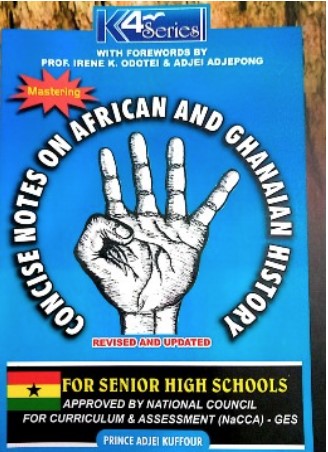
In the GEI library, I found at least three recent textbooks for each country and region. For Ghana, there were two textbooks for junior high and one senior secondary textbook covering African and Ghanaian history for the West African Secondary School Certificate Exam (WASSCE). There were three junior high school texts on Jamaican history and three Caribbean history textbooks meant to prepare students for the Caribbean Secondary Education Certificate (CSEC) exams. Among these were two older Jamaican junior high textbooks that provided compelling stories of slave trading. Finally, four textbooks from England were reviewed: One covered the years 1509–1745 for Key Stage 3 (KS3—local, British, and world history from 1066–1901); another for KS3 provided an in-depth topic study on whether Britain should pay reparations for the slave trade; one textbook was for the International Baccalaureate middle year program, 1700 to present; and the last was for the General Certificate of Secondary Education (GCSE) for ages 15–16, 790 to present.

These questions guided analysis of each textbook’s sections on slavery and the slave trade: How was slave trading explained? In what roles did Africans appear in the story? How were enslaved Africans represented? Did authors move beyond the labor and harsh conditions of enslavement to describe enslaved people’s cultural and social lives, gender relations, and other experiences across different places and times? I looked for historically accurate details that provided insight into how trading worked and the lives of enslaved people. Sentence structures and language used to characterize trading and slavery were also examined—for example, did authors use passive construction to mask perpetrators? Did they use language that was dated or colonialist? Below, I present my analysis and provide excerpts to illustrate how the authors told the stories of slave trading and slavery.

The review starts with Jamaica and the Caribbean, as these narratives stood out for their representations of Africans and their history.

The curriculum for Jamaica and the Caribbean countries reflected a willingness to fully embrace the history of slavery that gave rise to their contemporary nations. As the vast majority of the populations in Jamaica and the other 15 Caribbean nations in the secondary examination community (CSEC) are descendants of enslaved Africans, their citizens have a personal stake in telling a richer, more complex story about how their ancestors came to the Americas. The exams cover nine themes, four of which are directly related to enslavement of Africans: Caribbean economy and slavery; resistance and revolt; metropolitan movements toward emancipation; and adjustments to emancipation, 1838–1876. Jamaica’s curriculum is closely linked to the CSEC program.

In the textbooks, West Africans emerged as full participants in the trade. Caribbean authors Kevin Baldeosingh and Radica Mahase (2011) explained, “as the Europeans could not invade and settle within Africa, they had to depend on African rulers to supply them with slaves.” Jamaican author Philip M. Sherlock (1966) acknowledged African power by noting that when Europeans arrived, “they [often] had to get permission from the chief or king before they dared to start trading.” Caribbean authors Brian Dyde et al. (2008) evoked historians like John Thornton (1998) and Toby Green (2019) by stressing African development and skills in trading: “Along the [African] coast during the fifteenth century, they [Portuguese] found a recognizable commercial organization in existence. This was equally capable of distributing the European goods . . .and of providing the slaves.”

Baldeosingh and Mahase provided detailed economic explanations for the growth in trade, such as African consumers’ desires for brass pots, basins, and bracelets from Germany. Their accounts contradict stereotypes of an uncivilized continent by explaining that Africans had “a fairly developed manufacturing capability [and] African goldsmiths’ skills reportedly surpassed the Europeans.” However, they contended, Europeans could produce certain goods more cheaply, which explains why those goods were more valuable than slaves to Africans. Jamaican and Caribbean authors also took note of changes over time, revealing slavery as “temporally- and spatially-changing” rather than a monolithic, static condition. According to Dyde et al., although Europeans initially kidnapped victims “during raids on coastal towns,” later, “kidnapping was carried out by Africans.” Presented as shrewd decision-makers, Africans actively shaped the trade. For example, the trade “encouraged African chiefs and headmen to distort and alter the local sanctions that led to enslavement,” the profits from which led to the rise of kingdoms like Asante and Dahomey.

Jamaican authors acknowledged that their nation was founded on the labor of captives and made the story of enslaved Africans central to their narratives. Sherlock tried to find the “balance” that eluded the teacher quoted in the introduction: “The story of slavery . . . is a story of endurance and of triumph. The African fitted himself [sic] to life in a strange land far from his own home and loved ones; he cleared the forests and tamed the land, grew food crops and made for himself a new way of life. By his strength of spirit he rose above the brutality of the system into which he was forced.”

This focus on enslaved Africans and their actions sets the tone for a narrative that included enslaved people as multifaceted individuals: terrorized laborers, but also resistors, artists, entrepreneurs, and people with flaws. Dyde et al. devoted entire sections to work and life on sugar, coffee, and cotton plantations as well as in logging and shipping industries. In addition to explaining differences in status between enslaved people working in homes and the elds, they noted political sources for divisions: “In the early days, the mistrust felt by Africans toward other Africans helped to divide slave society.” Baldeosingh and Mahase explained that such disunity was encouraged by planters, who tried to buy Africans from different regions to inhibit communication. They also included a lengthy section on “Women’s situation under slavery,” describing how women “played a significant role in undermining the system” by “spreading messages of revolt” in the markets. But enslaved and freed people were not idealized—they had to make tough decisions to survive, as when women practiced “abortion and infanticide to deprive the master of gaining more slaves” or collaborators reported on “escape plots” in forts and plantations. By portraying enslaved people as historical actors within the terrible constraints of their circumstances, Jamaican and Caribbean authors refuted more meager accounts of Africans as solely victims.

Textbook authors in Ghana reflected the nation’s ambivalence about slavery and the slave trade. The senior secondary author provided a strong discussion of how trading worked, but none of the authors expanded on lives of slaves in the Americas or fully confronted the long-running trans-Saharan trade that involved West Africans. Ghana was the first country in Africa to gain independence from their colonizer, England. The country recognizes nine ethnic groups, many of whom were slavers in the Atlantic trade and enemies. For teachers, sustaining national citizenship amidst this animosity required the reduction of ethnic ties in favor of African and Ghanaian pride. To promote unity, teachers emphasized that their diverse cultures were “almost the same” and taught a “national story of subjugation, struggle, and sacrifice” in which heroic Ghanaians overcame deceptive, cruel, and racist Britons. The desire to minimize past transgressions like slave raiding was reflected in the junior high textbooks. In brief histories of Ghana’s ethnic groups, Nikoi A. Robert’s (2010) textbook named only the Denkyiras as slavers during the Atlantic trade. Junior high textbook author Agyare Konadu (2014) did not acknowledge any group as engaged in transatlantic slave trading and veiled the involvement of Africans in this awkward sentence: “The European merchants exchanges [sic] their goods such as guns, gun powder, drinks, beads, etc. with slaves [sic] from Africa and sold them to North America.” African traders were later described as undifferentiated “chiefs” or “middlemen” who were “very greedy for more money” and “enrich[ed] themselves by selling domestic slaves and captives of wars.”

Though junior high students would learn little about who was involved in trading and how it worked, high school students had the opportunity to learn the active roles of traders during the Atlantic trade. Senior secondary school author Prince A. Kuffour (2015) noted that, “Ghanaians were deeply involved in ethnic wars, slave raids and kidnapping just to satisfy the unjusti able demands by the European merchants.” Ethnic groups like the Fante, Asante, and Akwamu were named as raiders in the Atlantic trade. Kuffour also argued that Africans controlled the trade, explaining “As Africans violently resisted against [kidnapping of Africans], the Europeans came to the realization that the only practical way to obtain slaves was to bring items the Africans wanted . . . Within a short time, Europeans and Africans established a systematic way of trading that changed little over centuries.”

But Ghanaian authors downplayed centuries-long slave trading across the Sahara that demonstrates Africans’ long experience with slaving and helps explain the shift to Atlantic trading. Europeans sailed along the coast in an effort to circumvent the Saharan trade and gain direct access to African markets. West Africans also gained by this, as they could purchase trade goods more cheaply. Ghana’s founders took the name of the great trans-Saharan gold and slave-trading kingdom to the north of present-day Ghana. Robert did not mention slave trading by ancient Ghana, though Konadu said the empire became “very great as it had a lot of gold, grew a lot of food, fought many wars, conquered many states and captured a lot of slaves.” Kuffuor explained that Western Sudanese states “participated in and controlled the Trans-Saharan trade” and this “trade brought wealth . . . and enabled them to sustain, expand and consolidate their territories.” But given his stance on European slavers as “brutal and immoral” and African chiefs’ “diabolical intentions” in trading with them, it is notable that Kuffour made no mention of the cruelties committed by North African and Arab traders during the deadly journey across the desert. In fact, he emphasized African innocence prior to the arrival of Europeans, noting that greed caused by the Atlantic trade “forced the naturally moral-minded peoples of Africa to throw morality to the wind.”

The junior high textbooks did not cover the lives of enslaved Africans in the Americas, focusing instead on the trade’s negative effects on Africa, including depopulation, increased warfare, and discrimination. Kuffour’s longer textbook included sections on how captives were obtained and traded in Africa, conditions in the slave castles, and the horrific journey across the Atlantic. Kuffour introduced slave life in the Americas by stating that “Slaves faced a variety of experiences in the Americas . . . [and] nearly all involved heavy physical labour, poor housing, and insufficient medical care.” But he devoted only one paragraph to this topic, focusing on numbers of captives, mortality rates, and types of work. Kuffour included six paragraphs on achievements and contributions in arts, politics, science, and sports in the African diaspora. So while Ghanaian students had little opportunity to learn about life once Africans left the continent, high school students could get some sense of the enduring impact of Africans on American life.

Starting in 2008, British teachers were mandated to teach “the nature and effects of the [Atlantic] slave trade, resistance to it and its abolition.” In explaining this change, Children’s Minister Kevin Brennan (BBC, 2008) stated, “Although we may sometimes be ashamed to admit it, the slave trade is an integral part of British history.” Given the duration and impact of the slave trade on England’s history, politics, economy, and culture, it is shocking that this topic had not already been required. Nevertheless, these curriculum reforms could not overcome the textbook authors’ Eurocentric focus on the actions of white people. Most authors detailed diverse European beneficiaries of the slave trade and took full responsibility for English people having been slavers, but there was far less discussion of African participants. For example, besides “ship owners, slave traders and slave owners,” Aaron Wilkes (2014) named “many other Britons . . . linked to slavery,” including “dockworkers unloading ships full of cotton the slaves had grown, workers turning the cotton into shirts and even the shop owners selling sugar and tobacco.” On the other hand, Wilkes identified only “local African tribesmen” as involved in “swap[ping] the goods in the ship for prisoners from other tribes.” Besides being the only reference to Africans, the designation of ‘tribesmen’ by Wilkes (and Bruce et al. 2016) replicated colonialist language. Jo Thomas and Keely Rogers (2015) included a source explaining that “The economics of slavery permeated American and European life,” listing wealthy merchants from Liverpool and Bordeaux, banks, insurance companies, and universities like Yale and Brown as beneficiaries. These authors pointed out that the “only beneficiaries in Africa were the rulers and wealthy merchants who engaged in the slave trade,” otherwise it “had a wholly negative impact on African nations.”

John D. Clare’s (2010) textbook on the trade provided more coverage of European and African participation. The author provided a two-page discussion of the vicious cycle of violence caused by slave trading, focusing on the Ceddo wars in Senegal and exploits of traders like Lat Sukkabe Faal. In a listing of “Arguments against the British paying reparations” at the end of the book, Clare hinted at African motives and gains in the trade: “The British did not steal the slaves—they bought them from the African rulers in what both sides regarded as a business deal, and pumped millions of pounds into the African economy of the time.” However, in most of the 48 pages, Europeans were the primary historical actors, and students would search in vain for African agency. This is starkly illustrated in the names of African nations identified by the authors in texts (I did not count names on maps). Ghanaian, Jamaican, and Caribbean authors named equal numbers of African and European trading nations, while British author Clare named only two African regions (Senegambia and the Kingdom of Futu Toro) as involved in trading.

All the English textbooks discussed the transatlantic journey and noted that most slaves were destined to work on cotton and sugar plantations, but they provided no coverage of enslaved people’s social or cultural lives. There was little discussion of their oppression either. Wilkes did not mention any cruelty or difficulty in the lives of slaves. Bruce et al. said that enslaved Africans lived “short and brutal lives of hard work and extreme misery . . . [ate] a poor diet, faced tough punishments, and had no proper medical attention.” Thomas and Rogers provided a paragraph from Olaudah Equiano about oppressive slave ship conditions. Clare’s book on the slave trade also used Equiano’s diary to illustrate life in Africa before capture, the process of enslavement in Africa, and the journey across the Atlantic. But while the author devoted eight pages to abolition and its heroes, most of whom were white, there were only three paragraphs about Africans’ daily lives once they arrived in the Americas. Life was portrayed as unrelentingly harsh: “house slaves . . . were often better treated, but even small mistakes might result in terrible punishment—the law allowed a slave-owner to beat a slave to death.” While it is important for students to understand the cruelties suffered by enslaved people, an emphasis solely on victimization defines people only by what is done to them. It is no wonder that an African-Caribbean student in Britain reported feeling bad “about being black when we did the slave trade . . . They [teachers] made me feel ashamed.”

Citizens in Jamaica and other Caribbean countries have the opportunity to learn the most comprehensive accounts of transatlantic slave trading. African nations and traders were presented as sophisticated actors in the trade. Enslaved Africans were portrayed in nuanced ways, as people who overcame terrible oppression to create independent nations. Only the Jamaican and Caribbean textbooks provided coverage of the diversity of enslaved people’s experiences outside of their work—and in most of their textbooks, coverage far exceeded two sentences about the topic, the standard counted as covering these topics. Most of the other textbooks could not meet this standard.

Ghana’s colonial-era border brought together former slave traders and societies who were victimized by those traders. For junior high textbook authors, creating a nation out of this diversity meant ignoring inter-ethnic slaving that could stir up old wounds. None of the authors fully confronted West Africans’ complicity in the trans-Saharan trade either. In the postcolonial period, Africans found allies among Middle Eastern nations who had also suffered under European imperialism. As Simon Simonse (2005) argued, “In the context of this African-Arab solidarity there was no place for discussing the crimes committed in a period when Arabs enslaved Africans on a large scale.” Silence about this trading helps sustain the idea that Africans were innocent and morally pure before Europeans arrived.

Bennett argued that a “savage-to-slave trajectory” continues to contort Western ideas of Africa. In this conception, African history is wrongly viewed as in a state of savagery that became a source of slaves when Europeans showed up. Today, this narrative continues to obscure the history and politics of African civilizations whose interactions with Europeans and others shaped the modern world. In England, white citizens took full responsibility for engaging in and pro ting from slavery—ultimately comforting themselves that British people ended slavery in the Atlantic world. But in telling this story, they presented African traders as undifferentiated middlemen or kings, and enslaved people as brutalized victims, sidelining black people and their agency in the national narrative.

Acknowledgment of African agency would help teachers tell a more robust, candid, and humanistic story of slavery. To do this, textbook authors should identify and describe the roles of African as well as European traders (and also name Africans who tried to stop slave trading, as was done by Ghanaian author Kuffour). I argue for including African trading nations and traders not to assuage the guilt of white people by calling out African slavers or as an argument against reparations. Rather, to be viewed as participants in history, Africans need to be acknowledged as political actors—they too engaged in diplomacy, trade, oppression, and manipulation to serve their interests. Current conceptions “grant Europeans far too much power.” At the same time, educators need to be clear that enslaved people were not simply acted upon by white people. They lived rich lives before they were captured, created societies and cultures amidst the terrors of slavery, and faced additional struggles once slavery ended. Because most of the authors included very little about slaves’ lives beyond their arduous labors and vicious punishments, the image of enslaved people as brutalized victims remained unchanged. As Toby Green explained, a focus only on slavery when teaching about Africa and Africans replicates “an old trope of primitivism and oppression.” Jamaican and Caribbean textbooks stood out for their honesty, depth, and attention to historical change. Students learned about life in Africa before capture, the complex and varied lives of enslaved people, the long and contested process of emancipation, cultural and other achievements, and enduring racism.

The aims of critical linguistic analysis of materials like textbooks, according to Ruth Wodak (1989), are “to uncover and de-mystify certain social processes . . .to make mechanisms of manipulation, discrimination, demagogy, and propaganda explicit and transparent.” In the US, myths about African history and persistent racism can hinder the efforts of teachers to fully address the tragedy of the Atlantic slave trade. This study of textbooks reveals that citizens in other nations are also denied a full accounting of slavery and slave trading. I urge teachers to join with their students to bring forms of discrimination and propaganda to light. Students can evaluate the accounts below to determine which tells a better story. They could also find equivalent passages from their textbooks to compare to the narratives in other countries. In this way, students provide their own analyses of why authors write the ways they do: How do their textbooks compare with others? Do US textbook narratives support historical agency? What story should textbooks tell?

BBC News (2008, August 26). “All Pupils to Learn about Slavery,” BBC News.

Bennett, Herman (2018). African Kings and Black Slaves: Sovereignty and Dispossession in the Early Modern Atlantic. Princeton NJ: Princeton University Press.

Green, Toby (2019). A Fistful of Shells: West Africa from the Rise of the Slave Trade to the Age of Revolution. Chicago IL: University of Chicago Press.

Northrup, David (2017). Seven Myths of Africa in World History. Indianapolis IN: Hackett Publishing Company.

Simonse, Simon (2005). “Addressing the Consequences of Arab Enslavement of Africans: The 
Impasse of Postcolonial Cultural Relativism,” in Kwesi Kwaa Prah, ed., Reflections on Arab-Led Slavery of Africans. Cape Town, South Africa: Centre for the Advanced Studies of African Society.

SPLC (2018). Teaching Hard History: American Slavery. Montgomery AL: Southern Poverty Law Center.

Thornton, John (1998). Africa and Africans in the Making of the Atlantic World, 1400–1650. Cambridge UK: Cambridge University Press.

Wodak, Ruth, ed. (1989). Language, Power, and Ideology: Studies in Political Discourse. Philadelphia PA: John Benjamins Publishing.

Textbooks in this Study Caribbean Baldeosingh & Mahase (2011), Caribbean History for CSEC Dyde et al. (2008), History for CSEC Exams: Amerindians to Africans, Book 1 (Grades 10-11) Dyde et al. (2008), History for CSEC Exams: Emancipation to Emigration, Book 2 (Grades 10-11) England Bruce et al. (2016), Oxford AQA GSCE History: Thematic Studies c790 to Present Day (Grade 10) Clare (2010), The Slave Trade: Should Britain Pay Compensation for the Slave Trade (Grade 7-9) Thomas and Rogers (2015), History: MYP by Concept 4 & 5
(Grade 6-10) Wilkes (2014), Key Stage 3 History: Renaissance, Reformation, and Revolution: Britain 1509–1795 (Grade 7-9) Ghana Konadu (2014), Effective Social Studies for Junior High Schools, 1, 2 & 3 (Grade 7-9) Kuffour (2015), Concise Notes on African and Ghanaian History, for Senior High Schools (Grade 12) Robert (2010), Social Studies for Junior High Schools (Forms 1–3) (Grade 7-9) Jamaica Bell-Coates et al. (2008), Living Together: Social Studies for Grade 7 (Grade 7) Black (1993), History of Jamaica
(Grade 7-9) Sherlock (1966), Jamaica: A Junior History (Grade 7-9)

Excerpts from Textbooks

1. Accounts from middle school textbooks about how the triangular trade operated.

Ghanaian textbook by Konadu (2014)Jamaican textbook by Bell-Coates (2008)
“The Transatlantic slave trade involved the buying and selling of slaves across the Atlantic Ocean to America and West India . . . The European merchants exchanged their goods such as guns, gun powder, drinks, beads etc. for slaves from Africa and sold them to North America for raw materials to feed their industries in Europe” (65).  “The Africans were snatched from their village homes along the coast of West Africa to be sold as slaves, first to the Spanish settlers, then, from 1665, to the English . . . Captains of slave ships would offer [goods], many of them manufactured in Britain, to African slave dealers” (31).  

2. Accounts from high school textbooks on how Europeans and Africans became involved in slave trading.

Ghanaian textbook by Kuffour (2015)Caribbean textbook by Dyde et al (2008)
“The first Europeans to sail down Africa’s west coast in the mid- fifteenth century attempted to acquire slaves by means of force . . . As Africans violently resisted, the Europeans came to the realization that the only practical way to obtain slaves was to bring items the Africans wanted in exchange. Within a short time, Europeans and Africans established a systematic way of trading that changed little over centuries” (272).“To begin with, slaves were obtained by
the snatching and kidnapping of suitable victims by Europeans but . . . after about 1700, although kidnapping continued, it
was carried out by Africans. The desire of European traders for large numbers of slaves, in exchange for a wide range of goods, stimulated slave raiding in the interior. It also encouraged African chiefs and headmen to distort and alter the local sanctions which led to enslavement” (123).

3. Accounts from middle school textbooks explaining what happened when British colonists in the Caribbean began buying enslaved Africans.

Jamaican textbook by Sherlock (1966)British textbook by Bruce et al. (2016)
“The story of slavery . . . is a story of endurance and of triumph. The African fitted himself to life in a strange land far from his own home and loved ones; he cleared the forests and tamed the land, grew food crops and made for himself a new way of life.
By his strength of spirit he rose above the brutality of the system into which he was forced” (62).“By 1619, African slaves were introduced to British plantations . . . Slaves had no legal rights and had to work their whole lives without payment. Any slave children born became slave owners’ property too. Purchasing slaves allowed plantations to become more pro table, as the unpaid workforce increased in size” (203).

Teaching New York History: Sources for Teachers

The New York state social studies/history framework includes the teaching of local and New York history at the Grade 4 level and New York and U.S. history in Grades 7/8.  U.S. history is the topic for Grade 11 but, given New York’s historical importance over time, some of the topics such as immigration and reform movements that started in New York but spread nationally, could also be taught with a New York dimension.

New York teachers are often looking for sources for these classes. This article provides some suggestions.

Books. There are many books on New York history and more coming out all the time. The blog New York Almanack carries notices of new books. Books covering all of the state’s history include Bruce W. Dearstyne, The Spirit of New York: Defining Events in the Empire State’s History, David M. Ellis, New York: City and State, David M. Ellis et al, A History of New York State , Milton M. Klein, ed., The Empire State: A History of New York and Joanne Reitano, A History of New York State. Two encyclopedias are useful for concise information on many topics: Peter Eisenstadt, ed. Encyclopedia of New York State and Kenneth T. Jackson et al, eds.,  The Encyclopedia of New York City. Beyond that, there are hundreds of books on local history, and more are being published all the time. Your school or local public library should have many of these, and they are also available for purchase. Many libraries have local history sections which may include local history books and other sources and are useful venues for student research projects and field trips.

Articles. Articles by historians in journals  are often very useful for teachers seeking information and for assignment for student readings. This journal, Teaching Social Studies, is the best source for writing in the field. The journal  New York History and The Hudson River Valley Review provide a statewide focus. New York Archives published by the State Archives Partnership Trust, carries many articles from around the state. The Trust recently initiated New York Archives Jr.  Each issue features one article from New York Archives magazine rewritten at an upper elementary level, community connections, related facts, and learning activities focused on primary source analysis. Regional journals such as Rochester History  and journals published by county historical societies feature articles of local interest which may be of particular interest to students since the articles cover “nearby history.”

The Office of State History. The Office of State History in the State Museum has a great deal of information on New York history on its website, online podcasts including “A Minute in New York State History”, and Empire State Engagements, interviews with authors of new books.

Officially designated local government historians. New York is the only state with a law  authorizing local governments to appoint official historians. Many counties, cities, towns and villages have made these appointments; some have not. Historians’ work varies depending on their priorities and support, but in many communities, they are invaluable resources and welcome opportunities to work with teachers. You can find your community’s historian on the website of the  Association of Public Historians of New York State.

Local history museums and historical societies. There are hundreds of these, located in all areas of the state.  Many hold sources that students could use for research, welcome visits by school groups, and seek other opportunities to work with the schools. There is no central directory but many are listed on Wikipedia or on the website of the Museum Association of New York. You can follow their work, and developments in state history generally, through the website of the Office of State History in the State Museum and the blog New York Almanack.

Some history programs are of particular importance because of their scope, the variety of their programs, their programs for student visits, and, increasingly, their online presentations. These include, among others the Buffalo History Museum, Empire State Aerosciences Museum (Glenville), Eastman Museum of Photography  (Rochester), Erie Canal Museum (Syracuse), Farmers’ Museum (Cooperstown), Genesee Country Village and Museum (Mumford), New-York Historical Society, Museum and Library and the New York State Museum (Albany) which features history exbibits, public events, and online presentations.

State historic sites. The state office of Parks, Recreation and Historic Preservation maintains state historic sites and buildings in all areas of the state. They welcome school groups and some may be willing to send a speaker to the schools.

Consider the Source: Teaching With Historical Records, an online resource available at the State Archives, features document-based teaching activities.  The Archives also gives Student Research Awards for outstanding student research using historical records.

New York State History Day, part of “National History Day,” is a forum for students to compete for awards in several categories, including research papers, exhibits, documentaries, and performances.

The Historians’ Podcast features interviews and discussions with experts on New York state and local history.

Historical Society of the New York Courts is an excellent source for New York’s legal and constitutional history. Its online journal Judicial Notice features articles on important cases.

The State Archives Partnership Trust  features online podcasts and videos  on historical topics.

*New York State History Month (October).  October is designated in law as New York State History Month. This is a time to celebrate the state’s history and historians.  It would be an opportune time for attention to particular New York-related topics in schools.

Behind the Numbers: A Discussion for Social Studies & Sociology Students on the Future of Religion in America

Behind the Numbers: A Traditional Church Faces a New America

A Discussion for Social Studies & Sociology Students on the Future of Religion in America

Hank Bitten, Executive Director, NJ Council for the Social Studies

The free exercise of religious beliefs is written into our constitution and has been part of the framework of our democratic society and American identity since the Pilgrims arrived in 1620. The principle of the separation of church and state prevented America from having a religious institution or denomination supported by the state, it has enabled the proliferation of houses of worship, the establishment of colleges to train clergy, the dissemination of religious beliefs into our culture through art, literature, and music, and prayers in public places. Religious beliefs and the practices of denominational churches are part of the tapestry of America.

“Congress shall make no law respecting an establishment of religion, or prohibiting the free exercise thereof; or abridging the freedom of speech, or of the press; or the right of the people peaceably to assemble, and to petition the Government for a redress of grievances.” (First Amendment)

This is clearly evident in the First and Second Great Awakening, the Sunday School movement, and the missionary zeal in the 19th century to convert people to the Christian faith. The names of Jonathan Edwards, George Whitfield, Charles and John Wesley, Francis Asbury, Billy Sunday, Billy and Franklin Graham, Dwight Moody, Phoebe Smith, Mary Baker Eddy, James Dobson, Tim Keller, Oral Roberts, and Pat Robertson are just a few names that are part of several high school history textbooks.

In the first two chapters of the dissertation, “Behind the Numbers: A Traditional Church Faces a New America”, Rev. Larry Vogel, presents us with a turning point in the first two decades of the 21st century that is an opportunity for discussion, debate, and discernment.  The dissertation provides a sociological, anthropological, and theological perspective that is insightful in how evidence is used to support a claim or thesis.

The data from the U.S. Census Bureau presents a vision of America that is as influential today as Jean de Crèvecoeur’s “Letters from an American Farmer” were in 1782. Crèvecoeur tried to describe the ‘new American’ as industrious and religious. The experiences of living during and after the American Revolution changed the colonists from Europeans to Americans.  The ‘new American’ following the passage of the Immigration and Nationality Act of 1965 is from global origins and the ‘new American’ is Hispanic, African, and Asian.

By analyzing the census data in this dissertation, high school students will be able to make a claim regarding the importance of religion in American by 2050, the impact of immigration on society, the consequences of a society that is changing over time, and make predictions for the future. In a Sociology class, students can also survey their own community and compare the data with the national data in the U.S. Census.

“As for ethnicity, 61.6% of the US population is White alone (204.3 million), a decline from 223.6 million and 72.4% in 2010. Blacks who self-identified without any other racial combination increased slightly in number between 2010 and 2020 (from 38.9 to 41.1 million), but declined very slightly as a percentage of the population (from 12.6% to 12.4%). The Asian alone population of the US increased both numerically and proportionately. In 2010 14.7 M (4.8%) Americans identified as Asian alone. In 2020 that number swelled to 19.9 M (6%).” The Asian population is projected to more than double, from 15.9 million in 2012 to 34.4 million in 2060, with its share of nation’s total population climbing from 5.1 percent to 8.2 percent in the same period. (p. 58)

In the table below, the majority population in the United States declined 11% in ten years from 2010-2020. Will this trend continue to fall another 10% or will it be greater than 10% in this decade?

In high school social studies classes, teachers ask questions about our American identity. Students look at this over time by discussing how each century defined the emerging American identity? The demographics of what is happening to the religious beliefs of the ‘new American’ are important to our culture, economy, education, families, and government. Religion is perhaps the largest service industry in the United States with more than 100 million people attending worship regularly. The number of subscribers to weekly worship experiences is declining but this change is likely disguised as the ‘new American’ still believes in a supreme deity but expresses this belief differently than the way Crèvecoeur’s ‘American’ did. The insights in “Behind the Numbers: A Traditional Church Faces a New America” encourages the debate in the classroom and in the chancel. The analysis of the data provides a perspective of what life will be like in the United States at mid-century. Some will see this as an opportunity and others as a threat.

To begin our inquiry into the data, examine the population profile of the top ten states with the highest immigrant populations. (pp.66) Half of these states are in the Boston-New York-Philadelphia-Baltimore- Washington, D.C. corridor.  A third of these states are in the western region of the United States.

One of the striking observations in the census report is that these changes have occurred after 2000.

“The continued growth of the US population is due to immigration rather than to immigrant birth rates. All-in-all, the foreign-born US population in 2018 was nearly 14% of the total US population and their second-generation children were an additional 12.3% of the total population. This means that fully 25% of the current US population is the result of immigration and that the changing racial-ethnic profile of the US is due almost entirely to immigration in recent decades. As Taylor puts it: “Immigration is driving our national makeover.” (p. 67)

As you review the data in the graph below, consider the implications of this decline in your community and state.

Here are some questions to ask regarding this data?

  1. Will these demographic trends continue on the same trajectory over the next three decades or escalate?
  2. Will external events (i.e., climate, artificial intelligence, economic conditions, etc.) have a direct effect on immigration trends?
  3. Will the immigrant population move to other states as they have in the past?
  4. As the immigrant population of 2020 ages, how will this influence the ‘new American’ identity?
  5. As immigrants assimilate into American culture, will they be influenced by the religious institutions in America?

The Census Bureau predicts that the trend toward racial-ethnic diversity will continue: The non-Hispanic White population is projected to shrink over coming decades, from 199 million in 2020 to 179 million people in 2060—even as the U.S. population continues to grow. Their decline is driven by falling birth rates and a rising number of deaths over time as the non-Hispanic White population ages. In comparison, the White population, regardless of Hispanic origin, is projected to grow from 253 million to 275 million over the same period. (p. 236)

Dr. Vogel’s thesis claims that “the underlying support and stimulus for Global Christianity’s surge is the Bible translated into the vernacular. The Bible in whole or in part is available in over 1500 languages, including more than 650 African tongues. With the Bible in their own tongue, Christians in Africa and throughout the globe “can claim not just the biblical story, but their own culture and lore in addition.” (p. 82) However, his thesis also raises the counterargument that the Millennial generation (birth years 1981-1996) is leading the shift away from organized religion, specifically, Christian denominations. According to the Pew research from 2019, 40% of the Millennials (also Generation Y) identify as unaffiliated with 9% claiming a faith other than Christianity. The trend for Generation Z (birth years 1996-2010) will likely be higher.

The perspective of Dr. Mark Chaves of Duke University (and high school student of the author of this article), is that America will likely continue its religious identity in this century. The diversity of the American population will lead to changes, notably that non-Christian beliefs also lead to eternal life. Church membership and worship practices will likely change.  A new subculture within the religious and worshipping population may emerge in the 21st century.  The ‘new American’ will likely continue helping others in need by donating food, working in a soup kitchen, providing assistance after a disaster, building homes for the homeless, as the volunteer spirit will likely continue throughout this century. But this ‘new American’ may also be influenced by social media and artificial intelligence. Engage your students in exploring answers to these questions and possibilities.

George Hawley of the University of Alabama presents a strong counter argument regarding the demographics of the denominational church in 2022. He cites that 23 percent (almost one-fourth) of the population affiliated with a Christian denominational church are over the age of 65. He also observed that only 13 percent who attend church regularly are under the age of 30. This is not sustainable beyond 2050. Non-Christian religious traditions increased from 5% percent to 7% since 2010. In terms of actual numbers, 13 million Americans identify as atheists and 33 million or 10 percent) have no particular religious affiliation.  To place this in perspective, the populations of 49 states are less than 33 million people. The population of Texas is 31 million.

To add a second layer of analysis to our scaffold is the research of the Barna Group which used three factors in determining affiliation with a Christian Church.

  1. Christian identity with a denominational church
  2. Regular worship attendance
  3. Placing faith as a high priority

The data reports that 25% of the American population of 330 million people are practicing Christians. In 2000, the number was 45%!  (p. 113) Although weekly church attendance continues to decrease in both Protestant and Roman Catholic churches, the diversity of Roman Catholic congregations appears positive, especially if the United States will continue as a Christian country.  “Nearly 40% of Catholic churches are either predominantly or very much non-White. In 2014, The Center for Applied Research in the Apostolate (CARA) study of RCC parishes, 323 out of 846 responding parishes could be identified as multi-cultural parishes.

By using the data below, ask this question: ‘Why is Roman Catholic weekly attendance decreasing in the first quarter of this century and Protestant weekly attendance showing a slight increase?’  (Note: the years on the y axis appear to have 1983-1986 reversed with 1995-1996)

This article reflects the data in Chapters 1 and 2 of the dissertation. Chapters 3, 4, 5 include prescriptive information on a case study of the Lutheran Church and information about other denominations. Chapters 4 and 5 include a theological analysis of church history and the inclusion of all people.

https://scholar.csl.edu/phd/146/

Behind the Numbers: A Traditional Church Faces a New America

Larry VogelConcordia Seminary, St. Louis

Date of Award  5-19-2023

Abstract

The dissertation examines membership data for The Lutheran Church—Missouri Synod (LCMS) from the mid-1970s to the present. It considers the analysis of LCMS decline by two scholars, George Hawley and Ryan MacPherson, who independently proposed that LCMS membership decline was internal in causation due to diminished birthrates and fewer young families. While acknowledging the reality of such internal decline, this dissertation argues that the lack of external growth is a greater cause for LCMS decline. Its lack of external growth is due primarily to the racial and ethnic homogeneity of the LCMS and its failure effectively to evangelize the increasingly diverse American population. This indicates a theological weakness: a failure to teach and emphasize the catholicity of the church adequately in LCMS catechesis and dogmatic theology.

Recommended Citation

Vogel, Larry, “Behind the Numbers: A Traditional Church Faces a New America” (2023). Doctor of Philosophy Dissertation. 146.     https://scholar.csl.edu/phd/146

CHAPTER ONE………………………………………………………………………………………………………. 12

DEMOGRAPHIC CHANGE IN THEORY, REALITY, AND APPLICATION …………………..12

THE DEMOGRAPHIC TRANSITION—A GLOBAL PHENOMENON………………………….. 12

Demographics Defined ……………………………………………………………………………………………….. 12

The First Demographic Transition ………………………………………………………………………………… 13

The Second Demographic Transition……………………………………………………………………………… 17

Cause of the Demographic Transition …………………………………………………………………………… 23

US DEMOGRAPHICS ………………………………………………………………………………………………. 24

EFFECTS OF THE DT ………………………………………………………………………………………………. 27

Primary Effects: Declining Births, Increasing Age………………………………………………………….. 27

Secondary Effects: Changes in Female Life Patterns and Family Formation …………………….. 32

RESPONSES TO DEMOGRAPHIC CHANGE………………………………………………………………40

Responses to the Demographic Transition: A Survey………………………………………………………..41

China’s Response to Demographic Transition………………………………………………………………… 42

Brazil’s Response to Demographic Transition………………………………………………………………… 45

The European Response to Demographic Transition ………………………………………………………. 47

The North American Response to Demographic Transition……………………………………………… 50

THE CHANGING DEMOGRAPHIC PROFILE……………………………………………………………. 57

New America: Older and More Female………………………………………………………………….. … 58

New America: Greater Diversity…………………………………………………………………………… …. 58

CHAPTER TWO …………………………………………………………………………………………………….. 68

THE DEMOGRAPHIC CHALLENGE AND RELIGION……………………………………………….. 68

DEMOGRAPHIC CHANGE AND RELIGIOSITY—A WORLD TOUR …………………………. 68

DT and Religion in Asia ……………………………………………………………………………………………… 68

DT and Religion in Latin America………………………………………………………………………………… 74

DT and Religion in Africa …………………………………………………………………………………………… 78

DT and Religion in Europe …………………………………………………………………………………………. 85

DT and Religion in the United States: Six Trends…………………………………………………………… 92

The Millennial Challenge……………………………………………………………………………………………. 96

The Challenge of Multiethnic America ………………………………………………………………………. 100

The Challenge of Family Decline……………………………………………………………………………….. 102

The Challenge of Income Inequity …………………………………………………………………………….. 104

Conclusion: DT and Religion in America…………………………………………………………………….. 106

DEMOGRAPHIC TRANSITION AND DECLINE IN AMERICAN CHRISTIANITY…….108

Rise of the Religiously Unaffiliated and the DT……………………………………………………………. 109

The Healthiest Churches……………………………………………………………………………………………. 118

THE NEW AMERICA IN THE ROMAN CATHOLIC CHURCH…………………………………. 123

A Church in Crisis: Flight from the Roman Church …………………………………………………….. 125

A Church’s Hidden Strength: The Diversity of American Roman Catholics…………………….. 127

THE NEW AMERICA IN THE PRESBYTERIAN CHURCH IN AMERICA ……………….. 133

A History of Struggle ………………………………………………………………………………………………. 133

Growth in the PCA through Doctrinal Fidelity and Outreach ……………………………………….. 142

Reflection and Redirection ………………………………………………………………………………………. 144

How to use the 250th Anniversary of the American Revolution in New Jersey Resources in a High School Social Studies Classroom

How to Use the 250th Anniversary of the American Revolution in New Jersey Resources in a High School Social Studies Classroom

By: Lucille Finnegan

Abstract: This article seeks to provide other high school educators with some concrete methods for implementing the NJCSS’ resources on ordinary individuals from the American Revolution into their classroom. This article offers educators multiple ways to integrate the decision activities and the associated resources into a unit on the American Revolution.


For the past two years, educators have conducted meaningful research on the lives of ordinary individuals in New Jersey, who were present during the American Revolution. They have uncovered stories of individuals torn between the loyalties of their family members, Native Americans dealing with the aftermath of fraudulent land deals, and women trying to survive in the midst of war. These stories are engaging and illuminating, but not well known. Thus, below, I recommend different student-centered ways to implement these stories into your classroom.

Using the Decision Activities

The decision activities could be used extensively in a Revolutionary America unit centered around a question such as: “How were the lives of women, African-Americans, and Native Americans impacted by the Revolution?”  As an introduction to this unit, students could engage in inquiry based learning by investigating the decision activities of a certain group or individual. For example, one group could study women and could explore the lives of Margaret Hill Morris and Annis Boudinot Stockton. To guide students through the decision activities, students could fill out a graphic organizer similar to the one featured in Exhibit 1 (see below). After each group had read through the decision activities and completed their respective graphic organizers, students could jigsaw with the different groups to learn what other groups had discovered before culminating in a full class discussion. Stating a claim and supporting it with evidence is an important disciplinary skill in social studies.

If a teacher did not want to center their American Revolution unit solely on the question mentioned above, these activities could be very easily integrated into a unit as extension activities. For example, if students were considering how African-Americans were involved in the Revolution, they could consider the story of Samuel Sutphen, an enslaved African-American from Hunterdon County who served as a replacement soldier for his enslaver. For classrooms looking at how the American Revolution was in many ways a civil war, the Guillam Demarest decision activity would be useful. For others looking at Native Americans, I suggest using the Chief Tishcohan decision activity.

Using the Decision Activities in Conjunction with the Hamilton Education Program

Additionally, these decision activities could be used as a starting point for students participating in the Hamilton Education Program, a program run by the Gilder Lehrman Institute. The Hamilton Education Program challenges students to make a performance piece (a song, skit, poem etc.) based on a key event or individual’s life from the founding period of the United States. Since these decision activities highlight the fascinating stories of individuals from the Revolutionary War period, they would serve as excellent base material for any performance piece. Additionally, the primary sources associated with these decision activities would also enable students to conduct the necessary research the program requires (see the Annotated Directory of Resources). For more information on the Hamilton Education program, please visit this page.

Using the Annotated Directory of Resources on the American Revolution

Alternatively, teachers could integrate the primary sources gathered by this project into their classroom by having students explore the Annotated Directory posted on the website. This type of lesson could be done at the beginning of the school year, when students are first learning how to analyze primary sources. After learning how to identify the author, the author’s purpose, the intended audience, and the point of view of a primary source, students could then apply their analysis techniques to one (or more!) of the primary sources located in the Annotated Directory of Resources. Students could use a graphic organizer similar to Exhibit 2 (see below) to assist them in their research and improving their required proficiencies relating to Sources and Evidence.


Exhibit 1: Sample Graphic Organizer

EQ: How were the lives of women, African-Americans, and Native Americans impacted by the Revolution?
 What did you learn about this individual’s life?What decision did you make? Why did you make that decision?How does this decision activity help you answer the essential question?
 Margaret Hill Morris                 
Annis Boudinot Stockton               

Exhibit 2: Sample Primary Source Analysis Research Organizer

 Name of Document: ________________________________
  Who is the author? When was it written? What do you know is happening around the time it was written? 
Who is the author’s intended audience? How do you think this affects what/how they are writing? 
What is the author’s purpose? How do you think this affects what/how they are writing? 
From what perspective is this author writing from? How do you think this affects what/how they are writing? 
Summarize the main ideas of the document.           

New York History: “A White Man Imprisoned 17 Years for Helping Enslaved People Escape to Freedom”

New York History: “A White Man Imprisoned 17 Years for Helping Enslaved People Escape to Freedom”

Reprinted with permission by the editorial staff of the New York Almanack.

Rev. Calvin Cornelius Fairbank was born November 3, 1816 in Pike, Wyoming County, NY. He began his academic studies at a seminary in Lima, Livingston County, NY, and became a licensed preacher in 1840. In 1842 he was ordained an elder in the Methodist Episcopal Church, and he graduated Oberlin College in Ohio two years later. At Oberlin he met John Mifflin Brown (1817-1893), a bishop in the African Methodist Episcopal (AME) Church and an Underground Railroad activist.

Fairbank was a radical abolitionist who not only spoke out against slavery, but actively worked to free as many enslaved people as he could. “Forty-seven slaves I guided toward the North Star, in violation of the state codes of Kentucky and Virginia,” he wrote. “I piloted them through the forests, mostly by night, – girls fair and white, dressed as ladies; men and boys, as gentlemen or servants – men in women’s clothes, and women in men’s clothes; on horseback, in buggies, in carriages, common wagons, in and under loads of hay, straw, old furniture, boxes and bags; crossed the Jordan of the slave, swimming, or wading chin deep, or in boats, or skiffs, on rafts, and often on a pine log. And I never allowed one to be recaptured. For aiding these slaves to escape from their bondage, I was twice imprisoned, – in all seventeen years and four months; and received… thirty-five thousand, one hundred and five stripes from a leather strap…”

Fairbank helped free an enslaved person for the first time in 1837. While piloting a lumber raft down the Ohio River he ferried a slave across the river into free territory. He often guided escaped slaves to Levi Coffin who helped arrange further transportation north for thousands of people.

Fairbank was arrested for helping to transport Lewis Hayden, his wife Harriet and Harriet’s son Joseph by carriage to freedom in Ohio. He was tried in 1845 and sentenced to 15 years, five years for each of the slaves he helped free. Serving his sentence in the Kentucky State Penitentiary in Frankfort, he was pardoned in 1849 using money raised by Hayden from his new neighbors in Boston. Two years later he was arrested again for helping an enslaved man named Tamar escape Kentucky to Indiana. In November 1851, marshals from Kentucky, with the help of the sheriff of Clark County, Indiana and Indiana Governor Joseph A. Wright, abducted Fairbank and took him back to Kentucky. In 1852, he was again sentenced to 15 years. While imprisoned in the Frankfort Penitentiary he was the victim of harsh treatment, including being frequently whipped (he believed he had received some 35,000 lashes while imprisoned). From 1844 to 1870, Kentucky imprisoned at least 44 people for helping to free enslaved people. The last man was released in 1870, five years after the end of the Civil War. Eight of those imprisoned died prisoners. 

Late in the Civil War, in 1864, Fairbank was pardoned by Acting Kentucky Governor Richard T. Jacob. He later wrote a memoir, published in 1890, Rev. Calvin Fairbank During Slavery Times: How He “Fought the Good Fight” to Prepare “the Way.” He died in near-poverty in Angelica, Allegany County, NY. Rev. Calvin Cornelius Fairbank was inducted to the National Abolition Hall of Fame and Museum in Peterboro, New York in October 2022.

Rev. Calvin Fairbank During Slavery Times (1890) (Excerpts)

  1. “I took license to preach in 1840, and in 1842 was ordained an elder in the Methodist Episcopal Church, and closed my course of study, graduating in 1844. One incident, more than anything else outside of my organization, controlled and intensified my sentiments on the slavery question. It was this: I went with my father and mother to Rushford to quarterly meeting when a boy, and we were assigned to the good, clean home of a pair of escaped slaves. One night after service I sat on the hearthstone before the fire, and listened to the woman’s story of sorrow. It covered the history of thirty years. She had been sold from home, separated from her husband and family, and all ties of affection broken. My heart wept, my anger was kindled, and antagonism to slavery was fixed upon me. “Father,” I said, on going to our room, “when I get bigger they shall not do that;” and the resolve waxed stronger with my growth.”
  2. I grew to manhood with a positive, innate sense of impartial liberty and equality, of inalienable right, without regard to race, color, descent, sex or position. I never trained with the strong party simply because it was strong. From the time I heard that woman’s story I felt the most intense hatred and contempt for slavery, as the vilest evil that ever existed; and yet I supposed the institution provided for and protected by the United States Constitution, and legally established by every slave state; and when, previous to investigation, I repeatedly aided the slaves to escape in violation of law, I did it earnestly, honestly, in all good conscience toward God and man.
  3. Coming within the influence of active anti-slavery men at Oberlin, Ohio, I was led to examine the subject in the light of law and justice, and soon found the United States Constitution anti-slavery, and the institution existing in violation of law. My conclusion in regard to the anti-slavery character of the Constitution of the United States was based on common law, on its interpretation by the whole civilized world, and the recognition of self-evident truth as the basis of that interpretation, viz.: “Where rights are infringed, where fundamental principles are overthrown, where the general system of the law is departed from, the legislative intention must be expressed with irresistible clearness, in order to induce a court of justice to suppose a design to effect such object.”
  4. This conclusion enabled me to act without misgiving, as to my obligation to the General Government. I was no longer under obligation to respect the evil institution as protected by the Government, but was free to condemn slavery and the slave code, — free to follow the promptings of duty.
  5. Finding, then, the diabolical institution unprovided for — finding it positively prohibited—finding it to be a conceded fact by our best statesmen, North and South, that not a state in the Union had slavery established by law, I concluded, upon the highest authority in the universe, that slavery was chronic rebellion, and that I was not only justified, but bound by the “higher law,” to oppose it in defense of an oppressed people. From that time I never allowed an opportunity to aid the fugitives to pass unimproved; but when men and women came to me, pleading the “Fatherhood of God,” and the brotherhood of man, I did all in my power to set them free, subjecting myself to imprisonment and the deepest suffering.
  6. Forty-seven slaves I guided toward the North Star, in violation of the state codes of Virginia and Kentucky. I piloted them through the forests, mostly by night, — girls, fair and white, dressed as ladies; men and boys, as gentlemen, or servants, — men in women’s clothes, and women in men’s clothes; boys dressed as girls, and girls as boys; on foot or on horseback, in buggies, carriages, common wagons, in and under loads of hay, straw, old furniture, boxes, and bags; crossed the Jordan of the slave, swimming, or wading chin deep, or in boats, or skiffs, on rafts, and often on a pine log. And I never suffered one to be recaptured. None of them, so far as I have learned, have ever come to poverty, or to disgrace. I have visited a score of those families, finding them all industrious, frugal, prosperous, respectable citizens.
  7. For aiding those slaves to escape from their bondage, I was twice imprisoned — in all seventeen years and four months; and received, during the eight years from March first, 1854, to March first, 1862, thirty-five thousand, one hundred and five stripes from a leather strap fifteen to eighteen inches long, one and a half inches wide, and from one-quarter to three-eighths of an inch thick. It was of half-tanned leather, and frequently well soaked, so that it might burn the flesh more intensely. These floggings were not with a rawhide or cowhide, but with a strap of leather attached to a handle of convenient size and length to inflict as much pain as possible, with as little real damage as possible to the working capacity.

Questions

  1. In what decade did Calvin Fairbank become a member of the clergy?
  2. What “incident’ convinced Rev. Fairbank to organize his life to oppose slavery?
  3. Rev. Fairbank believed in a “positive, innate sense of impartial liberty and equality, of inalienable right, without regard to race, color, descent, sex or position.” In which foundational American document(s) do those ideas appear?
  4. What was his initial view of the United States Constitution?
  5. How did his view of the Constitution and the government change?
  6. How many freedom seekers did Fairbank assist on the Underground Railroad?
  7. What happened to Fairbank as a result of his activity on the Underground Railroad?
  8. Rev. Calvin Fairbank was recently inducted into the National Abolition Hall of Fame and Museum in Peterboro, New York. In your opinion, did he merit this honor? Explain.

Pre-World War II Antisemitism in America

Pre-World War II Antisemitism in America

Zoe Nalepa

         Antisemitism in America was not only widespread but went almost unnoticed in regard to the media prior to the Holocaust. This ideology was likely a result of the hold that Christianity had on many people’s lives, coupled with traditions of American culture. Dr. Baruch Braunstein spoke about this phenomenon in his speech A Symptom of the Disease that Kills Great Nations in December of 1939, right as the Second World War was beginning in Europe. Dr. Braunstein explained antisemitism within America and how it should be America’s greatest concern due to its relation to the persecution that was happening in German-occupied Europe. Dr. Braunstein does this through his use of powerful messages, such as how “if a nation closes itself off from others, it will fall and not be able to progress,”[1]suggests that America is attempting to keep different ideas, religions, and cultures out, and in doing so is only harming themselves. Dr. Braunstein exclaimed that Americans should change their opinions on and reaction to Jewish people, in order to help further America by increasing tolerance of different people and their cultures.

Antisemitism within America was rising leading up to World War II because of the notion that Jewish people and other minority groups were the cause of America’s greatest issues even though they had been persecuted for centuries. Many Jewish Americans chose to ignore antisemitism and the persecution that was happening in America and abroad leading up to the war believing that they were not the ones being harmed.2 This led to a cultural separation of Jewish people and helped the American Jewish people look past what was going on abroad. This disconnect allowed antisemitism to continue in the United States because Jewish people were less likely to point out or condemn it when they saw it happening. But antisemitism was not only happening in Europe and in American cities, it was prevalent in the American government.

The American government continued to stay out of the Second World War physically, yet by allowing widespread antisemitism to continue, the American Government made a statement about where the nation stood when it came to antisemitism. Many politicians at this time were known to have had antisemitic ideologies, even President Roosevelt had antisemitic ideologies during his presidency, believing that Jewish people should not immigrate to America or seek refuge here.  The Roosevelt administration also refused to allow refugees that were fleeing German-occupied nations, never increasing their quotas for the number of Jewish refugees.

While Roosevelt’s antisemitic ideologies were not always public, many came to light because of the Morgenthau Project after Roosevelt’s death.[2]The Morgenthau project, created after FDR’s presidency, discloses many private conversations the President had with colleague Henry Morgenthau through the digital archiving of Morgenthau’s private diary entries and letters.[3]These letters revealed some of the policies and ideologies that President Roosevelt held which might not have been formerly made public. Included in these documents was a letter that Roosevelt had sent to Morgenthau about his idea to “spread thin” the Jewish and other immigrants that came to America. Roosevelt believed that immigrants of the same ethnicity or background should not settle together, but instead should be spread thinly around America in order to not “disrupt” the original cultural and political ideologies of the areas they settle.[4]This ideology was not only anti-immigration but antisemitic, as well. Roosevelt believed that the Jewish people entering America would somehow alter and degrade the ways in which America would continue to run.

President Roosevelt in liaison with other government officials had a plan he called the M-project, not to be confused with the Morgenthau Project that was previously discussed. The M-project or “migration project” was an idea of what to do with the European migrants, particularly Jewish migrants, that were expected to be displaced at the end of the Second World War. The M-project was created in 1942, years prior to the end of the war, and was greenlit in secret by the president, who commissioned journalist John Franklin Carter and anthropologist Henry Field to create a survey of regions that would be suitable for Jewish people to live. President Roosevelt created this project in an attempt to find places in and out of the United States for Jewish refugees to be placed after the war. This concept was created in secret due to the antisemitic and controversial nature of the project. This project perpetuates the antisemitic and anti-immigration ideologies that Roosevelt had throughout his presidency.

During Roosevelt’s presidency, he attempted to show his support for the Jewish people being persecuted, but did not make headway in his efforts. Roosevelt set up an international conference called the Evian Conference in July of 1938 in order to address the issues arising in Germany at the time. At this conference, many nations agreed that Jewish people needed to be helped and that their laws about refugees should change. Despite this, most nations did not change the number of refugees they would allow, even though they “expressed sympathy for the refugees.”7 These nations would not allow them within their boundaries for fear of being taken over by Germany, and being dragged into the war. Instead of allowing more Jewish immigrants or refugees into the United States, President Roosevelt continued to display consistent performative activism by discussing the issue while making no legitimate attempts to help Jewish people. The lack of change after the Evian conference showed not only Nazi Germany that they could continue the persecution of Jewish people, but also showed Americans that there was no real movement to help Jewish people and that they could continue in their hateful ways. The United States continued to allow a limited number of Jewish immigrants during the war, and only ever approved 1000 Jewish refugees to enter America. President Roosevelt was more interested in performative activism than in supporting the Jewish people being prosecuted and murdered throughout German-occupied Europe. The lack of action from President Roosevelt influenced the way antisemitism and the holocaust were viewed in America until the United States joined the war.

Leading up to the Second World War, there was an abundance of antisemitism throughout America, much of which went ignored by the average citizen. Many Americans had very negative ideologies about Jewish people, and stereotypes ran rampant through the media. Historian Leonard Dinnerstein suggests that the increase in antisemitism at this point was in part due to the increased aggravation and suspicion of outsiders, with many other groups suffering from prejudice as well. Antisemitism at this time was not seen as an issue by non-Jewish Americans, and lacked media attention from gentile groups. Notably, a study done in November of 1938 showed that 52.5 percent of Americans believed there was very little hostility toward Jewish people in America, even though similar studies show that antisemitism was on the rise in the years leading up to World War II.[5]In an attempt to change the tides of antisemitism, small video and audio updates about the progression of the war in Europe–called Newsreels–would play before movies and on the radio during the Interwar years from 1934 to 1938. They often informed people about foreign affairs such as the Annex of Austria and other nations.[6]However, many Americans were wary about the specifics of the information that they consumed, due to the large amounts of misinformation and propaganda that Americans received during the First World War.[7] The American Institute of Public Opinion found that in January of 1943, 29% of people thought that it was untrue that 2 million Jewish people had been killed since the beginning of the war.With almost a third of Americans remaining unsure about the information they consumed about the war, a change in America’s views about Jewish people seemed unlikely.


1 Braunstein, Baruch. 1939 “A Symptom of the Disease that Kills Great Nations.” Transcript of speech delivered at Institute on Contemporary Jewish Affairs in Washington D.C., December 12th, 1939.

[2] Rafael Medoff, “What FDR Said about Jews in Private,” Los Angeles Times (Los Angeles Times, April 7,

[3] “Morgenthau Project,” FDR Presidential Library & Museum, accessed November 15, 2022, https://www.fdrlibrary.org/morgenthauproject.

[4] “FDR Wanted Jews ‘Spread Thin’ and Kept out of U.S., Documents Reveal.” The Jerusalem Post | JPost.com. Accessed October 30, 2022, https://www.jpost.com/diaspora/fdr-wanted-jews-spread-thin-and-kept-out-of-us-documents-reveal-553336.

[5] Erskine, Hazel Gaudet. “The Polls: Religious Prejudice, Part 2: Anti-Semitism.” The Public Opinion Quarterly 29, no. 4 (1965): 664. http://www.jstor.org/stable/2747042.

[6] “What Americans Knew,” United States holocaust memorial museum (United States Holocaust Memorial Museum), accessed November 12, 2022, https://exhibitions.ushmm.org/americans-and-the-holocaust/main. 10 Erskine, Hazel Gaudet. “The Polls: Religious Prejudice, Part 2: Anti-Semitism.” The Public Opinion Quarterly 29, no. 4 (1965): 649–64. http://www.jstor.org/stable/2747042.

[7]Michael Wilson, “Nazis Warn World Jews Will Be Wipes Out Unless Evacuated by Democracies,” Los Angeles, November 23, 1938, pp. 1-1. Time magazine through Holocaust Museum

The Use of Social Framework as an Analysis of a Historical Event

The Use of Social Framework as an Analysis of a Historical Event

Jakob Morrissey

A “social framework” is a way that the public perceives a specific event that is ongoing or is being analyzed. Learning how something is socially constructed is by analyzing the primary sources of the specific event one is talking about. Primary sources include newspaper clippings, speeches, government documents, etc.… Social framework determines if a historical event is genuinely bad or genuinely good, but sometimes social frameworks of historical events are not completely true. When analyzing traditional history, generally speaking, top-down, it’s difficult to see what is going on at the smaller more local levels of society. Put this way, traditional history is usually analyzed from the top-down perspective, an analogy would be looking at a battle and looking at the battle from the general’s perspective. So an alternate way to determine the social framework would be taking the social-historical route where when analyzing an event, again back to the battle example, one can see the soldier’s perspective of the battle and how bullets were flying by, no food, seeing their friends being killed. Taking the social history route is key when discussing a lot of historical events. For example, during the crack epidemic, many politicians and rich people were not affected and they are at the top of society, therefore they never realized what life was like for people in those positions. During the crack epidemic, there were not many primary sources that were actually showing and displaying some of the characteristics that were shown during the heroin epidemic. So, the differences between the crack epidemic and the heroin epidemic were that first off there was a racialized component, and second that the crack epidemic was seen from that top-down analysis, and the heroin epidemic was seen from the social history approach

A way to show the racial privilege effect of the crack epidemic is the way that the epidemic was framed socially compared to other drug epidemics. Sadé L. Lindsay, author of Drug Epidemics and Moral Crusades: The Role of Race in Framing Issues of Substance Abuse  explains the idea of public perception perfectly. Lindsay discusses the crack epidemic and the heroin epidemic and how they were both framed in the public eye. In one section of her research, Lindsay describes her findings on personal narratives in newspaper articles. Prior, Lindsay discusses how the heroin epidemic primarily hit suburban neighborhoods which are predominantly areas that affect white people, and how the crack epidemic hit inner cities which predominantly affect areas of African Americans. In her findings, Lindsay cited an article from the New York Times that stated Everyone’s dream child… She was in the honor society, a cheerleader, and sang the national anthem at school events” (Sade, 2017, p.2) and described this quote as a “positive characterization of heroin addicts was common from family and friends who were given the opportunity to discuss their heroin-addicted loved ones.” (Sade, 2017 Page24)  When a media outlet describes victims of a drug-related death as positive, it gives a sense that what’s going on is a tragedy which is true. A tragedy in one drug-related death during a drug epidemic should be applied across the board regardless of what drug caused the death, but when it comes to the crack epidemic, Lindsay quoted an article from the Washington Post stating “[Crack] users typically binge without eating, sleeping, or bathing until their crack and money are gone and they collapse physically… addicts break into vacant buildings to smoke and share pipes. They also share common squalor (WP 1988).”(Sade, 2017 Page 26)  Stating that the victims of a drug epidemic are unhygienic and physically unhealthy gives a negative connotation to them and is completely opposite of the heroin epidemic. With the heroin epidemic affecting whites, the media gives sympathy for them and praises the victims for how good their life was and how they got ruined by heroin. When the media covers the crack epidemic, there is no sympathy at all but rather a somewhat condescending attitude toward victims and most of the victims of the crack epidemic were blacks in inner cities.

To prove the difference in the social framework of the two drug epidemics, an article by the New York Times and by STAT news were drawn. Crack’s Destructive Sprint Across America written by Michael Massing, in 1989, discusses the effects of the crack epidemic while Behind the photo: How heroin took over an Ohio town written by Casey Ross, in 2016, discusses the heroin epidemic and its effects in small towns in Ohio. In Massing’s article, he stated many negative connotations of the crack epidemic specifically drawn into New York City. Massing discusses how the neighborhood of Washington Heights used to be an excellent vibrant cultural melting pot then states now if you “Wander off Broadway, though, and the neighborhood quickly seems like an American nightmare” (Massing 1989) giving a bad reputation to a neighborhood and people that lived in it as a whole. Massing also went on to state that “in Harlem, in South Jamaica, Queens, in the Brooklyn neighborhoods of Bushwick and Brownsville, poor young blacks – jobless, uneducated and desperate – hungered for a piece of the ”crazy money” crack offered”(Massing 1989)  again going back to what Sade stated, the use of condescending labels was put onto the people who were affected even going as far to state that “the gangs did their job only too well, killing 800 people by election day” (Massing 1989). In Ross’s article about the heroin epidemic, they hone in on a personal narrative rather than the heroin epidemic as a whole, again a statistic that Sade stated would be popular in comparison to the articles. The heroin epidemic has caused many people to overdose right in front of their children, in an interview with paramedic Christine Lerussi she stated “do you know how many houses we go into that the kids are sitting on the couch watching us?” (Ross,2016) as the newspaper article is sort of portraying a need for sympathy. A photo was taken by police of two parents overdosed in a car with a child in the back screaming for help, and the police department decided to put it on their Facebook as “Their decision to put it on Facebook was, in some ways, a cry for help.”(Massing 1989) It’s understandable to seek sympathy for victims in all aspects of a drug epidemic, but when the epidemic gets racialized, it’s seen that there is no sympathy for African Americans. Referring back to Sade she states that “largely frame the heroin epidemic as a public health concern by humanizing heroin addicts through personal narratives and advocating for collective action” (Massing 1989) but “the crack epidemic was framed as a public safety concern that emphasized punishment and crime prevention” (Sade,2017, p. 2), which is what can be seen between an analysis of both of these articles. Crack was dehumanizing, patronizing, and condescending acting as if the victims were not to be cared about. A drug epidemic again is a sad deal, but the application of sympathy through personal narratives should be applied equally when discussing both of them.

The Schlieffen Plan in World War 1

The Schlieffen Plan in World War I

Nick Strain

The Schlieffen Plan was an offensive military strategy that contributed to Germany’s defeat in World War I. The purpose of this plan was for Germany to break up a two-front war between France and Russia. Germany produced the idea of the Schlieffen Plan due to Field Marshal Alfred von Schlieffen. Alfred Von Schlieffen was a former Chief and General Staff of the German Army. Schlieffen was successful as a Chief and General Staff. For example, before World War I began, Germany was successful in battles such as “smashing the Danes in 1864, the Austrians in 1866, and the French in 1870-71.” (Bolger, 1). Instead of continuing to run the same plan, Schlieffen was overconfident that he wanted to design a new plan for Germany. The Schlieffen plan according to Schlieffen took inspiration from “Hannibal Barca of Carthage during the Battle of Cannae.” (Bolger, 1). Hannibal during the Battle of Cannae inspired  Schlieffen that Hannibal was known for attacking such as “swinging in both of his flanking contingents, bagging the stunned Roman legionaries.” (Bolger, 1). Germany agreed to an alliance with Austria-Hungary, which led them to a two-front war between France and Russia.

Not only did Germany have to deal with France and Russia, but the plan also failed dramatically in World War I due to them entering through Belgium, not having enough resources, and underestimating France and Russia.

The Schlieffen Plan was designed for Germany to defeat France in six weeks before Russia could mobilize. The reason Schlieffen gave an estimated timeline of six weeks is that Russia suffered considerable damage to Japan during the Russo-Japanese War. While Schlieffen was planning to attack France, he had to think about where he had to send his troops to. Schlieffen decided to send his troops up North instead of South because the Swiss army was “ready for war and the passes through the Jura mountains.” (Foley, 226). So, they decided to enter through Luxembourg and Belgium. His reasoning behind this is that Luxembourg “possesses no army, and through Belgium, which will withdraw its relatively weak army into its fortress.” (Foley, 226). While the Schlieffen Plan initially seemed that it was going to be successful, when the Germans entered Belgium, it violated a treaty forcing Britain to declare World War I. The significance of the Schlieffen Plan was for Germany to “capture Paris before France’s allies could join the battle.” (Reid,1). Due to Britain declaring war, the plan was less likely to be successful because the purpose of the plan was for Germany to conquer Paris without one of their alliances joining them. Not only did Germany incite Britain to declare war by entering Belgium, but they also underestimated Russia and France throughout World War I. This led to the Schlieffen Plan being a failure in World War I. The failure of the Schlieffen Plan illustrates how a lack of planning and respect for the opposition had repercussions that led to the greater conflict of World War I.

The Schlieffen Plan was a failure in World War I due to Kaiser Wilhelm II being overconfident. For example, before World War I began, the French were not successful when it came to wars. Daniel Bolger, a writer for the Army Magazine, discussed “Schlieffen’s Perfect Plan” and “the war of 1870-71 indicated that France could not beat Germany.” (Bolger, 1). The purpose of the Schlieffen Plan was for Germany to “keep France isolated.” (Bolger, 1). Instead, what happened to Germany was that Kaiser Wilhelm II did not keep good relations with the Russians. The reason he did not keep good relations with Russia is that he believed that the Russians were not prepared for war after the outcome of the Russo-Japanese War. Not only did Wilhelm II believe that Russia was not prepared for war, but he was also overconfident and not afraid of a two-front war between France and Russia. Before Wilhelm II took office, Germans such as Chancellor Otto von Bismarck were trying to keep a good relationship with Russia. Since the goal of the Schlieffen Plan was to “isolate France,” “Bismarck wove elaborate diplomatic schemes to ensure good relations with Russia.” (Bolger, 1). Germany had a good relationship with Russia before Wilhelm II took office. The reason Wilhelm II was a major problem for Germany was that he did not agree with Bismarck’s idea of keeping an alliance with the Russians. When Wilhelm II took over, “he dumped Bismarck, while he watched Russia and France create an alliance.” (Bolger, 1). Not only did Wilhelm fire Chancellor Bismarck, but he was also overconfident in World War I, which gave Germany a huge disadvantage. For example, Daniel Bolger on page one emphasizes that “Wilhelm II didn’t fear a two-front war and was confident in Germany’s burgeoning strength, he intended to win it.” Not only was Kaiser Wilhelm II overconfident in World War I, but General Alfred Moltke was also guilty of being overconfident with the Schlieffen Plan.

Moltke’s overconfidence in the Schlieffen Plan resulted in its failure. Since Wilhelm II burned bridges with the Russians, Alfred Von Schlieffen had to produce a plan to defeat a two-front war between France and Russia. Before Wilhelm burned bridges with Russia, the Schlieffen Plan was designed for Germany so that they “must make our right-wing strong and extend it as far west as possible.” (Foley, 225). So, what Schlieffen did with the plan is that he attacked up North through Belgium and Luxembourg. The reason Schlieffen did this was due to the mountainous terrain of Switzerland, as well as their army. In addition, Schlieffen wanted to do this due to the flat terrain of Belgium and Luxembourg helping the Germans send their troops. Another reason Schlieffen attacked through Belgium instead of France was to avoid the strong defended French Border fortifications through the South.” (Reid, 10). On the other hand, the problem with Wilhelm II was that he made things complicated after not setting up good relationships with Russia. This led to General Moltke staying offensive in a two-front war between France and Russia. Due to the German’s overconfidence in World War I, they continued to use the Schlieffen Plan. General Moltke was overconfident in World War I because he continued to use the Schlieffen Plan in 1915 when it was proven to be a failure in 1905. The Schlieffen Plan was a failure since Alfred Von Schlieffen left his own plan. For example, “some surviving military leaders blamed the deceased Moltke, claiming he perversely ignored a plan for sure victory that Schlieffen supposedly left.” (O’Neil, 806). What Moltke did to the Schlieffen Plan is that he changed the plan, which made the plan a failure during World War I. Before World War I even began, General Moltke “weakened the Schlieffen Plan even before the start of World War by Tannenberg worries and had a nervous collapse before the two sides made their race to the Channel.” (Gadfly). The French were not good compared to the Germans but their leaders being incompetent, helped the French defeat the Germans.

Alfred Von Schlieffen was also to blame for the Schlieffen Plan. Even though the Schlieffen Plan was designed for Germany to beat France in six weeks and then defeat Russia, “Schlieffen did not give any instructions for adhering to a precise and imperative timetable; he even allowed for the whole advance to be brought to a temporary halt if it became necessary to deal with a British landing on the northern coast of France.” (Holmes, 514). For example, the reason Schlieffen said six weeks is that it was an estimate. According to Buchholz, “Russian forces were expected to cross the German border by the fortieth day after mobilization.” (Holmes, 514). This quote supports that Schlieffen estimated that it would take six weeks to beat France while Russia would take a long time to mobilize. Schlieffen’s switching to a new plan cost Germany from being successful during World War I. Even though Schlieffen took many years to prepare for the war, it was not successful due to the plan being reckless. For example, the Schlieffen Plan was not “a rational war plan but a reckless adventure: In Herwig’s words, “fourteen years of General Staff work came down to a gambler’s dice.” (Holmes, 514). The reason the Schlieffen Plan is described as a “gamblers dice” is that the plan did not give any timeline on when Russia would mobilize, how long it would take for them to defeat France and they underestimated Belgium, France, and Russia during World War I. For example, some “German commanders like Cluck and Bulow, as well as the royal commanders, were either too old (them) or not fully competent for general reasons (some of the royals).” (Gadfly). Another reason Schlieffen was overconfident about his own plan is that he was confident to switch things up. Historians believed that the Schlieffen Plan was “a sobering reminder of the high price of military arrogance.” (Bolger, 76). Since Schlieffen wanted the Germans to march through Belgium, the Schlieffen Plan became one of the causes of World War I.

Since the Germans were afraid of Switzerland due to its terrain as well as their army, the Germans decided to enter through Belgium. When the Germans marched through Belgium, they violated a treaty that England had with them in 1839. The treaty of London was to make Belgium neutral throughout World War I. The reason Great Britain wanted Belgium to stay neutral throughout World War I is that Great Britain was afraid of the expansion of Germany through Western Europe. Since Schlieffen decided to enter Belgium, Britain decided to join forces with France in World War I. The purpose of the Schlieffen Plan for Germany was for them to capture France without one of their allies joining them. Germany should have done a better job on “geopolitics such as not doing international law violations of Britain’s blockade by extension later in the war.” (Gadfly). Due to the Germans trying to expand through Western Europe through the Schlieffen Plan, caused the plan to fail drastically as well as it made Great Britain join forces with France. Not only did the Schlieffen Plan cause Great Britain to join World War I, but Germany also had a lack of resources that caused the plan to fail dramatically during World War I.

Germany’s lack of resources, including the number of railroads and troops, resulted in the plan’s failure. The Schlieffen Plan was a big project that needed several pieces of equipment. For example, what Schlieffen was trying to do was build a railroad through Luxembourg as well as Belgium. Building a railroad takes a long time and it was difficult for Germany to build one on Belgium territory. The reason it was difficult for the Germans to build a railroad in Belgium is that “Belgium refused Germany’s request to match troops through Belgian territory.” (Reid, 10). When the Germans tried to build railroads, Belgium destroyed them. Another reason General Moltke was overconfident during World War I is that the Germans did not have enough resources such as troops to be sent over to France. According to Schlieffen, “the German army would need at least 48.5 corps to succeed with an attack on France by way of Belgium.” (Holmes, 193). Instead, General Moltke switched up the plan by changing the original plan that Schlieffen had. The difference between what General Moltke did compared to Schlieffen is that Moltke “reduces the strength of the right-wing.” (Holmes, 193). What Holmes is referring to in his book is Moltke having fewer troops compared to Schlieffen. While Schlieffen said that the Germans need “48.5” troops for the plan to be successful, Moltke had different ideas. Instead, General Moltke had only, “34 corps at his disposal in the west.” (Holmes, 193). Not only did Moltke have fewer troops than Schlieffen intended to have, but he also had troops in a different location than Schlieffen such as being in the West rather than the North. Due to Moltke being overconfident, he believed that the Germans would be fine with a lack of troops. For example, Schlieffen believed that “the defensive is the stronger form of war.” (Holmes, 213). Moltke on the other hand believed that “the stronger form of combat lies in the offensive’ because it represents a striving after positive goals.” (Holmes, 213). Moltke later explains that the “offensive could make up for a lack of numbers.” (Holmes, 213). Terrence Holmes is not the only author that highlights Germany’s lack of troops during World War I. Since Germany was suffering from a lack of troops, it made it difficult for them to “invade Belgium, Germany’s advance was slow.” (Reid, 10). Not only did the Germans suffer from a lack of resources, but the Schlieffen Plan also failed due to aerial reconnaissance.

The Germans were superior on land rather than air. The Germans were successful due to aerial reconnaissance, which helped them win the Battle of Tannenberg. For example, “The combined result of German radio intelligence and aerial reconnaissance by both aircraft and Zeppelin dirigibles enabled General von Hindenburg to score a stunning victory over the Russian forces at Tannenberg.” (Hussain). Even though aerial reconnaissance helped the Germans win the Battle of Tannenberg, it gave France and England a huge advantage while the Germans tried to do the Schlieffen Plan. The importance of aerial reconnaissance for the British and French is that it helped them find “the change in orientation of von Kluck’s formation towards the new axis was spotted.” (Hussain). Since the British and French knew where the Germans were going due to aerial reconnaissance, it helped them win the Battle of Marne. For example, “Paris was saved, and the war shifted from the Schlieffen Plan to the bloody trench warfare.” (Hussain). Not only did aerial reconnaissance help the French and British understand where the Germans were, aerial reconnaissance actually “stalled the German offensive at Marne that ground the revolving door at a halt.” (Hussain). As Hussain later says in his article, the Germans were stuck in trench warfare rather than using the Schlieffen Plan. Aerial reconnaissance forced the Germans to stop being offensive as well as it helped stalled them during World War I. Although aerial reconnaissance was a key factor as to why the Schlieffen Plan failed, geography was also a key factor for them.

The geography made it difficult for Germany to deal with a two-front war between Russia and France. Since Kaiser Wilhelm II fired Otto von Bismarck, the Germans did not have good relations with Russia. This made the Schlieffen Plan difficult because the plan was originally designed for the Germans to just capture Paris before an alley joined them. The reason the Germans went through Luxembourg and Belgium was that they were both neutral and flat countries. In addition, the Germans did not go through France because the Germans wanted to “avoid the strongly defended French border fortifications through the South.” (Reid, 10). The reason the French improved their borders was that the French lost to the Germans in 1870- 71 and lost the “provinces of Alsace and Lorraine.” (Bolger, 10). Not only could the Germans not go through France due to their improved borders, but they would also have had a tough time if they had gone through Switzerland.

The reason Schlieffen did not consider Switzerland for the Schlieffen Plan to set his troops to mobilize into France was two things, their army as well as location. Even though Switzerland was neutral during World War I, it had a powerful army. For example, if Schlieffen decided to send his troops down to Switzerland, the Swiss would have been “ready for war.” (Foley, 226). Since the Germans did not want to attack a neutral country, they decided to go through Belgium and Luxembourg. Also, Switzerland is known for its elevation such as the Jura Mountains. The importance of Switzerland’s geography is that it would have been difficult for Germany to mobilize their troops due to the Swiss mountains. Not only would it have been difficult for Germany to mobilize their troops, but it would also have been difficult for them to build railroads on steep mountains.

The significance of the railroad is that it helped Germany mobilize their troops faster rather than taking a car, plane, or walking. For example, after Germany was faced with a two-front war, the railroad was designed in the Schlieffen Plan to help the Germans give them a huge advantage during the war “by rail to deal with the slower arriving Russians.” (Bolger, 10). Even though Germany did not expect Russia to mobilize faster than they expected, the Schlieffen Plan was a clever idea but due to their geographical location, it was difficult for the Schlieffen Plan to work during World War I due to France improving their borders as well as Switzerland’s army and geography. Germany instead had to send their troops through Luxembourg and Belgium. Since Germany sent their troops through Belgium, Great Britain declared World War I. Kaiser Wilhelm II burning bridges with the Russians made geography a disadvantage for Germany during World War I.

Kaiser Wilhelm II made it difficult for the Germans during World War I is that he destroyed the relationship that Germany had with Russia. The Schlieffen Plan was designed to be a one-front war instead of a two-front war. The purpose of the plan was to defeat France before an ally joined them. Things changed when the Germans entered Belgium and Luxembourg as Britain decided to join forces with the French. The reason Britain joined France is that the British had a deal with Belgium in the Treaty of London. The Treaty of London was a treaty that forced Belgium to be neutral during the war but since Germany went through Belgium, it violated the Treaty of London, which forced Great Britain to declare World War I. Not only did the Schlieffen Plan cause World War I, countries also such as Britain and France were afraid of Germany due to them creating an alliance with Austria- Hungary. Germany and Austria-Hungary formed an alliance, which led Britain, France, and Russia to create their own alliance before World War I even started. Wilhelm II, Moltke, and Schlieffen being overconfident in World War I, led the Schlieffen Plan to fail.

The reason Wilhelm II was overconfident is that he created a two-front war after firing Otto von Bismarck. The importance of Otto von Bismarck is that he set up good relationships with Russia so Schlieffen could use his original plan, a one-front war. Moltke throughout World War I was overconfident by “weakening the right flanks.” (Hussain). Not only did Moltke weaken the right flanks, but he also revised the Schlieffen Plan. For example, Schlieffen said that for the plan to work, the Germans needed “48.5 troops.” (Holmes, 193). Instead, General Moltke had different ideas. For example, the Germans only had “34 corps at his disposal in the west.” (Holmes, 193). Moltke continued to run the Schlieffen Plan even though the Germans did not have a lot of resources such as troops. During World War I, the Schlieffen Plan was a failure due to the founder, Alfred von Schlieffen leaving his own plan. The overconfidence from Moltke forced the Germans to continue to run the Schlieffen Plan during World War I. The reason Schlieffen was overconfident in the Schlieffen Plan is that he did not produce the plan. For example, Hannibal in the Battle of Carthage inspired the Schlieffen Plan.

Instead of producing his own plan as he did in battles before World War I, Germany might have been successful during World War I. Looking back at the Schlieffen Plan, historians believed that Schlieffen could have done a better job with the Schlieffen Plan during World War I. For example, the Schlieffen Plan was described as “a sobering reminder of the high price of military arrogance.” (Bolger, 76). The failure of the Schlieffen Plan illustrates how a lack of planning and respect for the opposition had repercussions that led to the greater conflict of World War I and contributed to Germany’s defeat.

References

Bolger, Daniel P. “Schlieffen’s Perfect Plan.” Army Magazine 64, no. 8 (August 2014): 74–76. https://search-ebscohostcom.rider.idm.oclc.org/login.aspx?direct=true&db=aph&AN=97170858&site=ehostlive&scope=site.

Foley, Robert T. “The Origins of the Schlieffen Plan.” War in History 10, no. 2 (2003): 222-32. Accessed April 9, 2021. http://www.jstor.org/stable/26061643.

Gadfly. “World War I’s causes”. Socratic Gadfly. February 18, 2016, Thursday. https://advance-lexiscom.rider.idm.oclc.org/api/document?collection=news&id=urn:contentItem:5J41-R8M1-JCMNY32Y-00000-00&context=1516831.

Holmes, Terence M. “Absolute Numbers: The Schlieffen Plan as a Critique of German Strategy in 1914.” War in History 21, no. 2 (April 2014): 193–213. doi:10.1177/0968344513505499. https://rider.idm.oclc.org/login?url=https://search.ebscohost.com/login.aspx?direct=true&db=aph &AN=95564642&site=ehost-live&scope=site  

Holmes, Terence M. “”One Throw of the Gambler’s Dice”: A Comment on Holger Herwig’s View of the Schlieffen Plan.” The Journal of Military History 67, no. 2 (2003): 513-16. Accessed April 13, 2021. http://www.jstor.org/stable/3093466.

Jamal Hussain. “Development of Air Power Strategy – A Historical Perspective”. Defense Journal. June 30, 2011, Thursday. https://advance-lexiscom.rider.idm.oclc.org/api/document?collection=news&id=urn:contentItem:53K0-82C1-JBTF64B2-00000-00&context=1516831.

O’Neil, William D. 2016. “The Schlieffen Plan: International Perspectives on the German Strategy for World War I.” Historian 78 (4): 805–7. doi:10.1111/hisn.12390. https://rider.idm.oclc.org/login?url=https://search.ebscohost.com/login.aspx?direct=true&db=aph &AN=119881270&site=ehost-live&scope=site

Reid, Mark Collin. “A War of Attrition.” Canada’s History 98, no. 5 (October 2018): 10–11. https://rider.idm.oclc.org/login?url=https://search.ebscohost.com/login.aspx?direct=true&db=aph &AN=131803385&site=ehost-live&scope=sit

The Revolt That Changed Everything: The Haitian Revolution’s Immediate Effect on the United States

The Revolt that Changed Everything: The Haitian Revolution’s Immediate Effect on the United States

Noah Phayre

The year is 1804, and the New World is functioning as it had for the past thirty years since the American Revolution. After the war, a new constitution, and three presidential administrations, America had begun to find its footing as a new nation. With this, many Americans began to get used to their existence as a small democratic nation. However, whether the American people knew it or not, their world was about to drastically change. 1,888 miles south of the US, another revolution had been fought and won on the island of Saint-Domingue. The rebels, much like the US patriots, were able to cast off the yoke of a powerful European empire and establish the second democracy in the Western Hemisphere. However, this rebellion was much different than the one that occurred back in 1776. Unlike the US driving out the British and establishing a new government, the rebels of 1804 were living under much harsher oppression. These rebels were slaves who were living on Saint-Domingue under French colonial rule. In 1791, the slaves revolted against the French starting a twelve year bloodbath that would end in the abolition of slavery on the island and the establishment of the Empire of Haiti.

The United States, though in theory should be very pleased with another democracy emerging nearby, were none too happy about this development. This mostly stemmed from the fact that the Haitian government were all freed slaves. This idea of a successful African rebellion was so foreign to the American government. The success of a slave revolt also flew in the face of the then legal practice of slavery in the United States. This caused the US to avoid recognizing Haiti as a nation until the start of the Civil War. However, despite all of this, the US was greatly affected by the Haitian Revolution as well as their early interactions with the new nation. First, the Louisiana Purchase, which was caused due to the French needing money after the war’s economic devastation on the nation. This exchange doubled the US’ size and allowed it to begin expanding as a nation, taking its first steps to becoming a world power. But even beyond the Louisiana Purchase, the Haitian Revolution and its aftermath still affected the US greatly in terms of trade, foreign policy, and thoughts on how to deal with the issue of slavery.

Sadly, the Haitian Revolution as well as its profound impact on the United States is often not talked about when discussing how America became what it is today. It is very important that these effects be discussed and understood by a broader audience. There is a lack of awareness in terms of the connections between the Haitian Revolution and the growth of America. This proposal aims to answer the question of just how the Haitian Revolution impacted the United States in its immediate aftermath. Ultimately, through qualitative research this paper attempts to explain that the Haitian Revolution affected the United States in a way that caused it to grow into a far more powerful nation.

Teaching this event is an undertaking, as there are many ins and outs in regards to this revolution. Educating students based on the historiographic data found in this paper can actually prove to be a superior style as opposed to an ordinary lesson. With the information gleaned from the historians that are cited in this essay, students can achieve a much deeper understanding of the Haitian Revolution as well as its impact that it had on the United States.

Historiography

Beyond just simply understanding the events, impact, and significance of certain episodes in history, there is a much deeper understanding one can acquire when studying certain key events. In the craft of historiography, a deeper analysis of history is made, where instead of reading for the information about a topic, the purpose is to understand how historians wrote and by extension, felt about said topic. In the case of the Haitian Revolution and its immediate effect of the United States, scholars range in their specific takes on the topic. Scholarship on the topic also has numerous areas of interest that different authors focus on. While some focus on the economic implications, others focus on the racial statements that the revolution made to the US. Other scholars fixate on the level of coverage the Haitian Revolution receives and how it reflects a larger issue with how history is written. These numerous points of focus often shed light on the historians who are behind them, as educators it is important to look past what the author is saying and think about why they are saying it.

However, all of these scholars touch on specifics that merely scrape the surface in regards to correlation of the Haitian Revolution to the US. But what is not touched on is how these numerous aspects and results of the conflict helped jumpstart the US into becoming the powerhouse it is today. This fact is often overlooked in classrooms, hence why many teachers breeze through the Revolution during lessons or just omit it from their courses entirely. Upon deeper inspection, many sources about the Haitian Revolution fail to elaborate on just how significant the slave insurrection was when it comes to paving the way for America to expand. While many authors like to praise and critique many aspects of the Revolution’s significance they often ignore how their many points of interest come together to reveal a much grander impact on America. A plethora of sources that has been compiled helps shed light on the absence of scholarship on this matter. Moreover, this will show why further research into how the Haitian Revolution molded America is certainly necessary and lastly how more teaching on this subject is also important.

Most scholars see the Haitian Revolution as a landmark event in terms of the fight against slavery. However, certain authors tend to lean more towards how the fight against racism was affected by the revolution. For example, Philippe Girard notes how after only two years into the Haitian Revolution, the First French Republic declared slavery an abolished practice. Girard discusses this in his piece, “Making Freedom Work: The Long Transition from Slavery to Freedom during the Haitian Revolution.” and goes on to explain how racism was talked about much more after the revolution. He backs this up by going through the long history of the fight against different forms of slavery and racism that were seen during the years during and after the revolution.[1]

Mitch Katchun builds off of Girard’s focus on racism in his own work, “Antebellum African Americans, Public Commemoration, and the Haitian Revolution: A Problem of Historical Mythmaking.”. In Katchun’s piece, he elaborates on how the revolution had an effect on the fight against slavery and racism, but specifically in Antebellum America. Katchun complements the ideas of Girard but goes deeper when discussing how the revolution specifically started conversations about racism in enslaved African American circles. Citing the 1811 slave march in Louisiana led by Charles Deslondes, the author puts a lot of emphasis on how the events in Haiti inspired the fight against slavery to be expanded but in a more tangible way, such as another revolution.[2] This facet of the impact of the revolution is one of the most widely discussed, however it can be expanded upon in numerous ways as shown by other scholars. It must also be noted that accounts such as this are valuable for teachers. This showcases how the Haitian Revolution influenced the slaves in the southern United States and was an early seed that was planted in their minds that would eventually grow into slave revolts within the US.

Numerous other authors chime in on the discussion of the Haitian Revolution’s impact (racially speaking) on the US. Tim Matthewson dives into this racial layer with his piece “Abraham Bishop, ‘The Rights of Black Men,’ and the American Reaction to the Haitian Revolution.”. In his writing, Matthewson discusses Abraham Bishop, an American man who wrote three pieces regarding the Haitian Revolution in the 1790s. Bishop supported the revolution and urged America as a whole to get behind the rebel’s cause. He stated how the US supported the French Revolution and also staged their very own revolution as well. With that said, Bishop argued that the US should support the similar cause in Haiti, but stated that it was due to the issue of slavery that prevented the US from doing that.[3] Unlike the previous two scholars, Matthewson uses Bishop’s writings to showcase how white people were affected by the events in Haiti and started to defend the black people in the US. Overall, this subset of scholarship on the Haitian Revolution’s impact on the US was heavily focused on race which played a large role in the narrative of the event. However, other scholars attempt to break away from the ever prominent racial aspect and focus on other areas such as economic and political effects.

When looking at how the Haitian Revolution changed the US economically and politically, certain authors touch on a bevy of policy changes, and repercussions during and after the war. An example of this comes in the form of Robin Blackburn, a scholar who in her piece “Haiti, Slavery, and the Age of the Democratic Revolution.” touches on how the US had to begin forming its own international policies. One such policy was its refusal to recognize Haiti. This included an embargo on the new nation, despite it being a massive trading partner when under French control. This changed the US’s treatment of other nations when it came to trade as it set a precedent with Haiti that essentially states that the US will not trade with another nation and ignore what’s beneficial for itself if it does not support the government of that nation. This stems from the statement made by the success of the slave rebels.

This is focused on by Blackburn who infuses the issue of race and slavery but adds an economic/political spin to it. She notes how the US put itself in a bizarre situation by supporting other democratic revolutions (Like the French) but not ones such as Haiti. This is due to the fact that the US would be forced to admit (in a sense) that the black slaves were capable trading partners, which flies in the face of the notion that black people were sub-human and deserved to be nothing more than slaves. And as Blackburn points out, it only became worse when Haiti survived for decades after the revolution. So the US opted to simply not recognize the island nation, something that would continue up until 1862.[4] This is interesting for educators as it can be used by teachers to explain two layers of the issue that the US was faced with during this time. The US’ problem was not just a racial one, it was an economic one as well. Author Tim Matthewson brings up how the US immediately reacted to the revolution and what he states is very telling. In his piece “George Washington’s Policy Towards the Haitian Revolution ” the author states that under the first presidential administration in the US, American merchants actually were allowed to aid the French with supplies and even men. This was in hopes to defeat the slaves, showing that the US had been willing to help squash all slave revolts in the name of maintaining the practice.[5] Matthewson uses this little known fact to highlight the idea that the US was very much a pro slavery nation, and that even before the revolution had been won, the US had already been trying to put it down.

Another scholar adds to the discussion by way of citing the particular benefits and unintentional problems that the rebellion had on America. This scholar is Jim Thomson, author of “The Haitian Revolution and the Forging of America.”

 In his piece, Thompson adds to the discussion of the Haitian Revolution’s effect on the US by highlighting a few results of the conflict. One was how France had to sell the Louisiana Territory to the US to get money to fund Napoleon’s conquest of Europe. This important moment for the US, a moment that doubled its size was caused by the Haitian Revolution’s economic impact on France. This dent in the already fragile economy of France caused Napoleon to work with the US which resulted in the monumental Louisiana Purchase.[6]

These particular scholars prefer to highlight why Haiti changed the United States’ political and economic status in the world. Whereas previous authors focused on race, this group, specifically Thompson who really hones in on that aspect of the relationship between Haiti and America. Blackburn is different as she focuses on the impacts politically and economically, however she infuses a bit of race into her point of study. Citing how the political relationship between the two nations was tense due to the issues of race and slavery, Blackburn connects what the previous scholars have noted about the revolution with her own part of the conversation. This blends the two areas of study together and actually shows how these different impacts (racial, political, economic) did not exist apart from each other but rather built off each other to make a much larger impact on the United States.

The final area of study that scholars seem to focus on, is the historiography of this tense relationship between Haiti and the United States. Many scholars often go into why the revolution has not been noted as a larger event historically and why the aforementioned impacts it had on other nations (specifically the US) have often been downplayed. John E. Baur makes mention of this in his piece “International Repercussions of the Haitian Revolution.”. In it Baur states that there has never been a full scale study of the impacts of the Revolution and just rather numerous articles and pieces about certain aspects of it and its impact.[7] This gets at exactly what this proposal aims to achieve, putting those pieces together to create a full scale study on the topic of Haiti’s impact on the US. With more study into this topic, teachers can better utilize this monumental moment from history by implementing it into their curriculums.

This historiographical aspect to the topic is unique as it explains why the topic of the revolution and its effects has not been given the recognition it deserves. Thomas Reinhardt answers this question in his piece “200 Years of Forgetting: Hushing up the Haitian Revolution.”. In his work, Reinhardt states that the authors who wrote about the revolution spoke of it in a demeaning manner. The brutality of the insurrection was what most scholars used as their rationale for why black people are barbaric and without Western guidance they will act savagely as they did back in Africa. Reinhardt notes how the success of the rebellion and establishment of the Haitian nation was completely undercut by these writers who simply wanted to discredit black people.[8] Reinhardt asserts that writings like those were why many people did not pay much attention to the Haitian Revolution and its significance.

Adding to the idea that there was a concerted effort to diminish the importance of the Haitian Revolution is author Manuel Barcia. Barcia agrees with the ideas of Reinhardt in that white historians were made uncomfortable by the success of the uprising. In his piece “Comment: From Revolution to Recognition: Haiti’s Place in the Post-1804 Atlantic World.” Barcia particularly takes note of what the success of black people meant for the rest of the world. Barcia notes that acknowledging the fact that the Haitian rebels won and were able to run a sustainable nation would mean that one would have to acknowledge the fact that black people were just as skilled as anyone else. This of course threatened the status quo of white people dominating black people in society, which Barcia says is why it has not been touched upon by mainstream history. One interesting point made by the author is how the US in particular would trade with Haiti (covertly) but still not recognize them as a nation. This, according to Barcia, helped justify the lack of coverage writers gave Haiti as it was not recognized by the US until decades after the revolution.[9]

The final historian being examined is Shannon Marie Peck-Bartle. In her piece “Toussaint L’Ouver-Who? An Anthropological Approach to Infusing the African Diaspora into Caribbean History.” Peck-Bartle adds to the discussion on the lack of recognition the rebellion has received. The piece pushes that the reason why the impact of Haiti has not fully been appreciated is because the Western world has spun a Eurocentric narrative of the events since 1804. This is to say that the West essentially took credit for Haiti’s success by asserting that without their European philosophies and culture, the Haitians could never have been able to successfully stage an insurrection and maintain a stable society for as long as they did. Peck-Bartle challenges this notion by pushing that rather than European culture creating the revolution, it was African culture that actually helped unite the Haitian rebels to be able to succeed.[10] This information is valuable for teachers as it offers the opportunity to look at what is being taught in schools and see how culturally imbalanced the material is. The Eurocentric nature of most classes is unfortunate but also a very real thing and topics like the Haitian Revolution and its historiography help show teachers that there is not a lot of representation for numerous cultures around the world.

This third subsection of scholarship on the Haitian Revolution is unique as it focuses on the historiography of the event. Different scholars discuss different avenues of why this topic isn’t explored as often as it should. While people like Baur point out how there has been no full scale look into this event and its impact, people like Reinhardt and Barcia provide the reasons why. With Reinhardt asserting that the West simply went out of its way to paint the revolution in a bad light and Barcia explaining that this was because the alternative was to acknowledge the fact that black people were capable of both freeing and governing themselves. Peck-Bartle actually veers from this and states that actually the West chose to take credit for the Haitian’s success instead of outright ignoring or demonizing it. Overall, these scholars helped explain why the revolution doesn’t get as much attention and just why its impact on the US is not highlighted as often as it should.

Conclusion

Upon review of all ten sources it is quite clear that they all have their merits and add to the discussion about Haiti’s revolution and its impact on the US. The sources focusing on race helped explain why the US had such an awkward relationship with the new nation. Girard and Katchun particularly provided strong arguments that supported their theses. The economic/politically based scholars helped pinpoint what changes occurred in the US because of the revolution. Blackburn is the most prominent of these scholars as she mixes both the racial component previously discussed along with the political components. She successfully adds to the discussion and links two different areas of study. The final section is the historiographical section that hones in on why the impacts of the Haitian Revolution aren’t discussed as much as they should be. Again, these scholars connect the two other areas of study, the racial and economic/political by explaining why racism and Eurocentrism created a historiography that neglects the Haitian Revolution’s impact. This section seems to have the most debate over the truth behind why Haiti has been neglected. While Reinhardt and Barcia seem to agree with Peck-Bartle that race plays a major role in the downplaying of Haiti’s significance, they disagree with her when she says the West took credit for Haiti’s success and impact.

With the exception of the historiographical section, the scholarship on Haiti and its impact on the US is rather cohesive. The scholars mostly agree with each other and some of the different subsets actually blend well with each other, creating a clearer image of what the effects the Haitian Revolution had on the US were. The biggest issue these authors have is that they do not go deeper with their claims. They state that the revolution impacted the United States and list examples of how it did so. They also explain why there hasn’t been much research done on the topic. But the scholarship lacks one major point of focus, and that is how all of these subsets come together. What this proposal attempts to explore is how the Haitian Revolution immediately affected the United States. Furthermore, upon answering that question, this proposal aims to show how this impact absolutely molded the US into the world power that it is today. By infusing the three most prominent areas of study in regards to the revolution, this proposal will expand upon what has already been stated. The large scale implications for the United States brought on because of the Haitian Revolution and its success will be uncovered and ultimately show how a seemingly insignificant slave revolt changed the trajectory of a country that would become one of the most powerful nations on Earth. 

Educational value

The Haitian Revolution serves as a historic reminder of the triumphs of African people. It also serves as an interesting point of study when examining its relationship with the United States. The revolution’s mere existence shed light on the US’ own issues with slavery as well as early signs of the nation’s hypocrisy. The issues of racism and slavery are interconnected to the revolution; these two topics envelop the history of the modern west and cannot be ignored. With this said, these topics can be showcased through lessons about the Haitian Revolution as well as the island nation’s relationship with the United States.

The beauty of this topic is that it goes even deeper than that as it can also be used as a way to examine the historiography of the subject, something that is often overlooked in classes today. Examining how people have written history helps show students how people viewed a certain topic back then as well as how they view it now. These are valuable for both students and educators alike. Lastly, the study into the Haitian Revolution helps show how the US became the nation that it is today. Looking at the success of the US through the lens of the Haitian Revolution can help expand students’ understanding of the success of other people outside of the US. It can also showcase some of the inspiration for change in the US, namely the fight to end slavery. Overall, the educational value of the Haitian Revolution stretches far beyond its use as a fun and exciting historic episode. Through its links to race relations, slavery, economics and historiography, the Haitian Revolution truly makes for a great area of focus for educators who want to make their students better and more well-rounded scholars in the field of history. 

References

Barcia, Manuel. “Comment: From Revolution to Recognition: Haiti’s Place in the Post-1804 Atlantic World.” American Historical Review 125, no. 3 (June 2020): 899–905. doi:10.1093/ahr/rhaa240.

Baur, John E. “International Repercussions of the Haitian Revolution.” The Americas 26, no. 4 (1970): 394–418. https://doi.org/10.2307/980183.

Blackburn, Robin. “Haiti, Slavery, and the Age of the Democratic Revolution.” The William and Mary Quarterly 63, no. 4 (2006): 643–74. http://www.jstor.org/stable/4491574.

Girard, Philippe. “Making Freedom Work: The Long Transition from Slavery to Freedom during the Haitian Revolution.” Slavery & Abolition 40, no. 1 (March 2019): 87–108. doi:10.1080/0144039X.2018.1452683.

Kachun, Mitch. “Antebellum African Americans, Public Commemoration, and the Haitian Revolution: A Problem of Historical Mythmaking.” Journal of the Early Republic 26, no. 2 (2006): 249–73. http://www.jstor.org/stable/30043409.

Matthewson, Tim. “Abraham Bishop, ‘The Rights of Black Men,’ and the American Reaction to the Haitian Revolution.” The Journal of Negro History 67, no. 2 (1982): 148–54. https://doi.org/10.2307/2717572.

Matthewson, Timothy M. “George Washington’s Policy Toward the Haitian Revolution.” Diplomatic History 3, no. 3 (1979): 321–36. http://www.jstor.org/stable/24910116.

Peck-Bartle, Shannon Marie. “Toussaint L’Ouver-Who? An Anthropological Approach to Infusing the African Diaspora into Caribbean History.” Social Studies 111, no. 3 (January 1, 2020): 155–62. https://search-ebscohost-com.rider.idm.oclc.org/login.aspx?direct=true&db=eric&AN=EJ1246807&site=ehost-live&scope=site.

Reinhardt, Thomas. “200 Years of Forgetting: Hushing up the Haitian Revolution.” Journal of Black Studies 35, no. 4 (2005): 246–61. http://www.jstor.org/stable/40027220.

Thomson, Jim. “The Haitian Revolution and the Forging of America.” History Teacher 34, no. 1 (January 1, 2000): 76–94. https://search-ebscohost-com.rider.idm.oclc.org/login.aspx?direct=true&db=eric&AN=EJ649663&site=ehost-live&scope=site.


[1] Girard, Philippe. “Making Freedom Work: The Long Transition from Slavery to Freedom during the Haitian Revolution.” Slavery & Abolition 40, no. 1 (March 2019): 87–108.

[2] Kachun, Mitch. “Antebellum African Americans, Public Commemoration, and the Haitian Revolution: A Problem of Historical Mythmaking.” Journal of the Early Republic 26, no. 2 (2006): 249–73.

[3] Matthewson, Tim. “Abraham Bishop, ‘The Rights of Black Men,’ and the American Reaction to the Haitian Revolution.” The Journal of Negro History 67, no. 2 (1982): 148–54.

[4] Blackburn, Robin. “Haiti, Slavery, and the Age of the Democratic Revolution.” The William and Mary Quarterly 63, no. 4 (2006): 643–74.

[5] Matthewson, Timothy M. “George Washington’s Policy Toward the Haitian Revolution.” Diplomatic History 3, no. 3 (1979): 321–36.

[6] Thomson, Jim. “The Haitian Revolution and the Forging of America.” History Teacher 34, no. 1 (January 1, 2000): 76–94.

[7] Baur, John E. “International Repercussions of the Haitian Revolution.” The Americas 26, no. 4 (1970): 394–418.

[8] Reinhardt, Thomas. “200 Years of Forgetting: Hushing up the Haitian Revolution.” Journal of Black Studies 35, no. 4 (2005): 246–61.

[9] Barcia, Manuel. “Comment: From Revolution to Recognition: Haiti’s Place in the Post-1804 Atlantic World.” American Historical Review 125, no. 3 (June 2020): 899–905.

[10] Peck-Bartle, Shannon Marie. “Toussaint L’Ouver-Who? An Anthropological Approach to Infusing the African Diaspora into Caribbean History.” Social Studies 111, no. 3 (January 1, 2020): 155–62.