History of America’s Immigration: The Background to Today’s Border and Asylum Crises

Harry.stein@manhattan.edu

Following is a description with vocabulary for each era.  Following the four eras mis a collection of data that students can use to learn more about each time period.  In each era examine who came to the USA, why, and how did government policy favored or discouraged immigration.

Authority was with individual states, not the Federal Government.  States used what was then called “state police power” to set and enforce rules.  States set rules stopping the admission of convicts, free Blacks, paupers, diseased, sick or disabled persons or passengers on ships who tried to enter without the captain posting a bond on their behalf.  No free person whether black, mulatto, or colored from a Caribbean country, especially Haiti, could enter some states.  Haitian seamen on a ship entering Charleston, S.C., could not leave the ship.  These powers were confirmed by a Supreme Court decision (Miln Decision, 1837) and the Passenger Cases decision (1849) approve state laws on bonding and taxing incoming passengers.  The 1830 Indian Removal Act was another example of state police power.  The movement of free Blacks within Missouri and Ohio was also regulated.

There were also federal laws in 1793, 1842 (Prigg decision), and 1850 concerning the return of runaway slaves to their owners.  Legislation in 1809 prevented the importing of additional slaves from west Africa.  In 1817 the Liberia colony was established and federally funded for free Black who wished to return to Africa. 13,000 did.

Federal laws permitting or excluding contract labor from China and Europe were enacted.  In 1862 the Coolie importation from China was stopped under the logic that since slavery was illegal in northern states and Coolies were slaves therefore, they could not get into the USA.  In 1867 contract labor was permitted from Europe.  In conclusion, high, consistent demand for labor led to favorable State and federal immigration policies.

Critical terms: Era #1

1790 Naturalization Act

Know Nothing Party

Dred Scott Decision

Burlingame Treaty

Northern European Migration from Ireland, UK, Germany, Netherlands

During this era, power to legislate and enforce laws came totally to the national government. Immigration power resided in the Federal government’s ability to control commerce, Gibbons v. Ogden (1824) and the theory of national sovereignty critical for national security through border control.  Between 1871 and 1914, 23.5 million Europeans entered.  Eastern and southern Europeans joined those from Ireland, the U.K. and northern Europe. 1.7 million entered in 1907.

The country was industrializing and urbanizing.  Labor demand was high.  But gradually laws were established excluding some and regulating the entry of others.  Many Americans wanted more immigration.  Other Americans were critical of who were admitted.  By 1924 the doors were almost closed to many Jews, Catholics, Hindus, and Chinese. See the Page Act (1875) and Chinese Exclusion Act (1882). Research the Foran Act (1885) and the Dillingham Commission (1911).

1917 –  Law aimed at South Asians, Indians, who settled in California and Washington and spoke out against British control of their homeland.  This was part of a wider American nativist movement merging with white supremacy ideology, anti-communism and earlier opposition to immigrants with physical or mental disabilities.  A literacy test was passed.  A “barred” zone was created stopping all Asian entry except from the Philippines and Japan, already excluded by an informal 1907 “Gentlemen’s Agreement”, Mexicans were turned into temporary labor migrants.  There was also the fear that if the US entered the League of Nations this could endanger national security.  In 1920, 16% of the US population was foreign born.  Bad foreigners = crime, immorality, and labor conflict.

1921 – First law closing loopholes in the 1917 law and establishing first national origin quotas. This law fused beliefs about eugenics, racial bigotry, anti-disabilities prejudice, mixed racial marriages into a category of undesirable immigrant groups.  The Johnson-Reed Act (1924) created quotas by ethnic origin.  The Border Patrol created an illegal entry called a misdemeanor and felony (1929) if done twice.

Harry Laughlin

Madison Grant

Prescott Hall

Bracero

Thind Supreme Court Case, 1923

Wong Kim Ark Supreme Court Case, 1898

Jones/Shafroth Act, 1917

Ellis Island,

Castle Garden

The Johnson-Reed Act (1924) confined immigration to mainly northern Europe.  National quotas were based on ethnic origins of the 1890 census.  Through the Depression of the 1930s and World War II, immigration was severely curtailed.  Following World War II, the law remained intact and parallel laws dealing with World War II refugees were created that bypassed but did not displace the 1925 Law.

In 1948, Congress passed the Displaced Persons Act permitting European refugees to enter.  In 1948 the law was amended permitting refugees from camps in west Germany who could not return to former homes in Poland and the USSR to enter the USA.  332,000 arrived including 141,000 Jewish Holocaust survivors between June 1948 and December 1951.

Xenophobia

The 1938 Voyage of the St. Louis

Project Paperclip

Chinese Citizen Act of 1943

Mariel Boat Lift, 1960

The 1925 law was replaced by the Hart/Cellar Act of 1965.  Racial and ethnic quotas were eliminated.  Numerical quotas were retained.  Entrance was open to people from anywhere.  The law favored family unification, preference for certain occupations, and a new side variety of visas.  In 1950, the USA was 90% white with a European origin. By 2000, 50% of new immigrants were from Latin America and 27% from Asia.  In 2020, the USA population was 69% European white.

This law changed the racial composition and, some say, the national identity of the USA.  The acrid, hot odor of 1924 bigotry and nativism returned magnified and channeled through social media.  By 2020, some Americans were talking of white racial suicide and replacement theory.  Politicians pointed to the loss of border control.  The 9/11 Attack on America led to Islamophobia and Muslin immigration bans.

Many Americans supported legal immigration and the use of work visas for both unskilled and professional work.  Most wanted to stop migration but the government system to judge asylum claims became broken.  Since May 2022, 1.85 million border crosses have been permitted to remain in the country following a favorable “credible fear” claim.  By September 2022, 86,815 immigrants were deported and 1.7 million were approved to stay.  200,149 immigrants came to New York City.

  1. From February 2021 to September 2023, Border Patrol arrested 6 million migrants who crossed the border illegally.
  2. 1.7 million immigrants were released to stay in the USA.
  3. There were about 1,500 immigration judges and asylum offices available to decide these immigrant cases.
  4. People apply for asylum at the border or if they are caught illegally in the country or overstay a visa.  They have up to one year to apply.  800,000 applied in 2022.
  5. It could cost $2 billion to hire more staff to eliminate the 2 million backlog of cases.
  6. In some cities, it will take up to ten years to hear a case.
  7. 1.3 million have been told they must leave the USA.  They have 90 days to do so.
  8. Many do not leave and they disappear.  There is no national ID in the USA to identify them.
  9. Some marry Americans and become parents of children who are natural born citizens.

All of this data is used by politicians running for federal office. Some promise to clear them ‘out.’  How they will do this is not clear.

Many local officials run to Washington, D.V., seeking money to care for migrants in their cities.  There is a deadlock in Washington, D.C.  Many do not want to tax the many to pay for the foreign immigrants.  The memory of 1924 is in the air and a chaotic border has become a drug channel.

Pyler Supreme Court Case, 1982

Temporary Protective Status

Humanitarian parole

Refugee Act, 1980

DACA

Visa Lottery System

John Tanton

Naturalization

Our laws were not designed to deal with BOTH old and new reasons for migrations.  The new reasons are climate change, corruption in many countries, the I-phone which immediately connected migrants with friends already in the USA who send money to assist migrants in their journey.  Migration used to be single men seeking jobs who would then return home.  Now, it is entire families seeking a new life in the USA.  Many Americans do not know what to make of it and they will vote their hopes and fears.

The Usage of Film in Teaching History through the Lens of the Civil Rights Movement

Film, in the wake of the 21st Century, has become a highly popular type of media to portray historical events. Society has evolved to a point in which it is a visual culture. No longer are we represented by oral and written means; visual communication is much more popular. Traditional school experiences juxtapose this idea. Students are still bound by books and written texts in order to receive information. Educators need to be willing to continue to learn how to introduce new modes of expression in their classroom.

Topics like the Civil Rights Movement are often whitewashed in educational texts. Because most films are produced outside of K-12 schooling environments, producers are able to recreate controversial situations, relationships, and people. This paper will provide summaries and analyses of three modern films depicting different aspects of the American Civil Rights movement. It will then discuss why showing these films in classrooms are worthwhile.

Historical film projects have created controversial figures and taken controversial figures and turned them into likable characters. The Civil Rights movement has been portrayed in film time and time again, each with a slightly different take. The Help tells the story of a White woman in Jackson recording the stories of Black maids, and ultimately publishes them. This film creates white saviors, a specific character type in media, often seen in pieces that discuss issues pertaining to people of color. One Night in Miami focuses on four prominent Black men in the 1960s; Malcolm X takes the main stage. The film wrestles with Malcolm’s stiff exterior and anxious personal life. Selma tells the story of the Selma Marches in 1964. The film highlights Martin Luther King’s actions and how they led to the passing of the Voting Rights Act of 1965. Each protagonist in these three films is understood by audiences differently. How a Civil Rights activist is appreciated in film greatly depends on the general public’s pre-existing opinion of the character. Regardless of a production team’s goals, an activist’s infamy or other characteristics influence the audience.

The Help was directed by Taylor Tate and released in 2011, grossing $216 million worldwide and receiving positive reviews from critics.[1] The movie takes place in Jackson, Mississippi during the 1960s.[2] Eugenia “Skeeter” Phelan, a new college graduate, wants to become a writer. She is given the chance to have a book published, but the story hinges on Black maids being willing to speak to her about their experiences working for White families. The issue lies in finding Black help that was willing to risk their livelihoods for Skeeter’s writing.[3] Minny Jackson begins to work for Celia Foote after being fired by a different White woman.[4] After gathering enough stories, Skeeter publishes her book, which is a massive hit. Skeeter chooses to stay in Jackson instead of moving to New York City with the promise of a job in a publishing agency.[5]

Hollywood has a tendency to find a newsworthy topic and exploit it; despite the Civil Rights Movement being a “hot” topic in America for decades, it was mostly left out of the film industry.[6] However, in recent years, stories about the era of civil rights have graced screens. The development of white savior stories has become prevalent in American films. These stories amplify (or overamplify) a white character’s influence regarding issues faced by people of color.[7] The white character rescues non-white characters, often learning more about the problem than they originally knew and evaluating how they contributed to the problem. It makes the white character appear as the hero of the story, despite the size of their role, or the danger the characters of color face fighting issues.

The Help created two white savior characters: Skeeter and Celia. The women become white saviors through different experiences. Skeeter is meant to be portrayed as a young woman who does a great service by exposing the nature of treatment White employers subjected their Black help to. She does this without realizing the importance of what she is doing. The film also emphasizes how she will be viewed in the White community, breezing past the reality Black women will face if the location of the book is revealed. Skeeter’s risks are overplayed (especially because she is promised a job if the book sells well) while the maid’s risks are underplayed, painting Skeeter ultimately as the hero of the film. This imagery is only furthered as Skeeter chooses not to accept her dream job working in a New York publishing firm to stay in Jackson and help the women who gave her stories for her book.

Celia is slightly different. She hires Minny after being unable to find help for her house. She wants to impress her husband and the women of Jackson. She treats Minny with kindness and does not seem to grasp certain societal expectations, like the help and employers eating at different tables and the help and employers not being “friends.” During one specific scene, Celia takes Minny by the arm, walks her into the house, and offers her a coke.[8] In another scene, Celia and her husband offer Minny a meal (prepared by Celia) at their dining room table.[9] The film alludes to the idea that because of Celia’s kindness, Minny’s problems are lessened or completely gone. This then creates the idea that a white woman’s kindness solves issues that are systemic racial issues, when in reality, Minny and the rest of the Black community face issues that could only be corrected through legislative changes.

However, different from most narratives, both of these characters are women. By regendering the white savior, two things occur. The first is the idea that they may not be able to be saviors because they also come from oppressed communities. Because they are not men, it is assumed they do not have the power to overcome societal beliefs regarding their own womanhood, let alone fight against anti-Blackness. The second is that they become harder to identify because of tropes surrounding what a woman is supposed to be and how she is supposed to act.[10] Both of these women hold stereotypical traits, such as kindness and empathy. Celia also yearns to be a mother, another trait that has been associated with femininity. Because they have “female” characteristics, audiences need to decipher what aspects are stereotypes and which are aspects of the white savior trope.

Despite having stereotypical personality traits, the women defy traditional womanhood in different ways, making it easy to see how they fill their white-savior roles. Skeeter is considered a tom-boy; she is a college graduate who does not plan to marry until she has established her career. She grew up in Jackson and, after graduating from college, returned, continuing to be well-liked until she gave a voice to Black maids.[11] Celia moved to Jackson and married her husband because of an unplanned pregnancy. She is also one of the loudest women in the movie, trying to push herself into Jackson’s social circle. Until hiring Minny, she did not have help in her house. Because of this, she is regarded as an outsider by most White women but yearns to be accepted.[12]

Ultimately, the regendering of the white savior in The Help created a character that was not as easily identified as in other films, such as Green Book and Hidden Figures. The two women appear as outcasts who do not fully understand societal roles, instead of two women extending a hand to the Black community in Jackson. The audience feels its heartstrings being tugged at as Celia is outcasted by other women in Jackson, both because of her own identity and because she hired Minny.[13] Skeeter is threatened by another White woman after realizing that the book featured her home.[14] If Skeeter and Celia had been written as male characters, it is much more likely that this character trope would be more apparent. As a result, Skeeter and Celia become characters that are endearing to the audience; the two women are effective in their roles of “hero.”

One Night in Miami

Starkly different from the two White women of The Help are the four men of Regina King’s One Night in Miami. More specifically, the four Black men in the film. Malcolm X, Sam Cooke, Jim Brown, and Cassius Clay (more famously known as Muhammad Ali) are the focus of this 2020 film. It was released directly to Amazon Prime Video streaming, receiving glowing reviews from critics and the general audience.[15]

The four men unite in Miami, Florida in 1964 to watch Cassius Clay box in the championship round.[16] After Clay wins, the men return to X’s motel room to celebrate. Instead of celebrating, the men have a serious night. Coming from different backgrounds (one activist, one football player, one singer, and one boxer) the men have curt conversations about the Civil Rights Movement and Black support of the movement. Paranoia, racism, and Islamophobia are all commented on in the film, as Malcolm criticizes his friends but also speaks to them about his decision to leave the Nation of Islam.[17]

Going into production, director Regina King had a unique problem. How does one create a positive protagonist out of a man disliked or misunderstood by many Americans? Malcolm X’s legacy is often misinterpreted or never properly learned. Media pushes X’s original ideas, many of which the Nation of Islam was responsible for propagating. The figure seen in much of American media is a representation of Malcolm X prior to his revelation about black and white segregation, “white devils,” and many of his polarizing ideas.[18] King directed a film that humanized X, showing anxiety, paranoia, and friendship as a way to create a likable (or at least neutral) film character.

Casual Islamophobia arises throughout the film as X’s friends Cooke and Brown try to discourage Clay from converting to Islam; Muslims do not drink, smoke, or “have fun.”[19] If a friend does not accept you for something as personal as religion, it makes an onlooker feel sorry. This usage of stereotyping lends itself to the audience feeling empathetic toward Malcolm X.

One Night in Miami was a refreshing media perspective of Malcolm X. The film shows how Malcolm was a polarizing figure but did not villainize him, which is an overarching theme across Hollywood film. The activist has been painted as one who advocated for violence, black-and-white separation, and the Nation of Islam. Time and time again, the media forgets that X gave up those ideas after his journey to Mecca to complete Hajj, an important Muslim pilgrimage. He gave a voice to “the subterranean fury, [gave] it a voice, not a gun… and [staved] off the rising violence with which he and every human being must struggle when men are brutalized by men.”[20] However, it is important to keep in mind that many audience members may not have this complex understanding of X and how his ideas evolved before his assassination. The movie ultimately portrays this; Malcolm Xnever advocates for the men to pick up arms and storm cities, he implores his friends to use their fame and resources as a voice for the voiceless.[21]

One Night in Miami also does an excellent job of portraying Malcolm X as the man most people know. Known for being strong-headed throughout his life, Malcolm X is presented as a man firm in his stances and was not afraid to tell someone if they did not align with what he thought was right. Because of this, he was often seen as judgmental towards his friends and American society.[22] He and Sam Cooke butt heads several times as Malcolm chastises him for not doing enough for the Black community and Civil Rights Movement. “…He longed for peace and believed it could only come when men were honest with each other.”[23]

This chastisement could turn audiences against Malcolm X, or there could be a moment of realization that he was not the man that the media at the time painted him as. Shortly after his assassination, James Loomis wrote to the editor of the New York Times explaining that Malcolm X was not the violent figure that White media made him out to be during his life. Loomis did admit that the activist was set in his ways; he set the way for future Civil Rights activists “much as the Old Testament laid the foundation for the New Testament.”[24] If a film viewer was somewhat familiar with X after his Hajj, they would understand, much as Loomis did, that X’s original separatist ideas were not the ideas that he died with. One Night in Miami portrays Malcolm X in a light that allows the audience to better understand his purpose, looking past the “harsh” exterior of his words.

Selma was directed by Ava DuVernay and released in 2014. It was popular with critics and well-liked by general audiences, grossing more than $66 million worldwide.[25] The film opens in 1963 with four girls running down a stairway. A bomb is set off, killing all four girls; the 16th Street Baptist Church Bombing sets the emotional tone for the remaining film.[26] It then moves to 1965 in Selma, Alabama, where Black Americans are being turned away from voting. Martin Luther King Jr. was called down to help advocate for voting rights legislation that would protect Black Americans from poll taxes and tests.[27] After arriving in Selma, he quickly butts heads with local activist groups. There are several scenes in which King meets with President Lyndon B. Johnson to pressure him to pass voting rights legislation.[28] Eventually, King and other activists plan to walk from Selma to the state capitol, Montgomery. During the first attempt, protestors are brutally beaten by police officers and rush back to Selma to escape said violence.[29] During the second march, King decides to turn the group around to avoid traps set by police or White aggressors along the way.[30] Finally, backed by the state, King and thousands of protestors completed the 50-mile march from Selma to Montgomery, Alabama.[31] The movie closes with the signing of the Voting Rights Act of 1965 and King’s speech in Montgomery.[32]

King had relationships with powerful White individuals, such as President Johnson. Often, an activist who has this kind of support will be much more successful in their cause because it seems reasonable. Selma highlighted these relations, showing the president and his advisors in several scenes.[33] This association implies backing from the federal government. It creates a positive air around King, something that the audience can recognize and absorb.

Martin Luther King gathered more support than other activists during the Civil Rights Movement. As seen in Selma, King directs a group and few and far in between are the decisions made by the other members. Even fewer are activists not in King’s posse. Malcolm X, for example, was mentioned but never seen. [34] President Johnson makes a negative comment about X, saying King is better suited for the American people because he is not as radical.[35] The audience can speculate who Johnson means when he says “American people,” but if the president sees King as a more palatable Black activist, it can be assumed that America is synonymous with White and not all Americans. Little else is said about X; his ideas, policies, speeches, and actions are not mentioned. If an audience member has little knowledge about the other activist, it is likely that they would have a much more positive thought process about King and his actions from there on.

Selma, much like the other two films, casts its main protagonist in a neutral, if not positive light. However, part of this positive atmosphere around King may have been from the lack of other important stars in the Selma March. The film never refers to the other celebrities that came down to Alabama, many of whom were actors. The decision to not feature more of Hollywood in Selma enlarges the light shown on King.[36] This issue continues throughout the film; DuVernay wanted to create a “‘demonstration of our moral certainty’ – sacred art,” so, while she wanted to produce a history piece, she had other motives.[37]

By creating a piece about King and the people of Selma, the director chose to eliminate other aspects of the historical narrative.[38]  DuVernay does not change King’s actions, making him a historically accurate figure in the film, but she does omit aspects of events that bolster King’s role, which ultimately pushes him to the front of the film and enlarges his moral character.[39] Historians took issue with this because it “egregiously distorts a significant element of that history,” changing the emphasis each individual carried within the Civil Rights Movement.[40]

The film industry, after long avoiding The Civil Rights movement, has begun to produce film after film about it. The Help focuses on Skeeter, with Black maids as supporting characters despite their stories being the reason for her success. This paints Skeeter as the hero of the movie, emphasizing her role as a White savior. Minny is influenced by a second White savior, Celia, as the woman’s kindness seems to alleviate Minny of all problems. The two White women sneak under the radar as saviors because their gender makes their powerlessness evident. One Night in Miami attempts to show Malcolm X in a more humane light, in an attempt to make audiences more willing to understand him and his goals as an activist. The United States has a perverse idea of X; Regina King’s film attempts to display how X’s frustration and curt way of speaking was only because of his passion and desire to find equality and Black rights in America. Selma creates a reverent picture of Martin Luther King by maximizing his role in the Selma Marches in 1964. Differently from X, King already has a respected and positive legacy, making the production much more palatable to many more people. The four protagonists in these three films produce different reactions from an audience. The way a Civil Rights activist is able to be understood and appreciated in film greatly depends on the general public’s pre-existing opinion of the character of character-type.

            Film differs from written sources because it has the ability to bring people, places, and events to life. Too often educators rely on students being able to read well to understand the deeper nuances and feeling of the writer or the details being described. Choosing to present information through visual sources evens the playing field for many students because they do not need to rely on their reading skills. Using film provides a new way to learn; it provides auditory and visual learners a positive experience. Captions can provide students who are hard of hearing or in need of written reinforcement to read what is being said. Film has the ability to serve as a platform that benefits many types of learning.

            As mentioned in the previous section, the film industry has recently started to embrace the production of film that focuses on the United States Civil Rights movement and the treatment of People of Color in American history. Due to this, there has been an uptick in historically accurate films that celebrate influential members of the Black American community. Often, film directors have much more freedom than textbook creators do. Films are able to incorporate aspects of history that have been whitewashed or completely removed from educational sources. The United States has a heavy history of whitewashing curriculum related to the Civil Rights Movement. The three films described in the first section are films that I have deemed as accessible and useful to teaching. Each film provides viewers with a different understanding and line of inquiry regarding civil rights and the role in which people played in the movement.

             The Help conveys an important message about the white savior complex. Despite financially providing for the Black women who shared their stories with her, Skeeter would never have suffered the same backlash and potential violence that these women would have if it became apparent that these stories were from Jackson. Skeeter’s race keeps her away from loss of employment, finances, and the potential for violent retaliation. Class lectures or discussions about how history has shown that identities dramatically shape a person’s quality of life can be related to the way Black women were forced to work in harsh conditions and Skeeter was able to write about these experiences and create a best-seller. In addition to this, class discourse after viewing could include a conversation about the introduction of White characters in Black stories and the space they then take away from Black individuals. The Help serves as an introduction to race and the way it shapes experiences.

            One Night in Miami retells the story of Malcolm X, Jim Brown, Sam Cooke, and Muhammad Ali reuniting in Miami for the boxing match. However, the film does something that most media does not. Malcolm X has been villainized throughout American media. This film allows Malcolm to be seen as a person with emotions, fears, and friendships. This humanizing aspect disrupts the narrative that most textbooks create. Very rarely does media, especially literature, acknowledge Malcolm’s humanity. They paint him as a hard radical. This film could also be used as a segue into Malcolm X’s life and ideas after his hajj, a Muslim pilgrimage to Mecca.

            Selma takes place in Alabama before the Voting Rights Act of 1965 was passed. It focuses on Martin Luther King Jr., but also incorporates activists that are taught about less often such as John Lewis. Showing this film allows students to understand that MLK did not act alone and was often called to areas to act as the face of a movement. The film also illustrates the violence against Black Americans and Americans that supported integration and equal rights. It does so in a matter that makes viewers understand the severity, but it does so with becoming too explicit. For instance, the film opens with the 16th Street Baptist Church Bombing. It shows the four young girls that would be killed but the bombing does not show the individuals.

            As discussed, the usage of film can be an effective use of media in the classroom. It is used far too often; written sources are no longer reflective of today’s society. With the recent boom of media representing the Civil Rights Movement or racial inequality, it seems clear that film needs to be present in classrooms while teaching these events and concepts.

DuVernay, Ava, director. Selma. Pathé, Plan B Entertainment, Harpo Productions, Ingenious Media, Celador, Cloud Eight Films, 2014. 2 hr., 33 min. https://www.showtime.com/movie/3505943

“The Help.” IMDb. IMDb.com, August 10, 2011. https://www.imdb.com/title/tt1454029/?ref_=nv_sr_srsg_0

Horne, Gerald. “‘Myth’ and the Making of ‘Malcolm X.” The American Historical Review 98, no. 2 (April 1993): 440–50. https://doi.org/10.1086/ahr/98.2.440

Housley, Jason. “Hollywood and The Civil Rights Movement.” Black Camera 19, no. 1 (2004): 7–8. http://www.jstor.org/stable/27761632.

King, Regina, director. One Night in Miami. Amazon Studios, 2020. 1 hr., 55 min. https://www.amazon.com/gp/video/detail/amzn1.dv.gti.e8badd0e-9d87-114a-934b-54a31210c34f?autoplay=0&ref_=atv_cf_strg_wb

Knapp, Jeffrey. “Selma and the Place of Fiction in Historical Films.” Representations 142, no. 1 (2018): 91–123. https://doi.org/10.1525/rep.2018.142.1.91

Loomis, James. “New York Times,” February 27, 1965.

“One Night in Miami…” IMDb. IMDb.com, January 8, 2021. https://www.imdb.com/title/tt10612922/

Reed, Adolph. “The Strange Career of the Voting Rights Act.” New Labor Forum 24, no. 2 (2015): 32–41. https://doi.org/10.1177/1095796015579201

Seekford, Brett. “To Kill a Mockingbird, The Help, and the Regendering of the White Savior.” James Madison Undergraduate Research Journal 4, no. 1 (2016): 6–12. https://doi.org/https://commons.lib.jmu.edu/jmurj/vol4/iss1/1/

“Selma.” IMDb. IMDb.com, January 9, 2015. https://www.imdb.com/title/tt1020072/

Taylor, Tate, director. The Help. DreamWork Pictures, Touchstone Pictures, Walt Disney Studios Motion Pictures, Paramount Vintage, StudioCanal UK, 2011. 1 hr., 35 min. https://play.hbomax.com/page/urn:hbo:page:GYe7uAgqQlZyQwgEAAAAf:type:feature?source=googleHBOMAX&action=play


[1] “The Help,” IMDb (IMDb.com, August 10, 2011), https://www.imdb.com/title/tt1454029/?ref_=nv_sr_srsg_0

[2] Taylor, Tate, director. The Help. DreamWork Pictures, Touchstone Pictures, Walt Disney Studios Motion Pictures, Paramount Vintage, StudioCanal UK, 2011. 1 hr., 35 min. https://play.hbomax.com/page/urn:hbo:page:GYe7uAgqQlZyQwgEAAAAf:type:feature?source=googleHBOMAX&action=play

[3] Taylor, Tate, director. The Help.

[4] Taylor, Tate, director. The Help.

[5] Taylor, Tate, director. The Help.

[6] Housley, Jason. “Hollywood and The Civil Rights Movement.” Black Camera 19, no. 1 (2004): 7.

[7] Taylor, Tate, director. The Help.

[8] Taylor, Tate, director. The Help.

[9] Taylor, Tate, director. The Help.

[10] Brett Seekford, “To Kill a Mockingbird, The Help, and the Regendering of the White Savior,” James Madison Undergraduate Research Journal 4, no. 1 (2016): pp. 6-12, https://doi.org/https://commons.lib.jmu.edu/jmurj/vol4/iss1/1/

[11] Taylor, Tate, director. The Help.

[12] Taylor, Tate, director. The Help.

[13] Taylor, Tate, director. The Help.

[14] Taylor, Tate, director. The Help.

[15] “One Night in Miami…,” IMDb (IMDb.com, January 8, 2021), https://www.imdb.com/title/tt10612922/.

[16] King, Regina, director. One Night in Miami. Amazon Studios, 2020. 1 hr., 55 min. https://www.amazon.com/gp/video/detail/amzn1.dv.gti.e8badd0e-9d87-114a-934b-54a31210c34f?autoplay=0&ref_=atv_cf_strg_wb 

[17] King, Regina, director. One Night in Miami.

[18]  Gerald Horne, “‘Myth’ and the Making of ‘Malcolm X,” The American Historical Review 98, no. 2 (April 1993): pp. 442-444.

[19] King, Regina, director. One Night in Miami.

[20] James Loomis, “Letter to the Editor – Death of Malcolm X,” n.d.

[21] King, Regina, director. One Night in Miami.

[22] King, Regina, director. One Night in Miami.

[23] James Loomis, “Letter to the Editor – Death of Malcolm X,” n.d.

[24] James Loomis, “Letter to the Editor – Death of Malcolm X,” n.d.

[25] “Selma,” IMDb (IMDb.com, January 9, 2015), https://www.imdb.com/title/tt1020072/.

[26] DuVernay, Ava, director. Selma. Pathé, Plan B Entertainment, Harpo Productions, Ingenious Media, Celador, Cloud Eight Films, 2014. 2 hr., 33 min. https://www.showtime.com/movie/3505943

[27] DuVernay, Ava, director. Selma.

[28] DuVernay, Ava, director. Selma.

[29] DuVernay, Ava, director. Selma.

[30] DuVernay, Ava, director. Selma.

[31] DuVernay, Ava, director. Selma.

[32] DuVernay, Ava, director. Selma.

[33] DuVernay, Ava, director. Selma.

[34] DuVernay, Ava, director. Selma.

[35] DuVernay, Ava, director. Selma.

[36] Jeffrey Knapp, “Selma and the Place of Fiction in Historical Films,” Representations 142, no. 1 (2018): pp. 113.

[37] Jeffrey Knapp, “Selma and the Place of Fiction in Historical Films,”114.

[38] Adolph Reed, “The Strange Career of the Voting Rights Act,” New Labor Forum 24, no. 2 (August 2015): pp. 33.

[39] Jeffrey Knapp, “Selma and the Place of Fiction in Historical Films,” 92-94.

[40] Adolph Reed, “The Strange Career of the Voting Rights Act,” 34.

British Exacerbation of the Great Hunger 1845-1852

An Gorta Mór is the Irish word for Great Hunger, but most people know this event as the Irish Potato Famine. The Great Hunger began in 1845 when a disease in plants, that was caused by mold and fungus, spread among the crops. This plant disease is called Phytophthora infestans and it spread swiftly across the island nation. Potato crops were ruined for the next several years and this was especially devastating considering the main source of food for the Irish were potatoes. At the time Ireland was a colony that was controlled by Great Britain and due to this they were forced to be subject to the rules implemented by the British. Great Britain, being Ireland’s colonizer, took it upon themselves to send soldiers over to Ireland and implement new laws in order to help the issue from getting more out of hand. The rules subjected upon the Irish by the British hurt the country of Ireland and its people at a time when they needed as much help as possible. Life in Ireland had become so unbearable that many looked to leave the country, but unfortunately emigration was not accessible to all people. By the end of the Great Hunger there were approximately one million Irish people who had died during the famine years and another one million who were forced to seek refuge in other countries.

The Great Hunger in Ireland occurred in 1845 and lasted until 1852. Throughout the seven years things didn’t seem to get any better, but the British government insisted they were doing what needed to be done to fight this mass hunger. During this famine, if people were supplied with food and the proper resources, there would not have been widespread death across the country. The help England was claiming to give actually had the opposite effect and made problems in Ireland worse. Workhouses provided jobs that paid less than the cost of food, and landlords were being given the incentive to evict poor tenants. On top of this, Britain had not stopped exporting mass amounts of food from Ireland back to England. So when the British are claiming they are helping the issue, why are they making decisions that have the opposite effect?

The actions of the British government tell a bit of a different story to this ‘famine’.What were these decisions being made by the British government that were continually harming the already struggling Irish people? Weren’t the British supposed to be the ones helping Ireland through this dreadful period of history? By looking at the history of the Great Hunger, authors – Cormac O’Grada, Christine Kinealy, Jill Sherman, Peter Gray, Edna Delaney, Peter Solar, Tom Yager, and Mark McGowan – all give crucial details into the problems going on during the famine and what made it worse. These historians paint a picture of how a beautiful country like Ireland turned into a place of death and poverty. The heavy impact the new laws and relief measures had on the people as well as lack of care for Irish citizens’ welfare on the part of the British government is also discussed. I will also be using my sources to describe the first hand accounts of the Irish who struggled during this time. The authors actively contest the whitewashed stories behind the Great Hunger and use first hand accounts as well as written evidence to show British culpability. The argument states that the actions taken by the British government show that they knew what they were doing. Some of the authors go in depth about how the British government ended up seeing this as a solution for population control, because if people died then less would need to be fed and taken care of.

In this writing I use scholarly sources to reshape people’s thinking on the Great Hunger. Drawing from a few sources, I will use firsthand accounts of people who survived the Great Hunger, published books on the Great Hunger’s history, journals about laws enacted in Ireland, and articles about how the laws impacted Irish citizens to show how England exacerbated this famine. Ireland has dealt with a few famines throughout its history but nothing compared to the Great Hunger of 1845. Ireland had experience in how to help make the famine more manageable, but there were other factors at play that continuously made the issue worse. If Ireland had been properly supplied this famine would have ended in much less death. Other nations/groups of people saw the struggle not getting better and donated to the cause, such as the Choctaw Native Americans. In contrast the British Crown went out of their way to not help the Irish get donations. When the Ottoman Sultan offered to send money for famine relief, the representatives of the Queen rejected them, stating that they couldn’t donate that much due to the fact that it was much higher than the amount the Queen donated. This would be seen as an insult to donate more than the Queen. The actions of the British were the reason the death toll went up as high as it did and they continued to act in their best interest. This has been viewed for years as a tragedy that couldn’t be avoided, but diving deeper into this topic allows readers to see the man made factors that helped exacerbate this problem.

By looking at the significance of the laws put in place by the British government and the food being transported from Ireland to England, it is clear that this famine was very much exacerbated by the British. In general people believe this was a famine caused by a disease in the potatoes, but the lengths the British went to in order to ‘help’ Ireland actually ended up making everything worse and leading to more death. By looking at scholarly sources the reader can see that the British didn’t act in the best interest of the Irish and instead ignored the problem at hand. British bias towards the Irish drove the government to pass the Poor Relief Act, The Temporary Relief Act, or the Poor Law Extension Act which were said to be effective measures in fighting the famine but they were all ineffective. The treatment of the Irish people by Britain will always be remembered by those who survived those traumatic years, but in order to learn from history the story must be true and unbiased. In order to understand the trauma and hardships caused by the British government, one must look into the actions that harmed the Irish and how the people were affected by them. By looking at the living conditions brought upon the Irish by Britain’s relief and the laws enacted by the government it is clear that this famine was amplified by England.

Exacerbating the Famine

Ireland is no stranger to food shortages, as the Irish have experienced sixteen different food shortages from the year 1800 to 1845. But when the blight arrived in Ireland in 1845, this happened to be the first food shortage that affected the entire country of Ireland. “By late 1845 Ireland had lost about half of its potato crop to the blight. The English still believed the food shortage would not last. They thought that if the Irish people needed more help, Ireland should use its own tax revenue”( Sherman, 2017, p.18). In the beginning of the famine, government officials in England did not believe that the blight was as bad as people were saying and they thought this whole thing is an Irish problem. This was initially seen by the British government as an Irish issue that required action from no one but the Irish. What was going on in Ireland was being overlooked by those in England. It was assumed that if the British were to help the Irish by giving them government assistance, the Irish would rely too heavily on handouts and things would never get better in the country.

Prime Minister Sir Robert Peel had a harsh view of the Irish people and felt they were exaggerating when talking about how bad the blight was. When scientists told him that this should not to be taken lightly and that they weren’t overreacting, he chose to believe that they were still overreacting and that this wasn’t a big deal. When the Irish did look to see what the British were doing they were shocked and horrified to see them making things worse:

“In the midst of all this suffering, the Irish began to examine the actions of the British government. Food continued to be exported out of Ireland. British owners of Irish land were still entitled to the crops grown on that land. Their businesses relied on these crops. And British policy did not prevent the export. Starving Irish people became furious as they watched boatloads of grain depart from their docks for England. Food riots erupted at ports such as Youghal and Dungaran in southeast Ireland”(Sherman, 2017, p.22).

Ireland was growing enough food to feed its people but they had to watch this food get shipped out of the country.The fact that Britain wasn’t taking this issue seriously was clear when seeing that they continued to transport food from Ireland back to England. During a famine the goal is to get enough food to feed the entire country, but if the English government decided to keep that food they were exporting in Ireland, then the majority of people would have been fed.

Allowing Britain to export food out of Ireland hurt the poor in the country for years and allowed many people to starve to death. The exportation of food out of Ireland, made this whole issue of not having enough food worse. Importing food would help this mass hunger, but taking food away from the starving people when they could be surviving off that food is helping nobody. In the beginning it was the blight that caused Ireland’s food shortage, but as time went on it was the policies that were implemented by Britain that made the issue worse. It was said that the weak policies “did not help much” and that “stronger action by the British government could have prevented some suffering”( Sherman, 2017, p.34). The British government made efforts to start soup kitchens and public works projects to provide food and work to those who were affected the most in Ireland. The problem with these public works was they weren’t well funded and they weren’t long term solutions. Members of Parliament in England blasted the politicians who were going out of their way to do less to help the suffering Irish because it was inhumane and England would be looked down on if the problem got more out of hand. Christine Kinealy in her works “The Great Irish Famine: Impact, Ideology, and Rebellion” points out: “The decision to make public works unproductive divided members of the Whig Party and caused a rift between the Irish Executive and the Treasury, a division that developed as the Famine progressed” (Kinealy, 2002, p.38).

There were certain members of parliament who were doing what they could to not help this famine die down. Decisions like this enraged the Irish people because they were expecting help from the country that has power over them. Instead Whig policy was focused on getting poor people off the land “and if it took mass death to achieve that directive, so be it”(McGowan, 2017, p.87). The intentions of the British government, led by the Whig party, were not that of wanting to give much help to the Irish. By overlooking mass death, the British were willing to undersupply the Irish and do less to help them. Since these were not citizens of England they were very comfortable with death amongst the Irish.

One man testified that when his grandfather talked about the public relief efforts, he would say “that there were so many making for the poorhouses that there wasn’t accommodation for half of them”(Ó Gráda, 2001, p.134). The decision to make these relief efforts not well funded or well organized hurt many Irish who were struggling. Many Irish looked to these different relief efforts put in place by the British but when people saw how little supply there was, some turned on each other to survive. Decisions like these came about due to a new thought amongst some British, which stated how this famine was an opportunity to bring about a regeneration of Ireland. The issue was that this was based on British views and was built around getting rid of religion and culture in Ireland.

Throughout the famine years politicians would expect lots of crops to be grown during the farming seasons. In Ireland they were producing enough food to feed the majority of the country but many people were still starving and unable to get access to food. Britain showed how seriously they took this problem:

“In autumn 1846, the Treasury decided that a portion of the modest amount of grain imported by the government should be sent in the first place to Scotland, despite the greater destitution in Ireland. This action caused considerable alarm amongst relief officials in Ireland. It was also an early example of decisions being made in London which ignored advice from relief officials on the ground”( Kinealy, 39).

This was a huge indicator to the Irish that they were not being taken seriously. People were starving and struggling to survive, but the British government continued to claim that this was not a big deal and that if the Irish needed help they should help themselves. Since this issue wasn’t taken seriously, people assumed that this was an Irish problem which required solutions made by the Irish government.

After debates about what to do, in the Autumn of 1845 Prime Minister Robert Peel decided to implement a Temporary Relief Committee with the goal of feeding the poor. He also shipped in 100,000 pounds of Indian Corn into Ireland with the thought that this food will replace potatoes in Ireland. These relief efforts were not put into place immediately because Prime Minister Peel felt that there was enough time to wait before the impacts of the shortages were to be felt in the following Spring and Summer. He expected the cheap Indian corn to take the place of the potato on the Irish palate. The relief efforts were better than nothing, but this was also seen as temporary relief. The British government expected this to get Ireland back up on its feet, but that was not the case. Prime Minister Peel was replaced in 1846 by Prime Minister John Russell. This then led to new relief efforts under the Russell administration.

When Prime Minister Russell came into power he introduced new relief efforts that were vastly different from the measures in which Peel put into place. Robert Peel’s measures were already not much help for the poor Irish, but when Russell’s relief efforts replaced the old ones it was clear that this would hurt the Irish. Russell’s measures meant much less food being provided for them and access to places to stay and eat were going to be more restrictive than they were before. These new measures also made Public Works the centerpiece of the help offered, but the measures were made to be unproductive. The most important part of the relief systems that was changed after the transition of leadership, the government still did not import food into Ireland.

During a famine, importing food would have been one of the best things they could have done. The only reason Peel’s relief efforts were more successful than Russell’s was because the new administration was clearly trying to make relief efforts in Ireland as unproductive as possible.

The Whig government had made the Public Works much harsher than it was before. Some big issues with the Public Works were that there were delays in people getting paid, people got paid low wages that did nothing against inflation, and changes in working hours to 6am to 6pm with a pay cut penalty for being late.“Despite daily reports to Trevelyan recounting instances of death from starvation of people dependent on the relief works, the Treasury insisted that the wages paid were adequate. The lowness of the wages contrasted with the high level of administrative expenses for the public works”( Kinealy, 40). The Irish thought that Public Works should be properly funded and the workers should be paid enough to survive during the famine. The pay was less than the cost of food for poor people and the jobs didn’t make much sense in terms of economic relief or famine relief. The thought process of adding jobs was also ineffective because the British would have Irish workers build things such as roads but these roads wouldn’t go anywhere. The jobs were not meant to help boost job growth or the economy, they were instead put there to provide some type of work for the Irish. The British government used the excuse that they were spending a lot of money on these relief systems but they should be using some of that money to properly pay the poor, hard working people. When the British realized the public works were failing they decided that:

“At the beginning of 1847, in recognition of the failure of the public works, the government decided to abandon them and replace them with a new relief measure based on the provision of free food in a number of specially established soup kitchens. The legislation, known as the Temporary Relief Act or ‘Soup Kitchen Act’, opposed current orthodoxy which viewed the provision of gratuitous relief as both ideologically flawed and expensive”( Kinealy, 41).

This is another example of the British doing something nice but it is not getting a lot of applause because members of the Whig party thought this would cost Britain too much money. They also had their own biases, in which they believed that the thought of generously helping the Irish was erroneous. Even though the British government was actively talking about helping the Irish, there were members of the government who allowed their biases to get in the way of providing relief to people who were struggling.

In the year 1847, when looking at the crops across the country, there was very little blight to be found, but the potato and there wasn’t as much corn being grown. The new policies instituted by the British marked a turning point because in their minds this was where responsibility shifted from Britain to Ireland. This led the British to feel that the Irish would finance relief efforts on their own from now on. As time went on more evictions occurred and more people were in poverty each day. During the Great Hunger land prices started to drop which allowed wealthy businessmen from Britain to seize this golden opportunity. As they started to buy up all the land, the landowners immediately either evicted the tenants or raised rent so they would have to move out. If families couldn’t afford these high prices then they would be left homeless and their homes would be knocked down so the land could be used. By increasing rent on farmers there was a now homelessness problem which made the poverty/death rate rise. By evicting families from their home or land, they were effectively giving them a death sentence because being evicted meant they lost everything. Experts claimed that “ultimately, there is history to blame: the creation of the landlord class”( Solar, 2015, p.73). Without the land they couldn’t support their family in any way, because that land gave them a home and a source of income. By putting responsibility of the poor on landlords they created a divide amongst those trying to survive in Ireland.

The further incentive for landlords to evict, was a raucous product of the new Poor Law Relief. From when this started in 1847 to the peak in 1850, there were 100,000 Irish men, women, and children stranded without a home. The evictions didn’t stop in 1850 either, “many more were illegally evicted or voluntarily surrendered their holdings in an effort to become eligible for relief, forced to do so by the harsh regulations of the new Quarter-Acre Clause which deemed that anybody occupying more than this quantity of land was not eligible to receive relief. Homelessness and social dislocation, therefore, became a major source of distress and death in the latter years of famine”(Kinealy, 44-45). Families who didn’t leave their homes or land suffered consequences. Many families had the roofs burned off their homes because the soldiers knew that a home without a roof wouldn’t help a family during the brutal Irish winter. At this point thousands have died or are in poverty, but the British still felt it was right to continue shipping food out of the country. Shipping food out of Ireland made the hunger worse, but when Irish families were being kicked off their land things were thrown more into turmoil.

The brutal winter that came also interfered with importation of foods from the United States to Ireland, which led England to look to other European countries for help. Unfortunately due to other European countries also being hit with blight the English couldn’t look to them for Irish aid. The Irish were struggling during the winter because there wasn’t more help on the way but evictions also started to rise leaving more people homeless. Scholars said that “evictions reached massive proportions during the winter which is commonly regarded as the Famine’s worst”( Yager, 1996, p.30). During the worst time of the year people are being kicked out of their homes and left homeless. People who refused to leave had the roof burned off or were forcefully removed. Many had no choice but to give up their homes because when they were formally evicted, landlord’s hired men to burn roofs or destroy the affected dwellings there. They would then, as soon as the tenants’ effects had been removed, have soldiers or police who were likely to quell any thought of resistance. During this brutal winter, many soldiers burned the roofs off people’s homes in order to ensure people don’t stay on the land. The winters in Ireland had been ruthless, so not having a roof over their homes would ensure they would freeze to death if they stayed. Tenants were evicted in the dead of winter and ended up losing their lives due to the unbearable conditions. But even through all of that, British Home Secretary Sir George Grey communicated that landlords were not going to get into any trouble with the government for destroying people’s homes.

Landlords were able to brutally evict people without having to fear for any consequences from the government. But landlords were acting in response to the Irish Poor Law, which put the government’s responsibilities of famine relief on landlords. Local newspapers stated that the good landlords were turning into not so good ones because they used cruel and heartless methods of removal. Landlords were put in a situation where they were responsible for stuff the government should have taken care of. When these landlords’ livelihoods were turned upside down, they decided to help themselves, but not all turned to burning roofs or having soldiers remove the tenants. Some landlords went to efforts to pay for their tenants to emigrate instead of forcefully evicting them. Many weren’t lucky enough to have someone pay for them to emigrate, but even those who were lucky enough experienced the brutal times at sea on ‘coffin ships’.

Mass immigration caused by England

The Great Hunger in Ireland started a mass exodus from the country starting in 1845. It’s estimated that more than one million people emigrated from Ireland due to the horrible living conditions. The cost of leaving the country was often too great to help entire families, so oftentimes only one person was given the money to leave. But there were many who continued to live a life of horrors even after getting onto the boat:

“The horrors of famine did not end on leaving Ireland as disease and mortality were rampant on board the ships, especially during the long journeys to America or Australia. Moreover, on arrival, the survivors were frequently subjected to degrading periods of quarantine or anti-irish prejudice. Because the demand to leave Ireland was so high, vessels which had previously been considered unseaworthy were utilized, leading to the sobriquet ‘coffin ships”(Kinealy, 58-59).

There were so many people trying to leave Ireland that ships were overcrowded and unsanitary.

They were called coffin ships because this was essentially a coffin for the Irish who rode in it. These ships were not well supplied with food or water and often were riddled with disease so many people died at sea. The use of unseaworthy boats were only just the start to the fright at sea. Many Irish were treated like cargo and this resulted in examples of Irish people suffocating on boats exiting Ireland. Emigration to North America was a lifeline for so many Irish people and unfortunately many didn’t get the opportunity to leave famine-stricken Ireland.

When emigrating out of Ireland, the treatment of the Irish was horrendous and they were often judged based on their appearance. If they appeared to look poor, hungry, or in any sign of poverty they were looked down upon, almost as if they were sick. The health officers at ports would inspect the Irish to determine if they have ‘Irish fever’ but would run into trouble with the emigrants because they tended to hide themselves on instinct. It is also very important to note that those who were emigrating had basically nothing with them most of the time so they were not prepared for setbacks or delays on departures. People would come to the port expecting the ship to depart but oftentimes would have to scramble to find somewhere to stay when the departure is delayed. These desperate emigrants were also often victims of devious practices. These practices were commonly used on the Irish, because they were very vulnerable due to desperation from their recent living conditions and many weren’t educated enough to understand otherwise. Many of the thieves practiced stealing the Irish people’s baggage and made them pay for its return. Half-fare children’s tickets were often sold to illiterate adults who would be turned away when trying to get on the boat. Frauds also sold worthless out-of-date tickets that were altered to the gullible or desperate. These little immoral practices piled on to the hard time the Irish already were enduring. People saw an opportunity to pick on the Irish who were already poor and suffering. Many people lost their possessions while traveling to new places because their bags would get stolen and they wouldn’t have the money to get it back. A lot of people didn’t have more money to use after paying for the boat out of the country. It was very common for families to use their savings to get however many of their children out of the country. It was seen as the only way to give their kids a good future, but what they didn’t know about was the conditions on board the boats.

The conditions on the ships were unsanitary and caused a lot of deaths. These ships were often not supplied well and provided horrible living conditions of passengers on board. Depending on where these boats were going, Irish emigrants had to endure long journeys through rough seas with little supplies:

“The food, de Vere continued, was seldom sufficiently cooked because there were not enough cooking places. The supply of water was hardly enough for drinking and cooking-washing was impossible; and in many ships the filthy beds were never brought up on deck and aired, nor was the narrow space between the sleeping-berths washed or scraped until arrival at quarantine. Provisions, doled out by ounces, consisted of meals of the worst quality and salt meat; water was so short that the passengers threw their salt provisions overboard – they could not eat them and satisfy their raging thirst afterwards. People lay for days on end in their dark dose berths, because by that method they suffered less from hunger”(Kinealy, 85).

In the eyes of Prime Minister Peel emigration was seen as the most humane method for helping the country, which he believed to be overpopulated. He thought it was wrong to evict the people, but believed that having them emigrate was the only solution. This was also seen as the cheapest solution for England because employing them in a workhouse cost a lot more over time. The British and sometimes landlords often paid for Irish to leave the country because it was half the cost of what it would be to provide famine relief for them. Authors christine Kinealy and Gerard Moran discuss why the British believed encouraging emigration to the Irish was the best solution:

“But how different from such an Ireland with which we have to deal – bare, naked, and unimproved! – no capital in the hands of its people – its population unskilled – its natural advantages unemployed – such an Ireland is incapable of supporting its present population”(Kinealy, 2018, p. 347).

By the time this was decided within the government, they were tempted to ship people off in order to save their money. This again showed the English government looking to help in a way that will cost them the least amount of time and money. The British government thought getting the population to decrease would be the easiest and cheapest way to end this issue. On top of encouraging emigration from the country, members of the House of Lords named Mr. Murray, Mr. Shafto Adair, and Colonel Torrens used pamphlets to get people to consider leaving the country. These pamphlets that they handed out “urged strongly in the pamphlet titles… the necessity of encouraging emigration[1] ”(Kinealy, 346). The British politicians went out of their way to encourage emigration because it was beneficial to the English. By encouraging emigration the British would only have to pay half the cost to ship them than it would to provide them famine relief. But what these politicians didn’t consider were the horrendous conditions at sea. By not taking this into consideration, they allowed other countries to see how inhumane these people were treated. This often sparked concern in other countries when boats would show up with half naked Irish men, women, and children.

There was often outrage at ports when seeing men, women, or children naked or barely clothed on these crowded ships. On top of that they were also very sick and all stuck in a small space where this illness was able to spread among the passengers. This made people who already looked and were very ill from the conditions in Ireland even worse than before. There had sometimes been women who were fully naked when the boats docked and they would wrap her in a sheet before they brought her ashore. The conditions were inhumane and many lost their lives in the pursuit to save their own.


Firsthand accounts

Those who felt the effects of this hunger the most were those of the lower classes. The people who were part of that quarter lost were farmers, farm laborers, elderly people, and those who depended on smaller farms. “However, the famine’s impact was uneven; poverty and death were closely correlated, both at local level and in cross section”(Ó Gráda, 123). This was a tragedy that unfortunately impacted mainly lower-class people and for years things kept getting worse. Since things continuously got worse, people were always on the move in order to find food, money, or anything to help their families. Some were on the move because they didn’t have a home meanwhile others would have one family member go out to get resources while the others hide in the home. Many died on the roadside while out looking for food, and others died while waiting for their family member to return. One man described the conditions of the bodies found on his journey as “emaciated corpses, partly green from eating docks (weeds) and nettles and partly blue from the cholera and dysentery”(Kinealy, 76). The bodies were all sorts of different colors due to the conditions from weather, quality of food, and the lack of food intake. Many wouldn’t be buried out of fear that those who would be around the body would get sick. It also was physically too much for some people to do proper burials for their family members. Many of the people were very sick and had little strength to do anything due to lack of food and water. “The people had neither the material nor the strength to make coffins nor dig graves. When a person died they got a plank and tied the feet of the corpse to one end of it and the head to the other end, and the hands together, then two men took hold of it at each end and carried it to a bog nearby where the water was deep and threw it in”(Kinealy, 78). These burials were unfortunate for family members who couldn’t give their loved ones a proper burial. The death count got so high that graveyards didn’t have enough plots to bury people. Trenches were dug in graveyards to fill the demand needed for deaths. They would fill every inch of the trench with bodies then fill it in with dirt. The living conditions England brought upon the Irish prevented them from being able to bury their dead.

Some Irish who journeyed through the country searching for help of any kind stumbled across terrifying scenes when looking at huts or other homes. One man described his experience looking into what seemed to be an abandoned home:

“A cabin was seen closed one day a little out of town, when a man had the curiosity to open it, and in a dark corner he found a family of the father, mother, and two children, lying in close compact. The father was considerably decomposed; the mother, it appeared, had died last, and probably fastened the door, which was always the custom when all hope was extinguished, to get into the darkest corner and die, where passers-by could not see them. Such family scenes were quite common, and the cabin was generally pulled down upon them for a grave”(Kinealy, 76).

Many didn’t have the strength to venture for help and unfortunately died in their huts. It was custom for the last person alive to shut the door so people walking by couldn’t see the dead bodies. An occurrence like this also provided a place for the family members to be buried at a time when people were afraid to go near the dead. The scenes in this cabin were horrendous, but it describes how a lot of families were found and the conditions in which people died.

One man who worked for the relief committee in Killane described the reactions of some poor when they noticed favoritism among who was given help and who was not:

“A man half starved, and considerably more than half naked, bare head, bare legs, and arms, nothing to cover him but the skeletons of an old pair of breeches and waistcoat…[who] seized me by my coat with the grasp of death” (Delaney, 2012, p.108). There were examples of Irish men and women who would go to famine relief institutions and would either get nothing or would see workers giving some people more resources than others. Actions like this caused a lot of commotion because everyone was desperate and starving yet some people would get special treatment.

Another story describes a man’s experience meeting a traveler looking to get help: “Going out one cold day in a bleak waste on the coast, I met a pitiful old man in hunger and tatters, with a child on his back, almost entirely naked, and to appearance in the last stages of starvation; whether his naked legs had been scratched, or whether the cold had affected them I knew not, but the blood was in small streams in different places, and the sight was a horrid one. The old man said he lived seven miles off, and was afraid the child would die in the cabin, with the two little children he had left starving, and he had come to get the bit of meal, as it was the day he heard food relief was being given out. The officer told him he had no time to enter his name in the book, and he was sent away in that condition. A penny or two was given to him, for which he expressed the greatest gratitude”(Kinealy, 76).

Parents had to walk several miles with very little energy in hopes of getting something that would help the family. This man was lucky enough to get at least some money, but many often had to make the journey with nothing to show for it. It is very important to note that without much food or water it is very hard for people to gain the energy to do things, so walking for many miles is a sign of desperation on the part of the Irish. The living conditions were made so poor that people did anything they needed to survive. They even took risks when going on these journeys for example, in the last quote the man had to leave two of his kids at home, and he had fears that they wouldn’t be alive by the time he got back.

This same old man was seen again by the same person but this time his journey had not gotten him anything. This is an example of when some Irish started to understand that with barely any help there was little to no hope. “The next Saturday we saw the old man creeping slowly in a bending posture upon the road. The old man looked up and recognized me. On inquiring where the child was, he said the three were left in the cabin, and had not taken a ‘sup or a bit’ since yesterday morning, and he was afraid some of them would be dead upon the hearth when he returned. He was so weak that he could not carry the child and had crept seven miles to get the meal. He was sent away again with a promise to wait till next Tuesday, and come and have his name on the books. This poor man had not a penny nor a mouthful of food, and he said tremulously, ‘I must go home and die on the hearth with the hungry ones” (Kinealy, 76). People like him sacrificed and gave a lot just to be rejected multiple times by British soldiers. This shows how bad the relief system was in Ireland because people were being denied relief multiple days in a row. People went there because they had nothing, but they were often disappointed to find the only source of help couldn’t do anything. If people have no water or food and the relief system has barely enough to help them then can they be expected to survive? Another man by the name of Denis M’Kennedy, who worked for the Board of Works, dropped dead and was later spotted on the roadside. After the body was recovered a doctor performed a post-mortem examination on him and was shocked because “he had never seen a body so attenuated from lack of food”(Delaney, 100). The conditions of the bodies were mortifying to the doctors who had to examine them. When examining the bodies doctors could see how the Great Hunger impacted their bodies.

Another story from the Great Hunger tells of people who were so starved that eating food could kill them. Some people had been starved for so long that their bodies couldn’t handle certain amounts of food. The bodies of the Irish often struggled to absorb nutrients in foods and their hearts weren’t able to keep up with the body’s increased metabolic rate. The story went:

‘Carthy swallowed a little warm milk and died’ was the simple statement of one man’s death from starvation in Skibbereen. One man connected with the Quaker Society of Friends said, ‘If they get a full meal it kills them immediately.’ When the Indian meal came out, some of them were so desperate from starvation that they didn’t wait for it to be cooked properly, they ate it almost raw and that brought on intestinal troubles that killed a lot of them that otherwise might have survived”(Kinealy, 77).

The conditions of life brought upon the Irish were unlivable. People were so starved that eating killed them and their desperation drove them to often eat uncooked food. Other times they drank or ate anything they could because there was not food and water always readily available. There were often times where those who did have more access to resources tried to be generous but experienced frightening encounters. This story is about a woman whose family left out soup for poor people that were traveling to find food:

“The house was near the road and a pot of stirabout was kept for any starving person who passed the way. My mother Mary was a young girl at the time and alone in the house one day when a big giant of a fellow staggered in. He wolfed his share of stirabout and made for the door, but there was a tub of chopped raw cabbage and porridge for the pigs. He fell on his knees by the tub and devoured the stuff till she was in a fright, then he reeled out to the road and was found dead there a short time after”(Kinealy, 77).

This is another example of someone being so starved and desperate for food that he died due to scarfing down the first bit of food he saw. The people who survived the Great Hunger saw a whole different side of their countrymen because of how the laws and lack of help from Britain affected them. By removing mass quantities of food and not helping those struggling in the country, Britain made living conditions in Ireland unbearable for the Irish. There were families who had to “[survive] on a single meal of cabbage, supplemented by seaweed”(Delaney, 100).

Families had to be fed portions meant to serve one person and had to survive off meals like that. Meals like this led to starvation among many and made people very desperate. These first hand accounts show how the conditions of life brought on by the British were detrimental to the Irish people’s physical, mental, and overall health as well as a first hand view of the impact Britain had in exacerbating this famine.

The year 1852 marked the end of the Great Hunger in Ireland, but life did not go back to normal very quickly. The mass amounts of death and emigration meant there were less people to feed and the harvests were starting to be enough to feed people. But the biggest reason the famine came to an end was when England finally stopped exporting food out of Ireland. Throughout the next several years there would be rebellions against the British until they gained their independence in 1922. However, the history of the Great Hunger has been formed through British interpretations and has ignored the evidence suggesting that Britain is responsible for making the Great Hunger much worse than it should have been.

The eventual end to the Great Hunger came due to food not being exported out of Ireland, the recovery of the new harvest, and there were now less mouths to feed across the country. But this dark period didn’t end simultaneously across the country. Some counties suffered longer than others and some recovered quicker. The British could have played a different role in history, but instead worried more about themselves and let prejudice get in the way of doing what was right. They did make efforts to help the Irish but they were poor attempts at help that only did more harm than good. Choctaw Native Americans did what they could to help, but they could only donate so much meanwhile, some had their help rejected by the British government. The rejection of help was very telling of a country that didn’t want to help another in need. Famine relief was put in place as a placeholder until they could pass off the responsibility of relief onto the Irish. Rejecting help from another country and not making famine relief that is beneficial showed the intentions of the British government. The forced exportation of abundances of food that were produced in Ireland was adequate enough to prevent a famine threatened by potato failure.

These actions by the British illuminate the actual problems that exacerbated this famine. The Great Hunger could have resulted in much less death if the British had not stolen mass quantities of food from Ireland. But this also adds to our understanding of why this problem went on for years and only seemed to get worse. Generally it is thought that the British helped the Irish and that the problem in Ireland had to do with the potatoes. Though scholarly sources and first hand tellings of the Great Hunger paint a different picture of a country begging for help from a country that was not looking to get involved. England initially took a more hands off approach to famine relief but only changed course when there was pressure put on the government. They also did not do anything to make sure these famine relief efforts were long term and effective. This is shown through scholarly sources that show statements made by government officials and through multiple authors’ writings of the impact Britain’s laws had on the issue at hand. Through this research it becomes clear that this issue got worse over the years because England’s sad excuse for help actually made life worse for those already suffering. Britain deserves more blame for the famine getting out of control than they do credit for providing any sort of relief. The Great Hunger in Ireland was not a story of not being able to grow enough food, but instead is a story of British exacerbation of a famine.

A topic such as the Great Hunger would be a great topic to teach when learning about genocide. In school the only genocide students learn is about the holocaust and sometimes Native Americans which leaves many students not knowing that there were many more genocides that occurred in history. The fact that there have been so many in history is horrific so if we show our students more examples then we can start to teach the next generations of students about being good citizens and preventing tragedies like that from happening. As the old saying goes those who don’t know history are doomed to repeat it and if schools don’t teach about more genocides then students will grow up not knowing much about genocides or how impactful they have been on so many lives. Coming out of high school I didn’t think there were many genocides besides the Holocaust and Native American removal because we weren’t taught about any others in school. Genocides also give students a deeper look into extremism and the forms of government that allows this kind of tragedy to happen. That being said this can also be used to show different forms of abuse of power by governments when teaching about different forms and levels of government.

Topics such as this can lead to conversations about discrimination and oppression and how governments have used their law making powers to push those discriminatory or oppressive laws. In the example of the Great Hunger the British Parliament made laws they knew would make the effects of the famine worse which can be compared to laws made in other countries including the U.S. that were harmful towards a specific group of people. The British government treated the Irish as if they were an inferior race which is a similar school of thought used against people of color that has been seen for years in American society.

Another interesting topic a teacher could teach the Great hunger with would be British Colonialism and how it’s impacted other nations/groups of people. The British have settled all over the world and have had impacts on the histories of many different countries. When teaching about the Great Hunger the teacher could have the class examine the effects of British Colonialism across the globe. Colonialism shapes people’s ideas of race, class, gender, and sexuality and all of these ideas are relevant in modern society. These are all topics that have some sort of controversy surrounding them in today’s society, so teaching students about the origins of the schools of thought would help them understand the world they live in. The topics of race, class, gender, and sexuality are all impacting our government today because laws are being made to protect the rights of those who are of different races, classes, genders and sexualities. By looking at British colonialism students can examine how those of different races, classes, genders, and sexualities were treated by governments in the past. There are a plethora of different topics that can be taught using the Great Hunger and it can open doors to really interesting and informative discussions which will only benefit the students.

Delaney, Enda. The Great Irish Famine – A History in Four Lives Personal Accounts of the Great Irish Potato Famine. Dublin: Gill Books, 2012. https://b-ok.cc/ireader/11743229.

Gráda, Cormac Ó. The Great Irish Famine. Cambridge: Cambridge Univ. Press, 1995.

Gráda, Cormac Ó. “Famine, Trauma and Memory.” Béaloideas 69 (2001): 121. https://doi.org/10.2307/20520760.

Gray, Peter. “Was the Great Irish Famine a Colonial Famine?” East/West: Journal of Ukrainian Studies 8, no. 1 (2021): 159–72. https://doi.org/10.21226/ewjus643.

Kinealy, Christine. The Great Irish Famine: Impact, Ideology and Rebellion. Basingstoke:Palgrave, 2002.

Kinealy, Christine, Jason King, and Gerard Moran, eds. History of the Irish Famine. Routledge, 2018.

McGowan, Mark G. “The Famine Plot Revisited: A Reassessment of the Great Irish Famine as Genocide.” Genocide Studies International 11, no. 1 (2017): 87–104. https://doi.org/10.3138/gsi.11.1.04.

Sherman, Jill. The Irish Potato Famine: A Cause-and-Effect Investigation. Minneapolis: Lerner Publications, 2017.

Solar, Peter. “Why Ireland Starved and the Big Issues in Pre-Famine Irish Economic History.” Irish Economic and Social History 42, no. 1 (2015): 62–75. https://doi.org/10.7227/iesh.42.1.4.

Yager, Tom. “Mass Eviction in the Mullet Peninsula during and after the Great Famine.” Irish Economic and Social History 23, no. 1 (1996): 24–44. https://doi.org/10.1177/033248939602300103.


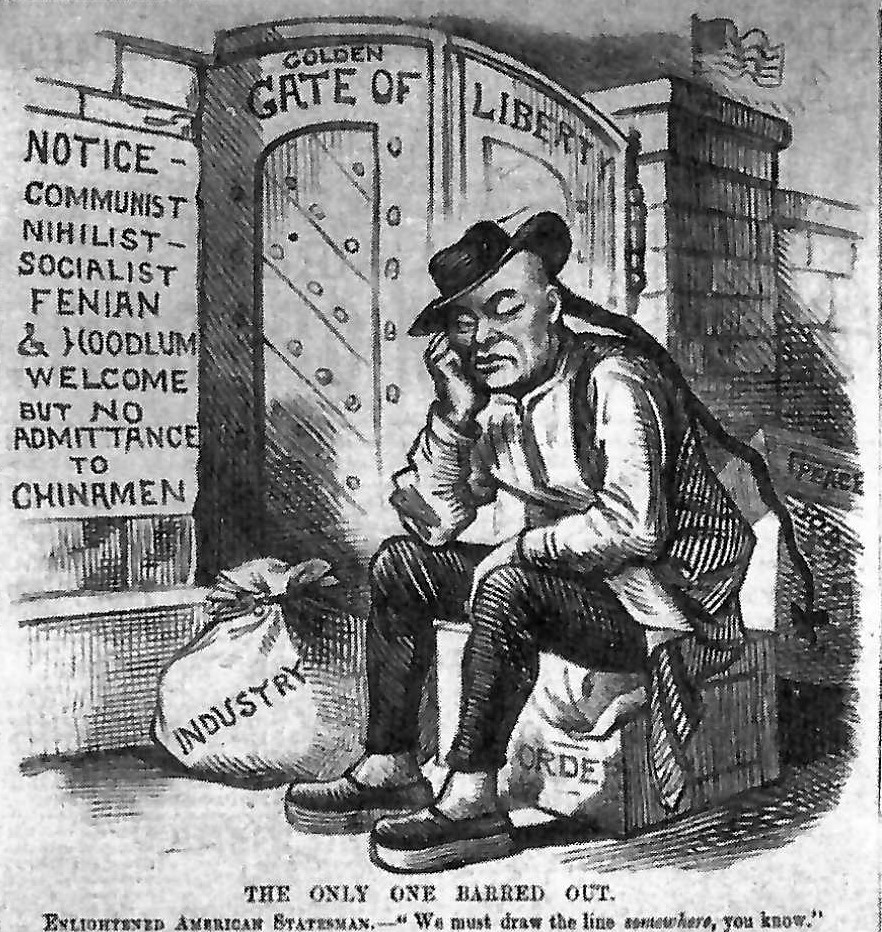
Lesson Based on the Movie Glory

“Let the black man get upon his person the brass letter, U.S., let him get an eagle on his button, and a musket on his shoulder and bullets in his pocket, there is no power on earth that can deny that he has earned the right to citizenship.” – Frederick Douglass

  • Read the packet prior to our class viewing of the Edward Zwick’s film Glory (1989)
  • Highlight/underline and annotate the most important points; be sure you review the questions before we view the film.
  • Pay attention and answer the questions in the time allotted following the end of the film.

Background: The issues of emancipation and military service were intertwined from the onset of the Civil War. News from Fort Sumter set off a rush by free Black men to enlist in U.S. military units. They were turned away, however, because a federal law barred Negroes from bearing arms for the U.S. Army. The Lincoln administration was concerned that the recruitment of Black troops would prompt the Border States (Delaware, Maryland, Kentucky, and Missouri) to secede. By mid-1862, however, the escalating number of former slaves (contrabands), the declining number of white volunteers, and the needs of the Union Army pushed the Government into reconsidering the ban. As a result, on July 17, 1862, Congress passed the Second Confiscation and Militia Act, freeing slaves who had masters in the Confederate Army. Two days later, slavery was abolished in all the territories of the United States. In the Emancipation Proclamation, issued on January 1, 1863, President Lincoln announced that Black men would be recruited into the U.S. Army and Navy. Abolitionist leaders such as Frederick Douglass encouraged Black men to become soldiers to ensure eventual full citizenship (two of Douglass’s own sons enlisted). By the end of the Civil War, roughly 188,000 Black men (10% of the Union Army) served as soldiers and another 19,000 served in the Navy. 40,000 Black soldiers died over the course of the war. There were 80 Black commissioned officers; 21 Black soldiers and sailors won the Medal of Honor by the time it ended. Black women could not formally join the Army but served as nurses, spies, and scouts, the most famous scout being Harriet Tubman. In addition to the perils of war faced by all Civil War soldiers, Black soldiers faced additional problems stemming from racial prejudice. Segregated units were formed with Black enlisted men commanded by white officers. Black soldiers were initially paid $10 per month from which $3 was automatically deducted for clothing, resulting in a net pay of $7. In contrast, white soldiers received $13 per month from which no clothing allowance was drawn. In June 1864, Congress granted equal pay to the U.S. Colored Troops.

The film: Glory tells the story of the 54th Colored Massachusetts Infantry Regiment, one of the most celebrated regiments of Black soldiers that fought in the Civil War. Known simply as “the 54th,” this regiment became famous after the heroic, but ill-fated, assault on Fort Wagner, South Carolina. Leading the direct assault under heavy fire, the 54th suffered enormous casualties before being forced to withdraw. The courage and sacrifice of the 54th helped to dispel doubt within the Union about the fighting ability of Black soldiers and earned this regiment undying battlefield glory. Of the 5,000 Federals who took part, 1,527 were casualties: 246 killed, 890 wounded and 391 captured. The 54th lost a stunning 42 percent of its men: 34 killed, 146 wounded and 92 missing and presumed captured. By comparison, the Confederates suffered a loss of just 222 men. Despite the 54th’s terrible casualties, the battle of Fort Wagner was a watershed for the regiment. Civil War scholar James McPherson states, that the “significance of the 54th’s attack on For Wagner was enormous. Its sacrifice became the war’s dominant positive symbol of Black courage. Their sacrifice sparked a huge recruitment drive of Black Americans. It also allowed Lincoln to make the case to whites that the North was in the war to help bring a “new birth of freedom” to all Americans.

  1. List 2 reasons why men joined the 54th?
  2. Why do you think the white officers volunteered to lead them?
  3. Why do you think Colonel Shaw wants his regiment to lead the deadly assault on Fort Wagner?
  4. In the scene just before the final attack, Shaw approaches a reporter and says, “Remember what you see here.” Write a brief newspaper entry including a headline, dateline, photo (or drawing, engraving, map, etc.) and caption, and a brief (3-4 sentences) description stating what the reporter saw at the Battle of Fort Wagner.

In-class group activity: We will divide randomly into 4 groups. Each group will be assigned one of the images below. Your group will determine how the image represents the significance of the 54th’s achievements and legacy. Each group will then report back to the rest of the class.

Russell Duncan. Blue-Eyed Child of Fortune: The Civil War Letters of Robert Gould Shaw. This book contains a 67-page biography of Shaw as well as 300 additional pages featuring the various letters Shaw wrote to family members, some of which are read in the movie.

Joseph T. Glatthaar. Forged in Battle: The Civil War Alliance of Black Soldiers and White Officers. Paperback. Louisiana State University Press (April 2000).

David Blight’s article, “Race and Reunion: Soldiers and the Problem of the Civil War in American Memory” (6, no. 3 [2003]: 26-38).

A: Storming Fort Wagner. Lithograph by Kurz & Allison, 1890

Image B: Civil War photograph of Sergeant-Major Lewis H. Douglas, one of the first troops of the 54th to climb over the walls of Fort Wagner during the attack.

Image C: Augustus Saint-Gaudens (one of the premier artists of his day) took nearly fourteen years to complete this high-relief bronze monument, which celebrates the valor and sacrifices of the Massachusetts 54th. Colonel Shaw is shown on horseback and three rows of infantrymen march behind. This scene depicts the 54th Regiment marching down Beacon Street on May 28, 1863 as they left Boston to head south. The monument was unveiled in a ceremony on May 31, 1897.

Image D: One of the 54ths casualty lists with the names of 116 enlisted men who died at the battle for Fort Wagner. National Archives, Records of the Adjutant General’s Office, 1780’s-1917

Teaching with Documents: The 1892 Lynching of an African American Man in New York State

The National Memorial for Peace and Justice in Montgomery, Alabama memorializes the over 4,000 African Americans murdered by vigilante terrorism in the American South between the end of Reconstruction in the United States in 1877 and 1950 and the more than 300 victims of racial terrorism in other states. Alabama, Arkansas, Florida, Georgia, Kentucky, Louisiana, Mississippi, North Carolina, South Carolina, Tennessee, Texas, and Virginia were the worst offenders, but there were also significant numbers of vigilante murders of African Americans in Illinois, Indiana, Kansas, Maryland, Missouri, Ohio, Oklahoma, and West Virginia. Eight hundred steel columns hang from the ceiling at the Memorial, each with the name of a county where a lynching occurred with the names of victims engraved on it. The only lynching in New York State during this period occurred in the town of Port Jervis, Orange County in 1892. Port Jervis is located on the Delaware River at the border of New York, Pennsylvania, and New Jersey. At the end of the 19th century, it was an important stop on the Delaware and Hudson Canal for barges transporting anthracite coal to Philadelphia and New York City from Scranton area coal mines and on the New York, Lake Erie and Western Railroad.

In his new book, A Lynching at Port Jervis: Race and Reckoning in the Gilded (New York: Farrar, Straus and Giroux, 2022), Philip Dray documents racial violence in Port Jervis about sixty-five miles northwest of New York City. The story of what happened to Robert Lewis, a 28-year-old African American teamster and coach driver on Thursday June 2, 1892 was largely told through the eyes of white residents and white-owned newspapers. Unfortunately, there are no sources that address the Black perspective on the lynching of Lewis by a white mob. A coroner’s inquest was held with witness testimony, but there is no surviving transcript. At least one witness, Officer Simon Yaple, is known to have named some of the members of the murderous mob, but none were ever tried or convicted of crimes.

Robert Lewis, described in the press as a powerful man of about five feet seven and 170 pounds, was accused of assaulting and sexually abusing a 22-year-old white woman named Lena McMahon on a riverbank where the Cuddeback Brook meets the Neversink River before it flows into the Delaware River just south of Port Jervis. Participants in the mob attack on Lewis claimed that before he was murdered, Lewis confessed to the assault and implicated McMahon’s white boyfriend, Philip Foley as an accomplice. Lewis was then lynched on East Main Street, now U.S. Route 6.

Lena McMahon reported to authorities that she was approached by a heavy-set Black man with a light complexion who she did not know, although he appeared to know her. In her testimony about the assault, McMahon claimed that she was “terribly frightened” because her assailant had an “evil look in his eyes” and that after she rebuffed him he grabbed her shoulder and covered her mouth in an attempt to keep her from screaming. Local boys interrupted the attack on McMahon and her attacker, presumably Lewis, picked up fishing gear and left the scene. While McMahon initially reported that the man who attacked her was a “tramp,” one of the boys later identified Lewis as the assailant.

Robert Lewis was seized by a posse on the towpath of the D & H Canal while riding on a slow moving coal barge, not a very likely escape plan and Lewis made no effort to avoid capture. He had fishing gear with him and said he was planning to spend the night fishing. Sol Carley, part of the posse that captured Lewis, claimed that he questioned Lewis while they were bringing him back to Port Jervis. According to Carley, Lewis confessed to what had taken place, but claimed that Foley, who he knew from the hotel where he previously worked, told him McMahon would be receptive to a sexual encounter and if he wanted a “piece to go down and get it.” Lewis seemed to think that the entire situation could be resolved if they questioned Foley and Lewis had a chance to speak to McMahon’s father.

The initial police plan was to bring Lewis to the McMahon home to see if she could identify him, although Lena McMahon continued to maintain her attacker was a stranger, probably a tramp, who was camping in the woods. This plan was interrupted when a rumor spread that Lena McMahon had died from her wounds, dooming Robert Lewis. A crowd of over 300 white men was gathered in downtown Port Jervis. Upon hearing the rumor, it was transformed into an uncontrollable mob and murdered Lewis. Port Jervis’ small African American community, in defiance of white authority, insisted on a proper funeral for Lewis and contributed funds for burial at Laurel Grove cemetery, while at least some whites tried to steal souvenir relics from his body.

Students can read, compare, and discuss newspaper coverage of the events in Port Jervis. In the age of #MeToo and Black Lives Matter, it is difficult to dissect aspects of events that took place over a hundred years ago, especially where the surviving documentation is sporadic and clearly biased. How much of Lena McMahon’s story should be believed? Does questioning her account reflect what we now recognize as gender bias? On the other hand, how much of her story was colored by racism? We know from similar accusations made by white women against Black men that led to the arrest and imprisonment of the Scottsboro Boys and the murder of Emmett Till, that in a climate of intense racism, white women protected their reputations by fabricating stories of disrespect or assault. It is hard to believe that Robert Lewis did not know that a “confession” meant a death sentence. A compelling question for students to consider is: What do the events in Port Jervis and the newspaper coverage tell us about race and racism in New York State during this period? Teachers should alert students that there are overtly racist comments in the newspaper articles, but that “negro” was in common usage at the time to describe the group of people we now call African American and was not a racist term.

Documenting the Lynching of Robert Lewis at Port Jervis, New York

Robert Jackson, a young colored man, was lynched in this village to-night, receiving swift retribution for an assault committed this morning on Miss Lena McMahon, daughter of John McMahon of this place. The crime occurred on the outskirts of the village, near the banks of the Neversink River. Two young negroes and a crowd of children were near by, but when the former tried to interfere Jackson kept them at bay with a revolver. He made his escape without trouble. Miss McMahon was left in an insensible condition. Her injuries may prove fatal. A posse started in pursuit of Jackson as soon as news of the assault spread . . . The capture of the fugitive was finally made at Cuddebackville, a small village on the Delaware and Hudson Canal about nine miles from Port Jervis, by Sol Carley, Duke Horton, and a man named Coleman. Jackson had borrowed a canal boat at Huguenot, and had reached Cuddebackville, when he was overtaken by the three men. On the way back to this village he confessed the crime, and implicated William Foley, a white man, who, he said, was in the conspiracy against Miss McMahon. Foley has been paying attention to the girl contrary to the wishes of her parents, and the feeling against him in this community is such that, should he be taken, a fate similar to that which has overtaken Jackson would probably be meted out to him. The news of the capture of Jackson soon spread through the town, and a large crowd of men collected about the village lock-up, awaiting the arrival of the prisoner. The word was whispered through the crowd “Lynch him, lynch him!” The suggestion spread like wildfire, and it was evident that the fate of the prisoner was sealed. On his arrival at the lock-up Jackson was taken in hand by the mob. The village police endeavored to protect him, but their efforts were unavailing. It was at first proposed to have Jackson identified by his victim before hanging him, in order to make sure of his guilt. With this object in view the mob tied a rope around his body and dragged him up Hammond and down Main Streets as far as the residence of E. G. Fowler, Esq. By this time the mob had reached a state of uncontrollable excitement, and it was decided to dispatch him without further ceremony. A noose was adjusted about his neck and he was strung up to a neighboring tree in the presence of over 1,000 people. For an hour the body hung from the tree, where it was viewed by crowds . . . Public sentiment on the subject of the lynching is divided, although a majority approve and openly applaud the work of the lynchers, declaring that a terrible warning was necessary to prevent future repetitions of the same offense.

  1. Where and when did these events take place?
  2. Who was Robert Jackson?
  3. What was Robert Jackson accused of?
  4. What happened to Robert Jackson?
  • What is the attitude of the New York Times toward these events? What evidence from the text supports your conclusion?

A negro was hanged by a mob in Port Jervis on Thursday night. He was charged with the crime of violence on a white girl, who is now said to be lingering between life and death. The crime was committed. The victim of it and two other witnesses charged the commission of it on a negro called by the name of the one who was lynched. The accused criminal was caught a long distance from the spot, while trying to run away. He was not, however, taken for identification before any of the persons who had accused him. A rumor prevails around Port Jervis that, after all, the wrong negro was captured and killed. Negroes are not easily distinguished from one another, unless by marks of identification carefully registered on scientific examination and then carefully compared when any man to whom they presumably refer is apprehended. There is very little doubt that the negro who was killed was the man who committed the crime, but there is some doubt that he was. That doubt, however slight, should harrow the memories and consciences of the men who lawlessly destroyed him. Aside from this fact, the offense of which the negro was accused but not convicted does not carry the punishment of death in this state by law. http://www.bethlehemchurch.com/admin/Law has found that capital punishment in cases of violence against women has been inflicted on innocent persons. The accusation is easily made. It is hard to disprove. A predisposition to believe it exists when it is brought against the lowly and the humble, the obscure or the repulsive. The pardoning power is not seldom required to rectify the errors of courts and juries in cases of violence to women. On these accounts the punishment has been reduced below the death penalty, to give time and government a chance to correct the wrongs of law. The event at Port Jervis, Thursday night, was a disgrace to the State of New York. The heinousness of the offense may explain but does not excuse the popular violence. This is supposed to be a government of law. Citizens are supposed to be law abiding. Moral culture and obedience to law are supposed to be an insurance that communities will not take the law in their own hands in any cases, and especially in cases which excite and inflame them. It may be roughly said, so far as lynch law is concerned in New York State, that the greater the provocation the less the excuse. The crime of which this negro was guilty cannot be overcharacterized, but there are worse crimes than it, by the definition of the law of the State of New York. A worse crime is murder. Murder is the destruction of a human being without warrant of law, with malice and premeditation, and not in self defense. The hanging of the negro in Port Jervis on Thursday night mates with that definition of the crime of murder. It was murder.

  1. Are there features in the Brooklyn Eagle article you would identify as racist? Explain.
  2. Compare coverage of the events in Port Jervis as reported in the Brooklyn Eagle the New York Times. How is it similar or different?
  • In your opinion, are there errors of fact in the Brooklyn Eagle account? Explain.

Port Jervis has not added to her good name by the brutal murder of a negro, who was, no doubt, no less brutal than the white men who took the law into their own hands and inflicted the death penalty without sentence. Has the Empire State fallen so low that criminals cannot be punished by due process of law? . . . There is no reason why a Northern State inhabited by justice-loving people, should be Southernized by a few misguided men in a country town. A heinous crime was charged against the negro, but there was no sworn evidence that he was the guilty person. Sympathy was strong for the young woman who, it is said, suffered from the negro’s violence, and this sympathy was proper and creditable; but it does not justify killing by mass meeting. It is to be hoped that every one of the men who actually took part on compassing the negro’s death will be apprehended and made to feel the hand of the law he has outraged.”

  1. How is coverage of the events in Port Jervis in this article from the Daily Standard Union, a Brooklyn, New York newspaper, similar to and different from coverage in the New York Times and the Brooklyn Eagle?
  • What is conspicuously missing from this excerpt from the article? In your opinion, what does that suggest about the viewpoint of the Daily Standard Union about the events?

Port Jervis Union: The Excitement in this village over the lynching of the negro, Robert Lewis has abated somewhat but further developments are awaited with the most intense interest. Attention is now centered upon the work of the coroner’s jury which was empanelled yesterday and whose duty it is not merely to investigate the manner of Lewis’ death but if possible to trace out the leaders and instigators of mob violence and to fix upon them the responsibility which belongs to them. Public sentiment and the honor and fair fame of the village demand that an earnest effort be made to do this. Now that the excitement attendant upon the awful events of Thursday has partially subsided a decided reaction has taken place in public sentiment and there are few who do not deplore and condemn the work of the mob. It is now generally admitted that the ends of justice would have been fully satisfied by leaving Lewis to be dealt with according to the regular forms of law, while our village would have escaped the world-wide notoriety which now attaches to it as the scene of one of the worst manifestations of mob-violence which has occurred in recent years. To be known as a community controlled and dominated by lawless elements is a penalty which we must now pay.

Middletown Daily Press: What a hard question to decide: the right or the wrong of Thursday night’s outrage in Port Jervis. One man, a father, and a county official, said: “It’s all right for some of us to moralize. But put yourself in that father’s place.” Another man, also a father: “Those men are worse than the negro. No matter how heinous the crime, can any human being think of a life being tugged along through public streets by a howling, half mad crowd which handled the rope, without saying ‘They’re brutes, and God does not sanction their work.’”

Middletown Argus: That the punishment so summarily meted out to the black ruffian who made Lena McMahon victim of his lust was more than merited, there is no division of sentiment . . . Lewis might better have been left to be dealt with by court and jury, inadequate though his punishment, if convicted, would be, but informal as was his exit from it, no one will say nay to it that the world is well rid of him.

Newburgh Daily Journal: The outbreak in Port Jervis is wholly without justification . . . The mob’s crime was an attack upon the cause of law and order. It remains with the criminal authorities to deal with the perpetrators of this crime as the law provides.

  1. The Port Jervis Union is a weekly newspaper. This issue was published two days after the events and coverage is on page 3. What is the primary focus of the article? What does this suggest about local attitudes toward the event?
  • What are the attitudes toward the events in Port Jervis expressed in newspaper coverage from neighboring towns?

A considerable number of persons, some of them possibly very worth citizens in a general way and others pretty certainly nothing of the kind, united on Thursday in Port Jervis to hang a negro who had committed a criminal assault upon a white girl. The feeling that actuated the mob was doubtless the same that is cited as defense for like lynching in the Southern States. It is that the penalty prescribed by law is not sufficient for the offense which is punished by lynching. It is not to be denied that negroes are much more prone to this crime than whites, and the crime itself becomes more revolting and infuriating to white men, North as well as South, when a negro is the perpetrator and a white woman the victim . . . It is unlikely that such a change in the law would diminish the number of lynchings. These are commonly committed by crowds which are animated by so furious an indignation that they would not wait for the law to take its course, even though the punishment were capital and certain, but would insist upon themselves doing their prisoner to death rather than to wait for months, or even weeks, to have him done to death by the law. This lawless temper is not commendable, and it ought to be discouraged by the law. Although it is probable that the good citizens of Port Jervis sympathized with the mob when they first learned of its murderous work, it is also probable that they are by this time ashamed of it and of their sympathy with it, and regard the lynching as more of a disgrace to the town than the crime it avenged, for which only a single brute was responsible . . . [I]t is admitted that the mob, misled by one of the rumors that spread in times of excitement, came very near hanging the wrong man, and this is a danger that always attends the unlawful execution of justice . . . [T]he lynchers by their precipitation seem to have operated a defeat of justice almost as great as if they had hanged the wrong man. The negro not only confessed his crime, but declared that he had been instigated to commit it by a white man whom he named. . . . The greater criminal, if he be a criminal at all, is likely to go scot free because the people of Port Jervis have hastily and carelessly hanged a man who, if he had been spared, might have proved a valuable witness. This is a danger of lynching that the lynchers have incurred which they themselves must confess to be a serious drawback to the success of their method of doing justice.

  1. How does the New York Times describe the people who participated in the lynching of Robert Lewis?
  2. In the opinion of the New York Times, why is the incident regrettable?
  • What evidence, if any, does the excerpt from the editorial suggest about the biases of the Times?

The coroner’s inquest over the lynching of Bob Lewis, the negro, terminated at 4:30 o’clock yesterday afternoon. The jury, after being out one hour, rendered the following verdict: “We find that Robert Lewis came to his death in the village of Port Jervis on June 2, 1892, by being hanged by some persons or person unknown to this jury . . . The thinking public doubts Miss McMahon’s story, as it also does Foleys . The circumstances are to conflicting. If the young woman had practically no knowledge of her surroundings from Wednesday to Thursday morning, then she must have been crazy. Not a living female would or could be hired to stay over night in Laurel Grove cemetery, as she stated she did. The stormy weather and the delicate physique of the girl would knock that story in the head. It is a fact that when Foley was arrested on the morning succeeding the assault of Miss McMahon, he trembled like a leaf and had to be supported. There is something back of the whole affair and those facts are held by Squire Mulley justice of the peace, who refuses to allow the contents of Foleys blackmailing letters addressed to Miss McMahon, to appear in print. Mr. Mulley says that the investigation of Miss McMahon and Foley will be strictly private.

  1. What was the verdict of the coroner’s inquest?
  2. What is the attitude of this newspaper to stories of the incident?
  • This article appeared in a Colorado newspaper. What does that suggest about reaction to the lynching?

To the Editor of the Daily Union:

Sir: As my name has been so freely circulated throughout the press of the country during he past few weeks in connection with the infamous scoundrel, Foley, who has been airing his ignorance and viciousness in frequent letters from the county jail, that I wish, once for all, in justice to myself, to refute and brand as malicious falsehoods the statements this person has seen fit to utter. I first became acquainted with Foley when he assumed to be a gentleman, through the introduction of a mutual friend. He paid me attention, and I was foolish, as other young girls have been, to believe in his professions of friendship, and when I, in the indiscretion of youth, had some trifling difficulty with fond and loving parents who endeavored to give me wise counsel and advice, resolved to leave home, this inhuman monster egged me on and endeavored to carry into execution his nefarious scheme to ruin and blacken my character forever. When I discovered “the wolf in sheep’s clothing,” the true character of the parody of manhood, I at all risks and perils resolved to prosecute him as he so richly deserves. That resolution I still maintain, and I wish to assure the public that the maudlin, sentimental outpourings from this person, who, relying upon the fact that I was once his friend, has seen fit to make me the victim of extortion and blackmail, have no effect whatever on me, and it will not be my fault if he does not receive the punishment he so richly deserves. There is nothing to prevent this man writing letters, and I do not consider it either wise or discreet to pay any attention to them. I simply desire to say that his insinuations and allegations are falsehoods; that my relations with him have been those only of a friend. God only knows how much I regret that. I cannot have my reputation as an honest, chaste, and virtuous girl assailed by this villain without a protest, and I ask all right-thinking people who possess these qualities to place themselves in my position and then ask if they would act differently than I have done. The evil fortune that has overtaken me has been no fault of my own, and I trust that the light of truth will reveal this man as he truly is, the author of all my misfortune. I do not intend to express myself again to the public concerning this matter, nor pay any attention to what this man may say or do. All I desire is peace, and the consideration and fair treatment that should be extended to one who has suffered untold misery, and whose whole life has been blighted by one whose heartlessness and cruelty is only equaled by his low cunning and cowardice. LENA M’MAHON.

  1. Who is Lena McMahon?
  2. What prompted her to write this letter?
  3. What is missing from the letter?
  • What does the missing part tell us about events in Port Jervis?

H. Port Jervis Lynching Indictments. New York Times, June 30, 1892
The Grand Jury of Orange County to-day indicted nine persons in the Port Jervis lynching case. Two of these were officers of the village . . . Five of the indictments are for assault and the rest for riot.

Arrested for the Port Jervis Lynching. New York Times, July 1, 1892
Bench warrants for the arrest of five men indicted by the Grand Jury, and alleged to have been in the party who lynched the negro in this place, were issued to-day . . . The indictment is regarded as the weakest that could have been made.

Port Jervis Lynchers Not Indicted. New York Times, September 30, 1892
The Orange County Grand Jury reported to-day to Judge John J. Beattie. They said they had not indicted the Port Jervis lynchers of the colored man Robert Lewis. The reason was that the Port Jervis people had failed to give the evidence necessary to indict.

  1. What was the final resolution of the Port Jervis lynching?
  • In your opinion, what does this tell us about race and justice in New York in this period?

References      

Dray, Philip. 2022. A Lynching at Port Jervis: Race and Reckoning in the Gilded (New York: Farrar, Straus and Giroux, 2022).

Disciplinary Literacy, Trade Books, and Culturally Responsive Teaching in Middle Grades Social Studies

Disciplinary literacy, which emphasizes teaching students the skills and strategies used by practitioners, has become more prevalent in U.S. schools over the last 15 years. Therefore, teachers need to be deliberate as they assist students to think and write like practitioners (Shanahan & Shanahan, 2008). The National Council for the Social Studies (NCSS) has placed an emphasis on disciplinary literacy in its College, Career, and Civic Life (C3) Framework for Social Studies State Standards (NCSS, 2013a).

            Emphasizing disciplinary literacy means social studies teachers need to give careful thought and consideration in designing learning experiences to develop their students’ historical, civic, economic, and geographic thinking skills (NCSS, 2013a). For some, this will mean redefining their classroom practices. Incorporating disciplinary literacy practices is complicated by the fact that many students are not reading on grade level.

Our intervention is centered on using trade books focusing on civil rights activists that address the racial discrimination Black Americans faced immediately after the U.S. Civil War. Students read excerpts of the trade books and additional sources as a whole class and in groups. They utilized these texts to answer analysis prompts where they used evidence to support their arguments. In this article, we share both our intervention and the successes from the project.

The demographics in U.S. public schools have dramatically changed in the 21st century. White majorities in schools have given way to student populations that are more diverse. This is due in part to immigration patterns to the United States. With the changing demographics in the United States, social studies teachers need to reconsider how they design classroom instruction. One approach is to incorporate culturally responsive teaching, which is defined by Geneva Gay (2000) as “using the cultural knowledge, prior experiences, frames of reference, and performance styles of ethnically diverse student to make learning encounters more relevant to and effective for them” (pg. 29). Additionally, culturally responsive teaching emphasizes the need for high expectations and academic achievement for culturally diverse students, which reflects the empowered school culture described by Banks (2019). 

Gay (2000) calls for teachers to scaffold and connect ethnically and culturally diverse students with the curriculum of the varied academic subjects. Doing so helps teachers to achieve the transformative approach to multicultural education described by Banks (2019). In the transformative approach, “the structure of the curriculum is changed to enable students to view concepts, issues, events, and themes from the perspective of diverse ethnic and cultural groups” (Banks, 2019, p. 64). If social studies teachers are to move beyond the additive and contributions approaches to multicultural education, it is necessary to consider how to incorporate the experiences and viewpoints of minorities beyond a single month in the year (King & Brown, 2014). In the social studies, this would entail using a variety of resources to authentically represent different groups’ values and perspectives throughout the curriculum. Texts that reflect students’ cultures act as mirrors. This allows students to see themselves in their U.S. history curriculum (Bishop, 1990).

There are several key components of culturally responsive teaching for social studies teachers to consider. Effective instruction in the social studies includes primary and secondary sources that allow students to analyze different groups’ perspectives and beliefs about historical and contemporary issues. Doing so provides students with the information to develop a nuanced understanding of an issue and helps to prepare them to work with people from different backgrounds in our pluralistic democratic society (Banks, 2019; Gay, 1994). By focusing on their culture through reading assignments, students can also analyze and critique historical and contemporary power structures in U.S. society and thus equip them with the knowledge to take civic action to address social, cultural, economic, and political inequities (Ochoa-Becker, 1996). One of the approaches to addressing ethnic and cultural diversity in the classroom identified by Gay (2000) is the use of trade books as instructional tools.

            The term trade book refers to books, other than textbooks, that are available in retail establishments. Trade books include informational texts, picture books, and graphic novels (McGowan & Guzzetti, 1991). Not only are trade books more engaging than the typical social studies textbook, but they are also better written (Palmer & Stewart, 1997). Trade books highlight individuals and events frequently excluded from traditional textbooks (Chick, 2008). Trade books are not shallow in content and difficult to read (Berkeley et al., 2016; Tracy, 2003).

Trade books enable teachers to focus on a specific individual or event in depth. Diverse perspectives can be accessed by using several trade books in a curated text set about a specific event or time (Palmer & Stewart, 1997). The diversity of available trade books, in content, format, and readability, offers teachers an opportunity to select texts that best match their students’ reading and learning needs (Liang, 2002; Saul & Dieckman, 2005).

For social studies teachers, trade books offer students a chance to step into a new time or place (Beck & McKeown, 1991) to meet lesser-known historical figures and make emotional connections to the events depicted (Chisholm et al., 2017). It is through this emotional connection that trade books can be used as tools to develop students’ historical empathy skills, which is the effort to better understand historical figures, their actions, decisions, and lived experiences (Endacott & Brooks, 2013). Trade books also offer social studies teachers a way to teach disciplinary literacy by requiring students to analyze for perspective, bias, and purpose (Shanahan & Shanahan 2008).

            As mentioned previously, in culturally responsive pedagogy, teachers employ varied sources that celebrate the history and lived experiences of the culturally diverse students in the classroom. Trade books are an excellent way to do this. For students of color, historical figures who look like them are often portrayed as victims, with little agency and impact on U.S. history (King, 2020). This is not the mirror we want our students to see. To counter this image, teachers should use texts that present people of color impacting their world. This is the framework we utilized to design our study.

We designed a year-long project for the 2021-2022 academic year in which a sixth-grade teacher would use trade books to thematically teach the concept of civil rights in the United States from Reconstruction to the present. We envisioned thematic teaching to be the examination of a specific concept, in this case civil rights, while still teaching U.S. history chronologically. Thus, the thematic teaching approach was embedded into the existing content taught in the grade level. We chose to focus on the civil rights theme because we wanted students to recognize that the civil rights movement in the 1950s and 1960s did not exist in a vacuum. There were events, individuals, and groups who strove for civil rights long before Dr. King.

We determined that trade books would be an effective way to address this theme, as there are books written for young people that address all of the eras of U.S. history. Many of them highlight the struggles and achievements of culturally diverse individuals. To identify high quality trade books aligned with the sixth-grade curriculum and the civil rights theme, we first referred to the NCSS Notable Trade Book lists. All trade books were read, evaluated with regard to both project goals and text quality, and were agreed upon by the two researchers and the teacher.

The thematic teaching through our project was conducted at the Academy (a pseudonym), a new public charter school located in a medium-size city in the Southern United States. At the time of this project, there is only a sixth-grade class of 100 students at the time of our project. The Academy’s mission statement is clearly aligned with the principles of culturally responsive teaching. The school mission is socially justice oriented, seeking to empower their students to be agents of change.

Black students represent 93% of the Academy’s sixth grade class. The remaining 7% include students who identify as Latinx, white, and Asian. The social studies teacher, Ms. Edwards (a pseudonym), identifies as a white female and has more than ten years of experience teaching social studies in both middle school and high school settings. We should acknowledge that both researchers identify as white, one a white male and the other a white female.

            The learning activities were co-constructed with the participating teacher. The three of us crafted an instructional plan that was both reflective of content that addressed the state standards, incorporated the selected trade book, reflected both the school’s mission, and the teacher’s understanding of the students’ learning needs. We helped the teacher monitor student work and aided with instruction, when requested. Based on the fact that the students’ completed work when we were present did not greatly differ from their work when we were not in the classroom, we posit that our participation in class instruction had little impact on the students’ performance.

This paper explores the results of the first two eras addressed in curriculum: Reconstruction and the Progressive Era. The trade books chosen for these units included Henry Louis Gates, Jr.’s (2019) Dark Sky Rising: Reconstruction and the Dawn of Jim Crow and Walter Dean Myers and Bonnie Christensen’s (2008) Ida B. Wells: Let the Truth Be Told. Dark Sky Rising, a non-fiction chapter book, is written for the young adolescent reader and contains numerous primary sources embedded into the narrative. It explores the rise and fall of African American civil liberties during the Reconstruction era. Ida B. Wells: Let the Truth Be Told (Myers & Christensen, 2008) is a 2009 NCSS Notable Trade Book. It is a picture biography of Ida B. Wells’s life and includes her childhood, education, work as a journalist and suffragette, as well as her efforts fighting the lynching of Black Americans.

We used the trade books as anchor texts in the two units. In the Reconstruction unit, Dark Sky Rising (Gates, Jr., 2019). was used to explore literacy tests, poll tax, Plessy v. Ferguson, and Jim Crow segregation laws designed to keep African Americans second-class citizens in the latter 1800s. During the second unit, students read the trade book Ida B. Wells (Myers & Christensen, 2008) and watched videos about Wells to examine how violence was used as a tool to maintain white hegemony in the South.

Excerpts from Dark Sky Rising (Gates Jr., 2019) were used due to the book’s length. A whole class read-aloud strategy was used for both Dark Sky Rising (Gates Jr., 2019) and Ida B. Wells (Myers & Christensen, 2008). Students also did partner readings of sections from both trade books. They worked together to complete tasks that required them to synthesize information found in the trade books to explain how policies were created to disenfranchise African Americans and how violence was used to maintain these social inequalities.

There was evidence that two years’ worth of disruptions due to the COVID-19 pandemic impacted the students’ literacy skills. It was apparent in the interactions between the teacher and students that there was also a discrepancy between expectations in the middle school and the elementary school. Students were initially resistant to reading informational texts, synthesizing information, and writing to convey their understanding. Over the course of the year, the students’ resistance was reduced, and their work reflected improved literacy skills.

It was clear that they were not used to completing tasks like the ones assigned. Their written responses were short and rarely in complete sentences (see Figure 1):

Figure 1: Student Example 1, Impact of Plessy vs. Ferguson

Despite the brevity of the students’ answers, the majority of students’ responses were correct, indicating that they were able to successfully read the trade books and articulate responses to questions focusing on the obstacles African Americans faced.

There were encouraging signs from the first two handouts that with simple modeling from the teacher and researchers, some of the students included references from the trade book and primary sources to support their arguments. Students would add the page number where they found their answers to the questions (See Figure 2):

Figure 2: Student Example 2, Impact of Poll Taxes and Literacy Tests

By the end of the first two units, almost all students were consistently using evidence from sources to support their arguments, and they were doing so in complete sentences. Additionally, students made subtle thematic arguments regarding how different civil rights activists worked to address racial discrimination.

One other item of note was that in addition to strengthening students’ disciplinary literacy and historical thinking skills, they also started to discuss historical figures in three dimensional terms. Often, middle school students see historical figures as dead characters who lacked hopes and dreams (Clabough et al., 2017). These students started talking about the historical figures, Frederick Douglass from the first project and Ida B. Wells from the second project, in three dimensional terms in the second unit’s summative assessment. That assignment tasked students with drawing a Janus figure for Frederick Douglass and Ida B. Wells while also answering questions about these two individuals’ backgrounds and advocacies. The trade books and resources selected through the first two units were designed to highlight how and why both historical figures advocated for civil rights.

The students’ writing showed tremendous progress within the course of a month. Most were writing in complete sentences by the end of the Janus figure activity (See Figure 3):

Figure 3: Student Example 3, Janus Figure Assessment

 The majority of the students cited evidence at the end of the sentences from the trade books and the resources used. The students consistently wrote about Frederick Douglass and Ida B. Wells in three dimensional terms by capturing events in their childhood and family life, as well as their values and beliefs about civil rights issues.

            When social studies teachers talk about thematic teaching, they often speak of a dichotomy between chronological instruction and thematic instruction (Turan, 2020). Our work in this project suggests a different approach, one where teachers do not have to sacrifice chronological teaching to embrace thematic instruction. The units highlighted in this project were taught in a chronological order. However, they both included a focus on the struggle for African American civil rights, using the selected trade books as anchor texts. As demonstrated in their Janus figures, the students were able to make thematic connections between the two individuals. The theme was not diluted by teaching the units chronologically, and the chronology of the content was not lost in examining a theme. This project demonstrates that, at least in thematic teaching, you can have your cake and eat it too.

            Social studies education has long embraced using trade books as instructional tools. There are quite a few articles describing the potential benefits of using trade books in the middle grades social studies class (Clabough & Sheffield, 2022; Wilkins et al., 2008). However, there is little research within the last twenty years that outlines how these potential benefits play out in the middle school classroom.

We found in our work at the Academy that using the trade books was an effective method to engage students in disciplinary literacy. The students demonstrated the ability to gather information from sources and draw informed and supported conclusions. They also began to employ historical empathy, a highly complex skill, with regard to the African American leaders studied in the Reconstruction and Progressive Era units. The results from this project indicate that the articles extolling the potential benefits of trade books in the social studies classroom were well-founded.

Students need opportunities to explore their culture in meaningful ways (Gay, 2000). The exploration of culturally responsive trade books offers students a way to empathize with varied groups’ lived experiences, which is also an important aspect of historical empathy (Endacott & Brooks, 2013). Additionally, drawing on trade books that address diverse cultures helps to cultivate an inclusive learning environment that values all students.

The sixth-grade students were actively engaged in our project through class discussions during read alouds and group work analyzing trade books and supplementary sources. The content being explored focused on African Americans’ lived experiences with racial discrimination. Students were able to see how historical figures analyzed public policies and took civic action, thus demonstrating for the students the practical necessity of being able to complete complex reading tasks. Finally, students gained the skills needed as future democratic citizens to take civic action as change agents to address social injustices (NCSS, 2013b).

            During our time with the students at the Academy, the importance of starting small with building students’ disciplinary literacy skills and giving them space to grow became increasingly obvious. Within a month, the students went from writing sentence fragment responses in the first two tasks to consistently articulating their answers in complete sentences with references to support their arguments. This transformation was accomplished from support and modeling by the teacher and researchers. The exploration of culturally responsive trade books also allowed the students’ historical empathy skills to be strengthened as they could articulate historical figures’ values, beliefs, and advocacies. Social studies teachers need to strive for students to engage in disciplinary literacy in order to examine the experiences and achievements of marginalized groups and to explore complex topics within the U.S. history curriculum. Avoid the assumption that just because students are not reading on grade level, or struggle with writing, that they cannot engage in historical analysis. The students’ growth and engagement with the content that we observed in the first month of school suggests that with the right support, students can successfully grapple with complex historical content.

Banks, J. (2019). An introduction to multicultural education (6th ed.). Pearson.

Beck, I. L., & McKeown, M.G. (1991). Research directions: Social studies texts are hard to understanding: Mediating some of the difficulties. Language Arts, 68(6), 482-490.

Berkeley, S., King-Sears, M.E., Vilbas, J., & Conklin, S. (2016). Textbook characteristics that support or thwart comprehension: The current state of social studies texts. Reading and Writing Quarterly, 32(3), 247-272.

Bishop, R.S. (1990). Windows and mirrors: Children’s books and parallel cultures. In K. Holmes (Ed.), Perspectives on teaching and assessing language arts (pp. 83-92). Illinois Association of Teachers of English.

Chick, K.A. (2008). Teaching women’s history through literature: Standards-based lesson plans for grades K-12. NCSS.

Chisholm, J.S., Shelton, A.L., & Sheffield, C.C. (2017). Mediating emotive empathy with informational text: Three students’ think-aloud protocols of Gettysburg: The Graphic Novel. Journal of Adolescent & Adult Literacy, 61(3), 289-298.

Clabough, J., & Sheffield, C. (2022). An unspeakable act: Disciplinary literacy, racial literacy, and the Tulsa Race Massacre. Research Issues in Contemporary Education, 7(3), 67-103.

Clabough, J., Turner, T., & Carano, K. (2017). When the lion roars everyone listens: Scary good middle school social studies. Association for Middle Level Education.

Endacott, J., & Brooks, S. (2013). An updated theoretical practical model for promoting historical empathy. Social Studies Research and Practice, 8(1), 41-58.

Gates Jr., H.L. (2019). Dark sky rising: Reconstruction and the dawn of Jim Crow. Scholastic Focus.

Gay, G. (1994). At the essence of learning: Multicultural education. Kappa Delta Pi.

Gay, G. (2000). Culturally responsive teaching: Theory, research, and practice. Teachers College Press.

King, L.J. (2020). Black history is not American history: Toward a framework of Black historical consciousness. Social Education, 84(6), 335-341.

King, L.J., & Brown, K. (2014). Once a year to be black: Fighting against typical Black History Month Pedagogies. The Negro Educational Review, 65(1-4), 23-43.

Liang, L.A. (2002). On the shelves of the local library: High-interest, easy reading trade books for struggling middle and high school readers. Preventing School Failure, 46(4), 183-188.

McGowan, T., & Guzzetti, B. (1991). Promoting social studies understanding through literature-based instruction. The Social Studies, 82(1), 16.

Myers, W.D., & Christensen, B. (2008). Ida B. Wells: Let the truth be told. Amistad.

NCSS. (2013a). The College, Career, and Civic Life Framework for Social Studies State Standards: Guidance for enhancing the rigor of K-12 civics, economics, geography, and history. Author.

NCSS. (2013b). Revitalizing civic learning in our schools. Retrieved from https://www.socialstudies.org/position-statements/revitalizing-civic-learning-our-schools

Ochoa-Becker, A. (1996). Building a rationale for issues centered education. In R. Evans & D.W. Saxe (Eds.), Handbook on teaching social issues (pp. 6–13). NCSS.

Palmer, R.G., & Stewart, R.A. (1997). Nonfiction trade books in content area instruction: Realities and potential. Journal of Adolescent & Adult Literacy, 40(8), 630-641.

Saul, E.W., & Dieckman, D. (2005). Choosing and using information trade books. Theory and Research into Practice, 40(4), 502-513.

Shanahan, T., & Shanahan, C. (2008). Teaching disciplinary literacy to adolescents: Rethinking content-area literacy. Harvard Educational Review, 78(1), 40-59.

Tracy, J. (2003). Racing through history. Journal of Education, 184(2), 63-68.

Turan, B. (2020). Thematic vs. chronological history teaching debate: A social media research. Journal of Education and Learning, 9(1), 205-216.

Wilkins, K.H., Sheffield, C.C., Ford, M.B. & Cruz, B.C. (2008). Images of struggle and triumph: Using picture books to teach about the civil rights movement in the secondary classroom. Social Education, 72(4), 177-180.

The Failures of the Recovery from the Great Recession

When Barack Obama took over as President, there were fears that the United States was heading for a re-run of the Great Depression. The financial meltdown that became apparent during calendar year 2008 had sparked a dramatic recession – which has come to be known, with 20-20 hindsight, as the Great Recession. When Obama took office, the economy was hemorrhaging 700,000 jobs a month. The unemployment rate had climbed to 9 percent and was still increasing. Something had to be done.

Obama’s program passed the House and Senate in March of 2009. It was just enough to stop the bleeding and begin what turned out to be a painfully slow recovery. But because of a combination of Democratic timidity and Republican opposition, the size of the macroeconomic stimulation contained in the Recovery Act was much too small. In order to get the 60 votes needed to defeat a Republican filibuster, the Obama Administration had to pare back their proposed spending increases and tax cuts in order to satisfy the deficit hawks among the Democratic majority.

The result was a historically slow recovery which, the writers believe, was the reason the House flipped to the Republicans in 2010, the Senate flipped to the Republicans in 2014, and one of the reasons Donald Trump was elected President at the end of Obama’s two terms. This paper details the macroeconomic impact of the Obama Recovery program and compares several important macro-economic indicators from that recovery (2009-2017) to previous recoveries from recessions in the post-World War II era. The variables investigated include the ratio of investment to gross domestic product (GDP), the rate of growth of productivity, the ratio of consumption to GDP, the unemployment rate, the capacity utilization rate, the employment-to-population ratio, and the rate of growth of real GDP.

The results of the comparisons are striking. Real GDP growth was slow through 2016. Investment incentives were severely damaged by the housing bubble during the years 1995-2005, followed by the housing bubble meltdown during the years 2005-2009. Thus, during the Obama recovery, housing investment barely budged, reducing the overall level of investment. This led to a miniscule productivity growth rate. Meanwhile, consumption spending which is the key incentive for the revival of investment during business cycle upswings rose slowly as well. It also took a long time for the unemployment rate to fall to its pre-recession level.

This disappointingly sluggish recovery was the culmination of a number of long run trends that had slowed the economy during the entire period since the early 1970’s including the long-term slowdown in GDP growth per capita since the early 1980s.

During the Obama recovery, the unemployment rate declined very slowly. Obama won re-election but up and down the ballot – including in many state legislatures and the House of Representatives beginning in 2010 – Republicans cashed in on the impatience of citizens with the slow pace of recovery. The economy did not get back to “normal” until 2016 but it was too late for the Democrats. Trump was able to ride to a razor thin victory in part on the strength of disappointment by many people who had voted for Obama – both rural whites in key states like Wisconsin and Michigan who switched to Trump, as well as Black voters whose turnout fell in Detroit, Philadelphia, Pittsburgh and Milwaukee with devastating electoral consequences for three crucial battleground states (Krogstad and Lopez, 2017).

When President Obama took office, all eyes were focused on the short-run challenge of the Great Recession. Here’s how his Council Of Economic Advisers stated it, a year later, in the Economic Report of the President, 2010:

“In December 2007, the American economy entered what at first seemed likely to be a mild recession. … [R]eal house prices (that is, house prices adjusted for inflation) had risen to unprecedented levels, almost doubling between 1997 and 2006. The rapid run-up in prices was accompanied by a residential construction boom and the proliferation of complex mortgages and mortgage-related financial assets. The fall of national house prices starting in early 2007, and the associated declines in the values of mortgage-backed and other related assets, led to a slowdown in the growth of consumer spending, increases in mortgage defaults and home foreclosures, significant strains on financial institutions, and reduced credit availability.

By early 2008, the economy was contracting. Employment fell by an average of 137,000 jobs per month over the first eight months of 2008. Real GDP rose only anemically from the third quarter of 2007 to the second quarter of 2008.

Then in September 2008, the character of the downturn worsened dramatically. The collapse of Lehman Brothers and the near-collapse of American International Group (AIG) led to a seizing up of financial markets and plummeting consumer and business confidence. Parts of the financial system froze, and assets once assumed to be completely safe, such as money-market mutual funds, became unstable and subject to runs. Credit spreads, a common indicator of credit market stress, spiked to unprecedented levels in the fall of 2008. The value of the stock market plunged 24 percent in September and October, and another 15 percent by the end of January. [O]ver the final four months of 2008 and the first month of 2009, the economy lost, on average, a staggering 544,000 jobs per month, the highest level of job loss since the demobilization at the end of World War II. Real GDP fell at an increasingly rapid pace: an annual rate of 2.7 percent in the third quarter of 2008, 5.4 percent in the fourth quarter of 2008, and 6.4 percent in the first quarter of 2009” (ERP, 2010: 26-27).

Here is how President Obama himself described the crisis that greeted him when he took office:

“Last January, (2009) years of irresponsible risk-taking and debt-fueled speculation—unchecked by sound oversight—led to the near-collapse of our financial system. We were losing an average of 700,000 jobs each month. Over the course of one year, $13 trillion of Americans’ household wealth had evaporated as stocks, pensions, and home values plummeted. Our gross domestic product was falling at the fastest rate in a quarter century. The flow of credit, vital to the functioning of businesses large and small, had ground to a halt. The fear among economists, from across the political spectrum, was that we could sink into a second Great Depression” (ERP, 3).

Later in the same message he noted that there were also long-term problems that his administration had to confront:

“At the same time, long before this crisis hit, middle-class families were under growing strain. For decades, Washington failed to address fundamental weaknesses in the economy: rising health care costs, growing dependence on foreign oil, an education system unable to prepare all of our children for the jobs of the future. In recent years, spending bills and tax cuts for the very wealthiest were approved without paying for any of it, leaving behind a mountain of debt. And while Wall Street gambled without regard for the consequences, Washington looked the other way.

As a result, the economy may have been working for some at the very top, but it was not working for all American families. Year after year, folks were forced to work longer hours, spend more time away from their loved ones, all while their incomes flat-lined and their sense of economic security evaporated. Growth in our country was neither sustained nor broadly shared. Instead of a prosperity powered by smart ideas and sound investments, growth was fueled in large part by a rapid rise in consumer borrowing and consumer spending” (ERP, 5-6).

The Council of Economic Advisers elaborated a bit more on these long-run problems:

“…even before the crisis, the economy faced significant long-term challenges. As a result, it was doing poorly at providing rising standards of living for the vast majority of Americans…Beginning around 1970, slower productivity growth and rising income inequality caused incomes for most families to grow only slowly. After a half-decade of higher growth in the 1990s, the real income of the typical American family actually fell between 2000 and 2006” (ERP, 28).

As to what had caused the increase in inequality and slower productivity growth over the long run, the Council members were silent. They did, however, identify a rising share of debt-financed consumption as the problem for the decade since 2000:

“The expansion of the 2000s was fueled in part by high consumption. [T]he share of GDP that takes the form of consumption has been on a generally upward trend for decades and reached unprecedented heights in the 2000s. The personal saving rate fell to exceptionally low levels, and trade deficits were large and persistent. A substantial amount of the remainder of GDP took the form of housing construction, which may have crowded out other kinds of investment. Such an expansion is not just unstable, as we have learned painfully over the past two years. It also contributes too little to increases in standards of living. Low investment in equipment and factories slows the growth of productivity and wages” (ERP, 29-30).

In order to assess whether the Obama Administration’s plan for recovery from the Great Recession was a success or failure, one must first explain how to judge success or failure. In the Economic Report of the President for 2017, Obama’s Council of Economic Advisers certainly argued that what they had done since January 2009 had been a great success. Here is how they argued:

“Over the two terms of the Obama Administration, the U.S. economy has made a remarkable recovery from the Great Recession. After peaking at 10.0 percent in October 2009, the unemployment rate has been cut by more than half to 4.6 percent as of November 2016 … Real gross domestic product (GDP) per capita recovered fully to its pre-crisis peak in the fourth quarter of 2013, … As of November 2016, the economy has added 14.8 million jobs over 74 months, the longest streak of total job growth on record. Since private-sector job growth turned positive in March 2010, U.S. businesses have added 15.6 million jobs. Real wage growth has been faster in the current business cycle than in any since the early 1970s” [ERP: 217: 21].

The forceful response of the federal government to the crisis in 2008 and 2009 helped stave off a potential second Great Depression by setting the U.S. economy on track to rebuild, reinvest, and recover. Everything the Obama Council of Economic Advisers marked in their 2017 report is correct. Their emphasis on the importance of both the fiscal stimulus of the Recovery Act, and the temporary payroll tax holiday is not misplaced. Unfortunately, because of the political constraints on big deficits and the almost universal opposition of the Congressional Republicans, the Obama Administration had to be content with a fiscal stimulus, despite being the largest in the post-World War II economy, turned out to be woefully insufficient.

What was left out of the Council of Economic Advisers’ celebration of the successes of the post 2009 recovery was a sense of how the post 2009 period – the period of recovery according to the National Bureau of Economic Research’s Business Cycle Dating Committee – compared with recoveries from previous recessions. In general, it is essential that such comparisons be made across the board so that we can judge whether a particular set of policies was successful or not. The economy did recover. By the time Obama left office in 2017, all economic indicators were significantly better than they were when he took office. If that is all the evidence that is needed, then every President from Truman to Obama, except Jimmy Carter, George H.W. Bush and Donald Trump, represents an economic success story.

However, if we are going to use the comparative analysis, we have to compare apples to apples. Our comparative data will cover the quarters of recovery — from the trough to the peak. We will compare the data for the recovery from the Great Recession with previous recoveries going back to the 1961-70 period. As always, we will use the quarters of recovery as identified by the NBER’s Business Cycle Dating Committee.

The next, and most significant question is: What are the standards of success? We have already indicated that the rate of growth of real GDP per capita is a crucial element of economic success. But growth has never been smooth. From the initial discovery back in 1819 that there is a “business cycle,” it has been apparent that economies organized by some variant of free-market capitalism grew by fits and starts surging forward in periods of growth, only to have them interrupted by what were called in the 19th century “crises.” Long run economic growth was powered by such surges of expansion. It is during these surges (officially called recoveries in the literature these days) that improvements in productivity occur for the most part because of high levels of private investment.

Investment and productivity growth represent the “supply side” of economic growth. But investment actually does dual duties because it is the most dynamic element in aggregate demand. When it is rising rapidly (evidenced by a high ratio of investment to GDP) it stimulates an increase in aggregate demand. When that ratio falls, it causes slowdowns and even recessions. These swings in investment have ramifications via the multiplier effect on consumption, by far the largest contributor to the “demand side” of economic growth. While investment changes introduce the major dynamic into the system, it is the growth of consumption that sustains it. Sometimes, export surges can play an important role and during wartime government spending plays a major role as well.

Meanwhile, productivity growth is the process that enables economic growth. All investments both in physical and human capital increase the capacity of the economy to produce. To the extent that the investment utilizes the newest technology, it plays a major role in increasing productivity. An increase in productivity makes it possible for wages to increase without cutting into profits, and for profits to increase without depressing wages. Thus, a higher rate of productivity growth during a period of economic recovery indicates that the economy is doing well, whereas a slowdown in productivity growth indicates the opposite. Though journalists, politicians and the public usually see GDP growth as the key to an economy’s success, from an economists’ point of view the gold standard of success is a high rate of productivity growth – because that facilitates higher economic growth and a rising standard of living.

So the rate of growth of productivity and the ratio of investment to GDP are both extremely important indicators of economic success. For investment, the standard of success is whether there is a relatively high ratio to GDP, which would show investment playing a very positive role. A relatively low ratio to GDP shows that investment is failing to provide the important dynamic element. The ratio of consumption spending to GDP shows how a growth spurt is sustained.

Our final standards of success relate to how close our economy comes to meeting its potential during a period of expansion. The usual standard of success, and the one that often has important political ramifications, is the civilian unemployment rate. Unemployed resources represent a waste of potential. In this paper, we choose to use three variables representing three different ways to measure the closeness to potential experienced during a recovery: unemployment, capacity utilization and the employment to population ratio. Though unemployment is the one most quoted in the media, there has always been an argument within the economics profession about how much unemployment is “voluntary.” Voluntary unemployment is not a waste of potential as the individual making the decision is unwilling to commit that potential to employment.

To further complicate the idea that the civilian unemployment rate measures a waste of human resources, we have the argument introduced by Milton Friedman that there is a “natural” rate of unemployment. That concept has been joined by the idea that there is a “non-accelerating-inflation rate of unemployment” (or NAIRU). At either or both of these rates, which have never been precisely identified numerically and which have changed from time to time, one could argue that the economy is not wasting resources because rates of unemployment below either the “natural” rate or the NAIRU are unsustainable.

In order to avoid arguing about how much of measured unemployment is truly involuntary, we also present the capacity utilization rate. This is a true measure of deficiency of aggregate demand because except for some minimal downtime for either routine maintenance or re-tooling, excess capacity is a clear waste of economic resources. Finally, the employment to population ratio avoids the knotty issue of how many people without jobs are truly not in the labor force. It captures the discouraged workers who never get counted in official unemployment statistics while still underestimating the under-utilization of human resources because it fails to measure involuntary part-time work. We believe all three of these statistics can give us a sense of how close to optimum utilization of resources an economy comes during a period of expansion. We also note that the impact of government spending, as evidenced by the data, was insufficient to propel a vigorous recovery given the severity of the downturn and the deep dive in the investment to GDP (I/GP) ratio.

With this plan, we can now turn to actually measuring the recovery from the Great Recession against previous recoveries starting with the 1961-70 recovery. The quarters between the troughs (1961, 1970, 1975, 1982, 1991, and 2001) and peaks (1969, 1973, 1980, 1990, 2001, and 2007) provide our data for the comparisons with the recovery from the Great Recession. In order to avoid the impact of compounding over recoveries of different lengths, we utilize averages over the course of each recovery as the basis for comparisons.

To assess the recovery from the Great Recession, we begin in the second quarter of 2009, and end when Obama left the White House in the first quarter of 2017. Even though the recovery did not end until the Covid-19 pandemic threw the economy into a very deep recession in the second quarter of 2020, our job is to describe the economy during Obama’s administration. First look at the ratio of gross investment to GDP. The reason we use gross investment rather than net investment is because even though the depreciation part of gross investment does not involve any net increase in the capital stock, the capital bought to replace that part of the capital stock that is “wearing out” will fix the newest technology and thus contribute to economic growth. In addition, the spending to replace wearing out capital has a multiplier effect just like any other spending.

Taking every recovery going back to 1961, all recoveries showed an average I/GDP ratio above 17 percent except for the 1961-70 recovery where investment as a percentage of GDP was below that level. The recovery from the Great Recession was significantly lower than the previous recoveries averaging just over 16 percent.

But that does not fully capture the seriousness of the problem. When President Obama took office, the I/GDP ratio was 12.7 at the trough of the Great Recession. Unfortunately, unlike some earlier recessions (1974 and 1982 for example), when the ratio rebounded dramatically (reaching 17% in 1976 and over 20% in 1984). It took three years between 2009 and 2012 for the I/GDP ratio to reach 15.5%. It averaged only 16.2 percent of GDP for the entire period through 2017Q1 and in fact never broke 18% until after 2017. The reason for the sluggish recovery of investment is easy to see, the fall in residential housing investment that had been the proximate cause of the Great Recession. From a ratio of 6.6 % of GDP in 2006, housing investment plummeted to 2.6 % of GDP at the depth of the Great Recession and had slowly climbed only to 3.9 % of GDP by the end of President Obama’s second term. This ratio was lower than the previous nadir of residential investment as a percentage of GDP at the end of the 2001 recession (4.8%). If housing investment had just returned to that level, overall investment would have broken 18% significantly earlier.

Because investment is the driving force of the economy’s dynamic, we should expect that the sluggish recovery of the I/GDP ratio to have a significant impact on the rate of growth of productivity, the rate of growth of the economy, and the variables that measure how close to potential (sufficiency of aggregate demand) the economy is. Sure enough, the numbers bear this out. The rate of growth of productivity was most dramatic in the 1961-70 recovery, averaging over 3 percent per quarter. After disappointing numbers in the 1970s, the rate of growth of productivity averaged 2 percent or higher per quarter over the three recoveries beginning in 1982 – averaging 2.6 percent between 2001 and the end of 2007 which was the peak before the Great Recession. Unfortunately, the disappointing numbers from the 1970s returned with a dismal 1.1 percent average in productivity growth over the entire recovery period through the first quarter of 2017. That coupled with disappointing numbers for unemployment, (7.3 percent average) capacity utilization (75.8 percent average) and especially the employment-to-population ratio (58.9 percent average) combine to explain the disappointing overall per capita GDP growth.

Except for the recovery from the dot-com bubble recession (2001-2007), every recovery going back to the 1960s had experienced per capita GDP growth averaging 2.5 percent or better. But as the economy struggled to slowly rise from the trough of the Great Recession the rate of growth of per capita GDP averaged only 1.4 percent per quarter through 2017. That is even lower than the 1.9 percent in the 2001-2007 recovery.

The unemployment rate had been trending upwards since the 1961-1970 recovery, averaging over six percent per quarter beginning with the 1971-74 recovery until the recoveries of 1991-2000 and 2001-2007 where the rates were 5.5 percent and 5.3 percent respectively. Similarly capacity utilization has been trending down since the robust 86 plus percent in the 1961-70 period. After an upward move in the 1991-2000 recovery, it resumed its downward trajectory, ending up averaging the lowest since World War II over the recovery from the Great Recession. The same trend appears in the employment-to-population ratio, which jumped up to an average of 63 percent in the 1991-2000 recovery only to average 58.9 percent in the recovery since 2009.

This is where the insufficiency of the macro-economic stimuli engaged in by the Obama administration (and we repeat, we understand how they were politically constrained, especially after “the worst” of the Great Recession had passed and the economy was clearly in recovery) reveals itself. The extraordinary nature of the deep dive that occurred in investment and the growth of GDP called for a significantly bigger stimulus to aggregate demand than in previous periods. Government spending at levels similar to previous business cycle recoveries was not enough.

The only departure from previous government stimuli during recoveries was the increase in transfer payments. Unfortunately, this only has a multiplier effect through its impact on consumption but the data shows that the ratio of consumption to GDP was less than a half a percent higher than in the previous recovery. There is no question that the federal spending stimulus would have had to be much higher than it was for the recovery to have any hope of being as good as previous ones.

We contend that despite the laser-like focus of the Obama Administration on getting the economy moving again as symbolized by the Recovery Act’s unprecedented explicit efforts to use fiscal policy to induce a robust recovery (the Congressional Budget Office concluded that the Recovery Act provided a stimulus spending level of $739 billion), it did not come close to closing an aggregate demand shortfall that was estimated conservatively at $1.2 trillion.

It is also important to add that the Federal Reserve’s expansive monetary policy seemed to have no positive impact on investment, particularly the interest sensitive housing sector, given the free fall of the housing market after the collapse of the bubble – almost a textbook example of the simple argument that the Fed cannot push on a string.

Initially, the Recovery Act did what it was supposed to. The federal budget deficit ballooned to 9 percent of GDP in 2010 and the unemployment rate began to fall. But when the Recovery Act spending began to peter out, the Republicans who had taken control of the House in 2010 forced the Obama Administration to compromise and agree to a set of spending restraints knows as a “sequester.” The result was that the federal deficit, the major impetus to the economy when investment spending lags, fell so that by 2013 it was only a bit over 4 percent of GDP.

Thus, it took all the way to 2015 for the unemployment rate to get back to what it had been before the Great Recession. This long, laborious struggle by the economy just to get back to square one, no doubt due to the fact that the I/GDP ratio never achieved the peak it had reached in the previous four recoveries.

In this extraordinary period when the economy was attempting to dig itself out of the hole created by short-run financial meltdown and the bursting of a housing bubble that left residential investment way below recent levels for the entire course of the recovery, a much higher level of government stimulus would have been necessary. Obviously, the Obama Administration and its allies in Congress cannot be totally faulted for this because after 2010, Republicans were in control of the House of Representatives and after 2014, Republicans took control of the Senate as well. The Obama Administration did make efforts to get an infrastructure bill passed a number of times but the Republicans in Congress blocked them. Despite wholesale opposition, the Obama Administration was able to increase stimuli via a temporary suspension of two percent from the Payroll Tax. They were able to do this by delaying the automatic expiration date of the George W. Bush tax cuts, scheduled to sunset after 2010, for two years which got Congressional support for the payroll tax holiday and expansion of unemployment compensation. After 2013, some of those tax cuts were made permanent while the payroll tax holiday ended. Unfortunately, the initial proposal for the Recovery Act was much too low and in order to get 60 votes in the Senate to break a Republican filibuster against it, the initial proposal was cut back slightly.

The economy is not just numbers like GDP and Investment. Ultimately, the key to economic well-being is the real income of ordinary Americans. We believe that the statistic identified as the median income of year-round full-time workers is indicative. Beginning in the third quarter of 2009, by the first quarter of 2017, the weekly real earnings of workers over 16 had risen the grand total of 2.03% for an average of about .28% a year. These were significantly lower than in previous recoveries though it is fair to say, median income growth was very slow for the entire period after 1980.

With 20-20 hindsight, the initial bill should have had a section that called for spending the same amount again if after two years, the unemployment rate had not fallen substantially. Given that previous deep sharp recessions (1974, 1981-82) experienced strong rapid recoveries, such a provision might have been sold as “insurance” against such a sluggish recovery and might have passed. But of course, hindsight is always 20-20.

The unfortunate result of the fact that the recovery from the Great Recession was much too slow and that median incomes of ordinary Americans hardly budged during the recovery was the high level of dissatisfaction within large swaths of the American people. Though there are many reasons for the surprise victory of Donald J. Trump in the 2016 election, one element that clearly contributed to it was the failed recovery from the Great Recession.

References

ERP (2010). Economic report of the President. Council of Economic Advisers.

ERP (2017). Economic report of the President. Council of Economic Advisers.

Krogstad, J.M. & Lopez, M.H.  (2017, May 12). “Black voter turnout fell in 2016, even as a record number of Americans cast ballots.” Pew Research Center.

Bartolomé de Las Casas: Defender of the Indians

Dan La Botz

Reprinted with permission from NewPolitics.

Figure 1: Theodore de Bry’s illustrations to Las Casas’ Brief Account of the Conquest of the Indies.

Bartolomé de las Casas was born in 1484 in Seville, to a French immigrant merchant family that had helped to found the city. One biographer believes his family were conversos, that is, Jews who had converted to Catholicism. As a child, in 1493 he happened to witness Christopher Columbus’ return from his first voyage to the Americas to Seville with seven Indians and parrots that were put on display. Queen Isabella ordered the Indians to be returned to their native land.

Bartolomé’s father, Pedro de las Casas, joined Columbus on his second voyage and brought home to Seville as a present for his son Bartolomé an Indian. In 1502 Pedro took Bartolomé with him on the expedition of Nicolás de Ovando to conquer and colonize Española (in English the island of Hispaniola, today made up of the Dominican Republic and Haiti). Bartolomé conducted slave raids on the Taino people (who were virtually annihilated by the Spaniards) and was rewarded with land and became the owner of a hacienda as well as slaves. In 1506 he returned to the University of Salamanca, where he had previously studied, and then traveled to Rome where he was ordained, becoming a priest in 1507.

When in 1510 Dominican friars led by Pedro de Córdoba arrived in Santo Domingo, they were horrified at the Spaniards’ treatment of the Indians, the massacres, the brutality of slavery, and the intense exploitation of the natives and they denounced it. Las Casas rejected the Dominicans’ criticism and defended the encomienda system by which Spaniards distributed laborers to the conquerors.

In 1513, Las Casas joined the expeditions of Diego Velázquez de Cuéllar and Pánfilo de Narváez to conquer Cuba, acting as chaplain. He witnessed horrifying murders and torturers of the indigenous people. Once again, he received a reward, this time of gold and slaves. For a year he lived as both colonist and priest. Then in 1514, while studying the Book of Ecclesiasticus, he came across a passage that called his beliefs into question. It read:

Reading this passage — and no doubt meditating on the horrors that he had both participated in and witnessed — Las Casas suddenly decided to break with his past. He gave up his haciendas, his encomienda, his slaves. He began to encourage others Spaniards to do the same, but of course they refused and they resented him.,Las Casas then traveled to Spain to take his case to King Ferdinand, and he succeeded in having one meeting with him, but then the monarch died in 1516. Many of the other higher-ups in the Spanish state and Church, such the Bishop of Burgos, Juan Rodríguez de Fonseca, who controlled the Crown’s business in the Americas, were themselves encomenderos who profited from the labor of the indigenous and they rejected Las Casas’ appeals to protect the Indians. Fearing that the entire population of the Indies, the Caribbean islands, might be annihilated, Las Casas wrote his Memorial de Remedios para las Indias (Memorandum on Remedies for the Indies) to be presented to the regents who now rules, calling for a moratorium on all Indian labor to protect the indigenous people and allow the recuperation of their populations.

Convinced by Las Casas’ argument that the Indians needed to be protected, one of the regents, Cardinal Ximenes Cisneros, put the Carmelite monks in charge of the Indies. Las Cases himself was given the official title and position of “Protector of the Indians. Under pressure from Las Casas, in 1542 King Charles V promulgated the New Laws to protect the Indians from exploitation. 

King Carlos V, concerned about conditions in the Spanish American colonies decided to organize a debate between the two principal intellectuals on opposite sides of the question. Juan Ginés de Sepúlveda, claimed that the indigenous people of the Americas were barbarians: ignorant, unlettered, and unreasoning, incapable of learning anything except the simplest tasks. The Spaniards, he argued, being superior in intelligence and morality, had the right to make war on them and conquer them. The Indians were, he said, incapable of governing themselves. He argued that they were sunk in depravity, worshiping idols and engaging in human sacrifice. He quoted the Bible and other authorities to argue that in ancient times such people had been justly exterminated or enslaved. Natural law, he averred, dictated that the Spaniards, superior in intelligence and morality, should govern them.

In response, Las Casas either refuted Sepúlveda’s arguments, such as the claim that the indigenous Americans were ignorant and incapable of governing themselves, by providing evidence of their intelligence and self-government, or he argued, as in the case of idolatry and human sacrifice, that these practices had to be seen as demonstrating their religious inclination, their attempts to worship God. Las Casas denied the Spaniards’ right to ever invade, occupy, conquer, and subject the indigenous. He argued that the Spaniards’ wars against the Indians were unjust and therefore enslavement of the Indians was illegal and wrong, since only the captives of a just war could be enslaved.

De Las Casas and Sepúlveda Debate Treatment of the Indigenous Peoples of the Americas

Theologian Juan Ginés de Sepúlveda

Fray Bartolomé de Las Casas

“Among our Indians of the western and southern shores (granting that we call them barbarians and that they are barbarians) there are important kingdoms, large numbers of people who live settled lives in a society, great cities, kings, judges, laws, persons who engage in commerce, buying, selling, lending, and the other contracts of the law of nations . . . Reverend Doctor Sepúlveda has spoken wrongly and viciously against peoples like these, either out of malice or ignorance . . . and therefore, has falsely and perhaps irreparably slandered them before the entire world? From the fact that the Indians are barbarians it does not necessarily follow that they are incapable of government and have to be ruled by others, except to be taught about the Catholic faith and to be admitted to the sacraments. They are not ignorant, inhuman, or bestial. Rather, long before they heard the word Spaniard they had properly organized states, wisely ordered by excellent laws, religion and custom . . . Since, therefore, every nation by the eternal law has a ruler or prince, it is wrong for one nation to attack another under pretext of being superior in wisdom or to overthrow other kingdoms. For it acts contrary to the eternal law, as we read in Proverbs . . .  ‘This is not an act of wisdom, but of great injustice and a lying excuse for plundering others.”
  1. What term does Sepúlveda use to describe the indigenous people of the Americas?
  2. According to Sepúlveda, when are slavery and “booty” justified?
  3. What does Sepúlveda recommend for governance in the Americas?
  4. What evidence does De Las Casas offer to refute claims made by Sepúlveda?
  5. If you were in the audience during this debate, what questions would you ask them?
  6. Whose position do you agree with more? Why?

The Edible Primary Source: Food as a Medium to Teach History

Steven Jenkins

Whether it is a book, a quote, a painting or a picture, students are meant to study history through and from these meanings. While they each have validity and all have importance, some of these sources lack the relatability needed to encourage engagement in a students mind. Primary sources can be static. Stuck in the time period they were written and while their implication and effects ripple into the present they remain stuck in the time they were made, orated or created. However, what if educators used living mediums to illustrate historical processes. That is a medium that is used physically by people in the past with continual uses today. That medium, as the title suggests, is food.

            Food is somewhat of an easy to miss primary source. It is understandable of course because when comparing the constitution and a tomato, one packs an obvious greater historical punch. However, by considering primary sources as only a physical creation by a human who wrote, spoke or drew, the possibilities are limited. While the United States constitution has evolved beyond the bounds of the time it was created and has become the “living document” described in many classrooms today, so has the tomato.  So has any food. This essay will demonstrate how food is a living document to be adopted in the classroom. Food can be used in the classroom as a method of showing historical change, a method of instilling culturally responsive education into the curriculum as well as being an applicable mode of analysis to any historical period.

            Food history is first and foremost about a process. Food must be grown of course. It starts with a seed, the tending of young livestock, and reproduction for generations to provide for us. It is part of the story of humankind itself. The development of agriculture, that idea so central to understanding ancient civilizations like Mesopotamia or Egypt, has been neglected in education in post-Paleolithic age discussions. Humans have created the ability to grow their own sources of food and changed environments through irrigation, terraforming landscapes and breeding plants and animals for more desirable characteristics. Humans then harvest and process those items and create a dish using those ingredients. It is a quite profound process that still is practiced everyday whether the ingredients are sourced by the cook or not. More than that, humans have assigned meaning to our food. Humans have created cultures that have holidays that revolve around crop rotations and harvests. Humans have created dishes that are synonymous with certain cultures. People that come from the same ethnic or cultural background can share similarities beyond their geographical locations because of food. In the classroom, this is a pertinent example of the values that education wishes to attain generated through food.

            Food in education is a necessary mode to encourage multicultural thought and culturally sensitive pedagogies. Each student comes from diverse backgrounds and lived experiences. Honoring these is a great goal in education. As stated by Wiley-Blackwell about Culturally Responsive Teaching, “Culturally competent teachers are committed to learning about their students’ cultural resources, or funds of knowledge” (Wiley-Blackwell 1).  Food history can facilitate this. Having students research, explore and learn about foods or dishes that are part of their culture allow them to critically engage with the history that has made their diverse identities. They bring their knowledge and combine it with historical records, thus, bringing their culture as a source of learning for the entire class and the teacher. They get to educate their classmates and teachers about themselves and their history.

            Another issue that makes food history a great medium is its applicability. No matter the time period, individuals responded to the conditions of their time by changing their gastronomy. This can be represented in the classroom as evidence of the social changes that occur in various periods of history. For example, if a class is engaging in the topic of enslavement in America, food history can show the conditions of enslavement as well as perseverance of enslaved Africans. This can be done through okra. Okra, a crop originating in west Africa that has become synonymous with southern cooking in America, which has its roots in enslavement. Enslaved Africans taken from the continent brought with them okra seeds. Evidenced by the unfamiliarity with the crop by early European sources in Brazil, okra was seemingly foreign to them leading to the possibility that Africans resisted slavery by bringing okra seeds as contraband (Sousa & Raizad, 2020). Beyond that, okra was repeatedly described in the personal gardens of slaves and used as a form of medicine, syncretized religious practices as well as sustenance in the face of horrible malnutrition (Eisnach & Covey, 2019). In the post-civil war era, okra expanded outside of the plantations and became part of some of the first examples of enterprising formerly enslaved persons in the form of soul cooking. Some of the first sold cookbooks created by former slaves include okra in the form of gumbo and other dishes.  One of those cookbooks is titled What Mrs. Fisher knows about old southern cooking, soups, pickles, preserves, etc. This cookbook describes various methods of cooking with okra gained from Fisher’s experiences as a former slave (Fisher, 1881). Fisher had essentially used the abject horror of slavery as a means of self-enterprise, exemplifying the importance of food culture for formerly enslaved persons. Okra became part of a series of navigations of enslaved africans against the institutions of slavery. From its arrival in America okra was a matter of resistance. This is a historical case that could be added to curricula to show the nature of life in enslavement as well as the agency of enslaved persons in the Americas.

            There are plenty of other examples that could be listed out in which food can be used as a medium of examining historical periods however the importance is implementation in the classroom. The concept of food history can be used in countless ways. As described prior food is a process. A process that mirrors human growth and development. It informs the way people react to their social constraints. Those social constraints and events that form the unique cultures of each and every student in the classroom. Food history is an opportunity for culturally relevant pedagogies where students center food as a manner to present their identities. Food history is finally a manner of applicability. It is an aspect of the historical record that is forever present and forever important to the historical process for the individuals that experienced it. It is thus that teachers must examine food as a primary source in itself. A primary source that bends time to become a fountain of educational possibilities.

Eisnach, D., & Covey, H. (2019). Slave Gardens in the Antebellum South: The Resolve of a Tormented People. Southern Quarterly, 57(1), 11-23. Retrieved from https://www.proquest.com/scholarly-journals/slave-gardens-antebellum\-south-resolve-tormented/ docview/2553031701/se-2?accountid=10216.y

Fisher, A. & Katherine Golden Bitting Collection On Gastronomy. (1881) What Mrs. Fisher knows about old southern cooking, soups, pickles, preserves, etc. San Francisco: Women’s Co-operative Printing Office. Retrieved from the Library of Congress. Retrieved from https://www.loc.gov/item/08023680/.

Sousa, E., & Raizad, M. (2020). Contributions of African Crops to American Culture and Beyond: The Slave Trade and Other Journeys of Resilient Peoples and Crops. Frontiers in Sustainable Food Systems, 4. Retrieved from https://www.frontiersin.org/articles/10.3389/fsufs.2020.586340/full

Wiley-Blackwell. (2022) Multimodal Literacies: Fertile Ground for Equity, Inclusion, and Connection. Reading Teacher, 75(5), 603–609.

Holocaust Museum & Center for Tolerance and Education – Rockland Community College

You can find the Holocaust Museum and Center for Tolerance and Education at Rockland Community College through this link.

Legislation (A.472C /S.121B) will help ensure that New York schools are properly educating students on the Holocaust. The legislation directs the New York State Education Department to determine whether school districts across the state have met education requirements on instruction of the Holocaust, which have been required by law since 1994.It will also require NYSED to identify how non-compliant schools will close gaps in knowledge of the Holocaust in schools.

The Holocaust Museum & Center for Tolerance and Education is proud to offer a multitude of programs for Elementary School, Middle School and High School audiences as well as Professional Development for Faculty. We teach on topics ranging from the Holocaust to Genocide Studies, to Tolerance and Diversity. We customize our programs to suit the needs of your students, staff, and faculty. Our Education Department works with you to produce events and resources that will impact your school for years to come. We will help your school achieve the mandates by our New York Governor on Holocaust Education.

Led by our Director of Education, teacher training seminars provide introductory guidance and resources on best practices for teaching the Holocaust and Genocide (Grades 6-12) and the importance of Tolerance and Diversity (Grades K-5). We also offer more in-depth seminars for teachers who wish to explore new approaches and materials to support Holocaust and Genocide education for their students.

Our Anti-Bias & Sensitivity Training helps faculty and staff combat hate and intolerance personally, professionally, and publically. Our Director of Education and Historian in Residence offers customizable seminars that draw upon the history of the Holocaust to teach the lessons of tolerance, individual responsibility, and moral courage in the workplace as well as out in our communities. Please contact our Director of Education and Historian in Residence Linda Suss today to discuss how we can support the important work you do educating our community’s young people.

Antisemitism and racism are two facets of the disease of hatred. All forms of oppression that target individuals based on their identity share an equally distressing aim of creating a hierarchy ranking of the value of human life. We at HMCTE know that this is a categorically false and damaging way to understand the world. In our eyes, all people share the same inherent dignity, worthiness, and rights – no matter who they are or where they come from. If we only examine one facet of hatred, be it antisemitism, racism, sexism, ablism, ageism, or any other type of discrimination, we are ignoring the intersectionality or overlapping forces of hatred. Where one type of discrimination exists, others will come to thrive, too. That’s why we know that it is our duty to stand up for all people and to work together to create a more just and inclusive society for everyone.

Our theme for the 2022-23 school year was “Combating Hate and Propaganda.” Together we will help young people understand the historical context of building cultures of hate through propaganda and misinformation campaigns. We will explore this topic through the history of the Holocaust and other genocides and we will apply critical thinking to how we consume media today. Programs on Moral Courage are available, as well as other topics currently under development. In order to accommodate your school’s preference on programming and dates, we are already booking for the coming school year. Whether you are interested in a tour of our permanent exhibit, the Rockland County African American history exhibit, or other educational programs, we encourage you to reach out now to ensure a meaningful visit with your students next year.

Host our traveling exhibit on Resilience during the Holocaust at your school. Students will have the opportunity to engage with a little discussed perspective of this history: one of individual choices, struggle, and hope. Through the exhibit and accompanying activities, Resilience connects the history of the Holocaust to each of us on a personal level and inspires students to consider how they, too, can become resilient and show moral courage in the face of injustice.