United States Foreign Policy History and Resource Guide

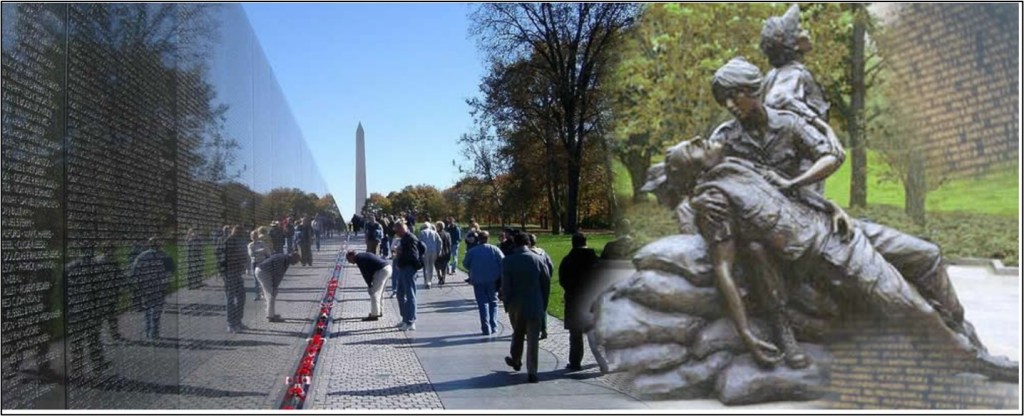
The Vietnam Memorial Wall and Women’s Memorial statue in Washington DC.

This website is designed with three purposes in mind. One is to provide a coherent overview of United States foreign policies, covering the nation’s wars, military interventions, and major doctrines over the course of some 250 years. While written for the general public and undergraduate students, it can be adapted for use in high schools. Each entry draws on the work of experts in the area of study, summarizing major developments, analyzing causes and contexts, and providing links to additional information and resources. 

The second purpose is to examine great debates over U.S. foreign policies and wars, focusing especially on leaders and movements advocating peace and diplomacy. Controversy has been the hallmark of U.S. foreign policy from the War for Independence to the wars in Afghanistan and Iraq in the 21st century.

The third purpose is to evaluate U.S. foreign policies and wars from a principled perspective, one that reflects “just war” and international humanitarian norms today. This is a history about the United States’ role in the world, but it does not define “success” and “progress” in terms of the advancement of national power and interests, even the winning of wars.

The website was launched in October 2015 by Roger Peace.  The Historians for Peace and Democracy became a sponsor the following month, and the Peace History Society, in June 2016. Contributors include Brian D’Haeseleer, Assistant Professor of U.S. History at Lyon College; Charles Howlett, Professor of Education Emeritus at Molloy College; Jeremy Kuzmarov, managing editor for CovertAction Magazine; John Marciano, Professor Emeritus at the State University of New York at Cortland; Anne Meisenzahl, a adult education teacher;  Roger Peace, author of A Call to Conscience: The Anti-Contra War Campaign; Elizabeth Schmidt, Professor Emeritus of history at Loyola University Maryland; and Virginia Williams, director of the Peace, Justice, & Conflict Resolution Studies program at Winthrop University. 

The website has a Chronology of U.S. Foreign Policy, 1775-2021 with links to pages with documents from the War of 1812 through the 21st century “War on Terror.”

There is no shortage of books, articles, and websites addressing the history of United States foreign policy. There is nevertheless, within the United States, a dearth of understanding and often knowledge about the subject. This is due in part to popular nationalistic history, which tends to obscure, overwrite, and sometimes whitewash actual history. 

The central assumption of this celebratory national history is that America “has been a unique and unrivaled force for good in the world,” as the historian Christian Appy described it. This assumption underpins the more muscular belief that the more power the U.S. acquires and wields in the world, the better. In other words, the U.S. should rightfully be the dominant military power in the world, given its benefic intentions and noble ideals. This flattering self-image is often buttressed by depictions of America’s opponents as moral pariahs – aggressors, oppressors, “enemies of freedom.” 

Celebratory national history is deeply rooted in American culture. As may be seen in the second sentence of the war memorial below, American armed forces are typically portrayed as fighting “the forces of tyranny” and upholding the principles of liberty, dignity, and democracy.

America’s opposition to “tyranny” has a long ideological pedigree. In the Declaration of Independence of 1776, Patriot rebels denounced the King of Great Britain for “repeated injuries and usurpations, all having in direct object the establishment of an absolute Tyranny over these States.” In fact, the British objective was to raise revenue from the colonies and curtail their smuggling. However oppressive particular acts, the British government was nonetheless the most democratic in Europe, with an elected House of Commons and established rights for Englishmen that had evolved over a 600-year period. The new American government continued to build on this democratic tradition, as did the British themselves. The idea that America represented “freedom” as opposed to “tyranny” nonetheless became an ideological fixture in the new nation, invoking a virtuous and noble national identity.

In its second 100 years of existence, the United States became a world power, joining the ranks of Old World empires such as Great Britain. As the U.S. prepared to militarily intervene in Cuba and the Philippines in 1898, President William McKinley declared, “We intervene not for conquest. We intervene for humanity’s sake” and to “earn the praises of every lover of freedom the world over.” Most lovers of freedom, however, denounced subsequent U.S. actions. The U.S. turned Cuba into an American “protectorate,” and the Philippines into an American colony. Rather than fighting to uphold freedom, the U.S. fought to suppress Filipino independence – at a cost of some 200,000 Filipino and 4,300 American lives.

A half-century later, at the outset of the Cold War, President Harry Truman asserted that the United States must “support free peoples who are resisting attempted subjugation by armed minorities or by outside pressures.” Truman highlighted the tyranny of the Soviet Union and its alleged threat to Greece and Turkey, but he utterly ignored the more widespread tyranny of European domination over most of Asia and Africa. In the case of Vietnam, the U.S. opted to side with the oppressor, aiding French efforts to re-conquer the country. Truman’s fateful decision in 1950 led to direct U.S. involvement in Vietnam fifteen years later.

In 1961, President John F. Kennedy famously proclaimed that the United States would “pay any price, bear any burden . . . to assure the survival and the success of liberty.” These appealing words reminded Americans of their mythic moral identity, but they hardly guided U.S. foreign policy. During the long Cold War (1946-91), the U.S. provided military and economic aid to a host of dictatorial and repressive regimes, including those in Cuba (before Fidel Castro assumed power), Nicaragua, Haiti, Guatemala, El Salvador, Argentina, Ecuador, Chile, Brazil, Zaire, Somalia, South Africa, Turkey, Greece, Iran, Pakistan, Indonesia, South Korea, South Vietnam, and the Philippines. The U.S. also employed covert action to help overthrow democratically elected governments in Iran, Guatemala, and Chile. Despite propping up authoritarian governments and undermining democratic ones, U.S. leaders described their allies as the “free world.”

In the 21st century, the rhetoric of fighting tyranny and upholding freedom has been grafted onto the “War on Terror,” declared by President George W. Bush in the wake of terrorist attacks in the U.S. on September 11, 2001. The attacks were carried out by individuals from Saudi Arabia and other friendly Arab states, but Bush directed public fears and anger toward wars against Afghanistan and Iraq. Unable to find weapons of mass destruction or ties to al Qaeda in Iraq, Bush reverted to the standard American rationale – promoting freedom. “As long as the Middle East remains a place where freedom does not flourish,” he declared on November 7, 2003, “it will remain a place of stagnation, resentment and violence ready for export.” 

Today, the U.S. is the world’s sole “superpower,” with the largest military budget, the most sophisticated weaponry, a network of over 700 military bases worldwide, and the capability to militarily intervene in other nations at will. The latter includes the frequent use of armed drones to assassinate suspected terrorists in countries with which the U.S. is not at war. Americans on the whole do not regard this overwhelming military power as a threat to other nations or global stability. British historian Nial Ferguson has commented that the “United States is an empire in every sense but one, and that one sense is that it doesn’t recognize itself as such.” The diplomatic historian William Appleman Williams described this dominant American worldview as “imperial self-deception.” 

Teaching “What to the Slave Is the 4th of July?” by Frederick Douglass: A Two-Part Student Led Lesson

Reprinted with permission (https://historyideasandlessons.substack.com/p/teaching-what-to-the-slave-is-the-66e?r=710fi&utm_campaign=post&utm_medium=web)

Now that Ron DeSantis has caused a widespread walkout by Florida college students defending both their right to diversity and the free exchange of ideas in the classroom, and he virtually outlawed any teaching of conflict in Black history, it is evident that he will run into serious roadblocks in his campaign to rule the whole country with an iron fist. The increasingly cloudy and claustrophobic atmosphere emanating from the formerly sunny state of Florida begs for an eloquent and big-hearted response. The following two-day student-led lesson will introduce American history students to one of our leading intellectuals and, arguably, the greatest speaker of the 19th century: America’s teacher, Frederick Douglass. He never fails to impress.

The assignment I give the students for the first day is to download and read the first 10 pages of “What to the Slave Is the Fourth of July?” They choose one sentence from each page for homework, write it down on a separate sheet of paper, and explain underneath each one why they chose it. They are to read to the end of the top paragraph of the second column of page 10. The students are asked to underline their sentences on the PDF. It is necessary to collect the homework at the beginning of the class in order to make sure each one of them did their own work. Since they had underlined their sentences on the PDF, the students did not need their homework for class. I asked the students to write the first 5 words of those sentences on the blackboard. I picked the students randomly by jumping around asking for their fifth sentence or their first sentence or their eighth sentence and so on. Each student was to sign their name and sit down. Before class I had drawn 10 vertical lines with one horizontal line across the middle, forming 20 boxes on the board for the students to write in. I placed two pieces of chalk under each vertical group of two boxes so that the writing could go faster. The teacher should know the speech inside and out to create an ease of discussion. It makes the class more interesting. While the students were writing the words they had to start at the beginning of their sentence and make sure that no one else had picked the same sentence. From the time the students were entering the class through the writing on the board, I played a song by the Melodians called “By the Rivers of Babylon.”

Once the students had finished writing on the board, they sat down, and I asked literally “Who has comments or questions?” Nothing more: no suggestions or hints. Usually, they remarked how impressed they were by Douglass’ intelligence and language, or they mentioned how understandable the speech was. They found it a shock to read the work of an escaped slave who could write with clarity and on such a high level of complexity. After the comments died down, I would ask the class to turn to page 6 and look at the bold indented passage in the first column. The students recognize the words of the tune they had just listened to. They appeared in the speech from 1852! I played the song again and asked why Douglass had quoted the verse. Some students might have heard the song because their parents or grandparents had played it at home: It is from the soundtrack of the movie “The Harder they Come” from 1972. Alternatively, some might know that it is the Old Testament Psalm 137 that Douglass quoted. I asked if there were any words they did not understand in the passage, or if someone had picked that passage or would like to comment on it, even if they had not picked it. Someone might want to know what Zion was or eventually someone would notice that the exiled Jews were asked to sing one of the songs of Zion, their homeland. Many thousands of Jews were enslaved in Babylon from 586 BCE to about 538 BCE. It was great insult to be asked to sing for their enslavers the students could conclude. Africa is Zion for Douglass someone might say.

Now it was time to begin analyzing the sentences that the members of the class had chosen. As I called on the students to read their sentences, I asked them to point out the page, the column, and first words of the paragraph where the sentence appeared. The students must read slowly and loudly so that the others can get the meaning. “Why did you choose that?” I asked. Often the student explained what it meant but not what attracted them to it. I would ask what they thought or why they liked it or impressed them or not. Sometimes, I would ask who else wanted to comment, but it is not possible to do that more than a few times because there is not enough time in a period to keep discussing one sentence. The students did not often choose the long period sentences that took up whole paragraphs. Most of those we would pick up later because they are the emotional heart of the speech.

When there is time at the end of each class, I asked the students for their favorite sentences and had them read these out loud. The speech is so powerful partly because the rhythm of the words, the internal rhymes and alliterations drive you on. Reading the “Fourth of July Oration” is a real learning experience: Douglass employs grand and deeply affecting rhetoric to illuminate wrongs of slavery. It also shows the great power of the Declaration of Independence despite its obvious hypocrisy. These contradictions have led to tragic cancellations of the Declaration by Nikole Hannah-Jones of The 1619 Project and others. The importance of the study of slavery and of the Declaration has been confused by these journalists who are not trained historians.

In the course of this exposition of my lesson on Douglass’s speech, I will discuss sentences frequently chosen by the students. We had to leave out much of the speech, but what we did in class explored the breadth and depth of the oration giving the students giving them the confidence that they had discussed the work in detail and that they had directed the learning themselves. I had them write a paper on the speech by first summarizing it, choosing 2 ideas in the speech and explaining what each meant and why they were important. They often produced wonderful papers because we had gone over the Oration in sufficient detail. They were comfortable in their interpretations and almost everyone was excited by the assignment. I chose one essay each year to go in our social studies magazine.

Now we are ready to dive into the speech itself.

At the beginning of the Oration, Douglass confesses his trepidations about the task before him. Despite his close relationship with the Rochester Ladies Anti-Slavery Society and the Corinthian Hall, where he had spoken many times, he declared, “The fact is ladies and gentlemen the distance between this platform and the plantation from which I escaped, is considerable. . .  That I am here today is a matter of astonishment as well as gratitude.” The students will know that he was born into slavery. “This, for the purpose of this celebration, is the Fourth of July.” “Why did you choose that?” I asked. The students will realize he is not speaking on July 4th. Instead, he said that he is protesting the day right from the start. Many versions of the speech on the web, in fact, begin with that sentence. He continues, “It is the birthday of your political independence and political freedom,” starkly using the second person plural that he was not speaking of his liberation, but theirs. All this the students can glean after you ask why did you choose that? He then compares the day to Passover when the Jews, the “emancipated people of God,” were delivered from bondage in Egypt. The students will notice that there are numerous quotes from and references to the Bible.

Douglass’ writing is so densely packed that the ideas rush at you as you read. He points out that the country is “young,” only “76 years old,” in 1852; That it is a topic for rejoicing, noting that a young river that can change its course more easily than an old river or a country thousands of years old. He adds that the nation is still in the “impressible stage of its existence . . . Great rivers are not easily torn from their channels worn deep by the ages . . . [but while] refreshing and fertilizing the earth . . . they may also rise in wrath and fury and bear away on their angry waves the accumulated wealth of years toil and hardship. . . As with rivers so with nations.” Recently floods and tornadoes have been ravaging wide swaths of land and forests in nearly every part of the US. From the waters and winds of Hurricane Katrina to the floods of Hurricane Sandy to the fires and droughts in the far West, we have seen unprecedented levels of destruction. Eliciting these resonances with open-ended questions such as why did you choose that or what does that remind you of should be straight forward. At some point in discussing the speech it will be clear that Douglass is setting the context for discussing the effects of the multifarious and wholly predictable dangers of slavery to the body politic of the young nation.

In the second paragraph of the second page, he turns to his duty to the 4th of July itself. Addressing his “Fellow citizens,” he introduces the history of the Revolution explaining that in 1776 “your fathers were British subjects” who “esteemed the English Government as the home government” which “imposed upon…its colonial children such restraints, burdens and limitations…it deemed wise, right and proper.” However, these acts produced a widespread reaction by the future revolutionists not “fashionable in its day” because the colonists did not believe in the “infallibility of government” but “pronounced the measures unjust, unreasonable and oppressive.”

“To side with the right against the wrong, the weak against the strong and with the oppressed against the oppressor! here lies the merit and one which seems unfashionable in our day . . .” Here, is the first burst of eloquence from Frederick Douglass. The internal rhyme and the rhythm of these lines stand out. Douglass could astound the listener in just a few words. His eloquence matched the gravity of the cause. His description of the Stamp Act protests and the protests against the Townshend Acts and the Tea Tax bring us back to the streets and the harbors of our colonial past connecting his listeners to our heritage of activism.

But the colonists “saw themselves treated with sovereign indifference, coldness and scorn . . . As the sheet anchor [heaviest anchor] takes a firmer hold when the ship is tossed by the storm, so did the cause of your fathers grow stronger as it breasted the chilling blasts of kingly displeasure.” But “like the Pharaoh whose hosts were drowned in the Red Sea, the British Government persisted in the exactions complained of . . . Oppression makes a wise man mad. Your fathers were wise men. They did not go mad . . . They became restive under this treatment . . . With brave men there is always a remedy for oppression. Just here the (startling) idea of the separation of the colonies from Britain was born!” However, the opposition Loyalists or Tories “hate all changes . . .  (b)ut silver gold and copper change! . . . amid all their terror and affrighted vociferations against it the alarming and revolutionary idea moved on and the country with it.” Are there words here you do not know, I ask. Mad of course refers to mental illness and restive means to be agitated. Vociferations are chants shouted by the demonstrators.

The revolutionists’ solution was to “solemnly publish and declare that these united colonies are and of right ought to be free and independent states and that they are absolved from all allegiance to the British Crown.” This is the famous core of the Declaration by Richard Henry Lee that is in the penultimate paragraph of the document. It rings with preternatural force shocking the sleepy 18th century kings and subjects in the monarchies of Europe. Many American and British historians who still claim in 2023 that the Americans were provincials who had no good reason to rebel, but over the course of the next 7 years the British learned they had to accept the wishes of these “naive” colonists.

Douglass continues “I have said that the Declaration of Independence is the ring-bolt [fastener] to the chain of your nation’s destiny, so, indeed I regard it. The principles contained in that instrument are saving principles. Stand by those principles, be true to them on all occasions in all places, against all foes and at whatever cost.” Students will realize that Douglass had great respect for the Declaration and the dogged persistence of the revolutionary forces.

Douglass says, “My business, if I have any this day, is with the present. The accepted time with God and His cause is the ever-living now.” A phrase I had to look up to confirm that it was Douglass”! “We have to do with the past only as we can make it useful to the present . . . Washington could not die until he had broken the chains of his slaves. Yet his monument is built up by the price of human blood and the traders in the bodies and souls of men shout — ‘We have Washington to our father.’– Alas that it should be so, yet so it is. ‘The evil that men do, lives after them, The good is oft’ interred in their bones.’” Douglass challenges his audience with that quote from Shakespeare: Mark Antony’s funeral oration for Julius Caesar.

He praises Washington for freeing some of his stolen human “property” before he died, but immediately pulls the compliment back by condemning the first president’s admirers for employing enslaved workers to build the Washington monument. “Can anyone comment on that?” I asked the students. Some members of the class might know that later the capitol building and the White House were also built by slaves. Now he is done with his task of recalling the Fourth of July.

“Fellow-citizens, pardon me, allow me to ask why am I called upon to speak here today? What have I, or those I represent, to do with your national independence? . . . I am not included within the pale of this glorious anniversary! Your high independence only reveals the immeasurable distance between us . . . The rich inheritance of justice, liberty, prosperity and independence bequeathed by your fathers is shared by you, not by me. The sunlight that brought light and healing to you, has brought stripes and death to me. This Fourth of July is yours not mine. You may rejoice, I must mourn. to drag a man in fetters into the grand illuminated temple of liberty and call upon him to join you in joyous anthems were inhuman mockery and sacrilegious irony. Do you mean, citizens, to mock me by asking me to speak here today?”

In discussing these lines above someone will point out that the stripes are the wounds caused by whips and also are the stripes on the flag. This was a common abolitionist trope utilized even in an Abecedarium, an alphabet book for children. 

“Are there any words you do not know?” I asked. The students will probably not know what a pale is. Those were the segregated areas where Jews were confined in the shtetls of Russian-Poland, but also more precisely in this case the English confined themselves in a pale after conquering Northern Ireland. The idea of “American exceptionalism” was clearly a commonplace in 1852. His sarcastic description of the “grand illuminated temple of liberty” is shocking to see in his 1852 speech. Americans, even then, had a bloated idea of the purity of American democracy. He goes right for the jugular: Douglass states his thesis as his duty to defend the slave and his condition.

He refers in the paragraph above the Psalm to the violent retribution that Yahweh ( a Jewish name for God) at the Hebrews’ request to be visited upon the Babylonians for enslaving them and mocking them, which is rarely quoted by Christians. The shocking lines which Douglass avoided are in the King James Version of the Old Testament. 

Then he quotes the first parts of Psalm 137 that we have encountered before: “By the rivers of Babylon, there we sat down. Yea! we wept when we remembered Zion. We hanged our harps upon the willows in the midst thereof. For there, they that carried us away captive, required of us a song; and they who wasted us required of us mirth, saying, Sing us one of the songs of Zion. How can we sing the Lord’s song in a strange land? If I forget thee, O Jerusalem, let my right hand forget her cunning. If I do not remember thee, let my tongue cleave to the roof of my mouth.”

I asked the students to recall the song we heard at the beginning of the class in the light of our analysis so far. “How can you interpret these words now?” I asked. The students will conclude that the enslaved Jews were mocked by the Babylonians who asked them to sing a song of their homeland, Zion – just as he is in America singing the praises of the white people’s freedom document while his people are enslaved.

“My subject, then fellow-citizens is American slavery. I shall see this day . . . from the slave’s point of view . . . I do not hesitate to declare… that the character and conduct of this nation never looked blacker to me than it does on this 4th of July! . . . (T)he conduct of the nation seems equally hideous and revolting. America is false to the past, false to the present, and solemnly binds herself to be false to the future.” He dares to “call into question and to denounce . . . everything that serves to perpetuate slavery, the great sin and shame of America.” Then, quoting his teacher, William Lloyd Garrison, “’I will not equivocate, I will not excuse’ . . . and yet no one word shall escape me that any man whose judgment is not blinded by prejudice, or who is not at heart a slaveholder, shall not confess to be right and just.”

The students will conclude that the Declaration from the past is the founding document but has been desecrated and tossed aside by the slave holders in power in the country from then, through the present and into the future. Anyone who finds slavery to be repugnant will discern the truth in his arguments.

In order to continue with the lesson, over the next few pages (from the last paragraph of 6 to the middle of the second column on page 9), every sentence and every word is crafted to thrill the reader with Douglass’s intelligence and skill and cringe in horror as he speaks the truth of the brutality of American slavery. Each passage is another lesson in the illogic of the excuses for the system and cruel treatment perpetrated on the Black population in our so-called democratic and freedom-loving land. I will provide the teacher with sentences and clauses comprising a bare bones narrative. But most of this, must be read aloud in class. These paragraphs are too dramatic and inspiring to skip over. Here is a precis of the next few pages. I quote some of the sentences, but the full power is in the reading. Be sure to have the students read them. They will be shocked at how the words help them keep the rhythm with both understanding and expression: The images, the sounds, and the meters carry them, pushing and pulling them along. Douglass’s energy is so intense that the quotes never lose their power.

“Must I undertake to prove that the slave is a man? . . . Nobody doubts it . . . There are seventy-two crimes in the State of Virginia, which, if committed by a black man . . . (no matter how ignorant he be), . . . (acknowledging) that the slave is a moral, intellectual and responsible being . . . It is admitted in the fact that Southern statute books are covered with enactments forbidding, under severe fines and penalties, the teaching of the slave to read or to write… When you can point to any such laws, in reference to the… dogs in your streets, (or) when the fowls of the air, when the cattle on your hills, when the fish of the sea, and the reptiles that crawl, shall be unable to distinguish the slave from a brute, then will I argue with you that the slave is a man!”

When you ask how the students understand this sentence you are not done until they can say “Even animals see the enslaved as men, but the slaveholders cannot.” The students discover that the enslaved are expected to know right from wrong, but animals are not expected to. “For the present, it is enough to affirm the equal manhood of the Negro race. Is it not astonishing that, while we are ploughing, planting and reaping, using all kinds of mechanical tools, erecting houses, constructing bridges, building ships, working in metals of brass, iron, copper, . . . having among us lawyers, doctors, ministers, poets, authors, . . . living, moving, acting, thinking, planning, living in families as husbands, wives and children, and, above all, confessing and worshipping the Christian’s God, . . . we are called upon to prove that we are men! . . . Would you have me argue that man is entitled to liberty? that he is the rightful owner of his own body?”

All the verbs, all the verbs strung together: An astonishing effect! So many powerful images in this paragraph.

“There is not a man beneath the canopy of heaven, that does not know that slavery is wrong for him.”

Here we must stop and make sure the last thought is clear. The students must interpret this last sentence. Is there a word you do not know in this? A canopy is a covering. All men are beneath the canopy of heaven. The analysis is not complete until the students state that no man wants to be a slave. The listeners are cornered. The orator has taken their minds hostage.

And now one of the most powerful passages of all. “[T]o work them without wages . . . to beat them with sticks, to flay their flesh with the lash, to load their limbs with irons, to hunt them with dogs, to sell them at auction, to sunder their families.” The paragraph is a masterpiece. This is a sonorous but brutal description of violence complete with startling images, crafted with alliterations and internal rhymes. As above the reader must ask: Is he arguing or not while he claims not to argue at all? “What, then, remains to be argued? Is it that slavery is not divine; that God did not establish it; that our doctors of divinity are mistaken? . . . Who can reason on such a proposition? They that can, may; I cannot. The time for such argument is past.”

And now the most famous paragraph: “What, to the American slave, is your Fourth of July? I answer: a day that reveals to him, more than all other days in the year, the gross injustice and cruelty to which he is the constant victim. To him, your celebration is a sham; your boasted liberty, an unholy license; your national greatness, swelling vanity; your sounds of rejoicing are empty and heartless . . . your prayers and hymns, your sermons and thanksgivings, with all your religious parade, and solemnity, are, to him, mere bombast, fraud, deception, impiety, and hypocrisy—a thin veil to cover up crimes which would disgrace a nation of savages. There is not a nation on the earth guilty of practices, more shocking and bloody, than are the people of these United States, at this very hour.”

“How do you comment on this?” I asked. It is a perfect description of systemic racism: Incontrovertible intersectionality. It is where Governor DeSantis’s views come to die.

“Go where you may, . . . for revolting barbarity and shameless hypocrisy, America reigns without a rival. Take the American slave-trade, . . . This trade is one of the peculiarities of American institutions. It is carried on in all the large towns and cities in one-half of this confederacy; and millions are pocketed every year, by dealers in this horrid traffic.”

Here Douglass refers to the euphemism, “the peculiar institution,” which is supposed to assuage the guilt of the leaders of the so-called southern “civilization.” It is the hackneyed trope of a racist attempting to endear himself to his audience by turning slavery into a peccadillo. Continuing, he quotes the proposed paragraph written by Thomas Jefferson for the Declaration of Independence but rejected by the Continental Congress calling slavery “piracy” [manstealing] and “execrable commerce.” “Are there words here you do not know?” I asked. Excrement is human waste. Nearing the end of this paragraph, he denounces the scheme of colonization that our “colored brethren should leave this country and establish themselves on the western coast of Africa!”

“Behold the practical operation of this internal slave-trade, (The slave drivers) perambulate the country, and crowd the highways of the nation, with droves of human stock…They are food for the cotton-field, and the deadly sugar-mill. . . Cast one glance, if you please, upon that young mother, whose shoulders are bare to the scorching sun, her briny tears falling on the brow of the babe in her arms. See, too, that girl of thirteen, weeping, yes! weeping, as she thinks of the mother from whom she has been torn! . . . suddenly you hear a quick snap, like the discharge of a rifle; the fetters clank, and the chain rattles simultaneously; your ears are saluted with a scream, that seems to have torn its way to the center of your soul! The crack you heard, was the sound of the slave-whip; the scream you heard, was from the woman you saw with the babe. Her speed had faltered under the weight of her child and her chains! that gash on her shoulder tells her to move on.”

The students will comment that this paragraph is filled with images and rings with sounds of whips and clanging chains. The powerful ideas are matched by the thundering rhetoric keep you on the edge of your seat.

Then: “I was born amid such sights and scenes. To me the American slave-trade is a terrible reality. When a child, my soul was often pierced with a sense of its horrors. I lived on Philpot Street, Fell’s Point, Baltimore, and have watched…this murderous traffic (which) is, to-day, in active operation in this boasted republic. In the solitude of my spirit . . . My soul sickens at the sight.”

Students will see how he brings this experience directly to our hearts. Is this the land your fathers loved, the freedom which they toiled to win? Is this the earth whereon they moved? Are these the graves they slumber in? Students will react to the emotion in the lines of his childhood memories. The paragraph and the lines of the poem are poignance beyond measure. The lines by the abolitionist poet, John Greenleaf Whittier, are a tribute to the lost glory of the American promise. It can make the reader cry. When activists say that the “personal is political” there is no better example than this memory of Douglass’s childhood traumas. This concludes the first day of the lesson.

The second day I would ask the students to finish the speech, choosing 5 more sentences from pages 11 to 15 and to find places in the first 10 pages that explain that the slave is a man. They also were asked to point out the structure of the speech: where does the introduction end and the conclusion begin? Where is the thesis? Here we discussed the major sections of the speech which they could identify as the introduction, the Revolution, the section in which the thesis is stated and the proofs of why the slave is a man and why slavery is wrong. The speech’s final sections Douglass argues that slavery is not divine, examines the politics of slavery, and the Constitution, delivers a summary, and a peroration (conclusion).

“But a still more inhumane, disgraceful, and scandalous state of things remains to be presented. By an act of the American Congress, not yet two years old, slavery has been nationalized . . .  (T)he Mason & Dixon’s line has been obliterated; New York has become as Virginia; and the power to hold, hunt, and sell men, women, and children as slaves . . . the liberty and person of every man are put in peril…. The oath of any two villains is sufficient, for black men there are neither law, justice, humanity, not religion. The Fugitive Slave Law makes mercy to them a crime; and bribes the judge who tries them. An American judge gets ten dollars for every victim he consigns to slavery, and five, when he fails to do so.”

“How can you comment on this?” I asked. This bribe is rarely mentioned in the standard discussion of the odious Fugitive Slave Law of 1850, which of course, was part of the Compromise of 1850. In 2021 the vicious Texas anti-abortion bill borrowed its form and method of enforcement to this law. The reward of $10,000 has been substituted for the $10 in the 19th century law. It deputizes the whole population of Texas to arrest anyone who aids in arranging for an abortion. Douglass points out that the magistrates for the fugitive slave law were acting like the Protestant, John Knox, denouncing the Catholic supporters of Mary Queen of Scots who were threatening to murder Queen Elizabeth.

The leading American ministers “have taught that man may properly be a slave that the relation of master and slave is ordained of God . . . and this horrible blasphemy is palmed off upon the world for Christianity.” “How do you think about this,” I asked. Black men slave or free walking down the street even in the North were subject to false identification, imprisonment, and enslavement. It became a religious duty to show no mercy! What an abomination and evisceration of religious belief and practice. Are these Evangelical Christians in the Texas legislature or in 1852 practicing the teachings of mercy and forgiveness?

Douglass answers the question: “For my part, I would say, Welcome infidelity! welcome atheism! welcome anything—in preference to the gospel, as preached by those divines. They convert the very name of religion into an engine of tyranny, and barbarous cruelty, and serve to confirm more infidels, in this age, than all the infidel writings of Thomas Paine, Voltaire, and Bolingbroke, put together, have done! These ministers make religion a cold and flinty-hearted thing, having neither principles of right action, nor bowels of compassion.”

“Do you know these names,” I asked? Some students might know Thomas Paine or Voltaire. Bolingbroke was also a free thinker, an 18th century term for atheists, agnostics, and deists. Here Douglass claims he would favor these anti-slavery free thinkers, Thomas Paine, and Voltaire and he adds the dissenter Viscount Bolingbroke, claiming they were all three at least sympathetic to the plight of the enslaved. If students have a question, bowels of compassion refers to the deepest recesses of the human body, a common 18th and 19th century expression. These last lines are really shocking coming from such a religious man as Frederick Douglass.

“At the very moment that they are thanking God for the enjoyment of civil and religious liberty, and for the right to worship God according to the dictates of their own consciences, they are utterly silent in respect to a law which robs religion of its chief significance and makes it utterly worthless to a world lying in wickedness.” “How would you interpret that,” I asked. The students will come to the conclusion that Douglass is emphasizing the hypocrisy of the leaders of the congregations and denominations in the United States.

Douglass continues: “The American theologian, Albert Barnes uttered what the common sense of every man at all observant of the actual state of the case will receive as truth, when he declared that ‘There is no power out of the church that could sustain slavery an hour, if it were not sustained in it.’” “How do you understand that?” I asked. The students will reach a conclusion that this is a very broad statement. It is a condemnation undercutting all the pronouncements of the pro-slavery divines. In contemporary terms, this is a thought based in the ideas of systemic racism and embedded in the American economy and society. It is an example of intersectionality between religion and politics, an unmistakable interdependence, however much Ron DeSantis might argue to the contrary. In a previous passage, Douglass had pointed out that there were many minister abolitionists in Britain where the monarchy opposed slavery since the 1820s but very few in America where the weight of the church was behind the slaveholders. Above on page 12 of the speech he calls them out: the many pro-slavery American ministers and the few anti-slavery heroes in the United States.

And now we are coming to the ending of the speech. There are just two topics left before the Summary and Conclusion: America’s hypocrisy toward foreign nations and the nature of the Constitution.

Douglass turns to yet another theater of hypocrisy in the United States. “Americans! your republican politics, not less than your republican religion, are flagrantly inconsistent. You boast of your love of liberty, your superior civilization . . . You hurl your anathemas [condemnations] at the crowned headed tyrants of Russia and Austria, and pride yourselves on your democratic institutions, while you yourselves consent to be the mere tools and bodyguards of the tyrants of Virginia and Carolina. You invite to your shores fugitives of oppression from abroad, honor them with banquets, greet them with ovations, cheer them, toast them, salute them, protect them . . . You profess to believe ‘that, of one blood, God made all nations of men to dwell on the face of all the earth’ . . . yet, you hold securely, in a bondage [a seventh part of the inhabitants of your country] which, according to your own Thomas Jefferson ‘is worse than ages of that which your fathers rose in rebellion to oppose’.”

The students will understand that Douglass contrasted the boasts of equality including in the Declaration of Independence that “‘all men are created equal’ yet (they) steal Black wages and deny the common ancestry of Adam that all men are of one blood.” “How do you interpret that quote from the Bible?” I asked. The students will conclude that a single origin for all humanity [Adam], which we now know to be African, proves the equality of all men. Finally, Douglass quotes Jefferson’s comments in his book, Notes on the State of Virginia, on the oppression of the enslaved as being worse than the so-called slavery of the Patriots to England.

If a student chooses the sentence containing “as it ought to be interpreted the Constitution is a glorious liberty document,” it is likely they will not agree with Douglass. Currently, almost all textbooks and historians contend that the Constitution is pro-slavery. Douglass’s interpretation is frankly a surprise for Americans even in 2023. The great abolitionist has been criticized for the latter statement by everyone from William Lloyd Garrison in the 1850s to Nicole Hannah-Jones in The 1619 Project, but his argument has a more complex basis that has not been brought to light except in the most recent academic monographs on abolitionism. 

Douglass debated for more than two years until he became exhausted with his friend and ardent supporter, Gerrit Smith, whether there existed a morally justified position that the founders opposed slavery. In the oration he said, “if the Constitution were intended to be, by its framers and adopters, a slave-holding instrument, why neither slavery, slave holding, nor slave can anywhere be found in it.” Students might know that the words slave or slavery are never mentioned in the Constitution. Instead in the 3/5 Compromise slaves are called “other persons.” In the international slave trade compromise in Article I section 9, slaves are called “such persons.” Finally in the fugitive slave clause in Article 4 the escaped slave is called “no person.” Douglass was still hesitant in 1852 about this position as you can see when he continued, that the founders were not to blame for the apparent support of slavery “or at least so I believe.” But after such a long struggle he was relieved to be able to support a fight in the Congress (i.e., politically) and not just by “moral suasion,” as Garrison had taught. The Constitution, then, was not Garrison’s “covenant with death,” but became a “glorious liberty document” that he could use to fight for the freedom of his people. 

“Fellow-citizens! I will not enlarge further on your national inconsistencies. The existence of slavery in this country brands your republicanism as a sham, your humanity as a base pretence, and your Christianity as a lie. It destroys your moral power abroad; it corrupts your politicians at home.

“How do you interpret that sentence?” I asked. The students will realize that Douglass is signaling he is coming to the end of the oration: he is ready to conclude. Here he lists the topics of the oration after the recital of the facts and ideas of the Revolution. At this point he adds one powerful metaphor relating to slavery that we have before encountered in the raging rivers and their dangerous floods in the introduction. Now these dangers have become one “horrible reptile…coiled up in your nation’s bosom; the venomous creature is nursing at the tender breast of your youthful republic; for the love of God, tear away, and fling from you the hideous monster, and let the weight of twenty millions crush and destroy it forever!” “How do you interpret this?” I asked. The students will realize that the twenty million was the northern majority. The undemocratic nature of the slave power is reminiscent of the white nationalist minority we are suffering from today in the arguments about abortion, the warming of the planet and the massive inequality to which our mainstream politicians are bowing today.

Here is where Douglass defends the founders as blameless, as above, for the pro-slavery Constitution, “at least, so I believe,” he maintained. “Allow me to say, in conclusion, notwithstanding the dark picture I have this day presented of the state of the nation, I do not despair of this country. There are forces in operation, which must inevitably work the downfall of slavery. ‘The arm of the Lord is not shortened,’ and the doom of slavery is certain. I, therefore, leave off where I began, with hope.” “How can you comment on this,” I ask. The students will remember that at the beginning Douglass, pointed out that the young country was only 76 years old in 1852. God’s arm is all powerful. “The arm of commerce has borne away the gates of the strong city. Intelligence is penetrating the darkest corners of the globe. It makes its pathway over and under the sea, as well as on the earth. Wind, steam, and lightning are its chartered agents. Oceans no longer divide, but link nations together . . . Thoughts expressed on one side of the Atlantic are, distinctly heard on the other.”

The students will interpret these ideas as the familiar causes and effects of globalization. “Wind, steam, and lightning” are boats and telegrams. These are all causes of optimism the students will conclude.

“The fiat of the Almighty, ‘Let there be Light,’ has not yet spent its force. No abuse, no outrage whether in taste, sport or avarice, can now hide itself from the all-pervading light. The iron shoe, and crippled foot of China must be seen, in contrast with nature. Africa must rise and put on her yet unwoven garment. ‘Ethiopia shall stretch out her hand unto God.’” “Are there words here you do not know?” I ask. A fiat is a command. The passage also refers to foot-binding in China that ended only with the revolution in 1911, and Ethiopia is a reference to all of Africa and the effects of imperialism and racism. The very last part of the speech is a poem by William Lloyd Garrison who was Douglass’ teacher and mentor from early in his life as a free man. Here is an excerpt:

“How would you interpret that?” I asked. Certainly, first of all the speech has been about freedom for the slaves, but second as a personal and political gesture Douglass showed his respect and admiration for Garrison even though their interpretations of the Constitution conflicted. Jubilee is the abolitionist term for emancipation which originated among the secular kings in the ancient holy land of the Hebrews as a 50-year celebration of forgiveness of slaves, debts, and debtors. There is a similar concession to Garrison’s leadership of the abolitionist movement when Douglass states his thesis later on.

Now that we are at the end of the speech, it is time to go back and figure out how Douglass put the speech together. Seeing the speech as a whole is a revelation for the students. After the rhetorical apologies at the very beginning, the speech proper begins: “This, for the purpose of this celebration, is the 4th of July” is near the top of the second column of the first page of the speech. The students have realized that he begins with a protest, it is the 5th. The first extended section is about the Revolution which comes after the context of the young nation and the hopes and dangers of rivers with their dual roles of fertility and flooding. His recounting of the floods includes power of the Red Sea. “How do you understand his reasoning?” I ask.

To begin with these stories, the students might say that he is clearly paying respect to the tradition of July 4th celebrations. But the great upheaval of 1776 was marked by patriotic sacrifice and brave action by the ancestors of the whites. There is a strong and dangerous undertow preceding the discussion of the Revolution. Douglass is setting a context unique to his purpose in the speech.

In the next section Douglass introduces his Thesis. He leads up to it from the first full paragraph on the left column of page 5 of the document. The thesis itself is on the bottom of the right column on page 6.

“My subject, then fellow-citizens, is American slavery . . . Standing with God and the crushed and bleeding slave on this occasion, I will, in the name of humanity which is outraged, in the name of liberty which is fettered, in the name of the constitution and the Bible, which are disregarded and trampled upon, dare to call in question and to denounce, with all the emphasis I can command, everything that serves to perpetuate slavery—the great sin and shame of America!” It is a bold and dramatic period sentence. Next is his first quote from Garrison, his mentor. “I will not equivocate; I will not excuse.” This is one of the most famous lines from the great leader.

The optimism Douglass feels for the young country at the “impressible stage of its existence” only 76 years old at the beginning is always in conflict in the speech with the dangers of nature and the wrath of God against the Egyptians and Babylonians. Similarly at the end he describes his feeling of possibility for peace and abolition despite the “dark picture” he has painted. But this joy in the chances for change are abruptly flung aside as he describes the “horrible reptile . . . coiled up in your nation’s bosom,” of the “youthful” republic. However, again, the “arm of the Lord is not shortened” and change can be part of the work of history and if Americans “act in the living present.”

Douglass signals many of the sections by using the phrase, “My fellow citizens” or directly addressing his audience as “Americans.” He introduces the section on the Revolution with “Fellow-citizens.”  He asks, “Fellow-citizens, pardon me, allow me to ask why am I called upon to speak here today?” after the description of the Revolution to introduce the central conflict of the speech with Psalm 137 that identifies the oppression of the Jews during the Babylonian Captivity with his cause as a representative of the American slaves. We have quoted the thesis above that contains the same signal. Again, as he begins the topic of slavery: “Fellow-citizens; above your national, tumultuous joy, I hear the mournful wail of millions!” right under the quote of Psalm 137. It is in this section that Douglass proves that the Slave is a Man despite his protestations to the contrary and then he describes the slave trade in Bringing Slavery Before the Eyes saying, “Behold the practical operation of this internal slave-trade.”

Finally, Douglass introduces his Summary and Conclusion going back to the very same call to attention. This time with a deeply sarcastic turn of phrase: “Fellow-citizens! I will not enlarge further on your national inconsistencies. The existence of slavery in this country brands your republicanism as a sham, your humanity as a base pretence, and your Christianity as a lie.”

This statement shows the power behind the ideas of systemic racism. The teacher is now prepared to take on the machinations of Ron DeSantis. The self-educated escaped slave puts the Governor’s inhumane and frankly ignorant ideas in the dustbin of history. Frederick Douglass oration, “What to the Slave is the Fourth of July?” is a powerful antidote to DeSantis’ anti-woke bullying. Douglass’s descriptions make you feel their power. They will entrance your students and leave them ready to defend their values as learners and humanitarians. Douglass’ oration shows Ron DeSantis to be a man of limited intellectual force and a mean spirited and dangerous leader who acts with thoughtless abandon. His actions are the very definition of performative. He is an authoritarian poseur. In the face of Douglass’s oration DeSantis is shamed and outclassed.

I dedicate this this lesson to the brave students and educators who are in the classrooms fighting for the truth and complexity in the study of history. Remember that Frederick Douglass believed, “If there is no struggle, there is no progress.”

Cesar Chavez and the National Farm Workers Association

Cesar Chavez, a Mexican American, is the president of the National Farm Workers Association, an organization of farm workers fighting for more benefits and equality. Cesar Chavez’s goals for his fellow farm workers were to create a Union, an insurance program for farm workers, higher wages and contracts for farm workers, and equality. Cesar Chavez’s historic strike, the Delano Grape Strike, is one of the many strikes he takes pride in for expressing his unwavering conviction that he is on the right side of history and that the violence and humiliation that the growers are showing towards the workers will only fuel them more with conviction and determination to strike until they receive the benefit they are entitled to because of their hard work. Thousands of supporters helped Cesar Chavez in their fight for unionizing by participating in strikes, boycotting the companies’ products, and much more. This constant fight for equality painted a bad image for the company. The companies were both Schenley Industries and the DiGiorgio Corporation. This nonviolent approach and fight for equality was inspired by Dr. Martin Luther King Jr., who also had peaceful protests. Dr. Martin Luther King Jr. is one of the many prominent figures throughout Cesar Chavez’s career who supported Cesar Chavez and was able to inspire him to take a peaceful approach in order to achieve his goals for these strikes, which are being able to Unionize insurance programs to better benefits for farm workers.

This research dives into the challenges and struggles Cesar Chavez, and the National Farm Workers Association faced as they tirelessly worked to achieve fundamental rights and improved working conditions for marginalized and exploited farm laborers by shedding light on the strategies used by Cesar Chavez and his National Farm Workers Association in their fight against the obstacles standing in the way of their equality. Cesar Chavez’s legacy as a labor leader and civil rights activist is a testament to how hard he fought in the face of adversity.

Cesar Chavez was influenced by his own experiences in a migrant farm-working family, he then decided to face the injustices prevalent in his community. Working under Fred Ross Jr. Cesar Chavez learned about the rights of Hispanic, specifically Mexican, farmworkers and was empowered by his community and the injustices to fight against discrimination. Cesar Chavez’s journey in building a labor movement, started with grassroots efforts in his community. Challenges such as fear of reprisal and deportation scared and made people reject Cesar Chavez, Cesar Chavez successfully recruited supporters, including religious figures and community organizers. The lack of unity and coordination within the United Farm Workers is also an obstacle the organization had to overcome, as well as the violence and intimidation faced by supporters from anti-union groups. Cesar Chavez’s goals included creating a union, insurance programs, higher wages, and contracts for farmworkers to improve their living conditions. The success of the United Farm Workers is thanks to various strategies, including boycotts, strikes, and protests, which pressured large companies like Di Giorgio to negotiate with Cesar Chavez and the organization. Cesar Chavez’s leadership and organizational skills, played an important role in advancing the cause for farmworker justice.

Through the movement Cesar Chavez was supported by a diverse group of people. It highlights Cesar Chavez’s ability to connect with various groups, such as the Mexican Pentecostal church, religious leaders, college students, and workers from different ethnic backgrounds such as Mexican Americans, Filipinos, and Puerto Ricans. The Mexican Pentecostal community provided moral and financial support, while college students actively participated in protests, strikes, and fundraising efforts. The teamwork among different ethnic groups in the civil rights movement, notably influenced by Dr. Martin Luther King Jr., contributed to the movement’s strength. Despite facing hardships and sacrifices, the labor movement achieved its goals, in succeeding in getting contracts with major growing companies and paving the way for the Agricultural Labor Relations Act to govern farm workers’ rights and union activities. Cesar Chavez and the United Farm Workers faced hardships and challenges in their mission to better the rights and working conditions of farm laborers, facing industry resistance, violent opposition, and internal struggles. Despite the obstacles faced, Cesar Chavez’s strategic approach, marked by nonviolent protests, strikes, and boycotts, garnered crucial attention and support for the movement. The community, including Mexican Americans, Filipinos, Puerto Ricans, college students, and religious leaders, emerged as a pivotal force in achieving the movement’s goals. Cesar Chavez’s dedication, inspired by personal experiences and the struggles of farm workers, led to the success of the United Farm Workers.

This article provides a summary of Cesar Chavez’s activism, the challenges faced by the National Farm Workers Association, and the broader labor movement in the southwest. Some reasons why Cesar Chavez should be taught in school is because it sheds light on the historical context of the labor movement in the southwest, providing students with insights into the challenges faced by marginalized and exploited farm laborers during that time. Cesar Chavez’s connection with the civil rights movement, particularly his inspiration from Dr. Martin Luther King Jr., offers an opportunity to explore the different social justice movements during the 20th century. Students can also analyze how Cesar Chavez adapted nonviolent protest strategies from the civil rights movement to advocate for the rights of farm workers. Students can learn about the challenges and criticisms faced by Chavez and analyze how he overcame them to achieve the goals of the United Farm Workers. Highlighting the diverse support of the labor movement, showing the unity between different ethnic groups, religious communities, and college students. Students can explore how diverse communities came together to support a common cause and the role of solidarity in achieving social justice goals. By incorporating this article into the classroom, teachers can help provide a diverse perspective about social justice, labor rights, leadership, and the unity of historical movements. It encourages critical thinking, analysis of historical events, and reflection on the ongoing struggles for equality and justice.

New York’s Education Wars a Century Ago Show How Content Restrictions Can Backfire

Bill Greer

 Reprinted with permission from https://historynewsnetwork.org/article/185878

Matthew Hawn, a high school teacher for sixteen years in conservative Sullivan County, Tennessee, opened the 2020-21 year in his Contemporary Issues class with a discussion of police shootings.  White privilege is a fact, he told the students.  He had a history of challenging his classes, which led to lively discussions among those who agreed and disagreed with his views.  But this day’s discussion got back to a parent who objected.  Hawn apologized – but didn’t relent.  Months later, with more parents complaining, school officials reprimanded him for assigning “The First White President,” an essay by Ta-Nehisi Coates, which argues that white supremacy was the basis for Donald Trump’s presidency.  After another incident in April, school officials fired him for insubordination and unprofessional behavior.

Days later, Tennessee outlawed his teaching statewide, placing restrictions on what could be taught about race and sex.  Students should learn “the exceptionalism of our nation,” not “things that inherently divide or pit either Americans against Americans or people groups against people groups,” Governor Bill Lee announced.  The new laws also required advance notice to parents of instruction on sexual orientation, gender identity, and contraception, with an option to withdraw their children.

Over the past three years, at least 18 states have enacted laws governing what is and is not taught in schools. Restricted topics mirror Tennessee’s, focusing on race, gender identity, and sexual orientation.  In some cases, legislation bans the more general category of “divisive concepts,” a term coined in a 2020 executive order issued by the Trump administration and now promoted by conservative advocates.  In recent months, Florida has been at the forefront of extending such laws to cover political ideology, mandating lessons that communism could lead to the overthrow of the US government.  Even the teaching of mathematics has not escaped Florida politics, with 44 books banned for infractions like using race-based examples in word problems.

In a sense the country is stepping back a century to when a similar hysteria invaded New York’s schools during the “Red Scare” at the end of World War I, when fear of socialism and Bolshevism spread throughout the US.  New York City launched its reaction in 1918 when Mayor John Francis Hylan banned public display of the red flag.  He considered the Socialist Party’s banner “an insignia for law hating and anarchy . . .  repulsive to ideals of civilization and the principles upon which our Government is founded.”

In the schools, Benjamin Glassberg, a teacher at Commercial High School in Brooklyn, was cast in Matthew Hawn’s role.  On January 14, 1919, his history class discussed Bolshevism.  The next day, twelve students, about one-third, signed a statement that their teacher had portrayed Bolshevism as a form of political expression not nearly so black as people painted it.  The students cited specifics Glassberg gave them – that the State Department forbade publishing the truth about Bolshevism; that Red Cross staff with first-hand knowledge were prevented from talking about conditions in Russia; that Lenin and Trotsky had undermined rather than supported Germany and helped end the war.  The school’s principal forwarded the statement to Dr. John L. Tildsley, Associate Superintendent of Schools, who suspended Glassberg, pending a trial by the Board of Education.

Glassberg’s trial played out through May.  Several students repeated the charges in their statement, while others testified their teacher had said nothing disrespectful to the US government.  Over that period, the sentiments of school officials became clear.  Dr. Tildsley proclaimed that no person adhering to the Marxian program should become a teacher in the public schools, and if discovered should be forced to resign.  He would be sending to everyone in the school system a circular making clear that “Americanism is to be put above everything else in classroom study.”  He directed teachers to correct students’ opinions contrary to fundamental American ideas. The Board of Education empowered City Superintendent William Ettinger to undertake an “exhaustive examination into the life, affiliations, opinions, and loyalty of every member” of the teachers union.  Organizations like the National Security League and the American Defense Society pushed the fight against Bolshevism across the country.

After the Board declared Glassberg guilty, the pace picked up.  In June, the city’s high school students took a test entitled  Examination For High Schools on the Great War.  The title was misleading.  The first question was designed to assess students’ knowledge of and attitude toward Bolshevism.  The instructions to principals said this question was of greatest interest and teachers should highlight any students who displayed an especially intimate knowledge of that subject.  The results pleased school officials when only 1 in 300 students showed any significant knowledge of or leaning toward Bolshevism.  The “self-confessed radicals” would be given a six-month course on the “economic and social system recognized in America.”  Only if they failed that course would their diplomas be denied.

In September, the state got involved.  New York Attorney General Charles D. Newton called for “Americanization,” describing it as “intensive instruction in our schools in the ideals and traditions of America.”  Also serving as counsel to the New York State Legislative Committee to Investigate Bolshevism, commonly known as the Lusk Committee after its chairman, Newton was in a position to make it happen.  In January 1920, Lusk began hearings on education.  Tildsly, Ettinger, and Board of Education President Anning S. Prawl all testified in favor of an Americanization plan.

In April, the New York Senate and Assembly passed three anti-Socialist “Lusk bills.”  The “Teachers’ Loyalty” bill required public school teachers to obtain from the Board of Regents a Certificate of Loyalty to the State and Federal Constitutions and the country’s laws and institutions.  “Sorely needed,” praised the New York Times, a long-time advocate for Americanization in the schools.  But any celebration was premature.  Governor Alfred E. Smith had his objections.  Stating that the Teacher Loyalty Bill “permits one man to place upon any teacher the stigma of disloyalty, and this even without hearing or trial,” he vetoed it along with the others.  Lusk and his backers would have to wait until the governor’s election in November when Nathan L. Miller beat Smith in a squeaker.  After Miller’s inauguration, the Legislature passed the bills again.  Miller signed them in May despite substantial opposition from prominent New Yorkers.

Over the next two years, the opposition grew.  Even the New York Times backed off its unrelenting anti-Socialist stance.  With the governor’s term lasting only two years, opponents got another chance in November, 1922, in a Smith-Miller rematch.  Making the Lusk laws a major issue, Smith won in a landslide.  He announced his intention to repeal the laws days after his inauguration.  Lusk and his backers fought viciously but the Legislature finally passed repeal in April.  Calling the teacher loyalty law (and a second Lusk law on private school licensing) “repugnant to the fundamentals of American democracy,” Smith signed their repeal.

More than any other factor, the experience of the teachers fueled the growing opposition to the Teachers’ Loyalty bill.  After its enactment, state authorities administered two oaths to teachers statewide.  That effort didn’t satisfy Dr. Frank P. Graves, State Commissioner of Education.  In April 1922, he established the Advisory Council on Qualifications of Teachers of the State of New York to hear cases of teachers charged with disloyalty.  He appointed Archibald Stevenson, counsel to the Lusk committee and arch-proponent of rooting out disloyalty in the schools, as one member.  By summer the Council had earned a reputation as a witch hunt.  Its activities drew headlines such as Teachers Secretly Quizzed on Loyalty and Teachers Defy Loyalty Court.  Teachers and principals called before it refused to attend.  Its reputation grew so bad that New York’s Board of Education asked for its abolishment and the President of the Board told teachers that they need not appear if summoned.

A lesson perhaps lies in that experience for proponents of restrictions on what can be taught today.  Already teachers, principals, and superintendents risk fines and termination from violating laws ambiguous on what is and is not allowed.  The result has been a chilling environment where educators simply avoid controversial issues altogether.  Punishing long-time and respected teachers – like Matthew Hawn, whom dozens of his former students defend – will put faces on the fallout from the laws being passed.  How long before a backlash rears up, as it did in New York over Teachers’ Loyalty?


The Trumpist Supreme Court: Off the Rails of Democracy

Norman Markowitz

Rage and confusion over the recent Supreme Court decisions is sweeping the nation. The Roe v. Wade decision (1973) establishing women’s reproductive rights has been repealed. A New York State law prohibiting the carrying of concealed guns, passed in response to escalating shootings and deaths, has been declared unconstitutional. The court has sharply reduced the regulatory powers of the Environmental Protection Agency, established in 1970. This comes after decades of scientific research showing the dangers of climate change and global warming.

What is the logic behind this? There is a standard used in philosophy which should be applied to the Court’s recent decisions. Statements, or assertions, should be judged by their “validity and reliability.” Are they true statements in terms of logic, reason, and consistency (validity)? Is the evidence (facts, data) used to support the statement true (reliability)? I will use this standard to look at the Court’s rulings.
The Constitution was a political compromise among merchant capitalists, landlords, slaveholders, creditors, and debtors on a variety of issues — slavery, the payment of debts, and the regulation of trade. It cannot be interpreted like the Jewish Torah, the Christian Gospels, or the Muslim Koran — sacred, unchanging texts. And the Supreme Court has no right to interpret legislation passed by Congress or the directives of the president, since the Constitution did not give the Court the power of judicial review.

However, that power was in effect taken by the Court in 1805 in a brilliant maneuver by Chief Justice John Marshall in Marbury v. Madison. The court has maintained the power of judicial review for over two centuries, often adjusting its interpretations to major changes in society.

The representatives who drafted and approved the Constitution, much less the former colonies/states which ratified it, all rejected the principle of universal suffrage. The leaders of the revolution associated the term “democracy” with mob rule. Property qualifications for voting in federal elections was the established rule. If one took the original intent seriously, the Court would have the power to establish property qualifications for voting, since there is no constitutional amendment abolishing property qualifications for voting, just as there are constitutional amendments abolishing slavery and giving women the right to vote.
When the Constitution was drafted and enacted, English common law defined life as existing when a fetus could be felt moving or kicking in the mother’s womb, called “quickening.” If the mother claimed that the fetus had been aborted before this “quickening,” she was held harmless. Laws banning abortion and contraception, and pamphlets and manuals about both in the mails, were enacted at the state and federal levels in the late 19th century as part of a movement led by the Reverend Anthony Comstock, organizer of the Society for the Suppression of Vice. These laws were part of a backlash against the growing movement for women’s civil rights, equality under the law, and the right to vote. The women’s rights/women’s liberation movement of the 1960s, following in the path of the civil rights/Black liberation movement, led the successful campaign to repeal these laws, which finally resulted in Roe v. Wade, a century after they began to be enacted.

The Court’s decision invalidating a New York state law prohibiting the carrying of concealed handguns is also unreliable. Here the evidence is direct and incontrovertible. The Second Amendment to the Constitution states, “A well-regulated Militia, being necessary to the security of a free State, the right of the people to keep and bear Arms, shall not be infringed.” But in English law and in colonial theory and practice, as Joshua Zeitz in an excellent analysis argues, the amendment never meant that all citizens had the right to bear arms. This right “was inextricably connected to the citizen’s obligation to serve in a militia and to protect the community from enemies domestic and foreign.” And “well-regulated militias” meant militias constituted by legitimate authorities, not private groups like the later KKK, Nazi storm troopers, or self-proclaimed state militias.

Zeitz makes the important point that James Madison, a major author of the Constitution and the Bill of Rights, had earlier drafted legislation in the Virginia legislature barring individuals from openly carrying and displaying guns, like the present New York State law that the Court has declared unconstitutional. The purpose of the amendment was clearly to prevent a government from doing what Britain did in the aftermath of the Boston Tea Party: disperse the colonial legislature and its militia and in effect declare martial law. Also, the guns in question fired single “balls,” not bullets, and had very limited range and accuracy. Today’s AR-15 rifles, for example, used in recent mass shootings, have greater fire power and accuracy than the assault rifles used during World War II and the Korean War.

The Supreme Court’s other decisions on the regulatory powers of the Environmental Protection Agency, and the right of a school employee to engage in religious action, are neither valid in their relationship to the Constitution nor reliable in regard to their factual assertions. They are a repudiation of more than a century of law and policy of the federal regulation of industry and the post–Civil War 14th Amendment defending the civil rights and liberties of citizens from their infringement and/or denial by the states.

The Supreme Court and the judiciary have been the most conservative section of the federal government throughout most of U.S. history. The fact that the justices are not elected and can be removed only through impeachment, resignation, or death explains this.

The courts have in the past and once more in recent decades used the Commerce Clause of the Constitution to declare unconstitutional legislation that regulates business and promotes social welfare. Beginning in the 1880s, they declared corporations “persons” to give them 14th Amendment protections from regulation and taxation by the states, and have over and over again used the 10th Amendment to support states’ rights.

The political nature of the Supreme Court from its very inception is indisputable. The Court, for example, represented the interests of the slaveholder class from the administration of George Washington (himself a slaveholder) up to the Civil War. But as the nation changed, industrial capitalism grew, and the anti-slavery movement became broader, the demands of the slaveholders and the actions of their Supreme Court became more extreme. The Dred Scott decision (1857), which in effect repealed the earlier restrictions on the expansion of slavery in the Western territories, supporting legislation advanced by pro-slavery congresses and presidents, reflected this development. As an afterthought, the slaveholder-dominated Supreme Court claimed that the authors of the Constitution had not intended any Black person, slave or free, to have the rights of an American citizen, an expression of “original intent” which both enraged and strengthened the increasingly militant anti-slavery national coalition.

With the defeat of the Confederacy, slavery was abolished through constitutional amendment in all the states, and the former Confederate states now under Union army occupation had to ratify the amendment to regain admission to the Union. With the support of President Andrew Johnson, a pro-Union former senator from Tennessee (and himself a former slaveholder), they did so while enacting labor codes that in effect declared the former slaves to be unemployed vagrants and returned them to the “custodial care” of their former owners.

In response to these acts, Thaddeus Stevens, Charles Sumner, and other militant anti-slavery leaders of the Republican Party proposed a second constitutional amendment to establish national citizenship and protect the civil rights and civil liberties of the nearly 4 million former slaves. They did this for two reasons. They feared that President Johnson would veto the civil rights legislation they were advancing in Congress. And even if they were able to override his veto, they feared that the Supreme Court, where the now former slaveholders remained a powerful force, would declare such legislation unconstitutional.

The 14th Amendment establishing national citizenship was passed, followed by the 15th, which extended the right to vote. However, the war was a victory for the industrial capitalists and their banker allies, who within a generation betrayed both the former slaves and the workers and farmers who saw Civil War policies like the Homestead Act and the creation of land grant colleges as advancing their class interests.

The Supreme Court and the federal judiciary in the aftermath of the Civil War fiercely defended the interests of “big business” against organized farmers, workers, state governments, and the federal government. In the 1880s, the Supreme Court in a series of decisions invalidated the civil rights acts of the Reconstruction era and the 14th Amendment’s protection of citizenship rights from state government policies. States were permitted to ignore the Civil Rights Act of 1875, which banned exclusion and discrimination in public accommodations. That protection would only be restored by the Civil Rights Act of 1964 after a century of de jure segregation.

In 1896, the Plessy v. Ferguson decision gave states the right to establish segregation by law, using as a cover the principle of “separate but equal” under such laws, although it was clear to everyone that the systematic exclusion of African Americans from public schools, public employment, public transportation, and commercial establishments was crudely unequal. The courts also endorsed state laws which denied the overwhelming majority of Black people the right to vote; the convict lease system, a form of slave labor for prisoners; and state “poll taxes,” which primarily discriminated against poor whites (in most places African Americans had been already disenfranchised).

At the same time, the Court in the 1880s took the 14th Amendment’s defense of the rights of “persons” and applied it to business and corporations, declaring state laws regulating business to be unconstitutional.  At the time the 14th Amendment was proposed and enacted, everyone understood that the “persons” referred to were the 4 million former slaves, no longer under law, but not yet citizens.

But this was just the beginning. An early modest federal income tax (a surcharge on high incomes) was declared unconstitutional in the Pollock case. It negated the Sherman Anti-Trust Act (1890) by declaring that the federal government and the states could only regulate commerce — not manufacture — under the Constitution. In an industrial society, regulation became a farce.

Decades later, a constitutional amendment gave the federal government the right to levy income taxes, and Congress passed legislation that, to a limited extent, regulated trade and restructured the banking system. However, the Court routinely declared unconstitutional state laws protecting the right of workers to organize unions, providing for the health and safety regulation of workplaces, minimum wages, and the 1916 federal law outlawing child labor.

It was not until the Great Depression of the 1930s, which saw the great upsurge of labor with the Communist Party playing a central role, that the New Deal government enacted the most important labor and social welfare legislation since the abolition of slavery and battled to compel the judiciary to accept these major reforms in the interests of the working class and the whole people.

The struggle for major judicial reform went back to the late 19th century. It sought to de-emphasize precedence, the “dead hand” of previous decisions, and make the law respond to social changes and realities, to connect the “facts” as they existed in the present with past decisions under the law. Law professor Roscoe Pound and attorney Louis Brandeis were the champions of this approach to law, called “legal realism.” Brandeis especially popularized the doctrine in leading campaigns against corporate monopolistic price fixing and business corruption of public officials, which earned him the name “the People’s Attorney.”

He also developed a legal brief which incorporated social research (the Brandeis brief) in arguing cases. His fame in the early 20th-century Progressive movement led Woodrow Wilson to appoint him to the Supreme Court, where he joined with Justice Oliver Wendell Holmes to represent a minority that supported the regulation of industry, social legislation, and the defense of First Amendment civil liberties. Regarding civil liberties, the minority supported freedom of speech, assembly, and association unless, in Holmes’s language, there was a “clear and present danger” to society, and not just a “dangerous tendency” that certain acts might lead to others, which was the conservative position.

In the 1936 elections, Roosevelt campaigned against the old-guard Court and the “economic royalists” whom they represented, reviving the language of the American revolution in his and the New Deal’s sweeping victory. Roosevelt sought to expand the court for every justice over the age of 70, which would have increased its size to 15 justices.

Conservatives fought back, wrapping the Court in the Constitution, attacking his court reorganization plan as “court packing.” In the Court fight, conservative Southern Democrats, including many who had worked behind the scenes against the New Deal like senators Tom Connally of Texas and Walter George of Georgia, along with the vice president, John Nance Garner, turned against Roosevelt. The weakened GOP let the Democrats carry the ball, but it was from this court fight that the informal conservative coalition of Southern Democrats and Republicans began to take shape.

Faced with the attack, the Court, which had four Coolidge/Hoover “Business of America is Business” conservatives, three urban liberals, and two moderate conservatives, shifted. In 1936 the Court had voted 6-3 against the New York minimum wage law. But in 1937 the Court upheld by a vote of 5 to 4 a similar Washington State minimum wage law, ruled in favor of the Wagner Act in the Jones and Laughlin Steel case, and upheld the Social Security Act and unemployment insurance. In all these rulings, Owen Roberts and Chief Justice Charles Evans Hughes changed their votes to side with Roosevelt.

By the end of 1937, as the old-guard conservatives began to retire, Roosevelt, defeated in the reorganization fight, began to replace them with New Dealers and by the time of the Pearl Harbor attack had forged a New Deal majority. The new Court moved away from the old doctrines of constitutional original intent associated with the corporate-dominated courts of the post–Civil War era toward a view that the Court must change with changing economic and social conditions. Most of all, the Court retreated from its support for business and its defense of the absolute right of freedom of contract. Instead, a law was to be “presumed constitutional” on questions concerning economic power and government regulation — constitutional regulation came to be seen, as one decision put it, as regulation for the “public good.” Economic freedom was no longer the preferred freedom of the court, and economic activity was no longer local and thus not regulatable.

The court also upheld in the Fair Labor Standards Act minimum wages for all citizens, whereas later it vetoed state minimum wage legislation for women, refused to apply the anti-trust laws to unions, and outlawed the sit-down strike in 1939 (NLRB v. Fansteel Metallurgical Corp.), but in a decision that defended and established peaceful picketing.

At the same time, the Court under New Deal leadership began to develop a new doctrine of preferred freedoms, a doctrine that stressed the need to protect the rights of political dissenters and minorities. In late 1937, the Court declared unconstitutional state laws barring speech and assembly that had been used to convict and imprison Communist Party activists like Angelo Herndon in Georgia, later explicitly defended religious freedom in the case of Jehovah’s Witnesses’ refusal to swear allegiance to the flag and revived the clear and present danger criteria to protect free speech and assembly. In 1938 the Court, for the first time since the end of Reconstruction, enforced some civil rights claims when it contended that the state of Missouri, by not supplying legal education for Black students had violated the separate but equal doctrine of Plessy (Missouri had offered to pay part of their tuition). While the decision didn’t challenge segregation, it pressured Southern states to increase educational programs under segregation for African Americans.

In the Hague case, the Court declared unconstitutional a local Jersey City ordinance against picketing and demonstrations which had been used for mass arrests — subsequently, this was defined to mean peaceful picketing. In U.S. v. Carolene Products (1938), the majority ruled that the court would no longer apply “heightened scrutiny” to economic legislation; however, in a footnote, Harlan Fiske Stone added that the Court was obligated to apply a “more exacting judicial scrutiny” in cases where laws or regulations contradicted the Bill of Rights or adversely affected minorities. The famous “footnote 4” had important implications for Bill of Rights freedoms for dissenters and minorities.

Following the recession of 1937 and the business-conservative counterattack and backlash of 1938, the New Deal was politically stalemated in Congress and without a clear program. However, by this time, the labor social welfare program was consolidated, at least for the short term. Further, the great fortress of conservative power protected from the electoral process — the Supreme Court — was overthrown.

Democratic President Harry Truman’s appointees set back the Court’s support for civil liberties, especially in the 1950–51 Eugene Dennis case, where the Court upheld the convictions and imprisonment of the leadership of the CPUSA under the 1940 Smith Act. The appointments of Earl Warren as Chief Justice and William Brennan by Republican President Dwight Eisenhower, however, greatly strengthened the Court’s progressive majority at a time when Cold War policies moved Congress and the president to the right.

In the Brown decision (1954), the Court declared school segregation unconstitutional. The Supreme Court also in the Yates and other decisions made illegal some of the worst aspects of state and federal anti-Communist policies, leading the FBI to establish its secret Cointelpro program. In the later Miranda and Gideon decisions the Court limited police power to interrogate and hold suspects without formally charging them and reading them their rights, including their right to legal representation or a court-appointed attorney to represent them. The Court also rejected early challenges to the Civil Rights Acts of 1964 and 1965. Although Richard Nixon’s election to the presidency and his appointments moved the Court in a more conservative direction over time, Court decisions in the early 1970s effectively abolished the death penalty in the U.S. and, in Roe v. Wade, legalized abortion.

Even before Ronald Reagan gained the presidency, the Nixon-influenced Court began to move to the right. In 1976, the court gave states the right to reestablish the death penalty (subsequently the death penalty would be established at the federal level in a more extensive way than at the state level). In 1980, the Supreme Court upheld an amendment to the funding of Medicaid in 1976 which barred the use of Medicaid funds for abortions, a cruel blow to the rights of low-income and poor women.

Over the following four decades, a series of decisions chipped away at civil rights and civil liberties; weakened the regulation of commerce, industry, and finance; and removed restrictions on the use of money in elections. The Court’s conservative majority became more militantly reactionary, destroying earlier compromise decisions brokered by conservatives. Donald Trump, who gained the presidency in large part because of the deeply undemocratic nature of U.S. politics, failed to implement his far-right domestic policies, which both large numbers of Americans and people throughout the world saw as “neofascism.” However, his “success” in appointing three Supreme Court judges is now his “legacy,” in that they are doing what he failed to accomplish.

First, we must understand that a large majority of the people oppose these decisions, just as in 1857 and 1936 a large majority of the people opposed the Supreme Court’s pro-slavery Dred Scott decision and its decisions declaring New Deal regulatory and social legislation unconstitutional. The Republican Party mobilized opposition to the Dred Scott decision to win the 1858 congressional elections. More than 70 years later, the Democratic Party mobilized opposition to the conservative Court’s decisions to propel Roosevelt to an overwhelming victory in the 1936 national elections. The same kind of united opposition must be organized now. We must point out that the present Court has set the nation back and may continue to block progress regarding immediate issues such as inflation, health care, or the cost of energy and transportation. Were the government to attempt, for example, to establish price controls, create a national public health system, and expand public transportation, the Court would not be on the people’s side.

The trade union movement, all civil rights and women’s rights organizations, and all environmental organizations must mobilize supporters and communities throughout the nation to vote against the Republican senators and congresspeople who over decades have created this judiciary. Such an electoral victory is necessary but not in itself sufficient. Many today are calling for an expansion of the Court. Congress and the president have the power to do that, since the number 9 is not in the Constitution. We should begin to think about a larger expansion of the federal judiciary itself. Since the 1980s, the conservative Federalist Society has advanced the doctrine of original intent as a cover to restore Court rulings opposing federal regulation of business and social welfare legislation. A government committed to restoring what the Court had represented in the New Deal–Great Society era should actively appoint attorneys who support those positions.

Finally, the question of judicial review itself could be formally ended by Congress and the president. As was contended earlier, it is not a part of the Constitution, and there is no evidence that the Constitutional Convention intended it to be established. The Court has acted to strike down and take away from the people major social protections and rights. As such its power of judicial review can and should be taken away from it.

Era 5 – Engaging High School Students in Global Civic Education Lessons in U.S. History

New Jersey Council for the Social Studies

www.njcss.org

The relationship between the individual and the state is present in every country, society, and civilization. Relevant questions about individual liberty, civic engagement, government authority, equality and justice, and protection are important for every demographic group in the population.  In your teaching of World History, consider the examples and questions provided below that should be familiar to students in the history of the United States with application to the experiences of others around the world.

These civic activities are designed to present civics in a global context as civic education happens in every country.  The design is flexible regarding using one of the activities, allowing students to explore multiple activities in groups, and as a lesson for a substitute teacher. The lessons are free, although a donation to the New Jersey Council for the Social Studies is greatly appreciated. www.njcss.org

The development of the industrial United States is a transformational period in our history. The United States became more industrial, urban, and diverse during the last quarter of the 19th century. The use of fossil fuels for energy led to mechanized farming, railroads changed the way people traveled and transported raw materials and goods, the demand for labor saw one of the largest migrations in world history to America, and laissez-faire economics provided opportunities for wealth while increasing the divide between the poor and rich. During this period local governments were challenged to meet the needs of large populations in urban areas regarding their health, safety, and education.  

The Patrons of Husbandry, or the Grange, was founded in 1867 to advance methods of agriculture, as well as to promote the social and economic needs of farmers in the United States. The financial crisis of 1873, along with falling crop prices, increases in railroad fees to ship crops, and Congress’s reduction of paper money in favor of gold and silver devastated farmers’ livelihoods and caused a surge in Grange membership in the mid-1870s. Both at the state and national level, Grangers gave their support to reform-minded groups such as the Greenback Party, the Populist Party, and, eventually, the Progressives.

The social turmoil that the Western farmers were in was mainly a result of the complete dependence on outside markets for the selling of their produce. This meant that they had to rely on corporately owned railroads and grain elevators for the transport of their crops. To make matters worse, “elevators, often themselves owned by railroads, charged high prices for their services, weighed and graded grain without supervision, and used their influence with the railroads to ensure that cars were not available to farmers who sought to evade elevator service.” In 1871, Illinois created a new constitution allowing the state to set maximum freight rates but the railroads simply refused to follow the mandates of the state government.

The Grangers became political by encouraging friends to elect only those officials with the same views. Furthermore, while Republicans and Democrats had already been bought out by corporations looking to curry favor in the government, Grangers vowed to create their own independent party devoted to upholding the rights of the general populace.

On Independence Day, 1873 (known as the Farmer’s Fourth of July), the Grangers read their Farmer’s Declaration of Independence, which cited all of their grievances and in which they vowed to free themselves from the tyranny of monopoly.  The Supreme Court decision in Munn v. Illinois stated that businesses of a public nature could, in accordance with the federal constitution, be subject to state regulation. Following this ruling, several pieces of legislation, collectively known as the Granger Laws, were passed. Unfortunately, many of these laws were repealed.

Though the organization did not last, it demonstrated the effects that monopolies have on society. It subjugated these individuals to its whims, and then forced them to take action against it. 

The Yellow Vests Protest in France

Donning the now-famous fluorescent waistcoats that are mandatory in French cars, the  Yellow Vests staged 52 consecutive weeks of protests against economic hardship, mounting inequality and a discredited political establishment. They manned roundabouts across the country night and day, took to the streets on every Saturday since November 17, and at their peak in December even stormed the Arc de Triomphe in central Paris, amid scenes of chaos not witnessed since May ’68. The movement had an indelible mark on France, forcing the government into billions of euros of tax breaks.

“The picture that emerged was that of a movement made up largely of workers and former workers in a situation of financial insecurity, with relatively few unemployed,” said Gonthier. Yellow Vests were present across France, but strongest in small towns and rural areas. They came from all walks of life, but liberal professions were underrepresented, while small business owners and employees, craftspeople and care workers formed the bulk of the movement. About two thirds of respondents earned less than the average wage, and a slightly higher percentage registered as having a “deficit of cultural resources and social links”. This in turn “conditioned the way they defined themselves, and helped distance them from traditional social movements”, Gonthier added.

Another defining feature was the high proportion of women, who made up roughly half the Yellow Vests, whereas social movements traditionally tend to be male-dominated. Gonthier said this reflected the significant mobilization of women in care work, “most notably hospital workers from a public health sector that is plunging deeper into crisis”. They included a high number of single mothers who couldn’t go out and protest, or were scared away by the police’s heavy-handed response, but who supported the movement online.

  1. Are monopolies harmful to a growing economy or are they a necessary ‘evil’?
  2. Is it inevitable that an oppressed people will revolt and attempt to destroy that which has kept them down?
  3. How can governments best address poverty and inequality?
  4. If a significant minority feels oppressed, do they have a right to overthrow their government by protest or violence if they cannot get satisfaction through the process of elections?
  5. Do you support the Grangers, Yellow Vests, both or neither?

The Granger Revolution

The Grange Movement

A Brief Essay on the Grange Movement

Who are France’s Yellow Vest Protestors and What do they Want?

The Yellow Vest Movement Explained

Activity #2: Munn-Wabash Railroad in Illinois and the Trans-Siberian Railroad in Russia

Route of the Wabash Railroad in the Midwest

The Wabash Railroad Company went bankrupt and was sold. The new Toledo and Wabash Railroad Company was chartered October 7, 1858. The Wabash and Western Railroad was chartered on September 27 and acquired the Indiana portion on October 5. On December 15, the two companies merged as the Toledo and Wabash Railway, which merged with the Great Western Railway of Illinois. The right of continuous transportation from one end of the country to the other is essential in modern times to that freedom of commerce. The Commerce Clause in the U.S. Constitution gives Congress the power to regulate commerce among the States and with foreign nations. If Illinois or any other state within whose were permitted to impose regulations concerning the price, compensation, or taxation, or any other restrictive regulation it would be harmful to commerce between states.

The Trans-Siberian Road in Russia

Trans-Siberian Railroad Crossing a large river in Siberia

The construction of the longest railway in the world  was launched in April 1891 and was completed in 1894. Three years later the section between Vladivostok to Khabarovsk with a length of 772km was opened in November 1897. The Central Siberian Railway from the River Ob to Irkutsk with a length of 1839km was built in 1899. The construction involved more than 100,000 workers, including prisoners, and the work was carried out by hand using shovels, axes, crowbars, saws. Despite the many challenges of the taiga, mountains, wide rivers, deep lakes, and floods, the tracks were built with amazing speed – around 740km per year.

  1. Does the protection of technology for the efficiency of commerce justify federal regulations over state regulations?
  2. If a corporation is losing money, do they have a right or obligation to raise rates to become profitable?
  3. Do authoritarian governments have an advantage or disadvantage in the construction of large infrastructure projects?

Consolidation of Railroads in Four States

The Supreme Court Strikes Down Railroad Regulation

Interstate Commerce Act (1887)

Construction of the Trans-Siberian Railroad

History of the Trans-Siberian Road

No crisis of the Cleveland presidencies exceeded the magnitude of the financial panic that gripped the nation at the start of his second term in 1893, and which presaged a depression that still lingered when he left office in March 1897.

The Constitution granted Congress the power “to coin money, regulate the value thereof, and of foreign coin, and fix the standard of weights and measures.” (Article 1, Section 8) Article I, Section 8, and Clause 2 The Congress shall have power to borrow money on the credit of the United States. In the 14th Amendment, Section 4, it states that “the validity of the public debt of the United States, authorized by law … shall not be questioned.”

In the century preceding 1893, Congress experimented with two central banks, a national banking system, laws regulating so-called “wildcat banks,” paper money issues, legalized suspension of specie payments, and fixed ratios of gold and silver. Gold and silver rose to prominence as the predominant monies of the civilized world because of their scarcity and value. Under the direction of Alexander Hamilton, the federal government adopted an official policy of bimetallism and a fixed ratio of 15 to 1 in 1792.

In 1875, the newly-formed National Greenback Party called for currency inflation through the issuance of paper money tied, at best, only minimally to the stock of specie. The proposal attracted widespread support in the West and South where many farmers and debtors joined associations to lobby for inflation, knowing that a reduction in the value of the currency unit would alleviate the burden of their debts.

When President Cleveland assumed office on March 4, 1893, the Treasury’s gold reserve stood at the historic low of $100,982,410 — slightly above the $100 million minimum required for protecting the supply of greenbacks. The Panic of 1893 began when the gold reserves fell below $100,000,000. Stocks fell and factories closed with many going bankrupt. Unemployment rose to 9.6%, nearly three times the rate for 1892. By 1894, the unemployment rate was almost 17%. The Sherman Silver Purchase Act was repealed in support of gold as a stable currency.

Cleveland’s position on sound money was not supported by his Democratic Party. The Gold Standard Act of 1900 resulted in a stable gold standard and economic growth. Cleveland’s position on sound money worked.

Hyperinflation in Germany

Under the Treaty of Versailles Germany was forced to make a reparations payment in gold-backed Marks. On June 24, 1922, Walter Rathenau, the foreign minister was assassinated. The French sent their army into the Ruhr to enforce their demands for reparations and the Germans were powerless to resist. More than inflation, the Germans feared unemployment. A cheaper Mark, they reasoned, would make German goods cheap and easy to export, and they needed the export earnings to buy raw materials abroad. Inflation kept everyone working.

The price increases began to be dizzying. Menus in cafes could not be revised quickly enough. For example, a student at Freiburg University ordered a cup of coffee at a café for 5,000 Marks. He had two cups but when the bill came, it was for 14,000 Marks. When the 1,000-billion Mark note came out, few bothered to collect the change when they spent it. By November 1923, with one dollar equal to one trillion Marks, the breakdown was complete. The currency had lost meaning and value.

Although the currency was worthless, Germany was still a rich country — with mines, farms, factories, forests. The backing for the new Rentenmark was the value of the land for mortgages and bonds for the factories. Since the factories and land couldn’t be turned into cash or used abroad the value of one Rentenmark was equal to one billion of the former Marks. People lost their savings and homes.

Questions:

  1. Is a sound currency policy, where the dollar is backed by gold or some other form of credit, always the best policy for governments to follow?

    2. Does the financial debt of a country matter if its economy is growing?  Does it matter in times of war or the recovery from a natural disaster?

    3. In a financial crisis, a depression, does everyone suffer equally or are some more affected than others?

    4. Which problem should the government address first? High Unemployment of 8% or rising inflation of 5%? Why?

    5. Is foreign investment in a country’s economy necessary to maintain a balance of payments?

    6. Based on the U.S. Constitution, is the debt of our government limited or unlimited?

    The Panic of 1893 and the Election of 1896

    Price Stability and the Fed

    The Weimar Republic

    The German Hyperinflation, 1923

    Hyperinflation in Germany

    Historians often call the period between 1870 and the early 1900s the Gilded Age. This was an era of rapid industrialization, laissez-faire capitalism, and no income tax. Captains of industry like John D. Rockefeller and Andrew Carnegie made fortunes. They also preached “survival of the fittest” in business.

    By the late 1800s, however, monopolies, not competing companies, increasingly controlled the production and prices of goods in many American industries.

    Workers’ wages and working conditions were unregulated. Millions of men, women, and children worked long hours for low pay in dangerous factories and mines. There were few work-safety regulations, no worker compensation laws, no company pensions, and no government social security.

    Starting in the 1880s, worker strikes and protests increased and became more violent. Social reformers demanded a tax on large incomes and the breakup of monopolies. They looked to state and federal governments to regulate capitalism. They sought legislation on working conditions, wages, and child labor.

    Railroad builders accepted grants of land and public subsidies in the 19th century. Industries facing strong competition from abroad have appealed for higher tariffs. American agriculture benefited with land grants and government support. State governments helped finance canals, railroads, and roads.

    It is difficult to separate government intervention, regulation, and laissez-faire in American history. It is likely even more difficult to find the proper balance between government and free enterprise. Perhaps the most serious violations occurred during this era in America’s history with land grants to railroads, regulating the rates railroads could charge, mandating time zones, and allowing paper currency.

    1. Why is limited government and laissez-faire economics popular in the United States over time and today?
    2. Should the federal government regulate education and schools or should this be left to the local and state governments?
    3. Does laissez-faire economics bridge or widen the income gap between the social classes?
    4. Who benefits the most from increasing government regulation?

    Laissez-faire Economics in Practice

    Social Darwinism and Laissez-faire Capitalism in America

    Defending the Free Market from Laissez-faire?

    Era 4 – Engaging High School Students in Global Civic Education Lessons of in U.S. History

    www.njcss.org

    The relationship between the individual and the state is present in every country, society, and civilization.  Relevant questions about individual liberty, civic engagement, government authority, equality and justice, and protection are important for every demographic group in the population.  In your teaching of World History, consider the examples and questions provided below that should be familiar to students in the history of the United States with application to the experiences of others around the world.

    These civic activities are designed to present civics in a global context as civic education happens in every country.  The design is flexible regarding using one of the activities, allowing students to explore multiple activities in groups, and as a lesson for a substitute teacher. The lessons are free, although a donation to the New Jersey Council for the Social Studies is greatly appreciated.

    The Civil War put the constitutional government of the United States to its severest test. It challenged the Legislative, Executive, and Judicial branches of government as well as the federal system of power with state and local government. The activities below provide an opportunity to learn about the breakdown of a democratic political system, the conflict between geographic regions and different subcultural, and the competitive ideas for reconstruction. Students will learn about the hope regarding equality for black Americans through the 13th, 14th, and 15th Amendments and the resistance leading to disenfranchisement, segregation, and debt peonage.

    Did the Supreme Court have jurisdiction to hear the case? The law suit was properly in federal court only if a “citizen” of one State was suing a “citizen” of another State. Sanford was a citizen of New York. Even if we assume, with Scott, that the law made him a free man, was he then a “citizen” of Missouri?  If Scott was a “citizen” and jurisdiction was proper, then what about the basic issue on the merits? Did the law make Scott a free man?

    Was the Dred Scott Decision a failure of the Judicial system in the United States because it violated the fundamental principle in the Magna Carta regarding the rule of law and the individual rights and liberties of all people, regardless of their estate or condition.  Article 39 of the Magna Carta, secured a promise from the monarchy that “no free man shall be arrested or imprisoned, or disseized or outlawed or exiled or in any way victimized, neither will we attack him or send anyone to attack him, except by the lawful judgment of his peers or by the law of the land.” In the fourteenth century, Article 39 was redrafted by Parliament to apply not only to free men but also to any man “of whatever estate or condition he may be.”

    The Supreme Court’s conclusion: It “is the opinion of the Court that the act of Congress, which prohibited a citizen from holding and owning property of this kind . . . is not warranted by the Constitution and is therefore void; and that neither Dred Scott himself, nor any of his family, were made free by being carried into this territory, even if they had been carried there by the owner with the intention of becoming a permanent resident.”

    How do the principles of the Magna Carta and the precedent of the Dred Scott decision apply to the restrictive immigration decisions legislated by Congress in the Emergency Quota Act of 1921 and the Johnson-Reed Immigration Act of 1924? Does the United States, or any country, have the authority to restrict immigration based on race, ethnicity, or geographic location?  Aliens in the United States do not have a right to a court-appointed attorney, Miranda rights, the right to a jury trial, or the right to see all the evidence against them. However, they have the protection of the Due Process of Law clause.

    But one constitutional right that applies to aliens in removal proceedings is Due Process. According to the Supreme Court: “The Due Process Clause applies to all “persons” within the United States, including aliens, whether their presence here is lawful, unlawful, temporary, or permanent. Santa Clara County v. Southern Pacific Railroad Company, (1886)

    Questions:

    1. Did the U.S. Supreme Court have the authority to issue an obiter dictum regarding Mr. Dred Scott?
    2. Did enslaved persons who received freedom also become citizens of the state where they lived? Would their status as citizens change because of their race or ethnicity if they moved to another state?
    3. Does Article 39 of the Magna Carta apply to free blacks who were arrested as fugitives?
    4. Do people living in America, who are not citizens, entitled to rights in addition to the due process of law and should they also receive the equal protection of the laws of the United States?
    5. What about people living in America who entered illegal or have expired documents?
    6. Should birthright citizenship, everyone born in the United States or one of its territories, be considered a full citizen regardless of the status of their immigrant parent(s)?

    Associate Justice Stephen Breyer’s Address to the Supreme Court Historical Society on June 1, 2009

    Slavery and the Magna Carta in the development of Anglo American Constitutionalism

    The Immigration Act of 1924 (Johnson-Reed Act)

    The 1924 Act that Slammed the Door on Immigrants and the Politicians who Pushed it Back Open

    The question is whether the Southern states possessed the legal right to secede. Jefferson Davis, president of the new Confederate States of America, argued that the Tenth Amendment was the legal basis for secession. The U.S. Constitution is silent on the question of secession. Therefore, secession is a right reserved to the states and is supported by the ‘compact theory’ regarding the right to nullify a federal law.

    Another argument in support of the right of secession involves the states of Virginia, New York, and Rhode Island because these states included a clause in their constitutions that permitted them to withdraw from the Union if the government should become oppressive. Virginia cited this provision when it seceded in 1861. The Constitution is also based on the principle that all the states are equal and no state can have more rights than another. The right of secession cited by these three states must extend equally to all the states.  This is an interesting question for debate and discussion.

    In 1971, the Pakistan army launched a brutal campaign to suppress its breakaway eastern province.  A large number of people lost their lives, an estimated 300,000 to 500,000 died. The Bangladesh government puts the figure at three million. Bangladesh seceded because of the oppressive genocide against their population. It is now more than 40 years since they became an independent country.

    1. Do the “opt out’ clauses by Virginia, New York, and Rhode Island support secession at a later date from an early agreement to join into the common government or the Union?
    2. If a government violates the natural rights of life, liberty, property, or the pursuit of happiness against a specific group of people or a state, do they have the right to secede?
    3. Would you support the secession of Bangladesh if less than 1,000 people were killed?

    The Secession of East Pakistan in 1971 and the Question of Genocide

    The Secession of Bangladesh in International Law: Setting New Standards?

    Activity #3: Emancipation Act of 1863, 13th Amendment, Civil Rights Act of 1866

    Historians and constitutional scholars question if the Emancipation Proclamation was constitutional. This is a different question than asking if the Proclamation was justified. The debate over constitutionality is based on the question if it was lawful to own another human being if you lived in a state that was loyal to the Union. The Supreme Court in Prigg v. Pennsylvania (1842) upheld the Fugitive Slave Law of 1793  stating that Pennsylvania could not prevent the return of a fugitive slave to its owner. Consequently, The Thirteenth Amendment was necessary to make the Emancipation Proclamation constitutional.

    On January 5, 1866, a few weeks after the ratification of the Thirteenth Amendment, Senator Lyman Trumbull, from Illinois, introduced the first federal civil rights bill in our history. President Andrew Johnson vetoed the bill, opposing laws for the equality of African Americans as compared to the natural progression for this to happen over time. The veto message incensed Congress, who had evidence of widespread mistreatment of African Americans throughout the South by both private and public parties.  Congress overrode Johnson’s veto on April 9, 1866, and elements of the Civil Rights Act of 1866 eventually became the framework for the Fourteenth Amendment.  The constitutional question relates to the argument if the Act applies only to states that discriminate or if it applies to both state governments and private citizens.

    1. Does the U.S. Constitution need to explicitly state that all human beings are guaranteed life, liberty, and the pursuit of happiness?
    2. Did the Civil Rights Act of 1866 go too far or was it too limited in prohibiting discrimination?
    3. Should the Thirteenth Amendment have included a provision for reparations for enslaved persons and a provision for compensating slave owners for their losses?

    Emancipation Proclamation (National Archives)

    Was the Emancipation Proclamation Constitutional? (Illinois Law Review)

    Origin and Purpose of the Thirteenth Amendment (Cornell Law School)

    The Civil Rights Act of 1866

    Racial Discrimination and the Civil Rights Act of 1866

    The 14th amendment explicitly contains an equal protection clause. Miranda warnings and other amendments were not only created to protect certain individuals but all individuals.  Equal protection is a foundational principle in our society. No one should have their rights unjustly taken away from them; and no one should be allowed to get away with crimes because of their ethnicity, gender, socioeconomic status, etc. Everyone is under the rule of law.

    An uneducated or uninformed individual may be pressured by authorities in an interrogation and confess to a crime they did not commit in order to stop the questioning. The right to remain silent and the right to an attorney ensures that all individuals get equal protection regarding of their situation or circumstance.

    1. Does Miranda provide adequate protections for accused persons?
    2. Does the right to remain silent benefit an innocent person who is detained or accused?
    3. Should a detained or accused person have to specifically state and document their request to remain silent?
    4. Do the police have to stop questioning after a person states their intention to remain silent?
    5. If the police need information two or three weeks after the initial detainment, do they need to repeat the Miranda warning a second time?
    6. Should Miranda warnings apply to juveniles in school or only in matters involving questions by the police?

    Miranda v. Arizona, 1966

    Fourteenth Amendment(Cornell Law)

    Journal of Criminal Law and Criminology(Northwestern University School of Law, 1996)

    Era 3 – Engaging High School Students in Global Civic Education Lessons in U.S. History

    New Jersey Council for the Social Studies

    www.njcss.org

    The relationship between the individual and the state is present in every country, society, and civilization.  Relevant questions about individual liberty, civic engagement, government authority, equality and justice, and protection are important for every demographic group in the population.  In your teaching of World History, consider the examples and questions provided below that should be familiar to students in the history of the United States with application to the experiences of others around the world.

    These civic activities are designed to present civics in a global context as civic education happens in every country.  The design is flexible regarding using one of the activities, allowing students to explore multiple activities in groups, and as a lesson for a substitute teacher. The lessons are free, although a donation to the New Jersey Council for the Social Studies is greatly appreciated. www.njcss.org

    Concept of Self-Government

    In the late 17thcentury the colony of New Jersey was divided between East Jersey with a capital city in Perth Amboy and West Jersey with a capital city in Burlington. The situation was chaotic with arguments over property investments and the selection of governors. In 1702, a decision was made for New Jersey to become a royal colony with the appointment of Edward Hyde, Lord Cornbury.

    In the first 50 years of the 19th century the United States expanded its territory from the Atlantic to the Pacific Ocean and from Canada to the Rio Grande River. The expansion of territory also challenged the fundamental principles of democracy in the United States with the debt of purchasing land, wars with other countries, determining the meaning of equality, the migration of populations, and conflicts between the branches of government. In this era, teachers and students will discover that these conflicts in our government are not unique.

    Activity #1: Orders of Nullification and Conflicts over Laws – United States (1832) and Catalonia(2017)

    One of the challenges facing sovereign states is when the right of self-determination conflicts with the rule of law, especially constitutional law. The people of South Carolina opposed the Tariff of 1828, the law of the land, because of the economic harm to their citizens. On November 24, 1832, the state legislature adopted the Orders of Nullification which included the following statement, …”and that the people of this State will henceforth hold themselves absolved from all further obligation to maintain or preserve their political connection with the people of the other States; and will forthwith proceed to organize a separate government, and do all other acts and things which sovereign and independent States may of right do.”

    In 2017, the state of Catalonia, one of Spain’s wealthiest states, filed a petition for independence following the sentencing of nine of their citizens to jail for protests against the government and charges that the government does not tax the people of Catalonia equally with other citizens in Spain.

    1. Do the people of a territory have the legal right to withdraw from a compact or union?
    2. If a federal government violates the rights of the people it promises to protect, does this justify a right to withdraw from the compact or union?
    3. What states or territories have attempted to separate from a federal union? (Quebec,

    Missouri applied for statehood in 1819 allowing for slavery.  Congress was already divided and there was a competitive debate over human rights and how Missouri’s application would tip the balance of an equally divided legislature of 11 free states and 11 slave states. The last state admitted was Louisiana in 1812.  Illinois was admitted on December 3, 1818 and Alabama on December 14, 1819.  The compromise was that Maine (part of Massachusetts) would be admitted as a free state and Missouri as a slave state, providing that slavery would be banned north of the latitude line 36o 30’.

    The European Union was created in 1993 with the signing of the Maastricht Treaty. Today it has 27 states. In 2009 the Lisbon treaty amended the constitution and adopted the Charter of Fundamental Rights of the European Union and the acceptance of this charter and human rights is a requirement for membership. However, Hungary and Poland do not embrace the Charter of Fundamental Rights in the same manner as the other member states.

    The newly elected leaders in Poland and Hungary have taken strong positions against abortion and the equality of individuals identifying as LGBTQ. The constitutional question before the Court of Justice is similar to the Dred Scott v. Sanford case of 1857 which challenged the legal authority of the Missouri Compromise and prohibiting slave property in states.

    1. Why was the United Kingdom allowed to leave the European Union?
    • Should states without an ‘opt out’ clause be allowed to leave the European Union? What conditions should be considered?
    • How does the secession of one state impact its own people and the other states in Europe?
    • Under Article 7 of the Treaty of the European Union, can a state leave if it is suspended?
    • Is it possible for member states to end diplomatic relations with another member state?

    After eight years of government by the Democratic-Republican Party, in 1824, the Democratic-Republican Party splintered as four separate candidates sought the presidency. The election tested the Twelfth Amendment. Since no candidate received a majority of the electoral vote, it was decided by the House of Representatives.  Although Andrew Jackson received the most popular votes and the most electoral votes, he did not become president.  At this time, several states did not have a popular vote for president and electors in some states were chosen by state legislators.

    In 2018, the Green Party in Germany became the second strongest political party. After years of government by the Social Democratic Party and the Christian Democratic Party, the Green Party has rallied the citizens of Germany around environmental issues, specifically climate change. They also have positions against racism and support immigration.  The parliamentary system of government selects the chancellor or leader of Germany through alliances of the political parties elected.

    1. How would you describe a competitive democracy?
    • Are political parties supporting a single issue with limited experience in diplomacy or political administration qualified to govern in countries defined as the G20?
    • Why do populist movements emerge? Is there strength based on the issues or the charisma of an individual?
    • How do new voices and political leaders gain support withing their countries?
    • Does the Electoral College in the United States provide protection against third parties?  Is this appropriate for a 21st century democracy?
    • Do you think the Democratic and Republican parties will be the leaders of the two-party system of government in the United states at mid-century, the election of 2048 or 2052?

    Presidential Election of 1824: A Resource Guide (Virtual Programs & Services, Library of Congress) (loc.gov)

    The ‘gag rule’ was a legislative tactic employed by southern members of Congress beginning in the 1830s to prevent any discussion of enslavement in the House of Representatives. The silencing of enslavement opponents was accomplished by a resolution first passed in 1836 and renewed repeatedly for eight years.

    The suppression of free speech in the House was naturally deemed offensive to northern members of Congress and their constituents. What came to be widely known as the gag rule faced opposition for years, most notably from former president John Quincy Adams. The gag rule was finally rescinded in December 1844.

    Democratic Centralism is essential to the internal political debates withing the Communist Party of the Soviet Union. To what extent is debate permitted withing the Soviet Congress influencing policy and implementing changes?  In the 1920’s there was dissent within the Communist Party regarding the proletariat and farmers. In December 1927, the opposition voices led by Leon Trotsky were expelled from the Congress, a ‘gag rule’ as debate was ended. In the 1980s, some voices within the Communist Party called for reforms and supported market forces in the economy and more democracy. The principle of democratic centralism challenged the authority of Gorbachev in a failed attempt to overthrow his authority. Eventually, democratic centralism changed the government as the former Soviet Union collapsed.

    1. Is a single party system, two-party-system, or a multi-party system the most practical way to govern in the 21st century?
    • In a democracy, should the majority have the right to limit or suppress debate on controversial issues?
    • What is the most effective way for people to change their government: public protests or elections?
    • How effective is a strong leader with charisma in today’s government?
    • To what extent is the news media (including social media) a political influence or force in the United States?
    • What type of government does Russia have today and what type of government does the United States have today?
    • Is a parliamentary system of government more effective than the two-party system of representative government that the United States has?

    Era 2 – Engaging High School Students in Global Civic Education Lessons in U.S. History

    New Jersey Council for the Social Studies

    www.njcss.org

    The relationship between the individual and the state is present in every country, society, and civilization.  Relevant questions about individual liberty, civic engagement, government authority, equality and justice, and protection are important for every demographic group in the population.  In your teaching of World History, consider the examples and questions provided below that should be familiar to students in the history of the United States with application to the experiences of others around the world.

    These civic activities are designed to present civics in a global context as civic education happens in every country.  The design is flexible regarding using one of the activities, allowing students to explore multiple activities in groups, and as a lesson for a substitute teacher. The lessons are free, although a donation to the New Jersey Council for the Social Studies is greatly appreciated. www.njcss.org

    Concept of Self-Government

    In the late 17thcentury the colony of New Jersey was divided between East Jersey with a capital city in Perth Amboy and West Jersey with a capital city in Burlington. The situation was chaotic with arguments over property investments and the selection of governors. In 1702, a decision was made for New Jersey to become a royal colony with the appointment of Edward Hyde, Lord Cornbury.

    The 18th century was a unique time in world history as this was a time when the concept of government changed in Europe from the authority of the divine right of kings to the authority of the social contract and sovereignty of the people.  This period is unique in western civilizations because of its focus on natural rights, limited government, and enlightened ideas.

    The Ujamaa concept was the centerpiece in Tanzania’s Declaration of Independence (1967) and the concept of natural or inalienable rights is the centerpiece of America’s Declaration of Independence (1776). This is an opportunity to analyze how the pursuit of happiness was defined in the 18th century and in the 20th century. To what extent has time and history changed our understanding of equal opportunity, empowerment, property, and the means to establish social justice and independence?

    1. Compare how America and Tanzania defined equality, property, and opportunity for their people in different centuries.
    2. Are there unique advantages or disadvantages in each document?

    The Land Ordinance of 1785 is considered a hallmark for considering future states as equals to the original 13 states which declared independence from Great Britain. Equality is a fundamental principle in democracy. Under the Land Ordinances of 1784, 1785, and 1787, slavery was abolished, religious and civil liberties, and an education about democratic values provided opportunities for all citizens.

    Although Canada was settled around the same time as the thirteen American colonies, the colonies in Canada were divided culturally and politically.  Lower Canada was settled by France and the majority of the people professed the Roman Catholic religion and Upper Canada was influenced by England and the Protestant religion. In the Unification of Upper and Lower Canada in 1867, there was a debate about future territories and democracy.

    1. Compare and contrast the fundamental ideals of democratic government in the United States and Canada regarding the structure of government, role of education, concept of equality and opportunities for all citizens, end the separation of powers in both governments. 
    • Does one country emphasize direct democracy over indirect democracy or do both countries have similar governments?

    Land Ordinance of 1785 – Ohio History Central

    The History of Upper and Lower  Canada

    An Act of Union (1867)

    The Road to Democracy in Canada

    What was the force behind the emancipation of enslaved persons in the 19th century?  Was the movement to end slavery motivated by the abolitionist movement, economics, legislation, resistance, or something else? Liberty is considered a natural or inalienable right and for millions in North America, this basic right was denied.  The Atlantic slave trade ended in 1807 but slavery continued and the population of enslaved persons continued.

    1. What is the role of civic responsibility and empowerment in the movement to abolish slavery in the British colonies in the Caribbean and in the United States of America?  
    2. One defense of slavery in opposition to those who would abolish it was the claim that slaves were private property essential to a slaveowner’s way of life and livelihood. Therefore, to abolish the institution of slavery was to force an owner of slaves into a life of having to work for wages or hire people and pay them wages. Thus, the slaveowner would be enslaved by a law abolishing slavery. Does this claim of individual freedom through the ownership of property have any constitutional support?

    Use the links below for evidence to support your thesis or claim.

    Jamaica                                                                  The Act for the Gradual Abolition of Slavery in NJ (Feb. 15, 1804)

    Jamaica and the Atlantic World                        Legislating Slavery in New Jersey

    Emancipation in Jamaica                                    Resources for the Abolition of Slavery in New Jersey

    The Emancipation Act of 1833

    The history of the United States was determined by compromises regarding the legislature, property, and the importation of slaves.  A controversial compromise was over the counting of enslaved persons in the 13 independent states for purposes of representation and taxation. An agreement was reached to count enslaved persons for the purpose of taxation and representation as only three-fifths of the population. This method of determining representation in the House of Representatives continued until the Thirteenth Amendment abolished slavery.

    Article I, Section 2 of the U.S. Constitution states: “Representatives and direct Taxes shall be apportioned among the several States which may be included within this Union, according to their respective Numbers, which shall be determined by adding to the whole Number of free Persons, including those bound to Service for a Term of Years, and excluding Indians not taxed, three fifths of all other Persons.” The “other Persons” were slaves.  The Southern states wanted to count the entire slave population, which would increase their number of members of Congress. The Northern delegates and others opposed to slavery wanted to count only free persons, including free blacks in the North and South.

    The Continental Congress debated the ratio of slaves to free persons at great length. Northerners favored a 4-to-3 ratio, while southerners favored a 2-to-1 or 4-to-1 ratio. Finally, James Madison suggested a compromise: a 5-to-3 ratio.

    Slavery was essential to the Brazilian economy. 40 percent of the 10 million enslaved African brought to the New World ended up in Brazil. The institution of slavery in Brazil was supported by a majority of white citizens and the Roman Catholic Church. Gradual abolition began in 1871 for children born to enslaved women. Unfortunately, with no plan for assimilation into Brazilian slavery continued into the 20th century with informal agreements for food and housing.

    1. Should the decisions about equality and freedom be determined by governments or by the vote of the citizens?
    2. How should decisions be made about the protection of property when property conflicts with human life and personal liberty?
    3. If automobiles are harmful to the environment should government have the authority to ban them without compensation?

    Thirteenth Amendment to the Constitution of the United States, 1865

    Golden Law of 1883 in Brazil

    Era 1 – Engaging High School Students in Global Civic Education Lessons in U.S. History

    New Jersey Council for the Social Studies

    www.njcss.org

    The relationship between the individual and the state is present in every country, society, and civilization.  Relevant questions about individual liberty, civic engagement, government authority, equality and justice, and protection are important for every demographic group in the population.  In your teaching of World History, consider the examples and questions provided below that should be familiar to students in the history of the United States with application to the experiences of others around the world.

    These civic activities are designed to present civics in a global context as civic education happens in every country.  The design is flexible regarding using one of the activities, allowing students to explore multiple activities in groups, and as a lesson for a substitute teacher. The lessons are free, although a donation to the New Jersey Council for the Social Studies is greatly appreciated. www.njcss.org

    Era 1 Colonization and Settlement

    Concept of Self-Government

    In the late 17thcentury the colony of New Jersey was divided between East Jersey with a capital city in Perth Amboy and West Jersey with a capital city in Burlington. The situation was chaotic with arguments over property investments and the selection of governors. In 1702, a decision was made for New Jersey to become a royal colony with the appointment of Edward Hyde, Lord Cornbury.

    Throughout most of world history, the ownership of property was challenged by trespassers, squatters, and invaders. The amount of autonomy for citizens, especially the wealthiest citizens and the protection of the rights of others is an issue that goes beyond New Jersey and the American colonies.  The desire for protection and rule by law often leads people to a decision involving the exchange of some independence for the authority of a government to provide for order and protection.  As a result of this ‘social contract’ there is competition between the authority of the state and the independent lives of private citizens. 

    Compare the account of Queen Anne’s Instruction to Lord Cornbury (Green. Words That Make NJ History, p.20) with the account in China in 221 B.C.E following the chaos of the warring states and the unification of independent Chinese states under Chu De (Shi Huangdi).

    1. How effective are these instructions in bringing order to chaos in the colony of New Jersey?
    2. How did Chu De (Shi Huangdi) bring order and unity to China?
    3. How important is self-government to people if the government is not willing or able to protect their property and lives?
    4. In a large country like the United States, how would our leaders restore order today in the event of chaos and disorder?

    In the colony of New Jersey during the 18th century there were frequent cases of trespass, stealing, and claiming land.  The reason for this was that titles to property were confusing, lost, and in many cases gave non-owners permission to live or work on a particular tract of land. Although rent was required, it frequently was not paid which resulted in vigilantes or mobs removing offenders and having them imprisoned for theft or treason for disobeying the Crown.

    The migration of people in the Natal province in southern Africa provides another case study over the titles to property and riots that resulted over a shortage of land with thousands of people fleeing for their safety. Research the Mfecane Invasion and how this despotic leader gained control of property and redistributed it to the Zulu. The conflict resulted in the migration of Boers and Bantu to areas outside of the vast resources in Natal.  

    Read the account, Land Riots and the Revolution in NJ and compare it with the Mfecane Invasion in southern Africa.

    1. Should a government have the authority to collect money to improve property and collect taxes on property without their consent?
    2. Are people without property entitled to the same economic and political rights as people with property?
    3. When rulers or invaders gain control of property, what recourse do innocent people have?

    Throughout history, the individual liberty of individuals regarding their freedom to express ideas, defend scientific evidence, and express diverse opinions has frequently been challenged by the state or other powerful institution in the community or state.  In Salem, Massachusetts in 1692-93, more than 200 men and women were accused of being witches and the mass hysteria led to the conviction and execution of 20 women in the Salem Trials. The hysteria was motivated by the fear of the devil in unexplained incidents in the community. The religious bias of the judicial system resulted in injustice.

    In Naples, Italy the scientific research of Copernicus challenged the Biblically based teaching in the Book of Joshua 10:13 that the earth was the center of the universe. Compare the hysteria in support of the Aristotelian view of the universe with the persecution of Giordano Bruno and the house arrest of Galileo Galilei with the hysteria and the religious bias that supported injustice in the Salem trials..

    1. Has the evolution of our system of justice improved since the Salem trials of the 17th century?
    2. Does biased or false testimony in a trial violate the principle of equal justice for all?

    Throughout history, people have been persecuted for their religious beliefs. In many cultures, religious institutions are an important part of the culture. However, when individuals or groups express beliefs different from those accepted by the majority and when new populations migrate into a country or culture, they have frequently been persecuted. Although the freedom to worship is considered as a fundamental right by the United Nations Declaration of Human Rights (1948), there continue to be examples of persecution and conflict.

    Read the accounts of the persecution and exile experienced by Anne Hutchinson & Roger Williams in colonial America and compare their accounts to the religious zeal expressed in the  Taiping Rebellions in China (1850-1867). 

    Have a separate group read about the experience of Quakers in West Jersey and Puritans and Presbyterians in East Jersey in the late 17th century. Discover the reasons for the adoption of religious liberty in Concessions and Agreements of West Jersey and restrictions against atheists in East Jersey.  Read the accounts of persecution against Christians and others for their beliefs by the Taliban in Afghanistan and the reaction of groups in Afghanistan to the mass killings of Hazara, a Shiite community.

    1. To what extent can freedom be restrained?
    2. Is it possible to maintain the separation of church and state and legislate morality that is inherent in the religious teachings of specific faiths?
    3. Do you think the separation of church and state is essential to a democracy when citizens believe in different faiths or are atheists without faith in any deity or religion?