Book Review – Aporophobia: Why We Reject the Poor Instead of Helping Them

The author is a professor emerita of ethics and political philosophy and paints a broad sweep of a picture here including both the history and politics of what people think of the poor. Cortina speaks to the changes in this country—President Biden welcoming the poor immigrants in—and the ongoing nightmares—such as the Haitians who were chased by guards on horseback.

All is not well in the land of the poor, which Cortina explains, is pretty much every land. The notion that immigrants bring lots of problems but certainly nothing of value to offer is an important theme in the book.

Since the days of the “undeserving poor” and the various battles against poverty (none have really succeeded in conquering it) persons who find themselves trapped in poverty have been in the news. Every day, we hear about what the poor are doing, what the homeless are up to, and what the people
out there without jobs and money are (supposedly) doing to destroy our nation.

Currently, just within Chicago, we have over 60,000 (native) homeless, over 20,000 new migrants who are homeless, and all the numbers are up, up, up. There are over 16,000 homeless students who attend Chicago Public Schools. There are over 50,000 children in Illinois.

These ideas of this big (and growing) part of the world population are strong in the media and the sources and causes of the views and opinions about this burgeoning sector of the US (and world) population. Without giving away all of the book’s content, I must say, I do not like to tell readers all the most important parts and facts and conclusions of a book. Rather, I
leave the discovery and discussion to the reader to find, consider, and ponder.

What this text does is provide an interesting outline of where our fear of the poor comes from… a clear understanding of the Greek root words used to come up with a term for this fear, and an ethical framework for understanding all of this.

Now, it is up to the reader, the educator, the social worker, and the taxpayer to make sense of the outline, the map, provided here, and develop a better understanding of oneself as we venture out
into the street to help the poor.

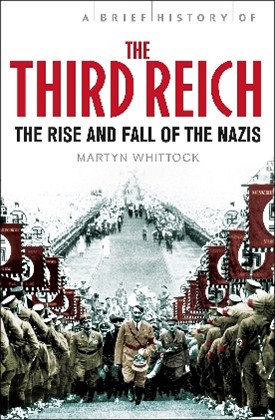
Book Review: A Brief History of the Third Reich: The Rise and Fall of the Nazis, by Martyn Whittock

Martyn Whittock assembles here the accounts of what is what like to be a German and go through all the things that happened before, during, and after World War II. He includes stories from people coming from all walks of life, and he adds his own theories and ideas.

In 22 chapters, Whittock describes the economic, political, and spiritual life in Germany leading to the Nazis seizing power and discusses both German complacency and involvement in contributing to the party’s rise to leading the nation. Whittock talks a great deal about Hitler’s reasons and motivations leading to some of the worst decisions possible.

Hitler had a tendency to make very dramatic and quick decisions without listening to the advice of those who would try to help him, or help Germany, in times of crisis. Hitler tended to stretch resources too thin and to make decisions which caused other greater problems unforeseen.

Without giving away too much content, I will say that this book does include the strength of using so many different persons’ stories to give the reader different perspectives on how the Nazis were actually able to get as far as they did. It is important to continue to read such accounts to try to sort out what makes sense and what does not.

Whittock gives the reader a great deal of information on the concentration camps and on how they were run. He does give us a glimpse into the desperate lives of the Germans who assisted in the murders, as he does regarding all of the persons who helped Hitler come to power.

There was something in it for everyone, it appears, and Whittock attempts to explain how and why the Germans allowed the Nazis to take so much power. He also provides the death tolls and discusses the methods used for murdering the inmates. Whittock provides a full description of the murders and numbers. However, he also uses more contemporary examples of bloodshed such as the Rwanda murders.

Maybe this is done to show that murder on a huge scale is to be expected in the world? Nothing could compare to the Nazis’ slaughter of entire peoples and communities, so that idea is lost on this reader—and on most all readers, I would assume.

The reader can profit from trying to understand what happened in Germany during those say 50 years of time. Teachers can perhaps get a little better understanding of how to begin to explain what was going on in the minds of Germans who watched all of it.

This is important reading because of the different perspectives revealed here.

Book Review: Clearing the Air in Los Angeles: The Fight Against Smog

Clearing the Air in Los Angeles: The Fight Against Smog tells how the mystery of Los Angeles’ notorious smog was solved. Los Angeles was once known as the Smog Capital of the World. No longer. Today the city has changed “air you can see” into “air you can breathe.” While the fight to
eliminate pollution in the city continues, modern smog is not the thick, oppressive, silver-blue haze that drove people to move out of Los Angeles altogether during the mid-twentieth century. Professor Arie Haagen-Smit became a key leader in the fight against smog after making a crucial discovery—what caused it. The last Stage 3 smog, considered the unhealthiest, struck in 1974, and in 2003 the city saw its last Stage 1 smog.


Clearing the Air in Los Angeles uses an organizational development lens to describe how concerned people uncovered the root cause of Los Angeles’ thick silver-blue smog—a serious problem for sixty years, from 1943 to 2003, and the changes they made to eliminate it, changes that to this day
also affect the nation and much of the world.

The book supports courses in social studies, business, business ethics, organizational behavior, environmental sustainability, and any course that examines corporate social responsibility and “business for good.”

Book Review: Breaking the Chains: African American Slave Resistance

(reprint of the 1990 edition with a new introduction by Robin D.G. Kelley)

When various localities are seeking to return to rhetoric of enslavement being beneficial or benevolent, Breaking the Chains: African American Slave Resistance is a book that is timely and beneficial for both teachers and students to understand the story of African Americans in their time of bondage. William Loren Katz did an amazing job of telling the story of African American enslavement through the eyes of the enslaved. Katz does this by describing a life in which enslaved people were not complacent but rather fought for every freedom awarded to them by their enslavers.

Katz explains, through this history, that African Americans were not only dealt physical blows but also had to fight against the master’s version of history after enslavement ended.

For much of American history enslaved people were described as complacent, willing to work, not upset about their condition or, as historians Allan Nevins and Henry Steele wrote, enslaved people
“were cared for and apparently happy” (9).

In other historical texts historians such as W.E. Woodward falsely stated that African Americans “were the only people in the history of the world who became free without any effort of their own” (234).

Although this had been a standard narrative for many years, Katz pushed back on this idea saying that historians had not done enough to find the stories of the enslaved in order to tell the true story of their resistance and their disdain for enslavement. He even goes as far as to say that “most scholars
have ignored this mountain of evidence” (13). But Katz refused to be another historian who gets history wrong and he wrote this book to detail the lives of the enslaved through the beginnings of the slave trade in Africa up to the passing of the Emancipation Proclamation.

Shown through many different angles and time periods, Katz described a people who resisted enslavement in every way. The book is broken up into four parts with a varying number of chapters in each part. The book begins with two introductory chapters, one written in 2023 in which Robin G. Kelley does the introduction and the other in which the author opens up the book setting the stage for the first chapter.

With the use of large print and historical images this book could easily be used to teach secondary students in grades 7-12 or could be used in an undergraduate college course. The writing is impeccably understandable and uses various sorts of sources including narratives of the enslaved,
accounts from white enslavers, foreign visitors to the United States, reports from the military and government, newspapers, and legal documents. In a society where it feels taboo to talk about the enslavement of African Americans, Katz’s thorough research is paramount to telling the story of
African Americans and their refusal to accept bondage.

Chapter two sets up the rest of the book by detailing why African Americans felt they needed to resist. In this chapter, Katz details the re-enslavement of African Americans on a daily basis and the horrors of what enslavement meant to them. He begins the chapter by stating “The reason for enslaved people’s resistance was slavery” (35). Enslavers understood that in order for them to achieve their goal of assimilating formerly free people into bondage, they would need to assert a form of dominance that denied African Americans the right to be human. Enslaved people were viewed as animals, chattel, property, and were purposefully kept from any knowledge beyond the plantations they toiled in. Chapter 2 details the fact that African Americans were not allowed to mourn, to be educated, to have their own thoughts, and were met with violence when they sought to
show any form of disobedience to Whiteness. In two narratives shared in this
chapter, one Louisiana woman was whipped for saying “‘My mother sent me’” (40) because calling her mother “mother” was akin to claiming the status of Whiteness.

In another story, Roberta Manson expressed that “They said we had no souls, that we were like animals’” and this was shown when her father was whipped for shedding tears after looking at an enslaved person who had been killed (40). Settlers thrived off of this system as they reaped the benefits of this free labor. As Katz explains that the South’s economy depended on the labor of
enslaved people and would not have thrived without them. White settlers were not willing to lose their power or control because they understood how vital enslaved people were to their economic prosperity.

While enslavers were concerned about enforcing and safeguarding their dominance, African Americans sought to play on this thought of enslaved people as inferior, dumb, and senile. Enslaved people deceived their masters into thinking they were joyfully working companions who looked forward to plantation labor. As Katz says “Black people pretended to be meek, happy, and dumb. They learned to answer an enslaver’s questions with the words they wanted to hear” (47). While enslavers were working to suppress the knowledge of the world around them, enslaved people worked to combat this through deception. Enslaved people would “forget” about tasks they were
told to perform or play dumb stating that they didn’t understand the job they were coerced to do. Enslaved people became the best actors claiming to be ill, not able to work due to a physical body strain, or in some cases even pretending to be pregnant. Enslaved people would smile and laugh with their enslavers before possibly running away that exact night. Although African Americans may have seemed dumb and senile, in reality this was a part of them reclaiming their agency to combat the
institution of enslavement.

In the wake of rhetoric that denies African Americans worked tirelessly to undermine the institution of slavery, this book does a great job of bringing to light the various ways in which African Americans resisted. Through the words of the enslaved themselves, as well as other primary source
documents, this book does the work of a historian, by uncovering the truth about African American resistance and their role in obtaining their own freedom.

Book Review: In Levittown’s Shadow: Poverty in America’s Wealthiest Postwar Suburb

There is a familiar narrative about American suburbs: after 1945, white residents left cities for leafy, affluent subdivisions and the better life they seemed to embody. In Levittown’s Shadow tells us
there is more to this story, offering an eye opening account of diverse, poor residents living and working in those same neighborhoods. Tim Keogh shows how public policies produced both suburban plenty and deprivation—and why ignoring suburban poverty doomed efforts to reduce inequality. Keogh focuses on the suburbs of Long Island, home to Levittown, often considered the archetypal suburb. Here military contracts subsidized well-paid employment like welding airplanes or filing paperwork, while weak labor laws impoverished suburbanites who mowed lawns, built houses, scrubbed kitchen floors, and stocked supermarket shelves. Federal mortgage programs helped some families buy orderly single-family homes and enter the middle class but also underwrote landlord efforts to cram poor families into suburban attics, basements, and sheds.

Keogh explores how policymakers ignored suburban inequality, addressing housing segregation between cities and suburbs rather than suburbanites’ demands for decent jobs, housing, and schools. By turning our attention to the suburban poor, Keogh reveals poverty wasn’t just an urban problem but a suburban one, too. In Levittown’s Shadow deepens our understanding of suburbia’s history—and points us toward more effective ways to combat poverty today.

Once We Were Brothers: A Novel, by Ronald H. Balson, Reviewed by Thomas Hansen, Ph.D.

Review by Thomas Hansen, Ph.D.

This is yet another wonderful book with great writing and captivating action—but it is a book  about a terrible story.  It describes the close friendship between a German/Polish Christian boy who is raised by a Jewish family in a small village in Poland.  The time is World War II, and the story is based on–and connects to–historical points of the time.

It is said to be a book that is “hard to put down.”  Indeed it is.  Balson’s first novel, this book contains good writing, suitable pacing and forward movement, plus a lot of information about what was happening in rural Poland in that period.  There is also some direct teaching involved, with characters explaining what certain terms meant and what various Nazi policies entailed.

The book consists mainly of flashbacks to what was happening in Poland among the families and friends of Ben Solomon, the Jewish boy whose life is at the center of the story.  Chicago readers will be interested to know that the modern-day sections include scenes from Winnetka, the Loop, and the lakefront also.  

The book is a novel, with a huge amount of factual and historical foundation.

It dovetails into Common Core Standards college-readiness levels and college-use levels also.

I will recommend the book, but I remind readers that many of the scenes described and the action discussed will not be at all pleasurable.  Like many stories of the Holocaust, this one is very disturbing yet one which we must read, discuss, and remember.  

The book should be required reading for college students–in any major–and good for educators to read also.  As always, educators should read the book closely to see if there are passages inappropriate for younger readers.

Review by Thomas Hansen, Ph.D.

This is yet another wonderful book with great writing and captivating action—but it is a book  about a terrible story.  It describes the close friendship between a German/Polish Christian boy who is raised by a Jewish family in a small village in Poland.  The time is World War II, and the story is based on–and connects to–historical points of the time.

It is said to be a book that is “hard to put down.”  Indeed it is.  Balson’s first novel, this book contains good writing, suitable pacing and forward movement, plus a lot of information about what was happening in rural Poland in that period.  There is also some direct teaching involved, with characters explaining what certain terms meant and what various Nazi policies entailed.

The book consists mainly of flashbacks to what was happening in Poland among the families and friends of Ben Solomon, the Jewish boy whose life is at the center of the story.  Chicago readers will be interested to know that the modern-day sections include scenes from Winnetka, the Loop, and the lakefront also.  

The book is a novel, with a huge amount of factual and historical foundation.

It dovetails into Common Core Standards college-readiness levels and college-use levels also.

I will recommend the book, but I remind readers that many of the scenes described and the action discussed will not be at all pleasurable.  Like many stories of the Holocaust, this one is very disturbing yet one which we must read, discuss, and remember.  

The book should be required reading for college students–in any major–and good for educators to read also.  As always, educators should read the book closely to see if there are passages inappropriate for younger readers.

Human Geography: A Concise Introduction, by Mark Boyle. Reviewed by Thomas Hansen, Ph.D.

This is a very interesting book because it is not from mainstream sources and is not a traditional format text.

This is a textbook meant for college and university courses within the United Kingdom, but the book can be used as a textbook anywhere, good background reading, and interesting data for writing social studies units and lessons in K-12 classrooms.  Meant for a semester-long course, the book includes major points in history to illustrate what human geography is.

As in most of my reviews, I try not to give away all of the content and key ideas in the review.  I talk more in this particular review about the overall approach of the book, some interesting features and themes, my personal reaction, and some possible uses for the book.  I begin here by discussing how the book’s author sets up the discussion.

The author uses a historical approach in discussing human geography and this is mirrored in the way the book is organized—from the beginnings of civilization and the notion of what geography is.  The vocabulary and basic concepts of the subject are presented in the first chapter.  

There are 12 chapters, including a wide range of watershed events, natural disasters, migration, changing economies, and our current understanding of geography.  Each chapter begins with a table of contents and a list of learning objectives.  Each chapter ends with a conclusion of the most important points made, a bank of three essay questions, and references for further reading of what was found in the chapter.  The format of the chapters could be helpful for students seeking lots of clarity in their reading. 

One thing that really stands out in the book is the use of the “zoom-in boxes.”  These are similar to sidebars, but they take up sometimes a full page or more than one page of text, stories and examples related to whatever the information is they interrupt.  The problem is, there are so very many of them that they are aggravating.  Right in the middle of a section on a given topic or subtopic, there is some discussion of how something is an example of X.  When faced with these,

I did not know if I should stop reading the chapter and read the zoom-in box instead, or read for a while and come back to it.

The zoom-in box phenomenon was a very strange aspect of the book for me.  Perhaps this sort of zoom-in box is a tradition in some fields, or in some lands, but it was something I did not ever get used to.  I did not know how to incorporate them into the flow of what I was reading.  Maybe the use of the zoom-in box is aimed at readers with short attention spans?

Another noticeable aspect of the book for me was the persistent theme of the West having imposed its will so strongly worldwide that this has resulted in a strong and pervasive clash of cultures noticeable around the globe (e.g., p. 99).  This sentiment appears throughout the book and is also spelled out at several points.  Readers will see it early on, and they will draw their own conclusions from it.

In responding to this text, I must admit I enjoyed very much the topics and discussion of the different themes and components of what makes geography work.  Aside from the strange tone of the book, and the zoom-in boxes, I got a great deal out of reviewing this topic—one I have always felt is greatly slighted in schools. 

I remember in my own case studying geography in elementary school—we had a book on it one year!  In high school, I took a course on physical geography—in addition to taking French, German and Spanish language courses.  A survey course on cultural geography was one of the very first electives I took in college.  I went on to study several other world languages in college. 

Of course, in studying about other languages and cultures, a knowledge of geography is essential.  Therefore, I do not need to be convinced it is an important topic for study.   

I would recommend the book to give teachers of social studies, world languages, and other subjects a different perspective and a way to connect history and geography.  It is always interesting to me to see how books are laid out in other countries and learn from different points of view.  This is good material for a teacher’s professional library, and the book can also be used to help inform and design units for the classroom. 

Because the book is too long for a short professional development session, it fits more in the category of resource and reference material for teachers of cultural and world-focused subjects. 

The Children of Willesden Lane: Beyond the Kindertransport—A Memoir of Music, Love, and Survival, by Mona Golabek & Lee Cohen

by Mona Golabek and Lee Cohen, 2002.

New York: Grand Central, Paper, 272 pages.

The Children of Willesden Lane is based on the true story of the pianist Lisa Jura, a Jewish girl from Vienna, who was sent by her parents to England where she was supposed to be assisted by a cousin there during the time of the Kindertransport, the program sending children out of Austria and Germany to safety. The book is written by her daughter, Mona, who reports on what was happening in Vienna after the Annexation.

When Lisa arrives in England, the cousin who is supposed to house and feed her reneges on the agreement. This leads her to the hostel on Willesden Lane where she and a score of other Jewish children from various countries in Europe form bonds, become strong, and face with dignity and perseverance a very uncertain future.

Lisa fights hard to get her older sister to England, enlisting the help of the other children in the facility to find a sponsor for her. Lisa herself is protected by the woman running the hostel, and Lisa becomes a leader of the other youngsters. Lisa’s father is a tailor, and he has taught her how to use a sewing machine. Because of this, she is hired right away to work in a factory making trousers. Her income helps support the hostel.

A musician, Lisa is faced with a lifetime of servitude until she has some decent breaks because of the woman in charge of the hostel and others who are pulling for her. She is allowed to audition for a scholarship to study classical music.

Teachers, writers, and musicians will appreciate this book because it tells of worlds that sometimes can only be imagined. I was able to understand most (not all!) of the technical information about music here because of my mother filling our home with melodies—and constant discussion of music theory. I too studied the piano, but alas I was not meant to be a pianist!

Lisa perseveres in the story. She fights hard to practice for the scholarship, at the same time she works making uniforms in the factory.

The human spirit is so strong. I am always amazed by this fact.

Lisa’s story is a beautiful one. It includes such hope and so much good news. The story also includes some bad news, however, because of what is happening in Europe with the war and all of Hitler’s policies uprooting and destroying entire threads of history, family ties, destiny of entire peoples, and freedom.

It is freedom itself that is at the core of the themes in this book. Losing freedom and gaining freedom are two of the biggest events we can experience as thinking persons.

Book Review: The Day the Markets Roared

The lessons of history are very important for students to understand. The laws of economics and the functionality of markets are essential for understanding our current troubled century. Students taking U.S. History in New Jersey are required to learn the following in their study of the post-World War II economy.

The Day the Markets Roared is a concise economic history of the last 45 years. It is a personal account and perspective written by one of America’s top researchers on the economy with an understanding of the role of stocks and bonds in a dynamic global economy. In 1982, the American economy was faced with unprecedented debt, an unemployment rate of 10.8%, a double-digit rate of inflation, a strong dollar, and high-income tax rates.

“The economy entered 1982 in a severe recession and labor market conditions deteriorated throughout the year. The unemployment rate, already high by historical standards at the onset of the recession in mid-1981, reached 10 .8 percent at the end of 1982, higher than at any time in post-World War II history.

The current recession followed on the heels of the brief 1980 recession, from which several key goods industries experienced only limited recovery. Housing, automobiles, and steel, plus many of the industries that supply these basic industries, were in a prolonged downturn spanning 3 years or more and bore the brunt of the 1981-82 job cutbacks.

Unemployment rose throughout 1982 and, by September, the overall rate had reached double digits for the first time since 1941. A total of 12 million persons were jobless by yearend-an increase of 4.2 million persons since the prerecession low of July 1981.’ Unemployment rates for every major worker group reached postwar highs, with men aged 20 and over particularly hard hit.” Bureau of Labor Statistics

The book begins on a cloudy, humid Tuesday morning, August 17, 1982, in Wyckoff, New Jersey. As Henry Kaufman enters the Lincoln Town Car at 6:30 a.m. he is traveling to a meeting of the Salomon Brothers Executive Committee at the Waldorf Astoria Hotel on Park Avenue in Manhattan. In the hour-long ride to the meeting, he is editing a memo to his office secretary, Helen Katcher that will be released to clients and the press shortly after 8:30 a.m. and before the opening of the bond markets at 9:00 a.m. and the stock markets in New York at 9:30 a.m.

The Reagan Recession of 1981-82

The first years of the Reagan presidency faced global insecurity with a Soviet arms buildup in Eastern Europe, Soviet invasion of Afghanistan, conflicts in Lebanon and the Middle East, Falkland Islands, Nicaragua, and Grenada, an unpopular grain embargo from the Carter Administration, and a rising federal deficit and debt due to military spending.  These were difficult challenges requiring the monitoring of the M1 and M2 money supply accounts, bank balance sheets, and revolving credit expenses.

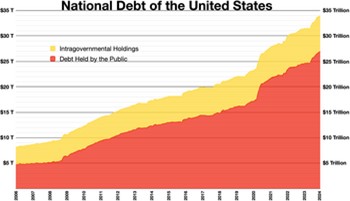
The current challenges for our economy and financial stability are the validity of information, the dependency of the federal government on the Federal Reserve System as either the lender of ‘last resort’ or ‘first resort,’ declining credit ratings of governments and corporations, and the fact that short-term liabilities are rarely paid off.  The federal deficit of the United States government is 33 trillion dollars and increased borrowing for social security, Medicare, infrastructure improvements, and assistance from extreme weather events are hurricane force winds facing our economy.

As of June 2024, the federal debt is $34.55 trillion dollars and between 110% and 117% of our annual GDP with full employment and moderate inflation.

It is critical that social studies teachers integrate economic history into their lessons, encourage problem-solving and decision-based case studies, engage students in discussions with local financial experts in your community, an understanding of where money comes from, and the differences between the tax and money multipliers.

  1. What are the effects of a 10% protective tariff?
  2. How does a 1% change in the rate of inflation affect the federal budget?
  3. How do changes in the federal income tax structure affect the national economy?
  4. What are the implications of a decrease in the credit rating of the United States?  Why does a credit rating change?
  5. Will the increased demands of the federal government to finance its debt through bonds lead to ‘crowding out’ for municipal, state, and private corporations?
  6. Who will be the effective borrowers in the next decade?

Students will also gain valuable lessons through engaging conversations through their analysis of excerpts from the classical economists of Adam Smith, David Riccardo, and Thomas Malthus.  Perspectives of Karl Marx, Joseph Schumpeter, Frederick Hayek, Milton Friedman, Paul Samuelson, and others are important. Consider a dinner conversation, Madame Tussauds Wax Museum Hall of Fame, Press Conference, or digital video production. Here is an example of a reference in the book.

“Adam Smith remains a useful guide to the hallmarks of capitalism.  In The Wealth of Nations (1776), he argued that humans innately strive for material progress, and the best way to get there is through unfettered competition, the division of labor, and free trade.  Smith argued that the state should play a limited role in economic affairs.  Governments should be properly confined to national security, the rule of law-including the protection of private property – and the provision of a few public goods which as education.  He also cautioned against sharp class divisions that might idle rich people and exploit workers.  ‘No society can surely be flourishing and happy, of which the far greater part of the members is poor and miserable.’” (Kaufman, Page 167)’

One final observation about The Day the Markets Roared is the insights into the internal operations of businesses before the age of social media.  The lessons of power, leadership, profit motive, media image, responding to a crisis, understanding how financial markets react to political changes are revealed in Chapters 3-7.

The book is easy to read, includes interesting insights and perspectives, and is one of the few books I am aware of that provide a concise and accurate economic history of the 1970s and 1980s.

Seven Steps to Raising a Bilingual Child

Reviewed by Thomas Hansen, Ph.D.

The author presents here a very clear guide for parents who wish to raise their children to become bilingual speakers.  The author uses a variety of language examples, plus stories of real parents whose children have become proficient in more than one language because of the help and planning of their parents.  There are seven clear steps here, the most important of which is planning to start at a certain point and then maintain one’s interest and devotion to raising the child to be bilingual.

With background in developmental-behavioral pediatrics, this physician is an expert in how children learn languages.  She is raising her own children to be multilingual, and she understands the perspective of the parent.  This is perhaps why she is able to relate to parents and put the technical information into terms parents will appreciate.  

The author presents seven myths of bilingual learning—such as the notion that not all kids can learn another language.  The myths are the typical ones we as language teachers often hear, whether we teach world languages, language arts, English as a second language programs (ESL), or bilingual education.  Little kids are resilient, and their brains are wired for communication.  The author does a good job of reminding parents of these facts.

The author explains to parents the importance of letting students develop all four skills areas, meaning listening, then speaking, then reading, and finally writing.  This is the natural order in which children learn languages—at least predominantly—but some of us in second language teaching are great advocates for teaching the skills in a more integrated fashion, even from the early stages.  However, we still realize first-graders should not be expected to write term papers in the target language!

Steiner provides other notes for the parents to help them tailor the language teaching and language learning experiences at home to their unique children.  Each child is different, and one important point is that some children will learn the second language at slower rates than others.  The author provides ideas on how to deal with these kinds of issues in the quest for language proficiency.

Overall, I will recommend the book, but there are a few comments I will make on it.  One weakness is that the explanation of bilingual education and ESL programs (pp. 155-158) is a bit vague.  The author tries to summarize in just a few short paragraphs rather diverse programs.  As most language teachers can tell you, each district—sometimes each building—has a very different model in use. 

Note that teachers and administrators of many types of programs may take issue with what the author says on various pages about school programs (e.g., pp. 80, 155) because the explanation simply cannot be done in such a short space.  If you recommend this book to parents or to parent groups, please warn them about some of those passages.  

The information about dual language is pretty much accurate, and the point is made that most programs in the nation are for French/English and Spanish/English experiences.  However, the parent will need to seek out the programs in their own or nearby schools and districts. 

Note that it is often very hard to locate dual language programs in the state since there is rarely a statewide directory in place (in Illinois for example) and because of the way the teachers’ workload is reported to the state education agency.  In many cases, a dual language teacher is simply registered by the district as an “elementary grade teacher.”  The same is true of teachers who teach foreign language in the elementary schools (FLES) programs.

The good news, though, is that there are very effective and well-established programs out there that are flourishing.  For example, Chicago Public Schools (District 299) lead the way in innovative language programs and dual language initiatives.  Staff members there can help you with questions and can help direct parents to certain schools with new and interesting language programs in place. 

Illinois also is one of the leaders nationwide in the number of FLES programs available to students in K-8 buildings.  This is not even counting Saturday, after-school, and immersion language programs—all of which exist in Chicago and many of the suburban schools.

One benefit of the book is the way the author relates to parents and knows what challenges they may face.  For example, the author explains how to approach the foreign language teacher if you have a child who has been speaking another language at home and who should be in more advanced levels than the school is planning. 

Readers should remind parents that sometimes they will need to be assertive indeed in getting their kids into the right levels so they are not bored to death in a beginning level too easy for them.  The author mentions also that the kids could start a different language in higher grade levels, but parents should fight against this.  The ACTFL and state standards remind us students need long-term programs–complete with high-quality classroom instruction in all four skills areas.      

Another benefit is that the author reminds parents (pp. 39-40) that foreign language exploratory (FLEX) programs simply do not produce much proficiency and the parents should not expect much from them.  It is important for parents to get this fact! 

As an aside, I will also mention that these programs stand in the way of other language programs becoming planned and put into place because the FLEX programs appear to “offer something” in the realm of language teaching—even though they do not produce much. 

Another issue is that many people will say something like, “Well with the FLEX program at least we have something going on.”  With that, they do not commit funds to start a bona fide educational program with the goal of creating language proficiency.

Because the author has a very different perspective on language learning and parenting, I think she can explain things in ways parents understand.  The book is a good foundation for parents, and it could also work for school boards looking to increase their language program offerings.