Book Review: Enrique’s Journey: The True Story of a Boy Determined to Reunite with His Mother

I was very happy to come across this young readers’ version of this book, giving the background of who Enrique is, his family, the mother who works in the United States, and the famous journey to the US to reunite.  This story, which covers about five years of time, is an important one for understanding why people leave children in other countries to come to the US to work, what such distances can provoke in the human spirit, and the complex means of trying to legally reunite family members living on opposite sides of a major border.

This story deals with Enrique’s mother leaving him and three other children in Guatemala to come to the US and work.  This move will allow her to make a great deal more than the money available in her own country.  It is only 12 years later that Maria breaks down and tells the woman she cleans house for about the four children in another land.  A single mother with four kids and a husband who has run off with another woman, she must do whatever she can to support them.  She tells the story as her employer listens. 

Astonished, the employer embraces the story and makes it her mission not just to try to reunite the estranged family but also to get any and all legal charges dropped against the parents.  This book provides some explanations on why immigrants face great danger to come here, take on work, and try to move ahead despite missing family members, their home, and their way of life.  The children and other family members in the other country are going through their own loss, confusion, and grief as they try to choke down the tears, study hard in school, work, and persevere as well as they can. 

The book presents very clearly some of the most common problems felt on both sides of the border.  The grief and the daily burden of being so far away from their kin are two sources of psychological stress that can show up in a myriad of ways—including Post Traumatic Stress Disorder (PTSD).  The separation is dramatic for children, and for their parents. 

I discovered hints of PTSD among the 11 students I myself conducted for my dissertation on Generation 1.5 Mexican American students learning English in two different Illinois community colleges (2010).       

This book by Nazario is full of great social sciences content, cross cultural issues, federal legal procedures, and other information good for use in units and lessons in the regular classroom, social studies classes, and course time in general for students to do the readings and prepare for class projects and discussions.

I recommend the book as a “first source social studies text” for students old enough to appreciate what is here.  Teachers and parents can review the book to look at the usual language issues and other considerations used to evaluate and recommend or not recommend the book for the classroom. 

The book can also be used as good professional development source for conversations among educators because of the content found here. 

Yet another use is personal reading for educators, parents, and stakeholders who can benefit from getting a better handle on the causes and attractions of immigration to this country.  My job is to get people thinking about these kinds of books and the benefits for students.

Book Review: Civic Capitalism, by Colin Hay and Anthony Payne (Polity Press, 2015)

Hay and Payne have assembled in this brief book 11 readings about capitalism and the realities of looking at modern economies through the lens of capitalism.  The book is a result of a blog created and refreshed on the topic of the global crisis of the last few years. 

Hay and Payne discuss and assemble readings here related to what they call “civic capitalism.”  This is the “governance of the market, by the state, in the name of the people, to deliver collective public goods, equity, and social justice” (p. 3).  They explain that this term has as its core the requirement that citizens must now “…ask what we can do for us and not what capitalism can do for us” (p. 4).  Citizens must turn around the notion that they serve capitalism and must respond to its rules

This, in a nutshell, describes what the spirit of this book is and what the readings cover.  The book deals further with the implications for all economies since commerce among nations is so complex now.

The book has to do with getting right what was done wrong.  The book contains a variety of readings current on the disastrous complications of the recent recession and away from a traditional growth model and toward one that takes into account more cultural differences worldwide, the context in which growth (or on-growth happens) and the social side of capitalism. 

Without giving away too much content in this review, I will say that there is very interesting information to read about here related to the workings of civic capitalism, and one does not need to be an expert in Economics to understand the explanations and recommendations coming from these savvy people.  This is a readable and essential book for educators to grab onto.  We must understand much more about the world economic situation if we are to be able to help struggling families, sway political thought, make changes in society, influence others, and convince elected officials how to vote. 

These are all activities in which educators must be involved.  I maintain that we  must be involved in them at least to some extent.  Teachers, administrators, and others who teach other persons at whatever level need to have a good sense of how we got to where we are financially and some ideas on how to move ahead. 

Although the contributors are a little idealistic at some points (can one person really change the international flow of dollars for investment?  Really?) they nonetheless do explain a great deal of information that is essential for understanding the benefits, drawbacks, workings, and potential of capitalism.

It is up to the educator to read this assembly of authentic texts and see how to incorporate them in their own worldview, use them in their plans to influence others, write lesson plans for more advanced level high school courses, make use of them in courses for college students, and take from the readings information good for use in debates and negotiations with other professionals interested in discussing and working on the work world economy.  At least in some smaller fashion.

I recommend the book and especially the introductory chapter on “civic capitalism” because of the clarity and the definitions found there.  Hay and Payne are able to explain a great deal of technical information in that chapter so that the reader will be comfortable diving into the discussions of big changes.  Those big changes—mainly in perspective—make up the rest of the readings in the book.      

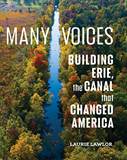
Book Review: Many Voices: Building the Erie Canal, by Laurie Lawlor (Holiday House, 2025)

Just in time for the 200th anniversary commemorating the completion of this engineering marvel, Many Voices: Building Erie, the Canal that Changed America (Holiday House, August 2025)  investigates the untold stories of men, women, and children from all social classes and national origins who helped create and work on the Erie Canal.

Award-winning author Laurie Lawlor’s full-color narrative nonfiction explores how this monumental, 363-mile canal was built across a daunting upstate New York landscape at a time when America had no trained engineers, no idea how to make water-proof concrete, no modern mechanical tools, and no reliable source of workers.

Many Voices takes a deep dive into how canal construction altered the environment and uprooted the Haudenosaunee from their long-standing homeland in New York.

Linking the Great Lakes and the Atlantic Ocean, the Erie Canal boosted the global economic status of New York City, expanded Westward settlement deep inside America’s farming heartland, and spiked growth in cities as varied as Chicago, Milwaukee, Toledo, Rochester, Duluth, and Toronto.

Just as today’s Internet has created a “superhighway” of purchasing possibilities and an array of political, social, cultural, and religious ideas from around the globe, the Erie Canal propelled nationwide trade and a network of new ideas — everything from abolition of slavery to promoting women’s right to vote .

Many Voices: Building Erie, the Canal that Changed America includes more than ninety photos, maps, and artwork, detailed timeline, suggestions for visiting today’s canal, complete bibliography, endnotes, and index. The book has been listed as aJunior Library Guild Gold Standard Selection.

Book Review – Erasing History: How Fascists Rewrite the Past to Control the Future by Jason Stanley

Although it was published prior to the 2024 Presidential election, Erasing History serves well as Jason Stanley’s response to the patriotic history being promoted by the Trump 2.0 administration. Stanley was a Professor of Philosophy at Yale University, but he recently announced that he accepted an appointment to the University of Toronto in Canada because of the deteriorating political situation in the United States. His previous books include How Propaganda Works (2015) and How Fascism Works (2018).

In the Preface to the book, Stanley argues “One lesson the past century has taught us that authoritarian regimes often find history profoundly threatening. At every opportunity, these regimes find ways of erasing or concealing history in order to consolidate their power.” Democracy, on the other hand, “requires recognition of a shared reality that consists of multiple perspective” so that “citizens learn to regard one another as equal contributors to a national narrative . . . Erasing history helps authoritarians because doing so allows them to misrepresent it as a single story,” their preferred story.

Social studies teachers are crucial players in the battle to protect democracy because we insist that students examine multiple perspectives and reach conclusions based on evidence and discussion (xi-x). Russia Premier Vladimir Putin recognizes the danger teachers pose to authoritarian regimes and has declared “Wars are won by teachers.” Under Putin, and now under Trump, history classes are supposed to stress patriotism and textbooks are rewritten to whitewash the past (Illyushina, 2024).

Stanley acknowledges that every educational system must decide what is important to know and be able to explain why because a school curriculum cannot include all knowledge. What authoritarian regimes do is erase from the curriculum evidence that people can struggle for change and social justice so that people are willing to accept an unsatisfactory status quo as the only possible circumstance. That is why China’s government outlawed teaching about the 1989 pro-democracy Tiananmen Square protests and Florida wants to block discussion of reasons for the Black Lives Matter movement in the United States. “By removing the history of uprisings against the current status quo from the curriculum (or never allowing that history to be taught in the first place) authoritarians leave students with the impression that the status quo has never been and cannot be challenged (xx-xxi).”

Chapters include “How to Create an Autocracy”; “Colonizing the Mind”;” “The Nationalist Project”; “From Supremacism to Fascism”; “Anti-education”; and “Reclaiming History.” Throughout the book, Stanley draws comparisons between past nativist and racist movements in the United States, the Nazi ascendency in Germany, and MAGA authoritarianism in the United States today.

Attacks on universities are a key component of the fascist agenda to erase history and undermine democracy. In contemporary Russia, India, Hungary, and Turkey rightwing politicians and autocratic leaders have sought to destroy academic independence by branding faculty as enemies of the state and trying to mandate a preferred curriculum. A Fox New host quota by Stanley bemoaned that “Our universities have become lunatic incubators, which the federal government funds” (21). Stanley argues that there are similar trends in government attacks in these countries on K-12 education. He quotes W.E.B. DuBois that “Education for colonial people must inevitably mean unrest and revolt; education therefore had to be limited and used to inculcate obedience and servility” (25).

Stanly explains how curriculum and textbooks are used in “colonizing the mind.” As a high school teacher in the 1980s I taught an advanced United States history class using Bailey and Kennedy’s The American Pageant: A History of the Republic, 7th edition (Lexington, MA: D.C. Heath, 1983). Stanley includes a quote from the introduction legitimizing colonialism and genocide that I must have completely overlook and did not challenge. It is a statement that well summarizes major components of Trump’s “patriotic history.”

“The American Republic, which is still relatively young when compared with the Old World, was from the outset richly favored. It started from scratch on a vast and virgin continent, which was so sparsely populated by Indians that they could be eliminated or shouldered aside. Such a magnificent opportunity for great democratic experiment may never come again” (2).

However, it did not start from “scratch,” its early institutions and its white people were Europeans, and it definitely was not a “virgin” continent as the sentence acknowledges. What a “magnificent opportunity” to conduct a “great democratic experiment” by exterminating the indigenous population and importing a workforce of enslaved Africans. Hopefully it “may never come again.”

Stanley argues that a movement in the United States to stem the trend towards authoritarianism must reclaim history. That is why social studies teachers, whatever their political views, but because of their commitments to dialogue, evidence, critical thinking, and developing active citizens for a democratic society, are in the crucible of the battle for the hearts and minds of America’s future leaders and defining the kind of country this will become. We are the threat to authoritarianism.

For the book jacket, Congressman Jamie Raskin (D-Md) wrote Stanley that “shows how everything from the antisemitic Great Replacement Theory to the vilification of gay people and feminists to the promotion of myths of national purity and historical innocence all work to demolish democratic agency and freedom.” Stanley “leaves us with the sense that those who fight for the past can save the future.”

This is both a readable and invaluable book for teachers who are concerned about the impact of the Trump administration of the future of education in this country and the survival of democracy in America.

Book Review: The Leadership Journey: How Four Kids Became President

I decided to read this book after listening to Doris Kearns Goodwin speak about this on television following the inauguration of President Donald Trump. After reading the first few pages, I decided to write a review of this book as it should be ‘required’ reading for every social studies teacher, student, parent, and grandparent.

One reason for encouraging teachers, pre-service teachers. students, parents, and grandparents to read this book is in the truisms that are embedded in the stories about each president. For example, in introducing Abraham Lincoln’s decision to enter politics as a Whig candidate, these few sentences should engage young minds in reflective thinking:

As a teacher, I would discuss with my class, why did Lincoln join the new Whig Party and not the popular Democratic Party? Why did he announce his decision to run for the assembly in a pamphlet compared to a letter, newspaper, or verbal announcement? How does Lincoln understand public service?

As a parent or grandparent, I would discuss the political parties we have today and what they stand for. How do candidates in our community or state get elected and announce their decision to run for office? Is it possible for elected representatives to represent the interests and needs of the majority in their community or is it best for them to advance their own beliefs on the issues or vote for the position of their political party?

The reading level of The Leadership Journey: How Four Kids Became President is for middle school students. Each chapter is just a few pages and should take a middle school student about 20-30 minutes to read and comprehend. This book is a valuable resource for a student research assignment, teaching about the reliability of sources, civics, an afterschool history club such as Rho Kappa or Phi Alpha Theta, a summer reading list activity, or a Saturday Seminar roundtable discussion. The applications of this book are unlimited.

One of the hidden gems in the life of Lincoln is with his learning style, character, persistence, and ability to handle disappointments. These examples are often only a few sentences, but they are prompts to initiate discussion and empathy between students in your class. For example, “The key to Lincoln’s success as a lawyer was his ability to break down the most complex case or issue ‘into its simplest elements.’ He never lost a jury by fumbling or reading from a prepared argument, relying instead ‘on his well-trained memory. (Page 47)

Another example that I found interesting was the evolution of how President Lincoln’s views changed about the emancipation of enslaved persons by listening to others.

The second president in Doris Kearns Goodwin’s book is Theodore Roosevelt. There are multiple connections for students in the leadership journey of Teddy Roosevelt. These include living with a disability, coping with personal loss, understanding the issues, the importance of integrity, and the challenges and opportunities of the experiences in one’s life.

Although born into a family with wealth, as a child he faced frightening attacks of bronchial asthma. His childhood and teenage years were limited. By age 10, he had opportunities to be home schooled, enjoy summer vacations on Long Island, and travel to Africa, Europe, and the Middle East. However, participating in activities was limited because of his health.

The lesson of how Teddy Roosevelt voted in the New York State Assembly, especially on the bill to stop the manufacture of cigars in tenement houses is one that will likely engage students in a thoughtful discussion or debate about how elected officials represent constituents today. Roosevelt opposed all government supervision and regulations regarding limiting the hours worked, a minimum wage, or prices. Samuel Gompers invited him to visit the places where the cigars were made.

On February 14, 1884, Valentine’s Day, Teddy Roosevelt place a large X in his diary followed by the words “The light has gone out of my life.”  His mother, Mittie, and his wife, Alice Hathaway Lee, died. He was 25 years old and had been married for less than four years.

These are stories students relate to. They encourage discussions about loss, grief, empathy, confusion, resilience, and life. The leaders Doris Kearns Goodwin writes about are very human and their experiences in life are similar to those of many young adults. Abraham Lincoln also lost his mother and fiancé and his son, Willie, died at age 11 in the White House.

Three examples from the book that should interest middle and high school students are Teddy Roosevelt’s use of the Executive Order renaming the Executive Mansion to the White House in 1901, his daily schedule, and a bizarre episode running naked in Rock Creek Park. Source

The information on the Spanish American War in 1898, settling the coal strike in 1902, nine-week train trip around the United States in 1903, are also presented in a descriptive narrative that will interest students with events in the social studies curriculum.

Although most middle school students do not study Franklin Delano Roosevelt as part of U.S. History, this chapter will engage high school students. The importance of reading is to ignite inquiry through questions and thinking about the historical era, the individual, and American government.

Franklin was born into a wealthy family with a large estate about 90 miles north of New York City, where they also had a home on 65th Street near Fifth Avenue and Central Park.

The chapters about Roosevelt are powerful and insightful because they are filled with stories about his character. While most readers will find value and insights into his youth, college years, marriage and positions in the state legislature and federal government, the chapter on his perseverance regarding his paralysis from polio is unusually compelling. Here is an example of how FDR faced the news of his permanent disability as a 39-year-old man with a promising future:

In another chapter Doris Kearns Goodwin portrays FDR’s trait of courage.  His courage was both political courage as he risked everything to hide his disability of crippled legs and physical courage.  He was fortunate to have the friendship and guidance of Louis Howe, Sam Rosenman, Frances Perkins, and his wife, Eleanor. Here is an example of how Franklin handled every situation with grace, humor, and strength: (This is six years after he was infected by the polio virus, 1928)

These two excerpts are only an introduction to what is revealed in his campaign for governor, acceptance speech in Chicago as the Democratic Party candidate for president, his inauguration speech at the Capitol, and his leadership as president. Facts and historical examples are important, but FDR’s personality traits will likely have a lasting impact on students.

Although many students are likely less familiar with the presidency of Lyndon B. Johnson than the presidency of Lincoln, T.R. or F.D.R., they will identify with his character, commitment to civic engagement, and experience as a teacher. As a young child, he moved from a small cabin in a rural area to Johnson City. For various reasons, Lyndon’s activities changed, and he became interested in the activities of his father who was a member of the state legislature in Texas.

Lyndon’s Johnson’s role as a teacher and school principal reveals his work ethic and characteristic as a caring and dedicated public servant.

He was also the debate coach at Sam Houston High School. He coached the debate team through city, district and state tournaments.

“Johnson appeared to his students ‘a human dynamo,’ a steam engine in pants,’ driven by a work ethic and unlimited enthusiasm that proved contagious.” (Page 269)

I enjoyed reading about how he used his social capital in Washington to advance his goals. Lady Bird and Lyndon moved to Washington where he was the chief of staff to a Texas congressman. He became friends with Sam Rayburn who lived alone and invited him to dinner in his home with his wife, Lady Bird. Through this connection, Lyndon became the director of the National Youth Administration in Texas. When his congressman James Buchanan passed away unexpectedly, Johnson campaigned for his seat. Two days before the election he had emergency surgery to remove his appendix. He won, likely on a promise to bring electricity to the farmers in his area of Texas.

Johnson’s personality traits of empathy, enthusiasm, perseverance, and ‘grit’ are important for students to understand, apply to their own experiences, and engage in discussion with their peers. He lost his bid for re-election by 1,311 votes and a few years later won his election as senator by only 87 votes. As a senator, he was the youngest majority leader in the history of the Senate at age 46 and was considered as a presidential candidate for the 1956 election. Then, suddenly everything changed when he had a devasting heart attack. This event transformed his life and behavior.  A lesson about the trait of resiliency.

If a teacher elected to use the resource of this book for just one day, perhaps the most compelling pages are found on pages 317-328. His passion, legislative skill, and personal conviction are important for every student to understand. It is also important for students to understand the long struggle to pass and implement civil rights laws. In our classrooms, the lessons of Freedom Riders, marches, boycotts, and the emotional scars of segregation are too often taught passively through slide presentations and vocabulary terms. Doris Kearns Goodwin captures some of the emotion that led to the Civil Rights Act of 1964 and the Voting Rights Act of 1965. Everyone should read Chapter 24.

“Like a tailor stitching a custom suit, Johnson took measure of Dirksen.  A decade of working together had taught Johnson that Dirksen had no hesitation asking for ‘a laundry list’ of favors in return for his support on legislation.  But this time, Johnson offered Dirksen something far more important than perks and favors; he appealed to Dirksen’s hunger to be remembered, honored. ‘I saw your exhibit at the World’s Fair, and it said, ‘The Land of Lincoln,’ Johnson pointed out. And the man from Lincoln is going to pass this bill and I’m going to see that he gets proper credit. With a gift for flattery equal to Dirksen’s vanity, he assured the senator ‘if you come with me on this bill, two hundred years from now there’ll be only two people they’ll remember from the state of Illinois: Abraham Lincoln and Everett Dirksen!” (Page 321)

I found value in the leadership journey of these four presidents. Although my review focuses on students and teachers, adults will also enjoy reading what Doris Kearns Goodwin has written. In the closing pages, Doris Kearns Goodwin describes a dinner meeting with her “guys.’  What an opportunity to discuss the historical context of 100 years of American history, the goals of the Declaration of Independence, how each president mastered the communication platforms of newspapers, stories, radio, and television. Perhaps the most significant question is what makes a good leader and a good president? What a nice segway to understanding empathy!

Visit the resources of the Miller Center at the University of Virginia to learn about the American presidents.

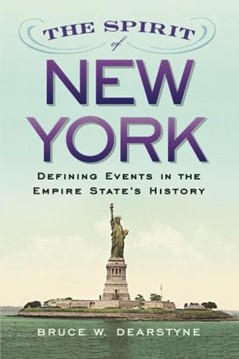
Book Review: The Spirit of New York: Defining Events in the Empire State’s History

This book presents an overview of New York history in the form of 20 exciting, engaging stories. These include, for instance, the beginning of New York State with the completion of the first state constitution in 1777; the “Anti-Rent Wars” in the mid-Hudson region in the 19th century when tenant farmers fought for the right to buy and own their own land; the Seneca Falls’ women’s right convention in 1848, which launched the demand for women’s right to vote and legal equality; and Syracuse citizens’ rescue of a fugitive slave from a marshal who sought to return him to slavery in 1851.

The book describes the campaign against child labor in 1903; the work of pioneering New York aviator Glenn Curtiss, the inventor of several modern airplane flight controls and the first to fly down the Hudson River in 1910; Jackie Robinson’s debut as the first Black major league baseball player in 1947; the construction and opening of the State Thruway in 1954; and the debut of the hit musical, Hamilton, in 2015, and the history behind the events it presents. The narrative for each chapter is woven around what led up to a key event, what happened, and what the results were. The book’s stories feature first-hand, eyewitness accounts by history-makers, participants and observers at the time. The author calls this “a scholarly book for a popular audience.” Because of New York’s historical importance, many of the stories have relevance to American as well as New York history. Social studies and history teachers can use the stories in the book as the basis for their classroom presentations and for study, essays, and discussion by students.

Book Review: Once We Were Brothers

This is yet another wonderful book with great writing and captivating action—but it is a book  about a terrible story.  It describes the close friendship between a German/Polish Christian boy who is raised by a Jewish family in a small village in Poland.  The time is World War II, and the story is based on–and connects to–historical points of the time.

It is said to be a book that is “hard to put down.”  Indeed, it is.  Balson’s first novel, this book contains good writing, suitable pacing and forward movement, plus a lot of information about what was happening in rural Poland in that period.  There is also some direct teaching involved, with characters explaining what certain terms meant and what various Nazi policies entailed.

The book consists mainly of flashbacks to what was happening in Poland among the families and friends of Ben Solomon, the Jewish boy whose life is at the center of the story.  Chicago readers will be interested to know that the modern-day sections include scenes from Winnetka, the Loop, and the lakefront also.  

The book is a novel, with a huge amount of factual and historical foundation.

It dovetails into Common Core Standards college-readiness levels and college-use levels also.

I will recommend the book, but I remind readers that many of the scenes described and the action discussed will not be at all pleasurable.  Like many stories of the Holocaust, this one is very disturbing yet one which we must read, discuss, and remember.  

The book should be required reading for college students–in any major–and good for educators to read also.  As always, educators should read the book closely to see if there are passages inappropriate for younger readers.

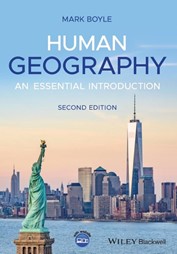
Book Review: Human Geography: A Concise Introduction

By Thomas Hansen, Ph.D.

This is a very interesting book because it is not from mainstream sources and is not a traditional format text.

This is a textbook meant for college and university courses within the United Kingdom, but the book can be used as a textbook anywhere, good background reading, and interesting data for writing social studies units and lessons in K-12 classrooms.  Meant for a semester-long course, the book includes major points in history to illustrate what human geography is.

As in most of my reviews, I try not to give away all of the content and key ideas in the review.  I talk more in this particular review about the overall approach of the book, some interesting features and themes, my personal reaction, and some possible uses for the book.  I begin here by discussing how the book’s author sets up the discussion.

The author uses a historical approach in discussing human geography and this is mirrored in the way the book is organized—from the beginnings of civilization and the notion of what geography is.  The vocabulary and basic concepts of the subject are presented in the first chapter.  

There are 12 chapters, including a wide range of watershed events, natural disasters, migration, changing economies, and our current understanding of geography.  Each chapter begins with a table of contents and a list of learning objectives.  Each chapter ends with a conclusion of the most important points made, a bank of three essay questions, and references for further reading of what was found in the chapter.  The format of the chapters could be helpful for students seeking lots of clarity in their reading. 

One thing that really stands out in the book is the use of the “zoom-in boxes.”  These are similar to sidebars, but they take up sometimes a full page or more than one page of text, stories and examples related to whatever the information is they interrupt.  The problem is, there are so very many of them that they are aggravating.  Right in the middle of a section on a given topic or subtopic, there is some discussion of how something is an example of X.  When faced with these,

I did not know if I should stop reading the chapter and read the zoom-in box instead, or read for a while and come back to it.

The zoom-in box phenomenon was a very strange aspect of the book for me.  Perhaps this sort of zoom-in box is a tradition in some fields, or in some lands, but it was something I did not ever get used to.  I did not know how to incorporate them into the flow of what I was reading.  Maybe the use of the zoom-in box is aimed at readers with short attention spans?

Another noticeable aspect of the book for me was the persistent theme of the West having imposed its will so strongly worldwide that this has resulted in a strong and pervasive clash of cultures noticeable around the globe (e.g., p. 99).  This sentiment appears throughout the book and is also spelled out at several points.  Readers will see it early on, and they will draw their own conclusions from it.

In responding to this text, I must admit I enjoyed very much the topics and discussion of the different themes and components of what makes geography work.  Aside from the strange tone of the book, and the zoom-in boxes, I got a great deal out of reviewing this topic—one I have always felt is greatly slighted in schools. 

I remember in my own case studying geography in elementary school—we had a book on it one year!  In high school, I took a course on physical geography—in addition to taking French, German and Spanish language courses.  A survey course on cultural geography was one of the very first electives I took in college.  I went on to study several other world languages in college. 

Of course, in studying about other languages and cultures, a knowledge of geography is essential.  Therefore, I do not need to be convinced it is an important topic for study.   

I would recommend the book to give teachers of social studies, world languages, and other subjects a different perspective and a way to connect history and geography.  It is always interesting to me to see how books are laid out in other countries and learn from different points of view.  This is good material for a teacher’s professional library, and the book can also be used to help inform and design units for the classroom. 

Because the book is too long for a short professional development session, it fits more in the category of resource and reference material for teachers of cultural and world-focused subjects. 

Human Geography: A Concise Introduction, by Mark Boyle.  Malden, MA: Wiley-Blackwell. 2015, paper, 318 pages.

By Thomas Hansen, Ph.D.

This is a very interesting book because it is not from mainstream sources and is not a traditional format text.

This is a textbook meant for college and university courses within the United Kingdom, but the book can be used as a textbook anywhere, good background reading, and interesting data for writing social studies units and lessons in K-12 classrooms.  Meant for a semester-long course, the book includes major points in history to illustrate what human geography is.

As in most of my reviews, I try not to give away all of the content and key ideas in the review.  I talk more in this particular review about the overall approach of the book, some interesting features and themes, my personal reaction, and some possible uses for the book.  I begin here by discussing how the book’s author sets up the discussion.

The author uses a historical approach in discussing human geography and this is mirrored in the way the book is organized—from the beginnings of civilization and the notion of what geography is.  The vocabulary and basic concepts of the subject are presented in the first chapter.  

There are 12 chapters, including a wide range of watershed events, natural disasters, migration, changing economies, and our current understanding of geography.  Each chapter begins with a table of contents and a list of learning objectives.  Each chapter ends with a conclusion of the most important points made, a bank of three essay questions, and references for further reading of what was found in the chapter.  The format of the chapters could be helpful for students seeking lots of clarity in their reading. 

One thing that really stands out in the book is the use of the “zoom-in boxes.”  These are similar to sidebars, but they take up sometimes a full page or more than one page of text, stories and examples related to whatever the information is they interrupt.  The problem is, there are so very many of them that they are aggravating.  Right in the middle of a section on a given topic or subtopic, there is some discussion of how something is an example of X.  When faced with these,

I did not know if I should stop reading the chapter and read the zoom-in box instead, or read for a while and come back to it.

The zoom-in box phenomenon was a very strange aspect of the book for me.  Perhaps this sort of zoom-in box is a tradition in some fields, or in some lands, but it was something I did not ever get used to.  I did not know how to incorporate them into the flow of what I was reading.  Maybe the use of the zoom-in box is aimed at readers with short attention spans?

Another noticeable aspect of the book for me was the persistent theme of the West having imposed its will so strongly worldwide that this has resulted in a strong and pervasive clash of cultures noticeable around the globe (e.g., p. 99).  This sentiment appears throughout the book and is also spelled out at several points.  Readers will see it early on, and they will draw their own conclusions from it.

In responding to this text, I must admit I enjoyed very much the topics and discussion of the different themes and components of what makes geography work.  Aside from the strange tone of the book, and the zoom-in boxes, I got a great deal out of reviewing this topic—one I have always felt is greatly slighted in schools. 

I remember in my own case studying geography in elementary school—we had a book on it one year!  In high school, I took a course on physical geography—in addition to taking French, German and Spanish language courses.  A survey course on cultural geography was one of the very first electives I took in college.  I went on to study several other world languages in college. 

Of course, in studying about other languages and cultures, a knowledge of geography is essential.  Therefore, I do not need to be convinced it is an important topic for study.   

I would recommend the book to give teachers of social studies, world languages, and other subjects a different perspective and a way to connect history and geography.  It is always interesting to me to see how books are laid out in other countries and learn from different points of view.  This is good material for a teacher’s professional library, and the book can also be used to help inform and design units for the classroom. 

Because the book is too long for a short professional development session, it fits more in the category of resource and reference material for teachers of cultural and world-focused subjects. 

By Thomas Hansen, Ph.D.

This is a very interesting book because it is not from mainstream sources and is not a traditional format text.

This is a textbook meant for college and university courses within the United Kingdom, but the book can be used as a textbook anywhere, good background reading, and interesting data for writing social studies units and lessons in K-12 classrooms.  Meant for a semester-long course, the book includes major points in history to illustrate what human geography is.

As in most of my reviews, I try not to give away all of the content and key ideas in the review.  I talk more in this particular review about the overall approach of the book, some interesting features and themes, my personal reaction, and some possible uses for the book.  I begin here by discussing how the book’s author sets up the discussion.

The author uses a historical approach in discussing human geography and this is mirrored in the way the book is organized—from the beginnings of civilization and the notion of what geography is.  The vocabulary and basic concepts of the subject are presented in the first chapter.  

There are 12 chapters, including a wide range of watershed events, natural disasters, migration, changing economies, and our current understanding of geography.  Each chapter begins with a table of contents and a list of learning objectives.  Each chapter ends with a conclusion of the most important points made, a bank of three essay questions, and references for further reading of what was found in the chapter.  The format of the chapters could be helpful for students seeking lots of clarity in their reading. 

One thing that really stands out in the book is the use of the “zoom-in boxes.”  These are similar to sidebars, but they take up sometimes a full page or more than one page of text, stories and examples related to whatever the information is they interrupt.  The problem is, there are so very many of them that they are aggravating.  Right in the middle of a section on a given topic or subtopic, there is some discussion of how something is an example of X.  When faced with these,

I did not know if I should stop reading the chapter and read the zoom-in box instead, or read for a while and come back to it.

The zoom-in box phenomenon was a very strange aspect of the book for me.  Perhaps this sort of zoom-in box is a tradition in some fields, or in some lands, but it was something I did not ever get used to.  I did not know how to incorporate them into the flow of what I was reading.  Maybe the use of the zoom-in box is aimed at readers with short attention spans?

Another noticeable aspect of the book for me was the persistent theme of the West having imposed its will so strongly worldwide that this has resulted in a strong and pervasive clash of cultures noticeable around the globe (e.g., p. 99).  This sentiment appears throughout the book and is also spelled out at several points.  Readers will see it early on, and they will draw their own conclusions from it.

In responding to this text, I must admit I enjoyed very much the topics and discussion of the different themes and components of what makes geography work.  Aside from the strange tone of the book, and the zoom-in boxes, I got a great deal out of reviewing this topic—one I have always felt is greatly slighted in schools. 

I remember in my own case studying geography in elementary school—we had a book on it one year!  In high school, I took a course on physical geography—in addition to taking French, German and Spanish language courses.  A survey course on cultural geography was one of the very first electives I took in college.  I went on to study several other world languages in college. 

Of course, in studying about other languages and cultures, a knowledge of geography is essential.  Therefore, I do not need to be convinced it is an important topic for study.   

I would recommend the book to give teachers of social studies, world languages, and other subjects a different perspective and a way to connect history and geography.  It is always interesting to me to see how books are laid out in other countries and learn from different points of view.  This is good material for a teacher’s professional library, and the book can also be used to help inform and design units for the classroom. 

Because the book is too long for a short professional development session, it fits more in the category of resource and reference material for teachers of cultural and world-focused subjects. 

This is a very interesting book because it is not from mainstream sources and is not a traditional format text.

This is a textbook meant for college and university courses within the United Kingdom, but the book can be used as a textbook anywhere, good background reading, and interesting data for writing social studies units and lessons in K-12 classrooms.  Meant for a semester-long course, the book includes major points in history to illustrate what human geography is.

As in most of my reviews, I try not to give away all of the content and key ideas in the review.  I talk more in this particular review about the overall approach of the book, some interesting features and themes, my personal reaction, and some possible uses for the book.  I begin here by discussing how the book’s author sets up the discussion.

The author uses a historical approach in discussing human geography and this is mirrored in the way the book is organized—from the beginnings of civilization and the notion of what geography is.  The vocabulary and basic concepts of the subject are presented in the first chapter.  

There are 12 chapters, including a wide range of watershed events, natural disasters, migration, changing economies, and our current understanding of geography.  Each chapter begins with a table of contents and a list of learning objectives.  Each chapter ends with a conclusion of the most important points made, a bank of three essay questions, and references for further reading of what was found in the chapter.  The format of the chapters could be helpful for students seeking lots of clarity in their reading. 

One thing that really stands out in the book is the use of the “zoom-in boxes.”  These are similar to sidebars, but they take up sometimes a full page or more than one page of text, stories and examples related to whatever the information is they interrupt.  The problem is, there are so very many of them that they are aggravating.  Right in the middle of a section on a given topic or subtopic, there is some discussion of how something is an example of X.  When faced with these,

I did not know if I should stop reading the chapter and read the zoom-in box instead, or read for a while and come back to it.

The zoom-in box phenomenon was a very strange aspect of the book for me.  Perhaps this sort of zoom-in box is a tradition in some fields, or in some lands, but it was something I did not ever get used to.  I did not know how to incorporate them into the flow of what I was reading.  Maybe the use of the zoom-in box is aimed at readers with short attention spans?

Another noticeable aspect of the book for me was the persistent theme of the West having imposed its will so strongly worldwide that this has resulted in a strong and pervasive clash of cultures noticeable around the globe (e.g., p. 99).  This sentiment appears throughout the book and is also spelled out at several points.  Readers will see it early on, and they will draw their own conclusions from it.

In responding to this text, I must admit I enjoyed very much the topics and discussion of the different themes and components of what makes geography work.  Aside from the strange tone of the book, and the zoom-in boxes, I got a great deal out of reviewing this topic—one I have always felt is greatly slighted in schools. 

I remember in my own case studying geography in elementary school—we had a book on it one year!  In high school, I took a course on physical geography—in addition to taking French, German and Spanish language courses.  A survey course on cultural geography was one of the very first electives I took in college.  I went on to study several other world languages in college. 

Of course, in studying about other languages and cultures, a knowledge of geography is essential.  Therefore, I do not need to be convinced it is an important topic for study.   

I would recommend the book to give teachers of social studies, world languages, and other subjects a different perspective and a way to connect history and geography.  It is always interesting to me to see how books are laid out in other countries and learn from different points of view.  This is good material for a teacher’s professional library, and the book can also be used to help inform and design units for the classroom. 

Because the book is too long for a short professional development session, it fits more in the category of resource and reference material for teachers of cultural and world-focused subjects. 
Book Review: The Children of Willesden Lane: Beyond the Kindertransport—A Memoir of Music, Love, and Survival,

The Children of Willesden Lane is based on the true story of the pianist Lisa Jura, a Jewish girl from Vienna, who was sent by her parents to England where she was supposed to be assisted by a cousin there during the time of the Kindertransport, the program sending children out of Austria and Germany to safety. The book is written by her daughter, Mona, who reports on what was happening in Vienna after the Annexation.

When Lisa arrives in England, the cousin who is supposed to house and feed her reneges on the agreement. This leads her to the hostel on Willesden Lane where she and a score of other Jewish children from various countries in Europe form bonds, become strong, and face with dignity and perseverance a very uncertain future.

Lisa fights hard to get her older sister to England, enlisting the help of the other children in the facility to find a sponsor for her. Lisa herself is protected by the woman running the hostel, and Lisa becomes a leader of the other youngsters. Lisa’s father is a tailor, and he has taught her how to use a sewing machine. Because of this, she is hired right away to work in a factory making trousers. Her income helps support the hostel.

A musician, Lisa is faced with a lifetime of servitude until she has some decent breaks because of the woman in charge of the hostel and others who are pulling for her. She is allowed to audition for a scholarship to study classical music.

Teachers, writers, and musicians will appreciate this book because it tells of worlds that sometimes can only be imagined. I was able to understand most (not all!) of the technical information about music here because of my mother filling our home with melodies—and constant discussion of music theory. I too studied the piano, but alas I was not meant to be a pianist!

Lisa perseveres in the story. She fights hard to practice for the scholarship, at the same time she works making uniforms in the factory.

The human spirit is so strong. I am always amazed by this fact.

Lisa’s story is a beautiful one. It includes such hope and so much good news. The story also includes some bad news, however, because of what is happening in Europe with the war and all of Hitler’s policies uprooting and destroying entire threads of history, family ties, destiny of entire peoples, and freedom.

It is freedom itself that is at the core of the themes in this book. Losing freedom and gaining freedom are two of the biggest events we can experience as thinking persons.


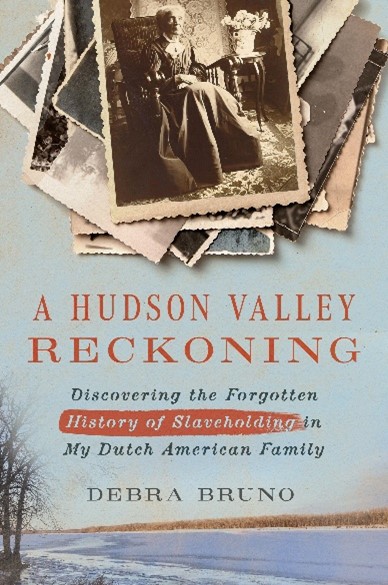
Book Review: A Hudson Valley Reckoning: Discovering the Forgotten History of Slaveholding in My Dutch American Family

For many, slavery in the North is nothing but a long-ago memory, a story that is often untold due to the cruelties of enslavement in the South and the long-lasting impact of enslavement in the Southern part of the United States. The general public is not always aware of the enslavement of African people in the North with only recent discoveries being brought to light. A Hudson Valley Reckoning: Discovering the Forgotten History of Slaveholding in My Dutch American Family showcases the stories of enslaved people who lived in Greene County, New York. The author, Debra Bruno, offers a new perspective on the enslaved in New York by exploring her own lineage and that of a distant cousin named Eleanor.

In this thirteen-chapter narrative, Bruno tells the story of her slave-holding Dutch family and the connection between her relatives and those who they might have enslaved. Eleanor is a descendant of the individuals whom Bruno’s family enslaved. Bruno discusses how historians, politicians, journalists, and every day people have erased significant features of enslavement in the North and painted a quaint picture of enslaved people helping the Dutch with their farms, houses, and livestock. Bruno, however, provides a much clearer picture of the reality of slavery in Dutch New York. She visited Macon, Georgia, and Curacao as she dug deeper into her family’s history.

In the introduction, Bruno describes her upbringing and the proud nature of her family’s Dutch heritage. She draws the reader in by describing her hometown of Athens and Coxsackie, places located along the Hudson River. Her American family began with Lambert Van Valkenburg, who settled in New Amsterdam in the early 1600s and later sold this land relocated on the North River, now the Hudson River. Her ancestor originally owned land in New Amsterdam where the where Empire State Building is located.

While digging into the history of her family, Bruno decided to explore whether they were enslavers. Bruno used Ancestry.com where she found various records including newspaper clippings, census data, photographs, and wills. Valkenburg did not provide significant results, so she searched under Collier, her grandmother’s family name. Bruno found a will from what would be her Great Grandfather five times back. He had many children and grandchildren around the Coxsackie area and left a will bequeathing much of his property to them. As Bruno combed through the pages of the will she saw it, “detailed like inventory along with his property and cows were slaves” (6).

Chapter four illustrates enslavement in the North with an analysis of a painting. “Van Bergen Overmantel” was commissioned by the Van Bergen family in the early 1700s to hang in the family home. It depicted what life was like in 18th century Hudson Valley and “is the first visual evidence of slavery on a New York farm” (56). According to Bruno, in 1714 Coxsackie’s population was 21% enslaved people. and by the 1790s in places such as Brooklyn, New York that number went up to 30%. In the late 18th century New York had an enslaved population of 319,000 enslaved people.

In the following chapters Bruno describes the challenges she faced in finding sources from the enslaved that could detail what their life was like on these farms. She notes that they were threatened with being sold down South or the Caribbean, some ran away killing their masters in the escape, and these details just go to show that enslaved life in the North was not a cakewalk as some may think. Even after being emancipated, African Americans still struggled in New York as they fought their right to be citizens and gain full citizenship rights as discussed in chapter nine.

In a discussion of why this history was so important to recover, Bruno emphasized that the Declaration of Independence and the Constitution, the nation’s founding documents, not grant the same freedoms to all people living on this land, and that individuals must “accept that only some people have benefited from their promises. To deny that and to distance ourselves from that truth is to misunderstand how our county grew, prospered, and exists today” (233.