Holocaust Museum & Center for Tolerance and Education
Rockland Community College
You can find the Holocaust Museum and Center for Tolerance and Education at Rockland Community College through this link.
Legislation (A.472C /S.121B) will help ensure that New York schools are properly educating students on the Holocaust. The legislation directs the New York State Education Department to determine whether school districts across the state have met education requirements on instruction of the Holocaust, which have been required by law since 1994.It will also require NYSED to identify how non-compliant schools will close gaps in knowledge of the Holocaust in schools.
The Holocaust Museum & Center for Tolerance and Education is proud to offer a multitude of programs for Elementary School, Middle School and High School audiences as well as Professional Development for Faculty. We teach on topics ranging from the Holocaust to Genocide Studies, to Tolerance and Diversity. We customize our programs to suit the needs of your students, staff, and faculty. Our Education Department works with you to produce events and resources that will impact your school for years to come. We will help your school achieve the mandates by our New York Governor on Holocaust Education.
Led by our Director of Education, teacher training seminars provide introductory guidance and resources on best practices for teaching the Holocaust and Genocide (Grades 6-12) and the importance of Tolerance and Diversity (Grades K-5). We also offer more in-depth seminars for teachers who wish to explore new approaches and materials to support Holocaust and Genocide education for their students.
Anti-bias & sensitivity training
Our Anti-Bias & Sensitivity Training helps faculty and staff combat hate and intolerance personally, professionally, and publically. Our Director of Education and Historian in Residence offers customizable seminars that draw upon the history of the Holocaust to teach the lessons of tolerance, individual responsibility, and moral courage in the workplace as well as out in our communities. Please contact our Director of Education and Historian in Residence Linda Suss today to discuss how we can support the important work you do educating our community’s young people.
Better Together workshops for teachers, administration and coaches
Antisemitism and racism are two facets of the disease of hatred. All forms of oppression that target individuals based on their identity share an equally distressing aim of creating a hierarchy ranking of the value of human life. We at HMCTE know that this is a categorically false and damaging way to understand the world. In our eyes, all people share the same inherent dignity, worthiness, and rights – no matter who they are or where they come from. If we only examine one facet of hatred, be it antisemitism, racism, sexism, ablism, ageism, or any other type of discrimination, we are ignoring the intersectionality or overlapping forces of hatred. Where one type of discrimination exists, others will come to thrive, too. That’s why we know that it is our duty to stand up for all people and to work together to create a more just and inclusive society for everyone.
Holocaust education for students at the museum
Our theme for the 2022-23 school year was “Combating Hate and Propaganda.” Together we will help young people understand the historical context of building cultures of hate through propaganda and misinformation campaigns. We will explore this topic through the history of the Holocaust and other genocides and we will apply critical thinking to how we consume media today. Programs on Moral Courage are available, as well as other topics currently under development. In order to accommodate your school’s preference on programming and dates, we are already booking for the coming school year. Whether you are interested in a tour of our permanent exhibit, the Rockland County African American history exhibit, or other educational programs, we encourage you to reach out now to ensure a meaningful visit with your students next year.
Resilience exhibit in your school
Host our traveling exhibit on Resilience during the Holocaust at your school. Students will have the opportunity to engage with a little discussed perspective of this history: one of individual choices, struggle, and hope. Through the exhibit and accompanying activities, Resilience connects the history of the Holocaust to each of us on a personal level and inspires students to consider how they, too, can become resilient and show moral courage in the face of injustice.
Right wing politicians in eight states have enacted laws and mandates banning Critical Race Theory (CRT) from their schools, and since 2021 an astounding total of 42 states have seen bills introduced in their legislatures that would restrict the teaching of CRT and limit how teachers can discuss the history of racism and sexism in public schools. This has been done on the dubious grounds that such teaching amounts to left wing indoctrination, which they denounce as divisive, anti-American, racist, and damaging to white students’ self-esteem. Such gags on teachers constitute the greatest violation of academic freedom since the McCarthy era. The hysteria against CRT has been so extreme that Republican legislators in states such as North Dakota enacted anti-CRT bans while publicly acknowledging that there was no evidence that their state’s public schools even taught CRT. The bans amount to a new front in the culture wars, designed to preemptively strike against critical historical thinking and sow political division at the expense of meaningful learning experiences.
Though we are veteran teacher educators, we never taught CRT to our student teachers prior to this era of anti-CRT hysteria. This was not because we disdained CRT, but rather because secondary school history tends to be atheoretical, focusing primarily on the narration of political – and to a lesser extent social – history.[1] We thought of CRT primarily as a set of ideas taught at the graduate level, especially in law schools, and of little use for high school teachers. Though we observed New York City public school history teachers for years, we never saw one teach CRT. But all the controversy about CRT provoked us to explore its origins and meaning, which led us to realize our error in failing to see CRT’s utility for teaching U.S. history, debating the history of racism, and exploring the theory itself. Note that we speak here of having students debate the history of racism and CRT, not indoctrinating students, as right-wing politicians imagine. We are convinced that CRT, with its controversial assertion that racism is a permanent feature of American society, is a powerful tool that enables students to analyze, discuss, and debate the meaning of some central events and institutions in U.S. history, including slavery, Indian Removal, Jim Crow, Chinese Exclusion, Japanese internment, mass incarceration of Black men, and the Trumpist movement to bar Latinx immigrants. Those seeking to ban CRT either do not understand it or distort its meaning to obfuscate the educational benefits of discussing and debating its provocative perspective. We witnessed this positive impact firsthand as we piloted a unit on the uses and debates about and criticism of CRT in a high school class.
Based as we are in New York, we were drawn to study and teach about the writings of the late New York University law professor Derrick Bell– a widely admired teacher and mentor–regarded as Critical Race Theory ‘s intellectual godfather.[2] Un-American? Hardly. Hired as a civil rights attorney by Thurgood Marshall for the NAACP’s Legal Defense Fund, Bell spent years championing equal opportunity in historic desegregation cases. But Bell was troubled by the fact that even when he won such cases, whites evaded school integration to the extent that, by the early 21st century, many school systems remained de facto segregated and scholars wrote about the re-segregation of American public education. Seeking an explanation for this persistent, effective white resistance to racial integration, Bell argued that racism was a permanent feature of American society, and any anti-racist court victories and political reforms would have limited impact since whites would always find ways to avoid integration and limit progress towards racial equality.
Was Bell right? This question has great potential to spark historical debate in our nation’s classrooms because his perspective offers one possible explanation for key events in African American history. Think, for example, of the emancipation of enslaved Blacks at the end of the Civil War, which the white South quickly limited by adopting Black Codes. Congress responded by enacting Radical Reconstruction to empower and enfranchise formerly enslaved people, but this multiracial democracy was overthrown violently by white supremacists and replaced with what became the South’s Jim Crow regime. The dynamic of racial progress yielding white backlashes–asserted by Bell and documented exhaustively in Carol Anderson’s recent study, White Rage: The Unspoken Truth of Our Racial Divide (2016) – can be seen in the way the Supreme Court’s 1954 Brown v. Board of Education, Topeka, Kansas decision sparked a furious massive resistance movement in the South, the Supreme Court’s refusal in Milliken v. Bradley (1974) to mandate busing to integrate schools across municipal lines, and the Court’s assault on affirmative action. Think, too, of how Barack Obama’s two terms as America’s first Black president were followed by Donald Trump’s presidency, which championed white grievance, flirted with white nationalism, and demonized the Black Lives Matter movement and the national wave of protests following the police murder of George Floyd, culminating in banishing CRT from schools. How do we account for this pattern of racial progress followed quickly by reversals? And what are we to make of the fact that this pattern seems to conform to Bell’s argument about the permanence of racism in America? In confronting, rather than evading or banning these questions, we enable students to probe some of the central questions in American history.
Discussing and debating Bell and CRT works best when we also explore their most perceptive critics’ arguments. Harvard Law School Professor Randall Kennedy, for example, charges that Bell was too pessimistic in his outlook on the history of racial progress and unrealistic in his yardstick for measuring the impact of civil rights law. According to Kennedy, Bell
…was drawn to grand generalities that crumple under skeptical probing. He wrote, for example, that “most of our civil rights statutes and court decisions have been more symbol than enforceable laws, but none of them is … fully honored at the bank.” Yet consider that phrase “fully honored at the bank.” It does suggest a baseline – perfect enforcement. But such a standard is utopian. All law is under-enforced; none is “fully’” honored.[3]
Kennedy draws upon voting rights to support this critique, finding that deep South Black voter registration skyrocketed thanks to the Voting Rights Act of 1965. Whereas in 1965 Black voter registration in Alabama was meager, with only 19.3% of Blacks registered, by 2004 72.9% were registered. In Mississippi the percentage rose from 6.7% in 1965 to nearly 70% in 2004.[4] Kennedy viewed such statistics as proof that civil rights law worked over the long run, undermining Bell’s pessimistic claim that “Racism in America is not a curable aberration. [O]ppression on the basis of race returns time after time – in different guises, but it always returns.”[5]
Clearly, then, debates about Bell and CRT are thought provoking and merit inclusion in high school history classes since they challenge students to assess the trajectory of a central theme in American history: the ongoing struggle for racial equity. We partnered with a New York City high school teacher in designing a unit on debating Derrick Bell and Critical Race Theory. We describe this unit below, but we would like to preface this summary by assuring you that – contrary to the hysterical fears of right-wing politicians – no students found these lessons anti-American, racist, divisive, or emotionally disturbing. To the contrary, the students learned a great deal of history from this unit and came to see it as foolish, even outrageous, that teaching about CRT was banned from many school systems.
As we began to plan the unit, certain things were clear: students needed to learn about Bell’s ideas, life, experiences, and intellectual turning points; the unit had to include resources and information that explained CRT in a way that high school students could understand; we needed to include a range of views on CRT from those who support it, to scholars who critiqued it, to polemics against it from the Right; and it was essential for students to evaluate historical and current events and decide for themselves if Critical Race Theory is, in fact, persuasive. We were intentional in our planning–this could not be a unit that explicitly or implicitly steered students’ thinking in one way or another. Our goal was to enable students – with proper support and resources – to discuss and debate CRT and its use as a tool for assessing key patterns in American history, arriving at their own conclusions. The unit, therefore, gave students the tools to engage in this work.
We worked with an AP Government teacher at a large comprehensive Brooklyn high school. He taught this unit over three days to his senior-level class, whose racial composition was 50% white, 29% Black, 14% Asian, and 7% Latinx. The teacher was white. Students previously learned about racial conflict in the United States, including lessons on slavery, Reconstruction, segregation, violence against Black people, and resistance to each; this unit built on that prior knowledge. The readings and resources, though used here a senior class, could be used in any high school class.
We established two Essential Questions to frame the unit: “To what extent is backlash an inevitable response to Black Americans’ legal and societal progress?” and “To what extent does Critical Race Theory (CRT) provide an accurate framework for the U.S.’s relationship to and problems with race in the past and present?” These questions challenged students to assess historical developments and CRT’s validity as an overarching theory. To help students answer these questions, the lessons explored Bell’s central claim about the permanence of racism in the United States, and the ways racism is institutionalized. We were mindful of planning a unit for high school students and tailored our intended understandings about Bell and CRT to that audience; we focused on Bell’s most important argument about the endurance of racism and chose not to explore his secondary arguments (such as his claim that fleeting moments of Black progress only occur when they align with white self-interest). At the end of this unit students would understand the most important component of a nuanced and complicated legal theory and, through historical analysis, be able assess the extent to which it explained the role of race and racism in the United States.
Students navigated a variety of resources including biographical information on Derrick Bell, videos of scholars explaining CRT, excerpts from Randall Kennedy’s critical essay on Bell, primary sources focused on instances of progress and backlash in Black history, and statistics and media reports on school segregation and recent attempts to prohibit discussions of CRT in classrooms. Ultimately, students used all that they learned to evaluate CRT. At the unit’s end, students responded to two prompts: “To what extent does history align with Bell’s ‘one step forward, two steps back’ argument?” and “Indicate the extent which you agree with the following statement: ‘Critical Race Theory accurately depicts the impact of racism in the United States.’” Additionally, the students responded to a scenario addressing the New York State Assembly’s proposal to ban discussions of Critical Race Theory from schools, drawing upon information from the lessons to support their positions.
Most students knew little about CRT before the unit began. Four recalled hearing of it but were not sure of its precise meaning. Their previous study of racial conflict in American history – from slavery through and beyond the Jim Crow era– made them more open to learning about this and understanding Bell’s views. Three surmised, based on prior study, that it was related to systemic racism. Students participated in discussions and group work, volunteering to share their thoughts with their peers. From the first day of the unit, when students learned about Derrick Bell and the origins and critiques of Critical Race Theory, takeaways included: “Derrick Bell was one the first people to discuss this theory” and “Racism is more than just how people talk to each other. It’s more systemic.” Students were especially animated on Day Two, when they watched video of North Dakota legislators debate banning CRT in classrooms and worked in groups to apply CRT to pairs of historical events.
Overall, students gained an understanding of the debate over Critical Race Theory and the extent to which arguments and theories on the permanence of racism in the U.S. explain Black Americans’ struggles. Through historical analysis they made connections between events that signified progress towards racial equality, such as the Fourteenth Amendment, Brown v. Board of Education, and Obama’s election, and the backlash that curtailed that progress – Jim Crow laws, massive resistance, and the way Trump’s “birther” slander against America’s first Black president helped make Trump a popular figure on the right, paving the way for his presidential campaign and ascendance to the presidency. Seventy-five percent of the students identified “one step forward, two steps back” as a trend over time, claiming, for example, “I think throughout most events in history involving race, there had been more setbacks than step forwards for people of color.” Of course, this pessimism merits critical interrogation since such steps forward as the abolition of slavery and Jim Crow were not followed by a “two steps” return to that degree of racial oppression.
Clearly, the CRT argument about the endurance of racism resonated with many students who had come to political consciousness in a city where there had been vocal opposition to Trump and his rhetoric of white racial backlash. When asked if CRT accurately depicts the impact of racism in the United States, about 75% of the students wholeheartedly agreed that it does, positing, for example, “One of the main points of CRT is that racism is fundamentally and deliberately worked into our government and society, and I think that that is absolutely true in the United States. A variety of factors, including healthcare outcomes, educational attainment, average income, and incarceration rates, all indicate that there is a disparity in opportunities offered to white people versus people of color.”
But on the other hand, twenty-five percent of the students took more moderate stances, asserting, “Regression does happen but that does not mean that substantial progress has not/ can’t be made.” Just under a fifth of the class aligned with Kennedy and his critique of Bell. One student, for example, stated, “While racism was indubitably present in society, I don’t completely agree with it being embodied in law and government institutions because people have tried making some progress by passing laws that would make people more equal.”
Learning about CRT did not offend students, and none felt pressured to agree with Bell. Students’ differences of opinion indicate that this unit, which provided plenty of room for debate and discourse, didn’t indoctrinate students. Though the students’ views on Bell/ CRT differed, evidence suggests that they found these ideas intellectually stimulating and so were unanimous in their belief that they should be taught. The same student who critiqued CRT said, “People have to be aware of darker aspects of history so they remember those bad times and prevent them from happening; it encourages understanding of each other.” A classmate who agreed with CRT’s assessment of U.S. history connected what happens in classrooms to society at large, stating, “I would say that for the sake of our democracy, it is always better to err on the side of protecting free speech. This is especially true when it comes to students and teachers.”
As students became more familiar with the critique of American racism offered by Bell and CRT and with the movement to ban CRT in schools, they grew more vocally critical of that movement, which they saw as “an attack on unbiased education” and proof that “the system has been working against people of color up until even now.” They reacted passionately when asked how they felt about New York considering such a ban, saying, “It’s not right to pass laws saying we can’t learn about it in school” and “CRT is as much a part of history as everything else we learn about. We should learn about virulent racism happening at the same time as all these other events.” Students also questioned, “What is education if we erase history?”
None of the students’ comments disparaged the country or sought to evoke white guilt. Rather, learning about CRT and historical evidence that supports and contradicts it enabled students to better investigate and understand events of the past and develop informed conclusions about the present. We observed a huge chasm between anti-CRT polemics, such as that of North Dakota Representative Terry Jones (R), who compared teaching CRT to “feeding our students… poison,” and our class sessions, where students were not poisoned but intellectually stimulated by engaging in open discussion and drawing their own evidenced-based conclusions. Such open-minded inquiry is, after all, a goal of historical and social studies education.[6]
Creating this unit and working with a high school teacher to implement it demonstrated the possibilities and benefits of exploring Bell and CRT’s claims about the permanence of racism in America. Students learned about figures and ideas omitted from their textbooks and most curricula and engaged with multiple and diverse resources. Did every student agree with Bell? No. Did that indicate that the unit failed? Of course not – and such disagreement attests that the lesson succeeded in fostering debate. Did students walk away with a better understanding of Bell and CRT’s critical take on racism and the way it might be applied to U.S. historical events? Certainly. Whether or not students’ analysis of racism aligned with Bell’s, they had the time and space to think deeply about CRT, its roots, and the debate over its place in education in the last year and a half.
If classroom realities matter at all to those governors and state legislators who imposed CRT bans on schools, they ought to be embarrassed at having barred students in their states from the kind of thought provoking teaching we witnessed in this project.
[1] Though CRT has been applied to analyses of educational inequities, it is not a pedagogical practice or topic that most American students encountered in K-12 education prior to this. As Stephen Sawchuk wrote in Education Week, “much scholarship on CRT is written in academic language or published in journals not easily accessible to K-12 teachers.” (Stephen Sawchuk, “What Is Critical Race Theory, and Why Is It Under Attack?” Education Week, May 18, 2021, https://www.edweek.org/leadership/what-is-critical-race-theory-and-why-is-it-under-attack/2021/05.)
In a book dedicated to Wilfred Ferguson, the son of Charles Ferguson, teacher and historian Christopher Verga resurrects the story of two Roosevelt, New York brothers killed by a Freeport police officer in 1946. Verga opens The Ferguson Brothers Lynchings on Long Island: A Civil Rights Catalyst with an account of the long history of racism on Long Island and in the Freeport area including Ku Klux Klan activity. The background to the 1946 killings takes up the first third of the book. The book is well researched and referenced with extended quotes from official court documents and newspaper accounts. It is available from Amazon in Kindle and paperback formats.
On February 5, 1946, two African American men, brothers, were shot and killed by a white probationary police officer in Freeport, New York. The officer claimed that the men were part of a group of four, all brothers, who were using “abusive and threatening language” and that one of the men he shot had stated that he had a .45 and was going to use. The officer’s first shot struck 27-year old Charles Ferguson, a World War II veteran, in the heart and killed him instantly. The second shot wounded Joseph Ferguson, aged 20, and then struck Alphonso Ferguson, aged 25, in the head. Charles and Joseph Ferguson were both wearing military uniforms when they were shot. Alphonso Ferguson was taken to Meadowbrook Hospital in East Hempstead where he died. The fourth brother, Richard Ferguson, also a veteran, was arrested and charged with disorderly conduct. He was tried, convicted, and sentenced to 100 days in jail, but his conviction was overturned on appeal. Military tribunals later cleared the brothers of any blame in the incident. Charles Ferguson was buried at the Long Island National Cemetery with full military honors.
At the time of the shootings, Freeport was a segregated town. There were no Black police officers there or teachers in the Freeport school system and Black children were all zoned to attend one elementary school regardless of where they lived.
After Nassau County District Attorney ruled that the shootings were justified, the New York Committee for Justice in Freeport, the American Jewish Congress, and Congressional Representative Vito Marcantonio of Manhattan demanded that Governor Thomas E. Dewey authorize a new investigation. In July, Dewey appointed Lawrence S. Greenbaum, as a special investigator to hold hearings and examine witnesses. Greenbaum, a lawyer, was a member of the NAACP. A petition to Governor Dewey condemned the Nassau County District Attorney for “not properly and without prejudice carry out his duties in the presentation to the February grand jury” and the Freeport Village Board for prejudicing the proceedings by exonerating the white officer before the grand jury had heard the case. The petition also asserted that the brothers were not drunk as the police claimed, and that the incident had been precipitated when the operator of a lunch counter had refused to serve the men because they were Black. Legendary folk singer and activist Woodie Guthrie wrote a song, “The Ferguson Brothers Shooting,” to support the campaign for justice for the Ferguson family.
The cop said that we had insulted the joint man.
He made us line up with our faces to the wall;
We laughed to ourselves as we stood there and listened
To the man of law and order putting in his riot call.
The cop turned around and walked back to young Charlie
Kicked him in the groin and then shot him to the ground;
This same bullet went through the brain of Alonzo
And the next bullet laid my brother Joseph down . . .
The town that we ride through is not Rankin, Mississippi,
Nor Bilbo’s Jim Crow town of Washington, D.C.
But it’s greater New York, our most fair-minded city
In all this big land here and streets of the brave.
At the hearing, held in Manhattan, the two surviving brothers testified that the police officer first kicked Charles and Joseph Ferguson and then drew his pistol and lined the four brothers against a wall. The police produced witnesses to support the accused officer, including an African American by-passer, and no cross-examination of witnesses was permitted. The officer repeated his accusation that Charles Ferguson claimed to have a weapon, and that he shot Alfonso Ferguson when Ferguson was charging at him. The officer and the other police witnesses admitted that they never saw a gun and no gun was found at the scene. A spokesperson for the New York Committee for Justice on Freeport charged that the investigation was a “white-wash” and an “unvarnished fraud’ because witnesses were not cross-examined. At the final inquiry session on July 23, most of the audience walked out in protest.
After the special investigator’s report was released on August 2 and exonerated the police officer and the Nassau County District Attorney’s office, Governor Dewey closed the inquiry. The report claimed that the police officer acted because he believed his life was in danger and there was reason to believe he would have acted differently if “the four men before him had been white and not colored.”
The killing of the African American men in Freeport became an issue in the November 1946 gubernatorial election as Dewey, a Republican, campaigned for reelection. Democratic party candidate James M. Mead charged that the shooting was a lynching and accused Dewey of endorsing Southern-style racism. However, once Dewey was reelected, the Freeport case dropped out of the news.
A side story in the book is the role of the American left including the Communist Party in the push for the special investigation into the killings and for justice for the Ferguson family. While the NAACP also called for the inquiry, it avoided being too closely associated with the left groups, and being branded as communist or communist directed. State and federal law officials investigated communist influence in the campaign, perhaps more carefully than they investigated the actual incident. In Nassau County and in Freeport supporters of the police officer used left involvement in the campaign as a way to discredit the specific charges and deny underlying racism in the area.
Verga concludes the book by examining a similar story about an African American veteran attacked and gravely injured by police in South Carolina and other incidents of racism in the United States and on Long Island after World War II including the notorious racial covenant banning African Americans from purchasing or renting Levittown homes. Verga note that at least demographically, Freeport and Long Island have changed since the deaths of Charles and Alponso Ferguson at the hands of a police officer in 1946.
Antisemitism in America was not only widespread but went almost unnoticed in regard to the media prior to the Holocaust. This ideology was likely a result of the hold that Christianity had on many people’s lives, coupled with traditions of American culture. Dr. Baruch Braunstein spoke about this phenomenon in his speech A Symptom of the Disease that Kills Great Nations in December of 1939, right as the Second World War was beginning in Europe. Dr. Braunstein explained antisemitism within America and how it should be America’s greatest concern due to its relation to the persecution that was happening in German-occupied Europe. Dr. Braunstein does this through his use of powerful messages, such as how “if a nation closes itself off from others, it will fall and not be able to progress,”[1]suggests that America is attempting to keep different ideas, religions, and cultures out, and in doing so is only harming themselves. Dr. Braunstein exclaimed that Americans should change their opinions on and reaction to Jewish people, in order to help further America by increasing tolerance of different people and their cultures.
Antisemitism within America was rising leading up to World War II because of the notion that Jewish people and other minority groups were the cause of America’s greatest issues even though they had been persecuted for centuries. Many Jewish Americans chose to ignore antisemitism and the persecution that was happening in America and abroad leading up to the war believing that they were not the ones being harmed.2 This led to a cultural separation of Jewish people and helped the American Jewish people look past what was going on abroad. This disconnect allowed antisemitism to continue in the United States because Jewish people were less likely to point out or condemn it when they saw it happening. But antisemitism was not only happening in Europe and in American cities, it was prevalent in the American government.
The American government continued to stay out of the Second World War physically, yet by allowing widespread antisemitism to continue, the American Government made a statement about where the nation stood when it came to antisemitism. Many politicians at this time were known to have had antisemitic ideologies, even President Roosevelt had antisemitic ideologies during his presidency, believing that Jewish people should not immigrate to America or seek refuge here. The Roosevelt administration also refused to allow refugees that were fleeing German-occupied nations, never increasing their quotas for the number of Jewish refugees.
While Roosevelt’s antisemitic ideologies were not always public, many came to light because of the Morgenthau Project after Roosevelt’s death.[2]The Morgenthau project, created after FDR’s presidency, discloses many private conversations the President had with colleague Henry Morgenthau through the digital archiving of Morgenthau’s private diary entries and letters.[3]These letters revealed some of the policies and ideologies that President Roosevelt held which might not have been formerly made public. Included in these documents was a letter that Roosevelt had sent to Morgenthau about his idea to “spread thin” the Jewish and other immigrants that came to America. Roosevelt believed that immigrants of the same ethnicity or background should not settle together, but instead should be spread thinly around America in order to not “disrupt” the original cultural and political ideologies of the areas they settle.[4]This ideology was not only anti-immigration but antisemitic, as well. Roosevelt believed that the Jewish people entering America would somehow alter and degrade the ways in which America would continue to run.
President Roosevelt in liaison with other government officials had a plan he called the M-project, not to be confused with the Morgenthau Project that was previously discussed. The M-project or “migration project” was an idea of what to do with the European migrants, particularly Jewish migrants, that were expected to be displaced at the end of the Second World War. The M-project was created in 1942, years prior to the end of the war, and was greenlit in secret by the president, who commissioned journalist John Franklin Carter and anthropologist Henry Field to create a survey of regions that would be suitable for Jewish people to live. President Roosevelt created this project in an attempt to find places in and out of the United States for Jewish refugees to be placed after the war. This concept was created in secret due to the antisemitic and controversial nature of the project. This project perpetuates the antisemitic and anti-immigration ideologies that Roosevelt had throughout his presidency.
During Roosevelt’s presidency, he attempted to show his support for the Jewish people being persecuted, but did not make headway in his efforts. Roosevelt set up an international conference called the Evian Conference in July of 1938 in order to address the issues arising in Germany at the time. At this conference, many nations agreed that Jewish people needed to be helped and that their laws about refugees should change. Despite this, most nations did not change the number of refugees they would allow, even though they “expressed sympathy for the refugees.”7 These nations would not allow them within their boundaries for fear of being taken over by Germany, and being dragged into the war. Instead of allowing more Jewish immigrants or refugees into the United States, President Roosevelt continued to display consistent performative activism by discussing the issue while making no legitimate attempts to help Jewish people. The lack of change after the Evian conference showed not only Nazi Germany that they could continue the persecution of Jewish people, but also showed Americans that there was no real movement to help Jewish people and that they could continue in their hateful ways. The United States continued to allow a limited number of Jewish immigrants during the war, and only ever approved 1000 Jewish refugees to enter America. President Roosevelt was more interested in performative activism than in supporting the Jewish people being prosecuted and murdered throughout German-occupied Europe. The lack of action from President Roosevelt influenced the way antisemitism and the holocaust were viewed in America until the United States joined the war.
Leading up to the Second World War, there was an abundance of antisemitism throughout America, much of which went ignored by the average citizen. Many Americans had very negative ideologies about Jewish people, and stereotypes ran rampant through the media. Historian Leonard Dinnerstein suggests that the increase in antisemitism at this point was in part due to the increased aggravation and suspicion of outsiders, with many other groups suffering from prejudice as well. Antisemitism at this time was not seen as an issue by non-Jewish Americans, and lacked media attention from gentile groups. Notably, a study done in November of 1938 showed that 52.5 percent of Americans believed there was very little hostility toward Jewish people in America, even though similar studies show that antisemitism was on the rise in the years leading up to World War II.[5]In an attempt to change the tides of antisemitism, small video and audio updates about the progression of the war in Europe–called Newsreels–would play before movies and on the radio during the Interwar years from 1934 to 1938. They often informed people about foreign affairs such as the Annex of Austria and other nations.[6]However, many Americans were wary about the specifics of the information that they consumed, due to the large amounts of misinformation and propaganda that Americans received during the First World War.[7] The American Institute of Public Opinion found that in January of 1943, 29% of people thought that it was untrue that 2 million Jewish people had been killed since the beginning of the war.With almost a third of Americans remaining unsure about the information they consumed about the war, a change in America’s views about Jewish people seemed unlikely.
1 Braunstein, Baruch. 1939 “A Symptom of the Disease that Kills Great Nations.” Transcript of speech delivered at Institute on Contemporary Jewish Affairs in Washington D.C., December 12th, 1939.
[2] Rafael Medoff, “What FDR Said about Jews in Private,” Los Angeles Times (Los Angeles Times, April 7,
[5] Erskine, Hazel Gaudet. “The Polls: Religious Prejudice, Part 2: Anti-Semitism.” The Public Opinion Quarterly 29, no. 4 (1965): 664. http://www.jstor.org/stable/2747042.
[7]Michael Wilson, “Nazis Warn World Jews Will Be Wipes Out Unless Evacuated by Democracies,” Los Angeles, November 23, 1938, pp. 1-1. Time magazine through Holocaust Museum
The Forgotten Lessons: The Teaching of Northern Slavery
Andrew Greenstein
In the winter of 2021, a dark discovery took Rider University by storm and sparked a revelation amongst many of the students in attendance. After over a century of being hidden in the darkness, the secret that Rider University was once a slave-owning plantation was revealed to the world. A place of advanced education and diversity was once an institution of oppression. The university has since changed the name of the building from the name of the slave owner, Van Cleve, to the Alumni House. It is important that history not be forgotten, but instead brought to the forefront. The university will not erase the history but rather use it as a way to teach about the complicated history of slavery in the state of New Jersey[1]. To many of the students attending the university, this came as a surprise. The students who were history majors were astonished by the fact that slavery occurred in the state of New Jersey, let alone on Rider University’s property. The reason for this lack of information stems from the collective lack of education on the subject.
With a basic understanding of American history, one would be led to believe that slavery was a southern issue and continues to be a contentious history when taught in those states. The reality was that slavery was a nationwide institution. Though schools in the south are vocal about the unwillingness to teach the subject, schools in the north are silent. There is continuous hypocrisy in deflecting all discussions of the matter to the south while ignoring what happened in their own backyards. Walking through any school teaching U.S. history, one may hear a line like “The north were free states and the south were slave states.” Similarly, worded statements can be found within schools in New Jersey all across the state. It implies that Northern states had no slaves at the time of the civil war and were actively fighting the good fight. When the 14th Amendment comes into discussion, one may have the impression that it directly pertained to the freeing of enslaved people in the south, rather than the north as they were already free. This simplification of the issue is far from the truth. To this day, many students will never learn that slavery took place in the north at all, let alone that New Jersey was the last state to abolish the practice. The nation now celebrates Juneteenth to “commemorate an effective end of slavery in the United States”[2]. The stark reality is that slavery persisted after Juneteenth in the state of New Jersey legally for almost a full year, and illegally for another year. That dark history is often forgotten within classrooms throughout the state of New Jersey and the nation.
The lack of national attention to this critical issue does beg the question of how it happened. Many historians argue that the lack of discussion on the institution of northern slavery was due to the racist beliefs of historians in the 19th and 20th centuries.[3] The voices of those early historians often get blamed for creating the view that slavery was only relevant when discussing the civil war as it was undeniably a major cause[4]. As time progressed, one would assume the material on northern slavery would become more prevalent, however, that is not the case. As the discussion both in the classroom and by historians on the institution of slavery has expanded, northern slavery still remains for the most part absent. The question remains: did this critical part of the establishment of the nation go untaught? The only way to answer that question is by examining the teaching of slavery in New Jersey and the Tri-state area. This will open that gateway to a deeper understanding of how this history could be erased from the collective memory.
Before proceeding, it is imperative to understand what the discussion of the education on northern slavery has been. Though the discussion on northern slavery began in the late 1940s alongside the civil rights movement, the conversation about its absence in the classroom does not begin until 1991 due to a shocking discovery in Manhattan, New York[5]. As the federal government was constructing a 275 million dollar project, they stumbled upon “the largest and oldest collection of colonial-era remains of free and enslaved Africans in the United States, according to the National Park Service”. This discovery of the cemetery caused massive protests to fight the city to halt the construction and the removal of the bodies from the site[6]. Following this event, the New York City public schools began to look for a way to incorporate the material into the class and teach this reality that was just revealed to them[7]. This started a growing push from schools across the nation to try to incorporate this reality.
The conversation on northern slavery would continue over a decade later when Professor Alan Singer of Hofstra University would guest teach in New York City public schools. When teaching less than a mile away from the enslaved African cemetery, most of the students were completely oblivious to the reality that not only were slaves in New York but how the reality of slavery was visible in their own community[8]. Though many decisions on how to tackle such an issue were made to teach this material, over a decade later the students still had no idea about northern slavery. The discussions on the material did not translate into the classroom to a sufficient extent. The debate on how to successfully teach northern slavery in the classroom ensued and ultimately lead to the discussion on how to teach this history appropriately.
The content of northern slavery required a restructuring in order to successfully teach the material. Previously, slavery was only taught at the establishment of European colonies in the New World and before the American Civil War. What this divide does is creates the material into another unit, a separate event rather than a continuous struggle. The 2016 book Understanding and Teaching American Slavery by Bethany Jay and Cynthia Lyerly attempt to illustrate the best organization for discussing the topic and the history of the institution of slavery in classrooms. In their analysis of the history of teaching the institution of slavery, they regard the idea of teaching slavery exclusively at those points during early American Colonization and the Civil War to “severely hinder its importance.”[9] What is the best way to teach the institution of slavery is discussing the enslaved perspective threw out the development of the nation.[10] The benefits of this method allow the longevity of the issue and the hardships faced by those affected to be well articulated amongst the students. This is due to its constant presence and the reminder that liberty and freedom were not for all[11]. This revelation in adding the enslaved perspective to early American history would spark further development in tools and resources to bring northern slavery into the classroom.
An initiative would be enacted to bring northern slavery and the massive scope of the institution of slavery to the forefront. This would come in the form of The New York Times 1619 Project. This resource marks an incredible stride in the conversation on teaching northern slavery. The project’s purpose is “to reframe the country’s history by placing the consequences of slavery and the contributions of black Americans at the very center of our national narrative”[12]. This comes out of a series of historians and teachers discussing how the realities and the true institution of slavery were untaught to them in the classroom. The project’s aim is to bring these lost lessons of slavery such as its true cruelty and its widespread adoption throughout the nation, not just exclusively in the south. It is built off of the ideals proposed in Understanding and Teaching American Slavery and other books with the same idea tofollow this notion that slavery is an integral part of the nation as a whole, rather than at specific points in U.S. history[13]. The combination of all these ideas paints a picture of the flaws of the teaching of slavery threw out the nation. The current discussion’s main focus is looking at what is absent in the current classroom. The smaller conversation that pertains to the material taught in the past primarily revolves around racism and the Klan[14]. The discovery of a 1904 textbook that details the brutality of northern slavery pushes back on this notion[15]. It begs the question of whether the subject was truly untaught or if another force was responsible for its absence. Looking at the material present in the classroom in the past may prove an insight into northern slavery’s appeared absence.
An analysis of the classroom material available to students is key to understanding the absence of northern slavery. To find these answers, understanding what material was being taught in classrooms from the 1860s and beyond. A method to understand the content of the classroom is by looking at textbooks. Many school notes and lesson plans have been lost to time, but what remains are textbooks. The work of Dr. Pearcy shows the indicator tool that can be used to understand their effect on the content being taught in schools. He states clearly in his article, “Textbooks are, ultimately, tools, for student use. Their utility can only be measured by the degree to which they offer teachers the opportunity to build student-centered inquiry”[16]. From this notion, we can conclude that textbooks are just an object and a tool for students to use. Their content is meaningless unless given a purpose by the teacher. Everything learned in the classroom is under the teachers’ control and they possess the option to use or discard the textbook. However, textbooks do tell us something else depending on where they are. His research looks at ten different U.S. history textbooks of different authors that are widely adopted and compares their tellings of the Battle of Fort Sumter[17]. After analyzing each of the tellings, an interesting trend occurs. This trend is in the bias of the author and how they pick and choose what details to keep and leave out of the telling of the event. This bias could affect the leanings of anyone reading and coerce their perspective of the events that unfolded. These different depictions of the conflict in different areas can have effects on the material discussed in class or reflect it. Companies such as Pearson publish multiple textbooks by different authors to capitalize mainly on the market, however, what market are they capitalizing on?
Looking at the rationale behind the variation of textbooks based on location can assist in understanding why certain content is missing. The findings by Goldstein in his article Two States. Eight Textbooks. Two American Stories sheds light on the issue of why these publishing companies hire multiple historians and interpretations of the same material. This article focuses on eight different textbooks found within the states of Texas and California. The issues arise when looking at the same textbook in multiple states. The textbooks are by the exact same author but have different versions for each state. The variations were created by request of school districts or even the book’s own editor. These individuals remove or request additions of material to allow the book to be adopted in a particular area[18]. The best evidence to illustrate this divide between locations is that of the Harlem Renaissance. Examples of this are found in Pearson’s United States History: The Twentieth Century 19th edition. On the subject of the Harlem Renaissance, the Californian edition features a section on the debate within the African American community over its overall impact on them and the nation as a whole. The Texas version only includes the line “some critics ‘dismissed the quality of literature produced’”[19]. What these two distinct changes, along with many more, indicate is the presence of the political atmosphere of the area and the belief of the people the textbook is serving to reinforce. The textbook adopted by a particular state or district reflects the information a school is teaching in the classroom.
With an understanding of the behind-the-scenes crafting of textbooks, there can be the formulation of the content of northern slavery in school. Combining the findings of Dr. Pearcy and Goldstein, textbooks can provide insight into the classroom. The selection of the historian and the version adopted by the school reflect what the administration desired its teachers to instruct in the classroom. Though it may not be a perfect indicator of what was taught in classrooms, as it’s a tool for teachers to use, it gives an idea of what is being taught in the classroom. Examining textbooks from the past used in classrooms within the Tristate area can reveal if northern slavery was taught, and to what extent.
Examining the earliest textbook may yield an understanding of the lack of teaching, not only about northern slavery but slavery as a whole. An example of the content of what was taught in the classroom after the Civil War and in the years following can be found in The New England Primer. This book originated in 1690 and was a fixture in the classroom until the 1930s, a well over 200-year run. The textbook served as the basis of elementary education instruction. By looking at these textbook translations, historians get a sense of what was required of the majority of students at this time, along with what was taught in classrooms. Looking at the 1802 edition, the book opens with an alphabet chart. This gets taught through prayers that become progressively more complex as they go[20]. This information indicates that understanding the alphabet was key. Depending on the quantity available, the school could have focused on reading and potentially writing to utilize this book. Within the context of these prayers, one learns about the calendar and days of the week, counting and basic mathematics, and a small amount of history[21]. This stresses the importance of religion in the classroom at this time. The underlying message throughout the book is that God is more important than any other subject or material in the classroom. The small amount of history included is more biblical in nature but does include the basics of the American government system[22]. The addition of the U.S. system of government is the only change from the 1773 edition, replacing prayers outlining the functions and structure of the parliament system[23]. What this shows is that history was really not a focus in this era of education. Only those who would exceed the basic knowledge of the time would learn about more advanced information. With the perpetuation of this book into the 20th century, this basic education would be what was taught to many poor American individuals and black Americans. More fortunate areas would receive new textbooks and educational material, phasing this material out or relying on it less exclusively. Those less fortunate areas would be using this information exclusively until the 1930s. The New England Primer is referred to as the “Bible of one-room schoolhouse education”[24]. The lack of history not only assists in the loss of the knowledge of northern slavery but of the entire institution of slavery as a whole. These individuals would want the history they learned as children in school. A slow creep of this altered history would make its way to the north.
Movements were made to suppress and remove the teaching of not only northern slavery but all of black history. The most prominent of these would be “The Lost Cause”, the movement to honor the legacy of the confederacy. This movement would begin in the 1870s as reconstruction would begin to fail. The lost cause mentality would paint the black community as unable to attain the same equality as white individuals due to the efforts attempting to create equality failed[25]. This gave rise to the notion that the confederates were noble in their sacrifice to fight for slavery. It rewrites the telling of the history that “there was nothing ‘lost’ about the southern cause”[26]. This was due to the mindset that black Americans were only good at being servants to white men. Monuments and memorials to honor the confederacy would be constructed such as the statues of Stonewall Jackson, Jefferson Davis, and Robert E. Lee. By the 1890s this movement would sink its teeth into the education system of the north. The goal was to rewrite history books to reflect the southern perspective and preserve its honor. This movement is regarded as a reunion of America’s racist mentality as it proposed the Civil War was caused by other factors, not slavery. It also created this idea of the “happy slave”, the idea that there were enslaved individuals that loved slavery and serving the white man[27]. Women’s organizations and the state department of education were the ones in charge of advocating for approving educational material for schools. Many became strong supporters of the lost cause and by the 1920’s it would be integrated into schools across the north and especially in New Jersey[28].
Before the alteration of the history would appear, strides were made to bring the history of northern slavery to the forefront. In the 1870s history books began to include slavery within their content. The oldest examined history textbook to bear mention of slavery is the Condensed History of The United States from 1871. This book was used in a classroom in Norristown, Pennsylvania, as demonstrated by the address of the school on the front cover pages with the initial date of October 31, 1888. On the page adjacent, student names are written, with the last one being 1899, giving the text an eleven-year confirmed usage in the classroom. The cover pages are full of notes made by students long past, however, one stands out amongst the rest. This particular note is a prayer, one found word for word from the 1812 edition of the New England Primer. This detail establishes that in this classroom, the two books were in fact utilized together. This class was learning American history alongside the basics in the New England Primer. The town had the economic resources present to invest in its youth’s education. The students within this town received a higher quality of education than those of poorer communities. However, what did these students learn about not only northern slavery but the institution of slavery as a whole?
This history tells a very interesting version of America’s past, but what is interesting is what is left out. There is no mention of slavery until what they call the “War of Secession” is discussed[29]. The book starts with the discovery of the new world and the establishment of each American state at the time of its publication, but not one mention of slavery till that point. The book does establish that there was northern slavery by directly stating “At the time of adoption of the Constitution, slavery existed in the Northern as well as the Southern States”[30]. It provides an impressive analysis for its time detailing the various legal cases pertaining to slavery such as Dred Scott v. Sanford. There is a fascinating inaccuracy with the passing of the 13th, 14th, and 15th amendments; as the book details that Johnson was president for their passing. It details that the passing of these amendments was the cause of the issues between the President and the other two branches, rather than Reconstruction. In fact, the only mention of Reconstruction at all is Johnson vetoing the Reconstruction Act of 1865 rather than discussing any of the programs created by it[31]. This alteration to history has two possible reasons for the inaccuracy. The first is more innocent, being in the title of the book “condensed”. Reconstruction not only is a long process and would officially end in 1877. The book was written in 1874 meaning that reconstruction was still ongoing at the time. Writing on its effects could be taken as more speculatory and not factual information as the book attempts to stick exclusively to. The second is the seed of the lost cause making its way into the material. The ideology of the lost cause deemed Reconstruction a failure and did not warrant time discussion. Its omission is telling that this influence was seeping into the education of these students. However, what is most interesting is what it says about how slavery ended in the north. After detailing the increase of southern populations due to the cotton gin, it stated, “In the North, on the other hand, where slave labor was not profitable, slavery soon died out”[32]. It leads to the idea that in the 1850s slavery was extinct in the north, however, the reality was quite different. Slavery was very much alive in the north during the 1850s.
Looking at the history of just New Jersey alone, there is a far different reality of northern slavery from this telling in the textbook. Starting as far back as the 1790s, New Jersey was split over the issue of slavery. Quakers were strongly against it; they interpreted enslaved people as people due to the wording of the constitution. The three-fifths compromise of 1787 also reinforced their claim that enslaved individuals were people. The opposition viewed freedom as an economic catastrophe. The labor force for the majority of the state’s highest-grossing markets were nearly entirely enslaved or indentured servant individuals. They saw that liberation would make the industries of agriculture, ironworking, and factory manufacturing unprofitable. The debate over a compromise began in 1797 but would reach its conclusion in 1804 with the gradual abolition act, also referred to as the “free womb” act[33]. This legislation gave freedom to all enslaved individuals born after July 4th, 1804 on their 21st birthday[34]. This allowed slave owners to have the labor force they needed to make up for the economic loss of abolition and granted enslaved people their freedom at a set point. The average life expectancy of an enslaved individual in New Jersey at this time was forty-one years. This meant that they would likely have had only half their life to live if they even made it to freedom. The act was filled with loopholes that allowed the continuation of slavery in the state well after the projected period of total abolition. The idea was to have all enslaved individuals freed by the 1830s. The issue was with the clause that allowed children born while in the period of the enslavement term were to be placed in the care of the local principality[35]. Principalities were the townships and counties that reside within the State of New Jersey. Many of the individuals in charge of managing the treatment of these children would give them right back into the hands of their masters, making them slaves till their 21st birthday. This is how the enslaved population grew far larger than it was in 1804 by the 1860s[36].
The inaccuracies of the teaching of northern slavery would have disastrous consequences to its very existence by later generations. The pervasive belief that slavery was all but extinct in the north by the 1860s is evidence of the start of the “the amnesia of slavery”[37]. This is a term coined by historian James Gigantino II in his book The Curious Memory of Slavery in New Jersey, 1865-1941. What he seeks to illustrate is how Northern states such as New Jersey with such a large and prosperous enslaved population forgot that slavery even occurred in their own backyards. The reason for this was that slavery was looked at as an “insignificant sideshow” in the state. Many northern slaveowners owned only one or two slaves, thus making the reminders of an enslaved past virtually nonexistent to those that were not directly affected by it[38]. What the Condensed U.S. History textbook shows us is this amnesia occurring. In a time when enslaved individuals and their children were very much still alive, their suffering is being forgotten. There is no active backlash as those with the ability to change the material have little to no interest. This early removal of teaching about what occurred beneath these students’ feet will send shockwaves to later generations and reach into the modern classroom.
There would be a push to expand the teaching of northern slavery upon the turn of the century before the influence of the Klan would take hold. This is evident in the textbook Stories of New Jersey by Frank R. Stockton. This book was published in 1896 and the copy analyzed was printed in 1904. The inside cover indicates the book originated from a Princeton classroom before finding its way into the Library of Congress. It is worth noting that this book is back in reproduction and the Amazon description of the book reads that it was “so popular over the years in NJ schools that it has in itself become a part of New Jersey’s history”[39]. This book possesses a unique feature that is exclusive to this book and none other, even textbooks today. This feature is an entire chapter dedicated to the history of enslaved individuals in the state from 1626-1867[40]. What this chapter says about slavery in the state is incredibly unique, especially for its time of publication. The section begins with Dutch settlers bringing enslaved individuals over with them in 1626 to develop the inhospitable land and form their colony. Enslaved individuals were expendable and would do the labor that would normally require a far more physical toll on the body. They became the largest group of workers in the booming iron industry, logging, and of course, the plantations popping up across the land. In 1664, the Dutch surrendered their colonies to the English empire. In this exchange, many changes would appear in the lives of those original settlers, but slavery was not changed[41]. Slavery remained in this state for over 200 years after this point. This early slavery history even includes an entire section on how Perth Amboy, New Jersey, was the slave trade capital in the north and distributed enslaved individuals throughout the northern colonies[42]. This was all true. While other texts around this period ignore this history, this book sought to put a spotlight on it. Following details of the atrocious conditions the enslaved people in the state faced and the lack of large plantations like the south, it noted that large numbers of individuals owned one or two enslaved individuals[43]. This kept slavery as a pivotal force in the community and essential to its economy. If this text was utilized in the classroom to the fullest, many students would have learned a genuine and dark history of the establishment of the state’s institutions. However, this very insightful history becomes inaccurate regarding the abolition of slavery.
The first half of the telling of northern slavery from Stories of New Jersey is remarkable with its depiction of northern slavery for its time, but that narrative falls apart when reaching the abolition of slavery in the state. While it does portray an accurate picture, much of it is far from the truth. The first comes in the debates over the gradual abolition act of 1804. The book describes it as Quakers becoming abolitionists; the three-fifths compromise made their view under the law that these were people, not property, and entitled to the same rights. The opposition saw slavery as an economic necessity as the work they were doing was dangerous. These were undesirable jobs no one wanted to do in their society. This debate over the issue does remain close to the reality that transpired. The text makes a crucial error in stating the gradual abolition bill that allowed the abolition of slavery on one’s twenty-first birthday passed in 1820 rather than 1804[44]. This alteration of the date creates a precedent that the abolition of slavery was far faster and more efficient. It creates the idea that New Jersey’s policy was successful and had no issues with its implementation. Further errors found in the section support this idea that the solution the state implemented was successful. When discussing the results of the act it directly states, “in 1840 there were still six-hundred and seventy-four slaves in the state, and by 1860 only eighteen slaves remained, and these must have been very old”[45]. These numbers couldn’t be further from the truth as slavery was still going strong by the 1850s.
What is missing from the Stories of New Jersey textbook are those who were wrongfully enslaved. The text leaves out the dark reality that a percentage of slavery occurring in the state was children who were supposed to be free. The 1804 Gradual abolition act forced some of the children born to enslaved mothers into a life of enslavement until their twenty-first birthday. The census of children being born from 1804-1835 to exclusively enslaved mothers shows five hundred and forty-one documented children. It is estimated that in the year 1850, while documentation may say two hundred and thirty-six, far more were illegally in service. The text also does not acknowledge the abolition of slavery in its entirety in 1866. The wording makes it appear it ended gradually by 1860 citing the success of the gradual abolition act[46]. This misinformation will impact generations to come as it was the definitive history of the state. It took until 2008 for the New Jersey government to finally formally apologize for its slave-owning past and its failure to step in and end its illegal perpetuation[47]. Though it may not be the most perfect telling of the history, it’s evidence that people were trying to teach the injustice that happened within their state. Slavery was not relegated to a small part of the civil war, rather it merited its own chapter dedicated to the hardships and debate over its abolishment. While this book is making its way into classrooms, so is the Klan. The Klan would attempt to rapidly spread in the education field and in the coming decades as part of its resurgence. This growth would ultimately transform the history of northern slavery.
The Klans’ takeover of northern education and purging of the history of not just northern slavery, but the entire institution is seen within the textbooks of the 1920s. The 1924 textbook An Elementary History of New Jersey by Earle Thomson is dramatically different from the textbook from 1904. What distinguishes this book aside is absolutely no mention of slavery of any kind. This textbook was definitely used within the state, as in the preface the author thanked superintendents and principals who commissioned a book to express their shared view of the truly important history and to add tools that would enhance student understanding[48]. The schools this particular book was used in included Union, Hackensack, Newark, and Westfield[49]. There may have been more schools adopting this book, however, those are unmentioned by the author, and no indication is left on any of the Library of Congress documentation. The book directly states that “children should be taught in some detail the history of their own state and of its part in the development and progress of the country” while omitting a major part of their history[50]. The larger shocking piece is that only the conflict of the Civil War is discussed. There is no lead-up; it just dropped the reader right into the conflict[51]. It appears that only the victory of the war was significant, but not what they were fighting for or even the amendments that followed. This text is pivotal to understanding the shift in the classroom. The lost cause ideology had reached the apex of its hold on the classroom. The removal of all mention of slavery or black Americans was done to illustrate how unimportant the black community was and how futile any action to promote equality was. However, its removal may have been far more purposeful than just a desire to push this lost cause ideology.
The Klan had far larger ambitions than just the omission of slavery from educational material during the 1920s. The book The Second Coming of the KKK: The Ku Klux Klan of the 1920s and the American Political Tradition by Linda Gordon sheds light on this exact time period. The Klan was a notorious hate group created in the aftermath of the Civil War but it saw a resurgence in the 1920s. This revived Klan was stronger in the North than in the southern states of the nation and focused on the education system of the time[52]. Their priority was the recruitment of white American youth to continue their organization into the coming generations. This involved integration of the Klan into the material taught in schools. The Klan and those associated with them edited the material to reflect the beliefs of the organization. This makes recruitment easier as the Klan reflects the morals and values secretly supplanted into the minds of susceptible students[53]. This was most evident in the teaching of history in the classroom. Klansmen in positions of authority in schools such as superintendents used their influence to alter texts found in the classroom. This involved the recreation of textbooks to fit their nefarious agenda[54]. The lack of a mention of slavery or even the leadup or aftermath of the civil war in the 1924 textbook is evidence of known involvement. It’s unclear if any of the principals or superintendents credited in the textbook are Klansmen, but the influence is quite evident. The textbook states, “This book is in no sense a complete history of New Jersey, the author hopes that its study may prove an inspiration to the purple to become an upright citizen of his community or state”[55]. The absence of this major time period in the state’s history is done in a way to not invoke question. Unless there is other supplemental material taught in the classroom, the dark history of the state and the nation are removed from the collective memory. This book directly shows how “the amnesia of slavery”[56] occurred not only in the state of New Jersey but across northern states. With the widespread recruitment push for new Klansmen, anyone learning in schools around this time would have no recollection of northern slavery’s existence. All the work in the decades past to bring this history into the classroom has been completely undone. Any book touching on the subject would have to start from scratch if the goals of those behind the book were successful.
Following the end of the Second World War, the U.S. would revisit the teaching of northern slavery. The post-war U.S. began to enter a period of civil rights and reforms as the Truman administration began to assist in the abolishment of segregation. This gets reflected in the 1947 U.S. history textbook American History by Howard Wilson and Wallice Lamb. This textbook is fascinating due to its creation. The book states that the author’s intentions for writing the textbook were to “include history and perspectives from this great nation that have been forgotten or removed over the years”[57]. This indicates that the creation of the book was to teach a history that includes information removed by the Klan and other parties. The authors attempted to devise a history from the ground up that includes lost information including slavery. It kept its promise by including a simplified version of the slave trade and the quantity of forced labor employed. The text also looked into how the institution of slavery was a fundamental part of colonization in the Americas[58]. It may not be the most perfect of tellings as it leaves the atrocities that faced the enslaved individuals out. This is significant as it leaves out the horrors that faced enslaved individuals. It creates the notion that this was a great injustice on the part of the colonists but was not as horrific as the reality of the situation. It keeps the reader, most likely a white student, separated from the event allowing no remorse for the actions of their forefathers to the black community. This was the last instance of slavery mentioned till the causes of the Civil War. There are two chapters dedicated to the development of agriculture and industry in the northern states and the southern states, but there is no mention of slavery whatsoever[59]. What this does is reinforces the idea that slavery was there, but it wasn’t important in the continued development of the nation. The practice of slavery was only significant in establishing a foothold on the land. It makes the institution and the horrors faced by the enslaved people insignificant to economic development. However, coverage of the Civil War period possessed an interesting take on the content.
The 1947 textbooks’ stance on the Civil War and its aftermath indicate a deviation from the stranglehold of the Klan in education. The period leading up to the war has an interesting take on slavery. The text neither condemns nor supports either side of the debate on slavery. It creates this awkwardly neutral state when describing the situation that caused the suffering of so many[60]. This is important as the goal appears to not anger those with sentiment in support of slavery. The author appears to be holding back their opinion on the matter and not getting into depth on the horrific reality. The text does have an allusion to the idea that the northern states either abandoned or abolished the practice. It describes this trope of the north being “abolitionist”, that there was no one within the state that opposed slavery. Following the end of the war, it does something unique to this text. The textbook described the reconstruction period in a way to appear successful rather than what happened in reality. The book described Reconstruction as establishing property in the south with 40 acres and a mule proposition. It describes how many would remain in the south as they were given property. What is also interesting is that it discusses the surge of newly freed black individuals getting into office as they finally received the right to vote. The book describes the downfall of the reconstruction as due to irresponsible spending of tax dollars and the creation of the Klan forcing black Americans to stay out of government and politics[61]. The text portrays the Klan as the villain in reconstruction. It signifies a shift in public opinion and the elimination of their grasp on the education system. Information that pushes back on the lost cause narrative by showing that Reconstruction was sabotaged is making its way into schools. The neutral dialog however does indicate their presence is still there. The Klans’ limited presence is also indicated by the book leaving out many important details such as lynchings, or even the Great Migration of Black Americans to the north for work. These events had the potential to paint the Klan that existed at this time rather than the early organization during the reconstruction era in a negative light. The Klan may not have been as strong as they were in the previous decades, but was still a prominent organization throughout the nation, especially in the north. The textbooks telling of slavery does reinforce the notion that slavery was exclusively a southern problem, but this is not the first time this will occur.
Northern slavery’s absence in the classroom may not have been excluded due to racist involvement in the material. The relegation to slavery being exclusively southern is an issue that perpetuates to this modern day. This trend is one that Mr.Vikos, a former high school history teacher is very familiar with the pattern of returning to relegating slavery to exclusively the south. Mr. Vikos taught in Brooklyn from the late 1960s to the late 1990s. His insight into the teaching of northern slavery illustrates how racism is not the only factor in the removal of this information. In the late 60s, his school was facing a large influx of black students due to the end of segregation in 1963. The school would become nearly 100% black by 1975 and the teachers wanted to teach material that reflected the classroom’s demographics. This involved teaching northern slavery when the pre-Civil War era would arise in the classroom. “Students did enjoy the content at first, but as the years went on there were an increasing number of issues. The first was general confusion as students would get confused on what side slavery was on during the actual conflict. The second and most important issue was the lack of care. The students had no interest in learning about slavery that occurred here (New York)”[62]. Eventually the teaching of northern slavery would be reduced as issues with the content would arise. “Readings on northern slavery were present in the classroom, but the likelihood anyone of the students remembered them a decade later is highly unlikely”[63]. The teaching of northern slavery was present, but students would be the driving factor in its reduction. Eventually, the material would return to the idea that the north were free states and the south was slave states. There is a cycle of the subject of northern slavery appearing and then disappearing. The topic becomes introduced, it reaches a height where the issue is really focused on, and then an outside force acts, reducing the discussion back to the beginning. This trend can be seen between the textbooks from 1874 to 1924 with the Klan removing the material and again from 1947 to the 1970s when student interest would reduce its discussion. This trend would continue into the modern day. This becomes evident with the current lack of understanding of northern slavery even though the material is now present in almost every classroom in northern schools. The decades from the 1980s to the mid-2010s only serve to continue this trend.
To prove this theory of the teaching of northern slavery being a cycle, the decade of the 1980s serves as a point to see the material reintroduced. The 1980 textbook American History Review Text by Irving Gordon illustrates an interesting trend in the telling of history. This book was used in Port Richmond High School in Staten Island, New York throughout the 1980s and into the early 90s. The textbook immediately began with the colonization of America and the triangle trade after establishing a background on the New World. It also does a fantastic job of illustrating the population differences between the enslaved population and the white Europeans[64]. This detail is that “slavery was found as a common practice throughout all English thirteen colonies”[65].Through discussing early American slavery, the inclusion that it existed within the entirety of the nation does allow the student reading to understand that the institution of slavery was in fact present in the north. Continuing the traditional organization structure, the textbook only mentions slavery only at the colonization of America and prior to the Civil War. This structure continues to assist in undermining the severity and longevity of the institution of slavery. When it begins to discuss the pre-Civil war era, it does call out hypocrisy. Though it may be two paragraphs, it sheds light on the hypocrisy of northern slavery[66]. This hypocrisy was the north participating in slavery while simultaneously vilifying the south for participating in the exact same practice. This is significant as this is the first textbook examined to touch upon this issue. Not only does it bring to light northern slavery, but the textbook condemns the north for criticizing southern slavery before it abolished the practice fully within its states. Upon reaching the point of reconstruction, the textbook’s messages begin to shift.
Though time long since passed the time of Klan involvement, the telling of the history still bears its scars. The language of the text leads to assumptions with the vocabulary used to describe the black community at different points. In the beginning, they were described as “Africans” who then transitioned into being referred to as “enslaved” individuals. In the years during reconstruction, they are referred to as “Black”. However, once reconstruction ends they become “negros”[67]. What this shows is the perpetuation of the lost cause mentality through the vocabulary. The idea of referring to black individuals as “negros” in this text is to establish the notion that the black community during the point of reconstruction and after are two different kinds of people. There also are present many allusions to what is going on in the north but the reality is vastly different. An example of this is the education system constructed in the south during Reconstruction. It stated “Negros, as well as whites, were guaranteed free compulsory public education by the reconstruction constitutions of the southern states. However, after the southern whites regained control, Negros received schooling that was segregated and inferior”[68]. This line does highlight the notion that there was segregation and inferior education in the south but makes it appear that it was not a problem in the north. Segregated schools were prominent in the north as well and in some cases persisted far longer than they were legally able to. What this wording does that becomes commonplace is make the south sound like a racist and discriminatory place and paint the northern states in a light that is far from the reality that existed. The textbook does a decent job of illustrating the regression of the discussion of northern slavery. It may establish the institution existed in the north, but it lacks descriptions of the conditions. The text also regresses to race-charged wording linking its connection to the history of previous Klan-influenced textbooks. This would change as the nation entered the 1990s.
The discussion on northern slavery would continue due to its prioritization. The 90s would be a point where the material on northern slavery would begin to grow once again. Starting in 1996, Mr.Vikos would be responsible for approving textbooks for schools in the central headquarters. When asked about the criteria for what textbooks got approved, he would respond with the topic of slavery. He recalled how “many textbooks would just have a paragraph or two on the subject of slavers as a whole. It is impossible to cover all of the slavery in a single book, how do you do it in one paragraph? A textbook would only get passed if it discussed the social, political, and economic factors of both the north and the south”[69]. He would stress the economic section as this would be the deciding factor of slavery’s perpetuation for both the north and the south. What was illustrated was a reinvigoration of the content. This was an individual who was passionate about bringing this information to the classroom and was in a place to do so. With the discovery of the massive burial of enslaved individuals in Manhattan a few years prior, there was a draw into teaching northern slavery.
As time progresses into the modern day, the pattern of the rise and fall of northern slavery’s discussion in the classroom only becomes more rapid of a cycle. Three different versions of the American Pageant textbook by Thomas Bailey, David Kennedy, and Lizabeth Cohen illustrate the perpetuation of the rise and fall of northern slavery in the classroom. The editions in question are the 2006, 2013, and 2016 versions. What makes these books unique is that they are currently in use in schools in New Jersey. The ones examined were in the possession of students actively using them in the classroom. What makes this even more interesting is the parts that were changed. The beginning chapters detail the triangle trade and the enslavement of the native American populations and the African populations. It even includes how slavery reach the American colonies in 1619 from captured slaves en route to Spanish colonies diverted to Virginia[70]. The wording is almost exactly word for word between editions, so uniform it’s almost conspicuous. The differences become starkly relevant when the discussion of American slavery comes to question.
The three discussed American Pageant textbooks present differences that illustrate the increase and decline of the topic of northern slavery. Each book possessed a section dedicated to slavery between the founding of the nation and the civil war, slavery prior to the civil war, and a chapter on reconstruction. The differences become apparent in the first few paragraphs of the section. The 2006 edition was altered to include a deeper perspective of northern slavery following the revelation that attempts to include the material were unsuccessful. This is evident as the edition remarked that in the north there was freedom being attained, but there was more hatred of black Americans than in the south[71]. This gets reinforced by the story of an individual who was born enslaved in the south, sold in New York City, and was eventually freed after eight years of servitude and the conditions she lived in after gaining freedom. The textbook accurately portrayed the conditions of slavery, and by covering the north before the south in the description of slavery, it gives the impression that slavery was equally horrible in practice throughout the nation[72]. The 2013 edition states that northern slavery was just small farms with no large-scale plantations. It goes into detail about how New York abolished all of its slavery and possessed far better-living conditions than the south[73]. This entirely changes the established narrative that slavery was a horrible practice. The text almost glorifies the practice of slavery in the state of New York. The 2016 edition resolves these issues by taking the best aspects of the two together. It largely emphasizes the story of the enslaved woman by giving it its own dedicated page[74]. It includes an interesting insight into the northern slavery perspective. It does an excellent job of discussing how “few northerners were prepared for the outright abolition of slavery”. It goes in-depth at looking at the economic issues facing the north if it were to abolish slavery and the general view of the population wanting reform rather than abolition[75]. The description of the popular view of the time feeds into a clearer understanding of the northern hypocrisy. This being the desire to abolish slaves in the south rather than within their own borders. The combining of the best of the two prior editions is the greatest strength of the sixteenth edition. Due to its publication date, the revised text containing a large amount of northern slavery material could be due to the political climate in 2016. The contentious political election sought to reinvigorate the discussion of slavery, especially that of northern states. This may be only speculation due to the recentness of this change, but outside forces like that are indicators of material like this being reintroduced based on the previously analyzed patterns in the earlier textbooks discussed. The three different textbooks indicate a falling point in the 2006 edition due to the reinvigoration in the 90s, a low point in 2015 as northern slavery was no longer in style, and then a spike in 2016 due to a shifting political climate.
What the analysis of these texts indicate is a disturbing trend of periodically increasing and decreasing the teaching of northern slavery in the northern states. There are large and periodic appearances of this under-discussed material and it appears to almost be predictable.
We begin to see it untaught in the classroom in the immediate aftermath of the Civil War[76]. This was due to the material being largely sourced from the New England Primer, a book that focused on basic language, mathematics, and civic education[77]. The exclusivity of this textbook would fuel the “lost cause” ideology. This ideology was the belief that the south was justified in fighting for slavery as reconstruction failed, proving black individuals could never be equal to their white counterparts[78].The discussion of northern slavery begins to increase in the mid-1870s based on the material from Condensed U.S. History from 1874. Though the description of events leads much of the history of northern slavery out, it does make its appearance known[79]. Entering the 20th century we see a boom in the discussion of the material. In the textbook of the history of New Jersey, Stories of New Jersey, there is a detailed history of slavery in the state. It goes as far back as the Dutch and only gets slightly inaccurate in the end with the eventual abolition of the institution[80]. This revolutionary discussion of the material comes crashing down in the 1920s. This is illustrated by the 1924 textbook An Elementary History of New Jersey[81]. Its lack of not only the discussion of slavery in the north, but the absence of the entire practice is the ultimate goal of the “lost cause”. It indicates the idea of the Klan using education as a way to indoctrinate young and new members, and this came at the price of editing textbooks to reflect their views on society[82]. Textbooks and educational material would bear the scars from this alteration for dedicated to come.
The coming age of civil rights reform would attempt to distance itself from the past. The restructuring of this discussion of northern slavery is illustrated in the 1947 textbook American History[83]. Its limited appearance shows that the topic once again rose into the discussion. From the perspective of a history teacher from the late 60s to the mid-1970s, coverage began to increase once again to a clear point in the late 60s as schools finally began to become more diverse due to an end of segregation. Northern slavery’s discussion then began to fall in the 70s as the civil rights movement would lose its ground in the years following Martin Luther King Jr.’s assassination[84]. The discussion on northern slavery would reach a low in the 1980s and gets illustrated by the 1980 history textbook American History Review Text. It may call out the North but it shows clear evidence of promoting the “lost cause” mentality due to its racially charged language[85]. The 90’s would see a rise in the discussion of northern slavery again as the discovery of the largest enslaved cemetery in the nation would be found under Manhattan. The depth of the discussion on northern slavery reached a height in 2006 with the American Pageant 13th edition. It includes a detailed section on slavery in New York and that the horrors of slavery were present in the north. It even details how northerners viewed the practice as unjust but did little to nothing to end it within their states while criticizing the south[86]. From this height there is a dramatic fall in the 2013 edition of the same textbook. It led to the idea that slavery was small in the north and that it was far better in conditions than in the south. It also creates the illusion that it was abolished by the 1860s rather than continuing throughout the civil war[87]. Lastly, we see a jump in the discussion emerging in 2016. The American Pageant textbook’s 16th edition rectifies this issue of a decrease in the discussion. It adds material from the 2006 edition and expands on the practice and conditions of northern slavery[88]. It’s unclear what the cause of this shift could be, but one could only speculate it was done out of a response to the changing climates and the increased national discussion on the longevity of the impacts the institution of slavery had on the nation.
With these trends highlighted, it’s important to note that there has never been a steady teaching of the material. Teachers have struggled with finding ways to get the material across without creating unnecessary confusion. The importance of this subject is unparalleled as its atrocities have never truly been righted[89]. The perpetuation of these trends creates a lost history of the horrifying events that unfolded beneath the feet of students. They can adequately describe the atrocities that happened in distant states but are oblivious to the same atrocities that happened only a few miles away. The lack of a focus or understanding of what happened in the backyards of both teachers and students alike truly creates and perpetuates the “the amnesia of slavery”[90].
There is hope however that this continuous issue does get brought to light in the classroom. The awareness on the part of the students and teachers alike can see an end to its repetition. Teachers bringing this issue to the forefront and explaining to students that slavery happened here, and that it goes undiscussed, may inspire students to speak up when this topic is left out. Activism on this issue is key to maintaining its presence in the classroom and that these forgotten lessons never become forgotten again.
References:
Bailey, Thomas, David Kennedy, and Lizabeth Cohen. The American Pageant. 13th ed. Stamford, CT: Cengage Learning, 2006.
Bailey, Thomas, David Kennedy, and Lizabeth Cohen. The American Pageant. 15th ed. Stamford, CT: Cengage Learning, 2013.
Bailey, Thomas, David Kennedy, and Lizabeth Cohen. The American Pageant. 16th ed. Stamford, CT: Cengage Learning, 2016.
Blight, David W. Race, and Reunion: The Civil War in American Memory. Cambridge, MA: Belknap Press of Harvard University Press, 2001.
Gigantino II, James J. “The Curious Memory of Slavery in New Jersey, 1865-1941.” New Jersey Studies: An Interdisciplinary Journal 6 (1): 35–55. 2020, Academic Search Premier doi:10.14713/njs.v6i1.188. Accessed 9/28/22.
Gigantino II, James J. The Ragged Road to Abolition: Slavery and Freedom in New Jersey, 1775-1865. Philadelphia: University of Pennsylvania Press, 2016.
Gigantino II, James J.“‘’The Whole North Is Not Abolitionist’’.” Journal of the Early Republic 34 (3): 411–37. 2014, Academic Search Premier doi:10.1353/jer.2014.0040. Accessed 9/28/22
Gordon, Irving L. Review Text in American History. New York, NY: AMSCO School Publications, 1980.
Gordon, Linda. The Second Coming of the KKK: The Ku Klux Klan of the 1920s and the American Political Tradition. New York: Liveright Publishing Corporation, a division of W.W. Norton & Company, 2018.
Jay, Bethany, and Cynthia Lynn Lyerly. Understanding and Teaching American Slavery. Madison, WI: The University of Wisconsin Press, 2016.
Lapsansky-Werner, Emma J., Peter B. Levy, Randy Roberts, Alan Taylor, and Kathy Swan. United States History: The Twentieth Century. 19th ed. California. New York, NY: Pearson Education, Inc., 2019.
Lapsansky-Werner, Emma J., Peter B. Levy, Randy Roberts, Alan Taylor, and Kathy Swan. United States History: The Twentieth Century. 19th ed. Texas. New York, NY: Pearson Education, Inc., 2019.
Mydland, Leidulf. “The Leg of One-Room Schoolhouses: A Comparative Study of the AME…” European journal of American studies. European Association for American Studies, February 24, 2011. https://journals.openedition.org/ejas/9205.
New Jersey. Laws, Statutes, Etc. An act for the gradual abolition of slavery … Passed at Trenton . Burlington, S. C. Ustick, printer 1804. Burlington, 1804. Pdf. https://www.loc.gov/item/rbpe.0990100b/.
Pearcy, Mark, “We Are Not Enemies”: An Analysis of Textbook Depictions of Fort Sumter at the beginning of the Civil War, The History Teacher, Volume 52 Number 4, Society for History Education, August 2019
Samuel Wood & Sons, Publisher. Beauties of the New-England primer. [New York: Published by Samuel Wood & Sons, 261 Pearl-Street, 1818] Pdf. https://www.loc.gov/item/10011910/.
Swinton, William. Swinton’s Condensed United States: A Condensed School History of the United States: Constructed for Definite Results in Recitation and Containing a New Method of Topical Reviews. New York, Chicago: Ivinson, Blakeman & Co., 1871.
The Associated Press.“Teachers Shed Light on Slavery in the North.” NBCNews.com. NBCUniversal News Group, March 18, 2006. https://www.nbcnews.com/id/wbna11883116.
Thomson, Jay Earle. An elementary history of New Jersey. [New York, Philadelphia, etc. Hinds, Hayden & Eldredge, inc, 1924] Image. https://www.loc.gov/item/24011186/.
Vikos, George and Greenstein, Andrew. Conversation at Marina Cafe, Staten Island NY, November 14th, 2022
Westminster Assembly. The New England primer improved: for the easy attaining the true reading of English, to which is added, the Assembly of Divines, and Mr. Cotton’s catechism. Boston: Printed for and sold by A. Ellison, in Seven-Star Lane, 1773. Pdf. https://www.loc.gov/item/22023945/.
Wilson, Howard E, and Wallice E Lamb. American History. Schoharie, NY: American Book Company, 1947.
Wolinetz, Gary K., When Slavery Wasn’t a Dirty Word in NJ, New Jersey Lawyer, February 15th, 1999
[16]Pearcy, Mark, “We Are Not Enemies”: An Analysis of Textbook Depictions of Fort Sumter at the beginning of the Civil War, The History Teacher, Volume 52 Number 4, Society for History Education, August 2019, p.611
[17] Pearcy, “We Are Not Enemies”: An Analysis of Textbook Depictions of Fort Sumter at the beginning of the Civil War, p.596
[19] Goldstein, “Two States. Eight Textbooks. Two American Stories.”
[20]Samuel Wood & Sons, Publisher. Beauties of the New-England primer. [New York: Published by Samuel Wood & Sons, 261 Pearl-Street, 1818] Pdf. https://www.loc.gov/item/10011910/.p.1-32
[21] Samuel Wood & Sons, Beauties of the New-England primer p.4-21
[22] Samuel Wood & Sons, Beauties of the New-England primer p.22-30
[23]Westminster Assembly. The New-England primer improved: for the more easy attaining the true reading of English, to which is added, the Assembly of Divines, and Mr. Cotton’s catechism. Boston: Printed for and sold by A. Ellison, in Seven-Star Lane, 1773. Pdf. https://www.loc.gov/item/22023945/ ,p.29-31
[24]Mydland, Leidulf. “The Legacy of One-Room Schoolhouses: A Comparative Study of the AME…” European journal of American studies. European Association for American Studies, February 24, 2011. https://journals.openedition.org/ejas/9205.
[25]Blight, David W. Race and Reunion: The Civil War in American Memory. Cambridge, MA: Belknap Press of Harvard University Press, 2001.p.255
[26]Blight, Race and Reunion: The Civil War in American Memory p.257
[27]Blight, Race and Reunion: The Civil War in American Memory p.287
[28] Blight, Race and Reunion: The Civil War in American Memory p.283
[29]Swinton, William. Swinton’s Condensed United States: A Condensed School History of the United States: Constructed for Definite Results in Recitation and Containing a New Method of Topical Reviews. New York, Chicago: Ivinson, Blakeman & Co., 1871, p. 235
[30] Swinton, Swinton’s Condensed United States: A Condensed School History of the United States p. 236
[31] Swinton, Swinton’s Condensed United States: A Condensed School History of the United States p. 288-291
[32] Swinton, Swinton’s Condensed United States: A Condensed School History of the United States p. 237
[33] Wolinetz, When Slavery Wasn’t a Dirty Word in NJ
[34] New Jersey. Laws, Statutes, Etc. An act for the gradual abolition of slavery … Passed at Trenton . Burlington, S. C. Ustick, printer 1804. Burlington, 1804. Pdf. https://www.loc.gov/item/rbpe.0990100b/.
[35] New Jersey, An act for the gradual abolition of slavery.
[36] Gigantino II, James J. “The Curious Memory of Slavery in New Jersey, 1865-1941.” New Jersey Studies: An Interdisciplinary Journal 6 (1): 35–55. 2020, Academic Search Premier doi:10.14713/njs.v6i1.188. Accessed 9/28/22.
[37] Gigantino II, James J. “The Curious Memory of Slavery in New Jersey, 1865-1941.” p.36
[38] Gigantino II, James J. “The Curious Memory of Slavery in New Jersey, 1865-1941.” p.37
[42] Stockton, Frank R. “Stories of New Jersey.” p. 86
[43] Stockton, Frank R. “Stories of New Jersey.” p. 86-89
[44] Stockton, Frank R. “Stories of New Jersey.” p. 92
[45] Stockton, Frank R. “Stories of New Jersey.” p. 92
[46] Stockton, Frank R. “Stories of New Jersey.” p. 92
[47] Gigantino II, James J.“‘’The Whole North Is Not Abolitionist’’.” Journal of the Early Republic 34 (3): 411–37. 2014, Academic Search Premier doi:10.1353/jer.2014.0040. Accessed 9/28/22, P.38
[48]Thomson, Jay Earle. An elementary history of New Jersey. [New York, Philadelphia etc. Hinds, Hayden & Eldredge, inc, 1924] Image. https://www.loc.gov/item/24011186/. P.iv
[49] Thomson, An elementary history of New Jersey P.v
[50] Thomson, An elementary history of New Jersey P.ix
[51] Thomson, An elementary history of New Jersey P.150
[52]Gordon, Linda. The Second Coming of the KKK: The Ku Klux Klan of the 1920s and the American Political Tradition. New York: Liveright Publishing Corporation, a division of W.W. Norton & Company, 2018. p.2
[53] Gordon, Linda. The Second Coming of the KKK: The Ku Klux Klan of the 1920s and the American Political Tradition p.65
[54] Gordon, Linda. The Second Coming of the KKK: The Ku Klux Klan of the 1920s and the American Political Tradition p.67
[55] Thomson, An elementary history of New Jersey P.iv
[56] Gigantino II, James J. “The Curious Memory of Slavery in New Jersey, 1865-1941.” p.36
In the Spring 2022 semester, Dr. Nancy Hagedorn of the Department of History led a group of history students to develop a Digital History of Slavery and Runaways in New York.
As part of the history department’s efforts to help students develop historical research and digital technology skills, students created an innovative, public history using arcGIS Story Maps.
The project was conceived as an applied history course to introduce students to digital history methods and techniques by focusing on New York runaway ads. The class began by reading about digital history and its methods and uses, and then extensively about the history of runaways and slavery generally. Finally, the class focused on slavery in New York and New York City specifically. To facilitate the class’ digital history research and answer questions about slavery and runaways in New York, members compiled a database of New York runaway ads using transcribed ads culled primarily from the Freedom on the Move database at Cornell University. The class input data on 641 runaways between 1730 and 1811, and also compiled census data on slaveholding in New York State using the Northeast Slave Records Index at Lloyd Sealy Library and John Jay College of Criminal Justice.
More information on the project can be found online.
Dr. Martin Luther King Jr. gave his “American Dream” speech to an audience of 5,000 at Drew University. He is with Drew professor Dr. George D. Kelsey and his wife.
A. I would like to use as a subject from which to speak tonight, the American Dream. And I use this subject because America is essentially a dream, a dream yet unfulfilled. The substance of the dream is expressed in some very familiar words found in the Declaration of Independence. “We hold these truths to be self-evident: that all men are created equal; that they are endowed by their Creator with certain inalienable rights; that among these are life, liberty, and the pursuit of happiness.” This is a dream. Now one of the first things we notice about this dream is an amazing universalism. It does not say some men, it says all men. It does not say all white men, but it says all men which includes black men. It doesn’t say all Protestants, but it says all men which includes Catholics. It doesn’t say all Gentiles, it says all men which includes Jews. And that is something else at the center of the American Dream which is one of the distinguishing points, one of the things that distinguishes it from other forms of government, particularly totalitarian systems. It says that each individual has certain basic rights that are neither derived from nor conferred by the state. They are gifts from the hands of the Almighty God. Very seldom if ever in the history of the world has a socio-political document expressed in such profound eloquent and unequivocal language the dignity and the worth of human personality.
B. But ever since the Founding Fathers of our nation dreamed this dream, America has been something of a schizophrenic personality, tragically divided against herself. On the one hand we have proudly professed the great principles of democracy. On the other hand we have sadly practiced the very antithesis of those principles. Indeed, slavery and racial segregation are strange paradoxes in the nation founded on the principle that all men are created equal. But now, more than ever before, our nation is challenged to realize this dream. For the shape of the world today does not afford us the luxury of an anemic democracy, and the price that America must pay for the continued oppression of the Negro and other minority groups is the price of its own destruction. The hour is late and the clock of destiny is ticking out, and we must act now before it is too late.
C. I would like to suggest some of the things that must be done in our nation if this American Dream is to be realized, some of the challenges that we face at this hour; and in facing the challenges we will be able to bring this dream into full realization. I would like to start on the world scale, so to speak, by saying if the American Dream is to be a reality we must develop a world perspective. It goes without saying that the world in which we live is geographically one, and now more than ever before we are challenged to make it one in terms of brotherhood . . . Mrs. King and I had the privilege to journey to that great country known as India. I never will forget the experience of meeting and talking with the great leaders of India, meeting and talking with thousands and thousands of people in the cities and villages all over that vast country. These experiences will remain meaningful and dear to me as long as the chords of memory shall let them. But I must say to you that there were those depressing moments. How can one avoid being depressed when he sees with his own eyes evidences of people by the millions going to bed hungry at night? How can one avoid being depressed when he sees with his own eyes thousands of people sleeping on the sidewalks at night, no houses to go in, no beds to sleep in? How can one avoid being depressed when he discovers that out of India’s population of more than 400 million people, some 375 million make an annual income of less than $80 a year? And most of these people have never seen a doctor or a dentist. As I noticed these conditions, something within me cried out, “Can we in America stand idly by and not be concerned?” And an answer came, “Oh, no, because the destiny of the United States is tied up with the destiny of India and every other nation. And I started thinking about the fact that we spend millions of dollars a day in America to store surplus food. I said to myself, “I know where we can store that food free of charge, in the wrinkled stomachs of the millions of God’s children in Asia and Africa and in South America.
D. I think this is the first challenge and it is necessary to meet it in order to move on toward the realization of the American Dream, the dream of men of all races, creeds, national backgrounds, living together as brothers. If the American Dream is to be a reality, secondly we must get rid of the notion once and for all that there are superior and inferior races. This idea still lingers around in some situations and in some circles . . . There may be superior and inferior individuals academically within all races. But there are no superior and inferior races. But in spite of this, the notion still lingers around . . . We have enough evidence in practical experiences and practical accomplishments of individuals in the Negro community and individuals in other minority groups to demonstrate that there is no truth in the idea of the inferiority of the Negro race, of the superiority of any other race.
Questions
According to Dr. King, what is the American Dream?
In your opinion, are any groups missing from the list described in section A. If so, who is missing?
In section B, why does Dr. King call the United States “schizophrenic”?
In section C, why did Dr. King have an extended discussion of conditions in India?
Dr. King delivered this speech in 1965. In your opinion, are the problems he described still present in American society? Explain.
Has anyone questioned your citizenship? Has anyone ever said to you, “You don’t belong here. Go back to where you came from!”? Meaning you are not an American and should go back to where you came from. This happened to me often in Eastern Washington where I grew up, yet if I was to go back to where I came from, that would have been Seattle, Washington, where I was born. Why didn’t other youngsters think of me as an American? I could also be an immigrant who became an American like Wing Luke, who was the first person of color elected to the Seattle City Council.
Race is a powerful element of American society. People judge others based on their skin color, physical characteristics, stature and cultural practices. I am Japanese American and many of the young people I grew up with did not think of Japanese Americans as Americans. I was seen as a foreigner and so did not belong in the United States, though I lived in the state of Washington all of my life. I wish there had been a book like I am an American: The Wong Kim Ark Story so their teachers could read it to their students. The book is about how Wong Kim Ark went to court and fought for his right as an American citizen.
In 1873, Wong Kim Ark was born in San Francisco, California to parents from China. Chinese immigrants suffered much prejudice living in California. His parents left San Francisco in 1890 to go back to China while he stayed with relatives in California. Wong Kim Ark visited his parents in 1894 on a temporary trip. When he returned to San Francisco, he was not allowed to enter the United States because officials said he was not a citizen. He was put in prison because of the 1882 Chinese Exclusion Law that did not allow Chinese workers into the United States. Lawyers sued to get him out of prison in district court.
At that time Wong Kim Ark was about 21 years old. He argued that since he was born in San Francisco, he was a citizen. Members of the Chinese community pooled their finances and hired several lawyers to represent Wong Kim Ark. His case went all the way to the Supreme Court, and the U.S. Supreme Court ruled that due to the Fourteenth Amendment of the U.S. Constitution, since Wong Kim Ark was born in the United States, he was a citizen even though his parents were from China.
The Supreme Court decision of Wong Kim Ark is important because often race is used as an obstacle in establishing citizenship for other Asian Americans and people of color. The Supreme Court ruled that birth in the United States establishes citizenship. The Wong Kim Ark case supports his statement of “I am an American.” Even after the Supreme Court ruled in favor of Kim Ark, he had to carry a certificate of identity “to prove he was an American.” Racism was still strong in the United States.
This is an excellent story to read to children to show that the United States is a diverse country, and its citizens are members of many different ethnic and racial groups. Every student and teacher should know who Wong Kim Ark is and how he helped to establish citizenship rights for people of color in the United States. Most learners and educators do not know about the contributions that many Asian American and Pacific Islander people have made to our civil rights.
Consider purchasing this book for your children or educators. There should be more AAPI role models presented in school. This book is an exceptional resource. There is additional information about the case at the end of the text. The timeline of historical events is especially informative. It includes dates about Wong Kim Ark’s life and different immigration legislation. As Wong Kim Ark said, “I am an American.”
Teaching For Black Lives and Teacher Unions and Social Justice
Teaching for Black Lives, edited by Dyan Watson, Jesse Hagopian, and Wayne Au, grows directly out of the movement for Black lives. The editors recognize that anti-Black racism constructs Black people, and Blackness generally, as not counting as human life. They provide resources and demonstrate how teachers connect curriculum to young people’s lives and root their concerns and daily experiences in what is taught and how classrooms are set up. They also highlight the hope and beauty of student activism and collective action. Teacher Unions and Social Justice, edited by Michael Charney, Jesse Hagopian, and Bob Peterson, is an anthology of more than 60 articles documenting the history and the how-tos of social justice unionism. Together, they describe the growing movement to forge multiracial alliances with communities to defend and transform public education.
On a November 2021 CNN broadcast, host Chris Cuomo interviewed comedian/commentator Bill Maher about a supposed leftwing peril threatening the United States, feeding him a series of softball questions and responding with “Oh my God” facial expressions. After acknowledging “I’m not in schools” and “I have no interaction with children,” Maher announced that he has heard from people all over the country that “kids are sometimes separated into groups, oppressor and oppressed” and being taught “racism is the essence of America.” He derided this practice as “just silly, it’s just virtue-signaling” and accused people advocating for curriculum revision of being “afraid to acknowledge progress,” a psychological disorder he alternately labeled “wokeness” and “progressophobia.” Maher’s comments on “wokeness” and “progressophobia” reminded me of a 19th century medical condition described by Dr. Samuel Cartwright from Louisiana in DeBow’s Review in 1851 as “Drapetomania, the disease causing Negroes to run away from slavery.”
I kept waiting for Chris Cuomo to ask Maher to provide an example, any example, to support his claims, but Cuomo never did and Maher never felt compelled to offer any evidence. On his television show, Maher promotes a group of contrarians that want to start their own college where they will be free to present offensive ideas and dismiss objections without having to provide supporting evidence or answer to anyone. Cuomo never asked Maher about that either.
In August 2021, the Brookings Institute reported that at least eight states had passed legislation banning the teaching of Critical Race Theory, although only Idaho actually used the phrase. The modern iteration of Critical Race Theory began in the 1980s when legal scholars followed by social scientists and educational researchers employed CRT as a way of understanding the persistence of race and racism in the United States. Kimberlé Crenshaw, who teaches law at UCLA and Columbia University and was an early proponent of critical race theory, described it as “an approach to grappling with a history of white supremacy that rejects the belief that what’s in the past is in the past, and that the laws and systems that grow from that past are detached from it.” Basically, Critical Race Theory disputes the idea of colorblindness or legal neutrality and argues that race and racism have always played a major role in the formulation of American laws and the practices of American institutions. It is a study of laws and institutions that sifts through the surface cover to look for underlying meaning and motivation. In my work as a historian, I traced the current debate over “citizen’s arrest” back to its implementation in the South during the Civil War when it was used to prevent enslaved Africans from fleeing bondage. It essentially empowered any white person to seize and hold any Black person they suspected of a crime, stealing white property by stealing themselves As an academic discipline CRT does not claim that everything about the United States is racist or that all white people are racist. The CRT lens examines laws and institutions, not people, certainly not individual people.
What has come to be known as a CRT approach to understanding United States history and society actually has much deeper roots long before the 1980s. A 19th century French observer of American society, Alexis De Tocqueville, in the book Democracy in America published in 1835, wrote: “I do not believe that the white and black races will ever live in any country upon an equal footing . . . But I believe the difficulty to be still greater in the United States than elsewhere . . . [A]s long as the American democracy remains at the head of affairs . . . [I]t may be foreseen that the freer the white population of the United States becomes, the more isolated will it remain.
In an 1852 Independence Day speech delivered in Rochester, New York, Frederick Douglass rhetorically asked, “What to the Slave is the Fourth of July?” Douglass then answered his own question. “The blessings in which you this day rejoice are not enjoyed in common. The rich inheritance of justice, liberty, prosperity, and independence [given] by your fathers is shared by you, not by me . . . What to the American slave is your Fourth of July? I answer, a day that reveals to him more than all other days of the year, the gross injustice and cruelty to which he is the constant victim. To him your celebration is a sham; your boasted liberty an unholy license; your national greatness, swelling vanity; your sounds of rejoicing are empty and heartless; your denunciation of tyrants, brass-fronted impudence; our shouts of liberty and equality, hollow mockery; your prayers and hymns, your sermons and thanksgivings, with all your religious parade, and solemnity, are, to him, mere bombast, fraud, deception, impiety, and hypocrisy — a thin veil to cover up crimes which would disgrace a nation of savages.”
In the 19th century, a reverse CRT lens was openly used by racists to justify the laws and institutions derided by Alexis De Tocqueville and Frederick Douglass. In the majority opinion of the Supreme Court in its 1857 Dred Scott decision, Chief Justice Roger Taney claimed, and the Court ruled, that “A free negro of the African race, whose ancestors were brought to this country and sold as slaves, is not a ‘citizen’ within the meaning of the Constitution of the United States” because “When the Constitution was adopted, they were not regarded in any of the States as members of the community which constituted the State, and were not numbered among its ‘people or citizens.’ Consequently, the special rights and immunities guaranteed to citizens do not apply to them.”
The deep roots of racism were recognized by the United States Congress when it drafted the 13th, 14th, and 15th amendments after the American Civil War. Abolitionist and civil rights proponent Congressman Thaddeus Stevens issued a warning in December 1865. “We have turned, or are about to turn, loose four million slaves without a hut to shelter them or a cent in their pockets. The infernal laws of slavery have prevented them from acquiring an education, understanding the common laws of contract, or of managing the ordinary business of life. This Congress is bound to provide for them until they can take care of themselves. If we do not furnish them with homesteads, and hedge them around with protective laws; if we leave them to the legislation of their late masters, we had better have left them in bondage. If we fail in this great duty now, when we have the power, we shall deserve and receive the execration of history and of all future ages.” Stevens was right. Enforcement legislation was gutted by the Supreme Court making way for Jim Crow segregation, Klan terrorism, and the disenfranchisement of Black voters for the next 100 years. The power of racism was so great that in 1903, W.E.B. DuBois wrote in the forethought to The Souls of Black Folk that “the problem of the Twentieth Century is the problem of the color-line.”
The legal system recognizing the legitimacy of racial distinction was affirmed by the Supreme Court in the 1896 Plessy v. Ferguson decision. Although the Supreme Court reversed itself with the Brown v. Topeka Kansas ruling in 1954, legal action to change American society really started with the Civil Rights Act of 1964 and the Voting Rights Act of 1965, both designed to enforce the 14th Amendment prohibition that states could not make or enforce laws that “abridge the privileges or immunities of citizens of the United States.” Section 2 of the Voting Rights Act, as amended in 1982, outlawed laws and practices that had the result of denying a racial or language minority an equal opportunity to participate in the political process, even if the wording of the law did not expressly mention race. A racist result was racism.
The New York State Court of Appeals also argued that under Title VI of the Civil Rights Act a law could be challenged as discriminatory if the “practice has a sufficiently adverse racial impact–in other words, whether it falls significantly more harshly on a minority racial group than on the majority . . . Proof of discriminatory effect suffices to establish liability under the regulations promulgated pursuant to Title VI.” Governments have the obligation to demonstrate that “less discriminatory alternatives” were not available. This is the modern origin of Critical Race Theory.
According to the Texas Tribune, the “new Texas law designed to limit how race-related subjects are taught in public schools comes with so little guidance, the on-the-ground application is already tying educators up in semantic knots as they try to follow the Legislature’s intent.” In one Texas district, a director of Curriculum and Instruction notified teachers that they had to provide students with “opposing” perspectives on the World War II era European Holocaust, presumably Holocaust-denial voices. It remains unclear if science teachers will now have to legitimize social media claims that the COVID-19 virus arrived on Earth from outer space.
In her blog, Heather Cox Richardson, an American historian and professor of history at Boston College, focused on subjects that were crossed out of the law, which listed topics permissible to teach. The dropped topics included the history of Native Americans, the writings of founding “mothers and other founding persons,” Thomas Jefferson on religious freedom, Frederick Douglass articles in the North Star, William Still’s records for the Underground Railroad, the Fifteenth Amendment to the United States Constitution, documents related to women’s suffrage and equal rights, and documents on the African American Civil Rights movement and the American labor movement, including Martin Luther King Jr.’s “Letter from a Birmingham Jail” and his 1963 “I Have a Dream” speech. The Texas legislature also crossed out from the list of topics that are permissible to teach the “history of white supremacy, including but not limited to the institution of slavery, the eugenics movement, and the Ku Klux Klan, and the ways in which it is morally wrong.”
What caught my attention more though was what the Texas legislators decided to include on the permissible list, documents that they apparently had never read. The “good” topics and documents include the Declaration of Independence, the United States Constitution, the Federalist Papers “including essays 10 and 51,” excerpts from Alexis de Tocqueville’s Democracy in America, and the transcript of the first Lincoln-Douglas debate from 1858 when Abraham Lincoln and Stephen Douglas ran against each other for Senator from Illinois. When you read these documents through a Critical Race Theory lens or any critical lens, they expose the depth of racism in America’s founding institutions.
The Declaration of Independence includes a passage that has stuck with me since I first read it as a high school student in the 1960s. “That whenever any Form of Government becomes destructive of these ends, it is the Right of the People to alter or to abolish it, and to institute new Government, laying its foundation on such principles and organizing its powers in such form, as to them shall seem most likely to effect their Safety and Happiness.” I was always impressed by the vagueness of the passage. Who has the right to abolish a government? Did they mean the majority of the people, some of the people, or did the decision have to approach near unanimity? Did enslaved Africans share this right to rebel? Very unlikely.
The words “slave” and “slavery” do not appear in the United States Constitution until passage of the 13th Amendment in 1865 that banned slavery. However, a number of clauses in the original document were intended to protect the institution. The three-fifths compromise, which refers to “other Persons,” gave extra voting strength to slave states in the House of Representatives and the Electoral College. Another clause forbade Congress from outlawing the trans-Atlantic slave trade for at least twenty years. A fugitive slave clause required that freedom-seekers who fled slavery to states where it was outlawed had to be returned to slavery if they were apprehended. The Constitution also mandates the federal government to suppress slave insurrections and the Second Amendment protected the right of slaveholders and slave patrols to be armed.
Both Federalists 38 and 54, which were most likely written by future President James Madison, himself a slaveholder, justified slavery. Madison first mentioned slavery in Federalist 38 where he defended the right of the national government to regulate American participation in the trans-Atlantic slave trade. In Federalist 54, Madison explained the legitimacy of the Constitution’s three-fifths clause and of slavery itself. According to Madison, “In being compelled to labor, not for himself, but for a master; in being vendible by one master to another master; and in being subject at all times to be restrained in his liberty and chastised in his body, by the capricious will of another, the slave may appear to be degraded from the human rank, and classed with those irrational animals which fall under the legal denomination of property. In being protected, on the other hand, in his life and in his limbs, against the violence of all others, even the master of his labor and his liberty; and in being punishable himself for all violence committed against others, the slave is no less evidently regarded by the law as a member of the society, not as a part of the irrational creation; as a moral person, not as a mere article of property. The federal Constitution, therefore, decides with great propriety on the case of our slaves, when it views them in the mixed character of persons and of property.”
In the first Lincoln-Douglas debate on August 21, 1858, Stephen Douglas accused Lincoln of trying to “abolitionize” American politics and supporting a “radical” abolitionist platform. Lincoln responded that he was “misrepresented.” While Lincoln claimed to hate slavery, he did not want to “Free them, and make them politically and socially our equals? My own feelings will not admit of this; and if mine would, we well know that those of the great mass of white people will not . . . We cannot, then, make them equals . . . anything that argues me into his idea of perfect social and political equality with the negro, is but a specious and fantastic arrangement of words . . . I have no purpose, directly or indirectly, to interfere with the institution of slavery in the States where it exists.” Lincoln then added in words that show the depth of American racism, “I have no purpose to introduce political and social equality between the white and the black races. There is a physical difference between the two, which, in my judgment, will probably forever forbid their living together upon the footing of perfect equality.”
The real question is why the big outrage about Critical Race Theory today? A group of traditional historians was infuriated by claims in the New York Times 1619 Project that race and racism have played a significant role in throughout American history, including as a motivation for the War for Independence. Whatever you think about that claim in the 1619 Project, I don’t think anyone seriously believes that opposition by a small group of historians is the basis for the assault on CRT. The much-criticized opening essay by Nikole Hannah-Jones does not even mention Critical Race Theory.
I believe the public attacks on Critical Race Theory, including in school board meetings, are a rightwing response to challenges to police actions following the murder of George Floyd and to the Black Lives Matter movement’s demands for racial justice. They have nothing to do with what or how we teach.
CRT became controversial when President Trump denounced it in an effort to rally his supporters during his re-election campaign. Trump declared, without any evidence, that “Critical race theory is being forced into our children’s schools, it’s being imposed into workplace trainings, and it’s being deployed to rip apart friends, neighbors and families.” According to Professor Crenshaw, acknowledging racism was being defined by President Trump and his supporters as racism. Racial equity laws and programs were called “aggression and discrimination against white people.”
We don’t teach CRT in the Pre-K to 12 curriculum because we don’t teach theory. We certainly don’t teach children to hate themselves or this country. What we do teach is critical thinking, and a critical race theory approach is definitely part of critical thinking.
Critical thinking means asking questions about text and events and evaluating evidence. It is at the core of Common Core and social studies education. I like to cite the conservative faction of the Supreme Court that claims to be “textualists,” meaning they carefully examine the text of laws to discover their meaning. Because they will need to become active citizens defending and extending democracy in the United States, we want young people to become “textualists,” to question, to challenge, to weigh different views, to evaluate evidence, as they formulate their own ideas about America’s past, the state of the nation today, and the world they would like to see.
The Texas anti-CRT law also includes more traditional social studies goals, “the ability to: (A) analyze and determine the reliability of information sources; (B) formulate and articulate reasoned positions; (C) understand the manner in which local, state, and federal government works and operates through the use of simulations and models of governmental and democratic processes; (D) actively listen and engage in civil discourse, including discourse with those with different viewpoints; (E) responsibly participate as a citizen in a constitutional democracy; and (F) effectively engage with governmental institutions at the local, state, and federal levels.” It also includes an appreciation of “(A) the importance and responsibility of participating in civic life; (B) a commitment to the United States and its form of government; and (C) a commitment to free speech and civil discourse.”
Given these very clearly stated civics goals, I recommend that Texas social studies teachers obey the civics legal mandate by organizing with their students a mass campaign to challenge restrictions in the Texas law, including classroom “civil disobedience” by reading the material that was crossed out of the law. Maybe someday Texas students can share Martin Luther King’s “dream.”
AIM: How enlightened was the European Enlightenment? A CRT Lens Lesson
This lesson on the European Enlightenment is for the high school World History curriculum. The European Enlightenment is one of the first topics explored in the New York state 10th grade social studies curriculum. This lesson uses a CRT lens to build on understandings about the Scientific Revolution and the trans-Atlantic slave trade that were studied in the 9th grade. It establishes themes that reemerge in units on European Imperialism in Africa and Asia and lessons on Social Darwinism. Many scholars credit the European Enlightenment with establishing modern ideas like liberty and democracy. But it also defended gender inequality and attempted to establish a scientific basis for racism. Students are asked to take a closer look and decide: “How enlightened was the European Enlightenment?”
Do Now: The European Enlightenment is often known as the Age of Reason because Enlightenment thinkers tried to apply scientific principles to understand human behavior and how societies work. Many of the earliest Enlightenment thinkers were from England, Scotland, and France but the idea of using reason and a scientific approach spread to other European countries and their colonies. In the United States, Thomas Jefferson and Benjamin Franklin are considered Enlightenment thinkers. While there are no firm dates, most historians argue that the European Enlightenment started in the mid-17th century building on the Scientific Revolution, and continued until the mid-19th century. Some historians have pointed out that the Age of Reason in Europe was also the peak years of the trans-Atlantic slave trade when millions of Africans were transported to the Americas as unfree labor on plantations.
One of the first major European Enlightenment thinkers was John Locke of England. Read the excerpt from Locke’s Second Treatise on Civil Government, written in 1690, and answer questions 1-4.
John Locke: “Liberty is to be free from restraint and violence from others . . . Good and evil, reward and punishment, are the only motives to a rational creature: these are the spur and reins whereby all mankind are set on work, and guided . . . Man . . . hath by nature a power . . . to preserve his property – that is, his life, liberty, and estate – against the injuries and attempts of other men . . . The end of law is not to abolish or restrain, but to preserve and enlarge freedom . . . All mankind . . . being all equal and independent, no one ought to harm another in his life, health, liberty or possessions.”
Questions
According to Locke, what is the most important human value?
How does Locke believe this value is preserved?
What document in United States history draws from Locke? Why do you select that document?
In your opinion, why is John Locke considered a European Enlightenment thinker?
Activity: You will work with a team analyzing a quote from one of these European Enlightenment thinkers and answer the following questions. Select a representative to present your views to class. After presentations and discussion, you will complete an exit ticket answering the question, “How enlightened was the European Enlightenment?”
Questions
Where is the author from? What year did they write this piece?
What is the main topic of the excerpt?
What does the author argue about the topic?
Why is this author considered a European Enlightenment thinker?
In your opinion, what do we learn about the European Enlightenment from this except?
David Hume (Scotland, Dialogues Concerning Natural Religion, 1779): “What truth so obvious, so certain, as the being of a God, which the most ignorant ages have acknowledged, for which the most refined geniuses have ambitiously striven to produce new proofs and arguments? What truth so important as this, which is the ground of all our hopes, the surest foundation of morality, the firmest support of society, and the only principle which ought never to be a moment absent from our thoughts and meditations? . . . Throw several pieces of steel together, without shape or form; they will never arrange themselves so as to compose a watch. Stone, and mortar, and wood, without an architect, never erect a house.”
Baron de Montesquieu (France, TheSpirit of the Laws, 1748): “Political liberty in a citizen is that tranquility of spirit which comes from the opinion each one has of his security, and in order for him to have this liberty the government must be such that one citizen cannot fear another citizen. When the legislative power is united with the executive power in a single person or in a single body of the magistracy, there is no liberty, because one can fear that the same monarch or senate that makes tyrannical laws will execute them tyrannically. Nor is there liberty if the power of judging is not separate from legislative power and from executive power. If it were joined to legislative power, the power over life and liberty of the citizens would be arbitrary, for the judge would be the legislator. If it were joined to executive power, the judge could have the force of an oppressor. All would be lost if the same man or the same body of principal men, either of nobles or of the people exercised these three powers: that of making the laws, that of executing public resolutions, and that of judging the crimes or disputes of individuals.”
Marquis de Lafayette (France, The Declaration of the Rights of Man and of the Citizen, 1789): “Therefore the National Assembly recognizes and proclaims, in the presence and under the auspices of the Supreme Being, the following rights of man and of the citizen: Men are born and remain free and equal in rights. Social distinctions may be founded only upon the general good. The aim of all political association is the preservation of the natural and imprescriptible rights of man. These rights are liberty, property, security, and resistance to oppression. Liberty consists in the freedom to do everything which injures no one else; hence the exercise of the natural rights of each man has no limits except those which assure to the other members of the society the enjoyment of the same rights. These limits can only be determined by law.”
Jean-Jacques Rousseau (France, Emile, or Education, 1762): “Women have ready tongues; they talk earlier, more easily, and more pleasantly than men. They are also said to talk more; this may be true, but I am prepared to reckon it to their credit; eyes and mouth are equally busy and for the same cause. A man says what he knows, a woman says what will please; the one needs knowledge, the other taste; utility should be the man’s object; the woman speaks to give pleasure. There should be nothing in common but truth . . . The earliest education is most important and it undoubtedly is woman’s work. If the author of nature had meant to assign it to men he would have given them milk to feed the child. Address your treatises on education to the women, for not only are they able to watch over it more closely than men, not only is their influence always predominant in education, its success concerns them more nearly, for most widows are at the mercy of their children, who show them very plainly whether their education was good or bad.”
Mary Wollstonecraft (England, A Vindication of the Rights of Woman, 1792): “Till women are more rationally educated, the progress in human virtue and improvement in knowledge must receive continual checks . . . The divine right of husbands, like the divine right of kings, may, it is to be hoped, in this enlightened age, be contested without danger . . . It would be an endless task to trace the variety of meannesses, cares, and sorrows, into which women are plunged by the prevailing opinion that they were created rather to feel than reason, and that all the power they obtain, must be obtained by their charms and weakness . . . It is justice, not charity, that is wanting in the world. . . . How many women thus waste life away the prey of discontent, who might have practiced as physicians, regulated a farm, managed a shop, and stood erect, supported by their own industry, instead of hanging their heads surcharged with the dew of sensibility, that consumes the beauty to which it at first gave lustre.”
Immanuel Kant (Germany, 1761, quoted in Achieving Our Humanity): “All inhabitants of the hottest zones are, without exceptions, idle . . . In the hot countries the human being matures earlier in all ways but does not reach the perfection of the temperate zones. Humanity exists in its greatest perfection in the white race. The yellow Indians have a smaller amount of Talent. The Negroes are lower and the lowest are a part of the American peoples . . . The race of the Negroes, one could say, is completely the opposite of the Americans; they are full of affect and passion, very lively, talkative and vain. They can be educated but only as servants (slaves), that is they allow themselves to be trained. They have many motivating forces, are also sensitive, are afraid of blows and do much out of a sense of honor.”
Thomas Jefferson (British North America, Preamble,Declaration of Independence, 1776): “We hold these truths to be self-evident, that all men are created equal, that they are endowed by their Creator with certain unalienable Rights, that among these are Life, Liberty and the pursuit of Happiness. That to secure these rights, Governments are instituted among Men, deriving their just powers from the consent of the governed, — That whenever any Form of Government becomes destructive of these ends, it is the Right of the People to alter or to abolish it, and to institute new Government, laying its foundation on such principles and organizing its powers in such form, as to them shall seem most likely to effect their Safety and Happiness.”
Thomas Jefferson (Virginia, Notes on the State of Virginia, 1785): “The first difference which strikes us is that of colour. Whether the black of the negro resides in the reticular membrane between the skin and scarf-skin, or in the scarf-skin itself; whether it proceeds from the colour of the blood, the colour of the bile, or from that of some other secretion, the difference is fixed in nature, and is as real as if its seat and cause were better known to us. And is this difference of no importance? Is it not the foundation of a greater or less share of beauty in the two races? Are not the fine mixtures of red and white, the expressions of every passion by greater or less suffusions of colour in the one, preferable to that eternal monotony, which reigns in the countenances, that immovable veil of black which covers all the emotions of the other race? . . . Their griefs are transient. Those numberless afflictions, which render it doubtful whether heaven has given life to us in mercy or in wrath, are less felt, and sooner forgotten with them. In general, their existence appears to participate more of sensation than reflection . . . Comparing them by their faculties of memory, reason, and imagination, it appears to me, that in memory they are equal to the whites; in reason much inferior, as I think one could scarcely be found capable of tracing and comprehending the investigations of Euclid; and that in imagination they are dull, tasteless, and anomalous.”
Exit ticket: “In your opinion, how enlightened was the European Enlightenment?”
What did Thomas Jefferson Buy in October 1803?
The Louisiana Purchase is generally presented to students as a land deal between the United States and France. Napoleon’s hope for a French New World empire collapsed when formerly enslaved Africans on the western third of the Caribbean island of Hispaniola defeated French forces and established an independent republic. The United States was anxious to purchase the French port of New Orleans near the mouth of the Mississippi River to open up the river to U.S. settlers west of the Appalachian Mountains. Napoleon made a counter-offer and for $15 million the U.S. acquired over 800,000 square miles of land stretching from the Mississippi River to the Rocky Mountains. Or did it?
In middle school, students generally trace the expansion of American territory on maps and may read a biography of explorers Meriwether Lewis and William Clark and their First Nation guide and translator Sacagawea. Sacagawea was a Shoshone woman who had been kidnapped by another tribe. At the time of the expedition, she was married to a French fur-trapper and pregnant. Her baby, a son, was born during the expedition.
In high school students often examine the constitutional debate surrounding the purchase. President Thomas Jefferson was generally a strict constructionist who believed in limited federal authority. Although the Constitution did not expressly authorize the federal government to purchase territory, Jefferson and his special envoy James Monroe argued it was permissible under the government’s power to negotiate treaties with foreign powers. Parts or all of the present day states of Arkansas, Missouri, Iowa, Oklahoma, Kansas, Nebraska, North Dakota, South Dakota, Montana, Wyoming, Colorado, Minnesota, New Mexico, Texas, and Louisiana, were acquired by the United States.
However, despite claims to the territory between the Mississippi River and the Rocky Mountains by both Spain and France, there were very few European settlers in the region outside of the area near New Orleans where the non-native population was about 60,000 people, including 30,000 enslaved Africans. During the expedition west, Lewis, Clark, and Sacagawea encountered members of at least fifty different Native American tribes, some of whom had never met Europeans before, most of whom had never heard of France or Spain, and none of whom recognized Spanish, French, or American sovereignty over their homelands. The Native American population of the region included the Quapaw and Caddo in Louisiana itself, and the Shoshone, Pawnee, Osages, Witchitas, Kiowas, Cheyenne, Crow, Mandan, Minitari, Blackfeet, Chinook, and different branches of the Sioux on the Great Plains.
The reality is that for $15 million the United States purchased French claims to land that belonged to other people and was not France’s to sell and then used military force to drive the First Nations into restricted areas and instituted policies designed to destroy their cultures. Middle school students should consider how they would you feel if someone from someplace else who they had never met knocked on their door and told their family that they all had to leave because a King across the ocean or a President thousands of miles away gave them ownership over their house and the land it stood on? High school students should discuss whether Manifest Destiny, American expansion west to the Pacific, was a form of imperialism, and how it was similar or different from European colonization in the Americas, Africa, and Asia? High school students should also discuss whether United States treatment of the First Nations constitutes genocide and what would be an appropriate recompense for centuries of abuse.
As many areas of the United States shift from celebrating Columbus Day to Indigenous People’s Day, a good question to start with is to ask students exactly what did Thomas Jefferson buy in October 1803?

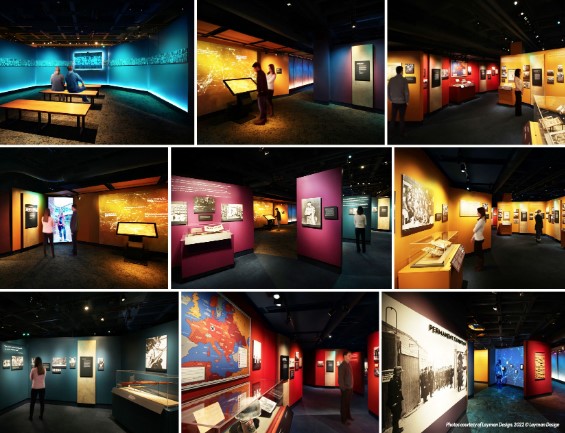
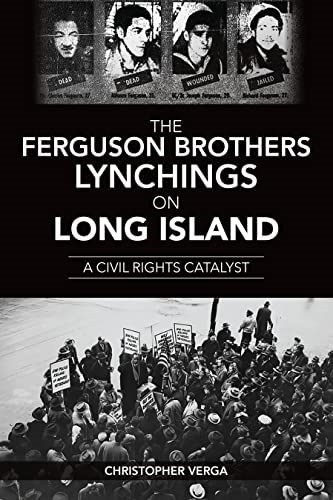
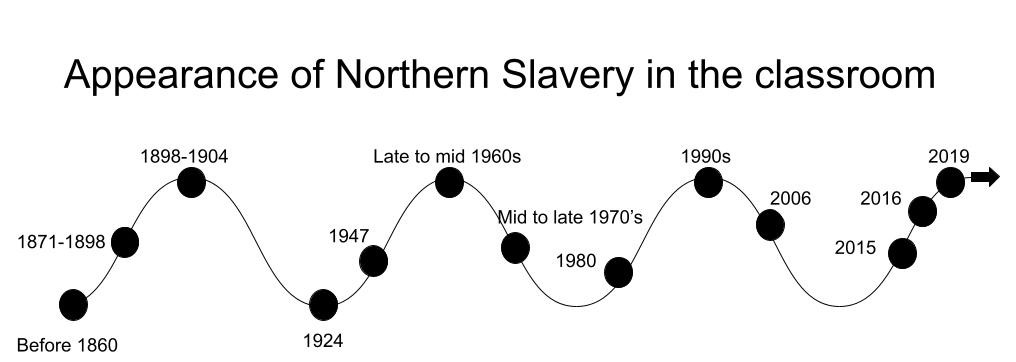

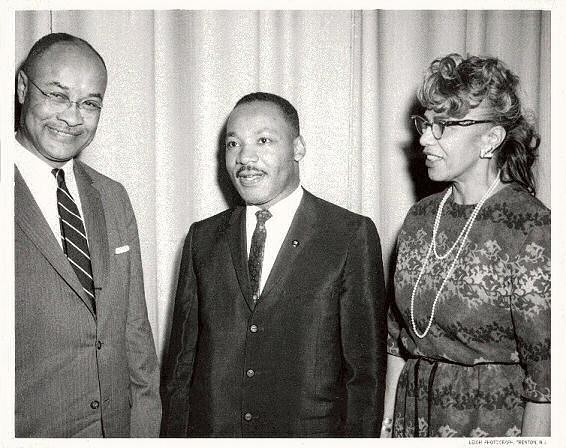

 njcssjournal