Cesar Chavez and the National Farm Workers Association
Brandon Lopez
Cesar Chavez, a Mexican American, is the president of the National Farm Workers Association, an organization of farm workers fighting for more benefits and equality. Cesar Chavez’s goals for his fellow farm workers were to create a Union, an insurance program for farm workers, higher wages and contracts for farm workers, and equality. Cesar Chavez’s historic strike, the Delano Grape Strike, is one of the many strikes he takes pride in for expressing his unwavering conviction that he is on the right side of history and that the violence and humiliation that the growers are showing towards the workers will only fuel them more with conviction and determination to strike until they receive the benefit they are entitled to because of their hard work. Thousands of supporters helped Cesar Chavez in their fight for unionizing by participating in strikes, boycotting the companies’ products, and much more. This constant fight for equality painted a bad image for the company. The companies were both Schenley Industries and the DiGiorgio Corporation. This nonviolent approach and fight for equality was inspired by Dr. Martin Luther King Jr., who also had peaceful protests. Dr. Martin Luther King Jr. is one of the many prominent figures throughout Cesar Chavez’s career who supported Cesar Chavez and was able to inspire him to take a peaceful approach in order to achieve his goals for these strikes, which are being able to Unionize insurance programs to better benefits for farm workers.
This research dives into the challenges and struggles Cesar Chavez, and the National Farm Workers Association faced as they tirelessly worked to achieve fundamental rights and improved working conditions for marginalized and exploited farm laborers by shedding light on the strategies used by Cesar Chavez and his National Farm Workers Association in their fight against the obstacles standing in the way of their equality. Cesar Chavez’s legacy as a labor leader and civil rights activist is a testament to how hard he fought in the face of adversity.
Cesar Chavez was influenced by his own experiences in a migrant farm-working family, he then decided to face the injustices prevalent in his community. Working under Fred Ross Jr. Cesar Chavez learned about the rights of Hispanic, specifically Mexican, farmworkers and was empowered by his community and the injustices to fight against discrimination. Cesar Chavez’s journey in building a labor movement, started with grassroots efforts in his community. Challenges such as fear of reprisal and deportation scared and made people reject Cesar Chavez, Cesar Chavez successfully recruited supporters, including religious figures and community organizers. The lack of unity and coordination within the United Farm Workers is also an obstacle the organization had to overcome, as well as the violence and intimidation faced by supporters from anti-union groups. Cesar Chavez’s goals included creating a union, insurance programs, higher wages, and contracts for farmworkers to improve their living conditions. The success of the United Farm Workers is thanks to various strategies, including boycotts, strikes, and protests, which pressured large companies like Di Giorgio to negotiate with Cesar Chavez and the organization. Cesar Chavez’s leadership and organizational skills, played an important role in advancing the cause for farmworker justice.
Through the movement Cesar Chavez was supported by a diverse group of people. It highlights Cesar Chavez’s ability to connect with various groups, such as the Mexican Pentecostal church, religious leaders, college students, and workers from different ethnic backgrounds such as Mexican Americans, Filipinos, and Puerto Ricans. The Mexican Pentecostal community provided moral and financial support, while college students actively participated in protests, strikes, and fundraising efforts. The teamwork among different ethnic groups in the civil rights movement, notably influenced by Dr. Martin Luther King Jr., contributed to the movement’s strength. Despite facing hardships and sacrifices, the labor movement achieved its goals, in succeeding in getting contracts with major growing companies and paving the way for the Agricultural Labor Relations Act to govern farm workers’ rights and union activities. Cesar Chavez and the United Farm Workers faced hardships and challenges in their mission to better the rights and working conditions of farm laborers, facing industry resistance, violent opposition, and internal struggles. Despite the obstacles faced, Cesar Chavez’s strategic approach, marked by nonviolent protests, strikes, and boycotts, garnered crucial attention and support for the movement. The community, including Mexican Americans, Filipinos, Puerto Ricans, college students, and religious leaders, emerged as a pivotal force in achieving the movement’s goals. Cesar Chavez’s dedication, inspired by personal experiences and the struggles of farm workers, led to the success of the United Farm Workers.
This article provides a summary of Cesar Chavez’s activism, the challenges faced by the National Farm Workers Association, and the broader labor movement in the southwest. Some reasons why Cesar Chavez should be taught in school is because it sheds light on the historical context of the labor movement in the southwest, providing students with insights into the challenges faced by marginalized and exploited farm laborers during that time. Cesar Chavez’s connection with the civil rights movement, particularly his inspiration from Dr. Martin Luther King Jr., offers an opportunity to explore the different social justice movements during the 20th century. Students can also analyze how Cesar Chavez adapted nonviolent protest strategies from the civil rights movement to advocate for the rights of farm workers. Students can learn about the challenges and criticisms faced by Chavez and analyze how he overcame them to achieve the goals of the United Farm Workers. Highlighting the diverse support of the labor movement, showing the unity between different ethnic groups, religious communities, and college students. Students can explore how diverse communities came together to support a common cause and the role of solidarity in achieving social justice goals. By incorporating this article into the classroom, teachers can help provide a diverse perspective about social justice, labor rights, leadership, and the unity of historical movements. It encourages critical thinking, analysis of historical events, and reflection on the ongoing struggles for equality and justice.
The Trumpist Supreme Court: Off the Rails of Democracy
Norman Markowitz
Rage and confusion over the recent Supreme Court decisions is sweeping the nation. The Roe v. Wade decision (1973) establishing women’s reproductive rights has been repealed. A New York State law prohibiting the carrying of concealed guns, passed in response to escalating shootings and deaths, has been declared unconstitutional. The court has sharply reduced the regulatory powers of the Environmental Protection Agency, established in 1970. This comes after decades of scientific research showing the dangers of climate change and global warming.
What is the logic behind this? There is a standard used in philosophy which should be applied to the Court’s recent decisions. Statements, or assertions, should be judged by their “validity and reliability.” Are they true statements in terms of logic, reason, and consistency (validity)? Is the evidence (facts, data) used to support the statement true (reliability)? I will use this standard to look at the Court’s rulings.
The Court doctrine of original intent is not valid
The Constitution was a political compromise among merchant capitalists, landlords, slaveholders, creditors, and debtors on a variety of issues — slavery, the payment of debts, and the regulation of trade. It cannot be interpreted like the Jewish Torah, the Christian Gospels, or the Muslim Koran — sacred, unchanging texts. And the Supreme Court has no right to interpret legislation passed by Congress or the directives of the president, since the Constitution did not give the Court the power of judicial review.
However, that power was in effect taken by the Court in 1805 in a brilliant maneuver by Chief Justice John Marshall in Marbury v. Madison. The court has maintained the power of judicial review for over two centuries, often adjusting its interpretations to major changes in society.
The representatives who drafted and approved the Constitution, much less the former colonies/states which ratified it, all rejected the principle of universal suffrage. The leaders of the revolution associated the term “democracy” with mob rule. Property qualifications for voting in federal elections was the established rule. If one took the original intent seriously, the Court would have the power to establish property qualifications for voting, since there is no constitutional amendment abolishing property qualifications for voting, just as there are constitutional amendments abolishing slavery and giving women the right to vote.
The Supreme Court’s recent decisions are not reliable
When the Constitution was drafted and enacted, English common law defined life as existing when a fetus could be felt moving or kicking in the mother’s womb, called “quickening.” If the mother claimed that the fetus had been aborted before this “quickening,” she was held harmless. Laws banning abortion and contraception, and pamphlets and manuals about both in the mails, were enacted at the state and federal levels in the late 19th century as part of a movement led by the Reverend Anthony Comstock, organizer of the Society for the Suppression of Vice. These laws were part of a backlash against the growing movement for women’s civil rights, equality under the law, and the right to vote. The women’s rights/women’s liberation movement of the 1960s, following in the path of the civil rights/Black liberation movement, led the successful campaign to repeal these laws, which finally resulted in Roe v. Wade, a century after they began to be enacted.
The Court’s decision invalidating a New York state law prohibiting the carrying of concealed handguns is also unreliable. Here the evidence is direct and incontrovertible. The Second Amendment to the Constitution states, “A well-regulated Militia, being necessary to the security of a free State, the right of the people to keep and bear Arms, shall not be infringed.” But in English law and in colonial theory and practice, as Joshua Zeitz in an excellent analysis argues, the amendment never meant that all citizens had the right to bear arms. This right “was inextricably connected to the citizen’s obligation to serve in a militia and to protect the community from enemies domestic and foreign.” And “well-regulated militias” meant militias constituted by legitimate authorities, not private groups like the later KKK, Nazi storm troopers, or self-proclaimed state militias.
Zeitz makes the important point that James Madison, a major author of the Constitution and the Bill of Rights, had earlier drafted legislation in the Virginia legislature barring individuals from openly carrying and displaying guns, like the present New York State law that the Court has declared unconstitutional. The purpose of the amendment was clearly to prevent a government from doing what Britain did in the aftermath of the Boston Tea Party: disperse the colonial legislature and its militia and in effect declare martial law. Also, the guns in question fired single “balls,” not bullets, and had very limited range and accuracy. Today’s AR-15 rifles, for example, used in recent mass shootings, have greater fire power and accuracy than the assault rifles used during World War II and the Korean War.
The Supreme Court’s other decisions on the regulatory powers of the Environmental Protection Agency, and the right of a school employee to engage in religious action, are neither valid in their relationship to the Constitution nor reliable in regard to their factual assertions. They are a repudiation of more than a century of law and policy of the federal regulation of industry and the post–Civil War 14th Amendment defending the civil rights and liberties of citizens from their infringement and/or denial by the states.
The revival of “original intent”
The Supreme Court and the judiciary have been the most conservative section of the federal government throughout most of U.S. history. The fact that the justices are not elected and can be removed only through impeachment, resignation, or death explains this.
The courts have in the past and once more in recent decades used the Commerce Clause of the Constitution to declare unconstitutional legislation that regulates business and promotes social welfare. Beginning in the 1880s, they declared corporations “persons” to give them 14th Amendment protections from regulation and taxation by the states, and have over and over again used the 10th Amendment to support states’ rights.
The political nature of the Supreme Court from its very inception is indisputable. The Court, for example, represented the interests of the slaveholder class from the administration of George Washington (himself a slaveholder) up to the Civil War. But as the nation changed, industrial capitalism grew, and the anti-slavery movement became broader, the demands of the slaveholders and the actions of their Supreme Court became more extreme. The Dred Scott decision (1857), which in effect repealed the earlier restrictions on the expansion of slavery in the Western territories, supporting legislation advanced by pro-slavery congresses and presidents, reflected this development. As an afterthought, the slaveholder-dominated Supreme Court claimed that the authors of the Constitution had not intended any Black person, slave or free, to have the rights of an American citizen, an expression of “original intent” which both enraged and strengthened the increasingly militant anti-slavery national coalition.
With the defeat of the Confederacy, slavery was abolished through constitutional amendment in all the states, and the former Confederate states now under Union army occupation had to ratify the amendment to regain admission to the Union. With the support of President Andrew Johnson, a pro-Union former senator from Tennessee (and himself a former slaveholder), they did so while enacting labor codes that in effect declared the former slaves to be unemployed vagrants and returned them to the “custodial care” of their former owners.
In response to these acts, Thaddeus Stevens, Charles Sumner, and other militant anti-slavery leaders of the Republican Party proposed a second constitutional amendment to establish national citizenship and protect the civil rights and civil liberties of the nearly 4 million former slaves. They did this for two reasons. They feared that President Johnson would veto the civil rights legislation they were advancing in Congress. And even if they were able to override his veto, they feared that the Supreme Court, where the now former slaveholders remained a powerful force, would declare such legislation unconstitutional.
The 14th Amendment establishing national citizenship was passed, followed by the 15th, which extended the right to vote. However, the war was a victory for the industrial capitalists and their banker allies, who within a generation betrayed both the former slaves and the workers and farmers who saw Civil War policies like the Homestead Act and the creation of land grant colleges as advancing their class interests.
The Supreme Court as the defender of unregulated monopoly/finance capital, 1877–1937
The Supreme Court and the federal judiciary in the aftermath of the Civil War fiercely defended the interests of “big business” against organized farmers, workers, state governments, and the federal government. In the 1880s, the Supreme Court in a series of decisions invalidated the civil rights acts of the Reconstruction era and the 14th Amendment’s protection of citizenship rights from state government policies. States were permitted to ignore the Civil Rights Act of 1875, which banned exclusion and discrimination in public accommodations. That protection would only be restored by the Civil Rights Act of 1964 after a century of de jure segregation.
In 1896, the Plessy v. Ferguson decision gave states the right to establish segregation by law, using as a cover the principle of “separate but equal” under such laws, although it was clear to everyone that the systematic exclusion of African Americans from public schools, public employment, public transportation, and commercial establishments was crudely unequal. The courts also endorsed state laws which denied the overwhelming majority of Black people the right to vote; the convict lease system, a form of slave labor for prisoners; and state “poll taxes,” which primarily discriminated against poor whites (in most places African Americans had been already disenfranchised).
At the same time, the Court in the 1880s took the 14th Amendment’s defense of the rights of “persons” and applied it to business and corporations, declaring state laws regulating business to be unconstitutional. At the time the 14th Amendment was proposed and enacted, everyone understood that the “persons” referred to were the 4 million former slaves, no longer under law, but not yet citizens.
But this was just the beginning. An early modest federal income tax (a surcharge on high incomes) was declared unconstitutional in the Pollock case. It negated the Sherman Anti-Trust Act (1890) by declaring that the federal government and the states could only regulate commerce — not manufacture — under the Constitution. In an industrial society, regulation became a farce.
Decades later, a constitutional amendment gave the federal government the right to levy income taxes, and Congress passed legislation that, to a limited extent, regulated trade and restructured the banking system. However, the Court routinely declared unconstitutional state laws protecting the right of workers to organize unions, providing for the health and safety regulation of workplaces, minimum wages, and the 1916 federal law outlawing child labor.
It was not until the Great Depression of the 1930s, which saw the great upsurge of labor with the Communist Party playing a central role, that the New Deal government enacted the most important labor and social welfare legislation since the abolition of slavery and battled to compel the judiciary to accept these major reforms in the interests of the working class and the whole people.
The Supreme Court and government as the protector and defender of the general welfare, 1937–78
The struggle for major judicial reform went back to the late 19th century. It sought to de-emphasize precedence, the “dead hand” of previous decisions, and make the law respond to social changes and realities, to connect the “facts” as they existed in the present with past decisions under the law. Law professor Roscoe Pound and attorney Louis Brandeis were the champions of this approach to law, called “legal realism.” Brandeis especially popularized the doctrine in leading campaigns against corporate monopolistic price fixing and business corruption of public officials, which earned him the name “the People’s Attorney.”
He also developed a legal brief which incorporated social research (the Brandeis brief) in arguing cases. His fame in the early 20th-century Progressive movement led Woodrow Wilson to appoint him to the Supreme Court, where he joined with Justice Oliver Wendell Holmes to represent a minority that supported the regulation of industry, social legislation, and the defense of First Amendment civil liberties. Regarding civil liberties, the minority supported freedom of speech, assembly, and association unless, in Holmes’s language, there was a “clear and present danger” to society, and not just a “dangerous tendency” that certain acts might lead to others, which was the conservative position.
In the 1936 elections, Roosevelt campaigned against the old-guard Court and the “economic royalists” whom they represented, reviving the language of the American revolution in his and the New Deal’s sweeping victory. Roosevelt sought to expand the court for every justice over the age of 70, which would have increased its size to 15 justices.
Conservatives fought back, wrapping the Court in the Constitution, attacking his court reorganization plan as “court packing.” In the Court fight, conservative Southern Democrats, including many who had worked behind the scenes against the New Deal like senators Tom Connally of Texas and Walter George of Georgia, along with the vice president, John Nance Garner, turned against Roosevelt. The weakened GOP let the Democrats carry the ball, but it was from this court fight that the informal conservative coalition of Southern Democrats and Republicans began to take shape.
Faced with the attack, the Court, which had four Coolidge/Hoover “Business of America is Business” conservatives, three urban liberals, and two moderate conservatives, shifted. In 1936 the Court had voted 6-3 against the New York minimum wage law. But in 1937 the Court upheld by a vote of 5 to 4 a similar Washington State minimum wage law, ruled in favor of the Wagner Act in the Jones and Laughlin Steel case, and upheld the Social Security Act and unemployment insurance. In all these rulings, Owen Roberts and Chief Justice Charles Evans Hughes changed their votes to side with Roosevelt.
By the end of 1937, as the old-guard conservatives began to retire, Roosevelt, defeated in the reorganization fight, began to replace them with New Dealers and by the time of the Pearl Harbor attack had forged a New Deal majority. The new Court moved away from the old doctrines of constitutional original intent associated with the corporate-dominated courts of the post–Civil War era toward a view that the Court must change with changing economic and social conditions. Most of all, the Court retreated from its support for business and its defense of the absolute right of freedom of contract. Instead, a law was to be “presumed constitutional” on questions concerning economic power and government regulation — constitutional regulation came to be seen, as one decision put it, as regulation for the “public good.” Economic freedom was no longer the preferred freedom of the court, and economic activity was no longer local and thus not regulatable.
The court also upheld in the Fair Labor Standards Act minimum wages for all citizens, whereas later it vetoed state minimum wage legislation for women, refused to apply the anti-trust laws to unions, and outlawed the sit-down strike in 1939 (NLRB v. Fansteel Metallurgical Corp.), but in a decision that defended and established peaceful picketing.
At the same time, the Court under New Deal leadership began to develop a new doctrine of preferred freedoms, a doctrine that stressed the need to protect the rights of political dissenters and minorities. In late 1937, the Court declared unconstitutional state laws barring speech and assembly that had been used to convict and imprison Communist Party activists like Angelo Herndon in Georgia, later explicitly defended religious freedom in the case of Jehovah’s Witnesses’ refusal to swear allegiance to the flag and revived the clear and present danger criteria to protect free speech and assembly. In 1938 the Court, for the first time since the end of Reconstruction, enforced some civil rights claims when it contended that the state of Missouri, by not supplying legal education for Black students had violated the separate but equal doctrine of Plessy (Missouri had offered to pay part of their tuition). While the decision didn’t challenge segregation, it pressured Southern states to increase educational programs under segregation for African Americans.
In the Hague case, the Court declared unconstitutional a local Jersey City ordinance against picketing and demonstrations which had been used for mass arrests — subsequently, this was defined to mean peaceful picketing. In U.S. v. Carolene Products (1938), the majority ruled that the court would no longer apply “heightened scrutiny” to economic legislation; however, in a footnote, Harlan Fiske Stone added that the Court was obligated to apply a “more exacting judicial scrutiny” in cases where laws or regulations contradicted the Bill of Rights or adversely affected minorities. The famous “footnote 4” had important implications for Bill of Rights freedoms for dissenters and minorities.
Following the recession of 1937 and the business-conservative counterattack and backlash of 1938, the New Deal was politically stalemated in Congress and without a clear program. However, by this time, the labor social welfare program was consolidated, at least for the short term. Further, the great fortress of conservative power protected from the electoral process — the Supreme Court — was overthrown.
Democratic President Harry Truman’s appointees set back the Court’s support for civil liberties, especially in the 1950–51 Eugene Dennis case, where the Court upheld the convictions and imprisonment of the leadership of the CPUSA under the 1940 Smith Act. The appointments of Earl Warren as Chief Justice and William Brennan by Republican President Dwight Eisenhower, however, greatly strengthened the Court’s progressive majority at a time when Cold War policies moved Congress and the president to the right.
In the Brown decision (1954), the Court declared school segregation unconstitutional. The Supreme Court also in the Yates and other decisions made illegal some of the worst aspects of state and federal anti-Communist policies, leading the FBI to establish its secret Cointelpro program. In the later Miranda and Gideon decisions the Court limited police power to interrogate and hold suspects without formally charging them and reading them their rights, including their right to legal representation or a court-appointed attorney to represent them. The Court also rejected early challenges to the Civil Rights Acts of 1964 and 1965. Although Richard Nixon’s election to the presidency and his appointments moved the Court in a more conservative direction over time, Court decisions in the early 1970s effectively abolished the death penalty in the U.S. and, in Roe v. Wade, legalized abortion.
The empire strikes back: The Court’s long march to the right, 1978–present
Even before Ronald Reagan gained the presidency, the Nixon-influenced Court began to move to the right. In 1976, the court gave states the right to reestablish the death penalty (subsequently the death penalty would be established at the federal level in a more extensive way than at the state level). In 1980, the Supreme Court upheld an amendment to the funding of Medicaid in 1976 which barred the use of Medicaid funds for abortions, a cruel blow to the rights of low-income and poor women.
Over the following four decades, a series of decisions chipped away at civil rights and civil liberties; weakened the regulation of commerce, industry, and finance; and removed restrictions on the use of money in elections. The Court’s conservative majority became more militantly reactionary, destroying earlier compromise decisions brokered by conservatives. Donald Trump, who gained the presidency in large part because of the deeply undemocratic nature of U.S. politics, failed to implement his far-right domestic policies, which both large numbers of Americans and people throughout the world saw as “neofascism.” However, his “success” in appointing three Supreme Court judges is now his “legacy,” in that they are doing what he failed to accomplish.
What we can and should do now
First, we must understand that a large majority of the people oppose these decisions, just as in 1857 and 1936 a large majority of the people opposed the Supreme Court’s pro-slavery Dred Scott decision and its decisions declaring New Deal regulatory and social legislation unconstitutional. The Republican Party mobilized opposition to the Dred Scott decision to win the 1858 congressional elections. More than 70 years later, the Democratic Party mobilized opposition to the conservative Court’s decisions to propel Roosevelt to an overwhelming victory in the 1936 national elections. The same kind of united opposition must be organized now. We must point out that the present Court has set the nation back and may continue to block progress regarding immediate issues such as inflation, health care, or the cost of energy and transportation. Were the government to attempt, for example, to establish price controls, create a national public health system, and expand public transportation, the Court would not be on the people’s side.
The trade union movement, all civil rights and women’s rights organizations, and all environmental organizations must mobilize supporters and communities throughout the nation to vote against the Republican senators and congresspeople who over decades have created this judiciary. Such an electoral victory is necessary but not in itself sufficient. Many today are calling for an expansion of the Court. Congress and the president have the power to do that, since the number 9 is not in the Constitution. We should begin to think about a larger expansion of the federal judiciary itself. Since the 1980s, the conservative Federalist Society has advanced the doctrine of original intent as a cover to restore Court rulings opposing federal regulation of business and social welfare legislation. A government committed to restoring what the Court had represented in the New Deal–Great Society era should actively appoint attorneys who support those positions.
Finally, the question of judicial review itself could be formally ended by Congress and the president. As was contended earlier, it is not a part of the Constitution, and there is no evidence that the Constitutional Convention intended it to be established. The Court has acted to strike down and take away from the people major social protections and rights. As such its power of judicial review can and should be taken away from it.
Defining American: The Bureau of Naturalization’s Attempt to Standardize Citizenship Education and Inculcate ‘the Soul of America’ in Immigrants during World War 1
Barred Zones, Rising Tides, and Radical Struggles:The Antiradical and Anti-Asian Dimensions of the 1917 Immigration Act
In this wood engraving caricaturing the Chinese Exclusion Act, a well-dress Chinese man embodying “Order” and “Industry” sits outside the Golden Gate of Liberty. The sign to his right declares “Communists, Nihilist, Socialist, Fenian & Hoodlum Welcome but no Admittance to Chinamen.” Below the title, the text reads: “Enlightened American Statesman – “We must draw the line somewhere, you know.” Reprinted from Frank Leslie’s illustrated Newspaper, April 1, 1882. Courtesy Library of Congress, LC-DIG-ds-11861.
U.S. Immigration History – There are 4 eras
Following is a description with vocabulary for each era. Following the four eras mis a collection of data that students can use to learn more about each time period. In each era examine who came to the USA, why, and how did government policy favored or discouraged immigration.
Era #1: Populating the Continent-Colonial to 1875
Authority was with individual states, not the Federal Government. States used what was then called “state police power” to set and enforce rules. States set rules stopping the admission of convicts, free Blacks, paupers, diseased, sick or disabled persons or passengers on ships who tried to enter without the captain posting a bond on their behalf. No free person whether black, mulatto, or colored from a Caribbean country, especially Haiti, could enter some states. Haitian seamen on a ship entering Charleston, S.C., could not leave the ship. These powers were confirmed by a Supreme Court decision (Miln Decision, 1837) and the Passenger Cases decision (1849) approve state laws on bonding and taxing incoming passengers. The 1830 Indian Removal Act was another example of state police power. The movement of free Blacks within Missouri and Ohio was also regulated.
There were also federal laws in 1793, 1842 (Prigg decision), and 1850 concerning the return of runaway slaves to their owners. Legislation in 1809 prevented the importing of additional slaves from west Africa. In 1817 the Liberia colony was established and federally funded for free Black who wished to return to Africa. 13,000 did.
Federal laws permitting or excluding contract labor from China and Europe were enacted. In 1862 the Coolie importation from China was stopped under the logic that since slavery was illegal in northern states and Coolies were slaves therefore, they could not get into the USA. In 1867 contract labor was permitted from Europe. In conclusion, high, consistent demand for labor led to favorable State and federal immigration policies.
Northern European Migration from Ireland, UK, Germany, Netherlands
Era #2: The Opening and Closing the Immigration Doors, 1875 – 1924
During this era, power to legislate and enforce laws came totally to the national government. Immigration power resided in the Federal government’s ability to control commerce, Gibbons v. Ogden (1824) and the theory of national sovereignty critical for national security through border control. Between 1871 and 1914, 23.5 million Europeans entered. Eastern and southern Europeans joined those from Ireland, the U.K. and northern Europe. 1.7 million entered in 1907.
The country was industrializing and urbanizing. Labor demand was high. But gradually laws were established excluding some and regulating the entry of others. Many Americans wanted more immigration. Other Americans were critical of who were admitted. By 1924 the doors were almost closed to many Jews, Catholics, Hindus, and Chinese. See the Page Act (1875) and Chinese Exclusion Act (1882). Research the Foran Act (1885) and the Dillingham Commission (1911).
1917 – Law aimed at South Asians, Indians, who settled in California and Washington and spoke out against British control of their homeland. This was part of a wider American nativist movement merging with white supremacy ideology, anti-communism and earlier opposition to immigrants with physical or mental disabilities. A literacy test was passed. A “barred” zone was created stopping all Asian entry except from the Philippines and Japan, already excluded by an informal 1907 “Gentlemen’s Agreement”, Mexicans were turned into temporary labor migrants. There was also the fear that if the US entered the League of Nations this could endanger national security. In 1920, 16% of the US population was foreign born. Bad foreigners = crime, immorality, and labor conflict.
1921 – First law closing loopholes in the 1917 law and establishing first national origin quotas. This law fused beliefs about eugenics, racial bigotry, anti-disabilities prejudice, mixed racial marriages into a category of undesirable immigrant groups. The Johnson-Reed Act (1924) created quotas by ethnic origin. The Border Patrol created an illegal entry called a misdemeanor and felony (1929) if done twice.
The Johnson-Reed Act (1924) confined immigration to mainly northern Europe. National quotas were based on ethnic origins of the 1890 census. Through the Depression of the 1930s and World War II, immigration was severely curtailed. Following World War II, the law remained intact and parallel laws dealing with World War II refugees were created that bypassed but did not displace the 1925 Law.
In 1948, Congress passed the Displaced Persons Act permitting European refugees to enter. In 1948 the law was amended permitting refugees from camps in west Germany who could not return to former homes in Poland and the USSR to enter the USA. 332,000 arrived including 141,000 Jewish Holocaust survivors between June 1948 and December 1951.
Era #4: The Door Opens to the World, 1965 – Present
The 1925 law was replaced by the Hart/Cellar Act of 1965. Racial and ethnic quotas were eliminated. Numerical quotas were retained. Entrance was open to people from anywhere. The law favored family unification, preference for certain occupations, and a new side variety of visas. In 1950, the USA was 90% white with a European origin. By 2000, 50% of new immigrants were from Latin America and 27% from Asia. In 2020, the USA population was 69% European white.
This law changed the racial composition and, some say, the national identity of the USA. The acrid, hot odor of 1924 bigotry and nativism returned magnified and channeled through social media. By 2020, some Americans were talking of white racial suicide and replacement theory. Politicians pointed to the loss of border control. The 9/11 Attack on America led to Islamophobia and Muslin immigration bans.
Many Americans supported legal immigration and the use of work visas for both unskilled and professional work. Most wanted to stop migration but the government system to judge asylum claims became broken. Since May 2022, 1.85 million border crosses have been permitted to remain in the country following a favorable “credible fear” claim. By September 2022, 86,815 immigrants were deported and 1.7 million were approved to stay. 200,149 immigrants came to New York City.
More Data:
From February 2021 to September 2023, Border Patrol arrested 6 million migrants who crossed the border illegally.
1.7 million immigrants were released to stay in the USA.
There were about 1,500 immigration judges and asylum offices available to decide these immigrant cases.
People apply for asylum at the border or if they are caught illegally in the country or overstay a visa. They have up to one year to apply. 800,000 applied in 2022.
It could cost $2 billion to hire more staff to eliminate the 2 million backlog of cases.
In some cities, it will take up to ten years to hear a case.
1.3 million have been told they must leave the USA. They have 90 days to do so.
Many do not leave and they disappear. There is no national ID in the USA to identify them.
Some marry Americans and become parents of children who are natural born citizens.
All of this data is used by politicians running for federal office. Some promise to clear them ‘out.’ How they will do this is not clear.
Many local officials run to Washington, D.V., seeking money to care for migrants in their cities. There is a deadlock in Washington, D.C. Many do not want to tax the many to pay for the foreign immigrants. The memory of 1924 is in the air and a chaotic border has become a drug channel.
Our laws were not designed to deal with BOTH old and new reasons for migrations. The new reasons are climate change, corruption in many countries, the I-phone which immediately connected migrants with friends already in the USA who send money to assist migrants in their journey. Migration used to be single men seeking jobs who would then return home. Now, it is entire families seeking a new life in the USA. Many Americans do not know what to make of it and they will vote their hopes and fears.
Teaching with Documents: The 1892 Lynching of an African American Man in New York State
Alan Singer and Janice Chopyk
The National Memorial for Peace and Justice in Montgomery, Alabama memorializes the over 4,000 African Americans murdered by vigilante terrorism in the American South between the end of Reconstruction in the United States in 1877 and 1950 and the more than 300 victims of racial terrorism in other states. Alabama, Arkansas, Florida, Georgia, Kentucky, Louisiana, Mississippi, North Carolina, South Carolina, Tennessee, Texas, and Virginia were the worst offenders, but there were also significant numbers of vigilante murders of African Americans in Illinois, Indiana, Kansas, Maryland, Missouri, Ohio, Oklahoma, and West Virginia. Eight hundred steel columns hang from the ceiling at the Memorial, each with the name of a county where a lynching occurred with the names of victims engraved on it. The only lynching in New York State during this period occurred in the town of Port Jervis, Orange County in 1892. Port Jervis is located on the Delaware River at the border of New York, Pennsylvania, and New Jersey. At the end of the 19th century, it was an important stop on the Delaware and Hudson Canal for barges transporting anthracite coal to Philadelphia and New York City from Scranton area coal mines and on the New York, Lake Erie and Western Railroad.
In his new book, A Lynching at Port Jervis: Race and Reckoning in the Gilded (New York: Farrar, Straus and Giroux, 2022), Philip Dray documents racial violence in Port Jervis about sixty-five miles northwest of New York City. The story of what happened to Robert Lewis, a 28-year-old African American teamster and coach driver on Thursday June 2, 1892 was largely told through the eyes of white residents and white-owned newspapers. Unfortunately, there are no sources that address the Black perspective on the lynching of Lewis by a white mob. A coroner’s inquest was held with witness testimony, but there is no surviving transcript. At least one witness, Officer Simon Yaple, is known to have named some of the members of the murderous mob, but none were ever tried or convicted of crimes.
Robert Lewis, described in the press as a powerful man of about five feet seven and 170 pounds, was accused of assaulting and sexually abusing a 22-year-old white woman named Lena McMahon on a riverbank where the Cuddeback Brook meets the Neversink River before it flows into the Delaware River just south of Port Jervis. Participants in the mob attack on Lewis claimed that before he was murdered, Lewis confessed to the assault and implicated McMahon’s white boyfriend, Philip Foley as an accomplice. Lewis was then lynched on East Main Street, now U.S. Route 6.
Lena McMahon reported to authorities that she was approached by a heavy-set Black man with a light complexion who she did not know, although he appeared to know her. In her testimony about the assault, McMahon claimed that she was “terribly frightened” because her assailant had an “evil look in his eyes” and that after she rebuffed him he grabbed her shoulder and covered her mouth in an attempt to keep her from screaming. Local boys interrupted the attack on McMahon and her attacker, presumably Lewis, picked up fishing gear and left the scene. While McMahon initially reported that the man who attacked her was a “tramp,” one of the boys later identified Lewis as the assailant.
Robert Lewis was seized by a posse on the towpath of the D & H Canal while riding on a slow moving coal barge, not a very likely escape plan and Lewis made no effort to avoid capture. He had fishing gear with him and said he was planning to spend the night fishing. Sol Carley, part of the posse that captured Lewis, claimed that he questioned Lewis while they were bringing him back to Port Jervis. According to Carley, Lewis confessed to what had taken place, but claimed that Foley, who he knew from the hotel where he previously worked, told him McMahon would be receptive to a sexual encounter and if he wanted a “piece to go down and get it.” Lewis seemed to think that the entire situation could be resolved if they questioned Foley and Lewis had a chance to speak to McMahon’s father.
The initial police plan was to bring Lewis to the McMahon home to see if she could identify him, although Lena McMahon continued to maintain her attacker was a stranger, probably a tramp, who was camping in the woods. This plan was interrupted when a rumor spread that Lena McMahon had died from her wounds, dooming Robert Lewis. A crowd of over 300 white men was gathered in downtown Port Jervis. Upon hearing the rumor, it was transformed into an uncontrollable mob and murdered Lewis. Port Jervis’ small African American community, in defiance of white authority, insisted on a proper funeral for Lewis and contributed funds for burial at Laurel Grove cemetery, while at least some whites tried to steal souvenir relics from his body.
Students can read, compare, and discuss newspaper coverage of the events in Port Jervis. In the age of #MeToo and Black Lives Matter, it is difficult to dissect aspects of events that took place over a hundred years ago, especially where the surviving documentation is sporadic and clearly biased. How much of Lena McMahon’s story should be believed? Does questioning her account reflect what we now recognize as gender bias? On the other hand, how much of her story was colored by racism? We know from similar accusations made by white women against Black men that led to the arrest and imprisonment of the Scottsboro Boys and the murder of Emmett Till, that in a climate of intense racism, white women protected their reputations by fabricating stories of disrespect or assault. It is hard to believe that Robert Lewis did not know that a “confession” meant a death sentence. A compelling question for students to consider is: What do the events in Port Jervis and the newspaper coverage tell us about race and racism in New York State during this period? Teachers should alert students that there are overtly racist comments in the newspaper articles, but that “negro” was in common usage at the time to describe the group of people we now call African American and was not a racist term.
Documenting the Lynching of Robert Lewis at Port Jervis, New York
A. LYNCHED AT PORT JERVIS. ROBERT JACKSON, A COLORED MAN, HANGED BY A MOB. New York Times, June 3, 1892
Robert Jackson, a young colored man, was lynched in this village to-night, receiving swift retribution for an assault committed this morning on Miss Lena McMahon, daughter of John McMahon of this place. The crime occurred on the outskirts of the village, near the banks of the Neversink River. Two young negroes and a crowd of children were near by, but when the former tried to interfere Jackson kept them at bay with a revolver. He made his escape without trouble. Miss McMahon was left in an insensible condition. Her injuries may prove fatal. A posse started in pursuit of Jackson as soon as news of the assault spread . . . The capture of the fugitive was finally made at Cuddebackville, a small village on the Delaware and Hudson Canal about nine miles from Port Jervis, by Sol Carley, Duke Horton, and a man named Coleman. Jackson had borrowed a canal boat at Huguenot, and had reached Cuddebackville, when he was overtaken by the three men. On the way back to this village he confessed the crime, and implicated William Foley, a white man, who, he said, was in the conspiracy against Miss McMahon. Foley has been paying attention to the girl contrary to the wishes of her parents, and the feeling against him in this community is such that, should he be taken, a fate similar to that which has overtaken Jackson would probably be meted out to him. The news of the capture of Jackson soon spread through the town, and a large crowd of men collected about the village lock-up, awaiting the arrival of the prisoner. The word was whispered through the crowd “Lynch him, lynch him!” The suggestion spread like wildfire, and it was evident that the fate of the prisoner was sealed. On his arrival at the lock-up Jackson was taken in hand by the mob. The village police endeavored to protect him, but their efforts were unavailing. It was at first proposed to have Jackson identified by his victim before hanging him, in order to make sure of his guilt. With this object in view the mob tied a rope around his body and dragged him up Hammond and down Main Streets as far as the residence of E. G. Fowler, Esq. By this time the mob had reached a state of uncontrollable excitement, and it was decided to dispatch him without further ceremony. A noose was adjusted about his neck and he was strung up to a neighboring tree in the presence of over 1,000 people. For an hour the body hung from the tree, where it was viewed by crowds . . . Public sentiment on the subject of the lynching is divided, although a majority approve and openly applaud the work of the lynchers, declaring that a terrible warning was necessary to prevent future repetitions of the same offense.
Questions
Where and when did these events take place?
Who was Robert Jackson?
What was Robert Jackson accused of?
What happened to Robert Jackson?
What is the attitude of the New York Times toward these events? What evidence from the text supports your conclusion?
B. Mob Murder at Port Jervis, Brooklyn Eagle, June 3, 1892, pg. 4
A negro was hanged by a mob in Port Jervis on Thursday night. He was charged with the crime of violence on a white girl, who is now said to be lingering between life and death. The crime was committed. The victim of it and two other witnesses charged the commission of it on a negro called by the name of the one who was lynched. The accused criminal was caught a long distance from the spot, while trying to run away. He was not, however, taken for identification before any of the persons who had accused him. A rumor prevails around Port Jervis that, after all, the wrong negro was captured and killed. Negroes are not easily distinguished from one another, unless by marks of identification carefully registered on scientific examination and then carefully compared when any man to whom they presumably refer is apprehended. There is very little doubt that the negro who was killed was the man who committed the crime, but there is some doubt that he was. That doubt, however slight, should harrow the memories and consciences of the men who lawlessly destroyed him. Aside from this fact, the offense of which the negro was accused but not convicted does not carry the punishment of death in this state by law. http://www.bethlehemchurch.com/admin/Law has found that capital punishment in cases of violence against women has been inflicted on innocent persons. The accusation is easily made. It is hard to disprove. A predisposition to believe it exists when it is brought against the lowly and the humble, the obscure or the repulsive. The pardoning power is not seldom required to rectify the errors of courts and juries in cases of violence to women. On these accounts the punishment has been reduced below the death penalty, to give time and government a chance to correct the wrongs of law. The event at Port Jervis, Thursday night, was a disgrace to the State of New York. The heinousness of the offense may explain but does not excuse the popular violence. This is supposed to be a government of law. Citizens are supposed to be law abiding. Moral culture and obedience to law are supposed to be an insurance that communities will not take the law in their own hands in any cases, and especially in cases which excite and inflame them. It may be roughly said, so far as lynch law is concerned in New York State, that the greater the provocation the less the excuse. The crime of which this negro was guilty cannot be overcharacterized, but there are worse crimes than it, by the definition of the law of the State of New York. A worse crime is murder. Murder is the destruction of a human being without warrant of law, with malice and premeditation, and not in self defense. The hanging of the negro in Port Jervis on Thursday night mates with that definition of the crime of murder. It was murder.
Questions
Are there features in the Brooklyn Eagle article you would identify as racist? Explain.
Compare coverage of the events in Port Jervis as reported in the Brooklyn Eagle the New York Times. How is it similar or different?
In your opinion, are there errors of fact in the Brooklyn Eagle account? Explain.
C. Port Jervis Disgrace, The Daily Standard Union, June 3, 1892, pg. 2
Port Jervis has not added to her good name by the brutal murder of a negro, who was, no doubt, no less brutal than the white men who took the law into their own hands and inflicted the death penalty without sentence. Has the Empire State fallen so low that criminals cannot be punished by due process of law? . . . There is no reason why a Northern State inhabited by justice-loving people, should be Southernized by a few misguided men in a country town. A heinous crime was charged against the negro, but there was no sworn evidence that he was the guilty person. Sympathy was strong for the young woman who, it is said, suffered from the negro’s violence, and this sympathy was proper and creditable; but it does not justify killing by mass meeting. It is to be hoped that every one of the men who actually took part on compassing the negro’s death will be apprehended and made to feel the hand of the law he has outraged.”
Questions
How is coverage of the events in Port Jervis in this article from the Daily Standard Union, a Brooklyn, New York newspaper, similar to and different from coverage in the New York Times and the Brooklyn Eagle?
What is conspicuously missing from this excerpt from the article? In your opinion, what does that suggest about the viewpoint of the Daily Standard Union about the events?
D. Local Newspaper Coverage
Port Jervis Union: The Excitement in this village over the lynching of the negro, Robert Lewis has abated somewhat but further developments are awaited with the most intense interest. Attention is now centered upon the work of the coroner’s jury which was empanelled yesterday and whose duty it is not merely to investigate the manner of Lewis’ death but if possible to trace out the leaders and instigators of mob violence and to fix upon them the responsibility which belongs to them. Public sentiment and the honor and fair fame of the village demand that an earnest effort be made to do this. Now that the excitement attendant upon the awful events of Thursday has partially subsided a decided reaction has taken place in public sentiment and there are few who do not deplore and condemn the work of the mob. It is now generally admitted that the ends of justice would have been fully satisfied by leaving Lewis to be dealt with according to the regular forms of law, while our village would have escaped the world-wide notoriety which now attaches to it as the scene of one of the worst manifestations of mob-violence which has occurred in recent years. To be known as a community controlled and dominated by lawless elements is a penalty which we must now pay.
Middletown Daily Press: What a hard question to decide: the right or the wrong of Thursday night’s outrage in Port Jervis. One man, a father, and a county official, said: “It’s all right for some of us to moralize. But put yourself in that father’s place.” Another man, also a father: “Those men are worse than the negro. No matter how heinous the crime, can any human being think of a life being tugged along through public streets by a howling, half mad crowd which handled the rope, without saying ‘They’re brutes, and God does not sanction their work.’”
Middletown Argus: That the punishment so summarily meted out to the black ruffian who made Lena McMahon victim of his lust was more than merited, there is no division of sentiment . . . Lewis might better have been left to be dealt with by court and jury, inadequate though his punishment, if convicted, would be, but informal as was his exit from it, no one will say nay to it that the world is well rid of him.
Newburgh Daily Journal: The outbreak in Port Jervis is wholly without justification . . . The mob’s crime was an attack upon the cause of law and order. It remains with the criminal authorities to deal with the perpetrators of this crime as the law provides.
Questions:
The Port Jervis Union is a weekly newspaper. This issue was published two days after the events and coverage is on page 3. What is the primary focus of the article? What does this suggest about local attitudes toward the event?
What are the attitudes toward the events in Port Jervis expressed in newspaper coverage from neighboring towns?
E. The Dangers of Lynching (Editorial). New York Times, June 4, 1892
A considerable number of persons, some of them possibly very worth citizens in a general way and others pretty certainly nothing of the kind, united on Thursday in Port Jervis to hang a negro who had committed a criminal assault upon a white girl. The feeling that actuated the mob was doubtless the same that is cited as defense for like lynching in the Southern States. It is that the penalty prescribed by law is not sufficient for the offense which is punished by lynching. It is not to be denied that negroes are much more prone to this crime than whites, and the crime itself becomes more revolting and infuriating to white men, North as well as South, when a negro is the perpetrator and a white woman the victim . . . It is unlikely that such a change in the law would diminish the number of lynchings. These are commonly committed by crowds which are animated by so furious an indignation that they would not wait for the law to take its course, even though the punishment were capital and certain, but would insist upon themselves doing their prisoner to death rather than to wait for months, or even weeks, to have him done to death by the law. This lawless temper is not commendable, and it ought to be discouraged by the law. Although it is probable that the good citizens of Port Jervis sympathized with the mob when they first learned of its murderous work, it is also probable that they are by this time ashamed of it and of their sympathy with it, and regard the lynching as more of a disgrace to the town than the crime it avenged, for which only a single brute was responsible . . . [I]t is admitted that the mob, misled by one of the rumors that spread in times of excitement, came very near hanging the wrong man, and this is a danger that always attends the unlawful execution of justice . . . [T]he lynchers by their precipitation seem to have operated a defeat of justice almost as great as if they had hanged the wrong man. The negro not only confessed his crime, but declared that he had been instigated to commit it by a white man whom he named. . . . The greater criminal, if he be a criminal at all, is likely to go scot free because the people of Port Jervis have hastily and carelessly hanged a man who, if he had been spared, might have proved a valuable witness. This is a danger of lynching that the lynchers have incurred which they themselves must confess to be a serious drawback to the success of their method of doing justice.
Questions
How does the New York Times describe the people who participated in the lynching of Robert Lewis?
In the opinion of the New York Times, why is the incident regrettable?
What evidence, if any, does the excerpt from the editorial suggest about the biases of the Times?
F. VERDICT AT PORT JERVIS, No One Held Responsible for the Lynching of Lewis. The Aspen Daily Chronicle, June 15, 1892, pg. 3
The coroner’s inquest over the lynching of Bob Lewis, the negro, terminated at 4:30 o’clock yesterday afternoon. The jury, after being out one hour, rendered the following verdict: “We find that Robert Lewis came to his death in the village of Port Jervis on June 2, 1892, by being hanged by some persons or person unknown to this jury . . . The thinking public doubts Miss McMahon’s story, as it also does Foleys . The circumstances are to conflicting. If the young woman had practically no knowledge of her surroundings from Wednesday to Thursday morning, then she must have been crazy. Not a living female would or could be hired to stay over night in Laurel Grove cemetery, as she stated she did. The stormy weather and the delicate physique of the girl would knock that story in the head. It is a fact that when Foley was arrested on the morning succeeding the assault of Miss McMahon, he trembled like a leaf and had to be supported. There is something back of the whole affair and those facts are held by Squire Mulley justice of the peace, who refuses to allow the contents of Foleys blackmailing letters addressed to Miss McMahon, to appear in print. Mr. Mulley says that the investigation of Miss McMahon and Foley will be strictly private.
Questions
What was the verdict of the coroner’s inquest?
What is the attitude of this newspaper to stories of the incident?
This article appeared in a Colorado newspaper. What does that suggest about reaction to the lynching?
G. MISS M’MAHON WRITES A LETTER, SHE EXPLAINS WHAT HER RELATIONS WERE WITH FOLEY. New York Times, June 25, 1892:
To the Editor of the Daily Union:
Sir: As my name has been so freely circulated throughout the press of the country during he past few weeks in connection with the infamous scoundrel, Foley, who has been airing his ignorance and viciousness in frequent letters from the county jail, that I wish, once for all, in justice to myself, to refute and brand as malicious falsehoods the statements this person has seen fit to utter. I first became acquainted with Foley when he assumed to be a gentleman, through the introduction of a mutual friend. He paid me attention, and I was foolish, as other young girls have been, to believe in his professions of friendship, and when I, in the indiscretion of youth, had some trifling difficulty with fond and loving parents who endeavored to give me wise counsel and advice, resolved to leave home, this inhuman monster egged me on and endeavored to carry into execution his nefarious scheme to ruin and blacken my character forever. When I discovered “the wolf in sheep’s clothing,” the true character of the parody of manhood, I at all risks and perils resolved to prosecute him as he so richly deserves. That resolution I still maintain, and I wish to assure the public that the maudlin, sentimental outpourings from this person, who, relying upon the fact that I was once his friend, has seen fit to make me the victim of extortion and blackmail, have no effect whatever on me, and it will not be my fault if he does not receive the punishment he so richly deserves. There is nothing to prevent this man writing letters, and I do not consider it either wise or discreet to pay any attention to them. I simply desire to say that his insinuations and allegations are falsehoods; that my relations with him have been those only of a friend. God only knows how much I regret that. I cannot have my reputation as an honest, chaste, and virtuous girl assailed by this villain without a protest, and I ask all right-thinking people who possess these qualities to place themselves in my position and then ask if they would act differently than I have done. The evil fortune that has overtaken me has been no fault of my own, and I trust that the light of truth will reveal this man as he truly is, the author of all my misfortune. I do not intend to express myself again to the public concerning this matter, nor pay any attention to what this man may say or do. All I desire is peace, and the consideration and fair treatment that should be extended to one who has suffered untold misery, and whose whole life has been blighted by one whose heartlessness and cruelty is only equaled by his low cunning and cowardice. LENA M’MAHON.
Questions
Who is Lena McMahon?
What prompted her to write this letter?
What is missing from the letter?
What does the missing part tell us about events in Port Jervis?
H. Port Jervis Lynching Indictments. New York Times, June 30, 1892 The Grand Jury of Orange County to-day indicted nine persons in the Port Jervis lynching case. Two of these were officers of the village . . . Five of the indictments are for assault and the rest for riot.
Arrested for the Port Jervis Lynching. New York Times, July 1, 1892 Bench warrants for the arrest of five men indicted by the Grand Jury, and alleged to have been in the party who lynched the negro in this place, were issued to-day . . . The indictment is regarded as the weakest that could have been made.
Port Jervis Lynchers Not Indicted. New York Times, September 30, 1892 The Orange County Grand Jury reported to-day to Judge John J. Beattie. They said they had not indicted the Port Jervis lynchers of the colored man Robert Lewis. The reason was that the Port Jervis people had failed to give the evidence necessary to indict.
Questions
What was the final resolution of the Port Jervis lynching?
In your opinion, what does this tell us about race and justice in New York in this period?
References
Dray, Philip. 2022. A Lynching at Port Jervis: Race and Reckoning in the Gilded (New York: Farrar, Straus and Giroux, 2022).
The Transformation of Regional Politics in Philadelphia
Kevin McCabe
The dawn of urbanization in the U.S. arrived in the late 19th and early 20th centuries, from which came rapid innovations in transportation and construction technology. The colonial legislation put in power by the founding fathers was tested immensely by the growing population of urban life. The necessities of sustaining an exponentially large and dense city seem evident at first glance: political, economic, and social representation, a stable job income for single or multi-family homes, access to public services, and affordable housing stock. Unfortunately, as one may notice by the pattern of urban decline as early as the 1950s, accomplishing such a feat is nearly impossible with the lack of quality political representation for marginalized members of the urban community. Philadelphia, faced with the issues of urban decline, embarked on a project of urban renewal to revamp the public and private housing sector, introduce new forms of transportation for suburban commuters, and fix the educational landscape of the city. Similarly to other cities facing urban decline, the ‘City of Brotherly Love’ has seen countless projects or urban revitalization that historians, over time, began to view differently. Public Housing, Race, and Renewal by John F. Bauman (1987) indicates that historians viewed the solution to Philadelphia’s housing segregation, job discrimination, deindustrialization, and part of its economic decline issues through government intervention in the public housing sector. Carolyn T. Adams, author of From the Outside In (2014), exemplifies the shift of focus to local and federal intervention in Third-Sector organizations, and the lack thereof, in the startup of big industrial and transportation renewal. Similarly to Bauman, Adams refers to many of the solutions and ideas being created from a local level and being affected by public preference and federal policy. Lastly, The Problem of Jobs by Guian A. McKee (2010) takes a more positive outlook on urban renewal in Philadelphia, claiming that despite providing mixed results, the actions of a new form of Liberalism, local and federal policies, and initiatives slowed the progress of deindustrialization and moderated its effects.[1] Over the last 30 years, the scholarship on Philadelphian policies toward reshaping the historical city has changed dramatically from a focus on blaming federal policy, suburbanization and deindustrialization, the failure to provide adequate public housing and proper restructuring of the city’s inner-city blocks as the cause of economic decline and racial conflict. A newer approach to these issues is to take a city-wide approach to how local politicians and project professionals maneuvered a complex level of federal aid, Third-Sector organizations, and an angry white working class to achieve successes in some areas and failures in other neighborhoods.
Public Housing, Race, and Renewal by John F. Bauman focuses on those who debated, promoted, and shaped Philadelphia’s public housing and urban development policies, and how the local and national shift of focus from public housing to rebuilding the city turned a desegregation project into a reinforcement of public housing poverty stereotypes as a federally-funded welfare program. Bauman, having written his book in 1987, comprises the oldest historical outlook of the three books being analyzed in this historiography study. Therefore, both Adams and McKee draw from elements of Bauman’s argument and other authors of his time to build a comprehensive outlook on the complexity of undertaking complete urban reform in one of the oldest and historically significant cities in the U.S. Bauman utilizes the terms professionals and communitarians to describe the progressive outlook of urban leaders during the middle of urban slum expansion in the 1920s. Adams’ and McKee’s central focus on the privatization of industry follows the pattern of slowing progressivism in mid-19th century Philadelphia. Bauman wrote of the tendencies of the federal government, and how the ideas around poverty-stricken areas led to the failure of public housing as a program for economic mobility: “…the federal government’s rigid funding formula for public housing construction, as well as its strict guidelines for tenant selection and tenant retention, begged the question of public housing’s mission. Was public housing to provide good housing for the working class, or was the program to build modern asylums where the poor could learn habits of thrift and cleanliness?”[2] A few ideas are present in Bauman’s argument that hold merit for future scholarship on Philadelphia’s inner city. Particularly, how government funding, despite having the intention of fixing blighted neighborhoods, ends up exacerbating the issue by being too strict with rules, regulations, and the location of the project. Bauman goes even further to state that the racial composition of a project was made to conform to the prevailing composition of the surrounding neighborhood.[3] Essentially, public housing was the same as black housing in inner-city Philadelphia. As public housing became more attached in name to the characteristics of the poor, the politically right-leaning citizens of Philadelphia lost hope that public housing would help people in poverty learn habits of thrift and cleanliness. One would also argue that the idea that public housing would help the poor learn good habits solely based on the architecture itself perpetuates the notion that all people in black-majority neighborhoods promote a culture of poverty. The hopes of architects and city planners were quickly dashed as public opinion on public housing became politicized- it was no longer a rehabilitation program, but a public welfare program for housing the city’s worst residents. Bauman also takes note of the war-spawned conservatism that swept the nation during WWII, a pattern of decentralized federal housing policy that would become a staple in how local Philadelphian officials would carry out construction projects in the future.[4] Federal funding would be provided for projects, but only constructed by private enterprises. This foreshadows the states’ use of nonprofits to accomplish construction projects more efficiently than traditional means of project approval depicted in From the Outside In. The bullish conservative real estate established for new housing projects, and the use of subdivision in existing housing to create an artificially lower demand for low-income and public housing meant that Washington and the city Housing Authority were: “… sacrificing the goals of good housing and defense to the particular interests of the homebuilding and real estate industries.”[5] The pattern imposed by the federal and state governments is private and public organizational appeasement, an act that helped speed up the development process of housing and urban renewal at the expense of ill-planned resident displacement and the diminishment of government authority over the real estate market and urban planning. Even when projects were underway, residency was determined by the current racial composition of the neighborhood. Bauman, noticing the injustice in urban housing planning, stated: “Crassly denying the new housing to low-income black slum residents reeked of injustice… Blacks were being forced to make more than their share of the sacrifice.”[6] Historians’ views on urban redevelopment in Philadelphia have not changed from Bauman’s to Adams’ interpretation- despite good intentions, the fears of black slum encroachment barred minorities from economic mobility by transforming a creative, community-building public housing movement into a cookie-cutter asylum for the poor. As the Housing Act of 1954 rolled around, the idea of city rebuilding became synonymous with economic revitalization.[7] Forced by the realities of the failures of massive elevator towers to fix the city’s housing issues, planners had to decide what locations would be best for a project’s success, zoning certain areas as unsalvageable (black zones), and blighted neighborhoods as buffer zones.[8] This is a form of redlining that reinforced segregated city patterns, instead of fixing the economic and social disparity between residents that are only blocks apart. Furthermore, it further ostracized inner-city black residents from society. Bauman claims that “Only a massive infusion of local, state, and federal money into housing and blight removal could make city neighborhoods ripe again for private investment.”[9] City politicians took their eyes off a lack of housing in certain areas to transform areas to be more appealing to white commuters and future residents, as only 21 percent of displaced families found satisfactory housing; in the eyes of a Philadelphian politician, urban renewal meant black removal.[10] Slum clearance continued, even though public housing became a welfare program: “… at the end of the decade, [the public housing program] remained demoralized and directionless.”[11] Federal housing policy established a framework for a decentralized program of low-income housing that favored white residents and suburban commuters to attract a larger visitor economy, at the expense of inner-city residents. Bauman shows how the government built and bureaucratically managed complexes that contrasted too starkly with American housing norms- how too much government involvement can create complexity in the rebuilding process when housing authorities have to adhere to a changing political climate.[12] Adam’s book works to recount that moving too far in the opposite direction- losing control over infrastructure oversight- was a step in the right direction to starting larger projects, that despite being rarely beneficial to inner-city residents, were economically beneficial to the Philadelphian region as a whole.
Adams’ From the Outside In contradicts Bauman’s belief that Philadelphian urban renewal was a total failure, despite the shortcomings of public housing. Bauman set up Adam’s argument, relating most of the failures in the public housing sector with a shift in ideology that indicated both left and right-leaning political participants supported government intervention and federal funding, and that the division of party lines lies along the direction of the money in the public and private sectors. To set up her perspective of a new form of regionalism, Adams first had to argue against the premise that suburbs have turned their back on central cities.[13] A common assumption made by Bauman that Adams looks to unravel is that suburbanites, as a result of suburbanization, deindustrialization, and the policies of the state and federal government ruined the city’s economy and have made no effort to revitalize it. In fact, over the last 15 years of redevelopment, which would put it squarely in between the publication dates of Bauman’s and Adams’ books, suburbanites have recognized the critical role the city plays in economic functions. De facto regionalism, through the use of Third-Sector organizations, blurs the lines between public and private sectors in American civic life. [14] City managers now turn to private investors to help finance Philadelphian’s transportation system. A new issue has arisen in urban politics- whether these nonprofits, volunteer organizations, research institutions, (etc.), should be used solely to save money and avoid the regulations set by the city and federal government. By using these organizations and providing them with federal aid, they have control over the equal distribution of services and have more authority than state legislation as to where, how, and why a project will be played out. In Bauman’s book, one sees the federal government’s intervention forcing the hand of city planners to change the location of public housing depending on local reception and federal funding. As Adams depicts, the opinion of the urban resident no longer matters, as these non-profits do not need to adhere to the public will or make press releases on the findings and undergoing of the project. While describing the thought process of local politicians at the time, Adams states: “Politicians generally prefer to distribute dollars and services more broadly. It is virtually impossible for the city council to agree to target development dollars in only a few locations because that shortchanges other areas.”[15] Essentially, the agreement behind using Third-Sector organizations is that some people will benefit, while others will suffer from economic, social, and physical displacement. Therefore, the government focuses its efforts on redeveloping one area, a way for suburbanites to slowly change the city without considering the lives of the inhabitants and their organizations’ effects. For example, the Vine Street Expressway, “…offers a classic example of infrastructure that serves the region’s interests at the expense of city dwellers who live nearby… the initial proposal for eight lanes… would have eliminated a Catholic church and school that served as crucial institutions to Chinatown.”[16] One may see a parallel between Bauman and Adams, as the issue of where public housing should be located meant that they were placed in predominantly black neighborhoods, further segregating the minorities that live in public housing and worsening the issue of cramped neighborhoods. Similarly, the issue of where to locate transportation services for commuters fell on black neighborhoods that were seen as ‘unsalvageable’, despite them being a product of a failed distribution of public services. Overall, Adams wanted to indicate how intergovernmental authorities carry out their responsibility for transportation systems that link the city to the suburbs across municipal boundaries, and the inequality present when relying on Third-Sector organizations to carry out the job of the federal and state governments.[17] Adams also alludes to the new centers of gravity within Philadelphia, and how the responsibility of building major districts and developing entirely new districts plays out in the private and public sectors. As the number of organizations grew, the power of the mayor diminished. Government and nonprofit organizations are almost equal in terms of political standing. Revitalizing Philadelphia meant two things- establishing a successful visitor and commuter economy, and reshaping the educational landscape. The City’s 1960 Comprehensive Plan addressed where certain public services should be placed, as well as transportation services and the estimated amount of jobs that should be accomplished by 1980.[18] As Third-Sectors got involved, however, the Plan fell apart and instead the ‘Building Our Strengths’ city plan was enacted, a ratification of existing racial and infrastructure trends in Philadelphia. It contains a compendium of various different projects, ideas, and locations, without offering a comprehensive goal. Third-Sector organizations were hard for even the mayor to control, as their professional positions put them at the forefront of decision-making. As one will see, there are many successes and failures produced by these Third-Sector organizations, most of the failures attributed to poor planning for future usage of the project. In terms of educational attainment, inner-city school districts serve children that are from impoverished or immigrant homes, which means property tax bases cannot produce enough revenue to support schools. A high academic need and weak local tax base meant that, in the 70s and 80s, there was a large downward spiral for urban school districts nationally, from which this pattern the Philadelphia School District reflected. As a result, the government had to intervene and take over: “The most striking change in U.S. education governance in the last forty years has been the growth of centralized state control.”[19] If a school was labeled as distressed, it could legally be taken over by the state. Suburbanites and city dwellers alike saw budgetary shortfalls that are a result of a funding formula incapable of accounting for the city’s high educational costs; restructuring the delivery of education to emphasize competition and mimic market patterns would increase consumer choice. The government was providing EMOs to the worst performing schools, which allowed private management of public schools, but after the failure of EMOs, Philadelphia backed the Charter school movement. Unlike public schools, profit-making businesses play a sizable role in the aspects of charter operations.[20] To make private schools and charter schools more popular, Philadelphia incorporated a portfolio model of pedagogy, where empowered teachers have direct oversight over their students, and parents were given more freedom of choice as to where their child attended school. Portfolio models, however, tended to, “… expand the geographic focus of local school leaders because locals find themselves soliciting support from many outsiders beyond their traditional and local political allies.”[21] Regionalism is seeping into Philadelphia’s educational system, and as Bauman and Adams both clearly indicate, the intersection of local and national politics became an issue when infrastructure was not being built with an image of the future, the ‘bigger picture’, or not being built at all. The charter operators shifted enrollments out of residential neighborhoods and into buildings in the center of the city. Although this is both better economically for the success of charter schools, as there were more students available in the area, the current pattern of location weakened the historical links between public schools and surrounding neighborhoods.[22] Adams and Bauman both highlight the importance of schools in fostering a community and in both cases, residential neighborhoods suffered because of the poor housing quality surrounding these schools. Public housing ended up being placed in areas with the worst housing, often disconnected from the school system after a more conservative voting base blocked public housing and low-income housing in the more affluent neighborhoods. Charter school locations ended up in two positions- either filled to its max capacity with non-caucasian students or filled to less than half-capacity with white students. Charter schools and public housing followed the same path of reinforcing residential segregation patterns, and as both Bauman and Adams write, the educational system is only getting worse as it is privatized; the state lost direct oversight over their students, and the government made no attempt to create a comprehensive plan to rebuild the city with its poverty-stricken residents in mind. Adams does not dislike the use of Third-Sector organizations to accomplish bigger projects faster and cheaper but takes note that city and state governments are channeling dollars into organizational fields where the recipients use those public resources to compete rather than cooperate with one another.[23] Lodging, such as displacement and the need for new residential buildings and the refurbishment of old buildings, made the process more difficult because the well-being for the future of locals’ residency depended on the layout of the city. Despite this, politicians were pushing reliance on the Third Sector anyway. A high level of public funding does not align the Third Sector with government objectives, even if Philadelphia had a comprehensive plan. Instead, public officials only put limited requirements for projects to get them approved faster. The policy around these projects favored competition between the organizations to produce greater efficiency, which then led to competition between the projects post-construction, such as with the charter school movement. Competition fosters organizational isolation- to fix this, Adams indicated a few ways the federal and state governments can navigate the current path of private and public enterprise. Adams states: “City officials should work to induce greater sectoral coherence and concern for serving Philadelphians, to see that the city gains the greatest possible benefit from its concentration of tax-exempt institutions.”[24] Bauman’s book shows how historians of the time witnessed federal funding and building requirements, as well as public opinion on the project, as an obstacle to public housing and urban renewal’s success. Similarly, Adams shows how a move in the opposite direction, a form of laissez-faire economic regionalism, also posed issues because of an emphasis on capitalistic competition that contradicted the government’s goal of urban renewal and a lower inner-city poverty rate. The influx of suburban money bolstered the economy of Philadelphia, which disproves Bauman’s scapegoating of suburbanization as the main cause of an economic decline in Philadelphia, but the oversight in fixing Philadelphia’s racially segregated housing meant that the new projects were being built over the worst areas. Philadelphian low-income neighborhoods were bulldozed and rarely were residents fairly compensated.
McKee’s The Problem of Jobs contained elements from both Bauman’s and Adams’ work but stood out for its usage of larger, national issues put into context for the rise of Liberalism, a continuation of unemployment issues, and a lack of racial equality in Philadelphia. As opposed to the other books, McKee emphasizes the need for jobs, specifically how left-leaning political participants’ support of government intervention in the economy persisted at the local level even as national ideologies swayed in the other direction.[25] McKee begins his book after World War II and ends in the 1970s, a timeframe that just overlaps with Bauman’s book and finishes where Adams starts. McKee presents the history of the Philadelphia Industrial Development Corporation (PIDC), a quasi-public organization that added about 68,000 jobs between 1959 and 1970, and the projects it had undertaken to promote racial equality and prevent further segregation in the city. The placement of McKee’s book at the end of this historiography study, despite taking place in between Bauman and Adams, is not a mistake. McKee’s book indicates the transformation of federal and local policy to reflect the involvement of Third Sector organizations: “These local policy initiatives engaged with and, in some cases, relied on the resources and incentives provided by federal programs, but they remained projects of the local state- of liberal policymakers and activists who constructed public, private, and community-based institutions that sought to address the city’s loss of industrial jobs.”[26] Bauman’s book introduces the concept of using private goals to accomplish public services- McKee takes this and identifies the various projects undertaken to accomplish the Philadelphia Plan and Model Cities program, the first of which to include non-profits to shorten construction periods and bring in more jobs at a rapid rate. McKee is also innovative in his contribution to how Philadelphia’s job-focused programs paralleled racial tracks; the projects that failed generally ignored the social component of industrial decline and racial discrimination in the Philadelphian industry. Specifically, how PIDC’s tendency to work in isolation from those most dramatically affected by economic change led to more suffrage on the part of Philadelphia’s black population.[27] Black-run projects, which both Bauman and Adams failed to allude to, were vulnerable to the real estate market and fluctuations in federal support as a result of changing market conditions. Public action by a hostile white working-class privileged a focus on cultural factors in urban renewal over the need for a long-term plan for fixing structural economic concerns in the city.[28] PIDC and the Philadelphia Plan lost momentum as Liberalism lost its momentum- the national concern for the War on Poverty offered opinionated white city residents a way to lay out their concerns for undergoing an urban renewal project in already affluent neighborhoods. The focus, they believed, should be on the city’s worst slums. Unfortunately, this meant continuing the residential divide of the city’s black population, or in the worst cases, complete displacement and removal. McKee’s analysis of the direct effect of the War on Poverty in the slums of Philadelphia draws parallels to Bauman’s foundation of placing public and low-income housing in economically advantaged neighborhoods. Simply, government intervention focused on white appeasement without the realization of the importance of black economic and social participation in Philadelphia’s inner city. While Bauman is pessimistic about the future, however, McKee focuses on the PIDC’s victory in slowing the progress of deindustrialization and moderating its effects.[29] McKee brings to the table a level of optimism unseen in Bauman’s perspective, while Adams adheres to a methodology of unbiased analysis of the city’s and Third Sector organizations’ urban renewal agenda and necessary racial progressivism. McKee and Adams acknowledge the local and federal politicians’ complete disconnection between economic decline and racial inequality. McKee, however, claims that local public policy can still have a wide effect on the rate of economic change independent of racial matters.[30] Adams believes that economic decline is synonymous with racial inequality, dictating a change in the historical perspective that inequality should be at the forefront of urban redevelopment programs. McKee also addresses racial matters continuously throughout the book, which differs from Bauman’s and Adams’ use of dedicated chapters advocating the involvement of racial matters in shaping Philadelphia’s urban renewal process. For example, McKee noted the shortfalls of the liberal agenda in embracing civil rights, and how the lack of black political representation in city-building meant the expansion of industry was inaccessible to inner-city residents: “… the interaction of job discrimination and industrial decline in Philadelphia had placed African Americans at a severed disadvantage in the local labor market…nonwhite men held a disproportionate share of low-wage, low-scale jobs… only 8.7 percent of [African Americans held] professional and technical jobs…”[31] Black residents, according to McKee, act solely out of response to economic crisis in Philadelphia, making it apparent that black political participants focused on creating jobs, without realizing that the jobs being made were hard for the average inner-city black resident to attain. McKee ends his book with the Model Cities program, a shift from a focus on the renewal of Philadelphia’s manufacturing industry to the services industry: “… the PIDC had slowed but not reversed the decline of Philadelphia’s manufacturing sector during the 1960s and that the base of the national economy had begun to shift from manufacturing to services. This led both city and… PIDC to question whether the nonprofit corporation should continue to focus exclusively on industrial development or expand its operations into services.”[32] A large part of Adams’ book lies in the development of these service institutions; McKee takes note of the availability of land for future industrial uses, and Adams picks up with the various service projects conducted on that land. McKee’s analysis of the bifurcation of local and federal policy is hopeful, at the very least, that Liberalism will overtake the agendas of status-quo residential ‘segregationists’ for a more inclusive economical base in Philadelphia.
The last 30 years have witnessed scholarship on Philadelphian inner-city politics change to include the active participation of suburbanites, the rise of Progressivism and Liberalism, and the inclusion of the black struggle for economic and social participation. At the same time, Bauman, McKee, and Adams all take note of the large number of contradictions that come into play when federal and local policy intersect. Bauman’s Public Housing, Race, and Renewal follows the issue of national political ideologies in the context of war-spawned conservatism, and how the failure of public housing led to a reliance on private sectors to provide housing for those in need. Private interests, however, do not always align with the public; housing was built but did not always reach a level of adequacy that modern homes have. Adams’ From the Outside In shows how the move towards private sector construction and subsequent failure led to a new form of regionalism based on Third Sector organizations’ involvement. To blur the lines between private and public sectors and circumnavigate the general public’s opinion on whether the project should be built in the first place, Philadelphia’s mayors utilized a growing medium of regionalism. McKee’s The Problem of Jobs takes into consideration this shift and depicts the transformation in ideology to include Liberalism, similar but not exact to Bauman’s interpretation of the definition of Progressivism in Philadelphian local politics. While Bauman remains pessimistic about the future of public housing and urban renewal, McKee exemplifies a shift in public opinion to focus on the positives of urban renewal, with some constructive criticism concerning how race should be considered in the application of the process; Adams represents a politically unbiased retelling of events, with many points as to how city politicians should carry construction projects in the future. All three books, however, fully understand that economic decline was tied to racial inequality and that the power of the state and Third Sector organizations are necessary to have a significant effect on the character of economic and racial progress.
Teaching racial inequality in the educational and infrastructural fields is important for closing the social and economic gap that has developed since the removal of the institution of slavery. When teaching in West Windsor South, I noticed that students were hyper aware of their social classes. The very topic of racial disparity was often talked about in the 12th grade Social Justice class I helped out in, and each and every student noted how important it was to be actively thinking about solutions to solve the issues our predecessors have created. The books listed in this historiography study are a good start to help students understand the gravity of the situation and the attempts previously made to solve the issue, especially when the authors’ research delves into the closest city to them, Philadelphia.
References:
Adams, Carolyn Teich. From the Outside In: Suburban Elites, Third Sector Organizations, and the Reshaping of Philadelphia. Ithaca, New York: Cornell Univ. Press, 2014.
Bauman, John F. Public Housing, Race, and Renewal. Philadelphia, Pennsylvania: Temple University Press, 1987.
McKee, Guian A. The Problem of Jobs: Liberalism, Race, and Deindustrialization in Philadelphia. Chicago, Illinois: The University of Chicago Press, 2018.
[1] Guian A. McKee, The Problem of Jobs: Liberalism, Race, and Deindustrialization in Philadelphia (Chicago, Illinois: The University of Chicago Press, 2018), 67.
[2] John F. Bauman, Public Housing, Race, and Renewal (Philadelphia, Pennsylvania: Temple University Press, 1987), 40.
[13] Carolyn Teich Adams, From the Outside In: Suburban Elites, Third Sector Organizations, and the Reshaping of Philadelphia (Ithaca, New York: Cornell Univ. Press, 2014), 2.
[25] Guian McKee, The Problem of Jobs: Liberalism, Race, and Deindustrialization in Philadelphia (Chicago, Illinois: TheUniversity of Chicago Press, 2018), 4.
In American schools, the history of transatlantic slavery often begins with the terrors experienced by enslaved persons in ships across the Atlantic or on auction blocks in the Americas. This means that students do not learn about processes of capturing and selling people in Africa, let alone the African societies that were present when Europeans arrived. These knowledge gaps were present among the secondary and college students I have taught and observed. For example, in a seventh grade class on civil disobedience, a black student asked his teacher for details about how slave trading operated in Africa. He was curious about how people were captured—in wars or “just walking along?” The student yearned for historical context about how the monumental trade in the Atlantic worked and what Africans brought with them to the US. We teachers owe this student a fuller history, one that can combat longstanding beliefs that ‘uncivilized’ Africans were just waiting to be taken when Europeans came along.
Omissions, silences, and mystifications have plagued stories of slavery told in school textbooks and lessons. For example, curriculum and textbook writers avoid directly naming those who participated in tradingor imply that the slave trade simply involved “theft” by Europeans.As David Northrup (2017) explains, “The records of the slave trade into the Atlantic make it clear that Europeans did not steal slaves but bought them for prices negotiated with their African trading partners.”Beyond historical inaccuracy, says Northrup, the myth that Europeans “stole” Africans prolongs erroneous notions that “Africans were easily exploited, and that their societies were weak and brittle.” Such conceptions “underestimate Africans’ strength, intelligence, and adaptability.”In reality, after initial attempts to kidnap slaves, the Portuguese built “permanent, as opposed to haphazard, commercial ties” by seeking out African leaders with whom they could trade in a peaceful manner. As historian Herman L. Bennett (2018) explains, West Africa’s “sovereigns regulated the slave trade, like all trade, and indeed during the earliest phase of the encounter with Europeans . . . [African leaders] bore responsibility for those deprived of their African mooring.”
The erasure of Africans as traders and trading nations denies them a place as central players in world history. Enslaved Africans are often portrayed as lacking agency as well. School materials, films, and books for popular audiences perpetuate the narrow image that slavery was based on southern plantation lifeand focus mostly on the terrors of enslavement, pursuing a victim narrative that can “[rob] black people of humanity.”Indeed, teaching materials “tend to center on the white experience” of planters and small farmers rather than the diverse experiences of enslaved people.These shortcomings can make it difficult for teachers seeking to tell a fuller story. As one teacher explained, “I don’t . . . understand where the proper ‘balance’ is between getting across the physical and psychological pain of slavery without losing sight of the efforts made by enslaved people to build emotional, spiritual and family and community resources to cope with the institution” (SPLC, 2018: 28).
Seeking to learn whether other countries brought Africans “onto the stage as fully drawn historical actors”in the story of Atlantic trading, I conducted a textbook analysis using the collection at the Georg Eckert Institute for International Textbook Research (GEI) in Braunschweig, Germany. I found secondary history textbooks from countries at each point of the triangle of trade—England, Ghana, and Jamaica and the Caribbean (test preparation guides for Caribbean Secondary Education Certificate [CSEC] exams for 16 West Indian countries, including Jamaica). The textbook analysis focused on African agency on two levels. First, I asked how African traders and their actions were portrayed. I took note of the names and numbers of African and European trading nations or ethnic groups identified by the authors, reasoning that equal numbers showed that authors acknowledged a trading partnership. Next, I looked for representation of enslaved people as individuals, not simply helpless victims, by examining how much space and description the authors gave to the lives of enslaved people outside of their work and their contributions to present-day society.
English accounts reflected a Eurocentric perspective that focused mostly on the actions of Europeans and rendered African traders as invisible. For example, they named far more European nations than African nations. In addition, enslaved persons appeared primarily as brutalized victims, with little to no discussion of their social, cultural, or economic lives before, during, or after slavery. In Ghana, authors named equal numbers of trading nations and ethnic groups in the transatlantic trade. But in promoting a story of African innocence, they tended to overlook or underplay African involvement in trans-Saharan slaving that predated the Atlantic trade, suggesting instead that Africans began slave trading in the Atlantic due to a temporary bout of immorality.Their accounts also gave little space to the lives of enslaved people. Only in Jamaican and Caribbean textbooks did African traders appear as full participants in the Atlantic trade. Moreover, the diverse lives and experiences of enslaved people across time and space were described, presenting them as historical actors even amidst the terrible conditions of enslavement.
As “the self-descriptions of nation-states,” textbooks and curricula represent a country’s official stance on what and how children should learn.Textbook authors write narratives to legitimize existing political, social, and economic systems, so they often “forget” history that might undermine governmental authority or exacerbate social divisions.In the US, for example, textbook authors have presented slavery as “an aberration” rather than at the “heart of [American] history.”Authors use passive sentence constructions to avoid identifying slave traders, as in “Africans ‘were brought’ to the colony.”Many Africans have struggled with acknowledging their part in this history as well. Roger Gnoan M’Bala, an Ivory Coast filmmaker who made a movie about African slave traders, urged Africans “to open the wounds of what we have always hidden and stop being puerile when we put responsibility on others . . . In our own oral tradition, slavery is left out purposefully because Africans are ashamed.”
The complexity of slaving practices and the justifications for it are staggering: slavery has taken place across most societies throughout the history of humanity, and continues today. Captive people were significant sources of change in the societies where they lived. They provided “knowledge of new technologies, design styles, foodways, religious practices, and more.”Despite these enduring creations, there is often little discussion in American textbooks of the diversity and depth of the lives of enslaved people across time and locations. Instead, textbooks and other media propagate stereotypes that enslaved Africans were passive victims working on large plantations.
Representations of the slave trade are also limited. In many textbooks, ‘triangle of trade’ maps are used to illustrate the trans-Atlantic slave trade. According to this map, Africans were enslaved and brought to the Americas to produce raw materials that were shipped to Europe, where these materials were turned into manufactured goods to sell back to Africans. This simple image diminishes the massive scope of global trading and slaving taking place during this period. People of all ‘races’ traded for slaves and were taken into slavery between the 14th and 19th centuries.Muslim and Christian corsairs raided for slaves in the Mediterranean Sea and European coasts; European and Arab slavers traded for Indians, Tamils, and other Asians in the Indian Ocean; and Ottomans enslaved Mongols, Tatars, and others.Meanwhile, Africans had long experience with slaving before Europeans arrived on the Atlantic coastline. North and east Africans and Arabs sent about 10 million Africans across the Sahara, Red Sea, and Indian Ocean between 650 and 1900.Then, starting in 1500, Europeans and Americans transported about 10–15 million Africans across the Atlantic from 1500–1800.When slavery was abolished in Europe and the Americas, internal African slavery grew and many pre-existing trades continued. These facts are part of the historical record, but are often omitted from the story of early modern slavery. Without this context, cruel ideas circulate, such as the falsehood that “black people were meant to be slaves,” as one British teacher told his students.
England, Ghana, and Jamaica and the Caribbean were deeply interconnected during the transatlantic trade. The Portuguese began trading for captives on the west coast of Africa in the late 1400s. As British colonizers opened sugar plantations in Jamaica and the Caribbean in the mid-1600s, people in England increased their involvement in the Atlantic trade to obtain enslaved labor. Africans tended to set the terms of trade with Europeans, who paid tribute, gave gifts, signed treaties and contracts, and engaged in other diplomacy with African leaders.Europeans built castles along the coast of Ghana to conduct trading and hold captives. Some former slave castles are now used as tourist sites, enduring reminders of the slave trade. Various African ethnic groups, as well as individual merchants who led small armies, captured slaves from among other groups that are all now part of the modern nation of Ghana. They also traded with Muslims to the north. At the end of the 19th century, Britain took control of the region and called the colony the Gold Coast.
In the GEI library, I found at least three recent textbooks for each country and region. For Ghana, there were two textbooks for junior high and one senior secondary textbook covering African and Ghanaian history for the West African Secondary School Certificate Exam (WASSCE). There were three junior high school texts on Jamaican history and three Caribbean history textbooks meant to prepare students for the Caribbean Secondary Education Certificate (CSEC) exams. Among these were two older Jamaican junior high textbooks that provided compelling stories of slave trading. Finally, four textbooks from England were reviewed: One covered the years 1509–1745 for Key Stage 3 (KS3—local, British, and world history from 1066–1901); another for KS3 provided an in-depth topic study on whether Britain should pay reparations for the slave trade; one textbook was for the International Baccalaureate middle year program, 1700 to present; and the last was for the General Certificate of Secondary Education (GCSE) for ages 15–16, 790 to present.
These questions guided analysis of each textbook’s sections on slavery and the slave trade: How was slave trading explained? In what roles did Africans appear in the story? How were enslaved Africans represented? Did authors move beyond the labor and harsh conditions of enslavement to describe enslaved people’s cultural and social lives, gender relations, and other experiences across different places and times? I looked for historically accurate details that provided insight into how trading worked and the lives of enslaved people. Sentence structures and language used to characterize trading and slavery were also examined—for example, did authors use passive construction to mask perpetrators? Did they use language that was dated or colonialist? Below, I present my analysis and provide excerpts to illustrate how the authors told the stories of slave trading and slavery.
The review starts with Jamaica and the Caribbean, as these narratives stood out for their representations of Africans and their history.
Africans in action: Jamaican and Caribbean textbooks
The curriculum for Jamaica and the Caribbean countries reflected a willingness to fully embrace the history of slavery that gave rise to their contemporary nations. As the vast majority of the populations in Jamaica and the other 15 Caribbean nations in the secondary examination community (CSEC) are descendants of enslaved Africans, their citizens have a personal stake in telling a richer, more complex story about how their ancestors came to the Americas.The exams cover nine themes, four of which are directly related to enslavement of Africans: Caribbean economy and slavery; resistance and revolt; metropolitan movements toward emancipation; and adjustments to emancipation, 1838–1876. Jamaica’s curriculum is closely linked to the CSEC program.
In the textbooks, West Africans emerged as full participants in the trade. Caribbean authors Kevin Baldeosingh and Radica Mahase (2011) explained, “as the Europeans could not invade and settle within Africa, they had to depend on African rulers to supply them with slaves.”Jamaican author Philip M. Sherlock (1966) acknowledged African power by noting that when Europeans arrived, “they [often] had to get permission from the chief or king before they dared to start trading.”Caribbean authors Brian Dyde et al. (2008) evoked historians like John Thornton (1998) and Toby Green (2019)by stressing African development and skills in trading: “Along the [African] coast during the fifteenth century, they [Portuguese] found a recognizable commercial organization in existence. This was equally capable of distributing the European goods . . .and of providing the slaves.”
Baldeosingh and Mahase provided detailed economic explanations for the growth in trade, such as African consumers’ desires for brass pots, basins, and bracelets from Germany. Their accounts contradict stereotypes of an uncivilized continent by explaining that Africans had “a fairly developed manufacturing capability [and] African goldsmiths’ skills reportedly surpassed the Europeans.” However, they contended, Europeans could produce certain goods more cheaply, which explains why those goods were more valuable than slaves to Africans.Jamaican and Caribbean authors also took note of changes over time, revealing slavery as “temporally- and spatially-changing” rather than a monolithic, static condition.According to Dyde et al., although Europeans initially kidnapped victims “during raids on coastal towns,” later, “kidnapping was carried out by Africans.” Presented as shrewd decision-makers, Africans actively shaped the trade. For example, the trade “encouraged African chiefs and headmen to distort and alter the local sanctions that led to enslavement,” the profits from which led to the rise of kingdoms like Asante and Dahomey.
Jamaican authors acknowledged that their nation was founded on the labor of captives and made the story of enslaved Africans central to their narratives. Sherlock tried to find the “balance” that eluded the teacher quoted in the introduction: “The story of slavery . . . is a story of endurance and of triumph. The African fitted himself [sic] to life in a strange land far from his own home and loved ones; he cleared the forests and tamed the land, grew food crops and made for himself a new way of life. By his strength of spirit he rose above the brutality of the system into which he was forced.”
This focus on enslaved Africans and their actions sets the tone for a narrative that included enslaved people as multifaceted individuals: terrorized laborers, but also resistors, artists, entrepreneurs, and people with flaws.Dyde et al. devoted entire sections to work and life on sugar, coffee, and cotton plantations as well as in logging and shipping industries. In addition to explaining differences in status between enslaved people working in homes and the elds, they noted political sources for divisions: “In the early days, the mistrust felt by Africans toward other Africans helped to divide slave society.”Baldeosingh and Mahase explained that such disunity was encouraged by planters, who tried to buy Africans from different regions to inhibit communication. They also included a lengthy section on “Women’s situation under slavery,” describing how women “played a significant role in undermining the system” by “spreading messages of revolt” in the markets. But enslaved and freed people were not idealized—they had to make tough decisions to survive, as when women practiced “abortion and infanticide to deprive the master of gaining more slaves” or collaborators reported on “escape plots” in forts and plantations.By portraying enslaved people as historical actors within the terrible constraints of their circumstances, Jamaican and Caribbean authors refuted more meager accounts of Africans as solely victims.
Africans as innocent: Textbooks in Ghana
Textbook authors in Ghana reflected the nation’s ambivalence about slavery and the slave trade.The senior secondary author provided a strong discussion of how trading worked, but none of the authors expanded on lives of slaves in the Americas or fully confronted the long-running trans-Saharan trade that involved West Africans. Ghana was the first country in Africa to gain independence from their colonizer, England. The country recognizes nine ethnic groups, many of whom were slavers in the Atlantic trade and enemies. For teachers, sustaining national citizenship amidst this animosity required the reduction of ethnic ties in favor of African and Ghanaian pride. To promote unity, teachers emphasized that their diverse cultures were “almost the same”and taught a “national story of subjugation, struggle, and sacrifice” in which heroic Ghanaians overcame deceptive, cruel, and racist Britons.The desire to minimize past transgressions like slave raiding was reflected in the junior high textbooks. In brief histories of Ghana’s ethnic groups, Nikoi A. Robert’s (2010) textbook named only the Denkyiras as slavers during the Atlantic trade.Junior high textbook author Agyare Konadu (2014) did not acknowledge any group as engaged in transatlantic slave trading and veiled the involvement of Africans in this awkward sentence: “The European merchants exchanges [sic] their goods such as guns, gun powder, drinks, beads, etc. with slaves [sic] from Africa and sold them to North America.”African traders were later described as undifferentiated “chiefs” or “middlemen” who were “very greedy for more money” and “enrich[ed] themselves by selling domestic slaves and captives of wars.”
Though junior high students would learn little about who was involved in trading and how it worked, high school students had the opportunity to learn the active roles of traders during the Atlantic trade. Senior secondary school author Prince A. Kuffour (2015) noted that, “Ghanaians were deeply involved in ethnic wars, slave raids and kidnapping just to satisfy the unjusti able demands by the European merchants.”Ethnic groups like the Fante, Asante, and Akwamu were named as raiders in the Atlantic trade.Kuffour also argued that Africans controlled the trade, explaining “As Africans violently resisted against [kidnapping of Africans], the Europeans came to the realization that the only practical way to obtain slaves was to bring items the Africans wanted . . . Within a short time, Europeans and Africans established a systematic way of trading that changed little over centuries.”
But Ghanaian authors downplayed centuries-long slave trading across the Sahara that demonstrates Africans’ long experience with slaving and helps explain the shift to Atlantic trading. Europeans sailed along the coast in an effort to circumvent the Saharan trade and gain direct access to African markets. West Africans also gained by this, as they could purchase trade goods more cheaply.Ghana’s founders took the name of the great trans-Saharan gold and slave-trading kingdom to the north of present-day Ghana. Robert did not mention slave trading by ancient Ghana, though Konadu said the empire became “very great as it had a lot of gold, grew a lot of food, fought many wars, conquered many states and captured a lot of slaves.”Kuffuor explained that Western Sudanese states “participated in and controlled the Trans-Saharan trade” and this “trade brought wealth . . . and enabled them to sustain, expand and consolidate their territories.”But given his stance on European slavers as “brutal and immoral” and African chiefs’ “diabolical intentions” in trading with them,it is notable that Kuffour made no mention of the cruelties committed by North African and Arab traders during the deadly journey across the desert.In fact, he emphasized African innocence prior to the arrival of Europeans, noting that greed caused by the Atlantic trade “forced the naturally moral-minded peoples of Africa to throw morality to the wind.”
The junior high textbooks did not cover the lives of enslaved Africans in the Americas, focusing instead on the trade’s negative effects on Africa, including depopulation, increased warfare, and discrimination. Kuffour’s longer textbook included sections on how captives were obtained and traded in Africa, conditions in the slave castles, and the horrific journey across the Atlantic. Kuffour introduced slave life in the Americas by stating that “Slaves faced a variety of experiences in the Americas . . . [and] nearly all involved heavy physical labour, poor housing, and insufficient medical care.” But he devoted only one paragraph to this topic, focusing on numbers of captives, mortality rates, and types of work. Kuffour included six paragraphs on achievements and contributions in arts, politics, science, and sports in the African diaspora.So while Ghanaian students had little opportunity to learn about life once Africans left the continent, high school students could get some sense of the enduring impact of Africans on American life.
Africans as invisible: British textbooks
Starting in 2008, British teachers were mandated to teach “the nature and effects of the [Atlantic] slave trade, resistance to it and its abolition.” In explaining this change, Children’s Minister Kevin Brennan (BBC, 2008) stated, “Although we may sometimes be ashamed to admit it, the slave trade is an integral part of British history.”Given the duration and impact of the slave trade on England’s history, politics, economy, and culture, it is shocking that this topic had not already been required. Nevertheless, these curriculum reforms could not overcome the textbook authors’ Eurocentric focus on the actions of white people.Most authors detailed diverse European beneficiaries of the slave trade and took full responsibility for English people having been slavers, but there was far less discussion of African participants. For example, besides “ship owners, slave traders and slave owners,” Aaron Wilkes (2014) named “many other Britons . . . linked to slavery,” including “dockworkers unloading ships full of cotton the slaves had grown, workers turning the cotton into shirts and even the shop owners selling sugar and tobacco.”On the other hand, Wilkes identified only “local African tribesmen” as involved in “swap[ping] the goods in the ship for prisoners from other tribes.”Besides being the only reference to Africans, the designation of ‘tribesmen’ by Wilkes (and Bruce et al. 2016) replicated colonialist language. Jo Thomas and Keely Rogers (2015) included a source explaining that “The economics of slavery permeated American and European life,” listing wealthy merchants from Liverpool and Bordeaux, banks, insurance companies, and universities like Yale and Brown as beneficiaries.These authors pointed out that the “only beneficiaries in Africa were the rulers and wealthy merchants who engaged in the slave trade,” otherwise it “had a wholly negative impact on African nations.”
John D. Clare’s (2010) textbook on the trade provided more coverage of European and African participation. The author provided a two-page discussion of the vicious cycle of violence caused by slave trading, focusing on the Ceddo wars in Senegal and exploits of traders like Lat Sukkabe Faal.In a listing of “Arguments against the British paying reparations” at the end of the book, Clare hinted at African motives and gains in the trade: “The British did not steal the slaves—they bought them from the African rulers in what both sides regarded as a business deal, and pumped millions of pounds into the African economy of the time.”However, in most of the 48 pages, Europeans were the primary historical actors, and students would search in vain for African agency. This is starkly illustrated in the names of African nations identified by the authors in texts (I did not count names on maps). Ghanaian, Jamaican, and Caribbean authors named equal numbers of African and European trading nations, while British author Clare named only two African regions (Senegambia and the Kingdom of Futu Toro) as involved in trading.
All the English textbooks discussed the transatlantic journey and noted that most slaves were destined to work on cotton and sugar plantations, but they provided no coverage of enslaved people’s social or cultural lives. There was little discussion of their oppression either. Wilkes did not mention any cruelty or difficulty in the lives of slaves. Bruce et al. said that enslaved Africans lived “short and brutal lives of hard work and extreme misery . . . [ate] a poor diet, faced tough punishments, and had no proper medical attention.”Thomas and Rogers provided a paragraph from Olaudah Equiano about oppressive slave ship conditions.Clare’s book on the slave trade also used Equiano’s diary to illustrate life in Africa before capture, the process of enslavement in Africa, and the journey across the Atlantic. But while the author devoted eight pages to abolition and its heroes, most of whom were white, there were only three paragraphs about Africans’ daily lives once they arrived in the Americas. Life was portrayed as unrelentingly harsh: “house slaves . . . were often better treated, but even small mistakes might result in terrible punishment—the law allowed a slave-owner to beat a slave to death.”While it is important for students to understand the cruelties suffered by enslaved people, an emphasis solely on victimization defines people only by what is done to them. It is no wonder that an African-Caribbean student in Britain reported feeling bad “about being black when we did the slave trade . . . They [teachers] made me feel ashamed.”
Citizens in Jamaica and other Caribbean countries have the opportunity to learn the most comprehensive accounts of transatlantic slave trading. African nations and traders were presented as sophisticated actors in the trade. Enslaved Africans were portrayed in nuanced ways, as people who overcame terrible oppression to create independent nations. Only the Jamaican and Caribbean textbooks provided coverage of the diversity of enslaved people’s experiences outside of their work—and in most of their textbooks, coverage far exceeded two sentences about the topic, the standard counted as covering these topics. Most of the other textbooks could not meet this standard.
Ghana’s colonial-era border brought together former slave traders and societies who were victimized by those traders. For junior high textbook authors, creating a nation out of this diversity meant ignoring inter-ethnic slaving that could stir up old wounds. None of the authors fully confronted West Africans’ complicity in the trans-Saharan trade either. In the postcolonial period, Africans found allies among Middle Eastern nations who had also suffered under European imperialism. As Simon Simonse (2005) argued, “In the context of this African-Arab solidarity there was no place for discussing the crimes committed in a period when Arabs enslaved Africans on a large scale.”Silence about this trading helps sustain the idea that Africans were innocent and morally pure before Europeans arrived.
Bennett argued that a “savage-to-slave trajectory” continues to contort Western ideas of Africa. In this conception, African history is wrongly viewed as in a state of savagery that became a source of slaves when Europeans showed up.Today, this narrative continues to obscure the history and politics of African civilizations whose interactions with Europeans and others shaped the modern world. In England, white citizens took full responsibility for engaging in and pro ting from slavery—ultimately comforting themselves that British people ended slavery in the Atlantic world. But in telling this story, they presented African traders as undifferentiated middlemen or kings, and enslaved people as brutalized victims, sidelining black people and their agency in the national narrative.
Acknowledgment of African agency would help teachers tell a more robust, candid, and humanistic story of slavery. To do this, textbook authors should identify and describe the roles of African as well as European traders (and also name Africans who tried to stop slave trading, as was done by Ghanaian author Kuffour).I argue for including African trading nations and traders not to assuage the guilt of white people by calling out African slavers or as an argument against reparations. Rather, to be viewed as participants in history, Africans need to be acknowledged as political actors—they too engaged in diplomacy, trade, oppression, and manipulation to serve their interests. Current conceptions “grant Europeans far too much power.”At the same time, educators need to be clear that enslaved people were not simply acted upon by white people. They lived rich lives before they were captured, created societies and cultures amidst the terrors of slavery, and faced additional struggles once slavery ended. Because most of the authors included very little about slaves’ lives beyond their arduous labors and vicious punishments, the image of enslaved people as brutalized victims remained unchanged. As Toby Green explained, a focus only on slavery when teaching about Africa and Africans replicates “an old trope of primitivism and oppression.”Jamaican and Caribbean textbooks stood out for their honesty, depth, and attention to historical change. Students learned about life in Africa before capture, the complex and varied lives of enslaved people, the long and contested process of emancipation, cultural and other achievements, and enduring racism.
The aims of critical linguistic analysis of materials like textbooks, according to Ruth Wodak (1989), are “to uncover and de-mystify certain social processes . . .to make mechanisms of manipulation, discrimination, demagogy, and propaganda explicit and transparent.”In the US, myths about African history and persistent racism can hinder the efforts of teachers to fully address the tragedy of the Atlantic slave trade. This study of textbooks reveals that citizens in other nations are also denied a full accounting of slavery and slave trading. I urge teachers to join with their students to bring forms of discrimination and propaganda to light. Students can evaluate the accounts below to determine which tells a better story. They could also find equivalent passages from their textbooks to compare to the narratives in other countries. In this way, students provide their own analyses of why authors write the ways they do: How do their textbooks compare with others? Do US textbook narratives support historical agency? What story should textbooks tell?
References
BBC News (2008, August 26). “All Pupils to Learn about Slavery,” BBC News.
Bennett, Herman (2018). African Kings and Black Slaves: Sovereignty and Dispossession in the Early Modern Atlantic. Princeton NJ: Princeton University Press.
Green, Toby (2019). A Fistful of Shells: West Africa from the Rise of the Slave Trade to the Age of Revolution. Chicago IL: University of Chicago Press.
Northrup, David (2017). Seven Myths of Africa in World History. Indianapolis IN: Hackett Publishing Company.
Simonse, Simon (2005). “Addressing the Consequences of Arab Enslavement of Africans: The Impasse of Postcolonial Cultural Relativism,” in Kwesi Kwaa Prah, ed., Reflections on Arab-Led Slavery of Africans. Cape Town, South Africa: Centre for the Advanced Studies of African Society.
SPLC (2018). Teaching Hard History: American Slavery. Montgomery AL: Southern Poverty Law Center.
Thornton, John (1998). Africa and Africans in the Making of the Atlantic World, 1400–1650. Cambridge UK: Cambridge University Press.
Wodak, Ruth, ed. (1989). Language, Power, and Ideology: Studies in Political Discourse. Philadelphia PA: John Benjamins Publishing.
Textbooks in this StudyCaribbean Baldeosingh & Mahase (2011), Caribbean History for CSEC Dyde et al. (2008), History for CSEC Exams: Amerindians to Africans, Book 1 (Grades 10-11) Dyde et al. (2008), History for CSEC Exams: Emancipation to Emigration, Book 2 (Grades 10-11) England Bruce et al. (2016), Oxford AQA GSCE History: Thematic Studies c790 to Present Day (Grade 10) Clare (2010), The Slave Trade: Should Britain Pay Compensation for the Slave Trade (Grade 7-9) Thomas and Rogers (2015), History: MYP by Concept 4 & 5 (Grade 6-10) Wilkes (2014), Key Stage 3 History: Renaissance, Reformation, and Revolution: Britain 1509–1795 (Grade 7-9) Ghana Konadu (2014), Effective Social Studies for Junior High Schools, 1, 2 & 3 (Grade 7-9) Kuffour (2015), Concise Notes on African and Ghanaian History, for Senior High Schools (Grade 12) Robert (2010), Social Studies for Junior High Schools (Forms 1–3) (Grade 7-9) Jamaica Bell-Coates et al. (2008), Living Together: Social Studies for Grade 7 (Grade 7) Black (1993), History of Jamaica (Grade 7-9) Sherlock (1966), Jamaica: A Junior History (Grade 7-9)
Excerpts from Textbooks
1. Accounts from middle school textbooks about how the triangular trade operated.
Ghanaian textbook by Konadu (2014)
Jamaican textbook by Bell-Coates (2008)
“The Transatlantic slave trade involved the buying and selling of slaves across the Atlantic Ocean to America and West India . . . The European merchants exchanged their goods such as guns, gun powder, drinks, beads etc. for slaves from Africa and sold them to North America for raw materials to feed their industries in Europe” (65).
“The Africans were snatched from their village homes along the coast of West Africa to be sold as slaves, first to the Spanish settlers, then, from 1665, to the English . . . Captains of slave ships would offer [goods], many of them manufactured in Britain, to African slave dealers” (31).
2. Accounts from high school textbooks on how Europeans and Africans became involved in slave trading.
Ghanaian textbook by Kuffour (2015)
Caribbean textbook by Dyde et al (2008)
“The first Europeans to sail down Africa’s west coast in the mid- fifteenth century attempted to acquire slaves by means of force . . . As Africans violently resisted, the Europeans came to the realization that the only practical way to obtain slaves was to bring items the Africans wanted in exchange. Within a short time, Europeans and Africans established a systematic way of trading that changed little over centuries” (272).
“To begin with, slaves were obtained by the snatching and kidnapping of suitable victims by Europeans but . . . after about 1700, although kidnapping continued, it was carried out by Africans. The desire of European traders for large numbers of slaves, in exchange for a wide range of goods, stimulated slave raiding in the interior. It also encouraged African chiefs and headmen to distort and alter the local sanctions which led to enslavement” (123).
3. Accounts from middle school textbooks explaining what happened when British colonists in the Caribbean began buying enslaved Africans.
Jamaican textbook by Sherlock (1966)
British textbook by Bruce et al. (2016)
“The story of slavery . . . is a story of endurance and of triumph. The African fitted himself to life in a strange land far from his own home and loved ones; he cleared the forests and tamed the land, grew food crops and made for himself a new way of life. By his strength of spirit he rose above the brutality of the system into which he was forced” (62).
“By 1619, African slaves were introduced to British plantations . . . Slaves had no legal rights and had to work their whole lives without payment. Any slave children born became slave owners’ property too. Purchasing slaves allowed plantations to become more pro table, as the unpaid workforce increased in size” (203).
Right wing politicians in eight states have enacted laws and mandates banning Critical Race Theory (CRT) from their schools, and since 2021 an astounding total of 42 states have seen bills introduced in their legislatures that would restrict the teaching of CRT and limit how teachers can discuss the history of racism and sexism in public schools. This has been done on the dubious grounds that such teaching amounts to left wing indoctrination, which they denounce as divisive, anti-American, racist, and damaging to white students’ self-esteem. Such gags on teachers constitute the greatest violation of academic freedom since the McCarthy era. The hysteria against CRT has been so extreme that Republican legislators in states such as North Dakota enacted anti-CRT bans while publicly acknowledging that there was no evidence that their state’s public schools even taught CRT. The bans amount to a new front in the culture wars, designed to preemptively strike against critical historical thinking and sow political division at the expense of meaningful learning experiences.
Though we are veteran teacher educators, we never taught CRT to our student teachers prior to this era of anti-CRT hysteria. This was not because we disdained CRT, but rather because secondary school history tends to be atheoretical, focusing primarily on the narration of political – and to a lesser extent social – history.[1] We thought of CRT primarily as a set of ideas taught at the graduate level, especially in law schools, and of little use for high school teachers. Though we observed New York City public school history teachers for years, we never saw one teach CRT. But all the controversy about CRT provoked us to explore its origins and meaning, which led us to realize our error in failing to see CRT’s utility for teaching U.S. history, debating the history of racism, and exploring the theory itself. Note that we speak here of having students debate the history of racism and CRT, not indoctrinating students, as right-wing politicians imagine. We are convinced that CRT, with its controversial assertion that racism is a permanent feature of American society, is a powerful tool that enables students to analyze, discuss, and debate the meaning of some central events and institutions in U.S. history, including slavery, Indian Removal, Jim Crow, Chinese Exclusion, Japanese internment, mass incarceration of Black men, and the Trumpist movement to bar Latinx immigrants. Those seeking to ban CRT either do not understand it or distort its meaning to obfuscate the educational benefits of discussing and debating its provocative perspective. We witnessed this positive impact firsthand as we piloted a unit on the uses and debates about and criticism of CRT in a high school class.
Based as we are in New York, we were drawn to study and teach about the writings of the late New York University law professor Derrick Bell– a widely admired teacher and mentor–regarded as Critical Race Theory ‘s intellectual godfather.[2] Un-American? Hardly. Hired as a civil rights attorney by Thurgood Marshall for the NAACP’s Legal Defense Fund, Bell spent years championing equal opportunity in historic desegregation cases. But Bell was troubled by the fact that even when he won such cases, whites evaded school integration to the extent that, by the early 21st century, many school systems remained de facto segregated and scholars wrote about the re-segregation of American public education. Seeking an explanation for this persistent, effective white resistance to racial integration, Bell argued that racism was a permanent feature of American society, and any anti-racist court victories and political reforms would have limited impact since whites would always find ways to avoid integration and limit progress towards racial equality.
Was Bell right? This question has great potential to spark historical debate in our nation’s classrooms because his perspective offers one possible explanation for key events in African American history. Think, for example, of the emancipation of enslaved Blacks at the end of the Civil War, which the white South quickly limited by adopting Black Codes. Congress responded by enacting Radical Reconstruction to empower and enfranchise formerly enslaved people, but this multiracial democracy was overthrown violently by white supremacists and replaced with what became the South’s Jim Crow regime. The dynamic of racial progress yielding white backlashes–asserted by Bell and documented exhaustively in Carol Anderson’s recent study, White Rage: The Unspoken Truth of Our Racial Divide (2016) – can be seen in the way the Supreme Court’s 1954 Brown v. Board of Education, Topeka, Kansas decision sparked a furious massive resistance movement in the South, the Supreme Court’s refusal in Milliken v. Bradley (1974) to mandate busing to integrate schools across municipal lines, and the Court’s assault on affirmative action. Think, too, of how Barack Obama’s two terms as America’s first Black president were followed by Donald Trump’s presidency, which championed white grievance, flirted with white nationalism, and demonized the Black Lives Matter movement and the national wave of protests following the police murder of George Floyd, culminating in banishing CRT from schools. How do we account for this pattern of racial progress followed quickly by reversals? And what are we to make of the fact that this pattern seems to conform to Bell’s argument about the permanence of racism in America? In confronting, rather than evading or banning these questions, we enable students to probe some of the central questions in American history.
Discussing and debating Bell and CRT works best when we also explore their most perceptive critics’ arguments. Harvard Law School Professor Randall Kennedy, for example, charges that Bell was too pessimistic in his outlook on the history of racial progress and unrealistic in his yardstick for measuring the impact of civil rights law. According to Kennedy, Bell
…was drawn to grand generalities that crumple under skeptical probing. He wrote, for example, that “most of our civil rights statutes and court decisions have been more symbol than enforceable laws, but none of them is … fully honored at the bank.” Yet consider that phrase “fully honored at the bank.” It does suggest a baseline – perfect enforcement. But such a standard is utopian. All law is under-enforced; none is “fully’” honored.[3]
Kennedy draws upon voting rights to support this critique, finding that deep South Black voter registration skyrocketed thanks to the Voting Rights Act of 1965. Whereas in 1965 Black voter registration in Alabama was meager, with only 19.3% of Blacks registered, by 2004 72.9% were registered. In Mississippi the percentage rose from 6.7% in 1965 to nearly 70% in 2004.[4] Kennedy viewed such statistics as proof that civil rights law worked over the long run, undermining Bell’s pessimistic claim that “Racism in America is not a curable aberration. [O]ppression on the basis of race returns time after time – in different guises, but it always returns.”[5]
Clearly, then, debates about Bell and CRT are thought provoking and merit inclusion in high school history classes since they challenge students to assess the trajectory of a central theme in American history: the ongoing struggle for racial equity. We partnered with a New York City high school teacher in designing a unit on debating Derrick Bell and Critical Race Theory. We describe this unit below, but we would like to preface this summary by assuring you that – contrary to the hysterical fears of right-wing politicians – no students found these lessons anti-American, racist, divisive, or emotionally disturbing. To the contrary, the students learned a great deal of history from this unit and came to see it as foolish, even outrageous, that teaching about CRT was banned from many school systems.
As we began to plan the unit, certain things were clear: students needed to learn about Bell’s ideas, life, experiences, and intellectual turning points; the unit had to include resources and information that explained CRT in a way that high school students could understand; we needed to include a range of views on CRT from those who support it, to scholars who critiqued it, to polemics against it from the Right; and it was essential for students to evaluate historical and current events and decide for themselves if Critical Race Theory is, in fact, persuasive. We were intentional in our planning–this could not be a unit that explicitly or implicitly steered students’ thinking in one way or another. Our goal was to enable students – with proper support and resources – to discuss and debate CRT and its use as a tool for assessing key patterns in American history, arriving at their own conclusions. The unit, therefore, gave students the tools to engage in this work.
We worked with an AP Government teacher at a large comprehensive Brooklyn high school. He taught this unit over three days to his senior-level class, whose racial composition was 50% white, 29% Black, 14% Asian, and 7% Latinx. The teacher was white. Students previously learned about racial conflict in the United States, including lessons on slavery, Reconstruction, segregation, violence against Black people, and resistance to each; this unit built on that prior knowledge. The readings and resources, though used here a senior class, could be used in any high school class.
We established two Essential Questions to frame the unit: “To what extent is backlash an inevitable response to Black Americans’ legal and societal progress?” and “To what extent does Critical Race Theory (CRT) provide an accurate framework for the U.S.’s relationship to and problems with race in the past and present?” These questions challenged students to assess historical developments and CRT’s validity as an overarching theory. To help students answer these questions, the lessons explored Bell’s central claim about the permanence of racism in the United States, and the ways racism is institutionalized. We were mindful of planning a unit for high school students and tailored our intended understandings about Bell and CRT to that audience; we focused on Bell’s most important argument about the endurance of racism and chose not to explore his secondary arguments (such as his claim that fleeting moments of Black progress only occur when they align with white self-interest). At the end of this unit students would understand the most important component of a nuanced and complicated legal theory and, through historical analysis, be able assess the extent to which it explained the role of race and racism in the United States.
Students navigated a variety of resources including biographical information on Derrick Bell, videos of scholars explaining CRT, excerpts from Randall Kennedy’s critical essay on Bell, primary sources focused on instances of progress and backlash in Black history, and statistics and media reports on school segregation and recent attempts to prohibit discussions of CRT in classrooms. Ultimately, students used all that they learned to evaluate CRT. At the unit’s end, students responded to two prompts: “To what extent does history align with Bell’s ‘one step forward, two steps back’ argument?” and “Indicate the extent which you agree with the following statement: ‘Critical Race Theory accurately depicts the impact of racism in the United States.’” Additionally, the students responded to a scenario addressing the New York State Assembly’s proposal to ban discussions of Critical Race Theory from schools, drawing upon information from the lessons to support their positions.
Most students knew little about CRT before the unit began. Four recalled hearing of it but were not sure of its precise meaning. Their previous study of racial conflict in American history – from slavery through and beyond the Jim Crow era– made them more open to learning about this and understanding Bell’s views. Three surmised, based on prior study, that it was related to systemic racism. Students participated in discussions and group work, volunteering to share their thoughts with their peers. From the first day of the unit, when students learned about Derrick Bell and the origins and critiques of Critical Race Theory, takeaways included: “Derrick Bell was one the first people to discuss this theory” and “Racism is more than just how people talk to each other. It’s more systemic.” Students were especially animated on Day Two, when they watched video of North Dakota legislators debate banning CRT in classrooms and worked in groups to apply CRT to pairs of historical events.
Overall, students gained an understanding of the debate over Critical Race Theory and the extent to which arguments and theories on the permanence of racism in the U.S. explain Black Americans’ struggles. Through historical analysis they made connections between events that signified progress towards racial equality, such as the Fourteenth Amendment, Brown v. Board of Education, and Obama’s election, and the backlash that curtailed that progress – Jim Crow laws, massive resistance, and the way Trump’s “birther” slander against America’s first Black president helped make Trump a popular figure on the right, paving the way for his presidential campaign and ascendance to the presidency. Seventy-five percent of the students identified “one step forward, two steps back” as a trend over time, claiming, for example, “I think throughout most events in history involving race, there had been more setbacks than step forwards for people of color.” Of course, this pessimism merits critical interrogation since such steps forward as the abolition of slavery and Jim Crow were not followed by a “two steps” return to that degree of racial oppression.
Clearly, the CRT argument about the endurance of racism resonated with many students who had come to political consciousness in a city where there had been vocal opposition to Trump and his rhetoric of white racial backlash. When asked if CRT accurately depicts the impact of racism in the United States, about 75% of the students wholeheartedly agreed that it does, positing, for example, “One of the main points of CRT is that racism is fundamentally and deliberately worked into our government and society, and I think that that is absolutely true in the United States. A variety of factors, including healthcare outcomes, educational attainment, average income, and incarceration rates, all indicate that there is a disparity in opportunities offered to white people versus people of color.”
But on the other hand, twenty-five percent of the students took more moderate stances, asserting, “Regression does happen but that does not mean that substantial progress has not/ can’t be made.” Just under a fifth of the class aligned with Kennedy and his critique of Bell. One student, for example, stated, “While racism was indubitably present in society, I don’t completely agree with it being embodied in law and government institutions because people have tried making some progress by passing laws that would make people more equal.”
Learning about CRT did not offend students, and none felt pressured to agree with Bell. Students’ differences of opinion indicate that this unit, which provided plenty of room for debate and discourse, didn’t indoctrinate students. Though the students’ views on Bell/ CRT differed, evidence suggests that they found these ideas intellectually stimulating and so were unanimous in their belief that they should be taught. The same student who critiqued CRT said, “People have to be aware of darker aspects of history so they remember those bad times and prevent them from happening; it encourages understanding of each other.” A classmate who agreed with CRT’s assessment of U.S. history connected what happens in classrooms to society at large, stating, “I would say that for the sake of our democracy, it is always better to err on the side of protecting free speech. This is especially true when it comes to students and teachers.”
As students became more familiar with the critique of American racism offered by Bell and CRT and with the movement to ban CRT in schools, they grew more vocally critical of that movement, which they saw as “an attack on unbiased education” and proof that “the system has been working against people of color up until even now.” They reacted passionately when asked how they felt about New York considering such a ban, saying, “It’s not right to pass laws saying we can’t learn about it in school” and “CRT is as much a part of history as everything else we learn about. We should learn about virulent racism happening at the same time as all these other events.” Students also questioned, “What is education if we erase history?”
None of the students’ comments disparaged the country or sought to evoke white guilt. Rather, learning about CRT and historical evidence that supports and contradicts it enabled students to better investigate and understand events of the past and develop informed conclusions about the present. We observed a huge chasm between anti-CRT polemics, such as that of North Dakota Representative Terry Jones (R), who compared teaching CRT to “feeding our students… poison,” and our class sessions, where students were not poisoned but intellectually stimulated by engaging in open discussion and drawing their own evidenced-based conclusions. Such open-minded inquiry is, after all, a goal of historical and social studies education.[6]
Creating this unit and working with a high school teacher to implement it demonstrated the possibilities and benefits of exploring Bell and CRT’s claims about the permanence of racism in America. Students learned about figures and ideas omitted from their textbooks and most curricula and engaged with multiple and diverse resources. Did every student agree with Bell? No. Did that indicate that the unit failed? Of course not – and such disagreement attests that the lesson succeeded in fostering debate. Did students walk away with a better understanding of Bell and CRT’s critical take on racism and the way it might be applied to U.S. historical events? Certainly. Whether or not students’ analysis of racism aligned with Bell’s, they had the time and space to think deeply about CRT, its roots, and the debate over its place in education in the last year and a half.
If classroom realities matter at all to those governors and state legislators who imposed CRT bans on schools, they ought to be embarrassed at having barred students in their states from the kind of thought provoking teaching we witnessed in this project.
[1] Though CRT has been applied to analyses of educational inequities, it is not a pedagogical practice or topic that most American students encountered in K-12 education prior to this. As Stephen Sawchuk wrote in Education Week, “much scholarship on CRT is written in academic language or published in journals not easily accessible to K-12 teachers.” (Stephen Sawchuk, “What Is Critical Race Theory, and Why Is It Under Attack?” Education Week, May 18, 2021, https://www.edweek.org/leadership/what-is-critical-race-theory-and-why-is-it-under-attack/2021/05.)
Health Care Off the Books: Poverty, Illness, and Strategies for Survival in Urban America, by Danielle T. Raudenbush, (Oakland: University of California Press).
Review by Thomas Hansen
Teachers of social studies—and all teachers interested in social justice—can make good use of this text as either a good reference for their personal library or a good research source for students in secondary school courses to read and consult. There is a great deal of good information here about healthcare and healthcare policies in the US. The book is written in accessible language and does not appear to have any offensive passages.
Danielle T. Raudenbush explains the ways in which poor urban dwellers in a project navigate the challenging world of health care, some with insurance, some without. Raudenbush shows us there are three different levels of approaches to getting the needed pills, bandages, and even medical equipment whether patients follow the formal approach to getting their healthcare—or not.
The author makes it clear there is a consistent and reliable informal network of helpers for poor persons to get pretty much whatever they need on the streets. Raudenbush acknowledges this particular qualitative study, done over time, focuses very much on healthcare issues and does not address food, money, rides, or other items very much.
The author shows us there are those three different approaches, first formal: going to doctor appointments, buying medication and/or using insurance to do so, and then taking all of the medication/following all the doctor’s orders, and convalescing as directed. There is also informal—and this is the one that seems to be of most interest to the author.
A second approach is “informal” and it involves using local resources and persons in the process of purchasing or trading for the pills, bartering for the pills, lending other needed medical supplies and goods, or purchasing these items from a helper in the project. It is very interesting how the author is able to get so much information, and she has established very good rapport, it seems, with the residents of the project. Like her subjects in the study, the author is African-American, and this connection helps her to get the trust of the people she interviews. She also conducts focus groups with the residents.
A third approach—she calls it the “hybrid” one, shows local and formal together. The author reveals how much the residents of the project bend rules, make important connections, share resources, and make use of the people who serve as “helpers” in that community. Doctors and other medical personnel are also involved in the hybrid approach in various ways—and in the informal approach too.
Helpers provide the backbone for the poor to get access to so many services, and to food, and to medication, and even to walkers and wheelchairs. Often heard among the homeless, also, are these kinds of questions:
Who is giving away winter coats?
Who has free dinner tonight?
Is there any place with decent sack lunches by my spot where I stay now?
Where can I get some gloves and underwear on a Sunday?
How do I find that lady who has the phone chargers for sale?
In addition to these questions, helpers often have to deal with others—such as ones dealing with social security application rules, where to get free aspirin, how to get disability checks, how to find a good dentist who takes XY or Z insurance, and other needed information. As in this book, one will find out the streets have helpers who are constantly assisting those in need—and who are well-known among the street networks.
Informal networks and devoted helpers are an integral part for many residents of that project. The author does a great job of show how complex the relationships can be.
This review was originally published in the International Examiner and is republished with permission.
Korean American actor John Cho has written Troublemaker, an excellent novel for middle-school students about racism, a Korean American family, and the bonds of a son with his father. Cho lived in Everett for part of his young adult years and remembers going to the local Fred Meyer supermarket, and while his parents shopped, he would visit the book section and read a chapter in the novel, First Blood. Every week while his parents were purchasing their weekly groceries, John would read another chapter.
Jordan Park, a 12-year-old, is always in trouble unlike Sarah, his perfect sister, a junior in high school. As a Korean American kid, he cannot live up to the expectations of his parents, especially his father. Jordan picks poor friends and gets suspended from school for cheating on tests. He does not want to tell his parents about his suspension. He thinks he can prove to his family that he is not a bad kid.
The Park family lives in Los Angeles, and his father has a store in Koreatown. It is 1992 when race riots rock the city. Rodney King is beaten by four White police officers. Latasha Harlins is shot and killed by a Korean shop owner who says she thought the teen was shoplifting. The police found that Latasha had the money for the juice in her hand and was not stealing. Racial tensions are high.
Jordan and Sarah find themselves in this confusing and dangerous time. Jordan wants to help his father protect their store because the police do not do much for shop owners in Koreatown, but he can’t find a ride to the shop. His friend takes him part of the way, but then he leaves him at a neighborhood hangout. His sister worries and tries to find him.
In the end, Jordan learns a valuable lesson about guns from his father. He grows up a lot during that summer. This is a coming-of-age story of a young Korean American male and a portrait of his Korean American family. The dialogue pushes the story line forward and is a major element in creating an engaging novel.
Troublemaker provides an excellent opportunity for teachers and parents to talk about family relationships and how sometimes communications in the family get misinterpreted. The story emphasizes the dad’s love for his son though the son does not realize how much his father cares for him. Teachers can also have students talk about the racial conflicts between Blacks and Koreans, and police and communities of color. Though the story does not take on racial discord head on, it provides openings for educators to talk about the problems among communities of color. This book is extremely timely especially since there is so much anti-Asian hate in the nation today.
The Forgotten Lessons: The Teaching of Northern Slavery
Andrew Greenstein
In the winter of 2021, a dark discovery took Rider University by storm and sparked a revelation amongst many of the students in attendance. After over a century of being hidden in the darkness, the secret that Rider University was once a slave-owning plantation was revealed to the world. A place of advanced education and diversity was once an institution of oppression. The university has since changed the name of the building from the name of the slave owner, Van Cleve, to the Alumni House. It is important that history not be forgotten, but instead brought to the forefront. The university will not erase the history but rather use it as a way to teach about the complicated history of slavery in the state of New Jersey[1]. To many of the students attending the university, this came as a surprise. The students who were history majors were astonished by the fact that slavery occurred in the state of New Jersey, let alone on Rider University’s property. The reason for this lack of information stems from the collective lack of education on the subject.
With a basic understanding of American history, one would be led to believe that slavery was a southern issue and continues to be a contentious history when taught in those states. The reality was that slavery was a nationwide institution. Though schools in the south are vocal about the unwillingness to teach the subject, schools in the north are silent. There is continuous hypocrisy in deflecting all discussions of the matter to the south while ignoring what happened in their own backyards. Walking through any school teaching U.S. history, one may hear a line like “The north were free states and the south were slave states.” Similarly, worded statements can be found within schools in New Jersey all across the state. It implies that Northern states had no slaves at the time of the civil war and were actively fighting the good fight. When the 14th Amendment comes into discussion, one may have the impression that it directly pertained to the freeing of enslaved people in the south, rather than the north as they were already free. This simplification of the issue is far from the truth. To this day, many students will never learn that slavery took place in the north at all, let alone that New Jersey was the last state to abolish the practice. The nation now celebrates Juneteenth to “commemorate an effective end of slavery in the United States”[2]. The stark reality is that slavery persisted after Juneteenth in the state of New Jersey legally for almost a full year, and illegally for another year. That dark history is often forgotten within classrooms throughout the state of New Jersey and the nation.
The lack of national attention to this critical issue does beg the question of how it happened. Many historians argue that the lack of discussion on the institution of northern slavery was due to the racist beliefs of historians in the 19th and 20th centuries.[3] The voices of those early historians often get blamed for creating the view that slavery was only relevant when discussing the civil war as it was undeniably a major cause[4]. As time progressed, one would assume the material on northern slavery would become more prevalent, however, that is not the case. As the discussion both in the classroom and by historians on the institution of slavery has expanded, northern slavery still remains for the most part absent. The question remains: did this critical part of the establishment of the nation go untaught? The only way to answer that question is by examining the teaching of slavery in New Jersey and the Tri-state area. This will open that gateway to a deeper understanding of how this history could be erased from the collective memory.
Before proceeding, it is imperative to understand what the discussion of the education on northern slavery has been. Though the discussion on northern slavery began in the late 1940s alongside the civil rights movement, the conversation about its absence in the classroom does not begin until 1991 due to a shocking discovery in Manhattan, New York[5]. As the federal government was constructing a 275 million dollar project, they stumbled upon “the largest and oldest collection of colonial-era remains of free and enslaved Africans in the United States, according to the National Park Service”. This discovery of the cemetery caused massive protests to fight the city to halt the construction and the removal of the bodies from the site[6]. Following this event, the New York City public schools began to look for a way to incorporate the material into the class and teach this reality that was just revealed to them[7]. This started a growing push from schools across the nation to try to incorporate this reality.
The conversation on northern slavery would continue over a decade later when Professor Alan Singer of Hofstra University would guest teach in New York City public schools. When teaching less than a mile away from the enslaved African cemetery, most of the students were completely oblivious to the reality that not only were slaves in New York but how the reality of slavery was visible in their own community[8]. Though many decisions on how to tackle such an issue were made to teach this material, over a decade later the students still had no idea about northern slavery. The discussions on the material did not translate into the classroom to a sufficient extent. The debate on how to successfully teach northern slavery in the classroom ensued and ultimately lead to the discussion on how to teach this history appropriately.
The content of northern slavery required a restructuring in order to successfully teach the material. Previously, slavery was only taught at the establishment of European colonies in the New World and before the American Civil War. What this divide does is creates the material into another unit, a separate event rather than a continuous struggle. The 2016 book Understanding and Teaching American Slavery by Bethany Jay and Cynthia Lyerly attempt to illustrate the best organization for discussing the topic and the history of the institution of slavery in classrooms. In their analysis of the history of teaching the institution of slavery, they regard the idea of teaching slavery exclusively at those points during early American Colonization and the Civil War to “severely hinder its importance.”[9] What is the best way to teach the institution of slavery is discussing the enslaved perspective threw out the development of the nation.[10] The benefits of this method allow the longevity of the issue and the hardships faced by those affected to be well articulated amongst the students. This is due to its constant presence and the reminder that liberty and freedom were not for all[11]. This revelation in adding the enslaved perspective to early American history would spark further development in tools and resources to bring northern slavery into the classroom.
An initiative would be enacted to bring northern slavery and the massive scope of the institution of slavery to the forefront. This would come in the form of The New York Times 1619 Project. This resource marks an incredible stride in the conversation on teaching northern slavery. The project’s purpose is “to reframe the country’s history by placing the consequences of slavery and the contributions of black Americans at the very center of our national narrative”[12]. This comes out of a series of historians and teachers discussing how the realities and the true institution of slavery were untaught to them in the classroom. The project’s aim is to bring these lost lessons of slavery such as its true cruelty and its widespread adoption throughout the nation, not just exclusively in the south. It is built off of the ideals proposed in Understanding and Teaching American Slavery and other books with the same idea tofollow this notion that slavery is an integral part of the nation as a whole, rather than at specific points in U.S. history[13]. The combination of all these ideas paints a picture of the flaws of the teaching of slavery threw out the nation. The current discussion’s main focus is looking at what is absent in the current classroom. The smaller conversation that pertains to the material taught in the past primarily revolves around racism and the Klan[14]. The discovery of a 1904 textbook that details the brutality of northern slavery pushes back on this notion[15]. It begs the question of whether the subject was truly untaught or if another force was responsible for its absence. Looking at the material present in the classroom in the past may prove an insight into northern slavery’s appeared absence.
An analysis of the classroom material available to students is key to understanding the absence of northern slavery. To find these answers, understanding what material was being taught in classrooms from the 1860s and beyond. A method to understand the content of the classroom is by looking at textbooks. Many school notes and lesson plans have been lost to time, but what remains are textbooks. The work of Dr. Pearcy shows the indicator tool that can be used to understand their effect on the content being taught in schools. He states clearly in his article, “Textbooks are, ultimately, tools, for student use. Their utility can only be measured by the degree to which they offer teachers the opportunity to build student-centered inquiry”[16]. From this notion, we can conclude that textbooks are just an object and a tool for students to use. Their content is meaningless unless given a purpose by the teacher. Everything learned in the classroom is under the teachers’ control and they possess the option to use or discard the textbook. However, textbooks do tell us something else depending on where they are. His research looks at ten different U.S. history textbooks of different authors that are widely adopted and compares their tellings of the Battle of Fort Sumter[17]. After analyzing each of the tellings, an interesting trend occurs. This trend is in the bias of the author and how they pick and choose what details to keep and leave out of the telling of the event. This bias could affect the leanings of anyone reading and coerce their perspective of the events that unfolded. These different depictions of the conflict in different areas can have effects on the material discussed in class or reflect it. Companies such as Pearson publish multiple textbooks by different authors to capitalize mainly on the market, however, what market are they capitalizing on?
Looking at the rationale behind the variation of textbooks based on location can assist in understanding why certain content is missing. The findings by Goldstein in his article Two States. Eight Textbooks. Two American Stories sheds light on the issue of why these publishing companies hire multiple historians and interpretations of the same material. This article focuses on eight different textbooks found within the states of Texas and California. The issues arise when looking at the same textbook in multiple states. The textbooks are by the exact same author but have different versions for each state. The variations were created by request of school districts or even the book’s own editor. These individuals remove or request additions of material to allow the book to be adopted in a particular area[18]. The best evidence to illustrate this divide between locations is that of the Harlem Renaissance. Examples of this are found in Pearson’s United States History: The Twentieth Century 19th edition. On the subject of the Harlem Renaissance, the Californian edition features a section on the debate within the African American community over its overall impact on them and the nation as a whole. The Texas version only includes the line “some critics ‘dismissed the quality of literature produced’”[19]. What these two distinct changes, along with many more, indicate is the presence of the political atmosphere of the area and the belief of the people the textbook is serving to reinforce. The textbook adopted by a particular state or district reflects the information a school is teaching in the classroom.
With an understanding of the behind-the-scenes crafting of textbooks, there can be the formulation of the content of northern slavery in school. Combining the findings of Dr. Pearcy and Goldstein, textbooks can provide insight into the classroom. The selection of the historian and the version adopted by the school reflect what the administration desired its teachers to instruct in the classroom. Though it may not be a perfect indicator of what was taught in classrooms, as it’s a tool for teachers to use, it gives an idea of what is being taught in the classroom. Examining textbooks from the past used in classrooms within the Tristate area can reveal if northern slavery was taught, and to what extent.
Examining the earliest textbook may yield an understanding of the lack of teaching, not only about northern slavery but slavery as a whole. An example of the content of what was taught in the classroom after the Civil War and in the years following can be found in The New England Primer. This book originated in 1690 and was a fixture in the classroom until the 1930s, a well over 200-year run. The textbook served as the basis of elementary education instruction. By looking at these textbook translations, historians get a sense of what was required of the majority of students at this time, along with what was taught in classrooms. Looking at the 1802 edition, the book opens with an alphabet chart. This gets taught through prayers that become progressively more complex as they go[20]. This information indicates that understanding the alphabet was key. Depending on the quantity available, the school could have focused on reading and potentially writing to utilize this book. Within the context of these prayers, one learns about the calendar and days of the week, counting and basic mathematics, and a small amount of history[21]. This stresses the importance of religion in the classroom at this time. The underlying message throughout the book is that God is more important than any other subject or material in the classroom. The small amount of history included is more biblical in nature but does include the basics of the American government system[22]. The addition of the U.S. system of government is the only change from the 1773 edition, replacing prayers outlining the functions and structure of the parliament system[23]. What this shows is that history was really not a focus in this era of education. Only those who would exceed the basic knowledge of the time would learn about more advanced information. With the perpetuation of this book into the 20th century, this basic education would be what was taught to many poor American individuals and black Americans. More fortunate areas would receive new textbooks and educational material, phasing this material out or relying on it less exclusively. Those less fortunate areas would be using this information exclusively until the 1930s. The New England Primer is referred to as the “Bible of one-room schoolhouse education”[24]. The lack of history not only assists in the loss of the knowledge of northern slavery but of the entire institution of slavery as a whole. These individuals would want the history they learned as children in school. A slow creep of this altered history would make its way to the north.
Movements were made to suppress and remove the teaching of not only northern slavery but all of black history. The most prominent of these would be “The Lost Cause”, the movement to honor the legacy of the confederacy. This movement would begin in the 1870s as reconstruction would begin to fail. The lost cause mentality would paint the black community as unable to attain the same equality as white individuals due to the efforts attempting to create equality failed[25]. This gave rise to the notion that the confederates were noble in their sacrifice to fight for slavery. It rewrites the telling of the history that “there was nothing ‘lost’ about the southern cause”[26]. This was due to the mindset that black Americans were only good at being servants to white men. Monuments and memorials to honor the confederacy would be constructed such as the statues of Stonewall Jackson, Jefferson Davis, and Robert E. Lee. By the 1890s this movement would sink its teeth into the education system of the north. The goal was to rewrite history books to reflect the southern perspective and preserve its honor. This movement is regarded as a reunion of America’s racist mentality as it proposed the Civil War was caused by other factors, not slavery. It also created this idea of the “happy slave”, the idea that there were enslaved individuals that loved slavery and serving the white man[27]. Women’s organizations and the state department of education were the ones in charge of advocating for approving educational material for schools. Many became strong supporters of the lost cause and by the 1920’s it would be integrated into schools across the north and especially in New Jersey[28].
Before the alteration of the history would appear, strides were made to bring the history of northern slavery to the forefront. In the 1870s history books began to include slavery within their content. The oldest examined history textbook to bear mention of slavery is the Condensed History of The United States from 1871. This book was used in a classroom in Norristown, Pennsylvania, as demonstrated by the address of the school on the front cover pages with the initial date of October 31, 1888. On the page adjacent, student names are written, with the last one being 1899, giving the text an eleven-year confirmed usage in the classroom. The cover pages are full of notes made by students long past, however, one stands out amongst the rest. This particular note is a prayer, one found word for word from the 1812 edition of the New England Primer. This detail establishes that in this classroom, the two books were in fact utilized together. This class was learning American history alongside the basics in the New England Primer. The town had the economic resources present to invest in its youth’s education. The students within this town received a higher quality of education than those of poorer communities. However, what did these students learn about not only northern slavery but the institution of slavery as a whole?
This history tells a very interesting version of America’s past, but what is interesting is what is left out. There is no mention of slavery until what they call the “War of Secession” is discussed[29]. The book starts with the discovery of the new world and the establishment of each American state at the time of its publication, but not one mention of slavery till that point. The book does establish that there was northern slavery by directly stating “At the time of adoption of the Constitution, slavery existed in the Northern as well as the Southern States”[30]. It provides an impressive analysis for its time detailing the various legal cases pertaining to slavery such as Dred Scott v. Sanford. There is a fascinating inaccuracy with the passing of the 13th, 14th, and 15th amendments; as the book details that Johnson was president for their passing. It details that the passing of these amendments was the cause of the issues between the President and the other two branches, rather than Reconstruction. In fact, the only mention of Reconstruction at all is Johnson vetoing the Reconstruction Act of 1865 rather than discussing any of the programs created by it[31]. This alteration to history has two possible reasons for the inaccuracy. The first is more innocent, being in the title of the book “condensed”. Reconstruction not only is a long process and would officially end in 1877. The book was written in 1874 meaning that reconstruction was still ongoing at the time. Writing on its effects could be taken as more speculatory and not factual information as the book attempts to stick exclusively to. The second is the seed of the lost cause making its way into the material. The ideology of the lost cause deemed Reconstruction a failure and did not warrant time discussion. Its omission is telling that this influence was seeping into the education of these students. However, what is most interesting is what it says about how slavery ended in the north. After detailing the increase of southern populations due to the cotton gin, it stated, “In the North, on the other hand, where slave labor was not profitable, slavery soon died out”[32]. It leads to the idea that in the 1850s slavery was extinct in the north, however, the reality was quite different. Slavery was very much alive in the north during the 1850s.
Looking at the history of just New Jersey alone, there is a far different reality of northern slavery from this telling in the textbook. Starting as far back as the 1790s, New Jersey was split over the issue of slavery. Quakers were strongly against it; they interpreted enslaved people as people due to the wording of the constitution. The three-fifths compromise of 1787 also reinforced their claim that enslaved individuals were people. The opposition viewed freedom as an economic catastrophe. The labor force for the majority of the state’s highest-grossing markets were nearly entirely enslaved or indentured servant individuals. They saw that liberation would make the industries of agriculture, ironworking, and factory manufacturing unprofitable. The debate over a compromise began in 1797 but would reach its conclusion in 1804 with the gradual abolition act, also referred to as the “free womb” act[33]. This legislation gave freedom to all enslaved individuals born after July 4th, 1804 on their 21st birthday[34]. This allowed slave owners to have the labor force they needed to make up for the economic loss of abolition and granted enslaved people their freedom at a set point. The average life expectancy of an enslaved individual in New Jersey at this time was forty-one years. This meant that they would likely have had only half their life to live if they even made it to freedom. The act was filled with loopholes that allowed the continuation of slavery in the state well after the projected period of total abolition. The idea was to have all enslaved individuals freed by the 1830s. The issue was with the clause that allowed children born while in the period of the enslavement term were to be placed in the care of the local principality[35]. Principalities were the townships and counties that reside within the State of New Jersey. Many of the individuals in charge of managing the treatment of these children would give them right back into the hands of their masters, making them slaves till their 21st birthday. This is how the enslaved population grew far larger than it was in 1804 by the 1860s[36].
The inaccuracies of the teaching of northern slavery would have disastrous consequences to its very existence by later generations. The pervasive belief that slavery was all but extinct in the north by the 1860s is evidence of the start of the “the amnesia of slavery”[37]. This is a term coined by historian James Gigantino II in his book The Curious Memory of Slavery in New Jersey, 1865-1941. What he seeks to illustrate is how Northern states such as New Jersey with such a large and prosperous enslaved population forgot that slavery even occurred in their own backyards. The reason for this was that slavery was looked at as an “insignificant sideshow” in the state. Many northern slaveowners owned only one or two slaves, thus making the reminders of an enslaved past virtually nonexistent to those that were not directly affected by it[38]. What the Condensed U.S. History textbook shows us is this amnesia occurring. In a time when enslaved individuals and their children were very much still alive, their suffering is being forgotten. There is no active backlash as those with the ability to change the material have little to no interest. This early removal of teaching about what occurred beneath these students’ feet will send shockwaves to later generations and reach into the modern classroom.
There would be a push to expand the teaching of northern slavery upon the turn of the century before the influence of the Klan would take hold. This is evident in the textbook Stories of New Jersey by Frank R. Stockton. This book was published in 1896 and the copy analyzed was printed in 1904. The inside cover indicates the book originated from a Princeton classroom before finding its way into the Library of Congress. It is worth noting that this book is back in reproduction and the Amazon description of the book reads that it was “so popular over the years in NJ schools that it has in itself become a part of New Jersey’s history”[39]. This book possesses a unique feature that is exclusive to this book and none other, even textbooks today. This feature is an entire chapter dedicated to the history of enslaved individuals in the state from 1626-1867[40]. What this chapter says about slavery in the state is incredibly unique, especially for its time of publication. The section begins with Dutch settlers bringing enslaved individuals over with them in 1626 to develop the inhospitable land and form their colony. Enslaved individuals were expendable and would do the labor that would normally require a far more physical toll on the body. They became the largest group of workers in the booming iron industry, logging, and of course, the plantations popping up across the land. In 1664, the Dutch surrendered their colonies to the English empire. In this exchange, many changes would appear in the lives of those original settlers, but slavery was not changed[41]. Slavery remained in this state for over 200 years after this point. This early slavery history even includes an entire section on how Perth Amboy, New Jersey, was the slave trade capital in the north and distributed enslaved individuals throughout the northern colonies[42]. This was all true. While other texts around this period ignore this history, this book sought to put a spotlight on it. Following details of the atrocious conditions the enslaved people in the state faced and the lack of large plantations like the south, it noted that large numbers of individuals owned one or two enslaved individuals[43]. This kept slavery as a pivotal force in the community and essential to its economy. If this text was utilized in the classroom to the fullest, many students would have learned a genuine and dark history of the establishment of the state’s institutions. However, this very insightful history becomes inaccurate regarding the abolition of slavery.
The first half of the telling of northern slavery from Stories of New Jersey is remarkable with its depiction of northern slavery for its time, but that narrative falls apart when reaching the abolition of slavery in the state. While it does portray an accurate picture, much of it is far from the truth. The first comes in the debates over the gradual abolition act of 1804. The book describes it as Quakers becoming abolitionists; the three-fifths compromise made their view under the law that these were people, not property, and entitled to the same rights. The opposition saw slavery as an economic necessity as the work they were doing was dangerous. These were undesirable jobs no one wanted to do in their society. This debate over the issue does remain close to the reality that transpired. The text makes a crucial error in stating the gradual abolition bill that allowed the abolition of slavery on one’s twenty-first birthday passed in 1820 rather than 1804[44]. This alteration of the date creates a precedent that the abolition of slavery was far faster and more efficient. It creates the idea that New Jersey’s policy was successful and had no issues with its implementation. Further errors found in the section support this idea that the solution the state implemented was successful. When discussing the results of the act it directly states, “in 1840 there were still six-hundred and seventy-four slaves in the state, and by 1860 only eighteen slaves remained, and these must have been very old”[45]. These numbers couldn’t be further from the truth as slavery was still going strong by the 1850s.
What is missing from the Stories of New Jersey textbook are those who were wrongfully enslaved. The text leaves out the dark reality that a percentage of slavery occurring in the state was children who were supposed to be free. The 1804 Gradual abolition act forced some of the children born to enslaved mothers into a life of enslavement until their twenty-first birthday. The census of children being born from 1804-1835 to exclusively enslaved mothers shows five hundred and forty-one documented children. It is estimated that in the year 1850, while documentation may say two hundred and thirty-six, far more were illegally in service. The text also does not acknowledge the abolition of slavery in its entirety in 1866. The wording makes it appear it ended gradually by 1860 citing the success of the gradual abolition act[46]. This misinformation will impact generations to come as it was the definitive history of the state. It took until 2008 for the New Jersey government to finally formally apologize for its slave-owning past and its failure to step in and end its illegal perpetuation[47]. Though it may not be the most perfect telling of the history, it’s evidence that people were trying to teach the injustice that happened within their state. Slavery was not relegated to a small part of the civil war, rather it merited its own chapter dedicated to the hardships and debate over its abolishment. While this book is making its way into classrooms, so is the Klan. The Klan would attempt to rapidly spread in the education field and in the coming decades as part of its resurgence. This growth would ultimately transform the history of northern slavery.
The Klans’ takeover of northern education and purging of the history of not just northern slavery, but the entire institution is seen within the textbooks of the 1920s. The 1924 textbook An Elementary History of New Jersey by Earle Thomson is dramatically different from the textbook from 1904. What distinguishes this book aside is absolutely no mention of slavery of any kind. This textbook was definitely used within the state, as in the preface the author thanked superintendents and principals who commissioned a book to express their shared view of the truly important history and to add tools that would enhance student understanding[48]. The schools this particular book was used in included Union, Hackensack, Newark, and Westfield[49]. There may have been more schools adopting this book, however, those are unmentioned by the author, and no indication is left on any of the Library of Congress documentation. The book directly states that “children should be taught in some detail the history of their own state and of its part in the development and progress of the country” while omitting a major part of their history[50]. The larger shocking piece is that only the conflict of the Civil War is discussed. There is no lead-up; it just dropped the reader right into the conflict[51]. It appears that only the victory of the war was significant, but not what they were fighting for or even the amendments that followed. This text is pivotal to understanding the shift in the classroom. The lost cause ideology had reached the apex of its hold on the classroom. The removal of all mention of slavery or black Americans was done to illustrate how unimportant the black community was and how futile any action to promote equality was. However, its removal may have been far more purposeful than just a desire to push this lost cause ideology.
The Klan had far larger ambitions than just the omission of slavery from educational material during the 1920s. The book The Second Coming of the KKK: The Ku Klux Klan of the 1920s and the American Political Tradition by Linda Gordon sheds light on this exact time period. The Klan was a notorious hate group created in the aftermath of the Civil War but it saw a resurgence in the 1920s. This revived Klan was stronger in the North than in the southern states of the nation and focused on the education system of the time[52]. Their priority was the recruitment of white American youth to continue their organization into the coming generations. This involved integration of the Klan into the material taught in schools. The Klan and those associated with them edited the material to reflect the beliefs of the organization. This makes recruitment easier as the Klan reflects the morals and values secretly supplanted into the minds of susceptible students[53]. This was most evident in the teaching of history in the classroom. Klansmen in positions of authority in schools such as superintendents used their influence to alter texts found in the classroom. This involved the recreation of textbooks to fit their nefarious agenda[54]. The lack of a mention of slavery or even the leadup or aftermath of the civil war in the 1924 textbook is evidence of known involvement. It’s unclear if any of the principals or superintendents credited in the textbook are Klansmen, but the influence is quite evident. The textbook states, “This book is in no sense a complete history of New Jersey, the author hopes that its study may prove an inspiration to the purple to become an upright citizen of his community or state”[55]. The absence of this major time period in the state’s history is done in a way to not invoke question. Unless there is other supplemental material taught in the classroom, the dark history of the state and the nation are removed from the collective memory. This book directly shows how “the amnesia of slavery”[56] occurred not only in the state of New Jersey but across northern states. With the widespread recruitment push for new Klansmen, anyone learning in schools around this time would have no recollection of northern slavery’s existence. All the work in the decades past to bring this history into the classroom has been completely undone. Any book touching on the subject would have to start from scratch if the goals of those behind the book were successful.
Following the end of the Second World War, the U.S. would revisit the teaching of northern slavery. The post-war U.S. began to enter a period of civil rights and reforms as the Truman administration began to assist in the abolishment of segregation. This gets reflected in the 1947 U.S. history textbook American History by Howard Wilson and Wallice Lamb. This textbook is fascinating due to its creation. The book states that the author’s intentions for writing the textbook were to “include history and perspectives from this great nation that have been forgotten or removed over the years”[57]. This indicates that the creation of the book was to teach a history that includes information removed by the Klan and other parties. The authors attempted to devise a history from the ground up that includes lost information including slavery. It kept its promise by including a simplified version of the slave trade and the quantity of forced labor employed. The text also looked into how the institution of slavery was a fundamental part of colonization in the Americas[58]. It may not be the most perfect of tellings as it leaves the atrocities that faced the enslaved individuals out. This is significant as it leaves out the horrors that faced enslaved individuals. It creates the notion that this was a great injustice on the part of the colonists but was not as horrific as the reality of the situation. It keeps the reader, most likely a white student, separated from the event allowing no remorse for the actions of their forefathers to the black community. This was the last instance of slavery mentioned till the causes of the Civil War. There are two chapters dedicated to the development of agriculture and industry in the northern states and the southern states, but there is no mention of slavery whatsoever[59]. What this does is reinforces the idea that slavery was there, but it wasn’t important in the continued development of the nation. The practice of slavery was only significant in establishing a foothold on the land. It makes the institution and the horrors faced by the enslaved people insignificant to economic development. However, coverage of the Civil War period possessed an interesting take on the content.
The 1947 textbooks’ stance on the Civil War and its aftermath indicate a deviation from the stranglehold of the Klan in education. The period leading up to the war has an interesting take on slavery. The text neither condemns nor supports either side of the debate on slavery. It creates this awkwardly neutral state when describing the situation that caused the suffering of so many[60]. This is important as the goal appears to not anger those with sentiment in support of slavery. The author appears to be holding back their opinion on the matter and not getting into depth on the horrific reality. The text does have an allusion to the idea that the northern states either abandoned or abolished the practice. It describes this trope of the north being “abolitionist”, that there was no one within the state that opposed slavery. Following the end of the war, it does something unique to this text. The textbook described the reconstruction period in a way to appear successful rather than what happened in reality. The book described Reconstruction as establishing property in the south with 40 acres and a mule proposition. It describes how many would remain in the south as they were given property. What is also interesting is that it discusses the surge of newly freed black individuals getting into office as they finally received the right to vote. The book describes the downfall of the reconstruction as due to irresponsible spending of tax dollars and the creation of the Klan forcing black Americans to stay out of government and politics[61]. The text portrays the Klan as the villain in reconstruction. It signifies a shift in public opinion and the elimination of their grasp on the education system. Information that pushes back on the lost cause narrative by showing that Reconstruction was sabotaged is making its way into schools. The neutral dialog however does indicate their presence is still there. The Klans’ limited presence is also indicated by the book leaving out many important details such as lynchings, or even the Great Migration of Black Americans to the north for work. These events had the potential to paint the Klan that existed at this time rather than the early organization during the reconstruction era in a negative light. The Klan may not have been as strong as they were in the previous decades, but was still a prominent organization throughout the nation, especially in the north. The textbooks telling of slavery does reinforce the notion that slavery was exclusively a southern problem, but this is not the first time this will occur.
Northern slavery’s absence in the classroom may not have been excluded due to racist involvement in the material. The relegation to slavery being exclusively southern is an issue that perpetuates to this modern day. This trend is one that Mr.Vikos, a former high school history teacher is very familiar with the pattern of returning to relegating slavery to exclusively the south. Mr. Vikos taught in Brooklyn from the late 1960s to the late 1990s. His insight into the teaching of northern slavery illustrates how racism is not the only factor in the removal of this information. In the late 60s, his school was facing a large influx of black students due to the end of segregation in 1963. The school would become nearly 100% black by 1975 and the teachers wanted to teach material that reflected the classroom’s demographics. This involved teaching northern slavery when the pre-Civil War era would arise in the classroom. “Students did enjoy the content at first, but as the years went on there were an increasing number of issues. The first was general confusion as students would get confused on what side slavery was on during the actual conflict. The second and most important issue was the lack of care. The students had no interest in learning about slavery that occurred here (New York)”[62]. Eventually the teaching of northern slavery would be reduced as issues with the content would arise. “Readings on northern slavery were present in the classroom, but the likelihood anyone of the students remembered them a decade later is highly unlikely”[63]. The teaching of northern slavery was present, but students would be the driving factor in its reduction. Eventually, the material would return to the idea that the north were free states and the south was slave states. There is a cycle of the subject of northern slavery appearing and then disappearing. The topic becomes introduced, it reaches a height where the issue is really focused on, and then an outside force acts, reducing the discussion back to the beginning. This trend can be seen between the textbooks from 1874 to 1924 with the Klan removing the material and again from 1947 to the 1970s when student interest would reduce its discussion. This trend would continue into the modern day. This becomes evident with the current lack of understanding of northern slavery even though the material is now present in almost every classroom in northern schools. The decades from the 1980s to the mid-2010s only serve to continue this trend.
To prove this theory of the teaching of northern slavery being a cycle, the decade of the 1980s serves as a point to see the material reintroduced. The 1980 textbook American History Review Text by Irving Gordon illustrates an interesting trend in the telling of history. This book was used in Port Richmond High School in Staten Island, New York throughout the 1980s and into the early 90s. The textbook immediately began with the colonization of America and the triangle trade after establishing a background on the New World. It also does a fantastic job of illustrating the population differences between the enslaved population and the white Europeans[64]. This detail is that “slavery was found as a common practice throughout all English thirteen colonies”[65].Through discussing early American slavery, the inclusion that it existed within the entirety of the nation does allow the student reading to understand that the institution of slavery was in fact present in the north. Continuing the traditional organization structure, the textbook only mentions slavery only at the colonization of America and prior to the Civil War. This structure continues to assist in undermining the severity and longevity of the institution of slavery. When it begins to discuss the pre-Civil war era, it does call out hypocrisy. Though it may be two paragraphs, it sheds light on the hypocrisy of northern slavery[66]. This hypocrisy was the north participating in slavery while simultaneously vilifying the south for participating in the exact same practice. This is significant as this is the first textbook examined to touch upon this issue. Not only does it bring to light northern slavery, but the textbook condemns the north for criticizing southern slavery before it abolished the practice fully within its states. Upon reaching the point of reconstruction, the textbook’s messages begin to shift.
Though time long since passed the time of Klan involvement, the telling of the history still bears its scars. The language of the text leads to assumptions with the vocabulary used to describe the black community at different points. In the beginning, they were described as “Africans” who then transitioned into being referred to as “enslaved” individuals. In the years during reconstruction, they are referred to as “Black”. However, once reconstruction ends they become “negros”[67]. What this shows is the perpetuation of the lost cause mentality through the vocabulary. The idea of referring to black individuals as “negros” in this text is to establish the notion that the black community during the point of reconstruction and after are two different kinds of people. There also are present many allusions to what is going on in the north but the reality is vastly different. An example of this is the education system constructed in the south during Reconstruction. It stated “Negros, as well as whites, were guaranteed free compulsory public education by the reconstruction constitutions of the southern states. However, after the southern whites regained control, Negros received schooling that was segregated and inferior”[68]. This line does highlight the notion that there was segregation and inferior education in the south but makes it appear that it was not a problem in the north. Segregated schools were prominent in the north as well and in some cases persisted far longer than they were legally able to. What this wording does that becomes commonplace is make the south sound like a racist and discriminatory place and paint the northern states in a light that is far from the reality that existed. The textbook does a decent job of illustrating the regression of the discussion of northern slavery. It may establish the institution existed in the north, but it lacks descriptions of the conditions. The text also regresses to race-charged wording linking its connection to the history of previous Klan-influenced textbooks. This would change as the nation entered the 1990s.
The discussion on northern slavery would continue due to its prioritization. The 90s would be a point where the material on northern slavery would begin to grow once again. Starting in 1996, Mr.Vikos would be responsible for approving textbooks for schools in the central headquarters. When asked about the criteria for what textbooks got approved, he would respond with the topic of slavery. He recalled how “many textbooks would just have a paragraph or two on the subject of slavers as a whole. It is impossible to cover all of the slavery in a single book, how do you do it in one paragraph? A textbook would only get passed if it discussed the social, political, and economic factors of both the north and the south”[69]. He would stress the economic section as this would be the deciding factor of slavery’s perpetuation for both the north and the south. What was illustrated was a reinvigoration of the content. This was an individual who was passionate about bringing this information to the classroom and was in a place to do so. With the discovery of the massive burial of enslaved individuals in Manhattan a few years prior, there was a draw into teaching northern slavery.
As time progresses into the modern day, the pattern of the rise and fall of northern slavery’s discussion in the classroom only becomes more rapid of a cycle. Three different versions of the American Pageant textbook by Thomas Bailey, David Kennedy, and Lizabeth Cohen illustrate the perpetuation of the rise and fall of northern slavery in the classroom. The editions in question are the 2006, 2013, and 2016 versions. What makes these books unique is that they are currently in use in schools in New Jersey. The ones examined were in the possession of students actively using them in the classroom. What makes this even more interesting is the parts that were changed. The beginning chapters detail the triangle trade and the enslavement of the native American populations and the African populations. It even includes how slavery reach the American colonies in 1619 from captured slaves en route to Spanish colonies diverted to Virginia[70]. The wording is almost exactly word for word between editions, so uniform it’s almost conspicuous. The differences become starkly relevant when the discussion of American slavery comes to question.
The three discussed American Pageant textbooks present differences that illustrate the increase and decline of the topic of northern slavery. Each book possessed a section dedicated to slavery between the founding of the nation and the civil war, slavery prior to the civil war, and a chapter on reconstruction. The differences become apparent in the first few paragraphs of the section. The 2006 edition was altered to include a deeper perspective of northern slavery following the revelation that attempts to include the material were unsuccessful. This is evident as the edition remarked that in the north there was freedom being attained, but there was more hatred of black Americans than in the south[71]. This gets reinforced by the story of an individual who was born enslaved in the south, sold in New York City, and was eventually freed after eight years of servitude and the conditions she lived in after gaining freedom. The textbook accurately portrayed the conditions of slavery, and by covering the north before the south in the description of slavery, it gives the impression that slavery was equally horrible in practice throughout the nation[72]. The 2013 edition states that northern slavery was just small farms with no large-scale plantations. It goes into detail about how New York abolished all of its slavery and possessed far better-living conditions than the south[73]. This entirely changes the established narrative that slavery was a horrible practice. The text almost glorifies the practice of slavery in the state of New York. The 2016 edition resolves these issues by taking the best aspects of the two together. It largely emphasizes the story of the enslaved woman by giving it its own dedicated page[74]. It includes an interesting insight into the northern slavery perspective. It does an excellent job of discussing how “few northerners were prepared for the outright abolition of slavery”. It goes in-depth at looking at the economic issues facing the north if it were to abolish slavery and the general view of the population wanting reform rather than abolition[75]. The description of the popular view of the time feeds into a clearer understanding of the northern hypocrisy. This being the desire to abolish slaves in the south rather than within their own borders. The combining of the best of the two prior editions is the greatest strength of the sixteenth edition. Due to its publication date, the revised text containing a large amount of northern slavery material could be due to the political climate in 2016. The contentious political election sought to reinvigorate the discussion of slavery, especially that of northern states. This may be only speculation due to the recentness of this change, but outside forces like that are indicators of material like this being reintroduced based on the previously analyzed patterns in the earlier textbooks discussed. The three different textbooks indicate a falling point in the 2006 edition due to the reinvigoration in the 90s, a low point in 2015 as northern slavery was no longer in style, and then a spike in 2016 due to a shifting political climate.
What the analysis of these texts indicate is a disturbing trend of periodically increasing and decreasing the teaching of northern slavery in the northern states. There are large and periodic appearances of this under-discussed material and it appears to almost be predictable.
We begin to see it untaught in the classroom in the immediate aftermath of the Civil War[76]. This was due to the material being largely sourced from the New England Primer, a book that focused on basic language, mathematics, and civic education[77]. The exclusivity of this textbook would fuel the “lost cause” ideology. This ideology was the belief that the south was justified in fighting for slavery as reconstruction failed, proving black individuals could never be equal to their white counterparts[78].The discussion of northern slavery begins to increase in the mid-1870s based on the material from Condensed U.S. History from 1874. Though the description of events leads much of the history of northern slavery out, it does make its appearance known[79]. Entering the 20th century we see a boom in the discussion of the material. In the textbook of the history of New Jersey, Stories of New Jersey, there is a detailed history of slavery in the state. It goes as far back as the Dutch and only gets slightly inaccurate in the end with the eventual abolition of the institution[80]. This revolutionary discussion of the material comes crashing down in the 1920s. This is illustrated by the 1924 textbook An Elementary History of New Jersey[81]. Its lack of not only the discussion of slavery in the north, but the absence of the entire practice is the ultimate goal of the “lost cause”. It indicates the idea of the Klan using education as a way to indoctrinate young and new members, and this came at the price of editing textbooks to reflect their views on society[82]. Textbooks and educational material would bear the scars from this alteration for dedicated to come.
The coming age of civil rights reform would attempt to distance itself from the past. The restructuring of this discussion of northern slavery is illustrated in the 1947 textbook American History[83]. Its limited appearance shows that the topic once again rose into the discussion. From the perspective of a history teacher from the late 60s to the mid-1970s, coverage began to increase once again to a clear point in the late 60s as schools finally began to become more diverse due to an end of segregation. Northern slavery’s discussion then began to fall in the 70s as the civil rights movement would lose its ground in the years following Martin Luther King Jr.’s assassination[84]. The discussion on northern slavery would reach a low in the 1980s and gets illustrated by the 1980 history textbook American History Review Text. It may call out the North but it shows clear evidence of promoting the “lost cause” mentality due to its racially charged language[85]. The 90’s would see a rise in the discussion of northern slavery again as the discovery of the largest enslaved cemetery in the nation would be found under Manhattan. The depth of the discussion on northern slavery reached a height in 2006 with the American Pageant 13th edition. It includes a detailed section on slavery in New York and that the horrors of slavery were present in the north. It even details how northerners viewed the practice as unjust but did little to nothing to end it within their states while criticizing the south[86]. From this height there is a dramatic fall in the 2013 edition of the same textbook. It led to the idea that slavery was small in the north and that it was far better in conditions than in the south. It also creates the illusion that it was abolished by the 1860s rather than continuing throughout the civil war[87]. Lastly, we see a jump in the discussion emerging in 2016. The American Pageant textbook’s 16th edition rectifies this issue of a decrease in the discussion. It adds material from the 2006 edition and expands on the practice and conditions of northern slavery[88]. It’s unclear what the cause of this shift could be, but one could only speculate it was done out of a response to the changing climates and the increased national discussion on the longevity of the impacts the institution of slavery had on the nation.
With these trends highlighted, it’s important to note that there has never been a steady teaching of the material. Teachers have struggled with finding ways to get the material across without creating unnecessary confusion. The importance of this subject is unparalleled as its atrocities have never truly been righted[89]. The perpetuation of these trends creates a lost history of the horrifying events that unfolded beneath the feet of students. They can adequately describe the atrocities that happened in distant states but are oblivious to the same atrocities that happened only a few miles away. The lack of a focus or understanding of what happened in the backyards of both teachers and students alike truly creates and perpetuates the “the amnesia of slavery”[90].
There is hope however that this continuous issue does get brought to light in the classroom. The awareness on the part of the students and teachers alike can see an end to its repetition. Teachers bringing this issue to the forefront and explaining to students that slavery happened here, and that it goes undiscussed, may inspire students to speak up when this topic is left out. Activism on this issue is key to maintaining its presence in the classroom and that these forgotten lessons never become forgotten again.
References:
Bailey, Thomas, David Kennedy, and Lizabeth Cohen. The American Pageant. 13th ed. Stamford, CT: Cengage Learning, 2006.
Bailey, Thomas, David Kennedy, and Lizabeth Cohen. The American Pageant. 15th ed. Stamford, CT: Cengage Learning, 2013.
Bailey, Thomas, David Kennedy, and Lizabeth Cohen. The American Pageant. 16th ed. Stamford, CT: Cengage Learning, 2016.
Blight, David W. Race, and Reunion: The Civil War in American Memory. Cambridge, MA: Belknap Press of Harvard University Press, 2001.
Gigantino II, James J. “The Curious Memory of Slavery in New Jersey, 1865-1941.” New Jersey Studies: An Interdisciplinary Journal 6 (1): 35–55. 2020, Academic Search Premier doi:10.14713/njs.v6i1.188. Accessed 9/28/22.
Gigantino II, James J. The Ragged Road to Abolition: Slavery and Freedom in New Jersey, 1775-1865. Philadelphia: University of Pennsylvania Press, 2016.
Gigantino II, James J.“‘’The Whole North Is Not Abolitionist’’.” Journal of the Early Republic 34 (3): 411–37. 2014, Academic Search Premier doi:10.1353/jer.2014.0040. Accessed 9/28/22
Gordon, Irving L. Review Text in American History. New York, NY: AMSCO School Publications, 1980.
Gordon, Linda. The Second Coming of the KKK: The Ku Klux Klan of the 1920s and the American Political Tradition. New York: Liveright Publishing Corporation, a division of W.W. Norton & Company, 2018.
Jay, Bethany, and Cynthia Lynn Lyerly. Understanding and Teaching American Slavery. Madison, WI: The University of Wisconsin Press, 2016.
Lapsansky-Werner, Emma J., Peter B. Levy, Randy Roberts, Alan Taylor, and Kathy Swan. United States History: The Twentieth Century. 19th ed. California. New York, NY: Pearson Education, Inc., 2019.
Lapsansky-Werner, Emma J., Peter B. Levy, Randy Roberts, Alan Taylor, and Kathy Swan. United States History: The Twentieth Century. 19th ed. Texas. New York, NY: Pearson Education, Inc., 2019.
Mydland, Leidulf. “The Leg of One-Room Schoolhouses: A Comparative Study of the AME…” European journal of American studies. European Association for American Studies, February 24, 2011. https://journals.openedition.org/ejas/9205.
New Jersey. Laws, Statutes, Etc. An act for the gradual abolition of slavery … Passed at Trenton . Burlington, S. C. Ustick, printer 1804. Burlington, 1804. Pdf. https://www.loc.gov/item/rbpe.0990100b/.
Pearcy, Mark, “We Are Not Enemies”: An Analysis of Textbook Depictions of Fort Sumter at the beginning of the Civil War, The History Teacher, Volume 52 Number 4, Society for History Education, August 2019
Samuel Wood & Sons, Publisher. Beauties of the New-England primer. [New York: Published by Samuel Wood & Sons, 261 Pearl-Street, 1818] Pdf. https://www.loc.gov/item/10011910/.
Swinton, William. Swinton’s Condensed United States: A Condensed School History of the United States: Constructed for Definite Results in Recitation and Containing a New Method of Topical Reviews. New York, Chicago: Ivinson, Blakeman & Co., 1871.
The Associated Press.“Teachers Shed Light on Slavery in the North.” NBCNews.com. NBCUniversal News Group, March 18, 2006. https://www.nbcnews.com/id/wbna11883116.
Thomson, Jay Earle. An elementary history of New Jersey. [New York, Philadelphia, etc. Hinds, Hayden & Eldredge, inc, 1924] Image. https://www.loc.gov/item/24011186/.
Vikos, George and Greenstein, Andrew. Conversation at Marina Cafe, Staten Island NY, November 14th, 2022
Westminster Assembly. The New England primer improved: for the easy attaining the true reading of English, to which is added, the Assembly of Divines, and Mr. Cotton’s catechism. Boston: Printed for and sold by A. Ellison, in Seven-Star Lane, 1773. Pdf. https://www.loc.gov/item/22023945/.
Wilson, Howard E, and Wallice E Lamb. American History. Schoharie, NY: American Book Company, 1947.
Wolinetz, Gary K., When Slavery Wasn’t a Dirty Word in NJ, New Jersey Lawyer, February 15th, 1999
[16]Pearcy, Mark, “We Are Not Enemies”: An Analysis of Textbook Depictions of Fort Sumter at the beginning of the Civil War, The History Teacher, Volume 52 Number 4, Society for History Education, August 2019, p.611
[17] Pearcy, “We Are Not Enemies”: An Analysis of Textbook Depictions of Fort Sumter at the beginning of the Civil War, p.596
[19] Goldstein, “Two States. Eight Textbooks. Two American Stories.”
[20]Samuel Wood & Sons, Publisher. Beauties of the New-England primer. [New York: Published by Samuel Wood & Sons, 261 Pearl-Street, 1818] Pdf. https://www.loc.gov/item/10011910/.p.1-32
[21] Samuel Wood & Sons, Beauties of the New-England primer p.4-21
[22] Samuel Wood & Sons, Beauties of the New-England primer p.22-30
[23]Westminster Assembly. The New-England primer improved: for the more easy attaining the true reading of English, to which is added, the Assembly of Divines, and Mr. Cotton’s catechism. Boston: Printed for and sold by A. Ellison, in Seven-Star Lane, 1773. Pdf. https://www.loc.gov/item/22023945/ ,p.29-31
[24]Mydland, Leidulf. “The Legacy of One-Room Schoolhouses: A Comparative Study of the AME…” European journal of American studies. European Association for American Studies, February 24, 2011. https://journals.openedition.org/ejas/9205.
[25]Blight, David W. Race and Reunion: The Civil War in American Memory. Cambridge, MA: Belknap Press of Harvard University Press, 2001.p.255
[26]Blight, Race and Reunion: The Civil War in American Memory p.257
[27]Blight, Race and Reunion: The Civil War in American Memory p.287
[28] Blight, Race and Reunion: The Civil War in American Memory p.283
[29]Swinton, William. Swinton’s Condensed United States: A Condensed School History of the United States: Constructed for Definite Results in Recitation and Containing a New Method of Topical Reviews. New York, Chicago: Ivinson, Blakeman & Co., 1871, p. 235
[30] Swinton, Swinton’s Condensed United States: A Condensed School History of the United States p. 236
[31] Swinton, Swinton’s Condensed United States: A Condensed School History of the United States p. 288-291
[32] Swinton, Swinton’s Condensed United States: A Condensed School History of the United States p. 237
[33] Wolinetz, When Slavery Wasn’t a Dirty Word in NJ
[34] New Jersey. Laws, Statutes, Etc. An act for the gradual abolition of slavery … Passed at Trenton . Burlington, S. C. Ustick, printer 1804. Burlington, 1804. Pdf. https://www.loc.gov/item/rbpe.0990100b/.
[35] New Jersey, An act for the gradual abolition of slavery.
[36] Gigantino II, James J. “The Curious Memory of Slavery in New Jersey, 1865-1941.” New Jersey Studies: An Interdisciplinary Journal 6 (1): 35–55. 2020, Academic Search Premier doi:10.14713/njs.v6i1.188. Accessed 9/28/22.
[37] Gigantino II, James J. “The Curious Memory of Slavery in New Jersey, 1865-1941.” p.36
[38] Gigantino II, James J. “The Curious Memory of Slavery in New Jersey, 1865-1941.” p.37
[42] Stockton, Frank R. “Stories of New Jersey.” p. 86
[43] Stockton, Frank R. “Stories of New Jersey.” p. 86-89
[44] Stockton, Frank R. “Stories of New Jersey.” p. 92
[45] Stockton, Frank R. “Stories of New Jersey.” p. 92
[46] Stockton, Frank R. “Stories of New Jersey.” p. 92
[47] Gigantino II, James J.“‘’The Whole North Is Not Abolitionist’’.” Journal of the Early Republic 34 (3): 411–37. 2014, Academic Search Premier doi:10.1353/jer.2014.0040. Accessed 9/28/22, P.38
[48]Thomson, Jay Earle. An elementary history of New Jersey. [New York, Philadelphia etc. Hinds, Hayden & Eldredge, inc, 1924] Image. https://www.loc.gov/item/24011186/. P.iv
[49] Thomson, An elementary history of New Jersey P.v
[50] Thomson, An elementary history of New Jersey P.ix
[51] Thomson, An elementary history of New Jersey P.150
[52]Gordon, Linda. The Second Coming of the KKK: The Ku Klux Klan of the 1920s and the American Political Tradition. New York: Liveright Publishing Corporation, a division of W.W. Norton & Company, 2018. p.2
[53] Gordon, Linda. The Second Coming of the KKK: The Ku Klux Klan of the 1920s and the American Political Tradition p.65
[54] Gordon, Linda. The Second Coming of the KKK: The Ku Klux Klan of the 1920s and the American Political Tradition p.67
[55] Thomson, An elementary history of New Jersey P.iv
[56] Gigantino II, James J. “The Curious Memory of Slavery in New Jersey, 1865-1941.” p.36


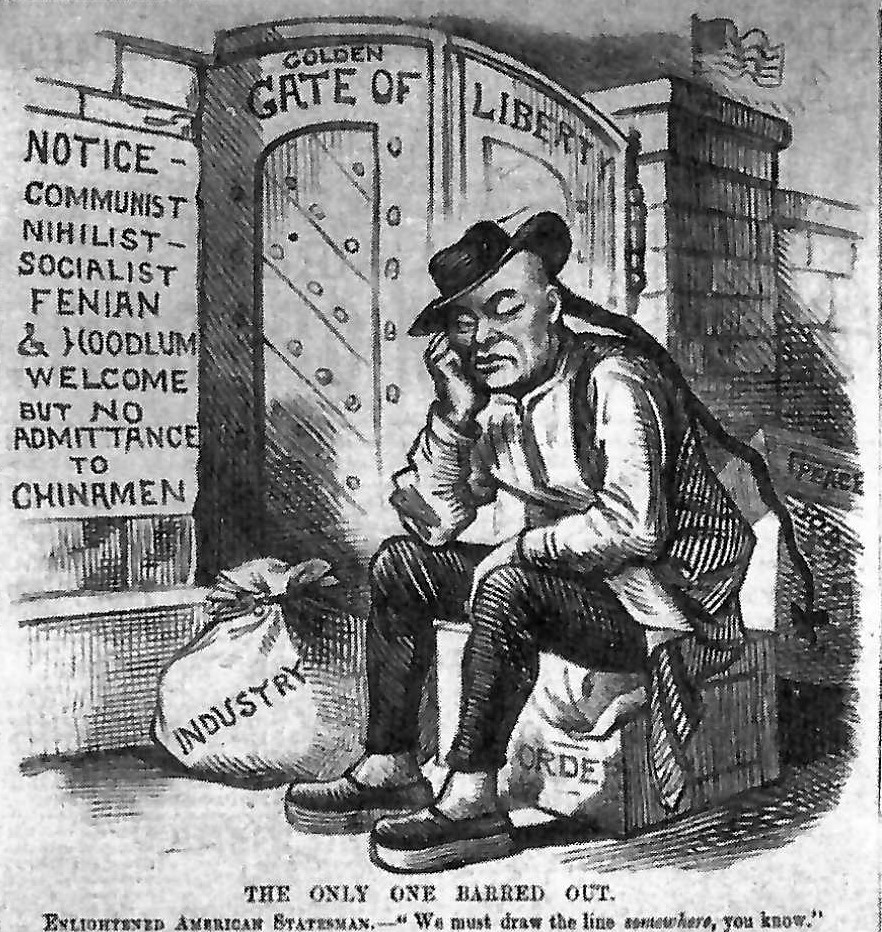




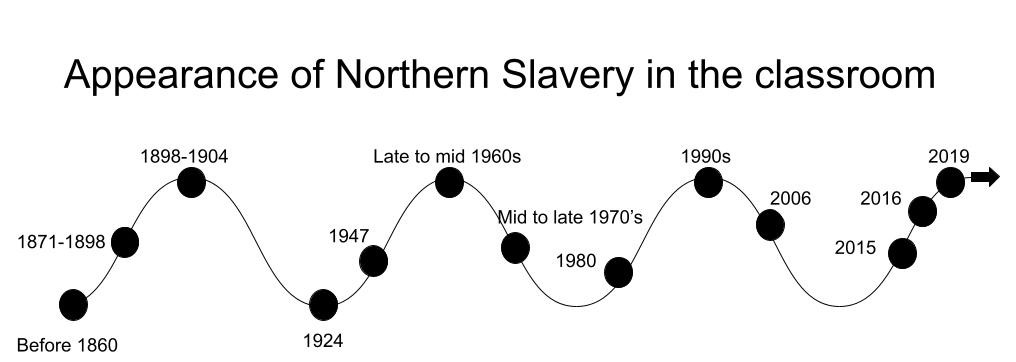
 njcssjournal