Lesson Activity by Hank Bitten, NJCSS Executive Director
It is important for students to understand the constitutional procedures for the transfer of power in the event of the death or physical or mental incapacity of the president. The 25th amendment has been invoked three times since its ratification in 1967. Section 2 was invoked twice, and Section 3 was invoked once in 1981.
1973 Resignation of V.P. Spiro Agnew (R) when both houses approved Gerald Ford (R) as Vice-President
1974 Resignation of President Richard Nixon when V.P. Gerald Ford (R) became President and both houses approved Nelson Rockefeller (R) as Vice-President.
1981 Surgery for President Ronald Reagan following a gunshot wound.
Essential Question: Does the 25th Amendment provide a transition of presidential power from one person to another without being challenged?
Read Section 2 of the 25th Amendment and discuss the following scenarios:
Section 2
“Whenever there is a vacancy in the office of the Vice President, the President shall nominate a Vice President who shall take office upon confirmation by a majority vote of both Houses of Congress.”
Scenario A:President Trump passes unexpectedly, and Vice-President J.D. Vance becomes President under Section 1 of the 25th Amendment.
Who should President Vance nominate as the new Vice-President? (Member of Congress, Governor, Cabinet Secretary, someone from the media, business executive, etc.)
Speaker of the House Mike Johnson (Since Rep. Johnson is not able to vote for himself, the Republican majority is 219 with 218 votes required for a majority).
If Rep. Mike is not elected by the House, would the election of someone from the Democratic Party be accepted?
119th Congress, Senate (2025–2027) 51 votes needed for a majority.
119th Congress, House (2025–2027) 218 votes needed for a majority.
Majority Party: Republicans (220 seats)
Minority Party: Democrats (215 seats)
Other Parties: 2 Independents (Caucus with Democrats)
Total Seats: 435
Scenario B:President Trump passes unexpectedly between the 2026 Midterm Elections and the meeting of the new Congress on January 3, 2027.and Vice-President J.D. Vance becomes President under Section 1 of the 25th Amendment.
Who should President Vance nominate as the new Vice-President if the Democratic Party controls either the House or the Senate?
Should the current Congress (House and Senate) that was meeting at the time the Vice-President became President continue until a Vice-President was selected or should the newly elected Congress vote on the candidate?
Scenario C: Who should President Vance nominate as the new Vice-President if the Democratic Party controls both the House and the Senate?
Is there a Republican who would be acceptable to a majority of Democratic representatives in both houses?
What would happen if President Vance refused to nominate a Vice-President?
If we do not have a Vice-President and if the Speaker of the House is a Democrat but the Senate Majority Leader a Republican, should the person next in line to succession as president be the Speaker of the House as current law states or should the presidency go to the Majority Leader in the Senate who is from the same political party as the President?
Scenario D: If there is no Vice-President, would it be possible under Section 4 to declare that President Vance was unable to discharge the powers and duties of his office? (in the event of a physical, emotional, or mental incapacity.)
Section 4:
Whenever the Vice President and a majority of either the principal officers of the executive departments or of such other body as Congress may by law provide, transmit to the President pro tempore of the Senate and the Speaker of the House of Representatives their written declaration that the President is unable to discharge the powers and duties of his office, the Vice President shall immediately assume the powers and duties of the office as Acting President.
What ‘other body’ should Congress select?
If the Speaker of the House is a Democrat and the person next in line to become Acting President, could this be challenged if the Majority Leader in the Senate was a Republican (same party as President Vance)?
If a Democrat becomes Acting President, could this person fire all members of the Vance Cabinet and replace them with new officers consistent with his/her political party? (Democrat) Would this be challenged?
“In a purely legal sense, as Acting President, the Vice President can employ all the powers and tools of the office of the president. Historians have characterized the Acting President as playing “a critical role as decisionmaker,” and “tak[ing] care of the day-to-day business” of the White House. The Acting President has the constitutional authority to “move the troops, report on the State of the Union, propose a new budget, send judicial nominees to the Senate for confirmation, remove the secretary of the treasury, do virtually all the things that presidents do. He might even prepare to control his national party apparatus and to secure its presidential nomination.” (Page 44)
“Senator Bayh responded by noting that the Vice President does “not have the office of President but that of Acting President. He does not get the full powers and duties of the office of President unabated. He is Acting President.”
Setting this symbolic distinction aside, the Acting President would be constitutionally empowered to conduct the same acts as the President. In the floor debate in the Senate, for instance, Senator Bayh expressed his belief that the Vice President acting as President would be able to fire and appoint cabinet officials. When Senator Hart expressed concern that a Vice President acting as President would remove cabinet members to “consolidate[] his position” as Acting President, Senator Bayh admitted that this concern was legitimate, but declared, “we do not want a Vice President who is acting in good cause, say, for example, in a 3-year term of office, being unable to reappoint Cabinet members who may have died or resigned.” (Page 71)
Scenario 5: President Vance continually frustrates both Houses of Congress with a nomination for Vice-President.
According to the following statement from the Yale Law Reader’s Guide, could President Vance be impeached? From Yale University
“Depending on the circumstances, actions taken by the President or other officials to frustrate the Twenty-Fifth Amendment process may constitute an impeachable offense.” (page 8)
The 25th Amendment
Section 1
In case of the removal of the President from office or of his death or resignation, the Vice President shall become President.
Section 2
Whenever there is a vacancy in the office of the Vice President, the President shall nominate a Vice President who shall take office upon confirmation by a majority vote of both Houses of Congress.
Section 3
Whenever the President transmits to the President pro tempore of the Senate and the Speaker of the House of Representatives his written declaration that he is unable to discharge the powers and duties of his office, and until he transmits to them a written declaration to the contrary, such powers and duties shall be discharged by the Vice President as Acting President.
Section 4
Whenever the Vice President and a majority of either the principal officers of the executive departments or of such other body as Congress may by law provide, transmit to the President pro tempore of the Senate and the Speaker of the House of Representatives their written declaration that the President is unable to discharge the powers and duties of his office, the Vice President shall immediately assume the powers and duties of the office as Acting President.
Thereafter, when the President transmits to the President pro tempore of the Senate and the Speaker of the House of Representatives his written declaration that no inability exists, he shall resume the powers and duties of his office unless the Vice President and a majority of either the principal officers of the executive department or of such other body as Congress may by law provide, transmit within four days to the President pro tempore of the Senate and the Speaker of the House of Representatives their written declaration that the President is unable to discharge the powers and duties of his office. Thereupon Congress shall decide the issue, assembling within forty-eight hours for that purpose if not in session. If the Congress, within twenty-one days after receipt of the latter written declaration, or, if Congress is not in session, within twenty-one days after Congress is required to assemble, determines by two-thirds vote of both Houses that the President is unable to discharge the powers and duties of his office, the Vice President shall continue to discharge the same as Acting President; otherwise, the President shall resume the powers and duties of his office.
Engaging High School Students in Global Civic Education Lessons in U.S. History
The relationship between the individual and the state is present in every country, society, and civilization. Relevant questions about individual liberty, civic engagement, government authority, equality and justice, and protection are important for every demographic group in the population. In your teaching of World History, consider the examples and questions provided below that should be familiar to students in the history of the United States with application to the experiences of others around the world.
These civic activities are designed to present civics in a global context as civic education happens in every country. The design is flexible regarding using one of the activities, allowing students to explore multiple activities in groups, and as a lesson for a substitute teacher. The lessons are free, although a donation to the New Jersey Council for the Social Studies is greatly appreciated. www.njcss.org
Era 11 The Great Depression and World War II (1929–1945)
*
*
The beginning of the 20th century marks the foundation of the transformation of the United States into a world power by the middle of the century. In this era industrialization, urbanization, and rapid immigration changed America from an agrarian to an urban society as people lived and worked in cities. The development of the new technologies of electricity, transportation, and communication challenged our long-held traditional policies of limited government, neutrality, and laissez-faire capitalism. The lesson of the Great Depression was that capitalism and free markets did not enable everyone to attain the American Dream. As a result, Americans looked to their government for help with the problems of unemployment, poverty, old age. Housing, and the supply of food.
Activity #1: The New Deal vs. a Five-Year Plan?
During the Great Depression, the unemployment rate was 24.9% in the United States (about 13 million people). Without income, there was very limited private consumption. President Roosevelt identified the South as the number one “problem region” of the U.S. for poverty and economic distress. In 1933, President Roosevelt signed the Tennessee Valley Authority Act, a federally funded program to protect the environment from floods, encourage economic development, and produce electric power.
In 1934, Shareholders of the Alabama Power Company sued to prevent the TVA from acquiring over half of the company’s property and equipment. The sale would allow the government agency to allocate electric power to consumers. The shareholders argued that Congress exceeded its authority.
The U.S. Supreme Court in Ashwander v. Tennessee Valley Authority, held that Congress did not abuse its power. Justice Hughes argued that the Wilson Dam, the location where the TVA was in the business of generating electricity, had been built originally in the interest of national defense because it produced materials involved in the production of munitions. The government could sell excess electricity to consumers without violating the Constitution. The majority concluded that Congress had the authority to construct the Wilson Dam. The majority also found that the disposal of the electric energy generated was lawful.
This Supreme Court decision is also known for the reasoning of Justice Louis Brandeis regarding conflicts when one branch exceeds its power and infringes on another branch. Justice Brandeis adopted the criteria which has become known as the ‘avoidance doctrine.’ “One branch of the government cannot encroach upon the domain of another, without danger. The safety of our institutions depends in no small degree on a strict observance of this salutary rule.”
The legacy of the Tennessee Valley Authority brought electricity to the southeastern United States increasing the productivity of farming and transforming this region from poverty to sustainable economic development. Before the Tennessee Valley Authority, electric power was generated by private companies. (e.g. Westinghouse, Edison Electric Illuminating Company, Public Service Corporation, etc.) Private companies are concerned with making a profit instead of investing in public areas such as street lights or rural areas. The first buildings to have electricity around 1880 were often hotels and commercial buildings. Wabash, IN, Appleton, WI, Cleveland, OH, and lower Manhattan were some of the first towns and cities to have electric power. Some members in Congress, namely Senator George Norris, favored public utility companies as the most efficient way to bring this new invention to everyone in the United States.
The Soviet Union’s Five-Year Plan: The Zaporizhzhia Nuclear Power Station in Ukraine
Since the Russian Revolution of 1917, Lenin prioritized the electrification of the Soviet Union as essential for economic and industrial development. Each of the 12 Five Year Plans included the expansion of power through the construction of dams, fossil fuels, natural gas, and since 1975, nuclear energy. The Soviet state planning committee, Gosplan, developed these plans with clearly stated production goals.
One of the problems with the energy plan of the Soviet Union is the transmission of electricity from the generating plant to other regions of the country. Russia depends on a unified power system and the complexity of its geography and use of different energy sources (fossil fuels, hydropower, natural gas, and nuclear) makes it difficult to transfer power from one source to another efficiently. The heaviest demand for electricity is in the western or European side of the country. However, as electricity became accessible to rural areas, agricultural production became dependent on electricity. The largest nuclear power plant in Europe is on the Dnieper River in Ukraine. It was constructed in 1985.
The Soviet Union could benefit from the computer software used in the United States, but the Five-Year Plan model is dependent on Soviet Union computers and boilers. Some of the Five-Year Plans were completed ahead of schedule, some did not meet their goals, and they also included social changes such as closing houses of worship, providing child care, and using large collective farms. The goals of most of the plans were to transform the Soviet Union into a major industrial and economic power.
How is a market economy different from a command economy? What are the advantages and disadvantages of both models?
Why did the United States and Soviet Union experience challenges or problems with electrifying their countries?
Is a monopoly or market competition the most efficient economic model for providing utilities to the people in a country? (water, electric, phone, education, etc.)
Is a market or command economy the most efficient model to address the expected problems from climate change in the next 25 years?
Which economic model (market, command, or mixed) is the most efficient one to increase worker productivity?
Activity #2: Two Perspectives on World War II: DR’s Four Freedoms Speech and Hirohito’s Decree
On January 6, 1940, about three months after Hitler’s attack on Poland, President Franklin Roosevelt gave his Four Freedoms speech as part of his State of the Union address. This was during a time when many people in America wanted to remain neutral and isolated from the European conflict which expanded in September 1939 with Germany’s blitzkrieg attack and occupation of independent Poland.
1940 was also a presidential election year. In the mid-term election of 1938, the Republican Party became the majority in the House and Senate. The Republican Party had several contenders for the nomination, notably Governor Thomas Dewey (NY) Senator Robert Taft (OH), and Wendell Wilkie, a businessman from Kansas. When the Republican Party convention was held in June in Philadelphia, Wendell Wilkie’s popularity had increased significantly, while the popularity of Thomas Dewey and Robert Taft was declining.
Excerpt from the Four Freedoms Speech
“In the future days, which we seek to make secure, we look forward to a world founded upon four essential human freedoms.
The first is freedom of speech and expression–everywhere in the world.
The second is freedom of every person to worship God in his own way–everywhere in the world.
The third is freedom from want–which, translated into world terms, means economic understandings which will secure to every nation a healthy peacetime life for its inhabitants-everywhere in the world.
The fourth is freedom from fear–which, translated into world terms, means a world-wide reduction of armaments to such a point and in such a thorough fashion that no nation will be in a position to commit an act of physical aggression against any neighbor–anywhere in the world.
That is no vision of a distant millennium. It is a definite basis for a kind of world attainable in our own time and generation. That kind of world is the very antithesis of the so-called new order of tyranny which the dictators seek to create with the crash of a bomb.
To that new order we oppose the greater conception–the moral order. A good society is able to face schemes of world domination and foreign revolutions alike without fear.
Since the beginning of our American history, we have been engaged in change — in a perpetual peaceful revolution — a revolution which goes on steadily, quietly adjusting itself to changing conditions–without the concentration camp or the quick-lime in the ditch. The world order which we seek is the cooperation of free countries, working together in a friendly, civilized society.
This nation has placed its destiny in the hands and heads and hearts of its millions of free men and women; and its faith in freedom under the guidance of God. Freedom means the supremacy of human rights everywhere. Our support goes to those who struggle to gain those rights or keep them. Our strength is our unity of purpose. To that high concept there can be no end save victory.”
Historical perspectives were important in 1941, and they are important today. The United States, including President Roosevelt, presented a perspective of Japanese superiority and a destiny to rule the world. He also called America’s citizens to accept the importance of a new moral order that included the religious concept of faith in freedom under the guidance of God. This perspective of American superiority is built on a commitment to an idea and an ideal.
American vs. Japanese Civilian Perspectives
A Life Magazine article about Emperor Hirohito in 1937 stated “To Japanese he is, in all seriousness, a divine descendent of the Sun goddess, the incarnate head of the Japanese divinity idea that makes the conquest of Asia a holy destiny for the Japanese race.” For ordinary Americans, the concept of kami in Japanese culture was not comprehendible. Instead of understanding a perspective of divinity as present everywhere, they accepted Hirohito as a son of a god or goddess or someone connected with divinity.
After the bombing at Pearl Harbor tensions between the United States and Japan escalated. Through the lens of war, the Japanese emperor’s god-like status became a more serious issue because they perceived Japan’s war objectives connected with their religious beliefs. A 1945 United States News story explains, “Shintoism has no religious content and has ethical content to the extent that it is designed to support the idea of the divine origin of the Emperor.” A 1945 article in Life Magazine stated, “The Emperor of Japan is neither a man nor a ruler. Nor is he simply a god living in Tokyo. He is a spiritual institution in which center the energy, the loyalty and even the morality of the Japanese.” He is supreme in all temporal matters of state as well as in all spiritual matters, and he is the foundation of Japanese social and civil morality.
American and Japanese civilians had very opposite reactions following the events of December 7, 1941. For Americans, Pearl Harbor represented “A Day Which Will Live in Infamy.” For citizens of Japan, Pearl Harbor represented the success of a justified military retaliation. The American and Japanese governments both utilized nationalism to their advantage, and implemented various forms of propaganda as tools for shaping their civilians’ perspectives.
Excerpt from Japan’s Announcement Following the Attack on Pearl Harbor
“What an uproar! Japan’s Imperial Forces got things off to a quick start with one splendid strike then another in historic surprise attacks on Pearl Harbor, where the bravado of the US Asia fleet met with sudden defeat, and off the Malaya Coast, where the main forces of the British Asia fleet were utterly annihilated. Word has it that Roosevelt and Churchill were shaken up and went pale upon hearing of the defeats. In a third strike, Hong Kong Island, England’s strategic base for its 100-year exploitation of East Asia, fell into ruin in only a matter of ten days. During this time, Churchill was sent reeling, cutting off contact with others and showing up in Washington.
What these two headstrong countries are striving for will only lead them on a downhill path to military defeat. Our barbaric enemies are already cowering in fear in the Pacific, and the fall of Manila shall mark the day of the Philippines’ subjugation and reversion back to Greater East Asia. The enemy power of Singapore, which was—alas—boasting of its impenetrable stronghold before the Imperial Forces penetrated the jungle area of the Malay Peninsula and advanced southward like a raging tide, shall also vanish into nothingness in the midst of this glorious chapter in history.
The military gains of the glorious Imperial Forces are truly great, and the army, navy, and air force should be given our heartfelt gratitude. We should also honor our courageous men who are ready to lay down their lives when charging enemy lines, as well as those who went out to conquer but never returned.”
Emperor Hirohito’s Decree
On January 1, 1946, four months after the surrender on September 2, 1945, Emperor Hirohito made the following statement in Japan’s newspapers.
“I stand by my people. I am ever ready to share in their joys and sorrows. The ties between me and my people have always been formed by mutual trust and affection. They do not depend upon mere legends or myths. Nor are they predicated on the false conception that the Emperor is divine, and that the Japanese are superior to other races and destined to rule the world.
How was the rise of dictators after World War 1 an existential threat? How did ordinary American citizens understand the conflict in Europe and Asia before and after the attack on Poland and the attack on Pearl Harbor?
If you were the President of the United States in 1940, would you deliver the Four Freedoms speech or one that is similar in content and context?
Do you accept President Roosevelt’s statement following Pearl Harbor that before the attack the United States was at peace with Japan? (see video clip above)
Are elected leaders elevated by people and the press or are they criticized to the extent that their decisions and motives are questioned?
Which government delivered the best message to its citizens based on factual evidence and an understanding of the importance of the attack on Pearl Harbor?
Activity #3: Japanese Internment Camps and Soviet Union Deportation Camps
Japanese Internment Camps
Two months after the attack on Pearl Harbor, February 19, 1942, President Franklin Roosevelt signed Executive Order 9066 to relocate approximately 117,000 Japanese Americans living on the west coast. At first, the order was voluntary and Japanese Americans had time to sell their property and comply in an orderly manner.
Unfortunately, many did not comply voluntarily, and the relocation became mandatory. Thousands of people lost their homes and businesses due to “failure to pay taxes.” The relocation of Japanese Americans in the United States for safety and security reasons was controversial during World War II and for the decades that followed. The internment camps provided educational and recreational activities, adequate heat, and a process to hear complaints and address concerns.
There were 12 camps located all over the United States, with the Seabrook Farms camp in New Jersey.
President Truman rescinded the Executive Order on June 25, 1946 allowing the Japanese Americans to return to their homes. They were in relocation camps for more than four years. When they returned home, most found their belongings stolen and their homes and property sold. They also faced prejudice and discrimination for years, even though Japanese Americans were combat soldiers during the war.
In 1988, President Ronald Reagan signed the Civil Liberties Act. The remaining survivors of the relocation camps were sent formal letters of apology and were awarded $20,000 in restitutions from the United States government.
Soviet Union Deportation Camps During World War II
On February 23, 1944, the Chechens were exiled from their ancestral lands and deported to Siberia and the northern regions of Kazakhstan. The entirety of the Chechen nation was accused of collaborating with the Fascists, even though there is no evidence to support this. The German advance into the Soviet Union never came close to Chechnya. The Chechen deportation of almost 400,000 men, women, and children is the largest Soviet deportation and occurred in a matter of days. Many Chechens had in fact fought on the front lines of the Soviet war against the German aggressor.
On September 1, 1941 the mass evacuation was announced for the approximately 440,000 Volga Germans. Ten days later they began their forced deportation to Kazakhstan and Siberia. Many were forced to work in ‘labor camps’ such as Kolyma. The Volga Germans were then stripped of their citizenship and did not regain their civil rights until after Stalin’s death. Most estimates indicate that close to 40 percent of the affected population perished.
In 1944, Joseph Stalin ordered the deportation of the entire Crimean Tatar community (roughly 200,000), falsely accusing them of collaborating with the Nazis. Reports suggest that nearly half of the deported died during the ordeal. Ukraine, Latvia, Lithuania, and Canada have all formally recognized Stalin’s brutal deportation as a crime of genocide. During this same period, the Soviet Union adopted a policy of “Russification” for the peninsula. Crimea was “Russified” and any study of the Tatar’s native language was banned, ancient Tatar names were erased, Tatar books were burned, and their mosques were destroyed. Nikita Khrushchev transferred Crimea from Soviet Russia to Soviet Ukraine.
Is it possible for a government to correct something it did that was morally or legally wrong?
Do governments need to justify the actions they take during a time of war or a national crisis?
Are there significant differences in the actions of the United States and the Soviet Union in the relocation or deportation of innocent people, many who were citizens?
Do ordinary people have any rights during a war or crisis (i.e. Ukraine, Gaza, Sudan, Congo, Rwanda, etc.)?
How and who determines if and when a government exceeds its authority?
Activity #4: Weapons of Mass Destruction
In World War II, the Japanese were fighting for the Emperor who convinced them that it was better to die than surrender. Women and children had been taught how to kill with basic weapons. kamikaze pilots crashed their planes into American ships. A land invasion would be costly with estimates of more than one million American lives lost.
After a successful test of a nuclear bomb at Los Alamos, New Mexico on July 16, 1945, the United States, China, and the United Kingdom issued the Potsdam Declaration on July 26 demanding the unconditional surrender of the Japanese government, warning of “prompt and utter destruction.” On the morning of August 6, 1945, the first atomic bomb was dropped on Hiroshima. The result was approximately 80,000 deaths in just the first few minutes. Thousands died later from radiation sickness. On August 9, 1945, a second atomic bomb was dropped on Nagasaki. The result was 39,000 men, women and children were killed and 25,000 more were injured. Both cities were leveled and Japan surrendered to the United States.
After the news of the atomic bombs that were dropped on Hiroshima on August 6, 1945 and on Nagasaki on August 9, 1945, Lieutenant General Leslie R Groves, director of the `Manhattan Project’ that had developed the atomic bomb, commented:
“The atomic bombings of Hiroshima and Nagasaki ended World War II. There can be no doubt of that. While they brought death and destruction on a horrifying scale, they averted even greater losses – American, English, and Japanese”.
This justification that the use of the bomb saved lives, even though it killed innocent civilians, has haunted the world into our present time. It was a view that generated controversy then and after as to the justification or otherwise of the use of such weapons on largely defenseless civilian targets, at such Mutual Assured Destruction (MAD) that has haunted the world into our present times.
Following World War 2, there was an arms race between the Soviet Union and the United States. Although there were threats of war and conflicts in Korea, Southeast Asia, the Congo and other places, this period was called the Cold War. Other countries also developed nuclear weapons leading to concerns of a global conflict.
The world came close to a nuclear attack during the Cuban Missile Crisis. In 1962, nuclear weapons could be delivered by airplanes, missiles, and submarines. The Soviet Union placed nuclear warheads in Cuba and the United States had some in Turkey. These missiles could attack cities in both countries within a range of 1,200 miles. Fortunately, the Soviet Union began to withdraw its ships and missiles from Cuba and an agreement was made.
In the 1960s, the military strategy of Mutual Assured Destruction (MAD) was debated, In this strategy, two opposing forces, the Soviet Union and the United States, had enough nuclear weapons to completely destroy each other. This deterrence theory assumed that neither side would initiate a nuclear attack because the resulting retaliation would lead to their own destruction. The concept, first discussed in the 1960s during the Cold War, is based on the idea that the devastating consequences of nuclear war would outweigh any potential gains for either side.
As a result, the United Nations initiated the process to limit the production of nuclear testing and weapons. Since the first test ban treaty, several agreements have been ratified to control the proliferation of nuclear and chemical weapons. The threat from atomic, hydrogen, neutron, and cobalt nuclear weapons is a concern to every person and every country because of the fallout from dangerous levels of radiation. There are still detectable effects of radiation in our atmosphere today from the 1945 explosion. The effects of radiation from a thermonuclear weapon (Hydrogen bomb) will likely last for hundreds of years and affect every living organism and human.
Following the Attack on the World Trade Center on September 11, 2001, the world became concerned about a terrorist group having access to a smaller nuclear weapon, a dirty bomb, that might be detonated in an urban area. The effects of a dirty bomb would likely be limited to the immediate area of the explosion but the damage to property and the cleanup of radioactive elements would be significant and costly.
Why did an arms race between the USA and the USSR begin after 1945?
How sane was the policy of MAD?
What factors sustained the arms race for so long?
Is a limited nuclear war a plausible scenario or would it quickly lead to an all-out war?
What would life on Earth be like after a nuclear war? What geographic regions might have a chance of survival?
Should the civil defense from a nuclear war or dirty bomb explosion be best coordinated by local, state, or the federal government in the United States?
How would the governments of Europe or the Middle East, where there are many countries within a small geographic area respond to a nuclear war or explosion from a bomb or nuclear power plant?
What is the most likely scenario for a nuclear explosion in the 21st century?
Franklin Delano Roosevelt: The OG Influencer— No Twitter Just Fireside Chats
By Rhiannon Al-Saadi
Turning on the radio
A nation on the brink of despair. One man’s voice crackled through the radio. 54 million listeners. Two-thirds of America.[1] Franklin Delano Roosevelt’s fireside chats did not just deliver news, but also wove a thread of hope and unity that transformed the very fabric of political communication. In an age dominated by tweets and soundbites, Roosevelt’s intimate conversations set a powerful precedent for how presidents connected with their citizens. His informal and conversational style turned these broadcasts into what would be famously known as his “fireside chats.” Through his fireside chats Roosevelt was able to connect with people right in their homes, creating a personal feeling. This unprecedented use of technology changed the way Americans looked at the presidency. This revolution in communication highlighted several key themes: the technologically advanced nature of radio, the personal connection and accessibility it afforded, the emergence of celebrity culture, and the lasting lessons it offers for future leaders. Together, these elements illustrated how Roosevelt’s fireside chats informed as well as inspired a nation in need. An examination of Roosevelt’s innovative use of radio reveals a profound and lasting impact on presidential communication, setting a precedent that future leaders, such as John F. Kennedy and Donald Trump, would follow. This analysis highlights a clear pattern of technological advancements in communication strategies, illustrating how each president adapted to evolving media landscapes to engage effectively with the American public.
President Roosevelt was first inaugurated on March 3rd, 1933. During this time, the nation grappled with the Great Depression’s harsh realities. Just eight days after his inauguration, Roosevelt delivered his first national radio address, which became a groundbreaking moment in American history. Around this point the radio emerged. In the 1920s everyone wanted a radio in their home; it was the new thing. By the 1930s, it was in every other home. The 1930 census “showed that 40.3% of all families owned a radio set.” This percentage was even higher “in urban areas, with ownership at 50.0%.” Although radio ownership became increasingly common across much of the United States, it remained less widespread in the South, where economic and geographic factors slowed its growth compared to other regions.[2] A lot can change over the course of a decade. Not long later in the 1940s— “despite the economic crisis— [the] radio became commonplace: 86 percent of homes had sets.”[3] Even though the radio’s popularity coincided with a time of great social and economic upheaval, families still gathered around it. During Roosevelt’s presidency, the radio transformed from a luxury item into a normal part of daily life, deeply embedded in American households and communities. The radio served as a primary means of communication, entertainment, and connection to the world beyond their community. For Roosevelt, this technological shift provided an unprecedented opportunity to speak directly to the American people. According to communication expert Christopher Sterling, Hooper Radio reported “nearly 54 million people (of roughly 82 million adult Americans) tuned in to the broadcast.”[4] Although only half the population owned a radio set, two-thirds were listening in at times. This may seem puzzling at first— today this can be seen by everyone watching a YouTube video but only some actually hit subscribe. For the radio, this was possible because it went beyond just a household item. The radio was a shared, communal resource, something previous technologies lacked. Those without a radio in their homes could easily tune in at a friend’s house, a diner, or even in a car. This made radio listening a shared experience that transcended the boundaries of individual ownership, and in many ways, it brought communities closer together. Roosevelt recognized the power of this medium and began using it to connect directly with the American people during their darkest hours.
Amid the chaos of the Great Depression, the fireside chats were not just a communication tool, but a lifeline for people facing mass unemployment, bank failures, and dramatic deflation. Ranging from 1929 to 1939, the Great Depression marked one of the most severe economic downturns in American history. Nearly a quarter of the workforce was unemployed, families struggled to survive as their savings vanished and businesses collapsed. The stock market crash of 1929 had triggered a financial panic, soon after the banking crisis only worsened that disaster. By the time Roosevelt took office in 1933, more than nine thousand banks had failed, wiping out the savings of millions of Americans.[5] Due to this, public trust in the government and the financial system was at an all-time low, and many Americans were desperate for reassurance and a sense of direction. This put a lot of pressure on Roosevelt, but still he confidently promised to tackle the nation’s economic challenges. Historian Geoffrey Storm notes that “the letters he received from New Yorkers illuminate Depression-era conditions and indicate an early instance of the intimate bond established between Roosevelt and his listeners.”[6] This bond, cultivated through the fireside chats, allowed Roosevelt to directly engage with the anxieties of the American public, offering both guidance and comfort during the nation’s time of uncertainty.
Most historians agree that Roosevelt’s fireside chats significantly impacted political communication. It is how historians approach it where these things differ. The main two approaches reflect the influence from a media history or political history angle. On one hand, historians like Bruce Lenthal, Harold Holzer, and Geoffrey Storm highlight how Roosevelt’s fireside chats influenced media approaches, resulting in more direct and accessible communication with the American people.[7] Lenthal’s work specifically does a deep dive into the radio, analyzing the technological and cultural impact of it. Lenthal argues that the radio is to credit for the rise of modern mass culture. He and Storm examine the technological innovations in relation to the cultural impact of the fireside chats. The two of them are quite interested in the history of the radio, making their contributions slightly narrow. Storm adds substantial information on what the technology of the fireside chats meant for society, such as how it helped reach a wider audience across different regions. Holzer has less of a focus on the radio and more of a focus on the technology relevant at certain times. This is because he looks at the history of media throughout the presidencies, not just at Roosevelt’s radio. Like the other approaches, Holzer looks at technologies’ impact on modern media strategies and its role in engaging the public, though for multiple different presidents. Together these historians draw attention to Roosevelt’s media strategy as they find the fireside chats impact relates to its technologically advanced nature.
On the other hand, there is the political history focus. Political historians look at the impact of Roosevelt’s use of radio on his administration, particularly how it shaped public opinion and solidified his leadership during the crisis. They focus on the fireside chats in terms of fostering national unity and engagement. William Edward Leuchtenburg, Richard W. Steele, and Tom Lewis primarily focus on the public sentiment, rather than the technology.[8] Leuchtenburg emphasizes how Roosevelt’s New Deal policies reshaped American society, with mention of people’s reaction to his fireside chats. Looking at social and political history, Leuchtenburg makes captivating insights on how Roosevelt’s use of radio transformed presidential communication, allowing him to connect directly with Americans in their homes, build trust, and shape public opinion during the Great Depression. Steele’s article “The Pulse of the People: Franklin D. Roosevelt and the Gauging of American Public Opinion,” emphasizes Roosevelt’s strategic methods for gauging public sentiment, highlighting how the president used informal feedback and media interactions to respond to American concerns. By examining Roosevelt’s strategy, Steele is firmly rooted in political history. He continues this focus in his article “The Great Debate: Roosevelt, the Media, and the Coming of the War, 1940–1941.” In this, Steele argues that Roosevelt strategically used the media to gain support for his plans of intervention. Lewis takes these two ideas, from Leuchtenburg and Steele, and combines them when he explores the direct impact of the fireside chats on building a personal connection. Lewis argues the emergence of celebrity culture within the context of radio highlights how Roosevelt utilized the medium to cultivate a public persona. Lewis incorporates a considerable amount of cultural history by looking at the cultural impact of Roosevelt’s political identity. Still, the core focus is on how these efforts were used for political gain, making it political history. These historians generally analyze the broader dynamics of Roosevelt’s fireside chats to public opinion, to do this they take a more legacy related approach to understanding Roosevelt’s impact.
Building on these insights, this analysis will explore how Roosevelt’s fireside chats were successful for both technological and political history reasons. The current historical discussion is limited in its view of the fireside chats. Roosevelt’s use of the radio transformed presidential communication for both technological reasons and the personal connections the fireside chats formed. However, while historians focus on these aspects in isolation, few have fully explored how Roosevelt’s fireside chats laid the groundwork for future presidents. Today, the echoes of Roosevelt’s fireside chats can still be heard in the way presidents communicate with the American people. The groundbreaking fireside chats strengthened Roosevelt’s relationships, created his public persona, and made future presidents embrace the precedent. Roosevelts’ influence cannot be attributed to just one historical category. The combined reasons make a tangible strategy that continued after Roosevelt. The fireside chats represented a game changing development in political communication, due to their technological innovation making them direct and personal. One did not need to be a politician to understand the policies being discussed. At the same time, Roosevelt’s use of radio contributed to the rise of celebrity culture, positioning him as a prominent public figure whose personality resonated with Americans and made him a recognizable and influential leader. Comparisons with future presidents, including but not limited to, John F. Kennedy, who emulated Roosevelt’s personal connection through strong stage presence, and Donald Trump, who harnessed the elements with social media, illustrate how advancements in technology have continually influenced presidential communication strategies. Roosevelt was not setting out to make this precedent, but in trying to help his country recover, he revolutionized the presidency. This raises an important question; how did Roosevelt use the radio to revolutionize the way future presidents communicate with the American people? This analysis will argue that the legacy of the fireside chats is still present today. Where much of the current discussion stops is at Roosevelt’s direct impact, and this fails to address the next question; what have later presidents done to follow in Roosevelt’s footsteps? Ultimately, this analysis aims to contribute to current historiography by highlighting how Roosevelt’s fireside chats not only reshaped the nature of political communication but also established a framework for future leaders to connect with the public in increasingly personal and engaging ways, reflecting the evolving relationship between technology and political communication.
The tech behind the talk
The once revolutionary technology, the radio, transformed how Americans experienced both political news and general culture. The most transformative aspect of the radio was the direct communication it provided. Lenthal, author of Radio’s America, notes the radio as cutting edge technology in the 1930s. For the first time, Americans were able to listen to live broadcasts, giving them unmediated access to national events and shaping their understanding of politics and culture. Lenthal further explains that for people listening “the government that had seemed so far away […], suddenly felt meaningful in his own house.”[9] This is to say previous interactions with the presidency were physically distant and felt that way too. Leuchtenburg said in his book, The FDR Years: On Roosevelt and His Legacy, “most Americans in the previous 160 years had never even seen a President” the news was their only choice.[10] A newspaper represents someone else’s account of events. It is written after the fact, whether that be hours or days later. And then it is read even further from the original date, when a person finally sees it and has time for it. The more and more this goes on, the news begins to feel like a game of Telephone— what once was, now becomes a distant version of the original.[11] None of that could be said for Roosevelt’s fireside chats. He spoke directly to the American people, explaining why his ideas, such as the New Deal, were going to help them. They heard the president speak. From his mouth to their ears, with the exact words he said it to them specifically. To experience the president speaking directly to you, with no delay and no middle man, marked a profound shift in how Americans engaged with their leader. This forever altered the way future presidents would communicate with the American people.
Not only did the radio allow direct unmediated communication with the president, but it also extended the accessibility of information across the nation. By eliminating the barriers of traditional news outlets, the radio made it possible to reach millions of citizens. Previous barriers holding back news accessibility were typically monetary. In the early 1900s, most people got their news through newspapers or newsreels.[12] This means people had to buy each issue or a movie ticket to stay informed. The radio brought political messages into people’s homes, workplaces, and public spaces. This unprecedented ability to broadcast news to such a wide audience at once, fundamentally altered the dynamics of political communication, which enabled Roosevelt to connect with the American public in ways never before imagined. Doing so reshaped the relationship between the government and the citizens. As Steele notes in “The Great Debate: Roosevelt, the Media, and the Coming of the War,” “Roosevelt’s presidential addresses, particularly his fireside chats, were as popular among newsreel viewers as they were among the nation’s radio audiences.”[13] Since radio dominated mass communication during Roosevelt’s presidency, he used it to address millions of Americans, extending his reach greatly. However, it is important to highlight the significance of newsreels, they were brief films screened in movie theaters that showcased significant events. Most would assume that newsreels would be more popular as it was on a screen, something still present today. But while newsreels were widely popular, radio offered an additional layer of accessibility, allowing Americans to tune in directly from their homes without the need for a movie ticket.
While the radio expanded accessibility, it also fostered a collective experience, as millions of Americans listened together in real-time, creating a shared moment of national engagement. Unlike any other medium before it, the radio allowed millions of people to engage with the same event or broadcast simultaneously, creating a sense of collective participation. Not owning a radio did not equal not listening to one.[14] Roosevelt capitalized on this unique characteristic, using his fireside chats not just as a platform for delivering his policies, but as an opportunity to connect the American people. Across the country, people from different families and different towns would come together and have listening parties for Roosevelt’s broadcasts. According to Lenthal, “simply listening to the radio was often a shared experience: Americans in the 1930s typically listened with groups of family or friends.”[15] Figure 1, a 1938 photo, showed how Roosevelt’s real-time address to the nation created an immediate connection with listeners. Even if they were listening cramped up in a small room with nowhere to sit, people would still come together to listen to the radio.[16] The American people were brought together by the shared cultural experience of hearing their president speak directly to them. This type of collective experience was unprecedented at the time— today, we might experience similar collective moments through viral memes with millions of views, but in Roosevelt’s era, the radio was the groundbreaking technology that made such a connection possible.
With a discussion of the technological innovation behind the fireside chats, a key point often missing is the simple aspect that this communication came directly from the President of the United States of America. This was not a slick big business’s PR stunt, nor a cheerful ad for a local store. This was the President, the country’s leader, using this advanced technology to directly engage with the American people. Leutchenbrug confirms that Roosevelt was “the first chief executive to take full advantage of the capacity of radio to project a president’s idea.”[17] What set Roosevelt apart from other figures using the radio stemmed from his unique ability to turn the technological medium into a means of political leadership. Roosevelt used the radio not only to inform but to cultivate a relationship with the people, making them feel personally connected to their government. His broadcasts were more than just announcements. The fireside chats served as a way to project leadership, confidence, and authority during one of the country’s most difficult periods. Roosevelt understood the power of this new communication tool to foster trust, shape public perception, and solidify his influence as the nation’s leader. The impact of his fireside chats reached far beyond the immediate information he conveyed— it transformed the way Americans viewed their president, setting a new standard for political communication that future presidents would adopt and adapt.
Bringing the president home
Roosevelt broke down the boundaries between the president and the people by forcing himself into American living rooms, giving millions of Americans the sensation that they were having a conversation with the president. Americans tuned in to listen to the president in the comfort of their own homes, creating the sensation that Roosevelt himself stood in the room with them, speaking to each individual as if he was any other friend in their own home. This powerful illustration is captured in Figure 2, a 1940 photograph, “The Fireside Chats: Roosevelt’s Radio Talks.” The photo has a father and daughter intently tuning in to one of these broadcasts, symbolizing the intimate, family-centered atmosphere Roosevelt cultivated through his radio addresses.[18]
The photograph conveys more than words ever could, as listening to Roosevelt speak in one’s own home highlights the personal connection it made the American people feel. Historian Geoffrey Storm put it perfectly when he says that listening to the fireside chats was “a highly personal, immediate experience that reduced the limitations of geographical separation to forge new, wider notions of community.”[19] Roosevelt intended for his fireside chats to sound personal, as though he were addressing each listener individually, rather than delivering a formal, distant speech. At the time, the radio served as a revolutionary technology capable of bringing the president’s voice as though he were right there in the room with them. Prior to radio, people in different sections of the country frequently did not hear directly from the president because of geographic distance.[20] It was so personalized that Lewis notes that “some people placed Roosevelt’s picture beside their radios, so they might see him as he spoke.”[21] This highlights the intimate relationship listeners developed with Roosevelt, viewing him as a personal figure rather than just a distant politician. To have a picture of the president in one’s home means it was a source of comfort, familiarity, and reassurance. Bridging the physical gap between himself and the American people, Roosevelt’s fireside chats helped to strengthen the relationship and make him feel less like an inaccessible politician and more like a trusted presence in every home.
In addition to creating a personal connection, Roosevelt’s fireside chats were characterized by his use of simple, clear language that spoke directly to the concerns and experiences of ordinary Americans. Roosevelt made that motivation clear too. During his very first fireside chat, on March 12 1933, titled “Fireside Chat on the Banking Crisis,” he emphasized that his actions were “for the benefit of the average citizen.”[22] Instead of using complex political or economic terminology, Roosevelt broke down the issues at hand into terms that anyone could understand, regardless of their background or education. He carefully explained the banking crisis and the steps the government was taking to address it in straightforward language, ensuring that people felt informed and reassured— given the circumstances, that reassurance was certainly needed. He referenced this again seven years later in another fireside chat, having said “I tried to convey to the great mass of American people what the banking crisis meant to them in their daily lives.”[23] Furthermore, not only did Roosevelt talk without political jargon, like a real person, but he as well had an “informal delivery” that contributed to accessibility.[24] Roosevelt’s approachable tone made listeners feel comfortable sending letters to him in response to his fireside chats. For example, F.B. Graham, a woman who wrote to Roosevelt after listening to one of his fireside chats, described them as “neighborly” and noted that “in simple words [he] explained the great things he had done, so that all us unfamiliar” would understand.[25] This letter, written by a listener who was not a political expert but a regular American citizen, demonstrates the easy comprehension of the fireside chats. Roosevelt’s use of simple language, paired with his informal yet authoritative delivery, allowed him to communicate effectively with people across the nation. From this understanding, Roosevelt built a unique relationship with the American people, increasing his popularity. By addressing ordinary citizens in a language they could easily understand, he made complex policy discussions feel personal and approachable, rather than distant and formal.
By speaking in simple, relatable terms, Roosevelt made political issues more understandable, which opened up the political process, encouraging greater public participation and involvement in government decisions. Roosevelt’s decision to speak informally went beyond just making his message clearer to the public. The fireside chats were a deliberate effort to make politics more approachable and relatable for ordinary Americans. The fireside chats were void of political lingo that those “unfamiliar with the technicalities” would be confused by.[26] At the time, political discourse remained largely secluded to the educated elite or political insiders. Roosevelt’s straightforward language invited a wider range of citizens— regardless of their social or educational background— into the conversation. Something essential during this time was that the banking crisis ruined thousands of normal American lives. By opting for simplicity he made it possible for the people being affected to understand the issues at hand. This gave them a sense of participation in the national dialogue and empowered them to engage more deeply with the decisions that shaped their desperate circumstances. By ensuring that Americans from various parts of society understood the topics being discussed, his fireside chats helped close the divide between the public and the government. As historian Leuchtenburg notes, Roosevelt “greatly broadened the political agenda and encouraged outsiders to enter the civic arena” not only through his fireside chats but also by his openness to new ideas and people previously excluded from Washington.[27] By making politics less intimidating, Roosevelt encouraged people to believe that they could engage with and even influence government decisions. Roosevelt himself said this too in his first fireside chat, he made his audience known when he said he was having this broadcast for “the comparatively few who understand the mechanics of banking but more particularly with the overwhelming majority who use banks for the making of deposits in the drawing of checks.”[28] Roosevelt wanted all American listeners to know they were meant to hear this. The fireside chats were not for the banking specialist or politicians, it was to talk to real people with real concerns, who might not fully understand the technicalities of the circumstances. Roosevelt’s fireside chats ultimately contributed to a more informed and involved population by changing their relationship between the people and the government.
The fireside celebrity
When the radio emerged as a powerful medium, it influenced not only how the American people got their news, but it also marked the birth of a political celebrity. Roosevelt was the first person to mix politics into the entertainment industry, elevating him to household-name status alongside the iconic movie stars of the 1920s and famous athletes. The radio played a crucial role in the development of celebrity culture. Before the rise of the radio, Americans were mostly confined to local communities, with limited access to people or happenings outside of their immediate surroundings.[29] While the film industry had already begun to expand cultural boundaries, the radio offered a different kind of connection. The radio brought national conversations directly into American homes, it was centered on live, real-world content. As for magazine culture, it was alive, but it did not reach people like the radio did.[30] The development of the radio created an expansion of the “bounds of geography.”[31] For example, people in the Midwest could suddenly walk into their living room and hear about the lives of people in the cities. Given that America is not a walkable country, this is essential towards celebrity culture. There cannot be a celebrity culture when regional divides are limiting access. With the radio, every American can listen to events happening nowhere near them, whether it be New York, Hollywood, or overseas. The cities were no longer the sole holders of information—suddenly, anyone anywhere could be an informed citizen. This new level of awareness not only transformed how Americans consumed news but additionally allowed public figures to reach national audiences in ways previously unimaginable. Where once individuals were confined to local newspapers, magazines, or word-of-mouth to hear about the lives of famous people, the radio created an instantaneous, nationwide conversation. It allowed personalities to transcend their regional bases, gaining widespread recognition across the country. This made it possible for figures such as movie stars, musicians, and politicians to become national household names, a phenomenon that would eventually blossom into what is known today as celebrity culture.
Roosevelt’s widespread media presence cemented his celebrity status, as reflected by the flood of letters he received from ordinary Americans, eager to communicate with their president. The feelings invoked by Roosevelt’s fireside chats made people wish they could talk to him. If the president is already sitting in one’s living room, it only makes sense to continue the conversation by writing to him. Similar to celebrities today, Roosevelt received a lot of fan mail. Roosevelt’s carefully managed persona was embraced by the American people, causing a constant “flow of letters to the White House.”[32] Whether it be a simple hello, a political inquiry, or a message of congratulations— Roosevelt received it all. His desk, often piled high with letters from ordinary citizens, served as a constant reminder of the public persona he fostered with millions of Americans. Each letter was a reflection of their hopes, struggles, and trust in his leadership. According to investigative reporter Stephen Smith, Herbert Hoover, Roosevelt’s predecessor, could not relate. Whereas Hoover received around eight hundred letters a day. Roosevelt received eight thousand.[33] Roosevelt’s ability to connect with the public was not only a product of his own charisma, but also of his family legacy. Harold Holzer, author of President v.s. the Press says that Roosevelt’s cousin, Theodore Roosevelt, had set the foundation for the Roosevelt family’s public image, teaching Roosevelt the power of leveraging personal charm and a strong public presence.[34] The power of this can be seen in Figure 3, a photograph that depicts Roosevelt with a mountain of letters on his desk. This parallels modern YouTubers’ unboxing fan mail videos.[35] Like YouTubers today, sitting in front of a camera surrounded by fan mail, more than they could ever realistically read, Roosevelt was in the same situation a little less than a hundred years ago. Roosevelt’s overwhelming fan mail was a clear sign that his connection with the public went far beyond politics, creating a new type of political figure whose reach and influence rivaled that of modern-day celebrities.
Roosevelt’s influence knew no borders. His communication had a far reaching impact, with listeners all over the globe tuned in. One notable example is a fourteen year old kid from Cuba, named Fidel Castro, who wrote to Roosevelt addressing him as “my good friend Roosevelt.”[36] This personal address demonstrated how Roosevelt’s use of the radio not only connected him with Americans, but also extended his reach to international audiences. His unique ability to make Americans and foreign citizens alike feel personally connected to him made him a “celebrity” in the modern sense of the word. This shift from national leader to global icon marked a new era in political communication, blurring the line between celebrity and politician. The timing was crucial given the context of the Great Depression. During a global crisis, Roosevelt was able to extend his influence and status further than the national borders, establishing him as not merely the leader of the United States of America, but as a figure of widespread fame.
Beyond the spotlight, Roosevelt’s charismatic personality was a calculated approach to public opinion that transformed him into more than just a political leader. Roosevelt became a symbol of trust and stability. The fireside chats provided Roosevelt a unique opportunity to be a politician with a celebrity like relationship. Taking full advantage of the opportunity, Roosevelt carefully scripted his public persona. Steele says in his article “The Pulse of the People,” that this is because Roosevelt “never thought that good government spoke for itself” and actively sought to shape public sentiment, recognizing that public attitudes could significantly impact his administration’s success.[37] Lewis points to how Roosevelt harnessed radio to build his image in a time of crisis, arguing that “Roosevelt used radio to unite a fearful nation and to expand his popular appeal.”[38] Many assume Roosevelt’s high popularity came from “the product of some special intuitive sense,” but Steele argues it was in fact “deliberately constructed and carefully maintained.”[39] By closely monitoring the press and engaging with citizens’ concerns, Roosevelt not only showcased his confidence and responsiveness but also fostered a sense of connection and trust among the public. This proactive engagement helped cultivate a loyal following and reinforced the idea that effective leadership involves understanding and addressing the needs of the American people.[40] Roosevelt’s careful management of public sentiment was not only about maintaining trust— it had also been about restoring and building confidence, particularly during times of uncertainty. During Roosevelt’s second fireside chat, he said it himself: “I made clear to the country various facts that might otherwise have been misunderstood and in general provided a means of understanding which did much to restore confidence.”[41] Therefore, Roosevelt’s celebrity-like status played a crucial role in shaping the nation’s perception of him as a trustworthy and dependable leader during times of crisis.
Long before social media, Roosevelt started the idea of a political celebrity through the power of the radio, using his voice to shape not just public opinion but an entirely new kind of public figure. Roosevelt’s public persona extended far beyond his position in office, with his influence shaping not only political landscapes but also the cultural and social fabric of the nation. This status stemmed from his remarkable ability to connect with the public in a way that felt deeply personal. Roosevelt’s strategic fireside chats fostered a sense of leadership that elevated him to a person of unprecedented recognition and influence. The 1920s movie stars were recognizable and of course everyone knew who Babe Ruth was, but none of them had influence over the country like President Roosevelt did.
Taking Note From Roosevelt
Roosevelt’s fireside chats had a lasting impact that extended far beyond his presidency. The fireside chats influenced future presidents to follow in Roosevelt’s footsteps, by embracing the technology of the time. After Roosevelt died in office on April 12th 1945, his vice president Harry Truman, succeeded him. He continued Roosevelt’s use of the radio, even announcing Japan’s surrender in WWII over the radio.[42] By continuing Roosevelt’s use of the radio, Truman ensured that the nation remained connected during a time of great change and uncertainty, honoring Roosevelt’s legacy and demonstrating the lasting influence of the fireside chats. Over time the development of technology’s effect on the presidency has only deepened. As technology continues to evolve, its influence on presidential communication only grows, shaping how future leaders will connect with the public and furthering Roosevelt’s impact.
Technological advancements are like fads, they leave just as fast as they enter. Only seven years later and the radio was old news. The television, growing in popularity, quickly became the new staple in every home. In 1952, the Eisenhower campaign became the first to have televised ads. This happened through his series “Eisenhower Answers America,” where just like Roosevelt, Eisenhower directly addressed America. The timing of this was essential given that Lewis says “by 1953, when there were more than 17 million television sets in the United States.”[43] The television proved to be especially useful for addressing controversy, as it allowed candidates to directly engage with the public in a personal and immediate way. A notable example of this is when Eisenhower’s VP, Richard Nixon gave a televised speech famously titled, “Checkers.” Political historian, John Malsberger, notes this speech as having “produced an outpouring of popular support for Nixon and erased doubts about his candidacy.”[44] The televised speech was able to humanize the nominees and clear the air regarding financial concerns the nation had. Roosevelt did the same regularly, in one particular fireside chat, Roosevelt had to clear the air about his Recovery Program. During this broadcast he explained his actions and gave “a word of encouragement,” to help address some of the issues people were having.[45] Roosevelt and Eisenhower understood the power of direct communication through emerging technologies, using radio and television to not only address controversy but also build trust and connect with the American people during times of uncertainty.
John F. Kennedy took advantage of the television like never seen before. Kennedy’s remarkable charisma and public appeal was a defining feature of his presidency, making it possible for him to connect with Americans in a way that few other leaders had before. Kennedy, like Roosevelt, understood the ability of technological advancements to create a personal connection with the public. Whereas Roosevelt established the use of radio to reach the masses, Kennedy capitalized on the growing influence of television to do the same, using it not just to inform, but to inspire. Kennedy’s personal narrative— his youthful energy, his family legacy, and his polished public persona— played a key role in this media strategy. Holzer notes that Kennedy “brought not only movie star looks to the political table but also a substantial if slightly padded résumé. Like TR [Theodore Roosevelt] a genuine war hero and published writer, he was also, like FDR, the scion of multigenerational political royalty and, like both Roosevelts, a graduate of prestigious Harvard.”[46] This carefully crafted image of Kennedy as both a man of action and intellect helped reinforce the connection he fostered through the media. This point about Kennedy can be directly related to Roosevelt’s aim with his fireside chats. As previously stated, Roosevelt “never thought that good government spoke for itself” and actively sought to shape public sentiment.[47] Beyond his televised speeches, Kennedy’s ability to engage directly with the media was evident from his first day in office. During his inaugural press conference, the young president responded to thirty-seven separate press questions, surpassing Roosevelt’s record and demonstrating his command over complex issues. As Holzer further observes, this moment “placed his grasp of complex matters on full display.”[48] By utilizing television and press interactions in such a direct and accessible way, Kennedy continued the legacy set by Roosevelt, demonstrating how future presidents would adapt to changing media landscapes to connect with the American people.
Both Roosevelt and Kennedy effectively bypassed traditional print media to connect directly with the American public— Roosevelt through radio broadcasts and Kennedy through the television. As Holzer notes, “if FDR possessed the perfect voice for radio, JFK boasted the perfect appearance for TV.” Roosevelt’s strong oratory skills and commanding voice made his radio broadcasts particularly effective. On the other hand, Kennedy’s “irresistible” appearance and charismatic stage presence made him a natural fit for the visual medium of television, where his image played a crucial role in engaging viewers.[49] While Roosevelt’s radio broadcasts relied on the power of voice and verbal persuasion, Kennedy’s television appearances capitalized on the visual appeal and personal connection that the medium offered. Following Roosevelt’s example, Kennedy recognized the power of using a new medium to engage with the American people and continue the tradition of presidents speaking directly to their citizens. Kennedy did this by playing on his natural charisma and good looks.
The significance of Kennedy cannot be understood without discussing the first ever televised debate. During this 1960 debate, Democratic nominee Senator Kennedy wiped Republican nominee Vice President Nixon out of the park. This is not something historians or the everyday American would disagree with. Anyone can watch the recording to see Kennedy’s strong stage presence and ability to answer the questions at hand. Nixon on the other hand appeared weak with a very evident cold. His suit was too big, he had sweat dripping down his face, and he looked like death. Many attribute Nixon’s failed televised debate to his loss to Kennedy. Historian Mark White says it is important to note that “Americans who watched it on television thought Kennedy had triumphed,” but those who only listened in on the radio saw the debate as “evenly matched.”[50] People who were able to physically see Kennedy’s golden tan and charisma, were confident in his win. While those who only heard the debate saw the two as equal because there was no visual support giving Kennedy a leg up. The visual impact of the television gave Kennedy an edge. The debates themselves were a series of discussions that stretched over several weeks, each providing both candidates with the chance to present their views. Going into the election, Nixon had significant advantages. As Vice President, he brought extensive experience in foreign affairs and was older than Kennedy, which contributed to his greater experience in office. However, despite these strengths, the youngest person ever to run for president and the first Catholic to do so, Kennedy, ultimately won. Just as Roosevelt’s fireside chats helped solidify his image as a strong leader, Kennedy’s confident appearance during the debate contributed to his image as the more capable candidate. Nixon, despite his experience, struggled with the medium. In both cases, the media became a pivotal force in influencing public opinion and helped determine the outcome of the election.
Failing to use technology as efficiently as Roosevelt is part of the double edged sword. Nixon won supporters back during his “Checkers” speech, but he was not able to do that following the Watergate scandal. The media’s constant coverage of this stain on Nixon’s record kept the scandal in the public eye and only amplified public skepticism. This made it nearly impossible for Nixon to regain America’s confidence. Unlike his earlier political battles, Nixon could not craft a favorable narrative or regain control of the message. Nixon’s struggles to harness the power of emerging media differed from Roosevelt’s skillful use of radio which helped maintain his public image. Ultimately, Roosevelt’s strategy set a precedent that Nixon was unable to follow.
Around twenty years later, Ronald Reagan, also known as “The Great Communicator,” won the presidency. Holzer says Reagan “found himself in precisely the right place at exactly the right time to ride the crest of a media revolution,” much like Roosevelt had done during his time in office.[51] Comparably to Roosevelt, Reagan regularly addressed the American people. He did this through “broadcasting weekly Saturday-morning addresses,” to the nation.[52] Reagan’s weekly talks quickly became a fixture in the lives of many Americans, much like Roosevelt’s fireside chats had. Just as families once gathered around the radio to listen to Roosevelt, Americans tuned in to hear Reagan speak in a direct, relatable way. Reagan’s ability to connect with the public caused him to be given the nickname, “The Great Communicator.” This came from his ability to speak casually, friendly, and clearly to the country. Similar to Roosevelt’s fireside chats which resonated with Americans for the same reason. Additionally, Reagan’s Hollywood acting background allowed him to utilize the media in a way not previously done. Reagan was able to swoop in from Jimmy Carter’s negative media portrayal and win the 1980 election. Carter was a Washington outsider— a peanut farmer from Georgia— up against a man who had experience in front of cameras. Reagan’s effective use of media and his ability to connect with the public reflected the lasting influence of Roosevelt’s legacy.
Even though the internet was emerging during George H.W. Bush’s time in office, with the birth of the World Wide Web and the introduction of email to the White House, he did not fully embrace the potential of the internet. Bush had a bad relationship with the media in multiple forms, including both the internet and the traditional press. Holzer believes that the press was always looking to “embarrass” Bush. This contrasts sharply with Roosevelt, whose effective use of new technology fostered a direct and positive connection with the American people. This left Bush’s suppressor, Bill Clinton, with the opportunity to sweep in “as an appealing Southern Governor,” with an actually good relationship with the media.[53] It was under the Clinton administration that the White House got its own official website, even though it could have been made much earlier during the Bush administration. Having a website meant that news was more accessible due to its far reach, much like Roosevelt’s fireside chats, which connected with a broad audience. When looking at Figure 4, a screenshot from the original White House website, it is clear that the layout was simple and easy to navigate.[54] This allowed the everyday American to see what was going on in the nation, just as Roosevelt’s broadcasts provided clear, direct information to the public. Clinton’s embrace of the internet and his strong rapport with the media allowed him to successfully engage the American public in ways Bush could not, solidifying his place as his successor. Clinton was able to do this because he, much like Roosevelt, recognized the power of the media.
The power of television is undeniable, just look at the fact that the American people saw George W. Bush’s initial reaction to 9/11 because a camera happened to be on him when he was informed. The footage was released after the fact, but it still goes to show the power of technology. In the last two decades a new technology has taken over the presidency: social media, the current trend in a long line to come. Social media has redefined the way politicians interact with the public, shifting away from the one-way communication style of television and radio. Instead of simply broadcasting messages, social media allows for two-way conversations between politicians and voters. This shift has made politicians more accessible and relatable, as they can now directly respond to questions, share personal moments, and engage in real-time discussions with the public. Modern presidential campaigns depend on it. Holzer credits President Obama’s team as the first in history to use Facebook, Twitter, and YouTube to teach his policies. By using social media, Obama “expanded and personalized his messaging by using the most modern available technologies to reach the widest possible audiences.”[55] This mirrors Roosevelt’s fireside chats which expanded and personalized information access. While Roosevelt’s chats were one-way communications, Obama’s use of social media allowed for two-way conversations, making his messaging even more personalized and interactive. The reach Obama’s Twitter had was unmatched, Holzer says that by the end of Obama’s presidency he “attracted more than 104 million followers— more than anyone in the country at the time, even runner-up singing sensation Katy Perry.”[56] Roosevelt’s fireside chats laid the groundwork for future presidents to connect more directly with the public, and Obama’s use of social media built upon that legacy, and took it one step further by transforming presidential communication into a more interactive and personalized experience.
Similarly, there is another president who took advantage of the changing media landscape and used social media to connect with the American people. That president would be Donald Trump. Trump made communicating with the American people even more direct and even more personal by using his Twitter account as his own personal diary instead of a professional platform. This completely bypasses traditional media narratives. It is important to note that this was the case even prior to his presidency. Before Holzer evaluates Trump’s use of technology, he draws attention to the fact that “Donald Trump commenced deploying Twitter to promote his television series, flaunt his hotels and residential properties, and, most of all, tout himself. It was the perfect merger of technology and personality, medium and messenger.”[57] The Twitter addiction did not falter after Trump’s inauguration. Throughout his campaign, presidency, and impeachment, Trump never stopped tweeting. In a May 2020 The Collegian opinion piece, it was noted that although “Twitter is his preferred form of communication with the country,” Trump frequently claims social media is censoring conservatives.[58] This newspaper reinforces the idea that the American people saw how Trump preferred social media over traditional news outlets. Much like Roosevelt’s use of the radio evading traditional media, Trump did the same, with the added complexity of personal narrative and controversy, reflecting how technology has continued to shape presidential communication.
In today’s media landscape, the power of direct communication has reached such a point that public figures like Trump can choose to bypass traditional media events altogether, such as refusing to attend the White House Correspondents’ Association gala or even a presidential debate. After one bad roast, Trump decided “he would never attend a White House Correspondents’ Association gala again.” He had the power and confidence to refuse an important public relations event because he could speak to the American people whenever he wanted through Twitter. Holzer says Trump had this ability because “by then, his Twitter feed was attracting far more viewers than the correspondents’ affair anyway.”[59] Trump did not need to do any press that gave him even the slightest bit of trouble, he has direct communication at any time he pleases. This shift in power dynamics is evident not only in his refusal to attend traditional events but also in his ability to opt out of presidential debates. Presidential debates were traditionally viewed as essential for candidates to directly engage with the public, it was the candidates time to tell the American people why their policies would help them. Roosevelt did this through his fireside chats, just as Trump did this through his Twitter. Now this country is at a point where candidates have the confidence to rely on their own platform. Trump’s ability to threaten or refuse participation marks a dramatic shift in how political communication is approached. Trump had a platform that allowed him to control the narrative without ever needing to face traditional media or public scrutiny, making debates and other traditional PR events seem optional, rather than necessary. Roosevelt’s legacy was built upon and furthered by Trump’s use of Twitter, transforming presidential communication in ways Roosevelt never could have imagined.
Turning off the radio
The fireside chats were more than a communication tool. They were a guidebook for future presidents on how to use emerging technology to relate, inform, and inspire the American people. Roosevelt made politics feel intimate, as both a friend and a celebrity figure. Roosevelt’s fireside chats set a precedent for future presidents to engage with citizens on a personal level, bypassing traditional media filters. Since then, presidents have adopted this communication style, which combines current technology, attachment, and accessibility. Each generation of leaders have had to repeat Roosevelt’s history of adapting to the constantly evolving media landscapes to effectively engage with the American people. New technologies will continue to alter the ways presidents communicate, but one thing will remain constant: the need to embrace effective and current communication. Future presidents must draw lessons from the past as technology develops further, striking a balance between the influence of new media and respectable leadership. In an era when political figures communicate through tweets, Roosevelt’s intimate fireside chats remind us of the profound power of personal connection in politics. Roosevelt transformed a nation through the simple act of speaking directly to his people.
References
Primary sources
Barnes, Jack. “Social Media Companies Ban ‘Dangerous’ Accounts Ahead of 2020 Election After Criticism.” The Collegian Vol. 116, No. 19 (May 2020): 2.
Castro, Fidel. “Letter to Roosevelt.” Cuba, November 1940.
“Family Listening to Radio.” National Archives. 1938.
Graham, F. B. “Letter to Roosevelt.” Iowa, n.d.
“President Franklin D. Roosevelt reads congratulatory telegrams on Nov. 4, 1936, after re-election victory over Alfred Landon.” New York Daily News Archive. November, 1936.
Roosevelt, Franklin Delano. “Fireside Chat on the Banking Crisis.” Radio Broadcast. March, 1933.
Roosevelt, Franklin Delano. “Fireside Chat (Recovery Program).” Radio Broadcast. July, 1933.
Roosevelt, Franklin Delano. “Fireside Chat.” Radio Broadcast. December, 1940.
Roosevelt, Franklin Delano. “Second Fireside Chat.” Radio Broadcast. May 1933.
“The Fireside Chats: Roosevelt’s Radio Talks – Photo 3.” Library of Congress. 1940.
“The first White House website homepage.” National Archives and Records Administration. 1994.
Secondary sources
Holzer, Harold. President v.s. the Press. New York: Dutton, 2020.
Kluskens, Claire. ““Census Fun Fact #3 – Do You Own a Radio Set?” History Hub (October 2020).
Lenthal, Bruce. Radio’s America: The Great Depression and the Rise of Modern Mass Culture. Illinois: University of Chicago Press, 2007.
Leuchtenburg, William Edward. The FDR Years: On Roosevelt and His Legacy. New York: Columbia University Press, 1997.
Lewis, Tom. “‘A Godlike Presence’: The Impact of Radio on the 1920s and 1930s.” OAH Magazine of History Vol 6, No. 4 (1992): 26–33.
Malsberger, John W. “Dwight Eisenhower, Richard Nixon, and the Fund Crisis of 1952.” The Historian Vol 23, No. 3 (2011): 526-547.
Smith, Sam. “Letters to Franklin Delano Roosevelt” APM Reports (November 2014).
Steele, Richard W. “The Great Debate: Roosevelt, the Media, and the Coming of the War, 1940–1941” Journal of American History Vol 71, No. 1 (June 1984): 69–92.
Steele, Richard W. “The Pulse of the People. Franklin D. Roosevelt and the Gauging of American Public Opinion” Journal of Contemporary History Vol. 9, No. 4 (October 1974) 195-216.
Sterling, Christopher H. ““The Fireside Chats”—President Franklin D. Roosevelt (1933-1944)” National Registry (2002).
Storm, Geoffrey. “FDR and WGY: The Origins of the Fireside Chats.” New York History Vol 88, No 2 (2007): 176–97.
White, Mark. “Apparent Perfection: The Image of John F. Kennedy” History Vol 98, No. 2 (April 2013): 226-246.
[1] Christopher H. Sterling, ““The Fireside Chats”—President Franklin D. Roosevelt (1933-1944)” National Registry (2002): 2.
[2] Claire Kluskens, “Census Fun Fact #3 – Do You Own a Radio Set?” History Hub (October 2020).
[3] Bruce Lenthall, Radio’s America: The Great Depression and the Rise of Modern Mass Culture (Chicago: University of Chicago Press, 2007), 56.
[7] Lenthal; Harold Holzer, President v.s. the Press (New York: Dutton, 2020).; Storm.
[8] William Edward Leuchtenburg, The FDR Years: On Roosevelt and His Legacy (New York: Columbia University Press, 1997).; Richard W. Steele, “The Great Debate: Roosevelt, the Media, and the Coming of the War, 1940–1941” Journal of American History, Vol 71 Issue 1, (June 1984) 69–92.; Richard W. Steele, “The Pulse of the People. Franklin D. Roosevelt and the Gauging of American Public Opinion” Journal of Contemporary History, Vol. 9 Number 4 (October 1974) 195-216.; Tom Lewis, “‘A Godlike Presence’: The Impact of Radio on the 1920s and 1930s.” OAH Magazine of History, Vol 6 Number 4 (1992): 26–33.
[11]Telephone: a children’s game where players form a circle, and the first person whispers a message to the next. Each person passes on what they heard, but by the time the message reaches the last person, it’s often distorted.
[57] Holzer, 409. Flog: promote or talk about something repetitively or at excessive length.
[58] Jack Barnes, “Social Media Companies Ban ‘Dangerous’ Accounts Ahead of 2020 Election After Criticism,” The Collegian, Vol 116 No. 19 (May 2020): 2.
Challenges of Teaching African American History in Secondary Schools
There are Four Perspectives in this article
Teaching the APâ African American Studies CourseBy Imani Hinson
Students Hunger for Cultural KnowledgeBy Romelo Green
Emphasizing Cultural Relevancy & Providing Different Cultural PerspectiveBy Nefe Abamwa
Focus on Mass Struggle, Not Just the Black Elite By Adam Stevens
Imani Hinson, Romelo Green, Nefe Abamwa, and Adam Stevens
Imani Hinson, Romelo Green, Nefe Abamwa, and Adam Stevens presented on a panel at the 2025 conference of the American Historical Association. Hinson is a social studies teacher in the Howard County Maryland School District who formerly taught in Brooklyn and an item writer for the College Board AP African American Studies program. Green and Abamwa teach at Bellport High School in Suffolk County, New York and Stevens teaches at Brooklyn Technical High School. The session was chaired by April Francis-Taylor of Hofstra University and also included papers by Alan Singer of Hofstra University and Justin Williams of Uniondale High School.
Teaching the APâ African American Studies Course
By Imani Hinson
“History, despite its wrenching pain, cannot be unlived, but if faced with courage, need not be lived again.” – Maya Angelou
Each year I start my students off with a week of lessons to understand why we study history in the first place and to get students specifically to understand why varied viewpoints are so important. This year I had my students reflect on a quote from Maya Angelou and asked them why they thought some political leaders across the United States did not think African American history was important and why they thought this history was considered controversial.
My students responded with the understanding that by learning history we can hope to not repeat it but also that learning this history does not aim to make individuals feel bad for the deeds done but rather understand the historical situations in which our country was founded and the continued history that is shaping the way our country is moving forward today. Despite the pain and suffering lived by many in this country, especially African Americans, it is important to uncover truths about our shared history. The APâ African American Studies curriculum provides students with a chance to do just that; tackle tough questions, tough realities, glean an understanding of the world that they live in today, and it gives them a chance to acknowledge a history that many of them have not learned before.
The APâ curriculum has a fantastic starting place with the African Kingdoms of Mali, Songhai, the Hausa States, and more. Students are able to do a deep dive into the history of Africa that many of them had never been taught about before. A question I get often from my students is “Ms. Hinson why are we not taught this in World History or any other history class?” The truth is that a lot of this history was unknown or kept secret for many years. In my classroom, we delve into the nuances of this history so that students understand how it differs from the traditional documents and writings they usually learn about in Eurocentric history classes. I introduce them to griots and students learn that different cultures pass down history in different ways. Much of the early history we know from African civilizations was passed down orally making it much harder for historians to uncover truths about these societies. My students learned that Christianity was in Africa before European arrival when they study about places such as Lalibela. They learn about trade starting in the 8th century along the East Coast of Africa that connect places with the Mediterranean region and Central and East Asia. Students uncover truths about the Great Zimbabwe and amazing structures, built not by Greeks or aliens, but by the local Zimbabwean people who garnered their wealth from the Indian Ocean trade routes. Timbuktu is not a fictional place, but a nation where trade, advanced institutions of knowledge, and wealth resided.
Before being exposed to this curriculum, my students were taught that Africa was backward, a continent ripe for exploitation. They saw Africa, not as the birthplace of humanity with rich cultures, but rather a place that Europeans conquered and a continent that continues to have issues to this day.
Challenging misleading notions continues as students learn about the African diaspora. Before being exposed to this curriculum, they believed African Americans had no culture and were only brought to the Americas for harsh work and enslavement because of the color of their skin. I overheard an exchange in my classroom in which one student of color was poking fun at another. A West African student asked another Black student, “Hey, where are you from?” The student responded, “Oh well, I am just Black.” The West African student laughed and said “Oh, I’m so sorry y’all don’t have any culture.” That was an eye-opening exchange. I joined the conversation and asked, “What do you mean by that?” The student explained that they never heard of any African American culture and that Black people did not know where they came from. The conversation continued:
“Well why do you think that African Americans don’t know where they come from?”
“Well, I am not sure I guess slavery.”
“Correct, but do you know about all that Black people had to do to overcome of the obstacles of enslavement? Do you know the years of oppression that then followed enslavement that African Americans continued to make strides towards crafting a new identity?”
“The music you listen to is African American culture, some of the pieces of clothing or slang that you use are African American culture. The food that you eat, a lot of is African American culture.”
“Wow I never thought about that.”
“You should take the APâ African American studies course so you can learn more about Black culture!”
The sad reality is that so many of our students think this way. They believe that Black people are a people without history and this misleading notion really stems from the fact that we have not done a good job as a society to unpack these misconceptions. In some states they still teach that slavery was a benevolent work system where the enslaved learned important skills, sugarcoating the reality of what enslavement was. Why don’t students learn that there was slavery in New York and in other northern localities? Why don’t students learn that Free Blacks and people who escaped from slavery played a crucial role in the abolitionist movement and that African Americans have fought in every war in the United States even before its inception, that 200,000 Black soldiers and sailors fought in the Civil War to end slavery and the right to be full citizens of the nation of their birth?
The hardest part about teaching APâ African American studies course is getting students to relearn the history that was taught to them over and over again since they entered school. Black people were slaves, the Civil War happened, Lincoln signed the Emancipation Proclamation, Reconstruction took place, African Americans got some rights, then skip to the Civil Rights Movement, and that’s Black history. But there is so much more to African American history. Students truly do not understand that African Americans as a people continuously strove to be accepted as valuable contributors to this great nation. Even when they were told to “go back to Africa,” they stayed and fought for equality. It is hard to teach history in a society that try to erase the African American past by making it seem Un-American to shed light on the contributions of Black people to this county.
As a society we have prevented students of color from learning the truth about their heritage and culture and permitted all students to believe in a factionalized past. As a corrective, APâ African American studies is not just a class for students of color. Ideally, African and African American history should be interwoven into World History and United States history classes, not just relegated to an elective. Black history truly is both World and U.S. history.
It is challenging for many young people to see the correlation between history and the world that we live in today. I started a lesson on sugar being the driver for enslavement in the Americas showing students newspaper headlines discussing chocolate companies using child slave labor and asked students would they still eat chocolate knowing where it came from. Many of the students had to think long and hard about it, but eventually most of them confessed that “yes, they would still eat it.” After a gallery walk showing various documents about the correlation between sugar and enslavement and economics, we came back together to have a discussion. I asked my students how the legacies of sugar plantations and slavery continue to impact economic disparities and race relations today? A student raised her hand and said, “what we see is that enslaved people were working for free and that their enslavers were making loads of money because of their hard work.” I asked, “What does that mean for the Black community today?” Another student responded, “Well this means that many Black communities don’t have the same amount of money as white people because they got rich while we didn’t get anything.”
Another student added, “Well that is the reason why so many Black people have struggled to make generational wealth. It is almost as if we started at a different place” and then another explained “they basically had a 300-year start.” This is the reality that people who criticize the APâ African American studies curriculum are afraid of students uncovering; uncovering how this history continues to play out in America today.
Some people fear the acquisition of knowledge because they know that with knowledge can come change. The APâ African American studies course should not be labeled controversial or Un-American; in fact, it is the exact opposite. African Americans fought to be a part of this country and continue to fight for the country to stand true to its democratic values of all people having the right to life, liberty, and pursuit of happiness. The course does not blame students for the past but rather brings them into the conversation about how we can continue to hold America to its promise by including the history of all of the people who helped to build this great nation. Thank you.
Students Hunger for Cultural Knowledge
By Romelo Green
My name is Romelo Green. I am a social studies teacher in the South Country Central School District located on Long Island, Bellport, New York. I teach 11th-grade U.S. History & Government and 12th-grade AP U.S. Government & Politics. In both courses, African American history is a component of the course framework. Being a social studies teacher in the contemporary societal and political landscape presents various challenges. As historians and educators, we are entrusted with the responsibility of addressing topics that can often be sensitive and complex. It is imperative that we present these subjects in a balanced manner, offering to our students various perspectives. Many of these topics are deeply rooted in political discourse, requiring us to navigate these discussions with care. Moreover, we face the ongoing challenge of countering the misinformation that our students see daily through various social media platforms. We also must remain informed about rapidly evolving current events. We must be equipped to respond to our students’ questions with a neutral stance. Additionally, it is essential for us to remain compliant with state standards, ensuring that we cover all mandated material effectively, and thereby preparing our students for state assessments.
As an African American growing up, I did not hear many lessons pertaining to the deep roots of my own culture. This would include my high school and college experience. Many of the more nuanced topics in (African) American history were only brought to the surface for me once I became a teacher and began to conduct my own research, or through collegiate circles within my own department. This would include the Tulsa Race Massacre, the Haitian Revolution, the true history of policing in America, and the fact that Africans sold other Africans into slavery. I almost never heard of the achievements of African Americans except for the popular few who are always brought to light at certain points in American History (MLK, W.E.B Dubois, Malcolm X, etc…) The drastic omission from our curriculum and our textbooks leaves us with a very limited view of the African American experience.
When we learn about our culture in a public setting, it is usually generalized and only discusses the traumatic experience of African Americans rather than highlighting the achievements of individuals representing our culture. In my school some of the teachers (who are here with us in the audience today) conducted a study using focus groups to try and create a more culturally responsive classroom. Through their research they found that students representing various cultural groups have high interest in learning more about their own culture, however, the students stated that when it is taught in the classroom it is either generalized or just taught wrong. In other words, they know more about their own culture than their teachers.
What I see is that we have two factors at play.
Our students hunger for cultural knowledge.
Many teachers are unable to conduct such discourse freely and/or accurately.
For example, the legacy of slavery, reconstruction, Jim Crow laws, and the Civil Rights Movement are pivotal components that require a sensitive and comprehensive examination. Inaccurate or incomplete teachings risk perpetuating misunderstandings and stereotypes. What we then need to do is find a balance where teachers are enabled to speak freely in the classroom providing students with facts and hard truths about historical cultural experiences. The students need to be inspired to think critically and be leaders of inquiry-based research. As such, the role of the teacher extends beyond mere instruction to include being a facilitator of dialogue, ensuring a supportive educational environment that encourages critical thinking and open discussion, while carefully steering conversations to be constructive rather than polarizing.
A teacher’s freedom of speech in the classroom is one that is of great complexity, although we all have freedom of speech under the first amendment, our right to freedom of speech in educational settings is not absolute. The question then becomes what must we do as educators? With greater political pressure from the media, parents and the community, how do we still educate and fulfill the students’ drive for knowledge, while maintaining accordance with school or state policy? I think this is where we lean on our students and allow them to be leaders in the classroom. Allow our students to ask the questions and conduct the research, allow them to present information to each other and to hear the perspectives of their peers. As I mentioned our job is now to facilitate and ensure dialogue proceeds in a constructive manner. In order to do this successfully, our students need lessons on misinformation, fact-based research, and evaluating reliable sources. All of which is in alignment with NYS standards. Our teacher preparation programs also need modules on culturally responsive teaching, equipping our prospective teachers with the tools needed to navigate sensitive material respectfully and effectively.
Lastly, professional development for educators is also essential. Teachers need training and resources to confidently navigate the difficult and often sensitive topics inherent in African American history. By investing in their development, schools can create more informed educators who are better equipped to address the diverse needs of their students.
Emphasizing Cultural Relevancy and Providing Different Cultural Perspectives
By Nefe Abamwa
Good morning, my name is Nefe Abamwa. I teach 9th and 10th grade Global History, as well as Pre-AP World at Bellport High School on Long Island. Today’s panel is geared towards the challenges of teaching African American history and how to make the content more relevant. However, I believe it is also a part of a larger conversation on how to make the classroom culturally relevant as well.
As a first-generation Nigerian-American, my culture has greatly shaped me. My parents immigrated from Nigeria to America in the 80’s and early 90’s for better employment opportunities. My father became an accountant for the NYC Comptroller’s Office, while my mother became an RN, ultimately practicing at Pilgrim State Psych Ward. They’ve always emphasized and instilled the value of education in my siblings and I. We were raised to view education as an essential tool for success and advancement. Nigerians often tend to joke that we have three options for careers; to either become a lawyer, doctor, or engineer. In our culture, an advancement in education and an outstanding career is nothing short of an expectation. Growing up in a household and with family where these values were the norm, you could understand the confusion I faced when I began to attend Amityville Public Schools. A district notoriously known for violence, poor academics and administration, and its low-income community.
Throughout my educational career in Amityville, there were many issues I observed that made an impact on me, in regard to the staff and students. I noticed a cultural disconnect between teachers, who were predominantly white, and students, who were predominately black. I noticed that many of my peers did not value school and did not seem to understand, or care, that it could lead to endless opportunity and an escape from their environment. Lastly, the most impactful observation I noticed was that many students and staff were very ignorant and uneducated about African culture. Unfortunately, many of these observations continued to trend throughout my college, postgraduate, professional, and personal life overall. From interactions with colleagues, college professors, church members, peers, and most recently a NYSUT a union member; African culture and history tends to be stigmatized, stereotyped, and homogenized. As I faced these experiences, I would often have conversations with my parents unpacking these interactions and how disappointing it was to have these encounters so often. During these discussions, my parents would share their own experiences in America, where they too have faced racism and ignorance from people of all races, backgrounds, and levels of education.
My cultural values and upbringing, compared to my educational experiences, inspired me at a very young age to go into education. I felt there was a strong need and lack of support for students in low-income communities that may not have proper guidance otherwise; I wanted to show students of color that there are opportunities beyond their environment; and I wanted to make the classroom experience more culturally relevant. I began to instill these changes during my student teaching assignment in a 6th grade classroom at Washington Middle School in Meriden, Connecticut. The demographics there were very similar to Amityville Public Schools, as were the observations I made initially throughout my primary and secondary educational experience. In my class, I began a daily segment at the beginning of the period called “Figure of the Day”. “Figure of the Day” started off as a daily 5-minute black history lesson, during Black History Month, after learning that students knew very little about any historical black figures. These 5-minute sessions would often unintentionally run over time due to the conversations and engagement it brought out of students. Soon enough, students were so intrigued, they would request people they wanted to learn more about. Eventually, that grew into wanting to conduct their own research and present their own projects. And it ended with us expanding “Figure of Day” to cover other races and cultures, well after Black History Month had ended. With each lesson presented, whether it was from me or their peers, I could tell each student found a connection, was inspired, and genuinely excited by what they were being taught because not only was it interesting, but very relatable. Many would go home and discuss what they learned with their parents and share more with their peers the following day.
During my first year at Bellport High School in 2020, I taught my very first Global 10 class. To describe that experience as challenging would be an understatement. 10th graders and 6th graders are quite different, as you can imagine. And this was during covid. Half of my students were in person, half of them online and I’ve never met, and engagement was at an all-time low. That year I decided to conduct a project to reflect on revolutions, a prominent topic in Global 10. Throughout the year, students learn about many revolutions including the French, Haitian, and Latin American revolutions, as well as unifications such as the German and Italian. All of these movements highlight the effects of nationalism, or pride in one’s country or culture. I wanted to show that many of the issues that lead to revolutions still endure today. At the time, the #EndSARS movement was occurring in Nigeria. This was a campaign to stop police brutality led by the Nigerian youth and made international news. I felt learning about this movement was a great way to connect students to issues outside of America as well as bring awareness to some African culture and societies. Students watched a cover of Childish Gambino’s “This is America” called “This is Nigeria”, which highlights political, economic, and social issues Nigerians face. Then, my students produced questions to ask one of my cousins in Nigeria about his experience there. He was able to respond to the questions with a series of videos. Through this and document analysis, students realized many of their own experiences and issues were similar. Many were also surprised to learn that my cousin had an iPhone and could make videos. For these students, this project helped humanize a continent that is often seen as lesser than and irrelevant.
Lastly, during the Imperialism unit, for Global 10, I emphasize the long-lasting effects of White Man’s Burden and eurocentrism, as many students are unaware of how these concepts influence many aspects of our lives. I include how these concepts have impacted the world’s view of anyone that is not a WASP. This is done through document analysis, where students study different events, letters, and political cartoons. I teach them to focus on tone, POV, and how images are portrayed. When conducting these lessons, it’s easier to find the British view of imperialism versus Africans. For African perspectives I use sources such as Jomo Kenyatta’s “Gentleman of the Jungle”, documentaries, primary documents, and my own parents and grandparents’ experiences of living in Nigeria and having government positions while under British occupation. We discussed how Europeans had many negative impacts, disregard and ignorance towards natives because they had different lifestyles and only cared for profit. We also study how ignorance and stereotypes play out in modern society, pop culture, and their own personal lives today. These activities often lead to discussions about common stereotypes and misconceptions about different races, cultures, and religions. When beginning these activities, students are often embarrassed and resistant to participate at first; but it opens up important dialogue about why it is dangerous to think that way. I find that not only are most students genuinely intrigued by history behind many of these misconceptions and stereotypes, but they often notice that these lasting impacts have affected them as well. What is most rewarding is when they are able to identify and call out these issues in their own lives and well after the lesson has been taught.
As a social studies teacher that emphasizes cultural relevancy and providing different cultural perspectives, I fear retaliation, being silenced, or accused of pushing certain agendas. I believe teachers must maintain a certain level of academic freedom and it is an absolute necessity for students to learn how to have hard and constructive conversations without having to agree with one another, especially in today’s climate. Unfortunately, I never experienced a teacher that brought these things to my attention but, I was fortunate enough to have a support system and grow up in an environment where I had exposure, which then fostered my own curiosity. I would like to pay that forward and not only be a support and role model for students, but to help them make the connections and realize the importance of education.
Focus on Mass Struggle, Not Just the Black Elite
By Adam Stevens
“Is Black resistance the highest form of Black excellence?” During Black history month the past few years this has been the focusing question in the Black history class I teach at Brooklyn Technical High School. By February we have been together since September, and the range of opinion on this question is wide. The room crackles with intellectual energy. Scholarship and emotion combine to produce forceful arguments. Radical and conservative traditions contend. Outside the classroom we are saturated by a media environment where images of Black wealth are iconic, think Beyonce and Jay-Z. From time to time these Black images compete for our attention with images flowing out of what I’ll call a Black radical or activist tradition – think ‘End Racism’ appearing in NFL end zones or black screens on social media in the wake of the killing of George Floyd.
Inside our K-12 school buildings Black achievement is generally embodied in homage to great Black individuals, our unspoken mission is to lift our students out of the working class into the middle class or to keep them firmly planted in the American middle class. We may even provide a platform for a handful to become truly rich, to achieve ‘generational wealth.’. This unspoken mission is shared by parents, and if we are being honest, we hold it as a mission for our own children as well.
Our schooling involves an implicit renunciation of working-class life; under capitalism, workers are not winners. Yet workers are what most of our students will be. Black history in the United States is, by and large, the history of a working people. I have my students read passages from Barbara Fields’s seminal essay “Race, Slavery and Ideology in the United States.” Fields is careful to remind us that plantations in the American South existed to produce cotton first, not white supremacy. In small groups my students are taken aback by a passage that describes the numerous recollections of planters, overseers and enslaved persons of circumstances where the ‘smooth running’ of the plantation required the planter taking the word of the enslaved over that of the overseer, or of overseers being dismissed because of their management practices.
The power of economic development and class goals continued after the end of slavery. During a century of Jim Crow, a Black middle class and Black elite clawed their way up out of economic precarity, even as state-sponsored and vigilante racist terror haunted them. In the post-Civil Rights Movement era, a Black middle class was consolidated. In April of 1968 elite institutions threw open their doors to the Black in a cynical but consistent response to the mass uprisings after the shooting of Dr. Martin Luther King, Jr. in April of 1968.
Should curriculum focus on the history of a Black elite? The tenets of ‘social history’ seek to ground historical investigation in the lived reality of the masses of the people, to get us away from understanding history as the work of ‘great men.’ When the masses are white, the rules of American racism have meant that we are studying a group that, over time, has experienced great chances for uplift, for rising in social status. Social history of the white working-class rests on a certain implicit substrate of hope. The problem in Black history is that for the whole era of slavery and much of the period after that ‘hopeful narrative’ is by definition closed.
This continent would not house a world power if it were not for the stolen labor and amassed capital of the slavery era. Silence on slavery and its afterlife suits a ruling class that would have us forget this one fact. This is why the hysteria over Critical Race Theory. Forget slavery. Forget Jim Crow. Forget George Floyd. The U.S. ruling class knows what they did to get where they are, what they do to stay there, and they don’t want the next generation being reminded of it.
In the face of these stark facts of history and given the political headwinds, teaching of Jim Crow by retreating into the salve of figures of Black Excellence such as Madam CJ Walker feels safer not just in the face of conservative school boards, but as a way to boost the morale of a room where the course material can otherwise feel like a catalogue of Black suffering. Of course, by neglecting struggle, we don’t know what to do with Nat Turner, let alone John Brown, or Paul Robeson, or Claudia Jones, or W.E.B. DuBois.
That’s why historians and teachers matter so much. We need historians and teachers who can foreground the majesty of the Black struggle for liberation, for justice. We need historians and teachers who invite us to have pride in the broad masses of our ancestors, not just the elites. We grasp intuitively, perhaps, that it was the action of these broad masses that formed the motive force behind every great liberation movement of our history. Black history as hero worship of great leaders disempowers every student who can’t see themselves becoming the next Martin Luther King. This problem is one that King grappled with himself on the day he died, there in Memphis, binding himself more closely to the cause of the sanitation workers of that city. He was building a Poor People’s Movement with a strong anti-imperialist element. The images of those Black workers with signs reading “I Am a Man” are iconic but they are iconic as protesters, not just as workers.
Eugene Genovese (Roll, Jordan Roll, Book Three, Part Two) helps my students understand slavery as a world where far more choice was exercised by the enslaved than we are given to imagine. I teach the returning veterans from World War I and World War II whose refusal to accept the business as usual of Jim Crow. Their energy gave birth to a Harlem Renaissance and a Civil Rights Movement. To see Black workers gathered in their masses, politicized, in motion against racism as the most powerful force in history, to see honor and glory in joining such a movement, this is an alternative view of Black Excellence and approach to curriculum. Teaching the struggles of ordinary Black people for dignity and equality is the curriculum focus we need to empower our students to survive and defeat the growing threats of fascism and war and to avert climate disaster.
“History, despite its wrenching pain, cannot be unlived, but if faced with courage, need not be lived again.” – Maya Angelou
Each year I start my students off with a week of lessons to understand why we study history in the first place and to get students specifically to understand why varied viewpoints are so important. This year I had my students reflect on a quote from Maya Angelou and asked them why they thought some political leaders across the United States did not think African American history was important and why they thought this history was considered controversial.
My students responded with the understanding that by learning history we can hope to not repeat it but also that learning this history does not aim to make individuals feel bad for the deeds done but rather understand the historical situations in which our country was founded and the continued history that is shaping the way our country is moving forward today. Despite the pain and suffering lived by many in this country, especially African Americans, it is important to uncover truths about our shared history. The APâ African American Studies curriculum provides students with a chance to do just that; tackle tough questions, tough realities, glean an understanding of the world that they live in today, and it gives them a chance to acknowledge a history that many of them have not learned before.
The APâ curriculum has a fantastic starting with the African Kingdoms of Mali, Songhai, the Hausa States, and much more. Students are able to do a deep dive into the history of Africa that many of them had never been taught about before. A question I get often from my students is “Ms. Hinson why are we not taught this in world history or any other history class?” The truth is that a lot of this history was unknown or kept secret for many years. In my classroom, we delve into the nuances of this history so that students understand how it differs from the traditional documents and writings they usually learn about in Eurocentric history classes. I introduce them to griots and students learn that different cultures pass down history in different ways. Much of the early history we know from African civilizations was passed down orally making it much harder for historians to uncover truths about these societies. My students learned that Christianity was in Africa before European arrival when they study about places such as Lalibela. They learn about trade starting in the 8th century along the East Coast of Africa that connect places with the Mediterranean region and Central and East Asia. Students uncover truths about the Great Zimbabwe and amazing structures, built not by Greeks or aliens, but by the local Zimbabwean people who garnered their wealth from the Indian Ocean trade routes. Timbuktu is not a fictional place, but a nation where trade, advanced institutions of knowledge, and wealth resided.
Before being exposed to this curriculum, my students were taught that Africa was backward, a continent ripe for exploitation. They saw Africa, not as the birthplace of humanity with rich cultures, but rather a place that Europeans conquered and a continent that continues to have issues to this day.
Challenging misleading notions continues as students learn about the African diaspora. Before being exposed to this curriculum, they believed African Americans had no culture and were only brought to the Americas for harsh work and enslavement because of the color of their skin. I overheard an exchange in my classroom in which one student of color was poking fun at another. A West African student asked another Black student, “Hey, where are you from?” The student responded, “Oh well, I am just Black.” The West African student laughed and said “Oh, I’m so sorry y’all don’t have any culture.” That was an eye-opening exchange. I joined the conversation and asked, “What do you mean by that?” The student explained that they never heard of any African American culture and that Black people did not know where they came from. The conversation continued:
“Well why do you think that African Americans don’t know where they come from?”
“Well, I am not sure I guess slavery.”
“Correct, but do you know about all that Black people had to do to overcome of the obstacles of enslavement? Do you know the years of oppression that then followed enslavement that African Americans continued to make strides towards crafting a new identity?”
“The music you listen to is African American culture, some of the pieces of clothing or slang that you use are African American culture. The food that you eat, a lot of is African American culture.”
“Wow I never thought about that.”
“You should take the APâ African American studies course so you can learn more about Black culture!”
The sad reality is that so many of our students think this way. They believe that Black people are a people without history and this misleading notion really stems from the fact that we have not done a good job as a society to unpack these misconceptions. In some states they still teach that slavery was a benevolent work system where the enslaved learned important skills, sugarcoating the reality of what enslavement was. Why don’t students learn that there was slavery in New York and in other northern localities? Why don’t students learn that Free Blacks and people who escaped from slavery played a crucial role in the abolitionist movement and that African Americans have fought in every war in the United States even before its inception, that 200,000 Black soldiers and sailors fought in the Civil War to end slavery and the right to be full citizens of the nation of their birth?
The hardest part about teaching APâ African American studies course is getting students to relearn the history that was taught to them over and over again since they entered school. Black people were slaves, the Civil War happened, Lincoln signed the Emancipation Proclamation, Reconstruction took place, African Americans got some rights, then skip to the Civil Rights Movement, and that’s Black history. But there is so much more to African American history. Students truly do not understand that African Americans as a people continuously strove to be accepted as valuable contributors to this great nation. Even when they were told to “go back to Africa,” they stayed and fought for equality. It is hard to teach history in a society that try to erase the African American past by making it seem Un-American to shed light on the contributions of Black people to this county.
As a society we have prevented students of color from learning the truth about their heritage and culture and permitted all students to believe in a factionalized past. As a corrective, APâ African American studies is not just a class for students of color. Ideally, African and African American history should be interwoven into World history and United States history classes, not just relegated to an elective. Black history truly is both World and U.S. history.
It is challenging for many young people to see the correlation between history and the world that we live in today. I started a lesson on sugar being the driver for enslavement in the Americas showing students newspaper headlines discussing chocolate companies using child slave labor and asked students would they still eat chocolate knowing where it came from. Many of the students had to think long and hard about it, but eventually most of them confessed that “yes, they would still eat it.” After a gallery walk showing various documents about the correlation between sugar and enslavement and economics, we came back together to have a discussion. I asked my students how the legacies of sugar plantations and slavery continue to impact economic disparities and race relations today? A student raised her hand and said, “what we see is that enslaved people were working for free and that their enslavers were making loads of money because of their hard work.” I asked, “What does that mean for the Black community today?” Another student responded, “Well this means that many Black communities don’t have the same amount of money as white people because they got rich while we didn’t get anything.” Another student added, “Well that is the reason why so many Black people have struggled to make generational wealth. It is almost as if we started at a different place” and then another explained “they basically had a 300-year start.” This is the reality that people who criticize the APâ African American studies curriculum are afraid of students uncovering; uncovering how this history continues to play out in America today.
Some people fear the acquisition of knowledge because they know that with knowledge can come change. The APâ African American studies course should not be labeled controversial or Un-American; in fact, it is the exact opposite. African Americans fought to be a part of this country and continue to fight for the country to stand true to its democratic values of all people having the right to life, liberty, and pursuit of happiness. The course does not blame students for the past, but rather brings them into the conversation about how we can continue to hold America to its promise by including the history of all of the people who helped to build this great nation. Thank you.
Children Bear the Cost of War in Ukraine, Sudan, and Gaza Millions of children are suffering from severe physical, mental, and emotional, trauma, impacted by continuing wars in Ukraine, Sudan, and Gaza. They have lost family members, fled from their homes, and seen friends and siblings wounded or killed. The… www.dailykos.com
Millions of children are suffering from severe physical, mental, and emotional, trauma, impacted by continuing wars in Ukraine, Sudan, and Gaza. They have lost family members, fled from their homes, and seen friends and siblings wounded or killed. The effects of mental and emotional trauma like PTSD, depression, and anxiety can last for decades and my never subside. According to UNICEF, more than half of Ukraine’s children were displaced in the first months alone following the Russian invasion in February 2022, about 500 were killed, and over 1,000 were injured by the Russian bombing of Ukrainian cities.
The latest civil war in Sudan, starting in April 2023, has placed 24 million children at risk of exposure to brutality and human rights violations. According to UNICEF, 3.7 million Sudanese children are acutely malnourished, including over 700,000 suffering from severe acute malnutrition. Schools and hospitals stopped functioning meaning children are denied an education and a vast majority of the population lacks basic health care. There are reports of children being killed, subjected to sexual violence as a weapon of war, and forced to serve as child soldiers.
UNICEF spokesperson James Elder, an Australian, describes Gaza as “the most dangerous place in the world to be a child and day after day, that brutal reality is reinforced.” UNICEF estimates that over 850,000 Palestinian children lost their homes and were forced to relocate, sometimes multiple times. Over 20,000 children have lost either one or both parents. More than 14,000 children have died in Israeli attacks, but the mortality figure may be higher because of deaths from starvation and disease.
Ulrike Julia Wendt, an emergency child protection coordinator with the International Rescue Committee and a member of the German Parliament, estimates that “There are about 1.2 million children who are in need of mental health and psychosocial support. This basically means nearly all Gaza’s children.” Based on her own visits to Gaza, she reports that Palestinian children are having nightmares and wetting their beds because of stress, noise, crowding, and constant change.
Another casualty of the war in Gaza is the education system. Following the Hamas assault on Israeli on October 7, 2023, Israel responded with a massive bombing campaign and a military invasion, forcing the closing of all schools. More than 800 schools were bombed or destroyed by the Israeli Airforce during the first five months of the war. Hundreds of thousands of Palestinian students have had no formal education for the past year or a safe place to spend the day. Many end up in the street sifting through ruble trying to find things to sell that will help support their families.
The 18-member UN Committee on the Rights of the Child (CRC) accuses Israel of severe breaches of the 1989 global treaty protecting children’s rights that Israel signed. It argues that Israel’s military actions in Gaza are having a catastrophic impact on children and are among the worst violations in recent history. Bragi Gudbrandsson of Iceland, vice chair of the committee, describes “the outrageous death of children” in Gaza as “almost historically unique.” Israel attended United Nations hearings in Geneva, Switzerland in September on its actions in Gaza where its representatives claimed Israel respected international humanitarian law and that the Children’s Rights treaty did not apply in Gaza or the occupied West Bank.
The Israeli public views very managed coverage of events in Gaza on television and reads similarly edited reports in its press so it is largely unaware of the depth of the trauma suffered by Palestinian children. Reports focus on military operations, the negotiating demands of the Netanyahu government, and concern with Israeli hostages held by Hamas.
Israeli psychologists report Israeli children are suffering childhood trauma following from the attack by Hamas on October 7, 2023, that resulted in over 1,200 deaths and hundreds of hostages. Despite disruptions caused by continuing air raid alerts and fear that the small country could be overrun, life for Jewish children in most of Israel has not been interrupted in the way it is in Ukraine, Sudan, and Gaza and Israeli mental health professionals, with support from the government and non-profit organizations, have been able to provide children with needed counseling and support.
Addressing Israel, Palestine, Gaza, Hamas, Islamophobia, and Antisemitism in the High School Curriculum
Franklin Delano Roosevelt High School, Brooklyn, NY and the Bridging Cultures Group
Many teachers are nervous about discussing the Middle East crisis in class. In a highly heated atmosphere, they are unsure about how to approach the controversies, what is grade appropriate, and they fear criticism no matter what they do or say. The ongoing war launched by Israel on Gaza in response to an attack by Hamas is a topic that should be discussed in classes. Students across the age span have already been exposed to information and misinformation on television broadcasts, through social media, and at family gatherings. Some have participated in marches or rallies. According to the New York State Social Studies Framework, students are expected to begin examining current events starting in third grade where they learn to distinguish between long-term and immediate causes and the effects of an event on their own lives, current events, and history.
In response to teacher and student questions, teachers and administrators at Franklin Delano Roosevelt High School in Brooklyn partnered with Bridging Cultures Group to develop material for integrating lessons on Israel, Gaza, Hamas, Islam, and antisemitism into the curriculum. Study of conflicts in the Middle East are part of the 8th, 10th, and 11th grade social studies curriculum. According to the Social Studies Framework, in 8th grade United States history students should learn that “The period after World War II has been characterized by an ideological and political struggle, first between the United States and communism during the Cold War, then between the United States and forces of instability in the Middle East. Increased economic interdependence and competition, as well as environmental concerns, are challenges faced by the United States.”
In New York, in 10th grade students learn how “Nationalism in the Middle East was often influenced by factors such as religious beliefs and secularism.” Students are expected to “investigate Zionism, the mandates created at the end of World War I, and Arab nationalism” and “the creation of the State of Israel and the Arab-Israeli conflict.”
In 11th grade they examine how “American strategic interests in the Middle East grew with the Cold War, the creation of the State of Israel, and the increased United States dependence on Middle Eastern oil. The continuing nature of the Arab-Israeli dispute has helped to define the contours of American policy in the Middle East.” As part of this unit, “Students will examine United States foreign policy toward the Middle East, including the recognition of and support for the State of Israel, the Camp David Accords, and the interaction with radical groups in the region.”
In 12th grade, New York State students study the organization and role of the United States government. There are no content specifications, and the course is expected to “adapt to present local, national, and global circumstances, allowing teachers to select flexibly from current events to illuminate key ideas and conceptual understandings.”
A teacher’s responsibility is to find or put together documents from different perspectives that students can evaluate together, to ask probing questions and develop an informed opinion on topics in a safe classroom environment.
These are compelling questions that can be addressed in high school Global history classrooms.
What was the origin of Zionism?
How did World War I impact Palestine?
How did the Holocaust and World War II shape the future of Israel and Palestine?
What was the outcome of the 1948 Arab-Israeli War?
What was the origin of the PLO?
What were the results of the Six-Day and Yom Kippur wars?
Why did Palestinians launch an Intifada?
What is the origin of Hamas?
Why is it difficult to resolve conflicts between Israel and Palestine?
Why has the war in Gaza drawn international attention
These are compelling questions that can be addressed in high school United States history classrooms.
How did Middle east conflicts impact on the domestic front?
How did U.S. support for Israel lead to an oil embargo?
What was the impact of the oil embargo on the American people?
How has the United States tried to resolve Middle East conflicts?
The material included in this package are only suggestions. Teachers should adapt lesson ideas and documents to make them appropriate for their students. Some of the material presented in this package is prepared using different formats.
Aim: Why is there a conflict between the Israelis and Palestinians? Do Now: Cartoon analysis.
See: What do you see happening in the cartoon?
Think: Based on your observations, what can you infer about the conflict between Palestine and Israel?
Wonder: Write down questions you have about the conflict between Israel and Palestine.
Historical thinking skills practice: Using the google slides and the video (https://www.youtube.com/watch?v=Bno1m1zhIWs), to explain the historical context of the Israeli – Palestinian conflict. Use the three images below and answer the questions following “Review of Key Ideas.”
Review of key ideas I: The Arab/Palestinian -Israeli Conflict: 1948- present day Key vocabulary: Zionism – the belief that Jews should have their own homeland; Zionism strengthens after the Holocaust. II: Balfour Declaration: The British set up Palestine as the Jewish homeland. III: Mandate Border 1920: Set up by the British; 90% of Palestine inhabited by Arabs. IV: UN Resolution 1947: UN votes to divide Palestine into two countries. Jews agree to plan, Arabs do not. May 14, 1948, the state of Israel was born. V. Since the establishment of Israel, there has been conflict between Israelis and the Palestinians as well as neighboring Arab countries.
Questions
How did this conflict start?
Where is the conflict happening?
Who is fighting?
Historical thinking skills practice: Identify viewpoints and explain how they are similar and different.
Exit Ticket: In your opinion, will the conflict between the Israelis and Palestinians ever end? Is peace possible? Why or why not?
AIM: What were the historical circumstances that led to conflicts between Jews and Palestinians? Lesson Objective: Contextualize the origins of the Israel and Palestinian series of conflicts.
ACTIVITY 1: DO NOW – STUDENT CHOICE Directions: Choose an option below. You don’t have to do both.
OPTION A: The McMahon–Hussein Correspondence
The McMahon–Hussein Correspondence is a series of letters that were exchanged during World War I in which the Government of the United Kingdom agreed to recognize Arab independence in a large region after the war in exchange for the Sharif of Mecca launching the Arab Revolt against the Ottoman Empire. The correspondence had a significant influence on Middle Eastern history during and after the war; a dispute over Palestine continued thereafter.
OPTION A QUESTION: What was the purpose of the McMahon-Hussein Correspondence?
OPTION B: The Sykes-Picot Agreement Sykes-Picot Agreement, (May 1916), secret convention made during World War I between Great Britain and France, with the assent of imperial Russia, for the dismemberment of the Ottoman Empire. The agreement led to the division of Turkish-held Syria, Iraq, Lebanon, and Palestine into various French- and British administered areas. Negotiations were begun in November 1915, and the final agreement took its name from the chief negotiators from Britain and France, Sir Mark Sykes and François Georges Picot. Sergey Dimitriyevich Sazonov was also present to represent Russia, the third member of the Triple Entente.
OPTION B QUESTION: Who controlled Palestine after the dismemberment of the Ottoman Empire in May 1916?
ACTIVITY 2: THINK/PAIR/SHARE Directions: Read the question in the box below. Think about it, talk to your neighbor about it, share it out.
According to what we went over in the do now, after the fall of the Ottoman Empire, who should have control of Palestine? Use evidence from the reading to support your answer.
ACTIVITY 3: CRQ PRACTICE Directions: Analyze the documents below and answer the questions that follow.
DOCUMENT 1: Zionism Zionism is a Jewish nationalist movement that has had as its goal the creation and support of a Jewish national state in Palestine, the ancient homeland of the Jews. Below are quotes from Zionist Theodor Herzl.
“Oppression and persecution cannot exterminate us. No nation on earth has endured such struggles and sufferings as we have . . . Palestine is our unforgettable historic homeland. . . Let me repeat once more my opening words: The Jews who will it shall achieve their State. We shall live at last as free men on our own soil, and in our own homes peacefully die. The world will be liberated by our freedom, enriched by our wealth, magnified by our greatness. And whatever we attempt there for our own benefit will redound mightily and beneficially to the good of all mankind.” – Theodore Herzl, February 1896
1.What is the historical context to the ideas shown in Document 1?
DOCUMENT 2: Balfour Declaration
Balfour Declaration, (November 2, 1917), statement of British support for “the establishment in Palestine of a national home for the Jewish people.” It was made in a letter from Arthur James Balfour, the British foreign secretary, to Lionel Walter Rothschild, 2nd.
Baron Rothschild, a leader of the Anglo-Jewish community.
“His Majesty’s Government view with favour the establishment in Palestine of a national home for the Jewish people, and will use their best endeavours to facilitate the achievement of this object, it being clearly understood that nothing shall be done which may prejudice the civil and religious rights of existing non-Jewish communities in Palestine, or the rights and political status enjoyed by Jews in any other country.” – Arthur James Balfour, British Foreign Secretary
What is the primary purpose of the Balfour Declaration?
Identify a cause-and-effect relationship between the events shown in Documents 1 and 2.
ACTIVITY 4: THINK/PAIR/SHARE Directions: Read the question in the box below, think about it, talk to your neighbor about it, share it out. After reading about Zionism and the Balfour Declaration, why do you think Jewish people were granted a national home in Palestine? Use evidence from the reading to support your answer.
ACTIVITY 5: EXIT ASSESSMENT Directions: Answer the following exit question in the box below. What were the historical circumstances that led to conflicts between Jews and Palestinians? AIM: How did World War II impact on Israel and Palestine?
ACTIVITY 1: DO NOW – STUDENT CHOICE Directions: Choose an option below. You don’t have to do both. OPTION A
What is the historical context/circumstances to the events shown in Option A?
OPTION B
Source: A Survey of Palestine: Prepared in December 1945 and January 1946 for the Information of the Anglo-American Committee of Inquiry. Vol. 1. Palestine
What trends do you notice according to the chart about Jewish immigration to Palestine in the mid 1930s?
ACTIVITY 2: WORD/SENTENCE/MAIN IDEA Directions: Read the text quietly. Then go back and read the text again. In the box on the other side, identify a key word, sentence, and main idea of the reading. We will have a group discussion after.
Beginning in 1929, Arabs and Jews openly fought in Palestine, and Britain attempted to limit Jewish immigration as a means of appeasing the Arabs. As a result of the Holocaust in Europe, many Jews illegally entered Palestine during World War II. Jewish groups employed terrorism against British forces in Palestine, which they thought had betrayed the Zionist cause. At the end of World War II, in 1945, the United States took up the Zionist cause. Britain, unable to find a practical solution, referred the problem to the United Nations, which in November 1947 voted to partition Palestine. The Jews were to possess more than half of Palestine, although they made up less than half of Palestine’s population. The Palestinian Arabs, aided by volunteers from other countries, fought the Zionist forces, but by May 14, 1948, the Jews had secured full control of their U.N.-allocated share of Palestine and also some Arab territory. On May 14, Britain withdrew with the expiration of its mandate, and the State of Israel was proclaimed.
1.Which historical event most directly influenced the development of the 1947 plan shown on Map A? (1) Russian pogroms (2) the fall of the Austro-Hungarian Empire (3) Paris Peace Conference (4) the Holocaust
2.Which group benefited the most from the changes shown on these maps? (1) Zionists and Jewish immigrants (2) the government of Jordan (3) Palestinian nationalists (4) the citizens of Lebanon Historical Thinking Questions
What is the historical context/circumstances that led to the maps shown?
What is the primary purpose of maps A, B, and C?
Is there a potential bias in the maps? yes/no explain why.
Biased? In your opinion, are these questions biased? Explain.
AIM: Can a two-state solution work between Israel and Palestine? Lesson Objective: Contextualize the current situation between Israel and Palestine.
ACTIVITY 1: DO NOW – STUDENT CHOICE Directions: Choose an option below. You don’t have to do both. OPTION A: What is the cartoonist’s point of view regarding Hamas?
OPTION B: What is the cartoonist’ point of view regarding Israel?
ACTIVITY 2: WORD/SENTENCE/MAIN IDEA Directions: Read the text quietly. Then go back and read the text again. In the box on the other side, identify a key word, sentence, AND main idea of the reading. We will have a group discussion after. Hamas is a Palestinian militant group that governs the Gaza Strip. It was founded in 1987 during the First Intifada, aiming to establish a Palestinian state and to oppose the existence of Israel. On the other hand, Israeli Prime Minister Benjamin Netanyahu, opposes a Palestinian state hood. This two-state solution refers to the proposal of creating separate Israeli and Palestinian states coexisting peacefully alongside each other. Various attempts to resolve the Israel-Palestine conflict have been made over the years, including the Oslo Accords, Camp David Summit, and the Annapolis Conference, among others. However, sustained peace has remained elusive, with factors such as ongoing violence, settlement expansions, and political disputes hindering progress towards a lasting resolution. Key Word: Key sentence: Main Idea:
Do you agree with the claims made in the video? Explain.
New York State Social Studies Standards: Overall:Common Core Learning Standards: Reading: Cite specific text evidence from the text Provide an accurate summary of how key events or ideas develop over the course of the text Determine whether earlier events caused later ones or simply preceded them Determine the meaning of words as they are used in a text Writing: Write explanatory text with relevant and sufficient facts, concrete details, and appropriate examples Use precise language and domain specific vocabulary Produce clear and coherent writing in which the development, organization, and style are appropriate to task, purpose, and audience Procedure:
Do Now: Students will be provided with a choice of either using the photographs or the political cartoons to answer the questions.
Questions to consider:
1.How were Americans impacted by oil?
2. Even though these cartoons and photographs are from the 1970’s are there any connections that you can make to current day in the United States?
What claims are made by Israeli Prime Minister Netanyahu?
What evidence does he present to support the claims?
Do you agree with the claims made by Israeli Prime Minister Netanyahu? Explain. Exit Ticket: In your opinion, is a two-state solution for Israel and Palestine possible or likely at this time? Explain. Lesson: 1970s Presidents/policies / U.S. History 11th Grade Aim: How did various foreign policy decisions impact the United States during the 1970’s? Objective: Students will learn about the OPEC oil embargo and the Camp David Accords during the various presidencies of the 1970’s by completing an SEQ 1 task.
Mini-Lesson a. Essential vocabulary b. Background information. Students will engage in a turn and talk with one another to note the relations between the US and the Middle East during this time.
Activity #1 Students read/annotate text and to evaluate the documents concerning oil during the 1970’s Vocabulary: Camp David Accords: Peace Treaty signed between Israel and Egypt in 1979 that took place at Camp David with President Carter. Directions: Do a close read of the following text passage. Annotate using note-taking symbols. Reading: 1970’s U.S. The 1970’s was a decade of when the various conflicts concerning the Middle East. This began on October 19, 1973, when President Nixon requested Congress authorize $2.2 billion in emergency aid to Israel. Israel was attacked by its Arab neighbors in what came to be known as the Yom Kippur War because the attack came on a Jewish holy day. After the United States agreed to aid Israel, Arab countries that were part of the Organization of Petroleum Exporting Countries (OPEC) stopped oil shipments to the United States and cut oil production to raise prices. Oil exports from the Middle East to the West were down and the price of oil increased by almost four times from $2.90 a barrel to $11.65 a barrel. The oil embargo ended in March 1974, however periodic crises in the Middle East and conflicts between the United States and oil-producing nations led to oil and gas shortages and higher fuel prices again at the end of the 1970s, in the 1980s, and 1990s. Then in 1978, the Egyptian President Anwar el Sadat, surprised the world by visiting Israeli Prime Minister Menachem Begin. President Jimmy Carter wanted to bring peace to the Middle East by inviting the two leaders to Camp David. There, the leaders hammered out the terms for a peace treaty known as the Camp David Accords. In 1979, Egypt and Israel signed a peace treaty based on the Camp David Accords:
Israel was to return the Sinai Peninsula to Egypt.
Egypt formally recognized Israel as an independent nation.
Israel and Egypt pledged to respect the border between them.
Although the two leaders signed the treaty in 1979, other Arab nations still refused to recognize Israel. Sadat was later assassinated by Muslims opposed to Sadat’s goals for peace. In 1979, President Carter was faced with a second oil crisis. A political revolution in Iran caused a major cutback in that country’s oil production. This reminded Americans that they were at the mercy of OPEC and upheavals in the Middle East. President Carter had already persuaded Congress to set up a new cabinet department-the Department of Energy. He urged the department to expand its search for practical forms of energy other than oil. Turn and Talk/ Check for Understanding: Briefly describe the relations between the Middle East and the United States during the 1970’s. Note your findings below:
Activity #2: Students will complete an SEQ 1 task Task: Read and analyze the following documents, applying your social studies knowledge and skills to write a short essay of two paragraphs in which you:
Describe the historical context surrounding these documents
Identify and explain the relationship between the events and/or ideas found in these documents (Cause and Effect, or Similarity/Difference, or Turning Point)
In developing your short essay answer of two or three paragraphs, be sure to keep these explanations in mind: o Describe means “to illustrate something in words or tell about it” o Historical Context refers to “the relevant historical circumstances surrounding or connecting the events, ideas, or developments in these documents” o Identify means “to put a name to or to name” o Explain means “to make plain or understandable; to give reasons for or causes of; to show the logical development or relationship of” o Types of Relationships: o Cause refers to “something that contributes to the occurrence of an event, the rise of an idea, or the bringing about of a development” o Effect refers to “what happens as a consequence (result, impact, outcome) of an event, an idea, or a development” o Similarity tells how “something is alike or the same as something else” o Difference tells how “something is not alike or not the same as something else” o Turning Point is “a major event, idea, or historical development that brings about significant change. It can be local, regional, national, or global.
Document 1: “Policies to Deal with the Energy Shortages”, Richard Nixon, Address to the Nation about policies to deal with energy shortages. November 7th, 1973 “As America has grown and prospered in recent years, our energy demands have begun to exceed available supplies. In recent months, we have taken many actions to increase supplies and to reduce consumption. But even with our best efforts, we knew that a period of temporary shortages was inevitable. Unfortunately, our expectations for this winter have now been sharply altered by the recent conflict in the Middle East. Because of that war, most of the Middle Eastern oil producers have reduced overall production and cut off their shipments of oil to the United States. By the end of this month, more than 2 million barrels a day of oil we expected to import into the United States will no longer be available. We must, therefore, face up to a very stark fact: We are heading toward the most acute shortages of energy since World War II. Our supply of petroleum this winter will be at least 10 percent short of our anticipated demands, and it could fall short by as much as 17 percent . . . To be sure that there is enough oil to go around for the entire winter, all over the country, it will be essential for all of us to live and work in lower temperatures. We must ask everyone to lower the thermostat in your home by at least 6 degrees so that we can achieve a national daytime average of 68 degrees . . . I am also asking Governors to take steps to reduce highway speed limits to 50 miles per hour. . . . Proposed legislation would enable the executive branch to meet the energy emergency in several important ways: First, it would authorize an immediate return to daylight saving time on a year round basis. Second, it would provide the necessary authority to relax environmental regulations on a temporary, case-by-case basis . . . Third, it would grant authority to impose special energy conservation measures, such as restrictions on the working hours for shopping centers and other commercial establishments.”
Document 2: “Moral Equivalent to War” President Jimmy Carter, Address to the Nation. April 18, 1977 “I want to have an unpleasant talk with you about a problem that is unprecedented in our history. With the exception of preventing war, this is the greatest challenge that our country will face during our lifetime. The energy crisis has not yet overwhelmed us, but it will if we do not act quickly. It’s a problem that we will not be able to solve in the next few years, and it’s likely to get progressively worse through the rest of this century . . . . By acting now we can control our future instead of letting the future control us. Two days from now, I will present to the Congress my energy proposals . . . Many of these proposals will be unpopular. Some will cause you to put up with inconveniences and to make sacrifices. The most important thing about these proposals is that the alternative may be a national catastrophe. Further delay can affect our strength and our power as a nation. Our decision about energy will test the character of the American people and the ability of the President and the Congress to govern this Nation. This difficult effort will be the “moral equivalent of war,” except that we will be uniting our efforts to build and not to destroy . . . The 1973 gas lines are gone, and with this springtime weather, our homes are warm again. But our energy problem is worse tonight than it was in 1973 or a few weeks ago in the dead of winter. It’s worse because more waste has occurred and more time has passed by without our planning for the future. And it will get worse every day until we act . . . [W]e must reduce our vulnerability to potentially devastating embargoes. We can protect ourselves from uncertain supplies by reducing our demand for oil, by making the most of our abundant resources such as coal, and by developing a strategic petroleum reserve.” Closure: Read the letter to President Carter and answer the multiple-choice questions.
Aim: What role did the United States play in the Middle East in the post-World War II era? Objective: U.S. History 11th Grade. SWL about the relations between the U.S. and Middle East following World War II by completing an SEQ 2 task. New York State Social Studies Standards: 11.9 c: American strategic interests in the Middle East grew with the Cold War, the creation of the State of Israel, and the increased United States dependence on Middle Eastern oil. The continuing nature of the Arab-Israeli dispute has helped to define the contours of American policy in the Middle East. Next Generation Learning Standards for Reading and Writing:
Cite specific text evidence
Provide an accurate summary of how key events or ideas develop over the course of the text
Determine whether earlier events caused later ones or simply preceded them
Determine the meaning of words as they are used in a text
Write explanatory text with relevant and sufficient facts, concrete details, and appropriate examples
Use precise language and domain specific vocabulary
Produce clear and coherent writing in which the development, organization, and style are appropriate to task, purpose, and audience Procedure:
Do Now: Students will read the except and note the main ideas found.
Mini-Lesson: Masterful read of the information. While reading, students will annotate and note the possible causes for conflict in the Middle East
Learning Activities
Turn and Talk: What would you say was the main cause for the United States involvement in the Middle East following WWII?
Students will read the document and will complete the SEQ 2 task for either purpose or POV. Do Now: Based on the following excerpt note the main ideas found in the text. Questions:
1.What do you think the purpose was in creating this text?
2.From what point of view do you believe this was written? Why?
Purpose: The reason an author wrote something. Examples are to inform, entertain, persuade, describe. Point of View: side from which the creator of a source describes a historical event.
American strategy became consumed with thwarting Russian power and the concomitant (related) global spread of communism. Foreign policy officials increasingly opposed all insurgencies or independence movements that could in any way be linked to international communism. The Soviet Union, too, was attempting to sway the world. Stalin and his successors pushed an agenda that included not only the creation of Soviet client states in Eastern and Central Europe, but also a tendency to support leftwing liberation movements everywhere, particularly when they espoused anti-American sentiment. As a result, the United States and the Union of Soviet Socialist Republics (USSR) engaged in numerous proxy wars in the Third World. American planners felt that successful decolonization could demonstrate the superiority of democracy and capitalism against competing Soviet models. Their goal was in essence to develop an informal system of world power based as much as possible on consent (hegemony) rather than coercion (empire). But European powers still defended colonization and American officials feared that anticolonial resistance would breed revolution and push nationalists into the Soviet sphere. And when faced with such movements, American policy dictated alliances with colonial regimes, alienating nationalist leaders in Asia and Africa. Source: Michael Brenes et al., “The Cold War,” in Ari Cushner, ed., The American Yawp, eds. Joseph Locke and Ben Wright (Stanford: Stanford University Press, 2018).
Directions: Do a close read of the following text passage and annotate
The Region’s Strategic Importance
After World War II, the United States began taking a more active and interventionist role in political and military conflicts across the globe. This was a marked break from the country’s mainly isolationist approach to world affairs in its first 150 years. The Middle East has been the most consistent region for U.S. intervention over the past 70 years, especially after War II ended beginning with the creation of the State of Israel. In 1947, the United Nations voted to divide British-controlled Palestine into two states-one Arab and one Jewish. The U.N. action resulted in violence between Jews and Arabs. In May 1948, Israel declared itself an independent state. Both the United States and the Soviet Union supported this development. Most Arab nations objected to U.S. support of Israel even though they too received U.S. economic aid. Arab resentment against both Israel and the United States grew in the postwar years. This allowed the Soviet Union to gain influence in the Middle East, especially in Syria. In 1957, President Eisenhower moved to address this spreading Soviet influence. He established the U.S. policy of sending troops to any Middle Eastern nation that requested help against communism. The Eisenhower Doctrine was first tested in Lebanon in 1958. The presence of U.S. troops in Lebanon helped that country’s government deal successfully with a Communist challenge.
The history of the Middle East in modern times has been marked by civil wars, revolutions, assassinations, invasions, and border wars. In dealing with each conflict, U.S. policymakers tried to balance three main interests:
Support to the democratic State of Israel
Support for Arab states to ensure a steady flow of Middle Eastern oil to the United States and its allies
Prevention of increased Soviet Union influence in the region
Turn and Talk/ Check for Understanding: What would you say was the main cause for the United States involvement in the Middle East following World War II?
Task: Read and analyze the documents. Applying your social studies knowledge and skills to write a short essay of two or three paragraphs in which you: Describe the historical context surrounding the Special Message to Congress by President Eisenhower and explain how audience, or purpose, or bias, or point of view affects this document’s use as a reliable source of evidence.
Document: President Dwight D. Eisenhower, Special Message to Congress, January 5, 1957
“The reason for Russia’s interest in the Middle East is solely that of power politics. Considering her announced purpose of Communizing the world, it is easy to understand her hope of dominating the Middle East. This region has always been the crossroads of the continents of the Eastern Hemisphere. The Suez Canal enables the nations of Asia and Europe to carry on the commerce that is essential if these countries are to maintain well-rounded and prosperous economies. The Middle East provides a gateway between Eurasia and Africa. Then there are other factors which transcend the material. The Middle East is the birthplace of three great religions-Moslem, Christian and Hebrew. Mecca and Jerusalem are more than places on the map. They symbolize religions which teach that the spirit has supremacy over matter and that the individual has a dignity and rights of which no despotic government can rightfully deprive him. It would be intolerable if the holy places of the Middle East should be subjected to a rule that glorifies atheistic materialism. International Communism, of course, seeks to mask its purposes of domination by expressions of good will and by superficially attractive offers of political, economic and military aid. Under all the circumstances I have laid before you, a greater responsibility now devolves upon the United States … The action which I propose would … authorize the United States to cooperate with and assist any nation or group of nations in the general area of the Middle East in the development of economic strength dedicated to the maintenance of national independence. It would [also] authorize such assistance and cooperation to include the employment of the armed forces of the United States to secure and protect the territorial integrity and political independence of such nations. This program will not solve all the problems of the Middle East. The United Nations is actively concerning itself with all these matters, and . . . we are willing to do much to assist the United Nations in solving the basic problems of Palestine. Source: President Dwight D. Eisenhower, Special Message to Congress, January 5, 1957
Short Essay Question Paragraph Outline: In developing your short essay answer of two or three paragraphs, be sure to keep these explanations in mind – Describe means “to illustrate something in words or tell about it.” Historical Context refers to “the relevant historical circumstances surrounding or connecting the events, ideas, or developments in these documents.” Analyze means “to examine a document and determine its elements and its relationships.” Explain means “to make plain or understandable; to give reasons for or causes of; to show the logical development or relationship of.” Reliability is determined by how accurate and useful the information found in a source is for a specific purpose.
Paragraph 1:Historical Context (Complete whatever information is applicable to the topic) Topic Sentence: Who (was involved)? What (happened)? Where (did it happen)? When (did it happen?) Why (did it happen?)
Paragraph 2:Reliability Topic Sentence: The document is (possible responses: not, somewhat, very) reliable. Based on the (purpose OR point of view (Choose 1) ______________ Document evidence________________________________________
Paragraph 3: Significance of the document evidence Closing Sentence:
Aim: Why did the Crusades occur? Do Now: Read the poem and look and the image below. Pick a sentence that stands out to you. What do you think this sentence says about how the author feels about the land ?
To Our Land By Mahmoud Darwish
To our land, And it one near the word of god, To our land, And it is the one tiny as a sesame seed To our land , and it is the prize of war The freedom to die from longing and burning and our land, in its bloodiest night, is a jewel that glimmers for the far upon the far.
Historical Context : The Crusades were a series of wars (1050-1300 CE) during the Middle Ages where the Christians of Europe tried to retake control of Jerusalem and the Holy Land from the Muslims. Jerusalem was important to a number of religions during the Middle Ages. ● It was important to Jewish people as it was the site of the original temple to God built by King Solomon. ● It was important to the Muslims because it was where they believe the Prophet Muhammad ascended to heaven. ● It was important to Christians as it is where Christianity began. They considered it the Holy Land. Check for understanding: A major goal of the Christian Church during the Crusades (1096–1291) was to 1) establish Christianity in western Europe 2) capture the Holy Land from Islamic rulers 3) unite warring Arab peoples 4) strengthen English dominance in the Arab world
Which point of view was this written from? Crusader (Christian), Muslim
Identify at least two words, sentences, or phrases in this source that illustrate its point of view.
How do they feel about the crusades?
Document A: Kingdom of Heaven – Clash of Cavalry Directions: Read the documents below and use textual evidence to figure out the point of view “Finally, our men took possession of the walls and towers, and wonderful sights were to be seen. Some of our men cut off the heads of their enemies; others shot them with arrows, so that they fell from the towers. It was necessary to pick one’s way over the bodies of men and horses. In the Temple of Solomon, men rode in blood up to their knees and bridle reins. Indeed, it was a just and splendid (excellent) judgment of God that this place should be filled with the blood of the unbelievers.” Questions
Document B “Refugees reached Baghdad and told the Caliph’s ministers a story that wrung their hearts and brought tears to their eyes. They begged for help, weeping so that their hearers wept with them as they described the sufferings of the Muslims in that Holy City: the men killed, the women and children taken prisoner, the homes pillaged.” Questions
Which point of view was this written from? Crusader (Christian), Muslim
Identify at least two words, sentences, or phrases in this source that illustrate its point of view.
Engaging High School Students in Global Civic Education Lessons in U.S. History
The relationship between the individual and the state is present in every country, society, and civilization. Relevant questions about individual liberty, civic engagement, government authority, equality and justice, and protection are important for every demographic group in the population. In your teaching of World History, consider the examples and questions provided below that should be familiar to students in the history of the United States with application to the experiences of others around the world.
These civic activities are designed to present civics in a global context as civic education happens in every country. The design is flexible regarding using one of the activities, allowing students to explore multiple activities in groups, and as a lesson for a substitute teacher. The lessons are free, although a donation to the New Jersey Council for the Social Studies is greatly appreciated. www.njcss.org
Era 9 The Great Depression and World War II (1929–1945)
The Great Depression brought about significant changes in the regulatory power of the federal government of the United States. The reforms of the New Deal were to stabilize the capitalistic economics system of the United States and they also imposed a mild form of welfare state capitalism that was prevalent in European countries. As a result, this era provides students with several opportunities to test their analytical skills regarding presidential power, the effectiveness of a democracy in addressing a major crisis, and the effect of the reforms of the New Deal on racial minorities, women, children and other groups.
Activity #1: The Packing of the U.S. Supreme Court (1937) and the Supreme Court in Ghana
The Constitution does not stipulate the number of Supreme Court Justices; the number is set by Congress. There have been as few as six, but since 1869 there have been nine Justices, including one Chief Justice. All Justices are nominated by the President, confirmed by the Senate, and hold their offices under life tenure. Justices may remain in office until they resign, pass away, or are impeached and convicted by Congress.
After winning a landslide election in 1936, President Franklin D. Roosevelt introduced the Judicial Procedures Reform Act which would allow the president to nominate an additional judge to the Court for every sitting judge who had served at least ten years and reached the age of 70. The initial reason that was explained by President Roosevelt was that the aging justices could not keep up with their caseload. Roosevelt changed his reasoning when this argument appeared flawed because the additional judges would likely increase deliberations and delay the time to make a decision. The new argument that the appointed justices did not reflect the will of the people at a time when the United States faced unprecedented economic problems was explained to the people in a Fireside Chat.
President Roosevelt continued to advocate for the Judicial Procedures Reform Act until the Senate voted 70-20 to send the bill back to committee in July, 1937. It was never passed.
The individual states determine the number of judges on their state supreme courts. The number varies between five and nine justices. The Supreme Court of New Jersey has seven judges.
The Supreme Court of Ghana
The Supreme Court is the highest Court in the administration of justice in Ghana.
The Court is presided over by the Chief Justice and in his absence the most senior of the Justices of the Supreme Court, as constituted shall preside. Judges who sit in the Supreme Court are referred to as Justices of the Supreme Court.
The Supreme Court consists of the Chief Justice and not less than nine Justices. It has exclusive original jurisdiction in all matters relating to the enforcement or interpretation of the 1992 Constitution. It also has supervisory jurisdiction over all the Courts in Ghana. It is located only at the Headquarters in Accra.
Questions:
In the United States, should the final decision on legislation be made by non-elected judges on the U.S. Supreme Court?
If the United States Congress was to reform the U.S. Supreme Court, what changes would you recommend they consider?
Does the Tenth Amendment best serve the interests of representative democracy by allowing the individual states to make decision on issues not specifically delegated to Congress or is popular sovereignty served through the popular vote of the election of congressional representatives and senators?
Do you prefer the structure of the Supreme Court in Ghana, which establishes a minimum number of judges, to be a better plan for decision making than how the United States structures its Supreme Court?
Can Ghana prevent a president from adding judges with a similar political philosophy?
Activity #2: Child Labor Laws in the United States and Côte d’Ivoire
The right of parents to take advantage of the productive capacity of their children was long recognized both in the United States and abroad. The perceived value of the child can be viewed through how the legal system treated the wrongful death of a child and the damages the parents could hope to recover. Courts of that period usually found that the proper amount due was “the probable value of the services of the deceased from the time of his death to the time he would have attained his majority, less the expense of his maintenance during the same time.” The courts recognized that the parent naturally benefited from the productive labors of his child until the child reached the age of majority.
The wages the child earned served the common purpose of supporting the family. The wages of a child generally became the property of the parents and often were the key to survival for many working-class families. Rather than the wife being the secondary wage earner, as became the case in the 1970s, for many families the child performed this role in American history.
Today, states have moved to extending working hours for children, eliminate work permit requirements and lower the age for teens to handle alcohol or work in hazardous industries. At the same time, there has been a 69% increase in children employed illegally by companies since 2018, according to the U.S. Department of Labor.” Source
New Jersey: 34:2-21.2. Minors under 16 not to be employed; exceptions; nonresidents.
“No minor under 16 years of age shall be employed, permitted, or suffered to work in, about, or in connection with any gainful occupation at any time; provided, that minors between 14 and 16 years of age may be employed, permitted or suffered to work outside school hours and during school vacations but not in or for a factory or in any occupation otherwise prohibited by law or by order or regulation made in pursuance of law; and provided, further, that minors under 16 years of age may engage in professional employment in theatrical productions upon the obtaining of a permit therefor and may engage outside school hours and during school vacations in agricultural pursuits or in street trades and as newspaper boys as defined in this act, in accordance with the provisions of section 15 of this act.”
Except as to the employment of a minor for whom a theatrical employment permit has been issued, no minor under 16 years of age not a resident of this State shall be employed, permitted or suffered to work in any occupation or service whatsoever at any time during which the law of the state of his residence required his attendance at school, or at any time during the hours when the public schools in the district in which employment in such occupation or services may be available are in session.
NLS data show that 52 percent of 12- and 13-year-olds in its 1997 cohort had paid work experience. The work performed at these ages was found to be freelance in nature. Babysitting and yardwork accounted for more than 70 percent of the work they performed. For 14- and 15-year-olds, the dominant form of work remains freelancing. When children do work, it is most commonly when school is out of session. Children have largely shifted to the service industries.
Child Labor in Côte d’Ivoire
Due to security issues in both Mali and Burkina Faso, Côte d’Ivoire has an estimated 13,214 refugees (2,489 households), of which an estimated 59 percent are children. Children are also brought to Côte d’Ivoire from those countries for commercial sexual exploitation and forced labor, including in begging, cocoa production, and mining. Children from Côte d’Ivoire are also subjected to human trafficking for forced labor in domestic work within the country and North Africa. Although the minimum age for a child to work is 16, this law lacks enforcement.
School is mandatory for children ages 6 to 16 in Côte d’Ivoire. Although the Law on Education provides for free education, students are often required to pay for textbooks and uniforms, which may be prohibitive to some families. A shortage of teachers, poor school infrastructure, lack of transportation systems in rural areas, and inadequate sanitation facilities have negatively impacted children’s ability to attend school. Research also suggests that some students are physically and sexually abused at school, which may deter some students from attending school. Because of this, roughly one in four girls (25%) in Côte d’Ivoire are not able to attend primary school.
The UN Special Rapporteur, Tomoya Obokata, reported in November 2023 on the progress the government is making:
“I commend Côte d’Ivoire for its solid legal and institutional architecture on child labor and trafficking in persons. But the Government needs to do more to lift people, including in rural areas, out of poverty, promote the economic empowerment of women and ensure access to decent work, particularly for young people,” the expert said.
“Despite the efforts undertaken, I was informed that instances of child labor persist in various sectors of the economy including agriculture, domestic work, street vending and in artisanal gold mining. I am also concerned about the fate of girls who have either been trafficked from countries in the region for the purpose of sexual exploitation or who are subject to forced and early marriage in the country,” Obokata said.”
Questions:
Should the state or federal government regulate child labor laws?
Should the government have any authority over parental decisions regarding child labor?
Should children be protected from working in unhealthy or dangerous occupations? (serving alcohol, casinos, nail salons, landscaping, etc.)
Activity #3: The Power of Government to Control Private Enterprises in the United States and India
The U.S. government influences private business through compulsory taxes by spending the tax revenues on public functions such as parks, roads and other infrastructure, schools, law enforcement, homeland security, and scientific research, as well as welfare and social insurance programs such as Social Security, Medicare, Medicaid, food stamps, and unemployment assistance. The federal government also issues and enforces standards ranging from environmental quality, to consumer protection, business and banking practices, nondiscrimination in employment, Internet privacy, and safety for food, drugs, manufactured products, and the places where people work.
Chinese tech giant ByteDance, in 2017, purchased the popular karaoke app Musical.ly and relaunched the service as TikTok. Since then, the app has been under the microscope of national security officials in Washington fearing possible influence by the Chinese government.
Government Regulation of Private Enterprise in India
India began its regulatory reforms in the early 1990s, reducing state involvement through the privatization of companies, by putting in place independent regulatory mechanisms to boost competition and private-sector-led growth, and to strengthen consumer protection. But the reform efforts lacked coherence and have stalled. Even though the economy grew rapidly over the past decade, the slowing-down of reforms created an image of a country where doing business is difficult.
India lacks a modern regulatory governance regime. Based on the Constitution, all levels of government can regulate, including the Central Government and 29 state governments. Regulatory barriers to competition are high and rule-making in India is complex due to the different layers of government.
India needs to further strengthen the governance of state-owned enterprises, simplify regulations, and reduce administrative burdens on firms. India should develop and implement a regulatory governance system following international good practices such as regulatory impact assessment, public consultation, and administrative simplification. The creation of national Regulatory Commissions since 2005 was a positive move, but there is lack of accountability and consistency of the overall regulatory system.
Establishing a whole-of-government approach to regulation, using international best practice tools and systems such as regulatory impact assessments and public consultation, and building effective institutions for regulatory quality management, are key. In this sense, India needs to catch up with other emerging economies such as China, Mexico and Vietnam, which have already taken important steps in that direction, in line with the OECD’s 2012 Recommendation on Regulatory Policy and Governance.
In 2019, India passed a new Consumer Protection Act which streamlined all methods of exchanges relating to the purchase of merchandise and e-commerce. It also expanded the protections for deceptive trade practices and introduced product liability laws for the first time.
Questions:
Should governments encourage or restrict startup businesses?
Is it possible for governments to regulate the safety of products manufactured and sold withing their country?
Are government requirements for minimum wage, social security, safety, equal opportunity in hiring, necessary or should they be optional?
Activity #4: The Roosevelt Corollary in the Caribbean and China’s Hegemony in the South Pacific
The Roosevelt Corollary signaled an important shift in the economic and diplomatic policy of the United States in Latin America at the beginning of the 20th century. In its efforts to ensure that Latin and Central American governments repaid their debts, the United States also used its military power to protect its hegemony or interests. By doing this the Roosevelt Corollary also negatively affected our diplomatic relations with Europe and set a precedent for the foundation for the Fourteen Points after World War I.
There are different perspectives about the impact of the Roosevelt Corollary in policy regarding its history of imperialism, limitations on self-government, and the impact it had on the social order and culture in Latin and Central America. The U.S. Constitution is silent on a president acting as the international policeman to correct wrong behaviors in another country. President Roosevelt changed the original interpretation of the Monroe Doctrine from keeping foreign powers out of the western Hemisphere to justifying America’s intervention in independent countries in Latin America.
This set a precedent for future presidents who sent American troops into Latin American countries eight times.
China’s Hegemony in the South Pacific
In the beginning of the 21st century, China expanded its naval power and influence in the Pacific and Indian Oceans. Since 2016, China has constructed naval ports in an around the Spratly Islands. China’s actions impinge in the maritime entitlements and legal claims of Malaysia, the Philippines, and Vietnam for fishing and oil exploration. The South China Sea may have billions of barrels of untapped oil and trillions of cubic feet of natural gas.
China should consider the economic cost of its investments in these small islands as the impact of rising sea levels is likely to limit their economy and increase their debt. Will the economic costs weaken instead of strengthening China in the future? The security of Australia, Taiwan, and Japan is a concern as military support from the United States may be limited by China’s presence in this area. The distance from the United States to Japan, Taiwan, and Australia is much further than it is for its rivals of North Korea, Russia, and China.
The novel legal argument is that under the Belt and Road Initiative, China is providing economic assistance to these small island in exchange for a ‘good neighbor’ policy with Beijing.
Questions:
Does the Roosevelt Corollary set a precedent for giving the president of the United States too much authority in foreign affairs?
How should situations of violations of international laws regarding financial matters and human rights be addressed in the 21st century?
Is China’s policy of expanding its military and economic influence into the South China Sea a violation of the UN’s Law of the Sea?
Engaging High School Students in Global Civic Education Lessons in U.S. History
The relationship between the individual and the state is present in every country, society, and civilization. Relevant questions about individual liberty, civic engagement, government authority, equality and justice, and protection are important for every demographic group in the population. In your teaching of World History, consider the examples and questions provided below that should be familiar to students in the history of the United States with application to the experiences of others around the world.
These civic activities are designed to present civics in a global context as civic education happens in every country. The design is flexible regarding using one of the activities, allowing students to explore multiple activities in groups, and as a lesson for a substitute teacher. The lessons are free, although a donation to the New Jersey Council for the Social Studies is greatly appreciated. www.njcss.org
Era 6 The Emergence of Modern America: Progressive Reforms (1890–1930)
The development of the industrial United States is a transformational period in our history. The United States became more industrial, urban, and diverse during the last quarter of the 19th century. The use of fossil fuels for energy led to mechanized farming, railroads changed the way people traveled and transported raw materials and goods, the demand for labor saw one of the largest migrations in world history to America, and laissez-faire economics provided opportunities for wealth while increasing the divide between the poor and rich. During this period local governments were challenged to meet the needs of large populations in urban areas regarding their health, safety, and education.
Activity #1: The 20th Amendment and the Government of Israel
Read the information below from the constitutions of the United States and Israel on the election of the head of State and discuss the similarities and differences. Until the 20th Amendment was ratified, the United States did not have a designated date for the transfer of power from one elected leader to the next.
Twentieth Amendment
Section 1
The terms of the President and the Vice President shall end at noon on the 20th day of January, and the terms of Senators and Representatives at noon on the 3d day of January, of the years in which such terms would have ended if this article had not been ratified; and the terms of their successors shall then begin.
Section 2
The Congress shall assemble at least once in every year, and such meeting shall begin at noon on the 3d day of January, unless they shall by law appoint a different day.
Section 3
If, at the time fixed for the beginning of the term of the President, the President elect shall have died, the Vice President elect shall become President. If a President shall not have been chosen before the time fixed for the beginning of his term, or if the President elect shall have failed to qualify, then the Vice President elect shall act as President until a President shall have qualified; and the Congress may by law provide for the case wherein neither a President elect nor a Vice President elect shall have qualified, declaring who shall then act as President, or the manner in which one who is to act shall be selected, and such person shall act accordingly until a President or Vice President shall have qualified. (See the 25th Amendment, ratified on February 10, 1967)
Section 4
The Congress may by law provide for the case of the death of any of the persons from whom the House of Representatives may choose a President whenever the right of choice shall have devolved upon them, and for the case of the death of any of the persons from whom the Senate may choose a Vice President whenever the right of choice shall have devolved upon them. Ratified: January 23, 1933 (See the 25th Amendment, ratified on February 10, 1967)
BASIC LAW. THE PRESIDENT OF THE STATE OF ISRAEL (1964)
1. A President shall stand at the head of the State.
2.The place of residence of the President of the State shall be Jerusalem.
3.The President of the State shall be elected by the Knesset for seven years.The President will serve for one term only.
4.Every Israel national who is a resident of Israel is qualified to be a candidate for the office of President of the State.
5.The election of the President of the State shall be held not earlier than ninety days and not later than thirty days before the expiration of the period of tenure of the President in office. If the place of the President of the State falls vacant before the expiration of his period of tenure, the election shall be held within forty-five days from the day on which such place falls vacant. The Chairman of the Knesset, in consultation with the Vice-Chairmen, shall fix
the day of the election and shall notify it to all the members of the Knesset in writing at least three weeks in advance. If the day of the election does not fall in one of the session terms of the Knesset, the Chairman of the Knesset shall convene the Knesset for the election of the President of the State.
6. Proposal of Candidates (Amendment 8)
A proposal of a candidate for President of the State shall be submitted in writing to the Chairman of the Knesset, together with the consent of the candidate in writing, on the fourteenth day before the day of the election;
A member of the Knesset shall not sponsor the proposal of more than one candidate; A person that any ten or more members of the Knesset proposed his candidacy shall be candidate for President of the State, except if the number of sponsors decreased below ten because of the deletion of the name of a member of the Knesset as described in subsection (3);
Where a member of the Knesset sponsored the proposal of more than one candidate, the name of that member of the Knesset shall be deleted from the list of sponsors for all candidates he sponsored; Where the number of sponsors of a candidate decreased below ten because of the deletion of a name from the list of sponsors, a member of the Knesset who did not sponsor any proposal may add his name to the list of sponsors of that candidate, no later than eight days before the day of the election.
The Chairman of the Knesset shall notify all the members of the Knesset, in writing, not later than seven days before the day of the election, of every candidate proposed and of the names of the members of the Knesset who have proposed him and shall announce the candidates at the opening of the meeting at which the election is held.
7. The election of the President of the State shall be by secret ballot at a meeting of the Knesset assigned only for that purpose.
8.If there are two candidates or more, the candidate who has received the votes of a majority of the members of the Knesset is elected. If no candidate receives such a majority, a second ballot shall be held. At the second ballot only the two candidates who received the largest number of votes at the first ballot shall stand for election. The candidate who at the second ballot receives a majority of the votes of the members of the Knesset who take part in the voting and vote for one of the candidates is elected. If two candidates receive the same number of votes, voting shall be repeated.
If there is only one candidate, the ballot will be in favor or against him and he is elected if the number of votes in his favor outweighs the number of votes against him. If the number of votes in his favor equals the number of votes against him, a second ballot shall be held.
Questions:
1. What was the main problem the 20th Amendment solved? Was this a significant concern at the time?
2. How did the 20th Amendment solve that problem and what problems were not solved?
3. Should the United States consider amending the Constitution to provide for the election of the president and vice-president by the House and Senate?
4. Are the limitations or weaknesses in the way Israel is currently governed or is there system superior to others with popular elections?
Activity #2: The Federal Communications Commission and the BBC in the United Kingdom
Regulating communications in the United States has been going on since the Radio Act of 1912. The military, emergency responders, police, and entertainment companies each wanted to get their signals out over the airwaves to the right audiences without interference. The Radio Act of 1912 helped to establish a commission that would designate which airwaves would be for public use and which airwaves would be reserved for the various commercial users who needed them.
In 1926, the Federal Radio Commission was established to help handle the growing complexities of the country’s radio needs. In 1934, Congress passed the Communications Act, which replaced the Federal Radio Commission with the Federal Communications Commission. The Communications Act also put telephone communications under the FCC’s control. The FCC broke up some of the communications monopolies, such as the National Broadcasting Company (NBC) which part of it became the American Broadcasting Company (ABC).
The FCC has been in the middle of controversial decisions. In 1948, the FCC put a freeze on awarding new television station licenses because the fast pace of licensing prior to 1948 had created conflicts with the signals. The freeze was only supposed to last a few months but was extended to four years.
The breakup of the telephone monopoly AT&T into a series of smaller companies is another example of a controversial decision. The Telecommunications Act of 1996 allowed competition by mandating that the major carriers allow new companies to lease services off of their lines and they could then sell those services to customers.
Another area where the FCC has been criticized is in regulating the content (“decency”) of radio and television broadcasts. There was an incident at the 2004 Super Bowl halftime show when the wardrobe of Janet Jackson malfunctioned, and part of her breast was exposed. The FCC does not set the content standards for movies but has the authority to issue fines.
Since 2014, the idea of “net neutrality” has been before the federal courts regarding an open and free internet and permission for providers to charge subscription fees.
British Broadcasting Corporation (BBC)
Daily broadcasting by the BBC began on November 14, 1922. John Reith was appointed as the director. There were no rules or standards to guide him. He began experimenting and published the Radio Times.
The BBC was established by Royal Charter as the British Broadcasting Corporation in 1927. Sir John Reith became the first Director-General. The Charter defined the BBC’s objectives, powers and obligations. It is mainly concerned with broad issues of policy, while the Director-General and senior staff are responsible for detailed fulfilment of that policy.
Questions:
Is the regulation of radio, television, telephone and internet communications democratic?
Should the freedom of speech be unlimited in the United States or does the government have the responsibility and authority to control the content and images?
Do the Regulatory Agencies of the United States promote the general welfare, or do they restrict the blessings of liberty?
Are monopolies in the communications and technology industries justified because of the expense and protection of patents?
Does the United Kingdom have a state sponsored news media in the BBC?
Which country’s policies on communications do you agree with? Why?
Activity #3: The Panama Canal Crisis (1903) and the Suez Canal Crisis (1953).
Suez Canal Crisis (1956)
On July 26, 1956, Egyptian President Gamal Abdel Nasser announced the nationalization of the Suez Canal Company, which was jointly operated by a British and French company since its construction in 1869. The British and French held secret military consultations with Israel, who regarded Nasser as a threat to its security. Israeli forces attacked Egypt’s Sinai Peninsula on October 29, 1956, advancing to within 10 miles of the Suez Canal. Britain and France landed troops of their own a few days later.
The relations between the United States and Britain weakened when Britain bombed Egypt over their blockade of the Suez Canal. The United Nations threatened Britain with sanctions if there were any civilian casualties. This led to economic panic and Britain faced having to devalue its currency. President Eisenhower was shocked that he was not informed of the British military response and put pressure on the International Monetary Fund to deny Britain any financial assistance. The British reluctantly accepted a UN proposed ceasefire. Under Resolution 1001 on 7 November 1956 the United Nations deployed an emergency force (UNEF) of peacekeepers into Egypt.
The canal was closed to traffic for five months by ships sunk by the Egyptians during the operations. British access to fuel and oil became limited and resulted in shortages. Egypt maintained control of the canal with the support of the United Nations and the United States. Under huge domestic pressure and suffering ill-health Eden resigned in January 1957, less than two years after becoming prime minister.
Questions:
Does the United States have a responsibility to support its allies even when our policies do not agree with their policies or actions?
Did President Eisenhower overstep his authority by asking for economic sanctions against Britain?
Did President Roosevelt overstep his constitutional authority in signing the Hay-Bunau-Varilla Treaty or was the overstep committed by the Philip Bunau-Varilla, Panama’s ambassador to the United States?
In matters of foreign policy, do economic interests justify military actions?
Activity #4: Poll Taxes in the USA and the Voting Petitions of the Chartist Movement in the United Kingdom
Poll Taxes and the 24th Amendment
The US Constitution leaves voter qualifications, except for age, to individual states. By the mid-19th century, however, most states did not limit voting by property ownership or poll taxes. A poll tax of $2 in 1962 would convert to approximately $17 in 2020 dollars. After the ratification of the 15th Amendment, in an attempt to limit Black voter registration and turnout, many states re-established poll taxes. The combination of poll taxes, literacy tests, White primaries (permitting only Whites to vote in primary elections), intimidation, violence, and disqualification of people convicted of felonies succeeded in reducing voter participation.
In his 1962 State of the Union Address, President Kennedy put the issue on the national agenda when he called for the elimination of poll taxes and literacy tests, stating that voting rights “should no longer be denied through such arbitrary devices on a local level.” The proposal to ban literacy tests did not make it past a Senate filibuster, but after debating the substance of the proposal to end the poll tax and whether or not the tax should be eliminated by a Constitutional amendment, Congress passed the 24th Amendment, abolishing poll taxes in federal elections on August 27, 1962.
The passage of the 24th Amendment and the Voting Rights Act of 1965 did not completely eliminate the obstacles for voter registration or voting. On March 24, 1966, the Supreme Court ruled in Harper v. Virginia Board of Elections that poll taxes could not be collected in any election, including state and local elections, since they violated the 14th Amendment’s Equal Protection Clause. The 19th Amendment gave women the right to vote but enforcement is dependent on congressional legislation. To what extent are citizens denied the right to vote today?
Chartist Movement in the United Kingdom
In 1838 a People’s Charter was drawn up for the London Working Men’s Association (LWMA) by William Lovett and Francis Place, two self-educated radicals, in consultation with other members of LWMA. The Charter had six demands:
All men to have the vote (universal manhood suffrage)
Voting should take place by secret ballot.
Parliamentary elections every year, not once every five years
Constituencies should be of equal size.
Members of Parliament should be paid.
The property qualification for becoming a Member of Parliament should be abolished.
The Chartists’ petition was presented to the House of Commons with over 1.25 million signatures. It was rejected by Parliament. This provoked unrest which was swiftly crushed by the authorities. A second petition was presented in May 1842, signed by over three million people but again it was rejected, and further unrest and arrests followed. In April 1848 a third and final petition was presented. The third petition was also rejected but there were no protests. Why did this movement fail to complete its objectives?
Questions:
Should the requirement of having a birth certificate or another state ID document as proof of residency a modern-day poll tax? In all states these documents have a cost.
Does the Voting Rights Act of 1965 need to be updated with the John R. Lewis Voting Rights Advancement act?
Was the poll tax a financial burden on a low-income family? (In today’s currency about $34 for two adults)
What led to the rise of the Chartists Movement?
Why did the Chartist Movement fail to achieve its objectives?
With the many criticisms of a democracy and a republic, is it the preferred form of government?
The Exploitation of Enslaved Women During The 18th Century Colonial America
Logan Stovall
Logan Stovall is an eighth grade student at Montclair Kimberley Academy in Montclair, NJ
The 18th century represents a dark period in American history when the institution of slavery thrived, and the exploitation of enslaved Black women flourished. The cruel realities endured by Black women during this time were not only a consequence of their enslavement but were magnified by both their race and gender, perpetuating a cycle of inequality and suffering. Beyond the physical captivity, these women endured a complex oppression that not only involved grueling labor but also made them victims of sexual violence. The harsh reality of this oppression becomes evident when one reflects on how the clothing worn by enslaved Black women served as a physical manifestation of their fragile existence. The clothes they wore were not just rags or pieces of fabric used to cover their bodies; they represented a system that dehumanized and abused them. During the 18th century, an enslaved Black woman’s gender and race primarily affected the way she lived and thrived in an illiberal society. Understanding the exploitation of enslaved Black women during the American colonial era requires a closer look into the sweat of their daily labor, the sexual abuse they endured, and the clothing they wore that bound them to such a harsh life.
However, before any analysis regarding the exploitation of enslaved Black women is made, one must first consider that the racial stereotypes and discriminatory practices against enslaved Black women during the colonial era were the underlying causes of their mistreatment. The widely accepted racist ideas of Antebellum white slaveholders led them to think of their enslaved people as both biologically and culturally inferior. Due to their understanding of the social hierarchy at this time, slaveholders often whipped and physically mistreated enslaved women under their supervision.[i] In addition to the racist beliefs they held, slaveholders also created various stereotypes about enslaved Black women. One such popular stereotype was the “Mammy” caricature. The “mammy caricature” depicted enslaved Black women as enjoying their servitude, being physically unattractive, and only fit to be domestic workers.[ii]
In contrast to the “mammy caricature”, slave owners also created a more promiscuous stereotype of enslaved Black women: the “Jezebel” figure. The Jezebel caricature was used during slavery to justify a slaveholder’s objectification and sexual exploitation of enslaved Black women.[iii] The Mammy and Jezebel caricatures, along with various other derogatory stereotypes that plagued enslaved Black women, heavily influenced how the rest of the White population during the Antebellum period perceived and treated Black women. Sadly, these caricatures endured for decades even after colonial times.
With racial stereotyping forming the underlying cause of discrimination against Black women, a significant amount of White slave masters often subjected Black women to harsh labor conditions. Enslaved women were often forced to work in the fields from sunrise to sunset where they endured physical and emotional abuse. On larger farms and plantations, for example, women were forced to perform tasks like hoeing and ditching entire fields. These were the most exhausting and uninteresting forms of fieldwork.[iv] Slaveholders also held enslaved women accountable for cleaning and tidying communal areas like stables and expected them to spread manure as a fertilizer.[v] Moreover, slave owners frequently questioned how much time off enslaved women needed to adequately take care of their families and children. When not offered any downtime by their slaveholders, enslaved women had to bring their children with them to the fields and strap them to their backs as they worked tirelessly. [vi]
Black women’s exploitation extended beyond the fields. In many instances, the labor performed by enslaved women was prolonged and complicated. For example, many enslaved women began to work for slaveholders at a very young age. There was little free time for enslaved women to rest, given that most women worked for their master five to six days a week. This included keeping the owner’s homes clean, cooking food, and washing their clothes.[vii] In short, enslaved women were expected to work tirelessly, both in the fields and in the house. The slave masters did not care about the well-being of their enslaved women and exploited them for their free labor. For Black women, slavery in the southern colonies meant long days performing menial, exhausting tasks, sometimes in the hot, baking sun. After working prolonged, hard days for the slaveholders, these women had to care for their own families, which was often a physical and mental challenge due to the absence of time to rest. When enslaved women did not meet the expectations for their work by their enslaver, they would oftentimes be taken advantage of sexually or physically assaulted as a form of punishment. Unfortunately, this possibility became a reality for many enslaved Black women.
Indeed, as the slave population in America grew larger through the importation of slaves, enslaved Black women primarily as reproducers of a valuable labor force rather than merely a part of the labor force. The sexual exploitation of Black women extended from sexual gratification of their White slaveholders to include reproducing offspring that would expand their workforce. Though slave owners valued enslaved women as laborers, they were also well aware that female slaves could be used to successfully reproduce new labor (more children who would grow up to be slaves) by continuing their role as full-time mothers.[viii] This presented slaveholders with a dilemma because West African women usually had some prior agricultural experience (like growing tobacco and rice) which could be used to the slaveholders’ benefit.[ix]
In 1756, Reverend Peter Fontaine of Charles City County, Virginia, stated that Black females were “far more prolific than…white women.” This form of racial stereotyping made enslaved women extremely vulnerable to physical assault.[x] Many white enslavers raped Black women for sexual pleasure, as well as for their ability to produce children who would become slaves and ultimately increase their wealth. Instead of perpetuating the stereotype that all enslaved Black women were unattractive and were only fit to be domestic workers, they now were feeding into the stereotype that Black women were promiscuous and desired for the reproduction of enslaved children who could be used or sold. This form of physical exploitation was pervasive throughout the Antebellum South.
In addition to labor and sexual exploitation, clothing was another form of exploitation that enslaved Black women were forced to endure. While these women often knitted or otherwise made beautiful garments for White women and their children, the fabrics that enslaved Black women wore themselves offered minimal protection from the weather and had to be inexpensive and easy to make.[xi] Their clothing was so cheap in quality that it often disassembled or tore within weeks. As a result, enslaved women often borrowed clothing from one another or even stole clothing from the slave master’s house. They did this to give themselves or their families warm, sustainable garments, and sometimes, to blend into the free population. Oppressors often made enslaved women wear poor, rugged clothing to symbolize a Black woman’s low status and to cultivate racial stereotypes depicting Black women as inferior. Indeed, one reason why enslaved women wanted to steal White people’s clothes was because they wanted to appear as free Black people with increased status.[xii]
Despite being subjected to clothing exploitation, many enslaved women nevertheless tried to continue to be connected to their former culture by wearing West African garments. Enslaved women working in slaveholders’ homes were expected to cover their heads with lightweight white caps, which other members of the household also wore. However, to continue the West African tradition, many enslaved women also chose to wear brightly colored head wraps that surrounded their heads and were secured with knots and tucking’s.[xiii] They also sometimes wore cowrie shells in their hair; which were very expensive and far more valuable than money. These cowrie shells also appeared in spirit bundles as parts of clothing and jewelry, implying their use as amulets.
Black women not only wore these West African garments to remain connected with their former cultures, but they also wore the garments as a form of resistance against enslavement.[xiv] Enslaved Black women despised their status as slaves but were able to feel proud about and connect to their former West African heritage when they wore their cultural headdresses. The significance of these garments likely gave Black women a feeling of strength and empowerment as they were emotionally frightened by the abuse they faced from their enslavers.
During the 18th century, the exploitation of enslaved Black women through their gender and race greatly influenced the way they survived and flourished in a prejudicial society. Enslaved women were exploited in numerous ways and were expected to address the needs of others to the detriment of caring for themselves and their families. They worked extremely hard, both in the house and in the field, and did whatever they were commanded to do withstanding both physical and emotional abuse. They were often raped through their shabby clothing and physically assaulted by their master’s for punishment, as a means to increase their profit in human labor. But still, an enslaved Black woman was able to overcome these acts of exploitation non-violently and create her own peace by wearing and displaying garments that were distinct to her West African culture. Given all that these enslaved women endured, we should respect and admire their ability to overcome such incredible hardships.
[xi] Daina Ramey Berry and Deleso A. Alford, eds., Enslaved Women in America: An Encyclopedia enhanced credo edition ed. (Santa Barbara, CA: Greenwood, 2012), 34 and 35.
Berry, Daina Ramey, and Deleso A. Alford, eds. Enslaved Women in America: An Encyclopedia. Enhanced Credo edition ed. Santa Barbara, CA: Greenwood, 2012.


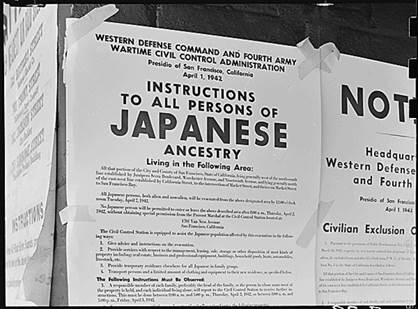
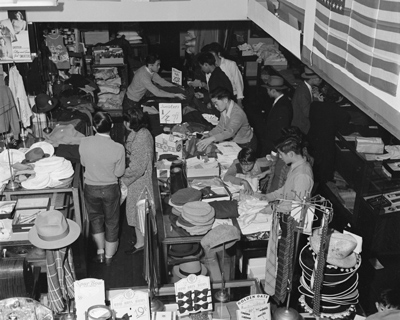
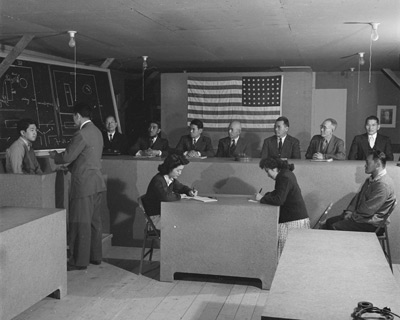

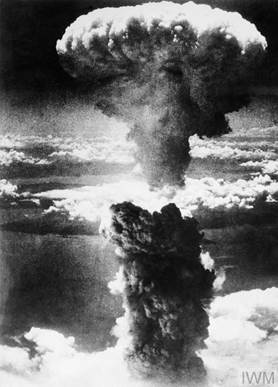
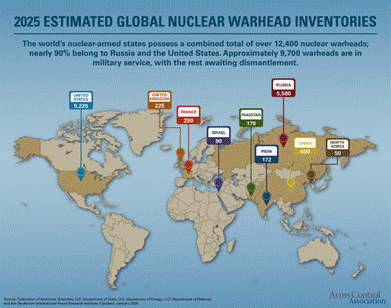
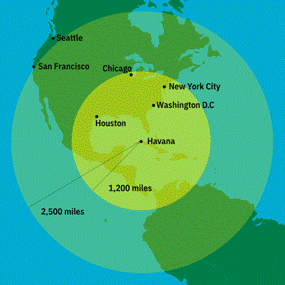

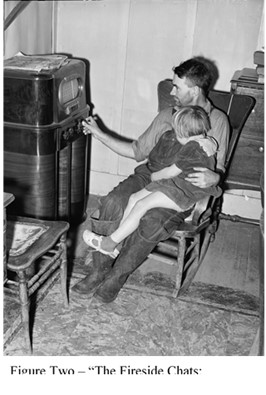
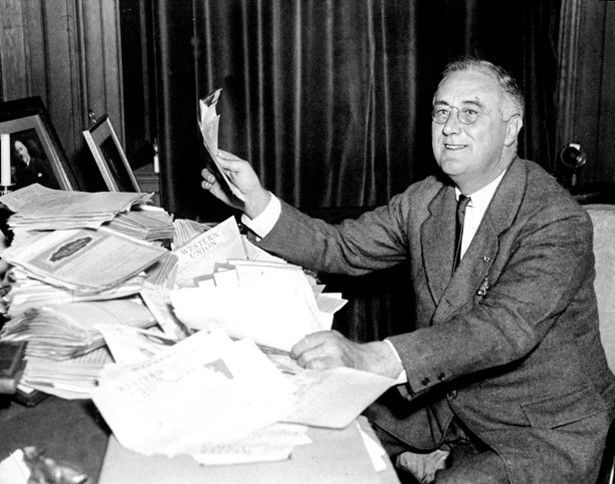


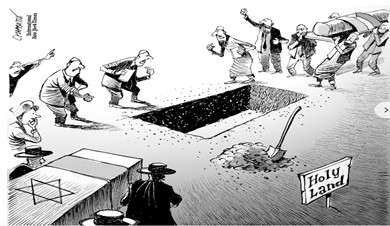


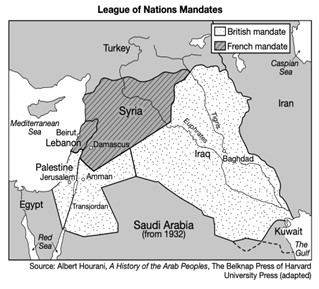










 njcssjournal