Men at Work: The Empire State Building and the Untold Story of the Craftsmen Who Built It
by Glenn Kurtz
Reviewed by Dr. Alan Singer, Hofstra University
In this book published by Seven Stories Press, Glenn Kurtz uncovers the identities of the Empire State Building construction workers, made famous by Lewis W. Hine’s legendary portraits. The book features more than 75 photos and other illustrations, some by Hine that have never been previously published. Astonishingly, no list of workmen on this historic landmark was ever compiled. While the names of the owners, architects, and contractors are well known, and Lewis Hine left us indelible images of the workers, their identities—the last generation of workmen still practicing these time-honored trades, have not been identified until author Glenn Kurtz unearthed their individual stories for this book. Drawing on eclectic sources — census, immigration, and union records; contemporary journalism; the personal recollections of their descendants — Kurtz assembles biographies of these workers, providing not only a portrait of the building’s labor force, and a revolutionary re-interpretation of Hine’s world-famous photographs, but also a fundamental reimagining of what made the Empire State Building a fitting symbol for the nation, built as it was at the very height of the Great Depression.
According to Erik Loomis, author of A History of America in Ten Strikes, “Capitalists build nothing. Workers build everything. Glenn Kurtz recovers the stories of the brave men who constructed the Empire State Building masterfully using Lewis Hine’s famous photographs of them. A wonderful book for anyone who cares about the stories of real workers.” Alastair J. Gordon, author of Naked Airport, praises Kurtz for “Working with a minimum of historical data, Kurtz has broken through the urban mythologies and written an insightful social history, not about the capitalist owners, investors, architects or contractors, but about the every day mortals — ironworkers, carpenters, crane operators and other unsung heroes — who actually built the Empire State Building during the height of the Great Depression… a revelatory contribution to the legacy of New York’s built environment.”
Revolutionary New York: 250 Years of Social Change
Edited by Bruce Dearstyne
Reviewed by Dr. Alan Singer, Hofstra University
Revolutionary New York celebrates the 250th anniversary of the American Revolution and the many historical changes that have occurred since, as reflected through the history of the state. This book explores “unfinished revolutions” in the Empire State: the two-and-a-half century struggle to realize the revolution’s ideals and bring increased freedom and opportunities to previously marginalized populations. Itis an Excelsior Edition published by SUNY Press. It includes sixteen essays that explore different aspects of New York State history starting with a chapter on “The Oneida Rebellions, 1763 to 1784.” Editor Bruce Dearstyne provided chapters on the birth of New York State in 1777 and September 11, 2001. There are also chapters on the Erie Canal, slavery in New York State, the Triangle Fire and workplace safety, the Harlem Hellfighters, the struggle by women to win the right to vote, prohibition, the origins of the United Federation of Teachers union, Stonewall, and the COVID-19 pandemic.
According to Jennifer Lemak, Chief Curator of History, New York State Museum, “From Indigenous uprisings and the building of the Erie Canal to suffrage and LGBTQ+ rights, New York State has long been at the forefront of America’s most significant social transformations. This book explores the people, places, and pivotal moments that shaped a more just and inclusive society—revealing how New Yorkers challenged injustice, redefined freedom, and left a lasting impact on our nation.”
Original and deeply researched, The Slow Death of Slavery in Dutch New York: A Cultural, Economic, and Demographic History, 1700–1827 (Cambridge University Press, 2025) provides a new interpretation of Dutch American slavery which challenges many of the traditional assumptions about slavery in New York. With an emphasis on demography and economics, Michael J. Douma shows that slavery in eighteenth-century New York was mostly rural, heavily Dutch, and generally profitable through the cultivation of wheat. Slavery in Dutch New York ultimately died a political death in the nineteenth century, while resistance from enslaved persons, and a gradual turn against slavery in society and in the courts, encouraged its destruction.
This important study is expected to reshape the historiography of slavery in the American North. It joins several recently published works in the same subject area:
Christopher Verga is a social studies teacher at the East River Academy for incarcerated youth on Rikers Island, an instructor of Long Island history and Foundations of American History at Suffolk Community College, and an instructor in Politics of Terrorism at John Jay College of Criminal Justice. Nazis of Long Island: Sedition, Espionage and the Plot Against (The History Press,2025) is his seventh book on Long Island History. It is about the American Nazi movement prior to and during World War II and is a timely book because there is a resurgence of Nazi like ideology in the world today. While Verga argues that Long Island, New York was a breeding ground for an “American Reich,” the story as he spells out is much broader encompassing the entire New York metropolitan region in the midst of the Great Depression. New York City and its metropolitan area in this period was also a target for German spies and a center of anti-Nazi resistance.
Long Island in the 1930s was a Republican Party and America First stronghold. Verga attempts to draw connections between them and Nazi sympathizers, but the connection may have been tenuous and certainly dissolved once the United States entered the war.
Like in all the local histories written by Christopher Verga, this book is richly documented and easy to read. The village of Breslau, later renamed Lindenhurst, was originally established as a New York City commuter suburb for German immigrants with beer halls and traditional German festivals. It also had a strong pro-German following before the war. Glen Head, Long Island resident Cornelius Lievense was the American financial manager for German industrialist Fritz Thyssen, who was the financial backer of the early Nazi Party activities in the United States. The Nassau County chapters of the America First Committee in the Five Towns, Freeport, Hicksville and Valley Stream hosted the pro-Nazi members of Congress on speaking tours. In the early spring of 1941, Freeport organized a 1,600-person rally for the committee in the Freeport High School auditorium. Guest speaker Republican Senator Gerald Nye of North Dakota called on the audience to do “all in your power to prevent the proposed assignment of American warships to convoy duty.” He declared that “this is nothing but madness.”
The best known pro-German and pro-Nazi facility on Long Island was Camp Siegfried, operated as a vacation point, for pro-German rallies, and for training Hitler Youth. Camp Siegrfried and the town of Yaphank were considered “a little piece of German soil—a Sudetenland in Amerika—planted on this side of the ocean.” The roads at the camp and in the town were named after high ranking Nazis including Adolf Hitler Street, Joseph Goebbels Street and Hermann Göring Street. During the summer, the Long Island Railroad provided special train service on weekends for visitors to Yaphank and Camp Siegfried. Camp Siegfried’s annual August rally attracted an estimated forty thousand people
Because Long Island was home to Army-Air Force bases and major war industries, it was targeted by Nazi spy rings. The Ludwig ring was the second spy operation discovered in New York. German spies imbedded themselves in Republic Aviation, Grumman, and Brewster factories and the smaller defense plants in the Nassau County Roosevelt Field area like the Sperry Gyroscope Company in Garden City. Shortwave radio and telegram transmission stations on the north shore of Eastern Long Island and in Nassau County sent industrial intelligence to Hamburg, Germany.
During wartime, German prisoners of war were incarcerated on Long Island at Camp Upton, Mason General Hospital in Deer Park, and Mitchel Field in Uniondale. If they died the German prisoners were buried in section 2C of Long Island National Cemetery. The local POW camps had open dorms and prisoners were assigned to work on farms. Camp Upton in Brookhaven with 1,500 POWs was the largest facility on Long Island. Heavyweight boxing champion Joe Lewis was the most famous guard at the Upton POW camp.
Twenty-five years before Frederick Douglass gave his famous “What to the Slave is the Fourth of July” speech in Rochester, the enslaved population of New York contemplated a similar question as they prepared to celebrate the abolition of slavery, on July 4, 1827.
As communities across the state decorated to honor the birthday of the new nation, it became increasingly clear to the state’s Black communities that perhaps parading and celebrating in public space to honor their own freedom, had the potential to not end well if they did so on the 4th, the official day of the legal end of slavery in the state. They feared being attacked and suffering other types of violence from the White community because they too would call upon the words their enslavers had shouted so long ago.
They had waited 28 years for legal slavery to end, the time clock started in 1799 with the passing of the Act of Gradual Abolition, which gave no end date for their emancipation, but bound their unborn children to their mother’s enslavers until they were in their mid to late 20s. The Act that opened the way for their children, but not for anyone else. Those who toiled inside and outside for the benefit of others, would be left behind, to continue raising other people’s children, while theirs, at some point in the future could walk unfettered by the unseen, but ever-present chains they wore.
Then came the 1810 law that required the people holding those born free to teach them to read and write. This law was largely ignored, in spite of the fact that not doing so would allow those born free to see emancipation earlier at 18. Something that the New York Manumission Society helped a number of them do, by taking their enslavers to court and proving that at 18, they could neither read nor write. Then it was seven more years to get to the 1817 Act relative to Servants and Slaves that actually set a date for abolition, even though it was ten years in the future. It also pave the way for those born before July 4, 1799, and called “slaves” to be released. Finally, there was more than just hope.
But things rarely play out as smoothly as we would like. Weeks before the day was to arrive the conversations started happening. I imagine them beginning as whispered conversations, shared on the fly, when they were out and about working. Then in a somewhat louder voice when they were alone. Their conversations grew until preachers began talking about it. Up and down the road as they moved about, between those enslaved and those already freed, they continued.
They found themselves debating if it was wise for them to celebrate in mass on the official day, because it was the new nation’s birthday, and racism was increasingly a cause for worry as more and more were manumitted, and the presence of free Blacks walking the streets, starting businesses, living their lives began to grind on people’s nerves. Not to mention it had been against the law from the early 1690s for enslaved people to make noise on Sundays. It even appeared in the nation’s first Black owned newspaper which was published in New York City.
These conversations about when to celebrate happened years after many of them had overheard their enslavers talking about obtaining their freedom from Britain in the years leading up to the Revolutionary War. Even as their enslavers tossed around words suggesting that they were being treated like slaves and would not have it, as if taxation without representation equaled being seen as property and not people. I imagine that many enslaved men who had replaced their enslavers on the battlefield thought about their own freedom for the eight years of the war. I’m sure they wondered if the promise of their own freedom given to them when they put on the uniforms, either red coats, or blue jackets, would truly play out.
During the war years as separation from Britain reigned supreme, the large population of enslaved had to manage not only their own lot in life, but the stress and anger of their enslavers who lost homes, crops, animals, stored food, family members, and even other enslaved as various parts of the state were burned out or stolen as troops from both sides, passed by or engaged in battle.
Years after in 1783, at end of the war when Loyalists and British troops were leaving New York, some enslaved may have begun grieving the loss of family or friends who did gain their freedom and may have been aboard one of the ships that took thousands of newly freed Black people from New York’s harbor to Nova Scotia and other ports on evacuation day. After all that time, the enslaved, longing to finally be free, found themselves debating whether it was safe for them to rejoice in their own freedom on the actual day it was given.
As we approach the 200th anniversary of the abolition of slavery in New York on July 4/5 of 2027, many of us find ourselves contemplating some of the same thoughts the waiting to be free people of Albany and New York in general, did. Thinking on some of the sentiments Douglass shared in his 4th of July oration. Asking ourselves, what does the 4th of July mean to us? As my colleagues and I delve deeper into the mountains of documents related to the long history of chattel slavery in New York, and the cumbersome process of dismantling a portion of the institution of slavery, we find ourselves constantly amazed that so many people are still unaware of the deep roots slavery has in our state’s history.
Every once in a while, I find myself thinking that surely it is not so. To figure it out I began talks on occasion with a short three to five question survey. Answers given simply by raising a hand. Unfortunately, when I did this recently before giving an overview of Slavery in New York at Riverbank State Park, the audience of fifty or so people proved that things remained the same. That no matter if the audience is Black or White, or a mixture of our state’s wonderful cultural rainbow, the awareness of New York as a place of enslavement remains too hidden.
I can ask about the 1619 Project and people are aware of it, even if they have not read it. But if I ask when the first enslaved arrived in New Netherland, there generally is silence. I have learned to also ask them if they know what the original colonial name of New York was. Then I generally get a few hands, but not many. So, we are all clear, for years we danced around the year, finally settling on 1626, but after years of wondering, we know now that on August 29, 1627, 22 African men and women arrived in New Amsterdam on a Dutch privateer and became the first of the Dutch West India company’s slaves. We know the name of the ship and the circumstance surrounding how they ended up on a Dutch privateer. Currently we are awaiting the publishing of a paper that will also give us the name of the Portuguese ship they were taken from. Those 22 were part of a larger cargo of over 200 people headed to Brazil. Those 22 men and women were the first, but they would not be the last.
From that day forward, for 200 years, West Central, West, and Malagasy Africans would become the dominant labor force in the colony of New Netherland that would ultimately become the state of New York. Although this truth has been shared for years, it is still too common for people to say that slavery was not part of our state’s history. Part of that is due to the use of the word servant(s) instead of slave(s). In document collections across the state, in maps referring to burial grounds, the servants take up a lot of space. And with our love of British history, we imagine programs like Upstairs, Downstairs, or more recently Downton Abbey, where the servants are White making a decent wage, not enslaved Africans or their descendants. So, we read or listen to Douglass’ speech and say, well…it didn’t happen here. New York was a place of freedom, or a landmass that needed to be crossed to take people to the freedom they’d find in Canada. But it did. And it happened in Canada too.
The enslavement of thousands is only one part of the institution of slavery that graced New York. During the 200 years of forced servitude and long after 1827 ended the law of holding people as property, wealth flowed into the state as it had for decades because of the multiple economic links to the transatlantic slave trade, the ties that bound New York to the rest of the world. The wheat economy that was birthed in the 1630s with the establishment of Rensselaerwijck would spread southward down the Hudson River Valley and out to Long Island, and thousands of tons of wheat would flow from the harbors of New York to the Caribbean and West Indies to feed those bound to sugar and salt plantations. Money from the coffers of New York’s elite families would purchase sugar plantations in Jamaica, Barbados, and on other islands, and that wealth would create beautiful homes well into the 19th century like Hyde Hall on Glimmerglass Lake. As the years rolled along, enslaved from those sugar plantations would flow in and out of New York to serve in one way or another their enslavers or their relatives. Or to be sold, bequeathed or rented out, depending upon the need.
The ties to Southern tobacco and later sugar plantations that began during the Dutch period would continue to grow throughout the 200-year history, as people were brought directly from Africa and sold in the South, leaving New York City with the legacy of being the second largest slave market in the 13 colonies. And later in the 19thcentury, Brooklyn would flourish as more of that sugar would arrive to be processed there. As southern cotton expanded, after slavery had ended here, New Yorkers would build factories up and down the Hudson River for processing it. Political dances would be done, to hide the collusions between a free state and southern slavery. Profits would not be forfeited.
Insurance companies based in New York would grow bigger to cover cargo on ships flowing in and out including slave ships. More slave traders would move to New York, the ancestral home of many, in the early 19th century, where ships were easier to get and sail from the state’s harbors to the coasts of West Africa and even though they could not bring Africans into the US any longer, they were fine taking them into Cuba. Fine, until Lincoln finally said no more and the last of New York’s slave traders was hanged in 1861.
The New York Stock Exchange would grow out of these economic links to slavery, and more money would be made. Continuing the process began by the Dutch of individual investors, buying stock in the shipments, just one of many commodities on the world market. The underbelly of slavery would continue to grow fat, well past the years of Douglass’ speech and eventually the history of New York slavery would try to be buried in the early 20th century as the colonial revival period saw many people rewriting their family’s early stories, removing the names of women who raised children, or men who plowed fields, or just burn the wills to hide the numbers of people passed on. But even as hard as they tried, the history of slavery would not be buried for long. Bones were unearthed as villages grew into towns, then into cities and land, once considered worthless was needed. In the expansion, the presence of unmarked graves sent people to maps, which showed African burial grounds or Colored or Negro ones. But that would not stop the desecration. The projects would just move on with remains being dug up and discarded or just covered over.
The legacy of 200 years of slavery has increasingly caught up with many, as more people delve into their family histories and find that their ancestors were not as pristine as once believed, and the money they bequeathed across the generations came tainted with blood, sweat and a lot of tears. Or they run into someone with the same last name but not the same color skin which has resulted in the messages on many DNA companies which inform people of that before they are shocked by the discovery of who they really are.
What to the slave is the 4th of July is a question that haunts us even today, as we are challenged by the rewriting of our nation’s history by those who live in a settler’s colonized world. The foundation of our nation did not bypass New York. And, it reminds us daily that our state was built on a slave society even as we try to pretend, we were a society with just a few slaves.
2027 is just around the corner, and July 4th will echo Douglass’ time, and fall on a Sunday. A day sacred in its own right. And like the ancestors, across the state, including the folks right here in Albany, many of us will bypass it as the day to honor the abolition of slavery in New York, because well…some history does seem to repeat itself. And like them, we will take to the streets on Monday, July the 5th, and we will listen as bells ring in the air and from our hands at 12:00 noon, for one minute, to remind those who know, and educate those who do not, that slavery was part of New York’s history, and it will never be forgotten again.
New York Archives Junior (https://considerthesourceny.org/new-york-archives-jr/fall-2023): Designed for grades 4-8, NY Archives JR! The Fall 2023 theme issue is on the Haudenosaunee (Iroquois) people. Some Haudenosaunee people sided with the British. In 1777, colonists attacked Haudenosaunee homes.
Treason of the Blackest Dye (https://www.youtube.com/watch?v=b4SGafhwyfo) This video was created as a companion to the Fall 2024 NY Archives JR! and tells the story of the capture of John Andre and the area known as the Neutral Zone during the Revolution.
Created for teachers of the 4th and 7th grades, this educational guide provides five lessons that introduce students to Fort Orange and the world of New Netherland.
Washington’s Headquarters State Historic Site (https://parks.ny.gov/historic-sites/17/details.aspx): In the critical months that General George Washington spent at Newburgh, he made some of his most important contributions to shaping the American republic. It was here that Washington rejected the idea of an American monarchy.
Theme 4: We the People
Federal Hall (https://parks.ny.gov/historic-sites/17/details.aspx): On Wall Street in Lower Manhattan, George Washington took the oath of office as our first President. The building serves as a museum and memorial to our first President and the beginnings of the United States of America.
First Steps to Freedom (https://nysm.nysed.gov/sites/default/files/ep_teachers-guide_final_links_a_1.pdf): The educational materials in this guide were developed around President Abraham Lincoln’s Preliminary Emancipation Proclamation of 1862, a draft of which is in the collections of the New York State Library in Albany, New York.
The Fifteenth Amendment Educator Guide (https://nysm.nysed.gov/fifteenth-amendment): On February 3, 1870, the United States ratified the 15th Amendment, which allowed all African American men the right to vote. The educational materials in these activities were developed to explore the ratification of the 15th Amendment.
Fraunces Tavern Museum (https://www.frauncestavernmuseum.org/history): Built by the De Lancey family in 1719, 54 Pearl Street has been a private residence, hotel, and one of the most important taverns of the Revolutionary War. The Fraunces Tavern Museum website featuring educational resources focused on the taverns impact during the American Revolution and its’ evolving legacy today.
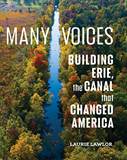
Award-winning author Laurie Lawlor’s full-color narrative nonfiction explores how this monumental, 363-mile canal was built across a daunting upstate New York landscape at a time when America had no trained engineers, no idea how to make water-proof concrete, no modern mechanical tools, and no reliable source of workers.
Many Voices takes a deep dive into how canal construction altered the environment and uprooted the Haudenosaunee from their long-standing homeland in New York.
Linking the Great Lakes and the Atlantic Ocean, the Erie Canal boosted the global economic status of New York City, expanded Westward settlement deep inside America’s farming heartland, and spiked growth in cities as varied as Chicago, Milwaukee, Toledo, Rochester, Duluth, and Toronto.
Just as today’s Internet has created a “superhighway” of purchasing possibilities and an array of political, social, cultural, and religious ideas from around the globe, the Erie Canal propelled nationwide trade and a network of new ideas — everything from abolition of slavery to promoting women’s right to vote .
Many Voices: Building Erie, the Canal that Changed America includes more than ninety photos, maps, and artwork, detailed timeline, suggestions for visiting today’s canal, complete bibliography, endnotes, and index. The book has been listed as aJunior Library Guild Gold Standard Selection.
New York and New Jersey are home to many historical landmarks and sites, some better known than others. Below are several such sites which may not be as familiar to teachers and students.
In 1740, 23-year-old Samuel Townsend purchased the property now known as Raynham Hall, moving from his father’s place in nearby Jericho. His move to Oyster Bay allowed him easier access to the waterfront and benefited his growing shipping business, co-owned with his brother, Jacob, who moved in next door on Main Street. Samuel’s property consisted originally of a four-room frame house on a sizable plot of land, with an apple orchard across the street, hundreds of acres of nearby pasture and woodlands for his livestock, and a meadow leading down to the harbor, where he and Jacob kept their ships.
In short order, Samuel had enlarged the house to eight rooms by building a lean-to addition on the north side, creating a saltbox-style house. This property, then known simply as “The Homestead,” would have been a hub of activity during the years leading up to the Revolutionary War, and was home to Samuel, his wife Sarah Stoddard Townsend, their eight children, and 20 enslaved people.
By 1769, Samuel and his brother Jacob owned five ships, which sailed to Europe, Central America, and the West Indies. They traded in an impressive range of goods, including most importantly logwood (which was and continues today to be a crucial ingredient in the dyeing of textiles), tea, lumber, molasses, sugar, china, wine, textiles, dye and rum. In addition to the shipping business, Samuel operated a general store, providing local access to a wide variety of imported wares. He was an active member of local and state government, as Oyster Bay’s Justice of the Peace and Town Clerk, a member of the New York Provincial Congress from 1774 to 1777, and, after the Revolution, a New York State Senator from 1786 to 1790.
Although most of Oyster Bay sided with the British during the American Revolution, Samuel’s sympathies were with the Patriots, despite the far greater risks those sympathies posed to his position, family and fortune. Following the Patriots’ decisive defeat in 1776 at the Battle of Long Island, British forces occupied all of New York City and Long Island, often brutally. Many people in the area who ran afoul of British authorities were confined to prison ships on which more than 12,000 people would die of illness or starvation by the end of the war in 1783, at a time when Manhattan’s entire population was around 20,000. The Townsend family, unlike many Patriots who fled, decided to stay in their home throughout the occupation.
Typical of wealthy New York families, the Townsends of Raynham Hall held many enslaved people who labored to maintain the house and grounds, the livestock and the fields, as well as possibly working on the Townsends’ ships. Samuel Townsend’s business interests also were intertwined with the economics of slavery, including, as they did, trade in such products as logwood, sugar, rum and tobacco.
The earliest slave record concerning the Townsends is a receipt of the purchase of a man bought by Samuel in 1749 for 37 pounds. No name is listed on the receipt. A Bible in Raynham Hall Museum’s collection contains entries from 1769 to 1795 recording the names, births and deaths of seventeen people held enslaved by the Townsends, as well as a partial genealogy. The record lists first names only, including Hannah, Violet, Susannah, Jeffrey, Susan, Catherine, Lilly, Harry, Gabriel and Jane. When the oldest Townsend son, Solomon, married his cousin Anne in 1782, they were given two people, Gabriel and Jane, as wedding presents. Gabriel and Jane’s children, Nancy, Kate, Jim and Josh, also became enslaved to Solomon, as did several others not listed in the Bible, named Charles, Shadwick, Pricilla, and her unnamed son. Additionally, letters show Samuel also owned a young woman named Elizabeth, who escaped Oyster Bay with the British Queen’s Rangers when they decamped in 1779. Samuel’s daughter Audrey and her husband Capt. James Farley owned a woman named Rachel Parker, and Audrey’s sister Phebe’s husband Ebenezer Seeley held a man named Amos Burling as his property. Interestingly, Robert Townsend was a member of the New York Manumission Society, founded in 1785, which worked towards the abolition of slavery.
Other enslaved people from the Oyster Bay area are recorded as having come to the Townsends’ store to purchase goods for their masters or for themselves, and a ledger now in the collection of the New-York Historical Society, but kept back in the day by sons William and David, records many purchases made during the 1760s and 1770s. In 2015, Raynham Hall Museum’s historian Claire Bellerjeau discovered a document at the New-York Historical Society that was revealed to be the sixth known poem by Jupiter Hammon, the first published African-American author in America, also an enslaved person owned by the Lloyds of Lloyd Harbor.
In September of 1776, British soldiers came to Samuel Townsend’s home in Oyster Bay to arrest him for his outspoken Patriotic beliefs, and to imprison him on one of the notorious prison ships in New York Harbor, where horrendous conditions would result in the deaths of over 12,000 captives by the end of the war. According to the recollection of family members, a British officer in the home smashed a hunting rifle that was mounted above the mantle, declaring that a rebel had no right to possess such a weapon, and then motioned to a portrait of the Townsends’ oldest son, Solomon, demanding to see him as well. When told that Solomon was at sea, he expressed regret that they could not arrest him as well. Outside the house, wife Sarah and daughters Sally and Phebe were frantic, afraid they might never see Samuel again.
Samuel was led away through the village and towards Jericho, traveling up the long hill in Pine Hollow. Coming down the hill in the opposite direction were Thomas Buchanan and his wife Almy, Samuel’s brother Jacob’s daughter, riding in a Phaeton carriage, with Samuel’s daughter Audrey alongside on horseback. Though he was considered a Tory, Buchanan was very close to the Townsends. He was also in the shipping business with the Townsends and had hired Samuel’s oldest son Solomon to captain his merchant ship, the Glasgow.
According to family history, when Buchanan saw Samuel being led away, he took Audrey’s horse and followed the soldiers to Jericho, where he paid a huge sum of money — several thousand pounds — to secure Samuel’s freedom. To the great relief of family and friends in Oyster Bay, Samuel returned home, unharmed, though he was then compelled to sign an oath of allegiance to the king, foreclosing any overt action against the crown. Following the end of the war in 1783, when all British were required to evacuate, Thomas Buchanan’s great loyalty and friendship were remembered, and he was allowed to stay and continue his successful merchant business in New York, unlike many Loyalists who were forced to emigrate, forfeiting their property.
For a six-month period from 1778 to 1779, the Townsend home served as headquarters for a regiment of over 300 British troops called the Queen’s Rangers, and their commander, Lt. Col. John Graves Simcoe, who quartered himself in the house, alongside the family. Daily officers’ meetings were held in the front parlor, and the presence of British officers in the house became an everyday fact of life. In March of 1779, Simcoe was visited for several weeks by a close friend, British officer and intelligence chief Maj. John André, who would later be hanged as a spy for his role in helping Benedict Arnold turn traitor in 1780. André, by all accounts a remarkable charismatic person, and an accomplished amateur artist, was 29 years old at the time of his death. After the war, Lt. Col. Simcoe founded the city of Toronto, where he served as Governor of Upper Canada.
At the time he accepted to join George Washington’s intelligence network in 1779, Robert Townsend operated a Manhattan-based merchant shipping firm with his brother William and cousin John. Using his work as a merchant as a cover, Robert could move about the coffee houses, social events, shops and docks of Manhattan, eavesdropping and observing British troop movements, without arousing suspicion.
Under the code name “Culper Junior,” Robert formed the first link in a chain of agents who came to be known as the Culper Spy Ring. Using a special invisible ink formula, invented by John Jay’s brother Sir James Jay, as well as an elaborate numeric code, the spies supplied Washington with critical information about New York City and Long Island.
Robert Townsend served his country well, and at great risk to himself and his family. Though he moved back to Raynham Hall following his father’s death in 1790 and lived for years with his sisters Sarah and Phebe, he kept his involvement in the Culper Spy Ring a total secret from his family and friends for the remainder of his life. Indeed, Robert’s involvement in the Culper Spy Ring was not uncovered until the 1930s, when historian Morton Pennypacker hired a well-known handwriting analyst to prove the true identity of Culper Junior.
Liberty Hall at Kean College
1003 Morris Avenue Union, NJ 07083
In 1760, when lawyer William Livingston, a member of the prominent Livingston family, was planning to build a country home, he bought 120 acres in what was then sleepy bucolic Elizabethtown, New Jersey, just across the river from his New York home. For the next twelve years, Livingston developed the extensive grounds, gardens and orchards. and oversaw the building of a beautiful fourteen-room Georgian-style home. In 1774, Livingston and his wife, the former Susannah French of New Brunswick, moved to Liberty Hall on a full-time basis with their children and the several people he and his family enslaved. The peace and quiet Livingston sought was short-lived. From 1774 to 1776, Livingston put his retirement on hold and served as a member of the First and Second Continental Congress and as Brigadier General of the New Jersey militia. On August 31, 1776, Livingston became New Jersey’s first elected governor. The ensuing war years were difficult ones for the governor, who spent them on the run from British troops. Finally, after the war in 1783, he was able to return to his home, which was heavily damaged by both British and American troops. Livingston also signed the United States Constitution, in addition to chairing two major committees at the Constitutional Convention. While juggling the demands of governing, Livingston also managed to pursue his great love of gardening and agriculture, utilizing the labor of free and enslaved individuals. Governor Livingston served as governor for fourteen years until his death on July 25, 1790. He is credited with making the New Jersey governorship one of the strongest.
At Liberty Hall, our goal is to deepen our visitors’ understanding of history and nature through the lens of the people who lived and worked in our over 250-year history. We strive to engage with our broader community by providing entertaining and educational programming that will inspire curiosity about the world around them and how that world has changed over time.
Liberty Hall stands at the center of the American Revolution and academic excellence. Home to trailblazing governors, congressmen, senators, assembly persons, philanthropists, and entrepreneurs, its plush gardens have spurred civic change and social innovation for centuries. Inhabited by William Livingston, New Jersey’s first elected governor and a signer of the United States Constitution, the 14-room Georgian-style home evolved over time into a 50-room Victorian mansion.
Liberty Hall began welcoming the public to experience its history and participate in its future in the year 2000. The museum has hosted educational programs, community events, civic ceremonies, and holiday celebrations.
The site is not just home to the stories of public servants and bold industrialists, its magnificent grounds also include an elegant English parterre garden and maze. Visit to view the scenery or explore the collections of antique furniture and decorative artifacts collected by the seven generations, including both the Livingston and Kean families, who called Liberty Hall home.
Newly arrived British immigrants George and Louisa Macculloch built Macculloch Hall in 1810. They expanded their Federal-style mansion in 1812 and 1819, tripling its size, as their family’s prominence in local, state, and national affairs grew. Come explore the largest collection of original work of political cartoonist Thomas Nast (1840-1902), art, and American history where it happened.
In 1810 George and Louisa Macculloch purchased a 26-acre parcel of land on which they built Macculloch Hall. The Maccullochs cultivated the land primarily to feed their family, planting a traditional kitchen garden as well as apple and pear orchards. George Macculloch (1775-1858) loved the gardens and kept meticulous journals. From them we know what was planted when and where, how crops did and what the family ate. Some of Louisa Macculloch’s (1785-1863) recipes are among the family’s papers in the Museum’s Archives. Modern adaptations of many of them are under “Interactive Activities.”
In the span of five generations, the Macculloch/Miller/Post family members went from owning enslaved men, women, and children to donating land for one of Morristown’s first Black churches, to speaking out on the national stage against the expansion of slavery, to commanding Civil War African American soldiers, and to raising money to support an African American industrial school in Georgia—all while the family lived at Macculloch Hall. George and Louisa Macculloch arrived in Morristown in 1810 with their daughter Mary Louisa and son Francis. They also brought with them three enslaved adults: Cato, Susan, and Betty, as well as a toddler, Emma. Since no legal requirements existed to record slave sales, it is not known when or where George purchased them. The Morris County manumission records have not survived, so there is no record of their being freed.
We know from the family Bible the names of the children born into slavery at Macculloch Hall: William (1811), Henry (1814), and Helen (1817). Their Bible does not name the parents. However, there is some additional information in birth certificates filed with the county clerk. This registration was required by the 1804 Gradual Emancipation Act. On January 8, 1812, George Macculloch registered the births of Emma “on or about September 1809, mother Susan”, and William “April 18, 1811, mother Susan”. No record is noted about the father. It also seems that Henry and Helen’s birth were not registered.
Very little is known about the enslaved men, women, and children at Macculloch Hall. With one exception, they are not mentioned in the surviving archive of family letters and documents. Although not mentioned, we know that their forced servitude, together with the paid labor of men and women in the area, enabled the Maccullochs to run their house and farm. Mary Louisa Macculloch Miller (1804-1888), George and Louisa’s daughter, spent her entire life at Macculloch Hall. She and her husband Senator Jacob Miller raised their nine children there. The fact that her family had owned enslaved men, women, and children and that Mary Louisa grew up in a house with enslaved servants, did not preclude her from supporting the African Methodist Episcopal Church, one of the first independent Black churches in Morristown.
Jacob W. Miller (1800-1862), a lawyer from Long Valley, N.J., married Mary Louisa Macculloch in 1825. In 1838 he was sent to the New Jersey Legislature and was elected to the U.S Senate in 1840 where he served two terms as a member of the Whig party. After his defeat in 1852, he joined the newly formed Republican party. Although never a full-fledged abolitionist, he remained a staunch supporter of the Union and was opposed to the extension of slavery into the territories. Views he shared in common with Abraham Lincoln in the 1850s. His feelings on the burning issues of the day were expressed in speeches he delivered on the annexation of Texas, the Mexican War, the Wilmot Proviso, and the Compromise of 1850.
On May 23, 1844, Miller delivered a speech in the Senate opposing the annexation of Texas because it would give an advantage to the slave states. He also saw a danger in the Mexican War arguing that President Polk’s…” conquered peace in Mexico will become the fierce spirit of discord at home.” Following the end of the war in 1846, he supported the Wilmont Proviso that would have prohibited slavery in the territory acquired from Mexico. This proposal never passed into law.
In 1850, Henry Clay attempted to seek a compromise and avert a crisis between North and South on the issue of slavery. Senator Miller opposed the combination of Clay’s recommendations into a single Omnibus bill, but he did support several of these measures when split into separate bills. His speeches on these matters reveals the complex nature of his views on slavery and emancipation reflecting the fact that many anti-slavery advocates opposed the western expansion of slavery, but had little interest in the fate of enslaved people in the South. Miller voted to admit California as a free state, abolish slavery in the District of Columbia, and prohibit slavery in Utah and New Mexico. The results were mixed. California was admitted, Utah and New Mexico could be organized with no restrictions on slavery, and in the District of Columbia slavery was permitted, but the slave trade was outlawed.
In the vote on the Fugitive Slave Act, Miller abstained. However, in the debates he revealed what many of his fellow New Jerseyans thought about the plight of the runaways by stating:
Macculloch Hall Historical Museum’s Historic Archives contain materials from five generations of the descendants of George (1775-1858) and Louisa (1785-1863) Macculloch, United States Senator Jacob Welch Miller (1800-1862), political cartoonist and illustrator Thomas Nast (1840-1902), and museum founder W. Parsons Todd (1877-1976). Garden highlights include the wisteria trellised along the rear porch, given to the Maccullochs by Commodore Matthew Perry in 1857; the sundial on the upper lawn installed in 1876; the sassafras tree at the far end of the lawn, believed to be the second oldest and largest sassafras tree in New Jersey; and many varieties of heirloom roses, meaning their cultivars date to before 1920. Mrs. Macculloch paid Francis Cook $1.00 to plant the first roses in 1810.
Using Stories in History and Social Studies Courses
Bruce W. Dearstyne
Teachers often find that stories are a good way to engage students in their U.S. history and social studies courses. Stories illustrate historical themes, bring historical events and characters to life, and leave a lasting impression. People can sometimes remember a particular story from history years later even if they cannot recall all of the context. There are many stories from New York history that may be of interest to teachers in Grades 4 (local and state history), 7-8 (New York and U.S. history). Lots of them are also useful in Grade 11 (U.S. history) because, while the history-makers were New Yorkers, the stories also illustrate national themes and developments as well.
The historical episodes cited below are all good examples of engaging stories. Each one centers around an event or events, illustrates what led up to the event, and also shows the consequences of it. They all fit into and illustrate broader themes in state and local history. Perhaps best of all, they all have exciting people at their core. In several cases, in fact, the story is best told by the people themselves, through first-hand accounts that students can access and use.
The stories included here – and others — are all covered in my three new books, cited at the end of this article. The first privacy law is included in The Crucible of Public Policy, the others in The Spirit of New York and there is also a Glenn Curtiss document in Progressive New York. But the stories are also covered in many other sources. I have tried to cite some of the most helpful for each story.
New York State’s “Birthday,” April 20, 1777: The upcoming 250th anniversary of the American Revolution is a great time to examine New York’s experiences and its role in the war. At the beginning of 1777, “New York State” did not actually exist yet. A convention elected to draft a constitution worked in Kingston to complete the document on April 20, 1777, in effect New York’s “birthday.” That document laid out state government and powers. The first governor and legislature were elected in the summer and got to work in the fall. Before the end of 1777, New York would survive British onslaughts, including the burning of its temporary capital, Kingston, and invasions from the north, west, and east. 1777 might be called New York’s “miracle year,” an exciting time when the state got started.
“Anti-Rent Wars,” 1839-ca. 1880: New York tenant farmers in the Hudson valley waged one of the largest tenant rebellions in history in these years. They were fighting for the right to purchase and own the farms; where as tenants they had to pay exorbitant rents. They kicked it off with a declaration against the tyranny of landlords on July 4, 1839. The intrepid farmers’ struggle was waged in the courts, the state legislature, a state constitutional convention, and sometimes through armed resistance to sheriffs who tried to evict them for non-payment of rents. By 1880, most owned their farms, but their struggle had been a heroic and exciting one. Henry Christman, Tin Horns and Calico (1945); Charles McCurdy, The Anti-Rent Era in New York Law and Politics (2001).
Elizabeth Cady Stanton led the campaign for women’s rights. This is really two stories in one – the famous 1848 Seneca Falls women’s rights convention, which demanded the right to vote for women, with Stanton as the chief organizer; and Stanton’s long career as an advocate for woman suffrage and women’s rights generally at the state and federal level (she kept working until the time of her death,1902).
Elisabeth Griffith, In Her Own Right: The Life of Elizabeth Cady Stanton (1984); Lori D. Ginsberg, Elizabeth Cady Stanton: An American Life (2009); Elizabeth Cady Stanton, Eighty Years and More: Reminiscences, 1815-1897 1898; reprint, 1993). Women’s Rights National Historical Park. https://www.nps.gov/wori/index.htm
Syracuse citizens rescued a fugitive slave, 1851. On October 3, 1851, a mob of over 2,000 citizens broke down the doors of a Syracuse police station to liberate William “Jerry” Henry, a fugitive slave, who had been arrested by a Deputy U.S. Marshal under the federal Fugitive Slave Law. That law provided for arrest and return of slaves fleeing the oppression of slavery in the south. New York was an important part of the “underground railroad” which helped escaping slaves find new homes in the North (where slavery was illegal) or Canada (which had also abolished it.). The “Jerry Rescue” was one of the most dramatic events in New York’s growing opposition to slavery. Fergus M. Bordewich, Bound for Canaan: The Epic Story of the Underground Railroad, America’s First Civil Rights Movement (2006); Monique Patenaude Roach, “The Rescue of William ‘Jerry’ Henry: Antislavery and Racism in the Burned-Over District, New York History (2001); Gerald Sorin, The New York Abolitionists: A Case Study of Political Radicalism (1970). “Jerry Rescue” historic marker: https://www.hmdb.org/m.asp?m=138797
New York’s – and the nation’s– first personal privacy law, 1903. In the late 19th and early 20th centuries, advertisers widely used the photos of women in ads for their products, without the women’s consent. There was no law against it. That changed when a seventeen-year old Rochester girl, whose photo was being used in ads for flour, went to court to stop it. The Court of Appeals ruled against her in 1902, but, under pressure from the public, the legislature took up the cause and passed a personal privacy law in 1903, the first in the nation. The main provisions of that law are still on the statute books. New York State Archives Partnership Trust, “Who Owns a Photo of Your Face? The Right of Privacy and the Courts,” (Podcast, October 18, 2022. https://www.nysarchivestrust.org/events/recorded-events); Sarah E. Igo, The Known Citizen: A History of Privacy in Modern America (2018); Jessica Lake, The Face That Launched a Thousand Lawsuits: The American Women Who Forged the Right to Privacy (2016).
Hammondsport aviation pioneer Glenn Curtiss made aviation history. Most students probably have heard of the Wright Brothers and their famous flight at Kitty Hawk, NC in 1903. But the story of their contemporary and rival, Glenn Curtiss, is almost equally important and unknown to post[HB1] people. Curtiss developed essential airplane designs and controls, including ailerons – adjustable wing flaps on the trailing edges of wings, essential for take offs and landings — still in use today. He made the first pre-announced, publicly witnessed, professionally certified airplane flight (July 4, 1908), and the first flight from Albany to New York City, May 29, 1910). He made the first amphibious flight and convinced the Navy to buy airplanes and train pilots, earning him the title “The Father of Naval Aviation.” This is a story of invention, daring, and doing what has never been done before. Lawrence Goldstone, Birdmen: The Wright Brothers, Glenn Curtiss, and the Battle to Control the Skies (2915); Seth Shulman, Unlocking the Sky: Glenn Hammond Curtiss and the Race to Invent the Airplane (2002); Glenn H. Curtiss Museum, Hammondsport. https://glennhcurtissmuseum.org
Jackie Robinson broke the color barrier in major league baseball, April 15, 1947. Major league baseball was a whites-only sport until the day in 1947 when Jackie Robinson debuted as the first Black player for a major league team, the Brooklyn Dodgers. Robinson proved to be a stellar player, and his pioneering role paved the way for other Blacks who followed. He also helped undermine racial prejudice and discrimination and was an early example of what would be called the Civil Rights movement. Jackie Robinson and Alfred Duckett, I Never Had it Made: The Autobiography of Jackie Robinson (2003); Carl T. Rowan with Jackie Robinson, Wait Till Next Year: The Life Story of Jackie Robinson (1960); Jules Tygiel, Baseball’s Great Experiment: Jackie Robinson and His Legacy (1983)
Hamilton: An American Musical debuted in New York City. Feb. 17, 2015. The hit musical Hamilton presented the life and achievements of New Yorker Alexander Hamilton, Revolutionary war patriot leader and the first U.S. Secretary of the Treasury, in the form of a lively musical. The play features a multi-ethnic cast, superb acting, smart dialog, humor, and rap and hip-hop musical scores. It recasts Revolutionary era history in the language of today; it is about “America then, as told by America now,” as its writer and lead actor, Lin-Manuel Miranda put it. This is an exciting way to explore history. Students can study the history behind the musical, watch the musical itself, and compare and contrast the two. Sources: Ron Chernow, Alexander Hamilton (2004); Edward Delman, “How Lin-Manuel Miranda Shapes History,” Atlantic September 29, 2015; Lin-Manuel Miranda and Jeremy McCarter, Hamilton the Revolution. Being the Complete Libretto of the Broadway Musical and a True Account of its Creation (2016)
The Hall of Fame for Great Americans in Bronx, New York opened in 1901. It is now located on the Bronx Community College campus. It currently has 96 busts; busts of Southern Generals Robert E. Lee and Stonewall Jackson were removed. Busts for an additional four people elected to the hall were never installed because organizers ran out of money. You can view a virtual tour of the Hall of Fame for Great Americans. https://www.bcc.cuny.edu/wp-content/uploads/2022/04/virtual-hall-of-fame-website.pdf
National Baseball Hall of Fame and Museum in Cooperstown, New York opened in 1939 with its first five inductees, Ty Cobb, Babe Ruth, Honus Wagner, Christy Mathewson, and Walter Johnson. As of July 2024, the hall honored 244 former major league players, 39 Negro league players and executives, 24 managers, 10 umpires, and 36 “pioneers, executives and organizers.” The Hall of Fame includes one female member, Effa Manley, a Negro League executive. The museum displays baseball memorabilia. https://baseballhall.org/
National Women’s Hall of Fame in Seneca Falls, New York opened in 1973. The inaugural Induction Class included Jane Addams, Marian Anderson, Susan B. Anthony, Clara Barton, Mary McLeod Bethune, Elizabeth Blackwell, Pearl Buck, Rachel Carson, Mary Cassatt, Emily Dickinson, Amelia Earhart, Alice Hamilton, Helen Hayes, Helen Keller, Eleanor Roosevelt, Florence Sabin, Margaret Chase Smith, Elizabeth Cady Stanton, Helen Brooke Taussig, and Harriet Tubman. In 2020, it opened to the public in its new home at the former Seneca Knitting Mill. https://www.womenofthehall.org/
A Little Less Famous
North American Fiddlers Hall of Fame is in rural Redfield, New York in the Adirondack region. It is located in a converted farmhouse. It houses artifacts, pictures, AV tapes, records, and memorabilia of old time fiddling & fiddlers and has free concerts. Famous inductees include “Chubby” Wise who recorded nearly 50 albums. https://www.facebook.com/p/North-American-Fiddlers-Hall-of-Fame-and-Museum-100063476745882/
National Abolition Hall of Fame in Peterboro, New York is located near the Finger Lakes region in the building where the first meeting of the New York State Anti-Slavery Society was held in 1835. Currently 28 anti-slavery activists are honored. https://www.nationalabolitionhalloffameandmuseum.org/
National Soaring Hall of Fame and Museum established in 1969 is an aviation museum that preserves the history of motorless flight. It is located on top of Harris Hill near Elmira, New York. https://www.soaringmuseum.org/
National Toy Hall of Fame in Rochester, New York is part of the Strong Museum of Play. It celebrates toys that have inspired creative play and enjoyed popularity. The Magic 8 Ball was inducted in 2018. Millions of the hand-held fortune telling toy have been sold since it was first marketed in 1945.
Bare Knuckle Boxing Hall of Fame is located in Belfast, New York in Allegany County. The museum and Hall of Fame are in the training barns of the great champion John L. Sullivan. Famous Inductees include George Godfrey, “The Leiperville Shadow,” one of the best African American bare knuckle fighters of his era. https://wnywilds.com/listing/bare-knuckle-boxing-hall-of-fame/
D.I.R.T. Stock Car Hall of Fame and Classic Car Museum is located next to the Weedsport Speedway in the Adirondack Park. It honors the achievements of modified stock car drivers. Famous inductees include “Barefoot” Bob McCreadie who broke his back five times while racing. https://www.discoverupstateny.com/packages/3566/dirt-hall-of-fame-classic-car-museum/
International Boxing Hall of Fame in Canastota, New York honors boxers, trainers, and other contributors to the sport. Famous inductees include Muhammed Ali, Carmen Basilo, Ezzard Charles, Joe Frazier, Emile Griffith, Jake LaMotta, Joe Louis, Rocky Marciano, Sugar Ray Robinson, Marvin Hagler, Sugar Ray Leonard, George Foreman, Roberto Duran, and Joe “Newsboy” Brown, who was born in Russia, and boxed at the opening of the Olympic Auditorium in Los Angeles in 1925. http://www.ibhof.com/
International Maple Hall of Fame in Croghan, New York honors people who “excelled in research, development, and leadership in the North American Maple Industry.” Its most famous inductee is Lloyd Sipple of Bainbridge, N.Y. who began making maple syrup during World War II to address a nationwide shortage of sugar. https://maplemuseumcentre.org/post.php?pid=14
National Purple Heart Hall of Honor in New Windsor) New York honors award recipients to “remind us of human sacrifices and the cost of freedom.” Ensign Jesse Brown’s citation (Korea-U.S.N.) reads: “Ensign Jesse L. Brown was the first African American naval aviator. While flying a mission 4 December 1950 his aircraft was hit, causing him to crash land in enemy territory.” https://www.thepurpleheart.com/
Catskill Fly Fishing Hall of Fame in Livingston Manor, New York, preserves the “heritage of fly fishing in the Catskills” and educates the “next generation of anglers.” https://cffcm.com/
New York State Country Music Hall of Fame in Cortland, New York pays tribute to the legacy of New York State and national country music performers. Hall of Fame members include Glen Campbell, Tammy Wynette, and many Grand Ole opry stars. https://www.iloveny.com/listing/new-york-state-country-music-hall-of-fame/2897/
New York State Convenience Store Hall of Fame in Albany, New York was established in 1996 to honor retailers and suppliers for exceptional achievement in and service to New York State’s convenience store industry.” https://nyacs.org/hall-of-fame?layout=adgcreative:grid#
National Stand-Up Comedy Hall of Fame is located in Jamestown, New Yor’s National Comedy Center. Its first inductee’s included George Carlin, Joan Rivers, Richard Pryor, and Robin Williams. https://comedycenter.org/
National Museum of Racing and Hall of Fame in Saratoga Springs, New York was founded in 1950 and is currently located by the Saratoga Race Course. Among the horses inducted here are Man O’ War (1957), Exterminator (1957), Citation (1959), Spectacular Bid (1982), American Pharoah (2021), Secretariat (1974), and Seabiscuit (1958). https://www.racingmuseum.org/
International Professional Wrestling Hall of Fame in Albany, New York was established in 2019. It is located on the mezzanine level of the MVP Arena. Inductees include Bobo Brazil, “Stone Cold” Steve Austin, Bret Hart, and “Gorgeous George” Wagner. International Maple Hall of Fame in Croghan, New York honors people who “excelled in research, development, and leadership in the North American Maple Industry.” Its most famous inductee is Lloyd Sipple of Bainbridge, N.Y. who began making maple syrup during World War II to address a nationwide shortage of sugar.https://maplemuseumcentre.org/post.php?pid=14
Online Halls of Fame
Long Distance Runners Hall of Fame in Utica, New York was formed in 1971. The building is currently closed. Famous inductees include Frank Shorter who won the marathon gold medal at the 1972 Olympics in Munich. This hall of fame can be viewed at https://www.rrca.org/about/hall-of-fame/
New York State Golf Hall of Fame: Famous inductee include Joey Sindelar, a major contender in the U.S. Open and Masters tournaments in early to mid-1990s. Find information and inductees at https://nysga.org/about-hall-of-fame



 njcssjournal