New York Archives Junior (https://considerthesourceny.org/new-york-archives-jr/fall-2023): Designed for grades 4-8, NY Archives JR! The Fall 2023 theme issue is on the Haudenosaunee (Iroquois) people. Some Haudenosaunee people sided with the British. In 1777, colonists attacked Haudenosaunee homes.
Treason of the Blackest Dye (https://www.youtube.com/watch?v=b4SGafhwyfo) This video was created as a companion to the Fall 2024 NY Archives JR! and tells the story of the capture of John Andre and the area known as the Neutral Zone during the Revolution.
Created for teachers of the 4th and 7th grades, this educational guide provides five lessons that introduce students to Fort Orange and the world of New Netherland.
Washington’s Headquarters State Historic Site (https://parks.ny.gov/historic-sites/17/details.aspx): In the critical months that General George Washington spent at Newburgh, he made some of his most important contributions to shaping the American republic. It was here that Washington rejected the idea of an American monarchy.
Theme 4: We the People
Federal Hall (https://parks.ny.gov/historic-sites/17/details.aspx): On Wall Street in Lower Manhattan, George Washington took the oath of office as our first President. The building serves as a museum and memorial to our first President and the beginnings of the United States of America.
First Steps to Freedom (https://nysm.nysed.gov/sites/default/files/ep_teachers-guide_final_links_a_1.pdf): The educational materials in this guide were developed around President Abraham Lincoln’s Preliminary Emancipation Proclamation of 1862, a draft of which is in the collections of the New York State Library in Albany, New York.
The Fifteenth Amendment Educator Guide (https://nysm.nysed.gov/fifteenth-amendment): On February 3, 1870, the United States ratified the 15th Amendment, which allowed all African American men the right to vote. The educational materials in these activities were developed to explore the ratification of the 15th Amendment.
Fraunces Tavern Museum (https://www.frauncestavernmuseum.org/history): Built by the De Lancey family in 1719, 54 Pearl Street has been a private residence, hotel, and one of the most important taverns of the Revolutionary War. The Fraunces Tavern Museum website featuring educational resources focused on the taverns impact during the American Revolution and its’ evolving legacy today.
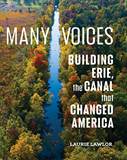
Award-winning author Laurie Lawlor’s full-color narrative nonfiction explores how this monumental, 363-mile canal was built across a daunting upstate New York landscape at a time when America had no trained engineers, no idea how to make water-proof concrete, no modern mechanical tools, and no reliable source of workers.
Many Voices takes a deep dive into how canal construction altered the environment and uprooted the Haudenosaunee from their long-standing homeland in New York.
Linking the Great Lakes and the Atlantic Ocean, the Erie Canal boosted the global economic status of New York City, expanded Westward settlement deep inside America’s farming heartland, and spiked growth in cities as varied as Chicago, Milwaukee, Toledo, Rochester, Duluth, and Toronto.
Just as today’s Internet has created a “superhighway” of purchasing possibilities and an array of political, social, cultural, and religious ideas from around the globe, the Erie Canal propelled nationwide trade and a network of new ideas — everything from abolition of slavery to promoting women’s right to vote .
Many Voices: Building Erie, the Canal that Changed America includes more than ninety photos, maps, and artwork, detailed timeline, suggestions for visiting today’s canal, complete bibliography, endnotes, and index. The book has been listed as aJunior Library Guild Gold Standard Selection.
New York and New Jersey are home to many historical landmarks and sites, some better known than others. Below are several such sites which may not be as familiar to teachers and students.
In 1740, 23-year-old Samuel Townsend purchased the property now known as Raynham Hall, moving from his father’s place in nearby Jericho. His move to Oyster Bay allowed him easier access to the waterfront and benefited his growing shipping business, co-owned with his brother, Jacob, who moved in next door on Main Street. Samuel’s property consisted originally of a four-room frame house on a sizable plot of land, with an apple orchard across the street, hundreds of acres of nearby pasture and woodlands for his livestock, and a meadow leading down to the harbor, where he and Jacob kept their ships.
In short order, Samuel had enlarged the house to eight rooms by building a lean-to addition on the north side, creating a saltbox-style house. This property, then known simply as “The Homestead,” would have been a hub of activity during the years leading up to the Revolutionary War, and was home to Samuel, his wife Sarah Stoddard Townsend, their eight children, and 20 enslaved people.
By 1769, Samuel and his brother Jacob owned five ships, which sailed to Europe, Central America, and the West Indies. They traded in an impressive range of goods, including most importantly logwood (which was and continues today to be a crucial ingredient in the dyeing of textiles), tea, lumber, molasses, sugar, china, wine, textiles, dye and rum. In addition to the shipping business, Samuel operated a general store, providing local access to a wide variety of imported wares. He was an active member of local and state government, as Oyster Bay’s Justice of the Peace and Town Clerk, a member of the New York Provincial Congress from 1774 to 1777, and, after the Revolution, a New York State Senator from 1786 to 1790.
Although most of Oyster Bay sided with the British during the American Revolution, Samuel’s sympathies were with the Patriots, despite the far greater risks those sympathies posed to his position, family and fortune. Following the Patriots’ decisive defeat in 1776 at the Battle of Long Island, British forces occupied all of New York City and Long Island, often brutally. Many people in the area who ran afoul of British authorities were confined to prison ships on which more than 12,000 people would die of illness or starvation by the end of the war in 1783, at a time when Manhattan’s entire population was around 20,000. The Townsend family, unlike many Patriots who fled, decided to stay in their home throughout the occupation.
Typical of wealthy New York families, the Townsends of Raynham Hall held many enslaved people who labored to maintain the house and grounds, the livestock and the fields, as well as possibly working on the Townsends’ ships. Samuel Townsend’s business interests also were intertwined with the economics of slavery, including, as they did, trade in such products as logwood, sugar, rum and tobacco.
The earliest slave record concerning the Townsends is a receipt of the purchase of a man bought by Samuel in 1749 for 37 pounds. No name is listed on the receipt. A Bible in Raynham Hall Museum’s collection contains entries from 1769 to 1795 recording the names, births and deaths of seventeen people held enslaved by the Townsends, as well as a partial genealogy. The record lists first names only, including Hannah, Violet, Susannah, Jeffrey, Susan, Catherine, Lilly, Harry, Gabriel and Jane. When the oldest Townsend son, Solomon, married his cousin Anne in 1782, they were given two people, Gabriel and Jane, as wedding presents. Gabriel and Jane’s children, Nancy, Kate, Jim and Josh, also became enslaved to Solomon, as did several others not listed in the Bible, named Charles, Shadwick, Pricilla, and her unnamed son. Additionally, letters show Samuel also owned a young woman named Elizabeth, who escaped Oyster Bay with the British Queen’s Rangers when they decamped in 1779. Samuel’s daughter Audrey and her husband Capt. James Farley owned a woman named Rachel Parker, and Audrey’s sister Phebe’s husband Ebenezer Seeley held a man named Amos Burling as his property. Interestingly, Robert Townsend was a member of the New York Manumission Society, founded in 1785, which worked towards the abolition of slavery.
Other enslaved people from the Oyster Bay area are recorded as having come to the Townsends’ store to purchase goods for their masters or for themselves, and a ledger now in the collection of the New-York Historical Society, but kept back in the day by sons William and David, records many purchases made during the 1760s and 1770s. In 2015, Raynham Hall Museum’s historian Claire Bellerjeau discovered a document at the New-York Historical Society that was revealed to be the sixth known poem by Jupiter Hammon, the first published African-American author in America, also an enslaved person owned by the Lloyds of Lloyd Harbor.
In September of 1776, British soldiers came to Samuel Townsend’s home in Oyster Bay to arrest him for his outspoken Patriotic beliefs, and to imprison him on one of the notorious prison ships in New York Harbor, where horrendous conditions would result in the deaths of over 12,000 captives by the end of the war. According to the recollection of family members, a British officer in the home smashed a hunting rifle that was mounted above the mantle, declaring that a rebel had no right to possess such a weapon, and then motioned to a portrait of the Townsends’ oldest son, Solomon, demanding to see him as well. When told that Solomon was at sea, he expressed regret that they could not arrest him as well. Outside the house, wife Sarah and daughters Sally and Phebe were frantic, afraid they might never see Samuel again.
Samuel was led away through the village and towards Jericho, traveling up the long hill in Pine Hollow. Coming down the hill in the opposite direction were Thomas Buchanan and his wife Almy, Samuel’s brother Jacob’s daughter, riding in a Phaeton carriage, with Samuel’s daughter Audrey alongside on horseback. Though he was considered a Tory, Buchanan was very close to the Townsends. He was also in the shipping business with the Townsends and had hired Samuel’s oldest son Solomon to captain his merchant ship, the Glasgow.
According to family history, when Buchanan saw Samuel being led away, he took Audrey’s horse and followed the soldiers to Jericho, where he paid a huge sum of money — several thousand pounds — to secure Samuel’s freedom. To the great relief of family and friends in Oyster Bay, Samuel returned home, unharmed, though he was then compelled to sign an oath of allegiance to the king, foreclosing any overt action against the crown. Following the end of the war in 1783, when all British were required to evacuate, Thomas Buchanan’s great loyalty and friendship were remembered, and he was allowed to stay and continue his successful merchant business in New York, unlike many Loyalists who were forced to emigrate, forfeiting their property.
For a six-month period from 1778 to 1779, the Townsend home served as headquarters for a regiment of over 300 British troops called the Queen’s Rangers, and their commander, Lt. Col. John Graves Simcoe, who quartered himself in the house, alongside the family. Daily officers’ meetings were held in the front parlor, and the presence of British officers in the house became an everyday fact of life. In March of 1779, Simcoe was visited for several weeks by a close friend, British officer and intelligence chief Maj. John André, who would later be hanged as a spy for his role in helping Benedict Arnold turn traitor in 1780. André, by all accounts a remarkable charismatic person, and an accomplished amateur artist, was 29 years old at the time of his death. After the war, Lt. Col. Simcoe founded the city of Toronto, where he served as Governor of Upper Canada.
At the time he accepted to join George Washington’s intelligence network in 1779, Robert Townsend operated a Manhattan-based merchant shipping firm with his brother William and cousin John. Using his work as a merchant as a cover, Robert could move about the coffee houses, social events, shops and docks of Manhattan, eavesdropping and observing British troop movements, without arousing suspicion.
Under the code name “Culper Junior,” Robert formed the first link in a chain of agents who came to be known as the Culper Spy Ring. Using a special invisible ink formula, invented by John Jay’s brother Sir James Jay, as well as an elaborate numeric code, the spies supplied Washington with critical information about New York City and Long Island.
Robert Townsend served his country well, and at great risk to himself and his family. Though he moved back to Raynham Hall following his father’s death in 1790 and lived for years with his sisters Sarah and Phebe, he kept his involvement in the Culper Spy Ring a total secret from his family and friends for the remainder of his life. Indeed, Robert’s involvement in the Culper Spy Ring was not uncovered until the 1930s, when historian Morton Pennypacker hired a well-known handwriting analyst to prove the true identity of Culper Junior.
Liberty Hall at Kean College
1003 Morris Avenue Union, NJ 07083
In 1760, when lawyer William Livingston, a member of the prominent Livingston family, was planning to build a country home, he bought 120 acres in what was then sleepy bucolic Elizabethtown, New Jersey, just across the river from his New York home. For the next twelve years, Livingston developed the extensive grounds, gardens and orchards. and oversaw the building of a beautiful fourteen-room Georgian-style home. In 1774, Livingston and his wife, the former Susannah French of New Brunswick, moved to Liberty Hall on a full-time basis with their children and the several people he and his family enslaved. The peace and quiet Livingston sought was short-lived. From 1774 to 1776, Livingston put his retirement on hold and served as a member of the First and Second Continental Congress and as Brigadier General of the New Jersey militia. On August 31, 1776, Livingston became New Jersey’s first elected governor. The ensuing war years were difficult ones for the governor, who spent them on the run from British troops. Finally, after the war in 1783, he was able to return to his home, which was heavily damaged by both British and American troops. Livingston also signed the United States Constitution, in addition to chairing two major committees at the Constitutional Convention. While juggling the demands of governing, Livingston also managed to pursue his great love of gardening and agriculture, utilizing the labor of free and enslaved individuals. Governor Livingston served as governor for fourteen years until his death on July 25, 1790. He is credited with making the New Jersey governorship one of the strongest.
At Liberty Hall, our goal is to deepen our visitors’ understanding of history and nature through the lens of the people who lived and worked in our over 250-year history. We strive to engage with our broader community by providing entertaining and educational programming that will inspire curiosity about the world around them and how that world has changed over time.
Liberty Hall stands at the center of the American Revolution and academic excellence. Home to trailblazing governors, congressmen, senators, assembly persons, philanthropists, and entrepreneurs, its plush gardens have spurred civic change and social innovation for centuries. Inhabited by William Livingston, New Jersey’s first elected governor and a signer of the United States Constitution, the 14-room Georgian-style home evolved over time into a 50-room Victorian mansion.
Liberty Hall began welcoming the public to experience its history and participate in its future in the year 2000. The museum has hosted educational programs, community events, civic ceremonies, and holiday celebrations.
The site is not just home to the stories of public servants and bold industrialists, its magnificent grounds also include an elegant English parterre garden and maze. Visit to view the scenery or explore the collections of antique furniture and decorative artifacts collected by the seven generations, including both the Livingston and Kean families, who called Liberty Hall home.
Newly arrived British immigrants George and Louisa Macculloch built Macculloch Hall in 1810. They expanded their Federal-style mansion in 1812 and 1819, tripling its size, as their family’s prominence in local, state, and national affairs grew. Come explore the largest collection of original work of political cartoonist Thomas Nast (1840-1902), art, and American history where it happened.
In 1810 George and Louisa Macculloch purchased a 26-acre parcel of land on which they built Macculloch Hall. The Maccullochs cultivated the land primarily to feed their family, planting a traditional kitchen garden as well as apple and pear orchards. George Macculloch (1775-1858) loved the gardens and kept meticulous journals. From them we know what was planted when and where, how crops did and what the family ate. Some of Louisa Macculloch’s (1785-1863) recipes are among the family’s papers in the Museum’s Archives. Modern adaptations of many of them are under “Interactive Activities.”
In the span of five generations, the Macculloch/Miller/Post family members went from owning enslaved men, women, and children to donating land for one of Morristown’s first Black churches, to speaking out on the national stage against the expansion of slavery, to commanding Civil War African American soldiers, and to raising money to support an African American industrial school in Georgia—all while the family lived at Macculloch Hall. George and Louisa Macculloch arrived in Morristown in 1810 with their daughter Mary Louisa and son Francis. They also brought with them three enslaved adults: Cato, Susan, and Betty, as well as a toddler, Emma. Since no legal requirements existed to record slave sales, it is not known when or where George purchased them. The Morris County manumission records have not survived, so there is no record of their being freed.
We know from the family Bible the names of the children born into slavery at Macculloch Hall: William (1811), Henry (1814), and Helen (1817). Their Bible does not name the parents. However, there is some additional information in birth certificates filed with the county clerk. This registration was required by the 1804 Gradual Emancipation Act. On January 8, 1812, George Macculloch registered the births of Emma “on or about September 1809, mother Susan”, and William “April 18, 1811, mother Susan”. No record is noted about the father. It also seems that Henry and Helen’s birth were not registered.
Very little is known about the enslaved men, women, and children at Macculloch Hall. With one exception, they are not mentioned in the surviving archive of family letters and documents. Although not mentioned, we know that their forced servitude, together with the paid labor of men and women in the area, enabled the Maccullochs to run their house and farm. Mary Louisa Macculloch Miller (1804-1888), George and Louisa’s daughter, spent her entire life at Macculloch Hall. She and her husband Senator Jacob Miller raised their nine children there. The fact that her family had owned enslaved men, women, and children and that Mary Louisa grew up in a house with enslaved servants, did not preclude her from supporting the African Methodist Episcopal Church, one of the first independent Black churches in Morristown.
Jacob W. Miller (1800-1862), a lawyer from Long Valley, N.J., married Mary Louisa Macculloch in 1825. In 1838 he was sent to the New Jersey Legislature and was elected to the U.S Senate in 1840 where he served two terms as a member of the Whig party. After his defeat in 1852, he joined the newly formed Republican party. Although never a full-fledged abolitionist, he remained a staunch supporter of the Union and was opposed to the extension of slavery into the territories. Views he shared in common with Abraham Lincoln in the 1850s. His feelings on the burning issues of the day were expressed in speeches he delivered on the annexation of Texas, the Mexican War, the Wilmot Proviso, and the Compromise of 1850.
On May 23, 1844, Miller delivered a speech in the Senate opposing the annexation of Texas because it would give an advantage to the slave states. He also saw a danger in the Mexican War arguing that President Polk’s…” conquered peace in Mexico will become the fierce spirit of discord at home.” Following the end of the war in 1846, he supported the Wilmont Proviso that would have prohibited slavery in the territory acquired from Mexico. This proposal never passed into law.
In 1850, Henry Clay attempted to seek a compromise and avert a crisis between North and South on the issue of slavery. Senator Miller opposed the combination of Clay’s recommendations into a single Omnibus bill, but he did support several of these measures when split into separate bills. His speeches on these matters reveals the complex nature of his views on slavery and emancipation reflecting the fact that many anti-slavery advocates opposed the western expansion of slavery, but had little interest in the fate of enslaved people in the South. Miller voted to admit California as a free state, abolish slavery in the District of Columbia, and prohibit slavery in Utah and New Mexico. The results were mixed. California was admitted, Utah and New Mexico could be organized with no restrictions on slavery, and in the District of Columbia slavery was permitted, but the slave trade was outlawed.
In the vote on the Fugitive Slave Act, Miller abstained. However, in the debates he revealed what many of his fellow New Jerseyans thought about the plight of the runaways by stating:
Macculloch Hall Historical Museum’s Historic Archives contain materials from five generations of the descendants of George (1775-1858) and Louisa (1785-1863) Macculloch, United States Senator Jacob Welch Miller (1800-1862), political cartoonist and illustrator Thomas Nast (1840-1902), and museum founder W. Parsons Todd (1877-1976). Garden highlights include the wisteria trellised along the rear porch, given to the Maccullochs by Commodore Matthew Perry in 1857; the sundial on the upper lawn installed in 1876; the sassafras tree at the far end of the lawn, believed to be the second oldest and largest sassafras tree in New Jersey; and many varieties of heirloom roses, meaning their cultivars date to before 1920. Mrs. Macculloch paid Francis Cook $1.00 to plant the first roses in 1810.
Using Stories in History and Social Studies Courses
Bruce W. Dearstyne
Teachers often find that stories are a good way to engage students in their U.S. history and social studies courses. Stories illustrate historical themes, bring historical events and characters to life, and leave a lasting impression. People can sometimes remember a particular story from history years later even if they cannot recall all of the context. There are many stories from New York history that may be of interest to teachers in Grades 4 (local and state history), 7-8 (New York and U.S. history). Lots of them are also useful in Grade 11 (U.S. history) because, while the history-makers were New Yorkers, the stories also illustrate national themes and developments as well.
The historical episodes cited below are all good examples of engaging stories. Each one centers around an event or events, illustrates what led up to the event, and also shows the consequences of it. They all fit into and illustrate broader themes in state and local history. Perhaps best of all, they all have exciting people at their core. In several cases, in fact, the story is best told by the people themselves, through first-hand accounts that students can access and use.
The stories included here – and others — are all covered in my three new books, cited at the end of this article. The first privacy law is included in The Crucible of Public Policy, the others in The Spirit of New York and there is also a Glenn Curtiss document in Progressive New York. But the stories are also covered in many other sources. I have tried to cite some of the most helpful for each story.
New York State’s “Birthday,” April 20, 1777: The upcoming 250th anniversary of the American Revolution is a great time to examine New York’s experiences and its role in the war. At the beginning of 1777, “New York State” did not actually exist yet. A convention elected to draft a constitution worked in Kingston to complete the document on April 20, 1777, in effect New York’s “birthday.” That document laid out state government and powers. The first governor and legislature were elected in the summer and got to work in the fall. Before the end of 1777, New York would survive British onslaughts, including the burning of its temporary capital, Kingston, and invasions from the north, west, and east. 1777 might be called New York’s “miracle year,” an exciting time when the state got started.
“Anti-Rent Wars,” 1839-ca. 1880: New York tenant farmers in the Hudson valley waged one of the largest tenant rebellions in history in these years. They were fighting for the right to purchase and own the farms; where as tenants they had to pay exorbitant rents. They kicked it off with a declaration against the tyranny of landlords on July 4, 1839. The intrepid farmers’ struggle was waged in the courts, the state legislature, a state constitutional convention, and sometimes through armed resistance to sheriffs who tried to evict them for non-payment of rents. By 1880, most owned their farms, but their struggle had been a heroic and exciting one. Henry Christman, Tin Horns and Calico (1945); Charles McCurdy, The Anti-Rent Era in New York Law and Politics (2001).
Elizabeth Cady Stanton led the campaign for women’s rights. This is really two stories in one – the famous 1848 Seneca Falls women’s rights convention, which demanded the right to vote for women, with Stanton as the chief organizer; and Stanton’s long career as an advocate for woman suffrage and women’s rights generally at the state and federal level (she kept working until the time of her death,1902).
Elisabeth Griffith, In Her Own Right: The Life of Elizabeth Cady Stanton (1984); Lori D. Ginsberg, Elizabeth Cady Stanton: An American Life (2009); Elizabeth Cady Stanton, Eighty Years and More: Reminiscences, 1815-1897 1898; reprint, 1993). Women’s Rights National Historical Park. https://www.nps.gov/wori/index.htm
Syracuse citizens rescued a fugitive slave, 1851. On October 3, 1851, a mob of over 2,000 citizens broke down the doors of a Syracuse police station to liberate William “Jerry” Henry, a fugitive slave, who had been arrested by a Deputy U.S. Marshal under the federal Fugitive Slave Law. That law provided for arrest and return of slaves fleeing the oppression of slavery in the south. New York was an important part of the “underground railroad” which helped escaping slaves find new homes in the North (where slavery was illegal) or Canada (which had also abolished it.). The “Jerry Rescue” was one of the most dramatic events in New York’s growing opposition to slavery. Fergus M. Bordewich, Bound for Canaan: The Epic Story of the Underground Railroad, America’s First Civil Rights Movement (2006); Monique Patenaude Roach, “The Rescue of William ‘Jerry’ Henry: Antislavery and Racism in the Burned-Over District, New York History (2001); Gerald Sorin, The New York Abolitionists: A Case Study of Political Radicalism (1970). “Jerry Rescue” historic marker: https://www.hmdb.org/m.asp?m=138797
New York’s – and the nation’s– first personal privacy law, 1903. In the late 19th and early 20th centuries, advertisers widely used the photos of women in ads for their products, without the women’s consent. There was no law against it. That changed when a seventeen-year old Rochester girl, whose photo was being used in ads for flour, went to court to stop it. The Court of Appeals ruled against her in 1902, but, under pressure from the public, the legislature took up the cause and passed a personal privacy law in 1903, the first in the nation. The main provisions of that law are still on the statute books. New York State Archives Partnership Trust, “Who Owns a Photo of Your Face? The Right of Privacy and the Courts,” (Podcast, October 18, 2022. https://www.nysarchivestrust.org/events/recorded-events); Sarah E. Igo, The Known Citizen: A History of Privacy in Modern America (2018); Jessica Lake, The Face That Launched a Thousand Lawsuits: The American Women Who Forged the Right to Privacy (2016).
Hammondsport aviation pioneer Glenn Curtiss made aviation history. Most students probably have heard of the Wright Brothers and their famous flight at Kitty Hawk, NC in 1903. But the story of their contemporary and rival, Glenn Curtiss, is almost equally important and unknown to post[HB1] people. Curtiss developed essential airplane designs and controls, including ailerons – adjustable wing flaps on the trailing edges of wings, essential for take offs and landings — still in use today. He made the first pre-announced, publicly witnessed, professionally certified airplane flight (July 4, 1908), and the first flight from Albany to New York City, May 29, 1910). He made the first amphibious flight and convinced the Navy to buy airplanes and train pilots, earning him the title “The Father of Naval Aviation.” This is a story of invention, daring, and doing what has never been done before. Lawrence Goldstone, Birdmen: The Wright Brothers, Glenn Curtiss, and the Battle to Control the Skies (2915); Seth Shulman, Unlocking the Sky: Glenn Hammond Curtiss and the Race to Invent the Airplane (2002); Glenn H. Curtiss Museum, Hammondsport. https://glennhcurtissmuseum.org
Jackie Robinson broke the color barrier in major league baseball, April 15, 1947. Major league baseball was a whites-only sport until the day in 1947 when Jackie Robinson debuted as the first Black player for a major league team, the Brooklyn Dodgers. Robinson proved to be a stellar player, and his pioneering role paved the way for other Blacks who followed. He also helped undermine racial prejudice and discrimination and was an early example of what would be called the Civil Rights movement. Jackie Robinson and Alfred Duckett, I Never Had it Made: The Autobiography of Jackie Robinson (2003); Carl T. Rowan with Jackie Robinson, Wait Till Next Year: The Life Story of Jackie Robinson (1960); Jules Tygiel, Baseball’s Great Experiment: Jackie Robinson and His Legacy (1983)
Hamilton: An American Musical debuted in New York City. Feb. 17, 2015. The hit musical Hamilton presented the life and achievements of New Yorker Alexander Hamilton, Revolutionary war patriot leader and the first U.S. Secretary of the Treasury, in the form of a lively musical. The play features a multi-ethnic cast, superb acting, smart dialog, humor, and rap and hip-hop musical scores. It recasts Revolutionary era history in the language of today; it is about “America then, as told by America now,” as its writer and lead actor, Lin-Manuel Miranda put it. This is an exciting way to explore history. Students can study the history behind the musical, watch the musical itself, and compare and contrast the two. Sources: Ron Chernow, Alexander Hamilton (2004); Edward Delman, “How Lin-Manuel Miranda Shapes History,” Atlantic September 29, 2015; Lin-Manuel Miranda and Jeremy McCarter, Hamilton the Revolution. Being the Complete Libretto of the Broadway Musical and a True Account of its Creation (2016)
The Hall of Fame for Great Americans in Bronx, New York opened in 1901. It is now located on the Bronx Community College campus. It currently has 96 busts; busts of Southern Generals Robert E. Lee and Stonewall Jackson were removed. Busts for an additional four people elected to the hall were never installed because organizers ran out of money. You can view a virtual tour of the Hall of Fame for Great Americans. https://www.bcc.cuny.edu/wp-content/uploads/2022/04/virtual-hall-of-fame-website.pdf
National Baseball Hall of Fame and Museum in Cooperstown, New York opened in 1939 with its first five inductees, Ty Cobb, Babe Ruth, Honus Wagner, Christy Mathewson, and Walter Johnson. As of July 2024, the hall honored 244 former major league players, 39 Negro league players and executives, 24 managers, 10 umpires, and 36 “pioneers, executives and organizers.” The Hall of Fame includes one female member, Effa Manley, a Negro League executive. The museum displays baseball memorabilia. https://baseballhall.org/
National Women’s Hall of Fame in Seneca Falls, New York opened in 1973. The inaugural Induction Class included Jane Addams, Marian Anderson, Susan B. Anthony, Clara Barton, Mary McLeod Bethune, Elizabeth Blackwell, Pearl Buck, Rachel Carson, Mary Cassatt, Emily Dickinson, Amelia Earhart, Alice Hamilton, Helen Hayes, Helen Keller, Eleanor Roosevelt, Florence Sabin, Margaret Chase Smith, Elizabeth Cady Stanton, Helen Brooke Taussig, and Harriet Tubman. In 2020, it opened to the public in its new home at the former Seneca Knitting Mill. https://www.womenofthehall.org/
A Little Less Famous
North American Fiddlers Hall of Fame is in rural Redfield, New York in the Adirondack region. It is located in a converted farmhouse. It houses artifacts, pictures, AV tapes, records, and memorabilia of old time fiddling & fiddlers and has free concerts. Famous inductees include “Chubby” Wise who recorded nearly 50 albums. https://www.facebook.com/p/North-American-Fiddlers-Hall-of-Fame-and-Museum-100063476745882/
National Abolition Hall of Fame in Peterboro, New York is located near the Finger Lakes region in the building where the first meeting of the New York State Anti-Slavery Society was held in 1835. Currently 28 anti-slavery activists are honored. https://www.nationalabolitionhalloffameandmuseum.org/
National Soaring Hall of Fame and Museum established in 1969 is an aviation museum that preserves the history of motorless flight. It is located on top of Harris Hill near Elmira, New York. https://www.soaringmuseum.org/
National Toy Hall of Fame in Rochester, New York is part of the Strong Museum of Play. It celebrates toys that have inspired creative play and enjoyed popularity. The Magic 8 Ball was inducted in 2018. Millions of the hand-held fortune telling toy have been sold since it was first marketed in 1945.
Bare Knuckle Boxing Hall of Fame is located in Belfast, New York in Allegany County. The museum and Hall of Fame are in the training barns of the great champion John L. Sullivan. Famous Inductees include George Godfrey, “The Leiperville Shadow,” one of the best African American bare knuckle fighters of his era. https://wnywilds.com/listing/bare-knuckle-boxing-hall-of-fame/
D.I.R.T. Stock Car Hall of Fame and Classic Car Museum is located next to the Weedsport Speedway in the Adirondack Park. It honors the achievements of modified stock car drivers. Famous inductees include “Barefoot” Bob McCreadie who broke his back five times while racing. https://www.discoverupstateny.com/packages/3566/dirt-hall-of-fame-classic-car-museum/
International Boxing Hall of Fame in Canastota, New York honors boxers, trainers, and other contributors to the sport. Famous inductees include Muhammed Ali, Carmen Basilo, Ezzard Charles, Joe Frazier, Emile Griffith, Jake LaMotta, Joe Louis, Rocky Marciano, Sugar Ray Robinson, Marvin Hagler, Sugar Ray Leonard, George Foreman, Roberto Duran, and Joe “Newsboy” Brown, who was born in Russia, and boxed at the opening of the Olympic Auditorium in Los Angeles in 1925. http://www.ibhof.com/
International Maple Hall of Fame in Croghan, New York honors people who “excelled in research, development, and leadership in the North American Maple Industry.” Its most famous inductee is Lloyd Sipple of Bainbridge, N.Y. who began making maple syrup during World War II to address a nationwide shortage of sugar. https://maplemuseumcentre.org/post.php?pid=14
National Purple Heart Hall of Honor in New Windsor) New York honors award recipients to “remind us of human sacrifices and the cost of freedom.” Ensign Jesse Brown’s citation (Korea-U.S.N.) reads: “Ensign Jesse L. Brown was the first African American naval aviator. While flying a mission 4 December 1950 his aircraft was hit, causing him to crash land in enemy territory.” https://www.thepurpleheart.com/
Catskill Fly Fishing Hall of Fame in Livingston Manor, New York, preserves the “heritage of fly fishing in the Catskills” and educates the “next generation of anglers.” https://cffcm.com/
New York State Country Music Hall of Fame in Cortland, New York pays tribute to the legacy of New York State and national country music performers. Hall of Fame members include Glen Campbell, Tammy Wynette, and many Grand Ole opry stars. https://www.iloveny.com/listing/new-york-state-country-music-hall-of-fame/2897/
New York State Convenience Store Hall of Fame in Albany, New York was established in 1996 to honor retailers and suppliers for exceptional achievement in and service to New York State’s convenience store industry.” https://nyacs.org/hall-of-fame?layout=adgcreative:grid#
National Stand-Up Comedy Hall of Fame is located in Jamestown, New Yor’s National Comedy Center. Its first inductee’s included George Carlin, Joan Rivers, Richard Pryor, and Robin Williams. https://comedycenter.org/
National Museum of Racing and Hall of Fame in Saratoga Springs, New York was founded in 1950 and is currently located by the Saratoga Race Course. Among the horses inducted here are Man O’ War (1957), Exterminator (1957), Citation (1959), Spectacular Bid (1982), American Pharoah (2021), Secretariat (1974), and Seabiscuit (1958). https://www.racingmuseum.org/
International Professional Wrestling Hall of Fame in Albany, New York was established in 2019. It is located on the mezzanine level of the MVP Arena. Inductees include Bobo Brazil, “Stone Cold” Steve Austin, Bret Hart, and “Gorgeous George” Wagner. International Maple Hall of Fame in Croghan, New York honors people who “excelled in research, development, and leadership in the North American Maple Industry.” Its most famous inductee is Lloyd Sipple of Bainbridge, N.Y. who began making maple syrup during World War II to address a nationwide shortage of sugar.https://maplemuseumcentre.org/post.php?pid=14
Online Halls of Fame
Long Distance Runners Hall of Fame in Utica, New York was formed in 1971. The building is currently closed. Famous inductees include Frank Shorter who won the marathon gold medal at the 1972 Olympics in Munich. This hall of fame can be viewed at https://www.rrca.org/about/hall-of-fame/
New York State Golf Hall of Fame: Famous inductee include Joey Sindelar, a major contender in the U.S. Open and Masters tournaments in early to mid-1990s. Find information and inductees at https://nysga.org/about-hall-of-fame
The University of Chicago Press recently published a unique account of an escape from enslavement in North Carolina decades before the Civil War. The United States Governed by Six Hundred Thousand Despots (2024) by John Swanson Jacobs tells of his escape from enslavement by North Carolina plantation owner and Congressional Representative Samuel Sawyer in 1838 while he and the slaveholder were in transit through the City of New York. Jacobs eventually made it to Australia where his story was published serially in 1855 by the Sydney Empire. It was later republished in 1861 in London, UK under the title “A True Tale of Slavery” by The Leisure Hour: A Family Journal of Instruction and Recreation. The 1861 version of Jacob’s story is available online at the website Documenting the American South.
John Swanson Jacobs was born in 1815 in Edenton, North Carolina, the younger brother of his better-known sister Harriet Jacobs, author of Incidents in the Life of a Slave Girl (1861). Harriet Jacobs originally published her book under the pseudonym Linda Brent, possibly to protect those who remained enslaved at home. In the book she referred to her brother John as “William” and Samuel Sawyer, the white father of her two children who “owned” both them and John, as “Mr. Sands.” John Swanson Jacobs, safely in Australia, published under his own name.
In 1838, Sawyer traveled north because he and his fiancé planned to be married in Chicago, Illinois where she had family. He was able to bring an enslaved John Swanson Jacobs with him to New York State because although slavery had been abolished there in 1828, state law permitted enslavers visiting or residing in New York part-time to maintain slaves within their households for up to nine months. This statute was not repealed until 1841.
The following is an excerpt from chapter 5 of A TRUE TALE OF SLAVERY that was published in The Leisure Hour: A Family Journal of Instruction and Recreation (No. 478–February 21, 1861). In this excerpt, Jahn Swanson Jacobs describes his escape from slavery while in New York City.
“THE latter end of the third year after I was sold, my master was elected Member of Congress. I was ordered to get ready for Washington . . . After my master had been there a short time, he went to board with Mrs. P—-, who had two young nieces here, to one of whom he was soon engaged to be married. As good luck would have it, this young lady had a sister living in Chicago, and no place would suit her like that to get married in . . . Everything was ready, and the hoped-for time came. He took his intended, and off we started for the West. When we were taking the boat at Baltimore for Philadelphia, he came up to me and said, “Call me Mr. Sawyer; and if anybody asks you who you are, and where you are going, tell them that you are a free man, and hired by me.”
We stopped two or three days at the Niagara Falls; from thence we went to Buffalo, and took the boat for Chicago; Mr. Sawyer had been here but a few days before he was taken sick. In five weeks from the time of his arrival here, he was married and ready to leave for home. On our return, we went into Canada. Here I wanted to leave him, but there was my sister and a friend of mine at home in slavery . . . I tried to get a seaman’s protection from the English Custom-house, but could not without swearing to a lie, which I did not feel disposed to do.
We left here for New York, where we stopped three or four days. I went to see some of my old friends from home, who I knew were living there. I told them that I wanted their advice. They knew me, they knew my master, and they knew my friends also. “Now tell me my duty,” said I. The answer was a very natural one, “Look out for yourself first.” I weighed the matter in my mind, and found the balance in favour of stopping. If I returned along with my master, I could do my sister no good, and could see no further chance of my own escape. I then set myself to work to get my clothes out of the Astor House Hotel, where we were stopping; I brought them out in small parcels, as if to be washed. This job being done, the next thing was to get my trunk to put them in. I went to Mr. Johnson’s shop, which was in sight of the Astor House Hotel, and told him that I wanted to get my trunk repaired.
The next morning I took my trunk in my hand with me: when I went down, whom should I see at the foot of the steps but Mr. Sawyer? I walked up to him, and showed him a rip in the top of the trunk, opening it at the same time that he might see that I was not running off. He told me that I could change it, or get a new one if I liked. I thanked him, and told him we were very near home now, and with a little repair the old one would do. At this we parted. I got a friend to call and get my trunk, and pack up my things for me, that I might be able to get them at any minute. Mr. Sawyer told me to get everything of his in, and be ready to leave for home the next day. I went to all the places where I had carried anything of his, and where they were not done, I got their cards and left word for them to be ready by the next morning. What I had got were packed in his trunk; what I had not been able to get, there were the cards for them in his room.
They dine at the Astor at three o’clock; they leave the room at four o’clock; at half-past four o’clock I was to be on board the boat for Providence. Being unable to write myself at that time, and unwilling to leave him in suspense, I got a friend to write as follows: — “Sir–I have left you, not to return; when I have got settled, I will give you further satisfaction. No longer yours, JOHN S. JACOB.”
This note was to be put into the post-office in time for him to get it the next morning. I waited on him and his wife at dinner. As the town clock struck four, I left the room. I then went through to New Bedford, where I stopped for a few months . . . The lawyer I have quite a friendly feeling for, and would be pleased to meet him as a countryman and a brother, but not as a master.”
Once free, John Swanson Jacobs moved to New England where he became an active abolitionist. His efforts took him to Rochester, New York and vicinity on a number of occasions and to New York City at least three times, in May 1849, October 1850, and July 1862. On May 11, 1849, the New York Herald printed an account of a speech by Jacobs at an American Anti-Slavery Society meeting where he called on attendees to make it “disreputable” for people who claimed to be Christians to hold other people in bondage. According to North Star on October 24, 1850, Jacobs spoke in New York City calling for active resistance to fugitive slave laws following the seizure of James “Hamlet” Hamilton by slavecatchers and on July 28, 1862, New York Independent reported on an interview with Jacobs where he recounted his experience as a cook on a British ship, with the support of British authorities in the Bahamas, that was attempting to enter the port of Charleston, South Carolina in violation of the federal blockade of Southern ports (252-258). Excerpts from these articles follow.
American Anti-Slavery Society (New York Herald, May 11, 1849)
“A slaveholder named Skinner, who was a skinner in every sense of the word, was in the habit of coming every year, to visit his brother, Re. Dr. Skinner, who . . . lived at 160 Green[e] street; and yet the baby-stealing, women-whipping tyrant never received a rebuke from his reverend brother, at whose table he sat . . . If anyone asked him what must be done to abolish slavery, his answer was, that it must cease to be respectable. They must make it disreputable, and then slaveholders would be ashamed of it . . . If they had less of religion, and more of Christianity, it would be all for the better” (252-254).
Meeting of the Colored Citizens of New York (North Star, October 24, 1850)
“My colored brethren, if you have not sword, I say to you, sell your garments and buy one . . . I would, my friends, advise you to show a front to our tyrants, and arm yourselves; aye, I would advise the women to have their knives too . . . I advise you to trample on this bill, and I further advise you to let us go on immediately, and act like men” (256).
Running the Blockade (New York Independent, July 28, 1862)
“[A] very intelligent colored man, formerly a slave in North Carolina, but recently for several years a resident of England, called at our office the other day, and related facts showing that British vessels are stilled engaged in running our blockade, and that the British officials in the Bahamas are, if possible, more inimical to our Union than are the same class of people at home . . . He shipped as a cook on board the steamship Lloyds, at London . . . ‘for Havana and any of the West Indies Islands’ . . . the captain (Smith) announced to the crew that he designed to run the blockade before Charleston, and offered three months pay extra to such as would remain with the ship . . . Jacobs refused to go to Charleston at any price whatever, and demanded, what was his undoubted right, that he be sent home to London. After various efforts on the part of Capt. Smith to indure (sic) Jacobs to either go to Charleston or to settle and sign a satisfaction, he attempted coercion. He had Jacobs taken before a police magistrate to answer the charge of having deserted the ship . . . The law was all on the side of Jacobs, but the public sentiment of Nassau was so strongly against him, and in favor of the unlawful and contraband trade with the Rebels” (257-258).
The Eight: The Lemmon Slave Case and the Fight for Freedom
By Albert Rosenblatt
The Eight tells the story of Lemmon v. New York—or, as it’s more popularly known, the Lemmon Slave Case. All but forgotten today, it was one of the most momentous civil rights cases in American history. There had been cases in which the enslaved had won their freedom after having resided in free states, but the Lemmon case was unique, posing the question of whether an enslaved person can win freedom by merely setting foot on New York soil—when brought there in the keep of an “owner.” The case concerned the fates of eight enslaved people from Virginia, brought through New York in 1852 by their owners, Juliet and Jonathan Lemmon. The Eight were in court seeking, legally, to become people—to change their status under law from objects into human beings. The Eight encountered Louis Napoleon, the son of a slave, an abolitionist activist, and a “conductor” of the Underground Railroad, who took enormous risks to help others. He was part of an anti-slavery movement in which African Americans played an integral role in the fight for freedom. The case was part of the broader judicial landscape at the time: If a law was morally repugnant but enshrined in the Constitution, what was the duty of the judge? Should there be, as some people advocated, a “higher law” that transcends the written law? These questions were at the heart of the Lemmon case. They were difficult and important ones in the 1850s—and, more than a century and a half later, we must still grapple with them today.
Growing Up Roosevelt: A Granddaughter’s Memoir of Eleanor Roosevelt
By Nina Roosevelt Gibson
When Nina Roosevelt was just seven years old, her family moved from California to live with her grandmother at the small cottage, Val-Kill, in Hyde Park, New York. It was at Val-Kill Farm that Nina shared her childhood years with her remarkable grandmother, the woman who would change her life. To Nina, she was Grandmère, but, to most everyone else, she was Eleanor Roosevelt. Few people realize how important Val-Kill was for Eleanor Roosevelt. Returning “home again” nourished her, allowed her time for reflection, planning, and rejuvenation so that she could continue pouring her heart and soul into the needs of so many people the world over. Growing Up Roosevelt gives an intimate picture of life at Val-Kill as well as Nina’s wide-ranging experiences traveling as a teenager with her grandmother. When Nina Roosevelt was just seven years old, her family moved from California to live with her grandmother at the small cottage, Val-Kill, in Hyde Park, New York. It was at Val-Kill Farm that Nina shared her childhood years with her remarkable grandmother, the woman who would change her life. To Nina, she was Grandmère, but, to most everyone else, she was Eleanor Roosevelt.
Few people realize how important Val-Kill was for Eleanor Roosevelt. Returning “home again” nourished her, allowed her time for reflection, planning, and rejuvenation so that she could continue pouring her heart and soul into the needs of so many people the world over. Growing Up Roosevelt gives an intimate picture of life at Val-Kill as well as Nina’s wide-ranging experiences traveling as a teenager with her grandmother. Included are portraits of the family, staff, famous friends, people in need, and world leaders as disparate as Nikita Khrushchev, Haile Selassie, and John F. Kennedy. This book will appeal to anyone interested in the life and times of Eleanor Roosevelt, her work as a trailblazing political and feminist leader, and the intimate behind-the-scenes details that only her granddaughter can tell. Biographer Blanche Wiesen Cook writes “the woman Nina Roosevelt Gibson called Grand-Mere was Eleanor Roosevelt, and in Growing Up Roosevelt she vividly captures what it was like to spend a dozen formative years within the orbit of that extraordinary woman. She evokes the sights and sounds and changing seasons at her grandmother’s tranquil haven at Val Kill and also reveals what it was like to tag along on one of her frenetic trips abroad. No one interested in the Roosevelts will want to miss these warm and loving memories.”
Initially, the Haudenosaunee Confederacy (Iroquois) claimed neutrality during the conflict between Britain and the colonists, seeing the disagreement as a civil war and valuing loyalty to their families and to their lands above all else. When the political discontent erupted into the American Revolutionary War, the member nations of the Haudenosaunee Confederacy split their support between the British and newly formed American forces. The majority of nations and individual members supported the British under the belief that those nations would be more likely to keep their relative independence and land under continued British rule, while the Oneida and Tuscarora backed the American Colonists.
As with many American families, alliance was not clear-cut, and in some cases, allegiance was split on a person-by-person basis, which destabilized the clan-based society. What had started as a European civil war on North American soil soon turned the Confederacy against itself, undermining the social unity and political stability that the Six Nations had enjoyed for centuries. In 1778, Loyalists and members of the British-backed nations participated in destructive raids that crippled Continental forces and destroyed frontier settlements in New York and Pennsylvania. Fearing that the New York frontier would be pushed east to the Hudson River if divisive action was not taken, General George Washington ordered General John Sullivan to lead four brigades of men — a sizable portion of the Continental Army — on a scorched-earth campaign that would limit the Haudenosaunee’s ability to attack in the future.
Washington tasked Sullivan with launching a terror campaign to destroy the food supply of the Cayuga and Seneca Nations in the heart of the Finger Lakes and to reduce the Cayuga and Seneca’s forces. Smaller expeditions were tasked with destroying Seneca settlements in western Pennsylvania and Onondaga settlements in Central New York. General Sullivan and his second-in-command, General James Clinton met in Tioga near the Pennsylvania-New York border and began their campaign by destroying the Munsee Delaware settlement of Chemung in present-day Chemung County. Instead of deploying the guerrilla tactics that long served Haudenosaunee well, Confederacy war chiefs and the meager British forces available to counterattack decided to retaliate with a standing battle.
The Battle of Newtown on August 29, 1779, ended in a British and Indian retreat and destroyed morale for the British-backing Confederacy Nations, who now chose to proactively flee to other nearby settlements. For the next two weeks, Sullivan’s forces moved from Seneca Lake to Canandaigua Lake to Chenussio — a Seneca stronghold near present-day Leicester in Livingston County that included 128 multi-family longhouses. By the end of the campaign, Sullivan’s men destroyed more than 40 Haudenosaunee villages, at least 160,000 bushels of corn, countless pounds of stored vegetables and fruit, and only suffered 40 casualties.
While the American forces did not take Haudenosaunee prisoners, the Sullivan Campaign destroyed the nations’ capacity to wage war. By the end of September 1779, more than 5,000 nation members had arrived at the British Fort Niagara expecting food, clothing, and shelter in the face of their catastrophic losses at the hands of the Americans. Instead of lessening the threat to frontier settlements, the Sullivan Campaign increased the animosity of Natives and British alike, laying the ground for fierce fighting within the New York frontier of British-backed Indian raids during the 1780s.
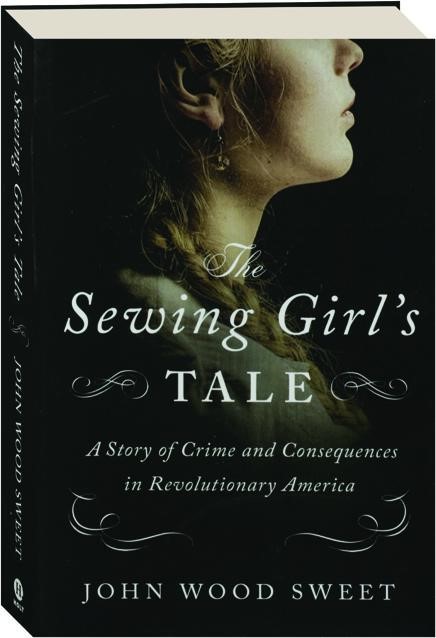
The Sewing Girl’s Tale: A Story of Crime and Consequences in Revolutionary America by John Wood
Sweet (Henry Holt) uses the trial of the accused rapist, Harry Bedlow, of a seventeen-year-old seamstress named Lanah Sawyer in 1793 to analyze New York City’s social hierarchy during the early republic. Alexander Hamilton was part of Bedlow’s legal team. Bedlow’s acquittal[1] after the jury deliberated for only fifteen minutes sparked riots in the streets and ignited a vigorous debate about class privilege and sexual double standards. Sawyer received some justice when her stepfather won a civil suit against Bedlow and the family was awarded a significant sum. The book received a Bancroft Award from the American Historical Association.