My Story: Nicholas Collin, Gloucester County, 1777

My Story: Nicholas Collin

Raccoon (Swedesboro) Gloucester County (1777)

February 10th, 1777

It has been over seven years since I have seen my family and my beloved country of Sweden. Seven years since they urged me not to come to this country, warning me that it was dangerous and full of Indians who were ready to scalp me. I laughed them off all those years ago, but it seems they were right about the danger, just not about its source. But how could they have predicted a civil war?

I came to this country full of wonder and ready to serve the Lord and the mission of the Swedish Lutheran Church. I do not regret this decision. Since coming to Raccoon, New Jersey, I feel I have faithfully served God. I have visited the sick and dying, no matter the time of day. I have married dozens of couples, provided funeral services for those who need them, and preached to all those who are willing to accept God into their lives. Just last year, I baptized “several children…one [child] 4 years old, two above 2 years, and another [child] 18 months” (Journal 236). Despite the sickness and destitution I have endured as result of my endeavors, this work has given me great joy.

When this war began, I, like many, felt great anxiety over it. But I continued to fulfill my duties as best as I could. I did not expect to one day have the American militia accuse me of treason and then haul me off for a 16 Swedish mile journey, on which I felt I could be shot and killed at any moment. My captors, one of which I deem to be a man of “bad character” as he seems to lack religion, claim I am a supporter of the British (Journal 237). They point to the fact that I, upon my arrival to this country seven years ago, paid a visit to the royal governor. They say my neighbors have reported that I seem unsympathetic to the rebel cause.

But how can I be sympathetic to the rebel cause when it goes against my duties as minister? I did not come to this country to become involved in their political affairs! I did not come to support or condemn a revolution! I came but only to “chastise godless persons and to prevent arson and theft…” (Journal 238). Why should I be condemned for simply doing the work of God?

My captors have given me a choice, of which they demand an answer in the near future. Either I must go join the British  or sign an Oath of Allegiance to the new American government. The former option would require me to abandon the post I have been given by my own government, sell all of my belongings for less than half their worth, and join a group of people to whom I do not have a connection to. The latter option asks me to betray my allegiance to the Swedish government. I do not see how either option is a desirable one.

God, please give me guidance on how to navigate this difficult situation so that I may continue to do Your work in this beautiful country.

What do you think Nicholas Collin should do?

  1. Join the British
  2. Sign the Oath of Allegiance, pledging his support for the American cause
  3. Another course of action — come up with your own suggestion!

Ultimately, Nicholas Collin was able to convince his imprisoners to let him sign an Oath of Neutrality, in which he swore to remain neutral in the war and “to do nothing which would be unworthy of [him] as a Swedish subject” (Journal 238). Later that year, he was accused of being a spy and nearly lost his life to the gallows. However, he was able to convince his captors that he was innocent through the testimony of a man who Collins had once sheltered from the English army. While Collins did consider returning to Sweden in 1781, he ultimately remained in New Jersey until his death in 1831.

Using Decision-Making Activities to Think Critically in History Classrooms

Using Decision-Making Activities to Think Critically in History Classrooms

            Using a variety of different strategies, resources, and activities is essential to keeping my ninth grade Social Studies students engaged from one day to the next. I frequently get asked, “Miss, why are we even learning about this?” or “this was so long ago, why does this even matter?” One of the strategies I have found to be successful in combating student boredom and encouraging engagement in the application of decision-making activities.

            Decision-making activities at the secondary level can assist in the ways that students consider and absorb information. One activity required students to consider, make, and justify a series of decisions about prison ships located in the water by Perth Amboy, NJ during the American Revolution. They had to choose to make decisions either as an officer negotiating for the release of imprisoned men or as a prisoner facing a difficult-to-navigate situation such as hunger, disease, or death.. In a different, smaller activity, students were given a ‘do now’ each day that asked them a scenario related to lessons in the unit on Manifest Destiny. For example, the students were given a scenario such as, “You hear that the Transcontinental Railroad has been completed but tickets are very expensive and the only ones left will arrive in California in the late fall. You could also travel by horse and wagon using the Oregon or California Trails to go west, which is a more dangerous trip but you will arrive sooner and save money. Which should you choose?” Once they work as a group and make their decisions, a random fate would be revealed.

            These activities meet many of the NJ Social Studies Learning Standards that help students learn historical content, critical thinking, decision-making skills, and discussion abilities. For example, RH.9-10.9 states that students should be able to “[c]ompare and contrast treatments of the same topic, or of various perspectives, in several primary and secondary sources; analyze how they relate in terms of themes and significant historical concepts.

            These activities also engage and involve different demographics of students in my classroom. Many of my 504 or IEP students need regular check-ins and evidence of their participation. The distinct steps of these activities allow for this kind of monitoring while also ensuring that advanced students follow the same progression. This activity is also easily modified for bilingual students of different levels by translating elements of it or modifying some of the primary source texts or changing them to visuals.

            These activities relate directly to the students by engaging with them where they are. When they are able to personally connect with the content, the students are more likely to participate in and think critically about the content. The students are able to place themselves into the context of the time period with an assignment such as this more easily than traditional assignments. Furthermore, for students who live in Middlesex County, they may also be able to personally connect to some material from the Revolutionary War unit because this area has so much colonial and Revolutionary War era history.

            Decision-making activities such as these allow the students to engage more critically and thoughtfully with the material and content provided to them. It engages students and encourages them to become better writers and ‘critically-thinking’ learners and citizens.

My Story: Chief Tishcohan, Warren County, 1737

My Story: Chief Tishcohan (He Who Never Blackens Himself)

Delaware River Valley, Warren County, 1737

During the eighteenth century, the relationship between the Lenni-Lenape and the colonists would continue to deteriorate. Land ownership became a major issue throughout New Jersey, as well as the rest of the colonies, as the English took over control and established their dominance throughout the continent.

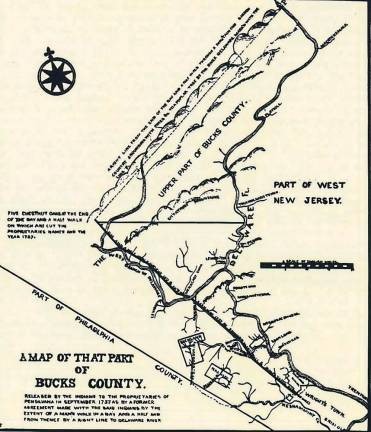
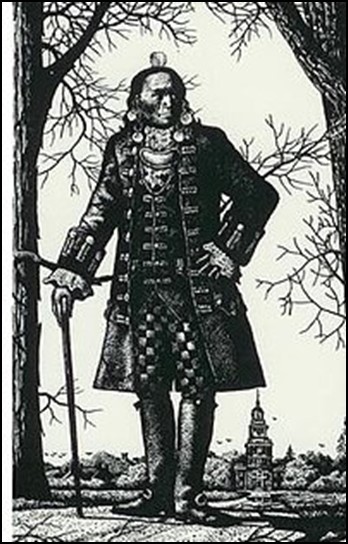
Several Lenape chiefs attempted to secure land deals with the New Jersey, Pennsylvania and Delaware colonies. These efforts culminated in the Walking Purchase of 1737. Chief Tishcohan (or He Who Never Blackens Himself) was one of the signers of the Walking Purchase of 1737. The Walking Purchase was a treaty with the Penn family that later caused the Lenape to lose most of their land in the Delaware Valley.

Chief Tishcohan

The original event occurred September 19-20, 1737 when Thomas Penn, refer to a Treaty that was allegedly made between his father, William Penn and the Delaware Indians, hired three runners to “walk” for a day and a half westward from Springfield, Bucks County.  The walkers actually ran during the entire event and he Penn family claimed over 1,200 square miles of Indian lands. 

It’s certain that the infamous Walking Purchase defrauded the Lenni-Lenape of a considerable amount of land in eastern Pennsylvania. The Walking Purchase led to years of recriminations and bad feelings. This was one of the factors that led to many Lenni-Lenape leaving New Jersey and eastern Pennsylvania prior to the American Revolution.

Answer each question below.

  • Hypothesize why Chief Tishcohan and the other Lenni-Lenape leaders have signed the Walking Purchase of 1737?
  • How did this agreement affect the Lenni-Lenape over time?

This was one of the dozens of land deals that were either fraudulent or not honored by the colonies and later by the United States government. Answer each question below.

  • How would history be different if the U.S. government honored these land agreements?
  • Would the United States look differently today?
  • Were repartitions an appropriate solution for compensating the Indigenous people, specifically the Lenape and Delaware nation) living within the borders of the United States for the land that was taken from them? Indian Claims Commission  Delaware Indian Land Claims  U.S. Decision on July 17, 1899

Below is an excerpt from the transcript of a deed associated with the Walking Purchase of 1737.  Read and analyze the excerpt and answer the following guided questions:

  • Write one sentence summarizing this passage.
  • What was happening at the time in history when this passage was written?
  • What did you find out from this excerpt that you might not learn anywhere else?

“We, Teesshakomen, alias Tisheekunk, and Tootamis alias Nutimus, two of the Sachem’s or Chiefs of the Delaware Indians, having, almost three Years ago, at Durham, begun a treaty with our honourable Brethren John and Thomas Penn, and from thence another Meeting was appointed to be at Pensbury, the next Spring Following, to which We repaired with Lappawinzoe and Several others of the Delaware Indians, At which Treaty Several Deeds were produced and Shewed to us by our said Brethren, concerning Several Tracts of Land which our Forefathers had, more than fifty Years ago, Bargained and Sold unto our good Friend and Brother William Penn, the Father of the said John and Thomas Penn.”

My Story: Joshua Huddy, Monmouth County, 1780

My Story: Joshua Huddy
Shrewsberry, New Jersey, September 1780

My name is Joshua Huddy, and I may only have a few minutes left to live. I am an ardent patriot and the Captain of the Monmouth Militia. I just heard glass break downstairs, and from my window, I can see members of the loyalist “Black Brigade” surrounding my house. I see Colonel Tye, standing about six feet tall, commanding his troops. While I fear no man, I begrudgingly respect the military prowess and fighting ability of Colonel Tye. It almost seemed inevitable that we would meet one day in combat. His infamous raids of Patriot homes and my raids of Loyalist homes in Monmouth County set us on a collision course.

We almost came musket to musket at the Battle of Monmouth. But alas, we are not facing off on the battlefield, but rather, at my home. I am outgunned and outmanned, but I am determined not to go down without a fight. Colonel Tye is demanding that I surrender and come out of my house unarmed. Can I resist? In April, Mr. Russell resisted Colonel Tye, and he was killed. I am sure Colonel Tye and the Loyalists want my blood. In 1777, my men and I dragged Loyalist Stephen Edwards from his home in Shrewsberry and hanged him. The Loyalists have wanted revenge ever since. Can I surrender? Will they kill me? Even if they take me prisoner, that may be worse than death. Rumors abound regarding the treatment of Patriot prisoners of war. Most do not survive. It is only me and my mistress, Lucretia Emmons, home tonight. But I have muskets and I have ammunition. We cannot fight Colonel Tye and his men from Refugeetown alone, but perhaps we can hold them off until members of my Monmouth Militia arrive. However, time is of the essence.

As Colonel Tye and his men surround my home, what should I do?

Be sure to provide reasoning for your response.

  1. Surrender to Colonel Tye and face the consequences of my raids? I may face the hangman’s noose. But I am a Captain of the Monmouth Militia. They may be able to negotiate my release.
  2. Fix my bayonet, load my musket, and go down in a blaze of glory. Even if I am taken down, I will try to take out Colonel Tye, and save my fellow Patriots from his raids.
  3. Defend my home by loading several muskets and placing them at every window. Then move from window to window, firing at Colonel Tye and his men, in an attempt to convince them that I have several soldiers here fighting along my side. This can buy me time until the Monmouth Militia arrives.

After making your decision complete the following extension activity:.

The Monmouth Militia has arrived. Write out your orders for your men to fight against Colonel Tye.

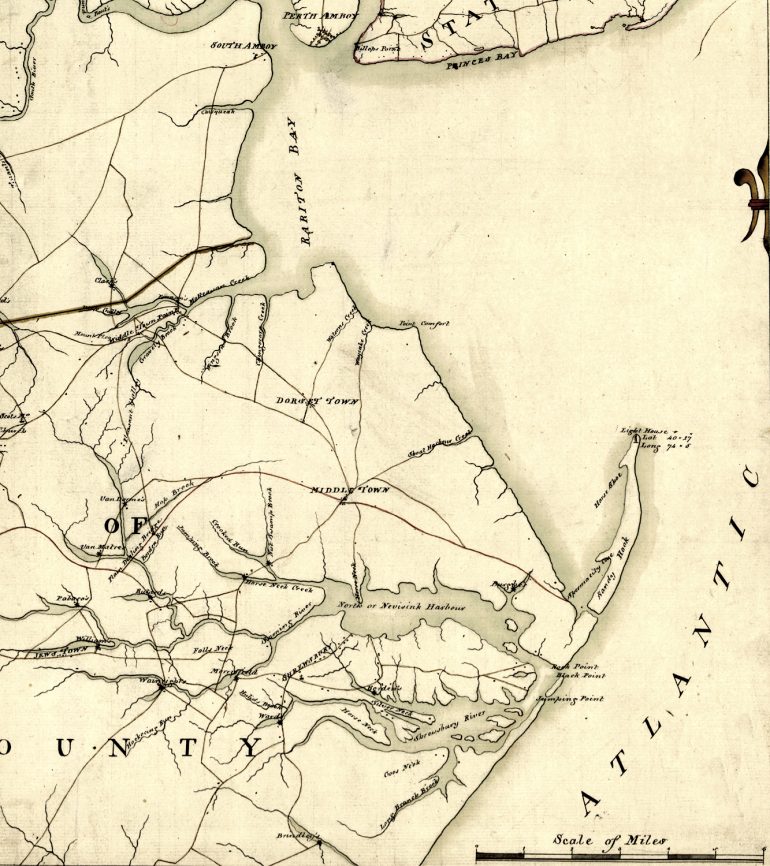
Below is a map of Monmouth County in 1781.

Use this map to answer the following:

1. Locate Shrewsberry on the map and describe the geographic features of the area.

2. Colonel Tye and his men were stationed in “Refugeetown” in Sandy Hook over the course of the American Revolution. Locate Sandy Hook on the map and use the “scale of miles” to determine the distance between Sandy Hook and Shrewsberry.

My Story: William Franklin, Middlesex County, 1776

William Franklin: Like Father, Like Son?

My Story: Middlesex County 1776

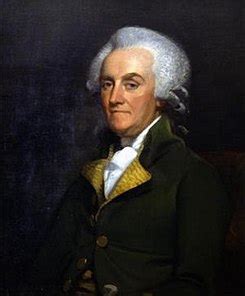
            Join or Die? Famous words from my old man in 1754. A little dramatic if you ask me. His message to the colonists was simple: unite, fight against the French and their Native American allies or…die. My dad’s words created negative sentiments for the Native Americans, both during the French and Indian War when they were published, and after. As a loyalist and supporter of the Oneida and Lenape natives in my state of New Jersey, I would ultimately strive to send a different message than my father during the Revolution.

            I wasn’t always a Jersey boy. I was born in Pennsylvania in 1730. I never knew my mother, and I wasn’t born into a life of privilege like my contemporary, George Washington. I referred to my dad earlier-have you figured out yet that it’s Benjamin Franklin? My dad was a successful printer, and turned his attention to politics in the 1750s. He was also an engineer, inventor–you can consider him a renaissance man of sorts. I wanted to be just like him. I followed him everywhere, including to Albany in 1754 where my dad laid out his famous Albany Plan of Union. Part of this plan was to create a colonial alliance during the French and Indian War. My dad created a woodcut of a severed snake that represented the demise of the colonies if unity was not established. Get it? Join. Or die. I know, I know. I mocked the join or die thing just a moment ago. But at the time I supported the sentiments.

            After the French and Indian War, I became the royal governor of New Jersey. Being royal governor meant I was expected to uphold the rules of the British crown. After the Stamp Act, tensions in the colonies were heating up and my dad was becoming more and more anti-British. I on the other hand wanted New Jersey to remain true to King George III.

How can we ensure that a new government will be better than this?

What will we lose in the process?

What if this turns to anarchy?

Because of my sentiments in keeping the royal government unchanged in the colonies, militias made up of Patriots were on to me. I was arrested in June of 1776 in Perth Amboy and there was no hope in keeping New Jersey “loyal” or should I say “irreconcilable” after that. I was jailed in Litchfield, Connecticut, 135 miles away! I guess they were expecting me to sit in my cell and ‘think about what I did,’ but instead I was pardoning Loyalists. Jokes on them! I left the prison two years later, and spent the remaining years during the Revolution in New York City. I continued to have correspondence with King George III, and eventually I returned to England in 1782 as part of a prisoner exchange.

Join or Die. Hm. What was there to “join”?

Supporting Questions/Decisions:

Have you ever gone against the beliefs of your parents or guardians?

What impact did this have on your life?

How did it affect your family members?

How did William’s decision affect his relationship with his father, Benjamin Franklin?


In your opinion, did William make the right decision in supporting the British crown? Do you think this influenced New Jersey’s history?


Is your history book more focused on the Patriot perspective than the Loyalist perspective during the Revolution? If yes, what changes would you make?


Engaging Students with Poverty in Mind: Practical Strategies for Raising Achievement

Engaging Students with Poverty in Mind: Practical Strategies for Raising Achievement, by Eric Jensen (Alexandria, VA: Association for Supervision and Curriculum Development)

Review by Thomas Hansen

Eric Jensen provides good hints and strategies for dealing with the special and difficult problems our poorer students bring to the classroom.  The number of students living in poverty has grown exponentially, yet many educators are not aware of the realities.  Jensen shows a good understanding of some of the difficulties and challenges students face, and he uses a research basis in this text.

Published in 2013, this book paints a bleak picture of a bleak nation.  I am sure Jensen had NO idea there would be worse days, COVID-19, and a burgeoning homeless population in this country.  Fresh after the New Great Depression, this book was timeless then—and is timeless now.

This text appeared years ago but is still relevant because the number of persons on the streets has risen, a huge number of families rely on food stamps and free lunches, and the homes of many families have been boarded up for a number of years, with most people not able to afford a house and the original occupants of those dwellings now living with relatives, in shelters, or in their cars. 

A huge challenge today is how to afford a place to live.  Struggling families can tell you this.  Housing is expensive.  In many cities, very few people have any interest at all in providing affordable homes or apartments for poorer people to live in.  You can count on one hand the cities that have actually addressed the problem of “where to put the poor people.

The question remains:  “How do we begin to help students who face the stressors of hunger, despair, and stigma each day?”  It is important to serve and protect the students now, while they are poor, and deal with housing and other services later.  But how do we teach them?  Feed them?  Encourage them?

Jensen includes the data from research on these students, starting with health and nutrition issues and ranging to the stress levels and daily hassles students face.  These and five other areas constitute the seven types of challenges facing students living in poverty, though I would suggest many of our students, in addition to teachers and teacher candidates, face many of these same difficulties.   Jensen calls these “the seven engagement factors,” and the other ones are: vocabulary; effort and energy; mind-set; cognitive capacity; and relationships.

Jensen bases his approach here more on the stressors facing poor students and less on technical information about the poverty numbers and facts out there.  For that technical data, we would have to go to other sources. 

Jensen proposes “five rules for engagement” for teachers to employ in the classroom as a means of getting poorer students involved: upgrade your attitude; build relationships & respect; get buy-in; embrace clarity; and show your passion.  Though I think these are good to use with any student, they seem to make sense in dealing with students who face the hassles and challenges of living with poverty on a daily basis, a seemingly unrelenting set of difficulties.  Clarity is important, for example, because students living in poverty are often hungry and tired, and they need straightforward definitions and examples, in addition to encouragement and a positive learning environment.

Jensen acknowledges hunger and stress and the power they hold over students.  He reminds us that students should be treated with dignity, and that they are the reason we have a job.  The students are the future of our country, Jensen reminds us, not prison inmates. 

Students living in poverty, especially, come to school wondering if someone there cares about them, wondering if they are important.  They may have difficulty concentrating, and difficulty feeling that the school day may offer something interesting and relevant in a world that may have forgotten them, they may feel.  Younger people, especially, have trouble making sense of a world in which there is so much hunger.                

I can think of some other texts from years ago that are still relevant.  If Jensen’s older book is to be used in a topics class on dealing with poverty issues or other such use, including professional development meetings or retreats, I would definitely recommend one or more additional texts—both of them older/older editions fine—with more specific information on poverty be included.  One good additional text would be: Poverty in America: A Handbook, Third Edition, 2013, by John Iceland.  

Another good text would be: Someplace Like America: Tales from the New Great Depression, Updated Edition, 2013, by Dale Maharidge, Photographs by Michael S. Williamson.  These could both provide more of the technical information not included in the Jensen text.

To summarize, I recommend this text because of the good teaching strategies and scenarios included.  I think most of what Jensen includes is good information for working with any student, and certainly any student facing stressful situations. 

Troublemaker

Troublemaker, by John Cho (Little, Brown, 2022)

Review by Valerie Ooka Pang

This review was originally published in the International Examiner and is republished with permission.

Korean American actor John Cho has written Troublemaker, an excellent novel for middle-school students about racism, a Korean American family, and the bonds of a son with his father. Cho lived in Everett for part of his young adult years and remembers going to the local Fred Meyer supermarket, and while his parents shopped, he would visit the book section and read a chapter in the novel, First Blood. Every week while his parents were purchasing their weekly groceries, John would read another chapter.

Jordan Park, a 12-year-old, is always in trouble unlike Sarah, his perfect sister, a junior in high school. As a Korean American kid, he cannot live up to the expectations of his parents, especially his father. Jordan picks poor friends and gets suspended from school for cheating on tests. He does not want to tell his parents about his suspension. He thinks he can prove to his family that he is not a bad kid.

The Park family lives in Los Angeles, and his father has a store in Koreatown. It is 1992 when race riots rock the city. Rodney King is beaten by four White police officers. Latasha Harlins is shot and killed by a Korean shop owner who says she thought the teen was shoplifting. The police found that Latasha had the money for the juice in her hand and was not stealing. Racial tensions are high.

Jordan and Sarah find themselves in this confusing and dangerous time. Jordan wants to help his father protect their store because the police do not do much for shop owners in Koreatown, but he can’t find a ride to the shop. His friend takes him part of the way, but then he leaves him at a neighborhood hangout. His sister worries and tries to find him.

In the end, Jordan learns a valuable lesson about guns from his father. He grows up a lot during that summer. This is a coming-of-age story of a young Korean American male and a portrait of his Korean American family. The dialogue pushes the story line forward and is a major element in creating an engaging novel.

Troublemaker provides an excellent opportunity for teachers and parents to talk about family relationships and how sometimes communications in the family get misinterpreted. The story emphasizes the dad’s love for his son though the son does not realize how much his father cares for him. Teachers can also have students talk about the racial conflicts between Blacks and Koreans, and police and communities of color. Though the story does not take on racial discord head on, it provides openings for educators to talk about the problems among communities of color. This book is extremely timely especially since there is so much anti-Asian hate in the nation today.

New York History: “A White Man Imprisoned 17 Years for Helping Enslaved People Escape to Freedom”

New York History: “A White Man Imprisoned 17 Years for Helping Enslaved People Escape to Freedom”

Reprinted with permission by the editorial staff of the New York Almanack.

Rev. Calvin Cornelius Fairbank was born November 3, 1816 in Pike, Wyoming County, NY. He began his academic studies at a seminary in Lima, Livingston County, NY, and became a licensed preacher in 1840. In 1842 he was ordained an elder in the Methodist Episcopal Church, and he graduated Oberlin College in Ohio two years later. At Oberlin he met John Mifflin Brown (1817-1893), a bishop in the African Methodist Episcopal (AME) Church and an Underground Railroad activist.

Fairbank was a radical abolitionist who not only spoke out against slavery, but actively worked to free as many enslaved people as he could. “Forty-seven slaves I guided toward the North Star, in violation of the state codes of Kentucky and Virginia,” he wrote. “I piloted them through the forests, mostly by night, – girls fair and white, dressed as ladies; men and boys, as gentlemen or servants – men in women’s clothes, and women in men’s clothes; on horseback, in buggies, in carriages, common wagons, in and under loads of hay, straw, old furniture, boxes and bags; crossed the Jordan of the slave, swimming, or wading chin deep, or in boats, or skiffs, on rafts, and often on a pine log. And I never allowed one to be recaptured. For aiding these slaves to escape from their bondage, I was twice imprisoned, – in all seventeen years and four months; and received… thirty-five thousand, one hundred and five stripes from a leather strap…”

Fairbank helped free an enslaved person for the first time in 1837. While piloting a lumber raft down the Ohio River he ferried a slave across the river into free territory. He often guided escaped slaves to Levi Coffin who helped arrange further transportation north for thousands of people.

Fairbank was arrested for helping to transport Lewis Hayden, his wife Harriet and Harriet’s son Joseph by carriage to freedom in Ohio. He was tried in 1845 and sentenced to 15 years, five years for each of the slaves he helped free. Serving his sentence in the Kentucky State Penitentiary in Frankfort, he was pardoned in 1849 using money raised by Hayden from his new neighbors in Boston. Two years later he was arrested again for helping an enslaved man named Tamar escape Kentucky to Indiana. In November 1851, marshals from Kentucky, with the help of the sheriff of Clark County, Indiana and Indiana Governor Joseph A. Wright, abducted Fairbank and took him back to Kentucky. In 1852, he was again sentenced to 15 years. While imprisoned in the Frankfort Penitentiary he was the victim of harsh treatment, including being frequently whipped (he believed he had received some 35,000 lashes while imprisoned). From 1844 to 1870, Kentucky imprisoned at least 44 people for helping to free enslaved people. The last man was released in 1870, five years after the end of the Civil War. Eight of those imprisoned died prisoners. 

Late in the Civil War, in 1864, Fairbank was pardoned by Acting Kentucky Governor Richard T. Jacob. He later wrote a memoir, published in 1890, Rev. Calvin Fairbank During Slavery Times: How He “Fought the Good Fight” to Prepare “the Way.” He died in near-poverty in Angelica, Allegany County, NY. Rev. Calvin Cornelius Fairbank was inducted to the National Abolition Hall of Fame and Museum in Peterboro, New York in October 2022.

Rev. Calvin Fairbank During Slavery Times (1890) (Excerpts)

  1. “I took license to preach in 1840, and in 1842 was ordained an elder in the Methodist Episcopal Church, and closed my course of study, graduating in 1844. One incident, more than anything else outside of my organization, controlled and intensified my sentiments on the slavery question. It was this: I went with my father and mother to Rushford to quarterly meeting when a boy, and we were assigned to the good, clean home of a pair of escaped slaves. One night after service I sat on the hearthstone before the fire, and listened to the woman’s story of sorrow. It covered the history of thirty years. She had been sold from home, separated from her husband and family, and all ties of affection broken. My heart wept, my anger was kindled, and antagonism to slavery was fixed upon me. “Father,” I said, on going to our room, “when I get bigger they shall not do that;” and the resolve waxed stronger with my growth.”
  2. I grew to manhood with a positive, innate sense of impartial liberty and equality, of inalienable right, without regard to race, color, descent, sex or position. I never trained with the strong party simply because it was strong. From the time I heard that woman’s story I felt the most intense hatred and contempt for slavery, as the vilest evil that ever existed; and yet I supposed the institution provided for and protected by the United States Constitution, and legally established by every slave state; and when, previous to investigation, I repeatedly aided the slaves to escape in violation of law, I did it earnestly, honestly, in all good conscience toward God and man.
  3. Coming within the influence of active anti-slavery men at Oberlin, Ohio, I was led to examine the subject in the light of law and justice, and soon found the United States Constitution anti-slavery, and the institution existing in violation of law. My conclusion in regard to the anti-slavery character of the Constitution of the United States was based on common law, on its interpretation by the whole civilized world, and the recognition of self-evident truth as the basis of that interpretation, viz.: “Where rights are infringed, where fundamental principles are overthrown, where the general system of the law is departed from, the legislative intention must be expressed with irresistible clearness, in order to induce a court of justice to suppose a design to effect such object.”
  4. This conclusion enabled me to act without misgiving, as to my obligation to the General Government. I was no longer under obligation to respect the evil institution as protected by the Government, but was free to condemn slavery and the slave code, — free to follow the promptings of duty.
  5. Finding, then, the diabolical institution unprovided for — finding it positively prohibited—finding it to be a conceded fact by our best statesmen, North and South, that not a state in the Union had slavery established by law, I concluded, upon the highest authority in the universe, that slavery was chronic rebellion, and that I was not only justified, but bound by the “higher law,” to oppose it in defense of an oppressed people. From that time I never allowed an opportunity to aid the fugitives to pass unimproved; but when men and women came to me, pleading the “Fatherhood of God,” and the brotherhood of man, I did all in my power to set them free, subjecting myself to imprisonment and the deepest suffering.
  6. Forty-seven slaves I guided toward the North Star, in violation of the state codes of Virginia and Kentucky. I piloted them through the forests, mostly by night, — girls, fair and white, dressed as ladies; men and boys, as gentlemen, or servants, — men in women’s clothes, and women in men’s clothes; boys dressed as girls, and girls as boys; on foot or on horseback, in buggies, carriages, common wagons, in and under loads of hay, straw, old furniture, boxes, and bags; crossed the Jordan of the slave, swimming, or wading chin deep, or in boats, or skiffs, on rafts, and often on a pine log. And I never suffered one to be recaptured. None of them, so far as I have learned, have ever come to poverty, or to disgrace. I have visited a score of those families, finding them all industrious, frugal, prosperous, respectable citizens.
  7. For aiding those slaves to escape from their bondage, I was twice imprisoned — in all seventeen years and four months; and received, during the eight years from March first, 1854, to March first, 1862, thirty-five thousand, one hundred and five stripes from a leather strap fifteen to eighteen inches long, one and a half inches wide, and from one-quarter to three-eighths of an inch thick. It was of half-tanned leather, and frequently well soaked, so that it might burn the flesh more intensely. These floggings were not with a rawhide or cowhide, but with a strap of leather attached to a handle of convenient size and length to inflict as much pain as possible, with as little real damage as possible to the working capacity.

Questions

  1. In what decade did Calvin Fairbank become a member of the clergy?
  2. What “incident’ convinced Rev. Fairbank to organize his life to oppose slavery?
  3. Rev. Fairbank believed in a “positive, innate sense of impartial liberty and equality, of inalienable right, without regard to race, color, descent, sex or position.” In which foundational American document(s) do those ideas appear?
  4. What was his initial view of the United States Constitution?
  5. How did his view of the Constitution and the government change?
  6. How many freedom seekers did Fairbank assist on the Underground Railroad?
  7. What happened to Fairbank as a result of his activity on the Underground Railroad?
  8. Rev. Calvin Fairbank was recently inducted into the National Abolition Hall of Fame and Museum in Peterboro, New York. In your opinion, did he merit this honor? Explain.

Pre-World War II Antisemitism in America

Pre-World War II Antisemitism in America

Zoe Nalepa

         Antisemitism in America was not only widespread but went almost unnoticed in regard to the media prior to the Holocaust. This ideology was likely a result of the hold that Christianity had on many people’s lives, coupled with traditions of American culture. Dr. Baruch Braunstein spoke about this phenomenon in his speech A Symptom of the Disease that Kills Great Nations in December of 1939, right as the Second World War was beginning in Europe. Dr. Braunstein explained antisemitism within America and how it should be America’s greatest concern due to its relation to the persecution that was happening in German-occupied Europe. Dr. Braunstein does this through his use of powerful messages, such as how “if a nation closes itself off from others, it will fall and not be able to progress,”[1]suggests that America is attempting to keep different ideas, religions, and cultures out, and in doing so is only harming themselves. Dr. Braunstein exclaimed that Americans should change their opinions on and reaction to Jewish people, in order to help further America by increasing tolerance of different people and their cultures.

Antisemitism within America was rising leading up to World War II because of the notion that Jewish people and other minority groups were the cause of America’s greatest issues even though they had been persecuted for centuries. Many Jewish Americans chose to ignore antisemitism and the persecution that was happening in America and abroad leading up to the war believing that they were not the ones being harmed.2 This led to a cultural separation of Jewish people and helped the American Jewish people look past what was going on abroad. This disconnect allowed antisemitism to continue in the United States because Jewish people were less likely to point out or condemn it when they saw it happening. But antisemitism was not only happening in Europe and in American cities, it was prevalent in the American government.

The American government continued to stay out of the Second World War physically, yet by allowing widespread antisemitism to continue, the American Government made a statement about where the nation stood when it came to antisemitism. Many politicians at this time were known to have had antisemitic ideologies, even President Roosevelt had antisemitic ideologies during his presidency, believing that Jewish people should not immigrate to America or seek refuge here.  The Roosevelt administration also refused to allow refugees that were fleeing German-occupied nations, never increasing their quotas for the number of Jewish refugees.

While Roosevelt’s antisemitic ideologies were not always public, many came to light because of the Morgenthau Project after Roosevelt’s death.[2]The Morgenthau project, created after FDR’s presidency, discloses many private conversations the President had with colleague Henry Morgenthau through the digital archiving of Morgenthau’s private diary entries and letters.[3]These letters revealed some of the policies and ideologies that President Roosevelt held which might not have been formerly made public. Included in these documents was a letter that Roosevelt had sent to Morgenthau about his idea to “spread thin” the Jewish and other immigrants that came to America. Roosevelt believed that immigrants of the same ethnicity or background should not settle together, but instead should be spread thinly around America in order to not “disrupt” the original cultural and political ideologies of the areas they settle.[4]This ideology was not only anti-immigration but antisemitic, as well. Roosevelt believed that the Jewish people entering America would somehow alter and degrade the ways in which America would continue to run.

President Roosevelt in liaison with other government officials had a plan he called the M-project, not to be confused with the Morgenthau Project that was previously discussed. The M-project or “migration project” was an idea of what to do with the European migrants, particularly Jewish migrants, that were expected to be displaced at the end of the Second World War. The M-project was created in 1942, years prior to the end of the war, and was greenlit in secret by the president, who commissioned journalist John Franklin Carter and anthropologist Henry Field to create a survey of regions that would be suitable for Jewish people to live. President Roosevelt created this project in an attempt to find places in and out of the United States for Jewish refugees to be placed after the war. This concept was created in secret due to the antisemitic and controversial nature of the project. This project perpetuates the antisemitic and anti-immigration ideologies that Roosevelt had throughout his presidency.

During Roosevelt’s presidency, he attempted to show his support for the Jewish people being persecuted, but did not make headway in his efforts. Roosevelt set up an international conference called the Evian Conference in July of 1938 in order to address the issues arising in Germany at the time. At this conference, many nations agreed that Jewish people needed to be helped and that their laws about refugees should change. Despite this, most nations did not change the number of refugees they would allow, even though they “expressed sympathy for the refugees.”7 These nations would not allow them within their boundaries for fear of being taken over by Germany, and being dragged into the war. Instead of allowing more Jewish immigrants or refugees into the United States, President Roosevelt continued to display consistent performative activism by discussing the issue while making no legitimate attempts to help Jewish people. The lack of change after the Evian conference showed not only Nazi Germany that they could continue the persecution of Jewish people, but also showed Americans that there was no real movement to help Jewish people and that they could continue in their hateful ways. The United States continued to allow a limited number of Jewish immigrants during the war, and only ever approved 1000 Jewish refugees to enter America. President Roosevelt was more interested in performative activism than in supporting the Jewish people being prosecuted and murdered throughout German-occupied Europe. The lack of action from President Roosevelt influenced the way antisemitism and the holocaust were viewed in America until the United States joined the war.

Leading up to the Second World War, there was an abundance of antisemitism throughout America, much of which went ignored by the average citizen. Many Americans had very negative ideologies about Jewish people, and stereotypes ran rampant through the media. Historian Leonard Dinnerstein suggests that the increase in antisemitism at this point was in part due to the increased aggravation and suspicion of outsiders, with many other groups suffering from prejudice as well. Antisemitism at this time was not seen as an issue by non-Jewish Americans, and lacked media attention from gentile groups. Notably, a study done in November of 1938 showed that 52.5 percent of Americans believed there was very little hostility toward Jewish people in America, even though similar studies show that antisemitism was on the rise in the years leading up to World War II.[5]In an attempt to change the tides of antisemitism, small video and audio updates about the progression of the war in Europe–called Newsreels–would play before movies and on the radio during the Interwar years from 1934 to 1938. They often informed people about foreign affairs such as the Annex of Austria and other nations.[6]However, many Americans were wary about the specifics of the information that they consumed, due to the large amounts of misinformation and propaganda that Americans received during the First World War.[7] The American Institute of Public Opinion found that in January of 1943, 29% of people thought that it was untrue that 2 million Jewish people had been killed since the beginning of the war.With almost a third of Americans remaining unsure about the information they consumed about the war, a change in America’s views about Jewish people seemed unlikely.


1 Braunstein, Baruch. 1939 “A Symptom of the Disease that Kills Great Nations.” Transcript of speech delivered at Institute on Contemporary Jewish Affairs in Washington D.C., December 12th, 1939.

[2] Rafael Medoff, “What FDR Said about Jews in Private,” Los Angeles Times (Los Angeles Times, April 7,

[3] “Morgenthau Project,” FDR Presidential Library & Museum, accessed November 15, 2022, https://www.fdrlibrary.org/morgenthauproject.

[4] “FDR Wanted Jews ‘Spread Thin’ and Kept out of U.S., Documents Reveal.” The Jerusalem Post | JPost.com. Accessed October 30, 2022, https://www.jpost.com/diaspora/fdr-wanted-jews-spread-thin-and-kept-out-of-us-documents-reveal-553336.

[5] Erskine, Hazel Gaudet. “The Polls: Religious Prejudice, Part 2: Anti-Semitism.” The Public Opinion Quarterly 29, no. 4 (1965): 664. http://www.jstor.org/stable/2747042.

[6] “What Americans Knew,” United States holocaust memorial museum (United States Holocaust Memorial Museum), accessed November 12, 2022, https://exhibitions.ushmm.org/americans-and-the-holocaust/main. 10 Erskine, Hazel Gaudet. “The Polls: Religious Prejudice, Part 2: Anti-Semitism.” The Public Opinion Quarterly 29, no. 4 (1965): 649–64. http://www.jstor.org/stable/2747042.

[7]Michael Wilson, “Nazis Warn World Jews Will Be Wipes Out Unless Evacuated by Democracies,” Los Angeles, November 23, 1938, pp. 1-1. Time magazine through Holocaust Museum

The Use of Social Framework as an Analysis of a Historical Event

The Use of Social Framework as an Analysis of a Historical Event

Jakob Morrissey

A “social framework” is a way that the public perceives a specific event that is ongoing or is being analyzed. Learning how something is socially constructed is by analyzing the primary sources of the specific event one is talking about. Primary sources include newspaper clippings, speeches, government documents, etc.… Social framework determines if a historical event is genuinely bad or genuinely good, but sometimes social frameworks of historical events are not completely true. When analyzing traditional history, generally speaking, top-down, it’s difficult to see what is going on at the smaller more local levels of society. Put this way, traditional history is usually analyzed from the top-down perspective, an analogy would be looking at a battle and looking at the battle from the general’s perspective. So an alternate way to determine the social framework would be taking the social-historical route where when analyzing an event, again back to the battle example, one can see the soldier’s perspective of the battle and how bullets were flying by, no food, seeing their friends being killed. Taking the social history route is key when discussing a lot of historical events. For example, during the crack epidemic, many politicians and rich people were not affected and they are at the top of society, therefore they never realized what life was like for people in those positions. During the crack epidemic, there were not many primary sources that were actually showing and displaying some of the characteristics that were shown during the heroin epidemic. So, the differences between the crack epidemic and the heroin epidemic were that first off there was a racialized component, and second that the crack epidemic was seen from that top-down analysis, and the heroin epidemic was seen from the social history approach

A way to show the racial privilege effect of the crack epidemic is the way that the epidemic was framed socially compared to other drug epidemics. Sadé L. Lindsay, author of Drug Epidemics and Moral Crusades: The Role of Race in Framing Issues of Substance Abuse  explains the idea of public perception perfectly. Lindsay discusses the crack epidemic and the heroin epidemic and how they were both framed in the public eye. In one section of her research, Lindsay describes her findings on personal narratives in newspaper articles. Prior, Lindsay discusses how the heroin epidemic primarily hit suburban neighborhoods which are predominantly areas that affect white people, and how the crack epidemic hit inner cities which predominantly affect areas of African Americans. In her findings, Lindsay cited an article from the New York Times that stated Everyone’s dream child… She was in the honor society, a cheerleader, and sang the national anthem at school events” (Sade, 2017, p.2) and described this quote as a “positive characterization of heroin addicts was common from family and friends who were given the opportunity to discuss their heroin-addicted loved ones.” (Sade, 2017 Page24)  When a media outlet describes victims of a drug-related death as positive, it gives a sense that what’s going on is a tragedy which is true. A tragedy in one drug-related death during a drug epidemic should be applied across the board regardless of what drug caused the death, but when it comes to the crack epidemic, Lindsay quoted an article from the Washington Post stating “[Crack] users typically binge without eating, sleeping, or bathing until their crack and money are gone and they collapse physically… addicts break into vacant buildings to smoke and share pipes. They also share common squalor (WP 1988).”(Sade, 2017 Page 26)  Stating that the victims of a drug epidemic are unhygienic and physically unhealthy gives a negative connotation to them and is completely opposite of the heroin epidemic. With the heroin epidemic affecting whites, the media gives sympathy for them and praises the victims for how good their life was and how they got ruined by heroin. When the media covers the crack epidemic, there is no sympathy at all but rather a somewhat condescending attitude toward victims and most of the victims of the crack epidemic were blacks in inner cities.

To prove the difference in the social framework of the two drug epidemics, an article by the New York Times and by STAT news were drawn. Crack’s Destructive Sprint Across America written by Michael Massing, in 1989, discusses the effects of the crack epidemic while Behind the photo: How heroin took over an Ohio town written by Casey Ross, in 2016, discusses the heroin epidemic and its effects in small towns in Ohio. In Massing’s article, he stated many negative connotations of the crack epidemic specifically drawn into New York City. Massing discusses how the neighborhood of Washington Heights used to be an excellent vibrant cultural melting pot then states now if you “Wander off Broadway, though, and the neighborhood quickly seems like an American nightmare” (Massing 1989) giving a bad reputation to a neighborhood and people that lived in it as a whole. Massing also went on to state that “in Harlem, in South Jamaica, Queens, in the Brooklyn neighborhoods of Bushwick and Brownsville, poor young blacks – jobless, uneducated and desperate – hungered for a piece of the ”crazy money” crack offered”(Massing 1989)  again going back to what Sade stated, the use of condescending labels was put onto the people who were affected even going as far to state that “the gangs did their job only too well, killing 800 people by election day” (Massing 1989). In Ross’s article about the heroin epidemic, they hone in on a personal narrative rather than the heroin epidemic as a whole, again a statistic that Sade stated would be popular in comparison to the articles. The heroin epidemic has caused many people to overdose right in front of their children, in an interview with paramedic Christine Lerussi she stated “do you know how many houses we go into that the kids are sitting on the couch watching us?” (Ross,2016) as the newspaper article is sort of portraying a need for sympathy. A photo was taken by police of two parents overdosed in a car with a child in the back screaming for help, and the police department decided to put it on their Facebook as “Their decision to put it on Facebook was, in some ways, a cry for help.”(Massing 1989) It’s understandable to seek sympathy for victims in all aspects of a drug epidemic, but when the epidemic gets racialized, it’s seen that there is no sympathy for African Americans. Referring back to Sade she states that “largely frame the heroin epidemic as a public health concern by humanizing heroin addicts through personal narratives and advocating for collective action” (Massing 1989) but “the crack epidemic was framed as a public safety concern that emphasized punishment and crime prevention” (Sade,2017, p. 2), which is what can be seen between an analysis of both of these articles. Crack was dehumanizing, patronizing, and condescending acting as if the victims were not to be cared about. A drug epidemic again is a sad deal, but the application of sympathy through personal narratives should be applied equally when discussing both of them.