Engaging High School Students in Global Civic Education Lessons in U.S. History
The relationship between the individual and the state is present in every country, society, and civilization. Relevant questions about individual liberty, civic engagement, government authority, equality and justice, and protection are important for every demographic group in the population. In your teaching of World History, consider the examples and questions provided below that should be familiar to students in the history of the United States with application to the experiences of others around the world.
These civic activities are designed to present civics in a global context as civic education happens in every country. The design is flexible regarding using one of the activities, allowing students to explore multiple activities in groups, and as a lesson for a substitute teacher. The lessons are free, although a donation to the New Jersey Council for the Social Studies is greatly appreciated. www.njcss.org
Era 12 Postwar United States: Cold War (1945 to early 1970s)
The middle of the 20th century marks the zenith of American power in the world. Following World War 2, international organizations were established to maintain a stable world order. The United States developed alliances to counter the threat of communism and authoritarian governments. The cost of the arms race and role as ‘global policeman’ was costly for the government of the United States and as a result its defense of democracy and human rights faced criticisms from its elected representatives and people.
Activity #1: Bay of Pigs Invasion and Crimean Peninsula Invasion
In 1959, Fidel Castro came to power in an armed revolt that overthrew Cuban dictator Fulgencio Batista. The U.S. government distrusted Castro and was wary of his relationship with Nikita Khrushchev, the leader of the Soviet Union. President Eisenhower approved the training of a small army for an assault landing and guerilla warfare. The success of the plan depended on the Cuban population joining the invaders.
On April 17, 1961 the Cuban-exile invasion force landed at beaches along the Bay of Pigs and immediately came under heavy fire. Within 24 hours, about 1,200 members of the invasion force surrendered, and more than 100 were killed. The Bay of Pigs invasion was a disaster for the United States and President Kennedy.
In 2014, Russia invaded the Crimean Peninsula in Ukraine. Russia annexed Ukraine but the international community did not support or recognize the actions of Russia. Since 2014, Russia has tightened its grip on Crimea. It has transformed the occupied Ukrainian peninsula into a military base, utilizing it for the full-scale invasion of Ukraine in 2022. Crimea currently serves as an important logistical hub for the Russian military, acting as an airbase and naval base while playing a key role in the resupply of the Russian army in Ukraine.
Did the United States have a right to overthrow an unelected ruler in Cuba who supported the Soviet Union?
To what extent does geography, national security, or economic stability justify actions of large sovereign states interfering in domestic affairs in smaller states?
Why did the international community fail to challenge Russia’s invasion of Ukraine in 2014?
Why does Russia want territory in Crimea and Ukraine?
How can the international community best address the situation in Ukraine?
If the international community accepts Russia’s illegal annexation of territory in a neighboring state, does this allow or encourage other countries to annex territories. (i.e. China, United States, etc.)
Activity #2: Human Rights Issues and Asylum Policies
As Americans enjoyed their new prosperity and role as the leader of the free world, there were voices for equality from women, African Americans, and people of color. The US also embraced global responsibilities and the threat posed by the expansion of communism.
Most Americans believe that freedom is a fundamental human right. In the post-World War 2 era, The United States found that the cost of defending democracy and human rights was expensive and difficult. In the first quarter of the 21st century, the United States experienced a state sponsored terririst attack on New York City and Washington D.C., threats of international terrorism, a divided Congress, unprecedented national debt, and conflicts in the Middle East. In 2025, there were 59 violent conflicts in the world. The interests of Russia and China are in conflict with the interests of the United States to defend democratic values and institutions and human rights.
The United States has not ratified the following international agreements on human rights:
International Criminal Court
Convention on the Elimination of All Forms of Discrimination against Women (CEDAW)
Convention on the Rights of the Child (CRC)
Convention for the Protection of all Persons from Enforced Disappearance
Mine Ban Treaty
Convention on Cluster Munitions
Convention on the Rights of Persons with Disabilities (CRPD)
Optional Protocol to the Convention against Torture
Before 1950, the United States had no stated policy on asylum. However, between 1933-1945, about 200,000 refugees fleeing the violence of war, immigrated to the United States. The American people were opposed to changing the National Origins Quota System enacted in 1924.
The 1952 McCarran-Walter Act was passed over President Truman’s veto. It continues to serve as the basis of our immigration laws and policies.
“The bill would continue, practically without change, the national origins quota system, which was enacted, into law in 1924, and put into effect in 1929. This quota system—always based upon assumptions at variance with our American ideals—is long since out of date and more than ever unrealistic in the face of present world conditions.
This system hinders us in dealing with current immigration problems, and is a constant handicap in the conduct of our foreign relations.”
In 1965 Immigration and Nationality Act (Hart-Celler Act) eliminated the quota system that was part of the McCarran-Walter Act. The Act opened immigration to people of different racial and ethnic populations, especially Asians and Africans, it continued the quotas for Mexicans and Hispanic populations and favored visas for skilled workers over agricultural or domestic workers.
According to the UN refugee agency, a record-breaking 3.6 million new individual asylum applications were registered worldwide in 2023 with most new asylum claims made by nationals of Afghanistan, Colombia, Sudan, Syria, and Venezuela. At the close of 2023, 6.9 million asylum seekers worldwide still had pending asylum claims.
In the United States in 2023, nearly half of all asylum approvals were for people fleeing Afghanistan, China, El Salvador, and Venezuela from violence, poverty, and political upheaval.
Questions:
Why has the United States refused to support international laws on human rights and crimes against humanity since World War 2?
Is there evidence that the United States violates the human rights of some of its own citizens?
Why have the American people reflected a restrictive immigration policy over time, even for refugees facing death or abuse in their home country?
Who should be granted asylum in the United States?
Activity #3: The Deportation of People for Their Political Views
In the years after World War 2, especially after Churchill’s Iron Curtain Speech in 1946, the United States feared a global domination of communism. This belief gained popularity after China became communist in 1949. The current administration of President Trump is identifying the Democratic party with Marxist-Leninist ideology or progressive ideas for universal health care, helping students to repay college loans, raising the minimum wage, labor unions, and deporting immigrants with legal visas and some who are not documented.
This has a ‘chilling effect’ on people, especially educators and college professors who teach about communism and Marxist socialism. It is important to understand the historical perspective over time regarding how the government of the United States has responded to situations which have called for a change in our government through elections and the violent overthrow of our Constitution and democratic institutions.
Historical Context
Congress has the power to protect the Government of the United States from armed rebellion. The Insurrection Act of 1807 combined a series of statues to protect the United States from angry citizens following the Embargo Act. The issue for debate is when does the protection of free speech regarding criticism of government policies and organizing plans to change government policies or elected leaders become a matter permitting the government to use military force to protect itself.
The Posse Comitatus Act forbids the U.S. military, including federal armed forces and National Guard from enforcing civil law. The reason for this is to protect the First Amendment rights of citizens to express their beliefs. The Stafford Act (1988) permits the use of the military in times of natural disasters or public health epidemics.
Section 252 the Insurrection Act allows the president to deploy troops without a request from the state and provides the authority to send in troops against the state’s wishes to enforce the laws of the United States or to suppress rebellion. President Eisenhower used this power to enforce the decision of the U.S. Supreme Court to desegregate the public schools in Little Rock, AK. In 1992, the governor of California requested President George H.W. Bush to send troops to control the rioting in Los Angeles following the acquittal of four white police officers on the beating of Rodney King. Section 253 allows the president to suppress domestic violence, a conspiracy to overthrow the government, or an insurrection. John Brown’s raid in 1859 and the Civil War are examples.
The Smith Act was passed in 1940 making it a crime for any person knowingly or willfully to advocate the overthrow or destruction of the Government of the United States by force or violence. This Act led to the arrest of leaders of the Communist Party who were advocating to overthrow the government of the United States by force.
In 1951, the Court ruled in a 6-2 decision that the conviction of Eugene Dennis of conspiring and organizing for the overthrow and destruction of the United States government by force and violence under provisions of the Smith Act. In 1967, the decision was overturned by the Brandenburg v. Ohio when the Supreme Court held that “mere advocacy” of violence was protected speech.
In New York, the Feinberg Law banned from the teaching of the violent overthrow of the government of the United States. Several other states adopted similar measures. When a group of teachers and parents challenged this law, the Supreme Court upheld it in Adler v. Board of Education of the City of New York, (1952) In 1967, another Supreme Court overturned the Adler decision.
Questions:
If the Declaration of Independence states the right of people to dissent and overthrow an unjust government, should school teachers be allowed to teach this to young students?
“That whenever any Form of Government becomes destructive of these ends, it is the Right of the People to alter or to abolish it, and to institute new Government, laying its foundation on such principles and organizing its powers in such form, as to them shall seem most likely to effect their Safety and Happiness. Prudence, indeed, will dictate that Governments long established should not be changed for light and transient causes; and accordingly all experience hath shewn, that mankind are more disposed to suffer, while evils are sufferable, than to right themselves by abolishing the forms to which they are accustomed. But when a long train of abuses and usurpations, pursuing invariably the same Object evinces a design to reduce them under absolute Despotism, it is their right, it is their duty, to throw off such Government, and to provide new Guards for their future security.”
2. Why do you think the U.S. Supreme Court overturned the Dennis and Adler decisions years later? Do these reversals have a strong foundation in American law?
3. Is it possible to use the Smith Act and the Insurrection Act to bring about a change in government that would embrace a more authoritarian government and a less democratic one?
4. How can the Smith Act and Insurrection Act be abolished? Should they be abolished?
5. What is the biggest threat facing the United States in the future? (natural disaster, political violence, artificial intelligence, public health emergency, economic crisis, etc.) Will the best solutions to this threat come from the Executive, Legislative, or Judicial branch of our government?
Activity #4: The Return of Veterans from World War 2 in the United States and Japan
Japan officially surrendered on September 2, 1945. More than 400,000 Americans, and an estimated 65 million people worldwide, died during the war. After the surrender, the repatriation of the soldiers to their home country began. Refugees also began to return to their homes. The return of the soldiers to Japan, Soviet Union, European countries, and the United States was very different. In this activity, you will compare the return of 7 million soldiers to Japan and the United States. The United States had 16 million soldiers in uniform and 8 million of them were overseas. Operation Magic Carpet was the program to transport Japan’s soldiers to their homeland. There were also millions of Korean and Chinese civilians the Japanese used as slave labor during the war who needed to be repatriated.
Japan’s navy and merchant marine navy had been destroyed during the war. The carriers Hosho and Katsuragi, the destroyer, Yoizuki, and the passenger ship, Hikawa Maru, were able to transport some Japanese soldiers. The United States, Soviet Union, and England used their ships to bring 6.6 million Japanese soldiers back to Japan. The Japanese government designated 18 ports to receive their soldiers. The U.S. role was completed by the end of 1947. The Soviet Union’s role continued through 1957. The port of Maizuru was the largest port.
The Japanese soldiers were sprayed with the chemical DDT (dichloro-diphenyl-trichloro-ethane) to kill fleas and lice. At the time, DDT was considered a ‘safe’ chemical but in 1972 it was known to be harmful. Welcome towers were erected where citizens welcomed the retuning soldiers.
The United States also used Nisei interpreters during the years after the surrender of Japan (1945-1952) to prosecute Japan’s military leaders for war crimes, detect subversive activities and help with the drafting of Japan’s new constitution.
Most cities and homes in Japan were destroyed as a result of the war and the destruction of the two atomic bombs. Almost every family experienced the death of a loved one and they did not have a proper burial or the return of their personal belongings (sword, identification, notebooks, clothing, etc.) The new government in Japan changed the family structure which encouraged marriage and children.
The Return of Soldiers to the United States
The return of veterans to the United States began in 1944, shortly after D-Day. The government instituted a point system based on battles for the return home after the war ended and the GI Bill, which provided for education and vocational training, credit towards loans, one year of unemployment compensation, and counseling. The purpose of the GI Bill was to avoid the high unemployment and inflation that followed World War I.
“Veterans Prepare for Your Future thru Educational Training, Consult Your Nearest Office of the Veterans Administration,” n.d. Courtesy of NARA, 44-PA-2262, NAID
The repatriation of American soldiers was very successful and the income taxes from their wages paid back the cost of the GI Bill within the first few years. Veterans also purchased new homes which also increased the GDP. Similar benefits were provided to American soldiers who served in Korea and Vietnam. New car sales also quadrupled in the first ten years following World War 2 and by 1960 about 75 percent of American households owned a car.
Questions:
Why did the United States spend millions of dollars to repatriate Japanese soldiers to Japan after the surrender and why did our government pay for the inoculations and transportation of Korean and Chinese from Taiwan?
What would the post-war years in Japan be like without the financial and technical assistance of the United States and the Allied Powers?
As a member of Congress, would you have supported the GI Bill in 1944 knowing that the national debt of the United States was 120% above our GDP?
Was it fair to provide ships to transport Japanese soldiers home before all of the American soldiers were repatriated?
Should the United States have done more (or less) to repatriate the soldiers from Japan?
Cori Sternstein, Dominick Pursino and April Francis-Taylor
Problem: The NYS Social Studies Standards have failed to recognize the issue of genocide, despite it being a large part of our global community today, and much of the 20th century. Teachers are also often very limited in how much they are able to address such a topic due to its severity.
Purpose: The purpose of this unit is to allow students the opportunity to learn about the history of genocide around the world during the 20th century and prepare them to become agents of change.
Unit Compelling Question
How could our understanding of human rights violations in the 20th century help us to understand the word “genocide” as well as attempts by resisters to stop it?
Unit Supporting Questions
1. How did the word “genocide” change how the world responds to mass violence?
2. How did the Cambodian Genocide fit the UN definition of genocide?
3. How did the Rwandan Genocide change the international community’s approach to addressing genocide?
4. How did attempts for resistance against the perpetrators of genocide instill the need for legislative change?
New York State Social Studies Framework
10.5e Human atrocities and mass murders occurred in this time period. Students will examine the atrocities against the Armenians; examine the Ukrainian Holodomor and examine the Holocaust.
10.10c HUMAN RIGHTS VIOLATIONS: Since the Holocaust, human rights violations have generated worldwide attention and concern. The United Nations Universal Declaration of Human Rights has provided a set of principles to guide efforts to protect threatened and has served as a lens through which historical occurrences of oppression can be evaluated.
Social Emotional Learning Competencies (SEL)
Social Awareness: “The abilities to understand the perspectives of and empathize with others, including those from diverse backgrounds, cultures, and contexts. This includes taking others’ perspectives, recognizing strengths in others, demonstrating empathy and compassion, showing concern for the feelings of others, identifying diverse social norms, including unjust ones, recognizing situational demands and opportunities, and understanding the influences of organizations and systems on behavior. (Principle 2)
NYS CR-S Framework Strategies
High Expectations and Rigorous Instruction (CR-S Education Framework 27)
Critical Examination of Power Structures (Supporting Questions 2 and 3)
Ongoing Professional Learning and Support (CR-S Education Framework 28)
Curriculum and instruction is aligned with the histories, languages, and experiences of traditionally marginalized voices.
Provide opportunities for students to critically examine topics of power and privilege. These can be planned project-based learning initiatives (Fostering High Expectations and Rigorous Instruction)
Summative Task
Students will be paired up and will create a PowerPoint presentation about one of the genocides that we did not discuss in class. They will incorporate what they have learned about the definitions of genocides, the attempts and interventions to stop these genocides, along with pictures.
Taking Informed Action
How do these genocides still impact various people around the world today?
There are still various human rights violations occurring in the world today, such as the Uighurs in China and Rohingya in Myanmar. Students visit the United States Holocaust Memorial Museum online (https://www.ushmm.org/ ) or a local exhibit such as the Holocaust Memorial & Tolerance Center in Glen Cove, New York or the South Jersey Esther Raab Holocaust Museum and Goodwin Education Center to explore the recent instances of genocide in our world today as inspiration for their PowerPoints.
Discussion
Prior to the creation of the word genocide, different groups around the world were targeted, usually on the basis of their ethnicity, religion, or race. The creation of the word gave the international community a platform to act, allowing for those guilty of committing genocide to be punished. Despite the creation of means for the prevention of genocide, these events still continued to occur all over the world during the 20th century, and even into the 21st century. Genocide and related acts are often left out of news reports or are often breezed over in an effort to shield the world from the severity.
Who is Raphael Lemkin?
Directions: Read the passage below and answer the questions.
Raphael Lemkin, a Polish-Jewish lawyer, coined the term “genocide” in his 1944 book Axis Rule in Occupied Europe as a response to the atrocities of the Armenian Genocide and the Holocaust. He believed the international community needed a specific term and legal framework to address the targeted destruction of groups. Before World War II, the word “genocide” didn’t exist, leaving atrocities like those in Armenia and the Soviet Union without clear legal consequences. During World War I, the Allied Powers referred to the Ottoman Empire’s actions against Armenians as “crimes against humanity,” but terms like “massacre” and “extermination” lacked the moral weight of “genocide.” Later, similar acts were often called “ethnic cleansing,” though not legally defined.
After the Holocaust, the Nuremberg Trials in 1945 used the term genocide, but it wasn’t yet legally recognized. In 1948, thanks to Lemkin’s efforts, the UN adopted the Convention on the Prevention and Punishment of the Crime of Genocide, officially making genocide an international crime. Lemkin became known as the “Father of the Genocide Convention.” That same year, the UN also adopted the Universal Declaration of Human Rights, affirming the dignity and equal rights of all people, and laying the foundation for legal frameworks to prevent genocide and other mass atrocities.
Questions:
Who was Raphael Lemkin?
Why did Armenia and the Soviet Union go partly unnoticed?
How does defining atrocities as “massacres” or “exterminations” negatively impact the victims of these acts?
What were the impacts of Lemkin’s efforts?
How do you think Lemkin’s efforts may have impacted genocides in the future?
Children Bear the Cost of War in Ukraine, Sudan, and Gaza Millions of children are suffering from severe physical, mental, and emotional, trauma, impacted by continuing wars in Ukraine, Sudan, and Gaza. They have lost family members, fled from their homes, and seen friends and siblings wounded or killed. The… www.dailykos.com
Millions of children are suffering from severe physical, mental, and emotional, trauma, impacted by continuing wars in Ukraine, Sudan, and Gaza. They have lost family members, fled from their homes, and seen friends and siblings wounded or killed. The effects of mental and emotional trauma like PTSD, depression, and anxiety can last for decades and my never subside. According to UNICEF, more than half of Ukraine’s children were displaced in the first months alone following the Russian invasion in February 2022, about 500 were killed, and over 1,000 were injured by the Russian bombing of Ukrainian cities.
The latest civil war in Sudan, starting in April 2023, has placed 24 million children at risk of exposure to brutality and human rights violations. According to UNICEF, 3.7 million Sudanese children are acutely malnourished, including over 700,000 suffering from severe acute malnutrition. Schools and hospitals stopped functioning meaning children are denied an education and a vast majority of the population lacks basic health care. There are reports of children being killed, subjected to sexual violence as a weapon of war, and forced to serve as child soldiers.
UNICEF spokesperson James Elder, an Australian, describes Gaza as “the most dangerous place in the world to be a child and day after day, that brutal reality is reinforced.” UNICEF estimates that over 850,000 Palestinian children lost their homes and were forced to relocate, sometimes multiple times. Over 20,000 children have lost either one or both parents. More than 14,000 children have died in Israeli attacks, but the mortality figure may be higher because of deaths from starvation and disease.
Ulrike Julia Wendt, an emergency child protection coordinator with the International Rescue Committee and a member of the German Parliament, estimates that “There are about 1.2 million children who are in need of mental health and psychosocial support. This basically means nearly all Gaza’s children.” Based on her own visits to Gaza, she reports that Palestinian children are having nightmares and wetting their beds because of stress, noise, crowding, and constant change.
Another casualty of the war in Gaza is the education system. Following the Hamas assault on Israeli on October 7, 2023, Israel responded with a massive bombing campaign and a military invasion, forcing the closing of all schools. More than 800 schools were bombed or destroyed by the Israeli Airforce during the first five months of the war. Hundreds of thousands of Palestinian students have had no formal education for the past year or a safe place to spend the day. Many end up in the street sifting through ruble trying to find things to sell that will help support their families.
The 18-member UN Committee on the Rights of the Child (CRC) accuses Israel of severe breaches of the 1989 global treaty protecting children’s rights that Israel signed. It argues that Israel’s military actions in Gaza are having a catastrophic impact on children and are among the worst violations in recent history. Bragi Gudbrandsson of Iceland, vice chair of the committee, describes “the outrageous death of children” in Gaza as “almost historically unique.” Israel attended United Nations hearings in Geneva, Switzerland in September on its actions in Gaza where its representatives claimed Israel respected international humanitarian law and that the Children’s Rights treaty did not apply in Gaza or the occupied West Bank.
The Israeli public views very managed coverage of events in Gaza on television and reads similarly edited reports in its press so it is largely unaware of the depth of the trauma suffered by Palestinian children. Reports focus on military operations, the negotiating demands of the Netanyahu government, and concern with Israeli hostages held by Hamas.
Israeli psychologists report Israeli children are suffering childhood trauma following from the attack by Hamas on October 7, 2023, that resulted in over 1,200 deaths and hundreds of hostages. Despite disruptions caused by continuing air raid alerts and fear that the small country could be overrun, life for Jewish children in most of Israel has not been interrupted in the way it is in Ukraine, Sudan, and Gaza and Israeli mental health professionals, with support from the government and non-profit organizations, have been able to provide children with needed counseling and support.
Deliver Us from Evil: “Fallen Women” and The Irish Magdalene Laundries
Kameron Anderson
Throughout history, there has been a large amount of fascination and fear associated with the so-called “fallen women.” Historically, these were women who disobeyed the word of God and subsequently lost their innocence. This interpretation of the fallen women is exemplified in the story of Eve. In the bible, Eve is expelled and falls from the Garden of Eden after eating the forbidden fruit.[1] In nineteenth-century Europe with the rise of Victorian morality, the trope of the fallen women was narrowed down to only include women who committed sexual transgressions. Things like promiscuity or having a child outside of marriage were seen as morally reprehensible and women who committed these so-called crimes were looked down upon as social pariahs.[2] The ostracization of these women and the desire to have these women out of the public eye led to a dilemma for their condemners. How do we get rid of these women without ignoring the expectation of Christian charity? The solution manifested in a combination of the two, religious sponsored homes for women who had sinned.[3]
In the first half of the twentieth century, Ireland was in the midst of a moral panic. As Irish historian Diarmaid Ferriter put it, Ireland was existing in a “mythical state of sexual purity and chastity.”[4] Traditional Roman Catholic values were at the forefront of Irish culture and to say that there was a fear of sin and sexuality would be a gross understatement. It is due to these high morals placed on the Irish, that the country welcomed these religious institutions aimed at housing “fallen women.” Irish people were so steadfast in maintaining their facade of Roman Catholic purity, that families were willing to give up their daughters rather than have their families shamed.
For over two centuries, hundreds of thousands of women across Ireland were forced out of their homes and into forced labor at the hands of the Roman Catholic Church. Magdalene Laundries or Magdalene Asylums as they were also known, were institutions run by leaders within the church. Despite the pretense of charity and goodwill in their names, once admitted into one of these institutions, young women were subjected to forced labor and various forms of abuse. While some women were only in the laundries for a few months, it was a life sentence for others. The last Magdalene Laundry was not closed until 1996.
On August 21st, 2003, The Irish Times reported that the bodies of 155 women were found buried in the lawn at Sisters of Charity of Our Lady of Refuge in Dublin. Almost none of the women discovered were named. Instead, they were referred to by religious epithets like Magdalen or Lourdes.[5] This discovery led to outrage amongst the Irish people. Despite the nation’s history of persecuting fallen women, it is much easier for the modern Irish to empathize with these women. To see women who could have been their mother, sister, or grandmother, being dehumanized and forgotten in this way must have been jarring, to say the least. After this discovery, there was a lot of confusion amongst the Irish as to how these institutions remained in operation for as long as they did. There was also a desire in both survivors and their families to find someone to blame.
In the decades after the 2003 discovery, there were several investigations by the Irish government and international bodies. The leading advocacy group for survivors of the laundries, Justice for Magdalenes, have presented their case to both. The United Nations Committee Against Torture determined that there was “significant state collusion” in the operations of the Magdalene Laundries in Ireland.[6] While some of the contents of this report were disputed by survivors, it does acknowledge that the laundries could not have remained in operation without collaboration by the state.
It would be easy to use either the Roman Catholic church or the Irish government as a scapegoat in the establishment and continual use of the Magdalene Laundries. However, I would argue that the two do not have to be mutually exclusive. With a topic as intricate and sensitive as the laundries I think there is a great deal of blame to share. Many historians have looked at the topic and written scholarship that took one side or the other. Leading Magdalene Laundries scholar James M. Smith placing the blame solely at the feet of the government in his book Ireland’s Magdalen Laundries and the Nation’s Architecture of Containment. While nearly every source that interviews survivors, such as the 1997 documentary Sex in a Cold Climate, focuses on the role that the church played in running these institutions.
While this scholarship is both commendable and valid, by choosing one sole culprit, you are at risk of developing tunnel vision and missing what is right in front of you. This paper will argue that it was a combination of the Roman Catholic church and the Irish government who are responsible for the maintenance of the Magdalene Laundries. The Roman Catholic Church in Ireland was responsible for the establishment and day-to-day running of the laundries. They also recruited families to give up their daughters using traditional Roman Catholic values to create guilt and fear regarding young womanhood. The Irish Government was responsible for turning a blind eye to the well-known abuse and forced labor that took place at these institutions, allowing them to remain in operation until the late 1990s. The Magdalene Laundries would not have and could not have existed without the assistance of both the Catholic church and the Irish government.
This paper will begin by looking into the historical context of the Magdalene Laundries, to help the reader understand what kind of nation Ireland was at the time. If they understand this, they will have a better understanding of what may have led families to give up their daughters. In this section, we will also touch on the evolution of the Magdalene Laundries, from a haven for reformed prostitutes to a prison for “sinful” young women. The next section will focus on what life was like for the women in the laundries. By using chilling testimonies from survivors, the reader will be able to hear what this experience was like from a woman who lived it. Finally, this paper will explain what led to the decline of laundries. Before the conclusion, the paper will investigate the various attempts to seek justice for survivors and the investigations that occurred. By using all of these different sources, this paper will prove that the blame should not be put on one individual group, but on the way that various groups worked together.
Background and historical context
While it is difficult for modern readers to comprehend giving up your daughter to a life of unpaid labor and abuse, Ireland in the first half of the twentieth century was a very different place. It is important to remember that for much of its history, the Roman Catholic church was viewed as the highest moral authority in Ireland. As one survivor recalled, “In Ireland, especially in those days, the church ruled the roost. The church was always right. You never criticized the priest. You never criticized the holy nuns. You did what they said without questioning the reason why.”[7] To put it simply, Ireland at this time was a nation driven by a fear of shame. In 1925, a group of Irish bishops gave a speech on the moral superiority of Irish citizens, claiming “There is a danger of losing the name which the chivalrous honor of Irish boys and the Christian reserve of Irish maidens has won for Ireland. If our people part with the character that gave rise to the name, we lose with it much of our national strength. … Purity is strength and purity and faith go together. Both virtues are in danger these times, but purity is more directly assailed than faith.”[8] With a reputation of being beacons of purity, there was an immense amount of pressure from the church to never put a foot wrong.
While all Irish citizens were under intense scrutiny, not all citizens were scrutinized the same way. Without a doubt, men and women had vastly different expectations that they had to meet. Men were expected to avoid sin at any cost, while women were the sin.[9] Irish women were held to unimaginable standards. The Archbishop of Tuam Dr. Thomas Gilmartin claimed, “The future of the country is bound up with the dignity and purity of the women of Ireland”[10] This is an outlandish statement. He is quite literally claiming that Ireland’s future is dependent on how pure its women are. Not only does this kind of thinking impact the women themselves, but also the people around them. While this does not justify families giving up their daughters to the church it does give some explanation into what their thought patterns may have been. Also, this explains why there were no male equivalents to the Magdalene Laundries. As women were the ones who were seen as inherently bad and it was the men who suffered as a result of their sinful ways.
While the laundries may have turned into something much more sinister, the original purpose was not intended to be so. Although the plan with these institutions was always to sequester fallen women away from the public, the early laundries were meant to serve as a rehabilitation center for them. Following the teachings of Jesus and their namesake Mary Magdalene, the first laundries in Ireland were meant to assist prostitutes in finding their way back to god.[11] Essentially, they were enforcing the belief that anyone could be forgiven if they wanted to. While this is a noble cause, some have noted that the laundries had little impact in decreasing the number of prostitutes in Ireland.[12]
Despite this, the number of laundries continued to grow. It seemed that the institutions were moving further away from their original purpose of helping prostitutes get back on their feet. Frances Finnegan makes note of that in her book Do Penance Or Perish: Magdalen Asylums in Ireland. She argues that “it seems clear that these girls were used as a ready source of free labor for these laundry businesses.”[13] Another development occurring during this time was defining what made a fallen woman. Before, the laundries were only inhabited by prostitutes. As the need for more hands to work in the laundries increased, nuns running them became more willing to allow all sorts of women into their midst.[14] This is how the laundries become home to unwed mothers, promiscuous women, women who were seen as too pretty, and developmentally disabled women.[15]
Some women could hardly understand themselves why they were sent to a laundry. When asked the reason why she was sent to a laundry, a survivor named Mary recalled, “I would actually say that – without trying to say I’m special in any way – but I think I was just so attractive and the nuns probably thought, ‘oh my God she’s going to get pregnant,’ without…nobody telling you anything about the facts of life”[16] Another survivor interviewed was named Christina Mulcahy. As a teenager, Christina gave birth to a son out of wedlock. She was subsequently disowned by her family and sent to a home for unwed mothers where she gave birth and raised her son for the first ten months of his life. Before the baby was even weaned, Christina was forced to leave the home and move into a laundry to begin working there. She wasn’t even allowed to say goodbye to her son. Since she was an unwed mother she had no other place to go and she was forced to give up her son and move into a laundry.[17]
What were once homes solely for prostitutes, now accepted any woman who went against the traditional morals at the time. Even women who they believed had the potential to lead men to sin. Once benevolent religious leaders were quick to forget their Christian obligations and take advantage of vulnerable young women for financial gain. By looking at the historical context, it is clear that the presence of the Catholic church was instrumental in establishing the laundries. If the morals were not there in the first place, the Magdalene Laundries never would have existed.
Life in the laundries
Once a woman was admitted into the laundries, life looked pretty bleak for them. Daily life was a monotonous routine of unpaid labor that was supposed to help them repent for their sins. The term Magdalene Laundries was fairly self-explanatory. Local businesses and the occasional family would commission the laundries to wash their clothes. Work consisted of washing clothes, scrubbing floors, ironing, and other tedious tasks. Residents received no financial compensation for their work. Although the work itself was not abusive, the intensity and hours they were expected to work were impossible to maintain long-term. Between 2010 and 2013, Dr. Sinead Pembroke conducted a series of interviews with survivors of the Magdalene Laundries often using pseudonyms. In one such interview, a survivor going by the name “Evelyn” explains the physical toll that the work in the laundry took on her body. “Physical would probably…probably be my hands, because my hands hurt now and from those big heavy irons that you’ve got in there. And then we used to have to scrub floors as well, and get on your hands and knees and scrub floors as well, and there was stone floors.”[18] She goes on to say that her knees and hands are still impacted to this day, over fifty years after her release. Another survivor interviewed was named Pippa Flanagan. Pippa did not beat around the bush and stated “The work was killing, half killed us. We used to hardly be fit to walk. We were just like slaves.”[19]
Another way in which the laundries took a physical toll on its residents was in the diet they were expected to live on. Survivor Bernadette Murphy recalled that the food she received contained little sustenance and that she did not have a menstrual period in the six-year period she lived and worked there.[20] Evelyn, Pippa, and Bernadette’s cases were unfortunately not rare occurrences, it was the expectation when working in the laundries.
The pain experienced by women was not only physical. The mental toll of being taken from their homes to an unknown and traumatic future. Another survivor known as Mary Smith recalled her confusion and anger with her predicament. She proclaimed, “Who gave them the right to take me from my mother, to lock me up, to lock my mother up, to lock me into these Magdalene Laundries and let me suffer, suffer so much? That pain will never go away, that suffering will never go away.”[21] Age played a big role in the mental trauma associated with the laundries. More often than not, the women who were entering these institutions were very young. They have young impressionable minds that are easily malleable. The story of Magdalene Laundries survivor Mary Gaffney is a perfect example of this. Mary was born to an unwed mother who she never met after birth. She was then turned over to be raised in “schools” run by nuns. She was never taught to read and when she was still a child, began working in the laundry system. Mary’s experience was quite typical of women in her predicament. She “scrubbed floors and cleaned endlessly.”[22] At one point, Mary discovered that the mother of one of her fellow residents knew her mother. However, Mary was prohibited from any attempts to make contact with her. Unfortunately, Mary’s story does not have a happy ending. The institutions in which she was brought up, gave her no pathway toward being an independent adult. Since she was admitted into the laundry so young, she knows no other way of life. Journalist Caelainn Hogan recorded Mary’s story in The Irish Times in 2020. At that point, she was still living in an institutionalized setting run by nuns.[23] Mary was never given the opportunity to make a life for herself or have a family of her own. She knew no other way. The system that she was born into failed her and so many women like her.
While the mandatory labor that occurred at these institutions was well-known in Ireland at the time, there were also much more sinister and lesser-known occurrences happening in the laundries. When interviewed, nearly every survivor of the Magdalene Laundries claimed to have experienced some form of abuse during their stay. Being separated from their families and forced to work in inhumane conditions was enough to traumatize them for life. However, there are countless accounts given by survivors that inform us that this was just the tip of the iceberg. A survivor known only as Mary perfectly encapsulates her experiences with this sentiment, calling her time in the laundry, “The worst experience of my life – I wouldn’t wish it on a dog.”[24] From the testimony of survivors, beatings seemed to be a regular occurrence. Whether it be for minor infractions, not meeting work quotas, or seemingly no reason at all. Survivor Phyllis Morgan remembers the constant beatings and feeling like they would never end. “And you know sometimes you…you think, ‘my God is this nun ever gonna stop?’ They’d be frothing at the mouth, you know, and you’d think – God! You…you’d be nearly fainting your hands would be so painful from the beatings. But you didn’t dare not still stand there because it would…you felt like you know you were going to get worse if you ran away or…so you just stood there and took it!”[25] This account makes the nuns appear almost sadistic and the young residents appear completely helpless and accepting of their circumstances. It makes one wonder, what happened to the benevolent religious leaders who wanted to help women find their way back to god? Did they abandon those principles or did they see the abuse as another step to get there?
The theme of cruel religious leaders was a key part of Steve Humphries’ 1998 documentary on the laundries, Sex in a Cold Climate. The documentary came out two years after the closing of the last Magdalene Laundry in Ireland. It was the main inspiration for Peter Mullen’s 2002 film The Magdalene Sisters. In the documentary, we are introduced to four survivors of the laundries. These women recount the experiences that led them to be residents in the laundries. They also describe the psychological abuse they faced in these institutions. Bridgid Young was an orphan who, like Mary Gaffney, spent her entire childhood in religious-run institutions. She recalled the way that nuns would abuse their power and force underage girls to strip and judge their bodies. “They used to touch you a lot. They used to line us up every Saturday night and they used to make us strip naked for them. They would be standing at the bottom of the laundry and they would be laughing at us and they would be criticizing you if you were heavy, fat, or whatever. They would be shouting abuse at us. We had no privacy with them at all. No privacy. They enjoyed us stripping naked.”[26] Not only did women in the laundries have to deal with hard labor and physical abuse, but also gross invasions of privacy and public humiliation as well.
In 1993, an event occurred that would be the beginning of the end for the Magdalene Laundry system in Ireland. One of the most notable laundries in the country, Sisters of Our Lady of Charity, lost a significant amount of money in the stock exchange. As a result, the sisters were forced to sell a portion of their land to property developers. When construction began on the property 155 bodies were found in unmarked graves.[27]
The last Magdalene Laundry did not close until 1996. However, they had gradually begun to become a less common occurrence. Historians have debated what caused this to happen. It is a widely accepted fact that the reason why the laundries were able to exist for so long was largely due to Ireland’s highly conservative values. However, as decades passed there was a cultural shift and morals changed. There was less emphasis on purity and therefore people did not see the need to send their daughters away anymore. While it is nice to believe that religious institutions let residents leave once they believed their duty was done, some historians believe that the institutions closed once they were not profitable anymore. Frances Finnegan argues that “By the late 1970s the widespread use of the domestic washing machine has been as instrumental in closing these laundries as changing attitudes.”[28] Once the women ceased to bring the laundries any profit, they were discarded from the only life most of them had ever known.
The testimony of survivors provides us with valuable insight into what life was like inside these institutions. It is clear from hearing these women recall their time there that they place most of the blame on the nuns who ran the laundries. This is completely understandable given the fact that they saw them every day. However, it is important to remember that outside of the day-to-day operations, there was the larger system of government allowing the laundries to remain in use.
Reactions, fallout, and blame
In the immediate aftermath of the closing of the last Magdalene Laundry, there were only murmurs about the secret activities that went on in the institutions. Survivors did not yet feel comfortable sharing their experiences with loved ones. We can interpret the silence as the shame that these women must have felt resulting from being thrown out of their homes. Despite the progress that Ireland had made regarding morality, how could they open up to their families who were so quick to turn their backs on them?
Survivors attempted to move on with their lives despite the trauma they had faced. This was easier said than done. More often than not, women who married after leaving the laundries were less likely to leave abusive spouses. This is understandable since many of them have not known a relationship without abuse. Also, many of the women released now had to go about their days knowing that they had children out in the world whom they had no connection or way to get in contact with. This was because laundries were known to force women who had children out of wedlock to give their children up for adoption. These were women who had to make a place for themselves in a world that had recently wanted them tucked away, out of the public eye. To say they felt unwelcome was putting it mildly.
It was only after the 1997 release of Sex in a Cold Climate on Channel Four that there was widespread public knowledge and outrage at the activities of the Magdalene Laundries.[29] A few years later, several mass graves were uncovered on land that used to house the laundries. The graves contained no names of the women who were buried in them.[30] These events triggered a desire amongst the public for an investigation into what occurred at the laundries and who was to blame. Numerous groups got together to campaign for the Irish government to issue a formal apology to the women, one of the more notable ones being Justice for Magdalenes. The demands of these advocacy groups led to two major investigations. One by the Irish government and one by The United Nations Committee Against Torture.
The investigation conducted by the Irish government was led by politician Martin McAleese, husband to a former President of Ireland and devout Catholic. The report was widely criticized by survivors and had many aspects that were proven to be false or downplayed. In his report, McAleese acknowledged that women who were sent to work in the laundries were subjugated to verbal abuse and harsh working conditions. However, he claims that there was no evidence of physical or sexual abuse in the laundries.[31] This is hard to believe as nearly every survivor interviewed reported abuse during the confinement. This is not the only claim made by McAleese that is widely criticized by survivors. He claims that “the average stay was calculated at seven months.”[32] This was unanimously disputed by survivors. In the Magdalene Oral History Collection, an interviewee named Bernadette addressed this directly in her testimony. She claimed “There was no end to our incarceration… Nobody had an end term. I…I hear a lot of talk now since the McAleese Report about people only being in for three months. I saw one person leave in the year I was in there…I…so I find this three-month thing very, very, very strange, but nobody had a release date.”[33] The final claim made in the McAleese Report is that the laundries never made a profit. This was also proven to be inaccurate. Records show that laundries had a long list of clients. It was well documented that “the nuns had contracts with all the local hotels and businesses as well as all the convents and seminaries.”[34] These companies would pay the nuns to have their laundry done for a cheaper price. In addition, with no employees to pay, any profit made from the laundries stayed with the people running them. The Irish Times also posted an extensive list of Irish Companies that used a Magdalene Laundry at some point. Some of the more notable examples are Guinness, Clerys, and the Bank of Ireland.[35] The number of claims made in the McAleese Report that were disputed by survivors makes one wonder, how did he come to these conclusions? Did he even interview any survivors?
Despite the shortcomings of the McAleese Report, it was successful in accomplishing one of the goals of Justice for Magdalenes. The Irish government issued a formal apology to the survivors. On February 19th, 2013, the Taoiseach or head of government in Ireland Enda Kenny apologized to the women on behalf of the government. He called the Magdalene Laundries the “nation’s shame” and stated “the government and our citizens deeply regret and apologize unreservedly to all those women for the hurt that was done to them, and for any stigma they suffered, as a result of the time they spent in a Magdalene Laundry.”[36] He also indicated that the government would be willing to provide a form of financial compensation for survivors. While the apology did not erase any of the hurt inflicted, it did acknowledge their suffering, and that was worth a lot to the survivors.
While this statement was celebrated amongst survivors, some members of the Roman Catholic church were outraged that the Irish government was willing to criticize them in this way. For centuries, the catholic church was seen as a second governing body in Ireland. Now, they were being criticized alongside the government for their role in maintaining these institutions. One such critic of Kenny’s statement was Bill Donohue, president of the Catholic League in the United States and outspoken skeptic of sexual abuse by priests. He argued that the women who were institutionalized in the laundries were not there against their will and could have left if they wanted to. Donohue also claimed that the vast majority of women inhabiting the laundries were indeed prostitutes. He added, “There was no slave labor, … It’s all a lie.”[37] It should be noted that Donohue had no evidence to back up these lofty claims.
Apart from the McAleese Report, the other major investigation into the Magdalene Laundries was by The United Nations Committee Against Torture (UNCAT). Unlike the other report, the UNCAT confirmed that the vast majority of women and girls who were residents in the laundries were “involuntarily confined.”[38] The UNCAT also recognized that the state failed to protect the women who were sent to these institutions. However, it is important to note that in the eyes of many survivors, the UNCAT’s report also left much to be desired. They agreed with the McAleese Report that the claims of abuse had been exaggerated. They acknowledged the presence of verbal abuse, but stated that instances of physical and sexual abuse were rare.[39] This was incredibly frustrating to the survivors. They now had not one, but two investigations that are invalidating their experiences. This is another instance of victims being gaslit. It is insufferable to imagine a group of people telling you the abuse you experienced is non-existent. This is yet another reason that survivors of the laundries were hesitant in coming forward with their stories.
After two meticulous investigations by two different governing bodies, the consensus seems to be pretty clear. It was the state who failed nearly 300,000 women and girls who were involuntarily confined to the Magdalene Laundries over two centuries. The state was certainly responsible for allowing these institutions to remain in existence for as long as they did. They turned a blind eye to the reported abuse perpetrated by leaders in the Catholic church and even used the laundries themselves. The same list in the Irish Times that revealed several Irish companies had used labor provided by Magdalene Laundries, also revealed that departments within the government itself were using it. “It discloses that, including those listed above, regular customers for the laundry believed to be the one at High Park, including the Department of Justice, the Department of Agriculture, the Department of Fisheries, and CIÉ.”[40]Áras an Uachtaráin, the Irish Presidential residence was known to use labor from the laundries. This makes them look very guilty, as the Irish government cannot pretend to be ignorant of a situation when you are exploiting that exact situation.
Despite the urge of many to use the government as the sole scapegoat for abuse in the Magdalene Laundry system, they were only complicit in allowing the system to remain. While this is inexcusable, if you asked most of the survivors who they resented the most, chances are they would name the religious leaders who were in charge of the day-to-day operations in the laundries. It was the nuns who ran the laundries and the people who oversaw them that are responsible for the daily abuse suffered by the women and girls who were trapped there. In addition, some responsibility also falls to the feet of leaders within the catholic church for the centuries of purity culture and policing women’s bodies. If these unattainable morals were not put there in the first place, families would not have been so willing to give up their daughters rather than be shamed by the church. It is because of these reasons that the government of Ireland and the Catholic church worked in tandem with one another to establish and keep the Magdalene Laundry system for over two centuries, as both parties had something to gain from keeping them open.
Conclusion
The United Nations Committee Against Torture estimates that up to 300,000 women passed through the Magdalene Laundry system during its two-century existence. In 2014, there were still around 600 survivors alive.[41] The Magdalene Laundries and the women and girls who inhabited them have become a sad part of Irish history. Today, the laundries have also become a part of Irish pop culture. Irish Singer-songwriter and notable critic of the Catholic church Sinéad O’Connor was admitted to a laundry as a teenager for truancy and shoplifting. She has spoken out on her disdain for these institutions publicly.[42] The struggle of these women was also immortalized in Joni Mitchell’s 1994 song The Magdalene Laundries. Mitchell empathizes with their struggle singing, “They sent me to the sisters, For the way men looked at me, Branded as a Jezebel, I knew I was not bound for Heaven, I’d be cast in shame, Into the Magdalene laundries”[43] The laundries have also been the subject of several motion pictures, most notably The Magdalene Sisters and The Devil’s Doorway. Despite promises and condolences from the government, very few of the survivors received any form of financial compensation. This is a debate that is ongoing to this day.
Whenever there is a tragedy in history, it is human nature to want to point the finger at someone. A shared sense of anger towards one party can be cathartic and necessary to heal. It can also help survivors have something else to concentrate on apart from their trauma. However, the Magdalene Laundry system was not a simple issue and there was no simple fix. It was a set of institutions that lasted over two centuries with the complicity of the majority of the country. It is impossible to place the blame on one party. The laundries were able to remain in operation for as long as they did due to the complicity of the government, the motivation of the church, and the conservative morals in place in Ireland. If we looked deeper or further back, we would without a doubt find several other groups of people to blame.
By using this way of thinking we can reevaluate many historical events that have a unanimous source of blame. Perhaps if we look a little deeper we can uncover that the events were in reality, triggered by a combination of interwoven causes. There may be a historical event to have a universally accepted source of blame. However, the Irish people know all too well that there is often blame to share. Also, the Magdalene Laundry system is a textbook example of how morals of the time can cause historical events. To put it bluntly, people make history. While we view the Magdalene Laundries as barbaric institutions, the Irish people of the time were more concerned with their religious beliefs than the well-being of their women and girls. If we break it down, at one point a group of people truly believed that they were doing the morally correct thing. We can apply this same process to other historical events. By looking at events through different lenses, we can put ourselves in their shoes and become better historians.
Nearly every woman found in the mass grave at Sisters of Charity of Our Lady of Refuge in Dublin was unnamed.[44] Families today are still campaigning for the remains to be returned to their families. In 2022, there was a memorial stone unveiled in Dublin, the first of its kind.[45] There is still so much unknown about what occurred in these institutions and it is essential to interview survivors while they are still with us. What happened to these women can never be undone, but by learning about their stories new generations can ensure that it never happens again.
How can this be used in the classroom?
The Magdalene Laundries and the plight of the women who resided in them, are not topics that many students will have heard of. Despite it being a bit obscure compared to the curriculum, there is a lot of merit in studying this topic. First, as I mention in this paper, much of what we know about the laundries comes from survivor testimonies. Having students read this paper can teach them how to interact with primary sources of this nature. Since the Magdalene Laundries are a more modern historical event, learning about them can broaden the knowledge that is traditionally obtained in social studies classrooms. We have pictures, oral testimonies, and documentaries on the laundries. It will be very easy for students to emphasize with the survivors. Another reason why this paper can be useful in classrooms is because it highlights the story of traditionally marginalized groups. It tells the story of poor, disabled, and oppressed women who suffered greatly at the hands of a government and religious leaders. However, my paper does not portray them as merely victims, but survivors who are currently working hard to get the justice they deserve. Stories like this where victim narratives are seen from a different point of view deserve a platform to be told. Classrooms are a great place to start.
References
Anderson, Amanda. Tainted Souls and Painted Faces: The Rhetoric of Fallenness in Victorian Culture. Ithaca, NY: Cornell University Press, 2004.
Ferriter, Diarmaid. “‘Unrelenting Deference’? Official Resistance to Catholic Moral Panic in the Mid-Twentieth Century.” 20th Century Social Perspectives 18, no. 1 (2010).
Finnegan, Frances. Do Penance or Perish: Magdalen Asylums in Ireland. Oxford: Oxford University Press, 2004.
Fischer, Clara. “Gender, Nation, and the Politics of Shame: Magdalen Laundries and the Institutionalization of Feminine Transgression in Modern Ireland.” Signs: Journal of Women in Culture and Society 41, no. 4 (2016): 821–43. https://doi.org/10.1086/685117.
[8] Clara Fisher, Gender, Nation, and the Politics of Shame: Magdalen Laundries and the Institutionalization of Feminine Transgression in Modern Ireland (finish citation)
[9] Fisher, Gender, Nation, and the Politics of Shame.
[10] Irish Independent. 1925. “Sermon by Archbishop Gilmartin.” Irish Independent, May 12 (fix citation)
[11] Rebecca Lea McCarthy, Origins of the Magdalene Laundries: An Analytical History, (Jefferson, NC, McFarland, and Co., 2010) 85.
[12] Frances Finnegan, Do Penance Or Perish: Magdalen Asylums in Ireland, (Oxford University Press, 2001), 17.
[32] Harrison, Irish PM: Magdalene laundries product of harsh Ireland.
[33] O’Donnell, Pembroke, and McGettrick. “Magdalene Oral History Collection,” 2013.
[34] Sue Lloyd Roberts, Demanding justice for women and children abused by Irish nuns, BBC, 2014
[35] Patsy McGarry, Áras an Uachtaráin among users of Magdalene laundry, Irish Times, 2011.
[36] Michael Brennan, Tearful Kenny says sorry to the Magdalene women, Irish Independent, 2013.
[37] Bill Donohue, Myths of the Magdalene Laundries, Catholic League, 2013.
[38] UNCAT 2011, Justice for Magdalenes Research, 2017.
[39] Irish Department of Justice, “Report of the Inter-Departmental Committee to establish the facts of State involvement with the Magdalen Laundries”, 2013.
[40] Patsy McGarry, Áras an Uachtaráin among users of Magdalene laundry, Irish Times, 2011.
[41] United Nations Committee Against Torture, 2017.
[42] Sinead O’Connor, To Sinead O’Connor, the pope’s apology for sex abuse in Ireland seems hollow, The Washington Post, 2010.
[43] Joni Mitchell, The Magdalene Laundries, 1994.
[44] Joe Humphreys, “Magdalen Plot Had Remains of 155 Women.” The Irish Times, 2003.
[45] Olivia Kelly, Memorial unveiled dedicated to all incarcerated in Magdalene laundries, The Irish Times, 2022.
Is it possible to build social solidarity beyond the state? It’s easy to conclude that it’s not. In 1915, as national governments produced the shocking carnage of World War I, Ralph Chaplin, an activist in the Industrial Workers of the World, wrote his stirring song, “Solidarity Forever.” Taken up by unions around the globe, it proclaimed that there was “no power greater anywhere beneath the sun” than international working class solidarity. But, today, despite Chaplin’s dream of bringing to birth “a new world from the ashes of the old,” the world remains sharply divided by national boundaries—boundaries that are usually quite rigid, policed by armed guards, and ultimately enforced through that traditional national standby, war.
Even so, over the course of modern history, social movements have managed, to a remarkable degree, to form global networks of activists who have transcended nationalism in their ideas and actions. Starting in the late nineteenth century, there was a remarkable efflorescence of these movements: the international aid movement; the labor movement; the socialist movement; the peace movement; and the women’s rights movement, among others. In recent decades, other global movements have emerged, preaching and embodying the same kind of human solidarity—from the environmental movement, to the nuclear disarmament movement, to the campaign against corporate globalization, and to the racial justice movement.
Although divided from one another, at times, by their disparate concerns, these transnational humanitarian movements have nevertheless been profoundly subversive of many established ideas and of the established order—an order that has often been devoted to maintenance of special privilege and preservation of the nation state system. Consequently, these movements have usually found a home on the political Left and have usually triggered a furious backlash on the political Right.
The rise of globally based social movements appears to have developed out of the growing interconnection of nations, economies, and peoples, spawned by increasing world economic, scientific, and technological development, trade, travel, and communications. This interconnection has meant that war, economic collapse, climate disasters, diseases, corporate exploitation, and other problems are no longer local, but global. And the solutions, of course, are also global in nature. Meanwhile, the possibilities for alliances of like-minded people across national boundaries have also grown.
The rise of the worldwide campaign for nuclear disarmament exemplifies these trends. Beginning in 1945, in the aftermath of the bombing of Hiroshima, its sense of urgency was driven by breakthroughs in science and technology that revolutionized war and, thereby, threatened the world with unprecedented disaster. Furthermore, the movement had little choice but to develop across the confines of national boundaries. After all, nuclear testing, the nuclear arms race, and the prospect of nuclear annihilation represented global problems that could not be tackled on a national basis. Eventually, a true peoples’ alliance emerged, uniting activists in East and West against the catastrophic nuclear war plans of their governments.
Much the same approach is true of other global social movements. Amnesty International and Human Rights Watch, for example, play no favorites among nations when they report on human rights abuses around the world. Individual nations, of course, selectively pick through the findings of these organizations to label their political adversaries (though not their allies) ruthless human rights abusers. But the underlying reality is that participants in these movements have broken free of allegiances to national governments to uphold a single standard and, thereby, act as genuine world citizens. The same can be said of activists in climate organizations like Greenpeace and 350.org, anticorporate campaigns, the women’s rights movement, and most other transnational social movements.
Institutions of global governance also foster human solidarity across national borders. The very existence of such institutions normalizes the idea that people in diverse countries are all part of the human community and, therefore, have a responsibility to one another. Furthermore, UN Secretaries-General have often served as voices of conscience to the world, deploring warfare, economic inequality, runaway climate disaster, and a host of other global ills. Conversely, the ability of global institutions to focus public attention upon such matters has deeply disturbed the political Right, which acts whenever it can to undermine the United Nations, the International Criminal Court, the World Health Organization, and other global institutions.
Social movements and institutions of global governance often have a symbiotic relationship. The United Nations has provided a very useful locus for discussion and action on issues of concern to organizations dealing with women’s rights, environmental protection, human rights, poverty, and other issues, with frequent conferences devoted to these concerns. Frustrated with the failure of the nuclear powers to divest themselves of nuclear weapons, nuclear disarmament organizations deftly used a series of UN conferences to push through the adoption of the 2017 UN Treaty on the Prohibition of Nuclear Weapons, much to the horror of nuclear-armed states.
Admittedly, the United Nations is a confederation of nations, where the “great powers” often use their disproportionate influence—for example, in the Security Council—to block the adoption of popular global measures that they consider against their “interests.” But it remains possible to change the rules of the world body, diminishing great power influence and creating a more democratic, effective world federation of nations. Not surprisingly, there are social movements, such as the World Federalist Movement/Institute for Global Policy and Citizens for Global Solutions, working for these reforms.
Although there are no guarantees that social movements and enhanced global governance will transform our divided, problem-ridden world, we shouldn’t ignore these movements and institutions, either. Indeed, they should provide us with at least a measure of hope that, someday, human solidarity will prevail, thereby bringing to birth “a new world from the ashes of the old.”
UNICEF, during a discussion organized by the UN Economic and Social Council (ECOSOC) reported in June, 2018, that children living in conflict areas has increased by 74% (UNICEF, 2018, June 26). This site notes that in 2020 fifty-nine million children will require humanitarian assistance, the largest number since UNICEF began record keeping, with conflict the major driver (UNICEF, 2020, Jan. 25) . Basic services like water, health and education are all impacted. Even when actual conflict has abated, children are impacted by the toll caused by missing and dead relatives, physical destruction, and economic deprivation. The cultural genocide (a term to be explored) that often occurs prior to actual genocidal conflict is devastating. A report by Save the Children in 2019 provided even more staggering statistics. The organization reports that 1 in 5, almost 420 million children, were in conflict affected areas in 2017, constituting a rise of 30 million from 2016 (Chen, 2019).
The uprooted and traumatized children referred to in these statistics have contributed to what is, undoubtedly, the worst refugee crisis in modern history. The refugee ‘issue’ impacts most of the world and is an engine driving national and international policy by nations in turmoil, inflicting increased suffering of these children. Although attention is focused on a few global hotspots where journalists are permitted, these tragedies are escalating and developing in dozens of places, for a myriad of reasons. Aggression promoted by intolerance is internalized in children and adolescents who have lived with insecurity born of a history of violence, often separated from loved ones, and grown up in exile or in displacement camps. This ongoing tragedy is unfolding in the United States as well. As of September 2018, the New York Times reported that there are 12,800 children in federally contracted shelters and 1,500 unaccounted for. The current administration is canceling English classes and recreational activities (Romo, 2019). According to a joint investigation by The Associated Press and the PBS series, Frontline: “The nearly-70,000 migrant children who were held in government custody this year—up 42 percent in the fiscal year 2018-2019—spent more time in shelters and away from their families than in prior years (Aljazeera,2019). Can activist art educators provide consequential results for children impacted by such conflict?
This study was completed in Kosovo with the nonprofit arts organization ArtsAction Group (AAG). AAG is an international community-based collective with over a decade of commitment to socially engaged arts initiatives with youth in conflict-affected environments. Informing this study is a week-long participatory observation experience in Kosovo with AAG as well as oral history interview data and research prior to the trip.
Their multifaceted mission statement is elaborated on their website: https://www.artsaction.org. AAG is focused on both the individual child and the group: developing capacity for empathy, aesthetic awareness, creativity, problem solving, curiosity, engagement with community, the development of self-esteem, and encouraging empowerment to participate in a democratic society. Of equal significance to AAG is the role of the arts to connect young people to the knowledge and skills required for the 21st century. A keen focus on teaching contemporary art and design, particularly STEAM (Science, Technology, Engineering, Art, and Math) via an inquiry-based approach further aides individual and group survival in today’s economy. An emphasis on contemporary art not only connects young people to global movements, it also encourages personal connection and individual mean making.
Kosovo: Historical context in the struggle for independence
In 1999, after a prolonged conflict, the United States and NATO allies acted to end ‘ethnic cleansing,’ a euphemism for genocide, perpetrated by Milosevic’s forces, and characterized by murder, looting and intimidation orchestrated against Kosovo’s ethnic Albanian population. Milosevic directed his forces inside Kosovo to drive the bulk of Kosovo’s ethnic Albanian population out of the territory or annihilate them. Kosovo declared independence from Serbia in 2008 and obtained diplomatic recognition as a sovereign state by 113 UN members. Many countries, notably Russia, China, India and Serbia, do not recognize Kosovo’s independence and it is not a part of the UN. Due to the lack of universal acceptance of Kosovo’s statehood and ongoing tension with Serbia, NATO troops maintains a presence in the region.
The violence in Kosovo is not unique. In the 20th century, self-determination inspired peoples on several continents to overthrow oppressive rule. Once gaining independence, newly seated leaders in many of these nations, however, often denied the same freedoms for ethnic and religious minorities within their borders– perpetuating oppression and civil unrest. As of 2013, Sambanis writes that there were at least 125 civil wars in progress (as cited in Welhengama, 2013).
Kosovo province succeeded from Serbia in 2008. Gurr notes that except for Central and West Africa and South and Southeast Asia, most secessionist movements have subsided. Despite this reduction, current initiatives to justify secession have focused on the idea that self-determination is a human right (Welhengama, 2013). What happens to the cultural, religious, and/or political groups that are engaged in these conflicts?
Cultural Genocide
In 1948, the United Nations defined genocide at the Convention on the Prevention and Punishment of the Crime of Genocide Article II, as acts committed with the intent to destroy, in whole or in part, a national, ethnic, racial or religious group (United Nations Human Rights, 2018). The idea that genocide starts, but is not confined to killing, was elaborated on by Raphael Lemkin who first conceptualized ‘cultural genocide’ (as cited in Novic, 2015). Although Article II limited the legal definition of genocide to the physical and excluded the destruction of tangible cultural heritage and the prohibition of the use of the language of a group in their definition of genocide, the debate has continued. For Lemkin and others, cultural genocide came to be a form of genocide per se because the destruction of a culture could engender the destruction of the group over time. Anthropologists Jaulins and Clastres used the term ‘ethnocide’, which they claim is the systematic destruction of the modes of life and thought of people who are different. Clastres added that, genocide kills their bodies, “…while ethnocide kills their spirit” (as cited in Novic, 2015, p. 64).
The cultural dimension of genocide broadens a definition of genocide from a sole focus on the action of physical genocide to intention. Coined ‘ethnic cleansing,’ physical and cultural acts of genocide constituted mass attacks against people as well as their cultural heritage (United Nations Security Council, 1992). Whether the intention was to destroy or replace ethnic Albanians, the results impacted thousands of people in what is today called Kosovo. Since 1999, the region has been in a state of flux, beginning after the war with the presence of a military-humanitarian apparatus (Pandolfi, 2003) in which governmental and non-governmental relief agencies exist in a prolonged state of emergency and temporary relief.
Twenty years after the war, Kosovo is the economically poorest nation in Europe; the median family income is under 10K. Rebuilding from a war and genocide that impacted every community, the traumatic effects are still very much a part of Kosovar citizens’ lives and the rebuilding process is fraught with tension (Shtuni, 2015). Recent statements made by the US Ambassador to Pristina indicate a possible shift in US policy towards Kosovo which contradicts the stance taken in 1999 to end the war. Discussions against the partition of Kosovo from Serbia indicates that the sovereignty of Kosovo is perhaps now more fragile than before (2018, August 13, Mujanovic). According to Serbia’s foreign minister, as of August, 2019, 15 countries have revoked their recognition of Kosovo who stated it falls below 100 countries. However, Kosovo claims to have 114 recognize it (Palickova, 2019). Kosovo is not a member of the UN and Russia and Serbia’s opposition is a cloud hanging over Kosovo’s efforts to join the EU.
Working towards self-determination, Kosovars work to rebuild the economy. Kosovars are re-envisioning their culture and spirit as they choose to identify– through processes of becoming, mapping their own future– not wholly as victims, survivors, soldiers, or descendants (Biehl & Locke, 2010)..
Fellbach Haus Centre for Creative Education
Fellbach Haus is a community cultural center in the town of Suhareka, directed by a team from the community which includes artist and educator, Refki Gollopeni. Gollopeni experienced the war firsthand, when the Serbian government shut down the schools and the Albanian language was disallowed. After the war, Gollopeni focused on active involvement with the youth in the community for healing and rebuilding through art. He saw the need for art projects aimed at meaning making and creative expression, as well as innovative, entrepreneurial knowledge, and skills.
Gollopeni’s ten years of collaboration with AAG began with a meeting at a peace education conference. Wariness of non-governmental organizations and UN groups that aren’t grounded in community resulted in a two-year vetting process before AAG met Gollopeni. This relationship, over time, has been enhanced by local and international arts partners, local businesses, as well as the families of the young people who participate in the art programs. Gollopeni wanted to bring contemporary art education practices to Fellbach Haus. He describes the relationship with AAG: “Together we are working to establish a better future for humanity, while simultaneously maintaining human identity through peace, love, and art” (R. Gollopeni, interview, March 2018).
In Suhareka’s schools, art education focuses on traditional media and skills. Through collaboration, AAG designs projects that honor the local leaders’ expertise, and introduces new methods and materials at Gollopeni’s request. Each site is specific. Starting in 2008, with the request from Gollopeni to bring contemporary art practices to the center, AAG introduced installation art and artists which helped model teaching and the production of art that was collaborative and ephemeral vs the individual artist making a permanent object. Materials were locally sourced or transported on site by AAG.
In following years, AAG introduced stop motion animation stimulated by the work of contemporary artists. The content of the work was grounded in community, identity, and history, particularly documenting war stories from the community. Expanding upon the animation workshops, Gollopeni organized an international animation festival the following year which highlighted student work alongside work by international artists. Gollopeni continues to develop curriculum, building on the yearly experiences with AAG in ways that are meaningful for student expression and the future goals of the community.
Gollopeni’s interest in introducing contemporary art practice and collaboration for Kosovar youth corresponds to a recent research shift in scholarly and pedagogical activity regarding creativity. A new generation of research has begun to examine creativity as an outcome of collaborative activity rather than as a phenomenon that occurs entirely within the individual. Glaveanu’s culturally based definition of creativity refers to it as “a complex socio-cultural-psychological process. (Zwirn & VandeZande, 2015, p. 11). This understanding of creativity has salience for our discussion. Creativity is understood as a “generative process; it is connected to previous knowledge and cultural repertoires and in a dialogical relationship with the old or the already-there” (p. 11). In this conception, “tradition and previous knowledge are part and parcel of the creative process,” and “creativity and tradition are interpenetrated” (p. 13).
Week at the Fellbach Haus
Children’s projects focused on the theme of identity in an imaginative way, exploring the question: If you could have a secret super power, what would it be? The teens project, titled Utopia/Dystopia was developed in collaboration with Gollopeni and his discussions with his students during the planning stage before the visit. The theme asked students to explore the questions: What does ‘utopia’ mean to you? What does dystopia mean to you? Where do they overlap? Students viewed images by contemporary artists who have explored the themes of utopia and dystopia to generate dialogue around societal and personal issues. The students discussed what they considered characteristics of utopian and dystopian society.
The discussion was facilitated with Gollopeni and students fluent in English translating. The inspiration to tackle these subjects evolved from discussions with Kosovar teens via skype prior to our arrival. The youngest nation in Europe, Kosovo has a youth unemployment rate of around 57%. Young people are keenly aware of the disparity in access to opportunities and experiences that most other European youth enjoy (McCarthy & Wagoneer, December 14, 2017). Discussing utopia as a form of empowerment in envisioning a brighter future for the country and dystopia as a critical analysis of their daily experience hit close to home.
STEAM approach through contemporary art
Both the children’s workshops and the teen workshops focused on integrating technology into the art making as a means for creative expression. Kosovar youth come from a long artistic and cultural tradition. Their appreciation for art, along with their motivation to learn about new technologies was quite evident in what they accomplished in the space of the week with AAG.
The children created artworks working with circuitry for lights and sound recordings of their voice, describing their desired superpower. The elementary students also used circuit boards. The teens similarly worked with conductive materials as well as how to make an image into a 3D print file. They learned about Bare Conductive Touch Boards for adding sound to a symbol that they had created to identify their idea. The Touch Board makes projects interactive through a microcontroller based platform that allows one to turn almost any material or surface into a sensor. Thick graphite sticks served as both conductive material for sound and for ’drawing utopia and dystopia themed murals. Students chose a symbol on their work for emphasis and created the symbol into a 3D printed object.
Community Focused Alliances
Strategies employed by AAG bolster the impact of SEAE. Analysis of documentation, interviews, video, photos, observations and experiences highlight key curricular concepts: a valuing of alliances, empowerment through self-determination, curriculum co-created and based on participants stated requests that meets individual and group goals (such as current design and STEAM projects for 21st century skills, and a pedagogy focused on hope and personal and community meaning making. The arts foster dialogue towards individual and community development.
Building alliances with local groups through long-term cooperation lay the groundwork for AAG’s success in Kosovo. AAG forms community alliances through student-led engagement in the form of interactive and participatory exhibition design, which culminates their workshops. The public exhibitions extend their focus on engaging community with young people, artists and art educators, by networking with family and community members. Collaboration is fundamental as students decide how to showcase their art to the community. The turnout of several hundred parents, youth and municipal personnel at the workshops’ end confirmed the value of the workshops to community members.
Transformational, socially engaged education via the arts gains vitality when it is youth focused with a recognition that the future of Kosovo and its sovereignty is linked to the voices of generations to come. As Dukagjin Lipa, father of Kosovar’s first international pop star, Dua Lipa, explained in August 2018, regarding his creation of the first major music festival in Kosovo, “We have our troubles, but we have one of the most wonderful youths in this part of the world. They are intelligent, they’re creative. They have something to say.” (Marshall, A., 2018)
Aljazeera, (Nov. 19. 2019). “US held record 69,550 migrant children in custody in 2019: Report.”
Biehl, J. & Locke, P. (2010). “Deleuze and the anthropology of becoming.” Current Anthropology, 51(3), 317-351.
Chen, M. (2019, February 26). “1 in 5 children live in a war zone.” The Nation.
Palickova, A. (Aug. 27, 2019). “15 countries, and counting, revoke recognition of Kosovo, Serbia says. . 15 countries, and counting, revoke recognition of Kosovo, Serbia says.” Euractive.
Marshall, A. (2018, August 21). “Trying to Make Kosovo Cool.” The New York Times, pp. C1, C5.
Mujanovic, J. (2018, August 13). “The Republican Party Must Rein in its Mercenaries in the Balkans.” Democracy Post.
Novic, E. (2014). “Physical-biological or socio-cultural ‘destruction’ in genocide? Unravelling the legal underpinnings of conflicting interpretations.” Journal of Genocide Research,17(1), 63-82.
Romo, V. (2019). “Administration Cuts Education And Legal Services For Unaccompanied Minors.” NPR.
Pandolfi, M. (2003). “Contract of mutual (in)difference: Governance and the humanitarian apparatus in contemporary Albania and Kosovo.” Indiana Journal of Global Legal Studies, 10(1), 369-381.
Shtuni, A. (2015). “Ethnic Albanian foreign fighters in Iraq and Syria,” CTC Sentinel, 8(4), 11-14.
UNICEF (2018, June 26). “Fighting for the rights of children in armed conflict.”
United Nations Security Council (27 May 1994). Final report of the commission of experts established pursuant to Security Council Resolution (S/1994/674) United Nations.
Welhengama, G. & Pilay, N., (2013). Minorities claim to secession by virtue of the right to self-determination: Asian perspectives with special reference to Kosovo and Sri Lanka. Nordic Journal of International Law, 82, 249-282.
Zwirn, S. G., & VandeZande, R. V. (2015). Differences between Art and Design Education-or Differences in Conceptions of Creativity? The Journal of Creative Behavior, 51(3), 193-203.
Stalin: Waiting for Hitler, 1929-1941 By Dr. Stephen Kotkin, Princeton University
Application to European and World History by Hank Bitten
The opening sentence, the thesis statement, by Dr. Kotkin is capitalized: “JOSIF STALIN WAS A HUMAN BEING.” This is supported by the evidence that he carried documents wrapped in newspapers, was an avid reader with a personal library of more than 20,000 books, and a man who enjoyed his tobacco from Herzegovina. Throughout the book there are the details of the floor plans of his apartments and hunting lodge, passion for his 1933 Packard Twelve luxury car and relationships with his mother, two wives, and children.
1933 American-made Packard Twelve
This is a fascinating read about Stalin, the ‘seemingly humane man’ and totalitarian ruler, his handling of the failures in agriculture and limited successes in manufacturing, propaganda and party purges, solidification of Party power, perspectives on capitalism, fascism, socialism, and communism, and the threats the U.S.S.R. faced from Germany, Japan, the long civil war in China, and even the small independent state of Poland. As a teacher of U.S., European, and World History, I likely spent too much time on the impact of the Great Depression and the rise of dictatorships than on the global perspective of the new Soviet empire and Japan’s vision in the Far East. The advantage of Stalin: Waiting for Hitler, 1929-1941 is that it provides teachers with examples for decision-making lessons in every year from the first Five Year Plan until the evening of Operation Barbarossa.
The eloquently phrased statement below by Dr. Kotkin is an argument for high school students to analyze and debate. History is about thinking and students need to investigate sources, determine their reliability, and develop their own thesis statement.
“A human being, a Communist and revolutionary a dictator encircled by enemies in a dictatorship circled by enemies, a fearsome contriver of class warfare, an embodiment of the global Communist cause and the Eurasia multinational state, a ferocious champion of Russia’s revival, Stalin did what acclaimed leaders do: he articulated and drove toward a consistent goal, in his case a powerful state backed by a unified society that eradicated capitalism and built industrial socialism. “Murderous” and “mendacious” do not begin to describe the person readers will encounter in this volume. At the same time, Stalin galvanized millions. His colossal authority was rooted in a dedicated faction, which he forged, a formidable apparatus which he built, and Marxist-Leninist ideology, which he helped synthesize. But his power was magnified many times over by ordinary people, who projected onto him their soaring ambitions for justice, peace, and abundance, as well as national greatness. Dictators who amass great power often retreat into pet pursuits, expounding intermittingly about their obsessions, paralyzing the state. But Stalin’s fixation was a socialist great power. In the years 1929-36, covered in part III, he would build that socialist great power with a first-class military. Stalin was a myth, but he proved equal to the myth.” (p. 8)
It is difficult to find humor in a book about a leader responsible for killing (and starving) millions of people but Dr. Kotkin finds the right time to tell us about the goodwill tour of Harpo Marx. In the middle of a counterrevolutionary terrorist plot against Stalin, a possible war with Japan, and FDR trying to save American capitalism from default. Harpo Marx (an American comedian) while interacting with a Soviet family in the audience has 300 table knives cascade from his magical sleeves! (p.145)
The lessons for teachers and students are enriched by the details in this book. For example, Dr. Kotkin’s analysis of the failures of the collective farms in the first four years of the First Five Year Plan provide factual data for teachers and resources for developing engaging decision-making activities for students.
In 1929, the USSR had only 6 million out of 60 million workers employed, an unemployment rate of about 90%! Livestock and grain prices crashed as did the U.S. stock market with a 25% decline in four days of October. But in the USSR, there was a surprise harvest of 13.5 million tons. This led to forced collectivization of 80% of the private farms and the deportation of kulaks as Stalin understood the importance for agricultural security in an insecure state. Food was essential to the industrialization of the Soviet Union and for the police, army, and ordinary people. By contrast, a Soviet worker needed to labor for sixty-two hours to purchase a loaf of bread, versus seventeen minutes for an American. (p.544)
“But the dictator himself would turn out to be the grand saboteur, leading the country and his own regime into catastrophe in 1931-33, despite the intense zeal for building a new world. Rumblings within the party would surface, demanding Stalin’s removal.” (pp. 70-71)
Decision Making Activity:
Should the USSR focus on agricultural reforms before starting a program of industrial reforms? (1929-1934)
The decisions facing Stalin had to be overwhelming:
His government faced increasing debt
There was no organized educational system to assimilate the diverse population
He needed to increase agricultural productivity
The Communist Party was divided between followers of Trotsky and Stalin
The military did not have any airplane or pilots
Peasants were quitting the collectives by the hundreds of thousands in search of food with millions facing starvation.
There were violent protests against local officials as one-third of the livestock perished and inflation soared.
Cholera epidemics killed about one-half million and the catastrophe in the Ukraine resulted in 3.5 million deaths, 10% of the population.
“Collectivization involved the arrest, execution, internal deportation, or incarceration of 4 to 5 million peasants, the effective enslavement of another 100 million; and the loss of tens of millions of head of livestock.” (p.131)
Decision Making Activity:
With military expansion in Japan and Germany, civil war in China, and the Japanese invasion of Manchuria, should Stalin and the USSR focus on investment in military technology and building an army?
The research of Dr. Kotkin offers teachers a treasure of statistical data and insights into these critical years of Stalin’s survival. In 1931, “Japan had 250,000 troops (quarter of a million) in the Soviet Far East and Stalin had 100,000 with no fleet, storage facility or air force. At best they could transport troops on five trains a day.” (p.84). Without exports and with severe budget cuts, the USSR manufactured 2,600 tanks by the end of 1932. This was possible because Stalin secretly increased the budget for military spending from 845 rubles to 2.2 million.
The construction of the White Sea-Baltic Canal (1933) was a significant investment for exporting minerals and increasing state revenue. Stalin’s infrastructure projects illustrate his understanding of the importance of industrialization. Unfortunately, the White-Sea Baltic Canal was less than fifteen feet deep in most places, limiting use to rivercraft. Stalin was said to have been disappointed finding it ‘shallow and narrow.’” In 1937, Stalin celebrated the opening of the Moscow – Volga River canal with a flotilla of forty-four ships and boasting that Moscow was linked to five seas. (White, Black, Baltic, Caspian, and Azov). Sadly, it was built with Gulag prisoners and according to Professor Kotkin, 20,000 perished. (p.404) Stalin also started The Great Fergana Canal (1939) and the Moscow subway system.
The White Sea-Baltic canal system
The personal accounts from diaries and interviews is a reason for teachers to read this book. For example, Stalin’s wife, Nadya, was diagnosed with angina and a defective heart valve. Although Dr. Kotkin notes that Stalin was not a playboy, as was Mussolini, Stalin’s flirtation with a 34-year-old actress after the November 7 Revolution Day parade pushed Nadya over the edge. Her body was found in a pool of blood in her room on the morning of November 9 by Karolina Til, the governess of young Svetlana, Vasily, and Artyom. The cause of death was reported as appendicitis, although it was a suicide. In the middle of this personal tragedy, 9-year-old Svetlana wrote:
“Hello, my Dear Daddy.” I received your letter and I am happy that you allowed me to stay here and wait for you….When you come, you will not recognize me. I got really tanned. Every night I hear the howling of the coyotes. I wait for you in Sochi. I kiss you.” Your Setanka.” (p.135)
Another example of the ‘seemingly human qualities’ of Josif Stalin is a description of an evening birthday celebration for Maria Svanidze, governess, Svetlana said she wanted to ride on the new Moscow metro and Stalin and the family walked on the newly opened subway. It was dark.
Moscow’s subway system
“Stalin ended up surrounded by well-wishers. Bodyguards and police had to bring order. The crowd smashed an enormous metal lamp. Vasily was scared for his life. Svetlana was so frightened, she stayed in the train car. We ‘were intimidated by the uninhibited ecstasy of the crowd,’ Svanidze wrote. “Josif was merry.” (p.234)
By 1933, Stalin’s fortunes were changing for the better. This is why history is often unpredictable. The collectivized fall harvests were good and the unbalanced investments of the first Five-Year Plan finally produced results. Socialism (anti-capitalism) was victorious in the countryside as well as in the city. The USSR joined the League of Nations, Harpo Marx toured the USSR, and the United States sent Ambassador William C. Bullitt to Moscow.
Decision Making Activity:
Did the United States and other countries extend diplomatic recognition to Stalin and the USSR prematurely?
Although Stalin refused to pay (or negotiate) the debt of 8 billion rubles owed to the United States since the end of World War I, he announced debt forgiveness of 10 million gold rubles to Mongolia on January 1, 1934, about 45 days after President Roosevelt agreed to formal recognition. (p.196) In 1983, the USSR repaid its debt to the United States.
The anti-terror law to protect the security of the Soviet Union led to the arrests of 6,500 people following the death of Kirov, a member of the politburo. Gulag camps and colonies together held around 1.2 million forced laborers, while exiled “kulaks” in “special settlements” numbered around 900,000. But the state media was able to boast that there were less murders in all of Soviet Union than in Chicago (p.286) For the two years 1937 and 1938, the NKVD would report 1,575,259 arrests, 87 percent of them for political offenses, and 681,692 executions.” (The number is closer to 830,000 since many more died during interrogation or transit.) (p.305)
Decision Making Activity:
Did Stalin have a reason to fear for his power or did he desire the personal power of a despot?
First, the economy between 1934-36 was relatively good as the Soviet Union escaped the tremendous debts of other countries during the Great Depression because of its limited exposure to global trade, a planned economy, and the famine ended. Stalin was suspicious of the imperialists in Britain and France, feared they would establish an anti-Soviet coalition, and attack through Eastern Europe. He needed to isolate or eliminate potential threats in the military and friends of Trotsky whose publications presented Stalin as a counter-revolutionist and one who betrayed the teachings of Marx. The Soviet empire (USSR) is a large country and assassinations are difficult to prevent.
The influence of Trotsky continued for more than a decade after his exile. Trotsky headed the Red Army until 1925 and everyone worked with him. In 1936, the NKVD arrested 212 Trotyskyites in the military, including 32 officers. (p.350) “After a decree had rescinded Trotsky’s Soviet citizenship, he had written a spirited open letter to the central executive committee of the Soviet…asserting that ‘Stalin has led us to a cul-de-sac….It is necessary, at last, to carry out Lenin’s last insistent advice:remove Stalin.” (p.372) Who could Stalin trust?
In the Middle of the Thirties the World Changed
Dr. Kotkin offers a detailed analysis of how these civil wars impacted the geopolitical balance of the new class of world leaders in Britain, France, and Germany along with the poor military record of Mussolini in Ethiopia. The Spanish and Chinese civil wars in the east and west presented challenges and opportunities for Stalin. Stalin sent 450 pilots and 297 planes, 300 cannons, 82 tanks, 400 vehicles and arms and ammunition. Stalin is the leader of the politburo but none of his top leaders had a university education.
Although these two conflicts are different, they are caused by extreme poverty and the failure of government to solve the social and economic problems. They also involved foreign interference, although in the Chinese civil war, Japan occupied significant areas of the country. Although communism was a political presence in both civil wars, it did not follow the revolutionary reforms of Lenin or Stalin. The situation in Spain likely clarified Stalin’s world view regarding his fear of conspiracies from within, the consequences of a long conflict, and the complexities of revolutionary movements.
An example of scholarship I found useful is the removal of Spain’s gold reserves, estimated at $783 million, dating back to the Aztecs and Incas. (p.343) A significant portion of this money flowed to Moscow financing the costs of new armaments. A second example is the tragic record of genocide resulting in the execution of more than 2,000 prisoners in Madrid’s jails. The human rights abuses involved the evacuation of several thousand innocent people. I was not aware of this organized attempt by Spanish communists and their Soviet advisors. (p.350) but important to classroom instruction.
The madness continued “On April 26, 1937, the German Condor Legion, assisted by Italian aircraft, attacked Guernica, the ancient capital of the Basques, at the behest of the Nationalists, aiming to sow terror in the Republic’s rear. The attack came on a Monday, market day. Not only was the civilian population of some 5,000 to 7,000 (including refugees) carpet-bombed, but as they tried to escape, they were strafed with machine guns mounted on Heinkel He-51s. Some one hundred and fifty were killed.” (p.407)
The Basques surrendered. Every effort was taken to keep Soviet involvement from the people, although Trotsky was able to influence. “He sent a telegram from Mexico to the central executive committee of the Soviet, formally the highest organ of the state, declaring that ‘Stalin’s policies are leading to a crushing defeat, both internally and externally. The only salvation is a turn in the direction of Soviet democracy, beginning with a public review of the last trials. I offer my full support in this endeavor.” (p.434)
Kristallnacht (November 9-10, 1938) is only 18 months into the future.
Guernica by Pablo Picasso, 1937
Some 10,000 miles away in China, the USSR is confronted with the Nanking Massacre, invasion of Mongolia, and continuing fighting between Chiang Kai-shek and Mao Zedong. But in 1936, there was an attempted coup in Tokyo. There was much confusion regarding who in the military was behind this failed attempt because it was clearly anti-capitalist but according to Richard Sorge, the Soviet intelligence officer in the German embassy in Tokyo, it was not connected to any communist or socialist organizations. Stephen Kotkin provides substantial research on the work and missteps of Richard Sorge providing insights into how Soviet intelligence worked during the Stalin years, especially in Berlin and Tokyo. For example, Sorge photographed the full text of a secret document and sent it to a Soviet courier in Shanghai who eventually got it to Moscow stating that “should either Germany or Japan become the object of an unprovoked attack by the USSR,” each “obliges itself to take no measures that would tend to ease the situation in the USSR.” (p.356)
The Capture of Chiang Kai-shek
Stalin in the middle of his “House of Horrors” and the purges of 1937-38 discovered that history would test him as a diplomat, military strategist, and intelligence gatherer even though he had no experience in these areas. One of his first tests came to him on a cold December morning with the capture of Chiang Kai-shek, age 49, in central China. This was a turning point.
“At dawn on December 12, (1937) his scheduled day of departure, a 200- man contingent of Zhang’s personal guard stormed the walled compound. A gun battle killed many of Chiang’s bodyguards. He heard the shots, was told the attackers wore fur caps (the headgear of the Manchurian troops), crawled out a window scaled the compound’s high wall, and ran along a dry moat up a barren hill, accompanied by one bodyguard and one aide. He slipped and fell, losing his false teeth and injuring his back, and sought refuge in a cave on the snow-covered mountain. The next morning, the leader of China-shivering, toothless, barefoot, a robe over his nightshirt-was captured.” (p.360)
The detailed and descriptive connections that teachers love to share with their students, especially Zhang Xueliang’s relationship with Edda Ciano, Mussolini’s daughter and the wife of the Italian minister to China, make the story of history very realistic and relevant!
Decision Making Activity:
Should Stalin support Chiang Kai-shek or order him killed based on Shanghai Massacre in 1927 with the execution of thousands of communists?
If Chiang Kai-shek is killed, will Japan extend its presence in China?
If Chiang Kai-skek is released, will he defeat Mao Zedong, someone Stalin considered influenced by Trotsky?
In the middle of this turning point situation and the continuing fighting in Spain, Stalin’s House of Horrors executed 90 percent of his top military officers in the purges of 1937-38, about 144,000. “Throughout 1937 and 1938, there were on average nearly 2,200 arrests and more than 1,000 executions per day.” (p.347) “The terror’s scale would become crushing. More than 1 million prisoners were conveyed by overloaded rail transport in 1938 alone.” (p.438)
“Violence against the population was a hallmark of the Soviet state nearly from its inception, of course, and had reached its apogee in the collectivization-dekulakization…They would account for 1.1 million of the 1.58 million arrests in 1937-38, and 634,000 or the 682,000 executions.” (p.448). The news of Hitler’s territorial acquisition of Austria (March 12, 1938) and annexation of the Sudetenland (September 30, 1938) will occur within a few weeks and months.
For teachers looking for an inquiry or research-based lesson on Stalin’s purges, consider this statement by Dr. Kotkin: “World history had never before seen such carnage by a regime against itself, as well as its own people-not in the French Revolution, not under Italian fascism or Nazism.” (p. 488) The madness was similar to the spread of a virus with one arrest infecting others. It only required an executive order (or consider it a ‘prescription’) to cure the infection of suspicion.
On the Eve of Destruction
By 1938, Stalin had 11 years of experience as the absolute leader of the Soviet government. During these 11 years he had changed the domestic policy of the Soviet Union. In 1939, Time Magazine honored him as Man of the Year for his accomplishments. The issue characterized Stalin as a man of peace by comparing him to Mussolini, Hitler, and Roosevelt. He was also Man of the Year in 1943. Your students will find this interesting!
Time Magazine’s Man of the Year issue for 1939
This is the year Stalin celebrated his 60th birthday (Dec. 18, 1878) and it is also the time when the world changed. Stalin would begin a journey where he lacked experience and because he arrested and executed 90% of his top military leaders resulting in no one to go to for diplomatic or military advice. Stalin was left with Peter the Great and the realpolitik of Bismarck for the play book on how to handle Mussolini, Hitler, and Chamberlain, Churchill, and Roosevelt.
“Germany’s mobilization was so sudden, ordered by the Fuhrer at 7:00 p.m. on March 10, 1938…Events moved very rapidly. On March 12, a different Habsburg successor state vanished when the Wehrmacht, unopposed, seized Austria, a country of 7 million predominantly German speakers. It was the first time since the Great War that a German army had crossed the state frontier for purposes of conquest, and, in and of itself, it constituted an event of perhaps greater import than the assassination of Archduke Franz Ferdinand, which helped spark the Great War mobilizations of 1914.” (pp.558-559)
The Soviet Union had a border on the west of almost 2,000 miles and a 2,600-mile border in the east with China. The Soviet Union had an inefficient transcontinental railroad, a small air force, an army that did not understand the Russian language, 6,000 nautical miles of coastline, seaports that were easily blocked by mines or ice, and a small navy! Stalin understood the fate of the Soviet Union as Japan had 300,000 forces in Manchukuo and 1,000,000 in northern China and controlled Peking, Tientsin, and Shanghai in less time than it took me to write this review! (p. 457)
The brilliance of this book is in the details and interesting personal stories. In the context of writing about Stalin’s introduction to foreign policy, Dr. Kotkin describes the life of Benito Mussolini in vivid detail with comparisons to Stalin and Hitler.
“On a typical day in 1938, spent an hour or two every afternoon in the downstairs private apartment in the Palazzo Venezia of Claretta Petacci, whom he called little Walewska, after Napoleon’s mistress. The duce would have sex, nap, listen to music on the radio, eat some fruit, reminisce about his wild youth, complain about all the women vying for his attention (including his wife), and have Walewska dress him. Before and after his daily trysts…the duce would call Claretta a dozen times to report his travails and his ulcer.” (p.525)
“Stalin’s world was nothing like the virile Italian’s. Women in his life remained very few. He still did not keep a harem, despite ample opportunities…..If Stalin had a mistress, she may have been a Georgian aviator, Rusudan Pachkoriya, a beauty some twenty years his junior, whom he observed at an exhibition at Tushino airfield.” (p.525)
Decision Making Activity:
Faced with these rapidly changing events as a result of the decisions of Japan and Germany, what should Stalin do?
Seek an alliance with another state?
Change the budget priorities from rebuilding the infrastructure of the Soviet Union to military spending?
Begin a campaign of disinformation to the Soviet people about the international threats?
Double down on finding Trotsky and have him executed to avoid an internal threat of revolution?
Name a possible successor, should something happen to Stalin.
Throughout the book there are provocative claims that should challenge AP European History students to think: For example: “So that was it: Germany foaming at the mouth with anti-Communism and ant-Slav racism, and now armed to the teeth; Britain cautious and aloof in the face of another continental war; and France even more exposed than Britain, yet deferring to London, and wary of its nominal ally, the USSR. Stalin was devastating his own country with mass murders and bald-faced mendacities, but the despot faced a genuine security impasse: German aggression and buck-passing by great powers-himself included.” (p.593)
Investigate or Debate:
Stalin passed the supreme test of state leadership in 1939.
Stalin failed the supreme test of state leadership in 1939.
The first argument should investigate the evidence regarding the risks and rewards of selling resources to Hitler and Germany. Did this enable Hitler to become stronger or did it enable the Soviet Union to gain trade revenue to rebuild its military and infrastructure? The lessons of geography, imperialism, alliances, and military preparation from 1914 are complex and difficult for a state leader to master.
Hitler needed the resources of oil, steel and grain and the Ukraine in the Soviet Union was the treasure. Poland understood Hitler’s motives and knew that an attack on the Soviet Union by Japan would likely extend their short-lived independence. Dating back to the end of World War I, Polish forces still occupied the western Ukraine along with German troops. If the Blitzkrieg was to take place in six months, Germany needed these troops. Meanwhile, the Organization of Ukrainian Nationalists (OUN) desired independence and Pavel Sudoplatov, from the Soviet Union, blew up Yevhen Konovalets, the OUN leader, with a concealed time bomb in a box of chocolates in a Rotterdam restaurant. In two years, he will get to Trotsky. (p.596)
Students should also use the analysis and end notes in this book to determine if Stalin made the right decisions regarding who he trusted. Could he trust President Roosevelt? Neville Chamberlain, Adolph Hitler? Richard Sorge? Edouard Daladier? Stalin: Waiting for Hitler. 1929-1941 is a debater’s dream with 160 pages of notes and a Bibliography of almost 50 pages in size 3 font!
The year, 1939 marked the opening of the World’s Fair in New York City with thousands of visitors; it is also the year when the Nazi’s smashed Jewish owned stores, businesses, and synagogues in November 9-10, killing at least 100 innocent Jewish people. Was Stalin the best person to stop Hitler or did his silence empower him? There is evidence in the book to support both arguments.
These are challenging events for students to grasp and some of the best lessons for historical inquiry and “What If” scenarios. To emphasize the complexities of role-playing history in real time, consider that Lithuania relinquishes the deep-water Baltic port of Memi (Klaipėda) to Hitler’s ultimatum and Romanian businesses negotiate partnerships with Germany providing access to the unlimited oil supplies in the Ploiesti region. (p.613). During these fast-moving events, Stalin promoted Nikita Khrushchev to the politburo (p.605), Alexi Kosygin as commissioner of textile production, and Leonid Brezhnev to party boss in his region. (p.603).
“Khrushchev had to authorize arrests, and, in connection with the onset of ‘mass operations,’ he’d had to submit a list of ‘criminal and kulak elements,’ which in his case carried an expansive 41,305 names; he marked 8,500 of them ‘first category’ (execution). At least 160,000 victims in Moscow and Ukraine, would be arrested under Khrushchev during the terror.” (p.520)
We are now on a countdown of less than six months to Blitzkrieg and two years to Operation Barbarossa.
Historical Claim: “The Fuhrer really be stopped or even deflected?” (p.641)
The arguments below are a sample of the resources in the narrative of Dr. Kotkin’s book.
Hitler’s rearmament starved Germany of resources. This limited Hitler’s ability to fight in a long war and it negatively affected the German people. Hitler could not risk a war with the Soviet Union if his intention was to dominate western Europe.
Three weeks before the planned attack on Poland, Stalin entered into official talks with Germany on August 11, 1939 and by August 20, an economic agreement was finalized.
Mussolini did not sign the Pact of Steel until August 25, less than one week before the invasion.
France had 110 divisions compared to Germany’s 30, with only 2 considered to be combat ready. (p. 680)
The invasion of Poland was planned for August 25 but Hitler got cold feet after he gave the final order. Would Hitler risk a world war over Poland, which he could also obtain by negotiation or ultimatum?
Italy also desperately needed resources. Mussolini told Hitler he needed 7 million tons of gasoline, 6 million tons of coal, and 2 million tons of steel.
The history of the world might have taken a different course. For example, one week before the blitzkrieg of Poland, the Soviet air force fired on Hitler’s personal Condor by mistake when it was flying to Moscow with Joachim von Ribbentrop aboard to sign the German-Soviet Non-Aggression Pact. They missed. (See another example on page 10 about Rudolph Hess’ plane crash in Scotland and the failed assassination plot against Adolph Hitler in Munich)
On September 1, 1939 the blitzkrieg began. “The Germans in Poland, by contrast, had lost between 11,000 and 13,000 killed. At least 70,000 Poles were killed and nearly 700,000 taken prisoner. The atrocities would continue long after the main combat was over. More than a million Poles would be forced to work as slaves in Germany.” (p.688) The day before Hitler gave the order to double the production of the new long-range ‘wonder bomber”, the Ju88 for use against Britain.
Frozen in Finland
On the afternoon of November 26, 1939, five shells and two grenades were fired on Soviet positions at the border, killing four and wounding nine. “An investigation by the Finns indicated that the shots had emanated from the Soviet side. They were right. “The Finns maintained that Soviet troops had not been in range of Finnish batteries, so they could not have been killed by Finnish fire, and suggested a mutual frontier troop withdrawal.” (p.722) The Soviets never issued a formal declaration of war. Hitler would now see the strength of the Soviet armor, even though the Finns were still using 20-year-old tanks from World War I. (p.726)
The Winter War of 1940-41 is a significant event in the timeline of World War II. Unfortunately, it is one that most teachers and students overlook because of the fast-moving events between Blitzkrieg and Barbarossa. The Red Army suffered frostbite in the -45-degree weather, guerrilla attacks with flammable liquids stuffed in bottles and ignited by hand-lit wicks (Molotov cocktails), and stuck on the ice of frozen lakes. (p.727) Would the history of the 20th century be different if Stalin defeated Finland in a matter of weeks and Hitler and Mussolini saw the strength of the Soviet military? Would the history of Europe be different if Finland maintained its independence? Students need to investigate what went wrong with the strategy of the Soviet Union to control Finland and the Baltic Sea. Winston Churchill had limited knowledge of Stalin and the Soviet Union when he made the statement below. In fact, he only gained popularity as few months before as a result of Hitler’s Lebensraum. Given this understanding, how accurate is his statement below?
Winston Churchill stated it clearly on January 20, 1940: “The service rendered by Finland to mankind is magnificent. They have exposed, for all the world to see, the military incapacity of the Red Army and of the Red Air Force. Many illusions about Soviet Russia have been dispelled in these few fierce weeks of fighting in the Arctic Circle.” (p.740)
“Finland paid a heavy price for the avoidable war. Nearly 400,000 Finns (mostly small farmers) upward to 12 percent of its population – voluntarily fled the newly annexed Soviet territories for rump Finland, leaving homes and many possessions behind, and denying the NKVD victims to arrest. Finland suffered at least 26,662 killed and missing, 43,357 wounded, and 847 captured by the Soviets.” (p.748) Finland lost its independence to Nazi Germany.
“Still the Soviets lost an astonishing 131,476 dead and missing; at least 264,908 more were wounded or fell to illness, including the frostbitten, who lost fingers, toes, ears. Total Soviet losses neared 400,000 casualties, out of perhaps 1 million men mobilized – almost 4,000 casualties per day.” (p.748) On March 5, 1940, Stalin approved the execution of 21,857 captured or arrested Polish officers.
Another “What if” situation, similar to the shooting down of the plane taking Ribbentrop to Moscow in August, occurred only two months after the blitzkrieg and during this winter war in Finland when “Georg Elser planted a bomb in one of the columns right behind the podium of the Munich Beer Hall where Hitler was scheduled to speak on November 8, 1939. It was a year-long plot planned by Elser. But fog forced Hitler to travel from Berlin to Munich by a regularly scheduled train. He began his speech early and left ten minutes before the explosion. Eight were killed and 60 were wounded.” (p.700)
If you enjoy these unexpected stories, Dr. Kotkin offers another bizarre account, involving Rudolph Hess, which took place during the Attack on Britain in 1940.
“On May 13, although details were scarce, he (Stalin) learned of a sensation reported out of Berlin the previous night: Rudolf Hess, deputy to the Fuhrer within the Nazi party, had flown to Britain. “Late on May 10, a date chosen on astrological grounds, in a daring, skillful maneuver, he piloted a Messerschmitt Bf-110 bomber across the North Sea toward Britain, some 900 miles, and, in the dark, parachuted into Scotland. His pockets were filled with abundant pills and potions, including opium alkaloids, aspirin, atropine, methamphetamines, barbiturates, caffeine tablets, laxatives, and an elixir from a Tibetan lamasery. He was also carrying a flight map, photos of himself and his son, and the business cards of two German acquaintances, but no identification. Initially, he gave a false name to the Scottish plowman on whose territory he landed; soon members of the local home Guard appeared (with whisky on their breath). The British were not expecting Hess; no secure corridor had been set up. Hess was among the small circle in the know about the firmness of Hitler’s intentions to invade the USSR.” “Hitler stated that Hess had acted without his knowledge, and called him a ‘victim of delusions.’” (pp.866,67)
On the eve of the Battle of Britain and Fall of France, Dr. Kotkin offers a view of the Soviet home front. Stalin, a leader with no military experience, worked aggressively since 1936 to build the largest army in the world. Considering the debt of the Soviet Union during the 1930s, what price did the people pay?
(I apologize that I cannot verify the accuracy of the data below but offer it for the purpose of discussion regarding the changes occurring in the Second Five Year Plan with an emphasis on industrial production.)
Soviet Union GNP, 1928
Soviet Union GNP, 1937
source: (R.W. Davies, Soviet economic development from Lenin to Khrushchev, 40.)
“The Red Army was expanding toward 4 million men (as compared with just 1 million in 1934). Some 11,000 of the 33,000 officers discharged during the terror had been reinstated. Consumer shortages had been worsening since 1938. At the same time, alcohol production reached 250 million gallons, up from 96.5 million gallons in 1932. By 1940, the Soviet Union had more shops selling alcohol than selling meat, vegetables, and fruit combined.” (p.781)
Britain, France and the Fate of the Soviet Union
As the war intensified in 1940 with the attack on France, Stalin was forced to reassess what was developing. He knew, or thought he knew, that the Soviet Union would be safe from German invasion for resources as long as Hitler was fighting in western Europe. But the battle in France began on Mother’s Day and ended shortly after Father’s Day. (May 10 – June 25) The French air force was no match for the Luftwaffe and the French had done little regarding the installation of antitank obstacles and bunkers in the Ardennes. (p.766) “The French lost 124,000 killed and 200,000 wounded, while 1.5 million western troops were taken prisoner; German casualties were fewer than 50,000 dead and wounded.” (pp.767)
What did Stalin think? Stalin depended on the French military and Germany fighting in western Europe. Did Stalin connect the missing pieces of the puzzle regarding the importance of Russian oil and supplies to Germany’s power? Between July 10 and the end of October 1940, Germany bombed Britain. The British lost 915 planes but the Germans lost 1,733 planes, almost double the number. (p.794)
The only silver lining in the storm clouds over western Europe for Stalin was on August 20, 1940. After five years of failed attempts to get Leon Trotsky, including the discharge of 200 bullets into his bedroom on May 27, 1940, Ramon Mercader managed to smash a pick into his head. Nearly 250,000 watched the funeral possession in Mexico City. For Stalin, the revolution was now complete!
Decision-Making Activity:
Meeting of the politburo, January 1941. Have your students prepare a report to Stalin about the best defensive strategy for the Soviet Union for 1941. The members of the politburo have just received an intelligence report from Richard Sorge in the Germany embassy in Tokyo regarding an expected target date for an attack on the Soviet Union on May 15, 1941.
Here are the facts: (pp.819-830)
The Soviet-German Non-Aggression Pact is no longer certain.
The Winter War against Finland was a military disappointment.
Germany controls a significant part of France, including Paris.
It is a risk for Germany to fight a two-front war against Britain and the Soviet Union at the same time.
It is estimated that Germany has 76 divisions in the former Poland and 17 in Romania, with an estimate of 90-100 in western Europe.
The Soviet Union is spending 32 percent of its budget on the military and has the largest army in the world at 5.3 million. Germany spends about 20% of its budget on the military.
Germany and Italy need supplies of oil, steel, and grain.
The USSR promised to ship Germany 2.5 million tons of grain, some from strategic reserves, and 1 million tons of oil by August 1941, in return for machine tools and arms-manufacturing equipment.
The Soviet border from the White Sea to the Black Sea is 2,500 miles and vulnerable to attack at any point.
Franklin Roosevelt will be inaugurated as President of the United States on January 20, 1941 and is committed to supplying Britain with aid as an ‘arsenal for democracy’.
The war in the Balkans began on October 28, 1940 and Italy’s offensive is moving slowly.
The United States broke the Japanese intelligence code, should Stalin explore help from the United States?
The Soviet Union needs to expand the trans-Siberian Railroad.
Stalin does not believe Hitler and the German army are invincible and they can be defeated.
The NKVD captured 66 German spy handlers and 1,596 German agents, including 1,338 in western Ukraine, Belarus, and the Baltics.
Here are the Unknown Factors: “Hitler estimated it would take four months to defeat USSR” (p.882).
Would a blitzkrieg attack on German forces along the Soviet frontier deliver a knockout blow?
Will a surprise Soviet attack on Germany move Britain and Germany to negotiate a settlement.
Should the Soviet Union move back 100 miles to draw the Germany army into Soviet territory and they encircle them?
How will Churchill and Britain react to a German attack on the Soviet Union? How will FDR and the United states react?
Are the Germans secretly moving their army on trains from western Europe to the Soviet frontier?
If Germany intervenes in the Balkans will this enable them to invade the Soviet Union?
Is Richard Sorge a double agent that should not be trusted?
What are Hitler’s plans?
Will a Soviet campaign of disinformation be effective?
Will an accidental war break out with an unknown incident at the border?
This is a fascinating book to read and I have decided to leave the creative and carefully researched Conclusion that Stephen Kotkin has written as a surprise. It is perhaps the best ending of a book or documentary that I have read. I cannot wait to read the third volume of the attack on the Soviet Union and the aftermath.
Regarding my opening statement: “The opening sentence, the thesis statement, by Dr. Kotkin is capitalized: “JOSIF STALIN WAS A HUMAN BEING.” Perhaps the argument is correct. Stalin loved his mother, was the father of three children, and witnessed the unfortunate early deaths of his two wives, Kato Svanidze, at age 22 of illness and Nadezhda Alliluyeva, of suicide at age 31. Even though in my reading of this book, I understood Stalin as stoic and emotionally removed from his executive orders leading to the imprisonment and execution of millions, I kept thinking that he lived with feelings, remorse, and personal guilt. I may never know but I can speculate.
Personal Note:
A thousand-page book is not a quick read. My five grandchildren were impressed with the size of the book and why the grandfather would read about a man who did terrible things. I documented my quotations carefully with the intention that teachers might use them as a reference guide should they purchased this book. I am happy to give them to you upon request.
My first course in Russian history was in 1967. It was a wonderful introduction to Russian culture, geography, socialism, communism, and 20th century foreign policy. As a teacher, I read Professor Kotkin’s books and attended several of his lectures, I never had the luxury of taking a second college course. As a first-year teacher in New York City in 1969, I made arrangements for Alexander Kerensky to speak with my students. Unfortunately, he broke his arm and was hospitalized in April and passed in June 1970. In the 1960s, Stalin’s daughter, Svetlana, moved to Long Island and later to Pennington, NJ and Princeton. Although I never had an opportunity to see her, I was mesmerized by her decision to come to the United states so soon after the Cuban Missile Crisis. In 1999, I had the pleasure of dinner with Sergei Khrushchev, the son of Nikita Khrushchev.

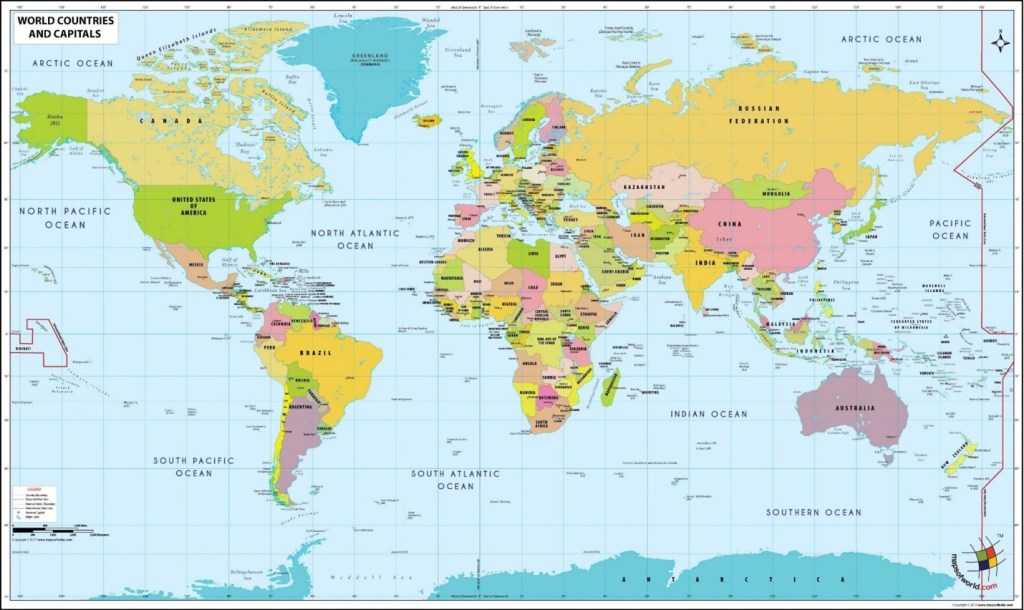
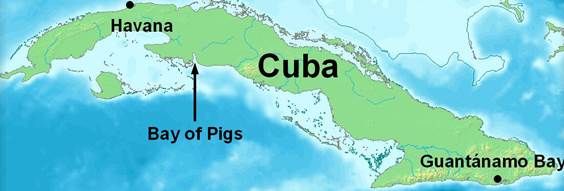

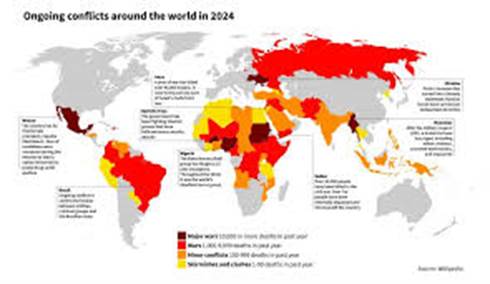
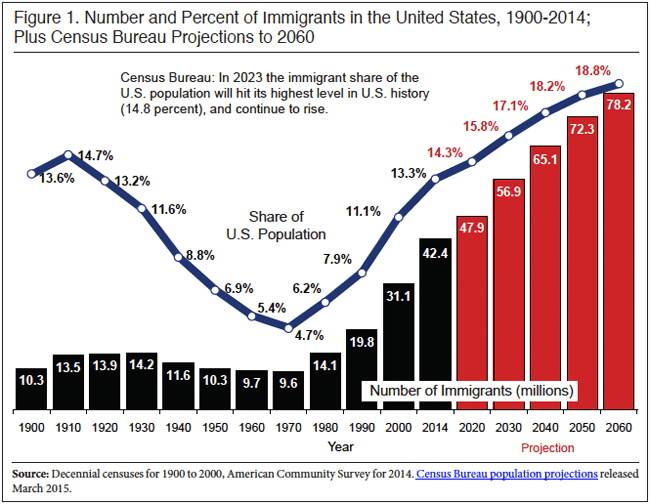
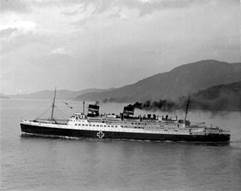
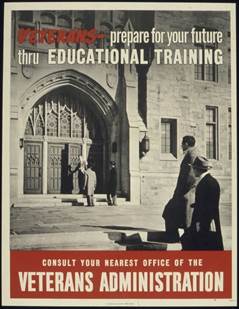


 njcssjournal