Revolutionary New York: 250 Years of Social Change
Edited by Bruce Dearstyne
Reviewed by Dr. Alan Singer, Hofstra University
Revolutionary New York celebrates the 250th anniversary of the American Revolution and the many historical changes that have occurred since, as reflected through the history of the state. This book explores “unfinished revolutions” in the Empire State: the two-and-a-half century struggle to realize the revolution’s ideals and bring increased freedom and opportunities to previously marginalized populations. Itis an Excelsior Edition published by SUNY Press. It includes sixteen essays that explore different aspects of New York State history starting with a chapter on “The Oneida Rebellions, 1763 to 1784.” Editor Bruce Dearstyne provided chapters on the birth of New York State in 1777 and September 11, 2001. There are also chapters on the Erie Canal, slavery in New York State, the Triangle Fire and workplace safety, the Harlem Hellfighters, the struggle by women to win the right to vote, prohibition, the origins of the United Federation of Teachers union, Stonewall, and the COVID-19 pandemic.
According to Jennifer Lemak, Chief Curator of History, New York State Museum, “From Indigenous uprisings and the building of the Erie Canal to suffrage and LGBTQ+ rights, New York State has long been at the forefront of America’s most significant social transformations. This book explores the people, places, and pivotal moments that shaped a more just and inclusive society—revealing how New Yorkers challenged injustice, redefined freedom, and left a lasting impact on our nation.”
Original and deeply researched, The Slow Death of Slavery in Dutch New York: A Cultural, Economic, and Demographic History, 1700–1827 (Cambridge University Press, 2025) provides a new interpretation of Dutch American slavery which challenges many of the traditional assumptions about slavery in New York. With an emphasis on demography and economics, Michael J. Douma shows that slavery in eighteenth-century New York was mostly rural, heavily Dutch, and generally profitable through the cultivation of wheat. Slavery in Dutch New York ultimately died a political death in the nineteenth century, while resistance from enslaved persons, and a gradual turn against slavery in society and in the courts, encouraged its destruction.
This important study is expected to reshape the historiography of slavery in the American North. It joins several recently published works in the same subject area:
Enhancing Social Studies Instruction through Disciplinary Literacy Practices Aligned to the Science of Reading
by Dean Bacigalupo
The New York State Portrait of a Graduate, finalized in July 2025, emphasizes preparing students who are academically skilled, literate across disciplines, and capable of critical thinking, independent learning, and effective communication (New York State Education Department, 2025). Central to this vision is culturally responsive-sustaining (CR-S) education, which ensures that students build respectful relationships, value diverse perspectives, and engage meaningfully in inclusive learning communities. Graduates who demonstrate both cultural responsiveness and academic readiness are well-positioned to thrive in a diverse and rapidly changing world.
These planned types of creative engagement open the door to new ideas in students. It also empowers students to take intellectual risks that challenge assumptions and spark curiosity. These behaviors form the basis for sustained and meaningful critical inquiry. Critical inquiry then enables them to analyze information, evaluate evidence, and understand complex issues from multiple angles. In addition, building strong communication skills support students in articulating their thinking with clarity, and intentional lessons designed to build students self-reflection nurtures metacognition. These are essential to helping them recognize strengths and identify areas for growth. When coupled with a developing sense of global awareness, these competencies equip students to become “lifelong learners” and contribute meaningfully to an interconnected world.
To realize this vision, literacy instruction must extend beyond English Language Arts (ELA) to encompass all content areas, including social studies. The NYS Science of Reading (SoR) literacy initiative, woven into the finalized NYS Portrait of a Graduate, offers research-based strategies for building foundational skills such as decoding, fluency, vocabulary, and comprehension (Lesaux & Carr, 2023). SoR is not a single curriculum or program. Instead, it reflects decades of interdisciplinary research on how children acquire reading and writing skills and provides guidelines for effective instruction. In this context, SoR represents the “how” of literacy development, while the Portrait of a Graduate articulates the “why.” Instruction should empower students to transfer literacy skills across disciplines and engage critically with academic content.
Social studies provides an especially strong context for building disciplinary literacy through engagement with academic texts and primary sources. Unlike fictional narratives, which often feature familiar vocabulary and predictable plots, these texts pose unique challenges. They introduce abstract concepts beyond students’ everyday experiences and typically employ complex sentence structures and specialized organizational patterns. Additionally, they integrate both academic and discipline-specific vocabulary (Cervetti & Hiebert, 2011; Shanahan, 2021; Lesaux, 2020; McKeown et al., 2021). As students move from reading narrative fiction to academic and historical texts, they must navigate dense information, interpret primary and secondary sources, analyze cause-and-effect relationships, track chronological sequences, and consider multiple perspectives (Lee, 2022; Fisher & Frey, 2021).
Writing in social studies reflects a similar shift. Students are asked to construct coherent explanations, synthesize information across sources, and present reasoned arguments that reflect historical thinking (Fisher & Frey, 2021; Moje et al., 2022). Disciplinary literacy instruction supports students in meeting the academic demands of each discipline. By explicitly teaching subject specific vocabulary, sentence structures, discourse conventions, and organizational strategies, teachers help students build the knowledge and skills necessary for deep understanding and clear communication (Lesaux, Kieffer, & Kelley, 2021; McKeown et al., 2021). By embedding such instruction, teachers create classrooms in which students move beyond memorizing facts to reasoning and producing knowledge in ways that mirror historians and social scientists (Shanahan, 2021; Moje et al., 2022).
Disciplinary Literacy in Social Studies
At its core, disciplinary literacy involves developing the specialized ways of reading, writing, and reasoning that characterize experts in each academic field. Each content area demands specific cognitive skills, including attention, working memory, and reasoning strategies. Students also need to master the linguistic features unique to the discipline, such as specialized vocabulary, complex syntax, and distinctive discourse structures, to engage successfully with academic content (Shanahan & Shanahan, 2020; Moje et al., 2020; Lesaux et al., 2021). Focusing on disciplinary literacy helps students move beyond relying solely on personal experience or background knowledge. It enables students to engage meaningfully with historical work. Through this process they analyze primary and secondary sources, evaluate evidence, consider multiple perspectives, and construct arguments grounded in evidence (Wineburg, 2001; Lee, 2022; Moje et al., 2022).
Providing explicit instruction in how historians read, write, and reason gives students the strategies they need to create meaning from complex texts and make historically grounded inferences. The principles of disciplinary literacy align closely with the Science of Reading, as both highlight vocabulary, syntax, and comprehension as foundations for deep understanding. (Castles et al., 2018; Seidenberg, 2017; McKeown et al., 2021). By integrating these approaches, teachers help students develop strong word-level decoding, higher-order comprehension and the reasoning skills necessary to think, read, and write like experts in history and the social sciences.
In social studies, disciplinary literacy requires students to develop several core language skills. These include mastering both academic and subject-specific vocabulary. Academic vocabulary encompasses words that appear across multiple subjects. This allows students to engage in higher-order thinking and cross-disciplinary reasoning (August & Shanahan, 2022; Lesaux et al., 2021). Content-specific vocabulary, in contrast, is unique to social studies and supports students in analyzing and interpreting historical texts.
Disciplinary literacy expands to include instruction in language functions within an academic discipline. Language function refers to how students use language to think, reason, and interact with content. These skills are integrated into learning objectives and reflected in classroom activities. By applying these skills consistently, students deepen their understanding and mirror the work of historians—comparing events, analyzing causes and effects, interpreting sources, and synthesizing information across texts (Wineburg, McGrew, Breakstone, & Ortega, 2020; Lee, 2022).
Syntax is another critical component of disciplinary literacy. Historical and academic writing often features complex sentences with multiple clauses, embedded phrases, and relational markers such as because, although, and therefore. These are used in writing to signal logical relationships like cause and effect, contrast, or comparison. Understanding syntax allows students to follow intricate reasoning, interpret nuanced arguments, and construct their own ideas with clarity (Shanahan & Shanahan, 2021; McKeown et al., 2021).
Discourse is the final part of disciplinary literacy. Discourse refers to the larger structures of communication that guide how knowledge is shared. In social studies, discourse encompasses how historians organize evidence, sequence ideas, and construct arguments. Recognizing these patterns enables students to produce organized, purposeful writing and strengthen their ability to reason critically and communicate effectively (Fisher, Frey, & Hattie, 2023; Moje et al., 2022).
By explicitly teaching both academic and content vocabulary, language function, syntax, and discourse, educators create learning environments where students move beyond superficial understanding and engage in authentic historical inquiry. These skills not only support disciplinary thinking within social studies classes, but also foster transferable literacy skills across other subjects and multiple grade levels (Moje et al., 2020; McKeown et al., 2021).
Strengthening Vocabulary Instruction
Vocabulary instruction in social studies must address the layered nature of the words students encounter. According to the Science of Reading framework, vocabulary can be grouped into three tiers. Everyday conversational terms form the first tier, while the second includes academic words that recur across disciplines. Research by Averil Coxhead (2000) provides a widely used Academic Word List, which can be used to map high-frequency academic words across subjects and grade levels. The list is available online through Victoria University of Wellington (Victoria University of Wellington, n.d.) at https://www.wgtn.ac.nz/lals/resources/academicwordlist. Examples of Tier 2 words include analyze, influence, and structure. Effective instruction in academic vocabulary requires more than providing definitions. Students need opportunities to explore how these words function within texts and discussions. Planned alignment and instruction in academic vocabulary helps students notice subtle differences in meaning and recognize common word pairings. These strategies support students in applying academic language confidently in reading, discussion, and writing tasks across different contexts. (August & Shanahan, 2022; Lesaux et al., 2021).
Tier 3 words are discipline-specific and central to historical reasoning. These include terms like reform, diplomacy, and industrialization. These are most effectively learned through carefully chosen primary sources, historical narratives, contemporary accounts and other authentic text. Exploring these words in context helps students develop a precise understanding of their meaning and significance. Seeing how words function in authentic reading, discussion, and writing tasks helps students to deepen their comprehension and learn to use language accurately and confidently (McKeown et al., 2021; Moje et al., 2022).
Teachers can scaffold discipline-specific vocabulary using a variety of strategies aligned with the Science of Reading. Frayer Models, word maps, and charts that incorporate synonyms, antonyms, text-based examples, and opportunities for students to create original sentences are all effective tools. Sentence frames provide students with language support that guides the use of both academic and content vocabulary. For example, “I can analyze ___ by ___” or “This structure helps ___ because ___” give students a clear structure for expressing their ideas. Teachers can also leverage morphology and word families to help students predict the meanings of new words. For instance, influence can become influential or influencer, and structure can become structural or restructure. Understanding the suffix -ism, which denotes a system, ideology, or practice allows students to analyze and apply terms such as feudalism, mercantilism, capitalism, communism, and socialism.
Visual supports, such as anchor charts, offer reference points for key terms across lessons. Vocabulary journals encourage learners to record new words, include text examples, write original sentences, and reflect on how each word connects to the topic. These personalized exercises reinforce both literacy growth and historical reasoning (Fisher, Frey, & Hattie, 2021).
Teaching Academic Language Functions in Social Studies
The New York State K–12 Social Studies Framework (NYSSED, 2023) outlines a range of academic functions that students should develop to think, communicate, and reason like historians and social scientists. These functions are embedded in the framework’s disciplinary practices and include gathering and using evidence, analyzing and interpreting information, reasoning and argumentation, communication and expression, and problem solving or decision making. Within these practices, students learn to formulate questions, design inquiries, and evaluate sources as part of historical investigations (New York State Education Department, 2023;https://www.nysed.gov/curriculum-instruction/social-studies). These functions are central to disciplinary thinking and must be aligned from instruction through assessment. Doing so connects comprehension to expression and deepens understanding (Wineburg, Martin, & Monte-Sano, 2020; Langer & Applebee, 2020).
Teachers can support language function through a variety of strategies informed by the Science of Reading. Graphic organizers help students compare perspectives or categorize causes and effects. Timelines clarify chronological relationships. Structured prompts encourage evidence-based argumentation. For example, in a unit on the Civil Rights Movement, students might hypothesize causes, examine primary sources, and revise interpretations based on evidence. These tasks mirror historians’ methods and promote critical thinking over memorization (Singer, 2021).
Additional Science of Reading strategies include analyzing contemporary political speeches to identify rhetorical techniques and historical parallels. Peer debates provide opportunities for learners to justify their positions using evidence. Historical simulations, such as mock congressional hearings or town hall meetings, immerse students in applying analytical and inferential skills in authentic contexts. Connecting history instruction to current social issues further enhances relevance and fosters civic engagement (Singer, 2019).
Targeted prompts make language functions explicit. Examples include:
“Compare the motivations of these two historical figures using evidence from primary sources.”
“Sequence these events and explain how one led to another.”
“Based on this speech, what inferences can you make about public opinion at the time?”
“Evaluate the credibility of these sources and justify your reasoning.”
By integrating these strategies, students will move beyond surface-level recall and engage deeply in evidence-based reasoning. They learn to interrogate sources, construct coherent arguments, and articulate well-supported claims. Developing these skills is critical for cultivating historical literacy and preparing students to participate as informed, active citizens (Reisman, 2020; Singer 2021).
Teaching Syntax for Disciplinary Literacy in Social Studies
Syntax instruction plays a vital role in helping students navigate complex texts and articulate sophisticated ideas. When students understand how different sentence structures function, they become more confident readers and writers. Subordinate clauses, cause and effect constructions, and embedded modifiers each offer ways to convey nuance and complexity. As students learn to recognize and use these structures, they strengthen both comprehension and written expression. These skills also enable them to read more analytically and construct clearer arguments (Shanahan & Shanahan, 2019).
Consider the sentence: “Although governments have pledged to reduce emissions, many countries continue to rely on fossil fuels, which has delayed progress on climate goals.”
Subordinate clauses and modifiers help students make sense of contrasts, causal relationships, and the sequence of events. These skills are fundamental to the ways students engage in historical and civic thinking. In the classroom, teachers can build this understanding through brief focused mini-lessons. These lessons might guide students through the role of dependent clauses, transitions, and modifiers as they appear in authentic texts. By slowing down and examining these structures together, teachers help students see how syntax shapes meaning in ways that support deeper reading and writing.
Close reading and annotation provide valuable opportunities for students to analyze how authors construct meaning through syntax. As students mark up a text, they begin to notice how authors signal causality, highlight contradictions, and add meaningful layers of detail. These insights help students read more intentionally and understand how structure supports meaning.
When teachers model these strategies in their own writing, students gain a clear example of how syntax works in practice. They can observe how deliberate sentence structures clarify ideas and reinforce arguments. Seeing these techniques in action helps students apply them in their own writing with greater confidence and skill.
Modeling logical connections in writing reinforces syntax. For example: “Young activists are organizing global climate strikes. Therefore, governments are facing increased pressure to act.”
Classroom applications can be interactive. Students might collaboratively build sentences combining ideas from multiple sources. Peer syntax review encourages attention to clarity and logical flow. Analyzing historical documents or political speeches helps learners notice argumentative structures and rhetorical strategies (Singer, 2019).
Explicit instruction in syntax gives students the skills they need to read critically and think analytically. As they learn how sentence structures work, students begin to make sense of complex texts and strengthen their ability to craft evidence-based arguments. Intentional instruction in this area also helps them to build disciplinary literacy aligned to the Science of Reading. This will support meaningful engagement with content and ideas across subjects. By weaving these practices into daily teaching, educators can empower students to approach learning with confidence and build a deeper understanding of the material.
Promoting Academic Discourse in Social Studies
When academic discourse is deliberately structured, students articulate their reasoning and engage in evidence-based dialogue with classmates (Fisher, Frey, & Hattie, 2023; Singer, 2021). They engage with texts, data, and visual sources to make sense of complex information together. Carefully designed discussion protocols elevate classroom talk from simple recall to deeper, concept-driven conversations. Students strengthen their understanding of content and develop habits of disciplinary thinking. By creating space for purposeful dialogue, educators help students to communicate more clearly and connect ideas meaningfully (Singer, 2021).
Academic discourse supports higher-order cognitive processes, including critical thinking, perspective-taking, and evaluative reasoning. For example, when students analyze the causes of the American Revolution in a Socratic seminar, they have opportunities to articulate and defend their interpretations. They can also question and evaluate the reasoning of their peers. In addition, multimedia debates that draw on oral, written, and visual sources require students to synthesize evidence from a variety of sources. These activities help to further develop understanding and strengthen students’ ability to communicate complex ideas.
Classroom extensions bring these practices to life. Students work together to analyze primary sources and build arguments collaboratively, learning from each other’s reasoning in the process. Structured peer feedback encourages reflection on their own thinking and rhetorical choices, which strengthens metacognitive skills. When teachers connect discourse to contemporary social and civic issues, students see the relevance of their learning and understand themselves as active participants in society (Singer, 2021).
Teachers can scaffold academic discourse through a range of Science of Reading informed practices that strengthen students’ reasoning and communication skills. Strategies such as think-pair-share, small-group discussions, Socratic seminars, and debates create structured opportunities for students to verbalize their thinking. Discourse prompts help learners express complex ideas clearly while maintaining academic rigor. For example, posting sentence frames for students to refer to during a lesson like, “A historical event that connects to this is ___ because ___” helps to guide learners in articulating more nuanced interpretations. Through these approaches, classroom talk becomes a space where students communicate more effectively by using the reasoning and language of historians and social scientists (Shanahan & Shanahan, 2020; Reisman, 2012).
By integrating structured dialogue with Science of Reading principles and CR-S practices, teachers create environments where students develop both disciplinary literacy and cultural awareness. Students practice reasoning like historians by examining evidence and constructing claims in both discussion and writing. Students grow more confident in analyzing complex ideas as they collaborate, question, and explain their thinking. These experiences make learning interactive, meaningful, and relevant. With this students are able to connect their historical thinking to the broader world.
Conclusion
Integrating the Science of Reading, disciplinary literacy, and CR-S pedagogy gives teachers a clear framework for preparing students to think and work like historians and social scientists. When students receive explicit instruction in academic vocabulary, syntax, language functions, and structured discourse across K–12 social studies, they build the skills to reason critically, communicate evidence-based ideas, and engage deeply with complex content (Shanahan & Shanahan, 2019; Wineburg, Martin, & Monte-Sano, 2020).
High-impact instructional practices enable teachers to support students in working with information presented in text, visuals, and spoken language. When we guide students in reading and annotating complex texts, we help them analyze sources and deepen their comprehension. Structured group discussions provide opportunities for students to practice oral reasoning and consider multiple perspectives. Writing essays encourages them to synthesize ideas and develop well-supported arguments, while presentations that blend visual and spoken components strengthen their ability to communicate effectively. Together, these practices mirror how professional historians and other social scientists think and work to help to prepare students to interpret and construct knowledge independently (Reisman, 2020; Fisher, Frey, & Hattie, 2023).
CR-S pedagogy helps students engage meaningfully with diverse perspectives while building the skills they need to succeed across content areas (Singer, 2021). By integrating literacy supports with culturally responsive teaching, classrooms become inclusive environments where all learners can access rigorous content and participate in evidence-based discourse. This approach not only deepens historical reasoning and literacy but also fosters civic competence.
Equally as important, this approach aligns with the recently adopted NYS Portrait of a Graduate, which emphasizes critical thinking, communication, collaboration, and civic engagement (New York State Education Department, 2025). By weaving together explicit literacy instruction, disciplinary literacy strategies, and CR-S practices, teachers prepare students to become academically confident and socially conscious graduates that are ready to contribute thoughtfully to contemporary society.
Addendum: Applications Across Elementary, Middle, and High School
Elementary School: Instruction emphasizes foundational content knowledge, vocabulary development, and comprehension strategies. Graphic organizers, role-playing, and guided discussions support learning (Lesaux, Crosson, & Kieffer, 2020). Activities such as historical story mapping, primary source observation, and age-appropriate explorations of current events help students begin engaging in historical thinking. Cause-and-effect relationships, sequencing events, and identifying multiple perspectives are introduced in developmentally appropriate ways. Linking content to students’ lived experiences fosters engagement and civic understanding (Singer, 2019).
Middle School: Students encounter more complex texts, historical arguments, and analytical tasks. Instruction emphasizes annotation, sentence frames, and graphic organizers that support higher-order thinking, analysis, and synthesis (Moje et al., 2020). Structured debates, document-based journals, and comparative analyses connecting contemporary issues to historical contexts encourage evidence-based argumentation. Culturally responsive strategies ensure students critically engage with diverse narratives and social issues (Singer, 2021).
High School: Instruction centers on authentic historical inquiry, requiring analysis of multiple primary and secondary sources, evaluation of evidence, and synthesis of findings in written, oral, and multimedia formats (Wineburg, Martin, & Monte-Sano, 2020). Explicit instruction in syntax, transitions, and argumentation supports coherent and persuasive expression. Thematic writing, multimedia presentations, reflective oral history projects, and civic engagement initiatives allow students to practice the habits of historians. Civic engagement projects link historical analysis to contemporary democratic participation (Singer, 2021).
By scaffolding disciplinary literacy practices across developmental levels, educators ensure students build the cognitive, linguistic, and analytical skills needed for rigorous historical reasoning and civic engagement. This continuum supports a trajectory from content comprehension in elementary school to authentic historical inquiry and civic participation in high school.
References
August, D., & Shanahan, T. (2022). Developing academic language in content-area classrooms. Educational Researcher, 51(2), 90–101.
Castles, A., Rastle, K., & Nation, K. (2018). Ending the reading wars: Reading acquisition from novice to expert. Psychological Science in the Public Interest, 19(1), 5–51.
Cervetti, G., & Hiebert, E. (2011). What differences in narrative and informational texts mean for the learning and instruction of vocabulary. The Reading Teacher, 65(8), 544–552.
Coxhead, A. (2000). A New Academic Word List. TESOL Quarterly, 34(2), 213–238.
Fisher, D., Frey, N., & Hattie, J. (2021). Visible learning for literacy, grades 6–12: Implementing the practices that work best to accelerate reading and writing. Corwin.
Fisher, D., Frey, N., & Hattie, J. (2023). Visible learning for literacy in content areas: Science of Reading practices for middle and high school. Corwin.
Lesaux, N. K., Crosson, A., & Kieffer, M. J. (2020). Language and literacy development in culturally and linguistically diverse learners: Implications for practice and policy. Harvard Education Press.
Langer, J., & Applebee, A. N. (2020). How writing shapes thinking: A study of teaching and learning in the disciplines. Teachers College Press.
Lee, H. (2022). Supporting disciplinary literacy in middle and high school history classrooms: Strategies for navigating complex texts. Journal of Adolescent & Adult Literacy, 65(4), 415–428.
McKeown, M., Beck, I. L., & Omanson, R. C. (2021). Vocabulary instruction for disciplinary literacy: Integrating academic and content-specific terms. Reading Research Quarterly, 56(3), 345–362.
Moje, E. B., Ciechanowski, K. M., Kramer, K., Ellis, L., Carrillo, R., & Collazo, T. (2020). Working toward third space in content area literacy: Disciplinary literacy in middle and high school classrooms. Journal of Adolescent & Adult Literacy, 64(2), 131–144.
Moje, E. B., Overby, M., Tysvaer, N., & Morris, K. (2022). Disciplinary literacy for all students: Expanding access to historical reasoning in middle and high school classrooms. Reading Research Quarterly, 57(1), 101–124.
Reisman, A. (2020). Historical thinking in practice: Classroom strategies for disciplinary literacy. Routledge.
Shanahan, T. (2021). Disciplinary literacy and content-area reading: What we know and where we need to go. Reading Research Quarterly, 56(1), S41–S62.
Shanahan, T., & Shanahan, C. (2019). Disciplinary literacy meets the Science of Reading. The Reading Teacher, 72(6), 739–748.
Shanahan, T., & Shanahan, C. (2020). Bridging the gap between reading research and disciplinary instruction: Evidence from middle and high school classrooms. Journal of Literacy Research, 52(4), 487–510.
Shanahan, T., & Shanahan, C. (2021). Bridging the gap between reading research and disciplinary literacy. Journal of Adolescent & Adult Literacy, 64(2), 145–154.
Singer, A. (2015). Educating for civic engagement: Theory and practice in social studies classrooms. Teachers College Press.
Singer, A. (2019). Education for democracy: Teaching history and civics in the twenty-first century. Routledge.
Singer, A. (2021). Social studies for a new generation: Pedagogy, curriculum, and assessment. Routledge.
Wineburg, S. (2001). Historical thinking and other unnatural acts: Charting the future of teaching the past. Temple University Press.
Wineburg, S., Martin, D., & Monte-Sano, C. (2020). Reading like a historian: Disciplinary literacy in history classrooms. Teachers College Press.
Wineburg, S., McGrew, S., Breakstone, J., & Ortega, T. (2020). Civic online reasoning and evaluating information. Stanford History Education Group.
Documenting the 250th Anniversaryof theDeclaration of Independence
Prepared by Fabrizio Caruso and Sofia Sanchez
Common Sense by Thomas Paine (1776)
Remember the Ladies by Abigail Adams (1776)
Declaration of Independence, July 4, 1776
Preamble to the United States Constitution (1787)
Declaration of the Rights of Man, August 26, (1789)
Celebrating the Declaration of Independence by John Q. Adams (1821)
Speech on the Oregon Bill by John C. Calhoun (1848)
Declaration of Sentiments (1848)
What to the Slave is the Fourth of July by Frederick Douglass (1852)
Gettysburg Address by Abraham Lincoln (1863)
Thirteenth Amendment (1865)
The New Colossus by Emma Lazarus (1883)
Release from Woodstock Jail by Eugene V. Debs (1895)
Nineteenth Amendment (1920)
Four Freedoms Speech by Franklin Roosevelt (1941)
The Struggle for Human Rights by Eleanor Roosevelt (1948)
Universal Declaration of Human Rights (1948)
Declaration of Conscience by Senator Margaret Chase Smith (1950)
Farewell Address by Dwight D. Eisenhower (1961)
Nation’s Space Effort by John F. Kennedy (1962)
I Have a dream by Dr. Martin Luther King, Jr. (1963)
Civil Rights Act (1964)
Bicentennial Ceremony by Gerald R. Ford (1976)
The Hill We Climb by Amanda Gorman (2021)
Common Sense – Thomas Paine, January 10, 1776
Thomas Paine published Common Sense anonymously in a pamphlet in 1776. In it, he called for independence from Great Britain, which was a foreign idea at the time. He argued that his claims were common sense and that breaking away from the rule of Great Britain was a necessity for the good of the colonists.
In the following pages I offer nothing more than simple facts, plain arguments, and common sense…
I have heard it asserted by some, that as America has flourished under her former connection with Great-Britain, the same connection is necessary towards her future happiness, and will always have the same effect. Nothing can be more fallacious than this kind of argument. We may as well assert that because a child has thrived upon milk, that is never to have meat, or that the first twenty years of our lives is to become a precedent for the next twenty. But even this is admitting more than is true; for I answer… that America would have flourished as much, and probably much more, had no European power taken any notice of her. The commerce by which she hath enriched herself are the necessaries of life, and will always have a market while eating is the custom of Europe.
But she has protected us, say some… We have boasted the protection of Great Britain, without considering, that her motive was interest not attachment… This new World hath been the asylum for the persecuted lovers of civil and religious liberty from every part of Europe… As Europe is our market for trade, we ought to form no partial connection with any part of it…
Europe is too thickly planted with Kingdoms to be long at peace, and whenever a war breaks out between England and any foreign power, the trade of America goes to ruin, because of her connection with Britain… There is something absurd, in supposing a Continent to be perpetually governed by an island…
Where, say some, is the king of America? I’ll tell you, Friend, he reigns above, and doth not make havoc of mankind like the royal brute of Great Britain… So far as we approve of monarchy… in America the law is king…
A government of our own is our natural right… Ye that oppose independence now, ye know not what ye do: ye are opening the door to eternal tyranny. . .
Questions:
How does Paine compare America to a child? How does this compare to the situation of America wanting independence?
Why is Great Britain protecting America, according to Paine?
What happens to America whenever Great Britain is at war? Why?
According to Paine, who is the king of America?
What does Paine say of people who are opposing independence?
“Remember the Ladies” – Abigail Adams, March 31, 1776
Abigail Adams was the wife of revolutionary and second president John Adams. She herself fought for the rights of colonists and advocated for equal rights for women in a time where this was uncommon. In one of her frequent letters to John Adams, she urged him to “remember the ladies” as he was working on the initial draft to the Declaration of Independence. Ultimately, the wording of the Declaration of Independence was exclusionary and women did not receive equal rights until the twentieth century.
Tho we felicitate ourselves, we sympathize with those who are trembling least the Lot of Boston should be theirs. But they cannot be in similar circumstances unless pusillanimity and cowardise should take possession of them. They have time and warning given them to see the Evil and shun it. — I long to hear that you have declared an independancy — and by the way in the new Code of Laws which I suppose it will be necessary for you to make I desire you would Remember the Ladies, and be more generous and favourable to them than your ancestors. Do not put such unlimited power into the hands of the Husbands. Remember all Men would be tyrants if they could. If particular care and attention is not paid to the Ladies, we are determined to foment a Rebellion, and will not hold ourselves bound by any Laws in which we have no voice, or Representation.
That your Sex are Naturally Tyrannical is a Truth so thoroughly established as to admit of no dispute, but such of you as wish to be happy willingly give up the harsh title of Master for the more tender and endearing one of Friend. Why then, not put it out of the power of the vicious and the Lawless to use us with cruelty and indignity with impunity. Men of Sense in all Ages abhor those customs which treat us only as the vassals of your Sex. Regard us then as Beings placed by providence under your protection and in imitation of the Supreme Being make use of that power only for our happiness.
Questions:
What is Abigail Adams asking of John Adams?
What does Abigail Adams believe of all men?
Why must men pay attention to the ladies, according to Adams?
Declaration of Independence – July 4, 1776
On July 4, 1776, the most important foundational document in the history of the United States was approved by the Second Continental Congress. The Declaration of Independence, penned by Thomas Jefferson, outlined a formal “declaration” of the 13 colonies as an independent, sovereign state that had broken away from the British Crown and listed various grievances that the new country had against the King. Jefferson scattered the document with political and social ideological thought that would become ingrained principles of American government and society.
“When in the Course of human events, it becomes necessary for one people to dissolve the political bands which have connected them with another, and to assume among the powers of the earth, the separate and equal station to which the Laws of Nature and of Nature’s God entitle them, a decent respect to the opinions of mankind requires that they should declare the causes which impel them to the separation.
We hold these truths to be self-evident, that all men are created equal, that they are endowed by their Creator with certain unalienable Rights, that among these are Life, Liberty and the pursuit of Happiness.–That to secure these rights, Governments are instituted among Men, deriving their just powers from the consent of the governed, –That whenever any Form of Government becomes destructive of these ends, it is the Right of the People to alter or to abolish it, and to institute new Government, laying its foundation on such principles and organizing its powers in such form, as to them shall seem most likely to effect their Safety and Happiness. Prudence, indeed, will dictate that Governments long established should not be changed for light and transient causes; and accordingly all experience hath shewn, that mankind are more disposed to suffer, while evils are sufferable, than to right themselves by abolishing the forms to which they are accustomed. But when a long train of abuses and usurpations, pursuing invariably the same Object evinces a design to reduce them under absolute Despotism, it is their right, it is their duty, to throw off such Government, and to provide new Guards for their future security.–Such has been the patient sufferance of these Colonies; and such is now the necessity which constrains them to alter their former Systems of Government…”
Questions:
What are the three “unalienable Rights” Thomas Jefferson identifies?
According to Jefferson, what must the people do if a government fails to safeguard these unalienable Rights?
In your opinion, has the U.S. government upheld the message and liberties outlined in the Declaration of Independence. Explain.
Preamble to the Constitution, 1787
Once the United States declared its independence from Great Britain, the nation’s founders needed a stronger, more structured set of laws for government. The initial Articles of Confederation were weak and did structure the government in a way that would be sustainable. Thus, the Constitution was formed after deliberation at the Constitutional Convention. The Preamble serves as the introduction to the Constitution as a whole and establishes the tone and goals for this new budding nation.
“We the People of the United States, in Order to form a more perfect Union, establish Justice, insure domestic Tranquility, provide for the common defense, promote the general Welfare, and secure the Blessings of Liberty to ourselves and our Posterity, do ordain and establish this Constitution for the United States of America.”
Questions:
What is the importance of the first three words of the Constitution?
List the six goals outlined in the Constitution.
Why was it important for the United States to write the Constitution after the Articles of Confederation?
Select one of the goals of the Constitution. Why do you think the authors believed it was important to include the goal that you chose?
“Declaration of the Rights of Man” – National Assembly of France, August 26, 1789
Just a few years after the end of the American Revolution, France was experiencing a revolution of their own. The Third Estate had become overwhelmingly frustrated by the poverty, stagnant economic growth, inept leadership, and poor quality of life they faced while the First and Second Estates lived in luxury and prosperity. The newly formed National Assembly released the Declaration of the Rights of Man in the midst of this violent revolution.
“The representatives of the French people, organized as a National Assembly, believing that the ignorance, neglect, or contempt of the rights of man are the sole cause of public calamities and of the corruption of governments, have determined to set forth in a solemn declaration the natural, unalienable, and sacred rights of man, in order that this declaration, being constantly before all the members of the Social body, shall remind them continually of their rights and duties…Therefore the National Assembly recognizes and proclaims, in the presence and under the auspices of the Supreme Being, the following rights of man and of the citizen:
Articles:
1. Men are born and remain free and equal in rights. Social distinctions may be founded only upon the general good.
2. The aim of all political association is the preservation of the natural and imprescriptible rights of man. These rights are liberty, property, and security, and resistance to oppression.
3. The principle of all sovereignty resides essentially in the nation. No body nor individual may exercise any authority which does not proceed directly from the nation.
…7. No personal shall be accused, arrested, or imprisoned except in the cases and according to the forms prescribed by law. Any one soliciting, transmitting, executing, or causing to be executed, any arbitrary order, shall be punished.
…9. As all persons are held innocent until they have been declared guilty…
10. No one shall be disquieted on account of his opinions, including his religious views, provided their manifestation does not disturb the public order established by law.
11. The free communication of ideas and opinions is one of the most precious of the rights…
Questions:
According to the preamble, what is the purpose of this declaration?
In the context of the French Revolution, why is the wording of “equal in rights” significant?
Discuss the extent in which this declaration compares to the Declaration of Independence?
How do the two declarations define the rights guaranteed to all men?
“Celebrating the Declaration of Independence” –John Quincy Adams, July 4, 1821
While serving as Secretary of State under President James Monroe, John Quincy Adams was invited to Congress to give a speech to commemorate the 45th anniversary of the Declaration of Independence. Adams spends much of this speech praising the Declaration and commending the Founding Fathers’ bravery and triumph over the British Crown in establishing the new nation. This speech has become synonymous with the idea of “American exceptionalism.”
“…In the long conflict of twelve years which had preceded and led to the Declaration of Independence, our fathers had been not less faithful to their duties, than tenacious of their rights. Their resistance had not been rebellion. It was not a restive and ungovernable spirit of ambition, bursting from the bonds of colonial subjection; it was the deep and wounded sense of successive wrongs, upon which complaint had been only answered by aggravation, and petition repelled with contumely, which had driven them to their last stand upon the adamantine rock of human rights.
…It was the first solemn declaration by a nation of the only legitimate foundation of civil government. It was the cornerstone of a new fabric, destined to cover the surface of the globe. It demolished at a stroke the lawfulness of all governments founded upon conquest. It swept away all the rubbish of accumulated centuries of servitude.
…It will be acted o’er [over], fellow-citizens, but it can never be repeated. It stands, and must forever stand alone, a beacon on the summit of the mountain, to which all the inhabitants of the earth may turn their eyes for a genial and saving light, till time shall be lost in eternity, and this globe itself dissolve, nor leave a wreck behind. It stands forever, a light of admonition to the rulers of men; a light of salvation and redemption to the oppressed…so long shall this declaration hold out to the sovereign and to the subject the extent and the boundaries of their respective rights and duties; founded in the laws of nature and of nature’s God. Five and forty years have passed away since this Declaration was issued by our fathers; and here are we, fellow-citizens, assembled in the full enjoyment of its fruits.”
Questions:
What does John Quincy Adams say the Declaration of Independence was the “first” declaration to do?
Why does Adams call the American Revolution a “resistance,” not a “rebellion?”
Why does Adams call the Declaration a “beacon on the summit of the mountain?”
Do you agree with Adams’ perspective of the revolution and the Declaration? Explain.
“Speech on the Oregon Bill” – Senator John C. Calhoun, June 27, 1848
As the nation crept closer to an impending Civil War, American politics became engulfed over the issue of slavery. One of the leading voices of the pro-slavery movement was South Carolina Democrat senator John C. Calhoun. After serving as Andrew Jackson’s vice president, he ended his career in the Senate. There, he was one of the Democratic Party’s most outspoken supporters for “states’ rights” to defend and uphold slavery within its borders. This speech was in response to the Oregon Bill, which was set to outlaw slavery practices in the new Oregon territory.
“The proposition to which I allude, has become an axiom in the minds of a vast majority on both sides of the Atlantic, and is repeated daily from tongue to tongue, as an established and incontrovertible truth; it is, that “all men are born free and equal.” I am not afraid to attack error, however deeply it may be entrenched, or however widely extended, whenever it becomes my duty to do so, as I believe it to be on this subject and occasion.
Taking the proposition literally (it is in that sense it is understood), there is not a word of truth in it. It begins with “all men are born,” which is utterly untrue. Men are not born. Infants are born. They grow to be men. And concludes with asserting that they are born “free and equal,” which is not less false. They are not born free. While infants they are incapable of freedom, being destitute alike of the capacity of thinking and acting, without which there can be no freedom. Besides, they are necessarily born subject to their parents, and remain so among all people, savage and civilized, until the development of their intellect and physical capacity enables them to take care of themselves…
If we trace it back, we shall find the proposition differently expressed in the Declaration of Independence. That asserts that “all men are created equal.” The form of expression, though less dangerous, is not less erroneous…
… [G]overnment has no right to control individual liberty beyond what is necessary to the safety and well-being of society. Such is the boundary which separates the power of government and the liberty of the citizen or subject in the political state, which, as I have shown, is the natural state of man—the only one in which his race can exist, and the one in which he is born, lives, and dies.”
Questions:
What does Senator Calhoun say about the phrase “all men are created equal?”
According to Calhoun, how should the government’s role be limited?
What is the connection that Senator Calhoun makes between liberty and race? What does this mean about his message in this speech?
Declaration of Sentiments – Seneca Falls Women’s Rights Convention, 1848
At the Women’s Rights Convention in 1848, 68 women and 32 men signed the “Declaration of Sentiments”, which was essentially a Bill of Rights for women. The document called for equal social, civil, and political liberties for women, which included the right to vote, equal education opportunities, and more legal protections. Elizabeth Cady Stanton served as the primary author as well as Lucretia Mott and Martha Coffin Wright. The Declaration of Sentiments was modeled after the Declaration of Independence, which was written just 72 years prior.
“We hold these truths to be self-evident; that all men and women are created equal; that they are endowed by their Creator with certain inalienable rights; that among these are life, liberty, and the pursuit of happiness; that to secure these rights governments are instituted, deriving their just powers from the consent of the governed. […]
“The history of mankind is a history of repeated injuries and usurpations on the part of man toward woman, having in direct object the establishment of an absolute tyranny over her. To prove this, let facts be submitted to a candid world. He has never permitted her to exercise her inalienable right to the elective franchise. He has compelled her to submit to laws, in the formation of which she had no voice. He has withheld from her rights which are given to the most ignorant and degraded men – both natives and foreigners. Having deprived her of this first right as a citizen, the elective franchise, thereby leaving her without representation in the halls of legislation, he has oppressed her on all sides. He has made her, if married, in the eye of the law, civilly dead. He has taken from her all right in property, even to the wages she earns. […]
“Now, in view of this entire disfranchisement of one-half the people of this country, their social and religious degradation, – in view of the unjust laws above mentioned, and because women do feel themselves aggrieved, oppressed, and fraudulently deprived of their most sacred rights, we insist that they have immediate admission to all the rights and privileges which belong to them as citizens of these United States.”
Questions:
What other document is the introduction to the Declaration of Sentiments modeled after?
What is the purpose of this excerpt of the Declaration of Sentiments?
List two of the grievances that the authors included.
Do you believe that this declaration is convincing enough to help women gain equal rights? What would you change if anything?
“What to the Slave is the Fourth of July?” – Frederick Douglass, July 5, 1852
Frederick Douglass was born into slavery in Maryland in 1818. He escaped slavery in 1838 and used his tutoring of the English language to become a renowned orator and writer. He used the strength of his words to call for the abolition of slavery and worked to ensure freedom for all enslaved people. This speech was written to encourage people to think about what the Fourth of July means for those in America who are not free and who do not experience the same rights and opportunities as their White counterparts.
“This, for the purpose of this celebration, is the 4th of July. It is the birthday of your National Independence, and of your political freedom . . . There is consolation in the thought that America is young […] The simple story of it is, that, 76 years ago, the people of this country were British subjects . . . You were under the British Crown . . . But, your fathers . . . They went so far in their excitement as to pronounce the measures of government unjust, unreasonable, and oppressive, and altogether such as ought not to be quietly submitted to […] Citizens, your fathers made good that resolution. They succeeded; and to-‐day you reap the fruits of their success. The freedom gained is yours; and you, therefore, may properly celebrate this anniversary. The 4th of July is the first great fact in your nation’s history—the very ring-‐bolt in the chain of your yet undeveloped destiny.
“What, to the American slave, is your 4th of July? I answer: a day that reveals to him, more than all other days in the year, the gross injustice and cruelty to which he is the constant victim. To him, your celebration is a sham; your boasted liberty, an unholy license; your national greatness, swelling vanity; your sounds of rejoicing are empty and heartless; your denunciations of tyrants, brass fronted impudence; your shouts of liberty and equality, hollow mockery; your prayers and hymns, your sermons and thanksgivings, with all your religious parade, and solemnity, are, to him, mere bombast, fraud, deception, impiety, and hypocrisy—a thin veil to cover up crimes which would disgrace a nation of savages. There is not a nation on the earth guilty of practices, more shocking and bloody, than are the people of these United States, at this very hour. Go where you may, search where you will, roam through all the monarchies and despotisms of the old world, travel through South America, search out every abuse, and when you have found the last, lay your facts by the side of the every day practices of this nation, and you will say with me, that, for revolting barbarity and shameless hypocrisy, America reigns without a rival […]
“Allow me to say, in conclusion . . . I do not despair of this country. There are forces in operation, which must inevitably, work the downfall of slavery. “The arm of the Lord is not shortened,” and the doom of slavery is certain. I, therefore, leave off where I began, with hope.”
Questions:
What words does Douglass use that show he does not align with free Americans?
How is the fourth of July different for enslaved people and free people? Use one example from the text.
How does Douglass conclude his speech? Why do you think he feels this way?
“Gettysburg Address” – Abraham Lincoln, November 19, 1863
Between July 1 and 3, 1863, the bloodiest battle of the Civil War took place in Gettysburg, Pennsylvania. Both the Union and Confederacy faced catastrophic losses, with casualties totaling over 50,000 men. The Battle of Gettysburg remains the deadliest battle of American history. Four months later, President Abraham Lincoln arrived at Gettysburg to declare the battlefield as a national cemetery. Many in the crowd were anticipating a long speech from President Lincoln, however this famous address only lasted about 3 minutes. Nevertheless, the Gettysburg Address would become enshrined as one of Lincoln’s, and U.S. history’s, most powerful speeches.
“Four score and seven years ago our fathers brought forth on this continent, a new nation, conceived in Liberty, and dedicated to the proposition that all men are created equal.
Now we are engaged in a great civil war, testing whether that nation, or any nation so conceived and so dedicated, can long endure. We are met on a great battle-field of that war. We have come to dedicate a portion of that field, as a final resting place for those who here gave their lives that that nation might live. It is altogether fitting and proper that we should do this.
…But, in a larger sense, we can not dedicate–we can not consecrate–we can not hallow–this ground. The brave men, living and dead, who struggled here, have consecrated it, far above our poor power to add or detract. The world will little note, nor long remember what we say here, but it can never forget what they did here. It is for us the living, rather, to be dedicated here to the unfinished work which they who fought here have thus far so nobly advanced. It is rather for us to be here dedicated to the great task remaining before us–that from these honored dead we take increased devotion to that cause for which they gave the last full measure of devotion–that we here highly resolve that these dead shall not have died in vain–that this nation, under God, shall have a new birth of freedom–and that government of the people, by the people, for the people, shall not perish from the earth.”
Questions:
According to Lincoln, what is the “proposition” that the nation was founded on?
What is this civil war “testing?”
What is Lincoln’s tone throughout the speech? Use at least two pieces of textual evidence to support your response.
How does President Lincoln use ideas from the Declaration of Independence in this speech? To what extent is it effective? Use at least two pieces of textual evidence to support your response.
Thirteenth Amendment, 1865
The Thirteenth Amendment to the Constitution abolished slavery and involuntary servitude in the United States. Slavery had been an institution in the United States since the first ship holding enslaved people arrived from the shores of Africa in 1619. Prior to the entire United States abolishing slavery, some states had already dismantled the system of slavery. Many became champions for the abolition of slavery and helped enslaved people escape to freedom. The amendment was ratified in December 1865 after being passed by Congress in January 1865. The Thirteenth Amendment serves as the first of the three Reconstruction Amendments. While it ended legal slavery, Southern states later used the “punishment for crime” clause to create “Black Codes”, which prevented Black people from voting and limited their rights.
“Section 1
Neither slavery nor involuntary servitude, except as a punishment for crime whereof the party shall have been duly convicted, shall exist within the United States, or any place subject to their jurisdiction.
“Section 2
Congress shall have power to enforce this article by appropriate legislation.”
Questions:
1. What did the thirteenth amendment accomplish?
2. Where is involuntary servitude still legal?
3. Who has the power to enforce the thirteenth amendment?
4. Do you believe that it is justified for involuntary servitude to be used for criminal offenders? Why or why not?
The New Colossus – Emma Lazarus, 1883
Emma Lazarus was an American poet who wrote the poem “The New Colossus” in 1883. When writing this sonnet, she was inspired by the Statue of Liberty and what the statue represents. In 1903, this poem was engraved onto a bronze plaque and is now on the base of the Statue of Liberty in New York.
Not like the brazen giant of Greek fame,
With conquering limbs astride from land to land;
Here at our sea-washed, sunset gates shall stand
A mighty woman with a torch, whose flame
Is the imprisoned lightning, and her name
Mother of Exiles. From her beacon-hand
Glows world-wide welcome; her mild eyes command
The air-bridged harbor that twin cities frame.
“Keep, ancient lands, your storied pomp!” cries she
With silent lips. “Give me your tired, your poor,
Your huddled masses yearning to breathe free,
The wretched refuse of your teeming shore.
Send these, the homeless, tempest-tost to me,
I lift my lamp beside the golden door!”
Questions:
How does Emma Lazarus describe the Statue of Liberty in the poem? Use one line from the text that supports your answer.
What group of people might lines 10-14 be referring to? How do you know?
Why is it appropriate that Emma Lazarus’s poem “The New Colossus” appears on the base of the Statue of Liberty?
“Speech on Release from Woodstock Jail” – Eugene V. Debs, November 22, 1895
Eugene V. Debs was one of the nation’s leading critics of big business and corporations. He was an adamant socialist and sought to educate workers to unionize to combat malicious business practices by their employers. In 1893, there was a massive strike organized against the Pullman Sleeping Car Company. Debs helped organize a boycott with the American Railway Union. President Grover Cleveland had sent the U.S. military to handle the strike, and Debs was later arrested for federal contempt and conspiracy charges.
“Manifestly the spirit of ‘76 still survives. The fires of liberty and noble aspirations are not yet extinguished. I greet you tonight as lovers of liberty and as despisers of despotism. I comprehend the significance of this demonstration and appreciate the honor that makes it possible for me to be your guest on such an occasion. The vindication and glorification of American principles of government, as proclaimed to the world in the Declaration of Independence, is the high purpose of this convocation.
Speaking for myself personally I am not certain whether this is an occasion for rejoicing or lamentation. I confess to a serious doubt as to whether this day marks my deliverance from bondage to freedom or my doom from freedom to bondage…It is not law nor the administration of law of which I complain. It is the flagrant violation of the Constitution, the total abrogation of law and the usurpation of judicial and despotic power, by virtue of which my colleagues and myself were committed to jail, against which I enter my solemn protest; and any honest analysis of the proceedings must sustain the haggard truth of the indictment.
In a letter recently written by the venerable Judge Trumbull that eminent jurist says: “The doctrine announced by the Supreme Court in the Debs case, carried to its logical conclusion, places every citizen at the mercy of any prejudiced or malicious federal judge who may think proper to imprison him.”. .
The theme tonight is personal liberty; or giving it its full height, depth, and breadth, American liberty, something that Americans have been accustomed to eulogize since the foundation of the Republic, and multiplied thousands of them continue in the habit to this day because they do not recognize the truth that in the imprisonment of one man in defiance of all constitutional guarantees, the liberties of all are invaded and placed in peril.
Questions:
What ideas is Debs referencing when he says “the spirit of ‘76 still survives?”
What rights does Debs claim the government has taken away from him and/or denied?
Do you agree with Debs’ analysis of the situation he faced during the Pullman Strike? Explain your answer using evidence from the speech.
Nineteenth Amendment, 1920
From the founding of the United States, women have been championing for equal rights and the ability to vote. From Abigail Adams calling for John Adams to “remember the ladies” to the suffragettes of the nineteenth and twentieth centuries, women and their allies had been calling for equal opportunities since America’s inception. In 1920, the nineteenth amendment was ratified and women were guaranteed the right to vote.
“The right of citizens of the United States to vote shall not be denied or abridged by the United States or by any State on account of sex.
“Congress shall have power to enforce this article by appropriate legislation.”
Questions:
What did the nineteenth amendment accomplish?
Who holds the power to enforce this amendment?
Do you think that any women were prevented from voting following the 19th amendment? Who? Why?
“Four Freedoms Speech” – President Franklin D. Roosevelt, January 6, 1941
As World War II engulfed Europe, President Roosevelt and the U.S. government navigated the tightrope of effective foreign policy. The United States had long held a strong position of isolationism, and many Americans were firmly opposed to any involvement in Europe’s second world war. However, the U.S. government had shifted away from its isolationism by the end of the 1930s. FDR’s State of the Union address in 1941 echoed a new dawn of American interventionism, as he outlined the four freedoms everybody in the world was entitled to.
“Since the permanent formation of our Government under the Constitution, in 1789, most of the periods of crisis in our history have related to our domestic affairs. Fortunately, only one of these–the four year War Between the States–ever threatened our national unity. Today, thank God, one hundred and thirty million Americans, in forty-eight States, have forgotten points of compass in our national unity.
…In like fashion from 1815 to 1914–ninety-nine years–no single war in Europe or in Asia constituted a real threat against our future or against the future of any other American nationf…In the future days, which we seek to make secure, we look forward to a world founded upon four essential human freedoms.
The first is freedom of speech and expression–everywhere in the world.
The second is freedom of every person to worship God in his own way–everywhere in the world.
The third is freedom from want–which, translated into world terms, means economic understandings which will secure to every nation a healthy peacetime life for its inhabitants–everywhere in the world.
The fourth is freedom from fear–which, translated into world terms, means a world-wide reduction of armaments to such a point in such a thorough fashion that no nation will be in a position to commit an act of physical aggression against any neighbor–anywhere in the world.
That is no vision of a distant millennium. It is a definite basis for a kind of world attainable in our own time and generation. That kind of world is the very anthesis of the so-called new order of tyranny which the dictators seek to create with the crash of a bomb.”
Questions:
What does FDR say has been the reason for (most) periods of crisis in U.S. history? Why is the current situation in Europe (World War II) different?
What are the four freedoms FDR lists in this speech?
In your opinion, do people “everywhere in the world” experience the four freedoms today? Explain your answer.
“The Struggle for Human Rights” – Eleanor Roosevelt, 1948
Eleanor Roosevelt was the first lady of the United States from 1933-1945 while her husband, Franklin D. Roosevelt, was president. She redefined the role by speaking out often and calling attention to important social issues. Her speech “The Struggle for Human Rights” was given at the United Nations, to which she served as a delegate to its General Assembly, where she served as chair of the commission that drafted the Universal Declaration of Human Rights.
We must not be confused about what freedom is. Basic human rights are simple and easily understood: freedom of speech and a free press; freedom of religion and worship; freedom of assembly and the right of petition; the right of men to be secure in their homes and free from unreasonable search and seizure and from arbitrary arrest and punishment. We must not be deluded by the efforts of the forces of reaction to prostitute the great words of our free tradition and thereby to confuse the struggle. Democracy, freedom, human rights have come to have a definite meaning to the people of the world which we must not allow any nation to so change that they are made synonymous with suppression and dictatorship…
The basic problem confronting the world today, as I said in the beginning, is the preservation of human freedom for the individual and consequently for the society of which he is a part. We are fighting this battle again today as it was fought at the time of the French Revolution and at the time of the American Revolution. The issue of human liberty is as decisive now as it was then. I want to give you my conception of what is meant in my country by freedom of the individual…
Indeed, in our democracies we make our freedoms secure because each of us is expected to respect the rights of others and we are free to make our own laws…
Basic decisions of our society are made through the expressed will of the people. That is why when we see these liberties threatened, instead of falling apart, our nation becomes unified and our democracies come together as a unified group in spite of our varied backgrounds and many racial strains…
It is my belief, and I am sure it is also yours, that the struggle for democracy and freedom is a critical struggle, for their preservation is essential to the great objective of the United Nations to maintain international peace and security…
The future must see the broadening of human rights throughout the world. People who have glimpsed freedom will never be content until they have secured it for themselves. In a true sense, human rights are a fundamental object of law and government in a just society. Human rights exist to the degree that they are respected by people in relations with each other and by governments in relations with their citizens.
Questions:
What are the basic human rights that Eleanor Roosevelt claims are “simple and easily understood”?
What does Roosevelt say makes freedom secure?
In your opinion, why are freedom and democracy essential for all people?
“Universal Declaration of Human Rights” – United Nations, December 10, 1948
Following the end of World War II, the victorious European powers and the United States created a new global organization to govern international affairs. The United Nations was created to replace the failed League of Nations, and serve as the leading world institution to maintain peace, protect human rights, and prevent future wars and conflict. One of the first declarations of the United Nations was the Universal Declaration of Human Rights (UDHR). Below are Articles 1 through 7 of the UDHR.
Article 1
All human beings are born free and equal in dignity and rights. They are endowed with reason and conscience and should act towards one another in a spirit of brotherhood.
Article 2
Everyone is entitled to all the rights and freedoms set forth in this Declaration, without distinction of any kind, such as race, colour, sex, language, religion, political or other opinion, national or social origin, property, birth or other status. Furthermore, no distinction shall be made on the basis of the political, jurisdictional or international status of the country or territory to which a person belongs, whether it be independent, trust, non-self-governing or under any other limitation of sovereignty.
Article 3
Everyone has the right to life, liberty and the security of person.
Article 4
No one shall be held in slavery or servitude; slavery and the slave trade shall be prohibited in all their forms.
Article 5
No one shall be subjected to torture or to cruel, inhuman or degrading treatment or punishment.
Article 6
Everyone has the right to recognition everywhere as a person before the law.
Article 7
All are equal before the law and are entitled without any discrimination to equal protection of the law. All are entitled to equal protection against any discrimination in violation of this Declaration and against any incitement to such discrimination.
Questions:
Identify three (3) rights that are guaranteed by the UDHR.
According to Article 2, what kinds of “distinctions” are prohibited from deny people their rights?
Which phrases of ideas in the UDHR connect to the Declaration of Independence?
How does the UDHR expand on the phrase “all men are created equal?”
In your opinion, does the world today uphold these human rights? Explain.
Declaration of Conscience – Senator Margaret Chase Smith (1950)
In June 1950, in the midst of an anti-communist campaign identified with Senator Joseph McCarthy (R-Wisconsin), Senator Margaret Chase Smith (R-Maine) spoke out against “selfish political exploitation” targeting innocent people and threatening basic American rights.
“I would like to speak briefly and simply about a serious national condition. It is a national feeling of fear and frustration that could result in national suicide and the end of everything that we Americans hold dear. It is a condition that comes from the lack of effective leadership either in the legislative branch or the executive branch of our government. … I speak as a Republican. I speak as a woman. I speak as a United States senator. I speak as an American. … I think that it is high time for the United States Senate and its members to do some real soul searching and to weigh our consciences as to the manner in which we are performing our duty to the people of America and the manner in which we are using or abusing our individual powers and privileges. I think that it is high time that we remembered that we have sworn to uphold and defend the Constitution. I think that it is high time that we remembered that the Constitution, as amended, speaks not only of the freedom of speech, but also of trial by jury instead of trial by accusation.”
Whether it be a criminal prosecution in court or a character prosecution in the Senate, there is little practical distinction when the life of a person has been ruined.
“The Basic Principles of Americanism”
Those of us who shout the loudest about Americanism in making character assassinations are all too frequently those who, by our own words and acts, ignore some of the basic principles of Americanism –
The right to criticize.
The right to hold unpopular beliefs.
The right to protest.
The right of independent thought.
The exercise of these rights should not cost one single American citizen his reputation or his right to a livelihood nor should he be in danger of losing his reputation or livelihood merely because he happens to know someone who holds unpopular beliefs. Who of us does not? Otherwise none of us could call our souls our own. Otherwise thought control would have set in.
The American people are sick and tired of being afraid to speak their minds lest they be politically smeared as “Communists” or “Fascists” by their opponents. Freedom of speech is not what it used to be in America. It has been so abused by some that it is not exercised by others. The American people are sick and tired of seeing innocent people smeared and guilty people whitewashed.”
Questions:
1. What is the national feeling identified by Senator Smith?
2. What does she want American leaders to do?
3. What basic rights does Senator Smith believe are threatened?
4. In your opinion, why did Senator Smith focus on “The Basic Principles of Americanism”?
Farewell Address – President Dwight D. Eisenhower, January 17, 1961
On January 17, 1961, President Eisenhower delivered a ten-minute farewell to the American people on national television from the Oval Office of the White House. In the speech, Eisenhower warned that a large, permanent “military-industrial complex,” an alliance between the military and defense contractors, posed a threat to American democracy.
“We now stand ten years past the midpoint of a century that has witnessed four major wars among great nations. Three of these involved our own country. Despite these holocausts America is today the strongest, the most influential and most productive nation in the world. Understandably proud of this pre-eminence, we yet realize that America’s leadership and prestige depend, not merely upon our unmatched material progress, riches and military strength, but on how we use our power in the interests of world peace and human betterment.”
Throughout America’s adventure in free government, our basic purposes have been to keep the peace; to foster progress in human achievement, and to enhance liberty, dignity and integrity among people and among nations. To strive for less would be unworthy of a free and religious people. Any failure traceable to arrogance, or our lack of comprehension or readiness to sacrifice would inflict upon us grievous hurt both at home and abroad.
A vital element in keeping the peace is our military establishment. Our arms must be mighty, ready for instant action, so that no potential aggressor may be tempted to risk his own destruction. … Until the latest of our world conflicts, the United States had no armaments industry. American makers of plowshares could, with time and as required, make swords as well. But now we can no longer risk emergency improvisation of national defense; we have been compelled to create a permanent armaments industry of vast proportions. Added to this, three and a half million men and women are directly engaged in the defense establishment. We annually spend on military security more than the net income of all United State corporations. … This conjunction of an immense military establishment and a large arms industry is new in the American experience. The total influence – economic, political, even spiritual – is felt in every city, every state house, every office of the Federal government. We recognize the imperative need for this development. Yet we must not fail to comprehend its grave implications. Our toil, resources and livelihood are all involved; so is the very structure of our society.
In the councils of government, we must guard against the acquisition of unwarranted influence, whether sought or unsought, by the military-industrial complex. The potential for the disastrous rise of misplaced power exists and will persist. We must never let the weight of this combination endanger our liberties or democratic processes. We should take nothing for granted.”
Questions:
1. According to President Eisenhower, why does the United States need to maintain a strong military?
2. Why is President Eisenhower concerned about a “military-industrial complex”?
3. What does President Eisenhower alert the American people to do?
“The Nation’s Space Effort” – President John F. Kennedy, September 12, 1962
Five years prior, the Soviet Union had successfully launched Sputnik 1 into orbit, sparking the beginning of the Space Race between the U.S. and U.S.S.R. The United States quickly sought to catch up to the Soviet Union’s many “firsts” in the Space Race (first satellite, first man in space, first man to orbit the Earth, etc.). Then, in September 1962, President Kennedy gave a speech at Rice University discussing the new goal for America’s space program: put a man on the Moon before the end of the decade.
“…We set sail on this new sea because there is new knowledge to be gained, and new rights to be won, and they must be won and used for the progress of all people. For space science, like nuclear science and all technology, has no conscience of its own. Whether it will become a force for good or ill depends on man, and only if the United States occupies a position of pre-eminence can we help decide whether this new ocean will be a sea of peace or a new terrifying theater of war. I do not say the we should or will go unprotected against the hostile misuse of space any more than we go unprotected against the hostile use of land or sea, but I do say that space can be explored and mastered without feeding the fires of war, without repeating the mistakes that man has made in extending his writ around this globe of ours.
There is no strife, no prejudice, no national conflict in outer space as yet. Its hazards are hostile to us all. Its conquest deserves the best of all mankind, and its opportunity for peaceful cooperation may never come again. But why, some say, the moon? Why choose this as our goal? And they may well ask why climb the highest mountain? Why, 35 years ago, fly the Atlantic? Why does Rice play Texas?
We choose to go to the moon. We choose to go to the moon in this decade and do the other things, not because they are easy, but because they are hard, because that goal will serve to organize and measure the best of our energies and and skills, because that challenge is one that we are willing to accept, one we are unwilling to postpone, and one which we intend to win, and the others, too.”
Questions:
Why does President Kennedy say it is important to “set sail on this new sea?”
What justification does President Kennedy give that the United States should be the first nation to conquer space?
How does Kennedy’s vision for space reflect the ideals in the founding documents?
“I Have a Dream” (from the March on Washington) — Dr. Martin Luther King, Jr., August 28, 1963
On August 28, 1963, in the midst of the Civil Rights Movement, civil rights leaders and organizations planned a momentous rally in Washington, D. C. Officially known as the March on Washington for Jobs and Freedom, over 200,000 people gathered to protest and advocate for the end of segregation and guarantee of civil rights for African Americans. At the end of the march, at the Lincoln Memorial, Dr. Martin Luther King, Jr., one of the Civil Rights Movement’s most influential leaders, delivered his most famous speech.
“…It would be fatal for the nation to overlook the urgency of the moment. This sweltering summer of the Negro’s legitimate discontent will not pass until there is an invigorating autumn of freedom and equality. 1963 is not an end, but a beginning. Those who hope that the Negro needed to blow off steam and will now be content will have a rude awakening if the nation returns to business as usual…
…We cannot be satisfied as long as the Negro’s basic mobility is from a smaller ghetto to a larger one. We can never be satisfied as long as our children are stripped of their selfhood and robbed of their dignity by signs stating: for whites only…
…So even though we face the difficulties of today and tomorrow, I still have a dream. It is a dream deeply rooted in the American dream. I have a dream that one day this nation will rise up and live out the true meaning of its creed: We hold these truths to be self-evident, that all men are created equal.
I have a dream that one day on the red hills of Georgia, the sons of former slaves and the sons of former slave owners will be able to sit down together at the table of brotherhood.
I have a dream that one day even the state of Mississippi, a state sweltering with the heat of injustice, sweltering with the heat of oppression will be transformed into an oasis of freedom and justice. I have a dream that my four little children will one day live in a nation where they will not be judged by the color of their skin but by the content of their character. I have a dream today.”
Questions:
How does Dr. King describe the current situation of African Americans in 1963?
Why does Dr. King call 1963 “not an end, but a beginning?”
What founding document does Dr. King reference in this speech? Why does he reference this document?
In your opinion, has the “dream” described in this speech been achieved? Explain.
Civil Rights Act of 1964
On July 2, 1964, President Lyndon B. Johnson signed the Civil Rights Act of 1964 into law. This act called for desegregation of public spaces, schools, and made voting free and fair for all. This was the most sweeping civil rights legislation since Reconstruction. The act made segregation illegal but it also created the Equal Employment Opportunity Commission (EEOC) to enforce laws that prohibit discrimination based on race, color, religion, sex, national origin, disability, or age in hiring, promoting, firing, setting wages, testing, training, apprenticeship, and all other terms and conditions of employment.
To enforce the constitutional right to vote, to confer jurisdiction upon the district courts of the United States to provide injunctive relief against discrimination in public accommodations, to authorize the Attorney General to institute suits to protect constitutional rights in public facilities and public education, to extend the Commission on Civil Rights, to prevent discrimination in federally assisted programs, to establish a Commission on Equal Employment Opportunity, and for other purposes. Be it enacted by the Senate and House of Representatives of the United States of America in Congress assembled, That this Act may be cited as the “Civil Rights Act of 1964”.
TITLE I: No person acting under color of law shall … apply any standard, practice, or procedure different from the standards, practices, or procedures applied under such law or laws to other individuals within the same county, parish, or similar political subdivision who have been found by State officials to be qualified to vote; deny the right of any individual to vote in any Federal election because of an error or omission on any record or paper relating to any application, registration, or other act requisite to voting … employ any literacy test as a qualification for voting in any Federal election unless (i) such test is administered to each individual and is conducted wholly in writing…
TITLE II: All persons shall be entitled to the full and equal enjoyment of the goods, services, facilities, and privileges, advantages, and accommodations of any place of public accommodation, as defined in this section, without discrimination or segregation on the ground of race, color, religion, or national origin.
All persons shall be entitled to be free, at any establishment or place, from discrimination or segregation of any kind on the ground of race, color, religion, or national origin, if such discrimination or segregation is or purports to be required by any law, statute, ordinance, regulation, rule, or order of a State or any agency or political subdivision thereof…
Questions:
What era of history led to the Civil Rights Act of 1964?
What does Title I of the Civil Rights Act pertain to?
What caused Title I to be necessary?
What is the goal of Title II?
Why do you believe that the Civil Rights Act was essential?
Bicentennial Ceremony at the National Archives – President Gerald R. Ford, July 2, 1976
On August 9, 1974, President Richard Nixon had resigned from the presidency following the disastrous Watergate scandal. Gerald Ford, Nixon’s vice president, assumed the office immediately and pardoned Nixon one month later. The entire Watergate scandal and Nixon’s resignation created great disdain against the U.S. government. Many Americans became extremely untrustworthy of elected officials and had little faith in the government. Becoming President during the bicentennial of the U.S., Ford dealt with difficult challenges both domestically and abroad.
“The Declaration is the Polaris of our political order–the fixed star of freedom. It is impervious to change because it states moral truths that are eternal.
The Constitution provides for its own changes having equal force with the original articles. It began to change soon after it was ratified, when the Bill of Rights was added. We have since amended it 16 times more, and before we celebrate our 300th birthday, there will be more changes…
Jefferson’s principles are very much present. The Constitution, when it is done, will translate the great ideals of the Declaration into a legal mechanism for effective government where the unalienable rights of individual Americans are secure. In grade school we were taught to memorize the first and last parts of the Declaration. Nowadays, even many scholars skip over the long recitation of alleged abuses by King George III and his misguided ministers. But occasionally we ought to read them, because the injuries and invasions of individual rights listed there are the very excesses of government power which the Constitution, the Bill of Rights, and subsequent amendments were designed to prevent…
But the source of all unalienable rights, the proper purposes for which governments are instituted among men, and the reasons why free people should consent to an equitable ordering of their God-given freedom have never been better stated than by Jefferson in our Declaration of Independence. Life, liberty, and the pursuit of happiness are cited as being among the most precious endowments of the Creator–but not the only ones.”
Questions:
What role does President Ford say the Constitution has in relation to the Declaration?
Why does President Ford say it is important to read the grievances listed against King George III in the Declaration?
Do you agree with President Ford that the Declaration is unchanging while the Constitution changes over time? Explain your answer.
“The Hill We Climb” – Amanda Gorman, 2021
This poem was read at the inauguration of President Joseph Biden in 2021 by its author, Amanda Gorman. She is a poet, activist, and author who wrote this poem for the inauguration under the theme of “America United”.
…We, the successors of a country and a time where a skinny black girl descended from slaves and raised by a single mother can dream of becoming president only to find herself reciting for one. And, yes, we are far from polished, far from pristine, but that doesn’t mean we are striving to form a union that is perfect, we are striving to forge a union with purpose, to compose a country committed to all cultures, colors, characters and conditions of man.
So we lift our gazes not to what stands between us, but what stands before us. We close the divide because we know to put our future first, we must first put our differences aside. We lay down our arms so we can reach out our arms to one another, we seek harm to none and harmony for all…
That is the promise to glade, the hill we climb if only we dare it because being American is more than a pride we inherit, it’s the past we step into and how we repair it. We’ve seen a force that would shatter our nation rather than share it. That would destroy our country if it meant delaying democracy, and this effort very nearly succeeded. But while democracy can periodically be delayed, but it can never be permanently defeated.
In this truth, in this faith, we trust, for while we have our eyes on the future, history has its eyes on us, this is the era of just redemption we feared in its inception we did not feel prepared to be the heirs of such a terrifying hour but within it we found the power to author a new chapter, to offer hope and laughter to ourselves, so while once we asked how can we possibly prevail over catastrophe, now we assert how could catastrophe possibly prevail over us. We will not march back to what was but move to what shall be, a country that is bruised but whole, benevolent but bold, fierce and free, we will not be turned around or interrupted by intimidation because we know our inaction and inertia will be the inheritance of the next generation, our blunders become their burden. But one thing is certain: if we merge mercy with might and might with right, then love becomes our legacy and change our children’s birthright.
So let us leave behind a country better than the one we were left, with every breath from my bronze, pounded chest, we will raise this wounded world into a wondrous one, we will rise from the golden hills of the West, we will rise from the windswept Northeast where our forefathers first realized revolution, we will rise from the lake-rimmed cities of the Midwestern states, we will rise from the sunbaked South, we will rebuild, reconcile, and recover in every known nook of our nation in every corner called our country our people diverse and beautiful will emerge battered and beautiful, when the day comes we step out of the shade aflame and unafraid, the new dawn blooms as we free it, for there is always light if only we’re brave enough to see it, if only we’re brave enough to be it.
Questions:
Why does Amanda Gorman urge readers to look towards the future?
What does Gorman believe that being an American includes?
What is the overall tone of the poem? Cite two quotes that support your answer.
Twenty-five years before Frederick Douglass gave his famous “What to the Slave is the Fourth of July” speech in Rochester, the enslaved population of New York contemplated a similar question as they prepared to celebrate the abolition of slavery, on July 4, 1827.
As communities across the state decorated to honor the birthday of the new nation, it became increasingly clear to the state’s Black communities that perhaps parading and celebrating in public space to honor their own freedom, had the potential to not end well if they did so on the 4th, the official day of the legal end of slavery in the state. They feared being attacked and suffering other types of violence from the White community because they too would call upon the words their enslavers had shouted so long ago.
They had waited 28 years for legal slavery to end, the time clock started in 1799 with the passing of the Act of Gradual Abolition, which gave no end date for their emancipation, but bound their unborn children to their mother’s enslavers until they were in their mid to late 20s. The Act that opened the way for their children, but not for anyone else. Those who toiled inside and outside for the benefit of others, would be left behind, to continue raising other people’s children, while theirs, at some point in the future could walk unfettered by the unseen, but ever-present chains they wore.
Then came the 1810 law that required the people holding those born free to teach them to read and write. This law was largely ignored, in spite of the fact that not doing so would allow those born free to see emancipation earlier at 18. Something that the New York Manumission Society helped a number of them do, by taking their enslavers to court and proving that at 18, they could neither read nor write. Then it was seven more years to get to the 1817 Act relative to Servants and Slaves that actually set a date for abolition, even though it was ten years in the future. It also pave the way for those born before July 4, 1799, and called “slaves” to be released. Finally, there was more than just hope.
But things rarely play out as smoothly as we would like. Weeks before the day was to arrive the conversations started happening. I imagine them beginning as whispered conversations, shared on the fly, when they were out and about working. Then in a somewhat louder voice when they were alone. Their conversations grew until preachers began talking about it. Up and down the road as they moved about, between those enslaved and those already freed, they continued.
They found themselves debating if it was wise for them to celebrate in mass on the official day, because it was the new nation’s birthday, and racism was increasingly a cause for worry as more and more were manumitted, and the presence of free Blacks walking the streets, starting businesses, living their lives began to grind on people’s nerves. Not to mention it had been against the law from the early 1690s for enslaved people to make noise on Sundays. It even appeared in the nation’s first Black owned newspaper which was published in New York City.
These conversations about when to celebrate happened years after many of them had overheard their enslavers talking about obtaining their freedom from Britain in the years leading up to the Revolutionary War. Even as their enslavers tossed around words suggesting that they were being treated like slaves and would not have it, as if taxation without representation equaled being seen as property and not people. I imagine that many enslaved men who had replaced their enslavers on the battlefield thought about their own freedom for the eight years of the war. I’m sure they wondered if the promise of their own freedom given to them when they put on the uniforms, either red coats, or blue jackets, would truly play out.
During the war years as separation from Britain reigned supreme, the large population of enslaved had to manage not only their own lot in life, but the stress and anger of their enslavers who lost homes, crops, animals, stored food, family members, and even other enslaved as various parts of the state were burned out or stolen as troops from both sides, passed by or engaged in battle.
Years after in 1783, at end of the war when Loyalists and British troops were leaving New York, some enslaved may have begun grieving the loss of family or friends who did gain their freedom and may have been aboard one of the ships that took thousands of newly freed Black people from New York’s harbor to Nova Scotia and other ports on evacuation day. After all that time, the enslaved, longing to finally be free, found themselves debating whether it was safe for them to rejoice in their own freedom on the actual day it was given.
As we approach the 200th anniversary of the abolition of slavery in New York on July 4/5 of 2027, many of us find ourselves contemplating some of the same thoughts the waiting to be free people of Albany and New York in general, did. Thinking on some of the sentiments Douglass shared in his 4th of July oration. Asking ourselves, what does the 4th of July mean to us? As my colleagues and I delve deeper into the mountains of documents related to the long history of chattel slavery in New York, and the cumbersome process of dismantling a portion of the institution of slavery, we find ourselves constantly amazed that so many people are still unaware of the deep roots slavery has in our state’s history.
Every once in a while, I find myself thinking that surely it is not so. To figure it out I began talks on occasion with a short three to five question survey. Answers given simply by raising a hand. Unfortunately, when I did this recently before giving an overview of Slavery in New York at Riverbank State Park, the audience of fifty or so people proved that things remained the same. That no matter if the audience is Black or White, or a mixture of our state’s wonderful cultural rainbow, the awareness of New York as a place of enslavement remains too hidden.
I can ask about the 1619 Project and people are aware of it, even if they have not read it. But if I ask when the first enslaved arrived in New Netherland, there generally is silence. I have learned to also ask them if they know what the original colonial name of New York was. Then I generally get a few hands, but not many. So, we are all clear, for years we danced around the year, finally settling on 1626, but after years of wondering, we know now that on August 29, 1627, 22 African men and women arrived in New Amsterdam on a Dutch privateer and became the first of the Dutch West India company’s slaves. We know the name of the ship and the circumstance surrounding how they ended up on a Dutch privateer. Currently we are awaiting the publishing of a paper that will also give us the name of the Portuguese ship they were taken from. Those 22 were part of a larger cargo of over 200 people headed to Brazil. Those 22 men and women were the first, but they would not be the last.
From that day forward, for 200 years, West Central, West, and Malagasy Africans would become the dominant labor force in the colony of New Netherland that would ultimately become the state of New York. Although this truth has been shared for years, it is still too common for people to say that slavery was not part of our state’s history. Part of that is due to the use of the word servant(s) instead of slave(s). In document collections across the state, in maps referring to burial grounds, the servants take up a lot of space. And with our love of British history, we imagine programs like Upstairs, Downstairs, or more recently Downton Abbey, where the servants are White making a decent wage, not enslaved Africans or their descendants. So, we read or listen to Douglass’ speech and say, well…it didn’t happen here. New York was a place of freedom, or a landmass that needed to be crossed to take people to the freedom they’d find in Canada. But it did. And it happened in Canada too.
The enslavement of thousands is only one part of the institution of slavery that graced New York. During the 200 years of forced servitude and long after 1827 ended the law of holding people as property, wealth flowed into the state as it had for decades because of the multiple economic links to the transatlantic slave trade, the ties that bound New York to the rest of the world. The wheat economy that was birthed in the 1630s with the establishment of Rensselaerwijck would spread southward down the Hudson River Valley and out to Long Island, and thousands of tons of wheat would flow from the harbors of New York to the Caribbean and West Indies to feed those bound to sugar and salt plantations. Money from the coffers of New York’s elite families would purchase sugar plantations in Jamaica, Barbados, and on other islands, and that wealth would create beautiful homes well into the 19th century like Hyde Hall on Glimmerglass Lake. As the years rolled along, enslaved from those sugar plantations would flow in and out of New York to serve in one way or another their enslavers or their relatives. Or to be sold, bequeathed or rented out, depending upon the need.
The ties to Southern tobacco and later sugar plantations that began during the Dutch period would continue to grow throughout the 200-year history, as people were brought directly from Africa and sold in the South, leaving New York City with the legacy of being the second largest slave market in the 13 colonies. And later in the 19thcentury, Brooklyn would flourish as more of that sugar would arrive to be processed there. As southern cotton expanded, after slavery had ended here, New Yorkers would build factories up and down the Hudson River for processing it. Political dances would be done, to hide the collusions between a free state and southern slavery. Profits would not be forfeited.
Insurance companies based in New York would grow bigger to cover cargo on ships flowing in and out including slave ships. More slave traders would move to New York, the ancestral home of many, in the early 19th century, where ships were easier to get and sail from the state’s harbors to the coasts of West Africa and even though they could not bring Africans into the US any longer, they were fine taking them into Cuba. Fine, until Lincoln finally said no more and the last of New York’s slave traders was hanged in 1861.
The New York Stock Exchange would grow out of these economic links to slavery, and more money would be made. Continuing the process began by the Dutch of individual investors, buying stock in the shipments, just one of many commodities on the world market. The underbelly of slavery would continue to grow fat, well past the years of Douglass’ speech and eventually the history of New York slavery would try to be buried in the early 20th century as the colonial revival period saw many people rewriting their family’s early stories, removing the names of women who raised children, or men who plowed fields, or just burn the wills to hide the numbers of people passed on. But even as hard as they tried, the history of slavery would not be buried for long. Bones were unearthed as villages grew into towns, then into cities and land, once considered worthless was needed. In the expansion, the presence of unmarked graves sent people to maps, which showed African burial grounds or Colored or Negro ones. But that would not stop the desecration. The projects would just move on with remains being dug up and discarded or just covered over.
The legacy of 200 years of slavery has increasingly caught up with many, as more people delve into their family histories and find that their ancestors were not as pristine as once believed, and the money they bequeathed across the generations came tainted with blood, sweat and a lot of tears. Or they run into someone with the same last name but not the same color skin which has resulted in the messages on many DNA companies which inform people of that before they are shocked by the discovery of who they really are.
What to the slave is the 4th of July is a question that haunts us even today, as we are challenged by the rewriting of our nation’s history by those who live in a settler’s colonized world. The foundation of our nation did not bypass New York. And, it reminds us daily that our state was built on a slave society even as we try to pretend, we were a society with just a few slaves.
2027 is just around the corner, and July 4th will echo Douglass’ time, and fall on a Sunday. A day sacred in its own right. And like the ancestors, across the state, including the folks right here in Albany, many of us will bypass it as the day to honor the abolition of slavery in New York, because well…some history does seem to repeat itself. And like them, we will take to the streets on Monday, July the 5th, and we will listen as bells ring in the air and from our hands at 12:00 noon, for one minute, to remind those who know, and educate those who do not, that slavery was part of New York’s history, and it will never be forgotten again.
The museum and learning center’s permanent and rotating exhibitions tell the unique story of Yogi Berra, while exploring history, culture, science and society within the larger context of baseball and sports. It is located on the campus of Montclair State University at 8 Yogi Berra Drive, Little Falls, NJ 07424. It is open Wednesday-Sunday from noon until 5 PM. Admission is $15 for adults, $10 for children under 18, and $10 for seniors. Admission is free for veterans and Montclair State students. Website: https://yogiberramuseum.org/
Yogi Berra transcended the world of sports to become an American icon. Few athletes have made such a transition. Yogi is a household name, known even to those unfamiliar with baseball history. He was a child of Italian immigrants, a World War II Navy gunner who served at D-Day, a record-holding athlete, a Major League coach and manager, a husband and father, an engaged community member, a friend to many and, famously, a one-of-a-kind master with language who uttered some of the most frequently recalled sayings in American life. After a long career and during a very public retirement in which he remained involved in baseball, Yogi spent many of his days at the Yogi Berra Museum & Learning Center in Montclair, N.J., where his interests in education, sports and community came together as one. His legacy is carried on in the Museum’s exhibitions and programs.
Yogi Berra Career Highlights
• Played on 10 world championship teams and 14 pennant winners in 17 full seasons; played in 75 World Series games • Three-time American League Most Valuable Player (1951, 1954, 1955); never finished lower than fourth in MVP voting from 1950-57 • Led American League catchers in home runs and RBI in each of nine straight seasons (1949-1957) • Selected to play in 15 successive All-Star Games, 18x All-Star overall • Played outfield early and late in his career, a total of 260 games • Hit the first pinch hit home run in World Series history (1947) • Caught at least 100 games in 10 seasons, and caught both games of 117 doubleheaders • Became one of only four catchers to have a 1.000 fielding percentage for the season (1958) • Caught the only Perfect Game in World Series history (1956) • Selected to the Major League Baseball All-Century Team • No. 8 retired by the New York Yankees
Famous Yogi-isms
“When you come to a fork in the road, take it.”
“It ain’t over ’til it’s over.”
“It’s deja vu all over again.”
“Never answer an anonymous letter.”
“I didn’t really say everything I said.”
“I want to thank you for making this day necessary.”
“We made too many wrong mistakes.”
“You can observe a lot by watching.”
“The future ain’t what it used to be.”
“Nobody goes there anymore. It’s too crowded.”
“It gets late early out there.”
“If the world were perfect, it wouldn’t be.”
“Why buy good luggage? You only use it when you travel.”
“If the people don’t want to come out to the ballpark, nobody’s going to stop them.”
New York Archives Junior (https://considerthesourceny.org/new-york-archives-jr/fall-2023): Designed for grades 4-8, NY Archives JR! The Fall 2023 theme issue is on the Haudenosaunee (Iroquois) people. Some Haudenosaunee people sided with the British. In 1777, colonists attacked Haudenosaunee homes.
Treason of the Blackest Dye (https://www.youtube.com/watch?v=b4SGafhwyfo) This video was created as a companion to the Fall 2024 NY Archives JR! and tells the story of the capture of John Andre and the area known as the Neutral Zone during the Revolution.
Created for teachers of the 4th and 7th grades, this educational guide provides five lessons that introduce students to Fort Orange and the world of New Netherland.
Washington’s Headquarters State Historic Site (https://parks.ny.gov/historic-sites/17/details.aspx): In the critical months that General George Washington spent at Newburgh, he made some of his most important contributions to shaping the American republic. It was here that Washington rejected the idea of an American monarchy.
Theme 4: We the People
Federal Hall (https://parks.ny.gov/historic-sites/17/details.aspx): On Wall Street in Lower Manhattan, George Washington took the oath of office as our first President. The building serves as a museum and memorial to our first President and the beginnings of the United States of America.
First Steps to Freedom (https://nysm.nysed.gov/sites/default/files/ep_teachers-guide_final_links_a_1.pdf): The educational materials in this guide were developed around President Abraham Lincoln’s Preliminary Emancipation Proclamation of 1862, a draft of which is in the collections of the New York State Library in Albany, New York.
The Fifteenth Amendment Educator Guide (https://nysm.nysed.gov/fifteenth-amendment): On February 3, 1870, the United States ratified the 15th Amendment, which allowed all African American men the right to vote. The educational materials in these activities were developed to explore the ratification of the 15th Amendment.
Fraunces Tavern Museum (https://www.frauncestavernmuseum.org/history): Built by the De Lancey family in 1719, 54 Pearl Street has been a private residence, hotel, and one of the most important taverns of the Revolutionary War. The Fraunces Tavern Museum website featuring educational resources focused on the taverns impact during the American Revolution and its’ evolving legacy today.
James Arnett Friesen Press 384 pages, hardcover, softcover, and ebook
Reviewed by Emily Mernin
It may be hard for modern readers to imagine Manhattan as a rural island or New York City, now home to over eight million, as “a mere smudge along the shore far across the bay.” It might be difficult, too, for anyone who has travelled through New Jersey — the most tightly packed state, according to the U.S. Census Bureau — to picture it as it once was: a sparsely populated British colony of rolling hills, farmland, and small villages.
This year marks the semiquincentennial of the start of the American Revolution, the brutal eight-year war that resulted in independence from Great Britain. Much of the conflict unfolded in Philadelphia and in what are now the five boroughs of New York, plus the verdant land between the two cities: the Garden State. In his second novel, The Monmouth Manifesto, James Arnett immerses readers in this landscape as he follows two yeoman farmers who enlist to fight as Loyalists.
Arnett’s plot and characters are drawn entirely from historical accounts, all of which are refer enced in his epilogue, afterword, and appendix; he changes few names and dates. The narrative begins with Richard Lippincott in early July 1776 at a Quaker meeting house in Shrewsbury, on the “northeastern coastal plain.” Described as “even- featured, lean, and about five-foot-nine,” the thirty- one-year-old listens intently to a discussion of “the current chaotic conditions of the Province of New Jersey”— specifically the spreading power of George Washington’s Continental Army. One of the meeting’s elders rattles off James and Richard fight side by side in the Battle of Staten Island in August 1777 and become unexpectedly close, even if James is “one of those polished arrogant Anglicans” and Richard is “one of those prickly sanctimonious Dissenters.” As the years pass — and their home lives feel increasingly distant — they influence each other greatly. Despite a series of rebel advances and London’s declining interest in its restless colonies, they help each other stay loyal to the cause. In 1781, after he learns of Maggie’s death, Richard rents a room for himself and Esther in Manhattan, where most of the Loyalists in the region have taken refuge. Although charting the moral evolution of multiple characters, Arnett zeroes in especially on Richard’s slow acceptance of bloodshed, military life, and revenge.
In 1782, Richard’s eventual comfort with violence culminates in his desire to person ally execute the rebel captain Joshua “Jack” Huddy. Richard organizes the prisoner of war’s hanging without the proper orders — a dangerous decision that surprises himself, Esther, and even James (who later resettles in Nova Scotia). The unwarranted murder of Huddy enrages the Patriots. They write the Monmouth Manifesto, a document “demanding that Washington retaliate” by executing someone on the British side. The future president selects a young officer, Charles Asgill, who (as in reality) ultimately sails back to London after six months of imprisonment.
Arnett’s rendering of this dramatic event, which came to be remembered as the Asgill Affair, is suggestive of the futile desperation of the British and Loyalist forces toward the end of the war, along with the self- abandonment required to commit senseless violence. I grew up in A hillside town in Essex county, recent advancements of the rebel cause, including an attempt to establish a “so-called State” and a “Declaration of Independence from Great Britain.” He then asks a question that rings throughout the novel: “How do we pacifists withstand the demands of a violent society?”
For Arnett, the short answer seems to be that they can’t. Within weeks of this gathering, Richard abandons his 100-acre farm “with its many saltwater marshes and estuaries,” his wife, Esther, and their daughter, Maggie, to join the Skinners, a volunteer regiment forming on Staten Island. Arnett writes long, reflective passages on Richard’s internal struggle to reconcile his peace- loving religious views with his new-found commitment to serve the Crown. After a failed attempt to challenge his slave-owning bunkmate, James Moody, Richard thinks, “Maybe I’m just not cut out to be a Friend. Not everyone is ”just a few kilometres west of Newark, facing the ever- changing Manhattan skyline. When I go back to visit, I inevitably drive past the many strip malls of Galloping Hill Road (down which the British retreated during the Battle of Springfield in 1780), catch the eastbound commuter train in Morristown (where Washington’s army headquarters were located), and run along the Palisades — a thirty- two- kilometre stretch of steep cliffs — near Fort Lee (where Thomas Paine composed much of The American Crisis).
Over the last 250 years, these places, like the notion of patriotism, have changed profoundly. It is compelling to find them reimagined here, as part of a richly drawn backdrop for a book about those on “the wrong side of history” (as the cover copy reads). In revisiting this chapter of civil strife, Arnett reminds his readers how careful we must be with what enthralls, ensnares, and enrages us.
Lesson Activity by Hank Bitten, NJCSS Executive Director
It is important for students to understand the constitutional procedures for the transfer of power in the event of the death or physical or mental incapacity of the president. The 25th amendment has been invoked three times since its ratification in 1967. Section 2 was invoked twice, and Section 3 was invoked once in 1981.
1973 Resignation of V.P. Spiro Agnew (R) when both houses approved Gerald Ford (R) as Vice-President
1974 Resignation of President Richard Nixon when V.P. Gerald Ford (R) became President and both houses approved Nelson Rockefeller (R) as Vice-President.
1981 Surgery for President Ronald Reagan following a gunshot wound.
Essential Question: Does the 25th Amendment provide a transition of presidential power from one person to another without being challenged?
Read Section 2 of the 25th Amendment and discuss the following scenarios:
Section 2
“Whenever there is a vacancy in the office of the Vice President, the President shall nominate a Vice President who shall take office upon confirmation by a majority vote of both Houses of Congress.”
Scenario A:President Trump passes unexpectedly, and Vice-President J.D. Vance becomes President under Section 1 of the 25th Amendment.
Who should President Vance nominate as the new Vice-President? (Member of Congress, Governor, Cabinet Secretary, someone from the media, business executive, etc.)
Speaker of the House Mike Johnson (Since Rep. Johnson is not able to vote for himself, the Republican majority is 219 with 218 votes required for a majority).
If Rep. Mike is not elected by the House, would the election of someone from the Democratic Party be accepted?
119th Congress, Senate (2025–2027) 51 votes needed for a majority.
119th Congress, House (2025–2027) 218 votes needed for a majority.
Majority Party: Republicans (220 seats)
Minority Party: Democrats (215 seats)
Other Parties: 2 Independents (Caucus with Democrats)
Total Seats: 435
Scenario B:President Trump passes unexpectedly between the 2026 Midterm Elections and the meeting of the new Congress on January 3, 2027.and Vice-President J.D. Vance becomes President under Section 1 of the 25th Amendment.
Who should President Vance nominate as the new Vice-President if the Democratic Party controls either the House or the Senate?
Should the current Congress (House and Senate) that was meeting at the time the Vice-President became President continue until a Vice-President was selected or should the newly elected Congress vote on the candidate?
Scenario C: Who should President Vance nominate as the new Vice-President if the Democratic Party controls both the House and the Senate?
Is there a Republican who would be acceptable to a majority of Democratic representatives in both houses?
What would happen if President Vance refused to nominate a Vice-President?
If we do not have a Vice-President and if the Speaker of the House is a Democrat but the Senate Majority Leader a Republican, should the person next in line to succession as president be the Speaker of the House as current law states or should the presidency go to the Majority Leader in the Senate who is from the same political party as the President?
Scenario D: If there is no Vice-President, would it be possible under Section 4 to declare that President Vance was unable to discharge the powers and duties of his office? (in the event of a physical, emotional, or mental incapacity.)
Section 4:
Whenever the Vice President and a majority of either the principal officers of the executive departments or of such other body as Congress may by law provide, transmit to the President pro tempore of the Senate and the Speaker of the House of Representatives their written declaration that the President is unable to discharge the powers and duties of his office, the Vice President shall immediately assume the powers and duties of the office as Acting President.
What ‘other body’ should Congress select?
If the Speaker of the House is a Democrat and the person next in line to become Acting President, could this be challenged if the Majority Leader in the Senate was a Republican (same party as President Vance)?
If a Democrat becomes Acting President, could this person fire all members of the Vance Cabinet and replace them with new officers consistent with his/her political party? (Democrat) Would this be challenged?
“In a purely legal sense, as Acting President, the Vice President can employ all the powers and tools of the office of the president. Historians have characterized the Acting President as playing “a critical role as decisionmaker,” and “tak[ing] care of the day-to-day business” of the White House. The Acting President has the constitutional authority to “move the troops, report on the State of the Union, propose a new budget, send judicial nominees to the Senate for confirmation, remove the secretary of the treasury, do virtually all the things that presidents do. He might even prepare to control his national party apparatus and to secure its presidential nomination.” (Page 44)
“Senator Bayh responded by noting that the Vice President does “not have the office of President but that of Acting President. He does not get the full powers and duties of the office of President unabated. He is Acting President.”
Setting this symbolic distinction aside, the Acting President would be constitutionally empowered to conduct the same acts as the President. In the floor debate in the Senate, for instance, Senator Bayh expressed his belief that the Vice President acting as President would be able to fire and appoint cabinet officials. When Senator Hart expressed concern that a Vice President acting as President would remove cabinet members to “consolidate[] his position” as Acting President, Senator Bayh admitted that this concern was legitimate, but declared, “we do not want a Vice President who is acting in good cause, say, for example, in a 3-year term of office, being unable to reappoint Cabinet members who may have died or resigned.” (Page 71)
Scenario 5: President Vance continually frustrates both Houses of Congress with a nomination for Vice-President.
According to the following statement from the Yale Law Reader’s Guide, could President Vance be impeached? From Yale University
“Depending on the circumstances, actions taken by the President or other officials to frustrate the Twenty-Fifth Amendment process may constitute an impeachable offense.” (page 8)
The 25th Amendment
Section 1
In case of the removal of the President from office or of his death or resignation, the Vice President shall become President.
Section 2
Whenever there is a vacancy in the office of the Vice President, the President shall nominate a Vice President who shall take office upon confirmation by a majority vote of both Houses of Congress.
Section 3
Whenever the President transmits to the President pro tempore of the Senate and the Speaker of the House of Representatives his written declaration that he is unable to discharge the powers and duties of his office, and until he transmits to them a written declaration to the contrary, such powers and duties shall be discharged by the Vice President as Acting President.
Section 4
Whenever the Vice President and a majority of either the principal officers of the executive departments or of such other body as Congress may by law provide, transmit to the President pro tempore of the Senate and the Speaker of the House of Representatives their written declaration that the President is unable to discharge the powers and duties of his office, the Vice President shall immediately assume the powers and duties of the office as Acting President.
Thereafter, when the President transmits to the President pro tempore of the Senate and the Speaker of the House of Representatives his written declaration that no inability exists, he shall resume the powers and duties of his office unless the Vice President and a majority of either the principal officers of the executive department or of such other body as Congress may by law provide, transmit within four days to the President pro tempore of the Senate and the Speaker of the House of Representatives their written declaration that the President is unable to discharge the powers and duties of his office. Thereupon Congress shall decide the issue, assembling within forty-eight hours for that purpose if not in session. If the Congress, within twenty-one days after receipt of the latter written declaration, or, if Congress is not in session, within twenty-one days after Congress is required to assemble, determines by two-thirds vote of both Houses that the President is unable to discharge the powers and duties of his office, the Vice President shall continue to discharge the same as Acting President; otherwise, the President shall resume the powers and duties of his office.
Four books that have influenced my teaching of U.S. history are: the volumes in the Jefferson Papers Project, The Life of Henry Adams, The Life of Arthur Schlesinger, and Our Fragile Freedoms. These books have left a profound influence on me because each of them included a perspective of 50 years or more.
Eric Foner’s Our Fragile Freedoms is a series of selected documents and book reviews that he has authored over 250 years of our history. It is a collection of human stories in addition to documents, perspectives, historiography, and scholarly insights. In my reading I discovered new information and perspectives about enslaved persons, laborers, immigrants, and women. I have also met Eric Foner, our lives share a similar chronology of the second half of the 20th century and the first 25 years of the 21st century. Just when I thought I had mastered everything that needs to be taught in high schools, colleges, and in public discussions, I discovered somethings that are new and important in his book.
“Our Fragile Freedoms gathers together nearly sixty book reviews and opinion pieces I have written over the past quarter century, Originally published in venues such as the New York Review of Books, London Review of Books, The Nation, and The New York Times, they reflect a period of remarkable creativity among American historians but also intense controversy over the teaching, writing and public presentation of history. The book examines history as refracted through the prism of some of the most influential recent works of scholarship, while at the same time shedding light on my own evolution as an historian.” (Introduction, page xv)
The insights into the U.S. history curriculum are helpful to teachers who want to engage their students in investigating history and discussing the concept of freedom. Here are some examples:
1.Colonial America:“In South Carolina and Georgia, however, the disruption of the War for independence produced not a weakening of commitment to slavery, but the demand that the Atlantic slave trade be reopened. At the insistence of these states, the Constitutional Convention of 1787 forbade Congress from abolishing the importation of slaves until 1808. Given this window of opportunity, South Carolina brought in tens of thousands of new slaves, further reinforcing the African presence in the low country Black society.” (page 22)
2.President Washington:“Thompson (Mary Thompson, author of “The Only Unavoidable Subject of Regret: George Washington, Slavery, and the Enslaved Community at Mount Vernon”, 2019) offers various explanations for Washington’s refusal to speak or act publicly against slavery. She points out that freeing his slaves would have meant financial disaster for his family. Like other Virginia planters, Washington was chronically in debt, largely because of his taste for luxury goods imported from Britain. Indeed, in 1789 he had to borrow money to pay for his journey to New York where his inauguration as the first president was to take place.” (page 35)
3. Fugitive Slave Law:“The first arrest under the Fugitive Slave Act of 1850 took place in New York-a city whose economic fortunes were closely tied to the cotton trade, and whose political establishment was decidedly pro-southern. On September 16, 1850, eight days after President Millard Fillmore signed the measure, two deputy U.S. marshals arrested James Hamlet at his job as a porter in a local store. Hamlet had escaped from Baltimore two years earlier and settled in Williamsburg, a Brooklyn village with a small Black population, along with his wife and three children, all born in Maryland.” (page 53)
4. Emancipation Proclamation: “’I cannot make it better known than it already is, that I strongly favor colonization,” Lincoln said in a message to Congress less than a month before he issued the Emancipation Proclamation. Oakes (Professor James Oakes, CUNY) calls Lincoln’s August 1862 meeting with Black leaders (not including Douglass), where he urged them to support colonization, “bizarre,” and explains it as an effort to “make emancipation more palatable to white racists.” And he notes, Douglass reacted with one of his most bitter criticisms of the president, “Mr. Lincoln,” he wrote, “assumes the language and arguments of an itinerant colonization lecturer shows all his inconsistencies, his pride of race and blood, his contempt for Negroes and his canting hypocrisy. (page 72)
5. Reconstruction:“Grant’s contemporaries recognized the Civil War as an event of international significance. One hundred and fifty years after the conflict began, the meanings they ascribed to it offer a useful way if outlining why it was so pivotal in our own history. The Civil War changed the nature of warfare, gave rise to an empowered nation-state, vindicated the idea of free labor, and destroyed the modern world’s greatest slave society. Each of these outcomes laid the foundation for the country we live in today. But as with all historical events, each outcome carried with it ambiguous, even contradictory, consequences.” (page 85)
As teachers, we need to understand the big picture of historical decisions and events over time. This is why it is important for students to learn about continuity and change as one of the core skills of our discipline. Our Fragile Freedoms helped me to grasp the complexity of the concepts of freedom and equality that social studies teachers introduce in kindergarten.
An important article and commentary in the book is “Everyday Violence in the Jim Crow South.” (pp. 201-210) This review of By Hands Now Known: Jim Crow’s Legal Executioners, by Margaret A. Burnham, New York Review of Books, April 6, 2023, provides specific examples of the abuse of power by people in local and state government against innocent citizens.
“In Westfield, a town near Birmingham, a female white clerk at a local store, claiming that a Black customer, William Daniel, had insulted her, called the police. When an officer arrived, he almost immediately shot and killed the alleged offender, even though, as Burnham laconically remarks, Daniel had committed no crime: ‘even in Alabama, there was no law against, ‘insulting a white woman.’” (p. 203)
Another commentary that engaged my interest as a high school teacher was “Tulsa: Forgetting and Remembering.”(pp. 211-220) The information in the Review of The Ground Breaking: An American City and Its Search for Justice by Scott Ellsworth in the London Review of Books, September 9, 2011, provides new insights and perspectives to this horrific tragedy that began with a minor encounter between two teenagers. Scott Ellswoth is from Tulsa and became interested in this race riot in his research for a high school history paper. He pursued his passion of this massacre as a college student at Reed College, and throughout his adult life. The discussion about the importance of local research has relevance to the teaching of history and its relevance to project-based learning.
The review of Half American: The Epic Story of African Americans Fighting World War II at Home and Abroad by Matthew F. Delmont and An Army Afire: How the U.S. Army Confronted Its Racial Crisis in the Vietnam Era by Beth Bailey 2023) left me feeling uncomfortable. I think many teachers emphasize the role of the Tuskegee Airmen in teaching World War II and follow it up with a five-minute talk on President Truman’s Executive Order to embrace “equality of treatment and opportunity” in the military regardless of race, religion, and national origin. Because of my ignorance in this area, I never included examples of Jim Crow discrimination and the race problem in our armed forces. Our Fragile Freedoms provides graphic examples. (pp. 232-243)
In the middle of the book there are some of the most important insights and perspectives for teachers of 20th century United States History. They have a direct relationship to what students are thinking about today as they listen to or witness events that are challenging the values of liberty, equality and social justice. They offer teachers critical questions of inquiry regarding the continuity and change of America’s core values from the Declaration of Independence, Reconstruction Era, and Civil Rights movement. Allow me to summarize from examples on the New Deal and Civil Rights era from pages 243-267.
“We will never know precisely why Parks refused to leave her seat when ordered to do so, her decision was not premeditated but neither was it completely spontaneous. Perhaps it was because an all-white jury in Mississippi had just acquitted the murderers of Emmett Till, a Black teenager who had allegedly whistled at a white woman. Perhaps the reason was that she had inadvertently boarded a bus driven by the same driver who had evicted her twelve years earlier. Parks knew that talk of a boycott was in the air. In any event, in the wake of her arrest the boycott began.” (p. 248)
In the review of Riding for Freedom, teachers might ask if the foreign policy of the Kennedy Administration on the Cold War was mutually exclusive from the domestic policy of integration and racial justice. Many American presidents have faced challenging decisions regarding their promise for domestic reforms and unexpected international conflicts. Kennedy experienced this in his first year as president.
“Certainly, the photographs that flashed across the world embarrassed the White House. But the conflict with the Soviets also inspired deep distrust of any movement that included critics of American foreign policy. After a telephone conversation in which he urged Martin Luther King Jr. to restrain the riders, Robert Kennedy remarked to an aide, ‘I wonder whether they have the best interest of their country at heart.’” (pp. 253-254).
“The continuing distortion of the period (Reconstruction) by historians raised a troubling question, King had long identified the movement with core American values inherited from the nation’s founding. But what, in fact, were the nation’s deepest values? All men are created equal? Or something more sinister, exemplified by Reconstruction’s violent overthrow? King had originally believed, he told the journalist David Halberstam, that American society could be reformed through many small changes. Now, he said, he felt ‘quite differently,’ ‘I think you’ve got to have a reconstruction of the entire society, a revolution of values.’ Was the movement the fulfilment of American values or their repudiation?” (pp. 263-264)
These excerpts are only appetizers for the full meal that is within each review and the entire book. As students think about and debate the civil rights era, they gain an understanding of the civil rights movement, its brutality, its injustice, its inequality, and its struggle. Unfortunately, too many students only know one sentence from Martin Luther King’s speech, “I have a dream….” Teachers should have students read or watch the entire speech.
“We must forever conduct our struggle on the high plane of dignity and discipline. We must not allow our creative protests to degenerate into physical violence. . . . The marvelous new militancy which has engulfed the Negro community must not lead us to distrust all white people, for many of our white brothers, as evidenced by their presence here today, have come to realize that their destiny is tied up with our destiny. . . .
We cannot walk alone. And as we walk we must make the pledge that we shall always march ahead. We cannot turn back. There are those who are asking the devotees of civil rights, “When will you be satisfied?” We can never be satisfied as long as the Negro is the victim of the unspeakable horrors of police brutality.
The genius of this book is that each chapter offers a new insight, a scholarly perspective, and a valuable lesson. I learned something new about integration, voting, the censorship of speech, the Chicago riots in 1968, and progressivism. The section on History, Memory, Historians is a must read for every pre-service teacher and every social studies teacher. The lessons here about historical omissions, social and intellectual history, and the lessons of history. Our Fragile Freedoms should shape the generation of social studies/history teachers who will be teaching students in the second quarter of the 21st century!

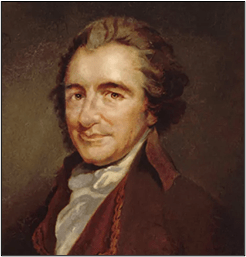
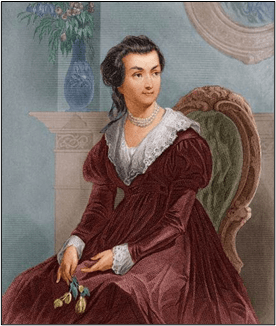


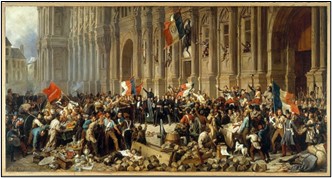
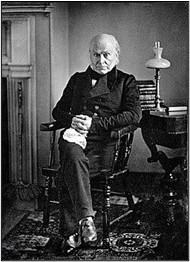

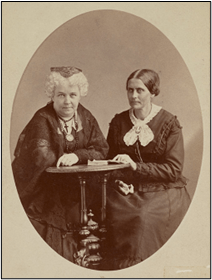


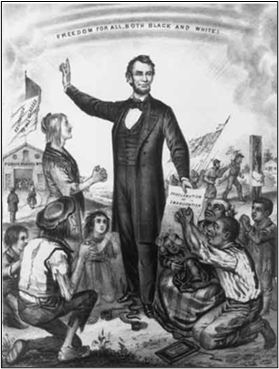

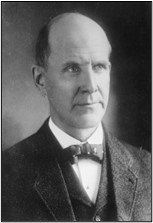


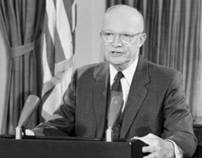




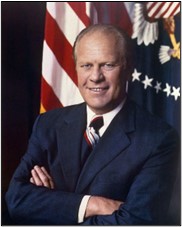


 njcssjournal