Era 1 – Engaging High School Students in Global Civic Education Lessons in U.S. History

New Jersey Council for the Social Studies

www.njcss.org

The relationship between the individual and the state is present in every country, society, and civilization.  Relevant questions about individual liberty, civic engagement, government authority, equality and justice, and protection are important for every demographic group in the population.  In your teaching of World History, consider the examples and questions provided below that should be familiar to students in the history of the United States with application to the experiences of others around the world.

These civic activities are designed to present civics in a global context as civic education happens in every country.  The design is flexible regarding using one of the activities, allowing students to explore multiple activities in groups, and as a lesson for a substitute teacher. The lessons are free, although a donation to the New Jersey Council for the Social Studies is greatly appreciated. www.njcss.org

Era 1 Colonization and Settlement

Concept of Self-Government

In the late 17thcentury the colony of New Jersey was divided between East Jersey with a capital city in Perth Amboy and West Jersey with a capital city in Burlington. The situation was chaotic with arguments over property investments and the selection of governors. In 1702, a decision was made for New Jersey to become a royal colony with the appointment of Edward Hyde, Lord Cornbury.

Throughout most of world history, the ownership of property was challenged by trespassers, squatters, and invaders. The amount of autonomy for citizens, especially the wealthiest citizens and the protection of the rights of others is an issue that goes beyond New Jersey and the American colonies.  The desire for protection and rule by law often leads people to a decision involving the exchange of some independence for the authority of a government to provide for order and protection.  As a result of this ‘social contract’ there is competition between the authority of the state and the independent lives of private citizens. 

Compare the account of Queen Anne’s Instruction to Lord Cornbury (Green. Words That Make NJ History, p.20) with the account in China in 221 B.C.E following the chaos of the warring states and the unification of independent Chinese states under Chu De (Shi Huangdi).

  1. How effective are these instructions in bringing order to chaos in the colony of New Jersey?
  2. How did Chu De (Shi Huangdi) bring order and unity to China?
  3. How important is self-government to people if the government is not willing or able to protect their property and lives?
  4. In a large country like the United States, how would our leaders restore order today in the event of chaos and disorder?

In the colony of New Jersey during the 18th century there were frequent cases of trespass, stealing, and claiming land.  The reason for this was that titles to property were confusing, lost, and in many cases gave non-owners permission to live or work on a particular tract of land. Although rent was required, it frequently was not paid which resulted in vigilantes or mobs removing offenders and having them imprisoned for theft or treason for disobeying the Crown.

The migration of people in the Natal province in southern Africa provides another case study over the titles to property and riots that resulted over a shortage of land with thousands of people fleeing for their safety. Research the Mfecane Invasion and how this despotic leader gained control of property and redistributed it to the Zulu. The conflict resulted in the migration of Boers and Bantu to areas outside of the vast resources in Natal.  

Read the account, Land Riots and the Revolution in NJ and compare it with the Mfecane Invasion in southern Africa.

  1. Should a government have the authority to collect money to improve property and collect taxes on property without their consent?
  2. Are people without property entitled to the same economic and political rights as people with property?
  3. When rulers or invaders gain control of property, what recourse do innocent people have?

Throughout history, the individual liberty of individuals regarding their freedom to express ideas, defend scientific evidence, and express diverse opinions has frequently been challenged by the state or other powerful institution in the community or state.  In Salem, Massachusetts in 1692-93, more than 200 men and women were accused of being witches and the mass hysteria led to the conviction and execution of 20 women in the Salem Trials. The hysteria was motivated by the fear of the devil in unexplained incidents in the community. The religious bias of the judicial system resulted in injustice.

In Naples, Italy the scientific research of Copernicus challenged the Biblically based teaching in the Book of Joshua 10:13 that the earth was the center of the universe. Compare the hysteria in support of the Aristotelian view of the universe with the persecution of Giordano Bruno and the house arrest of Galileo Galilei with the hysteria and the religious bias that supported injustice in the Salem trials..

  1. Has the evolution of our system of justice improved since the Salem trials of the 17th century?
  2. Does biased or false testimony in a trial violate the principle of equal justice for all?

Throughout history, people have been persecuted for their religious beliefs. In many cultures, religious institutions are an important part of the culture. However, when individuals or groups express beliefs different from those accepted by the majority and when new populations migrate into a country or culture, they have frequently been persecuted. Although the freedom to worship is considered as a fundamental right by the United Nations Declaration of Human Rights (1948), there continue to be examples of persecution and conflict.

Read the accounts of the persecution and exile experienced by Anne Hutchinson & Roger Williams in colonial America and compare their accounts to the religious zeal expressed in the  Taiping Rebellions in China (1850-1867). 

Have a separate group read about the experience of Quakers in West Jersey and Puritans and Presbyterians in East Jersey in the late 17th century. Discover the reasons for the adoption of religious liberty in Concessions and Agreements of West Jersey and restrictions against atheists in East Jersey.  Read the accounts of persecution against Christians and others for their beliefs by the Taliban in Afghanistan and the reaction of groups in Afghanistan to the mass killings of Hazara, a Shiite community.

  1. To what extent can freedom be restrained?
  2. Is it possible to maintain the separation of church and state and legislate morality that is inherent in the religious teachings of specific faiths?
  3. Do you think the separation of church and state is essential to a democracy when citizens believe in different faiths or are atheists without faith in any deity or religion?

Clifford Case and the Challenge of Liberal Republicanism

The first speech Rep. Clifford Case spoke on the floor of the U.S. Capitol on June 11, 1945, should be taught to every student studying World War II and the Civil Rights era. The speech is printed in the opening paragraphs and defines Clifford Case as a public servant and human rights advocate. His statement below was a response to the defense of poll taxes as a voting requirement by Congressman John E. Rankin (D) who advocated for the mass incarceration of Japanese Americans after Pearl Harbor, the mass deportation of Japanese Americans after the war, segregation, attacked Associate Justice Felix Frankfurter, questioned the patriotism of African Americans, and explicitly spoke of racial equality as a slippery slope leading to the end of the white man’s civilization on the planet.

“Mr. Chairman, I am native-born, white, a gentile-a Protestant. That I am these things entitles me to no special status or distinction.  Indeed, I had no choice in any of them, except the last.”

Most students and teachers will have no prior knowledge of Clifford Case. I voted for him in 1972 in my first opportunity to cast a ballot for senator in New Jersey. Who is he and how did his career path lead him to be a public servant for the residents of New Jersey?

 Clifford was a preacher’s kid, born in Franklin Park, a small community of farmers, craftsmen, and a few merchants.  He was baptized in the historic Six Mile Run Reformed Church, where his father was the pastor. This church dates back to 1710.

His father accepted a call to the Second Reformed Church in Poughkeepsie, NY when he was three years old. Clifford attended the schools in Poughkeepsie. His father unexpectedly died of pneumonia in 1920, when Clifford was age 16 and a junior in high school.  His father’s church would merge with the First Reformed Church in Poughkeepsie in 1923, in a newly built church.

Rev. Clifford Case resigned as “Old First” pastor.  At the first meeting of the new consistory on January 7 he was called as the pastor of the united congregations. Thus, the Mill Street or Second Reformed Church became the fifth house of worship of The Reformed Dutch Church of Poughkeepsie.  Rev. Case remained its pastor until his death on March 7, 1920.  His picture hangs at the entrance to the present Reformed Church’s ‘Case Chapel.’ (http://churches.rca.org/poughkeepsierc/Booklet2014A.pdf)

Clifford returned to New Jersey to attend Rutgers University where he enjoyed courses in civics, constitutional history, U.S. history, European history, and literature. He met Ruth Smith, from Linden, NJ, who was a student in the New Jersey College for Women at Rutgers (Douglass), where Barnard College graduate Mabel Smith Douglass was the Dean. They both enjoyed the music and dancing. (After all, this is the ‘Roaring 20’s!)  The humor of Bill Fernekes, author, is captured through his interview with Mary Jane Weaver, Clifford and Ruth’s daughter.

Following Rutgers, Clifford attended Columbia Law School and Ruth taught English at Linden High School. They were married in July 1928 and honeymooned in Europe. Columbia law curriculum was unique with its emphasis on interdisciplinary courses and an understanding of the social problems in society. Following his graduation, he joined the law firm of Thatcher, Simpson and Bartlett in Manhattan and worked with Cyrus Vance. Clifford and Ruth moved to Rahway and he commuted to work.

The biography written by Bill Fernekes provides insights into the power of the local and state political party ‘machine’ and why some politicians, like Clifford Case, take positions that are to the left or right of the center. It is a fascinating perspective on competitive democracy, the influence of the Hague machine in the Democratic Party in New Jersey, and the views of the media and residents regarding segregation, foreign policy, labor, health care, to identify a few of the public issues that Clifford Case held liberal Republican views.

His first election to the Rahway Council in 1937 was decided by 311 votes. (page 20) He advocated for transparency in local government and an end to the private caucuses between small groups of council members. The 1930’s was a difficult decade in the United States but in particular this was a time of prosperity for some in New Jersey and poverty for others who were without employment. Teachers in high school emphasize the Great Depression and the New Deal and this book provides some insight into the importance of local government.  Rahway was a place for large manufacturing companies and a major station on the Pennsylvania RR. Clifford Case also served on the Board of Foreign missions for the Presbyterian Church, which gave him a valued perspective on the abuses faced by others living in a dangerous world.

Cherry Street in Rahway, NJ, circa, 1920

In 1941, Clifford Case campaigned in the primary election for the Republican Party nomination in the NJ Assembly.  The Frank Hague political machine had a powerful influence in New Jersey, making it almost impossible for Republican candidates from northern New Jersey to win.  Hague’s influence secured governors from the Democratic Party and Thomas Brogan as Chief Justice, who would dismiss challenges of election fraud at this time. Hague also influenced the candidates for local and state positions in the Republican Party. Although Case did not secure the Republican Party nomination in 1941, he prevailed in 1942. He understood the importance of campaigning on a personal level in towns in Union County, especially Cranford, Elizabeth, Hillside, New Providence, Roselle, and Westfield. The result was a victory with a margin of more than 16,000 votes.

The context of the information in the chapter, “Development of a Political Servant” is important for students studying political institutions and/or local New Jersey history during World War II because of its relevance to voter fraud issues, campaign strategies and promises, the use of voting machines, and the outcome of elections. The lessons in the past provide insight into how fragile democracy has been over time.  Case’s term in the NJ Assembly resulted in significant legislation for civil service reforms certification for lawyers, and legal status for ride sharing, which became a necessity with fuel rations during World War II.  

The depth of the research and perspective in this book is with the legislative decisions and sponsorships of Congressman and later Senator Clifford Case. The historic context of civil rights, segregation, anti-lynching, and labor bills provide important information for teachers regarding the teaching of these standards-based indicators for high school students. For teachers who are committed to historical inquiry and decision-making lessons, Clifford Case and The Challenge of Liberal Republicanism is a book that must be read!  Let’s examine two case studies:

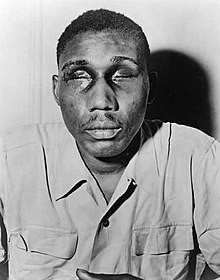
Segregation:  The incident of Isaac Woodward (Woodard), a black World War II veteran, who was in his uniform, at a bus stop in Batesburg, South Carolina on February 12, 1946, motivated the first significant legislation proposed by Congressman Case in 1947.

Although more than 200 federal anti-lynching bills have been introduced since 1918 none of them became a law. The Justice for Victims of Lynching Act of 2018, co-sponsored by NJ Senator Cory Booker and now V.P. Kamala Harris, finally became law in 2022.  The Case bill introduced in 1948 (HR3488) is important because of the continuing relevance of this issue which has continued without agreement for over 140 years!  Students need to understand the slow process of our Legislative Branch in reaching agreement on controversial issues such as guns, health care, rights of women, and other timely issues. The perspective below leads to historical inquiry in the classroom about continuity and change in history.

Clifford Case’s position as a congressman on the Taft Hartley Act provides an opportunity for students to understand the important labor issues of the 20th century. In our current service-sector economy the issues discussed on the classroom are likely a fair minimum wage, medical benefits, and the wage gap between men and women. In the middle of the 20th century, The Taft Hartley Act of 1947 was unpopular with labor and unions. The sponsors were Senator Robert Taft (R-Ohio) and Congressman Fred Hartley (R-New Jersey).  New Jersey was a manufacturing state and unions were an important part of life for most families. After World War II there were shortages of many goods and prices were inflated. Unions used this time to expand their membership and there were frequent strikes and boycotts demanding higher pay and better benefits. After Churchill’s Iron Curtain Speech on March 5, 1946, Americans feared communism and strikes and unions were associated with socialism and communism.

In this political climate, Clifford Case introduced a bill to restrict the power of organized labor, co-sponsored a bill with Christian Herter that did not become law, and voted for the Taft Hartley Act and after President Truman’s veto of Taft Hartley he voted to override the president’s veto. Although Case was re-elected in 1948, eighty-two congressmen who supported Taft-Hartley were not re-elected. Labor and the Democratic Party were determined to repeal Taft Hartley and Clifford Case was faced with a difficult decision. He voted against the Wood bill which retained most of the provisions in the Taft Hartley Act. The competitive arguments between the Wagner and Taft Hartley Act, the right to work and the right to strike, are critical issues for workers, public safety, and the American economy. Visit the resources in the Truman Library for the reasons why the Taft Hartley Act was harmful and see if your students agree or disagree with President Truman and Congressman Case.

Students in New Jersey, and likely most other states learn about the McCarthy hearings and the threat of communism to the stability of the government of the United States and the spreading of this ideology around the world. Clifford Case became a senator in January 1955 and was faced with the threat of communism in China, Southeast Asia, Africa, and in the United States. Senator McCarthy and Senator Case were members of the Republican Party. The performance expectation for high school students in New Jersey is “Analyze efforts to eliminate communism, such as McCarthyism, and their impact on individual civil liberties.” 

The campaign for Senate in New Jersey is a race that teachers should consider including when teaching about communism and McCarthyism. Case stated that if elected he would remove the powerful Senator Joseph McCarthy as chairman of all committees. Case will win the election against Rep. Charles Howell by 3,369 votes which was challenged by a recount that validated a win for Clifford Case by 3,507 votes. The 84th Congress had the Senate divided with 48 Democrats, 47 Republicans, and 1 Independent. Although McCarthy’s influence was declining by the summer of 1954, the media labeled Clifford Case as being soft on communism and Stalin’s choice for Senator. One question for students to explore is: ‘Why did Case take such a strong position against McCarthy when he could have moderated his criticisms and left McCarthy to self-destruct, following President Eisenhower’s lead?  

Clifford Case was also confronted with the conservatism of Senator Barry Goldwater and his attempts to eliminate communism in the 1960s and as the Republican Party’s candidate for president in 1964. Again, teachers should consider his positions on civil rights, communism, nuclear weapons, and his vision for the future of the GOP. This is an opportunity to teach the influence of local and state government and the influence of state political leaders in both political parties. There was a price to pay for challenging the powerful and conservative Republican leaders in New Jersey and Senator Case was the only elected Republican who would not endorse Barry Goldwater in 1964.

One of the hidden gems in this scholarly book is the ‘big picture of American history from Truman to Carter. This includes the period of 1945-1975, which some historians consider the zenith of American power when the world looked to the United States for moral leadership, economic leadership, and as the protector of freedom and democracy from the threats of communism and terrorism.

The opportunity to view this period of American domestic and foreign policy through the lens of a public servant provides an opportunity for inquiry and study by students. For teachers who provide direct instruction through primary source materials, the quotes in this book by Clifford Case provide unique insights into why a Republican congressional representative and senator challenged members within his political party and found ways to educate every president with his perspective. For teachers who differentiate instruction and enable students to investigate essential questions, the quotes and narrative in this book provide a resource for understanding the big picture of American history.

Here is an example from Senator Case on his opposition to President Nixon’s nomination of Clement Haynsworth as Associate Justice to the U.S. Supreme Court in 1969.

One of my observations after reading this book is that the challenges facing our government today are different but also very similar to the challenges our democracy faced when Clifford Case served in Congress.  The major issues that Senators Clifford Case (R) and Harrison Williams (D) from New Jersey had positions on are the foundation of all curriculum and courses relating to 20th century American history and likely include:

NSC-68                                                   Cuban Missile Crisis                                             Middle East

McCarran Walter Act                          Southeast Asia                                                      Inflation & Recession

Korean Conflict                                     Civil Rights Act                                                      Watergate

McCarthy Hearings                              Voting Rights Act                                                  Energy Independence

School Desegregation                          Immigration and Nationality Act                       War Powers Act

National Highway Act                          Environmental Protection Act                           Human Rights

The three chapters on the Vietnam War (Chapters 14, 15, and 16) provide a comprehensive picture of the conflicts between the legislative and executive branches that has particular utility for teachers of American history and government. Dr. Fernekes provides insights into the debates about funding, responsibilities for declaring and fighting wars, negotiated agreements, the death of civilians, and transparency between the branches. His perspective is scholarly, analytical and clear with carefully numbered observations. Senator Case was an outspoken supporter of American engagement in Vietnam who became an outspoken critic.  His perspective is critical to studying this period of history and although Vietnam is different than the Persian Gulf, Iraq, Afghanistan, Syria, Ukraine, and Israel, the similarities of the debate and division provide teachers with an opportunity to gather evidence for inquiry and building a thesis. Here are two examples in the words of Clifford Case:

The second example provides both the context for the continuing support of the United States for Israel and the complexity of debate among members of Congress and the position of the president in the words of Senator Case in 1978 about an arms package to the Middle East.

Senator Case also served during the time when the Republicans controlled the House, Senate, and Executive Brank from 1953-1955 and when the Democrats controlled the House, Senate, and Executive Branch in the Sixties. Clifford Case was also an important voice in defining the vision of the Republican Party after the 1964 election. The perspective of his local New Jersey voice is necessary to grasp the struggle behind each of the issues above. Students should also use the Library of Congress sources of Thomas to and Chronicling America for information.

The book includes excellent photographs and images of political cartoons from newspapers and the Works Cited sources are also helpful. There is a Digital Exhibit at Rutgers that was created by Dr. William Fernekes, the author.  https://exhibits.libraries.rutgers.edu/clifford-p-case Although the book is expensive at $135.00, it is a book that should be in every high school, college, and public library in New Jersey. Clifford Case and the Challenge of Liberal Republicanism

History of America’s Immigration: The Background to Today’s Border and Asylum Crises

Harry.stein@manhattan.edu

Following is a description with vocabulary for each era.  Following the four eras mis a collection of data that students can use to learn more about each time period.  In each era examine who came to the USA, why, and how did government policy favored or discouraged immigration.

Authority was with individual states, not the Federal Government.  States used what was then called “state police power” to set and enforce rules.  States set rules stopping the admission of convicts, free Blacks, paupers, diseased, sick or disabled persons or passengers on ships who tried to enter without the captain posting a bond on their behalf.  No free person whether black, mulatto, or colored from a Caribbean country, especially Haiti, could enter some states.  Haitian seamen on a ship entering Charleston, S.C., could not leave the ship.  These powers were confirmed by a Supreme Court decision (Miln Decision, 1837) and the Passenger Cases decision (1849) approve state laws on bonding and taxing incoming passengers.  The 1830 Indian Removal Act was another example of state police power.  The movement of free Blacks within Missouri and Ohio was also regulated.

There were also federal laws in 1793, 1842 (Prigg decision), and 1850 concerning the return of runaway slaves to their owners.  Legislation in 1809 prevented the importing of additional slaves from west Africa.  In 1817 the Liberia colony was established and federally funded for free Black who wished to return to Africa. 13,000 did.

Federal laws permitting or excluding contract labor from China and Europe were enacted.  In 1862 the Coolie importation from China was stopped under the logic that since slavery was illegal in northern states and Coolies were slaves therefore, they could not get into the USA.  In 1867 contract labor was permitted from Europe.  In conclusion, high, consistent demand for labor led to favorable State and federal immigration policies.

Critical terms: Era #1

1790 Naturalization Act

Know Nothing Party

Dred Scott Decision

Burlingame Treaty

Northern European Migration from Ireland, UK, Germany, Netherlands

During this era, power to legislate and enforce laws came totally to the national government. Immigration power resided in the Federal government’s ability to control commerce, Gibbons v. Ogden (1824) and the theory of national sovereignty critical for national security through border control.  Between 1871 and 1914, 23.5 million Europeans entered.  Eastern and southern Europeans joined those from Ireland, the U.K. and northern Europe. 1.7 million entered in 1907.

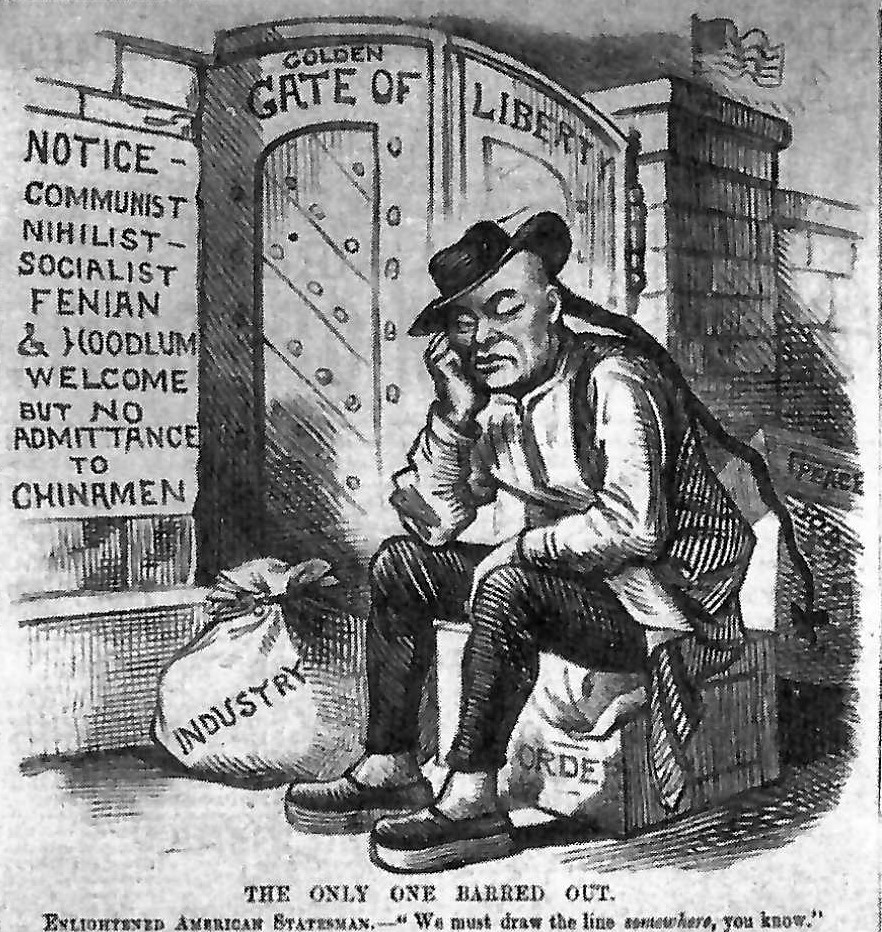
The country was industrializing and urbanizing.  Labor demand was high.  But gradually laws were established excluding some and regulating the entry of others.  Many Americans wanted more immigration.  Other Americans were critical of who were admitted.  By 1924 the doors were almost closed to many Jews, Catholics, Hindus, and Chinese. See the Page Act (1875) and Chinese Exclusion Act (1882). Research the Foran Act (1885) and the Dillingham Commission (1911).

1917 –  Law aimed at South Asians, Indians, who settled in California and Washington and spoke out against British control of their homeland.  This was part of a wider American nativist movement merging with white supremacy ideology, anti-communism and earlier opposition to immigrants with physical or mental disabilities.  A literacy test was passed.  A “barred” zone was created stopping all Asian entry except from the Philippines and Japan, already excluded by an informal 1907 “Gentlemen’s Agreement”, Mexicans were turned into temporary labor migrants.  There was also the fear that if the US entered the League of Nations this could endanger national security.  In 1920, 16% of the US population was foreign born.  Bad foreigners = crime, immorality, and labor conflict.

1921 – First law closing loopholes in the 1917 law and establishing first national origin quotas. This law fused beliefs about eugenics, racial bigotry, anti-disabilities prejudice, mixed racial marriages into a category of undesirable immigrant groups.  The Johnson-Reed Act (1924) created quotas by ethnic origin.  The Border Patrol created an illegal entry called a misdemeanor and felony (1929) if done twice.

Harry Laughlin

Madison Grant

Prescott Hall

Bracero

Thind Supreme Court Case, 1923

Wong Kim Ark Supreme Court Case, 1898

Jones/Shafroth Act, 1917

Ellis Island,

Castle Garden

The Johnson-Reed Act (1924) confined immigration to mainly northern Europe.  National quotas were based on ethnic origins of the 1890 census.  Through the Depression of the 1930s and World War II, immigration was severely curtailed.  Following World War II, the law remained intact and parallel laws dealing with World War II refugees were created that bypassed but did not displace the 1925 Law.

In 1948, Congress passed the Displaced Persons Act permitting European refugees to enter.  In 1948 the law was amended permitting refugees from camps in west Germany who could not return to former homes in Poland and the USSR to enter the USA.  332,000 arrived including 141,000 Jewish Holocaust survivors between June 1948 and December 1951.

Xenophobia

The 1938 Voyage of the St. Louis

Project Paperclip

Chinese Citizen Act of 1943

Mariel Boat Lift, 1960

The 1925 law was replaced by the Hart/Cellar Act of 1965.  Racial and ethnic quotas were eliminated.  Numerical quotas were retained.  Entrance was open to people from anywhere.  The law favored family unification, preference for certain occupations, and a new side variety of visas.  In 1950, the USA was 90% white with a European origin. By 2000, 50% of new immigrants were from Latin America and 27% from Asia.  In 2020, the USA population was 69% European white.

This law changed the racial composition and, some say, the national identity of the USA.  The acrid, hot odor of 1924 bigotry and nativism returned magnified and channeled through social media.  By 2020, some Americans were talking of white racial suicide and replacement theory.  Politicians pointed to the loss of border control.  The 9/11 Attack on America led to Islamophobia and Muslin immigration bans.

Many Americans supported legal immigration and the use of work visas for both unskilled and professional work.  Most wanted to stop migration but the government system to judge asylum claims became broken.  Since May 2022, 1.85 million border crosses have been permitted to remain in the country following a favorable “credible fear” claim.  By September 2022, 86,815 immigrants were deported and 1.7 million were approved to stay.  200,149 immigrants came to New York City.

  1. From February 2021 to September 2023, Border Patrol arrested 6 million migrants who crossed the border illegally.
  2. 1.7 million immigrants were released to stay in the USA.
  3. There were about 1,500 immigration judges and asylum offices available to decide these immigrant cases.
  4. People apply for asylum at the border or if they are caught illegally in the country or overstay a visa.  They have up to one year to apply.  800,000 applied in 2022.
  5. It could cost $2 billion to hire more staff to eliminate the 2 million backlog of cases.
  6. In some cities, it will take up to ten years to hear a case.
  7. 1.3 million have been told they must leave the USA.  They have 90 days to do so.
  8. Many do not leave and they disappear.  There is no national ID in the USA to identify them.
  9. Some marry Americans and become parents of children who are natural born citizens.

All of this data is used by politicians running for federal office. Some promise to clear them ‘out.’  How they will do this is not clear.

Many local officials run to Washington, D.V., seeking money to care for migrants in their cities.  There is a deadlock in Washington, D.C.  Many do not want to tax the many to pay for the foreign immigrants.  The memory of 1924 is in the air and a chaotic border has become a drug channel.

Pyler Supreme Court Case, 1982

Temporary Protective Status

Humanitarian parole

Refugee Act, 1980

DACA

Visa Lottery System

John Tanton

Naturalization

Our laws were not designed to deal with BOTH old and new reasons for migrations.  The new reasons are climate change, corruption in many countries, the I-phone which immediately connected migrants with friends already in the USA who send money to assist migrants in their journey.  Migration used to be single men seeking jobs who would then return home.  Now, it is entire families seeking a new life in the USA.  Many Americans do not know what to make of it and they will vote their hopes and fears.

Book Review: A Brief History of France: People, History, and Culture, by Cecil Jenkins

In 15 information-filled chapters, Jenkins gives us a decent amount of French history in a short book.  Chapter One is called “Cro-Magnon Man, Roman Gaul and the Feudal Kingdom,” and the last chapter is called “France in the New Global Order.”  By chapter 6 we are already reading about Napoleon, so if that is any indication of the coverage here you know that means most of the book is about the last few hundred years and not about Cro-Magnons or Romans or Celts.  If you want more emphasis on those guys, you have to seek a different book.

Jenkins is a great writer, and he not only uses clever turns of phrase.  He also uses a great deal of humor and fun in his writing.  The book is enjoyable to read.  I hold a BA in French Language & Literature, but I found a huge amount of information here I had not expected and had not known about before reading the book.

The book is really quite funny, at points.  For example, on page 28, Jenkins explains, “Again, the old practice of dividing estates among the sons, which had created so many problems with the royal succession, caused continual private wars among the minor nobles who had often little else to do but strike knightly attitudes.”

This striking-a-pose reference is typical of the funny ways Jenkins tells us in more modern terms what went on in the French past.  See, also, the mention of Philippe IV’s “cold good looks (p. 33) and the “déjà vu all over again” discussion on page 72 and the bitchiness notes on page 75.

Without giving too much of the actual content away, I will say here that the framework of French history gives Jenkins a wonderful playground to exercise in.  He enjoys writing about this topic, obviously, and the reader will enjoy finding out about some of the more interesting and sometimes weird passages of time within the French world.’

Teachers of social studies and of history will probably like the book because of its approach and clever language.  More advanced students—especially those who know something of French history—may like this also.  It is not a very basic review of French history, however.  It does demand some overall familiarity with the topic so that the reader can follow what is happening.  I have read some other similar books recently on history of countries I knew little about and feel for those who read this one if they are not somewhat versed in French history.

This is a brief history, indeed, and best for those who need a good review and an exciting read about the topic.  I recommend the book especially for Francophiles who want another perspective.  This point of view is certainly refreshing.

Book Review: Britain Begins by Barry Cunliffe

The author tells the story here of both England and Ireland because they cannot be separated easily.  Since the very beginning of humans’ time in that part of the world, both lands and cultures were connected.  It is that united history that leads the way in this incredible story of the sometimes icy, sometimes verdant northern reaches of civilization.

The reader will find here exciting and revealing chapters in the history of movements throughout the pre-historic, Celtic, Roman, Anglo-Saxon, Norman, and modern times of the isles.  There are clear and helpful illustrations, and there is enough information here to fill any semester-long course on the history of England, or rather Albion, as it was first called by those who were using formal language.

The author paints rich stories onto a canvas of what was once a chilly ice-covered region and which came to be a world power.  The author makes use of language, tools, science, history, and other major fields to tell about the different eras of the isles.

The years of the Celts are very intriguing ones, indeed.  Cunliffe speaks of the idea that there were two entirely distinct waves of movement among them—including Iberia, Britain, Ireland, Scotland, Brittany, and Wales (pp. 248-249).  He also speaks to the idea that the Celts started in the north and later in one era migrated as a large group southward to Brittany (p. 428).  He has a number of additional theories related to this and other good examples of “movement.”

Another very interesting idea is that language, culture, and tools were shared up and down the west coast of Europe and up between the isles—a sort of “Atlantic” civilization (p. 344) emerging over time among the Celts.  This explains linguistic and other hints pointing to migrations and movements up and down the coast—as opposed to some earlier notions of “Spanish” Celts trudging only northward to the further reaches of what came to be the UK.

Cunliffe talks about the notion of Celts moving southward—starting in Scotland and Ireland and coming down into Europe along the Atlantic.  The author uses many different sorts of proof to advance this theory, at the same time he asks additional questions.    

Teachers will be able to use this big book in a variety of ways.  First and foremost, it is important personal reading for any teacher interested in social studies in general and in the history of English-speaking people specifically.  Understanding the history of northwest Europe is helpful in understanding the intricate connections among the Celts and Europeans, the British and the Irish, and the Scandinavian and Germanic stock among the English.

Another important use is for helping students understand the power of “movement” among peoples, the conflicts created and agreements forged, and the resulting cultural and linguistic differences and similarities resulting from peoples coming into contact.  The notion of movement relates also to the traveling ideas, tools, traditions, names, weapons, foods, trades, and books, later.  Any standards and benchmarks related to movement are connected through teacher use of this book as a reference and resource.

Yet another good use of this volume is a textbook for a college-level course in history, of course.  Because it covers so very much information, it could also be used as a summer reading project for advanced rising college freshman students needing timely non-fiction reading. 

Those four uses of the book can be joined by another one I propose here: coffee table teaser.  It would be interesting to set this in plain view and see who would pick it up and want to start reading it.  It has a beautiful green cover.  There are in fact many photos, drawings, and illustrations inside.  The cover just might draw in some unsuspecting readers.

Book Review: !Brigadistas! An American Anti-Fascist in the Spanish Civil War edited by Miguel Ferguson, Anne Timmons, Paul Buhle, and Fraser Ottanelli

(Review by Anika Amin, St. Ann’s, Brooklyn)

 ¡Brigadistas! is a graphic novel about the Spanish Civil War (1936-1939). It tells the story of three friends from Brooklyn, New York who travel to Spain where they join the Abraham Lincoln Brigade. The book was super descriptive and did not include unnecessary details. This made it comprehensive but still clear and intelligible. The moments about the effects of the war and the regular people it affected were extremely powerful. The descriptions of the war’s effects on children and people who were not soldiers made the graphic novel very impactful. There could have even been more of these moments included to reinforce the significance. Overall it was informative, clear, and very powerful. Although it was very clear, it could have made it easier to read if it had chapters or sections. Breaking up the text and providing landmarks throughout the story could have also made it easier to follow. Additionally, depending on the target age group, some of the terms and concepts could have been explained more to keep the writing flowing. Overall it was great to read and it presented important and difficult topics in an understandable way.

Book Review: The Sewing Girl’s Tale: A Story of Crime and Consequences in Revolutionary America by John Wood

Sweet (Henry Holt) uses the trial of the accused rapist, Harry Bedlow, of a seventeen-year-old seamstress named Lanah Sawyer in 1793 to analyze New York City’s social hierarchy during the early republic. Alexander Hamilton was part of Bedlow’s legal team. Bedlow’s      acquittal[1]  after the jury deliberated for only fifteen minutes sparked riots in the streets and ignited a vigorous debate about class privilege and sexual double standards. Sawyer received some justice when her stepfather won a civil suit against Bedlow and the family was awarded a significant sum. The book received a Bancroft Award from the American Historical Association.


Book Review: The Great New York Fire of 1776: A Lost Story of the American Revolution by Benjamin Carp

In many ways, New York City was the strategic center of the Revolutionary War. During the summer of 1776, George Washington threatened to burn the city rather than let the British take it and shortly after the Crown’s forces took New York City, more than one-fifth of the city mysteriously burned to the ground. This book examines the Great Fire of 1776 and why its origins remained a mystery even after the British investigated it in 1776 and 1783. Benjamin Carp paints a vivid picture of the chaos, passions, and unresolved tragedies that define a historical moment we usually associate with “life, liberty, and the pursuit of happiness.” Carp is a professor of history at Brooklyn College and the CUNY Graduate Center. He is the author of Defiance of the Patriots: The Boston Tea Party and the Making of America and Rebels Rising: Cities and the American Revolution.

The Usage of Film in Teaching History through the Lens of the Civil Rights Movement

Film, in the wake of the 21st Century, has become a highly popular type of media to portray historical events. Society has evolved to a point in which it is a visual culture. No longer are we represented by oral and written means; visual communication is much more popular. Traditional school experiences juxtapose this idea. Students are still bound by books and written texts in order to receive information. Educators need to be willing to continue to learn how to introduce new modes of expression in their classroom.

Topics like the Civil Rights Movement are often whitewashed in educational texts. Because most films are produced outside of K-12 schooling environments, producers are able to recreate controversial situations, relationships, and people. This paper will provide summaries and analyses of three modern films depicting different aspects of the American Civil Rights movement. It will then discuss why showing these films in classrooms are worthwhile.

Historical film projects have created controversial figures and taken controversial figures and turned them into likable characters. The Civil Rights movement has been portrayed in film time and time again, each with a slightly different take. The Help tells the story of a White woman in Jackson recording the stories of Black maids, and ultimately publishes them. This film creates white saviors, a specific character type in media, often seen in pieces that discuss issues pertaining to people of color. One Night in Miami focuses on four prominent Black men in the 1960s; Malcolm X takes the main stage. The film wrestles with Malcolm’s stiff exterior and anxious personal life. Selma tells the story of the Selma Marches in 1964. The film highlights Martin Luther King’s actions and how they led to the passing of the Voting Rights Act of 1965. Each protagonist in these three films is understood by audiences differently. How a Civil Rights activist is appreciated in film greatly depends on the general public’s pre-existing opinion of the character. Regardless of a production team’s goals, an activist’s infamy or other characteristics influence the audience.

The Help was directed by Taylor Tate and released in 2011, grossing $216 million worldwide and receiving positive reviews from critics.[1] The movie takes place in Jackson, Mississippi during the 1960s.[2] Eugenia “Skeeter” Phelan, a new college graduate, wants to become a writer. She is given the chance to have a book published, but the story hinges on Black maids being willing to speak to her about their experiences working for White families. The issue lies in finding Black help that was willing to risk their livelihoods for Skeeter’s writing.[3] Minny Jackson begins to work for Celia Foote after being fired by a different White woman.[4] After gathering enough stories, Skeeter publishes her book, which is a massive hit. Skeeter chooses to stay in Jackson instead of moving to New York City with the promise of a job in a publishing agency.[5]

Hollywood has a tendency to find a newsworthy topic and exploit it; despite the Civil Rights Movement being a “hot” topic in America for decades, it was mostly left out of the film industry.[6] However, in recent years, stories about the era of civil rights have graced screens. The development of white savior stories has become prevalent in American films. These stories amplify (or overamplify) a white character’s influence regarding issues faced by people of color.[7] The white character rescues non-white characters, often learning more about the problem than they originally knew and evaluating how they contributed to the problem. It makes the white character appear as the hero of the story, despite the size of their role, or the danger the characters of color face fighting issues.

The Help created two white savior characters: Skeeter and Celia. The women become white saviors through different experiences. Skeeter is meant to be portrayed as a young woman who does a great service by exposing the nature of treatment White employers subjected their Black help to. She does this without realizing the importance of what she is doing. The film also emphasizes how she will be viewed in the White community, breezing past the reality Black women will face if the location of the book is revealed. Skeeter’s risks are overplayed (especially because she is promised a job if the book sells well) while the maid’s risks are underplayed, painting Skeeter ultimately as the hero of the film. This imagery is only furthered as Skeeter chooses not to accept her dream job working in a New York publishing firm to stay in Jackson and help the women who gave her stories for her book.

Celia is slightly different. She hires Minny after being unable to find help for her house. She wants to impress her husband and the women of Jackson. She treats Minny with kindness and does not seem to grasp certain societal expectations, like the help and employers eating at different tables and the help and employers not being “friends.” During one specific scene, Celia takes Minny by the arm, walks her into the house, and offers her a coke.[8] In another scene, Celia and her husband offer Minny a meal (prepared by Celia) at their dining room table.[9] The film alludes to the idea that because of Celia’s kindness, Minny’s problems are lessened or completely gone. This then creates the idea that a white woman’s kindness solves issues that are systemic racial issues, when in reality, Minny and the rest of the Black community face issues that could only be corrected through legislative changes.

However, different from most narratives, both of these characters are women. By regendering the white savior, two things occur. The first is the idea that they may not be able to be saviors because they also come from oppressed communities. Because they are not men, it is assumed they do not have the power to overcome societal beliefs regarding their own womanhood, let alone fight against anti-Blackness. The second is that they become harder to identify because of tropes surrounding what a woman is supposed to be and how she is supposed to act.[10] Both of these women hold stereotypical traits, such as kindness and empathy. Celia also yearns to be a mother, another trait that has been associated with femininity. Because they have “female” characteristics, audiences need to decipher what aspects are stereotypes and which are aspects of the white savior trope.

Despite having stereotypical personality traits, the women defy traditional womanhood in different ways, making it easy to see how they fill their white-savior roles. Skeeter is considered a tom-boy; she is a college graduate who does not plan to marry until she has established her career. She grew up in Jackson and, after graduating from college, returned, continuing to be well-liked until she gave a voice to Black maids.[11] Celia moved to Jackson and married her husband because of an unplanned pregnancy. She is also one of the loudest women in the movie, trying to push herself into Jackson’s social circle. Until hiring Minny, she did not have help in her house. Because of this, she is regarded as an outsider by most White women but yearns to be accepted.[12]

Ultimately, the regendering of the white savior in The Help created a character that was not as easily identified as in other films, such as Green Book and Hidden Figures. The two women appear as outcasts who do not fully understand societal roles, instead of two women extending a hand to the Black community in Jackson. The audience feels its heartstrings being tugged at as Celia is outcasted by other women in Jackson, both because of her own identity and because she hired Minny.[13] Skeeter is threatened by another White woman after realizing that the book featured her home.[14] If Skeeter and Celia had been written as male characters, it is much more likely that this character trope would be more apparent. As a result, Skeeter and Celia become characters that are endearing to the audience; the two women are effective in their roles of “hero.”

One Night in Miami

Starkly different from the two White women of The Help are the four men of Regina King’s One Night in Miami. More specifically, the four Black men in the film. Malcolm X, Sam Cooke, Jim Brown, and Cassius Clay (more famously known as Muhammad Ali) are the focus of this 2020 film. It was released directly to Amazon Prime Video streaming, receiving glowing reviews from critics and the general audience.[15]

The four men unite in Miami, Florida in 1964 to watch Cassius Clay box in the championship round.[16] After Clay wins, the men return to X’s motel room to celebrate. Instead of celebrating, the men have a serious night. Coming from different backgrounds (one activist, one football player, one singer, and one boxer) the men have curt conversations about the Civil Rights Movement and Black support of the movement. Paranoia, racism, and Islamophobia are all commented on in the film, as Malcolm criticizes his friends but also speaks to them about his decision to leave the Nation of Islam.[17]

Going into production, director Regina King had a unique problem. How does one create a positive protagonist out of a man disliked or misunderstood by many Americans? Malcolm X’s legacy is often misinterpreted or never properly learned. Media pushes X’s original ideas, many of which the Nation of Islam was responsible for propagating. The figure seen in much of American media is a representation of Malcolm X prior to his revelation about black and white segregation, “white devils,” and many of his polarizing ideas.[18] King directed a film that humanized X, showing anxiety, paranoia, and friendship as a way to create a likable (or at least neutral) film character.

Casual Islamophobia arises throughout the film as X’s friends Cooke and Brown try to discourage Clay from converting to Islam; Muslims do not drink, smoke, or “have fun.”[19] If a friend does not accept you for something as personal as religion, it makes an onlooker feel sorry. This usage of stereotyping lends itself to the audience feeling empathetic toward Malcolm X.

One Night in Miami was a refreshing media perspective of Malcolm X. The film shows how Malcolm was a polarizing figure but did not villainize him, which is an overarching theme across Hollywood film. The activist has been painted as one who advocated for violence, black-and-white separation, and the Nation of Islam. Time and time again, the media forgets that X gave up those ideas after his journey to Mecca to complete Hajj, an important Muslim pilgrimage. He gave a voice to “the subterranean fury, [gave] it a voice, not a gun… and [staved] off the rising violence with which he and every human being must struggle when men are brutalized by men.”[20] However, it is important to keep in mind that many audience members may not have this complex understanding of X and how his ideas evolved before his assassination. The movie ultimately portrays this; Malcolm Xnever advocates for the men to pick up arms and storm cities, he implores his friends to use their fame and resources as a voice for the voiceless.[21]

One Night in Miami also does an excellent job of portraying Malcolm X as the man most people know. Known for being strong-headed throughout his life, Malcolm X is presented as a man firm in his stances and was not afraid to tell someone if they did not align with what he thought was right. Because of this, he was often seen as judgmental towards his friends and American society.[22] He and Sam Cooke butt heads several times as Malcolm chastises him for not doing enough for the Black community and Civil Rights Movement. “…He longed for peace and believed it could only come when men were honest with each other.”[23]

This chastisement could turn audiences against Malcolm X, or there could be a moment of realization that he was not the man that the media at the time painted him as. Shortly after his assassination, James Loomis wrote to the editor of the New York Times explaining that Malcolm X was not the violent figure that White media made him out to be during his life. Loomis did admit that the activist was set in his ways; he set the way for future Civil Rights activists “much as the Old Testament laid the foundation for the New Testament.”[24] If a film viewer was somewhat familiar with X after his Hajj, they would understand, much as Loomis did, that X’s original separatist ideas were not the ideas that he died with. One Night in Miami portrays Malcolm X in a light that allows the audience to better understand his purpose, looking past the “harsh” exterior of his words.

Selma was directed by Ava DuVernay and released in 2014. It was popular with critics and well-liked by general audiences, grossing more than $66 million worldwide.[25] The film opens in 1963 with four girls running down a stairway. A bomb is set off, killing all four girls; the 16th Street Baptist Church Bombing sets the emotional tone for the remaining film.[26] It then moves to 1965 in Selma, Alabama, where Black Americans are being turned away from voting. Martin Luther King Jr. was called down to help advocate for voting rights legislation that would protect Black Americans from poll taxes and tests.[27] After arriving in Selma, he quickly butts heads with local activist groups. There are several scenes in which King meets with President Lyndon B. Johnson to pressure him to pass voting rights legislation.[28] Eventually, King and other activists plan to walk from Selma to the state capitol, Montgomery. During the first attempt, protestors are brutally beaten by police officers and rush back to Selma to escape said violence.[29] During the second march, King decides to turn the group around to avoid traps set by police or White aggressors along the way.[30] Finally, backed by the state, King and thousands of protestors completed the 50-mile march from Selma to Montgomery, Alabama.[31] The movie closes with the signing of the Voting Rights Act of 1965 and King’s speech in Montgomery.[32]

King had relationships with powerful White individuals, such as President Johnson. Often, an activist who has this kind of support will be much more successful in their cause because it seems reasonable. Selma highlighted these relations, showing the president and his advisors in several scenes.[33] This association implies backing from the federal government. It creates a positive air around King, something that the audience can recognize and absorb.

Martin Luther King gathered more support than other activists during the Civil Rights Movement. As seen in Selma, King directs a group and few and far in between are the decisions made by the other members. Even fewer are activists not in King’s posse. Malcolm X, for example, was mentioned but never seen. [34] President Johnson makes a negative comment about X, saying King is better suited for the American people because he is not as radical.[35] The audience can speculate who Johnson means when he says “American people,” but if the president sees King as a more palatable Black activist, it can be assumed that America is synonymous with White and not all Americans. Little else is said about X; his ideas, policies, speeches, and actions are not mentioned. If an audience member has little knowledge about the other activist, it is likely that they would have a much more positive thought process about King and his actions from there on.

Selma, much like the other two films, casts its main protagonist in a neutral, if not positive light. However, part of this positive atmosphere around King may have been from the lack of other important stars in the Selma March. The film never refers to the other celebrities that came down to Alabama, many of whom were actors. The decision to not feature more of Hollywood in Selma enlarges the light shown on King.[36] This issue continues throughout the film; DuVernay wanted to create a “‘demonstration of our moral certainty’ – sacred art,” so, while she wanted to produce a history piece, she had other motives.[37]

By creating a piece about King and the people of Selma, the director chose to eliminate other aspects of the historical narrative.[38]  DuVernay does not change King’s actions, making him a historically accurate figure in the film, but she does omit aspects of events that bolster King’s role, which ultimately pushes him to the front of the film and enlarges his moral character.[39] Historians took issue with this because it “egregiously distorts a significant element of that history,” changing the emphasis each individual carried within the Civil Rights Movement.[40]

The film industry, after long avoiding The Civil Rights movement, has begun to produce film after film about it. The Help focuses on Skeeter, with Black maids as supporting characters despite their stories being the reason for her success. This paints Skeeter as the hero of the movie, emphasizing her role as a White savior. Minny is influenced by a second White savior, Celia, as the woman’s kindness seems to alleviate Minny of all problems. The two White women sneak under the radar as saviors because their gender makes their powerlessness evident. One Night in Miami attempts to show Malcolm X in a more humane light, in an attempt to make audiences more willing to understand him and his goals as an activist. The United States has a perverse idea of X; Regina King’s film attempts to display how X’s frustration and curt way of speaking was only because of his passion and desire to find equality and Black rights in America. Selma creates a reverent picture of Martin Luther King by maximizing his role in the Selma Marches in 1964. Differently from X, King already has a respected and positive legacy, making the production much more palatable to many more people. The four protagonists in these three films produce different reactions from an audience. The way a Civil Rights activist is able to be understood and appreciated in film greatly depends on the general public’s pre-existing opinion of the character of character-type.

            Film differs from written sources because it has the ability to bring people, places, and events to life. Too often educators rely on students being able to read well to understand the deeper nuances and feeling of the writer or the details being described. Choosing to present information through visual sources evens the playing field for many students because they do not need to rely on their reading skills. Using film provides a new way to learn; it provides auditory and visual learners a positive experience. Captions can provide students who are hard of hearing or in need of written reinforcement to read what is being said. Film has the ability to serve as a platform that benefits many types of learning.

            As mentioned in the previous section, the film industry has recently started to embrace the production of film that focuses on the United States Civil Rights movement and the treatment of People of Color in American history. Due to this, there has been an uptick in historically accurate films that celebrate influential members of the Black American community. Often, film directors have much more freedom than textbook creators do. Films are able to incorporate aspects of history that have been whitewashed or completely removed from educational sources. The United States has a heavy history of whitewashing curriculum related to the Civil Rights Movement. The three films described in the first section are films that I have deemed as accessible and useful to teaching. Each film provides viewers with a different understanding and line of inquiry regarding civil rights and the role in which people played in the movement.

             The Help conveys an important message about the white savior complex. Despite financially providing for the Black women who shared their stories with her, Skeeter would never have suffered the same backlash and potential violence that these women would have if it became apparent that these stories were from Jackson. Skeeter’s race keeps her away from loss of employment, finances, and the potential for violent retaliation. Class lectures or discussions about how history has shown that identities dramatically shape a person’s quality of life can be related to the way Black women were forced to work in harsh conditions and Skeeter was able to write about these experiences and create a best-seller. In addition to this, class discourse after viewing could include a conversation about the introduction of White characters in Black stories and the space they then take away from Black individuals. The Help serves as an introduction to race and the way it shapes experiences.

            One Night in Miami retells the story of Malcolm X, Jim Brown, Sam Cooke, and Muhammad Ali reuniting in Miami for the boxing match. However, the film does something that most media does not. Malcolm X has been villainized throughout American media. This film allows Malcolm to be seen as a person with emotions, fears, and friendships. This humanizing aspect disrupts the narrative that most textbooks create. Very rarely does media, especially literature, acknowledge Malcolm’s humanity. They paint him as a hard radical. This film could also be used as a segue into Malcolm X’s life and ideas after his hajj, a Muslim pilgrimage to Mecca.

            Selma takes place in Alabama before the Voting Rights Act of 1965 was passed. It focuses on Martin Luther King Jr., but also incorporates activists that are taught about less often such as John Lewis. Showing this film allows students to understand that MLK did not act alone and was often called to areas to act as the face of a movement. The film also illustrates the violence against Black Americans and Americans that supported integration and equal rights. It does so in a matter that makes viewers understand the severity, but it does so with becoming too explicit. For instance, the film opens with the 16th Street Baptist Church Bombing. It shows the four young girls that would be killed but the bombing does not show the individuals.

            As discussed, the usage of film can be an effective use of media in the classroom. It is used far too often; written sources are no longer reflective of today’s society. With the recent boom of media representing the Civil Rights Movement or racial inequality, it seems clear that film needs to be present in classrooms while teaching these events and concepts.

DuVernay, Ava, director. Selma. Pathé, Plan B Entertainment, Harpo Productions, Ingenious Media, Celador, Cloud Eight Films, 2014. 2 hr., 33 min. https://www.showtime.com/movie/3505943

“The Help.” IMDb. IMDb.com, August 10, 2011. https://www.imdb.com/title/tt1454029/?ref_=nv_sr_srsg_0

Horne, Gerald. “‘Myth’ and the Making of ‘Malcolm X.” The American Historical Review 98, no. 2 (April 1993): 440–50. https://doi.org/10.1086/ahr/98.2.440

Housley, Jason. “Hollywood and The Civil Rights Movement.” Black Camera 19, no. 1 (2004): 7–8. http://www.jstor.org/stable/27761632.

King, Regina, director. One Night in Miami. Amazon Studios, 2020. 1 hr., 55 min. https://www.amazon.com/gp/video/detail/amzn1.dv.gti.e8badd0e-9d87-114a-934b-54a31210c34f?autoplay=0&ref_=atv_cf_strg_wb

Knapp, Jeffrey. “Selma and the Place of Fiction in Historical Films.” Representations 142, no. 1 (2018): 91–123. https://doi.org/10.1525/rep.2018.142.1.91

Loomis, James. “New York Times,” February 27, 1965.

“One Night in Miami…” IMDb. IMDb.com, January 8, 2021. https://www.imdb.com/title/tt10612922/

Reed, Adolph. “The Strange Career of the Voting Rights Act.” New Labor Forum 24, no. 2 (2015): 32–41. https://doi.org/10.1177/1095796015579201

Seekford, Brett. “To Kill a Mockingbird, The Help, and the Regendering of the White Savior.” James Madison Undergraduate Research Journal 4, no. 1 (2016): 6–12. https://doi.org/https://commons.lib.jmu.edu/jmurj/vol4/iss1/1/

“Selma.” IMDb. IMDb.com, January 9, 2015. https://www.imdb.com/title/tt1020072/

Taylor, Tate, director. The Help. DreamWork Pictures, Touchstone Pictures, Walt Disney Studios Motion Pictures, Paramount Vintage, StudioCanal UK, 2011. 1 hr., 35 min. https://play.hbomax.com/page/urn:hbo:page:GYe7uAgqQlZyQwgEAAAAf:type:feature?source=googleHBOMAX&action=play


[1] “The Help,” IMDb (IMDb.com, August 10, 2011), https://www.imdb.com/title/tt1454029/?ref_=nv_sr_srsg_0

[2] Taylor, Tate, director. The Help. DreamWork Pictures, Touchstone Pictures, Walt Disney Studios Motion Pictures, Paramount Vintage, StudioCanal UK, 2011. 1 hr., 35 min. https://play.hbomax.com/page/urn:hbo:page:GYe7uAgqQlZyQwgEAAAAf:type:feature?source=googleHBOMAX&action=play

[3] Taylor, Tate, director. The Help.

[4] Taylor, Tate, director. The Help.

[5] Taylor, Tate, director. The Help.

[6] Housley, Jason. “Hollywood and The Civil Rights Movement.” Black Camera 19, no. 1 (2004): 7.

[7] Taylor, Tate, director. The Help.

[8] Taylor, Tate, director. The Help.

[9] Taylor, Tate, director. The Help.

[10] Brett Seekford, “To Kill a Mockingbird, The Help, and the Regendering of the White Savior,” James Madison Undergraduate Research Journal 4, no. 1 (2016): pp. 6-12, https://doi.org/https://commons.lib.jmu.edu/jmurj/vol4/iss1/1/

[11] Taylor, Tate, director. The Help.

[12] Taylor, Tate, director. The Help.

[13] Taylor, Tate, director. The Help.

[14] Taylor, Tate, director. The Help.

[15] “One Night in Miami…,” IMDb (IMDb.com, January 8, 2021), https://www.imdb.com/title/tt10612922/.

[16] King, Regina, director. One Night in Miami. Amazon Studios, 2020. 1 hr., 55 min. https://www.amazon.com/gp/video/detail/amzn1.dv.gti.e8badd0e-9d87-114a-934b-54a31210c34f?autoplay=0&ref_=atv_cf_strg_wb 

[17] King, Regina, director. One Night in Miami.

[18]  Gerald Horne, “‘Myth’ and the Making of ‘Malcolm X,” The American Historical Review 98, no. 2 (April 1993): pp. 442-444.

[19] King, Regina, director. One Night in Miami.

[20] James Loomis, “Letter to the Editor – Death of Malcolm X,” n.d.

[21] King, Regina, director. One Night in Miami.

[22] King, Regina, director. One Night in Miami.

[23] James Loomis, “Letter to the Editor – Death of Malcolm X,” n.d.

[24] James Loomis, “Letter to the Editor – Death of Malcolm X,” n.d.

[25] “Selma,” IMDb (IMDb.com, January 9, 2015), https://www.imdb.com/title/tt1020072/.

[26] DuVernay, Ava, director. Selma. Pathé, Plan B Entertainment, Harpo Productions, Ingenious Media, Celador, Cloud Eight Films, 2014. 2 hr., 33 min. https://www.showtime.com/movie/3505943

[27] DuVernay, Ava, director. Selma.

[28] DuVernay, Ava, director. Selma.

[29] DuVernay, Ava, director. Selma.

[30] DuVernay, Ava, director. Selma.

[31] DuVernay, Ava, director. Selma.

[32] DuVernay, Ava, director. Selma.

[33] DuVernay, Ava, director. Selma.

[34] DuVernay, Ava, director. Selma.

[35] DuVernay, Ava, director. Selma.

[36] Jeffrey Knapp, “Selma and the Place of Fiction in Historical Films,” Representations 142, no. 1 (2018): pp. 113.

[37] Jeffrey Knapp, “Selma and the Place of Fiction in Historical Films,”114.

[38] Adolph Reed, “The Strange Career of the Voting Rights Act,” New Labor Forum 24, no. 2 (August 2015): pp. 33.

[39] Jeffrey Knapp, “Selma and the Place of Fiction in Historical Films,” 92-94.

[40] Adolph Reed, “The Strange Career of the Voting Rights Act,” 34.

The Evolution of Disability Rights Movements: Great Britain and the United States

“Know your limits, but never stop trying to break them,” said Kyle Maynard, a man born with congenital amputation, which means that his arms stopped forming at his elbows and his legs stopped forming at his knees. This however did not stop him from a motivational speaker, best selling author, entrepreneur, award-winning extreme athlete, and the first man to crawl to the summit of Mount Kilimanjaro[1]. The rights of people with disabilities have evolved rapidly over the past hundred years, specifically in the last thirty years, both within the United States and Great Britain. These two movements have similarities connecting the two, but appear to develop independently of one another.

It is important to understand two different things when discussing the history of disability rights and the discourse as a whole. The first is the two different models of disability, one being the medical model of disability and the other being the social model of disability. The medical model contends that individuals with disabilities are broken and that they need to be fixed or cured, whereas this social model contends that individuals with disabilities are not broken but instead handicapped by their environment. An example of the medical model would be certain very dangerous medical procedures such as chelation.[2] Since there is no actual “cure” for autism these medical procedures can cause a lot of damage to the individual that is receiving them. An example of the social model would be if a building does not have a ramp or elevator for an individual who uses a wheelchair. These two models have been used to define “disability” throughout U.S. disability history and separate the latter stages of the movement.

The second thing is the language that is used throughout history is very offensive and outdated and while these words are used in this paper they are not meant to be used in a harmful and demeaning way, but instead to give the reader a greater context to the way the individuals with disabilities have been treated throughout history.

Historically disability history focuses on learning about the different laws and acts, and how these ideas progress. However, not much time has been spent looking more in depth into the larger discourse of disability rights as well as how this discourse progressed and how it led to effective change. This fostered interest in if there might be any connection or similarities between the way that the disability rights movement progresses in the United States to how it developed overseas, and more specifically in a country relatively similar to the United States, Great Britain. More specifically, how did the disability rights movement with the United States evolve? How did the disability rights movement in Great Britain evolve over time? And were there any connections between these two movements, and if so what are they?

There is not a large variety of literature about the history of the disability rights movements in both the United States and Great Britain as they are relatively recent movements, only having progressed in the last fifty or so years. There is some literature regarding theories of disability, and the normalcy of disability. People, such Elizabeth Barnes[3] who writes about the social model of disability, and Lennard J Davis,[4] who writes about how normalization of individuals with disabilities within society has led to positive changes being brought about. These books, along with speeches by famous disability rights activists such as Judith Heumann and the Netflix documentary Crip Camp: A Disability Revolution, have all aided in the research process in defining the evolution of these movements and how they compare to one another.[5]

The disability rights movement in the United States has evolved much more rapidly than the subsequent movement in Great Britain, with landmark legislation such as the Section 504 of the Rehabilitation Act of 1973, Developmentally Disabled Assistance and Bill of Rights Act (DD Act) of 1975, The Americans with Disabilities Act (ADA) and many others coming before the major landmark decisions in the United Kingdom. The United States and Great Britain both see the beginning of their disability rights movements begin with a heavy focus on physically disabled veterans after World War two. However, the exposure of the Willowbrook Institution ushers in a new wave of disability rights within the United States, one that focuses on individuals with neurological disabilities, before the subsequent movement evolution inside Great Britain. The U.S. remains ahead of Great Britain with its evolution of disability rights for the remainder of the 20th century and into the 21st century.

This paper will begin to dive deeper into the progression of the disability rights movement within the United States and then look towards Great Britain and its evolution. It will discuss the different waves of the movement and how the discourse present in the United States during the 20th century leading up to the passage of the ADA. Next this paper will look at the way that the disability rights Movement within Great Britain develops, from mainly focusing on ex-service men with physical disabilities, to then sudden shift to focusing on individuals with more neurological and mental disabilities.

United States history is filled with many different rights movements that all seemingly overlap with one another. The Disability Rights movement is one of these, finding its beginning in the middle part of the 20th century, with a heavy focus on the veterans that had been disabled in World War 2. Laws and organizations form to help these individuals reintegrate back into society after the war and begin the normalization of individuals with physical disabilities, which leads to the eventual story of the Willowbrook institution. This story begins to shine the light on individuals with cerebral disabilities, such as autism, down syndrome, and many others. From the outcry of these individuals and more specifically their families the attention becomes on how they can be “cured” or “fixed” and brought back into society. It is not until these individuals begin to speak up on their own, that there is a real shift not only in policy but attitude and mindset within society. This continues with the discussion around independent living, which will begin the third and final era of disability rights within the United States, the self-advocacy era. This all culminates in the passing of the ADA in 1990, which marks a new beginning for individuals with disabilities in speaking up for themselves and how they can be integrated into society as a whole.

One of the key areas of overlap that the United States has in its disability rights movement with Great Britain is the early focus on veterans and ex-service men that had become physically disabled following World War two. This is where we see some of the first rhetoric of the medical model of disability, in an article published in the New York Times in 1946, Howard A. Rusk M.D. writes “Today public attention is focused on the young men of America who are returning from war disabled and handicapped. They number in the thousands.”[6] This highlights just how much of a focus this was during this time, it was a large part of the discussion happening, so much so that it was a full page article within the New York Times. Rusk makes it known how important it is to have systems in place that can help physically disabled veterans, who were the main group that was being advocated for during this time.

We see some of this help that had been put into place in the form of the Purple Heart Unit, also known as the Military Order of the Purple Heart, which is a national veterans organization. In an article about the Purple Heart Unit, the New York Times writes:

“The Military Order of the Purple Heart, nation-wide veterans’ organization, will embark on a peacetime program to speed veterans housing and to provide additional benefits for disabled servicemen, it was announced yesterday by the order’s new national commander Ray Dorris of Portland Ore…The housing program will take precedence over all other programs, Mr. Dorris said, adding that he would confer this week with Housing Expedite Wilson W. Wyatt and officials of the War Assets Administration in Washington on the granting of priorities on surplus equipment needed to complete the partially constructed housing projects.”[7]

This is one of the key organizations at the time putting a focus on helping disabled veterans. This is such a big and important undertaking that the organization is working with the U.S. government to try and get the necessary funding and supplies as quickly as possible. This is their paramount objective, surpassing all others, showing just how important the rights of the disabled veterans were during this time. After this there is a steady amount of legislation that is passed and signed to help disabled veterans, but the next evolution in the disability rights movement begins in the mid-1960s.

In 1965 Senator Robert F. Kennedy made an unannounced visit to one of the biggest institutions for individuals with neurological disabilities at the time, Willowbrook located in upstate New York. While there, Senator Kennedy observed some of the most inhumane and deplorable living conditions imaginable. After his visit to Willowbrook, Senator Kennedy testified at a committee hearing, which resulted in an investigation in the state institution. When speaking on the institution Kennedy had this to say “We hear a great deal these days about civil rights and civil liberties and equality of opportunity and justice … But there are no civil rights for young retarded adults when they are denied the protection of the State Education Law, which commands that all other children must receive an education.”[8] This was the first time that a major public figure spoke up in regards to disability rights in the United States. This would not be the last time that Willowbrook was public news, as around five years later a reporter named Geraldo Rivera ran a documentary that showed the deplorable conditions within Willowbrook. This would spark major outrage, and lead to a new nationwide conversation about the effectiveness and moral need for these large state institutions.

While it would take another five years for state institutions to begin to change with their unimaginable conditions, the interview of Bernard Carabello, this would mark the 1970s, the next evolution of the disability rights movement. The United States enters into its second wave of its Disability Rights Movement, which is the Parent wave, which sees the parents of the individuals with disabilities to be the advocates for their children, and puts the emphasis on helping and “fixing” individuals with disabilities. While this is a step in the right direction it still creates numerous problems and harmful stereotypes. The medical model of disability, which paints individuals with disabilities as “broken” and in need of being “fixed”, is still very much prevalent during this time. This period was very short as it only lasted a few years, but it is a crucial step in the evolution of the disability rights movement within the United States, as it moves the spotlight closer to the individuals with disabilities themselves which ultimately marks the final evolution of this movement.

While the independent living model was the first time that the idea of things such as civil rights would be discussed in regards to individuals with disabilities, a few years before this there was discourse around hiring individuals with disabilities into the workforce. In an article about how the year the employment market for individuals with disabilities is starting to become more normalized in society, Howard Rusk writes, “Throughout the country, community programs for the mentally retarded have been slowly demonstrating the truth of the slogan of the National Association for Retarded Children – ‘the retarded can be helped.”[9] While Robert Kennedy’s visit to Willowbrook was mainly about individuals living there and the inhumane conditions of the state institutions, this discourse is clearly more geared towards helping adults, people who are out of these state institutions, and how they can start to become included within society as a large.

This in turn would create a space for a lot of people such as self-advocates and the families of individuals with disabilities to begin talking about similar issues in regards to disabilities.  In their article Romel Mackelprand and Richard Slasgiver talk about the shift that occurred at the beginning of the 1970s, “The disability movement matures with the development of the independent living concept in the early 1970s. Initially led by people such Lex Frieden, Judy Heumann, and Ed Roberts, independent living applied the minority model as the foundation of the political process of gaining the civil rights of peoples with disabilities.”[10] These are just some of the prominent figures that come about and make names for themselves as Disability Rights activists during the early parts of the movement. The minority model, also known as the social model of disability, is something that is very important to modern disability rights activists, as it states that people with disabilities are not “disabled” by their bodies but by the “able-bodied” society that they live in. This is also referred to as the Social Model of Disability and provides a pivotal framework for discussing changes surrounding disability. This is the first large step into a new evolution of the disability rights movement, where the individuals with disabilities themselves are the ones advocating for change and what is best for them.

One of the major issues that was seen in these institutions was forced sterilization, in which individuals with disabilities were viewed by the public as not being able to contribute to society. An interesting case of this is seen outside of institutions, where parents of three kids all with disabilities are fighting to have them sterilized, however no hospital or medical facility near them would perform the procedure, since there were massive gains made by individuals in protecting others with disabilities from being forcefully sterilized. The parents took their argument to court and “thwarting them, either directly or indirectly, have been the tremendous gains made by the champions of individual freedoms and rights who have won many successes in trying to protect the mentally retarded who are capable of functioning independently in society.”[11] This is the perfect example of how the parent wave of disability and the medical model of disability which arose from the professional wave had very negative impacts on individuals with disabilities. This does however cause massive shifts that are happening during this time, as forced sterilizations, especially for those under the age of 21, were being rejected and more control and rights were being given to those with disabilities.

In the area of education, there are also discussions happening during the 1970s about making sure that students with disabilities are more included. In 1974 the New Jersey legislature began debating the idea of passing legislation that would improve the conditions of students with disabilities in schools. In an article published by the New York Times an unnamed author writes “But proponents of improved education for the retarded children contend that the special session also provides the lawmakers with an ideal chance to require local school districts to install programs for youngsters with severe mental handicaps.”[12] Here it becomes clear just how inclusive the conversation has become. In just a few short years the narrative has switched from individuals with disabilities needing to be kept aside and isolated, to know there is a push for them to become integrated into schools, and as this article states, the push is for even those with neurological disabilities as well as just physical disabilities. This highlights just how much it took for people to fight for more protections for students with disabilities, specifically within schools. 

We continue to see the push for protections for individuals with disabilities at the state level, specifically in New Jersey. In his article titled Disabled Children Get New State Aid, Martin Whaldron writes, “This new policy is only one of several that reflect the quiet revolution underway in the state to protect the rights of New Jersey’s mentally ill, handicapped and ‘developmentally impaired’ residents. Some of these policies reflect an almost complete change in attitudes.”[13] This sudden shift in attitude comes from the work of many activists such but in particular, Judith Huemann is the most prominent of them, especially as she becomes famous for her work in New York City. She became famous for her self-advocacy in being the first person in a wheelchair to obtain a teaching license in New York, something that she had to fight very hard to get.

 There are also efforts at a national level as well to help give rights to individuals with disabilities, especially the right to education. In her article for the New York Times, Judy Glass writes about the changes that are arising out of the conversations about individuals with more neurological disabilities, such as learning disabilities. She writes, “Ten or 15 years ago, the term ‘learning disabled’ as a handicap was largely unheard of… five years ago, the learning disabled children were defined more by exclusion than by objective criteria.”[14] This is another example of the rapid change that occurred in this time frame, as the movement evolves more and more individuals begin to become involved in the movement. The term disability has not crossed over into the realm of education adding another step in ensuring the rights for those with disabilities.

There were also some setbacks that accompanied the disability rights movement, one of the biggest came in April of 1981, in which the Supreme Court ruled:

“that a Federal “bill of rights” for the mentally retarded enacted six years ago, did not oblige states to provide any particular level of care or training for retarded people in state institutions… In the case involving the retarded, the appeals court had ruled that the 1200 residents of Pennhurst, a state institution, were being deprived of their right to treatment.”[15]

This was a huge deal at the time as it further restricted the rights of individuals with disabilities who were still living within these institutions. These institutions were mistreating these individuals and with these laws saying that individuals with disabilities did not need to have their caretakers properly trained, it would only further their mistreatment. It is an unfortunate step backwards in this movement, but it contributes to the continued movement to get these institutions shut down and to get individuals with disabilities out of them and living on their own.

The representation of individuals with disabilities in public spaces went a very long way in helping the Disability Rights Movement within the United States. It gave those with disabilities someone that they could see themselves in, and feel like they were a part of society as a whole. This representation really started to take shape as we head into the late 1980s and early 1990s. One prominent figure at this time was Bob Dole, the Senate Republican leader who made it known that he was an individual with a disability, which was something that had not been discussed before.  In an article from 1986, Dole is quoted as saying:

“I can’t do buttons like you do, just feel and push them in there… I’ve got to be able to see the hole and sort of push the button in. The trouble is these buttons on this shirt are just about a fraction too high, so it’s very hard to do that. So every day you get a little test; you’re tested.”[16]

Dole at the time dealt with many physical disabilities, the main one being all the damage that he has suffered to his right arm. This was one of the first times that someone this prominent and well known within the United States government began advocating for himself as an individual with a disability. This is where we begin to enter into the final stage of the evolution of the disability rights movement, where these issues are not something that is being discussed within the federal government, and changes being implemented on a national scale, whereas before changes were often made on a smaller scale, either by state or even more local.

As the disability rights movement enters into its final stages there is now an even bigger push to help get individuals with disabilities normalized and integrated into society. The Americans with Disabilities Act (ADA) was passed in late 1989 and was set into law in 1990. The New York Times wrote this when discussing the new act, “The act was considered by its supporters to be one of the most sweeping pieces of civil rights legislation in decades. It extended throughout private industry a prohibition against discrimination toward the disabled by government agencies and companies that receive government contracts.”[17] The ADA was a monumental piece of legislation in regards to the disability rights movement in the United States resulting in federal mandates that made every aspect of society more accessible to those with a disability. It comes after years of hard work by many people and paved the road for the future legislation that would be passed in the years to come.

The Americans with Disabilities Act (ADA) marked a true turning point in the American disability rights movement, as it is one of the first acts passed that was focused on helping individuals with disabilities be able to feel a part of larger society. Steve Holmes a writer for the New York Times, described the ADA in the following way:

“The public accommodations provisions of the law, the Americans with Disabilities Act, mean more than merely providing adequate parking spaces or ramps for the handicapped. Restaurants may have to provide Braille or large-type menus for the blind or visually impaired people,… space for customers with wheelchairs and ensure that their friends and family may sit with them.”[18]

These are some of the major changes that came about as a result of the ADA, and they highlight just how little people with disabilities were seen in society, and how powerful the ADA was in shining a light on them. We see things today such as ramps, handicap parking spaces, and other inclusive infrastructure and think of it as common and something that has always been there, but for many people it has not. This time back into the social model of disability, showing how an individual can be disabled and handicapped, because there is no ramp to help them access a building.

There were numerous people that played a large role in helping to get the act passed, many of whom were famous disability rights activists within the United States at the time, including a man named Justin Dart Jr. “Mr. Dart was best known as one of the primary forces behind the Amercians with Disabilities Act, which was passed by Congress and signed into law by President Georgre Bush with Mr. Dart as his side, in 1990.”[19] Justin Dart Jr. was one of the most influential Disability Rights activists within the United States, he was constantly arguing and advocating for the passage of this act. He became very well known among those serving during this time, simply for how much he was around and speaking with people about how important this act was.

The disability rights movement within Great Britain is rooted in highlighting the conditions of the physically disabled, specifically wounded veterans. Much of the early discussion that takes place within Great Britain deals with this select group of people with disabilities. It was not until more recently that the conversation has shifted to be more inclusive of people with neurological disabilities, along with people with more visible physical disabilities.  The movement moved towards the focus on group homes, which were similar to the institutions within the United States, before leading to Great Britain’s own version of the Americans with Disabilities Act, the Disability Discrimination Act in 2005.

An early example of Great Britain’s focus on veterans can be seen when the Parliament is discussing a new finance bill that would have been used to raise money in 1951, Lieutenant-Commander Braithwaite said that “it would also adversely affect disabled ex-service men.”[20] His argument was that the petrol tax that was included in the new finance bill would increase the cost of road transport, and would force more people into using public transport, which was used a lot by disabled individuals at the time. Also when discussing this bill Sir Ian Fraser said that disabled individuals should be excused from the extra petrol duty. This shows how much people were thinking about the physically disabled veterans, as a part of society as a whole, similar to the conversation in the United States.

            Disabled veterans dominated a lot of the early discussion of disability rights within Great Britain as they were the most visible individuals with disabilities that were actively trying to be included into society. When discussing the approach to the idea of the  economic situation post war, Mr. King of Southampton urged “for an increase in the basic rate for disability pensions of disability pensions for disabled ex-service men.”[21] This is a good start for the conversation about disability rights in Great Britain and provides a solid foundation for the future.

            The idea of working and labor was also something that came up in discussions when discussing how to best include them in the labor force. When discussing the idea of defense-workers, looking specifically at summer resorts during the winter time. There is a group of workers that were used to help advance the “national effort”. The argument that these disabled workers could be employed to help in other aspects of the country, was taken before the Ministry of labor, and the position of disabled men specifically was brought up by a man named Mr. E. Evans, stating that it can be difficult for them to find work at times.[22] Mr. Evans is one of the first people that begins to speak out for those with physical disabilities within Great Britain, that is not speaking solely for disabled veterans, advancing the disability rights movement further.

            The infantilization and idea that individuals with disabilities need to be helped and cared for by others, even when they may be perfectly able to take care of themselves, is something that is present. For example, the London times published a newspaper article entitled, Debate on employment of disabled and elder persons[23]. Having people with disabilities be associated with the elderly shows how they were seen by larger society. People with disabilities and specifically in this case, those with physical disabilities are seen as weak and in need of someone to be helping them at all times even though there are things that they still might be able to do by themselves. In this case a lot of them are former veterans, specifically men, so they would most likely still be in good physical condition, only needing help in the area of their handicap. This is a very early argument describing the Social Model of Disability, where the individuals themselves are perfectly fine, it is society and their environment that is handicapping them.

            At the start of the 1960s we began to see the conversation in Great Britain evolve to begin to include individuals with neurological disabilities, alongside those with physical disabilities. Similar to the pattern in the United States at this time, it appears that Great Britain thought its best course of action was to have these individuals placed into group homes. In March of 1961 there was discussion about the construction of a new home in Bognor Regis, near the southern British Coast. The issue that was brought up was about whether or not that project had been abandoned because two local private schools apparently rejected the idea as they felt that the location was too close to their location, and they did not think it would be able to be the proper size necessary.. When talking about the issue Mr. Kenneth Robinson, who was a representative in Parliament during this time had this to say “Projects of this kind are constantly being frustrated by local difficulties being raised about sitting. Is there nothing the Minister can do, perhaps in conjunction with the Minister of Housing and Local Government, in trying to influence local authorities to be a little more sympathetic towards this type of development.”[24] This shows some of the issues that the disability rights movement in Great Britain faced in its early stages, with many doubting if it was even necessary to have these group homes.

            Similar to the United States, in Great Britain these individuals with neurological disabilities are subjected to being separated from the larger part of society by being placed into these group homes. These group homes similar to the institutions in the United States seem to be mistreating the individuals with disabilities as well. Unfortunately, at this time individuals with neurological disabilities are seen as “rejects” and “outcasts”. This also led to the mistreatment of these individuals as they were seen as needing to be removed from society, including many horrible things being done to them such as Euthanasia.

One of the most prominent people in both England and the United States was C. Killick Millard, who was mainly working between 1930-1955 but was the main figure and was a very well known and respected doctor during this time. Ian Dowbiggin writes about Millaird describing him as having “dedicated much of his life to legalizing the right to die, he was likewise motivated by the conviction that an educated, rational and mentally competent person would consent to mercy-killing if suffering from a painful, terminal illness or disability.”[25] This gives insight into how individuals with disabilities were viewed as not able to be educated the same way as their non-disabled counterparts, and how having a disability was seen as something that would not make you of use to the larger part of society. This is another aspect of the disability rights movement in Great Britain that has a parallel to the United States, which is the way that both of these movements had a time where they looked to medical professionals for the answers.

One of the first major pieces of legislation to come from Great Britain in the realm of disability rights is the Chronically Sick and Disabled Persons Act of 1970. This bill established welfare for those who were disabled or for those who suffered from chronic illness. This is an important part of the Disability Rights movement in Great Britain because while there may have been support for the bill, the speaker, who themselves identified as disabled, thought that the bill needed to be stronger. An article written in the London Times “Under the Chronically Sick and Disabled Persons Act, 1970, builders had to provide access facilities where it was ‘in the circumstances both practicable and reasonable. There have been instances in the past 11 years when such facilities were not provided, mainly because nobody has enforced the law.”[26] The prolonged and delayed enforcement of laws is something that is far too common in disability law in particular, with vague and non-descript wording allowing companies and others to get away with not fully giving people with disabilities the accommodations they need. As mentioned in the London Times article it took almost eleven years for something to be done about this, and it is one of the reasons why disability rights are still an active fight.

Prolonged enforcement of laws and regulations can be tied back to an issue that was brought up almost twenty years prior to this incident, which involved giving disabled drivers a badge that would help identify them. In March of 1961, in response to the increasing parking problems of disabled drivers, a man named Mr Dobbs, who was a member of Parliament proposed “to provide a badge to be displayed by disabled drivers to help them and to assist police in using their discretion in dealing with traffic problems.”[27]It would take almost ten more years for this idea to become mainstream and implemented in the Chronically Sick and Disabled Persons Act in 1970. The idea of these badges being used to assist police is very interesting because it speaks to a debate that is happening right now in the United States about how to best aid individuals with disabilities, specifically those with more “invisible disabilities” in regards to things such as traffic stops, and their interactions with police officers. For individuals with disabilities, especially those who may have neurological disabilities, understanding social cues and following directions can often be a tough task, and unfortunately in the United States, police officers can at times give conflicting directions. This can lead to individuals with disabilities being treated harmfully by police officers and not fully understanding why.

We began to see a mindset shift in Great Britain in the late 1990s and one example of this comes from a man Lee Duffin, who although he spent most of his life working in sales and marketing, joined a charity that helped young adults with disabilities to become more self-reliant and independent. Although his main job was fundraising, he said “I had no experiences in fund-raising or the mentally handicapped, but I was so impressed by the charity’s philosophy of helping the young adults to lead a fairly independent and fulfilled life that I wanted to help.”[28] This is a massive shift from just thirty years prior where individuals with disabilities, specifically those with neurological disabilities, were seen as needing to be kept away from society and kept in group homes. This comes in the years following the United States and the idea of independent living that was introduced by disability rights activists there.

As we enter into the 21st century we see the last of the group homes or “long-stay care homes” that were prominent in the late 60s and early 70s and began to become less prominent into the late 80s and 90s. The last of these homes shut down in Great Britain in 2004 and was a part of the effort to help people with disabilities become larger members of society. John Hutton the public health minister had this to say “people in Britain with learning disabilities were among the most socially excluded in the country. Only one of them has a friend outside the immediate circle of their family or paid-for carers.”[29] This is one of the biggest shifts and evolutions in the direction of fostering independence for those with disabilities. In 2001, there were an estimated 1.4 million people living with disabilities in Britain. Around this time as well, there were schools in Britain that received investments in communication aids for students who would need them. This is similar to what happens in the United States, which is that if schools receive federal funding that they have to provide students with the accommodations that they need.

In the United States the Americans with Disabilities Act (or the ADA) in the 1990s provided people with disabilities the rights to access society and for changes to be made to help them it is not until the early 2000s that Great Britain enacts something similar. In 2004 the British government passed the Disability Discrimination Act which acts similar to the ADA. it was described by the media as:

“The most significant aspect of the new provisions is the duty of service providers to make reasonable adjustments to any physical features that are a barrier to the enjoyment of goods and services by disabled people … includes widening a doorway; providing a permanent ramp for a wheelchair user; relocating light switches, for someone who has difficulty reaching;… and providing tactile buttons in lifts’.’[30]

This directly connects to what the ADA did for Americans with disabilities and relates back to the social model, contending that in order for individuals with disabilities to be included within society there needed to be changes made to the environment as well.

Another piece of legislation that was passed in Great Britain that is similar to the ADA is the Disability Discrimination Act (DDA), which was passed in 2005. This act made it illegal to discriminate against individuals with disabilities within the workplace and to make the necessary accommodations to allow these individuals to succeed in the workplace. “Employing disabled people can attract disabled customers.”[31] This is a great way to think about how it feels to include individuals with disabilities within not only the workplace but society as a whole. Seeing people that represent who you are and how you view yourself is very important in helping people feel safe in society.           

            In conclusion, the disability rights movements of both the United States and Great Britain have some connections with one another but it was mainly the United States setting the precedent for and leading the way. Both of these movements have their foundations in the way that society began to see and treat veterans with disabilities following World War II. The care and thought that was given to these veterans opened the door for disability rights activists in each country to begin to further the conversation on disability rights. While the United States had its focused turn to institutions by parents, Great Britain began to look at group homes. In 1990 the United States passed the Americans with Disabilities Act, which provided comprehensive changes that would grant individuals with disabilities a chance to participate in society. 15 years later Great Britain would pass the Disability Discrimination Act, which would act similarly to the ADA. Ultimately showing how, even though the two movements evolve similarly over time, it is the United States that has its evolutions before Great Britain.

The significance of this capstone paper is that it allows for the start of a discussion on the history of disability rights not only in the United States but in Great Britain as well. It is important to just study the history of one nation’s evolution as it can close you off to possible ideas and changes that have been made in other nations that can be adopted in one’s own country. Individuals with disabilities have been mistreated throughout history in many different parts of the world and it is important to begin to understand how this happens and how different nations are able to move forward and away from this awful mindset and treatment of individuals with disabilities.

This capstone paper is significant for education as it allows for students to learn about a history and a movement that has rarely been discussed before. Much of the activism that occurs during the disability rights movement occurs during the late 1970s and 1980s, a time that is just now being discussed more and more in schools, particularly in secondary education. Individuals with disabilities have been treated inhumanely and as outsiders, but if we allow for their story to become a part of our taught history, we can work towards people accepting them for who they are. The disability rights movement also has connections to other historical events, including how the disability rights activists used tactics of other civil rights groups to help fight for their cause. There is also great opportunity for current events with this topic, as this movement is still going today, as many disability rights activists fight to have individuals with disabilities seen by the rest of society.

Alambritis, Stephen. “The Business View.” Times, March 4, 2008, 4[S3]. The Times Digital Archive (accessed November 21, 2022). https://link.gale.com/apps/doc/IF0503625387/TTDA?u=tconj_ca&sid=bookmark-TTDA&xid=b85a4ad4.

“An equal workforce, not forced.” Times, October 17, 1985, 12. The Times Digital Archive (accessed September 25, 2022). -https://link-gale com.ezproxy.tcnj.edu/apps/doc/CS201822545/TTDA?u=tconj_ca&sid=book—-mark-TTDA&xid=f91d7aa7.

Barnes, Elizabeth. The Minority Body a Theory of Disability. Oxford: Oxford University Press, 2018.

“Benefits defeats in Lords.” Times, May 22, 1990, 7. The Times Digital Archive (accessed October 17, 2022). https://link-gale-com.ezproxy.tcnj.edu/apps/doc/IF0501825665/TTDA?u=tconj_ca&sid=bookmark-TTDA&xid=c3331e85.

Burch, Susan, and Ian Sutherland. “Who’s Not Yet Here? American Disability History.” Radical History Review 2006, no. 94 (2006): 127–47. https://doi.org/10.1215/01636545-2006-94-127.

Cragg, Stephen. “Legislation Update.” Times, September 7, 2004, 7[S1]. The Times Digital Archive (accessed November 21, 2022). https://link.gale.com/apps/doc/IF0502698209/TTDA?u=tconj_ca&sid=bookmark-TTDA&xid=ec9de613.

Cooper, Jeremy. Law, Rights, and Disability. London: Jessica Kingsley Publishers, 2003.

Davis, Lennard J. Enforcing Normalcy: Disability, Deafness, and the Body. London: Verso, 1995.

Dearlove, Desmond. “A fight for the right to work.” Times, September 10, 1992, 19[S]. The Times Digital Archive (accessed September 25, 2022). https://link-gale-com.ezproxy.tcnj.edu/apps/doc/IF0503341113/TTDA?u=tconj_ca&sid=bookmark-TTDA&xid=36a91163.

Diane Henry, Special to The New York Times. 1977. “Parents of 3 Retarded Girls Fight Hospital Refusal to Sterilize them: Parents Press Bid to Sterilize Retarded Girls.” New York Times (1923-), Oct 02, 1. https://ezproxy.tcnj.edu/login?url=https://www.proquest.com/historical-newspapers/parents-3-retarded-girls-fight-hospital-refusal/docview/123174722/se-2.

“Diary Of Next Week’s Events.” Times, July 8, 1961, 11. The Times Digital Archive (accessed November 21, 2022). https://link.gale.com/apps/doc/CS184901864/TTDA?u=tconj_ca&sid=bookmark-TTDA&xid=5718e179.

Dowbiggin, Ian. “‘A Prey on Normal People’: C. Killick Millard and the Euthanasia Movement in Great Britain, 1930-55.” Journal of Contemporary History 36, no. 1 (2001): 59–85. http://www.jstor.org/stable/261131.

Evans, Richard. “Law will ensure access for disabled in new buildings.” Times, June 2, 1981, 3. The Times Digital Archive (accessed October 17, 2022). https://link-gale-com.ezproxy.tcnj.edu/apps/doc/CS50694338/TTDA?u=tconj_ca&sid=bookmark-TTDA&xid=7a585a9f.

Frean, Alexandra. “Care homes for the mentally disabled to shut.” Times, March 21, 2001, 4. The Times Digital Archive (accessed November 21, 2022). https://link.gale.com/apps/doc/IF0502655359/TTDA?u=tconj_ca&sid=bookmark-TTDA&xid=caf8b513.

From Our Correspondent. “Assisting The Disabled.” Times, December 4, 1951, 5. The Times Digital Archive (accessed November 21, 2022). https://link.gale.com/apps/doc/CS85675396/TTDA?u=tconj_ca&sid=bookmark-TTDA&xid=8da0813e.

Heumann, Judith. Being Heumann. S.l.: WH. Allen, 2021.

Hobson, Rodney. “Working at a different pace.” Times, July 31, 1990, 17. The Times Digital Archive (accessed November 21, 2022). https://link.gale.com/apps/doc/IF0503253499/TTDA?u=tconj_ca&sid=bookmark-TTDA&xid=476c1f07.

“House Of Commons.” Times, June 6, 1951, 4. The Times Digital Archive (accessed November 21, 2022). —-https://link.gale.com/apps/doc/CS67456198/TTDA?u=tconj_ca&sid=bookmark-TTDA&xid=f90b3-07e.

“House Of Commons.” Times, November 7, 1951, 7. The Times Digital Archive (accessed November 21, 2022). —-https://link.gale.com/apps/doc/CS117788007/TTDA?u=tconj_ca&sid=bookmark-TTDA&xid=20fbf67

Howard A Rusk, MD Formerly Chief, Convalescent Services Division, Office of, Air Surgeon. 1946. “Hope for our Disabled Millions: They can be Rehabilitated, Says a Physician, if we Apply Methods used in Restoring Handicapped Veterans. our Disabled Millions our Disabled Millions.” New York Times (1923-), Jan 27, 1946. —-https://ezproxy.tcnj.edu/login?url=https://www.proquest.com/historical-newspapers/hope-our-—-disabled-millions/docview/107574818/se-2.

Howard A. Rusk, M.D. 1964. “Hiring the Retarded: ‘ 63 Marked Employment Turning Point for Mentally Handicapped in the U.S.” New York Times (1923-), Jan 06, 121. —-https://ezproxy.tcnj.edu/login?url=https://www.proquest.com/historical-newspapers/hiring-ret—-arded/docview/115529793/se-2..

John Sibley. 1965. “Kennedy Charges Neglect in State Care of Retarded: KENNEDY ASSAILS CARE OF RETARDED.” New York Times (1923-), Sep 10, 1. —-https://ezproxy.tcnj.edu/login?url=https://www.proquest.com/historical-newspapers/kennedy-charges-neglect-state-care-retarded/docview/116840893/se-2.

Jonathan Fuerbringer Special to The New York Times. 1986. “To Dole, it was an Education to Get Past Disability.” New York Times (1923-), Jun 16, 1. —-_https://ezproxy.tcnj.edu/login?url=https://www.proquest.com/historical-newspapers/dole-was-education-get-past-disability/docview/110931546/se-2.

Judy Glass. 1980. “New Efforts to Assist ‘Learning Disabled’ Debated Across L.I.: New Efforts to Assist ‘Learning Disabled’ New Efforts to Assist ‘Learning Disabled’.” New York Times (1923-), Nov 23, 4. —-https://ezproxy.tcnj.edu/login?url=https://www.proquest.com/historical-newspapers/new-effor—-ts-assist-learning-disabled-debated/docview/121268082/se-2.

“Legal Appointments.” Times, May 7, 1985, 29. The Times Digital Archive (accessed September 25, 2022). https://link-gale-com.ezproxy.tcnj.edu/apps/doc/CS486772903/TTDA?u=tconj_ca&sid=boo——kmark-TTDA&xid=28b1fa67.

Linda Greenhouse, Special to The NewYork Times. 1981. “Justices Restrict A ‘Bill of Rights’ for the Retarded: High Court Calls U.S. Law Only Advisory for States Release of Retarded People ‘Findings’ in ‘Bill of Rights’ Court Restricts ‘Rights’ of Retarded Right to Refuse Medication.” New York Times (1923-), Apr 21, 2. —–https://ezproxy.tcnj.edu/login?url=https://www.proquest.com/historical-newspapers/justices-restrict-bill-rights-retarded/docview/121615394/se-2.

Mackelprang, Romel W. and Richard O. Salsgiver. “People with Disabilities and Social Work: Historical and Contemporary Issues.” Social Work 41, no. 1 (01, 1996): 7-14. —https://ezproxy.tcnj.edu/login?url=https://www.proquest.com/scholarly-journals/people-with–disabilities-social-work-historical/docview/215272364/se-2.

Martin Waldron. 1978. “Disabled Children Get New State Aid: Disabled Children are Getting New Help from the State.” New York Times (1923-), Mar 05, 3. —-https://ezproxy.tcnj.edu/login?url=https://www.proquest.com/historical-newspapers/disabled-children-get-new-state-aid/docview/123790595/se-2.

Noyes, Hugh. “Disabled peers put aid plea.” Times, April 10, 1970, 1. The Times Digital Archive (accessed October 17, 2022). —- https://link-gale-com.ezproxy.tcnj.edu/apps/doc/CS17134218/TTDA?u=tconj_ca&sid=bookmark-TTDA&xid=8a9252f9.

“Parliament.” Times, August 3, 1951, 3. The Times Digital Archive (accessed November 21, 2022). Retrieved from  —https://link.gale.com/apps/doc/CS50547971/TTDA?u=tconj_ca&sid=bookmark-TTDA&xid=92465—-b0b.

“Purple Heart Unit To Act On Housing: Order Back Speed-Up Of U.S. Efforts To Aid Veterans–Also To Help Disabled Men.” 1946. New York Times (1923-), Sep 08, 40. –https://ezproxy.tcnj.edu/login?url=https://www.proquest.com/historical-newspapers/purple-heart-unit-act-on-housing/docview/107403078/se-2.

Special to The NewYork Times. 1974. “Improved Education Urged for Retarded: Disparities seen Resulting.” New York Times (1923-), Jun 23, 78. —–https://ezproxy.tcnj.edu/login?url=https://www.proquest.com/historical-newspapers/improved-education-urged-retarded/docview/120059739/se-2.  

Steven A. Holmes. “Sweeping U.S. Law To Help Disabled Goes Into Effect: Gains Seen For Millions Statute May Force Businesses To Alter Buildings And Offer Specialized Services Sweeping U.S. Law To Help Millions Of The Disabled Goes Into Effect New Anti-Bias Legislation Could Bring Changes To Many Businesses.” Jan 27, 1992. New York Times ——https://ezproxy.tcnj.edu/login?url=https://www.proquest.com/historical-newspapers/sweeping-u-s-law-help-disabled-goes-into-effect/docview/109037130/se-2.

Stevenson, Richard W. “Justin Dart Jr., 71, Advocate for Rights of Disabled People.” New York Times (1923-), Jun 24, 2002. —https://ezproxy.tcnj.edu/login?url=https://www.proquest.com/historical-newspapers/justin-dart-jr-71-advocate-rights-disabled-people/docview/92295369/se-2.

“Subsidy Rate In Airport Charges.” Times, March 7, 1961, 4. The Times Digital Archive (accessed November 21, 2022). —-https://link.gale.com/apps/doc/CS67723367/TTDA?u=tconj_ca&sid=bookmark-TTDA&xid=7df135cc.

Walker Alan and Peter Townsend. 1981. Disability in Britain: A Manifesto of Rights. Oxford: Martin Robertson.


[1] GDA Podcasts, GDA Podcasts, April 26, 2017.

[2] NHS, “Treatments That Are Not Recommended for Autism,” NHS choices (NHS, December 16, 2022),

[3] Elizabeth Barnes, The Minority Body: A Theory of Disability (Oxford, United Kingdom: Oxford University Press, 2018).

[4] Lennard J. Davis, Enforcing Normalcy: Disability, Deafness, and the Body (London: Verso, 1995).

[5] Crip Camp: A revolution, Netflix, 2020.

[6] Howard A Rusk, “Hope for our Disabled Millions”, New York Times, January 27th, 1946.

[7] “Purple Heart Unit To Act On Housing: Order Back Speed-Up Of U.S. Efforts To Aid Veterans–Also To Help Disabled Men.”, 1946, New York Times.

[8]John Sibley, “Kennedy Charges Neglect in State Care of Retarded. September 10, 1965. New York Times

[9] Howard A. Rusk, “Hiring the Retarded”, January 6, 1963, New York Times.

[10]Romel W. Mackeprang, and Richard O. Salsgiver, “People with disabilities and Social Work: Historical and Contemporary Issues”.1996, Social Work.

[11] Diane Henry, “Parents of 3 Retarded Girls Fight Hospital Refusal to Sterilize Them”, October 2, 1977, New York Times.

[12] “Improved Education Urged for Retarded”, June 23, 1978, New York Times.

[13] Martin Waldron, “Disabled Children Get New State Aid”, March 5, 1978, New York Times.

[14] Judy Glass, “New Efforts to Assist ‘Learning Disabled’ Debated Across L.I.” November 23, 1980, New York Times.

[15] Linda Greenhouse, “Justices Restrict A ‘Bill of Rights’ For the Retarded”, April 21, 1981, New York Times

[16] Jonathan Fuerbringer, “To Dole, It Was An Education to Get Past Disability”, June 16, 1986, New York Times.

[17]Richard, “Justin Dart Jr., 71, June 14, 2002.

[18]  Steven A. Holmes, “Sweeping U.S. Law To Help Disabled Goes Into Effect: Gains Seen For Millions Statute May Force Businesses To Alter Buildings And Offer Specialized Services Sweeping U.S. Law To Help Millions Of The DisabledI Goes Into Effect New AntI-Bias Legislation Could Bring Changes To Many Businesses.” Jan 27, 1992, New York Times.

[19] Richard W Stevenson, “Justin Dart Jr., 71, Advocate for Rights of Disabled People”, June 14, 2002.

[20] “House of Commons”, Times, June 6,1951, The Times Digital Archive.

[21] “House of Commons”, Times, November 7, 1951, The Time Digital Archive.

[22] “Parliament”, Times, August 3, 1951, The Times Digital Archive.

[23] “Diary Of Next Week’s Events”, Times, July 8, 1961, The Times Digital Archive.

[24] “Subsidy Rate In Airport Changes”, Times, March 7, 1961, The Time Digital Archive.

[25]Ian Dowbiggin, “A Prey on Normal People”, Journal of Contemporary History, (2001), 65.

[26] Richard Evans, “Law will ensure access for disabled in new buildings”, Times, June 2, 1981, The Times Digital Archive.

[27] “Launchers For Research in Space”, Times, March 14, 1961, The Times Digital Archive.

[28] Rodney Hobson, “Working at a different pace”, Times, July 31, 1990, The Times Digital Archive.

[29] Alexandra Frean, “Care homes for the mentally disabled to shut”, Times, March 21, 2001, The Times Digital Archive.

[30] Stephen Cragg,“Legislation Update”, Times, September 7th, 2004, The Times Digital Archive.

[31] Stephen Alambritis, “The Business View”, Times, March 4, 2008, The Times Digital Archive.