Isolationism: FDR’s Immigration Crisis 

Auschwitz, Bergen-Belsen, Belzec, and Ravensbrück. Think of an ice-cold place with no hope of getting out of your worst nightmare. These were some of the most well-known labor camps during World War 2 in Germany and Poland. They were built to target many different groups, like Jehovah’s witnesses, gypsies, and homosexuals. The biggest group targeted was the Jewish population. Hitler’s goal with building these labor camps was to relocate as many Jewish people as possible and make them work to death or just to kill them, these camps were meant for mass murder. There is a lot of hidden history that is not discussed about the Holocaust.

There was a lot of blame going around and new power coming into place that America was not fully aware of because they focused on being stable after the Great Depression. In Europe tensions rose and Germany became very angry about the outcome of World War 1. Germany believed the repercussion from World War I they had gotten was not fair.  Hitler blamed the Jewish population for their loss in World War 1 and thought that they had to pay for their betrayal to the German people. Thus, sparked the idea for Hitler to create labor camps to torture and destroy the Jewish population. While the labor camps were being built there were things going on beforehand that sparked antisemitism in Germany. They had to go around wearing the star of David on all their clothing, they couldn’t go to public schools just Jewish schools, couldn’t go to the movies or to certain restaurants and a lot of Jewish business owners lost their businesses from German soldiers trashing it and shutting them down all because they were Jewish. 

Gas chambers were the kiss of death. Jews and others who made it farther would get tattoos. Jews had no name anymore and just were referred to as a number. All hair would be cut off and then would be told to change into the same striped outfits and sent to their barracks and from there they would be sent to work all day and every day with little to no food. One wrong move and anyone could be killed. Reapings would happen as well. Those who were picked were sent to either different camps or to the gas chambers to be killed. This was kept secret in Europe and only thought to be rumors for many years. Around 6 million lives were lost. 

            FDR was a great leader in so many ways and did want to help the country and the people of the United States out first and foremost. He wanted to get the country out of the Great Depression and make sure that the people were being taken care of. However, there were split sides on what the United States should have been doing during this time. Historians are still debating this topic to this day and disagree with the isolationist mindsets that were put into place and FDR should have gotten involved and helped the Jewish population more. Saying he should have done what he wanted regardless of the backlash he would have gotten from the people. The isolationist mindset and closed-door policies has been seen as something that ruined the United States because in 1941 Japan had conducted a surprise attack on Pearl Harbor. That created other countries to have animosity towards the United States. Pearl Harbor ended up being the turning point for the United States to get involved in the war, leading to all of those closed-door policies to go out of the window. America was finally waking up and realizing what was going on outside of the country. 

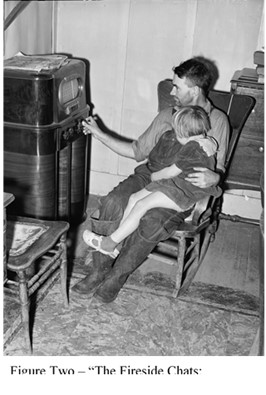
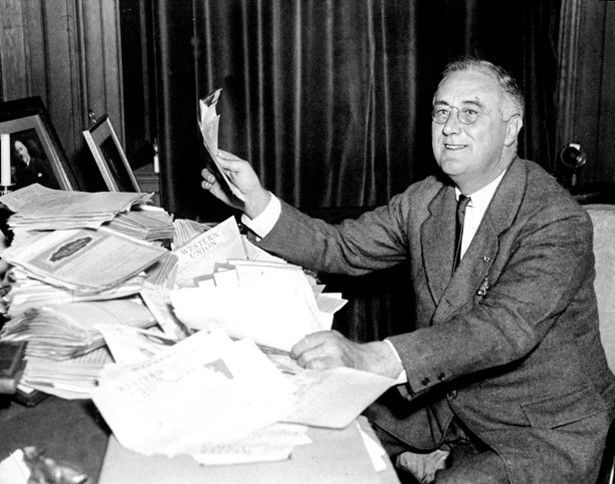
The public loved FDR. He had a great relationship with the country because they had felt like they truly knew him. This starts with his fireside chats where the country was able to listen to him and what he wanted to do for the American people. While he was their president there was his hominess about him where he became more than a president to them.  The people saw how FDR had a helping hand in the reason the country got out of the Great Depression because of his New Deal policy. The New Deal was a domestic program between 1933-1939 which aimed to provide relief and reform the people of the country.

So many lives were lost. Lives were lost because of leaders not believing the rumors of the labor camps, but also because of the restraints put on the immigration policies and visas that would have helped the immigrants trying to get into the country.  Policies have to get passed through many different levels of the government because of the checks and balances system so FDR isn’t the main source of the issue, it was the government as a whole. While the borders had been closed and not as open for quite some time, the decision to close the border angered immigrants who greatly needed help.. There was a genocide happening in Europe because of Nazi regime and the antisemitism running through Germany. America had a lot of difficult decisions to make when it came to policies and deciding what they wanted to do with the immigrants, specifically the Jewish population. America wants to be neutral, and the Jewish population was not something the country was prioritizing. From another entry that was written by FDR he states “I have no intention in getting into a war with Germany. American will not enter. (343) There was no way that FDR was going to allow American to assist with anything including with the immigrants.  The US turned an eye and the immigrants had to then go back to their countries they were trying to leave. Many went into hiding and others were captured and sent to different places, whether it be different countries or a labor camp. This did not just affect the Jewish population, it affected so many immigrants from all over and while the Holocaust as a whole killed around 13 million innocent lives, 6 million of which were Jewish men, women and children. 

At this point the country was torn on what to do. There were some groups that wanted to just get involved in the war because they didn’t want anything to happen to us because we were staying out and cutting ties with other countries. Yet there were the other groups that wanted nothing to do with the war because it was on European soil and did not concern the US in any way.  Due to this split there were discussions being had in Congress over what to do with these sets of Neutrality acts that were rolled out and how to rethink the mindsets of the isolationist. 

After the attack on Pearl Harbor it was like the United States woke up. The Japanese had bombed America’s soil and the people were shocked and distraught. This is what isolationist mindsets do, they had created enemies because with these policies the US was cutting ties with allies and countries had been trading with which was going to create conflict. We never truly had any issues with Japan until all of this happened. The immigration policies after the attack got even tighter than they were before. They truly didn’t want anyone, no matter where they were coming from, to come in and that showed because of the way they were treating the Japanese American groups in the country. However, the containment mindset and isolationism changed completely after the attack on Pearl Harbor in 1941. The people were angry; they wanted everyone who was on the axis side to pay for what they had just done to us, so America joined the allied powers and in 1941 America was officially a part of the war. 

The United States was involved in the war and helping out the Allied powers, men and women were being a part of the war being nurses and taking over the jobs that men were doing and in ways being a part of the war was an eye opening for what women’s roles were like showing women can do just as much as men could do. The American citizens started to speak out more about how they were feeling about the policies already in place and in the novel America Between The Wars there is a letter that gets discussed about how the American families are feeling during his time of presidency, this section shows the side of the American families that want nothing to do with the war, it states“ Dear Mr. President, my wife and I have just heard your speech over the radio, I can not refrain from expressing our deepest appreciation for your state will do everything to keep this country neutral.”(214) This was what the American citizens were thinking; however, being isolated was the wrong move for this country even though the leaders and some of the public agreed to just be focused on the country but in the end the country got attacked by enemies. The isolationism did bring harm to the country and didn’t truly help us. It made the country look weak and made the people feel divided because if the country had not been  isolated could Pearl Harbor have been prevented. While that is a question historians will never truly know it shows FDR should have listened to his heart. FDR should have focused on the people like he did but not in a containment isolationist mindset where certain events might have been avoided. 

Overall, FDR did a lot of good for the people of the country. Did he do the same for immigrants that wanted to come into the country or for the immigrants already in the country?  That is questionable. FDR did not treat the Japanese American immigrants in America right after that attack on Pearl Harbor and FDR changing his immigration quotas and rejecting the Jewish population into the country was not seen as a good move. There will always been good and bad things that any president will do but in this case things could have been different and prevented if he did what he wanted to do and stopped listening to mixed opinions of the public and his cabinet members and because of these policies and the split down the middle this caused a lot of antisemitism and hatred in the country to the Japanese Americans and to the Jewish population that were already here and or the ones who were trying to come in. 

Antisemitism is all too well known throughout the world. Antisemitism is something that has been seen for centuries, the meaning of antisemitism is to be hostile or prejudiced against Jewish people, this has dated back to ancient times but became more seen during the time when Hitler was the dictator of Nazi Germany. The Nazi’s were corrupting the youth and they were being taught how to spot a Jew based on their eyes and hair color, their nose side, how their skull lined up etc. The antisemitism that was happening in Germany would later on during the war spread to the United States in a different way.  As mentioned before, it was antisemitism was always around but because of the increase in hate crimes and antisemitism, other countries were seeing what was really going on.

The Jewish population is one of the groups throughout history that have been blamed and have suffered for far too long. Hitlers building of the labor camps was a genocide and a way to try and erase them for good. FDR and the American population had heard word about these labor camps that were built out in Germany and Poland but had just thought they were rumors. Over in the United States, immigrants had always been coming in for quite some time from all over the world for a fresh start for their families and at the time we were a very friendly and welcoming country when it came to these matters. This had stopped for a while and had been tightened during World War I. When the Great Depression began and people were laid off from their jobs and couldn’t afford anything for their families, their outlooks on immigration started to shift. The people of the United States started to think it wasn’t fair that there were all of these immigrants coming into the country and because they had just suffered through a Depression where they could hardly afford anything that the immigrants should either go somewhere else or that America should be going from open door to a closed-door policy with self-containment and isolationism. 

From that moment on when FDR listened to the majority of the public to become self-contained and isolated matters started to get worse from the Jewish population trying to come into the country and the Jewish population that was already here in the states before the policies were put into place. Historian Breitman who has done a lot research specifically when it comes to the Holocaust and the efforts FDR had states “FDR knew that many Americans held prejudicial views of the Jews.”(5) Breitman has done a lot of research through his book to be able to make a statement like this. There were protests before WW2 was happening towards immigrants and the Jewish population because of fear. . There was an argument made my Breitman stating “ Even if FDR has been more willing to override domestic  opposition and twist arms abroad, he could not have stopped the Nazi’s in the mass murder of about six million Jews.”(5) to make this point is saying that nothing was going to change regardless of the United States changing their quotas and foreign policies to now not allowing them in wouldn’t change anything. There was nothing that could have happened from these events and issues from happening. 

Congress at that point was getting very frustrated. They were seeing the reactions from FDR and the people of the US. There was craziness because emotions were all over the place. In Texas the governor had reported “Efforts to expand Jewish immigration, he said had created a terrible anti-semetic sentiment throughout the country which might break into riots if his bills go through.”(150) The people were getting very vocal about their feelings towards immigration. FDR made a case to congress about their concerns and stated “ This would be a divide with the American people and add to widespread perceptions at home and abroad that Jews had manipulated the policies.”(207) Whether Congress believed what FDR had to say is still a mystery however, what FDR had to say about the American people  was something that was already going through the American people’s minds. 

When the rumors were going around about the labor camps in Europe the people wanted nothing to do with. The public didn’t believe that in Europe there could possibly be any chance of a genocide to a specific group of people. FDR had heard wind of these rumors as any leader would have during this time and states in one of his letters to his Secretary of State “ I do not favor American participation over this matter.”(55) The fact he was getting wind of this and still didn’t want to believe it either and was listening to the American people was an outright shock. FDR seemed to be brushing these rumors away and just wanted to continue to only focus on his isolationism and being neutral during this war.

While the Jewish population was living in fear not only in Germany, they had come to fear the United States. The Jewish population had thought the states would be a safe place for them to come to but when they were turned away because FDR and his committee wanted to change his foreign immigration policies that all changed. The Jewish population was happy for what FDR had done for them, they felt like they were finally able to escape the troubles they were having with the Nazi’s slowly growing to have power. However, once World War II had started those policies changed drastically. Some of those policies were not in place anymore or changed significantly. Numbers were cut by over half and so many Jewish families were sent back to Germany at the start of the war and taken to the labor camps or just killed on the spot for trying to escape. In some ways the United States did such a disservice to the Jewish population They lost all of their clothes, jewelry, houses and worst of all their identity, they were not humans anymore according to the Nazi’s.  So many of the Jewish population were killed or died of illness in those labor camps and the antisemitism that was in Germany had spread to the United States. 

The people of the United States were calling the Jewish population spies to the Nazi government thinking they wanted us to get involved in the war. That was not the case. They wanted a safe place to live where they didn’t have to fear for their lives. Some were sent back to Germany. The people did not want to believe that a genocide towards the Jews were actually happening and they wanted to live in their own happy bubble. The government did nothing to stop the hatred that had spread to the United States because it was not their issue. A little later on in the war when the Americans were on Europe soil and came across a strange looking area in the middle of nowhere was when they realized what they had just stumbled upon. The United States had to do something about this, so they sent word back to the United States and FDR declared that all of the labor camps be liberated. The anger and sadness that got back to the American people and their views on the Jewish population changed drastically. 

Breitman, Richard, and Allan J Lichtman. 2014. FDR and the Jews. Cambridge, Massachusetts: Belknap Press Of Harvard University Press.

Wayne, Cole.  1983. Roosevelt & the Isolationists, 1932-45. Lincoln : University of Nebraska Press.

Robert, Divine A. 1969. Roosevelt and World War II. Johns Hopkins University Press.

Bernard, Fay. 1972. Roosevelt and His America.

Rafael,Medoff. 2009. Blowing the Whistle on Genocide : Josiah E. Dubois, Jr. And the Struggle for a U.S. Response to the Holocaust. West Lafayette, Ind: Purdue University Press.

Welky, David, 2012. America between the Wars, 1919-1941: A Documentary Reader. Malden, Mass.: Wiley-Blackwell. Harrap, and Elliot Roosevelt, The Roosevelt Letters Volume 3; 1928-1945.

Governed by Despots: John Swanson Jacobs Chronicles Enslavement and Resistance

(reprinted with permission from New York Almanack (https://www.newyorkalmanack.com/2024/12/john-swanson-jacobs-enslavement/)

The University of Chicago Press recently published a unique account of an escape from enslavement in North Carolina decades before the Civil War. The United States Governed by Six Hundred Thousand Despots (2024) by John Swanson Jacobs tells of his escape from enslavement by North Carolina plantation owner and Congressional Representative Samuel Sawyer in 1838 while he and the slaveholder were in transit through the City of New York. Jacobs eventually made it to Australia where his story was published serially in 1855 by the Sydney Empire. It was later republished in 1861 in London, UK under the title “A True Tale of Slavery” by The Leisure Hour: A Family Journal of Instruction and Recreation. The 1861 version of Jacob’s story is available online at the website Documenting the American South.

John Swanson Jacobs was born in 1815 in Edenton, North Carolina, the younger brother of his better-known sister Harriet Jacobs, author of Incidents in the Life of a Slave Girl (1861). Harriet Jacobs originally published her book under the pseudonym Linda Brent, possibly to protect those who remained enslaved at home. In the book she referred to her brother John as “William” and Samuel Sawyer, the white father of her two children who “owned” both them and John, as “Mr. Sands.” John Swanson Jacobs, safely in Australia, published under his own name.

In 1838, Sawyer traveled north because he and his fiancé planned to be married in Chicago, Illinois where she had family. He was able to bring an enslaved John Swanson Jacobs with him to New York State because although slavery had been abolished there in 1828, state law permitted enslavers visiting or residing in New York part-time to maintain slaves within their households for up to nine months. This statute was not repealed until 1841.

The following is an excerpt from chapter 5 of A TRUE TALE OF SLAVERY that was published in The Leisure Hour: A Family Journal of Instruction and Recreation (No. 478–February 21, 1861). In this excerpt, Jahn Swanson Jacobs describes his escape from slavery while in New York City.

“THE latter end of the third year after I was sold, my master was elected Member of Congress. I was ordered to get ready for Washington . . .  After my master had been there a short time, he went to board with Mrs. P—-, who had two young nieces here, to one of whom he was soon engaged to be married. As good luck would have it, this young lady had a sister living in Chicago, and no place would suit her like that to get married in . . . Everything was ready, and the hoped-for time came. He took his intended, and off we started for the West. When we were taking the boat at Baltimore for Philadelphia, he came up to me and said, “Call me Mr. Sawyer; and if anybody asks you who you are, and where you are going, tell them that you are a free man, and hired by me.”

We stopped two or three days at the Niagara Falls; from thence we went to Buffalo, and took the boat for Chicago; Mr. Sawyer had been here but a few days before he was taken sick. In five weeks from the time of his arrival here, he was married and ready to leave for home. On our return, we went into Canada. Here I wanted to leave him, but there was my sister and a friend of mine at home in slavery . . . I tried to get a seaman’s protection from the English Custom-house, but could not without swearing to a lie, which I did not feel disposed to do.

We left here for New York, where we stopped three or four days. I went to see some of my old friends from home, who I knew were living there. I told them that I wanted their advice. They knew me, they knew my master, and they knew my friends also. “Now tell me my duty,” said I. The answer was a very natural one, “Look out for yourself first.” I weighed the matter in my mind, and found the balance in favour of stopping. If I returned along with my master, I could do my sister no good, and could see no further chance of my own escape. I then set myself to work to get my clothes out of the Astor House Hotel, where we were stopping; I brought them out in small parcels, as if to be washed. This job being done, the next thing was to get my trunk to put them in. I went to Mr. Johnson’s shop, which was in sight of the Astor House Hotel, and told him that I wanted to get my trunk repaired.

The next morning I took my trunk in my hand with me: when I went down, whom should I see at the foot of the steps but Mr. Sawyer? I walked up to him, and showed him a rip in the top of the trunk, opening it at the same time that he might see that I was not running off. He told me that I could change it, or get a new one if I liked. I thanked him, and told him we were very near home now, and with a little repair the old one would do. At this we parted. I got a friend to call and get my trunk, and pack up my things for me, that I might be able to get them at any minute. Mr. Sawyer told me to get everything of his in, and be ready to leave for home the next day. I went to all the places where I had carried anything of his, and where they were not done, I got their cards and left word for them to be ready by the next morning. What I had got were packed in his trunk; what I had not been able to get, there were the cards for them in his room.

They dine at the Astor at three o’clock; they leave the room at four o’clock; at half-past four o’clock I was to be on board the boat for Providence. Being unable to write myself at that time, and unwilling to leave him in suspense, I got a friend to write as follows: — “Sir–I have left you, not to return; when I have got settled, I will give you further satisfaction. No longer yours, JOHN S. JACOB.”

This note was to be put into the post-office in time for him to get it the next morning. I waited on him and his wife at dinner. As the town clock struck four, I left the room. I then went through to New Bedford, where I stopped for a few months . . . The lawyer I have quite a friendly feeling for, and would be pleased to meet him as a countryman and a brother, but not as a master.”

Once free, John Swanson Jacobs moved to New England where he became an active abolitionist. His efforts took him to Rochester, New York and vicinity on a number of occasions and to New York City at least three times, in May 1849, October 1850, and July 1862. On May 11, 1849, the New York Herald printed an account of a speech by Jacobs at an American Anti-Slavery Society meeting where he called on attendees to make it “disreputable” for people who claimed to be Christians to hold other people in bondage. According to North Star on October 24, 1850, Jacobs spoke in New York City calling for active resistance to fugitive slave laws following the seizure of James “Hamlet” Hamilton by slavecatchers and on July 28, 1862, New York Independent reported on an interview with Jacobs where he recounted his experience as a cook on a British ship, with the support of British authorities in the Bahamas, that was attempting to enter the port of Charleston, South Carolina in violation of the federal blockade of Southern ports (252-258). Excerpts from these articles follow.

“A slaveholder named Skinner, who was a skinner in every sense of the word, was in the habit of coming every year, to visit his brother, Re. Dr. Skinner, who . . . lived at 160 Green[e] street; and yet the baby-stealing, women-whipping tyrant never received a rebuke from his reverend brother, at whose table he sat . . . If anyone asked him what must be done to abolish slavery, his answer was, that it must cease to be respectable. They must make it disreputable, and then slaveholders would be ashamed of it . . . If they had less of religion, and more of Christianity, it would be all for the better” (252-254).

“My colored brethren, if you have not sword, I say to you, sell your garments and buy one . . . I would, my friends, advise you to show a front to our tyrants, and arm yourselves; aye, I would advise the women to have their knives too . . . I advise you to trample on this bill, and I further advise you to let us go on immediately, and act like men” (256).

“[A] very intelligent colored man, formerly a slave in North Carolina, but recently for several years a resident of England, called at our office the other day, and related facts showing that British vessels are stilled engaged in running our blockade, and that the British officials in the Bahamas are, if possible, more inimical to our Union than are the same class of people at home . . . He shipped as a cook on board the steamship Lloyds, at London . . . ‘for Havana and any of the West Indies Islands’ . . . the captain (Smith) announced to the crew that he designed to run the blockade before Charleston, and offered three months pay extra to such as would remain with the ship . . . Jacobs refused to go to Charleston at any price whatever, and demanded, what was his undoubted right, that he be sent home to London. After various efforts on the part of Capt. Smith to indure (sic) Jacobs to either go to Charleston or to settle and sign a satisfaction, he attempted coercion. He had Jacobs taken before a police magistrate to answer the charge of having deserted the ship . . . The law was all on the side of Jacobs, but the public sentiment of Nassau was so strongly against him, and in favor of the unlawful and contraband trade with the Rebels” (257-258).

American Exceptionalism’s Downward Trek: Declining Victory Culture in the 1990s Observed Through the Star Trek Franchise

On January 3, 1993, the first episode of Star Trek: Deep Space Nine began with the Federation defeat at the Battle of Wolf 359. Captain Jean Luc Picard of the USS Enterprise had been captured and assimilated into the Borg Collective as Locutus of Borg and was forced to lead the battle against the Federation.[1] A fleet of Federation ships, including the USS Saratoga, attempted to engage Locutus in battle, but were quickly overpowered. First officer Benjamin Sisko assumed command of the Saratoga after the captain and majority of the bridge crew were killed and the ship was disabled. Sisko issued the order to abandon ship and went to help his wife and child. He located them in the remains of their living quarters buried under rubble; he was able to rescue his son, but his wife was already dead. Another officer forced him to leave her body behind and board an escape shuttle. As the scene fades, Sisko holds his unconscious son as he watches the Saratoga explode with his wife’s body still on board.[2]

Star Trek: Deep Space Nine (1993-1999) presented a vastly different conceptualization of the future than the one Gene Roddenberry originally created in the 1960s series Star Trek: The Original Series (1966-1969).[3]Roddenberry intended to portray a hopeful future where mankind was able to move past conflict and explore the galaxy.[4] However, as the political atmosphere of the United States changed over time, the themes of the various series in the Star Trek franchise changed as well, especially after Roddenberry’s death in 1991. As a result of political and social turmoil in the 1990s, there was a disillusionment with the United States as an institution that culminated in a concurrent decrease in American exceptionalism and victory culture reflected through contemporary popular media. The concept of American exceptionalism refers to the celebratory ideology that Americans perceive the United States as inherently extraordinary. This is the result of its democratic nature and the unique “American identity” that can be claimed across race, class, and gender; factors that subsequentially makes it fundamentally superior to other nations.[5] One way that this dogma is reflected in American society is through the presence of victory culture, which reflects a glorified exceptionalist view of the nation in order to highlight American superiority and disseminate patriotic values to the populace. The development of an increasingly cynical view of America can be observed by charting and comparing Star Trek: Deep Space Nine with Star Trek: The Original Series in regard to the themes and plotlines of each series and how these changes reflect evolving responses to sociopolitical conflict and violence in the United States in the 1960s and 1990s respectively.[6]

The increased polarization in the United States in the late twentieth and early twenty first centuries is a highly contentious and relevant topic for the current political climate in America. Kevin M. Kruz and Julian E. Zelizer traced the increasing divide of American society between 1974 and 2019 in their book Fault Lines: A History of the United States Since 1974.[7]They determined that economic, racial, political, and gender and sexual divisions are factors of the American experience which have exacerbated the “fault lines” of the United States by tracing their influence on major events between 1974 and 2019. The influence of these factors on American society increased significantly after the 1960s and 1970s because of the institutionalization of polarized ideologies through targeted legislation and widespread access to popular media. This structural division was particularly exacerbated by the end of the Cold War through the development of more accessible and increasingly partisan media news networks such as MSNBC, Fox News, and CNN, which compounded the preexisting divides among the American populace.

Another significant historical factor to consider when analyzing popular opinion through a television show is the influence of current events on the political climate, and how views of those events are reflected through media. Tom Engelhardt detailed the rise and fall of victory culture and American exceptionalism in the United States in his book The End of Victory Culture: Cold War America and the Disillusioning of a Generation.[8]He claimed that victory culture, Engelhardt’s term for the propensity of American media and culture to highlight the nation’s military triumphs, gradually ended between the years 1945 and 1975. This was due to the memory of the United States’s actions during the Second World War, specifically the deployment of two atomic bombs onto a surrendering Japan, and the end of the unpopular Vietnam War. As a result, the United States decreasingly viewed conflict as a motivating force and congruently perceived war in a negative light. This was further exacerbated by the end of the Cold War through the loss of a unifying common enemy for the United States that Engelhardt, similarly to Kruze and Zelizer, claimed was critical for the collective victory culture-based American identity.

Analysis of the impact of the Cold War on American society is extensive, and many historians have documented its effect on different forms of film-based media, such as television and movies. Historians like Thomas Doherty, Jim Cullen, and Bryn Upton examined the impact of the Cold War on American film and television, independently demonstrating how contemporary events influenced cinematic themes. In his book Cold War, Cool Medium: Television, McCarthyism, and American Culture Doherty highlighted the influence of television on American society as a result of its increased presence in the majority of American households in the 1950s.[9] Additionally, he refuted common misconceptions regarding the connection between McCarthyism and Cold War era television, ultimately demonstrating that television resulted in social resistance which helped to make the United States a more inclusive place, in addition to aiding in the end of McCarthy’s policies, through the portrayal of an inclusive society.[10] Cullen wrote From Memory to History: Television Versions of the Twentieth Century where he examined how historical shows from the past half a century portrayed earlier decades as a way to understand the time they were created.[11] He determined that the majority of television shows function as interpretations of events, and episodes can be used as “artifacts” that are representative of when they were written to understand the past. Additionally, Upton wrote Hollywood at the End of the Cold War: Signs of Cinematic Change, where he compared pre and post-Cold War films with analogous themes, intending to understand how their “interpretive framework” was influenced by the culture of the period.[12] Similarly to Engelhardt, Upton determined that in the 1980s there was a negative shift in the United States’ perception of themselves after the end of the Vietnam War, which was further exacerbated by the loss of a common enemy with the end of the Cold War. This meant that the United States struggled to develop a new interpretive framework without the presence of the Cold War and a common external enemy such as the Soviet Union. He asserted that the end of the Cold War resulted in altered perception of concepts like heroism and villainy, where binary characters with simple motivations that reflect, or contrast, American values, evolved to become more complex with more detailed backstories and intentions.[13]

While there has been much written about the influences of current events on film before and after the end of the Cold War, there is a gap in general 1990s historical scholarship. The goal of this paper is to examine evolving public perception of the United States as an institution through comparative analysis of diminishing victory culture in Star Trek: Deep Space Nine in relation to Star Trek: The Original Series, in order to determine how American exceptionalism decreased in response to changing political landscapes and major historical events of the decade. While Englehardt argues that victory culture is depicted through media portraying American military triumph, this paper will demonstrate that victory culture is the medium used to disseminate American exceptionalist messages through cinematic plot regarding all perceived accomplishments of the United States in addition to militaristic triumphs. Furthermore, it will evaluate why the hopeful view of the future in the 1960s became significantly less optimistic in the 1990s, explore how public opinion was reflected in the Star Trek franchise, and analyze the role that televised media played in social commentary during the second half of the 20th century. In its conclusion, this paper will also provide pedagogical suggestions for social studies educators on ways they can incorporate science fiction media into the classroom using the analysis in this paper, given the educational practice of utilizing film to engage students as a result of their accessibility and engaging nature.[14]

The 1960s were characterized by perpetual social upheaval and political conflict that stemmed from the end of the Second World War and the beginning of the Cold War in the 1940s. This was paralleled by the resulting foreign and domestic tensions of the Cold War as the United States government waged an ideological conflict against communism through the Vietnam War in the late 1960s and early 1970s, in addition to a war of mutual destruction with the Soviet Union until its collapse in 1991. During the Reagan Administration in the 1980s, conflict between Republicans and Democrats increased exponentially in response to the revitalization of the conservative base and a heightened focus on moral politics that subsequentially amplified patriotism throughout the United States.[15] This increased focus on morality culminated in the 1990s culture wars, where the Clinton Administration and the conservative base clashed over moral and values based politics.[16] Additionally, the expanding involvement of the United States military in the affairs of foreign nations and increasing instances of foreign and domestic terrorism at the end of the 20th century exacerbated tensions that were reflected in popular media of the time. As a result, social discord and political fearmongering characterized by heightened sociopolitical conflict and violence was amplified in the 1990s relative to the 1960s.

Since the founding of the United States, there has been an ongoing conflict over the amount of power that the federal government should be able to exert over the individual states and citizens. This conflict was exacerbated in the twentieth century following the implementation of the New Deal, resulting in an ongoing ideological dispute over the responsibility of the United States government to provide welfare assistance to its citizens through a federal social safety net after the pervasive homelessness and poverty experienced during the Great Depression.[17] An additional societal challenge of the late twentieth century was combating high crime rates seen in inner cities that arose in combination with substantial poverty, resulting in a mass incarceration crisis caused by 1960s legislation which disproportionally targeted people of color.[18] This was accomplished through the criminalization of urban spaces through legislation designed to incarcerate minority populations through drug-based crimes that resulted in the relocation of African Americans from urban cities to rural prisons, culminating in a conservative shift during the post-war period. Another social concern of this time was the Johnson Administration’s War on Poverty in response to the pervasive poverty rates in the United States. Moreover the 1980s Reagan era caricature of the “welfare” queen created a negative stereotype that targeted and incarcerated primarily African American women who were suspected of committing welfare fraud, further increasing mass incarceration rates.[19] Furthermore, expedited deinstitutionalization of mental hospitals in the 1990s resulted in the imprisonment of a disproportionate number of people with mental illness who could not access proper psychiatric care in the United States.[20] In response to the culture wars of the 1990s, the Clinton Administration expanded on legislation that limited access to government welfare programs in addition to laws that increased mass incarceration for drug crimes that compounded pre-existing mandatory minimum sentence requirements.[21]

Themes of mass incarceration and poverty are reflected in episodes of both Star Trek: The Original Series and Star Trek: Deep Space Nine, which can be used to the determine the zeitgeist of each era in relation to American exceptionalist themes by examining the presence of victory culture in each series. The Original Series provided a significantly more glorified interpretation of social progress than Deep Space Nine, which demonstrates the contrasting overwhelming absence of American exceptionalism in the 1990s. For instance, the 1967 episode of The Original Series “The City on the Edge of Forever” and the two-part 1995 Deep Space Nine episode “Past Tense” both have time travel-based plots where main characters travel back in time to preserve their future. Both episodes center around the significance of advocacy and combatting poverty but have vastly different perspectives regarding the methods that the government should implement to help impoverished citizens. The main characters of each series function as the perspective of the contemporary viewer and can be used to assess the perception of the general populace on sociopolitical developments by examining how they respond to their experiences in the past. Furthermore, the events in these episodes can be used to gauge the general perspective of the public towards the United States as an institution during each decade in response to specific current events by assessing the presence of celebratory victory culture themes in each series.

            In “The City on the Edge of Forever,” Captain James Kirk and First Officer Commander Spock travel back in time to New York in 1930 to restore the “correct” timeline after it was disrupted.[22] When they arrived in New York City they encountered Edith Keeler, a social worker from a local soup kitchen at the 21st Street Mission, who, in exchange for working at the soup kitchen, assisted them with getting jobs and an apartment. Keeler was presented as a progressive thinker through her enlightened view of humanity’s future. However, this was contrasted by her belief that only the “deserving poor” who were not at fault for their circumstances and continued to work despite their misfortune, should receive assistance. This dichotomy is demonstrated through the daily speech she gave to the mission’s attendants before meals as “payment,” where she said:

I’m not a do-gooder. If you’re a bum, if you can’t break off with the booze, or whatever it is that makes you a bad risk, then get out…One day soon, man is going to be able to harness incredible energies…that could ultimately hurl us to other worlds in…some sort of spaceship. And the men that reach out into space will be able to find ways to feed the hungry millions of the world and to cure their diseases. They will be able to find a way to give each man hope and a common future.[23]

The contradiction of this speech emphasizes themes of Social Darwinism and rugged individualism, the belief that people are responsible for their own economic success or failure. By beginning the speech with a demand for “bad risks” to leave based on their reliance on alcohol she distinguished those who were undeserving of help by highlighting the traits she found to be disagreeable. Her contrasting belief in a brighter future was demonstrated in the speech when she discussed how technological advancements and travel to different planets would ultimately resolve the social problems faced during the Great Depression.

During the early years of the Great Depression, before the New Deal revolutionized government-based welfare and federal economic intervention programs in the United States, it was believed that charities should hold the majority of the responsibility for helping the less fortunate. Social workers, like Keeler, were known to have a more progressive view regarding the causes of issues like poverty based on their mission to use grassroot methods to counteract societal inequity by working directly with poor communities through advocacy and education. [24] However, at the time many social workers were also heavily involved in the prohibition movement due to their belief that alcoholism was a disease caused by poor life choices and subsequentially felt that the 18th Amendment outlawing the sale of alcohol in the United States significantly improved the morals and conditions of low income communities.[25] As a result, Keeler’s contradictory assertions that she would not provide assistance to those who were undeserving of help, especially alcoholics, while preaching about the bright future of humanity would be socially acceptable within the context of the period and her chosen profession.

In response to the high rate of poverty in the United States, President Lyndon B. Johnson declared a national war on poverty in his 1964 State of the Union Address. In 1966, Vice President Hubert Humphrey wrote an article detailing the goals of the War on Poverty and the Johnson Administration’s actions to eliminate poverty in the United States. [26] Humphrey identified that the independent actions of private charity and the federal government counteracted each other and claimed that they could not simultaneously exist if they continued to operate autonomously.[27] He also acknowledged that before the implementation of the War on Poverty, the dominant American philosophy regarding welfare reflected Social Darwinist perspectives, and recognized that there were many people who still held these beliefs. The federal welfare legislation that Humphrey supported was extremely progressive for the time and did not align with the beliefs of many Americans in the increasingly polarized political climate of the 1960s due to the connection of welfare to racial politics and the fact that it was perceived as an example of federal overreach.[28]

The lack of reactions by Kirk and Spock, in public and in private, regarding Keeler’s statements and the poverty crisis in New York City because of the Great Depression, indicated that they were, at the very least, ambivalent toward her actions. For instance, they could be observed discussing the barbarity of the period but do not provide any commentary on their observations or show any desire to help the people that they encountered in the past. Through Kirk and Spock’s inaction and Keeler’s unwillingness to help individuals that she saw as undeserving, “The City on the Edge of Forever” comments on the philosophies that Humphrey counteracted in the War on Poverty article which reflected common perspectives on poverty, homelessness, and the undeserving poor in the 1960s. Furthermore, the ongoing debate regarding the responsibility of private charities to help citizens verses government funded federal assistance can be observed in the episode based on Keeler’s role as a social worker who ran a private charity organization in New York and subsequent status as the sole social services provider in the episode.[29]

The inflated importance of the United States in The City on the Edge of Forever is representative of the American exceptionalist views of the 1960s and provides an example of victory culture regarding the social progress of the United States through the revelation that deviating from the status quo would result in an undesirable future. In the episode, Spock discovered that Keeler needed to die in a traffic accident because in the version of events where she lived, Keeler developed a peace movement which delayed the United States’ entry into World War II thus allowing the Nazis enough time to develop the atomic bomb and win the Second World War. As a result, humanity stagnated and was incapable of developing sufficient technology to reach space, thus preventing the conception of the United Federation of Planets; the governing interplanetary union in the Star Trek universe that Earth helped to develop. This indicates that the United States’ role in WWII was seen as so significant that without their actions there would have been repercussions for the entire universe that lasted into the 23rd century. Additionally, this helps to rationalize America’s use of atomic weapons in the Second World War by claiming that if the United States did not develop and utilize the bomb, there was a risk of Germany doing so first and destroying the free world.

            Themes and commentary in “The City on the Edge of Forever” can be compared to the 1995 Star Trek: Deep Space Nine two-part episode “Past Tense” to demonstrate evolving perspectives regarding social and welfare programs between the decades. In the episode, space station Deep Space 9’s Commander Benjamin Sisko, Lt. Commander Jadzia Dax, and Doctor Julian Bashir were accidentally sent to San Francisco in August of 2024 to a watershed moment in Earth’s history.[30] In this fictional imagining of the future, cities across the United States isolated “undesirable citizens” like the mentally ill, unemployed, and poor from the rest of society in locked “sanctuary districts” that were utilized as a method of enforced social control, similar to ghettos. Sisko and Bashir were placed into one of these districts, where they were quickly accosted by a group of other residents who wanted to steal their food ration cards. The ensuing fight resulted in the death of another resident, Gabriel Bell, when he attempted to help protect Sisko and Bashir. Bell was a fictional historical figure from 2024 who was famous for protecting hostages that were taken during a violent protest orchestrated by the residents who attacked Sisko and Bashir, and who took advantage of the situation to call attention to the grim reality of the sanctuary districts. In order to preserve the timeline, Sisko assumed Bell’s identity to fulfill his role in the hostage crisis and ensure that national legislation outlawing the districts was enacted. Through this plotline, the episode provides commentary on many different social issues, such as mass incarceration, welfare, unemployment, homelessness, and the mental health crisis caused by the deinstitutionalization of mental hospitals. This was a direct response to the Clinton administration’s 1992 campaign promise to change the welfare system and 1994 legislation that exacerbated the mass incarceration crisis, while also providing a response to pervasive social concerns that arose through actions taken by the Reagan Administration in the previous decade.

Character conversations and overarching plot in “Past Tense” provided commentary on Bill Clinton’s 1992 campaign promise to “…end welfare as we know it…” and later legislation like the Violent Crime Control and Law Enforcement Authorization Act of 1994, which implemented harsh sentencing minimums for certain crimes, especially those related to drugs, and aggravated the mass incarceration crisis in the United States.[31] In 1992, a Clinton campaign commercial described their goal to restructure the welfare system in order to add mandatory work requirements to “…break the cycle of welfare dependency,” and later resulted in the Personal Responsibility and Work Opportunity Reconciliation Act of 1996 which restructured federal welfare programs and implemented new requirements to receive assistance.[32] Furthermore, concern regarding rising crime rates in inner cities starting in the 1960s led to the development of new methods of calculating crime rates that subsequentially resulted in the American mass incarceration crisis that perpetuated socioeconomic consequences that increased the violent crime rate from 200.2 per 100,000 in 1965 to 684.6 per 100,000 in 1995.[33] The mass incarceration crisis was further compounded by the escalation of the deinstitutionalization of mental hospitals in the 1990s, which, according to a 2013 study in The Journal of Legal Studies, resulted in a 4-7% growth in incarceration rates between 1980 and 2000.[34] This caused a mental health crisis in the United States because of the lack of education regarding the treatment and care for people with mental illness and, consequentially, there was a disproportionate number of people with mental illness in the United States who were homeless. Law enforcement officers would often arrest these individuals for petty crimes and instances of indecent behavior in public spaces, and would them hold them in local jails to wait for psychiatric care.[35] These developments were reflected in “Past Tense” through the use of sanctuary districts to house the “undesired” citizens of the United States to the extent that overcrowding led to limited housing and resources which resulted in increased instances of organized violence within the districts.

Throughout the episode, Sisko, Dax, and Bashir frequently commented on issues of social injustice in the sanctuary district, both in private conversations and directly to the people who live in 2024. For example, while trying to find a place to sleep, Sisko and Bashir see a man wrapped in a blanket sitting on the street, who appeared to be hallucinating, and proceed to have a discussion regarding the general ambivalence they observed towards the suffering in the sanctuary districts:

Bashir: There’s no reason for him to live like that…they could cure that man now, today if they gave a damn.

Sisko: …it’s not that they don’t give a damn, it’s that they’ve just given up. The social problems that they face are too enormous to deal with.

Bashir: …that only makes things worse. Causing people to suffer because you hate them is terrible but causing them to suffer because you’ve forgotten how to care – that’s really hard to understand.[36]

When taken in the context of the welfare crisis of the period, especially given Clinton’s campaign promises to limit welfare access, this conversation provides commentary on legislation that targeted and incarcerated minority populations for drug based crimes and welfare fraud in addition to incarcerating people with mental illness rather than providing them with psychiatric care.[37] This resulted in the development of a system that punished rather than rehabilitated, perpetuating social injustice without an attempt to find a solution by ignoring and targeting people seen as unworthy of help subsequentially increasing the stigma towards receiving welfare assistance in the United States.

The critique of the United States in the show is further emphasized throughout the two-part episode through the interactions of characters from 2024 with the main cast. Contemporary characters commented on the injustice of their situation and expressed frustration with their inability to change the system. For example, the government worker at the sanctuary district who processed Sisko and Bashir’s paperwork, described the systematic bias of the sanctuary districts based on the categorization of people and defines the pejorative slang terms, gimmes and dims, used to describe the groups: “Gimmes are…people who are looking for help. A job, a place to live…the dims should be in hospitals, but the government can’t afford to keep them there, so we get them instead. I hate it, but that’s the way it is.”[38] The worker, Lee, was later taken as one of the hostages and her critical sentiment towards the sanctuary districts was further emphasized in a conversation with Bashir. She described an incident when she first started working for the sanctuary district where she was almost fired after she processed a woman who had an arrest warrant for the crime of child abandonment. She discussed how the woman left her son with the family that previously employed her, because she could not take care of him, further revealing that:

Lee: I felt so sorry for her. I didn’t log her in, I just let her disappear into the Sanctuary.

Bashir: Well, that was very kind of you…what happened to this woman?

Lee: I don’t know, but I think about her all the time. Ever since then I’ve just done my job, you know? Tried not to let it get the best of me.

Bashir: It’s not your fault that things are the way they are.

Lee: Everybody tells themselves that, and nothing ever changes. [39]

This conversation provides metacognitive analysis on the pervasive feelings of dread and inadequacy that the average American experienced regarding social injustice and their inability to change their role in the perpetuation of a system of oppression. Any aspect of American exceptionalism reflected in “Past Tense” through long term influence of the United States in the forming of the Federation that was displayed through Sisko, Dax, and Bashir’s intervention in the past, is negated through the way that characters blatantly criticized the system in addition to the implication that their intervention into the status quo was necessary for the correct future to occur.[40] This means that the episode does not function as an example of victory culture and, as a result, American exceptionalism is subsequently not evident in this episode to the same extent as it was in “The City on the Edge of Forever,” which lacked the larger criticism of social injustice seen in “Past Tense.” Through their active intervention to change the status quo, Sisko, Dax, and Bashir were able to integrate themselves into the past in a way that Kirk and Spock did not by ensuring Keeler died to prevent the Nazis from winning World War II.

While there are themes of American exceptionalism in “The City on the Edge of Forever,” in the way that it highlighted the social progress of the 1960s, the critical themes in “Past Tense” towards the sociopolitical decisions of the era demonstrate a disillusionment with the institution of the United States. Furthermore, the time periods that the characters traveled to are also significant when analyzing commentary in each series. In The Original Series, Kirk and Spock go back in time to the 1930s, a retrospective point in history that was seen as one of the darkest periods in living memory. This is contrasted in Deep Space Nine, with Sisko, Dax, and Bashir traveling back in time a prospective dark future in 2024 which was created by the writers. By focusing the episode on a dark lived point in history, the writers of The Original Series highlighted the exceptionalism of the 1960s through contrast with the Great Depression, creating an example of social reform-based victory culture. Comparatively in Deep Space Nine, the writers portrayed a negative view of the United States through the creation of a fictional point in the near future where social divisions were heightened to the extent that society was on the verge of collapse, as a result of the actions taken by the American government. This episode provides critique by the writers regarding the sociopolitical failings of the 1990s and functions as a call to action regarding their desire to see social change enacted in order to prevent the possibility of the future that they described in “Past Tense,” which is contrary to the themes of social stagnation seen in “The City on the Edge of Forever” that emphasized the exceptional progress of the 1960s.

            After the end of the Second World War, the United States had to reconcile their new status as the world’s only remaining stable superpower, which manifested through their increased involvement in conflicts in both the Middle East and previously Soviet dominated regions. The other defining political development of the second half of the twentieth century was the Cold War, which permeated every aspect of American sociopolitical and personal life and heightened internal tensions in the United States. The 1960s were a turbulent point in history as a result of the Cold War, especially regarding the ensuing military conflicts in Korea and Vietnam that were waged in an attempt to prevent the spread of communism. During the Vietnam War, there was a disillusionment with the United States because of American involvement in what was perceived to be a useless and never ending conflict. The legacy of the Vietnam War defined perspectives regarding the increasing involvement of the United States military in the affairs of other countries like Somalia, Haiti, and the Balkans in the 1990s.[41] This was evident through varying perceptions of the American declared victory in Operation Desert Storm of the Persian Gulf War in 1991, particularly when President Bush claimed that the negative legacy of the Vietnam War was over and called for a “new world order” where countries worked together to protect freedom, security, and the rule of law.[42]

            Another major concern between the 1960s and 1990s was an increase in instances of terrorism in the United States. One example was the heightened threat of international aviation terrorism from the 1960s through the 1980s with saboteurs hijacking or destroying planes to gain political leverage and provide propaganda for their causes.[43] Furthermore, 1970 had the highest number of terrorist attacks recorded by the Global Terrorism Database (GTD), with more than 460 instances in the year alone, before rates steadily declined throughout the 1980s and 1990s.[44] The increasing sociopolitical divide in the United States further resulted in acts of violent domestic terrorism such as the attacks by the left-wing extremist group the Weather Underground who were credited with at least 25 bombings between 1974 and 1978, the Unabomber who killed three people and injured 23 others between 1978 and 1995, and the Oklahoma City Bombing in 1995 that killed 168 people and injured hundreds of others.[45] Furthermore, the 1993 World Trade Center Bombing by Islamic fundamentalist extremists associated with Al-Qaeda resulted in a 100-foot crater in the building that killed six people and injured more than one thousand others.[46] This was accomplished by the perpetrators hiding a bomb in the parking garage under the towers with the intent to completely destroy them, a goal which was later completed by Al-Qaeda on September 11, 2001, and had planned a series of plane bombings at the time. Importantly, fear of domestic and foreign terrorism increased exponentially in the wake of the Oklahoma City Bombing in 1995 by American white nationalists Timothy McVey and Terry Nichols, which led to new legislation under the Clinton Administration in 1996 that made terrorism a federal crime, gave funding to federal agencies, and made it easier to deport people who entered the country illegally.[47]

Historians H. Bruce Franklin and Nicholas Evan Sarantakes wrote about how the Cold War and the United States’ involvement in Vietnam were two of the most influential current events represented in Star Trek: The Original Series. Franklin examined select episodes that aired between 1967 and 1969, to demonstrate how they directly related to the Vietnam War.[48] He established that the episodes reflected the United States’ evolving perspective on the war based on how the first two episodes examined presented the war as a necessary evil, while the last two represented the desperation of the era and called for radical change, namely an end to the Vietnam War. Similarly, Sarantakes argued that the Original Series used cinematic allegory to comment on contemporary politics and foreign policy as a way to express the role the writers believed the United States should play in world politics. [49] He accomplished this by highlighting the intentional allegorical comparison of political prowess and the capitalist and communist powers during the Cold War in The Original Series.

Fear in response to of the threat of national and international violence was pervasive in the American consciousness during the 1960s and 1990s. Many episodes in The Original Series had plots that included violence and combat, but there was never an active war. The show did include Cold War inspired plots through the Federation’s ongoing political conflicts with the Romulan and Klingon Empires, which were known to result in minor skirmishes and attempted acts of terrorism such as in the episode “The Trouble with Tribbles.” Furthermore, it is important to note that the conflict with the Romulans was not introduced until the 14th episode and the hostilities with the Klingon Empire did not begin until the 26th episode. The battles between the Federation and these empires were generally isolated to single episodes rather than longer overarching season-long plots. During the 1990s, the number of white supremacist organizations and anti-government militias in the United States was increasing.[50] As a result, Deep Space Nine provided commentary on the mounting examples of political terrorism through the Bajoran religious ideological conflict. Furthermore, the heightened involvement of the United States military in foreign nations was indirectly criticized through the demonstration of the futility of combat and the psychological impacts of war on young civilians and soldiers, specifically through the characters of Jake Sisko and Ensign Nog. These episodes served to comment on the lingering effects of combat on the physical and mental wellbeing of soldiers and civilians in addition to counteracting the perceived glory of combat by presenting protagonists committing morally dubious acts in battle.

The interactions between the Klingons and the Federation were grounded in racist stereotypes and ideological differences rather than active battle-driven hatred. In the episode “The Trouble with Tribbles,” the crew of the USS Enterprise came into contact with a group of Klingon soldiers while on shore leave, who provoked a fight with the Starfleet officers by calling the captain and the Enterprise derogatory names, which resulted in a bar brawl led by the Chief Engineer and the Head Navigator. [51] This altercation exemplified the ideological basis and contemptuous nature of the Klingon-Federation conflict. The episode provided further commentary on the Cold War through the discovery of a Klingon spy on the K-7 space station, who poisoned grain stores in an attempt to allow the Klingon Empire to gain full control of the planet the station was orbiting by killing all of the Federation colonists. This attempted act of sabotage was discovered by the crew of the Enterprise and did not result in a war between the Federation and the Klingon Empire. However, the discovery of a Klingon infiltrator who was physically altered to look human and was acting as the aide to a Federation undersecretary, highlights themes of American exceptionalism because the crew of the USS Enterprise was able to identify and neutralize this enemy, thus preventing civilian deaths and a war with the Klingons. This is reflective of the omnipresent fear that communist insurgents were infiltrating the United States government during the Cold War for nefarious purposes.[52] As a result, the episode functions as an example of victory culture that emphasized the moral superiority and successes of the Federation, who represented the United States, by rooting out traitors in comparison to the failed attempt of deceit by the Klingons who acted as an allegory for a communist nation.

A preeminent example of commentary on terrorism in Deep Space Nine is in the episode “In the Hands of the Prophets,” where a religious fanatic bombed a school on the Deep Space 9 station.[53] This attack was motivated by a federation teacher referring to the Bajoran gods as “entities” while employing a purely scientific perspective during her lesson, rather than using terminology that aligned with the Bajoran faith. This situation instigated debate regarding the content children should be taught given that Deep Space 9 was technically a Bajoran station, and whether the Bajoran and Federation children should receive the same education or even attend the same school. This eventually escalated to a bomb being detonated in the school as a message to the teacher, and ultimately led to an assassination attempt against Vedek Bareil, a progressive religious leader who was the most likely candidate to become the next head of the Bajoran religion. It is heavily implied that the orthodox sect leader, Vedek Winn, orchestrated the bombing in order to stage the assassination attempt against Vedek Bareil and prevent him from becoming the Kai of Bajor.[54] The violence in this episode reflected the threat felt in the United States from far right domestic terrorism in recent decades, especially regarding the fear for the safety of civilians and children. Additionally, the religiously motivated school bombing in this episode serves as allegory for the religiously motivated bombing of the World Trade Center by Islamic fundamentalists associated with Al-Qaeda in February 1993, four months before this episode aired, that resulted in the deaths of six people and the injuries of over one thousand others.[55] The success of the station’s crew in thwarting the assassination attempt can be interpreted as an example of exceptionalism, but the underlying implications regarding the motivations behind the incident emphasize the instability of politics by highlighting violent ideological conflict in a manner that vilifies conservative extremism. Furthermore[HB1] , the episode demonstrates the fragile relationship between the Bajoran and Federation residents on the Deep Space 9 stationat the beginning of the series in a manner that depicts the Federation citizens as outsiders and interlopers, because they were imposing their values onto the Bajoran children, ultimately undermining any American exceptionalist themes.

The central theme of war was pervasive throughout Deep Space Nine; the series began by exploring the consequences of the Federation defeat at the Battle of Wolf 359 and the occupation of Bajor by the Cardassians, and subsequentially concluded with the Federation victory in the Federation-Dominion War.[56] The commentary on war in the series was largely accomplished by portraying youth experiencing battle and exploring the psychological impacts of combat through the experience of Jake Sisko in “…Nor the Battle to the Strong” and Nog in “The Siege of AR-558” and “It’s Only a Paper Moon.” These episodes emphasized the disillusionment with the United States and the decreasing view of war as exceptional, through the changing perspective of each character regarding the glory of battle as a direct result of their experiences. This was further accomplished by including multiple examples of violence through plots centered on both terrorism and military conflict in the series in addition to the presentation of immoral actions taken in combat by the Federation soldiers in the name of survival.

 In “Nor the Battle to the Strong,” Jake Sisko, son of Deep Space 9’s Commander Benjamin Sisko, was an 18 year old civilian who accompanied Dr. Julian Bashir to a medical conference with the intention of writing a news article about him.[57] However, when Dr. Bashir was diverted from the medical conference to a field hospital because of an attack by the Klingons, Sisko willingly entered the battlefield with the intention of detailing the glory of combat.[58] When he encountered armed conflict and death, Sisko struggled to reconcile the violence that he experienced with his preconceived notions of the grandeur of war. He witnessed multiple people die in gruesome ways, vomits in reaction to Bashir’s macabre gallows humor about surgery, and fled combat multiple times. For example, when Sisko and Bashir attempted to retrieve a power generator from their ship, they were pinned down by shelling which caused Sisko to run away, leaving an unconscious Bashir behind. This was contrasted by his actions at the end of the episode, where Sisko unintentionally caused their base’s entrance to collapse by blindly shooting into the air to protect himself from advancing Klingons. Sisko’s actions provided the medical team with enough time to safely evacuate the patients in the field hospital, which resulted in Bashir labeling him a “hero.” When Sisko ultimately wrote the article detailing his experiences, he discussed the futility of the battle in the context of greater history, and the impact that it had on his life.

More than anything I wanted to believe what he was saying but the truth is I was just as scared in the hospital as I’d been when we went for the generator, so scared that all I could think about was doing whatever it took to stay alive. Once that meant running away and once it meant picking up a phaser. The battle of Ajilon Prime will probably be remembered as a pointless skirmish but I’ll always remember it as something more – as the place I learned that the line between courage and cowardice is a lot thinner than most people believe.[59]

This quote demonstrates the harmful psychological impact of war and the futility of combat in a time where there was increased threat of the United States entering a global conflict in the Middle East. It also portrayed the decreasing exceptionalism associated with combat by the American populace, through emphasis on the reality of fear and cowardice rather than the historical glorified view of combat seen in examples of media that highlighted America’s exceptionalism through military victory culture.

The fact that the Federation’s war with the Klingons seen in this episode was caused by the infiltration of enemies into the Klingon government via shapeshifters in addition to the conflict being the result of the violation of a cease fire, makes this equally as analogous with terrorism as war. This conflict provided commentary on both the threat of active war and the rise in hate groups and violent protests in the mid-1990s and the subsequent Antiterrorism and Effective Death Penalty Act of 1996, passed by the Clinton Administration.[60] Sisko’s experiences in the episode demonstrate a primal, emotional response to war, even if he had indirectly experienced combat on Deep Space 9 and in the Battle of Wolf 359 as a child. Detailing the experiences of a protagonist who responded to combat in dishonorable and realistic ways further emphasized the lack of American exceptionalism in the 1990s in the wake of increased violence and the threat of terrorism.

In addition to commentary on the psychological effects of combat on civilians through Jake Sisko, Deep Space Nine provided analysis regarding the experiences of young soldiers through Ensign Nog in “The Siege of AR-558.” The episode took place during the War with The Dominion, an empire from the Gamma Quadrant that was trying to destroy the Federation.[61] Captain Sisko brought a group of officers from Deep Space 9, including Ensign Nog of Starfleet and his uncle Quark, who was acting as a representative of the Ferengi Alliance, to deliver supplies to a battalion of Federation soldiers who had taken control of a Dominion communications tower.[62] The 43 surviving Starfleet officers, out of the original 150 stationed at the communications tower, had been pinned down for five months. This was significantly longer than the 90 day maximum deployment mandated by Starfleet and meant that they were experiencing severe battle fatigue that had resulted in infighting among the officers.

Captain Sisko eventually commanded Nog to participate in a small scouting party to determine the number of Dominion Jem’Hadar soldiers encamped nearby.[63] Quark tried to persuade his nephew to stay at the base, but Nog rebuffed his attempt based on his sense of duty as a Starfleet officer and his need to prove himself as the first Ferengi in Starfleet in combination with his hero worship of the surviving officers at the base. While on the mission, they were ambushed by the Jem’Hadar and Nog was wounded, he was rushed back to the base for emergency medical attention, ultimately resulting in Dr. Bashir amputating his leg. During the battle, Quark and Nog remained in the base while the rest of the officers, including Dr. Bashir, engaged the Jem’Hadar. Prior to the battle, the officers were able to repurpose Dominion landmines and use them to slow the Jem’Hadar’s advance by putting them in the path between their encampment and the communications tower. This episode portrayed the cynicism of the 1990s towards the United States by having the protagonists repurpose and intentionally reprogram brutal enemy weapons to be triggered by movement with the intention of eliminating approximately one third of their enemy’s forces. The lack of glory in combat is evident in the episode through the Federation soldiers’ desperation overriding their moral objections to using the landmines in a desperate attempt to survive the battle.

In the episode “It’s Only a Paper Moon,” Nog returned to Deep Space 9 after an extended medical leave where he was fitted with a bio-synthetic leg and received psychological counseling.[64] However, it is revealed that Nog was still experiencing post-traumatic stress symptoms, depression, and phantom limb pain that manifested in a psychosomatic limp which required him to use a cane. Nog also became obsessed with listening to the song “I’ll be Seeing You,” performed by the holographic character Vic Fontaine, because Dr. Bashir played the song for him while he was wounded during the battle. This led to Nog choosing to live in Vic’s holographic world for an extended period of time to recuperate and learn to cope with his experiences.[65] Vic helped Nog to reconcile some of his trauma, but he ultimately refused to leave the Holosuite. When Vic confronted Nog, he said:

When the war began…I wasn’t happy or anything, but I was eager. I wanted to test myself. I wanted to prove I had what it took to be a soldier, and I saw a lot of combat. I saw a lot of people get hurt. I saw a lot of people die. But I didn’t think anything was going to happen to me. And then, suddenly Dr. Bashir is telling me he has to cut my leg off. I couldn’t believe it. I still can’t believe it. If I could get shot, if I could lose my leg, anything can happen to me, Vic. I could die tomorrow. I don’t know if I’m ready to face that. If I stay here, at least I know what the future is going to be like.[66]

Nog was using a fantasy world to cope with the trauma of being wounded at the Siege of AR-558 but was ultimately unable to hide from reality forever. The psychological impact of war on young soldiers was a highly relevant topic in the wake of the Gulf War and with the increasing threat of United States involvement in a major conflict in the Middle East. Furthermore, the diminishing presence of victory culture in the 1990s is evident through the emphasis on the physical and psychological trauma of combat on soldiers. Nog’s injury as a result of his need to prove himself as a soldier emphasized the evolving American consciousness towards warfare and changing perception regarding the lack of glory in combat by highlighting the negative consequences of willingly entering war, even for soldiers who had trained for and previously experienced battle.

            Jake Sisko and Ensign Nog provided two different examples of the exposure of young adults to combat in different contexts. Jake wanted to document the glory of battle as a reporter, while Nog joined Starfleet and felt dutybound to serve in the Dominion War as the first Ferengi officer, but still felt a sense of hero worship towards his fellow soldiers at the battle of AR-558 for their actions in combat. It is important to note that despite the fact that Jake was a civilian and Nog was an officer, both willingly entered battle in search of glory and were disillusioned by their experiences in spite of the fact that they had been previously exposed to conflict in some manner. These characters reflected the shifting mentality of the United States away from victory culture and American exceptionalism towards a disillusionment with the American institution as a whole. The commentary in the show differs from The Original Series through the overarching presence of violence in the series in addition to demonstrating the negative impact that war had on the young characters in the show. By including the aftereffects of combat, they were providing an increasingly realistic view of war that reflected the populace’s understanding of conflict, especially in the wake of the televised aspects of the Vietnam and Gulf Wars.[67]

            The 1990s were a transitional period between the mid-twentieth century and the grim future of the twenty-first. There was still a hopeful view of the future in the 1960s, which can be observed through the presentation of the characters in Star Trek: The Original Series despite the turbulence of the era. This was the result of lingering exceptionalist views of the nation in the wake of the Second World War which persevered during the ideological conflict of the Cold War inflating the United States’ sense of superiority. Contrarily in the 1990s, the general populace became disillusioned with the United States as an institution, culminating in a much darker view of the future in the series Star Trek: Deep Space Nine. This change was caused by the shifting American consciousness to become actively critical of the widespread pervasive social conflict that disproportionally targeted disenfranchised populations and the heightened threat of violence in the United States after the end of the Cold War from terrorism and American involvement in foreign conflicts. Additionally, the overwhelming disillusionment with the United States by the general populace resulted in decreased examples of victory culture that depicted the exceptionalism of America in terms of their social and military achievements. By comparing social and political events from the time they were created to themes depicted in each show, the cynicism of the 1990s can be observed, especially when contrasted with the exceptionalist view of America in the 1960s.

Sociopolitical commentary and themes of violence in the Star Trek franchise can be examined to understand both the changing perception of the American populace and the rising tensions of the time in response to the increasing threat of war and violence at the end of the twentieth century. Commentary on major sociopolitical crises like mass incarceration, mental illness, and welfare can be observed through the reactions of major characters to their surroundings in time travel based episodes in addition to the actions of contemporary characters from the past.  Furthermore, the increasingly negative view of combat in the 1990s can be observed by examining the presence of war throughout the entirety of Deep Space Nine and by exploring how the reactions of characters to violence mirrors contemporary developments regarding the threat of terrorism and war. This analysis furthers the examination of popular media commentary on sociopolitical conflict and the increasing threat of violence, which is especially significant in the context of understanding the influence of rapidly changing American media and determining the events that impacted the polarized political climate of the 2020s. Ultimately, this analysis demonstrates that historians can use science fiction shows, like the Star Trek franchise, as primary source relics to understand the zeitgeist of the era they were created, in spite of how they may appear disconnected from modern events due to their unrealistic setting. This paper demonstrates the significance of television to the study of cultural history as a result of its accessibility to the general public and the way that these shows provide commentary on current events, which reflects the public opinion of the general populace. This is especially true for the shows in Star Trek because of the unique opportunity for historical study presented by the way that the Star Trek franchise consists of various independent shows over multiple decades, which can be used to observe changing mentality of the United States. As a result, the declining American exceptionalism and view of the United States in the 1990s can be observed by examining different themes and plots in multiple series of the Star Trek franchise over time in order to determine the declining presence of victory culture in each era.

In the context of the social studies classroom, this research similarly  demonstrates the ability of teachers to use science fiction media, including television series, to show students how historical perspectives are represented in popular culture. Film has been used in the classroom for decades given how engaging it is for students, and how consumable the medium is for students of all backgrounds and abilities as a way to visualize events, understand reactions to incidents, and scaffold conversation.[68] Science fiction has traditionally been a platform for writers to provide analogous commentary on their experiences and perceptions of current events, a quality that is abundantly clear in the Star Trek franchise. This genre has been used in order to portray fictionalized versions of historical events and ideas, which can be explored in the classroom by evaluating the representation of political themes and contemporary events in film and shows. The unique quality of the Star Trek series spanning multiple decades can be used in the classroom in order to demonstrate changing mentality regarding the current and public perception of the United States to students. As a result, teachers can use short clips or entire episodes in order to present the changing perspectives of the United States through this franchise in particular. Using this type of visual media will help students to understand the impact of decisions made during the contemporary era and will also help them to comprehend the impact of complex sociopolitical and military developments in the United States, such as mass incarceration, welfare, increased threat of terrorism, and the consequences of the end of the Cold War and Gulf War in the 1990s.

Behr, Ira Steven and Hans Beimler, writers. Star Trek: Deep Space Nine. Season 7, episode 8, “The Siege of AR-558.” Directed by Winrich Kolbe, featuring Avery Brooks, Aron Eisenberg, Armin Shimerman, and Alexander Siddig. Aired November 10, 1998, in broadcast syndication. https://www.paramountplus.com/shows/video/mIdm1LceoK_eeqS uaO8_jl7G_QNJuhi6/.

Behr, Ira Steven and Robert Hewitt Wolfe, writers. Star Trek: Deep Space Nine. Season 3, episode 11, “Past Tense, Part 1.” Directed by Reza Badiyi, featuring Avery Brooks, Terry Farrell, and Siddig El Fadil. Aired January 2, 1995, in broadcast syndication. https://www .paramountplus.com/shows/video/Y2jFFEXQw_2hrGX5mrGX90zqkzR4vi7G/.   

Behr, Ira Steven, Robert Hewitt Wolfe, René Echevarria, writers. Star Trek: Deep Space Nine. Season 3, episode 12, “Past Tense, Part 2.” Directed by Jonathan Frakes, featuring Avery Brooks, Terry Farrell, and Siddig El Fadil. Aired January 9, 1995, in broadcast syndication. https://www.paramountplus.com/shows/video/X1Qfoe06ZqK3hdP4O8YYb bKGSHZ2tydI/.

Berke, Richard L. “THE 1992 CAMPAIGN: THE AD CAMPAIGN; Clinton: Getting People Off Welfare.” New York Times, September 10, 1992, A20. https://www.nytimes.com/1992/09/ 10/us/the-1992-campaign-the-ad-campaign-clinton-getting-people-off-welfare.html?smid =url-share.

Ellison, Harlan, writer. Star Trek: The Original Series. Season 1, episode 28, “The City on the Edge of Forever.” Directed by Joseph Pevney, featuring William Shatner, Leonard Nimoy, DeForest Kelley, and Joan Collins. Aired April 5, 1967, in broadcast syndication. https://www.paramountplus.com/shows/video/1179123511/.

Gerrold, David, writer. Star Trek: The Original Series. Season 2, episode 15, “The Trouble with Tribbles.” Directed by Joseph Pevney, featuring William Shatner, James Doohan, and Walter Koenig. Aired December 29, 1967, in broadcast syndication. https://www.paramo untplus.com/shows/video/1226188697/.

Humphrey, Hubert H. “The War on Poverty.” Law and Contemporary Problems 31, no. 1 (1966): 6-17. https://doi.org/10.2307/1190526.

Mack, David, Ronald D. Moore, and John J. Ordover, writers. Star Trek: Deep Space Nine. Season 7, episode 10, “It’s Only a Paper Moon.” Directed by Anson Williams, featuring Avery Brooks, Aron Eisenberg, and James Darren. Aired December 30, 1998, in broadcast syndication. https://www.paramountplus.com/shows/video/C4tVIj7ZzLXaNyd 1NAVh71SEN85fkPP2/.

Parker, Brice R and René Echevarria, writers. Star Trek: Deep Space Nine. Season 5, episode 4, “…Nor the Battle to the Strong.” Directed by Kim Friedman, featuring Cirroc Lofton and Alexander Siddig. Aired October 21, 1996, in broadcast syndication. https://www.paramo untplus.com/shows/video/M0Jzs5X8tCYk_8WOjuCwArnwUfhMEsZD/.  

“The Personal Responsibility and Work Opportunity Reconciliation Act of 1996.” Office of the Assistant Secretary for Planning and Evaluation. US Department of Health and Human Services, August 31, 1996. https://aspe.hhs.gov/reports/personal-responsibility-work-opportunity-reconciliation-act-1996.

Wolf, Robert Hewitt, writer. Star Trek: Deep Space Nine. Season 1, episode 20,“In the Hands of the Prophets.” Directed by David Livingston, featuring Avery Brooks, Nana Visitor, Colm Meaney, Rosaland Chao, and Louise Fletcher. Aired June 20, 1993, in broadcast syndication. https://www.paramountplus.com/shows/video/gg7NOUqKNrbke8RtQxpzYx 9teVPy22Hz/.

Piller, Ira Michael and Rick Berman, writers. Star Trek: Deep Space Nine. Season 1, episode 1, “Emissary, Parts 1 and 2.” Directed by David Carson, featuring Avery Brooks, Terry Farrell, and Siddig El Fadil. Aired January 3, 1993, in broadcast syndication. https://www .paramountplus.com/shows/video/zbYJuXEpNDasxVJf48I7BRo3vg5ogjuF/

Secondary Sources

“1993 World Trade Center Bombing,” Latest Stories, U.S. Department of State, February 21, 2019, https://www.state.gov/1993-world-trade-center-bombing/.

Arasly, Jangir. “Terrorism and Civil Aviation Security: Problems and Trends.” Connections 4, no. 1 (2005): 75-90. https://www.jstor.org/stable/26323156.

Carrier, Jerry. A Long Cold War: A Chronology of American Life and Culture 1945 to 1991. New York: Algora Publishing, 2018.

Ceaser, James W. “The Origins and Character of American Exceptionalism,” American Political Thought 1, no. 1 (2012): 3-28. https://doi.org/10.1086/664595.

Cullen, Jim. From Memory to History: Television Versions of the Twentieth Century. New Brunswick: Rutgers University Press, 2021.

Doherty, Thomas. Cold War, Cool Medium: Television, McCarthyism, and American Culture. New York: Columbia University Press, 2003.

Engelhardt, Tom. The End of Victory Culture: Cold War America and the Disillusioning of a Generation. Rev. ed. Amherst: University of Massachusetts Press, 2007.

Franklin, H. Bruce. “Star Trek in the Vietnam Era.” Film and History 24, no. ½ (1994): 36-46. https://doi.org/10.1353/flm.1994.a395002.

Hijiya, James A. “The Conservative 1960s.” Journal of American Studies 37, no. 2 (2003): 201-227. https://doi.org/10.1017/S0021875803007072

Kennedy, David M. “What the New Deal Did.” Political Science Quarterly 124, no. 2 (2009): 251-268. https://www.jstor.org/stable/25655654.

Kohler-Hausmann, Julilly. “Welfare Crises, Penal Solutions, and the Origins of the ‘Welfare Queen.” Journal of Urban History 41, no. 5 (2015): 576-771. https://doi.org/10.1177/009 6144215589942

Kruz, Kevin M. and Julian E. Zelizer. Fault Lines: A History of the United States Since 1974. New York: W.W. Norton & Company, 2019.

McAndrews, Lawrence J. “Promoting the Poor: Catholic Leaders and the Economic Opportunity Act of 1964” Catholic Historical Review 104, no. 2 (2018): 298-321. https://doi.org/10.1 353/cat.2018.0027.

Miller, Erin. “Patterns of Terrorism in the United States, 1970-2013: Final Report to Resilient Systems Division, DHS Science and Technology Directorate.” National Consortium for the Study of Terrorism and Responses to Terrorism (START), Department of Homeland Security, (2014): 1-27. https://www.dhs.gov/sites/default/files/publications/OPSR_TP_T EVUS_Patterns-of-Terrorism-Attacks-in-US_1970-2013-Report_Oct2014-508.pdf.

Mui, Vai-Lam. “Information, Civil Liberties, and the Political Economy of Witch-Hunts.” Journal of Law, Economics, & Organization 15, no. 2 (1999): 503-525. https://www.jstor. org/stable/3555065.

Nagl, John and Octavian Manea. “The Uncomfortable Wars of the 1990s.” In War, Strategy and History: Essays in Honour of Professor Robert O’Neill, edited by Daniel Marstonand Amara Leahy, 127-154. Canberra: Australia National University Press. https://www.js tor.org/stable/j.ctt1dgn5sf.15.  

“Oklahoma City Bombing,” History: Famous Cases and Criminals, Federal Bureau of Investigation, accessed December 1, 2024, https://www.fbi.gov/history/famous-cases/oklahoma-city-bombing.

Raphael, Stephen and Michael A. Stoll. “Assessing the Contribution of the Deinstitutionalization of the Mentally Ill to Growth of the U.S. Incarceration Rate.” The Journal of Legal Studies 42, no. 1 (2013): 187-333. https://doi.org/10.1086/667773.

Roiblatt, Rachel E. and Maria C. Dinis. “The Lost Link: Social Work in Early Twentieth‐Century Alcohol Policy.” Social Service Review 78, no. 4 (2004): 652-674. https://doi.org/10.1086 /424542.

Russell, William B., III. “The Art of Teaching Social Studies with Film.” The Clearing House 85, no. 4 (2012): 157-164, https://doi.org/10.1080/00098655.2012.674984.

Sarantakes, Nicholas Evan. “Cold War Pop Culture and the Image of U.S. Foreign Policy: The Perspective of the Original Star Trek Series.” Journal of Cold War Studies 7, no. 4 (2005): 74-103. https://doi.org/10.1162/1520397055012488

Stoddard Jeremy D. and Alan S. Marcus. “More Than “Showing What Happened”: Exploring the Potential of Teaching History with Film.” The High School Journal 93, no. 2 (2010): 83-90. https://doi.org/10.1353/hsj.0.0044.

“The Unabomber,” History: Famous Cases and Criminals, Federal Bureau of Investigation, accessed December 1, 2024, https://www.fbi.gov/history/famous-cases/unabomber.

Thompson, Heather Ann. “Why Mass Incarceration Matters: Rethinking Crisis, Decline, and Transformation in Postwar American History.” The Journal of American History 97, no. 3 (2010): 703-734. https://doi.org/10.1093/jahist/97.3.703.

Thomson, Irene Taviss. “Culture, Class, and American Exceptionalism,” in Culture Wars and Enduring American Dilemmas, 175-216. Ann Arbor: The University of Michigan Press, 2010.

Upton, Bryn. Hollywood at the End of the Cold War: Signs of Cinematic Change. London: Rowman and Littlefield, 2014.

“Weather Underground Bombings,” History: Famous Cases and Criminals, Federal Bureau of Investigation, accessed December 1, 2024, https://www.fbi.gov/history/famous-cases/weather-underground-bombings.

Weinstein, Paul B. “Movies as the Gateway to History: The History and Film Project.” The History Teacher 35, no. 1 (2001): 27-48. https://doi.org/10.2307/3054508

 “World Trade Center Bombing 1993,” History: Famous Cases and Criminals, Federal Bureau of Investigation, accessed December 1, 2024, https://www.fbi.gov/history/famous-cases/world-trade-center-bombing-1993.


[1] The Borg are a cybernetic collective in the Star Trek universe that are controlled by the Borg Queen, who conquer planets in order to steal their technology and forcibly assimilate different civilizations into their collective hive mind. Their ultimate goal is to achieve perfection by adding the knowledge and technologies of other civilizations to their own.

[2] Star Trek: Deep Space Nine, season 1, episode 1, “Emissary, Part 1,” directed by David Carson, written by Ira Michael Piller and Rick Berman, featuring Avery Brooks, Terry Farrell, and Siddig El Fadil, aired January 3, 1993, in broadcast syndication, 0:00-4:33, https://www.paramountplus.com/shows/video/zbYJuXEpNDasxVJf48I7BRo3v g5ogjuF/. Siddig El Fadil changed his name to Alexander Siddig in 1995, which was reflected in the show starting in season 4, episode 1.

[3] Star Trek: Deep Space Nine chronicles events on the space station Deep Space 9. The stationorbits the planet Bajor, a non-Federation planet that was working to achieve Federation membership, resulting in both Bajoran and Federation officers onboard, and is commanded by Federation Commander (later Captain) Benjamin Sisko with Bajoran first officer Major (later Colonel) Kira Nerys. The station’s significance is its location next to a stable wormhole that connects the Federation in the Alpha Quadrant to the otherwise unreachable Gamma Quadrant. The wormhole is also home to an alien species that exists outside of time who the Bajoran people identified as their gods that they named the Prophets. For the duration of this paper, Deep Space Nine will refer to the title of the show while Deep Space 9 will refer to the station in the series.

[4] Star Trek: The Original Series details the adventures of the crew of the starship USS Enterprise, led by Captain James Kirk. The original pilot of Star Trek: The Original Series, “The Cage,” will only be considered through the flashbacks incorporated into the two part episode “The Menagerie” given that it was not released in its entirety until 1988.

[5] James W. Ceaser, “The Origins and Character of American Exceptionalism,” American Political Thought 1, no. 1 (2012): 3-28, https://doi.org/10.1086/664595. Irene Taviss Thomson, “Culture, Class, and American Exceptionalism,” in Culture Wars and Enduring American Dilemmas (Ann Arbor: The University of Michigan Press, 2010): 181-187.

[6] It is important to note that there is a production period for television shows that results in a delay between contemporary events and the release of episodes that provide commentary on those events. For the sake of this analysis, commentary on specific events is considered within a time frame of approximately six months to a year before an episode is aired. However, there are also larger themes, concerns, and ongoing conflicts analyzed in this paper that impact public opinion which are considered within the context of the entire decade and do not follow the same time frame restrictions as specific dated events.

[7] Kevin M. Kruse and Julian E. Zelizer, Fault Lines: A History of the United States Since 1974 (W. W. Norton & Company, 2019), 1-8.

[8] Tom Engelhardt, The End of Victory Culture: Cold War America and the Disillusioning of a Generation, Rev. ed., (Amherst: University of Massachusetts Press, 2007), 3-15.

[9] Thomas Doherty, Cold War, Cool Medium: Television, McCarthyism, and American Culture, (New York: Columbia University Press, 2003): 4.

[10] Doherty, 2, 15-18.

[11] Jim Cullen, From Memory to History: Television Versions of the Twentieth Century, (New Brunswick: Rutgers University Press, 2021), 1-15.

[12] Bryn Upton, Hollywood at the End of the Cold War: Signs of Cinematic Change, (London: Rowman and Littlefield, 2014), 1-15.

[13] Upton, 171-176.

[14] Jeremy D. Stoddard and Alan S. Marcus, “More Than “Showing What Happened”: Exploring the Potential of Teaching History with Film,” The High School Journal 93, no. 2 (2010): 83-90, https://doi.org/10.1353/hsj.0.0044; Paul B. Weinstein, “Movies as the Gateway to History: The History and Film Project.” The History Teacher 35, no. 1 (2001): 27-48, https://doi.org/10.2307/3054508; and William B. Russell III, “The Art of Teaching Social Studies with Film The Clearing House 85, no. 4 (2012): 157-164, https://doi.org/10.1080/00098655.2012.674984.

[15] Kruse, 113-122.

[16] Kruse, 180-222.

[17] David M. Kennedy, “What the New Deal Did,” Political Science Quarterly 124, no. 2 (2009): 253-254, https://www.jstor.org/stable/25655654.

[18] Heather Ann Thompson, “Why Mass Incarceration Matters: Rethinking Crisis, Decline, and Transformation in Postwar American History,” The Journal of American History 97, no. 3 (2010): 706, 731-733, https://doi.org/10.109 3/jahist/97.3.703.

[19] Julilly Kohler-Hausmann, “Welfare Crises, Penal Solutions, and the Origins of the ‘Welfare Queen,’” Journal of Urban History 41, no. 5 (2015): 757, https://doi.org/10.1177/0096144215589942.

[20] Stephen Raphael and Michael A. Stoll, “Assessing the Contribution of the Deinstitutionalization of the Mentally Ill to Growth of the U.S. Incarceration Rate,” The Journal of Legal Studies 42, no. 1 (2013): 190, https://doi.org/10.1 086/667773.

[21] Kruse, 234-235.

[22] The episode began with the ship’s doctor, Leonard McCoy, accidentally injecting himself with a medication that caused acute psychosis. In his delusional state, he teleported to a nearby planet and when the captain and command crew went to rescue him, they encountered the Guardian of Forever, an entity that controlled a gateway to any moment in history. McCoy jumped through the portal to the year 1930 resulting in the erasure of the universe as they knew it. Captain Kirk and Commander Spock followed him back in time to retrieve McCoy and preserve the proper timeline.

[23] Star Trek: The Original Series, season 1, episode 28, “The City on the Edge of Forever,” directed by Joseph Pevney, written by Harlan Ellison, featuring William Shatner, Leonard Nimoy, DeForest Kelley, and Joan Collins, aired April 5, 1967, in broadcast syndication, 22:04-23:08, https://www.paramountplus.com/shows/video/117912351 1/.

[24] Rachel E. Roiblatt and Maria C. Dinis, “The Lost Link: Social Work in Early Twentieth‐Century Alcohol Policy,” Social Service Review 78, no. 4 (2004): 652-654, https://doi.org/10.1086/424542.

[25] Roiblatt 661-666.

[26] Hubert H. Humphrey, “The War on Poverty,” Law and Contemporary Problems 31, no. 1 (1966): 6-7, https://doi.org/10.2307/1190526.

[27] Humphrey, 8.

[28] James A. Hijiya, “The Conservative 1960s,” Journal of American Studies 37, no. 2 (2003): 222-223, https://doi.org/10.1017/S0021875803007072.

[29] “Lawrence J. McAndrews, “Promoting the Poor: Catholic Leaders and the Economic Opportunity Act of 1964,” Catholic Historical Review104, no. 2 (2018): 319, https://doi.org/10.1353/cat.2018.0027.

[30] While trying to teleport from their ship, the USS Defiant, to Earth, Commander Benjamin Sisko, Lt. Commander Jadzia Dax, and Doctor Julian Bashir were accidently sent to their destination, San Francisco, but at a different point in time. While they tried to get back, they accidently altered the timeline and needed to fix it on their own while they waited for the rest of their crew to figure out how to rescue them.

[31] Richard L. Berke, “THE 1992 CAMPAIGN: THE AD CAMPAIGN; Clinton: Getting People Off Welfare,” New York Times, September 10, 1992, https://www.nytimes.com/1992/09/10/us/the-1992-campaign-the-ad-campaign-clinton-getting-people-off-welfare.html, and Kruse, 235.

[32] Berke, “1992 Campaign,” and “The Personal Responsibility and Work Opportunity Reconciliation Act of 1996,” Office of the Assistant Secretary for Planning and Evaluation, US Department of Health and Human Services, August 31, 1996, https://aspe.hhs.gov/reports/personal-responsibility-work-opportunity-reconciliation-act-1996.

[33] Thompson, 727-729.

[34] Raphael 219.

[35] Raphael, 191.

[36] Star Trek: Deep Space Nine, season 3, episode 11, “Past Tense, Part 1,” directed by Reza Badiyi, written by Ira Steven Behr and Robert Hewitt Wolfe, featuring Avery Brooks, Terry Farrell, and Siddig El Fadil, aired January 2, 1995, in broadcast syndication, 22:23-24:10, https://www.paramountplus.com/shows/video/Y2jFFEXQw2hrGX5mr GX90zqkzR4vi7G/ .

[37] Kohler-Hausmann, 766.

[38] “Past Tense, Part 1,” 19:42-19:59.

[39] “Past Tense, Part 2,” 20:22-

[40] In the episode, it is revealed that Starfleet and the Federation ceased to exist in the future after Gabriel Bell was killed.

[41] John Nagl and Octavian Manea, “The Uncomfortable Wars of the 1990s,” in War, Strategy and History: Essays in Honour of Professor Robert O’Neill, ed. Daniel Marstonand Amara Leahy (Canberra: Australia National University Press, 2016), 149, https://www.jstor.org/stable/j.ctt1dgn5sf.15.

[42] Kruse, 184-187.

[43] Jangir Arasly, “Terrorism and Civil Aviation Security: Problems and Trends,” Connections 4, no. 1 (2005): https://www.jstor.org/stable/26323156.

[44] Erin Miller, “Patterns of Terrorism in the United States, 1970-2013: Final Report to Resilient Systems Division,

DHS Science and Technology Directorate,” National Consortium for the Study of Terrorism and Responses to Terrorism (START), Department of Homeland Security, (2014): 9, https://www.dhs.gov/sites/default/files/publicatio ns/OPSR_TP_TEVUS_Patterns-of-Terrorism-Attacks-in-US_1970-2013-Report_Oct2014-508.pdf

[45] “Weather Underground Bombings,” History: Famous Cases and Criminals, Federal Bureau of Investigation, accessed December 1, 2024, https://www.fbi.gov/history/famous-cases/weather-underground-bombings.; “The Unabomber,” History: Famous Cases and Criminals, Federal Bureau of Investigation, accessed December 1, 2024, https://www.fbi.gov/history/famous-cases/unabomber.; and “Oklahoma City Bombing,” History: Famous Cases and Criminals, Federal Bureau of Investigation, accessed December 1, 2024, https://www.fbi.gov/history/famous-cases/oklahoma-city-bombing.

[46] “World Trade Center Bombing 1993,” History: Famous Cases and Criminals, Federal Bureau of Investigation, accessed December 1, 2024, https://www.fbi.gov/history/famous-cases/world-trade-center-bombing-1993, and “1993 World Trade Center Bombing,” Latest Stories, U.S. Department of State, February 21, 2019, https://www.state.gov/1993-world-trade-center-bombing/.

[47] Kruse, 220-221.

[48] H. Bruce Franklin, “Star Trek in the Vietnam Era,” Film and History 24, no. ½ (1994): 36-46, https://doi.org/10.1353/flm.1994.a395002.

[49] Nicholas Evan Sarantakes, “Cold War Pop Culture and the Image of U.S. Foreign Policy: The Perspective of the Original Star Trek Series,” Journal of Cold War Studies 7, no. 4 (2005): 74-103, https://doi.org/10.1162/1520397055 012488 .

[50] Kruze, 220.

[51] Star Trek: The Original Series, season 2, episode 15, “The Trouble with Tribbles,” directed by Joseph Pevney, written by David Gerrold, featuring William Shatner, James Doohan, and Walter Koenig, aired December 29, 1967, in broadcast syndication, 21:43-25:57, https://www.paramountplus.com/shows/video/1226188697/.

[52] Vai-Lam Mui, “Information, Civil Liberties, and the Political Economy of Witch-Hunts,” Journal of Law, Economics, & Organization 15, no. 2 (1999): 503-504, https://www.jstor.org/stable/3555065.

[53] Star Trek: Deep Space Nine, season 1, episode 20, “In the Hands of the Prophets,” directed by David Livingston, written by Robert Hewitt Wolf, featuring Avery Brooks, Nana Visitor, Colm Meaney, Rosaland Chao, and Louise Fletcher, aired June 20, 1993, in broadcast syndication, 1:47-1:50, https://www.paramountplus.com/shows/video/gg7 NOUqKNrbke8RtQxpzYx9teVPy22Hz/.

[54] The former Kai, Kai Opaka, was killed in season 1, which meant that a new religious leader needed to be appointed by the religious community. It is also important to note that Commander Sisko was identified as the Emissary of the Prophets and is, unwillingly, connected to the Bajoran faith.

[55] Federal Bureau of Investigation, “World Trade Center Bombing 1993.”

[56] The Deep Space Nine (DS9) station was a former Cardassian military and labor space station that the Bajoran Provisional Government took control of after the end of the Cardassian occupation of Bajor.

[57] Star Trek: Deep Space Nine, season 5, episode 4, “…Nor the Battle to the Strong,” directed by Kim Friedman, written by Brice R. Parker, and René Echevarria, featuring Cirroc Lofton and Alexander Siddig, aired 21 October 1996, in broadcast syndication, https://www.paramountplus.com/shows/video/M0Jzs5X8tCYk_8WOjuCwArnwUfh MEsZD/.

[58] The Federation was engaged in a war with the Klingon Empire as a result of the infiltration of the Dominion changeling leaders into their government. During “Nor the Battle to the Strong,” the Klingons had broken an agreed upon cease-fire with the Federation, which resulted in Dr. Bashir’s diversion to the field hospital on Ajilon Prime.

[59] “…Nor the Battle to the Strong,” 43:03-43:38.

[60] Kruse, 219-220.

[61]Star Trek: Deep Space Nine, season 7, episode 8, “The Siege of AR-558,” directed by Winrich Kolbe, written by Ira Steven Behr, and Hans Beimler, featuring Avery Brooks, Aron Eisenberg, Armin Shimerman, and Alexander Siddig, aired November 10, 1998, in broadcast syndication, https://www.paramountplus.com/shows/video/mIdm1Lc eoK_eeqSuaO8_jl7G_QNJuhi6/.

[62] Commander Sisko was promoted to Captain in season 3, episode 26. Additionally, Nog is the first Ferengi Member of Starfleet and Jake Sisko’s best friend.

[63] The Jem’Hadar were a genetically engineered clone species that the Dominion bred to fight wars for them.

[64] Star Trek: Deep Space Nine, season 7, episode 10, “It’s Only a Paper Moon,” directed by Anson Williams, written by David Mack, Ronald D. Moore, and John J. Ordover, featuring Avery Brooks, Aron Eisenberg, and James Darren. Aired December 30, 1998, in broadcast syndication, https://www.paramountplus.com/shows/video/C4tVIj7ZzLXaN yd1NAVh71SEN85fkPP2/.

[65] In the Star Tek universe, the characters use holosuites to create fictional worlds and characters they can immerse themselves in to live out fantasies as part of the story. Vic Fontaine is a hologram who is fully sentient, which means that he is aware of the real world and its events, that runs a casino and lounge in Las Vegas in the year 1962.

[66] “It’s Only a Paper Moon, “38:40-38:50.

[67] Kruse, 187-188.

[68] Russel, 158-161.


The John W. Jones Story

Reprinted with permission from https://www.johnwjonesmuseum.org/the-john-w-jones-story

John W. Jones became an active agent in the Underground Railroad in 1851. In 1854, the Northern Central railroad tracks from Williamsport, Pennsylvania to Elmira, New York were completed. Jones made an arrangement with Northern Central employees and hid the fugitives in the 4 o’clock “Freedom Baggage Car,” directly to Niagara Falls via Watkins Glen and Canandaigua. Most of Jones’s “baggage” eventually landed in St. Catharines, Ontario.

By 1860, Jones aided in the escape of 800 runaway slaves. He usually received the fugitives in parties of six to ten, but there were times he found shelter for up to 30 men, women, and children a night. It is believed Jones sheltered many in his own home behind First Baptist Church. Of those 800, none were captured or returned to the South.

Jones became the sexton for Woodlawn Cemetery in 1859. One of his primary roles was to bury each deceased Confederate soldier from the Elmira Prison Camp. Of the 2,973 prisoners who Jones buried, only seven are listed as unknown. Jones kept such precise records that on December 7, 1877, the federal government declared the burial site a national cemetery.

Historically, the house was the private residence of John W. Jones and his family, changed ownership several times, and was last used as rental property that fell into disrepair. Condemned by the City of Elmira in 1997, Lucy Brown brought it to the public’s attention and with a group of concerned citizens, saved it from demolition. The building currently stands on Jones’ original farm property and the site will continue to be visually interpreted as a farm.

The museum highlights the history of African Americans who settled in New York and the activity of local abolitionists, emphasizing Elmira’s role as the only regular agency and published station on the Underground Railroad between Philadelphia and St. Catharine’s, Canada, and explore Mr. Jones’ community involvement and his relationship with his contemporaries.

John W. Jones was born a slave June 21, 1817, on a plantation south of Leesburg, Virginia. He was owned by the Ellzey family, an influential family who treated their slaves with perhaps more kindness than some plantation owners did. Miss Sarah (Sally) Ellzey was fond of John and was a good friend to him. But she was getting on in years and John was concerned about what would happen to him once she passed away.

On June 3, 1844, at the age of 27, John fled north to the place his mother had told him about “where there is no slavery.” It took one month for John, his two half-brothers, George and Charles, and Jefferson Brown and John Smith from an adjoining estate to walk from Virginia to Elmira, New York, a distance of about 300 miles. The route they followed was part of the Underground Railroad coming up through Pennsylvania and into New York by way of Williamsport, Canton, Alba and South Creek. In South Creek they reached the farm of Dr. Nathaniel Smith, where they crawled into the hay mow of his immense barn and went to sleep, more dead than alive. They remained there over night. Mrs. Smith discovered them and cooked food and took it to them. This is the Mrs. Smith whose grave in Woodlawn Cemetery, just beyond the Langdon plot, always had fresh flowers on it and no one knew where they came from. After John Jones died, there were no more mysterious fresh flowers.

John Jones was an ambitious man and never idle. The first thing he did when he arrived in Elmira was to offer to cut wood in exchange for 50¢ for Mrs. John Culp, Colonel John Hendy’s daughter. Another early job he took was in a tallow and candle store working for Seth Kelly. John wanted to get an education, but was refused at first because he was black. Judge Arial Standish Thurston befriended him, realized his potential and made it possible for him to receive an education – in fact, at the same school where before he had been turned down. As a result, John went to school in the winter and worked as janitor for Miss Clara Thurston’s school for young ladies on Main Street. In October, 1847, he was appointed sexton or caretaker of the first church building of the First Baptist Church that had been constituted in 1829 under the name of the Baptist Church of Southport and Elmira. The first members gathered in homes, but as the membership grew they met in a schoolhouse in Southport. By 1832, the membership had grown to the point where they decided to build their own church building. They were sold the piece of land where the Baptist Church still is today for $1.50 by Jeffrey and Elizabeth Wisner who were in-laws of the first pastor, Rev. Philander Gillett. The first building was a barn-like structure constructed at a cost of $954.

By 1848, 16 years later, the Baptists had outgrown that building and decided to build something larger. The 1863 City Directory says this building was constructed of wood, stucco and cost $8000. Mr. Jones was sexton of this second church building for the 42 years that it was in existence.

In 1854 he bought the “yellow house next to the church” from an Ezra Canfield for $500. Two years later, John Jones married Rachel Swails. Rachel’s brother was Stephen Swails, a Lieutenant in the 54th Massachusetts Regiment. If you have ever seen the movie Glory, you know the story of this famous regiment.

By 1859, Jones was already very active in Underground Railroad work. An article in The Liberator (Boston) signed J.W. Jones, Sec. said: “Resolved, That we, the colored citizens of Elmira, do hereby form ourselves into a society for the purpose of protecting ourselves against those persons, [slave-catchers] prowling through different parts of this and other States since the passing of the diabolical act of Sept. 18th, 1850, which consigns freemen of other States to that awful state of brutality which the fiendish slaveholders of the Southern States think desirable for their colored brethren, but are not willing to try it themselves.”

Arch Merrill said in his book on the UGRR, “Jones quietly took command of the Underground in Elmira, a gateway between the South and the North. It became the principal station on the ‘railroad’ between Philadelphia and the Canadian border. Jones worked closely with William Still, the chief Underground agent in Philadelphia, who forwarded parties of from six to 10 fugitives at a time to Elmira.

“Jones had many allies in Elmira. Mrs. John Culp hid runaways in her home. Other Underground leaders were Jervis Langdon; Simeon Benjamin, the founder of Elmira College; Thomas Stanley Day; S. G. Andrus; John Selover; Riggs Watrous and others. The station master concealed as many as 30 slaves at one time in his home—exactly where, he never told. He carried on his operations so secretly that only the inner circle of abolitionists knew that in a decade he dispatched nearly 800 slaves to Canada. “John Jones demonstrated his winning ways in encouraging the railroad baggage men to stow away the hundreds of men, women, and children who were spirited away to freedom.

“In 1854 the railroad from Williamsport to Elmira was completed and Jones received many more fugitives by train, to ship away in the 4 a.m. ‘Freedom Baggage Car,’ directly to Niagara Falls via Watkins Glen and Canandaigua, where the car was shifted to the New York Central. Most of Jones’s ‘baggage’ eventually landed in St. Catharine’s.”

His house right next to the church was the UGRR station of which Mr. Jones was station master. I often wonder about his wife, Rachel, who never knew how many were coming for dinner. I have also wondered if on those nights when he had 30 or more people to hide, if the church building, which he had access to, gave them shelter. There is no record that tells us this, but still, I wonder.

If you stand at the corner of West Church Street and Railroad Avenue and look north toward the Erie depot, you can envision the journey of the fugitives in the middle of the night as they go from Mr. Jones’s home, where the parking lot of First Baptist is now, up Railroad Avenue to the depot.


Wm. Still’s book about the UGRR is full of stories by the actual people involved in the work. In October, 1855, a lady wrote to Still asking, “Please give me again the direction of Hiram Wilson and the friend in Elmira, Mr. Jones, I think.” [Still, page 40]

Here is a letter written by John W. Jones to William Still:
Elmira, June 6, 1860.
Friend Wm Still:


The Black Plague: A Positive Spin on Death?

How can mass mortality be viewed in a positive light? This is a question that arises when it comes to contemporary discussions of the fourteenth-century Black Death epidemic which wiped out nearly one-third of the population of Europe.[1] It is difficult to understate the immediate negative consequences of the Plague as it dismembered families, ripped apart social structures, and threw the economy into shock. Yet, some historians have now come to see the depopulation of the continent as a sort of necessary evil. Shortages of resources and job opportunities were prevalent by the beginning of the fourteenth century, especially in England, the country this paper will focus on.[2] In contrast, the Plague eliminated the shortages caused by overpopulation which immediately increased demand for workers. This led to increased wage growth and the widening of options of employment for average civilians. So, did the Black Death have a more positive or negative short-term impact on the English labor force? This essay argues that while the epidemic brought about a period of brief devastation, it ultimately eased the shortages of the years that preceded it leading to rapid labor reform which can be seen in first-hand accounts and the post-plague policies aimed at curtailing it.

            The advancements made by laborers as a result of the Black Death can most obviously be seen by comparing their circumstances from before and after the Plague’s onset. As mentioned previously, it is therefore important to begin by establishing the former. This can be done by analyzing “The Statute of Labourers,” a 1351 policy put in place by the English government which attempted to maintain the social structure that was present before the epidemic. In so doing, the law continuously reverts back to the conditions of the “20th year of the king’s reign” which refers to 1346, just one year before the onset of the Black Death.[3] One of the Statute’s stipulations is that most employees, especially in agricultural fields could not be hired for periods less than a year, or other extended tenures that existed beforehand.[4] This severely limited the options of laborers and forced them to remain in jobs that might not pay as well as others. Therefore, not only were there severe shortages of jobs in England during the beginning of the fourteenth century, but workers were often unable to switch jobs, being signed for lengthy terms of service. Furthermore, the Statute makes it clear that virtually no benefits were offered by employers. Laborers were therefore expected to work for their dwindling salaries alone.[5] This shows a circumstance in which there was such a high supply of workers, that employers did not need to create many incentives to fill their openings.

            Karakacili furthers the image of pre-Plague life that the Statute of Labourers provides. Her findings show that the majority of workers in England at the time were farmers. And just as the provisions of the Statute mandated certain tenures of service for employees, Karakacili claims that much of the labor by said farmers was completed by serfs. In addition, Karakacili applies the Malthusian crisis she explains earlier to the predicament of English laborers. As such, she claims that “the average output of a farm worker did not suffice…to feed him or herself.”[6] Therefore, wages were so low, and resources were so scarce, that the majority of people were not able to provide for themselves. But workers remained in their struggling positions because it was likely the best they could achieve.[7] So, in this situation as well, workers were limited in their ability to leave their jobs, both because they were legally prevented from doing so, and because there were very few other viable options.

All aspects of society were affected by the Black Death, and limitations for employees in England were no exception. To this point, Alfani and Murphy explain in “Plague and Lethal Epidemics” that “an inequality decline after a severe mortality is what we should expect.”[8] By this, they mean that various economic consequences of epidemics contribute to a narrowing of the wage gap. This is because as the population declines, so does the supply of labor. And the general rule of economics that Alfani and Murphy outline is that as a resource becomes scarcer, it becomes more expensive.[9] This was clearly the case with the Black Death as it had one of the highest mortality rates of any epidemic in history. Therefore, the mortality of the Plague diminished the supply of workers which immediately led to increased wages and competition between employers for laborers.

            The increase in competition for English laborers can be seen in various accounts of serfs leaving their old employers behind as there were finally better options available. As such, after the Black Death, there are abundant instances showing the diminishing disconnect between serfs and their masters as the former could now achieve sustainable compensation. An account of the East Riding estates of Meaux Abbey in the 1350s outlines several examples of serfs discovering new opportunities in the wake of the Plague. In one instance, the account describes a series of serfs bound to the church in the town of Wawne. However, it goes on to ridicule them saying that despite their long history of being bound to serve the church, they have declared themselves free of their service. Still, it does not say that they just left to wander about the country. Rather, they called themselves servants of the king as they “apparently considered it more glorious to be…royal serfs.”[10] Another example of this trend comes in the Durham hallmoot book of 1350-55 which discusses the experiences of a lord in northern England whose serfs abandon him. These farmers are described as “malicious” as their actions were seen as a betrayal of the master they were bound to. Again though, they are not seen as completely leaving their jobs altogether, but with the intention to “tak[e] holdings elsewhere.”[11] This shows the occurrence of the pattern that Alfani and Murphy discuss. The Black Death wiped out so many workers that demand for them increased dramatically thereby widening the prospects of the labor force. As a result, workers who previously had no hope of ever leaving their insufficient circumstances, could now easily find work elsewhere and for better wages. The serfs of Wawne and Durham are emblematic of this trend as they departed their old livelihoods for better ones in the wake of the Black Death upheaval.

            The Black Death’s economic consequences can be seen not only in firsthand accounts, but also in the legislation instituted by governments following it. Leading Plague historian Samuel Cohn discusses such legislation in his article “After the Black Death: Labour legislation and attitudes towards labour” in which he outlines the motivation behind it and its differences throughout Europe. Cohn explains that these policies were put in place to stimy the supposed advancements that laborers were making as a result of the fear and anxiety that accompanied the great mortality.[12] As Herlihy explained, the Black Death represented an unalterable shift in the labor dynamics of the fourteenth century[13] and this perception was felt throughout Europe just as Cohn describes. Therefore, the reverberations of the Plague on English labor can be seen in post-epidemic policies aimed at curtailing them.

            An example of these post-Plague policies is that of Simon Sudbury who as the Archbishop of Canterbury in the 1370s was the foremost religious leader in England behind the Pope. In a 1378 letter to the Bishop of London, Sudbury lays out both his displeasure with the changes in labor, and his solution to them. He thus begins by describing his own priests as “infected with the sin of greed” for they had been selling their services for “vastly inflated salaries” outside the church.[14] In response, the Archbishop raises the wages of the priests in order to get them to stay, but also imposes strict penalties for those would still not adhere to the new salaries.[15] Sudbury’s letter thus proves that post-plague advancements were not only occurring for farmers and serfs, but also for members of the church. This situation widens the scope of Black Death reform from the lowliest peasants to include the clergy as well.

            The hallmark of English post-Plague labor legislation came in the form of the aforementioned 1351 Statute of Labourers which attempted to return the social order to the characteristics it embodied five years earlier.[16] It therefore made it illegal for workers to sign employment contracts that were binding for less than a year, instituted strict salaries for various jobs that were not to be exceeded, and required that employers offer no benefits to their laborers.[17] Its fears of workers making advancements are confirmed by the various accounts of individuals being charged for violating it. In a 1353 case in the town of Lincoln, a ploughman named John Skit is described as fleeing to “distant parts,” fearing his prosecution for accepting a new job under better working conditions before his contract was concluded.[18] In a similar 1360 case from Bolingbroke, a bishop named Alan is recorded as being charged forty pence for leaving his employment to a figure known as “Lady Roos” before his term of service was over.[19] Another case from 1374 describes a so-called “vagabond” named Richard Rote as being placed in stocks until he agreed to work again. However, the case also claims that two people attempted to free Rote, openly defying the provisions of the Statute of Labourers.[20] There are countless examples of violations of the Statue, thereby showing how labor reform was in fact taking place.

            It is not at all difficult to point out the destructive repercussions of the Black Death. By eliminating one-third of the population of Europe, it tore apart institutions, families, and impacted nearly every corner of society. However, there has emerged a sound argument for the Plague having a positive effect on English labor. Before the epidemic ravaged the country, England, like most places in the continent, was suffering immense shortages in both resources and job opportunities. However morbidly, the Black Death’s mortality ended this crisis and opened up the job market. As there were now shortages of workers, employers were forced to raise wages and benefits, and laborers could now leave their jobs (albeit illegally according to the Statutes) as there were other viable options. This trend was not without resistance and the English government attempted to stimy the advancements of employees in order to maintain the social structure. But, these policies prove that reform was indeed taking place, especially since there are many documented violations of them. As such, these circumstances beg the question, was the English workforce more positively or negatively affected by the Black Death? By ending the Malthusian Crisis of the early fourteenth century, the Plague opened up the job market increasing wages and opportunities for average English workers in a way that would not be seen again for centuries.

            At this point, it seems appropriate to ask, so what? What does an epidemic from the fourteenth century have to do with your classroom today, 700 years later. Well, especially considering the events of the last few years, it seems almost more relevant than ever before. The Coronavirus Pandemic we all experienced is perfect fodder for a compare and contrast activity. A clear example is the fact that the Coronavirus was classified as a pandemic but was less deadly. Why was this the case? What were the characteristics of each that they were classified differently? Furthermore, one could easily conduct a simulation with this lesson. It might be a good idea to have the students imagine the methods they would use to handle the Black Death epidemic which might rationalize some of the actions taken by Plague doctors. And if you’re looking for a lesson specifically concerning the labor reforms discussed in this article, consider tying it in with your economics unit. It’s a clear example of supply and demand. There is definitely no shortage of options for lessons on this topic, which could be an eye-opening, yet relatable subject for your class.

Alfani, Guido, and Murphy, Tommy. “Plague and Lethal Epidemics in the Pre-Industrial World.” The Journal of Economic History 77, no. 1 (2017): 314–43.

Bardsley, Sandy. “Women’s Work Reconsidered: Gender and Wage Differentiation in Late Medieval England.” Past & Present, No. 165 (Nov. 1999): 3-29

Cohn, Samuel. “After the Black Death: Labour Legislation and Attitudes Towards Labour in Late-Medieval Western Europe.” The Economic History Review 60, no. 3 (2007): 457–85

Herlihy, David. “The New Economic and Demographic System.” In The Black Death and the Transformation of the West (Cambridge: Harvard University Press, 1997), pp. 39-57

Karakacili, Eona. “English Agrarian Labor Productivity Rates before the Black Death: A Case Study.” The Journal of Economic History 64, no. 1 (2004): 24–60.

Rosemary Horrox, ed. and trans., The Black Death (Manchester: Manchester University Press, 1994).

“Difficulties in finding tenants,” pp. 326-331

“Rebellious Serfs at Wawne,” pp. 331-338

“A selection of cases from Lincolnshire,” pp. 319-320

Simon Sudbury, “Simon Sudbury increases priests’ wages,” pp. 311-312

“The Statute of Labourers,” pp. 312-316


[1] Guido Alfani, and Tommy E. Murphy. 2017. “Plague and Lethal Epidemics in the Pre-Industrial World.” The Journal of Economic History 77 (no. 1), 318.

Alfani and Murphy discuss the Black Death’s emergence in the Himalayas in the 1330s and its recognition by the Mongols in control there. From central Asia, it traveled west eventually reaching the shores of the Black Sea, the Hellespont, and then the Mediterranean. Because of the wide area affected by the disease, mortality rates ranged from place to place. The one-third rate discussed in the first paragraph of this essay refers to that of Europe at large and is estimated to be closer to two-thirds in some regions throughout the continent.

[2] Eona Karakacili. “English Agrarian Labor Productivity Rates before the Black Death: A Case Study.” The Journal of Economic History 64, no. 1 (2004), 25.

[3] “The Statute of Labourers” in The Black Death, ed. and trans. Rosemary Horrox (Manchester: Manchester University Press, 1994), 312.

[4] Ibid., 313

[5] Ibid.

[6] Karakacili, 26.

[7] Ibid.

[8] Alfani and Murphy, 334.

[9] Ibid.

[10] “Rebellious Serfs at Wawne” in Horrox, The Black Death, 332

[11] “Difficulties in finding tenants” in Horrox, The Black Death, 327

[12] Samuel Cohn. “After the Black Death: Labour Legislation and Attitudes Towards Labour in Late-Medieval Western Europe.” The Economic History Review 60, no. 3 (2007), 457

[13] Herlihy, 40

[14] Simon Sudbury, “Simon Sudbury increases priests’ wages” in Horrox, The Black Death, 311

[15] Ibid., 312

[16] “The statute of labourers,” 312

[17] Ibid.

[18] “A selection of cases from Lincolnshire,” in Horrox, The Black Death, 320

[19] Ibid.

[20] Ibid.


The Cost of Conformity: The Lavender Scare & Cold War Masculinity

In 1951 a book by Jack Lait and Lee Mortimer titled “Washington Confidential” was released. This book observed Washington D.C. at the time, and closely perceived the city from a unique lens. Lait and Mortimer referred to many different types of “problems”, but in Chapter 15 “The Garden of Pansies” a specific group of people who reside in Washington D.C. are then described as “fairies” and “mannish women.”[1] This book paints a picture of how society perceived people who were gay in the early fifties, specifically in the nation’s capital. Lait and Mortimer wrote, “There is no geographic section where [these] degenerates generally live. That is part of the general picture, everything, everywhere, in Washington.”[2] They were seen as people who infiltrated the city and were not to be trusted. Another word for an infiltrator is a spy, a word that Joseph McCarthy used all too well in his speeches about communists in the United States, ones that sparked the Second Red Scare in the late 1940s.  

The Second Red Scare was propelled by conservative republican Senator Joseph McCarthy of Wisconsin, who argued that he knew of 205 card holding communists working in the State Department during a speech in Wheeling, West Virginia.[3] A social panic began, as there were already fears of communists infiltrating within the government prior to this speech. Following this, John Peurifoy, the Deputy Undersecretary of State for Administration in 1950, argued that there were not any communist employees within the State Department, but instead 91 known homosexuals who worked in the department.[4] While the public’s main focus remained on communists and the Cold War, gays and lesbians were equally targeted as some feared they posed security risks in an era of panic. This was the start of the Lavender Scare, a phrase first coined by author and historian David K. Johnson.

Through accumulation and analysis of research from primary sources and historians, multiple questions about the Lavender Scare can be asked. The first is how did government intervention through the Lavender Scare both create fear from the public and also stem from public response? This not only creates concerns of how the government, specifically Congressional Subcommittees, decided to act on the information of gays and lesbians who worked within the government but how the public was informed on this information and the actions that were taken. In simpler terms the government and public were in a rotation of push and pull, which created and sustained an atmosphere of fear during the Lavender Scare. The second question that came to mind was, in what ways did the changing views of masculinity at the start of the Cold War contribute to the firing of thousands of gay men and women in the late 1940s and early 1950s, which is now known as the Lavender Scare?  The exaggerated focus on ideas of Cold War masculinity in the late 1940s and 1950s reflected the concerns of America in the early phases of the Cold War, especially when looked at through the Lavender Scare. Finally, it should also be noted that the Lavender Scare directly led to the start of the Gay Rights Movement seen starting during the scare, and can be followed into the present day.

The Lavender Scare is a direct reflection of the government’s fears at the start of the Cold War, similar to the Second Red Scare that occurred at this time. While investigations of gays and lesbians differed from the ways that potential communists were investigated, the government used its resources to find and investigate gays and lesbians who worked in government positions. The public’s fears of the time influenced these investigations by the government, but as years of investigations went on the government also emphasized the fears of the public. It essentially created a push and pull effect, where the government felt pressured by outside forces and the public was forced to respond to what the government found.

The Senate is where much discourse in the government occurred about gays and lesbians who worked in Federal Government. A Congressional Report from March 31, 1950 showcased the homophobic atmosphere surrounding the Senate. Republican Senator Bridges from New Hampshire said, “The President of the United States knows that the only thing I want to sabotage is the enemies of the United States. Who are they? They are the appeasers; they are the subversives; they are the incompetents; they are the homosexuals, who threaten the security of this country and the peace of the world.”[5] Senator Bridges’ rhetoric in this congressional report shows the fear that is aimed to be pushed out to the public as he paints gays and lesbians as enemies, but also the democrats as well referring to them as appeasers. Senator Miller from Nebraska added to this report, “You must know what a homosexual is. It is amazing that in the Capital City of Washington we are plagued with such a large group of those individuals. Washington attracts many lovely folks. The sex crimes in the city are many.”[6] The connotations here paint homosexuals as perverts, like they were years before, but now with the threat of national security. This Congressional Report shows how the 1950s was where homophobic ideology was able to dominate government concerns.

Fear of gays and lesbians who held positions in the government was executed further by local newspapers. One of the most notable newspapers to inform and alert the public was the Washington Evening Star, as it provided updates on the estimated amount of people who were gay and held a job in government. In April of 1950, the newspaper reported that “charges have been aired that there are about 5,000 perverts in this city, many in Federal Employment.”[7] This is the initial public news report about what has been discussed within the government about the concerns of gays and lesbians. The explanations in the news report radiates the fear that the government officials at the time had experienced, onto the public. At the end of May 1950, the same newspaper published a lengthy report about gays and lesbians involved in government employment. It is crucial to note the Congressional Subcommittee of Senators Wheely and Hill, who were the first to investigate government agencies to rid them of gays and lesbians. This specific news report notes their argument for a full investigation of homosexuals employed by the federal government, as they pend Senate approval, and the suspected numbers in all sectors of government, which included the military.[8] This report reflected the way that both the government and public felt like gays and lesbians infiltrated the government, in such a way that needed quick and direct intervention to prevent any threats.

            While the Lavender Scare itself reflects the fear of gays and lesbians in government and society due to the potential security risk they posed, it also deeply reflected the concerns of masculinity in politics during the time period. Joeseph McCarthy was a man who had a strong sense of the ideal masculinity. His masculinity was something new and different, as he aimed to portray himself “as a fighter, gambler and womanizer” which intrigued many people both in government and the public in general.[9] He set a standard on how to respond to threats, in this case communism and homosexuality, through the way he carried himself as a man. Supervisor of the Foreign Service Files, Helen Balog notes during the McCarthy Hearings that many people refer to McCarthy as “a big, bad wolf” and “a dragon of some kind.”[10] Her description of him emphasizes his dominant disposition in government. Additionally, masculinity is an important factor in how gays were received in society as well, especially since they were stereotyped as having qualities and traits that were not typically associated with their gender. The focus on gender during the Lavender Scare is essential to recognize as it aligns completely with the political ideologies that were presented against communism and homosexuality during this time.

            During the McCarthy Era, gender was deeply intertwined with and attributed to politics. The discourse that connected to the fight against communism, and homosexuality in government, was woven into the way that politicians carried themselves. Historian K.A. Cuordileone said, “The power of hard/soft opposition in political discourse lay here, in the gendered symbolic baggage that gave such imagery meaning and resonance.”[11] The public began to associate hardness and excessively masculine traits with a hardness against communism and other security threats, which were gays and lesbians. The public also associated softness, often attributed to liberal politicians, with an unwillingness to take down potential enemies, and a possible contribution or affiliation to the threat itself.[12] This created a split within government, as politicians used this as a strategy against one another as they continued their fight against threats of national security. This new political atmosphere also pushed politicians to strive for a hardness against these threats, so that they aligned with the fight to ease the publics fears.

            While the way someone presented their masculinity in government was commonly used as a political strategic tool, homophobia was as well, no matter how hard or soft the politician was. McCarthy, commonly described as being a hard politician with uncontrolled masculine traits, had his own run in with suspicions of his sexuality.[13] Hank Greenspun, a reporter, had published numerous reports that labeled McCarthy as a homosexual, and suspicion about McCarthy’s sexuality began to run throughout both the public and the government.[14] As McCarthy’s masculinity was debated, Cold War liberals who experienced the sting of softness on their political careers, jumped in on the allegations against McCarthy, to essentially ruin McCarthy’s career through the emphasis that he was not to “be trusted to defend his nation’s interest.”[15] In their efforts to destroy McCarthy through his sexuality, liberal politicians were able to show their stance on the matter of sexuality, which was that it did pose a threat to national security and was able to be hidden even behind the mask of strong masculinity.

            While these politics charged by the notions of gender are important to consider, it is also crucial to weigh the impact on gays and lesbians themselves, who were the direct targets of politicians at the time, and how they were perceived by society. Stereotypes were commonly used to determine whether or not someone was gay. David K. Johnson stated, “Gay men were more likely to be targeted due to lesbians having less access to public space leading to them not being arrested as much as men. It was more typical for women to be close to other women, whereas there were more lines drawn within relationships with men.”[16] This not only reflects the government’s concerns of gays in federal employment, but the attributes of gender in the same sense. The connections between the fear of softness, and the fear of gays and lesbians infiltration in government positions is one that connects and reflects how both gender and sexuality drove the political landscape during the early years of the Cold War.

            The Lavender Scare and the focus on virile masculinity created a ripple effect that is still felt in the society of the United States today. The forced removal of thousands from their careers altered lives, as the government’s interference touched each person who was a part of the gay community. The removal process of gays and lesbians from their federal jobs was done in a quiet manner, so that many of the people removed from their jobs would remain outcasted from society.  When suspicion arose, suspected gays and lesbians would be investigated and questioned about their sexuality, afterwards being asked to resign.[17] It was common that coworkers of government employees would simply disappear, one day at work and the next gone with no explanation.[18] After resignation, many people also fled to other parts of the world where there might have been more acceptance.[19] John E. Matson, a special agent in the State Department’s Division of Security, said, “This particular man is Thomas Hicock. Unfortunately, this man a week later committed suicide, so he is out of the picture. He had been in the Foreign Service for over eighteen years.”[20] While this is one example of what happened after someone was forced from their job, there is much that is still unknown and hidden within history.

Since these removals deeply altered the way of life for gays and lesbians that worked for the government, many acted against the discrimination. The Mattachine Society that was formed in Los Angeles was created by Henry Hay, a gay man and communist, in 1950. The group would become known as one of the first instances where response and retaliation arose against the discriminatory actions of the government. The FBI had a strong focus on the group and their magazines, Mattachine Review and One, which were published to spread their message of equality for gays and lesbians. The FBI looked for subversives throughout the group, but concluded that “the aim of the organization was to educate legislators and educators with respect to homosexuality.”[21] However, this is early in the investigation of the Mattachine Society of Los Angeles, and two more parts to the investigation proceeded this one which showed the desperateness to find something within the group that posed as a threat.

The group’s foundation of communism deeply influenced their agenda for advocacy and equality for gays and lesbians, which created some problems within the organization. Historian James Kirchick said, “Within a few years of its formation, however, the Society decided to distance itself from Hay and others with politically dicey affiliations.”[22] One of the groups to come out of this split was The Mattachine Society of Washington, created by Frank Kameny, an astronomer who worked in government and was fired from his job in 1957. Kameny differed from many others who were asked about their sexuality while at their government job, and fought against his forced removal through court cases that went all the way to the Supreme Court. There he argued that he and 15 million other Americans were treated as “second-class citizens.”[23] The Mattachine Society of Washington D.C. formed after his petition to the Supreme Court was denied. However, Kameny did not let this stop his advocacy, and he continued to lobby government officials and encouraged judicial cases in his fight for equality.[24] Kameny continued to remain at the forefront of the gay rights movement, and never stopped his fight for the change needed to grant equality to gays and lesbians around the country.

At a glance, the impact of these groups does not seem to promote that much change, as discrimination against gays and lesbians continued. The groups that formed from the Lavender Scare created a voice that was not heard often. Additionally, the counterculture that appeared in the sixties featured activism that was never seen before and “challenged American society at its core” which allowed for more people to join the fight against discrimination in all senses. [25] While different groups had dissimilar ideas about how to advocate, each one nevertheless worked toward a common goal of gay and lesbian acceptance in society.

While the Lavender Scare involved the forced removal of thousands from careers in the federal government, it created a political landscape that has been often overlooked in history. As discrimination developed over the years, the government allowed fear to permeate both the political landscape and the public lens especially at the start of the 1950s when the Cold War began. This created a push and pull effect from both sides, where action of removal was the only apparent solution. As gays and lesbians posed a security risk, and were attributed with stereotypical notions of gender, the political landscape began to hyperfocus on both sexuality and gender, mainly in terms of masculinity. The idea of masculinity had a strong influence on both the government and public, which therefore led to a control on the legislative decisions that were made during the Lavender Scare.

The groups that formed from the government’s maltreatment were created out of a response from the prejudiced actions of the government. The Mattachine Societies that began to appear across the country reflected the ambition and need for change. People advocated through speeches, directly to the government or through magazine publications where they were able to draw more people into their cause. They advocated for change, and for an ability to be themselves in society. These groups that arose in a time where fear ran rampant through communities set the stage and provided a framework for the groups to come in the later years. Through the resilience and solidarity of each of these groups, change was able to happen.

The Lavender Scare is still a recently discovered aspect of history, and is one that is often overlooked. The forced removal of thousands of gay men and women from their careers is one that is left relatively unknown, as the second Red Scare dominates this era of history. But the years that followed the harsh 1950s created more and more opportunities for gay men and women. Still, it is only recently that people who are queer have had the opportunities to fully reenter into society, as same-sex marriage was legalized less than 10 years ago by the Supreme Court. However, there are still many people who do not receive the same treatment due to their sexuality or the way the present themselves in society. It is important to understand how deeply rooted homophobia is in the United States society, as it has been since the early twentieth century. By ignoring the hidden history of the LGBTQIA+ community, one is ignoring the current problems at hand. If resolution and reparations are to be made to those who were discriminated against, one has to look back on the past, reflect, and take action.

Lait, Jack, and Lee Mortimer. Washington Confidential. New York: Crown Publishers, Inc., 1951.

McCarthy, Joseph. “Speech in Wheeling, West Virginia.” February, 1950. Accessed through University of Oregon.

Congressional Report. Vol 96, Part 4. 4513-4527. https://www.govinfo.gov/content/pkg/GPO-CRECB-1950-pt4/pdf/GPO-CRECB-1950-pt4-3.pdf

Evening Star, “Initial Report Drafted on Sex Case Hirings” Washington D.C.: W.D. Wallach & Hope, April 28, 1950. From Library of Congress. https://chroniclingamerica.loc.gov/lccn/sn83045462/1950-04-28/ed-1/seq-27/

Evening Star, “Senator Hill Proposes Complete Inquiry Into Hiring of Undesirables.” Washington D.C.: W.D. Wallach & Hope, May 20, 1950.  From Library of Congress. https://chroniclingamerica.loc.gov/lccn/sn83045462/1950-05-20/ed-1/seq-35/  

Executive Sessions of the Senate Permanent Subcommittee on Investigations of the Committee on Government Operations. 1953. https://www.senate.gov/about/resources/pdf/mccarthy-hearings-volume1.pdf

Mattachine Society: Part 01 of 03. FBI Records: The Vault. July 14, 1953. Accessed November 6, 2024. 15.

Cuordileone, K.A. ““Politics in an Age of Anxiety”: Cold War Political Culture and the Crisis in American Masculinity, 1949-1960”. The Journal of American History 87, no. 2 (2000): 515-545. https://www.jstor.org/stable/2568762.

Eaklor, Vicki F. Queer America: A People’s GLBT History of the United States. New York: The New Press, 2008.

Friedman, Andrea. “The Smearing of Joe McCarthy: The Lavender Scare, Gossip, and Cold War Politics.” American Quarterly 57, no. 4 (2005): 1105–29. http://www.jstor.org/stable/40068331

Johnson, David K. The Lavender Scare: The Cold War Persecution of Gays and Lesbians in the Federal Government. Chicago: University of Chicago Press, 2004.

Kirchick, James. Secret City: The Hidden History of Gay Washington. Henry Holt and Co., 2022.

Shibusawa, Naoko. “The Lavender Scare and Empire: Rethinking Cold War Antigay Politics.” Diplomatic History. 36, no. 4 (2012): 723-752.


[1] Ibid, 90-92.

[2] Ibid, 92.

[3] Joseph McCarthy, “Speech in Wheeling, West Virginia,” February, 1950, Accessed through University of Oregon.

[4] David. K. Johnson, The Lavender Scare: The Cold War Persecution of Gays and Lesbians in the Federal Government, (Chicago: University of Chicago Press, 2004), p. 1.

[5] Senator Bridges, Congressional Report. Vol 96, Part 4. 4513. https://www.govinfo.gov/content/pkg/GPO-CRECB-1950-pt4/pdf/GPO-CRECB-1950-pt4-3.pdf

[6] Miller, Congressional Report. Vol 96, Part 4. 4527. https://www.govinfo.gov/content/pkg/GPO-CRECB-1950-pt4/pdf/GPO-CRECB-1950-pt4-3.pdf

[7] Evening Star, “Initial Report Drafted on Sex Case Hirings” Washington D.C.: W.D. Wallach & Hope, April 28, 1950. From Library of Congress. https://chroniclingamerica.loc.gov/lccn/sn83045462/1950-04-28/ed-1/seq-27/

[8] Evening Star, “Senator Hill Proposes Complete Inquiry Into Hiring of Undesirables,” Washington D.C.: W.D. Wallach & Hope, May 20, 1950, From Library of Congress, https://chroniclingamerica.loc.gov/lccn/sn83045462/1950-05-20/ed-1/seq-35/

[9] Andrea Freidman, “The Smearing of Joe McCarthy: The Lavender Scare, Gossip, and Cold War Politics,” American Quarterly 57, no. 4 (2005): 1108, http://www.jstor.org/stable/40068331.

[10] Executive Sessions of the Senate Permanent Subcommittee on Investigations of the Committee on Government Operations. 1953, 187. https://www.senate.gov/about/resources/pdf/mccarthy-hearings-volume1.pdf

[11] K.A Cuordileone, ““Politics in an Age of Anxiety”: Cold War Political Culture and the Crisis in American Masculinity, 1949-1960,” The Journal of American History 87, no. 2 (2000): 516, https://www.jstor.org/stable/2568762.

[12] Ibid, 521.

[13] Andrea Freidman, “The Smearing of Joe McCarthy: The Lavender Scare, Gossip, and Cold War Politics,” American Quarterly 57, no. 4 (2005): 1112, http://www.jstor.org/stable/40068331.

[14] Ibid, 1112.

[15] Ibid, 1123-1124.

[16] David K. Johnson, The Lavender Scare: The Cold War Persecution of Gays and Lesbians in the Federal Government. Chicago: University of Chicago Press, 2004, 155.

[17] David K Johnson, The Lavender Scare: The Cold War Persecution of Gays and Lesbians in the Federal Government, Chicago: University of Chicago Press, 2004, 2.

[18] Ibid, 150-151.

[19] Naoko Shibusawa, “The Lavender Scare and Empire: Rethinking Cold War Antigay Politics,” Diplomatic History, 36, no. 4 (2012): 748.

[20] Executive Sessions of the Senate Permanent Subcommittee on Investigations of the Committee on Government Operations. 1953, 166. https://www.senate.gov/about/resources/pdf/mccarthy-hearings-volume1.pdf

[21] Mattachine Society: Part 01 of 03, FBI Records: The Vault, July 14, 1953, Accessed November 6, 2024, 15.

[22] James Kirchick, Secret City: The Hidden History of Gay Washington, Henry Holt and Co., 2022, 155.

[23] David K. Johnson, The Lavender Scare: The Cold War Persecution of Gays and Lesbians in the Federal Government. Chicago: University of Chicago Press, 2004, 181.

[24] Ibid, 192.

[25] Vicki F Eaklor, Queer America: A People’s GLBT History of the United States, (New York: The New Press, 2008), 108.

Franklin Delano Roosevelt: The OG Influencer— No Twitter Just Fireside Chats

A nation on the brink of despair. One man’s voice crackled through the radio. 54 million listeners. Two-thirds of America.[1] Franklin Delano Roosevelt’s fireside chats did not just deliver news, but also wove a thread of hope and unity that transformed the very fabric of political communication. In an age dominated by tweets and soundbites, Roosevelt’s intimate conversations set a powerful precedent for how presidents connected with their citizens. His informal and conversational style turned these broadcasts into what would be famously known as his “fireside chats.” Through his fireside chats Roosevelt was able to connect with people right in their homes, creating a personal feeling. This unprecedented use of technology changed the way Americans looked at the presidency. This revolution in communication highlighted several key themes: the technologically advanced nature of radio, the personal connection and accessibility it afforded, the emergence of celebrity culture, and the lasting lessons it offers for future leaders. Together, these elements illustrated how Roosevelt’s fireside chats informed as well as inspired a nation in need. An examination of Roosevelt’s innovative use of radio reveals a profound and lasting impact on presidential communication, setting a precedent that future leaders, such as John F. Kennedy and Donald Trump, would follow. This analysis highlights a clear pattern of technological advancements in communication strategies, illustrating how each president adapted to evolving media landscapes to engage effectively with the American public.

President Roosevelt was first inaugurated on March 3rd, 1933. During this time, the nation grappled with the Great Depression’s harsh realities. Just eight days after his inauguration, Roosevelt delivered his first national radio address, which became a groundbreaking moment in American history. Around this point the radio emerged. In the 1920s everyone wanted a radio in their home; it was the new thing. By the 1930s, it was in every other home. The 1930 census “showed that 40.3% of all families owned a radio set.” This percentage was even higher “in urban areas, with ownership at 50.0%.” Although radio ownership became increasingly common across much of the United States, it remained less widespread in the South, where economic and geographic factors slowed its growth compared to other regions.[2] A lot can change over the course of a decade. Not long later in the 1940s— “despite the economic crisis— [the] radio became commonplace: 86 percent of homes had sets.”[3] Even though the radio’s popularity coincided with a time of great social and economic upheaval, families still gathered around it. During Roosevelt’s presidency, the radio transformed from a luxury item into a normal part of daily life, deeply embedded in American households and communities. The radio served as a primary means of communication, entertainment, and connection to the world beyond their community. For Roosevelt, this technological shift provided an unprecedented opportunity to speak directly to the American people. According to communication expert Christopher Sterling, Hooper Radio reported “nearly 54 million people (of roughly 82 million adult Americans) tuned in to the broadcast.”[4] Although only half the population owned a radio set, two-thirds were listening in at times. This may seem puzzling at first— today this can be seen by everyone watching a YouTube video but only some actually hit subscribe. For the radio, this was possible because it went beyond just a household item. The radio was a shared, communal resource, something previous technologies lacked. Those without a radio in their homes could easily tune in at a friend’s house, a diner, or even in a car. This made radio listening a shared experience that transcended the boundaries of individual ownership, and in many ways, it brought communities closer together. Roosevelt recognized the power of this medium and began using it to connect directly with the American people during their darkest hours.

Amid the chaos of the Great Depression, the fireside chats were not just a communication tool, but a lifeline for people facing mass unemployment, bank failures, and dramatic deflation. Ranging from 1929 to 1939, the Great Depression marked one of the most severe economic downturns in American history. Nearly a quarter of the workforce was unemployed, families struggled to survive as their savings vanished and businesses collapsed. The stock market crash of 1929 had triggered a financial panic, soon after the banking crisis only worsened that disaster. By the time Roosevelt took office in 1933, more than nine thousand banks had failed, wiping out the savings of millions of Americans.[5] Due to this, public trust in the government and the financial system was at an all-time low, and many Americans were desperate for reassurance and a sense of direction. This put a lot of pressure on Roosevelt, but still he confidently promised to tackle the nation’s economic challenges. Historian Geoffrey Storm notes that “the letters he received from New Yorkers illuminate Depression-era conditions and indicate an early instance of the intimate bond established between Roosevelt and his listeners.”[6] This bond, cultivated through the fireside chats, allowed Roosevelt to directly engage with the anxieties of the American public, offering both guidance and comfort during the nation’s time of uncertainty.

Most historians agree that Roosevelt’s fireside chats significantly impacted political communication. It is how historians approach it where these things differ. The main two approaches reflect the influence from a media history or political history angle. On one hand, historians like Bruce Lenthal, Harold Holzer, and Geoffrey Storm highlight how Roosevelt’s fireside chats influenced media approaches, resulting in more direct and accessible communication with the American people.[7] Lenthal’s work specifically does a deep dive into the radio, analyzing the technological and cultural impact of it. Lenthal argues that the radio is to credit for the rise of modern mass culture. He and Storm examine the technological innovations in relation to the cultural impact of the fireside chats. The two of them are quite interested in the history of the radio, making their contributions slightly narrow. Storm adds substantial information on what the technology of the fireside chats meant for society, such as how it helped reach a wider audience across different regions. Holzer has less of a focus on the radio and more of a focus on the technology relevant at certain times. This is because he looks at the history of media throughout the presidencies, not just at Roosevelt’s radio. Like the other approaches, Holzer looks at technologies’ impact on modern media strategies and its role in engaging the public, though for multiple different presidents. Together these historians draw attention to Roosevelt’s media strategy as they find the fireside chats impact relates to its technologically advanced nature.

On the other hand, there is the political history focus. Political historians look at the impact of Roosevelt’s use of radio on his administration, particularly how it shaped public opinion and solidified his leadership during the crisis. They focus on the fireside chats in terms of fostering national unity and engagement. William Edward Leuchtenburg, Richard W. Steele, and Tom Lewis primarily focus on the public sentiment, rather than the technology.[8] Leuchtenburg emphasizes how Roosevelt’s New Deal policies reshaped American society, with mention of people’s reaction to his fireside chats. Looking at social and political history, Leuchtenburg makes captivating insights on how Roosevelt’s use of radio transformed presidential communication, allowing him to connect directly with Americans in their homes, build trust, and shape public opinion during the Great Depression. Steele’s article “The Pulse of the People: Franklin D. Roosevelt and the Gauging of American Public Opinion,” emphasizes Roosevelt’s strategic methods for gauging public sentiment, highlighting how the president used informal feedback and media interactions to respond to American concerns. By examining Roosevelt’s strategy, Steele is firmly rooted in political history. He continues this focus in his article “The Great Debate: Roosevelt, the Media, and the Coming of the War, 1940–1941.” In this, Steele argues that Roosevelt strategically used the media to gain support for his plans of intervention. Lewis takes these two ideas, from Leuchtenburg and Steele, and combines them when he explores the direct impact of the fireside chats on building a personal connection. Lewis argues the emergence of celebrity culture within the context of radio highlights how Roosevelt utilized the medium to cultivate a public persona. Lewis incorporates a considerable amount of cultural history by looking at the cultural impact of Roosevelt’s political identity. Still, the core focus is on how these efforts were used for political gain, making it political history. These historians generally analyze the broader dynamics of Roosevelt’s fireside chats to public opinion, to do this they take a more legacy related approach to understanding Roosevelt’s impact.

Building on these insights, this analysis will explore how Roosevelt’s fireside chats were successful for both technological and political history reasons. The current historical discussion is limited in its view of the fireside chats. Roosevelt’s use of the radio transformed presidential communication for both technological reasons and the personal connections the fireside chats formed. However, while historians focus on these aspects in isolation, few have fully explored how Roosevelt’s fireside chats laid the groundwork for future presidents. Today, the echoes of Roosevelt’s fireside chats can still be heard in the way presidents communicate with the American people. The groundbreaking fireside chats strengthened Roosevelt’s relationships, created his public persona, and made future presidents embrace the precedent. Roosevelts’ influence cannot be attributed to just one historical category. The combined reasons make a tangible strategy that continued after Roosevelt. The fireside chats represented a game changing development in political communication, due to their technological innovation making them direct and personal. One did not need to be a politician to understand the policies being discussed. At the same time, Roosevelt’s use of radio contributed to the rise of celebrity culture, positioning him as a prominent public figure whose personality resonated with Americans and made him a recognizable and influential leader. Comparisons with future presidents, including but not limited to, John F. Kennedy, who emulated Roosevelt’s personal connection through strong stage presence, and Donald Trump, who harnessed the elements with social media, illustrate how advancements in technology have continually influenced presidential communication strategies. Roosevelt was not setting out to make this precedent, but in trying to help his country recover, he revolutionized the presidency. This raises an important question; how did Roosevelt use the radio to revolutionize the way future presidents communicate with the American people? This analysis will argue that the legacy of the fireside chats is still present today. Where much of the current discussion stops is at Roosevelt’s direct impact, and this fails to address the next question; what have later presidents done to follow in Roosevelt’s footsteps? Ultimately, this analysis aims to contribute to current historiography by highlighting how Roosevelt’s fireside chats not only reshaped the nature of political communication but also established a framework for future leaders to connect with the public in increasingly personal and engaging ways, reflecting the evolving relationship between technology and political communication.

The once revolutionary technology, the radio, transformed how Americans experienced both political news and general culture. The most transformative aspect of the radio was the direct communication it provided. Lenthal, author of Radio’s America, notes the radio as cutting edge technology in the 1930s. For the first time, Americans were able to listen to live broadcasts, giving them unmediated access to national events and shaping their understanding of politics and culture. Lenthal further explains that for people listening “the government that had seemed so far away […], suddenly felt meaningful in his own house.”[9] This is to say previous interactions with the presidency were physically distant and felt that way too. Leuchtenburg said in his book, The FDR Years: On Roosevelt and His Legacy, “most Americans in the previous 160 years had never even seen a President” the news was their only choice.[10] A newspaper represents someone else’s account of events. It is written after the fact, whether that be hours or days later. And then it is read even further from the original date, when a person finally sees it and has time for it. The more and more this goes on, the news begins to feel like a game of Telephone— what once was, now becomes a distant version of the original.[11] None of that could be said for Roosevelt’s fireside chats. He spoke directly to the American people, explaining why his ideas, such as the New Deal, were going to help them. They heard the president speak. From his mouth to their ears, with the exact words he said it to them specifically. To experience the president speaking directly to you, with no delay and no middle man, marked a profound shift in how Americans engaged with their leader. This forever altered the way future presidents would communicate with the American people.

Not only did the radio allow direct unmediated communication with the president, but it also extended the accessibility of information across the nation. By eliminating the barriers of traditional news outlets, the radio made it possible to reach millions of citizens. Previous barriers holding back news accessibility were typically monetary. In the early 1900s, most people got their news through newspapers or newsreels.[12] This means people had to buy each issue or a movie ticket to stay informed. The radio brought political messages into people’s homes, workplaces, and public spaces. This unprecedented ability to broadcast news to such a wide audience at once, fundamentally altered the dynamics of political communication, which enabled Roosevelt to connect with the American public in ways never before imagined. Doing so reshaped the relationship between the government and the citizens. As Steele notes in “The Great Debate: Roosevelt, the Media, and the Coming of the War,” “Roosevelt’s presidential addresses, particularly his fireside chats, were as popular among newsreel viewers as they were among the nation’s radio audiences.”[13] Since radio dominated mass communication during Roosevelt’s presidency, he used it to address millions of Americans, extending his reach greatly. However, it is important to highlight the significance of newsreels, they were brief films screened in movie theaters that showcased significant events. Most would assume that newsreels would be more popular as it was on a screen, something still present today. But while newsreels were widely popular, radio offered an additional layer of accessibility, allowing Americans to tune in directly from their homes without the need for a movie ticket.

While the radio expanded accessibility, it also fostered a collective experience, as millions of Americans listened together in real-time, creating a shared moment of national engagement. Unlike any other medium before it, the radio allowed millions of people to engage with the same event or broadcast simultaneously, creating a sense of collective participation. Not owning a radio did not equal not listening to one.[14] Roosevelt capitalized on this unique characteristic, using his fireside chats not just as a platform for delivering his policies, but as an opportunity to connect the American people. Across the country, people from different families and different towns would come together and have listening parties for Roosevelt’s broadcasts. According to Lenthal, “simply listening to the radio was often a shared experience: Americans in the 1930s typically listened with groups of family or friends.”[15] Figure 1, a 1938 photo, showed how Roosevelt’s real-time address to the nation created an immediate connection with listeners. Even if they were listening cramped up in a small room with nowhere to sit, people would still come together to listen to the radio.[16] The American people were brought together by the shared cultural experience of hearing their president speak directly to them. This type of collective experience was unprecedented at the time— today, we might experience similar collective moments through viral memes with millions of views, but in Roosevelt’s era, the radio was the groundbreaking technology that made such a connection possible.

With a discussion of the technological innovation behind the fireside chats, a key point often missing is the simple aspect that this communication came directly from the President of the United States of America. This was not a slick big business’s PR stunt, nor a cheerful ad for a local store. This was the President, the country’s leader, using this advanced technology to directly engage with the American people. Leutchenbrug confirms that Roosevelt was “the first chief executive to take full advantage of the capacity of radio to project a president’s idea.”[17] What set Roosevelt apart from other figures using the radio stemmed from his unique ability to turn the technological medium into a means of political leadership. Roosevelt used the radio not only to inform but to cultivate a relationship with the people, making them feel personally connected to their government. His broadcasts were more than just announcements. The fireside chats served as a way to project leadership, confidence, and authority during one of the country’s most difficult periods. Roosevelt understood the power of this new communication tool to foster trust, shape public perception, and solidify his influence as the nation’s leader. The impact of his fireside chats reached far beyond the immediate information he conveyed— it transformed the way Americans viewed their president, setting a new standard for political communication that future presidents would adopt and adapt.

            Roosevelt broke down the boundaries between the president and the people by forcing himself into American living rooms, giving millions of Americans the sensation that they were having a conversation with the president. Americans tuned in to listen to the president in the comfort of their own homes, creating the sensation that Roosevelt himself stood in the room with them, speaking to each individual as if he was any other friend in their own home. This powerful illustration is captured in Figure 2, a 1940 photograph, “The Fireside Chats: Roosevelt’s Radio Talks.” The photo has a father and daughter intently tuning in to one of these broadcasts, symbolizing the intimate, family-centered atmosphere Roosevelt cultivated through his radio addresses.[18]

The photograph conveys more than words ever could, as listening to Roosevelt speak in one’s own home highlights the personal connection it made the American people feel. Historian Geoffrey Storm put it perfectly when he says that listening to the fireside chats was “a highly personal, immediate experience that reduced the limitations of geographical separation to forge new, wider notions of community.”[19] Roosevelt intended for his fireside chats to sound personal, as though he were addressing each listener individually, rather than delivering a formal, distant speech. At the time, the radio served as a revolutionary technology capable of bringing the president’s voice as though he were right there in the room with them. Prior to radio, people in different sections of the country frequently did not hear directly from the president because of geographic distance.[20] It was so personalized that Lewis notes that “some people placed Roosevelt’s picture beside their radios, so they might see him as he spoke.”[21] This highlights the intimate relationship listeners developed with Roosevelt, viewing him as a personal figure rather than just a distant politician. To have a picture of the president in one’s home means it was a source of comfort, familiarity, and reassurance. Bridging the physical gap between himself and the American people, Roosevelt’s fireside chats helped to strengthen the relationship and make him feel less like an inaccessible politician and more like a trusted presence in every home.

            In addition to creating a personal connection, Roosevelt’s fireside chats were characterized by his use of simple, clear language that spoke directly to the concerns and experiences of ordinary Americans. Roosevelt made that motivation clear too. During his very first fireside chat, on March 12 1933, titled “Fireside Chat on the Banking Crisis,” he emphasized that his actions were “for the benefit of the average citizen.”[22] Instead of using complex political or economic terminology, Roosevelt broke down the issues at hand into terms that anyone could understand, regardless of their background or education. He carefully explained the banking crisis and the steps the government was taking to address it in straightforward language, ensuring that people felt informed and reassured— given the circumstances, that reassurance was certainly needed. He referenced this again seven years later in another fireside chat, having said “I tried to convey to the great mass of American people what the banking crisis meant to them in their daily lives.”[23] Furthermore, not only did Roosevelt talk without political jargon, like a real person, but he as well had an “informal delivery” that contributed to accessibility.[24] Roosevelt’s approachable tone made listeners feel comfortable sending letters to him in response to his fireside chats. For example, F.B. Graham, a woman who wrote to Roosevelt after listening to one of his fireside chats, described them as “neighborly” and noted that “in simple words [he] explained the great things he had done, so that all us unfamiliar” would understand.[25] This letter, written by a listener who was not a political expert but a regular American citizen, demonstrates the easy comprehension of the fireside chats. Roosevelt’s use of simple language, paired with his informal yet authoritative delivery, allowed him to communicate effectively with people across the nation. From this understanding, Roosevelt built a unique relationship with the American people, increasing his popularity. By addressing ordinary citizens in a language they could easily understand, he made complex policy discussions feel personal and approachable, rather than distant and formal.

By speaking in simple, relatable terms, Roosevelt made political issues more understandable, which opened up the political process, encouraging greater public participation and involvement in government decisions. Roosevelt’s decision to speak informally went beyond just making his message clearer to the public. The fireside chats were a deliberate effort to make politics more approachable and relatable for ordinary Americans. The fireside chats were void of political lingo that those “unfamiliar with the technicalities” would be confused by.[26] At the time, political discourse remained largely secluded to the educated elite or political insiders. Roosevelt’s straightforward language invited a wider range of citizens— regardless of their social or educational background— into the conversation. Something essential during this time was that the banking crisis ruined thousands of normal American lives. By opting for simplicity he made it possible for the people being affected to understand the issues at hand. This gave them a sense of participation in the national dialogue and empowered them to engage more deeply with the decisions that shaped their desperate circumstances. By ensuring that Americans from various parts of society understood the topics being discussed, his fireside chats helped close the divide between the public and the government. As historian Leuchtenburg notes, Roosevelt “greatly broadened the political agenda and encouraged outsiders to enter the civic arena” not only through his fireside chats but also by his openness to new ideas and people previously excluded from Washington.[27] By making politics less intimidating, Roosevelt encouraged people to believe that they could engage with and even influence government decisions. Roosevelt himself said this too in his first fireside chat, he made his audience known when he said he was having this broadcast for “the comparatively few who understand the mechanics of banking but more particularly with the overwhelming majority who use banks for the making of deposits in the drawing of checks.”[28] Roosevelt wanted all American listeners to know they were meant to hear this. The fireside chats were not for the banking specialist or politicians, it was to talk to real people with real concerns, who might not fully understand the technicalities of the circumstances. Roosevelt’s fireside chats ultimately contributed to a more informed and involved population by changing their relationship between the people and the government.

The fireside celebrity

            When the radio emerged as a powerful medium, it influenced not only how the American people got their news, but it also marked the birth of a political celebrity. Roosevelt was the first person to mix politics into the entertainment industry, elevating him to household-name status alongside the iconic movie stars of the 1920s and famous athletes. The radio played a crucial role in the development of celebrity culture. Before the rise of the radio, Americans were mostly confined to local communities, with limited access to people or happenings outside of their immediate surroundings.[29] While the film industry had already begun to expand cultural boundaries, the radio offered a different kind of connection. The radio brought national conversations directly into American homes, it was centered on live, real-world content. As for magazine culture, it was alive, but it did not reach people like the radio did.[30] The development of the radio created an expansion of the “bounds of geography.”[31] For example, people in the Midwest could suddenly walk into their living room and hear about the lives of people in the cities. Given that America is not a walkable country, this is essential towards celebrity culture. There cannot be a celebrity culture when regional divides are limiting access. With the radio, every American can listen to events happening nowhere near them, whether it be New York, Hollywood, or overseas. The cities were no longer the sole holders of information—suddenly, anyone anywhere could be an informed citizen. This new level of awareness not only transformed how Americans consumed news but additionally allowed public figures to reach national audiences in ways previously unimaginable. Where once individuals were confined to local newspapers, magazines, or word-of-mouth to hear about the lives of famous people, the radio created an instantaneous, nationwide conversation. It allowed personalities to transcend their regional bases, gaining widespread recognition across the country. This made it possible for figures such as movie stars, musicians, and politicians to become national household names, a phenomenon that would eventually blossom into what is known today as celebrity culture.

            Roosevelt’s widespread media presence cemented his celebrity status, as reflected by the flood of letters he received from ordinary Americans, eager to communicate with their president. The feelings invoked by Roosevelt’s fireside chats made people wish they could talk to him. If the president is already sitting in one’s living room, it only makes sense to continue the conversation by writing to him. Similar to celebrities today, Roosevelt received a lot of fan mail. Roosevelt’s carefully managed persona was embraced by the American people, causing a constant “flow of letters to the White House.”[32] Whether it be a simple hello, a political inquiry, or a message of congratulations— Roosevelt received it all. His desk, often piled high with letters from ordinary citizens, served as a constant reminder of the public persona he fostered with millions of Americans. Each letter was a reflection of their hopes, struggles, and trust in his leadership. According to investigative reporter Stephen Smith, Herbert Hoover, Roosevelt’s predecessor, could not relate. Whereas Hoover received around eight hundred letters a day. Roosevelt received eight thousand.[33] Roosevelt’s ability to connect with the public was not only a product of his own charisma, but also of his family legacy. Harold Holzer, author of President v.s. the Press says that Roosevelt’s cousin, Theodore Roosevelt, had set the foundation for the Roosevelt family’s public image, teaching Roosevelt the power of leveraging personal charm and a strong public presence.[34] The power of this can be seen in Figure 3, a photograph that depicts Roosevelt with a mountain of letters on his desk. This parallels modern YouTubers’ unboxing fan mail videos.[35] Like YouTubers today, sitting in front of a camera surrounded by fan mail, more than they could ever realistically read, Roosevelt was in the same situation a little less than a hundred years ago. Roosevelt’s overwhelming fan mail was a clear sign that his connection with the public went far beyond politics, creating a new type of political figure whose reach and influence rivaled that of modern-day celebrities.

Roosevelt’s influence knew no borders. His communication had a far reaching impact, with listeners all over the globe tuned in. One notable example is a fourteen year old kid from Cuba, named Fidel Castro, who wrote to Roosevelt addressing him as “my good friend Roosevelt.”[36] This personal address demonstrated how Roosevelt’s use of the radio not only connected him with Americans, but also extended his reach to international audiences. His unique ability to make Americans and foreign citizens alike feel personally connected to him made him a “celebrity” in the modern sense of the word. This shift from national leader to global icon marked a new era in political communication, blurring the line between celebrity and politician. The timing was crucial given the context of the Great Depression. During a global crisis, Roosevelt was able to extend his influence and status further than the national borders, establishing him as not merely the leader of the United States of America, but as a figure of widespread fame.

Beyond the spotlight, Roosevelt’s charismatic personality was a calculated approach to public opinion that transformed him into more than just a political leader. Roosevelt became a symbol of trust and stability. The fireside chats provided Roosevelt a unique opportunity to be a politician with a celebrity like relationship. Taking full advantage of the opportunity, Roosevelt carefully scripted his public persona. Steele says in his article “The Pulse of the People,” that this is because Roosevelt “never thought that good government spoke for itself” and actively sought to shape public sentiment, recognizing that public attitudes could significantly impact his administration’s success.[37] Lewis points to how Roosevelt harnessed radio to build his image in a time of crisis, arguing that “Roosevelt used radio to unite a fearful nation and to expand his popular appeal.”[38] Many assume Roosevelt’s high popularity came from “the product of some special intuitive sense,” but Steele argues it was in fact “deliberately constructed and carefully maintained.”[39] By closely monitoring the press and engaging with citizens’ concerns, Roosevelt not only showcased his confidence and responsiveness but also fostered a sense of connection and trust among the public. This proactive engagement helped cultivate a loyal following and reinforced the idea that effective leadership involves understanding and addressing the needs of the American people.[40] Roosevelt’s careful management of public sentiment was not only about maintaining trust— it had also been about restoring and building confidence, particularly during times of uncertainty. During Roosevelt’s second fireside chat, he said it himself: “I made clear to the country various facts that might otherwise have been misunderstood and in general provided a means of understanding which did much to restore confidence.”[41] Therefore, Roosevelt’s celebrity-like status played a crucial role in shaping the nation’s perception of him as a trustworthy and dependable leader during times of crisis.

Long before social media, Roosevelt started the idea of a political celebrity through the power of the radio, using his voice to shape not just public opinion but an entirely new kind of public figure. Roosevelt’s public persona extended far beyond his position in office, with his influence shaping not only political landscapes but also the cultural and social fabric of the nation. This status stemmed from his remarkable ability to connect with the public in a way that felt deeply personal. Roosevelt’s strategic fireside chats fostered a sense of leadership that elevated him to a person of unprecedented recognition and influence. The 1920s movie stars were recognizable and of course everyone knew who Babe Ruth was, but none of them had influence over the country like President Roosevelt did.

            Roosevelt’s fireside chats had a lasting impact that extended far beyond his presidency. The fireside chats influenced future presidents to follow in Roosevelt’s footsteps, by embracing the technology of the time. After Roosevelt died in office on April 12th 1945, his vice president Harry Truman, succeeded him. He continued Roosevelt’s use of the radio, even announcing Japan’s surrender in WWII over the radio.[42] By continuing Roosevelt’s use of the radio, Truman ensured that the nation remained connected during a time of great change and uncertainty, honoring Roosevelt’s legacy and demonstrating the lasting influence of the fireside chats. Over time the development of technology’s effect on the presidency has only deepened. As technology continues to evolve, its influence on presidential communication only grows, shaping how future leaders will connect with the public and furthering Roosevelt’s impact.

            Technological advancements are like fads, they leave just as fast as they enter. Only seven years later and the radio was old news. The television, growing in popularity, quickly became the new staple in every home. In 1952, the Eisenhower campaign became the first to have televised ads. This happened through his series “Eisenhower Answers America,” where just like Roosevelt, Eisenhower directly addressed America. The timing of this was essential given that Lewis says “by 1953, when there were more than 17 million television sets in the United States.”[43] The television proved to be especially useful for addressing controversy, as it allowed candidates to directly engage with the public in a personal and immediate way. A notable example of this is when Eisenhower’s VP, Richard Nixon gave a televised speech famously titled, “Checkers.” Political historian, John Malsberger, notes this speech as having “produced an outpouring of popular support for Nixon and erased doubts about his candidacy.”[44] The televised speech was able to humanize the nominees and clear the air regarding financial concerns the nation had. Roosevelt did the same regularly, in one particular fireside chat, Roosevelt had to clear the air about his Recovery Program. During this broadcast he explained his actions and gave “a word of encouragement,” to help address some of the issues people were having.[45] Roosevelt and Eisenhower understood the power of direct communication through emerging technologies, using radio and television to not only address controversy but also build trust and connect with the American people during times of uncertainty.

            John F. Kennedy took advantage of the television like never seen before. Kennedy’s remarkable charisma and public appeal was a defining feature of his presidency, making it possible for him to connect with Americans in a way that few other leaders had before. Kennedy, like Roosevelt, understood the ability of technological advancements to create a personal connection with the public. Whereas Roosevelt established the use of radio to reach the masses, Kennedy capitalized on the growing influence of television to do the same, using it not just to inform, but to inspire. Kennedy’s personal narrative— his youthful energy, his family legacy, and his polished public persona— played a key role in this media strategy. Holzer notes that Kennedy “brought not only movie star looks to the political table but also a substantial if slightly padded résumé. Like TR [Theodore Roosevelt] a genuine war hero and published writer, he was also, like FDR, the scion of multigenerational political royalty and, like both Roosevelts, a graduate of prestigious Harvard.”[46] This carefully crafted image of Kennedy as both a man of action and intellect helped reinforce the connection he fostered through the media. This point about Kennedy can be directly related to Roosevelt’s aim with his fireside chats. As previously stated, Roosevelt “never thought that good government spoke for itself” and actively sought to shape public sentiment.[47] Beyond his televised speeches, Kennedy’s ability to engage directly with the media was evident from his first day in office. During his inaugural press conference, the young president responded to thirty-seven separate press questions, surpassing Roosevelt’s record and demonstrating his command over complex issues. As Holzer further observes, this moment “placed his grasp of complex matters on full display.”[48] By utilizing television and press interactions in such a direct and accessible way, Kennedy continued the legacy set by Roosevelt, demonstrating how future presidents would adapt to changing media landscapes to connect with the American people.

Both Roosevelt and Kennedy effectively bypassed traditional print media to connect directly with the American public— Roosevelt through radio broadcasts and Kennedy through the television. As Holzer notes, “if FDR possessed the perfect voice for radio, JFK boasted the perfect appearance for TV.” Roosevelt’s strong oratory skills and commanding voice made his radio broadcasts particularly effective. On the other hand, Kennedy’s “irresistible” appearance and charismatic stage presence made him a natural fit for the visual medium of television, where his image played a crucial role in engaging viewers.[49] While Roosevelt’s radio broadcasts relied on the power of voice and verbal persuasion, Kennedy’s television appearances capitalized on the visual appeal and personal connection that the medium offered. Following Roosevelt’s example, Kennedy recognized the power of using a new medium to engage with the American people and continue the tradition of presidents speaking directly to their citizens. Kennedy did this by playing on his natural charisma and good looks.

            The significance of  Kennedy cannot be understood without discussing the first ever televised debate. During this 1960 debate, Democratic nominee Senator Kennedy wiped Republican nominee Vice President Nixon out of the park. This is not something historians or the everyday American would disagree with. Anyone can watch the recording to see Kennedy’s strong stage presence and ability to answer the questions at hand. Nixon on the other hand appeared weak with a very evident cold. His suit was too big, he had sweat dripping down his face, and he looked like death. Many attribute Nixon’s failed televised debate to his loss to Kennedy. Historian Mark White says it is important to note that “Americans who watched it on television thought Kennedy had triumphed,” but those who only listened in on the radio saw the debate as “evenly matched.”[50] People who were able to physically see Kennedy’s golden tan and charisma, were confident in his win. While those who only heard the debate saw the two as equal because there was no visual support giving Kennedy a leg up. The visual impact of the television gave Kennedy an edge. The debates themselves were a series of discussions that stretched over several weeks, each providing both candidates with the chance to present their views. Going into the election, Nixon had significant advantages. As Vice President, he brought extensive experience in foreign affairs and was older than Kennedy, which contributed to his greater experience in office. However, despite these strengths, the youngest person ever to run for president and the first Catholic to do so, Kennedy, ultimately won. Just as Roosevelt’s fireside chats helped solidify his image as a strong leader, Kennedy’s confident appearance during the debate contributed to his image as the more capable candidate. Nixon, despite his experience, struggled with the medium. In both cases, the media became a pivotal force in influencing public opinion and helped determine the outcome of the election.

            Failing to use technology as efficiently as Roosevelt is part of the double edged sword. Nixon won supporters back during his “Checkers” speech, but he was not able to do that following the Watergate scandal. The media’s constant coverage of this stain on Nixon’s record kept the scandal in the public eye and only amplified public skepticism. This made it nearly impossible for Nixon to regain America’s confidence. Unlike his earlier political battles, Nixon could not craft a favorable narrative or regain control of the message. Nixon’s struggles to harness the power of emerging media differed from Roosevelt’s skillful use of radio which helped maintain his public image. Ultimately, Roosevelt’s strategy set a precedent that Nixon was unable to follow.

            Around twenty years later, Ronald Reagan, also known as “The Great Communicator,” won the presidency. Holzer says Reagan “found himself in precisely the right place at exactly the right time to ride the crest of a media revolution,” much like Roosevelt had done during his time in office.[51] Comparably to Roosevelt, Reagan regularly addressed the American people. He did this through “broadcasting weekly Saturday-morning addresses,” to the nation.[52] Reagan’s weekly talks quickly became a fixture in the lives of many Americans, much like Roosevelt’s fireside chats had. Just as families once gathered around the radio to listen to Roosevelt, Americans tuned in to hear Reagan speak in a direct, relatable way. Reagan’s ability to connect with the public caused him to be given the nickname, “The Great Communicator.” This came from his ability to speak casually, friendly, and clearly to the country. Similar to Roosevelt’s fireside chats which resonated with Americans for the same reason. Additionally, Reagan’s Hollywood acting background allowed him to utilize the media in a way not previously done. Reagan was able to swoop in from Jimmy Carter’s negative media portrayal and win the 1980 election. Carter was a Washington outsider— a peanut farmer from Georgia— up against a man who had experience in front of cameras. Reagan’s effective use of media and his ability to connect with the public reflected the lasting influence of Roosevelt’s legacy.

            Even though the internet was emerging during George H.W. Bush’s time in office, with the birth of the World Wide Web and the introduction of email to the White House, he did not fully embrace the potential of the internet. Bush had a bad relationship with the media in multiple forms, including both the internet and the traditional press. Holzer believes that the press was always looking to “embarrass” Bush. This contrasts sharply with Roosevelt, whose effective use of new technology fostered a direct and positive connection with the American people. This left Bush’s suppressor, Bill Clinton, with the opportunity to sweep in “as an appealing Southern Governor,” with an actually good relationship with the media.[53] It was under the Clinton administration that the White House got its own official website, even though it could have been made much earlier during the Bush administration. Having a website meant that news was more accessible due to its far reach, much like Roosevelt’s fireside chats, which connected with a broad audience. When looking at Figure 4, a screenshot from the original White House website, it is clear that the layout was simple and easy to navigate.[54] This allowed the everyday American to see what was going on in the nation, just as Roosevelt’s broadcasts provided clear, direct information to the public. Clinton’s embrace of the internet and his strong rapport with the media allowed him to successfully engage the American public in ways Bush could not, solidifying his place as his successor. Clinton was able to do this because he, much like Roosevelt, recognized the power of the media.

            The power of television is undeniable, just look at the fact that the American people saw George W. Bush’s initial reaction to 9/11 because a camera happened to be on him when he was informed. The footage was released after the fact, but it still goes to show the power of technology. In the last two decades a new technology has taken over the presidency: social media, the current trend in a long line to come. Social media has redefined the way politicians interact with the public, shifting away from the one-way communication style of television and radio. Instead of simply broadcasting messages, social media allows for two-way conversations between politicians and voters. This shift has made politicians more accessible and relatable, as they can now directly respond to questions, share personal moments, and engage in real-time discussions with the public. Modern presidential campaigns depend on it. Holzer credits President Obama’s team as the first in history to use Facebook, Twitter, and YouTube to teach his policies. By using social media, Obama “expanded and personalized his messaging by using the most modern available technologies to reach the widest possible audiences.”[55] This mirrors Roosevelt’s fireside chats which expanded and personalized information access. While Roosevelt’s chats were one-way communications, Obama’s use of social media allowed for two-way conversations, making his messaging even more personalized and interactive. The reach Obama’s Twitter had was unmatched, Holzer says that by the end of Obama’s presidency he “attracted more than 104 million followers— more than anyone in the country at the time, even runner-up singing sensation Katy Perry.”[56] Roosevelt’s fireside chats laid the groundwork for future presidents to connect more directly with the public, and Obama’s use of social media built upon that legacy, and took it one step further by transforming presidential communication into a more interactive and personalized experience.

Similarly, there is another president who took advantage of the changing media landscape and used social media to connect with the American people. That president would be Donald Trump. Trump made communicating with the American people even more direct and even more personal by using his Twitter account as his own personal diary instead of a professional platform. This completely bypasses traditional media narratives. It is important to note that this was the case even prior to his presidency. Before Holzer evaluates Trump’s use of technology, he draws attention to the fact that “Donald Trump commenced deploying Twitter to promote his television series, flaunt his hotels and residential properties, and, most of all, tout himself. It was the perfect merger of technology and personality, medium and messenger.”[57] The Twitter addiction did not falter after Trump’s inauguration. Throughout his campaign, presidency, and impeachment, Trump never stopped tweeting. In a May 2020 The Collegian opinion piece, it was noted that although “Twitter is his preferred form of communication with the country,” Trump frequently claims social media is censoring conservatives.[58] This newspaper reinforces the idea that the American people saw how Trump preferred social media over traditional news outlets. Much like Roosevelt’s use of the radio evading traditional media, Trump did the same, with the added complexity of personal narrative and controversy, reflecting how technology has continued to shape presidential communication.

In today’s media landscape, the power of direct communication has reached such a point that public figures like Trump can choose to bypass traditional media events altogether, such as refusing to attend the White House Correspondents’ Association gala or even a presidential debate. After one bad roast, Trump decided “he would never attend a White House Correspondents’ Association gala again.” He had the power and confidence to refuse an important public relations event because he could speak to the American people whenever he wanted through Twitter. Holzer says Trump had this ability because “by then, his Twitter feed was attracting far more viewers than the correspondents’ affair anyway.”[59] Trump did not need to do any press that gave him even the slightest bit of trouble, he has direct communication at any time he pleases. This shift in power dynamics is evident not only in his refusal to attend traditional events but also in his ability to opt out of presidential debates. Presidential debates were traditionally viewed as essential for candidates to directly engage with the public, it was the candidates time to tell the American people why their policies would help them. Roosevelt did this through his fireside chats, just as Trump did this through his Twitter. Now this country is at a point where candidates have the confidence to rely on their own platform. Trump’s ability to threaten or refuse participation marks a dramatic shift in how political communication is approached. Trump had a platform that allowed him to control the narrative without ever needing to face traditional media or public scrutiny, making debates and other traditional PR events seem optional, rather than necessary. Roosevelt’s legacy was built upon and furthered by Trump’s use of Twitter, transforming presidential communication in ways Roosevelt never could have imagined.

The fireside chats were more than a communication tool. They were a guidebook for future presidents on how to use emerging technology to relate, inform, and inspire the American people. Roosevelt made politics feel intimate, as both a friend and a celebrity figure. Roosevelt’s fireside chats set a precedent for future presidents to engage with citizens on a personal level, bypassing traditional media filters. Since then, presidents have adopted this communication style, which combines current technology, attachment, and accessibility. Each generation of leaders have had to repeat Roosevelt’s history of adapting to the constantly evolving media landscapes to effectively engage with the American people. New technologies will continue to alter the ways presidents communicate, but one thing will remain constant: the need to embrace effective and current communication. Future presidents must draw lessons from the past as technology develops further, striking a balance between the influence of new media and respectable leadership. In an era when political figures communicate through tweets, Roosevelt’s intimate fireside chats remind us of the profound power of personal connection in politics. Roosevelt transformed a nation through the simple act of speaking directly to his people.


Barnes, Jack. “Social Media Companies Ban ‘Dangerous’ Accounts Ahead of 2020 Election After Criticism.” The Collegian Vol. 116, No. 19 (May 2020): 2.       

Castro, Fidel. “Letter to Roosevelt.” Cuba, November 1940.

 “Family Listening to Radio.” National Archives. 1938.

Graham, F. B. “Letter to Roosevelt.” Iowa, n.d.

 “President Franklin D. Roosevelt reads congratulatory telegrams on Nov. 4, 1936, after re-election victory over Alfred Landon.” New York Daily News Archive. November, 1936.

Roosevelt, Franklin Delano. “Fireside Chat on the Banking Crisis.” Radio Broadcast. March, 1933.

Roosevelt, Franklin Delano. “Fireside Chat (Recovery Program).” Radio Broadcast. July, 1933.

Roosevelt, Franklin Delano. “Fireside Chat.” Radio Broadcast. December, 1940.

Roosevelt, Franklin Delano. “Second Fireside Chat.” Radio Broadcast. May 1933.

“The Fireside Chats: Roosevelt’s Radio Talks – Photo 3.” Library of Congress. 1940.

 “The first White House website homepage.” National Archives and Records Administration. 1994.

Holzer, Harold. President v.s. the Press. New York: Dutton, 2020.

Kluskens, Claire. ““Census Fun Fact #3 – Do You Own a Radio Set?” History Hub (October 2020).

Lenthal, Bruce. Radio’s America: The Great Depression and the Rise of Modern Mass Culture. Illinois: University of Chicago Press, 2007.

Leuchtenburg, William Edward. The FDR Years: On Roosevelt and His Legacy. New York: Columbia University Press, 1997.

Lewis, Tom. “‘A Godlike Presence’: The Impact of Radio on the 1920s and 1930s.” OAH Magazine of History Vol 6, No. 4 (1992): 26–33.

Malsberger, John W. “Dwight Eisenhower, Richard Nixon, and the Fund Crisis of 1952.” The Historian Vol 23, No. 3 (2011): 526-547.

Smith, Sam. “Letters to Franklin Delano Roosevelt” APM Reports (November 2014).

Steele, Richard W. “The Great Debate: Roosevelt, the Media, and the Coming of the War, 1940–1941” Journal of American History Vol 71, No. 1 (June 1984): 69–92.

Steele, Richard W. “The Pulse of the People. Franklin D. Roosevelt and the Gauging of American Public Opinion” Journal of Contemporary History Vol. 9, No. 4 (October 1974) 195-216.

Sterling, Christopher H. ““The Fireside Chats”—President Franklin D. Roosevelt (1933-1944)” National Registry (2002).

Storm, Geoffrey. “FDR and WGY: The Origins of the Fireside Chats.” New York History Vol 88, No 2 (2007): 176–97.         

White, Mark. “Apparent Perfection: The Image of John F. Kennedy” History Vol 98, No. 2 (April 2013): 226-246.


[1] Christopher H. Sterling, ““The Fireside Chats”—President Franklin D.  Roosevelt (1933-1944)” National Registry (2002): 2.

[2] Claire Kluskens, “Census Fun Fact #3 – Do You Own a Radio Set?” History Hub (October 2020).

[3] Bruce Lenthall, Radio’s America: The Great Depression and the Rise of Modern Mass Culture (Chicago: University of Chicago Press, 2007), 56.

[4] Sterling, 2.

[5]  Geoffrey Storm, “FDR and WGY: The Origins of the Fireside Chats.” New York History, Vol 88 Number 2 (2007): 176–97.

[6] Storm, 178.

[7] Lenthal; Harold Holzer, President v.s. the Press (New York: Dutton, 2020).; Storm.

[8] William Edward Leuchtenburg, The FDR Years: On Roosevelt and His Legacy (New York: Columbia University Press, 1997).; Richard W. Steele, “The Great Debate: Roosevelt, the Media, and the Coming of the War, 1940–1941” Journal of American History, Vol 71 Issue 1, (June 1984) 69–92.; Richard W. Steele, “The Pulse of the People. Franklin D. Roosevelt and the Gauging of American Public Opinion” Journal of Contemporary History, Vol. 9 Number 4 (October 1974) 195-216.; Tom Lewis, “‘A Godlike Presence’: The Impact of Radio on the 1920s and 1930s.” OAH Magazine of History, Vol 6 Number 4 (1992): 26–33.

[9] Lenthal, 83.

[10] Leuchtenburg, 14.

[11] Telephone: a children’s game where players form a circle, and the first person whispers a message to the next. Each person passes on what they heard, but by the time the message reaches the last person, it’s often distorted.

[12] Lenthal, 7.

[13] Steele, “The Great Debate,” 72.

[14] Lenthal, 58-59.

[15] Lenthal, 77.

[16] See Figure 1.

[17] Leuchtenburg, 14.

[18] See Figure 2.

[19] Storm, 179.

[20] Leuchtenburg, 14.

[21] Lewis, 31.

[22] Franklin Delano Roosevelt, “Fireside Chat on the Banking Crisis.” Radio Broadcast (March 1933).

[23]  Franklin Delano Roosevelt, “Fireside Chat.” Radio Broadcast (December 1940).

[24] Leuchtenburg, 14.

[25] F. B. Graham, “Letter to Roosevelt.” (Iowa, n.d.). “— so that all of us unfamiliar with the technicalities might understand.”

[26] Graham.

[27] Leuchtenburg, 15.

[28] Roosevelt, “Fireside Chat on the Banking Crisis.”

[29] Lewis, 29.

[30] Steele, “The Pulse of the People,” 198.

[31] Lenthal, 56.

[32] Storm, 31.

[33]  Stephen Smith, “Letters to Franklin Delano Roosevelt,” APM Reports (November 2014).

[34] Holzer, 93-94.

[35] See Figure 3.

[36] Fidel Castro, “Letter to Roosevelt.” (Cuba, November 1940).

[37]  Steele, “The Pulse of the People,” 195.

[38] Lewis, 30.

[39] Steele, “The Pulse of the People,” 195.

[40] Lewis, 31.

[41]Franklin Delano Roosevelt, “Second Fireside Chat.” Radio Broadcast (May 1993).

[42]  Steele, “The Great Debate,” 70.

[43] Lewis, 32.

[44] John W. Malsbergerm, “Dwight Eisenhower, Richard Nixon, and the Fund Crisis of 1952.” The Historian, Vol 23 No. 3 (2011): 526-547.

[45] Franklin Delano Roosevelt, “Fireside Chat (Recovery Program).” Radio Broadcast (July 1993).

[46] Holzer, 195.

[47] Steele, “The Pulse of the People.” 195. Quote previously referenced in the prior section.

[48] Holzer, 202.

[49] Holzer, 198.

[50] Mark White, “Apparent Perfection: The Image of John F. Kennedy” History, Vol 98 No. 2 (April 2013): 226-246.

[51] Holzer, 306.

[52] Holzer, 310.

[53] Holzer, 327-328.

[54] See Figure 4.

[55] Holzer, 377.

[56] Holzer, 379.

[57] Holzer, 409. Flog: promote or talk about something repetitively or at excessive length.

[58] Jack Barnes, “Social Media Companies Ban ‘Dangerous’ Accounts Ahead of 2020 Election After Criticism,” The Collegian, Vol 116 No. 19 (May 2020): 2.

[59] Holzer, 409.


Challenges of Teaching African American History in Secondary Schools

Imani Hinson, Romelo Green, Nefe Abamwa, and Adam Stevens presented on a panel at the 2025 conference of the American Historical Association. Hinson is a social studies teacher in the Howard County Maryland School District who formerly taught in Brooklyn and an item writer for the College Board AP African American Studies program. Green and Abamwa teach at Bellport High School in Suffolk County, New York and Stevens teaches at Brooklyn Technical High School. The session was chaired by April Francis-Taylor of Hofstra University and also included papers by Alan Singer of Hofstra University and Justin Williams of Uniondale High School.

By Imani Hinson

Each year I start my students off with a week of lessons to understand why we study history in the first place and to get students specifically to understand why varied viewpoints are so important. This year I had my students reflect on a quote from Maya Angelou and asked them why they thought some political leaders across the United States did not think African American history was important and why they thought this history was considered controversial.

My students responded with the understanding that by learning history we can hope to not repeat it but also that learning this history does not aim to make individuals feel bad for the deeds done but rather understand the historical situations in which our country was founded and the continued history that is shaping the way our country is moving forward today. Despite the pain and suffering lived by many in this country, especially African Americans, it is important to uncover truths about our shared history. The APâ African American Studies curriculum provides students with a chance to do just that; tackle tough questions, tough realities, glean an understanding of the world that they live in today, and it gives them a chance to acknowledge a history that many of them have not learned before.

The APâ curriculum has a fantastic starting place with the African Kingdoms of Mali, Songhai, the Hausa States, and more. Students are able to do a deep dive into the history of Africa that many of them had never been taught about before. A question I get often from my students is “Ms. Hinson why are we not taught this in World History or any other history class?” The truth is that a lot of this history was unknown or kept secret for many years. In my classroom, we delve into the nuances of this history so that students understand how it differs from the traditional documents and writings they usually learn about in Eurocentric history classes. I introduce them to griots and students learn that different cultures pass down history in different ways. Much of the early history we know from African civilizations was passed down orally making it much harder for historians to uncover truths about these societies.  My students learned that Christianity was in Africa before European arrival when they study about places such as Lalibela. They learn about trade starting in the 8th century along the East Coast of Africa that connect places with the Mediterranean region and Central and East Asia. Students uncover truths about the Great Zimbabwe and amazing structures, built not by Greeks or aliens, but by the local Zimbabwean people who garnered their wealth from the Indian Ocean trade routes. Timbuktu is not a fictional place, but a nation where trade, advanced institutions of knowledge, and wealth resided.

Before being exposed to this curriculum, my students were taught that Africa was backward, a continent ripe for exploitation. They saw Africa, not as the birthplace of humanity with rich cultures, but rather a place that Europeans conquered and a continent that continues to have issues to this day.

Challenging misleading notions continues as students learn about the African diaspora. Before being exposed to this curriculum, they believed African Americans had no culture and were only brought to the Americas for harsh work and enslavement because of the color of their skin. I overheard an exchange in my classroom in which one student of color was poking fun at another. A West African student asked another Black student, “Hey, where are you from?” The student responded, “Oh well, I am just Black.” The West African student laughed and said “Oh, I’m so sorry y’all don’t have any culture.” That was an eye-opening exchange. I joined the conversation and asked, “What do you mean by that?” The student explained that they never heard of any African American culture and that Black people did not know where they came from. The conversation continued:

The sad reality is that so many of our students think this way. They believe that Black people are a people without history and this misleading notion really stems from the fact that we have not done a good job as a society to unpack these misconceptions. In some states they still teach that slavery was a benevolent work system where the enslaved learned important skills, sugarcoating the reality of what enslavement was. Why don’t students learn that there was slavery in New York and in other northern localities? Why don’t students learn that Free Blacks and people who escaped from slavery played a crucial role in the abolitionist movement and that African Americans have fought in every war in the United States even before its inception, that 200,000 Black soldiers and sailors fought in the Civil War to end slavery and the right to be full citizens of the nation of their birth?

The hardest part about teaching APâ African American studies course is getting students to relearn the history that was taught to them over and over again since they entered school. Black people were slaves, the Civil War happened, Lincoln signed the Emancipation Proclamation, Reconstruction took place, African Americans got some rights, then skip to the Civil Rights Movement, and that’s Black history. But there is so much more to African American history. Students truly do not understand that African Americans as a people continuously strove to be accepted as valuable contributors to this great nation. Even when they were told to “go back to Africa,” they stayed and fought for equality. It is hard to teach history in a society that try to erase the African American past by making it seem Un-American to shed light on the contributions of Black people to this county.

As a society we have prevented students of color from learning the truth about their heritage and culture and permitted all students to believe in a factionalized past. As a corrective, APâ African American studies is not just a class for students of color. Ideally, African and African American history should be interwoven into World History and United States history classes, not just relegated to an elective.  Black history truly is both World and U.S. history.

It is challenging for many young people to see the correlation between history and the world that we live in today. I started a lesson on sugar being the driver for enslavement in the Americas showing students newspaper headlines discussing chocolate companies using child slave labor and asked students would they still eat chocolate knowing where it came from. Many of the students had to think long and hard about it, but eventually most of them confessed that “yes, they would still eat it.” After a gallery walk showing various documents about the correlation between sugar and enslavement and economics, we came back together to have a discussion. I asked my students how the legacies of sugar plantations and slavery continue to impact economic disparities and race relations today? A student raised her hand and said, “what we see is that enslaved people were working for free and that their enslavers were making loads of money because of their hard work.” I asked, “What does that mean for the Black community today?” Another student responded, “Well this means that many Black communities don’t have the same amount of money as white people because they got rich while we didn’t get anything.”

Another student added, “Well that is the reason why so many Black people have struggled to make generational wealth. It is almost as if we started at a different place” and then another explained “they basically had a 300-year start.” This is the reality that people who criticize the APâ African American studies curriculum are afraid of students uncovering; uncovering how this history continues to play out in America today.

Some people fear the acquisition of knowledge because they know that with knowledge can come change. The APâ African American studies course should not be labeled controversial or Un-American; in fact, it is the exact opposite. African Americans fought to be a part of this country and continue to fight for the country to stand true to its democratic values of all people having the right to life, liberty, and pursuit of happiness. The course does not blame students for the past but rather brings them into the conversation about how we can continue to hold America to its promise by including the history of all of the people who helped to build this great nation. Thank you.

My name is Romelo Green. I am a social studies teacher in the South Country Central School District located on Long Island, Bellport, New York. I teach 11th-grade U.S. History & Government and 12th-grade AP U.S. Government & Politics. In both courses, African American history is a component of the course framework. Being a social studies teacher in the contemporary societal and political landscape presents various challenges. As historians and educators, we are entrusted with the responsibility of addressing topics that can often be sensitive and complex. It is imperative that we present these subjects in a balanced manner, offering to our students various perspectives. Many of these topics are deeply rooted in political discourse, requiring us to navigate these discussions with care.  Moreover, we face the ongoing challenge of countering the misinformation that our students see daily through various social media platforms. We also must remain informed about rapidly evolving current events. We must be equipped to respond to our students’ questions with a neutral stance. Additionally, it is essential for us to remain compliant with state standards, ensuring that we cover all mandated material effectively, and thereby preparing our students for state assessments.

As an African American growing up, I did not hear many lessons pertaining to the deep roots of my own culture. This would include my high school and college experience. Many of the more nuanced topics in (African) American history were only brought to the surface for me once I became a teacher and began to conduct my own research, or through collegiate circles within my own department. This would include the Tulsa Race Massacre, the Haitian Revolution, the true history of policing in America, and the fact that Africans sold other Africans into slavery. I almost never heard of the achievements of African Americans except for the popular few who are always brought to light at certain points in American History (MLK, W.E.B Dubois, Malcolm X, etc…) The drastic omission from our curriculum and our textbooks leaves us with a very limited view of the African American experience.

When we learn about our culture in a public setting, it is usually generalized and only discusses the traumatic experience of African Americans rather than highlighting the achievements of individuals representing our culture. In my school some of the teachers (who are here with us in the audience today) conducted a study using focus groups to try and create a more culturally responsive classroom. Through their research they found that students representing various cultural groups have high interest in learning more about their own culture, however, the students stated that when it is taught in the classroom it is either generalized or just taught wrong. In other words, they know more about their own culture than their teachers.

What I see is that we have two factors at play.

  • Our students hunger for cultural knowledge.
  • Many teachers are unable to conduct such discourse freely and/or accurately.

For example, the legacy of slavery, reconstruction, Jim Crow laws, and the Civil Rights Movement are pivotal components that require a sensitive and comprehensive examination. Inaccurate or incomplete teachings risk perpetuating misunderstandings and stereotypes. What we then need to do is find a balance where teachers are enabled to speak freely in the classroom providing students with facts and hard truths about historical cultural experiences. The students need to be inspired to think critically and be leaders of inquiry-based research. As such, the role of the teacher extends beyond mere instruction to include being a facilitator of dialogue, ensuring a supportive educational environment that encourages critical thinking and open discussion, while carefully steering conversations to be constructive rather than polarizing.

A teacher’s freedom of speech in the classroom is one that is of great complexity, although we all have freedom of speech under the first amendment, our right to freedom of speech in educational settings is not absolute. The question then becomes what must we do as educators? With greater political pressure from the media, parents and the community, how do we still educate and fulfill the students’ drive for knowledge, while maintaining accordance with school or state policy? I think this is where we lean on our students and allow them to be leaders in the classroom. Allow our students to ask the questions and conduct the research, allow them to present information to each other and to hear the perspectives of their peers. As I mentioned our job is now to facilitate and ensure dialogue proceeds in a constructive manner. In order to do this successfully, our students need lessons on misinformation, fact-based research, and evaluating reliable sources. All of which is in alignment with NYS standards. Our teacher preparation programs also need modules on culturally responsive teaching, equipping our prospective teachers with the tools needed to navigate sensitive material respectfully and effectively.

Lastly, professional development for educators is also essential. Teachers need training and resources to confidently navigate the difficult and often sensitive topics inherent in African American history. By investing in their development, schools can create more informed educators who are better equipped to address the diverse needs of their students.

Good morning, my name is Nefe Abamwa. I teach 9th and 10th grade Global History, as well as Pre-AP World at Bellport High School on Long Island. Today’s panel is geared towards the challenges of teaching African American history and how to make the content more relevant. However, I believe it is also a part of a larger conversation on how to make the classroom culturally relevant as well.

As a first-generation Nigerian-American, my culture has greatly shaped me. My parents immigrated from Nigeria to America in the 80’s and early 90’s for better employment opportunities. My father became an accountant for the NYC Comptroller’s Office, while my mother became an RN, ultimately practicing at Pilgrim State Psych Ward. They’ve always emphasized and instilled the value of education in my siblings and I. We were raised to view education as an essential tool for success and advancement. Nigerians often tend to joke that we have three options for careers; to either become a lawyer, doctor, or engineer. In our culture, an advancement in education and an outstanding career is nothing short of an expectation. Growing up in a household and with family where these values were the norm, you could understand the confusion I faced when I began to attend Amityville Public Schools. A district notoriously known for violence, poor academics and administration, and its low-income community.

Throughout my educational career in Amityville, there were many issues I observed that made an impact on me, in regard to the staff and students. I noticed a cultural disconnect between teachers, who were predominantly white, and students, who were predominately black. I noticed that many of my peers did not value school and did not seem to understand, or care, that it could lead to endless opportunity and an escape from their environment. Lastly, the most impactful observation I noticed was that many students and staff were very ignorant and uneducated about African culture. Unfortunately, many of these observations continued to trend throughout my college, postgraduate, professional, and personal life overall. From interactions with colleagues, college professors, church members, peers, and most recently a NYSUT a union member; African culture and history tends to be stigmatized, stereotyped, and homogenized. As I faced these experiences, I would often have conversations with my parents unpacking these interactions and how disappointing it was to have these encounters so often. During these discussions, my parents would share their own experiences in America, where they too have faced racism and ignorance from people of all races, backgrounds, and levels of education.

My cultural values and upbringing, compared to my educational experiences, inspired me at a very young age to go into education. I felt there was a strong need and lack of support for students in low-income communities that may not have proper guidance otherwise; I wanted to show students of color that there are opportunities beyond their environment; and I wanted to make the classroom experience more culturally relevant. I began to instill these changes during my student teaching assignment in a 6th grade classroom at Washington Middle School in Meriden, Connecticut. The demographics there were very similar to Amityville Public Schools, as were the observations I made initially throughout my primary and secondary educational experience. In my class, I began a daily segment at the beginning of the period called “Figure of the Day”. “Figure of the Day” started off as a daily 5-minute black history lesson, during Black History Month, after learning that students knew very little about any historical black figures. These 5-minute sessions would often unintentionally run over time due to the conversations and engagement it brought out of students. Soon enough, students were so intrigued, they would request people they wanted to learn more about. Eventually, that grew into wanting to conduct their own research and present their own projects. And it ended with us expanding “Figure of Day” to cover other races and cultures, well after Black History Month had ended. With each lesson presented, whether it was from me or their peers, I could tell each student found a connection, was inspired, and genuinely excited by what they were being taught because not only was it interesting, but very relatable. Many would go home and discuss what they learned with their parents and share more with their peers the following day.

During my first year at Bellport High School in 2020, I taught my very first Global 10 class. To describe that experience as challenging would be an understatement. 10th graders and 6th graders are quite different, as you can imagine. And this was during covid. Half of my students were in person, half of them online and I’ve never met, and engagement was at an all-time low. That year I decided to conduct a project to reflect on revolutions, a prominent topic in Global 10. Throughout the year, students learn about many revolutions including the French, Haitian, and Latin American revolutions, as well as unifications such as the German and Italian. All of these movements highlight the effects of nationalism, or pride in one’s country or culture. I wanted to show that many of the issues that lead to revolutions still endure today. At the time, the #EndSARS movement was occurring in Nigeria. This was a campaign to stop police brutality led by the Nigerian youth and made international news. I felt learning about this movement was a great way to connect students to issues outside of America as well as bring awareness to some African culture and societies. Students watched a cover of Childish Gambino’s “This is America” called “This is Nigeria”, which highlights political, economic, and social issues Nigerians face. Then, my students produced questions to ask one of my cousins in Nigeria about his experience there. He was able to respond to the questions with a series of videos. Through this and document analysis, students realized many of their own experiences and issues were similar. Many were also surprised to learn that my cousin had an iPhone and could make videos. For these students, this project helped humanize a continent that is often seen as lesser than and irrelevant.

Lastly, during the Imperialism unit, for Global 10, I emphasize the long-lasting effects of White Man’s Burden and eurocentrism, as many students are unaware of how these concepts influence many aspects of our lives. I include how these concepts have impacted the world’s view of anyone that is not a WASP. This is done through document analysis, where students study different events, letters, and political cartoons. I teach them to focus on tone, POV, and how images are portrayed. When conducting these lessons, it’s easier to find the British view of imperialism versus Africans. For African perspectives I use sources such as Jomo Kenyatta’s “Gentleman of the Jungle”, documentaries, primary documents, and my own parents and grandparents’ experiences of living in Nigeria and having government positions while under British occupation. We discussed how Europeans had many negative impacts, disregard and ignorance towards natives because they had different lifestyles and only cared for profit. We also study how ignorance and stereotypes play out in modern society, pop culture, and their own personal lives today. These activities often lead to discussions about common stereotypes and misconceptions about different races, cultures, and religions. When beginning these activities, students are often embarrassed and resistant to participate at first; but it opens up important dialogue about why it is dangerous to think that way. I find that not only are most students genuinely intrigued by history behind many of these misconceptions and stereotypes, but they often notice that these lasting impacts have affected them as well. What is most rewarding is when they are able to identify and call out these issues in their own lives and well after the lesson has been taught.

As a social studies teacher that emphasizes cultural relevancy and providing different cultural perspectives, I fear retaliation, being silenced, or accused of pushing certain agendas. I believe teachers must maintain a certain level of academic freedom and it is an absolute necessity for students to learn how to have hard and constructive conversations without having to agree with one another, especially in today’s climate. Unfortunately, I never experienced a teacher that brought these things to my attention but, I was fortunate enough to have a support system and grow up in an environment where I had exposure, which then fostered my own curiosity. I would like to pay that forward and not only be a support and role model for students, but to help them make the connections and realize the importance of education.

“Is Black resistance the highest form of Black excellence?” During Black history month the past few years this has been the focusing question in the Black history class I teach at Brooklyn Technical High School. By February we have been together since September, and the range of opinion on this question is wide. The room crackles with intellectual energy.  Scholarship and emotion combine to produce forceful arguments. Radical and conservative traditions contend. Outside the classroom we are saturated by a media environment where images of Black wealth are iconic, think Beyonce and Jay-Z. From time to time these Black images compete for our attention with images flowing out of what I’ll call a Black radical or activist tradition – think ‘End Racism’ appearing in NFL end zones or black screens on social media in the wake of the killing of George Floyd.

Inside our K-12 school buildings Black achievement is generally embodied in homage to great Black individuals, our unspoken mission is to lift our students out of the working class into the middle class or to keep them firmly planted in the American middle class. We may even provide a platform for a handful to become truly rich, to achieve ‘generational wealth.’. This unspoken mission is shared by parents, and if we are being honest, we hold it as a mission for our own children as well.

Our schooling involves an implicit renunciation of working-class life; under capitalism, workers are not winners. Yet workers are what most of our students will be. Black history in the United States is, by and large, the history of a working people. I have my students read passages from Barbara Fields’s seminal essay “Race, Slavery and Ideology in the United States.” Fields is careful to remind us that plantations in the American South existed to produce cotton first, not white supremacy. In small groups my students are taken aback by a passage that describes the numerous recollections of planters, overseers and enslaved persons of circumstances where the ‘smooth running’ of the plantation required the planter taking the word of the enslaved over that of the overseer, or of overseers being dismissed because of their management practices.

The power of economic development and class goals continued after the end of slavery. During a century of Jim Crow, a Black middle class and Black elite clawed their way up out of economic precarity, even as state-sponsored and vigilante racist terror haunted them. In the post-Civil Rights Movement era, a Black middle class was consolidated.  In April of 1968 elite institutions threw open their doors to the Black in a cynical but consistent response to the mass uprisings after the shooting of Dr. Martin Luther King, Jr. in April of 1968.

Should curriculum focus on the history of a Black elite? The tenets of ‘social history’ seek to ground historical investigation in the lived reality of the masses of the people, to get us away from understanding history as the work of ‘great men.’ When the masses are white, the rules of American racism have meant that we are studying a group that, over time, has experienced great chances for uplift, for rising in social status. Social history of the white working-class rests on a certain implicit substrate of hope. The problem in Black history is that for the whole era of slavery and much of the period after that ‘hopeful narrative’ is by definition closed.

This continent would not house a world power if it were not for the stolen  labor and amassed capital of the slavery era. Silence on slavery and its afterlife suits a ruling class that would have us forget this one fact. This is why the hysteria over Critical Race Theory. Forget slavery. Forget Jim Crow. Forget George Floyd. The U.S. ruling class knows what they did to get where they are, what they do to stay there, and they don’t want the next generation being reminded of it.

In the face of these stark facts of history and given the political headwinds, teaching of Jim Crow by retreating into the salve of figures of Black Excellence such as Madam CJ Walker feels safer not just in the face of conservative school boards, but as a way to boost the morale of a room where the course material can otherwise feel like a catalogue of Black suffering. Of course, by neglecting struggle, we don’t know what to do with Nat Turner, let alone John Brown, or Paul Robeson, or Claudia Jones, or W.E.B. DuBois.

That’s why historians and teachers matter so much. We need historians and teachers who can foreground the majesty of the Black struggle for liberation, for justice. We need historians and teachers who invite us to have pride in the broad masses of our ancestors, not just the elites. We grasp intuitively, perhaps, that it was the action of these broad masses that formed the motive force behind every great liberation movement of our history.  Black history as hero worship of great leaders disempowers every student who can’t see themselves becoming the next Martin Luther King. This problem is one that King grappled with himself on the day he died, there in Memphis, binding himself more closely to the cause of the sanitation workers of that city. He was building a Poor People’s Movement with a strong anti-imperialist element. The images of those Black workers with signs reading “I Am a Man” are iconic but they are iconic as protesters, not just as workers.

Eugene Genovese (Roll, Jordan Roll, Book Three, Part Two) helps my students understand slavery as a world where far more choice was exercised by the enslaved than we are given to imagine. I teach the returning veterans from World War I and World War II whose refusal to accept the business as usual of Jim Crow. Their energy gave birth to a Harlem Renaissance and a Civil Rights Movement. To see Black workers gathered in their masses, politicized, in motion against racism as the most powerful force in history, to see honor and glory in joining such a movement, this is an alternative view of Black Excellence and approach to curriculum. Teaching the struggles of ordinary Black people for dignity and equality is the curriculum focus we need to empower our students to survive and defeat the growing threats of fascism and war and to avert climate disaster. 


Virtual Reality as part of Inquiry into the Boston Massacre

One of the major catalysts that began the American Revolution was the Boston Massacre. This event enraged the local colonial citizens after the increase in taxation and occupation of Boston by the British military. In March 1770, local citizens began to protest against the British by throwing snowballs and rocks on King Street (Reid, 1974). During this event, several British soldiers led by Captain Thomas Preston were detached to quell the conflict (Kellogg, 1918). However, the arrival of the British soldiers only further angered the colonials on King Street. Whether ordered, or unintentionally discharged, the British soldiers fired on the crowd. “On this, the Captain commanded them to fire; and more snowballs coming, he again said, damn you, fire, be the consequence of what it will (The Boston Gazette,1770, p.1). This resulted in the deaths of five colonists, including Crispus Attucks, and the wounding of six others (The Boston Gazette,1770). This article aims to provide social studies teachers the resources using virtual reality experiences as part of an investigative lens to teach the Boston Massacre while integrating the C3 framework of inquiry-based instruction.

Background

In 1767, the British government passed the Townshend Acts, which placed an additional tax on imported goods to the American colonies (Hinderaker, 2017). Although the British crown considered the tax a success, protests and boycotts began throughout the colonies, specifically in Boston. To end the colonial protests, the British government responded in 1769 by sending nearly 2,000 British soldiers to occupy Boston and enforce the tax mandate (Hinderaker, 2017).  “Reports of fighting between soldiers and civilians had been a staple of the Patriot press during the period, but, for the most part, local publications portrayed civilians as the victims of military aggression and praised the town and its leaders for restraining their anger at the abuse” (Messer, 2017, p. 509). By 1770, resentment for the British occupation exploded, resulting in the Boston Massacre. “By this fatal manoeuvre three men were laid dead on the spot and two more struggling for life; but what showed a degree of cruelty unknown to British troops, at least since the house of Hanover has directed their operation, was an attempt to fire upon or push with their bayonets the persons who undertook to remove the slain and wounded” (The Boston Gazette,1770, p.1).

Inquiry-based learning

Inquiry-based learning involves student-led investigations with proposed questions, collecting and analyzing data, and forming evidence-based arguments while the teacher is facilitating the inquiry process (Hmelo-Silver, Duncan, & Chinn, 2007). Inquiry allows learners to examine authentic problems and enhance their understanding (Wirkala & Kuhn, 2011). Levy, Thomas, Drago, and Rex (2013), affirm that inquiry promotes academic investigation and the creation of evidence-based argumentation. Inquiry-based instruction builds upon disciplinary questioning, investigative evaluation, and reflection to develop and defend ideas and concepts (NCSS, 2013). Inquiry-based instruction centers on analyzing information, using evidence to develop arguments and support conclusions (Monte-Sano, 2010). Despite the framework, having students ask meaningful questions and draw conclusions from various sources leads to increased social studies content knowledge (Grant & Gradwell, 2010). However, inquiry-design should incorporate content-related questions, summative tasks in which arguments are developed, sources to support arguments that are constructed, and taking informed action where students take action on a contemporary issue (Grant, Swann, & Lee, 2017).

The birth of VR and AR, as cited within most research, began in the 1960s with the work of graphics pioneer Ivan Sutherland (Bolter, Engberg, & MacIntyre, 2021). With the technological advances that have happened since that time, many state what Sutherland created was more aligned to AR than VR, but it paved the way for VR. AR and VR were “twins when birthed as they began as variations of the same technological idea” (Bolter, Engber, & MacIntyre, 2021, p 22).

So, what exactly is AR and VR?

  • Virtual Reality (VR): “an artificial environment which is experienced through sensory stimuli (such as sights and sounds) provided by a computer and in which one’s actions partially determine what happens in the environment” (Jerald, 2015).
  • Augmented Reality (AR): “AR allows the user to see the real world, with virtual objects superimposed upon or composited with the real world. Therefore, AR supplements reality, rather than completely replacing it” (Azuma, 1997)

            Improvements in computing power, software capabilities, and display technologies allowed VR and AR to become mediums with great promise. Afterall, we have seen what Hollywood has been able to do with this technology. Simply watch a George Lucas or Pixar movie. These possibilities have found their way into the world of education, such as the Boston Massacre which we highlight in this article.

One aspect of using virtual reality is creating a classroom environment where learners can feel more present in a virtual simulation than in other types of traditional learning (Kafai, 2006). Virtual agents allow a personalized learning experience tailored to individuals that might otherwise be expensive or unreachable (Baylor & Kim, 2005). These three-dimension virtual experiences provide sensory information for a more realistic and engaging immersion experience (Pstoka, 1996; Walshe & Driver, 2019). Thus, the user can be part of the virtual environment by performing actions (Bardi, 2019). This type of environment promotes learning about the past through the delivery of digital media and incorporating specific exhibits and artifacts from different historical sites (Harley, Poitras, Jarrell, Duffy, & Lajoie, 2016).  “By using realistic virtual depictions of dangerous crises, learners can experience the chaos and affective stressors that are typically accompanied with actual crises” (Bailenson, Yee, Blascovich, Beall, Lundblad, & Jin, 2008, p. 110). This type of augmented reality experience can immerse learners into the past with reeling life settings for engagement (Bronack, 2011). These virtual experiences offer opportunities for student investigations and real-life encounters not experienced in a traditional classroom (Christensen, Horn, & Johnson, 2008). Additionally, 3-D virtual environments can bridge the gap between experiential learning and representation in learning (Jonassen, Peck, & Wilson, 1998). 

VR devices

A trip into any store that offers for purchase a VR device will prove that there are a plethora of devices from which to select. The selection choice will depend on the type of experience you wish to have through the use of the device. After researching several articles, reviews, and personal trials, we offer three options below – a high, medium, low, if you will. However, we realize that most educators have very little funding and will look for the cheaper options. The experiences offered by the cheaper options, while not the same as the most expensive, are experiences that can still be valuable to students.

LowGoogle Cardboard (https://arvr.google.com/cardboard/) The Google Cardboard is one of the most affordable options at around $10.00. The headset is really a holder for the smartphone, which is where all the content plays. The content available for this headset is mostly free and more readily available than others. 
MediumVR Headset for iPhone & Android + Android Remote 1.0 – for Kids (https://www.amazon.com) This mid-range VR option is $59.99. This headset is a smartphone VR system that supports both apple and android products. The content and applications are also mostly free and more readily available.  
HighOculus Meta Quest 2 – (Meta.com) The Oculus Meta 2, at $399, offers a more robust VR experience in that audio is inside the headset and hand tracking with the controllers. Another option from this device is that you can connect to a PC via a cable to access more experiences from the library of apps and games.  

Before purchasing a device, you should review each device and make your selection based on what you wish for your students to gain from the experience.

To critically evaluate the Boston Massacre, we propose using a model of inquiry; the Inquiry Design Model (C3 Teachers, 2016). Within this model of inquiry, we plan to implement the richness of a virtual reality experience. “The IDM approach, like the C3 Framework, respected the integrity of the core social studies disciplines but also recognized that authentic learning in social studies classrooms necessitated the interdisciplinary pursuit of a compelling question” (Cuenca, 2021, p.301). For teachers using the IDM, three major components must be considered: developing compelling and supporting questions, exposing students to resources, and developing tasks and informed activation activities (Crowley and King, 2018). “Beginning with a compelling question and standards alignment, the model suggests a series of supporting questions, related formative performance tasks, and sources for completing these tasks” (Molebash, Lee, & Heinecke, p.23, 2019). Cuenca (2021) stated:

Based on the nature of the compelling question, the tasks had different purposes, such as developing research, writing, and/or deliberative skills. Regardless of the purpose of the tasks, the inquiry narratives consistently featured teachers scaffolding tasks to ensure that students were able to address the compelling question they were pursuing. In short, teachers were often asked to facilitate how students organized inquiries to help them progressively become more skilled and independent enquirers (p. 306).

“The assumption is that teachers can take a blueprint and make it their own because they know their students’ strengths, they have their preferred style of teaching, and they understand their teaching context better than a curriculum writer” (Swann, Danner, Hawkins, Grant, & Lee, p.233, 2020). Swann, Lee, and Grant (2018) contend that:

            For this specific inquiry-based learning segment, we have decided to use the richness of primary resources infused along with the experiential learning of virtual reality. At the start of the inquiry, teachers can select a topic from their state standards. For this inquiry, we have chosen the Boston Massacre. After selecting a standard and topic, the classroom teacher can begin to develop a compelling question. Our compelling question is: how did the Boston Massacre become one of the sparks that started the American Revolution? The compelling question is an overarching question that will take several days of instruction as part of a learning segment to answer fully. To begin the inquiry with students, there is an introductory activity called staging the question. We decided to have students watch a short video clip and then answer the following question: Who was responsible for the massacre and bloodshed on King Street in Boston?

For each day of instruction, the inquiry is divided into supporting or daily questions. Formative tasks to help answer the supporting questions along with featured resources, such as primary documents and virtual reality resources are used for each supporting question. For the first day, our supporting question is: what events led to the Boston Massacre? Students are asked to construct a timeline leading up to the Boston Massacre, thus, providing information on events and actions before the Boston Massacre. Students are provided with a list of primary resources and applications for developing the timeline. For the second day of the inquiry, students will answer: what were the colonists’ perceptions of the Boston Massacre? Students will be placed into groups, Colonists and British soldiers, and conduct a primary document analysis and watch a VR video on the Boston Massacre using VR headsets. After watching the VR experience on the Boston Massacre, students will be asked to construct a reflective journal on what happened on King Street. This will give students a unique perspective of each group, leading to historical empathy. For the third day of the inquiry, students will be asked: what happened to the British soldiers that killed the colonists on King Street?  After examining the featured primary resources, students will be asked to develop a judicial debriefing summarizing the Boston Massacre trial.

To assess students, the IDM offers the opportunity to participate in performance-based assessments geared toward answering the compelling question. Our performance assessment will divide students into three groups: Tensions rising (emphasizing events before the Boston Massacre), the Boston Massacre, and the Boston Massacre Trial. Each group will be assigned the task of conducting a live simulation/reenactment of their event in class. The reenactment should be no longer than 3-5 minutes. In an optional performance-based assessment, as part of the IDM, students will create and design their video of the Boston Massacre using a variety of AR and video resources. For social studies teachers, both assessments could be used as a student option or as a classroom extension.

At the end of the inquiry is the portion that provides tremendous relevancy to the curriculum, the informed action. For this part of the inquiry, we asked students to use their personal experiences with virtual reality and augmented reality and choose a local or community issue of concern. Students will design an augmented reality presentation or show, using Google Street View, displaying the issue in a community forum or school blog. Students might invite parents, teachers, and community leaders to discuss the issue and offer potential solutions.

 Inquiry Design Model (IDM) Blueprint™
Compelling QuestionHow did the Boston Massacre become one of the sparks that started the American Revolution?
Standards and PracticesSocial Studies Course of Study- State Standards Grade 5 Standard 7 Determine causes and events leading to the American Revolution, including the French and Indian War, the Stamp Act, the Intolerable Acts, the Boston Massacre, and the Boston Tea Party. Grade 10 Standard 3 Trace the chronology of events leading to the American Revolution, including the French and Indian War, passage of the Stamp Act, the Boston Tea Party, the Boston Massacre, passage of the Intolerable Acts, the Battles of Lexington and Concord, the publication of Common Sense, and the signing of the Declaration of Independence.
Staging the QuestionUsing a video clip on the Boston Massacre, pose the question to the students, Who was responsible for the massacre and bloodshed on King Street in Boston? https://www.youtube.com/watch?v=m2QNZf_8V_w  
Supporting Question 1 Supporting Question 2 Supporting Question 3
What events led to the Boston Massacre?  What were the colonists’ perceptions of the Boston Massacre?What happened to the British soldiers that killed the colonists on King Street?
Formative Performance TaskFormative Performance TaskFormative Performance Task
Students will construct a timeline leading up to the Boston Massacre; thus, providing information on events and actions prior to the Boston Massacre.    After watching the VR experience on the Boston Massacre, the class will be divided into two groups; Colonists and British soldiers. Based on the students’ perspective of the primary sources provided, including the VR video, students will be asked to construct a reflective journal on what happened on King Street.      After examining the featured sources, students will be asked to develop a judicial debriefing summarizing the Boston Massacre trial.
Featured SourcesFeatured SourcesFeatured Sources
British occupation of Boston
https://www.historycentral.com/Revolt/british.html
Stamp Act
https://www.gilderlehrman.org/history-resources/spotlight-primary-source/stamp-act-1765
Quartering Act
https://www.battlefields.org/learn/primary-sources/quartering-act-1765
Declaratory Act
https://www.battlefields.org/learn/primary-sources/declaratory-act Timeline using Sutori, TimeGraphics, and Lucidchart
Boston Massacre VR Video
https://www.youtube.com/watch?v=O05rNWygHF4
Paul Revere’s Engraving
https://ap.gilderlehrman.org/resource/paul-revere%27s-engraving-boston-massacre-1770
John Adams Diary Entry https://www.famous-trials.com/massacre/199-diaryentry Boston Massacre Trial Evidence
https://www.famous-trials.com/massacre/210-evidence    
Summative Performance TaskArgumentThe teacher will divide students into three specific groups: Tensions rising (emphasizing events before the Boston Massacre), the Boston Massacre, and the Boston Massacre Trial. Each group will be assigned the task of conducting a live simulation/reenactment of their event in class. The reenactment should be no longer than 3-5 minutes.
ExtensionStudents will create and design their own video of the Boston Massacre using a variety of AR and video resources. Google Streetview
https://www.google.com/streetview/ Canva
https://www.canva.com
Taking Informed ActionFrom using their personal experiences with virtual reality and augmented reality, students will choose a local or community issue of concern. Students will design an augmented reality presentation or show, using Google Street View, displaying the issue in a community forum or school blog. Students might invite parents, teachers, and community leaders to discuss the issue and offer potential solutions. Google Streetview
https://www.google.com/streetview/

The purpose of this article is to provide a framework of inquiry, while using virtual reality to investigate the Boston Massacre. By advancing through the inquiry, students can develop a constructivist approach to their own historical knowledge and their personal experiences through the historical immersion of virtual reality (Wadsworth, 2004). In addition, students can further their technology-based skills by developing their own augmented reality video. The informed action portion of the IDM model gives civic meaning by addressing the community issues and problems, thus, promoting active citizenship. By transforming social studies classrooms into places where students can express these civic principles, democratic citizenship begins (Dewey, 1918). Our aspiration is to give social studies teachers the needed instructional resources, especially virtual reality, to be part of the overall historical learning experience for students. By using VR, students can further investigate and build their own historical knowledge.

(1770). The Boston Gazette, pp. 1–1.

Amazon. (2024). Amazon.com: VR headset. VR Headset for iPhone & Android.

Bailenson, J. N., Yee, N., Blascovich, J., Beall, A. C., Lundblad, N., & Jin, M. (2008). The Use of Immersive Virtual Reality in the Learning Sciences: Digital Transformations of Teachers, Students, and Social Context. The Journal of the Learning Sciences, 17(1), 102–141.

Baylor, A. L., & Kim, Y. (2005). Simulating instructional roles through pedagogical agents. International Journal of Artificial Intelligence in Education, 15(1), 95-115.

Bardi, J. (2019).  What is virtual reality? [Definition and examples].  Retrieved from  https://www.marxentlabs.com/what-is-virtual-reality

Bronack, S. C. (2011). The role of Immersive Media in online education. The Journal of Continuing Higher Education, 59(2), 113–117. https://doi.org/10.1080/07377363.2011.583186  

C3 Teachers. (2016). Retrieved February 18, 2019, from http://www.c3teachers.org/

Crowley, R., & King, K. (2018). Making Inquiry Critical: Examining Power and Inequity in the Classroom. Social Education, 82(1), 14–17.

Cuenca, A. (2021). Proposing Core Practices for Social Studies teacher education: A qualitative content analysis of inquiry-based lessons. Journal of Teacher Education, 72(3), 298–313. https://doi.org/10.1177/0022487120948046  

Christensen, C. M., Horn, M. B., & Johnson, C. W. (2008). Disrupting Class: How disruptive innovation will change the way the world learns. McGraw-Hill.

Dewey, J. (1916). Democracy and Education. New York: Macmillan.

Grant, S. G., & Gradwell, J. M. (Eds.) (2010). Teaching history with big ideas: Cases of ambitious teachers. Rowman & Littlefield.

Grant, S. G., Swann, K., & Lee, J. (2017). Inquiry-based practice in Social Studies Education: Understanding the inquiry design model. Routledge.

Harley, J. M., Poitras, E. G., Jarrell, A., Duffy, M. C., & Lajoie, S. P. (2016). Comparing virtual and location-based augmented reality mobile learning: emotions and learning outcomes. Educational Technology Research and Development, 64(3), 359–388.

Hinderaker, E. (2017). Boston’s Massacre. Cambridge, MA: The Belknap Press.

Hmelo-Silver, C. E., Duncan, R. G., & Chinn, C. A. (2007). Scaffolding and achievement in problem-based and inquiry learning: A Response to Kirschner, Sweller, and Clark (2006). Educational Psychologist, 42(2), 99-107.

Jonassen, D. H., Peck, K. L., & Wilson, B. G. (1998). Learning with Technology: A Constructivist Perspective. Merrill.

Kafai, Y. B. (2006). Playing and making games for learning: Instructionist and Constructionist perspectives for game studies. Games and Culture, 1(1), 36–40. https://doi.org/10.1177/1555412005281767 

Kellogg, L. P. (1918). The Paul Revere Print of the Boston Massacre. The Wisconsin Magazine of History1(4), 377–387.

Levy, B. L., Thomas, E. E., Drago, K., & Rex, L. A. (2013). Examining Studies of Inquiry-Based Learning in Three Fields of Education. Journal of Teacher Education, 64(5), 387-408. https://doi.org/10.1177/002248711349643

Messer, P. (2017). “A scene of Villainy acted by a dirty Banditti, as must astonish the Public”: The Creation of the Boston Massacre. The New England Quarterly90(4), 502–539.

Molebash, P., Lee, J., & Heinecke, W. (2019). Teaching and Learning Inquiry Framework. Journal of Curriculum and Teaching, 8(1), 20–31. https://doi.org/10.5430/jct.v8n1p20

Monte-Sano, C. (2010). Disciplinary literacy in history: An exploration of the historical nature of adolescents’ writing. Journal of the Learning Sciences, 19(4), 539-568.

National Council for the Social Studies. (2013). College, career, and civic life (C3) framework for state social studies standards. Washington, DC: NCSS. 

Psotka, J. (1996). Immersive training systems: Virtual reality and education and training. Instructional Science, 23, 405-423. 

Reid, J. P. (1974). A Lawyer Acquitted: John Adams and the Boston Massacre Trials. The American Journal of Legal History18(3), 189–207.

Swann, K., Danner, A., Hawkins, M., Grant, S. G., & Lee, J. (2020). Zooming Inquiry: Online Teaching with the Pomodoro Technique. Social Education, 84(4), 229–235.

Swann, K., Lee, J., & Grant, S. G. (2018). Questions, Tasks, Sources: Focusing on the Essence of Inquiry. Social Education, 82(3), 133–137.

Walshe, N., & Driver, P. (2019). Developing reflective trainee teacher practice with 360-degree video. Teaching and Teacher Education, 78, 97–105.

Wadsworth, B. J. (2004). Piaget’s theory of cognitive and affective development: Foundations of Constructivism. Longman. Wirkala, C., & Kuhn, D. (2011). Problem-based learning in K-12 education: Is it effective and how does it achieve its effects? American Educational Research Journal, 48(5), 1157-1186

New York State Halls of Fame Tour

New York State is home to several Halls of Fame honoring people from different fields. Some are well known, and others are obscure.

Sources: https://wbuf.com/ixp/554/p/upstate-new-york-museum-and-halls-of-fame/  https://www.bcc.cuny.edu/about-bcc/history-architecture/hall-of-fame-for-great-americans/

The Hall of Fame for Great Americans in Bronx, New York opened in 1901. It is now located on the Bronx Community College campus. It currently has 96 busts; busts of Southern Generals Robert E. Lee and Stonewall Jackson were removed. Busts for an additional four people elected to the hall were never installed because organizers ran out of money. You can view a virtual tour of the Hall of Fame for Great Americans. https://www.bcc.cuny.edu/wp-content/uploads/2022/04/virtual-hall-of-fame-website.pdf

National Baseball Hall of Fame and Museum in Cooperstown, New York opened in 1939 with its first five inductees, Ty Cobb, Babe Ruth, Honus Wagner, Christy Mathewson, and Walter Johnson. As of July 2024, the hall honored 244 former major league players, 39 Negro league players and executives, 24 managers, 10 umpires, and 36 “pioneers, executives and organizers.” The Hall of Fame includes one female member, Effa Manley, a Negro League executive. The museum displays baseball memorabilia. https://baseballhall.org/

National Women’s Hall of Fame in Seneca Falls, New York opened in 1973. The inaugural Induction Class included Jane Addams, Marian Anderson, Susan B. Anthony, Clara Barton, Mary McLeod Bethune, Elizabeth Blackwell, Pearl Buck, Rachel Carson, Mary Cassatt, Emily Dickinson, Amelia Earhart, Alice Hamilton, Helen Hayes, Helen Keller, Eleanor Roosevelt, Florence Sabin, Margaret Chase Smith, Elizabeth Cady Stanton, Helen Brooke Taussig, and Harriet Tubman. In 2020, it opened to the public in its new home at the former Seneca Knitting Mill. https://www.womenofthehall.org/

North American Fiddlers Hall of Fame is in rural Redfield, New York in the Adirondack region. It is located in a converted farmhouse. It houses artifacts, pictures, AV tapes, records, and memorabilia of old time fiddling & fiddlers and has free concerts. Famous inductees include “Chubby” Wise who recorded nearly 50 albums. https://www.facebook.com/p/North-American-Fiddlers-Hall-of-Fame-and-Museum-100063476745882/

National Abolition Hall of Fame in Peterboro, New York is located near the Finger Lakes region in the building where the first meeting of the New York State Anti-Slavery Society was held in 1835. Currently 28 anti-slavery activists are honored. https://www.nationalabolitionhalloffameandmuseum.org/  

National Soaring Hall of Fame and Museum established in 1969 is an aviation museum that preserves the history of motorless flight. It is located on top of Harris Hill near Elmira, New York. https://www.soaringmuseum.org/

National Toy Hall of Fame in Rochester, New York is part of the Strong Museum of Play. It celebrates toys that have inspired creative play and enjoyed popularity. The Magic 8 Ball was inducted in 2018. Millions of the hand-held fortune telling toy have been sold since it was first marketed in 1945.

Bare Knuckle Boxing Hall of Fame is located in Belfast, New York in Allegany County. The museum and Hall of Fame are in the training barns of the great champion John L. Sullivan. Famous Inductees include George Godfrey, “The Leiperville Shadow,” one of the best African American bare knuckle fighters of his era.  https://wnywilds.com/listing/bare-knuckle-boxing-hall-of-fame/

D.I.R.T. Stock Car Hall of Fame and Classic Car Museum is located next to the Weedsport Speedway in the Adirondack Park. It honors the achievements of modified stock car drivers. Famous inductees include “Barefoot” Bob McCreadie who broke his back five times while racing. https://www.discoverupstateny.com/packages/3566/dirt-hall-of-fame-classic-car-museum/

International Boxing Hall of Fame in Canastota, New York honors boxers, trainers, and other contributors to the sport. Famous inductees include Muhammed Ali, Carmen Basilo, Ezzard Charles, Joe Frazier, Emile Griffith, Jake LaMotta, Joe Louis, Rocky Marciano, Sugar Ray Robinson, Marvin Hagler, Sugar Ray Leonard, George Foreman, Roberto Duran, and Joe “Newsboy” Brown, who was born in Russia, and boxed at the opening of the Olympic Auditorium in Los Angeles in 1925. http://www.ibhof.com/

International Maple Hall of Fame in Croghan, New York honors people who “excelled in research, development, and leadership in the North American Maple Industry.” Its most famous inductee is Lloyd Sipple of Bainbridge, N.Y. who began making maple syrup during World War II to address a nationwide shortage of sugar. https://maplemuseumcentre.org/post.php?pid=14

National Purple Heart Hall of Honor in New Windsor) New York honors award recipients to “remind us of human sacrifices and the cost of freedom.” Ensign Jesse Brown’s citation (Korea-U.S.N.) reads: “Ensign Jesse L. Brown was the first African American naval aviator. While flying a mission 4 December 1950 his aircraft was hit, causing him to crash land in enemy territory.” https://www.thepurpleheart.com/

Catskill Fly Fishing Hall of Fame in Livingston Manor, New York, preserves the “heritage of fly fishing in the Catskills” and educates the “next generation of anglers.” https://cffcm.com/

New York State Country Music Hall of Fame in Cortland, New York pays tribute to the legacy of New York State and national country music performers. Hall of Fame members include Glen Campbell, Tammy Wynette, and many Grand Ole opry stars. https://www.iloveny.com/listing/new-york-state-country-music-hall-of-fame/2897/

National Dance Hall of Fame in Saratoga Springs, New York “honors innovators who have made outstanding contributions to American professional dance across all genres.” More than fifty choreographers, dancers, artistic directors, designers, composers, and critics are recognized, https://www.tripadvisor.com/Attraction_Review-g48562-d218331-Reviews-National_Museum_of_Dance_Hall_of_Fame-Saratoga_Springs_Saratoga_County_New_York.html

New York State Convenience Store Hall of Fame in Albany, New York was established in 1996 to honor retailers and suppliers for exceptional achievement in and service to New York State’s convenience store industry.”  https://nyacs.org/hall-of-fame?layout=adgcreative:grid#

National Stand-Up Comedy Hall of Fame is located in Jamestown, New Yor’s National Comedy Center. Its first inductee’s included George Carlin, Joan Rivers, Richard Pryor, and Robin Williams. https://comedycenter.org/

National Museum of Racing and Hall of Fame in Saratoga Springs, New York was founded in 1950 and is currently located by the Saratoga Race Course. Among the horses inducted here are Man O’ War (1957), Exterminator (1957), Citation (1959), Spectacular Bid (1982), American Pharoah (2021), Secretariat (1974), and Seabiscuit (1958). https://www.racingmuseum.org/

International Professional Wrestling Hall of Fame in Albany, New York was established in 2019.  It is located on the mezzanine level of the MVP Arena. Inductees include Bobo Brazil, “Stone Cold” Steve Austin, Bret Hart, and “Gorgeous George” Wagner. International Maple Hall of Fame in Croghan, New York honors people who “excelled in research, development, and leadership in the North American Maple Industry.” Its most famous inductee is Lloyd Sipple of Bainbridge, N.Y. who began making maple syrup during World War II to address a nationwide shortage of sugar.https://maplemuseumcentre.org/post.php?pid=14

Long Distance Runners Hall of Fame in Utica, New York was formed in 1971. The building is currently closed. Famous inductees include Frank Shorter who won the marathon gold medal at the 1972 Olympics in Munich. This hall of fame can be viewed at https://www.rrca.org/about/hall-of-fame/

New York State Golf Hall of Fame: Famous inductee include Joey Sindelar, a major contender in the U.S. Open and Masters tournaments in early to mid-1990s. Find information and inductees at https://nysga.org/about-hall-of-fame