Using Stories in History and Social Studies Courses
Bruce W. Dearstyne
Teachers often find that stories are a good way to engage students in their U.S. history and social studies courses. Stories illustrate historical themes, bring historical events and characters to life, and leave a lasting impression. People can sometimes remember a particular story from history years later even if they cannot recall all of the context. There are many stories from New York history that may be of interest to teachers in Grades 4 (local and state history), 7-8 (New York and U.S. history). Lots of them are also useful in Grade 11 (U.S. history) because, while the history-makers were New Yorkers, the stories also illustrate national themes and developments as well.
The historical episodes cited below are all good examples of engaging stories. Each one centers around an event or events, illustrates what led up to the event, and also shows the consequences of it. They all fit into and illustrate broader themes in state and local history. Perhaps best of all, they all have exciting people at their core. In several cases, in fact, the story is best told by the people themselves, through first-hand accounts that students can access and use.
The stories included here – and others — are all covered in my three new books, cited at the end of this article. The first privacy law is included in The Crucible of Public Policy, the others in The Spirit of New York and there is also a Glenn Curtiss document in Progressive New York. But the stories are also covered in many other sources. I have tried to cite some of the most helpful for each story.
New York State’s “Birthday,” April 20, 1777: The upcoming 250th anniversary of the American Revolution is a great time to examine New York’s experiences and its role in the war. At the beginning of 1777, “New York State” did not actually exist yet. A convention elected to draft a constitution worked in Kingston to complete the document on April 20, 1777, in effect New York’s “birthday.” That document laid out state government and powers. The first governor and legislature were elected in the summer and got to work in the fall. Before the end of 1777, New York would survive British onslaughts, including the burning of its temporary capital, Kingston, and invasions from the north, west, and east. 1777 might be called New York’s “miracle year,” an exciting time when the state got started.
“Anti-Rent Wars,” 1839-ca. 1880: New York tenant farmers in the Hudson valley waged one of the largest tenant rebellions in history in these years. They were fighting for the right to purchase and own the farms; where as tenants they had to pay exorbitant rents. They kicked it off with a declaration against the tyranny of landlords on July 4, 1839. The intrepid farmers’ struggle was waged in the courts, the state legislature, a state constitutional convention, and sometimes through armed resistance to sheriffs who tried to evict them for non-payment of rents. By 1880, most owned their farms, but their struggle had been a heroic and exciting one. Henry Christman, Tin Horns and Calico (1945); Charles McCurdy, The Anti-Rent Era in New York Law and Politics (2001).
Elizabeth Cady Stanton led the campaign for women’s rights. This is really two stories in one – the famous 1848 Seneca Falls women’s rights convention, which demanded the right to vote for women, with Stanton as the chief organizer; and Stanton’s long career as an advocate for woman suffrage and women’s rights generally at the state and federal level (she kept working until the time of her death,1902).
Elisabeth Griffith, In Her Own Right: The Life of Elizabeth Cady Stanton (1984); Lori D. Ginsberg, Elizabeth Cady Stanton: An American Life (2009); Elizabeth Cady Stanton, Eighty Years and More: Reminiscences, 1815-1897 1898; reprint, 1993). Women’s Rights National Historical Park. https://www.nps.gov/wori/index.htm
Syracuse citizens rescued a fugitive slave, 1851. On October 3, 1851, a mob of over 2,000 citizens broke down the doors of a Syracuse police station to liberate William “Jerry” Henry, a fugitive slave, who had been arrested by a Deputy U.S. Marshal under the federal Fugitive Slave Law. That law provided for arrest and return of slaves fleeing the oppression of slavery in the south. New York was an important part of the “underground railroad” which helped escaping slaves find new homes in the North (where slavery was illegal) or Canada (which had also abolished it.). The “Jerry Rescue” was one of the most dramatic events in New York’s growing opposition to slavery. Fergus M. Bordewich, Bound for Canaan: The Epic Story of the Underground Railroad, America’s First Civil Rights Movement (2006); Monique Patenaude Roach, “The Rescue of William ‘Jerry’ Henry: Antislavery and Racism in the Burned-Over District, New York History (2001); Gerald Sorin, The New York Abolitionists: A Case Study of Political Radicalism (1970). “Jerry Rescue” historic marker: https://www.hmdb.org/m.asp?m=138797
New York’s – and the nation’s– first personal privacy law, 1903. In the late 19th and early 20th centuries, advertisers widely used the photos of women in ads for their products, without the women’s consent. There was no law against it. That changed when a seventeen-year old Rochester girl, whose photo was being used in ads for flour, went to court to stop it. The Court of Appeals ruled against her in 1902, but, under pressure from the public, the legislature took up the cause and passed a personal privacy law in 1903, the first in the nation. The main provisions of that law are still on the statute books. New York State Archives Partnership Trust, “Who Owns a Photo of Your Face? The Right of Privacy and the Courts,” (Podcast, October 18, 2022. https://www.nysarchivestrust.org/events/recorded-events); Sarah E. Igo, The Known Citizen: A History of Privacy in Modern America (2018); Jessica Lake, The Face That Launched a Thousand Lawsuits: The American Women Who Forged the Right to Privacy (2016).
Hammondsport aviation pioneer Glenn Curtiss made aviation history. Most students probably have heard of the Wright Brothers and their famous flight at Kitty Hawk, NC in 1903. But the story of their contemporary and rival, Glenn Curtiss, is almost equally important and unknown to post[HB1] people. Curtiss developed essential airplane designs and controls, including ailerons – adjustable wing flaps on the trailing edges of wings, essential for take offs and landings — still in use today. He made the first pre-announced, publicly witnessed, professionally certified airplane flight (July 4, 1908), and the first flight from Albany to New York City, May 29, 1910). He made the first amphibious flight and convinced the Navy to buy airplanes and train pilots, earning him the title “The Father of Naval Aviation.” This is a story of invention, daring, and doing what has never been done before. Lawrence Goldstone, Birdmen: The Wright Brothers, Glenn Curtiss, and the Battle to Control the Skies (2915); Seth Shulman, Unlocking the Sky: Glenn Hammond Curtiss and the Race to Invent the Airplane (2002); Glenn H. Curtiss Museum, Hammondsport. https://glennhcurtissmuseum.org
Jackie Robinson broke the color barrier in major league baseball, April 15, 1947. Major league baseball was a whites-only sport until the day in 1947 when Jackie Robinson debuted as the first Black player for a major league team, the Brooklyn Dodgers. Robinson proved to be a stellar player, and his pioneering role paved the way for other Blacks who followed. He also helped undermine racial prejudice and discrimination and was an early example of what would be called the Civil Rights movement. Jackie Robinson and Alfred Duckett, I Never Had it Made: The Autobiography of Jackie Robinson (2003); Carl T. Rowan with Jackie Robinson, Wait Till Next Year: The Life Story of Jackie Robinson (1960); Jules Tygiel, Baseball’s Great Experiment: Jackie Robinson and His Legacy (1983)
Hamilton: An American Musical debuted in New York City. Feb. 17, 2015. The hit musical Hamilton presented the life and achievements of New Yorker Alexander Hamilton, Revolutionary war patriot leader and the first U.S. Secretary of the Treasury, in the form of a lively musical. The play features a multi-ethnic cast, superb acting, smart dialog, humor, and rap and hip-hop musical scores. It recasts Revolutionary era history in the language of today; it is about “America then, as told by America now,” as its writer and lead actor, Lin-Manuel Miranda put it. This is an exciting way to explore history. Students can study the history behind the musical, watch the musical itself, and compare and contrast the two. Sources: Ron Chernow, Alexander Hamilton (2004); Edward Delman, “How Lin-Manuel Miranda Shapes History,” Atlantic September 29, 2015; Lin-Manuel Miranda and Jeremy McCarter, Hamilton the Revolution. Being the Complete Libretto of the Broadway Musical and a True Account of its Creation (2016)
The University of Chicago Press recently published a unique account of an escape from enslavement in North Carolina decades before the Civil War. The United States Governed by Six Hundred Thousand Despots (2024) by John Swanson Jacobs tells of his escape from enslavement by North Carolina plantation owner and Congressional Representative Samuel Sawyer in 1838 while he and the slaveholder were in transit through the City of New York. Jacobs eventually made it to Australia where his story was published serially in 1855 by the Sydney Empire. It was later republished in 1861 in London, UK under the title “A True Tale of Slavery” by The Leisure Hour: A Family Journal of Instruction and Recreation. The 1861 version of Jacob’s story is available online at the website Documenting the American South.
John Swanson Jacobs was born in 1815 in Edenton, North Carolina, the younger brother of his better-known sister Harriet Jacobs, author of Incidents in the Life of a Slave Girl (1861). Harriet Jacobs originally published her book under the pseudonym Linda Brent, possibly to protect those who remained enslaved at home. In the book she referred to her brother John as “William” and Samuel Sawyer, the white father of her two children who “owned” both them and John, as “Mr. Sands.” John Swanson Jacobs, safely in Australia, published under his own name.
In 1838, Sawyer traveled north because he and his fiancé planned to be married in Chicago, Illinois where she had family. He was able to bring an enslaved John Swanson Jacobs with him to New York State because although slavery had been abolished there in 1828, state law permitted enslavers visiting or residing in New York part-time to maintain slaves within their households for up to nine months. This statute was not repealed until 1841.
The following is an excerpt from chapter 5 of A TRUE TALE OF SLAVERY that was published in The Leisure Hour: A Family Journal of Instruction and Recreation (No. 478–February 21, 1861). In this excerpt, Jahn Swanson Jacobs describes his escape from slavery while in New York City.
“THE latter end of the third year after I was sold, my master was elected Member of Congress. I was ordered to get ready for Washington . . . After my master had been there a short time, he went to board with Mrs. P—-, who had two young nieces here, to one of whom he was soon engaged to be married. As good luck would have it, this young lady had a sister living in Chicago, and no place would suit her like that to get married in . . . Everything was ready, and the hoped-for time came. He took his intended, and off we started for the West. When we were taking the boat at Baltimore for Philadelphia, he came up to me and said, “Call me Mr. Sawyer; and if anybody asks you who you are, and where you are going, tell them that you are a free man, and hired by me.”
We stopped two or three days at the Niagara Falls; from thence we went to Buffalo, and took the boat for Chicago; Mr. Sawyer had been here but a few days before he was taken sick. In five weeks from the time of his arrival here, he was married and ready to leave for home. On our return, we went into Canada. Here I wanted to leave him, but there was my sister and a friend of mine at home in slavery . . . I tried to get a seaman’s protection from the English Custom-house, but could not without swearing to a lie, which I did not feel disposed to do.
We left here for New York, where we stopped three or four days. I went to see some of my old friends from home, who I knew were living there. I told them that I wanted their advice. They knew me, they knew my master, and they knew my friends also. “Now tell me my duty,” said I. The answer was a very natural one, “Look out for yourself first.” I weighed the matter in my mind, and found the balance in favour of stopping. If I returned along with my master, I could do my sister no good, and could see no further chance of my own escape. I then set myself to work to get my clothes out of the Astor House Hotel, where we were stopping; I brought them out in small parcels, as if to be washed. This job being done, the next thing was to get my trunk to put them in. I went to Mr. Johnson’s shop, which was in sight of the Astor House Hotel, and told him that I wanted to get my trunk repaired.
The next morning I took my trunk in my hand with me: when I went down, whom should I see at the foot of the steps but Mr. Sawyer? I walked up to him, and showed him a rip in the top of the trunk, opening it at the same time that he might see that I was not running off. He told me that I could change it, or get a new one if I liked. I thanked him, and told him we were very near home now, and with a little repair the old one would do. At this we parted. I got a friend to call and get my trunk, and pack up my things for me, that I might be able to get them at any minute. Mr. Sawyer told me to get everything of his in, and be ready to leave for home the next day. I went to all the places where I had carried anything of his, and where they were not done, I got their cards and left word for them to be ready by the next morning. What I had got were packed in his trunk; what I had not been able to get, there were the cards for them in his room.
They dine at the Astor at three o’clock; they leave the room at four o’clock; at half-past four o’clock I was to be on board the boat for Providence. Being unable to write myself at that time, and unwilling to leave him in suspense, I got a friend to write as follows: — “Sir–I have left you, not to return; when I have got settled, I will give you further satisfaction. No longer yours, JOHN S. JACOB.”
This note was to be put into the post-office in time for him to get it the next morning. I waited on him and his wife at dinner. As the town clock struck four, I left the room. I then went through to New Bedford, where I stopped for a few months . . . The lawyer I have quite a friendly feeling for, and would be pleased to meet him as a countryman and a brother, but not as a master.”
Once free, John Swanson Jacobs moved to New England where he became an active abolitionist. His efforts took him to Rochester, New York and vicinity on a number of occasions and to New York City at least three times, in May 1849, October 1850, and July 1862. On May 11, 1849, the New York Herald printed an account of a speech by Jacobs at an American Anti-Slavery Society meeting where he called on attendees to make it “disreputable” for people who claimed to be Christians to hold other people in bondage. According to North Star on October 24, 1850, Jacobs spoke in New York City calling for active resistance to fugitive slave laws following the seizure of James “Hamlet” Hamilton by slavecatchers and on July 28, 1862, New York Independent reported on an interview with Jacobs where he recounted his experience as a cook on a British ship, with the support of British authorities in the Bahamas, that was attempting to enter the port of Charleston, South Carolina in violation of the federal blockade of Southern ports (252-258). Excerpts from these articles follow.
American Anti-Slavery Society (New York Herald, May 11, 1849)
“A slaveholder named Skinner, who was a skinner in every sense of the word, was in the habit of coming every year, to visit his brother, Re. Dr. Skinner, who . . . lived at 160 Green[e] street; and yet the baby-stealing, women-whipping tyrant never received a rebuke from his reverend brother, at whose table he sat . . . If anyone asked him what must be done to abolish slavery, his answer was, that it must cease to be respectable. They must make it disreputable, and then slaveholders would be ashamed of it . . . If they had less of religion, and more of Christianity, it would be all for the better” (252-254).
Meeting of the Colored Citizens of New York (North Star, October 24, 1850)
“My colored brethren, if you have not sword, I say to you, sell your garments and buy one . . . I would, my friends, advise you to show a front to our tyrants, and arm yourselves; aye, I would advise the women to have their knives too . . . I advise you to trample on this bill, and I further advise you to let us go on immediately, and act like men” (256).
Running the Blockade (New York Independent, July 28, 1862)
“[A] very intelligent colored man, formerly a slave in North Carolina, but recently for several years a resident of England, called at our office the other day, and related facts showing that British vessels are stilled engaged in running our blockade, and that the British officials in the Bahamas are, if possible, more inimical to our Union than are the same class of people at home . . . He shipped as a cook on board the steamship Lloyds, at London . . . ‘for Havana and any of the West Indies Islands’ . . . the captain (Smith) announced to the crew that he designed to run the blockade before Charleston, and offered three months pay extra to such as would remain with the ship . . . Jacobs refused to go to Charleston at any price whatever, and demanded, what was his undoubted right, that he be sent home to London. After various efforts on the part of Capt. Smith to indure (sic) Jacobs to either go to Charleston or to settle and sign a satisfaction, he attempted coercion. He had Jacobs taken before a police magistrate to answer the charge of having deserted the ship . . . The law was all on the side of Jacobs, but the public sentiment of Nassau was so strongly against him, and in favor of the unlawful and contraband trade with the Rebels” (257-258).
“History, despite its wrenching pain, cannot be unlived, but if faced with courage, need not be lived again.” – Maya Angelou
Each year I start my students off with a week of lessons to understand why we study history in the first place and to get students specifically to understand why varied viewpoints are so important. This year I had my students reflect on a quote from Maya Angelou and asked them why they thought some political leaders across the United States did not think African American history was important and why they thought this history was considered controversial.
My students responded with the understanding that by learning history we can hope to not repeat it but also that learning this history does not aim to make individuals feel bad for the deeds done but rather understand the historical situations in which our country was founded and the continued history that is shaping the way our country is moving forward today. Despite the pain and suffering lived by many in this country, especially African Americans, it is important to uncover truths about our shared history. The APâ African American Studies curriculum provides students with a chance to do just that; tackle tough questions, tough realities, glean an understanding of the world that they live in today, and it gives them a chance to acknowledge a history that many of them have not learned before.
The APâ curriculum has a fantastic starting with the African Kingdoms of Mali, Songhai, the Hausa States, and much more. Students are able to do a deep dive into the history of Africa that many of them had never been taught about before. A question I get often from my students is “Ms. Hinson why are we not taught this in world history or any other history class?” The truth is that a lot of this history was unknown or kept secret for many years. In my classroom, we delve into the nuances of this history so that students understand how it differs from the traditional documents and writings they usually learn about in Eurocentric history classes. I introduce them to griots and students learn that different cultures pass down history in different ways. Much of the early history we know from African civilizations was passed down orally making it much harder for historians to uncover truths about these societies. My students learned that Christianity was in Africa before European arrival when they study about places such as Lalibela. They learn about trade starting in the 8th century along the East Coast of Africa that connect places with the Mediterranean region and Central and East Asia. Students uncover truths about the Great Zimbabwe and amazing structures, built not by Greeks or aliens, but by the local Zimbabwean people who garnered their wealth from the Indian Ocean trade routes. Timbuktu is not a fictional place, but a nation where trade, advanced institutions of knowledge, and wealth resided.
Before being exposed to this curriculum, my students were taught that Africa was backward, a continent ripe for exploitation. They saw Africa, not as the birthplace of humanity with rich cultures, but rather a place that Europeans conquered and a continent that continues to have issues to this day.
Challenging misleading notions continues as students learn about the African diaspora. Before being exposed to this curriculum, they believed African Americans had no culture and were only brought to the Americas for harsh work and enslavement because of the color of their skin. I overheard an exchange in my classroom in which one student of color was poking fun at another. A West African student asked another Black student, “Hey, where are you from?” The student responded, “Oh well, I am just Black.” The West African student laughed and said “Oh, I’m so sorry y’all don’t have any culture.” That was an eye-opening exchange. I joined the conversation and asked, “What do you mean by that?” The student explained that they never heard of any African American culture and that Black people did not know where they came from. The conversation continued:
“Well why do you think that African Americans don’t know where they come from?”
“Well, I am not sure I guess slavery.”
“Correct, but do you know about all that Black people had to do to overcome of the obstacles of enslavement? Do you know the years of oppression that then followed enslavement that African Americans continued to make strides towards crafting a new identity?”
“The music you listen to is African American culture, some of the pieces of clothing or slang that you use are African American culture. The food that you eat, a lot of is African American culture.”
“Wow I never thought about that.”
“You should take the APâ African American studies course so you can learn more about Black culture!”
The sad reality is that so many of our students think this way. They believe that Black people are a people without history and this misleading notion really stems from the fact that we have not done a good job as a society to unpack these misconceptions. In some states they still teach that slavery was a benevolent work system where the enslaved learned important skills, sugarcoating the reality of what enslavement was. Why don’t students learn that there was slavery in New York and in other northern localities? Why don’t students learn that Free Blacks and people who escaped from slavery played a crucial role in the abolitionist movement and that African Americans have fought in every war in the United States even before its inception, that 200,000 Black soldiers and sailors fought in the Civil War to end slavery and the right to be full citizens of the nation of their birth?
The hardest part about teaching APâ African American studies course is getting students to relearn the history that was taught to them over and over again since they entered school. Black people were slaves, the Civil War happened, Lincoln signed the Emancipation Proclamation, Reconstruction took place, African Americans got some rights, then skip to the Civil Rights Movement, and that’s Black history. But there is so much more to African American history. Students truly do not understand that African Americans as a people continuously strove to be accepted as valuable contributors to this great nation. Even when they were told to “go back to Africa,” they stayed and fought for equality. It is hard to teach history in a society that try to erase the African American past by making it seem Un-American to shed light on the contributions of Black people to this county.
As a society we have prevented students of color from learning the truth about their heritage and culture and permitted all students to believe in a factionalized past. As a corrective, APâ African American studies is not just a class for students of color. Ideally, African and African American history should be interwoven into World history and United States history classes, not just relegated to an elective. Black history truly is both World and U.S. history.
It is challenging for many young people to see the correlation between history and the world that we live in today. I started a lesson on sugar being the driver for enslavement in the Americas showing students newspaper headlines discussing chocolate companies using child slave labor and asked students would they still eat chocolate knowing where it came from. Many of the students had to think long and hard about it, but eventually most of them confessed that “yes, they would still eat it.” After a gallery walk showing various documents about the correlation between sugar and enslavement and economics, we came back together to have a discussion. I asked my students how the legacies of sugar plantations and slavery continue to impact economic disparities and race relations today? A student raised her hand and said, “what we see is that enslaved people were working for free and that their enslavers were making loads of money because of their hard work.” I asked, “What does that mean for the Black community today?” Another student responded, “Well this means that many Black communities don’t have the same amount of money as white people because they got rich while we didn’t get anything.” Another student added, “Well that is the reason why so many Black people have struggled to make generational wealth. It is almost as if we started at a different place” and then another explained “they basically had a 300-year start.” This is the reality that people who criticize the APâ African American studies curriculum are afraid of students uncovering; uncovering how this history continues to play out in America today.
Some people fear the acquisition of knowledge because they know that with knowledge can come change. The APâ African American studies course should not be labeled controversial or Un-American; in fact, it is the exact opposite. African Americans fought to be a part of this country and continue to fight for the country to stand true to its democratic values of all people having the right to life, liberty, and pursuit of happiness. The course does not blame students for the past, but rather brings them into the conversation about how we can continue to hold America to its promise by including the history of all of the people who helped to build this great nation. Thank you.
Reviewed by Hank Bitten, NJCSS Executive Director and contributing author.
I am writing to you as a contributing author to Interdisciplinary Teaching and Teacher Education rather than as a reviewer. Through this blog post I am hoping to expand your classroom experience, ask you to begin talking about classroom instruction with your colleagues, and challenge you to develop partnerships or connection groups within and outside of your school. I have the perspective of an educator with more than a half-century of experience as a teacher in elementary, middle, high school, and college classrooms and five school districts.
Public education took a step forward in 1852 when Massachusetts became the first state to pass an Act Concerning the Attendance of Children at School. This was a monumental change because every village and city in Massachusetts was required to have a primary school to teach math and grammar. Students were required to be in school for three months with six weeks or more of continued instruction. Parents who did not send their children between age 8 to 14 to school were fined $20, a little more than a week’s wage for a factory worker. Lessons were passive and based on memory and practice.
Fifty years later in the beginning years of the 20th century, John Dewey dramatically shifted the focus to inquiry and problem-solving. Dewey’s instructional philosophy included brainstorming for solutions, testing hypothesis, experiential learning, and models of student government. His model was revolutionary, emphasized an understanding of the big ideas rather than simplistic true and false or multiple choice answers.
William James, a psychologist, understood the influences of the media on children. Children were exposed to advertising and pictures in newspapers and magazines. The media in the beginning of the 20th century was perhaps just as powerful as today’s social media digital platforms as publications overwhelmed the mailbox of the home instead of the inbox on the phone. James understood motivation, the importance of emotional engagement in learning, and the importance of the educational environment on the character and behavior of students.
My college instruction in the 1960s was influenced by Jerome Bruner. The emphasis was on cognitive growth and a constructivist model of learning. We were taught concepts and how to use relevant experiences to bring meaning to the content in the curriculum. One of the lessons I applied from Jerome Bruner to the teaching of social studies was the influence of culture on how students learn.
My education as a teacher was influenced by the sociologist James Coleman. I developed simulations for understanding the big ideas of revolution, social classes, perspectives, and historical changes. I applied my college experiences of debate, Model United Nations, Model Congress, and Mock Trial to simulations of battles, problems in society, and decisions of presidents. My graduate studies focused on the French Revolution and the insights of The Anatomy of a Revolution by Crane Brinton.
It is in the context of my simulation game, France, 1789, that interdisciplinary instruction became the focus of my teaching of world history, United States History, and African American History. I integrated literature, art, film, and music into my lessons. The engagement of my students was visible and they were applying knowledge and memory to their experiences.
Dr. Jiwon Kim and Dr. Sandra Zak provide a practical guide with explicit examples of how interdisciplinary models in classrooms and school are essential to learning in a Tik Tok culture and why teachers in departments, faculty in smaller schools, and professors of education need to have discussions about the effectiveness of teaching and the extent that students are learning.
The main concern of social studies teachers is that their students cannot write. We observe children asking Google for answers, completing assignment worksheets in Google Classroom, and engaging with short videos on BrainPOP and YouTube. My response to teachers who share with me their observations about how their students are learning in middle school and high school is that they need to be taught how to think before they can write. They need to be asked open-ended questions before they can express what they are thinking. They need to build memory through interdisciplinary learning experiences.
Interdisciplinary education and interdisciplinary instruction are similar and yet very different experiences for students. In Chapter 3, Christine Grabowski presents graphic models for planning and practical examples of interdisciplinary connections between social studies, math, reading, and art. Below are examples relating to civic engagement and spatial recognition.
In Chapter 4, I provide explicit examples for teaching climate, U.S. History, Civics, and world history. Intradisciplinary models with integration of geography, economics, and culture provide students with both relevance and engagement. Below is an example of the diverse contributions of people from New Jersey who have impacted the lives of ordinary people.
Here is an example from social studies for a lesson on the contributions of people from New Jersey and their connections with art, music, science, and English Language Arts: Social Studies 6.1.5. Civics CM.5 Investigate the lives of New Jersey individuals with diverse experiences who have contributed to the improvement of society:
Using an assessment model, students in art could analyze cartoon drawings of New Jersey artists in the context of the skills and learning objectives in the curriculum. For example, Caspar the Ghost and Felix the Cat by Joseph Oriolo (Woodcliff Lake, NJ) and Uncle Wiggily Longears by Howard Garis (Newark, NJ).
Students in music might research the lyrics to America the Beautiful or find connections to New Jersey using the music of Dionne Warwick, Bruce Springsteen, or others. Interdisciplinary connections in science can be taught independently with students understanding cause and effect relationships, the contributions of scientists and engineers, and the places in New Jersey where they originated. Examples include Hellmann’s Mayonnaise (Englewood Cliffs), Trident gum (Morris Plains), and Carrier Air Conditioning (Newark).
In English Language Arts, students can read biographies of people from New Jersey who have made a difference or a significant contribution. For example, Gen. Hugh Mercer, Albert Einstein, George Merck, Carl Lewis, Larry Doby, Yogi Berra, Joe Theismann, Paul Robeson.
In Chapter 5, Dr. Mark Pearcy and I present explanations on why interdisciplinary learning is necessary, models for including this in the education of pre-service teachers, and an example of a school district in New Jersey that has multiple opportunities for high school students. Below is an example of curriculum connections in a World History course.
Perhaps the most important contribution of the collaborative efforts of Jiwon Kim and Sandra Zak are the prompts suggested for discussions between teachers and curriculum directors. The importance of shared instruction, differentiated learning, and partnerships with local and academic institutions is a good beginning. I hope you enjoy Interdisciplinary Teaching and Teacher Education as much as I enjoyed contributing to it!
By LRWP Board Members Missy Holzer and Heather Fenyk
For K-12 students, there is only one New Jersey Student Learning Standard (NJSLS) on rivers: “Use maps to identify physical features (e.g., continents, oceans, rivers, lakes, mountains).” On Monday October 20, Lower Raritan Watershed Partnership Board Members Missy Holzer and Heather Fenyk joined K-12 educators attending the New Jersey Council for the Social Studies annual conference to lead what we hope was the first of many workshops to support educators and students in using maps and rivers to learn about, and connect to, their communities. We now invite K-12 educators from all disciplines to explore curricular materials we shared at our NJCSS2024 session, titled “Using Rivers as a Contextual Bridge to Connect K-8 Students to Their Communities: A First Nations Perspective.” A curriculum guide and all workshop materials, including the powerpoint, bibliography, and detailed teacher and student case study guides, are available at: https://tinyurl.com/LRWP24NJCSS.
This LRWP workshop for social studies teachers emerged from our own place-based, problem-based teaching orientation, and built specifically on our Spring 2024 volunteer eel monitoring program. We centered the lesson around a special case study: “The Mystery of the Missing American Glass Eels,” and also worked to support educator comfort with using maps, particularly topographic maps, as tools for student understanding of change to their local landscape over time. Our aim, as always, is to help educators use local waterways to connect students to their backyards, while developing our next generation of local stewards.
While it may seem unusual for an environmental non-profit to engage with K-12 social studies educators, the LRWP sees great potential to connect with multiple disciplines, including social studies, science, math and art. From the past to the present, and into the future, New Jersey’s waterways were and are vital to our existence. Besides being a continual source of water, our rivers, streams, and canals have implicitly and explicitly shaped our presence in the state. Drinking water, food, transportation (people and goods), industry, energy, and recreation are a few of the services our waterways have contributed to life in New Jersey.
Viewing our waterways from a watershed perspective that includes all the tributaries, rivers, and wetlands within a drainage area, connects communities to each other as much as they connect the flow of water from the headwaters of a river to the sea. Our Lower Raritan Watershed, its lands, streams, and the Raritan River, offer a host of case-based, problem-based, and place-based approaches to formal and informal investigation of these connections from the past, present, and future. The LRWP invites formal and informal educators to connect with us to discuss opportunities to partner for classroom or field based approaches to learning and inquiry.
On April 6, 1917, President Woodrow Wilson declared America’s entrance into the First World War and initiated a nation wide drive to strengthen the armed forces. It was decided that the commemorations of Patriots’ Day on April 19 should coincide with a “Wake up America Day” of recruitment. Every city hosted its own parties and spectacles.
In New York City, festivities were organized with decorated floats, patriotic banners and a grand vaudeville at Carnegie Hall starring Will Rogers, Ethel Barrymore, and others. James Montgomery Flagg designed the posters announcing the event. Fifth Avenue hosted a parade, whilst Army and Navy planes dropped pamphlets encouraging the crowd to summon the “Spirit of 1776.”
The manifestation started with a parade that re-enacted Paul Revere’s legendary “Midnight Ride” in April 1775 to warn the colonial militia of approaching British forces. At midnight the bells at Trinity Church rang whilst, dressed as a Continental soldier, a young feminist named Jean Earle Moehle rode on horseback through Manhattan beckoning both men and women to “wake up” to the fight.
Despite America’s initial neutrality, the conflict was a headache for New York’s authorities. After recent mass arrivals, the city was largely populated by first- or second-generation European immigrants.
With their former homelands at war, residents responded by either declaring allegiance to the “motherland” or by identifying with their adopted nation and engaging in debates regarding the morality of global war.
The arguments were taken outdoors. The fighting front may have been far away, but the battle raged on the streets of the city. The war sharpened the focus on issues of American and civic identity.
A City of foreign villages? New York had grown rapidly with different immigrant nationalities living in a network of small communities. By 1900, the metropolis consisted of multiple foreign “villages” with a population that included 300,000 Germans; 275,000 Irish; 155,000 Russians; 145,000 Italians; 117,000 Austro Hungarians; 90,000 British; 30,000 Polish people and many other smaller groupings.
One of the most extensive communities was Little Germany (Klein Deutschland) in the Lower East Side where German banks, businesses, breweries and newspapers flourished. Little Italy (Piccola Italia) on Mulberry Street was likened to an insular Neapolitan village with its own language, customs, and institutions.
By 1900 there were many other ethnic enclaves dotted around the city. Little Syria was centered on Washington and Rector streets. Its name derived from some 95,000 Arabs who had arrived from Ottoman controlled Greater Syria (covering what is now Syria, Lebanon, Palestine and Jordan) in the Great Migration between 1880 and the early 1920s. In 1892, the first American-Arabic language newspaper Kawkab America (Planet of America) was printed there.
Throughout the nineteenth century New York served as a financial hub for industrial growth and became the nation’s de facto cultural capital. It created a divided city. While Fifth Avenue and the Central Park district were monopolized by the elite, part of Manhattan’s Lower East Side was stricken by poverty. New York’s political landscape became shaped by migration issues in which the Democratic Party and Tammany Hall dominated municipal government.
The loyalty of immigrants to the Democratic Party was born out of the perception that the city’s wealth was not shared, causing stark levels of inequality. The rule of oligarchs also caused the emergence of anarchist groups. It was against this background of social unrest and militancy that New York City was drawn into the war in Europe.
Divided loyalties
The United States initially decided on neutrality for a number of reasons. It was generally expected that the “distant” war would not last long. Politicians agreed that the fragile status quo between communities with ancestral ties to either the Allied or the Central Powers should not be endangered as the war was bringing conflicting ties and allegiances to the fore.
The German-language New Yorker Staats-Zeitung extolled the virtues of the German Kaiser; the Yiddish socialist Forverts(Forward) explained the murder of Austria’s Archduke Franz Ferdinand in Sarajevo as a consequence of social repression; and the Gaelic American complained that Britain’s colonial rule forced Ireland into entering the war. Large crowds with divided loyalties gathered around newspaper offices in Times Square and Herald Square to learn the latest news from the battlefields.
Consulates encouraged patriotic support. Schemes were set up to raise money for war widows and orphans. German-American residents paraded down Fifth Avenue and queued to sign up. City authorities became increasingly concerned that New York’s diverse population could prove to be a tinderbox of a conflict that was ripping Europe apart. Demonstrations of sympathy towards any of the combatants were soon forbidden.
In spite of internal tensions, Woodrow Wilson’s decision not to get involved was shared by many. That consensus changed when both Germany and Britain started targeting enemy supply lines on the high seas. The British North Sea blockade annoyed politicians, but the German move towards “total” submarine warfare became intolerable once American ships were attacked and lives lost at sea. Outrage was expressed after a German U Boat torpedoed the British liner Lusitania off the coast of Ireland on May 7, 1915, killing 1,198 civilians, 128 Americans among them.
Closing ranks
Parades for and against military participation were held around the nation. Woodrow Wilson remained determined not to take sides. Why would a President who was of Ulster-Scottish descent and the son of a Presbyterian minister commit himself to a morally abhorrent conflict that might spill over into the streets of American cities? Why imperil an emerging economy that was heavily dependent on trade with the United Kingdom in particular, closely followed by Germany?
Former President Theodore Roosevelt by contrast advocated expanding the military in anticipation of a widening of hostilities, especially since Wilson’s appeals for peace talks and offers of mediation were ignored.
One effect of growing public anger was unease about New York City’s “American” identity. Addressing an audience at Carnegie Hall in October 1915, Roosevelt stated that “hyphenated Americanism” was no longer tolerable. His words instigated a period of chauvinistic jingoism, accompanied by a campaign of orchestrated propaganda that permeated the city.
With the formation of the Preparedness Movement in August 1915 and the concurrent rise of the National Security League (NSL: a quasi-paramilitary organization which campaigned for the assertion of “American” values), New York’s streets were closely observed by municipal and national authorities. The call for Americanization had a belligerent undertone intended to ensure law and order amongst a split population.
Americans started to doubt Wilson’s policy of “armed neutrality” and were getting ready for intervention. On May 13, 1916, a Preparedness Parade along Fifth Avenue was attended by an estimated 130,000 marchers who joined ranks behind a banner that proclaimed, “Absolute and Unqualified Loyalty to our Country.” The manifestation inspired Childe Hassam’s painting “Flags, Fifth Avenue.” An anti-German Francophile, the artist passionately backed the Allied cause.
Isolated incidents intensified the city’s febrile atmosphere. The Black Tom Island Explosion in New York Harbor on July 30, 1916, which destroyed a large ammunition depot, damaging the Statue of Liberty and buildings in downtown Manhattan, heightened the suspicion that German saboteurs were active in the city (although arrests were made, the culprits were never identified).
Americans & traitors
Responding to recent news of the February Revolution in Russia, New York’s 95th Mayor John Purroy Mitchel stated in an address of March 1917 to a gathering of Russian-Americans that the city’s citizens should be divided in two classes: “Americans and traitors.”
In April 1917, Wilson went before Congress to ask for a declaration of war. He cited Germany’s resumption of submarine warfare, its sabotage, and the revelation of the “Zimmermann Telegram” (an attempt by the German Foreign Office to recruit Mexico to attack the United States) as evidence of the nation’s hostile intent. It was a pivotal moment. For the first time in the nation’s history, America joined a coalition to fight a war not on its own soil or of its own making. The decision transformed life in New York City. All foreign-language publications were monitored; socialist and anarchist newspapers were censored or restricted.
Vigilantes attacked people identified as “pro-German”; schools sacked German teachers; butchers no longer sold Frankfurters; orchestras stopped playing German masterpieces; the German American Bank was re-introduced as the Continental Bank of New York; and countless German-Americans changed their names to demonstrate their loyalty.
Six weeks after formally entering the war, Congress passed the Selective Service Act which authorized the government to impose conscription. Men between the ages of twenty-one and forty five were required to register for military service. The move was widely resisted. As the spectre of the 1863 Draft Riots haunted politicians, the process in New York (and elsewhere) was enforced by a heavy police presence, backed up by NSL volunteers. Patriotism was tightly policed.
Speaking out against the war meant risking prosecution, while posters whipped up emotions and encouraged subjects to enlist, conserve food, buy liberty bonds and keep on the lookout for foreign spies. The (intimidating) calls for loyalty raised the issue of citizenship, especially amongst African-Americans.
By supporting the government’s call many black leaders hoped to gain full citizenship, but others suspected that the war would lead to more injustice. In response to racist perpetrating the East St Louis Massacre, the National Association for the Advancement of Colored People (NAACP) and African-American Churches in Harlem conducted a Silent Parade on July 28, 1917, in which about 10,000 participants marched along Fifth Avenue.
Protesters carried banners and placards that alluded to a draft that demanded African-Americans to fight for freedom and democracy in Europe, whilst they themselves were not only deprived of representation and equal rights, but in danger of being assaulted or lynched.
“Real Americans”
Through conscription, the army grew in a relatively brief period from a constabulary force of some 300,000 troops to an American Expeditionary Force (AEF) of more than four million soldiers. These forces reflected the population’s ethnic and racial diversity.
The slogan “Americans All!” promoted wartime service as a unifying experience that rendered differences in language, culture and religion irrelevant – but race still mattered. The army-at-war remained rigidly segregated.
When American forces arrived in Europe, they quickly turned the tide in favor of Britain and France, leading to an Allied victory in November 1918. They had been engaged in six months of fighting at the cost of 53,000 lives. In addition, nearly 63,000 men died of disease, primarily from influenza (misnamed “the Spanish flu”), and 200,000 veterans returned home wounded.
The number of casualties weighed on Wilson’s conscience. It motivated him to support the creation of an international body based on collective security. Even though joining the League of Nations would require the United States to sacrifice a measure of sovereignty, the President was prepared to pay the price for the sake of peace.
His opponents declared it foolish to relinquish America’s newfound stature as a military superpower. The toxic discussion on what later became known as “America First” has divided opinion ever since.
The marking of the Armistice in November 1918 was a moment that New Yorkers came together to celebrate their collective identity. Whereas in 1914, German-Americans had paraded down Fifth Avenue proclaiming their attachment both to the Fatherland and to the United States, now mobs of cheering citizens kicked effigies of the Kaiser through the city. The war had turned New Yorkers into “real” Americans.
History, Now and Then: Teaching Historiography with the American History Textbook Project at Ramapo College of NJ
Christina Connor and Daniel J. Willever
Rationale
One of the foremost challenges in social studies education is overcoming the danger of a single narrative. High school history classes that are structured around a textbook are particularly prone to this inhibition. History is not one set of facts — it is an argument. Relying too much on one secondary text to guide instruction fails to establish this key principle for understanding what history is, how it is done, and how it is significant to the present. The challenge of textbooks is that as tertiary sources, they vary widely in quality, and tend to offer overly simplistic narratives of the past that leave little room for debate or acknowledgement of tension over what really happened and why.
While textbooks are a necessary tool for establishing a basic set of facts for history instruction, as well as providing primary source resources and activities to support effective social studies pedagogy, they greatly undermine students’ understanding of history as a discipline with its own distinct theories and skills. It should be acknowledged that authors and publishers have generally made progress including diverse primary sources in their products, thought it has come to be widely accepted that the editorial choices made by textbook companies are often driven by politics, and textbooks that are outdated will ultimately fail to expose students to the changing narratives of the past that are continually being written and debated. And, as with any piece of historical writing, textbook narratives are ultimately shaped by the times in which they are written.
These limitations present secondary social studies teachers with an obligation as well as an opportunity to introduce students to the theory behind how historical narratives are crafted and why history is constantly changing. How could history instruction be improved if students were exposed to different interpretations of the past and an evolution of historical narratives over time? In 2020, the authors’ utilized the American History Textbook Project (AHTP) at Ramapo College of NJ to develop and implement a lesson that introduced seventy high school juniors to the basics of historiography. Two years later, a cohort of sixteen students was invited to use the collection at Ramapo College for the purposes of developing historiographical thinking through text analysis.
While many history teachers may take issue with introducing secondary students to historiography, it is hardly a new idea or practice. Both Hoefferle (2007) and Zucker (2016) define the benefits of and propose strategies for bringing historiography into the social studies classroom. Caroline Hoefferle realized that, while her undergraduate students knew how to analyze primary documents, they “had never before thought critically about the histories that they read” (pg. 40). One of the chief benefits of bringing historiography into the social studies classroom, therefore, is that it both supports content acquisition as well as the development of critical thinking skills. Hoefferle writes that, upon being introduced to historiography, many of her students “wished that they had been exposed to the course in high school. . . so that they knew beforehand how to read history and how to make sense of it all” (pg. 40). In this sense, exposing younger students to historiographical thinking compliments and reinforces the work that they regularly do with primary sources. Students are frequently asked to analyze, synthesize, and develop conclusions or arguments. This same thinking should be encouraged with textbook use.
How frequently do social studies teachers present students with the opportunity to understand that history is not just a “set of facts” but an ongoing debate? Professional scholars are continually offering new perspectives and interpretations that are in turn influenced by factors such as contemporary events or personal experiences and philosophies. History classes that are structured around a single textbook minimize the need for students to think critically, and undermine their understanding of why history is always changing. In Hoefferle’s words,
“Historiography not only enlightens students as to the inside story of the historical profession, but it also makes history more alive and interesting to them. It helps them to understand that everything is not already known and agreed upon, that there is a place for them in the profession, that in the future they can contribute to the ongoing historical debates about the past. This takes them away from being simply passive receivers of the truth, to active pursuers of the truth” (pg. 41).
Similarly, AP US History teacher James Zucker (2016) takes issue with the current approach to teaching students history which relies primarily on primary source analysis. This often assumes that students are at the same level as professional historians and often forces them to analyze sources without proper contact. Rather, Zucker moves his students’ historical thinking beyond “fact gathering” through a multi-tier approach to teaching the American Revolution. First, students read and analyze academic articles by prominent historians, such as T.H. Breen and Gary Nash. They find thesis statements, assess the supporting evidence, and discuss the validity of the arguments in a Socratic seminar. Only after students have come to the realization that there are multiple narratives of the American Revolution do they engage in primary source-based research for deeper historical context. Finally, the class circles back, assessing the relationship between the primary sources and the scholarly articles they first analyzed. Zucker expects his students to be able to engage with questions such as: “In what ways do these sources support or refute the arguments put forth by the likes of Breen and Nash? How do the interpretations reflect their own historical time period and point of view?” This is historical thinking at its finest.
Introducing historiography to high school students conforms with the inquiry based C3 Framework for social studies, particularly Dimension 3: “Evaluating Sources and Using Evidence.” Much like primary source analysis, we would expect students to question a historical interpretation being presented through a secondary source. Questions might include: Who developed/promoted this narrative?
Why? What/who was included/excluded from the narrative?
How does this narrative’s interpretation promote a certain perspective?
What is the effect of this narrative on identity?
In the words of Michael J. Swogger, D.Ed, writing for the National Council of the Social Studies blog “Pardon the Interruption!” in 2017: “Where historiography takes the study of history further is by asking the students to examine the evolution of how a particular history has been told over time. . . . . [S]tudying a historical topic through a historiographical lens helps students to better understand the elasticity of history itself” (Swogger, 2017). While it seems reasonable to believe that advanced high school students should be able and expected to do this type of work, there are those who advocate for the fostering of historiographical thinking skills among much younger students. In Teaching What Really Happened, James Loewen argues that social studies teachers can make historiography approachable for children as young as 10 years old, noting that “if they can learn supercalifragilisticexpialidocious, they can handle historiography.” In theory and practice, this may be as simple as having students critically analyze the narrative put forward in their history textbook, with an eye towards the flaws of a text: “Students find it intriguing to think about what topics textbooks handle especially badly” (Loewen, 76). While it may be common knowledge to history educators that the course textbook and supplemental materials often present a singular narrative with the aim of simplicity and consensus building, challenging students to question and challenge what their textbook delivers as the “correct” understanding of the past can be a powerful approach. The realization that not everything they read in a textbook is “agreed upon” may be one of the more empowering lessons that emerges from a social studies education. Together, we may take Loewen, Hofferle, and Swogger, and Zucker to conclude the following:
Historiography is an essential historical thinking skill because it enables students to see beyond history as the mere act of fact collection.
Historiographical thinking may be leveled to be age and ability appropriate.
Teaching historiography may make the study of history more interesting to students, taking them from passive recipients of information to active researchers for the truth.
History textbooks can be an accessible and approachable vehicle for introducing students to historiographical thinking.
These conclusions led us to develop a program, using the American History Textbook Project at Ramapo College of New Jersey, to introduce historiographical thinking to a cohort of high school students. Several characteristics of the American History Textbook Project make it an ideal vehicle for such an undertaking.
The American History Textbook Project
The American History Textbook Project (AHTP) at Ramapo College began as a student-led project, under the supervision of an American Studies professor. Students researched materials to purchase before offering them to the college’s library as a special collection (Connor and Rice, 2012). The majority of the collection consists of high school-level materials, but there are also some intended for elementary and middle school-age, as well as special editions for religious schools and state editions. Since 2009, the collection has grown to over 300 volumes, spanning almost 200 years (1825 to 2016); the collection continues to grow through grants and donations. In Spring 2020, when the college moved to remote operations due to COVID-19, a digital edition of the collection was created in order to meet the high demand of use while the physical collection was inaccessible (https://libguides.ramapo.edu/digitalAHTP).
For a special collection, AHTP materials have a high level of use. At Ramapo, historiography is a key learning outcome not only in the History and American Studies programs, but also within the College’s General Education (GE) Program. As a result, undergraduates, often in their first year, who are enrolled in courses associated with this student learning outcome are exposed to historiographical concepts, even if they are not history majors. This inclusion came as a result of a major recent revision to the GE Program that required professors develop courses that asked students to learn not only historical content (events, processes, trends, people) but also to place that learning in historical context and to think critically about causation, connections to the present, and cultural bias. Students use the collection not as the books were intended – as tertiary sources – but rather as primary sources or artifacts to a time period. Professors found using the AHTP collection beneficial because students commented that using textbooks to understand complex historiographical concepts was more manageable because information was presented in a less intimidating structure. In addition, professors appreciated that the textbooks covered so many topics – activism, industrialization, social issues, etc. – that using them allowed for maximum flexibility for courses.
Interest in the collection has grown outside of the College, especially among high school educators. When teachers contact the Library for a tour of collections, AHTP is often a featured discussion for visiting groups. In the summer of 2023, a senior high school student volunteered to work with the collection and noted that working with the books, especially when seeing doodles and notes written by past students, brought a human element to his work research. Interacting with the AHTP collection allows students, even at the secondary level, to see these materials beyond static, neutral vessels of information, but as time capsules for both those who wrote the materials and those who used them. This adds an important new dimension of engagement with historical concepts.
In October, 2022, sixteen students from Ramsey High School participated in the program. The group of students consisted of five sophomores, nine juniors, and two seniors. All students had volunteered to participate and were not pre selected based upon any academic or personal criteria. Three quarters of the students had been or were currently enrolled in an honors or Advanced Placement history course. In a pre-assessment survey sent to the group, fifty percent of the students claimed that they frequently or regularly used a textbook in their history class, while more than forty percent said sometimes, rarely, or never. This was asked to gauge students’ familiarity with the components and use of a history textbook. Among those who had utilized a history textbook recently, ten of the students indicated that they had read the book to answer specific questions or to study for a written assessment.
The session
For convenient access to the textbooks, the two-hour session was conducted in the special collections reading room of the George T. Potter Library at Ramapo College. Students were placed into groups of four based upon expressed interest in and general familiarity with one of four topics: the women’s suffrage movement, slavery and the American Civil War, U.S. immigration and immigrant groups, and the history of Native Americans during the Jacksonian Era. Students were seated with their groups at large tables. The session was run by Christina Connor, Ramapo College Assessment and Instruction Librarian and curator of the AHTP collection, and Daniel Willever, social studies teacher at Ramsey High School. To begin the session, brief introductory remarks were delivered by Stephen Rice, Professor of American Studies at Ramapo College. Professor Rice originated the AHTP collection before it was donated to the library and taken over by Ms. Connor.
The work session was organized into four major activities followed by time for a post-assessment survey. In addition, students were given free time to interact with a small subset of textbooks that Ms. Connor selected for display due to their unique characteristics. As an activating strategy, each student was given one textbook from the collection to freely explore. During this time, many students made note of the cover art, the title, and the year of publication (which ranged as far back as the 1890s, though nearly all books were from the mid twentieth century). A few students turned to the table of contents to see how the book was structured, and others took note of markings which indicated where the book had been used or by whom. Students were then asked to answer the question: “How does this text begin the story of American history?” The intention behind this question was twofold: first, for students to orient themselves to how the narrative of American history was going to be told in the book they selected; second, for them to notice significant differences between the four books in their group regarding how the authors chose to begin the story. Answers varied, with some books beginning with the Columbian exchange, some with the populating of the Americas during the last ice age, and others going back to the foundations of ancient civilizations.
Students then shared out to the whole group their perspective on why the starting point of their book may have been chosen by the authors and what its significance was. They were also free to ask questions or make general observations about the textbook they had selected. Some students use their phones to look up information about the author(s) of the book.
Following this orientation, students were distributed a copy of the session handout, designed to serve as a note catcher. This one page document, an adaptation of the resource used with undergraduate students at the college, was designed with ease-of-use in mind, for students to distillate core understandings about the text into a simple framework which could be used for later thinking. At the top, students indicated basic identifying characteristics, such as title, author, and publication date of their book.
Below this, a matrix posed four essential questions for students to think about and answer using their book:
How much detail is given to your topic [e.g. women’s suffrage]? In what context is the topic mentioned?
What words or phrases are used to describe your topic in this book?
What aspects of this history are emphasized or deemphasized by this book?
How could this textbook excerpt influence a reader’s perspective on your topic?
In the second activity, students conducted topical research using their textbook. At any time during the session, students were welcome to read together or to exchange books, although they were to primarily focus their attention on the one book they selected at the start of the activity.
Following this independent reading and writing time — about twenty minutes, in total — students came together for a group collaboration session. This time was reserved for them to converse about their observations and annotations. Within each topic group, students were to begin the process of comparing and contrasting how each textbook approached, organized, conveyed and conveyed the subject matter.
Each group received a large sheet of poster paper and markers to produce a graphic organizer which expressed how the telling of their historical topic had changed over time, as noted through comparison of the four textbooks. The two hour session concluded with the final activity, in which time was allotted for presentations to the whole cohort, with additional general discussion of key takeaways and questions.
Observations and data
During the session, students were observed to be highly engaged and in regular conversation, sharing the information they were finding both for the activity sheets as well as other observations made while analyzing the textbooks. Rarely did the instructors need to intervene without students first asking a question. It was often noticed that if students were using their phones, it was to look something up for the activity, not as a distraction from the session. For two hours students were actively participating and did not need to be reminded to focus on the lesson and discussion.
The conversation was extraordinarily organic within each group, as students huddled looking from book to book, comparing text, and making notations. Most students provided a great deal of detail in their worksheets, citing a variety of examples for each question. When asked to provide words or phrases used to describe their topics, students took the time to quote excerpts from books, not just produce a simple vocabulary list. When describing how much space is devoted to their subject, students often provided significant detail, describing both the specific space allocated for topics (e.g., sentences, paragraphs, pages), but also reflecting if the language used was simple as well as if the topic was discussed in passing or within the context of another topic.
Reading through comments on the last two questions (to describe what is emphasized/deemphasized and how the narrative could influence a reader), it was observed that students were making the connection that how a narrative was framed could impact perspectives on a topic. For example, if a book praised the Jacksonian policy of Native American relocation because it led to expanding U.S. territories, yet minimized or failed to mention the struggles felt by native populations, students noted how a reader could come to believe Native Americans were treated fairly and the U.S. acted justly.
In other cases, students included knowledge from their own classroom lessons to assist in their analysis of materials. For example, a student reviewing women’s suffrage noted passages in her book that downplayed the struggle, and did not discuss how long and hard a process suffrage was for women as well as the violence experienced by many suffragettes. She also noted that her book failed to mention public opposition to women’s suffrage. Since this information was absent from her materials, it was clear she was pulling in outside information in order to discuss what aspects of suffrage were under represented. The amount of detail provided by students in their observations showcased how engaged they were with the materials and that their reflections developed from a close reading.
In addition to individual worksheets, groups were also asked to create a timeline poster with all the books, which they would use when presenting out at the end of the session. This was an important piece to the discussion because it allowed students to see that while some topics improved in coverage over time, others surprisingly were more biased in later years. It gave the students the opportunity to consider if possible outside societal or political influences may have led to how a topic evolved over time.
One group used their poster session to make interesting observations regarding how the topic of slavery was treated in chapters on the American Civil War. Student K.H., for example, observed that in A History of the United States by William A. Mowry and Arthur May Mowry, published 1896, the issue of slavery was deemphasized as a cause of the war. His peer, student G.P. noted similar language in a 1950s textbook, which did not address the harsh treatment of enslaved people and downplayed slavery as a cause of the war. Another member of this group noted that a 1979 textbook by John Garrity went into greater detail of slavery as an economic and social institution with severely harmful consequences for enslaved people. The last member of the group, in assessing the 2005 textbook The Americans by McDougal Littell, observed that this textbook explicitly described the southern states’ desire to protect slavery as what caused the war. Four students utilized four texts spanning nearly 110 years of history to arrive at the conclusion that the narratives surrounding American slavery evolved significantly over time, were reflective of issues and events contemporary to the authors, and had a significant impact on how Americans viewed the past and present of their country. The group reflected on these observations in their timeline poster and presentation to the rest of the cohort.
The post-survey completed at the end of the session yielded interesting remarks from participants. Thirteen of 14 students who completed the exit survey said that the activity somewhat (8) or significantly (5) changed their understanding of how history is written and understood. In elaborating upon how the experience reformed their understanding of history as a discipline and how narratives of history evolve over time, students often revisited the topic of their textbook exploration. Said one student: “While I understood that history textbooks change throughout history, I’ve never looked at examples of this or investigated what this means. I learned about Jackson and Native Americans and the connotations and views of these events in multiple times [sic] periods, but specifically during the 1920s. During this time many people wanted to hide America’s past flaws and promote nationalism after World War I and in case there was another war in the future.” This student demonstrated the importance of contextualizing a source as a product of the time period in which it was published.
Another common insight shared by students was the search for objectivity and validity in historical writing. While some students saw the older textbooks as “more biased” or “misleading,” still others wondered the degree to which they needed to think critically about the narratives in their own history textbooks: The ability for students to make connections between these historical texts and what they are being taught today was a significant development, as is exemplified in one reflection: “It was very interesting to see what was being taught to Americans based on what was going on at the time, and if this information they were getting was accurate. I wonder if the same thing is happening to the textbooks we are learning from today.” Similarly, another student commented that “Getting a sense of what previous generations were taught was intriguing, especially when placed into historical context. Seeing how the textbooks develop into a more accurate depiction was pretty cool.” A third student sought to juxtapose their critical thinking vis a vis the textbook with the narratives of history delivered by their history teacher in class: “I have always thought that a textbook is more reliable than a teacher because teachers can be opinionated and books can’t.
After today I am left thinking If my previous thought is true. A book can have so many biases that I have never considered.” The significant impact of the exercise was perhaps best expressed by another student: “. . .for someone who has never thought about how the telling of history has evolved this would be really eye opening.”
Conclusion
This project provided the authors with insight as to how secondary and tertiary sources, such as textbooks, may be used to expose high school students to a basic understanding of historiography. Furthermore, such a strategy can lead to significant development of students’ historical thinking skills and their understanding of “history” as a discipline, as opposed to just a timeline of people, dates, and events. History professionals understand that history “wars” are nothing new; conflicts over how the story of the past is told have been ongoing for some time and will continue, because, as George Orwell rightly noted, “who controls the past controls the future.” However, the consequences of these debates and the motivations behind them are most likely foreign to high school students. While school-age children may see media coverage over the removal of Confederate monuments or criticism over a “liberal” influence in the classroom, seeing the evolution of curricular materials may help provide insight as to why history debates are often heated.
All-in-all, it was clear that students valued the time spent working with the textbooks and many of them said they would enjoy doing so again in the future with different topics of exploration. It was rewarding to see students use prior classroom knowledge and make connections to their current or former history courses. Seeing these observations helps underscore the point that high school-level students are capable of engaging with historiographical concepts and their reactions further highlight why it is necessary to do so. The moments of epiphany to which we bore witness during the textbook session were heartening and motivating.
Further exploration of this strategy for teaching historiography may focus on the degree to which students bring their new historiographical thinking skills back to their history classroom for use in an academic setting. Overall, it was encouraging to see that students were thoroughly engaged for nearly two hours of work time and were observed to be consistently thinking out loud, organically collaborating, analytically reading texts, and utilizing advanced historical thinking skills. If additional endeavors to promote an understanding of historiography among pre-college learners prove to be as fulfilling and successful, the future of history is a promising one.
References
Connor C. & Rice S. (2012). The American History Textbook Project: The Making of a Student-Centered Special Collection at a Public Liberal Arts College. In E. Mitchell, P.A. Seiden, & S. Taraba (Eds.), Past or Portal? Enhancing Undergraduate Learning through Special Collections and Archives (pp. 271-278). Association of College and Research Libraries.
Hoefferle, C. (2007). Teaching Historiography to High School and Undergraduate Students. OAH Magazine of History, 21(2), 40–44. http://www.jstor.org/stable/25162115
Loewen, J.W. (2009). Teaching What Really Happened: How to Avoid the Tyranny of Textbooks and Get Students Excited About Doing History (Multicultural Education Series edition). Teachers College Press.
Addressing Israel, Palestine, Gaza, Hamas, Islamophobia, and Antisemitism in the High School Curriculum
Franklin Delano Roosevelt High School, Brooklyn, NY and the Bridging Cultures Group
Many teachers are nervous about discussing the Middle East crisis in class. In a highly heated atmosphere, they are unsure about how to approach the controversies, what is grade appropriate, and they fear criticism no matter what they do or say. The ongoing war launched by Israel on Gaza in response to an attack by Hamas is a topic that should be discussed in classes. Students across the age span have already been exposed to information and misinformation on television broadcasts, through social media, and at family gatherings. Some have participated in marches or rallies. According to the New York State Social Studies Framework, students are expected to begin examining current events starting in third grade where they learn to distinguish between long-term and immediate causes and the effects of an event on their own lives, current events, and history.
In response to teacher and student questions, teachers and administrators at Franklin Delano Roosevelt High School in Brooklyn partnered with Bridging Cultures Group to develop material for integrating lessons on Israel, Gaza, Hamas, Islam, and antisemitism into the curriculum. Study of conflicts in the Middle East are part of the 8th, 10th, and 11th grade social studies curriculum. According to the Social Studies Framework, in 8th grade United States history students should learn that “The period after World War II has been characterized by an ideological and political struggle, first between the United States and communism during the Cold War, then between the United States and forces of instability in the Middle East. Increased economic interdependence and competition, as well as environmental concerns, are challenges faced by the United States.”
In New York, in 10th grade students learn how “Nationalism in the Middle East was often influenced by factors such as religious beliefs and secularism.” Students are expected to “investigate Zionism, the mandates created at the end of World War I, and Arab nationalism” and “the creation of the State of Israel and the Arab-Israeli conflict.”
In 11th grade they examine how “American strategic interests in the Middle East grew with the Cold War, the creation of the State of Israel, and the increased United States dependence on Middle Eastern oil. The continuing nature of the Arab-Israeli dispute has helped to define the contours of American policy in the Middle East.” As part of this unit, “Students will examine United States foreign policy toward the Middle East, including the recognition of and support for the State of Israel, the Camp David Accords, and the interaction with radical groups in the region.”
In 12th grade, New York State students study the organization and role of the United States government. There are no content specifications, and the course is expected to “adapt to present local, national, and global circumstances, allowing teachers to select flexibly from current events to illuminate key ideas and conceptual understandings.”
A teacher’s responsibility is to find or put together documents from different perspectives that students can evaluate together, to ask probing questions and develop an informed opinion on topics in a safe classroom environment.
These are compelling questions that can be addressed in high school Global history classrooms.
What was the origin of Zionism?
How did World War I impact Palestine?
How did the Holocaust and World War II shape the future of Israel and Palestine?
What was the outcome of the 1948 Arab-Israeli War?
What was the origin of the PLO?
What were the results of the Six-Day and Yom Kippur wars?
Why did Palestinians launch an Intifada?
What is the origin of Hamas?
Why is it difficult to resolve conflicts between Israel and Palestine?
Why has the war in Gaza drawn international attention
These are compelling questions that can be addressed in high school United States history classrooms.
How did Middle east conflicts impact on the domestic front?
How did U.S. support for Israel lead to an oil embargo?
What was the impact of the oil embargo on the American people?
How has the United States tried to resolve Middle East conflicts?
The material included in this package are only suggestions. Teachers should adapt lesson ideas and documents to make them appropriate for their students. Some of the material presented in this package is prepared using different formats.
Aim: Why is there a conflict between the Israelis and Palestinians? Do Now: Cartoon analysis.
See: What do you see happening in the cartoon?
Think: Based on your observations, what can you infer about the conflict between Palestine and Israel?
Wonder: Write down questions you have about the conflict between Israel and Palestine.
Historical thinking skills practice: Using the google slides and the video (https://www.youtube.com/watch?v=Bno1m1zhIWs), to explain the historical context of the Israeli – Palestinian conflict. Use the three images below and answer the questions following “Review of Key Ideas.”
Review of key ideas I: The Arab/Palestinian -Israeli Conflict: 1948- present day Key vocabulary: Zionism – the belief that Jews should have their own homeland; Zionism strengthens after the Holocaust. II: Balfour Declaration: The British set up Palestine as the Jewish homeland. III: Mandate Border 1920: Set up by the British; 90% of Palestine inhabited by Arabs. IV: UN Resolution 1947: UN votes to divide Palestine into two countries. Jews agree to plan, Arabs do not. May 14, 1948, the state of Israel was born. V. Since the establishment of Israel, there has been conflict between Israelis and the Palestinians as well as neighboring Arab countries.
Questions
How did this conflict start?
Where is the conflict happening?
Who is fighting?
Historical thinking skills practice: Identify viewpoints and explain how they are similar and different.
Exit Ticket: In your opinion, will the conflict between the Israelis and Palestinians ever end? Is peace possible? Why or why not?
AIM: What were the historical circumstances that led to conflicts between Jews and Palestinians? Lesson Objective: Contextualize the origins of the Israel and Palestinian series of conflicts.
ACTIVITY 1: DO NOW – STUDENT CHOICE Directions: Choose an option below. You don’t have to do both.
OPTION A: The McMahon–Hussein Correspondence
The McMahon–Hussein Correspondence is a series of letters that were exchanged during World War I in which the Government of the United Kingdom agreed to recognize Arab independence in a large region after the war in exchange for the Sharif of Mecca launching the Arab Revolt against the Ottoman Empire. The correspondence had a significant influence on Middle Eastern history during and after the war; a dispute over Palestine continued thereafter.
OPTION A QUESTION: What was the purpose of the McMahon-Hussein Correspondence?
OPTION B: The Sykes-Picot Agreement Sykes-Picot Agreement, (May 1916), secret convention made during World War I between Great Britain and France, with the assent of imperial Russia, for the dismemberment of the Ottoman Empire. The agreement led to the division of Turkish-held Syria, Iraq, Lebanon, and Palestine into various French- and British administered areas. Negotiations were begun in November 1915, and the final agreement took its name from the chief negotiators from Britain and France, Sir Mark Sykes and François Georges Picot. Sergey Dimitriyevich Sazonov was also present to represent Russia, the third member of the Triple Entente.
OPTION B QUESTION: Who controlled Palestine after the dismemberment of the Ottoman Empire in May 1916?
ACTIVITY 2: THINK/PAIR/SHARE Directions: Read the question in the box below. Think about it, talk to your neighbor about it, share it out.
According to what we went over in the do now, after the fall of the Ottoman Empire, who should have control of Palestine? Use evidence from the reading to support your answer.
ACTIVITY 3: CRQ PRACTICE Directions: Analyze the documents below and answer the questions that follow.
DOCUMENT 1: Zionism Zionism is a Jewish nationalist movement that has had as its goal the creation and support of a Jewish national state in Palestine, the ancient homeland of the Jews. Below are quotes from Zionist Theodor Herzl.
“Oppression and persecution cannot exterminate us. No nation on earth has endured such struggles and sufferings as we have . . . Palestine is our unforgettable historic homeland. . . Let me repeat once more my opening words: The Jews who will it shall achieve their State. We shall live at last as free men on our own soil, and in our own homes peacefully die. The world will be liberated by our freedom, enriched by our wealth, magnified by our greatness. And whatever we attempt there for our own benefit will redound mightily and beneficially to the good of all mankind.” – Theodore Herzl, February 1896
1.What is the historical context to the ideas shown in Document 1?
DOCUMENT 2: Balfour Declaration
Balfour Declaration, (November 2, 1917), statement of British support for “the establishment in Palestine of a national home for the Jewish people.” It was made in a letter from Arthur James Balfour, the British foreign secretary, to Lionel Walter Rothschild, 2nd.
Baron Rothschild, a leader of the Anglo-Jewish community.
“His Majesty’s Government view with favour the establishment in Palestine of a national home for the Jewish people, and will use their best endeavours to facilitate the achievement of this object, it being clearly understood that nothing shall be done which may prejudice the civil and religious rights of existing non-Jewish communities in Palestine, or the rights and political status enjoyed by Jews in any other country.” – Arthur James Balfour, British Foreign Secretary
What is the primary purpose of the Balfour Declaration?
Identify a cause-and-effect relationship between the events shown in Documents 1 and 2.
ACTIVITY 4: THINK/PAIR/SHARE Directions: Read the question in the box below, think about it, talk to your neighbor about it, share it out. After reading about Zionism and the Balfour Declaration, why do you think Jewish people were granted a national home in Palestine? Use evidence from the reading to support your answer.
ACTIVITY 5: EXIT ASSESSMENT Directions: Answer the following exit question in the box below. What were the historical circumstances that led to conflicts between Jews and Palestinians? AIM: How did World War II impact on Israel and Palestine?
ACTIVITY 1: DO NOW – STUDENT CHOICE Directions: Choose an option below. You don’t have to do both. OPTION A
What is the historical context/circumstances to the events shown in Option A?
OPTION B
Source: A Survey of Palestine: Prepared in December 1945 and January 1946 for the Information of the Anglo-American Committee of Inquiry. Vol. 1. Palestine
What trends do you notice according to the chart about Jewish immigration to Palestine in the mid 1930s?
ACTIVITY 2: WORD/SENTENCE/MAIN IDEA Directions: Read the text quietly. Then go back and read the text again. In the box on the other side, identify a key word, sentence, and main idea of the reading. We will have a group discussion after.
Beginning in 1929, Arabs and Jews openly fought in Palestine, and Britain attempted to limit Jewish immigration as a means of appeasing the Arabs. As a result of the Holocaust in Europe, many Jews illegally entered Palestine during World War II. Jewish groups employed terrorism against British forces in Palestine, which they thought had betrayed the Zionist cause. At the end of World War II, in 1945, the United States took up the Zionist cause. Britain, unable to find a practical solution, referred the problem to the United Nations, which in November 1947 voted to partition Palestine. The Jews were to possess more than half of Palestine, although they made up less than half of Palestine’s population. The Palestinian Arabs, aided by volunteers from other countries, fought the Zionist forces, but by May 14, 1948, the Jews had secured full control of their U.N.-allocated share of Palestine and also some Arab territory. On May 14, Britain withdrew with the expiration of its mandate, and the State of Israel was proclaimed.
1.Which historical event most directly influenced the development of the 1947 plan shown on Map A? (1) Russian pogroms (2) the fall of the Austro-Hungarian Empire (3) Paris Peace Conference (4) the Holocaust
2.Which group benefited the most from the changes shown on these maps? (1) Zionists and Jewish immigrants (2) the government of Jordan (3) Palestinian nationalists (4) the citizens of Lebanon Historical Thinking Questions
What is the historical context/circumstances that led to the maps shown?
What is the primary purpose of maps A, B, and C?
Is there a potential bias in the maps? yes/no explain why.
Biased? In your opinion, are these questions biased? Explain.
AIM: Can a two-state solution work between Israel and Palestine? Lesson Objective: Contextualize the current situation between Israel and Palestine.
ACTIVITY 1: DO NOW – STUDENT CHOICE Directions: Choose an option below. You don’t have to do both. OPTION A: What is the cartoonist’s point of view regarding Hamas?
OPTION B: What is the cartoonist’ point of view regarding Israel?
ACTIVITY 2: WORD/SENTENCE/MAIN IDEA Directions: Read the text quietly. Then go back and read the text again. In the box on the other side, identify a key word, sentence, AND main idea of the reading. We will have a group discussion after. Hamas is a Palestinian militant group that governs the Gaza Strip. It was founded in 1987 during the First Intifada, aiming to establish a Palestinian state and to oppose the existence of Israel. On the other hand, Israeli Prime Minister Benjamin Netanyahu, opposes a Palestinian state hood. This two-state solution refers to the proposal of creating separate Israeli and Palestinian states coexisting peacefully alongside each other. Various attempts to resolve the Israel-Palestine conflict have been made over the years, including the Oslo Accords, Camp David Summit, and the Annapolis Conference, among others. However, sustained peace has remained elusive, with factors such as ongoing violence, settlement expansions, and political disputes hindering progress towards a lasting resolution. Key Word: Key sentence: Main Idea:
Do you agree with the claims made in the video? Explain.
New York State Social Studies Standards: Overall:Common Core Learning Standards: Reading: Cite specific text evidence from the text Provide an accurate summary of how key events or ideas develop over the course of the text Determine whether earlier events caused later ones or simply preceded them Determine the meaning of words as they are used in a text Writing: Write explanatory text with relevant and sufficient facts, concrete details, and appropriate examples Use precise language and domain specific vocabulary Produce clear and coherent writing in which the development, organization, and style are appropriate to task, purpose, and audience Procedure:
Do Now: Students will be provided with a choice of either using the photographs or the political cartoons to answer the questions.
Questions to consider:
1.How were Americans impacted by oil?
2. Even though these cartoons and photographs are from the 1970’s are there any connections that you can make to current day in the United States?
What claims are made by Israeli Prime Minister Netanyahu?
What evidence does he present to support the claims?
Do you agree with the claims made by Israeli Prime Minister Netanyahu? Explain. Exit Ticket: In your opinion, is a two-state solution for Israel and Palestine possible or likely at this time? Explain. Lesson: 1970s Presidents/policies / U.S. History 11th Grade Aim: How did various foreign policy decisions impact the United States during the 1970’s? Objective: Students will learn about the OPEC oil embargo and the Camp David Accords during the various presidencies of the 1970’s by completing an SEQ 1 task.
Mini-Lesson a. Essential vocabulary b. Background information. Students will engage in a turn and talk with one another to note the relations between the US and the Middle East during this time.
Activity #1 Students read/annotate text and to evaluate the documents concerning oil during the 1970’s Vocabulary: Camp David Accords: Peace Treaty signed between Israel and Egypt in 1979 that took place at Camp David with President Carter. Directions: Do a close read of the following text passage. Annotate using note-taking symbols. Reading: 1970’s U.S. The 1970’s was a decade of when the various conflicts concerning the Middle East. This began on October 19, 1973, when President Nixon requested Congress authorize $2.2 billion in emergency aid to Israel. Israel was attacked by its Arab neighbors in what came to be known as the Yom Kippur War because the attack came on a Jewish holy day. After the United States agreed to aid Israel, Arab countries that were part of the Organization of Petroleum Exporting Countries (OPEC) stopped oil shipments to the United States and cut oil production to raise prices. Oil exports from the Middle East to the West were down and the price of oil increased by almost four times from $2.90 a barrel to $11.65 a barrel. The oil embargo ended in March 1974, however periodic crises in the Middle East and conflicts between the United States and oil-producing nations led to oil and gas shortages and higher fuel prices again at the end of the 1970s, in the 1980s, and 1990s. Then in 1978, the Egyptian President Anwar el Sadat, surprised the world by visiting Israeli Prime Minister Menachem Begin. President Jimmy Carter wanted to bring peace to the Middle East by inviting the two leaders to Camp David. There, the leaders hammered out the terms for a peace treaty known as the Camp David Accords. In 1979, Egypt and Israel signed a peace treaty based on the Camp David Accords:
Israel was to return the Sinai Peninsula to Egypt.
Egypt formally recognized Israel as an independent nation.
Israel and Egypt pledged to respect the border between them.
Although the two leaders signed the treaty in 1979, other Arab nations still refused to recognize Israel. Sadat was later assassinated by Muslims opposed to Sadat’s goals for peace. In 1979, President Carter was faced with a second oil crisis. A political revolution in Iran caused a major cutback in that country’s oil production. This reminded Americans that they were at the mercy of OPEC and upheavals in the Middle East. President Carter had already persuaded Congress to set up a new cabinet department-the Department of Energy. He urged the department to expand its search for practical forms of energy other than oil. Turn and Talk/ Check for Understanding: Briefly describe the relations between the Middle East and the United States during the 1970’s. Note your findings below:
Activity #2: Students will complete an SEQ 1 task Task: Read and analyze the following documents, applying your social studies knowledge and skills to write a short essay of two paragraphs in which you:
Describe the historical context surrounding these documents
Identify and explain the relationship between the events and/or ideas found in these documents (Cause and Effect, or Similarity/Difference, or Turning Point)
In developing your short essay answer of two or three paragraphs, be sure to keep these explanations in mind: o Describe means “to illustrate something in words or tell about it” o Historical Context refers to “the relevant historical circumstances surrounding or connecting the events, ideas, or developments in these documents” o Identify means “to put a name to or to name” o Explain means “to make plain or understandable; to give reasons for or causes of; to show the logical development or relationship of” o Types of Relationships: o Cause refers to “something that contributes to the occurrence of an event, the rise of an idea, or the bringing about of a development” o Effect refers to “what happens as a consequence (result, impact, outcome) of an event, an idea, or a development” o Similarity tells how “something is alike or the same as something else” o Difference tells how “something is not alike or not the same as something else” o Turning Point is “a major event, idea, or historical development that brings about significant change. It can be local, regional, national, or global.
Document 1: “Policies to Deal with the Energy Shortages”, Richard Nixon, Address to the Nation about policies to deal with energy shortages. November 7th, 1973 “As America has grown and prospered in recent years, our energy demands have begun to exceed available supplies. In recent months, we have taken many actions to increase supplies and to reduce consumption. But even with our best efforts, we knew that a period of temporary shortages was inevitable. Unfortunately, our expectations for this winter have now been sharply altered by the recent conflict in the Middle East. Because of that war, most of the Middle Eastern oil producers have reduced overall production and cut off their shipments of oil to the United States. By the end of this month, more than 2 million barrels a day of oil we expected to import into the United States will no longer be available. We must, therefore, face up to a very stark fact: We are heading toward the most acute shortages of energy since World War II. Our supply of petroleum this winter will be at least 10 percent short of our anticipated demands, and it could fall short by as much as 17 percent . . . To be sure that there is enough oil to go around for the entire winter, all over the country, it will be essential for all of us to live and work in lower temperatures. We must ask everyone to lower the thermostat in your home by at least 6 degrees so that we can achieve a national daytime average of 68 degrees . . . I am also asking Governors to take steps to reduce highway speed limits to 50 miles per hour. . . . Proposed legislation would enable the executive branch to meet the energy emergency in several important ways: First, it would authorize an immediate return to daylight saving time on a year round basis. Second, it would provide the necessary authority to relax environmental regulations on a temporary, case-by-case basis . . . Third, it would grant authority to impose special energy conservation measures, such as restrictions on the working hours for shopping centers and other commercial establishments.”
Document 2: “Moral Equivalent to War” President Jimmy Carter, Address to the Nation. April 18, 1977 “I want to have an unpleasant talk with you about a problem that is unprecedented in our history. With the exception of preventing war, this is the greatest challenge that our country will face during our lifetime. The energy crisis has not yet overwhelmed us, but it will if we do not act quickly. It’s a problem that we will not be able to solve in the next few years, and it’s likely to get progressively worse through the rest of this century . . . . By acting now we can control our future instead of letting the future control us. Two days from now, I will present to the Congress my energy proposals . . . Many of these proposals will be unpopular. Some will cause you to put up with inconveniences and to make sacrifices. The most important thing about these proposals is that the alternative may be a national catastrophe. Further delay can affect our strength and our power as a nation. Our decision about energy will test the character of the American people and the ability of the President and the Congress to govern this Nation. This difficult effort will be the “moral equivalent of war,” except that we will be uniting our efforts to build and not to destroy . . . The 1973 gas lines are gone, and with this springtime weather, our homes are warm again. But our energy problem is worse tonight than it was in 1973 or a few weeks ago in the dead of winter. It’s worse because more waste has occurred and more time has passed by without our planning for the future. And it will get worse every day until we act . . . [W]e must reduce our vulnerability to potentially devastating embargoes. We can protect ourselves from uncertain supplies by reducing our demand for oil, by making the most of our abundant resources such as coal, and by developing a strategic petroleum reserve.” Closure: Read the letter to President Carter and answer the multiple-choice questions.
Aim: What role did the United States play in the Middle East in the post-World War II era? Objective: U.S. History 11th Grade. SWL about the relations between the U.S. and Middle East following World War II by completing an SEQ 2 task. New York State Social Studies Standards: 11.9 c: American strategic interests in the Middle East grew with the Cold War, the creation of the State of Israel, and the increased United States dependence on Middle Eastern oil. The continuing nature of the Arab-Israeli dispute has helped to define the contours of American policy in the Middle East. Next Generation Learning Standards for Reading and Writing:
Cite specific text evidence
Provide an accurate summary of how key events or ideas develop over the course of the text
Determine whether earlier events caused later ones or simply preceded them
Determine the meaning of words as they are used in a text
Write explanatory text with relevant and sufficient facts, concrete details, and appropriate examples
Use precise language and domain specific vocabulary
Produce clear and coherent writing in which the development, organization, and style are appropriate to task, purpose, and audience Procedure:
Do Now: Students will read the except and note the main ideas found.
Mini-Lesson: Masterful read of the information. While reading, students will annotate and note the possible causes for conflict in the Middle East
Learning Activities
Turn and Talk: What would you say was the main cause for the United States involvement in the Middle East following WWII?
Students will read the document and will complete the SEQ 2 task for either purpose or POV. Do Now: Based on the following excerpt note the main ideas found in the text. Questions:
1.What do you think the purpose was in creating this text?
2.From what point of view do you believe this was written? Why?
Purpose: The reason an author wrote something. Examples are to inform, entertain, persuade, describe. Point of View: side from which the creator of a source describes a historical event.
American strategy became consumed with thwarting Russian power and the concomitant (related) global spread of communism. Foreign policy officials increasingly opposed all insurgencies or independence movements that could in any way be linked to international communism. The Soviet Union, too, was attempting to sway the world. Stalin and his successors pushed an agenda that included not only the creation of Soviet client states in Eastern and Central Europe, but also a tendency to support leftwing liberation movements everywhere, particularly when they espoused anti-American sentiment. As a result, the United States and the Union of Soviet Socialist Republics (USSR) engaged in numerous proxy wars in the Third World. American planners felt that successful decolonization could demonstrate the superiority of democracy and capitalism against competing Soviet models. Their goal was in essence to develop an informal system of world power based as much as possible on consent (hegemony) rather than coercion (empire). But European powers still defended colonization and American officials feared that anticolonial resistance would breed revolution and push nationalists into the Soviet sphere. And when faced with such movements, American policy dictated alliances with colonial regimes, alienating nationalist leaders in Asia and Africa. Source: Michael Brenes et al., “The Cold War,” in Ari Cushner, ed., The American Yawp, eds. Joseph Locke and Ben Wright (Stanford: Stanford University Press, 2018).
Directions: Do a close read of the following text passage and annotate
The Region’s Strategic Importance
After World War II, the United States began taking a more active and interventionist role in political and military conflicts across the globe. This was a marked break from the country’s mainly isolationist approach to world affairs in its first 150 years. The Middle East has been the most consistent region for U.S. intervention over the past 70 years, especially after War II ended beginning with the creation of the State of Israel. In 1947, the United Nations voted to divide British-controlled Palestine into two states-one Arab and one Jewish. The U.N. action resulted in violence between Jews and Arabs. In May 1948, Israel declared itself an independent state. Both the United States and the Soviet Union supported this development. Most Arab nations objected to U.S. support of Israel even though they too received U.S. economic aid. Arab resentment against both Israel and the United States grew in the postwar years. This allowed the Soviet Union to gain influence in the Middle East, especially in Syria. In 1957, President Eisenhower moved to address this spreading Soviet influence. He established the U.S. policy of sending troops to any Middle Eastern nation that requested help against communism. The Eisenhower Doctrine was first tested in Lebanon in 1958. The presence of U.S. troops in Lebanon helped that country’s government deal successfully with a Communist challenge.
The history of the Middle East in modern times has been marked by civil wars, revolutions, assassinations, invasions, and border wars. In dealing with each conflict, U.S. policymakers tried to balance three main interests:
Support to the democratic State of Israel
Support for Arab states to ensure a steady flow of Middle Eastern oil to the United States and its allies
Prevention of increased Soviet Union influence in the region
Turn and Talk/ Check for Understanding: What would you say was the main cause for the United States involvement in the Middle East following World War II?
Task: Read and analyze the documents. Applying your social studies knowledge and skills to write a short essay of two or three paragraphs in which you: Describe the historical context surrounding the Special Message to Congress by President Eisenhower and explain how audience, or purpose, or bias, or point of view affects this document’s use as a reliable source of evidence.
Document: President Dwight D. Eisenhower, Special Message to Congress, January 5, 1957
“The reason for Russia’s interest in the Middle East is solely that of power politics. Considering her announced purpose of Communizing the world, it is easy to understand her hope of dominating the Middle East. This region has always been the crossroads of the continents of the Eastern Hemisphere. The Suez Canal enables the nations of Asia and Europe to carry on the commerce that is essential if these countries are to maintain well-rounded and prosperous economies. The Middle East provides a gateway between Eurasia and Africa. Then there are other factors which transcend the material. The Middle East is the birthplace of three great religions-Moslem, Christian and Hebrew. Mecca and Jerusalem are more than places on the map. They symbolize religions which teach that the spirit has supremacy over matter and that the individual has a dignity and rights of which no despotic government can rightfully deprive him. It would be intolerable if the holy places of the Middle East should be subjected to a rule that glorifies atheistic materialism. International Communism, of course, seeks to mask its purposes of domination by expressions of good will and by superficially attractive offers of political, economic and military aid. Under all the circumstances I have laid before you, a greater responsibility now devolves upon the United States … The action which I propose would … authorize the United States to cooperate with and assist any nation or group of nations in the general area of the Middle East in the development of economic strength dedicated to the maintenance of national independence. It would [also] authorize such assistance and cooperation to include the employment of the armed forces of the United States to secure and protect the territorial integrity and political independence of such nations. This program will not solve all the problems of the Middle East. The United Nations is actively concerning itself with all these matters, and . . . we are willing to do much to assist the United Nations in solving the basic problems of Palestine. Source: President Dwight D. Eisenhower, Special Message to Congress, January 5, 1957
Short Essay Question Paragraph Outline: In developing your short essay answer of two or three paragraphs, be sure to keep these explanations in mind – Describe means “to illustrate something in words or tell about it.” Historical Context refers to “the relevant historical circumstances surrounding or connecting the events, ideas, or developments in these documents.” Analyze means “to examine a document and determine its elements and its relationships.” Explain means “to make plain or understandable; to give reasons for or causes of; to show the logical development or relationship of.” Reliability is determined by how accurate and useful the information found in a source is for a specific purpose.
Paragraph 1:Historical Context (Complete whatever information is applicable to the topic) Topic Sentence: Who (was involved)? What (happened)? Where (did it happen)? When (did it happen?) Why (did it happen?)
Paragraph 2:Reliability Topic Sentence: The document is (possible responses: not, somewhat, very) reliable. Based on the (purpose OR point of view (Choose 1) ______________ Document evidence________________________________________
Paragraph 3: Significance of the document evidence Closing Sentence:
Aim: Why did the Crusades occur? Do Now: Read the poem and look and the image below. Pick a sentence that stands out to you. What do you think this sentence says about how the author feels about the land ?
To Our Land By Mahmoud Darwish
To our land, And it one near the word of god, To our land, And it is the one tiny as a sesame seed To our land , and it is the prize of war The freedom to die from longing and burning and our land, in its bloodiest night, is a jewel that glimmers for the far upon the far.
Historical Context : The Crusades were a series of wars (1050-1300 CE) during the Middle Ages where the Christians of Europe tried to retake control of Jerusalem and the Holy Land from the Muslims. Jerusalem was important to a number of religions during the Middle Ages. ● It was important to Jewish people as it was the site of the original temple to God built by King Solomon. ● It was important to the Muslims because it was where they believe the Prophet Muhammad ascended to heaven. ● It was important to Christians as it is where Christianity began. They considered it the Holy Land. Check for understanding: A major goal of the Christian Church during the Crusades (1096–1291) was to 1) establish Christianity in western Europe 2) capture the Holy Land from Islamic rulers 3) unite warring Arab peoples 4) strengthen English dominance in the Arab world
Which point of view was this written from? Crusader (Christian), Muslim
Identify at least two words, sentences, or phrases in this source that illustrate its point of view.
How do they feel about the crusades?
Document A: Kingdom of Heaven – Clash of Cavalry Directions: Read the documents below and use textual evidence to figure out the point of view “Finally, our men took possession of the walls and towers, and wonderful sights were to be seen. Some of our men cut off the heads of their enemies; others shot them with arrows, so that they fell from the towers. It was necessary to pick one’s way over the bodies of men and horses. In the Temple of Solomon, men rode in blood up to their knees and bridle reins. Indeed, it was a just and splendid (excellent) judgment of God that this place should be filled with the blood of the unbelievers.” Questions
Document B “Refugees reached Baghdad and told the Caliph’s ministers a story that wrung their hearts and brought tears to their eyes. They begged for help, weeping so that their hearers wept with them as they described the sufferings of the Muslims in that Holy City: the men killed, the women and children taken prisoner, the homes pillaged.” Questions
Which point of view was this written from? Crusader (Christian), Muslim
Identify at least two words, sentences, or phrases in this source that illustrate its point of view.
Intentional Use of AI in the Social Studies Classrooms for Multilingual Learners
Andy Szeto
The introduction of ChatGPT in 2022 has opened up numerous exciting possibilities for teachers, making AI increasingly relevant in the classroom. For social studies teachers working with multilingual learners, AI offers valuable tools to enhance content comprehension and engagement. The intersection of social studies language demands and AI’s powerful capabilities represents a perfect synergy. The recent proliferation of AI-powered tools has significantly improved educators’ ability to bring social studies content to life and address the diverse needs of multilingual students. This article explores how AI can support these social studies teachers by providing tailored resources and facilitating effective teaching strategies.
Student Engagement and SWIRL-ed lessons
In modern social studies education, we must move beyond rote memorization of facts, events, and dates to create more engaging and meaningful experiences for students. The integration of AI presents a significant opportunity to enhance SWIRL—speaking, writing, interacting, reading, and listening—within lessons.1
1 Andrea Honigsfeld and Maria G. Dove, Collaborating for English Learners: A Foundational Guide to Integrated Practices, 2nd ed. (Thousand Oaks, CA: Corwin, 2020).
For instance, when exploring the decision of the United States to join the League of Nations after World War I, teachers can utilize historical chatbots to offer students diverse perspectives on the issue, fostering interactive learning. An activity could involve students preparing and participating in a debate, supported by real-time audio translation and captioning to ensure inclusivity. AI can transcribe and translate these debates into multiple languages, allowing all students to engage fully.
Additionally, students can write about the topic in their native language, with AI translating their work for peer review and feedback. Through such applications, AI not only facilitates active participation in all aspects of SWIRL but also enriches the learning experience by bridging language barriers and promoting deeper engagement with historical content. 2 2Tan Huynh, “3 Strategies to Support English Language Learners in Social Studies,” Edutopia, January 24, 2022, https://www.edutopia.org/article/3strategies-support-english-language-learners-socialstudies/ .
Teaching Academic Vocabulary
Teaching academic vocabulary in social studies instruction is crucial as it empowers students to comprehend complex concepts, engage in higher-order thinking, and effectively communicate their understanding of historical and contemporary issues.3 AI-powered tools can support multilingual learners by offering customized language resources tailored to individual student language needs. These tools can assist social studies teachers by identifying key vocabulary and facilitating the translation or integration of terms in various languages. For example, a government teacher working with primarily Chinese-speaking students, who is covering the First Amendment and individual rights, might use AI to create a presentation slide with key terms highlighted in a complex text. AI can identify these terms in English, translate them into Chinese, and either embed the translations within the text or provide them as a separate reference.
This screenshot displays an output from ChatGPT used to create a handout featuring key vocabulary words. These words have been identified and translated into Traditional Chinese to assist in understanding and learning.
AI integration in the classroom allows students to use language more expressively and intentionally. It enables teachers to seamlessly plan for the use of academic language while leveraging all of the students’ language resources. In the same example, the teacher can ask students to choose which of the freedoms from the First Amendment they view as most important and discuss their choices with partners in either language, with the aid of AI-powered tools. 3 This approach not only helps students understand critical concepts but also improves their comprehension by offering translations in their native languages, making the content more accessible and inclusive.4
3 Bárbara C. Cruz and Stephen J. Thornton, “Social Studies for English Language Learners: Teaching Social Studies that Matters,” Social Education 73, no.6 (2009): 271–74. 4 WIDA. Focus Bulletin: Translanguaging. Accessed July 20, 2024.
This screenshot displays an output from ChatGPT used to create a handout featuring key vocabulary words. These words have been identified and translated into Traditional Chinese to assist in understanding and learning.
Additionally, research has shown that cognates can significantly aid language acquisition for multilingual students.5 Social studies teachers can use this concept into their pedagogical strategies to enhance student comprehension. AI-powered tools are particularly useful in this context. For instance, an American History teacher, serving students who speak French, English, and Spanish might use such tools to generate a slide illustrating all possible cognates in the Gettysburg Address. This visual aid can facilitate students’ understanding of the document. To be inclusive of all students’ languages, the teacher should ensure that the slide includes cognates relevant to each language spoken in the classroom. The table of cognates, produced automatically and efficiently by AI, serves as a valuable resource for these students.
Screenshot of the output table from the prompt: “Identify any cognates in French and Spanish in the Gettysburg Address.”
Enhanced Media Accessibility
AI-powered tools have greatly improved the accessibility of media content, particularly benefiting language acquisition for multilingual students. These tools can produce transcripts and captions for videos found on online platforms such as YouTube and Vimeo, making it easier for educators to share content in various languages. They can also efficiently create transcripts and captions for student or teacher-created content, presenting material in multiple languages. For instance, a social studies teacher might ask students to share their immigrant arrival stories, which can then be recorded, transcribed, or captioned in multiple languages. This approach honors students’ cultures, facilitates collaboration, and maximizes translanguaging as a pedagogy, helping students understand themselves and others better. Students can also practice public speaking by presenting their stories to the class and receiving constructive feedback from their peers. With AI tools, feedback can be offered in any language, further supporting diverse language needs and enhancing the learning experience.
Flexible Planning and AI-powered Tools
Social studies teachers can foster an environment that supports multilingual learners by being flexible with their planning. This involves allowing students to navigate and utilize different language practices as they learn. For instance, in a World History class studying the social aspects during the Industrial Revolution in England, students who speak various native languages might read primary sources translated, in parts or in whole, in their own language, engage in group debates in English, and annotate texts in any language they choose. Flexibility is crucial here; the goal is to help students process and make sense of what they have learned with direct translation only as needed. AI-powered tools can greatly facilitate this process.
These tools can assist teachers in creating discussion prompts in multiple languages, generating translated texts or primary sources, or even developing multilingual word walls. Such capabilities make it easier to integrate diverse language practices in the classroom and support students’ understanding across different languages.
Flexible Learning Objectives
Teachers can design learning objectives that foster bilingualism and multilingualism by emphasizing skills that transcend specific languages. For example, objectives could include: “Students will be able to analyze the concepts of nationalism and patriotism through collaborative research and discussion,” enabling them to engage with diverse perspectives. By utilizing tools like Google Docs or virtual whiteboards, students can collaborate in real-time, contributing in different languages and using AI to translate their contributions effortlessly. AI allows students to navigate and integrate multiple languages in their work, thus enhancing their language acquisition and comprehension. This approach encourages inclusive participation and deepens understanding of social studies concepts across linguistic boundaries.
Sample Output from ChatGPT: Exploring the question ‘What does patriotism mean to you?’—a snapshot of sample student reflection on the essence of national pride and identity. 6 (Katie Novak, “Why UDL Matters for English Language Learners,” Language Magazine, March 9, 2018, https://www.languagemagazine.com/2018/03/09/why-udl-matters-for-english-language-learners/. 7 Anya S. Evmenova, Jered Borup, and Joan Kang Shin, “Harnessing the Power of Generative AI to AI and Universal Design for Learning (UDL)
AI intersects with Universal Design for Learning (UDL) by promoting flexible language use to support diverse learners, aligning with UDL’s principles of Multiple Means of Representation and Engagement.6
AI can enhance this intersection by using students’ languages as a starting point for brainstorming ideas, creating real-life scenarios that honor their cultures, reducing writer’s block, and producing materials with varying demands and levels.7 Additionally, AI can provide personalized feedback in multiple languages, facilitate comparisons between student-generated and AI-generated content for reflective learning, and incorporate speech recognition software to support diverse communication needs. For example, a teacher preparing students for a group debate on whether to join the Patriots’ cause or remain loyal to the British at the onset of the Revolutionary War can encourage engagement by allowing students to research in any language and prepare their talking points in both English and their native languages. The debates can then be conducted in the languages of the students’ choosing, with real-time translation and speech recognition software available to support their participation, making the activity inclusive and accessible for all learners. 8 (Support ALL Learners,” Journal of Educational Technology, 2024, https://doi.org/10.1007/s11528 024-00966-x. (Published May 14, 2024). 8 Cioè-Peña, M. (2022). TrUDL, a path to full inclusion: The intersectional possibilities of translanguaging and Universal Design for Learning.)
Academic writing
The use of AI in education empowers social studies teachers to effectively support multilingual students in academic writing. AI-powered resources, such as Ethiqly and Khanmigo’s Writing Coach, can assist with the writing process by providing sentence starters, suggesting outlines, and brainstorming ideas for multilingual learners.9 In multilingual classrooms where teachers may not be fluent in all languages spoken by their students, this is especially helpful.
AI can also translate and interpret various languages simultaneously, enabling teachers to enhance students’ understanding and expression in their native tongues. For example, a government teacher can use AI to create sentence starters or templates when asking students to write an argumentative essay on voting rights. These supports can be provided in their native language, in English, or both, as AI offers the flexibility and simplicity needed to accommodate diverse linguistic needs.
Conclusion
The integration of AI in social studies classrooms has emerged as a transformative tool for supporting multilingual learners, offering unprecedented opportunities to enhance engagement, comprehension, and participation. By leveraging AI’s capabilities, educators can create dynamic and inclusive learning environments that address the diverse linguistic needs of their students. Whether through enhanced media accessibility, flexible lesson planning, or personalized academic support, AI tools enable teachers to break down language barriers and foster a deeper connection to historical content. 8 TESOL Quarterly, 56(2), 799–812. https://doi.org/10.1002/tesq.3074 9 “AI and Education: Will Chatbots Soon Tutor Your Children?” The New York Times, January 11, 2024,
As we continue to explore the potential of AI in education, it is essential to prioritize intentional and thoughtful integration, ensuring that these tools complement and enhance traditional teaching methods. By embracing AI’s potential, educators can empower multilingual learners, enrich their educational experiences, and contribute to a more inclusive and equitable learning environment. Through ongoing innovation and adaptation, AI can play a pivotal role in advancing social studies education and supporting the diverse needs of multilingual learners. https://www.nytimes.com/2024/01/11/technology/ai chatbots-khan-education-tutoring.html.
Teaching with Documents: Did George Washington Burn New York City?
Alan Singer (Reposted from New York Almanack
August 27, 1776, British troops under General William Howe attacked American forces commanded by George Washington in the Battle of Brooklyn. Assailed from three sides, Washington and the main body of the Americans escaped across the East River to Manhattan and then fled north, ultimately crossing the Hudson River, then known as the North River, to New Jersey. If Washington and his troops had been captured either in Brooklyn or Manhattan, the American Revolution would likely have ended soon after it began.
After the battle, Washington wrote John Hancock, President of the Second Continental Congress, sounding him out on the idea of burning the city on the southern tip of Manhattan Island to deny the British winter quarters. From Philadelphia, Hancock responded that the Continental Congress, meetings as a Committee of the whole house, decided, “that no Damage should be done to the City of New York.” The letter exchange between Washington and Hancock are included below.
One month later, on September 20, 1778, a fire broke out in New York City that destroyed as much as 25% of the buildings including Trinity Church, the largest building in the city. The British accused the colonists of starting the fire, the Americans blamed the British, while historians are largely undecided. However Benjamin Carp, author of The Great New York Fire of 1776 (Yale University Press, 2023), believes it was George Washington who ordered New York City burned to the ground as his troops retreated despite the Continental Congress denying him authorization.
As evidence of arson, Carp identifies more than 15 distinct ignition points that were reported by witnesses. In fact, the British captured and executed a number of alleged incendiaries, throwing some into the blaze. A letter sent from New York to London newspapers accused the rebels of “having placed a large Quantity of Combustibles in the Cellars of several Houses in that Part of the Town called Whitehall” and claimed “William Smith, an Officer in a New England Regiment was taken with a Match in his Hand, and sacrificed on the Spot to the Fury of the Soldiers.”
Another letter identified “the first Incendiary who fell into the Hands of the Troops” as a woman whose “Sex availed her little, for without Ceremony, she was tossed into the Flames.” Carp suspects that Nathan Hale, who was executed the day after the fire as an American spy, may have been involved in the plot to burn the city, denying the British a base for the upcoming winter.
American colonists possibly burning New York City under orders from George Washington offers a very different picture of both Washington and the rebellion. In addition, the letter highlights the dire situation faced by the American forces with entire regiments abandoning the army with the goal of returning home. Even if Washington did not specifically order the arson in defiance of the Second Continental Congress, his request to burn the city, lack of confidence in his troops, and despair at the situation should change the way we teach about Washington and colonial defiance of the British.
Please note Washington, and probably also his aide at the time, were not great spellers and had a limited command of English grammar.
Why is George Washington writing to John Hancock after the Battle of Brooklyn?
Do you agree with Washington’s proposals? Why?
What problems face the colonial troops?
What does Washington propose?
What do we learn about George Washington and the colonial forces from this letter? A. As my Intelligence of late has been rather unfavourable and would be received with anxiety & concern, peculiarly happy should I esteem myself, were It in my power at this time, to transmit such information to Congress, as would be more pleasing and agreable to their Wishes — But unfortunately for me — Unfortunately for them, It is not. B. Our situation is truly distressing — The check our Detachment sustained on the 27th Ulto, has dispirited too great a proportion of our Troops and filled their minds with apprehension and despair — The Militia instead of calling forth their utmost efforts to a brave & manly opposition in order to repair our Losses, are dismayed, Intractable, and Impatient to return. Great numbers of them have gone off; in some Instances, almost by whole Regiments — by half Ones & by Companies at a time — This circumstance of Itself, Independent of others, when fronted by a well appointed Enemy, superior in number to our whole collected force, would be sufficiently disagreable, but when their example has Infected another part of the Army — When their want of discipline & refusal of almost every kind of restraint & Government, have produced a like conduct, but too common to the whole, and an entire disregard of that order and subordination necessary to the well doing of an Army, and which had been Inculcated before, as well as the nature of our Military establishment would admit of, our condition is still more alarming, and with the deepest concern I am obliged to confess my want of confidence in the Generality of the Troops. C. All these circumstances fully confirm the opinion I ever entertained, and which I more than once in my Letters took the liberty of mentioning to Congress, that no dependence could be put in a Militia or other Troops than those enlisted and embodied for a longer period than our regulations heretofore have prescribed. I am persuaded and as fully convinced, as I am of any One fact that has happened, that our Liberties must of necessity be greatly hazarded, If not entirely lost If their defence is left to any but a permanent, standing Army I mean One to exist during the War — Nor would the expence Incident to the support of such a body of Troops as would be competent almost to every exigency, far exceed that which is daily Incurred by calling in succour and New Inlistments and which when effected are not attended with any good consequences. Men who have been free and subject to no controul cannot be reduced to order in an Instant, and the privileges & exemptions they claim and will have Influence the conduct of others and the aid derived from them is nearly counterbalanced by the disorder, Irregularity and confusion they occasion — I cannot find that the Bounty of Ten Dollars is likely to produce the desired effect — When men can get double that sum to engage for a month or two in the Militia & that Militia frequently called out, It is hardly to be expected — The addition of Land might have a considerable influence on a permanent Inlistment. D. Our number of men at present fit for duty are under 20,000 — they were so by the last returns and best accounts I could get after the Engagement on Long Island — since which Numbers have deserted — I have ordered Genl Mercer to send the Men Intended for the Flying Camp to this place, about a 1000 in number, and to try with the Militia, if practicable, to make a diversion upon Staten Island. E. Till of late I had no doubt in my own mind of defending this place nor should I have yet If the Men would do their duty, but this I despair of — It is painfull and extremely grating to me to give such unfavourable accounts, but It would be criminal to conceal the truth at so critical a juncture — Every power I possess shall be exerted to serve the Cause, & my first wish is, that whatever may be the event, the Congress will do me the Justice to think so. F. If we should be obliged to abandon this Town, ought It to stand as Winter Quarters for the Enemy? They would derive great conveniences from It on the one hand — and much property would be destroyed on the other — It is an important question, but will admit of but little time for deliberation — At present I dare say the Enemy mean to preserve It if they can — If Congress therefore should resolve upon the destruction of It, the Resolution should be a profound secret as the knowledge of It will make a Capital change in their plans.I have the Honor to be with great esteem Sir Your Most Obedt Servt Go: Washington Document B. John Hancock to George Washington, September 3, 1776 Source:https://founders.archives.gov/documents/Washington/03-06-02-0168
What does Hancock write in his reply to General Washington?
What alternative does Hancock offer?
Do you agree with the 2nd Continental Congress’s decision? Why? I do myself the Honour to enclose you sundry Resolves, by which you will perceive that Congress having taken your Letter of the 2d Inst. into Consideration, came to a Resolution, in a Committee of the whole House, that no Damage should be done to the City of New York. I have sent Expresses to order the Battalions up to Head Quarters agreeably to the Resolves herewith transmitted; & likewise to the several States to the Northward of Virginia to send all the Aid in their Power to the Army. I have the Honour to be, with perfect Esteem & Regard, Sir your most obed. & very hble Servant John Han⟨cock⟩

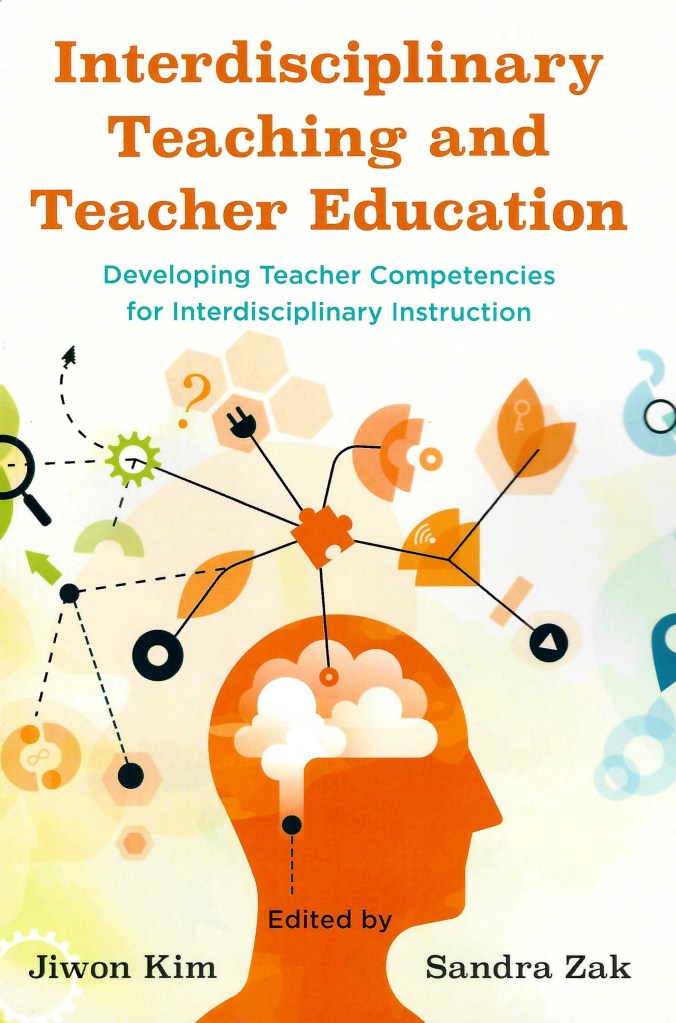




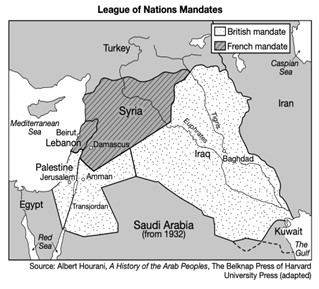


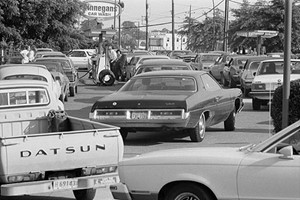

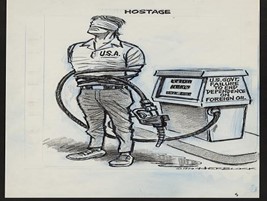
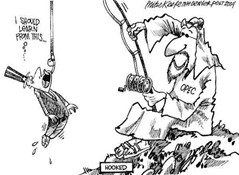



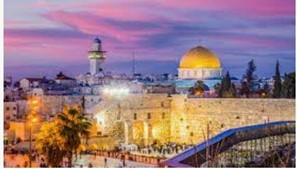
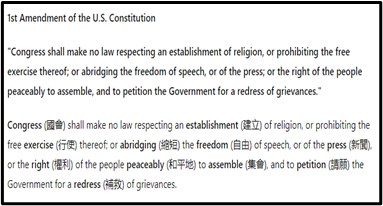
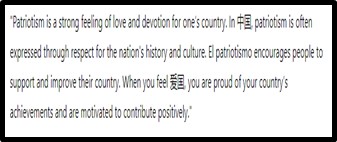

 njcssjournal