History of America’s Immigration: The Background to Today’s Border and Asylum Crises
Dr. Harry Stein
Defining American: The Bureau of Naturalization’s Attempt to Standardize Citizenship Education and Inculcate ‘the Soul of America’ in Immigrants during World War 1
In this wood engraving caricaturing the Chinese Exclusion Act, a well-dress Chinese man embodying “Order” and “Industry” sits outside the Golden Gate of Liberty. The sign to his right declares “Communists, Nihilist, Socialist, Fenian & Hoodlum Welcome but no Admittance to Chinamen.”
Four Eras of U.S. Immigration History
The following is a description with vocabulary for each era. Following the four eras is a collection of data that students can use to learn more about each time period. In each era examine who came to the United States, why, and how did government policy favored or discouraged immigration.
Era #1: Populating the Continent-Colonial to 1875
Authority was with individual states, not the Federal Government. States used what was then called “state police power” to set and enforce rules. States set rules stopping the admission of convicts, free Blacks, paupers, diseased, sick or disabled persons or passengers on ships who tried to enter without the captain posting a bond on their behalf. No free person whether black, mulatto, or colored from a Caribbean country, especially Haiti, could enter some states. Haitian seamen on a ship entering Charleston, S.C., could not leave the ship. These powers were confirmed by a Supreme Court decision (Miln Decision, 1837) and the Passenger Cases decision (1849) approved state laws on bonding and taxing incoming passengers. The 1830 Indian Removal Act was another example of state police power. The movement of free Blacks within Missouri and Ohio was also regulated.
There were also federal laws in 1793, 1842 (Prigg decision), and 1850 concerning the return of runaway slaves to their owners. Legislation in 1809 prevented the importing of additional slaves from west Africa. In 1817 the Liberia colony was established and federally funded for free Black who wished to return to Africa. 13,000 did.
Federal laws permitting or excluding contract labor from China and Europe were enacted. In 1862 the Coolie importation from China was stopped under the logic that since slavery was illegal in northern states and Coolies were slaves therefore, they could not get into the USA. In 1867 contract labor was permitted from Europe. In conclusion, high, consistent demand for labor led to favorable State and federal immigration policies.
Northern European Migration from Ireland, UK, Germany, Netherlands
Era #2: Opening and Closing the Immigration Doors, 1875 – 1924
During this era, the power to legislate and enforce laws came totally to the national government. Immigration power resided in the Federal government’s ability to control commerce, Gibbons v. Ogden (1824) and the theory of national sovereignty critical for national security through border control. Between 1871 and 1914, 23.5 million Europeans entered. Eastern and southern Europeans joined those from Ireland, the U.K. and northern Europe. 1.7 million entered in 1907.
The country was industrializing and urbanizing. Labor demand was high. But gradually laws were established excluding some and regulating the entry of others. Many Americans wanted more immigration. Other Americans were critical of who were admitted. By 1924 the doors were almost closed to many Jews, Catholics, Hindus, and Chinese. See the Page Act (1875) and the Chinese Exclusion Act (1882). Research the Foran Act (1885) and the Dillingham Commission (1911).
A 1917 law aimed at South Asians, Indians, who settled in California and Washington and spoke out against British control of their homeland. This was part of a broader American nativist movement merging with white supremacy ideology, anti-communism and earlier opposition to immigrants with physical or mental disabilities. A literacy test was passed. A “barred” zone was created stopping all Asian entry except from the Philippines and Japan, already excluded by an informal 1907 “Gentlemen’s Agreement.” Mexicans were turned into temporary labor migrants. There was also the fear that if the US entered the League of Nations this could endanger national security. In 1920, 16% of the US population was foreign born. Bad foreigners = crime, immorality, and labor conflict.
A 1921 law closed loopholes in the 1917 law and established the first national origin quotas. This law fused beliefs about eugenics, racial bigotry, anti-disabilities prejudice, mixed racial marriages into a category of undesirable immigrant groups. The Johnson-Reed Act (1924) created quotas by ethnic origin. The Border Patrol created an illegal entry called a misdemeanor and felony (1929) if done twice.
The Johnson-Reed Act (1924) confined immigration mainly to northern Europe. National quotas were based on ethnic origins of the 1890 census. Through the Depression of the 1930s and World War II, immigration was severely curtailed. Following World War II, the law remained intact and parallel laws dealing with World War II refugees were created that bypassed but did not displace the 1925 Law.
In 1948, Congress passed the Displaced Persons Act permitting European refugees to enter. In 1948 the law was amended permitting refugees from camps in western Germany who could not return to their former homes in Poland and the USSR to enter the USA. 332,000 arrived including 141,000 Jewish Holocaust survivors between June 1948 and December 1951.
Era #4: Broader Opening of the Doors, 1965 – Present
The 1925 law was replaced by the Hart/Cellar Act of 1965. Racial and ethnic quotas were eliminated. Numerical quotas were retained. Entrance was open to people from anywhere. The law favored family unification, preference for specific occupations, and a new side variety of visas. In 1950, the USA was 90% white with a European origin. By 2000, 50% of new immigrants were from Latin America and 27% from Asia. In 2020, the USA population was 69% European white. This law changed the racial composition and, some say, the national identity of the USA. The acrid, hot odor of 1924 bigotry and nativism returned magnified and channeled through social media. By 2020, some Americans were talking of white racial suicide and replacement theory. Politicians pointed to the loss of border control. The 9/11 Attack on America led to Islamophobia and Muslin immigration bans. Many Americans supported legal immigration and the use of work visas for both unskilled and professional work. Most wanted to stop migration but the government system to judge asylum claims became broken. Since May 2022, a 1.85 million undocumented refugees have been permitted to remain in the country following a favorable “credible fear” claim. By September 2022, 86,815 immigrants were deported and 1.7 million were approved to stay. 200,149 immigrants came to New York City.
More Data:
From February 2021 to September 2023, Border Patrol arrested 6 million migrants who crossed the border illegally.
1.7 million immigrants were released to stay in the USA.
There were about 1,500 immigration judges and asylum officers available to decide these immigrant cases.
People apply for asylum at the border or if they are caught illegally in the country or overstay a visa. They have up to one year to apply. 800,000 applied in 2022.
It could cost $2 billion to hire more staff to eliminate the 2 million backlog of cases.
In some cities, it will take up to ten years to hear a case.
1.3 million have been told they must leave the USA. They have 90 days to do so.
Many do not leave and they disappear. There is no national ID in the United States to identify them.
Some marry Americans and become parents of children who are natural born citizens.
All of this data is used by politicians running for federal office. Some promise to clear them ‘out.’ How they will do this is not clear.
Many local officials run to Washington, D.C., seeking money to care for migrants in their cities. There is a deadlock in Washington, D.C. Many do not want to tax the many to pay for the foreign immigrants. The memory of 1924 is in the air and a chaotic border has become a drug channel.
Our laws were not designed to deal with BOTH old and new reasons for migrations. The latest reasons are climate change, corruption in many countries, and the development of the smartphone, which immediately connected migrants with friends already in the USA who send money to assist migrants in their journey. Migration used to be single men seeking jobs who would then return home. Now, it is entire families seeking a new life in the USA. Many Americans do not know what to make of it and they will vote their hopes and fears.
Teaching about the Indigenous Population of North America
Lessons by Alexandria Neely, Nicholas Zimmerman, and April Francis-Taylor
This package includes four lesson ideas with activity sheets that can be adapted for middle or high school.
The first lesson examines factors that influenced the migration and settlement of indigenous peoples across North America and different theories explaining the path of migration. The second lesson examines governance of different indigenous nations and their interaction with neighboring peoples. It also introduces the impact of geography on history and culture. Lesson three discusses the arrival of Norse Vikings and their interaction with the Mi’kmaq. Lesson four engages students in a discussion of “discovery” by European explorers.
LESSON 1: What factors influenced the migration and settlement of indigenous peoples across North America?
This lesson will be the first among three lessons covering the migration of early humans to the Americas, and their subsequent interactions between neighboring tribes and early-Europeans. Students will explore different theories about early human migration, how early humans arrived in the Americas, where they settled, and the impact of geography on their settlement and lifestyle patterns. It was believed that 13,000 years ago, early-humans traveled to the America’s via the Bering Land Bridge, a now-submerged geographical landmark that connected Northeastern Asia with Northwestern Alaska. However, in recent decades, researchers have discovered the remains of early humans in the Americas dating to 16,000 years ago possibly before access via the Bering Land Bridge was available. After collaborative research on migration theories, students will write an argumentative essay illustrating their stance on which theory best explains the evidence. Students will locate difficult vocabulary contained within the research articles and define terms. Enduring issues and unifying themes include the Impact of Environment on Humans; Population Growth; Impact of Technology.
CONTENT VOCABULARY:
Homo sapiens: Modern humans
Bering Land Bridge: Land that connected Asia and Alaska that was submerged when glaciers melted and sea levels rose.
Clovis people: Possible first human s to migrate from Asia to the Americas.
Clovis-First Theory: Belief that no humans lived in the Americas prior to approximately 13,000 years ago.
Artifact: Items made by human beings that provide clues to the past.
Migration: Movement of people across boundaries to new areas.
A. “The Kennewick Man”: On July 28, 1996, two men at Columbia Park in Kennewick, Washington, accidentally found part of a human skull on the bottom of the Columbia River, about ten feet from shore. Later searches revealed a nearly complete, ancient skeleton, now known as “The Ancient One” or “Kennewick Man.” Public interest, debate, and controversy began when independent archaeologist Dr. James Chatters, working on contract with the Benton County coroner, thought that the bones might not be Native American. He sent a piece of bone to a laboratory to be dated. The results indicated an age older than 9,000 years, making The Ancient One among the oldest and most complete skeletons found in North America. Subsequent research on the bones indicated that the skeleton is between 8,400–8,690 years old.
Questions
1. Who is the Kennewick Man?
2. Why is the discovery of the Kennewick Man significant?
3. In your opinion, how did Kennewick Man arrive in North America?
B. On the timeline of history, the Clovis people appeared out of nowhere and disappeared in the blink of an eye. Archaeologists revealed that the Clovis had a pretty short existence: They first appeared in America around 9,200 B.C. and vanished 500 years later, around 8,700 B.C. So where did the Clovis come from and where did they go? Intense investigation into clues the Clovis left behind was launched as more artifacts were discovered. The Clovis-First Theory proposes that these people arrived in North America, from Siberia, where hunter-gatherer tribes lived.
(Source: Were the Clovis the first Americans? | HowStuffWorks)
Questions
1. According to the text, how long were the Clovis people present in North America?
2. In your opinion, why did the Clovis people migrate to North America?
C. Native Americans — like all humans—are descendants of the first humans, who lived and evolved over millennia in Africa. Though it is unclear when some of the first humans left the continent, evidence suggests that their migration out of Africa occurred approximately 200,000 years ago, gradually populating parts of the middle east, Europe and Asia. The arrival of humans into North America is believed to have occurred between 45,000 to 25,000 ago, the same time other groups of humans migrated into new territories including Australia and East Asian Pacific islands. We can’t be sure of the exact reasons humans first migrated off of the African continent, but it is likely the reason was a depletion of resources like food in their regions and competition for those resources.
(Source: Homo sapiens & early human migration (article) | Khan Academy.)
Questions
1. When does the author of this article claim humans began migrating to North America?
2. Why did humans migrate out of Africa and across the globe?
3. Using the map, how do you think humans migrate to North America?
D. Beginning in the early 1800s, American scientists and naturalists began to speculate about the ways early humans arrived in the Americas. However, it wasn’t until the mid-1920s that scientists determined that towards the end of the Ice Age, the Earth experienced a long period of frigid [below-freezing] conditions. Glaciers formed in the northern region of the Earth. As more of the Earth’s water got locked up in the glaciers, sea levels dropped. In some areas it dropped up to 300 feet. The land beneath the Bering Strait, a waterway separating Asia and North America was exposed and a flat grassy treeless plain emerged. This exposed land is known as the Bering Land Bridge.
Questions
1. What impact do you think the glaciers had on early human migrations?
2. In your opinion, do you think that the Bering Land Bridge was the only way early humans could travel to the Americas?
E. Student teams will examine two other proposed explanations for human migration into North America.
The Pacific Coast Migration Model is a theory concerning the original colonization of the Americas that proposes that people entering the continents followed the Pacific coastline, hunter-gatherer-fishers traveling in boats or along the shoreline and subsisting primarily on marine resources.
The Solutrean hypothesis suggests that Neolithic fishermen and hunters from Northern Europe sailed the Atlantic in tiny boats made of animal skins 18,000 years ago and colonized the eastern United States.
Exit Ticket: What factors enabled early humans to migrate and settle in regions across North America?
LESSON 2. What types of interactions did Native Americans have with neighboring communities? Indigenous tribes in America formed complex, successful societies like the Iroquois Confederacy, and created governing structures and agreements such as the Great Law of Peace. Depending on their location, different indigenous tribes had vastly different power structures, houses, foods, and lifestyles. Students will determine central ideas; provide an accurate summary of the purpose and definition of the Great Law of Peace and the Iroquois Confederacy. Enduring issues and unifying themesincludeImpact of Environment on Humans and Power.
CONTENT VOCABULARY:
Sedentary: the practice of living in one place for a long time.
Nomadic: the movement of a person or people from one place in order to settle in another.
Iroquois Confederacy: Confederation of six tribes across upper New York that played a major role in the struggle between the French and British for control over North America.
COMPELLING QUESTIONS:
Why do you think is it important to learn about different tribes from all over what is now the United States?
Why do you think the Founding Fathers only adopted some aspects of the Great Law of Peace into their writings? Which parts did they leave out? Why do you think they did?
How does geography currently affect the way we live? How do you think it could affect us in the future?
Map of Indigenous people in the Territorial United States
Questions
Which groups on the map have you heard of before? What do you know about them?
Which groups are closest to where you live?
How could their location influence their way of life? Give examples.
How do you think these groups of people could have interacted with each other?
Iroquois Confederacy
a. “The Peacemaker story of Iroquois tradition credits the formation of the confederacy, between 1570 and 1600, to Dekanawidah (the Peacemaker), born a Huron, who is said to have persuaded Hiawatha, an Onondaga living among Mohawks, to advance “peace, civil authority, righteousness, and the great law” as sanctions for confederation. Cemented mainly by their desire to stand together against invasion, the tribes united in a common council composed of clan and village chiefs; each tribe had one vote, and unanimity was required for decisions. Under the Great Law of Peace (Gayanesshagowa), the joint jurisdiction of 50 peace chiefs, known as sachems, or hodiyahnehsonh, embraced all civil affairs at the intertribal level.”
b. “The Iroquois Confederacy established that each nation should handle their own affairs. The Great Law of Peace is a unique representational form of government, with the people in the clans having say in what information is passed upward.” (Source: Britannica)
Questions
What is the Iroquois Confederacy?
What would the benefits of a confederacy be?
What is the primary structure of the Great Law of Peace?
What historical documents remind you of the Great Law of Peace? What documents do you think could have been influenced by the Great Law of Peace?
C. Great Law of Peace
The Great Law of Peace are “teachings [that] emphasized the power of Reason, not force, to assure the three principles of the Great Law: Righteousness, Justice, and Health.” It also includes “instructions on how to treat others, directs them on how to maintain a democratic society, and expresses how Reason must prevail in order to preserve peace.” (Source: Haudenosaunee Guide for Educators)
Selected components:
16. If the conditions which arise at any future time call for an addition to or change of this law, the case shall be carefully considered and if a new beam [law] seems necessary or beneficial, the proposed change shall be voted upon and if adopted it shall be called, “Added to the Rafter.”
24. The chiefs of the League of Five Nations shall be mentors of the people for all time. The thickness of their skins shall be seven spans, which is to say that they shall be proof against anger, offensive action and criticism. Their hearts shall be full of peace and good will and their minds filled with a yearning for the welfare of the people of the league. With endless patience, they shall carry out their duty. Their firmness shall be tempered with a tenderness for their people.
92. If a nation, part of a nation, or more than one nation within the Five Nations should in any way endeavor [try] to destroy the Great Peace by neglect or violating its laws and resolve to dissolve the Confederacy such a nation or such nations shall be deemed guilty of treason and called enemies of the Confederacy and the Great Peace.
93. Whenever a specially important matter or a great emergency is presented before the Confederate Council and the nature of the matter affects the entire body of Five Nations threatening their utter [complete] ruin, then the Lords of the Confederacy must submit the matter to the decision of their people and the decision of the people shall affect the decision of the Confederate Council. This decision shall be a confirmation of the voice of the people.
94. The men of every clan of the Five Nations shall have a Council Fire ever burning in readiness for a council of the clan. When it seems necessary for a council to be held to discuss the welfare of the clans, then the men may gather the fire. This council shall have the same rights as the council of the women.
95. The women of every clan of the Five Nations shall have a Council Fire ever burning in readiness for a council of the clan. When in their opinion it seems necessary for the interest of the people they shall hold a council and their decision and recommendation shall be introduced before the Council of Lords by the War Chief for its consideration. (Source)
Questions
What do these sections tell you about the values of the Iroquois Confederacy?
How does the Great Law of Peace differentiate from more modern United States’ government documents?
What does the Great Law of Peace have in common with the ideals of more modern government?
D. Group Activity: Each group will be working on a separate area of what is now America. The groups are Plains, Northeast, Southwest, and Eastern Woodlands. The groups will look at/research images and readings and answer the sheets that go along with them. They will then participate in a “jigsaw” and fill out the rest of their charts using information from other groups representatives. On each sheet there will be a section at the top where they will write the definitions of nomadic and sedentary, this will be provided by the teacher (see Appendix A).
Plains Indians Information Sheet
“Many people think of the Plains Indians as people who traveled from place to place to find food and basic supplies. Only some of the tribes in this area lived that way. There were more than 30 different tribes who lived in the Great Plains. Like the Europeans who came to America from different countries, these tribes all had their own language, religious beliefs, customs and ways of life.”
“The Plains Indians who did travel constantly to find food hunted large animals such as bison (buffalo), deer and elk. They also gathered wild fruits, vegetables and grains on the prairie. They lived in tipis, and used horses for hunting, fighting and carrying their goods when they moved. Other tribes were farmers, who lived in one place and raised crops. They usually lived in river valleys where the soil was good.” (Source)
“Most Indigenous societies of the Great Plains practiced some form of hereditary chieftainship and recognized a head chief. In theory, the head chief presided over a council composed of war chiefs, headmen, warriors, and holy men. In practice, however, charismatic, self-made war-party
leaders often exercised the most significant authority, especially in times of crisis.” (Source)
Northeast Indians Information Sheet
The most elaborate and powerful political organization in the Northeast was that of the Iroquois Confederacy. A loose coalition of tribes, it originally comprised the Mohawk, Oneida, Onondaga, Cayuga, and Seneca. Later the Tuscarora joined as well. Indigenous traditions hold that the league was formed as a result of the efforts of the leaders Dekanawida and Hiawatha, probably during the 15th or the 16th century.”
“The Northeast culture area comprises a mosaic of temperate forests, meadows, wetlands, and waterways. The traditional diet consisted of a wide variety of cultivated, hunted, and gathered foods, including corn (maize), beans, squash, deer, fish, waterbirds, leaves, seeds, tubers, berries, roots, nuts, and maple syrup.” (Source)
“Northeastern cultures used two approaches to social organization. One was based on linguistic and cultural affiliation and comprised tribes made up of bands (for predominantly mobile groups) or villages (for more sedentary peoples). The other was based on kinship and included nuclear families, clans, and groups of clans called moieties or phratries.” (Source)
Southwest Indians Information Sheet
“Most peoples of the Southwest engaged in both farming and hunting and gathering; the degree to which a given culture relied upon domesticated or wild foods was primarily a matter of the group’s proximity to water. A number of domesticated resources were more or less ubiquitous throughout the culture area, including corn (maize), beans, squash, cotton, turkeys, and dogs. During the period of Spanish colonization, horses, burros, and sheep were added to the agricultural repertoire, as were new varieties of beans, plus wheat, melons, apricots, [and] peaches.” (Source)
“For those groups that raised crops, the male line was somewhat privileged as fields were commonly passed from father to son. Most couples chose to reside near the husband’s family (patrilocality), and clan membership was patrilineal. In general women were responsible for most domestic tasks, such as food preparation and child-rearing, while male tasks included the clearing of fields and hunting.” (Source)
“Among the Navajo the preferred house form was the hogan, a circular lodge made of logs or stone and covered with a roof of earth; some hogans also had earth-berm walls. Among the Apache, the wickiup and tepee were used.” (Source)
Upland settlements “included dome-shaped houses with walls and roofs of wattle-and-daub or thatch. The groups that relied on ephemeral streams divided their time between summer settlements near their crops and dry-season camps at higher elevations where fresh water and game were more readily available. Summer residences were usually dome-shaped and built of thatch, while lean-tos and windbreaks served as shelter during the rest of the year.” (Source)
Southern Woodlands “Indians” Information Sheet
“The importance of corn in the Southeast cannot be overemphasized. It provided a high yield of nutritious food with a minimal expenditure of labour; further, corn, beans, and squash were easily dried and stored for later consumption. This reliable food base freed people for lengthy hunting, trading, and war expeditions. It also enabled a complex civil-religious hierarchy in which political, priestly, and sometimes hereditary offices and privileges coincided.” (Source)
“Most of the region teemed with wild game: deer, black bears, a forest-dwelling subspecies of bison, elks, beavers, squirrels, rabbits, otters, and raccoons. In Florida, turtles and alligators played an important part in subsistence. Wild turkeys were the principal fowl taken, but partridges, quail, and seasonal flights of pigeons, ducks, and geese also contributed to the diet. The feathers of eagles, hawks, swans, and cranes were highly valued for ornamentation, and in some tribes a special status was reserved for an eagle hunter.” (Source)
“In general, settlements were semi-permanent and located near rich alluvial soil or, in the lower Mississippi region, near natural levees. Such land was easily tilled, possessed adequate drainage, and enjoyed renewable productivity.” (Source)
“In much of the region, people built circular, conical-roofed winter “hot houses” that were sealed tight except for an entryway and smoke hole. Summer dwellings tended to be rectangular, gabled, thatch-roofed structures made from a framework of upright poles.” (Source)
LESSON 3. How did Native Americans, like the Mi’kmaq, interact with foreign societies, like the Norse?
The Norse arrived North America, but their settlements disappeared. Evidence suggests that Norse Viking, Leif Eriksson, traveled to North America in 1000 A.D, roughly 500 years before other European explorers. Students investigate how, why, and where the Norse settled in North America. Students interpret the interactions between the Norse and the Mi’kmaq. It is believed that the Norse voyage to the new continent was the result of climatic fluctuations that forced settlers to seek new lands in an effort to survive and prosper. Upon their arrival to Newfoundland, evidence from the Greenlander Saga suggests that Norse Vikings encountered the Native American tribe, The Mi’kmaq, periodically engaging in limited trade with them, before the two groups engaged in conflict leading some researchers to speculate this was a cause of their disappearance. Students will examine how the physical environment and natural resources of North America influenced the development of the first human settlements and the culture of Native Americans as well as impacted on early European settlements. Students will research and write a 250-word argumentative short-essay, in which they introduce factors they believe influenced the disappearance of the Norse Vikings. Enduring issues and unifying themes include Impact of the Environment, Trade, Technology, and Conflict on human societies.
CONTENT VOCABULARY:
Norse– Settlers, traders, farmers, and seafarers who originated in Scandinavia.
Viking – Norse warriors and seafarers.
Vinland– An area of coastal North America explored by Vikings.
L’Anse aux Meadows – Remains of an 11th-century Viking settlement in Newfoundland
Mi’kmaq- Indigenous people of the Northeastern Woodlands, native to the areas of Canada’s Atlantic Provinces.
The Viking Compass
Vikings did not have much material to work with other than wood and animal hair, to make it across the oceans, but they apparently didn’t require much more than that to get to where they were going and make it back again. In 1948 a (partial) wooden artifact was found in Greenland (called the Uunartoq disk), which was assumed to be some form of compass. Only representing a portion of a wheel or ‘disk,’ the partial device had notches carved around the perimeter and scratch marks at a few distinct intervals across the face. (Source)
Questions:
According to the text, what was needed, in order to use the “Viking Compass”?
Why is a compass important when traveling long distances across the ocean?
How might the discovery of this artifact change how we understand European Exploration of the Americas?
Evidence that the Norse reached North America
According to the “Saga of the Greenlanders”, Vikings became the first European to sight mainland North America when a Viking merchant, headed for Greenland, was blown westward off course about 985. Further, about 1000, Leif Eriksson, a notorious viking leader, is reported to have led an expedition in search of the land sighted by the viking merchant, and found an icy barren land he called Helluland (“Land of Flat Rocks”) before eventually traveling south and finding Vinland (“Land of Wine”).The narratives of exploration of a place that sounded like Maine, Rhode Island, or Atlantic Canada were thought to be just stories, until 1960, when Helge Ingstad, a Norwegian explorer, and archaeologist Anne Stine Ingstad, were led by a local man to a site on the northern tip of Newfoundland island. At L’Anse aux Meadows, they discovered the remains of a Viking encampment that they were able to date to the year 1000 — That’s almost 500 years before the Europeans landed in the Americas! (Source)
Questions
Who led the Viking expedition to North America?
How long before Columbus, did the Vikings arrive in North America?
Do you think that it is fair to say that the Vikings discovered North America? Explain.
C. The Norse meet the Mi’kmaq
The Mi’kmaq are among the original inhabitants of the Atlantic region in Canada, and inhabited the coastal areas of Gaspé and the Maritime Provinces east of the Saint John River. This traditional territory is known as Mi’gma’gi (Mi’kma’ki) and is made up of seven districts. Mi’kmaq people have occupied their traditional territory, Mi’gma’gi, centuries before the arrival of the Vikings. Today, the remaining members of the Mi’kmaq community continue to occupy this area, as well as settlements in Newfoundland and New England, especially Boston. While it is not entirely clear, as to how the Mi’kmaq and the Vikings interacted, historical accounts of their interactions have suggested that the Mi’kmaq not only engaged in trade with the Vikings, but they also found themselves engaged in conflict with one another as well.
Going further, researchers have since discovered that the Mi’kmaq had developed oral histories that speak of a Mi’kmaq woman’s ancient premonition [dream] that people would arrive in Mi’gma’gi on floating islands, and a legendary spirit who traveled across the ocean to find “blue-eyed people.” Since the story’s discovery, many individuals have regarded its existence as a foretelling of the arrival of Europeans.
Questions:
What areas of the present-day United States and Canada did the Mi’kmaq people inhabit?
How might the “ancient premonition” [ancient dream] of “blue-eyed people” arriving in North America help us understand how Native Americans viewed and interacted with European explorers?
D. Unknown American Holiday: Leif Erikson Day Leif Erikson was likely born in Iceland around 970 or 980 AD, and was the son of infamous Norse chieftain, Erik the Red. Leif, much like his father, was a true Viking from the start, and began sailing with his crew across present-day western Europe and parts of Scandinavia. Nevertheless, the story begins with Leif traveling to present-day Greenland. It was on this journey in approximately 999 AD, that Leif Erikson and his crew would be blown off-course, to a location they named “Vinland,” meaning “Land of Wine.” While at first it would appear that Erikson found something other than North America, the descriptions of the surrounding area and its inhabitants have led researchers to believe that Erikson is writing about his arrival in North America. In 2024, President Joseph Biden declared October 9th Leif Erikson Day. (Source)
Questions:
When did Leif Erikson arrive in North America?
In your opinion, why does Leif Erikson Day have less recognition than Columbus Day?
E. Group Activity—Investigate the Disappearance the Newfoundland Norse Settlement
Instructions: In groups of three or four, students will be tasked with investigating the possible reasons for the Norse Vikings’ mysterious disappearance from their North American settlement.
Station #1: Climate Change
There was a time centuries ago that settlements in cold northern lands grew little by little with the arrival of new inhabitants. Up to the 15th Century, the territories we now know as Greenland and Newfoundland in North America, reached population sizes of around 2,000. From then on, these lands began to depopulate. Early research said the exodus was due to many problems, but temperature change has often been cited as an explanation for the end of the Vikings. According to this theory, the Nordics arrived in the North during a period that was more or less warm, where they could survive until temperatures fell during a period known as, the Little Ice Age.
Now, new research by the College of Natural Sciences at the University of Massachusetts Amherst concludes that summers were increasingly warm and dry in Greenland and Newfoundland during the time the Nordic settlements were abandoned. Thus, the trigger for the disappearance of the Vikings could have been drought. Source:Climate history: Why did the Vikings disappear from northern lands?].
Questions
1. What other regions did the Vikings visit?
2. How did climate impact the survival of the Vikings in North America?
3. What climate event occurred that made it more difficult for Vikings to live in North America?
The settlement at L”Anse aux Meadows was only in use for roughly twenty years or so. It’s estimated that the Vinland settlements lasted the same amount of time.While scholars do not know why the Vikings abandoned the settlements so quickly, there are several theories. Hostile relations with the natives surely did not help matters. Though their iron tools aided them in battle, the natives dramatically outnumbered the Vikings who only numbered at most in the low hundreds. In an early encounter, one of the viking chieftains that lead the group of norse settlers in Newfoundland, Leif Eiriksson, is recorded to have been “struck by an arrow”. It would later be determined through these records —The Vinland Sagas—that his injuries would prove fatal. While it is not clear what tribes attacked the Vikings during their stay, evidence suggests that it was likely a number of Inuit tribes, including the Mi’kmaq. That being said, due to the increased amount of conflict between the Vikings and Native tribes, the Vikings dubbed their enemies Skraelings, which historians believe translates as either “barbarian” or “foreigner” in the old Norse tongue. It could have also meant “weak” or “sickly” or even “false friend”.
Questions
According to the document, how long were the Vikings in North America?
How did conflict with the Native Americans impact the Vikings living in North America?
Why do you think the Vikings were attacked by Native Americans?
When the Vikings explored south of Newfoundland, in an area they named “Vínland” (which translates as “Wine Land”), they were more interested in finding natural resources they could exploit. However, Kevin P. Smith, a research associate at the Smithsonian Institute who specializes in the Vikings, had a somewhat different opinion. He said that Norse texts indicate that some Vikings believed it offered “opportunities for ‘second sons’ of the chieftain who had established the Greenland colony to carve out their own areas where they could be leaders/chiefs rather than second sons.
Be that as it may, there is a leading theory that presumes the Vikings had abandoned the settlement largely due to its decline in economic importance. For instance, Medieval Europe had coveted [desired] walrus ivory leading to the market’s expansion across the North Atlantic. As such, and by the time the Vikings had sailed to and settled in North America, a series of large walrus colonies had already been established in Northern Greenland, which researchers speculate, ultimately diminished the economic significance of the North American settlement. Going further, many researchers have also speculated that the abandonment of the settlement was also influenced by the nature of walrus tusk hunting; It was dangerous, time consuming, and expensive.
Questions
Using the text, define the term “Vinland.”
Why was the settlement in North America important for the Vikings?
What economic factors influenced the Vikings to abandon their settlement in North America? Explain.
Another important question is why the Norse failed to settle permanently in North America. How was it that they could survive in Greenland for 500 years, but could not establish themselves in Vinland, with its richer resources and better climate? Vinland was a remote place, and voyaging there was risky and uncertain, as we know from the sagas. In the early 11th century, the Greenland settlements were still young and did not have the population nor the wealth to support a new colony in North America. Additionally, there was also little incentive, in that the economy which developed in Greenland did not need expansion to America. There might have been some incentive later in the history of the Greenland settlements, but by that time — the13th and 14th centuries — the inhabitants were preoccupied with their own survival and would not have had the resources or the interest to create a new colony. Greenland was a fragile colony, incapable of sustaining itself as climatic, economic, and political conditions deteriorated. According to Thomas McGovern, a leading authority on Norse expansion to North America, “Greenland simply did not produce enough people or riches to act as a successful base for sustained colonization attempts, and Norse Greenlanders may have seen little immediate benefit in expanding in Vinland.”
Questions
How did the Norse colony at Greenland impact the settlement in North America?
Why did the Norse colony in Greenland begin to collapse?
What happened during the 13th and 14th centuries that prevented Vikings from settling in North America?
LESSON 4. How did interactions among Native Americans and outsiders challenge our understanding of early exploration and the “discovery” of America? It is still debated how and when early humans arrived in North America. Eventually a number of Native American tribes existed across the modern-day United States and the Americas. The laws and alliances, like the Iroquois Confederacy and the Great Law of Peace, made by Native Americans between themselves and outsiders may have contributed to the founding documents of the United States. This lesson is a Socratic Seminar. Students will have collaborative discussions, work civilly and democratically to evaluate diverse perspectives about how early humans migrated to the Americas, the significance of the Great Law of Peace on American law, and the dangers of leaving groups of people out when learning about history. Enduring Issues will be discussed in this lesson include Power and the Impact of Immigration.
VOCABULARY REVIEW MATCHING ACTIVITY
The Bering Land Bridge Clovis First Theory Solutrean Hypothesis Trans-Pacific Migration Theory The Great Law of Peace Artifact Migration Clovis People Nomadic Sedentary Confederacy Iroquois Confederacy Saga of the Greenlanders Mi’kmaq Plains tribes Northeastern tribes Southwestern tribes Southern Woodlands tribes
A. An ancient culture of North America that lived between 10,000 and 9,000 BCE B. The first humans to reach the Americas migrated from Asia by traveling across the Pacific Ocean C. Nomadic people who resided largely in the western plains D. Source on Norse colonization of North America E. Group of people joined together for a common purpose F. The practice of living in one place for a long time G. People who move from one place in order to settle in another H. Indigenous people of what is now Canada and Nova Scotia I. Art, tools, and clothing made by people of any time and place J. Sedentary people of Alaska and Northwestern California K. Sedentary people who resided largely near the Atlantic Ocean L. Oral constitution of the Iroquois Confederacy M. Communities who move from one place to another N. Confederation governed by the Great Law of Peace O. Land bridge connecting Asia to North America P. Hunters considered the first people to arrive in the Americas Q. Belief that early Europeans arrived in the Americas R. People who resided in present day New Mexico and Arizona
COMPELLING QUESTIONS FOR DISCUSSION:
Who should be called the “first Americans?” Should anyone?
What could be the consequences of designating one group of people as the “first” be?
Why would it be important to recognize all of the different groups you learned about? What could happen if we do not mention them?
What is the danger of forgetting or leaving out groups of people from history? Is there any?
Which theory of migration do you think is most plausible?
Why do people migrate? Have the motives for migration changed from then to now? How so?
How do we make welcoming communities for those who migrate?
How has your understanding of Indigenous American history and the “discovery” of America changed?
How did interactions among Native Americans and outsiders challenge our understanding of early exploration and the “discovery” of America?
Cori Sternstein, Dominick Pursino and April Francis-Taylor
Problem: The NYS Social Studies Standards have failed to recognize the issue of genocide, despite it being a large part of our global community today, and much of the 20th century. Teachers are also often very limited in how much they are able to address such a topic due to its severity.
Purpose: The purpose of this unit is to allow students the opportunity to learn about the history of genocide around the world during the 20th century and prepare them to become agents of change.
Unit Compelling Question
How could our understanding of human rights violations in the 20th century help us to understand the word “genocide” as well as attempts by resisters to stop it?
Unit Supporting Questions
1. How did the word “genocide” change how the world responds to mass violence?
2. How did the Cambodian Genocide fit the UN definition of genocide?
3. How did the Rwandan Genocide change the international community’s approach to addressing genocide?
4. How did attempts for resistance against the perpetrators of genocide instill the need for legislative change?
New York State Social Studies Framework
10.5e Human atrocities and mass murders occurred in this time period. Students will examine the atrocities against the Armenians; examine the Ukrainian Holodomor and examine the Holocaust.
10.10c HUMAN RIGHTS VIOLATIONS: Since the Holocaust, human rights violations have generated worldwide attention and concern. The United Nations Universal Declaration of Human Rights has provided a set of principles to guide efforts to protect threatened and has served as a lens through which historical occurrences of oppression can be evaluated.
Social Emotional Learning Competencies (SEL)
Social Awareness: “The abilities to understand the perspectives of and empathize with others, including those from diverse backgrounds, cultures, and contexts. This includes taking others’ perspectives, recognizing strengths in others, demonstrating empathy and compassion, showing concern for the feelings of others, identifying diverse social norms, including unjust ones, recognizing situational demands and opportunities, and understanding the influences of organizations and systems on behavior. (Principle 2)
NYS CR-S Framework Strategies
High Expectations and Rigorous Instruction (CR-S Education Framework 27)
Critical Examination of Power Structures (Supporting Questions 2 and 3)
Ongoing Professional Learning and Support (CR-S Education Framework 28)
Curriculum and instruction is aligned with the histories, languages, and experiences of traditionally marginalized voices.
Provide opportunities for students to critically examine topics of power and privilege. These can be planned project-based learning initiatives (Fostering High Expectations and Rigorous Instruction)
Summative Task
Students will be paired up and will create a PowerPoint presentation about one of the genocides that we did not discuss in class. They will incorporate what they have learned about the definitions of genocides, the attempts and interventions to stop these genocides, along with pictures.
Taking Informed Action
How do these genocides still impact various people around the world today?
There are still various human rights violations occurring in the world today, such as the Uighurs in China and Rohingya in Myanmar. Students visit the United States Holocaust Memorial Museum online (https://www.ushmm.org/ ) or a local exhibit such as the Holocaust Memorial & Tolerance Center in Glen Cove, New York or the South Jersey Esther Raab Holocaust Museum and Goodwin Education Center to explore the recent instances of genocide in our world today as inspiration for their PowerPoints.
Discussion
Prior to the creation of the word genocide, different groups around the world were targeted, usually on the basis of their ethnicity, religion, or race. The creation of the word gave the international community a platform to act, allowing for those guilty of committing genocide to be punished. Despite the creation of means for the prevention of genocide, these events still continued to occur all over the world during the 20th century, and even into the 21st century. Genocide and related acts are often left out of news reports or are often breezed over in an effort to shield the world from the severity.
Who is Raphael Lemkin?
Directions: Read the passage below and answer the questions.
Raphael Lemkin, a Polish-Jewish lawyer, coined the term “genocide” in his 1944 book Axis Rule in Occupied Europe as a response to the atrocities of the Armenian Genocide and the Holocaust. He believed the international community needed a specific term and legal framework to address the targeted destruction of groups. Before World War II, the word “genocide” didn’t exist, leaving atrocities like those in Armenia and the Soviet Union without clear legal consequences. During World War I, the Allied Powers referred to the Ottoman Empire’s actions against Armenians as “crimes against humanity,” but terms like “massacre” and “extermination” lacked the moral weight of “genocide.” Later, similar acts were often called “ethnic cleansing,” though not legally defined.
After the Holocaust, the Nuremberg Trials in 1945 used the term genocide, but it wasn’t yet legally recognized. In 1948, thanks to Lemkin’s efforts, the UN adopted the Convention on the Prevention and Punishment of the Crime of Genocide, officially making genocide an international crime. Lemkin became known as the “Father of the Genocide Convention.” That same year, the UN also adopted the Universal Declaration of Human Rights, affirming the dignity and equal rights of all people, and laying the foundation for legal frameworks to prevent genocide and other mass atrocities.
Questions:
Who was Raphael Lemkin?
Why did Armenia and the Soviet Union go partly unnoticed?
How does defining atrocities as “massacres” or “exterminations” negatively impact the victims of these acts?
What were the impacts of Lemkin’s efforts?
How do you think Lemkin’s efforts may have impacted genocides in the future?
Prepared by the Queens, New York Public Library and the University of Minnesota, Carlson School of Management
Every facet of the United States has been affected by the labor and inventions of African Americans. Discover some of the men and women who created the inventions that improved daily life, fought for fair wages, safety, equal rights, and justice for Black workers. These are just some of the important milestones in the history of Black Labor in America. To learn more, visit your local library during Black History Month—and beyond!
1500s-1865: Transatlantic Slave Trade through the American Civil War
1500s: Transatlantic Slave Trade
The largest oceanic forced migration in history, the Transatlantic Slave Trade began in the late 1500s when over 12.5 million African men, women and children were removed from the continent and transported to the Americas, Brazil and the Caribbean to work on plantations and live their lives in servitude. As a result, many slave rebellions erupted throughout the 17th, 18th and 19th centuries, constituting some of the first organizing and labor-related actions in the Americas.
1739: Traditional African drumming is banned
Enslaved Africans were prohibited from playing traditional drums, as European enslavers feared that drumming could facilitate communication across fields, uplift weary spirits, comment on oppressive masters, and incite rebellions. In response, Black people developed alternative forms of musical expression, such as hand clapping and percussive stomping, which became the foundation of work songs and spirituals. These musical forms later evolved into genres like the blues and jazz and are integral to today’s African American music.
c.1763-c.1826: Artist Joshua Johnson
Recognized as one of the earliest professional African American artists, Johnson was born into slavery near Baltimore around 1763 and gained his freedom in 1782. He described himself as a “self-taught genius” and painted portraits of families, children, and prominent residents of Maryland.
1786: The Tignon Law
This Louisiana law was enacted to regulate the appearance of free women of color to “establish public order and proper standards of morality,” and subjection to undesirability. Women were prohibited from going outdoors without wrapping their natural hair with a Tignon cloth. As a symbol of rebellion, Black women reappropriated Tignon production into a major fashion statement, form of self-expression and business by embellishing the headscarves with decorative fabrics, feathers and jewels.
1859: Author Harriet E. Wilson
Our Nig; or Sketches from the Life of a Free Black is considered the first novel by an African American woman. It gave insight into the supposed “Free North,” challenging the idea that the North was a safe have providing peace and equality for African Americans
1865: 13th Amendment Outlaws Slavery
The official end to slavery was perhaps the greatest labor victory in U.S. history. Yet the struggle for equal rights and fair wages was far from over; the same year that Congress adopted the 13th Amendment, the white supremacist terrorist organization and hate group, the Ku Klux Klan, was formed.
1865-1900: Reconstruction and the Gilded Age
1865-1877: Reconstruction
In the decade following the Civil War, Congress established the Freedmen’s Bureau to help African Americans with food, housing, education, political rights and negotiating labor agreements. This period is thought to be one of expanding freedom for the formerly enslaved but in the South they were subjected to violence and new forms of mistreatment.
1872: Frederick Douglass
Douglass was elected president of the “Colored” National Labor Union, and his The New National Era became the union’s official newspaper. Douglass was one of America’s most important champions of equality and the right to organize a union.
1880s: Knights of Labor
The St. Paul Minnesota Trades & Labor Assembly was founded with the assistance of the Knights of Labor Assembly in1883. The Knights of Labor were known for their inclusiveness for accepting women and African American members, however they also supported the Chinese Exclusion Act.
1883: Lucy Parsons (c. 1851 – 1942)
Lucy Parsons and her husband, Albert Parsons, a former Confederate soldier turned anarchist, founded the International Working People’s Association. In 1886, they led the city’s first May Day parade, which called for an eight-hour workday.
1900s-1950s
1901: Up from Slavery
Booker T. Washington, a major voice for economic self-reliance and racial uplift, publishes his autobiography discussing his life and thoughts on race relations.
1905-1960: The Great Migration
In the first half of the 20th century, a mass migration of more than six million Black people took place from the South to the North. Many left to escape overt Southern racism, only to encounter racial tensions in the North as whites viewed them as a threat to their jobs. The Migration Series is a group of paintings by African American painter Jacob Lawrence (1917-2000) which depicts the migration of African Americans to the Northern U.S. from the South. It was completed in 1941 and was conceived as a single work rather than individual paintings. Lawrence wrote captions for each of the sixty paintings. Viewed in its entirety, the series creates a narrative in images and words that tells the story of the Great Migration.
1909: National Training School for Women and Girls
Nannie Helen Burroughs (1879-1961) was a suffragist, educator and organizer, as well as a mentor to the Rev. Martin Luther King, Jr., who worked to integrate labor reform into the movement for voting rights. Burroughs established the National Training School for Women and Girls in 1909 to combat labor exploitation through education, helping to improve working conditions and expand career pathways for Black women. She also launched the National Association of Wage Earners in 1921, a labor union for Black domestic workers.
1910s-1930s: The Harlem Renaissance
A period of flourishing of African American art, literature, and performance art saw the rise of iconic figures like author Langston Hughes, trumpeter Louis Armstrong, pianist Duke Ellington, and vocalists Ella Fitzgerald and Billie Holiday. Langston Hughes was a central figure in the Harlem Renaissance. A major poet, Hughes also wrote novels, short stories, essays, and plays.
1910: The Foster Photoplay Company
William D. Foster founds the first film production company established by an African American. It features all African American casts. The Railroad Porter (circa 1913) was the first film produced and directed by an African American.
1917: East St. Louis Race Riot
During World War I, thousands of Blacks moved to the St. Louis area to work in factories fueling the war effort. When the largely white workforce at the Aluminum Ore Company went on strike, hundreds of Blacks were hired as strikebreakers. Tensions erupted, and thousands of whites, many of them union members, attacked African Americans and set fire to their homes. Between 100 and 200 Blacks are estimated to have been killed and were 6,000 left homeless.
1919: Red Summer
Racial tensions were inflamed during the September 1919 Steel Strike, when workers shut down half of the nation’s steel production in an effort to form a union. Bosses replaced them with some 40,000 African American and Mexican American strikebreakers, an action made possible by AFL unions that excluded people of color from union jobs and membership.
1921: Tulsa Race Massacre (May 31-June 1, 1921)
The Tulsa Race Massacre was a 1921 attack on Tulsa’s Greenwood District, an affluent African American community whose thriving business and residential areas were known as “Black Wall Street.” In response to a May 31 newspaper report of alleged black-on-white crime, white rioters looted and burned Greenwood in the early hours of June 1. The governor of Oklahoma declared martial law, and National Guard troops arrived and detained all Black Tulsans not already interned. About 6,000 Black people were imprisoned, some for as long as eight days. In the end, 35 city blocks lay in ruins, more than 800 people were injured, and as many as 300 people may have died. The Massacre was largely omitted from local, state, and national histories until the Tulsa Race Massacre Commission convened in 1997 to investigate the event. Today, memorials, historical exhibits, and documentaries are some of the ways that the Massacre has been acknowledged and the history of “Black Wall Street” kept alive.
1925: Brotherhood of Sleeping Car Porters
The first labor organization led by African Americans to receive a charter from the American Federation of Labor. African American porters performed essential passenger services on the railroads’ Pullman sleeper cars and the union played a key role in promoting their rights. In the summer of 1925, A. Philip Randolph (1889-1979) met with porters from the Chicago-based Pullman Palace Car Company. The mostly Black Pullman workforce were paid lower wages than white railway workers and faced harsh conditions and long working hours. Randolph worked with these workers to form and organize the Brotherhood of Sleeping Car Porters. When the union was finally recognized in 1935, it became the first predominantly Black labor union in the nation. As the union’s founder and first president, A. Philip Randolph became a leader in the Civil Rights Movement.
1930s: The Great Depression
African Americans primarily worked as sharecroppers on white-owned land, and tenant farmers in the south. They continued migrating to the north in search of better opportunities, but due to racism, they often found work as domestics, in factories, and as seasonal traveling migrant farmers. New Deal programs provided some relief, but they still faced unequal access to programs like the Works Progress Administration due to racial segregation and violence.
1934: Dora Lee Jones (1890-1972)
Jones helped found the Domestic Workers Union (DWU) in Harlem in 1934 in defiance of New York City’s “slave markets,” as they were known. With few options during the Depression, Black women would gather daily in the morning at certain locations and wait for white middle-class women to hire them, typically for low wages. The DWU eventually affiliated with the predecessor to today’s Service Employees International Union.
1940s: Women Fill Wartime jobs
During World War II, African American women contributed significantly to the war effort by taking on industrial factory jobs and working in shipyards and other war production facilities. Referred to as “Black Rosie’s.” They worked as welders, machinists, assemblers and more. They also served in the military as nurses, in the Women’s Army Corps, and in the all-Black 6888th Central Postal Directory Battalion, responsible for clearing the backlog of overseas mail.
1941: Fair Employment Practices Committee
Under pressure from labor leader A. Philip Randolph, who planned a march of 250,000 Black workers in Washington, D.C., to demand jobs, President Franklin Roosevelt signed Executive Order 8802, creating the Fair Employment Practices Committee. The order banned racial discrimination in any defense industry receiving federal contracts and led to more employment opportunities for African Americans.
1944: Admission to the Brotherhood of Locomotive Firemen and Enginemen Union. African Americans who maintained railroad locomotive engines had to sue the Brotherhood of Locomotive Firemen and Enginemen all the way to the Supreme Court to gain admission to the union in 1944.
1945: Maida Springer Kemp (1910-2005)
Kemp worked as a labor organizer in the garment industry and became the first Black woman to represent the U.S. labor movement overseas when she visited post-war Britain on a 1945 labor exchange trip. She went on to spend many years liaising between American and African labor leaders as a member of the AFL-CIO and became affectionately known as “Mama Maida” for her work. Throughout her life, she advocated for civil rights and women’s rights in America and internationally.
1946: Operation Dixie
Encouraged by massive growth in union membership (including African Americans) during the 1930s and 1940s, the Operation Dixie campaign launched an effort to organize the largely non-union Southern region’s textile industry and strengthen the power of unions across the United States. Spearheaded by the Congress of Industrial Organizations, in concert with civil rights organizations, the campaign covered 12 states. Operation Dixie failed because of racial barriers, employer opposition and anti-Communist sentiment that labeled anyone who spoke out as an agitator. In 1947, the Taft-Hartley Act was enacted, allowing states to adopt so-called “Right to Work” laws that limited union power.
1948: Zelda Wynn Valdes (1905-2001)
Fashion and costume designer Zelda Wynn Valdes was the first Black designer to open her own shop and business on Broadway in New York City. Her designs were worn by entertainers including Dorothy Dandridge, Josephine Baker, Marian Anderson, Ella Fitzgerald, Mae West, Ruby Dee, Eartha Kitt, and Sarah Vaughan.
1950s-2000s
1950s: Post-War Era
Despite some gains during World War II, African Americans still experienced high unemployment rates compared to white workers and faced significant barriers to upward mobility in the workforce. Labor was largely confined to low-wage, segregated jobs, primarily in service industries like domestic work, with limited access to skilled trades and significant discrimination within unions. These struggles fueled the developing Civil Rights movement and pushed for greater labor equality.
1953: Clara Day (c.1923-2015)
As a clerk at Montgomery Ward, she resented the segregation of white and Black employees, which led her to push for change. Clara Day first began organizing co-workers at Montgomery Ward in 1953 and went on to hold several roles in the Teamsters Local 743. She also helped found the Coalition of Labor Union Women and the Teamsters National Black Caucus. A passionate advocate for labor, civil rights and women’s rights, she helped bring attention to issues like pay equity and sexual harassment.
1954: Norma Merrick Sklarek (1926-2012)
In 1954, Norma Merrick Sklarek became the first Black woman to become a licensed architect in New York. Her projects included the United States Embassy in Tokyo, Japan in 1976 and the Terminal One station at the Los Angeles International Airport in 1984.
1950s-1970s: The Era of Social Movements. The three decades after World War Il saw the emergence of many movements in American society for equal rights, most notably the Civil Rights Movement. One milestone for this movement was passage of the 1964 Civil Rights Act, a landmark civil rights and labor law in the U.S., outlawing discrimination based on race, color, religion, sex and national origin.
1950s-1970s: Social Movements
During the Civil Rights Movement, African American artists like Nina Simone, and Harry Belafonte used their music and performances to advocate for social change. One significant event happened when Eartha Kitt was invited to Lady Bird Johnson’s “Women Doers Luncheon” in 1968. During the event, Kitt publicly spoke out against the Vietnam War and criticized several of President Johnson’s policies, consequentially derailing her U.S. career for more than a decade.
1963: Bayard Rustin (1912-1987) and Anna Arnold Hedgeman (1899-1990) Plan the March on Washington
While the Rev. Dr. Martin Luther King, Jr. made headlines with his “I Have a Dream” speech, it was Rustin who worked closely with the labor movement behind the scenes, planning and organizing the massive March on Washington for Jobs and Freedom, one of the largest nonviolent protests ever held in the United States. As an openly gay man, Rustin’s crucial role in the March on Washington was often diminished and forgotten. As a member of the executive council of the AFL-CIO and a founder of the AFL-CIO’s A. Philip Randolph Institute, Rustin fought against racism and discrimination in the labor movement. Hedgeman was a civil rights activist, educator and writer who helped organize the March on Washington for Jobs and Freedom. She was a lifelong advocate for equal opportunity and employment.
1968: Poor People’s Campaign
This multiracial campaign, launched by the Southern Christian Leadership Conference under the Rev. Dr. Martin Luther King, Jr., and the Rev. Dr. Ralph Abernathy, recognized that civil rights alone did not lift up African Americans. The campaign called for guaranteed, universal basic income, full employment and affordable housing. Dr. King said, “But if a man doesn’t have a job or an income, he has neither life nor liberty, nor the possibility for the pursuit of happiness. He merely exists.”
1968: Memphis Sanitation Strike
African American sanitation workers in Memphis, Tennessee, represented by the American Federation of State, County and Municipal Employees (AFSCME), went on strike to obtain better wages and safety on the job, winning major contract gains. The Rev. Dr. Martin Luther King, Jr., the strike’s most influential supporter, was assassinated on April 4 as he was leaving his hotel room to address striking workers. Today, AFSCME produces the I AM STORY podcast, which follows the history of the 1968 Memphis Sanitation Strike as told by those who experienced it firsthand.
1969: League of Revolutionary Black Workers (LRBW)
Established in Detroit, Michigan, the LRBW united several revolutionary union movements across the auto industry and other sectors. A significant influential Black Power group, the LRBW had a tremendous influence on the left wing of the labor movement. Their activism played a pivotal role at the intersection of race and class in the ‘post-civil rights’ era.
1970: Melnea Cass (1896-1978)
Known as the ‘First Lady of Roxbury,’ community organizer and activist Melnea Cass helped provide social services, professional training and labor rights education that empowered Boston’s most vulnerable workers. One of many examples is a program she co-created that provided childcare for working mothers. Her advocacy helped achieve a major legislative victory in 1970 when Massachusetts passed the nation’s first state-level minimum wage protections for domestic workers since the Great Depression.
1970s: Workforce and Unemployment
By 1970, about nine million African American men and women were part of the workforce in the United States. This workforce included the steel, metal fabricating, meatpacking, retail, railroading, medical services and communications industries, numbering one third to one half of basic blue-collar workers. Yet, at that time, the African American unemployment rate was still two to three times more than that of whites.
1970: Dorothy Bolden (1923-2005)
Future president Jimmy Carter presents a Maids Day Proclamation to Dorothy Bolden. Dorothy Bolden began helping her mother with domestic work at age 9. She was proud of her work, but also knew how hard it could be and wanted domestic workers to be respected as part of the labor force. Dr. Martin Luther King, Jr., her next-door neighbor, encouraged her to take action. In 1968, she founded the National Domestic Workers Union, helping organize workers on a scale never seen before in the United States. The union taught workers how to bargain for higher wages, vacation time and more. She also required that all members register to vote, helping to give workers a stronger voice both on the job and in Georgia policy.
1979: Wage Decline Begins
Hourly wages for many American workers stagnated or dropped beginning in 1979, except for a period of strong across-the-board wage growth in the late 1990s. Researchers have found a correlation between the decline of unions and lower wages, and between lower wages and a growth in economic and social inequality, resulting in African Americans and Latino workers facing greater wage stagnation than white workers.
1980s: Declines and Milestones
During the 1980s, African American labor continued to face significant challenges including high unemployment rates, disproportionate job displacement due to industrial decline, and the widening wage gap compared to white workers. Particularly impacted were African American women, and blue-collar African American workers who relied heavily on shrinking union jobs during this period. Despite this, some progress was made with an increased Black union membership among men, affecting barriers to full equality in the workforce due to earlier civil rights movements.
1990: Hattie Canty (1933-2012)
Hattie Canty lived in Nevada and worked several jobs as a maid, a school janitor, and eventually a room attendant on the Las Vegas Strip. She became active in her union, was elected to the executive board of the Culinary Workers Union (CWU) in 1984 and became union president in 1990. She was the first Black woman and the first room attendant elected to this position in CWU. During her tenure, she brought together workers from several nations, helped push forward racial justice within the industry and her union, and founded the Culinary Training Academy, which helps people of color obtain better jobs in the hospitality industry.
1990: Americans with Disabilities Act
Inspired by the Civil Rights Act, and signed into law by President George H.W. Bush, Congress passed the Americans with Disabilities Act, prohibiting discrimination against all people living with developmental and physical disabilities in the workplace, transportation, public accommodations, state and local government services and telecommunications.
Recent History
2008: Smithfield Packing Plant Workers
Smithfield workers join the United Food and Commercial Workers (UFCW). After 16 years of organizing by African American, Latino, and Native American workers, the Smithfield Packing Plant in Tar Heel, North Carolina finally succeeded in joining the United Food and Commercial Workers (UFCW) union. Despite years of intimidation, violence, and illegal firings by the company’s management, the new local union was chartered as UFCW Local 1208. Today, there is a mural of civil rights leaders on the wall of the union hall.
2008: Barack Obama (1961- )
Barack Obama was elected to the first of his two terms as the 44th President of the United States becoming the first African American president in U.S. history. During his first two years in office, he signed many landmark bills into law, including his very first piece of legislation, the Lilly Ledbetter Fair Pay Act, which impacted the labor movement. Obama also reduced the unemployment rate to the lowest it had been in more than eleven years.
2012: #BlackLivesMatter
Formed after the 2012 murder of a young African American man in Florida, Trayvon Martin, the Black Lives Matter movement grew as protests mounted against other killings, including the 2020 slaying of George Floyd in Minneapolis. In several communities, labor unions have built ties with #BLM chapters to address chronic issues of dehumanization, inequality, and exploitation.
Since Hamas’s attack on October 7, 2023, there has been an increased interest in helping K-12 students understand the historical background and context of the current violence in Israel/Palestine that has now escalated to a war in Lebanon and the possibility of a regional war involving Syria, Yemen, and Iran. On October 20, 2023, The Office of the Texas Governor encouraged schools to use a list of resources shared by the Texas Education Agency “to increase awareness and understanding of the Israel-Hamas war and root causes of conflict in the region” (Office of the Texas Governor, Greg Abbott, 2023). First in a list of four resources hyperlinked to the press release is a document from the Institute of Curriculum Studies (ICS) titled “Support for Classroom Discussion on the Hamas-Israel War,” which in turn includes a link to ICS’s curriculum, “Teaching the History of the Arab-Israeli Conflict Using Primary Sources.”
The Institute for Curriculum Services (ICS) is not new to teacher training. Founded in 2005, their website states that 18,000 teachers have engaged in their workshops, and that all 50 states and D.C. are represented within ICS’s pool of participants. The reach of ICS’s influence in secondary school instruction is further facilitated through cooperation with the National Council of Social Studies and many of their state affiliates and local districts, including New York Department of Education; North Carolina Department of Public Instruction; Iowa Department of Education, among many others (ICS, 2024). ICS published its “Teaching the History of the Arab Israeli Conflict Using Primary Sources” in 2022 and has promoted the curriculum as an effective tool for teachers to help students understand the history of the conflict. In addition to the curriculum, which is accessible for free online and includes worksheets and graphic organizers for students (2022a), ICS offers workshops, both online and in-person in collaboration with public school districts across the country (2024). However, key aspects of ICS’s curriculum are misaligned with standards for the study of history and geography and are not conducive to helping students understand the root causes of Hamas’s attack on October 7, 2023, nor Israel’s widely condemned response. This curriculum, by providing students with insufficient context and inaccurate information, primes students to uncritically condone and support Israel’s ongoing settler colonial violence and dispossession, and contributes to the dissemination of racist, Islamophobic tropes.
Misalignment with C3 Framework for Social Studies State Standards
By using standard curriculum formatting and creating materials and activities that can be easily implemented for class instruction, ICS’s curriculum looks like a credible curriculum, and thus may seem like a legitimate tool for teaching about Israel/Palestine. ICS claims that their curriculum is “guided by, and…in alignment with, state and national standards” (ICS, 2018b). The organization points to the Frameworks in the C3 Framework for Social Studies as supposed guiding principles for the creation of their curricular resources, “with a particular focus on Dimension 2: History and “Dimension 3: Evaluating Sources and Using Evidence” (ICS, 2018b).The National Council for the Social Studies states that the C3 Framework was developed “for states to upgrade their state social studies standards” and “for practitioners…to strengthen their social studies programs” (2013). ICS claims to specifically and particularly align with two Dimensions within the framework: “History” and “Evaluating Sources and Using Evidence” (ICS 2018b). While ICS does not claim to address “Geography,” its substantial use of (political) maps requires attention to the desired learning outcomes of that Dimension as well. An analysis of the ICS curriculum compared to the learning outcomes outlined in the C3 Framework demonstrates the curriculum’s failure to meet standards for social studies education. This article will highlight specific ways in which the ICS curriculum is misaligned with the C3 Framework’s learning outcomes, and will include resources that, had they been included in the curriculum, would meet the expressed skills standards and learning outcomes. The C3 Framework includes learning outcomes which are used as a basis of the critique of ICS’s curriculum.
C3 Framework Learning Outcomes (achieved by end of Grade 12) (National Council for Social Studies, 2013, pp. 42-49) Dimension 1: History Change, Continuity, and Context “Use questions generated about individuals and groups to assess how the significance of their actions changes over time and is shaped by the historical context.” Perspectives “Analyze complex and interacting factors that influenced the perspectives of people during historical eras.” “Analyze how historical contexts shaped and continue to shape people’s perspectives.” Historical Sources and Evidence “Analyze the relationship between historical sources and the secondary interpretations made from them.” “Critique the usefulness of historical sources for a specific historical inquiry based on their maker, date, place or origin, intended audience, and purpose” “Use questions generated about multiple historical sources to pursue further inquiry and investigate additional sources.” “Critique the appropriateness of the historical sources used in a secondary interpretation.” Causation and Argumentation “Analyze multiple and complex causes and effects of events in the past.” “Distinguish between long-term causes and triggering events in developing a historical argument.” “Integrate evidence from multiple relevant historical sources and interpretations into a reasoned argument about the past” “Critique the central argument in secondary works of history on related topics in multiple media in terms of their historical accuracy.” Dimension 2: Geography Human-Environment Interaction “Evaluate how political and economic decisions through time have influenced cultural and environmental characteristics of various places and regions.” Evaluate the impact of human settlement activities on the environmental and cultural characteristics of specific places and regions.” Human Population “Evaluate the impact of economic activities and political decisions on spatial patterns within and among urban, suburban, and rural regions.” Dimension 3: Evaluating Sources & Using Evidence Gathering and Evaluating Sources “Gather relevant information from multiple sources representing a wide range of views while using the origin, authority, structure, context, and corroborative value of the source to guide the selection.”
ICS’s selection and framing of primary source material is misaligned with several learning outcomes outlined within the C3 Framework’s Dimension 2: History. ICS limits the sources provided to official governmental and intragovernmental documents and fails to provide citations for the background information that frames each of the sources and provides the overarching narrative of the curriculum. In this way, ICS fails to provide students with the opportunity to adequately strengthen skills pertaining to the study of history. Furthermore, through their narrow selection of sources, ICS fails to model the effective evaluation of sources and use of evidence for students, as outlined in Dimension 3 of the C3 Framework.
Through its failure to adequately address skills mandates as outlined in the C3 Framework, ICS dangerously misrepresents the historical context and multiple perspectives that are necessary for helping students understand the context of Hamas’s October 7 attack. In order for ICS to meet those standards, it would need to include significantly more primary sources and provide more accurate context. The ICS curriculum implies that Zionist settlers accepted Palestinians as deserving of national sovereignty in their own right and that it was solely Palestinians who rejected Jewish neighbors, beginning with the UN Partition Plan of 1947 (ICS, 2018a). The curriculum emphasizes this implication by providing inaccurate and incomplete information, insufficient, misleading and oversimplified context, and a single perspective of events. Furthermore, it is not grounded in the skills or learning outcomes outlined within the C3 framework, to which ICS claims to adhere.
Inaccurate & Incomplete Information
ICS provides inaccurate and incomplete information within the curriculum, particularly when it comes to the perspectives and experiences of Palestinians. Two serious issues that contribute to this lack of accurate and complete information are the lack of Palestinian-authored sources. Only one source written by a Palestinian is included in the entire curriculum–the Declaration of the State of Palestine (1988), in the final lesson (2022f). The Palestinians are only represented in the curriculum long after decades of representing themselves under the British Mandate. In this way, the designers of the ICS curriculum de-historicize and choose to frame Palestinian “nationalist aspirations” in a document that is comparable to the Israeli Declaration of Independence included in Lesson 4 (2022e). This factually inaccurate portrayal of the inception of the First Intifada misrepresents the most important aspects of the Intifada; namely, that it was a largely nonviolent series of protests and economic boycotts of Israel that were predominantly organized by women, eventually involved the support of Israeli peace organizations and was as much of a surprise to the PLO as it was to the Israeli occupation (Bacha, 2017).
To address the lack of Palestinian perspectives within the curriculum, primary sources that deal with the Palestinian experience of the Nakba should be included to provide an insight into the Palestinian perspective of the 1948 war, particularly given that the Nakba is widely viewed as ongoing to the present day in the context of continued settlement expansion. The Nakba Archive (2002) is a collection of oral history testimony from Palestinian refugees living in Lebanon and provides valuable context for both the Declaration of the Establishment of Israel document and the Arab League Declaration on the Invasion of Palestine, which is the second primary source included in ICS’s Lesson 4 (2022e). Additional incorporation of photographs or videos from the UNRWA Film & Photo Archive, which provides audio and visual documentation of Palestinian refugees since 1948 would provide additional insight into the lived experience of Palestinians during the Nakba and counter the lack of visual representation of Palestinians within the curriculum (UNRWA, 2016).
The inclusion of a wider variety of primary sources such as film, photographs, and posters would provide students with a more accurate representation of the First Intifada and would align with the C3 Framework’s stated learning outcomes. It would also provide insight into the rise of more violent tactics employed by Palestinians since the Second Intifada that would better contextualize the Hamas attack on October 7. ICS states, in framing the First Intifada at the beginning of Lesson 5, that “Palestinians attacked Israelis with improvised weapons and firearms supplied by the Palestinian Liberation Organization (PLO), which organized much of the uprising” (2022f). This factually inaccurate portrayal of the inception of the First Intifada misrepresents the most important aspects of the Intifada. By inaccurately portraying the First Intifada, ICS legitimizes Israel’s violent response to the uprising and lacks context that would help students understand the cause-and-effect relationship between Israeli military and settler violence and the use of violent tactics by some members and groups of the Palestinian resistance.
Lack of Context
Building on the issues that stem from the lack of accurate and complete information, the lack of sufficient context further strengthens ICS’s implication that Palestinians have only been antagonistic aggressors to Israel and their Jewish neighbors. In Lesson 1 of the curriculum (2022b), the excerpt from Theodor Herzl’s “The Jewish State” (1896) lacks contextualization regarding the existing Palestinian population and their historical ties to the land ignoring the settler colonial nature of Zionism and its impact on the indigenous population of Palestine (ICS, 2022b). In Lesson 3, there is a major gap in source material from May 1948 to June 1967 (ICS, 2022d). This gap leads to a total lack of context for the inception of the 1967 war, as well as the experience of Palestinians in the years between 1948 and 1967. This lack of context makes it impossible for students to investigate Palestinian perspectives and understand cause-and-effect relationships between historical events.
The excerpt from “The Jewish State” highlights Herzl’s concerns about antisemitism across Europe, proposing the establishment of a Jewish state as a solution. The document reflects the persecution faced by Jews in Europe and their quest for a sovereign homeland. However, the document lacks contextualization regarding the existing Palestinian population and their historical ties to the land ignoring the settler colonial nature of Zionism and its impact on the indigenous population of Palestine (see Table 1 2a & 6a). It also omits Herzl’s recognition of the need for support from the Great Powers for the successful establishment of a Jewish state.
The gap in source material and information on events that occurred between May 14/15, 1948 and the June 1967 war conveys an inaccurate and incomplete depiction of the experience of Palestinians in the months and years after the creation of the state of Israel. This erasure functions in service of the curriculum’s portrayal of Palestinians as exclusively antagonistic and unwilling participants in peacebuilding. Of course, the entirety of “The Jewish State” (Herzl, 1896) is too long of a document to present to 6th-12th grade students, the target audience of ICS’s curriculum; however, the excerpt excludes text that highlights important context for the document (see Table 1 2b & 3d). An aspect of early Zionism that is also apparent in Herzl’s text but excluded from ICS’s excerpt is that multiple locations were considered for the Jewish state. Herzl highlights Palestine and Argentina (Argentine in the text). The selection of Palestine or Argentina for the Jewish state would be left to the Powers and Jewish consensus, “we shall take what is given us, and what is selected by Jewish public opinion” (American Zionist Emergency Council, 1946). Herzl mentions “the present possessors of the land” in reference to either or both Palestinians and Argentinians already living in areas proposed for the Jewish state, demonstrating his awareness that there were people living in both areas prior to Zionist colonization. By adding a few sentences to the excerpt, ICS could better contextualize the document regarding the existing Palestinian population, the settler colonial nature of Zionism, and the role of European imperialism’s support for the foundation of the Jewish state. Palestinian nationalism shifted away from “Arab/Ottoman” to “Palestinian/Arab” in the context of “watershed events” that included the British control of Palestine and the Balfour Declaration (Khalidi, 1997/2010). The ICS curriculum frames nationalism as only legitimately developing pre-World War I, which severely misrepresents the historical contexts in which Palestinian nationalism developed (see 1a, 4a & 4b). Herzl expresses the need for Great Power intervention for the Zionist project to be reified: “Should the Powers declare themselves willing to admit our sovereignty over a neutral piece of land, then the [Jewish] Society will enter into negotiations for the possession of this land” (American Zionist Emergency Council, 1946). Herzl further elaborates on the necessity of Great Power subscription to the Zionist project, “The Society of Jews… [will put] itself under the protectorate of the European Powers.” Herzl’s document demonstrates an amenability to the colonial mandate system that eventually came into effect after the ratification of the Covenant of the League of Nations in 1922.
Another useful addition to the collection of primary sources that would provide much-needed context for the time during May 1948 and June 1967 are the UN General Assembly Resolution 194 (1948) and UN Security Council Resolution 242 (1967). UN General Assembly Resolution 194 Article III (1948) codifies the right of return for Palestinian refugees who wish “to return to their homes and live at peace with their neighbors” and “that compensation should be paid for the property of those choosing not to return and for loss of or damage to property.” UN Resolution Security Council 242 (1967) of the “withdrawal of Israel armed forces from territories occupied in the recent conflict,” i.e. the 1967 war. and reaffirms the importance of “a just settlement of the refugee problem.” The Israeli unwillingness to honor this right of return coupled with the continuous expansion of settlements since 1967 and continued occupation of the West Bank (and Golan Heights) are major obstacles to peace that are completely ignored by the ICS curriculum.
Single Perspective
The ICS curriculum privileges Great Power perspectives, from which Zionism as a political project was birthed, without providing sufficient information on their imperial context. This serves to legitimize the Great Power intervention in the region beginning after World War I, and the expansion of Israeli settlements since 1967, without providing sufficient information to nuance or question this perspective.
By relying heavily on primary source documents that advance only the Great Power colonial perspective such as the Balfour Declaration, Sykes-Picot Agreement, and Article 22 of the Covenant of the League of Nations, ICS’s curriculum presents the colonial project and interventions advanced by the authors of these documents as legitimate, without giving students the resources or information to question the right or authority of the Great Powers to undermine the sovereignty of people living within the region following the end of World War I. This legitimization of the Great Power’s imperial project in the region after World War I contributes to the portrayal of Palestinians as antagonistic and unwilling to work towards a peaceful resolution to the conflict.
Additionally, the curriculum developers’ decision to use only political maps (themselves crafted by ICS) that do not align with internationally recognized borders and disputed territories, rather than demographic and land use maps, fail to provide information that is essential to understanding Palestinians’ perspectives. ICS’s curriculum completely ignores the expansion of settlements in the West Bank, confiscation of land, demolition of homes, and displacement of civilians, avoiding any discussion of numerous UN resolutions and United States foreign policy over time. By depicting political boundaries that have resulted from military occupation as if they were incontrovertible facts, the maps erase the issue of territorial annexations that have not been recognized under international law. The illegal settlements in the West Bank are legitimized in the video at the beginning of Lesson 4 (ICS, 2019). They are described as “in locations chosen for their strategic security value,” though there is no explanation of what that “value” might be. The video further states that “the number of settlements remained sparse until the late 1970s. They would become a major issue in later negotiations between Israel and the Palestinians.” The illegal settlements and settlement expansion are not mentioned again in the curriculum, despite the fact that settlement expansion and settler violence, along with the right of return for Palestinian refugees, are two of the primary concerns in negotiations with Israelis. Furthermore, settlements have been deemed illegal in successive judgements in institutions of international law, human rights and justice (Amnesty International, 2019).
A primary source that would provide useful insight into the perspectives of people living within Palestine contemporaneous with the other sources included by ICS is the Resolution of the General Syrian Congress at Damascus, which was ratified on July 2, 1919. The congress was composed of members from all regions of Ottoman Greater Syria who described themselves as “provided with credentials and authorizations by the inhabitants of our various districts, Moslems, Christians, and Jews” (1919). The resolution provides important insight into how Arab nationalism was shifting as a result of the dissolution of the Ottoman Empire. Of the ten points included in the resolution, five include important context for several of the primary sources included in ICS’s curriculum, namely the Sykes-Picot Agreement, the Covenant of the League of Nations, the British Mandate for Palestine, the Balfour Declaration, and the Faisal-Weizmann Agreement. Point three is a protest against Article 22 of the Covenant of the League of Nations; the Congress unanimously rejected the institution of a mandate. Point six addresses the issue of Zionism. It states, “We oppose the pretensions of the Zionists to create a Jewish commonwealth in the southern part of Syria, known as Palestine” and that “our Jewish compatriots shall enjoy our common rights and assume the common responsibilities.” The Congress was not opposed to the millennia-long presence of Jewish people in the land of Greater Syria, but soundly opposed to the Zionist settler colonial project, an important distinction left out of the ICS curriculum. Point eight of the resolution rejects the separation of Greater Syria into Lebanon, Syria, and Palestine, as was outlined in the Sykes-Picot agreement. Finally, point ten calls for the annulment of “these conventions and agreements” whose aim is establishment of a Zionist state in Palestine in light of “President Wilson’s condemnation of secret treaties,” seemingly a direct response to both the Sykes-Picot Agreement and the Balfour Declaration.
The inclusion of demographic and land-use maps would provide needed information to contextualize Palestinian resistance, particularly to settlement expansion since 1967. Alex McDonald of the Texas Coalition for Human Rights, in a video lesson titled “Letting Maps Tell the Story” (2020), is a valuable resource for educators seeking to help students employ geographic studies skills to examine the geopolitical context of the conflict. Additionally, the inclusion of UN Resolution 2334 (2016) would provide useful information on the ways in which Israel’s settlement expansion continues to make a two-state solution unviable. This would provide students valuable information on the Palestinian perspectives of Israel’s policy of expansion, and additional context for discussing causes and effects. The ICS curriculum developers chose to use only politically contested maps, rather than the very demographic and land use maps that would illuminate the situation under the Mandate before 1948, and which indeed formed the basis for the UN Partition Plan. For the period after 1948, land use, demographic information, and water resource maps would better align with the C3 Framework and provide context for discussing causes and effects.
Conclusion
Not only is the curriculum misaligned with standards for skill development in history and social studies, but it also fails in its expressed objectives. The stated goal of ICS’s curriculum, entitled “Teaching the Arab-Israeli Conflict” is that “students will become more knowledgeable global citizens and gain confidence in following current world issues” (2022a). Under the FAQ section of the ICS website, under the drop-down menu titled “What is ICS’s commitment to accuracy and balance?” the organization states that “accuracy is a value in itself. At a time when public discourse in America is becoming less committed to accuracy and facts, we think it is all the more important that we study historical documents and ground our understanding of history in them” (2018b). ICS’s curriculum, by providing students with insufficient context and inaccurate information across all five lessons, primes students to uncritically condone and support Israel’s ongoing settler colonial violence and dispossession rather than helping them become “more informed global citizens” (2022a). It fails to meet both its own professed goals and standards for social studies education and skills acquisition. This curriculum prevents students from engaging with the full historical context of the current situation and implicitly claims that the exclusion and erasure of Palestinian voices is an acceptable form of “accuracy.”
References
American Zionist Emergency Council. (1946). Texts Concerning Zionism: “The Jewish
General Syrian Congress (1919 July 2). The resolution of the General Syrian Congress at Damascus proclaims Arab sovereignty over greater Syria (July 2, 1919). In A.F. Khater (Ed.), Sources in the History of the Modern Middle East, 2nd edition (2011) (pp. 158-160). Wadsworth Cengage Learning.
Institute for Curriculum Services. (2018a, June 4). ICS Episode 3: A place to belong. Vimeo. Retrieved November 14, 2024, from https://vimeo.com/273382658.
Institute for Curriculum Services. (2019, September 9). ICS Episode 4: War and Peace. Vimeo. Retrieved November 14, 2024, from https://vimeo.com/358927133.
Given the often-contentious nature of the subject discussed in the article above, editors for Teaching Social Studies solicited comments from teachers and preservice educators. Those responses are below.
Alysse Ginsburg, Uniondale (NY) High School: I am a 12th grade history teacher with 25 years of classroom teaching experience. The editors asked me to respond to this essay in 250-500 words. Of course, I can’t possibly respond thoughtfully or comprehensively to a 5,000 word essay in the allotted space, but I do have a few thoughts to share. Prior to reading the essay, I had not used ICS materials in my classroom. A colleague with experience using them had good things to say, so I investigated further. As a history teacher, I believe it is important to carefully examine the sources of content I might bring into my classroom to be sure they are accurate and align with standards and best practices. Here are a few things I concluded about ICS’s lessons:
The lessons on the Arab-Israeli conflict align well with both the New York Social Studies Framework and New Jersey’s Learning Standards for Social Studies (which are similar to the C3 Framework).
ICS’s lessons rely on primary sources representing different parties. For example, in the lesson on Jewish and Arab nationalism, I noticed the inclusion of primary sources from a mainstream Zionist thinker and a mainstream Arab nationalist thinker and documents from both the first Zionist Congress and the first Arab Congress. The number of sources provided seemed balanced and appropriate for the available time a teacher would have to teach the lesson.
ICS has been around for almost 20 years and has professional development partners in many state and local education agencies; 21,000 teachers have elected to participate in ICS programs; and ICS is a Library of Congress Teaching with Primary Sources Consortium Member.
I was honestly reluctant to submit this response without knowing even more, so I had a call with ICS and asked them to address some of the author’s comments directly. In addition to patiently answering my questions, they said they looked forward to seeing the essay (and even speaking to the writer) so they could understand her concerns and consider improvements, as they often do with teacher input. For example, they told me that they recently updated one of their PD sessions to further clarify the specific reasons why Palestinians and Arabs were opposed to the United Nations Partition plan. I’m an educator who believes in a growth mindset, so this pleased me. Though I had very limited space and time to respond to the essay, I was impressed by what I saw and heard from ICS, and I encourage you to look at their lessons and materials and judge for yourself. My main critique, which I told them, was that they should modify their materials for students at different reading levels. They said they were working on it.
Dianne Pari, former social studies chair, Floral Park (NY) High School: As an educator with experience as a social studies teacher, department chairperson, and currently a supervisor of student teachers, I have observed a growing hesitation among today’s teachers to address the Arab-Israeli conflict in the classroom. Many shy away from student questions about the current situation. Why? There are many complex reasons, but it cannot be overlooked that in today’s politically charged climate, even the most neutral or fact-based responses can be misconstrued, criticized, or politicized. There have been cases where educators have faced backlash from parents and school administrations simply for presenting information that challenges students’ or families’ existing beliefs or biases.
This makes it imperative that curriculum materials on this topic are balanced, historically accurate, and free of bias. I support Chloe Daikh’s assertion that the ICS curriculum on “The Arab-Israeli Conflict” lacks this balance, particularly in its limited inclusion of Palestinian voices and perspectives. Such omissions can unintentionally perpetuate a one-sided narrative, portraying Palestinians predominantly as aggressors and Israelis solely as defenders for example. The Daikh article provides a detailed evaluation of the ICS curriculum, and I agree with her conclusions. Unfortunately, she, nor the ISC, touch upon the issue I raised earlier, that teaching the Arab-Israeli Conflict is so polarizing today, that it is often being avoided altogether.
If I were teaching this topic today, I would begin with two foundational lessons to establish historical context, especially of previous conflicts, and then transition to an analysis of the ongoing Israel-Hamas war. To ensure a broad and balanced understanding, I would incorporate a range of news sources, including major American outlets and international media such as Al Jazeera that offer valuable resources for classroom discussion. Online, Al Jazeera provides “Israel-Gaza War in Maps and Charts: Live Tracker” (https://www.aljazeera.com/news/longform/2023/10/9/israel-hamas-war-in-maps-and-charts-live-tracker).
Students must be provided with balanced, credible, and comprehensive resources that foster critical thinking and informed discussion—especially when addressing complex and emotionally charged global issues such as this one and more importantly, teachers must be supported by school administrators when their lessons are challenged.
John Staudt, The Wheatly School, East Williston, NY: As a teacher and a historian, I largely agree with Chole Daihk’s analysis of the Institute for Curriculum Services (ICS) curriculum on “The Arab-Israeli Conflict.” There are several significant methodological and historiographical shortcomings, including biases that teachers should explore with students when teaching controversial topics.
The ICS prioritizes using state-centric sources while overlooking everyday experiences of the people most impacted by the actions of state characters. It leaves out numerous critical primary sources – most egregiously – from Palestinian voices and perspectives. The exclusive inclusion of mostly official documents is a prime example of what the scholar Edward Said called “textual imperialism.” Textual imperialism is a form of revisionist history written from the perspectives of the victors, while overshadowing the personal experiences of those who lost and suffered the most. (Said, 1993) By excluding Palestinian literature before the 1988 Declaration, the ICS distorts the history of Palestinian nationalism and erases decades of Arab political activism.
The exclusion of nineteen-years of actions, words and events between 1948 to 1967, reveals a broad gap in the literature and obscures crucial historical information including, among other things, evolution of early resistance movements, the formation of Palestinian political consciousness and the fate of Palestinian refugees. These omissions inevitably distort historically crucial links and obscures important continuities underlying present-day controversies and conflicts. These significant oversights also distort the First Intifada as PLO-initiated violence which minimizes its original non-violent, civic nature.
The geographic mapping options Daikh makes note of demonstrate significant bias. By incorporating political maps that legitimize military occupation, the curriculum normalizes settlements that are recognized as illegal under international law. When coupled with the absence of sources featuring Palestinian perspectives this further exacerbates the historical revisionism in the curriculum. By excluding alternative demographic and land-use maps, students do not grasp the circumstances — displacement, resource distribution, fragmentation — underlying Palestinian perspectives and reasons for resistance.
The ICC’s narrative makes Palestinian activism appear violently aggressive, while misinterpreting Israeli policy as almost entirely defensive. A good example of the problem is the exclusion of Israeli historian Ilan Pappé’s “1948 paradigm.” Pappe challenges the mainstream Israeli narrative of the 1948 war as a struggle for independence, instead arguing it was a deliberate campaign of ethnic cleansing to expel and displace Palestinians — a perspective he claims has been suppressed in historical discourse. The ICC approach further obscures the structural, settler-colonialism of the Israeli-Arab conflict (Pappé, 2006). I think it is significant to mention that Pappé was born in Israel after the 1948 war and is a Jew whose parents fled Nazi Germany in the 1930s. Pappé teaches in Great Britain after he was pressured to resign his position at the University of Haifa because of his confrontational views of official Israeli government policies.
As teachers, our goal is to provide students with a range of materials to analyze so they can reach conclusions based on evidence and share with colleagues in respectful conversations. By utilizing selected sources focusing on mostly one perspective of this deeply complicated issue, the ICC’s approach reenforces historical and geographical biases and does a disservice to students and the general public who are interested in learning more about this and other controversial topics. To counter these tendencies, historians and social studies teachers must employ meticulous attention to detail and incorporate perspectives that challenge an educator’s own arguments instead of following preordained interpretive templates.
Erin Smyth, Social Studies Education Student, Hofstra University: As a graduate student pursuing a degree in secondary social studies education, I was asked to review the Institute for Curriculum Services (ICS) curriculum on the Arab-Israeli conflict alongside Chloe Daikh’s critique of it. On the whole, I agree with Daikh’s analysis. The ICS curriculum fails to provide a complete historical account of the conflict. It leaves out essential historical events and excludes sources from individuals, particularly Palestinians, directly affected by the conflict. This omission hinders students from developing a nuanced understanding of a complex historical issue.
My biggest issue with the ICS curriculum is the absence of Palestinian-authored sources. Aside from the one late inclusion in the curriculum which Daikh notes, the 1988 Palestinian Declaration of Independence, there are no primary sources that focus on Palestinian perspectives, even though the curriculum repeatedly includes Zionist and Israeli sources. This imbalance results in a distorted narrative which is evident in the way the Nakba is covered. The curriculum gives little attention to the mass displacement of Palestinians in 1948 and omits oral histories, failing to convey how the Nakba is experienced by generations of Palestinians. As a result, students are denied the opportunity to understand one of the long-lasting impacts of the conflict on Palestinians.
These omissions not only negatively impact students’ ability to understand the Arab-Israeli conflict, but shape how they understand power, legitimacy, and justice in history. The inclusion of oral histories and more balanced source material is crucial. Without doing so, students cannot fully understand the causes and consequences of the conflict, nor can they evaluate historical claims with the critical thinking skills the C3 Framework demands.
As a future educator, I believe I have a responsibility to teach with integrity and eliminate bias in order to give my students the most complete understanding of history I can. That means resisting overly sanitized or one-sided curricula and ensuring my classroom is a space where multiple narratives are included and analyzed. The ICS curriculum, in its current form, does not meet that standard.
Fairness Counts: Integrating Math and Social Studies in the Elementary Classroom
Marilyn M. DePietto
“That’s not fair!” Any teacher who has spent time in elementary school classrooms knows the frequency and passion with which this sentence is declared each day. As early as 3 years of age, children have a developed sense of fairness that concerns not only allocation of materials, but also the distribution process (Englemann & Tomasello, 2019). This desire to regulate games, play, and sharing of resources in early childhood continues to develop through the elementary years, and it provides a remarkable opportunity for teachers to leverage the integration of mathematics and social studies.
Social studies standards in New York explicitly refer to “gathering, interpreting, and using evidence” and “chronological reasoning and causation” (New York State Education Department [NYSED], 2017a). The Next Generation Standards for Mathematical Practice include “Construct viable arguments and critique the reasoning of others” and “Look for and make use of structure,” which refers to finding patterns over the course of time (NYSED, 2017b). The overlap between these two subjects, particularly in the early grades, is significant and useful in settling disputes of tangible fairness and in the upper elementary grades, in providing support for students to think about more abstract concepts of fairness and equity.
Math and social studies integration for early childhood (PK-2)
Most early childhood classrooms have objects that are in short supply and coveted by many children at once. Common ones might include the “good” bean bag chair for reading, the block corner, or the newest art supplies. Some teachers generate and implement systems for managing these situations so that students are treated fairly. Other teachers might feel that students ought to learn that sometimes they can’t get what they want and adopt mantras similar to “you get what you get, and you don’t get upset.”
Both teacher-imposed systems of fairness and teacher-imposed systems of control miss a crucial opportunity to allow students ownership of their class rules and also an opportunity to show how social studies and mathematics are integrated and relevant. Consider the example of the bean bag chair that, for some reason undiscernible to adults, students have decided is the “best” one. In the reading corner, despite the fact that there are four seemingly equivalent places to sit, one chair always causes an argument or a dash across the room to get there first. It is important for teachers to know that even if it seems not to make sense, children assign tremendous value to objects. In fact, studies have shown that even very young children view objects as extensions of self (Diesendruck & Perez, 2015). Leveraging this assigned significance into learning opportunities should be at the forefront of teacher’s agendas.
An interdisciplinary solution to the bean bag chair problem might begin by first naming the issue and helping children articulate their feelings and questions about it. Then, the teacher might set up a democratic process for students to share what they think are good solutions. There are many literary resources that would be good starting points for student participation. Fair Shares by Pippa Goodheart, Share and Take Turns by Cheri J. Meiners, and Friends Ask First by Alexandra Cassel are a few popular choices to anchor a discussion.
Once all students have had an opportunity to ask questions and share their ideas for a fair system, the teacher might consolidate all of the ideas into two or three options. It is important to explicitly model thinking critically about ideas of fairness for students to help them broaden their understanding and expose them to different points of view (Bjervås, 2017). Ideas elicited from early childhood students would likely come under a few different categories: 1) some kind of system where everyone gets the same amount of time 2) a taking turns system, where if someone else wants a turn, the person in the chair has to give it up 3) a Darwinian system that indicates something to the effect of whoever gets there first gets the chair, and 4) other less fair, or more difficult to articulate systems. Through questioning and debate facilitated by the teacher, students would likely come to the conclusion that the time system is fairest. In PK-2 classrooms, setting up a ballot measure and having students vote would be a clear way of establishing an example of the democratic process. Age-appropriate social studies concepts met during this process include gathering, interpreting and using evidence, chronological reasoning and causation, and civic participation (NYSED, 2017a).
After everyone has participated in this form of civic engagement, mathematics plays a larger part. The very process of counting and representing the results of voting is a mathematical concept. Using a Unifix cube or a similar concrete manipulative to represent each vote, students can stack them to construct a three-dimensional bar graph showing how many votes were cast for each option. This visual and tactile representation of the votes will make it clear to students the option with which more students agree. This representation itself ticks several boxes for mathematical standards and concepts appropriate for PK-2 classrooms.
Counting objects, sorting them into categories, arranging them in a line to assign ordinal numbers, comparing the quantity in each group by using words like more than or fewer, and representing data in a display and reading said display are all mathematics concepts that students should learn in early childhood grades (NYSED, 2017b). Research has long since established that students not only retain mathematics content more effectively but are also better able to transfer and apply skills they learned through the context of their own social and cultural values rather than word problems with “real world” situations involving carts full of watermelons from a textbook (Boaler, 1993; Lazic & Maričić, 2021; Taylor, 1989). Establishing classroom rules that are fair for everyone is a high priority for young students, and therefore the mathematics and social studies concepts associated with the construction of such a classroom will likely be learned deeply and effectively.
The idea of “fairness” holds within it the essence of “equality,” which is a mathematics concept that is tremendously important but often misunderstood, particularly in early childhood (Sophian, 2022). Furthermore, concepts of equal parts of a whole, equal groups of objects, and showing equal quantities in different ways are found throughout PK-2 math standards (NYSED, 2017b). To keep with the time in the bean bag chair example, this activity can be further developed by facilitating a discussion among students about how much time in the bean bag chair is fair. If independent reading time is 20 minutes, and there are 20 students in the class, one option that can be shown using concrete or digital manipulatives is for each student to get 1 minute per day in the chair. Most young children have not yet developed understanding of lengths of time, and understanding the duration of a minute is an important concept taught in the early grades.
Discussion and practical testing of this idea might lead students to the realization that a single minute is not enough time for quality reading and relaxing. Therefore, through discussion and some experimentation with manipulatives representing minutes, the teacher might suggest that only fewer people per day get to sit in the chair, but for a longer time, and ask students to try to come up with a system for keeping track of students and times.
Including this amount of thinking and discussion about the bean bag chair will likely result in taking several days to create and revise the plan. The time invested in having students involved with and responsible for making a fair system is easily justified by the lessons and concepts they will learn about mathematics, social studies, literacy, and collaboration. An additional benefit to facilitating a series of lessons like these is the reduction of students wondering “why do we need to know this?” The meaning behind the instruction is already implicit: students will develop the skills and capacity to eliminate fighting over the bean bag chair.
Math and social studies integration for upper elementary (3-6)
As students mature throughout elementary school activities and lessons like the one above might become less relevant; students become more capable of regulating fairness in social situations without adult intervention. Additionally, items like the bean bag chair or favorite toys might become less significant in upper elementary classrooms. However, there still exist many opportunities for students to integrate mathematics and social studies concepts to gain a better understanding of fairness in the world.
Gathering and examining evidence, constructing arguments, and critiquing the reasoning of others are skills that both mathematics and social studies standards mention explicitly (NYSED, 2107a, b). Common examples of how to integrate mathematics and social studies include examining percentages, reading and interpreting graphs and charts, and analyzing change over time. One facet that may not be traditionally examined thorough the lens of both mathematics and social studies is a calculation of the amount of voting power that citizens have in an indirect democracy.
While younger students are quick to point out “that’s not fair!” when tangible resources are inequitably distributed, older students should be encouraged to think critically about the fairness and equity in more abstract terms by systems of which they are a part (Lee et al., 2021). Elementary school students begin learning the structure of the United States government and have some understanding of what government representatives do. They are also beginning to develop understanding of fractions, extremely large and small numbers, and operations with these numbers. These sets of concepts can be integrated to give students real world understanding of the amount of power their votes have by exploring representative democracy.
This activity focuses on U.S. Senate representation. If students are unfamiliar with representative democracy, a teacher might want to demonstrate using a concrete example with students in the class: If students in a class of 20 are seated 5 to a table, for example, an election for table representative can be held. Students should understand that these representatives will, with the direction of the teacher, help make some of the rules for the classroom and advocate on behalf of their constituents (tablemates). Therefore, they have to think carefully about who they want to represent them. In this example, there are 4 student representatives who will be part of the discussion and vote on rules. Each of these student representatives, therefore, has of the total voting power in any matter on which they vote.
The next question is, how much voting power does each person at the table have? By facilitating discussion, the teacher should be able to elicit that each student has of the voting power, since everyone was able to vote for their own representative. This can be found two ways; the first one indicated below is the most straightforward, while the second might be less obvious. Nevertheless, students might notice and articulate this strategy if they are given the chance to explore it. This is also the skill students will need to find answers to questions later in this activity.
Each student is 1 out of the total 20 in the class, therefore each vote is of the total.
Each table gets of the vote via their representative. That of the vote comprises 5 students, so each student gets of that . Students can draw a model of fourths, then divide each of those fourths into 5 sections (Figure 1) to show that every smaller section is then . Some students might realize that of also means , which is also the same as .
Figure 1
The reasoning in the second explanation can be further explored by changing some conditions about the representatives. For example, what if there were still 4 tables, each with 1 representative, but one table had 8 people, and the rest had 4? Would everyone still have the same voting power? The table of 8 would have of the voting power each. While the tables of 4 would have of the voting power each. There are several mathematical questions that can be asked at this point to facilitate exploration with fractions:
Who has more voting power? How do you know?
Is that fair? Which table would you want to sit at?
What does the size of the denominator tell us about the size of the fraction?
This activity can be extended over the course of several days to expand students’ understanding of voting power on a larger scale. They can be asked to find reliable sources of information indicating the population of each state in the U.S. and to calculate the voting power of the citizens of each state in the U.S senate if each state is represented by two senators. These calculations would involve operations with very large numbers, and comparing unit fractions that represent extremely small quantities, both of which are included in upper elementary mathematics standards (NYSED, 2017a). Students might be surprised to learn that in terms of senate votes, U.S. citizens have drastically different voting power. Extension questions might include:
Citizens of which state have the most voting power in the senate? The least?
How many times as powerful are the votes from the state with the most power per citizen compared with the state with the least?
Is this the case in all branches of government? Should it be? How does representation in the other branches work?
Conclusion
Both the activity described for PK-2 students and the one described for upper elementary students integrate mathematics and social studies in an age-appropriate, real-world context. Social studies and mathematics are not always considered easy to integrate smoothly, but many concepts and skills are clearly interdisciplinary between these two subjects. While meeting content standards is important to ensure equity of mathematics and social studies knowledge among students, it is even more important to give students the tools to think critically, advocate for themselves, and engage in civil discourse (Lee, et al. 2021). These skills ought to be taught through relevant applications that demonstrate to students why it is important to have them. For this reason, leveraging students’ deeply developed feelings that some things are unfair (Engelmann & Tomasello, 2019) into motivating lessons about how to quantify fairness and equity is a powerful bit of pedagogy.
References
Boaler, J. (1993). The Role of Contexts in the Mathematics Classroom: Do they Make Mathematics More” Real”? For the learning of mathematics, 13(2), 12-17. https://www.jstor.org/stable/40248079
Bjervås, L. L. (2017). Teaching about fairness in a preschool context. In Values in Early Childhood Education (pp. 55-69). Routledge.
Engelmann, J. M., & Tomasello, M. (2019). Children’s sense of fairness as equal respect. Trends in Cognitive Sciences, 23(6), 454-463. https://doi.org/10.1016/j.tics.2019.03.001
Lazic, B., Knežević, J., & Maričić, S. (2021). The influence of project-based learning on student achievement in elementary mathematics education. South African Journal of Education, 41(3). http://dx.doi.org.ezproxy.hofstra.edu/10.15700/saje.v41n3a1909
Democratic education offers a compelling framework that is grounded in student voice and choice, critical inquiry, and civic engagement. These principles have been increasingly recognized as powerful foundations for meaningful classroom practice and essential components of deeper learning experiences for students. In social studies classrooms, there is a strong rationale for aligning assessment practices with these democratic principles. Traditional assessments, such as multiple-choice exams, too often emphasize recall and student compliance instead of reasoning, participation, or deliberation. This article explores how thoughtfully designed assessments can increase students’ civic awareness, encourage reflective thinking, and promote engagement with diverse perspectives in ways that support a more participatory and student-centered approach to learning.
The role of assessment in a civic-minded classroom
Assessments are more than simply serving as a tool for measuring learning. Assessments can provide students with the ability to take ownership over their education. Classrooms that emphasize collaboration, inquiry, and reflection foster an environment where assessment practices help students consider different perspectives and apply knowledge in civic contexts. An example of this approach includes the use of authentic assessments, which involves performance-based tasks that require students to demonstrate understanding through real-world applications such as debates, mock trials, or policy proposals. Student voice and choice is also embedded by allowing students to select how they demonstrate understanding of concepts whether through research projects, presentations, or inquiry-based investigations. Additionally, peer reviews and self-assessment practices can be integrated to foster metacognition and to allow for structured opportunities for students to reflect on their own learning and provide meaningful feedback to others. Dialogic assessments, such as classroom discussions, Socratic seminars, and oral reflections, encourage students to articulate their thinking and to engage in civil discourse as a form of academic evaluation.
Innovative assessment strategies for social studies classrooms
Social studies educators can use a range of innovative strategies to assess learning while still reinforcing democratic values. One strategy is project-based assessment, where students examine current social or political issues and present actionable solutions supported by historical understanding. For example, in a civic action plan, students may identify and address a local or national concern through advocacy, research, and public engagement. Another strategy involves discussions and debates. These structured dialogues promote listening, reasoning, and civic discourse. In a town hall simulation, students can take on the roles of community stakeholders, exploring differing viewpoints while practicing democratic deliberation. Portfolio-based assessments allow students the ability to compile various artifacts of learning that demonstrate both progress and depth of understanding. A citizenship portfolio might include written reflections, research products, and documentations of civic involvement. Performance-based tasks provide opportunities for students to apply their knowledge in dynamic scenarios. One example is a mock Supreme Court hearing, where students analyze constitutional principles by arguing and deciding landmark cases. This allows students to draw connections between history and contemporary society. Lastly, peer review and self-assessment models empower students to evaluate their own work and offer constructive feedback to classmates. Reflection journals can be particularly effective, allowing students to track their development in civic knowledge, personal responsibility, and academic growth.
Challenges and considerations
While these assessment practices offer valuable opportunities for deeper learning and student engagement, they also present several challenges for educators. One of the most common difficulties is managing the time required to plan and evaluate alternative assessments. Activities such as simulations, projects, and performance tasks often demand more preparation and individualized feedback than traditional assessment methods. This can be particularly demanding for teachers who must manage large class sizes or multiple course preps. Another challenge is ensuring consistency and fairness when evaluating student work that is subjective in nature. Unlike multiple-choice exams with clear-cut answers, open-ended assessments require teachers to interpret student responses which can introduce variability in grading. Developing clear rubrics and engaging in collaborative assessment practices with colleagues can help address this issue. Finally, not all students are equally prepared for self-directed or open-ended assessments. Some students may lack the confidence, organizational skills, or academic background needed to thrive in less structured tasks. To support all students, educators can scaffold assessments by modeling expectations, providing exemplars, and offering feedback throughout the learning process. Professional development, thoughtful planning, and school-level support are essential to ensure these strategies are implemented effectively and equitably.
Conclusion
Even in schools where democratic education is not the dominant framework, assessment practices can still reflect civic values and promote a more participatory learning environment. When teachers implement authentic and reflective assessments, they provide students with opportunities to engage more deeply with the materials and apply their learning to real-world issues. These assessments also encourage students to become more self-aware, responsible, and invested in their academic growth. Moreover, student-centered assessments foster a culture of dialogue and inquiry, where diverse perspectives are respected and studied. Such practices help students develop critical thinking and communication skills that are essential for effective participation in a democratic society. By reimagining assessment as a process that goes beyond grading to include collaboration, reflection, and active engagement, educators can transform their classrooms into spaces of civic learning. These changes can also reinvigorate teaching, making it more responsive and connected to the world students live. Ultimately, democratic assessment is not just a method of assessment; it is a commitment to nurturing informed, thoughtful, and empowered citizens.
Three Social Studies Lessons Using Baseball as an Introduction to History
Developed by John Staudt
How Baseball and Jackie Robinson Shaped New York’s Identity
Jackie Robinson played with the Dodgers’ minor league Montreal team.
Introduction: The Brooklyn Dodgers were not just a baseball team; they were a cultural institution that embodied Brooklyn’s identity from 1883 until their departure in 1957. Prior to 1898, Brooklyn was the fourth largest city in America. After incorporation into the greater city of New York, the Dodgers contributed to Brooklynites maintaining their separate sense of identity. In 1947, Jackie Robinson broke baseball’s color barrier when he joined the Brooklyn Dodgers. This historic moment changed not only baseball but also had profound social implications that shaped Brooklyn’s identity. After decades of falling short, particularly against the Yankees, the Dodgers finally won the World Series in 1955. This victory was a defining moment for Brooklyn’s collective identity. In 1957, Dodgers owner Walter O’Malley moved the team to Los Angeles after failing to secure a deal to build a new stadium in Brooklyn. This departure left a profound impact on Brooklyn’s identity and development. The departure of the Dodgers coincided with other significant changes in Brooklyn and New York City. The borough’s identity had to evolve in the absence of its beloved team.
Questions
In your opinion, what does the phrase “Wait ’til next year” reveal about Brooklyn’s character and the relationship between the team and its fans?
Why was defeating the Yankees particularly significant for Brooklynites’ sense of identity?
How did Brooklyn residents react to the Dodgers leaving Brooklyn?
Do professional sports teams have any obligations to their loyal fanbase?
The proposed site for a new Dodgers stadium at Atlantic and Flatbush Avenues eventually became the Barclays Center in 2012. What does the building of this arena reveal about Brooklyn’s evolution in your lifetime?
Jack Roosevelt Robinson: Baseball Pioneer and Civil Rights Activist Timeline
Pre-Integration Era (1865-1946)
1865-1877: Reconstruction era provides brief period of expanded rights for Black Americans. Republican support among Black voters, however, declines when President Hayes withdrew federal troops from the South
1876: National League founded (all-white)
1884: Moses Fleetwood Walker becomes last Black player in major leagues prior to International League institutes unwritten “gentlemen’s agreement” (1887) barring Black players
1920s: Negro National League established as segregated professional baseball thrives
1939: Jackie Robinson enrolls at UCLA, becomes first athlete to letter in four sports
1944: Robinson court-martialed for refusing to move to back of segregated bus while in Army
1945: Branch Rickey signs Robinson to Montreal Royals (Dodgers’ farm team). Robinson agrees to avoid responding to provocations from racist white fans and players
1946: Robinson leads International League with .349 average and 40 stolen bases
Breaking the Color Barrier (1947-1956)
April 15, 1947: Robinson debuts with Brooklyn Dodgers
1948: President Truman issues Executive Order 9981 desegregating armed forces
1960: Robinson campaigns for Richard Nixon in presidential election
1963: Robinson participates in March on Washington with MLK
1964: Robinson co-founds Freedom National Bank in Harlem
1964: Civil Rights Act passed
1965: Voting Rights Act passed
1968: Robinson supports Hubert Humphrey after disillusionment with Republican Party
1970: Robinson creates Jackie Robinson Construction Corporation
October 15, 1972: Final appearance at World Series, calls for Black MLB managers
October 24, 1972: Robinson dies at age 53 from heart attack and diabetes complications
Legacy (1973-Present)
1973: Rachel Robinson establishes Jackie Robinson Foundation
1997: MLB universally retires Robinson’s number 42
2004: MLB establishes Jackie Robinson Day (April 15)
Timeline Critical Thinking Questions:
What economic, cultural, or social factors might have made baseball more willing to accept racial integration before other American Institutions?
Why did MLB’s integration have such a profound impact on American society?
Robinson in Historical Context
On April 15, 1947, Jackie Robinson played first base for the Brooklyn Dodgers at Ebbets Field, becoming the first Black player in Major League Baseball since 1884. The Dodgers defeated the Boston Braves 5-3. This historic moment ended the “gentlemen’s agreement” among team owners that had kept baseball segregated. Robinson’s journey began when Branch Rickey, the Dodgers’ general manager, signed him to the Montreal Royals (the Dodgers’ minor league affiliate) in 1945. Rickey specifically chose Robinson not only for his athletic ability and competitive fire but for his character and temperament, asking him to “turn the other cheek” in the face of racial hostility. After excelling in Montreal during the 1946 season, Robinson joined the Dodgers for the 1947 season. Robinson’s debut received dramatically different coverage in white and Black newspapers. Most mainstream white papers barely mentioned the historic significance, focusing instead on other aspects of the game. In contrast, Black newspapers across the country made Robinson’s debut front-page news, with extensive coverage and photography.
Throughout his first season, Robinson endured racist taunts, pitches thrown at his head, and opponents attempting to spike him on the basepaths. Despite this, he batted .297, led the league in stolen bases, and won the first Rookie of the Year award. His decade-long career included six National League pennants, a World Series championship in 1955, and the National League MVP award in 1949. He was inducted into the Baseball Hall of Fame in 1962.
Robinson was politically engaged throughout his post-baseball life. He served as chairman of the NAACP Freedom Fund Drive, traveling the country to recruit members and raise funds. From 1959, he wrote syndicated newspaper columns addressing race relations, politics, and other social issues for the New York Post and later the New York Amsterdam News. Robinson developed close relationships with civil rights leaders, including Martin Luther King Jr., whom he accompanied on numerous speaking tours. Robinson supported King’s work and helped raise funds for the Civil Rights Movement. Specifically, he and his wife Rachel hosted jazz concerts at their Connecticut home to raise bail money for protesters arrested during civil rights Robinson’s impact on civil rights was summarized by Martin Luther King Jr., who told Dodgers pitcher Don Newcombe: “You will never know how easy it was for me because of Jackie Robinson.” Robinson’s approach to civil rights combined direct advocacy with practical action. Robinson believed that speaking out against injustice was a responsibility that came with his privileged celebrity position, frequently stating he would not remain silent when witnessing wrongdoing. He challenged professional sports leagues, politicians, and fellow athletes to do better on racial issues throughout his life.
After retiring from baseball in 1956, Robinson became vice president of personnel at Chock Full O’Nuts, becoming the first African American to hold such a position at a major American corporation. He used this platform to advocate for civil rights, writing letters to politicians on company letterhead and challenging discriminatory practices. Robinson believed strongly in economic independence for Black Americans. He co-founded the Freedom National Bank in Harlem in 1964 to provide financial services to the Black community, and in 1970 he created the Jackie Robinson Construction Corporation to build affordable housing. He consistently advocated for Black capitalism and criticized businesses that failed to employ African Americans.
In presidential politics, Robinson initially supported Hubert Humphrey in the 1960 Democratic primaries before backing Republican Richard Nixon in the general election, believing Nixon had a stronger civil rights record than John Kennedy. Later, he campaigned for progressive Republican candidate Nelson Rockefeller and opposed Barry Goldwater’s 1964 Republican nomination, which he felt represented a rightward shift that would attract more white voters by alienating Black voters. By 1968, disillusioned with Nixon, he supported Humphrey again.
At his final public appearance at the 1972 World Series, just nine days before his death, Robinson used the opportunity to call for more Black managers and coaches in baseball. After his death from a heart attack on October 24, 1972, civil rights activist Jesse Jackson delivered his eulogy, calling him “the Black Knight in a chess game… checking the King’s bigotry and the Queen’s indifference.” In 1973, Rachel Robinson established the Jackie Robinson Foundation, which provides scholarships and support services to minority students. By 2021, the foundation had graduated over 1,500 students, maintained a nearly 100% graduation rate, and provided more than $70 million in assistance. The Jackie Robinson Museum in New York City was created to further preserve his legacy. Robinson’s own quote, engraved on his tombstone, captures his philosophy: “A life is not important except in the impact it has on other lives.” Through both his baseball career and his activism, Jackie Robinson’s life embodied this principle, changing American sports and society forever.
Robinson and Black Voters
As “the Party of Lincoln,” Republicans had delivered emancipation, the Reconstruction Amendments (13th, 14th, and 15th), and various civil rights acts from 1866 to 1875. However, this alignment between Republicans & Black Americans began to fracture after Republican President Rutherford B. Hayes ended Reconstruction by withdrawing federal troops from the South in 1877. In 1932, Franklin Roosevelt’s New Deal attracted Black voters to the Democratic Party.
In 1960, Robinson supported Richard Nixon over John Kennedy. This choice reflected Robinson’s approval of the Eisenhower administration’s deployment of federal troops to protect Black students in Little Rock and passage of the 1957 Civil Rights Act. At that time, Nixon’s civil rights record appeared stronger than Kennedy’s or Johnson’s.
As an executive at Chock Full O’Nuts, Robinson championed Black economic self-sufficiency, believing that Black-owned businesses and financial institutions were crucial for community advancement. This economic philosophy aligned with traditional Republican values. Robinson’s party loyalty evolved as the political landscape shifted. He supported Democrat Lyndon Johnson over Republican Barry Goldwater in 1964 after Goldwater opposed that year’s Civil Rights Act. By 1968, Robinson had broken with Nixon and voted for Democrat Hubert Humphrey. By 1972, the year of Robinson’s death, Democrat George McGovern won 87% of the Black vote —a percentage that has remained consistent in subsequent elections, demonstrating the complete reversal of Black voters’ historical party alignment.
Robinson’s Vision of Black Capitalism
After retiring from baseball in 1956, he moved into the business world and increasingly focused on economic advancement for Black Americans as a pathway to greater equality. Robinson became the first Black vice president of a major American corporation when he joined Chock Full O’Nuts in 1957. He used this platform to advocate for racial equality and demonstrate that Black Americans could excel in corporate leadership. In 1964, Robinson co-founded Freedom National Bank in Harlem. He believed Black-owned banks were essential to provide capital to communities that had been traditionally excluded from mainstream financial services. As Rachel Robinson noted, the bank was “probably one of his major post-baseball achievements” because it allowed people to “get mortgages” and “small businesses could begin to get loans.” In 1970, Robinson established the Jackie Robinson Construction Company to build affordable housing for low-income families. He saw housing as a critical component of economic stability and community development. Robinson combined his economic initiatives with direct political activism. He corresponded regularly with political leaders, participated in civil rights marches with Martin Luther King Jr., and used his business platforms to advocate for broader social change. Robinson believed in simultaneously pursuing political equality and economic advancement. He saw economic power as a necessary companion to political rights.
In his approach Robinson built on several core beliefs and principles established 60 years earlier by Black economic equality activists such as Booker T. Washington. Both men emphasized the importance of Black economic independence and viewed entrepreneurship as essential for advancement. Both created or supported Black-owned institutions that could serve community needs without relying on white approval or support. Both valued practical education that could translate directly into economic opportunities. Both saw Black-owned businesses as vehicles for community development and racial advancement. Both believed that demonstrating Black capability and success would help undermine racist stereotypes and arguments.
Despite these similarities, there were crucial differences in their approaches. Robinson saw economic initiatives as complementary to—not a replacement for—the fight for immediate civil and political rights. Robinson actively challenged segregation and participated in direct civil rights activism alongside his economic initiatives. Robinson directly challenged racial inequities, even when it alienated white supporters. As Robinson stated, he was “very much concerned over the lack of understanding in White America of the desires and ambitions of most Black Americans.” Robinson pursued integration across both social and economic spheres. As Robinson experienced the limitations of Black political advancement, he intensified his focus on economic institutions. Robinson’s economic vision expanded from individual advancement to community-wide initiatives that could create systemic change.
Robinson’s approach to Black capitalism influenced later civil rights leaders who recognized the importance of economic power alongside political rights. His founding of Freedom National Bank was a pioneering step in the community development banking movement. The bank served as the financial backbone of Harlem into the 1990s. In many of his actions and words, Robinson further developed the idea that economic empowerment without political rights is insufficient, but that political rights without economic power remains incomplete.
Historical Context Questions
How was Major League Baseball’s “Gentlemen’s Agreement” supported by social, legal and economic factors?
Explain how Robinson’s post-baseball activities reflected his commitment to economic justice for Black Americans.
Robinson said, “A life is not important except in the impact it has on other lives.” Identify three specific ways Robinson impacted American society beyond sports.
Compare and contrast Jackie Robinson’s approach, tactics, philosophies, to other prominent civil rights figures (Paul Robeson, Martin Luther King Jr., Malcolm X, etc.).
What do Robinson’s shifting endorsements of Republican and Democratic candidates reveal about the politics of civil rights?
How have recent events in sports and society continued Robinson’s legacy of athlete activism?
Examine how Robinson’s story has been memorialized, commemorated, and sometimes sanitized with the removal of controversy in American public memory.
Critical Analysis Questions
As students of history, examining primary sources allows us to understand historical figures in their own context rather than solely through the lens of later interpretations. Robinson’s words reveal the complex interplay between his baseball career, civil rights activism, and political engagement.
Robinson’s Letter to President Eisenhower (May 13, 1958): Robinson wrote this letter on Chock Full O’Nuts letterhead to express his disappointment with President Eisenhower’s advice that Black Americans should be patient in their quest for civil rights. By this time, Robinson had been retired from baseball for two years and was using his position as a corporate executive to advocate for civil rights.
“I was sitting in the audience at the Summit Meeting of Negro Leaders yesterday when you said we must have patience… On behalf of myself, and I know thousands and thousands of my fellow Americans, I respectfully remind you sir that we have been the most patient of all people.”
Questions
How does Robinson’s tone and words differ from his public persona during his playing days?
What does Robinson’s use of corporate letterhead suggest about his business position and his activism?
How might Robinson’s letter have influenced Dr. King’s 1963 “Letter from Birmingham Jail.” What risks did Robinson and King face in writing their letters?
“I Never Had It Made” Autobiography (1972): Published in the year of his death, Robinson’s autobiography presented a more critical and candid perspective on American racism than he had publicly expressed during much of his baseball career. This statement reflects his evolving views on patriotism and racial progress.
“I cannot stand and sing the anthem. I cannot salute the flag; I know that I am a Black man in a white world. In 1972, in 1947, at my birth in 1919, I know that I never had it made.”
Questions
How does this statement challenge simplified narratives about Robinson as a symbol of American progress? Why might Robinson have felt more comfortable expressing these views in 1972 than earlier in his baseball career?
Compare Robinson’s perspective with athlete activism today. What parallels and differences can you make?
Robinson on Economic Justice (New York Amsterdam News, 1962): Robinson wrote regular columns for the New York Amsterdam News, a prominent Black newspaper. In these columns, he advocated for economic opportunities for Black Americans and challenged discriminatory practices in business and sports.
“It is the duty and responsibility of each and every one of us to refuse to accept the faintest sign or token of prejudice. It does not matter whether it is directed against us or against others. Racial prejudice is not only a vicious disease, it is contagious.”
Questions
How did Robinson’s economic perspectives and activities promote civil rights?
How did Robinson’s status as a former athlete and business executive shape his particular form of civil rights activism?
Robinson’s Final Public Statement (October 15, 1972): This statement came nine days before Robinson’s death during a ceremony honoring the 25th anniversary of his breaking baseball’s color barrier. Despite the celebratory occasion, Robinson used the platform to highlight ongoing inequalities in Major League Baseball.
“I’d like to see a Black manager. I’d like to see the day when there’s a Black man coaching at third base.”
Questions
What does this statement reveal about Robinson’s assessment of baseball’s progress on racial equality since 1947? Why would Robinson choose this particular moment to highlight the status of Black Athletes? How does it add to the statements historical significance?
How long did it take for Robinson’s wish to be fulfilled? What does this reveal about institutional resistance to social change? What does this reveal about Robinson’s impact on Baseball and American society?
Culminating assignment: Write a paragraph essay addressing one of the following prompts:
How did the Brooklyn Dodgers both reflect and shape Brooklyn’s identity and how did their departure impact the region? Use specific examples for both.
What lessons can be learned from the Dodgers story about the relationship between sports teams or cultural institutions and a community’s identity? Provide one modern example.
Resources and Bibliography
The Jackie Robinson Foundation Archives
Papers of the NAACP (Library of Congress)
Robinson, Jackie. I Never Had It Made (autobiography)*
Robinson, Rachel. Jackie Robinson: An Intimate Portrait*
Tygiel, Jules. Baseball’s Great Experiment
Long, Michael G. First Class Citizenship: The Civil Rights Letters of Jackie Robinson
Rampersad, Arnold. Jackie Robinson: A Biography
Long, Michael. 42 Today: Jackie Robinson and His Legacy
Long, Michael G. First Class Citizenship: The Civil Rights Letters of Jackie Robinson
Burns, Ken. Jackie Robinson (documentary)
Chavez Ravine: From Barrio to Dodger Stadium
This worksheet is based on an article originally published by PBS American Experience, written by Eduardo Obregón Pagán.
In the shadows of Los Angeles’ urban development lies the story of Chavez Ravine, a once-thriving Mexican-American community sacrificed for the creation of Dodger’s Stadium. This rural enclave near downtown Los Angeles maintained a tight-knit, self-sufficient character despite lacking basic city services. Residents grew their own food, raised livestock, and fostered strong community bonds through local institutions like their Catholic church, elementary school, and neighborhood businesses.
The community’s fate changed dramatically in the post-World War II era. Initially, Chavez Ravine was designated for a federally-funded public housing development. Residents were forced to sell their homes at below-market prices with promises they would receive priority housing in the new development. Many families complied, believing the government’s promises.
However, the story took a decisive turn when Brooklyn Dodgers owner Walter O’Malley sought a new location for his team. Los Angeles investors, eager to attract a major sports franchise, offered Chavez Ravine as the perfect stadium site. In the politically charged McCarthy era, city leadership abandoned the housing project, labeling it as too “communist,” and voters approved the stadium plan in a referendum.
Community resistance formed as remaining residents organized, created petitions, and testified at city meetings about their rights to their homes and land. Their efforts ultimately failed when, on May 9, 1959 – known as “Black Friday” – sheriff’s deputies forcibly removed the last families from their homes. Bulldozers quickly moved in, destroying all traces of the once-vibrant neighborhoods. The promised replacement housing never materialized for those who had initially complied with orders to sell their properties.
Dodger Stadium rose from these ruins, becoming a celebrated landmark for baseball fans while simultaneously standing as what many consider “a monument to the power of wealth over the impoverished.” The stadium represents the racialized nature of urban renewal policies and the unjust displacement of marginalized communities in favor of commercial interests.
This history demonstrates several significant patterns that continue to resonate in American urban development: racial and economic injustice in planning decisions, broken promises to vulnerable communities, tensions between public housing needs and commercial development, and the erasure of marginalized histories from popular narratives. From a legal perspective, O’Malley & The Dodgers operated within existing law – the land acquisition occurred through government processes, was approved by voters, and evictions were executed by law enforcement. However, ethical questions linger about a process that exploited residents with limited political power and the acceptance of land obtained through broken promises. The story of Chavez Ravine remains relevant today as cities continue to wrestle with questions of development, displacement, gentrification, and whose interests take priority in urban planning decisions.
The story of Chavez Ravine’s transformation from a Mexican-American community to the site of Dodger Stadium represents one of baseball’s most complex historical chapters, yet it remains unfamiliar to many fans and virtually erased from the popular baseball narrative. Baseball’s dominant stories traditionally focus on on-field achievements.. The mythology of Dodger Stadium emphasizes its picturesque setting, perfect sightlines, and the excitement of the Dodgers’ arrival in Los Angeles rather than examining the displacement that preceded it. When the Dodgers moved to Los Angeles in 1958, the media celebrated the economic benefits and civic pride the team would bring rather than investigating the local community costs.
Additionally, baseball’s gatekeepers (team and league officials, journalists, TV & marketing execs, and fans) have traditionally reflected baseball’s power structures. The voices and perspectives of displaced Mexican-American residents had little representation in the game’s official story.
More recently, as sports history has become more inclusive and critical, the Chavez Ravine story has gained increased attention through academic studies, documentaries, and community remembrance projects. However, these efforts remain peripheral to mainstream baseball coverage, which continues to celebrate ballparks without fully acknowledging any complicated origins.
For baseball to fully reckon with this history would require confronting uncomfortable questions about who benefits from and who pays the price for the growth of the sports industry across the world – a conversation that challenges the game’s preferred self-image as an innocent pastime above politics and social conflict.
Critical Thinking Questions:
How has baseball’s storytelling traditions (which emphasizes baseball’s positive impact on communities) contributed to the erasure of the Chavez Ravine displacement story?
How might the Chavez Ravine controversy further complicate Walter O’Malley’s legacy in New York’s baseball history?
What does the Dodgers departure from Brooklyn and their relocation to LA teach us about community dynamics and professional sports teams business decisions?
Personal Stories about the Impact of Climate Change
Edited by Alan Singer
Changes in the global climate exacerbate climate hazards and amplify the risk of extreme weather disasters. Increases of air and water temperatures lead to rising sea levels, supercharged storms and higher wind speeds, more intense and prolonged droughts and wildfire seasons, heavier precipitation and flooding. The number of climate-related disasters has tripled in the last 30 years. The United Nations Environment Programme estimates that adapting to climate change and coping with damages will cost developing countries $140-300 billion per year by 2030.
An annual average of 21.5 million people were forcibly displaced each year by weather-related events – such as floods, storms, wildfires and droughts – between 2008 and 2016, according to the International Displacement Monitoring Centre. This figure reached a record 32.6 million in 2022. The International Environmental Partnership, an international thinktank, expects this number to surge. It predicts that 1.2 billion people could be displaced globally by 2050 due to climate change and natural disasters. Source: https://www.zurich.com/media/magazine/2022/there-could-be-1-2-billion-climate-refugees-by-2050-here-s-what-you-need-to-know
Yolanda del Carmen Marín, Coffee plantation worker, Sonsonate, El Salvador
Source: Rethinking Schools
“These are hard times for people like me who work on coffee farms. I’ve worked here in Sonsonate since I was a kid. I have done pretty much every job there is to do on this farm. There are a lot of problems now — pests, low prices for coffee beans — but the big one is climate change. It used to be that the rainy season would start in May. But with climate change, who knows? The rains sometime come early, and the coffee plants flower, but then the rain will stop and so things dry up. Sometimes the rains come late or don’t come at all. That leads to a terrible harvest. Forty years ago, this farm produced 4,000 tons of coffee. This year? It will produce about 300 tons. In the last 10 years in El Salvador, 80,000 people lost their jobs in the coffee industry. I guess I’m one of the lucky ones, because I still have a job, although it pays only about $30 a week. My daughter couldn’t find any work at all, other than trying to sell food on street corners. So in order to survive, she and her family joined one of the migrant caravans traveling to the United States. What else was she supposed to do? I’m old now, so cannot make the journey north, but if I was younger, I probably would. My friend, Reyna de Jesús López, who works on the coffee farm with me, paid to send her 12-year-old son to the United States. She says that sometimes he calls her to say that he wants to come home, but she tells him, “What are you going to do here? There are no opportunities for young people.” Things here have never been easy, but climate change made them worse. The government in the United States tells Salvadoran migrants to go home. But one of the main reasons migrants can’t go home is because of climate change — caused mostly by the rich countries, like the United States, with all their greenhouse gases.”
Gail Woon, Marine biologist, Freeport, Bahamas
Source: Project Drawdown
“I’m taking action on climate change solutions because I was made homeless three times by climate change, hurricanes hitting my island. So I feel it very personally. I am working on a project to restore the mangroves to a community called Water Key, which was a bone fishing destination. So we’re engaging with the community there, all of whom were also displaced by climate change. Hurricane Dorian in 2019. It is now 2024 and no one has been able to move back yet. They’re living on the main island of Grand Bahama. They go on the weekends to try to rebuild their homes. But we’re hoping now that when we plant thousands, hundreds of thousands of mangroves in and around that area that they will still be able to be a bone fishing destination and that those mangroves will grow. At the same time, the community will be able to move back to the island.
Emilia Aguinaga, Foundation for Louisiana’s Climate Justice
Source: Project Drawdown
“When I was growing up, we didn’t talk about climate change. We talked about global warming, the ice caps and polar bears. Everything changed for me when I moved to New Orleans, just a couple of days before hurricane Katrina hit. Hurricane Katrina was one of the deadliest hurricanes that made landfall in American history, killing over 1800 people. And it was also one of the most expensive disaster recovery efforts that we’ve had to undertake since then, things have only gotten worse. Our climate continues to get warmer and more unpredictable. We have stronger hurricanes, more wildfires, increased droughts and floods. The time to take action was really decades ago. The next best time to take action is now.”
LeMonie Hutt, Hoopa Valley Tribe, Northern California
Source: The Harvard Gazette
I’m a member of the Hoopa Valley Tribe in Northern California, and I live on the reservation, which is about an hour away from an actual Target or Costco, over two mountains. What’s special about the Hoopa tribe is that we’ve never stopped practicing our traditional ceremonies. I grew up in a culturally rich, matriarchal society. We have a woman’s coming-of-age ceremony to celebrate a woman’s coming into a leadership role in the community. We had a lot of women serving on the tribal council; my mom herself also served on the council. Our population is small: 2,000 people. And when I was younger, my family and other families used to rely a lot on natural resources. A lot of our food would come from the environment around us. But that slowly started to dwindle away as I got older because of climate change and the use of our waterways by big agricultural farms. Our water resources also decreased due to fires, and since our culture is so intertwined with our land and natural resources, it has become a lot harder to keep our culture. It is hard to make baskets or jewelry because natural resources are becoming scarce. For the younger generations, it has been hard to grow up without having access to those resources that can allow them to express themselves through culture and art. We see that playing out in a mental health crisis among students because of threats to their culture, which is being taken away.
Kiani Akina, Kahuku, Hawaii
Source: The Harvard Gazette
“I live on the north shore of Oahu, Hawaii, in a very small town called Kahuku. Our population is 2,000. We have one stoplight. We used to have a gas station; now it’s in the town over. Our sense of community identity is strong. As far as the impact of climate change in my community, I’ve seen the way beaches and landscapes have changed tremendously from when I was little to now. Native Hawaiians, and Indigenous folk everywhere, have a deep connection with the land and the water, and this is hard for other people to understand. For us, the land and water are living beings, sort of relatives that hold lots of stories that are so connected to our culture and identities. Hawaiian lives are deeply impacted by climate change and over-tourism, which is not sustainable and is also harmful to the environment. Indigenous people are forced to face the worst and most harmful impacts of climate change when we contribute the least to it.”
Ricardo Marrero-Alattar, Puerto Rico
Source: The Harvard Gazette
“I grew up in Puerto Rico. In the past five years, we faced hurricanes, earthquakes, and COVID. There is no question that the worsening climate on our planet is making it more likely for natural disasters to occur, and I want to make clear the stark difference between the impact of climate change in the Global North and the Global South. What we underestimate, in the U.S. and the Global North, is how climate change worsens natural disasters. To us in the Global North, it means a couple more hurricanes, but for the Global South, where most developing countries are located, natural disasters are not ephemeral. They become significant; their gravity multiplies exponentially. Climate change is worse for the Global South because they are less able to recover from the increased volume and gravity of the impact of natural disasters. Puerto Rico was badly hit by Hurricane Maria five years ago, and people are still suffering to this day because of it. It is because of the catastrophic system failure that took place in the wake of Maria: All systems failed and became too weak to recover, and economically, it made it hard for the island to rebuild. Once the infrastructure is weakened, as well as its ability to recover, the island becomes more vulnerable to the next natural disaster. We just had Hurricane Fiona, which was a Category 1 hurricane, and we felt the damage as if it were Maria, which was Category 5.
Alison Wisely, Knox Petrucci, Felix and Lucas, Hurricane Helene
Source: New York Times
“When the rain began to pour over Green Mountain, N.C., in late September, Alison Wisely kept a close eye on the puddles growing slowly outside her window. Hurricane Helene was churning across the American South, and Ms. Wisely, 42, and her fiancé, Knox Petrucci, 41, were hunkering at home with her two young sons. The house was hundreds of miles from any coastline. On the morning of Sept. 27, a nearby river overflowed, and catastrophe came quickly. Floodwaters rushed toward the couple and the children — Felix, 9, and Lucas, 7. In a frantic effort to escape, all four lost their lives. Their deaths represent only a small fraction of Helene’s terrible toll. The storm has killed more than 200 people, making it the deadliest tropical cyclone to strike the mainland United States since 2005.”
Emma, New South Wales, Australia
Source: Australian Climate Case
“My name is Emma. I’m sixteen years old and I live on the south coast of New South Wales. I’ve always been into nature and the environment. Growing up I used to get really upset when I saw a tree being cut down. Then we learned about climate change in year 7. I remember it being really scary – I thought the world was perfect but really it isn’t. I just thought the way we were living was fine but that was a real eye opener. Climate change is becoming part of our lives now and affecting us directly. I was here when the bushfires happened – it was New Year’s Eve and the smoke was coming from the south and the north. The smoke got thicker and thicker as the day went on. I remember looking at Gulaga and it was just glowing. Everyone was banding together in town and just waiting. Eventually we went home but we couldn’t do anything because the power was out. The next day when we woke up the sky was a dark red and the trees were black. It was surreal – I couldn’t tell what time it was. The wind kept changing direction – the Cobargo fires were coming towards us but we got lucky and the wind changed. Several times we evacuated to the golf course with all of our stuff until the threat had passed.”
Talei Elu, Seisia, Cape York, Far North Queensland, Australia
Source: Australian Climate Case
“My clan is the crocodile clan – Saibai Koedal – on my father’s side and on my mother’s side I’m Fijian. My grandfather and his family left Saibai just after the war. He wouldn’t have called it climate migration, but a key reason for them leaving was that people’s gardens were starting to get inundated with salt water, making it harder to grow crops. He had the foresight to realize that if it got worse then Saibai wouldn’t be able to support us. People say ‘oh it was the 1940s’ but the Industrial Revolution was well underway and the climate was already changing. My family has been away from Saibai for more than 70 years. It’s definitely had an impact on how we use our language and practice our culture. The young boys in Seisia often say ‘one day I’ll get to go to the homeland’ even though we’re only a few islands away. We’re witnessing climate change happening here in Seisia now. We’re seeing more extreme weather and more intense storm surges. Elders say that it’s very different now to the old days. You can see the effects on the shape of the shoreline – the beach used to have a shallow gradient but storm surges and king tides have carved the sand into a steep slope.”
Stories from Asia, Africa, Europe, and North and South America
Source: Global Citizen
Domini J.J., India: “I can’t breathe good air. It’s really difficult to go on about my day to day life, which is why it is so hard to go about my regular chores. I work very hard to be eco-friendly, why am I paying for the mistakes made by others?”
Neha P., India: “Hey! I live in India, and for the past two years the temperatures have been so high in the summers that we can’t step out of the house for more than 10 minutes. The heat exhausts you. This year, 2022, we’re experiencing the highest temperatures ever and it’s only April.”
Vahini C., India: “It affects our health both mentally and physically. It is harder to carry out the daily household chores for my mother. Pollution is everywhere. Fresh air is on its way to becoming a luxury soon. It is important to stop this as soon as possible.”
Aung N., Myanmar: “Climate change affects our lives with huge flooding, tornadoes, storms, and wildfires destroying what we love and value!”
Mayetth P., Philippines: “Global warming is affecting every country in the world! I live in the Philippines and the intensity of typhoons has increased. Look at Typhoon Rai in 2021. I worked with many volunteers providing aid to those islands and provinces that were hit hardest by the typhoon. It will take those islands years to overcome the destruction from Rai.”
Lato K., Kenya: “As pastoralists in Kenya, we are experiencing long periods of drought and short but dangerous rain periods, which bring flooding. The drought causes starvation of our cattle and the rain drowns them.”
Chinasa I. U., Nigeria: “The climate crisis is making it difficult for my family in the rural areas to cultivate their seasonal crops without interruptions, due to both floods and droughts.”
Peter N.,Nigeria: “The climate crisis is affecting my life in so many ways. From the high cost of living due to poor yield from farming caused by damage, to the land and air and water pollution, which has caused some of my friends and neighbours to be hospitalised for various respiratory cases.”
Sanusi H. M., Nigeria: “Personally, I am suffering from the climate crisis and climate change. The weather is so hot that I usually get [bouts of] heat stroke at any moment. Climate crisis is affecting not only the environment but our health too.”
Emmanuel C., South Africa: “My country has seen new levels of floods in the region of KwaZulu-Natal. It’s the biggest natural disaster that has ever hit our country. Global warming is real and we need to take serious action before it’s too late.”
Elif Ü. A., Germany: “In Germany, there were floods last year which caused many deaths. I am scared that it will get worse. People I know and me weren’t affected yet, but if we go on like this, ignoring those dangers, everyone will be in huge danger because of the climate crisis. We ARE in danger NOW.”
Ann P., Greece: “Very unpredictable sudden weather extremes causing chaos, deaths from fires, flooding, falling trees, electricity blackouts, rising prices, unemployment. Mental stress from all this. Women carry the burden as carers.”
Sabine W., Ireland: “I live in the West of Ireland and our weather patterns have changed. More rain, more storms. There is flooding at high tides. Unless there is radical improvement in climate action, a lot of our coastal areas will be reclaimed by the sea.”
Alexa., Poland: “As a woman I think about my family, women tend to worry more about safety especially for their children. When I think of the climate crisis I think of the fact that I don’t even have children yet and the climate situation is already bad. I have every right to worry and do everything I can to ensure that my kids will be able to live their lives appreciating everything I could’ve when I was young so they can have the best careless (in a good way, of course) childhood.”
Ochmanek E., Canada: “In the last eight months I have lived through a heat dome that saw the highest temperatures ever recorded in Canada, a drought that is killing our cedars (the tree of life), waters too warm for salmon to spawn, the flooding of farms that I depend on for food.”
Anvitha J., United States: “It’s affecting the weather around me, the trees and grass and all living beings around me. There’s fewer trees and fewer flowers and it snows in April and it’s boiling hot in October. It just doesn’t make sense because of climate change.”
Angela E., United States: “We just had a massive storm flood that destroyed our neighbourhood causing death, destruction, a major disaster, which most still have not recovered from seven months later and it’s not covered by insurance. It’s exceptionally windy and we are facing strong storms all the time now.”
Lisa-May R., United States: “I live on an island in the intercoastal waterway, my home is 13 feet above sea level and the level is rising. My home insurance has gone up immensely as I am in a flood zone, and the deductible for ‘named storms’, which are every storm, is too high. I stress about everything in regard to the climate crisis.”
Nicole S.,United States: “I am constantly having to deal with wildfires in my vicinity during fire season. The poor air quality from the smoke gives me sore throats. I worry about my respiratory health. This year is another drought year. I’m not looking forward to living in a parched environment. I also worry about fire retardant polluting the local waterways. Our local endangered fish population is already suffering due to the low precipitation. Climate change creates complex environmental challenges that need innovative solutions.”
Melia M., United States: “I live in California so the fires get worse every year and I have to live in fear of losing my house and family.”
Pedro G., Chile: “The area where I live has been in a severe drought for a while. The water dam is at 6% of its total capacity, the worst I have ever seen since the dam was constructed in 1998. I recently visited my sister in the South (the rainy part of the country) and found that the river that used to carry lots of water stopped flowing this summer. Our food and drinking water supply might be affected if conditions don’t improve.”
Elssy R., Honduras: “The climate change is killing my dear coral reefs and everybody should know how important they are.”
Raúl G. F., México: “The climate crisis is limiting our access to safe water and is contributing to increasing water scarcity. This does not affect everyone equally: people with less resources (economic and educational), suffer more than the rich, contributing thus to increasing the social gap between human beings.”
Damaris F., México: “The days are warmer, the nights are colder. The food is more expensive. We can see every day the impacts of the climate crisis but people don’t want to look around.”
Yazmin O., México: “Since I was a child I have lived near a very polluted river, and this gets worse during the hot weather. It’s the Lerma Santiago River in El Salto, Mexico. Among the population, there are a lot of cancer cases and stomach issues.”
Cindy C., México: “The weather is so unpredictable, the whole world is turning inhabitable. So many things have changed, the world is not how it used to be. Where I live it’s much hotter now, and there is less water. It’s difficult to live like this.”
The Underground Railroad was a network of churches, safe houses and community centers that led thousands of people escaping slavery to freedom. Northern states like Pennsylvania played a major role in the progression of freedom, and the trail made several stops in New York, including the Southern Tier counties along the Pennsylvania border. Here are some of the local landmarks near Binghamton that played a role in the success of the Underground Railroad, including private homes and churches across the region.
The Seymore Home in Whitney Point, New York
This Whitney Point home was owned by George Seymore in the late 1850s and was a spot along the Underground Railroad network. During that time most people who lived in the area knew the Seymore home was being used to hide and assist escaped enslaved people. According to former Broome County historian Gerald Smith, the home was later converted into an antique shop called the Underground Antiques and eventually turned into a private residence.
Cyrus Gates Farmstead in Maine, New York
The Cyrus Gates Farmstead was once used as a sanctuary along the Underground Railroad. On 30 acres in Maine, Cyrus Gates’ home — referred to as “Gates’ white elephant” — was built in the 1850s by a New York City architect. It was added to the National Register of Historic Places in 1999. Gates was a cartographer and surveyor, as well as a vocal abolitionist. Up in the attic, the Gates home had an emergency hiding place. Tucked behind a hidden panel in the back of a cupboard, escaped slaves could crawl into a 10-by-20 foot secret room in the house’s south wing attic, crouching so as not to hit the four-foot-tall ceiling, when they needed to hide.
Park Church in Elmira, New York
Members of Park Church, originally named the First Independent Congregational Church of Elmira, were active participants in the Underground Railroad. They included John W. Jones, an escaped slave who helped over 800 travel to freedom through Elmira and Jervis Langdon, a local financier who helped Frederick Douglass escape from slavery. The church offered shelter, provided food and finances, and took legal action against slavery. They also prepared a petition to officially record their stance as an anti-slavery church and in 1871, it became Park Church. In 2006, the church was added to the National Park Service’s Network to Freedom program.
Binghamton, New York home of Dr. Stephen D. Hand
During the mid-19th century, the home of Dr. Stephen D. Hand stood at the site of the current Binghamton City Hall. After moving to Binghamton and starting a successful medical practice, he took an active role in the Underground Railroad. Hand opened his doors to those seeking freedom. His home was near two existing African American churches — the Bethel Church and the First Colored Methodist Episcopal Church — which created a trio of spots in close proximity offering help. The home was demolished in the 1960s and Binghamton City Hall took its place. The building has a plaque to recognize the significant role the Hand home placed in the Underground Railroad.
Trinity AME Zion Church of Binghamton
The church, founded in 1838, is a stop on the Downtown Binghamton Freedom Trail, recognized for its role in the Underground Railroad. The historic marker at the site shares its history as originally the AME Zion Church, a site that was a place of worship and safe spot to rest and receive help while traveling. Rev. Jermain Loguen, director of the Underground Railroad in Syracuse, was also pastor at the church in the 1860s.


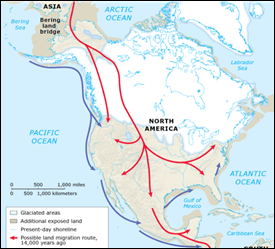
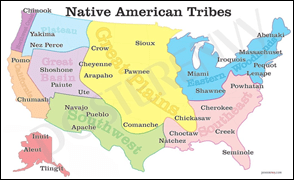
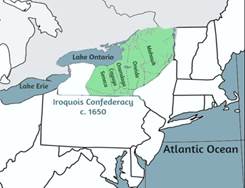

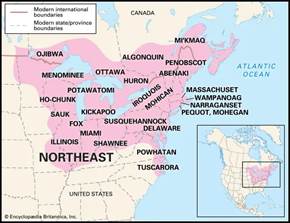

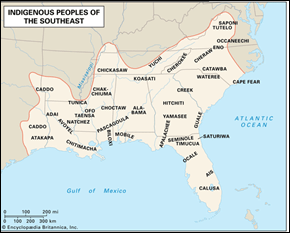


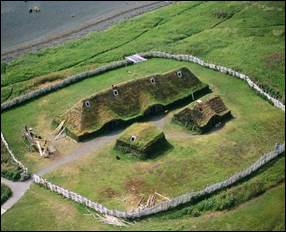


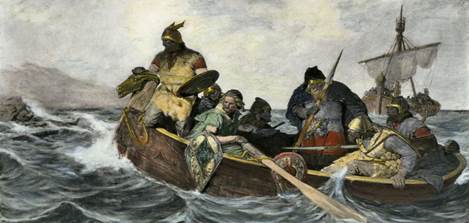


 of the total voting power in any matter on which they vote.
  of the voting power, since everyone was able to vote for their own representative. This can be found two ways; the first one indicated below is the most straightforward, while the second might be less obvious. Nevertheless, students might notice and articulate this strategy if they are given the chance to explore it. This is also the skill students will need to find answers to questions later in this activity.
 of the total.
 of the vote via their representative. That
  of the vote comprises 5 students, so each student gets
  of that
  . Students can draw a model of fourths, then divide each of those fourths into 5 sections (Figure 1) to show that every smaller section is then
  . Some students might realize that
  of
of  also means
  , which is also the same as
  .
.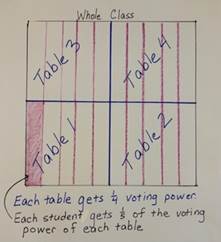
 of the voting power each. While the tables of 4 would have
  of the voting power each. There are several mathematical questions that can be asked at this point to facilitate exploration with fractions: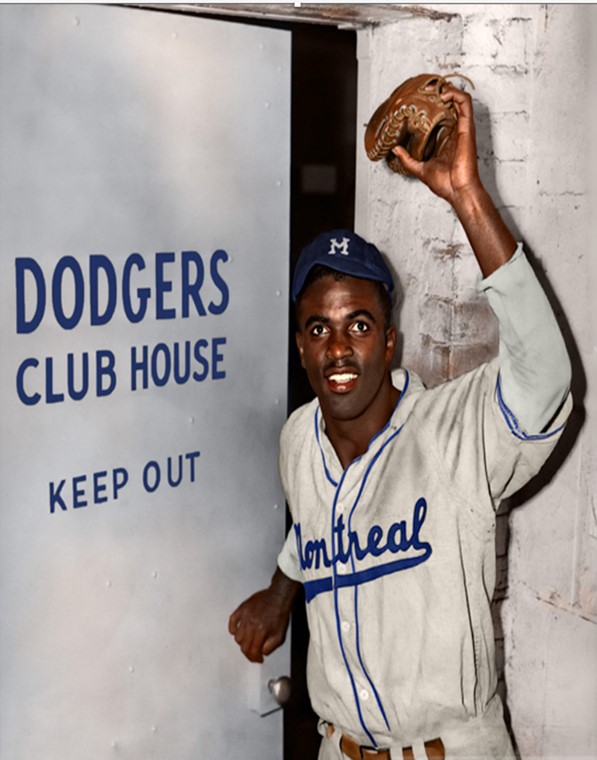


 njcssjournal