Teaching Climate History: There is No Planet B

Teaching Climate History: There is No Planet B

by Alan Singer

Welcome to the Anthropocene. Since the start of the Industrial Revolution, human-caused climate change has impacted the globe with the burning of fossil fuels. The debate in classrooms and the political realm should not be whether climate change is happening or how much it places human civilization at risk but over how societies and individuals should respond. This interdisciplinary book offers an in-depth examination of the history of the Earth’s climate and how historians and citizens can influence contemporary climate debate and activism. The author explains climate history and climate science and makes this important subject matter accessible to a general audience. Chapter topics include examining the Earth’s geological past, the impact of climate on human evolution, the impact of climate on earlier civilizations, climate activism, and the need for international cooperation. Presenting climate history, human history, and climate science in a readable format and featuring resources for students, this book is meant for use by teachers in high school elective or an introductory college course setting.

Chapters include “Our House is on Fire”; Tipping Points; Great Climate Migration; Earth’s Past Climates; Climate Change and Human Evolution; Extreme Heat; Four Billion Years of Climate History; Mass Extinctions; “Clocking” Climate Change; Diseases Carried by Mosquitoes or Hidden in the Ice; Climate Change Deniers and Minimizers; A Short Cold Snap of about 500 Years; Power of Ice; Climate Repercussions; Water Scarcity, Water’s Vengeance; Technology Debate; Saving the Amazon Rainforest; Capitalism vs. the Climate; and Climate Activism. There is an annotated bibliography and a list of resources for teaching about climate change.

Heroes of Ireland’s Great Hunger

Heroes of Ireland’s Great Hunger

Edited by Christine Kinealy, Gerard Moran, and Jason King

Review by Alan Singer (originally published at The History News Network)

Christine Kinealy, professor of history and the founding director of Ireland’s Great Hunger Institute at Quinnipiac University in Connecticut, has created an impressive academic juggernaut for the study of the mid-19th century Great Irish Famine and for bringing the famine to the attention of a broader public. Her more recent published work includes The Bad Times. An Drochshaol (2015), a graphic novel for young people, developed with John Walsh, Private Charity to Ireland during the Great Hunger: The Kindness of Strangers (2013), Daniel O’Connell and Anti-Slavery: The Saddest People the Sun Sees (2011), and War and Peace: Ireland Since the 1960s (2010). She recently released a collection of essays, prepared with Jason King and Gerard Moran, Heroes of Ireland’s Great Hunger (2021, co-published by Quinnipiac University Press and Cork University Press). In Ireland, it is available through Cork University Press. In the United States, it is available in paperback on Amazon. Co-editor Jason King is the academic coordinator for the Irish Heritage Trust and the National Famine Museum in Strokestown, County Roscommon, Ireland. Co-editor Gerard Moran is a historian and senior researcher based at the National University of Ireland – Galway.

Sections in Heroes of Ireland’s Great Hunger include “The Kindness of Strangers,” with chapters on Quaker philanthropy, an exiled Polish Count who distributed emergency famine relief, and an American sea captain who arranged food shipments to Ireland; “Women’s Agency,” with three chapters on women who “rolled up her linen sleeves” to aid the poor; “Medical Heroes,” with five doctors who risked their own lives to aid the Irish; and sections on the role of religious orders in providing relief and Irish leadership. Final reflections include a chapter on “The Choctaw Gift.” The Choctaw were an impoverished Native American tribe who suffered through the Trail of Tears displacement to the Oklahoma Territory. They donated more than they could afford to Irish Famine Relief because they understood the hardship of oppression and going without. Kinealy, King, and Moran managed to enlist some of the top scholars in the field of Irish Studies from both sides of the Atlantic to document how individuals and groups made famine relief a priority, despite official government reticence and refusal in Great Britain and the United States. In her work, Kinealy continually draws connections between the Great Irish Famine and current issues, using the famine as a starting point for addressing problems in the world today. The introduction to the book opens with a discussion of the global response to the COVID-19 pandemic.

Readers meet powerful individuals who deserve a special place in the history books. James Hack Tuke, a Quaker, not only provided and distributed relief, but he attempted to address the underlying issues that left Ireland, a British colony, impoverished. His reports from famine inflicted areas highlighted pre-existing social conditions caused by poverty, not just famine related hunger. His reports challenged the stereotype popularized in the British press that the Irish were lazy and stressed the compassion the Irish showed for their neighbors. While working with famine refugees in his British hometown of York, Tuke became ill with typhus, also known as “Famine Fever,” a disease that caused him to suffer from debilitating after-effects for the rest of his life. After the famine subsided in the 1850s, Tuck continued his campaign for Irish independence from the British yoke.

Count Pawl de Strzelecki of Poland was an adopted British citizen who documented the impact of the Great Irish Famine so that British authorities could not ignore what was taking place and who spoke out against the inadequacy of British relief efforts. Strzelecki was a geographer, geologist, mineralogist, and explorer. As an agent for the British Association for the Relief of Distress in Ireland and the Highlands of Scotland, he submitted reports on conditions in County Donegal, Mayo and Sligo. The reports challenge the British government’s effort to minimize the impact of the famine on the Irish people. On a personal level, Strzelecki provided direct aid to impoverished Irish children and lobbied before Parliamentary committees for increased governmental and institutional attention to their plight. He later worked to provide assistance to women who were emigrating to Australia.

The chapter on Asenath Nicholson was written by my colleague at Hofstra University, Maureen Murphy, Director of the New York State Great Irish Famine Curriculum and author of Compassionate Stranger: Asenath Nicholson and the Great Irish Famine. Nicholson was an American Protestant evangelical who traveled the Irish countryside delivering relief packets and sending reports home to the United States in an effort to raise more money. While she distributed Bibles, she did not make participation in Protestant services a condition of aid, unlike a number of British aid workers. Murphy describes Nicholson as a “woman who was ahead of her time – a vegetarian, a teetotaler, a pacifists, and an outdoor exercise enthusiast” (96). Nicholson’s achievements were largely ignored by a male-dominated world until brought to public attention by Murphy’s work.

Daniel Donovan was a workhouse medical doctor in Skibbereen, perhaps the hardest hit town in County Cork and in all of Ireland. I consider him one of the most significant heroes included in the book. As epidemic diseases devoured the countryside, Dr. Dan, as he was known locally, treated the poor and documented conditions for the outside world. Donovan’s diary reported on the impact of the famine in Skibbereen was published in 1846 as Distress in West Carberry – Diary of a Dispensary Doctor and sections were reprinted in a number of newspapers in Ireland and England, including The Illustrated London News. Dr. Dan, who became a major international medical commentator on famine, fever, and cholera, continued to serve the people of Skibbereen until his death in 1877.

I do have one area of disagreement with the editors. I would have included a section on the leaders of Young Ireland and the 1848 rebellion against British rule, including William Smith O’Brien, John Blake Dillon, John Mitchel, and Thomas Meagher. Rebellion, as well as relief, was an important and heroic response to the Great Irish Famine.

Immigration Matters: Movements, Visions, and Strategies for a Progressive Future

Immigration Matters: Movements, Visions, and Strategies for a Progressive Future

Edited by Ruth Milkman, Deepak Bhargava, and Penny Lewis

According to the editors of this collection of sixteen timely essays, “during the past decade, right-wing nativists have stoked popular hostility to the nation’s foreign-born population, forcing the immigrant rights movement into a defensive posture. In the Trump years, preoccupied with crisis upon crisis, advocates had few opportunities to consider questions of long-term policy or future strategy. Now is the time for a reset.” Immigration Matters offers a new, actionable vision for immigration policy. It brings together key movement leaders and academics to share cutting-edge approaches to the urgent issues facing the immigrant community, along with fresh solutions to vexing questions of so-called “future flows” that have bedeviled policy makers for decades. The book also explores the contributions of immigrants to the nation’s identity, its economy, and progressive movements for social change. Immigration Matters delves into a variety of topics including new ways to frame immigration issues, fresh thinking on key aspects of policy, challenges of integration, workers’ rights, family reunification, legalization, paths to citizenship, and humane enforcement.

The perfect handbook for immigration activists, scholars, policy makers, and anyone who cares about one of the most contentious issues of our age, Immigration Matters makes accessible an immigration policy that both remediates the harm done to immigrant workers and communities under Trump and advances a bold new vision for the future. In a review, Julián Castro, U.S. Secretary of Housing and Urban Development (2014–2017), argues “For too long, politicians have stoked nativism and weaponized our immigration system to divide people. Democrats and progressives shouldn’t be afraid to put forward a bold, forward-thinking vision for immigration that is rooted in common sense and compassion, instead of cruelty. Immigration Matters helps illuminate that vision and provides a path forward for achieving it.”

The book includes essays by immigration activists from People’s Action, the National Immigration Law Center, United We Dream, UNITE HERE, and Congressional Representative Pramila Jayapal (Dem-WA). Ruth Milkman is a Distinguished Professor of Sociology at the CUNY Graduate Center and the CUNY School of Labor and Urban Studies. Deepak Bhargava is a Distinguished Lecturer in Urban Studies at the CUNY School of Labor and Urban Studies and was previously president of the Center for Community Change. Penny Lewis is an associate professor of labor studies at the CUNY School of Labor and Urban Studies.

Ages of American Capitalism: A History of the United States

Ages of American Capitalism: A History of the United States

by Jonathan Levy

A leading economic historian traces the evolution of American capitalism from the colonial era to the present—and argues that we’ve reached a turning point that will define the era ahead. Levy reveals how capitalism in America has evolved through four distinct ages and how the country’s economic evolution is inseparable from the nature of American life itself. “Wealth is power, and power is wealth. The aphorism commonly attributed to the Englishman Thomas Hobbes, author of the great political philosophical treatise Leviathan (1651), was later invoked by Adam Smith in the greatest treatise ever written on commerce, An Inquiry into the Nature and Causes of the Wealth of Nations (1776). Smith was a Scot, not an American, but up until 1776, Scots and Americans shared something in common: both were subjects of the British Empire. In the Age of Commerce, empire and capitalism grew up together.” The Age of Commerce spans the colonial era through the outbreak of the Civil War, and the Age of Capital traces the lasting impact of the industrial revolution.

The volatility of the Age of Capital ultimately led to the Great Depression, which sparked the Age of Control, during which the government took on a more active role in the economy, and finally, in the Age of Chaos, deregulation and the growth of the finance industry created a booming economy for some but also striking inequalities and a lack of oversight that led directly to the crash of 2008. Jonathan Levy is a professor in the Department of History at the University of Chicago. His book, Freaks of Fortune: The Emerging World of Capitalism and Risk in America, won the Organization of American Historians’ Frederick Jackson Turner Award, Ellis W. Hawley Prize, and Avery O. Craven Award.

The Dawn of Everything

The Dawn of Everything

by David Graeber and David Wengrow

According to this new book, “for generations, our remote ancestors have been cast as primitive and childlike―either free and equal innocents, or thuggish and warlike. Civilization, we are told, could be achieved only by sacrificing those original freedoms or, alternatively, by taming our baser instincts.” David Graeber and David Wengrow argue that these “theories first emerged in the eighteenth century as a conservative reaction to powerful critiques of European society posed by Indigenous observers and intellectuals. Revisiting this encounter has startling implications for how we make sense of human history today, including the origins of farming, property, cities, democracy, slavery, and civilization itself . . . The Dawn of Everything fundamentally transforms our understanding of the human past and offers a path toward imagining new forms of freedom, new ways of organizing society. This is a monumental book of formidable intellectual range, animated by curiosity, moral vision, and a faith in the power of direct action.” David Graeber was a professor of anthropology at the London School of Economics. David Wengrow is a professor of comparative archaeology at the Institute of Archaeology, University College London.

The 1619 Project: A New Origin Story

The 1619 Project: A New Origin Story

by Nikole Hannah-Jones, Caitlin Roper, Ilena Silverman, and Jake Silverstein

Review by Alan Singer

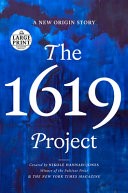
            The 1619 Project was released as an issue of the Sunday New York Times Magazine on August 18, 2019, 400 years after the arrival of the first slave ship at the British Virginia colony. It is now published in book formats. According to the Times, the project’s goal is to “reframe American history by considering what it would mean to regard 1619 as our nation’s birth year. Doing so requires us to place the consequences of slavery and the contributions of black Americans at the very center of the story we tell ourselves about who we are as a country” (4-5). The introductory essay by project director Nikole Hannah-Jones opens with a full-page bold-faced headline, “Our founding ideals of liberty and equality were false when they were written. Black Americans fought to make them true. Without this struggle, America would have no democracy at all” (14). For the essay, Hannah-Jones received a 2020 Pulitzer Prize for Commentary.

Other essays in the issue covered the role capitalism played in the establishment of chattel slavery and the plantation system in British North America; persistent racism after the Civil War that continues to shape the current era including Jennen Interlandi on unequal health care; Jamelle Bouie on undemocratic democracy; Brian Stevenson on mass incarceration; Trymaine Lee on the racial wealth gap; and African America contributions to America, especially American culture.

The 1619 Project has been criticized from across the political spectrum since it was released. Former President Donald Trump denounced it as anti-American propaganda in his call for “patriotic history,” former Secretary of Education Betsy DeVos described it as “insidious lies,” and the World Socialist website branded it as a “politically motivated falsification of history” The New York Times Magazine printed a letter from five prominent American historians along with a response by the magazine’s editor-in-chief. The historians, who demanded corrections be made in the 1619 Project, applauded “efforts to address the enduring centrality of slavery and racism to our history,” but were “dismayed at some of the factual errors in the project” that “suggest a displacement of historical understanding by ideology.” Their claims, however, were at least as ideological in nature. The historians charged the “project asserts that the United States was founded on racial slavery, an argument rejected by a majority of abolitionists and proclaimed by champions of slavery like John C. Calhoun.” Actually, that was the position taken by William Lloyd Garrison, who publicly burned a copy of the United States Constitution on July 4, 1854, a document he called “a covenant with death, and an agreement with Hell.” The group also ignored Frederick Douglass’ 1852 Independence Day speech where he calls the Fourth of July a day that reveals the “gross injustice and cruelty” of American society. For Douglass, “There is not a nation of the earth guilty of practices more shocking and bloody than are the people of these United States at this very hour.”

I Called Her Mary

I Called Her Mary

By Margaret M. O’Hagan & Thomas Gorman

Reviewed by Hank Bitten, NJCSS Executive Director

“I love studying history because it’s nice reading about people who overcame a lifetime of difficulties against all odds.”

“Every Sunday, we walked together about five miles to church.  We didn’t have a car, so we walked over an hour to arrive at Mass on time.  We had the choice of going to 7:00 A.M. Mass at the monastery or walk in the opposite direction for 9:00 A.M. Mass at church in Shinrone.  On rainy days, we ran while the rain soaked through our clothes.  To this day, I never remember seeing an umbrella in Ireland.” (p. 29)

The Roman Catholic Church in Shinrone, built in 1860

The hidden stories of ordinary people are an essential part of the historical narrative. Unfortunately, these stories remain hidden. Everyone reading this book review has an important story – one related to triumph, tragedy, perseverance, culture, faith, and philosophy. The story of Peg Holland began on April 12, 1937. It was the age of the Zeppelins and there was a good chance that the giant German airship with 97 passengers passed over the farm house of the Hollands on its fateful voyage to Lakehurst, New Jersey in May of 1937. Peg will grow up during World War II and her life as a young adult at the age of 13 will begin in the middle of the 20th century. This is significant as immigrants from West Germany and Ireland came to America in the hope of a better life. The United States of America was a place of hope, liberty, and freedom from the traditions of Europe. 

The story of Peg Holland is anything but ordinary as it reveals insights into Irish and American culture.  Her story is powerful and very different from Life with Beaver or Father Knows Best. The story of history is the story of people. Through her experiences we learn about Elvis, Irish clubs, dating, conflicts, and hopes. The stories of ordinary people are valuable because they provide insights that are deeper than nostalgia. They reveal why liberty, equality, homeownership, education, and family are important and at times appear to be the ‘impossible’ dream.  In this context we see how an immigrant woman comes to understand the purpose of the American Revolution for her.  This is a story that prompts inquiry and discussion by students in a Sociology or history class, book club, or religious study group.

The design of this book is carefully planned for discussion and reflection as each chapter is less than ten pages taking less than 15 minutes to read.  Each chapter includes a unique episode similar to binge watching a streaming movie.  In fact, one might look at this book in terms of five seasons:

Season 1 (life in rural Ireland)

Season 2 (adoption of Mary and moving to New York)

Season 3 (married life)

Season 4 (unexpected situations)

Season 5 (reunion and optimism)

This memoir is an inspiring account of the discrimination of an unwed teenage mother experienced by the women in her community, a decision for adoption of her nine-month old daughter, working as a nanny, finding love in the Bronx, moving to the suburbs of New Jersey, the extended Irish family, and her reunion with her daughter 50 years later.

This historical narrative takes place over 70 years from 1950 through 2020 from the perspective of an immigrant woman from Ireland.  It includes her memories of dating in the Sixties, apartment living in the largest city in the world and making the move to the suburbs, the influence of music, television, and the church in her life, returning to Ireland, and community social events. For teachers interested in using this memoir to help students understand culture, family, and faith, this book provides a sociological framework of American culture during the last four decades of the 20th century and the transition into the 21stcentury by a senior citizen and grandparent.  The setting is Long Island, the Bronx and Bergen County, NJ.

The book will also prompt serious questions about how an immigrant teenage girl from Ireland entered the United States under the restrictions of the Immigration and Nationality Act of 1952 (McCarran-Walter Act), the role of Catholic Charities and other religious and private agencies with the relocation of people, commercial airline travel in the 1950s, the increased demand for parochial education, raising children, the baby boom generation, the influence of social clubs, the role of women in Irish and American culture, and how the American Dream of Peg Holland compares to the American Dream as defined by Betty Friedan:

“Each suburban wife struggled with it alone…they learned that truly feminine women do not want careers, higher education, political rights….” (Rudnick, 72). Friedan goes on to emphasize how societal views have caused women’s “greatest ambition” to be marriage and children. Her biggest point eludes that “it is easy to see the concrete details that trap the suburban housewife, the continual demands on her time.” American Dream Project

For members of a book club, the book provides opportunities for discussion about teenage pregnancy, resilience, perseverance, facing discrimination, gangs, the life of an unmarried woman, struggling with debt, coping with cancer, raising a family, the importance of faith and hope, and if our lives are predetermined by a higher force or subject to chance and luck. The characters are real and their stories are from their hearts. Even if the authors edited phrases or words, the primary source documentation and candid expressions will make your eyes water with sadness and happiness.

For members of a religious discussion group this memoir offers ten examples of situations that require us to hit the pause button and stop and think. For example, the circumstances of a virgin pregnancy, living away from home during her pregnancy, twists and turns of the decision to give a daughter up for adoption, working as a nanny, finding friends, falling in love, purchasing a home, facing devastating health issues, reunion in Ireland, and receiving an unexpected phone call. 

For those who may read this book as an individual, I can only provide my perspective as a man, husband, and grandfather.  I experienced emotions of sadness, helplessness, empathy, inspiration, encouragement, and thanks for my personal religious beliefs in reading Peg’s personal story. It made me think about the teenage mothers I knew, decisions about who to trust, personal hardships and triumphs, the power of forgiveness, and the challenges teenagers and parents face. The characters in this memoir are living examples of these experiences. 

I also enjoyed the Irish culture and local color of Long Island, Valentine Ave. in the Bronx, and Hawthorne, NJ. These were all places where I lived but my experience was one of a middle-class man with a college education. To some extent my stereotypes of Irish culture found agreement and yet they were also proven wrong and my perspective of life and culture was broadened.

2314 Valentine Ave. Bronx, NY

“My prayers were always the same.  I prayed to God to help me get over my guilt, and He answered my prayers. After each conversation with Mary, I could feel the healing continue.  I began to feel like a person who was more sure of herself. I was no longer stuck beating myself up over something I have no control over anymore.  I told myself Enough already, I cried so many nights after I gave Mary away and when I was by myself.  Finally hearing Mary’s voice and everything she had accomplished in her life shot through me to my core and started to heal me within. It was confirmed I did the right thing.” (words of Peg Holland O’Hagan in her mid-70s)

The book is available on Amazon. It is written by a husband and wife with professional careers in education. I am honored that Thomas is my former student and years later became my colleague.

You Are Where You Go by Caitlyn Lubas

You Are Where You Go

By Caitlyn Lubas

Reviewed by Hank Bitten

A Traveler’s Coming of Age Journey through 70 Countries and 7 Continents During College

My first visit, at age ten, to the Rivoli Theatre on Main Street in Paterson was to see the Jules Vernes movie Around the World in 80 Days.  My knowledge of the world at age ten was limited to a globe, map of the world, and pictures in Life magazine. In 1957, travel was still mostly by propeller powered airplanes.  The turbulence made travel by air bumpy, there were frequent fueling stops, and pressurized cabins were just being installed.

The movie opened my eyes to places in Africa, Asia, and South America that were new to me.  The scenes of the physical geography of place were amazing and my exposure to culture motivated me to study anthropology years later at N.Y.U.  The book, All I Really Needed to Know I learned in Kindergarten by Robert Fulghum is another reminder of the influence of teachers and their lessons.  When we engage students in thinking, we are nurturing more than historical content, disciplinary concepts, or skill sets. When students think about what they are learning, the brain redirects knowledge from their eyes to their hearts.  This is how visual memory deepens and changes lives.

Caitlyn Lubas was my student and took my class on the Global Economy at Indian Hills High School. The wisdom and insights in her book, is a reminder of the influence that teachers have in the lessons they teach – especially in social studies.

“Before travel, my worldview was like an old radio tuned into a channel that was only producing static-uninformed and lacking any key message.  Each unique experience abroad allowed me to tune into a clearer signal of what the world is really like-dynamic, vibrant, and enlightening.” (page 5)

Caitlyn’s experience at New York University was transformative. As a high school student Caitlyn communicated with other teenagers from a variety of countries developing an international network of social capital. Through social media, video channels, and books, she was able to talk with different people about culture, issues, family, and school. In high school, we traveled to Europe and provided opportunities for meeting students from Japan, Germany, and Denmark in our study of global business, the environment, and human rights. In the first chapter of her book, she provides tips on how to make a decision that prioritizes travel as a tutorial for the academic literacy needed for every 21st century student. The globalization of education has become an essential component of academic literacy in understanding the common values and experiences we share, the relationship between the individual and the state, and our responsibility to protect our planet. As I was reading Caitlyn’s book, I was reminded that I have students working on six continents (Denmark, Uganda, Ukraine, Switzerland, Germany, Argentina, Brazil, Israel, etc.) and others who talk with people in other countries every day. Caitlyn’s book has relevance because it provides a cultural and visible connection to places and people.

I was able to identify with her personal stories about her visits to many places in Europe, although I found some of her insights and information to be new and interesting.  Her chapter on Vietnam, Laos, Japan, and Singapore offered unique perspectives to me regarding her leg injury in Vietnam, cubicle hostel with pod beds in Japan, self-discovery of people and scenery in Laos, and uncomfortable encounters of a young Asian girl having dinner with an older man in Singapore, even though the man was her father.  I learned about new perspectives of culture, traveling in inclement weather, coping with Google translator, and navigating the Mekong River. Teachers should be reminded that their teaching of geography involves more than place or name recognition as holidays, street culture, food, beliefs, and gender roles are equally important. When traveling inside another culture, our behaviors and attitudes are observable.Caitlyn discovered that she was the outsider.

This was very evident in the chapter on the Middle East and her experiences in Jordan, Dubai, and Abu Dhabi.  I remember when New York University developed this global education program and what I learned from Professor of History David L. Lewis as the program was evolving and taking shape in 2008-10. The unique experience of NYU Abu Dhabi and NYU Singapore is how students experienced the diversity of a global community. I had two students graduate from this academic opportunity.  When Caitlyn stepped off the plane and entered one of the most luxurious and spacious airport terminals on the planet, she sat alone in a taxi in shorts and quickly stood out in an environment of long garments and face coverings.

Abu Dhabi

In my high school Global Issues class, we partnered with Keio Academy in Purchase, NY for an overnight stay in a dormitory based Japanese high school.  We attended classes in Japanese, played Japanese style dodge ball, and discussed international issues. For my Bergen County students, this was their first experience immersed in a new culture and paired with a student they had only been introduced to through emails and letters. Caitlyn was my student and experienced this as a freshman.  Now, at NYU, her roommates were from three different countries and cultures. However, they shared a common interest in travel and adventure.

I learned more in this chapter on the Middle East about how our eyes communicate messages to our brains than in the other chapters. Reading about Caitlyn’s observations of her independence in New York City with her new understanding of how young girls in Abu Dhabi and the Middle East feel liberated as their long garments conceal their sexuality and feminism from public observation and comment.

I also learned that the familiar TV monitor on the back of the seat on the airplane includes an arrow pointing to the east for Islamic prayers during the day.  Her experiences with food, visiting a Bedouin community, the demographic diversity of Dubai and other cities, and the inaccuracy of the stereotypes portrayed in the American media and classrooms are valuable lessons for everyone who reads her book.  The familiar phrase of the book, All I Really Needed to Know I learned in Kindergarten, might be rephrased by “All I Really Need to Know about People, I Learned in My Global Classroom in College.”

The chapter on Africa (Kenya, Tanzania, and Malawi) gives the reader a perspective of time and place by returning to the Bronze Age or perhaps the last century of the Neolithic Age. This is the birth of civilization and we are taken back in time to life on the safari before asphalt roads and power lines. This is the world of the Maasai, the open sky of the Serengeti plains, and swarms of insects.  It is a place without Wi-Fi connectivity, stocked shelves of supermarkets, and the traffic on urban highways and city streets. In our teaching of geography we neglect, or intentionally avoid, the experiences of millions of people who have no experience with flush toilets, access to hot water for washing hands or drinking from a faucet.  It is worth the read because it is from the perspective of a youthful college student!

If your time is limited to reading only one chapter, it would have to be Caitlyn’s experience of traveling across the Drake Passage to Antarctica for a camping trip, without the campfires. The journey begins shortly after the December solstice when the sun is directly over the Tropic of Capricorn. Her experience of being immersed in total sunshine with brilliant images on the white snow and icebergs. However, it is the challenges of protecting the environment without leaving any human or carbon footprints, digging ditches to make a bed for protection against the fiercest winds and coldest temperatures on the planet, and learning how to excrete bodily fluids and solids during a blizzard.  Antarctica is a beautiful landscape of white and perhaps the only place on the planet where the sounds of silence are heard…or not heard.

The book is readable for middle and high school students and adults. It is her personal reflection about life, traveling alone, and experiencing culture and the harshness of geography. Teachers who value perspectives will want to include Caitlyn’s!

African American History: A Past Rooted in the Hudson Valley

African American History: A Past Rooted in the Hudson Valley

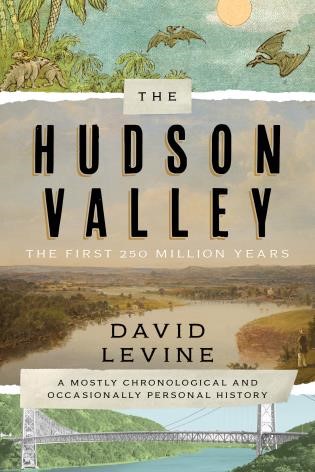
David Levine

Reprinted with permission from https://hvmag.com/life-style/history/african-american-past-hudsonvalley/  

The origin story of what was to become the United States of America typically features two main characters: the native peoples who had lived on these lands for centuries, and the Europeans who took those lands from them. But there was a third cast member in this drama, one whose role is at best downplayed and at worst ignored: Africans and their descendants. In 1613, just four years after Henry Hudson’s crew sailed up the river that would bear his name, and seven years before the Pilgrims arrived in Plymouth, a mixed-race man named Juan Rodrigues (or some spelling variant near that) left Hispaniola for the New World, set up shop in and around Manhattan Island, traded with the natives for a time, squabbled with the Dutch—who called him a “black rascal”—and then disappeared from the public record as the first African to set foot in the Hudson Valley.

In 1626, just 10 years after the establishment of New Amsterdam, the Dutch West India Company shipped 11 African male slaves—whom they labeled “proud and treacherous”—into the colony, with women brought in two years later. Some slaves were moved to Fort Orange, the outpost that became Albany. As land patents divvied up the Valley, every patent holder whose name still graces the region stocked his farm with slaves. In 1664, when the Dutch handed the keys to the new kingdom to the British, about 800 Africans and their children inhabited the Valley, only about 75 of them considered free.

The British increased slave importation, and by the early 1700s New York State had more slaves than anywhere else in the colonies, more than the deep South, more than Boston, more than the Virginia plantations. “The two biggest slave markets in the country before the American Revolution were in New York City and Albany,” Dr. A.J. Williams-Myers, a retired professor of Black Studies at SUNY New Paltz, says. By 1790, the first federal census counted more than 19,000 enslaved New Yorkers; Georgia had 12,000. “New York was not a society with slaves, it was a slave society, dependent on enslaved Africans,” he says.

As New Yorkers, we like to think of ourselves as different from the south in regards to slavery. We were different only in that, numerically speaking at least, we were worse. Any history of African descendants in the Hudson Valley must first come to grips with this fact. From the earliest moments of European contact, African Americans have been part of the Valley’s dramatis personae. “Africans have been portrayed as in the shadow of history, when actually they were center stage,” Williams-Meyers says. “Where European people went, Africans went with them, shoulder to shoulder with their enslavers.” 

The oppressed as oppressors

As the Hudson Valley economy transitioned during the 17th century from the fur trade to farming, Africans helped make the region the most prosperous in the New World. Hudson Valley farms helped feed Great Britain, its newest colonies and its holdings in the Caribbean, and Africans did much of the work. A 1733 century painting called the “Van Bergen Overmantel,” by artist John Heaten, depicts the Marten Van Bergen farm near the Greene County town of Leeds. Historic Hudson Valley writes that “no other single artifact offers more information about life in colonial New York. Here African, Native American, and European people populate the landscape.” Dr. Myra Young Armstead, Lyford Paterson Edwards and Helen Gray Edwards Professor of Historical Studies at Bard College, calls this painting, “a good picture of what was going on and why the Hudson Valley was a big area of slavery.”

Even those who came here because of oppression became oppressors. The French Huguenot founders of New Paltz purchased their first of many slaves in Kingston in 1674, a hypocrisy not lost on a Huguenot descendant. “My ancestors fled France for religious and political freedom. Before leaving France they saw their own families tortured, enslaved, and killed. Yet these emigrants came to the New World and, for their own personal gain, forced other human beings to labor against their will,” Mary Etta Schneider, board chair of Historic Huguenot Street, said this summer. “For this I am ashamed.” 

Schneider was speaking in advance of a September 2016 event, in which HHS welcomed Joseph McGill, founder of the Slave Dwelling Project. McGill travels the country spending the night in historic slave dwellings to bring awareness to their existence, history, and need for preservation. More of these are in the north than most people know. “The history I learned in school was junk,” McGill says. “Slave dwellings are part of the history of this nation. They are hidden in plain sight.” Huguenot slaves were likely locked in at night so they couldn’t escape, Schneider said, and those who slept there along with McGill got “a sense of what it must have felt like to just reinforce that ownership, that lack of ability to have any control over your life.” Addressing another myth, that northern slave owners were “better” than southern ones, McGill says bluntly, “There were no great slave owners. When you assign a degree of severity, you start with bad.”

Long before Nat Turner, slaves in New York were rebelling against their owners. In 1712, 23 slaves killed nine whites in New York City, and rumors both real and unproved of slaves plotting revolts from the City to Albany kept tensions high throughout the 18th century. In 1794, three slaves—including two girls of 12 and 14—were hanged for setting a fire that burned much of downtown Albany; two were hanged from “the Hanging Elm Tree,” at the northwest corner of State and Pearl Streets (planted in front of the house of young Philip Livingston), the third on Pinkster Hill, site of the current Capitol. “Slaves and owners were on constant war footing,” William-Myers says. “The Hanging Tree in Albany shows you the use of fear to keep Africans in their place.”

Revolutionaries and warriors

And yet, slaves helped their masters win independence. “You cannot discount Africans’ input in the Revolutionary War,” Williams-Myers says. Though they often were sent to replace their owners in battle, under the assumption that whey would be freed after the war, they fought bravely and well. “They are never pictured as part of that, but they were there on the battlefield,” he says. Slaves held positions along the Hudson River as General Clinton made his way up from New York City, and fought at the battles of Saratoga, along the Mohawk River and throughout the region. “African warriors were one of the colonies’ secret weapons,” he says. “They were significant in winning the war.”

After the war, slaves weren’t freed right away, but Federalists like John Jay and Alexander Hamilton founded the New York Manumission Society in 1785 to promote abolition. It happened in fits and starts, and full emancipation was realized when the last New York slaves were freed by July 4, 1827. It was the largest emancipation in North America before the Civil War.

The Hudson Valley to a large extent welcomed freed African Americans. During this gradual emancipation, Quaker groups offered land—usually rocky, undesirable land, to be clear—to help freed slaves, and self-sustaining black communities sprung up in Rockland (Skunk Hollow, near the New Jersey border), Westchester (The Hills in Harrison and another community near Bedford), Dutchess (near Hyde Park, Beekman and Millbrook), Ulster (Eagles Nest, west of Hurley), and all the other river counties. Though legally emancipated, blacks weren’t entirely free yet, and the Valley, like the rest of the state, was in no way free from racism. Laws limited blacks’ rights to vote, to travel with whites on public transportation, to attend school and more. “You could argue that the earliest ‘Jim Crow’ laws actually appeared in the north, not the south,” says Dr. Oscar Williams, Chair of the Department of Africana Studies at the State University of New York at Albany.

The opening of the Erie Canal, in 1815, precipitated the slow and steady migration from upstate farms to river cities for employment. “Cities like Newburgh and Poughkeepsie offered jobs to blacks, while there was bigger movement to New York City or Albany, the nodes of the Valley,” Armstead says. Black institutional and social life took hold in these cities. Rhinebeck, for example, had a vibrant neighborhood of black artisans on Oak Street. African American Revolutionary War veteran Andrew Frazier and his family, who are buried in the “Potter’s Field” section of Rhinebeck Cemetery, owned land in the Town of Milan. In Kingston, the A.M.E. Zion Church on Franklin Street, the oldest African American church in Ulster County, owns the Mt. Zion African American Burial Ground on South Wall Street. The cemetery holds the remains of members of the U.S. Colored Infantry’s 20th Regiment, which fought in the Civil War. An extension of the Mt. Zion cemetery on South Pine Street is “one of the earliest, and potentially largest slave cemeteries known in the northeast,” according to an anthropologist who conducted an archeological survey for the city of Kingston in 1993. The Rye African American Cemetery, inside the Greenwood Union Cemetery, was established in 1860 as a burial place for blacks. It is on the National Register of Historic Places and is the final resting spot for African American Civil War veterans and the descendants of many slaves from Rye.

As the Civil War approached, the Hudson Valley was a hotbed of abolition. So-called Colored Conventions, movements held by free slaves to oppose slavery and push for rights for free blacks, were held all over country, including in Poughkeepsie, Armstead says. The Underground Railroad had important station stops along the river, such as the Beecher House in Peekskill and the Stephen and Harriet Myers House in Albany. Sojourner Truth started on her march to freedom as Isabella Baumfree, a slave born on an estate near what is now Ripton, sold to a family in New Paltz. In Troy, an African American named Henry Highland Garnett was Malcolm X before Malcolm X. Garnett led a radical movement from his position as the first pastor of the Liberty Street Negro Presbyterian Church. First working with abolition leaders like William Lloyd Garrison and Frederick Douglass, he gave a famous speech in 1843 at the National Negro Convention, a “Call to Rebellion” encouraging slaves to rise up in open revolt. His position was opposed.

Past, prologue

After the Civil War, blacks continued to move from local farms to industrial centers, and in their “Great Migration” from the South. New York City was a major destination, and in time blacks also moved into the suburbs, exurbs and growing river cities of the Valley. Freedom did not mean integration, however. As just one example, in the 1920s, land in the Nepperhan neighborhood of Yonkers, now known as Runyon Heights, was sold to blacks because whites didn’t want it and it was naturally separated from white communities.

Work, as always, continued to be the magnet drawing African Americans north, and the Valley had one of the world’s most powerful magnets: IBM. After World War II, “IBM was really important, ahead of its time, a global force that recruited from black colleges and universities,” Armstead says. By the late 1950s and 1960s, black professionals populated the area. “That generation is dying or dead now, but they became the first black heads of organizations, the first black teachers,” she says.

The history of African Americans over the last half century is a story of progress and regression, of course, both nationally and here in the Valley. The current political climate is restive. The struggle has been ongoing for 403 years now, ever since Juan Rodriguez stepped ashore and began battling the Dutch. The story has evolved, but it hasn’t ended. As William Faulkner wrote, the past is never dead. It’s not even past.