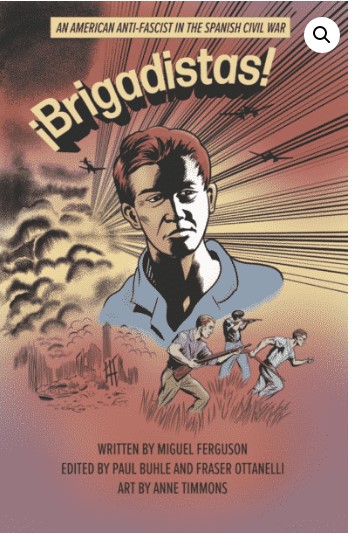
Book Review: !Brigadistas! An American Anti-Fascist in the Spanish Civil War edited by Miguel Ferguson, Anne Timmons, Paul Buhle, and Fraser Ottanelli

(Review by Anika Amin, St. Ann’s, Brooklyn)

 ¡Brigadistas! is a graphic novel about the Spanish Civil War (1936-1939). It tells the story of three friends from Brooklyn, New York who travel to Spain where they join the Abraham Lincoln Brigade. The book was super descriptive and did not include unnecessary details. This made it comprehensive but still clear and intelligible. The moments about the effects of the war and the regular people it affected were extremely powerful. The descriptions of the war’s effects on children and people who were not soldiers made the graphic novel very impactful. There could have even been more of these moments included to reinforce the significance. Overall it was informative, clear, and very powerful. Although it was very clear, it could have made it easier to read if it had chapters or sections. Breaking up the text and providing landmarks throughout the story could have also made it easier to follow. Additionally, depending on the target age group, some of the terms and concepts could have been explained more to keep the writing flowing. Overall it was great to read and it presented important and difficult topics in an understandable way.

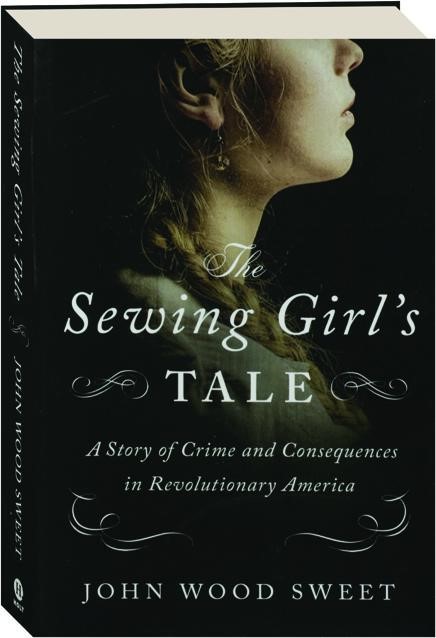
Book Review: The Sewing Girl’s Tale: A Story of Crime and Consequences in Revolutionary America by John Wood

Sweet (Henry Holt) uses the trial of the accused rapist, Harry Bedlow, of a seventeen-year-old seamstress named Lanah Sawyer in 1793 to analyze New York City’s social hierarchy during the early republic. Alexander Hamilton was part of Bedlow’s legal team. Bedlow’s      acquittal[1]  after the jury deliberated for only fifteen minutes sparked riots in the streets and ignited a vigorous debate about class privilege and sexual double standards. Sawyer received some justice when her stepfather won a civil suit against Bedlow and the family was awarded a significant sum. The book received a Bancroft Award from the American Historical Association.


Book Review: The Great New York Fire of 1776: A Lost Story of the American Revolution by Benjamin Carp

In many ways, New York City was the strategic center of the Revolutionary War. During the summer of 1776, George Washington threatened to burn the city rather than let the British take it and shortly after the Crown’s forces took New York City, more than one-fifth of the city mysteriously burned to the ground. This book examines the Great Fire of 1776 and why its origins remained a mystery even after the British investigated it in 1776 and 1783. Benjamin Carp paints a vivid picture of the chaos, passions, and unresolved tragedies that define a historical moment we usually associate with “life, liberty, and the pursuit of happiness.” Carp is a professor of history at Brooklyn College and the CUNY Graduate Center. He is the author of Defiance of the Patriots: The Boston Tea Party and the Making of America and Rebels Rising: Cities and the American Revolution.

History Book Club with Kapka Kassabova’s Street Without a Name: Childhood and Other Misadventures in Bulgaria

History classes are often labeled as boring and repetitive by students. This begs the question of how to engage students to quell this historical boredom. Educational theory suggests students become more involved the more they are engaged and care about what they are learning. That being said, to engage students, I suggest History teachers can implement a history book club that allows students to pick books that they want to read and can relate to history.

In this article, I will suggest using Kapka Kassabova’s book Street Without a Name: Childhood and Other Misadventures in Bulgaria to be included in the proposed history book club as an example of a book that both captures the interest of students and serve as a link to learning about a country like Bulgaria which is rich with natural resources and long history. The culture and history of Bulgaria can be encapsulated through Kassabova’s writing is significant as her individual experience can illuminate students on life in communist Bulgaria. Also, the individual experience and the feelings Kassbova has throughout her childhood and later return to post-communist Bulgaria. Therefore, a history book club centered around Kapka Kassabaova’s book Street Without a Name: Childhood and Other Misadventures in Bulgaria, would explore the struggle for identity and belonging as he reflects on her past and present self, which, could lead to more knowledge about Bulgaria as a springboard to learn the about other countries as well.

The architecture of communist Bulgaria is easily identified, and the uniformity of the architecture contributes to Kassabova’s struggle for identity and belonging. The impact of the communist bloc housing can be seen through Kassabova’s childhood recollection of her home. Kassabova recalls waiting for an apartment and finally getting placed in an apartment that was small and on a nameless street. The lack of a street name distorted Kassabova’s sense of home, and is affirmed by a school project where she had to write about her home and the address. The solution to the nameless status of her street was solved by her mother’s suggestion of writing about her ideal home on Strawberry Street. However, the teacher returned the assignment with a red pen written on the paper, chiding young Kapka for not facing the reality of life as most lived in block-style apartments.[1]  Through this experience, Kassbova learned to conform to communist standards of education that included unity under the communist identity, as a result, individualism was not valued. The role of housing and architecture in communist regimes in Europe in the late to middle twentieth century is explained by Michael Kelleher’s journal article “Bulgaria’s Communist-Era Landscape.” Through this journal article, Kelleher defines the landscape of Bulgaria after residing in Bulgaria for a number of years. Through exploring the rigidity and uniformity, Kelleher claims Bulgaria utilized the Soviet Union’s model for architecture and design to better show the legacy and impact of the communist identity within a non-Soviet nation, Bulgaria.[2]

This opens another interesting line of historical inquiry, using the architecture of a country as the hook to investigate the different historical styles of architecture and the corresponding connection to important periods of history.

This perspective adds to and validates Kassabova’s childhood account of the housing in Bulgaria being drab and uniform. Moreover, the connection between Kelleher’s article and Kassabova’s writing shows the influence of housing on one’s identity and how the uniform structure voided individuality through the definitive architecture which promoted communist ideals and upheld a common communist identity. Overall, showing one aspect of Kassabova’s struggle with identity in communist Bulgaria and the importance of uniformity and realism under communism.

Furthermore, Kassabova’s identity was challenged by governmental upheaval and the fall of communism in Bulgaria. Through Street Without a Name, the reader can experience the turmoil and tumultuous end to the People’s Republic of Bulgaria. The brewing of change is addressed by Kassabova as well as the uneasy atmosphere within her school and home as rumors of a murdered journalist and a bloodless governmental coup were looming. The stress of the uniformity that consumed Kassabova’s identity was threatened and with the “televised execution of Nicolae and Elena Ceausescu by a three-man fighting squad” the fate of the Bulgaria Kapka knew was in shambles.[3]  Kapka referred to the end of the People’s Republic of Bulgaria as the last act of a forty-five-year-long theater” which indicates the manufactured identity of communism was gone, leaving her to reconstruct herself and her identity and belonging within the world. However, this experience while individual to Kassabova was a collective memory for citizens of Bulgaria. Therefore, this memory can be viewed through the idea of collective and intergenerational memory, as her experience was of a child being told by her parents. This can be used to discuss the ongoing turmoil in the modern world, as well to investigate other historical examples of government upheaval.

The significance of collective and intergenerational memory is highlighted in Paul Thompson’s journal article “Community and Individual Memory: An Introduction.” Thompson addresses the impact of collective memory that is passed down from generation to generation on the testimony of historical accounts.[4]  This can be applied to Kassabova’s account as she is informed of the political upheaval by her parents not through her direct self, which shows the use of collective memory within Kassabova’s book. Thus, displaying the transformation and destruction of Kapka’s communist identity with the fall of the Bulgarian communist regime. This information can be used to bridge discussions and lead to further explorations of other former communist governments since the fall of the Soviet Union.

Moreover, emigrating from Bulgaria resulted in a massive shift in Kassabova’s sense of identity and belonging. Kapka throughout her book glimpses toward her present self as her book splits between her past in Bulgaria and revisiting Bulgaria as an adult. However, the process of leaving and immigrating removed Kassabova’s Bulgarian past as she writes about her fascination for other countries except for Bulgaria “rids herself of two things. One, her Bulgarian past” and the question of “where are you from?”[5]This indicates an internal struggle for belonging and identity, as Kassabova feels nationless and represses her past as she separates herself from her childhood under the Bulgarian Communist regime. The act of immigrating distorts one’s life as they uproot themselves from their daily life. Also, within the context of Bulgaria, Anna Krasteva’s journal article, “post-communist discovery of immigration: the case of Bulgaria” fills in the missing information on migration patterns within communist and post-communist Bulgaria. Krasteva explains why emigration was uncommon in communist Bulgaria, as the state was closed, meaning no one left.[6]  Subsequently, the collapse of communism in Bulgaria resulted in newfound freedom of emigration. This assertion of Krasteva relates to Kassbaova, as her family took advantage of the release of emigration. This could lead to a fuller discussion of social culture and the ramifications of various emigrations in history.

However, the impact of immigration on Kassabova’s fragile identity resulted in an aimlessness and loss of belonging overall. This is observable in the second half of her book as she revisits Bulgaria and writes she is “a ghost from the past, but it isn’t their past.”[7]This indicates a disconnect of self and a fragmented identity that Kassabova, as she is haunted by her past life in Bulgaria. Moreover, this idea of change and disconnect of identity is addressed in Gabriele Linke’s journal article “‘Belonging’ in Post-Communist Europe: Strategies of Representations in Kapka Kassabova’s Street without a Name.” Linke connects sociologist and philosopher Zygmunt Bauman’s concept of liquid modernity to apply to the fragmentation of Kassabova’s life as written in her book. Linke claims the constant shift and difference to her Bulgarian past is the result of liquid modernity changing her view of her past self and the relationship she had with her Bulgarian and communist identity.[8] Moreover, this creates a disconnect regarding her identity, as she cannot fully acknowledge her past and how her past impacts her present sense of belonging and identity. Once again, this profound writing can serve to link the many stories of people like her to build an understanding of the long-term impact of history now generations past.

However, Kassabova’s work, while insightful, is not flawless and is subject to review and criticism. One such review comes from the Harvard Review, which reviews the book from the perspective of an average reader. The reviewer is Carmen Bugan, and she explains the concept of Kassabova’s book is interesting and important to learn about. The criticism of the book is in the structure, Bugan as she claims the book reads as a travel guide as opposed to a memoir. However, she appreciated the themes of restlessness and the struggle for identity within the book, as well as the quality of the writing.[9]Moreover, the analysis published by Claudia Duppé is titled “Tourist in Her Native Country: Kapka Kassabova’s Street without a Name.” This review differs, as Duppé focuses on the aimlessness and tourist-like status of Kassabova during her visit to Bulgaria. This review takes an academic and thematic approach to Kassabova’s memoir and explores the role of immigration on her identity shifts throughout the book.[10]Overall, the reviews of Street Without a Name are positive and cite the impedance of reading to better understand life during and after communism. It is always historically important to present a full picture of history, both good and bad, in addressing the criticism, students themselves can hopefully make informed judgments about the importance and validity of her claims.

To conclude, Kapka Kassabova in her memoir Street Without a Name: Childhood and Other Misadventures in Bulgaria is a powerful individual account of life under communism and after. Also, Kassabova through her own struggle for identity and belonging explains to the reader the mindset and reality of those who grew up under communism. This is shown through the separation of the book into childhood and revisiting Bulgaria, as this shows the time Kassabova took to heal and feel ready to face her past. Moreover, the rigidity and uniformity under communism definitively impact a person’s identity, as Kassabova struggled to adjust to the Western world’s looser restrictions. Overall, Street Without a Name: Childhood and Other Misadventures in Bulgaria is an important read to gain perspective and understanding of life under the iron curtain and after the fall of the iron curtain. The use of books like Street Without a Name: Childhood and Other Misadventures in Bulgaria can be used to make connections to social, political, and geography as a means to hook the students with real-world insights provided by individuals who actually lived the history that is being covered in various classes. Perhaps, using primary sources like Street Without a Name: Childhood and Other Misadventures in Bulgaria can break the notion of boring history and bring events of the past to life today!

Bell, John D. “‘Post-Communist’ Bulgaria.” Current History 89, no. 551 (1990): 417–29. http://www.jstor.org/stable/45316442.

Bugan, Carmen. “Street without a Name: Childhood and Other Misadventures in Bulgaria.” Harvard Review, September 18, 2020. https://harvardreview.org/book-review/street-without-a-name-childhood-and-other-misadventures-in-bulgaria/.

Duppé, Claudia. “Tourist in Her Native Country: Kapka Kassabova’s Street without a Name.” Facing the East in the West 138 (2010): 423–36. https://doi.org/10.1163/9789042030503_030.

Kassabova, Kapka. Street Without a Name: Childhood and Other Misadventures in Bulgaria. New York, NY: Skyhorse, 2009.

Kelleher, Michael. “Bulgaria’s Communist-Era Landscape.” The Public Historian 31, no. 3 (2009): 39–72. https://doi.org/10.1525/tph.2009.31.3.39.

Krasteva, Anna. “Post-Communist Discovery of Immigration: The Case of Bulgaria.” SEER: Journal for Labour and Social Affairs in Eastern Europe 9, no. 2 (2006): 25–34. http://www.jstor.org/stable/43293155.

Linke, Gabriele M. “‘Belonging’ in Post-Communist Europe: Strategies of Representations in Kapka Kassabova’s Street without a Name.” European Journal of Life Writing, 2 (2013). https://doi.org/10.5463/ejlw.2.46.

Thompson, Paul. “Community and Individual Memory: An Introduction.” The Oral History Review 36, no. 2 (2009): i–v. http://www.jstor.org/stable/20628065


[1] Kassabova, Kapka. Street Without a Name: Childhood and Other Misadventures in Bulgaria. New York, NY: Skyhorse, 2009.

[2] Kelleher, Michael. “Bulgaria’s Communist-Era Landscape.” The Public Historian 31, no. 3

(2009): 39–72. https://doi.org/10.1525/tph.2009.31.3.39.

[3] Kassabova, 120-2.

[4] Thompson, Paul. “Community and Individual Memory: An Introduction.” The Oral History

Review 36, no. 2 (2009): i–v. http://www.jstor.org/stable/20628065.

[5] Kassabova, 2.

[6] Krasteva, Anna. “Post-Communist Discovery of Immigration: The Case of Bulgaria.”

SEER: Journal for Labour and Social Affairs in Eastern Europe 9, no. 2 (2006): 25–34. http://www.jstor.org/stable/43293155.

[7] Kassabova, 280.

[8] Linke, Gabriele M. “‘Belonging’ in Post-Communist Europe: Strategies of Representations

in Kapka Kassabova’s Street without a Name.” European Journal of Life Writing, 2 (2013).

https://doi.org/10.5463/ejlw.2.46.

[9] Bugan, Carmen. “Street without a Name: Childhood and Other Misadventures in Bulgaria.”

Harvard Review, September 18, 2020.

https://harvardreview.org/book-review/street-without-a-name-childhood-and-other-misadventures-in-bulgaria/.  

[10] Duppé, Claudia. “Tourist in Her Native Country: Kapka Kassabova’s Street without a

Name.” Facing the East in the West 138 (2010): 423–36.

https://doi.org/10.1163/9789042030503_030.
Made in Paterson: The Life and Legacy of U.S. Senator William Hughes

Made in Paterson: The Life and Legacy of U.S. Senator William Hughes

By Hank Bitten, Executive Director, New Jersey Council for the Social Studies

The story of America is in the lives of the ordinary people whose voices and actions make a difference in the trajectory of historical events. The life of William Hughes, Irish immigrant who came to Paterson, New Jersey from Ireland, is one example of how an ordinary retail merchant changed the lives of workers in Paterson and influenced national legislation in the U.S. House of Representatives and the U.S. Senate. The names of New York Governor and Associate Justice Charles Evans Hughes and N. J. Congressman from the Second District, William J. Hughes (1975-1995), are likely more recognizable to students and the public than William Hughes. After reading the book, Made in Paterson, I learned a new perspective about the importance of passion for causes by politicians, lawyers, and activists.

Daniel Willever, history educator, captures the spirit of the Progressive Era at the turn of the 20th century in Made in Paterson: The Life and Legacy of U.S. Senator William Hughes.  The spirit of reform is captured through the narrative of the experiences of workers in Little Dublin.

“Paterson by this time had been a major industrial center for more than half a century, particularly in the production of silk since John Ryle introduced the practice in the 1840s, and Little Dublin was surrounded by the factories that were a primary source of employment for its residents. What made the Dublin neighborhood such a major draw for Irish immigrants was its geographic location sandwiched between the large flax mills of the Barbour Linen Thread Company.” (pp. 13,14)

There are two different threads throughout this book which should capture the imagination of both general readers and individuals who read books with an historical lens. The first thread is how people traveled and enjoyed social activities in an era before automobiles, highways, and suspension bridges. In reading the first three chapters, one can visualize the importance of trolleys and trains. Although William Hughes moved to Paterson at the age of eight in 1880, he likely walked across the Brooklyn Bridge, which opened in 1883. He arrived in Paterson on the Erie Railroad and traveled to Greenwood Lake to enjoy the scenic Ramapough Mountains by train and horse-drawn carriages.  The destinations of holiday vacations at the beginning of the 20th century were likely at hotels near lakes and the Jersey shore communities, which may have been demolished over the past century and replaced by strip malls or big box stores. By 1874, nearly 500,000 passengers a year were coming to Atlantic City by rail. At the turn of the century, 27,000 people lived year-round in Atlantic City, a dramatic gain from the estimated 250 before the Civil War.  Through the life of William Hughes, the reader travels through time and explores the continuity of human activities and the changes that occurred because of industrial progress.

The social scene is also fascinating as Dan Willever introduces us to visits to Lambert Castle, the Barbour mansion in East Paterson, (present day Fair Lawn) and the Hughes’ bungalow in Sterling Forest on the shores of Greenwood Lake.  This was an era where destination gatherings were in backyards, public parks, and local pubs. This was the era of baseball games at Elysian Fields, in Hoboken, football games at the Polo Grounds, and boxing matches at Greenwood Lake. The Great Auditorium was built in 1894 in Ocean Grove with a seating capacity of 10,000 with a landmark pipe organ made New Jersey a national landmark for social ministry to the immigrants. As one reads the pages of Made in Paterson, our eyes focus on a panoramic view of New Jersey, urban life, and the contributions of ordinary people in American history.

The second thread is revealed in the last two chapters of the book, Made in Paterson: The Life and Legacy of U.S. Senator William Hughes takes place in the halls of government in Washington, D.C.  The important story of labor is only partially evident in the curriculum standards in most states. The New Jersey Learning Standard for high school students below prompts inquiring questions and engages students in reflective thinking about the role of government in the lives of its citizens.

6.1.12.CivicsPR.6.a: Use a variety of sources from multiple perspectives to evaluate the effectiveness of Progressive reforms in preventing unfair business practices and political corruption and in promoting social justice.

In our 21st century view of Congress and our federal system of government, we are more familiar with the legislative battles over gender identity, abortion rights, guns, crime, environment, and civil rights than labor issues. The legislative battles with the tobacco lobbyists and labor unions are often given minimal attention or forgotten.  However, the lessons of history of how a competitive democracy is designed to function are clearly and concisely presented in the quiet activities of William Hughes in the House and Senate in investigating abuses of industrial power, lobbying for an eight-hour day, protecting children from exploitation, and winning the battle for a lower tariff that is both fair to the worker who is paid hourly and keeps America competitive in a global economy.

“The foreign-born Representative argued the position of the American Federation of Labor that workers did not need protection from foreign manufacturing, but that Congress should act to “protect [American workers] against the direct competition of the pauper laborers themselves, who are crowding into this country by the thousand. It matters little that the goods are shut out if our ports are thrown open to those who make the goods.” Paterson’s congressman was speaking about many who recently came to the city, and expressing the same angst that older immigrants and native-born Americans commonly felt about competing with this fresh and abundant supply of labor. On December 5, Hughes was appointed to the House Labor Committee, and within just weeks of starting his first term, he made it clear that his political views aligned closely with those of the American Federation of Labor—a distinction which would pay political dividends in the future.” (pp. 45,46)

As a novice member of Congress in 1902, Hughes attempted to settle the coal strike by listening to union leaders and miners. His benevolent strategy was crushed by the dominant Republican leaders who supported management. But the tapestry of Hughes quiet and often unnoticed efforts put him in a position as an influential leader in shaping the structure of the U.S. Commission on Labor Relations in handling labor unrest, a financial expert who understood how protective tariff rates harmed laborers more than helping them, and organizing bipartisan efforts on the eight-hour day and other progressive reforms. William Hughes was respected by the powerful icons in the Senate and government that high school students are familiar with – Senator William Borah, Congressman and Attorney General A. Mitchell Palmer, and Woodrow Wilson. The voice of William Hughes was kept silent for too long and Made in Paterson allows us to hear his words by reading them and experiencing his legacy. The problems of exploitation, inequality of wages, gender inequality, discrimination, displacement of workers from technology and artificial intelligence may be different from the experiences of silk workers in the 20th century but the effect on employees is strikingly similar.

The research for this book provides a framework for the historiography of the labor movement with copious references to notable labor and immigrant historians, namely Philip Foner, James Kerney, Julie Greene, Steven Golin, and Bruce E. Kaufman. These economists and historians are from the University of Maryland, University of Texas, Georgia State University to name a few. In addition, the numerous references to the local papers of The Morning Call and The Paterson Evening News provide a prolific local history of New Jersey.  The primary sources in the Samuel Gompers Papers and the Woodrow Wilson Papers are excellent for students who want to explore the turning point of the 20th century further.

“As Philip Foner and Julie Greene have separately examined in great detail, the late 1890s and the first decade of the twentieth century marked a turning point for America’s largest labor union. In 1898, AFL President Samuel Gompers signaled that the organization’s means of pursuing change at the state level was limited by the habit of federal courts to strike down those laws, and that future success hinged on influencing national legislation. This endeavor began as a congressional lobbying campaign but soon pushed further: “We want legislation in the interest of labor; we want legislation executed by labor men; we want trade unionists in Congress,” proclaimed Gompers. Hughes’s election in 1902 and his embrace of the AFL’s platform was an early indication that this policy held promise if the number of “labor men” in Congress could be multiplied.” (p. 46)

If you enjoy the Progressive Reform era, read this book! If you enjoy New Jersey history, read this book! If you are a student in a Teacher Education program, read this book!  If you are a high school history or economics teacher, read this book! If you are a high school student who enjoys history, read this book! If you enjoy stories of how people made a difference in our historical narrative, read this book!

YouTube Video

Dan Willever’s Website

Amazon Books

Goodreads Books

From Scratch: Adventures in Harvesting, Hunting, Fishing, and Foraging on a Fragile Planet

From Scratch: Adventures in Harvesting, Hunting, Fishing, and Foraging on a Fragile Planet, by David and Jon Moscow (New York: Permuted Press, 2022)

Review by Alan Singer

Jon Moscow is the co-executive director of the Ethics in Education Network located in New York City and a podcaster. David Moscow is an actor and producer. Jon and David are father and son. In the preface to From Scratch they wrote “There are also many meals in here. Some are unique. Some are gut-turning. Most are great.” They are clearly more adventurous than me. I recommend staying with the less gut-turning suggestions.

The first gastronomical adventure is in New York City and it is about harvesting and eating oysters from Long Island Sound. David claims he dreamed about oysters since his boyhood in the Bronx with trips to Orchard Beach. I also grew up in the Bronx, back in the 1950s, frequented Orchard Beach, and I warn readers, nothing good comes out of those waters that I would eat, then and now. Today the water is considered clean, but when I was a boy we frequently saw raw sewage and condoms on the waves.

The best part of this chapter, and every chapter, are the gastronomical history lessons. The original inhabitants of the New York metropolitan region were the Lenni-Lanape who harvested oysters before the water was polluted and cooked them by wrapping them in seaweed and tossing them into a fire. We also learn that Pearl Street in Manhattan was “paved” by burning oyster shells to create lime that was mixed with broken oyster shells, sand, ash, and water. New York continued to be the oyster capital of the world until the early 20th century when New York City oyster beds were closed because of toxicity. David does admit that New York City oysters are still considered unfit to eat so that he and friends actually harvested oysters further east on Long Island.

Other adventures in harvesting and eating include trips to South Africa for avocados and “dune spinach,” to Mediterranean Malta and Sardinia for octopus and snails, Peru with its thousands of potato varieties, Kenya for barley and honey, and back to New York after a stop on the Amalfi Coast and Naples to savor pizza. David discusses some of his favorite New York pizza parlors including his childhood haunt, Three Brothers, on Kingsbridge Road. Brother’s Pizza is still located at 27 E. Kingsbridge Rd. Another noteworthy Bronx pizza destination is Catania’s Pizzeria & Café at 2307 Arthur Avenue. However my favorite is Pizza Plus on 359 7th Avenue in Brooklyn because their pizza has the best red sauce. The best part of this chapter is the authors’ discussion of the history of the tomato, which traveled from the Americas to Europe as part of the Columbian Exchange. Who knew there were over 15,000 varieties of tomatoes?

Fred Ende, Director of Curriculum and Instructional Services at Putnam/Northern Westchester BOCES, who also reviewed the book, points out that in the first and second chapters the authors show that the history of both Long Island and South Africa was influenced, in some cases deeply, by food, and that food was influenced by history. Ende appreciated the interdisciplinary nature of the story the Moscows are telling because too often secondary schools disciplines are taught in isolation. Elde likes that the book melds science, art, culture and history pretty seamlessly.

The book ends with recipes including a Philippine dish, Kilawin made with mackerel, tuna and coconut, a Native American trout and potato dish from Utah, and D Michele’s famous pizza dough. I make my own pizza from scratch and I do all my foraging at a local supermarket.

Alan’s Homemade Pizza

Ingredients for the dough

  • 2 cups flour, plus more for rolling
  • 1/2 tsp. sugar
  • 1 tbs. dry yeast
  • 1 tsp. salt
  • 3/4 cups warm water (body temperature)
  • 2 tbs. olive oil to mix into the dough and 2 tsp. to oil the bowl

Instructions

1. Combine and stir the dry ingredients and then add the water and oil. Stir and knead the dough until it is smooth with a slight gleam. If the dough is too sticky add a little more flour. If it is too dry, add a very small amount of water. I rub a little flour on my hands as I knead the dough. After about ten minutes I roll the dough into a ball and place it in a covered oiled bowl for about an hour and keep the bowl in a warm place; sometimes in the oven with the temperature set at the lowest level.

2. While the dough rises I prepare my toppings. I use sliced olives, mushrooms, and green peppers After an hour, preheat the oven to 475°F. I usually use a commercial sauce; my preferred one is Barilla. I roll out the dough as flat as I can with a rolling pin (without tossing it up and down) and put it on a large oiled baking sheet. I brush a light oil coat on the dough, cover the pie with sauce leaving a thin 1/2 crust on the edges, sprinkle with lots of thinly sliced mozzarella, feta bits, oregano, and parmesan, and add the toppings.

3. Now its time to bake the pizza in the 475°F oven for about 15 minutes until the crust is brown and the cheese is melted. Magnifico!

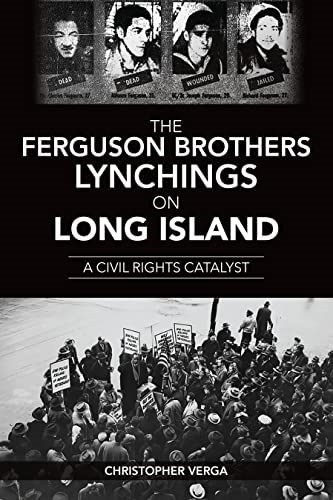
The Ferguson Brothers Lynchings on Long Island: A Civil Rights Catalyst

The Ferguson Brothers Lynchings on Long Island: A Civil Rights Catalyst (The History Press, 2022) by Christopher Verga

Review by Alan Singer

(Reprinted with permission from New York Almanack)

In a book dedicated to Wilfred Ferguson, the son of Charles Ferguson, teacher and historian Christopher Verga resurrects the story of two Roosevelt, New York brothers killed by a Freeport police officer in 1946. Verga opens The Ferguson Brothers Lynchings on Long Island: A Civil Rights Catalyst with an account of the long history of racism on Long Island and in the Freeport area including Ku Klux Klan activity. The background to the 1946 killings takes up the first third of the book. The book is well researched and referenced with extended quotes from official court documents and newspaper accounts. It is available from Amazon in Kindle and paperback formats.

On February 5, 1946, two African American men, brothers, were shot and killed by a white probationary police officer in Freeport, New York. The officer claimed that the men were part of a group of four, all brothers, who were using “abusive and threatening language” and that one of the men he shot had stated that he had a .45 and was going to use. The officer’s first shot struck 27-year old Charles Ferguson, a World War II veteran, in the heart and killed him instantly. The second shot wounded Joseph Ferguson, aged 20, and then struck Alphonso Ferguson, aged 25, in the head. Charles and Joseph Ferguson were both wearing military uniforms when they were shot. Alphonso Ferguson was taken to Meadowbrook Hospital in East Hempstead where he died. The fourth brother, Richard Ferguson, also a veteran, was arrested and charged with disorderly conduct. He was tried, convicted, and sentenced to 100 days in jail, but his conviction was overturned on appeal. Military tribunals later cleared the brothers of any blame in the incident. Charles Ferguson was buried at the Long Island National Cemetery with full military honors.

At the time of the shootings, Freeport was a segregated town. There were no Black police officers there or teachers in the Freeport school system and Black children were all zoned to attend one elementary school regardless of where they lived.

After Nassau County District Attorney ruled that the shootings were justified, the New York Committee for Justice in Freeport, the American Jewish Congress, and Congressional Representative Vito Marcantonio of Manhattan demanded that Governor Thomas E. Dewey authorize a new investigation. In July, Dewey appointed Lawrence S. Greenbaum, as a special investigator to hold hearings and examine witnesses. Greenbaum, a lawyer, was a member of the NAACP. A petition to Governor Dewey condemned the Nassau County District Attorney for “not properly and without prejudice carry out his duties in the presentation to the February grand jury” and the Freeport Village Board for prejudicing the proceedings by exonerating the white officer before the grand jury had heard the case. The petition also asserted that the brothers were not drunk as the police claimed, and that the incident had been precipitated when the operator of a lunch counter had refused to serve the men because they were Black. Legendary folk singer and activist Woodie Guthrie wrote a song, “The Ferguson Brothers Shooting,” to support the campaign for justice for the Ferguson family.

The cop said that we had insulted the joint man.

He made us line up with our faces to the wall;

We laughed to ourselves as we stood there and listened

To the man of law and order putting in his riot call.

The cop turned around and walked back to young Charlie

Kicked him in the groin and then shot him to the ground;

This same bullet went through the brain of Alonzo

And the next bullet laid my brother Joseph down . . .

The town that we ride through is not Rankin, Mississippi,

Nor Bilbo’s Jim Crow town of Washington, D.C.

But it’s greater New York, our most fair-minded city

In all this big land here and streets of the brave.

At the hearing, held in Manhattan, the two surviving brothers testified that the police officer first kicked Charles and Joseph Ferguson and then drew his pistol and lined the four brothers against a wall. The police produced witnesses to support the accused officer, including an African American by-passer, and no cross-examination of witnesses was permitted. The officer repeated his accusation that Charles Ferguson claimed to have a weapon, and that he shot Alfonso Ferguson when Ferguson was charging at him. The officer and the other police witnesses admitted that they never saw a gun and no gun was found at the scene. A spokesperson for the New York Committee for Justice on Freeport charged that the investigation was a “white-wash” and an “unvarnished fraud’ because witnesses were not cross-examined. At the final inquiry session on July 23, most of the audience walked out in protest.

After the special investigator’s report was released on August 2 and exonerated the police officer and the Nassau County District Attorney’s office, Governor Dewey closed the inquiry. The report claimed that the police officer acted because he believed his life was in danger and there was reason to believe he would have acted differently if “the four men before him had been white and not colored.”

The killing of the African American men in Freeport became an issue in the November 1946 gubernatorial election as Dewey, a Republican, campaigned for reelection. Democratic party candidate James M. Mead charged that the shooting was a lynching and accused Dewey of endorsing Southern-style racism. However, once Dewey was reelected, the Freeport case dropped out of the news.

A side story in the book is the role of the American left including the Communist Party in the push for the special investigation into the killings and for justice for the Ferguson family. While the NAACP also called for the inquiry, it avoided being too closely associated with the left groups, and being branded as communist or communist directed. State and federal law officials investigated communist influence in the campaign, perhaps more carefully than they investigated the actual incident. In Nassau County and in Freeport supporters of the police officer used left involvement in the campaign as a way to discredit the specific charges and deny underlying racism in the area.

Verga concludes the book by examining a similar story about an African American veteran attacked and gravely injured by police in South Carolina and other incidents of racism in the United States and on Long Island after World War II including the notorious racial covenant banning African Americans from purchasing or renting Levittown homes. Verga note that at least demographically, Freeport and Long Island have changed since the deaths of Charles and Alponso Ferguson at the hands of a police officer in 1946.

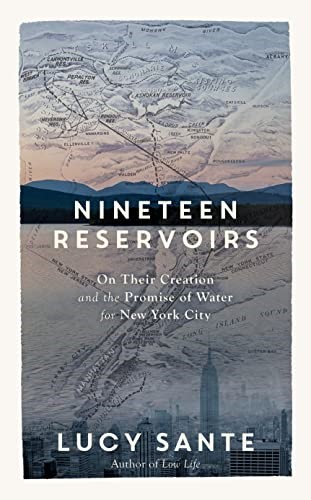
Nineteen Reservoirs: On Their Creation and the Promise of Water for New York City

Nineteen Reservoirs: On Their Creation and the Promise of Water for New York City (The Experiment, 2022) by Lucy Sante with photographs by Tim Davis

From 1907 to 1967, a network of reservoirs and aqueducts was built across more than one million acres in upstate New York, including Greene, Delaware, Sullivan, and Ulster Counties. This feat of engineering served to meet New York City’s ever-increasing need for water, sustaining its inhabitants and cementing it as a center of industry. West of the Hudson, it meant that twenty-six villages, with their farms, forest lands, orchards, and quarries, were bought for a fraction of their value, demolished, and submerged, profoundly altering ecosystems in ways we will never fully appreciate. This paradox of victory and loss is at the heart of Nineteen Reservoirs, Lucy Sante’s meticulous account of how New York City secured its seemingly limitless fresh water supply, and why it cannot be taken for granted. In inimitable form, Sante plumbs the historical record to surface forgotten archives and images, bringing lost places back to life on the page. Her immaculately calibrated sensitivity honors both perspectives on New York City’s reservoir system and helps us understand the full import of its creation.

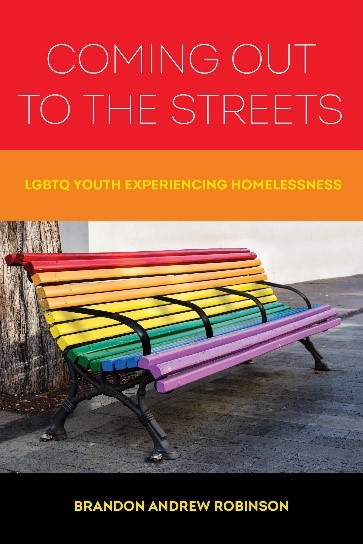
Coming Out of the Streets: LGBTQ Youth Experiencing Homelessness

Coming Out to the Streets: LGBTQ Youth Experiencing Homelessness, by Brandon Andrew Robinson (Oakland: University of California Press)

Review by Thomas Hansen

This is the story of a qualitative research study in which the professor was an observer who was able to get a great deal of trust and information from the subjects interviewed.  Volunteering at the shelter where the subjects were housed temporarily, the professor conducted this ethnographic study by using in-depth interviews to look at the lives and goals of young homeless persons.   

I disagree with the author making the clear point throughout the book that the family does not shoulder much of the blame for the young people becoming disenfranchised or bullied or shunned by society.  The author hopes people will move beyond simply blaming the family for all the difficulties youth must conquer in order to survive the young-adult years.  The author insists it is “the system” that needs to be fixed—not the youth and not the family.  There would be many people who disagree with this author on this point, including many people who have battled through those difficult years and somehow made it to the other side.

While I leaf back through the book and thought again about what I had recently read, two young gay men at the next table are telling of the terrible experiences they had growing up, coming out, and finally escaping a damning and hateful family—in both of their cases.  I keep moving away from them, but I can still hear every word they are saying and do not want to listen.  However, they get louder and louder as they share their experiences and hopes out loud. 

I am embarrassed I can hear all this—at the same time I am thankful I am hearing such a timely discussion when I am trying to write some notes that will lead to a review of this book. 

They share a common story about the oppressive life they have lead “at their family’s house.”  I know very little–if anything—about these two young men.  I do not know their names or where they are from or what their parents are like.  I do not know if anything they are sharing very loudly is true or not.  But most everything they are saying is similar to a story I have heard from many young people for years.   

It is true that different people, in different situations and cities, will have disparate realities as they “come out” into whatever sexuality or personality they take on as adults.  I would argue with this author that it is the great majority of young LGBTQ persons who have had the most difficulties at home—the very people who should be loving, supporting, and protecting the youths are instead perhaps the biggest challenge facing them. 

Children’s families often abandon them and turn them off.  Without the support of the very people who should be helping, these youth often have to make sure very hard decisions and face some terrible dangers to survive.  In the meantime, the family continues to withhold their assistance.         

The professor who conducted this study insists it is society—not the family—that is the culprit in the destruction of young people who are meant to come out and live the responsible gay lives they should be allowed to live.  The professor attempts to show how blame for the young people’s stress can be levied against several different pieces of the system.  Teachers, school administrators, the courts, the police, and mainstream society in general are all to blame for presenting the young persons with great challenges and judgment.  The author makes the point that the family is not the main problem and she does this strongly in the book.

Maybe in this particular shelter where the author interviewed young people, and throughout this study, and elsewhere in this book, the family is not to blame.  However, I maintain the family is one of the most guilty parties in the oppression, judgment, and ostracizing of the young people who wind up out on the streets and facing terrible choices.

I know it is the average families, including the parents without much cultural and educational understanding, who have no idea how much they are contributing to creating a whole population of young adults in stress.  These are young persons who are struggling to gain their independence and who have to make difficult decisions to do so.  Young LGBTQ persons become involved in prostitution, selling drugs, using drugs, shoplifting and other sorts of crimes. 

The book does a good and typical glimpse of the young people who have been damaged by their families (and church and school and neighbors and etc.).  There is so much wasted time.  Instead of transitioning easily from being children to being adults, these young people have to use a huge amount of energy to survive, learn, begin to work, and then establish new goals later in life, and become adults “later” than they wanted to in some ways, and “way too early” in other ways.

Much as these young persons are still children, they are thrust into the rougher realities of an adult world not very interested in protecting them.  While I agree society can be one of the culprits, I maintain it is principally the family who bears the responsibility for making life difficult for the young people. 

There is plenty of evidence in the literature of the family’s negative role in the lives of such young adults.   

Engaging Students with Poverty in Mind: Practical Strategies for Raising Achievement

Engaging Students with Poverty in Mind: Practical Strategies for Raising Achievement, by Eric Jensen (Alexandria, VA: Association for Supervision and Curriculum Development)

Review by Thomas Hansen

Eric Jensen provides good hints and strategies for dealing with the special and difficult problems our poorer students bring to the classroom.  The number of students living in poverty has grown exponentially, yet many educators are not aware of the realities.  Jensen shows a good understanding of some of the difficulties and challenges students face, and he uses a research basis in this text.

Published in 2013, this book paints a bleak picture of a bleak nation.  I am sure Jensen had NO idea there would be worse days, COVID-19, and a burgeoning homeless population in this country.  Fresh after the New Great Depression, this book was timeless then—and is timeless now.

This text appeared years ago but is still relevant because the number of persons on the streets has risen, a huge number of families rely on food stamps and free lunches, and the homes of many families have been boarded up for a number of years, with most people not able to afford a house and the original occupants of those dwellings now living with relatives, in shelters, or in their cars. 

A huge challenge today is how to afford a place to live.  Struggling families can tell you this.  Housing is expensive.  In many cities, very few people have any interest at all in providing affordable homes or apartments for poorer people to live in.  You can count on one hand the cities that have actually addressed the problem of “where to put the poor people.

The question remains:  “How do we begin to help students who face the stressors of hunger, despair, and stigma each day?”  It is important to serve and protect the students now, while they are poor, and deal with housing and other services later.  But how do we teach them?  Feed them?  Encourage them?

Jensen includes the data from research on these students, starting with health and nutrition issues and ranging to the stress levels and daily hassles students face.  These and five other areas constitute the seven types of challenges facing students living in poverty, though I would suggest many of our students, in addition to teachers and teacher candidates, face many of these same difficulties.   Jensen calls these “the seven engagement factors,” and the other ones are: vocabulary; effort and energy; mind-set; cognitive capacity; and relationships.

Jensen bases his approach here more on the stressors facing poor students and less on technical information about the poverty numbers and facts out there.  For that technical data, we would have to go to other sources. 

Jensen proposes “five rules for engagement” for teachers to employ in the classroom as a means of getting poorer students involved: upgrade your attitude; build relationships & respect; get buy-in; embrace clarity; and show your passion.  Though I think these are good to use with any student, they seem to make sense in dealing with students who face the hassles and challenges of living with poverty on a daily basis, a seemingly unrelenting set of difficulties.  Clarity is important, for example, because students living in poverty are often hungry and tired, and they need straightforward definitions and examples, in addition to encouragement and a positive learning environment.

Jensen acknowledges hunger and stress and the power they hold over students.  He reminds us that students should be treated with dignity, and that they are the reason we have a job.  The students are the future of our country, Jensen reminds us, not prison inmates. 

Students living in poverty, especially, come to school wondering if someone there cares about them, wondering if they are important.  They may have difficulty concentrating, and difficulty feeling that the school day may offer something interesting and relevant in a world that may have forgotten them, they may feel.  Younger people, especially, have trouble making sense of a world in which there is so much hunger.                

I can think of some other texts from years ago that are still relevant.  If Jensen’s older book is to be used in a topics class on dealing with poverty issues or other such use, including professional development meetings or retreats, I would definitely recommend one or more additional texts—both of them older/older editions fine—with more specific information on poverty be included.  One good additional text would be: Poverty in America: A Handbook, Third Edition, 2013, by John Iceland.  

Another good text would be: Someplace Like America: Tales from the New Great Depression, Updated Edition, 2013, by Dale Maharidge, Photographs by Michael S. Williamson.  These could both provide more of the technical information not included in the Jensen text.

To summarize, I recommend this text because of the good teaching strategies and scenarios included.  I think most of what Jensen includes is good information for working with any student, and certainly any student facing stressful situations.