Book Review of The Poverty Paradox: Understanding Economic Hardship Amid American Prosperity, by Mark Robert Rank, 2023. New York: Oxford University Press. Cloth, 175 pages.
Reviewed by Thomas Hansen, Ph.D.
We educators at all levels are facing huge changes in the classroom—and some new and startling realities. Namely, we are dealing with students who are homeless, hungry, abandoned, and poor. Not only do we need to help students in K-12 schools with a wider variety of needs than in the past, we also need to help prepare teacher candidates and novice teachers with the tools and tolerance to help students who have a myriad of problems.
Backing up just a bit, we need to look at how these students got to our schoolroom door. Where did they come from? Are they migrants? Are they native students? How can there be so much poverty out there?
This technical discussion of why some people are poor in the richest country of the world will provide several theories for you to consider. The author is an expert researcher and author on social welfare, poverty, and inequality. Professor Rank proposes five major reasons or factors as to why people are poor.
Rank shows the historical context in which poverty has blossomed in our nation and has targeted certain persons, races, neighborhoods, and parts of the country. He talks about patterns. He provides in-depth explanation of each of the factors driving poverty.
You will have to read this technical account of the situation and digest the graphs and charts making it clear that poverty is a much greater problem than just a few poor people out there. Rank provides a great deal of information about how we got to where we are.
Rank reminds us that it is popular in America to think of poverty in terms of the behaviors and actions of the individual. People often erroneously assume it is the individual causing all the poverty in our country. It is the laziness of a few. It is the refusal to try harder.
Many such stupid beliefs stand in the way of solving the issue of poverty in America.
Looking at the history, and the system, and the pattern of poverty is essential. It takes an understanding of all such aspects—and more—to come to a comprehension that is informed by all the research and stories of the poor.
I recommend this book to professors of social work, economics, political science, and counselors helping the homeless—and others suffering from the grasp of poverty. Educators and street helpers, also, can get a lot out of this advanced discussion of poverty in a rich nation.
We all need to develop our own take on this complicated web of causes and continuity in this thing called poverty. We all want to help those suffering. We all want to figure it out quickly and get to work changing the world. However, solving the poverty problem with one attempt cannot achieve much.
It is over time that we will need to consider the information out there and attempt to digest a complicated landscape of data and tendencies. Through books such as this one, we may begin to figure out the blueprint.
As with most of my reviews, I do not wish to provide all the key facts here but give you hints, categories, and classes of content. Your reading of the book to get your own understanding is of course crucial.
I would recommend you obtain a copy of this book for both your personal and professional libraries. You have both, don’t you?
Book Review of Homeless Outreach and Housing First: Lessons Learned, by Jay S. Levy, 2012. Ann Arbor, MI: Loving Healing Press. Paper, 36 pages.
Reviewed by Thomas Hansen, Ph.D.
Jay S. Levy has written an excellent book for aldermen, social workers, counselors, taxpayers, nurses, street helpers, and many others to read. It is excellent because of how it gets the reader into the topic and provides clear definitions and examples. *See the two articles below for more explanation of this important topic, housing first.
This book looks like a workbook, actually. It is a thinner paperback, and it is a brief and clear guide about not only providing outreach to get people ready to be housed but also moving ahead with the well-known strategy of using “housing first.” Housing first is the successful—but underused—process of getting persons indoors right away in the move to solve homelessness. Rather than making people jump through a dozen hoops, plus half-way houses and shelters, plus appropriate counseling, housing first gets the person stable housing so that all of the other pieces can fall into place.
The phenomenon of housing first, developed by Stefancic and Tsemberis, is highly successful, but more expensive than approaches which pick and choose from the homeless person’s needs. Books and articles by those two experts are easy to locate through a quick search.
It costs more because in housing first somebody has to pay the rent for the ex-homeless person to be housed—typically in an apartment. The documentation is very clear. The successes are great. It is a longer-term solution. Housing first allows the newly-indoors individual to save money by having a refrigerator to keep leftovers, a place to keep any needed medication, a place to be safe from attack and danger and murder.
Housing first provides—very importantly—a secure dwelling for sleep and safety. Therefore, Housing first is a lifesaver. This should be simple to understand.
The book’s clarity and brevity are both plusses. The book can be read easily in one sitting and therefore it is perfect for weekend retreats with board members and others who need to come to a quick understanding of how housing first works as the key element to successful placement of persons into the indoors.
Also helpful is the way Levy brings together three different pieces to provide context, definitions, and an example of an individual who “makes it” despite his challenges of addiction, homelessness, and depression. It is a good and quick reference—clear explanation—of the world of housing first.
Part One is an article about hope and ethics. Part Two is the first housing first process used by the author, Jay S; Levy. Part Three is an interview with someone who was helped by Levy’s intervention.
The author is a social worker who tells of the quality of the housing first strategy and his own growth—not just that of the individuals he helps. It is an inspiring book, and the author is an encouraging and prayerful professional. Levy has written not only about homeless first strategies but also about the pretreatment necessary for the system to work. This is a piece of the puzzle people need to know more about.
As an educator, I recommend this book highly and hope all persons helping the homeless will read it, study it, and reflect on it. I admire professionals who can write clearly and well, explaining, using illustrations, and making their point succinctly. Great information here, and easy to understand and utilize.
As an educator with a Jesuit background, I am forever reflecting on my own ideas and decisions, thinking about how I could have done things better… how I can communicate better, and how I can help the unhoused with their challenges more effectively. I grew from reading this book.
The book is good background reading and important to get onto your bookshelf to be loaned to others. The book would also be great for professional development classes, retreats, fundraising, and other uses. I encourage everyone to read it soon.
For further reading:
Levy, J. S. (1998, Fall). “Homeless Outreach: On the Road to Pretreatment Alternatives. Families in Society: The Journal of Contemporary Human Services, 81(4), pp. 360-368.
Levy, J. S., (2011, July). “The Case for Housing First: Moral, Fiscal, and Quality of Life Reasons for Ending Chronic Homelessness. Recovering the Self: A Journal of Hope and Healing, III(3), pp. 45-51.
Proven Climate Solutions: Leading Voices on How to Accelerate Change
Edited by BF Nagy
Reviewed by Hank Bitten, NJCSS Executive Director
Our world made a monumental change during the Industrial Revolution when homes and buildings converted from wood-burning fireplaces to coal and oil furnaces allowing for heat and hot water. This change came 4,000 years after the invention of fire and revolutionized the way people live. Eventually, it brought electricity and light into their homes. Every aspect of home life became more efficient than it had been when people split wood for fireplaces.
Around 1950 the world converted to natural gas. As a young boy I shoveled coal into the two furnaces in our basement around 6:00 a.m. each morning. In 1957, I remember the backhoes and tractors digging up our Paterson, N.J. street to install natural gas lines. By 1970, most areas of New Jersey were using natural gas for heating and cooking. This change took about 20 years.
By 2,000, we began to realize that combustion engines and fossil fuels were harming our environment and were a cause of respiratory and cancer-related deaths. We understood that “natural” gas was not natural because the release of methane was even more harmful than the soot and smoke from coal and oil. We began to look for new sources of energy in solar, wind, nuclear, biomass, geothermal, tidal, and hydrogen.
From the perspective of a social studies educator, our students need to focus on the solutions to these problems. Proven Climate Solutions includes nineteen concise chapters that take less than ten minutes to read. Each chapter provides a solution on the technology, economics, and empirical examples of how and where they are working. For teachers who use classroom debates or a simulated congress, the chapters in the book provide information on the advantages of solar and wind over every other source of renewable energy!
An example of factual information for a classroom debate is in the chapter, “Opportunity Costs and Distractions” by BF Nagy, editor of this book. Here are some examples:
“In 2022, massive leaks of oil in Thailand, Peru, Ecuador, and Nigeria led to explosions, fatalities, fires, and extensive water pollution.” (Page 50)
“The world’s biggest tanker containing 1.1 million barrels of oil began leaking after being abandoned in the Red Sea near Yemen by a Chevron subsidiary.” (Page 50)
“In 2023, Massachusetts state regulators denied a permit modification that would allow discharge of more than one million gallons of toxic wastewater into cape Code Bay.” (Page 50)
“Nuclear power costs about $180 per megawatt/hour compared with $50 for wind and $60 for solar.” (Page 51)
“Just two generations ago, in 1979, the United States built the Runit Dome in the Marshall Islands. Below an eighteen-inch concrete cap, they stored 111,000 cubic yards of radioactive debris from twelve years of nuclear tests. It is already cracking and leaking into the sea.” (Page 52)
The chapter on VPP (Virtual Power Plants) fascinated me because I had never heard about them. As I learned more about the need to use a decentralized electric grid and the technology that is making this feasible, I realized the connections for students in their lessons on the Industrial Revolution and the efficiency of how VPP and DERs (Distributed Energy Resources) are making a difference in our economy and environment. In addition, they foster community engagement and shared resources.
The information on artificial intelligence in constructing pre-fab housing units, passive house designs meeting low carbon standards, virtual power plants, and the recent research on battery technology will engage students in thinking ten years into the future. The possibilities of airplanes and homes powered by batteries is transformative in the ways we are currently conditioned to think about travel, energy, and home heating systems.
“Sendero Verde means ‘green path’ and is among the signature achievements of two brilliant women: engineer Lois A. from Steven Winter Associates and architect Deborah M. from Handel Architects.
The duo designed Sendero Verde within the confines of an affordable housing budget, and their companies also collaborated on The House, a twenty-six story passive house certified student residence for Cornell University’s tech school on New York’s Roosevelt Island. Another of their projects is the massive fifty-three story Winthrop Center in Boston, which in the early 2020s, was considered the biggest passive house office project in the world.” (Page 110)
“The House” Cornell University’s Student Residence using a Passive House design.
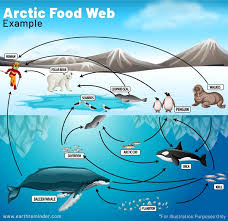
Teachers who use an interdisciplinary approach will find helpful research on the new carbon sinks being formed as the ice caps are melting. These polar foodwebs are helpful as deforestation has reduced the amount of carbon being absorbed by rainforests. The information on biodiversity and the impact of how our planet is adapting to a warmer climate with melting ice is an area of research that students should find interesting.
“Less than half of all carbon captured by polar phytoplankton or macro algae is stored in foodwebs, and nearly all the rest is recycled into the water column by bacteria in what is termed the microbial loop (rotting). Vast numbers and biomass of water column (pelagic) zooplankton, such as copepods or krill, which are shrimp-like crustaceans, store much of this carbon.” (Page 136)
Perhaps the most informative chapter in this book is titled “Circular Food Systems: Feeding the Urban World” because it identifies small innovative companies that are implementing important solutions. Examples for students to research include the White Moustache Yogurt Company, Back of the Yards Algae Sciences, Spare Foods Company, LivinGreen, Evergrain, TripleWin, and Portland Pet Center. When I was a 16-year-old high school student, my Earth Science teacher’s lesson about the impact of the end of civilization as we knew it with the birth of the 3 billionth person had a lasting impact on me. In just ten years, the world’s population will be 9 billion and in 2050 it will likely be 10 billion. As the population increases, the urban density will also increase from 55 percent today to 63 percent by 2050 and provide an urgent need to reduce greenhouse gas emissions. Solutions are needed!
Year
Population
Net Change
Density (P/Km²)
2025
8,231,613,070
69,640,498
55
2026
8,300,678,395
69,065,325
56
2027
8,369,094,344
68,415,949
56
2028
8,436,618,886
67,524,542
57
2029
8,503,285,323
66,666,437
57
2030
8,569,124,911
65,839,588
58
Students need to understand how hydroponic agriculture and circular food systems can sustain life on our planet in the future. Our current dependence on rice, wheat, soybeans, and corn contribute significant amounts of carbon and methane into our atmosphere through their production and distribution. The current agricultural revolution needs to produce food in urban areas and reduce food waste. Source
“The food system we have in place today, one we have nurtured for a half-century and that produces some 43 percent of the world’s calorie supply, is itself in jeopardy due to the growing climate crisis, rising temperatures and prolonged droughts are withering crops; frequent floods are destroying them. The reliance on intensive farming practices such as tilling and heavy fertilizer and pesticide use robs the soils of their productivity, jeopardizing yields necessary to continue feeding rising populations.” (Page 150)
An important thread throughout this book is that proven climate solutions are likely to be local. Heating and electric power will be de-centralized, food production will be on urban rooftops and in parks, and transportation will be redesigned. The school curriculum needs to include case studies from urban ‘smart’ cities. One suggestion for the next edition of Proven Climate Solutions might be to include information on the importance of recycling clothing.
Men at Work: The Empire State Building and the Untold Story of the Craftsmen Who Built It
by Glenn Kurtz
Reviewed by Dr. Alan Singer, Hofstra University
In this book published by Seven Stories Press, Glenn Kurtz uncovers the identities of the Empire State Building construction workers, made famous by Lewis W. Hine’s legendary portraits. The book features more than 75 photos and other illustrations, some by Hine that have never been previously published. Astonishingly, no list of workmen on this historic landmark was ever compiled. While the names of the owners, architects, and contractors are well known, and Lewis Hine left us indelible images of the workers, their identities—the last generation of workmen still practicing these time-honored trades, have not been identified until author Glenn Kurtz unearthed their individual stories for this book. Drawing on eclectic sources — census, immigration, and union records; contemporary journalism; the personal recollections of their descendants — Kurtz assembles biographies of these workers, providing not only a portrait of the building’s labor force, and a revolutionary re-interpretation of Hine’s world-famous photographs, but also a fundamental reimagining of what made the Empire State Building a fitting symbol for the nation, built as it was at the very height of the Great Depression.
According to Erik Loomis, author of A History of America in Ten Strikes, “Capitalists build nothing. Workers build everything. Glenn Kurtz recovers the stories of the brave men who constructed the Empire State Building masterfully using Lewis Hine’s famous photographs of them. A wonderful book for anyone who cares about the stories of real workers.” Alastair J. Gordon, author of Naked Airport, praises Kurtz for “Working with a minimum of historical data, Kurtz has broken through the urban mythologies and written an insightful social history, not about the capitalist owners, investors, architects or contractors, but about the every day mortals — ironworkers, carpenters, crane operators and other unsung heroes — who actually built the Empire State Building during the height of the Great Depression… a revelatory contribution to the legacy of New York’s built environment.”
Revolutionary New York: 250 Years of Social Change
Edited by Bruce Dearstyne
Reviewed by Dr. Alan Singer, Hofstra University
Revolutionary New York celebrates the 250th anniversary of the American Revolution and the many historical changes that have occurred since, as reflected through the history of the state. This book explores “unfinished revolutions” in the Empire State: the two-and-a-half century struggle to realize the revolution’s ideals and bring increased freedom and opportunities to previously marginalized populations. Itis an Excelsior Edition published by SUNY Press. It includes sixteen essays that explore different aspects of New York State history starting with a chapter on “The Oneida Rebellions, 1763 to 1784.” Editor Bruce Dearstyne provided chapters on the birth of New York State in 1777 and September 11, 2001. There are also chapters on the Erie Canal, slavery in New York State, the Triangle Fire and workplace safety, the Harlem Hellfighters, the struggle by women to win the right to vote, prohibition, the origins of the United Federation of Teachers union, Stonewall, and the COVID-19 pandemic.
According to Jennifer Lemak, Chief Curator of History, New York State Museum, “From Indigenous uprisings and the building of the Erie Canal to suffrage and LGBTQ+ rights, New York State has long been at the forefront of America’s most significant social transformations. This book explores the people, places, and pivotal moments that shaped a more just and inclusive society—revealing how New Yorkers challenged injustice, redefined freedom, and left a lasting impact on our nation.”
An Education: How I Changed My Mind About Schools and Almost Everything Else
by Diane Ravitch
Reviewed by Dr. Alan Singer, Hofstra University
According to Randi Weingarten, president of the American Federation of Teachers, “Diane Ravitch’s telling of her remarkable journey — from a child of working-class immigrants to one of the most vital national education treasures and leaders — tells us so much about her unwavering support for public education and its role in our society. That would be beautiful enough, but the second thrill is how she brings her curiosity — an essential trait we nurture in students — to question her own views and change her mind. The result is this clarion call to protect and strengthen public schooling in America as the foundation of our young people — and our democracy. If you care about the future, read this book.”
Diane Ravitch has spent five decades analyzing and advocating for national and state education policies designed to reform and reshape public schools. Her work supporting school choice made her the intellectual darling of the right. But when she renounced school choice as a failure, she was abandoned by many old friends and colleagues. Today she is a champion for public schools, a foe of standardized testing, and proclaims herself to be “woke.” Her latest book, An Education: How I Changed My Mind About Schools and Almost Everything Else is published by Columbia University Press
Ravitch was one of eight children from a Jewish family in Houston, Texas, where she grew up with no television, no air conditioning, and, often, no shoes. In college she met and married a man from a wealthy and connected New York City family, where they lived and raised a family. She began working for a socialist magazine, which led to writing about education and, eventually, a PhD in education history.
Ravitch’s writings favored strengthening and expanding school choice and rigorous testing, ideas that aligned well with conservative donors and think tanks who supported her work and led to positions in the George H.W. Bush and Clinton administrations. Meanwhile, a chance encounter at an education conference with a New York City high school social studies teacher, Mary Butz, led to a clandestine romance. Ravitch’s new relationship upended her previous “life of comfort and plenty” and led to her marriage to Mary.
New York Mayor Michael Bloomberg sought Ravitch’s support and counsel for the changes he and school commissioner Joel Klein instituted during his administration, but it was at this time that Ravitch began to question the results of standardized testing and school choice programs like charter schools. Improved test scores at lauded schools proved illusory and charter schools only seemed to thrive because they were able to weed out the most challenged pupils. Gradually, Ravitch abandoned her long-held views on the power of testing or the promise of choice. She began to write and speak out in favor of saving America’s besieged public schools.
Ravitch’s involvement in education idea and policy have earned her a reputation as education’s best-known living historian and its most controversial figure. An Education is the story of the making, unmaking, and remaking of a public intellectual and a remarkable testament to the importance of a mind open to truth and possibility in a world, she writes, “of masks and artifice”.
Original and deeply researched, The Slow Death of Slavery in Dutch New York: A Cultural, Economic, and Demographic History, 1700–1827 (Cambridge University Press, 2025) provides a new interpretation of Dutch American slavery which challenges many of the traditional assumptions about slavery in New York. With an emphasis on demography and economics, Michael J. Douma shows that slavery in eighteenth-century New York was mostly rural, heavily Dutch, and generally profitable through the cultivation of wheat. Slavery in Dutch New York ultimately died a political death in the nineteenth century, while resistance from enslaved persons, and a gradual turn against slavery in society and in the courts, encouraged its destruction.
This important study is expected to reshape the historiography of slavery in the American North. It joins several recently published works in the same subject area:
Christopher Verga is a social studies teacher at the East River Academy for incarcerated youth on Rikers Island, an instructor of Long Island history and Foundations of American History at Suffolk Community College, and an instructor in Politics of Terrorism at John Jay College of Criminal Justice. Nazis of Long Island: Sedition, Espionage and the Plot Against (The History Press,2025) is his seventh book on Long Island History. It is about the American Nazi movement prior to and during World War II and is a timely book because there is a resurgence of Nazi like ideology in the world today. While Verga argues that Long Island, New York was a breeding ground for an “American Reich,” the story as he spells out is much broader encompassing the entire New York metropolitan region in the midst of the Great Depression. New York City and its metropolitan area in this period was also a target for German spies and a center of anti-Nazi resistance.
Long Island in the 1930s was a Republican Party and America First stronghold. Verga attempts to draw connections between them and Nazi sympathizers, but the connection may have been tenuous and certainly dissolved once the United States entered the war.
Like in all the local histories written by Christopher Verga, this book is richly documented and easy to read. The village of Breslau, later renamed Lindenhurst, was originally established as a New York City commuter suburb for German immigrants with beer halls and traditional German festivals. It also had a strong pro-German following before the war. Glen Head, Long Island resident Cornelius Lievense was the American financial manager for German industrialist Fritz Thyssen, who was the financial backer of the early Nazi Party activities in the United States. The Nassau County chapters of the America First Committee in the Five Towns, Freeport, Hicksville and Valley Stream hosted the pro-Nazi members of Congress on speaking tours. In the early spring of 1941, Freeport organized a 1,600-person rally for the committee in the Freeport High School auditorium. Guest speaker Republican Senator Gerald Nye of North Dakota called on the audience to do “all in your power to prevent the proposed assignment of American warships to convoy duty.” He declared that “this is nothing but madness.”
The best known pro-German and pro-Nazi facility on Long Island was Camp Siegfried, operated as a vacation point, for pro-German rallies, and for training Hitler Youth. Camp Siegrfried and the town of Yaphank were considered “a little piece of German soil—a Sudetenland in Amerika—planted on this side of the ocean.” The roads at the camp and in the town were named after high ranking Nazis including Adolf Hitler Street, Joseph Goebbels Street and Hermann Göring Street. During the summer, the Long Island Railroad provided special train service on weekends for visitors to Yaphank and Camp Siegfried. Camp Siegfried’s annual August rally attracted an estimated forty thousand people
Because Long Island was home to Army-Air Force bases and major war industries, it was targeted by Nazi spy rings. The Ludwig ring was the second spy operation discovered in New York. German spies imbedded themselves in Republic Aviation, Grumman, and Brewster factories and the smaller defense plants in the Nassau County Roosevelt Field area like the Sperry Gyroscope Company in Garden City. Shortwave radio and telegram transmission stations on the north shore of Eastern Long Island and in Nassau County sent industrial intelligence to Hamburg, Germany.
During wartime, German prisoners of war were incarcerated on Long Island at Camp Upton, Mason General Hospital in Deer Park, and Mitchel Field in Uniondale. If they died the German prisoners were buried in section 2C of Long Island National Cemetery. The local POW camps had open dorms and prisoners were assigned to work on farms. Camp Upton in Brookhaven with 1,500 POWs was the largest facility on Long Island. Heavyweight boxing champion Joe Lewis was the most famous guard at the Upton POW camp.
The Tourist’s Guide to Lost Yiddish New York City by Henry Sapoznik
Edited by Alan Singer
Henry Sapoznik is a Peabody Award-winning coproducer of NPR’s Yiddish Radio Project, a five-time Grammy-nominated producer and performer, and the author of Klezmer! Jewish Music from Old World to Our World. The Tourist’s Guide to Lost Yiddish New York City (SUNY PRESS, 2025) is a history of New York’s Yiddish popular culture from 1880 to the present. In twenty-three chapters on theater, music, architecture, crime, Blacks and Jews, restaurants, real estate, and journalism, it retells the story of Jews in New York City by focusing on Yiddish, a Germn dialect that was the language of Ashkenazy Jewish immigrants, and the center of their culture. Sapoznik’s research draws on Yiddish and English language newspapers from the period and previously inaccessible materials to offer fresh insights into the influence of Yiddish culture on New York City. The book includes fifty images and is linked to an online interactive Google Map with over one hundred sites discussed in the book.
Review by Linda Rice (reposted from the Journal of the American Revolution)
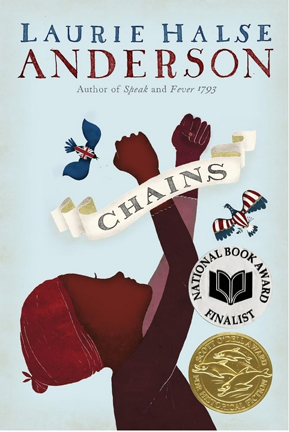
Set in New York at the time of the American Revolution, Chains spans May 27, 1776 to January 19, 1777. As the novel opens, the young teenage protagonist, Isabel, is optimistic about her future as her owner, Miss Mary Finch, has died and had let Isabel know beforehand that she and her five-year old sister Ruth would be free upon her passing. Unfortunately, no lawyer is present to produce the will that shows Miss Finch’s wishes. Mr. Robert Finch, Mary’s nephew and only surviving relative, has come to claim Isabel and Ruth and accuses Isabel of lying about the will. He proceeds to sell Isabel and her sister to Elihu and Anne Lockton from New York. The couple are Loyalists, and while Mrs. Lockton treats Ruth as a kind of pet that she shows off to friends she entertains, she treats Isabel, whom she refers to as “Sal,” in a harsh and degrading fashion, always showing her disfavor.
Isabel has two aims: to protect her sister and to gain freedom. She lives in fear that the Locktons will sell Ruth and thus separate them. At one point Mrs. Lockton provides sweets to them, something that was unusual. But she had laced them with something to make Isabel fall into a deep sleep. When Isabel awakens she learns that Mrs. Lockton has sold Ruth into slavery in the West Indies. This crushes Isabel, who is unable to escape due to constant monitoring by the Locktons.
While doing errands in town for Mrs. Lockton, Isabel meets Curzon, a teenage slave of Mr. Bellingham, a Patriot. Curzon asks Isabel if she would be willing to spy on the Locktons to get information to the Patriots. Initially Isabel refuses but then begins doing so. Mrs. Lockton finds out and punishes her by branding her cheek with an “I” for “insolence.” It takes Isabela six days to regain consciousness after the branding.
Mrs. Lockton makes Isabel care for Lady Seymour, Elihu’s aunt, who lives in town. As Isabel goes to town she is able to deliver messages about Loyalist activities to the Patriot soldiers. Lady Seymour has compassion for Isabel, treating her with kindness and feeding her well. Her house burned in the great fire of New York (September 21, 1776), and Isabel saves her as well as a portrait of her husband and some letters that were dear to her. This becomes important late in the book as Lady Seymour, then an invalid and unable to speak, gestures to Isabel that she approves of her taking coins that she had saved.
The Locktons don’t recognize Isabel as intelligent, which works to her advantage when she is in the room delivering food or waiting for orders when Mr. Lockton is talking with other Loyalists. Isabel learns of the plot to kill Gen. George Washington and shares this with Patriots who come and arrest Mr. Lockton. However, he is soon released and later escapes by hiding in a barrel of cheese. Readers learn that Ruth has not been sold to the West Indies but rather sent to Charleston, South Carolina. Isabel plots her escape for the night that people are distracted by a celebration of Queen Charlotte of Great Britain’s birthday. Though Mrs. Lockton had Isabel locked in a potato bin during the ceremonies, she manages to dig her way out, find a pass and forge papers showing she is free.
Curzon, who had fought in battle for the Patriots, was shot in the leg and held at Bridewell as a prisoner of war. Isabel is able to see him by bribing the guards with food. On the night of her escape, she goes to Bridewell and says she was sent to clean the cells where “prisoners been dropping dead like flies. Fever.” “Curzon lay insensible, his skin burning with fever, his eyes rolled up into his head. I called his name and pinched him, but he did not look my way nor speak a word.” Isabel claims Curzon is dead, loads him in a wheelbarrow and covers him with a filthy blanket. The two manage to make it to the wharf and to a boat. “I rowed that river like it was a horse delivering me from the Devil. My hands blistered, the blisters popped, they re-formed and popped again. I rowed with my hands slick with blood … The sun rose beyond the water, at the other side of the river. I was on the west bank. I was in Jersey. I had set myself free.” At this point Curzon awakes asking where they are, and Isabel replies “I think we just crossed the river Jordan.” The book ends with Isabel asking Curzon if he can walk and with an advertisement for the sequel Forge that gives the account of Isabel Gardner (formerly Sal Lockton) and companion Curzon Bellingham.
The first teaching strategy for Chains is a set of ten questions designed to guide students in a close reading and deeper study of the novel. These questions may be used as the basis of class discussions, exams or essays.
Questions for Study and Discussion for Chains 1. How do Isabel’s and Curzon’s views of freedom differ in chapter 6? Also consider whether this changes as the novel progresses. 2. What evidence exists that Mr. Lockton is conspiring against the Patriots? Trace his journey from the point that he is arrested to the last mention of him. 3. In chapter 29 Isabel speaks of being “chained between two nations.” What does this mean? 4. Isabel’s grandfather speaks to her about the river Jordan in chapter 26, and in the last paragraph of the book, Isabel states “I think we just crossed the river Jordan.” What is the significance of the river Jordan?
5. Discuss the circumstances by which Isabel secures a copy of Thomas Paine’s Common Sense in chapter 39. How does the pamphlet influence her in later chapters? 6. How does the author contrast Lady Seymour and Mrs. Lockton in chapter 41? 7. In what ways was the relationship between Isabel and Lady Seymour a reciprocal one where each benefited? Consider especially the events of chapters 31 and 44. 8. It may be said that at the time of Chains, both Isabel and America are rebellious, young, and conflicted. Explain. 9. Identify three scenes that you believe are the most important in Chains and explain why each is key to the novel. 10. The trilogy of which Chains is book one is called Seeds of America. What role do seeds play in the novel?
While these questions help to ensure close reading and provide opportunities to check for student understanding in a traditional way, the next activity engages students in a more creative, nontraditional manner as they use symbolic thinking and hands-on creativity.
Coat of Arms Overview and Instructions
A coat of arms is a visual design in the form of a shield, that goes back to Medieval days when families and communities used them to show their identity. The coat of arms includes a motto or slogan that captures the important essence of the family, nation, school, or in our case, Chains. A coat of arms can be elaborate, including features such as “supporters” (visuals on each side of the shield) and “toppers” (one or more visuals at the top such as a crest, torse, helmet, or crown).
This assignment consists of three parts: 1) Pre-writing via the writing frames for the coat of arms; 2) The visual coat of arms; 3) A paper that explains the symbols chosen in connection with the character the student chose from Chains.
Visual Coat of Arms
The slogan “Per Aspera ad Astra” is Latin for “Through hardships to the stars” which is why the top of the crest features stars. There are three stars, each with an initial, representing Isabel in the middle and Curzon and Ruth on each side. The pre-writing in Table 1 provides additional insights about the symbols and colors used in Isabel’s shield.