The author tells the story here of both England and Ireland because they cannot be separated easily. Since the very beginning of humans’ time in that part of the world, both lands and cultures were connected. It is that united history that leads the way in this incredible story of the sometimes icy, sometimes verdant northern reaches of civilization.
The reader will find here exciting and revealing chapters in the history of movements throughout the pre-historic, Celtic, Roman, Anglo-Saxon, Norman, and modern times of the isles. There are clear and helpful illustrations, and there is enough information here to fill any semester-long course on the history of England, or rather Albion, as it was first called by those who were using formal language.
The author paints rich stories onto a canvas of what was once a chilly ice-covered region and which came to be a world power. The author makes use of language, tools, science, history, and other major fields to tell about the different eras of the isles.
The years of the Celts are very intriguing ones, indeed. Cunliffe speaks of the idea that there were two entirely distinct waves of movement among them—including Iberia, Britain, Ireland, Scotland, Brittany, and Wales (pp. 248-249). He also speaks to the idea that the Celts started in the north and later in one era migrated as a large group southward to Brittany (p. 428). He has a number of additional theories related to this and other good examples of “movement.”
Another very interesting idea is that language, culture, and tools were shared up and down the west coast of Europe and up between the isles—a sort of “Atlantic” civilization (p. 344) emerging over time among the Celts. This explains linguistic and other hints pointing to migrations and movements up and down the coast—as opposed to some earlier notions of “Spanish” Celts trudging only northward to the further reaches of what came to be the UK.
Cunliffe talks about the notion of Celts moving southward—starting in Scotland and Ireland and coming down into Europe along the Atlantic. The author uses many different sorts of proof to advance this theory, at the same time he asks additional questions.
Teachers will be able to use this big book in a variety of ways. First and foremost, it is important personal reading for any teacher interested in social studies in general and in the history of English-speaking people specifically. Understanding the history of northwest Europe is helpful in understanding the intricate connections among the Celts and Europeans, the British and the Irish, and the Scandinavian and Germanic stock among the English.
Another important use is for helping students understand the power of “movement” among peoples, the conflicts created and agreements forged, and the resulting cultural and linguistic differences and similarities resulting from peoples coming into contact. The notion of movement relates also to the travelling ideas, tools, traditions, names, weapons, foods, trades, and books, later. Any standards and benchmarks related to movement are connected through teacher use of this book as a reference and resource.
Yet another good use of this volume is a textbook for a college-level course in history, of course. Because it covers so very much information, it could also be used as a summer reading project for advanced rising college freshman students needing timely non-fiction reading.
Those four uses of the book can be joined by another one I propose here: coffee table teaser. It would be interesting to set this in plain view and see who would pick it up and want to start reading it. It has a beautiful green cover. There are in fact many photos, drawings, and illustrations inside. The cover just might draw in some unsuspecting readers.
In Anna Clark’s The Poisoned City: Flint’s Water and American Urban Tragedy, the Flint, Michigan water crisis began as a result of the combination of historical, political, and social circumstances. Clark’s perspective focuses on the injustices and failures that made the conditions for the crisis to occur and continue. Clark’s analysis identifies important causes of the crisis such as, systematic negligence, environmental racism, government incompetence, and the economic decline of the city of Flint. Clark examines the interconnectedness of these factors that paints a picture of how this crisis unfolded.
Prior to Flint’s water crisis the city’s economic slump and increasing disinvestment cultivated an environment for the crisis to occur. Flint became the center for auto manufacturing for General Motors, which was responsible for the city’s growth in population. Unfortunately, Flint’s economy was destroyed by deindustrialization in the late 20th century which led to General Motors shutting down many of its plants in Flint. This led to mass unemployment and an abrupt decline in the city’s population due to the massive white flight out of Flint. According to Clark, Flint’s tax base shrunk exponentially during this economic downturn making it almost impossible for the city to maintain its infrastructure. In fact, “Flint’s infrastructure was in a death spiral. The water rates were expensive because the pipes were bad because vacancy rates were high because the city had been shrinking for so long” (Clark 36). People who could not afford to leave the city were being crushed by the added expense that came from others leaving. Flint’s pipes (which had been put in at the beginning of the 20th century) were some of the oldest in the nation. This put the city at risk and state authorities’ enforcement of emergency management put financial restraint before the welfare of the city’s population, worsening Flint’s already dire situation. This continued disinvestment was revealed during the crisis according to Clark, “the disparities in the water traced a pattern of inequality and disinvestment that was decades in the making. The whole city was exposed to toxic water– and so were commuters and other visitors– but the people who had it worst lived in the poorer, more decayed neighborhoods. And they tended to be black.” (Clark 43). The residents of Flint that were black were treated differently by the government compared to the wealthier, predominantly white residents. This economic decline coupled with the systematic negligence creates a deeper understanding of the decisions that played into the water crisis.
A number of cost-cutting measures that put financial savings over public health were the core of Flint’s water crisis. The decision to change Flint’s water source from the Detroit Water and Sewerage Department (DWSD) to the Flint River was primarily financial. Flint’s water rates were among the highest in the country, which posed a significant burden given that “42 percent of residents lived below the federal poverty level” (Clark 15). Due to Flint’s decreasing population and unstable financial situation, fewer ratepayers could afford the water infrastructure, creating further pressure on the economy. Clark describes how corrosion inhibitors are a common treatment that stops lead from leaking into drinking water and these inhibitors were not mandated by the Michigan Department of Environmental Quality (MDEQ). Clark mentioned, “the city said again that the water met all safety requirements and that it was continually monitoring for potential power problems… But in fact, there was a problem. A serious one. New water treatment programs did not include corrosion control” (Clark 33). As a result of the corrosive water from the Flint river, the lead pipes in the city of Flint began to deteriorate leading to the introduction of hazardous quantities of lead into the water. After the switch to the Flint river the locals noticed a difference in the water quality right away. One example of the noticeable difference in particular Clark mentions is LeAnne Walters as she described the water as “coming out of the faucet looking like urine” and she shared the frustration of rashes and hair loss in her children” (Clark 65). Despite the complaints, state officials reassured local residents that the water was safe to drink. Clark argues that these decisions and reactions were representative of government neglect and incompetence.
One of Clark’s most important arguments of her analysis was the examination of environmental racism and how it influenced and exacerbated the crisis and the response. Clark uses Flint as an example of the effects of a marginalized community of Black and low-income residents that suffered from systematic neglect. Clark argues that this led to government officials’ dismissive attitude and lack of response to residents’ complaints. The practice of redlining by General Motors in Flint when providing housing for their employees. General Motors constructed homes and sold them to their employees; however, these homes were for white employees. In fact, “Racially restrictive covenants-an agreement, written into deeds, to keep people out based on race-were strictly enforced both in GM neighborhoods and throughout Flint” (Clark 45-46). This left the Black residents of Flint in the less desirable areas of Flint “And, in this self-fulfilling spiral, their houses generated less money in property taxes, which meant fewer resources to invest in school and infrastructure” (Clark 61). Many of the White residents left Flint after the shut down of most of the General Motors plants; this left many houses abandoned and without proper care the pipes were left to corrode. With disinvestment of these neighborhoods this left the Black residents of Flint more vulnerable. Additionally, the lack of urgency to support these deteriorating neighborhoods created a lack of accountability and transparency towards Flint residents. State officials originally dismissed reports by Flint residents of the inadequate water conditions that Clark refers to as “systematic disregard” for Black communities. Clark mentions how “between 1999 and 2004, black children across the country were 1.6 times more likely to test positive for lead than white children, and nearly three times more likely to have very high blood lead levels” showing the disregard for black communities (Clark 98). The human catastrophe of the crisis led to several health issues especially among children who were exposed to toxic levels of lead. This highlights how the lack of information and transparency left the residents of Flint exposed to toxic levels of lead. The structural racism that hampered Black citizens of Flint access to information and resources that could have reduced these health effects and or avoided the disaster. Flint’s environmental racism intensified Flint’s water crisis through the disregard for its community and discriminatory practices.
In Clark’s analysis of the Flint water crisis, she combines historical, political, and social circumstances that intensified the emergency. Through the combination of Flint’s economic downturn, cost cutting measures, and environmental racism through discriminatory practices that led to this catastrophe. Clark draws attention to the human cost of the crisis and its widespread ramifications. Serving as a warning about the repercussions of putting cheap policy in place over the health and welfare of the general public.
The Flint Water Crisis is historically significant because it exemplifies the consequences of systematic negligence, environmental racism, and the prioritization of cost cutting over public health. It demonstrates how historical patterns of segregation, deindustrialization, and government disinvestment can set the stage for a public health catastrophe. As residents and scientists worked together to expose the truth when authorities failed them, the crisis underscores the importance of civic accountability and grassroots activism. Flint’s narrative serves as a prism through which we may analyze broader patterns of injustice in American history and society.
The patterns in the Flint water crisis relate to historical practices like redlining and industrial decline to contemporary concerns like environmental justice, infrastructure decay, and systematic inequality, which would be appropriate to teach in secondary schools. It encourages critical thought on civic duty, race, class, and the function of government. Students would be able to comprehend what transpired in Flint and are better equipped to challenge the choices made by people in authority and recognize the importance of their voices in a democratic society.
References
Clark, Anna. The Poisoned City: Flint’s Water and the American Urban Tragedy. Henry Holt and Company, 2018.
Book Review of The Poverty Paradox: Understanding Economic Hardship Amid American Prosperity, by Mark Robert Rank, 2023. New York: Oxford University Press. Cloth, 175 pages.
Reviewed by Thomas Hansen, Ph.D.
We educators at all levels are facing huge changes in the classroom—and some new and startling realities. Namely, we are dealing with students who are homeless, hungry, abandoned, and poor. Not only do we need to help students in K-12 schools with a wider variety of needs than in the past, we also need to help prepare teacher candidates and novice teachers with the tools and tolerance to help students who have a myriad of problems.
Backing up just a bit, we need to look at how these students got to our schoolroom door. Where did they come from? Are they migrants? Are they native students? How can there be so much poverty out there?
This technical discussion of why some people are poor in the richest country of the world will provide several theories for you to consider. The author is an expert researcher and author on social welfare, poverty, and inequality. Professor Rank proposes five major reasons or factors as to why people are poor.
Rank shows the historical context in which poverty has blossomed in our nation and has targeted certain persons, races, neighborhoods, and parts of the country. He talks about patterns. He provides in-depth explanation of each of the factors driving poverty.
You will have to read this technical account of the situation and digest the graphs and charts making it clear that poverty is a much greater problem than just a few poor people out there. Rank provides a great deal of information about how we got to where we are.
Rank reminds us that it is popular in America to think of poverty in terms of the behaviors and actions of the individual. People often erroneously assume it is the individual causing all the poverty in our country. It is the laziness of a few. It is the refusal to try harder.
Many such stupid beliefs stand in the way of solving the issue of poverty in America.
Looking at the history, and the system, and the pattern of poverty is essential. It takes an understanding of all such aspects—and more—to come to a comprehension that is informed by all the research and stories of the poor.
I recommend this book to professors of social work, economics, political science, and counselors helping the homeless—and others suffering from the grasp of poverty. Educators and street helpers, also, can get a lot out of this advanced discussion of poverty in a rich nation.
We all need to develop our own take on this complicated web of causes and continuity in this thing called poverty. We all want to help those suffering. We all want to figure it out quickly and get to work changing the world. However, solving the poverty problem with one attempt cannot achieve much.
It is over time that we will need to consider the information out there and attempt to digest a complicated landscape of data and tendencies. Through books such as this one, we may begin to figure out the blueprint.
As with most of my reviews, I do not wish to provide all the key facts here but give you hints, categories, and classes of content. Your reading of the book to get your own understanding is of course crucial.
I would recommend you obtain a copy of this book for both your personal and professional libraries. You have both, don’t you?
Book Review of Homeless Outreach and Housing First: Lessons Learned, by Jay S. Levy, 2012. Ann Arbor, MI: Loving Healing Press. Paper, 36 pages.
Reviewed by Thomas Hansen, Ph.D.
Jay S. Levy has written an excellent book for aldermen, social workers, counselors, taxpayers, nurses, street helpers, and many others to read. It is excellent because of how it gets the reader into the topic and provides clear definitions and examples. *See the two articles below for more explanation of this important topic, housing first.
This book looks like a workbook, actually. It is a thinner paperback, and it is a brief and clear guide about not only providing outreach to get people ready to be housed but also moving ahead with the well-known strategy of using “housing first.” Housing first is the successful—but underused—process of getting persons indoors right away in the move to solve homelessness. Rather than making people jump through a dozen hoops, plus half-way houses and shelters, plus appropriate counseling, housing first gets the person stable housing so that all of the other pieces can fall into place.
The phenomenon of housing first, developed by Stefancic and Tsemberis, is highly successful, but more expensive than approaches which pick and choose from the homeless person’s needs. Books and articles by those two experts are easy to locate through a quick search.
It costs more because in housing first somebody has to pay the rent for the ex-homeless person to be housed—typically in an apartment. The documentation is very clear. The successes are great. It is a longer-term solution. Housing first allows the newly-indoors individual to save money by having a refrigerator to keep leftovers, a place to keep any needed medication, a place to be safe from attack and danger and murder.
Housing first provides—very importantly—a secure dwelling for sleep and safety. Therefore, Housing first is a lifesaver. This should be simple to understand.
The book’s clarity and brevity are both plusses. The book can be read easily in one sitting and therefore it is perfect for weekend retreats with board members and others who need to come to a quick understanding of how housing first works as the key element to successful placement of persons into the indoors.
Also helpful is the way Levy brings together three different pieces to provide context, definitions, and an example of an individual who “makes it” despite his challenges of addiction, homelessness, and depression. It is a good and quick reference—clear explanation—of the world of housing first.
Part One is an article about hope and ethics. Part Two is the first housing first process used by the author, Jay S; Levy. Part Three is an interview with someone who was helped by Levy’s intervention.
The author is a social worker who tells of the quality of the housing first strategy and his own growth—not just that of the individuals he helps. It is an inspiring book, and the author is an encouraging and prayerful professional. Levy has written not only about homeless first strategies but also about the pretreatment necessary for the system to work. This is a piece of the puzzle people need to know more about.
As an educator, I recommend this book highly and hope all persons helping the homeless will read it, study it, and reflect on it. I admire professionals who can write clearly and well, explaining, using illustrations, and making their point succinctly. Great information here, and easy to understand and utilize.
As an educator with a Jesuit background, I am forever reflecting on my own ideas and decisions, thinking about how I could have done things better… how I can communicate better, and how I can help the unhoused with their challenges more effectively. I grew from reading this book.
The book is good background reading and important to get onto your bookshelf to be loaned to others. The book would also be great for professional development classes, retreats, fundraising, and other uses. I encourage everyone to read it soon.
For further reading:
Levy, J. S. (1998, Fall). “Homeless Outreach: On the Road to Pretreatment Alternatives. Families in Society: The Journal of Contemporary Human Services, 81(4), pp. 360-368.
Levy, J. S., (2011, July). “The Case for Housing First: Moral, Fiscal, and Quality of Life Reasons for Ending Chronic Homelessness. Recovering the Self: A Journal of Hope and Healing, III(3), pp. 45-51.
Proven Climate Solutions: Leading Voices on How to Accelerate Change
Edited by BF Nagy
Reviewed by Hank Bitten, NJCSS Executive Director
Our world made a monumental change during the Industrial Revolution when homes and buildings converted from wood-burning fireplaces to coal and oil furnaces allowing for heat and hot water. This change came 4,000 years after the invention of fire and revolutionized the way people live. Eventually, it brought electricity and light into their homes. Every aspect of home life became more efficient than it had been when people split wood for fireplaces.
Around 1950 the world converted to natural gas. As a young boy I shoveled coal into the two furnaces in our basement around 6:00 a.m. each morning. In 1957, I remember the backhoes and tractors digging up our Paterson, N.J. street to install natural gas lines. By 1970, most areas of New Jersey were using natural gas for heating and cooking. This change took about 20 years.
By 2,000, we began to realize that combustion engines and fossil fuels were harming our environment and were a cause of respiratory and cancer-related deaths. We understood that “natural” gas was not natural because the release of methane was even more harmful than the soot and smoke from coal and oil. We began to look for new sources of energy in solar, wind, nuclear, biomass, geothermal, tidal, and hydrogen.
From the perspective of a social studies educator, our students need to focus on the solutions to these problems. Proven Climate Solutions includes nineteen concise chapters that take less than ten minutes to read. Each chapter provides a solution on the technology, economics, and empirical examples of how and where they are working. For teachers who use classroom debates or a simulated congress, the chapters in the book provide information on the advantages of solar and wind over every other source of renewable energy!
An example of factual information for a classroom debate is in the chapter, “Opportunity Costs and Distractions” by BF Nagy, editor of this book. Here are some examples:
“In 2022, massive leaks of oil in Thailand, Peru, Ecuador, and Nigeria led to explosions, fatalities, fires, and extensive water pollution.” (Page 50)
“The world’s biggest tanker containing 1.1 million barrels of oil began leaking after being abandoned in the Red Sea near Yemen by a Chevron subsidiary.” (Page 50)
“In 2023, Massachusetts state regulators denied a permit modification that would allow discharge of more than one million gallons of toxic wastewater into cape Code Bay.” (Page 50)
“Nuclear power costs about $180 per megawatt/hour compared with $50 for wind and $60 for solar.” (Page 51)
“Just two generations ago, in 1979, the United States built the Runit Dome in the Marshall Islands. Below an eighteen-inch concrete cap, they stored 111,000 cubic yards of radioactive debris from twelve years of nuclear tests. It is already cracking and leaking into the sea.” (Page 52)
The chapter on VPP (Virtual Power Plants) fascinated me because I had never heard about them. As I learned more about the need to use a decentralized electric grid and the technology that is making this feasible, I realized the connections for students in their lessons on the Industrial Revolution and the efficiency of how VPP and DERs (Distributed Energy Resources) are making a difference in our economy and environment. In addition, they foster community engagement and shared resources.
The information on artificial intelligence in constructing pre-fab housing units, passive house designs meeting low carbon standards, virtual power plants, and the recent research on battery technology will engage students in thinking ten years into the future. The possibilities of airplanes and homes powered by batteries is transformative in the ways we are currently conditioned to think about travel, energy, and home heating systems.
“Sendero Verde means ‘green path’ and is among the signature achievements of two brilliant women: engineer Lois A. from Steven Winter Associates and architect Deborah M. from Handel Architects.
The duo designed Sendero Verde within the confines of an affordable housing budget, and their companies also collaborated on The House, a twenty-six story passive house certified student residence for Cornell University’s tech school on New York’s Roosevelt Island. Another of their projects is the massive fifty-three story Winthrop Center in Boston, which in the early 2020s, was considered the biggest passive house office project in the world.” (Page 110)
“The House” Cornell University’s Student Residence using a Passive House design.
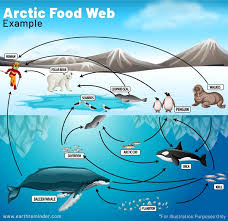
Teachers who use an interdisciplinary approach will find helpful research on the new carbon sinks being formed as the ice caps are melting. These polar foodwebs are helpful as deforestation has reduced the amount of carbon being absorbed by rainforests. The information on biodiversity and the impact of how our planet is adapting to a warmer climate with melting ice is an area of research that students should find interesting.
“Less than half of all carbon captured by polar phytoplankton or macro algae is stored in foodwebs, and nearly all the rest is recycled into the water column by bacteria in what is termed the microbial loop (rotting). Vast numbers and biomass of water column (pelagic) zooplankton, such as copepods or krill, which are shrimp-like crustaceans, store much of this carbon.” (Page 136)
Perhaps the most informative chapter in this book is titled “Circular Food Systems: Feeding the Urban World” because it identifies small innovative companies that are implementing important solutions. Examples for students to research include the White Moustache Yogurt Company, Back of the Yards Algae Sciences, Spare Foods Company, LivinGreen, Evergrain, TripleWin, and Portland Pet Center. When I was a 16-year-old high school student, my Earth Science teacher’s lesson about the impact of the end of civilization as we knew it with the birth of the 3 billionth person had a lasting impact on me. In just ten years, the world’s population will be 9 billion and in 2050 it will likely be 10 billion. As the population increases, the urban density will also increase from 55 percent today to 63 percent by 2050 and provide an urgent need to reduce greenhouse gas emissions. Solutions are needed!
Year
Population
Net Change
Density (P/Km²)
2025
8,231,613,070
69,640,498
55
2026
8,300,678,395
69,065,325
56
2027
8,369,094,344
68,415,949
56
2028
8,436,618,886
67,524,542
57
2029
8,503,285,323
66,666,437
57
2030
8,569,124,911
65,839,588
58
Students need to understand how hydroponic agriculture and circular food systems can sustain life on our planet in the future. Our current dependence on rice, wheat, soybeans, and corn contribute significant amounts of carbon and methane into our atmosphere through their production and distribution. The current agricultural revolution needs to produce food in urban areas and reduce food waste. Source
“The food system we have in place today, one we have nurtured for a half-century and that produces some 43 percent of the world’s calorie supply, is itself in jeopardy due to the growing climate crisis, rising temperatures and prolonged droughts are withering crops; frequent floods are destroying them. The reliance on intensive farming practices such as tilling and heavy fertilizer and pesticide use robs the soils of their productivity, jeopardizing yields necessary to continue feeding rising populations.” (Page 150)
An important thread throughout this book is that proven climate solutions are likely to be local. Heating and electric power will be de-centralized, food production will be on urban rooftops and in parks, and transportation will be redesigned. The school curriculum needs to include case studies from urban ‘smart’ cities. One suggestion for the next edition of Proven Climate Solutions might be to include information on the importance of recycling clothing.
Men at Work: The Empire State Building and the Untold Story of the Craftsmen Who Built It
by Glenn Kurtz
Reviewed by Dr. Alan Singer, Hofstra University
In this book published by Seven Stories Press, Glenn Kurtz uncovers the identities of the Empire State Building construction workers, made famous by Lewis W. Hine’s legendary portraits. The book features more than 75 photos and other illustrations, some by Hine that have never been previously published. Astonishingly, no list of workmen on this historic landmark was ever compiled. While the names of the owners, architects, and contractors are well known, and Lewis Hine left us indelible images of the workers, their identities—the last generation of workmen still practicing these time-honored trades, have not been identified until author Glenn Kurtz unearthed their individual stories for this book. Drawing on eclectic sources — census, immigration, and union records; contemporary journalism; the personal recollections of their descendants — Kurtz assembles biographies of these workers, providing not only a portrait of the building’s labor force, and a revolutionary re-interpretation of Hine’s world-famous photographs, but also a fundamental reimagining of what made the Empire State Building a fitting symbol for the nation, built as it was at the very height of the Great Depression.
According to Erik Loomis, author of A History of America in Ten Strikes, “Capitalists build nothing. Workers build everything. Glenn Kurtz recovers the stories of the brave men who constructed the Empire State Building masterfully using Lewis Hine’s famous photographs of them. A wonderful book for anyone who cares about the stories of real workers.” Alastair J. Gordon, author of Naked Airport, praises Kurtz for “Working with a minimum of historical data, Kurtz has broken through the urban mythologies and written an insightful social history, not about the capitalist owners, investors, architects or contractors, but about the every day mortals — ironworkers, carpenters, crane operators and other unsung heroes — who actually built the Empire State Building during the height of the Great Depression… a revelatory contribution to the legacy of New York’s built environment.”
Revolutionary New York: 250 Years of Social Change
Edited by Bruce Dearstyne
Reviewed by Dr. Alan Singer, Hofstra University
Revolutionary New York celebrates the 250th anniversary of the American Revolution and the many historical changes that have occurred since, as reflected through the history of the state. This book explores “unfinished revolutions” in the Empire State: the two-and-a-half century struggle to realize the revolution’s ideals and bring increased freedom and opportunities to previously marginalized populations. Itis an Excelsior Edition published by SUNY Press. It includes sixteen essays that explore different aspects of New York State history starting with a chapter on “The Oneida Rebellions, 1763 to 1784.” Editor Bruce Dearstyne provided chapters on the birth of New York State in 1777 and September 11, 2001. There are also chapters on the Erie Canal, slavery in New York State, the Triangle Fire and workplace safety, the Harlem Hellfighters, the struggle by women to win the right to vote, prohibition, the origins of the United Federation of Teachers union, Stonewall, and the COVID-19 pandemic.
According to Jennifer Lemak, Chief Curator of History, New York State Museum, “From Indigenous uprisings and the building of the Erie Canal to suffrage and LGBTQ+ rights, New York State has long been at the forefront of America’s most significant social transformations. This book explores the people, places, and pivotal moments that shaped a more just and inclusive society—revealing how New Yorkers challenged injustice, redefined freedom, and left a lasting impact on our nation.”
An Education: How I Changed My Mind About Schools and Almost Everything Else
by Diane Ravitch
Reviewed by Dr. Alan Singer, Hofstra University
According to Randi Weingarten, president of the American Federation of Teachers, “Diane Ravitch’s telling of her remarkable journey — from a child of working-class immigrants to one of the most vital national education treasures and leaders — tells us so much about her unwavering support for public education and its role in our society. That would be beautiful enough, but the second thrill is how she brings her curiosity — an essential trait we nurture in students — to question her own views and change her mind. The result is this clarion call to protect and strengthen public schooling in America as the foundation of our young people — and our democracy. If you care about the future, read this book.”
Diane Ravitch has spent five decades analyzing and advocating for national and state education policies designed to reform and reshape public schools. Her work supporting school choice made her the intellectual darling of the right. But when she renounced school choice as a failure, she was abandoned by many old friends and colleagues. Today she is a champion for public schools, a foe of standardized testing, and proclaims herself to be “woke.” Her latest book, An Education: How I Changed My Mind About Schools and Almost Everything Else is published by Columbia University Press
Ravitch was one of eight children from a Jewish family in Houston, Texas, where she grew up with no television, no air conditioning, and, often, no shoes. In college she met and married a man from a wealthy and connected New York City family, where they lived and raised a family. She began working for a socialist magazine, which led to writing about education and, eventually, a PhD in education history.
Ravitch’s writings favored strengthening and expanding school choice and rigorous testing, ideas that aligned well with conservative donors and think tanks who supported her work and led to positions in the George H.W. Bush and Clinton administrations. Meanwhile, a chance encounter at an education conference with a New York City high school social studies teacher, Mary Butz, led to a clandestine romance. Ravitch’s new relationship upended her previous “life of comfort and plenty” and led to her marriage to Mary.
New York Mayor Michael Bloomberg sought Ravitch’s support and counsel for the changes he and school commissioner Joel Klein instituted during his administration, but it was at this time that Ravitch began to question the results of standardized testing and school choice programs like charter schools. Improved test scores at lauded schools proved illusory and charter schools only seemed to thrive because they were able to weed out the most challenged pupils. Gradually, Ravitch abandoned her long-held views on the power of testing or the promise of choice. She began to write and speak out in favor of saving America’s besieged public schools.
Ravitch’s involvement in education idea and policy have earned her a reputation as education’s best-known living historian and its most controversial figure. An Education is the story of the making, unmaking, and remaking of a public intellectual and a remarkable testament to the importance of a mind open to truth and possibility in a world, she writes, “of masks and artifice”.
Original and deeply researched, The Slow Death of Slavery in Dutch New York: A Cultural, Economic, and Demographic History, 1700–1827 (Cambridge University Press, 2025) provides a new interpretation of Dutch American slavery which challenges many of the traditional assumptions about slavery in New York. With an emphasis on demography and economics, Michael J. Douma shows that slavery in eighteenth-century New York was mostly rural, heavily Dutch, and generally profitable through the cultivation of wheat. Slavery in Dutch New York ultimately died a political death in the nineteenth century, while resistance from enslaved persons, and a gradual turn against slavery in society and in the courts, encouraged its destruction.
This important study is expected to reshape the historiography of slavery in the American North. It joins several recently published works in the same subject area:
Christopher Verga is a social studies teacher at the East River Academy for incarcerated youth on Rikers Island, an instructor of Long Island history and Foundations of American History at Suffolk Community College, and an instructor in Politics of Terrorism at John Jay College of Criminal Justice. Nazis of Long Island: Sedition, Espionage and the Plot Against (The History Press,2025) is his seventh book on Long Island History. It is about the American Nazi movement prior to and during World War II and is a timely book because there is a resurgence of Nazi like ideology in the world today. While Verga argues that Long Island, New York was a breeding ground for an “American Reich,” the story as he spells out is much broader encompassing the entire New York metropolitan region in the midst of the Great Depression. New York City and its metropolitan area in this period was also a target for German spies and a center of anti-Nazi resistance.
Long Island in the 1930s was a Republican Party and America First stronghold. Verga attempts to draw connections between them and Nazi sympathizers, but the connection may have been tenuous and certainly dissolved once the United States entered the war.
Like in all the local histories written by Christopher Verga, this book is richly documented and easy to read. The village of Breslau, later renamed Lindenhurst, was originally established as a New York City commuter suburb for German immigrants with beer halls and traditional German festivals. It also had a strong pro-German following before the war. Glen Head, Long Island resident Cornelius Lievense was the American financial manager for German industrialist Fritz Thyssen, who was the financial backer of the early Nazi Party activities in the United States. The Nassau County chapters of the America First Committee in the Five Towns, Freeport, Hicksville and Valley Stream hosted the pro-Nazi members of Congress on speaking tours. In the early spring of 1941, Freeport organized a 1,600-person rally for the committee in the Freeport High School auditorium. Guest speaker Republican Senator Gerald Nye of North Dakota called on the audience to do “all in your power to prevent the proposed assignment of American warships to convoy duty.” He declared that “this is nothing but madness.”
The best known pro-German and pro-Nazi facility on Long Island was Camp Siegfried, operated as a vacation point, for pro-German rallies, and for training Hitler Youth. Camp Siegrfried and the town of Yaphank were considered “a little piece of German soil—a Sudetenland in Amerika—planted on this side of the ocean.” The roads at the camp and in the town were named after high ranking Nazis including Adolf Hitler Street, Joseph Goebbels Street and Hermann Göring Street. During the summer, the Long Island Railroad provided special train service on weekends for visitors to Yaphank and Camp Siegfried. Camp Siegfried’s annual August rally attracted an estimated forty thousand people
Because Long Island was home to Army-Air Force bases and major war industries, it was targeted by Nazi spy rings. The Ludwig ring was the second spy operation discovered in New York. German spies imbedded themselves in Republic Aviation, Grumman, and Brewster factories and the smaller defense plants in the Nassau County Roosevelt Field area like the Sperry Gyroscope Company in Garden City. Shortwave radio and telegram transmission stations on the north shore of Eastern Long Island and in Nassau County sent industrial intelligence to Hamburg, Germany.
During wartime, German prisoners of war were incarcerated on Long Island at Camp Upton, Mason General Hospital in Deer Park, and Mitchel Field in Uniondale. If they died the German prisoners were buried in section 2C of Long Island National Cemetery. The local POW camps had open dorms and prisoners were assigned to work on farms. Camp Upton in Brookhaven with 1,500 POWs was the largest facility on Long Island. Heavyweight boxing champion Joe Lewis was the most famous guard at the Upton POW camp.





 njcssjournal