Partial List of Banned Words by the U.S. Federal Government

PARTIAL LIST OF BANNED WORDS

Hank Bitten, NJCSS Executive Director

Abortion; accessible; accessibility; activism; anti-racism; antiracist; at risk; autism; barrier; bias; Black; clean energy; climate crisis; climate science; community; continuum; Covid-19; cultural differences; cultural heritage; DEI; disability; discrimination; disparity; diverse; diversity; equality; equity; elderly; environmental justice; ethnicity; evidence-based; female; feminism; fetus; fluoride; gay; gender; gender based; Gulf of Mexico; ideology; immigrants; implicit bias; inclusion; inequality; injustice; institutional; hate speech; Hispanic; Latinx; LGBT and LGBTQ; marginalized; marijuana; measles; mental health; minority; multicultural; Native American; obesity; opioids; oppression; peanut allergies; polarization; political; pollution; prejudice; privilege; promote; pronoun; pronouns; prostitute; race; racial identity; racism; science-based; segregation; sex; social justice; stereotypes; transgender; trauma; traumatic; unconscious bias; underprivileged; underrepresented; vaccines; victims; woman; women

Source (Pen America) Complete List is on this site

Source (Alan Singer)

Book Review: The Leadership Journey: How Four Kids Became President

I decided to read this book after listening to Doris Kearns Goodwin speak about this on television following the inauguration of President Donald Trump. After reading the first few pages, I decided to write a review of this book as it should be ‘required’ reading for every social studies teacher, student, parent, and grandparent.

One reason for encouraging teachers, pre-service teachers. students, parents, and grandparents to read this book is in the truisms that are embedded in the stories about each president. For example, in introducing Abraham Lincoln’s decision to enter politics as a Whig candidate, these few sentences should engage young minds in reflective thinking:

As a teacher, I would discuss with my class, why did Lincoln join the new Whig Party and not the popular Democratic Party? Why did he announce his decision to run for the assembly in a pamphlet compared to a letter, newspaper, or verbal announcement? How does Lincoln understand public service?

As a parent or grandparent, I would discuss the political parties we have today and what they stand for. How do candidates in our community or state get elected and announce their decision to run for office? Is it possible for elected representatives to represent the interests and needs of the majority in their community or is it best for them to advance their own beliefs on the issues or vote for the position of their political party?

The reading level of The Leadership Journey: How Four Kids Became President is for middle school students. Each chapter is just a few pages and should take a middle school student about 20-30 minutes to read and comprehend. This book is a valuable resource for a student research assignment, teaching about the reliability of sources, civics, an afterschool history club such as Rho Kappa or Phi Alpha Theta, a summer reading list activity, or a Saturday Seminar roundtable discussion. The applications of this book are unlimited.

One of the hidden gems in the life of Lincoln is with his learning style, character, persistence, and ability to handle disappointments. These examples are often only a few sentences, but they are prompts to initiate discussion and empathy between students in your class. For example, “The key to Lincoln’s success as a lawyer was his ability to break down the most complex case or issue ‘into its simplest elements.’ He never lost a jury by fumbling or reading from a prepared argument, relying instead ‘on his well-trained memory. (Page 47)

Another example that I found interesting was the evolution of how President Lincoln’s views changed about the emancipation of enslaved persons by listening to others.

The second president in Doris Kearns Goodwin’s book is Theodore Roosevelt. There are multiple connections for students in the leadership journey of Teddy Roosevelt. These include living with a disability, coping with personal loss, understanding the issues, the importance of integrity, and the challenges and opportunities of the experiences in one’s life.

Although born into a family with wealth, as a child he faced frightening attacks of bronchial asthma. His childhood and teenage years were limited. By age 10, he had opportunities to be home schooled, enjoy summer vacations on Long Island, and travel to Africa, Europe, and the Middle East. However, participating in activities was limited because of his health.

The lesson of how Teddy Roosevelt voted in the New York State Assembly, especially on the bill to stop the manufacture of cigars in tenement houses is one that will likely engage students in a thoughtful discussion or debate about how elected officials represent constituents today. Roosevelt opposed all government supervision and regulations regarding limiting the hours worked, a minimum wage, or prices. Samuel Gompers invited him to visit the places where the cigars were made.

On February 14, 1884, Valentine’s Day, Teddy Roosevelt place a large X in his diary followed by the words “The light has gone out of my life.”  His mother, Mittie, and his wife, Alice Hathaway Lee, died. He was 25 years old and had been married for less than four years.

These are stories students relate to. They encourage discussions about loss, grief, empathy, confusion, resilience, and life. The leaders Doris Kearns Goodwin writes about are very human and their experiences in life are similar to those of many young adults. Abraham Lincoln also lost his mother and fiancé and his son, Willie, died at age 11 in the White House.

Three examples from the book that should interest middle and high school students are Teddy Roosevelt’s use of the Executive Order renaming the Executive Mansion to the White House in 1901, his daily schedule, and a bizarre episode running naked in Rock Creek Park. Source

The information on the Spanish American War in 1898, settling the coal strike in 1902, nine-week train trip around the United States in 1903, are also presented in a descriptive narrative that will interest students with events in the social studies curriculum.

Although most middle school students do not study Franklin Delano Roosevelt as part of U.S. History, this chapter will engage high school students. The importance of reading is to ignite inquiry through questions and thinking about the historical era, the individual, and American government.

Franklin was born into a wealthy family with a large estate about 90 miles north of New York City, where they also had a home on 65th Street near Fifth Avenue and Central Park.

The chapters about Roosevelt are powerful and insightful because they are filled with stories about his character. While most readers will find value and insights into his youth, college years, marriage and positions in the state legislature and federal government, the chapter on his perseverance regarding his paralysis from polio is unusually compelling. Here is an example of how FDR faced the news of his permanent disability as a 39-year-old man with a promising future:

In another chapter Doris Kearns Goodwin portrays FDR’s trait of courage.  His courage was both political courage as he risked everything to hide his disability of crippled legs and physical courage.  He was fortunate to have the friendship and guidance of Louis Howe, Sam Rosenman, Frances Perkins, and his wife, Eleanor. Here is an example of how Franklin handled every situation with grace, humor, and strength: (This is six years after he was infected by the polio virus, 1928)

These two excerpts are only an introduction to what is revealed in his campaign for governor, acceptance speech in Chicago as the Democratic Party candidate for president, his inauguration speech at the Capitol, and his leadership as president. Facts and historical examples are important, but FDR’s personality traits will likely have a lasting impact on students.

Although many students are likely less familiar with the presidency of Lyndon B. Johnson than the presidency of Lincoln, T.R. or F.D.R., they will identify with his character, commitment to civic engagement, and experience as a teacher. As a young child, he moved from a small cabin in a rural area to Johnson City. For various reasons, Lyndon’s activities changed, and he became interested in the activities of his father who was a member of the state legislature in Texas.

Lyndon’s Johnson’s role as a teacher and school principal reveals his work ethic and characteristic as a caring and dedicated public servant.

He was also the debate coach at Sam Houston High School. He coached the debate team through city, district and state tournaments.

“Johnson appeared to his students ‘a human dynamo,’ a steam engine in pants,’ driven by a work ethic and unlimited enthusiasm that proved contagious.” (Page 269)

I enjoyed reading about how he used his social capital in Washington to advance his goals. Lady Bird and Lyndon moved to Washington where he was the chief of staff to a Texas congressman. He became friends with Sam Rayburn who lived alone and invited him to dinner in his home with his wife, Lady Bird. Through this connection, Lyndon became the director of the National Youth Administration in Texas. When his congressman James Buchanan passed away unexpectedly, Johnson campaigned for his seat. Two days before the election he had emergency surgery to remove his appendix. He won, likely on a promise to bring electricity to the farmers in his area of Texas.

Johnson’s personality traits of empathy, enthusiasm, perseverance, and ‘grit’ are important for students to understand, apply to their own experiences, and engage in discussion with their peers. He lost his bid for re-election by 1,311 votes and a few years later won his election as senator by only 87 votes. As a senator, he was the youngest majority leader in the history of the Senate at age 46 and was considered as a presidential candidate for the 1956 election. Then, suddenly everything changed when he had a devasting heart attack. This event transformed his life and behavior.  A lesson about the trait of resiliency.

If a teacher elected to use the resource of this book for just one day, perhaps the most compelling pages are found on pages 317-328. His passion, legislative skill, and personal conviction are important for every student to understand. It is also important for students to understand the long struggle to pass and implement civil rights laws. In our classrooms, the lessons of Freedom Riders, marches, boycotts, and the emotional scars of segregation are too often taught passively through slide presentations and vocabulary terms. Doris Kearns Goodwin captures some of the emotion that led to the Civil Rights Act of 1964 and the Voting Rights Act of 1965. Everyone should read Chapter 24.

“Like a tailor stitching a custom suit, Johnson took measure of Dirksen.  A decade of working together had taught Johnson that Dirksen had no hesitation asking for ‘a laundry list’ of favors in return for his support on legislation.  But this time, Johnson offered Dirksen something far more important than perks and favors; he appealed to Dirksen’s hunger to be remembered, honored. ‘I saw your exhibit at the World’s Fair, and it said, ‘The Land of Lincoln,’ Johnson pointed out. And the man from Lincoln is going to pass this bill and I’m going to see that he gets proper credit. With a gift for flattery equal to Dirksen’s vanity, he assured the senator ‘if you come with me on this bill, two hundred years from now there’ll be only two people they’ll remember from the state of Illinois: Abraham Lincoln and Everett Dirksen!” (Page 321)

I found value in the leadership journey of these four presidents. Although my review focuses on students and teachers, adults will also enjoy reading what Doris Kearns Goodwin has written. In the closing pages, Doris Kearns Goodwin describes a dinner meeting with her “guys.’  What an opportunity to discuss the historical context of 100 years of American history, the goals of the Declaration of Independence, how each president mastered the communication platforms of newspapers, stories, radio, and television. Perhaps the most significant question is what makes a good leader and a good president? What a nice segway to understanding empathy!

Visit the resources of the Miller Center at the University of Virginia to learn about the American presidents.

Presidents and Labor Strikes

Hank Bitten, NJCSS Executive Director

Most decisions by American presidents and other world leaders do not have an immediate impact on the economy, especially regarding the macroeconomic issues of employment and inflation. For example, President Franklin Roosevelt’s bank holiday, President John Kennedy’s tariff on imported steel, and President Ronald Reagan’s Economic Recovery Tax Act had limited immediate effects on the economy, but their long-term effects were significant. The accomplishments or problems of a previous administration may impact on the administration that follows.

For example, President Biden faced criticism about the economy during his administration. The jobs created with the Bipartisan Infrastructure Law and the interest rate policy of the Federal Reserve Bank to lower inflation did not show results until years later. The drop in Real Disposable Income from the administration of President Trump is another example. Real Disposable Income is a measure of income that is adjusted for inflation. The drop between the administration of President Bident and Trump is the result of extended unemployment benefits, people working from home during the pandemic when businesses were closed, and stimulus checks from the government. The economic transition following the end of the pandemic had a significant impact on the economy.

PresidentGDP GrowthUnemployment  RateInflation RatePoverty RateReal  Disposable  Income
Johnson2.6%3.4%4.4%12.8%$17,181
Nixon2.0%5.5%10.9%12.0%$19,621
Ford2.8%7.5%5.2%11.9%$20,780
Carter4.6%7.4%11.8%13.0%$21,891
Reagan2.1%5.4%4.7%13.1%$27,080
H.W. Bush0.7%7.3%3.3%14.5%$27,990
Clinton0.3%4.2%3.7%11.3%$34,216
G.W. Bush-1.2%7.8%0.0%13.2%$37,814
Obama1.0%4.7%2.5%14.0%$42,914
Trump2.6%6.4%1.4%11.9%$48,286
Biden2.6%3.5%5.0%12.8%$46,682

This series provides a context of important decisions by America’s presidents that are connected to the expected economic decisions under the second administration of President Trump. The background information and questions provide an opportunity for small and large group discussions, structured debate, and additional investigation and research. They may be used for current events, as a substitute lesson activity or integrated into a lesson.

In the case study below, have your students investigate the economic problem, different perspectives on the proposed solution, the short- and long-term impact of the decision, and how the decision affects Americans in the 21st century.

The Economic Problem

One of the first labor strikes in the United States occurred in Paterson, New Jersey on July 3, 1835.  About 2,000 textile workers stopped working in about 20 textile mills demanding better hours. Workers, including women and children worked 13 hours a day six days a week and their wages were reduced as fines for infractions. The strike eventually led to a 12-hour day and a nine-hour day on Saturday.

In 1835 carpenters, masons, and stonecutters in Boston staged a seven-month strike in favor of a ten-hour day. The strikers demanded that employers reduce excessively long hours worked in the summer and spread them throughout the year. In Philadelphia, carpenters, bricklayers, plasterers, masons, leather dressers, and blacksmiths went on strike. In Lowell, MA, women also went on strike. The history of labor complaints and strikes date back to the colony of Jamestown. Although the common law in England provided protection for peaceful demonstrations, the courts in the colonies and states often fined workers because their organization as a group was viewed as a ‘restrain of free trade’ or a violation of the right of property for employers. In 1842, the Commonwealth of Massachusetts v. Hunt was a landmark decision that allowed peaceful demonstrations. “In March 1842, Chief Justice Lemuel Shaw ruled that labor combinations were legal provided that they were organized for a legal purpose and used legal means to achieve their goals.”

The economic problem was long hours, low wages, and oppressive working conditions. The market revolution led to the demand for consumer goods. The new inventions of the cotton gin, steamboats, locomotives, and factories. The nature of work was changing and this led to profound changes in society. Employers and entrepreneurs believed this was the idea behind the pursuit of happiness in the declaration of Independence and how a republic was governed. Laborers used the press to voice their concerns which led to the organization of trade unions in Philadelphia.

President Andrew Jackson’s decision to let the charter of the Second Bank of the United States to expire had an unexpected and profound impact on ordinary people. Working conditions continued to decline and President Jackson’s decision led to an increase in paper money and inflation. Higher prices led to unemployment and longer hours for those who were employed. Illness or injury and debt led to homelessness and poverty. According to a New York City physician, the laboring poor in the 1790s lived in “little decayed wooden huts” inhabited by several families, dismal abodes set on muddy alleys and permeated by the stench from “putrefying excrement.” Source

In 1840 the federal government introduced a ten-hour workday on public works projects. In 1847 New Hampshire became the first state to adopt a ten-hour day law. It was followed by Pennsylvania in 1848. Both states’ laws, however, included a clause that allowed workers to voluntarily agree to work more than a ten-hour day. Despite the limitations of these state laws, agitation for a ten-hour day did result in a reduction in the average number of hours worked, to approximately 11 by 1850.  On May 19, 1869, President Grant issue Proclamation 182 making an 8-hour day for all federal government employees. This expanded the decision of Congress made in 1868.

After the Civil War, manufacturing and economic growth increased dramatically. There were many strikes as farmers and laborers, both skilled and unskilled, formed associations and unions. Below are examples of larger strikes that are likely part of the high school curriculum.

During the first week of May,1886 workers in Chicago staged demonstrations and strikes demanding an eight-hour day. On May 4 a bomb exploded near Haymarket Square in Chicago.  Several police officers and protesters were wounded or killed by the blast, and 8 individuals were arrested and convicted. Source

A day to recognize the rights of workers was first proposed by Matthew Maguire from Paterson, NJ in 1882. The balance between the right to have peaceful demonstrations under the First Amendment was respected but the Haymarket Riot became violent, strikes were costly to the profits of employers, and violence and strikes were a threat to property. President Cleveland was the first president challenged by the threat of anarchy from socialists. After the Haymarket Riot, a few states, including New York and New Jersey, recognized a Labor Day holiday. This was the fourth federal holiday after Independence Day, Christmas Day, and New Year’s Day. Congress considered making Labor Day a federal holiday in May, but President Cleveland feared this would become a recognition of the violence of the Haymarket Riot.  President Cleveland was the first president to involve the federal government in resolving issues between labor and business interests or capital.  Source

Newspaper Accounts of the Haymarket Riot, 1886

  1. Under what conditions would you support workers on strike? (higher wages, better working conditions, unfair practices by an employer, benefits, job security, etc.)
  2. Are labor strikes a violation of the property rights of employers?
  3. Do workers have a right to disrupt the production of goods or services by a slowdown in the workplace, strict adherence to their contract agreement, coordinating a sick out, making public expressions or statements about their situation, etc.
  4. Do workers need to be paid in wages or can employers also pay them in other ways? (time off, goods produced, etc.)
  5. Should workers receive an annual salary increase based on their months or years of service, inflationary costs of living, or only if they produce more than in the past?
  6. How would you determine a fair wage?
  7. Do the students in your class (or a larger group) support the right to strike workers?

Open the three-day lesson on the 1835 strike in Paterson, NJ. (Update the CPI index from 2012 to the present)

In the months before the presidential election of 1892, President Harrison was faced with a violent strike at the Carnegie Steel Company in Homestead, PA near Pittsburg. The Knights of Labor and the Amalgamated Association of Iron Workers went on strike on June 30 when their contract expired. Workers in Carnegie’s companies in the area supported the striking workers.  Henry Clay, the manager of the Homestead plant, hired private Pinkerton guards to protect the plant and keep the striking workers away. President Harrison privately sent Whitelaw Reid to mediate the conflict.

The strikers threw rocks at the guards, the crowd size was estimated to be about 5,000, and gunshots were fired. At one point amid the chaos, shots were fired. The Pinkertons surrendered and the strikers continued with verbal abuse and assaulted them with rocks as they marched them to a local Opera Hall.

On July 12, Pennsylvania Governor Robert Pattison sent 8,500 National Guardsmen to end the strike. In less than 30 minutes the Carnegie mill was under martial law, the strikers were arrested. Sixteen of the strikers were arrested for conspiracy, murder, and inciting riots. The strike ended three months later in November with the workers agreeing to lower wages, the elimination of 500 jobs, and a 12-hour day. The labor unions lost, and their membership declined.

President Cleveland faced a nationwide railroad strike that began on May 11, 1894. The American Railway Union went on strike against the Pullman Company and the major railroads.  It became a turning point in U.S. labor law. The workers at Pullman protested the layoff of 2,000 workers and wage cuts that amounted to 25%-50% of their wages. The Pullman workers lived in a company town and paid rent to the Pullman Company, which was located near Chicago, Il. The rents were not reduced. The Pullman Company also had a surplus of $4 million at the time of the strike and consistently paid dividends to shareholders.

The Panic or recession of 1893 negatively affected many companies as production declined. The railroads depended on shipping farm products, which were reduced as a result of crop failures. This was the most serious economic recession in the world as investors in Europe purchased gold from U.S. banks, Americans took their savings out of banks, and companies that had speculated in the stock, bond, and commodity markets lost money/ The economic recovery after the recession ended would take several years.

On July 3, 1894, President Cleveland ordered 2,000 armed federal troops to Chicago to end the strike. The strike ended within a few weeks, union leaders were arrested and jailed on charges of conspiracy to obstruct interstate commerce. The justification of using federal troops to move the U.S. mail was based on the Sherman Anti-Trust Act of 1890. This was not the first time federal troops were used to end a strike. President Jackson used troops in 1834 to end the strike by workers building the Chesapeake and Ohio Canal and in 1877 President Hayes send troops to end the violence in Baltimore during the Great Railroad strike.

In May 1902 President Teddy Roosevelt was faced with a nationwide strike by coal miners. Many homes were heated by coal and a prolonged strike in the winter could be catastrophic, deadly, and cause riots. On October 3, 1902, with winter weather approaching, President Theodore Roosevelt called a precedent-shattering meeting to negotiate a settlement. The President did not have any legal authority to settle a labor dispute, although Presidents Jackson, Hayes and Cleveland used federal troops to end labor disputes.

President Roosevelt’s administration proposed the Anthracite Coal Commission to complete a fact-finding report and negotiate a settlement.  The strike ended on October 20, 1902, and the Commission recommended in March 1903 increasing miners’ pay by ten percent (one-half of their demand) and reducing the working day from ten to nine hours.

Samuel Gompers wrote: “Several times I have been asked what in my opinion was the most important single incident in the labor movement in the United States and I have invariably replied: the strike of the anthracite miners in Pennsylvania … from then on the miners became not merely human machines to produce coal but men and citizens…. The strike was evidence of the effectiveness of trade unions ….

The victory in the anthracite coalfields breathed new life into the American labor movement.55 It strengthened moderate labor leaders and progressive businessmen who championed negotiations as a way to labor peace. It enhanced the reputation of President Theodore Roosevelt. Sometimes overlooked, however, is the change the conflict made in the role of the Federal Government in important national strikes.” Source

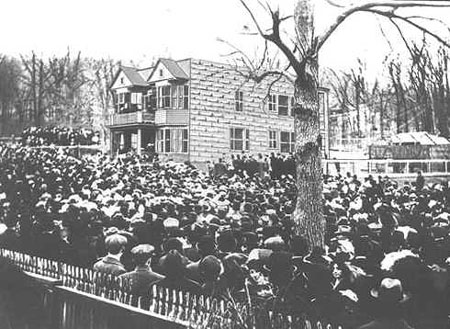
The silk strike began in February 1913 when twenty-five thousand striking silk workers shut down the three hundred silk mills and dye houses in Paterson, New Jersey, for almost five months. There were several textile strikes that preceded the one in Paterson. The Paterson strike was related to an increased workload and the desire for an eight-hour day. The other strikes occurred because of wages. The Industrial Workers of the World (I.W.W.) were active in organizing the strike and produced the “Pageant of the Paterson Strike” in Madison Square Garden on June 7.  Pietro Botton opened his home to the labor leaders from New York City and on May 25, a rally of more than 20,000 people took place outside his home. These rallies continued on Sundays until the strike ended in July.

The strikers returned to work without any concessions, although the employers did not implement the plan to have one worker operating four looms instead of two.

  1. What is a yellow dog contract, scab, collective bargaining, closed shop, and right to work protections
  2. What are the differences between skilled and unskilled laborers?
  3. How is an Association different from a labor or trade union?
  4. Who has the advantage in a strike: labor employees or employers?
  5. How do strikes affect the economy and the lives of people who are not associated with the union?
  6. Why do you think the union and workers failed to achieve their goal in the Paterson Strike of 1913?
  1. Make a list of labor unions and associations in the United States.
  2. Use these sources to categorize the list of strikes by length of time, size of the unions, and frequency? List of Unions (Wikipedia)   200 Years of Labor History (NPS)

The Seattle General Strike of February 1919 was the first 20th-century solidarity strike in the United States to be proclaimed a “general strike.”  Seattle had 101 unions that were part of the American Federation of Labor (AFL). On the morning of February 6, 1919, over 25,000 union workers stopped working to support the 35,000 shipyard workers who were already on strike. Although wartime inflation created a need for higher wages, the goals of the striking workers were not clearly articulated. Mayor Ole threatened to declare martial law and two battalions (about 3,000) U.S. Army troops arrived. The union members had already implemented a plan to provide food deliveries, transport people to hospitals, and patrol the streets to prevent crime. Below is an image of a soup kitchen. Union members distributed 30,000 meals a day during the strike.

The strike lasted six days and was peaceful. There were minimal gains for the workers, but most returned to work. There were several outside agitators who were identified as “Reds” or communists who were arrested. The strike is generally viewed as unsuccessful.

Seattle General Strike Project

History of the General Strike (9-minute Video)

History of the General Strike (4-minute Video)

The Seattle General Strike (Roberta Gold) 

“An Account of What Happened in Seattle and Especially in the Seattle Labor Movement, During the General Strike, February 6 to 11, 1919” 

Slide show 

The Seattle General Strike 

The Boston Police went on strike on September 9, 1919. Police officers worked long hours, received low wages, and had inadequate working conditions. They worked thirteen-hour days and wanted an eight-hour day. They had to purchase their own uniforms which cost $200 (about two months’ salary), were required to sleep overnight in the police station several nights a month, and they had not received a salary increase in over ten years. They were paid about 25 cents an hour and earned about $1,400 a year.

The three cases below were landmark decisions in the labor movement. The Lochner decision ruled that employers could issue contracts without any restrictions such as an 8- or 10-hour day. The Adkins decision supported this and ruled it was illegal to have a minimum wage for workers. The Muller decision ruled that the hours of women could be less than those of men if their health was at risk.

The general right to make a contract in relation to one’s business is part of the liberty protected by the Fourteenth Amendment, and this includes the right to purchase and sell labor, except as controlled by the state in the legitimate exercise of its police power.

The regulation of the working hours of women falls within the police power of the state, and a statute directed exclusively to such regulation does not conflict with the Due Process or Equal Protection Clauses.

Legislation fixing hours or conditions of work may properly take into account the physical differences between men and women, but the doctrine that women of mature age require (or may be subjected to) restrictions on their liberty of contract that could not lawfully be imposed on men in similar circumstances must be rejected.

Frances Perkins was asked to serve as FDR’s Secretary of Labor. As Secretary, she would pursue: a 40-hour work week; a minimum wage; unemployment compensation; worker’s compensation; abolition of child labor; direct federal aid to the states for unemployment relief; Social Security; a revitalized federal employment service; and universal health insurance. She is the longest serving labor secretary and one of only two cabinet secretaries to serve the entire length of the Roosevelt Presidency.

The Wagner Act (1935) created the National Labor Relations Board to enforce employee rights rather than to mediate disputes. It gave employees the right, under Section 7, to form and join unions, and it obligated employers to bargain collectively with unions selected by a majority of the employees in an appropriate bargaining unit. 

The U.S. Supreme Court in NLRB v. Washington Aluminum in 1962 upheld the right of employees to go on strike whether they have a union or not. However, workers and unions still needed to be careful to avoid an unlawful strike.

A strike is likely protected by law if it is in response to “unfair labor practice strikers” or “economic hardship from low wages, excessive hours, or difficult working conditions.” 

A strike may be unlawful when it supports an unfair labor practice such as requiring an employer to stop doing business with another company. Workers cannot legally strike if their contract prohibits strikes, although workers can stop working if they are subject to dangerous or unhealthy conditions.

After World War II, there were several major strikes and unions were unpopular because of the strikes and fear of the expansion of communism after Churchills’ Iron Curtain speech. The Taft Hartley Act amended the Wagner Act (1935). It was proposed by Rep. Fred Hartley from New Jersey and Senator Robert Taft from Ohio.  The Taft-Hartley Act made major changes to the Wagner Act. It was vetoed by President Truman and required a vote by both houses of Congress to override his veto. The Act was amended to protect employees’ rights from unfair practices by unions by making the closed shop and wildcat strikes to be illegal and prohibiting unions from charging excessive fees for membership.

  1. What are the differences between a walkout, lockout, strike, and sit-down strike? Do the definitions or labels matter if work stops?
  2. Should certain employees be prevented from having a union to represent their interests?
  3. Should certain employees who serve the public be prevented by law from being able to strike when the public’s safety or interest is at risk? (teachers, bankers, police, sanitation, transportation workers, nurses, etc.)
  4. What is arbitration, fact-finding, and collective bargaining? What is the purpose of each?
  5. What is back pay?  Should striking workers be compensated for the days or weeks they did not work?
  1. Interview two or three people or groups of people regarding labor conditions they would like to have negotiated in their favor.
  2. Review the contract between teachers and the Board of Education in your district or another district. Discuss the protections in the contract that are not directly related to salary?
In January 1966, there was a 13-day transit strike in New York City. The buses and trains were shut down. In 1968, the teachers and sanitation workers went on strike. Thousands of New York City teachers went on strike in 1968 when the local school board of Ocean Hill – Brownsville, fired nineteen teachers and administrators without notice. The newly created school district, in a heavily black neighborhood, was an experiment in community control over schools—those dismissed were almost all Jewish. The strike began in September and ended on November 17. There are many important issues relevant to this strike – civil rights, integrated schools, poor performing districts, and local control vs. a central Board of Education. The strike raised the issue if public sector employees (police, fire, teachers, and private sector employees should have the right to strike over unfair business practices.

On the morning of August 5, 1981, approximately 13,000 workers of the air traffic control facilities called a strike.  President Reagan spoke from the Rose Garden at the White House telling them to return to work within 48 hours or be fired. About 2,000 returned to work and the rest were fired. The government used people from the military and retired air traffic controllers to monitor the flights and hired new air traffic controllers. This one event had a proof und effect on the labor movement as workers feared losing their jobs if they went on strike.

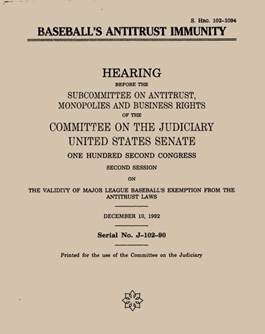
The 232-day baseball strike of 1994-95 was the biggest one in professional sports. Although there have been many work stoppages in professional baseball dating back to 1912, the study of this strike is important because of the challenges it presented to labor negotiators. This problem has historical origins and dates back to the Sherman Antitrust Act of 1890. In 1922, the U.S. Supreme Court ruled that professional baseball was exempt from the anti-trust protection because it was not considered to meet the definition of trade or commerce. Federal Baseball Club of Baltimore, Inc. v. National League of Professional Baseball Clubs et al.  The case was appealed several times but not reversed. The only option for players was to strike. Source

The strike began on August 12, 1994, and the World Series was cancelled on September 14. One of the main issues was the salary cap that owners placed on the players. The cancellation of the World Series prompted some senators to propose legislation to end the anti-trust exemption given to baseball. This divided the Congress because the protection was favored by owners of smaller teams. President Clinton attempted to intervene but was not able to negotiate a settlement. As the 1995 baseball season was about to begin, baseball owners planned to hire non-union replacement players, a tactic used by the National Football League in 1987. On March 31, 1995, U.S. District Judge Sonia Sotomayor issued an injunction, and the baseball players returned to the field.

Chronological History of Labor Strikes in the United States (NPS

Isolationism: FDR’s Immigration Crisis 

Auschwitz, Bergen-Belsen, Belzec, and Ravensbrück. Think of an ice-cold place with no hope of getting out of your worst nightmare. These were some of the most well-known labor camps during World War 2 in Germany and Poland. They were built to target many different groups, like Jehovah’s witnesses, gypsies, and homosexuals. The biggest group targeted was the Jewish population. Hitler’s goal with building these labor camps was to relocate as many Jewish people as possible and make them work to death or just to kill them, these camps were meant for mass murder. There is a lot of hidden history that is not discussed about the Holocaust.

There was a lot of blame going around and new power coming into place that America was not fully aware of because they focused on being stable after the Great Depression. In Europe tensions rose and Germany became very angry about the outcome of World War 1. Germany believed the repercussion from World War I they had gotten was not fair.  Hitler blamed the Jewish population for their loss in World War 1 and thought that they had to pay for their betrayal to the German people. Thus, sparked the idea for Hitler to create labor camps to torture and destroy the Jewish population. While the labor camps were being built there were things going on beforehand that sparked antisemitism in Germany. They had to go around wearing the star of David on all their clothing, they couldn’t go to public schools just Jewish schools, couldn’t go to the movies or to certain restaurants and a lot of Jewish business owners lost their businesses from German soldiers trashing it and shutting them down all because they were Jewish. 

Gas chambers were the kiss of death. Jews and others who made it farther would get tattoos. Jews had no name anymore and just were referred to as a number. All hair would be cut off and then would be told to change into the same striped outfits and sent to their barracks and from there they would be sent to work all day and every day with little to no food. One wrong move and anyone could be killed. Reapings would happen as well. Those who were picked were sent to either different camps or to the gas chambers to be killed. This was kept secret in Europe and only thought to be rumors for many years. Around 6 million lives were lost. 

            FDR was a great leader in so many ways and did want to help the country and the people of the United States out first and foremost. He wanted to get the country out of the Great Depression and make sure that the people were being taken care of. However, there were split sides on what the United States should have been doing during this time. Historians are still debating this topic to this day and disagree with the isolationist mindsets that were put into place and FDR should have gotten involved and helped the Jewish population more. Saying he should have done what he wanted regardless of the backlash he would have gotten from the people. The isolationist mindset and closed-door policies has been seen as something that ruined the United States because in 1941 Japan had conducted a surprise attack on Pearl Harbor. That created other countries to have animosity towards the United States. Pearl Harbor ended up being the turning point for the United States to get involved in the war, leading to all of those closed-door policies to go out of the window. America was finally waking up and realizing what was going on outside of the country. 

The public loved FDR. He had a great relationship with the country because they had felt like they truly knew him. This starts with his fireside chats where the country was able to listen to him and what he wanted to do for the American people. While he was their president there was his hominess about him where he became more than a president to them.  The people saw how FDR had a helping hand in the reason the country got out of the Great Depression because of his New Deal policy. The New Deal was a domestic program between 1933-1939 which aimed to provide relief and reform the people of the country.

So many lives were lost. Lives were lost because of leaders not believing the rumors of the labor camps, but also because of the restraints put on the immigration policies and visas that would have helped the immigrants trying to get into the country.  Policies have to get passed through many different levels of the government because of the checks and balances system so FDR isn’t the main source of the issue, it was the government as a whole. While the borders had been closed and not as open for quite some time, the decision to close the border angered immigrants who greatly needed help.. There was a genocide happening in Europe because of Nazi regime and the antisemitism running through Germany. America had a lot of difficult decisions to make when it came to policies and deciding what they wanted to do with the immigrants, specifically the Jewish population. America wants to be neutral, and the Jewish population was not something the country was prioritizing. From another entry that was written by FDR he states “I have no intention in getting into a war with Germany. American will not enter. (343) There was no way that FDR was going to allow American to assist with anything including with the immigrants.  The US turned an eye and the immigrants had to then go back to their countries they were trying to leave. Many went into hiding and others were captured and sent to different places, whether it be different countries or a labor camp. This did not just affect the Jewish population, it affected so many immigrants from all over and while the Holocaust as a whole killed around 13 million innocent lives, 6 million of which were Jewish men, women and children. 

At this point the country was torn on what to do. There were some groups that wanted to just get involved in the war because they didn’t want anything to happen to us because we were staying out and cutting ties with other countries. Yet there were the other groups that wanted nothing to do with the war because it was on European soil and did not concern the US in any way.  Due to this split there were discussions being had in Congress over what to do with these sets of Neutrality acts that were rolled out and how to rethink the mindsets of the isolationist. 

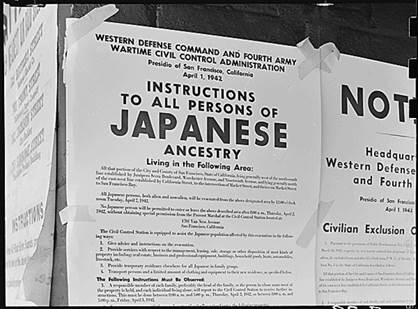
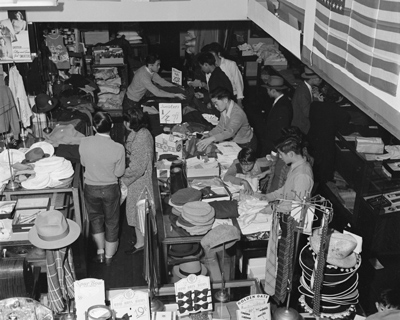
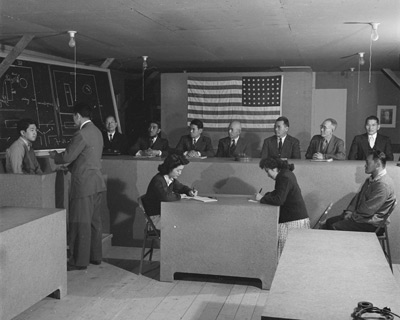
After the attack on Pearl Harbor it was like the United States woke up. The Japanese had bombed America’s soil and the people were shocked and distraught. This is what isolationist mindsets do, they had created enemies because with these policies the US was cutting ties with allies and countries had been trading with which was going to create conflict. We never truly had any issues with Japan until all of this happened. The immigration policies after the attack got even tighter than they were before. They truly didn’t want anyone, no matter where they were coming from, to come in and that showed because of the way they were treating the Japanese American groups in the country. However, the containment mindset and isolationism changed completely after the attack on Pearl Harbor in 1941. The people were angry; they wanted everyone who was on the axis side to pay for what they had just done to us, so America joined the allied powers and in 1941 America was officially a part of the war. 

The United States was involved in the war and helping out the Allied powers, men and women were being a part of the war being nurses and taking over the jobs that men were doing and in ways being a part of the war was an eye opening for what women’s roles were like showing women can do just as much as men could do. The American citizens started to speak out more about how they were feeling about the policies already in place and in the novel America Between The Wars there is a letter that gets discussed about how the American families are feeling during his time of presidency, this section shows the side of the American families that want nothing to do with the war, it states“ Dear Mr. President, my wife and I have just heard your speech over the radio, I can not refrain from expressing our deepest appreciation for your state will do everything to keep this country neutral.”(214) This was what the American citizens were thinking; however, being isolated was the wrong move for this country even though the leaders and some of the public agreed to just be focused on the country but in the end the country got attacked by enemies. The isolationism did bring harm to the country and didn’t truly help us. It made the country look weak and made the people feel divided because if the country had not been  isolated could Pearl Harbor have been prevented. While that is a question historians will never truly know it shows FDR should have listened to his heart. FDR should have focused on the people like he did but not in a containment isolationist mindset where certain events might have been avoided. 

Overall, FDR did a lot of good for the people of the country. Did he do the same for immigrants that wanted to come into the country or for the immigrants already in the country?  That is questionable. FDR did not treat the Japanese American immigrants in America right after that attack on Pearl Harbor and FDR changing his immigration quotas and rejecting the Jewish population into the country was not seen as a good move. There will always been good and bad things that any president will do but in this case things could have been different and prevented if he did what he wanted to do and stopped listening to mixed opinions of the public and his cabinet members and because of these policies and the split down the middle this caused a lot of antisemitism and hatred in the country to the Japanese Americans and to the Jewish population that were already here and or the ones who were trying to come in. 

Antisemitism is all too well known throughout the world. Antisemitism is something that has been seen for centuries, the meaning of antisemitism is to be hostile or prejudiced against Jewish people, this has dated back to ancient times but became more seen during the time when Hitler was the dictator of Nazi Germany. The Nazi’s were corrupting the youth and they were being taught how to spot a Jew based on their eyes and hair color, their nose side, how their skull lined up etc. The antisemitism that was happening in Germany would later on during the war spread to the United States in a different way.  As mentioned before, it was antisemitism was always around but because of the increase in hate crimes and antisemitism, other countries were seeing what was really going on.

The Jewish population is one of the groups throughout history that have been blamed and have suffered for far too long. Hitlers building of the labor camps was a genocide and a way to try and erase them for good. FDR and the American population had heard word about these labor camps that were built out in Germany and Poland but had just thought they were rumors. Over in the United States, immigrants had always been coming in for quite some time from all over the world for a fresh start for their families and at the time we were a very friendly and welcoming country when it came to these matters. This had stopped for a while and had been tightened during World War I. When the Great Depression began and people were laid off from their jobs and couldn’t afford anything for their families, their outlooks on immigration started to shift. The people of the United States started to think it wasn’t fair that there were all of these immigrants coming into the country and because they had just suffered through a Depression where they could hardly afford anything that the immigrants should either go somewhere else or that America should be going from open door to a closed-door policy with self-containment and isolationism. 

From that moment on when FDR listened to the majority of the public to become self-contained and isolated matters started to get worse from the Jewish population trying to come into the country and the Jewish population that was already here in the states before the policies were put into place. Historian Breitman who has done a lot research specifically when it comes to the Holocaust and the efforts FDR had states “FDR knew that many Americans held prejudicial views of the Jews.”(5) Breitman has done a lot of research through his book to be able to make a statement like this. There were protests before WW2 was happening towards immigrants and the Jewish population because of fear. . There was an argument made my Breitman stating “ Even if FDR has been more willing to override domestic  opposition and twist arms abroad, he could not have stopped the Nazi’s in the mass murder of about six million Jews.”(5) to make this point is saying that nothing was going to change regardless of the United States changing their quotas and foreign policies to now not allowing them in wouldn’t change anything. There was nothing that could have happened from these events and issues from happening. 

Congress at that point was getting very frustrated. They were seeing the reactions from FDR and the people of the US. There was craziness because emotions were all over the place. In Texas the governor had reported “Efforts to expand Jewish immigration, he said had created a terrible anti-semetic sentiment throughout the country which might break into riots if his bills go through.”(150) The people were getting very vocal about their feelings towards immigration. FDR made a case to congress about their concerns and stated “ This would be a divide with the American people and add to widespread perceptions at home and abroad that Jews had manipulated the policies.”(207) Whether Congress believed what FDR had to say is still a mystery however, what FDR had to say about the American people  was something that was already going through the American people’s minds. 

When the rumors were going around about the labor camps in Europe the people wanted nothing to do with. The public didn’t believe that in Europe there could possibly be any chance of a genocide to a specific group of people. FDR had heard wind of these rumors as any leader would have during this time and states in one of his letters to his Secretary of State “ I do not favor American participation over this matter.”(55) The fact he was getting wind of this and still didn’t want to believe it either and was listening to the American people was an outright shock. FDR seemed to be brushing these rumors away and just wanted to continue to only focus on his isolationism and being neutral during this war.

While the Jewish population was living in fear not only in Germany, they had come to fear the United States. The Jewish population had thought the states would be a safe place for them to come to but when they were turned away because FDR and his committee wanted to change his foreign immigration policies that all changed. The Jewish population was happy for what FDR had done for them, they felt like they were finally able to escape the troubles they were having with the Nazi’s slowly growing to have power. However, once World War II had started those policies changed drastically. Some of those policies were not in place anymore or changed significantly. Numbers were cut by over half and so many Jewish families were sent back to Germany at the start of the war and taken to the labor camps or just killed on the spot for trying to escape. In some ways the United States did such a disservice to the Jewish population They lost all of their clothes, jewelry, houses and worst of all their identity, they were not humans anymore according to the Nazi’s.  So many of the Jewish population were killed or died of illness in those labor camps and the antisemitism that was in Germany had spread to the United States. 

The people of the United States were calling the Jewish population spies to the Nazi government thinking they wanted us to get involved in the war. That was not the case. They wanted a safe place to live where they didn’t have to fear for their lives. Some were sent back to Germany. The people did not want to believe that a genocide towards the Jews were actually happening and they wanted to live in their own happy bubble. The government did nothing to stop the hatred that had spread to the United States because it was not their issue. A little later on in the war when the Americans were on Europe soil and came across a strange looking area in the middle of nowhere was when they realized what they had just stumbled upon. The United States had to do something about this, so they sent word back to the United States and FDR declared that all of the labor camps be liberated. The anger and sadness that got back to the American people and their views on the Jewish population changed drastically. 

Breitman, Richard, and Allan J Lichtman. 2014. FDR and the Jews. Cambridge, Massachusetts: Belknap Press Of Harvard University Press.

Wayne, Cole.  1983. Roosevelt & the Isolationists, 1932-45. Lincoln : University of Nebraska Press.

Robert, Divine A. 1969. Roosevelt and World War II. Johns Hopkins University Press.

Bernard, Fay. 1972. Roosevelt and His America.

Rafael,Medoff. 2009. Blowing the Whistle on Genocide : Josiah E. Dubois, Jr. And the Struggle for a U.S. Response to the Holocaust. West Lafayette, Ind: Purdue University Press.

Welky, David, 2012. America between the Wars, 1919-1941: A Documentary Reader. Malden, Mass.: Wiley-Blackwell. Harrap, and Elliot Roosevelt, The Roosevelt Letters Volume 3; 1928-1945.

President Bill Clinton – Public Vaccinations

Most decisions by American presidents and other world leaders do not have an immediate impact on the economy, especially regarding the macroeconomic issues of employment and inflation. For example, President Franklin Roosevelt’s bank holiday, President John Kennedy’s tariff on imported steel, and President Ronald Reagan’s Economic Recovery Tax Act had limited immediate effects on the economy, but their long-term effects were significant. The accomplishments or problems of a previous administration may impact on the administration that follows.

For example, President Biden faced criticism about the economy during his administration. The jobs created with the Bipartisan Infrastructure Law and the interest rate policy of the Federal Reserve Bank to lower inflation did not show results until years later. The drop in Real Disposable Income from the administration of President Trump is another example. Real Disposable Income is a measure of income that is adjusted for inflation. The drop between the administration of President Bident and Trump is the result of extended unemployment benefits, people working from home during the pandemic when businesses were closed, and stimulus checks from the government. The economic transition following the end of the pandemic had a significant impact on the economy.

PresidentGDP GrowthUnemployment  RateInflation RatePoverty RateReal  Disposable  Income
Johnson2.6%3.4%4.4%12.8%$17,181
Nixon2.0%5.5%10.9%12.0%$19,621
Ford2.8%7.5%5.2%11.9%$20,780
Carter4.6%7.4%11.8%13.0%$21,891
Reagan2.1%5.4%4.7%13.1%$27,080
H.W. Bush0.7%7.3%3.3%14.5%$27,990
Clinton0.3%4.2%3.7%11.3%$34,216
G.W. Bush-1.2%7.8%0.0%13.2%$37,814
Obama1.0%4.7%2.5%14.0%$42,914
Trump2.6%6.4%1.4%11.9%$48,286
Biden2.6%3.5%5.0%12.8%$46,682

This series provides a context of important decisions by America’s presidents that are connected to the expected economic decisions under the second administration of President Trump. The background information and questions provide an opportunity for small and large group discussions, structured debate, and additional investigation and research. They may be used for current events, as a substitute lesson activity or integrated into a lesson. 

In the case study below, have your students investigate the economic problem, different perspectives on the proposed solution, the short- and long-term impact of the decision, and how the decision affects Americans in the 21st century.

Public health decisions in the United States have historically been determined by states. (Tenth Amendment) Massachusetts is the first state to require that children have a smallpox vaccine before going to school to prevent the spread of smallpox in schools. Children in the United States receive immunizations through both private and public providers. The federal government has supported childhood immunization since 1963 through the Vaccination Assistance Act. Since 1994, the Vaccines for Children (VFC) program has provided additional support for childhood vaccines. In 2002, 41% of childhood vaccines were purchased by the federal government through VFC and 43% through the private sector. Thirty states have vaccine requirements for students going to college. See the list of vaccines required for K-12 schools on page 8 of the Center for Disease Control document: CDC Document

Adult immunization is primarily performed in the private sector. Since 1981, Medicare has reimbursed the cost of pneumococcal vaccine for its beneficiaries; influenza vaccine was added in 1993. The cost of vaccinations has increased significantly in the past 20 years.

The greatest fear in the 19th and 20th century was the spread of unknown or viral diseases. Major epidemics in the United States are cholera, flu, polio, HIV/AIDS, SARS, H1N1, and Covid-19. Vaccines were developed for smallpox and rabies. The virus, poliomyelitis, was a highly contagious disease with symptoms including common flu-like symptoms such as sore throat, fever, tiredness, headache, a stiff neck and stomach ache. Polio also affected the brain and spinal cord, which could lead to paralysis and also death. President Franklin Roosevelt was infected with poliomyelitis in 1921. The disease first emerged in the United States in 1894, but the first large epidemic happened in 1916 when public health experts recorded 27,000 cases and 6,000 deaths—roughly a third in New York City..

Epidemics are costly in the loss of human lives, medical and hospital costs, and absence from school and work. Because preventive health measures and vaccines save money, they are considered by economists as a public good. For example, the average billing costs for non-complex Covid-19 hospitalizations averaged between $31,000 and $111,000. Complex cases with hospitalizations averaged between $132,000 and $472,000. The average hospital cost in New Jersey for Covid-19 in 2020 was $377,198. Source

There were 6 million Americans hospitalized in 2020 with Covid-19. If we estimate the average hospitalization cost at $100,000, the cost of the epidemic would be around $60 billion. If we estimated the cost a5 $50,000, the cost would be $30 billion. The cost to the government in providing vaccines for free in 2020 was $25.3 billion. According to the National Institutes of health, the U.S. government purchased 1.2 billion doses from Pfizer and Modern at a price of $20.69 peer dose. Source. A total of $53.6 million was appropriated in 1956-57 for the polio vaccine.

Analyze the information in the image below to discuss if public health programs are best administered by the states or the federal government.

  1. If the cost of a vaccine is $20.69, should the government pay for free vaccines for the general public or encourage people to get vaccinated at their own expense?
  2. Should the cost of vaccinations be the responsibility of private health insurance for people not covered by Medicare?
  3. Is public health a burden that should be shared by government, individuals, and health insurance companies?
  4. To protect the public from an epidemic or the flu, measles, pneumonia, etc. should the government rely on the approximately 40,000 private centers of medical offices and retail pharmacies to distribute and administer the vaccine or use the approximately 6,000 public health clinics and hospitals? Which distribution strategy is the most effective and why?
  5. Should the government encourage masks, hand washing, and other methods to prevent the spread of an epidemic instead of free or subsidized vaccinations?
  1. Invite the school nurse, doctor, and or representative from a health insurance company to your class to discuss the costs and benefits of vaccinations to contain the spread of epidemics.
  2. Research the policies on immunizations and vaccinations by other countries (Japan, Britain, Denmark, Mexico, Canada) Mandatory Vaccinations: The International Landscape   Mandatory Childhood Vaccinations
  3. Meet with your Math teacher to analyze the hypothetical costs of hospitalizations, preventive health care, and productivity costs for staying home from work.

Vaccines against contagious infectious diseases have strong spillover effects, since immunization protects not just those being immunized but others as well. Since the benefits extend beyond those individuals who choose to get vaccinated, the public benefits of vaccines are larger than the individual benefits.  However, the price of the vaccine (i.e. $20) only benefits the person who paid for it out of pocket. The benefit to the public or larger society is the result when a significant majority is vaccinated and protected.

Economists evaluate the costs and benefits. For example, the government could subsidize the cost by 25% or 50%. The government (state or federal) could provide an incentive and pay individuals to get vaccinated or offer a tax credit or deduction. Public health strategies might include charging less than the market price for vaccines, paying individuals to immunize, or making immunization compulsory. The government can also mandate vaccinations by law.

The economic problem becomes more complex when we consider that some health issues like cancer, tetanus, or diabetes are not contagious. Also, vaccines for HIV/AIDS and Human Papillomavirus (HPV) benefit specific populations. The Public Health Service act of 1972 provided grants to state and local governments for immunizations and vaccine purchases. President Clinton’s administration in 1994 launched the VFC (Vaccines for Children) These provided funds to support schools requiring immunizations, with allowances for religious or moral exemptions.

View the image below from the Center for Disease Control (CDC) and validate its accuracy, bias, or misinformation.

  1. Interview your school’s administration regarding the policy for vaccinations for students, teachers, and staff.
  2. Research the vaccination policy at state and private colleges in your area.
  3. Meet with a travel agent or use the source from Wikipedia regarding vaccination requirements from countries.  Source  If the United States discontinues its financial support for vaccinations will this have an impact on Americans travelling to other countries?

Questions:

  1. What is the most effective way to protect public heatlh?
  2. Are the benefits of free or subsidized vaccinations greater than the costs of hospitalization and loss of life?
  3. Should federal programs also include subsidies for preventive health such as mammograms, colonoscopies, blood pressure screening, etc.
  4. Public education is paid for by taxpayers and through money raised by state governments.  Should public health follow a similar model or is it different?
  5. Are the economic benefits of government funded vaccinations more important than the scientific evidence or the fact that they may not be effective for everyone and in some cases result in death?

President Ronald Reagan and the Economic Recovery Tax Act (Social Security)

Most decisions by American presidents and other world leaders do not have an immediate impact on the economy, especially regarding the macroeconomic issues of employment and inflation. For example, President Franklin Roosevelt’s bank holiday, President John Kennedy’s tariff on imported steel, and President Ronald Reagan’s Economic Recovery Tax Act had limited immediate effects on the economy, but their long-term effects were significant. The accomplishments or problems of a previous administration may impact on the administration that follows.

For example, President Biden faced criticism about the economy during his administration. The jobs created with the Bipartisan Infrastructure Law and the interest rate policy of the Federal Reserve Bank to lower inflation did not show results until years later. The drop in Real Disposable Income from the administration of President Trump is another example. Real Disposable Income is a measure of income that is adjusted for inflation. The drop between the administration of President Bident and Trump is the result of extended unemployment benefits, people working from home during the pandemic when businesses were closed, and stimulus checks from the government. The economic transition following the end of the pandemic had a significant impact on the economy.

PresidentGDP GrowthUnemployment RateInflation RatePoverty RateReal Disposable Income
Johnson2.6%3.4%4.4%12.8%$17,181
Nixon2.0%5.5%10.9%12.0%$19,621
Ford2.8%7.5%5.2%11.9%$20,780
Carter4.6%7.4%11.8%13.0%$21,891
Reagan2.1%5.4%4.7%13.1%$27,080
H.W. Bush0.7%7.3%3.3%14.5%$27,990
Clinton0.3%4.2%3.7%11.3%$34,216
G.W. Bush-1.2%7.8%0.0%13.2%$37,814
Obama1.0%4.7%2.5%14.0%$42,914
Trump2.6%6.4%1.4%11.9%$48,286
Biden2.6%3.5%5.0%12.8%$46,682

This series provides a context of important decisions by America’s presidents that are connected to the expected economic decisions facing our current president’s administration. The background information and questions provide an opportunity for small and large group discussions, structured debate, and additional investigation and research. They may be used for current events, as a substitute lesson activity or integrated into a lesson.

In the case study below, have your students investigate the economic problem, different perspectives on the proposed solution, the short- and long-term impact of the decision, and how the decision affects Americans in the 21st century.

President Roosevelt introduced Social Security as a transfer payment to workers who would retire at age 65 with a life expectancy of 70 years in 1940. The income of workers was taxed, and Social Security was generously funded by workers. Today, there are only two workers contributing to Social Security for every retiree receiving a monthly check. It is considered a transfer payment because the money received is spent locally on basic needs and part of the amount is taxed.

President Johnson expanded Social Security to include Medicare and Medicaid. President Reagan began taxing the benefits received, raised the retirement age to 67, and allowed for contributions from payrolls to Individual Retirement Accounts. President Trump raised the age from 70 ½ to 73 ½ regarding required minimum withdrawals from private retirement accounts.

Retirement is a relatively new concept in economic history. Social Security began in 1935, and American presidents have made significant changes to it, especially in the last 50 years. Defined pension plans were offered to employees in the first half of the 20th century but became too expensive for most corporations.  Today, many public service workers, teachers, police, fire) have defined pensions and receive a monthly distribution. Without monthly Social Security payments, it would be difficult for retired individuals to live above the poverty line.

The evolution of Individual Retirement Accounts began with President Gerald Ford in 1976, and presidents have made changes to it over the past 50 years. Most American workers have an IRA, which may be called a 401(k), 403(b), Roth or something else. Today there is $40 trillion invested in mutual funds and U.S. securities in IRA accounts of Americans. In this case study, you will analyze the economic importance of this money, which is about equal to the national debt of the United States government. Today, about 40% of American households have an IRA account. Most of the remaining 60% will depend on Social Security, personal savings and assets, or fall into poverty.

  1. How does having approximately 8% of your paycheck withheld for Social Security and Medicare affect the economy, stock market, and the quality of family life?
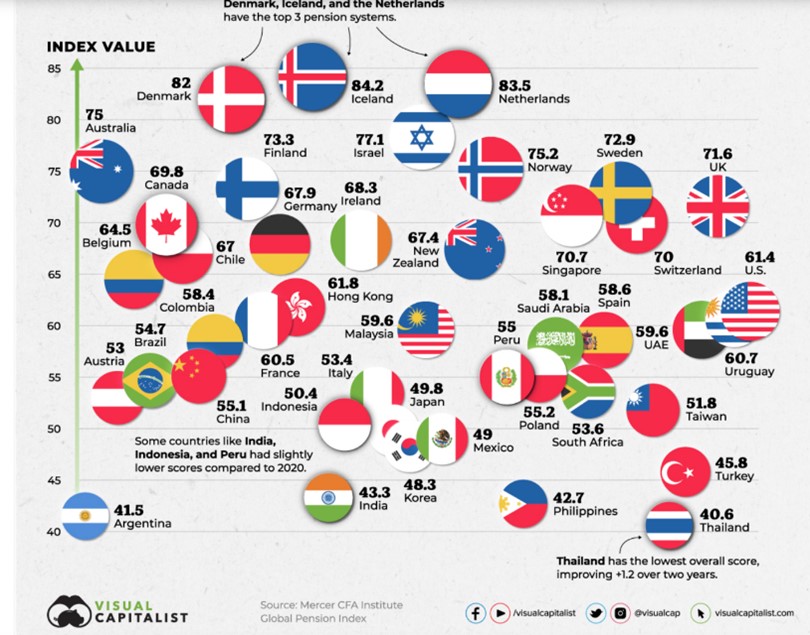
  2. How do other countries provide support for their retirees?  Is it valid to compare a large country (USA) with a smaller country with a higher ranking (Denmark)?     Source
  3. If you were an economic advisor to our current president, what reforms regarding Social Security and retirement income would you suggest?
  4. What risks do current and future retirees face in the short term (next five years)?
  5. Are the options for investing in retirement accounts reasonable, too risky, or too limited?

Report on the Economic Well-Being of U.S. Households in 2023-2024

Statement on Signing the Retirement Equity Act of 1984

  1. Use the table below to calculate the taxes that the average worker in the United States who owns a home pays in state and federal taxes.
ItemPercent of Taxes$100,000 Example$200,000 Example
Federal Income Taxes12%, 22%, 24%, 32%, 35%, 37%Use 12% or 22%Use 24%
State Income Taxes (NJ)3.5%, 5.5%,Use 3.5%Use 5.5%
FICA Tax with Medicare7.65%Use 7.65%Use 7.65%
Local Property Tax on a $400,000 property (varies)10%, 15%Use 10%Use 15%
Sales Tax (7% of spending)Calculate as 2% of incomeUse 2%Use 3%
NJ SUI Taxes1%Use 1%Use 1%
Total36.15% to 55.15%  
  • Compare these tax rates to those in a European country or Canada.
  • Find the average cost of what a family pays for medical insurance as a percentage of their income.
  • Deduct expenses for housing (rent or mortgage), food, vacation, medical, transportation, and savings (10%). How much is left?

The Industrial Revolution sparked the first true need for retirement. Assembly lines and factories demanded constant energy from their workers. Pensions began in the 1800s for older workers to help keep productivity up. But during the Great Depression, older workers didn’t want to leave their jobs — and their paychecks — behind. In turn, FDR designed the Social Security Act, effectively birthing the Social Security program so that older Americans could retire financially. The act is the Federal Insurance Contributions Act (FICA) and was signed in 1935 but didn’t begin payouts until 1940. In 1939, Social Security was expanded to include women. When Social Security became law, workers contributed one percent of their income.  Today, they contribute 6.2% and an additional 1.45% for Medicare. Employers match these contributions for a total of 15.3%.

As part of the “War on Poverty,” President Johnson signed the Social Security Act of 1965, which enacted Medicare and Medicaid under the Social Security Administration. In 2018, over 52 million people age 65 and older used Medicare for health insurance.

While President Reagan lowered income taxes, he was the first to make it possible to be taxed on your Social Security benefits in retirement, depending on how much you make. He also raised the full retirement age so that anyone born after 1960 would have to wait until age 67 to receive full benefits. The IRS under the Reagan administration also made it possible to have deductions taken out of employees’ salaries to contribute directly to their 401(k)s — something many workers rely on today.

President Clinton created another level of Social Security taxation, allowing up to 85% taxable benefits depending on how much you make. At the same time, he got rid of the retirement earnings test and prevented the Social Security Administration from blocking retirees from benefits based on earnings.

In 1990, the Older Workers Benefit Protection Act required employers to provide the same benefits for workers over age 65 as younger employees.

In the Unemployment Compensation Amendments of 1992, the rollover rules we know today were implemented. These new rules allowed women who often job-hop to keep their tax-qualified assets protected until retirement.

1993 ushered in the Family and Medical Leave Act (FMLA). This became one of the most important job protections for women after giving birth or providing care for a family member. Now, she could come back to her job and not lose her pay rate.

Although, some consider Social Security as an entitlement, it can be changed by Congress. When workers pay into Social Security, they are contributing to a trust fund instead of a personal account.

Because the combined OASI and DI Trust Funds have accumulated assets of over $2.5 trillion, the excess of program cost over current tax income will be covered by net redemption of these assets in the coming years. It is only when the reserves in the trust funds are exhausted that timely payment of full scheduled benefits becomes an issue. As shown in the chart, at the time of projected trust fund exhaustion in 2037, continuing tax revenue is expected to be sufficient to cover 76 percent of the currently scheduled benefits.

  1. Does the Social Security treat women fairly or equally with men? Do you recommend any reforms?
  2. Should Social Security benefits be taxed or tax free?
  3. What will happen to Social Security benefits when the trust fund has insufficient funds?

Treatment of Women in the Social Security System

Senior Citizens’ Freedom to Work Act

  1. Research the impact of a decision by Congress to make Social Security benefits tax free. Research the impact this will have on the trust fund.
  2. How does full employment and a sustained period of high unemployment above 7% affect Social Security and Medicare.
  3. Calculate the amount of money a worker earning $100,000 pays into Medicare over a period of 40 years and the average costs of what Medicare pays for each person today. Medicare Spending and Finance
  4. How have recent reforms under President Biden affected Medicare spending?
  5. Discuss the impact of reduced Social Security benefits for people when the trust fund is depleted, around 2033.

When a person receives their monthly Social Security check it is most likely deposited directly into their bank account. This allows it to earn interest immediately and to be used for expenses. Look at the Circular Flow of Money diagram below to see how government money is transferred to households and distributed through the local economy.

For example, whether a person receives a Social Security check for $1,000 or $5,000 some of the money goes to banks (financial institutions) and is used for loans to businesses, homeowners, students, etc., to purchase government bonds to support government spending (including Social Security), and for the bank to pay taxes, its employees, and operational costs. Since part of Social Security income is taxable, the federal government receives some of the money back in taxes. Perhaps the most important influence Social Security has on the economy is that people spend the money locally in supermarkets, stores, and restaurants and it saves the government money by keeping people self-sufficient and out of poverty.  This is how money circulates in the economy and creates income for businesses, local and state governments, doctors, and others.

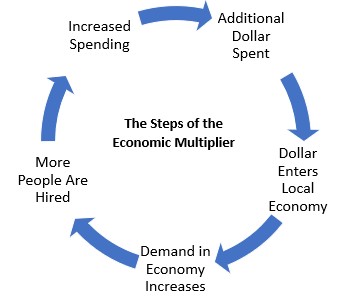
Money also has a Multiplier Effect. The diagram below illustrates the effect of one dollar. As each dollar enters the economy through the purchase of a bagel or donut, the local store expects that sales will continue to increase. As a result, they hire an additional worker, produce more bagels or donuts, and perhaps they will open a second store. As people buy more bagels and donuts, the store needs more flour, butter, cream cheese, coffee cups, etc. The newly hired employee also receives a paycheck for their work and spends it in the community. Basically, think of money multiplying ten times. For each $1.00 spent, the multiplier effect is that it circulated to different people ten times. If the effect of $1.00 is the spending of $10.00 over a month, imagine the impact of a $1,000 Social Security check ($10,000) or a $5,000 Social Security check.

  1. To what extent do government transfer payments (i.e., Social Security) pay for themselves?
  2. What would be the economic effect on the economy if people at the age of 67 did not receive an incentive (Social Security) to retire?
  3. Should people be allowed not to participate in Social Security as an employee?
  4. If Social Security was discontinued, would the effect on the economy be positive or negative?
  1.  Calculate different scenarios if a person should collect their Social Security at age 62, 67, or 70. The scenarios should include individuals who are single, married, in excellent health, divorced, collecting benefits while still working, and for a spouse who did not work and make FICA contributions for the required ten years. Benefit Calculator

According to the Investment Company Institute, “there are more than 710,000 plans, on behalf of about 70 million active participants and millions of former employees and retirees. Savings rolled over from 401(k)s and other employer-sponsored retirement plans also account for about half of the $13.6 trillion held in individual retirement account (IRA) assets as of December 31, 2023.” https://www.ici.org/401k ($13.6 trillion is approximately 1/3 of the federal debt)

The IRA, originally offered strictly through banks, become instantly popular, garnering contributions of $1.4 billion in the first year (1975).  Contributions continued to rise steadily, amounting to $4.8 billion by 1981.

The Economic Recovery Tax Act (ERTA) of 1981 allowed for the IRA to become universally available as a savings incentive to all workers under age 70 1/2.  At that time, the annual contribution limit was also increased to $2,000 or 100% of compensation.

With the passage of the Tax Reform Act of 1986, income restrictions were introduced, limiting the availability of deductible contributions to the TIRA for individuals with incomes below $35,000 (single) or $50,000 when covered by an employer plan.  In addition, provision was made for the Spousal IRA, wherein the non-working spouse could make contributions to a TIRA from the working spouse’s income. 

1996’s Small Business Job Protection Act saw the implementation of the Savings Incentive Match Plan for Employees (SIMPLE IRA), which provided for employer matching and contributions to the employee plans, a viable alternative in many cases to the 401(k), although with more restrictive contribution limits. 

With the Taxpayer Relief Act of 1997, the Roth IRA was introduced.  In addition, phase-out limits were increased, plus the distinction was added for limits on deductible contributions if the taxpayer was covered by an employer-provided retirement plan. The Education IRA was also introduced, with features similar to the Roth IRA (non-deductible but tax-free upon qualified distribution).

In 2001 the Economic Growth and Tax Relief Reconciliation Act (EGTRRA), increased contribution limits with a “catch-up” provision for taxpayers aged 50 and older. An additional provision was the option to convert funds from a Traditional IRA to a Roth IRA, regardless of income level. 

The Consolidated Appropriations Act of 2016 finally made Qualified Charitable Distributions (QCDs) permanent. This feature applies to individuals age 70½ or older and subject to Required Minimum Distributions. The Qualified Charitable Distribution allows direct distributions to charitable organizations (houses of worship, non-profit organizations, etc.) from their IRAs without having to include the amount of the distribution in gross income for the tax year. In 2019, the age for Required Minimum Distributions was changed to age 73½.

As of the most recent reports from 2021, the Investment Company Institute indicates 37% of all American households own an IRA account of some type (over 48 million households). Approximately 27.3 million households have a Roth IRA, holding roughly $1.3 trillion in assets, while traditional IRA are owned by 36.6 million households, holding approximately $11.8 trillion.

Questions:

  1. How will the taxes paid by retirees on their IRA distributions affect the federal budget and national economy?
  2. How does the flow of money from current workers contributing to their Individual Retirement Accounts affect investment firms and the stock market?
  3. Should Social Security and Individual Retirement account changes be allowed or should changes only apply to people who are working and not retired?
  4. Should anyone not participating in the labor force because they are caring for someone in their home be allowed to contribute to Social Security or an Individual Retirement Account?
  5. Should money in an IRA account be allowed to be deposited in a traditional bank savings account of CD that is insured by the Federal Deposit Insurance Corporation?
  6. Should Individual Retirement Accounts replace Social Security for anyone who has not started paying FICA taxes?

President Richard Nixon – Price Controls and Ending the Gold Standard

Most decisions by American presidents and other world leaders do not have an immediate impact on the economy, regarding the macroeconomics of employment and inflation, at least in the short term of their administration. For example, President Franklin Roosevelt’s bank holiday, President John Kennedy’s tariff on imported steel, and President Ronald Reagan’s Economic Recovery Tax Act had limited immediate effects on the economy but their long-term effects are significant. The accomplishments or problems of the previous administration will likely impact the administration that follows. For example, President Biden faced criticism about the economy in his administration but the steps taken to address them may not show results until years later. The drop in Real Disposable Income from the administration of President Trump is significant because it measures income after taxes and inflation.

PresidentGDP GrowthUnemployment RateInflation RatePoverty RateReal Disposable Income
Johnson2.6%3.4%4.4%12.8%$17,181
Nixon2.0%5.5%10.9%12.0%$19,621
Ford2.8%7.5%5.2%11.9%$20,780
Carter4.6%7.4%11.8%13.0%$21,891
Reagan2.1%5.4%4.7%13.1%$27,080
H.W. Bush0.7%7.3%3.3%14.5%$27,990
Clinton0.3%4.2%3.7%11.3%$34,216
G.W. Bush-1.2%7.8%0.0%13.2%$37,814
Obama1.0%4.7%2.5%14.0%$42,914
Trump2.6%6.4%1.4%11.9%$48,286
Biden2.6%3.5%5.0%12.8%$46,682

This series provides a context of important decisions by America’s presidents that are connected to the expected economic decisions facing our current president’s administration. The background information and questions provide an opportunity for small and large group discussions, structured debate, and additional investigation and research. They may be used for current events, as a substitute lesson activity or integrated into a lesson.

In the case study below, have your students investigate the economic problem, different perspectives on the proposed solution, the short and long term impact of the decision, and how the decision affects Americans in the 21st century.

  1. The world’s economy collapsed as a result of World War I. The Bretton Woods Agreement provided stability with a fixed exchange rate of $35 U.S. dollars to an ounce of gold. The strength of the U.S. dollar and economy was good for the United States and other countries. In fact, the gold of most countries was at the Federal Reserve Bank in New York, so it was easy to physically move gold from one vault to another. The Marshall Plan provided $13.3 billion (about $175 billion in today’s money) to rebuild Europe. The Bretton Woods Agreement supported a global economy and international trade and cooperation.
  • By 1960, the U.S. economy began facing new challenges from the Baby Boomers, national debt, Cold War, trade deficit, higher unemployment and inflation. Economists introduced new research on the economy. The ideas of John Maynard Keynes that were seen as helpful to the challenges of the Great Depression and World War II were questioned in the 1960s by Milton Friedman and Paul Samuelson and other economists who carefully followed the money supply in the economy. In response to the cost of the Vietnam War and the Great Society programs, in addition to the increased consumption of the Baby Boomers, the interest rate policy of the Federal Reserve Bank supported an increase in dollars.
  • President Richard Nixon understood the political implications of the U.S. economy. Although an inflation rate of 4.7% may not appear to be a concern, it is an increase of 50% from the expected rate of 3% and a GDP growth rate of 2%. When President Nixon became president ever nation wanted dollars. The amount of dollars in circulation increased to four times the amount of gold in reserves. As aa result the dollar was overvalued and very strong. This situation negatively impacted our balance of trade with other countries. In 1971, the United States reported its first trade deficit.
  • As the supply of dollars increased over the quantity of gold, the United States Treasury feared that countries might ask for their gold and the United States would not be able to meet their demands. As inflation increases, the purchasing power of the dollar decreases. A simple solution would be to devalue the dollar but since it was pegged to gold at $35 an ounce, this was not possible. The situation became critical in 1971when Britain requested selling $3 billion dollars it had from a trade surplus for gold. The United States only had about $10 billion in gold and if other countries asked for gold, there would be an international crisis.

Examine the graph below for the years 1950-1970. Calculate the percent decline in the purchasing power of the dollar.  How does a weaker dollar affect trade and the national economy?  What are the advantages and disadvantages of a stronger and weaker dollar?

Examine the data in this chart, especially for the years, 1960-1980. The amount of gold reserves (left axis) is constant but the value of the dollar changes. Which events in the 1960s likely affected the weakening of the U.S. dollar? Which decisions or events in the 1970’s contributed to the noticeable decline in the dollar. How does a weaker dollar affect the economy differently for consumers and investors?

President Lyndon Johnson responded to the ‘small’ (18%) decrease in the value of the dollar in 1968 with a temporary (one-year) surcharge of 10% on income tax payments. The purpose of the additional tax was to reduce or stabilize the 3.0 percent rate of inflation. Even with the surcharge, inflation increased to 4.7% within the year. On August 25, 1969, the federal funds rate was at 9.75%, the highest level since World War 2, about seven percent above the GDP growth rate, and will cause an economic recession. The economic advisors, including Arthur Burns, Chairman of the Federal Reserve Bank, informed Nixon that the traditional monetary and fiscal policy tools were not working, President Nixon extended the tax surcharge through 1970. With the presidential election in 1972, Nixon knew that he needed to control the rising rate of inflation and avoid causing a recession.

President Nixon called for a secret meeting at Camp David to address this problem. He knew that politically the need to make a bold decision, like FDR with the decision to close the banks in March 1933. He also wisely sought the perspectives of economists with different points of view.

On August 15, 1971, President Nixon addressed the nation from the Oval Office with his historic decision, Executive Order 11615:

  1. Wage and price controls for 90 days
  2. Ending the Bretton Woods Agreement on converting dollars to gold
  3. 10% surcharge tax on tariffs

The Fed Funds rate in August 1971 was at 5.75% about three percent higher than the GDP rate of growth. One of the objectives of the “Nixon Shock” was to force other countries, especially China, to revalue their currencies to allow for a competitive free trade market for the United States. The stock market jumped 4% on August 16, but the decision to allow gold to be bought and sold at the market would lead to an unexpected increase in the price of oil. The wage and price controls and tariff surcharge were lifted by the end of 1971 but making the U.S. dollar the reserve currency of the world had lasting implications for the economy. President Nixon won the 1972 election by a landslide but the negative effects of then Nixon Shock would return in 1973.

Invite students to interview senior citizens who will have different perspectives as investors, bankers, union workers, homeowners, etc. on the “Nixon Shock.” For example, I was a high school teacher in New York City earning $5,500 a year. Prices were high from inflation and I was looking forward to a 20% salary increase, about $1,000, on September 1, 1971. My 1969-70 salary was frozen as was the pay scale for another year.  In 1973, the price of gasoline increased from 39 cents a gallon to more than 60 cents and gas was rationed. Although the energy crisis was the result of an embargo by OPEC against the United States for our support of Israel in the Yom Kippur War. After the embargo was lifted the higher cost of energy continued contributing to unemployment and continuing inflation. This became known as stagflation.

History of the Gold Standard

Gather information about the new technologies of how credit cards, money markets, and currency swaps increased personal spending, consumption, and the velocity of money.

  1. How did the banking industry change to ‘create’ new money in the economy?

In the chart below, currency represents coins and dollars, what we call cash.

M1 money represents currency plus money in a checking account which can quickly be exchanged for cash.

M2 money represents money that requires going to the bank tor waiting more than one month to convert the money to cash. (i.e. certificate of deposit)

  • Calculate the slope of the graph in dollars and also by the annual percentage change.
  • How did this contribute to inequality, consumer debt, and inflation?
  • What is the difference between installment credit and revolving credit?
  • How did the credit card change our standard of living?
  • What were the consequences of higher unemployment and full employment?
  • How did two income households affect the supply of money?

The Evolution of Consumer Credit in America

  1. What information is provided in the graph?
  2. What are several reasons for an increase in productivity by workers?
  3. How can high school students become more productive in their social studies class? (i.e. better grades, complete additional assignments and projects)
  4. Should a worker be paid on the amount of work they produce or on the wage they agreed to when they were hired? Should a teacher be paid based on the output (grades) of the students in their classes?
  5. Why do the red and blue lines diverge after 1970? Why is there a significant gap between what workers are producing in one hour and what they are paid?

The immediate impact of separating the value of the dollar from a fixed exchange rate of $35 was that the new value increased by 10% to $38 an ounce. It took about four years for the global economy to stabilize and accept dollars as the reserve currency (or safety net) in the event of a crisis. The supply of gold increased significantly after 1971 with about half of the current supply of gold being mined since the ‘Nixon Shock’.

  1. How do countries buy dollars? How does this affect our economy?

Source:

  • Is it possible for foreign countries to have too many U.S. dollars?
  • How would the decision of other countries to adopt a different currency affect the economy of the United States?
  • If a group of countries made a secret agreement to sell their U.S. dollars in a short period of time and purchase euros or the renminbi instead, how would the United States economy be affected?
  • What is the future of the dollar as the reserve currency? Does the United States have more advantages than disadvantages of being the dominant economic power in the world? The Dollar: The World’s Reserve Currency

President Bill Clinton – Tariffs and Free Trade Agreements

Most decisions by American presidents and other world leaders do not have an immediate impact on the economy, regarding the macroeconomics of employment and inflation, at least in the short term of their administration. For example, President Franklin Roosevelt’s bank holiday, President John Kennedy’s tariff on imported steel, and President Ronald Reagan’s Economic Recovery Tax Act had limited immediate effects on the economy, but their long-term effects are significant. The accomplishments or problems of the previous administration will likely impact the administration that follows. For example, President Biden faced criticism about the economy in his administration, but the steps taken to address them may not show results until years later. The drop in Real Disposable Income from the administration of President Trump is significant because it measures income after taxes and inflation.

PresidentGDP GrowthUnemployment RateInflation RatePoverty RateReal Disposable Income
Johnson2.6%3.4%4.4%12.8%$17,181
Nixon2.0%5.5%10.9%12.0%$19,621
Ford2.8%7.5%5.2%11.9%$20,780
Carter4.6%7.4%11.8%13.0%$21,891
Reagan2.1%5.4%4.7%13.1%$27,080
H.W. Bush0.7%7.3%3.3%14.5%$27,990
Clinton0.3%4.2%3.7%11.3%$34,216
G.W. Bush-1.2%7.8%0.0%13.2%$37,814
Obama1.0%4.7%2.5%14.0%$42,914
Trump2.6%6.4%1.4%11.9%$48,286
Biden2.6%3.5%5.0%12.8%$46,682

This series provides a context of important decisions by America’s presidents that are connected to the expected economic decisions facing our current president’s administration. The background information and questions provide an opportunity for small and large group discussions, structured debate, and additional investigation and research. They may be used for current events, as a substitute lesson activity or integrated into a lesson.

In the case study below, have your students investigate the economic problem, different perspectives on the proposed solution, the short- and long-term impact of the decision, and how the decision affects Americans in the 21st century.

Students in your class are likely familiar with mercantilism and its benefits to the “mother country” or “home country”. 18th century mercantilism utilized the resources and cheaper labor of colonies or other places to the benefit of one country. Adam Smith challenged the benefits of mercantilism and advocated laissez-faire economics, the balance of supply and demand, and open markets. Smith believed that mercantilism was a self-defeating system that limited economic growth and national wealth. He argued that a free-market system and free trade would produce true national wealth. 

However, political leaders may not agree (or understand) economic theories or how economic systems work. In Washington’s administration, Secretary of the treasury, Alexander Hamilton argued for a tariff. His Report on Manufacturers argued for the protection of the new manufacturing sector of the United States (Paterson and the Great Falls) and having a tariff to raise revenue for the federal government. Hamilton compromised on his tariff plan and the Tariff Act of 1789 was only 5%.

Henry Clay’s American System supported tariffs to protect our economic growth from foreign imports. His speech in 1824 was the first attempt to make America self-sufficient and independent of other countries. In 1828, Congress passed the Tariff of Abominations which led South Carolina to pass the Nullification Act.  The Tariff of 1828 set a 38% tax on some imported goods and a 45% tax on certain imported raw materials.

  1. How was the American System designed to work?
  2. What impact did the American System have on the U.S. economy during the early to mid-1800s?
  3. Did the American System benefit each region equally or did some regions have an advantage?
  4. How did the American System set the stage for the Industrial Revolution and sectionalism?
  5. What lessons should have been learned from the Tariff of 1828?

In the chart below, use the data beginning in 1800 with the Per Capita Income (per person) set at 200. This number indicates that the per person income from 1700 to 1800 doubled. Next, examine the indicator in 1850, which is set at 220. This indicates that the per person income increased only 20% in the fifty years since 1800. This is less than one-half percent per year on average.

Next, compare the date on tariff rates in the graph above with the per capita income rates in the graph below. Do tariffs impact economic growth?

At the beginning of the 19th century, the United States was a rural and agricultural country. Our nation’s population was small compared to Britain and France and scattered over a large area. Our population was 5.3 million in 1800, compared to Britain’s 15 million and France’s 27 million. Tariffs from Britain and France were high and significantly made the price of imported goods in the United states high.

After the War of 1812, the American economy began to grow. The development of steamboats, canals, railroads and the telegraph reduced costs and made communications faster. The growth of cities created markets for industrial goods. New inventions increased agricultural production and textile manufactures.  Children, immigrants, and women provided affordable labor.  Source

Discuss and debate the role of the federal government in the economy.

Do tariffs support or restrict economic growth?

Does free trade support or restrict economic growth?

Why do you think Britain lowered tariffs after 1828 and France did not?

Is economic growth dependent on the age, health, and skills of the labor force?

Is economic growth dependent on the infrastructure of a country to facilitate the distribution of goods and services?

How can governments best distribute wealth equally in the economy?

Do national leaders have any significant influence on economic growth?

How did the stock and commodities markets provide money (capital) for economic growth?

After the Civil War, the United States experienced unprecedented economic growth with the Industrial Revolution, imperialism, and immigration. The use of greenbacks and silver provided capital, cities provided markets for stores, immigrants provided affordable labor, and new technologies increased productivity and the efficient distribution of goods and services.

The beginning of a market exchange for bonds, agricultural products, and stocks developed with the Buttonwood Agreement in Manhattan. Stockbrokers and merchants met under the Buttonwood tree to sign an agreement that established the foundation for the New York Stock Exchange. The building with the flag is the Tontine Coffee House, where stocks were eventually traded.

The Mohawk & Hudson Railroad Company was the first railroad stock listed on the NYSE in 1830. At that time, the Exchange was called the New York Stock & Exchange Board. Banks and steel foundries were also listed. Mercantile exchanges for agricultural products provided guidance on the future demand for wheat, rice, tobacco, cotton and other products. These investments supported economic growth more than the protectionism of tariffs.

The flow of international capital into the United States provided capital for the Industrial Revolution that followed the Civil War. The market cap/GDP ratio tripled from around 15% in the 1860s to 50% by 1900. The inflation in the United States that occurred after World War I, World War II and the Vietnam War reduced the relationship of the market cap/GDP ratio and slowed the rate of economic growth. After each of these inflationary cycles, a return to higher tariffs to limit cheaper imports from other countries was the solution proposed by political leaders.  Economists, Joseph Schumpeter, Friedrich Hayek, John Maynard Keynes and Milton Friedman advocated for lower tariffs, innovation, and entrepreneurs to promote economic growth. The ratification of the 16th amendment and the adoption of the income tax in the United States undermined the argument that tariffs were necessary to fund the government and to protect industries from foreign competition.

President Hoover signed the Smoot-Hawley Tariff Act in 1930 raising the tariff by an average of 20% to protect American farmers from the effects of the stock market crash. The tariff caused trade between Europe and the U.S. to decline by two-thirds. At the end of World War II, tariffs were decreased substantially, and the U.S. supported the establishment of the World Trade Organization, which has sought to promote the reduction of tariff barriers to world trade.

  1. Does the public or private sector have the greater influence on economic growth and stabilizing inflation?
  2. What can be done to limit the effects of business cycles leading to inflation and unemployment?
  3. How effective are tariffs, embargoes, and sanctions in getting leaders of countries to negotiate or change their policies to align with the interests of the United States?
  4. Under what circumstances might tariffs be justified or effective?
  5. Examine the graph below to determine the biggest employer in the United States.
  • What conclusions can you make about the largest private employers in each state from the map below?

RWJBarnabas Health is the largest private employer in New Jersey, with 31,683 employees. Healthcare is a major employer in the state, accounting for 16% of all jobs. Who is the largest private employer in your county?

Use the chart below to compare the change in prices for an automobile before and after a hypothetical tariff of 20%. Because automobiles have thousands of parts and assembling an automobile often occurs in different countries, a tariff has the greatest impact on new cars.

Interview a local car dealer in your community about how a tariff will affect their business and how they plan to respond with sales, rebates, reduced financing, layoffs of workers, etc. Also ask about how a tariff will affect parts, tires, and the repair or maintenance of automobiles.

Make a list of five or more other businesses in your community that import supplies from other countries. (phones, Dollar Stores, coffee, clothing, TV monitors, etc.) If possible, research or interview the manager of a local big box store (Walgreens, Target) about how a tariff will affect their business.

Create a graphic design or flow chart to illustrate how the effect of higher prices from tariffs will affect consumer spending. For example, if prices increase by 20% and salaries increase by 5%, how will this affect businesses and households? Higher prices from tariffs are considered inflationary and layoffs from reduced sales are considered recessionary. Discuss what the short-term impact (three years) will be on the economy and your family.

In 1951, six countries (France, Germany, Italy, Belgium, Netherlands, and Luxembourg) agreed to sell coal and steel to each other without tariffs. The European Coal and Steel Community (ECSC) established a single common market. In 1957, the European Economic Community (ECC) was created by the Treaty of Rome. The six countries that formed the European Coal and Steel Community agreed to trade additional goods without tariffs, to work together on nuclear power plants for energy, and to form a parliament. In 1992 the Maastricht Treaty was signed by 12 countries leading to the European Union and a common currency, the euro, in 1999. The euro was fully implemented by 2002.

President Clinton’s administration signed the North American Free Trade agreement with Mexico and Canada in 1993 (it became effective on January 1, 1994) removing tariffs between these countries. The Transatlantic Trade and Investment Partnership (T-TIP) is a trade and investment agreement currently being negotiated between the United States and the European Union. This agreement will allow American families, workers, businesses, farmers and ranchers through increased access to European markets for Made-in-America goods and services.

In 2020, the Conservative Party in Britain convinced the people to leave the European Union (Brexit).  The United Kingdom was the second-largest economy in Europe, its third-most populous country, and one of the largest contributors to the budget of the European union.  In January 2024, an independent report by Cambridge Econometrics claimed there were two million fewer jobs, and the prices of essential goods were higher. As a result of Brexit, the average citizen (per person) lost about 2,000 pounds and someone living in London about 3,400 pounds as a result of leaving the common market.

It is difficult to assess the impact of NAFTA on the United States because of currency value fluctuations, trade with China, the impact of technology, the relocation of some corporations, and the values placed on agricultural products.  The Center for Economic and Policy Research estimated in 2014 a decline from a surplus of $1.7 billion to a deficit of $54 billion. The data in the graphs below suggest a positive trade balance with Canada and Mexico over the past 30 years. (1994-2022) Mexico, Canada, and China are the three major trading partners with the United States.

In the graph below there is a slight increase in exports from the United States to Mexico and exports with Canada continue at 15%. Exports to China had a significant drop of about one-third.

Data Reflecting the new USMCA ratified in 2019.

Maple syrup, pine lumber, and cranberries are a few items in our homes that are likely imported from Canada under NAFTA or the new USMCA. Lululemon and Blackberry are brands from Canada. Appliances, automobiles, tomatoes, avocados, electronics, monitors are some items from Mexico.

Identify items in your home with labels from Mexico and Canada, interview merchants in supermarkets and department stores, and conduct research to identify the importance of trade between the United States, Canada, and Mexico.

Develop a position statement or a short paper explaining your opinion on tariffs and free trade agreements to stimulate economic growth and stabilize inflation.

Book Review: The Spirit of New York: Defining Events in the Empire State’s History

This book presents an overview of New York history in the form of 20 exciting, engaging stories. These include, for instance, the beginning of New York State with the completion of the first state constitution in 1777; the “Anti-Rent Wars” in the mid-Hudson region in the 19th century when tenant farmers fought for the right to buy and own their own land; the Seneca Falls’ women’s right convention in 1848, which launched the demand for women’s right to vote and legal equality; and Syracuse citizens’ rescue of a fugitive slave from a marshal who sought to return him to slavery in 1851.

The book describes the campaign against child labor in 1903; the work of pioneering New York aviator Glenn Curtiss, the inventor of several modern airplane flight controls and the first to fly down the Hudson River in 1910; Jackie Robinson’s debut as the first Black major league baseball player in 1947; the construction and opening of the State Thruway in 1954; and the debut of the hit musical, Hamilton, in 2015, and the history behind the events it presents. The narrative for each chapter is woven around what led up to a key event, what happened, and what the results were. The book’s stories feature first-hand, eyewitness accounts by history-makers, participants and observers at the time. The author calls this “a scholarly book for a popular audience.” Because of New York’s historical importance, many of the stories have relevance to American as well as New York history. Social studies and history teachers can use the stories in the book as the basis for their classroom presentations and for study, essays, and discussion by students.

Book Review: Once We Were Brothers

This is yet another wonderful book with great writing and captivating action—but it is a book  about a terrible story.  It describes the close friendship between a German/Polish Christian boy who is raised by a Jewish family in a small village in Poland.  The time is World War II, and the story is based on–and connects to–historical points of the time.

It is said to be a book that is “hard to put down.”  Indeed, it is.  Balson’s first novel, this book contains good writing, suitable pacing and forward movement, plus a lot of information about what was happening in rural Poland in that period.  There is also some direct teaching involved, with characters explaining what certain terms meant and what various Nazi policies entailed.

The book consists mainly of flashbacks to what was happening in Poland among the families and friends of Ben Solomon, the Jewish boy whose life is at the center of the story.  Chicago readers will be interested to know that the modern-day sections include scenes from Winnetka, the Loop, and the lakefront also.  

The book is a novel, with a huge amount of factual and historical foundation.

It dovetails into Common Core Standards college-readiness levels and college-use levels also.

I will recommend the book, but I remind readers that many of the scenes described and the action discussed will not be at all pleasurable.  Like many stories of the Holocaust, this one is very disturbing yet one which we must read, discuss, and remember.  

The book should be required reading for college students–in any major–and good for educators to read also.  As always, educators should read the book closely to see if there are passages inappropriate for younger readers.