Book Review – Our Fragile Freedoms

Four books that have influenced my teaching of U.S. history are: the volumes in the Jefferson Papers Project, The Life of Henry Adams, The Life of Arthur Schlesinger, and Our Fragile Freedoms. These books have left a profound influence on me because each of them included a perspective of 50 years or more.

Eric Foner’s Our Fragile Freedoms is a series of selected documents and book reviews that he has authored over 250 years of our history.  It is a collection of human stories in addition to documents, perspectives, historiography, and scholarly insights. In my reading I discovered new information and perspectives about enslaved persons, laborers, immigrants, and women.  I have also met Eric Foner, our lives share a similar chronology of the second half of the 20th century and the first 25 years of the 21st century.  Just when I thought I had mastered everything that needs to be taught in high schools, colleges, and in public discussions, I discovered somethings that are new and important in his book.

Our Fragile Freedoms gathers together nearly sixty book reviews and opinion pieces I have written over the past quarter century,  Originally published in venues such as the New York Review of Books, London Review of Books, The Nation, and The New York Times, they reflect a period of remarkable creativity among  American historians but also intense controversy over the teaching, writing and public presentation of history.  The book examines history as refracted through the prism of some of the most influential recent works of scholarship, while at the same time shedding light on my own evolution as an historian.” (Introduction, page xv)

The insights into the U.S. history curriculum are helpful to teachers who want to engage their students in investigating history and discussing the concept of freedom.  Here are some examples:

1.Colonial America: “In South Carolina and Georgia, however, the disruption of the War for independence produced not a weakening of commitment to slavery, but the demand that the Atlantic slave trade be reopened.  At the insistence of these states, the Constitutional Convention of 1787 forbade Congress from abolishing the importation of slaves until 1808. Given this window of opportunity, South Carolina brought in tens of thousands of new slaves, further reinforcing the African presence in the low country Black society.” (page 22)

    2. President Washington: “Thompson (Mary Thompson, author of “The Only Unavoidable Subject of Regret: George Washington, Slavery, and the Enslaved Community at Mount Vernon”, 2019) offers various explanations for Washington’s refusal to speak or act publicly against slavery.  She points out that freeing his slaves would have meant financial disaster for his family.  Like other Virginia planters, Washington was chronically in debt, largely because of his taste for luxury goods imported from Britain. Indeed, in 1789 he had to borrow money to pay for his journey to New York where his inauguration as the first president was to take place.” (page 35)

    3. Fugitive Slave Law: “The first arrest under the Fugitive Slave Act of 1850 took place in New York-a city whose economic fortunes were closely tied to the cotton trade, and whose political establishment was decidedly pro-southern. On September 16, 1850, eight days after President Millard Fillmore signed the measure, two deputy U.S. marshals arrested James Hamlet at his job as a porter in a local store. Hamlet had escaped from Baltimore two years earlier and settled in Williamsburg, a Brooklyn village with a small Black population, along with his wife and three children, all born in Maryland.” (page 53)

    4. Emancipation Proclamation: “’I cannot make it better known than it already is, that I strongly favor colonization,” Lincoln said in a message to Congress less than a month before he issued the Emancipation Proclamation.  Oakes (Professor James Oakes, CUNY) calls Lincoln’s August 1862 meeting with Black leaders (not including Douglass), where he urged them to support colonization, “bizarre,” and explains it as an effort to “make emancipation more palatable to white racists.” And he notes, Douglass reacted with one of his most bitter criticisms of the president, “Mr. Lincoln,” he wrote, “assumes the language and arguments of an itinerant colonization lecturer shows all his inconsistencies, his pride of race and blood, his contempt for Negroes and his canting hypocrisy.  (page 72)

    5. Reconstruction: “Grant’s contemporaries recognized the Civil War as an event of international significance.  One hundred and fifty years after the conflict began, the meanings they ascribed to it offer a useful way if outlining why it was so pivotal in our own history.  The Civil War changed the nature of warfare, gave rise to an empowered nation-state, vindicated the idea of free labor, and destroyed the modern world’s greatest slave society. Each of these outcomes laid the foundation for the country we live in today. But as with all historical events, each outcome carried with it ambiguous, even contradictory, consequences.” (page 85)

    As teachers, we need to understand the big picture of historical decisions and events over time.  This is why it is important for students to learn about continuity and change as one of the core skills of our discipline. Our Fragile Freedoms helped me to grasp the complexity of the concepts of freedom and equality that social studies teachers introduce in kindergarten.

    An important article and commentary in the book is “Everyday Violence in the Jim Crow South.” (pp. 201-210) This review of By Hands Now Known: Jim Crow’s Legal Executioners, by Margaret A. Burnham, New York Review of Books, April 6, 2023, provides specific examples of the abuse of power by people in local and state government against innocent citizens.

    “In Westfield, a town near Birmingham, a female white clerk at a local store, claiming that a Black customer, William Daniel, had insulted her, called the police.  When an officer arrived, he almost immediately shot and killed the alleged offender, even though, as Burnham laconically remarks, Daniel had committed no crime: ‘even in Alabama, there was no law against, ‘insulting a white woman.’” (p. 203)

    Another commentary that engaged my interest as a high school teacher was “Tulsa: Forgetting and Remembering.” (pp. 211-220) The information in the Review of The Ground Breaking: An American City and Its Search for Justice by Scott Ellsworth in the London Review of Books, September 9, 2011, provides new insights and perspectives to this horrific tragedy that began with a minor encounter between two teenagers. Scott Ellswoth is from Tulsa and became interested in this race riot in his research for a high school history paper.  He pursued his passion of this massacre as a college student at Reed College, and throughout his adult life. The discussion about the importance of local research has relevance to the teaching of history and its relevance to project-based learning.

    The review of Half American: The Epic Story of African Americans Fighting World War II at Home and Abroad by Matthew F. Delmont and An Army Afire: How the U.S. Army Confronted Its Racial Crisis in the Vietnam Era by Beth Bailey 2023) left me feeling uncomfortable. I think many teachers emphasize the role of the Tuskegee Airmen in teaching World War II and follow it up with a five-minute talk on President Truman’s Executive Order to embrace “equality of treatment and opportunity” in the military regardless of race, religion, and national origin. Because of my ignorance in this area, I never included examples of Jim Crow discrimination and the race problem in our armed forces. Our Fragile Freedoms provides graphic examples. (pp. 232-243)

    In the middle of the book there are some of the most important insights and perspectives for teachers of 20th century United States History. They have a direct relationship to what students are thinking about today as they listen to or witness events that are challenging the values of liberty, equality and social justice.  They offer teachers critical questions of inquiry regarding the continuity and change of America’s core values from the Declaration of Independence, Reconstruction Era, and Civil Rights movement. Allow me to summarize from examples on the New Deal and Civil Rights era from pages 243-267.

    “We will never know precisely why Parks refused to leave her seat when ordered to do so, her decision was not premeditated but neither was it completely spontaneous.  Perhaps it was because an all-white jury in Mississippi had just acquitted the murderers of Emmett Till, a Black teenager who had allegedly whistled at a white woman.  Perhaps the reason was that she had inadvertently boarded a bus driven by the same driver who had evicted her twelve years earlier.  Parks knew that talk of a boycott was in the air.  In any event, in the wake of her arrest the boycott began.” (p. 248)

    In the review of Riding for Freedom, teachers might ask if the foreign policy of the Kennedy Administration on the Cold War was mutually exclusive from the domestic policy of integration and racial justice. Many American presidents have faced challenging decisions regarding their promise for domestic reforms and unexpected international conflicts. Kennedy experienced this in his first year as president.

    “Certainly, the photographs that flashed across the world embarrassed the White House.  But the conflict with the Soviets also inspired deep distrust of any movement that included critics of American foreign policy.  After a telephone conversation in which he urged Martin Luther King Jr. to restrain the riders, Robert Kennedy remarked to an aide, ‘I wonder whether they have the best interest of their country at heart.’” (pp. 253-254).

    “The continuing distortion of the period (Reconstruction) by historians raised a troubling question, King had long identified the movement with core American values inherited from the nation’s founding. But what, in fact, were the nation’s deepest values? All men are created equal? Or something more sinister, exemplified by Reconstruction’s violent overthrow? King had originally believed, he told the journalist David Halberstam, that American society could be reformed through many small changes. Now, he said, he felt ‘quite differently,’ ‘I think you’ve got to have a reconstruction of the entire society, a revolution of values.’ Was the movement the fulfilment of American values or their repudiation?” (pp. 263-264)

    These excerpts are only appetizers for the full meal that is within each review and the entire book. As students think about and debate the civil rights era, they gain an understanding of the civil rights movement, its brutality, its injustice, its inequality, and its struggle. Unfortunately, too many students only know one sentence from Martin Luther King’s speech, “I have a dream….” Teachers should have students read or watch the entire speech.

    “We must forever conduct our struggle on the high plane of dignity and discipline. We must not allow our creative protests to degenerate into physical violence. . . . The marvelous new militancy which has engulfed the Negro community must not lead us to distrust all white people, for many of our white brothers, as evidenced by their presence here today, have come to realize that their destiny is tied up with our destiny. . . .

    We cannot walk alone. And as we walk we must make the pledge that we shall always march ahead. We cannot turn back. There are those who are asking the devotees of civil rights, “When will you be satisfied?” We can never be satisfied as long as the Negro is the victim of the unspeakable horrors of police brutality.

    (https://www.gilderlehrman.org/sites/default/files/inline-pdfs/king.dreamspeech.excerpts.pdf)

    The genius of this book is that each chapter offers a new insight, a scholarly perspective, and a valuable lesson. I learned something new about integration, voting, the censorship of speech, the Chicago riots in 1968, and progressivism. The section on History, Memory, Historians is a must read for every pre-service teacher and every social studies teacher. The lessons here about historical omissions, social and intellectual history, and the lessons of history. Our Fragile Freedoms should shape the generation of social studies/history teachers who will be teaching students in the second quarter of the 21st century!

    Book Review: Ring Shout, Wheel About: The Racial Politics of Music and Dance in North American Slavery, by Katrina Dyonne Thompson

    Katrina Dyonne Thompson draws on her work over the years as a student and then a faculty member doing research on not only the role of African music and dance in the lives of Black slaves in the US but also on the impressions made upon White observers.  The lack of the background music of slaves singing while picking cotton in the fields is an important factor in the scenery.  There were 200 years of song and dance among the slaves.  Some Whites clung to the stereotype of the “irrepressibly cheerful” Black man singing in the streets despite how “ragged or forlorn” he might actually be (p. 1).  However, the days of the happy singing slave who had a natural talent for performing and appearing light-hearted (p. 2) were disappearing.

    At the same time Blacks were becoming more successful financially as bondsmen, and as they connected with the entertainment world and more able to access highly successful careers in music and dance, the image of the docile Black who loved to sing and accept their abuse was fading quickly.   

    Already by the early 20th Century in America, White observers noticed a change in the thrill level of Blacks vis-à-vis their celebrations.  Laments one White Georgian on this noticeable change in that they “…don’t sing as they used to… (p. 1) and telling the readers they should have seen the dancing “…of the old darkeys on the plantation.”  This change in demeanor and enthusiasm was happening at the same time Blacks were beginning to speak up for themselves as a group.

    The “New Negro” was threatening to the established order and some Whites were nervous, indeed.  There were a lot of Black persons in the US by the end of the 19th Century, and the notion they were more and more of them unhappy was unsettling to many Whites.  Lack of enthusiasm in their dance and movement was a strong and obvious reminder there were many Blacks who were losing their sense of humor.

    Actually more a part of an “imagined South” with happy slaves singing in the fields, the music and dance with an African beat often celebrated not only the culture from another continent but also hidden meanings and realities among the slaves here in the US.  Many readers have probably heard that the lyrics and melodies had a varity of “hidden meanings” (pp. 108-109).  They could be used simply for relating information from farm to farm or in other cases making fun of the White owner being so down on his luck he could not contribute to the holiday celebrations of the slaves.

    Still more well-known are the songs of chariots coming to whisk the slaves away to freedom.  Ironically, it is some of these songs with the most dramatic lyrics that came to be the most well-loved.  With great passion, the slaves sang and danced as they prayed for better lives—usually far from the often rapacious and abusive owners.  Slave owners could break up families, selling different members to the highest bidder.  Thus, slave auction days came to symbolize frightening events indeed to families with “marketable” workers and healthy children.                

    Regarding the more technical aspects of the book, Katrina Dyonne Thompson frames the story told here as a performance, dividing into steps the art to be revealed.  The author organizes her work into six chapters and an epilogue: 1) The Script: “Africa was but a blank canvas for Europe’s imagination;” 2) Casting: “They sang their home-songs, and danced, each with his free foot slapping the deck;” 3) Onstage: “Dance you damned n’s, dance;” 4. Backstage: “White folks do as they please, and the darkies do as they can: 5) Advertisement: “Dancing through the Streets and act lively;” 6) Same Script, Different Actors: “Eb’ry time I wheel about, I jump Him Crow;” and Epilogue: The Show Must Go On.

    Without giving too much of the content away, I will say the book provide a great deal of information in a short space and the author demonstrates the changes of a People as their lives, livelihood, and status change immensely.   

    The author does a good job of showing how the Blacks transitioned away from giving off images of the happy and irrepressibly cheerful slaves and embracing their roles as performers, becoming successful business people, and welcoming their new voice as they created a distinct sound.  They had taken the complex patterns of the West African song and dance (pp. 23-24) of their past, tied to new styles of Native American and other rhythms, and developed a rich urban beat with stylized sequences and a completely new sound.

    It is this great change in the origins of the music to something very modern sounding that makes this book a good candidate for use in courses and seminars on the history of the Black sound in the US. 

    A second use of the book is the connection of music, dance, and historical events. 

    A third use is the insight the book gives into cultural and linguistic changes of Blacks as they and their art moved away from plantations and into urban centers. 

    A fourth use of this book is a sort of guide for setting out some basics that could be used in interdisciplinary units and lesson plans in K-12 classrooms. 

    A fifth use of the book is background reading for educators contemplating making the connections among slavery as a social studies and history topic to other fields (e.g., music, movement, singing).

    I recommend the book for these five uses and also for a clear candidate for professional development (PD) sessions.  The book would work well in a basic reading course for discussion over 2 to 3 sessions.  The book would also work well over 5 to 6 longer sessions during which lesson plans, assignments, and assessment instruments could be developed—whether on site or through a hybrid course structure.

    What did Sojourner Truth really say at the Woman’s Rights Convention in Akron, Ohio on May 28, 1851?

    Historical Mystery: Read these two accounts of Truth’s speech and analyze their reliability* using the sourcing form. Then answer the question: Did Sojourner Truth really utter the famous phrase: “Ar’n’t I a woman?”

    **Reliable: Historians use “reliable” to mean that a source is the most accurate or honest depiction or account of something from the past.

    One of the most unique and interesting speeches of the Convention was made by Sojourner Truth, an emancipated slave. It is impossible to transfer it to paper, or convey any adequate idea of the effect it produced upon the audience. Those only can appreciate it who saw her powerful form, her whole-souled, earnest gestures, and listened to her strong and truthful tones…May I say a few words? Receiving an affirmative answer, she proceeded: “I want to say a few words about this matter. I am a woman’s rights. I have as much muscle as any man, and can do as much work as any man. I have plowed and reaped and husked and chopped and mowed, and can any man do more than that? I have heard much about the sexes being equal; I can carry as much as any man, and can eat as much too, if I can get it. I am as strong as any man that is now…The poor men seem to be all in confusion, and don’t know what to do. Why children, if you have woman’s rights give it to her and you will feel better…But man is in a tight place, the poor slave is on him, woman is coming on him, and he is surely between a hawk and a buzzard.”

    “Well, chillen, whar dar’s so much racket dar must be som’ting out o’ kilter. I tink dat, ‘twixt the niggers of de South and de women at de Norf, all a-talking ‘bout rights, de white men will be in a fix pretty soon…Dat man over dar say dat woman needs to be helped into carriages, and lifted over ditches…Nobody eber helps me into carriages or ober mud-puddles, or gives me any best place;” and, raising herself to her full height, and her voice to a pitch like rolling thunder, she asked, “And ar’n’t I a woman? Look at me. Look at my arm,” and she bared her right arm to the shoulder, showing its tremendous muscular power, “I have plowed and planted and gathered into barns, and no man can head me—and ar’n’t I a woman? I could work as much and eat as much as a man, (when I could get it,) and bear de lash as well—and ar’n’t I a woman? I have borne thirteen chillen and seen ‘em mos’ all sold off into slavery, and when I cried out with a mother’s grief, none but Jesus heard—and ar’n’t I a woman?”

     Version 1Version 2
    What is the document?  
    Context:  
    What event is it describing and when did that event take place?  
    When was the account written?  
    Text:  
    How are these two accounts similar (facts, tone, etc.)?  
    How are they different?      
    Subtext:  
    Who wrote the document?  
    Are there any clues about who the author was?  
    Based on your comparison of the sources, what do you think the author’s purposes might have been?  
    What more do you wish you knew so that you could determine which source is most reliable?  

    Underground Railroad Sites in New York’s Southern Tier

    Source[1] 

    The Underground Railroad was a network of churches, safe houses and community centers that led thousands of people escaping slavery to freedom. Northern states like Pennsylvania played a major role in the progression of freedom, and the trail made several stops in New York, including the Southern Tier counties along the Pennsylvania border. Here are some of the local landmarks near Binghamton that played a role in the success of the Underground Railroad, including private homes and churches across the region.

    This Whitney Point home was owned by George Seymore in the late 1850s and was a spot along the Underground Railroad network. During that time most people who lived in the area knew the Seymore home was being used to hide and assist escaped enslaved people. According to former Broome County historian Gerald Smith, the home was later converted into an antique shop called the Underground Antiques and eventually turned into a private residence. 

    The Cyrus Gates Farmstead was once used as a sanctuary along the Underground Railroad. On 30 acres in Maine, Cyrus Gates’ home — referred to as “Gates’ white elephant” — was built in the 1850s by a New York City architect. It was added to the National Register of Historic Places in 1999. Gates was a cartographer and surveyor, as well as a vocal abolitionist. Up in the attic, the Gates home had an emergency hiding place. Tucked behind a hidden panel in the back of a cupboard, escaped slaves could crawl into a 10-by-20 foot secret room in the house’s south wing attic, crouching so as not to hit the four-foot-tall ceiling, when they needed to hide.

    Members of Park Church, originally named the First Independent Congregational Church of Elmira, were active participants in the Underground Railroad. They included John W. Jones, an escaped slave who helped over 800 travel to freedom through Elmira and Jervis Langdon, a local financier who helped Frederick Douglass escape from slavery. The church offered shelter, provided food and finances, and took legal action against slavery. They also prepared a petition to officially record their stance as an anti-slavery church and in 1871, it became Park Church. In 2006, the church was added to the National Park Service’s Network to Freedom program. 

    During the mid-19th century, the home of Dr. Stephen D. Hand stood at the site of the current Binghamton City Hall. After moving to Binghamton and starting a successful medical practice, he took an active role in the Underground Railroad. Hand opened his doors to those seeking freedom. His home was near two existing African American churches — the Bethel Church and the First Colored Methodist Episcopal Church — which created a trio of spots in close proximity offering help. The home was demolished in the 1960s and Binghamton City Hall took its place. The building has a plaque to recognize the significant role the Hand home placed in the Underground Railroad. 

    The church, founded in 1838, is a stop on the Downtown Binghamton Freedom Trail, recognized for its role in the Underground Railroad. The historic marker at the site shares its history as originally the AME Zion Church, a site that was a place of worship and safe spot to rest and receive help while traveling. Rev. Jermain Loguen, director of the Underground Railroad in Syracuse, was also pastor at the church in the 1860s.


    Tragedy on the Erie Canal: The Harrowing Saga of William and Catherine Harris

    https[1] ://www.syracuse.com/living/2025/02/tragedy-on-the-erie-canal-the-harrowing-saga-of-william-and-catherine-harris-and-their-journey-to-freedom.html

    Despite widespread and prolonged opposition in many northern cities, President Millard Fillmore affixed his signature to the new Fugitive Slave Act on September 18, 1850. It unleashed a torrent of fear amongst the ever-growing populations of free Blacks and freedom seekers that at any minute slave catchers, who now possessed the ability to forcibly enlist civilians to aid in the recapture of those purported to be enslaved.

    In Syracuse, already a hotbed of agitation against the odious legislation for several months, local leaders called for a mass meeting at City Hall on October 4 to further demonstrate their collective resistance. Word of the upcoming gathering reached Rev. Jermain Loguen, who was in Troy on missionary work for the African Methodist Episcopal Church. He decided he must return to the city he called home since 1841 to lend his righteous voice to the proceedings.

    Following the speech of his friend, Samuel Ringgold Ward, the Black publisher of The Impartial Citizen, Loguen addressed the massive crowd that spilled out of the hall out onto Montgomery and Market streets with the courage and eloquence that characterized his tireless fight against the inhumane institution he’d escaped almost 15 years prior. He declared that he would not be taken into slavery. “What is my life if I am to be a slave in Tennessee . . . I will not live a slave, and if force is employed to re-enslave me, I shall make preparations to meet the crisis as becomes a man.”

    For Loguen, those preparations did not include uprooting his wife Caroline and their children and fleeing to Canada, despite the numerous admonitions of friends to do so. Protected as he was in some regard by geography and a strong network of allies, Loguen could make this bold stand. For many other freedom seekers elsewhere in the Union, particularly those in border states like Pennsylvania, the Fugitive Slave Act left them no choice but to continue running further north.

    Less than three weeks after Loguen’s stirring call to action, the city of Syracuse found itself at the center of a human tragedy that illustrated perfectly the fear, anxiety, and cruelty engendered by the new legislation. On October 24, 1850, under the headline “Attempted Suicide of a Fugitive,” the readers of the Syracuse Standard, a paper friendly to the cause of abolition, first learned of the tragic ordeal of the Harris family. In response to the passage of the Fugitive Slave Act, William and Catherine Harris and their 3-year-old daughter had fled Philadelphia days earlier in the hopes of gaining safe transport to Canada via Rochester.

    Initial reports stated that Harris escaped his own enslavement in South Carolina years earlier, eventually settling in Philadelphia. According to the testimony that Catherine later gave to Syracuse Police Justice Sylvester House, the two were married in 1843 and lived a quiet and peaceful life, and a few years later the couple welcomed the birth of their daughter. Terrified that he might be captured under the auspices of the new law, William made the fateful decision to uproot his family, and they made their way to New York City. There, they procured tickets to Rochester via the Erie Canal.

    The real trouble began once they reached Albany on Thursday, October 17. As Mrs. Harris relayed in her testimony, having purchased their tickets for passage to Rochester they boarded their boat. The problems started almost immediately. Captain Hartwell C. Webster refused to return the Harris’s tickets. They were stuck in the cargo hold with large quantities of clams and oysters, delicacies that had become wildly popular all along the canal route in the 25 years since its completion.

    The clams and oysters belonged to a merchant named Silas Cowell, who along with one of the boat hand’s, Jeremiah Cluney, began harassing the Harris family that evening. Somehow, they became aware of William’s status as a fugitive. Compounding their predicament was the fact that Mrs. Harris was of markedly lighter skin tone, being described in the New York Tribune [2] as a “mulatto woman, of interesting appearance.”

     According to Harris’ testimony, Cluney and Cowell continued threatening to handing them over to slave catchers saying, “no n—– could pass this canal without being taken.” Preying on their fear, these men tormented William and Catherine and their three year-old-daughter for the next two days. They even attempted to extort money from William for passage, aware that the Captain had taken their tickets to Rochester. Mrs. Harris stated that Cluney and Cowell made reference to Syracuse as “the place where they said we would be taken.” After days of ceaseless torment, Catherine Harris could not take it anymore. As she stated in her testimony, she “wants to die rather than be taken by the kidnappers.”

    Convinced that the slave catchers were waiting on them in Syracuse, she jumped through the moving boat’s window and into the canal with her daughter in her arms somewhere between Frankfort and Utica. Somehow, she was fished out of the nearly eight feet of water. In the commotion, her daughter slipped out of her grasp. The captain refused to stop the boat to look for her body. William went on deck to beg the captain to stop the boat, but to no avail. Cluney threatened to cut his throat if he did not go back below decks. Their daughter was assumed drowned.

    Sometime around 10 p.m., on Monday, Catherine and William retreated to the cargo hold, the depths of their misery unimaginable “awaiting their doom.” In her testimony, Mrs. Harris said Cowell confronted them again saying that the crew was going to “take his head off.” William responded that he would rather do it himself. He took his shaving razor and sliced his own throat. For the next five hours, William lay bleeding next to his wife. All the while, Cluney and Cowell sat there playing cards, yelling racist epithets at him and threatening to “knock his brains out” if he so much as moved.

    As the morning sun appeared in the skies outside Canastota on Tuesday, October 22, William was able to jump off the boat and began walking on the towpath towards Syracuse. Catherine recounted being able to see him alongside the boat, while Cluney, acting on the orders of the captain, threatened William with violence if he attempted to rejoin his aggrieved wife. As such, he walked wounded and bleeding alongside the boat for over 20 miles until he collapsed by the Lodi locks, near Beech Street. Catherine reported losing sight of him around this time as the boat continued on into Clinton Square. She remained on the boat as it continued west towards Rochester. There were no slave catchers waiting there. It had all been a grotesque and murderous charade.

    According to the reports in the Syracuse Journal, William Harris regained consciousness and threw himself into the canal in front of a moving boat just west of the Lodi locks. The boat’s Captain, V.R. Ogden managed to rescue Harris and bring him into Clinton Square, where he was taken and treated by Dr. Hiram Hoyt, a Syracuse physician with abolitionist sympathies. Though Harris was unable to talk due to the wound on his neck, somehow, he communicated his ordeal to Hoyt, who in turn got word to Rev. John Lisle, a Black preacher in the AME Zion Church and pastor of the Second Congregational Church on Fayette and Almond streets. Rev. Lisle offered to head west towards Rochester to find Catherine, which he did at Montezuma. According to Lisle’s testimony, he encountered no resistance from Captain Webster nor the boat’s crew, a far cry from the harrowing experience of the Harrises.

    Upon their return to Syracuse, Catherine provided the testimony upon which this essay is based. As a result of her damning testimony, Justice House issued arrest warrants for Webster, Cluney, and Cowell. The three men were detained in Rochester and brought to Syracuse on charges of assault and harassment. Unconvinced by their testimony, which painted William Harris as a disorderly drunk, they were found guilty, fined and jailed.

    According to historian Angela Murphy, the Harrises continued their journey to freedom in Canada, though as a family of two instead of three. Their unimaginable suffering found its way into newspapers all over the union from Wisconsin to Maine, Massachusetts and Pennsylvania, Virginia, and even Georgia. It helped galvanize the opposition to the Fugitive Slave Law in a way that rhetoric could not.

    Here in Syracuse, the memory of the Harrises persisted, actuating more strident resistance. This resistance would come to a head less than a year later in one of the most profound acts of civil disobedience of the period, when a righteous mob freed Jerry from his jail cell just a few steps from the Clinton Street bridge where Dr. Hoyt found William Harris bleeding from a self-inflicted wound.

    “On Tuesday afternoon a colored man named Wm Harris, attempted to commit suicide by cutting his throat with a razor, on the towing path, about two miles east of this city. Harris is from South Carolina, and has been residing in Philadelphia for several years past, but on the passage of the Fugitive Slave Law became alarmed for his safety, and started for Canada, accompanied by his wife and child. In New York he procured a passage ticket for Rochester, but at Albany his ticket was taken from him and destroyed by some persons who threatened to deliver him up unless he paid for his passage again. He succeeded in getting as far as Utica, when his fears were again excited by threats of being taken back to Slavery, and says he was informed by persons belonging to the boat that he would certainly be arrested at Syracuse. He became so much alarmed by these repeated threats, (Whether made in jest or earnest it is now impossible to say) that he determined to commit suicide, and advised his wife to drown herself and their child. Taking his razor he jumped on the towing path and made an attempt to destroy himself by cutting his throat, inflicting a terrible wound, and fainted from loss of blood. His wife, with the child in her arms jumped into the canal about the same time, but was taken out by the hands-on-board the boat. The child was not recovered. The wife was carried west through this city, on the boat, [3] leaving the husband upon the tow path.” Source: Syracuse Standard, October 24, 1850. 

    “I was a slave; I knew the dangers I was exposed to. I had made up my mind as to the course I was to take. On that score I needed no counsel, nor did the colored citizens generally. They had taken their stand-they would not be taken back to slavery. If to shoot down their assailants should forfeit their lives, such result was the least of the evil. They will have their liberties or die in their defence. What is life to me if I am to be a slave in Tennessee? My neighbors! I have lived with you many years, and you know me. My home is here, and my children were born here. I am bound to Syracuse by pecuniary interests, and social and family bonds. And do you think I can be taken away from you and from my wife and children, and be a slave in Tennessee? Has the President and his Secretary sent this enactment up here, to you,

    Some kind and good friends advise me to quit my country, and stay in Canada, until this tempest is passed. I doubt not the sincerity of such counsellors. But my conviction is strong, that their advice comes from lack of knowledge of themselves and the case in hand. I believe that our own bosoms are charged to the brim with qualities that will smite to the earth the villains who may interfere to enslave any man in Syracuse.

    I don’t respect this law- I don’t fear it- I won’t obey it! It outlaws me, and I outlaw it, and the men who attempt to enforce it on me. I place the governmental officials on the ground that they place me. I will not live a slave, and if force is employed to re-enslave me, I shall make preparations to meet the crisis as becomes a man.” Source: The Rev. J.W. Loguen, As A Slave and As a freeman. A Narrative of Real Life (Syracuse, 1859), pp. 391-93; Aptheker 306-308


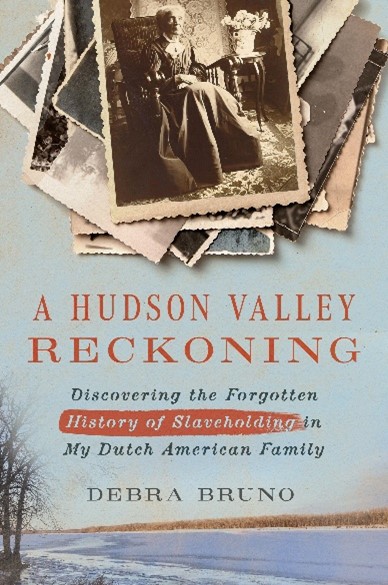
    Book Review: A Hudson Valley Reckoning: Discovering the Forgotten History of Slaveholding in My Dutch American Family

    For many, slavery in the North is nothing but a long-ago memory, a story that is often untold due to the cruelties of enslavement in the South and the long-lasting impact of enslavement in the Southern part of the United States. The general public is not always aware of the enslavement of African people in the North with only recent discoveries being brought to light. A Hudson Valley Reckoning: Discovering the Forgotten History of Slaveholding in My Dutch American Family showcases the stories of enslaved people who lived in Greene County, New York. The author, Debra Bruno, offers a new perspective on the enslaved in New York by exploring her own lineage and that of a distant cousin named Eleanor.

    In this thirteen-chapter narrative, Bruno tells the story of her slave-holding Dutch family and the connection between her relatives and those who they might have enslaved. Eleanor is a descendant of the individuals whom Bruno’s family enslaved. Bruno discusses how historians, politicians, journalists, and every day people have erased significant features of enslavement in the North and painted a quaint picture of enslaved people helping the Dutch with their farms, houses, and livestock. Bruno, however, provides a much clearer picture of the reality of slavery in Dutch New York. She visited Macon, Georgia, and Curacao as she dug deeper into her family’s history.

    In the introduction, Bruno describes her upbringing and the proud nature of her family’s Dutch heritage. She draws the reader in by describing her hometown of Athens and Coxsackie, places located along the Hudson River. Her American family began with Lambert Van Valkenburg, who settled in New Amsterdam in the early 1600s and later sold this land relocated on the North River, now the Hudson River. Her ancestor originally owned land in New Amsterdam where the where Empire State Building is located.

    While digging into the history of her family, Bruno decided to explore whether they were enslavers. Bruno used Ancestry.com where she found various records including newspaper clippings, census data, photographs, and wills. Valkenburg did not provide significant results, so she searched under Collier, her grandmother’s family name. Bruno found a will from what would be her Great Grandfather five times back. He had many children and grandchildren around the Coxsackie area and left a will bequeathing much of his property to them. As Bruno combed through the pages of the will she saw it, “detailed like inventory along with his property and cows were slaves” (6).

    Chapter four illustrates enslavement in the North with an analysis of a painting. “Van Bergen Overmantel” was commissioned by the Van Bergen family in the early 1700s to hang in the family home. It depicted what life was like in 18th century Hudson Valley and “is the first visual evidence of slavery on a New York farm” (56). According to Bruno, in 1714 Coxsackie’s population was 21% enslaved people. and by the 1790s in places such as Brooklyn, New York that number went up to 30%. In the late 18th century New York had an enslaved population of 319,000 enslaved people.

    In the following chapters Bruno describes the challenges she faced in finding sources from the enslaved that could detail what their life was like on these farms. She notes that they were threatened with being sold down South or the Caribbean, some ran away killing their masters in the escape, and these details just go to show that enslaved life in the North was not a cakewalk as some may think. Even after being emancipated, African Americans still struggled in New York as they fought their right to be citizens and gain full citizenship rights as discussed in chapter nine.

    In a discussion of why this history was so important to recover, Bruno emphasized that the Declaration of Independence and the Constitution, the nation’s founding documents, not grant the same freedoms to all people living on this land, and that individuals must “accept that only some people have benefited from their promises. To deny that and to distance ourselves from that truth is to misunderstand how our county grew, prospered, and exists today” (233.

    Governed by Despots: John Swanson Jacobs Chronicles Enslavement and Resistance

    (reprinted with permission from New York Almanack (https://www.newyorkalmanack.com/2024/12/john-swanson-jacobs-enslavement/)

    The University of Chicago Press recently published a unique account of an escape from enslavement in North Carolina decades before the Civil War. The United States Governed by Six Hundred Thousand Despots (2024) by John Swanson Jacobs tells of his escape from enslavement by North Carolina plantation owner and Congressional Representative Samuel Sawyer in 1838 while he and the slaveholder were in transit through the City of New York. Jacobs eventually made it to Australia where his story was published serially in 1855 by the Sydney Empire. It was later republished in 1861 in London, UK under the title “A True Tale of Slavery” by The Leisure Hour: A Family Journal of Instruction and Recreation. The 1861 version of Jacob’s story is available online at the website Documenting the American South.

    John Swanson Jacobs was born in 1815 in Edenton, North Carolina, the younger brother of his better-known sister Harriet Jacobs, author of Incidents in the Life of a Slave Girl (1861). Harriet Jacobs originally published her book under the pseudonym Linda Brent, possibly to protect those who remained enslaved at home. In the book she referred to her brother John as “William” and Samuel Sawyer, the white father of her two children who “owned” both them and John, as “Mr. Sands.” John Swanson Jacobs, safely in Australia, published under his own name.

    In 1838, Sawyer traveled north because he and his fiancé planned to be married in Chicago, Illinois where she had family. He was able to bring an enslaved John Swanson Jacobs with him to New York State because although slavery had been abolished there in 1828, state law permitted enslavers visiting or residing in New York part-time to maintain slaves within their households for up to nine months. This statute was not repealed until 1841.

    The following is an excerpt from chapter 5 of A TRUE TALE OF SLAVERY that was published in The Leisure Hour: A Family Journal of Instruction and Recreation (No. 478–February 21, 1861). In this excerpt, Jahn Swanson Jacobs describes his escape from slavery while in New York City.

    “THE latter end of the third year after I was sold, my master was elected Member of Congress. I was ordered to get ready for Washington . . .  After my master had been there a short time, he went to board with Mrs. P—-, who had two young nieces here, to one of whom he was soon engaged to be married. As good luck would have it, this young lady had a sister living in Chicago, and no place would suit her like that to get married in . . . Everything was ready, and the hoped-for time came. He took his intended, and off we started for the West. When we were taking the boat at Baltimore for Philadelphia, he came up to me and said, “Call me Mr. Sawyer; and if anybody asks you who you are, and where you are going, tell them that you are a free man, and hired by me.”

    We stopped two or three days at the Niagara Falls; from thence we went to Buffalo, and took the boat for Chicago; Mr. Sawyer had been here but a few days before he was taken sick. In five weeks from the time of his arrival here, he was married and ready to leave for home. On our return, we went into Canada. Here I wanted to leave him, but there was my sister and a friend of mine at home in slavery . . . I tried to get a seaman’s protection from the English Custom-house, but could not without swearing to a lie, which I did not feel disposed to do.

    We left here for New York, where we stopped three or four days. I went to see some of my old friends from home, who I knew were living there. I told them that I wanted their advice. They knew me, they knew my master, and they knew my friends also. “Now tell me my duty,” said I. The answer was a very natural one, “Look out for yourself first.” I weighed the matter in my mind, and found the balance in favour of stopping. If I returned along with my master, I could do my sister no good, and could see no further chance of my own escape. I then set myself to work to get my clothes out of the Astor House Hotel, where we were stopping; I brought them out in small parcels, as if to be washed. This job being done, the next thing was to get my trunk to put them in. I went to Mr. Johnson’s shop, which was in sight of the Astor House Hotel, and told him that I wanted to get my trunk repaired.

    The next morning I took my trunk in my hand with me: when I went down, whom should I see at the foot of the steps but Mr. Sawyer? I walked up to him, and showed him a rip in the top of the trunk, opening it at the same time that he might see that I was not running off. He told me that I could change it, or get a new one if I liked. I thanked him, and told him we were very near home now, and with a little repair the old one would do. At this we parted. I got a friend to call and get my trunk, and pack up my things for me, that I might be able to get them at any minute. Mr. Sawyer told me to get everything of his in, and be ready to leave for home the next day. I went to all the places where I had carried anything of his, and where they were not done, I got their cards and left word for them to be ready by the next morning. What I had got were packed in his trunk; what I had not been able to get, there were the cards for them in his room.

    They dine at the Astor at three o’clock; they leave the room at four o’clock; at half-past four o’clock I was to be on board the boat for Providence. Being unable to write myself at that time, and unwilling to leave him in suspense, I got a friend to write as follows: — “Sir–I have left you, not to return; when I have got settled, I will give you further satisfaction. No longer yours, JOHN S. JACOB.”

    This note was to be put into the post-office in time for him to get it the next morning. I waited on him and his wife at dinner. As the town clock struck four, I left the room. I then went through to New Bedford, where I stopped for a few months . . . The lawyer I have quite a friendly feeling for, and would be pleased to meet him as a countryman and a brother, but not as a master.”

    Once free, John Swanson Jacobs moved to New England where he became an active abolitionist. His efforts took him to Rochester, New York and vicinity on a number of occasions and to New York City at least three times, in May 1849, October 1850, and July 1862. On May 11, 1849, the New York Herald printed an account of a speech by Jacobs at an American Anti-Slavery Society meeting where he called on attendees to make it “disreputable” for people who claimed to be Christians to hold other people in bondage. According to North Star on October 24, 1850, Jacobs spoke in New York City calling for active resistance to fugitive slave laws following the seizure of James “Hamlet” Hamilton by slavecatchers and on July 28, 1862, New York Independent reported on an interview with Jacobs where he recounted his experience as a cook on a British ship, with the support of British authorities in the Bahamas, that was attempting to enter the port of Charleston, South Carolina in violation of the federal blockade of Southern ports (252-258). Excerpts from these articles follow.

    “A slaveholder named Skinner, who was a skinner in every sense of the word, was in the habit of coming every year, to visit his brother, Re. Dr. Skinner, who . . . lived at 160 Green[e] street; and yet the baby-stealing, women-whipping tyrant never received a rebuke from his reverend brother, at whose table he sat . . . If anyone asked him what must be done to abolish slavery, his answer was, that it must cease to be respectable. They must make it disreputable, and then slaveholders would be ashamed of it . . . If they had less of religion, and more of Christianity, it would be all for the better” (252-254).

    “My colored brethren, if you have not sword, I say to you, sell your garments and buy one . . . I would, my friends, advise you to show a front to our tyrants, and arm yourselves; aye, I would advise the women to have their knives too . . . I advise you to trample on this bill, and I further advise you to let us go on immediately, and act like men” (256).

    “[A] very intelligent colored man, formerly a slave in North Carolina, but recently for several years a resident of England, called at our office the other day, and related facts showing that British vessels are stilled engaged in running our blockade, and that the British officials in the Bahamas are, if possible, more inimical to our Union than are the same class of people at home . . . He shipped as a cook on board the steamship Lloyds, at London . . . ‘for Havana and any of the West Indies Islands’ . . . the captain (Smith) announced to the crew that he designed to run the blockade before Charleston, and offered three months pay extra to such as would remain with the ship . . . Jacobs refused to go to Charleston at any price whatever, and demanded, what was his undoubted right, that he be sent home to London. After various efforts on the part of Capt. Smith to indure (sic) Jacobs to either go to Charleston or to settle and sign a satisfaction, he attempted coercion. He had Jacobs taken before a police magistrate to answer the charge of having deserted the ship . . . The law was all on the side of Jacobs, but the public sentiment of Nassau was so strongly against him, and in favor of the unlawful and contraband trade with the Rebels” (257-258).

    The John W. Jones Story

    Reprinted with permission from https://www.johnwjonesmuseum.org/the-john-w-jones-story

    John W. Jones became an active agent in the Underground Railroad in 1851. In 1854, the Northern Central railroad tracks from Williamsport, Pennsylvania to Elmira, New York were completed. Jones made an arrangement with Northern Central employees and hid the fugitives in the 4 o’clock “Freedom Baggage Car,” directly to Niagara Falls via Watkins Glen and Canandaigua. Most of Jones’s “baggage” eventually landed in St. Catharines, Ontario.

    By 1860, Jones aided in the escape of 800 runaway slaves. He usually received the fugitives in parties of six to ten, but there were times he found shelter for up to 30 men, women, and children a night. It is believed Jones sheltered many in his own home behind First Baptist Church. Of those 800, none were captured or returned to the South.

    Jones became the sexton for Woodlawn Cemetery in 1859. One of his primary roles was to bury each deceased Confederate soldier from the Elmira Prison Camp. Of the 2,973 prisoners who Jones buried, only seven are listed as unknown. Jones kept such precise records that on December 7, 1877, the federal government declared the burial site a national cemetery.

    Historically, the house was the private residence of John W. Jones and his family, changed ownership several times, and was last used as rental property that fell into disrepair. Condemned by the City of Elmira in 1997, Lucy Brown brought it to the public’s attention and with a group of concerned citizens, saved it from demolition. The building currently stands on Jones’ original farm property and the site will continue to be visually interpreted as a farm.

    The museum highlights the history of African Americans who settled in New York and the activity of local abolitionists, emphasizing Elmira’s role as the only regular agency and published station on the Underground Railroad between Philadelphia and St. Catharine’s, Canada, and explore Mr. Jones’ community involvement and his relationship with his contemporaries.

    John W. Jones was born a slave June 21, 1817, on a plantation south of Leesburg, Virginia. He was owned by the Ellzey family, an influential family who treated their slaves with perhaps more kindness than some plantation owners did. Miss Sarah (Sally) Ellzey was fond of John and was a good friend to him. But she was getting on in years and John was concerned about what would happen to him once she passed away.

    On June 3, 1844, at the age of 27, John fled north to the place his mother had told him about “where there is no slavery.” It took one month for John, his two half-brothers, George and Charles, and Jefferson Brown and John Smith from an adjoining estate to walk from Virginia to Elmira, New York, a distance of about 300 miles. The route they followed was part of the Underground Railroad coming up through Pennsylvania and into New York by way of Williamsport, Canton, Alba and South Creek. In South Creek they reached the farm of Dr. Nathaniel Smith, where they crawled into the hay mow of his immense barn and went to sleep, more dead than alive. They remained there over night. Mrs. Smith discovered them and cooked food and took it to them. This is the Mrs. Smith whose grave in Woodlawn Cemetery, just beyond the Langdon plot, always had fresh flowers on it and no one knew where they came from. After John Jones died, there were no more mysterious fresh flowers.

    John Jones was an ambitious man and never idle. The first thing he did when he arrived in Elmira was to offer to cut wood in exchange for 50¢ for Mrs. John Culp, Colonel John Hendy’s daughter. Another early job he took was in a tallow and candle store working for Seth Kelly. John wanted to get an education, but was refused at first because he was black. Judge Arial Standish Thurston befriended him, realized his potential and made it possible for him to receive an education – in fact, at the same school where before he had been turned down. As a result, John went to school in the winter and worked as janitor for Miss Clara Thurston’s school for young ladies on Main Street. In October, 1847, he was appointed sexton or caretaker of the first church building of the First Baptist Church that had been constituted in 1829 under the name of the Baptist Church of Southport and Elmira. The first members gathered in homes, but as the membership grew they met in a schoolhouse in Southport. By 1832, the membership had grown to the point where they decided to build their own church building. They were sold the piece of land where the Baptist Church still is today for $1.50 by Jeffrey and Elizabeth Wisner who were in-laws of the first pastor, Rev. Philander Gillett. The first building was a barn-like structure constructed at a cost of $954.

    By 1848, 16 years later, the Baptists had outgrown that building and decided to build something larger. The 1863 City Directory says this building was constructed of wood, stucco and cost $8000. Mr. Jones was sexton of this second church building for the 42 years that it was in existence.

    In 1854 he bought the “yellow house next to the church” from an Ezra Canfield for $500. Two years later, John Jones married Rachel Swails. Rachel’s brother was Stephen Swails, a Lieutenant in the 54th Massachusetts Regiment. If you have ever seen the movie Glory, you know the story of this famous regiment.

    By 1859, Jones was already very active in Underground Railroad work. An article in The Liberator (Boston) signed J.W. Jones, Sec. said: “Resolved, That we, the colored citizens of Elmira, do hereby form ourselves into a society for the purpose of protecting ourselves against those persons, [slave-catchers] prowling through different parts of this and other States since the passing of the diabolical act of Sept. 18th, 1850, which consigns freemen of other States to that awful state of brutality which the fiendish slaveholders of the Southern States think desirable for their colored brethren, but are not willing to try it themselves.”

    Arch Merrill said in his book on the UGRR, “Jones quietly took command of the Underground in Elmira, a gateway between the South and the North. It became the principal station on the ‘railroad’ between Philadelphia and the Canadian border. Jones worked closely with William Still, the chief Underground agent in Philadelphia, who forwarded parties of from six to 10 fugitives at a time to Elmira.

    “Jones had many allies in Elmira. Mrs. John Culp hid runaways in her home. Other Underground leaders were Jervis Langdon; Simeon Benjamin, the founder of Elmira College; Thomas Stanley Day; S. G. Andrus; John Selover; Riggs Watrous and others. The station master concealed as many as 30 slaves at one time in his home—exactly where, he never told. He carried on his operations so secretly that only the inner circle of abolitionists knew that in a decade he dispatched nearly 800 slaves to Canada. “John Jones demonstrated his winning ways in encouraging the railroad baggage men to stow away the hundreds of men, women, and children who were spirited away to freedom.

    “In 1854 the railroad from Williamsport to Elmira was completed and Jones received many more fugitives by train, to ship away in the 4 a.m. ‘Freedom Baggage Car,’ directly to Niagara Falls via Watkins Glen and Canandaigua, where the car was shifted to the New York Central. Most of Jones’s ‘baggage’ eventually landed in St. Catharine’s.”

    His house right next to the church was the UGRR station of which Mr. Jones was station master. I often wonder about his wife, Rachel, who never knew how many were coming for dinner. I have also wondered if on those nights when he had 30 or more people to hide, if the church building, which he had access to, gave them shelter. There is no record that tells us this, but still, I wonder.

    If you stand at the corner of West Church Street and Railroad Avenue and look north toward the Erie depot, you can envision the journey of the fugitives in the middle of the night as they go from Mr. Jones’s home, where the parking lot of First Baptist is now, up Railroad Avenue to the depot.


    Wm. Still’s book about the UGRR is full of stories by the actual people involved in the work. In October, 1855, a lady wrote to Still asking, “Please give me again the direction of Hiram Wilson and the friend in Elmira, Mr. Jones, I think.” [Still, page 40]

    Here is a letter written by John W. Jones to William Still:
    Elmira, June 6, 1860.
    Friend Wm Still:


    Challenges of Teaching African American History in Secondary Schools

    Imani Hinson, Romelo Green, Nefe Abamwa, and Adam Stevens presented on a panel at the 2025 conference of the American Historical Association. Hinson is a social studies teacher in the Howard County Maryland School District who formerly taught in Brooklyn and an item writer for the College Board AP African American Studies program. Green and Abamwa teach at Bellport High School in Suffolk County, New York and Stevens teaches at Brooklyn Technical High School. The session was chaired by April Francis-Taylor of Hofstra University and also included papers by Alan Singer of Hofstra University and Justin Williams of Uniondale High School.

    By Imani Hinson

    Each year I start my students off with a week of lessons to understand why we study history in the first place and to get students specifically to understand why varied viewpoints are so important. This year I had my students reflect on a quote from Maya Angelou and asked them why they thought some political leaders across the United States did not think African American history was important and why they thought this history was considered controversial.

    My students responded with the understanding that by learning history we can hope to not repeat it but also that learning this history does not aim to make individuals feel bad for the deeds done but rather understand the historical situations in which our country was founded and the continued history that is shaping the way our country is moving forward today. Despite the pain and suffering lived by many in this country, especially African Americans, it is important to uncover truths about our shared history. The APâ African American Studies curriculum provides students with a chance to do just that; tackle tough questions, tough realities, glean an understanding of the world that they live in today, and it gives them a chance to acknowledge a history that many of them have not learned before.

    The APâ curriculum has a fantastic starting place with the African Kingdoms of Mali, Songhai, the Hausa States, and more. Students are able to do a deep dive into the history of Africa that many of them had never been taught about before. A question I get often from my students is “Ms. Hinson why are we not taught this in World History or any other history class?” The truth is that a lot of this history was unknown or kept secret for many years. In my classroom, we delve into the nuances of this history so that students understand how it differs from the traditional documents and writings they usually learn about in Eurocentric history classes. I introduce them to griots and students learn that different cultures pass down history in different ways. Much of the early history we know from African civilizations was passed down orally making it much harder for historians to uncover truths about these societies.  My students learned that Christianity was in Africa before European arrival when they study about places such as Lalibela. They learn about trade starting in the 8th century along the East Coast of Africa that connect places with the Mediterranean region and Central and East Asia. Students uncover truths about the Great Zimbabwe and amazing structures, built not by Greeks or aliens, but by the local Zimbabwean people who garnered their wealth from the Indian Ocean trade routes. Timbuktu is not a fictional place, but a nation where trade, advanced institutions of knowledge, and wealth resided.

    Before being exposed to this curriculum, my students were taught that Africa was backward, a continent ripe for exploitation. They saw Africa, not as the birthplace of humanity with rich cultures, but rather a place that Europeans conquered and a continent that continues to have issues to this day.

    Challenging misleading notions continues as students learn about the African diaspora. Before being exposed to this curriculum, they believed African Americans had no culture and were only brought to the Americas for harsh work and enslavement because of the color of their skin. I overheard an exchange in my classroom in which one student of color was poking fun at another. A West African student asked another Black student, “Hey, where are you from?” The student responded, “Oh well, I am just Black.” The West African student laughed and said “Oh, I’m so sorry y’all don’t have any culture.” That was an eye-opening exchange. I joined the conversation and asked, “What do you mean by that?” The student explained that they never heard of any African American culture and that Black people did not know where they came from. The conversation continued:

    The sad reality is that so many of our students think this way. They believe that Black people are a people without history and this misleading notion really stems from the fact that we have not done a good job as a society to unpack these misconceptions. In some states they still teach that slavery was a benevolent work system where the enslaved learned important skills, sugarcoating the reality of what enslavement was. Why don’t students learn that there was slavery in New York and in other northern localities? Why don’t students learn that Free Blacks and people who escaped from slavery played a crucial role in the abolitionist movement and that African Americans have fought in every war in the United States even before its inception, that 200,000 Black soldiers and sailors fought in the Civil War to end slavery and the right to be full citizens of the nation of their birth?

    The hardest part about teaching APâ African American studies course is getting students to relearn the history that was taught to them over and over again since they entered school. Black people were slaves, the Civil War happened, Lincoln signed the Emancipation Proclamation, Reconstruction took place, African Americans got some rights, then skip to the Civil Rights Movement, and that’s Black history. But there is so much more to African American history. Students truly do not understand that African Americans as a people continuously strove to be accepted as valuable contributors to this great nation. Even when they were told to “go back to Africa,” they stayed and fought for equality. It is hard to teach history in a society that try to erase the African American past by making it seem Un-American to shed light on the contributions of Black people to this county.

    As a society we have prevented students of color from learning the truth about their heritage and culture and permitted all students to believe in a factionalized past. As a corrective, APâ African American studies is not just a class for students of color. Ideally, African and African American history should be interwoven into World History and United States history classes, not just relegated to an elective.  Black history truly is both World and U.S. history.

    It is challenging for many young people to see the correlation between history and the world that we live in today. I started a lesson on sugar being the driver for enslavement in the Americas showing students newspaper headlines discussing chocolate companies using child slave labor and asked students would they still eat chocolate knowing where it came from. Many of the students had to think long and hard about it, but eventually most of them confessed that “yes, they would still eat it.” After a gallery walk showing various documents about the correlation between sugar and enslavement and economics, we came back together to have a discussion. I asked my students how the legacies of sugar plantations and slavery continue to impact economic disparities and race relations today? A student raised her hand and said, “what we see is that enslaved people were working for free and that their enslavers were making loads of money because of their hard work.” I asked, “What does that mean for the Black community today?” Another student responded, “Well this means that many Black communities don’t have the same amount of money as white people because they got rich while we didn’t get anything.”

    Another student added, “Well that is the reason why so many Black people have struggled to make generational wealth. It is almost as if we started at a different place” and then another explained “they basically had a 300-year start.” This is the reality that people who criticize the APâ African American studies curriculum are afraid of students uncovering; uncovering how this history continues to play out in America today.

    Some people fear the acquisition of knowledge because they know that with knowledge can come change. The APâ African American studies course should not be labeled controversial or Un-American; in fact, it is the exact opposite. African Americans fought to be a part of this country and continue to fight for the country to stand true to its democratic values of all people having the right to life, liberty, and pursuit of happiness. The course does not blame students for the past but rather brings them into the conversation about how we can continue to hold America to its promise by including the history of all of the people who helped to build this great nation. Thank you.

    My name is Romelo Green. I am a social studies teacher in the South Country Central School District located on Long Island, Bellport, New York. I teach 11th-grade U.S. History & Government and 12th-grade AP U.S. Government & Politics. In both courses, African American history is a component of the course framework. Being a social studies teacher in the contemporary societal and political landscape presents various challenges. As historians and educators, we are entrusted with the responsibility of addressing topics that can often be sensitive and complex. It is imperative that we present these subjects in a balanced manner, offering to our students various perspectives. Many of these topics are deeply rooted in political discourse, requiring us to navigate these discussions with care.  Moreover, we face the ongoing challenge of countering the misinformation that our students see daily through various social media platforms. We also must remain informed about rapidly evolving current events. We must be equipped to respond to our students’ questions with a neutral stance. Additionally, it is essential for us to remain compliant with state standards, ensuring that we cover all mandated material effectively, and thereby preparing our students for state assessments.

    As an African American growing up, I did not hear many lessons pertaining to the deep roots of my own culture. This would include my high school and college experience. Many of the more nuanced topics in (African) American history were only brought to the surface for me once I became a teacher and began to conduct my own research, or through collegiate circles within my own department. This would include the Tulsa Race Massacre, the Haitian Revolution, the true history of policing in America, and the fact that Africans sold other Africans into slavery. I almost never heard of the achievements of African Americans except for the popular few who are always brought to light at certain points in American History (MLK, W.E.B Dubois, Malcolm X, etc…) The drastic omission from our curriculum and our textbooks leaves us with a very limited view of the African American experience.

    When we learn about our culture in a public setting, it is usually generalized and only discusses the traumatic experience of African Americans rather than highlighting the achievements of individuals representing our culture. In my school some of the teachers (who are here with us in the audience today) conducted a study using focus groups to try and create a more culturally responsive classroom. Through their research they found that students representing various cultural groups have high interest in learning more about their own culture, however, the students stated that when it is taught in the classroom it is either generalized or just taught wrong. In other words, they know more about their own culture than their teachers.

    What I see is that we have two factors at play.

    • Our students hunger for cultural knowledge.
    • Many teachers are unable to conduct such discourse freely and/or accurately.

    For example, the legacy of slavery, reconstruction, Jim Crow laws, and the Civil Rights Movement are pivotal components that require a sensitive and comprehensive examination. Inaccurate or incomplete teachings risk perpetuating misunderstandings and stereotypes. What we then need to do is find a balance where teachers are enabled to speak freely in the classroom providing students with facts and hard truths about historical cultural experiences. The students need to be inspired to think critically and be leaders of inquiry-based research. As such, the role of the teacher extends beyond mere instruction to include being a facilitator of dialogue, ensuring a supportive educational environment that encourages critical thinking and open discussion, while carefully steering conversations to be constructive rather than polarizing.

    A teacher’s freedom of speech in the classroom is one that is of great complexity, although we all have freedom of speech under the first amendment, our right to freedom of speech in educational settings is not absolute. The question then becomes what must we do as educators? With greater political pressure from the media, parents and the community, how do we still educate and fulfill the students’ drive for knowledge, while maintaining accordance with school or state policy? I think this is where we lean on our students and allow them to be leaders in the classroom. Allow our students to ask the questions and conduct the research, allow them to present information to each other and to hear the perspectives of their peers. As I mentioned our job is now to facilitate and ensure dialogue proceeds in a constructive manner. In order to do this successfully, our students need lessons on misinformation, fact-based research, and evaluating reliable sources. All of which is in alignment with NYS standards. Our teacher preparation programs also need modules on culturally responsive teaching, equipping our prospective teachers with the tools needed to navigate sensitive material respectfully and effectively.

    Lastly, professional development for educators is also essential. Teachers need training and resources to confidently navigate the difficult and often sensitive topics inherent in African American history. By investing in their development, schools can create more informed educators who are better equipped to address the diverse needs of their students.

    Good morning, my name is Nefe Abamwa. I teach 9th and 10th grade Global History, as well as Pre-AP World at Bellport High School on Long Island. Today’s panel is geared towards the challenges of teaching African American history and how to make the content more relevant. However, I believe it is also a part of a larger conversation on how to make the classroom culturally relevant as well.

    As a first-generation Nigerian-American, my culture has greatly shaped me. My parents immigrated from Nigeria to America in the 80’s and early 90’s for better employment opportunities. My father became an accountant for the NYC Comptroller’s Office, while my mother became an RN, ultimately practicing at Pilgrim State Psych Ward. They’ve always emphasized and instilled the value of education in my siblings and I. We were raised to view education as an essential tool for success and advancement. Nigerians often tend to joke that we have three options for careers; to either become a lawyer, doctor, or engineer. In our culture, an advancement in education and an outstanding career is nothing short of an expectation. Growing up in a household and with family where these values were the norm, you could understand the confusion I faced when I began to attend Amityville Public Schools. A district notoriously known for violence, poor academics and administration, and its low-income community.

    Throughout my educational career in Amityville, there were many issues I observed that made an impact on me, in regard to the staff and students. I noticed a cultural disconnect between teachers, who were predominantly white, and students, who were predominately black. I noticed that many of my peers did not value school and did not seem to understand, or care, that it could lead to endless opportunity and an escape from their environment. Lastly, the most impactful observation I noticed was that many students and staff were very ignorant and uneducated about African culture. Unfortunately, many of these observations continued to trend throughout my college, postgraduate, professional, and personal life overall. From interactions with colleagues, college professors, church members, peers, and most recently a NYSUT a union member; African culture and history tends to be stigmatized, stereotyped, and homogenized. As I faced these experiences, I would often have conversations with my parents unpacking these interactions and how disappointing it was to have these encounters so often. During these discussions, my parents would share their own experiences in America, where they too have faced racism and ignorance from people of all races, backgrounds, and levels of education.

    My cultural values and upbringing, compared to my educational experiences, inspired me at a very young age to go into education. I felt there was a strong need and lack of support for students in low-income communities that may not have proper guidance otherwise; I wanted to show students of color that there are opportunities beyond their environment; and I wanted to make the classroom experience more culturally relevant. I began to instill these changes during my student teaching assignment in a 6th grade classroom at Washington Middle School in Meriden, Connecticut. The demographics there were very similar to Amityville Public Schools, as were the observations I made initially throughout my primary and secondary educational experience. In my class, I began a daily segment at the beginning of the period called “Figure of the Day”. “Figure of the Day” started off as a daily 5-minute black history lesson, during Black History Month, after learning that students knew very little about any historical black figures. These 5-minute sessions would often unintentionally run over time due to the conversations and engagement it brought out of students. Soon enough, students were so intrigued, they would request people they wanted to learn more about. Eventually, that grew into wanting to conduct their own research and present their own projects. And it ended with us expanding “Figure of Day” to cover other races and cultures, well after Black History Month had ended. With each lesson presented, whether it was from me or their peers, I could tell each student found a connection, was inspired, and genuinely excited by what they were being taught because not only was it interesting, but very relatable. Many would go home and discuss what they learned with their parents and share more with their peers the following day.

    During my first year at Bellport High School in 2020, I taught my very first Global 10 class. To describe that experience as challenging would be an understatement. 10th graders and 6th graders are quite different, as you can imagine. And this was during covid. Half of my students were in person, half of them online and I’ve never met, and engagement was at an all-time low. That year I decided to conduct a project to reflect on revolutions, a prominent topic in Global 10. Throughout the year, students learn about many revolutions including the French, Haitian, and Latin American revolutions, as well as unifications such as the German and Italian. All of these movements highlight the effects of nationalism, or pride in one’s country or culture. I wanted to show that many of the issues that lead to revolutions still endure today. At the time, the #EndSARS movement was occurring in Nigeria. This was a campaign to stop police brutality led by the Nigerian youth and made international news. I felt learning about this movement was a great way to connect students to issues outside of America as well as bring awareness to some African culture and societies. Students watched a cover of Childish Gambino’s “This is America” called “This is Nigeria”, which highlights political, economic, and social issues Nigerians face. Then, my students produced questions to ask one of my cousins in Nigeria about his experience there. He was able to respond to the questions with a series of videos. Through this and document analysis, students realized many of their own experiences and issues were similar. Many were also surprised to learn that my cousin had an iPhone and could make videos. For these students, this project helped humanize a continent that is often seen as lesser than and irrelevant.

    Lastly, during the Imperialism unit, for Global 10, I emphasize the long-lasting effects of White Man’s Burden and eurocentrism, as many students are unaware of how these concepts influence many aspects of our lives. I include how these concepts have impacted the world’s view of anyone that is not a WASP. This is done through document analysis, where students study different events, letters, and political cartoons. I teach them to focus on tone, POV, and how images are portrayed. When conducting these lessons, it’s easier to find the British view of imperialism versus Africans. For African perspectives I use sources such as Jomo Kenyatta’s “Gentleman of the Jungle”, documentaries, primary documents, and my own parents and grandparents’ experiences of living in Nigeria and having government positions while under British occupation. We discussed how Europeans had many negative impacts, disregard and ignorance towards natives because they had different lifestyles and only cared for profit. We also study how ignorance and stereotypes play out in modern society, pop culture, and their own personal lives today. These activities often lead to discussions about common stereotypes and misconceptions about different races, cultures, and religions. When beginning these activities, students are often embarrassed and resistant to participate at first; but it opens up important dialogue about why it is dangerous to think that way. I find that not only are most students genuinely intrigued by history behind many of these misconceptions and stereotypes, but they often notice that these lasting impacts have affected them as well. What is most rewarding is when they are able to identify and call out these issues in their own lives and well after the lesson has been taught.

    As a social studies teacher that emphasizes cultural relevancy and providing different cultural perspectives, I fear retaliation, being silenced, or accused of pushing certain agendas. I believe teachers must maintain a certain level of academic freedom and it is an absolute necessity for students to learn how to have hard and constructive conversations without having to agree with one another, especially in today’s climate. Unfortunately, I never experienced a teacher that brought these things to my attention but, I was fortunate enough to have a support system and grow up in an environment where I had exposure, which then fostered my own curiosity. I would like to pay that forward and not only be a support and role model for students, but to help them make the connections and realize the importance of education.

    “Is Black resistance the highest form of Black excellence?” During Black history month the past few years this has been the focusing question in the Black history class I teach at Brooklyn Technical High School. By February we have been together since September, and the range of opinion on this question is wide. The room crackles with intellectual energy.  Scholarship and emotion combine to produce forceful arguments. Radical and conservative traditions contend. Outside the classroom we are saturated by a media environment where images of Black wealth are iconic, think Beyonce and Jay-Z. From time to time these Black images compete for our attention with images flowing out of what I’ll call a Black radical or activist tradition – think ‘End Racism’ appearing in NFL end zones or black screens on social media in the wake of the killing of George Floyd.

    Inside our K-12 school buildings Black achievement is generally embodied in homage to great Black individuals, our unspoken mission is to lift our students out of the working class into the middle class or to keep them firmly planted in the American middle class. We may even provide a platform for a handful to become truly rich, to achieve ‘generational wealth.’. This unspoken mission is shared by parents, and if we are being honest, we hold it as a mission for our own children as well.

    Our schooling involves an implicit renunciation of working-class life; under capitalism, workers are not winners. Yet workers are what most of our students will be. Black history in the United States is, by and large, the history of a working people. I have my students read passages from Barbara Fields’s seminal essay “Race, Slavery and Ideology in the United States.” Fields is careful to remind us that plantations in the American South existed to produce cotton first, not white supremacy. In small groups my students are taken aback by a passage that describes the numerous recollections of planters, overseers and enslaved persons of circumstances where the ‘smooth running’ of the plantation required the planter taking the word of the enslaved over that of the overseer, or of overseers being dismissed because of their management practices.

    The power of economic development and class goals continued after the end of slavery. During a century of Jim Crow, a Black middle class and Black elite clawed their way up out of economic precarity, even as state-sponsored and vigilante racist terror haunted them. In the post-Civil Rights Movement era, a Black middle class was consolidated.  In April of 1968 elite institutions threw open their doors to the Black in a cynical but consistent response to the mass uprisings after the shooting of Dr. Martin Luther King, Jr. in April of 1968.

    Should curriculum focus on the history of a Black elite? The tenets of ‘social history’ seek to ground historical investigation in the lived reality of the masses of the people, to get us away from understanding history as the work of ‘great men.’ When the masses are white, the rules of American racism have meant that we are studying a group that, over time, has experienced great chances for uplift, for rising in social status. Social history of the white working-class rests on a certain implicit substrate of hope. The problem in Black history is that for the whole era of slavery and much of the period after that ‘hopeful narrative’ is by definition closed.

    This continent would not house a world power if it were not for the stolen  labor and amassed capital of the slavery era. Silence on slavery and its afterlife suits a ruling class that would have us forget this one fact. This is why the hysteria over Critical Race Theory. Forget slavery. Forget Jim Crow. Forget George Floyd. The U.S. ruling class knows what they did to get where they are, what they do to stay there, and they don’t want the next generation being reminded of it.

    In the face of these stark facts of history and given the political headwinds, teaching of Jim Crow by retreating into the salve of figures of Black Excellence such as Madam CJ Walker feels safer not just in the face of conservative school boards, but as a way to boost the morale of a room where the course material can otherwise feel like a catalogue of Black suffering. Of course, by neglecting struggle, we don’t know what to do with Nat Turner, let alone John Brown, or Paul Robeson, or Claudia Jones, or W.E.B. DuBois.

    That’s why historians and teachers matter so much. We need historians and teachers who can foreground the majesty of the Black struggle for liberation, for justice. We need historians and teachers who invite us to have pride in the broad masses of our ancestors, not just the elites. We grasp intuitively, perhaps, that it was the action of these broad masses that formed the motive force behind every great liberation movement of our history.  Black history as hero worship of great leaders disempowers every student who can’t see themselves becoming the next Martin Luther King. This problem is one that King grappled with himself on the day he died, there in Memphis, binding himself more closely to the cause of the sanitation workers of that city. He was building a Poor People’s Movement with a strong anti-imperialist element. The images of those Black workers with signs reading “I Am a Man” are iconic but they are iconic as protesters, not just as workers.

    Eugene Genovese (Roll, Jordan Roll, Book Three, Part Two) helps my students understand slavery as a world where far more choice was exercised by the enslaved than we are given to imagine. I teach the returning veterans from World War I and World War II whose refusal to accept the business as usual of Jim Crow. Their energy gave birth to a Harlem Renaissance and a Civil Rights Movement. To see Black workers gathered in their masses, politicized, in motion against racism as the most powerful force in history, to see honor and glory in joining such a movement, this is an alternative view of Black Excellence and approach to curriculum. Teaching the struggles of ordinary Black people for dignity and equality is the curriculum focus we need to empower our students to survive and defeat the growing threats of fascism and war and to avert climate disaster. 


    Governed by Despots: John Swanson Jacobs Chronicles Enslavement and Resistance

    The University of Chicago Press recently published a unique account of an escape from enslavement in North Carolina decades before the Civil War. The United States Governed by Six Hundred Thousand Despots (2024) by John Swanson Jacobs tells of his escape from enslavement by North Carolina plantation owner and Congressional Representative Samuel Sawyer in 1838 while he and the slaveholder were in transit through the City of New York. Jacobs eventually made it to Australia where his story was published serially in 1855 by the Sydney Empire. It was later republished in 1861 in London, UK under the title “A True Tale of Slavery” by The Leisure Hour: A Family Journal of Instruction and Recreation. The 1861 version of Jacob’s story is available online at the website Documenting the American South.

    John Swanson Jacobs was born in 1815 in Edenton, North Carolina, the younger brother of his better-known sister Harriet Jacobs, author of Incidents in the Life of a Slave Girl (1861). Harriet Jacobs originally published her book under the pseudonym Linda Brent, possibly to protect those who remained enslaved at home. In the book she referred to her brother John as “William” and Samuel Sawyer, the white father of her two children who “owned” both them and John, as “Mr. Sands.” John Swanson Jacobs, safely in Australia, published under his own name.

    In 1838, Sawyer traveled north because he and his fiancé planned to be married in Chicago, Illinois where she had family. He was able to bring an enslaved John Swanson Jacobs with him to New York State because although slavery had been abolished there in 1828, state law permitted enslavers visiting or residing in New York part-time to maintain slaves within their households for up to nine months. This statute was not repealed until 1841.

    The following is an excerpt from chapter 5 of A TRUE TALE OF SLAVERY that was published in The Leisure Hour: A Family Journal of Instruction and Recreation (No. 478–February 21, 1861). In this excerpt, Jahn Swanson Jacobs describes his escape from slavery while in New York City.

    “THE latter end of the third year after I was sold, my master was elected Member of Congress. I was ordered to get ready for Washington . . .  After my master had been there a short time, he went to board with Mrs. P—-, who had two young nieces here, to one of whom he was soon engaged to be married. As good luck would have it, this young lady had a sister living in Chicago, and no place would suit her like that to get married in . . . Everything was ready, and the hoped-for time came. He took his intended, and off we started for the West. When we were taking the boat at Baltimore for Philadelphia, he came up to me and said, “Call me Mr. Sawyer; and if anybody asks you who you are, and where you are going, tell them that you are a free man, and hired by me.”

    We stopped two or three days at the Niagara Falls; from thence we went to Buffalo, and took the boat for Chicago; Mr. Sawyer had been here but a few days before he was taken sick. In five weeks from the time of his arrival here, he was married and ready to leave for home. On our return, we went into Canada. Here I wanted to leave him, but there was my sister and a friend of mine at home in slavery . . . I tried to get a seaman’s protection from the English Custom-house, but could not without swearing to a lie, which I did not feel disposed to do.

    We left here for New York, where we stopped three or four days. I went to see some of my old friends from home, who I knew were living there. I told them that I wanted their advice. They knew me, they knew my master, and they knew my friends also. “Now tell me my duty,” said I. The answer was a very natural one, “Look out for yourself first.” I weighed the matter in my mind, and found the balance in favour of stopping. If I returned along with my master, I could do my sister no good, and could see no further chance of my own escape. I then set myself to work to get my clothes out of the Astor House Hotel, where we were stopping; I brought them out in small parcels, as if to be washed. This job being done, the next thing was to get my trunk to put them in. I went to Mr. Johnson’s shop, which was in sight of the Astor House Hotel, and told him that I wanted to get my trunk repaired.

    The next morning I took my trunk in my hand with me: when I went down, whom should I see at the foot of the steps but Mr. Sawyer? I walked up to him, and showed him a rip in the top of the trunk, opening it at the same time that he might see that I was not running off. He told me that I could change it, or get a new one if I liked. I thanked him, and told him we were very near home now, and with a little repair the old one would do. At this we parted. I got a friend to call and get my trunk, and pack up my things for me, that I might be able to get them at any minute. Mr. Sawyer told me to get everything of his in, and be ready to leave for home the next day. I went to all the places where I had carried anything of his, and where they were not done, I got their cards and left word for them to be ready by the next morning. What I had got were packed in his trunk; what I had not been able to get, there were the cards for them in his room.

    They dine at the Astor at three o’clock; they leave the room at four o’clock; at half-past four o’clock I was to be on board the boat for Providence. Being unable to write myself at that time, and unwilling to leave him in suspense, I got a friend to write as follows: — “Sir–I have left you, not to return; when I have got settled, I will give you further satisfaction. No longer yours, JOHN S. JACOB.”


    This note was to be put into the post-office in time for him to get it the next morning. I waited on him and his wife at dinner. As the town clock struck four, I left the room. I then went through to New Bedford, where I stopped for a few months . . . The lawyer I have quite a friendly feeling for, and would be pleased to meet him as a countryman and a brother, but not as a master.”

    Once free, John Swanson Jacobs moved to New England where he became an active abolitionist. His efforts took him to Rochester, New York and vicinity on a number of occasions and to New York City at least three times, in May 1849, October 1850, and July 1862. On May 11, 1849, the New York Herald printed an account of a speech by Jacobs at an American Anti-Slavery Society meeting where he called on attendees to make it “disreputable” for people who claimed to be Christians to hold other people in bondage. According to North Star on October 24, 1850, Jacobs spoke in New York City calling for active resistance to fugitive slave laws following the seizure of James “Hamlet” Hamilton by slavecatchers and on July 28, 1862, New York Independent reported on an interview with Jacobs where he recounted his experience as a cook on a British ship, with the support of British authorities in the Bahamas, that was attempting to enter the port of Charleston, South Carolina in violation of the federal blockade of Southern ports (252-258). Excerpts from these articles follow.

    American Anti-Slavery Society (New York Herald, May 11, 1849)

    Meeting of the Colored Citizens of New York (North Star, October 24, 1850)

    Running the Blockade (New York Independent, July 28, 1862)

    “[A] very intelligent colored man, formerly a slave in North Carolina, but recently for several years a resident of England, called at our office the other day, and related facts showing that British vessels are stilled engaged in running our blockade, and that the British officials in the Bahamas are, if possible, more inimical to our Union than are the same class of people at home . . . He shipped as a cook on board the steamship Lloyds, at London . . . ‘for Havana and any of the West Indies Islands’ . . . the captain (Smith) announced to the crew that he designed to run the blockade before Charleston, and offered three months pay extra to such as would remain with the ship . . . Jacobs refused to go to Charleston at any price whatever, and demanded, what was his undoubted right, that he be sent home to London. After various efforts on the part of Capt. Smith to indure (sic) Jacobs to either go to Charleston or to settle and sign a satisfaction, he attempted coercion. He had Jacobs taken before a police magistrate to answer the charge of having deserted the ship . . . The law was all on the side of Jacobs, but the public sentiment of Nassau was so strongly against him, and in favor of the unlawful and contraband trade with the Rebels” (257-258).