Proven Climate Solutions: Leading Voices on How to Accelerate Change
Edited by BF Nagy
Reviewed by Hank Bitten, NJCSS Executive Director
Our world made a monumental change during the Industrial Revolution when homes and buildings converted from wood-burning fireplaces to coal and oil furnaces allowing for heat and hot water. This change came 4,000 years after the invention of fire and revolutionized the way people live. Eventually, it brought electricity and light into their homes. Every aspect of home life became more efficient than it had been when people split wood for fireplaces.
Around 1950 the world converted to natural gas. As a young boy I shoveled coal into the two furnaces in our basement around 6:00 a.m. each morning. In 1957, I remember the backhoes and tractors digging up our Paterson, N.J. street to install natural gas lines. By 1970, most areas of New Jersey were using natural gas for heating and cooking. This change took about 20 years.
By 2,000, we began to realize that combustion engines and fossil fuels were harming our environment and were a cause of respiratory and cancer-related deaths. We understood that “natural” gas was not natural because the release of methane was even more harmful than the soot and smoke from coal and oil. We began to look for new sources of energy in solar, wind, nuclear, biomass, geothermal, tidal, and hydrogen.
From the perspective of a social studies educator, our students need to focus on the solutions to these problems. Proven Climate Solutions includes nineteen concise chapters that take less than ten minutes to read. Each chapter provides a solution on the technology, economics, and empirical examples of how and where they are working. For teachers who use classroom debates or a simulated congress, the chapters in the book provide information on the advantages of solar and wind over every other source of renewable energy!
An example of factual information for a classroom debate is in the chapter, “Opportunity Costs and Distractions” by BF Nagy, editor of this book. Here are some examples:
“In 2022, massive leaks of oil in Thailand, Peru, Ecuador, and Nigeria led to explosions, fatalities, fires, and extensive water pollution.” (Page 50)
“The world’s biggest tanker containing 1.1 million barrels of oil began leaking after being abandoned in the Red Sea near Yemen by a Chevron subsidiary.” (Page 50)
“In 2023, Massachusetts state regulators denied a permit modification that would allow discharge of more than one million gallons of toxic wastewater into cape Code Bay.” (Page 50)
“Nuclear power costs about $180 per megawatt/hour compared with $50 for wind and $60 for solar.” (Page 51)
“Just two generations ago, in 1979, the United States built the Runit Dome in the Marshall Islands. Below an eighteen-inch concrete cap, they stored 111,000 cubic yards of radioactive debris from twelve years of nuclear tests. It is already cracking and leaking into the sea.” (Page 52)
The chapter on VPP (Virtual Power Plants) fascinated me because I had never heard about them. As I learned more about the need to use a decentralized electric grid and the technology that is making this feasible, I realized the connections for students in their lessons on the Industrial Revolution and the efficiency of how VPP and DERs (Distributed Energy Resources) are making a difference in our economy and environment. In addition, they foster community engagement and shared resources.
The information on artificial intelligence in constructing pre-fab housing units, passive house designs meeting low carbon standards, virtual power plants, and the recent research on battery technology will engage students in thinking ten years into the future. The possibilities of airplanes and homes powered by batteries is transformative in the ways we are currently conditioned to think about travel, energy, and home heating systems.
“Sendero Verde means ‘green path’ and is among the signature achievements of two brilliant women: engineer Lois A. from Steven Winter Associates and architect Deborah M. from Handel Architects.
The duo designed Sendero Verde within the confines of an affordable housing budget, and their companies also collaborated on The House, a twenty-six story passive house certified student residence for Cornell University’s tech school on New York’s Roosevelt Island. Another of their projects is the massive fifty-three story Winthrop Center in Boston, which in the early 2020s, was considered the biggest passive house office project in the world.” (Page 110)
“The House” Cornell University’s Student Residence using a Passive House design.
Teachers who use an interdisciplinary approach will find helpful research on the new carbon sinks being formed as the ice caps are melting. These polar foodwebs are helpful as deforestation has reduced the amount of carbon being absorbed by rainforests. The information on biodiversity and the impact of how our planet is adapting to a warmer climate with melting ice is an area of research that students should find interesting.
“Less than half of all carbon captured by polar phytoplankton or macro algae is stored in foodwebs, and nearly all the rest is recycled into the water column by bacteria in what is termed the microbial loop (rotting). Vast numbers and biomass of water column (pelagic) zooplankton, such as copepods or krill, which are shrimp-like crustaceans, store much of this carbon.” (Page 136)
Perhaps the most informative chapter in this book is titled “Circular Food Systems: Feeding the Urban World” because it identifies small innovative companies that are implementing important solutions. Examples for students to research include the White Moustache Yogurt Company, Back of the Yards Algae Sciences, Spare Foods Company, LivinGreen, Evergrain, TripleWin, and Portland Pet Center. When I was a 16-year-old high school student, my Earth Science teacher’s lesson about the impact of the end of civilization as we knew it with the birth of the 3 billionth person had a lasting impact on me. In just ten years, the world’s population will be 9 billion and in 2050 it will likely be 10 billion. As the population increases, the urban density will also increase from 55 percent today to 63 percent by 2050 and provide an urgent need to reduce greenhouse gas emissions. Solutions are needed!
Year
Population
Net Change
Density (P/Km²)
2025
8,231,613,070
69,640,498
55
2026
8,300,678,395
69,065,325
56
2027
8,369,094,344
68,415,949
56
2028
8,436,618,886
67,524,542
57
2029
8,503,285,323
66,666,437
57
2030
8,569,124,911
65,839,588
58
Students need to understand how hydroponic agriculture and circular food systems can sustain life on our planet in the future. Our current dependence on rice, wheat, soybeans, and corn contribute significant amounts of carbon and methane into our atmosphere through their production and distribution. The current agricultural revolution needs to produce food in urban areas and reduce food waste. Source
“The food system we have in place today, one we have nurtured for a half-century and that produces some 43 percent of the world’s calorie supply, is itself in jeopardy due to the growing climate crisis, rising temperatures and prolonged droughts are withering crops; frequent floods are destroying them. The reliance on intensive farming practices such as tilling and heavy fertilizer and pesticide use robs the soils of their productivity, jeopardizing yields necessary to continue feeding rising populations.” (Page 150)
An important thread throughout this book is that proven climate solutions are likely to be local. Heating and electric power will be de-centralized, food production will be on urban rooftops and in parks, and transportation will be redesigned. The school curriculum needs to include case studies from urban ‘smart’ cities. One suggestion for the next edition of Proven Climate Solutions might be to include information on the importance of recycling clothing.
Lesson Activity by Hank Bitten, NJCSS Executive Director
It is important for students to understand the constitutional procedures for the transfer of power in the event of the death or physical or mental incapacity of the president. The 25th amendment has been invoked three times since its ratification in 1967. Section 2 was invoked twice, and Section 3 was invoked once in 1981.
1973 Resignation of V.P. Spiro Agnew (R) when both houses approved Gerald Ford (R) as Vice-President
1974 Resignation of President Richard Nixon when V.P. Gerald Ford (R) became President and both houses approved Nelson Rockefeller (R) as Vice-President.
1981 Surgery for President Ronald Reagan following a gunshot wound.
Essential Question: Does the 25th Amendment provide a transition of presidential power from one person to another without being challenged?
Read Section 2 of the 25th Amendment and discuss the following scenarios:
Section 2
“Whenever there is a vacancy in the office of the Vice President, the President shall nominate a Vice President who shall take office upon confirmation by a majority vote of both Houses of Congress.”
Scenario A:President Trump passes unexpectedly, and Vice-President J.D. Vance becomes President under Section 1 of the 25th Amendment.
Who should President Vance nominate as the new Vice-President? (Member of Congress, Governor, Cabinet Secretary, someone from the media, business executive, etc.)
Speaker of the House Mike Johnson (Since Rep. Johnson is not able to vote for himself, the Republican majority is 219 with 218 votes required for a majority).
If Rep. Mike is not elected by the House, would the election of someone from the Democratic Party be accepted?
119th Congress, Senate (2025–2027) 51 votes needed for a majority.
119th Congress, House (2025–2027) 218 votes needed for a majority.
Majority Party: Republicans (220 seats)
Minority Party: Democrats (215 seats)
Other Parties: 2 Independents (Caucus with Democrats)
Total Seats: 435
Scenario B:President Trump passes unexpectedly between the 2026 Midterm Elections and the meeting of the new Congress on January 3, 2027.and Vice-President J.D. Vance becomes President under Section 1 of the 25th Amendment.
Who should President Vance nominate as the new Vice-President if the Democratic Party controls either the House or the Senate?
Should the current Congress (House and Senate) that was meeting at the time the Vice-President became President continue until a Vice-President was selected or should the newly elected Congress vote on the candidate?
Scenario C: Who should President Vance nominate as the new Vice-President if the Democratic Party controls both the House and the Senate?
Is there a Republican who would be acceptable to a majority of Democratic representatives in both houses?
What would happen if President Vance refused to nominate a Vice-President?
If we do not have a Vice-President and if the Speaker of the House is a Democrat but the Senate Majority Leader a Republican, should the person next in line to succession as president be the Speaker of the House as current law states or should the presidency go to the Majority Leader in the Senate who is from the same political party as the President?
Scenario D: If there is no Vice-President, would it be possible under Section 4 to declare that President Vance was unable to discharge the powers and duties of his office? (in the event of a physical, emotional, or mental incapacity.)
Section 4:
Whenever the Vice President and a majority of either the principal officers of the executive departments or of such other body as Congress may by law provide, transmit to the President pro tempore of the Senate and the Speaker of the House of Representatives their written declaration that the President is unable to discharge the powers and duties of his office, the Vice President shall immediately assume the powers and duties of the office as Acting President.
What ‘other body’ should Congress select?
If the Speaker of the House is a Democrat and the person next in line to become Acting President, could this be challenged if the Majority Leader in the Senate was a Republican (same party as President Vance)?
If a Democrat becomes Acting President, could this person fire all members of the Vance Cabinet and replace them with new officers consistent with his/her political party? (Democrat) Would this be challenged?
“In a purely legal sense, as Acting President, the Vice President can employ all the powers and tools of the office of the president. Historians have characterized the Acting President as playing “a critical role as decisionmaker,” and “tak[ing] care of the day-to-day business” of the White House. The Acting President has the constitutional authority to “move the troops, report on the State of the Union, propose a new budget, send judicial nominees to the Senate for confirmation, remove the secretary of the treasury, do virtually all the things that presidents do. He might even prepare to control his national party apparatus and to secure its presidential nomination.” (Page 44)
“Senator Bayh responded by noting that the Vice President does “not have the office of President but that of Acting President. He does not get the full powers and duties of the office of President unabated. He is Acting President.”
Setting this symbolic distinction aside, the Acting President would be constitutionally empowered to conduct the same acts as the President. In the floor debate in the Senate, for instance, Senator Bayh expressed his belief that the Vice President acting as President would be able to fire and appoint cabinet officials. When Senator Hart expressed concern that a Vice President acting as President would remove cabinet members to “consolidate[] his position” as Acting President, Senator Bayh admitted that this concern was legitimate, but declared, “we do not want a Vice President who is acting in good cause, say, for example, in a 3-year term of office, being unable to reappoint Cabinet members who may have died or resigned.” (Page 71)
Scenario 5: President Vance continually frustrates both Houses of Congress with a nomination for Vice-President.
According to the following statement from the Yale Law Reader’s Guide, could President Vance be impeached? From Yale University
“Depending on the circumstances, actions taken by the President or other officials to frustrate the Twenty-Fifth Amendment process may constitute an impeachable offense.” (page 8)
The 25th Amendment
Section 1
In case of the removal of the President from office or of his death or resignation, the Vice President shall become President.
Section 2
Whenever there is a vacancy in the office of the Vice President, the President shall nominate a Vice President who shall take office upon confirmation by a majority vote of both Houses of Congress.
Section 3
Whenever the President transmits to the President pro tempore of the Senate and the Speaker of the House of Representatives his written declaration that he is unable to discharge the powers and duties of his office, and until he transmits to them a written declaration to the contrary, such powers and duties shall be discharged by the Vice President as Acting President.
Section 4
Whenever the Vice President and a majority of either the principal officers of the executive departments or of such other body as Congress may by law provide, transmit to the President pro tempore of the Senate and the Speaker of the House of Representatives their written declaration that the President is unable to discharge the powers and duties of his office, the Vice President shall immediately assume the powers and duties of the office as Acting President.
Thereafter, when the President transmits to the President pro tempore of the Senate and the Speaker of the House of Representatives his written declaration that no inability exists, he shall resume the powers and duties of his office unless the Vice President and a majority of either the principal officers of the executive department or of such other body as Congress may by law provide, transmit within four days to the President pro tempore of the Senate and the Speaker of the House of Representatives their written declaration that the President is unable to discharge the powers and duties of his office. Thereupon Congress shall decide the issue, assembling within forty-eight hours for that purpose if not in session. If the Congress, within twenty-one days after receipt of the latter written declaration, or, if Congress is not in session, within twenty-one days after Congress is required to assemble, determines by two-thirds vote of both Houses that the President is unable to discharge the powers and duties of his office, the Vice President shall continue to discharge the same as Acting President; otherwise, the President shall resume the powers and duties of his office.
Erasing History: How Fascists Rewrite the Past to Control the Future by Jason Stanley (Simon & Schuster, 2024)
Review by Alan Singer
Although it was published prior to the 2024 Presidential election, Erasing History serves well as Jason Stanley’s response to the patriotic history being promoted by the Trump 2.0 administration. Stanley was a Professor of Philosophy at Yale University, but he recently announced that he accepted an appointment to the University of Toronto in Canada because of the deteriorating political situation in the United States. His previous books include How Propaganda Works (2015) and How Fascism Works (2018).
In the Preface to the book, Stanley argues “One lesson the past century has taught us that authoritarian regimes often find history profoundly threatening. At every opportunity, these regimes find ways of erasing or concealing history in order to consolidate their power.” Democracy, on the other hand, “requires recognition of a shared reality that consists of multiple perspective” so that “citizens learn to regard one another as equal contributors to a national narrative . . . Erasing history helps authoritarians because doing so allows them to misrepresent it as a single story,” their preferred story.
Social studies teachers are crucial players in the battle to protect democracy because we insist that students examine multiple perspectives and reach conclusions based on evidence and discussion (xi-x). Russia Premier Vladimir Putin recognizes the danger teachers pose to authoritarian regimes and has declared “Wars are won by teachers.” Under Putin, and now under Trump, history classes are supposed to stress patriotism and textbooks are rewritten to whitewash the past (Illyushina, 2024).
Stanley acknowledges that every educational system must decide what is important to know and be able to explain why because a school curriculum cannot include all knowledge. What authoritarian regimes do is erase from the curriculum evidence that people can struggle for change and social justice so that people are willing to accept an unsatisfactory status quo as the only possible circumstance. That is why China’s government outlawed teaching about the 1989 pro-democracy Tiananmen Square protests and Florida wants to block discussion of reasons for the Black Lives Matter movement in the United States. “By removing the history of uprisings against the current status quo from the curriculum (or never allowing that history to be taught in the first place) authoritarians leave students with the impression that the status quo has never been and cannot be challenged (xx-xxi).”
Chapters include “How to Create an Autocracy”; “Colonizing the Mind”;” “The Nationalist Project”; “From Supremacism to Fascism”; “Anti-education”; and “Reclaiming History.” Throughout the book, Stanley draws comparisons between past nativist and racist movements in the United States, the Nazi ascendency in Germany, and MAGA authoritarianism in the United States today.
Attacks on universities are a key component of the fascist agenda to erase history and undermine democracy. In contemporary Russia, India, Hungary, and Turkey rightwing politicians and autocratic leaders have sought to destroy academic independence by branding faculty as enemies of the state and trying to mandate a preferred curriculum. A Fox New host quota by Stanley bemoaned that “Our universities have become lunatic incubators, which the federal government funds” (21). Stanley argues that there are similar trends in government attacks in these countries on K-12 education. He quotes W.E.B. DuBois that “Education for colonial people must inevitably mean unrest and revolt; education therefore had to be limited and used to inculcate obedience and servility” (25).
Stanly explains how curriculum and textbooks are used in “colonizing the mind.” As a high school teacher in the 1980s I taught an advanced United States history class using Bailey and Kennedy’s The American Pageant: A History of the Republic, 7th edition (Lexington, MA: D.C. Heath, 1983). Stanley includes a quote from the introduction legitimizing colonialism and genocide that I must have completely overlook and did not challenge. It is a statement that well summarizes major components of Trump’s “patriotic history.”
“The American Republic, which is still relatively young when compared with the Old World, was from the outset richly favored. It started from scratch on a vast and virgin continent, which was so sparsely populated by Indians that they could be eliminated or shouldered aside. Such a magnificent opportunity for great democratic experiment may never come again” (2).
However, it did not start from “scratch,” its early institutions and its white people were Europeans, and it definitely was not a “virgin” continent as the sentence acknowledges. What a “magnificent opportunity” to conduct a “great democratic experiment” by exterminating the indigenous population and importing a workforce of enslaved Africans. Hopefully it “may never come again.”
Stanley argues that a movement in the United States to stem the trend towards authoritarianism must reclaim history. That is why social studies teachers, whatever their political views, but because of their commitments to dialogue, evidence, critical thinking, and developing active citizens for a democratic society, are in the crucible of the battle for the hearts and minds of America’s future leaders and defining the kind of country this will become. We are the threat to authoritarianism.
For the book jacket, Congressman Jamie Raskin (D-Md) wrote Stanley that “shows how everything from the antisemitic Great Replacement Theory to the vilification of gay people and feminists to the promotion of myths of national purity and historical innocence all work to demolish democratic agency and freedom.” Stanley “leaves us with the sense that those who fight for the past can save the future.”
This is both a readable and invaluable book for teachers who are concerned about the impact of the Trump administration of the future of education in this country and the survival of democracy in America.
Clifford Case and the Challenge of Liberal Republicanism
By William R. Fernekes
Reviewed by Hank Bitten, NJCSS Executive Director
The first speech Rep. Clifford Case spoke on the floor of the U.S. Capitol on June 11, 1945, should be taught to every student studying World War II and the Civil Rights era. The speech is printed in the opening paragraphs and defines Clifford Case as a public servant and human rights advocate. His statement below was a response to the defense of poll taxes as a voting requirement by Congressman John E. Rankin (D) who advocated for the mass incarceration of Japanese Americans after Pearl Harbor, the mass deportation of Japanese Americans after the war, segregation, attacked Associate Justice Felix Frankfurter, questioned the patriotism of African Americans, and explicitly spoke of racial equality as a slippery slope leading to the end of the white man’s civilization on the planet.
“Mr. Chairman, I am native-born, white, a gentile-a Protestant. That I am these things entitles me to no special status or distinction. Indeed, I had no choice in any of them, except the last.”
“Mr. Chairman, no group in this country has a monopoly on patriotism. Men of all races, colors, and creeds, whether native-or foreign born, have equally sacrificed their lives or given the best years of their youth in this war. The casualty lists show that, as do the gold stars in the windows of homes, both high and humble, in every city, town, and hamlet, and on the farms throughout the land. I suppose there are not many Jews in the State of Mississippi, but I am convinced that their casualties are in proportion to their number in the population, as they are all over the country. And if that be not true of the Negroes, it is due, I am sure to no lack of courage or patriotism on their part, but rather to these two reasons: First, that, because of poverty and lack of equal educational and economic opportunity for generations, the percentage of Negro draft rejections on medical and mental grounds is far above the average for other groups. Second, that, to some extent, they may have been given noncombat service of one kind or another more often than most other groups. Obviously, both of these factors have been quite beyond the control of the Negroes themselves. I am sure the records of this war will vindicate fully the heroism of the Negro combat soldier.” (page 6)
Most students and teachers will have no prior knowledge of Clifford Case. I voted for him in 1972 in my first opportunity to cast a ballot for senator in New Jersey. Who is he and how did his career path lead him to be a public servant for the residents of New Jersey?
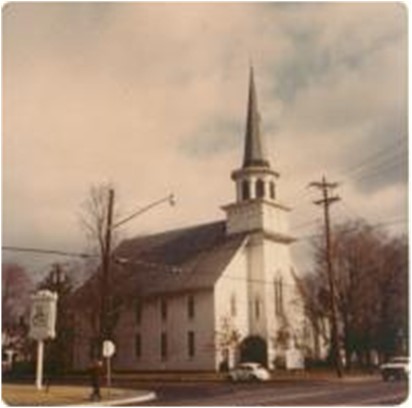
Clifford was a preacher’s kid, born in Franklin Park, a small community of farmers, craftsmen, and a few merchants. He was baptized in the historic Six Mile Run Reformed Church, where his father was the pastor. This church dates back to 1710.
His father accepted a call to the Second Reformed Church in Poughkeepsie, NY when he was three years old. Clifford attended the schools in Poughkeepsie. His father unexpectedly died of pneumonia in 1920, when Clifford was age 16 and a junior in high school. His father’s church would merge with the First Reformed Church in Poughkeepsie in 1923, in a newly built church.
Rev. Clifford Case resigned as “Old First” pastor. At the first meeting of the new consistory on January 7 he was called as the pastor of the united congregations. Thus, the Mill Street or Second Reformed Church became the fifth house of worship of The Reformed Dutch Church of Poughkeepsie. Rev. Case remained its pastor until his death on March 7, 1920. His picture hangs at the entrance to the present Reformed Church’s ‘Case Chapel.’ (http://churches.rca.org/poughkeepsierc/Booklet2014A.pdf)
Clifford returned to New Jersey to attend Rutgers University where he enjoyed courses in civics, constitutional history, U.S. history, European history, and literature. He met Ruth Smith, from Linden, NJ, who was a student in the New Jersey College for Women at Rutgers (Douglass), where Barnard College graduate Mabel Smith Douglass was the Dean. They both enjoyed the music and dancing. (After all, this is the ‘Roaring 20’s!) The humor of Bill Fernekes, author, is captured through his interview with Mary Jane Weaver, Clifford and Ruth’s daughter.
“Arriving late “Buddy” Case was slightly embarrassed because his pants were split and he covered the tear with his music folder, a fact detected by the observant Ruth…. She (Ruth Case) would tell me the story of how she met this handsome, athletic Rutgers student, with a strong tenor singing voice. She would plan her departure from her dorm to coincide with him.” (page 14)
Following Rutgers, Clifford attended Columbia Law School and Ruth taught English at Linden High School. They were married in July 1928 and honeymooned in Europe. Columbia law curriculum was unique with its emphasis on interdisciplinary courses and an understanding of the social problems in society. Following his graduation, he joined the law firm of Thatcher, Simpson and Bartlett in Manhattan and worked with Cyrus Vance. Clifford and Ruth moved to Rahway and he commuted to work.
The biography written by Bill Fernekes provides insights into the power of the local and state political party ‘machine’ and why some politicians, like Clifford Case, take positions that are to the left or right of the center. It is a fascinating perspective on competitive democracy, the influence of the Hague machine in the Democratic Party in New Jersey, and the views of the media and residents regarding segregation, foreign policy, labor, health care, to identify a few of the public issues that Clifford Case held liberal Republican views.
His first election to the Rahway Council in 1937 was decided by 311 votes. (page 20) He advocated for transparency in local government and an end to the private caucuses between small groups of council members. The 1930’s was a difficult decade in the United States but in particular this was a time of prosperity for some in New Jersey and poverty for others who were without employment. Teachers in high school emphasize the Great Depression and the New Deal and this book provides some insight into the importance of local government. Rahway was a place for large manufacturing companies and a major station on the Pennsylvania RR. Clifford Case also served on the Board of Foreign missions for the Presbyterian Church, which gave him a valued perspective on the abuses faced by others living in a dangerous world.
Cherry Street in Rahway, NJ, circa, 1920
“Rahway’s municipal government established a separation between a mayor who oversaw daily city operations, and the Common Council, which set priorities, functioned in an oversight role regarding city operations, and provided resources for funding municipal operations and services. With Clifford P. Case and Sherman Lusk as the only two Republican council members, any influence they desired would require coalition building with Democrats.” (page 21)
In 1941, Clifford Case campaigned in the primary election for the Republican Party nomination in the NJ Assembly. The Frank Hague political machine had a powerful influence in New Jersey, making it almost impossible for Republican candidates from northern New Jersey to win. Hague’s influence secured governors from the Democratic Party and Thomas Brogan as Chief Justice, who would dismiss challenges of election fraud at this time. Hague also influenced the candidates for local and state positions in the Republican Party. Although Case did not secure the Republican Party nomination in 1941, he prevailed in 1942. He understood the importance of campaigning on a personal level in towns in Union County, especially Cranford, Elizabeth, Hillside, New Providence, Roselle, and Westfield. The result was a victory with a margin of more than 16,000 votes.
The context of the information in the chapter, “Development of a Political Servant” is important for students studying political institutions and/or local New Jersey history during World War II because of its relevance to voter fraud issues, campaign strategies and promises, the use of voting machines, and the outcome of elections. The lessons in the past provide insight into how fragile democracy has been over time. Case’s term in the NJ Assembly resulted in significant legislation for civil service reforms certification for lawyers, and legal status for ride sharing, which became a necessity with fuel rations during World War II.
The depth of the research and perspective in this book is with the legislative decisions and sponsorships of Congressman and later Senator Clifford Case. The historic context of civil rights, segregation, anti-lynching, and labor bills provide important information for teachers regarding the teaching of these standards-based indicators for high school students. For teachers who are committed to historical inquiry and decision-making lessons, Clifford Case and The Challenge of Liberal Republicanism is a book that must be read! Let’s examine two case studies:
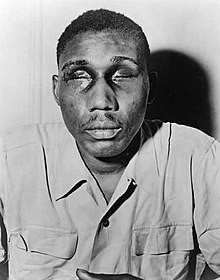
Segregation: The incident of Isaac Woodward (Woodard), a black World War II veteran, who was in his uniform, at a bus stop in Batesburg, South Carolina on February 12, 1946, motivated the first significant legislation proposed by Congressman Case in 1947.
“An especially vicious attack occurred in South Carolina in February 1946, when recently discharged army veteran Isaac Woodward was assaulted by a white sheriff and his deputy after having been pulled off an interstate bus when the driver complained Woodward took too much time during a restroom stop and quarreled with him.,. Woodward was removed from the bus, violently beaten by Sheriff Linwood Shull and his deputy, and permanently blinded when one of his attackers drove a blunt instrument into his eyes. Although tried before a federal court after the NAACP and celebrities such as Orson Welles made a cause celebre about the case, Shull was acquitted.” (page 41)
Although more than 200 federal anti-lynching bills have been introduced since 1918 none of them became a law. The Justice for Victims of Lynching Act of 2018, co-sponsored by NJ Senator Cory Booker and now V.P. Kamala Harris, finally became law in 2022. The Case bill introduced in 1948 (HR3488) is important because of the continuing relevance of this issue which has continued without agreement for over 140 years! Students need to understand the slow process of our Legislative Branch in reaching agreement on controversial issues such as guns, health care, rights of women, and other timely issues. The perspective below leads to historical inquiry in the classroom about continuity and change in history.
“While the legislative efforts of Case and other civil rights supporters generated more frustration than concrete results, their work and Truman’s Committee report were important. Historian Philp Dray stated that while ‘the Dixiecrats torpedoed many of Truman’s good works-the permanent FEPC antilynching legislation, and measures to end the poll tax, the Truman Committee’s report and recommendations, legislative proposals like Case’s bill, and related discussions and debates in the Congress shifted the national conversation about civil rights and racial equality. Dray argues Southern obstructionism to civil rights legislation reinforced the perception by many Americans the South was resistant to change, and lynchings, although less frequent, were now subject to ‘swift national denunciation,’ which ‘helped to convince many Americans that the South was once again carrying the country toward some form of cataclysm.’ Just a few years before the Brown v. Board of Education decision, the seeds of change regarding federal action on civil rights were planted by courageous legislators like Clifford P. Case.” (pp. 44,45) (Philip Dray is an Assistant Professor of History at the Eugene Lang College of Liberal Arts at the New School in New York City)
Clifford Case’s position as a congressman on the Taft Hartley Act provides an opportunity for students to understand the important labor issues of the 20th century. In our current service-sector economy the issues discussed on the classroom are likely a fair minimum wage, medical benefits, and the wage gap between men and women. In the middle of the 20th century, The Taft Hartley Act of 1947 was unpopular with labor and unions. The sponsors were Senator Robert Taft (R-Ohio) and Congressman Fred Hartley (R-New Jersey). New Jersey was a manufacturing state and unions were an important part of life for most families. After World War II there were shortages of many goods and prices were inflated. Unions used this time to expand their membership and there were frequent strikes and boycotts demanding higher pay and better benefits. After Churchill’s Iron Curtain Speech on March 5, 1946, Americans feared communism and strikes and unions were associated with socialism and communism.
In this political climate, Clifford Case introduced a bill to restrict the power of organized labor, co-sponsored a bill with Christian Herter that did not become law, and voted for the Taft Hartley Act and after President Truman’s veto of Taft Hartley he voted to override the president’s veto. Although Case was re-elected in 1948, eighty-two congressmen who supported Taft-Hartley were not re-elected. Labor and the Democratic Party were determined to repeal Taft Hartley and Clifford Case was faced with a difficult decision. He voted against the Wood bill which retained most of the provisions in the Taft Hartley Act. The competitive arguments between the Wagner and Taft Hartley Act, the right to work and the right to strike, are critical issues for workers, public safety, and the American economy. Visit the resources in the Truman Library for the reasons why the Taft Hartley Act was harmful and see if your students agree or disagree with President Truman and Congressman Case.
“When we passed the Taft Hartley Act, we believed it was a good law. But all of us also agreed that if experience should prove it deficient in any respect, such deficiency should be cured by amendment. There is now almost unanimous agreement that a number of the provisions of the Taft Hartley Act are actually or potentially harmful to the legitimate interests of organized labor and hence to the entire economy, and that the Act should be amended to eliminate these defects….
I was convinced that it would be possible to work out and pass a bill which met the legitimate objections to the Taft-Hartley law, which was fair to both management and labor, and a bill which adequately safeguarded the public interest. The Wood bill, despite changes made on the floor in a number of his provisions, including those mentioned, did not satisfy those objectives.” (page 48)
Students in New Jersey, and likely most other states learn about the McCarthy hearings and the threat of communism to the stability of the government of the United States and the spreading of this ideology around the world. Clifford Case became a senator in January 1955 and was faced with the threat of communism in China, Southeast Asia, Africa, and in the United States. Senator McCarthy and Senator Case were members of the Republican Party. The performance expectation for high school students in New Jersey is “Analyze efforts to eliminate communism, such as McCarthyism, and their impact on individual civil liberties.”
The campaign for Senate in New Jersey is a race that teachers should consider including when teaching about communism and McCarthyism. Case stated that if elected he would remove the powerful Senator Joseph McCarthy as chairman of all committees. Case will win the election against Rep. Charles Howell by 3,369 votes which was challenged by a recount that validated a win for Clifford Case by 3,507 votes. The 84th Congress had the Senate divided with 48 Democrats, 47 Republicans, and 1 Independent. Although McCarthy’s influence was declining by the summer of 1954, the media labeled Clifford Case as being soft on communism and Stalin’s choice for Senator. One question for students to explore is: ‘Why did Case take such a strong position against McCarthy when he could have moderated his criticisms and left McCarthy to self-destruct, following President Eisenhower’s lead?
“The evidence suggests Case’s opposition to McCarthy was rooted in deeply held principles of fairness and justice with Case believing his stance would attract support from moderate Republicans, Independents, and possibly even Democrats. Although critical of McCarthy, Howell’s stance was little different from the national Democratic Party’s position on McCarthy. Case’s call to remove McCarthy from any committee chairmanship went much further, highlighting Case’s courage in taking on a well-known and powerful Republican senator.” (page 62) Senator McCarthy was censured after the November 2, 1954 election.
Clifford Case was also confronted with the conservatism of Senator Barry Goldwater and his attempts to eliminate communism in the 1960s and as the Republican Party’s candidate for president in 1964. Again, teachers should consider his positions on civil rights, communism, nuclear weapons, and his vision for the future of the GOP. This is an opportunity to teach the influence of local and state government and the influence of state political leaders in both political parties. There was a price to pay for challenging the powerful and conservative Republican leaders in New Jersey and Senator Case was the only elected Republican who would not endorse Barry Goldwater in 1964.
“My refusal to support Barry Goldwater unless he asserts his leadership, by both word and deed, against attempts to capitalize on the white backlash and against extremist appeals of any sort is based upon a moral principle which I regard as transcendent. No perspective person in attendance, and I should guess no television viewer, could miss the ugly racist undercurrent at the Convention. There is simply no comparison with whatever differences there were between Taft and Dewey or Eisenhower.” (page 150)
One of the hidden gems in this scholarly book is the ‘big picture of American history from Truman to Carter. This includes the period of 1945-1975, which some historians consider the zenith of American power when the world looked to the United States for moral leadership, economic leadership, and as the protector of freedom and democracy from the threats of communism and terrorism.
The opportunity to view this period of American domestic and foreign policy through the lens of a public servant provides an opportunity for inquiry and study by students. For teachers who provide direct instruction through primary source materials, the quotes in this book by Clifford Case provide unique insights into why a Republican congressional representative and senator challenged members within his political party and found ways to educate every president with his perspective. For teachers who differentiate instruction and enable students to investigate essential questions, the quotes and narrative in this book provide a resource for understanding the big picture of American history.
Here is an example from Senator Case on his opposition to President Nixon’s nomination of Clement Haynsworth as Associate Justice to the U.S. Supreme Court in 1969.
“The conclusion is inescapable, I believe, that Judge Haynsworth has shown a persistent reluctance to accept, and considerable legal ingenuity to avoid, the Supreme Court’s unanimous holdings in the Brown case and in subsequent decisions barring discrimination in areas other than the field of education….As late as 1968, Judge Haynsworth was continuing to voice his preference for “freedom of choice” plans in the desegregation of schools even while he reluctantly implemented prior decisions by the Supreme Court. Only last year he was still insisting that the burden of expensive litigation to secure constitutional rights be borne by those seeking relief, even when those people had been upheld in their contentions by his own court.” (page 191)
“I believe there can be no doubt that Judge Haynsworth’s confirmation by the Senate would be taken by great numbers of our people as the elevation of a symbol of resistance to the historic movement toward equal justice for every American citizen. This appointment, at this time, would drive more deeply the wedge between the black community and the other minorities on the one hand, and on the other, the rest of American society. I shall vote against the confirmation.” (page 192)
One of my observations after reading this book is that the challenges facing our government today are different but also very similar to the challenges our democracy faced when Clifford Case served in Congress. The major issues that Senators Clifford Case (R) and Harrison Williams (D) from New Jersey had positions on are the foundation of all curriculum and courses relating to 20th century American history and likely include:
NSC-68 Cuban Missile Crisis Middle East
McCarran Walter Act Southeast Asia Inflation & Recession
Korean Conflict Civil Rights Act Watergate
McCarthy Hearings Voting Rights Act Energy Independence
School Desegregation Immigration and Nationality Act War Powers Act
National Highway Act Environmental Protection Act Human Rights
The three chapters on the Vietnam War (Chapters 14, 15, and 16) provide a comprehensive picture of the conflicts between the legislative and executive branches that has particular utility for teachers of American history and government. Dr. Fernekes provides insights into the debates about funding, responsibilities for declaring and fighting wars, negotiated agreements, the death of civilians, and transparency between the branches. His perspective is scholarly, analytical and clear with carefully numbered observations. Senator Case was an outspoken supporter of American engagement in Vietnam who became an outspoken critic. His perspective is critical to studying this period of history and although Vietnam is different than the Persian Gulf, Iraq, Afghanistan, Syria, Ukraine, and Israel, the similarities of the debate and division provide teachers with an opportunity to gather evidence for inquiry and building a thesis. Here are two examples in the words of Clifford Case:
“The President’s power as commander in chief does not extend to his unilateral decision to protect another government by military action. If it were otherwise, the President would be free to engage our military forces whenever and wherever he pleases. Denying any such unfettered executive authority, our Founding Fathers carefully counterposed against the president’s power as commander in chief of our military forces the Congress’ power to declare war and control the purse strings. We must restore this vital part to our constitutional system of checks and balances.” (page 288)
“I do not accept the suggestion that the only way the peace settlement is going to work is if the North Vietnamese think we are going to intervene, if they violate the agreement. But even if that were so, we have a Constitution; and the question that the Senator from Idaho and I have raised by this bill is not whether we should or should not intervene in particular hypothetical circumstances. The question is: Who should make the decision?….The Founding Fathers not only gave Congress the constitutional authority of parliaments to withhold funds from particular ventures, they gave Congress the power to declare war and to start war, whether the President happened to have money on hand or not.” (page 288)
The second example provides both the context for the continuing support of the United States for Israel and the complexity of debate among members of Congress and the position of the president in the words of Senator Case in 1978 about an arms package to the Middle East.
“Mr. President, I suggest it is time we recognized again and kept bright and shining in our eyes this truth: The existence of Israel, its strength to defend itself, is essential to the preservation of the West, to the preservation of NATO and inevitably, in the end, to the preservation of the United States. More than that, it is essential to the preservation of the moderate Arab regimes.
Can you imagine, if there is no Israel, the kind of fighting that would go on among the various nations and interests and groups within the Middle East? Can you imagine the fertile field for Communist stirring up of strife that would exist if that happened? Can you imagine the possibility-any possibility of moderate leaders such as President Sadat surviving long in such a shambles? I cannot. I think no reasonable people can…. It is time that we restored to our thinking the concept that a strong Israel is not just a beneficiary of the United States. It is essential to the security of the United states and of all the West.“ (page 363, 364).
Senator Case also served during the time when the Republicans controlled the House, Senate, and Executive Brank from 1953-1955 and when the Democrats controlled the House, Senate, and Executive Branch in the Sixties. Clifford Case was also an important voice in defining the vision of the Republican Party after the 1964 election. The perspective of his local New Jersey voice is necessary to grasp the struggle behind each of the issues above. Students should also use the Library of Congress sources of Thomas to and Chronicling America for information.
The book includes excellent photographs and images of political cartoons from newspapers and the Works Cited sources are also helpful. There is a Digital Exhibit at Rutgers that was created by Dr. William Fernekes, the author. https://exhibits.libraries.rutgers.edu/clifford-p-case Although the book is expensive at $135.00, it is a book that should be in every high school, college, and public library in New Jersey. Clifford Case and the Challenge of Liberal Republicanism
Adults fare little better. Less than half of those surveyed couldname the three branches of government (1 in 4 could not name any). Nor did they know that a 5-4 Supreme Court ruling becomes the law of the land.
The belief that an educated citizenry is the best protection for democracy is as old as the Republic. As George Washington asked in the founding era: “What species of knowledge” is more important than “the science of government?”
Yet, U.S. history and civics curriculums have long been attacked from the political right as insufficiently patriotic and from the left as woefully incomplete and discriminatory. In short, Americans have never agreed about what should be taught when it comes to our nation’s history and government. And as this latest round of test scores suggests, that has real implications for schoolchildren.
How to teach American history and civics was not initially an issue of national debate or concern. At the nation’s founding, most Americans received little or no formal schooling, but learned instead from family, work and church.
To protect public schools from “the tempest of political strife,” fears spurred in part by the arrivals of immigrants, Mann insisted civics be presented in a nonpartisan, nonsectarian manner — even as he and his allies, consciously or not, imbued their own values into this supposedly neutral curriculum. Civics was taught through study, memorization and recitation of patriotic speeches and foundational texts, such as the Declaration of Independence and U.S. Constitution. These exercises were paired with readings from the King James Bible “that exemplified the Protestant ethic.”
Unsurprisingly, controversies arose. Abolitionists complained that the nonpartisanship required the exclusion of anti-slavery principles. Roman Catholic leaders attacked non-sectarianism as a stealth imposition of Protestantism, prompting “school wars” that led to the creation of the Catholic parochial school system.
In the North, some native-born critics feared that the 9 million immigrants arriving in their port cities between 1880 and 1917 — predominantly non-English-speaking Catholics and Jews from Southern and Eastern Europe — lacked the instincts and training to qualify as citizens. “Americanizers” sought to prepare the children of these “new immigrants” for citizenship through instruction in English, basic civics and a history that celebrated the country’s political institutions, downplayed its shortcomings and implanted in them “the Anglo-Saxon conception of righteousness, law and order, and popular government.” Eager to become citizens, most immigrants did not object. But some resisted the effacing of their linguistic, cultural and religious heritage.
After the nation took stock of the blood and treasure expended in war, isolationist sentiment took root alongside an anti-communist red scare, overriding pluralist sentiment in the 1920s. Congress implemented strict quotas in 1924 that dramatically reduced immigration, especially from the non-English-speaking world.
World War II accelerated a backlash against progressive educators like John Dewey who, during the Great Depression in the 1930s, advocated that students “critically examine” the nation’s institutions and economic inequality. Instead, with America at war again by the end of 1941, politicians demanded that teachers promote “an abiding love of American institutions.”
In the Cold War that followed, elected officials again used the nation’s schools as a space to pit the virtues of U.S. democracy against the evils of communism — this time to an even greater degree than before. Congress created the “Zeal for American Democracy” program in 1947, which encouraged educators in public schools to exalt U.S. democracy, while glossing over McCarthy-era violations of free speech and freedom of association.
Throughout the century following the Civil War, teachers instructed White students in the South that the conflict was a struggle over states’ rights, fought by gallant Confederate soldiers. They learned that during the brief period of Reconstruction after the war, corrupt northern carpetbaggers and formerly enslaved men now eligible to vote drove basic civic and governmental institutions into the ground — and that race mixing was contrary to the law of man and God. As late as 1961, an Alabama textbook maintained that “slavery was the earliest form of social security in the United States.”
But the civil rights and women’s and gay and lesbian rights movements, as well as opposition to the Vietnam War, called into question the dominant vision of U.S. civics and history that had long prevailed in American classrooms. Demands for immigrants to assimilate were recast by underrepresented racial and ethnic groups as “cultural imperialism,” as questions increasingly arose about the desirability of building a common civic culture. Advocates created a pluralist, multicultural curriculum that featured voices seldom before included in history and civics curriculums, such as Frederick Douglass’s oration, “What to the Slave is the Fourth of July?” and the proceedings of the 1848 Women’s Rights Convention.
A conservative movement soon grew in opposition, with activists warning that “secular humanism” was creeping into schools and usurping religious, traditional family-centered values taught at home. The fact that the Supreme Court had outlawed school-sponsored prayer in public schools in 1962 — seen as a potential antidote to this trend — only fueled their ire.
By the 1980s, opponents began decrying multicultural education and ethnic studies as “political correctness,” and in 1992, they successfully derailed an attempt to establish national history standards and adopt the voluntary guidelines developed by dozens of civic organizations and educators. Lynne Cheney, chair of the National Endowment of the Humanities from 1986-1992, derided these efforts as a politicized, “grim and gloomy portrayal” of American history, focused excessively on women, ethnic and racial groups. The standards were rejected by the U.S. Senate in a 99-1 vote.
At the beginning of this century, concerns about American economic competitiveness prompted a renewed focus on reading and math under President George W. Bush’s No Child Left Behind Act and then on STEM (science, technology, engineering and math) subjects under President Barack Obama’s Educate to Innovate campaign. Both came at the expense of civics, history and related subjects.
As political polarization in the United States escalated, President Donald Trump denounced the New York Times’ 1619 Project, which put enslavement and discrimination at the center of the history of the United States. Trump claimed that such efforts taught children “to hate their own country.” He established the Advisory 1776 Commission, which declared that U.S. history, when properly taught, reveals the United States to be “the most just and glorious country in all of human history.”
In 2021, in an attempt to bridge these divides, over 300 experts with diverse political views recommended new guidelines for civics education. Their Roadmap To Educating for American Democracy calls for treating disagreement “as a feature, not a bug of democracy,” and an account of U.S. history “that is honest about the wrongs of the past without falling into cynicism, and appreciative of the founding of the United States without tipping into adulation.” Supported by six former secretaries of education, Republicans and Democrats and over 120 civic organizations, it was attacked by conservatives, who distorted its purpose and content and gave it an “F+.”
The bipartisan Roadmap has gone nowhere, and many states are going their own way. This is unsurprising. Efforts to establish national history and civics guidelines have always been subjected to withering criticism — just as attempts to ignore contested aspects of our past to foster national unity have only produced partisan divisions.
Understanding this history may well be the most important civics lesson of all.
How Do We Teach Politics in a Society Where Political Affiliations Have Become Toxic?
Nick Zolkiwsky
Throughout my time as a student from kindergarten up until the eighth grade, politics and government were never taught in my classes. To which I was not at all surprised, after all how do you teach a second grader the difference between a conservative and a liberal when they should be learning how to construct paragraphs and learn how to use a keyboard? Let alone how do you get them interested in such a topic? Even more importantly, how do we get them interested in the topic and teach them to respect others who may hold different political views?
The first time I can vividly recall politics being taught in my class was when I was in fourth grade and we were fastly approaching the 2008 Presidential election. During those short and brief lessons, my teachers did not tell us where Senators McCain or Obama sided on certain issues or even a basic background of the parties they were affiliated with. Instead, we were all taught to like Obama because he was younger and was the more “favorable” candidate among teachers at my elementary school. The same situation occurred four years later when I was in eighth grade and the 2012 election was approaching. To which I was genuinely surprised because at this point we were all teenagers and had a better understanding of how the world works compared to when we were still in grade school, at least I thought I did. However, it wasn’t until the 2016 election that my teachers actually began talking about the issues that Americans would be voting for and where Donald Trump and former Secretary of State Hillary Clinton stood. While for the first time we were having open discussions about beliefs and the two major parties it was undoubtedly one of the most toxic environments one could have ever imagined. Instead of listening to each other oftentimes I would find classmates getting into heated arguments, which were then followed by one person attacking the personal character of the other. Even as a 17 year old I knew this was no way to hold political discussions. Where was the respect? Where were the listening skills? And most importantly, where was the maturity? The answer, nowhere to be found. So the question is, how do we, as teachers, teach and create a healthy environment where students can learn and discuss politics when we live in a society that becomes toxic when these discussions arise?
To say 2020 has been one of the most unpredictable years in recent memory would be an understatement. It’s been a 12 month period where every 30 days or so we are met with another apocalyptic type event: first it was wildfires, then a pandemic, then heightened racial issues, and to make it all the more fun we threw in a Presidential election into the mix. According to an article from “weareteachers.com” there are easy steps to teaching politics within the classroom in the current climate that we live in. The first step that the article suggests is to discuss biases and “fake news” within the American mainstream media. This is a perfect starting point as understanding biases will better help all students fully understand the concepts of politics and how different media outlets portray a candidate/policy than a rivaling network. This also opens up the door to teach students the importance of fact-checking and doing their own research, which in the past few years has become so much more important than ever. Unfortunately, due to the easy access to media and the increasing influence of social media, individuals will typically see a picture or a meme on Twitter or Instagram and assume it to be true. Not only will they outright believe it but they won’t even go through the effort of reading up on the issue or using that additional information to form their own opinion.
The next three steps that the article discusses are more so related to notifying parents that you are about to discuss politics within the class. As many social studies teachers know, politics is a very touchy subject to teach about, and as many teachers in general know, parents sometimes are not afraid to tell you how they really feel about you teaching a particular subject. What this step aims to do is to notify the parents before the lesson is taught and lay out for them how the subject will be delivered to the students. By doing so, not only will the parents be as caught up as their students are but, it better prepares them to answer those difficult questions that their children may ask at the dinner table or in some cases, provide clarification and context to when a student tells their parents what they did in school that day. In addition to notifying parents about the upcoming lessons on politics and how you intend on delivering the information, it is a good idea to also encourage parents to talk about politics with their students at home. This is done so not only will the students have a better understanding of what they are getting into and about to learn, but it will also help them start to relate to certain focal points and issues that personally matter to them and their family.
Lastly, once the day has arrived to start teaching about politics in your classroom there are a few ground rules that you should establish right off the bat. The first rule, and quite possibly the most important rule, is to ensure that your students will show respect and remain respectful during the lesson. The way I like to think of it is, respectful ears are ears that are open to hearing the voices of others without judgment. The next rule is more geared towards you as the teacher and that is to remain neutral on the subject matter. While it is oftentimes difficult to remain neutral on certain topics, you have to understand that some of your students might have little to no understanding of the issues that you are about to discuss. Rather than giving them a biased opinion, which they have learned about at this point, you are giving them a non-partisan view and allowing them to make their own opinions on the topic. The third and final rule is to make sure that the students know that their opinions are their own opinions and they have the right to have them. This can be very empowering for students, especially those in High School who now find themselves in the “young adult” category. By having their own free-formed opinions this helps them establish a sense of identity as to who they are and where their morals lie and if you think about it you’re killing two birds with one stone.
How you want to present the information is totally up to you, just as long as you feel that you can provide the necessary information and that the information provided will be retained by the students in the classroom. Some suggest that PowerPoints and lectures may be the best option because this allows students to ask questions throughout the lesson and does provide room for a short class discussion. The more you allow students to voice their opinions and ask questions shows that they are engaging in the topic and that they are getting curious about why things are the way that they are. Other ways could include holding a mini-election within your own classroom, however, this activity may take a few class periods to run its full course, but on the flip side is it keeps them engaged longer and it allows them to go home after class and do their own research to further their own side of the topic. The last way you could do it is a much more laissez-faire approach and that is an open class discussion where you go around and have students speak up on what they know about politics. In doing so, the students are teaching one another and it gives you the teacher the opportunity to expand on talking points, correct any misconceptions brought up and even guide them to areas of further discussion. However, the one drawback that this approach comes with is that you will have biased opinions from students, so be sure to neutralize any bias that could be presented and most importantly, if a student holds similar views as you do, do not promote those as the “correct” way of thinking.
In conclusion, it is safe to say that we live in a time like no other. Our political climate in our nation today has never been as divisive as it has been over the past few years. But we as educators and even future parents must realize that if we want to change the toxic climate that is our political spheres, then we must lead the charge. Show our students it’s okay to disagree with others and that you can still be friends just because one person voted for one candidate and the other voted for the opposite candidate. The sooner we implement respect in our classrooms and when discussing politics with younger generations the more likely they will pass those traits down to their children.








 njcssjournal