“History, despite its wrenching pain, cannot be unlived, but if faced with courage, need not be lived again.” – Maya Angelou
Each year I start my students off with a week of lessons to understand why we study history in the first place and to get students specifically to understand why varied viewpoints are so important. This year I had my students reflect on a quote from Maya Angelou and asked them why they thought some political leaders across the United States did not think African American history was important and why they thought this history was considered controversial.
My students responded with the understanding that by learning history we can hope to not repeat it but also that learning this history does not aim to make individuals feel bad for the deeds done but rather understand the historical situations in which our country was founded and the continued history that is shaping the way our country is moving forward today. Despite the pain and suffering lived by many in this country, especially African Americans, it is important to uncover truths about our shared history. The APâ African American Studies curriculum provides students with a chance to do just that; tackle tough questions, tough realities, glean an understanding of the world that they live in today, and it gives them a chance to acknowledge a history that many of them have not learned before.
The APâ curriculum has a fantastic starting with the African Kingdoms of Mali, Songhai, the Hausa States, and much more. Students are able to do a deep dive into the history of Africa that many of them had never been taught about before. A question I get often from my students is “Ms. Hinson why are we not taught this in world history or any other history class?” The truth is that a lot of this history was unknown or kept secret for many years. In my classroom, we delve into the nuances of this history so that students understand how it differs from the traditional documents and writings they usually learn about in Eurocentric history classes. I introduce them to griots and students learn that different cultures pass down history in different ways. Much of the early history we know from African civilizations was passed down orally making it much harder for historians to uncover truths about these societies. My students learned that Christianity was in Africa before European arrival when they study about places such as Lalibela. They learn about trade starting in the 8th century along the East Coast of Africa that connect places with the Mediterranean region and Central and East Asia. Students uncover truths about the Great Zimbabwe and amazing structures, built not by Greeks or aliens, but by the local Zimbabwean people who garnered their wealth from the Indian Ocean trade routes. Timbuktu is not a fictional place, but a nation where trade, advanced institutions of knowledge, and wealth resided.
Before being exposed to this curriculum, my students were taught that Africa was backward, a continent ripe for exploitation. They saw Africa, not as the birthplace of humanity with rich cultures, but rather a place that Europeans conquered and a continent that continues to have issues to this day.
Challenging misleading notions continues as students learn about the African diaspora. Before being exposed to this curriculum, they believed African Americans had no culture and were only brought to the Americas for harsh work and enslavement because of the color of their skin. I overheard an exchange in my classroom in which one student of color was poking fun at another. A West African student asked another Black student, “Hey, where are you from?” The student responded, “Oh well, I am just Black.” The West African student laughed and said “Oh, I’m so sorry y’all don’t have any culture.” That was an eye-opening exchange. I joined the conversation and asked, “What do you mean by that?” The student explained that they never heard of any African American culture and that Black people did not know where they came from. The conversation continued:
“Well why do you think that African Americans don’t know where they come from?”
“Well, I am not sure I guess slavery.”
“Correct, but do you know about all that Black people had to do to overcome of the obstacles of enslavement? Do you know the years of oppression that then followed enslavement that African Americans continued to make strides towards crafting a new identity?”
“The music you listen to is African American culture, some of the pieces of clothing or slang that you use are African American culture. The food that you eat, a lot of is African American culture.”
“Wow I never thought about that.”
“You should take the APâ African American studies course so you can learn more about Black culture!”
The sad reality is that so many of our students think this way. They believe that Black people are a people without history and this misleading notion really stems from the fact that we have not done a good job as a society to unpack these misconceptions. In some states they still teach that slavery was a benevolent work system where the enslaved learned important skills, sugarcoating the reality of what enslavement was. Why don’t students learn that there was slavery in New York and in other northern localities? Why don’t students learn that Free Blacks and people who escaped from slavery played a crucial role in the abolitionist movement and that African Americans have fought in every war in the United States even before its inception, that 200,000 Black soldiers and sailors fought in the Civil War to end slavery and the right to be full citizens of the nation of their birth?
The hardest part about teaching APâ African American studies course is getting students to relearn the history that was taught to them over and over again since they entered school. Black people were slaves, the Civil War happened, Lincoln signed the Emancipation Proclamation, Reconstruction took place, African Americans got some rights, then skip to the Civil Rights Movement, and that’s Black history. But there is so much more to African American history. Students truly do not understand that African Americans as a people continuously strove to be accepted as valuable contributors to this great nation. Even when they were told to “go back to Africa,” they stayed and fought for equality. It is hard to teach history in a society that try to erase the African American past by making it seem Un-American to shed light on the contributions of Black people to this county.
As a society we have prevented students of color from learning the truth about their heritage and culture and permitted all students to believe in a factionalized past. As a corrective, APâ African American studies is not just a class for students of color. Ideally, African and African American history should be interwoven into World history and United States history classes, not just relegated to an elective. Black history truly is both World and U.S. history.
It is challenging for many young people to see the correlation between history and the world that we live in today. I started a lesson on sugar being the driver for enslavement in the Americas showing students newspaper headlines discussing chocolate companies using child slave labor and asked students would they still eat chocolate knowing where it came from. Many of the students had to think long and hard about it, but eventually most of them confessed that “yes, they would still eat it.” After a gallery walk showing various documents about the correlation between sugar and enslavement and economics, we came back together to have a discussion. I asked my students how the legacies of sugar plantations and slavery continue to impact economic disparities and race relations today? A student raised her hand and said, “what we see is that enslaved people were working for free and that their enslavers were making loads of money because of their hard work.” I asked, “What does that mean for the Black community today?” Another student responded, “Well this means that many Black communities don’t have the same amount of money as white people because they got rich while we didn’t get anything.” Another student added, “Well that is the reason why so many Black people have struggled to make generational wealth. It is almost as if we started at a different place” and then another explained “they basically had a 300-year start.” This is the reality that people who criticize the APâ African American studies curriculum are afraid of students uncovering; uncovering how this history continues to play out in America today.
Some people fear the acquisition of knowledge because they know that with knowledge can come change. The APâ African American studies course should not be labeled controversial or Un-American; in fact, it is the exact opposite. African Americans fought to be a part of this country and continue to fight for the country to stand true to its democratic values of all people having the right to life, liberty, and pursuit of happiness. The course does not blame students for the past, but rather brings them into the conversation about how we can continue to hold America to its promise by including the history of all of the people who helped to build this great nation. Thank you.
Reviewed by Hank Bitten, NJCSS Executive Director and contributing author.
I am writing to you as a contributing author to Interdisciplinary Teaching and Teacher Education rather than as a reviewer. Through this blog post I am hoping to expand your classroom experience, ask you to begin talking about classroom instruction with your colleagues, and challenge you to develop partnerships or connection groups within and outside of your school. I have the perspective of an educator with more than a half-century of experience as a teacher in elementary, middle, high school, and college classrooms and five school districts.
Public education took a step forward in 1852 when Massachusetts became the first state to pass an Act Concerning the Attendance of Children at School. This was a monumental change because every village and city in Massachusetts was required to have a primary school to teach math and grammar. Students were required to be in school for three months with six weeks or more of continued instruction. Parents who did not send their children between age 8 to 14 to school were fined $20, a little more than a week’s wage for a factory worker. Lessons were passive and based on memory and practice.
Fifty years later in the beginning years of the 20th century, John Dewey dramatically shifted the focus to inquiry and problem-solving. Dewey’s instructional philosophy included brainstorming for solutions, testing hypothesis, experiential learning, and models of student government. His model was revolutionary, emphasized an understanding of the big ideas rather than simplistic true and false or multiple choice answers.
William James, a psychologist, understood the influences of the media on children. Children were exposed to advertising and pictures in newspapers and magazines. The media in the beginning of the 20th century was perhaps just as powerful as today’s social media digital platforms as publications overwhelmed the mailbox of the home instead of the inbox on the phone. James understood motivation, the importance of emotional engagement in learning, and the importance of the educational environment on the character and behavior of students.
My college instruction in the 1960s was influenced by Jerome Bruner. The emphasis was on cognitive growth and a constructivist model of learning. We were taught concepts and how to use relevant experiences to bring meaning to the content in the curriculum. One of the lessons I applied from Jerome Bruner to the teaching of social studies was the influence of culture on how students learn.
My education as a teacher was influenced by the sociologist James Coleman. I developed simulations for understanding the big ideas of revolution, social classes, perspectives, and historical changes. I applied my college experiences of debate, Model United Nations, Model Congress, and Mock Trial to simulations of battles, problems in society, and decisions of presidents. My graduate studies focused on the French Revolution and the insights of The Anatomy of a Revolution by Crane Brinton.
It is in the context of my simulation game, France, 1789, that interdisciplinary instruction became the focus of my teaching of world history, United States History, and African American History. I integrated literature, art, film, and music into my lessons. The engagement of my students was visible and they were applying knowledge and memory to their experiences.
Dr. Jiwon Kim and Dr. Sandra Zak provide a practical guide with explicit examples of how interdisciplinary models in classrooms and school are essential to learning in a Tik Tok culture and why teachers in departments, faculty in smaller schools, and professors of education need to have discussions about the effectiveness of teaching and the extent that students are learning.
The main concern of social studies teachers is that their students cannot write. We observe children asking Google for answers, completing assignment worksheets in Google Classroom, and engaging with short videos on BrainPOP and YouTube. My response to teachers who share with me their observations about how their students are learning in middle school and high school is that they need to be taught how to think before they can write. They need to be asked open-ended questions before they can express what they are thinking. They need to build memory through interdisciplinary learning experiences.
Interdisciplinary education and interdisciplinary instruction are similar and yet very different experiences for students. In Chapter 3, Christine Grabowski presents graphic models for planning and practical examples of interdisciplinary connections between social studies, math, reading, and art. Below are examples relating to civic engagement and spatial recognition.
In Chapter 4, I provide explicit examples for teaching climate, U.S. History, Civics, and world history. Intradisciplinary models with integration of geography, economics, and culture provide students with both relevance and engagement. Below is an example of the diverse contributions of people from New Jersey who have impacted the lives of ordinary people.
Here is an example from social studies for a lesson on the contributions of people from New Jersey and their connections with art, music, science, and English Language Arts: Social Studies 6.1.5. Civics CM.5 Investigate the lives of New Jersey individuals with diverse experiences who have contributed to the improvement of society:
Using an assessment model, students in art could analyze cartoon drawings of New Jersey artists in the context of the skills and learning objectives in the curriculum. For example, Caspar the Ghost and Felix the Cat by Joseph Oriolo (Woodcliff Lake, NJ) and Uncle Wiggily Longears by Howard Garis (Newark, NJ).
Students in music might research the lyrics to America the Beautiful or find connections to New Jersey using the music of Dionne Warwick, Bruce Springsteen, or others. Interdisciplinary connections in science can be taught independently with students understanding cause and effect relationships, the contributions of scientists and engineers, and the places in New Jersey where they originated. Examples include Hellmann’s Mayonnaise (Englewood Cliffs), Trident gum (Morris Plains), and Carrier Air Conditioning (Newark).
In English Language Arts, students can read biographies of people from New Jersey who have made a difference or a significant contribution. For example, Gen. Hugh Mercer, Albert Einstein, George Merck, Carl Lewis, Larry Doby, Yogi Berra, Joe Theismann, Paul Robeson.
In Chapter 5, Dr. Mark Pearcy and I present explanations on why interdisciplinary learning is necessary, models for including this in the education of pre-service teachers, and an example of a school district in New Jersey that has multiple opportunities for high school students. Below is an example of curriculum connections in a World History course.
Perhaps the most important contribution of the collaborative efforts of Jiwon Kim and Sandra Zak are the prompts suggested for discussions between teachers and curriculum directors. The importance of shared instruction, differentiated learning, and partnerships with local and academic institutions is a good beginning. I hope you enjoy Interdisciplinary Teaching and Teacher Education as much as I enjoyed contributing to it!
By LRWP Board Members Missy Holzer and Heather Fenyk
For K-12 students, there is only one New Jersey Student Learning Standard (NJSLS) on rivers: “Use maps to identify physical features (e.g., continents, oceans, rivers, lakes, mountains).” On Monday October 20, Lower Raritan Watershed Partnership Board Members Missy Holzer and Heather Fenyk joined K-12 educators attending the New Jersey Council for the Social Studies annual conference to lead what we hope was the first of many workshops to support educators and students in using maps and rivers to learn about, and connect to, their communities. We now invite K-12 educators from all disciplines to explore curricular materials we shared at our NJCSS2024 session, titled “Using Rivers as a Contextual Bridge to Connect K-8 Students to Their Communities: A First Nations Perspective.” A curriculum guide and all workshop materials, including the powerpoint, bibliography, and detailed teacher and student case study guides, are available at: https://tinyurl.com/LRWP24NJCSS.
This LRWP workshop for social studies teachers emerged from our own place-based, problem-based teaching orientation, and built specifically on our Spring 2024 volunteer eel monitoring program. We centered the lesson around a special case study: “The Mystery of the Missing American Glass Eels,” and also worked to support educator comfort with using maps, particularly topographic maps, as tools for student understanding of change to their local landscape over time. Our aim, as always, is to help educators use local waterways to connect students to their backyards, while developing our next generation of local stewards.
While it may seem unusual for an environmental non-profit to engage with K-12 social studies educators, the LRWP sees great potential to connect with multiple disciplines, including social studies, science, math and art. From the past to the present, and into the future, New Jersey’s waterways were and are vital to our existence. Besides being a continual source of water, our rivers, streams, and canals have implicitly and explicitly shaped our presence in the state. Drinking water, food, transportation (people and goods), industry, energy, and recreation are a few of the services our waterways have contributed to life in New Jersey.
Viewing our waterways from a watershed perspective that includes all the tributaries, rivers, and wetlands within a drainage area, connects communities to each other as much as they connect the flow of water from the headwaters of a river to the sea. Our Lower Raritan Watershed, its lands, streams, and the Raritan River, offer a host of case-based, problem-based, and place-based approaches to formal and informal investigation of these connections from the past, present, and future. The LRWP invites formal and informal educators to connect with us to discuss opportunities to partner for classroom or field based approaches to learning and inquiry.
History, Now and Then: Teaching Historiography with the American History Textbook Project at Ramapo College of NJ
Christina Connor and Daniel J. Willever
Rationale
One of the foremost challenges in social studies education is overcoming the danger of a single narrative. High school history classes that are structured around a textbook are particularly prone to this inhibition. History is not one set of facts — it is an argument. Relying too much on one secondary text to guide instruction fails to establish this key principle for understanding what history is, how it is done, and how it is significant to the present. The challenge of textbooks is that as tertiary sources, they vary widely in quality, and tend to offer overly simplistic narratives of the past that leave little room for debate or acknowledgement of tension over what really happened and why.
While textbooks are a necessary tool for establishing a basic set of facts for history instruction, as well as providing primary source resources and activities to support effective social studies pedagogy, they greatly undermine students’ understanding of history as a discipline with its own distinct theories and skills. It should be acknowledged that authors and publishers have generally made progress including diverse primary sources in their products, thought it has come to be widely accepted that the editorial choices made by textbook companies are often driven by politics, and textbooks that are outdated will ultimately fail to expose students to the changing narratives of the past that are continually being written and debated. And, as with any piece of historical writing, textbook narratives are ultimately shaped by the times in which they are written.
These limitations present secondary social studies teachers with an obligation as well as an opportunity to introduce students to the theory behind how historical narratives are crafted and why history is constantly changing. How could history instruction be improved if students were exposed to different interpretations of the past and an evolution of historical narratives over time? In 2020, the authors’ utilized the American History Textbook Project (AHTP) at Ramapo College of NJ to develop and implement a lesson that introduced seventy high school juniors to the basics of historiography. Two years later, a cohort of sixteen students was invited to use the collection at Ramapo College for the purposes of developing historiographical thinking through text analysis.
While many history teachers may take issue with introducing secondary students to historiography, it is hardly a new idea or practice. Both Hoefferle (2007) and Zucker (2016) define the benefits of and propose strategies for bringing historiography into the social studies classroom. Caroline Hoefferle realized that, while her undergraduate students knew how to analyze primary documents, they “had never before thought critically about the histories that they read” (pg. 40). One of the chief benefits of bringing historiography into the social studies classroom, therefore, is that it both supports content acquisition as well as the development of critical thinking skills. Hoefferle writes that, upon being introduced to historiography, many of her students “wished that they had been exposed to the course in high school. . . so that they knew beforehand how to read history and how to make sense of it all” (pg. 40). In this sense, exposing younger students to historiographical thinking compliments and reinforces the work that they regularly do with primary sources. Students are frequently asked to analyze, synthesize, and develop conclusions or arguments. This same thinking should be encouraged with textbook use.
How frequently do social studies teachers present students with the opportunity to understand that history is not just a “set of facts” but an ongoing debate? Professional scholars are continually offering new perspectives and interpretations that are in turn influenced by factors such as contemporary events or personal experiences and philosophies. History classes that are structured around a single textbook minimize the need for students to think critically, and undermine their understanding of why history is always changing. In Hoefferle’s words,
“Historiography not only enlightens students as to the inside story of the historical profession, but it also makes history more alive and interesting to them. It helps them to understand that everything is not already known and agreed upon, that there is a place for them in the profession, that in the future they can contribute to the ongoing historical debates about the past. This takes them away from being simply passive receivers of the truth, to active pursuers of the truth” (pg. 41).
Similarly, AP US History teacher James Zucker (2016) takes issue with the current approach to teaching students history which relies primarily on primary source analysis. This often assumes that students are at the same level as professional historians and often forces them to analyze sources without proper contact. Rather, Zucker moves his students’ historical thinking beyond “fact gathering” through a multi-tier approach to teaching the American Revolution. First, students read and analyze academic articles by prominent historians, such as T.H. Breen and Gary Nash. They find thesis statements, assess the supporting evidence, and discuss the validity of the arguments in a Socratic seminar. Only after students have come to the realization that there are multiple narratives of the American Revolution do they engage in primary source-based research for deeper historical context. Finally, the class circles back, assessing the relationship between the primary sources and the scholarly articles they first analyzed. Zucker expects his students to be able to engage with questions such as: “In what ways do these sources support or refute the arguments put forth by the likes of Breen and Nash? How do the interpretations reflect their own historical time period and point of view?” This is historical thinking at its finest.
Introducing historiography to high school students conforms with the inquiry based C3 Framework for social studies, particularly Dimension 3: “Evaluating Sources and Using Evidence.” Much like primary source analysis, we would expect students to question a historical interpretation being presented through a secondary source. Questions might include: Who developed/promoted this narrative?
Why? What/who was included/excluded from the narrative?
How does this narrative’s interpretation promote a certain perspective?
What is the effect of this narrative on identity?
In the words of Michael J. Swogger, D.Ed, writing for the National Council of the Social Studies blog “Pardon the Interruption!” in 2017: “Where historiography takes the study of history further is by asking the students to examine the evolution of how a particular history has been told over time. . . . . [S]tudying a historical topic through a historiographical lens helps students to better understand the elasticity of history itself” (Swogger, 2017). While it seems reasonable to believe that advanced high school students should be able and expected to do this type of work, there are those who advocate for the fostering of historiographical thinking skills among much younger students. In Teaching What Really Happened, James Loewen argues that social studies teachers can make historiography approachable for children as young as 10 years old, noting that “if they can learn supercalifragilisticexpialidocious, they can handle historiography.” In theory and practice, this may be as simple as having students critically analyze the narrative put forward in their history textbook, with an eye towards the flaws of a text: “Students find it intriguing to think about what topics textbooks handle especially badly” (Loewen, 76). While it may be common knowledge to history educators that the course textbook and supplemental materials often present a singular narrative with the aim of simplicity and consensus building, challenging students to question and challenge what their textbook delivers as the “correct” understanding of the past can be a powerful approach. The realization that not everything they read in a textbook is “agreed upon” may be one of the more empowering lessons that emerges from a social studies education. Together, we may take Loewen, Hofferle, and Swogger, and Zucker to conclude the following:
Historiography is an essential historical thinking skill because it enables students to see beyond history as the mere act of fact collection.
Historiographical thinking may be leveled to be age and ability appropriate.
Teaching historiography may make the study of history more interesting to students, taking them from passive recipients of information to active researchers for the truth.
History textbooks can be an accessible and approachable vehicle for introducing students to historiographical thinking.
These conclusions led us to develop a program, using the American History Textbook Project at Ramapo College of New Jersey, to introduce historiographical thinking to a cohort of high school students. Several characteristics of the American History Textbook Project make it an ideal vehicle for such an undertaking.
The American History Textbook Project
The American History Textbook Project (AHTP) at Ramapo College began as a student-led project, under the supervision of an American Studies professor. Students researched materials to purchase before offering them to the college’s library as a special collection (Connor and Rice, 2012). The majority of the collection consists of high school-level materials, but there are also some intended for elementary and middle school-age, as well as special editions for religious schools and state editions. Since 2009, the collection has grown to over 300 volumes, spanning almost 200 years (1825 to 2016); the collection continues to grow through grants and donations. In Spring 2020, when the college moved to remote operations due to COVID-19, a digital edition of the collection was created in order to meet the high demand of use while the physical collection was inaccessible (https://libguides.ramapo.edu/digitalAHTP).
For a special collection, AHTP materials have a high level of use. At Ramapo, historiography is a key learning outcome not only in the History and American Studies programs, but also within the College’s General Education (GE) Program. As a result, undergraduates, often in their first year, who are enrolled in courses associated with this student learning outcome are exposed to historiographical concepts, even if they are not history majors. This inclusion came as a result of a major recent revision to the GE Program that required professors develop courses that asked students to learn not only historical content (events, processes, trends, people) but also to place that learning in historical context and to think critically about causation, connections to the present, and cultural bias. Students use the collection not as the books were intended – as tertiary sources – but rather as primary sources or artifacts to a time period. Professors found using the AHTP collection beneficial because students commented that using textbooks to understand complex historiographical concepts was more manageable because information was presented in a less intimidating structure. In addition, professors appreciated that the textbooks covered so many topics – activism, industrialization, social issues, etc. – that using them allowed for maximum flexibility for courses.
Interest in the collection has grown outside of the College, especially among high school educators. When teachers contact the Library for a tour of collections, AHTP is often a featured discussion for visiting groups. In the summer of 2023, a senior high school student volunteered to work with the collection and noted that working with the books, especially when seeing doodles and notes written by past students, brought a human element to his work research. Interacting with the AHTP collection allows students, even at the secondary level, to see these materials beyond static, neutral vessels of information, but as time capsules for both those who wrote the materials and those who used them. This adds an important new dimension of engagement with historical concepts.
In October, 2022, sixteen students from Ramsey High School participated in the program. The group of students consisted of five sophomores, nine juniors, and two seniors. All students had volunteered to participate and were not pre selected based upon any academic or personal criteria. Three quarters of the students had been or were currently enrolled in an honors or Advanced Placement history course. In a pre-assessment survey sent to the group, fifty percent of the students claimed that they frequently or regularly used a textbook in their history class, while more than forty percent said sometimes, rarely, or never. This was asked to gauge students’ familiarity with the components and use of a history textbook. Among those who had utilized a history textbook recently, ten of the students indicated that they had read the book to answer specific questions or to study for a written assessment.
The session
For convenient access to the textbooks, the two-hour session was conducted in the special collections reading room of the George T. Potter Library at Ramapo College. Students were placed into groups of four based upon expressed interest in and general familiarity with one of four topics: the women’s suffrage movement, slavery and the American Civil War, U.S. immigration and immigrant groups, and the history of Native Americans during the Jacksonian Era. Students were seated with their groups at large tables. The session was run by Christina Connor, Ramapo College Assessment and Instruction Librarian and curator of the AHTP collection, and Daniel Willever, social studies teacher at Ramsey High School. To begin the session, brief introductory remarks were delivered by Stephen Rice, Professor of American Studies at Ramapo College. Professor Rice originated the AHTP collection before it was donated to the library and taken over by Ms. Connor.
The work session was organized into four major activities followed by time for a post-assessment survey. In addition, students were given free time to interact with a small subset of textbooks that Ms. Connor selected for display due to their unique characteristics. As an activating strategy, each student was given one textbook from the collection to freely explore. During this time, many students made note of the cover art, the title, and the year of publication (which ranged as far back as the 1890s, though nearly all books were from the mid twentieth century). A few students turned to the table of contents to see how the book was structured, and others took note of markings which indicated where the book had been used or by whom. Students were then asked to answer the question: “How does this text begin the story of American history?” The intention behind this question was twofold: first, for students to orient themselves to how the narrative of American history was going to be told in the book they selected; second, for them to notice significant differences between the four books in their group regarding how the authors chose to begin the story. Answers varied, with some books beginning with the Columbian exchange, some with the populating of the Americas during the last ice age, and others going back to the foundations of ancient civilizations.
Students then shared out to the whole group their perspective on why the starting point of their book may have been chosen by the authors and what its significance was. They were also free to ask questions or make general observations about the textbook they had selected. Some students use their phones to look up information about the author(s) of the book.
Following this orientation, students were distributed a copy of the session handout, designed to serve as a note catcher. This one page document, an adaptation of the resource used with undergraduate students at the college, was designed with ease-of-use in mind, for students to distillate core understandings about the text into a simple framework which could be used for later thinking. At the top, students indicated basic identifying characteristics, such as title, author, and publication date of their book.
Below this, a matrix posed four essential questions for students to think about and answer using their book:
How much detail is given to your topic [e.g. women’s suffrage]? In what context is the topic mentioned?
What words or phrases are used to describe your topic in this book?
What aspects of this history are emphasized or deemphasized by this book?
How could this textbook excerpt influence a reader’s perspective on your topic?
In the second activity, students conducted topical research using their textbook. At any time during the session, students were welcome to read together or to exchange books, although they were to primarily focus their attention on the one book they selected at the start of the activity.
Following this independent reading and writing time — about twenty minutes, in total — students came together for a group collaboration session. This time was reserved for them to converse about their observations and annotations. Within each topic group, students were to begin the process of comparing and contrasting how each textbook approached, organized, conveyed and conveyed the subject matter.
Each group received a large sheet of poster paper and markers to produce a graphic organizer which expressed how the telling of their historical topic had changed over time, as noted through comparison of the four textbooks. The two hour session concluded with the final activity, in which time was allotted for presentations to the whole cohort, with additional general discussion of key takeaways and questions.
Observations and data
During the session, students were observed to be highly engaged and in regular conversation, sharing the information they were finding both for the activity sheets as well as other observations made while analyzing the textbooks. Rarely did the instructors need to intervene without students first asking a question. It was often noticed that if students were using their phones, it was to look something up for the activity, not as a distraction from the session. For two hours students were actively participating and did not need to be reminded to focus on the lesson and discussion.
The conversation was extraordinarily organic within each group, as students huddled looking from book to book, comparing text, and making notations. Most students provided a great deal of detail in their worksheets, citing a variety of examples for each question. When asked to provide words or phrases used to describe their topics, students took the time to quote excerpts from books, not just produce a simple vocabulary list. When describing how much space is devoted to their subject, students often provided significant detail, describing both the specific space allocated for topics (e.g., sentences, paragraphs, pages), but also reflecting if the language used was simple as well as if the topic was discussed in passing or within the context of another topic.
Reading through comments on the last two questions (to describe what is emphasized/deemphasized and how the narrative could influence a reader), it was observed that students were making the connection that how a narrative was framed could impact perspectives on a topic. For example, if a book praised the Jacksonian policy of Native American relocation because it led to expanding U.S. territories, yet minimized or failed to mention the struggles felt by native populations, students noted how a reader could come to believe Native Americans were treated fairly and the U.S. acted justly.
In other cases, students included knowledge from their own classroom lessons to assist in their analysis of materials. For example, a student reviewing women’s suffrage noted passages in her book that downplayed the struggle, and did not discuss how long and hard a process suffrage was for women as well as the violence experienced by many suffragettes. She also noted that her book failed to mention public opposition to women’s suffrage. Since this information was absent from her materials, it was clear she was pulling in outside information in order to discuss what aspects of suffrage were under represented. The amount of detail provided by students in their observations showcased how engaged they were with the materials and that their reflections developed from a close reading.
In addition to individual worksheets, groups were also asked to create a timeline poster with all the books, which they would use when presenting out at the end of the session. This was an important piece to the discussion because it allowed students to see that while some topics improved in coverage over time, others surprisingly were more biased in later years. It gave the students the opportunity to consider if possible outside societal or political influences may have led to how a topic evolved over time.
One group used their poster session to make interesting observations regarding how the topic of slavery was treated in chapters on the American Civil War. Student K.H., for example, observed that in A History of the United States by William A. Mowry and Arthur May Mowry, published 1896, the issue of slavery was deemphasized as a cause of the war. His peer, student G.P. noted similar language in a 1950s textbook, which did not address the harsh treatment of enslaved people and downplayed slavery as a cause of the war. Another member of this group noted that a 1979 textbook by John Garrity went into greater detail of slavery as an economic and social institution with severely harmful consequences for enslaved people. The last member of the group, in assessing the 2005 textbook The Americans by McDougal Littell, observed that this textbook explicitly described the southern states’ desire to protect slavery as what caused the war. Four students utilized four texts spanning nearly 110 years of history to arrive at the conclusion that the narratives surrounding American slavery evolved significantly over time, were reflective of issues and events contemporary to the authors, and had a significant impact on how Americans viewed the past and present of their country. The group reflected on these observations in their timeline poster and presentation to the rest of the cohort.
The post-survey completed at the end of the session yielded interesting remarks from participants. Thirteen of 14 students who completed the exit survey said that the activity somewhat (8) or significantly (5) changed their understanding of how history is written and understood. In elaborating upon how the experience reformed their understanding of history as a discipline and how narratives of history evolve over time, students often revisited the topic of their textbook exploration. Said one student: “While I understood that history textbooks change throughout history, I’ve never looked at examples of this or investigated what this means. I learned about Jackson and Native Americans and the connotations and views of these events in multiple times [sic] periods, but specifically during the 1920s. During this time many people wanted to hide America’s past flaws and promote nationalism after World War I and in case there was another war in the future.” This student demonstrated the importance of contextualizing a source as a product of the time period in which it was published.
Another common insight shared by students was the search for objectivity and validity in historical writing. While some students saw the older textbooks as “more biased” or “misleading,” still others wondered the degree to which they needed to think critically about the narratives in their own history textbooks: The ability for students to make connections between these historical texts and what they are being taught today was a significant development, as is exemplified in one reflection: “It was very interesting to see what was being taught to Americans based on what was going on at the time, and if this information they were getting was accurate. I wonder if the same thing is happening to the textbooks we are learning from today.” Similarly, another student commented that “Getting a sense of what previous generations were taught was intriguing, especially when placed into historical context. Seeing how the textbooks develop into a more accurate depiction was pretty cool.” A third student sought to juxtapose their critical thinking vis a vis the textbook with the narratives of history delivered by their history teacher in class: “I have always thought that a textbook is more reliable than a teacher because teachers can be opinionated and books can’t.
After today I am left thinking If my previous thought is true. A book can have so many biases that I have never considered.” The significant impact of the exercise was perhaps best expressed by another student: “. . .for someone who has never thought about how the telling of history has evolved this would be really eye opening.”
Conclusion
This project provided the authors with insight as to how secondary and tertiary sources, such as textbooks, may be used to expose high school students to a basic understanding of historiography. Furthermore, such a strategy can lead to significant development of students’ historical thinking skills and their understanding of “history” as a discipline, as opposed to just a timeline of people, dates, and events. History professionals understand that history “wars” are nothing new; conflicts over how the story of the past is told have been ongoing for some time and will continue, because, as George Orwell rightly noted, “who controls the past controls the future.” However, the consequences of these debates and the motivations behind them are most likely foreign to high school students. While school-age children may see media coverage over the removal of Confederate monuments or criticism over a “liberal” influence in the classroom, seeing the evolution of curricular materials may help provide insight as to why history debates are often heated.
All-in-all, it was clear that students valued the time spent working with the textbooks and many of them said they would enjoy doing so again in the future with different topics of exploration. It was rewarding to see students use prior classroom knowledge and make connections to their current or former history courses. Seeing these observations helps underscore the point that high school-level students are capable of engaging with historiographical concepts and their reactions further highlight why it is necessary to do so. The moments of epiphany to which we bore witness during the textbook session were heartening and motivating.
Further exploration of this strategy for teaching historiography may focus on the degree to which students bring their new historiographical thinking skills back to their history classroom for use in an academic setting. Overall, it was encouraging to see that students were thoroughly engaged for nearly two hours of work time and were observed to be consistently thinking out loud, organically collaborating, analytically reading texts, and utilizing advanced historical thinking skills. If additional endeavors to promote an understanding of historiography among pre-college learners prove to be as fulfilling and successful, the future of history is a promising one.
References
Connor C. & Rice S. (2012). The American History Textbook Project: The Making of a Student-Centered Special Collection at a Public Liberal Arts College. In E. Mitchell, P.A. Seiden, & S. Taraba (Eds.), Past or Portal? Enhancing Undergraduate Learning through Special Collections and Archives (pp. 271-278). Association of College and Research Libraries.
Hoefferle, C. (2007). Teaching Historiography to High School and Undergraduate Students. OAH Magazine of History, 21(2), 40–44. http://www.jstor.org/stable/25162115
Loewen, J.W. (2009). Teaching What Really Happened: How to Avoid the Tyranny of Textbooks and Get Students Excited About Doing History (Multicultural Education Series edition). Teachers College Press.
Addressing Israel, Palestine, Gaza, Hamas, Islamophobia, and Antisemitism in the High School Curriculum
Franklin Delano Roosevelt High School, Brooklyn, NY and the Bridging Cultures Group
Many teachers are nervous about discussing the Middle East crisis in class. In a highly heated atmosphere, they are unsure about how to approach the controversies, what is grade appropriate, and they fear criticism no matter what they do or say. The ongoing war launched by Israel on Gaza in response to an attack by Hamas is a topic that should be discussed in classes. Students across the age span have already been exposed to information and misinformation on television broadcasts, through social media, and at family gatherings. Some have participated in marches or rallies. According to the New York State Social Studies Framework, students are expected to begin examining current events starting in third grade where they learn to distinguish between long-term and immediate causes and the effects of an event on their own lives, current events, and history.
In response to teacher and student questions, teachers and administrators at Franklin Delano Roosevelt High School in Brooklyn partnered with Bridging Cultures Group to develop material for integrating lessons on Israel, Gaza, Hamas, Islam, and antisemitism into the curriculum. Study of conflicts in the Middle East are part of the 8th, 10th, and 11th grade social studies curriculum. According to the Social Studies Framework, in 8th grade United States history students should learn that “The period after World War II has been characterized by an ideological and political struggle, first between the United States and communism during the Cold War, then between the United States and forces of instability in the Middle East. Increased economic interdependence and competition, as well as environmental concerns, are challenges faced by the United States.”
In New York, in 10th grade students learn how “Nationalism in the Middle East was often influenced by factors such as religious beliefs and secularism.” Students are expected to “investigate Zionism, the mandates created at the end of World War I, and Arab nationalism” and “the creation of the State of Israel and the Arab-Israeli conflict.”
In 11th grade they examine how “American strategic interests in the Middle East grew with the Cold War, the creation of the State of Israel, and the increased United States dependence on Middle Eastern oil. The continuing nature of the Arab-Israeli dispute has helped to define the contours of American policy in the Middle East.” As part of this unit, “Students will examine United States foreign policy toward the Middle East, including the recognition of and support for the State of Israel, the Camp David Accords, and the interaction with radical groups in the region.”
In 12th grade, New York State students study the organization and role of the United States government. There are no content specifications, and the course is expected to “adapt to present local, national, and global circumstances, allowing teachers to select flexibly from current events to illuminate key ideas and conceptual understandings.”
A teacher’s responsibility is to find or put together documents from different perspectives that students can evaluate together, to ask probing questions and develop an informed opinion on topics in a safe classroom environment.
These are compelling questions that can be addressed in high school Global history classrooms.
What was the origin of Zionism?
How did World War I impact Palestine?
How did the Holocaust and World War II shape the future of Israel and Palestine?
What was the outcome of the 1948 Arab-Israeli War?
What was the origin of the PLO?
What were the results of the Six-Day and Yom Kippur wars?
Why did Palestinians launch an Intifada?
What is the origin of Hamas?
Why is it difficult to resolve conflicts between Israel and Palestine?
Why has the war in Gaza drawn international attention
These are compelling questions that can be addressed in high school United States history classrooms.
How did Middle east conflicts impact on the domestic front?
How did U.S. support for Israel lead to an oil embargo?
What was the impact of the oil embargo on the American people?
How has the United States tried to resolve Middle East conflicts?
The material included in this package are only suggestions. Teachers should adapt lesson ideas and documents to make them appropriate for their students. Some of the material presented in this package is prepared using different formats.
Aim: Why is there a conflict between the Israelis and Palestinians? Do Now: Cartoon analysis.
See: What do you see happening in the cartoon?
Think: Based on your observations, what can you infer about the conflict between Palestine and Israel?
Wonder: Write down questions you have about the conflict between Israel and Palestine.
Historical thinking skills practice: Using the google slides and the video (https://www.youtube.com/watch?v=Bno1m1zhIWs), to explain the historical context of the Israeli – Palestinian conflict. Use the three images below and answer the questions following “Review of Key Ideas.”
Review of key ideas I: The Arab/Palestinian -Israeli Conflict: 1948- present day Key vocabulary: Zionism – the belief that Jews should have their own homeland; Zionism strengthens after the Holocaust. II: Balfour Declaration: The British set up Palestine as the Jewish homeland. III: Mandate Border 1920: Set up by the British; 90% of Palestine inhabited by Arabs. IV: UN Resolution 1947: UN votes to divide Palestine into two countries. Jews agree to plan, Arabs do not. May 14, 1948, the state of Israel was born. V. Since the establishment of Israel, there has been conflict between Israelis and the Palestinians as well as neighboring Arab countries.
Questions
How did this conflict start?
Where is the conflict happening?
Who is fighting?
Historical thinking skills practice: Identify viewpoints and explain how they are similar and different.
Exit Ticket: In your opinion, will the conflict between the Israelis and Palestinians ever end? Is peace possible? Why or why not?
AIM: What were the historical circumstances that led to conflicts between Jews and Palestinians? Lesson Objective: Contextualize the origins of the Israel and Palestinian series of conflicts.
ACTIVITY 1: DO NOW – STUDENT CHOICE Directions: Choose an option below. You don’t have to do both.
OPTION A: The McMahon–Hussein Correspondence
The McMahon–Hussein Correspondence is a series of letters that were exchanged during World War I in which the Government of the United Kingdom agreed to recognize Arab independence in a large region after the war in exchange for the Sharif of Mecca launching the Arab Revolt against the Ottoman Empire. The correspondence had a significant influence on Middle Eastern history during and after the war; a dispute over Palestine continued thereafter.
OPTION A QUESTION: What was the purpose of the McMahon-Hussein Correspondence?
OPTION B: The Sykes-Picot Agreement Sykes-Picot Agreement, (May 1916), secret convention made during World War I between Great Britain and France, with the assent of imperial Russia, for the dismemberment of the Ottoman Empire. The agreement led to the division of Turkish-held Syria, Iraq, Lebanon, and Palestine into various French- and British administered areas. Negotiations were begun in November 1915, and the final agreement took its name from the chief negotiators from Britain and France, Sir Mark Sykes and François Georges Picot. Sergey Dimitriyevich Sazonov was also present to represent Russia, the third member of the Triple Entente.
OPTION B QUESTION: Who controlled Palestine after the dismemberment of the Ottoman Empire in May 1916?
ACTIVITY 2: THINK/PAIR/SHARE Directions: Read the question in the box below. Think about it, talk to your neighbor about it, share it out.
According to what we went over in the do now, after the fall of the Ottoman Empire, who should have control of Palestine? Use evidence from the reading to support your answer.
ACTIVITY 3: CRQ PRACTICE Directions: Analyze the documents below and answer the questions that follow.
DOCUMENT 1: Zionism Zionism is a Jewish nationalist movement that has had as its goal the creation and support of a Jewish national state in Palestine, the ancient homeland of the Jews. Below are quotes from Zionist Theodor Herzl.
“Oppression and persecution cannot exterminate us. No nation on earth has endured such struggles and sufferings as we have . . . Palestine is our unforgettable historic homeland. . . Let me repeat once more my opening words: The Jews who will it shall achieve their State. We shall live at last as free men on our own soil, and in our own homes peacefully die. The world will be liberated by our freedom, enriched by our wealth, magnified by our greatness. And whatever we attempt there for our own benefit will redound mightily and beneficially to the good of all mankind.” – Theodore Herzl, February 1896
1.What is the historical context to the ideas shown in Document 1?
DOCUMENT 2: Balfour Declaration
Balfour Declaration, (November 2, 1917), statement of British support for “the establishment in Palestine of a national home for the Jewish people.” It was made in a letter from Arthur James Balfour, the British foreign secretary, to Lionel Walter Rothschild, 2nd.
Baron Rothschild, a leader of the Anglo-Jewish community.
“His Majesty’s Government view with favour the establishment in Palestine of a national home for the Jewish people, and will use their best endeavours to facilitate the achievement of this object, it being clearly understood that nothing shall be done which may prejudice the civil and religious rights of existing non-Jewish communities in Palestine, or the rights and political status enjoyed by Jews in any other country.” – Arthur James Balfour, British Foreign Secretary
What is the primary purpose of the Balfour Declaration?
Identify a cause-and-effect relationship between the events shown in Documents 1 and 2.
ACTIVITY 4: THINK/PAIR/SHARE Directions: Read the question in the box below, think about it, talk to your neighbor about it, share it out. After reading about Zionism and the Balfour Declaration, why do you think Jewish people were granted a national home in Palestine? Use evidence from the reading to support your answer.
ACTIVITY 5: EXIT ASSESSMENT Directions: Answer the following exit question in the box below. What were the historical circumstances that led to conflicts between Jews and Palestinians? AIM: How did World War II impact on Israel and Palestine?
ACTIVITY 1: DO NOW – STUDENT CHOICE Directions: Choose an option below. You don’t have to do both. OPTION A
What is the historical context/circumstances to the events shown in Option A?
OPTION B
Source: A Survey of Palestine: Prepared in December 1945 and January 1946 for the Information of the Anglo-American Committee of Inquiry. Vol. 1. Palestine
What trends do you notice according to the chart about Jewish immigration to Palestine in the mid 1930s?
ACTIVITY 2: WORD/SENTENCE/MAIN IDEA Directions: Read the text quietly. Then go back and read the text again. In the box on the other side, identify a key word, sentence, and main idea of the reading. We will have a group discussion after.
Beginning in 1929, Arabs and Jews openly fought in Palestine, and Britain attempted to limit Jewish immigration as a means of appeasing the Arabs. As a result of the Holocaust in Europe, many Jews illegally entered Palestine during World War II. Jewish groups employed terrorism against British forces in Palestine, which they thought had betrayed the Zionist cause. At the end of World War II, in 1945, the United States took up the Zionist cause. Britain, unable to find a practical solution, referred the problem to the United Nations, which in November 1947 voted to partition Palestine. The Jews were to possess more than half of Palestine, although they made up less than half of Palestine’s population. The Palestinian Arabs, aided by volunteers from other countries, fought the Zionist forces, but by May 14, 1948, the Jews had secured full control of their U.N.-allocated share of Palestine and also some Arab territory. On May 14, Britain withdrew with the expiration of its mandate, and the State of Israel was proclaimed.
1.Which historical event most directly influenced the development of the 1947 plan shown on Map A? (1) Russian pogroms (2) the fall of the Austro-Hungarian Empire (3) Paris Peace Conference (4) the Holocaust
2.Which group benefited the most from the changes shown on these maps? (1) Zionists and Jewish immigrants (2) the government of Jordan (3) Palestinian nationalists (4) the citizens of Lebanon Historical Thinking Questions
What is the historical context/circumstances that led to the maps shown?
What is the primary purpose of maps A, B, and C?
Is there a potential bias in the maps? yes/no explain why.
Biased? In your opinion, are these questions biased? Explain.
AIM: Can a two-state solution work between Israel and Palestine? Lesson Objective: Contextualize the current situation between Israel and Palestine.
ACTIVITY 1: DO NOW – STUDENT CHOICE Directions: Choose an option below. You don’t have to do both. OPTION A: What is the cartoonist’s point of view regarding Hamas?
OPTION B: What is the cartoonist’ point of view regarding Israel?
ACTIVITY 2: WORD/SENTENCE/MAIN IDEA Directions: Read the text quietly. Then go back and read the text again. In the box on the other side, identify a key word, sentence, AND main idea of the reading. We will have a group discussion after. Hamas is a Palestinian militant group that governs the Gaza Strip. It was founded in 1987 during the First Intifada, aiming to establish a Palestinian state and to oppose the existence of Israel. On the other hand, Israeli Prime Minister Benjamin Netanyahu, opposes a Palestinian state hood. This two-state solution refers to the proposal of creating separate Israeli and Palestinian states coexisting peacefully alongside each other. Various attempts to resolve the Israel-Palestine conflict have been made over the years, including the Oslo Accords, Camp David Summit, and the Annapolis Conference, among others. However, sustained peace has remained elusive, with factors such as ongoing violence, settlement expansions, and political disputes hindering progress towards a lasting resolution. Key Word: Key sentence: Main Idea:
Do you agree with the claims made in the video? Explain.
New York State Social Studies Standards: Overall:Common Core Learning Standards: Reading: Cite specific text evidence from the text Provide an accurate summary of how key events or ideas develop over the course of the text Determine whether earlier events caused later ones or simply preceded them Determine the meaning of words as they are used in a text Writing: Write explanatory text with relevant and sufficient facts, concrete details, and appropriate examples Use precise language and domain specific vocabulary Produce clear and coherent writing in which the development, organization, and style are appropriate to task, purpose, and audience Procedure:
Do Now: Students will be provided with a choice of either using the photographs or the political cartoons to answer the questions.
Questions to consider:
1.How were Americans impacted by oil?
2. Even though these cartoons and photographs are from the 1970’s are there any connections that you can make to current day in the United States?
What claims are made by Israeli Prime Minister Netanyahu?
What evidence does he present to support the claims?
Do you agree with the claims made by Israeli Prime Minister Netanyahu? Explain. Exit Ticket: In your opinion, is a two-state solution for Israel and Palestine possible or likely at this time? Explain. Lesson: 1970s Presidents/policies / U.S. History 11th Grade Aim: How did various foreign policy decisions impact the United States during the 1970’s? Objective: Students will learn about the OPEC oil embargo and the Camp David Accords during the various presidencies of the 1970’s by completing an SEQ 1 task.
Mini-Lesson a. Essential vocabulary b. Background information. Students will engage in a turn and talk with one another to note the relations between the US and the Middle East during this time.
Activity #1 Students read/annotate text and to evaluate the documents concerning oil during the 1970’s Vocabulary: Camp David Accords: Peace Treaty signed between Israel and Egypt in 1979 that took place at Camp David with President Carter. Directions: Do a close read of the following text passage. Annotate using note-taking symbols. Reading: 1970’s U.S. The 1970’s was a decade of when the various conflicts concerning the Middle East. This began on October 19, 1973, when President Nixon requested Congress authorize $2.2 billion in emergency aid to Israel. Israel was attacked by its Arab neighbors in what came to be known as the Yom Kippur War because the attack came on a Jewish holy day. After the United States agreed to aid Israel, Arab countries that were part of the Organization of Petroleum Exporting Countries (OPEC) stopped oil shipments to the United States and cut oil production to raise prices. Oil exports from the Middle East to the West were down and the price of oil increased by almost four times from $2.90 a barrel to $11.65 a barrel. The oil embargo ended in March 1974, however periodic crises in the Middle East and conflicts between the United States and oil-producing nations led to oil and gas shortages and higher fuel prices again at the end of the 1970s, in the 1980s, and 1990s. Then in 1978, the Egyptian President Anwar el Sadat, surprised the world by visiting Israeli Prime Minister Menachem Begin. President Jimmy Carter wanted to bring peace to the Middle East by inviting the two leaders to Camp David. There, the leaders hammered out the terms for a peace treaty known as the Camp David Accords. In 1979, Egypt and Israel signed a peace treaty based on the Camp David Accords:
Israel was to return the Sinai Peninsula to Egypt.
Egypt formally recognized Israel as an independent nation.
Israel and Egypt pledged to respect the border between them.
Although the two leaders signed the treaty in 1979, other Arab nations still refused to recognize Israel. Sadat was later assassinated by Muslims opposed to Sadat’s goals for peace. In 1979, President Carter was faced with a second oil crisis. A political revolution in Iran caused a major cutback in that country’s oil production. This reminded Americans that they were at the mercy of OPEC and upheavals in the Middle East. President Carter had already persuaded Congress to set up a new cabinet department-the Department of Energy. He urged the department to expand its search for practical forms of energy other than oil. Turn and Talk/ Check for Understanding: Briefly describe the relations between the Middle East and the United States during the 1970’s. Note your findings below:
Activity #2: Students will complete an SEQ 1 task Task: Read and analyze the following documents, applying your social studies knowledge and skills to write a short essay of two paragraphs in which you:
Describe the historical context surrounding these documents
Identify and explain the relationship between the events and/or ideas found in these documents (Cause and Effect, or Similarity/Difference, or Turning Point)
In developing your short essay answer of two or three paragraphs, be sure to keep these explanations in mind: o Describe means “to illustrate something in words or tell about it” o Historical Context refers to “the relevant historical circumstances surrounding or connecting the events, ideas, or developments in these documents” o Identify means “to put a name to or to name” o Explain means “to make plain or understandable; to give reasons for or causes of; to show the logical development or relationship of” o Types of Relationships: o Cause refers to “something that contributes to the occurrence of an event, the rise of an idea, or the bringing about of a development” o Effect refers to “what happens as a consequence (result, impact, outcome) of an event, an idea, or a development” o Similarity tells how “something is alike or the same as something else” o Difference tells how “something is not alike or not the same as something else” o Turning Point is “a major event, idea, or historical development that brings about significant change. It can be local, regional, national, or global.
Document 1: “Policies to Deal with the Energy Shortages”, Richard Nixon, Address to the Nation about policies to deal with energy shortages. November 7th, 1973 “As America has grown and prospered in recent years, our energy demands have begun to exceed available supplies. In recent months, we have taken many actions to increase supplies and to reduce consumption. But even with our best efforts, we knew that a period of temporary shortages was inevitable. Unfortunately, our expectations for this winter have now been sharply altered by the recent conflict in the Middle East. Because of that war, most of the Middle Eastern oil producers have reduced overall production and cut off their shipments of oil to the United States. By the end of this month, more than 2 million barrels a day of oil we expected to import into the United States will no longer be available. We must, therefore, face up to a very stark fact: We are heading toward the most acute shortages of energy since World War II. Our supply of petroleum this winter will be at least 10 percent short of our anticipated demands, and it could fall short by as much as 17 percent . . . To be sure that there is enough oil to go around for the entire winter, all over the country, it will be essential for all of us to live and work in lower temperatures. We must ask everyone to lower the thermostat in your home by at least 6 degrees so that we can achieve a national daytime average of 68 degrees . . . I am also asking Governors to take steps to reduce highway speed limits to 50 miles per hour. . . . Proposed legislation would enable the executive branch to meet the energy emergency in several important ways: First, it would authorize an immediate return to daylight saving time on a year round basis. Second, it would provide the necessary authority to relax environmental regulations on a temporary, case-by-case basis . . . Third, it would grant authority to impose special energy conservation measures, such as restrictions on the working hours for shopping centers and other commercial establishments.”
Document 2: “Moral Equivalent to War” President Jimmy Carter, Address to the Nation. April 18, 1977 “I want to have an unpleasant talk with you about a problem that is unprecedented in our history. With the exception of preventing war, this is the greatest challenge that our country will face during our lifetime. The energy crisis has not yet overwhelmed us, but it will if we do not act quickly. It’s a problem that we will not be able to solve in the next few years, and it’s likely to get progressively worse through the rest of this century . . . . By acting now we can control our future instead of letting the future control us. Two days from now, I will present to the Congress my energy proposals . . . Many of these proposals will be unpopular. Some will cause you to put up with inconveniences and to make sacrifices. The most important thing about these proposals is that the alternative may be a national catastrophe. Further delay can affect our strength and our power as a nation. Our decision about energy will test the character of the American people and the ability of the President and the Congress to govern this Nation. This difficult effort will be the “moral equivalent of war,” except that we will be uniting our efforts to build and not to destroy . . . The 1973 gas lines are gone, and with this springtime weather, our homes are warm again. But our energy problem is worse tonight than it was in 1973 or a few weeks ago in the dead of winter. It’s worse because more waste has occurred and more time has passed by without our planning for the future. And it will get worse every day until we act . . . [W]e must reduce our vulnerability to potentially devastating embargoes. We can protect ourselves from uncertain supplies by reducing our demand for oil, by making the most of our abundant resources such as coal, and by developing a strategic petroleum reserve.” Closure: Read the letter to President Carter and answer the multiple-choice questions.
Aim: What role did the United States play in the Middle East in the post-World War II era? Objective: U.S. History 11th Grade. SWL about the relations between the U.S. and Middle East following World War II by completing an SEQ 2 task. New York State Social Studies Standards: 11.9 c: American strategic interests in the Middle East grew with the Cold War, the creation of the State of Israel, and the increased United States dependence on Middle Eastern oil. The continuing nature of the Arab-Israeli dispute has helped to define the contours of American policy in the Middle East. Next Generation Learning Standards for Reading and Writing:
Cite specific text evidence
Provide an accurate summary of how key events or ideas develop over the course of the text
Determine whether earlier events caused later ones or simply preceded them
Determine the meaning of words as they are used in a text
Write explanatory text with relevant and sufficient facts, concrete details, and appropriate examples
Use precise language and domain specific vocabulary
Produce clear and coherent writing in which the development, organization, and style are appropriate to task, purpose, and audience Procedure:
Do Now: Students will read the except and note the main ideas found.
Mini-Lesson: Masterful read of the information. While reading, students will annotate and note the possible causes for conflict in the Middle East
Learning Activities
Turn and Talk: What would you say was the main cause for the United States involvement in the Middle East following WWII?
Students will read the document and will complete the SEQ 2 task for either purpose or POV. Do Now: Based on the following excerpt note the main ideas found in the text. Questions:
1.What do you think the purpose was in creating this text?
2.From what point of view do you believe this was written? Why?
Purpose: The reason an author wrote something. Examples are to inform, entertain, persuade, describe. Point of View: side from which the creator of a source describes a historical event.
American strategy became consumed with thwarting Russian power and the concomitant (related) global spread of communism. Foreign policy officials increasingly opposed all insurgencies or independence movements that could in any way be linked to international communism. The Soviet Union, too, was attempting to sway the world. Stalin and his successors pushed an agenda that included not only the creation of Soviet client states in Eastern and Central Europe, but also a tendency to support leftwing liberation movements everywhere, particularly when they espoused anti-American sentiment. As a result, the United States and the Union of Soviet Socialist Republics (USSR) engaged in numerous proxy wars in the Third World. American planners felt that successful decolonization could demonstrate the superiority of democracy and capitalism against competing Soviet models. Their goal was in essence to develop an informal system of world power based as much as possible on consent (hegemony) rather than coercion (empire). But European powers still defended colonization and American officials feared that anticolonial resistance would breed revolution and push nationalists into the Soviet sphere. And when faced with such movements, American policy dictated alliances with colonial regimes, alienating nationalist leaders in Asia and Africa. Source: Michael Brenes et al., “The Cold War,” in Ari Cushner, ed., The American Yawp, eds. Joseph Locke and Ben Wright (Stanford: Stanford University Press, 2018).
Directions: Do a close read of the following text passage and annotate
The Region’s Strategic Importance
After World War II, the United States began taking a more active and interventionist role in political and military conflicts across the globe. This was a marked break from the country’s mainly isolationist approach to world affairs in its first 150 years. The Middle East has been the most consistent region for U.S. intervention over the past 70 years, especially after War II ended beginning with the creation of the State of Israel. In 1947, the United Nations voted to divide British-controlled Palestine into two states-one Arab and one Jewish. The U.N. action resulted in violence between Jews and Arabs. In May 1948, Israel declared itself an independent state. Both the United States and the Soviet Union supported this development. Most Arab nations objected to U.S. support of Israel even though they too received U.S. economic aid. Arab resentment against both Israel and the United States grew in the postwar years. This allowed the Soviet Union to gain influence in the Middle East, especially in Syria. In 1957, President Eisenhower moved to address this spreading Soviet influence. He established the U.S. policy of sending troops to any Middle Eastern nation that requested help against communism. The Eisenhower Doctrine was first tested in Lebanon in 1958. The presence of U.S. troops in Lebanon helped that country’s government deal successfully with a Communist challenge.
The history of the Middle East in modern times has been marked by civil wars, revolutions, assassinations, invasions, and border wars. In dealing with each conflict, U.S. policymakers tried to balance three main interests:
Support to the democratic State of Israel
Support for Arab states to ensure a steady flow of Middle Eastern oil to the United States and its allies
Prevention of increased Soviet Union influence in the region
Turn and Talk/ Check for Understanding: What would you say was the main cause for the United States involvement in the Middle East following World War II?
Task: Read and analyze the documents. Applying your social studies knowledge and skills to write a short essay of two or three paragraphs in which you: Describe the historical context surrounding the Special Message to Congress by President Eisenhower and explain how audience, or purpose, or bias, or point of view affects this document’s use as a reliable source of evidence.
Document: President Dwight D. Eisenhower, Special Message to Congress, January 5, 1957
“The reason for Russia’s interest in the Middle East is solely that of power politics. Considering her announced purpose of Communizing the world, it is easy to understand her hope of dominating the Middle East. This region has always been the crossroads of the continents of the Eastern Hemisphere. The Suez Canal enables the nations of Asia and Europe to carry on the commerce that is essential if these countries are to maintain well-rounded and prosperous economies. The Middle East provides a gateway between Eurasia and Africa. Then there are other factors which transcend the material. The Middle East is the birthplace of three great religions-Moslem, Christian and Hebrew. Mecca and Jerusalem are more than places on the map. They symbolize religions which teach that the spirit has supremacy over matter and that the individual has a dignity and rights of which no despotic government can rightfully deprive him. It would be intolerable if the holy places of the Middle East should be subjected to a rule that glorifies atheistic materialism. International Communism, of course, seeks to mask its purposes of domination by expressions of good will and by superficially attractive offers of political, economic and military aid. Under all the circumstances I have laid before you, a greater responsibility now devolves upon the United States … The action which I propose would … authorize the United States to cooperate with and assist any nation or group of nations in the general area of the Middle East in the development of economic strength dedicated to the maintenance of national independence. It would [also] authorize such assistance and cooperation to include the employment of the armed forces of the United States to secure and protect the territorial integrity and political independence of such nations. This program will not solve all the problems of the Middle East. The United Nations is actively concerning itself with all these matters, and . . . we are willing to do much to assist the United Nations in solving the basic problems of Palestine. Source: President Dwight D. Eisenhower, Special Message to Congress, January 5, 1957
Short Essay Question Paragraph Outline: In developing your short essay answer of two or three paragraphs, be sure to keep these explanations in mind – Describe means “to illustrate something in words or tell about it.” Historical Context refers to “the relevant historical circumstances surrounding or connecting the events, ideas, or developments in these documents.” Analyze means “to examine a document and determine its elements and its relationships.” Explain means “to make plain or understandable; to give reasons for or causes of; to show the logical development or relationship of.” Reliability is determined by how accurate and useful the information found in a source is for a specific purpose.
Paragraph 1:Historical Context (Complete whatever information is applicable to the topic) Topic Sentence: Who (was involved)? What (happened)? Where (did it happen)? When (did it happen?) Why (did it happen?)
Paragraph 2:Reliability Topic Sentence: The document is (possible responses: not, somewhat, very) reliable. Based on the (purpose OR point of view (Choose 1) ______________ Document evidence________________________________________
Paragraph 3: Significance of the document evidence Closing Sentence:
Aim: Why did the Crusades occur? Do Now: Read the poem and look and the image below. Pick a sentence that stands out to you. What do you think this sentence says about how the author feels about the land ?
To Our Land By Mahmoud Darwish
To our land, And it one near the word of god, To our land, And it is the one tiny as a sesame seed To our land , and it is the prize of war The freedom to die from longing and burning and our land, in its bloodiest night, is a jewel that glimmers for the far upon the far.
Historical Context : The Crusades were a series of wars (1050-1300 CE) during the Middle Ages where the Christians of Europe tried to retake control of Jerusalem and the Holy Land from the Muslims. Jerusalem was important to a number of religions during the Middle Ages. ● It was important to Jewish people as it was the site of the original temple to God built by King Solomon. ● It was important to the Muslims because it was where they believe the Prophet Muhammad ascended to heaven. ● It was important to Christians as it is where Christianity began. They considered it the Holy Land. Check for understanding: A major goal of the Christian Church during the Crusades (1096–1291) was to 1) establish Christianity in western Europe 2) capture the Holy Land from Islamic rulers 3) unite warring Arab peoples 4) strengthen English dominance in the Arab world
Which point of view was this written from? Crusader (Christian), Muslim
Identify at least two words, sentences, or phrases in this source that illustrate its point of view.
How do they feel about the crusades?
Document A: Kingdom of Heaven – Clash of Cavalry Directions: Read the documents below and use textual evidence to figure out the point of view “Finally, our men took possession of the walls and towers, and wonderful sights were to be seen. Some of our men cut off the heads of their enemies; others shot them with arrows, so that they fell from the towers. It was necessary to pick one’s way over the bodies of men and horses. In the Temple of Solomon, men rode in blood up to their knees and bridle reins. Indeed, it was a just and splendid (excellent) judgment of God that this place should be filled with the blood of the unbelievers.” Questions
Document B “Refugees reached Baghdad and told the Caliph’s ministers a story that wrung their hearts and brought tears to their eyes. They begged for help, weeping so that their hearers wept with them as they described the sufferings of the Muslims in that Holy City: the men killed, the women and children taken prisoner, the homes pillaged.” Questions
Which point of view was this written from? Crusader (Christian), Muslim
Identify at least two words, sentences, or phrases in this source that illustrate its point of view.
This is a very interesting book because it is not from mainstream sources and is not a traditional format text.
This is a textbook meant for college and university courses within the United Kingdom, but the book can be used as a textbook anywhere, good background reading, and interesting data for writing social studies units and lessons in K-12 classrooms. Meant for a semester-long course, the book includes major points in history to illustrate what human geography is.
As in most of my reviews, I try not to give away all of the content and key ideas in the review. I talk more in this particular review about the overall approach of the book, some interesting features and themes, my personal reaction, and some possible uses for the book. I begin here by discussing how the book’s author sets up the discussion.
The author uses a historical approach in discussing human geography and this is mirrored in the way the book is organized—from the beginnings of civilization and the notion of what geography is. The vocabulary and basic concepts of the subject are presented in the first chapter.
There are 12 chapters, including a wide range of watershed events, natural disasters, migration, changing economies, and our current understanding of geography. Each chapter begins with a table of contents and a list of learning objectives. Each chapter ends with a conclusion of the most important points made, a bank of three essay questions, and references for further reading of what was found in the chapter. The format of the chapters could be helpful for students seeking lots of clarity in their reading.
One thing that really stands out in the book is the use of the “zoom-in boxes.” These are similar to sidebars, but they take up sometimes a full page or more than one page of text, stories and examples related to whatever the information is they interrupt. The problem is, there are so very many of them that they are aggravating. Right in the middle of a section on a given topic or subtopic, there is some discussion of how something is an example of X. When faced with these,
I did not know if I should stop reading the chapter and read the zoom-in box instead, or read for a while and come back to it.
The zoom-in box phenomenon was a very strange aspect of the book for me. Perhaps this sort of zoom-in box is a tradition in some fields, or in some lands, but it was something I did not ever get used to. I did not know how to incorporate them into the flow of what I was reading. Maybe the use of the zoom-in box is aimed at readers with short attention spans?
Another noticeable aspect of the book for me was the persistent theme of the West having imposed its will so strongly worldwide that this has resulted in a strong and pervasive clash of cultures noticeable around the globe (e.g., p. 99). This sentiment appears throughout the book and is also spelled out at several points. Readers will see it early on, and they will draw their own conclusions from it.
In responding to this text, I must admit I enjoyed very much the topics and discussion of the different themes and components of what makes geography work. Aside from the strange tone of the book, and the zoom-in boxes, I got a great deal out of reviewing this topic—one I have always felt is greatly slighted in schools.
I remember in my own case studying geography in elementary school—we had a book on it one year! In high school, I took a course on physical geography—in addition to taking French, German and Spanish language courses. A survey course on cultural geography was one of the very first electives I took in college. I went on to study several other world languages in college.
Of course, in studying about other languages and cultures, a knowledge of geography is essential. Therefore, I do not need to be convinced it is an important topic for study.
I would recommend the book to give teachers of social studies, world languages, and other subjects a different perspective and a way to connect history and geography. It is always interesting to me to see how books are laid out in other countries and learn from different points of view. This is good material for a teacher’s professional library, and the book can also be used to help inform and design units for the classroom.
Because the book is too long for a short professional development session, it fits more in the category of resource and reference material for teachers of cultural and world-focused subjects.
The author presents here a very clear guide for parents who wish to raise their children to become bilingual speakers. The author uses a variety of language examples, plus stories of real parents whose children have become proficient in more than one language because of the help and planning of their parents. There are seven clear steps here, the most important of which is planning to start at a certain point and then maintain one’s interest and devotion to raising the child to be bilingual.
With background in developmental-behavioral pediatrics, this physician is an expert in how children learn languages. She is raising her own children to be multilingual, and she understands the perspective of the parent. This is perhaps why she is able to relate to parents and put the technical information into terms parents will appreciate.
The author presents seven myths of bilingual learning—such as the notion that not all kids can learn another language. The myths are the typical ones we as language teachers often hear, whether we teach world languages, language arts, English as a second language programs (ESL), or bilingual education. Little kids are resilient, and their brains are wired for communication. The author does a good job of reminding parents of these facts.
The author explains to parents the importance of letting students develop all four skills areas, meaning listening, then speaking, then reading, and finally writing. This is the natural order in which children learn languages—at least predominantly—but some of us in second language teaching are great advocates for teaching the skills in a more integrated fashion, even from the early stages. However, we still realize first-graders should not be expected to write term papers in the target language!
Steiner provides other notes for the parents to help them tailor the language teaching and language learning experiences at home to their unique children. Each child is different, and one important point is that some children will learn the second language at slower rates than others. The author provides ideas on how to deal with these kinds of issues in the quest for language proficiency.
Overall, I will recommend the book, but there are a few comments I will make on it. One weakness is that the explanation of bilingual education and ESL programs (pp. 155-158) is a bit vague. The author tries to summarize in just a few short paragraphs rather diverse programs. As most language teachers can tell you, each district—sometimes each building—has a very different model in use.
Note that teachers and administrators of many types of programs may take issue with what the author says on various pages about school programs (e.g., pp. 80, 155) because the explanation simply cannot be done in such a short space. If you recommend this book to parents or to parent groups, please warn them about some of those passages.
The information about dual language is pretty much accurate, and the point is made that most programs in the nation are for French/English and Spanish/English experiences. However, the parent will need to seek out the programs in their own or nearby schools and districts.
Note that it is often very hard to locate dual language programs in the state since there is rarely a statewide directory in place (in Illinois for example) and because of the way the teachers’ workload is reported to the state education agency. In many cases, a dual language teacher is simply registered by the district as an “elementary grade teacher.” The same is true of teachers who teach foreign language in the elementary schools (FLES) programs.
The good news, though, is that there are very effective and well-established programs out there that are flourishing. For example, Chicago Public Schools (District 299) lead the way in innovative language programs and dual language initiatives. Staff members there can help you with questions and can help direct parents to certain schools with new and interesting language programs in place.
Illinois also is one of the leaders nationwide in the number of FLES programs available to students in K-8 buildings. This is not even counting Saturday, after-school, and immersion language programs—all of which exist in Chicago and many of the suburban schools.
One benefit of the book is the way the author relates to parents and knows what challenges they may face. For example, the author explains how to approach the foreign language teacher if you have a child who has been speaking another language at home and who should be in more advanced levels than the school is planning.
Readers should remind parents that sometimes they will need to be assertive indeed in getting their kids into the right levels so they are not bored to death in a beginning level too easy for them. The author mentions also that the kids could start a different language in higher grade levels, but parents should fight against this. The ACTFL and state standards remind us students need long-term programs–complete with high-quality classroom instruction in all four skills areas.
Another benefit is that the author reminds parents (pp. 39-40) that foreign language exploratory (FLEX) programs simply do not produce much proficiency and the parents should not expect much from them. It is important for parents to get this fact!
As an aside, I will also mention that these programs stand in the way of other language programs becoming planned and put into place because the FLEX programs appear to “offer something” in the realm of language teaching—even though they do not produce much.
Another issue is that many people will say something like, “Well with the FLEX program at least we have something going on.” With that, they do not commit funds to start a bona fide educational program with the goal of creating language proficiency.
Because the author has a very different perspective on language learning and parenting, I think she can explain things in ways parents understand. The book is a good foundation for parents, and it could also work for school boards looking to increase their language program offerings.
The Erie Canal Learning Hub (https://eriecanalway.org/learn/teachers/resources) is a joint initiative of the Erie Canalway National Heritage Corridor and the New York State Canal Corporation, with additional support from the National Park Foundation and the National Park Service. This page contains DBQs, lesson plans, and links to other useful resources and primary source materials. You’ll find useful content for students throughout the LEARN section, including Fast Facts, 3D Tours of Canal Structures, Social Reform & Innovation, and Native Americans.
Document Based Questions: Use these worksheets to help students read and interpret images and documents to learn about the Erie Canal.
Canal shipwrecks discovered in the deep waters of Seneca Lake provide a fascinating window into history, underwater archeology, bathymetry, invasive species, and water quality. Choose from a set of four lesson plans that combine teacher instructions, original source documents and images, and student worksheets.
Opening the Gates to Change: The Erie Canal and Woman’s Suffrage (Grades 6-12)
This 9-minute video and corresponding lesson plan explore the impacts of the Erie Canal on development of 19th century social reform movements, particularly women’s rights. While it examines the history of the struggle for equality, it also compares past movements to contemporary issues and shows ways that young people are finding their voices in today’s struggle for social justice.
The Erie Canal Adventure: Unlocking the Waterway Wonders (Grades 4-6)
This 40-minute film explores the Erie Canal’s impact on the development of New York and the significance of waterways in connecting communities across the state. Companion lesson plans give students the opportunity to learn about the types of fish that live in Western New York waters and test their design skills by building their own canal boat.
Lesson plan with pre- and post-visit activities for classes visiting the Albany Institute of History & Art as part of Ticket to Ride. Students will examine the work that went into building the Erie Canal and consider the political and physical barriers that were overcome to accomplish its construction.
This online exhibition illustrates the incredible story of the Erie Canal with historical images and primary-source documents. From early concepts and plans to canal construction to its impact and lasting legacy, the exhibition provides a comprehensive visual resource of information for teachers and students.
Free online community that connects educators across New York State to the valuable primary sources materials found in the churches, museums, historical organizations, libraries, and state and local governments with a series of highly-engaging learning activities designed to guide and encourage students at all grade levels to make discoveries using critical thinking skills. Includes Erie Canal source materials and lessons.
Erie Canalway itineraries make it easy for students and their families to visit the Erie Canal today and learn about its impacts on New York and the Nation. Download and share copies of our itineraries with students or share the link to our itinerary’s web page with students and their families.
Websites
The Erie Canal Devoted to the history of the Erie Canal through images, prints, and traces of past canal structures.
The Erie Canal Museum Located in downtown Syracuse, NY, the museum engages the public in the story of the canal’s transformative impacts.
The Erie Canal Song History, lyrics, audio, and notes for guitar and piano of Low Bridge, Everybody Down written by Thomas Allen in 1905.
Dr. Elizabeth Rock Brackett (1892-1974). Brackett received her R.N. from the New York City Presbyterian Hospital School of Nursing in 1915 and served from 1917 to 1919 in WWI with the British Expeditionary Forces in France. She earned an M.D. in 1929 at Columbia College of Physicians and Surgeons and interned at Newark City Hospital. Source: https://www.findagrave.com/memorial/56940232/elizabeth-rock-brackett
Dorothy Allen Conley Elam (1904-1989). Elam was a teacher, historian, media producer, and advocate for African-American studies. She began teaching in the two-room, segregated, K-8 Berlin Community School. Source: https://wednesdayswomen.com/dorothy-allen-conley-elam/
Lillian Ford Feickert (1877-1945). Feickert was president of the New Jersey Women’s Suffrage Association from 1912 to 1920, an early president of the served as president of the New Jersey League of Women Voters, and vice-chairman of the New Jersey Republican Committee. In 1928, Feickert was defeated for United States Senate as a Prohibition candidate. Source: https://documents.alexanderstreet.com/d/1009638262
Alberta Gonzalez (1914-1996). Gonzalez was an advocate for New Jersey migrant farm workers and helped organize the first migrant workers strike in New Jersey. Source: https://rucore.libraries.rutgers.edu/rutgers-lib/3522/
Cornelia Hancock (1840-1927). Hancock was a nurse with the Union Army during the Civil War and served in the 1864 Virginia campaign. During Reconstruction, she established the Laing Normal and Industrial School in South Carolina for emancipated African Americans. Source: https://www.nps.gov/people/cornelia-hancock.htm
Captain Joy Bright Hancock (1898-1986). Hancock served in World War I as yeoman and in the World War II WAVES. She was awarded the World War I Victory Medal ribbon and the Legion of Merit. She became the director of the WAVES in February 1946 and played an instrumental role in passage of the Women Armed Services Integration Act of 1948, which created a permanent place for women in the peacetime military. Source; https://www.history.navy.mil/browse-by-topic/wars-conflicts-and-operations/world-war-ii/world-war-ii-profiles/capt-joy-bright-hancock.html
Elizabeth Cooper Moore (1920-2017). As a seventeen-year old, “Bette Cooper” was Miss America in 1937. She won in the evening gown category and was runner-up in “Most Popular and Charming Young Lady.”
Charity Still (1775-1857). Still twice liberated herself from slavery. After her first self-liberation, she was recaptured with her four children, by slave-hunters, but she liberated herself a second time. She was the mother of abolitionist William Still. Source: https://kentakepage.com/charity-still-who-twice-liberated-herself-from-the-maafa/
Katharine E. White (1906-1985). White was Mayor of Red Bank from 1951 to 1956 and then was chairman of the New Jersey Highway Authority. From 1964 until 1968 she was United States Ambassador to Denmark. Source: https://dk.usembassy.gov/ambassador-katharine-elkus-white/
United States Foreign Policy History and Resource Guide
Roger Peace
The Vietnam Memorial Wall and Women’s Memorial statue in Washington DC.
This website is designed with three purposes in mind. One is to provide a coherent overview of United States foreign policies, covering the nation’s wars, military interventions, and major doctrines over the course of some 250 years. While written for the general public and undergraduate students, it can be adapted for use in high schools. Each entry draws on the work of experts in the area of study, summarizing major developments, analyzing causes and contexts, and providing links to additional information and resources.
The second purpose is to examine great debates over U.S. foreign policies and wars, focusing especially on leaders and movements advocating peace and diplomacy. Controversy has been the hallmark of U.S. foreign policy from the War for Independence to the wars in Afghanistan and Iraq in the 21st century.
The third purpose is to evaluate U.S. foreign policies and wars from a principled perspective, one that reflects “just war” and international humanitarian norms today. This is a history about the United States’ role in the world, but it does not define “success” and “progress” in terms of the advancement of national power and interests, even the winning of wars.
The website was launched in October 2015 by Roger Peace. The Historians for Peace and Democracy became a sponsor the following month, and the Peace History Society, in June 2016. Contributors include Brian D’Haeseleer, Assistant Professor of U.S. History at Lyon College; Charles Howlett, Professor of Education Emeritus at Molloy College; Jeremy Kuzmarov, managing editor for CovertAction Magazine; John Marciano, Professor Emeritus at the State University of New York at Cortland; Anne Meisenzahl, a adult education teacher; Roger Peace, author of A Call to Conscience: The Anti-Contra War Campaign; Elizabeth Schmidt, Professor Emeritus of history at Loyola University Maryland; and Virginia Williams, director of the Peace, Justice, & Conflict Resolution Studies program at Winthrop University.
The website has a Chronology of U.S. Foreign Policy, 1775-2021 with links to pages with documents from the War of 1812 through the 21st century “War on Terror.”
There is no shortage of books, articles, and websites addressing the history of United States foreign policy. There is nevertheless, within the United States, a dearth of understanding and often knowledge about the subject. This is due in part to popular nationalistic history, which tends to obscure, overwrite, and sometimes whitewash actual history.
The central assumption of this celebratory national history is that America “has been a unique and unrivaled force for good in the world,” as the historian Christian Appy described it. This assumption underpins the more muscular belief that the more power the U.S. acquires and wields in the world, the better. In other words, the U.S. should rightfully be the dominant military power in the world, given its benefic intentions and noble ideals. This flattering self-image is often buttressed by depictions of America’s opponents as moral pariahs – aggressors, oppressors, “enemies of freedom.”
Celebratory national history is deeply rooted in American culture. As may be seen in the second sentence of the war memorial below, American armed forces are typically portrayed as fighting “the forces of tyranny” and upholding the principles of liberty, dignity, and democracy.
America’s opposition to “tyranny” has a long ideological pedigree. In the Declaration of Independence of 1776, Patriot rebels denounced the King of Great Britain for “repeated injuries and usurpations, all having in direct object the establishment of an absolute Tyranny over these States.” In fact, the British objective was to raise revenue from the colonies and curtail their smuggling. However oppressive particular acts, the British government was nonetheless the most democratic in Europe, with an elected House of Commons and established rights for Englishmen that had evolved over a 600-year period. The new American government continued to build on this democratic tradition, as did the British themselves. The idea that America represented “freedom” as opposed to “tyranny” nonetheless became an ideological fixture in the new nation, invoking a virtuous and noble national identity.
In its second 100 years of existence, the United States became a world power, joining the ranks of Old World empires such as Great Britain. As the U.S. prepared to militarily intervene in Cuba and the Philippines in 1898, President William McKinley declared, “We intervene not for conquest. We intervene for humanity’s sake” and to “earn the praises of every lover of freedom the world over.” Most lovers of freedom, however, denounced subsequent U.S. actions. The U.S. turned Cuba into an American “protectorate,” and the Philippines into an American colony. Rather than fighting to uphold freedom, the U.S. fought to suppress Filipino independence – at a cost of some 200,000 Filipino and 4,300 American lives.
A half-century later, at the outset of the Cold War, President Harry Truman asserted that the United States must “support free peoples who are resisting attempted subjugation by armed minorities or by outside pressures.” Truman highlighted the tyranny of the Soviet Union and its alleged threat to Greece and Turkey, but he utterly ignored the more widespread tyranny of European domination over most of Asia and Africa. In the case of Vietnam, the U.S. opted to side with the oppressor, aiding French efforts to re-conquer the country. Truman’s fateful decision in 1950 led to direct U.S. involvement in Vietnam fifteen years later.
In 1961, President John F. Kennedy famously proclaimed that the United States would “pay any price, bear any burden . . . to assure the survival and the success of liberty.” These appealing words reminded Americans of their mythic moral identity, but they hardly guided U.S. foreign policy. During the long Cold War (1946-91), the U.S. provided military and economic aid to a host of dictatorial and repressive regimes, including those in Cuba (before Fidel Castro assumed power), Nicaragua, Haiti, Guatemala, El Salvador, Argentina, Ecuador, Chile, Brazil, Zaire, Somalia, South Africa, Turkey, Greece, Iran, Pakistan, Indonesia, South Korea, South Vietnam, and the Philippines. The U.S. also employed covert action to help overthrow democratically elected governments in Iran, Guatemala, and Chile. Despite propping up authoritarian governments and undermining democratic ones, U.S. leaders described their allies as the “free world.”
In the 21st century, the rhetoric of fighting tyranny and upholding freedom has been grafted onto the “War on Terror,” declared by President George W. Bush in the wake of terrorist attacks in the U.S. on September 11, 2001. The attacks were carried out by individuals from Saudi Arabia and other friendly Arab states, but Bush directed public fears and anger toward wars against Afghanistan and Iraq. Unable to find weapons of mass destruction or ties to al Qaeda in Iraq, Bush reverted to the standard American rationale – promoting freedom. “As long as the Middle East remains a place where freedom does not flourish,” he declared on November 7, 2003, “it will remain a place of stagnation, resentment and violence ready for export.”
Today, the U.S. is the world’s sole “superpower,” with the largest military budget, the most sophisticated weaponry, a network of over 700 military bases worldwide, and the capability to militarily intervene in other nations at will. The latter includes the frequent use of armed drones to assassinate suspected terrorists in countries with which the U.S. is not at war. Americans on the whole do not regard this overwhelming military power as a threat to other nations or global stability. British historian Nial Ferguson has commented that the “United States is an empire in every sense but one, and that one sense is that it doesn’t recognize itself as such.” The diplomatic historian William Appleman Williams described this dominant American worldview as “imperial self-deception.”

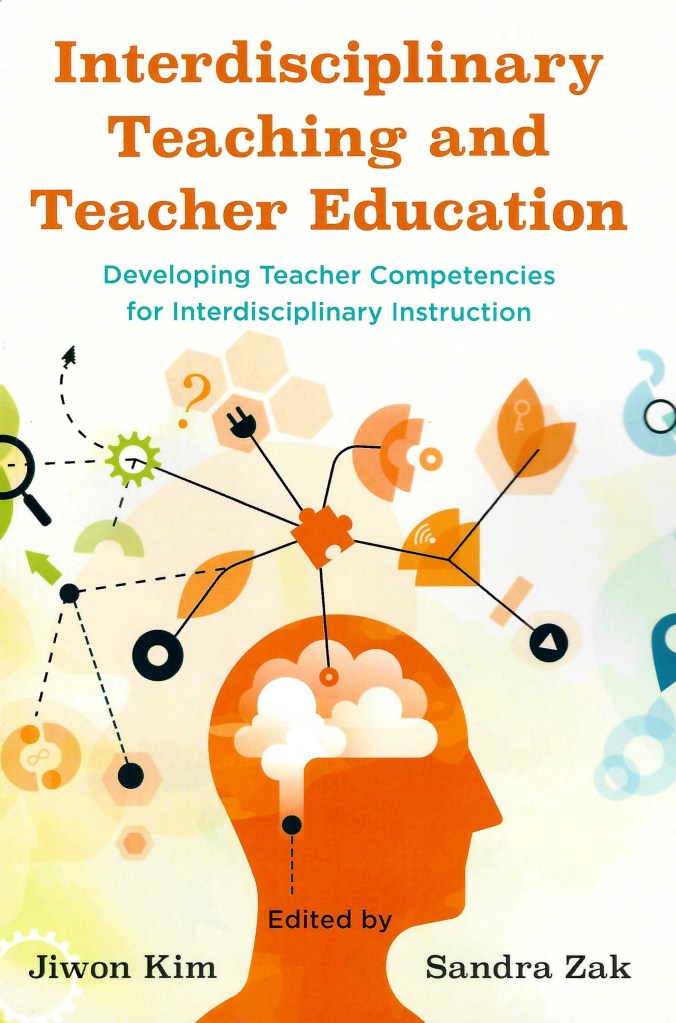


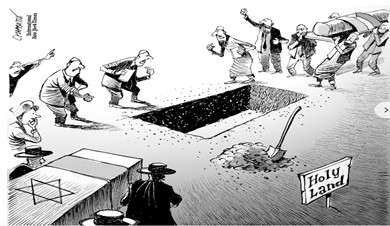
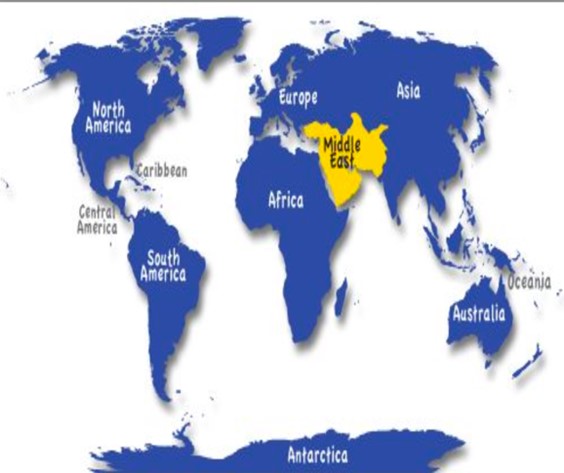
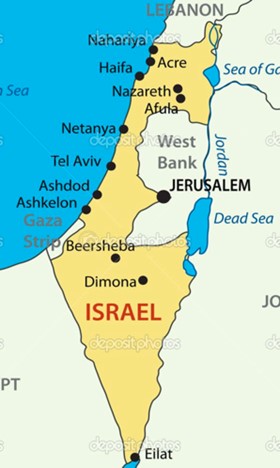


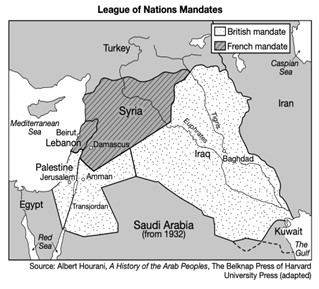


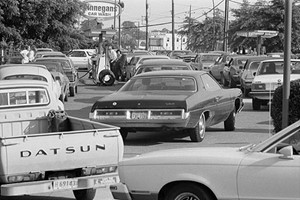

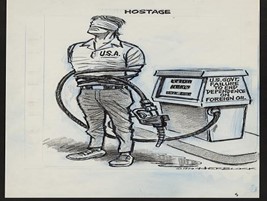
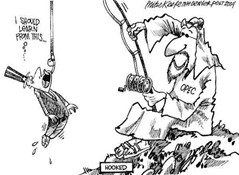

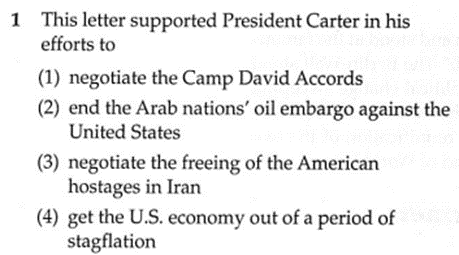


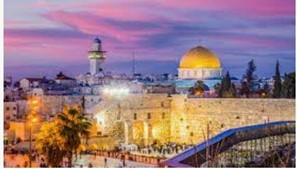


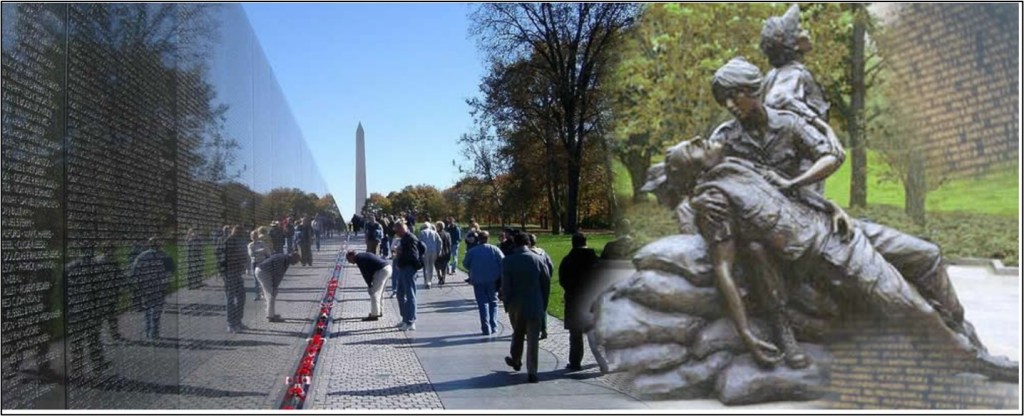
 njcssjournal