Unpack the news coming out of Venezuela with expert-informed resources that focus on history and fundamental foreign policy concepts.
People celebrate after the U.S. struck Venezuela and captured its President Nicolas Maduro and his wife Cilia Flores, in Santiago, Chile on January 3, 2026.
Given the uncertainty surrounding Venezuela, it is important to present this moment in foreign policy in a nonpartisan, fact-based manner to encourage students to think critically and form their own opinions.
In this blog, you’ll find three ways to incorporate this topic into your teaching by
viewing events through a historical lens;
focusing on fundamental concepts of foreign policy; and
conducting a hypothetical simulation on the foreign policy tool of intelligence and covert action.
A Summary of the Past Decade in Venezuela
Venezuela has been struggling for years. Once South America’s wealthiest country, Venezuela’s economy collapsed in 2014 under President Nicolás Maduro due to expensive social policies, corruption, and overreliance on oil exports. The legitimacy of Maduro’s role as president has been called into question numerous times because of fraudulent elections and arrests of opposition leaders.
For almost two decades, the United States has imposed sanctions on Venezuela for a variety of reasons, including for lack of cooperation on counterterrorism and anti-narcotics efforts, as well as human rights violations. Under the Biden Administration, some sanctions were rolled back in an effort to curb energy prices and help the Venezuelan people. However, after Maduro’s government claimed victory in the 2024 election despite evidence that the opposition won the majority of votes, the tide changed again. Within the first year of his second term, President Trump began deploying a significant military presence off the coast of Venezuela, escalating tensions.
History of U.S. Foreign Policy in South and Latin America
The U.S. has been involved in Latin America almost as long as the United States has existed as a country. The Monroe Doctrine of 1823 declared that European nations should not interfere in the region, as it was in the United States’ sphere of influence. President Theodore Roosevelt went further than his contemporaries, announcing through the Roosevelt Corollary that the United States would intervene in countries in the region. These two declarations set the stage for decades of intervention aimed at advancing U.S. interests.
A 1905 political cartoon by Louis Dalrymple depicts Uncle Sam straddling the Americas while wielding a big stick labeled “Monroe Doctrine.” Source: Bettmann Archive via Getty Images
From the Spanish-American War to supporting an armed insurrection to creating the Panama Canal, the U.S. became increasingly involved in Latin America as it sought to establish itself as a global power. There were a few years when the U.S. attempted to prioritize a more diplomatic approach in the region and focused on fostering democracy and developing local economies.
The Cold War quickly saw a return to U.S. interventionism. During this period, the United States and the Soviet Union supported opposing governments worldwide to promote their ideologies, exploited local politics for economic advantage, and brought the world to the brink of nuclear war. Some of the governments that the U.S. supported to achieve its goals were violent, oppressive, and often inflicted lasting harm on their populations.
The U.S. operation to capture Maduro could signal a return to the kind of interventionism that defined previous decades of U.S. involvement in Latin America.
Foreign Policy Concepts Relevant to Venezuela
With a range of perspectives on what has occurred in Venezuela over the past few days, understanding fundamental foreign policy concepts can help students form their own conclusions.
Discussions about Saturday’s operation have centered on several core foundational concepts in international relations, including sovereignty, international law, and the authorization of force. Use CFR Education resources to help your students understand the basics before they consider whether they believe the concepts apply in this situation.
In principle, sovereignty means countries get to control what happens inside their borders and shouldn’t interfere within other countries. However, as with most things, established principles don’t always hold true. Countries occasionally violate other countries’ sovereignty to varying degrees – sometimes for humanitarian reasons, and sometimes to pursue economic or security goals.
The concept of sovereignty has become increasingly complicated in a more interconnected world, where many of today’s most pressing issues do not respect geographic boundaries. What does sovereignty look like when greenhouse gasemissions, viruses, and information ignore borders? While sovereignty serves as a central organizing principle at the heart of modern international relations, there are few clear rules or procedures for determining who is entitled to form a sovereign country or what constitutes a violation of sovereignty.
As with sovereignty, international law has helped maintain order by setting standards that other countries and domestic publics alike can use to hold governments accountable. Some types of international law are codified in the form of treaties and formalized agreements. Other international law is customary, comprising international obligations that arise from established international practices rather than from formal written treaties.
The United Nations (UN) Charter prohibits the use of military force, except in two cases: self-defense and instances where the UN Security Council authorizes the use of force. If war does break out, international humanitarian law encompasses a set of rules that aim to mitigate the conflict’s impact on civilians. These principles are codified in the Geneva Conventions of 1949, which 196 countries have ratified.
Primary Source Tip: Have your students read Article 2(4) in Chapter I of the UN Charter and discuss the extent to which it leaves room for interpretation regarding the use of military force and self-defense.
According to the Constitution, Congress has the exclusive power to declare war. It also empowers Congress to authorize military force without having to declare war, as Congress did—among other times—in Afghanistan and Iraq in the early 2000s. While Congress can greenlight military force, the president serves as the commander-in-chief of the military and has discretion over how it performs its duties. Presidents have used this authority to deploy the country’s armed forces, conduct intelligence, and carry out covert operations.
In 1973, Congress passed the War Powers Resolution to ensure that presidents can act effectively in a military context by acting unilaterally for specific periods of time before obtaining congressional approval. However, past presidents of both parties have violated the War Powers Resolution without facing action from Congress.
Primary Source Tip: Have your students read Article I, Section 8, and Article II, Section 2, of the Constitution before reading the CFR Education piece to see how these Sections of the Constitution have evolved over time. Then ask them to discuss whether they see Venezuela as representing continuity or change in the evolving way in which presidents pursue American interests.
Hypothetical Scenarios
It can be challenging to understand the foreign policy forces at play in Venezuela while also keeping up with the constant news updates. You can drive home the relevant issues of intelligence and covert action without having to refer back to the news for policy changes with one of the hypothetical situations in CFR Education’s simulations library.
In the simulation below, students are put in the shoes of the National Security Council (NSC) to advise the president on deciding whether to use covert action as a tool of foreign policy. After conducting the simulation, ask students to reflect: What is this tool suitable for? Does it fulfill its stated goals? What are the pros and cons of employing covert action? Do students see similarities or differences between the hypothetical simulation and the events this past weekend in Venezuela?
Teach the Headlines with CFR Education
Rapidly changing global affairs can be challenging to understand, which is why it is essential to scaffold these events for your students by studying history, principles of foreign policy, and simulations that model global situations.
You can rely on CFR Education for nonpartisan resources that will help you tackle this situation as well as the other global events heading our way.
Newsletter to teach today’s most pressing global issues!
History of America’s Immigration: The Background to Today’s Border and Asylum Crises
Dr. Harry Stein
Defining American: The Bureau of Naturalization’s Attempt to Standardize Citizenship Education and Inculcate ‘the Soul of America’ in Immigrants during World War 1
In this wood engraving caricaturing the Chinese Exclusion Act, a well-dress Chinese man embodying “Order” and “Industry” sits outside the Golden Gate of Liberty. The sign to his right declares “Communists, Nihilist, Socialist, Fenian & Hoodlum Welcome but no Admittance to Chinamen.”
Four Eras of U.S. Immigration History
The following is a description with vocabulary for each era. Following the four eras is a collection of data that students can use to learn more about each time period. In each era examine who came to the United States, why, and how did government policy favored or discouraged immigration.
Era #1: Populating the Continent-Colonial to 1875
Authority was with individual states, not the Federal Government. States used what was then called “state police power” to set and enforce rules. States set rules stopping the admission of convicts, free Blacks, paupers, diseased, sick or disabled persons or passengers on ships who tried to enter without the captain posting a bond on their behalf. No free person whether black, mulatto, or colored from a Caribbean country, especially Haiti, could enter some states. Haitian seamen on a ship entering Charleston, S.C., could not leave the ship. These powers were confirmed by a Supreme Court decision (Miln Decision, 1837) and the Passenger Cases decision (1849) approved state laws on bonding and taxing incoming passengers. The 1830 Indian Removal Act was another example of state police power. The movement of free Blacks within Missouri and Ohio was also regulated.
There were also federal laws in 1793, 1842 (Prigg decision), and 1850 concerning the return of runaway slaves to their owners. Legislation in 1809 prevented the importing of additional slaves from west Africa. In 1817 the Liberia colony was established and federally funded for free Black who wished to return to Africa. 13,000 did.
Federal laws permitting or excluding contract labor from China and Europe were enacted. In 1862 the Coolie importation from China was stopped under the logic that since slavery was illegal in northern states and Coolies were slaves therefore, they could not get into the USA. In 1867 contract labor was permitted from Europe. In conclusion, high, consistent demand for labor led to favorable State and federal immigration policies.
Northern European Migration from Ireland, UK, Germany, Netherlands
Era #2: Opening and Closing the Immigration Doors, 1875 – 1924
During this era, the power to legislate and enforce laws came totally to the national government. Immigration power resided in the Federal government’s ability to control commerce, Gibbons v. Ogden (1824) and the theory of national sovereignty critical for national security through border control. Between 1871 and 1914, 23.5 million Europeans entered. Eastern and southern Europeans joined those from Ireland, the U.K. and northern Europe. 1.7 million entered in 1907.
The country was industrializing and urbanizing. Labor demand was high. But gradually laws were established excluding some and regulating the entry of others. Many Americans wanted more immigration. Other Americans were critical of who were admitted. By 1924 the doors were almost closed to many Jews, Catholics, Hindus, and Chinese. See the Page Act (1875) and the Chinese Exclusion Act (1882). Research the Foran Act (1885) and the Dillingham Commission (1911).
A 1917 law aimed at South Asians, Indians, who settled in California and Washington and spoke out against British control of their homeland. This was part of a broader American nativist movement merging with white supremacy ideology, anti-communism and earlier opposition to immigrants with physical or mental disabilities. A literacy test was passed. A “barred” zone was created stopping all Asian entry except from the Philippines and Japan, already excluded by an informal 1907 “Gentlemen’s Agreement.” Mexicans were turned into temporary labor migrants. There was also the fear that if the US entered the League of Nations this could endanger national security. In 1920, 16% of the US population was foreign born. Bad foreigners = crime, immorality, and labor conflict.
A 1921 law closed loopholes in the 1917 law and established the first national origin quotas. This law fused beliefs about eugenics, racial bigotry, anti-disabilities prejudice, mixed racial marriages into a category of undesirable immigrant groups. The Johnson-Reed Act (1924) created quotas by ethnic origin. The Border Patrol created an illegal entry called a misdemeanor and felony (1929) if done twice.
The Johnson-Reed Act (1924) confined immigration mainly to northern Europe. National quotas were based on ethnic origins of the 1890 census. Through the Depression of the 1930s and World War II, immigration was severely curtailed. Following World War II, the law remained intact and parallel laws dealing with World War II refugees were created that bypassed but did not displace the 1925 Law.
In 1948, Congress passed the Displaced Persons Act permitting European refugees to enter. In 1948 the law was amended permitting refugees from camps in western Germany who could not return to their former homes in Poland and the USSR to enter the USA. 332,000 arrived including 141,000 Jewish Holocaust survivors between June 1948 and December 1951.
Era #4: Broader Opening of the Doors, 1965 – Present
The 1925 law was replaced by the Hart/Cellar Act of 1965. Racial and ethnic quotas were eliminated. Numerical quotas were retained. Entrance was open to people from anywhere. The law favored family unification, preference for specific occupations, and a new side variety of visas. In 1950, the USA was 90% white with a European origin. By 2000, 50% of new immigrants were from Latin America and 27% from Asia. In 2020, the USA population was 69% European white. This law changed the racial composition and, some say, the national identity of the USA. The acrid, hot odor of 1924 bigotry and nativism returned magnified and channeled through social media. By 2020, some Americans were talking of white racial suicide and replacement theory. Politicians pointed to the loss of border control. The 9/11 Attack on America led to Islamophobia and Muslin immigration bans. Many Americans supported legal immigration and the use of work visas for both unskilled and professional work. Most wanted to stop migration but the government system to judge asylum claims became broken. Since May 2022, a 1.85 million undocumented refugees have been permitted to remain in the country following a favorable “credible fear” claim. By September 2022, 86,815 immigrants were deported and 1.7 million were approved to stay. 200,149 immigrants came to New York City.
More Data:
From February 2021 to September 2023, Border Patrol arrested 6 million migrants who crossed the border illegally.
1.7 million immigrants were released to stay in the USA.
There were about 1,500 immigration judges and asylum officers available to decide these immigrant cases.
People apply for asylum at the border or if they are caught illegally in the country or overstay a visa. They have up to one year to apply. 800,000 applied in 2022.
It could cost $2 billion to hire more staff to eliminate the 2 million backlog of cases.
In some cities, it will take up to ten years to hear a case.
1.3 million have been told they must leave the USA. They have 90 days to do so.
Many do not leave and they disappear. There is no national ID in the United States to identify them.
Some marry Americans and become parents of children who are natural born citizens.
All of this data is used by politicians running for federal office. Some promise to clear them ‘out.’ How they will do this is not clear.
Many local officials run to Washington, D.C., seeking money to care for migrants in their cities. There is a deadlock in Washington, D.C. Many do not want to tax the many to pay for the foreign immigrants. The memory of 1924 is in the air and a chaotic border has become a drug channel.
Our laws were not designed to deal with BOTH old and new reasons for migrations. The latest reasons are climate change, corruption in many countries, and the development of the smartphone, which immediately connected migrants with friends already in the USA who send money to assist migrants in their journey. Migration used to be single men seeking jobs who would then return home. Now, it is entire families seeking a new life in the USA. Many Americans do not know what to make of it and they will vote their hopes and fears.
Addressing Israel, Palestine, Gaza, Hamas, Islamophobia, and Antisemitism in the High School Curriculum
Franklin Delano Roosevelt High School, Brooklyn, NY and the Bridging Cultures Group
Many teachers are nervous about discussing the Middle East crisis in class. In a highly heated atmosphere, they are unsure about how to approach the controversies, what is grade appropriate, and they fear criticism no matter what they do or say. The ongoing war launched by Israel on Gaza in response to an attack by Hamas is a topic that should be discussed in classes. Students across the age span have already been exposed to information and misinformation on television broadcasts, through social media, and at family gatherings. Some have participated in marches or rallies. According to the New York State Social Studies Framework, students are expected to begin examining current events starting in third grade where they learn to distinguish between long-term and immediate causes and the effects of an event on their own lives, current events, and history.
In response to teacher and student questions, teachers and administrators at Franklin Delano Roosevelt High School in Brooklyn partnered with Bridging Cultures Group to develop material for integrating lessons on Israel, Gaza, Hamas, Islam, and antisemitism into the curriculum. Study of conflicts in the Middle East are part of the 8th, 10th, and 11th grade social studies curriculum. According to the Social Studies Framework, in 8th grade United States history students should learn that “The period after World War II has been characterized by an ideological and political struggle, first between the United States and communism during the Cold War, then between the United States and forces of instability in the Middle East. Increased economic interdependence and competition, as well as environmental concerns, are challenges faced by the United States.”
In New York, in 10th grade students learn how “Nationalism in the Middle East was often influenced by factors such as religious beliefs and secularism.” Students are expected to “investigate Zionism, the mandates created at the end of World War I, and Arab nationalism” and “the creation of the State of Israel and the Arab-Israeli conflict.”
In 11th grade they examine how “American strategic interests in the Middle East grew with the Cold War, the creation of the State of Israel, and the increased United States dependence on Middle Eastern oil. The continuing nature of the Arab-Israeli dispute has helped to define the contours of American policy in the Middle East.” As part of this unit, “Students will examine United States foreign policy toward the Middle East, including the recognition of and support for the State of Israel, the Camp David Accords, and the interaction with radical groups in the region.”
In 12th grade, New York State students study the organization and role of the United States government. There are no content specifications, and the course is expected to “adapt to present local, national, and global circumstances, allowing teachers to select flexibly from current events to illuminate key ideas and conceptual understandings.”
A teacher’s responsibility is to find or put together documents from different perspectives that students can evaluate together, to ask probing questions and develop an informed opinion on topics in a safe classroom environment.
These are compelling questions that can be addressed in high school Global history classrooms.
What was the origin of Zionism?
How did World War I impact Palestine?
How did the Holocaust and World War II shape the future of Israel and Palestine?
What was the outcome of the 1948 Arab-Israeli War?
What was the origin of the PLO?
What were the results of the Six-Day and Yom Kippur wars?
Why did Palestinians launch an Intifada?
What is the origin of Hamas?
Why is it difficult to resolve conflicts between Israel and Palestine?
Why has the war in Gaza drawn international attention
These are compelling questions that can be addressed in high school United States history classrooms.
How did Middle east conflicts impact on the domestic front?
How did U.S. support for Israel lead to an oil embargo?
What was the impact of the oil embargo on the American people?
How has the United States tried to resolve Middle East conflicts?
The material included in this package are only suggestions. Teachers should adapt lesson ideas and documents to make them appropriate for their students. Some of the material presented in this package is prepared using different formats.
Aim: Why is there a conflict between the Israelis and Palestinians? Do Now: Cartoon analysis.
See: What do you see happening in the cartoon?
Think: Based on your observations, what can you infer about the conflict between Palestine and Israel?
Wonder: Write down questions you have about the conflict between Israel and Palestine.
Historical thinking skills practice: Using the google slides and the video (https://www.youtube.com/watch?v=Bno1m1zhIWs), to explain the historical context of the Israeli – Palestinian conflict. Use the three images below and answer the questions following “Review of Key Ideas.”
Review of key ideas I: The Arab/Palestinian -Israeli Conflict: 1948- present day Key vocabulary: Zionism – the belief that Jews should have their own homeland; Zionism strengthens after the Holocaust. II: Balfour Declaration: The British set up Palestine as the Jewish homeland. III: Mandate Border 1920: Set up by the British; 90% of Palestine inhabited by Arabs. IV: UN Resolution 1947: UN votes to divide Palestine into two countries. Jews agree to plan, Arabs do not. May 14, 1948, the state of Israel was born. V. Since the establishment of Israel, there has been conflict between Israelis and the Palestinians as well as neighboring Arab countries.
Questions
How did this conflict start?
Where is the conflict happening?
Who is fighting?
Historical thinking skills practice: Identify viewpoints and explain how they are similar and different.
Exit Ticket: In your opinion, will the conflict between the Israelis and Palestinians ever end? Is peace possible? Why or why not?
AIM: What were the historical circumstances that led to conflicts between Jews and Palestinians? Lesson Objective: Contextualize the origins of the Israel and Palestinian series of conflicts.
ACTIVITY 1: DO NOW – STUDENT CHOICE Directions: Choose an option below. You don’t have to do both.
OPTION A: The McMahon–Hussein Correspondence
The McMahon–Hussein Correspondence is a series of letters that were exchanged during World War I in which the Government of the United Kingdom agreed to recognize Arab independence in a large region after the war in exchange for the Sharif of Mecca launching the Arab Revolt against the Ottoman Empire. The correspondence had a significant influence on Middle Eastern history during and after the war; a dispute over Palestine continued thereafter.
OPTION A QUESTION: What was the purpose of the McMahon-Hussein Correspondence?
OPTION B: The Sykes-Picot Agreement Sykes-Picot Agreement, (May 1916), secret convention made during World War I between Great Britain and France, with the assent of imperial Russia, for the dismemberment of the Ottoman Empire. The agreement led to the division of Turkish-held Syria, Iraq, Lebanon, and Palestine into various French- and British administered areas. Negotiations were begun in November 1915, and the final agreement took its name from the chief negotiators from Britain and France, Sir Mark Sykes and François Georges Picot. Sergey Dimitriyevich Sazonov was also present to represent Russia, the third member of the Triple Entente.
OPTION B QUESTION: Who controlled Palestine after the dismemberment of the Ottoman Empire in May 1916?
ACTIVITY 2: THINK/PAIR/SHARE Directions: Read the question in the box below. Think about it, talk to your neighbor about it, share it out.
According to what we went over in the do now, after the fall of the Ottoman Empire, who should have control of Palestine? Use evidence from the reading to support your answer.
ACTIVITY 3: CRQ PRACTICE Directions: Analyze the documents below and answer the questions that follow.
DOCUMENT 1: Zionism Zionism is a Jewish nationalist movement that has had as its goal the creation and support of a Jewish national state in Palestine, the ancient homeland of the Jews. Below are quotes from Zionist Theodor Herzl.
“Oppression and persecution cannot exterminate us. No nation on earth has endured such struggles and sufferings as we have . . . Palestine is our unforgettable historic homeland. . . Let me repeat once more my opening words: The Jews who will it shall achieve their State. We shall live at last as free men on our own soil, and in our own homes peacefully die. The world will be liberated by our freedom, enriched by our wealth, magnified by our greatness. And whatever we attempt there for our own benefit will redound mightily and beneficially to the good of all mankind.” – Theodore Herzl, February 1896
1.What is the historical context to the ideas shown in Document 1?
DOCUMENT 2: Balfour Declaration
Balfour Declaration, (November 2, 1917), statement of British support for “the establishment in Palestine of a national home for the Jewish people.” It was made in a letter from Arthur James Balfour, the British foreign secretary, to Lionel Walter Rothschild, 2nd.
Baron Rothschild, a leader of the Anglo-Jewish community.
“His Majesty’s Government view with favour the establishment in Palestine of a national home for the Jewish people, and will use their best endeavours to facilitate the achievement of this object, it being clearly understood that nothing shall be done which may prejudice the civil and religious rights of existing non-Jewish communities in Palestine, or the rights and political status enjoyed by Jews in any other country.” – Arthur James Balfour, British Foreign Secretary
What is the primary purpose of the Balfour Declaration?
Identify a cause-and-effect relationship between the events shown in Documents 1 and 2.
ACTIVITY 4: THINK/PAIR/SHARE Directions: Read the question in the box below, think about it, talk to your neighbor about it, share it out. After reading about Zionism and the Balfour Declaration, why do you think Jewish people were granted a national home in Palestine? Use evidence from the reading to support your answer.
ACTIVITY 5: EXIT ASSESSMENT Directions: Answer the following exit question in the box below. What were the historical circumstances that led to conflicts between Jews and Palestinians? AIM: How did World War II impact on Israel and Palestine?
ACTIVITY 1: DO NOW – STUDENT CHOICE Directions: Choose an option below. You don’t have to do both. OPTION A
What is the historical context/circumstances to the events shown in Option A?
OPTION B
Source: A Survey of Palestine: Prepared in December 1945 and January 1946 for the Information of the Anglo-American Committee of Inquiry. Vol. 1. Palestine
What trends do you notice according to the chart about Jewish immigration to Palestine in the mid 1930s?
ACTIVITY 2: WORD/SENTENCE/MAIN IDEA Directions: Read the text quietly. Then go back and read the text again. In the box on the other side, identify a key word, sentence, and main idea of the reading. We will have a group discussion after.
Beginning in 1929, Arabs and Jews openly fought in Palestine, and Britain attempted to limit Jewish immigration as a means of appeasing the Arabs. As a result of the Holocaust in Europe, many Jews illegally entered Palestine during World War II. Jewish groups employed terrorism against British forces in Palestine, which they thought had betrayed the Zionist cause. At the end of World War II, in 1945, the United States took up the Zionist cause. Britain, unable to find a practical solution, referred the problem to the United Nations, which in November 1947 voted to partition Palestine. The Jews were to possess more than half of Palestine, although they made up less than half of Palestine’s population. The Palestinian Arabs, aided by volunteers from other countries, fought the Zionist forces, but by May 14, 1948, the Jews had secured full control of their U.N.-allocated share of Palestine and also some Arab territory. On May 14, Britain withdrew with the expiration of its mandate, and the State of Israel was proclaimed.
1.Which historical event most directly influenced the development of the 1947 plan shown on Map A? (1) Russian pogroms (2) the fall of the Austro-Hungarian Empire (3) Paris Peace Conference (4) the Holocaust
2.Which group benefited the most from the changes shown on these maps? (1) Zionists and Jewish immigrants (2) the government of Jordan (3) Palestinian nationalists (4) the citizens of Lebanon Historical Thinking Questions
What is the historical context/circumstances that led to the maps shown?
What is the primary purpose of maps A, B, and C?
Is there a potential bias in the maps? yes/no explain why.
Biased? In your opinion, are these questions biased? Explain.
AIM: Can a two-state solution work between Israel and Palestine? Lesson Objective: Contextualize the current situation between Israel and Palestine.
ACTIVITY 1: DO NOW – STUDENT CHOICE Directions: Choose an option below. You don’t have to do both. OPTION A: What is the cartoonist’s point of view regarding Hamas?
OPTION B: What is the cartoonist’ point of view regarding Israel?
ACTIVITY 2: WORD/SENTENCE/MAIN IDEA Directions: Read the text quietly. Then go back and read the text again. In the box on the other side, identify a key word, sentence, AND main idea of the reading. We will have a group discussion after. Hamas is a Palestinian militant group that governs the Gaza Strip. It was founded in 1987 during the First Intifada, aiming to establish a Palestinian state and to oppose the existence of Israel. On the other hand, Israeli Prime Minister Benjamin Netanyahu, opposes a Palestinian state hood. This two-state solution refers to the proposal of creating separate Israeli and Palestinian states coexisting peacefully alongside each other. Various attempts to resolve the Israel-Palestine conflict have been made over the years, including the Oslo Accords, Camp David Summit, and the Annapolis Conference, among others. However, sustained peace has remained elusive, with factors such as ongoing violence, settlement expansions, and political disputes hindering progress towards a lasting resolution. Key Word: Key sentence: Main Idea:
Do you agree with the claims made in the video? Explain.
New York State Social Studies Standards: Overall:Common Core Learning Standards: Reading: Cite specific text evidence from the text Provide an accurate summary of how key events or ideas develop over the course of the text Determine whether earlier events caused later ones or simply preceded them Determine the meaning of words as they are used in a text Writing: Write explanatory text with relevant and sufficient facts, concrete details, and appropriate examples Use precise language and domain specific vocabulary Produce clear and coherent writing in which the development, organization, and style are appropriate to task, purpose, and audience Procedure:
Do Now: Students will be provided with a choice of either using the photographs or the political cartoons to answer the questions.
Questions to consider:
1.How were Americans impacted by oil?
2. Even though these cartoons and photographs are from the 1970’s are there any connections that you can make to current day in the United States?
What claims are made by Israeli Prime Minister Netanyahu?
What evidence does he present to support the claims?
Do you agree with the claims made by Israeli Prime Minister Netanyahu? Explain. Exit Ticket: In your opinion, is a two-state solution for Israel and Palestine possible or likely at this time? Explain. Lesson: 1970s Presidents/policies / U.S. History 11th Grade Aim: How did various foreign policy decisions impact the United States during the 1970’s? Objective: Students will learn about the OPEC oil embargo and the Camp David Accords during the various presidencies of the 1970’s by completing an SEQ 1 task.
Mini-Lesson a. Essential vocabulary b. Background information. Students will engage in a turn and talk with one another to note the relations between the US and the Middle East during this time.
Activity #1 Students read/annotate text and to evaluate the documents concerning oil during the 1970’s Vocabulary: Camp David Accords: Peace Treaty signed between Israel and Egypt in 1979 that took place at Camp David with President Carter. Directions: Do a close read of the following text passage. Annotate using note-taking symbols. Reading: 1970’s U.S. The 1970’s was a decade of when the various conflicts concerning the Middle East. This began on October 19, 1973, when President Nixon requested Congress authorize $2.2 billion in emergency aid to Israel. Israel was attacked by its Arab neighbors in what came to be known as the Yom Kippur War because the attack came on a Jewish holy day. After the United States agreed to aid Israel, Arab countries that were part of the Organization of Petroleum Exporting Countries (OPEC) stopped oil shipments to the United States and cut oil production to raise prices. Oil exports from the Middle East to the West were down and the price of oil increased by almost four times from $2.90 a barrel to $11.65 a barrel. The oil embargo ended in March 1974, however periodic crises in the Middle East and conflicts between the United States and oil-producing nations led to oil and gas shortages and higher fuel prices again at the end of the 1970s, in the 1980s, and 1990s. Then in 1978, the Egyptian President Anwar el Sadat, surprised the world by visiting Israeli Prime Minister Menachem Begin. President Jimmy Carter wanted to bring peace to the Middle East by inviting the two leaders to Camp David. There, the leaders hammered out the terms for a peace treaty known as the Camp David Accords. In 1979, Egypt and Israel signed a peace treaty based on the Camp David Accords:
Israel was to return the Sinai Peninsula to Egypt.
Egypt formally recognized Israel as an independent nation.
Israel and Egypt pledged to respect the border between them.
Although the two leaders signed the treaty in 1979, other Arab nations still refused to recognize Israel. Sadat was later assassinated by Muslims opposed to Sadat’s goals for peace. In 1979, President Carter was faced with a second oil crisis. A political revolution in Iran caused a major cutback in that country’s oil production. This reminded Americans that they were at the mercy of OPEC and upheavals in the Middle East. President Carter had already persuaded Congress to set up a new cabinet department-the Department of Energy. He urged the department to expand its search for practical forms of energy other than oil. Turn and Talk/ Check for Understanding: Briefly describe the relations between the Middle East and the United States during the 1970’s. Note your findings below:
Activity #2: Students will complete an SEQ 1 task Task: Read and analyze the following documents, applying your social studies knowledge and skills to write a short essay of two paragraphs in which you:
Describe the historical context surrounding these documents
Identify and explain the relationship between the events and/or ideas found in these documents (Cause and Effect, or Similarity/Difference, or Turning Point)
In developing your short essay answer of two or three paragraphs, be sure to keep these explanations in mind: o Describe means “to illustrate something in words or tell about it” o Historical Context refers to “the relevant historical circumstances surrounding or connecting the events, ideas, or developments in these documents” o Identify means “to put a name to or to name” o Explain means “to make plain or understandable; to give reasons for or causes of; to show the logical development or relationship of” o Types of Relationships: o Cause refers to “something that contributes to the occurrence of an event, the rise of an idea, or the bringing about of a development” o Effect refers to “what happens as a consequence (result, impact, outcome) of an event, an idea, or a development” o Similarity tells how “something is alike or the same as something else” o Difference tells how “something is not alike or not the same as something else” o Turning Point is “a major event, idea, or historical development that brings about significant change. It can be local, regional, national, or global.
Document 1: “Policies to Deal with the Energy Shortages”, Richard Nixon, Address to the Nation about policies to deal with energy shortages. November 7th, 1973 “As America has grown and prospered in recent years, our energy demands have begun to exceed available supplies. In recent months, we have taken many actions to increase supplies and to reduce consumption. But even with our best efforts, we knew that a period of temporary shortages was inevitable. Unfortunately, our expectations for this winter have now been sharply altered by the recent conflict in the Middle East. Because of that war, most of the Middle Eastern oil producers have reduced overall production and cut off their shipments of oil to the United States. By the end of this month, more than 2 million barrels a day of oil we expected to import into the United States will no longer be available. We must, therefore, face up to a very stark fact: We are heading toward the most acute shortages of energy since World War II. Our supply of petroleum this winter will be at least 10 percent short of our anticipated demands, and it could fall short by as much as 17 percent . . . To be sure that there is enough oil to go around for the entire winter, all over the country, it will be essential for all of us to live and work in lower temperatures. We must ask everyone to lower the thermostat in your home by at least 6 degrees so that we can achieve a national daytime average of 68 degrees . . . I am also asking Governors to take steps to reduce highway speed limits to 50 miles per hour. . . . Proposed legislation would enable the executive branch to meet the energy emergency in several important ways: First, it would authorize an immediate return to daylight saving time on a year round basis. Second, it would provide the necessary authority to relax environmental regulations on a temporary, case-by-case basis . . . Third, it would grant authority to impose special energy conservation measures, such as restrictions on the working hours for shopping centers and other commercial establishments.”
Document 2: “Moral Equivalent to War” President Jimmy Carter, Address to the Nation. April 18, 1977 “I want to have an unpleasant talk with you about a problem that is unprecedented in our history. With the exception of preventing war, this is the greatest challenge that our country will face during our lifetime. The energy crisis has not yet overwhelmed us, but it will if we do not act quickly. It’s a problem that we will not be able to solve in the next few years, and it’s likely to get progressively worse through the rest of this century . . . . By acting now we can control our future instead of letting the future control us. Two days from now, I will present to the Congress my energy proposals . . . Many of these proposals will be unpopular. Some will cause you to put up with inconveniences and to make sacrifices. The most important thing about these proposals is that the alternative may be a national catastrophe. Further delay can affect our strength and our power as a nation. Our decision about energy will test the character of the American people and the ability of the President and the Congress to govern this Nation. This difficult effort will be the “moral equivalent of war,” except that we will be uniting our efforts to build and not to destroy . . . The 1973 gas lines are gone, and with this springtime weather, our homes are warm again. But our energy problem is worse tonight than it was in 1973 or a few weeks ago in the dead of winter. It’s worse because more waste has occurred and more time has passed by without our planning for the future. And it will get worse every day until we act . . . [W]e must reduce our vulnerability to potentially devastating embargoes. We can protect ourselves from uncertain supplies by reducing our demand for oil, by making the most of our abundant resources such as coal, and by developing a strategic petroleum reserve.” Closure: Read the letter to President Carter and answer the multiple-choice questions.
Aim: What role did the United States play in the Middle East in the post-World War II era? Objective: U.S. History 11th Grade. SWL about the relations between the U.S. and Middle East following World War II by completing an SEQ 2 task. New York State Social Studies Standards: 11.9 c: American strategic interests in the Middle East grew with the Cold War, the creation of the State of Israel, and the increased United States dependence on Middle Eastern oil. The continuing nature of the Arab-Israeli dispute has helped to define the contours of American policy in the Middle East. Next Generation Learning Standards for Reading and Writing:
Cite specific text evidence
Provide an accurate summary of how key events or ideas develop over the course of the text
Determine whether earlier events caused later ones or simply preceded them
Determine the meaning of words as they are used in a text
Write explanatory text with relevant and sufficient facts, concrete details, and appropriate examples
Use precise language and domain specific vocabulary
Produce clear and coherent writing in which the development, organization, and style are appropriate to task, purpose, and audience Procedure:
Do Now: Students will read the except and note the main ideas found.
Mini-Lesson: Masterful read of the information. While reading, students will annotate and note the possible causes for conflict in the Middle East
Learning Activities
Turn and Talk: What would you say was the main cause for the United States involvement in the Middle East following WWII?
Students will read the document and will complete the SEQ 2 task for either purpose or POV. Do Now: Based on the following excerpt note the main ideas found in the text. Questions:
1.What do you think the purpose was in creating this text?
2.From what point of view do you believe this was written? Why?
Purpose: The reason an author wrote something. Examples are to inform, entertain, persuade, describe. Point of View: side from which the creator of a source describes a historical event.
American strategy became consumed with thwarting Russian power and the concomitant (related) global spread of communism. Foreign policy officials increasingly opposed all insurgencies or independence movements that could in any way be linked to international communism. The Soviet Union, too, was attempting to sway the world. Stalin and his successors pushed an agenda that included not only the creation of Soviet client states in Eastern and Central Europe, but also a tendency to support leftwing liberation movements everywhere, particularly when they espoused anti-American sentiment. As a result, the United States and the Union of Soviet Socialist Republics (USSR) engaged in numerous proxy wars in the Third World. American planners felt that successful decolonization could demonstrate the superiority of democracy and capitalism against competing Soviet models. Their goal was in essence to develop an informal system of world power based as much as possible on consent (hegemony) rather than coercion (empire). But European powers still defended colonization and American officials feared that anticolonial resistance would breed revolution and push nationalists into the Soviet sphere. And when faced with such movements, American policy dictated alliances with colonial regimes, alienating nationalist leaders in Asia and Africa. Source: Michael Brenes et al., “The Cold War,” in Ari Cushner, ed., The American Yawp, eds. Joseph Locke and Ben Wright (Stanford: Stanford University Press, 2018).
Directions: Do a close read of the following text passage and annotate
The Region’s Strategic Importance
After World War II, the United States began taking a more active and interventionist role in political and military conflicts across the globe. This was a marked break from the country’s mainly isolationist approach to world affairs in its first 150 years. The Middle East has been the most consistent region for U.S. intervention over the past 70 years, especially after War II ended beginning with the creation of the State of Israel. In 1947, the United Nations voted to divide British-controlled Palestine into two states-one Arab and one Jewish. The U.N. action resulted in violence between Jews and Arabs. In May 1948, Israel declared itself an independent state. Both the United States and the Soviet Union supported this development. Most Arab nations objected to U.S. support of Israel even though they too received U.S. economic aid. Arab resentment against both Israel and the United States grew in the postwar years. This allowed the Soviet Union to gain influence in the Middle East, especially in Syria. In 1957, President Eisenhower moved to address this spreading Soviet influence. He established the U.S. policy of sending troops to any Middle Eastern nation that requested help against communism. The Eisenhower Doctrine was first tested in Lebanon in 1958. The presence of U.S. troops in Lebanon helped that country’s government deal successfully with a Communist challenge.
The history of the Middle East in modern times has been marked by civil wars, revolutions, assassinations, invasions, and border wars. In dealing with each conflict, U.S. policymakers tried to balance three main interests:
Support to the democratic State of Israel
Support for Arab states to ensure a steady flow of Middle Eastern oil to the United States and its allies
Prevention of increased Soviet Union influence in the region
Turn and Talk/ Check for Understanding: What would you say was the main cause for the United States involvement in the Middle East following World War II?
Task: Read and analyze the documents. Applying your social studies knowledge and skills to write a short essay of two or three paragraphs in which you: Describe the historical context surrounding the Special Message to Congress by President Eisenhower and explain how audience, or purpose, or bias, or point of view affects this document’s use as a reliable source of evidence.
Document: President Dwight D. Eisenhower, Special Message to Congress, January 5, 1957
“The reason for Russia’s interest in the Middle East is solely that of power politics. Considering her announced purpose of Communizing the world, it is easy to understand her hope of dominating the Middle East. This region has always been the crossroads of the continents of the Eastern Hemisphere. The Suez Canal enables the nations of Asia and Europe to carry on the commerce that is essential if these countries are to maintain well-rounded and prosperous economies. The Middle East provides a gateway between Eurasia and Africa. Then there are other factors which transcend the material. The Middle East is the birthplace of three great religions-Moslem, Christian and Hebrew. Mecca and Jerusalem are more than places on the map. They symbolize religions which teach that the spirit has supremacy over matter and that the individual has a dignity and rights of which no despotic government can rightfully deprive him. It would be intolerable if the holy places of the Middle East should be subjected to a rule that glorifies atheistic materialism. International Communism, of course, seeks to mask its purposes of domination by expressions of good will and by superficially attractive offers of political, economic and military aid. Under all the circumstances I have laid before you, a greater responsibility now devolves upon the United States … The action which I propose would … authorize the United States to cooperate with and assist any nation or group of nations in the general area of the Middle East in the development of economic strength dedicated to the maintenance of national independence. It would [also] authorize such assistance and cooperation to include the employment of the armed forces of the United States to secure and protect the territorial integrity and political independence of such nations. This program will not solve all the problems of the Middle East. The United Nations is actively concerning itself with all these matters, and . . . we are willing to do much to assist the United Nations in solving the basic problems of Palestine. Source: President Dwight D. Eisenhower, Special Message to Congress, January 5, 1957
Short Essay Question Paragraph Outline: In developing your short essay answer of two or three paragraphs, be sure to keep these explanations in mind – Describe means “to illustrate something in words or tell about it.” Historical Context refers to “the relevant historical circumstances surrounding or connecting the events, ideas, or developments in these documents.” Analyze means “to examine a document and determine its elements and its relationships.” Explain means “to make plain or understandable; to give reasons for or causes of; to show the logical development or relationship of.” Reliability is determined by how accurate and useful the information found in a source is for a specific purpose.
Paragraph 1:Historical Context (Complete whatever information is applicable to the topic) Topic Sentence: Who (was involved)? What (happened)? Where (did it happen)? When (did it happen?) Why (did it happen?)
Paragraph 2:Reliability Topic Sentence: The document is (possible responses: not, somewhat, very) reliable. Based on the (purpose OR point of view (Choose 1) ______________ Document evidence________________________________________
Paragraph 3: Significance of the document evidence Closing Sentence:
Aim: Why did the Crusades occur? Do Now: Read the poem and look and the image below. Pick a sentence that stands out to you. What do you think this sentence says about how the author feels about the land ?
To Our Land By Mahmoud Darwish
To our land, And it one near the word of god, To our land, And it is the one tiny as a sesame seed To our land , and it is the prize of war The freedom to die from longing and burning and our land, in its bloodiest night, is a jewel that glimmers for the far upon the far.
Historical Context : The Crusades were a series of wars (1050-1300 CE) during the Middle Ages where the Christians of Europe tried to retake control of Jerusalem and the Holy Land from the Muslims. Jerusalem was important to a number of religions during the Middle Ages. ● It was important to Jewish people as it was the site of the original temple to God built by King Solomon. ● It was important to the Muslims because it was where they believe the Prophet Muhammad ascended to heaven. ● It was important to Christians as it is where Christianity began. They considered it the Holy Land. Check for understanding: A major goal of the Christian Church during the Crusades (1096–1291) was to 1) establish Christianity in western Europe 2) capture the Holy Land from Islamic rulers 3) unite warring Arab peoples 4) strengthen English dominance in the Arab world
Which point of view was this written from? Crusader (Christian), Muslim
Identify at least two words, sentences, or phrases in this source that illustrate its point of view.
How do they feel about the crusades?
Document A: Kingdom of Heaven – Clash of Cavalry Directions: Read the documents below and use textual evidence to figure out the point of view “Finally, our men took possession of the walls and towers, and wonderful sights were to be seen. Some of our men cut off the heads of their enemies; others shot them with arrows, so that they fell from the towers. It was necessary to pick one’s way over the bodies of men and horses. In the Temple of Solomon, men rode in blood up to their knees and bridle reins. Indeed, it was a just and splendid (excellent) judgment of God that this place should be filled with the blood of the unbelievers.” Questions
Document B “Refugees reached Baghdad and told the Caliph’s ministers a story that wrung their hearts and brought tears to their eyes. They begged for help, weeping so that their hearers wept with them as they described the sufferings of the Muslims in that Holy City: the men killed, the women and children taken prisoner, the homes pillaged.” Questions
Which point of view was this written from? Crusader (Christian), Muslim
Identify at least two words, sentences, or phrases in this source that illustrate its point of view.
A major goal of teachers, especially secondary school social studies teachers, is to help students learn to evaluate multiple perspectives on issues by weighing supporting evidence, separating fact from fiction, examining underlying assumptions, and then developing their own informed opinions. As a teacher, I generally withhold my opinion on a topic, however, I have no problem asserting that slavery, genocide, racism, dictatorship, and antisemitism are bad. There are no upsides. When we consider multiple perspectives, the question we should address is why they happen, not whether they happened in the past or should happen again.
On a variety of topics, I provide students with a package of documents to evaluate that includes things I agree with and things that I don’t. During class, my primary role is to ask questions that promote discussion about the document package and the issues and moderate respectful student to-student conversation. I use this teaching approach whether we are discussing issues from the past such as the causes of the American Revolution, or the present, such as the role of human action in climate change, whether a particular military campaign constitutes war crimes, or if a groups behavior should be identified as terrorism. Important topics for discussion when schools reopen in the fall will be evaluations of the Biden administration’s record on foreign policy, the economy, climate, and the migrant/refugee “crisis.” It will also be legitimate to discuss whether Joseph Biden’s age and physical and mental condition should be an issue in the election whatever your evaluation of his first administration.
The big problem in September will be what to do about Donald Trump. How do you organize a balanced unbiased discussion and evaluation of a candidate who makes outrageous, hateful, blatantly false statements? He is a candidate convicted of 34 counts in a New York trial and who faces three other criminal cases, who has been found guilty of defamation in a civil suit, who tried to overturn the results of the 2020 Presidential election, who continues to claim the 2020 election was stolen, who dismisses any accusation against him as politically motivated, and who demands total immunity against prosecution as a former President.
The November election is going to be a major focus in middle school and high school social studies classes. I am not neutral about slavery, genocide, racism, dictatorship, and antisemitism and I am not neutral about the threat Donald Trump poses to the future of democracy in the United States and the constitutional foundations of American government and society. I will not use unsubstantiated conspiracy theories, propaganda websites, and Trump sycophantic reports in document packages and pretend students are evaluating legitimate sources.
Even a fact-check exercise of Trump statements leaves a teacher open to charges that they are injecting their opinions into class and trying to influence the ideas of their students. But of course, the job of the teacher is to influence the ideas of their students. Our responsibility to promote civic discourse supported by evidence and advocate for democracy means we have to influence students to critically think about the campaign and candidates and if that means presenting an accurate picture of the threat posed by Donald Trump, we will have to live with the consequences.
Every teacher will almost definitely have students in their classes who support Donald Trump and the Republican Party, which is their right. They should be welcomed into discussion and encouraged to find evidence to support their positions, but they cannot be permitted to shout down or intimidate other students, things that I witnessed in 2016 and 2020. Donald Trump has continually said scary things, some of which he has backtracked on, and some of which he has not. In my opinion, any one of them should disqualify him to be President of the United States. He told American Jews, already subject to a rising tide of antisemitism, that “Any Jewish person that votes for Democrats hates their religion. They hate everything about Israel and they should be ashamed of themselves.” He described some immigrants as “not people,” “animals,” and “snakes,” accused them of “poisoning the blood of our country,” a statement that echoed the ideas of Adolf Hitler, and is promising mass deportations in violation of constitutional guarantees of due process, guarantees that in the 14th amendment are not limited to citizens. He asserted without evidence that other countries are emptying their prisons and sending criminals across the border. Trump wants “strong ideological screening of immigrants” because if “you don’t like our religion . . . we don’t want you in our country.” He is apparently unaware or does not care that the United States does not have an official religion.
Trump continually berates the American legal system and undermines public confidence in the law, the courts, and the government. He describes people tried and convicted of crimes during the January 6, 2021 violent invasion of the United States Capitol as “unbelievable patriots” being held as hostages and promises to offer these convicted criminals mass pardons if he is elected. Trump dismisses legal charges against his former aides Peter Navarro and Paul Manafort who were convicted, Navarro of contempt of Congress and Manafort of bank and tax fraud, and claims they were “treated very badly.”
Trump lowers the character of political speech as he raises the level of hostility. He denounces Joseph Biden as “Crooked Joe” and as a stupid President and uses vulgar and offensive language to describe other opponents, especially Black women. At campaign stops, Trump warns that if he is not elected, “It’s going to be a bloodbath for the country,” something he later tried to explain away, and that if he does “not win this year’s presidential election, I don’t think you’re going to have another election, or certainly not an election that’s meaningful.” He says he wants to be a dictator, but only on day one.
If elected, Trump says he would support a nationwide ban on terminating a pregnancy after 15 weeks, severely limiting the reproductive rights of women. A rightwing Supreme Court with three members, I hesitate to call them justices, appointed by Trump the last time he was President may well approve such a ban. If Trump is elected President, he threatens to withdraw the United States from the NATO alliance that has helped prevent broader European wars since tens of millions of people died in World War I and World War II or at a minimum sharply reduce U.S. financial support and to once again withdraw the United States from global efforts to minimize climate change because he does not believe in science. At a time when rightwing anti-democratic political movements are gaining followers and threatening to take power in many European countries, Trump has repeatedly expressed admiration for authoritarian leaders like Vladimir Putin of Russia, Xi Jinping of China, Recep Tayyip Erdoğan of Turkey, Viktor Orbán of Hungary, and Kim Jong Un of North Korea. He praised the Lebanese-based armed group Hezbollah even though they are listed as a terrorist group by the United States State Department. Trump claims, without evidence, that the war in Ukraine and the Hamas attack on Israel would somehow not have happened if he were President.
In his speeches, Trump continuously lies or exaggerates about his own prowess and record as President. Trump didn’t create the greatest economy or pass the biggest tax cut in U.S. history. He didn’t do more for African Americans than any president since Abraham Lincoln. He didn’t defeat ISIS or increase government revenue and he wasn’t reelected in 2020.
Teachers should not tell students who to vote for or tell them how they are voting, but you are remiss if you do not help them understand who Donald Trump is and what he represents. If you are unsure how to do this, you can have students read and debate the points raised in this essay. Students can evaluate whether it raises legitimate concerns, or it is just anti-Trump propaganda.
Health Care Off the Books: Poverty, Illness, and Strategies for Survival in Urban America, by Danielle T. Raudenbush, (Oakland: University of California Press).
Review by Thomas Hansen
Teachers of social studies—and all teachers interested in social justice—can make good use of this text as either a good reference for their personal library or a good research source for students in secondary school courses to read and consult. There is a great deal of good information here about healthcare and healthcare policies in the US. The book is written in accessible language and does not appear to have any offensive passages.
Danielle T. Raudenbush explains the ways in which poor urban dwellers in a project navigate the challenging world of health care, some with insurance, some without. Raudenbush shows us there are three different levels of approaches to getting the needed pills, bandages, and even medical equipment whether patients follow the formal approach to getting their healthcare—or not.
The author makes it clear there is a consistent and reliable informal network of helpers for poor persons to get pretty much whatever they need on the streets. Raudenbush acknowledges this particular qualitative study, done over time, focuses very much on healthcare issues and does not address food, money, rides, or other items very much.
The author shows us there are those three different approaches, first formal: going to doctor appointments, buying medication and/or using insurance to do so, and then taking all of the medication/following all the doctor’s orders, and convalescing as directed. There is also informal—and this is the one that seems to be of most interest to the author.
A second approach is “informal” and it involves using local resources and persons in the process of purchasing or trading for the pills, bartering for the pills, lending other needed medical supplies and goods, or purchasing these items from a helper in the project. It is very interesting how the author is able to get so much information, and she has established very good rapport, it seems, with the residents of the project. Like her subjects in the study, the author is African-American, and this connection helps her to get the trust of the people she interviews. She also conducts focus groups with the residents.
A third approach—she calls it the “hybrid” one, shows local and formal together. The author reveals how much the residents of the project bend rules, make important connections, share resources, and make use of the people who serve as “helpers” in that community. Doctors and other medical personnel are also involved in the hybrid approach in various ways—and in the informal approach too.
Helpers provide the backbone for the poor to get access to so many services, and to food, and to medication, and even to walkers and wheelchairs. Often heard among the homeless, also, are these kinds of questions:
Who is giving away winter coats?
Who has free dinner tonight?
Is there any place with decent sack lunches by my spot where I stay now?
Where can I get some gloves and underwear on a Sunday?
How do I find that lady who has the phone chargers for sale?
In addition to these questions, helpers often have to deal with others—such as ones dealing with social security application rules, where to get free aspirin, how to get disability checks, how to find a good dentist who takes XY or Z insurance, and other needed information. As in this book, one will find out the streets have helpers who are constantly assisting those in need—and who are well-known among the street networks.
Informal networks and devoted helpers are an integral part for many residents of that project. The author does a great job of show how complex the relationships can be.
For my entire career, I have taught at public high schools in the South Bronx, the poorest Congressional District in the United States. Many of my students come from low-income families, face stressful circumstances outside of school, and have a history of below level academic performance. Most of my students are identified as struggling readers and several are classified with special learning needs.
In my teaching, I employ a version of Critical Social Theory to directly challenge the social reproduction aspect of education that would channel students into lives on the margins of poverty and to empower them to seize control over their lives. Everything about history and society is analyzed, nothing is accepted on face value; everything is dissected by students to uncover the individuals and groups that benefit from the way society is organized. I agree with Lisa Delpit, who defined the structures of power in society as a system of hierarchy that necessitates the participation of some and the exclusion of others. Delpit also argued, “if you are not already a participant in the culture of power, being told explicitly the rules of that culture makes acquiring power easier.” This means that for students to receive a complete education, they need to be aware of, analyze, and critique all of the forces that shape their education, their communities, and their lives.
Critical theorists argue that education should guide students towards political activism and that teachers should be models for their students of active citizens exercising their democratic duty. As a critical educator, my primary goal in the classroom is to promote critical thinking through political discourse and by encouraging students to translate their ideas into action through some form of activism. My teaching involves the recurrent use of projects, alternative assessments, semi-structured learning, promotion of classroom dialogues, student voice, and the development of classroom community. My approach to teaching even includes the way I structure the physical classroom. Desks are organized into a large square that takes up the entire room. This arrangement removes hierarchy by taking the teacher out of the front and allows students to speak to each other and the teacher on an equal social footing.
While I follow the New York State history curriculum scope and sequence, I begin units with student analysis of current events. That helps them connect themes and issues with the specific historical period they are studying. In their analysis of current events, students already have some familiarity with military conflicts, climate concerns, prejudice and inequality, and government responsibility, so these topics spark student interest and lead to engaged classroom dialogue. Students delve into a topic and connect what they are learning about to their own lives. Content is delivered and then evaluated through student and teacher presentations and an examination of primary and secondary sources. I try to present material as much as possible using different platforms including photographs, artwork, movie clips, music, poetry, charts, graphs, and text. Working individually and in groups, students conduct additional research on topics and formulate theories to explain the historical record. Some topics end with renewed discussion of contemporary issues and ideas for participating in current campaigns to redress inequality and injustice.
According to a survey by the National Center for Education Statistics (NCES), during the 2015-2016 school year, over 10% of American high schools subjected students to random metal detector searches at school entrances and another 6% conducted airport-style metal detector searches on a daily basis. Most of these schools were in urban areas and a majority of their student population was Black and Latino. Calls for installing metal detectors at schools usually spikes after a mass shooting, although these incidents have not been at urban and minority schools.
New York City pioneered the use of metal detectors in schools in the late 1980s and the 1990s. A majority of the metal detectors currently in use were installed after a series of incidents involving students with weapons. Until recently the policy was rarely revisited and no procedure was in place for ending scanning at a school building once metal detectors were installed. During the 2010s, over 100,000 New York City students, mostly in high schools with overwhelmingly Black and Latino student bodies, lined up to be pass through metal detectors before entering school every day. The New York Civil Liberties Union argued that the metal detectors “criminalize” students in largely minority school. Its advocacy director, Udi Ofer, proposed that the “Metal detectors should be used as a last resort, and for a limited time.”
In 2015, some New York City officials began to question the policy. Councilmembers Vanessa Gibson and Corey Johnson introduced legislation to require the Department of Education to report on the number of schools where scanning took place and the number of students who were being scanned. In support of the bill, Councilmember Brad Lander, argued: “There is an absence, a really embarrassing absence, of a New York City Department of Education policy around metal detectors. Telling our young people that we look to them as potential criminals in the schools that have metal detectors does more harm than good.” Yet five years later in 2020, metal detector placement and policy in New York City was unchanged.
Dennis Belen-Morales, a student at Alfred E. Smith High School, agreed with Councilmember Lander and the NYCLU and decided to launch a campaign to have metal detectors removed from his school. Dennis spent a Christmas vacation researching the Department of Education metal detector guidelines, a research adventure that included a trip to its central headquarters. He also spoke with the principal of one of the city’s new, small, high schools that had a similar student population to Smith but was located in its own building. That school had no metal detectors. The principal told Dennis, “What do we look like? The airport? Our students are already minorities, we don’t want them to feel like criminals too.”
Dennis was startled to discover that there actually was no formal metal detector policy and was furious about the irrationality of the entire system. Following his investigation, Dennis started a Change.org petition that he directed to the city’s Mayor. In the petition, he wrote, “I am always hassled when entering the school facility, I am always told to remove all metal objects from my pockets and place them in my book bag, to remove my belt, and to place my boots through the machine. While entering the school building, I feel like I am entering a penitentiary. I feel as if my high school is preparing me for prison, when it is supposed to be ushering me into adulthood.”
As a follow-up to the petition, Dennis and a classmate organized a forum on metal detectors in schools that was attended by students from other schools and a representative from their local Congressional Representative’s office. At the forum, students talked about the importance of school culture. They felt if a school had a culture of violence, metal detectors might be necessary. But students and teachers at Smith and in other schools had created a climate of caring and concern. They called it a team culture. But the city had no policy in place to remove metal detectors when a school’s culture no longer warranted them. Since Alfred E. Smith is a vocational school, students don’t have to smuggle weapons into the building. If they wanted a weapon, they could find one in the shop classrooms.
The campaign by the Smith high school students stalled in September 2017 when an eighteen-year old student in a different Bronx high school stabbed two students in his class, prompting demands for more airport-like metal detectors in schools. Dennis had a very different reaction to the incident than that expressed in the local media. According to Dennis, “Metal detectors might prevent actual weapons in a classroom, but they cannot prevent a student from doing harm to another. When pushed to their limit, a student can either find a way to bring in a weapon or use something available within the school. Smith is an automotive school and we are in possession of very dangerous equipment every day. All an angry person needed to do was grab something from a shop class.” When they became seniors, Dennis and classmates in a Participation in Government class, decided to make one more effort to have the metal.
Supporting Civics Education with Student Activism: Citizens for a Democratic Society by Pablo A. Muriel and Alan J. Singer
This book empowers teachers to support student activists. The authors examine arguments for promoting student activism, explore state and national curriculum standards, suggest activist projects, and report examples of student individual and group activism. By offering suggestions for engaging students as activists across the K-12 curriculum and by including the stories of student activists who became lifetime activists, the book demonstrates how activism can serve to bolster democracy and be a component of rich, experiential learning. Including interviews with student and teacher activists, this volume highlights issues such as racial and immigrant justice, anti-gun violence, and climate change.
“Support Civic Education with Student Activism: Citizens for a Democratic Society is an exemplary contribution to civics by showing how students can take part in democracy with social activism unafraid of expressing views and showing up personally when confronted by political and social issues, a noted contribution for the usually dull and legalistic way social studies and civics are taught. Filled with excellent examples of participatory democracy in action by students and their teachers.” – Jack Zevin, Professor Emeritus, Macaulay Honors College/CUNY, and Co-Director, The Taft Institute for Government
“Every social studies teacher should read this book. It is about how students became involved in their democracy and made critical changes in their communities. Pablo Murial and Alan Singer taught students the tools of activism and leadership. Students believed in social justice; their actions come from the heart. Get to know the stories of the students and their teachers. This is an extraordinary book.” – Valerie Pang, Professor, School of Teacher Education, San Diego State University
“In today’s challenging times, social studies teachers are more important than ever in developing student civic literacy. A core component of this effort is in promoting student activism, so they can both exercise and benefit from such practices. Pablo Muriel and Alan Singer, in their book Supporting Civics Education with Student Activism: Citizens for a Democratic Society, provide a template for teachers to help students become the type of citizens we profoundly need today.” – Mark Pearcy, Assistant Professor, Rider University, College of Education and Human Services, Executive Editor, Teaching Social Studies
“This is the book social studies educators K-12 across the nation need today. As an advocate for civic education, I find this book practical, informative, and most importantly, empowering for young people. It takes you on a journey of the authors’ own self-discovery as activists and their experiences as teachers encouraging student voice in and outside the classroom. A true guide for any educator who supports students as change agents.” – April Francis-Taylor, Director of Diversity, Equity and Inclusion, Eastern Suffolk BOCES and member of the NYSED Civic Readiness Task Force.
How Do We Teach Politics in a Society Where Political Affiliations Have Become Toxic?
Nick Zolkiwsky
Throughout my time as a student from kindergarten up until the eighth grade, politics and government were never taught in my classes. To which I was not at all surprised, after all how do you teach a second grader the difference between a conservative and a liberal when they should be learning how to construct paragraphs and learn how to use a keyboard? Let alone how do you get them interested in such a topic? Even more importantly, how do we get them interested in the topic and teach them to respect others who may hold different political views?
The first time I can vividly recall politics being taught in my class was when I was in fourth grade and we were fastly approaching the 2008 Presidential election. During those short and brief lessons, my teachers did not tell us where Senators McCain or Obama sided on certain issues or even a basic background of the parties they were affiliated with. Instead, we were all taught to like Obama because he was younger and was the more “favorable” candidate among teachers at my elementary school. The same situation occurred four years later when I was in eighth grade and the 2012 election was approaching. To which I was genuinely surprised because at this point we were all teenagers and had a better understanding of how the world works compared to when we were still in grade school, at least I thought I did. However, it wasn’t until the 2016 election that my teachers actually began talking about the issues that Americans would be voting for and where Donald Trump and former Secretary of State Hillary Clinton stood. While for the first time we were having open discussions about beliefs and the two major parties it was undoubtedly one of the most toxic environments one could have ever imagined. Instead of listening to each other oftentimes I would find classmates getting into heated arguments, which were then followed by one person attacking the personal character of the other. Even as a 17 year old I knew this was no way to hold political discussions. Where was the respect? Where were the listening skills? And most importantly, where was the maturity? The answer, nowhere to be found. So the question is, how do we, as teachers, teach and create a healthy environment where students can learn and discuss politics when we live in a society that becomes toxic when these discussions arise?
To say 2020 has been one of the most unpredictable years in recent memory would be an understatement. It’s been a 12 month period where every 30 days or so we are met with another apocalyptic type event: first it was wildfires, then a pandemic, then heightened racial issues, and to make it all the more fun we threw in a Presidential election into the mix. According to an article from “weareteachers.com” there are easy steps to teaching politics within the classroom in the current climate that we live in. The first step that the article suggests is to discuss biases and “fake news” within the American mainstream media. This is a perfect starting point as understanding biases will better help all students fully understand the concepts of politics and how different media outlets portray a candidate/policy than a rivaling network. This also opens up the door to teach students the importance of fact-checking and doing their own research, which in the past few years has become so much more important than ever. Unfortunately, due to the easy access to media and the increasing influence of social media, individuals will typically see a picture or a meme on Twitter or Instagram and assume it to be true. Not only will they outright believe it but they won’t even go through the effort of reading up on the issue or using that additional information to form their own opinion.
The next three steps that the article discusses are more so related to notifying parents that you are about to discuss politics within the class. As many social studies teachers know, politics is a very touchy subject to teach about, and as many teachers in general know, parents sometimes are not afraid to tell you how they really feel about you teaching a particular subject. What this step aims to do is to notify the parents before the lesson is taught and lay out for them how the subject will be delivered to the students. By doing so, not only will the parents be as caught up as their students are but, it better prepares them to answer those difficult questions that their children may ask at the dinner table or in some cases, provide clarification and context to when a student tells their parents what they did in school that day. In addition to notifying parents about the upcoming lessons on politics and how you intend on delivering the information, it is a good idea to also encourage parents to talk about politics with their students at home. This is done so not only will the students have a better understanding of what they are getting into and about to learn, but it will also help them start to relate to certain focal points and issues that personally matter to them and their family.
Lastly, once the day has arrived to start teaching about politics in your classroom there are a few ground rules that you should establish right off the bat. The first rule, and quite possibly the most important rule, is to ensure that your students will show respect and remain respectful during the lesson. The way I like to think of it is, respectful ears are ears that are open to hearing the voices of others without judgment. The next rule is more geared towards you as the teacher and that is to remain neutral on the subject matter. While it is oftentimes difficult to remain neutral on certain topics, you have to understand that some of your students might have little to no understanding of the issues that you are about to discuss. Rather than giving them a biased opinion, which they have learned about at this point, you are giving them a non-partisan view and allowing them to make their own opinions on the topic. The third and final rule is to make sure that the students know that their opinions are their own opinions and they have the right to have them. This can be very empowering for students, especially those in High School who now find themselves in the “young adult” category. By having their own free-formed opinions this helps them establish a sense of identity as to who they are and where their morals lie and if you think about it you’re killing two birds with one stone.
How you want to present the information is totally up to you, just as long as you feel that you can provide the necessary information and that the information provided will be retained by the students in the classroom. Some suggest that PowerPoints and lectures may be the best option because this allows students to ask questions throughout the lesson and does provide room for a short class discussion. The more you allow students to voice their opinions and ask questions shows that they are engaging in the topic and that they are getting curious about why things are the way that they are. Other ways could include holding a mini-election within your own classroom, however, this activity may take a few class periods to run its full course, but on the flip side is it keeps them engaged longer and it allows them to go home after class and do their own research to further their own side of the topic. The last way you could do it is a much more laissez-faire approach and that is an open class discussion where you go around and have students speak up on what they know about politics. In doing so, the students are teaching one another and it gives you the teacher the opportunity to expand on talking points, correct any misconceptions brought up and even guide them to areas of further discussion. However, the one drawback that this approach comes with is that you will have biased opinions from students, so be sure to neutralize any bias that could be presented and most importantly, if a student holds similar views as you do, do not promote those as the “correct” way of thinking.
In conclusion, it is safe to say that we live in a time like no other. Our political climate in our nation today has never been as divisive as it has been over the past few years. But we as educators and even future parents must realize that if we want to change the toxic climate that is our political spheres, then we must lead the charge. Show our students it’s okay to disagree with others and that you can still be friends just because one person voted for one candidate and the other voted for the opposite candidate. The sooner we implement respect in our classrooms and when discussing politics with younger generations the more likely they will pass those traits down to their children.


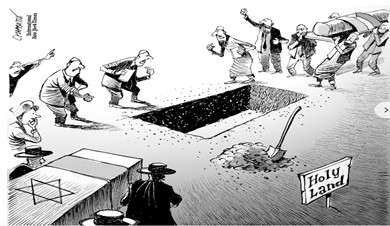
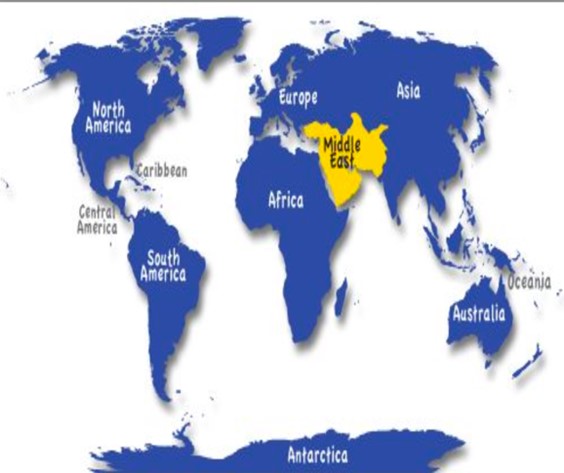
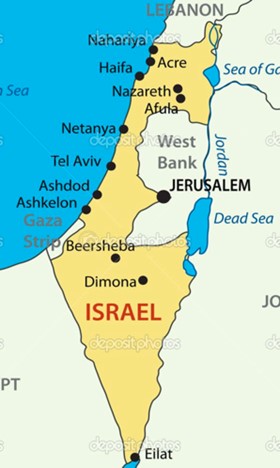


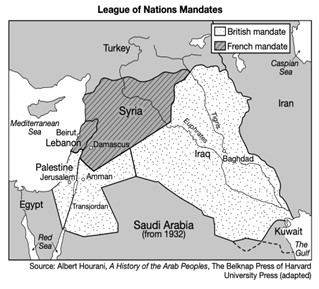


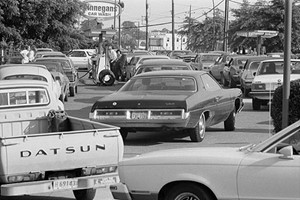

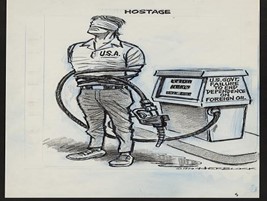
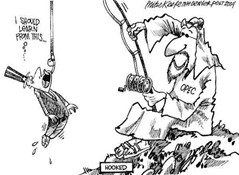

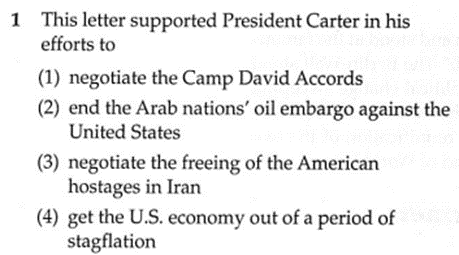




 njcssjournal