Proven Climate Solutions: Leading Voices on How to Accelerate Change

Our world made a monumental change during the Industrial Revolution when homes and buildings converted from wood-burning fireplaces to coal and oil furnaces allowing for heat and hot water. This change came 4,000 years after the invention of fire and revolutionized the way people live. Eventually, it brought electricity and light into their homes. Every aspect of home life became more efficient than it had been when people split wood for fireplaces.

Around 1950 the world converted to natural gas.  As a young boy I shoveled coal into the two furnaces in our basement around 6:00 a.m. each morning. In 1957, I remember the backhoes and tractors digging up our Paterson, N.J.  street to install natural gas lines. By 1970, most areas of New Jersey were using natural gas for heating and cooking. This change took about 20 years.

By 2,000, we began to realize that combustion engines and fossil fuels were harming our environment and were a cause of respiratory and cancer-related deaths. We understood that “natural” gas was not natural because the release of methane was even more harmful than the soot and smoke from coal and oil. We began to look for new sources of energy in solar, wind, nuclear, biomass, geothermal, tidal, and hydrogen.

From the perspective of a social studies educator, our students need to focus on the solutions to these problems. Proven Climate Solutions includes nineteen concise chapters that take less than ten minutes to read. Each chapter provides a solution on the technology, economics, and empirical examples of how and where they are working. For teachers who use classroom debates or a simulated congress, the chapters in the book provide information on the advantages of solar and wind over every other source of renewable energy!

An example of factual information for a classroom debate is in the chapter, “Opportunity Costs and Distractions” by BF Nagy, editor of this book. Here are some examples:

  • “In 2022, massive leaks of oil in Thailand, Peru, Ecuador, and Nigeria led to explosions, fatalities, fires, and extensive water pollution.” (Page 50)
  • “The world’s biggest tanker containing 1.1 million barrels of oil began leaking after being abandoned in the Red Sea near Yemen by a Chevron subsidiary.” (Page 50)
  • “In 2023, Massachusetts state regulators denied a permit modification that would allow discharge of more than one million gallons of toxic wastewater into cape Code Bay.” (Page 50)
  • “Nuclear power costs about $180 per megawatt/hour compared with $50 for wind and $60 for solar.” (Page 51)
  • “Just two generations ago, in 1979, the United States built the Runit Dome in the Marshall Islands.  Below an eighteen-inch concrete cap, they stored 111,000 cubic yards of radioactive debris from twelve years of nuclear tests.  It is already cracking and leaking into the sea.” (Page 52)

The chapter on VPP (Virtual Power Plants) fascinated me because I had never heard about them. As I learned more about the need to use a decentralized electric grid and the technology that is making this feasible, I realized the connections for students in their lessons on the Industrial Revolution and the efficiency of how VPP and DERs (Distributed Energy Resources) are making a difference in our economy and environment. In addition, they foster community engagement and shared resources.

The information on artificial intelligence in constructing pre-fab housing units, passive house designs meeting low carbon standards, virtual power plants, and the recent research on battery technology will engage students in thinking ten years into the future. The possibilities of airplanes and homes powered by batteries is transformative in the ways we are currently conditioned to think about travel, energy, and home heating systems.

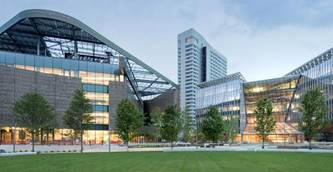
“The House” Cornell University’s Student Residence using a Passive House design.

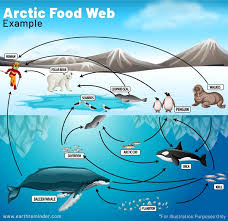
Teachers who use an interdisciplinary approach will find helpful research on the new carbon sinks being formed as the ice caps are melting. These polar foodwebs are helpful as deforestation has reduced the amount of carbon being absorbed by rainforests. The information on biodiversity and the impact of how our planet is adapting to a warmer climate with melting ice is an area of research that students should find interesting.  

Perhaps the most informative chapter in this book is titled “Circular Food Systems: Feeding the Urban World” because it identifies small innovative companies that are implementing important solutions. Examples for students to research include the White Moustache Yogurt Company, Back of the Yards Algae Sciences, Spare Foods Company, LivinGreen, Evergrain, TripleWin, and Portland Pet Center. When I was a 16-year-old high school student, my Earth Science teacher’s lesson about the impact of the end of civilization as we knew it with the birth of the 3 billionth person had a lasting impact on me. In just ten years, the world’s population will be 9 billion and in 2050 it will likely be 10 billion. As the population increases, the urban density will also increase from 55 percent today to 63 percent by 2050 and provide an urgent need to reduce greenhouse gas emissions. Solutions are needed!

YearPopulationNet ChangeDensity (P/Km²)
20258,231,613,07069,640,49855
20268,300,678,39569,065,32556
20278,369,094,34468,415,94956
20288,436,618,88667,524,54257
20298,503,285,32366,666,43757
20308,569,124,91165,839,58858

Students need to understand how hydroponic agriculture and circular food systems can sustain life on our planet in the future. Our current dependence on rice, wheat, soybeans, and corn contribute significant amounts of carbon and methane into our atmosphere through their production and distribution. The current agricultural revolution needs to produce food in urban areas and reduce food waste. Source

An important thread throughout this book is that proven climate solutions are likely to be local. Heating and electric power will be de-centralized, food production will be on urban rooftops and in parks, and transportation will be redesigned. The school curriculum needs to include case studies from urban ‘smart’ cities. One suggestion for the next edition of Proven Climate Solutions might be to include information on the importance of recycling clothing.

State of Green

Top 12 Smart Cities in the U.S.

World Economic Forum

Ten Cities Tackling Climate Change

World Resources Institute

Personal Stories about the Impact of Climate Change

Changes in the global climate exacerbate climate hazards and amplify the risk of extreme weather disasters. Increases of air and water temperatures lead to rising sea levels, supercharged storms and higher wind speeds, more intense and prolonged droughts and wildfire seasons, heavier precipitation and flooding. The number of climate-related disasters has tripled in the last 30 years. The United Nations Environment Programme estimates that adapting to climate change and coping with damages will cost developing countries $140-300 billion per year by 2030.

Source: https://www.oxfam.org/en/5-natural-disasters-beg-climate-action#

An annual average of 21.5 million people were forcibly displaced each year by weather-related events – such as floods, storms, wildfires and droughts – between 2008 and 2016, according to the International Displacement Monitoring Centre. This figure reached a record 32.6 million in 2022. The International Environmental Partnership, an international thinktank, expects this number to surge. It predicts that 1.2 billion people could be displaced globally by 2050 due to climate change and natural disasters. Source: https://www.zurich.com/media/magazine/2022/there-could-be-1-2-billion-climate-refugees-by-2050-here-s-what-you-need-to-know

Source: Rethinking Schools

 “These are hard times for people like me who work on coffee farms. I’ve worked here in Sonsonate since I was a kid. I have done pretty much every job there is to do on this farm. There are a lot of problems now — pests, low prices for coffee beans — but the big one is climate change. It used to be that the rainy season would start in May. But with climate change, who knows? The rains sometime come early, and the coffee plants flower, but then the rain will stop and so things dry up. Sometimes the rains come late or don’t come at all. That leads to a terrible harvest. Forty years ago, this farm produced 4,000 tons of coffee. This year? It will produce about 300 tons. In the last 10 years in El Salvador, 80,000 people lost their jobs in the coffee industry. I guess I’m one of the lucky ones, because I still have a job, although it pays only about $30 a week. My daughter couldn’t find any work at all, other than trying to sell food on street corners. So in order to survive, she and her family joined one of the migrant caravans traveling to the United States. What else was she supposed to do? I’m old now, so cannot make the journey north, but if I was younger, I probably would. My friend, Reyna de Jesús López, who works on the coffee farm with me, paid to send her 12-year-old son to the United States. She says that sometimes he calls her to say that he wants to come home, but she tells him, “What are you going to do here? There are no opportunities for young people.” Things here have never been easy, but climate change made them worse. The government in the United States tells Salvadoran migrants to go home. But one of the main reasons migrants can’t go home is because of climate change — caused mostly by the rich countries, like the United States, with all their greenhouse gases.”

Source: Project Drawdown

I’m taking action on climate change solutions because I was made homeless three times by climate change, hurricanes hitting my island. So I feel it very personally. I am working on a project to restore the mangroves to a community called Water Key, which was a bone fishing destination. So we’re engaging with the community there, all of whom were also displaced by climate change. Hurricane Dorian in 2019. It is now 2024 and no one has been able to move back yet. They’re living on the main island of Grand Bahama. They go on the weekends to try to rebuild their homes. But we’re hoping now that when we plant thousands, hundreds of thousands of mangroves in and around that area that they will still be able to be a bone fishing destination and that those mangroves will grow. At the same time, the community will be able to move back to the island.

Source: Project Drawdown

“When I was growing up, we didn’t talk about climate change. We talked about global warming, the ice caps and polar bears. Everything changed for me when I moved to New Orleans, just a couple of days before hurricane Katrina hit. Hurricane Katrina was one of the deadliest hurricanes that made landfall in American history, killing over 1800 people. And it was also one of the most expensive disaster recovery efforts that we’ve had to undertake since then, things have only gotten worse. Our climate continues to get warmer and more unpredictable. We have stronger hurricanes, more wildfires, increased droughts and floods. The time to take action was really decades ago. The next best time to take action is now.”

Source: The Harvard Gazette

I’m a member of the Hoopa Valley Tribe in Northern California, and I live on the reservation, which is about an hour away from an actual Target or Costco, over two mountains. What’s special about the Hoopa tribe is that we’ve never stopped practicing our traditional ceremonies. I grew up in a culturally rich, matriarchal society. We have a woman’s coming-of-age ceremony to celebrate a woman’s coming into a leadership role in the community. We had a lot of women serving on the tribal council; my mom herself also served on the council. Our population is small: 2,000 people. And when I was younger, my family and other families used to rely a lot on natural resources. A lot of our food would come from the environment around us. But that slowly started to dwindle away as I got older because of climate change and the use of our waterways by big agricultural farms. Our water resources also decreased due to fires, and since our culture is so intertwined with our land and natural resources, it has become a lot harder to keep our culture. It is hard to make baskets or jewelry because natural resources are becoming scarce. For the younger generations, it has been hard to grow up without having access to those resources that can allow them to express themselves through culture and art. We see that playing out in a mental health crisis among students because of threats to their culture, which is being taken away.

Source: The Harvard Gazette

“I live on the north shore of Oahu, Hawaii, in a very small town called Kahuku. Our population is 2,000. We have one stoplight. We used to have a gas station; now it’s in the town over. Our sense of community identity is strong. As far as the impact of climate change in my community, I’ve seen the way beaches and landscapes have changed tremendously from when I was little to now. Native Hawaiians, and Indigenous folk everywhere, have a deep connection with the land and the water, and this is hard for other people to understand. For us, the land and water are living beings, sort of relatives that hold lots of stories that are so connected to our culture and identities. Hawaiian lives are deeply impacted by climate change and over-tourism, which is not sustainable and is also harmful to the environment. Indigenous people are forced to face the worst and most harmful impacts of climate change when we contribute the least to it.”

Source: The Harvard Gazette

“I grew up in Puerto Rico. In the past five years, we faced hurricanes, earthquakes, and COVID. There is no question that the worsening climate on our planet is making it more likely for natural disasters to occur, and I want to make clear the stark difference between the impact of climate change in the Global North and the Global South. What we underestimate, in the U.S. and the Global North, is how climate change worsens natural disasters. To us in the Global North, it means a couple more hurricanes, but for the Global South, where most developing countries are located, natural disasters are not ephemeral. They become significant; their gravity multiplies exponentially. Climate change is worse for the Global South because they are less able to recover from the increased volume and gravity of the impact of natural disasters. Puerto Rico was badly hit by Hurricane Maria five years ago, and people are still suffering to this day because of it. It is because of the catastrophic system failure that took place in the wake of Maria: All systems failed and became too weak to recover, and economically, it made it hard for the island to rebuild. Once the infrastructure is weakened, as well as its ability to recover, the island becomes more vulnerable to the next natural disaster. We just had Hurricane Fiona, which was a Category 1 hurricane, and we felt the damage as if it were Maria, which was Category 5.

Source: New York Times

“When the rain began to pour over Green Mountain, N.C., in late September, Alison Wisely kept a close eye on the puddles growing slowly outside her window. Hurricane Helene was churning across the American South, and Ms. Wisely, 42, and her fiancé, Knox Petrucci, 41, were hunkering at home with her two young sons. The house was hundreds of miles from any coastline. On the morning of Sept. 27, a nearby river overflowed, and catastrophe came quickly. Floodwaters rushed toward the couple and the children — Felix, 9, and Lucas, 7. In a frantic effort to escape, all four lost their lives. Their deaths represent only a small fraction of Helene’s terrible toll. The storm has killed more than 200 people, making it the deadliest tropical cyclone to strike the mainland United States since 2005.”

Source: Australian Climate Case

“My name is Emma. I’m sixteen years old and I live on the south coast of New South Wales. I’ve always been into nature and the environment. Growing up I used to get really upset when I saw a tree being cut down. Then we learned about climate change in year 7. I remember it being really scary – I thought the world was perfect but really it isn’t. I just thought the way we were living was fine but that was a real eye opener. Climate change is becoming part of our lives now and affecting us directly. I was here when the bushfires happened – it was New Year’s Eve and the smoke was coming from the south and the north. The smoke got thicker and thicker as the day went on. I remember looking at Gulaga and it was just glowing. Everyone was banding together in town and just waiting. Eventually we went home but we couldn’t do anything because the power was out. The next day when we woke up the sky was a dark red and the trees were black. It was surreal – I couldn’t tell what time it was. The wind kept changing direction – the Cobargo fires were coming towards us but we got lucky and the wind changed. Several times we evacuated to the golf course with all of our stuff until the threat had passed.”

Source: Australian Climate Case

“My clan is the crocodile clan – Saibai Koedal – on my father’s side and on my mother’s side I’m Fijian. My grandfather and his family left Saibai just after the war. He wouldn’t have called it climate migration, but a key reason for them leaving was that people’s gardens were starting to get inundated with salt water, making it harder to grow crops. He had the foresight to realize that if it got worse then Saibai wouldn’t be able to support us. People say ‘oh it was the 1940s’ but the Industrial Revolution was well underway and the climate was already changing. My family has been away from Saibai for more than 70 years. It’s definitely had an impact on how we use our language and practice our culture. The young boys in Seisia often say ‘one day I’ll get to go to the homeland’ even though we’re only a few islands away. We’re witnessing climate change happening here in Seisia now. We’re seeing more extreme weather and more intense storm surges. Elders say that it’s very different now to the old days. You can see the effects on the shape of the shoreline – the beach used to have a shallow gradient but storm surges and king tides have carved the sand into a steep slope.”

Source: Global Citizen

Lato K.Kenya: “As pastoralists in Kenya, we are experiencing long periods of drought and short but dangerous rain periods, which bring flooding. The drought causes starvation of our cattle and the rain drowns them.”

The Wildness Society has video interviews with five Americans whose lives were impacted by climate change. Source: https://www.wilderness.org/articles/blog/5-stories-people-impacted-climate-change-and-inspired-take-action

WaterAid has a feature on people impacted by climate change around Lake Chilwa in Malawi.      https://www.wateraid.org/uk/stories/climate-stories

Modern Neocolonialism Via Public and Private Entities

For over five centuries, opportunistic outside powers have been taking advantage of Latin America. During the colonial era, the natural resources and native populations of the region were abused by European countries for profit. Exploitative practices left indelible marks on the area that persist to this day, and even after achieving independence, many countries in the region continue to function under neocolonial domination. Through the direct actions of foreign governments and more subtle acts of economic manipulation, the will of the people in Latin America has been continuously suppressed by intruding parties. In this essay, I will argue that modern neocolonial influence in Latin America largely follows historical precedent. Political and economic affairs in the region are shaped by modern foreign interests in the same manner that they have been throughout history.

With the advent of lithium-ion batteries and their increased popularity in the search for clean energy sources, global interest has been shifted back towards the Latin American mining industry. The trio of Bolivia, Chile, and Argentina contain about 58 percent of all global lithium reserves, a resource which is highly valuable on the global market (Berg et. al. “South America’s Lithium Triangle” 2021). Consequently, multiple global superpowers have expressed interest in gaining partial-or total-control over South American mining operations. In the first document that I chose, “South America’s Lithium Triangle: Opportunities for the Biden Administration”, authors Ryan C. Berg and T. Andrew Sady-Kennedy suggest that the Biden administration should pursue a higher level of cooperation between the United States and the countries mentioned above. Citing environmentalist concerns, green energy, and the rapidly expanding demand for lithium, the two argue that it would be mutually beneficial for all parties to work together (Berg et. al. “ South America’s Lithium Triangle” 2021). On its own, this suggestion seems innocent enough. Alternative energy is a burgeoning market, and the modern globalized economy means that investment from foreign sources is not uncommon by any means. However, when the current political climate in these lithium-producing countries is considered, it becomes more clear that the United States’ plans for involvement are not in line with the ideals that these countries have embraced. The elected governments of Argentina, Bolivia, and Chile all express heavy left-leaning ideologies, which are largely incompatible with the concept of investment as it is understood in the article. The newly elected president of Chile, Gabriel Boric, has even suggested that he will seek to nationalize the country’s mining industry, a move that would likely cease all involvement from the United States (Restivo 2021). Berg and Sady-Kennedy briefly address these barriers, noting the “United States’ historically rocky relationship with both Argentina and Bolivia”, but they do not seem to view them as particularly significant (Berg et. al. “South America’s Lithium Triangle” 2021). To the authors, such concerns can simply be solved by organizing a summit between lithium-producing countries and potential investors (Berg et. al. “South America’s Lithium Triangle” 2021). No credence is lent to the possibility of countries being disinterested in such a summit. Such arrogance is reminiscent of that displayed by those seeking to spread European-style “progress” into Latin America during the 19th Century. As described in “Neocolonial Ideologies” by E. Bradford Burns, it was inconceivable to Europeans that anybody would disagree with their conception of the optimal society. Burns puts it as such: “…the Enlightenment philosophers concluded that if people had the opportunity to know the truth, they would select ‘civilization’ over ‘barbarism’” (Burns 1980:92). Of course all Latin American people would pursue an industrialized society, as it was objectively the civilized, superior manner of existence. Berg and Sady-Kennedy demonstrate a similar pattern of thinking. Of course Bolivia, Chile, and Argentina would meet with the United States to discuss investment, because it is objectively the best way for them to boost said investment.

This article frequently invokes the ideas of partnership and cooperation, but it subtly betrays its true intentions in one key statement. After discussing the newfound usefulness of lithium and the growing market for it, Berg and Sady-Kennedy say the following: “These trends indicate that control of the lithium industry could reap major benefits in the future…” (Berg et. al. “South America’s Lithium Triangle” 2021). Notable in this excerpt is the usage of the word “control”. Unlike partnership and cooperation, the idea of control carries a much different -and much more sinister- connotation. It implies a much more forceful involvement, one in which the will of the United States is imposed instead of negotiated. This, of course, is the most familiar modus operandi of the United States. It can be traced back almost two full centuries to the Monroe Doctrine, expressed in 1823. The Doctrine, presented to Congress by President James Monroe, granted the U.S. permission to involve itself in Latin American affairs “in which the rights and interests of the United States are involved” (Avalon Project 2008). There are shades of this approach visible in the article, as Berg and Sady-Kennedy establish that the lithium industry is very much of interest to the United States. However, the authors seem to push beyond this concept and into the realm of the Roosevelt Corollary. The Roosevelt Corollary granted the United States power to exercise more force in its application of the Monroe Doctrine, under the guise of “[desiring] to see the neighboring countries stable, orderly, and prosperous” (Frohnen 2008). It drew heavily from the idea of paternalism, which is based upon the belief that some groups of people are more capable and intelligent than others. This feigned desire to see Latin American countries succeed, as well as the paternalistic tone of the Corollary, can be seen throughout the article. The failure of Chile, Bolivia, and Argentina to “successfully [transform] the majority of [their] available resources into economically viable reserves available for commercial production” is bemoaned, and it is heavily insinuated that the United States is responsible for reversing this trend (Berg et. al. “South America’s Lithium Triangle” 2021). The exact words of the Monroe Doctrine and the Roosevelt Corollary are much too taboo for modern-day political analysts, but clearly the sentiments expressed within them are still relevant and popular.

The United States is far from the only country perpetuating modern neocolonialism in Latin America. In its efforts to expand its social and economic influence, China has begun to get involved in the region, with much more obvious and direct intentions. Thus, for the second document in this analysis, I chose “Chinese Neocolonialism in Latin America: An Intelligence Assessment”, written by senior airman Steffanie G. Urbano and produced by the U.S. Air Force. The report enumerates a few different grievances that the United States has with China’s action, starting with exploitative lending and the weaponization of debt. Urbano describes a process known as “debt diplomacy”, in which China will issue exploitative loans to Latin American countries that do not have the ability to pay them back. The debt from these loans is then used as leverage by China, allowing them to hold other countries hostage when they cannot repay. This allows China free reign to operate in the region, with actions like seizing key infrastructure and forcibly reworking government contracts being common (Urbano 2021:185-187). China’s strategy of leveraging debt is not unheard of in Latin America; in fact, it is particularly reminiscent of the blueprint set by Europe in the 19th and 20th centuries. During this time, major European powers kept newly independent Latin countries in a state of perpetual debt, taking advantage of their young governments and economies. When these countries inevitably defaulted on their loans, loaning countries used it as an excuse to exercise military power and generally institute their own will. In Born in Blood & Fire, John Charles Chasteen lays out a particularly prominent example from Mexico in the mid-1850s: “The civil war had bankrupted the Mexican state, and Juárez suspended payment on foreign debt. France, Spain, and Britain retaliated by collectively occupying Veracruz” (Chasteen 2016:169-170). Using Veracruz as a springboard, the French military invaded the country, kicked out the current government, and installed their own puppet dictator to rule the country on their behalf. This particular brand of gunboat diplomacy is outdated in modern times, but the utilization of debt to excuse aggressive behavior is very much alive. Beyond debt diplomacy, Urbano also notes that large numbers of Chinese immigrants are settling in Latin America. She points to the fact that the Chinese-born population in the area more than doubled from 1990 to 2015, an increase which was sparked by “the migration of families to join Chinese laborers already settled in Latin America” (Urbano 2021:192). This is another familiar strategy, one that was used in the American banana republics in the early 20th century. The United Fruit Company, who effectively controlled much of Central America, created entire towns and communities of U.S. expats. Employees and their families would live in neo-suburban settings, “miniature US neighborhoods of screen-porched houses on meticulously manicured lawns”, isolated at best and actively colonizing at worst (Chasteen 2016:200-201). They spread American culture and ideas into the region, contributing little in the way of actual development and improvement. This parasitic relationship serves as the clear inspiration for China to develop their own isolated communities abroad.

Besides being deeply ironic, the contrasting tones of these two articles demonstrate the power of American exceptionalism to color our perception of the world. How can our government condemn “the detrimental impact of [Chinese-Latin American relationships] on regional stability and US leadership” when it has been just as guilty of destabilizing the region (Urbano 2021:184)? Why is it unacceptable for China to take control of key industries while American think tanks advocate for the same behavior? Do we truly believe that Latin America is only now becoming “overrun by malicious intent”, and that U.S. intervention “to keep our neighborhood friendly” is not malicious (Urbano 2021:197)? After analyzing both of these pieces, it has become clear that the United States sees itself in a different light from other countries. Ryan Berg and T. Andrew Sady-Kennedy advocate for intervention in the lithium industry because they believe that the U.S. must help Argentina, Bolivia, and Chile. They acknowledge that those countries do not want our assistance, but they seem to believe that such relationships can be changed purely by virtue of being the United States. Airman Urbano strongly condemns Chinese intervention in Latin America through the entirety of her writing, but she ends by advocating for U.S. intervention in the region. She seems to believe that the United States has more virtuous and respectable aims in the region, despite a history that suggests otherwise. Only by learning this history can we break such patterns of thinking and work towards achieving justice for the people of Latin America.

            Although this essay was previously drafted for a college level course, the ideas and the process demonstrated within it could prove useful in any social studies classroom that utilizes document analysis. When working with historical documents, it is important for students to recognize that the content within the document does not exist outside of its historical context. Effective analysis in the classroom should always include a dissection not only of the content itself, but the author, the intended audience, the reasons for the document’s creation, and the broader historical environment in which it was produced. In the above essay, we can see this process being taken with the Berg and Sady-Kennedy article and the broader context of U.S. policy in Latin America. As acknowledged by the author of this essay, the literal verbiage of the article is fairly innocent and mundane, with Berg and Sady-Kennedy advocating for cooperation and partnership in the region. When the historical context of the Monroe Doctrine and interventionist policy is considered, though, the article’s messaging becomes a more concerning indicator of contemporary views about Latin America in the United States.

 For students in a secondary education setting, the skill of recognizing and defining a document’s subtext should be targeted for development. Educators can promote this skill by highlighting the aforementioned aspects (author, audience, intention, context) of documents that are used in class, thereby modeling the process for students. This can be scaffolded as well, with educators prompting students to undertake the analysis process on their own until it becomes an automatic part of dissecting a document. If students can effectively utilize this skill, teachers can incorporate a much broader range of documents into the classroom. Material does not need to be nearly as literal and targeted if students possess the ability to consider historical context. For example, a lesson on racial discrimination could incorporate writings about eugenics, redlining, discriminatory legal codes, and much more provided that students are able to recognize the racial connotations of these issues. Outside of the classroom, this skill is just as valuable. Politically active Americans will frequently encounter messaging that relies heavily on connotations and subtext to execute its true intentions. In order to function as a responsible and informed member of our democracy, an individual must be able to pick up on the messaging beneath the surface.

Berg, Ryan C. and Sady-Kennedy, T. Andrew. 2021. “South America’s Lithium Triangle: Opportunities for the Biden Administration.” Retrieved from https://www.csis.org/analysis/south-americas-lithium-triangle-opportunities-biden-administration <Accessed 4/22/22>  

Burns, E. Bradford. 1980. “Neocolonial Ideologies.” In The Poverty of Progress: Latin America in the 19th Century. Berkeley: University of California Press. Pp. 18-20, 29-30.

Chasteen, John. 2016. Born in Blood & Fire. New York:W.W. Norton & Company.

Monroe, James. Monroe Doctrine, December 2, 1823. In The Avalon Project: Documents in Law, History, and Diplomacy. New Haven: Lillian Goldman Law Library, 2008.

Restivo, Néstor. 2021. “Cuál es el programa económico de Gabriel Boric para el nuevo Chile.” Pagina 12. December 26.

Roosevelt, Theodore. Roosevelt Corollary to Monroe Doctrine, December 6, 1904. In The American Nation: Primary Sources, edited by Bruce Frohnen. Indianapolis: Liberty Fund, 2008.

Shakow, Miriam. 2022. “Findlay Intro & Ch 1-2 plus Roosevelt Corollary.” Class Lecture, Race & Gender in Latin America. The College of New Jersey. April 8.

Urbano, SrA Steffanie. 2021. “Chinese Neocolonialism in Latin America.” Journal of the Americas. Third Edition 2021: 183–199.

Climate Change is Like Flicking a Switch

Climate Change is Like Flicking a Switch

Sarah Johnson

In The Winds of Change (2007), Eugene Linden suggests that before catastrophic climate changes, the climate in areas experience not prolonged climate change that gradually increases but a flickering of drastic changes. When reading this analysis, I am met with my experiences living in the United Kingdom (UK) as a graduate student. These flickering events I experienced in a year unveiled the effects long-term climate change could have on this region, as the UK infrastructure could not cope with the drastic changes.

These flickering events are “the beast from the east” and the summer heat wave. The beast from the east was a snowstorm in 2018 that resulted from easterly winds from the near continent. According to the met office, “When pressure is high over Scandinavia, the UK tends to experience a polar continental air mass. When this happens in winter, cold air is drawn in from the Eurasian landmass, bringing the cold and wintry conditions that give rise to the ‘Beast from the East’ moniker.” In most parts of Edinburgh, Scotland, the snow was no more than three inches deep, while other parts of Scotland experienced ten-foot to twenty-foot drifts. This caused a massive shutdown of the country. All trains, buses, and schools were canceled across the UK. When speaking to the locals, they said they had not seen a snowstorm to this scale in Scotland before. According to the Washington Post, this has not occurred since March 1979. Edinburgh’s infrastructure could not support three to eight inches of snow, causing tourism and travel to shut down for a week. This flickering during winter continues in 2021, with another beast from the east set to occur this month, plummeting temperatures in the highlands to -12 degrees Celsius (10 degrees Fahrenheit). At the same time, England goes on red alert to brace the storm. Although these storms show, the impact one can have on travel and tourism. One thing I witnessed first-hand was the food shortage at grocery stores before the storm came. Although this is usual human behavior, “get the milk and bread before the snowstorm,” the grocery stores within the city took two weeks to bounce back. Tesco (a major chain grocery store in the UK) had to shut down for a few days because workers could not get into the store. In addition, there was not much food to sell since trucks that would replenish the shelves were not traveling. It took two whole weeks since the storm hit to stock grocery shelves back to the normal amount. This was only one storm that lasted for 2.5 days, should this flickering stop and cold spells continue, it shows a potential problem for food shortages in major cities.

The flickering episodes and climate change in the summer also continue to be an issue in the United Kingdom. In 2018, the UK experienced a heat wave in which temperatures across the UK rose to 15.8 C (60.4 F), which is 1.5 above average. In mid-august of 2020, the UK continued to experience 30C heat waves longer than a heat wave of 1976, along with higher temperatures than experienced in 2003. These heat waves continue each summer now, indicating that they are more the norm than the exception. These heat waves influence the population and the land where the infrastructure was built for a cool, wet climate. There are no air conditioners in UK buildings, and although an average annual temperature of 60 degrees may not seem warm to a New Yorker, the effect on society showed the issue. During the heat wave, trains shut down within Scotland as many people passed out on the trains due to the heat. The rail services across the UK were at risk of derailment as the tracks had a risk of buckling in the heat. Besides, electric lines could overheat in the temperatures causing them to drop and risk the incoming trains. In a further effect on travel, roads also began to melt due to the heat. This caused an issue within small towns as people attempted to navigate around them. During this period, the heat affected the land so drastically that it revealed lines of scores of archaeological sites across Ireland and the UK, dating back to Neolithic era monuments. Although this is a win for archaeologists, it shows the effects of drought and gorse fires on fertile land.

I focus on the United Kingdom, as I saw the effects on society first-hand while a student, but I also believe it highlights a huge impact a 1.50 C temperature increase can have on society. An average annual temperature of 60.50 F degrees may seem manageable to New York, countries that have not been built to endure drastic changes in temperature for short periods are significantly affected.

How to Avoid a Climate Disaster by Bill Gates

How to Avoid a Climate Disaster

By Bill Gates (2021)

Reviewed by Hank Bitten, NJCSS Executive Director

The New Jersey Department of Education has taken an important step in avoiding a climate disaster. Beginning in September 2022, every New Jersey student in Grades K-12 will be studying the causes and effects of climate change in their community, state, nation, and world. In Social Studies classes, students will be researching, debating, proposing, and implementing solutions to reduce their carbon foot print, propose strategies for a sustainable environment in their schools and community, propose solutions at the state and national level, and collaborate with students and professionals in other countries about global initiatives. The goal of changing behavior at this critical time is to educate students with an interdisciplinary model and approaches in all disciplines.

Bill Gates focuses on solutions to the impending climate crises regarding the harms of the 51,000,000,000 (billion) tons of greenhouse gases that 7,500,000,000 (billion) people contribute to every year!  Although on the average this is 70 tons a day, the per person contribution is significantly higher in the United States, New Jersey, and some other countries. Europe has a plan to become the first continent to become carbon neutral in 30 years. (What is the EU’s Green Deal? And could Europe become the first climate-neutral continent? | World Economic Forum (weforum.org))

The first application in How to Avoid a Climate Disaster is with the metaphors that will help students in the elementary grades to understand the effects of global warming.

For example: Imagine a bathtub of water with the drain closed that is slowly filling up with water. What will eventually happen? What will be the damage to the room or house? Why is it not enough to slow the amount of water filling up the bathtub? 

Imagine sitting in a car with the sun shining on the glass windows.  What happens to the temperature inside the car? Will opening the window half an inch make the car safe for passengers?  Why is the temperature of the earth increasing every year? What will be the result if it continues to increase?

These metaphors will help students understand that small changes in our behaviors are helpful but they are not likely to solve the problem for what is causing the earth’s temperature to continually increase. Teachers will find valuable resources for teaching young children how electricity and cars contribute to greenhouse gas emissions. (Page 55) For example, electricity contributes about 27% of greenhouse gases to our environment. For younger children, teachers need to help their students understand how much electricity (megawatts and kilowatts) one family contributes.  The average home uses 28 kilowatt hours of electricity per day. For example, my electric bill stated that our home consumed 630 kilowatt hours over 28 days or 23 kilowatt hours per day.

Ask your students to identify everything in their apartment of home that uses electricity. Then compare kilowatts to a cup or glass of water that would be emptied into a sink or tub with the drain closed. Have your students explain the effects of increasing and decreasing the amount of electricity consumed.  The more electricity used and the more people using electricity will generate additional greenhouse gases that will harm the environment.

Another important understanding for younger children is to understand that each item they identify as using electricity uses different amounts of energy. For example, a light bulb might use 40 watts but the hair dryer uses 1,500. The critical application for younger students is to understand that by reducing the amount of electricity consumed helps the environment. In this context, teachers should scaffold to a higher conceptual level by understanding the impacts of more people in the home, community, and world. Reducing greenhouse gases is very difficult which is why understanding that everything we do and everything we produce has a harmful effect on our planet.

The second application is the useful information to support middle school student debates on the solutions to reduce greenhouse gases at the local, state, and national levels.

Middle school students should understand how human activity is accelerating climate changes by warmer temperatures. The technology of renewable sources, (i.e., solar, wind, nuclear, geothermal) should also be familiar to most students. However, the cost, amount of space needed to produce energy for a city, and the durability of the equipment are important areas for student research, problem-solving, and debate.

In the United States we have replaced energy several times over the past century.  Many homes have fire places but wood burns quickly and heat is lost through the chimney. Coal and oil were more efficient resources to heat homes.  They were eventually replaced in many homes with natural or propane gas. In the 1950s and 1960s the government supported high-powered transmission lines for electricity and underground pipes for natural gas. In the 1970s we transitioned from leaded gasoline to a more expensive grade of unleaded fuel.  Understanding the processes of continuity and change over time for how people live is critical to understanding the societal costs of inexpensive fossil fuels.

In Zurich, Switzerland there is a DAC (direct air capture) facility operated by Climeworks which can remove (or absorb) carbon from the atmosphere as it is released.  The cost is $100 per ton.  Since the world is currently producing 51 billion tons of harmful carbon emissions EACH year, the cost is $5.1 trillion.  The United States has a per person carbon footprint of 15 tons per person. The cost would be $1,500 per person or $6,000 for a family of four. This would be the cost EACH YEAR and a very expensive solution.

There are interesting hypothetical scenarios in How to Avoid a Climate Disaster regarding a place near Seattle or a large city the size of Tokyo. In these scenarios, students will find enough information for them to ask probing questions or search for more research regarding the average number of days with sunlight or wind speeds, the impact of severe weather, the amount of space on land or in water to build an energy farm, the costs to transmit electricity over long distances, and how to store sufficient power for evenings and when energy supplies are less than what is demanded.

Another interesting topic for middle school students to debate or discuss is the impact of electric vehicles on home energy supplies. Students need to consider the impact of charging multiple vehicles per household and in a city with high-rise apartments.  The book also provides basic information that should motivate students to research the technologies of fusion, batteries, and nuclear power. The ITER project in southern France will likely be operational within this decade. Is fusion the magical answer for our goal of zero carbon emissions?  Teachers will find empirical evidence in this book regarding current technology and experiments which are essential when teaching students how to support their claims and arguments with evidence.

The third application is for high school students to determine proposals for reducing the one-third of greenhouse gas emissions that come from producing plastics, cement, and fertilizers.

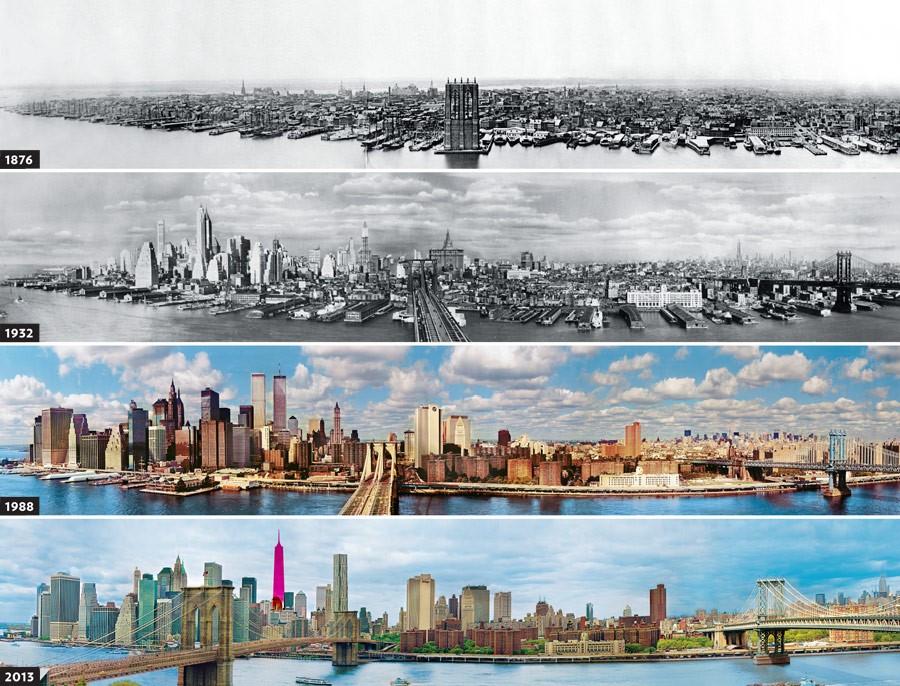
The media focuses on emissions from the fossil fuels of vehicles and the generation of electric power. Two areas that may not be familiar to students are that 19 percent of global emissions come from the production and application of fertilizers and 31 percent from industrial production.  The combination of these two areas represents about one-half of the 51 billion tons of greenhouse gas emissions currently contributing to the increase in temperature.  When studying continuity and change over time, students visually see how communities and cities change over 100 years, 50 years, or less. For example:

Shanghai, China in 1987 (on the left) and 2013 (on the right) Source

New York City (1876-2013)

When studying the impact of land use on climate, students should explore the environmental costs to society from the use of cement, steel, glass, generation of electricity, loss of forested land, waste, and traffic. How to Avoid a Climate Disaster provides an opportunity for classroom exploration, research, inquiry, collaboration, and solutions.  The contribution of the social sciences to understanding the causes of greenhouse gas emissions, strategies for changing the way we currently are doing things, and analyzing the externality of societal costs is found in what students do best – asking questions, researching, debating private and public solutions, analyzing the costs and long-term benefits, and presenting information clearly and concisely in graphs, tables, maps, and images.

Examples of questions for collaboration, researching, and interviewing by students are:

  • How are we producing automobiles?
  • Is natural gas the most efficient method for cooking food and heating buildings?
  • What are the societal costs for raising animals for food?
  • How should we recycle food waste?
  • How would a Green Premium be calculated in analyzing the costs and benefits over time?
  • How significant are the societal costs of air-conditioning on a global scale?

Standard 6.3 for climate for high school students in New Jersey requires them to collaborate with other students on proposed solutions.

6.3.12.GeoGI.1: Collaborate with students from other countries to develop possible solutions to an issue of environmental justice, including climate change and water scarcity, and present those solutions to relevant national and international governmental and/or nongovernmental organizations.

The competitive advantage of Social Studies in learning about the biggest issue to impact our planet in history is with our ability to engage in problem solving, understanding perspectives from different cultures, historical lessons of strategies to address problems over time, the ability to analyze the economics of the problem and solutions, and to debate the effectiveness of public and private solutions. The Social Studies classroom, especially in grades 6-12, is a laboratory for analyzing the marginal costs and losses of incremental changes, preventative solutions, investments in research and development, and the cost of inaction.

“Climate science tells us why we need to deal with this problem but not how to deal with it.  For that, we’ll need biology, chemistry, physics, political science, economics, and other sciences.” (Page 198)

One of the best chapters in How to Avoid a Climate Disaster is the one on government. The perspectives on the electrification or rural America, installing natural gas lines, building the interstate highway system, implementing the Clean Air Act or 1970, the Montreal Protocol of 1987, and the Human Genome Project provide empirical examples of what the government of the United States has accomplished in the 20th century.  The lessons of innovation and the call to debate solutions for reaching the goal of zero carbon emissions are opportunities that should be integrated into the existing curriculum. The Sunshot Initiative sponsored by the U.S. Department of Energy to reduce the costs of solar energy is one example worth studying in Economics or U.S. History. Here are some examples:

  1. Will the steps taken to reduce carbon emissions in your community or average size city in New Jersey work in Tokyo with a population of 38 million, or Mexico City, New York, or Mumbai?
  2. Is the best strategy for reducing carbon emissions one that is implemented at the local or state level of government, through national or global commitments, or by incentives to private firms?
  3. Are there dangers in making immediate but small reductions by 2030 or will it be more effective to wait for new technologies from current research?
  4. If society delays implementing carbon emission reductions now, will the costs be significantly more expensive if implementation is postponed five or ten years?
  5. What are the most effective incentives to lower costs and reduce risks? (tax credits, subsidies, loan guarantees, carbon tax, cap and trade system, etc.)
  6. How important are the actions taken by citizens, consumers, and producers in taking the initiative in reducing carbon emissions?
  7. What lessons have we learned from the Covid-19 pandemic that apply to our response to impending warmer temperatures and rising sea levels from carbon emissions?

As teachers in New Jersey begin to implement the K-12 mandated curriculum standards on climate and environmental sustainability, they should consider an interdisciplinary model that includes learning in every grade focusing on causes, effects, and solutions at the local, state, national, and global levels.  Students who are age five in Kindergarten in 2021 will be 34 in 2050.  Teachers who are age 25 or 30 now will be 55-60 in 2050.  The curriculum that is planned and implemented will have a measurable legacy in the foreseeable future. In 1921, a nuclear bomb, sending a man to the moon, CT images, Global Positioning Systems (GPS) were impossible to imagine but by the middle of the 20th century they were in development of considered possible. Social Studies teachers must look beyond what is predictable today and teach students for a world that may be in conflict and crisis or one that can be safer and better.