Book Review: A New History of Life: The Radical Discoveries about the Origins and Evolution of Life on Earth by Peter Ward & Joe Kischvink Reviewed by Thomas Hansen, Ph.D.

The authors have a great time presenting their exciting theories and arguments in this informative book.  You can tell they really love the topics in this book and enjoy discussing them.  This really comes out clearly upon reading.

Whether you are a botany teacher or a fan of dinosaurs, you also will enjoy the discussion of how life started on this planet.  Without giving all the content away, I will say that even though my science background is limited (undergrad minor) I got a lot out of the book.  It is entertaining and very interesting. 

Some background in a lot of different science areas would be helpful for the readers, for the authors talk about Jurassic Park, plants, dinosaurs, oxygen, plate tectonics, chemistry, geology, paleontology, and on and on.  The authors obviously have a great deal of interdisciplinary background and and make good use of their facility with many types of data, theories, schools of thought, and science traditions.

The authors make good use of humor, also, in putting forth their ideas.  For example, they mention the period of time when many scientists feel nothing was happening in terms of major biological change, some calling this the boring billion years.  The authors respond to this notion by saying, “A billion years is a long time for nothing to happen.  But like so much else, the boring billion has recently been shown to be not so boring.  New discoveries are showing us that life was not resting at all” (p. 90).

They mention on page 93 that there was no oxygen available during this same time, using a chart and this clever explanation: “Zero.  Really zero.  No whiffs.” 

Regarding a theory about tectonic plate movement, they stress on page 141, “However, this would work only if Laurentia and Australia were roughly ninety degrees away from each other at the time (which—duh—had to be true if Australia was on the equator and Laurentia on the pole!)” as a way to emphasize their opinion about  

On the same point, they joke, “With apologies to Tolkien, “One motion to move them all, one rotation to spin them, one translation from the pole, and on the globe we’ll find them!”

I recommend this book for several types of readers.  Certainly, fans of evolution theories and science in general will want to grab a copy of this book.  Teachers of science will also find a lot of interesting passages and theories to consider.  Science in its many subfields will come into play for the reader, for the authors discuss planets, geology, meteorology, primates, amphibians, and a host of other characters and developments in the scheme of life on this planet.

The book contains some content that will dovetail into units and lessons on science language and technical content.  The book can be used as background reading for the teacher, reference material for the classroom, and suggested reading for student projects and reports on evolution because of the information, theories, arguments, and conclusions set forth.  For example, the book may connect to the following Common Core Standards for Grades 11-12:

  • CCSS.ELA-Literacy.RST.11-12.8
    Evaluate the hypotheses, data, analysis, and conclusions in a science or technical text, verifying the data when possible and corroborating or challenging conclusions with other sources of information.
  • CCSS.ELA-Literacy.RST.11-12.9
    Synthesize information from a range of sources (e.g., texts, experiments, simulations) into a coherent understanding of a process, phenomenon, or concept, resolving conflicting information when possible.

For more advanced students and for those in honors and college-prep courses, the book can be used in relation to this standard:

  • CCSS.ELA-Literacy.RST.11-12.10
    By the end of grade 12, read and comprehend science/technical texts in the grades 11-CCR text complexity band independently and proficiently.

            The book can also be used as required reading for graduate and advanced undergraduate science courses, suggested reading for seminars on evolution, and additional reading in a professional development (PD) session for teachers of science.  As always, follow-up sessions, group discussions, interdisciplinary research, and self-reflection are beneficial additional activities for any advanced text being used in PD sessions over the summer or on several Saturdays during the school year.

Review of A New History of Life: The Radical New Discoveries about the Origins and Evolution of Life on Earth, by Peter Ward & Joe Kischvink.  New York: Bloomsbury Press, 2015, cloth, 391 pages.

The authors have a great time presenting their exciting theories and arguments in this informative book.  You can tell they really love the topics in this book and enjoy discussing them.  This really comes out clearly upon reading.

Whether you are a botany teacher or a fan of dinosaurs, you also will enjoy the discussion of how life started on this planet.  Without giving all the content away, I will say that even though my science background is limited (undergrad minor) I got a lot out of the book.  It is entertaining and very interesting. 

Some background in a lot of different science areas would be helpful for the readers, for the authors talk about Jurassic Park, plants, dinosaurs, oxygen, plate tectonics, chemistry, geology, paleontology, and on and on.  The authors obviously have a great deal of interdisciplinary background and and make good use of their facility with many types of data, theories, schools of thought, and science traditions.

The authors make good use of humor, also, in putting forth their ideas.  For example, they mention the period of time when many scientists feel nothing was happening in terms of major biological change, some calling this the boring billion years.  The authors respond to this notion by saying, “A billion years is a long time for nothing to happen.  But like so much else, the boring billion has recently been shown to be not so boring.  New discoveries are showing us that life was not resting at all” (p. 90).

They mention on page 93 that there was no oxygen available during this same time, using a chart and this clever explanation: “Zero.  Really zero.  No whiffs.” 

Regarding a theory about tectonic plate movement, they stress on page 141, “However, this would work only if Laurentia and Australia were roughly ninety degrees away from each other at the time (which—duh—had to be true if Australia was on the equator and Laurentia on the pole!)” as a way to emphasize their opinion about  

On the same point, they joke, “With apologies to Tolkien, “One motion to move them all, one rotation to spin them, one translation from the pole, and on the globe we’ll find them!”

I recommend this book for several types of readers.  Certainly, fans of evolution theories and science in general will want to grab a copy of this book.  Teachers of science will also find a lot of interesting passages and theories to consider.  Science in its many subfields will come into play for the reader, for the authors discuss planets, geology, meteorology, primates, amphibians, and a host of other characters and developments in the scheme of life on this planet.

The book contains some content that will dovetail into units and lessons on science language and technical content.  The book can be used as background reading for the teacher, reference material for the classroom, and suggested reading for student projects and reports on evolution because of the information, theories, arguments, and conclusions set forth.  For example, the book may connect to the following Common Core Standards for Grades 11-12:

  • CCSS.ELA-Literacy.RST.11-12.8
    Evaluate the hypotheses, data, analysis, and conclusions in a science or technical text, verifying the data when possible and corroborating or challenging conclusions with other sources of information.
  • CCSS.ELA-Literacy.RST.11-12.9
    Synthesize information from a range of sources (e.g., texts, experiments, simulations) into a coherent understanding of a process, phenomenon, or concept, resolving conflicting information when possible.

For more advanced students and for those in honors and college-prep courses, the book can be used in relation to this standard:

  • CCSS.ELA-Literacy.RST.11-12.10
    By the end of grade 12, read and comprehend science/technical texts in the grades 11-CCR text complexity band independently and proficiently.

            The book can also be used as required reading for graduate and advanced undergraduate science courses, suggested reading for seminars on evolution, and additional reading in a professional development (PD) session for teachers of science.  As always, follow-up sessions, group discussions, interdisciplinary research, and self-reflection are beneficial additional activities for any advanced text being used in PD sessions over the summer or on several Saturdays during the school year.

Review of A New History of Life: The Radical New Discoveries about the Origins and Evolution of Life on Earth, by Peter Ward & Joe Kischvink.  New York: Bloomsbury Press, 2015, cloth, 391 pages.

The authors have a great time presenting their exciting theories and arguments in this informative book.  You can tell they really love the topics in this book and enjoy discussing them.  This really comes out clearly upon reading.

Whether you are a botany teacher or a fan of dinosaurs, you also will enjoy the discussion of how life started on this planet.  Without giving all the content away, I will say that even though my science background is limited (undergrad minor) I got a lot out of the book.  It is entertaining and very interesting. 

Some background in a lot of different science areas would be helpful for the readers, for the authors talk about Jurassic Park, plants, dinosaurs, oxygen, plate tectonics, chemistry, geology, paleontology, and on and on.  The authors obviously have a great deal of interdisciplinary background and and make good use of their facility with many types of data, theories, schools of thought, and science traditions.

The authors make good use of humor, also, in putting forth their ideas.  For example, they mention the period of time when many scientists feel nothing was happening in terms of major biological change, some calling this the boring billion years.  The authors respond to this notion by saying, “A billion years is a long time for nothing to happen.  But like so much else, the boring billion has recently been shown to be not so boring.  New discoveries are showing us that life was not resting at all” (p. 90).

They mention on page 93 that there was no oxygen available during this same time, using a chart and this clever explanation: “Zero.  Really zero.  No whiffs.” 

Regarding a theory about tectonic plate movement, they stress on page 141, “However, this would work only if Laurentia and Australia were roughly ninety degrees away from each other at the time (which—duh—had to be true if Australia was on the equator and Laurentia on the pole!)” as a way to emphasize their opinion about  

On the same point, they joke, “With apologies to Tolkien, “One motion to move them all, one rotation to spin them, one translation from the pole, and on the globe we’ll find them!”

I recommend this book for several types of readers.  Certainly, fans of evolution theories and science in general will want to grab a copy of this book.  Teachers of science will also find a lot of interesting passages and theories to consider.  Science in its many subfields will come into play for the reader, for the authors discuss planets, geology, meteorology, primates, amphibians, and a host of other characters and developments in the scheme of life on this planet.

The book contains some content that will dovetail into units and lessons on science language and technical content.  The book can be used as background reading for the teacher, reference material for the classroom, and suggested reading for student projects and reports on evolution because of the information, theories, arguments, and conclusions set forth.  For example, the book may connect to the following Common Core Standards for Grades 11-12:

For more advanced students and for those in honors and college-prep courses, the book can be used in relation to this standard:

            The book can also be used as required reading for graduate and advanced undergraduate science courses, suggested reading for seminars on evolution, and additional reading in a professional development (PD) session for teachers of science.  As always, follow-up sessions, group discussions, interdisciplinary research, and self-reflection are beneficial additional activities for any advanced text being used in PD sessions over the summer or on several Saturdays during the school year.

Book Review-From the Republic of the Rio Grande: A Personal History of the Place and the People by Beatriz de la Garza Reviewed by Thomas Hansen, Ph.D.

This interesting account of a small republic that existed only briefly between Mexico and the USA shows some very interesting histories and traditions that can teach us a lot.  From 1839 to 1840, there was a nation between Mexico and the Republic of Texas called the Republic of the Rio Grande, with its capital in Laredo.  Some do not know of this temporary republic, jostled between two mega-powers but firmly connected to both by trade, tradition, and blood. 

Families from this region had connections to both other republics, often, and there are many documents still in existence showing sale and purchase of land, marriages, and bills becoming laws—all relating to the inhabitants of the area that was called briefly the Republic of the Rio Grande.  The author does a very good job of painting a full picture that not involves commerce, history, culture, and politics, but also connects the story of this republic to the author’s own family.

De la Garza mixes the history of the republic with the family history she is able to ascertain through personal records, archives, and the story of the region as found on legal and financial documents.  The story is very important to the author, and it can tell us very much about human nature—and about different political forces brought into conflict by a variety of factors: war, environment, need, tradition, and hope.

The author uses vivid language to tell us of the days of the republic, explaining details down to how the dwellings were constructed and including notes on dating, courting, and marriage traditions.  The author also shows us the connections among families and the ironic way in which things can change over time, enemies becoming connected in ways their ancestors would have never imagined.  There are also stories of love, of loss, and of hope.   

The author provides a very valuable service indeed, reminding us of the republic and explaining so much about its short life.  We owe her a lot, and we need to teach young people about this important chapter in history lest it be forgotten.

I will not give away the content of the book, something I always avoid doing in my reviews, but will urge teachers of history, of social studies, and of geography to consider reading the book.  Both cultural and physical geography are involved in the story, as the people in the region had come from different lands to reach the site and the environment plays a huge role in the commerce and the very existence of the republic.  The damming of rivers and the role of agriculture are two central issues in the story of this region.  

I would recommend this story be read by all educators near where the republic once existed.  It is important history and it is also an important way to enrich one’s perspective of the region.  In addition, teachers of the subjects mentioned above can use the book as background reading, to build lessons and units on the history and geography of the area, and to enrich the curriculum on Texas, Mexico, and immigration.      

Book Review: The Leadership Journey: How Four Kids Became President

I decided to read this book after listening to Doris Kearns Goodwin speak about this on television following the inauguration of President Donald Trump. After reading the first few pages, I decided to write a review of this book as it should be ‘required’ reading for every social studies teacher, student, parent, and grandparent.

One reason for encouraging teachers, pre-service teachers. students, parents, and grandparents to read this book is in the truisms that are embedded in the stories about each president. For example, in introducing Abraham Lincoln’s decision to enter politics as a Whig candidate, these few sentences should engage young minds in reflective thinking:

As a teacher, I would discuss with my class, why did Lincoln join the new Whig Party and not the popular Democratic Party? Why did he announce his decision to run for the assembly in a pamphlet compared to a letter, newspaper, or verbal announcement? How does Lincoln understand public service?

As a parent or grandparent, I would discuss the political parties we have today and what they stand for. How do candidates in our community or state get elected and announce their decision to run for office? Is it possible for elected representatives to represent the interests and needs of the majority in their community or is it best for them to advance their own beliefs on the issues or vote for the position of their political party?

The reading level of The Leadership Journey: How Four Kids Became President is for middle school students. Each chapter is just a few pages and should take a middle school student about 20-30 minutes to read and comprehend. This book is a valuable resource for a student research assignment, teaching about the reliability of sources, civics, an afterschool history club such as Rho Kappa or Phi Alpha Theta, a summer reading list activity, or a Saturday Seminar roundtable discussion. The applications of this book are unlimited.

One of the hidden gems in the life of Lincoln is with his learning style, character, persistence, and ability to handle disappointments. These examples are often only a few sentences, but they are prompts to initiate discussion and empathy between students in your class. For example, “The key to Lincoln’s success as a lawyer was his ability to break down the most complex case or issue ‘into its simplest elements.’ He never lost a jury by fumbling or reading from a prepared argument, relying instead ‘on his well-trained memory. (Page 47)

Another example that I found interesting was the evolution of how President Lincoln’s views changed about the emancipation of enslaved persons by listening to others.

The second president in Doris Kearns Goodwin’s book is Theodore Roosevelt. There are multiple connections for students in the leadership journey of Teddy Roosevelt. These include living with a disability, coping with personal loss, understanding the issues, the importance of integrity, and the challenges and opportunities of the experiences in one’s life.

Although born into a family with wealth, as a child he faced frightening attacks of bronchial asthma. His childhood and teenage years were limited. By age 10, he had opportunities to be home schooled, enjoy summer vacations on Long Island, and travel to Africa, Europe, and the Middle East. However, participating in activities was limited because of his health.

The lesson of how Teddy Roosevelt voted in the New York State Assembly, especially on the bill to stop the manufacture of cigars in tenement houses is one that will likely engage students in a thoughtful discussion or debate about how elected officials represent constituents today. Roosevelt opposed all government supervision and regulations regarding limiting the hours worked, a minimum wage, or prices. Samuel Gompers invited him to visit the places where the cigars were made.

On February 14, 1884, Valentine’s Day, Teddy Roosevelt place a large X in his diary followed by the words “The light has gone out of my life.”  His mother, Mittie, and his wife, Alice Hathaway Lee, died. He was 25 years old and had been married for less than four years.

These are stories students relate to. They encourage discussions about loss, grief, empathy, confusion, resilience, and life. The leaders Doris Kearns Goodwin writes about are very human and their experiences in life are similar to those of many young adults. Abraham Lincoln also lost his mother and fiancé and his son, Willie, died at age 11 in the White House.

Three examples from the book that should interest middle and high school students are Teddy Roosevelt’s use of the Executive Order renaming the Executive Mansion to the White House in 1901, his daily schedule, and a bizarre episode running naked in Rock Creek Park. Source

The information on the Spanish American War in 1898, settling the coal strike in 1902, nine-week train trip around the United States in 1903, are also presented in a descriptive narrative that will interest students with events in the social studies curriculum.

Although most middle school students do not study Franklin Delano Roosevelt as part of U.S. History, this chapter will engage high school students. The importance of reading is to ignite inquiry through questions and thinking about the historical era, the individual, and American government.

Franklin was born into a wealthy family with a large estate about 90 miles north of New York City, where they also had a home on 65th Street near Fifth Avenue and Central Park.

The chapters about Roosevelt are powerful and insightful because they are filled with stories about his character. While most readers will find value and insights into his youth, college years, marriage and positions in the state legislature and federal government, the chapter on his perseverance regarding his paralysis from polio is unusually compelling. Here is an example of how FDR faced the news of his permanent disability as a 39-year-old man with a promising future:

In another chapter Doris Kearns Goodwin portrays FDR’s trait of courage.  His courage was both political courage as he risked everything to hide his disability of crippled legs and physical courage.  He was fortunate to have the friendship and guidance of Louis Howe, Sam Rosenman, Frances Perkins, and his wife, Eleanor. Here is an example of how Franklin handled every situation with grace, humor, and strength: (This is six years after he was infected by the polio virus, 1928)

These two excerpts are only an introduction to what is revealed in his campaign for governor, acceptance speech in Chicago as the Democratic Party candidate for president, his inauguration speech at the Capitol, and his leadership as president. Facts and historical examples are important, but FDR’s personality traits will likely have a lasting impact on students.

Although many students are likely less familiar with the presidency of Lyndon B. Johnson than the presidency of Lincoln, T.R. or F.D.R., they will identify with his character, commitment to civic engagement, and experience as a teacher. As a young child, he moved from a small cabin in a rural area to Johnson City. For various reasons, Lyndon’s activities changed, and he became interested in the activities of his father who was a member of the state legislature in Texas.

Lyndon’s Johnson’s role as a teacher and school principal reveals his work ethic and characteristic as a caring and dedicated public servant.

He was also the debate coach at Sam Houston High School. He coached the debate team through city, district and state tournaments.

“Johnson appeared to his students ‘a human dynamo,’ a steam engine in pants,’ driven by a work ethic and unlimited enthusiasm that proved contagious.” (Page 269)

I enjoyed reading about how he used his social capital in Washington to advance his goals. Lady Bird and Lyndon moved to Washington where he was the chief of staff to a Texas congressman. He became friends with Sam Rayburn who lived alone and invited him to dinner in his home with his wife, Lady Bird. Through this connection, Lyndon became the director of the National Youth Administration in Texas. When his congressman James Buchanan passed away unexpectedly, Johnson campaigned for his seat. Two days before the election he had emergency surgery to remove his appendix. He won, likely on a promise to bring electricity to the farmers in his area of Texas.

Johnson’s personality traits of empathy, enthusiasm, perseverance, and ‘grit’ are important for students to understand, apply to their own experiences, and engage in discussion with their peers. He lost his bid for re-election by 1,311 votes and a few years later won his election as senator by only 87 votes. As a senator, he was the youngest majority leader in the history of the Senate at age 46 and was considered as a presidential candidate for the 1956 election. Then, suddenly everything changed when he had a devasting heart attack. This event transformed his life and behavior.  A lesson about the trait of resiliency.

If a teacher elected to use the resource of this book for just one day, perhaps the most compelling pages are found on pages 317-328. His passion, legislative skill, and personal conviction are important for every student to understand. It is also important for students to understand the long struggle to pass and implement civil rights laws. In our classrooms, the lessons of Freedom Riders, marches, boycotts, and the emotional scars of segregation are too often taught passively through slide presentations and vocabulary terms. Doris Kearns Goodwin captures some of the emotion that led to the Civil Rights Act of 1964 and the Voting Rights Act of 1965. Everyone should read Chapter 24.

“Like a tailor stitching a custom suit, Johnson took measure of Dirksen.  A decade of working together had taught Johnson that Dirksen had no hesitation asking for ‘a laundry list’ of favors in return for his support on legislation.  But this time, Johnson offered Dirksen something far more important than perks and favors; he appealed to Dirksen’s hunger to be remembered, honored. ‘I saw your exhibit at the World’s Fair, and it said, ‘The Land of Lincoln,’ Johnson pointed out. And the man from Lincoln is going to pass this bill and I’m going to see that he gets proper credit. With a gift for flattery equal to Dirksen’s vanity, he assured the senator ‘if you come with me on this bill, two hundred years from now there’ll be only two people they’ll remember from the state of Illinois: Abraham Lincoln and Everett Dirksen!” (Page 321)

I found value in the leadership journey of these four presidents. Although my review focuses on students and teachers, adults will also enjoy reading what Doris Kearns Goodwin has written. In the closing pages, Doris Kearns Goodwin describes a dinner meeting with her “guys.’  What an opportunity to discuss the historical context of 100 years of American history, the goals of the Declaration of Independence, how each president mastered the communication platforms of newspapers, stories, radio, and television. Perhaps the most significant question is what makes a good leader and a good president? What a nice segway to understanding empathy!

Visit the resources of the Miller Center at the University of Virginia to learn about the American presidents.

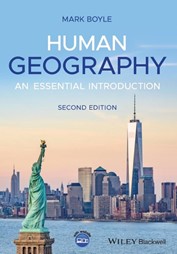
Book Review: Human Geography: A Concise Introduction

By Thomas Hansen, Ph.D.

This is a very interesting book because it is not from mainstream sources and is not a traditional format text.

This is a textbook meant for college and university courses within the United Kingdom, but the book can be used as a textbook anywhere, good background reading, and interesting data for writing social studies units and lessons in K-12 classrooms.  Meant for a semester-long course, the book includes major points in history to illustrate what human geography is.

As in most of my reviews, I try not to give away all of the content and key ideas in the review.  I talk more in this particular review about the overall approach of the book, some interesting features and themes, my personal reaction, and some possible uses for the book.  I begin here by discussing how the book’s author sets up the discussion.

The author uses a historical approach in discussing human geography and this is mirrored in the way the book is organized—from the beginnings of civilization and the notion of what geography is.  The vocabulary and basic concepts of the subject are presented in the first chapter.  

There are 12 chapters, including a wide range of watershed events, natural disasters, migration, changing economies, and our current understanding of geography.  Each chapter begins with a table of contents and a list of learning objectives.  Each chapter ends with a conclusion of the most important points made, a bank of three essay questions, and references for further reading of what was found in the chapter.  The format of the chapters could be helpful for students seeking lots of clarity in their reading. 

One thing that really stands out in the book is the use of the “zoom-in boxes.”  These are similar to sidebars, but they take up sometimes a full page or more than one page of text, stories and examples related to whatever the information is they interrupt.  The problem is, there are so very many of them that they are aggravating.  Right in the middle of a section on a given topic or subtopic, there is some discussion of how something is an example of X.  When faced with these,

I did not know if I should stop reading the chapter and read the zoom-in box instead, or read for a while and come back to it.

The zoom-in box phenomenon was a very strange aspect of the book for me.  Perhaps this sort of zoom-in box is a tradition in some fields, or in some lands, but it was something I did not ever get used to.  I did not know how to incorporate them into the flow of what I was reading.  Maybe the use of the zoom-in box is aimed at readers with short attention spans?

Another noticeable aspect of the book for me was the persistent theme of the West having imposed its will so strongly worldwide that this has resulted in a strong and pervasive clash of cultures noticeable around the globe (e.g., p. 99).  This sentiment appears throughout the book and is also spelled out at several points.  Readers will see it early on, and they will draw their own conclusions from it.

In responding to this text, I must admit I enjoyed very much the topics and discussion of the different themes and components of what makes geography work.  Aside from the strange tone of the book, and the zoom-in boxes, I got a great deal out of reviewing this topic—one I have always felt is greatly slighted in schools. 

I remember in my own case studying geography in elementary school—we had a book on it one year!  In high school, I took a course on physical geography—in addition to taking French, German and Spanish language courses.  A survey course on cultural geography was one of the very first electives I took in college.  I went on to study several other world languages in college. 

Of course, in studying about other languages and cultures, a knowledge of geography is essential.  Therefore, I do not need to be convinced it is an important topic for study.   

I would recommend the book to give teachers of social studies, world languages, and other subjects a different perspective and a way to connect history and geography.  It is always interesting to me to see how books are laid out in other countries and learn from different points of view.  This is good material for a teacher’s professional library, and the book can also be used to help inform and design units for the classroom. 

Because the book is too long for a short professional development session, it fits more in the category of resource and reference material for teachers of cultural and world-focused subjects. 

Human Geography: A Concise Introduction, by Mark Boyle.  Malden, MA: Wiley-Blackwell. 2015, paper, 318 pages.

By Thomas Hansen, Ph.D.

This is a very interesting book because it is not from mainstream sources and is not a traditional format text.

This is a textbook meant for college and university courses within the United Kingdom, but the book can be used as a textbook anywhere, good background reading, and interesting data for writing social studies units and lessons in K-12 classrooms.  Meant for a semester-long course, the book includes major points in history to illustrate what human geography is.

As in most of my reviews, I try not to give away all of the content and key ideas in the review.  I talk more in this particular review about the overall approach of the book, some interesting features and themes, my personal reaction, and some possible uses for the book.  I begin here by discussing how the book’s author sets up the discussion.

The author uses a historical approach in discussing human geography and this is mirrored in the way the book is organized—from the beginnings of civilization and the notion of what geography is.  The vocabulary and basic concepts of the subject are presented in the first chapter.  

There are 12 chapters, including a wide range of watershed events, natural disasters, migration, changing economies, and our current understanding of geography.  Each chapter begins with a table of contents and a list of learning objectives.  Each chapter ends with a conclusion of the most important points made, a bank of three essay questions, and references for further reading of what was found in the chapter.  The format of the chapters could be helpful for students seeking lots of clarity in their reading. 

One thing that really stands out in the book is the use of the “zoom-in boxes.”  These are similar to sidebars, but they take up sometimes a full page or more than one page of text, stories and examples related to whatever the information is they interrupt.  The problem is, there are so very many of them that they are aggravating.  Right in the middle of a section on a given topic or subtopic, there is some discussion of how something is an example of X.  When faced with these,

I did not know if I should stop reading the chapter and read the zoom-in box instead, or read for a while and come back to it.

The zoom-in box phenomenon was a very strange aspect of the book for me.  Perhaps this sort of zoom-in box is a tradition in some fields, or in some lands, but it was something I did not ever get used to.  I did not know how to incorporate them into the flow of what I was reading.  Maybe the use of the zoom-in box is aimed at readers with short attention spans?

Another noticeable aspect of the book for me was the persistent theme of the West having imposed its will so strongly worldwide that this has resulted in a strong and pervasive clash of cultures noticeable around the globe (e.g., p. 99).  This sentiment appears throughout the book and is also spelled out at several points.  Readers will see it early on, and they will draw their own conclusions from it.

In responding to this text, I must admit I enjoyed very much the topics and discussion of the different themes and components of what makes geography work.  Aside from the strange tone of the book, and the zoom-in boxes, I got a great deal out of reviewing this topic—one I have always felt is greatly slighted in schools. 

I remember in my own case studying geography in elementary school—we had a book on it one year!  In high school, I took a course on physical geography—in addition to taking French, German and Spanish language courses.  A survey course on cultural geography was one of the very first electives I took in college.  I went on to study several other world languages in college. 

Of course, in studying about other languages and cultures, a knowledge of geography is essential.  Therefore, I do not need to be convinced it is an important topic for study.   

I would recommend the book to give teachers of social studies, world languages, and other subjects a different perspective and a way to connect history and geography.  It is always interesting to me to see how books are laid out in other countries and learn from different points of view.  This is good material for a teacher’s professional library, and the book can also be used to help inform and design units for the classroom. 

Because the book is too long for a short professional development session, it fits more in the category of resource and reference material for teachers of cultural and world-focused subjects. 

By Thomas Hansen, Ph.D.

This is a very interesting book because it is not from mainstream sources and is not a traditional format text.

This is a textbook meant for college and university courses within the United Kingdom, but the book can be used as a textbook anywhere, good background reading, and interesting data for writing social studies units and lessons in K-12 classrooms.  Meant for a semester-long course, the book includes major points in history to illustrate what human geography is.

As in most of my reviews, I try not to give away all of the content and key ideas in the review.  I talk more in this particular review about the overall approach of the book, some interesting features and themes, my personal reaction, and some possible uses for the book.  I begin here by discussing how the book’s author sets up the discussion.

The author uses a historical approach in discussing human geography and this is mirrored in the way the book is organized—from the beginnings of civilization and the notion of what geography is.  The vocabulary and basic concepts of the subject are presented in the first chapter.  

There are 12 chapters, including a wide range of watershed events, natural disasters, migration, changing economies, and our current understanding of geography.  Each chapter begins with a table of contents and a list of learning objectives.  Each chapter ends with a conclusion of the most important points made, a bank of three essay questions, and references for further reading of what was found in the chapter.  The format of the chapters could be helpful for students seeking lots of clarity in their reading. 

One thing that really stands out in the book is the use of the “zoom-in boxes.”  These are similar to sidebars, but they take up sometimes a full page or more than one page of text, stories and examples related to whatever the information is they interrupt.  The problem is, there are so very many of them that they are aggravating.  Right in the middle of a section on a given topic or subtopic, there is some discussion of how something is an example of X.  When faced with these,

I did not know if I should stop reading the chapter and read the zoom-in box instead, or read for a while and come back to it.

The zoom-in box phenomenon was a very strange aspect of the book for me.  Perhaps this sort of zoom-in box is a tradition in some fields, or in some lands, but it was something I did not ever get used to.  I did not know how to incorporate them into the flow of what I was reading.  Maybe the use of the zoom-in box is aimed at readers with short attention spans?

Another noticeable aspect of the book for me was the persistent theme of the West having imposed its will so strongly worldwide that this has resulted in a strong and pervasive clash of cultures noticeable around the globe (e.g., p. 99).  This sentiment appears throughout the book and is also spelled out at several points.  Readers will see it early on, and they will draw their own conclusions from it.

In responding to this text, I must admit I enjoyed very much the topics and discussion of the different themes and components of what makes geography work.  Aside from the strange tone of the book, and the zoom-in boxes, I got a great deal out of reviewing this topic—one I have always felt is greatly slighted in schools. 

I remember in my own case studying geography in elementary school—we had a book on it one year!  In high school, I took a course on physical geography—in addition to taking French, German and Spanish language courses.  A survey course on cultural geography was one of the very first electives I took in college.  I went on to study several other world languages in college. 

Of course, in studying about other languages and cultures, a knowledge of geography is essential.  Therefore, I do not need to be convinced it is an important topic for study.   

I would recommend the book to give teachers of social studies, world languages, and other subjects a different perspective and a way to connect history and geography.  It is always interesting to me to see how books are laid out in other countries and learn from different points of view.  This is good material for a teacher’s professional library, and the book can also be used to help inform and design units for the classroom. 

Because the book is too long for a short professional development session, it fits more in the category of resource and reference material for teachers of cultural and world-focused subjects. 

This is a very interesting book because it is not from mainstream sources and is not a traditional format text.

This is a textbook meant for college and university courses within the United Kingdom, but the book can be used as a textbook anywhere, good background reading, and interesting data for writing social studies units and lessons in K-12 classrooms.  Meant for a semester-long course, the book includes major points in history to illustrate what human geography is.

As in most of my reviews, I try not to give away all of the content and key ideas in the review.  I talk more in this particular review about the overall approach of the book, some interesting features and themes, my personal reaction, and some possible uses for the book.  I begin here by discussing how the book’s author sets up the discussion.

The author uses a historical approach in discussing human geography and this is mirrored in the way the book is organized—from the beginnings of civilization and the notion of what geography is.  The vocabulary and basic concepts of the subject are presented in the first chapter.  

There are 12 chapters, including a wide range of watershed events, natural disasters, migration, changing economies, and our current understanding of geography.  Each chapter begins with a table of contents and a list of learning objectives.  Each chapter ends with a conclusion of the most important points made, a bank of three essay questions, and references for further reading of what was found in the chapter.  The format of the chapters could be helpful for students seeking lots of clarity in their reading. 

One thing that really stands out in the book is the use of the “zoom-in boxes.”  These are similar to sidebars, but they take up sometimes a full page or more than one page of text, stories and examples related to whatever the information is they interrupt.  The problem is, there are so very many of them that they are aggravating.  Right in the middle of a section on a given topic or subtopic, there is some discussion of how something is an example of X.  When faced with these,

I did not know if I should stop reading the chapter and read the zoom-in box instead, or read for a while and come back to it.

The zoom-in box phenomenon was a very strange aspect of the book for me.  Perhaps this sort of zoom-in box is a tradition in some fields, or in some lands, but it was something I did not ever get used to.  I did not know how to incorporate them into the flow of what I was reading.  Maybe the use of the zoom-in box is aimed at readers with short attention spans?

Another noticeable aspect of the book for me was the persistent theme of the West having imposed its will so strongly worldwide that this has resulted in a strong and pervasive clash of cultures noticeable around the globe (e.g., p. 99).  This sentiment appears throughout the book and is also spelled out at several points.  Readers will see it early on, and they will draw their own conclusions from it.

In responding to this text, I must admit I enjoyed very much the topics and discussion of the different themes and components of what makes geography work.  Aside from the strange tone of the book, and the zoom-in boxes, I got a great deal out of reviewing this topic—one I have always felt is greatly slighted in schools. 

I remember in my own case studying geography in elementary school—we had a book on it one year!  In high school, I took a course on physical geography—in addition to taking French, German and Spanish language courses.  A survey course on cultural geography was one of the very first electives I took in college.  I went on to study several other world languages in college. 

Of course, in studying about other languages and cultures, a knowledge of geography is essential.  Therefore, I do not need to be convinced it is an important topic for study.   

I would recommend the book to give teachers of social studies, world languages, and other subjects a different perspective and a way to connect history and geography.  It is always interesting to me to see how books are laid out in other countries and learn from different points of view.  This is good material for a teacher’s professional library, and the book can also be used to help inform and design units for the classroom. 

Because the book is too long for a short professional development session, it fits more in the category of resource and reference material for teachers of cultural and world-focused subjects. 

Sally Hemings’ Legacy of Freedom and Motherhood

Ms. Aquino is an eighth grade student at Montclair Kimberley Academy in Montclair, NJ

Sally Hemings led an extraordinarily complex life, yet her story inspires thousands of women, myself included. Despite the intricacies, she fought against the notion of becoming just another enslaved individual in her family’s generational cycle. Sally sought to change the trajectory of her children’s lives, offering them opportunities beyond enslavement. Instead of securing her own freedom, she made a selfless choice to promise freedom to her future children—a decision that stands out as a remarkable act of heroism. Sally Hemings’s life, sacrifices, and ability to persuade Thomas Jefferson into making her a  promise was an act of heroism towards her children. Her story is a testament to the profound strength of a mother’s love and the power of quiet rebellion against an oppressive system.

Born into slavery, Sally began her journey as one of Polly’s , Thomas Jefferson’s daughter, maid, and caretaker. Over time, she developed a close relationship with Polly, potentially even her aunt as well.[1] During their time in Paris, where Sally accompanied Polly in her studies, Thomas Jefferson expressed reservations about Sally’s  ability to care for his daughter because she was so young, fourteen at the time. However, although she was well-trained in caring for people, Thomas Jefferson expressed that she was “wholly incapable of looking after” his daughter and could not do it “without some superior to direct her.”[2]  Despite Jefferson’s doubts about her abilities, Sally gracefully navigated the unfamiliar Parisian landscape and spent twenty-six months in Paris, also reuniting with her brother James. She contracted smallpox but received proper care and was compensated for her work. Sally also learned French during her stay, though her literacy in both languages remains uncertain.[3]

In Paris, at the age of fourteen, Sally’s  involvement in a sexual relationship with Thomas Jefferson, whose wife died in 1782, resulted in her pregnancy, which shifted her trajectory dramatically. While accompanying Thomas Jefferson’s daughter, Polly, to Paris, Hemings was caught in a complex web of power dynamics and his unspoken desires. Yet, a fateful encounter with Jefferson forever altered her life. Madison Hemings, Sally Hemings’s son, stated that his mother became Mr. Jefferson’s concubine in France. Though in France, slavery was not legal, so Sally was considered a free person. Torn between the possibility of freedom in Paris and the promise of a better future for her children, Sally made a heart-wrenching choice. She negotiated an extraordinary deal: freedom for her future children at 21, sacrificing her own chance at escape. In the face of unimaginable hardship, this selflessness began her quiet rebellion. She did not try to negotiate for freedom for herself.[4] Additionally, Thomas Jefferson wrote about Sally as they continued their “relationship” after returning to Monticello. He wrote, “It is well known that the man whom it delighted the people to honor, keeps, and for many years past has kept, as his concubine, her name is Sally.”[5] Jefferson clearly stated that Sally was his concubine, his mistress. In his eyes, Sally was just another woman.

After returning to Monticello with Jefferson and his daughters in 1789, she became a household servant and lady’s maid.[6] In addition, Madison Hemings stated, “It was her duty, all her life which I can remember, up to the time of father’s death, to take care of his chamber and wardrobe, look after us children and do such light work as sewing.” As well as being a maid, Sally’s job was cleaning Jefferson’s closet and sewing. Also, upon returning to Monticello, Sally’s relationship with Jefferson, though shrouded in secrecy, was an undeniable reality. Sally Hemings’s relationship with Thomas Jefferson was well-known throughout Monticello. Some of Jefferson’s friends and even political colleagues knew about them. However, this new sexual relationship did not come as a surprise to people. It was, unfortunately, widespread for white men to have sexual activity with enslaved women, let alone enslavers with enslaved women. However, society could ignore Thomas Jefferson and Sally Hemings if he kept them discreet, so he never acknowledged the rumors, and they continued their “relationship.”[7] Their relationship lasted until Jefferson died on July 4, 1826.

She  bore him six children, each carrying the weight of their father’s legacy and the burden of slavery. Although, only four survived to adulthood, Harried, Beverly, Madison and Eston. Despite her duties as a servant and Jefferson’s “concubine,” Sally nurtured her children with unwavering love and a fierce determination to see them free. Madison Hemings said, “She gave birth to four others, and Jefferson was the father of all. They were Beverly, Harriet, Madison (myself), and Eston – three sons and one daughter.”[8] The oldest, Beverly Hemings, worked as a carpenter for the duration of his enslaving. He was also into music, more specifically, the violin.[9] Harriet Hemings was born a few years after Beverly in 1801. She grew up enslaved, spinning wood. After Harriet, Madison is the child that had the most to say about his mother’s life and what he thinks about their relationship. Lastly, there is Eston Hemings, the youngest son out of them all. He obtained knowledge in woodworking and was granted freedom in 1829. After Jefferson’s death, Martha, his daughter, allowed Sally to leave the plantation to live with her younger sons, Madison and Eston, in Charlottesville, Virginia. Madison and Eston gladly took their mother in with open arms and loving hearts. They initially passed as white for the U.S. Census, but later Sally identified as “free mulatto.” Sally lived freely with her sons until she died in 1835.[10] 

             Throughout her life, Sally Hemings made decisions that transformed her children’s lives and impacted women at large. Her selfless act in Paris, negotiating freedom for her unborn children, inspires women and their own children. In the course of her life, just like many other enslaved women, Sally Hemings’s children were fathered by her owner. In  the context of the era where enslaved women lacked legal rights,[11] Sally’s story reflects the harsh reality of exploitation. The dynamic between her and Jefferson can vary, though, taking into consideration age and consent. Sally was fourteen, and  Jefferson was about forty years old.[12] Additionally, enslaved women often were raped and sexually harassed without being able to speak up or say no. Despite  these challenges, she rose above and stands as a stark motivation for women across the globe.  

            Sally Hemings’s story is a personal triumph and a beacon of hope for all who fight against injustice. Pulitzer Prize-winning historian Annette Gordon-Reed also said, “Though enslaved, Sally Hemings helped shape her life and the lives of her children, who got an almost 50-year head start on emancipation, escaping the system that had engulfed their ancestors and millions of others. Whatever we may feel about it today, this was important to her.” The measures Sally took to ensure emancipation for her children were significant and display the unconditional love she had for them. For a mother to surrender her own freedom, her only chance to escape, for her children was selfless. Her quiet defiance, her unwavering love for her children, and her ability to negotiate freedom within the confines of slavery inspire generations of women and mothers. Her life, sacrifices, and ability to persuade Thomas Jefferson into making her a promise was an act of heroism towards her kids. While inspiring many women worldwide, the most significant impact was on her children. Ones who exclaimed the great things she did for them. On the other hand, her children were not the only ones who spoke highly of her.  Her story carries a historical significance and profound lessons about the human spirit’s capacity for resilience and love. A woman who defied the odds and shaped the destiny of her children, leaving behind a legacy that continues to resonate  with many women and children today.

Hemings, Madison. “Sally Hemings” [Sally Hemings]. https://monticello.org. Accessed November 9, 2023. https://www.monticello.org/sallyhemings/.

“The Memoirs of Madison Hemings” [The Memoirs of Madison Hemings]. https://www.pbs.org. Accessed December 17, 2023. https://www.pbs.org/wgbh/pages/frontline/shows/jefferson/cron/1873march.html.

Adams, William Howard. The Paris Years of Thomas Jefferson.

Gordon-Reed, Annette. The Hemingses of Monticello.

“Life Story: Sally Hemings” [Life Story: Sally Hemings]. https://nyhistory.org. Accessed December 14, 2023. https://wams.nyhistory.org/building-a-new-nation/american-woman/sally-hemings/#:~:text=Sally%20lived%20in%20Paris%20long,together%20when%20they%20reached%20adulthood .

Thorson, David. “Beverly Hemings” [Beverly Hemings]. https://www.monticello.org/. Accessed December 17, 2023. https://www.monticello.org/research-education/thomas-jefferson-encyclopedia/beverly-hemings-2/.

The University of Virginia. “The Hemings Family” [The Hemings Family]. https://monticello.org. Accessed November 6, 2023. https://www.monticello.org/slavery/paradox-of-liberty/enslaved-families-of-monticello/the-hemings-family/ .


[1] William Howard Adams, The Paris Years of Thomas Jefferson, Page 220

[2] William Howard Adams, The Paris Years of Thomas Jefferson, Page 220

[3] Madison Hemings, “Sally Hemings” [Sally Hemings], Monticello.org, accessed November 9, 2023, https://www.monticello.org/sallyhemings/.

[4] Hemings, “Sally Hemings,” Monticello.org.

[5] Hemings, “Sally Hemings,” Monticello.org.

[6] Hemings, “Sally Hemings,” Monticello.org.

[7] “Life Story: Sally Hemings” [Life Story: Sally Hemings], nyhistory.org, accessed December 14, 2023, https://wams.nyhistory.org/building-a-new-nation/american-woman/sally-hemings/#:~:text=Sally%20lived%20in%20Paris%20long,together%20when%20they%20reached%20adulthood.

[8] Hemings, “Sally Hemings,” https://monticello.org.

[9] David Thorson, “Beverly Hemings” [Beverly Hemings], https://www.monticello.org/, accessed December 17, 2023, https://www.monticello.org/research-education/thomas-jefferson-encyclopedia/beverly-hemings-2/.

[10] Life Story,” https://nyhistory.org

[11] Hemings, “Sally Hemings,” https://monticello.org.

[12] Hemings, “Sally Hemings,” https://monticello.org.