My Story: Nicholas Collin, Gloucester County, 1777

My Story: Nicholas Collin

Raccoon (Swedesboro) Gloucester County (1777)

February 10th, 1777

It has been over seven years since I have seen my family and my beloved country of Sweden. Seven years since they urged me not to come to this country, warning me that it was dangerous and full of Indians who were ready to scalp me. I laughed them off all those years ago, but it seems they were right about the danger, just not about its source. But how could they have predicted a civil war?

I came to this country full of wonder and ready to serve the Lord and the mission of the Swedish Lutheran Church. I do not regret this decision. Since coming to Raccoon, New Jersey, I feel I have faithfully served God. I have visited the sick and dying, no matter the time of day. I have married dozens of couples, provided funeral services for those who need them, and preached to all those who are willing to accept God into their lives. Just last year, I baptized “several children…one [child] 4 years old, two above 2 years, and another [child] 18 months” (Journal 236). Despite the sickness and destitution I have endured as result of my endeavors, this work has given me great joy.

When this war began, I, like many, felt great anxiety over it. But I continued to fulfill my duties as best as I could. I did not expect to one day have the American militia accuse me of treason and then haul me off for a 16 Swedish mile journey, on which I felt I could be shot and killed at any moment. My captors, one of which I deem to be a man of “bad character” as he seems to lack religion, claim I am a supporter of the British (Journal 237). They point to the fact that I, upon my arrival to this country seven years ago, paid a visit to the royal governor. They say my neighbors have reported that I seem unsympathetic to the rebel cause.

But how can I be sympathetic to the rebel cause when it goes against my duties as minister? I did not come to this country to become involved in their political affairs! I did not come to support or condemn a revolution! I came but only to “chastise godless persons and to prevent arson and theft…” (Journal 238). Why should I be condemned for simply doing the work of God?

My captors have given me a choice, of which they demand an answer in the near future. Either I must go join the British  or sign an Oath of Allegiance to the new American government. The former option would require me to abandon the post I have been given by my own government, sell all of my belongings for less than half their worth, and join a group of people to whom I do not have a connection to. The latter option asks me to betray my allegiance to the Swedish government. I do not see how either option is a desirable one.

God, please give me guidance on how to navigate this difficult situation so that I may continue to do Your work in this beautiful country.

What do you think Nicholas Collin should do?

  1. Join the British
  2. Sign the Oath of Allegiance, pledging his support for the American cause
  3. Another course of action — come up with your own suggestion!

Ultimately, Nicholas Collin was able to convince his imprisoners to let him sign an Oath of Neutrality, in which he swore to remain neutral in the war and “to do nothing which would be unworthy of [him] as a Swedish subject” (Journal 238). Later that year, he was accused of being a spy and nearly lost his life to the gallows. However, he was able to convince his captors that he was innocent through the testimony of a man who Collins had once sheltered from the English army. While Collins did consider returning to Sweden in 1781, he ultimately remained in New Jersey until his death in 1831.

My Story: Chief Tishcohan, Warren County, 1737

My Story: Chief Tishcohan (He Who Never Blackens Himself)

Delaware River Valley, Warren County, 1737

During the eighteenth century, the relationship between the Lenni-Lenape and the colonists would continue to deteriorate. Land ownership became a major issue throughout New Jersey, as well as the rest of the colonies, as the English took over control and established their dominance throughout the continent.

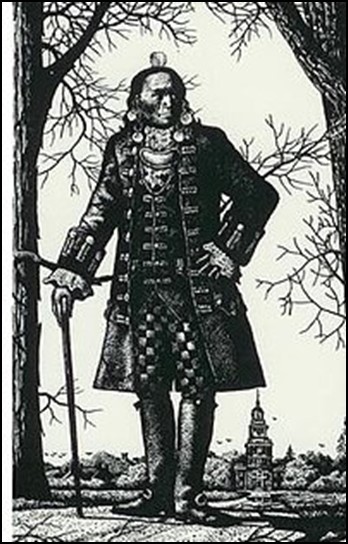
Several Lenape chiefs attempted to secure land deals with the New Jersey, Pennsylvania and Delaware colonies. These efforts culminated in the Walking Purchase of 1737. Chief Tishcohan (or He Who Never Blackens Himself) was one of the signers of the Walking Purchase of 1737. The Walking Purchase was a treaty with the Penn family that later caused the Lenape to lose most of their land in the Delaware Valley.

Chief Tishcohan

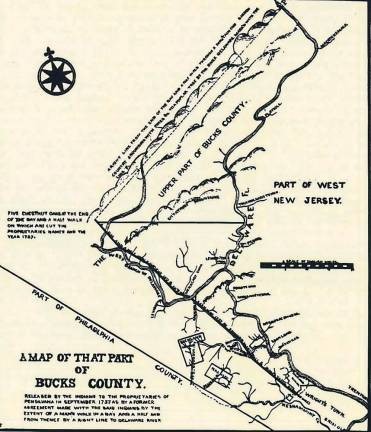
The original event occurred September 19-20, 1737 when Thomas Penn, refer to a Treaty that was allegedly made between his father, William Penn and the Delaware Indians, hired three runners to “walk” for a day and a half westward from Springfield, Bucks County.  The walkers actually ran during the entire event and he Penn family claimed over 1,200 square miles of Indian lands. 

It’s certain that the infamous Walking Purchase defrauded the Lenni-Lenape of a considerable amount of land in eastern Pennsylvania. The Walking Purchase led to years of recriminations and bad feelings. This was one of the factors that led to many Lenni-Lenape leaving New Jersey and eastern Pennsylvania prior to the American Revolution.

Answer each question below.

  • Hypothesize why Chief Tishcohan and the other Lenni-Lenape leaders have signed the Walking Purchase of 1737?
  • How did this agreement affect the Lenni-Lenape over time?

This was one of the dozens of land deals that were either fraudulent or not honored by the colonies and later by the United States government. Answer each question below.

  • How would history be different if the U.S. government honored these land agreements?
  • Would the United States look differently today?
  • Were repartitions an appropriate solution for compensating the Indigenous people, specifically the Lenape and Delaware nation) living within the borders of the United States for the land that was taken from them? Indian Claims Commission  Delaware Indian Land Claims  U.S. Decision on July 17, 1899

Below is an excerpt from the transcript of a deed associated with the Walking Purchase of 1737.  Read and analyze the excerpt and answer the following guided questions:

  • Write one sentence summarizing this passage.
  • What was happening at the time in history when this passage was written?
  • What did you find out from this excerpt that you might not learn anywhere else?

“We, Teesshakomen, alias Tisheekunk, and Tootamis alias Nutimus, two of the Sachem’s or Chiefs of the Delaware Indians, having, almost three Years ago, at Durham, begun a treaty with our honourable Brethren John and Thomas Penn, and from thence another Meeting was appointed to be at Pensbury, the next Spring Following, to which We repaired with Lappawinzoe and Several others of the Delaware Indians, At which Treaty Several Deeds were produced and Shewed to us by our said Brethren, concerning Several Tracts of Land which our Forefathers had, more than fifty Years ago, Bargained and Sold unto our good Friend and Brother William Penn, the Father of the said John and Thomas Penn.”

My Story: Joshua Huddy, Monmouth County, 1780

My Story: Joshua Huddy
Shrewsberry, New Jersey, September 1780

My name is Joshua Huddy, and I may only have a few minutes left to live. I am an ardent patriot and the Captain of the Monmouth Militia. I just heard glass break downstairs, and from my window, I can see members of the loyalist “Black Brigade” surrounding my house. I see Colonel Tye, standing about six feet tall, commanding his troops. While I fear no man, I begrudgingly respect the military prowess and fighting ability of Colonel Tye. It almost seemed inevitable that we would meet one day in combat. His infamous raids of Patriot homes and my raids of Loyalist homes in Monmouth County set us on a collision course.

We almost came musket to musket at the Battle of Monmouth. But alas, we are not facing off on the battlefield, but rather, at my home. I am outgunned and outmanned, but I am determined not to go down without a fight. Colonel Tye is demanding that I surrender and come out of my house unarmed. Can I resist? In April, Mr. Russell resisted Colonel Tye, and he was killed. I am sure Colonel Tye and the Loyalists want my blood. In 1777, my men and I dragged Loyalist Stephen Edwards from his home in Shrewsberry and hanged him. The Loyalists have wanted revenge ever since. Can I surrender? Will they kill me? Even if they take me prisoner, that may be worse than death. Rumors abound regarding the treatment of Patriot prisoners of war. Most do not survive. It is only me and my mistress, Lucretia Emmons, home tonight. But I have muskets and I have ammunition. We cannot fight Colonel Tye and his men from Refugeetown alone, but perhaps we can hold them off until members of my Monmouth Militia arrive. However, time is of the essence.

As Colonel Tye and his men surround my home, what should I do?

Be sure to provide reasoning for your response.

  1. Surrender to Colonel Tye and face the consequences of my raids? I may face the hangman’s noose. But I am a Captain of the Monmouth Militia. They may be able to negotiate my release.
  2. Fix my bayonet, load my musket, and go down in a blaze of glory. Even if I am taken down, I will try to take out Colonel Tye, and save my fellow Patriots from his raids.
  3. Defend my home by loading several muskets and placing them at every window. Then move from window to window, firing at Colonel Tye and his men, in an attempt to convince them that I have several soldiers here fighting along my side. This can buy me time until the Monmouth Militia arrives.

After making your decision complete the following extension activity:.

The Monmouth Militia has arrived. Write out your orders for your men to fight against Colonel Tye.

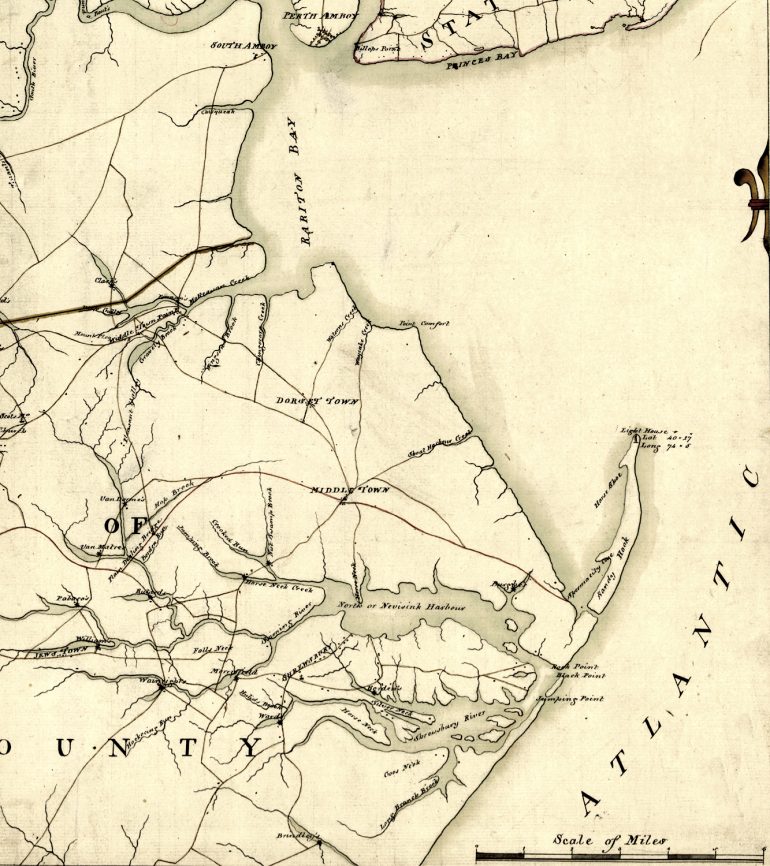
Below is a map of Monmouth County in 1781.

Use this map to answer the following:

1. Locate Shrewsberry on the map and describe the geographic features of the area.

2. Colonel Tye and his men were stationed in “Refugeetown” in Sandy Hook over the course of the American Revolution. Locate Sandy Hook on the map and use the “scale of miles” to determine the distance between Sandy Hook and Shrewsberry.

My Story: William Franklin, Middlesex County, 1776

William Franklin: Like Father, Like Son?

My Story: Middlesex County 1776

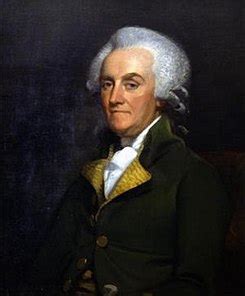
            Join or Die? Famous words from my old man in 1754. A little dramatic if you ask me. His message to the colonists was simple: unite, fight against the French and their Native American allies or…die. My dad’s words created negative sentiments for the Native Americans, both during the French and Indian War when they were published, and after. As a loyalist and supporter of the Oneida and Lenape natives in my state of New Jersey, I would ultimately strive to send a different message than my father during the Revolution.

            I wasn’t always a Jersey boy. I was born in Pennsylvania in 1730. I never knew my mother, and I wasn’t born into a life of privilege like my contemporary, George Washington. I referred to my dad earlier-have you figured out yet that it’s Benjamin Franklin? My dad was a successful printer, and turned his attention to politics in the 1750s. He was also an engineer, inventor–you can consider him a renaissance man of sorts. I wanted to be just like him. I followed him everywhere, including to Albany in 1754 where my dad laid out his famous Albany Plan of Union. Part of this plan was to create a colonial alliance during the French and Indian War. My dad created a woodcut of a severed snake that represented the demise of the colonies if unity was not established. Get it? Join. Or die. I know, I know. I mocked the join or die thing just a moment ago. But at the time I supported the sentiments.

            After the French and Indian War, I became the royal governor of New Jersey. Being royal governor meant I was expected to uphold the rules of the British crown. After the Stamp Act, tensions in the colonies were heating up and my dad was becoming more and more anti-British. I on the other hand wanted New Jersey to remain true to King George III.

How can we ensure that a new government will be better than this?

What will we lose in the process?

What if this turns to anarchy?

Because of my sentiments in keeping the royal government unchanged in the colonies, militias made up of Patriots were on to me. I was arrested in June of 1776 in Perth Amboy and there was no hope in keeping New Jersey “loyal” or should I say “irreconcilable” after that. I was jailed in Litchfield, Connecticut, 135 miles away! I guess they were expecting me to sit in my cell and ‘think about what I did,’ but instead I was pardoning Loyalists. Jokes on them! I left the prison two years later, and spent the remaining years during the Revolution in New York City. I continued to have correspondence with King George III, and eventually I returned to England in 1782 as part of a prisoner exchange.

Join or Die. Hm. What was there to “join”?

Supporting Questions/Decisions:

Have you ever gone against the beliefs of your parents or guardians?

What impact did this have on your life?

How did it affect your family members?

How did William’s decision affect his relationship with his father, Benjamin Franklin?


In your opinion, did William make the right decision in supporting the British crown? Do you think this influenced New Jersey’s history?


Is your history book more focused on the Patriot perspective than the Loyalist perspective during the Revolution? If yes, what changes would you make?


My Story: Elizabeth Covenhoven, Monmouth County, 1778

Elizabeth Covenhoven

My Story: Monmouth County, 1778

“What’s a Woman To Do … In Times Like These?”

“These are the times that try men’s souls.”  Those infamous words were echoed throughout the colonies since the publication of Thomas Paine’s American Crisis in December of 1776. But what then, can be said, of us ladies? Women: married, single, daughters, mothers, sisters, and grandmothers. A war where loyalties were drawn, neighbor against neighbor, friend against newly formed foe. And here, especially in New Jersey, the war was always in our backyard. With the colonial victories at Trenton and Princeton in the winter of 1776-1777 it would seem as though Washington’s troops were making some progress toward their campaign for victory. But the British were a tough enemy. They were unrelenting and refused to let a rag-tag group of Patriots win. That’s why it was no surprise to me when I heard the rustlings around town that the British were moving throughout the area on their way to New York, perhaps even stopping in the area of the Monmouth Courthouse, my hometown! (Freehold, New Jersey) This was a scary thought, especially to me, since I had heard rumors of British troops burning down homes, taking animals from the barns, and stealing good supplies, foodstuffs, and other valuables from the colonists!

Those of us ladies that remained were often left on our homesteads, alone, to fend for ourselves in the midst of war. I myself have reared 10 children in a one-room home that has stood on this property at 150 West Main Street for the past 25 years. After our children were grown and gone, my husband William and I built a substantial home with the wealth that our families left us, making it one of the most impressive in Monmouth County. We were also able to purchase some very nice furniture, and of course, a beautiful set of china plates, for entertainment purposes of course. I have worked too hard to lose any of these things!

            I guess by now you’re wondering, who am I? Well, my name is Elizabeth Covenhoven.   My husband William is a 5th generation Dutch-American who roots in Monmouth County date back to 1709.  At the time that the war came through my backyard in 1778, I was 74 years old, left alone to fend for myself alongside my four enslaved persons that lived with me on my property. My husband, unfortunately, was not here at the time that General Clinton passed through, and therefore, I alone had to make tough choices in order to survive. My home and its belongings are all I have. 

What should Elizabeth Covenhoven do in order to survive the British occupation of her hometown? Be sure to provide reasoning for your response. 

  1. RUN. This might be a bit challenging due to her age, but certainly, she can hopefully make it to one of her children’s homes and see if they can offer her protection from the British. That is, if they themselves aren’t already in trouble …
  1. OUTWIT. She realizes the limitations of her age. However, with the help of her enslaved persons, she can most certainly hide what possessions she has in the nearby woods and under the earth. The British certainly can’t be that intuitive to know what she has done …
  1. NEGOTIATE. Certainly, the British can’t be *as bad* as how they are perceived? And besides, she is a wealthy Monmouth County socialite, that could be helpful to tired and hungry soldiers and their officers.
  1. FIGHT. She can attempt to defend her land claims and property with the support of her four enslaved persons. Certainly, she can’t take on the British Army by herself, but she could attempt to not let them into her house to seize her property and possessions or set fire to her home.

After discussing and deciding on your decision, select one of the following activities. Be sure to use support from your knowledge of the time period in order to justify your response:

  1. Write a letter to your husband, William, justifying the choice that you made for survival. Remember that you will need to outline what happened to your possessions, as well as the home.
  1. Write a letter to General Clinton. Make sure that you state your case as to why your home should be spared from invasion/destruction of the British.
  1. Write a letter to General Washington. Explain your case to the General of the Continental Army and ask for any type of retribution that has to deal with what has happened to your homestead.

Resources:

https://www.monmouthhistory.org/covenhoven-house

The History of the Lenni Lenape Before, During, and After the American Revolution

The History of the Lenni-Lenape Before, During, and After the American Revolution

(Image courtesy of Legends of America)

By Mr. David A. Di Costanzo, M. Ed Social Studies Department Chair Vineland High School

Introduction:

During the first year of this grant, seven Social Studies teachers from around the state conducted research for the New Jersey Council for the Social Studies (NJCSS). The teachers examined the histories of ordinary people in New Jersey and how the events leading up to and during the Revolutionary War impacted their lives. The grant, “Telling Our Story: Living in New Jersey Before and During the American Revolution”, is an ongoing effort by the NJCSS to prepare educators in New Jersey for the 250th anniversary of the American Revolution during the 2025-26 school year. The 250th anniversary celebrations will continue through 2031 and is part of the overall mission of the NJCSS to provide and make available meaningful lessons and activities to students, teachers, and the public.

During Year Two of the grant, the focus of the research has shifted to include the role and contributions of African Americans, Native Americans, and prisoners of war before, during, and after the American Revolution. An emphasis on the experiences of women and children during this time period will also be researched. The lives of the Lenni-Lenape from New Jersey before, during, and after the American Revolution is a fascinating and important part of American history. Professor of History and Native American Studies Colin G. Calloway from Dartmouth University said, “with few exceptions, the Indian story in the Revolution remains relegated to secondary importance and easy explanation: The Indians chose the wrong side and lost. To better understand the reality of the Revolution for American Indians, we need to shift our focus to Indian country and to the Indian community.” [1] Sadly, the story of the Lenni-Lenape during this time period has been “relegated to secondary importance” and not been told enough.

The role of Lenni-Lenape is crucial in our understanding of the American experience. What was lifelike for the Lenni-Lenape in New Jersey?  Unfortunately, the Lenni-Lenape, dealt with racist mindsets which were the primary impetus that led to a negative and mostly superficial historiography of their culture that took centuries to completely shift. Historical perceptions and the racial mindsets of Native Americans did eventually change but only after they were deprived of their land, forced to live on reservations, and required to assimilate into mainstream American culture.  

It’s also important to note that for Native Americans the Revolutionary War began way before Lexington and Concord.  Most historians agree that the American Indians had been fighting for their own independence since the Europeans made contact.  Accepting and embracing the fate of the Lenni-Lenape and discovering how people lived before and during the American Revolution in New Jersey is important work. It allows students and residents in various counties throughout New Jersey to discover a more objective truth about Native Americans before and during the American Revolution. This more objective truth is an honest attempt to provide greater transparency for everyone, whether they agree with it or not.

Historical Background:

The cultural history of Native Americans is interesting for a variety of reasons. The treatment of Native Americans is viewed by most historians as horrific. Native Americans were systematically excluded from having a true voice during European exploration and colonization as well as after the United States was founded. The explorers ravaged the indigenous people of this continent with violence, disease and deprivation.  Native Americans had non-Christian spiritual beliefs which went against the religious doctrine of the early explorers. This difference in cultures created a severe spiritual divide.  Later on, colonists traded with Native Americans but European settlers viewed them as nothing more than savages and barbarians. 

            By the nineteenth century, Native Americans had no choice but to assimilate in order to survive. Forced assimilation in order to survive is not the same thing as having a legitimate stake in the system.  Time has made most ethnicities, including American Indians, a larger part of the American landscape. All of these factors created a system of severe limitations for most Native Americans that still lingers today.  The situation in New Jersey regarding the treatment of the Lenni-Lenape was similar to the way Native Americans were dealt with throughout the colonies and the United States.

            The Lenni-Lenape of New Jersey are descendants of the Paleo-Indian whose history on this continent has been traced back to 13,000 years ago.  The Lenni-Lenape were also referred to as the Delaware Indians by the English and the Dutch.  Professor of History Maxine Lurie from Seton Hall University and Professor of Anthropology Richard Veit from Monmouth University said, “the first settlers to reach what is now New Jersey probably did so during or before the Paleo-Indian period.  Archaeological sites from this period are quite rare.” [2] Nevertheless, Paleo-Indian artifacts have been found across New Jersey as well as in New York and Pennsylvania. Excavations during the nineteenth and twentieth centuries confirmed the presence of Paleo-Indians throughout New Jersey.

            Various cultural periods would ensue for the next several thousand years leading to the final phase prior to European contact which is referred to as the Woodland Period.  This period began roughly a thousand years ago and continued until contact with Europeans during the early sixteenth century. [3] The earliest reports of contact with European explorers occurred in 1524 when Giovanni da Verrazano explored the Atlantic coast of North America. He described the natives in and around what today is New Jersey as “most loving”. [4]  Contact with whites was sporadic until the early 1600’s. The interactions with the Lenni-Lenape and the explorers increased and progressed during the early seventeenth century and beyond. 

            The Dutch and English had a sincere desire to trade with the American Indians from the Garden State.  It’s well documented that, “the Dutch West India Company, formed in Holland in 1621 to develop commerce, especially fur trading, constituted the present New Jersey Hudson River area into the province of New Nether (often “New Netherlands”) in 1623.” [5]  Furs, cooper, and other perishable commodities, such as alcohol, were all eagerly exchanged.  It became clear almost immediately that most Native Americans didn’t react well to the consumption of alcohol.  This inability to consume alcohol in moderation was something European traders would quickly learn to take advantage of without hesitation. The Dutch and English traded with the Lenni-Lenape of New Jersey in spite of the animosity and racism that existed.  Most Dutch traders had very little respect for the American Indians.

This map is from John Snyder’s The Story of New Jersey Civil Boundaries 1202-1968 

This map shows various Indian trails that crisscrossed New Jersey. The Assunpink Trail goes from the lower left on the Delaware River and continues northward, crosses the Raritan River and heads for Staten Island.

            An unintended consequence or impact of European exploration was the massive spread of numerous diseases. Professor Lurie and Professor Veit, said that in and around New Jersey

“The impact of disease on Native American populations was disastrous. Population estimates for the Lenape vary significantly, with some scholars arguing for 12,000 natives at the time of European contact and others for much smaller numbers.  In the seventeenth century smallpox epidemics, malaria, measles, and influenza significantly reduced the Native American population” [6]

Like all of the other Native American tribes in North America, disease had a devastating effect on the Lenni-Lenape of New Jersey that would linger on for decades.  It put the indigenous people of this continent at a serious disadvantage from the beginning of their contact with the Europeans.

            In spite of the effects of alcohol and disease on the Lenni-Lenape of New Jersey, they maintained a serious control of trade during most of the seventeenth century. Professor of History Jean Soderlund from Lehigh University said that

“Because of mythology, the Lenape are often portrayed as a weak people lacking the numbers and fortitude to defend their homeland.  The prevailing narrative ignores the period of 1615-1681 when the Lenape dominated trade and determined if, when and where Europeans could travel and take up land.” [7] 

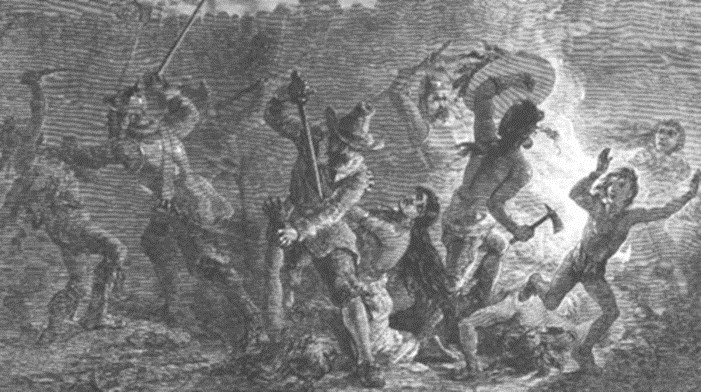
Except for the Pavonia Massacre in February of 1643, the Lenni-Lenape avoided major conflicts during this time period. This was in stark contrast to the Anglo-Powhatan War and Bacon’s Rebellion in Virginia which were both larger in terms of the number of people that were killed. [8]  The Pavonia Massacre was the first known attack led by Dutch soldiers that saw over one hundred Native American men, women, and children slaughtered in the area of what is today Jersey City.  After the massacre, hostilities would remain for almost three years until a truce was agreed to in 1645.

A Depiction of the Pavonia Massacre in 1643 (Image courtesy of Timetoast)

Professor Soderlund said “the Lenapes’ firm grip on south and central New Jersey is clear in a map from 1670 created by a merchant named Augustine Herrman, who had settled in New Amsterdam in 1644 and then established his plantation, Bohemia Manor, on the Maryland Eastern Shore in 1661.” [9] The map below shows New Jersey illustrated on the lower right-side of the map.  Numerous Lenape populated the area shown on the map that constitutes most of present-day New Jersey. This map is definitive evidence of the control the Lenni-Lenape had over New Jersey during the late seventeenth century.  

A map by Augustine Hermann of Virginia and Maryland and New Jersey as it was planted and inhabited in 1670, W. Faithorne, sculpt.  (Map courtesy of the Library of Congress)

            The Lenni-Lenape had an interesting relationship with the Quakers, especially in West Jersey. The influence of the Quakers could be felt throughout New Jersey during the colonial period.  Professor of History Richard McCormick from Rutgers University said

“Lacking the peculiar fervor that had stamped them as religious radicals in the previous century, the Quakers manifested increasing concern with social problems and took leadership in many areas of humanitarian reform.  Impelled by that saintly friend, John Woolman, of Mount Holly that came out firmly against slave holding in 1758, displayed a deep concern for the plight of the Indians, developed a system of education, and even began to withdraw from political activities because of their opposition to the war and military preparations.” [10]

Unfortunately, the Quakers, as well as other religious groups were guilty of displacing the Lenni-Lenape particularly in West Jersey and in Pennsylvania.  Professor McCormick made it clear that the Quakers weren’t transparent with the Native Americans of New Jersey and Pennsylvania, including the Lenni-Lenape, in various land deals.

            During the eighteenth century, the relationship between the Lenni-Lenape and the colonists would continue to deteriorate. Land ownership became a major issue throughout New Jersey, as well as the rest of the colonies, as the English took over control and established their dominance throughout the continent.             Several Lenape chiefs attempted to secure land deals with the New Jersey, Pennsylvania and Delaware colonies. These efforts culminated in the Walking Purchase of 1737. Chief Tishcohan (or He Who Never Blackens Himself) was one of the signers of the Walking Purchase of 1737, a treaty with the Penn family that later caused the Lenape to lose most of their land in the Delaware Valley.  It’s certain that “the infamous Walking Purchase defrauded them of considerable land in eastern Pennsylvania.  The Walking Purchase led to years of recriminations and bad feelings. [11] 

Delaware Chief Tishcohan

Tishcohan by Gustavus Hesselius. A 1735 portrait of the Delaware chief Tishcohan, commissioned by John Penn. William Penn’s son. (Portrait courtesy of the Millstone Valley Scenic Byway)

            Another victim of the Walking Purchase, Chief Teedyuscung would eventually leave New Jersey and make his way to Bensalem and align himself with the Moravians. Prior to the American Revolution Chief Teedyuscung would be killed by white vigilantes.  These killings made it clear that it was in the best interest of the Lenape to continue moving west. The legacies of both Chief Tishcohan and Chief Teedyuscung  include their efforts in trying to preserve the culture and legal rights of the Lenape.

Chief Teedyuscung

A depiction of Teedyuscung (Image courtesy of the Wissahickon Valley Park)

            The role of religion became even more prominent during this time period.  Missionaries from various Christian faiths made attempts at converting numerous Native American tribes including the Lenni-Lenape. Associate Professor of History Linford D. Fisher from Brown University said “the rich, overlapping worlds of Native spirituality and Christian practice, one in which the rituals, symbols, and beliefs of European Christianity were adopted by Indians over time, either voluntarily or in response to the overtures of English missionaries.” [12]

One missionary, David Brainerd, played an important role in attempting the religious conversion of the Lenni-Lenape. Professor Lurie and Professor Veit said that “Presbyterian missionaries also were active among the Delaware.  In 1745, David Brainerd, a young Presbyterian minister who belonged to the New Light faction of the church, which emphasized personal salvation and evangelical zeal, began mission work among the Lenape.” [13]  David Brainerd died in 1747 and was succeeded by his brother John who held similar beliefs regarding personal salvation and missionary work.  John Brainerd would be instrumental in the conferences the New Jersey Colonial government held in 1756 and 1758 in which the colony attempted to address the Native Americans consumption of alcohol and made clear the process for selling Indian lands. [14] 

            Throughout the French and Indian War, countless Native American tribes fought on the side of the British and the French. Numerous tribes, including the Lenni-Lenape of New Jersey, signed the Treaty of Easton of 1758. Part of the treaty included a provision that the Lenni-Lenape avoid alliances with the French during the war. They also had to forfeit their eastern lands. In return, the British promised to stop expeditions into Indian territory west of the Alleghenies. As a result, many Lenape left New Jersey.  It was around this time that New Jersey created its first Indian reservation, which was called “Brotherton,” and was located in the present-day Indian Mills section of Shamong in Burlington County.   Reverend John Brainerd assisted in the settlement of the reservation. [15] A result of the Treaty of Easton was the establishment of a permanent home for the Lenape that initially saw some success but was ultimately unsuccessful.       

            The Native Americans throughout the colonies had a very distinct role during the American Revolution.  Professor Wilcomb E. Washburn, the former Director for the Smithsonian’s American Studies Program said, “it was a shadowy role, but an important one. It was shadowy not only because the Indian operated physically from the interior forests of North America and made his presence felt suddenly and violently on the seaboard settlements, but because the Indian was present also in the subconscious mind of the colonists as a central ingredient in the conflict with the Mother Country.” [16]  The British and the Colonists made numerous attempts to form alliances with various tribes throughout the colonies.  There was some success in getting the Indians to align with one side or the other. 

            The Lenni-Lenape from New Jersey had already begun to leave by the start of the American Revolution. The Lenape were a divided people with only a small number remaining in the Garden State, while most moved north or west. [17] The Lenni-Lenape that remained in New Jersey during the American Revolution played a significant role. Professor Lurie said,

“During the Revolution, the western Delaware at first tried to stay neutral, but then split as some joined with the British, while others sided with the Patriots.  Thus, this also became a civil war for them.  The United States signed a treaty in 1778 with the chiefs who sided with the Patriots, but White Eyes, the strongest supporter, was murdered, promised supplies were not delivered, and villages of friendly natives were attacked.  In the end, the results were disastrous for the Delaware, whichever side they took, as well as for members of other Indian nations.” [18] 

Following the Revolution, the Lenni-Lenape of New Jersey suffered through more broken promises first by the British, who basically abandoned them, and then by the United States government.  By the early nineteenth century, most of the Lenni-Lenape either integrated into the local communities in New Jersey or left the state.  Many went to Canada or the Kansas Territory while others joined other Native American tribes such as the Cherokee.  Others ventured west to “Indian territory” which is today Oklahoma.

            During the nineteenth century, Native Americans, including the Lenni-Lenape, were instrumental in shaping abolitionism, both as participants in antislavery activities and as objects of concern.  In fact, abolitionist support for Native Americans before the Civil War did exist.  Unfortunately, it’s made clear that not all politicians from New Jersey supported both Native American rights and the abolition of slavery. Associate Professor of History Natalie Joy from Northern Illinois University said,

“Especially disappointing was New Jersey senator Theodore Frelinghuysen, among the most vociferous congressional opponents of removal and yet an avowed supporter of the American Colonization Society. Though they praised his “unwearied zeal in the cause of the injured and insulted Cherokees, abolitionists highlighted Frelinghuysen’s continued disengagement with the antislavery cause.” [19]

It appears that Congressman Frelinghuysen was against Indian removal but refused to support the abolition of slavery. This is not surprisingly particularly since New Jersey was the last northern state to abolish slavery following the Civil War. After rejecting the 13th Amendment, New Jersey did finally ratify it on January 23, 1866. 

            By the conclusion of the Civil War, many Lenni-Lenape were living in Kansas. Professor of History C.A. Weslager from Widener University said, “in the winter of 1866, the Department of Indian Affairs brought to Washington the chiefs and councils representing the Indian tribes living in Kansas for the purpose of persuading them to sell their reservations and move to new homes in what was then called Indian Territory, or even further west.” [20]  Treaties were made with various Native American tribes including the Lenni-Lenape.  The Lenni-Lenape sold or gave up their land holdings in Kansas and settled in Oklahoma.

Jennie Bobb, and her daughter, Nellie Longhat, both Delaware (Lenape), Oklahoma, 1915. (Photo courtesy of the National Anthropological Archives, Smithsonian Institution, Washington)

            The remaining Lenni-Lenape that stayed in Oklahoma were the final collective remnants of a once proud, dominant, and successful people.  Many had already assimilated into American culture by the end of the nineteenth century.  Continued pressure from the United States government would force even more Lenni-Lenape to integrate into white communities.  Sadly, this indigenous group, like the vast majority of other Native American tribes, were systematically deprived of their land, forced to live on reservations, and required to assimilate into mainstream American culture. Professor Weslager said, “by 1946, Congress established the Indian Claims Commission to act as a court and provide a regular means of adjudicating claims involving injuries to Indian tribal groups.” [21]  Historians have surmised that this commission was essentially an admission of guilt by the United States Government. The Indian Claims Commission would go on to adjudicate hundreds of claims and award millions of dollars to various Native Americans.  Reparations would be awarded to the Lenni-Lenape and start to be distributed during the late 1960s. 

Conclusion:

            The lives of the Lenni-Lenape from New Jersey before, during, and after the American Revolution is a fascinating and important part of American history. They were a thriving and successful culture until European contact. The Lenni-Lenape were able to remain successful in New Jersey for over a century after European colonization. The Lenni-Lenape had largely left by the beginning of the American Revolution.  However, those who remained did play a role.  During the American Revolution, there was some success in getting the Indians to align with one side or the other.  Regardless, as the United States continued to develop and grow the Native Americans of this continent were deprived of their natural and lawful rights. Native Americans were systematically excluded from having a true voice during European exploration and colonization as well as after the United States was founded.

            By the nineteenth century, Native Americans had no choice but to assimilate in order to survive. Forced assimilation in order to survive is not the same thing as having a legitimate stake in the system.  Time has made most ethnicities, including American Indians, a larger part of the American composition. The role of Lenni-Lenape is crucial in our understanding of the American experience. Regrettably, the Lenni-Lenape, dealt with racist mindsets which were the primary impetus that led to a negative and mostly superficial historiography of their culture that took centuries to completely shift. Historical perceptions and the racial mindsets of Native Americans did eventually change but only after they were deprived of their land, forced to live on reservations, and required to assimilate into mainstream American culture.

Works Cited

Calloway, Colin G. “‘We Have Always Been the Frontier’: The American Revolution in Shawnee Country.” American Indian Quarterly 16, no. 1 (1992): 39–52. https://doi.org/10.2307/1185604.

Fisher, Linford D. “Native Americans, Conversion, and Christian Practice in Colonial New England, 1640-1730.” The Harvard Theological Review 102, no. 1 (2009): 102.

Joy, Natalie. “The Indian’s Cause: Abolitionists and Native American Rights.” Journal of the Civil War Era 8, no. 2 (2018).

Lurie, Maxine N., and Richard F. Veit. New Jersey: A History of the Garden State. New Brunswick, NJ: Rutgers   University Press, 2018.

Lurie, Maxine N. Taking Sides in Revolutionary New Jersey Caught in the Crossfire. New Brunswick: Rutgers University Press, 2022

McCormick Richard P. New Jersey from Colony to State 1609 to 1789. The New Jersey Historical Series, Rutgers University Press, New Brunswick, New Jersey 1964.

Snyder, John Parr. The Story of New Jersey’s Civil Boundaries, 1606-1968. Trenton: New Jersey Dept. of Environmental Protection, Division of Water Resources, Geological Survey, 1969.

Soderlund, Jean R. Lenape Country: Delaware Valley Society Before William Penn. Philadelphia, PA: University of Pennsylvania Press, 2015.

Washburn, Wilcomb E. Indians and the American Revolution. Accessed December 14, 2022. https://www.americanrevolution.org/ind1.php. 

 Weslager, C. A. The Delaware Indians: A History. Rutgers University Press, 1972.


[1] Calloway, Colin G. “‘We Have Always Been the Frontier’: The American Revolution in Shawnee Country.” American Indian Quarterly 16, no. 1 (1992): 39–52. https://doi.org/10.2307/1185604.

[2] Lurie, Maxine N., and Richard F. Veit. New Jersey: A History of the Garden State. New Brunswick, NJ: Rutgers   University Press, 2018, 11.

[3] Lurie & Veit, 16.

[4] Lurie & Veit, 18.

[5] Snyder, John Parr. The Story of New Jersey’s Civil Boundaries, 1606-1968. Trenton: New Jersey Dept. of Environmental Protection, Division of Water Resources, Geological Survey, 1969.

[6] Lurie & Veit, 20.

[7] Soderlund, Jean R. Lenape Country: Delaware Valley Society Before William Penn. Philadelphia, PA: University of Pennsylvania Press, 2015, 5.

[8] Soderlund, 5.

[9] Soderlund, 2.

[10] McCormick Richard P. New Jersey from Colony to State 1609 to 1789. The New Jersey Historical Series, Rutgers University Press, New Brunswick, New Jersey 1964, 95.

[11] Lurie & Veit, 25.

[12] Fisher, Linford D. “Native Americans, Conversion, and Christian Practice in Colonial New England, 1640-1730.” The Harvard Theological Review 102, no. 1 (2009): 102.

[13] Lurie & Veit, 24.

[14] Lurie & Veit, 24.

[15] Lurie & Veit, 25.

[16] Washburn, Wilcomb E. Indians and the American Revolution. Accessed December 14, 2022. https://www.americanrevolution.org/ind1.php

[17] Lurie, Maxine N. Taking Sides in Revolutionary New Jersey Caught in the Crossfire. New Brunswick: Rutgers University Press, 2022, 107.

[18] Lurie, 8.

[19] Joy, Natalie. “The Indian’s Cause: Abolitionists and Native American Rights.” Journal of the Civil War Era 8, no. 2 (2018): 222.

[20] Weslager, C. A. The Delaware Indians: A History. Rutgers University Press, 1972, 421.

[21] Weslager, 457.

My Story: Guillam Demarest, Bergen County, NJ, 1781

My Story: Guillam (Gilliam) Demarest

Bergen County, NJ 1781

August, 1781 (Two months before the Battle of Yorktown)

Father came to visit today. I think this was his fourth visit to the Sugar House Prison in New York City on Crown (now Liberty Street) in four days, but my memory might be failing me — hunger tends to expand time. It feels like decades since my stomach was full. These measly rations (when we get them) would be barely enough to satisfy a small baby, let alone a nineteen-year old man. Of course, my father, David, reminds me that my hunger is my choice. I need but only swear fealty (loyalty) to the Crown, abandon my principles of liberty, and turn against the twenty-three other Patriot members of my family to no longer be hungry.

Father accused me of betraying our country, but how can I betray a country I never felt I belonged to? Our ancestors are French, not British, and we don’t even speak English at home – we speak Jersey Dutch. He is the traitor, not I.  Even my mother, Jane, doesn’t support his decision to join the British.

Father told me to join him and his refugee group. He demanded I join him. But if I join him now, what about Philip and John, my cousins? We were captured together by my father and his men, who were raiding homes in the area for food and supplies, at New Bridge in August but separated upon arrival at the prison (Lurie: Taking Sides, Page 101).

I wonder what will happen to Mother when this is all over. If the British win, will she be persecuted because she and her sons supported the American cause? Will they point to the fact that I willingly enlisted five different times (in 1777, 1778, 1779, 1780, and 1781) for the American militia?  If we win, will she be persecuted because her husband fought on the side of the British? I do not know if I will make it out of this Sugar House prison to see her again. I think I might have a fever. Two men next to me had a fever five days ago. Now, they are dead.

Oh, how I wish I could ask them what they would do….

What should Guillam do in this situation?

  1. Accept his father’s offer to take An Oath of Allegiance to the Crown?
  2. Refuse his father and remain in the Sugar House prison until the Patriots arrange for his release through a prisoner exchange?
  3. Attempt to escape from the Sugar House prison before he dies?
  4. Do something else? Explain.

Guillam ultimately chose to refuse his father’s offer and remained in the Sugar House prison for nine months. Following his release, he rejoined the American militia, where he ended up receiving a serious hand injury. In 1782, Guillam married Bridget Brower with whom he had six children. His father, David, who according to a family acquaintance, “deserted his country’s cause,” moved to Nova Scotia after the war. His mother Jane, ended up having her property confiscated because of her husband’s decision to join the British army. She remained in New Jersey with Guillam.

My Story: George Morgan White Eyes, Princeton, NJ, 1778-1790

My Story: George Morgan White Eyes

Princeton, Mercer County

1778-1790

Koquethagechton, also known as White Eyes, was a Lenape chief living in Ohio Country. He married Rachel Doddridge, a white woman who had been taken captive by the Lenape at age 5 and had become fully assimilated to Lenape life. As an adult, Doddridge chose to remain an adopted Lenape.

When the American Revolution began, Koquethagechton initially tried to remain neutral, but before long it became evident that he would have to take sides. In 1777, Koquethagechton addressed the Continental Congress, and the following year negotiated a peace treaty with American representatives.

Which of the following provisions should Koquethagechton have sought in a peace treaty?

Select one option and explain your answer in 3 to 5 sentences.

  • A new state shall be created for the Lenape, incorporating the nation into the United States with representation in Congress.
  • The United States must build a fort in Lenape territory to help protect the Lenape from attacks by other Native American nations or from the British.
  • The United States shall provide the Lenape with clothing, utensils, and weapons as needed.

Amazingly, the Treaty of Fort Pitt, signed September 17, 1778, included all of these provisions. The promise of a 14th state along with Congressional representation is something that was never promised to any other Native American group, but relied upon the further approval of Congress. Unfortunately, the treaty never received the support of Congress and was ultimately rendered meaningless.

Later that year, while accompanying American soldiers in Ohio Country, Koquethagechton died at the age of 48. Initially the cause of death was reported as smallpox, but eventually it was revealed he had been murdered by the American militia. Nearly ten years later (circa 1788), Rachel Doddridge was murdered in the course of a robbery by white men disguised as Native Americans. Both of their stories are compelling and worthy of more examination, but our focus here turns to their son, George Morgan White Eyes, partly named for Koquethagechton’s American friend, who would become the boy’s guardian.

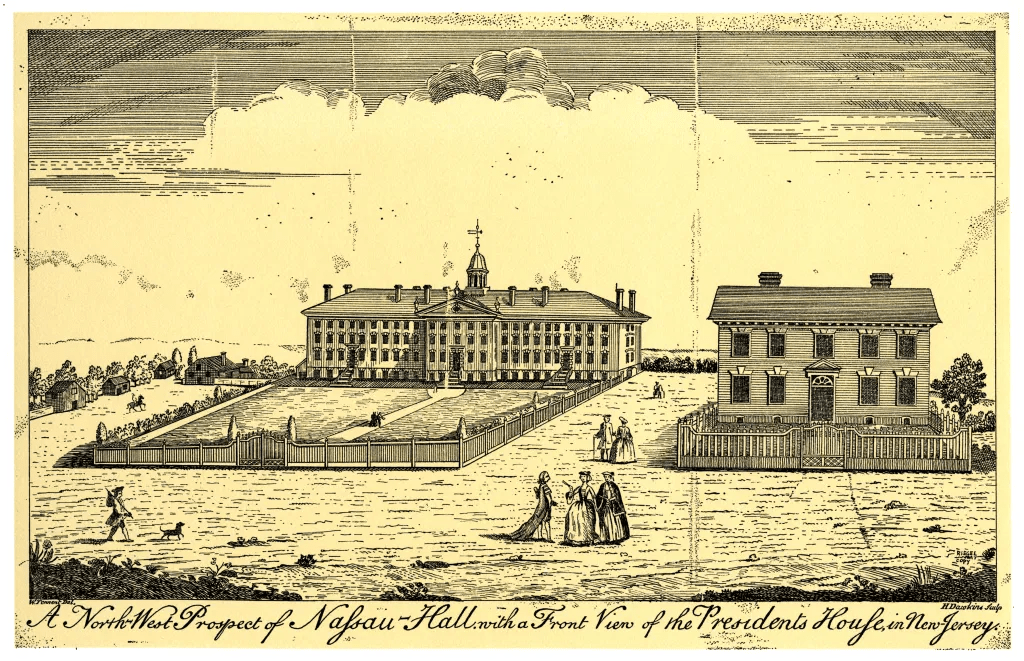
White Eyes was seven years old when his father died. The Continental Congress assumed financial responsibility for the upbringing of the chief’s son. White Eyes was likely the first recipient of government-based student financial aid from the U.S. government. After completing grammar school, he was enrolled at the College of New Jersey in Princeton in 1785.

In December 1787, he and three other students were summoned before a disciplinary committee for insolence towards a tutor. Apparently, it wasn’t the only time he’d gotten in trouble at school. His guardian decided to remove him from Princeton and sent him to New York City to temporarily be under the care of a merchant tailor while awaiting instructions from Congress on what to do with young White Eyes. His guardian explained in a letter to Congress that White Eyes’ misbehavior may have had to do with his learning the news of his mother’s recent death and the long-concealed truth about his father’s murder. Morgan suggested that instead of sending him back to Princeton – or back to his nation – that White Eyes be sent to a different institution of higher learning, like Yale.

Which of the following choices do you think 18-year-old George Morgan White Eyes would make?

Select one option and explain your answer in 3 to 5 sentences.

  • Go back to Ohio Country to live among his own people.
  • Let his future be decided by George Morgan and the decision of Congress.
  • Strike out on his own in the New York to find a job and be independent.
  • Appeal directly to someone in power, explaining his desire to either be given a job or further education.

On June 2, 1789, George Morgan White Eyes wrote to President George Washington:

“[N]ot the severest Want shall make me return to my native Country—Tis thought from the Behaviour of my Colleagues while at Princeton that I will follow their Example—but never—I shall say but little but I trust my heart is fixed, & the time may come that this now feeble Arm, may be stretched out in the Service of America; & render the United or Individual States essential Service.

My humble request is & has this some Months past, that if the Burthen (sic) is too great on the United States that some kind of Employment may be pointed in order that I thereby may obtain a Living a[long] the Line that Congress probably first intended—That is agreeably to the Education they have been pleased to bestow upon me—I care not what [it] is I am willing to do what I am able, & you should think necessary to my future Welfare—[E]ntreating your Excellency’s kind Patronage on this Occasion I have the Honor to remain With the most perfect Respect, Sir, Your most Obedient & most devoted Servant”

Congress did not act quickly, and as the weeks went by, ‘the severest want” apparently changed White Eyes’ mind. He wrote President Washington again:

“The treatment I met with at Princeton & the Character I bear (which I know I am innocent of) here, are great Grievances to me, especially as I have undergone a great many Difficulties, I shall stear (sic) my Course towards my native [country] let the Consequence be what it will.

For it is better for me to live in Contentment & Quietude, than a life Contempt & Ignominy.1 I have not had any thing this while past & I am almost naked, thro’ some guile or other, for what I know. I believe they are tired of doing any thing for me & I am tired waiting for their duty which is incumbent on them by a resolve of Congress.

I am now to look out for myself since I cannot behave myself, better than I have done; for all that I do is in vain, yet all these things are not discourages of my staying here any longer, but I am [anxious] to return & see my Mother & Friends, as it ought to become every person who has a regard for their Nation. I beg you would assist me in my return as I have no other person to apply to; but if not I must do as well as I can.” Source

In March of 1790, George Morgan White Eyes returned to his nation in Ohio Country.

Sadly, his story has an ignominious ending. Eight years later (1798) in West Point, Ohio, an intoxicated White Eyes ran at 17-year-old William Carpenter Jr. with a tomahawk. Fearing for his life, Carpenter shot White Eyes, killing him instantly. Initially the boy and his father were charged with murder and aiding and abetting, but the case never came to trial.

To GEORGE MORGAN Mount Vernon, August 25, 1788.

Sir: The letter which you did me the favor of writing to me the 31st. of last month, with a Postscript to it on the 5th. of this, came duly to hand; as did a small parcel of wheat, forwarded some time before, by the Post Master General from New York. For your polite attention to me in these instances I pray you to accept my best acknowledgments and Thanks. With much concern I have heard of the ravages of the Hessian fly on the wheaten Crops in the States East of the Delaware and of the progress of this distructive (sic) insect Southerly; but I congratulate with you sincerely on your successful endeavors in the management of your measures &c. to counteract them. If the yellow bearded wheat from a continuation of experiments is found no matter from what cause, to be obnoxious to and able to withstand this all devouring insect [it] must indeed be valuable; but I have paid too little attention to the growth of this particular kind hitherto, to inform you in what degree of cultivation it is in this State, I may venture, at a hazard, however, to add that it is rare: because it is unusual to see fields of bearded wheat of any kind growing with us, particularly in the Western parts of the State, which falls more immediately under my observation. I will distribute the Seed which you have sent me; make enquiry into this matter and communicate the result, begging in the meantime, if any further observations on this insect, and the means of guarding against him should be made by you that you will have the goodness to communicate them to. 67 Source

Our Story: Prisoner Exchange, September 1776, Middlesex County, NJ

Our Story: Prisoner Exchange

Middlesex County, NJ September 1776

In the summer of 1776, the American Patriots were struggling to hold British attacks off with their meager forces. The capital city of New Jersey is Perth Amboy, a short distance from New York Harbor where the opening battle of the American revolution took place.

After the Battle of Brooklyn Heights on Long Island on August 27-29, 1776 over 20,000 American soldiers in General Washington’s army were captured and sent to prison ships and prisons in New York. (Lurie, 72). The conditions in these prisons were deadly due to overcrowding, unsanitary conditions, and lack of food. According to Alexander Coffin Jr., 

“But to cap the climax of infamy we were fed (if fed it might be called) with provisions not fit for any human being to make use of—putrid beef and pork, and worm-eaten bread.” (Thompson, 241)

 The prison ship, the Jersey

Would you like to be…  
An officer in General Washington’s army stationed near Perth Amboy?An enlisted soldier from Middlesex County captured by the British and held captive on the Jersey, prison ship stationed in the Atlantic near Perth Amboy?

You face challenges and officers and enlisted men alike struggle to survive for the next few months, but during the disastrous Battle of Long Island, many in your battalion are taken prisoner by the British. On September 11, two weeks after the Battle of Long Island, and five days before the Battle of Harlem Heights, Ben Franklin, John Adams, and Edward Rutledge secretly met with British Admiral Richard Howe to discuss the release of the prisoners held by the British. The British have captured thousands of Americans and there are perhaps hundreds of British citizens (Loyalists) and several British officers held in detention in different colonies, including some in prisons in Perth Amboy and Burlington, New Jersey. 

If you are an officer, you were able to escape, but now you have to decide if and how to negotiate for the release of others held in captivity. The winter months are coming and the prisons in New York have no heat and the prison ships on the open seas are subject to extreme weather conditions. The fate of all prisoners is at risk.If you are an enlisted man, you were captured and taken to the prison ship Jersey, where you are forced to endure terrible conditions that you may not survive. You can either wait for your release to be negotiated and hope for the war to end soon or disavow your loyalty to the Continental Army and join the British.
Quote to consider:   Adams’ description of his meeting with General Howe on September 9, 1776 “Lord Howe had sent over an Officer as a Hostage for our Security. I said to Dr. Franklin, it would be childish in Us to depend upon such a Pledge and insisted on taking him over with Us, and keeping our Surety on the same side of the Water with Us. …We walked up to the House between Lines of Guards of Grenadiers, looking as fierce as ten furies, and making all the Grimaces and Gestures and motions of their Musquets with Bayonets fixed, which I suppose military Ettiquette requires but which We neither understood nor regarded.”   Frazza,Quote to consider:   Captain Thomas Dring on his imprisonment on the Jersey prison ship “Thousands there suffered and died, whose names have never been known to their countrymen. They died where no eye could witness their fortitude, no tounge could describe their sufferings, or praise their devotion to their country. For years, the very name of ‘the Old Jersey,’ seemed to strike a terror to the hearts of those whose necessities required to venture upon the ocean; the mortality which prevailed on board her was well known throughout the country; and to be confined within her dungeons, was considered equal to a sentence of death, from which but little hope of escape remained.” Thompson, 240
Your Choices: Your Choices:
Why should the British consider soldiers captured in battle as prisoners of war since England does not recognize the independence of their American colonies?   How will you convince the British to provide for humanitarian conditions for the prisoners they have without any means to enforce a code of conduct?   If you have a British officer in an American jail would you be willing to negotiate the release of one officer for a number of enlisted soldiers in the Continental Army?   How will you prevent the British from going house to house and arresting innocent Americans in the territories they hold, potential to trade for British officers and soldiers held in American prisons?   Should you provide a guarantee to the British that American soldiers will not return to the battlefield if released?   If you were traveling with Franklin, Adams, and Rutledge when they were leaving Perth Amboy to meet with the British on Staten Island to discuss the release of prisoners, what would you do to ensure your own safety?In the face of death from starvation or unsanitary conditions in a British prison ship, would you be willing to sign the Oath of Abjuration and Loyalty to the British government or would you remain loyal to your comrades?   When faced with the brutal reality of prison and the potential of death by disease, what would you do to try to save your friend’s life?   The prisoners also include women and children. Women and children were also captured in the battles of New York and northern New Jersey.  Would you be willing to sacrifice some of your already limited food to help a woman feed her starving child?   Would you be willing to risk hanging for treason or additional punishment by sending a message to the Americans begging for release?   Should the Continental Congress request the help of a foreign government to negotiate with England on the release of American prisoners or negotiate for improved humanitarian conditions? Which country would you recommend and why? What is the incentive for this government to support the Americans?   If you were to negotiate a prisoner exchange, what should the Continental Congress offer for the release of enlisted American soldiers? 

Oath of Allegiance (Lurie, p.81)

Interior of Jersey (Darley and Bookhaut)

Sources

The History of Long Island; from its Discovery and Settlement, to the Present Time. With Many Important and Interesting Matters; Including Notices of Numerous Individuals and Families; Also a Particular Account of the Different Churches and Ministers, by Benjamin Franklin Thompson, 1843. Linked here

Taking Sides in Revolutionary New Jersey: Caught in the Crossfire, by Maxine N. Lurie, 2022.

“Revolutionary War Sites in Perth Amboy, New Jersey,” by Al Frazza, 2022. Linked here

Interior of the old Jersey prison ship, in the Revolutionary War, Edward Bookhout, engraver, and

Felix Octavius Carr Darley, artist, 1855. Linked here

Finding Our Place in Revolutionary History

Finding Our Place in Revolutionary History
Karen Parker

All human beings want to feel like they belong to something bigger. This is
especially true when students reach adolescence, their whole psyche revolves around being liked, accepted, and belonging to a group. The importance of that “place” that they hold is the driving force held together by peers, social media, cliques, fashion, and home. Relating part of their place to history and pique that sense of belonging to that history, not feeling left out of it as a spectator, not feeling odd or different from the people and feeling like they are connected with the locations, can be the key to the level of engagement. Luckily, in New Jersey, it is not difficult to find Revolutionary era connections in our backyards and neighborhoods.

There is a disconnect with children during their education of history. Students often feel disconnected because of the difficulties in relating to elapsed time, distant places, and unfamiliar habits and customs. As educators, it is our challenge to create as many opportunities for connections as possible, to have the students relate to some “thin and brittle” threads of familiarities, and often we can wrestle grudging interest in the topics presented.

History, unlike active experimentation in science and the excitement of fiction in
language arts, is unsurprisingly often deposited toward the end of the favorite subject list, to muddle around in student’s heads where they view the facts as dull lists of events and dates of forced importance with scattered entertaining facts – more so if they relate to a holiday that includes time off from school.

To connect with people from generations past, it is important to find that common ground with today. Where I grew up in Morris County, I lived a short drive from an active and preserved area of Revolutionary history, spending many hours of my childhood roaming the woods and fields of Revolutionary significance, taking short field trips to Jockey Hollow, Fort Nonsense, and the Ford Mansion. Where I teach in Hunterdon County, the most notable area is Washington’s Crossing State Park, with which many of my students are completely unfamiliar, and the war to them
seems very distant. It is important to find nearby locations and people that are
connected to the Revolution era.

In my research for the New Jersey Council for the Social Studies, I was looking
for information on people from Hunterdon County who were actively involved in the
Revolutionary War. There were many references to soldiers, the Commissary General for Washington’s army and the local militia, but I came across one primary
source that I thought might catch the interest of my students.

Through researching into the life of this average local person, James Parker, reading about his daily missives on the management of the property, connections to the effects that the war had on the common people became evident. Parker’s
connections began as a proprietor whose primary residence was in one of the colonial capitals, Perth Amboy. He was a major landowner in Hunterdon County, owning land in what is now Kingwood, Union, Bethlehem, and Tewksbury Townships and built a large stone house in Union Township called Shipley. It is interesting to note that many people in this local area were not following the political patriots, but many had loyalist leanings or were ambivalent.

Mr. Parker was one of those who did not support the patriotic feelings and was
sentenced and jailed by the New Jersey Council of Safety during the summer of 1777, in Morristown, for refusing to take an oath renouncing loyalty to Britain. He was paroled and exchanged for a Patriot held in New York in 1778. At this time, he spent
more and more of his time in Hunterdon County, overseeing his lands. Some think
that he was avoiding the political climate of the large shore town of Perth Amboy,
though he documents in his farm journal his travels back and forth to his original home for proprietor meetings.

Some other examples of Parker’s political leanings come from an entry in his journal that appeared sympathetic to a local loyalist family, the Voughts who lived in Clinton, known then as Hunt’s Mill, about three miles away from Parker’s home in Pittstown.. On December 18, 1778, Doc Smith took his contribution to a relief fund for women, wives of people gone into the British line and had all of their effects sold. This is the same date that the Voughts had all of their belongings auctioned off. These families were considered traitors by the New Jersey Legislature, which allowed all of their property and possessions to be confiscated. At this time, a large amount of the British army and many of their sympathizers occupied areas of New York and Staten
Island) (Gigantino 2015)

The farm journal expresses many tasks that most would take for granted at the
time, documented in amazing detail, though commonplace and ordinary back then.
These entries in this primary source give glimpses of insight on the challenges of
conducting business during the Revolutionary War. He notes that on July 1, 1778, he was in the meadow with great firing heard at a distance, “Regulars and Continental troops engaged in general or skirmishes since Sunday last.” He notes that it was a “severe engagement” and we can assume that he was hearing the Battle of Monmouth and he must have been at Perth Amboy to be in the proximity to hear the
fighting, even though he does not mention it. There are no references of any major
engagement during this time period anywhere near his lands in Hunterdon County.

Financial struggle, even for wealthy proprietors, was a part of daily life. The
farm journal mentions the use of many different denominations of hard currency:
Continental Dollars, Johannes and Moidore, which were Portuguese gold coins, English Guineas, New York Currency, English Pounds and Spanish dollars. In January of 1779, Parker discusses an issue with the prevalence of counterfeiting, by mentioning that he was buying land from Abraham Bonnell. He could not confirm if the money he was paying with was counterfeit. Bonnell said he didn’t believe any was, due to being very careful to examine the bills and that the mark of a printer was not necessarily a proof of authenticity. At one point he mentions, “Paid for bushel of wheat in hard money.”

This may have been noted because of the general lack of coinage and the use of
continental paper money. He noted on March 5, 1780 that taxes were collected but there was a scarcity of money, and on March 13 taxes were collected on his Bethlehem property, and he complains about having no money until he could collect on his debts. On March 23, taxes were collected on Tewksbury property, and he mentions that he is owed more money than he can pay; he can’t pay the taxes until his debtors pay. For the same year, he was taxed on 200 acres, was able to pay three-quarters of the bill but had no continental money, so he borrowed it.

Everyone knows that Continental and British troops moved all around New Jersey. It is common knowledge that they were located near the famous areas of conflict such as Monmouth, Trenton, Princeton, and Washington’s Crossing at the Delaware River. Troops on both sides of the war marched through Hunterdon County and
stopped to rest their soldiers and horses.

On December 4, 1778, Parker mentions being told by Moore Furman, a local miller and merchant who was well connected as a Deputy Quartermaster General for New Jersey, that Gen. Burgoyne’s army was marching to Virginia and would be quartered in the neighborhood as they marched along. On December 5, troops of the 1st Division came down with three companies of men, eight officers. He notes little business was conducted due to attending the troops. On December 6th, the 1st Division “marcht” off and the 2nd division came in. Charles Stewart (local and
the Commissary General of Washington’s army) spared a gallon of spirits. On
December 7th the 2nd division left, no others came, on December 8th, the 3rd
division troops came with six companies and five officers of the 62nd regiment, on
December 9th, the 3rd division left. Parker noted that the Brunswick troops arrived with three officers and 78 men on the 10th and that little work was accomplished when troops were there. December 11th was active with part of a company of ‘foreign troops” that were there with a major, two horses, a baggage wagon with four more horses; this group left on December 13th.

Imagine the disruption of regular life and business when these troops had been
quartered on the property. May 15, 1779 brought troops from the Continental army through the Pittstown area. James Parker notes that the Regiment of the New Jersey Brigade, commanded by Colonel Ogden, marched to Pittstown on the way to Easton with 300-350 men. The Continental troops pastured horses in local fields. Parker notes that he put into pasture twelve Continental horses, then took on
seven more Continental horses, ending the day with a total of twenty. On August 25th, he received from Nehemiah Dunham, who built the stone mill in nearby Clinton, five barrels of flour for Continental service. On August 25th, he put into pasture 12 Continental horses. On August 26th he took seven more Continental horses, September 4th put up nine more Continental horses and on September 18th, all Continental horses left.

In today’s military, food and supplies are provided by the government, but back in
Revolutionary times, troops were expected to be supplied by local people, sometimes
with promissory notes, sometimes by donation with no recompense. Sometimes a
tax was paid to help sponsor troops. In Parker’s journal he mentions that on July
12,1779, he paid Adam Hope a tax toward raising a state regiment, as assessed by
Colonel Beavers and Charles Coke, of 45 dollars. On August 25th, he received from
Nehemiah Dunham of Clinton five barrels of flour for Continental service. He noted a meeting in Pittstown on January 18, 1780, “Spent day in Pittstown where residents met to deliver cattle and grain collected for the army.”

Students need to imagine for themselves that not all of the population of New Jersey followed the Patriot cause, most sources agree that in the colonies they made up only about thirty to forty percent of the population. They believe that around twenty
percent were acknowledged Loyalists, while the remaining population were neutral.
There were many risks on both ends of the political spectrum, with neighbors who
harassed or reported neighbors, or turned their coats when it was to their benefit.

They need to experience the feelings of taking sides, or remaining neutral in situations. It is important to realize that everyone in New Jersey was involved in the Revolutionary War because it influenced their ordinary lives in ways that did not directly involve battles, shooting, famous officers and other incidents memorialized with statues and National Parks. The areas right around the corner, a barn down the street, an old house, mill or tavern, a name of a road in New Jersey, may have been owned or named after ordinary people whose stories were intimately intertwined with the Revolutionary War.

The decisions of James Parker and others were difficult for them and they have
relevance for us today whenever we receive criticism for our decisions.


References
Gigantino, J.J. (2015). The American
Revolution in New Jersey: Where the
Battlefront Meets the Home Front. Rutgers
University Press.


Stevens, S.B. (2015). All Roads Lead to
Pittstown. Hunterdon County Historical
Commission