I was born on March 26, 1752 in Neshaminy, Pennsylvania. I was the fourth child of Charles and Ann Beatty. My father was a highly respected clergyman from Neshaminy. He was also a huge supporter of the College of New Jersey (Princeton). He served as a trustee for the college for several years. Sadly, my father would die prematurely of yellow fever while on a visit to Barbados trying to raise money for the college in 1772. His death devastated our family. After a long courtship, I would marry Reverend Philip Vickers Fithian on October 27, 1775, eight months before the signing of the Declaration of independence.
Following Philip’s death from exposure while serving as a military chaplain in New York, I would go on to marry Philip’s second cousin Joel Fithian. Joel and I would have nine children together.
The death of my husband Philip on October 8, 1776, at the age of 29, affected me deeply. My husband and I were huge supporters of the revolutionary cause. He lived his life with a belief in duty and service as well as a strong religious devotion and commitment. Philip’s death made me question my support for America’s fight for independence. My faith had already been tested by the premature death of my father in 1772. Going forward, I had to find a way to carry on in order to live a life devoted to God and country!
What should Elizabeth do, in the middle of the Revolutionary War, following the tragic death of her husband Philip?
Select one option and explain your answer in 4 to 6 sentences.
Remarry in order to have a family of her own.
Move in with her brother Dr. John Beatty in Princeton, New Jersey.
Move to another area of New Jersey to begin a new life.
Continue to live in her husband’s home in Greenwich, New Jersey.
Other.
Interview Elizabeth shortly after the death of her husband in 1776. Select one question below and write or record what might have been her response.
Would you put your personal welfare and interests before those of your country?
Are your religious convictions more important than your family?
As a widow, would you risk your life in support of the revolutionary cause?
Below is one of the last letters Philip Fithian wrote to his wife Elizabeth prior to his death. He wrote this letter 19 days before he died. Read and analyze the letter and answer the following guided questions:
1. Write a one sentence summary of this letter.
2. What was happening at the time this letter was written?
3. What did you find out from this letter that you might not learn anywhere else?
Camp Near Kings-Bridge, Sept. 19: 1776.
My dear Betsey.
“Amidst all the Distress & Ruins of this dreadful War I am yet alive & yours. Our Enemies pursue us close on from Place to place. But we drubbed them well last Monday since which they have laid quiet. Your Brothers John, Reading & Arckee are well, I saw them since the Battle. We expect to have a general Engagement soon, & are not dispirited in the least by our late Losses. I hope to see my dear Betsey by the tenth of December & not before— But wonder much that I do not hear from her; as it is now more than a Month since she wrote me a Word that I have received:—And since that time I have wrote with this seven long Epistles, a full sheet in each— One Aug.19—One 21st—26th— Sept: 1st 3d 9th & now the 19th.
I pray God daily that you may be preserved & in Health. My Duty to Mr. Green & Family. Last Sund. & Monday were two terrible Days; But on Monday our brave Heroes made them give Way. The English Army, Tories & All, is not supposed to be less than 30,000 strong. But our Army wishes to attack them. Peace, & God’s Blessing be with my Betsey, my dear Wife, forever may you be happy.“
“These times will try many.” As a Quaker, I am a pacifist, and I abhor war. Though we have tried to remain neutral in the current conflict, the war has been brought to our doorsteps as George Washington and the Continental Army retreat through New Jersey. Having lived in Philadelphia for several years, I moved to Woodbury in West Jersey.
My younger brother, John, is a Patriot and caught up in the revolutionary fervor. He served on the Provincial Congress of New Jersey, was the author of the New Jersey Constitution of 1776, and is a member of the Second Continental Congress, which adopted the Declaration of Independence.
The Society of Friends has decided to disown any Quaker who participates as any “Insurrections, Conspiracies, & illegal assemblies.” As a result of his participation in the American Revolution, the Society of Friends has ultimately decided to disown my brother John, effectively removing him from our faith. John’s “ground of action and that of his relations was different, and a coolness ensued, until too much of an estrangement took place.” My brother and I were “as nearly united as perhaps two brothers ever were,” but I fear the Revolutionary War will is tearing us apart.
What should David Cooper do as his relationship with his brother frays under the stress of the American Revolution? Be sure to provide reasoning for your response.
A. The Society of Friends warned John not to get involved in the Revolution. What he did is unforgivable and I will not attempt to reconcile our relationship.
B. Family is the most important aspect of my life. I will reconcile with John even if it means it will create tensions with the Society of Friends and my beliefs.
C. John is doing what he believes is right, and even if I do not agree with him, I will do everything I can to reconcile our relationship.
Complete the following after you make your decision in Part 1:
Write a letter to your brother John, informing him of your decision regarding his involvement in the American Revolution.
I was born on September 29, 1748 and was the eldest son of Samuel and Priscilla Fithian. I was well educated growing up and with my father’s guidance and encouragement I pursued a career in public service. I would serve as an officer through much of the American Revolution and settled in Greenwich, N.J. permanently when my military service had concluded. Most, if not all of the Fithians, were huge supporters of the revolutionary cause. Philip and I both participated in the Greenwich Tea Burning that took place in December of 1774. Duty to one’s family, public service, the belief in American independence, and a strong religious fervor were very important ideals to both of us.
The death of my second cousin Philip affected me deeply. We were very close. He named me as the co-executor of his will. I would suffer another terrible loss when my first wife Rachel Holmes died prematurely in 1779 at the age of 28.
I would go on to marry Philip’s widow Elizabeth Beatty Fithian on February 2, 1780. We would have nine children together. We also named our third child after my second cousin, Philip. My public service continued in the state legislature for several years and as the sheriff in Cumberland County.
What action should Joel Fithian take following his participation in the Greenwich Tea Burning on December 22, 1774? Select one option and explain your answer in 4 to 6 sentences.
Flee the area in an effort to avoid civil and criminal charges and possible imprisonment.
Immediately enlist in the Continental Army.
Continue to live in Greenwich, confess and face the consequences for the damage to property.
Continue to live in Greenwich and deny any involvement.
Interview Joel Fithian at the end of the Revolutionary War in 1781. Select one question below and explain what might have been his answer in 4 to 6 sentences.
Would you put your family before your country?
Would you put your faith before your family?
Would you risk your life in support of the revolutionary cause?
Below is a passage from a journal entry by Philip Fithian describing the Greenwich Tea Burning. Read and analyze the journal entry and answer the following guided questions:
1. Write one sentence summarizing the journal entry.
2. What was happening at the time in history this journal entry was written?
3. What did you find out from this journal entry that you might not learn anywhere else?
“Last night the tea was, by a number of persons in disguise, taken out of the house & consumed with fire. Violent, & different are the words about this uncommon Manoeuvre, among the inhabitants. Some rave, some curse & condemn, some try to reason; many are glad the tea is destroyed, but almost 4 all disapprove the manner of the destruction.“
Teaching Controversial Issues: Teachers’ Freedom of Speech in the Classroom
by Arlene Gardner
Executive Director, New Jersey Center for Civic Education
What is the purpose of education? The conventional answer is the acquisition of knowledge. Looking beyond this facile response, most people will agree that the true purpose of education is to produce citizens. One of the primary reasons our nation’s founders envisioned a vast public education system was to prepare youth to be active participants in our system of self-government. John Dewey makes a strong case for the importance of education not only as a place to gain content knowledge, but also as a place to learn how to live. In his eyes, the purpose of education should not revolve around the acquisition of a pre-determined set of skills, but rather the realization of one’s full potential and the ability to use those skills for the greater good.
Democratic self-government requires constant discussions and decisions about controversial issues. There is an intrinsic and crucial connection between the discussion of controversial political issues and the health of democracy. If we want our students to become informed, engaged citizens, we need to teach them how to “do” democracy by practicing the skills of discussing controversial issues in the classroom and learning how to respectfully disagree.
Research has demonstrated that controversy during classroom discussion also promotes cognitive gains in complex reasoning, integrated thinking, and decision-making. Controversy can be a useful, powerful, and memorable tool to promote learning. In addition to its value in promoting skills for democracy, discussing current controversial public issues:
Is authentic and relevant
Enhances students’ sense of political efficacy
Improves critical thinking skills
Increases students’ comfort with conflict that exists in the world outside of the classroom
Develops political tolerance
Motivates students
Results in students gaining greater content knowledge.
(Diana Hess, Controversy in the Classroom: The Democratic Power of Discussion (2009); Nel Noddings and Laurie Brooks, Teaching Controversial Issues: The Case for Critical Thinking and Moral Commitment in the Classroom (2017); “Guardian of Democracy: The Civic Mission of Schools” (2011); Center for Research on Learning and Teaching, University of Michigan at https://crlt.umich.edu/tstrategies/tsd).
Yet, teachers may consciously (or unconsciously) avoid controversial issues in the classroom because of the difficulty involved in managing heated discussions and/or for fear that parents will complain or that the school administration will admonish or punish them for “being controversial.” These concerns are certainly not groundless. How well are teachers protected from negative repercussions if they address controversial issues in their classrooms? How extensive are teachers’ First Amendment rights to free speech? How can heated disagreements among students be contained in the classroom?
Two different legal issues exist regarding free speech rights of teachers: The First Amendment directly protects a teacher’s personal right to speak about public issues outside of the classroom and “Academic Freedom” protects a teacher’s right and responsibility to teach controversial issues in the classroom. However, both have certain limitations.
First Amendment Protection of Public Speech by Teachers
Although the First Amendment free speech protection is written in absolute terms (“Congress shall make no law…”), the courts have carved out several exceptions (for national security, libel and slander, pornography, imminent threats, etc.). The courts have also carved out a limited “government employee” exception based on the rationale that a government employee is paid a salary to work and contribute to an agency’s effective operation and, therefore, the government employer must have the power to prevent or restrain the employee from doing or saying things that detract from the agency’s effective operation. Thus, the government has been given greater latitude to engage in actions that impose restrictions on a person’s right to speak when the person is a governmental employee, which includes teachers who work in public schools.
Some of the earliest threats to the free speech rights of public school teachers were the loyalty oaths that many states imposed on government employees during the ‘‘red scare’’ and early ‘‘cold war’’ years of American history. In Adler v. Board of Education (1952), the Supreme Court in a 6-3 decision rejected First Amendment claims and upheld a New York statute designed to enforce existing civil service regulations to prevent members of subversive groups, particularly of the Communist Party, from teaching in public schools. The Supreme Court effectively overturned this ruling in the 1960s and declared several loyalty oath schemes to be unconstitutional because they had chilling effects on individuals which violated their First Amendment rights (Baggett v. Bullitt (1964); Cramp v. Board of Public Instruction (1961); and Keyishian v. Board of Education (1967)).
Much of the reasoning regarding the “government employee” exception to the First Amendment outlined in Adler was abandoned altogether in the 1968 U.S. Supreme Court decision in Pickering v. Board of Education. Teacher Marvin Pickering had written a letter complaining about a recently defeated school budget proposal to increase school taxes. The school board felt that the letter was “detrimental to the efficient operation and administration of the schools” and decided to terminate Pickering, who sued claiming his letter was protected speech under the First Amendment. The U.S. Supreme Court held that Pickering’s dismissal violated his First Amendment right to free speech because public employees are entitled to the same measure of constitutional protection as enjoyed by their civilian counterparts when speaking as “citizens” and not as “employees.”
In Mt. Healthy City School District v. Doyle (1977), non-tenured teacher Fred Doyle conveyed the substance of an internal memorandum regarding a proposed staff dress code to a local radio station, which released it. When the board of education refused to rehire him, Doyle claimed that his First and Fourteenth Amendment rights had been violated. The court developed a “balancing test” that required the teacher to demonstrate that the speech act was a ‘‘substantial’’ or ‘‘motivating factor’’ in the administration’s decision and gave the school board the opportunity to demonstrate, based on the preponderance of the evidence, that the teacher’s speech act was not the ‘‘but for’’ cause of the negative consequences imposed on the teacher by the school board. Finally, the court would “balance” the free speech interests of the teacher and the administrative interests of the school district to determine which carried more weight. Based on this test, the U.S. Supreme Court found that the teacher’s call to the radio station was protected by the First Amendment, that the call played a substantial part in the board’s decision not to rehire Doyle, and that this action was a violation of Doyle’s rights under the First and Fourteenth Amendments.
In a 5/4 decision in Connick v. Meyers (1983), the U.S. Supreme Court held that speech by public employees is generally only protected when they are addressing matters of public concern, not personal issues. Sheila Meyers was an Assistant District Attorney who had been transferred. She strongly opposed her transfer and prepared a questionnaire asking for her co-workers views on the transfer policy, office morale and confidence in supervisors. She was terminated for insubordination. Meyers alleged her termination violated her First Amendment right to free speech. The district court agreed and the Fifth Circuit affirmed. However, the U.S. Supreme Court reversed because Meyer’s speech only dealt with personal not public issues. “When a public employee speaks not as a citizen upon matters of public concern, but instead as an employee upon matters only of personal interest, absent the most unusual circumstances, a federal court is not the appropriate forum in which to review the wisdom of a personnel decision taken by a public agency allegedly in reaction to the employee’s behavior.” Although the case involved an Assistant District Attorney, it is applicable to all public employees: teachers must demonstrate that their speech is of public concern.
This was confirmed in Kirkland v. Northside IndependentSchool District (1989) where the school district did not rehire non-tenured teacher Timothy Kirkland because of poor performance and substandard teaching evaluations. Kirkland filed a lawsuit in federal district court against Northside, claiming that he was not rehired in violation of his First Amendment rights after he gave his students a reading list that was different from Northside’s list. Northside argued that Kirkland had no right to substitute his list without permission or consent and he had failed to obtain either. The district court ruled in favor of Kirkland and Northside appealed. The Fifth Circuit Court of Appeals reversed and dismissed Kirkland’s complaint, holding that Kirkland’s “speech” did not infringe on any matter of public concern and was in fact “private speech.” If the nature of the speech is purely private, such as a dispute over one employee’s job performance, judicial inquiry then comes to an end, and the question of whether the employee’s speech was a substantial or motivating factor in the decision not to rehire him need not even be reached. The U.S. Supreme Court denied cert, leaving this decision in place.
Academic Freedom
Although primarily used in the context of university faculty rights, “Academic Freedom” protects a teacher’s ability to determine the content and method of addressing controversial issues in the classroom. This is more limited at the K-12 level because the courts have long held the view that the administration of K-12 public schools resides with state and local authorities. Primary and secondary education is, for the most part, funded by local sources of revenue, and it has traditionally been a government service that residents of the community have structured to fit their needs. Therefore, a teacher’s “Academic Freedom” is limited to his or her content and method of teaching within the policies and curriculum established by the state and local school board. By finding no First Amendment violation, the court in Kirkland implicitly held that he had no right to substitute his own book list for the one approved by the district without permission or consent, which he failed to obtain.
In an early case, following the end of World War I, Nebraska had passed a law prohibiting teaching grade school children any language other than English and Robert Meyer was punished for teaching German at a private Lutheran school. The court held that the Nebraska law was an unnecessarily restrictive way to ensure English language learning and was an unconstitutional violation of the 14th Amendment due process clause (the 14th Amendment had not yet applied the First Amendment to the states until Gitlow v. New York in 1925) that exceeded the power of the state (Meyer v. Nebraska, 262 U.S. 390 (1923).
“The Fourteenth Amendment, as now applied to the States, protects the citizen against the State itself and all of its creatures-Boards of Education not excepted. These have, of course, important, delicate, and highly discretionary functions, but none that they may not perform within the limits of the Bill of Rights. That they are educating the young for citizenship is reason for scrupulous protection of Constitutional freedoms of the individual, if we are not to strangle the free mind at its source and teach youth to discount important principles of our government as mere platitudes.” Justice Jackson in West Virginia Board of Education v. Barnett (1943)(holding unconstitutional a requirement that all children in public schools salute the flag).
The Supreme Court has more than once instructed that “[t]he vigilant protection of constitutional freedoms is nowhere more vital than in the community of American schools” (Shelton v. Tucker (1960)). In Epperson v. Arkansas (1968)(a reprise of the famous 1927 “Scopes Trial”), the Arkansas legislature had passed a law prohibiting teachers in public or state-supported schools from teaching, or using textbooks that teach, human evolution. Sue Epperson, a public school teacher, sued, claiming that the law violated her First Amendment right to free speech as well as the Establishment Clause. A unanimous U.S. Supreme Court declared the state law unconstitutional. The Court found that “the State’s undoubted right to prescribe the curriculum for its public schools does not carry with it the right to prohibit, on pain of criminal penalty, the teaching of a scientific theory or doctrine where that prohibition is based upon reasons that violate the First Amendment.” Seven members of the court based their decision on the Establishment Clause, whereas two concurred in the result based on the Due Process clause of the 14th Amendment (because it was unconstitutionally vague) or the Free Speech clause of the First Amendment.
The Supreme Court, however, has not clearly defined the scope of academic freedom protections under the First Amendment, and commentators disagree about the scope of those protections. (See, e.g., William W. Van Alstyne, “The Specific Theory of Academic Freedom and the General Issue of Civil Liberty,” in The Concept of Academic Freedom 59, 61-63 (Edmund L. Pincoffs ed., 1972); J. Peter Byrne, “Academic Freedom: A ‘Special Concern of the First Amendment’,” 99 Yale L.J. 251 (1989); and Neil Hamilton, Zealotry and Academic Freedom: A Legal and Historical Perspective (New Brunswick, 1998).
Whatever the legal scope, it is clear that the First Amendment protection of individual academic freedom is not absolute. For example, in Boring v. Buncombe County Board of Education (1998), the Fourth Circuit Court of Appeals held that a teacher could be reprimanded (in this case transferred) because she sponsored the performance of a play that school authorities subsequently deemed inappropriate for her students and inconsistent with the curriculum developed by the local school authorities. This judicial deference toward K through 12 institutions often can be seen in cases involving teachers who assert that their First Amendment rights were violated when school administrators imposed punishments on them for engaging—while they taught their classes—in some form of expressive activity that the administrators disapproved.
The content
While cases about academic freedom, such as Epperson, involved state laws that limited or prohibited certain content being taught (in this case prohibiting teachers in public or state-supported schools from teaching, or using textbooks that teach, human evolution); New Jersey has taken a very broad approach to classroom content. Since 1996, New Jersey has established state standards (currently called “Student Learning Standards”) that set a framework for each content area. Unlike many other states, New Jersey does not establish a state curriculum but rather leaves this to local school boards. Subject to applicable provisions of state law and standards set by the State Department of Education, district school boards have control of public elementary and secondary schools. How much protection do New Jersey teachers have when they address controversial topics? Most First Amendment education cases in New Jersey involve students’ rights rather than teachers’ rights (e.g., school dress, vulgar language, threats, religious speech, equal access, See http://www.njpsa.org/documents/pdf/lawprimer_FirstAmendment.pdf). However, several recent cases from the Third Circuit (which includes New Jersey) provide some parameters.
In Edwards v. California University of Pennsylvania (3rd Cir. 1998), a tenured professor in media studies sued the administration for violating his right to free speech by restricting his choice of classroom materials in an educational media course. Instead of using the approval syllabus, Edwards emphasized the issues of “bias, censorship, religion and humanism.” Students complained that he was promoting religious ideas in the class. The U.S. Supreme Court declined to review the Third Circuit’s summary judgement against Edwards, holding that a university professor does not have a First Amendment right to choose classroom materials and subjects in contravention of the University’s dictates.
A very recent decision regarding a New Jersey teacher confirms the fact that the First Amendment does not provide absolute protection for teachers in public schools to decide the content of their lessons if it is not within the curriculum set by the school district. In Ali v. Woodbridge Twp. School District (3rd Cir. April 22, 2020) a non-tenured public high school teacher at Woodbridge High School was teaching Holocaust denial to his students and was posting links to articles on the school’s website saying things such as, “The Jews are like a cancer” and expressing conspiracy theories accusing the United States of planning a 9/11-style attack. When the Board of Education fired Ali, he sued claiming that his employment was terminated on the basis of his race and religion, and that defendants had violated his rights to free speech and academic freedom, among other claims. The District Court rejected all of Ali’s claims, awarding summary judgment to the school board, and the Third Circuit affirmed.
These are extreme cases where a teacher is addressing issues that are NOT within the curriculum set by the university or within the state social studies standards and the local school district’s curriculum. When teachers are teaching a controversial topic that is included in the New Jersey Student Learning Standards for Social Studies and their school district’s social studies curriculum, the existing case law seems to support the fact that they would be protected by the Fourteenth Amendment, unless they are violating school policies that require teaching in a neutral, balanced manner that does not seek to indoctrinate students.
For example, what if a teacher wants to assign a research paper about the Stonewall Riots or the Lavender Project?Since the history of LGBT rights is in the state standards and supposed to be included in local school district social studies curriculum, the Stonewell Riots and Lavender Project would be part of this history. This is not a situation like Ali where the materials were beyond the scope of the local curriculum (as well as being taught in an indoctrinating manner—see below). If the teacher fears that the topics will be controversial with the community, he or she should make the school administration aware of what he or she is planning to do. Since here, what the teacher plans to teach is within the state standards and the local school district curriculum, the school administration should support the teacher. If parents object, the real issue is one of policy (Should LGBT history be taught?), which is decided by the state and local boards of education, not the teacher. Therefore, the parents’ argument should be with the state and local boards of education.
What if a teacher wants to show scenes of an R-rated movie in the classroom (i.e. Revolutionary War scenes from The Patriot or D-Day from Saving Private Ryan?) Obviously, the American Revolution and Would War II are part of the state standards for U.S. History and in every local school district’s curriculum. The movie scenes would need to relate to the district curriculum and the teacher should get prior administrative and parental approval if some movie scenes are going to be very graphic.
How should a teacher prepare lessons on Nazi Germany during the 1930s? Nazi Germany is also part of the state history standards and every school district’s curriculum. It should be taught in a way so that students can understand how the Nazis came to power and the prejudices they carried. Some of the World War II footage and movies may be shocking but our students will not be able to become informed, engaged citizens if we hide the past from them.
An ounce of prevention beforehand will help. Before starting, teachers should be clear about the goal of their lesson: The classroom activities should encourage critical thinking. You are not trying to convince students of any particular point of view. Preview any materials, especially visual media which may be very powerful or provocative. Be aware of the biases of the sources of information that will be used by students.
Teaching Tolerance suggests in Civil Discourse in the Classroom that “Teachers can effectively use current and controversial events instruction to address a wide variety of standards and even mandated content. To do so, however, teachers must work carefully and incrementally to integrate this new approach in their classrooms.” The University of Michigan’s Center for Research on Learning and Teaching offers guidance for how instructors (offered for college instructors but applicable for K-12) can successfully manage discussions on controversial topics. See Center for Research on Learning and Teaching, University of Michigan at https://crlt.umich.edu/tstrategies/tsd). The 1940 “Statement on Academic Freedom and Tenure” of the American Association of University Professors, suggests that teachers should be careful to avoid controversial matters that are unrelated to the subject discussed.
Before engaging students in an activity or discussion involving a controversial subject, tell your supervisor and/or principal what you are planning on teaching and, if necessary, reference the district policy on teaching controversial issues, explain the lesson’s connection with the district social studies curriculum and explain the goal and value of what you plan to do. Then, consider the demographics of your community. If you anticipate that the topic of your lesson will be controversial with the community, send a note and/or talk with your students’ parents and/or the Parent Teacher Organization.
In an informative piece titled “Do You Have the Right to be an Advocate?,” published by EdWeek.org, Julie Underwood, a professor of law and educational leadership and policy analysis at the School of Education, University of Wisconsin-Madison, explains that the “district or the state can regulate employee speech during school hours or at school-sponsored activities to protect their own interests in instruction and political neutrality.” Despite the ambiguity in the laws protecting a teacher’s freedom of speech, Underwood concludes: “If it relates to the in class instruction and is age appropriate there is a good rationale for having a political discussion”.
Teaching in a Neutral or Balanced Manner
If the teacher has created a supportive, respectful classroom climate and built tolerance for opposing views, it will be easier to consider controversial topics. For example, considering historical controversies might be good background as practice for looking at current controversies. Establish a process and rules of adequate evidence or support so that the discussion is based on facts rather than simply opinions. To help maintain classroom order even when students are having heated disagreements, set clear rules for discussions or use activities that require students to use active listening skills when considering controversial issues, such as:
Continuum/Take a Stand
Civil Conversations
C3 Inquiries
Guided discussions
Socratic Smackdown
Moot courts—structured format for considering constitutional issues
Philosophical Chairs discussion
Legislative hearings—structured format for considering solutions to problems
Carefully consider how students are grouped if they are to work cooperatively. Provide closure (which may be acknowledging the difficulty of the issue).
School boards work primarily through policies which set guidelines for principals, teachers, parents and students, as well as the district curriculum. To avoid a problem afterwards, the teacher should make sure that the controversial topic is within the state standards and the curriculum adopted by their local school board. Then the teacher should consult the school district’s policy regarding the teaching of controversial issues. Most school districts have a policy (usually #2240) that supports and encourages the teaching of controversial issues and sets guidelines for teaching controversial issues, including a process for dealing with challenges. Although the language may differ, policies dealing with controversial issues generally focus on the need for the classroom lesson to be balanced, unprejudiced, fair, objective, and not aimed at indoctrinating students to a particular point of view.
Clearly, the type of indoctrination attempted by the teachers in the Edwards or Ali cases is beyond protected speech. In addition to avoiding indoctrination, teachers should avoid telling a joke in the classroom that might imply a negative characterization of an ethnic group, religion or gender. A “joke” that might be a put down of any ethnic group, religion or gender told in the classroom to students is never a good idea. It is not even a good idea for a teacher to post such a “joke” on Facebook because such speech might be considered as not addressing a matter of public concern and would not be protected by the First Amendment. However, using an historical photo, engraving or picture that included a negative image of an ethnic, racial or religious group might be okay in the context of examining what was seen as humor in the past and understanding the prejudice that existed during a particular time period. For example, when teaching about the Holocaust, a teacher might carefully use Nazi cartoons to demonstrate the high level of prejudice at the time. Another example might be using images of blackface or corporate ad campaigns to show racial attitudes when teaching about Jim Crow. The teacher does not need many examples to make the point. Know your audience. Choose carefully and be aware that certain advertising images from the Jim Crow era may offend some students in the class. The purpose of using controversial issues is important. At the core of deciding what a teacher should or should not say or do in the classroom is good judgment.
Should a teacher share his or her viewpoint on a controversial issue with the students?
Whether a teacher should share his or her opinion or viewpoint on a controversial issue will depend on the age of the students, if the opinion was requested by the students, and the comfort-level of the teacher. A teacher’s opinion may have too much influence on younger students and should probably be avoided. What if a middle or high school student specifically asks for your opinion? Such “natural disclosures” in response to a direct question by a student should be accompanied by a disclaimer, such as “This is my view because…” or “Other people may have different views”. If you prefer not to disclose your view, explicitly state that and explain why. Remember, the goal is to help students develop their own well-informed positions. Be mindful of your position as the “classroom expert” and the potential impact on the students. If you decide to disclose your own view, do it carefully and only after the students have expressed their views. Unrequested disclosures may be seen as preachy, or may stop the discussion. (See Hess, Controversy in the Classroom)
So, for example, should a teacher take a position on climate change? In terms of content, climate change is in the state standards and should be in the local school curriculum. If parents disapprove of this topic, this disagreement is really with the curriculum set by the school board, not with the teacher. However, the teaching strategy is important. Rather than taking a position, which may be seen as indoctrination or may simply stop the classroom inquiry, the better approach might be to have the students examine the issue and let the facts speak for themselves. Let students use the facts that exist to construct their own arguments about whether or not climate change is the result of mankind’s use of fossil fuels in industry and transportation. If the topic is presented in a balanced, neutral, non-indoctrinating manner, the teacher should not be subject to discipline. Objections by parents should be referred to the school administration because it is a matter of policy (Should climate change be taught?), which is decided by the state and local boards of education, not the teacher.
How should teachers address questions from students regarding Black Lives Matter and racial inequality? The ACLU in the state of Washington prepared a short online article, “Free Speech Rights of Teachers in Washington State” (NJ’s ACLU only has a publication about students’ rights) with a related hypothetical: The teacher is instructed not to discuss personal opinions on political matters with students. In a classroom discussion on racial issues in America, the teacher tells the class that he/she has recently participated in a Black Lives Matter demonstration. Revealing this is the same as giving an opinion and may not be protected speech. Teachers can be disciplined for departing from the curriculum adopted by the school district and this would be a departure.
Can a teacher state that New Jersey is a segregated state when it comes to communities? Is the teacher stating this as a personal opinion or as a fact related to a topic of learning? There is no reason to simply state that NJ is segregated unless it is in the context of helping students understand and appreciate the history of segregation in NJ consistent with state standards and district curriculum. (For example, see “Land Use in NJ” and “School Desegregation and School Finance in NJ” for history, context and facts at http://civiced.rutgers.edu/njlessons.html).
Is a teacher permitted to take a stand on the issue of removing public monuments? Assuming that this is part of a current events lesson, it would be better if the teacher remained neutral and let the students’ voice differing views. If the students all have one position, perhaps the teacher can take a position as “devil’s advocate,” but it should be made clear that this is what the teacher is doing.
Can a teacher assign blame to protests to specific groups or left or right extremist groups? Assigning blame is the same as a teacher giving his or her personal opinion. The better approach would be to have students look at the actions of specific groups and determine their appropriateness.
Can a teacher assign blame to Associate Justice Amy Coney Barrett regarding a Supreme Court decision that is 5-4 and against the teacher’s preference (i.e. Affordable Care Act, marriage, etc.). Assuming that this is part of a classroom lesson about the Supreme Court, the teacher should refrain from “assigning blame” because this is expressing his or her opinion, but should instead let the students consider the reasoning and impact of the decisions.
Is a teacher permitted to criticize or defend the government’s policies or actions on immigration? Outside the classroom, a teacher has a first amendment right to express his or her views on public issues. As part of a classroom lesson about immigration, rather than criticizing or defending the government’s policies or actions on immigration, the better approach would be to present or let students research the history of immigration policy and its impact and let the students discuss and draw their own conclusions (For example, see “Immigration Policy and its impact on NJ” at http://civiced.rutgers.edu/njlessons.html).
Can a teacher show a video clip from a specific news station (Fox, CNN) or assign students to watch a specific news program as an assignment? As long as the purpose is not indoctrination to any particular point of view and the assignments are balanced. If the teacher wants students to see and compare various media views on the same topic, that would be a valuable classroom activity. (For example, see “Educating for Informed, Engaged Citizens” virtual workshop, for background on helping students understand bias in news, at the New Jersey Council for the Social Studies website at http://www.njcss.org/; also see Choices Program at Brown University: Teaching with the News at https://www.choices.edu/teaching-with-the-news/; and Constitutional Rights Foundation Fake News at https://www.crf-usa.org/images/pdf/challenge/Understanding-Fake-News1.pdf and https://www.crf-usa.org/images/pdf/challenge/Tackling-Fake-News.pdf).
Conclusions
A teacher has a personal right under the First Amendment to share his view on public policy issues in public but NOT in the classroom. A teacher sharing his opinion or viewpoint in the classroom may be seen as indoctrination. So, for example, teachers should avoid sharing personal views on one’s sexual preference, regarding a particular candidate, President Trump’s taxes, a decision by a Grand Jury, prosecutor, FBI on racial issues, etc. Your school district may even have an explicit policy that teachers should not discuss personal views on political matters in the classroom, in which case, this policy should be followed. Everything a teacher says or does in the classroom should be considered based on the possible impact on the students.
This does not mean that teachers should avoid having students examine and discuss controversial topics. Encouraging the development of civic skills and attitudes among young people has been an important goal of education since the start of the country. Schools are communities in which young people learn to interact, argue, and work together with others, an important foundation for future citizenship. Since the purpose of social education is to prepare students for participation in a pluralist democracy, social studies classes NEED to address controversial issues. Teachers have the right and the responsibility to help their students understand controversial topics and to develop critical thinking skills. However, the controversial topics should relate to the broad scope of subjects included in the NJ Student Learning Standards and the local school district curriculum. And controversial subjects should be addressed in a neutral or balanced manner, without any effort to indoctrinate students, but rather to help them develop the knowledge and skills they will need as workers, parents and citizens in a democratic society.
Background Materials
Meyer v. Nebraska, 262 U.S. 390 (1923)
West Virginia Board of Education v. Barnett, 319 U.S. 624 (1943)
Adler v. Board of Education, 342 U.S. 485 (1952)
Shelton v. Tucker, 364 U.S. 479 (1960)
Cramp v. Board of Public Instruction, 368 U.S. 278 (1961)
Baggett v. Bullitt, 377 U.S. 360(1964)
Keyishian v. Board of Regents, 385 U.S. 589 (1967)
Pickering v. Board of Education, 391 U.S. 563 (1968)
Epperson v. Arkansas, 393 U.S. 97 (1968)
Mt. Healthy City School District Board of Education v. Doyle, 429 U.S. 274 (1977)
Connick v. Meyers, 461 U.S. 138 (1983)
Kirkland v. Northside Independent School District, 890 F.2d 694 (5th Cir. 1989), cert. denied (1990)
Bradley v. Pittsburgh Bd. of Educ., 910 F.2d 1172 (3d Cir.1990)
Boring v. Buncombe County Board of Education, 136 F.3d 364 (4th Cir. 1998)
Edwards v. California University of Pennsylvania, 156 F.3d 488 (3rd Cir. 1998), cert. denied, 525 U.S. 1143 (1999)
Ali v. Woodbridge Twp. School District, 957 F.3d 174 (3rd Cir. April 22, 2020)
Keith Barton and Linda Levstik, Teaching History for the Common Good (Erlbaum, 2004)
Diana E. Hess, Controversy in the Classroom: The Democratic Power of Discussion (New York: Routledge, 2009)
Nel Noddings and Laurie Brooks, Teaching Controversial Issues: The Case for Critical Thinking and Moral Commitment in the Classroom (New York: Teacher’s College Press, 2017).
William W. Van Alstyne, “Academic Freedom and the First Amendment in the Supreme Court of the United States: An Unhurried Historical Review,” 53 Law and Contemp. Probs. 79 (1990)
John Goodlad, “Fulfilling the Public Purpose of Schooling: Educating the Young in Support of Democracy May Be Leadership’s Highest Calling,” School Administrator, v61 n5 p14 May 2004.
Jonathan Gould, Kathleen Hall Jamieson, Peter Levine, Ted McConnell, and David B. Smith, eds. “Guardian of Democracy: The Civic Mission of Schools,” Philadelphia: Annenberg Public Policy Center, 2011
How can it be that four short months ago, we were here at my home in Princeton, New Jersey, celebrating the Declaration of Independence? I am so proud of my husband, Richard Stockton, for representing New Jersey and signing his name alongside Benjamin Franklin, John Adams, Thomas Jefferson, and other great Americans in declaring our independence from Great Britain.
My name is Annis Boudinot Stockton, and I am a patriot, a poet, and a mother of six children. The warmth in the air that day in July when we celebrated our independence has turned to a bitter cold this November as news spread that the British have taken New York City, and George Washington is retreating through New Jersey. I frequently correspond with George Washington, and I am sure that our Continental Army is in the very strongest of hands.
However, rumors abound that Washington has been pushed through Newark and New Brunswick and that he is on his way to Trenton, where he will cross the Delaware River to get to Pennsylvania. While I am hopeful he will reach the safety of Pennsylvania, I know that his retreat will bring the might of the British army and the bloodthirsty Hessians right here to Princeton. My beloved home, “Morven,” is a well-known gathering place for the intellectual elites of Princeton, and my husband signed the Declaration of Independence.
We are told that the British are only a couple of days away. My home and my children are in grave danger. I have written to my husband, but he is all the way in Baltimore, meeting with the Continental Congress. It is not our material wealth that I am worried about the British destroying. It is the intellectual wealth contained in the state papers and the collections of writings from the American Whig Society that are here at Morven.
What should Annis Boudinot Stockton do as the British close in on Princeton?
Be sure to provide reasoning for your response.
A. Remain in Princeton and defend her home and her children, even if it means putting her children in grave danger.
B. Stay in Princeton, but deny any involvement with the Revolutionary cause and implore the British for lenient treatment of her husband, Richard.
C. Immediately flee the area with her family for safety, leaving behind all her belongings, the state papers, and the papers of the American Whig Society.
D. Remain in Princeton for a few more hours to bury some of her belongings, the state papers, and the papers of the American Whig Society, but then flee the area as quickly as possible.
Annis Boudinot Stockton was a well-known poet in RevolutionaryAmerica and a prolific letter writer.
After making your decision above, complete one of the following tasks:
1. Write a poem about the retreat of the Continental Army through New Jersey and the difficult decision that was made for her family.
2. Write a letter to her husband, Richard Stockton, informing him of the decision made.
Below is a map detailing Washington’s retreat through New Jersey.
Use this map to answer the following two questions:
1. Do you think General Washington believed the Continental Army was safe once they crossed the Delaware River? Explain your answer.
2. After abandoning Princeton during the retreat through New Jersey, the Stockton family sought refuge in Monmouth County. Do you believe Monmouth County was safer than their hometown of Princeton? Why or Why not?
Social Studies for a Better World: An Anti-Oppressive Approach for Elementary Education
by Rodriguez Naseem, Noreen, and Katy Swalwell. (2021)
Reviewed by Natalie House
In “Social Studies for a Better World: An Anti-Oppressive Approach for Elementary Education,” the authors are taking on the task of how to teach anti-oppressive history and how to implement those teachings in an elementary classroom. This book aims to “…offer advice for addressing two major fears that the preservice teachers we work with often express: teaching controversial issues and being accused of indoctrination.” Noreen Naseem Rodriguez and Katy Swalwell (2021).” This book showcases the negative realities that the current social studies curriculum offers to all students in America, and takes the audience on a necessary journey that will help educators offer better learning experiences for students moving forward. The authors have created a work that is easily accessible for teachers at any level. Furthermore, the resources and research contained in this book will allow teachers to apply the authors’ ideas in their own classroom.
The authors of the book have taken the time to research different ways in which social studies can be taught. They are able to show multiple examples of effective social studies instruction by describing real lessons that teachers are currently using to help students have meaningful interactions with the curriculum. The authors help guide teachers by discussing the common pitfalls they might encounter while also giving the educators tips and tricks on how to find a solution. All of the examples in this text come with supplemental resources to help the reader implement the lessons or strategies with students easily. Teachers should also feel comfortable utilizing this information because it is all grounded in scholarly research. As a first-year teacher myself, this book was encouraging and helped to validate my emotions as it pertains to teaching hard histories. It lays out the lessons in ways that are fair to our students, while also celebrating the diversity of all people. This is critical because many students feel ignored, or left out, of the current social studies curriculum.
This book is written in a way that supports teachers, but could also be beneficial to pre-service teachers. By discussing the most controversial issues to teach, it also gives the educator time to reflect by posing thoughtful questions. These questions are meant to guide the educator through a lesson, however they also give the educator something to think about as well.
For instance, how they have been unknowingly teaching specific histories incorrectly. It offers a refreshing way for students and teachers to consider what information is being taught, as well as the ways that teachers and students are engaging with the content. The use of real-life examples helps connect the reader with the content that is being shared. Additionally, offering practical advice on how to handle the backlash that might come from teaching controversial issues is something that new teachers will find incredibly helpful.
“In addition to everything laid out in this book about curriculum and instruction, we must understand the bureaucracy and hierarchy of our states and districts so we can know where best to direct our change-making energies, buffer our credibility with ongoing meaningful professional development, and assess our own safety (mental, emotional, physical, financial) so we know exactly how far we are willing to go,” Naseem Rodriguez and Swalwell (2021).
The authors do not sugar-coat anything and they let the reader know that teaching histories in this way is not an easy task. However, it is not a task that has ever been easy in the first place.
“Anti-oppressive elementary social studies may not be easy, but it is absolutely worth it (Naseem Rodriguez and Swalwell (2021).” The opportunity for growth through dialogue with students and colleagues is endless with this book. It opens so many doors for educators to walk through and have thoughtful conversations that will benefit our students.
This book by Noreen Naseem Rodriguez and Katy Swalwell is one that I will be encouraging all of my fellow social studies teachers to read. It was refreshing to read something that was made with so much passion. By using accessible language that all teachers can understand, it made it seem as though teaching these histories today is not as daunting as it might seem. It just takes time to understand and make connections with all of humanity. I feel as though this book did a wonderful job of reaching its target audience. It is well written and has found its place in social studies literature. The reflections and informative way of thinking in this book are exactly what education needs today, and this is a book that social studies educators desperately need.
My name is Natalie House, and I am a current social studies teacher in Oklahoma. I am currently enrolled at The University of Oklahoma as a Master’s student in Instructional Leadership and Academic Curriculum with a focus on Social Studies.
“Telling Our Story: Living in New Jersey Before andDuring the Revolution”
By Mr. David A. DiCostanzo, M.Ed, Social Studies Department Chair at Vineland High School North
A Depiction of the Greenwich Tea Party (December 22, 1774)
Courtesy of the Lummis Library, Cumberland County (N.J.) Historical Society.
Introduction:
Several Social Studies teachers from around the state conducted research for a grant from the New Jersey Council for the Social Studies (NJCSS). This grant examined the histories of ordinary people in New Jersey and how the events leading up to and during the Revolutionary War impacted their lives. The grant, “Telling Our Story: Living in New Jersey Before and During the American Revolution”, is an ongoing effort by the N.J.C.S.S. to prepare educators in New Jersey for the 250th anniversary of the American Revolution during the 2025-26 school year. The 250th anniversary celebrations will continue through 2031 and is part of the overall mission of the N.J.C.S.S. to provide and make available meaningful lessons and activities to students, teachers, and the public.
The life of colonists living before and during the American Revolution in New Jersey is a fascinating aspect of American history. It’s been pointed out that “Generations of scholars have echoed historian Leonard Lundin’s 1940 argument that New Jersey was the “cockpit” of the American Revolution, a central site in the struggle over the fate of the continent.” [1] The fact that New Jersey lies between Philadelphia and New York City was significant. Both of these cities were major hubs of activity during the revolutionary era. The Declaration of Independence was drafted by the “Committee of Five” in Philadelphia. Dozens of battles during the American Revolution took place in and around New Jersey. George Washington’s victory in the Battle of Trenton is regarded by many as one of the major turning points in the American Revolution. New York City would serve as our nation’s capital from 1785 until 1790 before moving to Washington D.C. during John Adams presidency.
What was life like living in New Jersey before and during the Revolution? It’s reasonable to conclude that many, if not a majority, of the residents in New Jersey felt a certain sense of pride about the revolutionary cause. In contrast, many New Jersey residents, including Benjamin Franklin’s son William, did remain loyal to Great Britain throughout the American Revolution. William Franklin would serve as the Colonial Governor of New Jersey until 1776 when he was incarcerated for a couple of years. In 1782, William Franklin departed for Great Britain and would live abroad for the rest of his life. The relationship between father and son would remain permanently strained over William’s support of the British crown.
Exploring primary sources, such as journal entries, pamphlets, and letters related to the lives of people in various counties throughout New Jersey during the American Revolution is the most accurate method we have in determining how people lived. Discovering how people from this era lived is important work because it engages students and residents in various counties throughout New Jersey about the birth of representative government in America. The majority of the counties in New Jersey have a rich history associated with the American Revolution. Several battles took place in various counties throughout New Jersey. The city of Burlington in Burlington County was the capital of West Jersey and Perth Amboy in Middlesex County was the capital of East Jersey prior to the American Revolution. In 1790, Trenton would become the official state capital. Cumberland County also has a rich history associated with the American Revolution. Many of the people who lived in Cumberland County before and during the Revolution were huge supporters of American independence.
Historical Background:
Cumberland County has a rich history associated with the American Revolution. The Greenwich Tea Party took place in Cumberland County in 1774 in support of the revolutionary cause. Greenwich is located along the Cohansey River which flows into the much larger Delaware river.
Greenwich, New Jersey, from the banks of the Cohansey River (ca. 1800). The town dates back to the original English settlement of the region in 1676 by the Quaker proprietor John Fenwick.
Courtesy Lummis Library, Cumberland County (N.J.) Historical Society.
During the 18th Century, Greenwich was a stop for boats transporting goods. It is commonly held by historians that:
“In mid-December of 1774, a British ship called the Greyhound was carrying a shipment of tea up the Cohansey River towards Philadelphia. Along the way, the Greyhound docked at Greenwich, and tea was hidden in the home of a local British sympathizer named Daniel Bowen. On the night of December 22, local residents were meeting at the Cumberland County Courthouse to discuss the recent guidelines stated by the Continental Congress. During the meeting, they were made aware of the hidden tea, and a five-man committee was appointed to determine what should be done about it. While this was occurring, a group of local citizens decided to take matters into their own hands. They confiscated the tea and burned it near where the monument stands today. Some of the tea burners faced civil and criminal charges. However, due in part to sympathies of the local citizens for the tea burners’ cause, the trials were not completed.” [2]
A Depiction of the Greenwich Tea Party (December 22, 1774)
Courtesy of the Lummis Library, Cumberland County (N.J.) Historical Society.
This event took place about a year after the famous Boston Tea Party which is widely considered one of the most important and legendary occurrences during the Revolutionary era. It has been determined that “it would be difficult, following the Greenwich Tea Burning, to find a region more in tune with the Revolutionary call of Witherspoon, the Continental Congress and the Philadelphia and New York Synod than Cohansey.” [3] Clearly, the citizens of Greenwich wanted to leave an indelible mark on this time period as well. A monument to the tea party was dedicated in Greenwich on September 30, 1908. A couple of the images below show the sides of the monument that list the names of the twenty-three men thought to have participated in the Greenwich Tea Burning. Most of these men would go on to serve in the Continental Army during the American Revolution, including Reverend Philip Vickers Fithian. [4] Reverend Philip Vickers Fithian life and family is the primary focus of this grant which includes a documentary and a couple of learning activities.
Greenwich Tea Burning Monument (Dedicated September 30, 1908)
Courtesy of the Revolutionary War New Jersey Website
Ordinary People:
Reverend Philip Vickers Fithian
Reverend Philip Vickers Fithian
Courtesy of the Lummis Library, Cumberland County (N.J.) Historical Society
Reverend Philip Vickers Fithian was born in Greenwich, Cumberland County, New Jersey, in 1747. Philip was the eldest son of Joseph and Hannah Fithian. Fithian had fond memories of his childhood in Greenwich and often referred to the town affectionately. His various journal entries and letters to various people including several members of his family contain his thoughts and observations on a wide-range of topics including American independence, plantation life, the treatment of African-American slaves, and religion. It is commonly held that:
“Philip attended Princeton University, which was then called the College of New Jersey, in 1771-1772 to study for the clergy. He studied under the college president John Witherspoon, who would later sign the Declaration of Independence. Philip also met other future Revolutionary War figures such as James Madison, Aaron Burr, and Philip Freneau, who were attending the college as students. After graduating, he spent some time in Virginia as a tutor and then returned to Greenwich where he became a Presbyterian minister. He preached at a number of locations, including the Greenwich Presbyterian church. Philip was a supporter of the American cause of independence and is believed to have been one of the Greenwich Tea Burners.”[5]
Greenwich home where Philip Vickers Fithian was born.
Courtesy of the Lummis Library, Cumberland County (N.J.) Historical Society
Fithian’s letters “did not commit his own thoughts on independence immediately to paper so far as we know. Yet for him and many of his contemporaries, the great Declaration marked the climax of a long personal patriotic odyssey. Fithian’s actions after July 4, 1776, speak eloquently of his inner convictions. Love of country, religious conviction, and the bravery of his friends and relatives in service swept Fithian, along with his old friend, Andrew Hunter, Jr., into the Revolution.” [6] Like thousands of colonists, Fithian clearly had an emotional response the day the Declaration of Independence was signed. He clearly had positive feelings related to the Colonies’ call for independence.
After graduating from Princeton, Fithian returned home and it has been surmised that “the year spent reading and preparation for ordination, cultivating the affective bonds with friends that were essential to a civil society, and learning hard lessons from his relationship with Elizabeth Beatty simultaneously enhanced his local attachment to Cohansey and sharpened his skills as a learned gentleman. His way of improvement, rooted in Presbyterian notions of moral and societal progress, was lived daily in the context of this remote landscape. Indeed, for Philip, “rural enlightenment” was not an oxymoron.” [7] He clearly used the comfort of living in the country as a way of improving himself spirituality, emotionally, and intellectuality.
Images of the Philip Vickers Fithian Exhibit
Courtesy of the Gibson House, Cumberland County (N.J.) Historical Society
When Fithian was in Virginia as a tutor he was very critical of slavery. In various letters to members of his family Fithian made it clear that “learning of the food allowance for slaves and hearing of harsh treatment of those considered to be difficult, he wrote of their owners, “Good God! Are these Christians?” Some overseers he called ‘bloody’, and he believed that black slaves from Africa were less economical than free white tenant farmers would be.” [8] This mindset wasn’t unusual for a Presbyterian minister from Greenwich. A large segment of the population in Cumberland County during this time period was against the practice of slavery. Several southern counties in New Jersey including Burlington and “neighboring counties (Gloucester and Cumberland) also saw a significant decline in the number of slaves after 1790, while the slave population in East Jersey counties grew between 20 and 30 percent.” [9] In general, slavery in New Jersey during the late 18th century was actually more evident in the northern part of the state. The data indicates that, “in 1790, it’s estimated there were 120 slaves in Cumberland County and 141 in Cape May County. By 1800, that number dwindled to 75 and 98, respectively, until finally, in 1830, Cumberland had only two slaves and Cape May had three.” [10] In fact, “local Quakers who, unlike Quakers in North Jersey, didn’t own slaves sold small plots of land to the free blacks.” [11]
Cumberland County also played a large role in the Underground Railroad. It has been reported that “there’s a small church in Cumberland County that played a large role in South Jersey’s efforts to help runaway slaves seek their freedom. The Bethel African Methodist Episcopal Church in Springtown, Greenwich Township, was a significant stop along an Underground Railroad route running from Maryland’s Eastern Shore to Canada.” [12] The church still stands today as a reminder of those who helped guide African-Americans to freedom.
The Bethel African Methodist Episcopal Church in Springtown, Greenwich Township
Courtesy of the Cumberland County New Jersey Website
Fithian would serve as a military chaplain in the local militia and traveled north with the soldiers from Cumberland County to help in the defense of New York. Due to crowded and unsanitary conditions, a great deal of disease spread throughout the camp where Fithian was posted. A smallpox epidemic was sweeping through New York during this time and would eventually lead to the decision to vaccinate the entire Continental Army. Fithian became very ill in late September of 1776 with a high fever and with boils all over his body. Fithian held on as long as he could but died on October 8th at the age of 29. He is remembered for his various accomplishments as well as his views on slavery, and his support of the Colonies. John Fea, who wrote a well-researched book on Fithian makes it clear that “such chronicling—the stuff of encyclopedia entries and biographical dictionaries—only scratches the surface of Philip’s life. It fails to acknowledge the inner man, the prolific writer who used words—letters and diary entries mostly—to make peace with the ideas that warred for his soul. Philip was a man of passion raised in a Presbyterian world of order.” [13] As his numerous journal entries and letters reveal, Reverend Philip Vickers Fithian died for the cause of liberty.
The Battle of Harlem Heights, September 16, 1776
Courtesy of the Lummis Library, Cumberland County (N.J.) Historical Society
Below is an image and a link to a transcription of the last known letter Philip wrote to his wife Elizabeth which was a few days after the Battle of Harlem Heights:
This is the last known letter that Philip Fithian wrote to Elizabeth Beatty Fithian, dated September, 19 1776. Courtesy of the Lummis Library, Cumberland County (N.J.) Historical Society
As mentioned, Fithian kept several journals and wrote numerous letters to various people about his beliefs and experiences. These documents demonstrate that “Philip is an Enlightenment (and American) success story: the oldest son of a grain grower who turns his back on the farm to pursue a college education and a life or learning. On the other hand, his life reminds us that even the most eager of eighteenth-century Enlightenment hopefuls balance rational quests for improvement that could not be explained by reason alone.” [14] This grant focused on some of the key people in his life. His wife, father-in-law, and cousin were all major influences in Fithian’s life. These ordinary individuals provided a tremendous amount of insight into what life was like for people living in New Jersey before and during the American Revolution.
Elizabeth “Betsy” Beatty Fithian
Image of Dress Worn by Elizabeth “Betsy” Beatty Fithian
Courtesy of the Gibson House, Cumberland County (N.J.) Historical Society
About six years before his death, Philip began to court Elizabeth “Betsy” Beatty. Unfortunately, no known image of Elizabeth Beatty Fithian exists. What we do know is that Elizabeth, whom Philip referred to as “Laura”, was born on March 26, 1752 in Neshaminy, Pennsylvania. She was the fourth child of Charles and Ann Beatty. Charles Beatty, who was a highly respected clergyman from Neshaminy, was helpful in Philip’s education in the clergy. It is clear that “Philip first met Elizabeth “Betsy” Beatty in the spring of 1770 when she visited the southern New Jersey town of Deerfield to attend her sister Mary’s wedding to Enoch Green, the local Presbyterian minister.” [15] Subsequently, Betsy would make several trips to Deerfield to visit her sister Mary and would on occasion see Philip. Philip would also travel to Neshaminy to meet with her father Charles and to call on Elizabeth.
In accordance with the customs of the time period “much of Philip and Betsy’s courtship was conducted through letters, the exchange of sentiments usually flowed in only one direction. Perhaps Betsy did not like to write. Perhaps she preferred more intimate encounters or feared the lack of privacy inherent in letter writing. Or perhaps she did not want to encourage her suitor with a reply. Whatever the case, women generally did not write as much as men, especially when it came to love and courtship letters. In other words, Betsy may simply have been following the conventions of her day.” [16] Many of the letters from Philip to Elizabeth included poetry he used to describe his feelings for her. After a long and somewhat tense courtship, the couple finally married on October 25, 1775 at the Deerfield Presbyterian Church in Cumberland County.
Below is an image and a link to a transcription of a letter written to Elizabeth Fithian by Thomas Ewing a few hours before Philip’s death:
This is a letter written to Elizabeth Beatty Fithian from Thomas Ewing, dated October, 8 1776. Courtesy of the Lummis Library, Cumberland County (N.J.) Historical Society.
After her husband’s tragic death, Elizabeth would go on to marry Philip’s second cousin Joel Fithian on February 2, 1780, brother of Dr. Enoch Fithian and grandson of Samuel, an emigrant from Long Island, dating back to 1700, and first of the name in Cumberland County. Mr. Joel Fithian represented the county in the legislature, and was an elder in the Presbyterian Church. [17] Elizabeth would have nine children with Joel. Elizabeth would die at the age of seventy-three on August 6, 1825 in Stow Creek Landing, Cumberland County. She is buried next to her second husband, Joel, in the Greenwich Presbyterian Church Cemetery which is also in Cumberland County.
Reverend Charles Beatty was the father of Elizabeth. As mentioned, Reverend Beatty had a positive influence on Fithian as a clergyman. Fithian actually followed in his father-in-law’s footsteps. Reverend Beatty served as a military chaplain during the French and Indian War. Between 1770 and 1772, Philip would travel to Neshaminy to preach in that area, meet with Reverend Beatty, and to call on his daughter Elizabeth. In various letters Philip describes that while at Princeton “he joined fellow classmates on weekend excursions into the country to visit Charles Beatty’s church in Neshaminy (about thirty miles from Princeton), and it was during these visits he made his first serious attempts to court Betsy.” [18] Charles Beatty was born sometime in Ireland in 1715. It is well documented that:
“While very young he sailed for America, and, with other passengers, was landed on Cape Cod in a nearly famished condition, the ship having run short of provisions. Making his way to the neighborhood of Philadelphia, he began peddling in the vicinity. On one of his excursions, he stopped at the “Log College” near Neshaminy, and fell into conversation with its founder, the Rev. William Tennent, who discovering that the young peddler had a classical education, and possessed the true missionary spirit, persuaded him to study for the ministry, and he was ordained on 13 Oct., 1742. He became pastor of the Presbyterian church at the forks of Neshaminy, Pa26 May, 1743.”[19]
Beatty married Ann Reading on June 24, 1746. They would go on to have eleven children together. Like Fithian, Beatty would also write numerous letters and keep extensive journals about his life including his various travels to Europe, the British Isles, and through many areas of Virginia, Ohio, and Pennsylvania. It’s important to note that “in 1766, Mr. Beatty made a prolonged missionary tour through the frontier settlements of Pennsylvania. Some of his sermons were printed, and he published the “Journal of a Two Months’ Tour among the Frontier Inhabitants of Pennsylvania” (London, 1768), also a letter to the Rev. John Erskine, advocating the theory that the American Indians are the descendants of the lost Hebrew tribes.” [20]
Like Fithian, Beatty’s journals and letters cover a wide range of topics. American independence was a topic of conversation noted in his journal. Beatty refers to a conversation he had at a dinner in February of 1769 while fundraising in England. In his journal he states “the question discussed was whether America wd. not be subjected to greater difficulties by being independent than depending upon the Legislature of Great Britain. Several Spoke to the Question — I Spoke twice — the Chairman in summing up the whole seemed to give it in the affirmative.” [21] This mindset was not uncommon in the late 1760s because many people, both at home and abroad, were still torn about the relationship between the Colonies and Great Britain.
Reverend Beatty spent time doing missionary work in Virginia, along the Shenandoah Valley, and in various parts of Western Pennsylvania and Ohio. Beatty didn’t technically live in New Jersey prior to and during the American Revolution but he spent a considerable amount of time visiting and preaching in the state. Furthermore, two of his daughters, Mary and Elizabeth, settled in Cumberland County after they were married. One of his sons, Dr. John Beatty, resided in Princeton before and during the American Revolution. It is also important to point out that Reverend Beatty was a huge supporter of the College of New Jersey (Princeton) and served as a trustee for several years. In fact, he died prematurely of yellow fever while on a visit to Barbados trying to raise money for the then struggling college in 1772. The sugar trade brought tremendous wealth to Barbados during this time period. Beatty’s journals would go on to be edited by research historian Guy Soulliard and published by the United Presbyterian Church in 1962.
Joel Fithian
Joel Fithian
Joel and Philip were second cousins who grew up together in Greenwich. The cousins were close and Joel would serve as the co-executor of Philip’s will. Joel Fithian would also serve as an elder in Greenwich Presbyterian Church and was one of the participants in the tea burning that took place in December of 1774. The Fithian family had deep roots in Cumberland County. It has been documented that:
“The Fithian family of Cumberland County descended from William, who according to tradition was a native of Wales. He was a soldier under Cromwell and present at the execution of Charles I. After the restoration of Charles II, he was proscribed as a regicide and obliged to flee the country. He came first to Boston, then to Lynn, from there to New Haven, finally settling in East Hampton, Long Island. He died about 1678. His son Samuel, married Priscilla Burnett, March 6, 1679: removing to Fairfield about 1698, he soon afterwards settled in Greenwich, where he died in 1702.”[22]
Joel Fithian was the eldest son of Samuel and Pricilla Fithian. Joel was born on September 29, 1748. He was well educated growing up and with his father’s guidance and encouragement Joel pursued a career of public service. At the age of twenty-eight “his patriotism led to his election as sheriff in 1776, an office of much responsibility and attended with no little danger in the exciting times of the early part of the Revolutionary War. He served also in 1777 and 1778, when feeling his presence needed in the field he commanded a company in Colonel Enos Seeley’s battalion and rendered service at the battle of Princeton and elsewhere.” [23]
Joel served as a captain through much of the American Revolution and settled in Greenwich permanently when he had concluded his military service. Joel would eventually marry his second cousin’s widow Elizabeth “Betsy” Beatty Fithian. Joel Fithian was first married to Rachel Holmes who died in 1779 at the age of twenty-eight. Rachel gave birth to a boy prior to her death. Elizabeth and Joel were married on February 2, 1780. In letters written by Elizabeth Beatty Fithian it is made clear that “immediately following the wedding, Betsy returned with Joel to the familiar surroundings of the Cohansey. Her brother, Reading, surmised that Betsy’s “partiality for that country” and the fact that Joel was a “good fat farmer” convinced her to remarry. Their courtship probably lacked the passion of Betsy’s relationship with Philip, but Joel certainly offered his new bride stability and security. Joel and Betsy would have nine children together. They named their third son Philip.” [24] Joel Fithian served in the state legislature for several years before dying in 1821. He is buried next to his second wife Elizabeth in the Greenwich Presbyterian Church Cemetery in Cumberland County.
Conclusion:
The life of colonists living before and during the American Revolution in New Jersey is a fascinating aspect of American history. It is difficult to characterize these individuals as ordinary because they lived through such an historic and uncertain time. Discovering how people from this era lived is important work because it engages students and residents in various counties throughout New Jersey about the birth of representative government in America. Cumberland County has a rich history associated with the American Revolution. Many of the people who lived in Cumberland County before and during the Revolution were huge supporters of American independence. It’s an acceptable assumption that many, if not a majority, of the residents of New Jersey felt a certain sense of pride about the revolutionary cause.
What was life like for these individuals who lived in New Jersey before and during the American Revolution? Duty to one’s family, public service, the belief in American independence, and a strong religious fervor were all important values that each of them possessed. It’s also important that we ask “what can we learn from the life of Philip Vickers Fithian? He reminds us that Enlightenment cosmopolitanism always existed in compromise with local attachments.” [25] Greenwich was Philip’s local “attachment” that he would return to throughout his life for rest and self-reflection. Philip used the comfort of his home as a way of improving himself spirituality, emotionally, and intellectuality. He was one of the thousands of ordinary individuals that died for the cause of liberty.
What can our students learn from studying these ordinary people? Maybe the importance of living your life in a certain way can be appreciated and realized? Some historians argue that even today “Americans still pursue self-betterment through higher education and career advancement in cosmopolitanism. They are often willing to fight and die for modern ideas such as liberty and freedom. Yet, they also long for the passion, love, and faith that bring meaning, in a transcendent way to their lives.” [26] Like the ordinary people examined as a part of this grant, the majority of Americans today, at some level, are still seeking ways to improve themselves and our country while living during uncertain and historic times. We are still seeking democratic values, encouraging civic participation and working towards a country that supports opportunities for all Americans regardless of a person’s religion, skin color, gender, sexual orientation, or socioeconomic background. The history teachers of New Jersey have a unique opportunity to use these lessons and activities related to these ordinary people from the American Revolution to help their students improve themselves not only as citizens but also as human beings.
Works Cited
Andrews, Frank D. The Tea-Burners of Cumberland County Who Burned at Cargo of Tea at Greenwich, New Jersey December 22, 1774, Vineland, Cumberland County, New Jersey, 1908.
Andrews, Frank D. Philip Vickers Fithian of Greenwich, New Jersey Chaplain in The Revolution 1776 Letters to His Wife Elizabeth Beatty, Vineland, Cumberland County, New Jersey, 1932.
Barlas, Thomas Cumberland County played a large role in Underground Railroad Route, The Press of Atlantic City, April, 2015.
Bennett, Eileen. Slavery Slumbers in Cumberland’s History, The Press of Atlantic City, November, 1997.
Fea, John. The Way of Improvement Leads Home: Philip Vickers Fithian and the Rural Enlightenment in Early America, University of Pennsylvania Press, 2009.
Philip Vickers Fithian of Greenwich, New Jersey, Chaplain in the Revolution 1776, Letters to His Wife with a Biographical Sketch by Frank D. Andrews, Smith Printing House, Vineland, New Jersey 1932.
[3] Fea, John. The Way of Improvement Leads Home: Philip Vickers Fithian and the Rural Enlightenment in Early America, University of Pennsylvania Press, 2009, P 149.
[6] McCluskey, Vincent Stanley, Ph.D. The Life and Times of Philip Fithian Vickers, (William & Mary Dissertation) New York University, 1991.
[7] Fea, John. The Way of Improvement Leads Home: Philip Vickers Fithian and the Rural Enlightenment in Early America, University of Pennsylvania Press, 2009, P 105.
[14] Fea, John. The Way of Improvement Leads Home: Philip Vickers Fithian and the Rural Enlightenment in Early America, University of Pennsylvania Press, 2009, P 7.
[18] Fea, John. The Way of Improvement Leads Home: Philip Vickers Fithian and the Rural Enlightenment in Early America, University of Pennsylvania Press, 2009, P 81.
[21] Klett, Guy, S. Journals of Charles Beatty 1762-1769, The Pennsylvania State University Press, 1962.
[22] Andrews, Stephen. The Tea-Burners of Cumberland County Who Burned at Cargo of Tea at Greenwich, New Jersey December 22, 1774, Vineland, Cumberland County, New Jersey, 1908.
[23] Andrews, Stephen. The Tea-Burners of Cumberland County Who Burned at Cargo of Tea at Greenwich, New Jersey December 22, 1774, Vineland, Cumberland County, New Jersey, 1908.
[24] Fea, John. The Way of Improvement Leads Home: Philip Vickers Fithian and the Rural Enlightenment in Early America, University of Pennsylvania Press, 2009, P 211.
[25] Fea, John. The Way of Improvement Leads Home: Philip Vickers Fithian and the Rural Enlightenment in Early America, University of Pennsylvania Press, 2009, P 211.
[26] Fea, John. The Way of Improvement Leads Home: Philip Vickers Fithian and the Rural Enlightenment in Early America, University of Pennsylvania Press, 2009, P 215.
The Real Historians of New Jersey: How to Connect with the Past in 170 Miles
Susan Soprano
How often do you get the opportunity to “practice what you preach?” After a decade of teaching social studies, writing social studies curriculum, and leading professional development, I couldn’t tell you how many times I’ve discussed the importance of thinking like a historian. After years of working so hard in my career, I was looking forward to spending the first part of the 2021-2022 school year bonding with my new son on maternity leave. As I dreamed of spending my days in pajamas, drinking coffee that has gone cold, an email comes in from Hank Bitten at the NJ Council for Social Studies. The email contained an application for a grant project to commemorate the 250th anniversary of the American Revolution. The project would focus specifically on the work and decisions of lesser-known NJ citizens during the war. As I took another sip of my cold coffee, I thought, “Yeah! I can make some time for this!” I realized that after so many years of promoting research, citing sources, making history come to life, etc., I’ve had less time than I’d care to admit actually doing it. I saw this grant project as an opportunity to bring my knowledge of early American history to life.
My work on this project began in November 2021 at the Dey Mansion in Totowa, NJ. The mansion served as Washington’s headquarters during the Revolution in 1780. Over 600 pieces of correspondence from Washington are a part of the artifacts in the mansion’s collection. Me and other members of the grant project worked with educational director Jessica Bush for a day of learning and engaging with history at the Dey Mansion. Bush spoke candidly about slavery at the Dey Mansion and about how the institution of slavery was prevalent in New Jersey during the war. History books do not often discuss this. My interest was piqued here and I planned on focusing on slavery for my part of the project. As a teacher in Passaic County, I planned to focus on slavery and early abolition here.
The next day, the grant team met at the Monmouth County Historical Association (MCHA) in Freehold, NJ. We worked with Reference Librarian and Archivist, Dana Howell. She led us upstairs to a table filled with documents, many of which could take hours, even days to read. I cautiously walked up to the table and scooped up some primary sources thinking, “Well, I’ll start here.” The very first document I picked up was a manumission paper written by this man named Samuel Allinson. He’s not a Passaic County man, but somehow, I was led right to the topic I planned to focus on. Right here, I was hooked on Allinson. I began to look for more documents containing his name, and I dove into the internet to learn more. I left the Monmouth County Historical Association pleased with the work I had done.
Over the next several weeks, I put together an activity and documentary on Samuel Allinson that could be utilized by New Jersey middle school students, and their families alike. Through this project, I am helping NJ residents understand the significance of the lesser known Samuel Allinson. He was a Burlington County native (fun fact: never been there!) who was a Quaker, lawyer, and abolitionist. He helped provide education to free blacks living in his county, and he was a supporter of the Loyalist cause during the Revolution. He was able to manumit over 30 slaves. There is evidence of his correspondence with George Washington, William Livingston, and Patrick Henry. His correspondence speaks to his beliefs that liberty for all included the enslaved, thus leading him to question the ideals of liberty that the Patriots were fighting vehemently for. In many ways, we are still discussing the very questions that Allinson had about freedom in his time.
I had an opportunity to review excerpts from The Ragged Road to Abolition by Jim Gigantino. I was thankful enough to speak with Jim virtually in mid-January to review some final details about Allinson’s work, and about the early abolitionist cause of Quakers like him. He describes Allinson as being “savvy” and “astute”, knowing that he was fighting for an unpopular cause. He stood out in Burlington County and among the Quaker community.
Before I finalized my project, I took another trip back to MCHA where I again met with Dana. I went there wondering if there was any more information available on Allinson’s work as an abolitionist. At first, Dana thought she wouldn’t have much on a Burlington County resident, but within no time, she located the Freedom Papers-a collection of 37 manumission documents all finalized by Samuel Allinson! This gave me the evidence I needed to show the abolitionist work he was doing in the late 1700s. An added bonus of working with Dana was getting an opportunity to view the Beneath the Floorboard exhibit at Marlpit Hall, a property that is maintained by the MCHA. Artifacts here show how slavery is a part of Monmouth County’s history, and tells the story of seven slaves who lived in this home. For more information on this exhibit, see https://www.monmouthhistory.org/beneath-the-floorboards
Beneath the Floorboards: History of Enslaved Persons in Marlpit Hall
Opportunity to Learn the story of enslaved individuals living in Marlpit Hall in Monmouth County
Ultimately, the team working on this grant project will introduce you to lesser known “heroes” of the Revolution who lived all over the state. This is such important work for educators to take part in.From my experience in this project, I have two main points to reflect on:
1. Don’t miss any opportunity to learn more! The experiences that I had doing research were hands-on and challenging. Aside from the work I’ve created, I’m left with unanswered questions about abolition and lives of the enslaved in NJ that have been hidden for far too long. I can’t help but wonder what could have happened in our country if only abolition was fought for more feverishly at the Constitutional Convention. Knowing about the work of Samuel Allinson will enrich my teaching of the American Revolution and early abolition in the United States. These new insights will allow students to engage with primary texts that support the work of Quakers right here in their own state.
2. Make connections! Because I decided to work on this project, I am now connected with historians all around NJ, and in Arkansas (Jim Gigantino). Hopefully these relationships will grow, and it’s worth will be reflected in my teaching. In the near future, I hope to plan and lead professional development that will allow my colleagues to become teacher-scholars, similar to the experience I had on this project. It is my hope that this type of “hands-on” learning will ignite passion, and will remind educators why they do what they do.
And who knows, maybe one day I’ll take a drive to Allinson’s old haunts (with cold coffee in hand, obviously).
Reflections on the 1770’s: Diaries of New Jersey Quakers
Robert Ciarletta
It is thrilling to go back in time and encounter writing from a few hundred years ago. I love uncovering the stories, experiences, and feelings embedded there. For those of us who love language, we can also use these texts to observe how the language we use changes just as human life evolves. For my research, I read the diaries of two New Jersey Quakers (the Religious Society of Friends). The writers are John Hunt, a farmer who regularly partook in meetings with other friends in Evesham, now part of Moorestown; the other is Margaret Hill Morris, a nurse practitioner and widow who had four children and lived in Burlington. When reading these diaries, I had to adjust to the different spellings, sounds, diction, and structure, since it is so different from how we write today. To fully appreciate these diaries, you must also recognize that the Quakers wrote in a sort of language of faith. Faith encompassed their lives so much so that it became a central theme in their diaries, arguably just as much as the American Revolution itself. No matter what subject these people wrote about, they constantly alluded to passages from the Bible and looked up to God as a way to make sense of their world.
As you dive in, the language reveals that New Jerseyans used to have a lot of daily items and objects that are so unfamiliar to a reader today. Many of us buy our food pre-packaged at the grocery store, or we order items through online marketplaces like Amazon. Though all of this is convenient, we tend to know little about the processes that go into creating our necessities. On the other hand, early Americans like Hunt must have been quite skilled since they produced numerous things for themselves. For instance, he wrote about tools like a sider press (another way to write cider), a cheespress, silk reel, and others. It is beneficial to expose students to texts like this because it adds a level of dignity to another way of living, and may spark students’ interest in old tools and artifacts.
It is also fun to pick up on the patterns that differentiate someone else’s English from our own. One common quirk is that Hunt used the letter ‘d’ as an inflectional suffix to signal the past tense of verbs, whereas we use ‘e’d. For instance, prayed, composed, and stayed were written as prayd, composd, and stayd in Hunt’s diary. What great, local proof to our students that our language is dynamic! His diary also proves that the names of our places have changed in history; he spelled Moorestown as Mourstown.
These diaries also show that sometimes life can seem ordinary until the moment when it suddenly is not so, anymore. After the French and Indian war, the Friends promoted pacifism with new vigor[1], intending to be a light to the world. But peace did not last, and they felt helpless when the war reached a point of no return. It was impossible to feel safe; their beliefs could only remove them from the war so much. And if you choose to help neither side, does that create zero enemies for you? Or does it possibly create two? There is danger in a decision to declare yourself neutral, and Hunt and Morris had to navigate the war this way.
The Quakers were appalled at the effects of the war on their communities and lives. When John Hunt entered the Evesham meeting house on January 1, 1777, he found soldiers lying in filth, comparing them to animals in a stable. He also writes about the tense situations a year later in 1778, when people around him are dying from a smallpox epidemic, and British soldiers are plundering neighboring homes. It was dismal –the townspeople dying around him, and always on edge anticipating the soldiers coming. He kept these entries brief, not wanting to give the bad all of his focus. The next day he would be back to normal again, and write about farming or attending a meeting.
Hunt’s diary reveals his industry too. A single task occupied him for days on end. For example, he wrote 2-4 mowing to signify that mowing dominated the second through fourth days of the month. And he not only labored physically but also in thought. William Penn said that Quakers should write at least one line in a journal daily[2], and this inspired Hunt. I would get bored writing the same things every day, but Hunt wrote continually to keep track of his days and gain wisdom from a holistic view of his life. He wrote for the sake of writing, and I find that beautiful.
And, you can find duality in Margaret Morris’ diary if you choose to read it. At first, she was overwhelmed by the war, but writing her diary helped her to think clearly and grasp this reality. As you read her diary, you see her use words like ‘terrible and horrid’ to describe the war, and she seems scared. She also writes about seeing soldiers march past her town on their way to meet death, and this suggests an emotional, fearful side of Morris. And then as I read further, she had a similar moment to John Hunt that caught my interest. On January 3, 1777, Morris sneaks into a house next door at night and finds soldiers sprawled on the floor, “like animals”. Yes, one part of her pitied these men. But this was also the moment when I knew Morris was not the kind of woman to just sit home scared during a war, but she also wanted to make sense of things for herself. A light bulb went off in her mind that the soldiers were deserters since she realized that they shouldn’t have been around. Morris does not shy away from what she sees but keeps it to herself in her diary, a form of secret knowledge.
By the end of the war, Morris gained boldness and found herself. While her neighbors were able to leave for the countryside, she had to stay with her family. She survived cannon fire, evaded a hunt for Tories, and hid one of them in her home. Moreover, she followed her own convictions and gave generously to American troops, despite the mandate in 1776 that Quakers who gave to either side (non-civilians) would be disowned[3]. In chronicling extensive information daily about the war in her diary, she found a sense of confidence and purpose. Later, Morris opened her own medical and apothecary practice in Burlington, in 1779[4]. Morris was well-equipped to provide for her family and protect them.
So, when people read your diary centuries later, are you still an ordinary person? And what if you provide insight about a time so critical to our nation’s story, like the American Revolution? Hunt and Morris’ slice of the human experience represents something greater, even if the impact of their writing seemed insignificant to themselves at the time. Their diaries tell us about the whole New Jersey revolution experience. And when one’s experiences are immortalized like this, you do in fact become a bit more than ordinary.
[1] Kashatus, William C. “Quakers’ painful choice during the american revolution.” The Philadelphia Inquirer, Jul. 5, 2015.
[3] Mekeel, Arthur J. “The Relation of the Quakers to the American Revolution.” Quaker History, 65(1), pp. 3-18. Friends Historical Association.
[4] Brandt, Susan. “‘Getting into a Little Business’: Margaret Hill Morris and Women’s Medical Entrepreneurship during the American Revolution.” Early American Studies, 13(4), pp. 774-807. University of Pennsylvania Press.
Greenwood Cemetery in the Sunset Park section of Brooklyn overlooking New York Harbor was founded in 1838 and was one of the first rural cemeteries in the United States. By the 1860s, Greenwood had earned a reputation for its beauty and was a sought after place to be buried. The cemetery is a Revolutionary War historic site, part of the Battle of Long Island was fought here in August 1776, and a designated site on the Civil War Discovery Trail. In 2006, Greenwood was designated a National Historic Landmark by the United States Department of the Interior. Greenwood attracts 500,000 visitors a year, second to Niagara Falls as the nation’s greatest tourist attraction. Greenwood is still an active cemetery, serving as the resting place for over 570,000 “permanent residents.” In addition to being a cemetery, Greenwood also serves as a cultural institution that tells the history and culture of the borough and city.
Entrance to Greenwood Cemetery
In 1862, Green-Wood Cemetery established a Soldier’s Lot for the free burial of veterans who died during the Civil War. By 1865, more than 200 soldiers and sailors were buried here. African Americans were originally buried, many in unmarked graves, along the southwestern edge of the vast burial grounds in unmarked graves in what was known as “Colored Lots.” The section is now known as the “Freedom Lots.” Margaret Pine, who died in 1857, may have been the “last slave in the State of New York.” Prior to the end of slavery in New York State in 1827, she was enslaved by the family of Wynant van Zandt. Pine is buried in the main section of the cemetery.
Soldier’s Monument
Civil War Monument
Famous and infamous statues and monuments in Greenwood Cemetery include the Soldier’s Monument, Minerva, and Civic Virtue. The Soldier’s Monument was dedicated on Battle Hill by the City of New York to honor the 150,000 local men who served in the Union Army during the Civil War. The statue of Minerva, the Roman goddess of Arts and War, is also on Battle Hill. Minerva, stands on a platform labeled “Alter of Liberty” and faces the Statue of Liberty in New York harbor. The statues appear to be waving to each other. The statue Civic Virtue was originally in City Hall Park and in the 1940s it was moved to the Queens Borough Hall. It was placed in Greenwood because of a public uproar that it portrayed women as treacherous creatures trying to seduce the virtuous figure that resembles Hercules. Greenwood may soon be the final resting place for a statue of James Marion Sims that was removed from New York City’s Central Park because Sims had conducted gynecological experiments on enslaved African women.
Statue of Minerva
Thematic Tours of Greenwood Cemetery
Activists
John Cook (1829-1859): John E. Cook was a law clerk and ally of militant abolitionist John Brown. Cook studied law in Connecticut, fought border ruffians in Kansas, served as an abolitionist mole in Virginia, took white hostages during the Harper’s Ferry raid, and almost escaped to freedom. After the raid, he was the most hunted man in America. When Cook was captured and brought to trial, he betrayed John Brown and named fellow abolitionists in a full confession. Source: https://www.amazon.com/John-Browns-Spy-Adventurous-Confession/dp/0300180497
Henry Ward Beecher (1813-1887): Beecher was born in Litchfield Connecticut and attended Amherst College where he had his first taste of public speaking and joined the ministry. From 1839-1847, Beecher was a minister to a small Presbyterian congregation in Indiana. In 1847, he was appointed minister at Brooklyn’s Plymouth Congregational Church. Beecher was a staunch abolitionist. When the federal Fugitive Slave Law was passed, Beecher declared “it was a Christian’s duty to feed and shelter escaped slaves.” In 1856, Beecher sent rifles, known as “Beecher’s Bibles” to help abolitionists fighting to block slavery in the Kansas Territory. Plymouth Congregational Church, under his tutelage, purchased freedom for a number of enslaved young women. During the Civil War, President Abraham Lincoln sent Beecher to Europe to help gain support for the Union. Beecher was also an advocate for temperance and the women’s suffrage movement. After the Civil War he was embroiled in a scandal when he was accused of an affair with the wife of a church deacon. Source: https://en.wikipedia.org/wiki/Henry_Ward_Beecher
Henry Ward Beecher with his sister, Harriet Beecher Stowe
Samuel Cornish (1795-1858): Samuel Cornish was born in Delaware and with John B. Russworm, he edited Freedom’s Journal, the first black-owned and operated newspaper in the United States. Cornish became the senior editor and later took on a position as an agent for the New York Free African schools. He was involved with a number of abolitionist organizations including the American Anti-Slavery Society, the New York City Vigilance Committee, and the American and Foreign Anti-Slavery Society. Source: https://www.blackpast.org/african-american-history/cornish-samuel-eli-1795-1858/
Elizabeth Cushier (1837–1931): Elizabeth Cushier, born in Jamaica, New York, was a professor of medicine and one of New York’s most prominent obstetricians and surgeons. In 1868, Cushier read a medical article that sparked her interest in the field and she enrolled in the homeopathic New York Medical College for Women. A year later, Cushier transferred to Elizabeth & Emily Blackwell’s Woman’s Medical College of the New York Infirmary. Following her graduation, Cushier furthered her studies at the University of Zurich, researching pathological and normal histology, a field of research not yet open to women in the United States. Upon her return, she was employed at the New York Infirmary as a resident physician as well as at the Woman’s Medical College as an obstetrics professor and administrator. Cushier also opened a private practice in New York City that offered gynecological surgery. She published articles and case studies for medical journals, becoming known as an expert in her field of obstetrics and gynecology. During World War I, Cushier volunteered for the Red Cross to perform relief work for French and Belgium women, children, and servicemen. Source:
Louisine Havemeyer (1855-1929): Havemeyer was a women’s rights advocate, suffragette, and pioneering art collector. With her husband, Harry Havemeyer, they created a massive art collection which included all kinds of world class artwork, particularly notable for its representation of modern French artists. Many pieces of her collection were given to the Metropolitan Museum of Art. Source:
Susan McKinney Steward (1847-1918): McKinney Steward was born in Crown Heights in Brooklyn and was the third African-American woman to earn a medical degree in the United States. Steward may have decided to become a physician after the death of two of her brothers during the Civil War. Additionally, in 1866, she witnessed a cholera epidemic in Brooklyn, in which over 1,200 people died. She attended the New York Medical College for Women and graduated from medical school as valedictorian. Her medical career focused on prenatal and pediatric care and childhood disease. She established a medical practice in Brooklyn and opened a second office in Manhattan where she worked with patients of all races. She was a founder of the Brooklyn Women’s Homeopathic Hospital and Dispensary which served the African American community. Dr. Steward was an accomplished public speaker and in 1911 she addressed the first Universal Race of Congress in London, speaking about “Colored Women in America.” Source: https://www.nymc.edu/school-of-medicine-som/som-alumni-profiles/alumni-in-memorium/new-york-medical-college-for-women/susan-smith-mckinney-steward/
Actors/Movie Industry
Lola Montez (1821–1861): Montez, born Eliza Gilbert in Ireland, became famous as a Spanish dancer, prostitute, and mistress to King Ludwig of Bavaria. She debuted in London in 1843 as “Lola Montez, Spanish dancer.” In 1846, Lola arrived in Munich and she was discovered by King Ludwig and became his mistress. Ludwig made Lola the Countess of Landsfeld, granting her citizenship and a castle in 1847. Lola wielded great political power, which she used to favor liberalism and anti-Catholicism. In 1851, Lola came to the eastern United States for a fresh start and performed as a dancer and actress. In 1856, after a failed tour in Australia, Lola settled in New York City and gathered a following as a lecturer on fashion, beautiful women and courage. Source: https://www.findagrave.com/memorial/726/lola-montez
Frank Morgan (1890-1949): Francis Wuppermann was born in New York City. Taking the stage name “Morgan” he followed his older brother Ralph into show business, first on Broadway and then in movies. His first film was the silent movie “The Suspect.” His career at Metro-Goldwyn-Mayer took off when “talkies” began and his most stereotypical role was a confused but good-hearted middle aged man. Morgan is best remembered for his performance in the 1939 classic “The Wizard of Oz” in which he played five roles: the Wizard, Professor Marvel, the Emerald City doorman, the Emerald City hack driver and the Wizard’s guard. In over 100 film appearances, Morgan was nominated for two Academy Awards: for Best Actor in 1934s “The Affairs of Cellini” and for Best Supporting Actor in 1942s “Tortilla Flat.”
Jean-Michel Basquiat (1960–1988): Basquiat was born in Brooklyn, New York and attended Edward R. Murrow High School and City-As-School. While at this school, Basquiat became friends with Al Diaz and the two of them began spray painting graffiti using the pseudonym SAMO (acronym for “Same Old S—t”). One of their most famous graffiti pieces is the three-pointed crown. At age 17, Basquiat dropped out of school, his father kicked him out of the house. Basquiat slept at friends’ apartments or on park benches. In order to support himself, he panhandled, dealt drugs, and peddled hand-painted postcards and T-shirts. He often went to downtown clubs where he met well-known artists and musicians. Through these connections, Basquiat made appearances on television shows and showcased his artwork in galleries. Basquiat struggled with drug abuse and died from a heroin overdose. Source:
Leonard Bernstein (1918–1990): Bernstein was born in Lawrence, Massachusetts and was an American composer, conductor, pianist, and music educator. He is considered to be one of the most significant American personalities in orchestral conducting of the 20th century. In 1940, he studied at the Boston Symphony Orchestra’s summer institute called the Tanglewood Music Center. For nearly every summer for the rest of his life, Bernstein returned to Tanglewood to teach and conduct young music students. Bernstein wrote several books and helped to found two major international music festivals, the Pacific Music Festival and the Schleswig Holstein Music Festival, influencing and educating generations of young musicians. In 1958, he was the first conductor to share music on TV through his televised concert and lecture series, Young People’s Concerts with the New York Philharmonic. He became the Music Director of the New York Philharmonic and was given the lifetime title of Laureate Conductor. His best known work on Broadway is the musical West Side Story which was made into an Academy Award-winning film. He has been the recipient of many honors, including 11 Emmy Awards, one Tony Award, 17 Grammy awards, including the Lifetime Achievement Award, and the Kennedy Center Honor. Bernstein was also a lifelong humanitarian, supporting civil rights and issues that ranged from HIV/AIDS awareness, advocating for nuclear disarmament, protesting the Vietnam War, and engaging in international initiatives for world peace. Source: https://www.leonardbernstein.com/about
George Catlin (1796–1872): Catlin was born in Wilkes- Barre, Pennsylvania and as a young boy, he was interested in Native American life. In 1828, after encountering a delegation of Plains Indians in Philadelphia on their way to Washington D.C., he became determined to study Native American heritage before it was destroyed. Based on what he observed from his travels, he made more than 500 paintings and sketches. He eventually exhibited his pieces in the United States and Europe and referred to them as the “Indian Gallery.” The Smithsonian Institution acquired the bulk of Catlin’s Collection for ethnographic and historical interest. Source: https://www.britannica.com/biography/George-Catlin
Nathaniel Currier (1813–1888): Currier was born in Roxbury, Massachusetts and was an American lithographer who headed the company Currier & Ives with James Ives. Currier attended public school until 15, when he was apprenticed to the Boston printing firm of William and John Pendleton, the first successful lithographers in the United States. In 1835, Currier started his own lithographic business in which he produced standard lithographic products such as printing music sheets, letterheads, handbills, etc. In 1835, he issued a print illustrating a recent fire in New York, calling it the “Ruins of the Merchant’s Exchange N.Y. after the Destructive Conflagration of Decbr 16 & 17, 1835.” His print was published in the New York Sun, and was an early example of illustrated news. Currier & Ives are best known for their creation of popular art prints that portrayed Christmas scenes and landscapes but also produced political cartoons, historical scenes, and current events. Source: https://en.wikipedia.org/wiki/Nathaniel_Currier
James Merritt Ives (1824–1895): Ives was born in New York City and was a self-made artist. Ives’ talent as an artist as well as his business skills gave him valuable insight into what the public wanted, helping to grow the company. Source: https://en.wikipedia.org/wiki/James_Merritt_Ives
A winter scene in Central Park by Currier and Ives
Bashar Barakah Jackson (Pop Smoke) (1999-2020): Jackson, was born in Canarsie, Brooklyn, and was an American rapper and songwriter. He recorded his first track, “Mpr (Panic Part 3),” in 2018. His rap name is a combination of Poppa, a name given to him by his grandmother, and Smocco Guwop, a nickname from childhood friends. In 2019, he released his breakout single, “Welcome to the Party” and his debut mixtape “Meet the Woo.” In February 2020, Pop Smoke was shot during a home invasion in Los Angeles. Four men broke in around 4:30 A.M. and shot him twice in the chest and he was pronounced dead at Cedars-Sinai Medical Center. Originally, the LAPD thought Pop Smoke’s death was gang-related as he had ties to the Crips, but further evidence showed that his death was a consequence of a home robbery gone wrong. Source: https://en.wikipedia.org/wiki/Pop_Smoke
Eastman Johnson (1824-1906): Johnson was born in Lovell, Maine and was an American painter and co-founder of the Metropolitan Museum of Art in New York City. He was best known for his paintings of scenes from everyday life, called genre painting, and was considered the American Rembrandt of his time. His attention to detail made his work incredibly realistic. He established a studio in New York City with his ‘Negro Life in the South’, popularly called ‘Old Kentucky Home,’ an exhibit at the National Academy of Design. The painting alludes to plantation life and shows a range of domestic activities that took place in the slave quarters of a plantation. Another significant painting is ‘A Ride for Liberty – The Fugitive Slaves’, painted in 1862, based on his observations during the Civil War Battle of Manassas. It depicts a slave family riding to freedom and by placing the former slaves squarely in the center of the work, Johnson alludes to the idea that the people are acting as agents of their own destiny. Source:
Eastman Johnson, A Ride for Liberty — The Fugitive Slaves, c. 1862
Authors/Writers.
James Weldon Johnson (1871–1938): Johnson was born in Jacksonville, Florida and received a bachelor’s degree from the college at Atlanta University. After graduating, he became the principal of Stanton School and began studying law. He was admitted to the Florida Bar thereafter. In 1901, Johnson decided he also wanted to pursue a career in writing and moved to New York City with his brother where they wrote songs for musicals on Broadway. Johnson became involved in politics and eventually accepted the position of field secretary for the National Association for the Advancement of Colored People (NAACP). As executive secretary, he brought attention to racism, lynching, and segregation. Johnson’s best known work is the lyric to “Lift Every Voice and Sing,” which is considered the unofficial Black national anthem.Source: https://www.naacp.org/naacp-history-james-weldon-johnson/
Business Leaders/ Newspaper Publishers.
James Gordon Bennett, Sr. (1795-1872): Bennett was born in Scotland, immigrated to Canada, and then moved to the United States. Starting in 1823, Bennett worked as a freelance writer and assistant editor of the New York Courier and Enquier. Bennett created the New York Herald and shocked readers with the front-page coverage of sensational crimes. Bennett pioneered a cash-in-advance policy for advertisers, using the latest technology, and using woodcuts to illustrate articles. During the Civil War, Bennett and the Herald used racist language in articles opposing the war and attacked President Abraham Lincoln for trying to keep the Union together. Source: https://www.britannica.com/biography/James-Gordon-Bennett-American-editor-1795-1872
Charles Feltman (1841-1910): Feltman was a German-American restaurateur who is credited with being the inventor of the hot dog. In 1867, Feltman began to sell food to beachgoers at Coney Island in Brooklyn and came up with the idea of putting a sausage on a roll so he could avoid having to provide silverware and plates to his customers. They were Coney Island Red Hots. In 1916, a Feltman employee named Nathan Handwerker left to start his own business a few blocks away from Feltman’s on Surf Avenue. Nathan’s Famous soon became a larger attraction than his former employer’s restaurant and became a Coney Island icon. Source: https://www.coneyislandhistory.org/hall-of-fame/charles-feltman
William Delbert Gann (1878–1955): William Delbert Gann was born in Lufkin, Texas where he dropped out of school to work on his family’s cotton farm. Gann used the Bible to learn to read, and in so doing, learned about commodities trading in cotton warehouses. Gann eventually moved to New York City where he worked on Wall Street and opened his own brokerage firm, known as W.D. Gann & Company, becoming one of the most successful stock and commodity traders in the world. Source: https://www.investopedia.com/articles/investing/091615/mysterious-life-trading-legend-wd-gann.asp
Horace Greeley (1811-1872): Greeley was born in Amherst, New Hampshire where he became a printer’s apprentice before moving to New York City. In 1834, Greeley founded his first newspaper, The New-Yorker, which was aligned with the Whig Party (he would print ads and help influence people to vote for candidates of this party). Greeley was an active Whig, working with New York Governor William H. Seward and President William Henry Harrison on their campaigns. He started The New-York Tribune in 1841, where he championed rights for workers and women and the abolition of slavery. Greeley criticized President Abraham Lincoln during the Civil War for not actively opposing slavery. Greeley ran unsuccessfully for President in 1872 as a Liberal Republican. Interestingly, Greeley’s wife died in October 1872, a few weeks before the election and Greeley died a few weeks later on November 29. If he had won the election, this would be the first time a president-elect died before being elected by the Electoral College. Source: https://www.green-wood.com/horace-greeley/
Morris Ketchum Jesup (1830-1908): Jesup a banker and philanthropist. He moved to New York City in 1842 where he established MK Jesup & Company and eventually was President of the New York Chamber of Commerce and of the Museum of Natural History. He worked to improve social conditions in New York for poor immigrants from Europe and Russia as a founder of the Five Points House of Industry, a settlement house that taught immigrants skills needed to live in the United States. In 1905, Jesup was knighted by Tsar Nicholas II of Russia for his philanthropic work aiding immigrants from Russia. Source: https://www.lindahall.org/morris-ketchum-jesup/
Pierre Lorillard IV (1833-1901): Lorillard’s great-grandfather founded P. Lorillard and Company which processed tobacco, cigars, and snuff. Lorillard established Tuxedo Park, New York as an elite hunting and fishing destination, which attracted the world’s rich and famous. He helped pioneer the formal dresswear for men, the tuxedo. Source: https://www.alsformalwear.com/history-of-the-tuxedo/
Henry Jarvis Raymond (1820-1869): Raymond worked for numerous newspapers including the New York Tribune and Courier and Enquirer as a journalist and associate editor and then started The New York Times, in 1851. Raymond was a member of the New York Assembly as a member of the Whig Party (and was elected lieutenant governor (1855-1856). He was a strong supporter of President Lincoln and served one term in the House of Representatives from 1865 to 1867. After Raymond retired from Congress, he attacked the corrupt “Tweed Ring” and advocated for tariff reductions and civil service reform. Source:
Sahadi Family: The Sahadi family imigrated from Lebanon to “Little Syria” in Manhattan where they launched Sahadi Importing to introduce Middle Eastern goods in the United States. On Ellis Island, an exhibition features a photograph of Abrahim Sahadi with A. Sahadi & Co. tins and an ordering book from the 1920s. In the 1940s the Sahadi’s store relocated to Brooklyn’s Atlantic Avenue where it remains.
Frederick August Otto Schwarz (1836–1911): Schwarz was born in Westphalia, Germany where he served an apprenticeship for one of the city’s leading merchants. At the age of twenty, he immigrated to the United States and initially settled in Baltimore. , receiving business training that benefited him when he moved to the United States at 20 years old. In New York City he opened the Schwarz toy bazaar. The F.A.O. Schwarz catalog was published in 1876 and it became the store’s staple for merchandising. Schwarz was the first merchant to utilize a live dressed-up Santa Claus to promote seasonal sales. In the movie, Big, there is an iconic moment where two characters play “Chopsticks” with the floor keyboard in the flagship F.A.O. Schwarz toy store in Manhattan. Source: https://www.encyclopedia.com/education/economics-magazines/schwarz-frederick-august-otto
Henry Steinway (1797–1871): Henry Steinway (Heinrich Steinweg) was born on February 15, 1871 in Braunschweig, Germany. In the first 30 years of his life, Steinweg spent them in Germany making pianos in his own home. In June of 1849, his son, Carl, became the first family member to emigrate to America. A few months later, Heinrich prepared him and his family to follow suit. The Steinweg family eventually settled into a home in New York City, luckily, in an area where there were many piano manufacturers. In 1856, the Steinway & Sons partnership agreement was signed and the name Steinway was used instead of Steinweg for business purposes. At the American Institute Fair in 1855, a Steinway piano was honored the best in the show and was awarded the first place gold medal. This accolade confirmed the quality of the instruments produced by their family. They used the name “Gold Medal Pianos” to advertise their work. The business story of the Steinway piano business is exceptional. Henry never learned how to speak English and did not become an American citizen until 1863. Source:
Louis Comfort Tiffany (1848–1933): Louis Comfort Tiffany is known as one of America’s acclaimed artists. He was a painter, craftsman, philanthropist, decorator, and designer. He was internationally recognized as one the greatest forces of the Art Nouveau style, which made significant contributions to the art of glassmaking. Starting his career as a painter, he worked under the influence of artists such as George Inness and Samuel Colman. In the late 1870’s, Tiffany began to acquire an interest for decorative arts and interiors as well. Later on, both Tiffany and Colman worked together to design furnishings and interiors for the New York mansion, which was completed in 1892. Under various clients, Tiffany designed both private interiors and public spaces. In the 1890’s, Tiffany built a glasshouse in Corona, Queens, New York. His work with leaded-glass brought him great recognition. Aside from his various artistic nature, Tiffany was knowledgeable about jewelry trends through art periodicals, international expositions, and his father’s firm, Tiffany & Co. Upon his father’s death in 1902, he was appointed art director. His earliest jewelry designs were exhibited at the 1904 Louisiana Purchase Exposition in St. Louis. Enamels, Favrile glass vessels, and pottery gained attention and favorable press by various art critics during this time period. Between 1902 and 1905, Tiffany built his Long Island country home in Cold Spring Harbor in Oyster Bay, New York. Evidently, his work continues to influence Tiffany & Co. designs. Source: https://www.metmuseum.org/toah/hd/tiff/hd_tiff.htm
Tiffany Lamps at the New York Historical Society
Inventors/Scientists
Barry Commoner (1917–2012): Barry Commoner, born on May 28, 1917 in Brooklyn, NY, was an American cellular biologist, activist. and environmentalist. He received his bachelor’s degree in zoology from Columbia University in 1937 and his master’s and doctoral degrees in cellular biology from Harvard University in 1938 and 1941. In 1947, he moved to St. Louis, Missouri, and joined the faculty of Washington University in St Louis where he worked as a professor of plant physiology for 34 years. In the 1950s, Commoner warned of the environmental threats posed by modern technology (i.e.: nuclear weapons, use of pesticides, and ineffective waste management). Commoner was known for his opposition to nuclear weapons testing and joined a team which conducted the Baby Tooth Survey, which found Strontium 90 in children’s teeth as a direct result of nuclear fallout. This study directly contributed to the adoption of the Nuclear Test Ban Treaty of 1963. Commoner’s publications were influential in the Nixon administration’s decision to create the Environmental Protection Agency (EPA) and the Clean Air Act. In February 1970, TIME magazine named Commoner the “Paul Revere of ecology.” Source: https://www.nytimes.com/2012/10/02/us/barry-commoner-dies-at-95.html
Peter Cooper (1791-1883): Peter Cooper was born on February 12, 1791 in New York City. Cooper was an American inventor, manufacturer, and philanthropist. He built the “Tom Thumb” locomotive, a new system for towing canal boats, and founded The Cooper Union for the Advancement of Science and Art.
Eunice Newton Foote (1819-1888): Foote was an American scientist and women’s rights activist. She pioneered climate science and in 1856, theorized that changes in carbon dioxide in the atmosphere could affect the Earth’s temperature. Her groundbreaking discovery was overlooked and eventually forgotten by the scientific community. Foote made the discovery by conducting a series of experiments that demonstrated the interactions of the sun’s rays on different gases. She concluded that carbon dioxide trapped the most heat of all the gases she tested and connected the dots between carbon dioxide and global warming. Her paper was later published in the American Journal of Science and Arts. Foote was a prominent feminist and a signer of the Declaration of Sentiments at the 1848 Seneca Falls Convention. She was a neighbor and friend of suffragist Elizabeth Cady Stanton and was one of the five women who prepared the proceedings of the convention for publication. old. Source: https://www.nytimes.com/2020/04/21/obituaries/eunice-foote-overlooked.html
Elias Howe (1819-1867): Elias Howe was born on July 9, 1819 in Spencer Massachusetts. He worked in a textile factory in Lowell until it closed in 1837 and then for a master mechanic where he had the idea for the sewing machine. In September 1846, he was awarded a United States patent for his invention. In 1851, Howe received a patent for an “Automatic, Continuous Clothing Closure,” now known as the zipper. Source: https://en.wikipedia.org/wiki/Elias_Howe
Mary Jacobi (1842-1906): Mary Jacobi was born in 1843 in London, England to American parents. Jacobi studied at the New York College of Pharmacy and later received her M.D. from the Female Medical College of Pennsylvania. In 1866, Jacobi moved to Paris and supported co-education for men and women. She argued that women’s medical schools could not provide the same training and clinical practice as established universities that were affiliated with large hospitals. Jacobi published over 120 scientific articles and nine books. Source: https://cfmedicine.nlm.nih.gov/physicians/biography_163.html
Samuel Morse (1791- 1872): Morse was born in Charlestown, Massachusetts and attended Yale College where he received instruction in religious philosophy, mathematics, the science of horses, and electricity. After graduating, he traveled to England to study art and gained a reputation as a portrait painter. When he returned to the United States, he helped found the National Academy of Design in New York City. While traveling by ship from Europe to the United States, Morse conceived the idea for an electric telegraph. Morse was an active opponent of immigration to the United States and a leading defender of slavery. Source: https://en.wikipedia.org/wiki/Samuel_Morse
Political Figures
DeWitt Clinton (1769–1828): DeWitt Clinton was born on March 2, 1769 in Little Britain, New York. Clinton was the nephew of Governor George Clinton. He served as a United State Senator (1798-1802), Mayor of New York City (1803-15), Lieutenant Governor (1811-13), and Governor (1817-1823 and 1825-1828). In 1812, he ran for president against James Madison and lost. As mayor, Clinton advocated for free and widespread education. In 1811, Clinton proposed a canal to link the Hudson River with Lake Erie. In April 1816, the legislature agreed to finance the canal, which was completed in 1825. Source: https://www.britannica.com/biography/DeWitt-Clinton-American-politician
William Livingston (1723-1790): William Livingston was born in Albany, New York, and studied law at Yale College before moving to New York City. He represented New Jersey in the First and Second Continental Congress, was a delegate to the Constitutional Convention in 1787, and was the first man elected Governor of New Jersey. Livingston, New Jersey, is named in his honor—he was reelected 14 times and was responsible for the gradual emancipation laws of New Jersey. Source: https://www.britannica.com/biography/William-Livingston
Alice Roosevelt (1861-1884): Alice (Lee) Roosevelt was an American socialite and the first wife of President Theodore Roosevelt. In 1883, Alice became pregnant and gave birth to the couple’s daughter. Less than two days later, she died from kidney failure caused by Bright’s disease. Source:
Henry Rutgers (1745-1830): Henry Rutgers was born in New York City. After graduating from King’s College (now Columbia University), he became a supporter of independence. During the Battle of White Plains, Rutgers served as captain of the American forces and then later on as a colonel for the New York militia. Rutgers committed his fortune to philanthropy, donating land for the use of schools, churches, and charities. He donated to Queen’s College in New Brunswick, New Jersey which was renamed Rutgers College. Source: https://en.wikipedia.org/wiki/Henry_Rutgers
Henry Chadwick (1824-1908): English-born Chadwick was a sportswriter, baseball statistician and historian. He edited the first baseball guide and is sometimes called the “Father of Baseball.” In 1859, while working with the Brooklyn Excelsior club, Chadwick created the first modern box score. He included runs, hits, put outs, assists and errors the letter ‘K’ for strikeouts. He is a member of the baseball Hall of Fame. Source: https://baseballhall.org/hall-of-famers/chadwick-henry
Charles Ebbets (1859–1925): Ebbets was born and raised in New York City. He sold team tickets, score cards, and peanuts at the Brooklyn Baseball Association stadium in Washington Park on 5th Avenue and 3rd Street. Ebbets bought lots in the Flatbush area and opened Ebbets Field at the intersection of Empire Boulevard and Bedford Avenue. Ebbets received credit for many baseball innovations including the rain check, uniform numbers, and the way that teams should draft in inverse order based on their final standings. Source: https://sabr.org/bioproj/person/charlie-ebbets/
Scoundrels
Albert Anastasia (1903-1957): Anastasia arrived in New York City from Italy in 1919. In the 1920s, Anastasia was an executioner for Giuseppe Masseria’s Brooklyn gang. Anastasia was charged with a series of murders, but in each case witnesses either disappeared or refused to testify. In the late 1930s, he became the leader of Murder Inc., earning Anastasia the nicknames “Mad Hatter” and the “Lord High Executioner.” In 1942, Anastasia joined the U.S. Army and was granted United States citizenship. In the late 1940s, he became boss of the Gambino Family (one of the Five Families of organized crime in New York City). Anastasia was murdered in 1957 in a New York City barber shop by rival mobsters. Source: https://www.britannica.com/biography/Albert-Anastasia
Jane Augusta Funk Blankman (1823–1860): Better known as Fanny White, she was one of the most successful prostitutes and wealthiest women in pre-Civil War New York City. She managed a brothel where her clientele included some of the richest men in New York City. In 1859, she married Edmon Blankman, a well-known criminal attorney. An initial autopsy revealed that Jane died as a result of a stroke that caused bleeding on her brain, however, rumors circulated that her husband poisoned her to inherit her wealth. Source: https://civilwartalk.com/threads/did-anyone-cry—when-jane-blankman-died.156198/
Joey “Crazy Joe” Gallo (1929–1972): Gallo was born in Red Hook, Brooklyn. His father Umberto was a bootlegger during Prohibition Gallo became an enforcer and a hit-man for the Profaci family and in 1957, Gallo and his crew murdered Albert Anastasia (boss of the Gambino family). After a prison term Gallo set up his own gang. In a gangland war, he was murdered by a gunman murdered for the Profaci-Colombo family. Source: https://mafia.wikia.org/wiki/Joey_Gallo
Carmine Persico (1933–2019): Persico was born in Brooklyn, New York, where he was a leader of the Garfield Boys gangs. In the 1950s, Persico was recruited by the Profaci family and he participated in the murder of Albert Anastasia and was a rival of Joey Gallo. Gallo twice tried to murder Persico by bombing his car and shooting him, however Persico survived both attempts. In 1968, Persico was convicted on federal hijacking charges and was sent to prison for eight years. He was later sentenced to 139 years in prison. Source: https://en.wikipedia.org/wiki/Carmine_Persico
William “Bill the Butcher” Poole (1821-1855): Poole was born in New Jersey, but his family moved to New York City in 1832 where his father opened a butcher shop. Poole was a member of volunteer Fire Engine Company #34, where he started the Washington Street Gang, later known as the Bowery Boys. The Bowery Boys were nativists and their main rivals were the Dead Rabbits, an Irish gang. Poole was also active in the anti-immigrant Know Nothings political movement. He was immortalized in the movie Gangs of New York. Source: https://www.historicmysteries.com/bill-the-butcher/
James Marion Sims (1813-1883): Sims was born in South Carolina and started his medical career in Montgomery, Alabama before moving to New York City. He was known as the father of modern gynecology. His reputation has changed because he developed pioneering tools and surgical techniques by experimenting without antiseptics or anesthesia on enslaved black women. Because of this, a statue of Sims was removed from New York’s Central Park in 2018 and it is now in storage at Greenwood cemetery. Source: https://www.history.com/news/the-father-of-modern-gynecology-performed-shocking-experiments-on-slaves
Lynne Stewart (1939–2017): Stewart was was a defense attorney known for representing economically disadvantaged clients and controversial defendants. Her most famous client was Sheikh Omar Abdel Rahman who was found guilty of leading the 1993 plot to blow up New York City landmarks including the World Trade Center. Rahman was sentenced to a life term in solitary confinement and Stewart, as his lawyer, was one of the few people authorized to visit him. In 2005, Stewart was convicted of smuggling messages between Rahman and his followers. She was disbarred and sent to prison. Source: https://www.nytimes.com/2017/03/07/nyregion/lynne-stewart-dead-radical-leftist-lawyer.html
William Maegar “Boss” Tweed (1823-1878): Tweed was born in New York City. In 1851, on his second try, he won the race for city alderman and then served in the House of Representatives from 1853 to 1855. He was elected to New York City’s Board of Supervisors in 1858. Tweed used this position to build the “Tweed Ring,” a political network of corruption. In 1863, Tweed was chosen to be the head of Tammany Hall’s general committee and began placing friends into influential positions. One of the grandest schemes that the Tweed Ring was involved in was the construction and furnishing of New York City’s courthouse. At a time where the land for Central Park cost New York City $5 million and St. Patrick’s Cathedral cost $2 million to build, the Courthouse ended up costing taxpayers $12 million because of inflated bills that provided kickbacks to members of the Tweed Ring. As the result of an anti-corruption campaign by the New York Times and cartoonist Thomas Nast of Harper’s Weekly, Tweed was arrested in 1871 and the Tweed Ring was dismantled. Tweed was convicted on 204 counts but escaped from custody and fled to Spain where he was captured by Spanish officials that recognized him from Nast cartoons. Source: https://www.green-wood.com/william-magear-boss-tweed/
The Cypress Hills Cemetery on Jamaica Avenue in Brooklyn near the Queens border was founded in November 1848. It is known as the “first cemetery in Greater New York to be organized under a law that is internationally recognized as ‘America’s contribution to the civilized burial of the dead.’” During the 1800s, many cemeteries were located in churchyards. The founders of Cypress Hills strayed from the common cemetery landscape to “look up unto the hills,” instead of using lowlands. Due to the size and geographic makeup of Cypress Hills Cemetery, it took almost three years of work to cut, clean, and properly landscape the land. As the work was being done, cannonballs and other Revolutionary war artifacts from the August 1776 Battle of Brooklyn were discovered on the grounds. Currently, the cemetery extends over 225 acres. A detailed map of notables is available online at this link.
Elizabeth Jennings Graham (1830-1901): Graham was born to free African-American parents and became a church organist and a teacher at the African Free School in New York City. In 1854, Jennings boarded a streetcar reserved for whites only at the corner of Pearl Street and Chatham Street. The conductor ordered to get off, she refused, and was forcibly removed by the conductor and police officer. Following the incident, Jennings wrote a letter, which was published in the New York Tribune, describing the events. Her letter received national attention and motivated the African-American community to start a movement to end racial discrimination on streetcars in New York City. On her behalf, Jennings’ father filed a lawsuit against the conductor. They were represented by future U.S. President Chester A. Arthur. The court ruled in their favor, awarding damages of $225. Source:
Charlotte E. Ray (1850-1911): Ray was born on January 13, 1850, in New York, New York. As a student at the Institution for the Education of Colored Youth in Washington, D.C., she received a law degree in 1872. She was the first woman admitted to practice law in the District of Columbia and the first Black woman to become a certified lawyer in the United States. Ray attempted to open a law office in Washington D.C., however, racial prejudices proved too strong and she couldn’t obtain enough legal business to maintain a steady, active practice. She returned to New York City where she taught in public schools. Source: https://www.britannica.com/biography/Charlotte-E-Ray
Arturo Schomburg (1874-1938): Schomburg was born in San Juan, Puerto Rico and at a very young age, he experienced racism when his grade school teacher told him that black culture lacked any prominent individuals or noteworthy history. This comment disturbed Schomburg and ultimately sparked his lifelong dedication to debunking this claim. At the age of 17, he migrated to New York where he was active in movements for Cuban and Puerto Rican independence and co-founded a political club known as Las Dos Antillas. For the rest of his life, he collected historical documents such as books, prints, pamphlets, and articles produced by Africans in the Americas and Europe. He was a founder of the Negro Society for Historical Research and served as the leader of the American Negro Academy. He also wrote articles on the history of black culture for “The Crisis,” “Opportunity,” “Negro World” and others. In 1926, Schomburg sold his collection to the New York Public Library. Source:
James McCune Smith (1813-1865): Smith was born into slavery on April 18, 1813 in New York City and set free on July 4, 1827 by the Emancipation Act of New York. He was the first African American to hold a medical degree, graduating at the top in his class from the University of Glasgow, Scotland. He applied to Columbia University and Geneva Medical College but was denied due to racial discrimination. When Smith returned to New York in 1837, he opened a practice in Manhattan in general surgery, treating both Black and white patients and operated the first Black-owned pharmacy in the U.S. He was also the first Black to publish in American medical journals. Smith was a prominent abolitionist and wrote essays and gave lectures refuting racist misconceptions about race and intelligence. After the New York Draft Riots in 1863, in which white rioters attacked Blacks throughout the city, Smith moved to Williamsburg, Brooklyn. Source: https://www.nyhistory.org/web/africanfreeschool/bios/james-mccune-smith.html
Actors/Artists/Musicians
James “Eubie” Blake (1883-1983): Blake, an American pianist, lyricist, and composer of jazz music, was born on February 7, 1887 in Baltimore, MD. He was one of the most important figures in early-20th century African American music, particularly ragtime and early jazz music and culture. Blake began playing piano professionally when he was 16 years old and wrote his first composition, the Charleston Rag, around the same time. His career took off in 1915 when he met his long-time collaborator Noble Sissle and together they wrote Shuffle Along, one of the first Broadway musicals to be written and directed by African Americans. The show was a hit, running for 504 performances with 3 years of national tours. By 1975, Blake had received honorary doctorates from Rutgers, the University of Maryland, the New England Conservatory, Morgan State University, Pratt Institute, Brooklyn College and Dartmouth and in 1981, he received the Presidential Medal of Freedom from President Ronald Reagan. Sources: https://en.wikipedia.org/wiki/Eubie_Blake; https://www.loc.gov/item/ihas.200038834/
Junius B. Stearns (1810-1885): Stearns is most well-known for his five-part painting series of George Washington. Washington as a Statesman depicts Washington addressing the Constitutional Convention and was used on a U.S. Postage Stamp in 1937. Source: https://eazel.net/artists/68
Mary Jane “Mae” West (1893-1980): Her mother was an immigrant from Germany and her father was the Brooklyn prizefighter “Battlin’ Jack” West. At the age of five, Mae made her first stage appearance at a church gathering. Not long after, Mae was performing at amateur night at local burlesque theaters as “Baby May.” At the age of 14, West began performing professionally in vaudeville, impersonating adult vaudeville and burlesque performers. In 1926, West wrote, produced, directed, and starred the Broadway play “Sex,” which both got her arrested and made her known around the world. Ten years later, Hollywood noticed West’s talent she stared in many films. Source: https://www.biography.com/actor/mae-west
Sports Figures.
James “Gentleman Jim” Corbett (1866-1933): Corbett was an American professional boxer and a World Heavyweight Champion. He is the only person who ever defeated John Sullivan in the World HeavyWeight Championship in 1892. “Gentleman Jim” is considered the “Father of Modern Boxing.” Source: https://www.thefightcity.com/fight-city-legends-gentleman-jim-boxing/
Jackie Robinson (1919-1972): Robinson was born in Georgia and attended college in California where he played basketball, football, baseball, and ran track. During World War II, Robinson left college to enlist in the U.S. Army, where he moved up to second lieutenant in two years, but then was court-martialed when he challenged incidents of racial discrimination. Starting in 1945, Robinson played professional baseball in the Negro League. Robinson later signed with the Brooklyn Dodgers and broke the color barrier in Major League Baseball. As a rookie, Robinson led the National League in stolen bases and was chosen Rookie of the Year. In 1949, he won the National League batting championship with a .342 average and was voted Most Valuable Player. His career batting average was .311 and he was the first African-American elected to the National Baseball Hall of Fame. In 1997, Major League Baseball retired his number 42. Source: https://www.jackierobinson.com/
Scoundrels
Margaretta and Catherine Fox (1833–1893; 1837–1892): The Fox sisters were American spiritualists and performers who would pass messages to each other by cracking their toes during a seance and claimed they could talk to the dead. The Fox sisters were eventually exposed as fakes and were forced to admit their act was all fraud. Source: https://www.theparisreview.org/blog/2016/11/04/in-the-joints-of-their-toes/


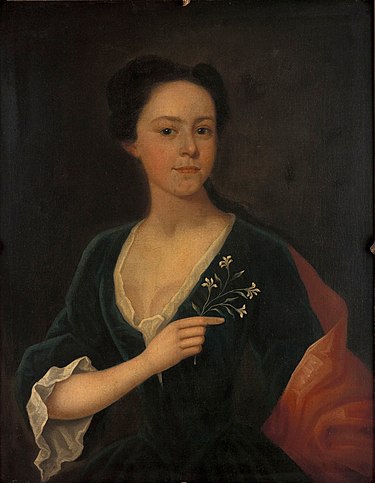
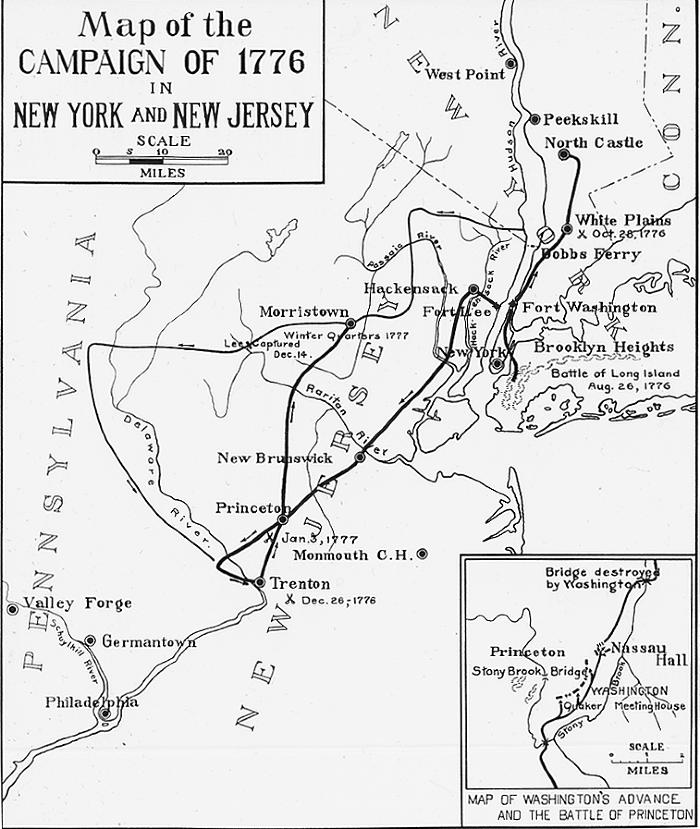
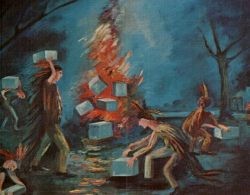


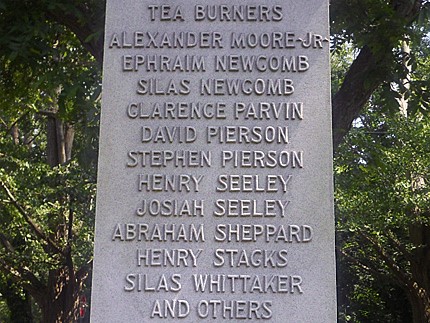
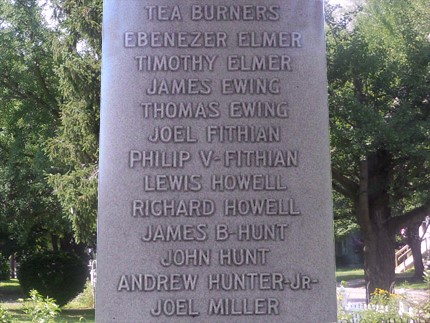
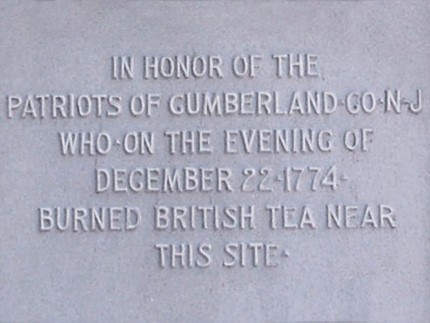
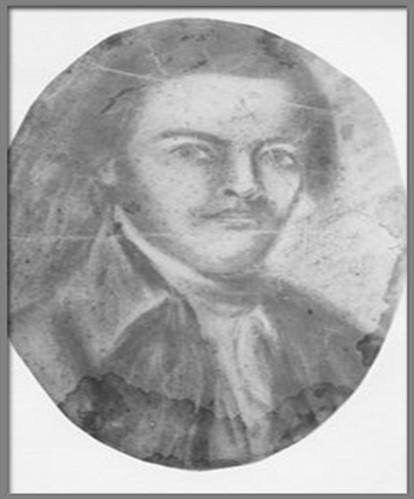

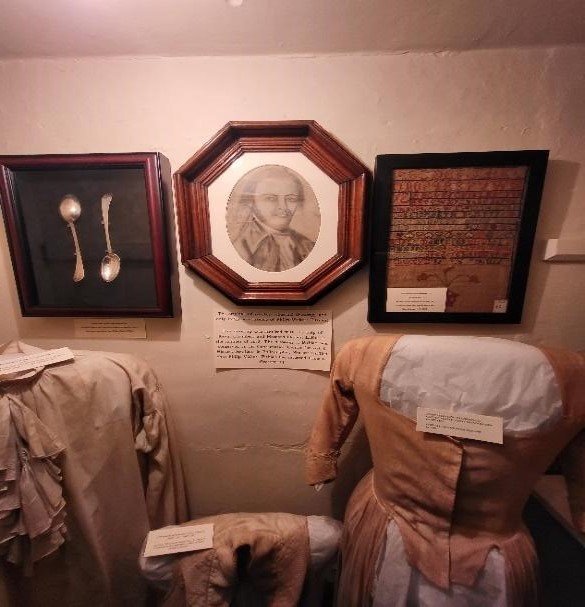


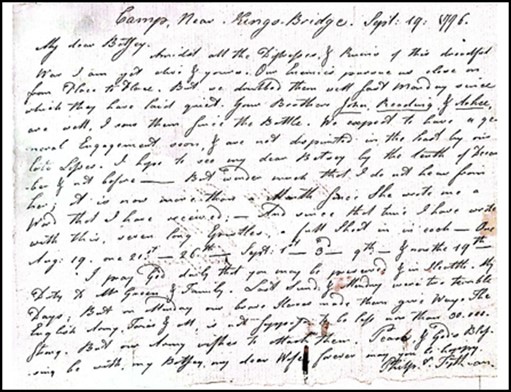


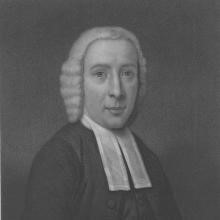



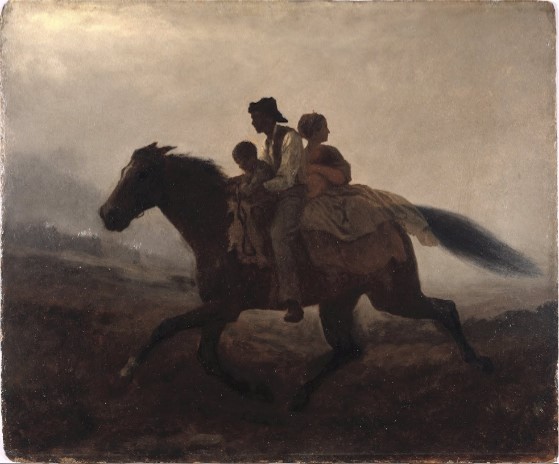



 njcssjournal