Social studies and history teachers routinely cover the Declaration of Independence and the U.S. Constitution in their courses. But every state also has a “birthday” (the day it got started as a state) and its own state constitution. The origins of states and their first constitutions can be very useful teaching tools, adding a new dimension to students’ historical insight and understanding.
New York State is an outstanding example. April 20 is New York’s Birthday! That was the date in 1777 when the Convention of Representatives of the State of New York, an ad hoc group elected the previous year to guide New York’s Revolutionary War efforts and develop its first constitution, finished work on that document.
The story of New York’s first state constitution is a dramatic one. New York had moved from steadfast loyalty to Britain to reluctant rebelling colony to a full-scale push for independence through the actions of three Provincial Congresses, the first elected in 1775, to guide New York in the growing alienation from Britain. The “Convention of Representatives” had been elected the year before as New York’s fourth Provincial Congress. Meeting initially in White Plains, they authorized New York’s representatives to the Continental Congress to approve the Declaration of Independence in early July, then, to keep out of reach of British forces, fled north to Fishkill and finally to Kingston where they completed their work. Along the way, they changed their name from Provincial Congress to Convention of Representatives of the State of New York.
When they began their work it wasn’t entirely clear just what a “state” was. People knew about colonies/provinces (New York had been one), and nations or nation-states as they were sometimes called (such as Britain). There were few precedents of models to draw on. Other colonies-becoming-states were writing their own first constitutions. The Articles of Confederation, which would link the new states together, was not completed until November 1777. The U.S. Constitution was a decade in the future. The creative New York drafters drew on their own experience in colonial government, their knowledge of European writers on the concepts of natural rights and representative government, and a few American leading-edge advocates such as Massachusetts’ John Adams. But mostly they drew on their own creativity and improvisation.
The delegates worked in haste and approved the final draft of their document, which still had strikeouts and marginal notes when they signed it. There was no time to make a clean copy before sending the document to the printer. They took a day off but the next day, April 22, the convention’s secretary mounted a flour barrel outside the court house where the group had worked and read it aloud to Kingston citizens.
New York State had in effect proclaimed itself into existence.
The document began by quoting the Declaration of Independence. This connected New York with the other colonies asserting their independence. It stated that the convention acting “in the name and by the authority of the good people of this State doth ordain, determine, and declare that no authority shall on any pretense whatever shall be exercised over the people or members of this State, but such as shall be derived from and granted by them.” In 1777, a document purporting to represent the consensus and will of the people, and their right to govern themselves, was a startling, radical departure from the past.
The 1777 constitution is just over 5000 words in length, It outlined the structure and purposes of state government but did not provide much detail.
It created a two-house legislature — one house, the Assembly, to be more numerous and more broadly representative of the people, and the other, the Senate, to be smaller and more attuned to the interests and property. That basic structure is still in place today.
It declared that “the supreme executive power and authority of this State shall be vested in a governor” who “shall take care that the laws are faithfully executed.” That wording is similar to what exists in the current State Constitution. But the 1777 writers had had enough experience with the King of England and some colonial governors who had over-asserted their power that they hedged the authority of New York State’s governor. Instead of giving the governor veto power over bills passed by the legislature, they created a “Council of Revision” consisting of the governor, chancellor, and judges of the supreme court with veto power. Rather than giving the governor sole appointment power, they vested that in a “Council of Appointment,” consisting of the governor and four senators chosen annually by the Assembly, to approve all appointments.
The document made only a brief reference the courts; fleshing that out later would require legislative action. Voting rights were restricted to men who met certain property-holding or other requirements.
The Constitution was not very long but it was a sound beginning. Hastily-organized elections were held in the spring and summer. The first legislature assembled in Kingston in September and got to work. The newly-elected governor, General George Clinton, had to await a lull in the fighting to come to Kingston, take the oath office, make the first gubernatorial address, and then hurry back to lead troops again.
The fledgling government did not have tranquility for long. It had to flee as British troops arrived and assaulted and burned Kingston on October 16. The legislature soon re-assembled in Poughkeepsie and resumed work. By then, patriot forces had defeated British incursions from the west (at Oriskany, August 6), the east (at Bennington, on August 16) and the north (at Saratoga, October 17, a major victory that became the turning point of the Revolution).
1777 turned out to be something of a “miracle year.” New York State was here to stay. The new constitution endured without major changes until 1821.
There are many ways of approaching the use of the first State Constitution in social studies and history courses. Some possibilities:
*It is an inspiring, against-the-odds story. It is a story of people determined to control their own collective affairs through representative government. At the beginning of 1777, the odds of New York’s success did not seem great. By the end of the year, New had written a constitution, established a government, held elections, fended off invasions from three directions, and survived invasion and destruction of its capital.
*It represented compromise and consensus. The writers had a number of disagreements and varying viewpoints and perspectives going into the process. But along the way they put aside their differences, compromised, and came together to develop a consensus document. That process is worthy of study now, when too often it seems difficult to reach agreement on divisive political issues.
*It was successful, flexible, and enduring. The first constitution proved to be a viable framework for years when New York grew remarkably fast. Even when the first major revisions came in 1821, the structural changes were relatively modest. The revisions abolished the Council of Revision and the Council of Appointment and replaced them with procedures more similar to what we have today.
*It left important work undone. The convention discussed abolishing the horrible practice of slavery but in the end it did not. That had to await legislation in 1799 and slavery was not formally abolished until 1827. Restrictions on men’s voting rights were gradually abolished in ensuing decades. Women finally got the right to vote in 1917. The constitution had no bill of rights other than protection of freedom of religion. The legislature enacted a bill of rights in 1787 and they were embodied in the 1821 constitutional revision. Since then, the constitution has been revised, updated, changed, and amended many times. That is a reminder that constitutions are subject to update and change over time, with voters’ approval.
*It was influential. The New York constitution includes some of the principles that were embodied in the U.S. Constitution a decade later, 1787. New York led the way in a sense. That is not surprising because New York patriot Gouverneur Morris was one of the principal writers of the New York document and a decade later, then a delegate to the Constitutional Convention from Pennsylvania, he was also one of the writers of the U.S. Constitution.
*It is a source for teaching about self-government, constitutional law, and civic responsibilities. The constitution could be a source for deepening students’ understanding of self-government and their roles and responsibilities as citizens. Educating for American Democracy , a recent report on civics education, notes that students need more study of “the social, political, and institutional history of the United States in its founding era, as well as the theoretical underpinnings of our constitutional design. The state constitutions and the federal 1787 Constitution, as amended, form diverse peoples and places into an American people: one overarching political community.”
Boosting Reading Skills through Social Studies at the Elementary Level
Karissa Neely
Want to improve students’ reading scores? Incorporate more social studies into their instruction.
“The Early Childhood Longitudinal Study shows that social studies is the only subject with a clear, positive, and statistically significant effect on reading improvement. In contrast, extra time spent on English Language Arts (ELA) instruction has no significant relationship with reading improvement,” Adam Tyner and Sarah Kabourek explain in their 2021 Social Education journal article, “How Social Studies Improves Elementary Literacy.”
According to the study, social studies has the power to boost literacy and student language acquisition. Because of its focus on people and the world around us, social studies gives students context for their ELA learning. As students use background knowledge to decipher informational text, they build real-world vocabulary and gain stronger reading comprehension skills.
In many elementary schools, where teachers have very limited social studies instruction time, they can use informational text from social studies during their language arts block.
“Integration of ELA strategies into social studies gives students an opportunity to use and refine ELA skills while using relevant content,” says Kelly Jeffery, ELA curriculum director at Studies Weekly.
Beyond reading, social studies instruction can also be more deeply blended with ELA, and support reading, writing, listening and speaking skills. Here are four tips for further integrating social studies and ELA:
1. Use Interactive Notebooks
“[I]nteractive notebooks are simple spiral-bound notebooks into which students glue or tape my handouts,” says Christina Gil in a 2016 article for Edutopia. “It’s just a simple, functional way for students to create, write, and explore ideas all in the same place.”
Jeffery adds that interactive notebooks are a way for both the teacher to see what students are learning and thinking. Students use them to take notes, explore ideas, ask questions, reflect and respond. They then become a sourcebook for students as they review for assessments.
“They pair very well with Studies Weekly because it is a perfect way to consume our publications,” Jeffery explains.
2. Create a Presentation
Students need different types of opportunities to share their understanding and presentations are perfect for this.
Brochures, posters, Google Slides, Nearpods, etc. are all interactive avenues for students to work individually or collaborate together to demonstrate knowledge. Similarly, students can create video journals to storyboard events and their responses. The goal is not a perfect analysis of the event or the historical figure they are studying, but a reflection on it.
Additionally, students can create readers’ theaters or short plays based on historic events, and perform them for the class. Others might opt to write a poem about a historic figure or create a children’s book explaining about an even
Three examples of easy ways students can show learning (from top left): file folders used to summarize information, popsicle puppets to share information from a historical figure’s point of view, and trioramas used for summarizing, fact/opinion, analyzing a primary source, or as a mini-report.
3. Create a Supported Response
Using informational texts, students can create a reasoned persuasive argument sharing their opinion on an event or person.
One form of supported response is a small paragraph following the TEES Template as explained by Jeannette Balantic and Erica Fregosi in their 2012 article, “Strengthening Student Thinking and Writing about World History,” for Social Studies and the Young Learner.
The TEES Template helps students strengthen their thinking, reasoning, and responses to open-ended assessments. With this exercise students go beyond learning historical facts — instead they use these facts to form arguments and support.
4. Hold Collaborative Groups
After reading an article, students may analyze the information and reflect on it within their interactive notebook.
With their notebooks and/or articles in front of them, teachers can guide students in opening up a dialogue about what they read with a small group or the entire class. Students should consider all voices and sides to an issue or event, and use additional sources, if needed, to deepen their understanding.
As they share their opinions and factual evidence, students should also be instructed to actively listen to the other side. The goal of this exercise is not to win but to try to find a compromise between both positions.
These four tips are only just few options to help teachers blend social studies and ELA in the elementary classroom. Even more, in addition to integrating with ELA, social studies is also the gateway to deeper learning in all subjects. For example, as students learn geography, they learn spatial math concepts. Or as they learn about historical developments in technology, they develop background knowledge for science. Even within the study of social studies, students learn how to make connections between a specific topic and its effect on people, events, and society. They begin to understand how geography affects a region’s economics, history affects governments, and governments affect society.
Teaching social studies with an integrated learning approach strengthens students’ ability to reason and think critically, gain a deeper understanding of the content, and transfer information to solve new problems. This knowledge can prepare them for the future as they become the world’s government, business, and family leaders.
Teaching Controversial Issues: Teachers’ Freedom of Speech in the Classroom
by Arlene Gardner
Executive Director, New Jersey Center for Civic Education
What is the purpose of education? The conventional answer is the acquisition of knowledge. Looking beyond this facile response, most people will agree that the true purpose of education is to produce citizens. One of the primary reasons our nation’s founders envisioned a vast public education system was to prepare youth to be active participants in our system of self-government. John Dewey makes a strong case for the importance of education not only as a place to gain content knowledge, but also as a place to learn how to live. In his eyes, the purpose of education should not revolve around the acquisition of a pre-determined set of skills, but rather the realization of one’s full potential and the ability to use those skills for the greater good.
Democratic self-government requires constant discussions and decisions about controversial issues. There is an intrinsic and crucial connection between the discussion of controversial political issues and the health of democracy. If we want our students to become informed, engaged citizens, we need to teach them how to “do” democracy by practicing the skills of discussing controversial issues in the classroom and learning how to respectfully disagree.
Research has demonstrated that controversy during classroom discussion also promotes cognitive gains in complex reasoning, integrated thinking, and decision-making. Controversy can be a useful, powerful, and memorable tool to promote learning. In addition to its value in promoting skills for democracy, discussing current controversial public issues:
Is authentic and relevant
Enhances students’ sense of political efficacy
Improves critical thinking skills
Increases students’ comfort with conflict that exists in the world outside of the classroom
Develops political tolerance
Motivates students
Results in students gaining greater content knowledge.
(Diana Hess, Controversy in the Classroom: The Democratic Power of Discussion (2009); Nel Noddings and Laurie Brooks, Teaching Controversial Issues: The Case for Critical Thinking and Moral Commitment in the Classroom (2017); “Guardian of Democracy: The Civic Mission of Schools” (2011); Center for Research on Learning and Teaching, University of Michigan at https://crlt.umich.edu/tstrategies/tsd).
Yet, teachers may consciously (or unconsciously) avoid controversial issues in the classroom because of the difficulty involved in managing heated discussions and/or for fear that parents will complain or that the school administration will admonish or punish them for “being controversial.” These concerns are certainly not groundless. How well are teachers protected from negative repercussions if they address controversial issues in their classrooms? How extensive are teachers’ First Amendment rights to free speech? How can heated disagreements among students be contained in the classroom?
Two different legal issues exist regarding free speech rights of teachers: The First Amendment directly protects a teacher’s personal right to speak about public issues outside of the classroom and “Academic Freedom” protects a teacher’s right and responsibility to teach controversial issues in the classroom. However, both have certain limitations.
First Amendment Protection of Public Speech by Teachers
Although the First Amendment free speech protection is written in absolute terms (“Congress shall make no law…”), the courts have carved out several exceptions (for national security, libel and slander, pornography, imminent threats, etc.). The courts have also carved out a limited “government employee” exception based on the rationale that a government employee is paid a salary to work and contribute to an agency’s effective operation and, therefore, the government employer must have the power to prevent or restrain the employee from doing or saying things that detract from the agency’s effective operation. Thus, the government has been given greater latitude to engage in actions that impose restrictions on a person’s right to speak when the person is a governmental employee, which includes teachers who work in public schools.
Some of the earliest threats to the free speech rights of public school teachers were the loyalty oaths that many states imposed on government employees during the ‘‘red scare’’ and early ‘‘cold war’’ years of American history. In Adler v. Board of Education (1952), the Supreme Court in a 6-3 decision rejected First Amendment claims and upheld a New York statute designed to enforce existing civil service regulations to prevent members of subversive groups, particularly of the Communist Party, from teaching in public schools. The Supreme Court effectively overturned this ruling in the 1960s and declared several loyalty oath schemes to be unconstitutional because they had chilling effects on individuals which violated their First Amendment rights (Baggett v. Bullitt (1964); Cramp v. Board of Public Instruction (1961); and Keyishian v. Board of Education (1967)).
Much of the reasoning regarding the “government employee” exception to the First Amendment outlined in Adler was abandoned altogether in the 1968 U.S. Supreme Court decision in Pickering v. Board of Education. Teacher Marvin Pickering had written a letter complaining about a recently defeated school budget proposal to increase school taxes. The school board felt that the letter was “detrimental to the efficient operation and administration of the schools” and decided to terminate Pickering, who sued claiming his letter was protected speech under the First Amendment. The U.S. Supreme Court held that Pickering’s dismissal violated his First Amendment right to free speech because public employees are entitled to the same measure of constitutional protection as enjoyed by their civilian counterparts when speaking as “citizens” and not as “employees.”
In Mt. Healthy City School District v. Doyle (1977), non-tenured teacher Fred Doyle conveyed the substance of an internal memorandum regarding a proposed staff dress code to a local radio station, which released it. When the board of education refused to rehire him, Doyle claimed that his First and Fourteenth Amendment rights had been violated. The court developed a “balancing test” that required the teacher to demonstrate that the speech act was a ‘‘substantial’’ or ‘‘motivating factor’’ in the administration’s decision and gave the school board the opportunity to demonstrate, based on the preponderance of the evidence, that the teacher’s speech act was not the ‘‘but for’’ cause of the negative consequences imposed on the teacher by the school board. Finally, the court would “balance” the free speech interests of the teacher and the administrative interests of the school district to determine which carried more weight. Based on this test, the U.S. Supreme Court found that the teacher’s call to the radio station was protected by the First Amendment, that the call played a substantial part in the board’s decision not to rehire Doyle, and that this action was a violation of Doyle’s rights under the First and Fourteenth Amendments.
In a 5/4 decision in Connick v. Meyers (1983), the U.S. Supreme Court held that speech by public employees is generally only protected when they are addressing matters of public concern, not personal issues. Sheila Meyers was an Assistant District Attorney who had been transferred. She strongly opposed her transfer and prepared a questionnaire asking for her co-workers views on the transfer policy, office morale and confidence in supervisors. She was terminated for insubordination. Meyers alleged her termination violated her First Amendment right to free speech. The district court agreed and the Fifth Circuit affirmed. However, the U.S. Supreme Court reversed because Meyer’s speech only dealt with personal not public issues. “When a public employee speaks not as a citizen upon matters of public concern, but instead as an employee upon matters only of personal interest, absent the most unusual circumstances, a federal court is not the appropriate forum in which to review the wisdom of a personnel decision taken by a public agency allegedly in reaction to the employee’s behavior.” Although the case involved an Assistant District Attorney, it is applicable to all public employees: teachers must demonstrate that their speech is of public concern.
This was confirmed in Kirkland v. Northside IndependentSchool District (1989) where the school district did not rehire non-tenured teacher Timothy Kirkland because of poor performance and substandard teaching evaluations. Kirkland filed a lawsuit in federal district court against Northside, claiming that he was not rehired in violation of his First Amendment rights after he gave his students a reading list that was different from Northside’s list. Northside argued that Kirkland had no right to substitute his list without permission or consent and he had failed to obtain either. The district court ruled in favor of Kirkland and Northside appealed. The Fifth Circuit Court of Appeals reversed and dismissed Kirkland’s complaint, holding that Kirkland’s “speech” did not infringe on any matter of public concern and was in fact “private speech.” If the nature of the speech is purely private, such as a dispute over one employee’s job performance, judicial inquiry then comes to an end, and the question of whether the employee’s speech was a substantial or motivating factor in the decision not to rehire him need not even be reached. The U.S. Supreme Court denied cert, leaving this decision in place.
Academic Freedom
Although primarily used in the context of university faculty rights, “Academic Freedom” protects a teacher’s ability to determine the content and method of addressing controversial issues in the classroom. This is more limited at the K-12 level because the courts have long held the view that the administration of K-12 public schools resides with state and local authorities. Primary and secondary education is, for the most part, funded by local sources of revenue, and it has traditionally been a government service that residents of the community have structured to fit their needs. Therefore, a teacher’s “Academic Freedom” is limited to his or her content and method of teaching within the policies and curriculum established by the state and local school board. By finding no First Amendment violation, the court in Kirkland implicitly held that he had no right to substitute his own book list for the one approved by the district without permission or consent, which he failed to obtain.
In an early case, following the end of World War I, Nebraska had passed a law prohibiting teaching grade school children any language other than English and Robert Meyer was punished for teaching German at a private Lutheran school. The court held that the Nebraska law was an unnecessarily restrictive way to ensure English language learning and was an unconstitutional violation of the 14th Amendment due process clause (the 14th Amendment had not yet applied the First Amendment to the states until Gitlow v. New York in 1925) that exceeded the power of the state (Meyer v. Nebraska, 262 U.S. 390 (1923).
“The Fourteenth Amendment, as now applied to the States, protects the citizen against the State itself and all of its creatures-Boards of Education not excepted. These have, of course, important, delicate, and highly discretionary functions, but none that they may not perform within the limits of the Bill of Rights. That they are educating the young for citizenship is reason for scrupulous protection of Constitutional freedoms of the individual, if we are not to strangle the free mind at its source and teach youth to discount important principles of our government as mere platitudes.” Justice Jackson in West Virginia Board of Education v. Barnett (1943)(holding unconstitutional a requirement that all children in public schools salute the flag).
The Supreme Court has more than once instructed that “[t]he vigilant protection of constitutional freedoms is nowhere more vital than in the community of American schools” (Shelton v. Tucker (1960)). In Epperson v. Arkansas (1968)(a reprise of the famous 1927 “Scopes Trial”), the Arkansas legislature had passed a law prohibiting teachers in public or state-supported schools from teaching, or using textbooks that teach, human evolution. Sue Epperson, a public school teacher, sued, claiming that the law violated her First Amendment right to free speech as well as the Establishment Clause. A unanimous U.S. Supreme Court declared the state law unconstitutional. The Court found that “the State’s undoubted right to prescribe the curriculum for its public schools does not carry with it the right to prohibit, on pain of criminal penalty, the teaching of a scientific theory or doctrine where that prohibition is based upon reasons that violate the First Amendment.” Seven members of the court based their decision on the Establishment Clause, whereas two concurred in the result based on the Due Process clause of the 14th Amendment (because it was unconstitutionally vague) or the Free Speech clause of the First Amendment.
The Supreme Court, however, has not clearly defined the scope of academic freedom protections under the First Amendment, and commentators disagree about the scope of those protections. (See, e.g., William W. Van Alstyne, “The Specific Theory of Academic Freedom and the General Issue of Civil Liberty,” in The Concept of Academic Freedom 59, 61-63 (Edmund L. Pincoffs ed., 1972); J. Peter Byrne, “Academic Freedom: A ‘Special Concern of the First Amendment’,” 99 Yale L.J. 251 (1989); and Neil Hamilton, Zealotry and Academic Freedom: A Legal and Historical Perspective (New Brunswick, 1998).
Whatever the legal scope, it is clear that the First Amendment protection of individual academic freedom is not absolute. For example, in Boring v. Buncombe County Board of Education (1998), the Fourth Circuit Court of Appeals held that a teacher could be reprimanded (in this case transferred) because she sponsored the performance of a play that school authorities subsequently deemed inappropriate for her students and inconsistent with the curriculum developed by the local school authorities. This judicial deference toward K through 12 institutions often can be seen in cases involving teachers who assert that their First Amendment rights were violated when school administrators imposed punishments on them for engaging—while they taught their classes—in some form of expressive activity that the administrators disapproved.
The content
While cases about academic freedom, such as Epperson, involved state laws that limited or prohibited certain content being taught (in this case prohibiting teachers in public or state-supported schools from teaching, or using textbooks that teach, human evolution); New Jersey has taken a very broad approach to classroom content. Since 1996, New Jersey has established state standards (currently called “Student Learning Standards”) that set a framework for each content area. Unlike many other states, New Jersey does not establish a state curriculum but rather leaves this to local school boards. Subject to applicable provisions of state law and standards set by the State Department of Education, district school boards have control of public elementary and secondary schools. How much protection do New Jersey teachers have when they address controversial topics? Most First Amendment education cases in New Jersey involve students’ rights rather than teachers’ rights (e.g., school dress, vulgar language, threats, religious speech, equal access, See http://www.njpsa.org/documents/pdf/lawprimer_FirstAmendment.pdf). However, several recent cases from the Third Circuit (which includes New Jersey) provide some parameters.
In Edwards v. California University of Pennsylvania (3rd Cir. 1998), a tenured professor in media studies sued the administration for violating his right to free speech by restricting his choice of classroom materials in an educational media course. Instead of using the approval syllabus, Edwards emphasized the issues of “bias, censorship, religion and humanism.” Students complained that he was promoting religious ideas in the class. The U.S. Supreme Court declined to review the Third Circuit’s summary judgement against Edwards, holding that a university professor does not have a First Amendment right to choose classroom materials and subjects in contravention of the University’s dictates.
A very recent decision regarding a New Jersey teacher confirms the fact that the First Amendment does not provide absolute protection for teachers in public schools to decide the content of their lessons if it is not within the curriculum set by the school district. In Ali v. Woodbridge Twp. School District (3rd Cir. April 22, 2020) a non-tenured public high school teacher at Woodbridge High School was teaching Holocaust denial to his students and was posting links to articles on the school’s website saying things such as, “The Jews are like a cancer” and expressing conspiracy theories accusing the United States of planning a 9/11-style attack. When the Board of Education fired Ali, he sued claiming that his employment was terminated on the basis of his race and religion, and that defendants had violated his rights to free speech and academic freedom, among other claims. The District Court rejected all of Ali’s claims, awarding summary judgment to the school board, and the Third Circuit affirmed.
These are extreme cases where a teacher is addressing issues that are NOT within the curriculum set by the university or within the state social studies standards and the local school district’s curriculum. When teachers are teaching a controversial topic that is included in the New Jersey Student Learning Standards for Social Studies and their school district’s social studies curriculum, the existing case law seems to support the fact that they would be protected by the Fourteenth Amendment, unless they are violating school policies that require teaching in a neutral, balanced manner that does not seek to indoctrinate students.
For example, what if a teacher wants to assign a research paper about the Stonewall Riots or the Lavender Project?Since the history of LGBT rights is in the state standards and supposed to be included in local school district social studies curriculum, the Stonewell Riots and Lavender Project would be part of this history. This is not a situation like Ali where the materials were beyond the scope of the local curriculum (as well as being taught in an indoctrinating manner—see below). If the teacher fears that the topics will be controversial with the community, he or she should make the school administration aware of what he or she is planning to do. Since here, what the teacher plans to teach is within the state standards and the local school district curriculum, the school administration should support the teacher. If parents object, the real issue is one of policy (Should LGBT history be taught?), which is decided by the state and local boards of education, not the teacher. Therefore, the parents’ argument should be with the state and local boards of education.
What if a teacher wants to show scenes of an R-rated movie in the classroom (i.e. Revolutionary War scenes from The Patriot or D-Day from Saving Private Ryan?) Obviously, the American Revolution and Would War II are part of the state standards for U.S. History and in every local school district’s curriculum. The movie scenes would need to relate to the district curriculum and the teacher should get prior administrative and parental approval if some movie scenes are going to be very graphic.
How should a teacher prepare lessons on Nazi Germany during the 1930s? Nazi Germany is also part of the state history standards and every school district’s curriculum. It should be taught in a way so that students can understand how the Nazis came to power and the prejudices they carried. Some of the World War II footage and movies may be shocking but our students will not be able to become informed, engaged citizens if we hide the past from them.
An ounce of prevention beforehand will help. Before starting, teachers should be clear about the goal of their lesson: The classroom activities should encourage critical thinking. You are not trying to convince students of any particular point of view. Preview any materials, especially visual media which may be very powerful or provocative. Be aware of the biases of the sources of information that will be used by students.
Teaching Tolerance suggests in Civil Discourse in the Classroom that “Teachers can effectively use current and controversial events instruction to address a wide variety of standards and even mandated content. To do so, however, teachers must work carefully and incrementally to integrate this new approach in their classrooms.” The University of Michigan’s Center for Research on Learning and Teaching offers guidance for how instructors (offered for college instructors but applicable for K-12) can successfully manage discussions on controversial topics. See Center for Research on Learning and Teaching, University of Michigan at https://crlt.umich.edu/tstrategies/tsd). The 1940 “Statement on Academic Freedom and Tenure” of the American Association of University Professors, suggests that teachers should be careful to avoid controversial matters that are unrelated to the subject discussed.
Before engaging students in an activity or discussion involving a controversial subject, tell your supervisor and/or principal what you are planning on teaching and, if necessary, reference the district policy on teaching controversial issues, explain the lesson’s connection with the district social studies curriculum and explain the goal and value of what you plan to do. Then, consider the demographics of your community. If you anticipate that the topic of your lesson will be controversial with the community, send a note and/or talk with your students’ parents and/or the Parent Teacher Organization.
In an informative piece titled “Do You Have the Right to be an Advocate?,” published by EdWeek.org, Julie Underwood, a professor of law and educational leadership and policy analysis at the School of Education, University of Wisconsin-Madison, explains that the “district or the state can regulate employee speech during school hours or at school-sponsored activities to protect their own interests in instruction and political neutrality.” Despite the ambiguity in the laws protecting a teacher’s freedom of speech, Underwood concludes: “If it relates to the in class instruction and is age appropriate there is a good rationale for having a political discussion”.
Teaching in a Neutral or Balanced Manner
If the teacher has created a supportive, respectful classroom climate and built tolerance for opposing views, it will be easier to consider controversial topics. For example, considering historical controversies might be good background as practice for looking at current controversies. Establish a process and rules of adequate evidence or support so that the discussion is based on facts rather than simply opinions. To help maintain classroom order even when students are having heated disagreements, set clear rules for discussions or use activities that require students to use active listening skills when considering controversial issues, such as:
Continuum/Take a Stand
Civil Conversations
C3 Inquiries
Guided discussions
Socratic Smackdown
Moot courts—structured format for considering constitutional issues
Philosophical Chairs discussion
Legislative hearings—structured format for considering solutions to problems
Carefully consider how students are grouped if they are to work cooperatively. Provide closure (which may be acknowledging the difficulty of the issue).
School boards work primarily through policies which set guidelines for principals, teachers, parents and students, as well as the district curriculum. To avoid a problem afterwards, the teacher should make sure that the controversial topic is within the state standards and the curriculum adopted by their local school board. Then the teacher should consult the school district’s policy regarding the teaching of controversial issues. Most school districts have a policy (usually #2240) that supports and encourages the teaching of controversial issues and sets guidelines for teaching controversial issues, including a process for dealing with challenges. Although the language may differ, policies dealing with controversial issues generally focus on the need for the classroom lesson to be balanced, unprejudiced, fair, objective, and not aimed at indoctrinating students to a particular point of view.
Clearly, the type of indoctrination attempted by the teachers in the Edwards or Ali cases is beyond protected speech. In addition to avoiding indoctrination, teachers should avoid telling a joke in the classroom that might imply a negative characterization of an ethnic group, religion or gender. A “joke” that might be a put down of any ethnic group, religion or gender told in the classroom to students is never a good idea. It is not even a good idea for a teacher to post such a “joke” on Facebook because such speech might be considered as not addressing a matter of public concern and would not be protected by the First Amendment. However, using an historical photo, engraving or picture that included a negative image of an ethnic, racial or religious group might be okay in the context of examining what was seen as humor in the past and understanding the prejudice that existed during a particular time period. For example, when teaching about the Holocaust, a teacher might carefully use Nazi cartoons to demonstrate the high level of prejudice at the time. Another example might be using images of blackface or corporate ad campaigns to show racial attitudes when teaching about Jim Crow. The teacher does not need many examples to make the point. Know your audience. Choose carefully and be aware that certain advertising images from the Jim Crow era may offend some students in the class. The purpose of using controversial issues is important. At the core of deciding what a teacher should or should not say or do in the classroom is good judgment.
Should a teacher share his or her viewpoint on a controversial issue with the students?
Whether a teacher should share his or her opinion or viewpoint on a controversial issue will depend on the age of the students, if the opinion was requested by the students, and the comfort-level of the teacher. A teacher’s opinion may have too much influence on younger students and should probably be avoided. What if a middle or high school student specifically asks for your opinion? Such “natural disclosures” in response to a direct question by a student should be accompanied by a disclaimer, such as “This is my view because…” or “Other people may have different views”. If you prefer not to disclose your view, explicitly state that and explain why. Remember, the goal is to help students develop their own well-informed positions. Be mindful of your position as the “classroom expert” and the potential impact on the students. If you decide to disclose your own view, do it carefully and only after the students have expressed their views. Unrequested disclosures may be seen as preachy, or may stop the discussion. (See Hess, Controversy in the Classroom)
So, for example, should a teacher take a position on climate change? In terms of content, climate change is in the state standards and should be in the local school curriculum. If parents disapprove of this topic, this disagreement is really with the curriculum set by the school board, not with the teacher. However, the teaching strategy is important. Rather than taking a position, which may be seen as indoctrination or may simply stop the classroom inquiry, the better approach might be to have the students examine the issue and let the facts speak for themselves. Let students use the facts that exist to construct their own arguments about whether or not climate change is the result of mankind’s use of fossil fuels in industry and transportation. If the topic is presented in a balanced, neutral, non-indoctrinating manner, the teacher should not be subject to discipline. Objections by parents should be referred to the school administration because it is a matter of policy (Should climate change be taught?), which is decided by the state and local boards of education, not the teacher.
How should teachers address questions from students regarding Black Lives Matter and racial inequality? The ACLU in the state of Washington prepared a short online article, “Free Speech Rights of Teachers in Washington State” (NJ’s ACLU only has a publication about students’ rights) with a related hypothetical: The teacher is instructed not to discuss personal opinions on political matters with students. In a classroom discussion on racial issues in America, the teacher tells the class that he/she has recently participated in a Black Lives Matter demonstration. Revealing this is the same as giving an opinion and may not be protected speech. Teachers can be disciplined for departing from the curriculum adopted by the school district and this would be a departure.
Can a teacher state that New Jersey is a segregated state when it comes to communities? Is the teacher stating this as a personal opinion or as a fact related to a topic of learning? There is no reason to simply state that NJ is segregated unless it is in the context of helping students understand and appreciate the history of segregation in NJ consistent with state standards and district curriculum. (For example, see “Land Use in NJ” and “School Desegregation and School Finance in NJ” for history, context and facts at http://civiced.rutgers.edu/njlessons.html).
Is a teacher permitted to take a stand on the issue of removing public monuments? Assuming that this is part of a current events lesson, it would be better if the teacher remained neutral and let the students’ voice differing views. If the students all have one position, perhaps the teacher can take a position as “devil’s advocate,” but it should be made clear that this is what the teacher is doing.
Can a teacher assign blame to protests to specific groups or left or right extremist groups? Assigning blame is the same as a teacher giving his or her personal opinion. The better approach would be to have students look at the actions of specific groups and determine their appropriateness.
Can a teacher assign blame to Associate Justice Amy Coney Barrett regarding a Supreme Court decision that is 5-4 and against the teacher’s preference (i.e. Affordable Care Act, marriage, etc.). Assuming that this is part of a classroom lesson about the Supreme Court, the teacher should refrain from “assigning blame” because this is expressing his or her opinion, but should instead let the students consider the reasoning and impact of the decisions.
Is a teacher permitted to criticize or defend the government’s policies or actions on immigration? Outside the classroom, a teacher has a first amendment right to express his or her views on public issues. As part of a classroom lesson about immigration, rather than criticizing or defending the government’s policies or actions on immigration, the better approach would be to present or let students research the history of immigration policy and its impact and let the students discuss and draw their own conclusions (For example, see “Immigration Policy and its impact on NJ” at http://civiced.rutgers.edu/njlessons.html).
Can a teacher show a video clip from a specific news station (Fox, CNN) or assign students to watch a specific news program as an assignment? As long as the purpose is not indoctrination to any particular point of view and the assignments are balanced. If the teacher wants students to see and compare various media views on the same topic, that would be a valuable classroom activity. (For example, see “Educating for Informed, Engaged Citizens” virtual workshop, for background on helping students understand bias in news, at the New Jersey Council for the Social Studies website at http://www.njcss.org/; also see Choices Program at Brown University: Teaching with the News at https://www.choices.edu/teaching-with-the-news/; and Constitutional Rights Foundation Fake News at https://www.crf-usa.org/images/pdf/challenge/Understanding-Fake-News1.pdf and https://www.crf-usa.org/images/pdf/challenge/Tackling-Fake-News.pdf).
Conclusions
A teacher has a personal right under the First Amendment to share his view on public policy issues in public but NOT in the classroom. A teacher sharing his opinion or viewpoint in the classroom may be seen as indoctrination. So, for example, teachers should avoid sharing personal views on one’s sexual preference, regarding a particular candidate, President Trump’s taxes, a decision by a Grand Jury, prosecutor, FBI on racial issues, etc. Your school district may even have an explicit policy that teachers should not discuss personal views on political matters in the classroom, in which case, this policy should be followed. Everything a teacher says or does in the classroom should be considered based on the possible impact on the students.
This does not mean that teachers should avoid having students examine and discuss controversial topics. Encouraging the development of civic skills and attitudes among young people has been an important goal of education since the start of the country. Schools are communities in which young people learn to interact, argue, and work together with others, an important foundation for future citizenship. Since the purpose of social education is to prepare students for participation in a pluralist democracy, social studies classes NEED to address controversial issues. Teachers have the right and the responsibility to help their students understand controversial topics and to develop critical thinking skills. However, the controversial topics should relate to the broad scope of subjects included in the NJ Student Learning Standards and the local school district curriculum. And controversial subjects should be addressed in a neutral or balanced manner, without any effort to indoctrinate students, but rather to help them develop the knowledge and skills they will need as workers, parents and citizens in a democratic society.
Background Materials
Meyer v. Nebraska, 262 U.S. 390 (1923)
West Virginia Board of Education v. Barnett, 319 U.S. 624 (1943)
Adler v. Board of Education, 342 U.S. 485 (1952)
Shelton v. Tucker, 364 U.S. 479 (1960)
Cramp v. Board of Public Instruction, 368 U.S. 278 (1961)
Baggett v. Bullitt, 377 U.S. 360(1964)
Keyishian v. Board of Regents, 385 U.S. 589 (1967)
Pickering v. Board of Education, 391 U.S. 563 (1968)
Epperson v. Arkansas, 393 U.S. 97 (1968)
Mt. Healthy City School District Board of Education v. Doyle, 429 U.S. 274 (1977)
Connick v. Meyers, 461 U.S. 138 (1983)
Kirkland v. Northside Independent School District, 890 F.2d 694 (5th Cir. 1989), cert. denied (1990)
Bradley v. Pittsburgh Bd. of Educ., 910 F.2d 1172 (3d Cir.1990)
Boring v. Buncombe County Board of Education, 136 F.3d 364 (4th Cir. 1998)
Edwards v. California University of Pennsylvania, 156 F.3d 488 (3rd Cir. 1998), cert. denied, 525 U.S. 1143 (1999)
Ali v. Woodbridge Twp. School District, 957 F.3d 174 (3rd Cir. April 22, 2020)
Keith Barton and Linda Levstik, Teaching History for the Common Good (Erlbaum, 2004)
Diana E. Hess, Controversy in the Classroom: The Democratic Power of Discussion (New York: Routledge, 2009)
Nel Noddings and Laurie Brooks, Teaching Controversial Issues: The Case for Critical Thinking and Moral Commitment in the Classroom (New York: Teacher’s College Press, 2017).
William W. Van Alstyne, “Academic Freedom and the First Amendment in the Supreme Court of the United States: An Unhurried Historical Review,” 53 Law and Contemp. Probs. 79 (1990)
John Goodlad, “Fulfilling the Public Purpose of Schooling: Educating the Young in Support of Democracy May Be Leadership’s Highest Calling,” School Administrator, v61 n5 p14 May 2004.
Jonathan Gould, Kathleen Hall Jamieson, Peter Levine, Ted McConnell, and David B. Smith, eds. “Guardian of Democracy: The Civic Mission of Schools,” Philadelphia: Annenberg Public Policy Center, 2011
Greenwood Cemetery in the Sunset Park section of Brooklyn overlooking New York Harbor was founded in 1838 and was one of the first rural cemeteries in the United States. By the 1860s, Greenwood had earned a reputation for its beauty and was a sought after place to be buried. The cemetery is a Revolutionary War historic site, part of the Battle of Long Island was fought here in August 1776, and a designated site on the Civil War Discovery Trail. In 2006, Greenwood was designated a National Historic Landmark by the United States Department of the Interior. Greenwood attracts 500,000 visitors a year, second to Niagara Falls as the nation’s greatest tourist attraction. Greenwood is still an active cemetery, serving as the resting place for over 570,000 “permanent residents.” In addition to being a cemetery, Greenwood also serves as a cultural institution that tells the history and culture of the borough and city.
Entrance to Greenwood Cemetery
In 1862, Green-Wood Cemetery established a Soldier’s Lot for the free burial of veterans who died during the Civil War. By 1865, more than 200 soldiers and sailors were buried here. African Americans were originally buried, many in unmarked graves, along the southwestern edge of the vast burial grounds in unmarked graves in what was known as “Colored Lots.” The section is now known as the “Freedom Lots.” Margaret Pine, who died in 1857, may have been the “last slave in the State of New York.” Prior to the end of slavery in New York State in 1827, she was enslaved by the family of Wynant van Zandt. Pine is buried in the main section of the cemetery.
Soldier’s Monument
Civil War Monument
Famous and infamous statues and monuments in Greenwood Cemetery include the Soldier’s Monument, Minerva, and Civic Virtue. The Soldier’s Monument was dedicated on Battle Hill by the City of New York to honor the 150,000 local men who served in the Union Army during the Civil War. The statue of Minerva, the Roman goddess of Arts and War, is also on Battle Hill. Minerva, stands on a platform labeled “Alter of Liberty” and faces the Statue of Liberty in New York harbor. The statues appear to be waving to each other. The statue Civic Virtue was originally in City Hall Park and in the 1940s it was moved to the Queens Borough Hall. It was placed in Greenwood because of a public uproar that it portrayed women as treacherous creatures trying to seduce the virtuous figure that resembles Hercules. Greenwood may soon be the final resting place for a statue of James Marion Sims that was removed from New York City’s Central Park because Sims had conducted gynecological experiments on enslaved African women.
Statue of Minerva
Thematic Tours of Greenwood Cemetery
Activists
John Cook (1829-1859): John E. Cook was a law clerk and ally of militant abolitionist John Brown. Cook studied law in Connecticut, fought border ruffians in Kansas, served as an abolitionist mole in Virginia, took white hostages during the Harper’s Ferry raid, and almost escaped to freedom. After the raid, he was the most hunted man in America. When Cook was captured and brought to trial, he betrayed John Brown and named fellow abolitionists in a full confession. Source: https://www.amazon.com/John-Browns-Spy-Adventurous-Confession/dp/0300180497
Henry Ward Beecher (1813-1887): Beecher was born in Litchfield Connecticut and attended Amherst College where he had his first taste of public speaking and joined the ministry. From 1839-1847, Beecher was a minister to a small Presbyterian congregation in Indiana. In 1847, he was appointed minister at Brooklyn’s Plymouth Congregational Church. Beecher was a staunch abolitionist. When the federal Fugitive Slave Law was passed, Beecher declared “it was a Christian’s duty to feed and shelter escaped slaves.” In 1856, Beecher sent rifles, known as “Beecher’s Bibles” to help abolitionists fighting to block slavery in the Kansas Territory. Plymouth Congregational Church, under his tutelage, purchased freedom for a number of enslaved young women. During the Civil War, President Abraham Lincoln sent Beecher to Europe to help gain support for the Union. Beecher was also an advocate for temperance and the women’s suffrage movement. After the Civil War he was embroiled in a scandal when he was accused of an affair with the wife of a church deacon. Source: https://en.wikipedia.org/wiki/Henry_Ward_Beecher
Henry Ward Beecher with his sister, Harriet Beecher Stowe
Samuel Cornish (1795-1858): Samuel Cornish was born in Delaware and with John B. Russworm, he edited Freedom’s Journal, the first black-owned and operated newspaper in the United States. Cornish became the senior editor and later took on a position as an agent for the New York Free African schools. He was involved with a number of abolitionist organizations including the American Anti-Slavery Society, the New York City Vigilance Committee, and the American and Foreign Anti-Slavery Society. Source: https://www.blackpast.org/african-american-history/cornish-samuel-eli-1795-1858/
Elizabeth Cushier (1837–1931): Elizabeth Cushier, born in Jamaica, New York, was a professor of medicine and one of New York’s most prominent obstetricians and surgeons. In 1868, Cushier read a medical article that sparked her interest in the field and she enrolled in the homeopathic New York Medical College for Women. A year later, Cushier transferred to Elizabeth & Emily Blackwell’s Woman’s Medical College of the New York Infirmary. Following her graduation, Cushier furthered her studies at the University of Zurich, researching pathological and normal histology, a field of research not yet open to women in the United States. Upon her return, she was employed at the New York Infirmary as a resident physician as well as at the Woman’s Medical College as an obstetrics professor and administrator. Cushier also opened a private practice in New York City that offered gynecological surgery. She published articles and case studies for medical journals, becoming known as an expert in her field of obstetrics and gynecology. During World War I, Cushier volunteered for the Red Cross to perform relief work for French and Belgium women, children, and servicemen. Source:
Louisine Havemeyer (1855-1929): Havemeyer was a women’s rights advocate, suffragette, and pioneering art collector. With her husband, Harry Havemeyer, they created a massive art collection which included all kinds of world class artwork, particularly notable for its representation of modern French artists. Many pieces of her collection were given to the Metropolitan Museum of Art. Source:
Susan McKinney Steward (1847-1918): McKinney Steward was born in Crown Heights in Brooklyn and was the third African-American woman to earn a medical degree in the United States. Steward may have decided to become a physician after the death of two of her brothers during the Civil War. Additionally, in 1866, she witnessed a cholera epidemic in Brooklyn, in which over 1,200 people died. She attended the New York Medical College for Women and graduated from medical school as valedictorian. Her medical career focused on prenatal and pediatric care and childhood disease. She established a medical practice in Brooklyn and opened a second office in Manhattan where she worked with patients of all races. She was a founder of the Brooklyn Women’s Homeopathic Hospital and Dispensary which served the African American community. Dr. Steward was an accomplished public speaker and in 1911 she addressed the first Universal Race of Congress in London, speaking about “Colored Women in America.” Source: https://www.nymc.edu/school-of-medicine-som/som-alumni-profiles/alumni-in-memorium/new-york-medical-college-for-women/susan-smith-mckinney-steward/
Actors/Movie Industry
Lola Montez (1821–1861): Montez, born Eliza Gilbert in Ireland, became famous as a Spanish dancer, prostitute, and mistress to King Ludwig of Bavaria. She debuted in London in 1843 as “Lola Montez, Spanish dancer.” In 1846, Lola arrived in Munich and she was discovered by King Ludwig and became his mistress. Ludwig made Lola the Countess of Landsfeld, granting her citizenship and a castle in 1847. Lola wielded great political power, which she used to favor liberalism and anti-Catholicism. In 1851, Lola came to the eastern United States for a fresh start and performed as a dancer and actress. In 1856, after a failed tour in Australia, Lola settled in New York City and gathered a following as a lecturer on fashion, beautiful women and courage. Source: https://www.findagrave.com/memorial/726/lola-montez
Frank Morgan (1890-1949): Francis Wuppermann was born in New York City. Taking the stage name “Morgan” he followed his older brother Ralph into show business, first on Broadway and then in movies. His first film was the silent movie “The Suspect.” His career at Metro-Goldwyn-Mayer took off when “talkies” began and his most stereotypical role was a confused but good-hearted middle aged man. Morgan is best remembered for his performance in the 1939 classic “The Wizard of Oz” in which he played five roles: the Wizard, Professor Marvel, the Emerald City doorman, the Emerald City hack driver and the Wizard’s guard. In over 100 film appearances, Morgan was nominated for two Academy Awards: for Best Actor in 1934s “The Affairs of Cellini” and for Best Supporting Actor in 1942s “Tortilla Flat.”
Jean-Michel Basquiat (1960–1988): Basquiat was born in Brooklyn, New York and attended Edward R. Murrow High School and City-As-School. While at this school, Basquiat became friends with Al Diaz and the two of them began spray painting graffiti using the pseudonym SAMO (acronym for “Same Old S—t”). One of their most famous graffiti pieces is the three-pointed crown. At age 17, Basquiat dropped out of school, his father kicked him out of the house. Basquiat slept at friends’ apartments or on park benches. In order to support himself, he panhandled, dealt drugs, and peddled hand-painted postcards and T-shirts. He often went to downtown clubs where he met well-known artists and musicians. Through these connections, Basquiat made appearances on television shows and showcased his artwork in galleries. Basquiat struggled with drug abuse and died from a heroin overdose. Source:
Leonard Bernstein (1918–1990): Bernstein was born in Lawrence, Massachusetts and was an American composer, conductor, pianist, and music educator. He is considered to be one of the most significant American personalities in orchestral conducting of the 20th century. In 1940, he studied at the Boston Symphony Orchestra’s summer institute called the Tanglewood Music Center. For nearly every summer for the rest of his life, Bernstein returned to Tanglewood to teach and conduct young music students. Bernstein wrote several books and helped to found two major international music festivals, the Pacific Music Festival and the Schleswig Holstein Music Festival, influencing and educating generations of young musicians. In 1958, he was the first conductor to share music on TV through his televised concert and lecture series, Young People’s Concerts with the New York Philharmonic. He became the Music Director of the New York Philharmonic and was given the lifetime title of Laureate Conductor. His best known work on Broadway is the musical West Side Story which was made into an Academy Award-winning film. He has been the recipient of many honors, including 11 Emmy Awards, one Tony Award, 17 Grammy awards, including the Lifetime Achievement Award, and the Kennedy Center Honor. Bernstein was also a lifelong humanitarian, supporting civil rights and issues that ranged from HIV/AIDS awareness, advocating for nuclear disarmament, protesting the Vietnam War, and engaging in international initiatives for world peace. Source: https://www.leonardbernstein.com/about
George Catlin (1796–1872): Catlin was born in Wilkes- Barre, Pennsylvania and as a young boy, he was interested in Native American life. In 1828, after encountering a delegation of Plains Indians in Philadelphia on their way to Washington D.C., he became determined to study Native American heritage before it was destroyed. Based on what he observed from his travels, he made more than 500 paintings and sketches. He eventually exhibited his pieces in the United States and Europe and referred to them as the “Indian Gallery.” The Smithsonian Institution acquired the bulk of Catlin’s Collection for ethnographic and historical interest. Source: https://www.britannica.com/biography/George-Catlin
Nathaniel Currier (1813–1888): Currier was born in Roxbury, Massachusetts and was an American lithographer who headed the company Currier & Ives with James Ives. Currier attended public school until 15, when he was apprenticed to the Boston printing firm of William and John Pendleton, the first successful lithographers in the United States. In 1835, Currier started his own lithographic business in which he produced standard lithographic products such as printing music sheets, letterheads, handbills, etc. In 1835, he issued a print illustrating a recent fire in New York, calling it the “Ruins of the Merchant’s Exchange N.Y. after the Destructive Conflagration of Decbr 16 & 17, 1835.” His print was published in the New York Sun, and was an early example of illustrated news. Currier & Ives are best known for their creation of popular art prints that portrayed Christmas scenes and landscapes but also produced political cartoons, historical scenes, and current events. Source: https://en.wikipedia.org/wiki/Nathaniel_Currier
James Merritt Ives (1824–1895): Ives was born in New York City and was a self-made artist. Ives’ talent as an artist as well as his business skills gave him valuable insight into what the public wanted, helping to grow the company. Source: https://en.wikipedia.org/wiki/James_Merritt_Ives
A winter scene in Central Park by Currier and Ives
Bashar Barakah Jackson (Pop Smoke) (1999-2020): Jackson, was born in Canarsie, Brooklyn, and was an American rapper and songwriter. He recorded his first track, “Mpr (Panic Part 3),” in 2018. His rap name is a combination of Poppa, a name given to him by his grandmother, and Smocco Guwop, a nickname from childhood friends. In 2019, he released his breakout single, “Welcome to the Party” and his debut mixtape “Meet the Woo.” In February 2020, Pop Smoke was shot during a home invasion in Los Angeles. Four men broke in around 4:30 A.M. and shot him twice in the chest and he was pronounced dead at Cedars-Sinai Medical Center. Originally, the LAPD thought Pop Smoke’s death was gang-related as he had ties to the Crips, but further evidence showed that his death was a consequence of a home robbery gone wrong. Source: https://en.wikipedia.org/wiki/Pop_Smoke
Eastman Johnson (1824-1906): Johnson was born in Lovell, Maine and was an American painter and co-founder of the Metropolitan Museum of Art in New York City. He was best known for his paintings of scenes from everyday life, called genre painting, and was considered the American Rembrandt of his time. His attention to detail made his work incredibly realistic. He established a studio in New York City with his ‘Negro Life in the South’, popularly called ‘Old Kentucky Home,’ an exhibit at the National Academy of Design. The painting alludes to plantation life and shows a range of domestic activities that took place in the slave quarters of a plantation. Another significant painting is ‘A Ride for Liberty – The Fugitive Slaves’, painted in 1862, based on his observations during the Civil War Battle of Manassas. It depicts a slave family riding to freedom and by placing the former slaves squarely in the center of the work, Johnson alludes to the idea that the people are acting as agents of their own destiny. Source:
Eastman Johnson, A Ride for Liberty — The Fugitive Slaves, c. 1862
Authors/Writers.
James Weldon Johnson (1871–1938): Johnson was born in Jacksonville, Florida and received a bachelor’s degree from the college at Atlanta University. After graduating, he became the principal of Stanton School and began studying law. He was admitted to the Florida Bar thereafter. In 1901, Johnson decided he also wanted to pursue a career in writing and moved to New York City with his brother where they wrote songs for musicals on Broadway. Johnson became involved in politics and eventually accepted the position of field secretary for the National Association for the Advancement of Colored People (NAACP). As executive secretary, he brought attention to racism, lynching, and segregation. Johnson’s best known work is the lyric to “Lift Every Voice and Sing,” which is considered the unofficial Black national anthem.Source: https://www.naacp.org/naacp-history-james-weldon-johnson/
Business Leaders/ Newspaper Publishers.
James Gordon Bennett, Sr. (1795-1872): Bennett was born in Scotland, immigrated to Canada, and then moved to the United States. Starting in 1823, Bennett worked as a freelance writer and assistant editor of the New York Courier and Enquier. Bennett created the New York Herald and shocked readers with the front-page coverage of sensational crimes. Bennett pioneered a cash-in-advance policy for advertisers, using the latest technology, and using woodcuts to illustrate articles. During the Civil War, Bennett and the Herald used racist language in articles opposing the war and attacked President Abraham Lincoln for trying to keep the Union together. Source: https://www.britannica.com/biography/James-Gordon-Bennett-American-editor-1795-1872
Charles Feltman (1841-1910): Feltman was a German-American restaurateur who is credited with being the inventor of the hot dog. In 1867, Feltman began to sell food to beachgoers at Coney Island in Brooklyn and came up with the idea of putting a sausage on a roll so he could avoid having to provide silverware and plates to his customers. They were Coney Island Red Hots. In 1916, a Feltman employee named Nathan Handwerker left to start his own business a few blocks away from Feltman’s on Surf Avenue. Nathan’s Famous soon became a larger attraction than his former employer’s restaurant and became a Coney Island icon. Source: https://www.coneyislandhistory.org/hall-of-fame/charles-feltman
William Delbert Gann (1878–1955): William Delbert Gann was born in Lufkin, Texas where he dropped out of school to work on his family’s cotton farm. Gann used the Bible to learn to read, and in so doing, learned about commodities trading in cotton warehouses. Gann eventually moved to New York City where he worked on Wall Street and opened his own brokerage firm, known as W.D. Gann & Company, becoming one of the most successful stock and commodity traders in the world. Source: https://www.investopedia.com/articles/investing/091615/mysterious-life-trading-legend-wd-gann.asp
Horace Greeley (1811-1872): Greeley was born in Amherst, New Hampshire where he became a printer’s apprentice before moving to New York City. In 1834, Greeley founded his first newspaper, The New-Yorker, which was aligned with the Whig Party (he would print ads and help influence people to vote for candidates of this party). Greeley was an active Whig, working with New York Governor William H. Seward and President William Henry Harrison on their campaigns. He started The New-York Tribune in 1841, where he championed rights for workers and women and the abolition of slavery. Greeley criticized President Abraham Lincoln during the Civil War for not actively opposing slavery. Greeley ran unsuccessfully for President in 1872 as a Liberal Republican. Interestingly, Greeley’s wife died in October 1872, a few weeks before the election and Greeley died a few weeks later on November 29. If he had won the election, this would be the first time a president-elect died before being elected by the Electoral College. Source: https://www.green-wood.com/horace-greeley/
Morris Ketchum Jesup (1830-1908): Jesup a banker and philanthropist. He moved to New York City in 1842 where he established MK Jesup & Company and eventually was President of the New York Chamber of Commerce and of the Museum of Natural History. He worked to improve social conditions in New York for poor immigrants from Europe and Russia as a founder of the Five Points House of Industry, a settlement house that taught immigrants skills needed to live in the United States. In 1905, Jesup was knighted by Tsar Nicholas II of Russia for his philanthropic work aiding immigrants from Russia. Source: https://www.lindahall.org/morris-ketchum-jesup/
Pierre Lorillard IV (1833-1901): Lorillard’s great-grandfather founded P. Lorillard and Company which processed tobacco, cigars, and snuff. Lorillard established Tuxedo Park, New York as an elite hunting and fishing destination, which attracted the world’s rich and famous. He helped pioneer the formal dresswear for men, the tuxedo. Source: https://www.alsformalwear.com/history-of-the-tuxedo/
Henry Jarvis Raymond (1820-1869): Raymond worked for numerous newspapers including the New York Tribune and Courier and Enquirer as a journalist and associate editor and then started The New York Times, in 1851. Raymond was a member of the New York Assembly as a member of the Whig Party (and was elected lieutenant governor (1855-1856). He was a strong supporter of President Lincoln and served one term in the House of Representatives from 1865 to 1867. After Raymond retired from Congress, he attacked the corrupt “Tweed Ring” and advocated for tariff reductions and civil service reform. Source:
Sahadi Family: The Sahadi family imigrated from Lebanon to “Little Syria” in Manhattan where they launched Sahadi Importing to introduce Middle Eastern goods in the United States. On Ellis Island, an exhibition features a photograph of Abrahim Sahadi with A. Sahadi & Co. tins and an ordering book from the 1920s. In the 1940s the Sahadi’s store relocated to Brooklyn’s Atlantic Avenue where it remains.
Frederick August Otto Schwarz (1836–1911): Schwarz was born in Westphalia, Germany where he served an apprenticeship for one of the city’s leading merchants. At the age of twenty, he immigrated to the United States and initially settled in Baltimore. , receiving business training that benefited him when he moved to the United States at 20 years old. In New York City he opened the Schwarz toy bazaar. The F.A.O. Schwarz catalog was published in 1876 and it became the store’s staple for merchandising. Schwarz was the first merchant to utilize a live dressed-up Santa Claus to promote seasonal sales. In the movie, Big, there is an iconic moment where two characters play “Chopsticks” with the floor keyboard in the flagship F.A.O. Schwarz toy store in Manhattan. Source: https://www.encyclopedia.com/education/economics-magazines/schwarz-frederick-august-otto
Henry Steinway (1797–1871): Henry Steinway (Heinrich Steinweg) was born on February 15, 1871 in Braunschweig, Germany. In the first 30 years of his life, Steinweg spent them in Germany making pianos in his own home. In June of 1849, his son, Carl, became the first family member to emigrate to America. A few months later, Heinrich prepared him and his family to follow suit. The Steinweg family eventually settled into a home in New York City, luckily, in an area where there were many piano manufacturers. In 1856, the Steinway & Sons partnership agreement was signed and the name Steinway was used instead of Steinweg for business purposes. At the American Institute Fair in 1855, a Steinway piano was honored the best in the show and was awarded the first place gold medal. This accolade confirmed the quality of the instruments produced by their family. They used the name “Gold Medal Pianos” to advertise their work. The business story of the Steinway piano business is exceptional. Henry never learned how to speak English and did not become an American citizen until 1863. Source:
Louis Comfort Tiffany (1848–1933): Louis Comfort Tiffany is known as one of America’s acclaimed artists. He was a painter, craftsman, philanthropist, decorator, and designer. He was internationally recognized as one the greatest forces of the Art Nouveau style, which made significant contributions to the art of glassmaking. Starting his career as a painter, he worked under the influence of artists such as George Inness and Samuel Colman. In the late 1870’s, Tiffany began to acquire an interest for decorative arts and interiors as well. Later on, both Tiffany and Colman worked together to design furnishings and interiors for the New York mansion, which was completed in 1892. Under various clients, Tiffany designed both private interiors and public spaces. In the 1890’s, Tiffany built a glasshouse in Corona, Queens, New York. His work with leaded-glass brought him great recognition. Aside from his various artistic nature, Tiffany was knowledgeable about jewelry trends through art periodicals, international expositions, and his father’s firm, Tiffany & Co. Upon his father’s death in 1902, he was appointed art director. His earliest jewelry designs were exhibited at the 1904 Louisiana Purchase Exposition in St. Louis. Enamels, Favrile glass vessels, and pottery gained attention and favorable press by various art critics during this time period. Between 1902 and 1905, Tiffany built his Long Island country home in Cold Spring Harbor in Oyster Bay, New York. Evidently, his work continues to influence Tiffany & Co. designs. Source: https://www.metmuseum.org/toah/hd/tiff/hd_tiff.htm
Tiffany Lamps at the New York Historical Society
Inventors/Scientists
Barry Commoner (1917–2012): Barry Commoner, born on May 28, 1917 in Brooklyn, NY, was an American cellular biologist, activist. and environmentalist. He received his bachelor’s degree in zoology from Columbia University in 1937 and his master’s and doctoral degrees in cellular biology from Harvard University in 1938 and 1941. In 1947, he moved to St. Louis, Missouri, and joined the faculty of Washington University in St Louis where he worked as a professor of plant physiology for 34 years. In the 1950s, Commoner warned of the environmental threats posed by modern technology (i.e.: nuclear weapons, use of pesticides, and ineffective waste management). Commoner was known for his opposition to nuclear weapons testing and joined a team which conducted the Baby Tooth Survey, which found Strontium 90 in children’s teeth as a direct result of nuclear fallout. This study directly contributed to the adoption of the Nuclear Test Ban Treaty of 1963. Commoner’s publications were influential in the Nixon administration’s decision to create the Environmental Protection Agency (EPA) and the Clean Air Act. In February 1970, TIME magazine named Commoner the “Paul Revere of ecology.” Source: https://www.nytimes.com/2012/10/02/us/barry-commoner-dies-at-95.html
Peter Cooper (1791-1883): Peter Cooper was born on February 12, 1791 in New York City. Cooper was an American inventor, manufacturer, and philanthropist. He built the “Tom Thumb” locomotive, a new system for towing canal boats, and founded The Cooper Union for the Advancement of Science and Art.
Eunice Newton Foote (1819-1888): Foote was an American scientist and women’s rights activist. She pioneered climate science and in 1856, theorized that changes in carbon dioxide in the atmosphere could affect the Earth’s temperature. Her groundbreaking discovery was overlooked and eventually forgotten by the scientific community. Foote made the discovery by conducting a series of experiments that demonstrated the interactions of the sun’s rays on different gases. She concluded that carbon dioxide trapped the most heat of all the gases she tested and connected the dots between carbon dioxide and global warming. Her paper was later published in the American Journal of Science and Arts. Foote was a prominent feminist and a signer of the Declaration of Sentiments at the 1848 Seneca Falls Convention. She was a neighbor and friend of suffragist Elizabeth Cady Stanton and was one of the five women who prepared the proceedings of the convention for publication. old. Source: https://www.nytimes.com/2020/04/21/obituaries/eunice-foote-overlooked.html
Elias Howe (1819-1867): Elias Howe was born on July 9, 1819 in Spencer Massachusetts. He worked in a textile factory in Lowell until it closed in 1837 and then for a master mechanic where he had the idea for the sewing machine. In September 1846, he was awarded a United States patent for his invention. In 1851, Howe received a patent for an “Automatic, Continuous Clothing Closure,” now known as the zipper. Source: https://en.wikipedia.org/wiki/Elias_Howe
Mary Jacobi (1842-1906): Mary Jacobi was born in 1843 in London, England to American parents. Jacobi studied at the New York College of Pharmacy and later received her M.D. from the Female Medical College of Pennsylvania. In 1866, Jacobi moved to Paris and supported co-education for men and women. She argued that women’s medical schools could not provide the same training and clinical practice as established universities that were affiliated with large hospitals. Jacobi published over 120 scientific articles and nine books. Source: https://cfmedicine.nlm.nih.gov/physicians/biography_163.html
Samuel Morse (1791- 1872): Morse was born in Charlestown, Massachusetts and attended Yale College where he received instruction in religious philosophy, mathematics, the science of horses, and electricity. After graduating, he traveled to England to study art and gained a reputation as a portrait painter. When he returned to the United States, he helped found the National Academy of Design in New York City. While traveling by ship from Europe to the United States, Morse conceived the idea for an electric telegraph. Morse was an active opponent of immigration to the United States and a leading defender of slavery. Source: https://en.wikipedia.org/wiki/Samuel_Morse
Political Figures
DeWitt Clinton (1769–1828): DeWitt Clinton was born on March 2, 1769 in Little Britain, New York. Clinton was the nephew of Governor George Clinton. He served as a United State Senator (1798-1802), Mayor of New York City (1803-15), Lieutenant Governor (1811-13), and Governor (1817-1823 and 1825-1828). In 1812, he ran for president against James Madison and lost. As mayor, Clinton advocated for free and widespread education. In 1811, Clinton proposed a canal to link the Hudson River with Lake Erie. In April 1816, the legislature agreed to finance the canal, which was completed in 1825. Source: https://www.britannica.com/biography/DeWitt-Clinton-American-politician
William Livingston (1723-1790): William Livingston was born in Albany, New York, and studied law at Yale College before moving to New York City. He represented New Jersey in the First and Second Continental Congress, was a delegate to the Constitutional Convention in 1787, and was the first man elected Governor of New Jersey. Livingston, New Jersey, is named in his honor—he was reelected 14 times and was responsible for the gradual emancipation laws of New Jersey. Source: https://www.britannica.com/biography/William-Livingston
Alice Roosevelt (1861-1884): Alice (Lee) Roosevelt was an American socialite and the first wife of President Theodore Roosevelt. In 1883, Alice became pregnant and gave birth to the couple’s daughter. Less than two days later, she died from kidney failure caused by Bright’s disease. Source:
Henry Rutgers (1745-1830): Henry Rutgers was born in New York City. After graduating from King’s College (now Columbia University), he became a supporter of independence. During the Battle of White Plains, Rutgers served as captain of the American forces and then later on as a colonel for the New York militia. Rutgers committed his fortune to philanthropy, donating land for the use of schools, churches, and charities. He donated to Queen’s College in New Brunswick, New Jersey which was renamed Rutgers College. Source: https://en.wikipedia.org/wiki/Henry_Rutgers
Henry Chadwick (1824-1908): English-born Chadwick was a sportswriter, baseball statistician and historian. He edited the first baseball guide and is sometimes called the “Father of Baseball.” In 1859, while working with the Brooklyn Excelsior club, Chadwick created the first modern box score. He included runs, hits, put outs, assists and errors the letter ‘K’ for strikeouts. He is a member of the baseball Hall of Fame. Source: https://baseballhall.org/hall-of-famers/chadwick-henry
Charles Ebbets (1859–1925): Ebbets was born and raised in New York City. He sold team tickets, score cards, and peanuts at the Brooklyn Baseball Association stadium in Washington Park on 5th Avenue and 3rd Street. Ebbets bought lots in the Flatbush area and opened Ebbets Field at the intersection of Empire Boulevard and Bedford Avenue. Ebbets received credit for many baseball innovations including the rain check, uniform numbers, and the way that teams should draft in inverse order based on their final standings. Source: https://sabr.org/bioproj/person/charlie-ebbets/
Scoundrels
Albert Anastasia (1903-1957): Anastasia arrived in New York City from Italy in 1919. In the 1920s, Anastasia was an executioner for Giuseppe Masseria’s Brooklyn gang. Anastasia was charged with a series of murders, but in each case witnesses either disappeared or refused to testify. In the late 1930s, he became the leader of Murder Inc., earning Anastasia the nicknames “Mad Hatter” and the “Lord High Executioner.” In 1942, Anastasia joined the U.S. Army and was granted United States citizenship. In the late 1940s, he became boss of the Gambino Family (one of the Five Families of organized crime in New York City). Anastasia was murdered in 1957 in a New York City barber shop by rival mobsters. Source: https://www.britannica.com/biography/Albert-Anastasia
Jane Augusta Funk Blankman (1823–1860): Better known as Fanny White, she was one of the most successful prostitutes and wealthiest women in pre-Civil War New York City. She managed a brothel where her clientele included some of the richest men in New York City. In 1859, she married Edmon Blankman, a well-known criminal attorney. An initial autopsy revealed that Jane died as a result of a stroke that caused bleeding on her brain, however, rumors circulated that her husband poisoned her to inherit her wealth. Source: https://civilwartalk.com/threads/did-anyone-cry—when-jane-blankman-died.156198/
Joey “Crazy Joe” Gallo (1929–1972): Gallo was born in Red Hook, Brooklyn. His father Umberto was a bootlegger during Prohibition Gallo became an enforcer and a hit-man for the Profaci family and in 1957, Gallo and his crew murdered Albert Anastasia (boss of the Gambino family). After a prison term Gallo set up his own gang. In a gangland war, he was murdered by a gunman murdered for the Profaci-Colombo family. Source: https://mafia.wikia.org/wiki/Joey_Gallo
Carmine Persico (1933–2019): Persico was born in Brooklyn, New York, where he was a leader of the Garfield Boys gangs. In the 1950s, Persico was recruited by the Profaci family and he participated in the murder of Albert Anastasia and was a rival of Joey Gallo. Gallo twice tried to murder Persico by bombing his car and shooting him, however Persico survived both attempts. In 1968, Persico was convicted on federal hijacking charges and was sent to prison for eight years. He was later sentenced to 139 years in prison. Source: https://en.wikipedia.org/wiki/Carmine_Persico
William “Bill the Butcher” Poole (1821-1855): Poole was born in New Jersey, but his family moved to New York City in 1832 where his father opened a butcher shop. Poole was a member of volunteer Fire Engine Company #34, where he started the Washington Street Gang, later known as the Bowery Boys. The Bowery Boys were nativists and their main rivals were the Dead Rabbits, an Irish gang. Poole was also active in the anti-immigrant Know Nothings political movement. He was immortalized in the movie Gangs of New York. Source: https://www.historicmysteries.com/bill-the-butcher/
James Marion Sims (1813-1883): Sims was born in South Carolina and started his medical career in Montgomery, Alabama before moving to New York City. He was known as the father of modern gynecology. His reputation has changed because he developed pioneering tools and surgical techniques by experimenting without antiseptics or anesthesia on enslaved black women. Because of this, a statue of Sims was removed from New York’s Central Park in 2018 and it is now in storage at Greenwood cemetery. Source: https://www.history.com/news/the-father-of-modern-gynecology-performed-shocking-experiments-on-slaves
Lynne Stewart (1939–2017): Stewart was was a defense attorney known for representing economically disadvantaged clients and controversial defendants. Her most famous client was Sheikh Omar Abdel Rahman who was found guilty of leading the 1993 plot to blow up New York City landmarks including the World Trade Center. Rahman was sentenced to a life term in solitary confinement and Stewart, as his lawyer, was one of the few people authorized to visit him. In 2005, Stewart was convicted of smuggling messages between Rahman and his followers. She was disbarred and sent to prison. Source: https://www.nytimes.com/2017/03/07/nyregion/lynne-stewart-dead-radical-leftist-lawyer.html
William Maegar “Boss” Tweed (1823-1878): Tweed was born in New York City. In 1851, on his second try, he won the race for city alderman and then served in the House of Representatives from 1853 to 1855. He was elected to New York City’s Board of Supervisors in 1858. Tweed used this position to build the “Tweed Ring,” a political network of corruption. In 1863, Tweed was chosen to be the head of Tammany Hall’s general committee and began placing friends into influential positions. One of the grandest schemes that the Tweed Ring was involved in was the construction and furnishing of New York City’s courthouse. At a time where the land for Central Park cost New York City $5 million and St. Patrick’s Cathedral cost $2 million to build, the Courthouse ended up costing taxpayers $12 million because of inflated bills that provided kickbacks to members of the Tweed Ring. As the result of an anti-corruption campaign by the New York Times and cartoonist Thomas Nast of Harper’s Weekly, Tweed was arrested in 1871 and the Tweed Ring was dismantled. Tweed was convicted on 204 counts but escaped from custody and fled to Spain where he was captured by Spanish officials that recognized him from Nast cartoons. Source: https://www.green-wood.com/william-magear-boss-tweed/
The Cypress Hills Cemetery on Jamaica Avenue in Brooklyn near the Queens border was founded in November 1848. It is known as the “first cemetery in Greater New York to be organized under a law that is internationally recognized as ‘America’s contribution to the civilized burial of the dead.’” During the 1800s, many cemeteries were located in churchyards. The founders of Cypress Hills strayed from the common cemetery landscape to “look up unto the hills,” instead of using lowlands. Due to the size and geographic makeup of Cypress Hills Cemetery, it took almost three years of work to cut, clean, and properly landscape the land. As the work was being done, cannonballs and other Revolutionary war artifacts from the August 1776 Battle of Brooklyn were discovered on the grounds. Currently, the cemetery extends over 225 acres. A detailed map of notables is available online at this link.
Elizabeth Jennings Graham (1830-1901): Graham was born to free African-American parents and became a church organist and a teacher at the African Free School in New York City. In 1854, Jennings boarded a streetcar reserved for whites only at the corner of Pearl Street and Chatham Street. The conductor ordered to get off, she refused, and was forcibly removed by the conductor and police officer. Following the incident, Jennings wrote a letter, which was published in the New York Tribune, describing the events. Her letter received national attention and motivated the African-American community to start a movement to end racial discrimination on streetcars in New York City. On her behalf, Jennings’ father filed a lawsuit against the conductor. They were represented by future U.S. President Chester A. Arthur. The court ruled in their favor, awarding damages of $225. Source:
Charlotte E. Ray (1850-1911): Ray was born on January 13, 1850, in New York, New York. As a student at the Institution for the Education of Colored Youth in Washington, D.C., she received a law degree in 1872. She was the first woman admitted to practice law in the District of Columbia and the first Black woman to become a certified lawyer in the United States. Ray attempted to open a law office in Washington D.C., however, racial prejudices proved too strong and she couldn’t obtain enough legal business to maintain a steady, active practice. She returned to New York City where she taught in public schools. Source: https://www.britannica.com/biography/Charlotte-E-Ray
Arturo Schomburg (1874-1938): Schomburg was born in San Juan, Puerto Rico and at a very young age, he experienced racism when his grade school teacher told him that black culture lacked any prominent individuals or noteworthy history. This comment disturbed Schomburg and ultimately sparked his lifelong dedication to debunking this claim. At the age of 17, he migrated to New York where he was active in movements for Cuban and Puerto Rican independence and co-founded a political club known as Las Dos Antillas. For the rest of his life, he collected historical documents such as books, prints, pamphlets, and articles produced by Africans in the Americas and Europe. He was a founder of the Negro Society for Historical Research and served as the leader of the American Negro Academy. He also wrote articles on the history of black culture for “The Crisis,” “Opportunity,” “Negro World” and others. In 1926, Schomburg sold his collection to the New York Public Library. Source:
James McCune Smith (1813-1865): Smith was born into slavery on April 18, 1813 in New York City and set free on July 4, 1827 by the Emancipation Act of New York. He was the first African American to hold a medical degree, graduating at the top in his class from the University of Glasgow, Scotland. He applied to Columbia University and Geneva Medical College but was denied due to racial discrimination. When Smith returned to New York in 1837, he opened a practice in Manhattan in general surgery, treating both Black and white patients and operated the first Black-owned pharmacy in the U.S. He was also the first Black to publish in American medical journals. Smith was a prominent abolitionist and wrote essays and gave lectures refuting racist misconceptions about race and intelligence. After the New York Draft Riots in 1863, in which white rioters attacked Blacks throughout the city, Smith moved to Williamsburg, Brooklyn. Source: https://www.nyhistory.org/web/africanfreeschool/bios/james-mccune-smith.html
Actors/Artists/Musicians
James “Eubie” Blake (1883-1983): Blake, an American pianist, lyricist, and composer of jazz music, was born on February 7, 1887 in Baltimore, MD. He was one of the most important figures in early-20th century African American music, particularly ragtime and early jazz music and culture. Blake began playing piano professionally when he was 16 years old and wrote his first composition, the Charleston Rag, around the same time. His career took off in 1915 when he met his long-time collaborator Noble Sissle and together they wrote Shuffle Along, one of the first Broadway musicals to be written and directed by African Americans. The show was a hit, running for 504 performances with 3 years of national tours. By 1975, Blake had received honorary doctorates from Rutgers, the University of Maryland, the New England Conservatory, Morgan State University, Pratt Institute, Brooklyn College and Dartmouth and in 1981, he received the Presidential Medal of Freedom from President Ronald Reagan. Sources: https://en.wikipedia.org/wiki/Eubie_Blake; https://www.loc.gov/item/ihas.200038834/
Junius B. Stearns (1810-1885): Stearns is most well-known for his five-part painting series of George Washington. Washington as a Statesman depicts Washington addressing the Constitutional Convention and was used on a U.S. Postage Stamp in 1937. Source: https://eazel.net/artists/68
Mary Jane “Mae” West (1893-1980): Her mother was an immigrant from Germany and her father was the Brooklyn prizefighter “Battlin’ Jack” West. At the age of five, Mae made her first stage appearance at a church gathering. Not long after, Mae was performing at amateur night at local burlesque theaters as “Baby May.” At the age of 14, West began performing professionally in vaudeville, impersonating adult vaudeville and burlesque performers. In 1926, West wrote, produced, directed, and starred the Broadway play “Sex,” which both got her arrested and made her known around the world. Ten years later, Hollywood noticed West’s talent she stared in many films. Source: https://www.biography.com/actor/mae-west
Sports Figures.
James “Gentleman Jim” Corbett (1866-1933): Corbett was an American professional boxer and a World Heavyweight Champion. He is the only person who ever defeated John Sullivan in the World HeavyWeight Championship in 1892. “Gentleman Jim” is considered the “Father of Modern Boxing.” Source: https://www.thefightcity.com/fight-city-legends-gentleman-jim-boxing/
Jackie Robinson (1919-1972): Robinson was born in Georgia and attended college in California where he played basketball, football, baseball, and ran track. During World War II, Robinson left college to enlist in the U.S. Army, where he moved up to second lieutenant in two years, but then was court-martialed when he challenged incidents of racial discrimination. Starting in 1945, Robinson played professional baseball in the Negro League. Robinson later signed with the Brooklyn Dodgers and broke the color barrier in Major League Baseball. As a rookie, Robinson led the National League in stolen bases and was chosen Rookie of the Year. In 1949, he won the National League batting championship with a .342 average and was voted Most Valuable Player. His career batting average was .311 and he was the first African-American elected to the National Baseball Hall of Fame. In 1997, Major League Baseball retired his number 42. Source: https://www.jackierobinson.com/
Scoundrels
Margaretta and Catherine Fox (1833–1893; 1837–1892): The Fox sisters were American spiritualists and performers who would pass messages to each other by cracking their toes during a seance and claimed they could talk to the dead. The Fox sisters were eventually exposed as fakes and were forced to admit their act was all fraud. Source: https://www.theparisreview.org/blog/2016/11/04/in-the-joints-of-their-toes/
On October 11, 2021, cities across the United States celebrated Indigenous People’s Day. The idea of a day celebrating the indigenous peoples of the Americas was first introduced at the United Nations in 1977. In 2007, a UN Declaration on the Rights of Indigenous People declared that October 12 would be an International Day of Solidarity with the Indigenous Peoples of the Americas. On October 12, 2021, New York Governor Kathy Hochul signed a proclamation recognizing Indigenous Peoples’ Day. However, Hochul also marched in a Columbus Day parade. President Joe Biden issued a similar proclamation declaring that “On Indigenous Peoples’ Day, our Nation celebrates the invaluable contributions and resilience of Indigenous peoples, recognizes their inherent sovereignty, and commits to honoring the Federal Government’s trust and treaty obligations to Tribal Nations.”
In New Jersey, legislation was introduced in the State Assembly to replace Columbus Day with Indigenous People’s Day as an official state holiday but it did not pass. Newark has recognized Indigenous People’s Day since 2017 and Princeton since 2019. New Jersey has three state-recognized tribes, the Nanticoke Lenni-Lenape Tribal Nation, the Powhatan Renape Nation, and the Ramapough Lunaape Nation. It also has the largest concentration of people of Italian ancestry in the United States. Columbus Day has been celebrated since 1937. Jameson Sweet, a Rutgers University professor, argues that switching from Columbus Day to Indigenous People’s Day is “about acknowledging this difficult past that is usually erased.” Joseph Pennacchio, a Republican state senator from Morris County, responds that Columbus’ voyages “The bottom line is that little flicker of flame started what we now know as America.”
Lisa DuBois, New York–based artist curator and photojournalist, Social Documentary Network: “We are at the start of a new age in American history, one in which the past will be examined more closely. Thirteen states do not observe Columbus Day as a public holiday. Indigenous Peoples’ Day or Native American Day is observed and celebrated in Alaska, Hawaii, Iowa, Louisiana, Maine, Michigan, New Mexico, North Carolina, Oregon, South Dakota, Vermont, Washington, D.C., and Wisconsin and South Dakota instead of Columbus Day. For centuries, we have been misled by skewed interpretations of historical events, and fiction has turned into perceived facts. We as a society recoil when confronted with unpleasant realities, and a minority must bear the responsibility of enlightening others with the truth, due to multigenerational impressions carried along with the fervor of religious and or political convictions on topics such as slavery and Native American genocide. Columbus Day will evolve into an Italian American appreciation day as the focus shifts to the magnificent contributions that Italian Americans have made to the diversity of a new multicultural America, and Columbus will claim his rightful place in history as a ruthless explorer.
Karla Freire, Metropolitan Expeditionary Learning School, Queens, New York: “I firmly believe that Columbus Day should be permanently renamed “Indigenous Peoples Day” in order to commemorate the millions of lives that were lost in the Americas during European conquest in the 15th and 16th centuries. Additionally, it should be a day to openly acknowledge and reflect upon the traumatic effects of colonialism that are still felt by Indigenous peoples and people of indigenous descent, today. The name “Columbus Day” needs to become a remnant of the past. It should be referred to as “Indigenous Peoples Day” on a national level. To continue to honor Columbus, as a country, is deeply harmful and offensive to indigenous peoples of the United States, as well as some within the Latinx community, like Latinx people of indigenous descent. As a Latina of indigenous descent, it pains me to think about anyone honoring Columbus or when people are upset regarding its name change. Many people in “defense” of Columbus Day do not realize or fully process the horrific, dishonorable behavior Columbus and his men carried out in the Americas after 1492. According to historical accounts, written by Columbus himself, the peoples Europeans first encountered were peaceful, gentle, and even generous towards them. Yet, Columbus and his men, fueled by greed and cruelty, tortured and murdered them. They brutally raped women and young girls. Dogs, trained to kill, were brought from Spain to attack and murder any “disobedient” or “rebellious” indigenous peoples. To defend Columbus and regard him as a man that deserves statues and a holiday dedicated to him, demonstrates a fundamental lack of historical knowledge, depth, and empathy.
For those that state it is unfair to Italians, it denies them an opportunity to celebrate their heritage – I ask the following questions: Do you really want to celebrate your heritage using a despicable person, like Columbus, as your cultural representative? There are so many other Italian figures who can be honored and used to represent your culture, who are not problematic–why not pick someone, like Mother Cabrini, to honor instead? Finally, the most important question for Columbus Day defenders is: Why are you still so willing to celebrate your heritage through Columbus, even though he was a man who tried to erase my own heritage and culture?”
“Chief Daniel Nimham was the last grand Sachem of the Wappinger Confederacy. While Nimham and other Wappingers fought against the French in the French and Indian War, their lands [in what became] Putnam County [NY] were usurped by Adolph Philipse. In 1766, Nimham traveled to England to challenge these fraudulent land titles in the British courts. In 1774, the Stockbridge Indians—a community of Wappinger, Munsee and Mohicans living in Massachusetts—organized a militia or community defense an in solidarity with the American cause of independence. Capt. Daniel Nimham and his son Capt. Abraham [they were Christians], along with the rest of the Stockbridge Militia, served in every major campaign in the eastern theater of the Revolution. By the summer f 1778, the Stockbridge Militia was stationed at an outpost near Fort Independence in the Bronx. This area—between British-occupied Manhattan and the main American forces in White Plains—was a no man’s land and the scene of constant skirmishes and ambushes from both sides. On August 31, 1778, Chief Nimham and the Stockbridge Militia were surrounded and killed by British Dragoons and Hessians under the command of Lt. Col. John Graves Simcoe [best known as an evil villain in the AMC series “Turn” and as a hero and founder in Toronto].” Source: DAR/SAR Brochure
Daniel Nimham has been honored. A cairn of boulders and plaque at Indian Field in Van Cortlandt Park in the Bronx near the site of Nimham’s death, honors him and his fellow warriors. In 1906, the Westchester Historical Society and the Mount Vernon Chapter of the Daughters of the American Revolution created this historical honor. On August 31, 2021, there was a ceremony at the Nimham Monument (which I attended). The event was organized by the Col. Benjamin Tallmadge Bronx Chapter of the Daughters of the American Revolution, the Albuquerque Chapter of the Sons of the American Revolution, and the Knightsbridge Historical Society. In the dedication of Seven Wappinger Stones, the following nations within the Confederacy were honored: Wappingers (Wappingers Falls, Dutchess County); Nochpeem (Carmel, Nimham Mountain, Putnam County); Siwanoy (Bronx, Hunters Island); Weckqueskee (Dobbs Ferry, Westchester County); Sink Sink (Ossining, Westchester County); and Rechewani (Manhattan).
As you can see from the list, there is a mountain in Putnam County named after Nimham. It is near where the Nimham Mountain Singers hold an annual pow-wow in August for the public. The headquarters for the organization is located on Chief Nimham Drive in Carmel, NY. By coincidence, I had alerted a colleague in Fishkill about the event in the Bronx. He arranged to have the municipality present at the event and to participate. They did so because Nimham had either had been born there or lived there. The municipality is arranging to dedicate an eight-foot tall bronze statue in his likeness probably in the spring, 2022. The statue will be located in the hamlet of Wiccopee, in East Fishkill, named after a Wappinger sub-tribe. So there are multiple ways in which Chief Daniel Nimham has been honored. But would you name a school after him and have him as your school mascot?
At the same time Nimham has been honored and in the same area of the Wappinger Confederacy, there also has been an ongoing effort to erase the Indian presence from school mascots. True the examples of the dispute are not for Nimham himself or either for the Wappingers. It is not my intention here to chronicle chapter-and-verse the various community fights over the maintenance or removal of Indian mascots particularly as they relate to high school football teams and other sports. These include the
Cross River John Jay High School Indians, the Mahopac Indians, the Nyack Indians, and the Wappinger Roy C. Ketcham Indians. According to a student petition in Wappinger: “The Roy C Ketcham High School and Wappingers Junior High School both have the mascot the Wappinger Indians. A human being should not be a mascot. This is offensive and damaging to students and community members who are Indigenous people.”
This is an example of teenage idealism at its purest. However, an adult version of these sentiments has been proposed as well in the state legislature that would ban New York schools from using Indian names, logos, and mascots beginning in 2024. Dr. Ian Record of the National Congress of American Indians said in July 2021: “The use of Native American sports mascots, logos or symbols perpetuates stereotypes of American Indians that are harmful. The ‘warrior savage’ myth has plagued this country’s relationship with the Indian people as it reinforces the racist view that Indians are uncivilized and uneducated.”
Heather Bruegel, a historian and cultural affairs director of the Stockbridge-Munsee community now based in Wisconsin said the people were not honored by names such as “Chiefs,” “Warriors,” and “Braves” which are offensive. She would prefer that the history would be taught accurately in the schools.
The Stockbridge Indians are aware of the honoring of Chief Nimham for his actions as a presumably brave warrior. To the best of my knowledge they have launched no campaign to topple the monument and markers to Nimham and his fellow warriors in the Bronx and Putnam nor to the statue to him being planned for the spring.
It seems that words like “warrior,” chiefs,” and “braves” only apply to Indians and to no other peoples. Apparently Achilles was not a warrior. It remains to be seen what would happen if a school or sports team kept the warrior name and changed the mascot. Klingons anyone? One suggestion made in the discussion was that Nyack Indians become the Nyack Lenape after the people who lived there. That suggestion failed. The dominant decision is the best Indian is an erased Indian.
Consider for example, the Tappan Zee Bridge. It famously combines the Dutch and Tappan Indian heritages in its name – the name of a people and the Dutch word for “sea” at this wide point in the Hudson River. However the mascot of the Tappan Zee High School recognizes the Dutch heritage but ignores the Tappan. They have been erased. The Village of Ossining, named after one of the people part of the Wappinger Confederacy, is debating removing the Indian profile from its seal. It already changed the nick name of the high school from Indians. While the erasure of the Indian heritage is not complete in the village, one can anticipate that it will occur. Most likely the same fate awaits the Lenape, the Stockbridge Indians, and the Wappinger Confederacy wherever the name changes have occurred. The purification process leaves no trace behind. Perhaps Sing Sing, Wappingers, Wiccopee, Tappan, and Katonah will have to change their names as well when the next generation of idealistic teenagers finds a cause.
The Chicago Blackhawks are a hockey team named after an individual named “Black Hawk.” According to a team statement: “The Chicago Blackhawks’ name and logo symbolizes an important and historic person, Black Hawk of Illinois’ Sac & Fox Nation, whose leadership and life has inspired generations of Native Americans, veterans and the public. We celebrate Black Hawk’s legacy by offering ongoing reverent examples of Native American culture, traditions and contributions, providing a platform for genuine dialogue with local and national Native American groups. As the team’s popularity grew over the past decade, so did that platform and our work with these important organizations.” Needless-to-say the team is under pressure to change the name and mascot.
The Spokane Indians, a minor league baseball team, has a similar experience to the Chicago Black Hawks except it is named after a people and not an individual. At one time, the Indian mascot had nothing to do with the actual Spokane Indians located approximately 40 miles away. Now there are regular meetings between the tribe and the team. The mascot has been changed to a trout for a traditional food source of the people. The name on the team uniform is in Salish the language of the Spo-ka-NEE. Exhibits of the culture and history of the people have been placed in the stadium. An advertisement on the scoreboard depicts a traditional Spokane tribe person in headdress. And the nickname of the high school on the Spokane reservation is “Redskins” which does not seem to bother the people there. Obviously both the team and the people are in major need of cleansing and purification to meet Woke standards. A reporter spoke to the chairwoman of the Spokane Tribal Business Council, Carol Evans: “she expressed great pride in the partnership and emphasized the fundamental difference between the Spokane Indians baseball club and other teams. “We are not their mascot,” she said. “They’re named after our tribe.”
The Florida State University provides another example of a win-win solution. From its website:
“In the late 1960s and early 1970s, FSU’s campus became a learning ground with regard to the Florida Seminole Indians. Several key people were directly responsible for the new awareness. Joyotpaul “Joy” Chaudhuri, an American Indian expert and FSU professor of political science, and his wife, Jean, an American Indian activist, came to the university during this period. They helped establish an American Indian Fellowship at FSU. This influential group led the campus and the community toward a better understanding of Native Americans in general and the Florida Seminoles in particular. The group was instrumental in mediating between the university and the Florida Seminole Indians. There were several meetings between the two, and problems were addressed to the satisfaction of both. As a result, FSU retired certain images that were offensive to the tribe, and began consulting with the tribe regularly on all such matters.
By the late 1970s, FSU’s campus, like the rest of country, had become more educated about Indians in general and the Florida Seminoles in particular. Along with this new understanding came major changes in the university’s mascots. It became very important to portray the university’s namesake with dignity and honor, and to do it with the graces of the Florida Seminole tribe. This attitude culminated in a mutual respect between the two institutions, and further tied their futures to one another.
In 1978, FSU embarked upon a new tradition — one that had the full endorsement of the Seminole Tribe of Florida. A Seminole warrior riding a horse, to become known as Osceola and Renegade, was introduced at FSU home football games, and soon became one of the most enduring and beloved symbols of the university. For more than 30 years, FSU has worked closely with the Seminole Tribe of Florida to ensure the dignity and propriety of the various Seminole symbols used by the university. The university’s goal is to be a model community that treats all cultures with dignity while celebrating diversity.”
A recent article provided these quotations: “Florida State University’s official use of the Seminole name is different from other names in that it does not perpetuate offensive racial stereotypes nor is it meant to diminish or trivialize any Native American or indigenous peoples. Instead, it is used with explicit tribal permission and involvement to honor and promote the Seminole Tribe of Florida’s unconquered history and spirit that persists to this day,” Elizabeth Hirst, FSU’s chief of staff and liaison to the Seminole Tribe, told the Tampa Bay Times in 2020.
“The Tribe views the relationship as a multi-dimensional collaboration that provides meaningful educational opportunities and other positive outcomes,” tribe spokesman Gary Bitner told The Times.
One would think that the same such partnerships could be created elsewhere even at the high school level. The fact that such partnerships are never even considered is a sign of how the dialog has degenerated.
During all these confrontations over Indian logos, they remain quite common for Indian organizations and colleges. Two observations come to mind here. One big difference between Americans and Indians in logos relates to individuals. Americans love individual symbols. Think of Uncle Sam and Liberty as symbols of the country as examples. Even our nation’s capital is named after an individual. By contrast the Indian logos seem more symbolic or metaphorical. I suspect there is a real cultural difference here. That is why in the land of Daniel Nimham a school can be named after fellow American Revolution hero John Jay but not after Nimham.
Second, all these Indian organizations are still named “Indians.” By contrast when Negroes became African American, all Negro organizations were obligated to change their names accordingly. Apparently white people have yet to be as successful in getting Indians to abandon their names and become “Indigenous.” Dr. Ian Record of the National Congress of American Indians used the term “Indians” three times in two sentences (above). On the other hand as the student petition suggests (above), idealized (white) teenagers have now been educated to never use the word “Indian.”
In a previous blog, (What Are You Doing for the Indian Citizenship Act (1924) Centennial?), I suggested that the Indian Citizen Act centennial provided a convenient opportunity to discuss the ongoing problems related to the place of Indian Nations and Indian individuals in America. Lord knows, there is plenty to discuss. As I read the plethora of news articles from my local paper about mascots, I realize that such discussions are a farfetched pipedream. There can be no “come-let-us-reason-together” in a moral cultural war. There can be no healing in zero-sum confrontations. The stories of Daniel Nimham, Chief Katonah, and the Wappinger Confederacy provide an excellent example of the potential opportunity to begin such a dialog. The absence of his name from the mascot discussions which have been held so far reveal that there is no chance of such healing discussions even being started yet alone succeeding.
On a November 2021 CNN broadcast, host Chris Cuomo interviewed comedian/commentator Bill Maher about a supposed leftwing peril threatening the United States, feeding him a series of softball questions and responding with “Oh my God” facial expressions. After acknowledging “I’m not in schools” and “I have no interaction with children,” Maher announced that he has heard from people all over the country that “kids are sometimes separated into groups, oppressor and oppressed” and being taught “racism is the essence of America.” He derided this practice as “just silly, it’s just virtue-signaling” and accused people advocating for curriculum revision of being “afraid to acknowledge progress,” a psychological disorder he alternately labeled “wokeness” and “progressophobia.” Maher’s comments on “wokeness” and “progressophobia” reminded me of a 19th century medical condition described by Dr. Samuel Cartwright from Louisiana in DeBow’s Review in 1851 as “Drapetomania, the disease causing Negroes to run away from slavery.”
I kept waiting for Chris Cuomo to ask Maher to provide an example, any example, to support his claims, but Cuomo never did and Maher never felt compelled to offer any evidence. On his television show, Maher promotes a group of contrarians that want to start their own college where they will be free to present offensive ideas and dismiss objections without having to provide supporting evidence or answer to anyone. Cuomo never asked Maher about that either.
In August 2021, the Brookings Institute reported that at least eight states had passed legislation banning the teaching of Critical Race Theory, although only Idaho actually used the phrase. The modern iteration of Critical Race Theory began in the 1980s when legal scholars followed by social scientists and educational researchers employed CRT as a way of understanding the persistence of race and racism in the United States. Kimberlé Crenshaw, who teaches law at UCLA and Columbia University and was an early proponent of critical race theory, described it as “an approach to grappling with a history of white supremacy that rejects the belief that what’s in the past is in the past, and that the laws and systems that grow from that past are detached from it.” Basically, Critical Race Theory disputes the idea of colorblindness or legal neutrality and argues that race and racism have always played a major role in the formulation of American laws and the practices of American institutions. It is a study of laws and institutions that sifts through the surface cover to look for underlying meaning and motivation. In my work as a historian, I traced the current debate over “citizen’s arrest” back to its implementation in the South during the Civil War when it was used to prevent enslaved Africans from fleeing bondage. It essentially empowered any white person to seize and hold any Black person they suspected of a crime, stealing white property by stealing themselves As an academic discipline CRT does not claim that everything about the United States is racist or that all white people are racist. The CRT lens examines laws and institutions, not people, certainly not individual people.
What has come to be known as a CRT approach to understanding United States history and society actually has much deeper roots long before the 1980s. A 19th century French observer of American society, Alexis De Tocqueville, in the book Democracy in America published in 1835, wrote: “I do not believe that the white and black races will ever live in any country upon an equal footing . . . But I believe the difficulty to be still greater in the United States than elsewhere . . . [A]s long as the American democracy remains at the head of affairs . . . [I]t may be foreseen that the freer the white population of the United States becomes, the more isolated will it remain.
In an 1852 Independence Day speech delivered in Rochester, New York, Frederick Douglass rhetorically asked, “What to the Slave is the Fourth of July?” Douglass then answered his own question. “The blessings in which you this day rejoice are not enjoyed in common. The rich inheritance of justice, liberty, prosperity, and independence [given] by your fathers is shared by you, not by me . . . What to the American slave is your Fourth of July? I answer, a day that reveals to him more than all other days of the year, the gross injustice and cruelty to which he is the constant victim. To him your celebration is a sham; your boasted liberty an unholy license; your national greatness, swelling vanity; your sounds of rejoicing are empty and heartless; your denunciation of tyrants, brass-fronted impudence; our shouts of liberty and equality, hollow mockery; your prayers and hymns, your sermons and thanksgivings, with all your religious parade, and solemnity, are, to him, mere bombast, fraud, deception, impiety, and hypocrisy — a thin veil to cover up crimes which would disgrace a nation of savages.”
In the 19th century, a reverse CRT lens was openly used by racists to justify the laws and institutions derided by Alexis De Tocqueville and Frederick Douglass. In the majority opinion of the Supreme Court in its 1857 Dred Scott decision, Chief Justice Roger Taney claimed, and the Court ruled, that “A free negro of the African race, whose ancestors were brought to this country and sold as slaves, is not a ‘citizen’ within the meaning of the Constitution of the United States” because “When the Constitution was adopted, they were not regarded in any of the States as members of the community which constituted the State, and were not numbered among its ‘people or citizens.’ Consequently, the special rights and immunities guaranteed to citizens do not apply to them.”
The deep roots of racism were recognized by the United States Congress when it drafted the 13th, 14th, and 15th amendments after the American Civil War. Abolitionist and civil rights proponent Congressman Thaddeus Stevens issued a warning in December 1865. “We have turned, or are about to turn, loose four million slaves without a hut to shelter them or a cent in their pockets. The infernal laws of slavery have prevented them from acquiring an education, understanding the common laws of contract, or of managing the ordinary business of life. This Congress is bound to provide for them until they can take care of themselves. If we do not furnish them with homesteads, and hedge them around with protective laws; if we leave them to the legislation of their late masters, we had better have left them in bondage. If we fail in this great duty now, when we have the power, we shall deserve and receive the execration of history and of all future ages.” Stevens was right. Enforcement legislation was gutted by the Supreme Court making way for Jim Crow segregation, Klan terrorism, and the disenfranchisement of Black voters for the next 100 years. The power of racism was so great that in 1903, W.E.B. DuBois wrote in the forethought to The Souls of Black Folk that “the problem of the Twentieth Century is the problem of the color-line.”
The legal system recognizing the legitimacy of racial distinction was affirmed by the Supreme Court in the 1896 Plessy v. Ferguson decision. Although the Supreme Court reversed itself with the Brown v. Topeka Kansas ruling in 1954, legal action to change American society really started with the Civil Rights Act of 1964 and the Voting Rights Act of 1965, both designed to enforce the 14th Amendment prohibition that states could not make or enforce laws that “abridge the privileges or immunities of citizens of the United States.” Section 2 of the Voting Rights Act, as amended in 1982, outlawed laws and practices that had the result of denying a racial or language minority an equal opportunity to participate in the political process, even if the wording of the law did not expressly mention race. A racist result was racism.
The New York State Court of Appeals also argued that under Title VI of the Civil Rights Act a law could be challenged as discriminatory if the “practice has a sufficiently adverse racial impact–in other words, whether it falls significantly more harshly on a minority racial group than on the majority . . . Proof of discriminatory effect suffices to establish liability under the regulations promulgated pursuant to Title VI.” Governments have the obligation to demonstrate that “less discriminatory alternatives” were not available. This is the modern origin of Critical Race Theory.
According to the Texas Tribune, the “new Texas law designed to limit how race-related subjects are taught in public schools comes with so little guidance, the on-the-ground application is already tying educators up in semantic knots as they try to follow the Legislature’s intent.” In one Texas district, a director of Curriculum and Instruction notified teachers that they had to provide students with “opposing” perspectives on the World War II era European Holocaust, presumably Holocaust-denial voices. It remains unclear if science teachers will now have to legitimize social media claims that the COVID-19 virus arrived on Earth from outer space.
In her blog, Heather Cox Richardson, an American historian and professor of history at Boston College, focused on subjects that were crossed out of the law, which listed topics permissible to teach. The dropped topics included the history of Native Americans, the writings of founding “mothers and other founding persons,” Thomas Jefferson on religious freedom, Frederick Douglass articles in the North Star, William Still’s records for the Underground Railroad, the Fifteenth Amendment to the United States Constitution, documents related to women’s suffrage and equal rights, and documents on the African American Civil Rights movement and the American labor movement, including Martin Luther King Jr.’s “Letter from a Birmingham Jail” and his 1963 “I Have a Dream” speech. The Texas legislature also crossed out from the list of topics that are permissible to teach the “history of white supremacy, including but not limited to the institution of slavery, the eugenics movement, and the Ku Klux Klan, and the ways in which it is morally wrong.”
What caught my attention more though was what the Texas legislators decided to include on the permissible list, documents that they apparently had never read. The “good” topics and documents include the Declaration of Independence, the United States Constitution, the Federalist Papers “including essays 10 and 51,” excerpts from Alexis de Tocqueville’s Democracy in America, and the transcript of the first Lincoln-Douglas debate from 1858 when Abraham Lincoln and Stephen Douglas ran against each other for Senator from Illinois. When you read these documents through a Critical Race Theory lens or any critical lens, they expose the depth of racism in America’s founding institutions.
The Declaration of Independence includes a passage that has stuck with me since I first read it as a high school student in the 1960s. “That whenever any Form of Government becomes destructive of these ends, it is the Right of the People to alter or to abolish it, and to institute new Government, laying its foundation on such principles and organizing its powers in such form, as to them shall seem most likely to effect their Safety and Happiness.” I was always impressed by the vagueness of the passage. Who has the right to abolish a government? Did they mean the majority of the people, some of the people, or did the decision have to approach near unanimity? Did enslaved Africans share this right to rebel? Very unlikely.
The words “slave” and “slavery” do not appear in the United States Constitution until passage of the 13th Amendment in 1865 that banned slavery. However, a number of clauses in the original document were intended to protect the institution. The three-fifths compromise, which refers to “other Persons,” gave extra voting strength to slave states in the House of Representatives and the Electoral College. Another clause forbade Congress from outlawing the trans-Atlantic slave trade for at least twenty years. A fugitive slave clause required that freedom-seekers who fled slavery to states where it was outlawed had to be returned to slavery if they were apprehended. The Constitution also mandates the federal government to suppress slave insurrections and the Second Amendment protected the right of slaveholders and slave patrols to be armed.
Both Federalists 38 and 54, which were most likely written by future President James Madison, himself a slaveholder, justified slavery. Madison first mentioned slavery in Federalist 38 where he defended the right of the national government to regulate American participation in the trans-Atlantic slave trade. In Federalist 54, Madison explained the legitimacy of the Constitution’s three-fifths clause and of slavery itself. According to Madison, “In being compelled to labor, not for himself, but for a master; in being vendible by one master to another master; and in being subject at all times to be restrained in his liberty and chastised in his body, by the capricious will of another, the slave may appear to be degraded from the human rank, and classed with those irrational animals which fall under the legal denomination of property. In being protected, on the other hand, in his life and in his limbs, against the violence of all others, even the master of his labor and his liberty; and in being punishable himself for all violence committed against others, the slave is no less evidently regarded by the law as a member of the society, not as a part of the irrational creation; as a moral person, not as a mere article of property. The federal Constitution, therefore, decides with great propriety on the case of our slaves, when it views them in the mixed character of persons and of property.”
In the first Lincoln-Douglas debate on August 21, 1858, Stephen Douglas accused Lincoln of trying to “abolitionize” American politics and supporting a “radical” abolitionist platform. Lincoln responded that he was “misrepresented.” While Lincoln claimed to hate slavery, he did not want to “Free them, and make them politically and socially our equals? My own feelings will not admit of this; and if mine would, we well know that those of the great mass of white people will not . . . We cannot, then, make them equals . . . anything that argues me into his idea of perfect social and political equality with the negro, is but a specious and fantastic arrangement of words . . . I have no purpose, directly or indirectly, to interfere with the institution of slavery in the States where it exists.” Lincoln then added in words that show the depth of American racism, “I have no purpose to introduce political and social equality between the white and the black races. There is a physical difference between the two, which, in my judgment, will probably forever forbid their living together upon the footing of perfect equality.”
The real question is why the big outrage about Critical Race Theory today? A group of traditional historians was infuriated by claims in the New York Times 1619 Project that race and racism have played a significant role in throughout American history, including as a motivation for the War for Independence. Whatever you think about that claim in the 1619 Project, I don’t think anyone seriously believes that opposition by a small group of historians is the basis for the assault on CRT. The much-criticized opening essay by Nikole Hannah-Jones does not even mention Critical Race Theory.
I believe the public attacks on Critical Race Theory, including in school board meetings, are a rightwing response to challenges to police actions following the murder of George Floyd and to the Black Lives Matter movement’s demands for racial justice. They have nothing to do with what or how we teach.
CRT became controversial when President Trump denounced it in an effort to rally his supporters during his re-election campaign. Trump declared, without any evidence, that “Critical race theory is being forced into our children’s schools, it’s being imposed into workplace trainings, and it’s being deployed to rip apart friends, neighbors and families.” According to Professor Crenshaw, acknowledging racism was being defined by President Trump and his supporters as racism. Racial equity laws and programs were called “aggression and discrimination against white people.”
We don’t teach CRT in the Pre-K to 12 curriculum because we don’t teach theory. We certainly don’t teach children to hate themselves or this country. What we do teach is critical thinking, and a critical race theory approach is definitely part of critical thinking.
Critical thinking means asking questions about text and events and evaluating evidence. It is at the core of Common Core and social studies education. I like to cite the conservative faction of the Supreme Court that claims to be “textualists,” meaning they carefully examine the text of laws to discover their meaning. Because they will need to become active citizens defending and extending democracy in the United States, we want young people to become “textualists,” to question, to challenge, to weigh different views, to evaluate evidence, as they formulate their own ideas about America’s past, the state of the nation today, and the world they would like to see.
The Texas anti-CRT law also includes more traditional social studies goals, “the ability to: (A) analyze and determine the reliability of information sources; (B) formulate and articulate reasoned positions; (C) understand the manner in which local, state, and federal government works and operates through the use of simulations and models of governmental and democratic processes; (D) actively listen and engage in civil discourse, including discourse with those with different viewpoints; (E) responsibly participate as a citizen in a constitutional democracy; and (F) effectively engage with governmental institutions at the local, state, and federal levels.” It also includes an appreciation of “(A) the importance and responsibility of participating in civic life; (B) a commitment to the United States and its form of government; and (C) a commitment to free speech and civil discourse.”
Given these very clearly stated civics goals, I recommend that Texas social studies teachers obey the civics legal mandate by organizing with their students a mass campaign to challenge restrictions in the Texas law, including classroom “civil disobedience” by reading the material that was crossed out of the law. Maybe someday Texas students can share Martin Luther King’s “dream.”
AIM: How enlightened was the European Enlightenment? A CRT Lens Lesson
This lesson on the European Enlightenment is for the high school World History curriculum. The European Enlightenment is one of the first topics explored in the New York state 10th grade social studies curriculum. This lesson uses a CRT lens to build on understandings about the Scientific Revolution and the trans-Atlantic slave trade that were studied in the 9th grade. It establishes themes that reemerge in units on European Imperialism in Africa and Asia and lessons on Social Darwinism. Many scholars credit the European Enlightenment with establishing modern ideas like liberty and democracy. But it also defended gender inequality and attempted to establish a scientific basis for racism. Students are asked to take a closer look and decide: “How enlightened was the European Enlightenment?”
Do Now: The European Enlightenment is often known as the Age of Reason because Enlightenment thinkers tried to apply scientific principles to understand human behavior and how societies work. Many of the earliest Enlightenment thinkers were from England, Scotland, and France but the idea of using reason and a scientific approach spread to other European countries and their colonies. In the United States, Thomas Jefferson and Benjamin Franklin are considered Enlightenment thinkers. While there are no firm dates, most historians argue that the European Enlightenment started in the mid-17th century building on the Scientific Revolution, and continued until the mid-19th century. Some historians have pointed out that the Age of Reason in Europe was also the peak years of the trans-Atlantic slave trade when millions of Africans were transported to the Americas as unfree labor on plantations.
One of the first major European Enlightenment thinkers was John Locke of England. Read the excerpt from Locke’s Second Treatise on Civil Government, written in 1690, and answer questions 1-4.
John Locke: “Liberty is to be free from restraint and violence from others . . . Good and evil, reward and punishment, are the only motives to a rational creature: these are the spur and reins whereby all mankind are set on work, and guided . . . Man . . . hath by nature a power . . . to preserve his property – that is, his life, liberty, and estate – against the injuries and attempts of other men . . . The end of law is not to abolish or restrain, but to preserve and enlarge freedom . . . All mankind . . . being all equal and independent, no one ought to harm another in his life, health, liberty or possessions.”
Questions
According to Locke, what is the most important human value?
How does Locke believe this value is preserved?
What document in United States history draws from Locke? Why do you select that document?
In your opinion, why is John Locke considered a European Enlightenment thinker?
Activity: You will work with a team analyzing a quote from one of these European Enlightenment thinkers and answer the following questions. Select a representative to present your views to class. After presentations and discussion, you will complete an exit ticket answering the question, “How enlightened was the European Enlightenment?”
Questions
Where is the author from? What year did they write this piece?
What is the main topic of the excerpt?
What does the author argue about the topic?
Why is this author considered a European Enlightenment thinker?
In your opinion, what do we learn about the European Enlightenment from this except?
David Hume (Scotland, Dialogues Concerning Natural Religion, 1779): “What truth so obvious, so certain, as the being of a God, which the most ignorant ages have acknowledged, for which the most refined geniuses have ambitiously striven to produce new proofs and arguments? What truth so important as this, which is the ground of all our hopes, the surest foundation of morality, the firmest support of society, and the only principle which ought never to be a moment absent from our thoughts and meditations? . . . Throw several pieces of steel together, without shape or form; they will never arrange themselves so as to compose a watch. Stone, and mortar, and wood, without an architect, never erect a house.”
Baron de Montesquieu (France, TheSpirit of the Laws, 1748): “Political liberty in a citizen is that tranquility of spirit which comes from the opinion each one has of his security, and in order for him to have this liberty the government must be such that one citizen cannot fear another citizen. When the legislative power is united with the executive power in a single person or in a single body of the magistracy, there is no liberty, because one can fear that the same monarch or senate that makes tyrannical laws will execute them tyrannically. Nor is there liberty if the power of judging is not separate from legislative power and from executive power. If it were joined to legislative power, the power over life and liberty of the citizens would be arbitrary, for the judge would be the legislator. If it were joined to executive power, the judge could have the force of an oppressor. All would be lost if the same man or the same body of principal men, either of nobles or of the people exercised these three powers: that of making the laws, that of executing public resolutions, and that of judging the crimes or disputes of individuals.”
Marquis de Lafayette (France, The Declaration of the Rights of Man and of the Citizen, 1789): “Therefore the National Assembly recognizes and proclaims, in the presence and under the auspices of the Supreme Being, the following rights of man and of the citizen: Men are born and remain free and equal in rights. Social distinctions may be founded only upon the general good. The aim of all political association is the preservation of the natural and imprescriptible rights of man. These rights are liberty, property, security, and resistance to oppression. Liberty consists in the freedom to do everything which injures no one else; hence the exercise of the natural rights of each man has no limits except those which assure to the other members of the society the enjoyment of the same rights. These limits can only be determined by law.”
Jean-Jacques Rousseau (France, Emile, or Education, 1762): “Women have ready tongues; they talk earlier, more easily, and more pleasantly than men. They are also said to talk more; this may be true, but I am prepared to reckon it to their credit; eyes and mouth are equally busy and for the same cause. A man says what he knows, a woman says what will please; the one needs knowledge, the other taste; utility should be the man’s object; the woman speaks to give pleasure. There should be nothing in common but truth . . . The earliest education is most important and it undoubtedly is woman’s work. If the author of nature had meant to assign it to men he would have given them milk to feed the child. Address your treatises on education to the women, for not only are they able to watch over it more closely than men, not only is their influence always predominant in education, its success concerns them more nearly, for most widows are at the mercy of their children, who show them very plainly whether their education was good or bad.”
Mary Wollstonecraft (England, A Vindication of the Rights of Woman, 1792): “Till women are more rationally educated, the progress in human virtue and improvement in knowledge must receive continual checks . . . The divine right of husbands, like the divine right of kings, may, it is to be hoped, in this enlightened age, be contested without danger . . . It would be an endless task to trace the variety of meannesses, cares, and sorrows, into which women are plunged by the prevailing opinion that they were created rather to feel than reason, and that all the power they obtain, must be obtained by their charms and weakness . . . It is justice, not charity, that is wanting in the world. . . . How many women thus waste life away the prey of discontent, who might have practiced as physicians, regulated a farm, managed a shop, and stood erect, supported by their own industry, instead of hanging their heads surcharged with the dew of sensibility, that consumes the beauty to which it at first gave lustre.”
Immanuel Kant (Germany, 1761, quoted in Achieving Our Humanity): “All inhabitants of the hottest zones are, without exceptions, idle . . . In the hot countries the human being matures earlier in all ways but does not reach the perfection of the temperate zones. Humanity exists in its greatest perfection in the white race. The yellow Indians have a smaller amount of Talent. The Negroes are lower and the lowest are a part of the American peoples . . . The race of the Negroes, one could say, is completely the opposite of the Americans; they are full of affect and passion, very lively, talkative and vain. They can be educated but only as servants (slaves), that is they allow themselves to be trained. They have many motivating forces, are also sensitive, are afraid of blows and do much out of a sense of honor.”
Thomas Jefferson (British North America, Preamble,Declaration of Independence, 1776): “We hold these truths to be self-evident, that all men are created equal, that they are endowed by their Creator with certain unalienable Rights, that among these are Life, Liberty and the pursuit of Happiness. That to secure these rights, Governments are instituted among Men, deriving their just powers from the consent of the governed, — That whenever any Form of Government becomes destructive of these ends, it is the Right of the People to alter or to abolish it, and to institute new Government, laying its foundation on such principles and organizing its powers in such form, as to them shall seem most likely to effect their Safety and Happiness.”
Thomas Jefferson (Virginia, Notes on the State of Virginia, 1785): “The first difference which strikes us is that of colour. Whether the black of the negro resides in the reticular membrane between the skin and scarf-skin, or in the scarf-skin itself; whether it proceeds from the colour of the blood, the colour of the bile, or from that of some other secretion, the difference is fixed in nature, and is as real as if its seat and cause were better known to us. And is this difference of no importance? Is it not the foundation of a greater or less share of beauty in the two races? Are not the fine mixtures of red and white, the expressions of every passion by greater or less suffusions of colour in the one, preferable to that eternal monotony, which reigns in the countenances, that immovable veil of black which covers all the emotions of the other race? . . . Their griefs are transient. Those numberless afflictions, which render it doubtful whether heaven has given life to us in mercy or in wrath, are less felt, and sooner forgotten with them. In general, their existence appears to participate more of sensation than reflection . . . Comparing them by their faculties of memory, reason, and imagination, it appears to me, that in memory they are equal to the whites; in reason much inferior, as I think one could scarcely be found capable of tracing and comprehending the investigations of Euclid; and that in imagination they are dull, tasteless, and anomalous.”
Exit ticket: “In your opinion, how enlightened was the European Enlightenment?”
What did Thomas Jefferson Buy in October 1803?
The Louisiana Purchase is generally presented to students as a land deal between the United States and France. Napoleon’s hope for a French New World empire collapsed when formerly enslaved Africans on the western third of the Caribbean island of Hispaniola defeated French forces and established an independent republic. The United States was anxious to purchase the French port of New Orleans near the mouth of the Mississippi River to open up the river to U.S. settlers west of the Appalachian Mountains. Napoleon made a counter-offer and for $15 million the U.S. acquired over 800,000 square miles of land stretching from the Mississippi River to the Rocky Mountains. Or did it?
In middle school, students generally trace the expansion of American territory on maps and may read a biography of explorers Meriwether Lewis and William Clark and their First Nation guide and translator Sacagawea. Sacagawea was a Shoshone woman who had been kidnapped by another tribe. At the time of the expedition, she was married to a French fur-trapper and pregnant. Her baby, a son, was born during the expedition.
In high school students often examine the constitutional debate surrounding the purchase. President Thomas Jefferson was generally a strict constructionist who believed in limited federal authority. Although the Constitution did not expressly authorize the federal government to purchase territory, Jefferson and his special envoy James Monroe argued it was permissible under the government’s power to negotiate treaties with foreign powers. Parts or all of the present day states of Arkansas, Missouri, Iowa, Oklahoma, Kansas, Nebraska, North Dakota, South Dakota, Montana, Wyoming, Colorado, Minnesota, New Mexico, Texas, and Louisiana, were acquired by the United States.
However, despite claims to the territory between the Mississippi River and the Rocky Mountains by both Spain and France, there were very few European settlers in the region outside of the area near New Orleans where the non-native population was about 60,000 people, including 30,000 enslaved Africans. During the expedition west, Lewis, Clark, and Sacagawea encountered members of at least fifty different Native American tribes, some of whom had never met Europeans before, most of whom had never heard of France or Spain, and none of whom recognized Spanish, French, or American sovereignty over their homelands. The Native American population of the region included the Quapaw and Caddo in Louisiana itself, and the Shoshone, Pawnee, Osages, Witchitas, Kiowas, Cheyenne, Crow, Mandan, Minitari, Blackfeet, Chinook, and different branches of the Sioux on the Great Plains.
The reality is that for $15 million the United States purchased French claims to land that belonged to other people and was not France’s to sell and then used military force to drive the First Nations into restricted areas and instituted policies designed to destroy their cultures. Middle school students should consider how they would you feel if someone from someplace else who they had never met knocked on their door and told their family that they all had to leave because a King across the ocean or a President thousands of miles away gave them ownership over their house and the land it stood on? High school students should discuss whether Manifest Destiny, American expansion west to the Pacific, was a form of imperialism, and how it was similar or different from European colonization in the Americas, Africa, and Asia? High school students should also discuss whether United States treatment of the First Nations constitutes genocide and what would be an appropriate recompense for centuries of abuse.
As many areas of the United States shift from celebrating Columbus Day to Indigenous People’s Day, a good question to start with is to ask students exactly what did Thomas Jefferson buy in October 1803?
Using Court Cases to Teach Social Studies and History
Bruce Dearstyne
Key decisions of state and federal courts can be useful sources for students in civics, social studies, and state and U.S. history courses. Textbooks often include references to well-known, historic U.S. Supreme Court decisions, but students seldom read the actual opinions. Moreover, cases that make their way through state court systems rather than the federal system can be very useful in education because they illustrate important home-state issues and how they were resolved at the state’s highest courts. Those courts were often the forum of last resort, the place where issues that impacted people’s lives were finally hashed out and settled.
Some of the most interesting and important cases, including the two described later in this article, made their way through state courts but were appealed to the U.S. Supreme Court for final reckoning.
Carefully selected cases and decisions can illustrate these themes and lessons:
Fundamentals of constitutional law – how constitutions represent the fundamental will of the people, how they are written and amended, how laws are based on them, and the role of the courts in deciding the constitutionality of the laws.
The arguments that attorneys make in favor of or against the constitutionality of the laws that are the focus of key cases.
The factors that judges consider and weigh in deciding on the constitutionality of the laws, including their interpretations of what the relevant constitutional provisions meant when written, how they have been interpreted by other courts over the years (called judicial precedent), and how they should be applied in a particular case.
The impact of decisions, including the precedents they set and the degree to which those precedents hold up or are modified or altered in subsequent court decisions.
The insights and implications of the cases for citizen rights and civic responsibilities under our constitutional government.
Teaching constitutional history is both challenging and rewarding. Teachers have a good deal of leeway in the issues and cases they select and how they guide students in understanding and drawing conclusions from them. Cases might be chosen to illustrate how the courts have interpreted, circumscribed, or expanded civil liberties; law-and-order and criminal justice issues; the role of government in regulating businesses, organizations, and people’s lives; and complex issues involving race, gender, diversity and social justice. These are critical issues at this time when there is widespread recognition of the need for more and better civics education to prepare young people to be responsible adult citizens. 1
Students can be assigned to read about the issues and summaries of the decisions but then should go on to read the court decisions themselves. Some court opinions may be challenging to follow because of their complex legal language, but most are clear and straightforward. Judges intentionally compose major court decisions so that their principles are understandable by the public, not just attorneys and judges. Judges cite constitutional provisions, laws, legal principles and precedents, but the gist of their decisions should be clear. They hope that the concerned public will read their decisions, and not just summaries by media commentators or legal experts. Teasing out the judges’ fundamental judicial principles and explanations is a way for students to gain an understanding of the role of the courts and constitutional law.
It is also a useful type of documentary analysis, interpretation, and writing assignment, making for additional connections with state and local educational standards.
Teachers might also consider assigning students to write their own legal briefs or have a debate between students playing counsel for contending viewpoints.
The history-making Lochner case, 1904-1905
A good example of a case that is readily adaptable by educators is what is commonly referred to as the Lochner case. This famous case was decided by the New York State Court of Appeals in 1904 (People v. Lochner) in a decision that was reversed by the U.S. Supreme Court the next year (Lochner v. New York), 1905.2 The case involved an 1895 New York State law limiting the hours of employees working in bakeries to 10 hours per day or 60 per week and imposing sanitary regulations. It was an early example of progressive-era regulation. That time period, ca. 1895-1920, was an era when governments enacted multiple laws to regulate businesses and laboring conditions and hours. The New York law was intended to protect bakeshop workers from fatigue and possible harm to their health from working overly-long hours in dusty, sometimes unsanitary, conditions.
Advocates called it sensible, justifiable regulation. Opponents of the law – and other restrictions on businesses and regulations governing labor — rallied against it behind the concept of “substantive due process.” The U.S. Constitution’s 14th Amendment proscribed state laws abridging “life, liberty, or property, without due process of law.” The amendment had been adopted in 1868 to help protect the rights of formerly enslaved people after the Civil War. The New York State constitution had a similar, but briefer, provision.
Years after the amendment passed, business attorneys began to argue that it also applied to the rights of employers to run their businesses without state interference and to employees’ rights to contract to work as they pleased. They contended it trumped the state’s “police power” – the power to regulate social and economic affairs for the general welfare, health, and safety of the people. In the closing years of the 19th century and the opening years of the new one, the “substantive due process” shield was pressed into service by the business community to forestall or overturn incipient state regulatory intervention. Usually, lawyers attacking regulatory laws in New York courts cited the 14th amendment, occasionally referencing the state constitution provision as well.
Joseph Lochner, a Utica bakery owner, believed that New York State could not tell him how to operate his business. He and his employees had the right to contract for whatever work hours they pleased. Lochner defied the 1895 law was arrested for employing a baker for more than the permissible hours. He challenged the law as a violation of his constitutional rights.
New York State Court of Appeals: the law is constitutional
The New York State Court of Appeals upheld the law in January, 1904. Its decision has been neglected by historical scholars even though it was issued by what was then arguably the nation’s most important court, second only to the U.S. Supreme Court. The decision had additional gravitas because it was written by the court’s Chief Judge, Alton B. Parker, who was one of the most prominent legal statesmen in the nation and who ran (unsuccessfully) for president in November 1904, eleven months after his court decided the case.
The Court reasoned as follows:
The 14th amendment to the U.S. Constitution, and a comparable clause in the New York State Constitution, were not intended to infringe the state’s police power. Parker cited several Supreme Court decisions “sustaining statutes of different states which…seem repugnant to the 14th amendment but which that court declares to be within the policy power of the states.” He emphasized the Supreme Court’s 1898 decision in Holden vs. Hardy, which upheld a Utah law limiting the number of hours of work for miners as a legitimate exercise of state police power. New York State case law was “all in one direction,” too, the chief judge said, in support of broad state intervention.
Changing conditions warrant changing state regulations. The Constitution must be read in light of changes in society and the economy. “…by the application of legal principles the law has been, and will continue to be, developed from time to time so as to meet the ever-changing conditions of our widely diversified and rapidly developing business interests.”
Courts should not second guess the legislature. “The courts are frequently confronted with the temptation to substitute their judgment for that of the legislature,” the Chief Judge wrote. But whether the legislation is wise “is not for us to consider. The motives actuating the legislature are not the subject of inquiry by the courts, which are bound to assume that the law-making body acted to promote the public good.” Where interpretation is needed, “the court is inclined to so construe the statute as to validate it.”
The public interest is served by sanitary bakeries. “That the public generally are interested in having bakers and confectioners’ establishments cleanly and wholesome in this day of appreciation of, and apprehension on account of microbes, which may cause disease and death, is beyond question,” Parker asserted. The statute is designed “to protect the public from the use of the food made dangerous by the germs that thrive in darkness and uncleanness.”20
Regulating working hours is tied to public health concerns. Judge Parker went on to assert that “the legislature had in mind that the health and cleanliness of the workers, as well as the cleanliness of the work-rooms, was of the utmost importance and that a man is more likely to be careful and cleanly when well, and not overworked, than when exhausted by fatigue, which makes for careless and slovenly habits, and tends to dirt and disease.”
Three judges concurred with Parker, making a majority of four in support of the law. But three dissented, arguing that Lochner was right. The state had no business regulating bakers’ hours or conditions, and the law violated Lochner’s right to contract with his workers as he pleased. They said it was inconsistent in that it applied to bakery employers but not to proprietors. A worker could evade the hour limitation requirements by working for more than one bakery. The connection between bakers’ work hours and public health seemed tenuous.
U.S. Supreme Court: the law is unconstitutional
Lochner appealed to the U.S. Supreme Court. In its 1905 decision, the majority of that in effect agreed with the New York dissenters.
The high court was more conservative than its New York counterpart and had a track record of striking down state labor laws. The Lochner decision was written by Associate Justice Rufus Peckham, originally from Albany, New York, and a former member of the New York Court of Appeals before joining the U.S. Supreme Court in 1895.
Peckham posed a central question: “Is this a fair, reasonable and appropriate exercise of the police power of the State or is it an unreasonable, unnecessary and arbitrary interference with the right of the individual to his personal liberty or to enter into those contracts in relation to labor which may seem to him appropriate or necessary for the support of himself and his family?”
The judge asserted that the New York bakeshop law clearly fell into the second category. Bakers are not “wards of the state” and he said and went on to ridicule the assertion that their work was dangerous. The law did not constitute a legitimate exercise of police power and contravened Lochner’s and his employees’ right of contract. “…no state can deprive any person of life, liberty, or property without due process of law,” said the judge.“There is no reasonable ground for interfering with the liberty of person or the right of free contract by determining the hours of labor in the occupation of a baker….Clean and wholesome bread does not depend upon whether the baker works but ten hours per day or only sixty per week.”
Four Supreme Court judges agreed with Peckham, giving him a majority of five. But four of his colleagues dissented, contending that that the liberty to contract is subject to reasonable regulations and restrictions imposed by the state. In effect, the four dissenters were aligning with the views of the four-judge majority on the New York Court of Appeals a year earlier.
Lochner in historical perspective
Historians have extensively analyzed Lochner v. New York but have overlooked its New York predecessor, People v. Lochner. 3 The reasoning in both decisions (and the dissents in both cases) are worthy of study. Between the two high courts, nine judges held the law was constitutional and seven held it was not, showing a near-even division of judicial opinion on the issue. That is another feature that makes the case useful for study by students.
For several years after Lochner v. New York, Justice Peckham’s views held sway and outdistanced Chief Judge Parker’s. The Supreme Court – and many state courts — cited Lochner in repeatedly striking down regulatory measures.
But public criticism mounted over the years that the courts were obstructionist and too inclined to use their narrow views of constitutional safeguards to kill much-needed reforms. The criticism intensified when the court struck down a number of laws that were part of President Franklin D. Roosevelt’s New Deal recovery and reform program to combat the Great Depression in the early 1930’s. The courts gradually relented and Parker’s philosophy of supporting reasonable regulatory oversight eventually made a comeback.
In the 1937 case of West Coast Hotel vs. Parrish, an opinion written by Chief Justice Charles Evans Hughes (coincidently, a former New Yorker himself) held that a Washington State minimum wage law was constitutional. “Liberty implies the absence of arbitrary restraint,” Hughes wrote, “not immunity from reasonable regulations and prohibitions imposed in the interests of the community.” He continued that “the Constitution does not recognize an absolute and uncontrollable liberty….the liberty safeguarded is liberty in a social organization which requires the protection of law against the evils which menace the health, safety, morals and welfare of the people.” 4
In effect, West Coast Hotel v. Parrish superseded Lochner v. New York as the predominant judicial philosophy about government regulation. For the most part, courts since then have leaned toward Parker’s and Hughes’ expansive reviews and away from Peckham’s narrow, constraining concept. But the Lochner case illustrates two contending perspectives on government’s role in social and economic affairs which still undergird and shape discussions today:
Governments have an inherent obligation to regulate organizations and protect people’s welfare. This includes regulating working conditions, hours, and wages to ensure that workers’ health and rights are protected. Constitutional guarantees of life, liberty, and property and the requirement that governments proceed in line with due process of law, should be interpreted and applied in light of this larger, inherent government role.
Versus
People have inviolable rights guaranteed by the U.S. and state constitutions. The provision in the U.S. Constitution’s 14th Amendment that forbids governments from depriving any person of life, liberty, or property, without due process of law, should be construed broadly. It is a bulwark against governments’ unwarranted overreaching and meddling in social, economic, and personal affairs.
The two Lochner decisions provide a good basis for discussion and debate of these two contrasting viewpoints, in part as a way of shedding light on similar issues under public discussion today. These two case opinions, and other like them, can help teachers guide students in considering these issues:
What is included in state constitutions and how do they relate to the U.S. Constitution?
What do citizens need to know about the federal and state constitutions and their rights and obligations under them?
How should constitutions, written hundreds of years ago, be interpreted and applied by courts to modern conditions and issues?
How should legislators (Congress, state legislatures) and chief executives (Presidents, governors) make sure that the laws they pass are constitutional?
What criteria and processes should courts use in determining whether a law is constitutional or not?
How and why do courts’ viewpoints and decisions change over time?
How should citizens react to court decisions on constitutionality that are controversial or unpopular?
American Society for Legal History (https:/aslh.net). A useful source for scholarship and teaching in the field of legal history.
CASETEXT (http://www.casetext.com) and CASEMINE (http://www.casemine.com) present the texts of most important cases, including summaries of the issues and decisions. Many of the cases can be accessed by a simple Google search.
Center for Civic Education (https://www.civiced.org) provides information for understanding and participating in a constitutional republic.
Cornell University Legal Information Institute (https://www.law.cornell.edu ) has a slogan that “everyone should be able to read and understand the law.” It is an invaluable source of information on legal concepts and key cases.
Historical Society of the New York Courts (https//history.nycourts.gov) has a wealth of information online, including court histories and biographies of judges of the supreme, appellate division, and Court of Appeals. There are also analytical essays on key cases.
New Jersey State Bar Association (https://tcms.njsba.com) is an excellent source for legal issues in that state.
New York State Bar Association (https://nysba.org), particularly its Law, Youth and Citizenship program, which promotes citizenship and law-related education, has useful information.
Rutgers University/New Jersey Center for Civic Education (https://civiced.rutgers.edu). Curriculum guides and other materials to foster student understanding and engagement in a democratic society.
University of Pennsylvania/Annenberg Public Policy Center/Annenberg Classroom (https://www.annenbergclassroom.org). Information on the constitution and constitutional issues and cases.
Books
Bergan, Francis. The History of the New York Court of Appeals, 1847-1932.New York: Columbia University Press, 1985
Bernstein, David E. Rehabilitating “Lochner:” Defending Individual Rights Against Progressive Reform. Chicago: University of Chicago Press, 2011
Dearstyne, Bruce. The Spirit of New York: Defining Events in the Empire State’s History. 2nd ed., Albany: SUNY Press, 2022
_______. The Crucible of Public Policy: New York State Courts in the Progressive Era. Albany: SUNY Press, 2022
Friedman, Lawrence M. A History of American Law. 4th ed., New York: Oxford University Press, 2019
Galie, Peter J. Ordered Liberty: A Constitutional History of New York. New York: Fordham University Press, 1996
Gilman, Howard. The Constitution Besieged: The Rise and Demise of Lochner Era Police Power Jurisprudence. Durham, N.C.: Duke University Press, 1995
Hall, Kermit L., Editor-in-Chief., The Oxford Companion to American Law. New York: Oxford University Press, 2002
Karsten, Peter. Heart Versus Head: Judge-Made Law in Nineteenth Century America. Chapel Hill: University of North Carolina Press, 1997
Nelson, William. The Legalist Reformation: Law, Politics and Ideology in New York, 1920-1980. Chapel Hill: University of North Carolina Press, 2001
Stewart, Ted. Supreme Power: Seven Pivotal Supreme Court Decisions That Had a Major Impact on America. Salt Lake City: Shadow Mountain Publishing, 2017
White, G. Edward. Law in American History. Volume II: From Reconstruction Through the 1920’s. New York: Oxford University Press, 2016
Winkler, Adam. We, the Corporations: How American Businesses Won Their Civil Rights. New York: Liveright, 2018
Notes
1. Educating for American Democracy, Educating for American Democracy: Excellence in History and Civics for all Learners (New York: Educating for American Democracy, 2021)
2. New York State Court of Appeals, The People of the State of New York, Respondent v. Joseph Lochner, Appellant. 175 NY 145 January 12, 1904 and U.S. Supreme Court, Lochner v. New York 198 U.S. 45 April 16, 1905. This discussion draws on the analysis of the case in my book, The Crucible of Public Policy: New York Courts in the Progressive Era (Albany: SUNY Press, 2022)
3. Paul Kens, Lochner v. New York: Economic Regulation on Trial (Lawrence, KS: University Press of Kansas, 1998); Howard Gilman, The Constitution Besieged: The Rise and Demise of Lochner Era Police Power (Durham, NC: Duke University Press, 1995); Cass Sunstein, “Lochner’s Legacy,” Columbia Law Review 87 (June 1987), 873-919; David E. Bernstein, “Lochner vs. New York: A Centennial Retrospective,” Washington University Law Quarterly 83 (2005), 1474-1527.
4. U.S. Supreme Court, West Coast Hotel vs. Parrish 300 US 379 March 29, 1937
Albany High School is partnering with the Underground Railroad Education Center to teach students about social justice through the lens of history. Students in the school’s Young Abolitionists Leadership Institute meet once a week after school to explore the legacy of the slave-owning Revolutionary War general, Philip Schuyler and examine the public debate over statues and other commemorations. Schuyler was also Alexander Hamilton’s father-in-law. A statue of Schuyler in front of Albany City Hall has stoked controversy and discussion and the city administration has announced it will be moved. The students are compiling a report that city leaders will consider when deciding what to do with the statue.
The school day had wrapped up less than a half hour before, but Franz Gopaulsing and his peers were only getting started on their discussion about one of the more well-known and, now, controversial figures in Albany history. “Some were servants, but it was mostly enslaved people that did most of the work,” Gopaulsing told the group about his visit to the historic Schuyler Mansion over the summer. “They are kind of shown as heroes and stuff, but when you actually go in the mansion and take the tour, you see that they actually had a lot of slaves.”
The sophomore is a member of Albany High School’s Young Abolitionists Leadership Institute, which is discussing and debating the legacy of Philip Schuyler during their weekly after-school sessions this fall. “It changed my view on him because I thought, if this guy got a statue, he must’ve been someone who was perfect, he never did something bad in his life,” Gopaulsing said.
More specifically, the students are exploring what to do with the statue of Schuyler that has stood in front of City Hall for decades. It became a controversial symbol earlier this year, when it came to light the Revolutionary War general owned and housed slaves at his Albany mansion.
“It wasn’t shocking,” said senior Junique Huggins, who’s been part of the group for the past few years. “I mean, it’s known that back in that time for a white man to have slaves, so it wasn’t something that was shocking to me.”
During their own breakaway discussion, Huggins and sophomore FranZhane Gopaulsing, Franz’s twin sister, agreed getting to discuss the topic more in depth is enlightening.
“It’s interesting to see everybody have different perspectives on the statue, or even Philip Schuyler himself, and to learn more about it,” Huggins said. “I didn’t get taught about Phillip Schuyler in school, so to learn it here was really good,” FranZhane Gopaulsing said.
The program is overseen by Mary Liz Stewart, the co-founder and executive director of the local Underground Railroad Education Center. “This program is intended to create an environment in which teens can learn history that they are not learning in school and look at it from a social justice perspective, relating that history to themselves today,” Stewart said. By digging deeper into local topics like the Schuyler debate, and more global social justice discussions like the death of George Floyd, Stewart says the students are learning how to affect change in their own community. “I want you to think back to the protests that have been going on, especially since George Floyd’s murder,” Stewart said during the group discussion. “Think about what you picked up across the airwaves and in news reports related to statues.” “I became more interested in it after George Floyd’s death because there was a whole protest and everything that sparked up after his death,” FranZhane Gopaulsing said.
The group will eventually write a report that city leaders will consider when deciding what to do with the statue. “It feels kind of cool because it feels like we are being heard and that we are kind of important,” Franz Gopaulsing said. Only a couple weeks into the program, most in the group have yet to make up their mind, but they’re already debating a number of alternatives. “We should have the together hands that would show, like, unity of people of color and other races coming together as one,” Huggins proposed during her discussion with FranZhane Gopaulsing.
Regardless of the outcome, group members say the discussions definitely have them thinking about the issue and their own experiences in a whole new light. “It’s sort of got me thinking about which historical things are celebrated and do they really need to be celebrated?” Franz Gopaulsing said. “It feels good to leave a positive impact and even bring change into the city itself, it actually feels good,” Huggins said.
Stephanie Rosvoglou, Debra Willett, and Melissa Wilson
African American authors use the genre of historical fiction to highlight the experiences of their communities, urban, suburban or rural. Using short stories and novels, ordinary and sometimes not so ordinary events are relayed through the actions of fictional characters. Contemporary authors Colson, Whitehead, Walter Mosley and Guy Johnson use imaginary people in real-life settings that are reflections of African American life past and present, as did Zora Neale Hurston writing in the 1930s and Toni Morrison in the 1970s. Throughout these novels, racism and the inevitable cycle of abuse and poverty are present. Fiction can be used to help students develop a better understanding of race and racism in the United States past and present. These books can either be assigned as supplemental reading in a social studies class or in an English class paired with American history.
Their Eyes Were Watching God by Zora Neale Hurston (Lippincott, 1937)
Zora Neale Hurston, a Columbia University trained anthropologist, explores racism and gender bias through the eyes and voice of her character Janie Crawford. Their Eyes Were Watching God is set in 1937 in Eatonville, Florida. It serves as a reminder of the brutalities that the plantation owners once caused to the previously enslaved community and how reminders of enslavement continue to haunt the community.
Janie’s grandmother was born into slavery and was raped by a plantation owner. His wife was suspicious and questioned why Janie’s mother looked white and had yellow hair. The wife threatened to whip her and sell her mother. This didn’t happen because African Americans were freed after the “Big Surrender at Richmond.” Janie’s grandmother and mother settled in West Florida. At seventeen, Janie’s mother was raped by her schoolteacher. As a result, Leafy started drinking and abandoned Janie. Because of the disadvantages that both Janie’s grandmother and mother faced, they were trapped in a class and cycle of abuse, hard labor, and poverty.
Through her relationships with men, especially the affluent Joe Starks, Janie is able to break the cycle of poverty and abuse that both her mother and grandmother faced, however she remained isolated from the Black community. After Starks death, Janie marries a younger and darker skinned man known as Tea Cake. Tea Cake is bit by a rabid dog. As he plunges into insanity, he attacks Janie who shoots him. Janie is put on trial, charged with his death, in a trial marked by all of the racial prejudice of the period. Janie is finally acquitted by an all-white jury. In this novel we learn how race prejudice has been absorbed by the Black community and fuels resentment against a lighter-skinned woman.
The Bluest Eye by Toni Morrison (Holt, Rinehart and Winston, 1970)
Toni Morrison also exams how racial prejudice is absorbed by the Black community. The novel takes place in Ohio during 1940 and 1941 and is told through the voice of Claudia McTeer, the foster-sister of Pecola Breedlove. Pecola endures hatred, prejudice, and racism, including from the Black community, because she is dark skinned and considered unattractive. She dreams of having blue eyes, which symbolize whiteness. When Pecola goes to a candy store, the owner of the store looks at her with disgust. Pecola wonders how a white immigrant storekeeper could possibly understand a little black girl. Pecola is eventually raped and impregnated by her drunk and abusive father. The baby is born prematurely and dies as Pecola drifts into insanity. The abuse of Pecola and her insanity are attributed to racism that infests the Black community because of the racial hierarchy in American society.
Always Outmanned and Always Outgunned by Walter Mosley (Norton, 1997)
Walter Mosley is a bi-racial author born in California in 1952. His mother is of Russian Jewish linage and his father is African American World War II veteran from Louisiana. Mosley grew up in South Central L.A and witnessed many of the situations he writes about. His family eventually moved to a middle-class community bordering on affluent west L.A. Mosley is not only an award- winning author of crime novels, but he has also written for young adults, produced and written for motion pictures and television.
Always Outnumbered, Always Outgunned follows the life of Socrates Fortlow, an ex-convict who battles to live a moral life in the city of Los Angeles. In the 1990s, 5.7 million people in the United States were under a form of correctional supervision. About 30% were white, 38% were black and 27% were Hispanic, but blacks made up only 12% of the general population. Overwhelmingly these jail sentences were due to drug arrests. Mosley uses an incident with a drug dealer to highlight Fortlow’s violent but moral code of life.
The setting for the novel is the poor L.A. neighborhood of Watts. Fortlow, who is now fifty-eight, has been released from prison after serving a sentence for a double homicide. He has been living in LA for the past eight years still encumbered by guilt and regret. He occasionally thinks about what transpired and what could have occurred if he made a different choice. Walter Mosley gives a sympathetic and compassionate account of Fortlow’s experience. We see him grow from a hard criminal to a person who tries to live the years he has left with moral conviction. He makes decisions and handles situations using methods that are unorthodox but necessary for the greater good of his neighborhood. Along the way, Fortlow meets young Darryl, an eleven-year-old that reminds him of himself. He feels obligated to save Darryl from a life of hardship and crime to ensure that he does not spend his life in prison. While struggling with the idea that he still viewed himself as a murderer, Fortlow mentors Darryl to keep him out of trouble. He ultimately saves Darryl and eventually finds self-identity, self-love, and self-confidence.
Mosley pulls you into the story with the astonishing developments of his main character, Socrates Fortlow. The reader can see the character transformation from a murder convict into a compassionate man that finds himself while helping others. I would have high school students read and study this novel to better understand the experiences of some African Americans living in poor neighborhoods and the struggles they go through throughout much of their lives. The teaching of this novel gets easier once the use of some of the difficult language is discussed, so that the students may better understand what terms are used and the context of those terms.
The Hate You Give by Angie Thomas (Balzer Bray, 2017)
Starr Carter is a sixteen-year-old Black girl who lives in the poor neighborhood of Garden Heights while attending an all-white preparatory school across town. She decides to attend a party with her friends and runs into Khaill, a long-time childhood friend. They began to hang out and he offers her a ride home. While on the way, a white police officer pulls them over. Khaill gets out of the car awaiting the return of the officer. Khalil then opens the car door just to check on Starr and he was immediately shot and killed by the officer, badge number One-Fifteen. Khalil’s death makes national news and Starr wants justice. She wants people to know who he really was, not what the media is portraying him to be. While fighting for justice, Starr realizes that no one can shut her up. Her voice can be used as a weapon. She ultimately finds her voice and uses it to inform others of what really happened to Khalil and what happens to many black men and women in today’s society. Justice must prevail.
This book gives the reader the felt experience of Starr and how she deals with seeing her best friend get shot right in front of her. She has to deal with the implications of the media and police trying to dictate who he was and to justify the need to kill him. Starr’s greatest challenge is using her voice to bring justice to Khalil. It is often taught that black voices don’t matter, but through risk taking, bravery, and extreme strength and power, she finally recognizes the importance of speaking up for who you are and what you believe in, no matter the consequences. I would definitely allow my high school students to read and study this book. It gives an account of Starr’s experiences and the struggles she went through to speak to the world about who Khalil was and to get him true justice. Never stop using your voice and never give up.
The Nickel Boys by Colson Whitehead (Doubleday, 2019)
The Nickel Boys follows the life of Elwood Curtis, a business owner living in New York City. In the present day, an investigation takes place into the Nickel Academy that had been closed for several years. The investigation exposes the school’s hidden history of brutalities, including many bodies that were secretly buried on the grounds. Many men who were jailed at Nickel Academy are deciding to come forward to share their experiences of what happened there. Elwood Curtis is forced to tackle the long-term impacts of his experiences.
In 1960s Tallahassee, Elwood Curtis is a hardworking high school student with an idealistic sense of justice. Motivated by Martin Luther King Jr. and the civil rights movement, he always tried to speak out about injustices. When he was chosen to attend a university to start earning credits for college, he was very excited. However, on the first day, he decides hitchhike with an African American man. When they are pulled over, it is revealed that the vehicle was stolen. Elwood is arrested and convicted. He is sent to Nickel Academy, a juvenile detention center. Most boys at Nickel Academy receive poor education, are made to perform hard labor, and regularly receive harsh physical reprimands. The staff ignores and conceals sexual abuse and visits to the “White House,” from which some boys never come back. The children are segregated by race, with black boys facing the worst treatment. Elwood makes friends with another boy by the name of Turner. Turner has been in the Nickel Academy for a while and knows how everything works. Elwood tries to serve his time while keeping his head down but is gravely beaten on two instances: once for interfering when a young boy was being attacked by sexual predators, and once after writing a letter to inspectors describing the facility’s inadequate conditions and mistreatment. Turner overhears the administration’s plan to have Elwood killed and they decide to try to escape. Elwood is shot and killed while Turner avoids being captured. We then discover that Turner has been using Elwood’s name and tried to live up to his principles. In the present day, he finally exposes his history and real name, Jack Turner, to his wife, then heads back to Florida to tell his friend’s story.
Colson Whitehead reveals the truth about a reform school that operated for 111 years. He revealed the harsh and unjust treatment of young black boys that destroyed their lives. This book gives very descriptive imagery on how these boys were treated and the condition they were in. If this book is taught, students could see the harsh treatments that these black children faced. It also shows how in society today, hanging out in a wrong crowd, or being in the wrong place at the wrong time, could ruin your entire life in just an instant. It shows the injustices of what happens to black children. They are not even given a chance. They are sent straight to jail without anyone defending them and without anyone telling judges and authority figures who they really are as a person, or who they can be.




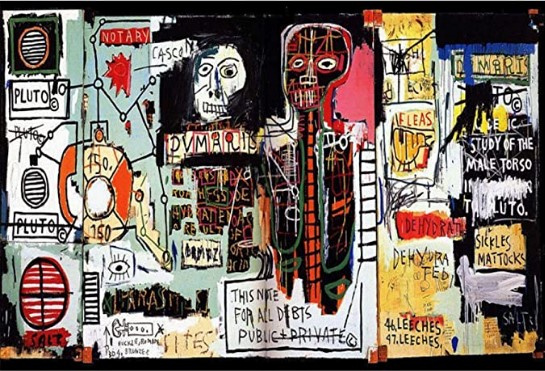

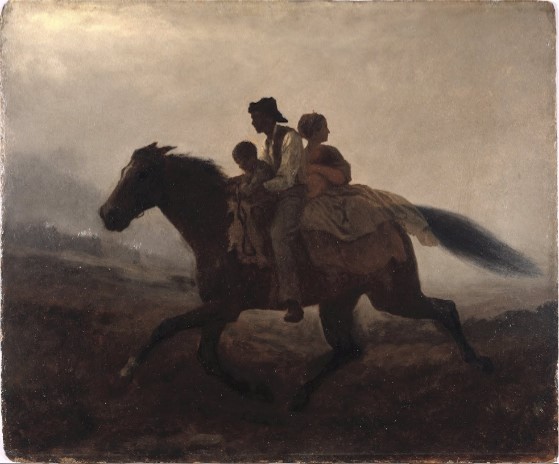



 njcssjournal