Engaging High School Students in Global Civic Education Lessons in U.S. History
The relationship between the individual and the state is present in every country, society, and civilization. Relevant questions about individual liberty, civic engagement, government authority, equality and justice, and protection are important for every demographic group in the population. In your teaching of World History, consider the examples and questions provided below that should be familiar to students in the history of the United States with application to the experiences of others around the world.
These civic activities are designed to present civics in a global context as civic education happens in every country. The design is flexible regarding using one of the activities, allowing students to explore multiple activities in groups, and as a lesson for a substitute teacher. The lessons are free, although a donation to the New Jersey Council for the Social Studies is greatly appreciated. www.njcss.org
Era 16 Contemporary United States: Interconnected Global Society (1970–Today)
We are in the second quarter of the 21st century. Critical issues for governments center around fairness of elections, gender issues, food stability, artificial intelligence and intellectual property, and trade. The importance of collective security through alliances and the ability of international organizations like the World Bank and International Monetary Fund depend on leaders in countries supporting them and following their decisions.
Activity #1: Voting Rights and LGBTQ Individuals: Nigeria and the United States
Nigeria
Nigeria is the largest country in Africa with a population of 240 million. Its population growth rate is almost 3% with a projected population of 350 million by 2050. More than half of the population lives is cities. Nigeria has a diverse population with about 55% confessing Islam and 45% Christian beliefs.
The Nigerian Constitution Amendment Act of 1954 eliminated gender restrictions on voting and allowed men and women to engage in the political process equally. Unfortunately, the patriarchal culture that existed before Nigeria became independent and the influence of Muslim beliefs on the role of women are two factors restricting the civic engagement of many women.
In 2022, the Nigerian Congress passed legislation making voting in state and national elections mandatory for all Nigerians eligible to vote. Voter apathy is a problem and coercion is the strategy by the current government to address this issue. In 2023, only 27% of registered voters participated in the national election. President Tinubu signed the Electoral Act of 2026, which fines and arrests citizens who do not exercise their right to vote.
The Electoral Act 2026:
Formalizes the use of the Bimodal Voter Accreditation System (BVAS) as the sole mandatory method for voter accreditation, officially replacing older technologies.
Streamlines election administration by adjusting the “Notice of Election” window to 180 days and requiring the submission of candidate lists 90 days before a general election.
Increases the fine for the illegal buying or selling of Permanent Voter Cards (PVCs) to ₦5 million, maintaining a strict two-year imprisonment term for offenders.
Grants the Independent National Electoral Commission (INEC) the authority to prescribe the specific manner for the transfer of results and accreditation data, ensuring operational flexibility in areas with varying infrastructure.
President Tinubu stated. “We are ensuring that the voice of every Nigerian is not only heard but accurately recorded and protected by the law.” The 2026 Electoral Act is based on the premise that a high voter participation rate reduces election fraud. Singapore, Australia, Argentina, and Brazil also require mandatory voting and voter participation is 80% or higher. These countries also have secure, trusted, and efficient systems in place.
Although the Act provides for transparency through digital reporting of election results, the Act includes a provision for the manual submission of election results in areas where the technology is not available or reliable. The 2026 Act also maintains the Permanent Voter Card (PVC) as the mandatory identification for voting. The Constitution (Section 40) states that the right not to participate in voting is as important as the right to vote.
However, not everyone agrees with this position because it may increase voter apathy. Voting must be a choice freely made, not forced by threat of jail. The law is also viewed as unconstitutional because Chapter 4: Section 40 provides for the right not to participate in elections. The new law does not address the problems of insecurity and lack of credibility in political leadership, and buying votes.
LGBTQ+
Nigeria is a conservative country with a history that has made homosexuality and lesbianism illegal. The Islamic and Christian religious beliefs in Nigeria oppose homosexuality and lesbianism. It is estimated that there are 15-20 million Individuals who identify as LGBTQ+ and are subject to arrest, which is often accompanied by police violence and brutality. LGBTQ+ individuals are victims of assault, mob attacks, harassment, extortion, and the denial of basic rights and services. As a result they are living in hiding.
In 2024, President Tinubo approved an order preventing LGBTQ+ individuals from serving in the armed forces. In 2014, the Same Sex Marriage (Prohibition) Act 2013 (SSMPA) came into force. The Act includes criminal penalties for same sex marriages or civil unions; solemnizing a same-sex marriage or union; “gay clubs, societies or organizations”; and same sex amorous relationships in public. Sharia law in the 12 northern States criminalizes same-sex intimacy between both men and women, as well as cross-dressing. These recent actions mark an aggressive effort by the government against LGBTQ+ individuals.
United States
The United States amended its constitution four times (Amendments #15, 19, 24, and 26) to increase voter participation and establish a fair and efficient process for elections. The Constitution delegates elections to its 50 states, with the exception of the date in November for the national election of president every four years. The United States has a long history of expanding voter registration, participation in elections, and encouraging civic engagement. Although voter participation is around 50% in general elections, the participation rate to elect the president every four years is about 70%.
In 2013, the 5-4 decision in Shelby County v. Holder, marked a turning point in the election laws in the United States. The decision was that states and localities with a history of suppressing voting rights no longer were required to submit changes in their election laws to the U.S. Justice Department for review. As a result. Texas, Mississippi, Alabama, and Virginia passed legislation requiring voter identification to vote.
Although the United States is viewed as a country with fair elections, the incumbent administration of President Trump claims it is not fair, influenced by foreign governments, and to rewrite election rules. Some states have attempted to change their congressional districts to favor one party over another. This process is called gerrymandering and takes place every ten years based on the data provided by the U.S. Census Bureau.
The major changes currently being attempted in the United States include:
rewriting election rules to control election systems;
threatening to target election officials who keep elections free and fair;
supporting people in the states who question the current election administration;
retreating from the federal government’s role of protecting voters and assuring fair elections.
LGBTQ+
The U.S. Supreme Court extended LGBTQ+ rights after the Stonewall riot in 1967. However, in 1996, Congress passed the Defense of Marriage Act banning federal recognition of same-sex marriage by defining marriage as the union of one man and one woman. It also allowed states to refuse to recognize a same-sex marriage granted by another state. In 2022, the Defense of Marriage Act was repealed by the passage of the Respect for Marriage Act which recognizes the validity of same-sex and interracial civil marriages in the United States. The Respect for Marriage Act received support following the 2015 Obergefell v. Hodges 5-4 decision which stated that the Fourteenth Amendment’s Equal Protection Clause requires states to license and recognize marriage between two people of the same sex.
Questions:
How can governments increase voter participation and civic engagement?
Do the attempts in Nigeria to require eligible voters to vote support or hinder democracy and civic participation?
Should the Electoral Reform Act of 2022 and the Amendment (2026) be viewed as supporting democracy or limiting democracy?
Does Voter Identification requirements enure fairness in elections or suppress voter participation?
In 2001, the U.S. Supreme Court’s controversial 5-4 decision in Bush v. Gore established a precedent for determining the outcome of a close election (271 – 266). If a future election is questioned in the United States, how should the outcome be decided?
In the United States, should the federal government or the states have the authority to license and recognize marriages?
Do individuals in Nigeria, who identify as LGBTQ+, have any protections from physical abuse by the government? Where would they begin?
Activity #2: Copyright Protection: Kenya and the United States
Kenya
Kenya updated the Copyright Act of 2001 in 2020 and amended it in 2022 and 2026 because of the unique challenges in the arts and creative markets. Kenya realized the potential of the creative arts industry in their economy. The amendments offer protected rights to authors for 50 years after their death and 50 years after the work was first created.
The primary purpose of copyright protection is to safeguard the rights of authors and creators. Kenya’s laws encourage new artistic and intellectual content. The Copyright Act also defines how the works are reproduced, distributed, and publicly displayed. The fair use doctrine allows for limited usage of copyrighted materials for criticism, news reporting, education, and research. A unique provision in the Act provides for moral rights protecting the creator’s identity.
You may want to read the court case of Kimani v Safaricom Limited regarding use of intellectual property from other parties.
United States
The U.S. Constitution provides for copyright protection in Article I, Section 8, Clause 8. The United States update the Copyright Act of 1976 in 2025 with provisions for intellectual property, and semiconductor chips. The United States issues licenses for creative, artistic, and technology authors. The United States protects the rights of authors for 70 years.
One of the core functions of copyright law is to grant exclusive rights to creators, allowing them to control how their works are used, reproduced, distributed, and displayed. These exclusive rights include the right to reproduce the work, prepare derivative works from another source, distribute copies, and perform or display the work publicly. Copyright laws provide financial incentives and protect the integrity of creative and artistic works from duplication, alteration, or diminishing the creator’s reputation.
Copyright protection supports cultural, educational, and technological advancement by encouraging authors to write books, musicians to compose songs, films to be produced, and developers to create software. This cycle of creation and protection benefits society as a whole, enriching public knowledge and entertainment while fostering economic growth in creative industries. These laws must also protect the public interest to use the content in these protected products for education and research. You may want to read the court case decision regarding the use of the Happy Birthday song.
Questions:
Should artists receive royalties when their music is played on the radio or only on subscription based platforms?
What is a reasonable number of years for copyright protection?
Should information and content generated by artificial intelligence and not a human be protected by copyright laws?
How should the public interest of content protected by copyright laws be defined? For example, should a child be able to play a popular song in their home without paying a royalty and should a student or teacher be allowed to download an image or select a paragraph from a published book for free?
What should educators teach about copyright laws and citing sources and in what grade should these be taught?
Activity #3: The Nile River and the Environment: Ethiopia and Egypt
Egypt
In September 2025, Ethiopia began diverting water from the Nile River with the operation of the Grand Ethiopian Renaissance Dam. (GERD) The Nile River is the longest river in the world (although some claim the Amazon River is the longest) and is a vital resource for millions of people in Sudan and Egypt who depend on it for potable water, agriculture, fishing, navigation, and tourism. Ethiopia built the dam as a vital source of energy, flood control, and to support the economic development of the region.
Egypt claims the dam violates international law governing international waterways and is a violation of the human rights of its people. Studies provide evidence that any significant decrease in Egypt’s share of the Nile River water will lead to a decline in food production and increase poverty. However, these violations were also used to criticize the Awan Dam built on the Nile River in 1970. The Aswan Dam has prevented serious flooding, provided economic growth, and is a vital source of clean energy. The Grand Ethiopian Renaissance Dam is more than doubles the hydroelectric power of the Aswan Dam.
Aswan Dam
Ethiopia
The Grand Ethiopian Renaissance Dam is the largest hydropower project in Africa. The Grand Ethiopian Renaissance Dam project has generated significant occupational and social impact as it was financed and built by the people of Ethiopia. The plant also ensures a reduction of 1.3 million tons of carbon emissions per year. The complex includes three housing developments for 10,000 people, three medical centres and schools, food stores, recreational areas, a club, a swimming pool, and sports fields.
The dam produces more electricity than Ethiopia needs providing for the possibility of exporting clean energy to Djibouti and Kenya. It was constructed with the expectation that this will enable economic growth in Ethiopia for manufacturing, technology, and food production.
Questions:
Does a country have the right to make a unilateral decision that affects international waters?
Are the economic and environmental benefits of clean energy greater than the disadvantages of water flowing to neighboring countries?
The Nile River is known for transporting sediment in its journey of approximately 3,000 miles. Will this sediment prove harmful to the Greater Ethiopian Renaissance Dam over time?
Does Ethiopia have a promising or a disappointing future? What is your prediction for Ethiopia in 2050?
Activity #4: Trade: European Union and the United States
The economies of the European Union and the United States are fairly similar in size. Between 1950 and 2025, the countries of the Europe were major trading partners with the United States. Beginning in 2025, this relationship changed as the United States levied tariffs on many products exported to the United States.
The EU is the largest economy in the world with a GDP per head of €25,000 for its 440 million consumers and the volume of trade represents 29% of global trade. It is the world’s largest producer of both manufactured goods and services. They are the top trading partner for 80 countries and the United States is the top trading partner for about 20 countries. The 27 countries in the European Union had a trade surplus of $272 billion (USD) in 2024. The major exports are machinery, computers, vehicles, pharmaceuticals, plastics, optical equipment, organic chemicals, and iron, steel. The major imports are vehicles and oil.
United States
Mexico and Canada are the largest trading partners for the United States representing 30% of trade. China, Germany and Japan account for 20%. The United States has a trade deficit with all of its top 15 trading partners with the exception of a surplus with the United Kingdom and Netherlands. In 2025, the annual trade deficit of the United States was $901.5 billon.
A trade deficit is often misleading and students need to analyze it from different perspectives. First, the Current Account represents the net value of trade and the Capital Account represents the value of assets, including property, investments, and foreign aid. Together, these two accounts are called the balance of payments. The current account is always offset by the capital or financial account so that the sum of these accounts – the balance of payments – is zero. When the balance of one account is in surplus (i.e. has a positive value, representing a credit), the balance of the other account must be in a deficit (i.e. has a negative value, representing a debit). The Current Account and the Capital Account are different from the national debt of $39 trillion or annual deficit of $1.8 trillion for the United States. The national debt and annual deficit directly affect the credit rating of a country and the value of its currency.
Questions:
Why does one country purchase goods or services from another country when the result is a trade deficit?
President Trump has issued tariffs against countries that the United Staes has a trade deficit with. How does this affect trade and the Current Account in the future?
Will the new trade strategy of using tariffs and incentives for companies to manufacture in the United States lead to more economic growth and employment or higher prices and a recession?
How serious is a trade deficit for a country? As an advisor to the President of the United States would you favor a strong or weak currency?
How did the European Union become the world’s largest economy?
Are there lessons for the United States to consider regarding a North American Union or a Western Hemisphere Union of free trade?
Engaging High School Students in Global Civic Education Lessons in U.S. History
The relationship between the individual and the state is present in every country, society, and civilization. Relevant questions about individual liberty, civic engagement, government authority, equality and justice, and protection are important for every demographic group in the population. In your teaching of World History, consider the examples and questions provided below that should be familiar to students in the history of the United States with application to the experiences of others around the world.
These civic activities are designed to present civics in a global context as civic education happens in every country. The design is flexible regarding using one of the activities, allowing students to explore multiple activities in groups, and as a lesson for a substitute teacher. The lessons are free, although a donation to the New Jersey Council for the Social Studies is greatly appreciated. www.njcss.org
Era 15 Contemporary United States: International Policies (1970–Today)
The middle of the 20th century marks the foundation of the transformation of the United States into a world power. In this era the United States developed alliances, promoted free trade agreements, advocated for human rights, and assisted developing countries. Toward the end of the century, the United States was a target of terrorist organizations, had and increasing national debt, and saw its power as a world leader challenged by China and Russia. As the United States entered the 21st century, its role as a leader in the international community was questioned by the Republican Party,
Activity #1: Department of Homeland Security in the United Kingdom and the United States
In 2026, the Domesday Clock was set at 85 seconds to midnight, the end of the civilized world as we know it.The primary reasons for this are the threats of a nuclear arms race, climate change, and bioterrorism.As a result, every major country is re-evaluating its national security plans at the domestic and international level.
“Doomsday Clock on Jan. 27, 2026.Reuters/Kevin Fogarty
United States
In your United States History classes, you have likely discussed national security strategies since the end of World War II in 1945. These include containment, brinkmanship NSC-68, co-existence, Mutually Assured Destruction collective security, human rights, and the United States as the world’s policeman. Each of these policies have been rigorously debated within the government and in public opinion. The debate is often framed in the context of isolationism (U.S. has the military strength to protect itself) and internationalism (U.S. needs the support of alliances and international organizations). The central part of America’s new strategy is our economic strength. The 2025 National Security Strategy rightly asserts that “strength is the best deterrent,” and elevates economic vitality as central to that strength.
The policy announced by the Trump administration in December 2025 diminishes the threat of Russia and China as a top priority. “Mass migration” is deemed to be the major external threat to the United States—more than China, Russia, or terrorism. The document makes clear that the divide is political between transatlantic liberals and authoritarians.
The Western Hemisphere is the new priority and immigration is elevated to a major national security concern. The U.S. military will focus on the Western Hemisphere. The rules of international law are considered less important than the interests of peace, diplomacy, or human rights. Cybersecurity is considered a major threat and the strategy of the United States will become dependent on the private sector.
It is difficult to identify an exact amount for spending by Homeland Security in the United States because of the increased emphasis on immigration. We will use the number of $332 billion or 2.9% of GDP as a comparison to the 2.5% spent by the United Kingdom.
United Kingdom
The population of the United Kingdom is about 70 million. In addition, the United Kingdom also includes territories around the globe. National security threats include terrorism, organized immigration crime, cybersecurity, bioterrorism, exposure to nuclear radiation, and effects from climate change. The United Kingdom in 2025 announced a new long-range security strategy for homeland security at a cost of 2.5% of GDP or about 62 billion euros annually.
The strategy involves a network of alliances to address these threats. The recent announcement by the United States to acquire Greenland by purchase or military action has caused the United Kingdom and other NATO countries to increase financial investments in military equipment, NATO, and other regional alliances. The Calais Group is committed to preventing organized immigration crime, the Joint Migration Taskforce addresses human trafficking, and the Border Security Pact targets smuggling. Homeland security for the United Kingdom also includes agreements promoting economic and financial stability regarding technology, energy, access to minerals, and renewable energy. Russia, China, North Korea, and Iraq are viewed as the biggest threats to homeland security.
The priorities for Homeland Security in the United Kingdom include the following:
Identify and prevent terrorist actors and criminal gangs from entering.
Increased investment in armed forces.
Strengthen existing alliances (NATO, AUKUS, and GCAP) and form new ones.
Pursue deeper trade, technology, and security agreements with the United States, European Union, and India.
Protect its underwater fiber optic network and natural gas pipelines.
The UK has created a new Border Security Command to secure its borders.
Questions:
What are the advantages and disadvantages of the new national security strategies by the United States and the United Kingdom?
How dependent is each country on economic growth to support its strategy?
How significant are the lessons of history regarding national security based on internationalism through alliances and isolationism through dependence on geography and military strength?
Is one strategy better poised for success than the other or are both strategies poised for disappointment or failure?
Activity #2: Foreign Aid in Africa: Japan and Norway
Japan
Japan provides significant economic aid to Africa. In 2018, Japan gave $8.6 billion and is currently giving $20 billion. Japan’s foreign aid budget is equal to 0.44% of its gross national income, which is almost double the 0.24% from the United States.
The Japanese government values its relationship with Africa. It understands the importance of rare earth minerals, specifically lithium, nickel, and cobalt. In August 2023 Japan signed contracts with Namibia, Angola, and the Democratic Republic of the Congo (DRC) to secure minerals. The 54 African countries account for more than a quarter of the 193 members in the United Nations. Japan’s foreign policy values free and open markets based on the rule of law, which is viewed as a deterrent to the coercion used by China in Africa.
Norway
Norway’s oil reserves enabled it to maintain financial assets in its Wealth Management Fund. The fund is valued at $1.8 trillion (USD) Norway contributes 3.1 billion krone to the African Development Fund. There are about 30 Western and non-Western countries contributing to this fund annually, including some countries in Africa. Norway places a high priority on providing Africa’s 300 million people with access to electricity, potable water, and food,. In addition, Norway is actively providing financial resources for sustainable living, women’s rights, education, and human rights.
On a per capita basis, Norwegians contribute $1,160, and Japan contributes $155. The United States was contributing $190 per person before its recent withdrawal of funds in 2025.
Norway’s foreign policy includes the following:
Multilateral and regional cooperation: Strengthen cooperation in multilateral forums, enhance African representation, and continue close collaboration with the AU (African Union);
Security and peace efforts: Support African-led peace initiatives, integrate gender perspectives in decision-making, and bolster cooperation with the AU and UN on security;
Democracy, human rights, and gender equality: Promote democracy, human rights, and gender equality through civil society engagement, justice reform, and educational access;
Business, clean energy, and knowledge: Boost economic cooperation, promote Norwegian solutions, and support renewable energy development in African markets; and
Climate, environment, food security, and health: Collaborate on climate action, sustainable food systems, and resilient health systems to address environmental and health challenges.
Questions:
How significant are the foreign policy differences of investment in Africa between Japan, and Norway?
How are the foreign policy initiatives of China, Russia, and the United States influencing the foreign policy of Japan?
Why do you think the people of Japan are supporting additional investment in Africa compared to reducing tariffs or improving the quality of life for the people of Japan?
Which foreign policy strategy is aligned with your values?
In 2000, the United Nations adopted ambitious Millennial Development Goals which were on target until the global financial crisis of 2008. Is it possible in today’s political and economic environment to return to them and improve the quality of life for people in the global South?
Activity #3: Separation of Powers: North Korea and the United States
North Korea
Authoritarian governments also have constitutions. Dictatorships may divide power between the supreme ruler, political party, army, or another group. Democracies may divide power between legislative and judicial branches with the chief executive. The people and media may also have power in a society. A constitution reflects the values of the State and is still one of the best ways to understand how it manages problems and provides for its citizens.
The KPG (Korean Provisional Government) was organized in 1919 and was a government in exile as a result of Japan’s imperialism.It ended on August 15, 1945 with the surrender of Japan and the Republic of Korea became the new government. A new constitution was ratified on August 15, 1948 and Syngman Rhee was elected as President.After the occupation of Korea during World War II ended, Korea adopted a constitution in 1948. Power was given to the SPA (Supreme People’s Assembly) This Assembly was given the authority to enact basic domestic and foreign policies; create a Presidium to operate on its behalf when the Assembly was not in session; approve laws; revise and amend the Constitution; approve the budget; elect or recall a Prime Minister; and appoint officials such as the Chief Justice of the Supreme Court.
The 1972 Constitution stated that the Democratic People’s Republic of Korea (DPRK) was an independent socialist state representing all the Korean people. The constitution is based on democratic centralism, which states that citizens must obey all the decisions of their elected leaders. There is no system of checks and balances, only submission and loyalty. The Constitution of North Korea gives absolute power to the Workers’ Party. It follows the ‘juche’ ideology of self-reliance and is above the law. It fosters Korean nationalism and requires absolute loyalty to the ruler, currently Kim Jong Il. The Constitution values the superiority of the State over its citizens. In theory, the cabinet, military, and party check each other, although the loyalty of the military to Kim Jong Il has ended this system of checks and balances. These three groups could conceivably fight one another in a civil war for control or support each other, which they currently are doing.
United States
The Constitution of the Republic of Korea (South Korea) has been amended nine times since 1948 and reflects six republics which reflect political changes. The Constitution of The Democratic People’s Republic of Korea (North Korea) was completely replaced in 1972 and this constitution has had significant amendments. In contrast, the Constitution of the United States has made changes through 27 amendments and judicial decisions by the Supreme Court. The Constitution of the United States was meant to be flexible.
The powers of government in the United States are also divided between the states and the federal government and between the three branches of the federal government. The framework of the constitution specifically limits the power of the national government and allows the three branches of government to ‘check and balance’ the power of the legislative, executive, and judicial branches.
The principle of popular sovereignty gives power to the people to make changes to their government every two years through the election of their representatives to Congress and the election of one-third of their senators. Currently, the United States has a two-party system with the Republican Party and democratic Party as the two major political parties, Although inn theory, the individual members in each party have independence and vote on the interests of the people they represent; in practice they form caucuses or alliances supporting an ideology or regional interest. Currently, the members of the Republican Party are demonstrating loyalty to the agenda of President Trump and the members of the Democratic Party have caucuses representing different views on immigration, the economy, health care, and the role of the federal government.
Questions:
How important is the role of the political party to the stability of the government?
Are there inherent weaknesses in the Constitution of The Republic of Korea (South Korea) and the Democratic People’s Republic of Korea (North Korea)?
How important is a strong executive to a stable government?
How has President Trump increased the authority of the executive Branch more than previous presidents? (party loyalty, the media, support from the Supreme Court, etc.)
Activity #4: The Executive Branch: St. Kitts and Nevis and the United States
United States
The United States is the largest country in the Americas with a population of 340 million. It has the largest military and economy in the world. The U.S. GDP is approximately 32 trillion followed by China at 21 billion USD. The power of the Executive Branch is vested in the President of the United States, who is the head of state and Commander-in-Chief of the armed forces. The President is responsible for implementing and enforcing the laws written by Congress.
The President must be 35 years of age, a natural born citizen, and must have lived in the United States for at least 14 years. The people elect the president every four years by voting for members in their state who are part of the Electoral College. The Electors vote for President. There are currently 538 electors in the Electoral College representing the 435 members of the House of Representatives, the 100 senators, and the three representatives of the District of Columbia (Washington, D.C.).
The Cabinet and independent federal agencies are responsible for the enforcement and administration of federal laws. Examples are the Department of Defense, Environmental Protection Agency, Homeland Security, and Social Security Administration.
The President has the power either to sign legislation into law or veto bills passed by Congress, although Congress may override a veto with a two-thirds vote of both houses. The Executive Branch
conducts diplomacy with other nations,
negotiates and signs treaties, which must be ratified by two-thirds of the Senate,
issues executive orders, which may clarify and implement existing laws,
extend pardons for federal crimes, and
gives an annual address to Congress outlining the agenda for the coming year.
The president is subject to impeachment for treason, bribery, or high crimes and misdemeanors or smaller crimes. The process to remove a president from office requires a two-thirds vote of the Senate. No American president has been removed from office through the impeachment process, although three presidents have been impeached.
St. Kitts and Nevis
The islands of Saint Kitts and Nevis were created as a federation in 1983 after centuries of British colonial rule. They have the smallest population in the Americas with 46,000, with 11,000 on the island of Nevis and 35,000 on St. Kitts. The population is expected to decline by 20% over the next decade. Nevis has its own assembly, an elected premier and a deputy-governor-general. Tourism, finance, and service sector businesses are the main sources of income. In 1998, Nevis voted to secede but the resolution did to receive the required 2/3 majority vote of the people.
The Government of St. Kitts and Nevis is a parliamentary democracy within the framework of a constitutional monarchy with King Charles III (United Kingdom) as the head of state. The Governor-General represents the monarch, and the Prime Minister is the head of government and leader of the majority party in the National Assembly. The Cabinet is appointed by the Governor-General on the advice of the Prime Minister.
The National Assembly is unicameral, consisting of 15 members: 11 elected representatives, 3 senators appointed by the Governor-General, and the Attorney General. Elections are held every five years. The judiciary is independent and based on the British legal system and uses the Eastern Caribbean Supreme Court, which serves several islands in the region.
Monarch of the United Kingdom acts as a ceremonial figurehead, governor-general represents the king, and prime minister provides advice for the governor-general and leads the cabinet of ministers.
Governor-general is appointed by the monarch and prime minister is appointed by the governor-general.
Governor-General and Prime Minister: At His Majesty’s discretion
Judicial
Eastern Caribbean Supreme Court presides over multiple countries, one justice resides in St. Kitts.
Appointed by British monarch and the Judicial and Legal Services Commission.
Mandatory retirement age of 65
Legislative
Responsible for drafting legislation.
National Assembly has 11 members elected by plurality vote in single-member constituencies and 3 members are appointed by the governor-general.
5 years
Questions:
What are the advantages and disadvantages of a constitutional monarchy, federal parliamentary democracy, and a representative democracy?
Is a government of three branches an effective and efficient structure of government for the 21st century?
Is one government structure better for countries with smaller populations of under 100 million than countries with larger populations? (Only 16 countries have populations larger than 100 million. The ten largest countries are: India, China, U.S. Indonesia, Pakistan, Nigeria, Brazil, Bangladesh, Russia, and Mexico)
How frequently and for how many years should the President, Prime Minister or Governor serve?
Should the President of the United States be given any additional powers?
As Social Studies educators, we often look for resources that inspire students. When we find a resource that sheds light on a previously “unknown” event, particularly one told from multiple perspectives, it is like striking gold. The documentary “Ain’t No Back to a Merry Go Round” is precisely that resource. Created by award-winning director and masterful story teller Ilana Trachtman, this meticulously-researched film weaves together primary and secondary source footage from the struggle to integrate the Glen Echo Amusement Park in 1960 in Maryland.
Most people who visit Glen Echo Park today know it as a cultural center with an emphasis on art classes, concerts, dance lessons, galleries, and a place for special events. Few know that the history of this park includes lessons from the early Civil Rights Movement that teach about youth activism, community organizing and allyship, standing up for basic dignity, unity, and perseverance. Teachers can use excerpts or the entire film in a multitude of ways:
to enhance a unit on the Civil Rights Movement,
to demonstrate the power of ordinary individuals to make a difference in their local community,
to foster empathy, and
the importance of collaboration.
“Ain’t No Back. . .” uniquely shines a light on those who have been forgotten by history.
“Most of the people who made history are invisible. They don’t exist. The real story is that all these people are important because had they not been there, no change would have been made. No change would have been made.” -Courtland Cox, student activist and Chairman of the SNCC Legacy Project
The Story
Focusing on six individuals — from Howard University students to primarily Jewish and Quaker neighbors from nearby communities — the film quickly engages viewers by delving into their experiences, motivations and struggles. Alternating between current day interviews and news footage from the time, viewers are transported directly to the daily boycott of Glen Echo which lasted for months, as well as behind the scenes showing how the protestors organized,interacted, and forged friendships. Most of the activists had never socialized with members of a different race before this pivotal moment. It also focuses on the impact on the activists in the short and long term, the sacrifices they made in their personal relationships by dedicating themselves to the cause even beyond Glen Echo in subsequent protests.
The themes presented are broad enough that they can blend easily into Social Studies, History and English classes at both the middle and high school level. I strongly recommend previewing the entire film at least once in order to gain a better understanding of the full picture and to determine how to best integrate it into your teaching. You know your students best, as well as ways to connect the many relevant lessons of the film to your curriculum. You will become engrossed in the story of the main characters, their struggle against injustice, and how the different generations of activists bonded together over a common cause.
The collaboration between key student leaders such as Dion Diamond, Hank Thomas and current Congresswoman Eleanor Holmes (Norton) with suburban neighbors such as Helene Wilson, Esther Delaplaine and Loren Weinberg provides crucial lessons in allyship and community organizing. Echoes of World War II, the Holocaust and the Nazi party are integral in motivating many of the white protestors to dedicate themselves to fight for a greater cause, and are also seen in the counter-protests by the American Neo-Nazi party. While their signs contain offensive language, it is important for students to see how the history unfolded, and the examples of negative words and images which still rear their ugly heads today. You, of course, are the best judge of what is right for your students, but there are many helpful suggestions in the teacher’s guide on how to introduce this part.
Educator’s Guide
The Teacher’s Guide is filled with ideas for lessons of varying lengths as well as opportunities for extension, including thought provoking and relevant guiding questions for discussion and reflection throughout. I had the privilege of reviewing this expert guide after it was created. A sampling of the questions include:
Why is student leadership so critical in movements for change?
What personal qualities help someone take bold but peaceful action?
What does it take to stand tall in the face of hate?
What does protest “courage” really look like?
How do movements today make sure their message is heard?
What role does the media play in shaping public understanding of protest movements? How has the role of media changed?
In addition to ways to engage with the content, there are also numerous instructional strategies such as: media literacy by comparing tactics used then and now, analyzing the use of art such as poetry, summarizing skills and creative thinking, plus a very extensive glossary identifying key people, places, and terms connected to this story and the entire Civil Rights Movement. Each module contains well-organized teacher support materials and lesson sequencing filled with essential questions, learning standards, objectives, primary source quotes and images, bios of critical activists, activities for engagement, assessment and much more.
Both the film and teacher’s guide are clearly organized into chapters that allow for easy accessibility. Some segments include:
the Student Activists
the White Neighbors
the Black Neighbors
the Impact
Such organization allows teachers to choose how to best implement the strategies in the guide. as well as ways to use the excerpts or entire documentary to deepen understanding of what it took for ordinary individuals to commit to this struggle. It also brings to light a pivotal event of the Civil Rights Movement that had been almost forgotten by history. The struggle for the integration of Glen Echo Amusement Park can be used in conjunction with lessons on nonviolent resistance, such as the Nashville Lunch Counter Sit-ins, or as a springboard for further research into other lesser known protests against segregation in public spaces.
The guide also contains a very helpful section on “Navigating Racial Slurs and Sensitive Topics”, a letter to parents/guardians and sample permission slip before embarking on this unit of study, and tips for establishing norms for creating a safe space when delving into such a difficult and emotional topic.
In my nearly thirty years of teaching middle school Social Studies, I have rarely found a guide as thorough and adaptable as this one. I cannot recommend this documentary, and the extremely thorough teacher’s guide, enough to both new and veteran teachers. You and your students will be impacted by this story for many years to come.
Engaging High School Students in Global Civic Education Lessons in U.S. History
The relationship between the individual and the state is present in every country, society, and civilization. Relevant questions about individual liberty, civic engagement, government authority, equality and justice, and protection are important for every demographic group in the population. In your teaching of World History, consider the examples and questions provided below that should be familiar to students in the history of the United States with application to the experiences of others around the world.
These civic activities are designed to present civics in a global context as civic education happens in every country. The design is flexible regarding using one of the activities, allowing students to explore multiple activities in groups, and as a lesson for a substitute teacher. The lessons are free, although a donation to the New Jersey Council for the Social Studies is greatly appreciated. www.njcss.org
Era 14 Contemporary United States: Domestic Policies (1970–Today)
During the last quarter of the 20th century and the first quarter of the 21st century, the United States and the world experienced rapid changes in the environment, technology, human rights, and world governments. During this period there were three economic crises, a global pandemic, migrations of populations, and a global pandemic. There were also opportunities in health care, biotechnology, and sustainable sources of energy. The debate over individual freedoms, human rights, guns, voting, affordability, and poverty were present in many countries, including the United States.
Activity #1: Miranda in some countries accused must prove they are innocent
As the United States became more diverse and inclusive after the 1965 Immigration and Nationality Act, our population became divided on the assimilation of immigrants and restricting the number entering the United States. The civil liberties in our constitution become challenged as people wanted “law and order.” One civil liberty that has weakened over time is the “Miranda Warning” from the U.S. Supreme Court decision in Miranda v. Arizona, (1966).
“Ernesto Miranda was convicted on charges of kidnapping and rape. He was identified in a police lineup and questioned by the police. He confessed and then signed a written statement without first having been told that he had the right to have a lawyer present to advise him (under the Sixth Amendment) or that he had a right to remain silent (under the Fifth Amendment). Miranda’s confession was later used against him at his trial and a conviction was obtained. When Miranda’s case came before the United States Supreme Court and the Court ruled that, “detained criminal suspects, prior to police questioning, must be informed of their constitutional right against self-incrimination and the right to an attorney.” The court explained, “a defendant’s statement to authorities are inadmissible in court unless the defendant has been informed of their right to have an attorney present during questioning and an understanding that anything, they say will be held against them.” The court reasoned that these procedural safeguards were required under the United States Constitution.”
Miranda rights typically do not apply to individuals stopped for traffic violations until the individual is taken into custody. There are four rights that are usually read to someone about to be interrogated or detained against their will.
The Right to Remain Silent: You are not obligated to answer any questions from law enforcement.
Anything You Say Can Be Used Against You: Statements you make during questioning can be presented as evidence in court.
The Right to an Attorney: You have the right to consult with a lawyer before answering questions and to have one present during interrogation.
If You Can’t Afford a Lawyer, One Will Be Provided: This guarantees access to legal counsel, regardless of your financial situation.
This basic civil liberty has weakened over time giving more power to the police (government). This power has resulted in forced confessions, false statements by the police, accusations of resisting arrest by not providing the police with basic information, and delaying the reading of the Miranda Warning. In Vega v. Tekoh (2022), the U.S. Supreme Court held, Miranda warnings are not rights but rather judicially crafted rules, significantly weakening this civil liberty as a constitutional protection.
Japan’s Criminal Justice System
Unlike in the United states, in Japan, individuals are presumed guilty. There is no right to remain silent or the offer of a lawyer. Many people, including juveniles, may be detained for months as the authorities try to obtain a signed confession. Most people are unaware of these practices because of Japan’s reputation as a democracy and their international human rights record.
“Tomo A., arrested in August 2017 for allegedly killing his six-week-old child by shaking. He spent nine months in detention awaiting trial, and during that time, prosecutors told him that either he or his wife must have killed their baby and his wife would be prosecuted if he did not confess. He was acquitted in November 2018.”
Bail is not an option during the pre-indictment period and it is frequently denied after a person is indicted of a crime. Bail, when granted, is limited to a maximum of 10 days with an appeal for an additional extension of up to 23 days. Individuals who are released, are watched closely and new arrests are fairly common.
“Yusuke Doi, a musician, was held for 10 months without bail after being arrested on suspicion of stealing 10,000 yen (US$90) from a convenience store. His application for bail was denied nine times. Even though he was ultimately acquitted, a contract that Doi had signed with a record company prior to his arrest to produce an album was cancelled, resulting in financial loss and setting back his career.”
Police often use intimidation, threats, verbal abuse, and sleep deprivation to get someone to confess or provide information. The Japanese Constitution states that “no person shall be compelled to testify against himself” and a “confession made under compulsion, torture or threat, or after prolonged arrest or detention shall not be admitted in evidence.”
The accused are not allowed to meet, call, or even exchange letters with anyone else, including family members. Many individuals interviewed by Human Rights Watch cited this ban on communications as a cause of significant anxiety while in detention.
In 2015, Kayo N. was arrested for conspiracy to commit fraud. Kayo N. said that she worked as a secretary at a company from February 2008 to October 2011. In December 2008, the company president asked her to become the interim president of another company owned by her boss while a replacement was sought. She said that she was unaware that the company only existed on paper and that her boss had previously been blacklisted from obtaining loans. After her arrest and detention, the judge issued a contact prohibition order on the grounds that she might conspire to destroy evidence. Kayo N. was not allowed to see anyone but her lawyer for one year, could not receive letters, and could only write to her two adult sons with the permission of the presiding judge.
She said: “After I was moved to the Tokyo detention center, I was kept in the “bird cage” [solitary confinement] from April 2016 to July 2017. It was so cold that it felt like sleeping in a field, I had frostbite. I spoke only twice during the day to call out my number. It felt like I was losing my voice. The contact prohibition order was removed one year after my arrest. However, I remained in solitary confinement.
Kayo N. said she did not know why she had been put in solitary confinement. She says that police also interrogated her sons to compel her to confess. The long trial process also exacerbated financial hardships. She was sentenced to three years’ imprisonment.”
Japan has a 99.8 percent conviction rate in cases that go to trial, according to 2021 Supreme Court statistics.
Questions:
Should the rights of an individual receive greater or lesser weight than the police powers of the state when someone is accused of a criminal offense?
How can the Miranda rights be protected and preserved in the United States or should they be interpreted and implemented at the local or state level?
How is Japan able to continue with its preference for police powers when international human rights organizations have called for reform?
In the context of detainment by federal immigration officers in the United States in 2026, do U.S. citizens (and undocumented immigrants) have any protected rights or an appeal process when detained without cause?
Activity #2: Gun laws in United States and New Zealand
United States
Since 1966, 1,728 people have been killed and 2,697 injured in mass public shootings in the United States. The definition of a mass shooting is three or more individuals being killed. (Investigative Assistance for Violent Crimes Act, 2012) The U.S. Federal Bureau of Investigation does not define a mass shooting with a specific number of deaths. Technology, especially the production of ‘ghost guns’ with 3-D printers has contributed to gun violence. Handguns are used in 73% of mass shootings and rifles, shotguns, assault weapons, and multiple weapons are also used.
Before 2008, the District of Columbia prohibited the possession of usable handguns in the home. This was challenged by Dick Heller, a special police officer in the District of Columbia who was licensed to carry a firearm while on duty. He applied to the chief of police for permission to have a firearm in his home for one year. The chief of police had the authority to grant a temporary license but denied the license to Dick Heller, who appealed the decision in a federal court.
The Second Amendment states that “A well-regulated Militia, being necessary to the security of a free State, the right of the people to keep and bear Arms, shall not be infringed.” Several state constitutions give citizens the right to bear arms in defense of themselves and outside an organized state militia. Individuals used weapons against Native Americans and enslaved individuals.
The United States has the highest number of registered guns per person in the world. Estimates range from 300 million (one per person) to over 400 million. Even with effective legislation on restricting guns, these weapons would still be availabile. Approximately 10 million firearms are produced annually.
A discussion in your classroom might focus on the debate within the state legislatures during the ratification of the Constitution regarding the use or arms for a state militia and the right of individuals to carry weapons for hunting. The Bruen decision (2022) requires that gun laws today need to be consistent with the historical understanding from when the states ratified the Bill of Rights.
1. Is this requirement possible and relevant? In 1789 people hunted for their food and today people go shopping in supermarkets. In 1789, the federal government relied on states to support an army and today we have a highly trained military.
2. Has the technology on producing guns change the right to keep and bear arms? Assault weapons and the production of ghost guns did not exist 200 years ago.
3. Should the need to restrict the right to keep and bear arms be consider as a result that the population of the United States is now over 300 million? A significant portion of the population lives in urban areas with high-rise apartment complexes. Should the history of previous centuries alongside the mass shooting events of the 21st century, be careful considered in the debate to restrict gun ownership?
New Zealand
March 15, 2019 marks one of the darkest days in New Zealand when 51 people were killed and 50 others wounded when a gunman fired at two mosques in the city of ChristChurch. This was the worst peacetime mass shooting in New Zealand’s history. Within one month New Zealand’s Parliament voted 119-1 on a nationwide ban on semi-automatic weapons and assault rifles. The gun reform law also set up a commission to establish limits on social media, accessibility to weapons, and education. In addition to the sweeping reform of gun laws, a special commission is being set up to explore broader issues around accessibility of weapons and the role of social media.
Australia also introduced a ban on automatic and semi-automatic weapons and restrictive licensing laws after a mass shooting in 1996. Some states in the United States have enacted strict laws restricting ghost guns (New Jersey, Oregon) and automatic weapons (New Jersey). However, the debate has been contentious in these states and the almost unanimous vote in New Zealand is not likely in the United States.
Questions:
How significant would restrictive legislation in the United States be in curtailing mass shootings and/or murders?
In addition to the influence of the gun lobby in the United States, what is the next most powerful influence against gun reforms in the United States?
Is it possible for states to have their own restrictive gun laws with the Bruen decision by the U.S. Supreme Court?
Why do you think restrictive gun laws were enacted in New Zealand and Australia? (absence of a constitutional protection, common national identity, religious beliefs, culture, leadership by the government, public outrage, etc.)
As a class, do you think gun reform laws in the United States are possible in the next 5-10 years?
According to the Congressional Research Service (CRS), poverty has decreased in the United States from 15% 2010 to 11.1% in 2023, and in 2025 it is estimated to be 9.2%. Poverty is measured both as the number of people below a defined income threshold of $31,200 for a family of four in 2025 (absolute poverty or below the poverty line) and as a quality of life issue for people living in a community. (relative poverty) Source
Figure 1. Official Poverty Rate and Number of Persons in Poverty: 1959 to 2023
(poverty rates in percentages, number of persons in millions; shaded bars indicate recessions)
Unfortunately, poverty rates vary by sex, gender, and race. The current ‘affordability’ crisis in the United States is an example of relative poverty with many complex factors contributing to it.
Figure 4. Official Poverty Rates by Race and Hispanic Origin: 2023
A general guideline for budgeting housing expenses (rent or mortgage) is 33% of a household income, although expenses for rent and mortgage will vary by zip code. The U.S. Census Bureau reported a per capita income of $43,289 (in 2023 dollars) for 2019-2023, while the Federal Reserve Bank reported a personal income per capita of $73,207 for 2024. Personal income is the total earnings an individual receives from wages, salaries, investments and government benefits before income taxes are deducted. For your discussion consider the following based on $73,207 for one person. A family of four income with two working adults would be $146,414.
Federal Taxes (22%) $16,104
NJ State Taxes (5%) $3,660.
Housing (33%) $24,156 ($2,000 a month)
Food (10%) $7,300 ($140 per week)
Auto Transportation (15%) $10,980
Discretionary Spending (15%) $10,980
Consider the discretionary expenses in your family for phones, cable and internet, car lease or loan payments, vacation, gifts, savings, clothing, credit card debt, education, etc.
As incomes rise people spend more money on food, but it represents a smaller share of their income. In 2023, households with the lowest incomes spent an average of $5,278 on food representing 32.6% of after-tax income. Middle income households spent an average of $8,989 representing 13.5% of after-tax income) and the highest income households spent an average of $16,996 on food representing 8.1 percent of after-tax income.
The starting salary for many individuals with a four-year college education is about $70,000. Living in New Jersey is more expensive than living in many other states but for the purpose of discussion, we will use New Jersey as our reference.
Italy
The poverty rate in Italy is 9.8%, similar to the rate in the United States. However, the poverty rate for individuals below the poverty line (income level) is 5%. Approximately half of the people in poverty are living in southern Italy. Two contributing factors are the continuing effects from the government shutdown during the Covid-19 pandemic in 2020 and an aging population. These factors are related to Italy’s high unemployment rate of 6.8% (2024), which is higher than the 4.4% in the United States, weak GDP growth of less than 1%. With a per capita income of $39,000 USD, Italy also has an affordability crisis. The per capita income in Italy is about one-half of the per capita income in the United States.
In 2017, Italy approved a program of “Inclusion Income: which has been reformed twice since its adoption. Under the current (2024) “Income Allowance” about 50% of the population receives supplemental income. This program supports economic upward mobility through education and health care. Italy has partnered with the World Bank to support this program. Another benefit of the program is that poverty is not increasing and will be significantly reduced over time.
Questions:
Is the solution for affordability a higher minimum wage, lower taxes, price controls on food and housing, a guaranteed minimum income, or something else?
Is it possible to lower the poverty rate through education and effective budgeting skills?
Where do most Americans overspend their money and how can this best be corrected?
Are transfer payments by the government (child care, Medicaid, Social Security, Unemployment Insurance, SNAP), wasteful or helpful?
As a policy maker in the federal or state government, what is the first action you would take to address the affordability problem in the United States or in your state?
How is Italy addressing the causes of poverty in addition to providing a guaranteed income to support people and families with basic needs?
How is Italy financing its program and is it cost effective?
Are tax cuts or tax credits an effective policy to assist people facing affordability issues?
Activity #4: Voter Participation in USA and Greece
United States
Voter participation is based on many factors and the structure for electing representatives to Congress is complex and is related to the selection of electors in each state who vote for the president and vice-president every four years. In the first 25 years of the 21st century, voting has changed significantly in the United States regarding the way citizens vote and in the definition of a legally registered voter. In this activity, you will discuss and analyze the issues of gerrymandering, voter participation, and voter eligibility in the United States and compare our process with voter participation in Greece.
Gerrymandering:
Every 10 years, states redraw the boundaries of congressional districts to reflect population changes reported in the census. The purpose is to create districts/maps that elect legislative bodies that fairly represent communities. In 1929, the number of representatives for the population was set at 435. In the 1920s the debate about fairness was between urban and rural populations and today it is between racial and ethnic populations and political parties. This practice is ‘partisan gerrymandering’. In 2019, the Supreme Court ruled in Rucho v. Common Cause, that gerrymandered maps cannot be challenged in federal court.
Partisan gerrymandering is undemocratic when one party controls the process at the state level. Cracking is a strategy that places some voters in districts that are a a distance from their immediate geographic area, making it very difficult for them to elect a candidate from their political party preference or racial or ethnic group. The majority of voters in New Jersey favored the Democratic Party making it difficult to establish districts that are fair to residents who favor the Republican Party. The issue of fairness may conflict with what is considered legal, fair, and constitutional. This complexity should engage students in a lively debate regarding its relationship to voter participation.
After the 2020 census, Republicans controlled the redistricting process in more states than Democrats.
In Illinois, the Democratic majority designed the congressional map limiting Republicans to just 3 of 17 seats. The use of algorithms and artificial intelligence are assisting the drawing of partisan districts. South Carolina offers an example of racial bias in a reconfigured district in Charleston that removed many Black voters. However, when challenged under the Voting Rights Act of 1965, the new design was defended based on politics rather than race or ethnicity.
Section 2 of the Voting Rights Act has been challenged in the federal courts and amended in 1982. The decision in Village of Arlington Heights v. Metropolitan Hous Development Corporation (1977) is the current standard regarding a requirement that discrimination would actually harm minority voting strength. This standard is more difficult to prove than an expectation that it might be discriminatory. In 2013, a requirement of photo identification in North Carolina was challenged in Shelby County v. Holder but there was insufficient evidence to meet the standard of discrimination.
Voter Registration and Eligibility:
Voting is basically controlled by the states, although they must be in compliance with federal laws regarding elections for Congress and the President. Every state, except North Dakota, requires citizens to register to vote. Voter registration can help prevent ineligible voters from voting. The registration process generally includes identification to validate age, residency, citizenship, and a valid signature or state ID. Registration also prevents people from voting multiple times and someone stealing their ballot and submitting it.
Voter Participation:
There are different ways to measure voter participation regarding trends over time, in years when voters elected a governor or president, by age, race, or ethnicity, when a popular issue was on the ballot, etc. In New Jersey, voter participation is generally less than 50% of the population.
In presidential elections, the voter turnout is between 60% and 70% on average. New Jersey has more than 70% of the population voting. Efforts to increase voter participation include early voting, mail-in ballots, and extended hours at polls.
Greece
Voter Participation:
Voter participation rates in the European Union are less than 50%. The democracies in most European Union countries have multiple political parties, unlike the United States which has two major parties. One of the reasons for the lower voter turnout is pessimism regarding both the candidates and issues. The voter participation rate in Greece is above the average of EU countries, and we will use this as our case study.
In 2025, Greece’s political scene is dominated by the center-right party, New Democracy. The largest opposition party is the SYRIZA, a left wing of progressive party. Some of the current problems or issues facing the people in Greece are high prices, health care, and public safety. The Russia-Ukraine War and the authoritarian government in Turkey are also concerns.
The survey revealed a significant and concerning trend, with recent elections showing record-high abstention rates—46.3% in the June 2023 national elections and 58.8% in the June 2024 European elections. A recent scandal in Greece also impacted the election involving a spyware tool, Predator, which has been associated with associates of the current Prime Minister, Kyriakos Mitsotakis. The illustration below is a guide to the numerous ideologies of the political parties in Greece. There are also restrictions on the freedom of the press, which fosters a credibility gap between the people and their government.
Questions:
Why do you think the U.S. Supreme Court ruled that racial gerrymandering is illegal but partisan gerrymandering is permitted?
In Rucho, the U.S. Supreme Court acknowledged that partisan gerrymandering may be “incompatible with democratic principles.” Do you agree or disagree? Explain your answer.
Even though gerrymandering may benefit one political party over another, it is the people who elect the state representatives who draw the maps for the congressional districts. Is this practice fair or unfair?
What is the best way to significantly increase voter participation in the United States, Greece, and other countries?
Are the requirements for voter registration and proof of identification significant restrictions on voters?
To what extent is voting in New Jersey fair for all eligible voters?
Right after the end of the Second World War, there was a new issue that took center stage that would essentially divide the entire world in half for the next several decades, that being the rise and spread of communism. Initially starting during the Russian Revolution in 1917, communism was starting to spread throughout the world due to the expanding influences of socialist ideologies that were turning many civilizations into communist states either under or at the very least inspired by the Soviet Union. Many other countries began seeing their own revolutions that would lead to a rebirth or major change within their government system, with one such example being China becoming a communist nation in 1949. The man who single handedly led the people of China into a new era in Chinese history and would become their new leader was Mao Zedong. During this time in the world, the cold war was in full effect with many countries not only falling to communism, but also the race to advance a nation’s status among the world. Mao Zedong saw that China had the full potential to grow stronger and faster in their economy, resources, and military. Starting in 1958, Mao Zedong would launch the Great Leap Forward, a movement that would focus on improving China’s stature as fast as possible to catch up with other global powers such as the Soviet Union and the United States. However, Mao’s ambitious methods and dedication to rapidly increasing production and change in China would majorly backfire. It isn’t a disputed claim that the Great Leap Forward did not work and was in fact a major failure under Mao Zedong’s leadership, but how bad were the repercussions from the Great Leap Forward? This paper will be discussing the extent of the failures and cost of human lives caused by the Great Leap Forward.
The early stages of the Cold War consisted of the biggest, most powerful nations during that time displaying their strength, alliances, power, and influence over the world. One side of the conflict was the United States, which had significant military strength, government leadership, and made it their goal to get involved when necessary to prevent other countries from falling to communism. On the other side of the spectrum was the Soviet Union, who held control over nearly half of Europe (particularly the nations who were formerly occupied by the Axis powers during World War II), and was starting to spread their influences throughout several parts of Asia, including China. The leader of the newly founded People’s Republic of China, Mao Zedong, took notice of how fast the Soviet Union was able to rapidly catch up to the world, and that it was one of the biggest reasons towards what led the U.S.S.R. to be seen as major and powerful threats towards the rest of the world.
In the article Demographic Consequences of the Great Leap Forward in China’s Provinces by Xizhe Peng, Mao’s ambition to replicate what was done just earlier under Stalin’s five year plans is what would inspire his decision to speed up production throughout the country’s systems in order to quickly reach the level of and even outperform other countries1. “the late Chairman Mao Zedong proposed the goal for China of overtaking Great Britain in industrial production within 15 years…The general line of the Party that guided the Great Leap Forward was ‘Going all out, aiming high and achieving greater, faster, better, and more economical results in building socialism’” (Peng)1. Beginning in 1958, China wanted to reach certain levels of production in which Mao Zedong would see as great improvements for China in building strength within resources, such as industrializing faster in order to catch up on steel production in order to provide more tools, resources, and military equipment. Nearly all citizens would be put to work in order to help contribute towards the bigger collection, and while in practice this may seem like a good idea, there would only be problems that quickly emerged which eventually lead bad situations to catastrophic failures.
Poor decisions, bad thought processes, and poor actions that were made by Chairman Mao Zedong would heavily damage his own society and would be the somewhat direct cause of the deaths of millions of people. In the article Dealing with Responsibility for the Great Leap Famine in the People’s Republic of China by Felix Wemheuer, it discusses about who or what the Chinese communist party blamed for the disastrous results that the Great Leap Forward caused in the rise of famine and deaths throughout China, and many felt that Mao Zedong himself was solely responsible.2 For a short while, Mao Zedong was so stubborn that he refused to accept responsibility for what he caused to happen throughout China, instead wanting to blame other elements. However, due to pressure from his party and the massive amount of devastation that was now throughout China due to the failure of wanting to mass produce, Mao Zedong would eventually take some of the blame.
The rapid growth that the Soviet Union was able to accomplish in just a short amount of time was a remarkable feat. The Soviet Union succeeded in becoming the industrial powerhouse that they were in the mid-20th century, and it was an impressive achievement for showing how any country can shift their goals and, within a short time period, can grow in the eyes of the world in terms of strength and power. In the period of world history where many countries were racing in the growth of their industry, military, and their level of dominance in the world, Mao Zedong was looking to use, explore, and expand upon similar strategies in order for China to join the arms race and to be seen as a powerful contender. Mao Zedong was clearly trying to follow in their footsteps in rapidly increasing their resources and financial stock, but just as how the Russians suffered through major push-back, the people of China would face similar, yet even greater push-back towards their economy. The article Causes, Consequences and Impact of the Great Leap Forward in China by Hsiung-Shen Jung and Jui-Lung Chen describes the detrimental damage the Great Leap Forward caused to China’s economy3. “After the Great Leap Forward, it took five years to adjust the national economy before it was restored to the 1957 level… economic losses of up to RMB 120 billion” (Hsiung-Shen and Jui-Lung)3. The nation was put under tremendous debt due to the poor planning and even worse results caused by Mao Zedong during the period of the Great Leap Forward, and to top it off, Mao’s stubbornness prevented him from taking any responsibility. Mao would even go on to make claims to purposely lead the people of China’s frustrations towards something else. It is stated within Hsiung-Shen Jung and Jui-Lung Chen’s article that “Mao remained reluctant to fully acknowledge the mistakes of the Great Leap Forward… he proposed the Party’s fundamental approach in the socialist stage, followed by a left-wing socialist educational campaign aimed at cracking down on the capitalist roaders,” (Hsiung-Shen and Jui-Lung)3. Just as Mao spread his ideologies and political messages throughout China to the people, he responded to the major hardship of a failed experiment he caused by trying to shift the blame onto those with the opposite economic and business philosophies of the Chinese Communist Party. The main cause of the detrimental shape of China’s economy due to major loss in food production, labor, and the loss of people’s lives was caused pushing the country too hard and too fast in Mao’s egotistical push for China to change and grow faster rather than taking his time for proper developmental growth and a fair distribution of the wealth, food, and supplies to his own citizens.
The famine caused by the Great Leap Forward is one of just a few of the most infamous famines throughout history, such as the notorious Irish potato famine of the 19th century that killed over a million people. The total death toll of the famine caused in China during the Great Leap Forward was in the tens of millions, and as the article Mortality consequences of the 1959-1961 Great Leap Forward famine in China: Debilitation, selection, and mortality crossovers by Shige Song describes famines, “Famine is a catastrophic event” (Song)4.
This same article goes into a research study done by the author who has not only compromised data from the mortality rate and statistics during the Chinese famine, but also how it had such negative repercussions for the people and birth rates afterwards, such as a graph that shows the probability of survival decreasing4. The declining rate of survival not only affected very young kids and teens, but was affecting people years after the famine was over. The distribution of food supplies and decreasing amount of crops successfully growing made such a major dent in the health and lifespan of the average citizen in China, and that the famine itself began so quickly and rapidly within a short period of time. The Great Leap Forward only lasted for a few years, but its severe damages caused upon China would cause the people of China to continue to suffer for the following years to come.
When thinking about how to measure the severity of an event or period of time, one may look at the total number of people that died who were directly linked to the occurrence. While this is certainly a fully reasonable statistic to use, in the case of a famine where the main cause of death is starvation, it can create the question of how much of a difference in food output really was there? The article The Great Leap Forward: Anatomy of a Central Planning Disaster by Wei Li and Dennis Tao Yang goes into many exact pieces of data and statistics regarding the output of grain being grown, the number of workers, and other elements of farm production5.
The Great Leap Forward lasted from 1958-1962, and within Li and Tao Yang’s grain output table in China, it shows that the total grain output during the years of the Great Leap Forward decreased by almost 100 million tons of grain, which is a loss of almost half of the total grain output just before the Great Leap Forward5. During this same time range, there was a noticeable decrease in workers, presumably dying due to the famine and harsh labor they were being put through. However, there was also an increase in both farm machinery and chemical fertilizer which would rapidly increase more in the years after the Great Leap Forward. Now while this can be considered a small victory for Mao’s intent on rapidly increasing and modernizing China’s agriculture, it did come at the major cost of both a famine, a decrease in crops being grown, and the loss of many Chinese farmers. The advanced farming tools, machinery, and techniques that did come from the Great Leap Forward still came at a major cost for the people and economy of China.
While farming and grain production was a very big part in the overall progression of China’s resources, it wasn’t the only thing that Mao Zedong was trying to rapidly change and try to improve in order to make China a more powerful country. For most of history, China was primarily an agricultural society, but in the turn of the 20th century, many countries were beginning to not only industrialize in materials, resources, and military, but they were doing so at a very fast rate. The production of steel in China was to be taken much more seriously in order for China to catch up with the other world powers in terms of strength in industrialized resources, but just like with the negative consequences of rapidly changing grain production, Mao’s attempt to reform steel production in China also came with its own tolls. Going back to Wei Li and Dennis Tao Yang’s article The Great Leap Forward: Anatomy of a Central Planning Disaster, there is a statistics table done on the steel production and output in China during this time period, and it shows how big of a jump there was in steel and iron output within a very short amount of time5. China was able to triple their steel and iron output during the years of the Great Leap Forward, and the number of production units increased from tens of households to over two thousand households in just a few years5. However, during this same time gap, the number of provinces that allowed its people to have exit rights quickly went down as more and more provinces were quickly taking away rights from its own workers. Also, in the years after the Great Leap Forward, the output of steel and the number of production units would decrease by a noticeable amount, showing that it was only just a very short term benefit with major consequences5. This shows how quick, rapid, and big changes in the production of any resource within a country is not good for the other elements of that country, such as human rights and households with either food or enough materials and resources.
The rapid increase in the demand for more food and a faster input of the growth of crops was not good in the long run for the people themselves, since it would cause a famine and leave millions upon millions of people to starve to death. Starvation is already a major issue for the population of one of the most populous countries in the world, but not only were the Chinese people affected negatively by the Great Leap Forward’s farming strategies, but the ground itself was severely damaged by the rapid changes and increased activity in China. The article Terrain Ruggedness and Limits of Political Repression: Evidence from China’s Great Leap Forward and Famine (1959–61) by Elizabeth Gooch explains how Mao’s farming campaign during the Great Leap Forward not only increased the mortality rate, but also damaged the dirt and soil of China6. There are statistics and graphs put together by Elizbeth Gooch in her article showing how because of the Great Leap Forward, there was an increased number in the amount of rugged terrain due to a vast increase of production, manufacturing and pollution that were caused by the Great Leap Forward6. A lot of the natural dirt, soil, and nutrients found within the farming grounds used for growing crops, plants, and foods were now blighted by the overproduction going on throughout China, and that there are even parallels between the death rate and the rate of soil becoming rugged. Mao Zedong wanted grain production, along with the production of other resources, to keep increasing, but due to his plans being executed in poor fashion and horrendous results, he was causing so much harm and damage towards the people of China and to China’s natural environment.
The number of crops being harvested is down, the natural land of China is dwindling, and there is a famine that has taken the lives of millions of people, but there’s a chance that this was all worth it in the long run for the growth and prosperity of China. The main purpose of Mao Zedong’s Great Leap Forward was for China to catch up with the other fully developed and powerful countries, and one of the biggest factors that can help with that is having an efficient, well running, and strong industrial production system. Ever since the Industrial Revolution began back in the 19th century, civilizations one by one have moved forward with their main economic resource production with the building of many factories that produced metal, steel, and other materials. This was also one of the biggest things to come out of the Soviet Union’s rapid growth in power in the early 20th century, and it was the strong industrial powerhouse that Joseph Stalin achieved for his country that Mao Zedong wanted to implement for China. Returning to Elizabeth Gooch’s Terrain Ruggedness and Limits of Political Repression: Evidence from China’s Great Leap Forward and Famine (1959–61), the growth of industrialization within China was perhaps one of the biggest accomplishments in the Great Leap Forward6. As the line graphs in Gooch’s article shows, industry increased by a very large amount during the years of the Great Leap Forward, although agriculture took a slight decrease during that same time frame, most likely due to many of the farmers being forced to work in the newly made factories and steel producing areas6. However, while looking at the rates of birth, growth, and death during these same few years, it becomes clear that the success of rapid Chinese industrialization came at the expense of the people themselves. The birth and growth rate took a big decrease during this time, and the rate of death tremendously increased6. While China did greatly benefit from the growth of industry and metal production, it was done at the cost of the health and safety of the people, along with attention being shifted away from agriculture and polluting the land.
Besides the main elements of the Great Leap Forward that were seen as major problems for the people of China, such as grain, steel, food, and other resources, there was also another very important element that is crucial for the survival of people and civilizations: water. In the Great Leap Forward, there were also campaigns for the industrial working, usage, and processing of water that in itself would cause even more issues for China. In the article The Great Leap Forward (1958-1961) Historical events and causes of one of the biggest tragedies in People’s Republic of China’s history by Adriana Palese, it describes the effects of the increase of water conservation projects from 25 million to 100 million, “inhuman working hours”, and that the the projects themselves weren’t a success with a cost at the expense of the people of China, as “most were useless and caused disasters some years after and other projects were simply abandoned and left uncompleted” (Palese)7. While there is mention of a decrease in flooding, this is once again an example of the many campaigns launched by Mao Zedong to improve and advance China with rapid industrialization, it did not at all work for the benefit of the people of China as a whole since the vast majority of people would suffer from this, along with the other failed campaigns during the Great Leap Forward.
While rapidly increasing the production of everything in China may be seen as good in concept, not only would it very negatively harm the people and the society of China, but sometimes these bold campaigns would actually make these situations worse than they were before. In Adriana Palese’s The Great Leap Forward (1958-1961) Historical events and causes of one of the biggest tragedies in People’s Republic of China’s history, she writes that “there were total shortages of other foods and other products such as cooking oil, sugar, thermos bottles, porcelain dishes, glasses, shoes, etc” (Palese)7. Not only could less food be made due to the dwindling number of crops being grown and an ongoing famine, but the manufactured goods of simple tools and supplies were faxing a big shortage and that it seems like the simple transactional market based economy of China for all goods and products was collapsing. Palese’s article even includes the wide percentage decrease in the output of agriculture and industrial goods that were happening during this time period7. The Great Leap Forward was rapidly deteriorating all elements that make up Chinese society, their economy, public morale, and way of life.
During one of the most crucial parts of the Great Leap Forward, Mao Zedong aimed to improve and increase the farming of grain since it was still seen as a very important part in actually feeding the population. However, a common enemy to the growth of any crops in a farming society is bugs, pests, and other insects since they can eat away at the growing crops. Mao Zedong had his own solution to this problem. In the article China’s deadly science lesson: How an ill-conceived campaign against sparrows contributed to one of the worst famines in history by Jemimah Steinfeld, “As part of the Four Pests campaign – a hygiene campaign against flies, mosquitoes, rats and sparrows – people were called upon to shoot sparrows, destroy their nests and bang pots and pans until the birds died of exhaustion” (Steinfeld)8. Anyone in China, men, women, and children were able to participate in the killing/removal of these target pests. While there were minor victories removing these pests, it overall came at a serious cost. One of these so called pests, the sparrows, were removed from the China’s agricultural society, but they were responsible for keep an even bigger threat towards crops away, locusts.8 Even after Mao Zedong had stop the killing of sparrows, the damage has already been dead, as this was one of the biggest reasons in what led to the famine spreading so rapidly and quickly through China, causing the deaths of millions of people in just a few short years.8 This was seen as why no matter the circumstances or beliefs, the ecosystem of any land should never be altered or drastically changed for the human need, since removing living creatures from their natural habitat and cycle would cause such a direct correlation between the farming/pest campaign to the millions of deaths caused by famine.
In conclusion, while the Great Leap Forward was initially seen as a progressive strategy to quickly advance Chinese society, it ultimately resulted in failure. Millions of people would die due to starvation caused by mass famines throughout the vast farmland of China. Many farmers were taken from their fields and forced to work in industrial yards in order to catch up on steel and metal resources for China. Mao Zedong was so blinded by the result of other nation’s rapid industrialization that he ignored what negative consequences can come of it, only this time China would suffer greater than any country has suffered before with little to nothing to show for it. Mao Zedong’s attempt in advancing China only set back the country, reduced morale and reduced support from his own party. The Great Leap Forward will go down in history as one of the most devastating eras in Chinese history due to the major count of the loss of life and how one of the oldest and culture rich societies in the world nearly destroyed themselves over ambitious goals due to the global affairs in the Cold War.
Endnotes
Peng, Xizhe. “Demographic Consequences of the Great Leap Forward in China’s Provinces.” The China Quarterly 159 (1999): 430-453.
Wemheuer, Felix. “Dealing with Responsibility for the Great Leap Famine in the People’s Republic of China.” The China Quarterly 216 (2013): 402-423.
Jung, Hsiung-Shen, and Jui-Lung Chen. “Causes, Consequences and Impact of the Great Leap Forward in China.” Asian Culture and History 11, no. 2 (2019): 61–70.
Song, Shige. “Mortality Consequences of the 1959–1961 Great Leap Forward Famine in China: Debilitation, Selection, and Mortality Crossovers.” Social Science & Medicine 71, no. 3 (2010): 551–558.
Li, Wei, and Dennis Tao Yang. “The Great Leap Forward: Anatomy of a Central Planning Disaster.” Journal of Political Economy 113, no. 4 (2005): 840–77.
Gooch, Elizabeth. “Terrain Ruggedness and Limits of Political Repression: Evidence from China’s Great Leap Forward and Famine (1959–61).” Journal of Comparative Economics 47, no. 4 (2019): 699–718.
Palese, Adriana. The Great Leap Forward (1958–1961): Historical Events and Causes of One of the Biggest Tragedies in People’s Republic of China’s History. Bachelor’s thesis, Lund University, 2009.
Steinfeld, Jemimah. “China’s Deadly Science Lesson: How an Ill-Conceived Campaign Against Sparrows Contributed to One of the Worst Famines in History.” Index on Censorship 47, no. 3 (September 2018): 6–8.
References
Jung, Hsiung-Shen, and Jui-Lung Chen. “Causes, Consequences and Impact of the Great Leap Forward in China.” Asian Culture and History 11, no. 2 (2019): 61–70.
Gooch, Elizabeth. “Terrain Ruggedness and Limits of Political Repression: Evidence from China’s Great Leap Forward and Famine (1959–61).” Journal of Comparative Economics 47, no. 4 (2019): 699–718.
Li, Wei, and Dennis Tao Yang. “The Great Leap Forward: Anatomy of a Central Planning Disaster.” Journal of Political Economy 113, no. 4 (2005): 840–77.
Palese, Adriana. The Great Leap Forward (1958–1961): Historical Events and Causes of One of the Biggest Tragedies in People’s Republic of China’s History. Bachelor’s thesis, Lund University, 2009.
Peng, Xizhe. “Demographic Consequences of the Great Leap Forward in China’s Provinces.” The China Quarterly 159 (1999): 430-453.
Song, Shige. “Mortality Consequences of the 1959–1961 Great Leap Forward Famine in China: Debilitation, Selection, and Mortality Crossovers.” Social Science & Medicine 71, no. 3 (2010): 551–558.
Steinfeld, Jemimah. “China’s Deadly Science Lesson: How an Ill-Conceived Campaign Against Sparrows Contributed to One of the Worst Famines in History.” Index on Censorship 47, no. 3 (September 2018): 6–8.
Wemheuer, Felix. “Dealing with Responsibility for the Great Leap Famine in the People’s Republic of China.” The China Quarterly 216 (2013): 402-423.
Teaching the Black Death: Using Medieval Medical Treatments to Develop Historical Thinking
Katelin Hornsby
Few historical events capture students’ attention as immediately as the Black Death. The scale of devastation, the drama of symptoms, and the rapid spread of disease all make it an inherently compelling topic. But beyond the shock value, medieval responses to the plague open the door to something far more important for social studies education: historical thinking. When students first encounter medieval cures like bloodletting, vinegar-soaked sponges, herbal compounds like theriac, or even the infamous “live chicken treatment”, their instinct is often to laugh or dismiss the past as ignorant. Yet these remedies, when studied carefully, reveal a medical system that was logical, coherent, and deeply rooted in the scientific frameworks of its time. Teaching plague medicine provides teachers with a powerful opportunity to challenge presentism, develop students’ contextual understanding, and foster empathy for people whose worldview differed radically from our own. Drawing on research into plague treatments during the Black Death, this article offers teachers accessible background knowledge, addresses common misconceptions, and provides practical strategies and primary-source approaches that use medieval medicine to strengthen disciplinary literacy and historical reasoning in the social studies classroom.
Understanding medieval plague medicine begins with understanding humoral theory, the dominant medical framework of the period. Medieval Europeans believed that the body’s health depended on maintaining balance among the four humors: blood, phlegm, yellow bile, and black bile (Leong, 2017). Illness occurred when these fluids fell out of proportion, making the plague less a foreign invader and more a catastrophic imbalance. Bloodletting was one of the most common responses, meant to “draw off the poisoned blood” and reduce fever. Other strategies included induced vomiting or purging, both intended to remove corrupted humors from the body. Treatises such as Bengt Knutsson’s The Dangers of Corrupt Air emphasized both prevention and treatment through the regulation of sensory experiences, most famously through the use of vinegar (Knuttson, 1994). Its sharp and purifying qualities made it useful for cleansing internal humors or blocking the inhalation of dangerous air. Though these methods seem foreign to modern readers, they reflect a rational system built upon centuries of inherited medical theory, offering students a clear example of how people in the past interpreted disease through the frameworks available to them.
Herbal and compound remedies were equally important in medieval plague treatment and worked in tandem with humoral correction. One of the most famous was theriac, a complex blend of dozens of ingredients including myrrh, cinnamon, opiates, and various roots (Fabbri, 2007). Practitioners believed that theriac fortified the heart and expelled harmful humors, with its complexity symbolizing the combined power of nature’s properties. Other remedies included ginger-infused ale, used to stimulate internal heat, or cupping, which involved applying heated horns or glasses to the skin in order to draw corrupted blood toward the surface. These treatments show the synthesis of classical medical texts, practical experimentation, and local knowledge. When teachers present these treatments in the classroom, students will begin to see medieval medicine not as random or superstitious, but as a sophisticated system shaped by observation, tradition, and reason.
Medieval healing also extended into the emotional and spiritual realms, reflecting the belief that physical and internal states were interconnected. Chroniclers described how fear and melancholy could hasten death, leading many to encourage celebrations, laughter, and community gatherings even during outbreaks. A monastic account from Austria advised people to “cheer each other up,” suggesting that joy strengthened the heart’s resilience. At the same time, religious writers like Dom Theophilus framed plague as both a physical and spiritual crisis, prescribing prayer, confession, and communion as essential components of healing. These practices did not replace medical treatment but complemented it, emphasizing the medieval tendency to view health holistically. Introducing students to these lifestyle-based treatments helps them recognize the complexity of medieval worldviews, where spirituality, emotion, and physical health were deeply intertwined.
Because plague remedies can appear unusual or ineffective to modern students, several misconceptions tend to arise in the classroom. Many students initially view medieval people as ignorant or irrational, evaluating the past through the lens of modern scientific understanding. When teachers contextualize treatments within humoral theory and medieval medical logic, students begin to appreciate the internal coherence of these ideas. Another misconception is that medieval treatments never worked. While these remedies could not cure the plague itself, many offered symptom relief, soothed discomfort, or prevented secondary infections, revealing that medieval medicine was neither wholly ineffective nor devoid of empirical reasoning (Archambeu, 2011). Students also often assume that religious explanations dominated all responses to disease. Examining both medical treatises and spiritual writings demonstrates that medieval responses were multifaceted, blending empirical, experiential, and religious approaches simultaneously. These insights naturally support classroom strategies that promote historical thinking.
Inquiry-based questioning works particularly well with plague treatments. Asking students, “Why would this treatment make sense within medieval beliefs about the body?” encourages them to reason from evidence rather than impose modern judgments. Primary-source stations using texts such as The Arrival of the Plague or The Treatise of John of Burgundy allow students to compare remedies, analyze explanations of disease, and evaluate the reliability and purpose of each author (Horrox, 1994). A creative but historically grounded activity involves inviting students to “design” a medieval plague remedy using humoral principles, requiring them to justify their choices based on qualities such as hot, cold, wet, and dry. Such exercises not only build understanding of the medieval worldview but also reinforce core social studies skills like sourcing, contextualization, and corroboration. Even broader reflections, such as comparing medieval interpretations of disease to modern debates about public health, can help students think critically about how societies make sense of crisis.
Teaching plague medicine carries powerful instructional implications. It fosters historical empathy by encouraging students to see past actions within their cultural context. It strengthens disciplinary literacy through close reading of primary sources and evaluation of evidence. It challenges misconceptions and reduces presentism, helping students develop a mature understanding of the past. The topic also naturally lends itself to interdisciplinary thinking, drawing connections between science, history, culture, and religion. Ultimately, medieval plague treatments offer teachers a rich opportunity to show students how historical interpretations develop through careful analysis of belief systems, available knowledge, and environmental conditions.
The Black Death will always capture students’ imaginations, but its true educational value lies in what it allows them to practice: empathy, critical thinking, and contextual reasoning. By reframing medieval treatments not as bizarre relics but as rational responses grounded in their own scientific traditions, teachers can transform a sensational topic into a meaningful lens for understanding how people in the past made sense of the world. In doing so, plague medicine becomes more than an engaging subject; it becomes a model for how historical study can illuminate the logic, resilience, and humanity of societies long removed from our own.
References
A fifteenth-century treatise on pestilence. (1994). In R. Horrox (Ed. & Trans.), The Black Death (pp. 193–194). Manchester University Press.
Archambeau, N. (2011). Healing options during the plague: Survivor stories from a fourteenth century canonization inquest. Bulletin of the History of Medicine, 85(4), 531–559. http://www.jstor.org/stable/44452234
Fabbri, C. N. (2007). Treating medieval plague: The wonderful virtues of theriac. Early
Knutsson, B. (1994). The dangers of corrupt air. In R. Horrox (Ed. & Trans.), The Black Death (pp. 175–177). Manchester University Press.
Paris Medical Faculty. (1994). The report of the Paris medical faculty, October 1348. In R. Horrox (Ed. & Trans.), The Black Death (pp. 158–163). Manchester University Press.
Heinrichs, E. A. (2017). The live chicken treatment for buboes: Trying a plague cure in medieval and early modern Europe. Bulletin of the History of Medicine, 91(2), 210–232. https://www.jstor.org/stable/26311051
Leong, E., & Rankin, A. (2017). Testing drugs and trying cures: Experiment and medicine in medieval and early modern Europe. Bulletin of the History of Medicine, 91(2), 157–182. https://www.jstor.org/stable/26311049
The Plague in Central Europe. (1994). In R. Horrox (Ed. & Trans.), The Black Death (pp. 193–194). Manchester University Press. de’ Mussis, G. (1994). The arrival of the plague. In R. Horrox (Ed. & Trans.), The Black Death (p. 25). Manchester University Press.
The treatise of John of Burgundy. (1994). In R. Horrox (Ed. & Trans.), The Black Death (pp. 184–192). Manchester University Press.
Theophilus, D. (1994). A wholesome medicine against the plague. In R. Horrox (Ed. & Trans.), The Black Death (pp. 149–153). Manchester University Press.
The transmission of plague. (1994). In R. Horrox (Ed. & Trans.), The Black Death (pp. 182–184). Manchester University Press.
Imagine a deadly disease ripping through your town and the only hope of survival is in the hands of health workers who rely on established medical knowledge and practical methods in desperate attempts to save your lives. During the late Medieval period between 1347 and 1351, the Black Death stirred chaos across Europe including cities in France and Italy, killing millions of people who were in its deadly path. It brought out great fear and uncertainty in surviving resulting in the use of a variety of treatment methods, blending these practices with religious beliefs and supernatural beliefs. These different approaches reveal just how much medical knowledge at the time was shaped by pre-established knowledge, traditional theories, and practical methods from the past, raising the question: How did health workers attempt to treat and combat the plague during the Medieval period? During the medieval period, health workers attempted to combat and treat the Black Death by mixing established medical knowledge and practical methods together. Methods like theriac, bloodletting, air purifications and experimental treatments from the past like imperial powder, put together traditional healing treatments with evolving practices. This approach will show how past medical knowledge and evolving practices were used by health workers to treat and combat the Black Death. This will also show both the intellectual growth and evolution of medical treatments and methods.
These health workers were very diverse in their levels of medical knowledge; some were volunteers, nuns, inexperienced physicians and barber surgeons. Even though they had diverse levels of expertise, they all played the biggest role in the plague, giving treatments to those who fell victim to the Black Death. This approach highlights the play between practical methods, established medical knowledge, adaptation, and preventive measures in combating the plague.
Historiography
Health workers were trying to fight back at the Black Death using practical methods like bloodletting, which was brought up from past medical knowledge and public health rules growing at the time. As health workers were desperately trying to deal with the crisis the Black Death was bringing, the use of practical and hygienic measures were used as an attempt to help those falling ill. One attempt that was seen in treating the plague was the process of bloodletting. Neil Murphy’s article, “Plague Ordinances and the Management of Infectious Diseases in Northern French Towns, c.1450-c.1560,” goes into detail of the developments of public health systems and the ordinances that shaped the responses to the plague.[1] Murphy is arguing that these ordinances emerged from evolving strategies like those in Italy, were connected to cultural and intellectual contexts bringing together medical theories with practical actions. Murphy in this emphasizes the practice of bloodletting, which was performed by barber surgeons or surgeons. This procedure was aimed at removing contaminated blood, slowing down the disease in the body.2 This method shows the connection between the medical theories at the time and practical actions taken, which were shaped by the intellectual contexts of this time.
Past strategies were seen greatly in these attempts along with bloodletting, another we see is attempts in changing emotional and medical practices through survival stories. From survivors’ stories, we can understand attempts made during this time to stop the plague, especially through health workers trying to help based on past medical knowledge and practical treatments similarly to past knowledge on bloodletting. Nicole Archambeau in “Healing Options during the Plague: Survivor Stories from a Fourteenth-Century Canonization Inquest”, shows great emphasis in the intellectual context of medicines and its “miracles” on those it healed, showing how beliefs and medical practices intersected to shape the responses to the plague.[2] At this time, some people wanted healing methods combining religious and practical approaches, including methods of emotional changes. Archambeau argued that “Witnesses had healing options’… their testimonies reveal a willingness to try many different methods of healing, often all at once”[3] This shows how survivors were relying on any type of resources from family, friends and health workers connecting their beliefs and intellectual medical practices at this time. Health workers adapted their methods of helping based on the resources that were available as well as on the patients’ wants and needs. This highlights the adaptability and flexibility these health workers had for their patients and their commitment to help treat those suffering during this time of horror and devastation.
Similarly, through the past medical knowledge, health workers relied on giving treatments that blended intellectual medical knowledge with practical methods to attempt treating the plague. Another piece to these treatments we see is a compound called theriac. Christiane Nockels Fabbri’s article “Treating Medieval Plague: The Wonderful Virtues of Theriac,” shows the use of Theriac, a compound that has been used as an antidote since ancient times, being a crucial treatment during the Black Death. Fabbri argues that the use of Theriac in these treatments demonstrates how health workers applied this traditional remedy to this new disease showing conservatism of these medical practices. Fabbri states how “In plague medicine, theriac was used as both a preventive and therapeutic drug and was most likely beneficial for a variety of disease complaints.”[4] This shows how health workers relied on this because of its practical efficiency and its intellectual and cultural significance in the past.
From these three sources, it is clear to see how they all were similar in how health workers tended to link past medical knowledge with their practical methods to help suffering, showing how they attempted to go about treating the plague. Treatments like bloodletting, personal wanted miracle methods and theriac were just a few of the ways they attempted to help those who got sick. My analysis highlights how these treatments were based on public health measures that were put into cities to help maintain and stop the spreading of the plague. Ordinances aimed to help isolate the disease and keep calm over the chaos that the plague was bringing into town. These helped to create a framework that helped health workers approach how they would attempt to treat those who fell sick.
Practical Methods
One of the main and well-known treatments given by health workers during this time was a drug called theriac. This type of medicine was extremely popular in its effectiveness and was wanted by victims once they fell ill or were scared that they would fall ill. In “The real Theriac – panacea, poisonous drug or quackery?” by Raj, Danuta, Katarzyna Pękacka-Falkowska, Maciej Włodarczyk and Jakub Węglorz, talks about this compound and its ability to remove diseases and poison from the body and how it was a well-known and used drug during the medieval period; “Consequently, Theriac was being prepared during epidemics, especially the plague (Black Death), in large quantities as a form of emergency medicine (Griffin, 2004).”[5] Relying on theriac as a direct treatment, health workers showed their commitment to using this accessible great drug that was well known, to make people confident that this treatment would work during a time of uncertainty and devastation.
Correspondingly, we see another direct form of treatment that health workers used to treat those who had the plague, bloodletting. Health workers would prick veins to do this. This was a way of extracting bad blood from the body to restore its balance. We see this in document 62 “The Treatise of John of Burgundy, 1365” written by John Burgundy. It projects the practical medical knowledge at the time that health workers were applying to treat those who have been hit with the Black Death. Burgundy continues to talk about the use of bloodletting, informing that “If, however, the patient feels prickings in the region of the liver, blood should be let immediately from the basilic vein of the right arm (that is the vein belonging to the liver, which is immediately below the vein belonging to the heart)”[6]. He is giving a specific technique to address this issue, giving us a practical method of treatment that shows how health workers used these hands-on treatments to combat the plague
These two methods were greatly known during the medieval period. They both offered hope to those who were desperate and wanting treatment so they would not die. These treatments at this time offered the feeling of control to the scary situation for its victims and gave a sense of hope to get better. Knowing theriac and bloodletting were used as treatment for victims, it helped to feel less overwhelmed and made it seem like health workers would be the redeeming feature to their deadly crisis.
Established Medical Knowledge
During the medieval period, health workers were able to recognize and understand that miasma, contaminated air, was the main causing factor of why the Black Death was spreading so much and killing everyone in its path. Due to this understanding, they implemented environmental purification strategies to end exposure of miasma. “The dangers of corrupted air” by Bengt Knutsson, shows great emphasis on this fear of the contaminated air and goes into methods that were used and done to cleanse the space and environment people were living in. A practice that health workers implemented to stop the miasma from taking over was to “Therefore let your house be clean and make clear fire of wood flaming. Let your house be made with fumigation of herbs, that is to say with leaves of bay tree, juniper…”[7] while also explaining opening windows at certain times and remedies if you feel sick.[8] These techniques reflect how established medical knowledge can be used in order to come up with ways to treat and combat the plague. Including the purification methods into the plague’s prevention by health workers, they were able to adapt with their knowledge on air quality and turn that into strategies to combat the Black Death.
Through the fears of the Black Death, health workers were relying on past medical knowledge, practices and strategies to manage the spread of this disease and to treat those who have been infected. The “Ordinances against the spread of plague, Pistoia, 1348” elaborates on how these workers used their past medical knowledge to reduce the spread and create a safer environment to go about treatments. This chronicler explains limiting your exposure to those who are ill by completely restricting people and patients’ interactions.[9] This will provide health workers with the safest opportunity to apply these treatments, like bloodletting or giving theriac, in a more controlled environment. This approach further reflects the combination of traditional medical knowledge and practical adaptations so then health workers could attempt to combat the plague’s destruction.
Health workers relied heavily on past medical knowledge and theories during this time of uncertainty to combat the Black Death, bringing together adaptations with established knowledge. The understanding of bad air being the cause helped them greatly in purification techniques like burning the herbs to mask the miasma. The ordinances stressing the need for isolation and restriction for interactions to give a safer environment for the health workers showed their adaptability to meet the demands of the plague as well as their preservation of historical medical theories of those in the past doing it. This shows the continuity and innovation that came during this period when trying to understand and combat the plague.
Adaptation and Preventative Measures
One way that health workers attempted to treat and combat the plague was through the development of treatments that were adapted from past medical knowledge. An example of this was imperial powder, in John Burgundy’s “The Treatise of Burgundy, 1365” being known as a “powerful preventative” that was thought of to be stronger than theriac. Burgundy explains how “gentile emperors used it against epidemic illness, poison and venom, and against the bite of serpents and other poisonous animals”[10] This powder was made from some herbs like St John’s wort, medicinal earth from Lemnos and dittany which shows us the diverse ingredients to kill off poison that were believed from the past and venoms that were inside the body. To use this powder, they would either apply it directly to the skin or by mixing it with a drink like wine for ingestion purposes. This shows the health workers willingness to experiment with past medical treatments to adapt it to the current plague they were going through, to find a better treatment for the Black Death.
Looking past medical treatments, to do them, health workers were implementing strict isolation strategies in order to combat and limit the spread of plague while also keeping the environment safe in order to treat those who fell ill. “The plague in Avignon” by Louis Heyligen shows emphasis on this isolation of staying away from neighboring areas and people so then health workers can do what they needed to do to help. This was an attempt made to manage the spreading of the disease through the town. It states how “…avoid getting cold, and refrain from any excess, and above all mix little with people – unless it be with few who have healthy breath; but it is best to stay at home until the epidemic has passed”[11]. Having this advising gives the reflection of the public health strategies that were employed in the cities being tied to medical treatments, because limiting the exposure would directly allow more health workers to safely treat those who were sick and in need of treatments. Trying to minimize contact with one another was a great strategy in controlling the transmission to get the disease to slow down in spreading. From the emotions brought on from the Black Death, it shows the willingness people were taking, to make it safer conditions outside for families and health workers.
Combining both the experimental treatments like imperial powder with the isolation policies, it opened the view of just how much health workers were combining the preexisting medical knowledge with their preventative measures to successfully combat the plague while treating it. Having this adaptability further influences medical practices and lays a greater foundation for future prevention strategies for diseases that come.
Conclusion
In conclusion, we have explored several ways in which health workers attempted to treat the plague and combat it through pre-stablished medical knowledge and practical methods. These health workers, being remarkably diverse in who they were, applied many strategies and methods that were used including enforcing strict public health ordinances, the practice of bloodletting by barber surgeons, air purifications, use of Theriac and experimenting with the use of the imperial powder to attempt treating the plague. These health workers showed great standing adaptability to what was going on while building off the existing knowledge of medical treatments to address the deadliest crisis in history. This analysis gives a deeper understanding of medical knowledge and how they used their past resources to understand and try to save those who contracted this disease. Also, this shows how these attempts were deeply rooted into the intellectual history of these times through health workers drawing information from past medical scholars and past knowledge to gain a better understanding in how to perform their practices and methods. Involving themselves in this intellectual history, they were putting a building block on top of centuries of their medical knowledge through experimenting with it and adding new responses to how they attempted to treat their new disease. These contributions to the Black Death only strengthens our understanding of past medical history during the Black Death and past centuries.
References
Archambeau, Nicole. “Healing Options during the Plague: Survivor Stories from a Fourteenth-Century Canonization Inquest.” Bulletin of the History of Medicine 85, no. 4 (2011): 531–59. http://www.jstor.org/stable/44452234.
Burgundy, “The Treatise of Burgundy, 1365” pp.184-193
Chiappelli, A. “Ordinances against the Spread of Plague, Pistoia, 1348.” pp 194- 203
Fabbri, Christiane Nockels. “Treating Medieval Plague: The Wonderful Virtues of Theriac.” Early Science and Medicine 12, no. 3 (2007): 247–83. Retrieved from http://www.jstor.org/stable/20617676. Heyligen, “The Plague in Avignon.” pp.41-45
Horrox, R., ed. The Black Death (Manchester: Manchester University Press, 1994).
Knutsson, “The dangers of corrupted air” pp.173-177
Murphy, Neil. “Plague Ordinances and the Management of Infectious Diseases in Northern French Towns, c.1450–c.1560.” In The Fifteenth Century XII: Society in an Age of Plague, edited by Linda Clark and Carole Rawcliffe, 139-160. Woodbridge: Boydell & Brewer, 2013
Raj, Danuta, Katarzyna Pękacka-Falkowska, Maciej Włodarczyk, and Jakub Węglorz. 2021. “The Real Theriac – Panacea, Poisonous Drug or Quackery?” Journal of Ethnopharmacology 281 (December): N.PAG. doi:10.1016/j.jep.2021.114535.
[1] Murphy, Neil. “Plague Ordinances and the Management of Infectious Diseases in Northern French Towns, c.1450–c.1560.” In The Fifteenth Century XII: Society in an Age of Plague, edited by Linda Clark and Carole Rawcliffe, 139-160. Woodbridge: Boydell & Brewer, 2013 2 Murphy, 146.
[2] Archambeau, Nicole. “Healing Options during the Plague: Survivor Stories from a Fourteenth Century Canonization Inquest.” Bulletin of the History of Medicine 85, no. 4 (2011): 531–59. http://www.jstor.org/stable/44452234.
[4] Fabbri, Christiane Nockels. “Treating Medieval Plague: The Wonderful Virtues of Theriac.” Early Science and Medicine 12, no. 3 (2007): 247–83. http://www.jstor.org/stable/20617676.
[5] Raj, Danuta, Katarzyna Pękacka-Falkowska, Maciej Włodarczyk, and Jakub Węglorz. 2021. “The Real Theriac – Panacea, Poisonous Drug or Quackery?” Journal of Ethnopharmacology 281 (December): N.PAG.
[6] Burgundy, “The Treatise of Burgundy, 1365” in The Black Death, ed. And trans. Rosemary Horrox (Manchester: Manchester University Press, 1994), 189.
[7] Knutsson, “The dangers of corrupted air” p.176
[8] Knutsson, “The dangers of corrupted air,” p.176
[9] Chiappelli, “Ordinances against the spread of plague, Pistoia, 1348,” p. 195
[10] Burgundy, “The Treatise of Burgundy, 1365” p.190
October 15th, 1923. John McGraw’s New York Giants versus Miller Huggins New York Yankees in game six of the World Series. At the beginning of the Yankees season, The House That Ruth Built was opened to the public in April of that year. Babe Ruth opened the stadium and set the tone for that season by hitting three home runs along with eight walks. That tone stayed up until the day at the Polo Grounds stadium in Upper Manhattan where McGraw’s dream of three straight championships in a row was crushed. Allowing the New York Yankees to win their very first World Series championship.
The Yankees winning the World Series was the very first article on the front page of this New York Times article which claims that this game six was very intense and had many back-and-forth moments between the Giants and the Yankees throughout. Both teams also have at least one key player that had a large impact on the game, for the Yankees, Babe Ruth of course, and for the Giants, it was their pitcher Art Nehf. As the author of this article calls him, “the last hope of the old guard,”[1] had only allowed two hits in the first seven frames and allowed one home run from Ruth. Nehf had been too powerful against the Yankee hitters with his great speed and side-breaking curve made it from the third inning to the eighth the Yankees went hitless. While also being three runs behind and the Yanks getting no love from the crowd in the Giant’s home stadium, the situation was looking grim for Huggins and his team.
When the eighth inning hit, things still seemed to be looking good for Nehf, but during the second pitch of the inning is when the tide started to turn. The ball flew close to Walter Schang’s ear, he tried to move and ended up hitting the ball to third base for a single. After this hit, two more Yankee players hit and were able to get Schang home to only put them two behind the Giants. According to the article, “Nehf’s face turned as white as a sheet,”2 something happened to him after the few hits he gave away and he couldn’t continue. Bill Ryan, the backup pitcher, came in to try and salvage what we could from the wreckage that Nehf left. Ryan started pretty well and almost made it out of the inning until Bob Meusel hit the ball slightly to the right of Ryan into center field. Three runs were scored on that hit, five for the inning making the World Series almost over at that point.
With that eighth-inning rally, the Yankees were able to put the game away and win their very first World Series Championship.
The next big article that is on the front page of this New York Times article is that hungry mobs raid Berlin bakeries. At this time in 1923, five years ago, Germany had just lost World War One and was facing some pretty terrible consequences from the Allied powers. One of these consequences was that Germany was not doing a good job paying their war reparations to the French and therefore decided to occupy the Ruhr district. This area was known for having many raw materials that the French would take for themselves as payment for German war debts. In these articles in the New York Times, it is fascinating to see the differences in rioting in German cities like Berlin and Frankfurt versus French-occupied ones such as Neustadt and Düsseldorf. The first half of this article talks about Berlin and Frankfurt which were two cities that were still controlled by the German government but were wrecked by inflation of bread prices. This was because the government decided to print more money to have enough for their war debts. The problem with printing more money is that it creates more physical currency, but decreases its value. After the government did this, the value of the German mark went to almost no value, and prices of bread skyrocketed. This article says that “5000 demonstrators, mostly unemployed men, reinforced by women with market baskets… marching to the Rathaus and making demands upon the authorities… The police reserves were called and drove demonstrators away.”[2] Inflation wrecked the economy so badly that the German people were unable to afford for their families and protested in the capital city to show the disarray of the German state.
The second half of the article talks about the cities of Neustadt and Düsseldorf, two cities that were occupying the territory as stipulation states in the Treaty of Versailles. In Neustadt, crowds of unemployed people were attempting to raid a post office that was reported to be holding currency inside of it. French authorities were sent out to break up the crowd. In Düsseldorf, communists and nationalists were working together to foment trouble in the Ruhr district. In the article, the author states one key difference between the riots in this city compared to Berlin. “According to a statement made this morning the movement is political rather than economic. It was aimed against Chancellor Stresemann (German foreign minister) on the one hand and against the French on the other.”4 These people were not rioting because they didn’t have enough food, these people hated the fact that they were being ruled by a foreign power. I found this section of the newspaper very interesting because knowing what happened later on with Hitler coming to power, the German people despised the Treaty of Versailles and were willing to shift political extremes to get rid of it.
There are sections in this article commenting on the rising poor conditions of the German government during the 1920s. This article is from the perspective of Reed Smoot, Chairman of the Senate Finance Committee. Called at the White House to tell the president about the conclusions reached after his recent trip to Europe.
After his trip, the senator had some definite opinions on the Americans revisiting the appointment of the Hughes proposal to determine the ability of Germany to pay their reparations from the war. This plan was an idea that the International Commission should fix the amount of money that the Germans would have to pay back. Smoot wanted all countries in the commission to agree on this plan and was expecting the French to back down on their reparation demands. To be fair, most of World War I was fought on French territory in the northern regions of the country needing these reparations fo rebuilding.
The Senator knows that France will most likely not agree with this arrangement but is scared about the future of Europe. He said to the president, “Unless something was done quickly, there was danger of an outbreak which might involve all of Europe.”[3] Too bad that Smoot was right about this and nothing was done with this issue. It is the very reason that the Allies did not relax reparations and kept demanding from a destroyed Germany that Hitler was able to become Chancellor a decade later.
The next big headline of this New York Times newspaper article comes to the news in the United States. This headline was about a conference of drys calling for President Calvin Coolidge to take action against the people who were breaking rules on the prohibition. The counsel of the drys or people who were against liquor consumption saw the amount of people who were smuggling illegal booze by sea and wanted them to stop doing this. They wanted the president and the American people to uphold the Eighteenth Amendment. Smuggling liquor by sea was one of many alternatives that citizens were finding to get around Prohibition in the 1920s. Rum Row was the name of a naval liquor market along the East Coast that was just beyond the American maritime limit where transactions of alcohol were made. Bootleggers, or people who engaged in the illegal sale of alcohol, would just have to sail out to this region in a small boat to pick up shipments of liquor to resell back in the States. The last small section of this article is direct quotes from the president calling for legislators to abide by the laws and punish people who are breaking the laws of the Constitution.
He says, “The State or Federal Constitution should resign his office and give place to one who will neither violate his oath nor betray the confidence of the people.”[4] Some corrupt politicians were becoming bootleggers themselves or were not punishing people who were breaking the law, which is why the president had to make this statement to these legislators. Coolidge ends his statement by saying, “Lawmakers should not be lawbreakers.”7
There is another section farther in the New York Times article that is from the perspective of another Representative traveling to another country to report on the country they are traveling to. In this case, it is Fred A. Britten of Illinois returning from his visit to Russia having changed his mind on the recognition of the Soviet government. Much like Reed Smoots, Britten called upon the president to give his reports and experience after being in the new Soviet Union for some time.
Unsurprisingly, the representative started his report to the president by saying, “The Soviet regime was a visionary Government whose very foundation is baked on murder, anarchy, Bolshevism and theft.”[5] Knowing when this article was written and being three years past the first Red Scare in the United States, one could only imagine his thoughts on the regime in Russia. Many states in the US around the early 1920s were outlawing advocacy of violence in attempting to secure social changes and most people suspected of being communist or left-wing were jailed. Another thing to mention is that this first Red Scare did not distinguish between Communism, Socialism, Social Democracy, or anarchism and all were deemed as a threat against the nation.
Britten mentions that he “traveled unofficially, sought no favors, and tried to see the good side of that tremendous political theory which is now holding 150,000,000 people in subjection.”[6] It is debatable whether he was trying to see the good side of Russia or not. He also talks about the major difference in how religion is treated in Russia. Atheism is what was primarily taught in the Soviet Union because religion was seen as a bourgeois institution whose only goal was to make money off of followers. Britten mentions some signs that he saw, one by the entrance to the Kremlin Palace that read, “Religion is the opium of the State,”[7] and another one that said, “Religion is the tool of the rich to oppress the poor.”11 Communism is very different from capitalism which is why two different Red Scares happened in the United States to protect itself from an ideology that was very different from its own.
How can this topic benefit teachers?
The prompt for this paper was to find a significant baseball box score from the 1900s of our choosing. I selected the Yankees’ first-ever World Series win against the New York Giants, using the Historic New York Times Database. We were then instructed to examine the other articles published in that same newspaper issue. For example, I focused on reports of hunger strikes in Berlin, which were driven by the collapse of the German mark and soaring bread prices after World War I. This was the first major assignment of the class, designed to help us begin developing primary source research and analysis skills, an essential foundation for any history course.
Teachers don’t have to limit this to a baseball history lesson; it can easily be adapted to focus on any major topic in U.S. history from the 1900s and beyond. Students can begin with a key event as the entry point for their primary source research. Then, they can expand their analysis by identifying and writing about other events covered in the same newspaper issue, painting a fuller picture of what was happening in the U.S. during the chosen time period. This strategy not only sharpens students’ analytical skills but also broadens their understanding of how historical events overlap and influence one another, helping them grasp the interconnectedness of social, political, and cultural developments within a given era.
Unpack the news coming out of Venezuela with expert-informed resources that focus on history and fundamental foreign policy concepts.
People celebrate after the U.S. struck Venezuela and captured its President Nicolas Maduro and his wife Cilia Flores, in Santiago, Chile on January 3, 2026.
Given the uncertainty surrounding Venezuela, it is important to present this moment in foreign policy in a nonpartisan, fact-based manner to encourage students to think critically and form their own opinions.
In this blog, you’ll find three ways to incorporate this topic into your teaching by
viewing events through a historical lens;
focusing on fundamental concepts of foreign policy; and
conducting a hypothetical simulation on the foreign policy tool of intelligence and covert action.
A Summary of the Past Decade in Venezuela
Venezuela has been struggling for years. Once South America’s wealthiest country, Venezuela’s economy collapsed in 2014 under President Nicolás Maduro due to expensive social policies, corruption, and overreliance on oil exports. The legitimacy of Maduro’s role as president has been called into question numerous times because of fraudulent elections and arrests of opposition leaders.
For almost two decades, the United States has imposed sanctions on Venezuela for a variety of reasons, including for lack of cooperation on counterterrorism and anti-narcotics efforts, as well as human rights violations. Under the Biden Administration, some sanctions were rolled back in an effort to curb energy prices and help the Venezuelan people. However, after Maduro’s government claimed victory in the 2024 election despite evidence that the opposition won the majority of votes, the tide changed again. Within the first year of his second term, President Trump began deploying a significant military presence off the coast of Venezuela, escalating tensions.
History of U.S. Foreign Policy in South and Latin America
The U.S. has been involved in Latin America almost as long as the United States has existed as a country. The Monroe Doctrine of 1823 declared that European nations should not interfere in the region, as it was in the United States’ sphere of influence. President Theodore Roosevelt went further than his contemporaries, announcing through the Roosevelt Corollary that the United States would intervene in countries in the region. These two declarations set the stage for decades of intervention aimed at advancing U.S. interests.
A 1905 political cartoon by Louis Dalrymple depicts Uncle Sam straddling the Americas while wielding a big stick labeled “Monroe Doctrine.” Source: Bettmann Archive via Getty Images
From the Spanish-American War to supporting an armed insurrection to creating the Panama Canal, the U.S. became increasingly involved in Latin America as it sought to establish itself as a global power. There were a few years when the U.S. attempted to prioritize a more diplomatic approach in the region and focused on fostering democracy and developing local economies.
The Cold War quickly saw a return to U.S. interventionism. During this period, the United States and the Soviet Union supported opposing governments worldwide to promote their ideologies, exploited local politics for economic advantage, and brought the world to the brink of nuclear war. Some of the governments that the U.S. supported to achieve its goals were violent, oppressive, and often inflicted lasting harm on their populations.
The U.S. operation to capture Maduro could signal a return to the kind of interventionism that defined previous decades of U.S. involvement in Latin America.
Foreign Policy Concepts Relevant to Venezuela
With a range of perspectives on what has occurred in Venezuela over the past few days, understanding fundamental foreign policy concepts can help students form their own conclusions.
Discussions about Saturday’s operation have centered on several core foundational concepts in international relations, including sovereignty, international law, and the authorization of force. Use CFR Education resources to help your students understand the basics before they consider whether they believe the concepts apply in this situation.
In principle, sovereignty means countries get to control what happens inside their borders and shouldn’t interfere within other countries. However, as with most things, established principles don’t always hold true. Countries occasionally violate other countries’ sovereignty to varying degrees – sometimes for humanitarian reasons, and sometimes to pursue economic or security goals.
The concept of sovereignty has become increasingly complicated in a more interconnected world, where many of today’s most pressing issues do not respect geographic boundaries. What does sovereignty look like when greenhouse gasemissions, viruses, and information ignore borders? While sovereignty serves as a central organizing principle at the heart of modern international relations, there are few clear rules or procedures for determining who is entitled to form a sovereign country or what constitutes a violation of sovereignty.
As with sovereignty, international law has helped maintain order by setting standards that other countries and domestic publics alike can use to hold governments accountable. Some types of international law are codified in the form of treaties and formalized agreements. Other international law is customary, comprising international obligations that arise from established international practices rather than from formal written treaties.
The United Nations (UN) Charter prohibits the use of military force, except in two cases: self-defense and instances where the UN Security Council authorizes the use of force. If war does break out, international humanitarian law encompasses a set of rules that aim to mitigate the conflict’s impact on civilians. These principles are codified in the Geneva Conventions of 1949, which 196 countries have ratified.
Primary Source Tip: Have your students read Article 2(4) in Chapter I of the UN Charter and discuss the extent to which it leaves room for interpretation regarding the use of military force and self-defense.
According to the Constitution, Congress has the exclusive power to declare war. It also empowers Congress to authorize military force without having to declare war, as Congress did—among other times—in Afghanistan and Iraq in the early 2000s. While Congress can greenlight military force, the president serves as the commander-in-chief of the military and has discretion over how it performs its duties. Presidents have used this authority to deploy the country’s armed forces, conduct intelligence, and carry out covert operations.
In 1973, Congress passed the War Powers Resolution to ensure that presidents can act effectively in a military context by acting unilaterally for specific periods of time before obtaining congressional approval. However, past presidents of both parties have violated the War Powers Resolution without facing action from Congress.
Primary Source Tip: Have your students read Article I, Section 8, and Article II, Section 2, of the Constitution before reading the CFR Education piece to see how these Sections of the Constitution have evolved over time. Then ask them to discuss whether they see Venezuela as representing continuity or change in the evolving way in which presidents pursue American interests.
Hypothetical Scenarios
It can be challenging to understand the foreign policy forces at play in Venezuela while also keeping up with the constant news updates. You can drive home the relevant issues of intelligence and covert action without having to refer back to the news for policy changes with one of the hypothetical situations in CFR Education’s simulations library.
In the simulation below, students are put in the shoes of the National Security Council (NSC) to advise the president on deciding whether to use covert action as a tool of foreign policy. After conducting the simulation, ask students to reflect: What is this tool suitable for? Does it fulfill its stated goals? What are the pros and cons of employing covert action? Do students see similarities or differences between the hypothetical simulation and the events this past weekend in Venezuela?
Teach the Headlines with CFR Education
Rapidly changing global affairs can be challenging to understand, which is why it is essential to scaffold these events for your students by studying history, principles of foreign policy, and simulations that model global situations.
You can rely on CFR Education for nonpartisan resources that will help you tackle this situation as well as the other global events heading our way.
Newsletter to teach today’s most pressing global issues!
Documenting the 250th Anniversaryof theDeclaration of Independence
Prepared by Fabrizio Caruso and Sofia Sanchez
Common Sense by Thomas Paine (1776)
Remember the Ladies by Abigail Adams (1776)
Declaration of Independence, July 4, 1776
Preamble to the United States Constitution (1787)
Declaration of the Rights of Man, August 26, (1789)
Celebrating the Declaration of Independence by John Q. Adams (1821)
Speech on the Oregon Bill by John C. Calhoun (1848)
Declaration of Sentiments (1848)
What to the Slave is the Fourth of July by Frederick Douglass (1852)
Gettysburg Address by Abraham Lincoln (1863)
Thirteenth Amendment (1865)
The New Colossus by Emma Lazarus (1883)
Release from Woodstock Jail by Eugene V. Debs (1895)
Nineteenth Amendment (1920)
Four Freedoms Speech by Franklin Roosevelt (1941)
The Struggle for Human Rights by Eleanor Roosevelt (1948)
Universal Declaration of Human Rights (1948)
Declaration of Conscience by Senator Margaret Chase Smith (1950)
Farewell Address by Dwight D. Eisenhower (1961)
Nation’s Space Effort by John F. Kennedy (1962)
I Have a dream by Dr. Martin Luther King, Jr. (1963)
Civil Rights Act (1964)
Bicentennial Ceremony by Gerald R. Ford (1976)
The Hill We Climb by Amanda Gorman (2021)
Common Sense – Thomas Paine, January 10, 1776
Thomas Paine published Common Sense anonymously in a pamphlet in 1776. In it, he called for independence from Great Britain, which was a foreign idea at the time. He argued that his claims were common sense and that breaking away from the rule of Great Britain was a necessity for the good of the colonists.
In the following pages I offer nothing more than simple facts, plain arguments, and common sense…
I have heard it asserted by some, that as America has flourished under her former connection with Great-Britain, the same connection is necessary towards her future happiness, and will always have the same effect. Nothing can be more fallacious than this kind of argument. We may as well assert that because a child has thrived upon milk, that is never to have meat, or that the first twenty years of our lives is to become a precedent for the next twenty. But even this is admitting more than is true; for I answer… that America would have flourished as much, and probably much more, had no European power taken any notice of her. The commerce by which she hath enriched herself are the necessaries of life, and will always have a market while eating is the custom of Europe.
But she has protected us, say some… We have boasted the protection of Great Britain, without considering, that her motive was interest not attachment… This new World hath been the asylum for the persecuted lovers of civil and religious liberty from every part of Europe… As Europe is our market for trade, we ought to form no partial connection with any part of it…
Europe is too thickly planted with Kingdoms to be long at peace, and whenever a war breaks out between England and any foreign power, the trade of America goes to ruin, because of her connection with Britain… There is something absurd, in supposing a Continent to be perpetually governed by an island…
Where, say some, is the king of America? I’ll tell you, Friend, he reigns above, and doth not make havoc of mankind like the royal brute of Great Britain… So far as we approve of monarchy… in America the law is king…
A government of our own is our natural right… Ye that oppose independence now, ye know not what ye do: ye are opening the door to eternal tyranny. . .
Questions:
How does Paine compare America to a child? How does this compare to the situation of America wanting independence?
Why is Great Britain protecting America, according to Paine?
What happens to America whenever Great Britain is at war? Why?
According to Paine, who is the king of America?
What does Paine say of people who are opposing independence?
“Remember the Ladies” – Abigail Adams, March 31, 1776
Abigail Adams was the wife of revolutionary and second president John Adams. She herself fought for the rights of colonists and advocated for equal rights for women in a time where this was uncommon. In one of her frequent letters to John Adams, she urged him to “remember the ladies” as he was working on the initial draft to the Declaration of Independence. Ultimately, the wording of the Declaration of Independence was exclusionary and women did not receive equal rights until the twentieth century.
Tho we felicitate ourselves, we sympathize with those who are trembling least the Lot of Boston should be theirs. But they cannot be in similar circumstances unless pusillanimity and cowardise should take possession of them. They have time and warning given them to see the Evil and shun it. — I long to hear that you have declared an independancy — and by the way in the new Code of Laws which I suppose it will be necessary for you to make I desire you would Remember the Ladies, and be more generous and favourable to them than your ancestors. Do not put such unlimited power into the hands of the Husbands. Remember all Men would be tyrants if they could. If particular care and attention is not paid to the Ladies, we are determined to foment a Rebellion, and will not hold ourselves bound by any Laws in which we have no voice, or Representation.
That your Sex are Naturally Tyrannical is a Truth so thoroughly established as to admit of no dispute, but such of you as wish to be happy willingly give up the harsh title of Master for the more tender and endearing one of Friend. Why then, not put it out of the power of the vicious and the Lawless to use us with cruelty and indignity with impunity. Men of Sense in all Ages abhor those customs which treat us only as the vassals of your Sex. Regard us then as Beings placed by providence under your protection and in imitation of the Supreme Being make use of that power only for our happiness.
Questions:
What is Abigail Adams asking of John Adams?
What does Abigail Adams believe of all men?
Why must men pay attention to the ladies, according to Adams?
Declaration of Independence – July 4, 1776
On July 4, 1776, the most important foundational document in the history of the United States was approved by the Second Continental Congress. The Declaration of Independence, penned by Thomas Jefferson, outlined a formal “declaration” of the 13 colonies as an independent, sovereign state that had broken away from the British Crown and listed various grievances that the new country had against the King. Jefferson scattered the document with political and social ideological thought that would become ingrained principles of American government and society.
“When in the Course of human events, it becomes necessary for one people to dissolve the political bands which have connected them with another, and to assume among the powers of the earth, the separate and equal station to which the Laws of Nature and of Nature’s God entitle them, a decent respect to the opinions of mankind requires that they should declare the causes which impel them to the separation.
We hold these truths to be self-evident, that all men are created equal, that they are endowed by their Creator with certain unalienable Rights, that among these are Life, Liberty and the pursuit of Happiness.–That to secure these rights, Governments are instituted among Men, deriving their just powers from the consent of the governed, –That whenever any Form of Government becomes destructive of these ends, it is the Right of the People to alter or to abolish it, and to institute new Government, laying its foundation on such principles and organizing its powers in such form, as to them shall seem most likely to effect their Safety and Happiness. Prudence, indeed, will dictate that Governments long established should not be changed for light and transient causes; and accordingly all experience hath shewn, that mankind are more disposed to suffer, while evils are sufferable, than to right themselves by abolishing the forms to which they are accustomed. But when a long train of abuses and usurpations, pursuing invariably the same Object evinces a design to reduce them under absolute Despotism, it is their right, it is their duty, to throw off such Government, and to provide new Guards for their future security.–Such has been the patient sufferance of these Colonies; and such is now the necessity which constrains them to alter their former Systems of Government…”
Questions:
What are the three “unalienable Rights” Thomas Jefferson identifies?
According to Jefferson, what must the people do if a government fails to safeguard these unalienable Rights?
In your opinion, has the U.S. government upheld the message and liberties outlined in the Declaration of Independence. Explain.
Preamble to the Constitution, 1787
Once the United States declared its independence from Great Britain, the nation’s founders needed a stronger, more structured set of laws for government. The initial Articles of Confederation were weak and did structure the government in a way that would be sustainable. Thus, the Constitution was formed after deliberation at the Constitutional Convention. The Preamble serves as the introduction to the Constitution as a whole and establishes the tone and goals for this new budding nation.
“We the People of the United States, in Order to form a more perfect Union, establish Justice, insure domestic Tranquility, provide for the common defense, promote the general Welfare, and secure the Blessings of Liberty to ourselves and our Posterity, do ordain and establish this Constitution for the United States of America.”
Questions:
What is the importance of the first three words of the Constitution?
List the six goals outlined in the Constitution.
Why was it important for the United States to write the Constitution after the Articles of Confederation?
Select one of the goals of the Constitution. Why do you think the authors believed it was important to include the goal that you chose?
“Declaration of the Rights of Man” – National Assembly of France, August 26, 1789
Just a few years after the end of the American Revolution, France was experiencing a revolution of their own. The Third Estate had become overwhelmingly frustrated by the poverty, stagnant economic growth, inept leadership, and poor quality of life they faced while the First and Second Estates lived in luxury and prosperity. The newly formed National Assembly released the Declaration of the Rights of Man in the midst of this violent revolution.
“The representatives of the French people, organized as a National Assembly, believing that the ignorance, neglect, or contempt of the rights of man are the sole cause of public calamities and of the corruption of governments, have determined to set forth in a solemn declaration the natural, unalienable, and sacred rights of man, in order that this declaration, being constantly before all the members of the Social body, shall remind them continually of their rights and duties…Therefore the National Assembly recognizes and proclaims, in the presence and under the auspices of the Supreme Being, the following rights of man and of the citizen:
Articles:
1. Men are born and remain free and equal in rights. Social distinctions may be founded only upon the general good.
2. The aim of all political association is the preservation of the natural and imprescriptible rights of man. These rights are liberty, property, and security, and resistance to oppression.
3. The principle of all sovereignty resides essentially in the nation. No body nor individual may exercise any authority which does not proceed directly from the nation.
…7. No personal shall be accused, arrested, or imprisoned except in the cases and according to the forms prescribed by law. Any one soliciting, transmitting, executing, or causing to be executed, any arbitrary order, shall be punished.
…9. As all persons are held innocent until they have been declared guilty…
10. No one shall be disquieted on account of his opinions, including his religious views, provided their manifestation does not disturb the public order established by law.
11. The free communication of ideas and opinions is one of the most precious of the rights…
Questions:
According to the preamble, what is the purpose of this declaration?
In the context of the French Revolution, why is the wording of “equal in rights” significant?
Discuss the extent in which this declaration compares to the Declaration of Independence?
How do the two declarations define the rights guaranteed to all men?
“Celebrating the Declaration of Independence” –John Quincy Adams, July 4, 1821
While serving as Secretary of State under President James Monroe, John Quincy Adams was invited to Congress to give a speech to commemorate the 45th anniversary of the Declaration of Independence. Adams spends much of this speech praising the Declaration and commending the Founding Fathers’ bravery and triumph over the British Crown in establishing the new nation. This speech has become synonymous with the idea of “American exceptionalism.”
“…In the long conflict of twelve years which had preceded and led to the Declaration of Independence, our fathers had been not less faithful to their duties, than tenacious of their rights. Their resistance had not been rebellion. It was not a restive and ungovernable spirit of ambition, bursting from the bonds of colonial subjection; it was the deep and wounded sense of successive wrongs, upon which complaint had been only answered by aggravation, and petition repelled with contumely, which had driven them to their last stand upon the adamantine rock of human rights.
…It was the first solemn declaration by a nation of the only legitimate foundation of civil government. It was the cornerstone of a new fabric, destined to cover the surface of the globe. It demolished at a stroke the lawfulness of all governments founded upon conquest. It swept away all the rubbish of accumulated centuries of servitude.
…It will be acted o’er [over], fellow-citizens, but it can never be repeated. It stands, and must forever stand alone, a beacon on the summit of the mountain, to which all the inhabitants of the earth may turn their eyes for a genial and saving light, till time shall be lost in eternity, and this globe itself dissolve, nor leave a wreck behind. It stands forever, a light of admonition to the rulers of men; a light of salvation and redemption to the oppressed…so long shall this declaration hold out to the sovereign and to the subject the extent and the boundaries of their respective rights and duties; founded in the laws of nature and of nature’s God. Five and forty years have passed away since this Declaration was issued by our fathers; and here are we, fellow-citizens, assembled in the full enjoyment of its fruits.”
Questions:
What does John Quincy Adams say the Declaration of Independence was the “first” declaration to do?
Why does Adams call the American Revolution a “resistance,” not a “rebellion?”
Why does Adams call the Declaration a “beacon on the summit of the mountain?”
Do you agree with Adams’ perspective of the revolution and the Declaration? Explain.
“Speech on the Oregon Bill” – Senator John C. Calhoun, June 27, 1848
As the nation crept closer to an impending Civil War, American politics became engulfed over the issue of slavery. One of the leading voices of the pro-slavery movement was South Carolina Democrat senator John C. Calhoun. After serving as Andrew Jackson’s vice president, he ended his career in the Senate. There, he was one of the Democratic Party’s most outspoken supporters for “states’ rights” to defend and uphold slavery within its borders. This speech was in response to the Oregon Bill, which was set to outlaw slavery practices in the new Oregon territory.
“The proposition to which I allude, has become an axiom in the minds of a vast majority on both sides of the Atlantic, and is repeated daily from tongue to tongue, as an established and incontrovertible truth; it is, that “all men are born free and equal.” I am not afraid to attack error, however deeply it may be entrenched, or however widely extended, whenever it becomes my duty to do so, as I believe it to be on this subject and occasion.
Taking the proposition literally (it is in that sense it is understood), there is not a word of truth in it. It begins with “all men are born,” which is utterly untrue. Men are not born. Infants are born. They grow to be men. And concludes with asserting that they are born “free and equal,” which is not less false. They are not born free. While infants they are incapable of freedom, being destitute alike of the capacity of thinking and acting, without which there can be no freedom. Besides, they are necessarily born subject to their parents, and remain so among all people, savage and civilized, until the development of their intellect and physical capacity enables them to take care of themselves…
If we trace it back, we shall find the proposition differently expressed in the Declaration of Independence. That asserts that “all men are created equal.” The form of expression, though less dangerous, is not less erroneous…
… [G]overnment has no right to control individual liberty beyond what is necessary to the safety and well-being of society. Such is the boundary which separates the power of government and the liberty of the citizen or subject in the political state, which, as I have shown, is the natural state of man—the only one in which his race can exist, and the one in which he is born, lives, and dies.”
Questions:
What does Senator Calhoun say about the phrase “all men are created equal?”
According to Calhoun, how should the government’s role be limited?
What is the connection that Senator Calhoun makes between liberty and race? What does this mean about his message in this speech?
Declaration of Sentiments – Seneca Falls Women’s Rights Convention, 1848
At the Women’s Rights Convention in 1848, 68 women and 32 men signed the “Declaration of Sentiments”, which was essentially a Bill of Rights for women. The document called for equal social, civil, and political liberties for women, which included the right to vote, equal education opportunities, and more legal protections. Elizabeth Cady Stanton served as the primary author as well as Lucretia Mott and Martha Coffin Wright. The Declaration of Sentiments was modeled after the Declaration of Independence, which was written just 72 years prior.
“We hold these truths to be self-evident; that all men and women are created equal; that they are endowed by their Creator with certain inalienable rights; that among these are life, liberty, and the pursuit of happiness; that to secure these rights governments are instituted, deriving their just powers from the consent of the governed. […]
“The history of mankind is a history of repeated injuries and usurpations on the part of man toward woman, having in direct object the establishment of an absolute tyranny over her. To prove this, let facts be submitted to a candid world. He has never permitted her to exercise her inalienable right to the elective franchise. He has compelled her to submit to laws, in the formation of which she had no voice. He has withheld from her rights which are given to the most ignorant and degraded men – both natives and foreigners. Having deprived her of this first right as a citizen, the elective franchise, thereby leaving her without representation in the halls of legislation, he has oppressed her on all sides. He has made her, if married, in the eye of the law, civilly dead. He has taken from her all right in property, even to the wages she earns. […]
“Now, in view of this entire disfranchisement of one-half the people of this country, their social and religious degradation, – in view of the unjust laws above mentioned, and because women do feel themselves aggrieved, oppressed, and fraudulently deprived of their most sacred rights, we insist that they have immediate admission to all the rights and privileges which belong to them as citizens of these United States.”
Questions:
What other document is the introduction to the Declaration of Sentiments modeled after?
What is the purpose of this excerpt of the Declaration of Sentiments?
List two of the grievances that the authors included.
Do you believe that this declaration is convincing enough to help women gain equal rights? What would you change if anything?
“What to the Slave is the Fourth of July?” – Frederick Douglass, July 5, 1852
Frederick Douglass was born into slavery in Maryland in 1818. He escaped slavery in 1838 and used his tutoring of the English language to become a renowned orator and writer. He used the strength of his words to call for the abolition of slavery and worked to ensure freedom for all enslaved people. This speech was written to encourage people to think about what the Fourth of July means for those in America who are not free and who do not experience the same rights and opportunities as their White counterparts.
“This, for the purpose of this celebration, is the 4th of July. It is the birthday of your National Independence, and of your political freedom . . . There is consolation in the thought that America is young […] The simple story of it is, that, 76 years ago, the people of this country were British subjects . . . You were under the British Crown . . . But, your fathers . . . They went so far in their excitement as to pronounce the measures of government unjust, unreasonable, and oppressive, and altogether such as ought not to be quietly submitted to […] Citizens, your fathers made good that resolution. They succeeded; and to-‐day you reap the fruits of their success. The freedom gained is yours; and you, therefore, may properly celebrate this anniversary. The 4th of July is the first great fact in your nation’s history—the very ring-‐bolt in the chain of your yet undeveloped destiny.
“What, to the American slave, is your 4th of July? I answer: a day that reveals to him, more than all other days in the year, the gross injustice and cruelty to which he is the constant victim. To him, your celebration is a sham; your boasted liberty, an unholy license; your national greatness, swelling vanity; your sounds of rejoicing are empty and heartless; your denunciations of tyrants, brass fronted impudence; your shouts of liberty and equality, hollow mockery; your prayers and hymns, your sermons and thanksgivings, with all your religious parade, and solemnity, are, to him, mere bombast, fraud, deception, impiety, and hypocrisy—a thin veil to cover up crimes which would disgrace a nation of savages. There is not a nation on the earth guilty of practices, more shocking and bloody, than are the people of these United States, at this very hour. Go where you may, search where you will, roam through all the monarchies and despotisms of the old world, travel through South America, search out every abuse, and when you have found the last, lay your facts by the side of the every day practices of this nation, and you will say with me, that, for revolting barbarity and shameless hypocrisy, America reigns without a rival […]
“Allow me to say, in conclusion . . . I do not despair of this country. There are forces in operation, which must inevitably, work the downfall of slavery. “The arm of the Lord is not shortened,” and the doom of slavery is certain. I, therefore, leave off where I began, with hope.”
Questions:
What words does Douglass use that show he does not align with free Americans?
How is the fourth of July different for enslaved people and free people? Use one example from the text.
How does Douglass conclude his speech? Why do you think he feels this way?
“Gettysburg Address” – Abraham Lincoln, November 19, 1863
Between July 1 and 3, 1863, the bloodiest battle of the Civil War took place in Gettysburg, Pennsylvania. Both the Union and Confederacy faced catastrophic losses, with casualties totaling over 50,000 men. The Battle of Gettysburg remains the deadliest battle of American history. Four months later, President Abraham Lincoln arrived at Gettysburg to declare the battlefield as a national cemetery. Many in the crowd were anticipating a long speech from President Lincoln, however this famous address only lasted about 3 minutes. Nevertheless, the Gettysburg Address would become enshrined as one of Lincoln’s, and U.S. history’s, most powerful speeches.
“Four score and seven years ago our fathers brought forth on this continent, a new nation, conceived in Liberty, and dedicated to the proposition that all men are created equal.
Now we are engaged in a great civil war, testing whether that nation, or any nation so conceived and so dedicated, can long endure. We are met on a great battle-field of that war. We have come to dedicate a portion of that field, as a final resting place for those who here gave their lives that that nation might live. It is altogether fitting and proper that we should do this.
…But, in a larger sense, we can not dedicate–we can not consecrate–we can not hallow–this ground. The brave men, living and dead, who struggled here, have consecrated it, far above our poor power to add or detract. The world will little note, nor long remember what we say here, but it can never forget what they did here. It is for us the living, rather, to be dedicated here to the unfinished work which they who fought here have thus far so nobly advanced. It is rather for us to be here dedicated to the great task remaining before us–that from these honored dead we take increased devotion to that cause for which they gave the last full measure of devotion–that we here highly resolve that these dead shall not have died in vain–that this nation, under God, shall have a new birth of freedom–and that government of the people, by the people, for the people, shall not perish from the earth.”
Questions:
According to Lincoln, what is the “proposition” that the nation was founded on?
What is this civil war “testing?”
What is Lincoln’s tone throughout the speech? Use at least two pieces of textual evidence to support your response.
How does President Lincoln use ideas from the Declaration of Independence in this speech? To what extent is it effective? Use at least two pieces of textual evidence to support your response.
Thirteenth Amendment, 1865
The Thirteenth Amendment to the Constitution abolished slavery and involuntary servitude in the United States. Slavery had been an institution in the United States since the first ship holding enslaved people arrived from the shores of Africa in 1619. Prior to the entire United States abolishing slavery, some states had already dismantled the system of slavery. Many became champions for the abolition of slavery and helped enslaved people escape to freedom. The amendment was ratified in December 1865 after being passed by Congress in January 1865. The Thirteenth Amendment serves as the first of the three Reconstruction Amendments. While it ended legal slavery, Southern states later used the “punishment for crime” clause to create “Black Codes”, which prevented Black people from voting and limited their rights.
“Section 1
Neither slavery nor involuntary servitude, except as a punishment for crime whereof the party shall have been duly convicted, shall exist within the United States, or any place subject to their jurisdiction.
“Section 2
Congress shall have power to enforce this article by appropriate legislation.”
Questions:
1. What did the thirteenth amendment accomplish?
2. Where is involuntary servitude still legal?
3. Who has the power to enforce the thirteenth amendment?
4. Do you believe that it is justified for involuntary servitude to be used for criminal offenders? Why or why not?
The New Colossus – Emma Lazarus, 1883
Emma Lazarus was an American poet who wrote the poem “The New Colossus” in 1883. When writing this sonnet, she was inspired by the Statue of Liberty and what the statue represents. In 1903, this poem was engraved onto a bronze plaque and is now on the base of the Statue of Liberty in New York.
Not like the brazen giant of Greek fame,
With conquering limbs astride from land to land;
Here at our sea-washed, sunset gates shall stand
A mighty woman with a torch, whose flame
Is the imprisoned lightning, and her name
Mother of Exiles. From her beacon-hand
Glows world-wide welcome; her mild eyes command
The air-bridged harbor that twin cities frame.
“Keep, ancient lands, your storied pomp!” cries she
With silent lips. “Give me your tired, your poor,
Your huddled masses yearning to breathe free,
The wretched refuse of your teeming shore.
Send these, the homeless, tempest-tost to me,
I lift my lamp beside the golden door!”
Questions:
How does Emma Lazarus describe the Statue of Liberty in the poem? Use one line from the text that supports your answer.
What group of people might lines 10-14 be referring to? How do you know?
Why is it appropriate that Emma Lazarus’s poem “The New Colossus” appears on the base of the Statue of Liberty?
“Speech on Release from Woodstock Jail” – Eugene V. Debs, November 22, 1895
Eugene V. Debs was one of the nation’s leading critics of big business and corporations. He was an adamant socialist and sought to educate workers to unionize to combat malicious business practices by their employers. In 1893, there was a massive strike organized against the Pullman Sleeping Car Company. Debs helped organize a boycott with the American Railway Union. President Grover Cleveland had sent the U.S. military to handle the strike, and Debs was later arrested for federal contempt and conspiracy charges.
“Manifestly the spirit of ‘76 still survives. The fires of liberty and noble aspirations are not yet extinguished. I greet you tonight as lovers of liberty and as despisers of despotism. I comprehend the significance of this demonstration and appreciate the honor that makes it possible for me to be your guest on such an occasion. The vindication and glorification of American principles of government, as proclaimed to the world in the Declaration of Independence, is the high purpose of this convocation.
Speaking for myself personally I am not certain whether this is an occasion for rejoicing or lamentation. I confess to a serious doubt as to whether this day marks my deliverance from bondage to freedom or my doom from freedom to bondage…It is not law nor the administration of law of which I complain. It is the flagrant violation of the Constitution, the total abrogation of law and the usurpation of judicial and despotic power, by virtue of which my colleagues and myself were committed to jail, against which I enter my solemn protest; and any honest analysis of the proceedings must sustain the haggard truth of the indictment.
In a letter recently written by the venerable Judge Trumbull that eminent jurist says: “The doctrine announced by the Supreme Court in the Debs case, carried to its logical conclusion, places every citizen at the mercy of any prejudiced or malicious federal judge who may think proper to imprison him.”. .
The theme tonight is personal liberty; or giving it its full height, depth, and breadth, American liberty, something that Americans have been accustomed to eulogize since the foundation of the Republic, and multiplied thousands of them continue in the habit to this day because they do not recognize the truth that in the imprisonment of one man in defiance of all constitutional guarantees, the liberties of all are invaded and placed in peril.
Questions:
What ideas is Debs referencing when he says “the spirit of ‘76 still survives?”
What rights does Debs claim the government has taken away from him and/or denied?
Do you agree with Debs’ analysis of the situation he faced during the Pullman Strike? Explain your answer using evidence from the speech.
Nineteenth Amendment, 1920
From the founding of the United States, women have been championing for equal rights and the ability to vote. From Abigail Adams calling for John Adams to “remember the ladies” to the suffragettes of the nineteenth and twentieth centuries, women and their allies had been calling for equal opportunities since America’s inception. In 1920, the nineteenth amendment was ratified and women were guaranteed the right to vote.
“The right of citizens of the United States to vote shall not be denied or abridged by the United States or by any State on account of sex.
“Congress shall have power to enforce this article by appropriate legislation.”
Questions:
What did the nineteenth amendment accomplish?
Who holds the power to enforce this amendment?
Do you think that any women were prevented from voting following the 19th amendment? Who? Why?
“Four Freedoms Speech” – President Franklin D. Roosevelt, January 6, 1941
As World War II engulfed Europe, President Roosevelt and the U.S. government navigated the tightrope of effective foreign policy. The United States had long held a strong position of isolationism, and many Americans were firmly opposed to any involvement in Europe’s second world war. However, the U.S. government had shifted away from its isolationism by the end of the 1930s. FDR’s State of the Union address in 1941 echoed a new dawn of American interventionism, as he outlined the four freedoms everybody in the world was entitled to.
“Since the permanent formation of our Government under the Constitution, in 1789, most of the periods of crisis in our history have related to our domestic affairs. Fortunately, only one of these–the four year War Between the States–ever threatened our national unity. Today, thank God, one hundred and thirty million Americans, in forty-eight States, have forgotten points of compass in our national unity.
…In like fashion from 1815 to 1914–ninety-nine years–no single war in Europe or in Asia constituted a real threat against our future or against the future of any other American nationf…In the future days, which we seek to make secure, we look forward to a world founded upon four essential human freedoms.
The first is freedom of speech and expression–everywhere in the world.
The second is freedom of every person to worship God in his own way–everywhere in the world.
The third is freedom from want–which, translated into world terms, means economic understandings which will secure to every nation a healthy peacetime life for its inhabitants–everywhere in the world.
The fourth is freedom from fear–which, translated into world terms, means a world-wide reduction of armaments to such a point in such a thorough fashion that no nation will be in a position to commit an act of physical aggression against any neighbor–anywhere in the world.
That is no vision of a distant millennium. It is a definite basis for a kind of world attainable in our own time and generation. That kind of world is the very anthesis of the so-called new order of tyranny which the dictators seek to create with the crash of a bomb.”
Questions:
What does FDR say has been the reason for (most) periods of crisis in U.S. history? Why is the current situation in Europe (World War II) different?
What are the four freedoms FDR lists in this speech?
In your opinion, do people “everywhere in the world” experience the four freedoms today? Explain your answer.
“The Struggle for Human Rights” – Eleanor Roosevelt, 1948
Eleanor Roosevelt was the first lady of the United States from 1933-1945 while her husband, Franklin D. Roosevelt, was president. She redefined the role by speaking out often and calling attention to important social issues. Her speech “The Struggle for Human Rights” was given at the United Nations, to which she served as a delegate to its General Assembly, where she served as chair of the commission that drafted the Universal Declaration of Human Rights.
We must not be confused about what freedom is. Basic human rights are simple and easily understood: freedom of speech and a free press; freedom of religion and worship; freedom of assembly and the right of petition; the right of men to be secure in their homes and free from unreasonable search and seizure and from arbitrary arrest and punishment. We must not be deluded by the efforts of the forces of reaction to prostitute the great words of our free tradition and thereby to confuse the struggle. Democracy, freedom, human rights have come to have a definite meaning to the people of the world which we must not allow any nation to so change that they are made synonymous with suppression and dictatorship…
The basic problem confronting the world today, as I said in the beginning, is the preservation of human freedom for the individual and consequently for the society of which he is a part. We are fighting this battle again today as it was fought at the time of the French Revolution and at the time of the American Revolution. The issue of human liberty is as decisive now as it was then. I want to give you my conception of what is meant in my country by freedom of the individual…
Indeed, in our democracies we make our freedoms secure because each of us is expected to respect the rights of others and we are free to make our own laws…
Basic decisions of our society are made through the expressed will of the people. That is why when we see these liberties threatened, instead of falling apart, our nation becomes unified and our democracies come together as a unified group in spite of our varied backgrounds and many racial strains…
It is my belief, and I am sure it is also yours, that the struggle for democracy and freedom is a critical struggle, for their preservation is essential to the great objective of the United Nations to maintain international peace and security…
The future must see the broadening of human rights throughout the world. People who have glimpsed freedom will never be content until they have secured it for themselves. In a true sense, human rights are a fundamental object of law and government in a just society. Human rights exist to the degree that they are respected by people in relations with each other and by governments in relations with their citizens.
Questions:
What are the basic human rights that Eleanor Roosevelt claims are “simple and easily understood”?
What does Roosevelt say makes freedom secure?
In your opinion, why are freedom and democracy essential for all people?
“Universal Declaration of Human Rights” – United Nations, December 10, 1948
Following the end of World War II, the victorious European powers and the United States created a new global organization to govern international affairs. The United Nations was created to replace the failed League of Nations, and serve as the leading world institution to maintain peace, protect human rights, and prevent future wars and conflict. One of the first declarations of the United Nations was the Universal Declaration of Human Rights (UDHR). Below are Articles 1 through 7 of the UDHR.
Article 1
All human beings are born free and equal in dignity and rights. They are endowed with reason and conscience and should act towards one another in a spirit of brotherhood.
Article 2
Everyone is entitled to all the rights and freedoms set forth in this Declaration, without distinction of any kind, such as race, colour, sex, language, religion, political or other opinion, national or social origin, property, birth or other status. Furthermore, no distinction shall be made on the basis of the political, jurisdictional or international status of the country or territory to which a person belongs, whether it be independent, trust, non-self-governing or under any other limitation of sovereignty.
Article 3
Everyone has the right to life, liberty and the security of person.
Article 4
No one shall be held in slavery or servitude; slavery and the slave trade shall be prohibited in all their forms.
Article 5
No one shall be subjected to torture or to cruel, inhuman or degrading treatment or punishment.
Article 6
Everyone has the right to recognition everywhere as a person before the law.
Article 7
All are equal before the law and are entitled without any discrimination to equal protection of the law. All are entitled to equal protection against any discrimination in violation of this Declaration and against any incitement to such discrimination.
Questions:
Identify three (3) rights that are guaranteed by the UDHR.
According to Article 2, what kinds of “distinctions” are prohibited from deny people their rights?
Which phrases of ideas in the UDHR connect to the Declaration of Independence?
How does the UDHR expand on the phrase “all men are created equal?”
In your opinion, does the world today uphold these human rights? Explain.
Declaration of Conscience – Senator Margaret Chase Smith (1950)
In June 1950, in the midst of an anti-communist campaign identified with Senator Joseph McCarthy (R-Wisconsin), Senator Margaret Chase Smith (R-Maine) spoke out against “selfish political exploitation” targeting innocent people and threatening basic American rights.
“I would like to speak briefly and simply about a serious national condition. It is a national feeling of fear and frustration that could result in national suicide and the end of everything that we Americans hold dear. It is a condition that comes from the lack of effective leadership either in the legislative branch or the executive branch of our government. … I speak as a Republican. I speak as a woman. I speak as a United States senator. I speak as an American. … I think that it is high time for the United States Senate and its members to do some real soul searching and to weigh our consciences as to the manner in which we are performing our duty to the people of America and the manner in which we are using or abusing our individual powers and privileges. I think that it is high time that we remembered that we have sworn to uphold and defend the Constitution. I think that it is high time that we remembered that the Constitution, as amended, speaks not only of the freedom of speech, but also of trial by jury instead of trial by accusation.”
Whether it be a criminal prosecution in court or a character prosecution in the Senate, there is little practical distinction when the life of a person has been ruined.
“The Basic Principles of Americanism”
Those of us who shout the loudest about Americanism in making character assassinations are all too frequently those who, by our own words and acts, ignore some of the basic principles of Americanism –
The right to criticize.
The right to hold unpopular beliefs.
The right to protest.
The right of independent thought.
The exercise of these rights should not cost one single American citizen his reputation or his right to a livelihood nor should he be in danger of losing his reputation or livelihood merely because he happens to know someone who holds unpopular beliefs. Who of us does not? Otherwise none of us could call our souls our own. Otherwise thought control would have set in.
The American people are sick and tired of being afraid to speak their minds lest they be politically smeared as “Communists” or “Fascists” by their opponents. Freedom of speech is not what it used to be in America. It has been so abused by some that it is not exercised by others. The American people are sick and tired of seeing innocent people smeared and guilty people whitewashed.”
Questions:
1. What is the national feeling identified by Senator Smith?
2. What does she want American leaders to do?
3. What basic rights does Senator Smith believe are threatened?
4. In your opinion, why did Senator Smith focus on “The Basic Principles of Americanism”?
Farewell Address – President Dwight D. Eisenhower, January 17, 1961
On January 17, 1961, President Eisenhower delivered a ten-minute farewell to the American people on national television from the Oval Office of the White House. In the speech, Eisenhower warned that a large, permanent “military-industrial complex,” an alliance between the military and defense contractors, posed a threat to American democracy.
“We now stand ten years past the midpoint of a century that has witnessed four major wars among great nations. Three of these involved our own country. Despite these holocausts America is today the strongest, the most influential and most productive nation in the world. Understandably proud of this pre-eminence, we yet realize that America’s leadership and prestige depend, not merely upon our unmatched material progress, riches and military strength, but on how we use our power in the interests of world peace and human betterment.”
Throughout America’s adventure in free government, our basic purposes have been to keep the peace; to foster progress in human achievement, and to enhance liberty, dignity and integrity among people and among nations. To strive for less would be unworthy of a free and religious people. Any failure traceable to arrogance, or our lack of comprehension or readiness to sacrifice would inflict upon us grievous hurt both at home and abroad.
A vital element in keeping the peace is our military establishment. Our arms must be mighty, ready for instant action, so that no potential aggressor may be tempted to risk his own destruction. … Until the latest of our world conflicts, the United States had no armaments industry. American makers of plowshares could, with time and as required, make swords as well. But now we can no longer risk emergency improvisation of national defense; we have been compelled to create a permanent armaments industry of vast proportions. Added to this, three and a half million men and women are directly engaged in the defense establishment. We annually spend on military security more than the net income of all United State corporations. … This conjunction of an immense military establishment and a large arms industry is new in the American experience. The total influence – economic, political, even spiritual – is felt in every city, every state house, every office of the Federal government. We recognize the imperative need for this development. Yet we must not fail to comprehend its grave implications. Our toil, resources and livelihood are all involved; so is the very structure of our society.
In the councils of government, we must guard against the acquisition of unwarranted influence, whether sought or unsought, by the military-industrial complex. The potential for the disastrous rise of misplaced power exists and will persist. We must never let the weight of this combination endanger our liberties or democratic processes. We should take nothing for granted.”
Questions:
1. According to President Eisenhower, why does the United States need to maintain a strong military?
2. Why is President Eisenhower concerned about a “military-industrial complex”?
3. What does President Eisenhower alert the American people to do?
“The Nation’s Space Effort” – President John F. Kennedy, September 12, 1962
Five years prior, the Soviet Union had successfully launched Sputnik 1 into orbit, sparking the beginning of the Space Race between the U.S. and U.S.S.R. The United States quickly sought to catch up to the Soviet Union’s many “firsts” in the Space Race (first satellite, first man in space, first man to orbit the Earth, etc.). Then, in September 1962, President Kennedy gave a speech at Rice University discussing the new goal for America’s space program: put a man on the Moon before the end of the decade.
“…We set sail on this new sea because there is new knowledge to be gained, and new rights to be won, and they must be won and used for the progress of all people. For space science, like nuclear science and all technology, has no conscience of its own. Whether it will become a force for good or ill depends on man, and only if the United States occupies a position of pre-eminence can we help decide whether this new ocean will be a sea of peace or a new terrifying theater of war. I do not say the we should or will go unprotected against the hostile misuse of space any more than we go unprotected against the hostile use of land or sea, but I do say that space can be explored and mastered without feeding the fires of war, without repeating the mistakes that man has made in extending his writ around this globe of ours.
There is no strife, no prejudice, no national conflict in outer space as yet. Its hazards are hostile to us all. Its conquest deserves the best of all mankind, and its opportunity for peaceful cooperation may never come again. But why, some say, the moon? Why choose this as our goal? And they may well ask why climb the highest mountain? Why, 35 years ago, fly the Atlantic? Why does Rice play Texas?
We choose to go to the moon. We choose to go to the moon in this decade and do the other things, not because they are easy, but because they are hard, because that goal will serve to organize and measure the best of our energies and and skills, because that challenge is one that we are willing to accept, one we are unwilling to postpone, and one which we intend to win, and the others, too.”
Questions:
Why does President Kennedy say it is important to “set sail on this new sea?”
What justification does President Kennedy give that the United States should be the first nation to conquer space?
How does Kennedy’s vision for space reflect the ideals in the founding documents?
“I Have a Dream” (from the March on Washington) — Dr. Martin Luther King, Jr., August 28, 1963
On August 28, 1963, in the midst of the Civil Rights Movement, civil rights leaders and organizations planned a momentous rally in Washington, D. C. Officially known as the March on Washington for Jobs and Freedom, over 200,000 people gathered to protest and advocate for the end of segregation and guarantee of civil rights for African Americans. At the end of the march, at the Lincoln Memorial, Dr. Martin Luther King, Jr., one of the Civil Rights Movement’s most influential leaders, delivered his most famous speech.
“…It would be fatal for the nation to overlook the urgency of the moment. This sweltering summer of the Negro’s legitimate discontent will not pass until there is an invigorating autumn of freedom and equality. 1963 is not an end, but a beginning. Those who hope that the Negro needed to blow off steam and will now be content will have a rude awakening if the nation returns to business as usual…
…We cannot be satisfied as long as the Negro’s basic mobility is from a smaller ghetto to a larger one. We can never be satisfied as long as our children are stripped of their selfhood and robbed of their dignity by signs stating: for whites only…
…So even though we face the difficulties of today and tomorrow, I still have a dream. It is a dream deeply rooted in the American dream. I have a dream that one day this nation will rise up and live out the true meaning of its creed: We hold these truths to be self-evident, that all men are created equal.
I have a dream that one day on the red hills of Georgia, the sons of former slaves and the sons of former slave owners will be able to sit down together at the table of brotherhood.
I have a dream that one day even the state of Mississippi, a state sweltering with the heat of injustice, sweltering with the heat of oppression will be transformed into an oasis of freedom and justice. I have a dream that my four little children will one day live in a nation where they will not be judged by the color of their skin but by the content of their character. I have a dream today.”
Questions:
How does Dr. King describe the current situation of African Americans in 1963?
Why does Dr. King call 1963 “not an end, but a beginning?”
What founding document does Dr. King reference in this speech? Why does he reference this document?
In your opinion, has the “dream” described in this speech been achieved? Explain.
Civil Rights Act of 1964
On July 2, 1964, President Lyndon B. Johnson signed the Civil Rights Act of 1964 into law. This act called for desegregation of public spaces, schools, and made voting free and fair for all. This was the most sweeping civil rights legislation since Reconstruction. The act made segregation illegal but it also created the Equal Employment Opportunity Commission (EEOC) to enforce laws that prohibit discrimination based on race, color, religion, sex, national origin, disability, or age in hiring, promoting, firing, setting wages, testing, training, apprenticeship, and all other terms and conditions of employment.
To enforce the constitutional right to vote, to confer jurisdiction upon the district courts of the United States to provide injunctive relief against discrimination in public accommodations, to authorize the Attorney General to institute suits to protect constitutional rights in public facilities and public education, to extend the Commission on Civil Rights, to prevent discrimination in federally assisted programs, to establish a Commission on Equal Employment Opportunity, and for other purposes. Be it enacted by the Senate and House of Representatives of the United States of America in Congress assembled, That this Act may be cited as the “Civil Rights Act of 1964”.
TITLE I: No person acting under color of law shall … apply any standard, practice, or procedure different from the standards, practices, or procedures applied under such law or laws to other individuals within the same county, parish, or similar political subdivision who have been found by State officials to be qualified to vote; deny the right of any individual to vote in any Federal election because of an error or omission on any record or paper relating to any application, registration, or other act requisite to voting … employ any literacy test as a qualification for voting in any Federal election unless (i) such test is administered to each individual and is conducted wholly in writing…
TITLE II: All persons shall be entitled to the full and equal enjoyment of the goods, services, facilities, and privileges, advantages, and accommodations of any place of public accommodation, as defined in this section, without discrimination or segregation on the ground of race, color, religion, or national origin.
All persons shall be entitled to be free, at any establishment or place, from discrimination or segregation of any kind on the ground of race, color, religion, or national origin, if such discrimination or segregation is or purports to be required by any law, statute, ordinance, regulation, rule, or order of a State or any agency or political subdivision thereof…
Questions:
What era of history led to the Civil Rights Act of 1964?
What does Title I of the Civil Rights Act pertain to?
What caused Title I to be necessary?
What is the goal of Title II?
Why do you believe that the Civil Rights Act was essential?
Bicentennial Ceremony at the National Archives – President Gerald R. Ford, July 2, 1976
On August 9, 1974, President Richard Nixon had resigned from the presidency following the disastrous Watergate scandal. Gerald Ford, Nixon’s vice president, assumed the office immediately and pardoned Nixon one month later. The entire Watergate scandal and Nixon’s resignation created great disdain against the U.S. government. Many Americans became extremely untrustworthy of elected officials and had little faith in the government. Becoming President during the bicentennial of the U.S., Ford dealt with difficult challenges both domestically and abroad.
“The Declaration is the Polaris of our political order–the fixed star of freedom. It is impervious to change because it states moral truths that are eternal.
The Constitution provides for its own changes having equal force with the original articles. It began to change soon after it was ratified, when the Bill of Rights was added. We have since amended it 16 times more, and before we celebrate our 300th birthday, there will be more changes…
Jefferson’s principles are very much present. The Constitution, when it is done, will translate the great ideals of the Declaration into a legal mechanism for effective government where the unalienable rights of individual Americans are secure. In grade school we were taught to memorize the first and last parts of the Declaration. Nowadays, even many scholars skip over the long recitation of alleged abuses by King George III and his misguided ministers. But occasionally we ought to read them, because the injuries and invasions of individual rights listed there are the very excesses of government power which the Constitution, the Bill of Rights, and subsequent amendments were designed to prevent…
But the source of all unalienable rights, the proper purposes for which governments are instituted among men, and the reasons why free people should consent to an equitable ordering of their God-given freedom have never been better stated than by Jefferson in our Declaration of Independence. Life, liberty, and the pursuit of happiness are cited as being among the most precious endowments of the Creator–but not the only ones.”
Questions:
What role does President Ford say the Constitution has in relation to the Declaration?
Why does President Ford say it is important to read the grievances listed against King George III in the Declaration?
Do you agree with President Ford that the Declaration is unchanging while the Constitution changes over time? Explain your answer.
“The Hill We Climb” – Amanda Gorman, 2021
This poem was read at the inauguration of President Joseph Biden in 2021 by its author, Amanda Gorman. She is a poet, activist, and author who wrote this poem for the inauguration under the theme of “America United”.
…We, the successors of a country and a time where a skinny black girl descended from slaves and raised by a single mother can dream of becoming president only to find herself reciting for one. And, yes, we are far from polished, far from pristine, but that doesn’t mean we are striving to form a union that is perfect, we are striving to forge a union with purpose, to compose a country committed to all cultures, colors, characters and conditions of man.
So we lift our gazes not to what stands between us, but what stands before us. We close the divide because we know to put our future first, we must first put our differences aside. We lay down our arms so we can reach out our arms to one another, we seek harm to none and harmony for all…
That is the promise to glade, the hill we climb if only we dare it because being American is more than a pride we inherit, it’s the past we step into and how we repair it. We’ve seen a force that would shatter our nation rather than share it. That would destroy our country if it meant delaying democracy, and this effort very nearly succeeded. But while democracy can periodically be delayed, but it can never be permanently defeated.
In this truth, in this faith, we trust, for while we have our eyes on the future, history has its eyes on us, this is the era of just redemption we feared in its inception we did not feel prepared to be the heirs of such a terrifying hour but within it we found the power to author a new chapter, to offer hope and laughter to ourselves, so while once we asked how can we possibly prevail over catastrophe, now we assert how could catastrophe possibly prevail over us. We will not march back to what was but move to what shall be, a country that is bruised but whole, benevolent but bold, fierce and free, we will not be turned around or interrupted by intimidation because we know our inaction and inertia will be the inheritance of the next generation, our blunders become their burden. But one thing is certain: if we merge mercy with might and might with right, then love becomes our legacy and change our children’s birthright.
So let us leave behind a country better than the one we were left, with every breath from my bronze, pounded chest, we will raise this wounded world into a wondrous one, we will rise from the golden hills of the West, we will rise from the windswept Northeast where our forefathers first realized revolution, we will rise from the lake-rimmed cities of the Midwestern states, we will rise from the sunbaked South, we will rebuild, reconcile, and recover in every known nook of our nation in every corner called our country our people diverse and beautiful will emerge battered and beautiful, when the day comes we step out of the shade aflame and unafraid, the new dawn blooms as we free it, for there is always light if only we’re brave enough to see it, if only we’re brave enough to be it.
Questions:
Why does Amanda Gorman urge readers to look towards the future?
What does Gorman believe that being an American includes?
What is the overall tone of the poem? Cite two quotes that support your answer.

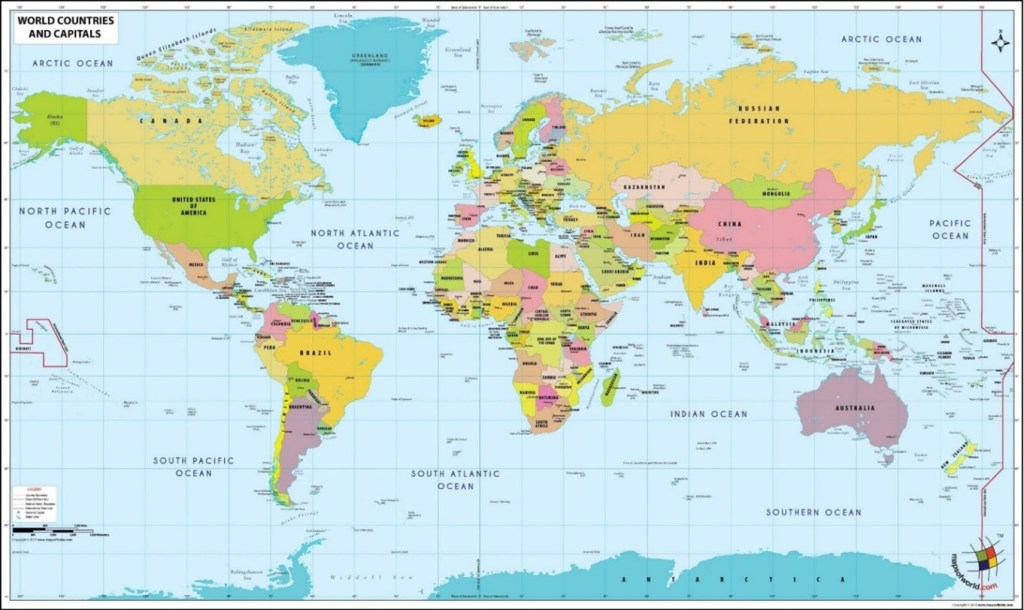
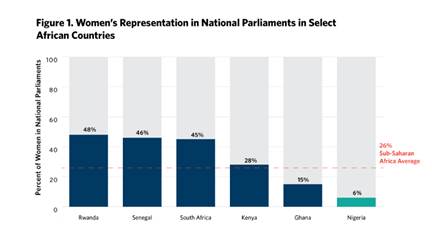
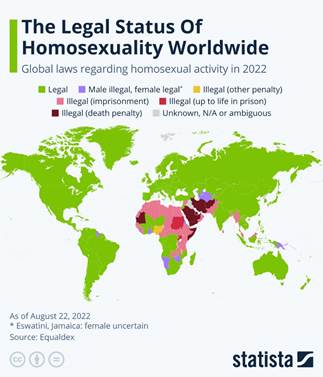
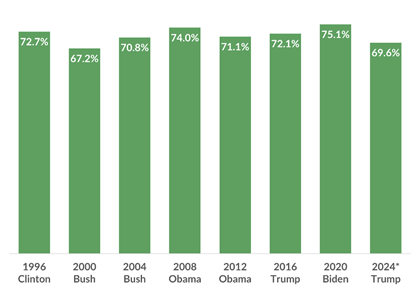
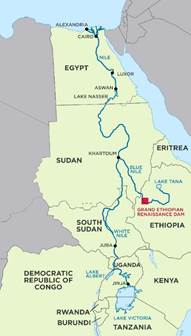


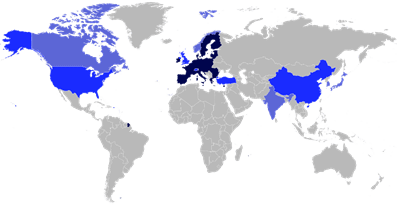
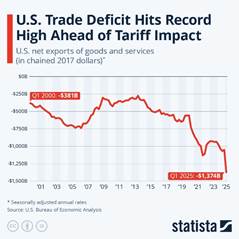
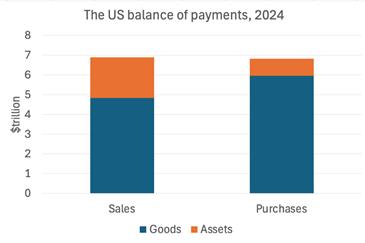
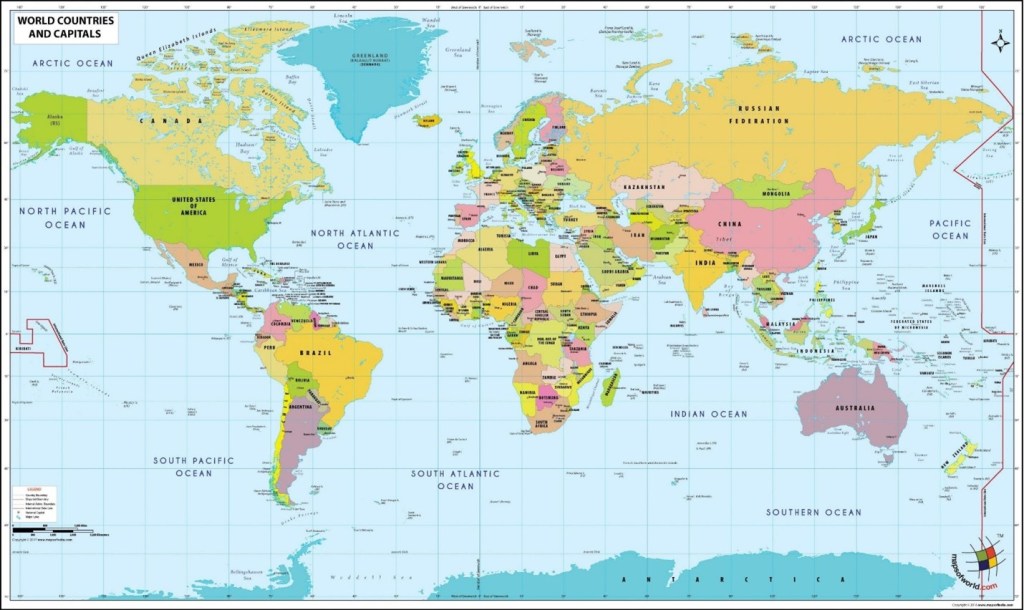


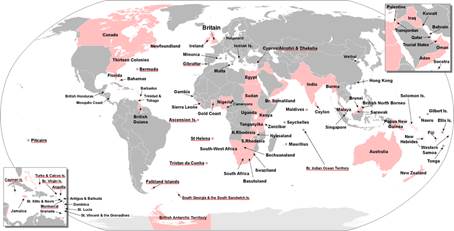
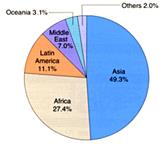
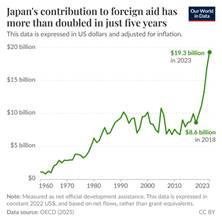
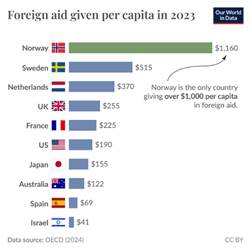
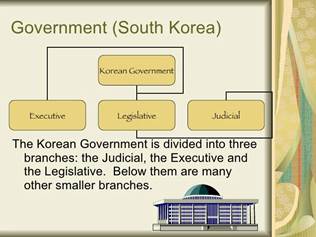
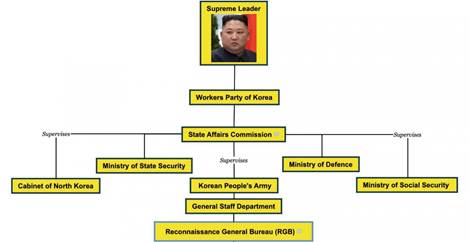
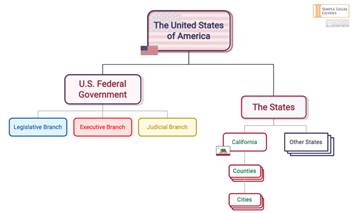
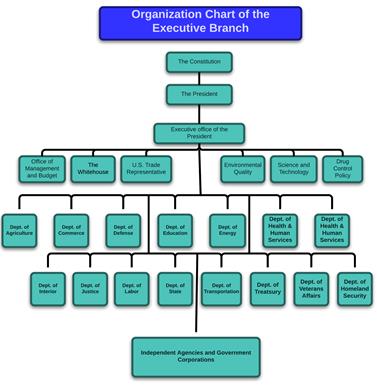
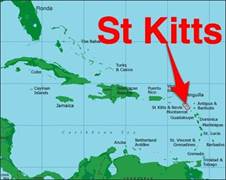
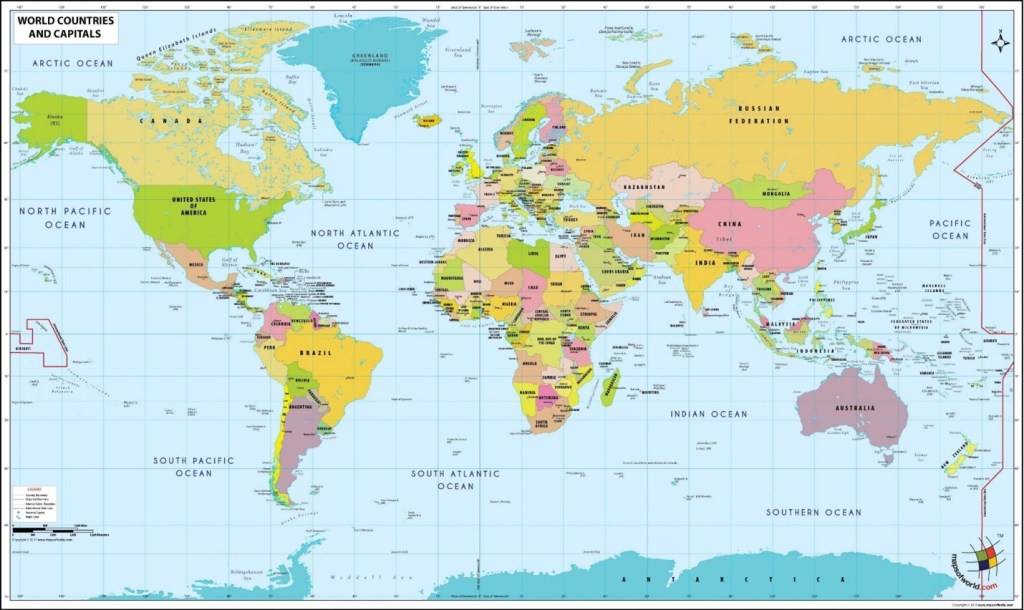
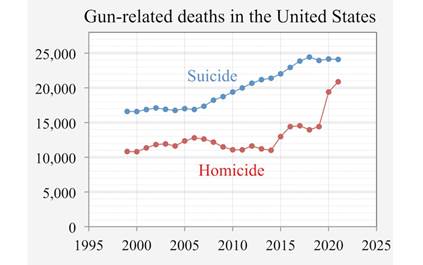
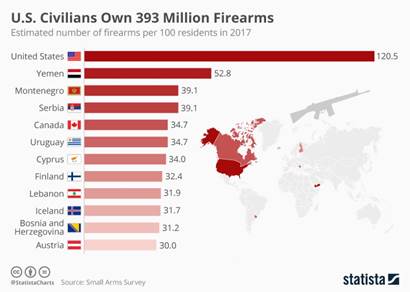
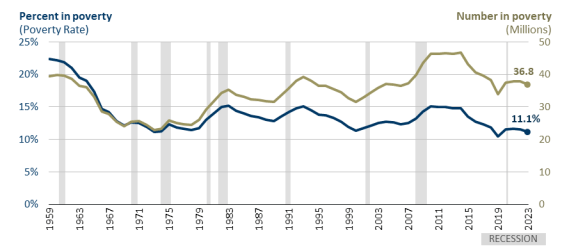
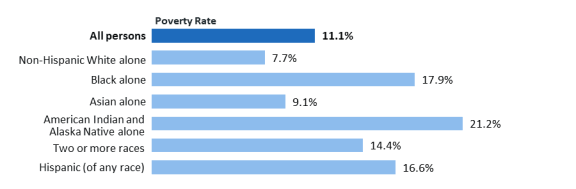
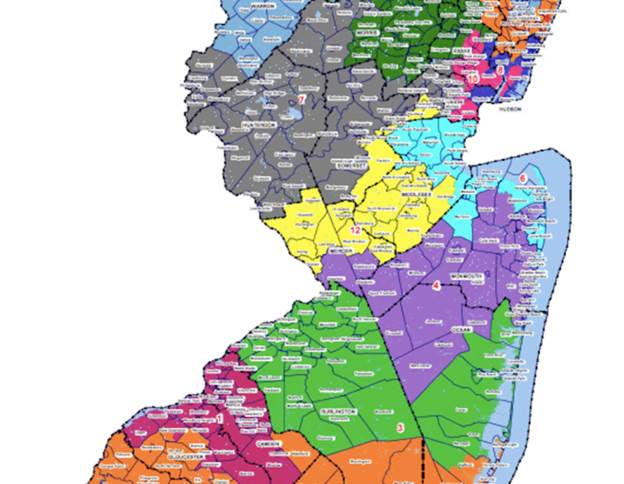
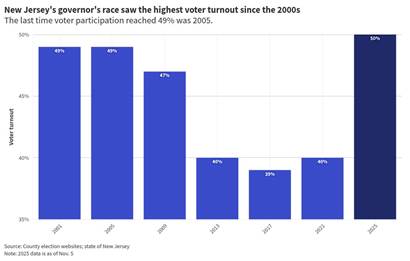
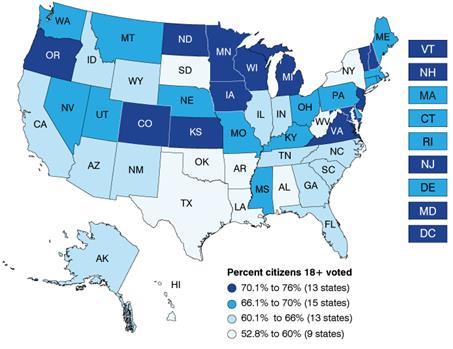

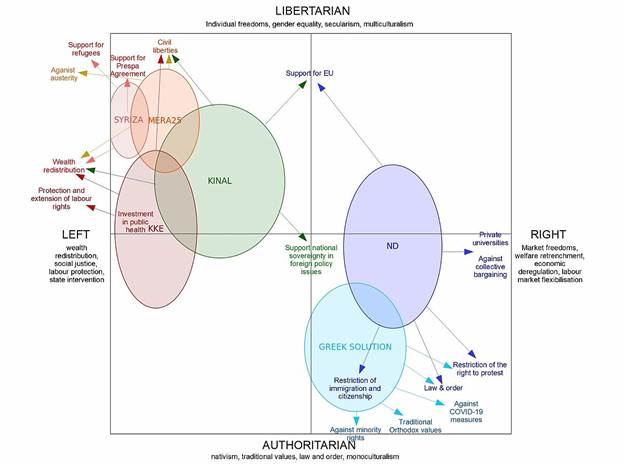















 njcssjournal