This curriculum package was developed by students in the Hofstra University teacher education program including Tina Abbatiello, Arwa Alhumaidan, Ashley Balgobind, Megan Bernth, Carrie Hou, Nabila Khan, Alyssa Knipfing, Thomas Masterson, Olivia LaRocca, Kyle Novak, Marc Nuccio, Steven Rosino, Jackson Spear, and Mark Vasco.
In January 2008, The Guardian (https://www.theguardian.com/observer/gallery/ 2008/jan/17/1), described 1968 as “the year that changed history.” A photo essay began: “It was a year of seismic social and political change across the globe. From the burgeoning anti-Vietnam war and civil rights movements in the United States, protests and revolutions in Europe and the first comprehensive coverage of war and resultant famine in Africa. The world would never be the same again.”
Events that Shook the United States and the World
In January, North Korea seized the USS Pueblo claiming the ship violated its territorial waters and the Viet Cong launched the Tet Offensive including an attack on the U.S. embassy in Saigon. begins, as Viet Cong forces launch a series of surprise attacks across South Vietnam. In February, the world was shocked by a photograph of South Vietnamese police official murdering a captured Viet Cong soldier and President Johnson’s National Advisory Commission on Civil Disorders, the Kerner Commission, warned that racism was causing America to move “toward two societies, one black, one white — separate and unequal.” In March, student protests sparked a political crisis in Soviet-dominated Poland; American soldiers massacred civilians in the Vietnamese village of My Lai Massacre; student at Howard University, a historically Black college in Washington, D.C., held a 5-day sit-in protesting against the War in Vietnam and demanding that the university end its ROTC program and offer more courses on the Black experience; and after a disappointing showing in the New Hampshire primary, Lyndon B. Johnson announced he would not seek re-election. In April the Reverend Martin Luther King Jr. was assassinated in Memphis, Tennessee leading to riots across the country; and student protesters occupied buildings and shut down Columbia University. In May, one million students marched through the streets of Paris demanding fundamental reform; the Catonsville Nine destroyed selective service draft records in a protest against the Vietnam War. In June U.S. Senator and presidential candidate Robert F. Kennedy was murdered in Los Angeles and photographs of starving children and evidence of a humanitarian crisis in rebel Biafra during the Nigerian civil war became public. In July, following a coup d’état, Saddam Hussein became Vice Chairman of the Revolutionary Council in Iraq. In August the Republican National Convention in Miami Beach, Florida nominated Richard Nixon for President; 750,000 Warsaw Pact troops and 6,500 tanks with 800planes invaded Czechoslovakia crushing reform efforts; and Chicago police went on a rampage attacking anti-war protesters at the Democratic National Convention. In September, New York City teachers went on strike against community control of schools in a strike that continued off and on for months and contributed to racial tension in the country; 150 women protested in Atlantic City, New Jersey at the Miss America Pageant. In October, Mexican police and soldiers massacred hundreds of student protesters in Mexico City prior to the opening of the Summer Olympics; at the Olympics American track stars Tommie Smith and John Carlos raised their arms in a black power salute on the victor’s podium; and police attacked civil rights demonstrators in Derry, Northern Ireland, leading to period that became known as The Troubles. In November, Richard Nixon (Republican) defeated Hubert Humphrey (Democrat), and George Wallace (American Independent); Yale University announced would admit women; and the first National Women’s Liberation Conference was held. In December, Apollo 8 orbited the Moon.
North Korea seizes the USS Pueblo (January 23, 1968)
The USS Pueblo on display in the North Korean capital city of Pyongyang in 2006. It was captured in North Korean territorial waters on January 23, 1968.
New York Times: “Moored on a river here in the North Korean capital is the U.S.S. Pueblo, described as an “armed spy ship of the U.S. imperialist aggression forces.” The Pueblo is the Navy ship that North Korea seized in 1968 in waters off the country’s east coast, setting off an international crisis. One American sailor was killed and 82 others were imprisoned for nearly a year and tortured into writing confessions. To signal that the confessions were forced, the sailors listed accomplices like the television character Maxwell Smart. When forced to pose for a photo, some crew members extended their middle fingers to the camera, explaining to the North Korean photographer that this was a Hawaiian good luck sign. After the photo was published and the North Korean guards realized they’d been had, the sailors suffered a week of particularly brutal torture.
As the first Navy vessel to surrender in peacetime since 1807, the Pueblo was a humiliation for America. And it has become a propaganda trophy for North Korea, with ordinary Koreans paraded through in organized tours to fire up nationalist support for the Dear Leader, Kim Jong Il.”
Questions
1. What is the USS Pueblo?
2. Why did it become a symbol of the Cold War?
3. Why did captured U.S. sailors pose this way?
4. In your opinion, why does the Korean peninsula remain a source of international tension?
Kerner Commission Report (February 29, 1968)
“The summer of 1967 again brought racial disorders to American cities, and with them shock, fear and bewilderment to the nation. The worst came during a two-week period in July, first in Newark and then in Detroit. Each set off a chain reaction in neighboring communities. On July 28, 1967, the President of the United States established this Commission and directed us to answer three basic questions: What happened? Why did it happen? What can be done to prevent it from happening again?
To respond to these questions, we have undertaken a broad range of studies and investigations. We have visited the riot cities; we have heard many witnesses; we have sought the counsel of experts across the country. This is our basic conclusion: Our nation is moving toward two societies, one black, one white—separate and unequal. Reaction to last summer’s disorders has quickened the movement and deepened the division. Discrimination and segregation have long permeated much of American life; they now threaten the future of every American. This deepening racial division is not inevitable. The movement apart can be reversed. Choice is still possible.
Our principal task is to define that choice and to press for a national resolution. To pursue our present course will involve the continuing polarization (division) of the American community and, ultimately, the destruction of basic democratic values. The alternative is not blind repression or capitulation (surrender) to lawlessness. It is the realization of common opportunities for all within a single society. This alternative will require a commitment to national action—compassionate, massive and sustained, backed by the resources of the most powerful and the richest nation on this earth. From every American it will require new attitudes, new understanding, and, above all, new will. The vital needs of the nation must be met; hard choices must be made, and, if necessary, new taxes enacted. Violence cannot build a better society. Disruption and disorder nourish repression, not justice. They strike at the freedom of every citizen. The community cannot—it will not—tolerate coercion and mob rule. Violence and destruction must be ended—in the streets of the ghetto and in the lives of people. Segregation and poverty have created in the racial ghetto a destructive environment totally unknown to most white Americans. What white Americans have never fully understood—but what the Negro can never forget—is that white society is deeply implicated in the ghetto. White institutions created it, white institutions maintain, and white society condones (allows) it.
It is time now to turn with all the purpose at our command to the major unfinished business of this nation. It is time to adopt strategies for action that will produce quick and visible progress. It is time to make good the promises of American democracy to all citizens—urban and rural, white and black, Spanish-surname, American Indian, and every minority group. Our recommendations embrace three basic principles: To mount programs on a scale equal to the dimension of the problems; To aim these programs for high impact in the immediate future in order to close the gap between promise and performance; To undertake new initiatives and experiments that can change the system of failure and frustration that now dominates the ghetto and weakens our society. These programs will require unprecedented levels of funding and performance, but they neither probe deeper nor demand more than the problems which called them forth. There can be no higher priority for national action and no higher claim on the nation’s conscience . . .”
Questions
Why was the Kerner Commission established?
Why were there so many urban riots?
What did the Committee fear would happen if the riots continued?
According to the report, what are two ways to help resolve America’s racial divide?
In your opinion, has the United States achieved the objectives of the Kerner commission? Explain.
Tet Offensive (January – February 1968)
Excerpt from North Vietnamese General Tran Van Tra’s Comments on Tet ‘68.”
“Prior to the arrival of the U.S. troops, if the balance of forces between ourselves and the enemy had been viewed simply in terms of specific, material forces, who would have thought that we were strong and were capable of annihilating the puppet army and overthrowing the puppet regime? Later, when the United States sent in at the same time about 200,000 troops who had modern equipment and relied on the strength of overwhelming firepower and rapid mobility, to carry out a strategic counter offensive during the 1965-1966 dry season, we concluded that the Americans and puppets were not strong but were passive, and continued to press the strategic offensive, launched the Bau Bang-Dau Tieng offensive campaign, gained the initiative on the battlefield, and won many victories. In 1968, when the U.S. troops numbered nearly 500,000, with all kinds of modern weapons except the atomic bomb and with the purchasing of the services of lackey vassal troops in addition to Thieu’s army, we could clearly see the enemy’s weakness and our strength, and exploited that strength to a high degree in carrying out the general offense and uprising of Tet Mau Than, a unique event in the history of war. During Tet we not only attacked the enemy simultaneously in all urban centers, including the U.S. war headquarters in Saigon, the puppet capital, but also defeated the U.S. limited war strategy and forced the United States to deescalate the war, being peace talks in Paris, and adopt the strategy of “de-Americanizing the war” and then “Vietnamizing the war.” We thus smashed the U.S. imperialists’ strategic global “flexible response” strategy. The international gendarme became terrified of the role it had taken for itself; and the illusion of the “absolute military superiority of the United States” was shattered.
However, during Tet of 1968 we did not correctly evaluate the specific balance of forces between ourselves and the enemy, did not fully realize that the enemy still had considerable capabilities and that our capabilities were limited, and set requirements that were beyond our actual strength. In other words, we did not base ourselves on scientific calculation or a careful weighing of all factors, but in past on an illusion based on our subjective desires. For that reason, although that decision was wise, ingenious, and timely, and although its implementation was well organized and bold, there was excellent coordination on all battlefields, everyone acted bravely, sacrificed their lives, and there was created a significant strategic turning point in Vietnam and Indochina, we suffered large sacrifices and losses with regard to manpower and materiel, especially cadres at the various echelons, which clearly weakened us. Afterwards, we were not only unable to retain the gains we had made but had to overcome a myriad of difficulties in 1969 and 1970 so that the revolution could stand firm in the storm. Although it is true that the revolutionary path is never a primrose path that always goes upward, and there can never be a victory without sacrifice, in the case of Tet 1968, if we had weighed and considered things meticulously, taken in to consideration the balance of forces of the two sides and set forth correct requirements, out victory would have been even greater, less blood would have been spilled by the cadres, enlisted men, and people, and the future development of the revolution would certainly have been far different. In 1972, after a period of endeavoring to overcome many difficulties make up for the recent losses and develop our position and strength with an absolute revolutionary spirit on the part of the soldiers and people, our troops participated in winning victories in Kampuchea and Laos. However, not all of our main-force units could return to South Vietnam. In that situation we correctly evaluated the positions and forces of the two sides, destroyed many fortified defense lines of the enemy in Quang Tri, the Central Highlands, and eastern Nam Bo, and created many integrated liberated areas at Dong Ha, Dac To, Tan Canh, Loc Ninh Bu Dop, and northern Tay Ninh then, in coordination with the great “Dien Bien Phu in the air” victory in the North, attained our goal of smashing the American’s scheme of negotiating from a position of strength, and forced the Americans to sign in Paris, agreements, which benefited us.”
Questions
According to General Tran Van Tra, what advantage did the U.S. military had in the initial conflict?
What was the Tet Offensive?
According to General Tran Van Tra, what was the result of the Tet Offensive?
Why did General Tran Van Tra say, “the illusion of the ‘absolute military superiority of the United States’ was shattered”?
South Vietnamese Gen. Nguyen Ngoc Loan, chief of the national police, shoots Vietcong officer Nguyen Van Lem, also known as Bay Lop, on a Saigon street on Feb. 1, 1968.
Background: After Nguyen Ngoc Loan raised his sidearm and shot Vietcong operative Nguyen Van Lem in the head he walked over to the reporters and told them that: “These guys kill a lot of our people, and I think Buddha will forgive me.” Captured on NBC TV cameras and by AP photographer Eddie Adams, the picture and film footage flashed around the world and quickly became a symbol of the Vietnam War’s brutality. Eddie Adams’ picture was especially striking, as the moment frozen is one almost at the instant of death. Taken a split second after the trigger was pulled, Lem’s final expression is one of pain as the bullet rips through his head. A closer look of the photo actually reveals the bullet exiting his skull.
Howard University Dispute Settled After Four-Day Protest (March 19, 1968)
The four-day student protest at Howard University ended Saturday afternoon in what protest leader Ewart Brown described as “an atmosphere of fatigue and victory.” The protest, which involved over two thousand students in a massive Administration building sit-in, ended after three days of round-the-clock negotiations between the protest steering committee and Administration officials. The sit-in was brought to a close when Administration officials granted two of the four steering committee demands and promised “immediate negotiations to resolve other problems.”
Howard officials agreed to create a student judiciary committee to review charges against 37 students for disrupting a University program on March 1st. The Administration declared “unnegotiable” the student demand for the resignation of Howard President James Nabrit. They also said that the students’ fourth demand for curriculum changes “will require further discussion.”
Kenneth Clark, prominent Negro psychologist and Howard trustee, read the agreement at 2 p.m. on the steps of the Administration Building before a noticeably tired group of 2500 students. “Any interpretation as to winning or losing by either side misses the whole point,” Dr. Clark said. “We are very happy this was resolved without bringing law enforcement officers on the campus.” However, both protest leaders and the student body as a whole regarded the settlement, in Brown’s words: “(As a) victory for black students not only at Howard but at every black college.”
As 1000 students filed out of the administration building Saturday afternoon carrying blankets and suitcases, conversation centered around today’s return of Howard President James Nabrit. The resignation of Nabrit became the chief student demand as sentiment swelled during the protest. Students claimed that Nabrit spent too much time away from the campus and neglected the “problems and issues raised by the student body.”
Questions
What method(s) did the Howard students use to protest?
How long did their protest last?
What was the student protesters’ chief demand?
Why do you think the protesters considered the protest, “a victory for black students not only at Howard but at every black college?”
Echoes of a New York Waterloo – New York City Teachers Strike (September-November, 1968)
A. For American cities and education, it seemed the worst of times. Pickets and the police ringed schools as onetime allies in the civil rights struggle shrieked accusations of racism and anti-Semitism at each other. The 1968 battle over school decentralization in an obscure Brooklyn district called Ocean Hill-Brownsville ripped apart New York City as nothing has before or since. Its impact on the city and beyond is hard to overstate. It played an early role in the deterioration of relations between blacks and Jews. New York liberals, previously rock-solid in their advocacy of social causes, were split into warring camps. Albert Shanker rose in stature from local union chief to hero to some and anti-hero to others, becoming a national educational leader and household name who even made his way into a Woody Allen movie.
B. And far from being a catharsis to cleanse New York City education of its poisons, Ocean Hill-Brownsville came to stand as a symbol of hifalutin good intentions gone awry — an effort to transfer power from a hidebound bureaucracy back to the people that turned into a political and educational disaster. “The New York teacher’s strike of 1968 seems to me the worst disaster my native city has experienced in my lifetime,’” Martin Mayer wrote soon after the events in a book chronicling the fight.
C. Mr. Shanker was one of the central figures in a fight with few if any heroes — a tough teachers’ union leader who shut down city schools in three bitter strikes, enraging black advocates of local control and defying City Hall and much of the political establishment. If there was one thing virtually all the participants could agree on at the beginning, it was that schools in poor, black neighborhoods were doing a terrible job. The all-powerful central Board of Education’s very address — 110 Livingston Street — had become a synonym for a vast, entrenched bureaucracy, the target of mounting black protests.
D. Anti-Semitism surfaced when a black teacher, Leslie Campbell, read a girl’s poem that included a slur toward Jews. (The school system’s underpaid staff was 90 percent white and heavily Jewish.) The United Federation of Teachers reproduced and distributed anti-Semitic leaflets it said were circulating in the schools. ”The whole alliance of liberals, blacks and Jews broke apart on this issue,” Mr. Shanker remembered. ”It was a turning point in that way. It was a fact in the late 1960’s that the African-American community was moving from the idea of integration toward the idea of black power, toward organizations like Rap Brown or the Black Panthers. Was it civil rights for minorities or civil rights for everybody?”
E. Later, when the state legislature met in 1969 to consider a citywide decentralization plan, the teacher’s union was in Albany in force. ”It was horrible, a very highly charged environment,” recalled Jerome Kretchmer, then a liberal Assemblyman from the Upper West Side who backed a bill originally calling for strong community control that eventually was modified to a bill acceptable to the union, including strong job protections. “The bill that passed was Shanker’s bill, not ours,” Mr. Glasser recalled. “Real decentralization threatened two major interests, the Board and its bureaucracy, which was unalterably opposed to change, and the power of the union. It was really a power struggle in which the black kids were sacrificed.” “In the end,” said Mr. McCoy, the Ocean Hill-Brownsville struggle “had nothing to do with education; it was all politics and money.”
Questions
1. What issue caused teachers to strike?
2. What two ethnic groups were directly affected by the conflict?
3. What was Albert Shanker’s role in the strike?
4. According to excerpt E, what major interests did decentralization threaten?
5. In your opinion, what was the underlying cause of the struggle?
Yale University Decides to Admit Women (November 9, 1968)
Source: “On The Advisability And Feasibility of Women At Yale,” Yale Alumni Magazine.
“Yale may admit women,” read a headline in the New York Times.”Nothing Stands in the Way But Lack of Funds.” That was in 1891. A Miss Irene W. Coit had passed the Yale College entrance exam. It was a purely academic exercise, but President Timothy Dwight was nevertheless interested in opening a “woman’s annex.” There was no question, the Timesstressed, of men and women taking classes together. In fact, men and women had been taking classes together at Yale since 1869, the year the art school opened. The graduate school began admitting women in 1892. By the late 1960s, nearly 1,000 women enrolled at Yale every year. But in 1891, “Yale” to the Times (and most of the campus) meant Yale College. And almost 80 years would elapse between Miss Coit’s successful exam and the admission of the first female undergraduates at Yale.
A. Yale started thinking seriously about college coeducation in 1966, when Yale and Vassar decided to explore “coordinate coeducation.” The idea was for Vassar, which was then a women’s college, to sell its campus and relocate its students to Prospect Hill. Vassar would become Yale’s Radcliffe. This plan for a simple add-on — a twentieth-century “woman’s annex” — had decided political attractions. President Kingman Brewster ’41 . . . lived in “fear and trembling” about how college alumni would react to coeducation if their sons couldn’t get into Yale. Yale College was more than an exclusively male school; it was a school that cultivated and cherished a particular ideal of maleness.
B. But as the alumni resisted, the students pushed . . . Undergraduates held rallies, wrote imperious opinion pieces for the News,even organized “Coeducation Week” as a kind of pilot project. Brewster himself had unwittingly set up this conflict between the alumni and the alumni-to-be, by starting to admit college applicants based more on academic performance than on Yale family connections and where they had prepped. Yale was admitting ever-larger numbers of public school students, and most of them had never experienced sex-segregated schooling, let alone thought of it as a matter of honor.
C. Then, in November 1967, Vassar’s board turned down the merger. The move left Yale with no plan and little time. All the other Ivies except Dartmouth were by now either coeducational or preparing to become so, putting Yale at a disadvantage in the competition for academically outstanding college applicants . . . On November 9, 1968, the Corporation, Yale’s board of trustees, approved Brewster’s plan to admit 250 female freshmen and 250 female transfer students to Yale College the following September. . . There were rocky patches in the first few years. The lopsided gender ratio left some women feeling isolated, some overwhelmed by excessive male attention. Facilities were overcrowded. Brewster tried to appease furious alumni with the promise that Yale College would continue to produce “a thousand male leaders” every year. But in the end, coeducation succeeded, settled in, and became the norm. In the pages that follow, we excerpt passages from publications of the time and recent interviews with participants in the transformation.
Questions
According to Excerpt A, how many years lapsed between Coit’s successful exam and the admission of the first female undergraduates at Yale?
According to Excerpt B, why did Yale decide to seriously considered coeducation at the college?
According to Excerpt C, what was Yale admittance traditionally based upon? How did that measure change over time?
In your opinion, how did resistance to the admission of women into the university exemplify the patriarchal tones of American society? Explain.
Students in Poland Clash with Police in Two More Cities
(March 14, 1968)
People running away as police attack near the Warsaw University during student protests.
University students and the police clashed today in Cracow and Poznan as student demonstrations spread across Poland despite threats of punishment by the Government. Reports to Warsaw indicated that students in eight provincial cities had held protest meetings in sympathy with students in the capital since the first clash with the police at Warsaw University last Friday. In Warsaw, 8,000 students crowded today into the main auditorium of the Polytechnic School and applauded a motion that said they did not want to become the object of factional maneuverings in the Communist Party. The resolution adopted by the students of the Polytechnic School included the following points:
Respect of the Constitution especially its guarantees of freedom of speech and assembly.
Release of all students arrested since the first demonstrations last Friday.
Punishment for those who called the police onto the school grounds in violation of the traditional right of extra-territoriality accorded institutions of higher learning.
Guarantees that the school staff and professors who sympathized with the students would not be persecuted.
A request that “secret police now among us” within the auditorium should leave immediately.A stand dissociating students from anti-Semitism and also Zionism.
Increased possibilities for free discussions with professors.
The rector promised to discuss the resolution Friday with the Senate, the school’s highest executive body, which in turn would send the resolution to Parliament and appropriate authorities. However, he said some unspecified points in the resolution might be watered down.
Questions:
Why did 8,000 students crowd into the auditorium of the Polytechnic School?
Based on the photograph, what is one inference you can make about these protests?
What do you think is the most important point of resolution adopted by the students of the Polytechnic School? Why?
What do you think is the most unreasonable point of resolution adopted by the students of the Polytechnic School? Why?
United Farm Workers Strike
Background: Starting in 1965, hundreds of Mexican and Mexican-American farmworkers in Delano, California went on strike against grape growers led by Cesar Chavez, a co-leader of the National Farmworkers Association. The strike was about wages and work conditions, but also about respect, justice and equality. It pitted the powerless against the powerful. Eventually, tens of thousands more joined the fight rallying around the slogan around “Viva La Causa” (Long Live the Cause). In 1968, union President Chavez fasted for 25 days, promoting the principle of non-violence. By the late 1970s, growers in California and Florida finally recognized the United Farm Workers (UFW) union.
Striking Farm Workers
Coast Farm Union Chief to End Fast on 25th Day (March 6, 1968)
Upon urging of doctors, Ceasar Chavez, farm union leader, announced tonight that he would end his spiritual fast in its 25th day at a “mass of thanksgiving” this Sunday. He has been drinking only water since starting the fast 20 days ago to rededicate himself and his followers to non-violence in their attempts to organize farm workers. Doctors said the head of the United Farm Workers Organizing Committee faced permanent kidney damage if he continued to go without food. They said the lactic acid count in his blood was dangerously high.
Deal for Farm Workers (June 17, 1968)
A point of decision is nearing on Capital Hill in the long fight to extend agricultural workers the freedom to unionize that workers in industry generally have been guaranteed for more than thirty years. Hired farm labor is the most deprived section of the entire work force. Even now, with a Federal minimum wage finally in effect, the average annual earnings for farm workers run to substantially less than half the poverty level set by the Federal Government. A bill to give them the same organization and bargaining rights that now prevail for all other workers has been reported out of the House Labor Committee and is now bottled up in the Rules Committee . . . Agriculture is becoming big business. It is time that the 1.5 million laborers on the largest farms were brought under the umbrella of industrial democracy.
Questions:
Why were Mexican-American farm workers on strike?
How did Cesar Chavez try to revive the spirit of strikers and win public support?
Why was the federal government considering changing labor law?
Johnson Says He Won’t Run (March 31, 1968)
(A) Lyndon Baines Johnson announced tonight: I shall not seek and I will not accept the nomination of my party as your President. Later, at a White House news conference, he said his decision was completely irrevocable. The President told his nationwide television audience.
(B) What we have won when all our people were united must not be lost in partisanship. I have concluded that I should not permit the Presidency to become involved in partisan decisions. Mr. Johnson, acknowledging that there was division in the American house, withdrew in the name of national unity, which he said was the ultimate strength of our country.
(C) With American sons in the field far away, he said, with the American future under challenge right here at home, with our hopes and the worlds’ hopes for peace in the balance every day, I do not believe that I should devote an hour or a day of my time to any personal partisan causes or to any duties other than the awesome duties of this office, the Presidency of your country.
(D) He began by quoting Franklin D. Roosevelt: Of those to whom much is given- much is asked. He could not say that no more would be asked of Americans, he continued, but[HB1] he believed that now, no less than when the decade began, this generation of Americans is willing to pay any price, bear any burden, meet any hardship, support any friend, oppose any foe, to assure the survival and the success of liberty. This quotation from a celebrated passage of John F. Kennedy’s inaugural address of Jan. 10, 1961, appeared to be a jab at Senator Robert F. Kennedy, who now is campaigning against the war in Vietnam.
(E) In his 37 years of public service, he said, he had put national unity ahead of everything because it was as true now as it had ever been that a house divided against itself by the spirit of faction, of party, of region, of religion, of race, is a house that cannot stand. But these gains, Mr. Johnson said, must not now be lost in suspicion and distrust and selfishness and politics. I have concluded that I should not permit the Presidency to become involved in the partisan divisions that are developing. (F) There was some speculation tonight that Mr. Johnson might believe he could work more effectively for peace in Vietnam if he were not a partisan candidate for re-election- despite the lame duck status that would confer on him. In support of this thesis, Mr. Johnson’s speech on Vietnam- which came before his withdrawal announcement- was notably conciliatory, although Senator Gore pointed out that the President did not reveal a change in war policy tonight. He discussed only tactics- a partial bombing halt.
Questions:
1. What does President Johnson mean by partisanship?
2. Why does he think there is division in the American house?
3. What did the President say was the ultimate strength of our country?
4. In your opinion, why do you think Johnson referenced a quote by former President Roosevelt?
5. Which former president used the phrase a house divided against itself in their public address?
6. Why did President Johnson decide not to run for reelection?
Image Source: Envisioningtheamericandream.com
Student Unrest Spreads to South Africa (August 15-23, 1968)
Capetown Students Sit in Over Bar to a Sociologist (August 15, 1968)
Students protest against the rescinding of Professor Mafeje’s appointment as a senior lecturer at the University of Capetown.
About 300 students singing “We Shall Overcome” entered the Capetown University administration building today to stage a sit-in. Student leaders said they intended to remain until the University Council also protested against the barring of Archie Mafeje, an African sociologist, from joining the lecturing staff by central education authorities. The education officials have said his appointment would contravene tradition. He had been the favored candidate for the vacant position. The students also want August 20 to be declared Mafeje Day as an annual protest against Government interference with university autonomy.
Vorster Bars March by Students in Johannesburg (August 19, 1968)
Prime Minister Balthazar J. Vorster forbade a student march through Johannesburg today in a firm move against mounting student protest over South African apartheid laws. But students massed outside the gates of Witwatersrand University near of the of the city in a defiant demonstration against the government’s veto of the appointment of Archie Mafeje, an African, to the staff of Capetown University.
Vorster Agrees to Meet Students (August 20, 1968)
Prime Minister Balthazar J. Vorster promised today to meet dissident students in 10 days to hear their complaints of too much Government interference in South African universities. The promise came as the student revolt over a Government veto on the appointment of an African anthropologist, Archie Mafeje, to a lecturing post at Capetown University entered its seventh day. A group of Witwatersrand students drove 30 limes to Mr. Vorster’s residence in Pretoria last night to present a Petition – and returned with their heads shaved by rival demonstrators. A student leader, Neville Curtiss, said Mr. Vorster had refused to accept the petition. Then, he said, Afrikaner students from Pretoria University seized the protesting group and shaved their heads.
Students in Capetown End a Nine-Day Sit-In (August 23, 1968)
Students of the University of Capetown ended a sit-in protesting Apartheid and Government interference in academic affairs today. They had spent nine days in the university’s administration building. The students, numbering about 100, successfully resisted an attempt by other students to evict them last night.
Questions:
Why were South African students in Capetown protesting?
What happened when they tried to present petitions to Prime Minister Vorster?
Archie Mafeje was never appointed to the University. Why were his appointment to the university position and student protests seen as a challenge to Apartheid in South Africa?
Hundreds of Protesters Block Traffic in Chicago (August 26, 1968)
Anti-War and Anti-Humphrey Groups Clash With Police After Ouster From Park
Hundreds of antiwar and anti-Humphrey demonstrators, driven out of a park on the shores of Lake Michigan here last night staged a series of hit-and-run protests today that blocked traffic and triggered angry shoving matches with heavily armed police. One group of youths, numbering several hundred, congregated in a circle just outside Lincoln Park, which is on the edge of one of the city’s plushest Near North Side neighborhoods, and confronted the police. Several thousands of the youths had gathered in Lincoln Park earlier in the first show of strength by the young demonstrators who have been drawn here by the Democratic National Convention. The youths had been ordered out of the park at 11 P.M. because of the curfew. Soon after the youngsters left the park, a large group congregated in the area of Clark Street and LaSalle Street, which is just southwest of Lincoln Park. Some 400 policemen pursued the group into the maze of traffic circles, drives and islands that dot the area. Tempers flared as the police sought to disperse the crowd, which was almost entirely white. At one point, a group of policemen charged into a mass of youngsters and about 20 were struck with nightsticks. The incident occurred after a bottle had arched out of the crowd and smashed on the ground near a policeman.
Questions:
What happened when protesters were driven out of Lincoln Park?
In your opinion, why did protests at the Democratic National Convention turn violent?
Do you blame the protestors or the police for what happened? Why?
Student Protests in Mexico Draw Military Response (September-October, 1968)
Background: As Mexico prepared to host the 1968 Olympics, student protests against the country’s repressive government swept through Mexico City. On October 2, ten days before the scheduled start of the Olympics, the Mexican Army opened fire on a peaceful student protest in Tlateloclo. Officials announced the death toll as four dead and 20 wounded, but historians put the actual count at between 200 and 300 dead. Thousands of other students were beaten and jailed. The New York Times reported on events as they unfolded between September 1 and October 4.
Questions:
Why were the Mexican students protesting?
What was the government response?
In your opinion, was the government response appropriate? Explain.
In your opinion, given the conflict in Mexico, should the Olympics have gone on as scheduled? Explain.
In the midst of serious student dissidence, President Gustavo Diaz Ordaz warned today that he was ready to used armed force to put down “systematic provocation” and to insure that the Olympic Games, scheduled to open here Oct. 12, will be held.
STUDENT DEFIANCE PERSISTS IN MEXICO (September 3, 1968)
President Gustavo Diaz Ordaz, in a report to the nation last Sunday, remarked ruefully, “We had been provincially proud and ingenuously satisfied that, in a world of juvenile disturbances, Mexico was an untouched island” . . . What began in nonpolitical and nonideological circumstances has become the country’s main political problem, with 150,000 students involved. According to one account, the trouble started on July 23 when a student from a vocational school became angry when he found his girl being bothered by a preparatory school student. A fight started and soon several hundred students from each school became involved . . . Six days later rioting was in full swing, with students burning buses or seizing them to use as street barricades and the Government bringing in troops to supplement special groups of riot policemen known as “granaderos,: now easily the most unpopular men in Mexico. The act that most aroused the students was the use of a bazooka to blow in an 18th-century door at a preparatory school . . . Scores of students were hurt and hundreds arrested. The students charged that at least 32 of their number had been killed. The bodies were burned, they asserted, and the families of the victims threatened into silence . . . The Government apparently thought that strong repressive action would crush student unrest. Instead, the students of the National University and the National Polytechnic Institute, numbering 150,000 at the secondary, college and postgraduate levels, organized and succeeded in closing every school and faculty.
MEXICAN STUDENTS CALL NEW PROTEST (September 10, 1968) The army seized control of the National University late last night in a move to end seven weeks of student agitation. President Gustavo Diaz Ordaz thus made good his threat to use force against attacks on public order and any attempt to disrupt the Olympic Games, which are scheduled to open here Oct. 12.
STUDENTS BATTLE MEXICAN POLICE; Several Hurt on 2d Day of Clashes at Institute (September 20, 1968)
A policeman was shot to death, scores of persons were injured and hundreds were arrested late last night and early this morning in the worst fighting since the army seized the National University Wednesday night.
3 Dead, Many Hurt in Mexico City Battle; Students Fight the Police Through the Night 3 Are Killed and Many Injured in Mexico City Battle (September 24, 1968)
Eight of the leaders who for two months have been carrying on a strike and agitation by university and secondary school students sat around a classroom yesterday and explained to a reporter that they would do nothing to hinder the Olympic Games here Oct. 12-27.
Students Affirm Strike In Mexico; Resist Pleas to Halt Their 2-Month-Old Agitation (September 27, 1968)(September 30, 1968)
Federal troops ended their occupation of the National University today as both the Government and striking students continued efforts to reduce tensions in the capital. The 1,300 troops and 25 tanks, which had occupied the university since Sept. 18, rumbled out of the embattled campus on the outskirts of the city in 10 minutes. Soon after, the students moved back in.
Mexican Troops Evacuate Campus of National University
Striking university and secondary school students tonight denounced an effort to get them back to their classrooms and halt their two-month-old agitation.
On an Embattled Campus, 8 Mexican Student Leaders Stress Moderate Aims (September 26, 1968)
An all-night battle between the police and students that ended late this morning brought death to at least three persons and possibly to 15.
HUNDREDS SEIZED IN MEXICO CLASHES; One Killed and Dozens Hurt During a Night of Fighting by Students and Police Students and Police Clash Throughout Mexico City (September 22, 1968)
Fighting between the police and students continued for the second day in the aftermath of the army’s seizure of the National University Wednesday night.
Mexican Army Seizes National University to End Agitation by Students (September 19, 1968)
Despite urgings by the rector of the National University for a return to normal operations, striking students called today for a new mass street demonstration Friday.
An effort by President Gustavo Diaz Ordaz to settle almost six weeks of agitation by university and secondary school students has failed. As defiant as ever, student strike leaders said at a news conference last night that they would use “all means within our reach to obtain solutions to our demands.” The students are demanding the dismissal of the Mexico City police chief, Luis Cueto, and his assistant; respect for university autonomy; compensation for those hurt or killed in fighting last month; a fill investigation of those responsible for “brutality” against them; freedom for all persons they describe as political prisoners, and abolition of sections of the penal code that provide punishment for subversive acts and those inimical to public order.
Diaz Warns Dissident Mexican Students Against Provocation (September 1, 1968)
In the midst of serious student dissidence, President Gustavo Diaz Ordaz warned today that he was ready to used armed force to put down “systematic provocation” and to insure that the Olympic Games, scheduled to open here Oct. 12, will be held.
STUDENT DEFIANCE PERSISTS IN MEXICO (September 3, 1968)
An effort by President Gustavo Diaz Ordaz to settle almost six weeks of agitation by university and secondary school students has failed. As defiant as ever, student strike leaders said at a news conference last night that they would use “all means within our reach to obtain solutions to our demands.” The students are demanding the dismissal of the Mexico City police chief, Luis Cueto, and his assistant; respect for university autonomy; compensation for those hurt or killed in fighting last month; a fill investigation of those responsible for “brutality” against them; freedom for all persons they describe as political prisoners, and abolition of sections of the penal code that provide punishment for subversive acts and those inimical to public order.
President Gustavo Diaz Ordaz, in a report to the nation last Sunday, remarked ruefully, “We had been provincially proud and ingenuously satisfied that, in a world of juvenile disturbances, Mexico was an untouched island” . . . What began in nonpolitical and nonideological circumstances has become the country’s main political problem, with 150,000 students involved. According to one account, the trouble started on July 23 when a student from a vocational school became angry when he found his girl being bothered by a preparatory school student. A fight started and soon several hundred students from each school became involved . . . Six days later rioting was in full swing, with students burning buses or seizing them to use as street barricades and the Government bringing in troops to supplement special groups of riot policemen known as “granaderos,: now easily the most unpopular men in Mexico. The act that most aroused the students was the use of a bazooka to blow in an 18th-century door at a preparatory school . . . Scores of students were hurt and hundreds arrested. The students charged that at least 32 of their number had been killed. The bodies were burned, they asserted, and the families of the victims threatened into silence . . . The Government apparently thought that strong repressive action would crush student unrest. Instead, the students of the National University and the National Polytechnic Institute, numbering 150,000 at the secondary, college and postgraduate levels, organized and succeeded in closing every school and faculty.
MEXICAN STUDENTS CALL NEW PROTEST (September 10, 1968)
Despite urgings by the rector of the National University for a return to normal operations, striking students called today for a new mass street demonstration Friday.
Mexican Army Seizes National University to End Agitation by Students (September 19, 1968)
The army seized control of the National University late last night in a move to end seven weeks of student agitation. President Gustavo Diaz Ordaz thus made good his threat to use force against attacks on public order and any attempt to disrupt the Olympic Games, which are scheduled to open here Oct. 12.
STUDENTS BATTLE MEXICAN POLICE; Several Hurt on 2d Day of Clashes at Institute (September 20, 1968)
Fighting between the police and students continued for the second day in the aftermath of the army’s seizure of the National University Wednesday night.
HUNDREDS SEIZED IN MEXICO CLASHES; One Killed and Dozens Hurt During a Night of Fighting by Students and Police Students and Police Clash Throughout Mexico City (September 22, 1968)
A policeman was shot to death, scores of persons were injured and hundreds were arrested late last night and early this morning in the worst fighting since the army seized the National University Wednesday night.
3 Dead, Many Hurt in Mexico City Battle; Students Fight the Police Through the Night 3 Are Killed and Many Injured in Mexico City Battle (September 24, 1968)
An all-night battle between the police and students that ended late this morning brought death to at least three persons and possibly to 15.
On an Embattled Campus, 8 Mexican Student Leaders Stress Moderate Aims (September 26, 1968)
Eight of the leaders who for two months have been carrying on a strike and agitation by university and secondary school students sat around a classroom yesterday and explained to a reporter that they would do nothing to hinder the Olympic Games here Oct. 12-27.
Students Affirm Strike In Mexico; Resist Pleas to Halt Their 2-Month-Old Agitation (September 27, 1968)
Striking university and secondary school students tonight denounced an effort to get them back to their classrooms and halt their two-month-old agitation.
Mexican Troops Evacuate Campus of National University (September 30, 1968)
Federal troops ended their occupation of the National University today as both the Government and striking students continued efforts to reduce tensions in the capital. The 1,300 troops and 25 tanks, which had occupied the university since Sept. 18, rumbled out of the embattled campus on the outskirts of the city in 10 minutes. Soon after, the students moved back in.
At Least 20 Dead As Mexico Strife Reaches A Peak; Troops Fire Machine Guns And Rifles At Students — More Than 100 Hurt Many Are Killed In Mexico Clash (October 2, 1968)
Federal troops fired on a student rally with rifles and machine guns tonight, killing at least 20 people and wounding more than 100. The troops moved on a rally of 3,000 people in the square of a vast housing project just as night was falling. In an inferno of firing that lasted an hour, the army strafed the area with machine guns mounted on jeeps and tanks. About 1,000 troops took part in the action. Tanks, armored cars and jeeps followed them, spurting .30- and .50-caliber machine-gun fire. Buses, trolley cars and other vehicles were set on fire at several places in the city. Ambulances screamed through the rainy night. Many women and children were among the dead and injured.
Mexican Student Protest Appears to Be Crushed (October 4, 1968)
The long and occasionally violent student protest here appeared today to be smashed as a mass movement following the gun battle in which at least 29 persons lost their lives Wednesday night . . . Those students who could be reached on the university campus, once the major focal point of the agitation, called the clash with army troops “a massacre” and said further demonstrations would be “suicide.”
Emerging Women’s Liberation Movement (September 7, 1968)
The first National Women’s Liberation Conference was held in Sandy Springs, Maryland issued a flyer that announced “Out of our bitch sessions came the idea for the Miss America Protest. All the New York groups joined together for this action and women from Washington, D.C., New Jersey and Florida participated. We crowned a live sheep Miss America, held an action of an All-American Girl replica, threw objects of our torture into the freedom trash can, picketed, and talked to women spectators. At night, we hung a Women’s Liberation banner from the balcony and shouted ‘Freedom for women – No more Miss America’ until the cops forced us out.” The feminists traveled to Atlantic City and on September 7, 1968 and hundreds gathered on the Atlantic City Boardwalk outside the Miss America Pageant where they symbolically threw a number of feminine products, including bras, curlers, girdles, and corsets and copies of Cosmopolitan and Playboy magazines into a “Freedom Trash Can.”
Miss America Pageant Is Picketed by 100 Women (September 7, 1968)
Women armed with a giant bathing beauty puppet and a “freedom trash can” in which they threw girdles, bras, hair curlers, false eyelashes, and anything else that smacked of “enslavement,” picketed the Miss America Pageant here today. The women pickets marched around the Boardwalk outside Convention Hall, singing anti-Miss America songs in three-part harmony, carrying posters deploring “the degrading mindless-boob-girlie symbol,” and insisting that the only “free” woman is “the woman who is no longer enslaved by ludicrous beauty standards.” They also denounce the beauty contest’s “racism,” since its inception in 1921, the pageant has never had a black finalist), announced a boycott of the sponsors (Pepsi-Cola, Toni and Oldsmobile) and refused to talk with males (including male reporters). “Why should we talk with them?” said Marion Davison, a New Yorker. “It’s impossible for men to understand.”
Questions:
Why did the women target the Miss America Pageant?
In your opinion, why did some of the women protesters believe “It is impossible for men to understand”?
In your opinion, how have attitudes toward women changed, or remained the same, since 1968?
New “Troubles” Begin in Northern Ireland (October 7, 1968)
Background: In 1921, following the Irish war for independence from Great Britain, Britain separated off six predominately Protestant northern provinces from the newly established Irish Free State. Catholic in the area long charged they were subject to discrimination and many wanted to be reunited with the rest of Ireland. The October 1968 demonstrations opened a decades long era known as the “Troubles” that resulting in over 3,600 deaths and thousands of injuries. While there have been periods of peace, many of the issues raised in 1968 have still not been resolved.
Rioting Reopens Old Wounds in Northern Ireland (October 7, 1968)
Old antagonisms between Northern Ireland’s Protestants and Roman Catholics have erupted in the worst violence seen since the nineteen-twenties in Londonderry, Northern Ireland’s second largest city. The riots, on Saturday afternoon and Sunday night, are acknowledged by all sides as a setback for the moderate program of Prime Minister Terence M. O’Neill. Mr. O’Neill has sought Protestant-catholic cooperation to erase the ancient religious scares that still blemish the life of the country . . . About 100 people, including Gerard Fitt, a Catholic Republican member of the British Parliament were treated at hospitals for injuries after the Londonderry skirmishes between police and a Catholic civil rights group. Twenty-nine persons were arrested. In the weekend battles, the Royal Ulster constabulary used batons and water cannon against demonstrators. The marchers accused the police of brutality. The demonstrators threw gasoline bombs, stoned police and burned two constabulary huts. They smashed shop windows in the center of Londonderry and looted a few stores . . . The demonstration arose after Mr. Craig [Northern Ireland’s minister of Home Affairs] had refused permission for the Irish Civil Rights Association to parade through Protestant areas to protest against discrimination in housing and voting.
The Northern Ireland Cabinet today endorsed the action of the police in the weekend riots in Londonderry. The Cabinet said that the action had been “timely and prevented an extremely dangerous situation from developing.”
BELFAST CATHOLICS STAGE A HUGE SIT-IN (Oct 9, 1968)
About 1,500 Roman Catholic students staged a mammoth sit-in today within sight of angry Protestants, but police averted further violence in Northern Ireland’s religious unrest. The students from Queens University were protesting alleged police brutality in last weekend’s Londonderry riots and what they describe as discrimination against Northern Ireland’s Roman Catholic minority. Police persuaded the Catholics to avoid a clash with Protestants by changing the route of their protest march before the sit-in. The Rev. Ian Paisley, leader of the Protestants who threatened to disrupt the Catholic march, then accused Prime Minister Terence O’Neill of being soft on Catholic factions who want Northern Ireland removed from the United Kingdom and joined with the Irish Republic to the south.
Questions:
What events in Londonderry “reopened” old wounds?
Who did the government of Northern Ireland blame for the events?
In your opinion, how do the accusations made by Reverend Paisley point to an underlying issue in Northern Ireland?
2 Accept Medals Wearing Black Gloves (October 16, 1968)
Tommie Smith wore a black glove on his right hand tonight to receive his gold medal for winning the final of the Olympic 200-meter dash on the world-record time of 19.8 seconds. John Carlos, his American teammate, received the third-place bronze medal wearing a black glove on his left hand. Both appeared for the presentation ceremony wearing black stockings and carrying white-soled track shoes. The two had said they would make a token gesture here to protest racial discrimination in the United States. While the “Star Spangled banner” was played, these most militant black members of the United States track and field squad bowed their heads and raised their black-gloved hands high.
U.S. Leaders Warn of Penalties For Further Black Power Acts (October 17, 1968)
The United States Olympic Committee formally apologized today to the International Olympic Committee and the Mexican Organizing Committee for what it called the discourtesy displayed by two of its athletes in an Olympic victory ceremony yesterday. The United States committee also warned it would not stand for a repetition of a display made by Tommie Smith and John Carlos, sprinters.
2 Black Power Advocates Ousted From Olympics; U.S. Team Drops Smith and Carlos for Clenched-Fist Display on Victory Stand (October 18, 1968)
The United States Olympic Committee suspended Tommie Smith and John Carlos today for having used last Wednesday’s victory ceremony for the 200-meter dash at the Olympic Games as the vehicle for a black power demonstration. The two Negro sprinters were told by Douglas F. Roby, the president of the committee, that they must leave the Olympic Village. Their credentials were taken away, which made it mandatory for them to leave Mexico within 48 hours.
U.S. Women Dedicate Victory to Smith, Carlos (October 20, 1968)
Black Power emerged among women athletes today as four United States girls dedicated their victory in the 400-meter relay to Tommie Smith and John Carlos, the two Americans who were suspended and ordered to leave Olympic Village.
Questions:
Why did Tommie Smith and John Carlos raise their hands in protest?
What was the response of the American Olympic Committee?
In your opinion, are these types of protests by athletes at sporting events legitimate? Explain.
Nine Found Guilty In Draft File Case (October 11, 1968)
Background: On May 17, 1968 nine Catholic activists entered Selective Service Office in Catonsville, Maryland. They seized hundreds of draft records and brought them outside, where they were doused with homemade napalm. The Catonsville Nine stated they used napalm on these draft records because napalm has burned people to death in Vietnam. They were arrested and in total, their actions took less than fifteen minutes. Their motive was because everything has has failed.
Seven men and two women were found guilty in Federal Court today of burning draft files with homemade napalm. The jury rendered its verdict against the group, which included two priests at 6:37pm after deliberating [for] an hour and half. The other defendants, also Roman Catholics, included a Christian brother, a former priest and a former nun.
As others rose to their feet in disorder, Chief Judge Roszel C. Thomsen called for order in the courtroom. When he did not get it, he asked Frank Udoff, a United States marshal, to clear the room. The spectators, many of whom were in tears, reached the hall and they began to sing We Shall Overcome.
The defendants face a maximum sentence of 18 years in prison and fines up to $22,000 each. On the fourth day of the trial, the jury was excused and the nine defendants rose to their feet. One after the other they repeated the points that had been made throughout the trial. They said, in effect, that they should not be judged on the acts they had committed but on their motives in committing them. These were to bring to the attention of the people of the United States what they called Government’s immoral activities in Vietnam and Latin America.
The judge answered formally at first that these were not the issues in the case. He replied: To me as a man, I would be a funny sort of person if I were not moved by your views. I have not attempted to cut your discussion short. I frankly say that I am as anxious to terminate the war as the average man, even more, maybe. But people can’t take the law into their own hands.
Questions:
Who were the Catonsville Nine?
Why did they protest in this way?
What was the verdict in the trial of the Catonsville Nine?
Nixon Wins By A Thin Margin, Pleads for Reunited Nation (November 5, 1968)
Richard Milhous Nixon emerged the victor yesterday in one of the closest and most tumultuous Presidential campaigns in history and set himself the task of reuniting the nation. Elected over Hubert H. Humphrey by the barest of margins – only four one-hundredths of a percentage point in the popular vote –and confronted by a Congress in control of the Democrats, the President-elect said it “will be the great objective of this Administration at the outset to bring the American people together.” He pledged, as the 37th President, to form “an open Administration, open to new ideas, open to men and women of both parties, open to critics as well as those who support us” so as to bridge the gap between the generations and the races. Mr. Nixon and his closest aides were not yet prepared to suggest how they intended to approach these objectives. The Republican victor expressed admiration for his opponent’s challenge and reiterated his desire to help President Johnson achieve peace in Vietnam between now and Inauguration Day on Jan. 20.
Questions:
How does the New York Times describe the 1968 Presidential election?
What evidence is there that the nation is very divided?
In your opinion, why was there a giant “gap” between the generations and races at the time Nixon was elected as the 37th President of the U.S.?
Airplane Hijackers from the United States to Cuba
Background: The term “hijacking” goes back to prohibition days, when gangsters would rob moonshine trucks saying, “Hold your hands high, Jack!” However, in the early days of commercial air travel, the idea that someone would hijack a plane was scarcely even considered. It all changed in the 1960s, when stories about hijacked planes hit the newsstands every week. When the government started to oversee aviation in 1958, hijacking wasn’t technically a crime and the early design of airport terminals reflected this. Airports were once more like train stations, where you walk through the terminal and onto the tarmac, and sometimes straight onto the plane itself, without flashing a ticket or showing anyone your identification. Eleven airplane hijackings occurred before and after the Cuban Revolution starting in1958 and ending in 1959. A second wave started in May 1961 when Antulio Ramirez Ortiz, a Cuban-American electrician from Miami hijacked a plane by holding a steak knife to the pilot’s throat. He claimed that Rafael Trujillo, the long-ruling dictator of the Dominican Republic, had offered him $100,000 to assassinate Fidel Castro and he wanted to go to Havana to warn Castro. Airplane hijackings from the United States to Cuba were act their highest point from 1968 to 1972. There were at least 24 documented airplane hijacking from the United States to Cuba in 1968 alone. The trend declined after Cuba made hijacking a crime in 1970, the introduction of metal detectors in U.S. airports in 1973, and a joint agreement was reached between the U.S. and Cuba to return or prosecute hijackers.
26 Hijack Victims Return To Miami After Day in Cuba (December 4, 1968)
The 26 victims of the latest airline hijacking returned from Cuba tonight to report that the communist authorities treated them well and put them up in a honeymoon hotel. The passengers, forced to remain in Cuba when their National Airlines jet returned with its crew last night, arrived in Miami almost 24 hours behind schedule. They had to wait all day today while the “freedom airlift” ferried its daily quota of two planeloads of Cubans to the United States.
Decades Later, Guilty Plea in a 1968 Airline Hijacking (March 18, 2010)
On Nov. 24, 1968, Luis Armando Peña Soltren boarded a plane to Puerto Rico at Kennedy Airport. Two hours into the flight, he grabbed a flight attendant and held the blade of a pocketknife to her neck. “I told her it was a hijacking,” Mr. Soltren said through an interpreter in federal court on Thursday. “And to open the door to the cabin.” With two armed accomplices, Mr. Soltren, then 25, ordered the pilot to land in Havana, where he would spend the next 40 years avoiding prosecution. He built a new life: he married twice and had four daughters. But as his children grew, he longed for them to leave the island. He spent years trying to secure American passports for them. Eventually, his children left Cuba, and his second wife followed suit. All that was left to keep him company was the legacy of his crime. So it was that a gray-haired Mr. Soltren, 67, found himself in Federal District Court in Manhattan on Thursday, wearing navy blue prison slacks, taking out his glasses to read through court documents. He pleaded guilty to conspiracy to commit air piracy, interfering with flight crew members and kidnapping. He could face life in prison when he is sentenced on June 29.
3 ASTRONAUTS SPEED TOWARD MOON ORBIT AS APOLLO LEAVES THE EARTH AT 24,200 M.P.H.; FLAWLESS LIFTOFF
Craft Is Headed for a Lunar Rendezvous on Christmas Eve 3 Apollo 8 Astronauts Speed Toward Moon on True Course for Orbital Rendezvous
FLAWLESS LIFTOFF STARTS LUNAR TRIP
Borman, Lovell and Anders Soar Aloft on Most Distant Voyage Taken by Man (December 21, 1968)
Rafael Angeles is
a preservice educator at Rider University in Lawrenceville, New Jersey.
Marissa
Bellino is an
Assistant Professor in Secondary Education at The College of New Jersey. She is
involved in the Environmental Sustainability Education and Urban Education
programs.
Rebecca
Macon Bidwell is a
doctoral student at the University of Alabama at Birmingham. She teaches
seventh grade at Clay-Chalkville Middle School in Birmingham, Alabama.
Hank Bitten is
the Executive Director of the New Jersey Council for the Social Studies.
Greer
Burroughs is an
Assistant Professor at The College of New Jersey in Elementary and Early
Childhood Education. She teaches multicultural approaches to elementary social
studies and sustainability education.
Ellen Cahill teaches kindergarten at
the Bradford School in Montclair, NJ. She has been teaching for 15 years. She
has a Masters degree in Education with Concentration in Philosophy for
Children.
Briana Cash is
in her third year teaching third grade in the Edison Township School District
in NJ. She graduated Summa Cum Laude from the Rutgers Graduate School of
Education.
Marci
Chanin is a
second-grade teacher at the Bradford School in Montclair, NJ. She has been
teaching for more than 32 years with an emphasis on social and environmental
justice.
Ryan Ciaccio is
a preservice educator at Rider University in Lawrenceville, New Jersey.
Danielle DeFauw
is an associate professor in the Department of Education at the University of
Michigan-Dearborn.
Gino Fluri is
a preservice educator at Rider University in Lawrenceville, New Jersey.
Christine Grabowski
is an elementary teacher in the Hazlet Township Schools in New Jersey. She is an Adjunct Professor in the School of
Education at Monmouth University, where she also serves as Clinical Faculty
Supervisor.
Mark
Helmsing is an
Assistant Professor in the Graduate School of Education at George Mason
University.
Matthew Hundley
is an undergraduate student at the University of Michigan-Dearborn where he is
pursuing a degree in instructional technology.
Sheena Jacobs is the Coordinator for Social Studies in the Glen
Cove (NY) School District
Morgan
Johnston is an Urban
Elementary Education and STEM major at The College of New Jersey. Morgan will
graduate in May 2019 with a Master’s degree in Urban Education.
Jiwon
Kim is Assistant Professor of Social
Studies Education at Monmouth University in New Jersey. Her research areas
include social studies education, cultural foundations, and global
education.
Alyssa Knipfing is a social studies teacher is at Oceanside High School, Oceanside,
NY
Matthew Maul is
a preservice educator at Rider University in Lawrenceville, New Jersey.
Michael Pezone is a retired social studies teacher who taught at the High
School for Law Enforcement and Public Safety in Jamaica, Queens.
a
Jon Meacham captures the ‘big picture’ of America’s story in his book, The Soul of America (2018). It’s importance for teachers and students is significant because many of our institutions and principles are currently being questioned and attacked. The Soul of America captures the challenges Americans have experienced throughout our history, identifies the voices who have kept the American people faithful to democratic values and provides references to presidents whose leadership shaped America’s soul. This book is timely as we are living in dangerous times with divisive statements every day and mass shootings every week.
The opening
paragraphs prioritize the importance of presidential leadership in times of
uncertainty or crisis: “To do so requires
innumerable acts of citizenship and of private grace. It will require, as it has in the past, the
witness and the bravery of reformers who hold no office and who have no
traditional power but who yearn for a better, fairer way of life. And it will
also require, I believe, a president of the United States with a temperamental
disposition to speak to the country’s hopes rather than to its fears.” (11)
Our representative democracy has faced challenges from
events, extremists, political parties, and presidents during the past 220
years. The American soul and spirit have been tested with the Alien and
Sedition Acts, Nullification crisis, Know Nothing Party, racism, the Great
Depression, world wars, and the Attack on America. The American soul has been positively influenced
during challenging times by speeches, books, newspapers, radio, television,
films, and social media. Although we are
a diverse, and at times a divided population, we share a common DNA that is at
risk to genetic mutations by outside influences.
One of the significant contributions in this book is its
perspective on the American Dream during times when it was challenged by
racism, sexism, and economic depressions.
In each of the seven chapters there are applications for classroom
lessons and debates. Our students learn
about the role of government through conflicts, reforms, legislation and
presidential visions through the Square Deal, New Freedom, New Deal, Fair Deal,
and New Frontier. The first years of the 20th century were times of
prosperity and depression, war and peace, an incapacitated president and the
death of four presidents in office, and the expansion and restriction on who
can vote. These are applications for the first quartile of the 21st
century.
In the 1920s the Ku Klux Klan spoke to millions of Americans
in both rural and urban areas who wanted conservative values, restrictions on
immigration, and an exclusive society for some Americans. The Ku Klux Klan
addressed these issues, blamed socialism on immigrants, and found a comfortable
place in the Democratic Party of William Jennings Bryan. Hiram Wesley Evans,
the imperial wizard of the Klan, spoke at the Democratic National Convention in
Madison Square Garden in 1924: “The Klan,
alone, supplies this leadership…. The blood which produces human leadership
must be protected from inferior blood…. You are the superior blood. You are more-you are leaders in the only
movement in the world, at present, which exists solely to establish a
civilization that will insure these things.
Klansmen and Klanswomen are verily ‘the salt of the earth,’ upon whom
depends the future of civilization.” (Hiram
Wesley Evans, imperial wizard spoke these words in 1924 in Madison Square
Garden at the Democratic National Convention)
To
understand the divisive words above in the context of the poetic words “Give me your tired, your poor, your huddled
masses yearning to breathe free” in the sonnet, The New Colossus, by Emma Lazarus, teachers should consider having
their students participate in the following:
Have
your students explain how and why the Klan evolved into a national organization
after World War I from a regional organization in the South after the Civil
War?
Have
your students cite examples of how the Klan used propaganda and the media to
influence Americans and increase their membership.
Have
your students research the voices who spoke out against the Klan and for an
inclusive society for all people.
The Klan became masters of propaganda or fake news in the 20th
century with the popular commercial film, Birth
of a Nation in 1915. The influence
of films, radio, and speeches at rallies have a powerful impact on the soul of
Americans and their views on groups of people who become scapegoats as they
were blamed for things they had no control over. The Klan meddled in the
presidential elections of 1920 and 1924. Jon Meacham provides resources for
teachers and students with the example of the campaign to defame President
Warren G. Harding with fake news that “documented” his ancestors were black.
(129) At a time when Harding could have
unleashed a tirade over the radio or in the newspapers, he met the allegations
with dignified public silence. There
were also reports of his initiation as a member of the Klan in the dining room
of the White House and that half of the elected representatives in Congress
were Klan members! (130) These were
dangerous times.
William R. Pattangall, a politician from Maine running for
governor, was one voice who explicitly denounced the Klan at the Democratic
National Convention in New York City in 1924. “I say to you, that there is need to be sent over the whole wide United
States a message…that our party hates bigotry, hates intolerance; opposes
bigotry and opposes intolerance; and because it hates them and hates hypocrisy
and opposes them, it therefore calls bigoty and intolerance and hypocrisy by
their right names when it speaks of them.” In times when fear overcomes our
American spirit, other voices need to speak for the rights and freedom of all
citizens. There are many examples for teachers in The Soul of America of voices that speak of inclusion, freedom of
equality and the rule of law in our Constitution. Our students need to hear these voices!
In 1952
Margaret Chase Smith, also from Maine, spoke on the Senate floor against the
wave of fear that Senator Joseph McCarthy promoted. “I
think that it is high time that we remembered that we have sworn to uphold and
defend the Constitution. I think that it
is high time that we remembered that the Constitution, as amended, speaks not
only of the freedom of speech but also of trial by jury instead of trial by
accusation…
Those of us who shout the loudest
about Americanism in making character assassinations are all too frequently
those who, by our own words and acts, ignore some of the basic principles of
Americanism:
The right to criticize;
The right to uphold unpopular
beliefs;
The right to protest;
The right to independent thought.
The Soul of America is filled with powerful quotations
that teachers can select and organize into evidence packages for students to
read, discuss, and form a conclusion. The Soul of America includes selected
quotes from speeches and literature as far back as 1789. These short quotes can
be researched in the complete context of documents readily available online in
presidential libraries, the Miller Center, The Library of Congress, and other
resources. Here are several examples of Evidence
Packages that will guide students in understanding the big picture of the
challenges Americans experienced in the past 100 years. The examples below
provide a context for the power of words and rhetoric for deeper inquiry and
student engagement into history.
Evidence Package on The Great Depression:
“In the summer of 1932, Governor Franklin D. Roosevelt of New York had told an adviser that the two most dangerous men in America were Huey Long of Louisiana and Douglas MacArthur, the army chief of staff. Long, the powerful Louisiana “kingfish,” could conceivably orchestrate a coup from the populist left, and MacArthur might manage the same feat from the right.” (138, A few weeks before his inauguration, there was an assassination attempt on FDR and the mayor of Chicago in Miami, Florida by Zangara, an anarchist.
“Where is the middle class today?” “Where is the corner groceryman, about whom President Roosevelt speaks? He is gone or going. Where is the corner druggist? He is gone or going. Where is the banker of moderate means? He is vanishing…. The middle class today cannot pay the debts they owe and come out alive.” (143, Huey Long)
“We have perfected techniques in propaganda and press and radio control which should make the United States the easiest country in the world to indoctrinate with any set of ideas, and to control for any physically possible ends.”“Diversity – political, racial, religious, ethnic – was the enemy.’Undoubtedly the easiest way to unite and animate large numbers in political association for action is to exploit the dynamic forces of hatred and fear.” (144, Lawrence Dennis, author from Georgia)
“The GOP, Truman said, was more interested in partisan advantage than in national security. For political background, the Republicans have been trying vainly to find an issue on which to make a bid for the control of Congress for next year… They tried statism. They tried ‘welfare state.’ They tried ‘socialism.’ And there are a certain number of members of the Republican party who are trying to dig up that old malodorous dead horse called ‘isolationism.’ And in order to do that, they are perfectly willing to sabotage the bipartisan foreign policy of the United States.” (188-89, Truman speech on March 30, 1950 in Key West, FL)
Evidence Package on Civil Rights Movement:
“If on Judgment Day I were summoned by St. Peter to give testimony to the
used-to-be sheriff’s act of kindness, I would be unable to say anything in his
behalf. His confidence that my uncle and
every other Black man who heard of the Klan’s coming ride would scurry under
their houses to hide in chicken droppings was to humiliating to hear.” (215, Maya Angelou, I Know Why the Caged Bird Sings. A reference to a warning to her uncle
about a visit from the Klan)
“You know, we just can’t keep colored folk down like we been doin’ around
here for years and years,” Wallace told a Sunday School teacher at his church.
“We got to quit. We got to start
treatin’ ‘em right. They just like everybody else.”
(218, Words of Gov. George Wallace, AL spoken shortly after World War 2,
about 15 years before he was elected governor.)
“In the name of the greatest people that have ever trod this earth, I
draw the line in the dust and toss the gauntlet before the feet of tyranny and
I say…segregation now…segregation tomorrow…segregation forever.” (219, Gov. George Wallace, AL)
Yet Wallace failed. The Kennedy
Justice Department enforced the court order and the university was
integrated. On the evening of the day
federal officials compelled Wallace to stand aside, President Kennedy spoke to
the nation.
“Today, we are
committed to a worldwide struggle to promote and protect the rights of all who
wish to be free. This is not a sectional issue.
Difficulties over segregation and discrimination exist in every city, in
every State of the Union, producing in many cities a rising tide of discontent
that threatens the public safety. Nor is
this a partisan issue…. We are confronted primarily with a moral issue. It is as old as the Scriptures and is as
clear as the American Constitution.” (220, President Kennedy)
“Well, you know, John, the other day a sad thing happened. Helen Williams and her husband, Gene, who are
African Americans and have been working for me for many years, drove my
official car from Washington down to Texas, the Cadillac limousine of the
vice-president of the United States.
They drove through your state, and when they got hungry they stopped at
grocery stores on the edge of town in colored areas and bought Vienna sausage
and beans and ate them with a plastic spoon.
And when they had to go to the bathroom, they would stop, pull off on a
side road, and Helen Williams, an employee of the vice-president of the United
States, would squat on the road to pee.
And you know, John, that’s just bad.
That’s wrong. And there ought to
be something to change that. And it seems to me that if the people in
Mississippi don’t change it voluntarily, that it’s just going to be necessary
to change it by law.”
(221, President Johnson statement to Senator John Stennis, Mississippi)
“I have a dream that one day on the
red hills of Georgia, sons of former slaves and the sons of former slave owners
will be able to sit down together at the table of brotherhood.
I have a dream that one
day even the state of Mississippi, a state sweltering with the heat of
injustice, sweltering with the heat of oppression, will be transformed into an
oasis of freedom and justice.
I have a dream that my
four little children will one day live in a nation where they will not be
judged by the color of their skin but by the content of their character.” (225, Rev. Dr. Martin Luther King,
Jr.)
“Yes, yes, Hubert, I want all those other things – buses, restaurants,
all of that – but the right to vote with no ifs, ands, or buts, that’s the
key.” (231, Civil
Rights Act of 1964)
“The march of 1965 injected something
very special into the soul and the heart and the veins of America. It said, in effect, that we must humanize our
social and political and economic structure.
When people saw what happened on that bridge, there was a sense of
revulsion all over America.
Revulsion, then
redemption: In the final analysis, we are one people, one family, one house-not
just the house of black and white, but the house of the South, the house of
America.” (238, Rep.
John Lewis, GA, Bloody Sunday. March 7, 1965)
“The issue of equal rights for American negroes is such an issue. And should we defeat every enemy, should we double our wealth and conquer the stars, and still be unequal to this issue, then we will have failed as a people and as a nation.
For with a country as
with a person, ‘What is a man profited, if he shall gain the whole world, and
lose his own soul?’”
(241, Speech by President Lyndon Johnson to the nation, March 15, 1965)
The Soul of America is an important resource for history
teachers, a powerful story for your students, and opened my mind to a deeper
understanding of why the politics of today need the voices of teachers and
professors to advocate for the liberties and rights we, both citizens and
immigrants within the United States,
have by law.
“Disability” as a whole is not a topic commonly found in the average social studies curriculum. I had history classes that would mention President Franklin D. Roosevelt’s use of a wheelchair after contracting polio, or a brief aside to discuss President Woodrow Wilson’s handicaps of paralysis and loss of partial vision after a stroke in his second term. During my time student teaching, not one of the historical figures we learned about had a disability that we discussed as a class. I struggled between choosing to read either Kim E. Nielsen’s A Disability History of the United States, or Roxanne Dunbar-Ortiz’s An Indigenous Peoples’ History of the United States, but I decided to write my review of Nielsen’s book as I am not getting my special education certification as many of my other friends in the cohort are. Though my knowledge of the indigenous peoples of the Americas is not incredibly broad, I do have more experience with that topic as I took several Native American history classes during my time as an undergraduate at Rutgers University. But, aside from an online “Intro to Special Education” class, I felt I needed to learn more about the history of people with disabilities in the United States as an educator who will not only most likely be working at some point with students who have disabilities of their own, but also to educate all of my students about a history that has largely been ignored, in my own experience as a student.
Nielsen wrote a book which not only kept
my attention with how clear it is, but also with how truly fascinating she kept
her writing by including personal anecdotes from people with disabilities, as
well from those who have discriminated against them throughout various time
periods or witnessed this discrimination.
The main argument of A Disability
History of the United States remains clear throughout the entire book:
people with disabilities have a history all their own that has fallen by the
wayside in terms of historical coverage and mass education to students. Nielsen
argues that this is a history that changes based on time period and culture,
opening her book with a Native American view of disabilities before
colonization, followed immediately after by a contrasting chapter of how early
colonial settlers viewed disabilities.
But more subtle arguments appear throughout the book as themes, such as
the reoccurring theme of discrimination against people with disabilities by
those without disabilities.
Discrimination against people with disabilities is still a civil rights issue today, which is how Nielsen concludes her book, bringing the reader to the twenty-first century with anecdotes of modern-day activists. Another theme of the book is juxtaposing not only how able-bodied view people with disabilities, but how people with disabilities view themselves. In no way does Nielsen write this book in condescending pity for people with disabilities. She rather raises people with disabilities up to be identified by more than simply what they cannot do, but by highlighting what they can do in spite of their disability and how in various cultures and time periods, disability was not frowned upon, but instead those individuals were cared for by the community rather than shunned away.
The
argument of Nielsen’s
book is effective mainly in its use of evidence to support her claims. Her information has clearly been well
researched with footnotes leading the reader to page after page of resources
ranging from peer reviewed journals such as the Journal of the History of
Behavioral Sciences (Nielsen,
2012, p. 206) to the text from exhibit posters found at the Library of Congress
(p. 201). When Nielsen makes a claim about the treatment
of people with disabilities, it is followed almost always by evidence to back
up that claim. For example, in Chapter
Three, “The Late Colonial Era: 1700-1776,” Nielsen writes, “[Those considered
valueless and often killed]… likely included those with physical disabilities
that made them ineligible for slavery (pp. 43-44).” The next page provides an excerpt of a
primary source by a young boy named J.D. Romaigne serving on the slave ship Le
Rodeur where many of the slaves on board for transport to the New World
contracted blindness from ophthalmia, a contagious eye disease. Nielsen
cites Romaigne as saying, “The mate picked out thirty-nine negroes who were
completely blind, and… tied a piece of ballast to the legs of each. The miserable wretches were then thrown into
the sea” (p. 45). This gruesome
retelling of such an appalling event perfectly supports Nielsen’s claim from just a page earlier;
slaves with disabilities were typically “considered valueless and often killed”
(p. 43).
Alternative
interpretations of disability are the core content of the beginning of the
book, especially, and
this content continues throughout, though more sparsely, as the book goes
on. The remainder of the book focuses
more often on disability as widely recognized, but not protected, and it then
becomes a civil rights battle for equal rights.
I really enjoyed how the book is written in chapters that follow one
another chronologically, to show the history of people with disabilities as one
that does simply have an upward growth towards equal rights, but how that
battle for equal rights was nonexistent, and then partially won, and then
partially lost again, and how this battle continues into today’s society. It is captivating how Nielsen starts with the treatment of
people with disabilities amongst Native American cultures before European
arrival, as this is an aspect of the topic I had never learned before.
But the book is limited, though it acknowledges this in the title, since it is only A Disability History of the United States. The examination of Native American culture is the only look the reader gets at disability viewed by another culture other than mostly European immigrants to the United States. She writes how Native Americans were generally unfazed by disability as, especially physical disability, was so common in the difficult work required to survive. And anyone who could provide some service to the community was valued despite their disability. The author does write two contrasting views immediately following one another, as disability was defined differently by separate tribes and individuals without any laws to define the rights of the disabled and who those laws should include. Nielsen writes, “Some groups viewed the behaviors and perceptions of what today we call psychological disability as a great gift to be treasured and a source of community wisdom (p. 5). She then contrasts this statement by following up with, “Others considered them a form of a supernatural possession, or evidence of the imbalance of an individual’s body, mind, and spirit” (p. 5). Alternative interpretations of disability are presented throughout the book within the setting of the chapter’s time period; for example, the varying accounts of disability and its differing treatments and levels of acceptance in the next chapter about European settlers, but it is up to the reader to connect those alternative interpretations within one chapter to past chapters.
The
content of this book could inform classroom instruction in U.S. History not
only in New Jersey schools, but schools across the nation. Personal accounts of disability stretch from
California protests for equal rights in the 1970s to “founding the nation’s first
disability-specific institution in the United States, the American Asylum for
the Deaf, in Hartford, Connecticut” (Nielsen, p.67). And on the topic of asylums and other
institutions for people with disabilities, the content of this book can connect
to classroom instruction through the form of visual media. Educators can connect Nielsen’s discussion of the conditions and
purposes of asylums and institutions at their founding to their actual
perpetuity in an example such as showing clips from journalist Geraldo Rivera’s
publicly broadcast special about the horrors of Willowbrook State School in New
York. I recently watched the special in
my “Inclusive Teaching” class this semester, and though it is from the 1970s,
Rivera’s piece still sends shivers down my spine today. It is a powerful visual component to
incorporate into classroom instruction when discussing disabilities.
The
content of this book could also be used to engage students in current events by
learning about the past. For example, Nielsen writes, “Don Galloway of the
Governor’s Advisory Committee on the Handicapped testified that every day, his
office received phone calls from ‘people who are being discriminated against,’
and that as many as three hundred thousand Colorado citizens with disabilities
needed civil rights protection” (Nielsen,
p. 170). Students could be asked to
connect acts of the 1980s such as this, to modern acts of civilian
participation in seeking to influence government. Students could be given
examples such as this one provided by Nielsen and be asked to compare to the
current events in which many American citizens have been calling their local
senators to oppose the appointment of Betsy DeVos to the position of Secretary
of Education. Articles about the two
Republican senators who voted against DeVos, though not preventing her
appointment, can be found from reliable sources such as the New York Times,
quoted as saying “The two Republicans who voted against the nominee, Senators
Susan Collins of Maine and Lisa Murkowski of Alaska, said Ms. DeVos was
unqualified… Ms. Murkowski also said she had been influenced by thousands of
messages she had received urging her to reject the nomination” (Alcindor &
Huetteman, 2017). Students can be asked
to draw comparisons between the activism that influenced the acts of these
government officials, and in turn, learn about being active citizens in a
democracy and exercising their rights.
The
social studies curricula we have analyzed thus far in class, Jarolimek,
Hartoonian-Laughlin, and Kniep, all seem to have at least one common curriculum
goal: create active
citizens in a democracy. I believe that A Disability History of the United States
could absolutely fit into the curriculum design of U.S. History for middle or
secondary school students. I found Nielsen’s book to be so clear, concise,
and grabbing to read more, that I would recommend it as reading for secondary
students. The vocabulary used by Nielsen is easy to understand and the
story she tells is compelling, especially to students who mostly likely have
never learned anything about the history of disability. This book can be used to inform students of
both middle and secondary education of the contributions and struggles of
people with disabilities throughout history.
Nielsen
offers countless examples of tales of strife and triumph of those with
disabilities for educators to choose from based on grade level
appropriateness. On one hand, maybe
middle school students could not emotionally handle the previously mentioned “Le
Rodeur” example. People with
disabilities have always existed, and these time periods and cultures in which
they are living are mostly being covered in U.S. history classes, but the
individuals with disabilities themselves are not.
The
content of this book could inspire empathy, a goal our cohort discussed as a
class that we would like to see in our own curricula. The number of inclusion classes in the United
States seems to be growing every year, I taught two during my student teaching,
and I believe it is important for the peers in these classes of both students
with disabilities and students without disabilities to respect one
another. Knowing the history of the
disability movements in the United States can engender respect for a group of
people who have been historically oppressed such as when Paul S. Miller, a
top-of-his-class Harvard graduate had “over
forty firms seeking his application”, but “after interviewing Miller, who was
four and half feet tall, firms changed their minds” (Nielsen, p. 171). This example can be taught to students to
show the struggles of those with disabilities, but also their successes, as
“Miller later become a commissioner of the US Equal Employment Opportunity
Commission and an international disability-rights expert” (Nielsen, p. 171).
A
curriculum based around including the history of disabilities in the United
States, such as the story of Paul S. Miller, would not be difficult to
create. Social studies educators already
teach the time periods marked in Nielsen’s
book. For example, Nielsen writes, “The story of Robert Payne
and the Disabled Miners and Widows is a story of class, labor, race, and place;
it is also the story of the social reform movement that culminated in President
Lyndon B. Johnson’s Great Society… (p. 159).
Mainstream approaches to U.S. History, based on my own experience in
history classes in high school as a student, already include discussions of
“class, labor, race, and place.” To
include the discussion of disability in this mix is natural as Nielsen in the aforementioned quote
proves, the stories of people with disabilities overlap with other historical
contexts already being taught. To
include a history of people with disabilities in the mainstream curriculum
would challenge a curriculum that does not always include the stories of
minorities based on race, gender, or ability.
During my student teaching, I was expected to follow a curriculum that
mentioned a few historic women, barely any historic racial minorities other
than those conquered or enslaved by Europeans, and no discussion of those with
disabilities. Curriculum design that
includes the stories of people with disabilities paves the way for social
studies educators to discuss the stories of all minorities, as people with
disabilities can also be racial or gender minorities. Nielsen’s
book makes it easy for the social studies curriculum to include content from A Disability History of the United States,
especially with her chapters clearly marked by the eras already being taught in
the mainstream social studies curriculum of U.S. History.
Contributors: Shannon Alexander, Julianna Carron, Charles Friedman, Jennifer McCabe, Shannon Mitchell, Josh Schoenbrun, Stephanie Skier, Jasmine Torres, and Alan Singer
“I have sometimes been ready to think that the passion for Liberty
cannot be Equally Strong in the Breasts of those who have been accustomed to
deprive their fellow Creatures of theirs.”
– Abigail Adams, 1776
“The origin of all power is in the people,
and they have an incontestable right to check the creatures of their own
creation.” – Mercy Otis Warren, 1788
“If Congress refuse to
listen to and grant what women ask, there is but one course left then to
pursue. What is there left for women to do but to become the mothers of the
future government?” – Victoria Woodhull, 1871
“I do not believe that women are
better than men. We have not wrecked railroads, nor corrupted legislature, nor
done many unholy things that men have done; but then we must remember that we
have not had the chance.” – Jane Addams, 1897
“There will never be
complete equality until women themselves help to make the laws and elect the
lawmakers.” – Susan B. Anthony, 1897
“The IWW
[Industrial Workers of the World] has been accused of pushing women to the
front. This is not true. Rather, the women have not been kept in back, and so
they have naturally moved to the front.” – Elizabeth Gurley Flynn
“I never
doubted that equal rights was the right direction. Most reforms, most problems
are complicated. But to me there is nothing complicated about ordinary
equality.” – Alice Paul, 1972
2020 marks the centennial of the 19th Amendment to the United States Constitution ensuring the right of women to vote. As part of our commemoration, Teaching Social Studies will publish material writing more women into United States history. This package contains lesson material on the Seneca Falls convention, the 1912 Lawrence, Massachusetts “Bread and Roses” strike, 1917 food riots in New York City, the campaign for Woman’s suffrage, changing gender roles in the 1920s, the right of women to continue to work while pregnant, and on a number of individual women including Anne Hutchinson, Mercy Otis Warren, Abigail Adams, Sojourner Truth, Lucy Stone, Susan B. Anthony, Mary Lease, Alice Paul, Elizabeth Gurley Flynn, Margaret Sanger, Sally Ride, Michelle Obama, and Alexandria Ocasio-Cortez.
Aim: What did Anne Hutchinson contribute to American society?
Source: Anne Hutchinson in Massachusetts Bay, the National Park
Service
Anne Hutchinson was a Puritan spiritual adviser, mother of 15, and an important participant in a religious controversy that sharply divided the Massachusetts Bay Colony from 1636 to 1638. Hutchinson was part of a religious faction that believed they had received personal revelation about the will of God. Her religious convictions were at odds with the established Puritan clergy in the Boston area who believed knowledge of God’s will came through understanding of the Bible. Hutchinson’s popularity and charisma helped create a theological schism that threatened to destroy the Puritans’ religious community in New England. Because she refused to change her beliefs and stop teaching, she was tried for heresy and convicted. Her punishment was banished from the colony along with many of her supporters. The painting by Edwin Austin Abbey (1900) shows Hutchison defending herself in front of a court in New England in 1638. Questions 1. What is happening in this picture? 2. Who is Anne Hutchinson defending herself against? 3. In your opinion, what do you think Hutchinson is saying to her accusers and judges in this picture?
The Trial of Anne
Hutchinson
Instructions: This is the transcript from the trial of Anne
Hutchinson. In 1638, she was found guilty of heresy (believing in false gods)
and banished from (forced to leave) the Puritan colony in Massachusetts Bay.
Read the excerpt of the trial and answer the questions below.
Gov.
John Winthrop: Mrs. Hutchinson, you are called here as one of those that have
troubled the peace of the commonwealth and the churches here; you are known to
be a woman that has had a great share in the promoting of opinions that have
caused trouble, and…you have spoken out against our leaders, and you have
maintained a meeting and an assembly in your house that has been condemned by
our government as a thing not tolerable nor comely in the sight of God nor
fitting for your sex, and you have continued doing this, even after we asked
you to stop. Therefore, we have thought good to put you on trial and ask you
what is happening. If the rumors against you are false, we will dismiss the
charges so that you may become a profitable woman here among us, otherwise if
you continue to speak your mind, then the court may take such course that you
may trouble us no further
Mrs.
Anne Hutchinson: I have come when you summoned me but I hear no charges against me.
Gov.
John Winthrop: I have told you some already and more I can tell you . . . Why do
you lead a Bible study every week upon a set day?
Mrs.
Anne Hutchinson: It is lawful for me to do
Gov.
John Winthrop: It is lawful for you to lead a Bible study for women, but your
meeting is of another sort for there are sometimes men among you.
Mrs.
Anne Hutchinson: If men came it is because they chose to be there.
Gov.
John Winthrop: But you know it is illegal for a woman to teach a man scripture?
Mrs.
Anne Hutchinson: Again, if men chose to come to my meetings it was their own
fault. I taught all those who came to me.
Gov. John Winthrop: the
sentence of the court you hear is that you are banished from out of our jurisdiction
as being a woman not fit for our society, and are to be imprisoned till the
court shall send you away.
Mrs. Anne Hutchinson: You
have power over my body but the Lord Jesus has power over my body and my soul,
and you should assure yourselves this much, if you go on in this course, I will
bring a curse upon you and your children, the mouth of the Lord hath spoken
it….
Gov. John Winthrop: the
sentence of the court is that you are banished from our land as being a woman
not fit for our society, and are to be imprisoned till the court sends you
away.
Mrs.
Anne Hutchinson: I desire to know why I am banished?
Gov.
John Winthrop: Say no more, the court knows why and is satisfied.
Questions
1. Who is in charge of
asking the questions? Do you think he is important in this society? Why?
2. Why is Anne Hutchinson
being banished from society?
3. Why wouldn’t the court
explain to Anne why she was being banished when she asked?
4. Why didn’t Anne just
deny the charges laid against her?
5. Do you think Anne
would have been treated differently if she were a man? Explain.
Mercy Otis Warren
(1728-1814)
Mercy Otis Warren was born in Massachusetts in 1728. She was a dramatist, historian, and an important political writer during the American Revolution. Because she was a woman and concerned about being taken seriously, any of her works were published using pseudonyms. Mercy Otis Warren wrote poems and plays that attacked British authority in Massachusetts and urged colonists to resist infringements on their rights and liberties. Her home in Plymouth, Massachusetts was a meeting place for the Sons of Liberty before the outbreak of the War for Independence. Her regular correspondence included Abigail Adams, John Adams, and Martha Washington. During the debate over the Constitution, she opposed ratification unless it included a Bill of Right. In 1805, she published one of the earliest histories of the American Revolution.
Questions
How did Warren contribute to the push for American independence?
Where did Warren believe power should reside in a society?
Why is Warren considered “ambivalent” about the new Constitution?
A) Observations on the
New Constitution (1788)
“The
origin of all power is in the people, and they have an incontestable right to
check the creatures of their own creation.”
B)
Letter to Catharine Macaulay (1788)
“Our
situation is truly delicate & critical. On the one hand we are in need of a
strong federal government founded on principles that will support the
prosperity & union of the colonies. On the other we have struggled for
liberty & made costly sacrifices at her shrine and there are still many
among us who revere her name to much to relinquish (beyond a certain medium)
the rights of man for the dignity of government.”
Abigail Adams: “Remember the Ladies” (1744-1818)
Background: Abigail Smith was born in Massachusetts in 1744. She never
received a formal education, however her mother taught Abigail and her sisters
to read and write. She married John Adams in 1764. He would become the first
Vice-President and second President of the United States, John Adams. She was
also the mother of John Quincy Adams, who became the sixth President.
Abigail Adams is remembered today for the many
letters she wrote to her husband while he was in Philadelphia in 1776 during
the Continental Congress. John frequently sought the advice of Abigail on many
matters, and their letters are filled with intellectual discussions on
government and politics. Abigail Adams was also a correspondent with Thomas
Jefferson and kept both Adams and Jefferson aware of events at home while they
served overseas during and after the American Revolution.
Abigail Adams to John Adams, March 31, 1776 I have sometimes been ready to think that the passion for Liberty cannot be Equally Strong in the Breasts of those who have been accustomed to deprive their fellow Creatures of theirs. Of this I am certain that it is not founded upon that generous and Christian principal of doing to others as we would that others should do unto us. . . . I long to hear that you have declared an independence and by the way in the new Code of Laws which I suppose it will be necessary for you to make I desire you would Remember the Ladies, and be more generous and favorable to them than your ancestors. Do not put such unlimited power into the hands of the Husbands. Remember all Men would be tyrants if they could. If particular care and attention is not paid to the Ladies we are determined to foment a Rebellion, and will not hold ourselves bound by any Laws in which we have no voice, or Representation. That your Sex are Naturally Tyrannical is a Truth so thoroughly established as to admit of no dispute, but such of you as wish to be happy willingly give up the harsh title of Master for the more tender and endearing one of Friend. Why then, not put it out of the power of the vicious and the Lawless to use us with cruelty and indignity with impunity. Men of Sense in all Ages abhor those customs which treat us only as the vassals of your Sex. Regard us then as Beings placed by providence under your protection and in imitation of the Supreme Being make use of that power only for our happiness.
Abigail Adams as a young woman
Questions
1. What events were
taking place when Abigail Adams wrote this letter?
2. Why does Abigail Adams
question the “passion for Liberty” of the men assembled in
Philadelphia?
3. What does she believe is the natural tendency of men?
4. What does she want the new Code of Laws to do?
5. In your opinion, what
is the historical significance of this letter?
Declaration of
Sentiments, Seneca Falls, NY, July 19-20, 1848
Background: The Declaration of Sentiments were written demands made by attendees of the July 1848 Seneca Falls Convention. The final document was signed by 68 women and 32 men. Prominent signees included Lucretia Mott, Elizabeth Cady Stanton, Amy Post, and Frederick Douglass.
A. When, in the course of human events, it becomes necessary for one portion of the family of man to assume among the people of the earth a position different from that which they have hitherto occupied, but one to which the laws of nature and of nature’s God entitle them, a decent respect to the opinions of mankind requires that they should declare the causes that impel them to such a course.
B. We hold these truths to be self-evident: that all men and women are created equal; that they are endowed by their Creator with certain inalienable rights; that among these are life, liberty, and the pursuit of happiness; that to secure these rights governments are instituted, deriving their just powers from the consent of the governed. Whenever any form of government becomes destructive of these ends, it is the right of those who suffer from it to refuse allegiance to it, and to insist upon the institution of a new government, laying its foundation on such principles, and organizing its powers in such form, as to them shall seem most likely to affect their safety and happiness.
C. Prudence, indeed, will dictate that governments long established should not be changed for light and transient causes; and accordingly all experience hath shown that mankind are more disposed to suffer. while evils are sufferable, than to right themselves by abolishing the forms to which they are accustomed. But when a long train of abuses and usurpations, pursuing invariably the same object, evinces a design to reduce them under absolute despotism, it is their duty to throw off such government, and to provide new guards for their future security. Such has been the patient sufferance of the women under this government, and such is now the necessity which constrains them to demand the equal station to which they are entitled.
D. The history of mankind is a history of repeated injuries and usurpations on the part of man toward woman, having in direct object the establishment of an absolute tyranny over her. To prove this, let facts be submitted to a candid world.
Questions
What does the second passage [B] of the Seneca Falls Declaration of Sentiments declare?
What document is it modeled on?
According to section D, why do the signers of the Declaration feel justified in their campaign?
If you had participated in this convention, what specific rights would you have wanted to guarantee?
In your opinion, why did the authors of the Declaration of Sentiments model it on an early document from United States history?
In your opinion, have the problems noted in these passages been resolved in the United States? Explain.
Contemporary Press
Reactions to the Seneca Falls Declaration of Sentiments
The male dominated press
did not take warmly to the Seneca Falls woman’s rights convention and the
Declaration of Sentiments. Read the articles, select one, and write a
letter-to-the-editor in response.
Public Ledger and Daily Transcript (Philadelphia): Our Philadelphia ladies not only possess beauty, but they are celebrated for discretion, modesty, and unfeigned diffidence, as well as, wit, vivacity, and good nature. Who ever heard of a Philadelphia lady setting up for a reformer, or standing out for woman’s rights, or assisting to man the election grounds, raise a regiment, command a legion, or address a jury? Our ladies glow with a higher ambition. They soar to rule the hearts of their worshipers, and secure obedience by the scepter of affection. The tenure of their power is a law of nature, not a law of man, and hence they fear no insurrection, and never experience the shock of a revolution in their dominions . . . Women have enough influence over human affairs without being politicians. Is not everything managed by female influence? Mothers, grandmothers, aunts, and sweethearts manage everything. Men have nothing to do but to listen and obey to the “of course, my dear, you will, and of course, my dear, you won’t.” Their rule is absolute; their power unbounded. Under such a system men have no claim to rights, especially “equal rights.” A woman is nobody. A wife is everything. A pretty girl is equal to ten thousand men, and a mother is, next to God, all powerful . . . The ladies of Philadelphia, therefore, under the influence of most serious “sober second thoughts,” are resolved to maintain their rights as Wives, Belles, Virgins, and Mothers, and not as Women. Rochester (NY) Democrat: This has been a remarkable Convention. It was composed of those holding to some one of the various isms of the day, and some, we should think, who embraced them all. The only practical good proposed —the adoption of measures for the relief and amelioration of the condition of indigent, industrious, laboring females — was almost scouted by the leading ones composing the meeting. The great effort seemed to be to bring out some new, impracticable, absurd, and ridiculous proposition, and the greater its absurdity the better. In short, it was a regular emeute [riot] of a congregation of females gathered from various quarters, who seem to be really in earnest in their aim at revolution, and who evince entire confidence that “the day of their deliverance is at hand.” Verily, this is a progressive era!
Mechanics (Albany, NY): Now, it requires no argument to prove that this is all wrong. Every true hearted female will instantly feel that this is unwomanly, and that to be practically carried out, the males must change their position in society to the same extent in an opposite direction, in order to enable them to discharge an equal share of the domestic duties which now appertain to females, and which must be neglected, to a great extent, if women are allowed to exercise all the “rights” that are claimed by these Convention-holders. Society would have to be radically remodelled in order to accommodate itself to so great a change in the most vital part of the compact of the social relations of life; and the order of things established at the creation of mankind, and continued six thousand years, would be completely broken up. The organic laws of our country, and of each State, would have to be licked into new shape, in order to admit of the introduction of the vast change that is contemplated . . . [T]his change is impractical, uncalled for, and unnecessary. If effected, it would set the world by the ears, make “confusion worse confounded,” demoralize and degrade from their high sphere and noble destiny, women of all respectable and useful classes, and prove a monstrous injury to all mankind. Telegraph (Worchester, MA): A female Convention has just been held at Seneca Falls, N.Y., at which was adopted a “declaration of rights,” setting forth, among other things, that “all men and women are created equal, and endowed by their Creator with certain inalienable rights.” The list of grievances which the Amazons exhibit, concludes by expressing a determination to insist that women shall have “immediate admission to all the rights and privileges which belong to them as citizens of the United States.” It is stated that they design, in spite of all misrepresentations and ridicule, to employ agents, circulate tracts, petition the State and National Legislatures, and endeavor to enlist the pulpit and press in their behalf. This is bolting with a vengeance.
Sojourner Truth
(1797-1883)
Sojourner Truth
Isabella Bomfree was born into slavery in upstate New York. In 1826, she escaped slavery with her infant daughter but had to fight her former owner in the courts to free her son. In 1828, she became the first black woman to win a case like this against a white man. In 1843 Isabella Bomfree changed her name to Sojourner Truth and became an itinerant preacher and political activist. During the Civil War, Truth helped to recruit black men to join the Union Army. Truth was a nationally-known anti-slavery speaker. Her most famous speech was Ain’t I a Woman? In this speech she argued for equal human rights for all women and for blacks. Truth exclaimed, “That man over there says that women need to be helped into carriages, and lifted over ditches, and to have the best place everywhere. Nobody helps me any best place. And ain’t I a woman?” Sojourner Truth was nearly 6 feet tall, and some people accused her of not really being a woman. When someone publicly claimed this in front of her, she paused her speech, glared at the man, and opened her blouse revealing her breasts.
Questions
1. Where was Isabella Bomfree born?
2. How did she use the
law to challenge slavery?
3. Why do you think Isabella Bomfree changed her name to Sojourner Truth?
4. In your opinion, why
is her “Ain’t I a Woman” speech considered one of the most powerful in United
States history?
“Ain’t I a Woman”
(edited)
In May 1851, Sojourner Truth attended the Ohio
Women’s Rights Convention in Akron, Ohio. She delivered a speech where she
demanded full and equal human rights for women and enslaved Africans. The text
of the speech was written down and later published by Frances Gage, who
organized the convention. In the published version of the speech Sojourner
Truth referred to herself using a word that is not acceptable to use. This is
an edited version of the speech.
Well, children, where
there is so much racket there must be something out of kilter. I think that
between the Negroes [Blacks] of the South and the women at the North, all
talking about rights, the white men will be in a fix pretty soon. But what’s
all this here talking about?
Then they talk about this
thing in the head; what do they call it? [Intellect, someone whispers.] That’s
it, honey. What’s that got to do with women’s rights or Negro’s rights? If my
cup won’t hold but a pint and yours holds a quart, wouldn’t you be mean not to
let me have my little half-measure full?
Then that little man in
black there, he says women can’t have as much rights as men, because Christ
wasn’t a woman! Where did your Christ come from? From God and a woman! Man had
nothing to do with Him.
If the first woman God
ever made was strong enough to turn the world upside down all alone, these
women together . . . ought to be able to turn it back, and get it right side up
again! And now they is asking to do it, the men better let them.
“Women Suffrage in New Jersey”: An address to
the New Jersey State legislature by Lucy Stone (1867)
Lucy Stone (1818-1893) dedicated her life to improving the rights of American women. She graduated from Oberlin College in Ohio in 1847, worked with the American Anti-Slavery Society, convened the first national Women’s Rights Convention in 1850, and in 1868 organized and was elected president of the State Woman’s Suffrage Association of New Jersey. This excerpt is from a speech she gave to the New Jersey State Legislature demanding the right of women to vote.
Lucy Stone
Questions
What arguments did Lucy Stone use when she demanded that New Jersey grant women the right to vote?
According to Stone, why was the right to vote the fundamental right of citizens?
A. Women ask you to
submit to the people of New Jersey amendments to the Constitution of the State,
striking out respectively the words “white” and “male” from
Article 2, Section 1, thus enfranchising the women and the colored men, who
jointly constitute a majority of our adult citizens. You will thereby establish
a republican form of government.
B. Gentlemen will see it
is no new claim that women are making. They only ask for the practical
application of admitted, self-evident truths. If “all political power is
inherent in the people,” why have women, who are more than half the entire
population of this State, no political existence? Is it because they are not
people? Only a madman would say of a congregation of Negroes, or of women, that
there were no people there. They are counted in the census, and also in the
ratio of representation of every State, to increase the political power of
white men. Women are even held to be citizens without the full rights of
citizenship, but to bear the burden of “taxation without
representation,” which is “tyranny.”
C. “Governments derive
their just powers from the consent of the governed.” Not of the governed
property-holders, nor of the governed white men, nor of the governed married
men, nor of the governed fighting men; but of the governed. Sad to say, this
principle, so beautiful in theory, has never been fully applied in practice!
D. What is Suffrage? It
is the prescribed method whereby, at a certain time and place, the will of the
citizen is registered. It is the form in which the popular assent or dissent is
indicated, in reference to principles, measures and men. The essence of
suffrage is rational choice. It follows, therefore, under our theory of
government, that every individual capable of independent rational choice is
rightfully entitled to vote.
D. The great majority of
women are more intelligent, better educated, and far more moral than multitudes
of men whose right to vote no man questions. Women are loyal and patriotic.
During the late war, many a widow not only yielded all her sons to the cause of
freedom, but strengthened their failing courage when the last good-bye was
said, and kept them in the field by words of lofty cheer and the hope of a
country really free.
E. We are asked in
triumph: “What good would it do women and negroes to vote”? We answer:
“What good does it do white men to vote? Why do you want to vote,
gentlemen? Why did the Revolutionary fathers fight seven years for a vote? Why
do the English workingmen want to vote? Why do their friends-John Bright and
Thomas Hughes and the liberal party-want the suffrage for them?” Women want to
vote, just as men do, because it is the only way in which they can be protected
in their rights.
Susan B. Anthony was born February 15, 1820 in Adams Massachusetts. She was brought up in a Quaker family with long activist traditions. Early in her life she developed a sense of justice and moral zeal. After teaching for fifteen years, she became active in temperance. Because she was a woman, she was not allowed to speak at temperance rallies. This experience, and her acquaintance with Elizabeth Cady Stanton, led her to join the women’s rights movement in 1852. Soon after she dedicated her life to woman suffrage. In 1872 she was arrested in Rochester, New York when she tried to vote in the Presidential election in violation of state law. She argued that she had the right to vote because the 14th amendment said, “No State shall make or enforce any law which shall abridge the privileges or immunities of citizens of the United States.” On the final day of the trial, Anthony, who had not previously been permitted to speak, defended her actions.
Questions
1. On what legal grounds
did Susan B. Anthony demand the right to vote?
2. Why did Anthony deny
the legitimacy of the trial?
3. What other act of
defiance is Anthony referring to in passage C?
4. In your opinion, why
do some historians consider Anthony’s defiance and this statement to the court
among the most important actions in the fight for women’s suffrage and social
equality?
United States v. Susan B. Anthony, Rochester New York, 1873
A. But your honor will not deny me this one and only poor
privilege of protest against this high-handed outrage upon my citizen’s rights.
May it please the Court to remember that since the day of my arrest last
November, this is the first time that either myself or any person of my
disfranchised class has been allowed a word of defense before judge or jury.
B. All of my prosecutors, from the 8th ward corner grocery
politician, who entered the complaint, to the United States Marshal,
Commissioner, District Attorney, District Judge, your honor on the bench, not
one is my peer, but each and all are my political sovereigns; and had your
honor submitted my case to the jury, as was clearly your duty, even then I
should have had just cause of protest for not one of those men was my peer;
but, native or foreign born, white or black, rich or poor, educated or
ignorant, awake or asleep, sober or drunk, each and every man of them was my
political superior; hence, in no sense, my peer.
C. Forms of law all made
by men, interpreted by men, administered by men, in favor of men, and against women;
and hence, your honor’s ordered verdict of guilty, against a United States
citizen for the exercise of “that
citizen’s right to vote,” simply because that citizen was a woman
and not a man. But, yesterday, the same man-made forms of law, declared it a
crime punishable with $1,000 fine and six months’ imprisonment, for you, or me,
or any of us, to give a cup of cold water, a crust of bread, or a night’s
shelter to a panting fugitive as he was tracking his way to Canada.
D. May it please your honor, I shall never pay a dollar of your
unjust penalty. All the stock in trade I possess is a $10,000 debt, incurred by
publishing my paper—The Revolution—four years ago, the sole object of which was
to educate all women to do precisely as I have done, rebel against your
man-made, unjust, unconstitutional forms of law, that tax, fine, imprison and
hang women, while they deny them the right of representation in the government;
and I shall work on with might and main to pay every dollar of that honest
debt, but not a penny shall go to this unjust claim. And I shall earnestly and
persistently continue to urge all women to the practical recognition of the old
revolutionary maxim, that “Resistance to tyranny is obedience to God.”
Mary Lease: The Power of
Wall Street Threatens Democracy
Mary Clyens was born in 1853, the daughter of famine era Irish immigrants to the United States. Her father and older brother died fighting for the North in the Civil War. In 1870, Mary Clyens moved to Kansas to teach at a Catholic mission school. She married Charles Lease, a local shop owner and pharmacist, and had four children. Charles Lease’s business was destroyed during the national financial crisis of 1873 and the family moved to Texas. In Texas, Mary E. Lease became involved in politics and was an active supporter of prohibition and women’s suffrage. She joined the Women’s Temperance Union, the Farmers’ Alliance and the Populist Party and obtained a national reputation as an outstanding orator. Between 1890 and 1896 she toured the country making speeches. She is credited with telling Kansas farmers to “raise less corn and more hell.” Some scholars believe Mary E. Lease was the model for the character Dorothy in Frank Baum’s “The Wonderful Wizard of Oz.” In 1902, Mary E. Lease divorced her husband and moved to New York City. She joined the Socialist Party, became an editor of a newspaper, and campaigned for Eugene V. Debs when he ran for president of the United States in 1908. She died in Callicoon, New York in 1933.
Vocabulary:
foreclosure – a bank takes over of a property after a borrower has not made payments on a mortgage or loan
monopoly – A company that controls an industry, good, or service
loan-shark – a moneylender who charges extremely high rates of interest tariff – a tax on imported goods (goods that are produced in other countries)
“This is a nation of
inconsistencies. The Puritans fleeing from oppression became oppressors. We
fought England for our liberty and put chains on four million of blacks. We
wiped out slavery and our tariff laws and national banks began a system of
white wage slavery worse than the first . . . Wall Street owns the country. It
is no longer a government of the people, by the people, and for the people, but
a government of Wall Street, by Wall Street, and for Wall Street. The great
common people of this country are slaves, and monopoly is the master. The West
and South are bound and prostrate [defeated] before the manufacturing East.
Money rules . . . We want money, land and transportation. We want the abolition
of the National Banks, and we want the power to make loans direct from the
government. We want the foreclosure system wiped out… We will stand by our
homes and stay by our fireside by force if necessary, and we will not pay our
debts to the loan-shark companies until the government pays its debts to us .”
Questions:
1. What are 3 examples of
“inconsistencies” that Mary Lease lists in her speech?
2. What does Lease mean
by “slaves” and “masters” in her 1890 speech?
3. According to Lease,
what were the different circumstances of the U.S. regions of West, South, and
East?
4. What does Lease mean
when she says the U.S. is “no longer a government of the people, by the people,
and for the people, but a government of Wall Street, by Wall Street, and for
Wall Street”?
5. What economic and
policy changes does Mary Elizabeth Lease want?
6. In your opinion, does
the power of Wall Street banks threaten democracy? Explain.
Alice Paul: A Woman Who Gave Her Life to Her Cause by Shannon Alexander
Suffragettes protest in
front of the White House in Washington DC, February 1917.
Alice Paul’s
childhood and religious upbringing strongly influenced her activism. She was
born on January 11, 1885 in Moorestown, NJ to William and Tacie Paul. The
eldest of four children, Alice spent her childhood at Paulsdale, a 265 acre
farm, where she was raised a Hicksite Quaker. Quakers beliefs, such as gender
equality and education for women, challenged societal norms at the time. They
also believed in making society a better place. Paul Another major influence on
Alice was her mother’s involvement in the women’s suffrage movement. Tacie Paul
was an active member of the National American Women’s Suffrage Association and
regularly brought Alice to meetings.
After
graduating at the top of her class at Friends School, a Quaker High School in
Moorestown NJ, Alice continued her education at Swarthmore College, a Quaker
institution founded by her grandfather. After Swarthmore, she began graduate
work at the New York School of Philanthropy and also attended the University of
Pennsylvania where she received a M.A in Sociology in 1907. In the years that
followed, she studied sociology and economics in England and earned a doctorate
in Economics at the University of Pennsylvania and a law degree.
The time
that Alice Paul spent in England was a turning point in her political and
social life. While working at the Woodbrook Settlement of Social Work, Alice
befriended Christabel Pankhurst, daughter of the Emmeline Pankhurst, a leader
of the British Suffragist Movement and founder of the Women’s Social and
Political Union. The organization’s motto was “Deeds, not words” and it was
notorious for breaking the law. The radical ideals of the Pankhurst women
inspired Alice and she was transformed into a radical militant suffragette.
Direct Action To Promote
Women’s Rights
During the
next three years Alice became involved in direct action to promote women’s
rights. She and her supporters smashed windows, threw rocks, and participated
in hunger strikes, demonstrations and picket lines. She was arrested on several
occasions. It was at this time when she also met her “partner in crime,” Lucy
Burns; an individual who would be greatly involved in Alice’s work in the
United States in the years to come. By 1910, Alice Paul had left England and
returned to the United States bringing the radical ideals and philosophies of
the English Suffragettes with her. She planned to implement these ideals to
help reshape the American Women’s Rights Suffrage movement.
Alice Paul
demanded that the United States pass a new constitutional amendment giving
women the right to vote. She challenged the N.A.W.S.A., which focused on state
campaigns rather than calling for a constitutional amendment and supported
President Wilson. She blamed Wilson and his administration for not making
women’s suffrage a priority.
In 1911 the
American Women’s Suffragist movement moved from advocacy to activism. Alice
Paul and Lucy Burns took over the N.A.W.S.A Congressional Congress in
Washington D.C. and organized one of the largest parades supporting the right
of women to vote. On March 3, 1913, 8,000 women – suffragists, educators,
students, mothers, and daughters – marched down Pennsylvania Avenue towards the
White House where Woodrow Wilson was prepping for his inauguration. The parade ended
in chaos and a riot as police officers turned a blind eye as marchers were
mobbed by angry men watching the parade. As a result of the erratic
interruption, over 300 women were injured.
In 1913,
Alice Paul left the N.A.W.S.A and founded the Congressional Union for Women’s
Suffrage, whose sole priority was a constitutional amendment. In 1915, the
group was renamed the National Women’s Party. The reorganization of the NWP and
the creation of Silent Sentinels marked a new level of struggle. On January 10,
1917 Alice and the Silent Sentinels began their two and a half year picket
demonstration outside of the White House. President Wilson was initially amused
by the suffragettes. However, his attitude changed after the United States
entered the war in 1917. When women continued to picket and referred to him as
“Kaiser Wilson,” many were arrested, including Alice Paul, for “obstructing
traffic.” They were sent to Occaquan Workhouse, a woman’s prison in Virginia,
where they were forced to live in unsanitary cells, brutalized, abused, and
generally mistreated.
Hunger Strikes and Prison
While
imprisoned, Alice Paul continued to protest for women’s suffrage by partaking
in hunger strikes. Prison doctors had to forcibly feed her, sticking tubes down
her throat and shoving food into her stomach. Though these procedures were
torturous, she never succumbed. Her actions gained her widespread support and
other women began to follow in her footsteps. After a 22-day hunger strike, one
of the prison doctors was quoted saying about Alice Paul: “She has the spirit
of Joan of Arc and it is useless to try to change it. She may die, but she will
never give up.”
On November
15, 1917, a date known as the Night of Terror, W.H Whittaker, superintendent of
the workhouse and over forty men beat, choked, dragged, and brutalized many of
the women prisoners. One of the victims was a 73-year old woman. Once the press
released news about the attacks, as well as the hunger strikes and the
torturous force-feeding methods, the public became outraged. The women received
widespread sympathy from the general public and from politicians, including
President Wilson.
In 1920, the
19th Amendment was ratified and women gained the right to vote. For the rest of
her life, Alice Paul continued to fight for women’s rights both domestically
and internationally. In 1923, she announced a campaign for another
constitutional amendment, which she called the “Lucretia Mott Amendment” or the
Equal Rights Amendment (ERA). It would say, “Men and women shall have equal
rights throughout the United States and every place subject to its
jurisdiction.”
The ERA was
first introduced in Congress in 1923, and continued to appear in every session
of Congress until in 1972. It was finally passed in 1972, but failed to get
ratified by the states.
From the
1920s through the 1950s, Alice Paul traveled across South America and Europe
advocating women’s rights. During World War II, she became involved in a Peace
Movement which helped give refuge to victims under the Nazi regime. She
strongly believed that if women were more involved in World War I, World War II
would never have happened. In 1938, she helped establish the World’s Woman
Party (WWP) in Geneva Switzerland. The WWP worked closely with the League of
Nations to ensure equal rights for men and women.
Upon her
return to the United States in the 1950s, Alice campaigned to abolish l sex
discrimination. Her efforts were successful, and the sexual discrimination clause
(title VII) was added to the Civil Rights Act of 1964.
Alice Paul never married or had children. Her entire life was
devoted to the cause of women’s rights. She died in 1977 at the age of 92 in
Moorestown, NJ from heart failure.
In 1917 Food Riots Led By
Immigrant Women Swept Through U.S. Cities
Protestors
at New York City Hall (Library of Congress)
In February
1917 the United States still had not entered the Great War in Europe. But the
week of February 19-23, 1917, there was a wave of food riots in East Coast
United States cities attributed to wartime food shortages, profiteering, and
hoarding. The New York Times reported
riots in New York City’s the Bronx, Brooklyn, and Manhattan and in Boston,
Massachusetts, and Philadelphia, Pennsylvania.
In
Williamsburg and Brownsville, Brooklyn an estimated 3,000 women rioted
overturning peddler’s pushcarts and setting them on fire after food prices
spiked. On New York City’s Lower East Side an army of women, mostly Jewish,
invaded a kosher poultry market and blocked sales the day before the Jewish
Sabbath. They protested that the price of chicken had risen in one week from
between 20 and 22 cents a pound to between 28 and 32 cents a pound. Pushcarts
were overturned on Rivington Street and at a similar protest in the Clermont
Park section of the Bronx. Four hundred of the Lower East Side mothers, many
carrying babies, then marched on New York City Hall shouting in English and
Yiddish, “We want food!” “Give us bread!” “Feed our children!” The Manhattan
protests were organized by consumers committees led by the Socialist group
Mothers’ Anti-High Price League, which had also organized a successful a
boycott on onions and potatoes.
At the City
Hall rally, Ida Harris, President of the Mother’s Vigilance Committee,
declared: “We do not want to make trouble. We are good Americans and we simply
want the Mayor to make the prices go down. If there is a law fixing prices, we
want him to enforce it, and if there isn’t we appeal to him to get one. We are
starving – our children are starving. But we don’t want any riot. We want to
soften the hearts of the millionaires who are getting richer because of the
high prices. We are not an organization. We haven’t got any politics. We are
just mothers, and we want food for our children. Won’t you give us food?”
After the
rally the police arrested Marie Ganz, known in leftwing circles as “Sweet
Marie,” when Police Inspector John F. Dwyer claimed he heard her inciting a
group of women to continue rioting while she was speaking in Yiddish, a
language it is unlikely that Dwyer understood. Ganz was soon released with a
suspended sentence. Dwyer, four years later, was implicated in a Congressional
investigation of real estate fraud in New York City.
New York
City Mayor John Purroy Mitchel, who was away from City Hall during the
protests, finally meet with the group’s leaders and then directed city
commissioners of Charities, Health and Police to determine whether there were
cases of starvation or of illness from insufficient nourishment amongst the
city’s working class and poor.
At a public
hearing the city’s Board of Estimate and Apportionment unanimously passed a
resolution instructing its Corporation Counsel to draw up a bill to be
presented to the State Legislature City that would authorize the city to
purchase and sell food at cost during emergencies. It also urged Congress to
fund an investigation of food shortages and price spikes. Speakers at the
hearing in favor of immediate action to address food shortages and price hikes
included Lillian D. Wald of the Henry Street Settlement, “Sweet Marie” Ganz,
and Rabbi Stephen Wise of Manhattan’s Free Synagogue.
Ganz told
the hearing, “We are all of a common people and we would lay down our lives for
this country. The people are suffering and ask you to do what you can for them.
What you should do is get after the people who have been cornering the food
supply.
Rabbi Wise
demanded to know if “there is food enough the city or there is not food enough.
If there is not food enough here then the city officials should do what England
and Germany have done. They should have supplies passed around equally. If
there is enough food, the question is: What can be done to control prices?”
Speaking
directly to Mayor Mitchel, Rabbi Wise declared: “If an earthquake should
happen, you would not hesitate a moment, Mr. Mayor, to go to the Governor or to
telephone to the President at Washington if a telephone could be used, or go to
General Wood at Governors Island and demand army stores. Of course, that would
be an emergency, but this is an emergency also, though, of course, it is not as
spectacular an emergency as an earthquake would cause. But the fact remains
that you have got to take energetic steps. Let us have an end of this cheap
peanut politics.”
In response,
the Mayor launched a campaign to have women substitute rice for potatoes while
George W. Perkins, the chairman of the city’s Food Committee, personally
donated $160,00 for the purchase of 4,000,000 pounds of rice and a carload of
Columbia River smelts from the State of Washington. Arrangements were also made
with William G. Willcox, President of the New York City Board of Education, to
distribute a flyer to every school child encouraging parents to purchase and
serve rice as a way of holding down the price of other commodities.
Following
the food riots, Congressman Meyer London, a Socialist who represented a
Manhattan district, gave an impassioned speech in Congress where he argued:
“While Congress is spending millions for armies and navies it should devote a
few hours to starving people in New York and elsewhere. You have bread riots,
not in Vienna, nor in Berlin, not in Petrograd, but in New York, the richest
city of the richest country in the most prosperous period in the history of
that country.”
Abraham
Cahan, editor of the Jewish Daily Forward,
a Socialist and Yiddish language newspaper, reported that they had investigated
a number of cases and that families, even with working members, were suffering
from hunger.
After
speakers at the Boston rally denounced the high cost of food, as many as 800
people, mostly women and children, looted a grocery and provision store in the
West End. Police finally suppress the rioters. Philadelphia was under virtual
marshal law after a food riot led to the shooting of one man, the trampling to
death of an elderly woman, and the arrest of four men and two women. Several
hundred women attacked pushcarts and invaded shops.
The United
States Attorney for Massachusetts announced the formation of a special Federal
Grand Jury to investigate food shortages and price increases. He blamed “local
intrastate combinations” that were forcing up prices. New York County District
Attorney Edward Swann also began an investigation into reports that potatoes
were being warehoused on Long Island while farmers and agents waited for prices
to rise.
Another
possible source of the probably were coal shortages caused by wartime demand
that were disrupting food supply lines. The Bangor & Aroostook Railroad in
Maine, that served the country’s chief source for potatoes, reported it had
only a five-day supply of coal in stock.
The Times also reported on the formation of
“Feed America First” in St. Louis, Missouri. Police officials warned the
protest movement might be the result of pro-German propaganda designed to
pressure the Wilson administration to embargo food shipments to European combatants.
Federal investigators, however, argued that there were no facts supporting this
rumor.
Pressure
from protestors and the city government pushed New York State Governor Charles
S. Whitman to endorse emergency measures to contain food prices. In a public
announcement he declared that “There is no doubt in my mind that the situation
is the most serious perhaps in the history of this State, and it will grow
worse before it grows better. I intend to take any steps that may be necessary
to bring relief to the famine-stricken poor in New York City and other
communities where there is widespread suffering.” Whitman then called for the
immediate passage of the Food and Market bill proposed by a special state
legislative committee headed by State Senator Charles W. Wicks. However, by
mid-March the original Wicks Committee bill, which would have allocated broad
power to the city government to regulate food markets, was dead after facing
fierce opposition from farm groups in upstate regions.
A month
later everything changed when the United States entered the war. The Socialist
Party of America continued its opposition to United States involvement and many
of its leaders were imprisoned while the mother’s food campaign receded from
public view.
Massachusetts militiamen with bayonets surround a group of peaceful strikers
Background: In January 1912 a newly enacted Massachusetts law reduced the workweek of women and children from 56 to 54 hours. Mill owners in Lawrence, Massachusetts responded by cutting the wages of these workers by 32 cents a week. While it does not seem like a lot of money now, for workers, whose average pay was $8.76 per week, that meant family members would go hungry. The workers, who were largely immigrant women, went on strike. They were helped by the Industrial Workers of the World and organizers “Big Bill” Haywood and Elizabeth Gurley Flynn. To break the strike, mill owners hired provocateurs to cause trouble and planted dynamite in an attempt to discredit strikers. Strikers grew so angry that they attacked a streetcar with scabs who were crossing the picket line. Police attacked the strikers, killing one person. The next day a soldier killed another striker.
In February,
as conditions in Lawrence grew tenser and more desperate, striking families sent 119 of their children to
New York City to live with relatives or strangers who supported their strike.
5,000 people greeted the children at Grand Central Terminal. When a second
trainload of children arrived a week later, the children paraded down Fifth
Avenue. Because the “children’s exodus” won broad public support for the
strikers, Lawrence mill owners and authorities tried to stop a third trainload.
When mothers tried to get their children on the train, police dragged them away
by their hair, beat them with clubs, and arrested them.
Attacking
the women was a strategic mistake. President William Howard Taft ordered the
Attorney General to investigate what was happening in Lawrence and Congress
held hearings. Striking workers, including children testified about brutal
working conditions and poor pay in the Lawrence mills. A third of mill workers
died within a decade of taking their jobs from respiratory infections caused by
inhaling dust and lint or from workplace accidents. A fourteen-year-old girl
recounted how she was hospitalized for seven months after a mill machine tore
off her scalp.
As a
result of public outcry, mill owners agreed to many of the workers’ demands and
the nine-week strike ended. The workers received a 15% wage hike, overtime, and
the mill owners’ promise not to retaliate against striker leaders. By the end
of March, other New England textile workers received similar raises.
The slogan
“Bread and Roses” originated in a speech by Rose Schneiderman, an
organizer for the garment workers union in New York City. It became the title
of a poem by James Oppenheim and appeared on signs and banners at Lawrence,
Massachusetts rallies. It later became a song sung at union rallies and
parades.
“Bread and Roses” by James Oppenheim
As we go marching, marching In the beauty of the day A million darkened kitchens A thousand mill lofts grey Are touched with all the radiance That a sudden sun discloses For the people hear us singing Bread and roses, bread and ro
As we go marching,
marching
We battle too for men
For they are women’s children
And we mother them again
Our lives shall not be sweetened
From birth until life closes
Hearts starve as well as bodies
Give us bread, but give us roses
0
As we go marching, marching We bring the greater days For the rising of the women Means the rising of the race No more the drudge and idler Ten that toil where one reposes But the sharing of life’s glories Bread and roses, bread and ro
Elizabeth Gurley Flynn (1890-1964) Elizabeth Gurley Flynn was a labor leader, activist, and feminist who played a leading role in the Industrial Workers of the World (IWW). She was in Concord, New Hampshire, her family moved to New York when she was ten. Her parents were socialists and introduced her to radical politics. When she was 16 she gave her first political speech, “What Socialism Will Do for Women.” At the age of seventeen, she became a full-time organizer for the Industrial Workers of the World. In 1912, she assisted strikers in Lawrence, MA and organized to bring the children of Lawrence to New York City for safety. Flynn was a founding member of the American Civil Liberties Union (ACLU) and she played a leading role in the unsuccessful campaign to stop the executive of Italian immigrants Sacco and Vanzetti. Among other causes she championed women’s right, suffrage, and birth control. In the 1930s she became a member of the American Communist Party. She wrote for their newspaper and served on the national committee. In the 1950s she served two years in federal prison because of her Communist Party membership.
Elizabeth Gurley Flynn was the inspiration for the song The Rebel Girl by IWW songster Joe Hill.
Statement by Elizabeth
Gurley Flynn at her Trial for being a member of the Communist Party (1952)
A) I am
an American of Irish decent. My father, Thomas Flynn, was born in Maine. My
mother, Anne Gurley, was born in Galway, Ireland. I was born in Concord, New
Hampshire, 62 years ago . . . My mother was a skilled tailoress; my father a
quarry worker who worked his way through the engineering school at Dartmouth
College in New Hampshire. My father, grandfather, and all my uncles were members
of labor unions.
B) I come from a family
whose day-by-day diet included important social issues of the day, and from
this I early learned to question things as they are and to seek
improvements. Thus, my mother advocated Women’s Suffrage, discussed with
their children the campaigns of Debs, the Socialist candidate for President. My father read aloud to me and to my brother and
sisters such books as the Communist Manifesto and other writings of Marx and
Engels.
C) I was
determined to do something about the bad conditions under which our family and
all around us suffered. I have stuck to that purpose for 46 years. I consider
in so doing I have been a good American. I have spent my life among the
American workers all over this country, slept in their homes, eaten at their
tables.
D) Our
country is a rich and beautiful country, fully capable of producing plenty for
all, educating its youth and caring for its aged. We believe it could do this
under Socialism. We will prove to you that it is not the Communists who
have advocated or practiced force and violence but that it is the employing
class which has done both throughout the history of my life in the American
labor movement.
E) We will prove to you
that it is nor we who flaunt the Constitution and the Bill of Rights, but that
is has always been done by the employing class. We will prove that we are
fighting here for our constitutional and democratic rights, not to advocate
force and violence, but to expose and stop its use against the people. We will
demonstrate that in fighting for our rights, we believe we are defending the
constitutional rights of all Americans. We believe we are acting as good
Americans.
Questions
1. What was Elizabeth
Gurley Flynn’s background?
2. Why was she put on trial?
3. In your opinion, why
did Joe Hill call her “The Rebel Girl”?
4. In your opinion, how
should women like Elizabeth Gurley Flynn be remembered?
Battle for the 19th
Amendment
Instructions: Analyze the
images, the map, and bread the descriptions and answer questions 1-5.
First-wave
feminism was a period of feminist activity during the 19th and early 20th century that
focused on legal issues, primarily on gaining the right to vote. The 19th
Amendment was passed by Congress on June 4, 1919 and was ratified by the states
on August 18, 1920. The Women’s Suffrage Clause gave the right of women to vote.
Daily picketing of the White House in
Washington DC demanding the right of women to vote began January 10, 1917. The
protesters were pressuring President Woodrow Wilson to support the “Anthony
amendment” to the Constitution. During the year, more than 1,000 women from
across the country joined the picket line. 218 protesters from 26 states were
arrested and charged with “obstructing sidewalk traffic.” 97 were sent to
either the Occoquan Workhouse in Virginia or the District of Columbia jail.
19th Amendment: “The right of citizens of the United States to vote shall not be denied or abridged by the United States or by any state on account of sex. Congress shall have power to enforce this article by appropriate legislation.”
New York City women line up to vote in 192
Questions
How did suffragettes pressure President Wilson to support the right of women to vote?
What happened to women protesting in Washington DC?
When was the 19th Amendment adopted?
In your opinion, how did state’s that issued women the right to vote prior to the 19th amendment influence its final passage?
In your opinion, why was the 19th amendment a “turning point” in the struggle for equal rights for women?
Not All Women Supported
the Enfranchisement of Women
In 1870, Harper’s New Weekly Magazine
published a letter from an “earnest and thoughtful Christian woman” opposed to
women’s suffrage. In 1895 Massachusetts asked women if they wanted the right to
vote. Only 22,204 women answered in the affirmative. In 1911, Josephine Dodge founded the National Association Opposed to
Woman Suffrage (NAOWS). The NAOWS was most popular in northeastern cities. Examine
the excerpt from the letter, the flyer, and the political cartoon and answer
questions 1-4.
Questions
1. Why does the author of
the letter oppose women’s suffrage?
2. Why is the New Jersey
Association opposed to woman’s suffrage?
3. What is the point of
view of the cartoonist?
4. How would you respond
to the letter, flyer, and cartoon? Why?
“The natural position of
woman is clearly, to a limited degree, a subordinate one. Such it has always
been throughout the world, in all ages, and in many different conditions of
society . . . Woman in physical strength is so greatly inferior to man . . .
Woman is also, though in a very much lesser degree, inferior to man in
intellect . . . Christianity
confirms the subordinate position of woman, by allotting to man the headship in
plain language and by positive precept . . . Sensible women may always have a
good measure of political influence of the right sort, if they choose. And it
is in one sense a duty on their part to claim this influence, and to exert it,
but always in the true womanly way. The influence of good sense, of a sound
judgment, of good feeling may always be theirs. Let us see that we preserve
this influence, and that we use it wisely. But let us cherish our happy
immunities as women by keeping aloof from all public personal action in the
political field.” – Female
Suffrage: A Letter to the Christian Women of America, Harper’s New Weekly Magazine
Changing Roles for Women in the 1920s in Pictures
Instructions: How does each photograph suggest changing roles for women in the
1920s?
Margaret Sanger (1879-1966)
Margaret Higgins Sanger was born in 1879 in Coming, New York. She was an American birth control activist, sex educator, writer, and nurse. Sanger popularized the term “birth control” and established organizations that evolved into the Planned Parenthood Federation of America. Sanger worked as a nurse and mid-wife in New York City in the east-side slums. During her work among working-class immigrant women, Sanger met women who underwent frequent childbirth, miscarriages, and self-induced abortions for lack of information on how to avoid unwanted pregnancy. Access to contraceptive information was prohibited on grounds of obscenity by the 1873 Comstock Laws. In 1916, Sanger opened the first birth control clinic in the U.S. in Brownsville, Brooklyn and was arrested for distributing information on contraception. But Sanger believed that while abortion was sometimes justified, it generally should be avoided, and she considered contraception the only practical way to avoid them. Sanger felt that in order for women to have a more equal footing in society and to lead healthier lives, they needed to be able to determine when to bear children. She was forced to flee to England to escape persecution, but returned to the United States and continued to champion for the right of women to access information about reproduction and contraception.
Questions
1. Why is Margaret Sanger remembered today?
2. Why is the letter from a mother in “bondage” a powerful
statement about the need of women for reliable and safe birth control?
Motherhood
in Bondage (1928)
In 1928
Margaret Sanger published a selection of the letters she received from women
seeking birth control information. The letters remain a powerful testament to
the vulnerability of women without access to reliable contraception. One is
reproduced here. A more complete list is available at
http://historymatters.gmu.edu/d/5083/.
How can one control the
size of a family? I am the mother of four children, thirty years old. Our first
child died of pneumonia in infancy. Since I’ve had three others, —six, three
years and nine months old they now are, and it’s a continual worry for fear I
shall be having more soon as we would be unable to care for them. My husband is
a barber, earning, besides tips, $26.00 a week. Out of this we are trying to
pay for a home, as it’s cheaper than renting with three children. The baby
requires certified milk because I am so overworked I am unable to nurse her. If
it were not for my mother we could never get along. I do all my own work, make
over all my own clothing and my relatives’ for the children, even all our coats
and hats, as I learned to do this before I was married. You can easily see
there is no recreation or rest . . . Please don’t think I dislike children; I
love mine dearly, but trying to care for them and bring them up properly wears
one’s patience all away as I have to make every minute count to keep things
going. I can’t afford any improvements to help me in my work. I must wash every
day in order to get the washing done and keep the children clean as I have
neither the time or strength to do it all at once. With a baby one cannot
anyway. I can’t bear to be a cranky, cross mother to my children. I haven’t
been to a place of amusement, even a picture show, in over seven years. The
last time I was away from home for a few hours visit was Christmas 1924. The
only way I can get downtown to shop for an hour is when my husband takes the
time off to stay with the children. Don’t you think I am doing all I can
without having more children. What help is there for a woman? Must she separate
from her husband and break up the home?
Women Who Helped Win
World War II
American women played
essential rolls on the home front and overseas during World War II. In 1943, a song “Rosie the Riveter,” was broadcast nationally. It was
performed by singers and popular band including the Four Vagabonds, an
African-American group.
“We Can Do It” was created by graphic artist J. Howard Miller for the Westinghouse Electric Corp
Norman Rockwell’s Rosie the Riveter cover for The Saturday Evening Post, May 29, 1943
Rosie the Riveter by Redd Evans and John Jacob Loeb
While other
girls attend their fav’rite
cocktail bar
Sipping Martinis, munching caviar
There’s a girl who’s really putting
them to shame
Rosie is her name
All the day long whether rain or shine She’s a part of the assembly line She’s making history, working for victory Rosie the Riveter Keeps a sharp lookout for sabotage Sitting up there on the fuselage That little frail can do more than a male will do
Rosie’s got
a boyfriend, Charlie
Charlie, he’s a Marine
Rosie is protecting Charlie
Working overtime on the
riveting machine
When they gave her a production “E”
She was as
proud as a girl could be
There’s something true about
Red, white,
and blue about
Rosie the Riveter
Everyone stops to
admire the scene
Rosie at work on the B-Nineteen
She’s never twittery, nervous or jittery
0f
Rosie the
Riveter
What if she’s smeared full of
oil and grease
Doing her bit for the old Lend lease
She keeps the gang around
They love to hang around
Rosie the Riveter
Rosie buys a lot of
war bonds
That girl really has sense
Wishes she could purchase
more bonds
Putting all her cash into national
defense
Senator Jones who is “in the know”
Shouted these words on the radio
Berlin will hear about
Moscow will cheer about
Rosie the Riveter!
g;
World War II radically
changed roles played by women in American society. Between 1940 and 1945, the
female percentage of the U.S. workforce increased from 27 percent to nearly 37
percent. By 1945 nearly one out of every four married women worked outside the
home. About 350,000 women served in the U.S. Armed Forces. In 2010, the Women’s
Airforce Service Pilots were awarded the Congressional Gold Medal.
Women’s Airforce Service Pilots flew planes from factories to military bases.
Eastine Cowner at work on the SS George Washington Carver, 1943.
Women shipfitters working on board the USS Nereus at the U.S. Navy Yard, 1943
Army and Navy nurses were prisoners of war in the Philippines, 1942
Serving in the Military
and Teaching While Pregnant
Most Americans are
familiar with the Supreme Court decision in Roe v. Wade (1973) that a right to
privacy exists as part of the Due Process clause of the 14th Amendment to the
Constitution that protects a women’s reproductive freedom, specifically the decision
whether to carry a pregnancy to term. Forty-five years later it remains one of
the most politically contested Supreme Court decisions. Two other court cases
in the same period, one that made it to the Supreme Court and one that did not,
also were crucial in defining the legal rights of pregnant women and women’s
rights in general.
Susan Struck was a career
nurse and Captain in the U.S. Air Force. In 1970, while stationed in Vietnam,
Stuck became pregnant. The Air Force offered her the option of resigning her
commission with an honorable discharge or of terminating her pregnancy. Struck
rejected both options, although she was willing to place the baby up for
adoption. She sued the Secretary of Defense in federal court demanding the
right to both give birth and keep her job. Struck argued that the Air Force
statue discriminated against her because she was a woman, men were allowed to
become fathers, and because of her religious beliefs which prevented her from
terminating a pregnancy. The Ninth Circuit of the United States Court of Appeals
sided with the military. Future Supreme Court Justice Ruth Bader Ginsburg was
scheduled to represent Struck when her appeal was heard by the Supreme Court.
However Struck’s appeal became unnecessary when Air Force reversed its policy
on pregnancies and allowed her to have the child and remain in the military.
Questions
1. Who was Susan Struck?
2. What was the issue in
Struck v. Secretary of Defense?
3. Why did Captain Struck
argue the Air Force regulation was unconstitutional?
4. What was the
resolution of the case?
5. In your opinion, how
did this case impact on the rights of women?
B) Cleveland Board of
Education v. LaFleur, 414 U.S. 632 (1974)
As recently as the 1970s,
pregnant teachers could be forced to take unpaid maternity leaves as soon if
they reported to supervisors that they were pregnant or if a supervisor
observed that they were pregnant. In a case heard before the Supreme Court in 1974,
three teachers challenged these rules as “arbitrary and irrational.” Carol Jo
LaFleur was a junior high school teacher in Cleveland, Ohio. Ann Elizabeth
Nelson taught French at Central Junior High School in Cleveland. Susan Cohen
was a social studies teacher at Midlothiam High School in Chesterfield County,
Virginia. The cases were combined as Cleveland Board of education v. LaFleur.
By a 7-2 vote the Supreme Court ruled that the “presumption that every pregnant
teacher who reaches the fifth or sixth month of pregnancy is physically
incapable of continuing” was unconstitutional.
Questions
1. What was the issue in
Cleveland Board of Education v. LaFleur?
2. Why did the three
teachers bring this case?
3. What is the meaning of
“irrebuttable”?
4. What was the Supreme
Court’s decision?
5. In your opinion, how
did this case impact on the rights of women?
The Court’s Majority
Decision by Justice Potter Stewart
Neither Mrs. LaFleur nor
Mrs. Nelson wished to take an unpaid maternity leave; each wanted to continue
teaching until the end of the school year. Because of the mandatory maternity
leave rule, however, each was required to leave her job in March 1971. The
two women then filed separate suits in the United States District Court for the
Northern District of Ohio . . . challenging the constitutionality of the
maternity leave rule. The District Court tried the cases together, and rejected
the plaintiffs’ arguments . . . Susan Cohen, was employed by the School Board
of Chesterfield County, Virginia. That school board’s maternity leave
regulation requires that a pregnant teacher leave work at least four months
prior to the expected birth of her child. Notice in writing must be given
to the school board at least six months prior to the expected birth date . . .
Mrs. Cohen informed the Chesterfield County School Board in November 1970, that
she was pregnant and expected the birth of her child about April 28, 1971. She
initially requested that she be permitted to continue teaching until April 1,
1971. The school board rejected the request, as it did Mrs. Cohen’s subsequent
suggestion that she be allowed to teach until January 21, 1971, the end of the
first school semester.
This Court has long
recognized that freedom of personal choice in matters of marriage and family
life is one of the liberties protected by the Due Process Clause of the
Fourteenth Amendment . . . There is a right “to be free from unwarranted
governmental intrusion into matters so fundamentally affecting a person as the
decision whether to bear or beget a child.” By acting to penalize the
pregnant teacher for deciding to bear a child, overly restrictive maternity
leave regulations can constitute a heavy burden on the exercise of these
protected freedoms. Because public school maternity leave rules directly affect
“one of the basic civil rights of man,” the Due Process Clause of the
Fourteenth Amendment requires that such rules must not needlessly, arbitrarily,
or capriciously impinge upon this vital area of a teacher’s constitutional
liberty . . . The provisions amount to a conclusive presumption that every
pregnant teacher who reaches the fifth or sixth month of pregnancy is
physically incapable of continuing. There is no individualized determination by
the teacher’s doctor – or the school board’s – as to any particular teacher’s
ability to continue at her job. The rules contain an irrebuttable presumption
of physical incompetency, and that presumption applies even when the medical
evidence as to an individual woman’s physical status might be wholly to the
contrary . . . We hold that the mandatory termination provisions of the
Cleveland and Chesterfield County maternity regulations violate the Due Process
Clause of the Fourteenth Amendment, because of their use of unwarranted
conclusive presumptions that seriously burden the exercise of protected
constitutional liberty.
Women Continue to Transform Our Country
Sally Ride
Sally Ride
Michelle Obama
Alexandria Ocasio-Cortez
Sally Ride: Sally Kristen Ride was born in 1951 in La Jolla,
California. She was an American astronaut, physicist, and engineer. Ride joined
NASA in 1978 and in 1983 became the first American woman in space. At age 32,
she is the youngest person to have gone into space. Ride was one of 8,000
people who answered an ad in the Stanford student newspaper seeking applicants
for the space program. After she was chosen, she received considerable media
attention where reporters asked her questions such as, “aren’t you worried what
space will do to your reproductive organs?” And, “Do you cry when things go
wrong on the job?” Ride insisted that she saw herself only in one way, as an
astronaut. Ride was extremely private about her personal life. She was married
for five years to fellow astronaut Steve Hawley. Ride is one of the most
successful astronauts and continued her career in researching space until her
death in 2012. After her death, her obituary revealed that her partner of 27
years was Tam O’Shaughnessy, a childhood friend. She is the first known LGBT
astronaut.
Michelle Obama
Michelle Obama: Michelle Robinson Obama was born in 1964 and is
an American lawyer, university administrator, and writer who served as the
First Lady of the United States from 2009 to 2017. Obama is a graduate of
Princeton University and Harvard Law School. As First Lady, Obama worked as an
advocate for poverty awareness, education, nutrition, physical activity, and
healthy eating. She supported American designers and was considered a fashion
icon. Michelle can trace her genealogy back to the American South where her
great-great-grandfather was born into slavery in 1850 in South Carolina.
Michelle has devoted much of her career to teaching the values of self-worth to
young women. She said in 2012, “one of the lessons that I grew up with was to
always stay true to yourself and never let what somebody else says distract you
from your goals. And so when I hear about negative and false attacks, I really
don’t invest any energy in them, because I know who I am.”
Alexandria Ocasio-Cortez
Alexandria Ocasio-Cortez: Alexandria Ocasio-Cortez was born in 1989.
She is a Latina American politician, educator, and political activist. In
January 2019 she became the youngest member of Congress representing a district
that includes largely immigrant communities from the Bronx and Queens.
Ocasio-Cortez was elected as a Democrat and identifies as a Democratic
Socialist and a strong advocate for a Green New Deal.
As society has changed, women’s roles have also changed. Women and their impact on history have been largely ignored in traditional textbooks (Clabough, Turner, & Carano, 2017). According to the National Council for the Social Studies (NCSS), including women in the dialogue about history is important for helping students develop their own identities (NCSS, 2010). Set in the segregated South, the movie Hidden Figures (Melfi & Gigliotti, 2016) told the story of four female mathematicians battling both racism and sexism at the National Aeronautics and Space Administration (NASA) during the 1960s. Stories such as the one told in Hidden Figures integrate women into the curriculum. Social studies trade books are one teaching tool that can be used to spotlight women’s roles in history.
This
article describes how to use trade books to integrate women into the middle
school social studies curriculum. The activities described take students
through a series of steps to read and analyze trade books depicting women
throughout history. The three women discussed in the activities are Catherine
the Great, Hatshepsut, and Joan of Arc. Following a brief literature review
about the benefits of using trade books in the middle school social studies
classroom, the authors provide three different activities used to integrate
women into classroom instruction. The steps and resources to implement the
three activities are given.
Additionally, an appendix is provided that contains a list of other
trade books about women and their impact on history.
Benefits of Using Trade Books in the Social Studies Classroom
Teachers
should utilize a variety of resources to actively engage students in the middle
school classroom (AMLE, 2010). Trade books are one resource social studies
teachers can use to examine historical figures and events in more depth (Schell
& Fisher, 2006). Most social studies textbooks dedicate only a column or a
page to a historical figure. In contrast, the text and illustrations in trade
books enable students to explore the values, biases, and idiosyncrasies of
people from the past (Edgington, 1998). This makes it easier for students to
make an emotional connection with historical figures (McGrain, 2002).
Trade books allow
students to examine the content material in meaningful ways. The pictures,
text, and other primary sources in a trade book work together to focus on a
historical figure, event, or topic (Lynch-Brown, Short, & Tomlinson, 2014).
This enables students to infer, problem solve, and make predictions.
Biographical trade books present students with situations and/or obstacles that
historical figures faced. Students think critically when they can place
themselves in the shoes of the person and ask, “How would I have handled this?”
This question and similar ones should be answered based on evidence from the
text and the pictures, as well as further research on the part of the students.
These processes reflect the current emphasis on literacy-based practices and
inquiry-based teaching advocated for in the C3 Framework (NCSS, 2013).
The simpler word and
sentence structure in trade books make them useful when teaching social studies
content. Struggling readers and ESL students find it easier to read and
understand the content (Clabough, Turner, & Wooten, 2015). The easier
readability level aids in comprehension, which allows struggling readers to
grasp the essential content. The illustrations in trade books also facilitate
the students’ ability to generate meaning of the text (Clabough et al., 2015).
The different components in trade books allow students at all academic levels
to be successful when learning social studies content. In the next sections,
three activities are provided that allow students to connect in meaningful ways
to female historical figures. The activities highlight the unique challenges
women faced as their positions in society changed.
Finding Clues about Catherine the Great
An important benefit of
working with trade books is that students are able to see multiple layers of
historical figures. Social studies teachers often teach abstract traits such as
progressiveness, fairness, and ruthlessness. There are people in history who
encompass all of these characteristics, and trade books can help students to
examine the social, political, and cultural context under which these people
were shaped. As a result, they can also come to understand that all people are riddled
with contradictions (Fresch & Harkins, 2009).
A trade book that shows
complexity and depth in a historical figure is Catherine the Great: Empress of Russia (Vincent, 2009). Much focus
is paid on Catherine’s reign, as she seized power from her husband and ruled
Russia as a progressive queen for over 30 years. The following activity
provides students with an opportunity to foster their analytical skills by
examining the reign of Catherine the Great. The teacher begins the activity by
reading the trade book aloud to the class. Students focus on the part of the
book where Catherine shows herself to be a strong, arguably ruthless, leader
who also embraced reforms, such as creating schools for young girls and
encouraging the use of modern sciences and medicines.
After the reading of the
text, the students are divided into pairs. Each pair is given two pictures of
Catherine the Great and a graphic organizer. There is a prompt on the graphic
organizer that reads as follows: “Catherine the Great was a queen who was
controversial. What kind of ruler was she? Use clues from the pictures to
answer the question.” The graphic organizer consists of two boxes that are side
by side. Each box contains a different picture of Catherine the great and space
for students to write down at least four “clues” about the pictures. The
teacher informs the students that they only use the images for the clues to
help them answer the prompt. For each detail, students should also briefly
explain their reasoning by using evidence from the trade book to support their
claims. A sample graphic organizer is provided in the next section.
Possible Student Example of Graphic Organizer
The teacher brings the class together
to discuss the clues they discovered in each picture and what they believe the
details say about Catherine the Great as a ruler. This is an opportunity for
students to share and learn from each other. They can explain their thinking
processes and also defend their ideas with evidence from the paintings and the
trade book. After the discussion, the teacher provides students with the
instructions for the writing activity. Students write two paragraphs that
consist of five to eight sentences each. Using clues from their graphic
organizers as supporting details, they compare and contrast Catherine the
Great’s two leadership styles. The writing piece also needs to include how
students believe Catherine should be remembered as a ruler. The authors have
given an example of the writing activity in the next section.
Possible Student Example of Writing Activity
Catherine the Great had two aspects
to her style of leadership. She was an avid learner of the Enlightenment
philosophers and wanted to learn about their philosophies to make the lives of
her subjects better. Political thinkers were invited to Russia, and Catherine
would speak with them about their ideas. This resulted in her creating reforms
such as opening schools for girls. However, Catherine the Great also had
another side to her leadership style.
Catherine could be very controlling.
While Catherine did use the military to expand the borders of Russia, she also
used the military to take control of Russia from her husband, Peter. The
Church’s land and wealth were taken over, which meant the Church had to answer
to her. Catherine was progressive-minded, but she did not do much to help the
millions of serfs in Russia. However, there are other reasons history should
remember her as a good ruler. She was smart enough to take power from her
husband because he was not ruling in the best interest of the people.
Politicians and other nobles appreciated that she listened to them, and the
common people were grateful for the reforms that were established in Russia.
Catherine had absolute control over Russia, but so did other rulers of
countries during the same time period. During this time, a person had to be
strong to rule, and Catherine showed she had the strength to keep power.
This activity is
beneficial to students because it utilizes trade books in a manner that usually
cannot be done with textbooks. Textbooks usually provide superficial
information about a historical figure, barely scraping the surface of how the
time period’s culture, traditions, and politics shaped the person’s decisions
and actions. Trade books can bring historical figures to life by allowing
students to see the contradictions that exist within people. For instance,
Catherine the Great fully embraced the Enlightenment philosophies, while at the
same time doing very little to ease the oppression of Russian serfs. Activities
with trade books allow students to see figures from the past as three
dimensional and requires them to think on a higher level (Brooks &
Endacott, 2013; Edgington, 1998). The analysis of the seemingly divergent
aspects of Catherine’s personalities may lead students to understand that
history is not black and white, but many shades of gray.
Dedicating Hieroglyphics to Hatshepsut
Janice Trecker (1973)
offered insight into how little women were featured in U. S. History high
school textbooks of the 1960s. As a result, when asked to name women from
American history, students could name very few. Today’s history textbooks may
include more women, but the information remains limited (Allard, Clark, &
Mahoney, 2004). Trade books are resources teachers can use to fill the gap
often left by textbooks. The rich content and pictures provide students with
material that demonstrates how women have not only contributed to history but
accomplished great deeds.
A trade book that
illustrates a woman in a leadership role is Hatshepsut:
His Majesty, Herself (Andronik, 2001). Hatshepsut’s life is explored, from
her childhood to her rise as a successful female pharaoh. The following
activity highlights the section of the book where Hatshepsut has her greatest
temple built, the “Holy of Holies.” The teacher reads aloud how the carvings on
the walls of the temple depicted Hatshepsut’s life, accomplishments, and how
the gods chose her to rule. The will of the gods was often interpreted by
priests and inscribed on walls of temples, along with great stories about the
prowess and great attributes of the pharaoh. This activity has students create
their own inscriptions for the wall of Hatshepsut’s temples. They use
hieroglyphics to tell about her life and great deeds. The message in the
hieroglyphics are supported by evidence in the trade books. It is recommended
that the teacher provides students with a copy of the ancient Egyptian
hieroglyphic alphabet and symbols that mean entire words, such as “pharaoh.”
Examples of Egyptian hieroglyphics can be accessed at https://www.ducksters.com/history/ancient_egypt/hieroglyphics_examples_alphabet.php
and http://www.landofpyramids.org/egyptian-hieroglyphics.htm.
Students use the
hieroglyphics as a guide. They pretend to be scribes who are instructed to
engrave into the walls of the Holy of Holies why Hatshepsut is such a great
ruler. The hieroglyphics are drawn on
paper that is provided by the teacher. The drawings must use a combination of
the alphabet and symbols to describe Hatshepsut’s accomplishments and her attributes
as a leader. The “engravings” must be supported by at least two details from
the trade books. See the following as an example.
Possible Examples of a Student Engraving
After completing the
hieroglyphics, students write a paragraph that consists of six to ten sentences.
The paragraph must explain the meaning of the hieroglyphics, and students must
cite at least two details from the text to support their claim. In addition,
they are to express whether they believe it was an accomplishment for a woman
to attain the position of pharaoh during this time period. Students give at
least one reason to support their answer. The authors provide a possible
example in the following section.
Possible Example of a Student Paragraph
Hatshepsut was a woman who declared
herself pharaoh and reigned over Egypt at a time when women were not supposed
to rule by themselves. She even dressed as a man by wearing a short kilt
instead of a long dress and tied a gold beard to her chin. The hieroglyphics
show this by the man and woman side by side next to the symbol for crown. Many
Egyptian pharaohs wanted to be remembered by building great monuments.
Hatshepsut built a famous temple that is called the Holy of Holies, which is
portrayed by the symbol for a temple. The temple was built under the watchful
eye and blessing of the god Horus. The falcon represents him. It was an
accomplishment for Hatshepsut to attain the position of pharaoh during this
time period. In ancient Egypt, there was not a word in the language for a
female ruler so by becoming pharaoh she carved her own place in history by
ruling Egypt for 22 years.
Trade books provide an in
depth look into the lives of historical figures (Edgington, 1998). Textbooks
tend to glance over events that define and shape the lives of a person. This
activity allows student to examine such pivotal moments and examine how
culture, the time period, and societal norms shape a historical figure’s
actions and decisions. It is important for students to be able to view people
from the past in historical context (Brooks & Endacott, 2013; Colby, 2010).
By knowing the political, social, and cultural customs of the era, students
gain insight into why people made certain decisions as well as better
understand the ramifications of a woman taking a leadership role of the
pharaoh.
Tweeting with Joan of Arc
Social
studies textbooks often give limited versions of stories that deserve to be
told in greater detail. Trade books can be used to tell the accounts of people
and events in a manner that students find engaging and interesting (McGrain,
2002). This is especially true with biographical trade books about women. The
challenges women faced were as unique as the methods chosen to meet them.
Students will find themselves invested in the lives of these historical women
as they learn about the courage it took to succeed in a male-dominated world.
Teachers
can use the trade book Joan of Arc to
help foster students’ empathy as they explore the values, beliefs, and
courageous actions of a teenage girl (Demi, 2011). This activity focuses on the
section in the trade book when Joan was captured by the Burgundians, put on
trial, and executed. The teacher reads aloud to students and shows the
illustrations of Joan’s journey from arrest to execution. Then, each student is
given a “Tweet” handout. The worksheet resembles a tweet with some of the same
features students would find on an actual Twitter account. Students assume the
role of a person from Joan of Arc’s time and write a tweet as the historical
figure. They should use all of the literary mechanisms employed by Twitter,
such as the acronym LOL, which stands for “laugh out loud.”
The
teacher instructs students to send a tweet to the Burgundian or the French
people where they are stating their opinion about the fate of Joan of Arc. A
prompt should be included on the handout. A possible prompt may include the
following. “Dear (insert French or Burgundian people), I feel what happened to
Joan of Arc was (insert a descriptor)! Joan of Arc…” Students support their
opinion about what happened to Joan at the hands of the Burgundians. They are
required to use at least one supporting detail from the book to support their
opinion. There is a 50-word count, which does not include the prompt. This word
limit challenges students to edit their work so it must include the most relevant
information.
The hashtag comment at the end of the tweet should reflect
the message and its overall tone. For instance, if a student’s tweet is angry,
the hashtag comment should reflect the same emotion. After completing the
activity, the teacher brings the class together and allows students to read
their tweets aloud. The authors have provided a possible example of a tweet in
the next section.
Possible Student
Example of a Tweet
Trade books draw students into the lives of biographical
figures. In order for students to respond empathically, they need to be able to
see another’s perspective (Ashby & Lee, 2001). The ability to see
perspectives and express empathy is essential in social studies. If students
are going to be engaged in the classroom, they need to connect and care about
the historical figures being studied (Brooks, 2008). When students become
invested in the lives of people from the past, they want to understand the
decisions that were made, and this may lead to a deeper and more meaningful
exploration and understanding of the content. Trade books are a resource that
bridges the gap left by textbooks while at the same time helping to develop
skills, such as empathy, that are necessary in the social studies classroom.
Closing Remarks
Social
studies teachers face the challenge of engaging students in the middle school
classroom. It can be difficult to encourage middle school students to find
meaning and relevance in people, places, and events that existed hundreds and
even thousands of years ago. Too many history textbooks tend to treat important
historical figures and events like a 30-second bulletin on a news broadcast.
Biographical trade books allow students to experience the lives of historical
figures in depth. Through the pictures and text, students are able to make
emotional connections with people from the past (Schell & Fisher, 2006).
Historical figures are no longer names mentioned briefly on a page but become
real people who faced obstacles and triumphs. Students have a better chance of
empathizing with historical figures’ situations, challenges, and choices (Ashby
& Lee, 2001).
Trade
books also provide social studies teachers the opportunity to highlight the
many women that have shaped history. Often, textbooks underrepresent women and
their contributions to society (Allard, Clark, & Mahoney, 2004). Activities
like those discussed in this article allow students the opportunity to utilize
trade books to examine the lives of women in meaningful and interactive ways.
This makes the inclusion of people from all backgrounds and cultures essential.
An appendix is given that contains additional trade books focusing on women.
AMLE’s This We Believe (2010) places
an emphasis on diversity in culture, background, and gender. Trade books and
associated activities enable students to have a more diverse view of history
than may be possible with social studies textbooks.
References
Allard, J., Clark, R., & Mahoney,
T. (2004). How much of the sky? Women in American high school history textbooks
from the 1960s, 1980s and 1990s. Social
Education, 68(1), 57-67.
AMLE. (2010). This we believe: Keys to education young adolescents. Westerville,
OH: Author.
Ashby, R. & Lee, P. (2001). Empathy, perspective taking, and rational
understanding. In O. L. Davis Jr., E. A. Yeager, & S. J. Foster
(Eds.), Historical empathy and perspective taking in the social studies
(pp. 1-21). Lanham, MD: Rowman & Littlefield Publishers, Inc.
Brooks, S. (2008). Displaying
historical empathy: What impact can a writing assignment have? Social
Studies Research and Practice,3(2), 130-146.
Brooks, S. & Endacott, J. (2013).
An updated theoretical and practical model for promoting historical empathy. Social Studies Research and Practice, 8(1),
41-58.
Clabough, J., Turner, T., &
Wooten, D. (2015). Up, up, and away: Using heroes of flight with middle
graders. Tennessee Reading Teacher, 40(2),
5-14.
Clabough, J., Turner, T.,
& Carano, K. (2017). When the lion
roars everyone listens: Scary good middle school social studies.
Westerville, OH: Association for Middle Level Education.
Colby, S. R. (2010).
Contextualization and historical empathy. Curriculum
& Teaching Dialogue, 12(.5), 69-83.
Edgington, W. D. (1998). The use of
children’s literature in middle school social studies: What research does and
does not show. Clearing House, 72(2),
121-126.
Fresch, M. J., & Harkins, P.
(2009). The power of picture books: Using
content area literature in middle school. Urbana, IL: National Council of
Teachers of English.
Lynch-Brown, C., Short, K., &
Tomlinson, C. (2013). Essentials of
children’s literature (8th ed.). London, UK: Pearson.
Melfi, T. & Gigliotti, D. (2016).
Hidden Figures [Motion picture]. United States: 20th Century
Fox Studios.
NCSS (2010). National curriculum standards for social studies: A framework for
teaching, learning, and assessment. Silver Spring, MD: Author.
NCSS. (2013). The college, career, and civic life (C3) framework for social studies
state standards: Guidance for enhancing the rigor of K-12 civics, economics,
geography, and history. Silver Springs, MD: Author.
Schell, E. & Fisher, D. (2006). Teaching social studies: A literary-based
approach. London, UK: Pearson.
Trecker, J. L. (1973). Women in U.S.
history high school textbooks. International
Review of Education, 19(1), 133-139.
Three Trade Books Referenced in the Article
Andronik, C. M. (2001).
Hatshepsut: His majesty, herself. New
York, NY: Simon & Schuster Children’s Publishing.
Demi. (2011). Joan of Arc. Tarrytown, NY: Marshall
Cavendish Children.
Vincent, Z. (2009). Catherine the Great: Empress of Russia.
London, UK: Franklin Watts Publishing.
Appendix of Additional Trade Books
Focusing on Women’s Roles in History
Empress Cixi
Price, S. S. (2009). Cixi: Evil empress of China? London, UK:
Franklin Watts Publishing.
Frida
Brown, M. & Parra, J.
(Illustrator). (2017). Frida Kahlo and
her animalitos. New York: NY: NorthSouth Books.
Jane Addams
Stone, T. L. (2015). The house that Jane built: A story about
Jane Addams. New York, NY: Henry Holt and Company.
Joan Trumpauer
Mulholland
Mulholland, L., & Janssen, C.
(Illustrator). (2016). She stood for
freedom, the untold story of a civil rights hero: Joan Trumpauer Mulholland.
Salt Lake City, UT: Shadow Mountain.
Josephine Baker
Powell, P. H. & Robinson, C.
(Illustrator). (2014). Josephine: the
dazzling life of Josephine baker. San Francisco, CA: Chronicle Books LLC.
Marie Curie
Demi. (2018). Marie Curie. New York: NY: Henry Holt and Co.
Mary Tudor
Buchanan, J. (2008). Mary Tudor: Courageous queen or Bloody Mary?
Danbury, CT: Children’s Press.
Michelle Obama
Parker, M. G. & Birge, M.
(Illustrator). (2009). I am Michelle
Obama: The first lady. Atlanta, GA: Tumaini Publishing LLC.
Queen Victoria of England
Whelan, G. & Carpenter, N.
(Illustrator). (2014). Queen Victoria’s
bathing machine. New York: NY: Simon & Schuster.
Sara Roberts
Goodman, S.E. & Lewis, E.B.
(Illustrator). (2016). The first step:
How one girl put segregation on trial. New York, NY: Bloomsbury.
Sacajawea
Willard, J. (1918/2017). Bird Woman (Sacajawea) the guide of Lewis
and Clark: Her own story now first given to the world. Los Angeles, CA:
Enhanced Media Publishing.
The Museum of the City of New York has an exhibit exploring social activist movements beginning in the 17th Century through the many movements of the present day. These movements and events are portrayed using artifacts, photographs, and audio and video presentations. This use of multiple sources brings the exhibit to life. Perhaps the most interesting aspect of the exhibition is the interactive component, where users can select which different forms of activism they would like to learn more about using a tablet, such as immigration, labor conflicts, or gender inequality. This then takes them through the personal stories and accounts of various protests today. The important role social media plays in activism today is of particular interest as there is a screen displaying posts which use the #ActivistNewYork to show individual’s stories. This stresses the importance of people within these movements, which can be seen time and time again throughout the display where the many ways ordinary New Yorkers have affected and continue to shape their city. As you walk the room where the exhibit is located each movement is given a mural like space where its story and history is told. The sections go in chronological order and as you progress through the room you are moving from the past to the present. The fluidity and the connectedness of the exhibition make it easy to see and develop a greater understanding of the many ways these events and groups were connected.
The accompanying book, Activist
New York, progresses in a similar manner. It is split into six sections:
Colonial and Revolutionary New York, from 1624 to 1783, Seaport City from 1783
to 1865, Gilded Age to Progressive Era, from 1865 to 1918, Midcentury
Metropolis, from 1918 to 1960, The Sixties in New York, from 1960 to 1973, and
finally, Urban Crisis and Revival, from 1973 to 2011. These six sections are
then further divided into chapters, each focusing on a different form of
activism and with an additional segment or two on another influential topic
from the corresponding time period. For example, the chapter focusing on Puerto
Rican activism has an accompanying segment on Black Power and Asian American
Activism. These mini-sections help to provide a more complete context for the
time period as well as the main chapters events. Of additional importance with
the book is its detailed endnotes, credits and further readings sections as all
three provide the reader with a greater understanding of the information as
well as the opportunity to dive deeper into the history.
One of the most important and significant aspects of both the
exhibition and its companion book is its in depth coverage of history through
the lenses of the minority perspective. Rather than simply telling the events
with the accounts of those who history is traditionally written, namely the
white male Europeans, this collection drives to incorporate less heard, but no
less importance, voices. From Clara Lemlich, a young Jewish immigrant involved
in the Labor Movement, to Emma Goldman, a young Russian Jewish immigrant who
spoke to thousands in a protest in Union Square, to David Ruggles, a free black
man who helped free hundreds of African Americans prior to the end of slavery.
These perspectives are not ones we often get to hear and their inclusion in
these works has a lasting impact on anyone who reads the book or sees the
exhibit.
The supplemental activity sheets focus on ten forms of
activism explored in the exhibition and the book. Beginning with abolition in
the 1800s, students will examine the story of Elizabeth Jennings, who like Rosa
Parks a century later, refused to give up her seat simply because she was
black. The influence of anarchists within New York City is examined using a
speech from Ms. Goldman, an anarchist propaganda poster, a photograph of the
immigrant living conditions during this time and the New York State Criminal
Anarchy Law. The Labor Movement is assessed using a speech by Ms. Lemlich, a
political cartoon on the relationship between labor unions and employers.
Women’s Suffrage offers the 19th Amendment, an article by Harriet Stanton
Blatch explaining her reasons for being a suffragist, and an advertisement from
Margaret Sanger for her first clinic. Other sections focus on Civil Rights, Gay
pride activists, and student activism.
Activist New York and
the Abolitionist Movement
Directions: Read the background information on
the Abolitionist Movement in New York City. Analyze and review the documents,
then answer the questions that follow.
Background: Though slaves had been freed in New
York State by 1827, the African Americans who remained in the City were often
met with outright hostility and racism. They were forced out work by white
immigrants, prevented from attending schools, and often were denied access to
public transportation and places. The State Constitution of 1821, only allowed
Black men who owned $250 worth of property to vote, effectively preventing the
majority of Black men from doing so. While, slavery was still legal elsewhere
in the country, and many New Yorkers still supported it, not all its residents
believed in it. David Ruggles, a Black man born to free parents in Connecticut,
actively worked to help African Americans escape slavery in New York City.
Document A: The American Anti-Slavery Almanac
Doc B:Narrative
of the Life of Frederick Douglass by Frederick Douglass (1845)
After my arrival at New York, I said I felt like one who had escaped a
den of hungry lions. This state of mind, however, very soon subsided; and I
was again seized with a feeling of great insecurity and loneliness. I was yet
liable to be taken back, and subjected to all the tortures of slavery… Thank
Heaven, I remained but a short time in this distressed situation. I was
relieved from it by the humane hand of Mr. David Ruggles, whose vigilance,
kindness, and perseverance, I shall never forget… I had been in New York but
a few day, when Mr. Ruggles sought me out, and very kindly took me to his
boarding-house… Very soon after I went to Mr. Ruggles, he wished to know of
men where I wanted to go; as he deemed it unsafe for me to remain in New
York.
Doc C:New
York Tribune article by Horace Greeley (February 1855)
She (Elizabeth Jennings) got upon one
of the Company’s cars last summer, on the Sabbath, to ride to church. The
conductor undertook to get her off, first alleging the car was full; when
that was shown to be false, he pretended the other passengers were displeased
at her presence; but [when] she insisted on her rights, he took hold of her
by force to expel her. She resisted. The conductor got her down on the
platform, jammed her bonnet, soiled her dress and injured her person. Quite a
crowd gathered, but she effectually resisted. Finally, after the car had gone
on further, with the aid of a policeman they succeed in removing her.
Doc D: Brooklyn Circuit Court Judge William
Rockwell in response to Jennings’s incident, 1855
Colored persons if sober, well
behaved and free from disease, had the same rights as others and could
neither be excluded by any rules of the Company, nor by force or violence. –
Questions
What message do you think the artist is conveying in Document
A?
In Doc. B, how did Mr. Ruggles help Frederick Douglass?
Predict why you have not learned about Mr. Ruggles but have
learned about Douglass.
From Doc. C, what happened to Elizabeth Jennings? Why?
Does her story remind you of anything? If so, what?
Using Doc. D, what did the Judge decide in response to the
Jenning’s incident?
Is this significant? Why or why not?
What do these four documents and the background information
tell you about life in New York City for African Americans?
Activist Harlem
Directions: Read the background information on
Activist Harlem in New York City.
Analyze and review the documents, then answer the questions that follow.
Background: During World War I, black workers
began migrating to urban cities for the factory jobs created by the war. This was met by resistance from whites who
feared unemployment and the loss of their homogenous society. From 1910 to 1930, the number of African
Americans living in New York City increased from 91,709 to 327,700, when it
became the city with the most blacks worldwide.
The majority of the African Americans flocked to Harlem, which quickly
became central for African American issues.
Many who lived there dedicated their lives to improving the conditions
of blacks throughout the country. This
movement later became known as the Harlem Renaissance, where the image of the
“New Negro” was formed.
Doc A: National Association for the
Advancement of Colored People Annual Report (1917)
The National Association for the
Advancement of Colored People seeks to uplift the colored men and women of
this country by securing to them the full enjoyment of their rights as
citizens, justice in all courts, and equality of opportunity everywhere… It
believes in the upholding of the Constitution of the United States and its
amendments, in the spirit of Abraham Lincoln.
It upholds the doctrine of “all men up and no man down.” It abhors Negro crimes but still more the
conditions which breed crime, and most of all crimes committed by mobs in the
mockery of the law, or by individuals in the name of the law.
Doc B: Marcus Garvey, Explanation of the Objects of the Universal Negro Improvement
Association (1921)
Fellow citizens of Africa, I greet
you in the name of the Universal Negro Improvement Association (UNIA). You may ask, “what organizations is
that?” It is for me to inform you that
the UNIA is an organization that seeks to unite, into one solid body, the
four hundred million Negroes in the world.
To link up the fifty million Negros in the United States of America,
with the twenty million Negroes of the West Indies, the forty million Negroes
of South and Central American, with the two hundred and eight million Negros
of Africa, for the purpose of bettering our industrial, commercial,
educational, social, and political conditions… We of the UNIA are raising the
cry of “Africa for the Africans,” those at home and those abroad.
Doc C: 125th Street in Harlem
Questions
What
initially caused African Americans to move to cities?
What
importance did Harlem hold for African Americans during the 1900’s?
What
was the main goal of the NAACP from Document A?
Why
is Abraham Lincoln mentioned in Document A?
What
is the main goal of the UNIA in Document B?
What
does “Africa for the Africans” mean?
How
are the messages of Document A and Document B similar? How are they different?
Based
on the documents and your previous knowledge, which group was more successful,
the NAACP or the UNIA?
Describe
the picture in Document C. Use at least
five details in your response.
Predict
why the people are gathered in the photo.
Activism in New York:
Anarchists
Directions: Read the background information on
anarchism in New York City. Analyze and
review the documents, then answer the questions that follow.
Background: In 19th Century Europe, in response
to the social unrest caused by the Industrial Revolution, anarchism
emerged. Its core belief was that only
when workers rose up against their government and abolished it completely,
could they escape their lives of poverty.
In its place they wanted to create a free and classless society. They were often in conflict with socialists,
as they are argued a government run by the working class needed to come before
a classless society, though both leftist groups shared the same enemy in
capitalism. Both anarchists and
socialists within New York City were either immigrants from Europe or their
children, many of whom left Europe because of their radical views. The poor living and working conditions for
immigrants convinced many of them that a revolution was needed in New York City
as well.
Doc A:
Emma Goldman, a young Russian Jewish immigrant, speaking to crowd at
Union Square (August 21, 1893)
“Men and women, do you not realize
that the State is the worst enemy you have?
It is a machine that crushes you in order to maintain the ruling
class, your masters… Fifth Avenue is laid in gold, every mansion a citadel (fortress) of money and power. Yet there you stand, a giant, starved and
fettered (restrained), shorn of his
strength… They will go on robbing you… unless you wake up, unless you become
daring enough to demand your rights.
Well, then, demonstrate before the palaces of the rich; demand work. If they do not give you work, demand
bread. If they deny you both, take
bread. It is your sacred right!”
Document B:
Doc C: New York Criminal Anarchy Law of 1902
Sec. 160. Criminal Anarchy Defined.
Criminal anarchy is the doctrine that organized government should be
overthrown by force or violence, or by assassination of the executive head or
of any of the executive officials of government, or by an unlawful
means. The advocacy of such doctrine
either by word of mouth or writing is a felony.
Questions
What
is anarchism?
Who
were the anarchists in New York City?
In
Doc. A, who is Emma Goldman? Is this
significant? Why or why not?
In
Doc. A, what rights does Emma Goldman say the people are being denied? What does she say they should do?
Describe
the poster in Doc. B. List at least five
details.
What
message do you think the author is trying to convey in Doc. B?
What
is does the law in Doc. C do?
Why
is this significant? What does it tell
you about the government during this time?
Activism in New York: Gay Rights
Directions: Read the background information on
gay rights in New York City. Analyze and
review the documents, then answer the questions that follow.
Background: On June 28, 1969, police officers
raided the Stonewall Inn, a gay club in Greenwich Village. The Inn’s selling of alcohol without a liquor
license was the official reason behind the raid, but the patrons of the club
believed the real motivation was their sexual orientation. In response to the raid a riot broke out, and
for the next four nights similar protests took place. “Stonewall” electrified the gay and lesbian
communities of New York and marked a turning point in the gay rights
campaign. Prior to this gay people lived
in fear of their secret coming out, as they often faced harassment, violence
and even job loss when they came out.
Various gay and lesbian organizations were established to further the
gay rights cause; often using Martin Luther King Jr.’s civil rights movement as
a guide, though some used more radical means.
Doc A: 3 Deviates Invite Exclusion by
Bars – But They Visit Four Before Being Refused Service, in a Test of State
Liquor Authority (S.L.A.) Rules – By Thomas A. Johnson, The New York Times (April 22, 1966)
Three homosexuals, intent upon challenging State Liquor Authority regulations cited by some bartenders in refusing to sell liquor to sexual deviates, met with some difficulty yesterday finding a bar that would deny them service. The three, who were officials of the Mattachine Society, a group dedicated to the improvement of the status of homosexuals, found their first testing establishment closed. Then they found willing service in two other places, even after advising the managers that they were homosexuals. But, in their fourth call, when they told the bartender they were homosexuals, he refused to serve them… Informed of the incident, the S.L.A.’s chief executive officer said that regulations leave service to the discretion of the management and that they do not discriminate against homosexuals. He said, however, that bartenders had the right to refuse service if a customer is not orderly…
Doc B: 4 Policemen Hurt in ‘Village’
Raid – Melee (Riot) Near Sheridan Square Follows Action at Bar – The New York
Times (June 29, 1969)
Hundreds of young men went on a rampage in Greenwich Village shortly after 3 AM yesterday after a force of plainclothes men raided a bar that the police said was well-known for its homosexual clientele. Thirteen persons were arrested and four policemen injured. The young men threw bricks, bottles, garbage, pennies and a parking meter at the policemen, who had a search warrant authorizing them in investigate reports that liquor was sold illegally at the bar, the Stonewall Inn, just off Sheridan Square. Deputy Inspector Pine said that a large crowd formed in the square after being evicted from the bar. Police reinforcements were sent to the area to hold off the crowd…. The police estimated that 200 young men had been expelled from the bar. The crowd grew close to 400 during the melee, which lasted about 45 minutes. … The raid was one of the three held on Village bars in the last two weeks. Charges against the 13 who were arrested ranged from harassment and resisting arrest to disorderly conduct.
Doc C: Christopher Street Rally
Document D:
Questions
What
was Stonewall? What impact did it have
on New York City’s gay community?
What
is the Mattachine Society from Doc. A?
Why
were the men refused service in Doc. A?
Why
did the men go on a “rampage” in Doc. B?
Do
you think this is a biased account of the event in Doc. B? Why or why not?
How
are gay men portrayed in the newspaper articles from Doc. A and Doc. B?
How
would you describe the people in the picture from Doc. C?
The
picture in Doc. C is from the first Gay Pride Parade in New York City, why do
you think 1970 was the first year?
Describe
the poster from Doc. D. What do you think the artist is trying to convey?
Activism
in New York: Labor Movement
Directions: Read the background information on
the Labor Movement in New York City.
Analyze and review the documents, then answer the questions that follow.
Background:
Garment production was the largest manufacturing business in New York City by
the early 1900’s and it was fueled by the city’s immigrant population. The work
was typically characterized by unsafe and unclean conditions, low pay, long
hours and abusive bosses. Workers wanted
to create unions to combat these poor working conditions, but employers were
resistant to them. Despite this, unions
were formed by the 19th Century. With
the relative success of the “Uprising of 20,000,” a garment worker’s strike in
1909, the city’s labor movement exploded.
Within the next four years, labor unions increased from 30,000 to
250,000.
Doc A : Clara Lemlich, a 23-year-old
immigrant garment worker speaking in Yiddish from stage in Manhattan (November
22, 1909)
“I am a working girl. One of those who are on strike against intolerable conditions. I am tired of listening to speakers who talk in general terms. What we are here for is to decide whether we shall strike or shall not strike. I offer a resolution that a general strike be declared now. If I turn traitor to the cause I now pledge, may this hand wither from the arm I now raise.” –
Document B:
Doc C: Public Indifference Held Responsible – Voters Should Demand Better Fire Protection, Says Dr. Anna Shaw at Protest Meeting. “DOLLARS AGAINST A LIFE” The New York Times (April 1, 1911)
A mass meeting of protest at the conditions which made possible the Washington Place fire disaster a week ago today was held at Cooper Union last night… Stretched where everyone could see was a flaring banner which bore the legend:
Nov. 26 – Twenty-five women killed in Newark factory fire. March 25- One hundred and thirty women killed in Triangle fire. Locked doors, overcrowding, inadequate fire escapes. The women could not, the voters did not, alter these conditions. We demand for all women the right to protect themselves – … “Well it all comes right down to dollars and cents against a life,” Fire Chief Croker was quoted as saying, “that is the bottom of the entire thing. Mr. Owner will come and say to the Fire Department: ‘If you compel us to do this or that we will have to close up the factory; we cannot afford to do it.’ It comes right down to dollars and cents against human lives no matter which way you look at it.”
Questions
How
is factory work described during the early 1900s?
Why
were unions created? Why did employers
not want unions?
In
Doc. A, to what cause does Clara Lemlich pledge?
What
do you notice about the description of Clara Lemlich? Why is this significant?
Describe
the political cartoon in Doc. B. Provide
at least five details.
What
message do you think the artist is trying to convey in Doc. B?
What
happened in the Washington Place fire from Doc. C?
Who
is blamed for the fire?
Activism
in New York: Women’s Suffrage
Directions: Read the background information
on the Women’s Suffrage Campaign in New York City. Analyze and review the documents, then answer
the questions that follow.
Background: Beginning in the 1860s, New York
City became the center for Women’s Suffrage.
Susan B. Anthony and Elizabeth Cady Stanton, two of the movement’s most
prominent leaders, took up residence in the city during this time. Later in the 19th Century, it
became the center for the “New Woman,” a popular phrase used to describe the
young middle and upper-class women who began attending college and later
obtained careers; something previously denied to their mothers. This newfound education and career achievements
led many women to believe they were entitled to vote and become more
politically active. In the early 1900s
the National American Woman Suffrage Association moved its headquarters to New
York City as well.
Doc A: Opinions of Prominent Women –
Leaders in the Movement Tell Why They are in Favor of Equal Rights– The
New York Times (February 21, 1909)
Mrs. Harriot Stanton Blatch. – Why am I a suffragist? Because women are living under the conditions of the twentieth century. When they were spinning or weaving, teaching and nursing in their own homes, with no examining boards, factory inspectors, or school officers to interfere, a male aristocracy was not so unjust a political system as it is today. Women lived then in a sort of republic of their own making. But with health boards after us, our children snatched from our proverbial knee by compulsory school laws, and every means of creating wealth stolen from the chimney corner, and placed in the business world, women’s concerns have become the State’s concerns…Men cannot feel the new needs of women, and therefore cannot safely assume to be their political sponsors.
Document B:
Doc C: 19th Amendment: Women’s Right to Vote (1920)
The right of citizens of the United States to vote shall not be denied or abridged by the United States or by any State on account of sex.
Document D:
Questions
What was the “New Woman?”
Why do you think New York City was the home of the Women’s Suffrage Movement?
In Doc. A, why is Ms. Blatch a suffragist?
Why are women’s concerns now the State’s concerns from Doc. A?
Where are the women from Doc. B protesting? Why there?
Do you think the location of the picture had more of an impact than protests elsewhere? Why or why not?
What does the 19th Amendment from Doc. C guarantee?
Are you surprised by the year? Why or why not?
What three languages is the poster from Doc. D written is? Why?
The poster from Doc. D was created by Margaret Sanger. What is she discussing? What does this have to do with Women’s Suffrage?
Activism in New York:
Occupy Wall Street
Directions: Read the background information
on Occupy Wall Street. Analyze and
review the documents, then answer the questions that follow.
Background: The Depression of 2008 was set
off by many of the world’s richest banks selling billions of dollars in risky
investments, including home mortgages which had been sold to Americans. Borrowers were unable to pay back their loans
and the impact from their defaults was felt throughout the economy. This resulted in the near collapse, or
collapse, of many of the U.S.’s financial institutions, the freezing of credit
and economic problems throughout the world.
The economic conditions were eventually stabilized, but trillions of
dollars were needed to “bail out” the banks.
Unemployment continued to rise, thousands lost their homes, but bank
executives continued to profit. Wall
Street, New York, had been seen as the financial capital of America since the
1830’s, and as such it became the center of the protests in 2011.
Doc A: Declaration of the Occupation of
New York City (September 29, 2011)
As we gather together in solidarity to express a feeling of mass injustice, we must not lose sight of what brought us together. We write so that all people who feel wronged by the corporate forces of the world can know what we are your allies. As one people, united, we acknowledge the reality: that the future of the human race requires the cooperation of its members; that our system must protect our rights, and upon corruption of that system, it is up to the individuals to protect their rights and those of their neighbors; that a democratic government derives its just power from the people, but corporations do not seek consent to extract wealth from the people on the Earth; and that no true democracy is attainable when the process is determined by economic power. We come to you at a time when corporations, which place profit over people, self-interest over justice, and oppression over equality, run our governments. We have peaceable assembled here, as is our right to let these facts be known. They have taken our houses through an illegal foreclosures process, despite not having the original mortgage. They have taken bailouts from taxpayers with impunity (freedom), continue to give Executives exorbitant (excessive) bonuses. They have held students hostage with tens of thousands of dollars of debt on education, which is itself a human right…
Document B:
Doc C: A Day of Protests as Occupy Movement Marks Two-Month Milestone by Katharine Q. Seelye – The New York Times (November 17, 2011) Protesters across the country demonstrated en masse Thursday, snarling rush-hour traffic in several major cities and taking aim at banks as part of the national “day of action” to mark the two-month milestone of the Occupy Wall Street movement. While thousands of protestors clogged the streets in New York and more than 175 people were arrested in clashes with the police, demonstrators elsewhere in the country were largely peaceful… Union workers, students, unemployed people and local residents joined the crowds in many cities, adding to a core of Occupy protesters… Activists decried banking practices, called for more jobs and demanded a narrowing of the divide between the richest 1 percent of the population and the other 99 percent.
Document D:
Questions
Why
was Wall Street chosen as the location for the protest?
What
economic conditions lead to the Occupy Wall Street Movement?
In
Doc. A, what does the Declaration cite as the facts for the Occupation?
Does
the document in Doc. A resemble any other document you have read?
Describe
the picture in Doc B. Use at least five
details in your response.
Why
does the sign say 99% in Doc. B?
From
Doc. C, who joined the protest? Why do
you think these groups of people joined?
What
does the New York Times say the activists want in Doc. C?
Describe
the political cartoon in Doc. D. Use at
least five details in your response.
What
message do you think the artist is trying to convey in Doc. D?
Activism
in New York: New Housing Activists
Directions: Read the background information on
new housing activists in New York City.
Analyze and review the documents, then answer the questions that follow.
Background: During the late 1960’s and 1970’s
dozens of community organizations were created to combat the “urban
crisis.” Entire neighborhoods were near
collapse in the face of crime, drug addiction, unemployment and housing abandonment
which had been going on for years. The
thousands of African Americans and Puerto Ricans who had moved to New York
after World War II, were caught between two government programs. The first, “redlining,” kept them from
borrowing money to upgrade or buy homes in either their area or middle-class
areas as banks viewed them as a risk to residential security. The second, was Urban Renewal, where powerful
people used federal funds to construct new highways, art centers and apartment
complexes without care of the existing neighborhoods. The people who were crowded out by these new
buildings were not given adequate housing and thus were forced into the
slums. When the city government ran out
of money in 1975, the poorest areas were virtually abandoned. In response, the residents of these areas
banded together to save their areas.
Document A:
Document A: Bronx Housing Devastation Found Slowing Substantially by David W. Dunlap – The New York Times (March 22, 1982) New York City officials and neighborhood activists say they are witnessing a marked slowing of the wholesale devastation that plagued the Bronx in the 1970’s. The burning and abandonment that cut a wide swath from south to north through the borough have not stopped. But the neighborhoods that are now on the northern edges of the devastated areas show new signs of stability, officials say. Among the encouraging factors, they say, are that hundreds of buildings are being rehabilitated, that private money has been successfully enlist in the effort and that tenants and whole communities have organized to fight on behalf of their buildings and neighborhoods… If this stability – reflected by inhabitants clinging more tenaciously to their buildings and neighborhoods – continues, the officials said, it may be due to the simple economic fact that many residents have no choice but to stay put.
Questions
What
was the “urban crisis?”
What
was the government response to the crisis?
What was the residents’ response?
Describe
the picture. Use at least five details
in your response.
What
reasons does the author provide for the slowing down of the “devastation” of
the Bronx?
Why
does the author of Doc. D say, “the residents have no choice but to stay put?”
What
changes does the author see in the Bronx?
Activism in New York:
Protests Today
Directions: Read the background information on
protests today in New York City. Analyze
and review the documents, then answer the questions that follow.
Background: After the 2011 Occupy Wall Street
protest, activism has continued to play an important role in New York City. These protests have taken on new strategies,
namely social media, in addition to the familiar ones used throughout New
York’s history. Many issues have
centered around race, from the Black Lives Matter protest to “Stop and Frisk,”
and the statue debate. The successful
push for same-sex marriage in 2015, advocating for AIDS, the protection of
undocumented immigrants and the Women’s March are additional examples from
recent years, all showing New York City’s lasting impact for activists and
change throughout time.
Doc A: New Yorkers Rediscover Activism in the Trump Presidency Era by Gina Bellfante – The New York Times (January 20, 2017): The “movement,” of course is Trump resistance, which is essentially a movement against everything – the potential repeal of the Affordable Care Act, climate-change denial, the omnibus threats to the pursuit of equality (racial, economic, gender), a general erosion of civility, modesty, nuance, logic. How to counter it all? Even if the answer to that question is still taking shape, the intensity to fight back, made evident in part by the Women’s March on Washington taking place on Saturday, is producing what will probably turn out to be one of the most fertile periods of activism on the left in decades. Right now, in New York City, it is possible to join in an act of opposition to the New World Order nearly every day… The new wave of activism taking hold in New York and perhaps around the country owes a debt to the Occupy Wall Street movement even as its success continues to be debated… It created a foundation upon which politicians and causes have flourished, and build, and demanded power. And power, in the words of Frederick Douglass, concedes nothing without a demand.
Document B:
Document C:
Doc D: “Why Demonstrating is Good for Kids,” by Lisa Damour – The New York Times (March 12, 2018) Participating in political activism may be good for our teenagers, according to a new research report. The study, published in January in the journal of Child Development, found that late adolescents and young adults who voted, volunteered or engaged in activism ultimately went further in school and had higher incomes than those who did not mobilize for political or social change… Of course, correlation does not prove causation, but the study makes a case for the benefits of civic engagement… The study’s lead author said that “having meaningful opportunities to volunteer or be involved in activism may change how young people think about themselves or their possibilities for the future.” The research is especially timely as American students consider whether to participate in the National School Walkout.
Questions
What
are three recent protests in New York City?
Would
you participate in any forms of activism?
Why or why not?
Why
do you think New York City continues to be central for many protests?
The Assassination of Martin Luther King Jr. and Its Impact
by Megan Bernth with Kyle Novak
The life, ideas, and achievements of Reverend Martin Luther King Jr. enter the curriculum during an examination of the African American Civil Rights Movement of the 1950s and 1960s or if a school commemorates his birthday or Black History Month. Reverend King’s impact on the United States continued after he was assassinated on April 4, 1968 because his ideas lived on and his achievements continued to influence people. His assassination also contributed to the racial divide in the United States, as African American communities exploded in anger. The material in this curriculum package focuses on the immediate response to his murder, testimonials and rioting, controversy about his killer, and King’s long-term legacy. Material in the package includes photographs, videos, quotes, and compelling questions. As a culminating activity, the students read three quotes statements by Reverend King that discuss his ideas of nonviolence and passive civil resistance, compare them to examples of contemporary protests, and consider the implications of Reverend King’s ideas for today.
Background: In early April of 1968, Martin Luther King Jr. was visiting Memphis, Tennessee to support a sanitation workers’ strike. He had faced mounting criticisms from young Blacks who thought his nonviolent attitude was doing their cause a disservice. It was because of these criticisms he had begun moving his support beyond blacks to all poor Americans and those who opposed the Vietnam War. While standing on a balcony the evening of April 4, a sniper shot and killed him. James Earl Ray was eventually arrested and convicted of the crime.
Martin Luther King Is Slain in Memphis; A White is Suspected; Johnson Urges Calm
By Early Caldwell, New York Times, April 5, 1968, p. 1
Memphis, Friday, April 5 – The Rev. Dr. Martin Luther King Jr., who preached nonviolence and racial brotherhood, was fatally shot here last night by a distant gunman who raced away and escaped. Four thousand National Guard troops were ordered into Memphis by Gov. Buford Ellington after the 39-year-old Nobel Prize-winning civil rights leader died. A curfew was imposed on the shocked city of 550,000 inhabitants, 40 per cent of whom are Negro. But the police said the tragedy had been followed by incidents that included sporadic shooting, fires, bricks and bottles thrown at policemen, and looting that started in Negro districts and then spread over the city.
Police Director Frank Holloman said the assassin might have been a white man who was “50 to 100 yards away in a flophouse.” Chief of Detectives W.P. Huston said a late model white Mustang was believed to have been the killer’s getaway car. Its occupant was described as a bareheaded white man in his 30’s, wearing a black suit and black tie.
A high-powered 30.06-caliber rifle was found about a block from the scene of the shooting, on South Main Street. “We think it’s the gun,” Chief Huston said, reporting it would be turned over to the Federal Bureau of Investigation. Dr. King was shot while he leaned over a second-floor railing outside his room at the Lorraine Motel. He was chatting with two friends just before starting for dinner. Paul Hess, assistant administrators at St. Joseph’s Hospital, where Dr. King died despite emergency surgery, said the minister had “received a gunshot wound of the right side of the neck, at the root of the neck, a gaping wound.” In a television broadcast after the curfew was ordered here, Mr. Holloman said, “rioting has broken out in parts of the city” and “looting is rampant.” Dr. King had come back to Memphis Wednesday morning to organize support once again for 1,300 sanitation workers who have been striking since Lincoln’s Birthday. Just a week ago yesterday he led a march in the strikers’ cause that ended in violence. A 16-year-old Negro was killed, 62 persons were injured and 200 were arrested.
Policemen were pouring into the motel area, carrying rifles and shotguns and wearing helmets. But the King aides said it seemed to be 10 or 15 minutes before a fire Department ambulance arrived. Dr. King was apparently still living when he reached the St. Joseph’s Hospital, operating room for emergency surgery. He was borne in on a stretcher, the bloody towel over his head. It was the same emergency room to which James H. Meredith, first Negro enrolled at the University of Mississippi, was taken after he was ambushed and shot in June 1965, at Hernando, Miss., a few miles south of Memphis; Mr. Meredith was not seriously hurt.
Questions:
What does the New York Times report in the headline?
How is Dr. King described in the article?
In your opinion, why did cities declare curfews following Dr. King’s assassination?
Why was Dr. King in Memphis?
President’s Plea, On TV, He Deplores “Brutal” Murder of Negro Leader
New York Times, April 5, 1968, p. 1
President Johnson deplored tonight in a brief television address to the nation the “brutal slaying” of the Re. Dr. Martin Luther King Jr. He asked “every citizen to reject the blind violence that has struck Dr. King, who lived by nonviolence.” Mr. Johnson said he was postponing his scheduled departure tonight for a Honolulu conference on Vietnam and that instead he would leave tomorrow. The President spoke from the White House. At the Washington Hilton Hotel, where Democratic members of Congress had gathered to honor the President and Vice President, Mr. Humphrey, his voice strained with emotion, said: “Martin Luther King stands with other American martyrs in the cause of freedom and justice. His death is a terrible tragedy.”
Questions:
How did President Johnson react to the assassination of Martin Luther King Jr.?
Why did Vice President Humphrey describe Dr. King as one of the “American martyrs in the cause of freedom and justice”?
A Conversation with Dr. King
Where do the ideas of non-violent civil disobedience come from?
“From the beginning a basic philosophy guided the (civil rights) movement. This guiding principle has since been referred to variously as non-violent resistance, non-cooperation, and passive resistance. But in the first days of protest none of these expressions were mentioned; the phrase most often heard was “Christian love.” . . . It was Jesus of Nazareth that stirred the Negroes to protest with the creative weapon of love. As the days unfolded, however, the inspiration of Mahatma Gandhi (a leader in the struggle for independence in India) began to exert its influence. I had come to see early that the Christian doctrine of love operating through the Gandhian method of nonviolence was of the most potent (powerful) weapons available to the Negro in his struggle for freedom.”
When is civil disobedience necessary?
“There is nothing wrong with a traffic law which says you have to stop for a red light. But when a fire is raging the fire truck goes right through that red light, and normal traffic had better get out of the way. Or, when a man is bleeding to death, the ambulance goes through those red lights at top speed . . . Massive civil disobedience is a strategy for social change which is at least as forceful as an ambulance with its siren on full.”
Why do you choose non-violent resistance over violence?
“To accept passively an unjust system is to cooperate with that system… Non-cooperation with evil is as much an obligation as is cooperation with good. Violence often brings about momentary results . . . But . . . It solves no social problem: it merely creates new and more complicated ones.”
Questions:
There was a wave of rioting in African American communities following the assassination of Dr. King. In your opinion, what would Dr. King have said to the rioters if he were alive?
As you learn about the riots that followed the assassination of Dr. King, consider: Were the riots a legitimate response to King’s assassination?
In your opinion, what has been the impact of the assassination of Dr. King and the riots that followed on American society?
Race Riots following the Assassination of Martin Luther King, Jr. (April 5-9, 1968)
Background: In the week following the death of Dr. King, riots broke out across the country. It is important to note that while Dr. King’s death may have sparked the riots, the long-standing history of racial tensions and conflicts had created an environment where violent protests were widely accepted in the wake of King’s assassination. President Johnson urged Americans to “reject the blind violence” that had killed King. Despite the President’s pleas, violence erupted and tens of thousands of National Guard, military and police officers were called on to quell the riots. By the end of the week, more than 21,000 were arrested and 2,600 injured, with 39 dead. With economic damages estimated to reach at least $65 million, entire areas and communities were destroyed. Of the 125 cities affected, Washington, Chicago and Baltimore were three that stand out amongst the rest.
Virginia Ali (a black woman who owned a restaurant with her husband in Washington): “I remember the sadness more than anything else. The radio stations were playing hymns, and people were coming in crying. People were out of control with anger and sadness and frustration. They broke into the liquor store across the street and were coming out with bottles of Courvoisier. They had no money, these youngsters. They were coming into the Chili Bowl saying, “Could you just give us a chili dog or a chili half smoke? We’ll give you this.”
George Pelecanos (an eleven-year-old black boy living in Washington): “The biggest mistake on the administrative side was not closing the schools and the government on Friday. Fourteenth Street had burned down, and officials thought it was over. But overnight, people all over the city had started talking about what was going to happen the next day. It got around by what they called the ghetto telegraph – the stoop, the barbershops, the telephones. Very early in the morning, the teachers and school administrators started freaking out because the students were out of control – they just started to walk out. People realized: This isn’t over. It’s just beginning, and we have to get out of here.”
Questions:
Describe the scenes shown in the video. Which scene is the most powerful? Why?
How are the rioters portrayed in the video?
How do the people interviewed remember the riot forty years later?
According to Georg Pelecanos , what was the biggest mistake by authorities?
In your opinion, does Ali’s quote provide a possible explanation for the riots?
After examining the video, the quotes, and the photographs, which source do you think provides the most accurate representation of the riots? Why?
Baltimore, Maryland
Eyewitness to the Riot
Ruby Glover (a Jazz singer and administrator at Johns Hopkins Hospital) – “It looked like everything was on fire. It appeared that everything that we loved and adored and enjoyed was just being destroyed. It was just hideous.”
James Bready (editorial writer for the Evening Sun) – “We drove along North Avenue, and I remember seeing kids running along from store to store with lighted torches to touch them off. But nobody ever tried to stop the car or interfere with us. I think black people felt release after generations of ‘You mustn’t do this, you mustn’t go there, you can’t say that or think that.’ Suddenly, the lid was off.”
Tommy D’Alesandro (mayor of Baltimore during the riots) – “There was hurt within the black community that they were not getting their fair share. We were coming from a very segregated city during the 30’s, 40’s, 50’s – and it was still a segregated atmosphere.”
Questions:
How does Ruby Glover remember the riots?
What is James Bready’s explanation for the riots?
What is Tommy D’Alesandro’s explanation for the Baltimore riots?
Chicago, Illinois
Questions:
What does Richard Barnett believe is a positive outcome of these events?
What is the “ragged adolescent army” described by Ben Heineman?
What does Mrs. Dorsey accuse the police of doing?
Trenton, New Jersey
Carmen Armenti (mayor of Trenton during the riots): “This was something that was simmering in black communities for a while before our disturbances. It was not an easy time to be a public official. They were not good economic times, and there was high unemployment among African-Americans and a multitude of other frustrations for black people. Keeping the lid on racial strife was the top political priority in those days.”
Tom Murphy (a young police officer in Trenton): “I’ll never forget that scene as long as I live. They were really whacking them at us. The golf balls were hitting guys and smashing car windshields. You had to dive for cover. They ran him [another police office] over with a truck. He was lucky it had those high wheels like the ones on the SUVs we have today. If it was a car it would have killed him, but he only got hit in the head with that ‘pumpkin’ for the axle in the back of the truck.”
Questions:
Why does Mayor Armenti say “it was not a good time to be a public official”?
How is Murphy’s account of the riots different from others we have read?
How are events portrayed in The Trentonian?
New York City and Buffalo, New York
Mayor John Lindsay: “It especially depends on the determination of the young men of this city to respect our laws and the teachings of the martyr, Martin Luther King. We can work together again for progress and peace in this city and this nation, for now I believe we are ready to scale the mountain from which Dr. King saw the promised land.”
Michele Martin (A young African American girl during the 1968 riot in conversation with her FDNY father): “Why is this happening?” “They killed King.” “Why is the supermarket on fire?” They’re mad.” “Why are they mad?” “Because they killed King.” “Why can’t we go out and play?” “There’s too much going on. Maybe when things calm down.”
David Garth (Mayoral press aide): “There was a mob so large it went across 125th Street from storefront to storefront. My life is over. He [Lindsay] had no written speech. No prepared remarks. He just held up his hand and said, ‘this is a terrible thing,’ He just calmed people, and then this gigantic wave stared marching down 125th Street, and somehow Lindsay was leading it.”
False Rumors Raise City’s Fears; Racial Unrest Exaggerated April 6, 1968, New York Times, pg. 1
Mayor, Quoting King, Urges Racial Peace Here; Lindsay Calls on Negroes in City to Follow Doctrine of Using Love to Fight Hate April 6, 1968, New York Times, pg. 26
VIOLENCE ERUPTS IN BUFFALO AREA; Looting and Fire Reported in Negro East Side April 9, 1968, New York Times, pg. 36
Questions:
Why did Mayor Lindsay walk the streets and discuss the “young men of the city”?
In your opinion, why did Michele Martin’s father offer such simple answers?
How did David Garth feel when he and the mayor faced the rioters?
Senator Robert Kennedy Speaks to the Nation
After the assassination of Reverend King, Senator Robert Kennedy interrupted his Presidential campaign to address the nation. An audio version of the speech is available on the website of the John F. Kennedy Presidential Library and Museum
(A) I have bad news for you, for all of our fellow citizens, and people who love peace all over the world, and that is that Martin Luther King was shot and killed tonight. Martin Luther King dedicated his life to love and to justice for his fellow human beings, and he died because of that effort. In this difficult day, in this difficult time for the United States, it is perhaps well to ask what kind of a nation we are and what direction we want to move in. For those of you who are black–considering the evidence there evidently is that there were white people who were responsible–you can be filled with bitterness, with hatred, and a desire for revenge. We can move in that direction as a country, in great polarization–black people amongst black, white people amongst white, filled with hatred toward one another.
(B) Or we can make an effort, as Martin Luther King did, to understand and to comprehend, and to replace that violence, that stain of bloodshed that has spread across our land, with an effort to understand with compassion and love. For those of you who are black and are tempted to be filled with hatred and distrust at the injustice of such an act, against all white people, I can only say that I feel in my own heart the same kind of feeling. I had a member of my family killed, but he was killed by a white man. But we have to make an effort in the United States, we have to make an effort to understand, to go beyond these rather difficult times. My favorite poet was Aeschylus. He wrote: “In our sleep, pain which cannot forget falls drop by drop upon the heart until, in our own despair, against our will, comes wisdom through the awful grace of God.”
(C) What we need in the United States is not division; what we need in the United States is not hatred; what we need in the United States is not violence or lawlessness; but love and wisdom, and compassion toward one another, and a feeling of justice toward those who still suffer within our country, whether they be white or they be black. So I shall ask you tonight to return home, to say a prayer for the family of Martin Luther King, that’s true, but more importantly to say a prayer for our own country, which all of us love–a prayer for understanding and that compassion of which I spoke. We can do well in this country. We will have difficult times; we’ve had difficult times in the past; we will have difficult times in the future. It is not the end of violence; it is not the end of lawlessness; it is not the end of disorder.
(D) But the vast majority of white people and the vast majority of black people in this country want to live together, want to improve the quality of our life, and want justice for all human beings who abide in our land. Let us dedicate ourselves to what the Greeks wrote so many years ago: to tame the savageness of man and make gentle the life of this world. Let us dedicate ourselves to that, and say a prayer for our country and for our people.
Questions:
What information does Senator Kennedy report”?
In paragraph “B”, how does Kennedy suggest the country heal in this difficult time?
According to Senator Kennedy, what did the United States need at this time?
How did Senator Kennedy try to present a message of hope?
Alyssa Knipfing Oceanwide High School, Oceanside, New York
Aim: Why did people immigrate to the United States? Why New York City?
Do Now: Read both passages, A & B, and answer the guiding
questions to the right.
(A) Internal Immigrants: Quotas on foreign immigration unleashed a wave of internal migration between 1920 and 1965. The largest groups to move were from the U.S. south. Rural Southern blacks and whites migrated to northern and western cities seeking work in expanding factories. Many African Americans hoped to find increased freedom away from the racially segregated south. This migration created new African American communities in New York City in Harlem and Bedford Stuyvesant. Spanish-speaking Puerto Ricans came to the mainland seeking work in record numbers during these years. Because Puerto Rico was a U.S. colony, Puerto Ricans were not restricted by immigration quotas.
(B) Newest Immigrants: In 1965, the United States revised its immigration laws, making it possible for millions of new immigrants to enter the country. The newest immigrants to the United States, Brooklyn, and East New York, include tens of thousands of people from the Caribbean, South and Central America, West Africa, Eastern Europe, and Asia. These people seek work and economic, political, and religious freedom. Despite hostility that has often greeted them, many have decided to put down roots and become United States citizens.
Questions: According to Passage A, What caused the creation of new African American communities in New York City?According to Passage B, What regions did immigrants come from in the 1960s?In your opinion, do you think the benefits of living in American society outweighed the harsh realities of daily discrimination?
Directions: Read the following passages about the historical background of immigration with your groups. Answer the guiding questions in your social studies notebooks.
(C) New Arrivals: From 1840 until 1880, new European groups migrated to the United States. The Irish fled starvation and persecution by the British. In the United States they became factory workers and helped build the canals, railroads, and the labor movement. Scandinavians were farming people who largely settled in the midwest. The Germans migrated in large numbers because of war and failed revolutions. Many Germans were skilled workers and they settled in new cities. During this period there were so many German immigrants that Chicago schools taught students in German. People of German decent remain the largest ethnic group in the United States today. During this period large numbers of Chinese also migrated to the United States. They settled on the west coast where they helped to build the railroads. When the economy was strong, these new people were generally accepted. However, economic hard times brought strong anti-immigrant feelings including the spread of racist ideas. Immigrant workers were attacked, their unions were broken, and laws were passed to keep out new immigrants. In 1882 the first exclusion laws banned immigrants from China and other “undesirables.” In 1908, the United States also blocked immigration from Japan.
The map above shows the immense decrease in population in Ireland during the Irish potato famine that caused mass starvation
Questions for Passage C: Why did the Irish flee their homeland? What kind of work did the immigrants do in U.S.? Why did the Germans flee their homeland? How were the Irish and German immigrants treated?In your opinion, why do you think American citizens treated the immigrants so harshly? Explain.
(D) Ellis Island: Between 1880 and 1921 millions of new immigrants poured into the United States from Eastern and Southern Europe and from Mexico. They included Slavic people like Russians, Poles, and Ukrainians, Mediterranean groups like Italians, Sicilians, Greeks, Turks and Armenians, and religious groups like the Eastern European Jews. Most of these new immigrants arrived by boat in New York City through Ellis Island. They were poor people who traveled in “steerage,” along with their luggage in the hold of large steamships. Most of the new arrivals from Europe settled in Eastern coast and midwestern cities where they lived in overcrowded slums and unhealthy and unsafe tenement housing. Many did dangerous work in mines, mills, and factories. In New York City, immigrants dug the subway tunnels and water aqueducts, built the skyscrapers and bridges, and developed the garment industry. Conditions were so difficult that almost 50% of the Italians and Sicilians and over 30% of the Slavs who came to the United States eventually returned home. Many immigrants were union leaders and political activists who tried to improve conditions for poor people and workers. Mother Jones and Elizabeth Gurley Flynn were Irish. Joe Hill was Swedish. Sacco and Vanzetti were Italian. Sam Gompers, Sidney Hillman, and David Dubinsky were Jews. By 1919, anti-immigrant sentiment was growing in the United States again. Southern and Eastern European immigrants were branded as radicals and undesirables who could never become truly American. In 1921 and 1924 quota laws were passed to effectively stop immigration from these areas. Source:https://people.hofstra.edu/alan_j_singer/294%20Course%20Pack/6.%20Immigration/115.pdf
The picture above is showing immigrants arriving to Ellis Island
The picture above is showing immigrants being processed.
Questions for Passage D:
Where did the millions of new immigrants come from? How and where did they arrive to the United States? What kind of jobs did the immigrants have in New York City? In your opinion, why do you think those jobs were given to the immigrants?In your opinion, why do you think anti-immigrant sentiment was growing in the United States?
(E) Directions: Examine the
map below and answer the “Geography Skillbuilder – Interpreting Maps” questions
in your SS notebooks.
Aim:
How did the Immigration Act of 1924 (Johnson-Reed Act) affect immigration into the United States? How did it affect immigration into New York
state?
Do
Now: Read the historical background and answer the guiding
questions in your notebooks.
Historical
Background: “The Immigration Act of 1924 made
the principle of national origin quotas the permanent basis for U.S.
immigration policy. The Immigration Act of 1924, also known as the Johnson-Reed
Act, restricted the number of immigrants from a given country to 2% of the number
of residents from that same country living in the United States. The percentage
quotas were strongly biased towards to the “Old Immigrants” from
North-Western Europe as opposed to the “New Immigrants” from
South-Eastern Europe. The Immigration Act of 1924 shut the ‘Golden Door’ to
America and 87% of immigration permits (visas) went to immigrants from Britain,
Ireland, Germany, and Scandinavia. The law completely excluded immigrants from
Asia. Calvin Coolidge was the 30th American President who served in office from
August 2, 1923 to March 4, 1929. One of the important events during his
presidency was the Immigration Act of 1924.”
Directions:
With your shoulder partners, read and examine the following boxes about the
legislation’s causes and effects. Discuss the importance of the act and how it
impacted immigration from foreign lands into the United States. Then, write a
brief paragraph about the concept of justice in regards to both of the parties
involved: Was the act fair to American citizens? Was the act fair to
immigrants? Was the United States justified in their decision to pass this act
limiting and restricting immigration from certain lands? Explain your thoughts
to the aforementioned questions by using supporting evidence from the
surrounding boxes.
Questions:
What was the Immigration Act of
1924?
Why was the Immigration Act of 1924
passed?
What was an important effect of the
legislation?
In your opinion, do you think
President Calvin Coolidge’s support for this legislation helped or hurt the United
States? Explain your opinion with evidence from the passage.
Reasons
Why the Immigration Act of 1924 Was Passed:
Immigration levels between 1900-1920
had soared, reaching over 14 million new immigrants into America
The Eugenics
Movement, the pseudo-science supported
by highly prominent and influential people, fueled anti-immigrant and
racist beliefs in America
The 1919 recession and high
unemployment had led to strikes, violence and riots that prompted the Red Scare in
America
Nativism and xenophobia
in America led to a wave of anti-immigration hysteria that swept the country –
the government became under enormous pressure to restrict immigration
Why
was the Immigration Act of 1924 important?
→ Consolidates US
laws Restricting Immigration
The Immigration Act of
1924 consolidated the principles of the following acts and made them permanent
features of US law to restrict Immigration:
Assignment:
Based upon the data shown in the table above, describe what happened to the New
York City population from 1900 to 1930. Make sure to describe the trends before
the Immigration Act of 1924 was passed and what happened to the demographics in
New York after it passed. Explain in about 150 words what was happening using
data to support your claims. Record your response in your social studies
notebook.
Directions:
Read the passage below and examine the data table to the right with your
partners. Then, answer the guiding questions in your social studies notebooks.
Who
Was Shut Out? Immigration Quotas, 1925-1927
In response to growing public opinion against the flow of
immigrants from Southern and Eastern Europe in the years following World War I,
Congress passed first the Quota Act of 1921 then the even more restrictive
Immigration Act of 1924 (the Johnson-Reed Act). Initially, the 1924 law imposed
a total quota on immigration of 165,000—less than 20 percent of the pre-World
War I average. It based ceilings on the number of immigrants from any
particular nation on the percentage of each nationality recorded in the 1890
census—a blatant effort to limit immigration from Southern and Eastern Europe,
which mostly occurred after that date. In the first decade of the 20th century,
an average of 200,000 Italians had entered the United States each year. With the
1924 Act, the annual quota for Italians was set at less than 4,000. This table
shows the annual immigration quotas under the 1924 Immigration Act. Source: http://historymatters.gmu.edu/d/5078
Aim:
How did the Immigration and Nationality Act of 1965 (Hart-Celler Act) affect immigration into
the United States?
Do
Now: Read the following passages and answer the guiding
questions in your social studies notebook.
Passage A: The 1965 Immigration and Nationality
Act, for the first time in American history, accepted immigrants of all
nationalities on a roughly equal basis. The law eliminated the use of
national-origin quotas, under which the overwhelming majority of immigrant
visas were set aside for people coming from northern and western Europe.
Passage B: The pattern of U.S. immigration changed
dramatically. The share of the U.S. population born outside the country tripled
and became far more diverse. Seven out of every eight immigrants in 1960 were
from Europe; by 2010, nine out of ten were coming from other parts of the
world. The 1965 Immigration Act was largely responsible for that shift. No law
passed in the 20th century altered the country’s demographic character quite so
thoroughly.
Questions:
According to Passage A, What was the main
goal of the new legislation in 1965?
According to Passage B, What was the ratio
of immigrants from Europe in the 1960s?
In
your opinion, what are the major differences between the Immigration Act of
1924 we studied earlier and this piece of immigration legislation?
President Lyndon B. Johnson sits at his desk on Liberty
Island in New York Harbor as he signs a new immigration bill, October 1965.
Directions:
Examine the following sources with your groups and answer the guiding questions
in your social studies notebooks.
Questions: How many immigrants (in millions) consisted of the U.S. population in 1960?Why did immigration into the U.S. increase from 1970 to 1990?In your opinion, why do you think the Census Bureau projects a steady increase of immigrants until the year 2060?
Percentage of Chinese
population in the United States, 2000:
Questions: According to the map, Which American states have the greatest Chinese populations? Which have the smallest Chinese populations?Which major American cities are well-renowned for their Chinese populations? How do you know? [Hint: think of America’s many “Chinatowns”]. In your opinion, What do you think this map will look like in the next fifty years? Explain your thoughts.
U.S. Foreign-Born Population Trends: Modern
Immigration Wave Brings 59 Million to U.S., Driving Population Growth and
Change Through 2065 – SHIFT IN ORIGINS
In 1960, 8.2 million immigrants from Europe
and Canada were living in the U.S. By 2013, that number had fallen to 5.9
million. Over the same period, the number of immigrants who were born in South
or East Asia increased almost thirtyfold, from about 400,000 in 1960 to 10.7
million in 2013. Immigrants from Mexico are not far behind, with about 20 times
as many Mexican immigrants in 2013 (11.6 million) as there were in 1960
(600,000).
Questions: According to the pie-graph, Where in the world were immigrants predominantly coming from in 1960? Percentage? What are the four major regions where immigrants came from in the year 2013? Percentages? In your opinion, what do you think this pie-graph will look like in the next fifty years? Explain your thoughts
U.S. Foreign-Born Population Trends: Modern
Immigration Wave Brings 59 Million to U.S., Driving Population Growth and
Change Through 2065 – TOP COUNTRIES OF BIRTH
Looking at the top countries of origin among
immigrants in the U.S. by state, there is a shift from 1960 to 2013. In 1960,
while Mexico was the biggest country of origin in the border states
(California, Arizona, New Mexico and Texas), Canada and European countries such
as Italy, Germany and the United Kingdom dominated the rest of the country. In
2013, Mexico was the top country of origin in 33 states, encompassing most of
the West, South and Midwest. Immigrants in the remaining states have diverse
origins, including the Caribbean, Central America, Canada, South and East Asia
and Africa.
Questions:
According to the data table above, from rank #1 to rank #3, Which countries were the top birthplaces of immigrants in:
1960?
1990?
2013?
What type of United States legislation do you think was responsible for the change in birthplace origins of immigrants into the United States? Explain why.
In your opinion, Which country/countries do you think will be the most popular place immigrants will come from in 2050? Explain your thoughts.





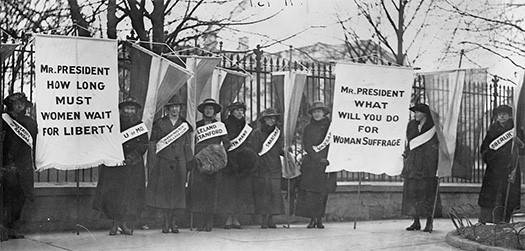

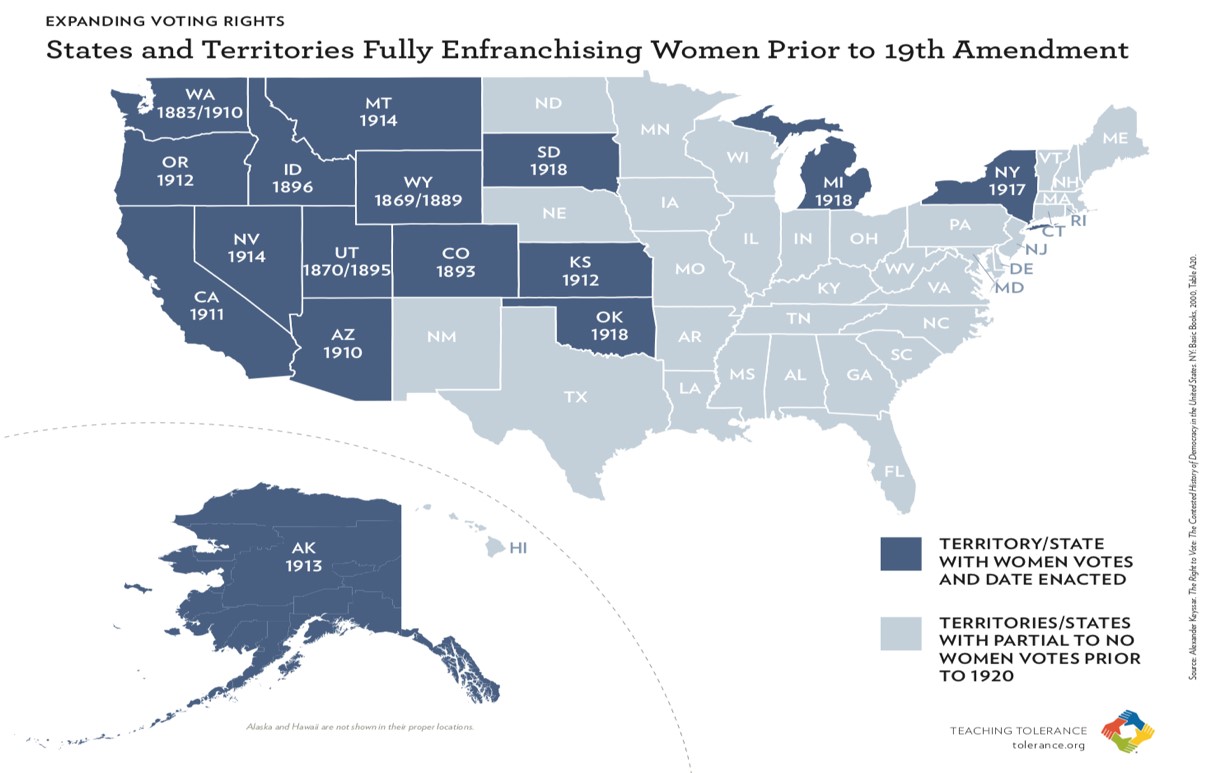












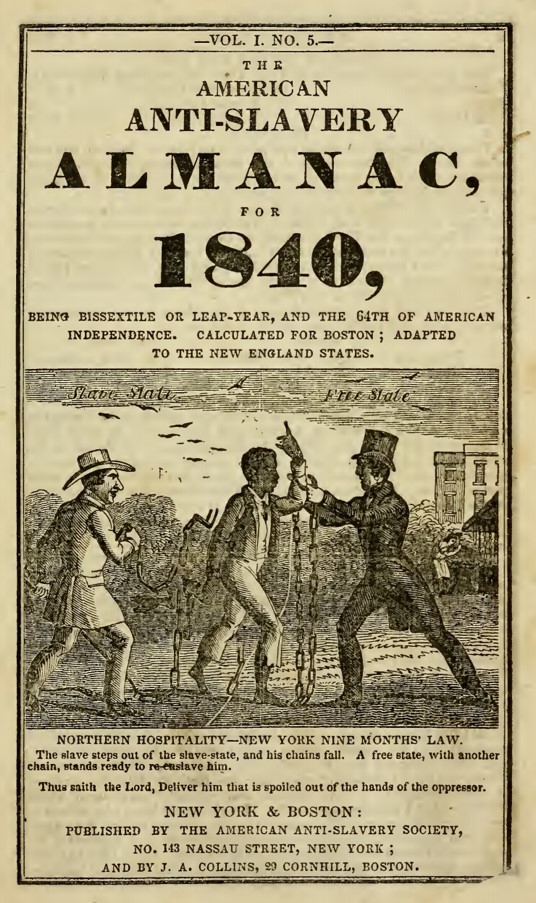


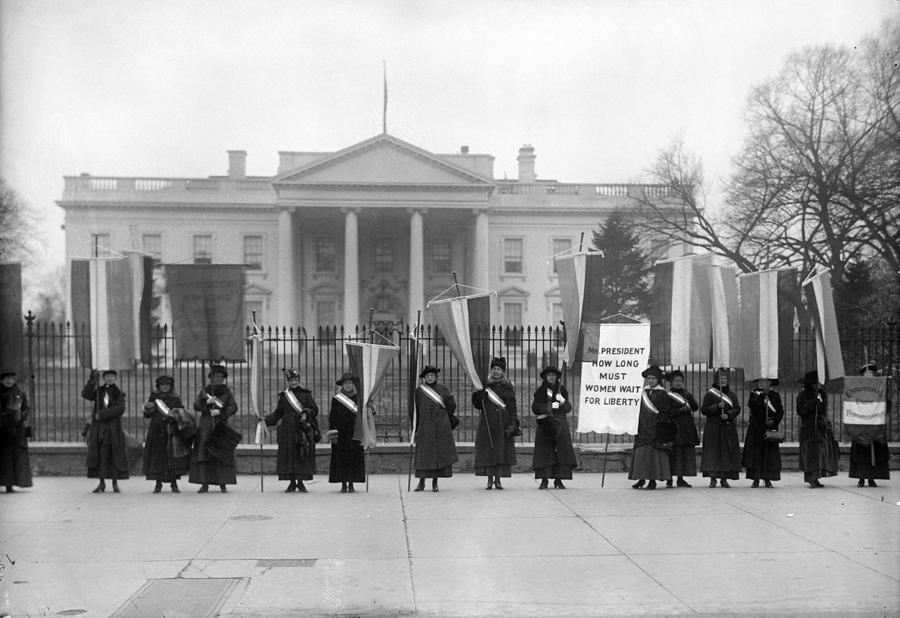

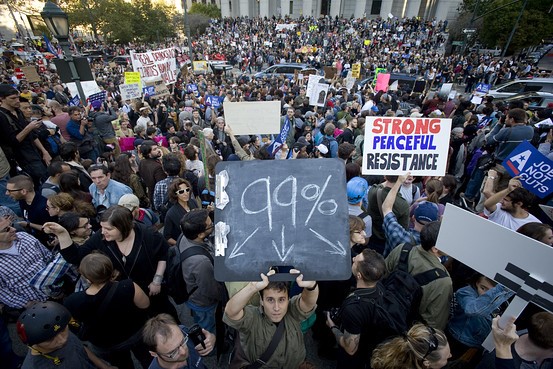
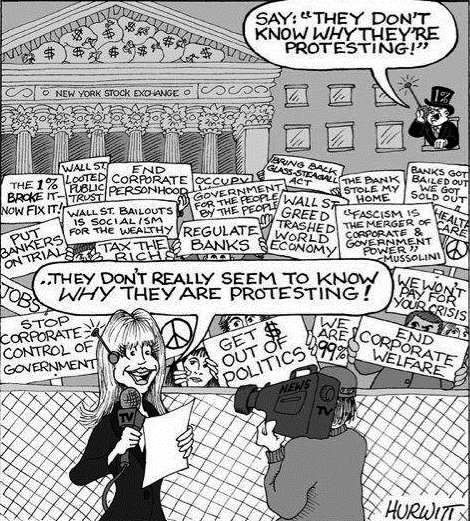

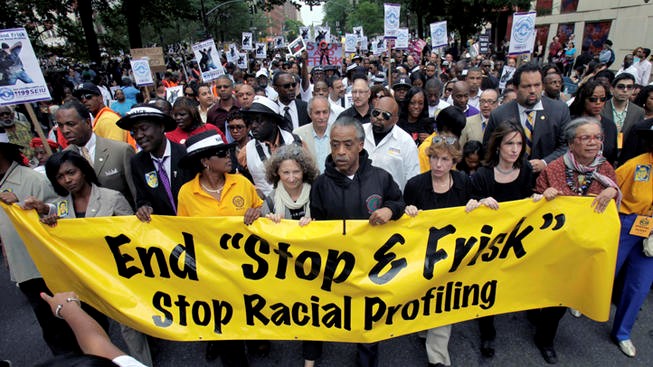
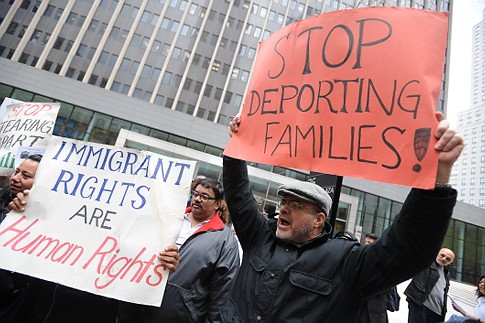


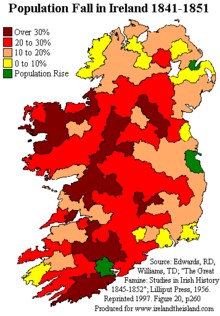


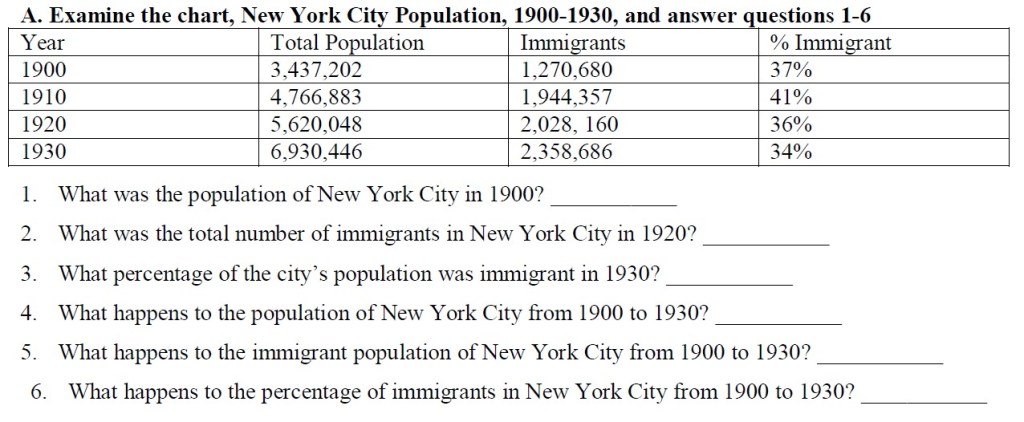
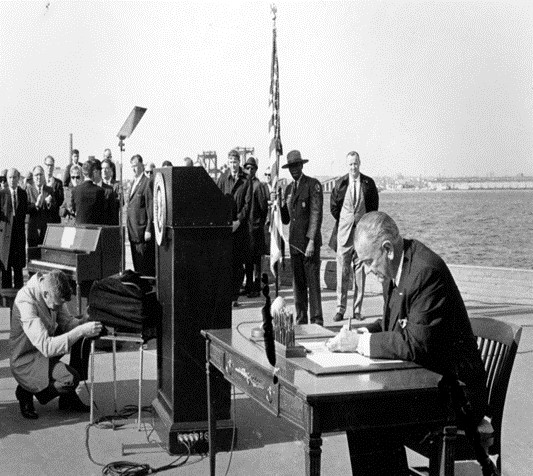

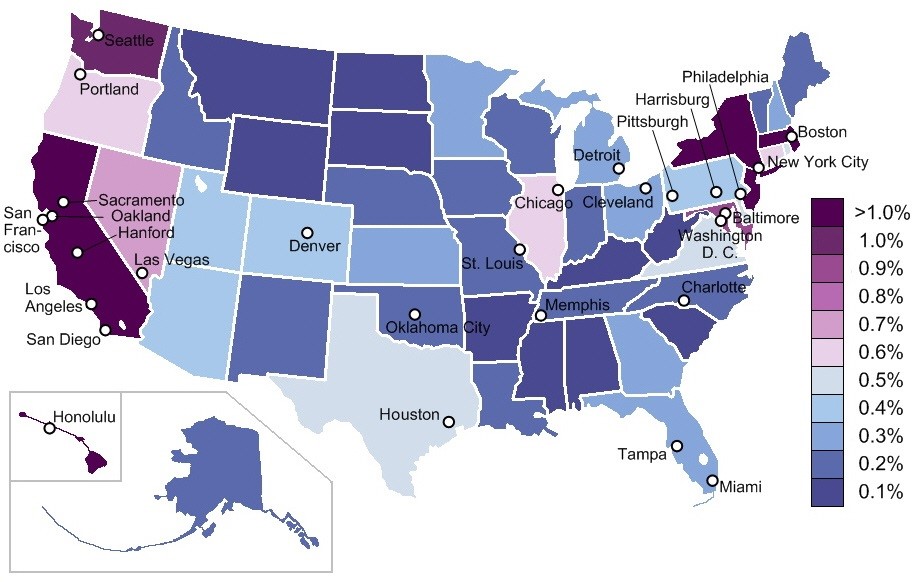
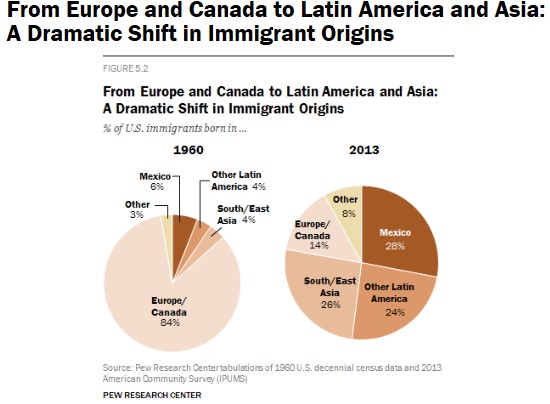
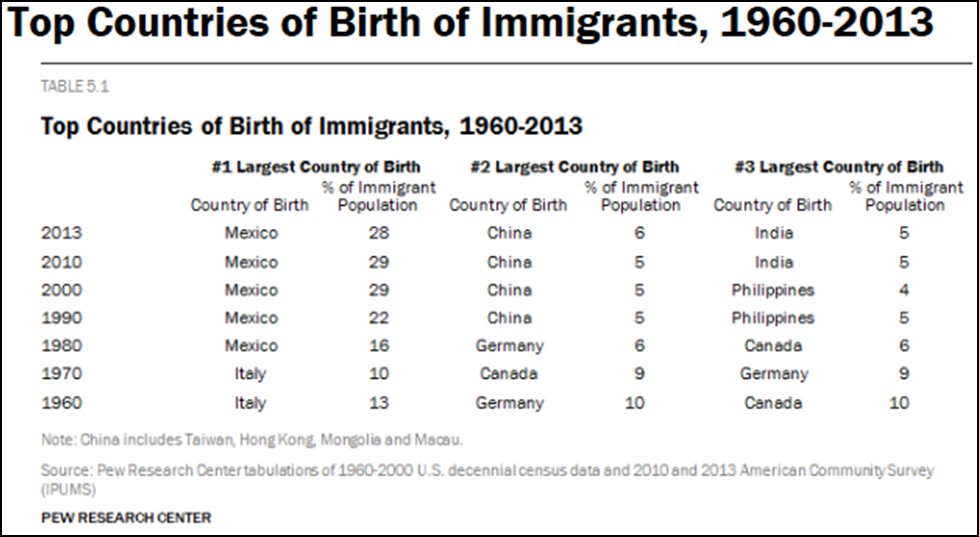
 njcssjournal
