My name is Samuel Allinson. I was born in 1739, and lived in Burlington County New Jersey. Professionally, I was a lawyer who was considered to be very talented during my career. I was an abolitionist and Quaker. During the Revolution, I was a supporter of Loyalist ideals because enslaved peoples who were able to get to England in the late 1700s would be offered freedom. In my life, I worked to manumit the enslaved with my father-in-law, David Cooper. I worked hard to give freedom to Catherine and her daughter Esther in 1774. In 1782, I manumitted Jean and her three children Deborah, Violetta, and Edward.
As a prominent member of the Quaker community in Burlington County, I led meetings in the 1780s to help members of my religion understand the immorality of slavery. More importantly, I used these meetings as an opportunity to help educate free blacks in my community-an unprecedented option at the time.
During the revolution, I wrote letters to two well-known founding fathers: William Livingston and Patrick Henry. In my letter to Livingston, I explained why the institution of slavery was immoral. I was hoping that New Jersey would lead the way of abolition for the new nation, but unfortunately, Governor Livingston would not be able to do this during his time in office. I didn’t know Patrick Henry, but my words to him were adamant about the abolition of slavery.
So, knowing all of this about me, I ask you: When have you taken a stand for what you know is morally right?
Why did Samuel Allinson decide to contact prominent menduring the Revolutionary War era?
Did Samuel Allinson’s decision to speak out against slavery have any benefit?
If you could ask Samuel Allinson one question today, what would it be?
What causes do you believe in or support?
What factors influence our decisions to stand up for what is morally right?
I am now 39 years of age, widowed and providing and caring for with my four children of ten to seventeen years of age, living in Burlington near my sister, Sarah. I am also a nurse and a Quaker. It is horrible that this war has come to our great land. On December 8th, I am thinking about the thousands of troops passing through here who will lose their lives.
Recently, we heard for days on end that the British troops were heading towards us. Now, the Hessians are camping nearby for the winter. When the Hessians entered our town, their colonel promised us safety, so long as they could quarter in town and that none of the inhabitants of Burlington had arms to use against them. However, the retreating Continental Army is also around, and they have ships on the Delaware River prepared to fire on the Hessians should they find them.
Captain Mooretried to deliver this message of peace from the Hessians to the ships but failed. A few of our townsmen went outside and nearly got hit with a cannonball! Then, when some Hessians went out, the ships fired all night on the town since they thought Burlington was full of Hessians. My neighbors felt incredibly concerned and disappointed at this treacherous attack against our town by our own people. My family is caught in the crossfire.
One of my neighbors told us to go and hide in our cellar. Thankfully, my home stayed in a peaceful state, and I trusted that God would protect each of us, despite my feelings of loneliness and uncertainty about what might happen next.
In the following days, the Hessians eventually left town and then the sailors came and went on searches for Tories destroying property and bring fear to every innocent resident. They captured 17 of my neighbors and friends and took them to prison. This is very frightening for all of us, especially our children.
What should Margaret do in this situation?
Go about life as usual continuing her trust in God.
Continue hiding in the cellar with her children and sister.
Leave and walk to the countryside during this cold weather with her family and take a risk that some stranger will let them in, because it seems too unsafe to stay in Burlington.
Although Margaret appears neutral, like most Quakers,which side should she consider supporting?
She should support the British, since the colonies belong to Britain, and the Hessians seem more accommodating than the Patriots who fired and arrested her neighbors?
She should support the Patriot cause, in the name of liberty and equality?
Margaret has a secret chamber available in the cellar of her home. One of her neighbors, a doctor and Episcopal clergyman who supports Britain, asks to hide in her home.
Should she let him into her home?
Yes, since he is one of her neighbors.
Yes, if she also supports the British side.
No, because hiding a Loyalist compromises her family’s safety.
It is the twelfth month of the year 1776, and I am now thirty-six years of age. I am a farmer and minister living with my wife Esther Warrington and our children in Burlington County. Though three of our children died at an early age, we still have seven with us. I also spend time mending my neighbors’ pumps.
Before my father Robert passed away, he was a first cousin to the minister John Woolman. In 1754, Reverend Woolman warned the Society of Friends that slavery is sinful, and he stated that “the slave trade harms families, prevents enslaved people from knowing God, and violates the Golden Rule.”
During my town’s meetings among Friends (Quakers), we have been discussing what to do about the “negroes”[1] in our community. On the fifteenth day of the eighth month, we had a meeting and afterwards I went to visit some neighbors to talk with them about owning enslaved persons.
I was appointed at the Evesham monthly meeting to convince my neighbors that it is wrong to have slaves and they should see to it that the children should be taught in the wisdom of God.
Earlier this year at the Philadelphia Yearly Meeting, it was mandated that all Quakers manumit their slaves; those who refused to do so would essentially be disowned. Some of the slaveholders in Burlington County were more resistant to this mandate, while others complied.
Recently, I heard that in the middle of the second month, 1776, John Hay and other men armed with clubs went to a “Negro” man’s home near Haddonfield and tried to take away his son, but a violent fight ensued and they failed to do so.
I wonder if my neighbors are this resistant to ending slavery. Even though our new state of New Jersey has refused to end slavery, I do not know if Quakers can continue to allow it.
How should John Hunt act in response to Friends in his community who still hold slaves?
a. Visit them privately and urge them to manumit the slaves.
b. Visit them again with other Friends to interrogate them about having slaves.
c. Address this issue as a whole community in a monthly town meeting.
d. Leave them alone.
Is there a ‘best approach’ to change someone else’s mind who has slaves?
a. How do you argue with someone who believes that they are benefitting economically from slave ownership?
b. How do you explain to a friend or neighbor that it is morally wrong by taking away someone’s liberty?
c. With America fighting for freedom and independence from England, should the emancipation of enslaved persons be one of the reasons for the American Revolution?
d. Is the independence of enslaved persons and ending the slave trade related to the Declaration of Independence?
[1] Note that this was the language used by Hunt and others to describe African American people.
I was born on March 26, 1752 in Neshaminy, Pennsylvania. I was the fourth child of Charles and Ann Beatty. My father was a highly respected clergyman from Neshaminy. He was also a huge supporter of the College of New Jersey (Princeton). He served as a trustee for the college for several years. Sadly, my father would die prematurely of yellow fever while on a visit to Barbados trying to raise money for the college in 1772. His death devastated our family. After a long courtship, I would marry Reverend Philip Vickers Fithian on October 27, 1775, eight months before the signing of the Declaration of independence.
Following Philip’s death from exposure while serving as a military chaplain in New York, I would go on to marry Philip’s second cousin Joel Fithian. Joel and I would have nine children together.
The death of my husband Philip on October 8, 1776, at the age of 29, affected me deeply. My husband and I were huge supporters of the revolutionary cause. He lived his life with a belief in duty and service as well as a strong religious devotion and commitment. Philip’s death made me question my support for America’s fight for independence. My faith had already been tested by the premature death of my father in 1772. Going forward, I had to find a way to carry on in order to live a life devoted to God and country!
What should Elizabeth do, in the middle of the Revolutionary War, following the tragic death of her husband Philip?
Select one option and explain your answer in 4 to 6 sentences.
Remarry in order to have a family of her own.
Move in with her brother Dr. John Beatty in Princeton, New Jersey.
Move to another area of New Jersey to begin a new life.
Continue to live in her husband’s home in Greenwich, New Jersey.
Other.
Interview Elizabeth shortly after the death of her husband in 1776. Select one question below and write or record what might have been her response.
Would you put your personal welfare and interests before those of your country?
Are your religious convictions more important than your family?
As a widow, would you risk your life in support of the revolutionary cause?
Below is one of the last letters Philip Fithian wrote to his wife Elizabeth prior to his death. He wrote this letter 19 days before he died. Read and analyze the letter and answer the following guided questions:
1. Write a one sentence summary of this letter.
2. What was happening at the time this letter was written?
3. What did you find out from this letter that you might not learn anywhere else?
Camp Near Kings-Bridge, Sept. 19: 1776.
My dear Betsey.
“Amidst all the Distress & Ruins of this dreadful War I am yet alive & yours. Our Enemies pursue us close on from Place to place. But we drubbed them well last Monday since which they have laid quiet. Your Brothers John, Reading & Arckee are well, I saw them since the Battle. We expect to have a general Engagement soon, & are not dispirited in the least by our late Losses. I hope to see my dear Betsey by the tenth of December & not before— But wonder much that I do not hear from her; as it is now more than a Month since she wrote me a Word that I have received:—And since that time I have wrote with this seven long Epistles, a full sheet in each— One Aug.19—One 21st—26th— Sept: 1st 3d 9th & now the 19th.
I pray God daily that you may be preserved & in Health. My Duty to Mr. Green & Family. Last Sund. & Monday were two terrible Days; But on Monday our brave Heroes made them give Way. The English Army, Tories & All, is not supposed to be less than 30,000 strong. But our Army wishes to attack them. Peace, & God’s Blessing be with my Betsey, my dear Wife, forever may you be happy.“
“These times will try many.” As a Quaker, I am a pacifist, and I abhor war. Though we have tried to remain neutral in the current conflict, the war has been brought to our doorsteps as George Washington and the Continental Army retreat through New Jersey. Having lived in Philadelphia for several years, I moved to Woodbury in West Jersey.
My younger brother, John, is a Patriot and caught up in the revolutionary fervor. He served on the Provincial Congress of New Jersey, was the author of the New Jersey Constitution of 1776, and is a member of the Second Continental Congress, which adopted the Declaration of Independence.
The Society of Friends has decided to disown any Quaker who participates as any “Insurrections, Conspiracies, & illegal assemblies.” As a result of his participation in the American Revolution, the Society of Friends has ultimately decided to disown my brother John, effectively removing him from our faith. John’s “ground of action and that of his relations was different, and a coolness ensued, until too much of an estrangement took place.” My brother and I were “as nearly united as perhaps two brothers ever were,” but I fear the Revolutionary War will is tearing us apart.
What should David Cooper do as his relationship with his brother frays under the stress of the American Revolution? Be sure to provide reasoning for your response.
A. The Society of Friends warned John not to get involved in the Revolution. What he did is unforgivable and I will not attempt to reconcile our relationship.
B. Family is the most important aspect of my life. I will reconcile with John even if it means it will create tensions with the Society of Friends and my beliefs.
C. John is doing what he believes is right, and even if I do not agree with him, I will do everything I can to reconcile our relationship.
Complete the following after you make your decision in Part 1:
Write a letter to your brother John, informing him of your decision regarding his involvement in the American Revolution.
I was born on September 29, 1748 and was the eldest son of Samuel and Priscilla Fithian. I was well educated growing up and with my father’s guidance and encouragement I pursued a career in public service. I would serve as an officer through much of the American Revolution and settled in Greenwich, N.J. permanently when my military service had concluded. Most, if not all of the Fithians, were huge supporters of the revolutionary cause. Philip and I both participated in the Greenwich Tea Burning that took place in December of 1774. Duty to one’s family, public service, the belief in American independence, and a strong religious fervor were very important ideals to both of us.
The death of my second cousin Philip affected me deeply. We were very close. He named me as the co-executor of his will. I would suffer another terrible loss when my first wife Rachel Holmes died prematurely in 1779 at the age of 28.
I would go on to marry Philip’s widow Elizabeth Beatty Fithian on February 2, 1780. We would have nine children together. We also named our third child after my second cousin, Philip. My public service continued in the state legislature for several years and as the sheriff in Cumberland County.
What action should Joel Fithian take following his participation in the Greenwich Tea Burning on December 22, 1774? Select one option and explain your answer in 4 to 6 sentences.
Flee the area in an effort to avoid civil and criminal charges and possible imprisonment.
Immediately enlist in the Continental Army.
Continue to live in Greenwich, confess and face the consequences for the damage to property.
Continue to live in Greenwich and deny any involvement.
Interview Joel Fithian at the end of the Revolutionary War in 1781. Select one question below and explain what might have been his answer in 4 to 6 sentences.
Would you put your family before your country?
Would you put your faith before your family?
Would you risk your life in support of the revolutionary cause?
Below is a passage from a journal entry by Philip Fithian describing the Greenwich Tea Burning. Read and analyze the journal entry and answer the following guided questions:
1. Write one sentence summarizing the journal entry.
2. What was happening at the time in history this journal entry was written?
3. What did you find out from this journal entry that you might not learn anywhere else?
“Last night the tea was, by a number of persons in disguise, taken out of the house & consumed with fire. Violent, & different are the words about this uncommon Manoeuvre, among the inhabitants. Some rave, some curse & condemn, some try to reason; many are glad the tea is destroyed, but almost 4 all disapprove the manner of the destruction.“
Teaching Controversial Issues: Teachers’ Freedom of Speech in the Classroom
by Arlene Gardner
Executive Director, New Jersey Center for Civic Education
What is the purpose of education? The conventional answer is the acquisition of knowledge. Looking beyond this facile response, most people will agree that the true purpose of education is to produce citizens. One of the primary reasons our nation’s founders envisioned a vast public education system was to prepare youth to be active participants in our system of self-government. John Dewey makes a strong case for the importance of education not only as a place to gain content knowledge, but also as a place to learn how to live. In his eyes, the purpose of education should not revolve around the acquisition of a pre-determined set of skills, but rather the realization of one’s full potential and the ability to use those skills for the greater good.
Democratic self-government requires constant discussions and decisions about controversial issues. There is an intrinsic and crucial connection between the discussion of controversial political issues and the health of democracy. If we want our students to become informed, engaged citizens, we need to teach them how to “do” democracy by practicing the skills of discussing controversial issues in the classroom and learning how to respectfully disagree.
Research has demonstrated that controversy during classroom discussion also promotes cognitive gains in complex reasoning, integrated thinking, and decision-making. Controversy can be a useful, powerful, and memorable tool to promote learning. In addition to its value in promoting skills for democracy, discussing current controversial public issues:
Is authentic and relevant
Enhances students’ sense of political efficacy
Improves critical thinking skills
Increases students’ comfort with conflict that exists in the world outside of the classroom
Develops political tolerance
Motivates students
Results in students gaining greater content knowledge.
(Diana Hess, Controversy in the Classroom: The Democratic Power of Discussion (2009); Nel Noddings and Laurie Brooks, Teaching Controversial Issues: The Case for Critical Thinking and Moral Commitment in the Classroom (2017); “Guardian of Democracy: The Civic Mission of Schools” (2011); Center for Research on Learning and Teaching, University of Michigan at https://crlt.umich.edu/tstrategies/tsd).
Yet, teachers may consciously (or unconsciously) avoid controversial issues in the classroom because of the difficulty involved in managing heated discussions and/or for fear that parents will complain or that the school administration will admonish or punish them for “being controversial.” These concerns are certainly not groundless. How well are teachers protected from negative repercussions if they address controversial issues in their classrooms? How extensive are teachers’ First Amendment rights to free speech? How can heated disagreements among students be contained in the classroom?
Two different legal issues exist regarding free speech rights of teachers: The First Amendment directly protects a teacher’s personal right to speak about public issues outside of the classroom and “Academic Freedom” protects a teacher’s right and responsibility to teach controversial issues in the classroom. However, both have certain limitations.
First Amendment Protection of Public Speech by Teachers
Although the First Amendment free speech protection is written in absolute terms (“Congress shall make no law…”), the courts have carved out several exceptions (for national security, libel and slander, pornography, imminent threats, etc.). The courts have also carved out a limited “government employee” exception based on the rationale that a government employee is paid a salary to work and contribute to an agency’s effective operation and, therefore, the government employer must have the power to prevent or restrain the employee from doing or saying things that detract from the agency’s effective operation. Thus, the government has been given greater latitude to engage in actions that impose restrictions on a person’s right to speak when the person is a governmental employee, which includes teachers who work in public schools.
Some of the earliest threats to the free speech rights of public school teachers were the loyalty oaths that many states imposed on government employees during the ‘‘red scare’’ and early ‘‘cold war’’ years of American history. In Adler v. Board of Education (1952), the Supreme Court in a 6-3 decision rejected First Amendment claims and upheld a New York statute designed to enforce existing civil service regulations to prevent members of subversive groups, particularly of the Communist Party, from teaching in public schools. The Supreme Court effectively overturned this ruling in the 1960s and declared several loyalty oath schemes to be unconstitutional because they had chilling effects on individuals which violated their First Amendment rights (Baggett v. Bullitt (1964); Cramp v. Board of Public Instruction (1961); and Keyishian v. Board of Education (1967)).
Much of the reasoning regarding the “government employee” exception to the First Amendment outlined in Adler was abandoned altogether in the 1968 U.S. Supreme Court decision in Pickering v. Board of Education. Teacher Marvin Pickering had written a letter complaining about a recently defeated school budget proposal to increase school taxes. The school board felt that the letter was “detrimental to the efficient operation and administration of the schools” and decided to terminate Pickering, who sued claiming his letter was protected speech under the First Amendment. The U.S. Supreme Court held that Pickering’s dismissal violated his First Amendment right to free speech because public employees are entitled to the same measure of constitutional protection as enjoyed by their civilian counterparts when speaking as “citizens” and not as “employees.”
In Mt. Healthy City School District v. Doyle (1977), non-tenured teacher Fred Doyle conveyed the substance of an internal memorandum regarding a proposed staff dress code to a local radio station, which released it. When the board of education refused to rehire him, Doyle claimed that his First and Fourteenth Amendment rights had been violated. The court developed a “balancing test” that required the teacher to demonstrate that the speech act was a ‘‘substantial’’ or ‘‘motivating factor’’ in the administration’s decision and gave the school board the opportunity to demonstrate, based on the preponderance of the evidence, that the teacher’s speech act was not the ‘‘but for’’ cause of the negative consequences imposed on the teacher by the school board. Finally, the court would “balance” the free speech interests of the teacher and the administrative interests of the school district to determine which carried more weight. Based on this test, the U.S. Supreme Court found that the teacher’s call to the radio station was protected by the First Amendment, that the call played a substantial part in the board’s decision not to rehire Doyle, and that this action was a violation of Doyle’s rights under the First and Fourteenth Amendments.
In a 5/4 decision in Connick v. Meyers (1983), the U.S. Supreme Court held that speech by public employees is generally only protected when they are addressing matters of public concern, not personal issues. Sheila Meyers was an Assistant District Attorney who had been transferred. She strongly opposed her transfer and prepared a questionnaire asking for her co-workers views on the transfer policy, office morale and confidence in supervisors. She was terminated for insubordination. Meyers alleged her termination violated her First Amendment right to free speech. The district court agreed and the Fifth Circuit affirmed. However, the U.S. Supreme Court reversed because Meyer’s speech only dealt with personal not public issues. “When a public employee speaks not as a citizen upon matters of public concern, but instead as an employee upon matters only of personal interest, absent the most unusual circumstances, a federal court is not the appropriate forum in which to review the wisdom of a personnel decision taken by a public agency allegedly in reaction to the employee’s behavior.” Although the case involved an Assistant District Attorney, it is applicable to all public employees: teachers must demonstrate that their speech is of public concern.
This was confirmed in Kirkland v. Northside IndependentSchool District (1989) where the school district did not rehire non-tenured teacher Timothy Kirkland because of poor performance and substandard teaching evaluations. Kirkland filed a lawsuit in federal district court against Northside, claiming that he was not rehired in violation of his First Amendment rights after he gave his students a reading list that was different from Northside’s list. Northside argued that Kirkland had no right to substitute his list without permission or consent and he had failed to obtain either. The district court ruled in favor of Kirkland and Northside appealed. The Fifth Circuit Court of Appeals reversed and dismissed Kirkland’s complaint, holding that Kirkland’s “speech” did not infringe on any matter of public concern and was in fact “private speech.” If the nature of the speech is purely private, such as a dispute over one employee’s job performance, judicial inquiry then comes to an end, and the question of whether the employee’s speech was a substantial or motivating factor in the decision not to rehire him need not even be reached. The U.S. Supreme Court denied cert, leaving this decision in place.
Academic Freedom
Although primarily used in the context of university faculty rights, “Academic Freedom” protects a teacher’s ability to determine the content and method of addressing controversial issues in the classroom. This is more limited at the K-12 level because the courts have long held the view that the administration of K-12 public schools resides with state and local authorities. Primary and secondary education is, for the most part, funded by local sources of revenue, and it has traditionally been a government service that residents of the community have structured to fit their needs. Therefore, a teacher’s “Academic Freedom” is limited to his or her content and method of teaching within the policies and curriculum established by the state and local school board. By finding no First Amendment violation, the court in Kirkland implicitly held that he had no right to substitute his own book list for the one approved by the district without permission or consent, which he failed to obtain.
In an early case, following the end of World War I, Nebraska had passed a law prohibiting teaching grade school children any language other than English and Robert Meyer was punished for teaching German at a private Lutheran school. The court held that the Nebraska law was an unnecessarily restrictive way to ensure English language learning and was an unconstitutional violation of the 14th Amendment due process clause (the 14th Amendment had not yet applied the First Amendment to the states until Gitlow v. New York in 1925) that exceeded the power of the state (Meyer v. Nebraska, 262 U.S. 390 (1923).
“The Fourteenth Amendment, as now applied to the States, protects the citizen against the State itself and all of its creatures-Boards of Education not excepted. These have, of course, important, delicate, and highly discretionary functions, but none that they may not perform within the limits of the Bill of Rights. That they are educating the young for citizenship is reason for scrupulous protection of Constitutional freedoms of the individual, if we are not to strangle the free mind at its source and teach youth to discount important principles of our government as mere platitudes.” Justice Jackson in West Virginia Board of Education v. Barnett (1943)(holding unconstitutional a requirement that all children in public schools salute the flag).
The Supreme Court has more than once instructed that “[t]he vigilant protection of constitutional freedoms is nowhere more vital than in the community of American schools” (Shelton v. Tucker (1960)). In Epperson v. Arkansas (1968)(a reprise of the famous 1927 “Scopes Trial”), the Arkansas legislature had passed a law prohibiting teachers in public or state-supported schools from teaching, or using textbooks that teach, human evolution. Sue Epperson, a public school teacher, sued, claiming that the law violated her First Amendment right to free speech as well as the Establishment Clause. A unanimous U.S. Supreme Court declared the state law unconstitutional. The Court found that “the State’s undoubted right to prescribe the curriculum for its public schools does not carry with it the right to prohibit, on pain of criminal penalty, the teaching of a scientific theory or doctrine where that prohibition is based upon reasons that violate the First Amendment.” Seven members of the court based their decision on the Establishment Clause, whereas two concurred in the result based on the Due Process clause of the 14th Amendment (because it was unconstitutionally vague) or the Free Speech clause of the First Amendment.
The Supreme Court, however, has not clearly defined the scope of academic freedom protections under the First Amendment, and commentators disagree about the scope of those protections. (See, e.g., William W. Van Alstyne, “The Specific Theory of Academic Freedom and the General Issue of Civil Liberty,” in The Concept of Academic Freedom 59, 61-63 (Edmund L. Pincoffs ed., 1972); J. Peter Byrne, “Academic Freedom: A ‘Special Concern of the First Amendment’,” 99 Yale L.J. 251 (1989); and Neil Hamilton, Zealotry and Academic Freedom: A Legal and Historical Perspective (New Brunswick, 1998).
Whatever the legal scope, it is clear that the First Amendment protection of individual academic freedom is not absolute. For example, in Boring v. Buncombe County Board of Education (1998), the Fourth Circuit Court of Appeals held that a teacher could be reprimanded (in this case transferred) because she sponsored the performance of a play that school authorities subsequently deemed inappropriate for her students and inconsistent with the curriculum developed by the local school authorities. This judicial deference toward K through 12 institutions often can be seen in cases involving teachers who assert that their First Amendment rights were violated when school administrators imposed punishments on them for engaging—while they taught their classes—in some form of expressive activity that the administrators disapproved.
The content
While cases about academic freedom, such as Epperson, involved state laws that limited or prohibited certain content being taught (in this case prohibiting teachers in public or state-supported schools from teaching, or using textbooks that teach, human evolution); New Jersey has taken a very broad approach to classroom content. Since 1996, New Jersey has established state standards (currently called “Student Learning Standards”) that set a framework for each content area. Unlike many other states, New Jersey does not establish a state curriculum but rather leaves this to local school boards. Subject to applicable provisions of state law and standards set by the State Department of Education, district school boards have control of public elementary and secondary schools. How much protection do New Jersey teachers have when they address controversial topics? Most First Amendment education cases in New Jersey involve students’ rights rather than teachers’ rights (e.g., school dress, vulgar language, threats, religious speech, equal access, See http://www.njpsa.org/documents/pdf/lawprimer_FirstAmendment.pdf). However, several recent cases from the Third Circuit (which includes New Jersey) provide some parameters.
In Edwards v. California University of Pennsylvania (3rd Cir. 1998), a tenured professor in media studies sued the administration for violating his right to free speech by restricting his choice of classroom materials in an educational media course. Instead of using the approval syllabus, Edwards emphasized the issues of “bias, censorship, religion and humanism.” Students complained that he was promoting religious ideas in the class. The U.S. Supreme Court declined to review the Third Circuit’s summary judgement against Edwards, holding that a university professor does not have a First Amendment right to choose classroom materials and subjects in contravention of the University’s dictates.
A very recent decision regarding a New Jersey teacher confirms the fact that the First Amendment does not provide absolute protection for teachers in public schools to decide the content of their lessons if it is not within the curriculum set by the school district. In Ali v. Woodbridge Twp. School District (3rd Cir. April 22, 2020) a non-tenured public high school teacher at Woodbridge High School was teaching Holocaust denial to his students and was posting links to articles on the school’s website saying things such as, “The Jews are like a cancer” and expressing conspiracy theories accusing the United States of planning a 9/11-style attack. When the Board of Education fired Ali, he sued claiming that his employment was terminated on the basis of his race and religion, and that defendants had violated his rights to free speech and academic freedom, among other claims. The District Court rejected all of Ali’s claims, awarding summary judgment to the school board, and the Third Circuit affirmed.
These are extreme cases where a teacher is addressing issues that are NOT within the curriculum set by the university or within the state social studies standards and the local school district’s curriculum. When teachers are teaching a controversial topic that is included in the New Jersey Student Learning Standards for Social Studies and their school district’s social studies curriculum, the existing case law seems to support the fact that they would be protected by the Fourteenth Amendment, unless they are violating school policies that require teaching in a neutral, balanced manner that does not seek to indoctrinate students.
For example, what if a teacher wants to assign a research paper about the Stonewall Riots or the Lavender Project?Since the history of LGBT rights is in the state standards and supposed to be included in local school district social studies curriculum, the Stonewell Riots and Lavender Project would be part of this history. This is not a situation like Ali where the materials were beyond the scope of the local curriculum (as well as being taught in an indoctrinating manner—see below). If the teacher fears that the topics will be controversial with the community, he or she should make the school administration aware of what he or she is planning to do. Since here, what the teacher plans to teach is within the state standards and the local school district curriculum, the school administration should support the teacher. If parents object, the real issue is one of policy (Should LGBT history be taught?), which is decided by the state and local boards of education, not the teacher. Therefore, the parents’ argument should be with the state and local boards of education.
What if a teacher wants to show scenes of an R-rated movie in the classroom (i.e. Revolutionary War scenes from The Patriot or D-Day from Saving Private Ryan?) Obviously, the American Revolution and Would War II are part of the state standards for U.S. History and in every local school district’s curriculum. The movie scenes would need to relate to the district curriculum and the teacher should get prior administrative and parental approval if some movie scenes are going to be very graphic.
How should a teacher prepare lessons on Nazi Germany during the 1930s? Nazi Germany is also part of the state history standards and every school district’s curriculum. It should be taught in a way so that students can understand how the Nazis came to power and the prejudices they carried. Some of the World War II footage and movies may be shocking but our students will not be able to become informed, engaged citizens if we hide the past from them.
An ounce of prevention beforehand will help. Before starting, teachers should be clear about the goal of their lesson: The classroom activities should encourage critical thinking. You are not trying to convince students of any particular point of view. Preview any materials, especially visual media which may be very powerful or provocative. Be aware of the biases of the sources of information that will be used by students.
Teaching Tolerance suggests in Civil Discourse in the Classroom that “Teachers can effectively use current and controversial events instruction to address a wide variety of standards and even mandated content. To do so, however, teachers must work carefully and incrementally to integrate this new approach in their classrooms.” The University of Michigan’s Center for Research on Learning and Teaching offers guidance for how instructors (offered for college instructors but applicable for K-12) can successfully manage discussions on controversial topics. See Center for Research on Learning and Teaching, University of Michigan at https://crlt.umich.edu/tstrategies/tsd). The 1940 “Statement on Academic Freedom and Tenure” of the American Association of University Professors, suggests that teachers should be careful to avoid controversial matters that are unrelated to the subject discussed.
Before engaging students in an activity or discussion involving a controversial subject, tell your supervisor and/or principal what you are planning on teaching and, if necessary, reference the district policy on teaching controversial issues, explain the lesson’s connection with the district social studies curriculum and explain the goal and value of what you plan to do. Then, consider the demographics of your community. If you anticipate that the topic of your lesson will be controversial with the community, send a note and/or talk with your students’ parents and/or the Parent Teacher Organization.
In an informative piece titled “Do You Have the Right to be an Advocate?,” published by EdWeek.org, Julie Underwood, a professor of law and educational leadership and policy analysis at the School of Education, University of Wisconsin-Madison, explains that the “district or the state can regulate employee speech during school hours or at school-sponsored activities to protect their own interests in instruction and political neutrality.” Despite the ambiguity in the laws protecting a teacher’s freedom of speech, Underwood concludes: “If it relates to the in class instruction and is age appropriate there is a good rationale for having a political discussion”.
Teaching in a Neutral or Balanced Manner
If the teacher has created a supportive, respectful classroom climate and built tolerance for opposing views, it will be easier to consider controversial topics. For example, considering historical controversies might be good background as practice for looking at current controversies. Establish a process and rules of adequate evidence or support so that the discussion is based on facts rather than simply opinions. To help maintain classroom order even when students are having heated disagreements, set clear rules for discussions or use activities that require students to use active listening skills when considering controversial issues, such as:
Continuum/Take a Stand
Civil Conversations
C3 Inquiries
Guided discussions
Socratic Smackdown
Moot courts—structured format for considering constitutional issues
Philosophical Chairs discussion
Legislative hearings—structured format for considering solutions to problems
Carefully consider how students are grouped if they are to work cooperatively. Provide closure (which may be acknowledging the difficulty of the issue).
School boards work primarily through policies which set guidelines for principals, teachers, parents and students, as well as the district curriculum. To avoid a problem afterwards, the teacher should make sure that the controversial topic is within the state standards and the curriculum adopted by their local school board. Then the teacher should consult the school district’s policy regarding the teaching of controversial issues. Most school districts have a policy (usually #2240) that supports and encourages the teaching of controversial issues and sets guidelines for teaching controversial issues, including a process for dealing with challenges. Although the language may differ, policies dealing with controversial issues generally focus on the need for the classroom lesson to be balanced, unprejudiced, fair, objective, and not aimed at indoctrinating students to a particular point of view.
Clearly, the type of indoctrination attempted by the teachers in the Edwards or Ali cases is beyond protected speech. In addition to avoiding indoctrination, teachers should avoid telling a joke in the classroom that might imply a negative characterization of an ethnic group, religion or gender. A “joke” that might be a put down of any ethnic group, religion or gender told in the classroom to students is never a good idea. It is not even a good idea for a teacher to post such a “joke” on Facebook because such speech might be considered as not addressing a matter of public concern and would not be protected by the First Amendment. However, using an historical photo, engraving or picture that included a negative image of an ethnic, racial or religious group might be okay in the context of examining what was seen as humor in the past and understanding the prejudice that existed during a particular time period. For example, when teaching about the Holocaust, a teacher might carefully use Nazi cartoons to demonstrate the high level of prejudice at the time. Another example might be using images of blackface or corporate ad campaigns to show racial attitudes when teaching about Jim Crow. The teacher does not need many examples to make the point. Know your audience. Choose carefully and be aware that certain advertising images from the Jim Crow era may offend some students in the class. The purpose of using controversial issues is important. At the core of deciding what a teacher should or should not say or do in the classroom is good judgment.
Should a teacher share his or her viewpoint on a controversial issue with the students?
Whether a teacher should share his or her opinion or viewpoint on a controversial issue will depend on the age of the students, if the opinion was requested by the students, and the comfort-level of the teacher. A teacher’s opinion may have too much influence on younger students and should probably be avoided. What if a middle or high school student specifically asks for your opinion? Such “natural disclosures” in response to a direct question by a student should be accompanied by a disclaimer, such as “This is my view because…” or “Other people may have different views”. If you prefer not to disclose your view, explicitly state that and explain why. Remember, the goal is to help students develop their own well-informed positions. Be mindful of your position as the “classroom expert” and the potential impact on the students. If you decide to disclose your own view, do it carefully and only after the students have expressed their views. Unrequested disclosures may be seen as preachy, or may stop the discussion. (See Hess, Controversy in the Classroom)
So, for example, should a teacher take a position on climate change? In terms of content, climate change is in the state standards and should be in the local school curriculum. If parents disapprove of this topic, this disagreement is really with the curriculum set by the school board, not with the teacher. However, the teaching strategy is important. Rather than taking a position, which may be seen as indoctrination or may simply stop the classroom inquiry, the better approach might be to have the students examine the issue and let the facts speak for themselves. Let students use the facts that exist to construct their own arguments about whether or not climate change is the result of mankind’s use of fossil fuels in industry and transportation. If the topic is presented in a balanced, neutral, non-indoctrinating manner, the teacher should not be subject to discipline. Objections by parents should be referred to the school administration because it is a matter of policy (Should climate change be taught?), which is decided by the state and local boards of education, not the teacher.
How should teachers address questions from students regarding Black Lives Matter and racial inequality? The ACLU in the state of Washington prepared a short online article, “Free Speech Rights of Teachers in Washington State” (NJ’s ACLU only has a publication about students’ rights) with a related hypothetical: The teacher is instructed not to discuss personal opinions on political matters with students. In a classroom discussion on racial issues in America, the teacher tells the class that he/she has recently participated in a Black Lives Matter demonstration. Revealing this is the same as giving an opinion and may not be protected speech. Teachers can be disciplined for departing from the curriculum adopted by the school district and this would be a departure.
Can a teacher state that New Jersey is a segregated state when it comes to communities? Is the teacher stating this as a personal opinion or as a fact related to a topic of learning? There is no reason to simply state that NJ is segregated unless it is in the context of helping students understand and appreciate the history of segregation in NJ consistent with state standards and district curriculum. (For example, see “Land Use in NJ” and “School Desegregation and School Finance in NJ” for history, context and facts at http://civiced.rutgers.edu/njlessons.html).
Is a teacher permitted to take a stand on the issue of removing public monuments? Assuming that this is part of a current events lesson, it would be better if the teacher remained neutral and let the students’ voice differing views. If the students all have one position, perhaps the teacher can take a position as “devil’s advocate,” but it should be made clear that this is what the teacher is doing.
Can a teacher assign blame to protests to specific groups or left or right extremist groups? Assigning blame is the same as a teacher giving his or her personal opinion. The better approach would be to have students look at the actions of specific groups and determine their appropriateness.
Can a teacher assign blame to Associate Justice Amy Coney Barrett regarding a Supreme Court decision that is 5-4 and against the teacher’s preference (i.e. Affordable Care Act, marriage, etc.). Assuming that this is part of a classroom lesson about the Supreme Court, the teacher should refrain from “assigning blame” because this is expressing his or her opinion, but should instead let the students consider the reasoning and impact of the decisions.
Is a teacher permitted to criticize or defend the government’s policies or actions on immigration? Outside the classroom, a teacher has a first amendment right to express his or her views on public issues. As part of a classroom lesson about immigration, rather than criticizing or defending the government’s policies or actions on immigration, the better approach would be to present or let students research the history of immigration policy and its impact and let the students discuss and draw their own conclusions (For example, see “Immigration Policy and its impact on NJ” at http://civiced.rutgers.edu/njlessons.html).
Can a teacher show a video clip from a specific news station (Fox, CNN) or assign students to watch a specific news program as an assignment? As long as the purpose is not indoctrination to any particular point of view and the assignments are balanced. If the teacher wants students to see and compare various media views on the same topic, that would be a valuable classroom activity. (For example, see “Educating for Informed, Engaged Citizens” virtual workshop, for background on helping students understand bias in news, at the New Jersey Council for the Social Studies website at http://www.njcss.org/; also see Choices Program at Brown University: Teaching with the News at https://www.choices.edu/teaching-with-the-news/; and Constitutional Rights Foundation Fake News at https://www.crf-usa.org/images/pdf/challenge/Understanding-Fake-News1.pdf and https://www.crf-usa.org/images/pdf/challenge/Tackling-Fake-News.pdf).
Conclusions
A teacher has a personal right under the First Amendment to share his view on public policy issues in public but NOT in the classroom. A teacher sharing his opinion or viewpoint in the classroom may be seen as indoctrination. So, for example, teachers should avoid sharing personal views on one’s sexual preference, regarding a particular candidate, President Trump’s taxes, a decision by a Grand Jury, prosecutor, FBI on racial issues, etc. Your school district may even have an explicit policy that teachers should not discuss personal views on political matters in the classroom, in which case, this policy should be followed. Everything a teacher says or does in the classroom should be considered based on the possible impact on the students.
This does not mean that teachers should avoid having students examine and discuss controversial topics. Encouraging the development of civic skills and attitudes among young people has been an important goal of education since the start of the country. Schools are communities in which young people learn to interact, argue, and work together with others, an important foundation for future citizenship. Since the purpose of social education is to prepare students for participation in a pluralist democracy, social studies classes NEED to address controversial issues. Teachers have the right and the responsibility to help their students understand controversial topics and to develop critical thinking skills. However, the controversial topics should relate to the broad scope of subjects included in the NJ Student Learning Standards and the local school district curriculum. And controversial subjects should be addressed in a neutral or balanced manner, without any effort to indoctrinate students, but rather to help them develop the knowledge and skills they will need as workers, parents and citizens in a democratic society.
Background Materials
Meyer v. Nebraska, 262 U.S. 390 (1923)
West Virginia Board of Education v. Barnett, 319 U.S. 624 (1943)
Adler v. Board of Education, 342 U.S. 485 (1952)
Shelton v. Tucker, 364 U.S. 479 (1960)
Cramp v. Board of Public Instruction, 368 U.S. 278 (1961)
Baggett v. Bullitt, 377 U.S. 360(1964)
Keyishian v. Board of Regents, 385 U.S. 589 (1967)
Pickering v. Board of Education, 391 U.S. 563 (1968)
Epperson v. Arkansas, 393 U.S. 97 (1968)
Mt. Healthy City School District Board of Education v. Doyle, 429 U.S. 274 (1977)
Connick v. Meyers, 461 U.S. 138 (1983)
Kirkland v. Northside Independent School District, 890 F.2d 694 (5th Cir. 1989), cert. denied (1990)
Bradley v. Pittsburgh Bd. of Educ., 910 F.2d 1172 (3d Cir.1990)
Boring v. Buncombe County Board of Education, 136 F.3d 364 (4th Cir. 1998)
Edwards v. California University of Pennsylvania, 156 F.3d 488 (3rd Cir. 1998), cert. denied, 525 U.S. 1143 (1999)
Ali v. Woodbridge Twp. School District, 957 F.3d 174 (3rd Cir. April 22, 2020)
Keith Barton and Linda Levstik, Teaching History for the Common Good (Erlbaum, 2004)
Diana E. Hess, Controversy in the Classroom: The Democratic Power of Discussion (New York: Routledge, 2009)
Nel Noddings and Laurie Brooks, Teaching Controversial Issues: The Case for Critical Thinking and Moral Commitment in the Classroom (New York: Teacher’s College Press, 2017).
William W. Van Alstyne, “Academic Freedom and the First Amendment in the Supreme Court of the United States: An Unhurried Historical Review,” 53 Law and Contemp. Probs. 79 (1990)
John Goodlad, “Fulfilling the Public Purpose of Schooling: Educating the Young in Support of Democracy May Be Leadership’s Highest Calling,” School Administrator, v61 n5 p14 May 2004.
Jonathan Gould, Kathleen Hall Jamieson, Peter Levine, Ted McConnell, and David B. Smith, eds. “Guardian of Democracy: The Civic Mission of Schools,” Philadelphia: Annenberg Public Policy Center, 2011
How can it be that four short months ago, we were here at my home in Princeton, New Jersey, celebrating the Declaration of Independence? I am so proud of my husband, Richard Stockton, for representing New Jersey and signing his name alongside Benjamin Franklin, John Adams, Thomas Jefferson, and other great Americans in declaring our independence from Great Britain.
My name is Annis Boudinot Stockton, and I am a patriot, a poet, and a mother of six children. The warmth in the air that day in July when we celebrated our independence has turned to a bitter cold this November as news spread that the British have taken New York City, and George Washington is retreating through New Jersey. I frequently correspond with George Washington, and I am sure that our Continental Army is in the very strongest of hands.
However, rumors abound that Washington has been pushed through Newark and New Brunswick and that he is on his way to Trenton, where he will cross the Delaware River to get to Pennsylvania. While I am hopeful he will reach the safety of Pennsylvania, I know that his retreat will bring the might of the British army and the bloodthirsty Hessians right here to Princeton. My beloved home, “Morven,” is a well-known gathering place for the intellectual elites of Princeton, and my husband signed the Declaration of Independence.
We are told that the British are only a couple of days away. My home and my children are in grave danger. I have written to my husband, but he is all the way in Baltimore, meeting with the Continental Congress. It is not our material wealth that I am worried about the British destroying. It is the intellectual wealth contained in the state papers and the collections of writings from the American Whig Society that are here at Morven.
What should Annis Boudinot Stockton do as the British close in on Princeton?
Be sure to provide reasoning for your response.
A. Remain in Princeton and defend her home and her children, even if it means putting her children in grave danger.
B. Stay in Princeton, but deny any involvement with the Revolutionary cause and implore the British for lenient treatment of her husband, Richard.
C. Immediately flee the area with her family for safety, leaving behind all her belongings, the state papers, and the papers of the American Whig Society.
D. Remain in Princeton for a few more hours to bury some of her belongings, the state papers, and the papers of the American Whig Society, but then flee the area as quickly as possible.
Annis Boudinot Stockton was a well-known poet in RevolutionaryAmerica and a prolific letter writer.
After making your decision above, complete one of the following tasks:
1. Write a poem about the retreat of the Continental Army through New Jersey and the difficult decision that was made for her family.
2. Write a letter to her husband, Richard Stockton, informing him of the decision made.
Below is a map detailing Washington’s retreat through New Jersey.
Use this map to answer the following two questions:
1. Do you think General Washington believed the Continental Army was safe once they crossed the Delaware River? Explain your answer.
2. After abandoning Princeton during the retreat through New Jersey, the Stockton family sought refuge in Monmouth County. Do you believe Monmouth County was safer than their hometown of Princeton? Why or Why not?
Social Studies for a Better World: An Anti-Oppressive Approach for Elementary Education
by Rodriguez Naseem, Noreen, and Katy Swalwell. (2021)
Reviewed by Natalie House
In “Social Studies for a Better World: An Anti-Oppressive Approach for Elementary Education,” the authors are taking on the task of how to teach anti-oppressive history and how to implement those teachings in an elementary classroom. This book aims to “…offer advice for addressing two major fears that the preservice teachers we work with often express: teaching controversial issues and being accused of indoctrination.” Noreen Naseem Rodriguez and Katy Swalwell (2021).” This book showcases the negative realities that the current social studies curriculum offers to all students in America, and takes the audience on a necessary journey that will help educators offer better learning experiences for students moving forward. The authors have created a work that is easily accessible for teachers at any level. Furthermore, the resources and research contained in this book will allow teachers to apply the authors’ ideas in their own classroom.
The authors of the book have taken the time to research different ways in which social studies can be taught. They are able to show multiple examples of effective social studies instruction by describing real lessons that teachers are currently using to help students have meaningful interactions with the curriculum. The authors help guide teachers by discussing the common pitfalls they might encounter while also giving the educators tips and tricks on how to find a solution. All of the examples in this text come with supplemental resources to help the reader implement the lessons or strategies with students easily. Teachers should also feel comfortable utilizing this information because it is all grounded in scholarly research. As a first-year teacher myself, this book was encouraging and helped to validate my emotions as it pertains to teaching hard histories. It lays out the lessons in ways that are fair to our students, while also celebrating the diversity of all people. This is critical because many students feel ignored, or left out, of the current social studies curriculum.
This book is written in a way that supports teachers, but could also be beneficial to pre-service teachers. By discussing the most controversial issues to teach, it also gives the educator time to reflect by posing thoughtful questions. These questions are meant to guide the educator through a lesson, however they also give the educator something to think about as well.
For instance, how they have been unknowingly teaching specific histories incorrectly. It offers a refreshing way for students and teachers to consider what information is being taught, as well as the ways that teachers and students are engaging with the content. The use of real-life examples helps connect the reader with the content that is being shared. Additionally, offering practical advice on how to handle the backlash that might come from teaching controversial issues is something that new teachers will find incredibly helpful.
“In addition to everything laid out in this book about curriculum and instruction, we must understand the bureaucracy and hierarchy of our states and districts so we can know where best to direct our change-making energies, buffer our credibility with ongoing meaningful professional development, and assess our own safety (mental, emotional, physical, financial) so we know exactly how far we are willing to go,” Naseem Rodriguez and Swalwell (2021).
The authors do not sugar-coat anything and they let the reader know that teaching histories in this way is not an easy task. However, it is not a task that has ever been easy in the first place.
“Anti-oppressive elementary social studies may not be easy, but it is absolutely worth it (Naseem Rodriguez and Swalwell (2021).” The opportunity for growth through dialogue with students and colleagues is endless with this book. It opens so many doors for educators to walk through and have thoughtful conversations that will benefit our students.
This book by Noreen Naseem Rodriguez and Katy Swalwell is one that I will be encouraging all of my fellow social studies teachers to read. It was refreshing to read something that was made with so much passion. By using accessible language that all teachers can understand, it made it seem as though teaching these histories today is not as daunting as it might seem. It just takes time to understand and make connections with all of humanity. I feel as though this book did a wonderful job of reaching its target audience. It is well written and has found its place in social studies literature. The reflections and informative way of thinking in this book are exactly what education needs today, and this is a book that social studies educators desperately need.
My name is Natalie House, and I am a current social studies teacher in Oklahoma. I am currently enrolled at The University of Oklahoma as a Master’s student in Instructional Leadership and Academic Curriculum with a focus on Social Studies.
“Telling Our Story: Living in New Jersey Before andDuring the Revolution”
By Mr. David A. DiCostanzo, M.Ed, Social Studies Department Chair at Vineland High School North
A Depiction of the Greenwich Tea Party (December 22, 1774)
Courtesy of the Lummis Library, Cumberland County (N.J.) Historical Society.
Introduction:
Several Social Studies teachers from around the state conducted research for a grant from the New Jersey Council for the Social Studies (NJCSS). This grant examined the histories of ordinary people in New Jersey and how the events leading up to and during the Revolutionary War impacted their lives. The grant, “Telling Our Story: Living in New Jersey Before and During the American Revolution”, is an ongoing effort by the N.J.C.S.S. to prepare educators in New Jersey for the 250th anniversary of the American Revolution during the 2025-26 school year. The 250th anniversary celebrations will continue through 2031 and is part of the overall mission of the N.J.C.S.S. to provide and make available meaningful lessons and activities to students, teachers, and the public.
The life of colonists living before and during the American Revolution in New Jersey is a fascinating aspect of American history. It’s been pointed out that “Generations of scholars have echoed historian Leonard Lundin’s 1940 argument that New Jersey was the “cockpit” of the American Revolution, a central site in the struggle over the fate of the continent.” [1] The fact that New Jersey lies between Philadelphia and New York City was significant. Both of these cities were major hubs of activity during the revolutionary era. The Declaration of Independence was drafted by the “Committee of Five” in Philadelphia. Dozens of battles during the American Revolution took place in and around New Jersey. George Washington’s victory in the Battle of Trenton is regarded by many as one of the major turning points in the American Revolution. New York City would serve as our nation’s capital from 1785 until 1790 before moving to Washington D.C. during John Adams presidency.
What was life like living in New Jersey before and during the Revolution? It’s reasonable to conclude that many, if not a majority, of the residents in New Jersey felt a certain sense of pride about the revolutionary cause. In contrast, many New Jersey residents, including Benjamin Franklin’s son William, did remain loyal to Great Britain throughout the American Revolution. William Franklin would serve as the Colonial Governor of New Jersey until 1776 when he was incarcerated for a couple of years. In 1782, William Franklin departed for Great Britain and would live abroad for the rest of his life. The relationship between father and son would remain permanently strained over William’s support of the British crown.
Exploring primary sources, such as journal entries, pamphlets, and letters related to the lives of people in various counties throughout New Jersey during the American Revolution is the most accurate method we have in determining how people lived. Discovering how people from this era lived is important work because it engages students and residents in various counties throughout New Jersey about the birth of representative government in America. The majority of the counties in New Jersey have a rich history associated with the American Revolution. Several battles took place in various counties throughout New Jersey. The city of Burlington in Burlington County was the capital of West Jersey and Perth Amboy in Middlesex County was the capital of East Jersey prior to the American Revolution. In 1790, Trenton would become the official state capital. Cumberland County also has a rich history associated with the American Revolution. Many of the people who lived in Cumberland County before and during the Revolution were huge supporters of American independence.
Historical Background:
Cumberland County has a rich history associated with the American Revolution. The Greenwich Tea Party took place in Cumberland County in 1774 in support of the revolutionary cause. Greenwich is located along the Cohansey River which flows into the much larger Delaware river.
Greenwich, New Jersey, from the banks of the Cohansey River (ca. 1800). The town dates back to the original English settlement of the region in 1676 by the Quaker proprietor John Fenwick.
Courtesy Lummis Library, Cumberland County (N.J.) Historical Society.
During the 18th Century, Greenwich was a stop for boats transporting goods. It is commonly held by historians that:
“In mid-December of 1774, a British ship called the Greyhound was carrying a shipment of tea up the Cohansey River towards Philadelphia. Along the way, the Greyhound docked at Greenwich, and tea was hidden in the home of a local British sympathizer named Daniel Bowen. On the night of December 22, local residents were meeting at the Cumberland County Courthouse to discuss the recent guidelines stated by the Continental Congress. During the meeting, they were made aware of the hidden tea, and a five-man committee was appointed to determine what should be done about it. While this was occurring, a group of local citizens decided to take matters into their own hands. They confiscated the tea and burned it near where the monument stands today. Some of the tea burners faced civil and criminal charges. However, due in part to sympathies of the local citizens for the tea burners’ cause, the trials were not completed.” [2]
A Depiction of the Greenwich Tea Party (December 22, 1774)
Courtesy of the Lummis Library, Cumberland County (N.J.) Historical Society.
This event took place about a year after the famous Boston Tea Party which is widely considered one of the most important and legendary occurrences during the Revolutionary era. It has been determined that “it would be difficult, following the Greenwich Tea Burning, to find a region more in tune with the Revolutionary call of Witherspoon, the Continental Congress and the Philadelphia and New York Synod than Cohansey.” [3] Clearly, the citizens of Greenwich wanted to leave an indelible mark on this time period as well. A monument to the tea party was dedicated in Greenwich on September 30, 1908. A couple of the images below show the sides of the monument that list the names of the twenty-three men thought to have participated in the Greenwich Tea Burning. Most of these men would go on to serve in the Continental Army during the American Revolution, including Reverend Philip Vickers Fithian. [4] Reverend Philip Vickers Fithian life and family is the primary focus of this grant which includes a documentary and a couple of learning activities.
Greenwich Tea Burning Monument (Dedicated September 30, 1908)
Courtesy of the Revolutionary War New Jersey Website
Ordinary People:
Reverend Philip Vickers Fithian
Reverend Philip Vickers Fithian
Courtesy of the Lummis Library, Cumberland County (N.J.) Historical Society
Reverend Philip Vickers Fithian was born in Greenwich, Cumberland County, New Jersey, in 1747. Philip was the eldest son of Joseph and Hannah Fithian. Fithian had fond memories of his childhood in Greenwich and often referred to the town affectionately. His various journal entries and letters to various people including several members of his family contain his thoughts and observations on a wide-range of topics including American independence, plantation life, the treatment of African-American slaves, and religion. It is commonly held that:
“Philip attended Princeton University, which was then called the College of New Jersey, in 1771-1772 to study for the clergy. He studied under the college president John Witherspoon, who would later sign the Declaration of Independence. Philip also met other future Revolutionary War figures such as James Madison, Aaron Burr, and Philip Freneau, who were attending the college as students. After graduating, he spent some time in Virginia as a tutor and then returned to Greenwich where he became a Presbyterian minister. He preached at a number of locations, including the Greenwich Presbyterian church. Philip was a supporter of the American cause of independence and is believed to have been one of the Greenwich Tea Burners.”[5]
Greenwich home where Philip Vickers Fithian was born.
Courtesy of the Lummis Library, Cumberland County (N.J.) Historical Society
Fithian’s letters “did not commit his own thoughts on independence immediately to paper so far as we know. Yet for him and many of his contemporaries, the great Declaration marked the climax of a long personal patriotic odyssey. Fithian’s actions after July 4, 1776, speak eloquently of his inner convictions. Love of country, religious conviction, and the bravery of his friends and relatives in service swept Fithian, along with his old friend, Andrew Hunter, Jr., into the Revolution.” [6] Like thousands of colonists, Fithian clearly had an emotional response the day the Declaration of Independence was signed. He clearly had positive feelings related to the Colonies’ call for independence.
After graduating from Princeton, Fithian returned home and it has been surmised that “the year spent reading and preparation for ordination, cultivating the affective bonds with friends that were essential to a civil society, and learning hard lessons from his relationship with Elizabeth Beatty simultaneously enhanced his local attachment to Cohansey and sharpened his skills as a learned gentleman. His way of improvement, rooted in Presbyterian notions of moral and societal progress, was lived daily in the context of this remote landscape. Indeed, for Philip, “rural enlightenment” was not an oxymoron.” [7] He clearly used the comfort of living in the country as a way of improving himself spirituality, emotionally, and intellectuality.
Images of the Philip Vickers Fithian Exhibit
Courtesy of the Gibson House, Cumberland County (N.J.) Historical Society
When Fithian was in Virginia as a tutor he was very critical of slavery. In various letters to members of his family Fithian made it clear that “learning of the food allowance for slaves and hearing of harsh treatment of those considered to be difficult, he wrote of their owners, “Good God! Are these Christians?” Some overseers he called ‘bloody’, and he believed that black slaves from Africa were less economical than free white tenant farmers would be.” [8] This mindset wasn’t unusual for a Presbyterian minister from Greenwich. A large segment of the population in Cumberland County during this time period was against the practice of slavery. Several southern counties in New Jersey including Burlington and “neighboring counties (Gloucester and Cumberland) also saw a significant decline in the number of slaves after 1790, while the slave population in East Jersey counties grew between 20 and 30 percent.” [9] In general, slavery in New Jersey during the late 18th century was actually more evident in the northern part of the state. The data indicates that, “in 1790, it’s estimated there were 120 slaves in Cumberland County and 141 in Cape May County. By 1800, that number dwindled to 75 and 98, respectively, until finally, in 1830, Cumberland had only two slaves and Cape May had three.” [10] In fact, “local Quakers who, unlike Quakers in North Jersey, didn’t own slaves sold small plots of land to the free blacks.” [11]
Cumberland County also played a large role in the Underground Railroad. It has been reported that “there’s a small church in Cumberland County that played a large role in South Jersey’s efforts to help runaway slaves seek their freedom. The Bethel African Methodist Episcopal Church in Springtown, Greenwich Township, was a significant stop along an Underground Railroad route running from Maryland’s Eastern Shore to Canada.” [12] The church still stands today as a reminder of those who helped guide African-Americans to freedom.
The Bethel African Methodist Episcopal Church in Springtown, Greenwich Township
Courtesy of the Cumberland County New Jersey Website
Fithian would serve as a military chaplain in the local militia and traveled north with the soldiers from Cumberland County to help in the defense of New York. Due to crowded and unsanitary conditions, a great deal of disease spread throughout the camp where Fithian was posted. A smallpox epidemic was sweeping through New York during this time and would eventually lead to the decision to vaccinate the entire Continental Army. Fithian became very ill in late September of 1776 with a high fever and with boils all over his body. Fithian held on as long as he could but died on October 8th at the age of 29. He is remembered for his various accomplishments as well as his views on slavery, and his support of the Colonies. John Fea, who wrote a well-researched book on Fithian makes it clear that “such chronicling—the stuff of encyclopedia entries and biographical dictionaries—only scratches the surface of Philip’s life. It fails to acknowledge the inner man, the prolific writer who used words—letters and diary entries mostly—to make peace with the ideas that warred for his soul. Philip was a man of passion raised in a Presbyterian world of order.” [13] As his numerous journal entries and letters reveal, Reverend Philip Vickers Fithian died for the cause of liberty.
The Battle of Harlem Heights, September 16, 1776
Courtesy of the Lummis Library, Cumberland County (N.J.) Historical Society
Below is an image and a link to a transcription of the last known letter Philip wrote to his wife Elizabeth which was a few days after the Battle of Harlem Heights:
This is the last known letter that Philip Fithian wrote to Elizabeth Beatty Fithian, dated September, 19 1776. Courtesy of the Lummis Library, Cumberland County (N.J.) Historical Society
As mentioned, Fithian kept several journals and wrote numerous letters to various people about his beliefs and experiences. These documents demonstrate that “Philip is an Enlightenment (and American) success story: the oldest son of a grain grower who turns his back on the farm to pursue a college education and a life or learning. On the other hand, his life reminds us that even the most eager of eighteenth-century Enlightenment hopefuls balance rational quests for improvement that could not be explained by reason alone.” [14] This grant focused on some of the key people in his life. His wife, father-in-law, and cousin were all major influences in Fithian’s life. These ordinary individuals provided a tremendous amount of insight into what life was like for people living in New Jersey before and during the American Revolution.
Elizabeth “Betsy” Beatty Fithian
Image of Dress Worn by Elizabeth “Betsy” Beatty Fithian
Courtesy of the Gibson House, Cumberland County (N.J.) Historical Society
About six years before his death, Philip began to court Elizabeth “Betsy” Beatty. Unfortunately, no known image of Elizabeth Beatty Fithian exists. What we do know is that Elizabeth, whom Philip referred to as “Laura”, was born on March 26, 1752 in Neshaminy, Pennsylvania. She was the fourth child of Charles and Ann Beatty. Charles Beatty, who was a highly respected clergyman from Neshaminy, was helpful in Philip’s education in the clergy. It is clear that “Philip first met Elizabeth “Betsy” Beatty in the spring of 1770 when she visited the southern New Jersey town of Deerfield to attend her sister Mary’s wedding to Enoch Green, the local Presbyterian minister.” [15] Subsequently, Betsy would make several trips to Deerfield to visit her sister Mary and would on occasion see Philip. Philip would also travel to Neshaminy to meet with her father Charles and to call on Elizabeth.
In accordance with the customs of the time period “much of Philip and Betsy’s courtship was conducted through letters, the exchange of sentiments usually flowed in only one direction. Perhaps Betsy did not like to write. Perhaps she preferred more intimate encounters or feared the lack of privacy inherent in letter writing. Or perhaps she did not want to encourage her suitor with a reply. Whatever the case, women generally did not write as much as men, especially when it came to love and courtship letters. In other words, Betsy may simply have been following the conventions of her day.” [16] Many of the letters from Philip to Elizabeth included poetry he used to describe his feelings for her. After a long and somewhat tense courtship, the couple finally married on October 25, 1775 at the Deerfield Presbyterian Church in Cumberland County.
Below is an image and a link to a transcription of a letter written to Elizabeth Fithian by Thomas Ewing a few hours before Philip’s death:
This is a letter written to Elizabeth Beatty Fithian from Thomas Ewing, dated October, 8 1776. Courtesy of the Lummis Library, Cumberland County (N.J.) Historical Society.
After her husband’s tragic death, Elizabeth would go on to marry Philip’s second cousin Joel Fithian on February 2, 1780, brother of Dr. Enoch Fithian and grandson of Samuel, an emigrant from Long Island, dating back to 1700, and first of the name in Cumberland County. Mr. Joel Fithian represented the county in the legislature, and was an elder in the Presbyterian Church. [17] Elizabeth would have nine children with Joel. Elizabeth would die at the age of seventy-three on August 6, 1825 in Stow Creek Landing, Cumberland County. She is buried next to her second husband, Joel, in the Greenwich Presbyterian Church Cemetery which is also in Cumberland County.
Reverend Charles Beatty was the father of Elizabeth. As mentioned, Reverend Beatty had a positive influence on Fithian as a clergyman. Fithian actually followed in his father-in-law’s footsteps. Reverend Beatty served as a military chaplain during the French and Indian War. Between 1770 and 1772, Philip would travel to Neshaminy to preach in that area, meet with Reverend Beatty, and to call on his daughter Elizabeth. In various letters Philip describes that while at Princeton “he joined fellow classmates on weekend excursions into the country to visit Charles Beatty’s church in Neshaminy (about thirty miles from Princeton), and it was during these visits he made his first serious attempts to court Betsy.” [18] Charles Beatty was born sometime in Ireland in 1715. It is well documented that:
“While very young he sailed for America, and, with other passengers, was landed on Cape Cod in a nearly famished condition, the ship having run short of provisions. Making his way to the neighborhood of Philadelphia, he began peddling in the vicinity. On one of his excursions, he stopped at the “Log College” near Neshaminy, and fell into conversation with its founder, the Rev. William Tennent, who discovering that the young peddler had a classical education, and possessed the true missionary spirit, persuaded him to study for the ministry, and he was ordained on 13 Oct., 1742. He became pastor of the Presbyterian church at the forks of Neshaminy, Pa26 May, 1743.”[19]
Beatty married Ann Reading on June 24, 1746. They would go on to have eleven children together. Like Fithian, Beatty would also write numerous letters and keep extensive journals about his life including his various travels to Europe, the British Isles, and through many areas of Virginia, Ohio, and Pennsylvania. It’s important to note that “in 1766, Mr. Beatty made a prolonged missionary tour through the frontier settlements of Pennsylvania. Some of his sermons were printed, and he published the “Journal of a Two Months’ Tour among the Frontier Inhabitants of Pennsylvania” (London, 1768), also a letter to the Rev. John Erskine, advocating the theory that the American Indians are the descendants of the lost Hebrew tribes.” [20]
Like Fithian, Beatty’s journals and letters cover a wide range of topics. American independence was a topic of conversation noted in his journal. Beatty refers to a conversation he had at a dinner in February of 1769 while fundraising in England. In his journal he states “the question discussed was whether America wd. not be subjected to greater difficulties by being independent than depending upon the Legislature of Great Britain. Several Spoke to the Question — I Spoke twice — the Chairman in summing up the whole seemed to give it in the affirmative.” [21] This mindset was not uncommon in the late 1760s because many people, both at home and abroad, were still torn about the relationship between the Colonies and Great Britain.
Reverend Beatty spent time doing missionary work in Virginia, along the Shenandoah Valley, and in various parts of Western Pennsylvania and Ohio. Beatty didn’t technically live in New Jersey prior to and during the American Revolution but he spent a considerable amount of time visiting and preaching in the state. Furthermore, two of his daughters, Mary and Elizabeth, settled in Cumberland County after they were married. One of his sons, Dr. John Beatty, resided in Princeton before and during the American Revolution. It is also important to point out that Reverend Beatty was a huge supporter of the College of New Jersey (Princeton) and served as a trustee for several years. In fact, he died prematurely of yellow fever while on a visit to Barbados trying to raise money for the then struggling college in 1772. The sugar trade brought tremendous wealth to Barbados during this time period. Beatty’s journals would go on to be edited by research historian Guy Soulliard and published by the United Presbyterian Church in 1962.
Joel Fithian
Joel Fithian
Joel and Philip were second cousins who grew up together in Greenwich. The cousins were close and Joel would serve as the co-executor of Philip’s will. Joel Fithian would also serve as an elder in Greenwich Presbyterian Church and was one of the participants in the tea burning that took place in December of 1774. The Fithian family had deep roots in Cumberland County. It has been documented that:
“The Fithian family of Cumberland County descended from William, who according to tradition was a native of Wales. He was a soldier under Cromwell and present at the execution of Charles I. After the restoration of Charles II, he was proscribed as a regicide and obliged to flee the country. He came first to Boston, then to Lynn, from there to New Haven, finally settling in East Hampton, Long Island. He died about 1678. His son Samuel, married Priscilla Burnett, March 6, 1679: removing to Fairfield about 1698, he soon afterwards settled in Greenwich, where he died in 1702.”[22]
Joel Fithian was the eldest son of Samuel and Pricilla Fithian. Joel was born on September 29, 1748. He was well educated growing up and with his father’s guidance and encouragement Joel pursued a career of public service. At the age of twenty-eight “his patriotism led to his election as sheriff in 1776, an office of much responsibility and attended with no little danger in the exciting times of the early part of the Revolutionary War. He served also in 1777 and 1778, when feeling his presence needed in the field he commanded a company in Colonel Enos Seeley’s battalion and rendered service at the battle of Princeton and elsewhere.” [23]
Joel served as a captain through much of the American Revolution and settled in Greenwich permanently when he had concluded his military service. Joel would eventually marry his second cousin’s widow Elizabeth “Betsy” Beatty Fithian. Joel Fithian was first married to Rachel Holmes who died in 1779 at the age of twenty-eight. Rachel gave birth to a boy prior to her death. Elizabeth and Joel were married on February 2, 1780. In letters written by Elizabeth Beatty Fithian it is made clear that “immediately following the wedding, Betsy returned with Joel to the familiar surroundings of the Cohansey. Her brother, Reading, surmised that Betsy’s “partiality for that country” and the fact that Joel was a “good fat farmer” convinced her to remarry. Their courtship probably lacked the passion of Betsy’s relationship with Philip, but Joel certainly offered his new bride stability and security. Joel and Betsy would have nine children together. They named their third son Philip.” [24] Joel Fithian served in the state legislature for several years before dying in 1821. He is buried next to his second wife Elizabeth in the Greenwich Presbyterian Church Cemetery in Cumberland County.
Conclusion:
The life of colonists living before and during the American Revolution in New Jersey is a fascinating aspect of American history. It is difficult to characterize these individuals as ordinary because they lived through such an historic and uncertain time. Discovering how people from this era lived is important work because it engages students and residents in various counties throughout New Jersey about the birth of representative government in America. Cumberland County has a rich history associated with the American Revolution. Many of the people who lived in Cumberland County before and during the Revolution were huge supporters of American independence. It’s an acceptable assumption that many, if not a majority, of the residents of New Jersey felt a certain sense of pride about the revolutionary cause.
What was life like for these individuals who lived in New Jersey before and during the American Revolution? Duty to one’s family, public service, the belief in American independence, and a strong religious fervor were all important values that each of them possessed. It’s also important that we ask “what can we learn from the life of Philip Vickers Fithian? He reminds us that Enlightenment cosmopolitanism always existed in compromise with local attachments.” [25] Greenwich was Philip’s local “attachment” that he would return to throughout his life for rest and self-reflection. Philip used the comfort of his home as a way of improving himself spirituality, emotionally, and intellectuality. He was one of the thousands of ordinary individuals that died for the cause of liberty.
What can our students learn from studying these ordinary people? Maybe the importance of living your life in a certain way can be appreciated and realized? Some historians argue that even today “Americans still pursue self-betterment through higher education and career advancement in cosmopolitanism. They are often willing to fight and die for modern ideas such as liberty and freedom. Yet, they also long for the passion, love, and faith that bring meaning, in a transcendent way to their lives.” [26] Like the ordinary people examined as a part of this grant, the majority of Americans today, at some level, are still seeking ways to improve themselves and our country while living during uncertain and historic times. We are still seeking democratic values, encouraging civic participation and working towards a country that supports opportunities for all Americans regardless of a person’s religion, skin color, gender, sexual orientation, or socioeconomic background. The history teachers of New Jersey have a unique opportunity to use these lessons and activities related to these ordinary people from the American Revolution to help their students improve themselves not only as citizens but also as human beings.
Works Cited
Andrews, Frank D. The Tea-Burners of Cumberland County Who Burned at Cargo of Tea at Greenwich, New Jersey December 22, 1774, Vineland, Cumberland County, New Jersey, 1908.
Andrews, Frank D. Philip Vickers Fithian of Greenwich, New Jersey Chaplain in The Revolution 1776 Letters to His Wife Elizabeth Beatty, Vineland, Cumberland County, New Jersey, 1932.
Barlas, Thomas Cumberland County played a large role in Underground Railroad Route, The Press of Atlantic City, April, 2015.
Bennett, Eileen. Slavery Slumbers in Cumberland’s History, The Press of Atlantic City, November, 1997.
Fea, John. The Way of Improvement Leads Home: Philip Vickers Fithian and the Rural Enlightenment in Early America, University of Pennsylvania Press, 2009.
Philip Vickers Fithian of Greenwich, New Jersey, Chaplain in the Revolution 1776, Letters to His Wife with a Biographical Sketch by Frank D. Andrews, Smith Printing House, Vineland, New Jersey 1932.
[3] Fea, John. The Way of Improvement Leads Home: Philip Vickers Fithian and the Rural Enlightenment in Early America, University of Pennsylvania Press, 2009, P 149.
[6] McCluskey, Vincent Stanley, Ph.D. The Life and Times of Philip Fithian Vickers, (William & Mary Dissertation) New York University, 1991.
[7] Fea, John. The Way of Improvement Leads Home: Philip Vickers Fithian and the Rural Enlightenment in Early America, University of Pennsylvania Press, 2009, P 105.
[14] Fea, John. The Way of Improvement Leads Home: Philip Vickers Fithian and the Rural Enlightenment in Early America, University of Pennsylvania Press, 2009, P 7.
[18] Fea, John. The Way of Improvement Leads Home: Philip Vickers Fithian and the Rural Enlightenment in Early America, University of Pennsylvania Press, 2009, P 81.
[21] Klett, Guy, S. Journals of Charles Beatty 1762-1769, The Pennsylvania State University Press, 1962.
[22] Andrews, Stephen. The Tea-Burners of Cumberland County Who Burned at Cargo of Tea at Greenwich, New Jersey December 22, 1774, Vineland, Cumberland County, New Jersey, 1908.
[23] Andrews, Stephen. The Tea-Burners of Cumberland County Who Burned at Cargo of Tea at Greenwich, New Jersey December 22, 1774, Vineland, Cumberland County, New Jersey, 1908.
[24] Fea, John. The Way of Improvement Leads Home: Philip Vickers Fithian and the Rural Enlightenment in Early America, University of Pennsylvania Press, 2009, P 211.
[25] Fea, John. The Way of Improvement Leads Home: Philip Vickers Fithian and the Rural Enlightenment in Early America, University of Pennsylvania Press, 2009, P 211.
[26] Fea, John. The Way of Improvement Leads Home: Philip Vickers Fithian and the Rural Enlightenment in Early America, University of Pennsylvania Press, 2009, P 215.

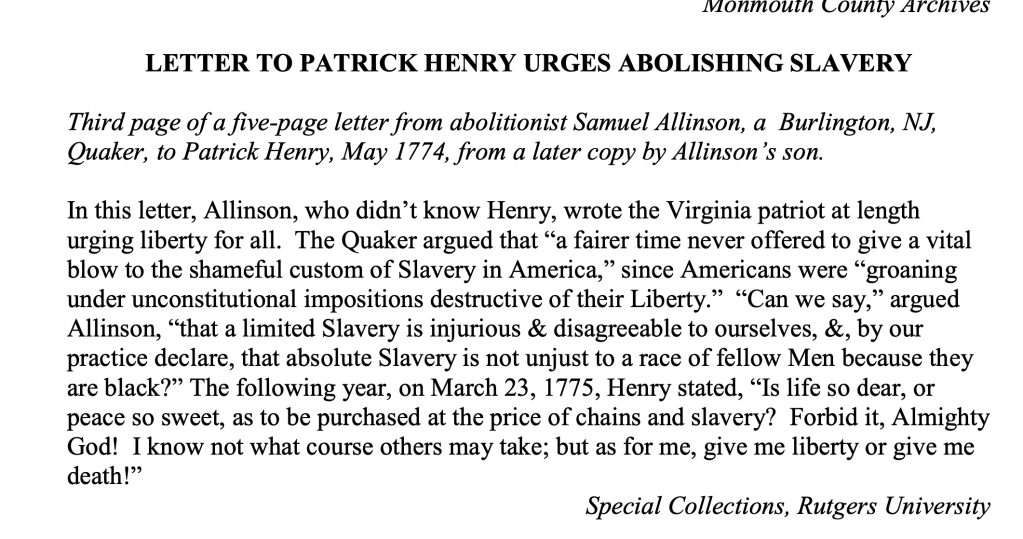


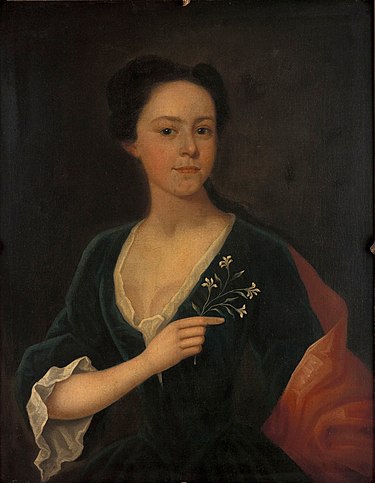
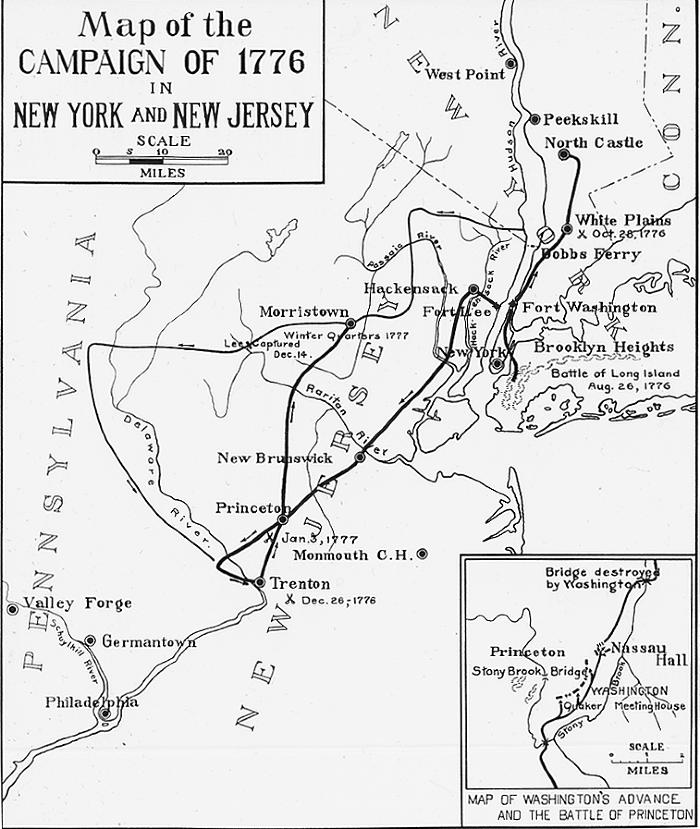
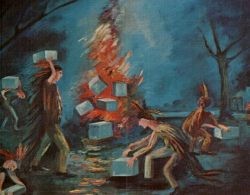


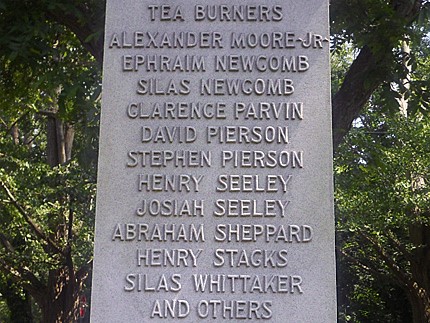
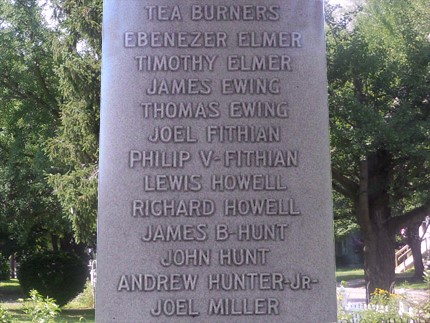
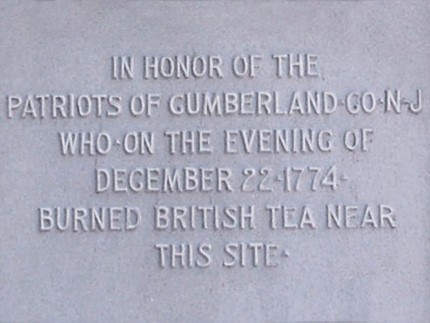
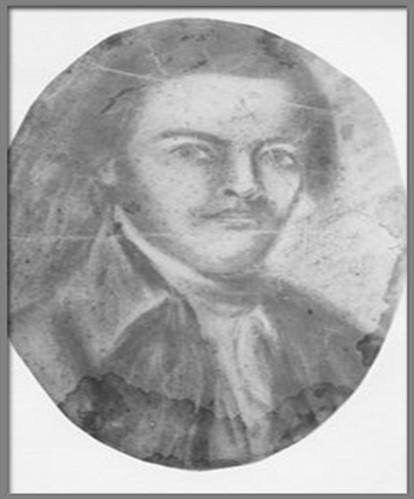

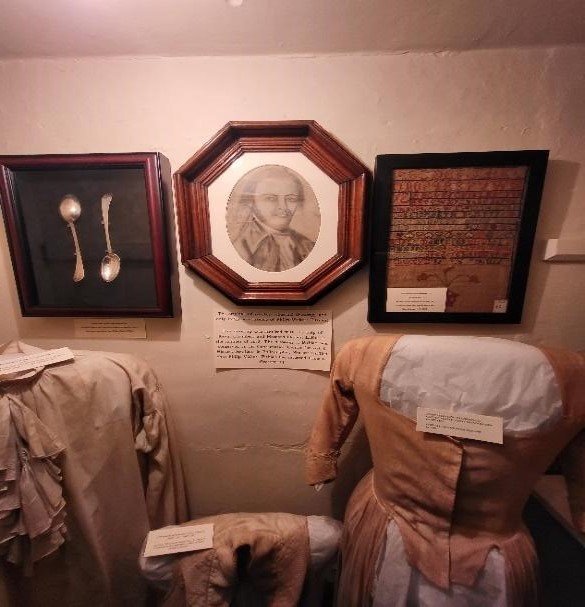


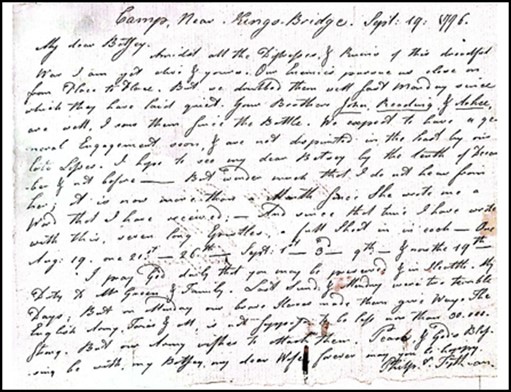



 njcssjournal