Chaim Goldberg: Sharing History

The smooth long edges and rough corners of a crisp white piece of paper are something most people do not value. Paper is a common good that is not given much thought when it is crinkled in a ball and thrown across the room. However, this is not how Chaim Goldberg viewed these simple white things — he knew they could be used to educate the world. Throughout his early artistic career, as early as four years old, he did whatever it took to obtain his medium: plain white paper. While sharing his story in a 1995 interview, Goldberg beamed with pride, knowing he had done all he could to further his career from such a young age. Goldberg was born in 1917 in Kazimierz Dolny, a small, predominantly Jewish town in Poland commonly referred to as a shtetl. In the shtetl, Goldberg spent time during his youth working small jobs in order to obtain an income to buy paper.[1]The paper purchased for sketching evolved to watercolor paper, canvases for oil painting, and materials for sculpture.

Early on in Goldberg’s career he met Saul Silberstein, a wealthy man with a great interest in the arts.[2]According to Goldberg, Silberstein left an everlasting mark on his artistic career and life.[3]Silberstein was impressed by Goldberg’s artistic ability the first time he visited Goldberg’s home, which led him to spend both time and money on elevating Goldberg’s talents.[4]He invited people from a variety of schools to view Goldberg’s art. This helped to catapult Goldberg’s career as he was able to bring his paintings to Warsaw, Poland. While visiting Warsaw he met with contacts of Silberstein who were predominantly doctors and lawyers.[5]They were impressed with Goldberg’s artistic ability, and generously paid for his tuition to art school for five years.[6]An important step in each artist’s career is finding their niche. In order to find his own niche, Goldberg spent his early life creating art through a variety of mediums and subjects. He learned that he needed to refine his subject area and have a common thread throughout his art.[7]While attending art school in Paris, Goldberg met Marc Chagall. It was his relationship with Chagall that solidified Goldberg’s artistic subject area. Chagall felt that there was a need for art that shared the connection of Jewish life, shtetls, and tradition. Goldberg’s art showed Chagall that he was the perfect artist to do so.[8]Chagall showed his support of Goldberg’s art by purchasing his full art portfolio which depicted these images; this collection of art was “the only samples of Goldberg’s early work to survive World War II.”9 The confidence and motivation that Chagall gave Goldberg to create art about Jewish life was a pivotal point in Goldberg’s career.

Goldberg went on to expand his portfolio by sharing the horrors of the Holocaust through his art. Goldberg is one of many artists whose art shares the lives of Jewish people leading up to and during the Holocaust. These artists, poets, and writers shared their art in order to provide an insight into their experience, with the ultimate goal of preventing such an event from occurring again. Scholars have examined many artists’ work that is related to the time directly before and during the Holocaust. These scholars have found that this area of art shows both history and tradition. Goldberg’s art successfully preserves history by depicting the traditions and history of the events of the Holocaust, Jewish Polish shtetls, and the Orthodox Ashkenazi Jews living within them. Goldberg’s art gives a representation of Jewish life before the Holocaust and gives a fuller picture of Jewish life that goes beyond trauma. By examining Goldberg’s art, people can begin to understand the lives of those impacted by the Holocaust.

Goldberg, as well as many other famous artists, was able to use his own accounts and the information he gathered from people to create Holocaust art that shared his experiences with the world. This provided a visual for those who did not experience it firsthand or did not have the artistic talents to express their experiences. The Nazi’s plan and goal for the Holocaust was to “complete [and enforce a] plan for the extermination of the European Jewry.”[9]Hitler and the Nazi Party believed that “Jews’ dangerous qualities were rooted in biology… [and] the inevitable outgrowth of a biological uniqueness that made them less human.”[10]The Nazis, led by Hitler, were instructed to accomplish the goal of exterminating the Jews, and others that they did not classify as part of the superior Aryan race, by facilitating mass murder in concentration camps. Holocaust artists have shared the experience of many Jewish people and others who the Nazis were trying to exterminate.12 It was important for these experiences to be shared via art so that they would be remembered forever.

The History of the Holocaust has been preserved in many ways including poetry, writing, sculptures, and paintings. Art historians have found that through Holocaust art, one can learn about, “the experiences of the exiles… [and] we can learn that there are other ways of feeling, other ways of understanding history, and other ways of using the creative ability for expressive purpose.”13 Art provides insight and a visual snapshot of someone’s life experiences. The Holocaust has been the subject area of many artists, who like writers and poets, use their art to share their life experiences. Holocaust art has an interesting dynamic – some of the pieces aim to use G-d and religion to uplift the horrific events depicted in the art, while others share the events more literally and show the tragedy of the Holocaust.

Art historians have accredited Tibor Jankay with being an influential Holocaust painter; he created an art collection that depicts the atrocities of the time period. Jankay was well-known for relishing in the positives. For this reason, Jankay’s Holocaust art is renowned for its ability to depict the horrors of what occurred during the Holocaust, while also sharing the beauty that surrounded these horrors.[11]Jankay’s Holocaust art was centered around his experiences: his

Cattle Car (figure 1) pencil sketch is an account of the time he spent in a cattle car on the way to Auschwitz.[12]The goal of this piece is to give the viewer an up-close perspective of the uncomfortable and crowded cattle car. The viewer’s understanding of what happened is exacerbated by the faces of horror of those in the cattle car.[13]Jankay’s art uses symbolism for expression.[14]Scholars have found that the symbols that Jankay used throughout his Holocaust art emphasize the connection between Jewish people and G-d. One of the symbols that represent this connection is, “the angel hovering above the ghetto representing nurturing protection.”[15]Jankay’s symbolism of G-d shows the emotions he felt during the Holocaust. However, he is not the only one who had these emotions throughout the Holocaust, which is why his work resonates with many Holocaust survivors. His work serves as a visual representation that survivors can relate to.

The preservation of history and tradition has been done in different ways; similar to art, writing allows the writer to share their experiences through their work. Elie Wiesel is well known for sharing his experiences from the Holocaust in writing. In fact, he is described as being “perhaps the world’s best-known witness to the atrocities of the Holocaust.”[16]Wiesel’s writing is known for depicting and sharing his personal experience in two concentration camps: Auschwitz and Buchenwald. He wrote the well-known Holocaust testimony, La Nuit, which depicts the experience that he and his father had in Auschwitz. Additionally, “Wiesel went on to achieve high visibility as a writer and human rights campaigner, winning the Nobel Peace Prize in 1986.”[17]Wiesel is one of the many writers whose focus on the Holocaust has allowed others to form an understanding of the events, as their work depicts the true tragedy and horrific experiences that millions of people went through. There are also many other written formats that people have used to share their experiences in the Holocaust including poetry and diaries. By sharing their accounts in written format, they are preserved and allow for people to continue to learn and understand what occurred during the Holocaust many years later.[18]No matter how the experiences of those in the Holocaust have been preserved, it is important that it has been documented for future generations to learn from.

Holocaust artists bridge a gap between direct experiences and compiling accounts of other victims. Artists such as Josef Harmen used his “paintings to constitute [his] memory and grieve for the loss of [his] family.”[19]This allowed for the mourning and honoring of loved ones, and for their lives to be shared with the world; therefore these paintings help to educate those who did not experience the Holocaust first-hand. Additionally, this form of art shares the Ashkenazi Jewish culture, which defines many Holocaust survivors and memorializes those who were persecuted, tortured, and murdered at the hands of the Nazi Party.[20]The creation of Holocaust art helps people to understand the tragic events of the Holocaust. Harmen used his art to express his experiences as a refugee, allowing others to understand them. Art that shares the “century marked by war, genocide, and dehumanization” provides the world with personal accounts of the tragedies that will last forever.[21]A unique characteristic of Holocaust art is its ability to depict the disruption and torture of an entire group of people.[22]Furthermore, Holocaust artists and their preservation of history “cannot be separated from [the past and their] identification with family, community, tradition and ritual.”[23]There is a strong overlap between Holocaust art and the art that represents the lives and culture of Jewish people leading up to the Holocaust.

Goldberg’s art shows the contrast between the simplicity of life while living in a shtetl and the tragedy of the Holocaust. Goldberg created a collection of Holocaust art that represents the events that occurred and the torture that the Jewish people experienced. Additionally, it represents the hope that people carried with them throughout the Holocaust with G-d’s guidance. Goldberg’s Holocaust collection started chronologically with people who were forced out of their shtetl homes. In his collection, there were pieces of art that represented the emotions of leaving loved ones.[24]Goldberg’s wood sculpture, Farewell (figure 2), depicts a family hugging goodbye at the start of the Holocaust. It embodies the unknown that people faced throughout the Holocaust, specifically when leaving their loved ones; this is shown through the tight embrace of the three figures.[25]Additionally, as many of Goldberg’s pieces incorporate Jewish traditions, the men in the sculpture are wearing yarmulkes, which are head coverings that Orthodox Jewish men wear as a reminder of their connection to G-d.[26]The Farewell sculpture helps to capture the fear that the Jewish people faced as they were forced from their homes; this helps to preserve these emotions for future generations to learn from.

To the Unknown (figure 3) is another piece of Goldberg’s Holocaust collection that represents the start of the Holocaust. This piece depicts people fleeing their homes to an unknown location to escape Nazi invaded Poland.[27]This painting shows just some of the thousands of people who were forced to leave their shtetls. It is notable that in the hurried rush of people fleeing, they were forced to throw some of their belongings into wagons, as shown in the painting. This piece represents the experience of Goldberg’s in-laws in this time period — they brought belongings with them as they fled Warsaw which they used to bribe the border patrol in order to flee Nazi invaded Poland.[28]This painting allows viewers to have an understanding of the beginning of the Holocaust, the effort it took to flee, as well as the disruption of lives, and the uncertainty that followed. Goldberg’s art continued to depict the experiences of Orthodox Ashkenazi Jews as they were forced to leave their homes.

During the Holocaust, the Nazis forced Jewish people from Poland, Russia, and Germany into ghettos, which were created to contain these people in a specific area. Goldberg’s painting, View in the Warsaw Ghetto 1939 (figure 4), shows what it was like on the streets of these ghettos by depicting children, men, and women. [29] The ghetto was a segregated portion of the city, separated by brick walls and surrounded by Nazi and Polish police.33 Through his art, Goldberg was able to depict the lives of the over 400,000 people who were imprisoned in this ghetto, including Goldberg and his family.[30]He created art that depicted the Warsaw Ghetto from his memory, decades after his time there. Goldberg was able to preserve their experiences and express the history that would stem from the Holocaust through View in the Warsaw Ghetto 1939. By creating imagery that shares what the Warsaw Ghetto was like, Goldberg was able to provide the world with a visual representation of this place and was able to give people a greater understanding of the Holocaust.

Goldberg created paintings that specifically focused on the Nazi’s actions prior to the extermination of people in concentration camps. Under the Gun (figure 5) is a sketch that shows a long, dense line of people being led into a building that is understood to be a gas chamber.[31]The reason this painting was titled Under the Gun was because Goldberg illustrated a Nazi soldier standing tall and holding a gun, which mimics the power they held over those in concentration camps.[32]Goldberg’s painting, Gas Chamber (figure 6) shows the horrors that people experienced in the deadly gas chambers.[33]Goldberg drew the people crouched down and weeping, which showed the horrors that they faced leading up to their imminent death.[34]Some people were shown pleading for their lives while being held at gunpoint, which represented their desperation. Although Goldberg was never in a concentration camp himself, he painted them based on what he had heard from others.[35]Goldberg painted Gas Chambers in 1942 while he was a refugee in Siberia. Specifically, as “the news of the mass exterminations began to trickle in by way of radio and newspaper as early as 1941… the artist, shaken to his core by the news, plunged into making a visual of the horrific news he had heard.”[36] Goldberg created his work to express the experience of Jews during the Holocaust, whether someone else’s or his own. In the case of Gas Chambers, he shared the experiences of those who no longer could.

Some of Goldberg’s most iconic pieces that represent the Holocaust are sculptures that show Jewish people escaping the Nazi control and concentration camps. Triumph I (figure 7), part of a collection of Holocaust sculptures, depicts the freedom from the Nazi’s control through the guidance of G-d and the appreciation that Jewish people had for G-d throughout the Holocaust.[37]Triumph I shows multiple figures emerging from the barbed wire of the concentration camps and climbing up towards G-d. Here, G-d is represented here with a Magen David, Star of David, a symbol that is used to represent Jewish identity and symbolize G-d’s protection of the Jews. This sculpture represents the liberation of the Jewish people from Nazi control, an important turning point in this time period. Goldberg’s Holocaust art is a mix of both literal examples of what occurred in the Holocaust, as well as symbolism that provided hope.

Goldberg served in the Polish army during the Holocaust; during this time he was captured by the Nazi Party and held as a prisoner of war. It was there he decided to continue creating art that shared people’s lives before the war. However, directly after the Holocaust, Goldberg spent his time creating art that depicted his experiences and that of others. After he finished, he ultimately returned to his main artistic passion of creating art to share the lives of those who lived in Polish shtetls. This led Goldberg to the major focus of his career, the shtetl he grew up in, Kazimierz Dolny.

The original subject and setting of Goldberg’s artwork became his lifelong passion. He shared his home, Kazimierz Dolny, and childhood with the world through his art. Much of Goldberg’s inspiration for his art before the Holocaust came from those who visited Kazimierz Dolny, many of which stayed in his family’s clapboard house.[38]These people became his “story” and the base for his “characters.” As he grew up, he continued to create “characters” centered around those who were an integral part of life in Kazimierz Dolny.[39]Unfortunately, virtually all of his work from before the war was destroyed. This includes art from his collection, the art he sold, and the work he was commissioned for. Before the Holocaust, Goldberg traveled to Warsaw to create commissioned art for well-known and wealthy residents. Fortunately, “approximately fifty drawings and watercolors survived due to the fact that they were purchased by Chagall… in

1933.”[40]While this art was saved from being destroyed, it is not readily available to the public. However, Goldberg made it his life’s passion to continue making art that shared his beloved hometown with the world. He successfully shared that there was more to know about Eastern European Jews from the early to mid-nineteenth century than just the Holocaust.

Goldberg was not the only artist to represent shtetl life in their art. Yad Vashem, the World Holocaust Remembrance Museum in Israel, curated a collection of art from Polish shtetls dating back to pre-Holocaust Europe. The curators of this collection explain the importance of understanding what it was like to live in a Jewish shtetl. Jewish culture and tradition are strongly tied to shtetls. This is important for understanding Jewish art as many influential Jewish artists were born and grew up in shtetls, and used their art to share their experiences.[41]The curators at Yad Vashem focused their collection on lesser-known artists which highlights the wide variety of people that centered their work around shtetls.46 The work shared in the collection is focused on many different aspects of shtetl life including “the market, professions, women of the shtetl, and Jewish learning… through the eyes of these Jewish artists.”[42]These aspects of shtetl life are key components in Goldberg’s art, which allow him to share Kazimierz Dolny with the world in great detail. This helps to give viewers a complete understanding of what it would have been like to live there. His art preserved a visual history of Kazimierz Dolny, which allowed for the history of those who lived there to be commemorated.

When Goldberg created shtetl art, he included a variety of characters that depict the people of the shtetl. The goal of his art was to share “Kazimierz Dolny shtetl and gather all his characters to live eternally through his art.”[43]Goldberg highlights the variety of professions within a shtetl through his art. Goldberg was surrounded by people with different professions from a young age and based some of his art on his parents’ professions – his father was a cobbler, and his mother was a seamstress. Goldberg titles a group of his works Parents II (figure 8), which was made up of a variety of pieces including etchings, linocuts, engravings, and oil paintings. In these works of art, the viewer sees Goldberg’s parents working.[44]The watercolor painting My Parents (figure 9) is similar to the collection of pieces titled Parents II as it illustrates each of Goldberg’s parents intently focusing on their work, his father repairing a pair of shoes and his mother sewing a garment.[45]This painting was set in Goldberg’s childhood home; in the background is a piece of art hanging on the wall which is actually another one of Goldberg’s pieces. Oftentimes, Goldberg would add small hidden elements to his work, adding himself or his own paintings within different pieces. By showing his parents’ professions, he was able to share his childhood experiences with the world and preserve the experiences of the people in Kazimierz Donly forever. Typically only one person in each shtetl was responsible for holding a specific job, which is commonly seen in Goldberg’s work. Goldberg’s sketch Blacksmith (figure 10) shows the blacksmith at work in the shtetl and specifically highlights the difficulty of the job and its strain on his life through his hunched position.[46]In the background, the shtetl of Kazimierz Dolny is in view. The blacksmith is an integral component of the shtetl, which is why Goldberg decided to include him in his shtetl art. The blacksmith was one of the many people Goldberg took inspiration from as he successfully illuminated the experiences of those living within the shtetl.

Goldberg created the painting, Teacher (figure 11), to represent his childhood education. The Teacher depicts a Rabbi and a student studying from a prayer book.[47]This is reminiscent of Goldberg’s childhood as Goldberg, like most children in the shtetl, attended a school that was taught by a Rabbi. Further, it was Goldberg’s Rabbi that later hired him to create mezuzah covers, small artistic cases which hold a parchment scroll containing blessings for a house. This Rabbi had enough confidence in Goldberg’s artistic ability to hire him, which afforded Goldberg the opportunity to buy art supplies.[48]Because Goldberg was able to buy art supplies, he was able to hone his artistic abilities and continue his passion for preserving Jewish shtetl life. The goal of Goldberg’s art was to immerse the viewer in Kazimierz Dolny so they could understand what it was like to be an Orthodox Jew living in a shtetl during this time period.[49]

Goldberg was known for depicting several of the same “characters” and symbols within his art including the shtetl’s water carrier. The Water Carrier (figure 12) shows a man balancing a stick with two pails of water on his shoulders while moving through the shtetl.[50]He is depicted like this in many of Goldberg’s works. The background of the Water Carrier mimics paintings that focus specifically on the houses in Kazimierz Dolny. Goldberg’s paintings built off one another to create a full representation of his shtetl from the early twentieth century. This is also seen with Shtetl Houses (figure 13), an engraving that shows houses built into a hill.[51]These are the same hills seen in Water Carrier.[52]The water carrier is also a central character in The Shtetl (figure 14), which is showcased in the permanent collection of the Metropolitan Museum of Art.[53]This piece depicts the same hill of houses that are shown in Goldberg’s other works. This creates an image of what Kazimierz Dolny looked like from the outside.[54]The goal of Goldberg’s art was to share “Kazimierz Dolny shtetl and gather all his characters to live eternally through his art.”[55]The Shtetl depicts many figures from the town including his parents, the water carrier, and himself, shown painting on an easel. This painting preserves people in Kazimierz Dolny who observed the traditions of Orthodox Ashkenazi Jews. The Shtetl serves as a culmination of all the events and people within Kazimierz Dolny. Through his art, Goldberg created a visual representation of Kazimierz Dolny to be preserved for the world to see.

The population of Kazimierz Dolny was largely comprised of Jewish people, thus they are the primary subject of Goldberg’s art. Judaism is filled with many customs and traditions that were closely followed by the Jewish community in Kazimierz Dolny. These traditions are the connecting thread within all of Goldberg’s art; whether it was the depiction of traditional head coverings for men, events, holidays, or a style of dance. Goldberg has two parallel art pieces, Seven Hasidic Dancers (figure 15) and Hora (figure 16). In these paintings, the viewer can see the Jewish Orthodox tradition of men and women dancing separately. The reason for this tradition is because it “helps to preserve and safeguard a limited and therefore special connection between the genders.”[56]Seven Hasidic Dancers is an ink painting of seven men dancing in a circle connected to one another.[57]The style of dance these men are performing is the Hora. The Hora is a traditional Jewish celebratory dance that is danced on special occasions. Goldberg created a related painting called Hora which shows seven women participating in the same celebratory dance.[58]Viewers of these two paintings are able to look back in time and “witness” the religious practices of the Jewish community in Kazimierz Dolny. Goldberg’s art showed the strong values and traditions of the Jewish people he grew up around. As an artist, Goldberg wanted people who viewed his art to feel as though they were visiting and experiencing the shtetl.

Weddings are a common subject of Goldberg’s art and Jewish practices. Throughout his pieces, there are a variety of religious Jewish symbols that are a common part of weddings. Chuppahs, or canopies, are an integral part of religious Jewish wedding ceremonies. The couple stands under the Chuppah with the Rabbi who is officiating the wedding. It is traditional for the Chuppah to be made out of a man’s prayer shawl, as seen in each of Goldberg’s paintings that feature a wedding. This is shown in The Wedding (figure 17).[59]Goldberg wanted to properly depict Jewish weddings in his art, so he made sure to include many of the Jewish wedding traditions. Many of these paintings have additional aspects that are important to the Jewish religion. Goldberg’s painting, The Wedding (figure 18) from 1962 shows a couple after the ceremony with many members of the town rejoicing and celebrating, which is typical of a Jewish wedding. One of the central aspects of the painting is two boys holding a large loaf of challah, a traditional bread eaten by Jewish people in times of celebration.[60]The cutting of challah is an important component of Jewish weddings; an important person to the couple rips the challah while reciting a blessing. In his art, Goldberg provides his viewers with an understanding of key traditions that occur throughout a Jewish wedding.

As a religious Jewish boy, Goldberg kept the laws of Shabbat and illustrated his experiences throughout his art. Shabbat is an important weekly practice of Jewish life where the Jewish people honor the seventh day of creation with a day of rest. Lighting two Shabbat candles at the beginning of the day of rest is an important ritual performed by Jewish women, as it is used as a way to bring the Sabbath into a home. Goldberg has represented the lighting of candles in many different paintings. His painting, Shabbat Candles (figure 19), depicts a woman setting up the Shabbat candles for her family to light at sundown.[61]In order to properly light Shabbat candles, the woman says a blessing and sweeps her hands over the light, and then brings her hands to her eyes.[62]In the painting Before Dawn (figure 20), the main figure is a woman lighting Shabbat candles. Throughout the background of the painting are other houses with Shabbat candles glowing in the window; this depicts the important tradition of lighting Shabbat candles in each home.[63]The woman is shown sweeping her hands over the light; this helps to teach viewers about the Shabbat traditions of Orthodox Jews. Additionally, it is traditional for Orthodox Jews to attend religious services at a temple on Shabbat. While both men and women attended, it was more common for only the men to go. This is depicted in the painting Before Dawn where the men of the shtetl are seen walking to the temple along a cobblestone path of Kazimierz Dolny.[64]Goldberg’s Shabbat-related paintings allow the viewer to see the traditions related to the weekly day of rest, including lighting the two candles and walking to the temple. This helps to educate the viewers on the importance of traditions within the Jewish religion.

Jewish holidays and the importance of tradition

Holidays are a large part of the Jewish religion and thus Goldberg has made them an important aspect of his art. Many of his pieces illustrate the important traditions of each holiday. In order to understand the depth that he went through in sharing his religion with the world, it is important to examine Goldberg’s holiday art chronologically according to the Jewish calendar. Rosh Hashanah is the New Year in the Jewish religion and is celebrated with great reverence and joy. Goldberg has shared many important traditions of Rosh Hashanah through his art. During Rosh Hashanah, there is an important tradition called Tashlich, which is depicted in his painting Tashlich (figure 21). Tashlich, a tradition where people go to the water to empty their pockets, is performed on either the first or second day of Rosh Hashanah.[65]This practice is symbolic of the discarding of one’s sins from their life. By depicting this aspect of Rosh Hashanah, Goldberg is capturing the traditions of Orthodox Jews during the Jewish New Year.

Another important aspect of Rosh Hashanah that Goldberg depicts in his artwork is the blowing of the shofar, a ram’s horn.[66]In order to show the proper use of the shofar, Goldberg created The Shofar (figure 22) which occurs in a temple, a house of worship.[67]The shofar is blown by the Rabbi during the prayer services on Rosh Hashanah to serve as a wake-up call and a fresh start to the new year. Only Orthodox men are illustrated, as men and women were not allowed to daven, or pray, together.[68]This is because when davening there should be no distractions between a person and their connection to G-d. The Shofar takes place in the lower level of the sanctuary where the men prayed. The blowing of the Shofar shows how the traditions of Orthodox Jews have been depicted throughout Goldberg’s art.

Yom Kippur, a day of repentance, is arguably the most important Jewish holiday, thus it is an important aspect of Goldberg’s art. A specific tradition of Yom Kippur is Kaparot which takes place the night before and is centered around transferring one’s sins to a rooster.74 Rooster Blessing (figure 23), depicts “the village inhabitants standing in line at the Shochet, or kosher butcher, with their holiday poultry.”75 Each village member in the painting is carrying their own chicken to participate in this tradition.76 Yom Kippur (figure 24) shares the next step of Kaparot; a person swings a rooster over their head while reciting a prayer that symbolically transfers their sins to the rooster. This painting shows a religious man holding a rooster by its legs while moving it around his head as he takes part in the Orthodox Jewish tradition of Kaparot. The rooster looks angry and thus has symbolically taken on the sins of the man.77 This is the traditional start of Yom Kippur and the removal and penance of one’s sins, which is an important aspect of observing Yom Kippur as an Orthodox Jew. Goldberg felt that it was important to share the traditions of Yom Kippur in his art as it is the holiest day in the Jewish calendar.

In order to preserve the traditions of the holiday of Sukkot, Goldberg created multiple paintings of this holiday. Sukkot occurs five days after Yom Kippur and is symbolic of the forty-year period in which the Jews escaped slavery in Egypt and spent time in the desert on the way to Israel.[69]An important part of this holiday is the shaking of the lulav, a collection of four different leaves, and the etrog, a citrus fruit.[70]They are held together each day of Sukkot and shaken while reciting a prayer. Goldberg represents the important tradition of shaking these two objects in the painting, Sukkot (figure 25). In the painting, a religious man is holding the two items while looking up to G-d and praying.[71]A similar image is also included in Succoth (figure 26), where behind the religious man shaking the lulav and etrog, are the people of the town davening in the temple. Additionally, there are prayer books that are used in order to ensure that prayers are recited properly.[72]These paintings together allow the viewer to understand important aspects of Sukkot and build a broader understanding of the Jewish religion.

Goldberg valued sharing his religion in his art. In order to do this, he focused strongly on holidays, including Simchat Torah. Simchat Torah is celebrated on the last day of Sukkot. This holiday honors the Jewish people’s love of the Torah, a scroll containing the first five books of the Hebrew scriptures.[73]The festivities for this holiday include men dancing while holding Torahs. For this reason, Goldberg’s paintings depict Simchat Torah with traditional festive dancing. Simchat Torah (figure 27) is a pen and ink piece of art that shows an open Torah being held above a man’s head while he is dancing around.[74]It is customary in Orthodox Jewish tradition that only men hold and read from the Torah and thus, that is how Goldberg depicted the celebration in this painting. In the background of the piece, other Torahs are being held throughout the crowd which is another tradition of the holiday.84 Goldberg’s 1962 oil on canvas painting, Simchat Torah (figure 28), shows the community clapping in celebration.[75]Because of the importance of this holiday, women are present in the temple; however, in order to abide by Orthodox Jewish tradition, the men and women cannot be together in the temple and thus the women are shown in the second-story windows. It also shows the ark, where the Torahs are housed, in the front of the synagogue. During the festivities of Simchat Torah, the Torahs are all taken out of the ark and carried around the temple in seven circles called hakafot.86 Goldberg felt that it was important to show all aspects of the Jewish religion and to always value joyous times and occasions in his art, Simchat Torah being one of them.87

Goldberg shares the family aspect of the holiday of Chanukah in several of his paintings. Chanukah is an eight-day holiday that honors the Jewish people’s success in fighting the Maccabees. Unlike many other holidays, Chanukah is not centered around community festivities, but rather celebrations in the home. A menorah is lit on each of the eight nights of Chanukah in each family’s home. Goldberg shares this tradition in Channuka (figure 29), a wash and ink painting, by showing a family gathered around a credenza with a menorah placed on top. Each day of Chanukah an additional candle is lit.[76]The menorah is an important part of Chanukah because during the time of the Second Temple of Jerusalem, the menorah was lit each night, however, the temple was then destroyed.[77]There was one single jar of oil that remained and it miraculously lasted eight days, which is now commemorated with the eight-day holiday of Chanukah.90 Goldberg honored the miracle of Chanukah with the creation of another Chanukah painting in 1971 also titled Channuka (figure 30). This image once again represents a family coming together to honor the holiday with the lighting of the menorah and the reciting of prayers.[78]Above the family lighting the menorah is a variety of colors and shapes; within this, a menorah and a jug of oil are seen once again, which highlights its importance to the holiday of Chanukah.[79]Celebration with family is an important part of Judaism and is at the core of the Jewish religion; this is the reason that Goldberg centered his paintings around the traditions of Chanukah.

         Goldberg focused on Purim in his art, which is a holiday that celebrates the Jewish people’s freedom from Persia. An important part of Purim is the reading of the Megillah, the Book of Esther, which contains the story of Purim. Haman was the man who led the torture of the Jewish people while in Persia, so it is tradition to make noise when he is mentioned during the reading of the Megillah.[80]People will make noise with their feet, hands, and most commonly, with a gragger, or noise maker. Graggers are a key component of Goldberg’s Purim art. Purim Parade (figure 31) shows the joyous celebration of Purim. A man is riding on a horse with a large gragger, sharing in the celebration of the freedom of the Jewish people.[81]Additionally, throughout the rest of the painting, there are people holding graggers.[82]In the distance of the piece, one can see Goldberg’s “parents stand[ing] on the left, as his youngest brother Israel waves the gragger.”[83]Another of Goldberg’s pieces portraying Purim, Chaim’s Large Gregor (figure 32), depicts a large gragger in the center of the shtetl. In this watercolor, Goldberg and another man are at the center of the painting using the larger gragger.[84]This painting continues Goldberg’s common thread of placing his family and or himself in his art. There are also members of the town standing in the background enjoying the celebration of Purim, as is customary in Jewish tradition.[85]Goldberg’s Purim art shares the Jewish tradition of making noise to drown out Haman’s name, as well as the celebratory aspect of the holiday. Furthermore, the traditions depicted in these pieces continue Goldberg’s goal of sharing Orthodox Judaism with the world.[86]

The last chronological Jewish holiday that Goldberg focused on was Passover, an eight-day holiday. One of the most well-known aspects of the holiday is that chametz, or leavened bread, is not eaten and rather matzah, unleavened bread, is consumed. Passover requires very specific preparation, and Goldberg centered some of his Passover art around this.[87]In Burning the Chumetz (figure 33) Goldberg depicts “the boys [and the] shtetl’s Rabbi burning small bundles of Chametz ” which is not kosher for the Passover holiday.[88]An important aspect of Passover is the removal of all Chametz from the homes of Orthodox Jews. Another important step in the preparation for Passover is the making of matzah, which is shown in Matzah Making (figure 34). This oil painting represents the women of Kazimierz Dolny helping the baker of the shtetl make matzah.[89]Further, Goldberg shares his childhood experience as he is in the forefront of the painting helping the baker create the dough used to make matzah.103 These two paintings represent the work that it took to prepare for Passover and the important traditions of burning the chametz and making the matzah. These are important aspects of Passover for Orthodox Jews that Goldberg brought to life in his paintings.

In addition to the preparation for Passover, Goldberg’s art also shared the traditional practice of holding a seder, the ceremony for Passover, in one’s home. This is seen in both Family Seder (figure 35) and After the Seder (figure 36). Family Seder shows a family gathered around a table sharing a meal while holding glasses of wine.[90]Wine is a customary aspect of the Passover Seder because, throughout the steps of the service, each person is prompted to drink four glasses of wine. Passover is another holiday that is centered around gatherings in family homes, which explains the setting of both of these paintings. After the Seder shares the joyous celebration of the family at the conclusion of the holiday meal; specifically, it shares Goldberg’s sisters dancing.[91]Goldberg shared that his “sisters would simply get up and dance in their house-nighties, just like” in After the Seder.[92]Goldberg believed it was important to share the happiness of celebrating holidays in a shtetl.[93]In his holiday art, Goldberg captures Orthodox Jewish traditions for the viewer to learn from. Goldberg’s art resonates with Jews who lived in shtetls because of how he depicts the traditions of each Jewish holiday.

Through Goldberg’s art, the viewer is able to gain an understanding of the many important traditions of Jewish holidays. Throughout his career, Goldberg continued to create art centered around holidays as he felt that it was an essential aspect to understanding the lives of those who lived in a shtetl.[94]The history of those who lived in shtetls, specifically during the early twentieth century, is not to be lost in the trauma that was experienced throughout the Holocaust. This is not to take away from the experiences of those in the Holocaust, but rather to highlight the lives and religious practices of Jews prior to the tragedy. This was at the forefront of Goldberg’s artistic works as he created his shtetl art to share his beloved community of Kazimierz Dolny with the world.[95]Thus, he was able to preserve his early life and childhood in the art that outlived him.

Goldberg’s art was successful in the preservation of early twentieth-century Jewish shtetls and allows viewers to understand what it was like to live in Kazimierz Dolny. Goldberg was able to preserve his own family history, the history of Kazimierz Dolny, and the history of Orthodox Ashkenazi Jews before and after the Holocaust. Goldberg’s ability to preserve the history of his shtetl is in line with other shtetl artists. It is through the collections of these artists that modern historians are able to build a picture of what life was like during pre-Holocaust Europe. Goldberg centered his art mainly around shtetl life which proved that there was more to the Jewish European experience than the Holocaust. As seen with other Holocaust artists and writers such as Tibor Jansky and Elie Wiesel, Goldberg’s art preserves the events, and thus the history, of the Holocaust and the time period in which they were alive. Goldberg’s art has lived on beyond his death and will continue to serve as a representation of those who lived in the shtetls of early twentieth-century Poland.

        Art cultivates a climate of creativity for all students to access when it becomes a part of general education classes. Art is a frequently unused tool within history secondary education classrooms, however, it should not be. By exploring art as a component of history classes, we can explore the often untold elements of history. This is true with Chaim Goldberg’s artwork. As an artist who frequently depicted Jewish shtetl life and the Holocaust, his art allows access to personal accounts and experiences of European Jewish people in the early to mid-twentieth century. Art allows for history to be told in another format; in the classroom, we are able to explore someone’s life. In this case, it is Goldberg’s life we are able to learn about through the exploration of his art. Like writers, art in many circumstances builds off of itself; this is true with Goldberg. When exploring his art collection, the viewer is able to see how he threads details through many paintings. This is seen with many of the repetitive fixtures and people in his shtetl artwork, which leads the viewer to understand that these people are not only important fixtures in Goldberg’s life, but in all shtetl life. An example of an important fixture in general shtetl life is the water carrier, who is depicted throughout many of Goldberg’s paintings. Furthermore, Goldberg’s parents, who were a cobbler and a seamstress, were depicted throughout many of his pieces. This is done to show that these jobs were important elements in Goldberg’s life, and also the lives of those raised in a shtetl. By exploring this idea in the classroom, we are able to cultivate an understanding of shtetl life in a way we could not do by just using readings.

By exploring art, we are able to view a snapshot of someone’s life and develop an understanding of what the different elements of people’s life actually look like. This is seen when exploring the traditional Jewish elements that Goldberg depicted in his art. He depicts Kaparot which is a traditional Jewish custom of transforming one’s sins to a chicken or rooster and killing said animal as part of the Jewish holiday of Yom Kippur. By viewing traditions like this we are able to pull back the curtain and help students to understand and explore these traditions more deeply. This allows students to develop a better understanding of others and helps to prevent an environment of misunderstanding and othering which can occur when exploring sacred traditions, especially those that are viewed negatively in today’s society.

Goldberg created his art to share his experiences and his life with the world. By incorporating art like Goldberg’s into the classroom, we are not only helping to fulfill the dreams of artists like Goldberg, but we are also making history more accessible and understandable.

Often as educators, especially history educators, we try to figure out how to share history with our students in a way that allows them to picture and develop an understanding of day-to-day life. Art allows for this and brings history to our modern-day students. It provides students with a window into the past in order to guide and build their understanding. Not all artwork is a direct image that helps us picture a historical event; however, it is often the images that do not depict a direct explanation of what the world looked like that helps to describe the emotions of the people during that time. This is seen with some of Goldberg’s Holocaust artwork which shows people fighting to escape and shows the Jewish religion as something to fight for and work towards. Without art in our history classrooms, we are simply telling students about the past, rather than providing them with images to help them imagine what the world actually looked like. Once art is presented to students they can then further analyze and understand history. If it were not for artists like Goldberg, as well as many others would have a hard time understanding the history of Jewish Europeans living in shtetls, traditional Jewish rituals, and the atrocities of the Holocaust.

David, Colin. “Elie Wiesel: Witnessing, Telling and Knowing.” Traces of War: Interpreting Ethics and Trauma in Twentieth-Century French Writing. Liverpool University Press, 2018. 193–217.

Gerlach, Christian. “The Wannsee Conference, the Fate of German Jews, and Hitler’s Decision in Principle to Exterminate All European Jews.” The Journal of Modern History 70, no. 4 (1998): 759–812.

Goldberg, Chaim. After the Seder. 1990. Watercolor and Ink. Chaim Goldberg I Remember the Shtetl.

Goldberg, Chaim. Before Dawn. 1993. Oil on Canvas. Chaim Goldberg I Remember the Shtetl.

Goldberg, Chaim. Blacksmith. Sketch. CHG-Rosco.

Goldberg, Chaim. Burning the Chumetz. 1969. Oil on Linen. Full Circle: A Journey of 12 Creative Periods & Themes.

Goldberg, Chaim. Chaim’s Large Gregor. 1970. Watercolor and Ink. Chaim Goldberg I Remember the Shtetl.

Goldberg, Chaim. Channuka. 1954. Wash and Ink. Chaim Goldberg I Remember the Shtetl.

Goldberg, Chaim. Channuka. 1971. Watercolor and Ink. Chaim Goldberg I Remember the Shtetl.

Goldberg, Chaim. Family Seder. 1971. Watercolor and ink. Chaim Goldberg I Remember the Shtetl.

Goldberg, Chaim. Farwell. Mesquite Wood. CHG-Rosco.

Goldberg, Chaim. Gas Chambers. Bronze. CHG-Rosco.

Goldberg, Chaim. Hora. Sketch. CHG-Rosco.

Goldberg, Chaim. Matzah Making. 1990. Oil on Linen. Full Circle: A Journey of 12 Creative Periods & Themes.

Goldberg, Chaim. My Parents. 1970. Watercolor and Ink. Chaim Goldberg I Remember the

Shtetl.

Goldberg, Chaim. Parents II. Ink. UHG-Rosco.

Goldberg, Chaim. Purim Parade. 1993. Oil on Linen. Full Circle: A Journey of 12 Creative Periods & Themes.

Goldberg, Chaim. Rooster Blessings. 1967. Oil on Linen. Full Circle: A Journey of 12 Creative Periods & Themes.

Goldberg, Chaim. Seven Hasidic Dancers. Sketch. CHG-Rosco.

Goldberg, Chaim. Shabbat Candles. 1969. Watercolor and Ink. Chaim Goldberg I Remember the Shtetl.

Goldberg, Chaim. The Shofar. 1971. Watercolor and Ink. Chaim Goldberg I Remember the Shtetl.

Goldberg, Chaim. Shtetl. Line Engraving. CHG-Rosco.

Goldberg, Chaim. Shtetl Houses. Sketch. CHG-Rosco.

Goldberg, Chaim. Simchat Torah. 1962. Oil on Canvas. Chaim Goldberg I Remember the Shtetl.

Goldberg, Chaim. Simchat Torah. 1969. Pen and Ink. Chaim Goldberg I Remember the Shtetl.

Goldberg, Chaim. Succoth. 1971. Watercolor and Ink. Full Circle: A Journey of 12 Creative Periods & Themes.

Goldberg, Chaim. Sukkot. 1966. Watercolor and Ink. Chaim Goldberg I Remember the

Shtetl.

Goldberg, Chaim. Tashlich. 1998. Watercolor and Ink. Chaim Goldberg I Remember the Shtetl.

Goldberg, Chaim. Teacher. Watercolor. Artsy.

Goldberg, Chaim. To the Unknown. Wash and Ink. CHG-Rosco.

Goldberg, Chaim. Triumph 1. Sculpture. CHG-Rosco.

Goldberg, Chaim. Under the Gun. Ink. UHG-Rosco.

Goldberg, Chaim. USC Shoah Foundation Institute Testimony. By United States Holocaust Memorial Museum, May 16, 1995.

Goldberg, Chaim. View in the Warsaw Ghetto 1939. Pen and Ink. CGH-Rosco.

Goldberg, Chaim. The Water Carrier. Ink. UHG-Rosco.

Goldberg, Chaim. The Wedding. 1962. Oil on Canvas. Chaim Goldberg I Remember the Shtetl.

Goldberg, Chaim. The Wedding. 1997. Watercolor and Ink. Chaim Goldberg I Remember the

Shtetl.

Goldberg, Chaim. Yom Kipper. 1990. Oil on Linen. Full Circle: A Journey of 12 Creative Periods & Themes.

Goldberg, Shalom. Chaim Goldberg From the Old Shtetl of Kazimierz Dolny to the Complex Life in the Biggest City in the USA.” UHG-Rosco. (March 20, 2017). http://www.chg-rosco.com/chaim-goldbergs-biography/.

Goldberg, Shalom. Chaim Goldberg Full Circle: A Journey of 12 Creative Periods & Themes. Boca Raton: SHIR Art Publications, 1996.

Goldberg, Shalom. Chaim Goldberg I Remember the Shtetl. Kraków: Rosco Polska, 2016.

Jankay, Tibor. Cattle Car. Pencil. Tibor Jankay 1899-1994.

“The Kaparot Ceremony.” Chabad. Accessed April 29, 2022. https://www.chabad.org/library/article_cdo/aid/989585/jewish/Kaparot.htm.

“The Kippah (Yarmulke).” Chabad. Accessed April 27, 2022. https://www.chabad.org/library/article_cdo/aid/3913641/jewish/The-Kippah-Yarmulke.htm.

Lassner, Phyllis. “The Art of Lamentation: Josef Herman’s Humanist Expressionism.” Shofar: An Interdisciplinary Journal of Jewish Studies 37, no. 3 (Winter 2019): 171-202.

Lightstone, Mordechai. “11 Reasons We Blow the Shofar on Rosh Hashanah.” Accessed April 29, 2022. https://www.chabad.org/library/article_cdo/aid/2311995/jewish/11-Reasons-Why-We-Blo w-the-Shofar-on-Rosh-Hashanah.htm.

McMillian, Dan. How Could This Happen: Explaining the Holocaust. New York: Basic Books, 2014.

“Modern and Contemporary Art.” The Met. Accessed April 27, 2022. https://www.metmuseum.org/art/collection/search/480896.

Posner, Menachem. “What is Sukkot.” Chabad. Accessed April 29, 2022.

https://www.chabad.org/library/article_cdo/aid/4784/jewish/What-Is-Sukkot.htm.

“Representation of the Shtetl in Jewish Art: Between Reality and Fantasy.” Yad Vashem. Accessed April 27, 2022. https://www.yadvashem.org/articles/general/shtetl-in-jewish-art.html.

Schneerson, Menachem M. “Why Separate Men and Women in the Synagogue.” The Rebbe.

Accessed March 27, 1961. https://www.chabad.org/therebbe/letters/default_cdo/aid/1440261/jewish/Why-SeparateMen-and-Women-in-the-Synagogue.htm.

“Shemini Atzeret / Simchat Torah.” Chabad. Accessed April 29, 2022. https://www.chabad.org/library/article_cdo/aid/4689/jewish/Shemini-Atzeret-Simchat-To rah.htm.

Shurpin, Yehuda. “The Origins of the Gragger: Why We Boo Haman.” Chabad. Accessed April 27, 2022. https://www.chabad.org/holidays/purim/article_cdo/aid/4321929/jewish/The-Origins-of-t he-Gragger-Why-We-Boo-Haman.htm.   

Victor, Richard Allan. The Holocaust and the Covenant in Art: Chaim Goldberg, Tibor Jankay, and Mauricio Lasansky. Michigan: UMI Microform, 1998.

“Warsaw Ghetto.” The Weiner Holocaust Library. Accessed March 29, 2022.

https://www.theholocaustexplained.org/the-camps/the-warsaw-ghetto-a-case-study/.

Weisberg, Chana. “Why are Men and Women separated at Hasidic Weddings.” Chabad.

Accessed March 27, 2022.


[1] Chaim Goldberg, interview by, United States Holocaust Memorial Museum, USC Shoah Foundation Institute Testimony, May 16, 1995, 6:24.

[2] Goldberg, USC, 6:52.

[3] Goldberg, USC, 7:20.

[4] Richard Allan Victor, The Holocaust and the Covenant in Art: Chaim Goldberg, Tibor Jankay, and Mauricio Lasansky, (Michigan: UMI Microform, 1998), 7.

[5] Goldberg, USC, 7:45.

[6] Goldberg, USC, 8:50.

[7] Goldberg, USC, 30:22.

[8] Goldberg, USC, 1:22:40. 9 Victor., 17.

[9] Christian Gerlach, “The Wannsee Conference, the Fate of German Jews, and Hitler’s Decision in Principle to Exterminate All European Jews,” The Journal of Modern History 70, no. 4 (1998): 759.

[10] Dan McMillian, How Could This Happen: Explaining the Holocaust, (New York: Basic Books, 2014), 3. 12 Phyllis Lassner, “The Art of Lamentation: Josef Herman’s Humanist Expressionism,” Shofar: An Interdisciplinary Journal of Jewish Studies 37, no.3 (Winter 2019), 171-172. 13 Lassner., 172.

[11] Victor., 23.

[12] Tibor Jankay, Cattle Car, Pencil, Tibor Jankay 1899-1994.

[13] Victor., 24.

[14] Victor., 25.

[15] Victor., 24.

[16] Colin David, “Elie Wiesel: Witnessing, Telling and Knowing,” Traces of War: Interpreting Ethics and Trauma in Twentieth-Century French Writing, (Liverpool: University Press, 2018), 193.

[17] David., 194.

[18] Victor., 35.

[19] Lassner., 172.

[20] Lassner., 172.

[21] Lassner., 173.

[22] Lassner., 173.

[23] Lassner., 174.

[24] Chaim Goldberg, Farewell, mesquite wood, CHG-Rosco.

[25] Goldberg, Farewell.

[26] “The Kippah (Yarmulke).” Chabad, accessed April 27, 2022, https://www.chabad.org/library/article_cdo/aid/3913641/jewish/The-Kippah-Yarmulke.htm.

[27] Chaim Goldberg, To the Unknown, wash and ink, CHG-Rosco.

[28] Goldberg, USC, 140:25.

[29] Chaim Goldberg, View in the Warsaw Ghetto 1939, Pen and Ink. CGH-Rosco. 33 “Warsaw Ghetto,” The Weiner Holocaust Library, accessed March 29, 2022, https://www.theholocaustexplained.org/the-camps/the-warsaw-ghetto-a-case-study/.

  “Warsaw Ghetto.”

[30] “Warsaw Ghetto.”

[31] Chaim Goldberg, Under the Gun, ink, UHG-Rosco.

[32] Chaim Goldberg, Under the Gun.

[33] Chaim Goldberg, Gas Chambers, bronze, CHG-Rosco.

[34] Chaim Goldberg, Gas Chambers.

[35] Cynthia Moskowitz Brody, Bittersweet Legacy Creative Response to the Holocaust (Maryland: University Press of America, 2001), 58.

[36] Shalom Goldberg, “Chaim Goldberg From the Old Shtetl of Kazimierz Dolny to the Complex Life in the Biggest City in the USA,” UHG-Rosco, March 20, 2017, http://www.chg-rosco.com/chaim-goldbergs-biography/.

[37] Chaim Goldberg, Triumph 1, sculpture, CHG-Rosco.

[38] Shalom Goldberg, Chaim Goldberg Full Circle: A Journey of 12 Creative Periods & Themes, (Boca Raton: SHIR Art Publications, 1996), 7.

[39] Goldberg, USC, 2:04:50.

[40] Goldberg, Full Circle., 7.

[41] “Representation of the Shtetl in Jewish Art: Between Reality and Fantasy,” Yad Vashem, accessed April 27, 2022, https://www.yadvashem.org/articles/general/shtetl-in-jewish-art.html. 46 “Representation of the Shtetl in Jewish Art.”

[42] “Representation of the Shtetl in Jewish Art.”

[43] Goldberg, Goldberg From the Old Shtetl of Kazimierz Dolny, 3.

[44] Chaim Goldberg, Parents II, engraving, UHG-Rosco.

[45] Chaim, My Parents, 1970, watercolor and ink, Chaim Goldberg I Remember the Shtetl.

[46] Chaim Goldberg, Blacksmith, sketch, CHG-Rosco.

[47] Chaim Goldberg, Teacher, watercolor, Artsy.

[48] Goldberg, USC, 15:53.

[49] Goldberg, USC, 1:37:19.

[50] Chaim Goldberg, The Water Carrier, ink, UHG-Rosco.

[51] Chaim Goldberg, Shtetl Houses, sketch, CHG-Rosco.

[52] Chaim Goldberg, Shtetl Houses, sketch, CHG-Rosco.

[53] “Modern and Contemporary Art,” The Met, accessed April 27, 2022, https://www.metmuseum.org/art/collection/search/480896.

[54] Chaim Goldberg, The Shtetl, line engraving, CHG-Rosco.

[55] Goldberg From the Old Shtetl of Kazimierz Dolny, 3.

[56] Chana Weisberg, “Why are Men and Women separated at Hasidic Weddings.” Chabad, accessed March 27 2022, https://www.chabad.org/library/article_cdo/aid/504534/jewish/Why-are-men-and-women-separated-at-Chassidic-we ddings.htm.

[57] Chaim Goldberg, Seven Hasidic Dancers, sketch, CHG-Rosco.

[58] Chaim Goldberg, Hora, sketch, CHG-Rosco.

[59] Chaim Goldberg, The Wedding, 1997, watercolor and ink, Chaim Goldberg I Remember the Shtetl.

[60] Chaim Goldberg, The Wedding, 1962, oil on canvas, Chaim Goldberg I Remember the Shtetl.

[61] Chaim Goldberg, Shabbat Candles, 1969, watercolor and ink, Chaim Goldberg I Remember the Shtetl.

[62] Chaim Goldberg, Before Dawn, 1993, oil on canvas, Chaim Goldberg I Remember the Shtetl.

[63] Goldberg, Before Dawn.

[64] Before Dawn.

[65] Chaim Goldberg, Tashlich. 1998, watercolor and ink, Chaim Goldberg I Remember the Shtetl.

[66] Lightstone, “11 Reasons We Blow the Shofar on Rosh Hashanah.”

[67] Mordechai Lightstone, “11 Reasons We Blow the Shofar on Rosh Hashanah,” accessed April 29, 2022, https://www.chabad.org/library/article_cdo/aid/2311995/jewish/11-Reasons-Why-We-Blow-the-Shofar-on-Rosh-Has hanah.htm.

[68] Menachem M. Schneerson, “Why Separate Men and Women in the Synagogue,” The Rebbe, accessed March 27, 1961,

[69] Menachem Posner, “What is Sukkot,” Chabad, accessed April 29, 2022, https://www.chabad.org/library/article_cdo/aid/4784/jewish/What-Is-Sukkot.htm.

[70] Posner, “What is Sukkot.”

[71] Chaim Goldberg, Sukkot, 1966, watercolor and ink, Chaim Goldberg I Remember the Shtetl.

[72] Chaim Goldberg, Succoth, 1971, watercolor and ink, Full Circle: A Journey of 12 Creative Periods & Themes.

[73] “Shemini Atzeret / Simchat Torah,” Chabad, accessed April 29, 2022, https://www.chabad.org/library/article_cdo/aid/4689/jewish/Shemini-Atzeret-Simchat-Torah.htm.

[74] Chaim Goldberg, Simchat Torah, 1969, pen and ink, Chaim Goldberg I Remember the Shtetl. 84 Chaim Goldberg, Simchat Torah.

[75] Chaim Goldberg, Simchat Torah, 1962, oil on canvas, Chaim Goldberg I Remember the Shtetl. 86 “Shemini Atzeret / Simchat Torah.” 87 Goldberg, USC, 2:13:10.

[76] Chaim Goldberg, Channuka, 1954, wash and ink, Chaim Goldberg I Remember the Shtetl.

[77] “What Is Hanukkah.” Chabad, accessed March 27, 2022,

https://www.chabad.org/holidays/chanukah/article_cdo/aid/102911/jewish/What-Is-Hanukkah.htm 90 “What is Hanukkah.”

[78] Chaim Goldberg, Channuka, 1971, watercolor and ink, Chaim Goldberg I Remember the Shtetl.

[79] Chaim Goldberg, Channuka, 1971.

[80] Yehuda Shurpin, “The Origins of the Gragger: Why We Boo Haman,” Chabad, accessed March 27, 2022, https://www.chabad.org/holidays/purim/article_cdo/aid/4321929/jewish/The-Origins-of-the-Gragger-Why-We-BooHaman.htm.

[81] Goldberg, Full Circle., 39.

[82] Chaim Goldberg, Purim Parade, 1993, oil on linen, Full Circle: A Journey of 12 Creative Periods & Themes.

[83] Chaim Goldberg, Purim Parade, 1993.

[84] Chaim Goldberg, Chaim’s Large Gregor, 1970, watercolor and ink, Chaim Goldberg I Remember the Shtetl.

[85] Chaim Goldberg, Chaim’s Large Gregor.

[86] Goldberg, USC, 35:50.

[87] Chaim Goldberg, Burning the Chumetz, 1969, oil on linen, Full Circle: A Journey of 12 Creative Periods & Themes.

[88] Goldberg, Full Circle., 41.

[89] Chaim Goldberg, Matzah Making, 1990 oil on linen, Full Circle: A Journey of 12 Creative Periods & Themes. 103   Full Circle., 39.

[90] Chaim Goldberg, Family Seder, 1971, watercolor and ink, Chaim Goldberg I Remember the Shtetl.

[91] Goldberg, Chaim, After the Seder, 1990, watercolor and ink. Chaim Goldberg I Remember the Shtetl.

[92] Goldberg, Full Circle., 42.

[93] Goldberg, USC, 10:22.

[94] USC, 50:30.

[95] Chaim Goldberg From the Old Shtetl of Kazimierz Dolny, 22.

Missing in Action: Africans in History Textbooks

(Reprinted from World History Connected Vol. 18, no. 1 February 2021)

In American schools, the history of transatlantic slavery often begins with the terrors experienced by enslaved persons in ships across the Atlantic or on auction blocks in the Americas. This means that students do not learn about processes of capturing and selling people in Africa, let alone the African societies that were present when Europeans arrived. These knowledge gaps were present among the secondary and college students I have taught and observed. For example, in a seventh grade class on civil disobedience, a black student asked his teacher for details about how slave trading operated in Africa. He was curious about how people were captured—in wars or “just walking along?” The student yearned for historical context about how the monumental trade in the Atlantic worked and what Africans brought with them to the US. We teachers owe this student a fuller history, one that can combat longstanding beliefs that ‘uncivilized’ Africans were just waiting to be taken when Europeans came along.

Omissions, silences, and mystifications have plagued stories of slavery told in school textbooks and lessons. For example, curriculum and textbook writers avoid directly naming those who participated in trading or imply that the slave trade simply involved “theft” by Europeans. As David Northrup (2017) explains, “The records of the slave trade into the Atlantic make it clear that Europeans did not steal slaves but bought them for prices negotiated with their African trading partners.” Beyond historical inaccuracy, says Northrup, the myth that Europeans “stole” Africans prolongs erroneous notions that “Africans were easily exploited, and that their societies were weak and brittle.” Such conceptions “underestimate Africans’ strength, intelligence, and adaptability.” In reality, after initial attempts to kidnap slaves, the Portuguese built “permanent, as opposed to haphazard, commercial ties” by seeking out African leaders with whom they could trade in a peaceful manner. As historian Herman L. Bennett (2018) explains, West Africa’s “sovereigns regulated the slave trade, like all trade, and indeed during the earliest phase of the encounter with Europeans . . . [African leaders] bore responsibility for those deprived of their African mooring.”

The erasure of Africans as traders and trading nations denies them a place as central players in world history. Enslaved Africans are often portrayed as lacking agency as well. School materials, films, and books for popular audiences perpetuate the narrow image that slavery was based on southern plantation life and focus mostly on the terrors of enslavement, pursuing a victim narrative that can “[rob] black people of humanity.” Indeed, teaching materials “tend to center on the white experience” of planters and small farmers rather than the diverse experiences of enslaved people. These shortcomings can make it difficult for teachers seeking to tell a fuller story. As one teacher explained, “I don’t . . . understand where the proper ‘balance’ is between getting across the physical and psychological pain of slavery without losing sight of the efforts made by enslaved people to build emotional, spiritual and family and community resources to cope with the institution” (SPLC, 2018: 28).

Seeking to learn whether other countries brought Africans “onto the stage as fully drawn historical actors” in the story of Atlantic trading, I conducted a textbook analysis using the collection at the Georg Eckert Institute for International Textbook Research (GEI) in Braunschweig, Germany. I found secondary history textbooks from countries at each point of the triangle of trade—England, Ghana, and Jamaica and the Caribbean (test preparation guides for Caribbean Secondary Education Certificate [CSEC] exams for 16 West Indian countries, including Jamaica). The textbook analysis focused on African agency on two levels. First, I asked how African traders and their actions were portrayed. I took note of the names and numbers of African and European trading nations or ethnic groups identified by the authors, reasoning that equal numbers showed that authors acknowledged a trading partnership. Next, I looked for representation of enslaved people as individuals, not simply helpless victims, by examining how much space and description the authors gave to the lives of enslaved people outside of their work and their contributions to present-day society.

English accounts reflected a Eurocentric perspective that focused mostly on the actions of Europeans and rendered African traders as invisible. For example, they named far more European nations than African nations. In addition, enslaved persons appeared primarily as brutalized victims, with little to no discussion of their social, cultural, or economic lives before, during, or after slavery. In Ghana, authors named equal numbers of trading nations and ethnic groups in the transatlantic trade. But in promoting a story of African innocence, they tended to overlook or underplay African involvement in trans-Saharan slaving that predated the Atlantic trade, suggesting instead that Africans began slave trading in the Atlantic due to a temporary bout of immorality. Their accounts also gave little space to the lives of enslaved people. Only in Jamaican and Caribbean textbooks did African traders appear as full participants in the Atlantic trade. Moreover, the diverse lives and experiences of enslaved people across time and space were described, presenting them as historical actors even amidst the terrible conditions of enslavement.

As “the self-descriptions of nation-states,” textbooks and curricula represent a country’s official stance on what and how children should learn. Textbook authors write narratives to legitimize existing political, social, and economic systems, so they often “forget” history that might undermine governmental authority or exacerbate social divisions. In the US, for example, textbook authors have presented slavery as “an aberration” rather than at the “heart of [American] history.” Authors use passive sentence constructions to avoid identifying slave traders, as in “Africans ‘were brought’ to the colony.” Many Africans have struggled with acknowledging their part in this history as well. Roger Gnoan M’Bala, an Ivory Coast filmmaker who made a movie about African slave traders, urged Africans “to open the wounds of what we have always hidden and stop being puerile when we put responsibility on others . . . In our own oral tradition, slavery is left out purposefully because Africans are ashamed.”

The complexity of slaving practices and the justifications for it are staggering: slavery has taken place across most societies throughout the history of humanity, and continues today. Captive people were significant sources of change in the societies where they lived. They provided “knowledge of new technologies, design styles, foodways, religious practices, and more.” Despite these enduring creations, there is often little discussion in American textbooks of the diversity and depth of the lives of enslaved people across time and locations. Instead, textbooks and other media propagate stereotypes that enslaved Africans were passive victims working on large plantations.

Representations of the slave trade are also limited. In many textbooks, ‘triangle of trade’ maps are used to illustrate the trans-Atlantic slave trade. According to this map, Africans were enslaved and brought to the Americas to produce raw materials that were shipped to Europe, where these materials were turned into manufactured goods to sell back to Africans. This simple image diminishes the massive scope of global trading and slaving taking place during this period. People of all ‘races’ traded for slaves and were taken into slavery between the 14th and 19th centuries. Muslim and Christian corsairs raided for slaves in the Mediterranean Sea and European coasts; European and Arab slavers traded for Indians, Tamils, and other Asians in the Indian Ocean; and Ottomans enslaved Mongols, Tatars, and others. Meanwhile, Africans had long experience with slaving before Europeans arrived on the Atlantic coastline. North and east Africans and Arabs sent about 10 million Africans across the Sahara, Red Sea, and Indian Ocean between 650 and 1900. Then, starting in 1500, Europeans and Americans transported about 10–15 million Africans across the Atlantic from 1500–1800. When slavery was abolished in Europe and the Americas, internal African slavery grew and many pre-existing trades continued. These facts are part of the historical record, but are often omitted from the story of early modern slavery. Without this context, cruel ideas circulate, such as the falsehood that “black people were meant to be slaves,” as one British teacher told his students.

England, Ghana, and Jamaica and the Caribbean were deeply interconnected during the transatlantic trade. The Portuguese began trading for captives on the west coast of Africa in the late 1400s. As British colonizers opened sugar plantations in Jamaica and the Caribbean in the mid-1600s, people in England increased their involvement in the Atlantic trade to obtain enslaved labor. Africans tended to set the terms of trade with Europeans, who paid tribute, gave gifts, signed treaties and contracts, and engaged in other diplomacy with African leaders. Europeans built castles along the coast of Ghana to conduct trading and hold captives. Some former slave castles are now used as tourist sites, enduring reminders of the slave trade. Various African ethnic groups, as well as individual merchants who led small armies, captured slaves from among other groups that are all now part of the modern nation of Ghana. They also traded with Muslims to the north. At the end of the 19th century, Britain took control of the region and called the colony the Gold Coast.

In the GEI library, I found at least three recent textbooks for each country and region. For Ghana, there were two textbooks for junior high and one senior secondary textbook covering African and Ghanaian history for the West African Secondary School Certificate Exam (WASSCE). There were three junior high school texts on Jamaican history and three Caribbean history textbooks meant to prepare students for the Caribbean Secondary Education Certificate (CSEC) exams. Among these were two older Jamaican junior high textbooks that provided compelling stories of slave trading. Finally, four textbooks from England were reviewed: One covered the years 1509–1745 for Key Stage 3 (KS3—local, British, and world history from 1066–1901); another for KS3 provided an in-depth topic study on whether Britain should pay reparations for the slave trade; one textbook was for the International Baccalaureate middle year program, 1700 to present; and the last was for the General Certificate of Secondary Education (GCSE) for ages 15–16, 790 to present.

These questions guided analysis of each textbook’s sections on slavery and the slave trade: How was slave trading explained? In what roles did Africans appear in the story? How were enslaved Africans represented? Did authors move beyond the labor and harsh conditions of enslavement to describe enslaved people’s cultural and social lives, gender relations, and other experiences across different places and times? I looked for historically accurate details that provided insight into how trading worked and the lives of enslaved people. Sentence structures and language used to characterize trading and slavery were also examined—for example, did authors use passive construction to mask perpetrators? Did they use language that was dated or colonialist? Below, I present my analysis and provide excerpts to illustrate how the authors told the stories of slave trading and slavery.

The review starts with Jamaica and the Caribbean, as these narratives stood out for their representations of Africans and their history.

The curriculum for Jamaica and the Caribbean countries reflected a willingness to fully embrace the history of slavery that gave rise to their contemporary nations. As the vast majority of the populations in Jamaica and the other 15 Caribbean nations in the secondary examination community (CSEC) are descendants of enslaved Africans, their citizens have a personal stake in telling a richer, more complex story about how their ancestors came to the Americas. The exams cover nine themes, four of which are directly related to enslavement of Africans: Caribbean economy and slavery; resistance and revolt; metropolitan movements toward emancipation; and adjustments to emancipation, 1838–1876. Jamaica’s curriculum is closely linked to the CSEC program.

In the textbooks, West Africans emerged as full participants in the trade. Caribbean authors Kevin Baldeosingh and Radica Mahase (2011) explained, “as the Europeans could not invade and settle within Africa, they had to depend on African rulers to supply them with slaves.” Jamaican author Philip M. Sherlock (1966) acknowledged African power by noting that when Europeans arrived, “they [often] had to get permission from the chief or king before they dared to start trading.” Caribbean authors Brian Dyde et al. (2008) evoked historians like John Thornton (1998) and Toby Green (2019) by stressing African development and skills in trading: “Along the [African] coast during the fifteenth century, they [Portuguese] found a recognizable commercial organization in existence. This was equally capable of distributing the European goods . . .and of providing the slaves.”

Baldeosingh and Mahase provided detailed economic explanations for the growth in trade, such as African consumers’ desires for brass pots, basins, and bracelets from Germany. Their accounts contradict stereotypes of an uncivilized continent by explaining that Africans had “a fairly developed manufacturing capability [and] African goldsmiths’ skills reportedly surpassed the Europeans.” However, they contended, Europeans could produce certain goods more cheaply, which explains why those goods were more valuable than slaves to Africans. Jamaican and Caribbean authors also took note of changes over time, revealing slavery as “temporally- and spatially-changing” rather than a monolithic, static condition. According to Dyde et al., although Europeans initially kidnapped victims “during raids on coastal towns,” later, “kidnapping was carried out by Africans.” Presented as shrewd decision-makers, Africans actively shaped the trade. For example, the trade “encouraged African chiefs and headmen to distort and alter the local sanctions that led to enslavement,” the profits from which led to the rise of kingdoms like Asante and Dahomey.

Jamaican authors acknowledged that their nation was founded on the labor of captives and made the story of enslaved Africans central to their narratives. Sherlock tried to find the “balance” that eluded the teacher quoted in the introduction: “The story of slavery . . . is a story of endurance and of triumph. The African fitted himself [sic] to life in a strange land far from his own home and loved ones; he cleared the forests and tamed the land, grew food crops and made for himself a new way of life. By his strength of spirit he rose above the brutality of the system into which he was forced.”

This focus on enslaved Africans and their actions sets the tone for a narrative that included enslaved people as multifaceted individuals: terrorized laborers, but also resistors, artists, entrepreneurs, and people with flaws. Dyde et al. devoted entire sections to work and life on sugar, coffee, and cotton plantations as well as in logging and shipping industries. In addition to explaining differences in status between enslaved people working in homes and the elds, they noted political sources for divisions: “In the early days, the mistrust felt by Africans toward other Africans helped to divide slave society.” Baldeosingh and Mahase explained that such disunity was encouraged by planters, who tried to buy Africans from different regions to inhibit communication. They also included a lengthy section on “Women’s situation under slavery,” describing how women “played a significant role in undermining the system” by “spreading messages of revolt” in the markets. But enslaved and freed people were not idealized—they had to make tough decisions to survive, as when women practiced “abortion and infanticide to deprive the master of gaining more slaves” or collaborators reported on “escape plots” in forts and plantations. By portraying enslaved people as historical actors within the terrible constraints of their circumstances, Jamaican and Caribbean authors refuted more meager accounts of Africans as solely victims.

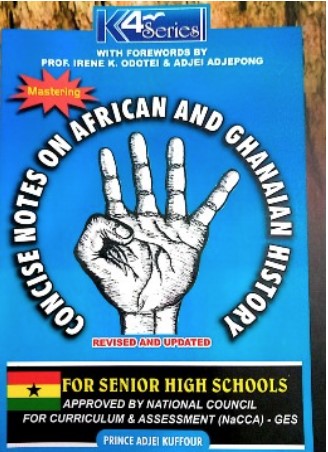
Textbook authors in Ghana reflected the nation’s ambivalence about slavery and the slave trade. The senior secondary author provided a strong discussion of how trading worked, but none of the authors expanded on lives of slaves in the Americas or fully confronted the long-running trans-Saharan trade that involved West Africans. Ghana was the first country in Africa to gain independence from their colonizer, England. The country recognizes nine ethnic groups, many of whom were slavers in the Atlantic trade and enemies. For teachers, sustaining national citizenship amidst this animosity required the reduction of ethnic ties in favor of African and Ghanaian pride. To promote unity, teachers emphasized that their diverse cultures were “almost the same” and taught a “national story of subjugation, struggle, and sacrifice” in which heroic Ghanaians overcame deceptive, cruel, and racist Britons. The desire to minimize past transgressions like slave raiding was reflected in the junior high textbooks. In brief histories of Ghana’s ethnic groups, Nikoi A. Robert’s (2010) textbook named only the Denkyiras as slavers during the Atlantic trade. Junior high textbook author Agyare Konadu (2014) did not acknowledge any group as engaged in transatlantic slave trading and veiled the involvement of Africans in this awkward sentence: “The European merchants exchanges [sic] their goods such as guns, gun powder, drinks, beads, etc. with slaves [sic] from Africa and sold them to North America.” African traders were later described as undifferentiated “chiefs” or “middlemen” who were “very greedy for more money” and “enrich[ed] themselves by selling domestic slaves and captives of wars.”

Though junior high students would learn little about who was involved in trading and how it worked, high school students had the opportunity to learn the active roles of traders during the Atlantic trade. Senior secondary school author Prince A. Kuffour (2015) noted that, “Ghanaians were deeply involved in ethnic wars, slave raids and kidnapping just to satisfy the unjusti able demands by the European merchants.” Ethnic groups like the Fante, Asante, and Akwamu were named as raiders in the Atlantic trade. Kuffour also argued that Africans controlled the trade, explaining “As Africans violently resisted against [kidnapping of Africans], the Europeans came to the realization that the only practical way to obtain slaves was to bring items the Africans wanted . . . Within a short time, Europeans and Africans established a systematic way of trading that changed little over centuries.”

But Ghanaian authors downplayed centuries-long slave trading across the Sahara that demonstrates Africans’ long experience with slaving and helps explain the shift to Atlantic trading. Europeans sailed along the coast in an effort to circumvent the Saharan trade and gain direct access to African markets. West Africans also gained by this, as they could purchase trade goods more cheaply. Ghana’s founders took the name of the great trans-Saharan gold and slave-trading kingdom to the north of present-day Ghana. Robert did not mention slave trading by ancient Ghana, though Konadu said the empire became “very great as it had a lot of gold, grew a lot of food, fought many wars, conquered many states and captured a lot of slaves.” Kuffuor explained that Western Sudanese states “participated in and controlled the Trans-Saharan trade” and this “trade brought wealth . . . and enabled them to sustain, expand and consolidate their territories.” But given his stance on European slavers as “brutal and immoral” and African chiefs’ “diabolical intentions” in trading with them, it is notable that Kuffour made no mention of the cruelties committed by North African and Arab traders during the deadly journey across the desert. In fact, he emphasized African innocence prior to the arrival of Europeans, noting that greed caused by the Atlantic trade “forced the naturally moral-minded peoples of Africa to throw morality to the wind.”

The junior high textbooks did not cover the lives of enslaved Africans in the Americas, focusing instead on the trade’s negative effects on Africa, including depopulation, increased warfare, and discrimination. Kuffour’s longer textbook included sections on how captives were obtained and traded in Africa, conditions in the slave castles, and the horrific journey across the Atlantic. Kuffour introduced slave life in the Americas by stating that “Slaves faced a variety of experiences in the Americas . . . [and] nearly all involved heavy physical labour, poor housing, and insufficient medical care.” But he devoted only one paragraph to this topic, focusing on numbers of captives, mortality rates, and types of work. Kuffour included six paragraphs on achievements and contributions in arts, politics, science, and sports in the African diaspora. So while Ghanaian students had little opportunity to learn about life once Africans left the continent, high school students could get some sense of the enduring impact of Africans on American life.

Starting in 2008, British teachers were mandated to teach “the nature and effects of the [Atlantic] slave trade, resistance to it and its abolition.” In explaining this change, Children’s Minister Kevin Brennan (BBC, 2008) stated, “Although we may sometimes be ashamed to admit it, the slave trade is an integral part of British history.” Given the duration and impact of the slave trade on England’s history, politics, economy, and culture, it is shocking that this topic had not already been required. Nevertheless, these curriculum reforms could not overcome the textbook authors’ Eurocentric focus on the actions of white people. Most authors detailed diverse European beneficiaries of the slave trade and took full responsibility for English people having been slavers, but there was far less discussion of African participants. For example, besides “ship owners, slave traders and slave owners,” Aaron Wilkes (2014) named “many other Britons . . . linked to slavery,” including “dockworkers unloading ships full of cotton the slaves had grown, workers turning the cotton into shirts and even the shop owners selling sugar and tobacco.” On the other hand, Wilkes identified only “local African tribesmen” as involved in “swap[ping] the goods in the ship for prisoners from other tribes.” Besides being the only reference to Africans, the designation of ‘tribesmen’ by Wilkes (and Bruce et al. 2016) replicated colonialist language. Jo Thomas and Keely Rogers (2015) included a source explaining that “The economics of slavery permeated American and European life,” listing wealthy merchants from Liverpool and Bordeaux, banks, insurance companies, and universities like Yale and Brown as beneficiaries. These authors pointed out that the “only beneficiaries in Africa were the rulers and wealthy merchants who engaged in the slave trade,” otherwise it “had a wholly negative impact on African nations.”

John D. Clare’s (2010) textbook on the trade provided more coverage of European and African participation. The author provided a two-page discussion of the vicious cycle of violence caused by slave trading, focusing on the Ceddo wars in Senegal and exploits of traders like Lat Sukkabe Faal. In a listing of “Arguments against the British paying reparations” at the end of the book, Clare hinted at African motives and gains in the trade: “The British did not steal the slaves—they bought them from the African rulers in what both sides regarded as a business deal, and pumped millions of pounds into the African economy of the time.” However, in most of the 48 pages, Europeans were the primary historical actors, and students would search in vain for African agency. This is starkly illustrated in the names of African nations identified by the authors in texts (I did not count names on maps). Ghanaian, Jamaican, and Caribbean authors named equal numbers of African and European trading nations, while British author Clare named only two African regions (Senegambia and the Kingdom of Futu Toro) as involved in trading.

All the English textbooks discussed the transatlantic journey and noted that most slaves were destined to work on cotton and sugar plantations, but they provided no coverage of enslaved people’s social or cultural lives. There was little discussion of their oppression either. Wilkes did not mention any cruelty or difficulty in the lives of slaves. Bruce et al. said that enslaved Africans lived “short and brutal lives of hard work and extreme misery . . . [ate] a poor diet, faced tough punishments, and had no proper medical attention.” Thomas and Rogers provided a paragraph from Olaudah Equiano about oppressive slave ship conditions. Clare’s book on the slave trade also used Equiano’s diary to illustrate life in Africa before capture, the process of enslavement in Africa, and the journey across the Atlantic. But while the author devoted eight pages to abolition and its heroes, most of whom were white, there were only three paragraphs about Africans’ daily lives once they arrived in the Americas. Life was portrayed as unrelentingly harsh: “house slaves . . . were often better treated, but even small mistakes might result in terrible punishment—the law allowed a slave-owner to beat a slave to death.” While it is important for students to understand the cruelties suffered by enslaved people, an emphasis solely on victimization defines people only by what is done to them. It is no wonder that an African-Caribbean student in Britain reported feeling bad “about being black when we did the slave trade . . . They [teachers] made me feel ashamed.”

Citizens in Jamaica and other Caribbean countries have the opportunity to learn the most comprehensive accounts of transatlantic slave trading. African nations and traders were presented as sophisticated actors in the trade. Enslaved Africans were portrayed in nuanced ways, as people who overcame terrible oppression to create independent nations. Only the Jamaican and Caribbean textbooks provided coverage of the diversity of enslaved people’s experiences outside of their work—and in most of their textbooks, coverage far exceeded two sentences about the topic, the standard counted as covering these topics. Most of the other textbooks could not meet this standard.

Ghana’s colonial-era border brought together former slave traders and societies who were victimized by those traders. For junior high textbook authors, creating a nation out of this diversity meant ignoring inter-ethnic slaving that could stir up old wounds. None of the authors fully confronted West Africans’ complicity in the trans-Saharan trade either. In the postcolonial period, Africans found allies among Middle Eastern nations who had also suffered under European imperialism. As Simon Simonse (2005) argued, “In the context of this African-Arab solidarity there was no place for discussing the crimes committed in a period when Arabs enslaved Africans on a large scale.” Silence about this trading helps sustain the idea that Africans were innocent and morally pure before Europeans arrived.

Bennett argued that a “savage-to-slave trajectory” continues to contort Western ideas of Africa. In this conception, African history is wrongly viewed as in a state of savagery that became a source of slaves when Europeans showed up. Today, this narrative continues to obscure the history and politics of African civilizations whose interactions with Europeans and others shaped the modern world. In England, white citizens took full responsibility for engaging in and pro ting from slavery—ultimately comforting themselves that British people ended slavery in the Atlantic world. But in telling this story, they presented African traders as undifferentiated middlemen or kings, and enslaved people as brutalized victims, sidelining black people and their agency in the national narrative.

Acknowledgment of African agency would help teachers tell a more robust, candid, and humanistic story of slavery. To do this, textbook authors should identify and describe the roles of African as well as European traders (and also name Africans who tried to stop slave trading, as was done by Ghanaian author Kuffour). I argue for including African trading nations and traders not to assuage the guilt of white people by calling out African slavers or as an argument against reparations. Rather, to be viewed as participants in history, Africans need to be acknowledged as political actors—they too engaged in diplomacy, trade, oppression, and manipulation to serve their interests. Current conceptions “grant Europeans far too much power.” At the same time, educators need to be clear that enslaved people were not simply acted upon by white people. They lived rich lives before they were captured, created societies and cultures amidst the terrors of slavery, and faced additional struggles once slavery ended. Because most of the authors included very little about slaves’ lives beyond their arduous labors and vicious punishments, the image of enslaved people as brutalized victims remained unchanged. As Toby Green explained, a focus only on slavery when teaching about Africa and Africans replicates “an old trope of primitivism and oppression.” Jamaican and Caribbean textbooks stood out for their honesty, depth, and attention to historical change. Students learned about life in Africa before capture, the complex and varied lives of enslaved people, the long and contested process of emancipation, cultural and other achievements, and enduring racism.

The aims of critical linguistic analysis of materials like textbooks, according to Ruth Wodak (1989), are “to uncover and de-mystify certain social processes . . .to make mechanisms of manipulation, discrimination, demagogy, and propaganda explicit and transparent.” In the US, myths about African history and persistent racism can hinder the efforts of teachers to fully address the tragedy of the Atlantic slave trade. This study of textbooks reveals that citizens in other nations are also denied a full accounting of slavery and slave trading. I urge teachers to join with their students to bring forms of discrimination and propaganda to light. Students can evaluate the accounts below to determine which tells a better story. They could also find equivalent passages from their textbooks to compare to the narratives in other countries. In this way, students provide their own analyses of why authors write the ways they do: How do their textbooks compare with others? Do US textbook narratives support historical agency? What story should textbooks tell?

BBC News (2008, August 26). “All Pupils to Learn about Slavery,” BBC News.

Bennett, Herman (2018). African Kings and Black Slaves: Sovereignty and Dispossession in the Early Modern Atlantic. Princeton NJ: Princeton University Press.

Green, Toby (2019). A Fistful of Shells: West Africa from the Rise of the Slave Trade to the Age of Revolution. Chicago IL: University of Chicago Press.

Northrup, David (2017). Seven Myths of Africa in World History. Indianapolis IN: Hackett Publishing Company.

Simonse, Simon (2005). “Addressing the Consequences of Arab Enslavement of Africans: The 
Impasse of Postcolonial Cultural Relativism,” in Kwesi Kwaa Prah, ed., Reflections on Arab-Led Slavery of Africans. Cape Town, South Africa: Centre for the Advanced Studies of African Society.

SPLC (2018). Teaching Hard History: American Slavery. Montgomery AL: Southern Poverty Law Center.

Thornton, John (1998). Africa and Africans in the Making of the Atlantic World, 1400–1650. Cambridge UK: Cambridge University Press.

Wodak, Ruth, ed. (1989). Language, Power, and Ideology: Studies in Political Discourse. Philadelphia PA: John Benjamins Publishing.

Textbooks in this Study Caribbean Baldeosingh & Mahase (2011), Caribbean History for CSEC Dyde et al. (2008), History for CSEC Exams: Amerindians to Africans, Book 1 (Grades 10-11) Dyde et al. (2008), History for CSEC Exams: Emancipation to Emigration, Book 2 (Grades 10-11) England Bruce et al. (2016), Oxford AQA GSCE History: Thematic Studies c790 to Present Day (Grade 10) Clare (2010), The Slave Trade: Should Britain Pay Compensation for the Slave Trade (Grade 7-9) Thomas and Rogers (2015), History: MYP by Concept 4 & 5
(Grade 6-10) Wilkes (2014), Key Stage 3 History: Renaissance, Reformation, and Revolution: Britain 1509–1795 (Grade 7-9) Ghana Konadu (2014), Effective Social Studies for Junior High Schools, 1, 2 & 3 (Grade 7-9) Kuffour (2015), Concise Notes on African and Ghanaian History, for Senior High Schools (Grade 12) Robert (2010), Social Studies for Junior High Schools (Forms 1–3) (Grade 7-9) Jamaica Bell-Coates et al. (2008), Living Together: Social Studies for Grade 7 (Grade 7) Black (1993), History of Jamaica
(Grade 7-9) Sherlock (1966), Jamaica: A Junior History (Grade 7-9)

Excerpts from Textbooks

1. Accounts from middle school textbooks about how the triangular trade operated.

Ghanaian textbook by Konadu (2014)Jamaican textbook by Bell-Coates (2008)
“The Transatlantic slave trade involved the buying and selling of slaves across the Atlantic Ocean to America and West India . . . The European merchants exchanged their goods such as guns, gun powder, drinks, beads etc. for slaves from Africa and sold them to North America for raw materials to feed their industries in Europe” (65).  “The Africans were snatched from their village homes along the coast of West Africa to be sold as slaves, first to the Spanish settlers, then, from 1665, to the English . . . Captains of slave ships would offer [goods], many of them manufactured in Britain, to African slave dealers” (31).  

2. Accounts from high school textbooks on how Europeans and Africans became involved in slave trading.

Ghanaian textbook by Kuffour (2015)Caribbean textbook by Dyde et al (2008)
“The first Europeans to sail down Africa’s west coast in the mid- fifteenth century attempted to acquire slaves by means of force . . . As Africans violently resisted, the Europeans came to the realization that the only practical way to obtain slaves was to bring items the Africans wanted in exchange. Within a short time, Europeans and Africans established a systematic way of trading that changed little over centuries” (272).“To begin with, slaves were obtained by
the snatching and kidnapping of suitable victims by Europeans but . . . after about 1700, although kidnapping continued, it
was carried out by Africans. The desire of European traders for large numbers of slaves, in exchange for a wide range of goods, stimulated slave raiding in the interior. It also encouraged African chiefs and headmen to distort and alter the local sanctions which led to enslavement” (123).

3. Accounts from middle school textbooks explaining what happened when British colonists in the Caribbean began buying enslaved Africans.

Jamaican textbook by Sherlock (1966)British textbook by Bruce et al. (2016)
“The story of slavery . . . is a story of endurance and of triumph. The African fitted himself to life in a strange land far from his own home and loved ones; he cleared the forests and tamed the land, grew food crops and made for himself a new way of life.
By his strength of spirit he rose above the brutality of the system into which he was forced” (62).“By 1619, African slaves were introduced to British plantations . . . Slaves had no legal rights and had to work their whole lives without payment. Any slave children born became slave owners’ property too. Purchasing slaves allowed plantations to become more pro table, as the unpaid workforce increased in size” (203).

Teaching New York History: Sources for Teachers

The New York state social studies/history framework includes the teaching of local and New York history at the Grade 4 level and New York and U.S. history in Grades 7/8.  U.S. history is the topic for Grade 11 but, given New York’s historical importance over time, some of the topics such as immigration and reform movements that started in New York but spread nationally, could also be taught with a New York dimension.

New York teachers are often looking for sources for these classes. This article provides some suggestions.

Books. There are many books on New York history and more coming out all the time. The blog New York Almanack carries notices of new books. Books covering all of the state’s history include Bruce W. Dearstyne, The Spirit of New York: Defining Events in the Empire State’s History, David M. Ellis, New York: City and State, David M. Ellis et al, A History of New York State , Milton M. Klein, ed., The Empire State: A History of New York and Joanne Reitano, A History of New York State. Two encyclopedias are useful for concise information on many topics: Peter Eisenstadt, ed. Encyclopedia of New York State and Kenneth T. Jackson et al, eds.,  The Encyclopedia of New York City. Beyond that, there are hundreds of books on local history, and more are being published all the time. Your school or local public library should have many of these, and they are also available for purchase. Many libraries have local history sections which may include local history books and other sources and are useful venues for student research projects and field trips.

Articles. Articles by historians in journals  are often very useful for teachers seeking information and for assignment for student readings. This journal, Teaching Social Studies, is the best source for writing in the field. The journal  New York History and The Hudson River Valley Review provide a statewide focus. New York Archives published by the State Archives Partnership Trust, carries many articles from around the state. The Trust recently initiated New York Archives Jr.  Each issue features one article from New York Archives magazine rewritten at an upper elementary level, community connections, related facts, and learning activities focused on primary source analysis. Regional journals such as Rochester History  and journals published by county historical societies feature articles of local interest which may be of particular interest to students since the articles cover “nearby history.”

The Office of State History. The Office of State History in the State Museum has a great deal of information on New York history on its website, online podcasts including “A Minute in New York State History”, and Empire State Engagements, interviews with authors of new books.

Officially designated local government historians. New York is the only state with a law  authorizing local governments to appoint official historians. Many counties, cities, towns and villages have made these appointments; some have not. Historians’ work varies depending on their priorities and support, but in many communities, they are invaluable resources and welcome opportunities to work with teachers. You can find your community’s historian on the website of the  Association of Public Historians of New York State.

Local history museums and historical societies. There are hundreds of these, located in all areas of the state.  Many hold sources that students could use for research, welcome visits by school groups, and seek other opportunities to work with the schools. There is no central directory but many are listed on Wikipedia or on the website of the Museum Association of New York. You can follow their work, and developments in state history generally, through the website of the Office of State History in the State Museum and the blog New York Almanack.

Some history programs are of particular importance because of their scope, the variety of their programs, their programs for student visits, and, increasingly, their online presentations. These include, among others the Buffalo History Museum, Empire State Aerosciences Museum (Glenville), Eastman Museum of Photography  (Rochester), Erie Canal Museum (Syracuse), Farmers’ Museum (Cooperstown), Genesee Country Village and Museum (Mumford), New-York Historical Society, Museum and Library and the New York State Museum (Albany) which features history exbibits, public events, and online presentations.

State historic sites. The state office of Parks, Recreation and Historic Preservation maintains state historic sites and buildings in all areas of the state. They welcome school groups and some may be willing to send a speaker to the schools.

Consider the Source: Teaching With Historical Records, an online resource available at the State Archives, features document-based teaching activities.  The Archives also gives Student Research Awards for outstanding student research using historical records.

New York State History Day, part of “National History Day,” is a forum for students to compete for awards in several categories, including research papers, exhibits, documentaries, and performances.

The Historians’ Podcast features interviews and discussions with experts on New York state and local history.

Historical Society of the New York Courts is an excellent source for New York’s legal and constitutional history. Its online journal Judicial Notice features articles on important cases.

The State Archives Partnership Trust  features online podcasts and videos  on historical topics.

*New York State History Month (October).  October is designated in law as New York State History Month. This is a time to celebrate the state’s history and historians.  It would be an opportune time for attention to particular New York-related topics in schools.

Modern Neocolonialism Via Public and Private Entities

For over five centuries, opportunistic outside powers have been taking advantage of Latin America. During the colonial era, the natural resources and native populations of the region were abused by European countries for profit. Exploitative practices left indelible marks on the area that persist to this day, and even after achieving independence, many countries in the region continue to function under neocolonial domination. Through the direct actions of foreign governments and more subtle acts of economic manipulation, the will of the people in Latin America has been continuously suppressed by intruding parties. In this essay, I will argue that modern neocolonial influence in Latin America largely follows historical precedent. Political and economic affairs in the region are shaped by modern foreign interests in the same manner that they have been throughout history.

With the advent of lithium-ion batteries and their increased popularity in the search for clean energy sources, global interest has been shifted back towards the Latin American mining industry. The trio of Bolivia, Chile, and Argentina contain about 58 percent of all global lithium reserves, a resource which is highly valuable on the global market (Berg et. al. “South America’s Lithium Triangle” 2021). Consequently, multiple global superpowers have expressed interest in gaining partial-or total-control over South American mining operations. In the first document that I chose, “South America’s Lithium Triangle: Opportunities for the Biden Administration”, authors Ryan C. Berg and T. Andrew Sady-Kennedy suggest that the Biden administration should pursue a higher level of cooperation between the United States and the countries mentioned above. Citing environmentalist concerns, green energy, and the rapidly expanding demand for lithium, the two argue that it would be mutually beneficial for all parties to work together (Berg et. al. “ South America’s Lithium Triangle” 2021). On its own, this suggestion seems innocent enough. Alternative energy is a burgeoning market, and the modern globalized economy means that investment from foreign sources is not uncommon by any means. However, when the current political climate in these lithium-producing countries is considered, it becomes more clear that the United States’ plans for involvement are not in line with the ideals that these countries have embraced. The elected governments of Argentina, Bolivia, and Chile all express heavy left-leaning ideologies, which are largely incompatible with the concept of investment as it is understood in the article. The newly elected president of Chile, Gabriel Boric, has even suggested that he will seek to nationalize the country’s mining industry, a move that would likely cease all involvement from the United States (Restivo 2021). Berg and Sady-Kennedy briefly address these barriers, noting the “United States’ historically rocky relationship with both Argentina and Bolivia”, but they do not seem to view them as particularly significant (Berg et. al. “South America’s Lithium Triangle” 2021). To the authors, such concerns can simply be solved by organizing a summit between lithium-producing countries and potential investors (Berg et. al. “South America’s Lithium Triangle” 2021). No credence is lent to the possibility of countries being disinterested in such a summit. Such arrogance is reminiscent of that displayed by those seeking to spread European-style “progress” into Latin America during the 19th Century. As described in “Neocolonial Ideologies” by E. Bradford Burns, it was inconceivable to Europeans that anybody would disagree with their conception of the optimal society. Burns puts it as such: “…the Enlightenment philosophers concluded that if people had the opportunity to know the truth, they would select ‘civilization’ over ‘barbarism’” (Burns 1980:92). Of course all Latin American people would pursue an industrialized society, as it was objectively the civilized, superior manner of existence. Berg and Sady-Kennedy demonstrate a similar pattern of thinking. Of course Bolivia, Chile, and Argentina would meet with the United States to discuss investment, because it is objectively the best way for them to boost said investment.

This article frequently invokes the ideas of partnership and cooperation, but it subtly betrays its true intentions in one key statement. After discussing the newfound usefulness of lithium and the growing market for it, Berg and Sady-Kennedy say the following: “These trends indicate that control of the lithium industry could reap major benefits in the future…” (Berg et. al. “South America’s Lithium Triangle” 2021). Notable in this excerpt is the usage of the word “control”. Unlike partnership and cooperation, the idea of control carries a much different -and much more sinister- connotation. It implies a much more forceful involvement, one in which the will of the United States is imposed instead of negotiated. This, of course, is the most familiar modus operandi of the United States. It can be traced back almost two full centuries to the Monroe Doctrine, expressed in 1823. The Doctrine, presented to Congress by President James Monroe, granted the U.S. permission to involve itself in Latin American affairs “in which the rights and interests of the United States are involved” (Avalon Project 2008). There are shades of this approach visible in the article, as Berg and Sady-Kennedy establish that the lithium industry is very much of interest to the United States. However, the authors seem to push beyond this concept and into the realm of the Roosevelt Corollary. The Roosevelt Corollary granted the United States power to exercise more force in its application of the Monroe Doctrine, under the guise of “[desiring] to see the neighboring countries stable, orderly, and prosperous” (Frohnen 2008). It drew heavily from the idea of paternalism, which is based upon the belief that some groups of people are more capable and intelligent than others. This feigned desire to see Latin American countries succeed, as well as the paternalistic tone of the Corollary, can be seen throughout the article. The failure of Chile, Bolivia, and Argentina to “successfully [transform] the majority of [their] available resources into economically viable reserves available for commercial production” is bemoaned, and it is heavily insinuated that the United States is responsible for reversing this trend (Berg et. al. “South America’s Lithium Triangle” 2021). The exact words of the Monroe Doctrine and the Roosevelt Corollary are much too taboo for modern-day political analysts, but clearly the sentiments expressed within them are still relevant and popular.

The United States is far from the only country perpetuating modern neocolonialism in Latin America. In its efforts to expand its social and economic influence, China has begun to get involved in the region, with much more obvious and direct intentions. Thus, for the second document in this analysis, I chose “Chinese Neocolonialism in Latin America: An Intelligence Assessment”, written by senior airman Steffanie G. Urbano and produced by the U.S. Air Force. The report enumerates a few different grievances that the United States has with China’s action, starting with exploitative lending and the weaponization of debt. Urbano describes a process known as “debt diplomacy”, in which China will issue exploitative loans to Latin American countries that do not have the ability to pay them back. The debt from these loans is then used as leverage by China, allowing them to hold other countries hostage when they cannot repay. This allows China free reign to operate in the region, with actions like seizing key infrastructure and forcibly reworking government contracts being common (Urbano 2021:185-187). China’s strategy of leveraging debt is not unheard of in Latin America; in fact, it is particularly reminiscent of the blueprint set by Europe in the 19th and 20th centuries. During this time, major European powers kept newly independent Latin countries in a state of perpetual debt, taking advantage of their young governments and economies. When these countries inevitably defaulted on their loans, loaning countries used it as an excuse to exercise military power and generally institute their own will. In Born in Blood & Fire, John Charles Chasteen lays out a particularly prominent example from Mexico in the mid-1850s: “The civil war had bankrupted the Mexican state, and Juárez suspended payment on foreign debt. France, Spain, and Britain retaliated by collectively occupying Veracruz” (Chasteen 2016:169-170). Using Veracruz as a springboard, the French military invaded the country, kicked out the current government, and installed their own puppet dictator to rule the country on their behalf. This particular brand of gunboat diplomacy is outdated in modern times, but the utilization of debt to excuse aggressive behavior is very much alive. Beyond debt diplomacy, Urbano also notes that large numbers of Chinese immigrants are settling in Latin America. She points to the fact that the Chinese-born population in the area more than doubled from 1990 to 2015, an increase which was sparked by “the migration of families to join Chinese laborers already settled in Latin America” (Urbano 2021:192). This is another familiar strategy, one that was used in the American banana republics in the early 20th century. The United Fruit Company, who effectively controlled much of Central America, created entire towns and communities of U.S. expats. Employees and their families would live in neo-suburban settings, “miniature US neighborhoods of screen-porched houses on meticulously manicured lawns”, isolated at best and actively colonizing at worst (Chasteen 2016:200-201). They spread American culture and ideas into the region, contributing little in the way of actual development and improvement. This parasitic relationship serves as the clear inspiration for China to develop their own isolated communities abroad.

Besides being deeply ironic, the contrasting tones of these two articles demonstrate the power of American exceptionalism to color our perception of the world. How can our government condemn “the detrimental impact of [Chinese-Latin American relationships] on regional stability and US leadership” when it has been just as guilty of destabilizing the region (Urbano 2021:184)? Why is it unacceptable for China to take control of key industries while American think tanks advocate for the same behavior? Do we truly believe that Latin America is only now becoming “overrun by malicious intent”, and that U.S. intervention “to keep our neighborhood friendly” is not malicious (Urbano 2021:197)? After analyzing both of these pieces, it has become clear that the United States sees itself in a different light from other countries. Ryan Berg and T. Andrew Sady-Kennedy advocate for intervention in the lithium industry because they believe that the U.S. must help Argentina, Bolivia, and Chile. They acknowledge that those countries do not want our assistance, but they seem to believe that such relationships can be changed purely by virtue of being the United States. Airman Urbano strongly condemns Chinese intervention in Latin America through the entirety of her writing, but she ends by advocating for U.S. intervention in the region. She seems to believe that the United States has more virtuous and respectable aims in the region, despite a history that suggests otherwise. Only by learning this history can we break such patterns of thinking and work towards achieving justice for the people of Latin America.

            Although this essay was previously drafted for a college level course, the ideas and the process demonstrated within it could prove useful in any social studies classroom that utilizes document analysis. When working with historical documents, it is important for students to recognize that the content within the document does not exist outside of its historical context. Effective analysis in the classroom should always include a dissection not only of the content itself, but the author, the intended audience, the reasons for the document’s creation, and the broader historical environment in which it was produced. In the above essay, we can see this process being taken with the Berg and Sady-Kennedy article and the broader context of U.S. policy in Latin America. As acknowledged by the author of this essay, the literal verbiage of the article is fairly innocent and mundane, with Berg and Sady-Kennedy advocating for cooperation and partnership in the region. When the historical context of the Monroe Doctrine and interventionist policy is considered, though, the article’s messaging becomes a more concerning indicator of contemporary views about Latin America in the United States.

 For students in a secondary education setting, the skill of recognizing and defining a document’s subtext should be targeted for development. Educators can promote this skill by highlighting the aforementioned aspects (author, audience, intention, context) of documents that are used in class, thereby modeling the process for students. This can be scaffolded as well, with educators prompting students to undertake the analysis process on their own until it becomes an automatic part of dissecting a document. If students can effectively utilize this skill, teachers can incorporate a much broader range of documents into the classroom. Material does not need to be nearly as literal and targeted if students possess the ability to consider historical context. For example, a lesson on racial discrimination could incorporate writings about eugenics, redlining, discriminatory legal codes, and much more provided that students are able to recognize the racial connotations of these issues. Outside of the classroom, this skill is just as valuable. Politically active Americans will frequently encounter messaging that relies heavily on connotations and subtext to execute its true intentions. In order to function as a responsible and informed member of our democracy, an individual must be able to pick up on the messaging beneath the surface.

Berg, Ryan C. and Sady-Kennedy, T. Andrew. 2021. “South America’s Lithium Triangle: Opportunities for the Biden Administration.” Retrieved from https://www.csis.org/analysis/south-americas-lithium-triangle-opportunities-biden-administration <Accessed 4/22/22>  

Burns, E. Bradford. 1980. “Neocolonial Ideologies.” In The Poverty of Progress: Latin America in the 19th Century. Berkeley: University of California Press. Pp. 18-20, 29-30.

Chasteen, John. 2016. Born in Blood & Fire. New York:W.W. Norton & Company.

Monroe, James. Monroe Doctrine, December 2, 1823. In The Avalon Project: Documents in Law, History, and Diplomacy. New Haven: Lillian Goldman Law Library, 2008.

Restivo, Néstor. 2021. “Cuál es el programa económico de Gabriel Boric para el nuevo Chile.” Pagina 12. December 26.

Roosevelt, Theodore. Roosevelt Corollary to Monroe Doctrine, December 6, 1904. In The American Nation: Primary Sources, edited by Bruce Frohnen. Indianapolis: Liberty Fund, 2008.

Shakow, Miriam. 2022. “Findlay Intro & Ch 1-2 plus Roosevelt Corollary.” Class Lecture, Race & Gender in Latin America. The College of New Jersey. April 8.

Urbano, SrA Steffanie. 2021. “Chinese Neocolonialism in Latin America.” Journal of the Americas. Third Edition 2021: 183–199.

History Book Club with Kapka Kassabova’s Street Without a Name: Childhood and Other Misadventures in Bulgaria

History classes are often labeled as boring and repetitive by students. This begs the question of how to engage students to quell this historical boredom. Educational theory suggests students become more involved the more they are engaged and care about what they are learning. That being said, to engage students, I suggest History teachers can implement a history book club that allows students to pick books that they want to read and can relate to history.

In this article, I will suggest using Kapka Kassabova’s book Street Without a Name: Childhood and Other Misadventures in Bulgaria to be included in the proposed history book club as an example of a book that both captures the interest of students and serve as a link to learning about a country like Bulgaria which is rich with natural resources and long history. The culture and history of Bulgaria can be encapsulated through Kassabova’s writing is significant as her individual experience can illuminate students on life in communist Bulgaria. Also, the individual experience and the feelings Kassbova has throughout her childhood and later return to post-communist Bulgaria. Therefore, a history book club centered around Kapka Kassabaova’s book Street Without a Name: Childhood and Other Misadventures in Bulgaria, would explore the struggle for identity and belonging as he reflects on her past and present self, which, could lead to more knowledge about Bulgaria as a springboard to learn the about other countries as well.

The architecture of communist Bulgaria is easily identified, and the uniformity of the architecture contributes to Kassabova’s struggle for identity and belonging. The impact of the communist bloc housing can be seen through Kassabova’s childhood recollection of her home. Kassabova recalls waiting for an apartment and finally getting placed in an apartment that was small and on a nameless street. The lack of a street name distorted Kassabova’s sense of home, and is affirmed by a school project where she had to write about her home and the address. The solution to the nameless status of her street was solved by her mother’s suggestion of writing about her ideal home on Strawberry Street. However, the teacher returned the assignment with a red pen written on the paper, chiding young Kapka for not facing the reality of life as most lived in block-style apartments.[1]  Through this experience, Kassbova learned to conform to communist standards of education that included unity under the communist identity, as a result, individualism was not valued. The role of housing and architecture in communist regimes in Europe in the late to middle twentieth century is explained by Michael Kelleher’s journal article “Bulgaria’s Communist-Era Landscape.” Through this journal article, Kelleher defines the landscape of Bulgaria after residing in Bulgaria for a number of years. Through exploring the rigidity and uniformity, Kelleher claims Bulgaria utilized the Soviet Union’s model for architecture and design to better show the legacy and impact of the communist identity within a non-Soviet nation, Bulgaria.[2]

This opens another interesting line of historical inquiry, using the architecture of a country as the hook to investigate the different historical styles of architecture and the corresponding connection to important periods of history.

This perspective adds to and validates Kassabova’s childhood account of the housing in Bulgaria being drab and uniform. Moreover, the connection between Kelleher’s article and Kassabova’s writing shows the influence of housing on one’s identity and how the uniform structure voided individuality through the definitive architecture which promoted communist ideals and upheld a common communist identity. Overall, showing one aspect of Kassabova’s struggle with identity in communist Bulgaria and the importance of uniformity and realism under communism.

Furthermore, Kassabova’s identity was challenged by governmental upheaval and the fall of communism in Bulgaria. Through Street Without a Name, the reader can experience the turmoil and tumultuous end to the People’s Republic of Bulgaria. The brewing of change is addressed by Kassabova as well as the uneasy atmosphere within her school and home as rumors of a murdered journalist and a bloodless governmental coup were looming. The stress of the uniformity that consumed Kassabova’s identity was threatened and with the “televised execution of Nicolae and Elena Ceausescu by a three-man fighting squad” the fate of the Bulgaria Kapka knew was in shambles.[3]  Kapka referred to the end of the People’s Republic of Bulgaria as the last act of a forty-five-year-long theater” which indicates the manufactured identity of communism was gone, leaving her to reconstruct herself and her identity and belonging within the world. However, this experience while individual to Kassabova was a collective memory for citizens of Bulgaria. Therefore, this memory can be viewed through the idea of collective and intergenerational memory, as her experience was of a child being told by her parents. This can be used to discuss the ongoing turmoil in the modern world, as well to investigate other historical examples of government upheaval.

The significance of collective and intergenerational memory is highlighted in Paul Thompson’s journal article “Community and Individual Memory: An Introduction.” Thompson addresses the impact of collective memory that is passed down from generation to generation on the testimony of historical accounts.[4]  This can be applied to Kassabova’s account as she is informed of the political upheaval by her parents not through her direct self, which shows the use of collective memory within Kassabova’s book. Thus, displaying the transformation and destruction of Kapka’s communist identity with the fall of the Bulgarian communist regime. This information can be used to bridge discussions and lead to further explorations of other former communist governments since the fall of the Soviet Union.

Moreover, emigrating from Bulgaria resulted in a massive shift in Kassabova’s sense of identity and belonging. Kapka throughout her book glimpses toward her present self as her book splits between her past in Bulgaria and revisiting Bulgaria as an adult. However, the process of leaving and immigrating removed Kassabova’s Bulgarian past as she writes about her fascination for other countries except for Bulgaria “rids herself of two things. One, her Bulgarian past” and the question of “where are you from?”[5]This indicates an internal struggle for belonging and identity, as Kassabova feels nationless and represses her past as she separates herself from her childhood under the Bulgarian Communist regime. The act of immigrating distorts one’s life as they uproot themselves from their daily life. Also, within the context of Bulgaria, Anna Krasteva’s journal article, “post-communist discovery of immigration: the case of Bulgaria” fills in the missing information on migration patterns within communist and post-communist Bulgaria. Krasteva explains why emigration was uncommon in communist Bulgaria, as the state was closed, meaning no one left.[6]  Subsequently, the collapse of communism in Bulgaria resulted in newfound freedom of emigration. This assertion of Krasteva relates to Kassbaova, as her family took advantage of the release of emigration. This could lead to a fuller discussion of social culture and the ramifications of various emigrations in history.

However, the impact of immigration on Kassabova’s fragile identity resulted in an aimlessness and loss of belonging overall. This is observable in the second half of her book as she revisits Bulgaria and writes she is “a ghost from the past, but it isn’t their past.”[7]This indicates a disconnect of self and a fragmented identity that Kassabova, as she is haunted by her past life in Bulgaria. Moreover, this idea of change and disconnect of identity is addressed in Gabriele Linke’s journal article “‘Belonging’ in Post-Communist Europe: Strategies of Representations in Kapka Kassabova’s Street without a Name.” Linke connects sociologist and philosopher Zygmunt Bauman’s concept of liquid modernity to apply to the fragmentation of Kassabova’s life as written in her book. Linke claims the constant shift and difference to her Bulgarian past is the result of liquid modernity changing her view of her past self and the relationship she had with her Bulgarian and communist identity.[8] Moreover, this creates a disconnect regarding her identity, as she cannot fully acknowledge her past and how her past impacts her present sense of belonging and identity. Once again, this profound writing can serve to link the many stories of people like her to build an understanding of the long-term impact of history now generations past.

However, Kassabova’s work, while insightful, is not flawless and is subject to review and criticism. One such review comes from the Harvard Review, which reviews the book from the perspective of an average reader. The reviewer is Carmen Bugan, and she explains the concept of Kassabova’s book is interesting and important to learn about. The criticism of the book is in the structure, Bugan as she claims the book reads as a travel guide as opposed to a memoir. However, she appreciated the themes of restlessness and the struggle for identity within the book, as well as the quality of the writing.[9]Moreover, the analysis published by Claudia Duppé is titled “Tourist in Her Native Country: Kapka Kassabova’s Street without a Name.” This review differs, as Duppé focuses on the aimlessness and tourist-like status of Kassabova during her visit to Bulgaria. This review takes an academic and thematic approach to Kassabova’s memoir and explores the role of immigration on her identity shifts throughout the book.[10]Overall, the reviews of Street Without a Name are positive and cite the impedance of reading to better understand life during and after communism. It is always historically important to present a full picture of history, both good and bad, in addressing the criticism, students themselves can hopefully make informed judgments about the importance and validity of her claims.

To conclude, Kapka Kassabova in her memoir Street Without a Name: Childhood and Other Misadventures in Bulgaria is a powerful individual account of life under communism and after. Also, Kassabova through her own struggle for identity and belonging explains to the reader the mindset and reality of those who grew up under communism. This is shown through the separation of the book into childhood and revisiting Bulgaria, as this shows the time Kassabova took to heal and feel ready to face her past. Moreover, the rigidity and uniformity under communism definitively impact a person’s identity, as Kassabova struggled to adjust to the Western world’s looser restrictions. Overall, Street Without a Name: Childhood and Other Misadventures in Bulgaria is an important read to gain perspective and understanding of life under the iron curtain and after the fall of the iron curtain. The use of books like Street Without a Name: Childhood and Other Misadventures in Bulgaria can be used to make connections to social, political, and geography as a means to hook the students with real-world insights provided by individuals who actually lived the history that is being covered in various classes. Perhaps, using primary sources like Street Without a Name: Childhood and Other Misadventures in Bulgaria can break the notion of boring history and bring events of the past to life today!

Bell, John D. “‘Post-Communist’ Bulgaria.” Current History 89, no. 551 (1990): 417–29. http://www.jstor.org/stable/45316442.

Bugan, Carmen. “Street without a Name: Childhood and Other Misadventures in Bulgaria.” Harvard Review, September 18, 2020. https://harvardreview.org/book-review/street-without-a-name-childhood-and-other-misadventures-in-bulgaria/.

Duppé, Claudia. “Tourist in Her Native Country: Kapka Kassabova’s Street without a Name.” Facing the East in the West 138 (2010): 423–36. https://doi.org/10.1163/9789042030503_030.

Kassabova, Kapka. Street Without a Name: Childhood and Other Misadventures in Bulgaria. New York, NY: Skyhorse, 2009.

Kelleher, Michael. “Bulgaria’s Communist-Era Landscape.” The Public Historian 31, no. 3 (2009): 39–72. https://doi.org/10.1525/tph.2009.31.3.39.

Krasteva, Anna. “Post-Communist Discovery of Immigration: The Case of Bulgaria.” SEER: Journal for Labour and Social Affairs in Eastern Europe 9, no. 2 (2006): 25–34. http://www.jstor.org/stable/43293155.

Linke, Gabriele M. “‘Belonging’ in Post-Communist Europe: Strategies of Representations in Kapka Kassabova’s Street without a Name.” European Journal of Life Writing, 2 (2013). https://doi.org/10.5463/ejlw.2.46.

Thompson, Paul. “Community and Individual Memory: An Introduction.” The Oral History Review 36, no. 2 (2009): i–v. http://www.jstor.org/stable/20628065


[1] Kassabova, Kapka. Street Without a Name: Childhood and Other Misadventures in Bulgaria. New York, NY: Skyhorse, 2009.

[2] Kelleher, Michael. “Bulgaria’s Communist-Era Landscape.” The Public Historian 31, no. 3

(2009): 39–72. https://doi.org/10.1525/tph.2009.31.3.39.

[3] Kassabova, 120-2.

[4] Thompson, Paul. “Community and Individual Memory: An Introduction.” The Oral History

Review 36, no. 2 (2009): i–v. http://www.jstor.org/stable/20628065.

[5] Kassabova, 2.

[6] Krasteva, Anna. “Post-Communist Discovery of Immigration: The Case of Bulgaria.”

SEER: Journal for Labour and Social Affairs in Eastern Europe 9, no. 2 (2006): 25–34. http://www.jstor.org/stable/43293155.

[7] Kassabova, 280.

[8] Linke, Gabriele M. “‘Belonging’ in Post-Communist Europe: Strategies of Representations

in Kapka Kassabova’s Street without a Name.” European Journal of Life Writing, 2 (2013).

https://doi.org/10.5463/ejlw.2.46.

[9] Bugan, Carmen. “Street without a Name: Childhood and Other Misadventures in Bulgaria.”

Harvard Review, September 18, 2020.

https://harvardreview.org/book-review/street-without-a-name-childhood-and-other-misadventures-in-bulgaria/.  

[10] Duppé, Claudia. “Tourist in Her Native Country: Kapka Kassabova’s Street without a

Name.” Facing the East in the West 138 (2010): 423–36.

https://doi.org/10.1163/9789042030503_030.

Twentieth Century Women Across Cultures

                        War is dispassionate in choosing its victims. It causes all participants, voluntary or involuntary, to suffer. And yet, throughout history, women have been defined by many social studies curricula as noncombatants, unable to wield a weapon against their enemy despite remaining on the receiving end of the opposition’s weapon. Women in twentieth century warfare instead contribute to the war effort from the homefront, taking the positions typically held by men who had left for the warfront. However, war is by nature chaotic and often has little respect for the socially manufactured lines of home and war fronts, potentially blurring the physical gap between the two. This is certainly the case on the eastern front of World War II for the Soviet Union. As Germany advanced far into Soviet territory in 1941, the warfront was pushed ever closer to the heart of Soviet noncombatants’ homes. These civilians, both men and women, became motivated to fight to reclaim their homes, supported by the national ideal that all Soviet citizens must be willing to fight and die for their motherland. One woman in particular, Lyudmila Pavlichenko, became the embodiment of this ideal, and her career “exemplified the activism fostered in young women” of the time.[1] Through her memoir Lady Death, Pavlichenko details the proximity the war had with the typical Soviet citizen as hometowns were transformed into battlefields. This blend of home and war fronts is a foreign concept for the United States however, emphasized throughout Lyudmila’s reflection on her time spent in the western nation in 1942 as she drew comparisons between Soviet and American women. Therefore, Lyudmila Pavlichenko’s story may be used in history classrooms as a case study to allow students to explore the roles of women in World War II as well as note the differences between Soviet and American cultures in an era directly preceding the Cold War.

            Female soldiers were not unheard of in the Soviet Union by 1941. In Soviet mythology and history, women were often portrayed as “being physically strong and capable of fighting.”[2] Prior to the Russian Revolution of 1917, approximately 6,000 women were enlisted as soldiers in the Russian military. During the civil war following the Revolution, somewhere between, “73,000 and 80,000 women served on the Bolshevik side.”[3] After the Russian Civil War’s conclusion, the Constitution of 1918 established voluntary military service for women. Soviet women were given equal rights to men in Article 122 of the 1936 Constitution. Of particular note is Article 133 of the same constitution, in which it is stated that, “The defense of the fatherland is the sacred duty of every citizen of the USSR.”[4] These two Articles, when considered together, created a sense of military duty for every Soviet citizen, regardless of gender. This is evident in the feelings of many Soviet women as they remembered their enlistment, such as Svetlana Katykhina who recalls that, “My father was the first to leave for the front. Mama wanted to go with my father, she was a nurse, but he was sent in one direction, she in another. I kept going to the recruitment office, and after a year they took me.”[5] Each member of Svetlana’s family enlisted in the Soviet military, including both Svetlana’s mother and Svetlana herself. Pavlichenko herself echoes this call to arms, stating that, “everyone who was confident in military knowledge and skills, regardless of his or her sex or national affiliation, had to join the ranks and make whatever contribution they were capable of to wipe out the German Fascist invaders.”[6] Soviet citizens were united against Germany through their national sense of duty to military participation in conjunction with their united hatred for the aggressors invading their home.

            Alongside legal support offered to Soviet women prior to the war, it was not abnormal for Soviet women to learn to work with firearms as citizens. In 1918, the Vsevobuch was created, requiring all male citizens between the ages of 18 to 40 to complete eight weeks of military training. This training was also offered to women, although participation was voluntary.[7] Lyudmila’s first experience with shooting occurred far prior to the war through a shooting club offered to workers at Lyudmila’s factory, where her “enthusiasm for rifle-shooting began, [alongside her] apprenticeship as a sharpshooter.”[8] Lyudmila then pursued her hobby in the form of a two-year-long curriculum at Osoaviakhim sniper school from 1937 to 1939. Lyudmila did this not explicitly out of her own interest in sniping, however, but because the activity of Germany in Europe in the late 30s that led Lyudmila to believe her sniper skills, “might come in handy.”[9] Lyudmila was a rare case in the sense that her intention of fighting in the Red Army as a sniper existed prior to the war encroaching upon the Soviet Union’s territory.

            Upon Germany’s invasion of the Soviet Union on June 22, 1941, only about 1,000 women were active in the Soviet military.[10] The battlefield quickly reached Soviet citizens’ doorstep, forcing families that were able to evacuate east. Olga Vasilyevna, an eventual Soviet soldier, recalled that her “war began with evacuation… I left my home, my youth. On the way, our train was strafed, bombed.”[11] It was at this point that the lines between war and homefront began to blur for Soviet citizens, causing both men and women alike to enlist in the Red Army. In the first few weeks, tens of thousands of Soviet women volunteered. Most were rejected.[12] Lyudmila Pavlichenko, despite graduating with top marks from the Osoaviakhim sniper school, was initially rejected, recalling that the military registrar, “looked at me with a harassed expression and said: ‘Medical staff will be enlisted from tomorrow.’”[13] It is this initial rejection of female soldier applicants in the Soviet Union that displays that women’s enlistment in the Red Army did not stem solely from Soviet social leniency towards women on the frontlines, as Soviet culture–like most nations in the mid-twentieth century–viewed women as a means of support during wartime. As the war progressed, however, “female volunteers were increasingly accepted.”[14] On the second day of war, a request was made for 40,000 women to be called up for medical duties. By August of 1941, another 14,000 women were recruited as drivers. This trend continued until 1943, wherein,

Soviet women had been integrated into all services and all military roles, ranging from traditional support roles like medical service, to primarily defensive work in antiaircraft defense, to offensive combat roles in the infantry, to artillery, and armor, as well as the partisan movement.[15]

While Soviet women had to begin their fight in the war prior to reaching the battlefield by gaining a foothold into the army, they quickly emerged victorious as the Red Army sought out additional manpower.

            Lyudmila Pavlichenko and other Soviet women snipers were able to prove themselves effective on the battlefield. Women began to gain more respect in the eyes of Soviet military commanders. Pavlichenko’s sniping instructor, Alexander Vladimirovich Potapov, told Lyudmila that, “he was sure that women – not all, of course – were better suited to sniper operations… [women] had a considered and careful approach to the process of firing.”[16] Soviet Major General Morozov stated that superior female marksmanship was due to their enhanced sense of touch allowing for the smooth pulling of a trigger, insinuating that, “innate feminine characteristics… predisposed women to surgical killing.”[17] The Soviet government, recognizing women’s aptitude for the sniper role in combat, began training female snipers on the front lines.[18] Early Soviet media reports on female soldiers often masculinized names to hide female involvement.[19] However, this shifted as the war went on, as in March 1942 the Russian tabloid Komsomolskaya Pravda published the sentiment, “If a young Soviet woman patriot is burning to master the machine gun, we should give her the opportunity to realize her dream.”[20] Lyudmila’s experience echoed these social changes. After struggling to gain even a rifle with which to prove herself,[21] Lyudmila was able to quickly rise up in rank after proving her abilities. She was promoted from private to corporal after recovering from shrapnel wounds[22] and was later given her own sniper platoon to select and instruct in late 1941.[23] While she continuously faced many fellow Soviets who doubted her abilities as a soldier due to her gender, she encountered just as many who recognized her talents. Pavlichenko returned from the frontlines in 1942 after having killed over 309 enemy soldiers.[24]

            Lyudmila, after being injured for her fourth time in 1942, was taken away from the frontlines and sent to the USSR’s western allies to pressure political leaders into opening up a second front against Germany. Lyudmila begins her journey in the United States, where she is subject to the drastic cultural shift between Soviet and American values during a time of war. Lyudmila is interviewed repeatedly, and she finds herself growing increasingly aggravated at the sense of calm and the focus on pointless subjects rampant within the U.S. In one press conference, Lyudmila is asked if women were, “able to use lipstick when at war,” to which Lyudmila replied, “Yes, but they don’t always have time. You need to be able to reach for a machine gun, or a rifle, or a pistol, or a grenade.”[25] In the United States, says Lyudmila,

I feel like the butt of jokes, the object of idle curiosity, something like a circus act. Like a bearded woman. But I’m an officer of the Red Army. I have fought and will go on fighting for the freedom and independence of my country.[26]

For a society so distanced from the forefront of war, the United States’ culture viewed Lyudmila as an individual from another world, an object needing pity due to the “need” of Soviet Russia to employ their women–who, from the American perspective, should be distanced from conflict–as frontline soldiers.

During her trip to America, Lyudmila came into contact with feminist world leader Eleanor Roosevelt. When meeting with Lyudmila over breakfast, Eleanor noted that, “If you had a good view of the faces of your enemies through telescope sights, but still fired to kill, it would be hard for American women to understand you, dear Lyudmila.”[27] Lyudmila responded that the difference between American and Soviet women stems not from their ability and willingness to kill, but from the difference between American and Soviet circumstances in the war. Lyudmila,

explained to those living in a state far from the struggle against Fascism that we had come from a place where bombs were destroying towns and villages, blood was being spilt, where innocent people were being killed, and my native land was undergoing a severe ordeal. An accurate bullet was no more than a response to a vicious enemy.[28]

Soldiers fought in World War II from both the U.S. and the USSR. However, while Soviet women were given rifles and machine guns to defend their homes from the frontline, “uniformed women from the United States did not participate in organized combat.”[29] So what was the difference between Soviet and American women in the mid-twentieth century? How were Soviet women capable of pulling the trigger of a rifle pointed at their enemy, while American women–or rather their media representation–remained preoccupied with the attractiveness of their uniform? The gap between American and Soviet female participation in the military did not stem from cultural nor biological differences, but from the circumstances of the war itself. While the United States remained free of foreign invaders or bombings, the Soviet Union was subject to constant pressures, bombing runs, and gunfire. In the United States, women who desired to participate on the frontline of World War II had to travel thousands of miles to the medical tents.[30] For women in the Soviet Union, the frontline came to them.

These conclusions can be applied in a (likely high school-level) history classroom to lead students to think more about the cultural gap between Soviets and Americans prior to the decades-long Cold War. Rarely are personal interactions between the two superpowers brought into the classroom, and equally rare is a case study portraying women as strong and deadly representatives of their nation on the frontline in times of war. Lyudmila Pavlichenko’s story brings both of these seldom-discussed aspects of history together, creating a perfect case study to use as a medium to bring historical context and personal perspectives from the mid twentieth century into the modern classroom. Students may be encouraged to use Lyudmila’s story as a source for a research paper or the excerpts about Lyudmila’s visit to the US as a basis for a student-led project. With the American curriculum often restricted to a western-based perspective on World War II and the Cold War, Lyudmila Pavlichenko’s memoir allows for a drastic change in perspective and representation of the “enemy’s” culture in contrast to our own.

Aleksievich, Svetlana. The Unwomanly Face of War: An Oral History of Women in World War II. New York, NY: Random House, 2018.

Judy, Barrett Litoff and David C. Smith. “American Women in a World at War.” Magazine of History 16, no. 3 (Spring, 2002): 7-7,9. Retrieved from https://ezproxy.tcnj.edu/login?url=https://www.proquest.com/scholarly-journals/american-women-world-at-war/docview/213740770/se-2.

Markwick, Roger D., and Euridice Charon Cardona. Soviet Women on the Frontline in the Second World War (Palgrave Macmillan, 2012).

Muller, Richard. R, and Amy Goodpaster Strebe. 2009. “Flying for Her Country: The American and Soviet Women Pilots of World War II.” Journal of American Studies 43 (1). https://doi.org/10.1017/S0021875809006422.  

Pavlychenko, Li︠u︡dmyla Mykhaĭlivna. Lady Death: The Memoirs of Stalin’s Sniper. Strawberry Hills, NSW: Read How You Want, 2021. 

Pennington, Reina. “Offensive Women: Women in Combat in the Red Army in the Second World War” Journal of Military History (2010) 74#3 pp 775–820.


[1] Roger D. Markwick and Euridice Charon Cardona, Soviet Women on the Frontline in the Second World War, (Palgrave Macmillan, 2012), 204.

[2] Reina Pennington, “Offensive Women: Women in Combat in the Red Army in the Second World War,” in Journal of Military History (2010), 778.

[3] Ibid., 779.

[4] Ibid., 779.

[5] Svetlana Aleksievich. The Unwomanly Face of War: An Oral History of Women in World War II, (New York, NY: Random House, 2001), 58.

[6] Li︠u︡dmyla Mykhaĭlivna Pavlychenko. Lady Death: The Memoirs of Stalin’s Sniper, (Strawberry Hills, NSW: Read How You Want, 2021), 133.

[7] Pennington, Offensive Women, 779.

[8] Pavlychenko, Lady Death, 32.

[9] Ibid., 38.

[10] Pennington, Offensive Women, 780.

[11] Aleksievich, The Unwomanly Face of War, 92.

[12] Pennington, Offensive Women, 780.

[13]  Pavlychenko, Lady Death, 54.

[14] Pennington, Offensive Women, 780.

[15] Ibid., 782.

[16]   Pavlychenko, Lady Death, 42.

[17] Markwick and Cardona, Soviet Women on the Frontline, 211.

[18] Ibid., 209.

[19] Richard R. Muller and Amy Goodpaster Strebe, “Flying for Her Country: The American and Soviet Women Pilots of World War II,” in Journal of American Studies 43, (2009).

[20] Markwick and Cardona, Soviet Women on the Frontline, 211.

[21] Pavlychenko, Lady Death, 58.

[22] Ibid., 78.

[23]  Ibid., 107.

[24]  Markwick and Cardona, Soviet Women on the Frontline, 203.

[25] Pavlychenko, Lady Death, 305.

[26] Ibid., 340.

[27]  Ibid., 302.

[28]   Ibid., 302.

[29] Barret Litoff Judy and David C. Smith, “American Women in a World at War,” in Magazine of History 16, no. 3 (2002).

[30] Ibid.

Why CRT Belongs in the Classroom, and How to Do It Right

Right wing politicians in eight states have enacted laws and mandates banning Critical Race Theory (CRT) from their schools, and since 2021 an astounding total of 42 states have seen bills introduced in their legislatures that would restrict the teaching of CRT and limit how teachers can discuss the history of racism and sexism in public schools. This has been done on the dubious grounds that such teaching amounts to left wing indoctrination, which they denounce as divisive, anti-American, racist, and damaging to white students’ self-esteem. Such gags on teachers constitute the greatest violation of academic freedom since the McCarthy era. The hysteria against CRT has been so extreme that Republican legislators in states such as North Dakota enacted anti-CRT bans while publicly acknowledging that there was no evidence that their state’s public schools even taught CRT. The bans amount to a new front in the culture wars, designed to preemptively strike against critical historical thinking and sow political division at the expense of meaningful learning experiences.

Though we are veteran teacher educators, we never taught CRT to our student teachers prior to this era of anti-CRT hysteria. This was not because we disdained CRT, but rather because secondary school history tends to be atheoretical, focusing primarily on the narration of political – and to a lesser extent social – history.[1] We thought of CRT primarily as a set of ideas taught at the graduate level, especially in law schools, and of little use for high school teachers. Though we observed New York City public school history teachers for years, we never saw one teach CRT. But all the controversy about CRT provoked us to explore its origins and meaning, which led us to realize our error in failing to see CRT’s utility for teaching U.S. history, debating the history of racism, and exploring the theory itself. Note that we speak here of having students debate the history of racism and CRT, not indoctrinating students, as right-wing politicians imagine. We are convinced that CRT, with its controversial assertion that racism is a permanent feature of American society, is a powerful tool that enables students to analyze, discuss, and debate the meaning of some central events and institutions in U.S. history, including slavery, Indian Removal, Jim Crow, Chinese Exclusion, Japanese internment, mass incarceration of Black men, and the Trumpist movement to bar Latinx immigrants. Those seeking to ban CRT either do not understand it or distort its meaning to obfuscate the educational benefits of discussing and debating its provocative perspective. We witnessed this positive impact firsthand as we piloted a unit on the uses and debates about and criticism of CRT in a high school class.

Based as we are in New York, we were drawn to study and teach about the writings of the late New York University law professor Derrick Bell– a widely admired teacher and mentor–regarded as Critical Race Theory ‘s intellectual godfather.[2] Un-American? Hardly. Hired as a civil rights attorney by Thurgood Marshall for the NAACP’s Legal Defense Fund, Bell spent years championing equal opportunity in historic desegregation cases. But Bell was troubled by the fact that even when he won such cases, whites evaded school integration to the extent that, by the early 21st century, many school systems remained de facto segregated and scholars wrote about the re-segregation of American public education. Seeking an explanation for this persistent, effective white resistance to racial integration, Bell argued that racism was a permanent feature of American society, and any anti-racist court victories and political reforms would have limited impact since whites would always find ways to avoid integration and limit progress towards racial equality.

Was Bell right? This question has great potential to spark historical debate in our nation’s classrooms because his perspective offers one possible explanation for key events in African American history. Think, for example, of the emancipation of enslaved Blacks at the end of the Civil War, which the white South quickly limited by adopting Black Codes. Congress responded by enacting Radical Reconstruction to empower and enfranchise formerly enslaved people, but this multiracial democracy was overthrown violently by white supremacists and replaced with what became the South’s Jim Crow regime. The dynamic of racial progress yielding white backlashes–asserted by Bell and documented exhaustively in Carol Anderson’s recent study, White Rage: The Unspoken Truth of Our Racial Divide (2016) – can be seen in the way the Supreme Court’s 1954 Brown v. Board of Education, Topeka, Kansas decision sparked a furious massive resistance movement in the South, the Supreme Court’s refusal in Milliken v. Bradley (1974) to mandate busing to integrate schools across municipal lines, and the Court’s assault on affirmative action. Think, too, of how Barack Obama’s two terms as America’s first Black president were followed by Donald Trump’s presidency, which championed white grievance, flirted with white nationalism, and demonized the Black Lives Matter movement and the national wave of protests following the police murder of George Floyd, culminating in banishing CRT from schools. How do we account for this pattern of racial progress followed quickly by reversals? And what are we to make of the fact that this pattern seems to conform to Bell’s argument about the permanence of racism in America? In confronting, rather than evading or banning these questions, we enable students to probe some of the central questions in American history.

Discussing and debating Bell and CRT works best when we also explore their most perceptive critics’ arguments. Harvard Law School Professor Randall Kennedy, for example, charges that Bell was too pessimistic in his outlook on the history of racial progress and unrealistic in his yardstick for measuring the impact of civil rights law. According to Kennedy, Bell

 …was drawn to grand generalities that crumple under skeptical probing. He wrote, for example, that “most of our civil rights statutes and court decisions have been more symbol than enforceable laws, but none of them is … fully honored at the bank.” Yet consider that phrase “fully honored at the bank.” It does suggest a baseline – perfect enforcement. But such a standard is utopian. All law is under-enforced; none is “fully’” honored.[3]

Kennedy draws upon voting rights to support this critique, finding that deep South Black voter registration skyrocketed thanks to the Voting Rights Act of 1965. Whereas in 1965 Black voter registration in Alabama was meager, with only 19.3% of Blacks registered, by 2004 72.9% were registered. In Mississippi the percentage rose from 6.7% in 1965 to nearly 70% in 2004.[4] Kennedy viewed such statistics as proof that civil rights law worked over the long run, undermining Bell’s pessimistic claim that “Racism in America is not a curable aberration. [O]ppression on the basis of race returns time after time – in different guises, but it always returns.”[5]

Clearly, then, debates about Bell and CRT are thought provoking and merit inclusion in high school history classes since they challenge students to assess the trajectory of a central theme in American history: the ongoing struggle for racial equity. We partnered with a New York City high school teacher in designing a unit on debating Derrick Bell and Critical Race Theory. We describe this unit below, but we would like to preface this summary by assuring you that – contrary to the hysterical fears of right-wing politicians – no students found these lessons anti-American, racist, divisive, or emotionally disturbing. To the contrary, the students learned a great deal of history from this unit and came to see it as foolish, even outrageous, that teaching about CRT was banned from many school systems.

As we began to plan the unit, certain things were clear: students needed to learn about Bell’s ideas, life, experiences, and intellectual turning points; the unit had to include resources and information that explained CRT in a way that high school students could understand; we needed to include a range of views on CRT from those who support it, to scholars who critiqued it, to polemics against it from the Right; and it was essential for students to evaluate historical and current events and decide for themselves if Critical Race Theory is, in fact, persuasive. We were intentional in our planning–this could not be a unit that explicitly or implicitly steered students’ thinking in one way or another. Our goal was to enable students – with proper support and resources – to discuss and debate CRT and its use as a tool for assessing key patterns in American history, arriving at their own conclusions. The unit, therefore, gave students the tools to engage in this work.

We worked with an AP Government teacher at a large comprehensive Brooklyn high school. He taught this unit over three days to his senior-level class, whose racial composition was 50% white, 29% Black, 14% Asian, and 7% Latinx. The teacher was white. Students previously learned about racial conflict in the United States, including lessons on slavery, Reconstruction, segregation, violence against Black people, and resistance to each; this unit built on that prior knowledge. The readings and resources, though used here a senior class, could be used in any high school class.

We established two Essential Questions to frame the unit: “To what extent is backlash an inevitable response to Black Americans’ legal and societal progress?” and “To what extent does Critical Race Theory (CRT) provide an accurate framework for the U.S.’s relationship to and problems with race in the past and present?” These questions challenged students to assess historical developments and CRT’s validity as an overarching theory. To help students answer these questions, the lessons explored Bell’s central claim about the permanence of racism in the United States, and the ways racism is institutionalized. We were mindful of planning a unit for high school students and tailored our intended understandings about Bell and CRT to that audience; we focused on Bell’s most important argument about the endurance of racism and chose not to explore his secondary arguments (such as his claim that fleeting moments of Black progress only occur when they align with white self-interest). At the end of this unit students would understand the most important component of a nuanced and complicated legal theory and, through historical analysis, be able assess the extent to which it explained the role of race and racism in the United States.

Students navigated a variety of resources including biographical information on Derrick Bell, videos of scholars explaining CRT, excerpts from Randall Kennedy’s critical essay on Bell, primary sources focused on instances of progress and backlash in Black history, and statistics and media reports on school segregation and recent attempts to prohibit discussions of CRT in classrooms. Ultimately, students used all that they learned to evaluate CRT. At the unit’s end, students responded to two prompts: “To what extent does history align with Bell’s ‘one step forward, two steps back’ argument?” and “Indicate the extent which you agree with the following statement: ‘Critical Race Theory accurately depicts the impact of racism in the United States.’” Additionally, the students responded to a scenario addressing the New York State Assembly’s proposal to ban discussions of Critical Race Theory from schools, drawing upon information from the lessons to support their positions.

Most students knew little about CRT before the unit began. Four recalled hearing of it but were not sure of its precise meaning. Their previous study of racial conflict in American history – from slavery through and beyond the Jim Crow era– made them more open to learning about this and understanding Bell’s views. Three surmised, based on prior study, that it was related to systemic racism. Students participated in discussions and group work, volunteering to share their thoughts with their peers. From the first day of the unit, when students learned about Derrick Bell and the origins and critiques of Critical Race Theory, takeaways included: “Derrick Bell was one the first people to discuss this theory” and “Racism is more than just how people talk to each other. It’s more systemic.” Students were especially animated on Day Two, when they watched video of North Dakota legislators debate banning CRT in classrooms and worked in groups to apply CRT to pairs of historical events.

Overall, students gained an understanding of the debate over Critical Race Theory and the extent to which arguments and theories on the permanence of racism in the U.S. explain Black Americans’ struggles. Through historical analysis they made connections between events that signified progress towards racial equality, such as the Fourteenth Amendment, Brown v. Board of Education, and Obama’s election, and the backlash that curtailed that progress – Jim Crow laws, massive resistance, and the way Trump’s “birther” slander against America’s first Black president helped make Trump a popular figure on the right, paving the way for his presidential campaign and ascendance to the presidency. Seventy-five percent of the students identified “one step forward, two steps back” as a trend over time, claiming, for example, “I think throughout most events in history involving race, there had been more setbacks than step forwards for people of color.” Of course, this pessimism merits critical interrogation since such steps forward as the abolition of slavery and Jim Crow were not followed by a “two steps” return to that degree of racial oppression.

Clearly, the CRT argument about the endurance of racism resonated with many students who had come to political consciousness in a city where there had been vocal opposition to Trump and his rhetoric of white racial backlash. When asked if CRT accurately depicts the impact of racism in the United States, about 75% of the students wholeheartedly agreed that it does, positing, for example, “One of the main points of CRT is that racism is fundamentally and deliberately worked into our government and society, and I think that that is absolutely true in the United States. A variety of factors, including healthcare outcomes, educational attainment, average income, and incarceration rates, all indicate that there is a disparity in opportunities offered to white people versus people of color.”

But on the other hand, twenty-five percent of the students took more moderate stances, asserting, “Regression does happen but that does not mean that substantial progress has not/ can’t be made.” Just under a fifth of the class aligned with Kennedy and his critique of Bell. One student, for example, stated, “While racism was indubitably present in society, I don’t completely agree with it being embodied in law and government institutions because people have tried making some progress by passing laws that would make people more equal.” 

Learning about CRT did not offend students, and none felt pressured to agree with Bell. Students’ differences of opinion indicate that this unit, which provided plenty of room for debate and discourse, didn’t indoctrinate students. Though the students’ views on Bell/ CRT differed, evidence suggests that they found these ideas intellectually stimulating and so were unanimous in their belief that they should be taught. The same student who critiqued CRT said, “People have to be aware of darker aspects of history so they remember those bad times and prevent them from happening; it encourages understanding of each other.” A classmate who agreed with CRT’s assessment of U.S. history connected what happens in classrooms to society at large, stating, “I would say that for the sake of our democracy, it is always better to err on the side of protecting free speech. This is especially true when it comes to students and teachers.” 

As students became more familiar with the critique of American racism offered by Bell and CRT and with the movement to ban CRT in schools, they grew more vocally critical of that movement, which they saw as “an attack on unbiased education” and proof that “the system has been working against people of color up until even now.” They reacted passionately when asked how they felt about New York considering such a ban, saying, “It’s not right to pass laws saying we can’t learn about it in school” and “CRT is as much a part of history as everything else we learn about. We should learn about virulent racism happening at the same time as all these other events.” Students also questioned, “What is education if we erase history?”

None of the students’ comments disparaged the country or sought to evoke white guilt. Rather, learning about CRT and historical evidence that supports and contradicts it enabled students to better investigate and understand events of the past and develop informed conclusions about the present. We observed a huge chasm between anti-CRT polemics, such as that of North Dakota Representative Terry Jones (R), who compared teaching CRT to “feeding our students… poison,” and our class sessions, where students were not poisoned but intellectually stimulated by engaging in open discussion and drawing their own evidenced-based conclusions. Such open-minded inquiry is, after all, a goal of historical and social studies education.[6]

Creating this unit and working with a high school teacher to implement it demonstrated the possibilities and benefits of exploring Bell and CRT’s claims about the permanence of racism in America. Students learned about figures and ideas omitted from their textbooks and most curricula and engaged with multiple and diverse resources. Did every student agree with Bell? No. Did that indicate that the unit failed? Of course not – and such disagreement attests that the lesson succeeded in fostering debate. Did students walk away with a better understanding of Bell and CRT’s critical take on racism and the way it might be applied to U.S. historical events? Certainly. Whether or not students’ analysis of racism aligned with Bell’s, they had the time and space to think deeply about CRT, its roots, and the debate over its place in education in the last year and a half.

If classroom realities matter at all to those governors and state legislators who imposed CRT bans on schools, they ought to be embarrassed at having barred students in their states from the kind of thought provoking teaching we witnessed in this project.

“Black [Americans] Upbeat about Black Progress, Prospects.” Pew Research Center, January 12, 2010. https://www.pewresearch.org/social-trends/2010/01/12/blacks-upbeat-about-black-progress-prospects/.

Calixte, Christiane. “Take it from a high schooler who’s actually learned about CRT: Adults need to chill out.” Washington Post, January 14, 2022. https://www.washingtonpost.com/opinions/2022/01/14/high-school-critical-race-theory-message-to-protesters/.

Cobb, Jelani. “The Man Behind Critical Race Theory.” The New Yorker, September 13, 2021. https://www.newyorker.com/magazine/2021/09/20/the-man-behind-critical-race-theory.

“Critical race theory: Experts break down what it actually means.” Washington Post, July 13, 2021. https://www.youtube.com/watch?v=svj_6w0EUz4.

Delgado, Richard & Stefancic, Jean, eds. The Derrick Bell Reader. New York: NYU Press, 2005.

Fortin, Jacey. “Critical Race Theory: A Brief History.” New York Times, November 8, 2021. https://www.nytimes.com/article/what-is-critical-race-theory.html.

“Most Americans Say Trump’s Election Has Led to Worse Race Relations in the U.S.” Pew Research Center, December 19, 2017. https://www.pewresearch.org/politics/2017/12/19/most-americans-say-trumps-election-has-led-to-worse-race-relations-in-the-u-s/.

Schwartz, Sarah. “Who’s Really Driving Critical Race Theory Legislation?: An Investigation.” Education Week, July 19, 2021. https://www.edweek.org/policy-politics/whos-really-driving-critical-race-theory-legislation-an-investigation/2021/07.

Stout, Cathryn and Wilburn, Thomas. “CRT Map: Efforts to restrict teaching racism and bias have multiplied across the U.S.” Chalkbeat, updated February 1, 2022. https://www.chalkbeat.org/22525983/map-critical-race-theory-legislation-teaching-racism.


[1] Though CRT has been applied to analyses of educational inequities, it is not a pedagogical practice or topic that most American students encountered in K-12 education prior to this. As Stephen Sawchuk wrote in Education Week, “much scholarship on CRT is written in academic language or published in journals not easily accessible to K-12 teachers.” (Stephen Sawchuk, “What Is Critical Race Theory, and Why Is It Under Attack?” Education Week, May 18, 2021, https://www.edweek.org/leadership/what-is-critical-race-theory-and-why-is-it-under-attack/2021/05.)

[2] “Tributes,” Derrick Bell Official Site, 2014, accessed August 10, 2022, https://professorderrickbell.com

[3] Randall Kennedy, Say It Loud!: On Race, Law, History, and Culture (New York: Pantheon Books, 2021), 45.

[4] Kennedy, 50-51.

[5] Kennedy, 44.

[6] Maddie Biertempfel, “North Dakota Senate passes bill banning critical race theory, heads to governor’s desk,” KX News, November 12, 2021, https://www.kxnet.com/news/local-news/north-dakota-senate-passes-bill-banning-critical-race-theory-heads-to-governors-desk/.

Deliver Us from Evil: “Fallen Women” and The Irish Magdalene Laundries

Throughout history, there has been a large amount of fascination and fear associated with the so-called “fallen women.” Historically, these were women who disobeyed the word of God and subsequently lost their innocence. This interpretation of the fallen women is exemplified in the story of Eve. In the bible, Eve is expelled and falls from the Garden of Eden after eating the forbidden fruit.[1] In nineteenth-century Europe with the rise of Victorian morality, the trope of the fallen women was narrowed down to only include women who committed sexual transgressions. Things like promiscuity or having a child outside of marriage were seen as morally reprehensible and women who committed these so-called crimes were looked down upon as social pariahs.[2] The ostracization of these women and the desire to have these women out of the public eye led to a dilemma for their condemners. How do we get rid of these women without ignoring the expectation of Christian charity? The solution manifested in a combination of the two, religious sponsored homes for women who had sinned.[3]

In the first half of the twentieth century, Ireland was in the midst of a moral panic. As Irish historian Diarmaid Ferriter put it, Ireland was existing in a “mythical state of sexual purity and chastity.”[4] Traditional Roman Catholic values were at the forefront of Irish culture and to say that there was a fear of sin and sexuality would be a gross understatement. It is due to these high morals placed on the Irish, that the country welcomed these religious institutions aimed at housing “fallen women.” Irish people were so steadfast in maintaining their facade of Roman Catholic purity, that families were willing to give up their daughters rather than have their families shamed.

For over two centuries, hundreds of thousands of women across Ireland were forced out of their homes and into forced labor at the hands of the Roman Catholic Church. Magdalene Laundries or Magdalene Asylums as they were also known, were institutions run by leaders within the church. Despite the pretense of charity and goodwill in their names, once admitted into one of these institutions, young women were subjected to forced labor and various forms of abuse. While some women were only in the laundries for a few months, it was a life sentence for others. The last Magdalene Laundry was not closed until 1996.

On August 21st, 2003, The Irish Times reported that the bodies of 155 women were found buried in the lawn at Sisters of Charity of Our Lady of Refuge in Dublin. Almost none of the women discovered were named. Instead, they were referred to by religious epithets like Magdalen or Lourdes.[5] This discovery led to outrage amongst the Irish people. Despite the nation’s history of persecuting fallen women, it is much easier for the modern Irish to empathize with these women. To see women who could have been their mother, sister, or grandmother, being dehumanized and forgotten in this way must have been jarring, to say the least. After this discovery, there was a lot of confusion amongst the Irish as to how these institutions remained in operation for as long as they did. There was also a desire in both survivors and their families to find someone to blame.

In the decades after the 2003 discovery, there were several investigations by the Irish government and international bodies. The leading advocacy group for survivors of the laundries, Justice for Magdalenes, have presented their case to both. The United Nations Committee Against Torture determined that there was “significant state collusion” in the operations of the Magdalene Laundries in Ireland.[6] While some of the contents of this report were disputed by survivors, it does acknowledge that the laundries could not have remained in operation without collaboration by the state.

 It would be easy to use either the Roman Catholic church or the Irish government as a scapegoat in the establishment and continual use of the Magdalene Laundries. However, I would argue that the two do not have to be mutually exclusive. With a topic as intricate and sensitive as the laundries I think there is a great deal of blame to share. Many historians have looked at the topic and written scholarship that took one side or the other. Leading Magdalene Laundries scholar James M. Smith placing the blame solely at the feet of the government in his book Ireland’s Magdalen Laundries and the Nation’s Architecture of Containment. While nearly every source that interviews survivors, such as the 1997 documentary Sex in a Cold Climate, focuses on the role that the church played in running these institutions.

While this scholarship is both commendable and valid, by choosing one sole culprit, you are at risk of developing tunnel vision and missing what is right in front of you. This paper will argue that it was a combination of the Roman Catholic church and the Irish government who are responsible for the maintenance of the Magdalene Laundries. The Roman Catholic Church in Ireland was responsible for the establishment and day-to-day running of the laundries. They also recruited families to give up their daughters using traditional Roman Catholic values to create guilt and fear regarding young womanhood. The Irish Government was responsible for turning a blind eye to the well-known abuse and forced labor that took place at these institutions, allowing them to remain in operation until the late 1990s. The Magdalene Laundries would not have and could not have existed without the assistance of both the Catholic church and the Irish government.

This paper will begin by looking into the historical context of the Magdalene Laundries, to help the reader understand what kind of nation Ireland was at the time. If they understand this, they will have a better understanding of what may have led families to give up their daughters. In this section, we will also touch on the evolution of the Magdalene Laundries, from a haven for reformed prostitutes to a prison for “sinful” young women. The next section will focus on what life was like for the women in the laundries. By using chilling testimonies from survivors, the reader will be able to hear what this experience was like from a woman who lived it. Finally, this paper will explain what led to the decline of laundries. Before the conclusion, the paper will investigate the various attempts to seek justice for survivors and the investigations that occurred. By using all of these different sources, this paper will prove that the blame should not be put on one individual group, but on the way that various groups worked together.

            While it is difficult for modern readers to comprehend giving up your daughter to a life of unpaid labor and abuse, Ireland in the first half of the twentieth century was a very different place. It is important to remember that for much of its history, the Roman Catholic church was viewed as the highest moral authority in Ireland. As one survivor recalled, “In Ireland, especially in those days, the church ruled the roost. The church was always right. You never criticized the priest. You never criticized the holy nuns. You did what they said without questioning the reason why.”[7] To put it simply, Ireland at this time was a nation driven by a fear of shame. In 1925, a group of Irish bishops gave a speech on the moral superiority of Irish citizens, claiming “There is a danger of losing the name which the chivalrous honor of Irish boys and the Christian reserve of Irish maidens has won for Ireland. If our people part with the character that gave rise to the name, we lose with it much of our national strength. … Purity is strength and purity and faith go together. Both virtues are in danger these times, but purity is more directly assailed than faith.”[8] With a reputation of being beacons of purity, there was an immense amount of pressure from the church to never put a foot wrong.

While all Irish citizens were under intense scrutiny, not all citizens were scrutinized the same way. Without a doubt, men and women had vastly different expectations that they had to meet. Men were expected to avoid sin at any cost, while women were the sin.[9] Irish women were held to unimaginable standards. The Archbishop of Tuam Dr. Thomas Gilmartin claimed, “The future of the country is bound up with the dignity and purity of the women of Ireland”[10] This is an outlandish statement. He is quite literally claiming that Ireland’s future is dependent on how pure its women are. Not only does this kind of thinking impact the women themselves, but also the people around them. While this does not justify families giving up their daughters to the church it does give some explanation into what their thought patterns may have been. Also, this explains why there were no male equivalents to the Magdalene Laundries. As women were the ones who were seen as inherently bad and it was the men who suffered as a result of their sinful ways.

            While the laundries may have turned into something much more sinister, the original purpose was not intended to be so. Although the plan with these institutions was always to sequester fallen women away from the public, the early laundries were meant to serve as a rehabilitation center for them. Following the teachings of Jesus and their namesake Mary Magdalene, the first laundries in Ireland were meant to assist prostitutes in finding their way back to god.[11] Essentially, they were enforcing the belief that anyone could be forgiven if they wanted to. While this is a noble cause, some have noted that the laundries had little impact in decreasing the number of prostitutes in Ireland.[12]

Despite this, the number of laundries continued to grow. It seemed that the institutions were moving further away from their original purpose of helping prostitutes get back on their feet. Frances Finnegan makes note of that in her book Do Penance Or Perish: Magdalen Asylums in Ireland. She argues that “it seems clear that these girls were used as a ready source of free labor for these laundry businesses.”[13] Another development occurring during this time was defining what made a fallen woman. Before, the laundries were only inhabited by prostitutes. As the need for more hands to work in the laundries increased, nuns running them became more willing to allow all sorts of women into their midst.[14] This is how the laundries become home to unwed mothers, promiscuous women, women who were seen as too pretty, and developmentally disabled women.[15]

Some women could hardly understand themselves why they were sent to a laundry. When asked the reason why she was sent to a laundry, a survivor named Mary recalled, “I would actually say that – without trying to say I’m special in any way – but I think I was just so attractive and the nuns probably thought, ‘oh my God she’s going to get pregnant,’ without…nobody telling you anything about the facts of life”[16] Another survivor interviewed was named Christina Mulcahy. As a teenager, Christina gave birth to a son out of wedlock. She was subsequently disowned by her family and sent to a home for unwed mothers where she gave birth and raised her son for the first ten months of his life. Before the baby was even weaned, Christina was forced to leave the home and move into a laundry to begin working there. She wasn’t even allowed to say goodbye to her son. Since she was an unwed mother she had no other place to go and she was forced to give up her son and move into a laundry.[17]

What were once homes solely for prostitutes, now accepted any woman who went against the traditional morals at the time. Even women who they believed had the potential to lead men to sin. Once benevolent religious leaders were quick to forget their Christian obligations and take advantage of vulnerable young women for financial gain. By looking at the historical context, it is clear that the presence of the Catholic church was instrumental in establishing the laundries. If the morals were not there in the first place, the Magdalene Laundries never would have existed.

            Once a woman was admitted into the laundries, life looked pretty bleak for them. Daily life was a monotonous routine of unpaid labor that was supposed to help them repent for their sins. The term Magdalene Laundries was fairly self-explanatory. Local businesses and the occasional family would commission the laundries to wash their clothes. Work consisted of washing clothes, scrubbing floors, ironing, and other tedious tasks. Residents received no financial compensation for their work. Although the work itself was not abusive, the intensity and hours they were expected to work were impossible to maintain long-term. Between 2010 and 2013, Dr. Sinead Pembroke conducted a series of interviews with survivors of the Magdalene Laundries often using pseudonyms. In one such interview, a survivor going by the name “Evelyn” explains the physical toll that the work in the laundry took on her body. “Physical would probably…probably be my hands, because my hands hurt now and from those big heavy irons that you’ve got in there. And then we used to have to scrub floors as well, and get on your hands and knees and scrub floors as well, and there was stone floors.”[18] She goes on to say that her knees and hands are still impacted to this day, over fifty years after her release. Another survivor interviewed was named Pippa Flanagan. Pippa did not beat around the bush and stated “The work was killing, half killed us. We used to hardly be fit to walk. We were just like slaves.”[19]

Another way in which the laundries took a physical toll on its residents was in the diet they were expected to live on. Survivor Bernadette Murphy recalled that the food she received contained little sustenance and that she did not have a menstrual period in the six-year period she lived and worked there.[20] Evelyn, Pippa, and Bernadette’s cases were unfortunately not rare occurrences, it was the expectation when working in the laundries.

The pain experienced by women was not only physical. The mental toll of being taken from their homes to an unknown and traumatic future. Another survivor known as Mary Smith recalled her confusion and anger with her predicament. She proclaimed, “Who gave them the right to take me from my mother, to lock me up, to lock my mother up, to lock me into these Magdalene Laundries and let me suffer, suffer so much? That pain will never go away, that suffering will never go away.”[21] Age played a big role in the mental trauma associated with the laundries. More often than not, the women who were entering these institutions were very young. They have young impressionable minds that are easily malleable. The story of Magdalene Laundries survivor Mary Gaffney is a perfect example of this. Mary was born to an unwed mother who she never met after birth. She was then turned over to be raised in “schools” run by nuns. She was never taught to read and when she was still a child, began working in the laundry system. Mary’s experience was quite typical of women in her predicament. She “scrubbed floors and cleaned endlessly.”[22] At one point, Mary discovered that the mother of one of her fellow residents knew her mother. However, Mary was prohibited from any attempts to make contact with her. Unfortunately, Mary’s story does not have a happy ending. The institutions in which she was brought up, gave her no pathway toward being an independent adult. Since she was admitted into the laundry so young, she knows no other way of life. Journalist Caelainn Hogan recorded Mary’s story in The Irish Times in 2020. At that point, she was still living in an institutionalized setting run by nuns.[23] Mary was never given the opportunity to make a life for herself or have a family of her own. She knew no other way. The system that she was born into failed her and so many women like her.

While the mandatory labor that occurred at these institutions was well-known in Ireland at the time, there were also much more sinister and lesser-known occurrences happening in the laundries. When interviewed, nearly every survivor of the Magdalene Laundries claimed to have experienced some form of abuse during their stay. Being separated from their families and forced to work in inhumane conditions was enough to traumatize them for life. However, there are countless accounts given by survivors that inform us that this was just the tip of the iceberg. A survivor known only as Mary perfectly encapsulates her experiences with this sentiment, calling her time in the laundry, “The worst experience of my life – I wouldn’t wish it on a dog.”[24] From the testimony of survivors, beatings seemed to be a regular occurrence. Whether it be for minor infractions, not meeting work quotas, or seemingly no reason at all. Survivor Phyllis Morgan remembers the constant beatings and feeling like they would never end. “And you know sometimes you…you think, ‘my God is this nun ever gonna stop?’ They’d be frothing at the mouth, you know, and you’d think – God! You…you’d be nearly fainting your hands would be so painful from the beatings. But you didn’t dare not still stand there because it would…you felt like you know you were going to get worse if you ran away or…so you just stood there and took it!”[25] This account makes the nuns appear almost sadistic and the young residents appear completely helpless and accepting of their circumstances. It makes one wonder, what happened to the benevolent religious leaders who wanted to help women find their way back to god? Did they abandon those principles or did they see the abuse as another step to get there?

The theme of cruel religious leaders was a key part of Steve Humphries’ 1998 documentary on the laundries, Sex in a Cold Climate. The documentary came out two years after the closing of the last Magdalene Laundry in Ireland. It was the main inspiration for Peter Mullen’s 2002 film The Magdalene Sisters. In the documentary, we are introduced to four survivors of the laundries. These women recount the experiences that led them to be residents in the laundries. They also describe the psychological abuse they faced in these institutions. Bridgid Young was an orphan who, like Mary Gaffney, spent her entire childhood in religious-run institutions. She recalled the way that nuns would abuse their power and force underage girls to strip and judge their bodies. “They used to touch you a lot. They used to line us up every Saturday night and they used to make us strip naked for them. They would be standing at the bottom of the laundry and they would be laughing at us and they would be criticizing you if you were heavy, fat, or whatever. They would be shouting abuse at us. We had no privacy with them at all. No privacy. They enjoyed us stripping naked.”[26] Not only did women in the laundries have to deal with hard labor and physical abuse, but also gross invasions of privacy and public humiliation as well.

In 1993, an event occurred that would be the beginning of the end for the Magdalene Laundry system in Ireland. One of the most notable laundries in the country, Sisters of Our Lady of Charity, lost a significant amount of money in the stock exchange. As a result, the sisters were forced to sell a portion of their land to property developers. When construction began on the property 155 bodies were found in unmarked graves.[27]

The last Magdalene Laundry did not close until 1996. However, they had gradually begun to become a less common occurrence. Historians have debated what caused this to happen. It is a widely accepted fact that the reason why the laundries were able to exist for so long was largely due to Ireland’s highly conservative values. However, as decades passed there was a cultural shift and morals changed. There was less emphasis on purity and therefore people did not see the need to send their daughters away anymore. While it is nice to believe that religious institutions let residents leave once they believed their duty was done, some historians believe that the institutions closed once they were not profitable anymore. Frances Finnegan argues that “By the late 1970s the widespread use of the domestic washing machine has been as instrumental in closing these laundries as changing attitudes.”[28] Once the women ceased to bring the laundries any profit, they were discarded from the only life most of them had ever known.

The testimony of survivors provides us with valuable insight into what life was like inside these institutions. It is clear from hearing these women recall their time there that they place most of the blame on the nuns who ran the laundries. This is completely understandable given the fact that they saw them every day. However, it is important to remember that outside of the day-to-day operations, there was the larger system of government allowing the laundries to remain in use.

            In the immediate aftermath of the closing of the last Magdalene Laundry, there were only murmurs about the secret activities that went on in the institutions. Survivors did not yet feel comfortable sharing their experiences with loved ones. We can interpret the silence as the shame that these women must have felt resulting from being thrown out of their homes. Despite the progress that Ireland had made regarding morality, how could they open up to their families who were so quick to turn their backs on them?

Survivors attempted to move on with their lives despite the trauma they had faced. This was easier said than done. More often than not, women who married after leaving the laundries were less likely to leave abusive spouses. This is understandable since many of them have not known a relationship without abuse. Also, many of the women released now had to go about their days knowing that they had children out in the world whom they had no connection or way to get in contact with. This was because laundries were known to force women who had children out of wedlock to give their children up for adoption. These were women who had to make a place for themselves in a world that had recently wanted them tucked away, out of the public eye. To say they felt unwelcome was putting it mildly.

It was only after the 1997 release of Sex in a Cold Climate on Channel Four that there was widespread public knowledge and outrage at the activities of the Magdalene Laundries.[29] A few years later, several mass graves were uncovered on land that used to house the laundries. The graves contained no names of the women who were buried in them.[30] These events triggered a desire amongst the public for an investigation into what occurred at the laundries and who was to blame. Numerous groups got together to campaign for the Irish government to issue a formal apology to the women, one of the more notable ones being Justice for Magdalenes. The demands of these advocacy groups led to two major investigations. One by the Irish government and one by The United Nations Committee Against Torture.

The investigation conducted by the Irish government was led by politician Martin McAleese, husband to a former President of Ireland and devout Catholic. The report was widely criticized by survivors and had many aspects that were proven to be false or downplayed. In his report, McAleese acknowledged that women who were sent to work in the laundries were subjugated to verbal abuse and harsh working conditions. However, he claims that there was no evidence of physical or sexual abuse in the laundries.[31] This is hard to believe as nearly every survivor interviewed reported abuse during the confinement. This is not the only claim made by McAleese that is widely criticized by survivors. He claims that “the average stay was calculated at seven months.”[32] This was unanimously disputed by survivors. In the Magdalene Oral History Collection, an interviewee named Bernadette addressed this directly in her testimony. She claimed “There was no end to our incarceration… Nobody had an end term. I…I hear a lot of talk now since the McAleese Report about people only being in for three months. I saw one person leave in the year I was in there…I…so I find this three-month thing very, very, very strange, but nobody had a release date.”[33] The final claim made in the McAleese Report is that the laundries never made a profit. This was also proven to be inaccurate. Records show that laundries had a long list of clients. It was well documented that “the nuns had contracts with all the local hotels and businesses as well as all the convents and seminaries.”[34] These companies would pay the nuns to have their laundry done for a cheaper price. In addition, with no employees to pay, any profit made from the laundries stayed with the people running them. The Irish Times also posted an extensive list of Irish Companies that used a Magdalene Laundry at some point. Some of the more notable examples are Guinness, Clerys, and the Bank of Ireland.[35] The number of claims made in the McAleese Report that were disputed by survivors makes one wonder, how did he come to these conclusions? Did he even interview any survivors?

Despite the shortcomings of the McAleese Report, it was successful in accomplishing one of the goals of Justice for Magdalenes. The Irish government issued a formal apology to the survivors. On February 19th, 2013, the Taoiseach or head of government in Ireland Enda Kenny apologized to the women on behalf of the government. He called the Magdalene Laundries the “nation’s shame” and stated “the government and our citizens deeply regret and apologize unreservedly to all those women for the hurt that was done to them, and for any stigma they suffered, as a result of the time they spent in a Magdalene Laundry.”[36] He also indicated that the government would be willing to provide a form of financial compensation for survivors. While the apology did not erase any of the hurt inflicted, it did acknowledge their suffering, and that was worth a lot to the survivors. 

While this statement was celebrated amongst survivors, some members of the Roman Catholic church were outraged that the Irish government was willing to criticize them in this way. For centuries, the catholic church was seen as a second governing body in Ireland. Now, they were being criticized alongside the government for their role in maintaining these institutions. One such critic of Kenny’s statement was Bill Donohue, president of the Catholic League in the United States and outspoken skeptic of sexual abuse by priests. He argued that the women who were institutionalized in the laundries were not there against their will and could have left if they wanted to. Donohue also claimed that the vast majority of women inhabiting the laundries were indeed prostitutes. He added, “There was no slave labor, … It’s all a lie.”[37] It should be noted that Donohue had no evidence to back up these lofty claims.

Apart from the McAleese Report, the other major investigation into the Magdalene Laundries was by The United Nations Committee Against Torture (UNCAT). Unlike the other report, the UNCAT confirmed that the vast majority of women and girls who were residents in the laundries were “involuntarily confined.”[38] The UNCAT also recognized that the state failed to protect the women who were sent to these institutions. However, it is important to note that in the eyes of many survivors, the UNCAT’s report also left much to be desired. They agreed with the McAleese Report that the claims of abuse had been exaggerated. They acknowledged the presence of verbal abuse, but stated that instances of physical and sexual abuse were rare.[39] This was incredibly frustrating to the survivors. They now had not one, but two investigations that are invalidating their experiences. This is another instance of victims being gaslit. It is insufferable to imagine a group of people telling you the abuse you experienced is non-existent. This is yet another reason that survivors of the laundries were hesitant in coming forward with their stories.

After two meticulous investigations by two different governing bodies, the consensus seems to be pretty clear. It was the state who failed nearly 300,000 women and girls who were involuntarily confined to the Magdalene Laundries over two centuries. The state was certainly responsible for allowing these institutions to remain in existence for as long as they did. They turned a blind eye to the reported abuse perpetrated by leaders in the Catholic church and even used the laundries themselves. The same list in the Irish Times that revealed several Irish companies had used labor provided by Magdalene Laundries, also revealed that departments within the government itself were using it. “It discloses that, including those listed above, regular customers for the laundry believed to be the one at High Park, including the Department of Justice, the Department of Agriculture, the Department of Fisheries, and CIÉ.”[40] Áras an Uachtaráin, the Irish Presidential residence was known to use labor from the laundries. This makes them look very guilty, as the Irish government cannot pretend to be ignorant of a situation when you are exploiting that exact situation.

Despite the urge of many to use the government as the sole scapegoat for abuse in the Magdalene Laundry system, they were only complicit in allowing the system to remain. While this is inexcusable, if you asked most of the survivors who they resented the most, chances are they would name the religious leaders who were in charge of the day-to-day operations in the laundries. It was the nuns who ran the laundries and the people who oversaw them that are responsible for the daily abuse suffered by the women and girls who were trapped there. In addition, some responsibility also falls to the feet of leaders within the catholic church for the centuries of purity culture and policing women’s bodies. If these unattainable morals were not put there in the first place, families would not have been so willing to give up their daughters rather than be shamed by the church. It is because of these reasons that the government of Ireland and the Catholic church worked in tandem with one another to establish and keep the Magdalene Laundry system for over two centuries, as both parties had something to gain from keeping them open.

            The United Nations Committee Against Torture estimates that up to 300,000 women passed through the Magdalene Laundry system during its two-century existence. In 2014, there were still around 600 survivors alive.[41] The Magdalene Laundries and the women and girls who inhabited them have become a sad part of Irish history. Today, the laundries have also become a part of Irish pop culture. Irish Singer-songwriter and notable critic of the Catholic church Sinéad O’Connor was admitted to a laundry as a teenager for truancy and shoplifting. She has spoken out on her disdain for these institutions publicly.[42] The struggle of these women was also immortalized in Joni Mitchell’s 1994 song The Magdalene Laundries. Mitchell empathizes with their struggle singing, “They sent me to the sisters, For the way men looked at me, Branded as a Jezebel, I knew I was not bound for Heaven, I’d be cast in shame, Into the Magdalene laundries”[43] The laundries have also been the subject of several motion pictures, most notably The Magdalene Sisters and The Devil’s Doorway. Despite promises and condolences from the government, very few of the survivors received any form of financial compensation. This is a debate that is ongoing to this day.

            Whenever there is a tragedy in history, it is human nature to want to point the finger at someone. A shared sense of anger towards one party can be cathartic and necessary to heal. It can also help survivors have something else to concentrate on apart from their trauma. However, the Magdalene Laundry system was not a simple issue and there was no simple fix. It was a set of institutions that lasted over two centuries with the complicity of the majority of the country. It is impossible to place the blame on one party. The laundries were able to remain in operation for as long as they did due to the complicity of the government, the motivation of the church, and the conservative morals in place in Ireland. If we looked deeper or further back, we would without a doubt find several other groups of people to blame.

            By using this way of thinking we can reevaluate many historical events that have a unanimous source of blame. Perhaps if we look a little deeper we can uncover that the events were in reality, triggered by a combination of interwoven causes. There may be a historical event to have a universally accepted source of blame. However, the Irish people know all too well that there is often blame to share. Also, the Magdalene Laundry system is a textbook example of how morals of the time can cause historical events. To put it bluntly, people make history. While we view the Magdalene Laundries as barbaric institutions, the Irish people of the time were more concerned with their religious beliefs than the well-being of their women and girls. If we break it down, at one point a group of people truly believed that they were doing the morally correct thing. We can apply this same process to other historical events. By looking at events through different lenses, we can put ourselves in their shoes and become better historians.

            Nearly every woman found in the mass grave at Sisters of Charity of Our Lady of Refuge in Dublin was unnamed.[44] Families today are still campaigning for the remains to be returned to their families. In 2022, there was a memorial stone unveiled in Dublin, the first of its kind.[45] There is still so much unknown about what occurred in these institutions and it is essential to interview survivors while they are still with us. What happened to these women can never be undone, but by learning about their stories new generations can ensure that it never happens again.

            The Magdalene Laundries and the plight of the women who resided in them, are not topics that many students will have heard of. Despite it being a bit obscure compared to the curriculum, there is a lot of merit in studying this topic. First, as I mention in this paper, much of what we know about the laundries comes from survivor testimonies. Having students read this paper can teach them how to interact with primary sources of this nature. Since the Magdalene Laundries are a more modern historical event, learning about them can broaden the knowledge that is traditionally obtained in social studies classrooms. We have pictures, oral testimonies, and documentaries on the laundries. It will be very easy for students to emphasize with the survivors. Another reason why this paper can be useful in classrooms is because it highlights the story of traditionally marginalized groups. It tells the story of poor, disabled, and oppressed women who suffered greatly at the hands of a government and religious leaders. However, my paper does not portray them as merely victims, but survivors who are currently working hard to get the justice they deserve. Stories like this where victim narratives are seen from a different point of view deserve a platform to be told. Classrooms are a great place to start.

Anderson, Amanda. Tainted Souls and Painted Faces: The Rhetoric of Fallenness in Victorian Culture. Ithaca, NY: Cornell University Press, 2004.

Brennan, Michael. “Tearful Kenny Says Sorry to the Magdalene Women – Independent.ie.” Irish Independent, February 20, 2013. https://www.independent.ie/irish-news/tearful-kenny-says-sorry-to-the-magdalene-women-29082107. html.

Donohue, Bill. “Myths of the Magdalene Laundries.” Catholic League, July 15, 2013. https://www.catholicleague.org/myths-of-the-magdalene-laundries/.

Ferriter, Diarmaid. “‘Unrelenting Deference’? Official Resistance to Catholic Moral Panic in the Mid-Twentieth Century.” 20th Century Social Perspectives 18, no. 1 (2010).

Finnegan, Frances. Do Penance or Perish: Magdalen Asylums in Ireland. Oxford: Oxford University Press, 2004.

Fischer, Clara. “Gender, Nation, and the Politics of Shame: Magdalen Laundries and the Institutionalization of Feminine Transgression in Modern Ireland.” Signs: Journal of Women in Culture and Society 41, no. 4 (2016): 821–43. https://doi.org/10.1086/685117.   

Harrison, Shane. “Irish PM: Magdalene Laundries Product of Harsh Ireland.” BBC News. BBC, February 5, 2013. https://www.bbc.com/news/world-europe-21326221.

Hogan, Caelainn. “Mary’s Story: The Magdalene Laundry Survivor Who Still Lives There.” The Irish Times. The Irish Times, August 30, 2020. https://www.irishtimes.com/life-and-style/health-family/mary-s-story-the-magdalene-laundry-survivor-who-still-lives-there-1.4340289#:~:text=Gaffney%2C%20now%2074%2C%20has%20lived,remain%20living%20in%20institutional%20settings.

Humphreys, Joe. “Magdalen Plot Had Remains of 155 Women.” The Irish Times, August 21, 2003.

Kelly, Olivia. “Memorial Unveiled Dedicated to All Incarcerated in Magdalene Laundries.” The Irish Times. The Irish Times, July 29, 2022. https://www.irishtimes.com/ireland/dublin/2022/07/30/memorial-unveiled-dedicated-to-all-incarcerated-in-magdalene-laundries/

McGarry, Patsy. “Áras an Uachtaráin among Users of Magdalene Laundry.” The Irish Times. The Irish Times, June 22, 2011. https://www.irishtimes.com/news/aras-an-uachtarain-among-users-of-magdalene-laundry-1.602530

O’Connor, Sinead “To Sinead O’Connor, the Pope’s Apology for Sex Abuse in Ireland Seems Hollow.” The Washington Post. WP Company, March 28, 2010. https://www.washingtonpost.com/wp-dyn/content/article/2010/03/25/AR2010032502363.html?hpid%3Dopinionsbox1%C3%A2%C2%8A%C2%82=AR

Roberts, Sue Lloyd. “Demanding Justice for Women and Children Abused by Irish Nuns.” BBC News. BBC, September 23, 2014. https://www.bbc.com/news/magazine-29307705.

Sex in a Cold Climate. Testimony Films. Channel 4, 1998. “UNCAT 2011.” Justice for Magdalenes Research, July 27, 2017. http://jfmresearch.com/home/restorative-justice/accountability/uncat-submissions/uncat-2011/


[1] Amanda Anderson, Tainted Souls and Painted Faces: The Rhetoric of Fallenness in Victorian Culture, (Ithica, Cornell University Press, 2004), 125.

[2] Anderson, Tainted Souls and Painted Faces, 2.

[3] Anderson, 93.

[4] Diarmaid Ferriter, ‘Unrelenting deference’? Official resistance to Catholic moral panic in the mid-twentieth century, Dublin, 2010.

[5] Joe Humphreys. “Magdalen Plot Had Remains of 155 Women.” The Irish Times, 2003.

[6] UNCAT 2011, Justice for Magdalenes Research, 2017.

[7] Sex in a Cold Climate. Testimony Films, 1998. http://www.testimonyfilms.com/work/sex-in-a-cold-climate.

[8] Clara Fisher, Gender, Nation, and the Politics of Shame: Magdalen Laundries and the Institutionalization of Feminine Transgression in Modern Ireland (finish citation)

[9] Fisher, Gender, Nation, and the Politics of Shame.

[10] Irish Independent. 1925. “Sermon by Archbishop Gilmartin.” Irish Independent, May 12 (fix citation)

[11] Rebecca Lea McCarthy, Origins of the Magdalene Laundries: An Analytical History, (Jefferson, NC, McFarland, and Co., 2010) 85.

[12] Frances Finnegan, Do Penance Or Perish: Magdalen Asylums in Ireland, (Oxford University Press, 2001), 17.

[13] Finnegan, Do Penance Or Perish, 162.

[14] Finnegan, 10

[15] Finnegan, 128.

[16] O’Donnell, Katherine, Sinead Pembroke, and Claire McGettrick. “Magdalene Oral History Collection,” 2013. https://repository.dri.ie/catalog/dn39x1535.

[17] Sex in a Cold Climate. Testimony Films, 1998.

[18] O’Donnell, Katherine, Sinead Pembroke, and Claire McGettrick. “Magdalene Oral History Collection,” 2013.

[19] O’Donnell, Pembroke, and McGettrick. “Magdalene Oral History Collection,” 2013.

[20] O’Donnell, Pembroke, and McGettrick. “Magdalene Oral History Collection,” 2013.

[21] O’Donnell,, Pembroke, and McGettrick.

[22] Caelainn Hogan, Mary’s story: The Magdalene laundry survivor who still lives there, The Irish Times, 2020.

[23] Hogan, Mary’s Story.

[24] O’Donnell,, Pembroke, and McGettrick. “Magdalene Oral History Collection,” 2013.

[25] O’Donnell,, Pembroke, and McGettrick. “Magdalene Oral History Collection,” 2013.

[26] Sex in a Cold Climate. Testimony Films, 1998.

[27] Joe Humphreys. “Magdalen Plot Had Remains of 155 Women.” The Irish Times, 2003.

[28] Finnegan, 113.

[29] Finnegan, 64.

[30] Finnegan 156.

[31] Shane Harrison, Irish PM: Magdalene laundries product of harsh Ireland, BBC, 2013.

[32] Harrison, Irish PM: Magdalene laundries product of harsh Ireland.

[33] O’Donnell, Pembroke, and McGettrick. “Magdalene Oral History Collection,” 2013.

[34] Sue Lloyd Roberts, Demanding justice for women and children abused by Irish nuns, BBC, 2014

[35] Patsy McGarry, Áras an Uachtaráin among users of Magdalene laundry, Irish Times, 2011.

[36] Michael Brennan, Tearful Kenny says sorry to the Magdalene women, Irish Independent, 2013.

[37] Bill Donohue, Myths of the Magdalene Laundries, Catholic League, 2013.

[38] UNCAT 2011, Justice for Magdalenes Research, 2017.

[39] Irish Department of Justice, “Report of the Inter-Departmental Committee to establish the facts of State involvement with the Magdalen Laundries”, 2013.

[40] Patsy McGarry, Áras an Uachtaráin among users of Magdalene laundry, Irish Times, 2011.

[41] United Nations Committee Against Torture, 2017.

[42] Sinead O’Connor, To Sinead O’Connor, the pope’s apology for sex abuse in Ireland seems hollow, The Washington Post, 2010.

[43] Joni Mitchell, The Magdalene Laundries, 1994.

[44] Joe Humphreys, “Magdalen Plot Had Remains of 155 Women.” The Irish Times, 2003.

[45] Olivia Kelly, Memorial unveiled dedicated to all incarcerated in Magdalene laundries, The Irish Times, 2022.

We Have A Civics Education Crisis – And Deep Divisions on How to Solve It

According to the most recent analysis by the National Assessment of Educational Progress, only 13 percent of eighth graders are proficient in U.S. history — down from a peak of 18 percent in 2014. A mere 22 percent of those students are proficient in civics, the first decline since the test began in 1998.

Adults fare little better. Less than half of those surveyed could name the three branches of government (1 in 4 could not name any). Nor did they know that a 5-4 Supreme Court ruling becomes the law of the land.

Yet, even as Americans across the political spectrum believe that more civic awareness could help heal the country’s divides, only seven states require a full year of civics education.

The belief that an educated citizenry is the best protection for democracy is as old as the Republic. As George Washington asked in the founding era: “What species of knowledge” is more important than “the science of government?”

Yet, U.S. history and civics curriculums have long been attacked from the political right as insufficiently patriotic and from the left as woefully incomplete and discriminatory. In short, Americans have never agreed about what should be taught when it comes to our nation’s history and government. And as this latest round of test scores suggests, that has real implications for schoolchildren.

How to teach American history and civics was not initially an issue of national debate or concern. At the nation’s founding, most Americans received little or no formal schooling, but learned instead from family, work and church.

That began to change with the adoption of universal, state-funded education. By the 1840s, education reformers like Horace Mann argued that publicly supported schools could help to create “disciplined, judicious, republican citizens” by “teaching the basic mechanics of government and imbuing students with loyalty to America and her democratic ideals.”

To protect public schools from “the tempest of political strife,” fears spurred in part by the arrivals of immigrants, Mann insisted civics be presented in a nonpartisan, nonsectarian manner — even as he and his allies, consciously or not, imbued their own values into this supposedly neutral curriculum. Civics was taught through study, memorization and recitation of patriotic speeches and foundational texts, such as the Declaration of Independence and U.S. Constitution. These exercises were paired with readings from the King James Bible “that exemplified the Protestant ethic.”

Unsurprisingly, controversies arose. Abolitionists complained that the nonpartisanship required the exclusion of anti-slavery principles. Roman Catholic leaders attacked non-sectarianism as a stealth imposition of Protestantism, prompting “school wars” that led to the creation of the Catholic parochial school system.

In the North, some native-born critics feared that the 9 million immigrants arriving in their port cities between 1880 and 1917 — predominantly non-English-speaking Catholics and Jews from Southern and Eastern Europe — lacked the instincts and training to qualify as citizens. “Americanizers” sought to prepare the children of these “new immigrants” for citizenship through instruction in English, basic civics and a history that celebrated the country’s political institutions, downplayed its shortcomings and implanted in them “the Anglo-Saxon conception of righteousness, law and order, and popular government.” Eager to become citizens, most immigrants did not object. But some resisted the effacing of their linguistic, cultural and religious heritage.

During World War I, former president Theodore Roosevelt demanded that schools discontinue instruction in the German language and declared that “there is no room in this country for hyphenated Americans.” In New York, state legislators banned textbooks containing material “disloyal to the United States.” In response, nascent cultural pluralists proposed that the metaphor for “transnational America” should not be a melting pot, but a “symphony orchestra,” where “each ethnic group is the natural instrument.”

After the nation took stock of the blood and treasure expended in war, isolationist sentiment took root alongside an anti-communist red scare, overriding pluralist sentiment in the 1920s. Congress implemented strict quotas in 1924 that dramatically reduced immigration, especially from the non-English-speaking world.

World War II accelerated a backlash against progressive educators like John Dewey who, during the Great Depression in the 1930s, advocated that students “critically examine” the nation’s institutions and economic inequality. Instead, with America at war again by the end of 1941, politicians demanded that teachers promote “an abiding love of American institutions.”

In the Cold War that followed, elected officials again used the nation’s schools as a space to pit the virtues of U.S. democracy against the evils of communism — this time to an even greater degree than before. Congress created the Zeal for American Democracy” program in 1947, which encouraged educators in public schools to exalt U.S. democracy, while glossing over McCarthy-era violations of free speech and freedom of association.

Throughout the century following the Civil War, teachers instructed White students in the South that the conflict was a struggle over states’ rights, fought by gallant Confederate soldiers. They learned that during the brief period of Reconstruction after the war, corrupt northern carpetbaggers and formerly enslaved men now eligible to vote drove basic civic and governmental institutions into the ground — and that race mixing was contrary to the law of man and God. As late as 1961, an Alabama textbook maintained that “slavery was the earliest form of social security in the United States.

But the civil rights and women’s and gay and lesbian rights movements, as well as opposition to the Vietnam War, called into question the dominant vision of U.S. civics and history that had long prevailed in American classrooms. Demands for immigrants to assimilate were recast by underrepresented racial and ethnic groups as “cultural imperialism,” as questions increasingly arose about the desirability of building a common civic culture. Advocates created a pluralist, multicultural curriculum that featured voices seldom before included in history and civics curriculums, such as Frederick Douglass’s oration, “What to the Slave is the Fourth of July?” and the proceedings of the 1848 Women’s Rights Convention.

A conservative movement soon grew in opposition, with activists warning that “secular humanism” was creeping into schools and usurping religious, traditional family-centered values taught at home. The fact that the Supreme Court had outlawed school-sponsored prayer in public schools in 1962 — seen as a potential antidote to this trend — only fueled their ire.

By the 1980s, opponents began decrying multicultural education and ethnic studies as “political correctness,” and in 1992, they successfully derailed an attempt to establish national history standards and adopt the voluntary guidelines developed by dozens of civic organizations and educators. Lynne Cheney, chair of the National Endowment of the Humanities from 1986-1992, derided these efforts as a politicized, “grim and gloomy portrayal” of American history, focused excessively on women, ethnic and racial groups. The standards were rejected by the U.S. Senate in a 99-1 vote.

At the beginning of this century, concerns about American economic competitiveness prompted a renewed focus on reading and math under President George W. Bush’s No Child Left Behind Act and then on STEM (science, technology, engineering and math) subjects under President Barack Obama’s Educate to Innovate campaign. Both came at the expense of civics, history and related subjects.

As political polarization in the United States escalated, President Donald Trump denounced the New York Times’ 1619 Project, which put enslavement and discrimination at the center of the history of the United States. Trump claimed that such efforts taught children “to hate their own country.” He established the Advisory 1776 Commission, which declared that U.S. history, when properly taught, reveals the United States to be “the most just and glorious country in all of human history.”

In 2021, in an attempt to bridge these divides, over 300 experts with diverse political views recommended new guidelines for civics education. Their Roadmap To Educating for American Democracy calls for treating disagreement “as a feature, not a bug of democracy,” and an account of U.S. history “that is honest about the wrongs of the past without falling into cynicism, and appreciative of the founding of the United States without tipping into adulation.” Supported by six former secretaries of education, Republicans and Democrats and over 120 civic organizations, it was attacked by conservatives, who distorted its purpose and content and gave it an “F+.”

The bipartisan Roadmap has gone nowhere, and many states are going their own way. This is unsurprising. Efforts to establish national history and civics guidelines have always been subjected to withering criticism — just as attempts to ignore contested aspects of our past to foster national unity have only produced partisan divisions.

Understanding this history may well be the most important civics lesson of all.

Street Smart: Chaos to Clarity

by Hank Bitten, NJCSS Executive Director

As a history educator I am more comfortable with writing book review about historical events and biographies than I am about the personal struggles and accomplishments of ordinary people. The story in From Chaos to Clarity might best be understood from the pen of a social studies teacher as one from continuity and change over time.

The private lives of our students are often hidden from the smiles in the classroom, demonstration of skills on a test, clothes, or the extracurricular activities they participate in. Many who are victims of what is called a ‘mental health crisis’ are savvy at disguising what is deep inside of them. Although someone in the school community is likely to be the first responder to a student in crisis, the role of the classroom teacher is critical. The realities of food insecurity, divorce, emphasis on perfection, feelings of guilt, contribute to stress, alienation, and frustration. Chaos to Clarity provides a perspective on the life of a child, high school teenager, college student, young professional and parent in upscale suburban communities. Let me begin a review of this insightful book with three points that changed my way of thinking about children and teenagers.

  1. Are educators contributing to the mental health crisis children are experiencing?  In my college psychology classes, we debated if nature or nurture had the greater influence on the development of children. I sided with the behaviorists and understood the implications of my classroom environment, emphasis on test scores, comments supporting perfection and excellence, and how I might be influencing the way students studied history and valued or feared homework. As a teacher, I was committed to changing behavior; especially how students understood government, immigration, civil rights, their carbon footprint, and much more.

As an educator I am committed personally and professionally to the wellbeing of my students. In fact, I took a pledge committing to in locos parentis when I received my license to teach. I operated in the absence of parents to protect my students from fights, two fires in schools, several medical emergencies, on their bus ride to school, and on overnight school trips within and outside the United States. 

After reflecting on the lessons in Chaos to Clarity, it was likely my body language, comments on tests, and hidden messages that could be perceived by students differently than my intention depending on their family and/or home environment. This message is clear and concise in the personal story of Marci Hopkins regarding divorce, alcoholism, anger, physical abuse, fear, anxiety, stress, and peer relationships. Teachers may not create stress for students but they are contributing to their stress with expectations of perfection, excellence, demanding assignments, preparation for college, and the inherent values of academic success as a desired and necessary path to a career. These are commendable values and are important to every child’s education. The messages in Chaos to Clarity provide insight into the importance of communicating them in a sensitive and encouraging voice that builds self-confidence rather than threatening it.

There are an increasing number of students who experience food insecurity, lack of sleep, parents who put their own needs before those of their children, and angry or disappointing comments about schoolwork and grades. The walk or ride to school may be lonely, impacted by bullying, and/or a time of personal reflection about unrealistic aspirations. The ride or walk home is likely more stressful because the experiences of five or more academic classrooms emphasizing content standards and cognitive thinking, only one activity-based period without instruction, and lunch may also contribute to a negative emotional health of children. The daily routine, placement levels for reading and math, assessments that are well-intentioned but poorly designed each have a way of sending negative messages to the brain, with a permanent impact. Unfortunately, even for the most academically successful students, unlocking the door to an empty home after more than seven hours in school is one of disappointment and an opportunity for supporting addictive behaviors with time spent before a digital monitor providing dopamine to the brain with the viewing of photos, videos, or playing games. Although none of this is intentional, it is consistent and inherent in our home, culture, and educational environment.

Chaos to Clarity provides a perspective on addiction that changed my perspective. The signs of how we escape from the harmful consequences of academic disappointment, losses in athletic and academic competitions, escape from angry and loud parents, binge streaming for entertainment, seeking emotional happiness from the people we influence through social media, or desire for sexual intimacy contribute negatively to a child’s mental health. Instead, parents, educators, and friends need to bring awareness to the dangers of an indulgence that is pursued to fill the emptiness of acceptance and self-confidence.

The personal story of Marci Hopkins continues into college, her first jobs, marriage, relocation, and family. Her story is a roller coaster of starts and stops, curves and wrong turns, and crises and resilience. Although the message in Chaos to Clarity emphasizes her personal journey through spiritual and emotional development, the point of this review is to learn from her experiences as a child and teenager that contributed to her addiction and personal crisis. The mental health crisis in our society is real and serious. It contributes to loss of employment, divorce, and fractured relationships. The people in crisis are our students, nephews and nieces, and neighbors. While our sociological environment encourages us to be a bystander, our dedication to in loco parentis requires us to be observant, mindful of how our voice and behaviors might be harmful, and to report symptoms to administrators, counselors, and mental health professionals in our schools as soon as is possible.

Are we able to teach children how to be “street smart” in a time of helicopter parents, artificial intelligence, and complacency in society? When one is ‘street smart’ they understand people, the behaviors of people, the ability to know who they can trust, how to overcome challenges and disappointments, and seizing opportunities. It is an intelligence that develops from perspective, diversity, and experiences. Although the first lessons of being ‘street smart’ should begin in the home, they are most likely first learned in kindergarten as children are placed in a community of classmates from diverse cultures, homes, incomes, abilities, and multi-sensory experiences. Being ‘street smart’ is also understanding and learning how to survive in an environment that is constantly changing, filled with violence, war, disease, and destructive behaviors, and a civilization facing the existential threat of a changing climate, collapse of institutions, and unprecedented poverty.