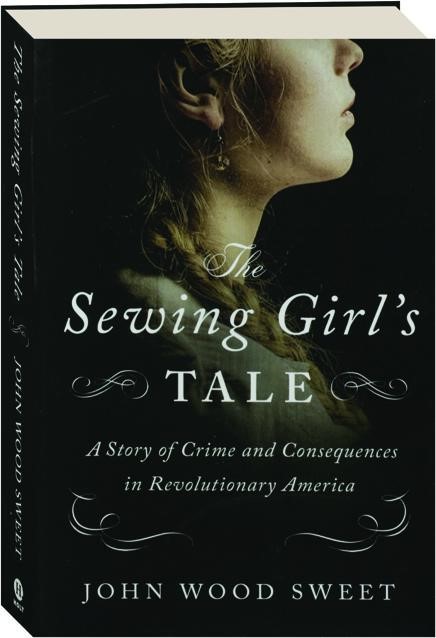
Book Review: The Sewing Girl’s Tale: A Story of Crime and Consequences in Revolutionary America by John Wood

Sweet (Henry Holt) uses the trial of the accused rapist, Harry Bedlow, of a seventeen-year-old seamstress named Lanah Sawyer in 1793 to analyze New York City’s social hierarchy during the early republic. Alexander Hamilton was part of Bedlow’s legal team. Bedlow’s      acquittal[1]  after the jury deliberated for only fifteen minutes sparked riots in the streets and ignited a vigorous debate about class privilege and sexual double standards. Sawyer received some justice when her stepfather won a civil suit against Bedlow and the family was awarded a significant sum. The book received a Bancroft Award from the American Historical Association.


Book Review: The Great New York Fire of 1776: A Lost Story of the American Revolution by Benjamin Carp

In many ways, New York City was the strategic center of the Revolutionary War. During the summer of 1776, George Washington threatened to burn the city rather than let the British take it and shortly after the Crown’s forces took New York City, more than one-fifth of the city mysteriously burned to the ground. This book examines the Great Fire of 1776 and why its origins remained a mystery even after the British investigated it in 1776 and 1783. Benjamin Carp paints a vivid picture of the chaos, passions, and unresolved tragedies that define a historical moment we usually associate with “life, liberty, and the pursuit of happiness.” Carp is a professor of history at Brooklyn College and the CUNY Graduate Center. He is the author of Defiance of the Patriots: The Boston Tea Party and the Making of America and Rebels Rising: Cities and the American Revolution.

Teaching with Documents: The 1892 Lynching of an African American Man in New York State

The National Memorial for Peace and Justice in Montgomery, Alabama memorializes the over 4,000 African Americans murdered by vigilante terrorism in the American South between the end of Reconstruction in the United States in 1877 and 1950 and the more than 300 victims of racial terrorism in other states. Alabama, Arkansas, Florida, Georgia, Kentucky, Louisiana, Mississippi, North Carolina, South Carolina, Tennessee, Texas, and Virginia were the worst offenders, but there were also significant numbers of vigilante murders of African Americans in Illinois, Indiana, Kansas, Maryland, Missouri, Ohio, Oklahoma, and West Virginia. Eight hundred steel columns hang from the ceiling at the Memorial, each with the name of a county where a lynching occurred with the names of victims engraved on it. The only lynching in New York State during this period occurred in the town of Port Jervis, Orange County in 1892. Port Jervis is located on the Delaware River at the border of New York, Pennsylvania, and New Jersey. At the end of the 19th century, it was an important stop on the Delaware and Hudson Canal for barges transporting anthracite coal to Philadelphia and New York City from Scranton area coal mines and on the New York, Lake Erie and Western Railroad.

In his new book, A Lynching at Port Jervis: Race and Reckoning in the Gilded (New York: Farrar, Straus and Giroux, 2022), Philip Dray documents racial violence in Port Jervis about sixty-five miles northwest of New York City. The story of what happened to Robert Lewis, a 28-year-old African American teamster and coach driver on Thursday June 2, 1892 was largely told through the eyes of white residents and white-owned newspapers. Unfortunately, there are no sources that address the Black perspective on the lynching of Lewis by a white mob. A coroner’s inquest was held with witness testimony, but there is no surviving transcript. At least one witness, Officer Simon Yaple, is known to have named some of the members of the murderous mob, but none were ever tried or convicted of crimes.

Robert Lewis, described in the press as a powerful man of about five feet seven and 170 pounds, was accused of assaulting and sexually abusing a 22-year-old white woman named Lena McMahon on a riverbank where the Cuddeback Brook meets the Neversink River before it flows into the Delaware River just south of Port Jervis. Participants in the mob attack on Lewis claimed that before he was murdered, Lewis confessed to the assault and implicated McMahon’s white boyfriend, Philip Foley as an accomplice. Lewis was then lynched on East Main Street, now U.S. Route 6.

Lena McMahon reported to authorities that she was approached by a heavy-set Black man with a light complexion who she did not know, although he appeared to know her. In her testimony about the assault, McMahon claimed that she was “terribly frightened” because her assailant had an “evil look in his eyes” and that after she rebuffed him he grabbed her shoulder and covered her mouth in an attempt to keep her from screaming. Local boys interrupted the attack on McMahon and her attacker, presumably Lewis, picked up fishing gear and left the scene. While McMahon initially reported that the man who attacked her was a “tramp,” one of the boys later identified Lewis as the assailant.

Robert Lewis was seized by a posse on the towpath of the D & H Canal while riding on a slow moving coal barge, not a very likely escape plan and Lewis made no effort to avoid capture. He had fishing gear with him and said he was planning to spend the night fishing. Sol Carley, part of the posse that captured Lewis, claimed that he questioned Lewis while they were bringing him back to Port Jervis. According to Carley, Lewis confessed to what had taken place, but claimed that Foley, who he knew from the hotel where he previously worked, told him McMahon would be receptive to a sexual encounter and if he wanted a “piece to go down and get it.” Lewis seemed to think that the entire situation could be resolved if they questioned Foley and Lewis had a chance to speak to McMahon’s father.

The initial police plan was to bring Lewis to the McMahon home to see if she could identify him, although Lena McMahon continued to maintain her attacker was a stranger, probably a tramp, who was camping in the woods. This plan was interrupted when a rumor spread that Lena McMahon had died from her wounds, dooming Robert Lewis. A crowd of over 300 white men was gathered in downtown Port Jervis. Upon hearing the rumor, it was transformed into an uncontrollable mob and murdered Lewis. Port Jervis’ small African American community, in defiance of white authority, insisted on a proper funeral for Lewis and contributed funds for burial at Laurel Grove cemetery, while at least some whites tried to steal souvenir relics from his body.

Students can read, compare, and discuss newspaper coverage of the events in Port Jervis. In the age of #MeToo and Black Lives Matter, it is difficult to dissect aspects of events that took place over a hundred years ago, especially where the surviving documentation is sporadic and clearly biased. How much of Lena McMahon’s story should be believed? Does questioning her account reflect what we now recognize as gender bias? On the other hand, how much of her story was colored by racism? We know from similar accusations made by white women against Black men that led to the arrest and imprisonment of the Scottsboro Boys and the murder of Emmett Till, that in a climate of intense racism, white women protected their reputations by fabricating stories of disrespect or assault. It is hard to believe that Robert Lewis did not know that a “confession” meant a death sentence. A compelling question for students to consider is: What do the events in Port Jervis and the newspaper coverage tell us about race and racism in New York State during this period? Teachers should alert students that there are overtly racist comments in the newspaper articles, but that “negro” was in common usage at the time to describe the group of people we now call African American and was not a racist term.

Documenting the Lynching of Robert Lewis at Port Jervis, New York

Robert Jackson, a young colored man, was lynched in this village to-night, receiving swift retribution for an assault committed this morning on Miss Lena McMahon, daughter of John McMahon of this place. The crime occurred on the outskirts of the village, near the banks of the Neversink River. Two young negroes and a crowd of children were near by, but when the former tried to interfere Jackson kept them at bay with a revolver. He made his escape without trouble. Miss McMahon was left in an insensible condition. Her injuries may prove fatal. A posse started in pursuit of Jackson as soon as news of the assault spread . . . The capture of the fugitive was finally made at Cuddebackville, a small village on the Delaware and Hudson Canal about nine miles from Port Jervis, by Sol Carley, Duke Horton, and a man named Coleman. Jackson had borrowed a canal boat at Huguenot, and had reached Cuddebackville, when he was overtaken by the three men. On the way back to this village he confessed the crime, and implicated William Foley, a white man, who, he said, was in the conspiracy against Miss McMahon. Foley has been paying attention to the girl contrary to the wishes of her parents, and the feeling against him in this community is such that, should he be taken, a fate similar to that which has overtaken Jackson would probably be meted out to him. The news of the capture of Jackson soon spread through the town, and a large crowd of men collected about the village lock-up, awaiting the arrival of the prisoner. The word was whispered through the crowd “Lynch him, lynch him!” The suggestion spread like wildfire, and it was evident that the fate of the prisoner was sealed. On his arrival at the lock-up Jackson was taken in hand by the mob. The village police endeavored to protect him, but their efforts were unavailing. It was at first proposed to have Jackson identified by his victim before hanging him, in order to make sure of his guilt. With this object in view the mob tied a rope around his body and dragged him up Hammond and down Main Streets as far as the residence of E. G. Fowler, Esq. By this time the mob had reached a state of uncontrollable excitement, and it was decided to dispatch him without further ceremony. A noose was adjusted about his neck and he was strung up to a neighboring tree in the presence of over 1,000 people. For an hour the body hung from the tree, where it was viewed by crowds . . . Public sentiment on the subject of the lynching is divided, although a majority approve and openly applaud the work of the lynchers, declaring that a terrible warning was necessary to prevent future repetitions of the same offense.

  1. Where and when did these events take place?
  2. Who was Robert Jackson?
  3. What was Robert Jackson accused of?
  4. What happened to Robert Jackson?
  • What is the attitude of the New York Times toward these events? What evidence from the text supports your conclusion?

A negro was hanged by a mob in Port Jervis on Thursday night. He was charged with the crime of violence on a white girl, who is now said to be lingering between life and death. The crime was committed. The victim of it and two other witnesses charged the commission of it on a negro called by the name of the one who was lynched. The accused criminal was caught a long distance from the spot, while trying to run away. He was not, however, taken for identification before any of the persons who had accused him. A rumor prevails around Port Jervis that, after all, the wrong negro was captured and killed. Negroes are not easily distinguished from one another, unless by marks of identification carefully registered on scientific examination and then carefully compared when any man to whom they presumably refer is apprehended. There is very little doubt that the negro who was killed was the man who committed the crime, but there is some doubt that he was. That doubt, however slight, should harrow the memories and consciences of the men who lawlessly destroyed him. Aside from this fact, the offense of which the negro was accused but not convicted does not carry the punishment of death in this state by law. http://www.bethlehemchurch.com/admin/Law has found that capital punishment in cases of violence against women has been inflicted on innocent persons. The accusation is easily made. It is hard to disprove. A predisposition to believe it exists when it is brought against the lowly and the humble, the obscure or the repulsive. The pardoning power is not seldom required to rectify the errors of courts and juries in cases of violence to women. On these accounts the punishment has been reduced below the death penalty, to give time and government a chance to correct the wrongs of law. The event at Port Jervis, Thursday night, was a disgrace to the State of New York. The heinousness of the offense may explain but does not excuse the popular violence. This is supposed to be a government of law. Citizens are supposed to be law abiding. Moral culture and obedience to law are supposed to be an insurance that communities will not take the law in their own hands in any cases, and especially in cases which excite and inflame them. It may be roughly said, so far as lynch law is concerned in New York State, that the greater the provocation the less the excuse. The crime of which this negro was guilty cannot be overcharacterized, but there are worse crimes than it, by the definition of the law of the State of New York. A worse crime is murder. Murder is the destruction of a human being without warrant of law, with malice and premeditation, and not in self defense. The hanging of the negro in Port Jervis on Thursday night mates with that definition of the crime of murder. It was murder.

  1. Are there features in the Brooklyn Eagle article you would identify as racist? Explain.
  2. Compare coverage of the events in Port Jervis as reported in the Brooklyn Eagle the New York Times. How is it similar or different?
  • In your opinion, are there errors of fact in the Brooklyn Eagle account? Explain.

Port Jervis has not added to her good name by the brutal murder of a negro, who was, no doubt, no less brutal than the white men who took the law into their own hands and inflicted the death penalty without sentence. Has the Empire State fallen so low that criminals cannot be punished by due process of law? . . . There is no reason why a Northern State inhabited by justice-loving people, should be Southernized by a few misguided men in a country town. A heinous crime was charged against the negro, but there was no sworn evidence that he was the guilty person. Sympathy was strong for the young woman who, it is said, suffered from the negro’s violence, and this sympathy was proper and creditable; but it does not justify killing by mass meeting. It is to be hoped that every one of the men who actually took part on compassing the negro’s death will be apprehended and made to feel the hand of the law he has outraged.”

  1. How is coverage of the events in Port Jervis in this article from the Daily Standard Union, a Brooklyn, New York newspaper, similar to and different from coverage in the New York Times and the Brooklyn Eagle?
  • What is conspicuously missing from this excerpt from the article? In your opinion, what does that suggest about the viewpoint of the Daily Standard Union about the events?

Port Jervis Union: The Excitement in this village over the lynching of the negro, Robert Lewis has abated somewhat but further developments are awaited with the most intense interest. Attention is now centered upon the work of the coroner’s jury which was empanelled yesterday and whose duty it is not merely to investigate the manner of Lewis’ death but if possible to trace out the leaders and instigators of mob violence and to fix upon them the responsibility which belongs to them. Public sentiment and the honor and fair fame of the village demand that an earnest effort be made to do this. Now that the excitement attendant upon the awful events of Thursday has partially subsided a decided reaction has taken place in public sentiment and there are few who do not deplore and condemn the work of the mob. It is now generally admitted that the ends of justice would have been fully satisfied by leaving Lewis to be dealt with according to the regular forms of law, while our village would have escaped the world-wide notoriety which now attaches to it as the scene of one of the worst manifestations of mob-violence which has occurred in recent years. To be known as a community controlled and dominated by lawless elements is a penalty which we must now pay.

Middletown Daily Press: What a hard question to decide: the right or the wrong of Thursday night’s outrage in Port Jervis. One man, a father, and a county official, said: “It’s all right for some of us to moralize. But put yourself in that father’s place.” Another man, also a father: “Those men are worse than the negro. No matter how heinous the crime, can any human being think of a life being tugged along through public streets by a howling, half mad crowd which handled the rope, without saying ‘They’re brutes, and God does not sanction their work.’”

Middletown Argus: That the punishment so summarily meted out to the black ruffian who made Lena McMahon victim of his lust was more than merited, there is no division of sentiment . . . Lewis might better have been left to be dealt with by court and jury, inadequate though his punishment, if convicted, would be, but informal as was his exit from it, no one will say nay to it that the world is well rid of him.

Newburgh Daily Journal: The outbreak in Port Jervis is wholly without justification . . . The mob’s crime was an attack upon the cause of law and order. It remains with the criminal authorities to deal with the perpetrators of this crime as the law provides.

  1. The Port Jervis Union is a weekly newspaper. This issue was published two days after the events and coverage is on page 3. What is the primary focus of the article? What does this suggest about local attitudes toward the event?
  • What are the attitudes toward the events in Port Jervis expressed in newspaper coverage from neighboring towns?

A considerable number of persons, some of them possibly very worth citizens in a general way and others pretty certainly nothing of the kind, united on Thursday in Port Jervis to hang a negro who had committed a criminal assault upon a white girl. The feeling that actuated the mob was doubtless the same that is cited as defense for like lynching in the Southern States. It is that the penalty prescribed by law is not sufficient for the offense which is punished by lynching. It is not to be denied that negroes are much more prone to this crime than whites, and the crime itself becomes more revolting and infuriating to white men, North as well as South, when a negro is the perpetrator and a white woman the victim . . . It is unlikely that such a change in the law would diminish the number of lynchings. These are commonly committed by crowds which are animated by so furious an indignation that they would not wait for the law to take its course, even though the punishment were capital and certain, but would insist upon themselves doing their prisoner to death rather than to wait for months, or even weeks, to have him done to death by the law. This lawless temper is not commendable, and it ought to be discouraged by the law. Although it is probable that the good citizens of Port Jervis sympathized with the mob when they first learned of its murderous work, it is also probable that they are by this time ashamed of it and of their sympathy with it, and regard the lynching as more of a disgrace to the town than the crime it avenged, for which only a single brute was responsible . . . [I]t is admitted that the mob, misled by one of the rumors that spread in times of excitement, came very near hanging the wrong man, and this is a danger that always attends the unlawful execution of justice . . . [T]he lynchers by their precipitation seem to have operated a defeat of justice almost as great as if they had hanged the wrong man. The negro not only confessed his crime, but declared that he had been instigated to commit it by a white man whom he named. . . . The greater criminal, if he be a criminal at all, is likely to go scot free because the people of Port Jervis have hastily and carelessly hanged a man who, if he had been spared, might have proved a valuable witness. This is a danger of lynching that the lynchers have incurred which they themselves must confess to be a serious drawback to the success of their method of doing justice.

  1. How does the New York Times describe the people who participated in the lynching of Robert Lewis?
  2. In the opinion of the New York Times, why is the incident regrettable?
  • What evidence, if any, does the excerpt from the editorial suggest about the biases of the Times?

The coroner’s inquest over the lynching of Bob Lewis, the negro, terminated at 4:30 o’clock yesterday afternoon. The jury, after being out one hour, rendered the following verdict: “We find that Robert Lewis came to his death in the village of Port Jervis on June 2, 1892, by being hanged by some persons or person unknown to this jury . . . The thinking public doubts Miss McMahon’s story, as it also does Foleys . The circumstances are to conflicting. If the young woman had practically no knowledge of her surroundings from Wednesday to Thursday morning, then she must have been crazy. Not a living female would or could be hired to stay over night in Laurel Grove cemetery, as she stated she did. The stormy weather and the delicate physique of the girl would knock that story in the head. It is a fact that when Foley was arrested on the morning succeeding the assault of Miss McMahon, he trembled like a leaf and had to be supported. There is something back of the whole affair and those facts are held by Squire Mulley justice of the peace, who refuses to allow the contents of Foleys blackmailing letters addressed to Miss McMahon, to appear in print. Mr. Mulley says that the investigation of Miss McMahon and Foley will be strictly private.

  1. What was the verdict of the coroner’s inquest?
  2. What is the attitude of this newspaper to stories of the incident?
  • This article appeared in a Colorado newspaper. What does that suggest about reaction to the lynching?

To the Editor of the Daily Union:

Sir: As my name has been so freely circulated throughout the press of the country during he past few weeks in connection with the infamous scoundrel, Foley, who has been airing his ignorance and viciousness in frequent letters from the county jail, that I wish, once for all, in justice to myself, to refute and brand as malicious falsehoods the statements this person has seen fit to utter. I first became acquainted with Foley when he assumed to be a gentleman, through the introduction of a mutual friend. He paid me attention, and I was foolish, as other young girls have been, to believe in his professions of friendship, and when I, in the indiscretion of youth, had some trifling difficulty with fond and loving parents who endeavored to give me wise counsel and advice, resolved to leave home, this inhuman monster egged me on and endeavored to carry into execution his nefarious scheme to ruin and blacken my character forever. When I discovered “the wolf in sheep’s clothing,” the true character of the parody of manhood, I at all risks and perils resolved to prosecute him as he so richly deserves. That resolution I still maintain, and I wish to assure the public that the maudlin, sentimental outpourings from this person, who, relying upon the fact that I was once his friend, has seen fit to make me the victim of extortion and blackmail, have no effect whatever on me, and it will not be my fault if he does not receive the punishment he so richly deserves. There is nothing to prevent this man writing letters, and I do not consider it either wise or discreet to pay any attention to them. I simply desire to say that his insinuations and allegations are falsehoods; that my relations with him have been those only of a friend. God only knows how much I regret that. I cannot have my reputation as an honest, chaste, and virtuous girl assailed by this villain without a protest, and I ask all right-thinking people who possess these qualities to place themselves in my position and then ask if they would act differently than I have done. The evil fortune that has overtaken me has been no fault of my own, and I trust that the light of truth will reveal this man as he truly is, the author of all my misfortune. I do not intend to express myself again to the public concerning this matter, nor pay any attention to what this man may say or do. All I desire is peace, and the consideration and fair treatment that should be extended to one who has suffered untold misery, and whose whole life has been blighted by one whose heartlessness and cruelty is only equaled by his low cunning and cowardice. LENA M’MAHON.

  1. Who is Lena McMahon?
  2. What prompted her to write this letter?
  3. What is missing from the letter?
  • What does the missing part tell us about events in Port Jervis?

H. Port Jervis Lynching Indictments. New York Times, June 30, 1892
The Grand Jury of Orange County to-day indicted nine persons in the Port Jervis lynching case. Two of these were officers of the village . . . Five of the indictments are for assault and the rest for riot.

Arrested for the Port Jervis Lynching. New York Times, July 1, 1892
Bench warrants for the arrest of five men indicted by the Grand Jury, and alleged to have been in the party who lynched the negro in this place, were issued to-day . . . The indictment is regarded as the weakest that could have been made.

Port Jervis Lynchers Not Indicted. New York Times, September 30, 1892
The Orange County Grand Jury reported to-day to Judge John J. Beattie. They said they had not indicted the Port Jervis lynchers of the colored man Robert Lewis. The reason was that the Port Jervis people had failed to give the evidence necessary to indict.

  1. What was the final resolution of the Port Jervis lynching?
  • In your opinion, what does this tell us about race and justice in New York in this period?

References      

Dray, Philip. 2022. A Lynching at Port Jervis: Race and Reckoning in the Gilded (New York: Farrar, Straus and Giroux, 2022).

Social Studies Groups Worried State Trying to Downgrade Importance of History, Civics

Reprinted by permission from Newsday, May 30, 2023

Social studies groups statewide are pushing back against a plan out of Albany they say would downgrade the importance of coursework in history and civics during a time when such lessons should take top priority. The critics, who include a strong contingent from Long Island, add that the state’s plan could lead to elimination of two major Regents exams. Those tests cover U.S. History and Government, and Global History and Geography. At issue is a recent announcement by the state’s Department of Education that it would drop, for the next two years, its practice of including scores from such exams in its academic ratings of high schools. Agency officials describe the move as a temporary “pause” and insist that social studies retains its status as a core academic subject, along with English, math and science.

Albany’s plan has alarmed many educators, who note that the state already has taken steps to reduce the amount of class time spent on history, geography, civics and related subjects. Social studies leaders at the state level recently stepped up their criticism, joining colleagues from the Island. Lisa Kissinger, president of the New York State Council for the Social Studies, fired off a letter to state education officials on May 22, urging them to reconsider their planned change in school ratings. A copy of the letter was obtained by Newsday. “This ‘pause’ sends a message to all New Yorkers that Social Studies education is not a priority,” Kissinger wrote. “We are concerned that ‘pausing’ the inclusion of results demonstrates a devaluation of Social Studies that could lead to the elimination of the Social Studies Regents exams and minimization of the critical importance of this core subject.”

Kissinger is a social studies administrator in the suburban Shenendehowa district near Albany, and her state organization represents hundreds of administrators, teachers and college faculty. Her letter was addressed to Lester W. Young Jr., chancellor of the Board of Regents, which oversees the education department and sets much of the state’s education policy.

A senior department official, Theresa Billington, responded to Kissinger’s letter the following day, insisting that her agency placed a high priority on social studies. “The department values Social Studies as an integral part of our shared civic discourse and the critical role it plays in educating and shaping the students of New York State to become active citizens and future leaders of our nation,” Billington wrote. She is an assistant state commissioner for school accountability. Billington noted that some Regents history exams were canceled during the COVID-19 pandemic and added that this would seriously limit the amount of data available for school ratings. Kissinger pointed out, on the other hand, that data would be available from a global history exam administered last year, as well as from other tests scheduled for June and for the 2023-24 school term. 

The assistant commissioner’s response did not directly address Kissinger’s concerns about the future of Regents exams. That’s one of the thorniest issues facing the education department, which recently accelerated a previously announced overhaul of graduation requirements. The overhaul could include a decision to stop using Regents exams as a diploma requirement. A state-appointed commission is scheduled to release recommendations for revised graduation rules by November — seven months earlier than originally planned.

Regents, which established the commission last September, have said that one goal is to help more students gain the knowledge and skills needed to graduate, even if they do that through pathways other than traditional exams. “This is not about lowering standards,” Young remarked at the time.

Social studies representatives have cautioned, however, that any changes in testing policy could affect studies of history and related subjects in a negative way, if not handled carefully. Under federal law, students must be tested periodically in English, math and science, but there is no such requirement for social studies.As a result, social studies testing has sometimes taken a backseat. In 2010, Regents voted unanimously to eliminate social studies tests in fifth and eighth grades, on grounds that the state was short of money for assessments.

Those tests were never restored, and supporters of the social studies said there’s a lesson in that. “Once they pause, they will never return,” said Gloria Sesso, co-president of the Long Island Council for the Social Studies. 

On May 12, the regional group sent its own protest to Betty A. Rosa, the state’s education commissioner. The letter asserted that the state’s planned change in school ratings could create a “danger to democracy” by lessening the time schools spend on social studies lessons. Billington responded to the Island group’s letter, much as she did to Kissinger’s, by insisting that her department placed great value on social studies. 

Alan Singer, a Hofstra University education professor, agreed with critics that “once paused, it is unlikely social studies performance will ever be included in the assessments, and what is not assessed is not going to be a priority.” In a recent blog, Singer noted that a state decision in 2016 to limit events covered by global history exams to those occurring after 1750 had excluded topics such as the impact of Columbus’ voyages. The blog’s title: “History is in Trouble in New York State.”

Teaching New York History: Sources for Teachers

The New York state social studies/history framework includes the teaching of local and New York history at the Grade 4 level and New York and U.S. history in Grades 7/8.  U.S. history is the topic for Grade 11 but, given New York’s historical importance over time, some of the topics such as immigration and reform movements that started in New York but spread nationally, could also be taught with a New York dimension.

New York teachers are often looking for sources for these classes. This article provides some suggestions.

Books. There are many books on New York history and more coming out all the time. The blog New York Almanack carries notices of new books. Books covering all of the state’s history include Bruce W. Dearstyne, The Spirit of New York: Defining Events in the Empire State’s History, David M. Ellis, New York: City and State, David M. Ellis et al, A History of New York State , Milton M. Klein, ed., The Empire State: A History of New York and Joanne Reitano, A History of New York State. Two encyclopedias are useful for concise information on many topics: Peter Eisenstadt, ed. Encyclopedia of New York State and Kenneth T. Jackson et al, eds.,  The Encyclopedia of New York City. Beyond that, there are hundreds of books on local history, and more are being published all the time. Your school or local public library should have many of these, and they are also available for purchase. Many libraries have local history sections which may include local history books and other sources and are useful venues for student research projects and field trips.

Articles. Articles by historians in journals  are often very useful for teachers seeking information and for assignment for student readings. This journal, Teaching Social Studies, is the best source for writing in the field. The journal  New York History and The Hudson River Valley Review provide a statewide focus. New York Archives published by the State Archives Partnership Trust, carries many articles from around the state. The Trust recently initiated New York Archives Jr.  Each issue features one article from New York Archives magazine rewritten at an upper elementary level, community connections, related facts, and learning activities focused on primary source analysis. Regional journals such as Rochester History  and journals published by county historical societies feature articles of local interest which may be of particular interest to students since the articles cover “nearby history.”

The Office of State History. The Office of State History in the State Museum has a great deal of information on New York history on its website, online podcasts including “A Minute in New York State History”, and Empire State Engagements, interviews with authors of new books.

Officially designated local government historians. New York is the only state with a law  authorizing local governments to appoint official historians. Many counties, cities, towns and villages have made these appointments; some have not. Historians’ work varies depending on their priorities and support, but in many communities, they are invaluable resources and welcome opportunities to work with teachers. You can find your community’s historian on the website of the  Association of Public Historians of New York State.

Local history museums and historical societies. There are hundreds of these, located in all areas of the state.  Many hold sources that students could use for research, welcome visits by school groups, and seek other opportunities to work with the schools. There is no central directory but many are listed on Wikipedia or on the website of the Museum Association of New York. You can follow their work, and developments in state history generally, through the website of the Office of State History in the State Museum and the blog New York Almanack.

Some history programs are of particular importance because of their scope, the variety of their programs, their programs for student visits, and, increasingly, their online presentations. These include, among others the Buffalo History Museum, Empire State Aerosciences Museum (Glenville), Eastman Museum of Photography  (Rochester), Erie Canal Museum (Syracuse), Farmers’ Museum (Cooperstown), Genesee Country Village and Museum (Mumford), New-York Historical Society, Museum and Library and the New York State Museum (Albany) which features history exbibits, public events, and online presentations.

State historic sites. The state office of Parks, Recreation and Historic Preservation maintains state historic sites and buildings in all areas of the state. They welcome school groups and some may be willing to send a speaker to the schools.

Consider the Source: Teaching With Historical Records, an online resource available at the State Archives, features document-based teaching activities.  The Archives also gives Student Research Awards for outstanding student research using historical records.

New York State History Day, part of “National History Day,” is a forum for students to compete for awards in several categories, including research papers, exhibits, documentaries, and performances.

The Historians’ Podcast features interviews and discussions with experts on New York state and local history.

Historical Society of the New York Courts is an excellent source for New York’s legal and constitutional history. Its online journal Judicial Notice features articles on important cases.

The State Archives Partnership Trust  features online podcasts and videos  on historical topics.

*New York State History Month (October).  October is designated in law as New York State History Month. This is a time to celebrate the state’s history and historians.  It would be an opportune time for attention to particular New York-related topics in schools.

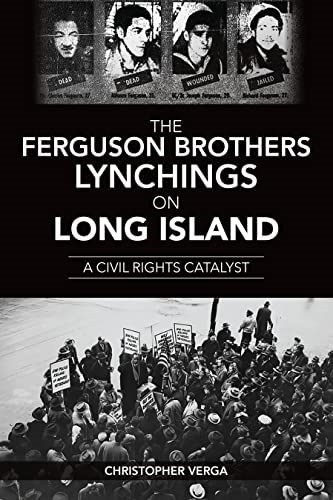
The Ferguson Brothers Lynchings on Long Island: A Civil Rights Catalyst

The Ferguson Brothers Lynchings on Long Island: A Civil Rights Catalyst (The History Press, 2022) by Christopher Verga

Review by Alan Singer

(Reprinted with permission from New York Almanack)

In a book dedicated to Wilfred Ferguson, the son of Charles Ferguson, teacher and historian Christopher Verga resurrects the story of two Roosevelt, New York brothers killed by a Freeport police officer in 1946. Verga opens The Ferguson Brothers Lynchings on Long Island: A Civil Rights Catalyst with an account of the long history of racism on Long Island and in the Freeport area including Ku Klux Klan activity. The background to the 1946 killings takes up the first third of the book. The book is well researched and referenced with extended quotes from official court documents and newspaper accounts. It is available from Amazon in Kindle and paperback formats.

On February 5, 1946, two African American men, brothers, were shot and killed by a white probationary police officer in Freeport, New York. The officer claimed that the men were part of a group of four, all brothers, who were using “abusive and threatening language” and that one of the men he shot had stated that he had a .45 and was going to use. The officer’s first shot struck 27-year old Charles Ferguson, a World War II veteran, in the heart and killed him instantly. The second shot wounded Joseph Ferguson, aged 20, and then struck Alphonso Ferguson, aged 25, in the head. Charles and Joseph Ferguson were both wearing military uniforms when they were shot. Alphonso Ferguson was taken to Meadowbrook Hospital in East Hempstead where he died. The fourth brother, Richard Ferguson, also a veteran, was arrested and charged with disorderly conduct. He was tried, convicted, and sentenced to 100 days in jail, but his conviction was overturned on appeal. Military tribunals later cleared the brothers of any blame in the incident. Charles Ferguson was buried at the Long Island National Cemetery with full military honors.

At the time of the shootings, Freeport was a segregated town. There were no Black police officers there or teachers in the Freeport school system and Black children were all zoned to attend one elementary school regardless of where they lived.

After Nassau County District Attorney ruled that the shootings were justified, the New York Committee for Justice in Freeport, the American Jewish Congress, and Congressional Representative Vito Marcantonio of Manhattan demanded that Governor Thomas E. Dewey authorize a new investigation. In July, Dewey appointed Lawrence S. Greenbaum, as a special investigator to hold hearings and examine witnesses. Greenbaum, a lawyer, was a member of the NAACP. A petition to Governor Dewey condemned the Nassau County District Attorney for “not properly and without prejudice carry out his duties in the presentation to the February grand jury” and the Freeport Village Board for prejudicing the proceedings by exonerating the white officer before the grand jury had heard the case. The petition also asserted that the brothers were not drunk as the police claimed, and that the incident had been precipitated when the operator of a lunch counter had refused to serve the men because they were Black. Legendary folk singer and activist Woodie Guthrie wrote a song, “The Ferguson Brothers Shooting,” to support the campaign for justice for the Ferguson family.

The cop said that we had insulted the joint man.

He made us line up with our faces to the wall;

We laughed to ourselves as we stood there and listened

To the man of law and order putting in his riot call.

The cop turned around and walked back to young Charlie

Kicked him in the groin and then shot him to the ground;

This same bullet went through the brain of Alonzo

And the next bullet laid my brother Joseph down . . .

The town that we ride through is not Rankin, Mississippi,

Nor Bilbo’s Jim Crow town of Washington, D.C.

But it’s greater New York, our most fair-minded city

In all this big land here and streets of the brave.

At the hearing, held in Manhattan, the two surviving brothers testified that the police officer first kicked Charles and Joseph Ferguson and then drew his pistol and lined the four brothers against a wall. The police produced witnesses to support the accused officer, including an African American by-passer, and no cross-examination of witnesses was permitted. The officer repeated his accusation that Charles Ferguson claimed to have a weapon, and that he shot Alfonso Ferguson when Ferguson was charging at him. The officer and the other police witnesses admitted that they never saw a gun and no gun was found at the scene. A spokesperson for the New York Committee for Justice on Freeport charged that the investigation was a “white-wash” and an “unvarnished fraud’ because witnesses were not cross-examined. At the final inquiry session on July 23, most of the audience walked out in protest.

After the special investigator’s report was released on August 2 and exonerated the police officer and the Nassau County District Attorney’s office, Governor Dewey closed the inquiry. The report claimed that the police officer acted because he believed his life was in danger and there was reason to believe he would have acted differently if “the four men before him had been white and not colored.”

The killing of the African American men in Freeport became an issue in the November 1946 gubernatorial election as Dewey, a Republican, campaigned for reelection. Democratic party candidate James M. Mead charged that the shooting was a lynching and accused Dewey of endorsing Southern-style racism. However, once Dewey was reelected, the Freeport case dropped out of the news.

A side story in the book is the role of the American left including the Communist Party in the push for the special investigation into the killings and for justice for the Ferguson family. While the NAACP also called for the inquiry, it avoided being too closely associated with the left groups, and being branded as communist or communist directed. State and federal law officials investigated communist influence in the campaign, perhaps more carefully than they investigated the actual incident. In Nassau County and in Freeport supporters of the police officer used left involvement in the campaign as a way to discredit the specific charges and deny underlying racism in the area.

Verga concludes the book by examining a similar story about an African American veteran attacked and gravely injured by police in South Carolina and other incidents of racism in the United States and on Long Island after World War II including the notorious racial covenant banning African Americans from purchasing or renting Levittown homes. Verga note that at least demographically, Freeport and Long Island have changed since the deaths of Charles and Alponso Ferguson at the hands of a police officer in 1946.

New York History: “A White Man Imprisoned 17 Years for Helping Enslaved People Escape to Freedom”

New York History: “A White Man Imprisoned 17 Years for Helping Enslaved People Escape to Freedom”

Reprinted with permission by the editorial staff of the New York Almanack.

Rev. Calvin Cornelius Fairbank was born November 3, 1816 in Pike, Wyoming County, NY. He began his academic studies at a seminary in Lima, Livingston County, NY, and became a licensed preacher in 1840. In 1842 he was ordained an elder in the Methodist Episcopal Church, and he graduated Oberlin College in Ohio two years later. At Oberlin he met John Mifflin Brown (1817-1893), a bishop in the African Methodist Episcopal (AME) Church and an Underground Railroad activist.

Fairbank was a radical abolitionist who not only spoke out against slavery, but actively worked to free as many enslaved people as he could. “Forty-seven slaves I guided toward the North Star, in violation of the state codes of Kentucky and Virginia,” he wrote. “I piloted them through the forests, mostly by night, – girls fair and white, dressed as ladies; men and boys, as gentlemen or servants – men in women’s clothes, and women in men’s clothes; on horseback, in buggies, in carriages, common wagons, in and under loads of hay, straw, old furniture, boxes and bags; crossed the Jordan of the slave, swimming, or wading chin deep, or in boats, or skiffs, on rafts, and often on a pine log. And I never allowed one to be recaptured. For aiding these slaves to escape from their bondage, I was twice imprisoned, – in all seventeen years and four months; and received… thirty-five thousand, one hundred and five stripes from a leather strap…”

Fairbank helped free an enslaved person for the first time in 1837. While piloting a lumber raft down the Ohio River he ferried a slave across the river into free territory. He often guided escaped slaves to Levi Coffin who helped arrange further transportation north for thousands of people.

Fairbank was arrested for helping to transport Lewis Hayden, his wife Harriet and Harriet’s son Joseph by carriage to freedom in Ohio. He was tried in 1845 and sentenced to 15 years, five years for each of the slaves he helped free. Serving his sentence in the Kentucky State Penitentiary in Frankfort, he was pardoned in 1849 using money raised by Hayden from his new neighbors in Boston. Two years later he was arrested again for helping an enslaved man named Tamar escape Kentucky to Indiana. In November 1851, marshals from Kentucky, with the help of the sheriff of Clark County, Indiana and Indiana Governor Joseph A. Wright, abducted Fairbank and took him back to Kentucky. In 1852, he was again sentenced to 15 years. While imprisoned in the Frankfort Penitentiary he was the victim of harsh treatment, including being frequently whipped (he believed he had received some 35,000 lashes while imprisoned). From 1844 to 1870, Kentucky imprisoned at least 44 people for helping to free enslaved people. The last man was released in 1870, five years after the end of the Civil War. Eight of those imprisoned died prisoners. 

Late in the Civil War, in 1864, Fairbank was pardoned by Acting Kentucky Governor Richard T. Jacob. He later wrote a memoir, published in 1890, Rev. Calvin Fairbank During Slavery Times: How He “Fought the Good Fight” to Prepare “the Way.” He died in near-poverty in Angelica, Allegany County, NY. Rev. Calvin Cornelius Fairbank was inducted to the National Abolition Hall of Fame and Museum in Peterboro, New York in October 2022.

Rev. Calvin Fairbank During Slavery Times (1890) (Excerpts)

  1. “I took license to preach in 1840, and in 1842 was ordained an elder in the Methodist Episcopal Church, and closed my course of study, graduating in 1844. One incident, more than anything else outside of my organization, controlled and intensified my sentiments on the slavery question. It was this: I went with my father and mother to Rushford to quarterly meeting when a boy, and we were assigned to the good, clean home of a pair of escaped slaves. One night after service I sat on the hearthstone before the fire, and listened to the woman’s story of sorrow. It covered the history of thirty years. She had been sold from home, separated from her husband and family, and all ties of affection broken. My heart wept, my anger was kindled, and antagonism to slavery was fixed upon me. “Father,” I said, on going to our room, “when I get bigger they shall not do that;” and the resolve waxed stronger with my growth.”
  2. I grew to manhood with a positive, innate sense of impartial liberty and equality, of inalienable right, without regard to race, color, descent, sex or position. I never trained with the strong party simply because it was strong. From the time I heard that woman’s story I felt the most intense hatred and contempt for slavery, as the vilest evil that ever existed; and yet I supposed the institution provided for and protected by the United States Constitution, and legally established by every slave state; and when, previous to investigation, I repeatedly aided the slaves to escape in violation of law, I did it earnestly, honestly, in all good conscience toward God and man.
  3. Coming within the influence of active anti-slavery men at Oberlin, Ohio, I was led to examine the subject in the light of law and justice, and soon found the United States Constitution anti-slavery, and the institution existing in violation of law. My conclusion in regard to the anti-slavery character of the Constitution of the United States was based on common law, on its interpretation by the whole civilized world, and the recognition of self-evident truth as the basis of that interpretation, viz.: “Where rights are infringed, where fundamental principles are overthrown, where the general system of the law is departed from, the legislative intention must be expressed with irresistible clearness, in order to induce a court of justice to suppose a design to effect such object.”
  4. This conclusion enabled me to act without misgiving, as to my obligation to the General Government. I was no longer under obligation to respect the evil institution as protected by the Government, but was free to condemn slavery and the slave code, — free to follow the promptings of duty.
  5. Finding, then, the diabolical institution unprovided for — finding it positively prohibited—finding it to be a conceded fact by our best statesmen, North and South, that not a state in the Union had slavery established by law, I concluded, upon the highest authority in the universe, that slavery was chronic rebellion, and that I was not only justified, but bound by the “higher law,” to oppose it in defense of an oppressed people. From that time I never allowed an opportunity to aid the fugitives to pass unimproved; but when men and women came to me, pleading the “Fatherhood of God,” and the brotherhood of man, I did all in my power to set them free, subjecting myself to imprisonment and the deepest suffering.
  6. Forty-seven slaves I guided toward the North Star, in violation of the state codes of Virginia and Kentucky. I piloted them through the forests, mostly by night, — girls, fair and white, dressed as ladies; men and boys, as gentlemen, or servants, — men in women’s clothes, and women in men’s clothes; boys dressed as girls, and girls as boys; on foot or on horseback, in buggies, carriages, common wagons, in and under loads of hay, straw, old furniture, boxes, and bags; crossed the Jordan of the slave, swimming, or wading chin deep, or in boats, or skiffs, on rafts, and often on a pine log. And I never suffered one to be recaptured. None of them, so far as I have learned, have ever come to poverty, or to disgrace. I have visited a score of those families, finding them all industrious, frugal, prosperous, respectable citizens.
  7. For aiding those slaves to escape from their bondage, I was twice imprisoned — in all seventeen years and four months; and received, during the eight years from March first, 1854, to March first, 1862, thirty-five thousand, one hundred and five stripes from a leather strap fifteen to eighteen inches long, one and a half inches wide, and from one-quarter to three-eighths of an inch thick. It was of half-tanned leather, and frequently well soaked, so that it might burn the flesh more intensely. These floggings were not with a rawhide or cowhide, but with a strap of leather attached to a handle of convenient size and length to inflict as much pain as possible, with as little real damage as possible to the working capacity.

Questions

  1. In what decade did Calvin Fairbank become a member of the clergy?
  2. What “incident’ convinced Rev. Fairbank to organize his life to oppose slavery?
  3. Rev. Fairbank believed in a “positive, innate sense of impartial liberty and equality, of inalienable right, without regard to race, color, descent, sex or position.” In which foundational American document(s) do those ideas appear?
  4. What was his initial view of the United States Constitution?
  5. How did his view of the Constitution and the government change?
  6. How many freedom seekers did Fairbank assist on the Underground Railroad?
  7. What happened to Fairbank as a result of his activity on the Underground Railroad?
  8. Rev. Calvin Fairbank was recently inducted into the National Abolition Hall of Fame and Museum in Peterboro, New York. In your opinion, did he merit this honor? Explain.

The Forgotten Lessons: The Teaching of Northern Slavery

The Forgotten Lessons: The Teaching of Northern Slavery

Andrew Greenstein

In the winter of 2021, a dark discovery took Rider University by storm and sparked a revelation amongst many of the students in attendance. After over a century of being hidden in the darkness, the secret that Rider University was once a slave-owning plantation was revealed to the world. A place of advanced education and diversity was once an institution of oppression. The university has since changed the name of the building from the name of the slave owner, Van Cleve, to the Alumni House. It is important that history not be forgotten, but instead brought to the forefront. The university will not erase the history but rather use it as a way to teach about the complicated history of slavery in the state of New Jersey[1]. To many of the students attending the university, this came as a surprise. The students who were history majors were astonished by the fact that slavery occurred in the state of New Jersey, let alone on Rider University’s property. The reason for this lack of information stems from the collective lack of education on the subject.

With a basic understanding of American history, one would be led to believe that slavery was a southern issue and continues to be a contentious history when taught in those states. The reality was that slavery was a nationwide institution. Though schools in the south are vocal about the unwillingness to teach the subject, schools in the north are silent. There is continuous hypocrisy in deflecting all discussions of the matter to the south while ignoring what happened in their own backyards. Walking through any school teaching U.S. history, one may hear a line like “The north were free states and the south were slave states.” Similarly, worded statements can be found within schools in New Jersey all across the state. It implies that Northern states had no slaves at the time of the civil war and were actively fighting the good fight. When the 14th Amendment comes into discussion, one may have the impression that it directly pertained to the freeing of enslaved people in the south, rather than the north as they were already free. This simplification of the issue is far from the truth. To this day, many students will never learn that slavery took place in the north at all, let alone that New Jersey was the last state to abolish the practice. The nation now celebrates Juneteenth to “commemorate an effective end of slavery in the United States”[2]. The stark reality is that slavery persisted after Juneteenth in the state of New Jersey legally for almost a full year, and illegally for another year. That dark history is often forgotten within classrooms throughout the state of New Jersey and the nation.

The lack of national attention to this critical issue does beg the question of how it happened. Many historians argue that the lack of discussion on the institution of northern slavery was due to the racist beliefs of historians in the 19th and 20th centuries.[3] The voices of those early historians often get blamed for creating the view that slavery was only relevant when discussing the civil war as it was undeniably a major cause[4]. As time progressed, one would assume the material on northern slavery would become more prevalent, however, that is not the case. As the discussion both in the classroom and by historians on the institution of slavery has expanded, northern slavery still remains for the most part absent. The question remains: did this critical part of the establishment of the nation go untaught? The only way to answer that question is by examining the teaching of slavery in New Jersey and the Tri-state area. This will open that gateway to a deeper understanding of how this history could be erased from the collective memory.

Before proceeding, it is imperative to understand what the discussion of the education on northern slavery has been. Though the discussion on northern slavery began in the late 1940s alongside the civil rights movement, the conversation about its absence in the classroom does not begin until 1991 due to a shocking discovery in Manhattan, New York[5]. As the federal government was constructing a 275 million dollar project, they stumbled upon “the largest and oldest collection of colonial-era remains of free and enslaved Africans in the United States, according to the National Park Service”. This discovery of the cemetery caused massive protests to fight the city to halt the construction and the removal of the bodies from the site[6]. Following this event, the New York City public schools began to look for a way to incorporate the material into the class and teach this reality that was just revealed to them[7]. This started a growing push from schools across the nation to try to incorporate this reality.

The conversation on northern slavery would continue over a decade later when Professor Alan Singer of Hofstra University would guest teach in New York City public schools. When teaching less than a mile away from the enslaved African cemetery, most of the students were completely oblivious to the reality that not only were slaves in New York but how the reality of slavery was visible in their own community[8]. Though many decisions on how to tackle such an issue were made to teach this material, over a decade later the students still had no idea about northern slavery. The discussions on the material did not translate into the classroom to a sufficient extent. The debate on how to successfully teach northern slavery in the classroom ensued and ultimately lead to the discussion on how to teach this history appropriately.

The content of northern slavery required a restructuring in order to successfully teach the material. Previously, slavery was only taught at the establishment of European colonies in the New World and before the American Civil War. What this divide does is creates the material into another unit, a separate event rather than a continuous struggle. The 2016 book Understanding and Teaching American Slavery by Bethany Jay and Cynthia Lyerly attempt to illustrate the best organization for discussing the topic and the history of the institution of slavery in classrooms. In their analysis of the history of teaching the institution of slavery, they regard the idea of teaching slavery exclusively at those points during early American Colonization and the Civil War to “severely hinder its importance.”[9] What is the best way to teach the institution of slavery is discussing the enslaved perspective threw out the development of the nation.[10] The benefits of this method allow the longevity of the issue and the hardships faced by those affected to be well articulated amongst the students. This is due to its constant presence and the reminder that liberty and freedom were not for all[11]. This revelation in adding the enslaved perspective to early American history would spark further development in tools and resources to bring northern slavery into the classroom.

An initiative would be enacted to bring northern slavery and the massive scope of the institution of slavery to the forefront. This would come in the form of The New York Times 1619 Project. This resource marks an incredible stride in the conversation on teaching northern slavery. The project’s purpose is “to reframe the country’s history by placing the consequences of slavery and the contributions of black Americans at the very center of our national narrative”[12]. This comes out of a series of historians and teachers discussing how the realities and the true institution of slavery were untaught to them in the classroom. The project’s aim is to bring these lost lessons of slavery such as its true cruelty and its widespread adoption throughout the nation, not just exclusively in the south. It is built off of the ideals proposed in Understanding and Teaching American Slavery and other books with the same idea tofollow this notion that slavery is an integral part of the nation as a whole, rather than at specific points in U.S. history[13]. The combination of all these ideas paints a picture of the flaws of the teaching of slavery threw out the nation. The current discussion’s main focus is looking at what is absent in the current classroom. The smaller conversation that pertains to the material taught in the past primarily revolves around racism and the Klan[14]. The discovery of a 1904 textbook that details the brutality of northern slavery pushes back on this notion[15]. It begs the question of whether the subject was truly untaught or if another force was responsible for its absence. Looking at the material present in the classroom in the past may prove an insight into northern slavery’s appeared absence.

An analysis of the classroom material available to students is key to understanding the absence of northern slavery. To find these answers, understanding what material was being taught in classrooms from the 1860s and beyond. A method to understand the content of the classroom is by looking at textbooks. Many school notes and lesson plans have been lost to time, but what remains are textbooks. The work of Dr. Pearcy shows the indicator tool that can be used to understand their effect on the content being taught in schools. He states clearly in his article, “Textbooks are, ultimately, tools, for student use. Their utility can only be measured by the degree to which they offer teachers the opportunity to build student-centered inquiry”[16]. From this notion, we can conclude that textbooks are just an object and a tool for students to use. Their content is meaningless unless given a purpose by the teacher. Everything learned in the classroom is under the teachers’ control and they possess the option to use or discard the textbook. However, textbooks do tell us something else depending on where they are. His research looks at ten different U.S. history textbooks of different authors that are widely adopted and compares their tellings of the Battle of Fort Sumter[17]. After analyzing each of the tellings, an interesting trend occurs. This trend is in the bias of the author and how they pick and choose what details to keep and leave out of the telling of the event. This bias could affect the leanings of anyone reading and coerce their perspective of the events that unfolded. These different depictions of the conflict in different areas can have effects on the material discussed in class or reflect it. Companies such as Pearson publish multiple textbooks by different authors to capitalize mainly on the market, however, what market are they capitalizing on?

Looking at the rationale behind the variation of textbooks based on location can assist in understanding why certain content is missing. The findings by Goldstein in his article Two States. Eight Textbooks. Two American Stories sheds light on the issue of why these publishing companies hire multiple historians and interpretations of the same material. This article focuses on eight different textbooks found within the states of Texas and California. The issues arise when looking at the same textbook in multiple states. The textbooks are by the exact same author but have different versions for each state. The variations were created by request of school districts or even the book’s own editor. These individuals remove or request additions of material to allow the book to be adopted in a particular area[18]. The best evidence to illustrate this divide between locations is that of the Harlem Renaissance. Examples of this are found in Pearson’s United States History: The Twentieth Century 19th edition. On the subject of the Harlem Renaissance, the Californian edition features a section on the debate within the African American community over its overall impact on them and the nation as a whole. The Texas version only includes the line “some critics ‘dismissed the quality of literature produced’”[19]. What these two distinct changes, along with many more, indicate is the presence of the political atmosphere of the area and the belief of the people the textbook is serving to reinforce. The textbook adopted by a particular state or district reflects the information a school is teaching in the classroom.

With an understanding of the behind-the-scenes crafting of textbooks, there can be the formulation of the content of northern slavery in school. Combining the findings of Dr. Pearcy and Goldstein, textbooks can provide insight into the classroom. The selection of the historian and the version adopted by the school reflect what the administration desired its teachers to instruct in the classroom. Though it may not be a perfect indicator of what was taught in classrooms, as it’s a tool for teachers to use, it gives an idea of what is being taught in the classroom. Examining textbooks from the past used in classrooms within the Tristate area can reveal if northern slavery was taught, and to what extent.

Examining the earliest textbook may yield an understanding of the lack of teaching, not only about northern slavery but slavery as a whole. An example of the content of what was taught in the classroom after the Civil War and in the years following can be found in The New England Primer. This book originated in 1690 and was a fixture in the classroom until the 1930s, a well over 200-year run. The textbook served as the basis of elementary education instruction. By looking at these textbook translations, historians get a sense of what was required of the majority of students at this time, along with what was taught in classrooms. Looking at the 1802 edition, the book opens with an alphabet chart. This gets taught through prayers that become progressively more complex as they go[20]. This information indicates that understanding the alphabet was key. Depending on the quantity available, the school could have focused on reading and potentially writing to utilize this book. Within the context of these prayers, one learns about the calendar and days of the week, counting and basic mathematics, and a small amount of history[21]. This stresses the importance of religion in the classroom at this time. The underlying message throughout the book is that God is more important than any other subject or material in the classroom. The small amount of history included is more biblical in nature but does include the basics of the American government system[22]. The addition of the U.S. system of government is the only change from the 1773 edition, replacing prayers outlining the functions and structure of the parliament system[23]. What this shows is that history was really not a focus in this era of education. Only those who would exceed the basic knowledge of the time would learn about more advanced information. With the perpetuation of this book into the 20th century, this basic education would be what was taught to many poor American individuals and black Americans. More fortunate areas would receive new textbooks and educational material, phasing this material out or relying on it less exclusively. Those less fortunate areas would be using this information exclusively until the 1930s. The New England Primer is referred to as the “Bible of one-room schoolhouse education”[24]. The lack of history not only assists in the loss of the knowledge of northern slavery but of the entire institution of slavery as a whole. These individuals would want the history they learned as children in school. A slow creep of this altered history would make its way to the north.

Movements were made to suppress and remove the teaching of not only northern slavery but all of black history. The most prominent of these would be “The Lost Cause”, the movement to honor the legacy of the confederacy. This movement would begin in the 1870s as reconstruction would begin to fail. The lost cause mentality would paint the black community as unable to attain the same equality as white individuals due to the efforts attempting to create equality failed[25]. This gave rise to the notion that the confederates were noble in their sacrifice to fight for slavery. It rewrites the telling of the history that “there was nothing ‘lost’ about the southern cause”[26]. This was due to the mindset that black Americans were only good at being servants to white men. Monuments and memorials to honor the confederacy would be constructed such as the statues of Stonewall Jackson, Jefferson Davis, and Robert E. Lee. By the 1890s this movement would sink its teeth into the education system of the north. The goal was to rewrite history books to reflect the southern perspective and preserve its honor. This movement is regarded as a reunion of America’s racist mentality as it proposed the Civil War was caused by other factors, not slavery. It also created this idea of the “happy slave”, the idea that there were enslaved individuals that loved slavery and serving the white man[27]. Women’s organizations and the state department of education were the ones in charge of advocating for approving educational material for schools. Many became strong supporters of the lost cause and by the 1920’s it would be integrated into schools across the north and especially in New Jersey[28].

Before the alteration of the history would appear, strides were made to bring the history of northern slavery to the forefront. In the 1870s history books began to include slavery within their content. The oldest examined history textbook to bear mention of slavery is the Condensed History of The United States from 1871. This book was used in a classroom in Norristown, Pennsylvania, as demonstrated by the address of the school on the front cover pages with the initial date of October 31, 1888. On the page adjacent, student names are written, with the last one being 1899, giving the text an eleven-year confirmed usage in the classroom. The cover pages are full of notes made by students long past, however, one stands out amongst the rest. This particular note is a prayer, one found word for word from the 1812 edition of the New England Primer. This detail establishes that in this classroom, the two books were in fact utilized together. This class was learning American history alongside the basics in the New England Primer. The town had the economic resources present to invest in its youth’s education. The students within this town received a higher quality of education than those of poorer communities. However, what did these students learn about not only northern slavery but the institution of slavery as a whole?

 This history tells a very interesting version of America’s past, but what is interesting is what is left out. There is no mention of slavery until what they call the “War of Secession” is discussed[29]. The book starts with the discovery of the new world and the establishment of each American state at the time of its publication, but not one mention of slavery till that point. The book does establish that there was northern slavery by directly stating “At the time of adoption of the Constitution, slavery existed in the Northern as well as the Southern States”[30]. It provides an impressive analysis for its time detailing the various legal cases pertaining to slavery such as Dred Scott v. Sanford. There is a fascinating inaccuracy with the passing of the 13th, 14th, and 15th amendments; as the book details that Johnson was president for their passing. It details that the passing of these amendments was the cause of the issues between the President and the other two branches, rather than Reconstruction. In fact, the only mention of Reconstruction at all is Johnson vetoing the Reconstruction Act of 1865 rather than discussing any of the programs created by it[31]. This alteration to history has two possible reasons for the inaccuracy. The first is more innocent, being in the title of the book “condensed”. Reconstruction not only is a long process and would officially end in 1877. The book was written in 1874 meaning that reconstruction was still ongoing at the time. Writing on its effects could be taken as more speculatory and not factual information as the book attempts to stick exclusively to. The second is the seed of the lost cause making its way into the material. The ideology of the lost cause deemed Reconstruction a failure and did not warrant time discussion. Its omission is telling that this influence was seeping into the education of these students. However, what is most interesting is what it says about how slavery ended in the north. After detailing the increase of southern populations due to the cotton gin, it stated, “In the North, on the other hand, where slave labor was not profitable, slavery soon died out”[32]. It leads to the idea that in the 1850s slavery was extinct in the north, however, the reality was quite different. Slavery was very much alive in the north during the 1850s. 

Looking at the history of just New Jersey alone, there is a far different reality of northern slavery from this telling in the textbook. Starting as far back as the 1790s, New Jersey was split over the issue of slavery. Quakers were strongly against it; they interpreted enslaved people as people due to the wording of the constitution. The three-fifths compromise of 1787 also reinforced their claim that enslaved individuals were people. The opposition viewed freedom as an economic catastrophe. The labor force for the majority of the state’s highest-grossing markets were nearly entirely enslaved or indentured servant individuals. They saw that liberation would make the industries of agriculture, ironworking, and factory manufacturing unprofitable. The debate over a compromise began in 1797 but would reach its conclusion in 1804 with the gradual abolition act, also referred to as the “free womb” act[33]. This legislation gave freedom to all enslaved individuals born after July 4th, 1804 on their 21st birthday[34]. This allowed slave owners to have the labor force they needed to make up for the economic loss of abolition and granted enslaved people their freedom at a set point. The average life expectancy of an enslaved individual in New Jersey at this time was forty-one years. This meant that they would likely have had only half their life to live if they even made it to freedom. The act was filled with loopholes that allowed the continuation of slavery in the state well after the projected period of total abolition. The idea was to have all enslaved individuals freed by the 1830s. The issue was with the clause that allowed children born while in the period of the enslavement term were to be placed in the care of the local principality[35]. Principalities were the townships and counties that reside within the State of New Jersey. Many of the individuals in charge of managing the treatment of these children would give them right back into the hands of their masters, making them slaves till their 21st birthday. This is how the enslaved population grew far larger than it was in 1804 by the 1860s[36].

The inaccuracies of the teaching of northern slavery would have disastrous consequences to its very existence by later generations. The pervasive belief that slavery was all but extinct in the north by the 1860s is evidence of the start of the “the amnesia of slavery”[37]. This is a term coined by historian James Gigantino II in his book The Curious Memory of Slavery in New Jersey, 1865-1941. What he seeks to illustrate is how Northern states such as New Jersey with such a large and prosperous enslaved population forgot that slavery even occurred in their own backyards. The reason for this was that slavery was looked at as an “insignificant sideshow” in the state. Many northern slaveowners owned only one or two slaves, thus making the reminders of an enslaved past virtually nonexistent to those that were not directly affected by it[38]. What the Condensed U.S. History textbook shows us is this amnesia occurring. In a time when enslaved individuals and their children were very much still alive, their suffering is being forgotten. There is no active backlash as those with the ability to change the material have little to no interest. This early removal of teaching about what occurred beneath these students’ feet will send shockwaves to later generations and reach into the modern classroom.

There would be a push to expand the teaching of northern slavery upon the turn of the century before the influence of the Klan would take hold. This is evident in the textbook Stories of New Jersey by Frank R. Stockton. This book was published in 1896 and the copy analyzed was printed in 1904. The inside cover indicates the book originated from a Princeton classroom before finding its way into the Library of Congress. It is worth noting that this book is back in reproduction and the Amazon description of the book reads that it was “so popular over the years in NJ schools that it has in itself become a part of New Jersey’s history”[39]. This book possesses a unique feature that is exclusive to this book and none other, even textbooks today. This feature is an entire chapter dedicated to the history of enslaved individuals in the state from 1626-1867[40]. What this chapter says about slavery in the state is incredibly unique, especially for its time of publication. The section begins with Dutch settlers bringing enslaved individuals over with them in 1626 to develop the inhospitable land and form their colony. Enslaved individuals were expendable and would do the labor that would normally require a far more physical toll on the body. They became the largest group of workers in the booming iron industry, logging, and of course, the plantations popping up across the land. In 1664, the Dutch surrendered their colonies to the English empire. In this exchange, many changes would appear in the lives of those original settlers, but slavery was not changed[41]. Slavery remained in this state for over 200 years after this point. This early slavery history even includes an entire section on how Perth Amboy, New Jersey, was the slave trade capital in the north and distributed enslaved individuals throughout the northern colonies[42]. This was all true. While other texts around this period ignore this history, this book sought to put a spotlight on it. Following details of the atrocious conditions the enslaved people in the state faced and the lack of large plantations like the south, it noted that large numbers of individuals owned one or two enslaved individuals[43]. This kept slavery as a pivotal force in the community and essential to its economy. If this text was utilized in the classroom to the fullest, many students would have learned a genuine and dark history of the establishment of the state’s institutions. However, this very insightful history becomes inaccurate regarding the abolition of slavery.

The first half of the telling of northern slavery from Stories of New Jersey is remarkable with its depiction of northern slavery for its time, but that narrative falls apart when reaching the abolition of slavery in the state. While it does portray an accurate picture, much of it is far from the truth. The first comes in the debates over the gradual abolition act of 1804. The book describes it as Quakers becoming abolitionists; the three-fifths compromise made their view under the law that these were people, not property, and entitled to the same rights. The opposition saw slavery as an economic necessity as the work they were doing was dangerous. These were undesirable jobs no one wanted to do in their society. This debate over the issue does remain close to the reality that transpired. The text makes a crucial error in stating the gradual abolition bill that allowed the abolition of slavery on one’s twenty-first birthday passed in 1820 rather than 1804[44]. This alteration of the date creates a precedent that the abolition of slavery was far faster and more efficient. It creates the idea that New Jersey’s policy was successful and had no issues with its implementation. Further errors found in the section support this idea that the solution the state implemented was successful. When discussing the results of the act it directly states, “in 1840 there were still six-hundred and seventy-four slaves in the state, and by 1860 only eighteen slaves remained, and these must have been very old”[45]. These numbers couldn’t be further from the truth as slavery was still going strong by the 1850s.

 What is missing from the Stories of New Jersey textbook are those who were wrongfully enslaved. The text leaves out the dark reality that a percentage of slavery occurring in the state was children who were supposed to be free. The 1804 Gradual abolition act forced some of the children born to enslaved mothers into a life of enslavement until their twenty-first birthday. The census of children being born from 1804-1835 to exclusively enslaved mothers shows five hundred and forty-one documented children. It is estimated that in the year 1850, while documentation may say two hundred and thirty-six, far more were illegally in service. The text also does not acknowledge the abolition of slavery in its entirety in 1866. The wording makes it appear it ended gradually by 1860 citing the success of the gradual abolition act[46]. This misinformation will impact generations to come as it was the definitive history of the state. It took until 2008 for the New Jersey government to finally formally apologize for its slave-owning past and its failure to step in and end its illegal perpetuation[47]. Though it may not be the most perfect telling of the history, it’s evidence that people were trying to teach the injustice that happened within their state. Slavery was not relegated to a small part of the civil war, rather it merited its own chapter dedicated to the hardships and debate over its abolishment. While this book is making its way into classrooms, so is the Klan. The Klan would attempt to rapidly spread in the education field and in the coming decades as part of its resurgence. This growth would ultimately transform the history of northern slavery.

The Klans’ takeover of northern education and purging of the history of not just northern slavery, but the entire institution is seen within the textbooks of the 1920s. The 1924 textbook An Elementary History of New Jersey by Earle Thomson is dramatically different from the textbook from 1904. What distinguishes this book aside is absolutely no mention of slavery of any kind. This textbook was definitely used within the state, as in the preface the author thanked superintendents and principals who commissioned a book to express their shared view of the truly important history and to add tools that would enhance student understanding[48]. The schools this particular book was used in included Union, Hackensack, Newark, and Westfield[49]. There may have been more schools adopting this book, however, those are unmentioned by the author, and no indication is left on any of the Library of Congress documentation. The book directly states that “children should be taught in some detail the history of their own state and of its part in the development and progress of the country” while omitting a major part of their history[50]. The larger shocking piece is that only the conflict of the Civil War is discussed. There is no lead-up; it just dropped the reader right into the conflict[51]. It appears that only the victory of the war was significant, but not what they were fighting for or even the amendments that followed. This text is pivotal to understanding the shift in the classroom. The lost cause ideology had reached the apex of its hold on the classroom. The removal of all mention of slavery or black Americans was done to illustrate how unimportant the black community was and how futile any action to promote equality was. However, its removal may have been far more purposeful than just a desire to push this lost cause ideology.

The Klan had far larger ambitions than just the omission of slavery from educational material during the 1920s. The book The Second Coming of the KKK: The Ku Klux Klan of the 1920s and the American Political Tradition by Linda Gordon sheds light on this exact time period. The Klan was a notorious hate group created in the aftermath of the Civil War but it saw a resurgence in the 1920s. This revived Klan was stronger in the North than in the southern states of the nation and focused on the education system of the time[52]. Their priority was the recruitment of white American youth to continue their organization into the coming generations. This involved integration of the Klan into the material taught in schools. The Klan and those associated with them edited the material to reflect the beliefs of the organization. This makes recruitment easier as the Klan reflects the morals and values secretly supplanted into the minds of susceptible students[53]. This was most evident in the teaching of history in the classroom. Klansmen in positions of authority in schools such as superintendents used their influence to alter texts found in the classroom. This involved the recreation of textbooks to fit their nefarious agenda[54]. The lack of a mention of slavery or even the leadup or aftermath of the civil war in the 1924 textbook is evidence of known involvement. It’s unclear if any of the principals or superintendents credited in the textbook are Klansmen, but the influence is quite evident. The textbook states, “This book is in no sense a complete history of New Jersey, the author hopes that its study may prove an inspiration to the purple to become an upright citizen of his community or state”[55]. The absence of this major time period in the state’s history is done in a way to not invoke question. Unless there is other supplemental material taught in the classroom, the dark history of the state and the nation are removed from the collective memory. This book directly shows how “the amnesia of slavery”[56] occurred not only in the state of New Jersey but across northern states. With the widespread recruitment push for new Klansmen, anyone learning in schools around this time would have no recollection of northern slavery’s existence. All the work in the decades past to bring this history into the classroom has been completely undone. Any book touching on the subject would have to start from scratch if the goals of those behind the book were successful.

Following the end of the Second World War, the U.S. would revisit the teaching of northern slavery. The post-war U.S. began to enter a period of civil rights and reforms as the Truman administration began to assist in the abolishment of segregation. This gets reflected in the 1947 U.S. history textbook American History by Howard Wilson and Wallice Lamb. This textbook is fascinating due to its creation. The book states that the author’s intentions for writing the textbook were to “include history and perspectives from this great nation that have been forgotten or removed over the years”[57]. This indicates that the creation of the book was to teach a history that includes information removed by the Klan and other parties. The authors attempted to devise a history from the ground up that includes lost information including slavery. It kept its promise by including a simplified version of the slave trade and the quantity of forced labor employed. The text also looked into how the institution of slavery was a fundamental part of colonization in the Americas[58]. It may not be the most perfect of tellings as it leaves the atrocities that faced the enslaved individuals out. This is significant as it leaves out the horrors that faced enslaved individuals. It creates the notion that this was a great injustice on the part of the colonists but was not as horrific as the reality of the situation. It keeps the reader, most likely a white student, separated from the event allowing no remorse for the actions of their forefathers to the black community. This was the last instance of slavery mentioned till the causes of the Civil War. There are two chapters dedicated to the development of agriculture and industry in the northern states and the southern states, but there is no mention of slavery whatsoever[59]. What this does is reinforces the idea that slavery was there, but it wasn’t important in the continued development of the nation. The practice of slavery was only significant in establishing a foothold on the land. It makes the institution and the horrors faced by the enslaved people insignificant to economic development. However, coverage of the Civil War period possessed an interesting take on the content.

The 1947 textbooks’ stance on the Civil War and its aftermath indicate a deviation from the stranglehold of the Klan in education. The period leading up to the war has an interesting take on slavery. The text neither condemns nor supports either side of the debate on slavery. It creates this awkwardly neutral state when describing the situation that caused the suffering of so many[60]. This is important as the goal appears to not anger those with sentiment in support of slavery. The author appears to be holding back their opinion on the matter and not getting into depth on the horrific reality. The text does have an allusion to the idea that the northern states either abandoned or abolished the practice. It describes this trope of the north being “abolitionist”, that there was no one within the state that opposed slavery. Following the end of the war, it does something unique to this text. The textbook described the reconstruction period in a way to appear successful rather than what happened in reality. The book described Reconstruction as establishing property in the south with 40 acres and a mule proposition. It describes how many would remain in the south as they were given property. What is also interesting is that it discusses the surge of newly freed black individuals getting into office as they finally received the right to vote. The book describes the downfall of the reconstruction as due to irresponsible spending of tax dollars and the creation of the Klan forcing black Americans to stay out of government and politics[61]. The text portrays the Klan as the villain in reconstruction. It signifies a shift in public opinion and the elimination of their grasp on the education system. Information that pushes back on the lost cause narrative by showing that Reconstruction was sabotaged is making its way into schools. The neutral dialog however does indicate their presence is still there. The Klans’ limited presence is also indicated by the book leaving out many important details such as lynchings, or even the Great Migration of Black Americans to the north for work. These events had the potential to paint the Klan that existed at this time rather than the early organization during the reconstruction era in a negative light. The Klan may not have been as strong as they were in the previous decades, but was still a prominent organization throughout the nation, especially in the north. The textbooks telling of slavery does reinforce the notion that slavery was exclusively a southern problem, but this is not the first time this will occur.

Northern slavery’s absence in the classroom may not have been excluded due to racist involvement in the material. The relegation to slavery being exclusively southern is an issue that perpetuates to this modern day. This trend is one that Mr.Vikos, a former high school history teacher is very familiar with the pattern of returning to relegating slavery to exclusively the south. Mr. Vikos taught in Brooklyn from the late 1960s to the late 1990s. His insight into the teaching of northern slavery illustrates how racism is not the only factor in the removal of this information. In the late 60s, his school was facing a large influx of black students due to the end of segregation in 1963. The school would become nearly 100% black by 1975 and the teachers wanted to teach material that reflected the classroom’s demographics. This involved teaching northern slavery when the pre-Civil War era would arise in the classroom. “Students did enjoy the content at first, but as the years went on there were an increasing number of issues. The first was general confusion as students would get confused on what side slavery was on during the actual conflict. The second and most important issue was the lack of care. The students had no interest in learning about slavery that occurred here (New York)”[62]. Eventually the teaching of northern slavery would be reduced as issues with the content would arise. “Readings on northern slavery were present in the classroom, but the likelihood anyone of the students remembered them a decade later is highly unlikely”[63]. The teaching of northern slavery was present, but students would be the driving factor in its reduction. Eventually, the material would return to the idea that the north were free states and the south was slave states. There is a cycle of the subject of northern slavery appearing and then disappearing. The topic becomes introduced, it reaches a height where the issue is really focused on, and then an outside force acts, reducing the discussion back to the beginning. This trend can be seen between the textbooks from 1874 to 1924 with the Klan removing the material and again from 1947 to the 1970s when student interest would reduce its discussion. This trend would continue into the modern day. This becomes evident with the current lack of understanding of northern slavery even though the material is now present in almost every classroom in northern schools. The decades from the 1980s to the mid-2010s only serve to continue this trend.

To prove this theory of the teaching of northern slavery being a cycle, the decade of the 1980s serves as a point to see the material reintroduced. The 1980 textbook American History Review Text by Irving Gordon illustrates an interesting trend in the telling of history. This book was used in Port Richmond High School in Staten Island, New York throughout the 1980s and into the early 90s. The textbook immediately began with the colonization of America and the triangle trade after establishing a background on the New World. It also does a fantastic job of illustrating the population differences between the enslaved population and the white Europeans[64]. This detail is that “slavery was found as a common practice throughout all English thirteen colonies”[65].Through discussing early American slavery, the inclusion that it existed within the entirety of the nation does allow the student reading to understand that the institution of slavery was in fact present in the north. Continuing the traditional organization structure, the textbook only mentions slavery only at the colonization of America and prior to the Civil War. This structure continues to assist in undermining the severity and longevity of the institution of slavery. When it begins to discuss the pre-Civil war era, it does call out hypocrisy. Though it may be two paragraphs, it sheds light on the hypocrisy of northern slavery[66]. This hypocrisy was the north participating in slavery while simultaneously vilifying the south for participating in the exact same practice. This is significant as this is the first textbook examined to touch upon this issue. Not only does it bring to light northern slavery, but the textbook condemns the north for criticizing southern slavery before it abolished the practice fully within its states. Upon reaching the point of reconstruction, the textbook’s messages begin to shift.

Though time long since passed the time of Klan involvement, the telling of the history still bears its scars. The language of the text leads to assumptions with the vocabulary used to describe the black community at different points. In the beginning, they were described as “Africans” who then transitioned into being referred to as “enslaved” individuals. In the years during reconstruction, they are referred to as “Black”. However, once reconstruction ends they become “negros”[67]. What this shows is the perpetuation of the lost cause mentality through the vocabulary. The idea of referring to black individuals as “negros” in this text is to establish the notion that the black community during the point of reconstruction and after are two different kinds of people. There also are present many allusions to what is going on in the north but the reality is vastly different. An example of this is the education system constructed in the south during Reconstruction. It stated “Negros, as well as whites, were guaranteed free compulsory public education by the reconstruction constitutions of the southern states. However, after the southern whites regained control, Negros received schooling that was segregated and inferior”[68]. This line does highlight the notion that there was segregation and inferior education in the south but makes it appear that it was not a problem in the north. Segregated schools were prominent in the north as well and in some cases persisted far longer than they were legally able to. What this wording does that becomes commonplace is make the south sound like a racist and discriminatory place and paint the northern states in a light that is far from the reality that existed. The textbook does a decent job of illustrating the regression of the discussion of northern slavery. It may establish the institution existed in the north, but it lacks descriptions of the conditions. The text also regresses to race-charged wording linking its connection to the history of previous Klan-influenced textbooks. This would change as the nation entered the 1990s.

The discussion on northern slavery would continue due to its prioritization. The 90s would be a point where the material on northern slavery would begin to grow once again. Starting in 1996, Mr.Vikos would be responsible for approving textbooks for schools in the central headquarters. When asked about the criteria for what textbooks got approved, he would respond with the topic of slavery. He recalled how “many textbooks would just have a paragraph or two on the subject of slavers as a whole. It is impossible to cover all of the slavery in a single book, how do you do it in one paragraph? A textbook would only get passed if it discussed the social, political, and economic factors of both the north and the south”[69]. He would stress the economic section as this would be the deciding factor of slavery’s perpetuation for both the north and the south. What was illustrated was a reinvigoration of the content. This was an individual who was passionate about bringing this information to the classroom and was in a place to do so. With the discovery of the massive burial of enslaved individuals in Manhattan a few years prior, there was a draw into teaching northern slavery.

As time progresses into the modern day, the pattern of the rise and fall of northern slavery’s discussion in the classroom only becomes more rapid of a cycle. Three different versions of the American Pageant textbook by Thomas Bailey, David Kennedy, and Lizabeth Cohen illustrate the perpetuation of the rise and fall of northern slavery in the classroom. The editions in question are the 2006, 2013, and 2016 versions. What makes these books unique is that they are currently in use in schools in New Jersey. The ones examined were in the possession of students actively using them in the classroom. What makes this even more interesting is the parts that were changed. The beginning chapters detail the triangle trade and the enslavement of the native American populations and the African populations. It even includes how slavery reach the American colonies in 1619 from captured slaves en route to Spanish colonies diverted to Virginia[70]. The wording is almost exactly word for word between editions, so uniform it’s almost conspicuous. The differences become starkly relevant when the discussion of American slavery comes to question.

The three discussed American Pageant textbooks present differences that illustrate the increase and decline of the topic of northern slavery. Each book possessed a section dedicated to slavery between the founding of the nation and the civil war, slavery prior to the civil war, and a chapter on reconstruction. The differences become apparent in the first few paragraphs of the section. The 2006 edition was altered to include a deeper perspective of northern slavery following the revelation that attempts to include the material were unsuccessful. This is evident as the edition remarked that in the north there was freedom being attained, but there was more hatred of black Americans than in the south[71]. This gets reinforced by the story of an individual who was born enslaved in the south, sold in New York City, and was eventually freed after eight years of servitude and the conditions she lived in after gaining freedom. The textbook accurately portrayed the conditions of slavery, and by covering the north before the south in the description of slavery, it gives the impression that slavery was equally horrible in practice throughout the nation[72]. The 2013 edition states that northern slavery was just small farms with no large-scale plantations. It goes into detail about how New York abolished all of its slavery and possessed far better-living conditions than the south[73]. This entirely changes the established narrative that slavery was a horrible practice. The text almost glorifies the practice of slavery in the state of New York. The 2016 edition resolves these issues by taking the best aspects of the two together. It largely emphasizes the story of the enslaved woman by giving it its own dedicated page[74]. It includes an interesting insight into the northern slavery perspective. It does an excellent job of discussing how “few northerners were prepared for the outright abolition of slavery”. It goes in-depth at looking at the economic issues facing the north if it were to abolish slavery and the general view of the population wanting reform rather than abolition[75]. The description of the popular view of the time feeds into a clearer understanding of the northern hypocrisy. This being the desire to abolish slaves in the south rather than within their own borders. The combining of the best of the two prior editions is the greatest strength of the sixteenth edition. Due to its publication date, the revised text containing a large amount of northern slavery material could be due to the political climate in 2016. The contentious political election sought to reinvigorate the discussion of slavery, especially that of northern states. This may be only speculation due to the recentness of this change, but outside forces like that are indicators of material like this being reintroduced based on the previously analyzed patterns in the earlier textbooks discussed. The three different textbooks indicate a falling point in the 2006 edition due to the reinvigoration in the 90s, a low point in 2015 as northern slavery was no longer in style, and then a spike in 2016 due to a shifting political climate.

What the analysis of these texts indicate is a disturbing trend of periodically increasing and decreasing the teaching of northern slavery in the northern states. There are large and periodic appearances of this under-discussed material and it appears to almost be predictable.

We begin to see it untaught in the classroom in the immediate aftermath of the Civil War[76]. This was due to the material being largely sourced from the New England Primer, a book that focused on basic language, mathematics, and civic education[77]. The exclusivity of this textbook would fuel the “lost cause” ideology. This ideology was the belief that the south was justified in fighting for slavery as reconstruction failed, proving black individuals could never be equal to their white counterparts[78].The discussion of northern slavery begins to increase in the mid-1870s based on the material from Condensed U.S. History from 1874. Though the description of events leads much of the history of northern slavery out, it does make its appearance known[79]. Entering the 20th century we see a boom in the discussion of the material. In the textbook of the history of New Jersey, Stories of New Jersey, there is a detailed history of slavery in the state. It goes as far back as the Dutch and only gets slightly inaccurate in the end with the eventual abolition of the institution[80]. This revolutionary discussion of the material comes crashing down in the 1920s. This is illustrated by the 1924 textbook An Elementary History of New Jersey[81]. Its lack of not only the discussion of slavery in the north, but the absence of the entire practice is the ultimate goal of the “lost cause”. It indicates the idea of the Klan using education as a way to indoctrinate young and new members, and this came at the price of editing textbooks to reflect their views on society[82]. Textbooks and educational material would bear the scars from this alteration for dedicated to come.

The coming age of civil rights reform would attempt to distance itself from the past. The restructuring of this discussion of northern slavery is illustrated in the 1947 textbook American History[83]. Its limited appearance shows that the topic once again rose into the discussion. From the perspective of a history teacher from the late 60s to the mid-1970s, coverage began to increase once again to a clear point in the late 60s as schools finally began to become more diverse due to an end of segregation. Northern slavery’s discussion then began to fall in the 70s as the civil rights movement would lose its ground in the years following Martin Luther King Jr.’s assassination[84]. The discussion on northern slavery would reach a low in the 1980s and gets illustrated by the 1980 history textbook American History Review Text. It may call out the North but it shows clear evidence of promoting the “lost cause” mentality due to its racially charged language[85]. The 90’s would see a rise in the discussion of northern slavery again as the discovery of the largest enslaved cemetery in the nation would be found under Manhattan. The depth of the discussion on northern slavery reached a height in 2006 with the American Pageant 13th edition. It includes a detailed section on slavery in New York and that the horrors of slavery were present in the north. It even details how northerners viewed the practice as unjust but did little to nothing to end it within their states while criticizing the south[86]. From this height there is a dramatic fall in the 2013 edition of the same textbook. It led to the idea that slavery was small in the north and that it was far better in conditions than in the south. It also creates the illusion that it was abolished by the 1860s rather than continuing throughout the civil war[87]. Lastly, we see a jump in the discussion emerging in 2016. The American Pageant textbook’s 16th edition rectifies this issue of a decrease in the discussion. It adds material from the 2006 edition and expands on the practice and conditions of northern slavery[88]. It’s unclear what the cause of this shift could be, but one could only speculate it was done out of a response to the changing climates and the increased national discussion on the longevity of the impacts the institution of slavery had on the nation.

With these trends highlighted, it’s important to note that there has never been a steady teaching of the material. Teachers have struggled with finding ways to get the material across without creating unnecessary confusion. The importance of this subject is unparalleled as its atrocities have never truly been righted[89]. The perpetuation of these trends creates a lost history of the horrifying events that unfolded beneath the feet of students. They can adequately describe the atrocities that happened in distant states but are oblivious to the same atrocities that happened only a few miles away. The lack of a focus or understanding of what happened in the backyards of both teachers and students alike truly creates and perpetuates the “the amnesia of slavery”[90].

There is hope however that this continuous issue does get brought to light in the classroom. The awareness on the part of the students and teachers alike can see an end to its repetition. Teachers bringing this issue to the forefront and explaining to students that slavery happened here, and that it goes undiscussed, may inspire students to speak up when this topic is left out. Activism on this issue is key to maintaining its presence in the classroom and that these forgotten lessons never become forgotten again.

References:

Bailey, Thomas, David Kennedy, and Lizabeth Cohen. The American Pageant. 13th ed. Stamford, CT: Cengage Learning, 2006.

Bailey, Thomas, David Kennedy, and Lizabeth Cohen. The American Pageant. 15th ed. Stamford, CT: Cengage Learning, 2013.

Bailey, Thomas, David Kennedy, and Lizabeth Cohen. The American Pageant. 16th ed. Stamford, CT: Cengage Learning, 2016.

Blight, David W. Race, and Reunion: The Civil War in American Memory. Cambridge, MA: Belknap Press of Harvard University Press, 2001.

Ellis, Nicole. “How the Discovery of an African Burial Ground in New York City Changed the Field of Genetics.” The Washington Post. WP Company, December 20, 2019. https://www.washingtonpost.com/nation/2019/12/20/how-discovery-an-african-burial-ground-new-york-city-changed-field-genetics/.

Gigantino II, James J. “The Curious Memory of Slavery in New Jersey, 1865-1941.” New Jersey Studies: An Interdisciplinary Journal 6 (1): 35–55. 2020, Academic Search Premier doi:10.14713/njs.v6i1.188. Accessed 9/28/22.

Gigantino II, James J. The Ragged Road to Abolition: Slavery and Freedom in New Jersey, 1775-1865. Philadelphia: University of Pennsylvania Press, 2016.

Gigantino II, James J.“‘’The Whole North Is Not Abolitionist’’.” Journal of the Early Republic 34 (3): 411–37. 2014, Academic Search Premier doi:10.1353/jer.2014.0040. Accessed 9/28/22

Goldstein, Dana. “Two States. Eight Textbooks. Two American Stories.” The New York Times. The New York Times, January 12, 2020. https://www.nytimes.com/interactive/2020/01/12/us/texas-vs-california-history-textbooks.html.

Gordon, Irving L. Review Text in American History. New York, NY: AMSCO School Publications, 1980.

Gordon, Linda. The Second Coming of the KKK: The Ku Klux Klan of the 1920s and the American Political Tradition. New York: Liveright Publishing Corporation, a division of W.W. Norton & Company, 2018.

Jay, Bethany, and Cynthia Lynn Lyerly. Understanding and Teaching American Slavery. Madison, WI: The University of Wisconsin Press, 2016.

Lapsansky-Werner, Emma J., Peter B. Levy, Randy Roberts, Alan Taylor, and Kathy Swan. United States History: The Twentieth Century. 19th ed. California. New York, NY: Pearson Education, Inc., 2019.

Lapsansky-Werner, Emma J., Peter B. Levy, Randy Roberts, Alan Taylor, and Kathy Swan. United States History: The Twentieth Century. 19th ed. Texas. New York, NY: Pearson Education, Inc., 2019.

Mydland, Leidulf. “The Leg of One-Room Schoolhouses: A Comparative Study of the AME…” European journal of American studies. European Association for American Studies, February 24, 2011. https://journals.openedition.org/ejas/9205.

New Jersey. Laws, Statutes, Etc. An act for the gradual abolition of slavery … Passed at Trenton . Burlington, S. C. Ustick, printer 1804. Burlington, 1804. Pdf. https://www.loc.gov/item/rbpe.0990100b/.

Nix, Elizabeth, What Is Juneteenth?, History.com, A&E Television Networks, June 19th, 2015, Accessed October 31st, 2022, https://www.history.com/news/what-is-juneteenth

Pearcy, Mark, “We Are Not Enemies”: An Analysis of Textbook Depictions of Fort Sumter at the beginning of the Civil War, The History Teacher, Volume 52 Number 4, Society for History Education, August 2019

Pender, Tori, Slaveowner’s name removed from campus’ alumni house, The Rider News, Rider University, November 17th, 2021, Accessed October 31st, 2022, https://www.theridernews.com/slaveowners-name-removed-from-campus-alumni-house/

Samuel Wood & Sons, Publisher. Beauties of the New-England primer. [New York: Published by Samuel Wood & Sons, 261 Pearl-Street, 1818] Pdf. https://www.loc.gov/item/10011910/.

Stewart, Nikita. “Why Can’t We Teach Slavery Right in American Schools?” The New York Times. The New York Times, August 19, 2019. https://www.nytimes.com/interactive/2019/08/19/magazine/slavery-american-schools.html.

Stockton, Frank R. “Stories of New Jersey.” Amazon. OUTLOOK VERLAG, 2020. https://www.amazon.com/Stories-New-Jersey-Frank-Stockton/dp/0813503698.

Stockton, Frank R. Stories of New Jersey. American book company, 1896. Pdf. https://www.loc.gov/item/01007755/.

Swinton, William. Swinton’s Condensed United States: A Condensed School History of the United States: Constructed for Definite Results in Recitation and Containing a New Method of Topical Reviews. New York, Chicago: Ivinson, Blakeman & Co., 1871.

The Associated Press.“Teachers Shed Light on Slavery in the North.” NBCNews.com. NBCUniversal News Group, March 18, 2006. https://www.nbcnews.com/id/wbna11883116.

The New York Times. “The 1619 Project.” The New York Times. The New York Times, August 14, 2019. https://www.nytimes.com/interactive/2019/08/14/magazine/1619-america-slavery.html.

Thomson, Jay Earle. An elementary history of New Jersey. [New York, Philadelphia, etc. Hinds, Hayden & Eldredge, inc, 1924] Image. https://www.loc.gov/item/24011186/.

Vikos, George and Greenstein, Andrew. Conversation at Marina Cafe, Staten Island NY, November 14th, 2022

Westminster Assembly. The New England primer improved: for the easy attaining the true reading of English, to which is added, the Assembly of Divines, and Mr. Cotton’s catechism. Boston: Printed for and sold by A. Ellison, in Seven-Star Lane, 1773. Pdf. https://www.loc.gov/item/22023945/.

Wilson, Howard E, and Wallice E Lamb. American History. Schoharie, NY: American Book Company, 1947.

Wolinetz, Gary K., When Slavery Wasn’t a Dirty Word in NJ, New Jersey Lawyer, February 15th, 1999


[1] Pender, Tori, Slaveowner’s name removed from campus’ alumni house, The Rider News, Rider University, November 17th, 2021, Accessed October 31st, 2022, https://www.theridernews.com/slaveowners-name-removed-from-campus-alumni-house/

[2] Nix, Elizabeth, What Is Juneteenth?, History.com, A&E Television Networks, June 19th, 2015, Accessed October 31st, 2022, https://www.history.com/news/what-is-juneteenth

[3]Wolinetz, Gary K., When Slavery Wasn’t a Dirty Word in NJ, New Jersey Lawyer, February 15th, 1999

[4] Wolinetz, When Slavery Wasn’t a Dirty Word in NJ

[5]  Wolinetz, When Slavery Wasn’t a Dirty Word in NJ

[6] Ellis, Nicole. “How the Discovery of an African Burial Ground in New York City Changed the Field of Genetics.” The Washington Post. WP Company, December 20, 2019. https://www.washingtonpost.com/nation/2019/12/20/how-discovery-an-african-burial-ground-new-york-city-changed-field-genetics/.

[7]Stewart, Nikita. “Why Can’t We Teach Slavery Right in American Schools?” The New York Times. The New York Times, August 19, 2019. https://www.nytimes.com/interactive/2019/08/19/magazine/slavery-american-schools.html.

[8] The Associated Press.“Teachers Shed Light on Slavery in the North.” NBCNews.com. NBCUniversal News Group, March 18, 2006. https://www.nbcnews.com/id/wbna11883116.

[9] Jay, Bethany, and Cynthia Lynn Lyerly. Understanding and Teaching American Slavery. Madison, WI: The University of Wisconsin Press, 2016. p.32

[10] Jay, Lyerly. Understanding and Teaching American Slavery p.11

[11] Jay, Lyerly. Understanding and Teaching American Slavery p.14-17

[12] The New York Times. “The 1619 Project.” The New York Times. The New York Times, August 14, 2019. https://www.nytimes.com/interactive/2019/08/14/magazine/1619-america-slavery.html. P.1

[13] Jay, Bethany, and Cynthia Lynn Lyerly. Understanding and Teaching American Slavery. Madison, WI: The University of Wisconsin Press, 2016.

[14] Blight, David W. Race and Reunion: The Civil War in American Memory. Cambridge, MA: Belknap Press of Harvard University Press, 2001.

[15] Stockton, Frank R. Stories of New Jersey. American book company, 1896. Pdf. https://www.loc.gov/item/01007755/.

[16]Pearcy, Mark, “We Are Not Enemies”: An Analysis of Textbook Depictions of Fort Sumter at the beginning of the Civil War, The History Teacher, Volume 52 Number 4, Society for History Education, August 2019, p.611

[17] Pearcy, “We Are Not Enemies”: An Analysis of Textbook Depictions of Fort Sumter at the beginning of the Civil War, p.596

[18] Goldstein, Dana. “Two States. Eight Textbooks. Two American Stories.” The New York Times. The New York Times, January 12, 2020. https://www.nytimes.com/interactive/2020/01/12/us/texas-vs-california-history-textbooks.html.

[19]  Goldstein, “Two States. Eight Textbooks. Two American Stories.”

[20]Samuel Wood & Sons, Publisher. Beauties of the New-England primer. [New York: Published by Samuel Wood & Sons, 261 Pearl-Street, 1818] Pdf. https://www.loc.gov/item/10011910/.p.1-32

[21]  Samuel Wood & Sons, Beauties of the New-England primer p.4-21

[22] Samuel Wood & Sons, Beauties of the New-England primer p.22-30

[23]Westminster Assembly. The New-England primer improved: for the more easy attaining the true reading of English, to which is added, the Assembly of Divines, and Mr. Cotton’s catechism. Boston: Printed for and sold by A. Ellison, in Seven-Star Lane, 1773. Pdf. https://www.loc.gov/item/22023945/ ,p.29-31

[24]Mydland, Leidulf. “The Legacy of One-Room Schoolhouses: A Comparative Study of the AME…” European journal of American studies. European Association for American Studies, February 24, 2011. https://journals.openedition.org/ejas/9205.

[25]Blight, David W. Race and Reunion: The Civil War in American Memory. Cambridge, MA: Belknap Press of Harvard University Press, 2001.p.255

[26]Blight, Race and Reunion: The Civil War in American Memory p.257

[27]Blight, Race and Reunion: The Civil War in American Memory p.287

[28] Blight, Race and Reunion: The Civil War in American Memory p.283

[29]Swinton, William. Swinton’s Condensed United States: A Condensed School History of the United States: Constructed for Definite Results in Recitation and Containing a New Method of Topical Reviews. New York, Chicago: Ivinson, Blakeman & Co., 1871, p. 235

[30] Swinton, Swinton’s Condensed United States: A Condensed School History of the United States p. 236

[31] Swinton, Swinton’s Condensed United States: A Condensed School History of the United States p. 288-291

[32] Swinton, Swinton’s Condensed United States: A Condensed School History of the United States p. 237

[33] Wolinetz, When Slavery Wasn’t a Dirty Word in NJ

[34] New Jersey. Laws, Statutes, Etc. An act for the gradual abolition of slavery … Passed at Trenton . Burlington, S. C. Ustick, printer 1804. Burlington, 1804. Pdf. https://www.loc.gov/item/rbpe.0990100b/.

[35] New Jersey, An act for the gradual abolition of slavery.

[36] Gigantino II, James J. “The Curious Memory of Slavery in New Jersey, 1865-1941.” New Jersey Studies: An Interdisciplinary Journal 6 (1): 35–55. 2020, Academic Search Premier doi:10.14713/njs.v6i1.188. Accessed 9/28/22.

[37] Gigantino II, James J. “The Curious Memory of Slavery in New Jersey, 1865-1941.” p.36

[38] Gigantino II, James J. “The Curious Memory of Slavery in New Jersey, 1865-1941.” p.37

[39] Stockton, Frank R. “Stories of New Jersey.” Amazon. OUTLOOK VERLAG, 2020. https://www.amazon.com/Stories-New-Jersey-Frank-Stockton/dp/0813503698.

[40] Stockton, Frank R. Stories of New Jersey. American book company, 1896. Pdf. https://www.loc.gov/item/01007755/.p. 6

[41] Stockton, Stories of New Jersey, p.84-85

[42] Stockton, Frank R. “Stories of New Jersey.” p. 86

[43] Stockton, Frank R. “Stories of New Jersey.” p. 86-89

[44] Stockton, Frank R. “Stories of New Jersey.” p. 92

[45] Stockton, Frank R. “Stories of New Jersey.” p. 92

[46] Stockton, Frank R. “Stories of New Jersey.” p. 92

[47] Gigantino II, James J.“‘’The Whole North Is Not Abolitionist’’.” Journal of the Early Republic 34 (3): 411–37. 2014, Academic Search Premier doi:10.1353/jer.2014.0040. Accessed 9/28/22, P.38

[48]Thomson, Jay Earle. An elementary history of New Jersey. [New York, Philadelphia etc. Hinds, Hayden & Eldredge, inc, 1924] Image. https://www.loc.gov/item/24011186/. P.iv

[49] Thomson, An elementary history of New Jersey P.v

[50] Thomson, An elementary history of New Jersey P.ix

[51] Thomson, An elementary history of New Jersey P.150

[52]Gordon, Linda. The Second Coming of the KKK: The Ku Klux Klan of the 1920s and the American Political Tradition. New York: Liveright Publishing Corporation, a division of W.W. Norton & Company, 2018. p.2

[53] Gordon, Linda. The Second Coming of the KKK: The Ku Klux Klan of the 1920s and the American Political Tradition p.65

[54] Gordon, Linda. The Second Coming of the KKK: The Ku Klux Klan of the 1920s and the American Political Tradition p.67

[55] Thomson, An elementary history of New Jersey P.iv

[56] Gigantino II, James J. “The Curious Memory of Slavery in New Jersey, 1865-1941.” p.36

[57] Wilson, American History p.iv

[58]Wilson, Howard E, and Wallice E Lamb. American History. Schoharie, NY: American Book Company, 1947. p.27-29

[59] Wilson, American History p. 209-236

[60] Wilson, American History p.249-257

[61] Wilson, American History p. 280-286

[62] Vikos, George and Greenstein, Andrew. Conversation at Marina cafe, Staten Island NY, November 14th, 2022

[63] Vikos, Conversation at Marina cafe, Staten Island NY, November 14th, 2022

[64]Gordon, Irving L. Review Text in American History. New York, NY: AMSCO School Publications, 1980 p.21-25

[65] Gordon, Review Text in American History p.22

[66]  Gordon, Review Text in American History p.157

[67] Gordon, Review Text in American History p.184

[68] Gordon, Review Text in American History p.186

[69] Vikos, Conversation at Marina cafe, Staten Island NY, November 14th, 2022

[70] Bailey, Thomas, David Kennedy, and Lizabeth Cohen. The American Pageant. 13th ed., 15th ed, 16th ed, Stamford, CT: Cengage Learning, 2006, 2013, 2016.

[71]Bailey, Thomas, David Kennedy, and Lizabeth Cohen. The American Pageant. 13th ed. Stamford, CT: Cengage Learning, 2006. p.356

[72] Bailey, Thomas, David Kennedy, and Lizabeth Cohen. The American Pageant. 13th ed. p.357-358

[73]Bailey, Thomas, David Kennedy, and Lizabeth Cohen. The American Pageant. 15th ed. Stamford, CT: Cengage Learning, 2013 p.341-344

[74] Bailey, Thomas, David Kennedy, and Lizabeth Cohen. The American Pageant. 16th ed. Stamford, CT: Cengage Learning, 2016. p.352

[75]  Bailey, Thomas, David Kennedy, and Lizabeth Cohen. The American Pageant. 16th ed. p.355-359

[76] Gigantino II,“‘’The Whole North Is Not Abolitionist’’, P.46

[77]  Samuel Wood & Sons, Beauties of the New-England primer

[78]Blight,Race and Reunion: The Civil War in American Memory .P.255

[79] Swinton, Swinton’s Condensed United States: A Condensed School History of the United States p. 236-291

[80] Stockton, Stories of New Jersey, p.84-85

[81] Thomson, An elementary history of New Jersey P.4-157

[82] Gordon, The Second Coming of the KKK: The Ku Klux Klan of the 1920s and the American Political Tradition p.2-47

[83] Wilson, American History p.27-29, 209-257

[84] Vikos, George. Conversation at Marina cafe, Staten Island NY, November 14th, 2022

[85] Gordon, Review Text in American History p.21-25, 157-186

[86] Bailey, Thomas, David Kennedy, and Lizabeth Cohen. The American Pageant. 13th ed. p.356-462

[87] Bailey, Thomas, David Kennedy, and Lizabeth Cohen. The American Pageant. 15th ed. p.341-442

[88] Bailey, Thomas, David Kennedy, and Lizabeth Cohen. The American Pageant. 16th ed. p.343-435

[89] Jay, Lyerly. Understanding and Teaching American Slavery p.9

[90] Gigantino II, James J. “The Curious Memory of Slavery in New Jersey, 1865-1941.” p.36

Digital History of Slavery and Runaways in New York: History Student Project Creates Digital History

Digital History of Slavery and Runaways in New York: History Student Project Creates Digital History

State University of New York: Fredonia

Reprinted with permission from SUNY-Fredonia.

In the Spring 2022 semester, Dr. Nancy Hagedorn of the Department of History led a group of history students to develop a Digital History of Slavery and Runaways in New York.

As part of the history department’s efforts to help students develop historical research and digital technology skills, students created an innovative, public history using arcGIS Story Maps.

The project was conceived as an applied history course to introduce students to digital history methods and techniques by focusing on New York runaway ads. The class began by reading about digital history and its methods and uses, and then extensively about the history of runaways and slavery generally. Finally, the class focused on slavery in New York and New York City specifically. To facilitate the class’ digital history research and answer questions about slavery and runaways in New York, members compiled a database of New York runaway ads using transcribed ads culled primarily from the Freedom on the Move database at Cornell University. The class input data on 641 runaways between 1730 and 1811, and also compiled census data on slaveholding in New York State using the Northeast Slave Records Index at Lloyd Sealy Library and John Jay College of Criminal Justice.

More information on the project can be found online.

New York Local History: Yonkers Sculpture Garden

New York Local History: Yonkers Sculpture Garden

For Juneteenth 2022, the City of Yonkers debuted a permanent art exhibit honoring the legacy of the nation’s first freed slaves. The Enslaved Africans’ Rain Garden includes five life-size bronze sculptures created by artist Vinnie Bagwell depicting formerly enslaved Africans. The sculpture garden is located along the Yonkers Hudson River esplanade. According to Bagwell, “Public art sends a message about the values and priorities of a community. In the spirit of transformative justice for acts against the humanity of black people, I am grateful for those who supported this collective effort. The strongest aspect of the Enslaved Africans’ Rain Garden coming to fruition is that it begins to address the righting of so many wrongs by giving voice to the previously unheard via accessible art in a public place while connecting the goals of artistic and cultural opportunities to improving educational opportunities and economic development.”

In Yonkers, Philipse Manor Hall was the seat of the Philipsburg Manor, a colonial estate that covered more than 52,000 acres of Westchester land. The Philipse family was involved in the trans-Atlantic slave trade and probably as many as two-dozen enslaved African slaves worked and lived at the manor. The enslaved Africans were freed in 1799, one of the first large emancipations in the United States. New York State finally ended slavery in 1827.