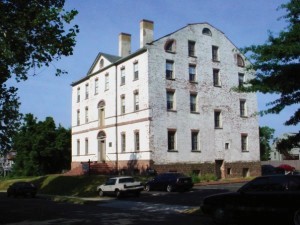
In 1831, James Howe was deeded 6 acres and a small house on Claremont Avenue in Montclair. That house still stands. For many years, the worn clapboard house was known locally as the slave house. James Howe was owned by Nathaniel Crane. A member of one of the town’s founding families, Crane left the property to Howe (rumored to be his son) upon his death.
American slavery began in 1619 and eventually spread to all 13 colonies. By the late 1700s, Garden State neighbors like Pennsylvania, New Hampshire, and Massachusetts, followed 20 years later by New York, began adopting policies to abolish legal human bondage. New Jersey, however, was slow to outlaw the practice and adopted brutal laws restricting rights, including reading, writing, and ownership of firearms and property, for the nearly 12,000 enslaved Africans who lived here at the turn of the 19th century. After 185 years of slavery in New Jersey, in 1804 the state passed the Act for the Gradual Abolition of Slavery. The mandate required enslaved men born after July 4, 1804, to serve 25 years, and enslaved women, 20 years before manumission. By the start of the Civil War in 1861, records indicate slavery in New Jersey had dwindled, but remained legal. In 1866, the state ratified the Thirteenth Amendment to the Constitution, making it the last Northern state to end slavery.
Today, historically significant properties like the Howe House bear witness to New Jersey’s past. The nonprofit Friends of Howe House (FHH) are seeking historic landmark status and recently rallied support to purchase the building. “We are forming a steering committee and seeking community input to determine the next steps for Howe House,” says committee member Kimberly Latortue, adding turning it into a house museum is an option. The town “prides itself on being the epitome of diversity,” says Aminah Toler, a Montclair native and founding member of FHH. “We want to ensure that the Howe House remains to tell the story of the African American history that shaped this town and this country.”
Clifford Case and the Challenge of Liberal Republicanism
By William R. Fernekes
Reviewed by Hank Bitten, NJCSS Executive Director
The first speech Rep. Clifford Case spoke on the floor of the U.S. Capitol on June 11, 1945, should be taught to every student studying World War II and the Civil Rights era. The speech is printed in the opening paragraphs and defines Clifford Case as a public servant and human rights advocate. His statement below was a response to the defense of poll taxes as a voting requirement by Congressman John E. Rankin (D) who advocated for the mass incarceration of Japanese Americans after Pearl Harbor, the mass deportation of Japanese Americans after the war, segregation, attacked Associate Justice Felix Frankfurter, questioned the patriotism of African Americans, and explicitly spoke of racial equality as a slippery slope leading to the end of the white man’s civilization on the planet.
“Mr. Chairman, I am native-born, white, a gentile-a Protestant. That I am these things entitles me to no special status or distinction. Indeed, I had no choice in any of them, except the last.”
“Mr. Chairman, no group in this country has a monopoly on patriotism. Men of all races, colors, and creeds, whether native-or foreign born, have equally sacrificed their lives or given the best years of their youth in this war. The casualty lists show that, as do the gold stars in the windows of homes, both high and humble, in every city, town, and hamlet, and on the farms throughout the land. I suppose there are not many Jews in the State of Mississippi, but I am convinced that their casualties are in proportion to their number in the population, as they are all over the country. And if that be not true of the Negroes, it is due, I am sure to no lack of courage or patriotism on their part, but rather to these two reasons: First, that, because of poverty and lack of equal educational and economic opportunity for generations, the percentage of Negro draft rejections on medical and mental grounds is far above the average for other groups. Second, that, to some extent, they may have been given noncombat service of one kind or another more often than most other groups. Obviously, both of these factors have been quite beyond the control of the Negroes themselves. I am sure the records of this war will vindicate fully the heroism of the Negro combat soldier.” (page 6)
Most students and teachers will have no prior knowledge of Clifford Case. I voted for him in 1972 in my first opportunity to cast a ballot for senator in New Jersey. Who is he and how did his career path lead him to be a public servant for the residents of New Jersey?
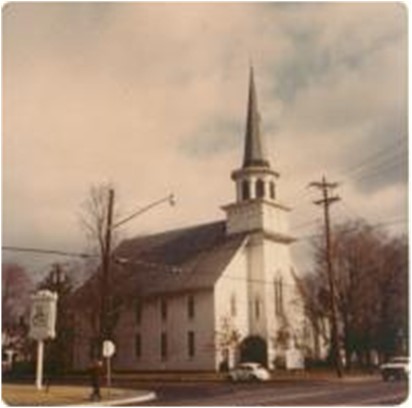
Clifford was a preacher’s kid, born in Franklin Park, a small community of farmers, craftsmen, and a few merchants. He was baptized in the historic Six Mile Run Reformed Church, where his father was the pastor. This church dates back to 1710.
His father accepted a call to the Second Reformed Church in Poughkeepsie, NY when he was three years old. Clifford attended the schools in Poughkeepsie. His father unexpectedly died of pneumonia in 1920, when Clifford was age 16 and a junior in high school. His father’s church would merge with the First Reformed Church in Poughkeepsie in 1923, in a newly built church.
Rev. Clifford Case resigned as “Old First” pastor. At the first meeting of the new consistory on January 7 he was called as the pastor of the united congregations. Thus, the Mill Street or Second Reformed Church became the fifth house of worship of The Reformed Dutch Church of Poughkeepsie. Rev. Case remained its pastor until his death on March 7, 1920. His picture hangs at the entrance to the present Reformed Church’s ‘Case Chapel.’ (http://churches.rca.org/poughkeepsierc/Booklet2014A.pdf)
Clifford returned to New Jersey to attend Rutgers University where he enjoyed courses in civics, constitutional history, U.S. history, European history, and literature. He met Ruth Smith, from Linden, NJ, who was a student in the New Jersey College for Women at Rutgers (Douglass), where Barnard College graduate Mabel Smith Douglass was the Dean. They both enjoyed the music and dancing. (After all, this is the ‘Roaring 20’s!) The humor of Bill Fernekes, author, is captured through his interview with Mary Jane Weaver, Clifford and Ruth’s daughter.
“Arriving late “Buddy” Case was slightly embarrassed because his pants were split and he covered the tear with his music folder, a fact detected by the observant Ruth…. She (Ruth Case) would tell me the story of how she met this handsome, athletic Rutgers student, with a strong tenor singing voice. She would plan her departure from her dorm to coincide with him.” (page 14)
Following Rutgers, Clifford attended Columbia Law School and Ruth taught English at Linden High School. They were married in July 1928 and honeymooned in Europe. Columbia law curriculum was unique with its emphasis on interdisciplinary courses and an understanding of the social problems in society. Following his graduation, he joined the law firm of Thatcher, Simpson and Bartlett in Manhattan and worked with Cyrus Vance. Clifford and Ruth moved to Rahway and he commuted to work.
The biography written by Bill Fernekes provides insights into the power of the local and state political party ‘machine’ and why some politicians, like Clifford Case, take positions that are to the left or right of the center. It is a fascinating perspective on competitive democracy, the influence of the Hague machine in the Democratic Party in New Jersey, and the views of the media and residents regarding segregation, foreign policy, labor, health care, to identify a few of the public issues that Clifford Case held liberal Republican views.
His first election to the Rahway Council in 1937 was decided by 311 votes. (page 20) He advocated for transparency in local government and an end to the private caucuses between small groups of council members. The 1930’s was a difficult decade in the United States but in particular this was a time of prosperity for some in New Jersey and poverty for others who were without employment. Teachers in high school emphasize the Great Depression and the New Deal and this book provides some insight into the importance of local government. Rahway was a place for large manufacturing companies and a major station on the Pennsylvania RR. Clifford Case also served on the Board of Foreign missions for the Presbyterian Church, which gave him a valued perspective on the abuses faced by others living in a dangerous world.
Cherry Street in Rahway, NJ, circa, 1920
“Rahway’s municipal government established a separation between a mayor who oversaw daily city operations, and the Common Council, which set priorities, functioned in an oversight role regarding city operations, and provided resources for funding municipal operations and services. With Clifford P. Case and Sherman Lusk as the only two Republican council members, any influence they desired would require coalition building with Democrats.” (page 21)
In 1941, Clifford Case campaigned in the primary election for the Republican Party nomination in the NJ Assembly. The Frank Hague political machine had a powerful influence in New Jersey, making it almost impossible for Republican candidates from northern New Jersey to win. Hague’s influence secured governors from the Democratic Party and Thomas Brogan as Chief Justice, who would dismiss challenges of election fraud at this time. Hague also influenced the candidates for local and state positions in the Republican Party. Although Case did not secure the Republican Party nomination in 1941, he prevailed in 1942. He understood the importance of campaigning on a personal level in towns in Union County, especially Cranford, Elizabeth, Hillside, New Providence, Roselle, and Westfield. The result was a victory with a margin of more than 16,000 votes.
The context of the information in the chapter, “Development of a Political Servant” is important for students studying political institutions and/or local New Jersey history during World War II because of its relevance to voter fraud issues, campaign strategies and promises, the use of voting machines, and the outcome of elections. The lessons in the past provide insight into how fragile democracy has been over time. Case’s term in the NJ Assembly resulted in significant legislation for civil service reforms certification for lawyers, and legal status for ride sharing, which became a necessity with fuel rations during World War II.
The depth of the research and perspective in this book is with the legislative decisions and sponsorships of Congressman and later Senator Clifford Case. The historic context of civil rights, segregation, anti-lynching, and labor bills provide important information for teachers regarding the teaching of these standards-based indicators for high school students. For teachers who are committed to historical inquiry and decision-making lessons, Clifford Case and The Challenge of Liberal Republicanism is a book that must be read! Let’s examine two case studies:
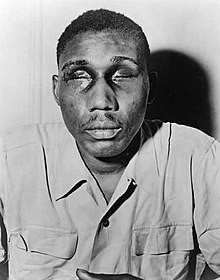
Segregation: The incident of Isaac Woodward (Woodard), a black World War II veteran, who was in his uniform, at a bus stop in Batesburg, South Carolina on February 12, 1946, motivated the first significant legislation proposed by Congressman Case in 1947.
“An especially vicious attack occurred in South Carolina in February 1946, when recently discharged army veteran Isaac Woodward was assaulted by a white sheriff and his deputy after having been pulled off an interstate bus when the driver complained Woodward took too much time during a restroom stop and quarreled with him.,. Woodward was removed from the bus, violently beaten by Sheriff Linwood Shull and his deputy, and permanently blinded when one of his attackers drove a blunt instrument into his eyes. Although tried before a federal court after the NAACP and celebrities such as Orson Welles made a cause celebre about the case, Shull was acquitted.” (page 41)
Although more than 200 federal anti-lynching bills have been introduced since 1918 none of them became a law. The Justice for Victims of Lynching Act of 2018, co-sponsored by NJ Senator Cory Booker and now V.P. Kamala Harris, finally became law in 2022. The Case bill introduced in 1948 (HR3488) is important because of the continuing relevance of this issue which has continued without agreement for over 140 years! Students need to understand the slow process of our Legislative Branch in reaching agreement on controversial issues such as guns, health care, rights of women, and other timely issues. The perspective below leads to historical inquiry in the classroom about continuity and change in history.
“While the legislative efforts of Case and other civil rights supporters generated more frustration than concrete results, their work and Truman’s Committee report were important. Historian Philp Dray stated that while ‘the Dixiecrats torpedoed many of Truman’s good works-the permanent FEPC antilynching legislation, and measures to end the poll tax, the Truman Committee’s report and recommendations, legislative proposals like Case’s bill, and related discussions and debates in the Congress shifted the national conversation about civil rights and racial equality. Dray argues Southern obstructionism to civil rights legislation reinforced the perception by many Americans the South was resistant to change, and lynchings, although less frequent, were now subject to ‘swift national denunciation,’ which ‘helped to convince many Americans that the South was once again carrying the country toward some form of cataclysm.’ Just a few years before the Brown v. Board of Education decision, the seeds of change regarding federal action on civil rights were planted by courageous legislators like Clifford P. Case.” (pp. 44,45) (Philip Dray is an Assistant Professor of History at the Eugene Lang College of Liberal Arts at the New School in New York City)
Clifford Case’s position as a congressman on the Taft Hartley Act provides an opportunity for students to understand the important labor issues of the 20th century. In our current service-sector economy the issues discussed on the classroom are likely a fair minimum wage, medical benefits, and the wage gap between men and women. In the middle of the 20th century, The Taft Hartley Act of 1947 was unpopular with labor and unions. The sponsors were Senator Robert Taft (R-Ohio) and Congressman Fred Hartley (R-New Jersey). New Jersey was a manufacturing state and unions were an important part of life for most families. After World War II there were shortages of many goods and prices were inflated. Unions used this time to expand their membership and there were frequent strikes and boycotts demanding higher pay and better benefits. After Churchill’s Iron Curtain Speech on March 5, 1946, Americans feared communism and strikes and unions were associated with socialism and communism.
In this political climate, Clifford Case introduced a bill to restrict the power of organized labor, co-sponsored a bill with Christian Herter that did not become law, and voted for the Taft Hartley Act and after President Truman’s veto of Taft Hartley he voted to override the president’s veto. Although Case was re-elected in 1948, eighty-two congressmen who supported Taft-Hartley were not re-elected. Labor and the Democratic Party were determined to repeal Taft Hartley and Clifford Case was faced with a difficult decision. He voted against the Wood bill which retained most of the provisions in the Taft Hartley Act. The competitive arguments between the Wagner and Taft Hartley Act, the right to work and the right to strike, are critical issues for workers, public safety, and the American economy. Visit the resources in the Truman Library for the reasons why the Taft Hartley Act was harmful and see if your students agree or disagree with President Truman and Congressman Case.
“When we passed the Taft Hartley Act, we believed it was a good law. But all of us also agreed that if experience should prove it deficient in any respect, such deficiency should be cured by amendment. There is now almost unanimous agreement that a number of the provisions of the Taft Hartley Act are actually or potentially harmful to the legitimate interests of organized labor and hence to the entire economy, and that the Act should be amended to eliminate these defects….
I was convinced that it would be possible to work out and pass a bill which met the legitimate objections to the Taft-Hartley law, which was fair to both management and labor, and a bill which adequately safeguarded the public interest. The Wood bill, despite changes made on the floor in a number of his provisions, including those mentioned, did not satisfy those objectives.” (page 48)
Students in New Jersey, and likely most other states learn about the McCarthy hearings and the threat of communism to the stability of the government of the United States and the spreading of this ideology around the world. Clifford Case became a senator in January 1955 and was faced with the threat of communism in China, Southeast Asia, Africa, and in the United States. Senator McCarthy and Senator Case were members of the Republican Party. The performance expectation for high school students in New Jersey is “Analyze efforts to eliminate communism, such as McCarthyism, and their impact on individual civil liberties.”
The campaign for Senate in New Jersey is a race that teachers should consider including when teaching about communism and McCarthyism. Case stated that if elected he would remove the powerful Senator Joseph McCarthy as chairman of all committees. Case will win the election against Rep. Charles Howell by 3,369 votes which was challenged by a recount that validated a win for Clifford Case by 3,507 votes. The 84th Congress had the Senate divided with 48 Democrats, 47 Republicans, and 1 Independent. Although McCarthy’s influence was declining by the summer of 1954, the media labeled Clifford Case as being soft on communism and Stalin’s choice for Senator. One question for students to explore is: ‘Why did Case take such a strong position against McCarthy when he could have moderated his criticisms and left McCarthy to self-destruct, following President Eisenhower’s lead?
“The evidence suggests Case’s opposition to McCarthy was rooted in deeply held principles of fairness and justice with Case believing his stance would attract support from moderate Republicans, Independents, and possibly even Democrats. Although critical of McCarthy, Howell’s stance was little different from the national Democratic Party’s position on McCarthy. Case’s call to remove McCarthy from any committee chairmanship went much further, highlighting Case’s courage in taking on a well-known and powerful Republican senator.” (page 62) Senator McCarthy was censured after the November 2, 1954 election.
Clifford Case was also confronted with the conservatism of Senator Barry Goldwater and his attempts to eliminate communism in the 1960s and as the Republican Party’s candidate for president in 1964. Again, teachers should consider his positions on civil rights, communism, nuclear weapons, and his vision for the future of the GOP. This is an opportunity to teach the influence of local and state government and the influence of state political leaders in both political parties. There was a price to pay for challenging the powerful and conservative Republican leaders in New Jersey and Senator Case was the only elected Republican who would not endorse Barry Goldwater in 1964.
“My refusal to support Barry Goldwater unless he asserts his leadership, by both word and deed, against attempts to capitalize on the white backlash and against extremist appeals of any sort is based upon a moral principle which I regard as transcendent. No perspective person in attendance, and I should guess no television viewer, could miss the ugly racist undercurrent at the Convention. There is simply no comparison with whatever differences there were between Taft and Dewey or Eisenhower.” (page 150)
One of the hidden gems in this scholarly book is the ‘big picture of American history from Truman to Carter. This includes the period of 1945-1975, which some historians consider the zenith of American power when the world looked to the United States for moral leadership, economic leadership, and as the protector of freedom and democracy from the threats of communism and terrorism.
The opportunity to view this period of American domestic and foreign policy through the lens of a public servant provides an opportunity for inquiry and study by students. For teachers who provide direct instruction through primary source materials, the quotes in this book by Clifford Case provide unique insights into why a Republican congressional representative and senator challenged members within his political party and found ways to educate every president with his perspective. For teachers who differentiate instruction and enable students to investigate essential questions, the quotes and narrative in this book provide a resource for understanding the big picture of American history.
Here is an example from Senator Case on his opposition to President Nixon’s nomination of Clement Haynsworth as Associate Justice to the U.S. Supreme Court in 1969.
“The conclusion is inescapable, I believe, that Judge Haynsworth has shown a persistent reluctance to accept, and considerable legal ingenuity to avoid, the Supreme Court’s unanimous holdings in the Brown case and in subsequent decisions barring discrimination in areas other than the field of education….As late as 1968, Judge Haynsworth was continuing to voice his preference for “freedom of choice” plans in the desegregation of schools even while he reluctantly implemented prior decisions by the Supreme Court. Only last year he was still insisting that the burden of expensive litigation to secure constitutional rights be borne by those seeking relief, even when those people had been upheld in their contentions by his own court.” (page 191)
“I believe there can be no doubt that Judge Haynsworth’s confirmation by the Senate would be taken by great numbers of our people as the elevation of a symbol of resistance to the historic movement toward equal justice for every American citizen. This appointment, at this time, would drive more deeply the wedge between the black community and the other minorities on the one hand, and on the other, the rest of American society. I shall vote against the confirmation.” (page 192)
One of my observations after reading this book is that the challenges facing our government today are different but also very similar to the challenges our democracy faced when Clifford Case served in Congress. The major issues that Senators Clifford Case (R) and Harrison Williams (D) from New Jersey had positions on are the foundation of all curriculum and courses relating to 20th century American history and likely include:
NSC-68 Cuban Missile Crisis Middle East
McCarran Walter Act Southeast Asia Inflation & Recession
Korean Conflict Civil Rights Act Watergate
McCarthy Hearings Voting Rights Act Energy Independence
School Desegregation Immigration and Nationality Act War Powers Act
National Highway Act Environmental Protection Act Human Rights
The three chapters on the Vietnam War (Chapters 14, 15, and 16) provide a comprehensive picture of the conflicts between the legislative and executive branches that has particular utility for teachers of American history and government. Dr. Fernekes provides insights into the debates about funding, responsibilities for declaring and fighting wars, negotiated agreements, the death of civilians, and transparency between the branches. His perspective is scholarly, analytical and clear with carefully numbered observations. Senator Case was an outspoken supporter of American engagement in Vietnam who became an outspoken critic. His perspective is critical to studying this period of history and although Vietnam is different than the Persian Gulf, Iraq, Afghanistan, Syria, Ukraine, and Israel, the similarities of the debate and division provide teachers with an opportunity to gather evidence for inquiry and building a thesis. Here are two examples in the words of Clifford Case:
“The President’s power as commander in chief does not extend to his unilateral decision to protect another government by military action. If it were otherwise, the President would be free to engage our military forces whenever and wherever he pleases. Denying any such unfettered executive authority, our Founding Fathers carefully counterposed against the president’s power as commander in chief of our military forces the Congress’ power to declare war and control the purse strings. We must restore this vital part to our constitutional system of checks and balances.” (page 288)
“I do not accept the suggestion that the only way the peace settlement is going to work is if the North Vietnamese think we are going to intervene, if they violate the agreement. But even if that were so, we have a Constitution; and the question that the Senator from Idaho and I have raised by this bill is not whether we should or should not intervene in particular hypothetical circumstances. The question is: Who should make the decision?….The Founding Fathers not only gave Congress the constitutional authority of parliaments to withhold funds from particular ventures, they gave Congress the power to declare war and to start war, whether the President happened to have money on hand or not.” (page 288)
The second example provides both the context for the continuing support of the United States for Israel and the complexity of debate among members of Congress and the position of the president in the words of Senator Case in 1978 about an arms package to the Middle East.
“Mr. President, I suggest it is time we recognized again and kept bright and shining in our eyes this truth: The existence of Israel, its strength to defend itself, is essential to the preservation of the West, to the preservation of NATO and inevitably, in the end, to the preservation of the United States. More than that, it is essential to the preservation of the moderate Arab regimes.
Can you imagine, if there is no Israel, the kind of fighting that would go on among the various nations and interests and groups within the Middle East? Can you imagine the fertile field for Communist stirring up of strife that would exist if that happened? Can you imagine the possibility-any possibility of moderate leaders such as President Sadat surviving long in such a shambles? I cannot. I think no reasonable people can…. It is time that we restored to our thinking the concept that a strong Israel is not just a beneficiary of the United States. It is essential to the security of the United states and of all the West.“ (page 363, 364).
Senator Case also served during the time when the Republicans controlled the House, Senate, and Executive Brank from 1953-1955 and when the Democrats controlled the House, Senate, and Executive Branch in the Sixties. Clifford Case was also an important voice in defining the vision of the Republican Party after the 1964 election. The perspective of his local New Jersey voice is necessary to grasp the struggle behind each of the issues above. Students should also use the Library of Congress sources of Thomas to and Chronicling America for information.
The book includes excellent photographs and images of political cartoons from newspapers and the Works Cited sources are also helpful. There is a Digital Exhibit at Rutgers that was created by Dr. William Fernekes, the author. https://exhibits.libraries.rutgers.edu/clifford-p-case Although the book is expensive at $135.00, it is a book that should be in every high school, college, and public library in New Jersey. Clifford Case and the Challenge of Liberal Republicanism
Visit of Rev. Samson Occum to the Lenape at New Stockbridge
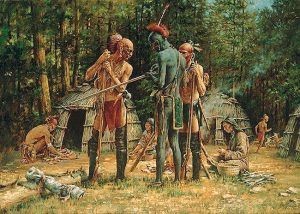
Samson Occum, leader of the New England Brothertown religious movement (not to be confused with the NJ Brotherton community), had a long association with the Delaware Indians. After his time as Eleazar Wheelock’s first Indian pupil, Occum became a minister. Based upon his success in religious education, Wheelock began his Indian School in Connecticut, where his first two pupils were Delaware Indian boys from John Brainerd’s Bethel Mission settlement in present-day Monroe Township, New Jersey. The Delaware (Lenape) supported the French in the French and Indian War and by 1777, many had left New Jersey for areas of New York and western Connecticut. By 1802, the assimilation with the Allegheny and Oneida was complete. (See The Brotherton Indians of New Jersey, 1780)
Use the documents below to discuss and investigate the following questions:
What motivated Samson Occum to become involved with Native Americans?
How did decisions affect the livelihood of the Lenape and Delaware Valley Indians?
Was New Stockbridge a suitable place for the migration of the Lenape and other native Americans?
Do you think the travels of Rev. Samson Occum were planned in advance or were they a response to the letter from the Native Americans at New Stockbridge dated Nov. 28, 1787.
What was traveling in New Jersey like for Rev. Occum (or anyone)?
Comment on five days in Rev. Occum’s journal.
The following information details Occum’s visit to Brotherton and Weekping (Coaxen):
From Love’s Life of Occom (p. 276):
Fundraising mission of Samson Occom and others to New York, New Jersey & Pennsylvania:
November 28, 1787 (underlining is for emphasis)
To all Benevolent Gentlemen, to Whom these following lines may make their appearance.
We who lately mov’d from Several Tribes of Indians in New England, and Setled (sic) here in Oneida Country. And we also Muhheeconnuck Tribe, who lately came from Housotonuk alias Stockbridge, and have settled in Oneida, And finding it our indispensible (sic) Duty to maintain the Christian Religion amongst ourselves in our Towns, And from this Consideration, Some of us desired our Dear Brother, the Rev d Samson Occom, to give us a visit, and accordingly, he came up two years ago this Fall, and he was here a few Days; and his preaching came with great weight upon our Minds. And he has been here two Summers and Falls since. And we must confess to the Glory of God, that God has made him an Eminant (sic) Instrument amongst us, of a Great and Remarkable Reformation. And have now given him a Call to Settle amongst us, and be our Minister that we may enjoy the glorious Doctrines and ordinances of the New Testament.
And he has accepted our Call. But we for ourselves very weak, we c’d do but very little for him. And we want to have him live comfortable.
The late unhappy wars have Stript (sic) us almost Naked of everything, our Temporal enjoyments are greatly lesstened (sic), our Numbers vastly diminished, by being warmly engaged in favour of the United States. Tho’ we had no immediate Business with it, and our Spiritual enjoyments and Priviledges (sic) are all gone. The Fountains abroad, that use to water and refresh our Wilderness are all Dryed up, and the Springs that use to rise near are ceased. And we are truly like the man that fell among Thieves, that was Stript (sic), wounded and left half dead in the high way. And our Wheat was blasted and our Corn and Beans were Frost bitten and kill’d this year. And our moving up here was expensive and these have brought us to great Necessity And these things have brought us to a resolution to try to get a little help from the People of God, for the present; for we have determined to be independent as fast as we can, that we may be no longer troublesome to our good Friends, And therefore our most humble Request and Petition is, to the Friends of the Kingdom of Jesus Christ, [that they] would take notice of us, and help us in encourageing (sic) our Dear Minister, in Communicating Such Things that may Support him and his Family. This is the most humble request and Petition of the Publicks (sic) true Friend & Brothers
ELIJAH WIMPEY
DAVID FOWLER
JOSEPH SHAUQUETHGENT
HENDRECH AUPAUMUT
JOSEPH QUAUNCKHAM
PETER POHQUENUMPEC
New-Stockbridge (NY)
Novr 28: 1787
Native Americans from Stockbridge, MA moved to this location during the American Revolution. The Stockbridge, refuges of tribes mainly of adjoining New York that had settled in the “prayer town” of Stockbridge, Massachusetts, accepted an invitation of the Oneidas to live and share on their reservation in New York. Stockbridge, NY was incorporated in 1791.
Brotherton, Novr 29: 1787.
Conn. Hist. Soc., Indian Papers
A journal of the daily travel of the Rev. Samson Occom in New Jersey
From Occom’s Journal – portions of above-referenced trip [edited by RW for clarity].
December 28, 1787: New Windsor, New York
December 29, 1787: Mr. Brewsters at Blooming Grove; Robinsons Tavern; Florida (NY)
December 30, 1787: Warwick (NY)
December 31, 1787: Mr. Smith’s Public House
January 1, 1788: To Rev. Baldwin’s house and lodged.
January 2, 1788: Went to Parsippany to Mr. Grovers and then back towards Rev. Baldwin.
January 3, 1788: In same area.
January 4, 1788: Called at Rev. Green’s and then went to Mr. Chapmans at Newark mountains [Jebediah Chapman was the master of the Orange Dale Academy. In 1790, Occom sent New Stockbridge resident John Quinney to the Academy.] Went to Crain’s Town and lodged with at Mr. Crain’s.
January 5, 1788: Set off for Horse Neck and put up at Esq. Crain’s. (Horse Neck Tract is present day Caldwell, Fairfield, Verona, Cedar Grove, and Essex Fells.)
January 6, 1788: After meeting, went on about three or four miles and lodged there.
January 7, 1788: Towards Morristown, stopped at Mr. Grover’s and later lodged at Morristown.
January 8, 1788: Went to Basking Ridge and attended the funeral of Rev. Canada’s daughter.
January 9, 1788: Got to Mill Stone and put up at a tavern.
January 10, 1788: At noon, arrived at Dr. Witherspoon’s house at Prince Town. Left and traveled to Black Horse Tavern (Columbus, Burlington County, New Jersey).
January 11, 1788: After eating, went on again. Got to Quakson towards night where there were three or four families of Indians, we called in at one, and they appeared extremely poor, so we went on and put up at a tavern [Red Lion?]. It was cold and we set up long and I was ill with a cold and cough.
January 12, 1788: After breakfast, set off again and got to Agepelack [Edgepillock] some time before night. Stopped and stayed at Friend Mytop’s house. I was very poor with my cold and coughed much.
Sabbath, January 13, 1788: Felt a little better and about 11 went to meeting, and there was not many people they had but little notice. I spoke from the Words, that which is wanting &c and the people attended well. After the service I went home with Daniel Simon to his mother-in-laws house [Widow Calvin] and stayed there all the week. Daniel Simon lost an only child this week and I preached a funeral discourse from the Words Set thy House &c and we had singing meetings every night, and prayed with them and gave them a word of exhortation.
Sabbath, January 20, 1788: Preached here again and it was very bad traveling, and there was a considerable number of people collected, and I spoke from [ ] and the people attended well, and after the meeting went back to Widow Calvin’s [widow of Stephen Calvin, son-in-law of Weequehela] and in the evening people came together and we had an exercise with Christian cards and we sang and prayed and it was a solemn time. Many were affected, and the people were very loath to leave the place & they stayed late.
January 21, 1788: We were up early and got ready as soon as we could. We took leave of the family and others came to take leave of us, and so we directed our course to Philadelphia and in the evening we got to the river against the City and we put up in a tavern one Friend Cooper.
February 22, 1788: About 10 we left Philadelphia and it was bad crossing the river. We went on ice most of the way over, and it was a cold day, and in the evening we got to Moorestown and Brother David [David Fowler] was sick, & Peter [Pauquunnuppeet] went [to] Agepelack, and dined and lodged in a tavern.
February 23, 1788: I went to Quakson [Coaxen] and left David very sick [at Moorestown] and got there before noon, and put up at a public house. In the afternoon, went to an Indian house, and towards night went to a public house.
February 24, 1788: About 11 went to meeting to a meeting house which Mr. John Brainerd used to preach to a number of Indians and there was considerable [number] of people and I spoke from Acts XI.26 and some time towards night, we went to Mount Holly, got there near sun set and we put up at Dr. Ross and David was very sick, and here we stayed some days, and I preached four times in this place. (Acts 11:26 – “Then Barnabas went to Tarsus to look for Saul, and when he found him, he brought him to Antioch. So for a whole year Barnabas and Saul met with the church and taught great numbers of people. The disciples were call Christians first at Antioch.”)
February 29, 1788: I left Mount Holly and left David there as he was not well enough to set out. I got to Trenton in the evening. Called on Rev. Armstrong, but he was not home, so I went to a public house.
March 1, 1788: Went back to Bordentown.
March 2, 1788: Preached at Bordentown, went back to Trenton.
March 3, 1788: Went to the meeting house at Trenton and there were considerable people. In the afternoon, I went back to the Draw Bridge (at Bordentown) and had an evening meeting with a vast number of people.
March 4, 1788: David and I set off pretty early and we got to [ ] and lodged at Dutch Tavern.
March 5, 1788: Went to New Brunswick. David left a bundle and had to go back. At New Brunswick, went to see Rev. Munteeth, and then to Dr. Scott. At Dr. Scott’s, Peter was found; he had been straggling about a fortnight. In the evening there was a society and I spoke a few words by way of exhortation. Afterwards, we returned to Dr. Scott’s, where we lodged.
March 6, 1788: Visited several houses, and preached at the Presbyterian church. There was a large number of people. I lodged at Dr. Scott’s and David and Peter lodged in another house.
Exploring Native American Sources Over a 30 Year Period
John Brainerd was born on February 28, 1720 in Haddam, CT. He had a vision to educate Native Americans in the colonies of New England and the Mid-Atlantic, including New Jersey. He graduated from Yale College in 1746 and received a Masters Degree from The College of New Jersey (Princeton) in 1749. He was a Presbyterian minister in Newark and New York before the French and Indian War. Her served as a chaplain in the Colonial Army during the French and Indian War, possibly between 1756 and 1759. He ministered to Christian Indian villages in Cranbury, Bridgetown, Mount Holly, Newark, and Deerfield in New Jersey. He also ministered to Native American communities in Pennsylvania and Connecticut. His brother David also ministered to Native Americans but died before John graduated from Yale. John Brainerd was married twice. His first wife, Experience Lyon died in 1757, while John Brainerd was with the Colonial Army. The two children she gave birth to, died in their first year. He remarried Hannah Spencer from Lynn, MA (also Haddam, MA) in 1664.
These were the years of the Great Awakening and prominent clergy such as John and Charles Wesley, George Whitefield and Jonathan Edwards preached the Bible, wrote songs, started schools, and ministered to colonial populations.
The French and Indian War, tough economic times after the French and Indian War, and the separation from England following the Declaration of Independence had a significant impact on the clergy who were supported by the Anglican Church of England, the Presbyterian Church of Scotland, and the Reformed Church in the Netherlands. Most clergy returned to England after the Declaration of Independence. John Brainerd, Samson Occum, and Francis Asbury are prominent clergy who ministered to people in New Jersey.
“IN the year 1777, at fifty-seven years of age, Mr.-Brainerd removed from Brotherton to Deerfield, in Cumberland County, N.J., and took charge of the church there. He still seems to have retained some oversight of the mission. In 1778, 1779, and1780, up to the year of his death, the Synod of New York and Philadelphia voted that ”the interest on the Indian fund be paid to Mr. Brainerd for his services among the Indians. “To the last of life he seems to have clung to his little flock, his first love, and his brethren did their best in a time of war to sustain him. Brotherton, the Indian settlement which he had aided to build up, and where for fifteen years he had resided, was situated in what is now a prosperous and pleasant rural neighborhood, near the present Shamong station, on the Raritan and Delaware Bay Railroad, about forty miles from Philadelphia. The “Historical Collections of New Jersey “give the following description:
“Edgepelick (or Indian Mills) is the name of a locality about three miles north of Atsion, where was the last Indian settlement in the State. The remnant of the tribe, consisting of about one hundred souls, emigrated to the West nearly half a century since. There is, however, a single family, but of mixed breed, residing in the vicinity ,in a log hut. Brainerd, the missionary, for a time resided among the Indians at this place. His dwelling-house stood about eight rods south of the saw-mill of Godfrey Hancock, on rising ground, the site of which is still marked by depression, showing the precise spot where the cellar was. Within a few rods is the spring from which the family obtained water. The natives had a saw-mill on the site of Nicholas. Thompson’s mill, a quarter of a mile northeast of Brainerd’s house. Their burying-ground was on the edge of the pond about forty rods northwest of the same dwelling. In the vicinity stood their church, built of logs, and destroyed about thirty-five years since. After the Indians left, it was used by the whites for public worship.” (pp. 413, 14)
Use the sources below to discuss the following and debate the advantages and disadvantages of the proposed decision.
What motivated young men from notable families to serve rural and Native American populations? Was this the result of their college education, financial incentives, or personal motivation?
How did conflict and war present barriers to the clergy who wanted to minister to people in a congregation or community?
Was their motivation to preach the Word of God, educate Native American populations, or develop a larger church organization similar to what was established in Europe?
Discuss the barriers John Brainerd faced in his travels, family life, with decisions of colonial governments, livelihood, and in ministering to people in need.
Decision: If you were John Brainerd, would you continue your ministry to Native Americans in New Jersey, or accept a position at an established congregation in a populated New Jersey community? (i.e. Newark, Princeton, Perth Amboy, New Brunswick, etc.)
Abstract: Eleazar Wheelock writes of the progress at his school, and of the conditions under which he looks for more Indian pupils as well as public charity. He also mentions the ordination of Occom.
Abstract: Eleazar Wheelock writes to George Whitefield about first Occom’s mission to the Oneidas, and about the difficulties of teaching Indian students. He mentions the idea of appealing to the Earl of Dartmouth for charity.
Abstract: Wheelock writes to Brainerd about setting up a meeting with the Connecticut Board of Commissioners, and the proposed fundraising trip to England, which is complicated by a renewal of the Mason Land Case.
Abstract: Brainerd writes about the apprehension of the murderers of two Indian women, includes letters from Francis Alison and John Ewing recommending John G. Kals as a teacher and missionary, and gives his own recommendation of Kals, with reservations.
Everyone living in New Jersey in 1776 was faced with the difficult decision of remaining quiet, supporting the movement toward independence being debated in the Continental Congress, or remaining loyal to the King of England and Britain. Families, communities, and the population in New Jersey was divided. People were divided because of their location with many Loyalists living near the Hudson River and New York City where the British assembled a large military and naval force and Patriots living near the Delaware River and Philadelphia where the Continental Congress was meeting.
The battle for independence was also a civil war. Revolutionaries made life exceedingly hard for many with sympathies for the British cause, seizing their property, accusing neighbors of sedition and having them arrested and placed in local jails, boycotting their businesses, and tarring and feathering them. If you were the victim of any of these abuses, you had to consider moving to British-held New York, to the Canadian provinces or to England.
In Hunterdon County, near the village of Clinton and Lebanon, the family of John Vought sided with the British. They were Loyalists living among neighbors who supported the Patriot or the American cause for independence. As a result, they faced difficult decisions.
The Voughts came to America in 1710 from the Palatinate area of the Holy Roman Empire (Germany). This productive agricultural and mining region was frequently invaded and people of the Protestant faith migrated to America in the 18th century. Many moved to New Jersey and Pennsylvania. They likely traveled on the Rhine River to Amsterdam and then on a clipper ship to New York or Philadelphia.
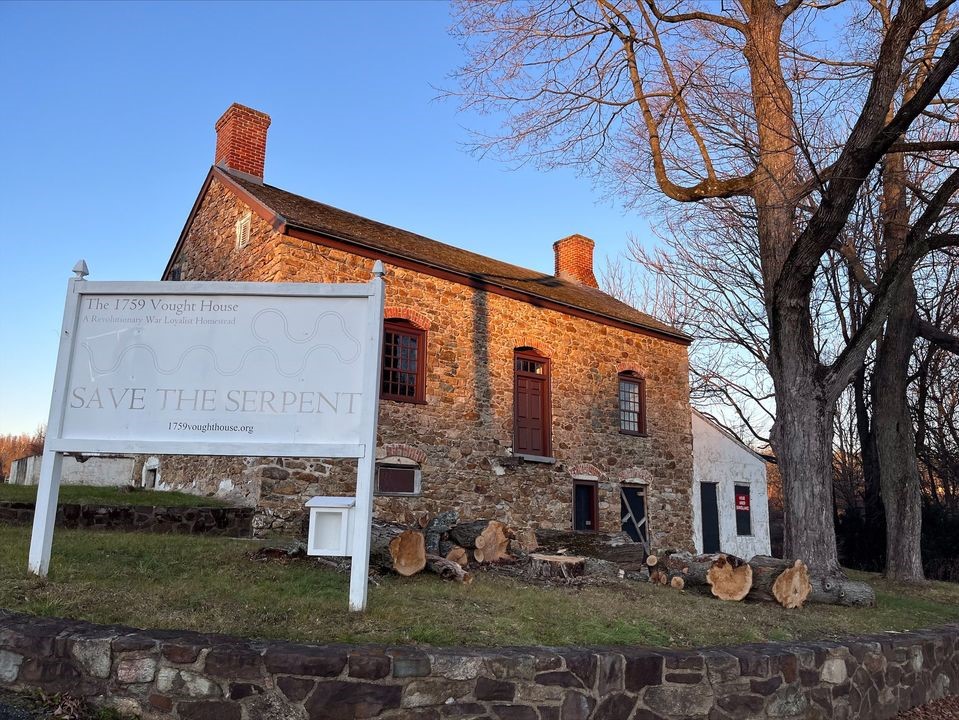
Christofel Vought built a home in 1759, during the French and Indian War on a 258-acre farm. He built a reputation in his community as a market for food supplies. Sometime in the 1770s he transferred ownership of the home to his son, John. On June 24, 1776, John Vought was part of a group of approximately twenty-five loyalists who attacked the home and tavern of Captain Thomas Jones. The tavern was also a recruiting station for the Hunterdon County Militia. John Vought and the other Loyalists beat Jones and “plundered and robbed the house.”
The raid on the Jones property drew a swift reaction from the Provincial Congress of New Jersey and the adopted the following resolution two days later. The minutes of their June 26, 1776 session state:
“Whereas it appears, from authentick [sic] information, that certain disaffected persons, in the County of Hunterdon, have confederated for the purpose of opposing the measures of the Continental and Provincial Congresses, and have even proceeded to acts of open and daring violence; have plundered and robbed the house of Captain Jones; have beaten, wounded, and otherwis [sic] abused the friends of freedom in said County, and now publickly [sic] declare, that they will take up arms and engage in behalf of the King of Great Britain, the avowed and implacable enemy of the United Colonies. In order to put an effectual stop to a combination so hostile and dangerous,
“It is resolved unanimously, That Lieutenant-Colonel Ten Eick, and Major Berry, take to their aid such a number of the militia, properly officered and armed, of the Counties of Hunterdon and Somerset, as they may think necessary, and proceed, without delay, to the said County of Hunterdon, in order to apprehend such insurgents and disaffected persons as this Congress shall direct.”
John Vought and his father, Christofel, spent five days in prison at the Hunterdon County Courthouse in Trenton.
During the winter of 1776-77 when the British occupied New York City and Philadelphia, John and Christopher Vought had to decide what they would do:
Should they go to New Brunswick, about 25 miles away, to enlist in the Loyalist troops known as the New Jersey Volunteers?
Should they remain in their home and wait for the British to control New Jersey and Pennsylvania?
Should they leave their home and start a new life in New York City, where they should be protected?
Should they move to Canada and begin a new life?
What would likely be the consequences of each decision for them and their family?
Our Story: Should the Lenni Lenape Support the British, Patriots, or Remain Neutral?
Delaware River Valley, Warren County, 1778
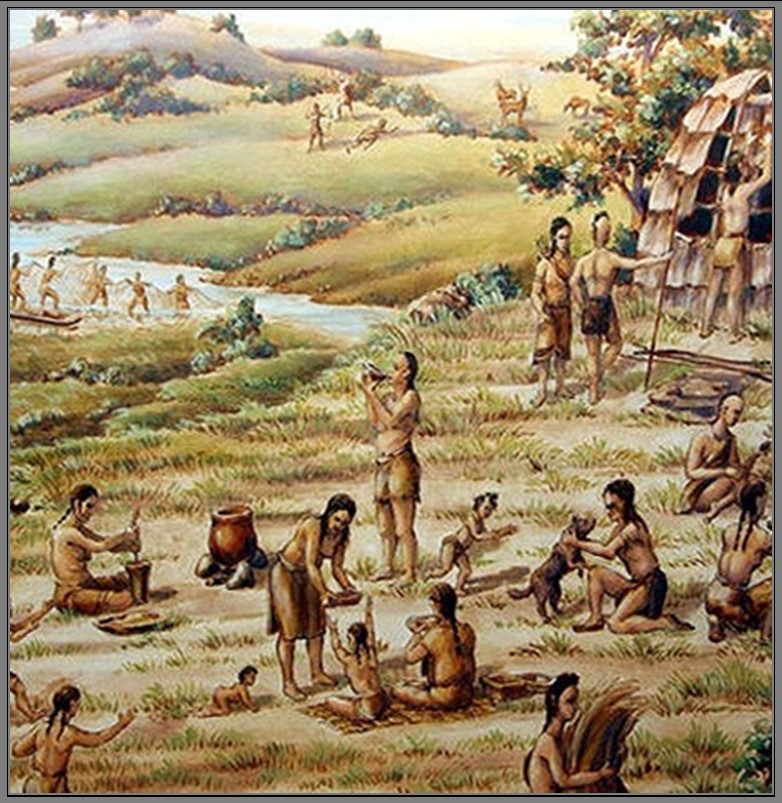
The Lenni-Lenape from New Jersey had already begun to leave by the start of the American Revolution. The Lenape were a divided people with only a small number remaining in the Garden State, while most moved north or west. The Lenni-Lenape that remained in New Jersey during the American Revolution played a significant role.
During the American Revolution, many Lenni-Lenape attempted to stay neutral at the beginning of the war. However, they were soon divided as some joined with the British, while others sided with the Patriots. In 1778, the United States signed the Treaty of Fort Pitt with the Lenape who sided with the Patriots. Unfortunately, promised supplies were not delivered, and villages of friendly natives were attacked. In the end, the results were disastrous for the many Lenni-Lenape no matter what side they took.
The outbreak of the American Revolution had great consequences for the Lenni-Lenape. Answer each question below. Your response should be at least ONE full paragraph.
Why did many Lenni-Lenape leave New Jersey at the beginning of the American Revolution.
From the perspective of the Lenni-Lenape, do you think this was the best decision or how long should they have waited before making a decision to leave?
Was it possible for the Lenni-Lenape to remain neutral? Explain the advantages and disadvantages of neutrality, declaring allegiance to the British, and supporting the Patriots at the start of the American Revolution?
Many historians have concluded that the Native Americans played a shadowy but important role during the American Revolution. Answer each question below.
To what extent was the role of the Native Americans important to either side during the American Revolution?
Identify ONE critical factor that may have been used in the decision-making process of the Lenape to sign the Treaty of Fort Pitt.
Read the excerpt from Article II of the Treaty of Fort Pitt (1778). Read and analyze the excerpt and answer the following guided questions:
1. Write one sentence summarizing Article II.
2. Is the text of Article II consistent with the text of the Declaration of Independence? What was happening at the time in history this excerpt was written?
“He has excited domestic insurrections amongst us, and has endeavored to bring on the inhabitants of our frontiers, the merciless Indian Savages, whose known rule of warfare, is an undistinguished destruction of all ages, sexes and conditions.
In every stage of these Oppressions We have Petitioned for Redress in the most humble terms: Our repeated Petitions have been answered only by repeated injury. A Prince whose character is thus marked by every act which may define a Tyrant, is unfit to be the ruler of a free people.” (Excerpt from the Declaration of Independence)
3. Identify a Claim and Argument regarding the decision of the Lenape to sign to Treaty of Fort Pitt?
Article II from the Treaty of Fort Pitt, 1778
“That a perpetual peace and friendship shall from henceforth take place, and subsist between the contracting: parties aforesaid, through all succeeding generations: and if either of the parties are engaged in a just and necessary war with any other nation or nations, that then each shall assist the other in due proportion to their abilities, till their enemies are brought to reasonable terms of accommodation: and that if either of them shall discover any hostile designs forming against the other, they shall give the earliest notice thereof that timeous measures may be taken to prevent their ill effect.” Treaty of Fort Pitt
In June of 1776, tensions between loyalists to the Crown and American patriots were reaching a fever pitch. It is time to choose sides.
You are a patriot living in Perth Amboy, New Jersey. You and your family make a living by selling the manufactured goods that come off the ships at port. Your son is in the Continental Army. You have learned that your next door neighbor is a loyalist sympathizer!
Sergeants Newton and Jasper of Marion’s Brigade, Rescuing American prisoners from a British guard
Do you…
Write to your son and inform him of the potential danger in your midst?
Allow your neighbor to continue to live in town, even if it poses a potential risk to the patriot cause?
Loyalists in a patriot-controlled town such as Perth Amboy can be dangerous as they can report on the Continental Army’s movements to the enemy or sabotage the town from within, sometimes even by disrupting the economy with counterfeit bills.
Captured loyalists or suspected loyalists were subjected to imprisonment and confiscation of their lands and belongings.
If you choose to report your neighbor, he is arrested within the week and sent to a prison to await trial. You have heard rumors of the conditions within different prisons and prison ships, and they are all unhygienic, inhospitable, and crowded as Congress has not deemed emptying them a high priority.
If you chose not to report your neighbor, your town and the army that your son fights for are at risk of top-secret information reaching the British. Additionally, since you did not report a loyalist, if your neighbor is ever found out, your own loyalty might also be called into question.
Quote to consider: Some high-profile prisoners were offered the opportunity to sign an Oath of Allegiance and effectively switch sides in the war. It is important to remember, though, that a prisoner may have been risking not only their own safety but also the safety of their loved ones by refusing to sign oaths of allegiance to their captors. One prisoner, Rawlins Lowndes, former governor of South Carolina, states that soldiers, “harassed his wife, seized his slaves, horses, and poultry,” and felt he “had little choice but to submit.” (Lurie, 69)
Quote to consider: Even neutrality was suspicious. Due to their religious beliefs, Quakers were barred from “swearing loyalty, offering aid, using its money, [or] printing its newspapers or documents” to assist either side of a war. (Lurie, 110) As a result, their non-Quaker neighbors were often suspicious that Quakers were secretly loyalists and therefore, guilty of treachery. Simply stated, “Neutrality helped the enemy. When Quakers were suspected of loyalism their property could be seized, they could be fined, imprisoned, exiled, and in a few rare cases executed.” (Lurie, 111)
Your Choices:
Your Choices:
Loyalists’ properties and possessions were typically confiscated and sold to benefit the patriot cause. How could this have motivated you to turn your neighbor in? How will you attempt to do right by your neighbor and ensure that they are treated well by the Continental Army? Towns were sometimes raided and townspeople kidnapped to be used in prisoner exchanges. How can you ensure that someone will not try to kidnap a patriot from your town to use as a trade for your loyalist neighbor? What would you do if your neighbor had proof that they were a patriot just like you? Do you think the Army is likely to arrest someone without evidence? Why or why not?
What could you do to prove your loyalty to the Revolutionary cause and avoid being arrested yourself if it is revealed that you knew that your neighbor was a loyalist and you did not turn them over? How have the reports of conditions within prisons during the Revolutionary War swayed your choice? What can you do to ensure that Perth Amboy is still safe, even with a loyalist sympathizer in town? What would you do if your son comes home for a visit and asks about the family next door? You learn that ahead of major attacks on British-held Long Island later this summer, General George Washington will be coming to town. Does this change your decision?
Additional sources to consider:
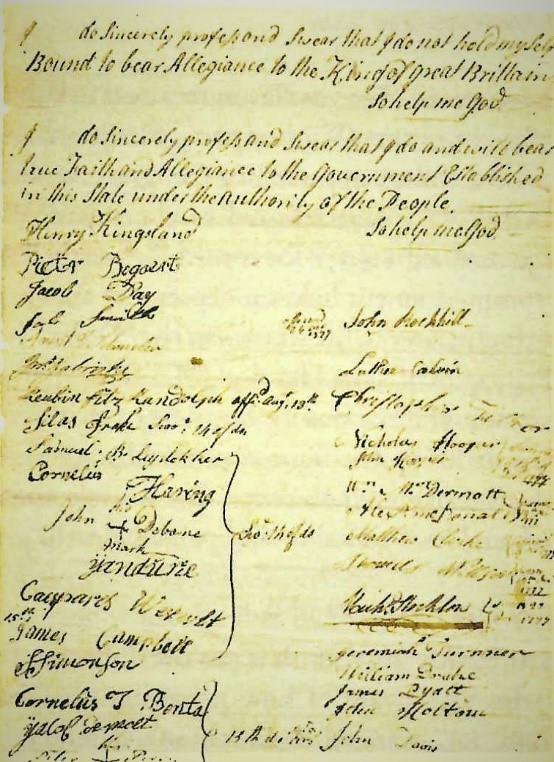
Oath of Allegiance (Lurie, p.81)
Interior of Jersey (Darley and Bookhaut)
Sources linked or cited in activity above
Taking Sides in Revolutionary New Jersey: Caught in the Crossfire, by Maxine N. Lurie, 2022.
My Story: Hudson River and the New Jersey coast, 1779
I’m remembered in history as one of the men responsible for keeping “hell afloat” during the American Revolution. Even though historians may have pieced some memoir and diary entries of others together to determine this as my legacy, little is known about me.
So how’d a European guy like me end up fighting for the British cause? Are you surprised I wasn’t one of the rebels, supporting a flimsy attempt at self-government and using unconventional warfare strategies? Well, I set my sights on America in 1760. I’m a Scottish man, and I made decent money for myself as a merchant and land speculator. I settled in Philadelphia, where the hubbub about independence was pronounced. I had joined the Patriot cause in 1776, but feared imprisonment so I joined the British cause under General Howe after the Battle of Brandywine.
From here, I made a name for myself in the Loyalist community and started to get the attention of well-known leaders like William Franklin. Franklin was the last royal governor of New Jersey, and when he saw this colony taking a leap toward freedom, he started the “Refugee Club” for fellow Loyalists. I was able to join this club after I moved to New York City in 1779. In this same year, I was named the Commissary of Prisoners and was stationed in NY Harbor. In this role, it was my responsibility to provide food, clothing, and shelter to those on board British prison ships. The notable ship I served on was the HMS Jersey, a Royal Navy ship that first launched in 1736, and was then converted to a hospital ship before becoming reserved for prisoners of war during the Revolution.
‘HELL’, in other words.
This so-called “hell” was in squalor. Thomas Dring described me as a man who “gloated” over the death of prisoners. His memoir, Recollections of Life on the Prison Ship Jersey details the horrors aboard: rotten food, rat infestation, dead bodies, and more. Dring talks about how the Continental Congress abandoned the American prisoners on board, having no urgency to exchange them for British soldiers, or mandate their removal from the horrors. These words would become gospel for historians wishing to know more about these facets of life during the Revolution. But was it the whole story?
In 1909, a publication titled David Sproat and Naval Prisoners in the War of the Revolution, James Lenox Banks showcased a collection of letters that prove my empathy for the prisoners on board. I requested funds from the Continental Congress to secure new bed linens and clothing-I even fronted this cost with my own money. At one point, I had asked Lord Rodney, British naval commander, if I could resign from my position. He informed me that no one was worth enough to take my place. Oh, lucky me.
My legacy is tainted, and I won’t again get the chance to speak for myself. So which version of me do you believe? What causes historical truths to become abandoned?
Supporting Questions
Think about the line from the song “History Has Its Eyes on You” from the musical, Hamilton: “You have no control. Who lives. Who dies. Who tells your story?” How does this line reflect the actions and remembrance of David Sproat?
Based on your comments above, what decisions did David Sproat have to make as prisoner Commissary? Who do you think was influential in helping him make these decisions or do you think he made them alone? How important were his decisions?
What are some examples or situations of decisions that were wrong, immoral or unethical? How do you think war influences the decisions people make?
David Sproat lived in America for almost 20 years before deciding to support the Loyalists and become a member of the Refugee Club. Do you think he regretted his decision after the war ended? Why or why not? What additional information do you need to know to answer this question?
The Toil of Staying Loyal: Windows and Mirrors into the “dark side” of the American Revolution
By Susan Soprano
When thinking about the battles of the American Revolution, many students may envision foot soldiers, old-fashioned pistols, and cannons. Few may visualize the naval fleet, and those who were stationed at sea. Few may consider the Loyalist perspective, those who wished to remain true to the monarchy, as they considered a stab at self-government too risky. Do you think students consider how the Revolution ripped families apart? How about the horrendous conditions aboard prison ships, reserved for those who got caught supporting liberty?
As educators, we want our students to have a complete and comprehensive knowledge of history. For far too long, stories have been hidden or skipped over to give a general overview of major topics in our country’s founding. Our history should provide “windows” and “mirrors” for our students: opportunities for them to see another’s perspective (windows), and opportunities for them to see themselves and their own experiences through others (mirrors).
This past winter, I had an opportunity to research two Loyalists as part of a grant project for the New Jersey Council for Social Studies: William Franklin and David Sproat. I knew very little about both men, but that’s one of the exciting things about taking on a task like this. My research for this project consisted of online articles and journals, and a really interesting read titled, The Ghost Ship of Brooklyn by Robert P. Watson. Prior to this learning journey, the following image really sums up by visualization of Loyalists during the Revolution:
“The Bostonian’s Paying the Excise-man, or Tarring & Feathering,” Philip Dawe, London, October 31, 1774. (Gilder Lehrman Collection, GLC04961.01)
Needless to say, there’s a lot more to envision than this, and your mind doesn’t even have to wander all the way to Boston.
William Franklin was the son of Benjamin Franklin, well known statesman and Patriot. William as a young man followed in his father’s footsteps and then supported the Loyalist cause after the French and Indian War. At that time, William was named royal governor of New Jersey by King George III, and later took up residence at the Proprietary House in Perth Amboy, NJ. In this very home, Ben Franklin visited and pleaded with his son to join the Patriot cause. He refused, and this ended their relationship. As the colonies inched closer and closer to independence, New Jersey shifted to support this cause. New Jersey would become the last colony to support liberty. In spite of this, William Franklin remained true to the crown. As a result, he was placed on house arrest by the New Jersey Assembly and was later arrested for treason. The Proprietary House remains a tourist spot today, hosting afternoon teas, colonial reenactments, and Sunday tours. I visited the house this past April, and enjoyed seeing my research come to life.
David Sproat was a Scottish immigrant who became a Loyalist during the British occupation of Philadelphia in 1777. From here, he made his way to New York City, got the attention of William Franklin, and was ultimately named the commissary of prisoners on the HMS Jersey prison ship. Conflicting accounts show Sproat as both a man of empathy and a monster. His own correspondence with the Continental Congress was published in 1909 by James Lenox Banks, showing his willingness to give the prisoners bed linens and clothes. Sproat paid for these items upfront with his own funds. This challenges the claims from surviving prisoners that Sproat was ruthless and had made it his mission to torture American rebels.
These conflicting sources make one wonder about how history gets remembered. What makes one person’s story more valid than another? Who decides which story gets told? There are many discussions that could be had in your classroom based on these questions. Whichever side you and your students ultimately take, there is a monument dedicated to the fallen prisoners in Brooklyn, NY (pictured below). This statue was dedicated under President Taft in 1908, and was completely restored in 2008. I hope to see this in person one day soon.
Side note: Could there be a connection between the dedication of this statue and the publication of the Sproat correspondence? Did Banks publish these documents to spite the government? I have to dig deeper into this. Gotta love this stuff!
Students and teachers alike may be wondering, “Why study this?” Teachers, may be thinking, “How can I use history to help students learn through windows and mirrors?” If we expect our students to connect with history, then they have to learn from perspectives on those who lived it. Building blocks of good instruction like note taking, discussion, and projects are bound to be successful when students are given time to explore the human side of history and learn about individuals who lived in places familiar to them. Many resources from Facing History will challenge students to engage in historical content with empathy and action. I highly recommend their content and strategy libraries for helping your students connect to history in this way.
Social studies teachers have an obligation to prepare students for engaging in an ever changing democratic society. Giving them the tools to analyze history in a way that encourages making connections, understanding others experiences, and challenging inequities will make for responsible adults. It is my hope that social studies students get to enjoy a robust history class experience, for all of their learning years. The American Revolution is a starting place!
Made in Paterson: The Life and Legacy of U.S. Senator William Hughes
By Hank Bitten, Executive Director, New Jersey Council for the Social Studies
The story of America is in the lives of the ordinary people whose voices and actions make a difference in the trajectory of historical events. The life of William Hughes, Irish immigrant who came to Paterson, New Jersey from Ireland, is one example of how an ordinary retail merchant changed the lives of workers in Paterson and influenced national legislation in the U.S. House of Representatives and the U.S. Senate. The names of New York Governor and Associate Justice Charles Evans Hughes and N. J. Congressman from the Second District, William J. Hughes (1975-1995), are likely more recognizable to students and the public than William Hughes. After reading the book, Made in Paterson, I learned a new perspective about the importance of passion for causes by politicians, lawyers, and activists.
Daniel Willever, history educator, captures the spirit of the Progressive Era at the turn of the 20th century in Made in Paterson: The Life and Legacy of U.S. Senator William Hughes. The spirit of reform is captured through the narrative of the experiences of workers in Little Dublin.
“Paterson by this time had been a major industrial center for more than half a century, particularly in the production of silk since John Ryle introduced the practice in the 1840s, and Little Dublin was surrounded by the factories that were a primary source of employment for its residents. What made the Dublin neighborhood such a major draw for Irish immigrants was its geographic location sandwiched between the large flax mills of the Barbour Linen Thread Company.” (pp. 13,14)
There are two different threads throughout this book which should capture the imagination of both general readers and individuals who read books with an historical lens. The first thread is how people traveled and enjoyed social activities in an era before automobiles, highways, and suspension bridges. In reading the first three chapters, one can visualize the importance of trolleys and trains. Although William Hughes moved to Paterson at the age of eight in 1880, he likely walked across the Brooklyn Bridge, which opened in 1883. He arrived in Paterson on the Erie Railroad and traveled to Greenwood Lake to enjoy the scenic Ramapough Mountains by train and horse-drawn carriages. The destinations of holiday vacations at the beginning of the 20th century were likely at hotels near lakes and the Jersey shore communities, which may have been demolished over the past century and replaced by strip malls or big box stores. By 1874, nearly 500,000 passengers a year were coming to Atlantic City by rail. At the turn of the century, 27,000 people lived year-round in Atlantic City, a dramatic gain from the estimated 250 before the Civil War. Through the life of William Hughes, the reader travels through time and explores the continuity of human activities and the changes that occurred because of industrial progress.
The social scene is also fascinating as Dan Willever introduces us to visits to Lambert Castle, the Barbour mansion in East Paterson, (present day Fair Lawn) and the Hughes’ bungalow in Sterling Forest on the shores of Greenwood Lake. This was an era where destination gatherings were in backyards, public parks, and local pubs. This was the era of baseball games at Elysian Fields, in Hoboken, football games at the Polo Grounds, and boxing matches at Greenwood Lake. The Great Auditorium was built in 1894 in Ocean Grove with a seating capacity of 10,000 with a landmark pipe organ made New Jersey a national landmark for social ministry to the immigrants. As one reads the pages of Made in Paterson, our eyes focus on a panoramic view of New Jersey, urban life, and the contributions of ordinary people in American history.
The second thread is revealed in the last two chapters of the book, Made in Paterson: The Life and Legacy of U.S. Senator William Hughes takes place in the halls of government in Washington, D.C. The important story of labor is only partially evident in the curriculum standards in most states. The New Jersey Learning Standard for high school students below prompts inquiring questions and engages students in reflective thinking about the role of government in the lives of its citizens.
6.1.12.CivicsPR.6.a: Use a variety of sources from multiple perspectives to evaluate the effectiveness of Progressive reforms in preventing unfair business practices and political corruption and in promoting social justice.
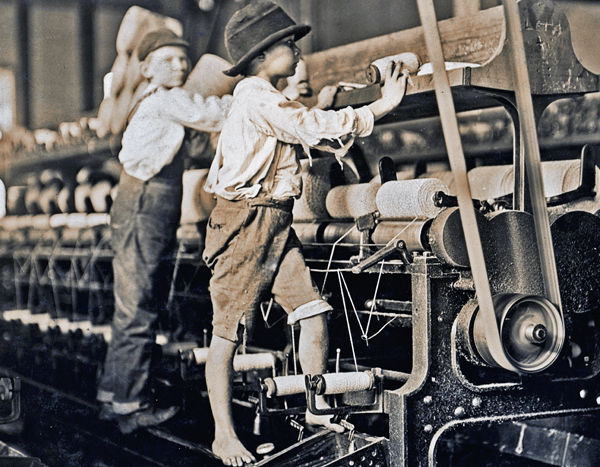
In our 21st century view of Congress and our federal system of government, we are more familiar with the legislative battles over gender identity, abortion rights, guns, crime, environment, and civil rights than labor issues. The legislative battles with the tobacco lobbyists and labor unions are often given minimal attention or forgotten. However, the lessons of history of how a competitive democracy is designed to function are clearly and concisely presented in the quiet activities of William Hughes in the House and Senate in investigating abuses of industrial power, lobbying for an eight-hour day, protecting children from exploitation, and winning the battle for a lower tariff that is both fair to the worker who is paid hourly and keeps America competitive in a global economy.
“The foreign-born Representative argued the position of the American Federation of Labor that workers did not need protection from foreign manufacturing, but that Congress should act to “protect [American workers] against the direct competition of the pauper laborers themselves, who are crowding into this country by the thousand. It matters little that the goods are shut out if our ports are thrown open to those who make the goods.” Paterson’s congressman was speaking about many who recently came to the city, and expressing the same angst that older immigrants and native-born Americans commonly felt about competing with this fresh and abundant supply of labor. On December 5, Hughes was appointed to the House Labor Committee, and within just weeks of starting his first term, he made it clear that his political views aligned closely with those of the American Federation of Labor—a distinction which would pay political dividends in the future.” (pp. 45,46)
As a novice member of Congress in 1902, Hughes attempted to settle the coal strike by listening to union leaders and miners. His benevolent strategy was crushed by the dominant Republican leaders who supported management. But the tapestry of Hughes quiet and often unnoticed efforts put him in a position as an influential leader in shaping the structure of the U.S. Commission on Labor Relations in handling labor unrest, a financial expert who understood how protective tariff rates harmed laborers more than helping them, and organizing bipartisan efforts on the eight-hour day and other progressive reforms. William Hughes was respected by the powerful icons in the Senate and government that high school students are familiar with – Senator William Borah, Congressman and Attorney General A. Mitchell Palmer, and Woodrow Wilson. The voice of William Hughes was kept silent for too long and Made in Paterson allows us to hear his words by reading them and experiencing his legacy. The problems of exploitation, inequality of wages, gender inequality, discrimination, displacement of workers from technology and artificial intelligence may be different from the experiences of silk workers in the 20th century but the effect on employees is strikingly similar.
The research for this book provides a framework for the historiography of the labor movement with copious references to notable labor and immigrant historians, namely Philip Foner, James Kerney, Julie Greene, Steven Golin, and Bruce E. Kaufman. These economists and historians are from the University of Maryland, University of Texas, Georgia State University to name a few. In addition, the numerous references to the local papers of The Morning Call and The Paterson Evening News provide a prolific local history of New Jersey. The primary sources in the Samuel Gompers Papers and the Woodrow Wilson Papers are excellent for students who want to explore the turning point of the 20th century further.
“As Philip Foner and Julie Greene have separately examined in great detail, the late 1890s and the first decade of the twentieth century marked a turning point for America’s largest labor union. In 1898, AFL President Samuel Gompers signaled that the organization’s means of pursuing change at the state level was limited by the habit of federal courts to strike down those laws, and that future success hinged on influencing national legislation. This endeavor began as a congressional lobbying campaign but soon pushed further: “We want legislation in the interest of labor; we want legislation executed by labor men; we want trade unionists in Congress,” proclaimed Gompers. Hughes’s election in 1902 and his embrace of the AFL’s platform was an early indication that this policy held promise if the number of “labor men” in Congress could be multiplied.” (p. 46)
If you enjoy the Progressive Reform era, read this book! If you enjoy New Jersey history, read this book! If you are a student in a Teacher Education program, read this book! If you are a high school history or economics teacher, read this book! If you are a high school student who enjoys history, read this book! If you enjoy stories of how people made a difference in our historical narrative, read this book!