Teaching the Unteachable: The Holocaust and Kids These Days

The Holocaust is one of the most daunting subjects for teachers to tackle, and it grows more challenging as its survivors and their direct memories fade away. Educational approaches to this profoundly significant chapter of history are constantly evolving, often revealing critical issues about how the Holocaust is presented, the consequences of universalizing its lessons, and the need to balance meaningful engagement with the risk of trivialization or desensitization. While Holocaust education remains an indispensable part of modern curricula, current instructional methods sometimes risk diluting its impact by reducing it to an oversimplified lesson on intolerance, rather than treating it as a distinct historical catastrophe shaped by complex historical, social, and political dynamics.

This paper argues that effective Holocaust education requires maintaining a delicate balance between universal lessons and historical specificity while addressing ongoing issues in its presentation. It examines how educational approaches sometimes fall short in emphasizing the Holocaust’s unique characteristics, critiques the risks of trivialization, and underscores the importance of thoughtful engagement. It argues for interdisciplinary and experiential methods to ensure students engage deeply and critically with this critical subject, fostering both historical and moral awareness.

Andy Pearce writes in The Shapes of Holocaust Education in the Early Twenty-First Century (2022)[1] that despite the increase in Holocaust education, many adults today still have an incomplete or even incorrect understanding of what happened. This is a major paradox – Holocaust education is more widespread than ever, with school programs, museums, documentaries, and memorials, yet people’s understanding of the event seems to be declining. Pearce argues that this may be because we are putting too much focus on quantity over quality. Simply adding more content about the Holocaust – more books, more films, more commemorations – does not necessarily lead to deeper understanding. Instead, there needs to be a shift toward more thoughtful engagement that encourages students to question, reflect, and truly understand the gravity and complexity of what happened.

One of the biggest issues in Holocaust education today is the tendency to universalize it – to present the Holocaust as a symbol of general human suffering or to draw broad lessons about human rights and tolerance. While it is true that the Holocaust contains important universal lessons about prejudice, hate, and what can happen when these go unchecked, there is a risk in oversimplifying it. Historian Peter Novick, in The Holocaust in American Life[2] (2000), argues that the Holocaust has become a “moral and ideological Rorschach test,” meaning that people tend to see in it whatever they want to see, often using it to support their political or social agendas. This way of looking at the Holocaust can make it lose its specificity – the particular historical, ideological, and cultural circumstances that led to this genocide. When we use the Holocaust as a general metaphor for evil or intolerance, we can easily lose sight of the particular factors that allowed it to happen in the first place: the racial theories, the bureaucracy, the complicity of ordinary people, and the very specific political and social context of post-WWI Europe. Without focusing on these details, students may struggle to understand how an advanced, seemingly “civilized” society could systematically plan and execute the murder of six million Jews and millions of other innocent people.

Arthur Chapman, in Learning Lessons of the Holocaust[3](2020), also critiques this trend of framing the Holocaust mainly in terms of human rights or as an example of intolerance. He argues that while connecting the Holocaust to other events or to broader human rights issues can make it feel more relevant to students, it can also obscure what made the Holocaust unique. The Holocaust was not just another example of prejudice – it was a carefully planned and executed genocide, driven by specific racial ideologies, supported by modern technologies, and enabled by the collaboration or indifference of millions of people across Europe. When educators draw too many parallels between the Holocaust and other historical atrocities or present it as just another case of human cruelty, they risk minimizing the specific dangers posed by antisemitism.

Edward Rothstein[4] makes a similar point in his critique of the Museum of Tolerance, where he argues that mixing the Holocaust with contemporary issues like bullying or discrimination creates an oversimplified narrative. When the Holocaust is used as a kind of shorthand for any and all forms of prejudice, we end up losing the specificity of what actually happened, and why it happened. This is not to say that the Holocaust does not have broader lessons – it absolutely does – but those lessons need to be rooted in a deep understanding of the historical facts and circumstances.

Another major problem in Holocaust education is that students often come away with a focus on the perpetrators – on Hitler, the Nazis, and the details of how the genocide was carried out – while the voices and experiences of the victims are sometimes lost in the process. It is crucial to remember that the six million Jews who were murdered were not just numbers. They were individuals, each with a story, a family, hopes, dreams, and a culture that was nearly erased. Jewish communities in Europe were diverse, vibrant centers of culture, religion, art, and intellectual life. Yiddish literature, theater, music, religious study – these were all thriving before the war. Thousands of towns and cities were emptied either partially or entirely, and an entire way of life that had evolved over centuries was violently destroyed. When we reduce the Holocaust to numbers or see it only in terms of evil perpetrators, we risk losing sight of what was really lost – the human beings, the families, and the incredible cultural richness that was almost entirely wiped out. By focusing on the stories of individuals – children whose lives were cut short, artists whose work was lost, religious leaders whose wisdom was extinguished – we can help students understand the profound human cost of the Holocaust.

Teaching the Holocaust effectively also means addressing what made this genocide possible. How could it happen? How could so many people be complicit, either actively or passively? How did a modern, industrialized country like Germany become a place where millions of innocent people were murdered in cold blood? These questions are not easy to answer, but they are essential if students are to truly understand the Holocaust. One key factor was the long history of antisemitism in Europe, which paved the way for the Nazi ideology to take root. Antisemitism was not new – it had been part of European society for centuries, and the Nazis were able to exploit existing prejudices and fears. They used modern technology – propaganda, the radio, the press – to spread their hateful ideology and to dehumanize Jews in the eyes of the German public. Bureaucracy also played a huge role. The Holocaust was, to a large extent, a “bureaucratic genocide,” carried out not by a handful of madmen but by thousands of ordinary clerks, railway workers, policemen, and soldiers, each of whom played a small role in the killing machine.

Historiographical debates surrounding the Holocaust add another layer of complexity to the topic. Two of the most prominent debates are the functionalist versus intentionalist interpretations and the Historikerstreit (“historians’ dispute”) of the 1980s. Functionalists argue that the Holocaust evolved gradually and was not the result of a single, premeditated plan by Adolf Hitler. They emphasize the chaotic and improvised nature of Nazi governance, suggesting that local initiatives and bureaucratic momentum led to the escalation of genocidal policies. Historians such as Hans Mommsen and Martin Broszat represent this view, arguing that Hitler’s role, while significant, was not one of a micromanager dictating every step of the Final Solution.

Intentionalists, on the other hand, maintain that the Holocaust was a deliberate plan masterminded by Hitler from the beginning. This perspective emphasizes Hitler’s ideological obsession with antisemitism, as seen in Mein Kampf and his public speeches, where he frequently referred to the “annihilation of the Jews.” Intentionalist historians, such as Lucy Dawidowicz and Eberhard Jäckel, argue that the Holocaust was the culmination of a long-standing plan to eliminate Europe’s Jewish population. These contrasting views shape how we understand the Holocaust – whether as the result of a chaotic and disorganized regime or as the fulfillment of a clear and unchanging ideological mission.

The Historikerstreit further complicated Holocaust historiography by raising questions about how the Holocaust should be contextualized within broader histories of violence and genocide. German historian Ernst Nolte argued that the Holocaust was not unique but part of a larger pattern of twentieth-century atrocities, including Soviet gulags. Nolte’s views sparked intense backlash, with critics like Jürgen Habermas accusing him of relativizing Nazi crimes and diminishing the Holocaust’s moral and historical significance. The debate highlighted deep divisions among historians over how to approach the Holocaust – as an event that stands apart or as one atrocity among many in an age of ideological conflict.

Understanding these debates is critical for educators because they influence how the Holocaust is taught in classrooms. Should the Holocaust be presented as the inevitable result of Hitler’s ideological hatred, or as a complex process driven by bureaucratic chaos and opportunism? Should it be contextualized within global histories of genocide, or treated as a unique event? These questions shape the narratives students encounter and affect how they interpret the Holocaust’s causes, consequences, and lessons.

In recent years, there has been a troubling rise in Holocaust denial and distortion. Surveys by the Claims Conference reveal that many young people are unaware of basic facts about the Holocaust, such as what Auschwitz was or even the number of Jews killed. This lack of knowledge makes students more susceptible to denialist arguments and misinformation. To combat this, it is crucial to teach students not just what happened during the Holocaust but also how we know what we know. Holocaust denial is not just about denying facts, it is about undermining the credibility of survivors, historians, and the very idea of historical evidence. Teaching students how historians verify facts, how we know what happened, and why it matters is essential. This means incorporating lessons on media literacy, primary and secondary sources, teaching students how to critically evaluate evidence, and showing them why denialist arguments are false. This is especially important in the age of social media, where misinformation can spread so quickly and where conspiracy theories thrive.

Jeffrey Glanz[5], in Ten Suggestions for Teaching the Holocaust (1999), advocates for “hands-on” and “minds-on” learning, emphasizing that students should actively engage with the material through reflective analysis rather than passive learning. Educators must focus on the specific aspects of the Holocaust – its historical context, the entrenched antisemitism that enabled it, and the societal structures that allowed it to happen. Holocaust education should go beyond simply transmitting historical facts, encouraging students to critically engage with how systemic hatred, conspiracy theories, and scapegoating can lead to mass violence. By framing antisemitism as the “oldest and most dangerous conspiracy theory,” educators can help students understand the deep roots of this prejudice and its persistence throughout history.

James Joyce once said, “In the particular is contained the universal.” We don’t need to tell students that the lesson of the Holocaust is not to be a bully – they will come to that conclusion themselves if they are given a deep understanding of what happened. The power of Holocaust education lies in the details – the particular stories of individuals, the specific historical circumstances, the choices people made. If students understand these details, they will understand the broader lessons.

Another key aspect of effective Holocaust education is the use of interdisciplinary methods. The Holocaust is not just a historical event – it is also a deeply moral, psychological, and cultural one. Literature, like the works of Primo Levi, Viktor Frankl or Elie Wiesel, can help students understand the emotional and personal aspects of the Holocaust in a way that pure history might not be able to. These personal accounts give a face to the victims, allowing students to see them not as numbers but as people. Psychology can help explain how ordinary people became complicit in such an atrocity. Studies on obedience, such as those by Stanley Milgram, show how people can be influenced to do things they would not normally do. Philosophy and ethics also play a crucial role in Holocaust education. Discussions about moral responsibility, the nature of evil, and the role of individual agency allow students to grapple with the ethical questions raised by the Holocaust. Was it possible for perpetrators to refuse to participate? What motivated bystanders to remain silent? These questions encourage students to think deeply about moral choices and about the factors that influence human behavior.

Experiential learning – such as visiting Holocaust museums, listening to survivor testimonies, or using virtual reality to explore historical sites – can also make a big difference. These experiences bring history to life and make it more immediate and real. Survivor testimonies, whether read, watched, or listened to, are incredibly powerful. They humanize the history and help students connect to it on an emotional level. They help students see the Holocaust not as an abstract historical event but as something that happened to real people, people like them.

The challenges of teaching the Holocaust in high school revolve around maintaining historical specificity while making the content accessible and impactful for students. The risks of universalizing the Holocaust, of losing its specificity, or of overwhelming students with its horrors, require a thoughtful approach. By using interdisciplinary methods, encouraging critical thinking, and providing meaningful engagement, educators can ensure that Holocaust education respects the memory of the victims and provides students with the understanding they need to recognize and combat hatred and bigotry today, equipping them with a nuanced understanding of one of history’s darkest chapters. Ultimately, the goal is to empower students not only with historical knowledge but also with the intellectual tools needed to recognize and combat the forms of hatred and bigotry that continue to threaten society today.

The stakes for Holocaust education could not be higher. In an era of rising antisemitism, misinformation, and historical revisionism, ensuring that students have a deep, critical, and empathetic understanding of the Holocaust is crucial. This means moving beyond superficial narratives and creating a learning environment that respects the complexity of history and honors the memory of those who suffered. Through thoughtful, reflective, and innovative approaches, educators can play a key role in ensuring that the lessons of the Holocaust continue to resonate with future generations, fostering a commitment to justice, human dignity, and the prevention of future atrocities.

 Aly, G. (2014). Why the Germans? Why the Jews? Metropolitan Books.

Chapman, A. (2015). Learning lessons of the Holocaust. UCL Press.

Cole, T. (1999). Selling the Holocaust: From Auschwitz to Schindler; how history is bought, packaged, and sold. Routledge.

Dawidowicz, L. S. (1975). The war against the Jews: 1933–1945. Bantam Books.

Feinberg, S., & Totten, S. (Eds.). (2009). Essentials of Holocaust education: Fundamental issues and approaches. Routledge.

Glanz, J. (1995). Ten suggestions for teaching the Holocaust. The Social Studies, 86(3), 111–113.

Habermas, J. (1989). A kind of settlement of damages: The Historikerstreit and the past that will not pass. New German Critique, (44), 25–39. https://doi.org/10.2307/488496

Mommsen, H. (1986). The realization of the unthinkable: The “Final Solution of the Jewish Question” in the Third Reich. Contemporary European History, 1(1), 7–20. https://doi.org/10.1017/S0960777300000045

Novick, P. (1999). The Holocaust in American life. Houghton Mifflin.

Pearce, A. (2018). The shapes of Holocaust education in the early twenty-first century. Holocaust Studies, 24(3), 261–287. https://doi.org/10.1080/17504902.2018.1444113

Rothstein, E. (2002, November 17). Whose history is it? The New York Times. https://www.nytimes.com/2002/11/17/arts/whose-history-is-it.html

Slezkine, Y. (2004). The Jewish century. Princeton University Press.

Stone, D. (2010). Histories of the Holocaust. Oxford University Press.


[1] Pearce, A. (2020). Challenges, issues and controversies: The shapes of ‘Holocaust education’ in the early twenty-first century. In A. Pearce, S. Foster, & A. Pettigrew (Eds.), Holocaust Education: Contemporary challenges and controversies (pp. 1–27). UCL Press. doi.org/10.2307/j.ctv15d7zpf.7

[2] Novick, P. (2000). The Holocaust in American life. Mariner Books.

[3] Chapman, A. (2020). Learning the lessons of the Holocaust: A critical exploration. In S. Foster, A. Pearce, & A. Pettigrew (Eds.), Holocaust Education: Contemporary challenges and controversies (pp. 50–73). UCL Press. doi.org/10.2307/j.ctv15d7zpf.9

[4] Rothstein, E. (2011, April 30). Making the Holocaust the lesson on all evils. The New York Timesnytimes.com/2011/04/30/arts/design/museums-make-the-holocaust-a-homily.html

[5] Glanz, J. (1999). Ten Suggestions for Teaching the Holocaust. The History Teacher, 32(4), 547–565. doi.org/10.2307/494162

Isolationism: FDR’s Immigration Crisis 

Auschwitz, Bergen-Belsen, Belzec, and Ravensbrück. Think of an ice-cold place with no hope of getting out of your worst nightmare. These were some of the most well-known labor camps during World War 2 in Germany and Poland. They were built to target many different groups, like Jehovah’s witnesses, gypsies, and homosexuals. The biggest group targeted was the Jewish population. Hitler’s goal with building these labor camps was to relocate as many Jewish people as possible and make them work to death or just to kill them, these camps were meant for mass murder. There is a lot of hidden history that is not discussed about the Holocaust.

There was a lot of blame going around and new power coming into place that America was not fully aware of because they focused on being stable after the Great Depression. In Europe tensions rose and Germany became very angry about the outcome of World War 1. Germany believed the repercussion from World War I they had gotten was not fair.  Hitler blamed the Jewish population for their loss in World War 1 and thought that they had to pay for their betrayal to the German people. Thus, sparked the idea for Hitler to create labor camps to torture and destroy the Jewish population. While the labor camps were being built there were things going on beforehand that sparked antisemitism in Germany. They had to go around wearing the star of David on all their clothing, they couldn’t go to public schools just Jewish schools, couldn’t go to the movies or to certain restaurants and a lot of Jewish business owners lost their businesses from German soldiers trashing it and shutting them down all because they were Jewish. 

Gas chambers were the kiss of death. Jews and others who made it farther would get tattoos. Jews had no name anymore and just were referred to as a number. All hair would be cut off and then would be told to change into the same striped outfits and sent to their barracks and from there they would be sent to work all day and every day with little to no food. One wrong move and anyone could be killed. Reapings would happen as well. Those who were picked were sent to either different camps or to the gas chambers to be killed. This was kept secret in Europe and only thought to be rumors for many years. Around 6 million lives were lost. 

            FDR was a great leader in so many ways and did want to help the country and the people of the United States out first and foremost. He wanted to get the country out of the Great Depression and make sure that the people were being taken care of. However, there were split sides on what the United States should have been doing during this time. Historians are still debating this topic to this day and disagree with the isolationist mindsets that were put into place and FDR should have gotten involved and helped the Jewish population more. Saying he should have done what he wanted regardless of the backlash he would have gotten from the people. The isolationist mindset and closed-door policies has been seen as something that ruined the United States because in 1941 Japan had conducted a surprise attack on Pearl Harbor. That created other countries to have animosity towards the United States. Pearl Harbor ended up being the turning point for the United States to get involved in the war, leading to all of those closed-door policies to go out of the window. America was finally waking up and realizing what was going on outside of the country. 

The public loved FDR. He had a great relationship with the country because they had felt like they truly knew him. This starts with his fireside chats where the country was able to listen to him and what he wanted to do for the American people. While he was their president there was his hominess about him where he became more than a president to them.  The people saw how FDR had a helping hand in the reason the country got out of the Great Depression because of his New Deal policy. The New Deal was a domestic program between 1933-1939 which aimed to provide relief and reform the people of the country.

So many lives were lost. Lives were lost because of leaders not believing the rumors of the labor camps, but also because of the restraints put on the immigration policies and visas that would have helped the immigrants trying to get into the country.  Policies have to get passed through many different levels of the government because of the checks and balances system so FDR isn’t the main source of the issue, it was the government as a whole. While the borders had been closed and not as open for quite some time, the decision to close the border angered immigrants who greatly needed help.. There was a genocide happening in Europe because of Nazi regime and the antisemitism running through Germany. America had a lot of difficult decisions to make when it came to policies and deciding what they wanted to do with the immigrants, specifically the Jewish population. America wants to be neutral, and the Jewish population was not something the country was prioritizing. From another entry that was written by FDR he states “I have no intention in getting into a war with Germany. American will not enter. (343) There was no way that FDR was going to allow American to assist with anything including with the immigrants.  The US turned an eye and the immigrants had to then go back to their countries they were trying to leave. Many went into hiding and others were captured and sent to different places, whether it be different countries or a labor camp. This did not just affect the Jewish population, it affected so many immigrants from all over and while the Holocaust as a whole killed around 13 million innocent lives, 6 million of which were Jewish men, women and children. 

At this point the country was torn on what to do. There were some groups that wanted to just get involved in the war because they didn’t want anything to happen to us because we were staying out and cutting ties with other countries. Yet there were the other groups that wanted nothing to do with the war because it was on European soil and did not concern the US in any way.  Due to this split there were discussions being had in Congress over what to do with these sets of Neutrality acts that were rolled out and how to rethink the mindsets of the isolationist. 

After the attack on Pearl Harbor it was like the United States woke up. The Japanese had bombed America’s soil and the people were shocked and distraught. This is what isolationist mindsets do, they had created enemies because with these policies the US was cutting ties with allies and countries had been trading with which was going to create conflict. We never truly had any issues with Japan until all of this happened. The immigration policies after the attack got even tighter than they were before. They truly didn’t want anyone, no matter where they were coming from, to come in and that showed because of the way they were treating the Japanese American groups in the country. However, the containment mindset and isolationism changed completely after the attack on Pearl Harbor in 1941. The people were angry; they wanted everyone who was on the axis side to pay for what they had just done to us, so America joined the allied powers and in 1941 America was officially a part of the war. 

The United States was involved in the war and helping out the Allied powers, men and women were being a part of the war being nurses and taking over the jobs that men were doing and in ways being a part of the war was an eye opening for what women’s roles were like showing women can do just as much as men could do. The American citizens started to speak out more about how they were feeling about the policies already in place and in the novel America Between The Wars there is a letter that gets discussed about how the American families are feeling during his time of presidency, this section shows the side of the American families that want nothing to do with the war, it states“ Dear Mr. President, my wife and I have just heard your speech over the radio, I can not refrain from expressing our deepest appreciation for your state will do everything to keep this country neutral.”(214) This was what the American citizens were thinking; however, being isolated was the wrong move for this country even though the leaders and some of the public agreed to just be focused on the country but in the end the country got attacked by enemies. The isolationism did bring harm to the country and didn’t truly help us. It made the country look weak and made the people feel divided because if the country had not been  isolated could Pearl Harbor have been prevented. While that is a question historians will never truly know it shows FDR should have listened to his heart. FDR should have focused on the people like he did but not in a containment isolationist mindset where certain events might have been avoided. 

Overall, FDR did a lot of good for the people of the country. Did he do the same for immigrants that wanted to come into the country or for the immigrants already in the country?  That is questionable. FDR did not treat the Japanese American immigrants in America right after that attack on Pearl Harbor and FDR changing his immigration quotas and rejecting the Jewish population into the country was not seen as a good move. There will always been good and bad things that any president will do but in this case things could have been different and prevented if he did what he wanted to do and stopped listening to mixed opinions of the public and his cabinet members and because of these policies and the split down the middle this caused a lot of antisemitism and hatred in the country to the Japanese Americans and to the Jewish population that were already here and or the ones who were trying to come in. 

Antisemitism is all too well known throughout the world. Antisemitism is something that has been seen for centuries, the meaning of antisemitism is to be hostile or prejudiced against Jewish people, this has dated back to ancient times but became more seen during the time when Hitler was the dictator of Nazi Germany. The Nazi’s were corrupting the youth and they were being taught how to spot a Jew based on their eyes and hair color, their nose side, how their skull lined up etc. The antisemitism that was happening in Germany would later on during the war spread to the United States in a different way.  As mentioned before, it was antisemitism was always around but because of the increase in hate crimes and antisemitism, other countries were seeing what was really going on.

The Jewish population is one of the groups throughout history that have been blamed and have suffered for far too long. Hitlers building of the labor camps was a genocide and a way to try and erase them for good. FDR and the American population had heard word about these labor camps that were built out in Germany and Poland but had just thought they were rumors. Over in the United States, immigrants had always been coming in for quite some time from all over the world for a fresh start for their families and at the time we were a very friendly and welcoming country when it came to these matters. This had stopped for a while and had been tightened during World War I. When the Great Depression began and people were laid off from their jobs and couldn’t afford anything for their families, their outlooks on immigration started to shift. The people of the United States started to think it wasn’t fair that there were all of these immigrants coming into the country and because they had just suffered through a Depression where they could hardly afford anything that the immigrants should either go somewhere else or that America should be going from open door to a closed-door policy with self-containment and isolationism. 

From that moment on when FDR listened to the majority of the public to become self-contained and isolated matters started to get worse from the Jewish population trying to come into the country and the Jewish population that was already here in the states before the policies were put into place. Historian Breitman who has done a lot research specifically when it comes to the Holocaust and the efforts FDR had states “FDR knew that many Americans held prejudicial views of the Jews.”(5) Breitman has done a lot of research through his book to be able to make a statement like this. There were protests before WW2 was happening towards immigrants and the Jewish population because of fear. . There was an argument made my Breitman stating “ Even if FDR has been more willing to override domestic  opposition and twist arms abroad, he could not have stopped the Nazi’s in the mass murder of about six million Jews.”(5) to make this point is saying that nothing was going to change regardless of the United States changing their quotas and foreign policies to now not allowing them in wouldn’t change anything. There was nothing that could have happened from these events and issues from happening. 

Congress at that point was getting very frustrated. They were seeing the reactions from FDR and the people of the US. There was craziness because emotions were all over the place. In Texas the governor had reported “Efforts to expand Jewish immigration, he said had created a terrible anti-semetic sentiment throughout the country which might break into riots if his bills go through.”(150) The people were getting very vocal about their feelings towards immigration. FDR made a case to congress about their concerns and stated “ This would be a divide with the American people and add to widespread perceptions at home and abroad that Jews had manipulated the policies.”(207) Whether Congress believed what FDR had to say is still a mystery however, what FDR had to say about the American people  was something that was already going through the American people’s minds. 

When the rumors were going around about the labor camps in Europe the people wanted nothing to do with. The public didn’t believe that in Europe there could possibly be any chance of a genocide to a specific group of people. FDR had heard wind of these rumors as any leader would have during this time and states in one of his letters to his Secretary of State “ I do not favor American participation over this matter.”(55) The fact he was getting wind of this and still didn’t want to believe it either and was listening to the American people was an outright shock. FDR seemed to be brushing these rumors away and just wanted to continue to only focus on his isolationism and being neutral during this war.

While the Jewish population was living in fear not only in Germany, they had come to fear the United States. The Jewish population had thought the states would be a safe place for them to come to but when they were turned away because FDR and his committee wanted to change his foreign immigration policies that all changed. The Jewish population was happy for what FDR had done for them, they felt like they were finally able to escape the troubles they were having with the Nazi’s slowly growing to have power. However, once World War II had started those policies changed drastically. Some of those policies were not in place anymore or changed significantly. Numbers were cut by over half and so many Jewish families were sent back to Germany at the start of the war and taken to the labor camps or just killed on the spot for trying to escape. In some ways the United States did such a disservice to the Jewish population They lost all of their clothes, jewelry, houses and worst of all their identity, they were not humans anymore according to the Nazi’s.  So many of the Jewish population were killed or died of illness in those labor camps and the antisemitism that was in Germany had spread to the United States. 

The people of the United States were calling the Jewish population spies to the Nazi government thinking they wanted us to get involved in the war. That was not the case. They wanted a safe place to live where they didn’t have to fear for their lives. Some were sent back to Germany. The people did not want to believe that a genocide towards the Jews were actually happening and they wanted to live in their own happy bubble. The government did nothing to stop the hatred that had spread to the United States because it was not their issue. A little later on in the war when the Americans were on Europe soil and came across a strange looking area in the middle of nowhere was when they realized what they had just stumbled upon. The United States had to do something about this, so they sent word back to the United States and FDR declared that all of the labor camps be liberated. The anger and sadness that got back to the American people and their views on the Jewish population changed drastically. 

Breitman, Richard, and Allan J Lichtman. 2014. FDR and the Jews. Cambridge, Massachusetts: Belknap Press Of Harvard University Press.

Wayne, Cole.  1983. Roosevelt & the Isolationists, 1932-45. Lincoln : University of Nebraska Press.

Robert, Divine A. 1969. Roosevelt and World War II. Johns Hopkins University Press.

Bernard, Fay. 1972. Roosevelt and His America.

Rafael,Medoff. 2009. Blowing the Whistle on Genocide : Josiah E. Dubois, Jr. And the Struggle for a U.S. Response to the Holocaust. West Lafayette, Ind: Purdue University Press.

Welky, David, 2012. America between the Wars, 1919-1941: A Documentary Reader. Malden, Mass.: Wiley-Blackwell. Harrap, and Elliot Roosevelt, The Roosevelt Letters Volume 3; 1928-1945.

Book Review: The Children of Willesden Lane: Beyond the Kindertransport—A Memoir of Music, Love, and Survival,

The Children of Willesden Lane is based on the true story of the pianist Lisa Jura, a Jewish girl from Vienna, who was sent by her parents to England where she was supposed to be assisted by a cousin there during the time of the Kindertransport, the program sending children out of Austria and Germany to safety. The book is written by her daughter, Mona, who reports on what was happening in Vienna after the Annexation.

When Lisa arrives in England, the cousin who is supposed to house and feed her reneges on the agreement. This leads her to the hostel on Willesden Lane where she and a score of other Jewish children from various countries in Europe form bonds, become strong, and face with dignity and perseverance a very uncertain future.

Lisa fights hard to get her older sister to England, enlisting the help of the other children in the facility to find a sponsor for her. Lisa herself is protected by the woman running the hostel, and Lisa becomes a leader of the other youngsters. Lisa’s father is a tailor, and he has taught her how to use a sewing machine. Because of this, she is hired right away to work in a factory making trousers. Her income helps support the hostel.

A musician, Lisa is faced with a lifetime of servitude until she has some decent breaks because of the woman in charge of the hostel and others who are pulling for her. She is allowed to audition for a scholarship to study classical music.

Teachers, writers, and musicians will appreciate this book because it tells of worlds that sometimes can only be imagined. I was able to understand most (not all!) of the technical information about music here because of my mother filling our home with melodies—and constant discussion of music theory. I too studied the piano, but alas I was not meant to be a pianist!

Lisa perseveres in the story. She fights hard to practice for the scholarship, at the same time she works making uniforms in the factory.

The human spirit is so strong. I am always amazed by this fact.

Lisa’s story is a beautiful one. It includes such hope and so much good news. The story also includes some bad news, however, because of what is happening in Europe with the war and all of Hitler’s policies uprooting and destroying entire threads of history, family ties, destiny of entire peoples, and freedom.

It is freedom itself that is at the core of the themes in this book. Losing freedom and gaining freedom are two of the biggest events we can experience as thinking persons.


Once We Were Brothers: A Novel, by Ronald H. Balson, Reviewed by Thomas Hansen, Ph.D.

Review by Thomas Hansen, Ph.D.

This is yet another wonderful book with great writing and captivating action—but it is a book  about a terrible story.  It describes the close friendship between a German/Polish Christian boy who is raised by a Jewish family in a small village in Poland.  The time is World War II, and the story is based on–and connects to–historical points of the time.

It is said to be a book that is “hard to put down.”  Indeed it is.  Balson’s first novel, this book contains good writing, suitable pacing and forward movement, plus a lot of information about what was happening in rural Poland in that period.  There is also some direct teaching involved, with characters explaining what certain terms meant and what various Nazi policies entailed.

The book consists mainly of flashbacks to what was happening in Poland among the families and friends of Ben Solomon, the Jewish boy whose life is at the center of the story.  Chicago readers will be interested to know that the modern-day sections include scenes from Winnetka, the Loop, and the lakefront also.  

The book is a novel, with a huge amount of factual and historical foundation.

It dovetails into Common Core Standards college-readiness levels and college-use levels also.

I will recommend the book, but I remind readers that many of the scenes described and the action discussed will not be at all pleasurable.  Like many stories of the Holocaust, this one is very disturbing yet one which we must read, discuss, and remember.  

The book should be required reading for college students–in any major–and good for educators to read also.  As always, educators should read the book closely to see if there are passages inappropriate for younger readers.

Review by Thomas Hansen, Ph.D.

This is yet another wonderful book with great writing and captivating action—but it is a book  about a terrible story.  It describes the close friendship between a German/Polish Christian boy who is raised by a Jewish family in a small village in Poland.  The time is World War II, and the story is based on–and connects to–historical points of the time.

It is said to be a book that is “hard to put down.”  Indeed it is.  Balson’s first novel, this book contains good writing, suitable pacing and forward movement, plus a lot of information about what was happening in rural Poland in that period.  There is also some direct teaching involved, with characters explaining what certain terms meant and what various Nazi policies entailed.

The book consists mainly of flashbacks to what was happening in Poland among the families and friends of Ben Solomon, the Jewish boy whose life is at the center of the story.  Chicago readers will be interested to know that the modern-day sections include scenes from Winnetka, the Loop, and the lakefront also.  

The book is a novel, with a huge amount of factual and historical foundation.

It dovetails into Common Core Standards college-readiness levels and college-use levels also.

I will recommend the book, but I remind readers that many of the scenes described and the action discussed will not be at all pleasurable.  Like many stories of the Holocaust, this one is very disturbing yet one which we must read, discuss, and remember.  

The book should be required reading for college students–in any major–and good for educators to read also.  As always, educators should read the book closely to see if there are passages inappropriate for younger readers.

The Children of Willesden Lane: Beyond the Kindertransport—A Memoir of Music, Love, and Survival, by Mona Golabek & Lee Cohen

by Mona Golabek and Lee Cohen, 2002.

New York: Grand Central, Paper, 272 pages.

The Children of Willesden Lane is based on the true story of the pianist Lisa Jura, a Jewish girl from Vienna, who was sent by her parents to England where she was supposed to be assisted by a cousin there during the time of the Kindertransport, the program sending children out of Austria and Germany to safety. The book is written by her daughter, Mona, who reports on what was happening in Vienna after the Annexation.

When Lisa arrives in England, the cousin who is supposed to house and feed her reneges on the agreement. This leads her to the hostel on Willesden Lane where she and a score of other Jewish children from various countries in Europe form bonds, become strong, and face with dignity and perseverance a very uncertain future.

Lisa fights hard to get her older sister to England, enlisting the help of the other children in the facility to find a sponsor for her. Lisa herself is protected by the woman running the hostel, and Lisa becomes a leader of the other youngsters. Lisa’s father is a tailor, and he has taught her how to use a sewing machine. Because of this, she is hired right away to work in a factory making trousers. Her income helps support the hostel.

A musician, Lisa is faced with a lifetime of servitude until she has some decent breaks because of the woman in charge of the hostel and others who are pulling for her. She is allowed to audition for a scholarship to study classical music.

Teachers, writers, and musicians will appreciate this book because it tells of worlds that sometimes can only be imagined. I was able to understand most (not all!) of the technical information about music here because of my mother filling our home with melodies—and constant discussion of music theory. I too studied the piano, but alas I was not meant to be a pianist!

Lisa perseveres in the story. She fights hard to practice for the scholarship, at the same time she works making uniforms in the factory.

The human spirit is so strong. I am always amazed by this fact.

Lisa’s story is a beautiful one. It includes such hope and so much good news. The story also includes some bad news, however, because of what is happening in Europe with the war and all of Hitler’s policies uprooting and destroying entire threads of history, family ties, destiny of entire peoples, and freedom.

It is freedom itself that is at the core of the themes in this book. Losing freedom and gaining freedom are two of the biggest events we can experience as thinking persons.

IBM and Auschwitz: New Evidence

Edwin Black

Reprinted with permission from https://historynewsnetwork.org/article/1035

Edwin Black is author of IBM and the Holocaust, The Strategic Alliance between Nazi Germany and America’s Most Powerful Corporation (Crown Publishers 2001 and Three Rivers Press 2002). This article is drawn from Mr. Black’s just released and updated German paperback edition. The new edition includes the discovery of hard evidence linking IBM to Auschwitz. The evidence, detailed here, will be appended to his English language editions at the next reprinting in the new future.

The infamous Auschwitz tattoo began as an IBM number. In August 1943, a timber merchant from Bendzin, Poland, arrived at Auschwitz. He was among a group of 400 inmates, mostly Jews. First, a doctor examined him briefly to determine his fitness for work. His physical information was noted on a medical record. Second, his full prisoner registration was completed with all personal details. Third, his name was checked against the indices of the Political Section to see if he would be subjected to special punishment. Finally, he was registered in the Labor Assignment Office and assigned a characteristic five-digit IBM Hollerith number, 44673.

The five-digit Hollerith number was part of a custom punch card system devised by IBM to track prisoners in Nazi concentration camps, including the slave labor at Auschwitz.

The Polish timber merchant’s punch card number would follow him from labor assignment to labor assignment as Hollerith systems tracked him and his availability for work, and reported the data to the central inmate file eventually kept at Department DII. Department DII of the SS Economics Administration in Oranienburg oversaw all camp slave labor assignments, utilizing elaborate IBM systems.

Later in the summer of 1943, the Polish timber merchant’s same five-digit Hollerith number, 44673, was tattooed on his forearm. Eventually, during the summer of 1943, all non-Germans at Auschwitz were similarly tattooed. Tattoos, however, quickly evolved at Auschwitz. Soon, they bore no further relation to Hollerith compatibility for one reason: the Hollerith number was designed to track a working inmate—not a dead one. Once the daily death rate at Auschwitz climbed, Hollerith-based numbering simply became outmoded. Soon, ad hoc numbering systems were inaugurated at Auschwitz. Various number ranges, often with letters attached, were assigned to prisoners in ascending sequence. Dr. Josef Mengele, who performed cruel experiments, tattooed his own distinct number series on “patients.” Tattoo numbering schemes ultimately took on a chaotic incongruity all its own as an internal Auschwitz-specific identification system.

However, Hollerith numbers remained the chief method Berlin employed to centrally identify and track prisoners at Auschwitz. For example, in late 1943, some 6,500 healthy, working Jews were ordered to the gas chamber by the SS. But their murder was delayed for two days as the Political Section meticulously checked each of their numbers against the Section’s own card index. The Section was under orders to temporarily reprieve any Jews with traces of Aryan parentage.

Sigismund Gajda was another Auschwitz inmate processed by the Hollerith system. Born in Kielce, Poland, Gajda was about 40 years of age when on May 18, 1943, he arrived at Auschwitz. A plain paper form, labeled “Personal Inmate Card,” listed all of Gajda’s personal information. He professed Roman Catholicism, had two children, and his work skill was marked”mechanic.” The reverse side of his Personal Inmate Card listed nine previous work assignments. Once Gajda’s card was processed by IBM equipment, a large indicia in typical Nazi Gothic script was rubber-stamped at the bottom: “Hollerith erfasst,” or “Hollerith registered.” Indeed, that designation was stamped in large letters on hundreds of thousands of processed Personal Inmate Cards at camps all across Europe. The Extermination by Labor campaign itself depended upon specially designed IBM systems that matched worker skills and locations with labor needs across Nazi-dominated Europe. Once the prisoner was too exhausted to work, he was murdered by gas or bullet. Exterminated prisoners were coded “six” in the IBM system.

The Polish timber merchant’s Hollerith tattoo, Sigismund Gajda’s inmate form, and the victimization of millions more at Auschwitz live on as dark icons of IBM’s conscious 12-year business alliance with Nazi Germany. IBM’s custom-designed prisoner-tracking Hollerith punch card equipment allowed the Nazis to efficiently manage the hundreds of concentration camps and sub-camps throughout Europe, as well as the millions who passed through them. Auschwitz’ camp code in the IBM tabulation system was 001.8

Nearly every Nazi concentration camp operated a Hollerith Department known as the Hollerith Abteilung. The three-part Hollerith system of paper forms, punch cards and processing machines varied from camp to camp and from year to year, depending upon conditions. In some camps, such as Dachau and Storkow, as many as two dozen IBM sorters, tabulators, and printers were installed. Other facilities operated punchers only and submitted their cards to central locations such as Mauthausen or Berlin. In some camps, such as Stuthoff, the plain paper forms were coded and processed elsewhere. Hollerith activity, whether paper, punching or processing, was frequently—but not always–located within the camp itself, consigned to a special bureau called the Labor Assignment Office, known in German as the Arbeitseinatz. The Arbeitseinsatz issued the all-important life-sustaining daily work assignments, and processed all inmate cards and labor transfer rosters.

IBM did not sell any of its punch card machines to Nazi Germany. The equipment was leased by the month. Each month, often more frequently, authorized repairmen, working directly for or trained by IBM, serviced the machines on-site–whether in the middle of Berlin or at a concentration camp. In addition, all spare parts were supplied by IBM factories located throughout Europe. Of course, the billions of punch cards continually devoured by the machines, available exclusively from IBM, were extra.

IBM’s extensive technological support for Hitler’s conquest of Europe and genocide against the Jews was extensively documented in my book, IBM and the Holocaust, published in February 2001 and updated in a paperback edition. In March of this year, The Village Voice broke exclusive new details of a special IBM wartime subsidiary set up in Poland by IBM’s New York headquarters shortly after Hitler’s 1939 invasion. In 1939, America had not entered the war, and it was still legal to trade with Nazi Germany. IBM’s new Polish subsidiary, Watson Business Machines, helped Germany automate the rape of Poland. The subsidiary was named for its president Thomas J. Watson.

Central to the Nazi effort was a massive 500-man Hollerith Gruppe, installed in a looming brown building at 24 Murnerstrasse in Krakow. The Hollerith Gruppe of the Nazi Statistical Office crunched all the numbers of plunder and genocide that allowed the Nazis to systematically starve the Jews, meter them out of the ghettos and then transport them to either work camps or death camps. The trains running to Auschwitz were tracked by a special guarded IBM customer site facility at 22 Pawia in Krakow. The millions of punch cards the Nazis in Poland required were obtained exclusively from IBM, including one company print shop at 6 Rymarska Street across the street from the Warsaw Ghetto. The entire Polish subsidiary was overseen by an IBM administrative facility at 24 Kreuz in Warsaw.

The exact address and equipment arrays of the key IBM offices and customer sites in Nazi-occupied Poland have been discovered. But no one has ever been able to locate an IBM facility at, or even near, Auschwitz. Until now. Auschwitz chief archivist Piotr Setkiewicz finally pinpointed the first such IBM customer site. The newly unearthed IBM customer site was a huge Hollerith Büro. It was situated in the I.G. Farben factory complex, housed in Barracks 18, next to German Civil Worker Camp 7, about two kilometers from Auschwitz III, also known as Monowitz Concentration Camp. Auschwitz’ Setkiewicz explains, “The Hollerith office at IG Farben in Monowitz used the IBM machines as a system of computerization of civil and slave labor resources. This gave Farben the opportunity to identify people with certain skills, primarily skills needed for the construction of certain buildings in Monowitz.”

By way of background, what most people call “Auschwitz” was actually a sprawling hell comprised of three concentration camps, surrounded by some 40 subcamps, numerous factories and a collection of farms in a surrounding captive commercial zone. The original Auschwitz became known simply as Auschwitz I, and functioned as a diversified camp for transit, labor and detention. Auschwitz II, also called Birkenau, became the infamous extermination center, operating gas chambers and ovens. Nearby Auschwitz III, known as Monowitz, existed primarily as a slave labor camp. Monowitz is where IBM’s bustling customer site functioned.

Many of the long-known paper prisoner forms stamped Hollerith Erfasst, or” registered by Hollerith,” indicated the prisoners were from Auschwitz III, that is, Monowitz. Now Auschwitz archivist Setkiewicz has also discovered about 100 Hollerith machine summary printouts of Monowitz prisoner assignments and details generated by the I.G. Farben customer site. For example, Alexander Kuciel, born August 12, 1889, was in 1944 deployed as a slave carpenter, skill coded 0149, and his Hollerith printout is marked “Sch/P,” the Reich abbreviation for Schutzhäftling/Pole. Schutzhäftling/Pole means “Polish political prisoner.” The giant Farben facilities, also known as “I.G. Werk Auschwitz,” maintained two Hollerith Büro staff contacts, Herr Hirsch and Herr Husch. One key man running the card index systems was Eduard Müller. Müller was a fat, aging, ill-kempt man, with brown hair and brown eyes. Some said, “He stank like a polecat.” A rabid Nazi, Müller took special delight in harming inmates from his all-important position in camp administration.

Comparison of the new printouts to other typical camp cards shows the Monowitz systems were customized for the specific coding Farben needed to process the thousands of slave workers who labored and died there. The machines were probably also used to manage and develop manufacturing processes and ordinary business applications. The machines almost certainly did not maintain extermination totals, which were calculated as “evacuations” by the Hollerith Gruppe in Krakow. At press time, the diverse Farben codes and range of machine uses are still being studied. It is not known how many additional IBM customer sites researchers will discover in the cold ashes of the expansive commercial Auschwitz zone.

A Hollerith Büro, such as the one at Auschwitz III, was larger than a typical mechanized concentration camp Hollerith Department. A Büro was generally comprised of more than a dozen punching machines, a sorter and one tabulator. Leon Krzemieniecki was a compulsory worker who operated a tabulator at the IBM customer site at the Polish railways office in Krakow that kept track of trains going to and from Auschwitz. He recalls, “I know that trains were constantly going from Krakow to Auschwitz–not only passenger trains, but cargo trains as well.” Krzemieniecki, who worked for two years with IBM punchers, card sorters and tabulators, estimates that a punch card operation for so large a manufacturing complex as Farben “would probably require at least two high-speed tabulators, four sorters, and perhaps 20 punchers.” He added, “The whole thing would probably require 30-40 persons, plus their German supervisors.”

The new revelation of IBM technology in the Auschwitz area constitutes the final link in the chain of documentation surrounding Big Blue’s vast enterprise in Nazi-occupied Poland, supervised at first directly from its New York headquarters, and later through its Geneva office. Jewish leaders and human rights activists were again outraged. “This latest disclosure removes any pretext of deniability and completes the puzzle that has been IBM and Auschwitz: New Evidence.

“When put together about IBM in Poland,” declared Malcolm Hoenlein, vice president of the New York-based Conference of Presidents of Major Jewish Organizations. “The picture that emerges is most disturbing,” added Hoenlein.” IBM must confront this matter honestly if there is to be any closure.”

Marek Orski, state historian of the museum at Poland’s Stuthoff Concentration Camp, has distinguished himself as that country’s leading expert on the use of IBM technology at Polish concentration camps. “This latest information,” asserts Orski,”proves once more that IBM’s Hollerith machines in occupied Poland were functioning in the area of yet another concentration camp, in this case Auschwitz-Monowitz–something completely unknown until now. It is yet another significant revelation in what has become the undoubted fact of IBM’s involvement in Poland. Now we need to compile more documents identifying the exact activity of this Hollerith Büro in Auschwitz Monowitz.”

Krzemieniecki is convinced obtaining such documents would be difficult. “It would be great to have access to those documents,” he said, “but where are they?” He added, “Please remember, I witnessed in 1944, when the war front came closer to Poland, that all the IBM machines in Krakow were removed. I’m sure the Farben machines were being moved at the same time. Plus, the Germans were busy destroying all the records. Even still,” he continues, “what has been revealed thus far is a great achievement.”

Auschwitz historians were originally convinced that there were no machines at Auschwitz, that all the prisoner documents were processed at a remote location, primarily because they could find no trace of the equipment in the area. They even speculated that the stamped forms from Auschwitz III were actually punched at the massive Hollerith service at Mauthausen concentration camp. Indeed, even the Farben Hollerith documents had been identified some time ago at Auschwitz, but were not understood as IBM printouts. That is, not until the Hollerith Büro itself was discovered. Archivists only found the Büro because it was listed in the I.G. Werk Auschwitz phone book on page 50. The phone extension was 4496.”I was looking for something else,” recalls Auschwitz’ Setkiewicz,”and there it was.” Once the printouts were reexamined in the light of IBM punch card revelations, the connection became clear.

Setkiewicz says, “We still need to find more similar identification cards and printouts, and try to find just how extensive was the usage in the whole I.G. Farben administration and employment of workers. But no one among historians has had success in finding these documents.”

In the current climate of intense public scrutiny of corporate subsidiaries, IBM’s evasive response has aroused a renewed demand for accountability. “In the day of Enron and Tyco,” says Robert Urekew, a University of Louisville professor of business ethics, “we now know these are not impersonal entities. They are directed by people with names and faces.” Prof. Urekew, who has studied IBM’s Hitler-era activities, continued, “The news that IBM machines were at Auschwitz is just the latest smoking gun. For IBM to continue to stonewall and hinder access to its New York archives flies in the face of the focus on accountability in business ethics today. Since the United States was not technically at war with Nazi Germany in 1939, it may have been legal for IBM to do business with the Third Reich and its camps in Poland. But was it moral?”

Even some IBM employees are frustrated by IBM’s silence. Michael Zamczyk, for example, is a long-time IBM employee in San Jose, California, working on business controls. A loyal IBMer, Zamczyk has worked for the company for some 28 years. He is also probably the only IBM employee who survived the Krakow ghetto in 1941 and 1942. Since revelations about IBM’s ties to Hitler exploded into public view in February 2001, Zamczyk has been demanding answers—and an apology–from IBM senior management.

“Originally,” says Zamczyk,”I was just trying to determine if it was IBM equipment that helped select my father to be shipped to Auschwitz, and if the machines were used to schedule the trains to Auschwitz.

Zamczyk started writing letters and emails, but to no avail. He could not get any concrete response about IBM’s activities during the Hitler era.”I contacted senior management, all the way up to the president, trying to get an answer,”states Zamczyk. “Since then, I have read the facts about IBM in Poland, about the railroad department at 22 Pawia Street in Krakow, and I read about the eyewitnesses. Now I feel that IBM owes me, as an IBM employee, an apology. And that is all I am looking for.”

Zamczyk was met by stony silence from IBM executives.” The only response I got,” he relates, “was basically telling me there would be no public or private apology. But I am still waiting for that apology and debating what to do next.”

Repeated attempts to obtain IBM reaction to the newest disclosure were rebuffed by IBM spokesman Carol Makovich. I phoned her more than a dozen times, but she did not respond, or grant me permission to examine Polish, Brazilian and French subsidiary documents at the company’s Somers, New York archives. Nor has the company been forthcoming to numerous Jewish leaders, consumers and members of the media who have demanded answers.

At one point, Makovich quipped to a Reuters correspondent, “We are a technology company, we are not historians.”


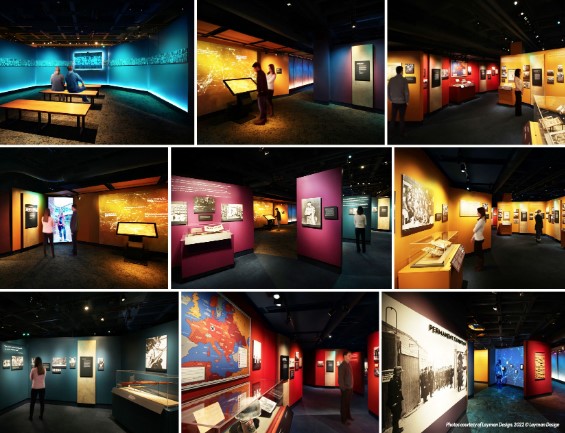
Holocaust Museum & Center for Tolerance and Education – Rockland Community College

You can find the Holocaust Museum and Center for Tolerance and Education at Rockland Community College through this link.

Legislation (A.472C /S.121B) will help ensure that New York schools are properly educating students on the Holocaust. The legislation directs the New York State Education Department to determine whether school districts across the state have met education requirements on instruction of the Holocaust, which have been required by law since 1994.It will also require NYSED to identify how non-compliant schools will close gaps in knowledge of the Holocaust in schools.

The Holocaust Museum & Center for Tolerance and Education is proud to offer a multitude of programs for Elementary School, Middle School and High School audiences as well as Professional Development for Faculty. We teach on topics ranging from the Holocaust to Genocide Studies, to Tolerance and Diversity. We customize our programs to suit the needs of your students, staff, and faculty. Our Education Department works with you to produce events and resources that will impact your school for years to come. We will help your school achieve the mandates by our New York Governor on Holocaust Education.

Led by our Director of Education, teacher training seminars provide introductory guidance and resources on best practices for teaching the Holocaust and Genocide (Grades 6-12) and the importance of Tolerance and Diversity (Grades K-5). We also offer more in-depth seminars for teachers who wish to explore new approaches and materials to support Holocaust and Genocide education for their students.

Our Anti-Bias & Sensitivity Training helps faculty and staff combat hate and intolerance personally, professionally, and publically. Our Director of Education and Historian in Residence offers customizable seminars that draw upon the history of the Holocaust to teach the lessons of tolerance, individual responsibility, and moral courage in the workplace as well as out in our communities. Please contact our Director of Education and Historian in Residence Linda Suss today to discuss how we can support the important work you do educating our community’s young people.

Antisemitism and racism are two facets of the disease of hatred. All forms of oppression that target individuals based on their identity share an equally distressing aim of creating a hierarchy ranking of the value of human life. We at HMCTE know that this is a categorically false and damaging way to understand the world. In our eyes, all people share the same inherent dignity, worthiness, and rights – no matter who they are or where they come from. If we only examine one facet of hatred, be it antisemitism, racism, sexism, ablism, ageism, or any other type of discrimination, we are ignoring the intersectionality or overlapping forces of hatred. Where one type of discrimination exists, others will come to thrive, too. That’s why we know that it is our duty to stand up for all people and to work together to create a more just and inclusive society for everyone.

Our theme for the 2022-23 school year was “Combating Hate and Propaganda.” Together we will help young people understand the historical context of building cultures of hate through propaganda and misinformation campaigns. We will explore this topic through the history of the Holocaust and other genocides and we will apply critical thinking to how we consume media today. Programs on Moral Courage are available, as well as other topics currently under development. In order to accommodate your school’s preference on programming and dates, we are already booking for the coming school year. Whether you are interested in a tour of our permanent exhibit, the Rockland County African American history exhibit, or other educational programs, we encourage you to reach out now to ensure a meaningful visit with your students next year.

Host our traveling exhibit on Resilience during the Holocaust at your school. Students will have the opportunity to engage with a little discussed perspective of this history: one of individual choices, struggle, and hope. Through the exhibit and accompanying activities, Resilience connects the history of the Holocaust to each of us on a personal level and inspires students to consider how they, too, can become resilient and show moral courage in the face of injustice.

Chaim Goldberg: Sharing History

The smooth long edges and rough corners of a crisp white piece of paper are something most people do not value. Paper is a common good that is not given much thought when it is crinkled in a ball and thrown across the room. However, this is not how Chaim Goldberg viewed these simple white things — he knew they could be used to educate the world. Throughout his early artistic career, as early as four years old, he did whatever it took to obtain his medium: plain white paper. While sharing his story in a 1995 interview, Goldberg beamed with pride, knowing he had done all he could to further his career from such a young age. Goldberg was born in 1917 in Kazimierz Dolny, a small, predominantly Jewish town in Poland commonly referred to as a shtetl. In the shtetl, Goldberg spent time during his youth working small jobs in order to obtain an income to buy paper.[1]The paper purchased for sketching evolved to watercolor paper, canvases for oil painting, and materials for sculpture.

Early on in Goldberg’s career he met Saul Silberstein, a wealthy man with a great interest in the arts.[2]According to Goldberg, Silberstein left an everlasting mark on his artistic career and life.[3]Silberstein was impressed by Goldberg’s artistic ability the first time he visited Goldberg’s home, which led him to spend both time and money on elevating Goldberg’s talents.[4]He invited people from a variety of schools to view Goldberg’s art. This helped to catapult Goldberg’s career as he was able to bring his paintings to Warsaw, Poland. While visiting Warsaw he met with contacts of Silberstein who were predominantly doctors and lawyers.[5]They were impressed with Goldberg’s artistic ability, and generously paid for his tuition to art school for five years.[6]An important step in each artist’s career is finding their niche. In order to find his own niche, Goldberg spent his early life creating art through a variety of mediums and subjects. He learned that he needed to refine his subject area and have a common thread throughout his art.[7]While attending art school in Paris, Goldberg met Marc Chagall. It was his relationship with Chagall that solidified Goldberg’s artistic subject area. Chagall felt that there was a need for art that shared the connection of Jewish life, shtetls, and tradition. Goldberg’s art showed Chagall that he was the perfect artist to do so.[8]Chagall showed his support of Goldberg’s art by purchasing his full art portfolio which depicted these images; this collection of art was “the only samples of Goldberg’s early work to survive World War II.”9 The confidence and motivation that Chagall gave Goldberg to create art about Jewish life was a pivotal point in Goldberg’s career.

Goldberg went on to expand his portfolio by sharing the horrors of the Holocaust through his art. Goldberg is one of many artists whose art shares the lives of Jewish people leading up to and during the Holocaust. These artists, poets, and writers shared their art in order to provide an insight into their experience, with the ultimate goal of preventing such an event from occurring again. Scholars have examined many artists’ work that is related to the time directly before and during the Holocaust. These scholars have found that this area of art shows both history and tradition. Goldberg’s art successfully preserves history by depicting the traditions and history of the events of the Holocaust, Jewish Polish shtetls, and the Orthodox Ashkenazi Jews living within them. Goldberg’s art gives a representation of Jewish life before the Holocaust and gives a fuller picture of Jewish life that goes beyond trauma. By examining Goldberg’s art, people can begin to understand the lives of those impacted by the Holocaust.

Goldberg, as well as many other famous artists, was able to use his own accounts and the information he gathered from people to create Holocaust art that shared his experiences with the world. This provided a visual for those who did not experience it firsthand or did not have the artistic talents to express their experiences. The Nazi’s plan and goal for the Holocaust was to “complete [and enforce a] plan for the extermination of the European Jewry.”[9]Hitler and the Nazi Party believed that “Jews’ dangerous qualities were rooted in biology… [and] the inevitable outgrowth of a biological uniqueness that made them less human.”[10]The Nazis, led by Hitler, were instructed to accomplish the goal of exterminating the Jews, and others that they did not classify as part of the superior Aryan race, by facilitating mass murder in concentration camps. Holocaust artists have shared the experience of many Jewish people and others who the Nazis were trying to exterminate.12 It was important for these experiences to be shared via art so that they would be remembered forever.

The History of the Holocaust has been preserved in many ways including poetry, writing, sculptures, and paintings. Art historians have found that through Holocaust art, one can learn about, “the experiences of the exiles… [and] we can learn that there are other ways of feeling, other ways of understanding history, and other ways of using the creative ability for expressive purpose.”13 Art provides insight and a visual snapshot of someone’s life experiences. The Holocaust has been the subject area of many artists, who like writers and poets, use their art to share their life experiences. Holocaust art has an interesting dynamic – some of the pieces aim to use G-d and religion to uplift the horrific events depicted in the art, while others share the events more literally and show the tragedy of the Holocaust.

Art historians have accredited Tibor Jankay with being an influential Holocaust painter; he created an art collection that depicts the atrocities of the time period. Jankay was well-known for relishing in the positives. For this reason, Jankay’s Holocaust art is renowned for its ability to depict the horrors of what occurred during the Holocaust, while also sharing the beauty that surrounded these horrors.[11]Jankay’s Holocaust art was centered around his experiences: his

Cattle Car (figure 1) pencil sketch is an account of the time he spent in a cattle car on the way to Auschwitz.[12]The goal of this piece is to give the viewer an up-close perspective of the uncomfortable and crowded cattle car. The viewer’s understanding of what happened is exacerbated by the faces of horror of those in the cattle car.[13]Jankay’s art uses symbolism for expression.[14]Scholars have found that the symbols that Jankay used throughout his Holocaust art emphasize the connection between Jewish people and G-d. One of the symbols that represent this connection is, “the angel hovering above the ghetto representing nurturing protection.”[15]Jankay’s symbolism of G-d shows the emotions he felt during the Holocaust. However, he is not the only one who had these emotions throughout the Holocaust, which is why his work resonates with many Holocaust survivors. His work serves as a visual representation that survivors can relate to.

The preservation of history and tradition has been done in different ways; similar to art, writing allows the writer to share their experiences through their work. Elie Wiesel is well known for sharing his experiences from the Holocaust in writing. In fact, he is described as being “perhaps the world’s best-known witness to the atrocities of the Holocaust.”[16]Wiesel’s writing is known for depicting and sharing his personal experience in two concentration camps: Auschwitz and Buchenwald. He wrote the well-known Holocaust testimony, La Nuit, which depicts the experience that he and his father had in Auschwitz. Additionally, “Wiesel went on to achieve high visibility as a writer and human rights campaigner, winning the Nobel Peace Prize in 1986.”[17]Wiesel is one of the many writers whose focus on the Holocaust has allowed others to form an understanding of the events, as their work depicts the true tragedy and horrific experiences that millions of people went through. There are also many other written formats that people have used to share their experiences in the Holocaust including poetry and diaries. By sharing their accounts in written format, they are preserved and allow for people to continue to learn and understand what occurred during the Holocaust many years later.[18]No matter how the experiences of those in the Holocaust have been preserved, it is important that it has been documented for future generations to learn from.

Holocaust artists bridge a gap between direct experiences and compiling accounts of other victims. Artists such as Josef Harmen used his “paintings to constitute [his] memory and grieve for the loss of [his] family.”[19]This allowed for the mourning and honoring of loved ones, and for their lives to be shared with the world; therefore these paintings help to educate those who did not experience the Holocaust first-hand. Additionally, this form of art shares the Ashkenazi Jewish culture, which defines many Holocaust survivors and memorializes those who were persecuted, tortured, and murdered at the hands of the Nazi Party.[20]The creation of Holocaust art helps people to understand the tragic events of the Holocaust. Harmen used his art to express his experiences as a refugee, allowing others to understand them. Art that shares the “century marked by war, genocide, and dehumanization” provides the world with personal accounts of the tragedies that will last forever.[21]A unique characteristic of Holocaust art is its ability to depict the disruption and torture of an entire group of people.[22]Furthermore, Holocaust artists and their preservation of history “cannot be separated from [the past and their] identification with family, community, tradition and ritual.”[23]There is a strong overlap between Holocaust art and the art that represents the lives and culture of Jewish people leading up to the Holocaust.

Goldberg’s art shows the contrast between the simplicity of life while living in a shtetl and the tragedy of the Holocaust. Goldberg created a collection of Holocaust art that represents the events that occurred and the torture that the Jewish people experienced. Additionally, it represents the hope that people carried with them throughout the Holocaust with G-d’s guidance. Goldberg’s Holocaust collection started chronologically with people who were forced out of their shtetl homes. In his collection, there were pieces of art that represented the emotions of leaving loved ones.[24]Goldberg’s wood sculpture, Farewell (figure 2), depicts a family hugging goodbye at the start of the Holocaust. It embodies the unknown that people faced throughout the Holocaust, specifically when leaving their loved ones; this is shown through the tight embrace of the three figures.[25]Additionally, as many of Goldberg’s pieces incorporate Jewish traditions, the men in the sculpture are wearing yarmulkes, which are head coverings that Orthodox Jewish men wear as a reminder of their connection to G-d.[26]The Farewell sculpture helps to capture the fear that the Jewish people faced as they were forced from their homes; this helps to preserve these emotions for future generations to learn from.

To the Unknown (figure 3) is another piece of Goldberg’s Holocaust collection that represents the start of the Holocaust. This piece depicts people fleeing their homes to an unknown location to escape Nazi invaded Poland.[27]This painting shows just some of the thousands of people who were forced to leave their shtetls. It is notable that in the hurried rush of people fleeing, they were forced to throw some of their belongings into wagons, as shown in the painting. This piece represents the experience of Goldberg’s in-laws in this time period — they brought belongings with them as they fled Warsaw which they used to bribe the border patrol in order to flee Nazi invaded Poland.[28]This painting allows viewers to have an understanding of the beginning of the Holocaust, the effort it took to flee, as well as the disruption of lives, and the uncertainty that followed. Goldberg’s art continued to depict the experiences of Orthodox Ashkenazi Jews as they were forced to leave their homes.

During the Holocaust, the Nazis forced Jewish people from Poland, Russia, and Germany into ghettos, which were created to contain these people in a specific area. Goldberg’s painting, View in the Warsaw Ghetto 1939 (figure 4), shows what it was like on the streets of these ghettos by depicting children, men, and women. [29] The ghetto was a segregated portion of the city, separated by brick walls and surrounded by Nazi and Polish police.33 Through his art, Goldberg was able to depict the lives of the over 400,000 people who were imprisoned in this ghetto, including Goldberg and his family.[30]He created art that depicted the Warsaw Ghetto from his memory, decades after his time there. Goldberg was able to preserve their experiences and express the history that would stem from the Holocaust through View in the Warsaw Ghetto 1939. By creating imagery that shares what the Warsaw Ghetto was like, Goldberg was able to provide the world with a visual representation of this place and was able to give people a greater understanding of the Holocaust.

Goldberg created paintings that specifically focused on the Nazi’s actions prior to the extermination of people in concentration camps. Under the Gun (figure 5) is a sketch that shows a long, dense line of people being led into a building that is understood to be a gas chamber.[31]The reason this painting was titled Under the Gun was because Goldberg illustrated a Nazi soldier standing tall and holding a gun, which mimics the power they held over those in concentration camps.[32]Goldberg’s painting, Gas Chamber (figure 6) shows the horrors that people experienced in the deadly gas chambers.[33]Goldberg drew the people crouched down and weeping, which showed the horrors that they faced leading up to their imminent death.[34]Some people were shown pleading for their lives while being held at gunpoint, which represented their desperation. Although Goldberg was never in a concentration camp himself, he painted them based on what he had heard from others.[35]Goldberg painted Gas Chambers in 1942 while he was a refugee in Siberia. Specifically, as “the news of the mass exterminations began to trickle in by way of radio and newspaper as early as 1941… the artist, shaken to his core by the news, plunged into making a visual of the horrific news he had heard.”[36] Goldberg created his work to express the experience of Jews during the Holocaust, whether someone else’s or his own. In the case of Gas Chambers, he shared the experiences of those who no longer could.

Some of Goldberg’s most iconic pieces that represent the Holocaust are sculptures that show Jewish people escaping the Nazi control and concentration camps. Triumph I (figure 7), part of a collection of Holocaust sculptures, depicts the freedom from the Nazi’s control through the guidance of G-d and the appreciation that Jewish people had for G-d throughout the Holocaust.[37]Triumph I shows multiple figures emerging from the barbed wire of the concentration camps and climbing up towards G-d. Here, G-d is represented here with a Magen David, Star of David, a symbol that is used to represent Jewish identity and symbolize G-d’s protection of the Jews. This sculpture represents the liberation of the Jewish people from Nazi control, an important turning point in this time period. Goldberg’s Holocaust art is a mix of both literal examples of what occurred in the Holocaust, as well as symbolism that provided hope.

Goldberg served in the Polish army during the Holocaust; during this time he was captured by the Nazi Party and held as a prisoner of war. It was there he decided to continue creating art that shared people’s lives before the war. However, directly after the Holocaust, Goldberg spent his time creating art that depicted his experiences and that of others. After he finished, he ultimately returned to his main artistic passion of creating art to share the lives of those who lived in Polish shtetls. This led Goldberg to the major focus of his career, the shtetl he grew up in, Kazimierz Dolny.

The original subject and setting of Goldberg’s artwork became his lifelong passion. He shared his home, Kazimierz Dolny, and childhood with the world through his art. Much of Goldberg’s inspiration for his art before the Holocaust came from those who visited Kazimierz Dolny, many of which stayed in his family’s clapboard house.[38]These people became his “story” and the base for his “characters.” As he grew up, he continued to create “characters” centered around those who were an integral part of life in Kazimierz Dolny.[39]Unfortunately, virtually all of his work from before the war was destroyed. This includes art from his collection, the art he sold, and the work he was commissioned for. Before the Holocaust, Goldberg traveled to Warsaw to create commissioned art for well-known and wealthy residents. Fortunately, “approximately fifty drawings and watercolors survived due to the fact that they were purchased by Chagall… in

1933.”[40]While this art was saved from being destroyed, it is not readily available to the public. However, Goldberg made it his life’s passion to continue making art that shared his beloved hometown with the world. He successfully shared that there was more to know about Eastern European Jews from the early to mid-nineteenth century than just the Holocaust.

Goldberg was not the only artist to represent shtetl life in their art. Yad Vashem, the World Holocaust Remembrance Museum in Israel, curated a collection of art from Polish shtetls dating back to pre-Holocaust Europe. The curators of this collection explain the importance of understanding what it was like to live in a Jewish shtetl. Jewish culture and tradition are strongly tied to shtetls. This is important for understanding Jewish art as many influential Jewish artists were born and grew up in shtetls, and used their art to share their experiences.[41]The curators at Yad Vashem focused their collection on lesser-known artists which highlights the wide variety of people that centered their work around shtetls.46 The work shared in the collection is focused on many different aspects of shtetl life including “the market, professions, women of the shtetl, and Jewish learning… through the eyes of these Jewish artists.”[42]These aspects of shtetl life are key components in Goldberg’s art, which allow him to share Kazimierz Dolny with the world in great detail. This helps to give viewers a complete understanding of what it would have been like to live there. His art preserved a visual history of Kazimierz Dolny, which allowed for the history of those who lived there to be commemorated.

When Goldberg created shtetl art, he included a variety of characters that depict the people of the shtetl. The goal of his art was to share “Kazimierz Dolny shtetl and gather all his characters to live eternally through his art.”[43]Goldberg highlights the variety of professions within a shtetl through his art. Goldberg was surrounded by people with different professions from a young age and based some of his art on his parents’ professions – his father was a cobbler, and his mother was a seamstress. Goldberg titles a group of his works Parents II (figure 8), which was made up of a variety of pieces including etchings, linocuts, engravings, and oil paintings. In these works of art, the viewer sees Goldberg’s parents working.[44]The watercolor painting My Parents (figure 9) is similar to the collection of pieces titled Parents II as it illustrates each of Goldberg’s parents intently focusing on their work, his father repairing a pair of shoes and his mother sewing a garment.[45]This painting was set in Goldberg’s childhood home; in the background is a piece of art hanging on the wall which is actually another one of Goldberg’s pieces. Oftentimes, Goldberg would add small hidden elements to his work, adding himself or his own paintings within different pieces. By showing his parents’ professions, he was able to share his childhood experiences with the world and preserve the experiences of the people in Kazimierz Donly forever. Typically only one person in each shtetl was responsible for holding a specific job, which is commonly seen in Goldberg’s work. Goldberg’s sketch Blacksmith (figure 10) shows the blacksmith at work in the shtetl and specifically highlights the difficulty of the job and its strain on his life through his hunched position.[46]In the background, the shtetl of Kazimierz Dolny is in view. The blacksmith is an integral component of the shtetl, which is why Goldberg decided to include him in his shtetl art. The blacksmith was one of the many people Goldberg took inspiration from as he successfully illuminated the experiences of those living within the shtetl.

Goldberg created the painting, Teacher (figure 11), to represent his childhood education. The Teacher depicts a Rabbi and a student studying from a prayer book.[47]This is reminiscent of Goldberg’s childhood as Goldberg, like most children in the shtetl, attended a school that was taught by a Rabbi. Further, it was Goldberg’s Rabbi that later hired him to create mezuzah covers, small artistic cases which hold a parchment scroll containing blessings for a house. This Rabbi had enough confidence in Goldberg’s artistic ability to hire him, which afforded Goldberg the opportunity to buy art supplies.[48]Because Goldberg was able to buy art supplies, he was able to hone his artistic abilities and continue his passion for preserving Jewish shtetl life. The goal of Goldberg’s art was to immerse the viewer in Kazimierz Dolny so they could understand what it was like to be an Orthodox Jew living in a shtetl during this time period.[49]

Goldberg was known for depicting several of the same “characters” and symbols within his art including the shtetl’s water carrier. The Water Carrier (figure 12) shows a man balancing a stick with two pails of water on his shoulders while moving through the shtetl.[50]He is depicted like this in many of Goldberg’s works. The background of the Water Carrier mimics paintings that focus specifically on the houses in Kazimierz Dolny. Goldberg’s paintings built off one another to create a full representation of his shtetl from the early twentieth century. This is also seen with Shtetl Houses (figure 13), an engraving that shows houses built into a hill.[51]These are the same hills seen in Water Carrier.[52]The water carrier is also a central character in The Shtetl (figure 14), which is showcased in the permanent collection of the Metropolitan Museum of Art.[53]This piece depicts the same hill of houses that are shown in Goldberg’s other works. This creates an image of what Kazimierz Dolny looked like from the outside.[54]The goal of Goldberg’s art was to share “Kazimierz Dolny shtetl and gather all his characters to live eternally through his art.”[55]The Shtetl depicts many figures from the town including his parents, the water carrier, and himself, shown painting on an easel. This painting preserves people in Kazimierz Dolny who observed the traditions of Orthodox Ashkenazi Jews. The Shtetl serves as a culmination of all the events and people within Kazimierz Dolny. Through his art, Goldberg created a visual representation of Kazimierz Dolny to be preserved for the world to see.

The population of Kazimierz Dolny was largely comprised of Jewish people, thus they are the primary subject of Goldberg’s art. Judaism is filled with many customs and traditions that were closely followed by the Jewish community in Kazimierz Dolny. These traditions are the connecting thread within all of Goldberg’s art; whether it was the depiction of traditional head coverings for men, events, holidays, or a style of dance. Goldberg has two parallel art pieces, Seven Hasidic Dancers (figure 15) and Hora (figure 16). In these paintings, the viewer can see the Jewish Orthodox tradition of men and women dancing separately. The reason for this tradition is because it “helps to preserve and safeguard a limited and therefore special connection between the genders.”[56]Seven Hasidic Dancers is an ink painting of seven men dancing in a circle connected to one another.[57]The style of dance these men are performing is the Hora. The Hora is a traditional Jewish celebratory dance that is danced on special occasions. Goldberg created a related painting called Hora which shows seven women participating in the same celebratory dance.[58]Viewers of these two paintings are able to look back in time and “witness” the religious practices of the Jewish community in Kazimierz Dolny. Goldberg’s art showed the strong values and traditions of the Jewish people he grew up around. As an artist, Goldberg wanted people who viewed his art to feel as though they were visiting and experiencing the shtetl.

Weddings are a common subject of Goldberg’s art and Jewish practices. Throughout his pieces, there are a variety of religious Jewish symbols that are a common part of weddings. Chuppahs, or canopies, are an integral part of religious Jewish wedding ceremonies. The couple stands under the Chuppah with the Rabbi who is officiating the wedding. It is traditional for the Chuppah to be made out of a man’s prayer shawl, as seen in each of Goldberg’s paintings that feature a wedding. This is shown in The Wedding (figure 17).[59]Goldberg wanted to properly depict Jewish weddings in his art, so he made sure to include many of the Jewish wedding traditions. Many of these paintings have additional aspects that are important to the Jewish religion. Goldberg’s painting, The Wedding (figure 18) from 1962 shows a couple after the ceremony with many members of the town rejoicing and celebrating, which is typical of a Jewish wedding. One of the central aspects of the painting is two boys holding a large loaf of challah, a traditional bread eaten by Jewish people in times of celebration.[60]The cutting of challah is an important component of Jewish weddings; an important person to the couple rips the challah while reciting a blessing. In his art, Goldberg provides his viewers with an understanding of key traditions that occur throughout a Jewish wedding.

As a religious Jewish boy, Goldberg kept the laws of Shabbat and illustrated his experiences throughout his art. Shabbat is an important weekly practice of Jewish life where the Jewish people honor the seventh day of creation with a day of rest. Lighting two Shabbat candles at the beginning of the day of rest is an important ritual performed by Jewish women, as it is used as a way to bring the Sabbath into a home. Goldberg has represented the lighting of candles in many different paintings. His painting, Shabbat Candles (figure 19), depicts a woman setting up the Shabbat candles for her family to light at sundown.[61]In order to properly light Shabbat candles, the woman says a blessing and sweeps her hands over the light, and then brings her hands to her eyes.[62]In the painting Before Dawn (figure 20), the main figure is a woman lighting Shabbat candles. Throughout the background of the painting are other houses with Shabbat candles glowing in the window; this depicts the important tradition of lighting Shabbat candles in each home.[63]The woman is shown sweeping her hands over the light; this helps to teach viewers about the Shabbat traditions of Orthodox Jews. Additionally, it is traditional for Orthodox Jews to attend religious services at a temple on Shabbat. While both men and women attended, it was more common for only the men to go. This is depicted in the painting Before Dawn where the men of the shtetl are seen walking to the temple along a cobblestone path of Kazimierz Dolny.[64]Goldberg’s Shabbat-related paintings allow the viewer to see the traditions related to the weekly day of rest, including lighting the two candles and walking to the temple. This helps to educate the viewers on the importance of traditions within the Jewish religion.

Jewish holidays and the importance of tradition

Holidays are a large part of the Jewish religion and thus Goldberg has made them an important aspect of his art. Many of his pieces illustrate the important traditions of each holiday. In order to understand the depth that he went through in sharing his religion with the world, it is important to examine Goldberg’s holiday art chronologically according to the Jewish calendar. Rosh Hashanah is the New Year in the Jewish religion and is celebrated with great reverence and joy. Goldberg has shared many important traditions of Rosh Hashanah through his art. During Rosh Hashanah, there is an important tradition called Tashlich, which is depicted in his painting Tashlich (figure 21). Tashlich, a tradition where people go to the water to empty their pockets, is performed on either the first or second day of Rosh Hashanah.[65]This practice is symbolic of the discarding of one’s sins from their life. By depicting this aspect of Rosh Hashanah, Goldberg is capturing the traditions of Orthodox Jews during the Jewish New Year.

Another important aspect of Rosh Hashanah that Goldberg depicts in his artwork is the blowing of the shofar, a ram’s horn.[66]In order to show the proper use of the shofar, Goldberg created The Shofar (figure 22) which occurs in a temple, a house of worship.[67]The shofar is blown by the Rabbi during the prayer services on Rosh Hashanah to serve as a wake-up call and a fresh start to the new year. Only Orthodox men are illustrated, as men and women were not allowed to daven, or pray, together.[68]This is because when davening there should be no distractions between a person and their connection to G-d. The Shofar takes place in the lower level of the sanctuary where the men prayed. The blowing of the Shofar shows how the traditions of Orthodox Jews have been depicted throughout Goldberg’s art.

Yom Kippur, a day of repentance, is arguably the most important Jewish holiday, thus it is an important aspect of Goldberg’s art. A specific tradition of Yom Kippur is Kaparot which takes place the night before and is centered around transferring one’s sins to a rooster.74 Rooster Blessing (figure 23), depicts “the village inhabitants standing in line at the Shochet, or kosher butcher, with their holiday poultry.”75 Each village member in the painting is carrying their own chicken to participate in this tradition.76 Yom Kippur (figure 24) shares the next step of Kaparot; a person swings a rooster over their head while reciting a prayer that symbolically transfers their sins to the rooster. This painting shows a religious man holding a rooster by its legs while moving it around his head as he takes part in the Orthodox Jewish tradition of Kaparot. The rooster looks angry and thus has symbolically taken on the sins of the man.77 This is the traditional start of Yom Kippur and the removal and penance of one’s sins, which is an important aspect of observing Yom Kippur as an Orthodox Jew. Goldberg felt that it was important to share the traditions of Yom Kippur in his art as it is the holiest day in the Jewish calendar.

In order to preserve the traditions of the holiday of Sukkot, Goldberg created multiple paintings of this holiday. Sukkot occurs five days after Yom Kippur and is symbolic of the forty-year period in which the Jews escaped slavery in Egypt and spent time in the desert on the way to Israel.[69]An important part of this holiday is the shaking of the lulav, a collection of four different leaves, and the etrog, a citrus fruit.[70]They are held together each day of Sukkot and shaken while reciting a prayer. Goldberg represents the important tradition of shaking these two objects in the painting, Sukkot (figure 25). In the painting, a religious man is holding the two items while looking up to G-d and praying.[71]A similar image is also included in Succoth (figure 26), where behind the religious man shaking the lulav and etrog, are the people of the town davening in the temple. Additionally, there are prayer books that are used in order to ensure that prayers are recited properly.[72]These paintings together allow the viewer to understand important aspects of Sukkot and build a broader understanding of the Jewish religion.

Goldberg valued sharing his religion in his art. In order to do this, he focused strongly on holidays, including Simchat Torah. Simchat Torah is celebrated on the last day of Sukkot. This holiday honors the Jewish people’s love of the Torah, a scroll containing the first five books of the Hebrew scriptures.[73]The festivities for this holiday include men dancing while holding Torahs. For this reason, Goldberg’s paintings depict Simchat Torah with traditional festive dancing. Simchat Torah (figure 27) is a pen and ink piece of art that shows an open Torah being held above a man’s head while he is dancing around.[74]It is customary in Orthodox Jewish tradition that only men hold and read from the Torah and thus, that is how Goldberg depicted the celebration in this painting. In the background of the piece, other Torahs are being held throughout the crowd which is another tradition of the holiday.84 Goldberg’s 1962 oil on canvas painting, Simchat Torah (figure 28), shows the community clapping in celebration.[75]Because of the importance of this holiday, women are present in the temple; however, in order to abide by Orthodox Jewish tradition, the men and women cannot be together in the temple and thus the women are shown in the second-story windows. It also shows the ark, where the Torahs are housed, in the front of the synagogue. During the festivities of Simchat Torah, the Torahs are all taken out of the ark and carried around the temple in seven circles called hakafot.86 Goldberg felt that it was important to show all aspects of the Jewish religion and to always value joyous times and occasions in his art, Simchat Torah being one of them.87

Goldberg shares the family aspect of the holiday of Chanukah in several of his paintings. Chanukah is an eight-day holiday that honors the Jewish people’s success in fighting the Maccabees. Unlike many other holidays, Chanukah is not centered around community festivities, but rather celebrations in the home. A menorah is lit on each of the eight nights of Chanukah in each family’s home. Goldberg shares this tradition in Channuka (figure 29), a wash and ink painting, by showing a family gathered around a credenza with a menorah placed on top. Each day of Chanukah an additional candle is lit.[76]The menorah is an important part of Chanukah because during the time of the Second Temple of Jerusalem, the menorah was lit each night, however, the temple was then destroyed.[77]There was one single jar of oil that remained and it miraculously lasted eight days, which is now commemorated with the eight-day holiday of Chanukah.90 Goldberg honored the miracle of Chanukah with the creation of another Chanukah painting in 1971 also titled Channuka (figure 30). This image once again represents a family coming together to honor the holiday with the lighting of the menorah and the reciting of prayers.[78]Above the family lighting the menorah is a variety of colors and shapes; within this, a menorah and a jug of oil are seen once again, which highlights its importance to the holiday of Chanukah.[79]Celebration with family is an important part of Judaism and is at the core of the Jewish religion; this is the reason that Goldberg centered his paintings around the traditions of Chanukah.

         Goldberg focused on Purim in his art, which is a holiday that celebrates the Jewish people’s freedom from Persia. An important part of Purim is the reading of the Megillah, the Book of Esther, which contains the story of Purim. Haman was the man who led the torture of the Jewish people while in Persia, so it is tradition to make noise when he is mentioned during the reading of the Megillah.[80]People will make noise with their feet, hands, and most commonly, with a gragger, or noise maker. Graggers are a key component of Goldberg’s Purim art. Purim Parade (figure 31) shows the joyous celebration of Purim. A man is riding on a horse with a large gragger, sharing in the celebration of the freedom of the Jewish people.[81]Additionally, throughout the rest of the painting, there are people holding graggers.[82]In the distance of the piece, one can see Goldberg’s “parents stand[ing] on the left, as his youngest brother Israel waves the gragger.”[83]Another of Goldberg’s pieces portraying Purim, Chaim’s Large Gregor (figure 32), depicts a large gragger in the center of the shtetl. In this watercolor, Goldberg and another man are at the center of the painting using the larger gragger.[84]This painting continues Goldberg’s common thread of placing his family and or himself in his art. There are also members of the town standing in the background enjoying the celebration of Purim, as is customary in Jewish tradition.[85]Goldberg’s Purim art shares the Jewish tradition of making noise to drown out Haman’s name, as well as the celebratory aspect of the holiday. Furthermore, the traditions depicted in these pieces continue Goldberg’s goal of sharing Orthodox Judaism with the world.[86]

The last chronological Jewish holiday that Goldberg focused on was Passover, an eight-day holiday. One of the most well-known aspects of the holiday is that chametz, or leavened bread, is not eaten and rather matzah, unleavened bread, is consumed. Passover requires very specific preparation, and Goldberg centered some of his Passover art around this.[87]In Burning the Chumetz (figure 33) Goldberg depicts “the boys [and the] shtetl’s Rabbi burning small bundles of Chametz ” which is not kosher for the Passover holiday.[88]An important aspect of Passover is the removal of all Chametz from the homes of Orthodox Jews. Another important step in the preparation for Passover is the making of matzah, which is shown in Matzah Making (figure 34). This oil painting represents the women of Kazimierz Dolny helping the baker of the shtetl make matzah.[89]Further, Goldberg shares his childhood experience as he is in the forefront of the painting helping the baker create the dough used to make matzah.103 These two paintings represent the work that it took to prepare for Passover and the important traditions of burning the chametz and making the matzah. These are important aspects of Passover for Orthodox Jews that Goldberg brought to life in his paintings.

In addition to the preparation for Passover, Goldberg’s art also shared the traditional practice of holding a seder, the ceremony for Passover, in one’s home. This is seen in both Family Seder (figure 35) and After the Seder (figure 36). Family Seder shows a family gathered around a table sharing a meal while holding glasses of wine.[90]Wine is a customary aspect of the Passover Seder because, throughout the steps of the service, each person is prompted to drink four glasses of wine. Passover is another holiday that is centered around gatherings in family homes, which explains the setting of both of these paintings. After the Seder shares the joyous celebration of the family at the conclusion of the holiday meal; specifically, it shares Goldberg’s sisters dancing.[91]Goldberg shared that his “sisters would simply get up and dance in their house-nighties, just like” in After the Seder.[92]Goldberg believed it was important to share the happiness of celebrating holidays in a shtetl.[93]In his holiday art, Goldberg captures Orthodox Jewish traditions for the viewer to learn from. Goldberg’s art resonates with Jews who lived in shtetls because of how he depicts the traditions of each Jewish holiday.

Through Goldberg’s art, the viewer is able to gain an understanding of the many important traditions of Jewish holidays. Throughout his career, Goldberg continued to create art centered around holidays as he felt that it was an essential aspect to understanding the lives of those who lived in a shtetl.[94]The history of those who lived in shtetls, specifically during the early twentieth century, is not to be lost in the trauma that was experienced throughout the Holocaust. This is not to take away from the experiences of those in the Holocaust, but rather to highlight the lives and religious practices of Jews prior to the tragedy. This was at the forefront of Goldberg’s artistic works as he created his shtetl art to share his beloved community of Kazimierz Dolny with the world.[95]Thus, he was able to preserve his early life and childhood in the art that outlived him.

Goldberg’s art was successful in the preservation of early twentieth-century Jewish shtetls and allows viewers to understand what it was like to live in Kazimierz Dolny. Goldberg was able to preserve his own family history, the history of Kazimierz Dolny, and the history of Orthodox Ashkenazi Jews before and after the Holocaust. Goldberg’s ability to preserve the history of his shtetl is in line with other shtetl artists. It is through the collections of these artists that modern historians are able to build a picture of what life was like during pre-Holocaust Europe. Goldberg centered his art mainly around shtetl life which proved that there was more to the Jewish European experience than the Holocaust. As seen with other Holocaust artists and writers such as Tibor Jansky and Elie Wiesel, Goldberg’s art preserves the events, and thus the history, of the Holocaust and the time period in which they were alive. Goldberg’s art has lived on beyond his death and will continue to serve as a representation of those who lived in the shtetls of early twentieth-century Poland.

        Art cultivates a climate of creativity for all students to access when it becomes a part of general education classes. Art is a frequently unused tool within history secondary education classrooms, however, it should not be. By exploring art as a component of history classes, we can explore the often untold elements of history. This is true with Chaim Goldberg’s artwork. As an artist who frequently depicted Jewish shtetl life and the Holocaust, his art allows access to personal accounts and experiences of European Jewish people in the early to mid-twentieth century. Art allows for history to be told in another format; in the classroom, we are able to explore someone’s life. In this case, it is Goldberg’s life we are able to learn about through the exploration of his art. Like writers, art in many circumstances builds off of itself; this is true with Goldberg. When exploring his art collection, the viewer is able to see how he threads details through many paintings. This is seen with many of the repetitive fixtures and people in his shtetl artwork, which leads the viewer to understand that these people are not only important fixtures in Goldberg’s life, but in all shtetl life. An example of an important fixture in general shtetl life is the water carrier, who is depicted throughout many of Goldberg’s paintings. Furthermore, Goldberg’s parents, who were a cobbler and a seamstress, were depicted throughout many of his pieces. This is done to show that these jobs were important elements in Goldberg’s life, and also the lives of those raised in a shtetl. By exploring this idea in the classroom, we are able to cultivate an understanding of shtetl life in a way we could not do by just using readings.

By exploring art, we are able to view a snapshot of someone’s life and develop an understanding of what the different elements of people’s life actually look like. This is seen when exploring the traditional Jewish elements that Goldberg depicted in his art. He depicts Kaparot which is a traditional Jewish custom of transforming one’s sins to a chicken or rooster and killing said animal as part of the Jewish holiday of Yom Kippur. By viewing traditions like this we are able to pull back the curtain and help students to understand and explore these traditions more deeply. This allows students to develop a better understanding of others and helps to prevent an environment of misunderstanding and othering which can occur when exploring sacred traditions, especially those that are viewed negatively in today’s society.

Goldberg created his art to share his experiences and his life with the world. By incorporating art like Goldberg’s into the classroom, we are not only helping to fulfill the dreams of artists like Goldberg, but we are also making history more accessible and understandable.

Often as educators, especially history educators, we try to figure out how to share history with our students in a way that allows them to picture and develop an understanding of day-to-day life. Art allows for this and brings history to our modern-day students. It provides students with a window into the past in order to guide and build their understanding. Not all artwork is a direct image that helps us picture a historical event; however, it is often the images that do not depict a direct explanation of what the world looked like that helps to describe the emotions of the people during that time. This is seen with some of Goldberg’s Holocaust artwork which shows people fighting to escape and shows the Jewish religion as something to fight for and work towards. Without art in our history classrooms, we are simply telling students about the past, rather than providing them with images to help them imagine what the world actually looked like. Once art is presented to students they can then further analyze and understand history. If it were not for artists like Goldberg, as well as many others would have a hard time understanding the history of Jewish Europeans living in shtetls, traditional Jewish rituals, and the atrocities of the Holocaust.

David, Colin. “Elie Wiesel: Witnessing, Telling and Knowing.” Traces of War: Interpreting Ethics and Trauma in Twentieth-Century French Writing. Liverpool University Press, 2018. 193–217.

Gerlach, Christian. “The Wannsee Conference, the Fate of German Jews, and Hitler’s Decision in Principle to Exterminate All European Jews.” The Journal of Modern History 70, no. 4 (1998): 759–812.

Goldberg, Chaim. After the Seder. 1990. Watercolor and Ink. Chaim Goldberg I Remember the Shtetl.

Goldberg, Chaim. Before Dawn. 1993. Oil on Canvas. Chaim Goldberg I Remember the Shtetl.

Goldberg, Chaim. Blacksmith. Sketch. CHG-Rosco.

Goldberg, Chaim. Burning the Chumetz. 1969. Oil on Linen. Full Circle: A Journey of 12 Creative Periods & Themes.

Goldberg, Chaim. Chaim’s Large Gregor. 1970. Watercolor and Ink. Chaim Goldberg I Remember the Shtetl.

Goldberg, Chaim. Channuka. 1954. Wash and Ink. Chaim Goldberg I Remember the Shtetl.

Goldberg, Chaim. Channuka. 1971. Watercolor and Ink. Chaim Goldberg I Remember the Shtetl.

Goldberg, Chaim. Family Seder. 1971. Watercolor and ink. Chaim Goldberg I Remember the Shtetl.

Goldberg, Chaim. Farwell. Mesquite Wood. CHG-Rosco.

Goldberg, Chaim. Gas Chambers. Bronze. CHG-Rosco.

Goldberg, Chaim. Hora. Sketch. CHG-Rosco.

Goldberg, Chaim. Matzah Making. 1990. Oil on Linen. Full Circle: A Journey of 12 Creative Periods & Themes.

Goldberg, Chaim. My Parents. 1970. Watercolor and Ink. Chaim Goldberg I Remember the

Shtetl.

Goldberg, Chaim. Parents II. Ink. UHG-Rosco.

Goldberg, Chaim. Purim Parade. 1993. Oil on Linen. Full Circle: A Journey of 12 Creative Periods & Themes.

Goldberg, Chaim. Rooster Blessings. 1967. Oil on Linen. Full Circle: A Journey of 12 Creative Periods & Themes.

Goldberg, Chaim. Seven Hasidic Dancers. Sketch. CHG-Rosco.

Goldberg, Chaim. Shabbat Candles. 1969. Watercolor and Ink. Chaim Goldberg I Remember the Shtetl.

Goldberg, Chaim. The Shofar. 1971. Watercolor and Ink. Chaim Goldberg I Remember the Shtetl.

Goldberg, Chaim. Shtetl. Line Engraving. CHG-Rosco.

Goldberg, Chaim. Shtetl Houses. Sketch. CHG-Rosco.

Goldberg, Chaim. Simchat Torah. 1962. Oil on Canvas. Chaim Goldberg I Remember the Shtetl.

Goldberg, Chaim. Simchat Torah. 1969. Pen and Ink. Chaim Goldberg I Remember the Shtetl.

Goldberg, Chaim. Succoth. 1971. Watercolor and Ink. Full Circle: A Journey of 12 Creative Periods & Themes.

Goldberg, Chaim. Sukkot. 1966. Watercolor and Ink. Chaim Goldberg I Remember the

Shtetl.

Goldberg, Chaim. Tashlich. 1998. Watercolor and Ink. Chaim Goldberg I Remember the Shtetl.

Goldberg, Chaim. Teacher. Watercolor. Artsy.

Goldberg, Chaim. To the Unknown. Wash and Ink. CHG-Rosco.

Goldberg, Chaim. Triumph 1. Sculpture. CHG-Rosco.

Goldberg, Chaim. Under the Gun. Ink. UHG-Rosco.

Goldberg, Chaim. USC Shoah Foundation Institute Testimony. By United States Holocaust Memorial Museum, May 16, 1995.

Goldberg, Chaim. View in the Warsaw Ghetto 1939. Pen and Ink. CGH-Rosco.

Goldberg, Chaim. The Water Carrier. Ink. UHG-Rosco.

Goldberg, Chaim. The Wedding. 1962. Oil on Canvas. Chaim Goldberg I Remember the Shtetl.

Goldberg, Chaim. The Wedding. 1997. Watercolor and Ink. Chaim Goldberg I Remember the

Shtetl.

Goldberg, Chaim. Yom Kipper. 1990. Oil on Linen. Full Circle: A Journey of 12 Creative Periods & Themes.

Goldberg, Shalom. Chaim Goldberg From the Old Shtetl of Kazimierz Dolny to the Complex Life in the Biggest City in the USA.” UHG-Rosco. (March 20, 2017). http://www.chg-rosco.com/chaim-goldbergs-biography/.

Goldberg, Shalom. Chaim Goldberg Full Circle: A Journey of 12 Creative Periods & Themes. Boca Raton: SHIR Art Publications, 1996.

Goldberg, Shalom. Chaim Goldberg I Remember the Shtetl. Kraków: Rosco Polska, 2016.

Jankay, Tibor. Cattle Car. Pencil. Tibor Jankay 1899-1994.

“The Kaparot Ceremony.” Chabad. Accessed April 29, 2022. https://www.chabad.org/library/article_cdo/aid/989585/jewish/Kaparot.htm.

“The Kippah (Yarmulke).” Chabad. Accessed April 27, 2022. https://www.chabad.org/library/article_cdo/aid/3913641/jewish/The-Kippah-Yarmulke.htm.

Lassner, Phyllis. “The Art of Lamentation: Josef Herman’s Humanist Expressionism.” Shofar: An Interdisciplinary Journal of Jewish Studies 37, no. 3 (Winter 2019): 171-202.

Lightstone, Mordechai. “11 Reasons We Blow the Shofar on Rosh Hashanah.” Accessed April 29, 2022. https://www.chabad.org/library/article_cdo/aid/2311995/jewish/11-Reasons-Why-We-Blo w-the-Shofar-on-Rosh-Hashanah.htm.

McMillian, Dan. How Could This Happen: Explaining the Holocaust. New York: Basic Books, 2014.

“Modern and Contemporary Art.” The Met. Accessed April 27, 2022. https://www.metmuseum.org/art/collection/search/480896.

Posner, Menachem. “What is Sukkot.” Chabad. Accessed April 29, 2022.

https://www.chabad.org/library/article_cdo/aid/4784/jewish/What-Is-Sukkot.htm.

“Representation of the Shtetl in Jewish Art: Between Reality and Fantasy.” Yad Vashem. Accessed April 27, 2022. https://www.yadvashem.org/articles/general/shtetl-in-jewish-art.html.

Schneerson, Menachem M. “Why Separate Men and Women in the Synagogue.” The Rebbe.

Accessed March 27, 1961. https://www.chabad.org/therebbe/letters/default_cdo/aid/1440261/jewish/Why-SeparateMen-and-Women-in-the-Synagogue.htm.

“Shemini Atzeret / Simchat Torah.” Chabad. Accessed April 29, 2022. https://www.chabad.org/library/article_cdo/aid/4689/jewish/Shemini-Atzeret-Simchat-To rah.htm.

Shurpin, Yehuda. “The Origins of the Gragger: Why We Boo Haman.” Chabad. Accessed April 27, 2022. https://www.chabad.org/holidays/purim/article_cdo/aid/4321929/jewish/The-Origins-of-t he-Gragger-Why-We-Boo-Haman.htm.   

Victor, Richard Allan. The Holocaust and the Covenant in Art: Chaim Goldberg, Tibor Jankay, and Mauricio Lasansky. Michigan: UMI Microform, 1998.

“Warsaw Ghetto.” The Weiner Holocaust Library. Accessed March 29, 2022.

https://www.theholocaustexplained.org/the-camps/the-warsaw-ghetto-a-case-study/.

Weisberg, Chana. “Why are Men and Women separated at Hasidic Weddings.” Chabad.

Accessed March 27, 2022.


[1] Chaim Goldberg, interview by, United States Holocaust Memorial Museum, USC Shoah Foundation Institute Testimony, May 16, 1995, 6:24.

[2] Goldberg, USC, 6:52.

[3] Goldberg, USC, 7:20.

[4] Richard Allan Victor, The Holocaust and the Covenant in Art: Chaim Goldberg, Tibor Jankay, and Mauricio Lasansky, (Michigan: UMI Microform, 1998), 7.

[5] Goldberg, USC, 7:45.

[6] Goldberg, USC, 8:50.

[7] Goldberg, USC, 30:22.

[8] Goldberg, USC, 1:22:40. 9 Victor., 17.

[9] Christian Gerlach, “The Wannsee Conference, the Fate of German Jews, and Hitler’s Decision in Principle to Exterminate All European Jews,” The Journal of Modern History 70, no. 4 (1998): 759.

[10] Dan McMillian, How Could This Happen: Explaining the Holocaust, (New York: Basic Books, 2014), 3. 12 Phyllis Lassner, “The Art of Lamentation: Josef Herman’s Humanist Expressionism,” Shofar: An Interdisciplinary Journal of Jewish Studies 37, no.3 (Winter 2019), 171-172. 13 Lassner., 172.

[11] Victor., 23.

[12] Tibor Jankay, Cattle Car, Pencil, Tibor Jankay 1899-1994.

[13] Victor., 24.

[14] Victor., 25.

[15] Victor., 24.

[16] Colin David, “Elie Wiesel: Witnessing, Telling and Knowing,” Traces of War: Interpreting Ethics and Trauma in Twentieth-Century French Writing, (Liverpool: University Press, 2018), 193.

[17] David., 194.

[18] Victor., 35.

[19] Lassner., 172.

[20] Lassner., 172.

[21] Lassner., 173.

[22] Lassner., 173.

[23] Lassner., 174.

[24] Chaim Goldberg, Farewell, mesquite wood, CHG-Rosco.

[25] Goldberg, Farewell.

[26] “The Kippah (Yarmulke).” Chabad, accessed April 27, 2022, https://www.chabad.org/library/article_cdo/aid/3913641/jewish/The-Kippah-Yarmulke.htm.

[27] Chaim Goldberg, To the Unknown, wash and ink, CHG-Rosco.

[28] Goldberg, USC, 140:25.

[29] Chaim Goldberg, View in the Warsaw Ghetto 1939, Pen and Ink. CGH-Rosco. 33 “Warsaw Ghetto,” The Weiner Holocaust Library, accessed March 29, 2022, https://www.theholocaustexplained.org/the-camps/the-warsaw-ghetto-a-case-study/.

  “Warsaw Ghetto.”

[30] “Warsaw Ghetto.”

[31] Chaim Goldberg, Under the Gun, ink, UHG-Rosco.

[32] Chaim Goldberg, Under the Gun.

[33] Chaim Goldberg, Gas Chambers, bronze, CHG-Rosco.

[34] Chaim Goldberg, Gas Chambers.

[35] Cynthia Moskowitz Brody, Bittersweet Legacy Creative Response to the Holocaust (Maryland: University Press of America, 2001), 58.

[36] Shalom Goldberg, “Chaim Goldberg From the Old Shtetl of Kazimierz Dolny to the Complex Life in the Biggest City in the USA,” UHG-Rosco, March 20, 2017, http://www.chg-rosco.com/chaim-goldbergs-biography/.

[37] Chaim Goldberg, Triumph 1, sculpture, CHG-Rosco.

[38] Shalom Goldberg, Chaim Goldberg Full Circle: A Journey of 12 Creative Periods & Themes, (Boca Raton: SHIR Art Publications, 1996), 7.

[39] Goldberg, USC, 2:04:50.

[40] Goldberg, Full Circle., 7.

[41] “Representation of the Shtetl in Jewish Art: Between Reality and Fantasy,” Yad Vashem, accessed April 27, 2022, https://www.yadvashem.org/articles/general/shtetl-in-jewish-art.html. 46 “Representation of the Shtetl in Jewish Art.”

[42] “Representation of the Shtetl in Jewish Art.”

[43] Goldberg, Goldberg From the Old Shtetl of Kazimierz Dolny, 3.

[44] Chaim Goldberg, Parents II, engraving, UHG-Rosco.

[45] Chaim, My Parents, 1970, watercolor and ink, Chaim Goldberg I Remember the Shtetl.

[46] Chaim Goldberg, Blacksmith, sketch, CHG-Rosco.

[47] Chaim Goldberg, Teacher, watercolor, Artsy.

[48] Goldberg, USC, 15:53.

[49] Goldberg, USC, 1:37:19.

[50] Chaim Goldberg, The Water Carrier, ink, UHG-Rosco.

[51] Chaim Goldberg, Shtetl Houses, sketch, CHG-Rosco.

[52] Chaim Goldberg, Shtetl Houses, sketch, CHG-Rosco.

[53] “Modern and Contemporary Art,” The Met, accessed April 27, 2022, https://www.metmuseum.org/art/collection/search/480896.

[54] Chaim Goldberg, The Shtetl, line engraving, CHG-Rosco.

[55] Goldberg From the Old Shtetl of Kazimierz Dolny, 3.

[56] Chana Weisberg, “Why are Men and Women separated at Hasidic Weddings.” Chabad, accessed March 27 2022, https://www.chabad.org/library/article_cdo/aid/504534/jewish/Why-are-men-and-women-separated-at-Chassidic-we ddings.htm.

[57] Chaim Goldberg, Seven Hasidic Dancers, sketch, CHG-Rosco.

[58] Chaim Goldberg, Hora, sketch, CHG-Rosco.

[59] Chaim Goldberg, The Wedding, 1997, watercolor and ink, Chaim Goldberg I Remember the Shtetl.

[60] Chaim Goldberg, The Wedding, 1962, oil on canvas, Chaim Goldberg I Remember the Shtetl.

[61] Chaim Goldberg, Shabbat Candles, 1969, watercolor and ink, Chaim Goldberg I Remember the Shtetl.

[62] Chaim Goldberg, Before Dawn, 1993, oil on canvas, Chaim Goldberg I Remember the Shtetl.

[63] Goldberg, Before Dawn.

[64] Before Dawn.

[65] Chaim Goldberg, Tashlich. 1998, watercolor and ink, Chaim Goldberg I Remember the Shtetl.

[66] Lightstone, “11 Reasons We Blow the Shofar on Rosh Hashanah.”

[67] Mordechai Lightstone, “11 Reasons We Blow the Shofar on Rosh Hashanah,” accessed April 29, 2022, https://www.chabad.org/library/article_cdo/aid/2311995/jewish/11-Reasons-Why-We-Blow-the-Shofar-on-Rosh-Has hanah.htm.

[68] Menachem M. Schneerson, “Why Separate Men and Women in the Synagogue,” The Rebbe, accessed March 27, 1961,

[69] Menachem Posner, “What is Sukkot,” Chabad, accessed April 29, 2022, https://www.chabad.org/library/article_cdo/aid/4784/jewish/What-Is-Sukkot.htm.

[70] Posner, “What is Sukkot.”

[71] Chaim Goldberg, Sukkot, 1966, watercolor and ink, Chaim Goldberg I Remember the Shtetl.

[72] Chaim Goldberg, Succoth, 1971, watercolor and ink, Full Circle: A Journey of 12 Creative Periods & Themes.

[73] “Shemini Atzeret / Simchat Torah,” Chabad, accessed April 29, 2022, https://www.chabad.org/library/article_cdo/aid/4689/jewish/Shemini-Atzeret-Simchat-Torah.htm.

[74] Chaim Goldberg, Simchat Torah, 1969, pen and ink, Chaim Goldberg I Remember the Shtetl. 84 Chaim Goldberg, Simchat Torah.

[75] Chaim Goldberg, Simchat Torah, 1962, oil on canvas, Chaim Goldberg I Remember the Shtetl. 86 “Shemini Atzeret / Simchat Torah.” 87 Goldberg, USC, 2:13:10.

[76] Chaim Goldberg, Channuka, 1954, wash and ink, Chaim Goldberg I Remember the Shtetl.

[77] “What Is Hanukkah.” Chabad, accessed March 27, 2022,

https://www.chabad.org/holidays/chanukah/article_cdo/aid/102911/jewish/What-Is-Hanukkah.htm 90 “What is Hanukkah.”

[78] Chaim Goldberg, Channuka, 1971, watercolor and ink, Chaim Goldberg I Remember the Shtetl.

[79] Chaim Goldberg, Channuka, 1971.

[80] Yehuda Shurpin, “The Origins of the Gragger: Why We Boo Haman,” Chabad, accessed March 27, 2022, https://www.chabad.org/holidays/purim/article_cdo/aid/4321929/jewish/The-Origins-of-the-Gragger-Why-We-BooHaman.htm.

[81] Goldberg, Full Circle., 39.

[82] Chaim Goldberg, Purim Parade, 1993, oil on linen, Full Circle: A Journey of 12 Creative Periods & Themes.

[83] Chaim Goldberg, Purim Parade, 1993.

[84] Chaim Goldberg, Chaim’s Large Gregor, 1970, watercolor and ink, Chaim Goldberg I Remember the Shtetl.

[85] Chaim Goldberg, Chaim’s Large Gregor.

[86] Goldberg, USC, 35:50.

[87] Chaim Goldberg, Burning the Chumetz, 1969, oil on linen, Full Circle: A Journey of 12 Creative Periods & Themes.

[88] Goldberg, Full Circle., 41.

[89] Chaim Goldberg, Matzah Making, 1990 oil on linen, Full Circle: A Journey of 12 Creative Periods & Themes. 103   Full Circle., 39.

[90] Chaim Goldberg, Family Seder, 1971, watercolor and ink, Chaim Goldberg I Remember the Shtetl.

[91] Goldberg, Chaim, After the Seder, 1990, watercolor and ink. Chaim Goldberg I Remember the Shtetl.

[92] Goldberg, Full Circle., 42.

[93] Goldberg, USC, 10:22.

[94] USC, 50:30.

[95] Chaim Goldberg From the Old Shtetl of Kazimierz Dolny, 22.

The U.S. Response to the Holocaust was Part of a Longer Pattern of Appeasing Fascism

The U.S. Response to the Holocaust Was Part of a Longer Pattern of Appeasing Fascism

Roger Peace

(Reprinted from History News Network)

The six-hour documentary film on the U.S. and the Holocaust produced by Ken Burns, Lynn Novick, and Sarah Botstein has many merits. It vividly portrays and personalizes the horrors and inhumanity of the Nazi murder machine, examines the diversity of responses within the United States, and highlights the State Department’s resistance to allowing more Jewish refugees into the country. Inspired by an exhibition of the U.S. Holocaust Memorial Museum, the film reflects the museum’s extraordinary cache of recorded interviews and resources. 

Most importantly, it teaches the right lessons. When asked what she hoped people would gain from viewing the film, Botstein, the child of Jewish refugees on her father’s side, said, “I hope they learn something and have conversations about their role in a democratic society and their responsibilities to fellow human beings. To be kind to your neighbor, to think about what you would do and what you should do when things get hard and complicated. How can we work together?”

Yet I also agree with critic Martin Ostrow, the director of a previous PBS film on America’s response to the Holocaust aired in 1994, that Burns and company treated President Franklin D. Roosevelt with kid gloves. “It’s a shame,” wrote Ostrow, “the series brings nothing new to understanding Roosevelt’s troubling decisions and motivations.” 

To understand the Roosevelt administration’s motivations and actions – or non-actions – one has to examine the U.S. and British policy of appeasement toward fascist states during the 1920s and 1930s. This larger story has been explored by a number of scholars, including Arnold Offner in American Appeasement: United States Foreign Policy and Germany, 1933-1938 (1969), David Schmitz in Thank God They’re on Our Side: The United States and Right-Wing Dictatorship, 1921-1963 (1999), Jacques Pauwels in Big Business and Hitler (2017), and Jonathan Haslam, The Spectre of War: International Communism and the Origins of World War II (2021).

Essentially, the policy of appeasement was based on the view that communism constituted a mortal threat to Western society, whereas fascism was acceptable, if not a positive antidote to communism. Indeed, when Benito Mussolini came to power in Italy in 1922, U.S. officials welcomed his National Fascist Party as a force for stability and a bulwark against Bolshevism (communism). “In developing American policy,” writes Schmitz, “officials in Washington were mainly influenced by Mussolini’s establishment of a stable, noncommunist government that welcomed American trade and investments.” This view, in turn, “allowed American officials to ignore Mussolini’s brutal repression of all opposition groups, destruction of Italy’s constitutional government, and rule by violence.” 

Conservative British leader Winston Churchill was of a similar mind. Following a meeting with Mussolini in Rome in January 1927, Churchill praised the dictator at a press conference, saying, “If I had been an Italian, I am sure that I should have been whole-heartedly with you from start to finish in your triumphant struggle against the bestial appetites and passions of Leninism.”

Mussolini provided the role model for Adolf Hitler’s rise to power in Germany. Upon Hitler’s appointment as Chancellor in January 1933, the American ambassador to Germany, Frederic Sackett, wrote, “From the standpoint of stable political conditions, it is perhaps well that Hitler is now in a position to wield unprecedented power.” 

In 1937, after more than four years of Nazi dictatorial rule and anti-Jewish policies and propaganda, the U.S. State Department continued to maintain that fascist-type governments were compatible with U.S. interests, free trade, and the international order. A February 1937 report written by the department’s European Division defined fascism as a respectable movement of the propertied classes aimed at defending the existing order and private property against Bolshevism. Where fascism was in power, the authors judged that “it must succeed or the masses, this time reinforced by the disillusioned middle classes, will again turn to the Left.” The goal of the United States, as such, was to ensure that Germany would recover economically. Should the economy falter, they warned, “war is possible, if not probable.”

Some members of the U.S. diplomatic corps pushed in the opposite direction. Most prescient was George Messersmith. He had been in the Foreign Service since 1914 and served as the consul general in Berlin from 1930 to April 1934 before becoming minister to Austria. In March 1934, he strongly advised that the U.S. not renew the major trade agreement with Germany, the Treaty of Friendship, Commerce, and Consular Rights, ratified in 1925, which was due to expire in 1935. 

Messersmith argued that the treaty would only spur German rearmament. He pointed out that the long-range “mail planes” recently purchased by Germany were “easily convertible to bombers.” Contrary to Secretary of State Cordell Hull’s benefic view of international trade, he wrote in May 1934 that “a government with really peaceable intentions does not produce armaments, train its people in military exercises, and create such an extraordinary spirit in the schools, even among the very young.” Rather than build up the German economy, Messersmith hoped that economic instability would bring down the Hitler regime.

Disregarding Messersmith’s pleas, a special State Department committee recommended approval of the trade treaty, noting that trade warfare would mean the loss of nearly one billion dollars in American investments. The U.S. and Germany renewed the treaty in June 1935, which in turn enabled U.S. corporations to trade and invest in Germany without restriction. Messersmith lamented in 1936 that American firms were allowing their capital to be “used for the maintenance of the German industrial program and in some important directions for German rearmament, which is obviously not intended for defensive but for aggressive measures.” American business leaders, he added, “are not blind to all of this.”

U.S. business investments in Germany were substantial when Hitler took over in 1933, and continued to grow thereafter. “Perhaps the Germans could have assembled vehicles and airplanes without American assistance,” writes Pauwels. “But Germany desperately lacked strategic raw materials, such as rubber and oil, which were needed to fight a war predicated on mobility and speed. American corporations came to the rescue.” 

As Nazi repression and militarization proceeded, U.S. corporate leaders faced the choice of whether to continue their operations in Germany or pull up stakes and take a financial loss. Virtually all remained. The reigning philosophy in Corporate America was expressed by Alfred Sloan, Jr., chairman of the General Motors board of directors, in a letter to a stockholder in April 1939: “According to my belief . . . an international business operating throughout the world should conduct its operations in strictly business terms, without regard to the political beliefs of its management, or the political beliefs of the country in which it is operating.”

Ambassador William Dodd in Berlin criticized this economic appeasement. He wrote to President Roosevelt on October 19, 1936: “At the present moment more than a hundred American corporations have subsidiaries here or cooperative understandings. The DuPonts have three allies in Germany that are aiding in the armaments business. Their chief ally is the I. G. Farben Company, a part of the Government which gives 200,000 marks a year to one propaganda operation on American opinion.” Dodd also noted the investments of Standard Oil, International Harvester, and General Motors in German rearmament.

Another mark of appeasement was Roosevelt’s appointment of Hugh R. Wilson to replace Dodd. Ambassador Dodd had been a thorn in the side of the Nazi regime, avoiding Nazi celebratory events and beseeching the Roosevelt administration to protest Germany’s remilitarization of the Rhineland in March 1936, albeit to no avail. Wilson, during his first meeting with Hitler on March 3, 1938, complimented the dictator as “a man who had pulled his people from moral and economic despair into the state of pride and evident prosperity which they now enjoyed,” according to his own account. Eight days after the meeting, German troops marched into Austria.

U.S. diplomatic and economic appeasement carried over into the muted U.S. responses to Jewish repression as well as the establishment of strict immigration quotas. On June 16, 1933, Roosevelt effectively established his administration’s policy with respect to Jewish persecution in Germany in a missive to Dodd in Berlin: “The German authorities are treating Jews shamefully and the Jews in this country are greatly excited. But this is also not a government affair. We can do nothing except for American citizens who happen to be made victims. We must protect them, and whatever we can do to moderate the general persecution by unofficial and personal influence ought to be done.”

Roosevelt began to have second thoughts about the policy of appeasement in 1937. In February, he questioned a State Department report which concluded that “economic appeasement should prove to be the surest route to world peace.” In May, he wrote in a letter to William Phillips, ambassador to Italy, saying that the “more I study the situation, the more I am convinced that an economic approach to peace is a pretty weak reed for Europe to lean on. It may postpone war but how can it avert war in the long run if the armament process [in Germany] continues at its present pace – or even at a slower pace?”

The U.S. and Great Britain abandoned the policy of appeasement only after Germany invaded Czechoslovakia in March 1939. Thereafter the policy became anathema. During the war, the U.S. aligned with the communist Soviet Union and fought against Germany and Italy, thus reversing its prewar orientation. The foreign policy establishment, meanwhile, blamed its abandoned appeasement policy on the antiwar movement rather than its own anti-communist vendetta – which it revived after the war.

“During the Second World War, millions of Americans fought and sacrificed to defeat fascism,” writes Lynn Novick, “but even after we began to understand the scope and scale of what was happening to the Jewish people of Europe, our response was inadequate and deeply flawed.” 

Indeed, it was inadequate in a number of dimensions. The Roosevelt administration could have prevented U.S. corporations from aiding the Nazi state, particularly in rearmament. It could have united with the Soviet Union early on in opposing German expansionism. It could have spoken out strongly against Germany’s human rights abuses and opened the doors of immigration wider, even on a temporary basis, fulfilling the promise set in the bronze base of the Statue of Liberty, written by Jewish immigration activist Emma Lazarus in 1883, “Give me your tired, your poor, your huddled masses yearning to breathe free.”