Auschwitz, Bergen-Belsen, Belzec, and Ravensbrück. Think of an ice-cold place with no hope of getting out of your worst nightmare. These were some of the most well-known labor camps during World War 2 in Germany and Poland. They were built to target many different groups, like Jehovah’s witnesses, gypsies, and homosexuals. The biggest group targeted was the Jewish population. Hitler’s goal with building these labor camps was to relocate as many Jewish people as possible and make them work to death or just to kill them, these camps were meant for mass murder. There is a lot of hidden history that is not discussed about the Holocaust.
There was a lot of blame going around and new power coming into place that America was not fully aware of because they focused on being stable after the Great Depression. In Europe tensions rose and Germany became very angry about the outcome of World War 1. Germany believed the repercussion from World War I they had gotten was not fair. Hitler blamed the Jewish population for their loss in World War 1 and thought that they had to pay for their betrayal to the German people. Thus, sparked the idea for Hitler to create labor camps to torture and destroy the Jewish population. While the labor camps were being built there were things going on beforehand that sparked antisemitism in Germany. They had to go around wearing the star of David on all their clothing, they couldn’t go to public schools just Jewish schools, couldn’t go to the movies or to certain restaurants and a lot of Jewish business owners lost their businesses from German soldiers trashing it and shutting them down all because they were Jewish.
Gas chambers were the kiss of death. Jews and others who made it farther would get tattoos. Jews had no name anymore and just were referred to as a number. All hair would be cut off and then would be told to change into the same striped outfits and sent to their barracks and from there they would be sent to work all day and every day with little to no food. One wrong move and anyone could be killed. Reapings would happen as well. Those who were picked were sent to either different camps or to the gas chambers to be killed. This was kept secret in Europe and only thought to be rumors for many years. Around 6 million lives were lost.
FDR was a great leader in so many ways and did want to help the country and the people of the United States out first and foremost. He wanted to get the country out of the Great Depression and make sure that the people were being taken care of. However, there were split sides on what the United States should have been doing during this time. Historians are still debating this topic to this day and disagree with the isolationist mindsets that were put into place and FDR should have gotten involved and helped the Jewish population more. Saying he should have done what he wanted regardless of the backlash he would have gotten from the people. The isolationist mindset and closed-door policies has been seen as something that ruined the United States because in 1941 Japan had conducted a surprise attack on Pearl Harbor. That created other countries to have animosity towards the United States. Pearl Harbor ended up being the turning point for the United States to get involved in the war, leading to all of those closed-door policies to go out of the window. America was finally waking up and realizing what was going on outside of the country.
FDR and the public
The public loved FDR. He had a great relationship with the country because they had felt like they truly knew him. This starts with his fireside chats where the country was able to listen to him and what he wanted to do for the American people. While he was their president there was his hominess about him where he became more than a president to them. The people saw how FDR had a helping hand in the reason the country got out of the Great Depression because of his New Deal policy. The New Deal was a domestic program between 1933-1939 which aimed to provide relief and reform the people of the country.
So many lives were lost. Lives were lost because of leaders not believing the rumors of the labor camps, but also because of the restraints put on the immigration policies and visas that would have helped the immigrants trying to get into the country. Policies have to get passed through many different levels of the government because of the checks and balances system so FDR isn’t the main source of the issue, it was the government as a whole. While the borders had been closed and not as open for quite some time, the decision to close the border angered immigrants who greatly needed help.. There was a genocide happening in Europe because of Nazi regime and the antisemitism running through Germany. America had a lot of difficult decisions to make when it came to policies and deciding what they wanted to do with the immigrants, specifically the Jewish population. America wants to be neutral, and the Jewish population was not something the country was prioritizing. From another entry that was written by FDR he states “I have no intention in getting into a war with Germany. American will not enter. (343) There was no way that FDR was going to allow American to assist with anything including with the immigrants. The US turned an eye and the immigrants had to then go back to their countries they were trying to leave. Many went into hiding and others were captured and sent to different places, whether it be different countries or a labor camp. This did not just affect the Jewish population, it affected so many immigrants from all over and while the Holocaust as a whole killed around 13 million innocent lives, 6 million of which were Jewish men, women and children.
At this point the country was torn on what to do. There were some groups that wanted to just get involved in the war because they didn’t want anything to happen to us because we were staying out and cutting ties with other countries. Yet there were the other groups that wanted nothing to do with the war because it was on European soil and did not concern the US in any way. Due to this split there were discussions being had in Congress over what to do with these sets of Neutrality acts that were rolled out and how to rethink the mindsets of the isolationist.
After the attack on Pearl Harbor it was like the United States woke up. The Japanese had bombed America’s soil and the people were shocked and distraught. This is what isolationist mindsets do, they had created enemies because with these policies the US was cutting ties with allies and countries had been trading with which was going to create conflict. We never truly had any issues with Japan until all of this happened. The immigration policies after the attack got even tighter than they were before. They truly didn’t want anyone, no matter where they were coming from, to come in and that showed because of the way they were treating the Japanese American groups in the country. However, the containment mindset and isolationism changed completely after the attack on Pearl Harbor in 1941. The people were angry; they wanted everyone who was on the axis side to pay for what they had just done to us, so America joined the allied powers and in 1941 America was officially a part of the war.
The United States was involved in the war and helping out the Allied powers, men and women were being a part of the war being nurses and taking over the jobs that men were doing and in ways being a part of the war was an eye opening for what women’s roles were like showing women can do just as much as men could do. The American citizens started to speak out more about how they were feeling about the policies already in place and in the novel America Between The Wars there is a letter that gets discussed about how the American families are feeling during his time of presidency, this section shows the side of the American families that want nothing to do with the war, it states“ Dear Mr. President, my wife and I have just heard your speech over the radio, I can not refrain from expressing our deepest appreciation for your state will do everything to keep this country neutral.”(214) This was what the American citizens were thinking; however, being isolated was the wrong move for this country even though the leaders and some of the public agreed to just be focused on the country but in the end the country got attacked by enemies. The isolationism did bring harm to the country and didn’t truly help us. It made the country look weak and made the people feel divided because if the country had not been isolated could Pearl Harbor have been prevented. While that is a question historians will never truly know it shows FDR should have listened to his heart. FDR should have focused on the people like he did but not in a containment isolationist mindset where certain events might have been avoided.
Overall, FDR did a lot of good for the people of the country. Did he do the same for immigrants that wanted to come into the country or for the immigrants already in the country? That is questionable. FDR did not treat the Japanese American immigrants in America right after that attack on Pearl Harbor and FDR changing his immigration quotas and rejecting the Jewish population into the country was not seen as a good move. There will always been good and bad things that any president will do but in this case things could have been different and prevented if he did what he wanted to do and stopped listening to mixed opinions of the public and his cabinet members and because of these policies and the split down the middle this caused a lot of antisemitism and hatred in the country to the Japanese Americans and to the Jewish population that were already here and or the ones who were trying to come in.
FDR’s America with antisemitism
Antisemitism is all too well known throughout the world. Antisemitism is something that has been seen for centuries, the meaning of antisemitism is to be hostile or prejudiced against Jewish people, this has dated back to ancient times but became more seen during the time when Hitler was the dictator of Nazi Germany. The Nazi’s were corrupting the youth and they were being taught how to spot a Jew based on their eyes and hair color, their nose side, how their skull lined up etc. The antisemitism that was happening in Germany would later on during the war spread to the United States in a different way. As mentioned before, it was antisemitism was always around but because of the increase in hate crimes and antisemitism, other countries were seeing what was really going on.
The Jewish population is one of the groups throughout history that have been blamed and have suffered for far too long. Hitlers building of the labor camps was a genocide and a way to try and erase them for good. FDR and the American population had heard word about these labor camps that were built out in Germany and Poland but had just thought they were rumors. Over in the United States, immigrants had always been coming in for quite some time from all over the world for a fresh start for their families and at the time we were a very friendly and welcoming country when it came to these matters. This had stopped for a while and had been tightened during World War I. When the Great Depression began and people were laid off from their jobs and couldn’t afford anything for their families, their outlooks on immigration started to shift. The people of the United States started to think it wasn’t fair that there were all of these immigrants coming into the country and because they had just suffered through a Depression where they could hardly afford anything that the immigrants should either go somewhere else or that America should be going from open door to a closed-door policy with self-containment and isolationism.
From that moment on when FDR listened to the majority of the public to become self-contained and isolated matters started to get worse from the Jewish population trying to come into the country and the Jewish population that was already here in the states before the policies were put into place. Historian Breitman who has done a lot research specifically when it comes to the Holocaust and the efforts FDR had states “FDR knew that many Americans held prejudicial views of the Jews.”(5) Breitman has done a lot of research through his book to be able to make a statement like this. There were protests before WW2 was happening towards immigrants and the Jewish population because of fear. . There was an argument made my Breitman stating “ Even if FDR has been more willing to override domestic opposition and twist arms abroad, he could not have stopped the Nazi’s in the mass murder of about six million Jews.”(5) to make this point is saying that nothing was going to change regardless of the United States changing their quotas and foreign policies to now not allowing them in wouldn’t change anything. There was nothing that could have happened from these events and issues from happening.
Congress at that point was getting very frustrated. They were seeing the reactions from FDR and the people of the US. There was craziness because emotions were all over the place. In Texas the governor had reported “Efforts to expand Jewish immigration, he said had created a terrible anti-semetic sentiment throughout the country which might break into riots if his bills go through.”(150) The people were getting very vocal about their feelings towards immigration. FDR made a case to congress about their concerns and stated “ This would be a divide with the American people and add to widespread perceptions at home and abroad that Jews had manipulated the policies.”(207) Whether Congress believed what FDR had to say is still a mystery however, what FDR had to say about the American people was something that was already going through the American people’s minds.
When the rumors were going around about the labor camps in Europe the people wanted nothing to do with. The public didn’t believe that in Europe there could possibly be any chance of a genocide to a specific group of people. FDR had heard wind of these rumors as any leader would have during this time and states in one of his letters to his Secretary of State “ I do not favor American participation over this matter.”(55) The fact he was getting wind of this and still didn’t want to believe it either and was listening to the American people was an outright shock. FDR seemed to be brushing these rumors away and just wanted to continue to only focus on his isolationism and being neutral during this war.
The closing statement
While the Jewish population was living in fear not only in Germany, they had come to fear the United States. The Jewish population had thought the states would be a safe place for them to come to but when they were turned away because FDR and his committee wanted to change his foreign immigration policies that all changed. The Jewish population was happy for what FDR had done for them, they felt like they were finally able to escape the troubles they were having with the Nazi’s slowly growing to have power. However, once World War II had started those policies changed drastically. Some of those policies were not in place anymore or changed significantly. Numbers were cut by over half and so many Jewish families were sent back to Germany at the start of the war and taken to the labor camps or just killed on the spot for trying to escape. In some ways the United States did such a disservice to the Jewish population They lost all of their clothes, jewelry, houses and worst of all their identity, they were not humans anymore according to the Nazi’s. So many of the Jewish population were killed or died of illness in those labor camps and the antisemitism that was in Germany had spread to the United States.
The people of the United States were calling the Jewish population spies to the Nazi government thinking they wanted us to get involved in the war. That was not the case. They wanted a safe place to live where they didn’t have to fear for their lives. Some were sent back to Germany. The people did not want to believe that a genocide towards the Jews were actually happening and they wanted to live in their own happy bubble. The government did nothing to stop the hatred that had spread to the United States because it was not their issue. A little later on in the war when the Americans were on Europe soil and came across a strange looking area in the middle of nowhere was when they realized what they had just stumbled upon. The United States had to do something about this, so they sent word back to the United States and FDR declared that all of the labor camps be liberated. The anger and sadness that got back to the American people and their views on the Jewish population changed drastically.
References
Secondary sources
Breitman, Richard, and Allan J Lichtman. 2014. FDR and the Jews. Cambridge, Massachusetts: Belknap Press Of Harvard University Press.
Wayne, Cole. 1983. Roosevelt & the Isolationists, 1932-45. Lincoln : University of Nebraska Press.
Robert, Divine A. 1969. Roosevelt and World War II. Johns Hopkins University Press.
Bernard, Fay. 1972. Roosevelt and His America.
Rafael,Medoff. 2009. Blowing the Whistle on Genocide : Josiah E. Dubois, Jr. And the Struggle for a U.S. Response to the Holocaust. West Lafayette, Ind: Purdue University Press.
Primary sources
Welky, David, 2012. America between the Wars, 1919-1941: A Documentary Reader. Malden, Mass.: Wiley-Blackwell. Harrap, and Elliot Roosevelt, The Roosevelt Letters Volume 3; 1928-1945.
Franklin Delano Roosevelt: The OG Influencer— No Twitter Just Fireside Chats
By Rhiannon Al-Saadi
Turning on the radio
A nation on the brink of despair. One man’s voice crackled through the radio. 54 million listeners. Two-thirds of America.[1] Franklin Delano Roosevelt’s fireside chats did not just deliver news, but also wove a thread of hope and unity that transformed the very fabric of political communication. In an age dominated by tweets and soundbites, Roosevelt’s intimate conversations set a powerful precedent for how presidents connected with their citizens. His informal and conversational style turned these broadcasts into what would be famously known as his “fireside chats.” Through his fireside chats Roosevelt was able to connect with people right in their homes, creating a personal feeling. This unprecedented use of technology changed the way Americans looked at the presidency. This revolution in communication highlighted several key themes: the technologically advanced nature of radio, the personal connection and accessibility it afforded, the emergence of celebrity culture, and the lasting lessons it offers for future leaders. Together, these elements illustrated how Roosevelt’s fireside chats informed as well as inspired a nation in need. An examination of Roosevelt’s innovative use of radio reveals a profound and lasting impact on presidential communication, setting a precedent that future leaders, such as John F. Kennedy and Donald Trump, would follow. This analysis highlights a clear pattern of technological advancements in communication strategies, illustrating how each president adapted to evolving media landscapes to engage effectively with the American public.
President Roosevelt was first inaugurated on March 3rd, 1933. During this time, the nation grappled with the Great Depression’s harsh realities. Just eight days after his inauguration, Roosevelt delivered his first national radio address, which became a groundbreaking moment in American history. Around this point the radio emerged. In the 1920s everyone wanted a radio in their home; it was the new thing. By the 1930s, it was in every other home. The 1930 census “showed that 40.3% of all families owned a radio set.” This percentage was even higher “in urban areas, with ownership at 50.0%.” Although radio ownership became increasingly common across much of the United States, it remained less widespread in the South, where economic and geographic factors slowed its growth compared to other regions.[2] A lot can change over the course of a decade. Not long later in the 1940s— “despite the economic crisis— [the] radio became commonplace: 86 percent of homes had sets.”[3] Even though the radio’s popularity coincided with a time of great social and economic upheaval, families still gathered around it. During Roosevelt’s presidency, the radio transformed from a luxury item into a normal part of daily life, deeply embedded in American households and communities. The radio served as a primary means of communication, entertainment, and connection to the world beyond their community. For Roosevelt, this technological shift provided an unprecedented opportunity to speak directly to the American people. According to communication expert Christopher Sterling, Hooper Radio reported “nearly 54 million people (of roughly 82 million adult Americans) tuned in to the broadcast.”[4] Although only half the population owned a radio set, two-thirds were listening in at times. This may seem puzzling at first— today this can be seen by everyone watching a YouTube video but only some actually hit subscribe. For the radio, this was possible because it went beyond just a household item. The radio was a shared, communal resource, something previous technologies lacked. Those without a radio in their homes could easily tune in at a friend’s house, a diner, or even in a car. This made radio listening a shared experience that transcended the boundaries of individual ownership, and in many ways, it brought communities closer together. Roosevelt recognized the power of this medium and began using it to connect directly with the American people during their darkest hours.
Amid the chaos of the Great Depression, the fireside chats were not just a communication tool, but a lifeline for people facing mass unemployment, bank failures, and dramatic deflation. Ranging from 1929 to 1939, the Great Depression marked one of the most severe economic downturns in American history. Nearly a quarter of the workforce was unemployed, families struggled to survive as their savings vanished and businesses collapsed. The stock market crash of 1929 had triggered a financial panic, soon after the banking crisis only worsened that disaster. By the time Roosevelt took office in 1933, more than nine thousand banks had failed, wiping out the savings of millions of Americans.[5] Due to this, public trust in the government and the financial system was at an all-time low, and many Americans were desperate for reassurance and a sense of direction. This put a lot of pressure on Roosevelt, but still he confidently promised to tackle the nation’s economic challenges. Historian Geoffrey Storm notes that “the letters he received from New Yorkers illuminate Depression-era conditions and indicate an early instance of the intimate bond established between Roosevelt and his listeners.”[6] This bond, cultivated through the fireside chats, allowed Roosevelt to directly engage with the anxieties of the American public, offering both guidance and comfort during the nation’s time of uncertainty.
Most historians agree that Roosevelt’s fireside chats significantly impacted political communication. It is how historians approach it where these things differ. The main two approaches reflect the influence from a media history or political history angle. On one hand, historians like Bruce Lenthal, Harold Holzer, and Geoffrey Storm highlight how Roosevelt’s fireside chats influenced media approaches, resulting in more direct and accessible communication with the American people.[7] Lenthal’s work specifically does a deep dive into the radio, analyzing the technological and cultural impact of it. Lenthal argues that the radio is to credit for the rise of modern mass culture. He and Storm examine the technological innovations in relation to the cultural impact of the fireside chats. The two of them are quite interested in the history of the radio, making their contributions slightly narrow. Storm adds substantial information on what the technology of the fireside chats meant for society, such as how it helped reach a wider audience across different regions. Holzer has less of a focus on the radio and more of a focus on the technology relevant at certain times. This is because he looks at the history of media throughout the presidencies, not just at Roosevelt’s radio. Like the other approaches, Holzer looks at technologies’ impact on modern media strategies and its role in engaging the public, though for multiple different presidents. Together these historians draw attention to Roosevelt’s media strategy as they find the fireside chats impact relates to its technologically advanced nature.
On the other hand, there is the political history focus. Political historians look at the impact of Roosevelt’s use of radio on his administration, particularly how it shaped public opinion and solidified his leadership during the crisis. They focus on the fireside chats in terms of fostering national unity and engagement. William Edward Leuchtenburg, Richard W. Steele, and Tom Lewis primarily focus on the public sentiment, rather than the technology.[8] Leuchtenburg emphasizes how Roosevelt’s New Deal policies reshaped American society, with mention of people’s reaction to his fireside chats. Looking at social and political history, Leuchtenburg makes captivating insights on how Roosevelt’s use of radio transformed presidential communication, allowing him to connect directly with Americans in their homes, build trust, and shape public opinion during the Great Depression. Steele’s article “The Pulse of the People: Franklin D. Roosevelt and the Gauging of American Public Opinion,” emphasizes Roosevelt’s strategic methods for gauging public sentiment, highlighting how the president used informal feedback and media interactions to respond to American concerns. By examining Roosevelt’s strategy, Steele is firmly rooted in political history. He continues this focus in his article “The Great Debate: Roosevelt, the Media, and the Coming of the War, 1940–1941.” In this, Steele argues that Roosevelt strategically used the media to gain support for his plans of intervention. Lewis takes these two ideas, from Leuchtenburg and Steele, and combines them when he explores the direct impact of the fireside chats on building a personal connection. Lewis argues the emergence of celebrity culture within the context of radio highlights how Roosevelt utilized the medium to cultivate a public persona. Lewis incorporates a considerable amount of cultural history by looking at the cultural impact of Roosevelt’s political identity. Still, the core focus is on how these efforts were used for political gain, making it political history. These historians generally analyze the broader dynamics of Roosevelt’s fireside chats to public opinion, to do this they take a more legacy related approach to understanding Roosevelt’s impact.
Building on these insights, this analysis will explore how Roosevelt’s fireside chats were successful for both technological and political history reasons. The current historical discussion is limited in its view of the fireside chats. Roosevelt’s use of the radio transformed presidential communication for both technological reasons and the personal connections the fireside chats formed. However, while historians focus on these aspects in isolation, few have fully explored how Roosevelt’s fireside chats laid the groundwork for future presidents. Today, the echoes of Roosevelt’s fireside chats can still be heard in the way presidents communicate with the American people. The groundbreaking fireside chats strengthened Roosevelt’s relationships, created his public persona, and made future presidents embrace the precedent. Roosevelts’ influence cannot be attributed to just one historical category. The combined reasons make a tangible strategy that continued after Roosevelt. The fireside chats represented a game changing development in political communication, due to their technological innovation making them direct and personal. One did not need to be a politician to understand the policies being discussed. At the same time, Roosevelt’s use of radio contributed to the rise of celebrity culture, positioning him as a prominent public figure whose personality resonated with Americans and made him a recognizable and influential leader. Comparisons with future presidents, including but not limited to, John F. Kennedy, who emulated Roosevelt’s personal connection through strong stage presence, and Donald Trump, who harnessed the elements with social media, illustrate how advancements in technology have continually influenced presidential communication strategies. Roosevelt was not setting out to make this precedent, but in trying to help his country recover, he revolutionized the presidency. This raises an important question; how did Roosevelt use the radio to revolutionize the way future presidents communicate with the American people? This analysis will argue that the legacy of the fireside chats is still present today. Where much of the current discussion stops is at Roosevelt’s direct impact, and this fails to address the next question; what have later presidents done to follow in Roosevelt’s footsteps? Ultimately, this analysis aims to contribute to current historiography by highlighting how Roosevelt’s fireside chats not only reshaped the nature of political communication but also established a framework for future leaders to connect with the public in increasingly personal and engaging ways, reflecting the evolving relationship between technology and political communication.
The tech behind the talk
The once revolutionary technology, the radio, transformed how Americans experienced both political news and general culture. The most transformative aspect of the radio was the direct communication it provided. Lenthal, author of Radio’s America, notes the radio as cutting edge technology in the 1930s. For the first time, Americans were able to listen to live broadcasts, giving them unmediated access to national events and shaping their understanding of politics and culture. Lenthal further explains that for people listening “the government that had seemed so far away […], suddenly felt meaningful in his own house.”[9] This is to say previous interactions with the presidency were physically distant and felt that way too. Leuchtenburg said in his book, The FDR Years: On Roosevelt and His Legacy, “most Americans in the previous 160 years had never even seen a President” the news was their only choice.[10] A newspaper represents someone else’s account of events. It is written after the fact, whether that be hours or days later. And then it is read even further from the original date, when a person finally sees it and has time for it. The more and more this goes on, the news begins to feel like a game of Telephone— what once was, now becomes a distant version of the original.[11] None of that could be said for Roosevelt’s fireside chats. He spoke directly to the American people, explaining why his ideas, such as the New Deal, were going to help them. They heard the president speak. From his mouth to their ears, with the exact words he said it to them specifically. To experience the president speaking directly to you, with no delay and no middle man, marked a profound shift in how Americans engaged with their leader. This forever altered the way future presidents would communicate with the American people.
Not only did the radio allow direct unmediated communication with the president, but it also extended the accessibility of information across the nation. By eliminating the barriers of traditional news outlets, the radio made it possible to reach millions of citizens. Previous barriers holding back news accessibility were typically monetary. In the early 1900s, most people got their news through newspapers or newsreels.[12] This means people had to buy each issue or a movie ticket to stay informed. The radio brought political messages into people’s homes, workplaces, and public spaces. This unprecedented ability to broadcast news to such a wide audience at once, fundamentally altered the dynamics of political communication, which enabled Roosevelt to connect with the American public in ways never before imagined. Doing so reshaped the relationship between the government and the citizens. As Steele notes in “The Great Debate: Roosevelt, the Media, and the Coming of the War,” “Roosevelt’s presidential addresses, particularly his fireside chats, were as popular among newsreel viewers as they were among the nation’s radio audiences.”[13] Since radio dominated mass communication during Roosevelt’s presidency, he used it to address millions of Americans, extending his reach greatly. However, it is important to highlight the significance of newsreels, they were brief films screened in movie theaters that showcased significant events. Most would assume that newsreels would be more popular as it was on a screen, something still present today. But while newsreels were widely popular, radio offered an additional layer of accessibility, allowing Americans to tune in directly from their homes without the need for a movie ticket.
While the radio expanded accessibility, it also fostered a collective experience, as millions of Americans listened together in real-time, creating a shared moment of national engagement. Unlike any other medium before it, the radio allowed millions of people to engage with the same event or broadcast simultaneously, creating a sense of collective participation. Not owning a radio did not equal not listening to one.[14] Roosevelt capitalized on this unique characteristic, using his fireside chats not just as a platform for delivering his policies, but as an opportunity to connect the American people. Across the country, people from different families and different towns would come together and have listening parties for Roosevelt’s broadcasts. According to Lenthal, “simply listening to the radio was often a shared experience: Americans in the 1930s typically listened with groups of family or friends.”[15] Figure 1, a 1938 photo, showed how Roosevelt’s real-time address to the nation created an immediate connection with listeners. Even if they were listening cramped up in a small room with nowhere to sit, people would still come together to listen to the radio.[16] The American people were brought together by the shared cultural experience of hearing their president speak directly to them. This type of collective experience was unprecedented at the time— today, we might experience similar collective moments through viral memes with millions of views, but in Roosevelt’s era, the radio was the groundbreaking technology that made such a connection possible.
With a discussion of the technological innovation behind the fireside chats, a key point often missing is the simple aspect that this communication came directly from the President of the United States of America. This was not a slick big business’s PR stunt, nor a cheerful ad for a local store. This was the President, the country’s leader, using this advanced technology to directly engage with the American people. Leutchenbrug confirms that Roosevelt was “the first chief executive to take full advantage of the capacity of radio to project a president’s idea.”[17] What set Roosevelt apart from other figures using the radio stemmed from his unique ability to turn the technological medium into a means of political leadership. Roosevelt used the radio not only to inform but to cultivate a relationship with the people, making them feel personally connected to their government. His broadcasts were more than just announcements. The fireside chats served as a way to project leadership, confidence, and authority during one of the country’s most difficult periods. Roosevelt understood the power of this new communication tool to foster trust, shape public perception, and solidify his influence as the nation’s leader. The impact of his fireside chats reached far beyond the immediate information he conveyed— it transformed the way Americans viewed their president, setting a new standard for political communication that future presidents would adopt and adapt.
Bringing the president home
Roosevelt broke down the boundaries between the president and the people by forcing himself into American living rooms, giving millions of Americans the sensation that they were having a conversation with the president. Americans tuned in to listen to the president in the comfort of their own homes, creating the sensation that Roosevelt himself stood in the room with them, speaking to each individual as if he was any other friend in their own home. This powerful illustration is captured in Figure 2, a 1940 photograph, “The Fireside Chats: Roosevelt’s Radio Talks.” The photo has a father and daughter intently tuning in to one of these broadcasts, symbolizing the intimate, family-centered atmosphere Roosevelt cultivated through his radio addresses.[18]
The photograph conveys more than words ever could, as listening to Roosevelt speak in one’s own home highlights the personal connection it made the American people feel. Historian Geoffrey Storm put it perfectly when he says that listening to the fireside chats was “a highly personal, immediate experience that reduced the limitations of geographical separation to forge new, wider notions of community.”[19] Roosevelt intended for his fireside chats to sound personal, as though he were addressing each listener individually, rather than delivering a formal, distant speech. At the time, the radio served as a revolutionary technology capable of bringing the president’s voice as though he were right there in the room with them. Prior to radio, people in different sections of the country frequently did not hear directly from the president because of geographic distance.[20] It was so personalized that Lewis notes that “some people placed Roosevelt’s picture beside their radios, so they might see him as he spoke.”[21] This highlights the intimate relationship listeners developed with Roosevelt, viewing him as a personal figure rather than just a distant politician. To have a picture of the president in one’s home means it was a source of comfort, familiarity, and reassurance. Bridging the physical gap between himself and the American people, Roosevelt’s fireside chats helped to strengthen the relationship and make him feel less like an inaccessible politician and more like a trusted presence in every home.
In addition to creating a personal connection, Roosevelt’s fireside chats were characterized by his use of simple, clear language that spoke directly to the concerns and experiences of ordinary Americans. Roosevelt made that motivation clear too. During his very first fireside chat, on March 12 1933, titled “Fireside Chat on the Banking Crisis,” he emphasized that his actions were “for the benefit of the average citizen.”[22] Instead of using complex political or economic terminology, Roosevelt broke down the issues at hand into terms that anyone could understand, regardless of their background or education. He carefully explained the banking crisis and the steps the government was taking to address it in straightforward language, ensuring that people felt informed and reassured— given the circumstances, that reassurance was certainly needed. He referenced this again seven years later in another fireside chat, having said “I tried to convey to the great mass of American people what the banking crisis meant to them in their daily lives.”[23] Furthermore, not only did Roosevelt talk without political jargon, like a real person, but he as well had an “informal delivery” that contributed to accessibility.[24] Roosevelt’s approachable tone made listeners feel comfortable sending letters to him in response to his fireside chats. For example, F.B. Graham, a woman who wrote to Roosevelt after listening to one of his fireside chats, described them as “neighborly” and noted that “in simple words [he] explained the great things he had done, so that all us unfamiliar” would understand.[25] This letter, written by a listener who was not a political expert but a regular American citizen, demonstrates the easy comprehension of the fireside chats. Roosevelt’s use of simple language, paired with his informal yet authoritative delivery, allowed him to communicate effectively with people across the nation. From this understanding, Roosevelt built a unique relationship with the American people, increasing his popularity. By addressing ordinary citizens in a language they could easily understand, he made complex policy discussions feel personal and approachable, rather than distant and formal.
By speaking in simple, relatable terms, Roosevelt made political issues more understandable, which opened up the political process, encouraging greater public participation and involvement in government decisions. Roosevelt’s decision to speak informally went beyond just making his message clearer to the public. The fireside chats were a deliberate effort to make politics more approachable and relatable for ordinary Americans. The fireside chats were void of political lingo that those “unfamiliar with the technicalities” would be confused by.[26] At the time, political discourse remained largely secluded to the educated elite or political insiders. Roosevelt’s straightforward language invited a wider range of citizens— regardless of their social or educational background— into the conversation. Something essential during this time was that the banking crisis ruined thousands of normal American lives. By opting for simplicity he made it possible for the people being affected to understand the issues at hand. This gave them a sense of participation in the national dialogue and empowered them to engage more deeply with the decisions that shaped their desperate circumstances. By ensuring that Americans from various parts of society understood the topics being discussed, his fireside chats helped close the divide between the public and the government. As historian Leuchtenburg notes, Roosevelt “greatly broadened the political agenda and encouraged outsiders to enter the civic arena” not only through his fireside chats but also by his openness to new ideas and people previously excluded from Washington.[27] By making politics less intimidating, Roosevelt encouraged people to believe that they could engage with and even influence government decisions. Roosevelt himself said this too in his first fireside chat, he made his audience known when he said he was having this broadcast for “the comparatively few who understand the mechanics of banking but more particularly with the overwhelming majority who use banks for the making of deposits in the drawing of checks.”[28] Roosevelt wanted all American listeners to know they were meant to hear this. The fireside chats were not for the banking specialist or politicians, it was to talk to real people with real concerns, who might not fully understand the technicalities of the circumstances. Roosevelt’s fireside chats ultimately contributed to a more informed and involved population by changing their relationship between the people and the government.
The fireside celebrity
When the radio emerged as a powerful medium, it influenced not only how the American people got their news, but it also marked the birth of a political celebrity. Roosevelt was the first person to mix politics into the entertainment industry, elevating him to household-name status alongside the iconic movie stars of the 1920s and famous athletes. The radio played a crucial role in the development of celebrity culture. Before the rise of the radio, Americans were mostly confined to local communities, with limited access to people or happenings outside of their immediate surroundings.[29] While the film industry had already begun to expand cultural boundaries, the radio offered a different kind of connection. The radio brought national conversations directly into American homes, it was centered on live, real-world content. As for magazine culture, it was alive, but it did not reach people like the radio did.[30] The development of the radio created an expansion of the “bounds of geography.”[31] For example, people in the Midwest could suddenly walk into their living room and hear about the lives of people in the cities. Given that America is not a walkable country, this is essential towards celebrity culture. There cannot be a celebrity culture when regional divides are limiting access. With the radio, every American can listen to events happening nowhere near them, whether it be New York, Hollywood, or overseas. The cities were no longer the sole holders of information—suddenly, anyone anywhere could be an informed citizen. This new level of awareness not only transformed how Americans consumed news but additionally allowed public figures to reach national audiences in ways previously unimaginable. Where once individuals were confined to local newspapers, magazines, or word-of-mouth to hear about the lives of famous people, the radio created an instantaneous, nationwide conversation. It allowed personalities to transcend their regional bases, gaining widespread recognition across the country. This made it possible for figures such as movie stars, musicians, and politicians to become national household names, a phenomenon that would eventually blossom into what is known today as celebrity culture.
Roosevelt’s widespread media presence cemented his celebrity status, as reflected by the flood of letters he received from ordinary Americans, eager to communicate with their president. The feelings invoked by Roosevelt’s fireside chats made people wish they could talk to him. If the president is already sitting in one’s living room, it only makes sense to continue the conversation by writing to him. Similar to celebrities today, Roosevelt received a lot of fan mail. Roosevelt’s carefully managed persona was embraced by the American people, causing a constant “flow of letters to the White House.”[32] Whether it be a simple hello, a political inquiry, or a message of congratulations— Roosevelt received it all. His desk, often piled high with letters from ordinary citizens, served as a constant reminder of the public persona he fostered with millions of Americans. Each letter was a reflection of their hopes, struggles, and trust in his leadership. According to investigative reporter Stephen Smith, Herbert Hoover, Roosevelt’s predecessor, could not relate. Whereas Hoover received around eight hundred letters a day. Roosevelt received eight thousand.[33] Roosevelt’s ability to connect with the public was not only a product of his own charisma, but also of his family legacy. Harold Holzer, author of President v.s. the Press says that Roosevelt’s cousin, Theodore Roosevelt, had set the foundation for the Roosevelt family’s public image, teaching Roosevelt the power of leveraging personal charm and a strong public presence.[34] The power of this can be seen in Figure 3, a photograph that depicts Roosevelt with a mountain of letters on his desk. This parallels modern YouTubers’ unboxing fan mail videos.[35] Like YouTubers today, sitting in front of a camera surrounded by fan mail, more than they could ever realistically read, Roosevelt was in the same situation a little less than a hundred years ago. Roosevelt’s overwhelming fan mail was a clear sign that his connection with the public went far beyond politics, creating a new type of political figure whose reach and influence rivaled that of modern-day celebrities.
Roosevelt’s influence knew no borders. His communication had a far reaching impact, with listeners all over the globe tuned in. One notable example is a fourteen year old kid from Cuba, named Fidel Castro, who wrote to Roosevelt addressing him as “my good friend Roosevelt.”[36] This personal address demonstrated how Roosevelt’s use of the radio not only connected him with Americans, but also extended his reach to international audiences. His unique ability to make Americans and foreign citizens alike feel personally connected to him made him a “celebrity” in the modern sense of the word. This shift from national leader to global icon marked a new era in political communication, blurring the line between celebrity and politician. The timing was crucial given the context of the Great Depression. During a global crisis, Roosevelt was able to extend his influence and status further than the national borders, establishing him as not merely the leader of the United States of America, but as a figure of widespread fame.
Beyond the spotlight, Roosevelt’s charismatic personality was a calculated approach to public opinion that transformed him into more than just a political leader. Roosevelt became a symbol of trust and stability. The fireside chats provided Roosevelt a unique opportunity to be a politician with a celebrity like relationship. Taking full advantage of the opportunity, Roosevelt carefully scripted his public persona. Steele says in his article “The Pulse of the People,” that this is because Roosevelt “never thought that good government spoke for itself” and actively sought to shape public sentiment, recognizing that public attitudes could significantly impact his administration’s success.[37] Lewis points to how Roosevelt harnessed radio to build his image in a time of crisis, arguing that “Roosevelt used radio to unite a fearful nation and to expand his popular appeal.”[38] Many assume Roosevelt’s high popularity came from “the product of some special intuitive sense,” but Steele argues it was in fact “deliberately constructed and carefully maintained.”[39] By closely monitoring the press and engaging with citizens’ concerns, Roosevelt not only showcased his confidence and responsiveness but also fostered a sense of connection and trust among the public. This proactive engagement helped cultivate a loyal following and reinforced the idea that effective leadership involves understanding and addressing the needs of the American people.[40] Roosevelt’s careful management of public sentiment was not only about maintaining trust— it had also been about restoring and building confidence, particularly during times of uncertainty. During Roosevelt’s second fireside chat, he said it himself: “I made clear to the country various facts that might otherwise have been misunderstood and in general provided a means of understanding which did much to restore confidence.”[41] Therefore, Roosevelt’s celebrity-like status played a crucial role in shaping the nation’s perception of him as a trustworthy and dependable leader during times of crisis.
Long before social media, Roosevelt started the idea of a political celebrity through the power of the radio, using his voice to shape not just public opinion but an entirely new kind of public figure. Roosevelt’s public persona extended far beyond his position in office, with his influence shaping not only political landscapes but also the cultural and social fabric of the nation. This status stemmed from his remarkable ability to connect with the public in a way that felt deeply personal. Roosevelt’s strategic fireside chats fostered a sense of leadership that elevated him to a person of unprecedented recognition and influence. The 1920s movie stars were recognizable and of course everyone knew who Babe Ruth was, but none of them had influence over the country like President Roosevelt did.
Taking Note From Roosevelt
Roosevelt’s fireside chats had a lasting impact that extended far beyond his presidency. The fireside chats influenced future presidents to follow in Roosevelt’s footsteps, by embracing the technology of the time. After Roosevelt died in office on April 12th 1945, his vice president Harry Truman, succeeded him. He continued Roosevelt’s use of the radio, even announcing Japan’s surrender in WWII over the radio.[42] By continuing Roosevelt’s use of the radio, Truman ensured that the nation remained connected during a time of great change and uncertainty, honoring Roosevelt’s legacy and demonstrating the lasting influence of the fireside chats. Over time the development of technology’s effect on the presidency has only deepened. As technology continues to evolve, its influence on presidential communication only grows, shaping how future leaders will connect with the public and furthering Roosevelt’s impact.
Technological advancements are like fads, they leave just as fast as they enter. Only seven years later and the radio was old news. The television, growing in popularity, quickly became the new staple in every home. In 1952, the Eisenhower campaign became the first to have televised ads. This happened through his series “Eisenhower Answers America,” where just like Roosevelt, Eisenhower directly addressed America. The timing of this was essential given that Lewis says “by 1953, when there were more than 17 million television sets in the United States.”[43] The television proved to be especially useful for addressing controversy, as it allowed candidates to directly engage with the public in a personal and immediate way. A notable example of this is when Eisenhower’s VP, Richard Nixon gave a televised speech famously titled, “Checkers.” Political historian, John Malsberger, notes this speech as having “produced an outpouring of popular support for Nixon and erased doubts about his candidacy.”[44] The televised speech was able to humanize the nominees and clear the air regarding financial concerns the nation had. Roosevelt did the same regularly, in one particular fireside chat, Roosevelt had to clear the air about his Recovery Program. During this broadcast he explained his actions and gave “a word of encouragement,” to help address some of the issues people were having.[45] Roosevelt and Eisenhower understood the power of direct communication through emerging technologies, using radio and television to not only address controversy but also build trust and connect with the American people during times of uncertainty.
John F. Kennedy took advantage of the television like never seen before. Kennedy’s remarkable charisma and public appeal was a defining feature of his presidency, making it possible for him to connect with Americans in a way that few other leaders had before. Kennedy, like Roosevelt, understood the ability of technological advancements to create a personal connection with the public. Whereas Roosevelt established the use of radio to reach the masses, Kennedy capitalized on the growing influence of television to do the same, using it not just to inform, but to inspire. Kennedy’s personal narrative— his youthful energy, his family legacy, and his polished public persona— played a key role in this media strategy. Holzer notes that Kennedy “brought not only movie star looks to the political table but also a substantial if slightly padded résumé. Like TR [Theodore Roosevelt] a genuine war hero and published writer, he was also, like FDR, the scion of multigenerational political royalty and, like both Roosevelts, a graduate of prestigious Harvard.”[46] This carefully crafted image of Kennedy as both a man of action and intellect helped reinforce the connection he fostered through the media. This point about Kennedy can be directly related to Roosevelt’s aim with his fireside chats. As previously stated, Roosevelt “never thought that good government spoke for itself” and actively sought to shape public sentiment.[47] Beyond his televised speeches, Kennedy’s ability to engage directly with the media was evident from his first day in office. During his inaugural press conference, the young president responded to thirty-seven separate press questions, surpassing Roosevelt’s record and demonstrating his command over complex issues. As Holzer further observes, this moment “placed his grasp of complex matters on full display.”[48] By utilizing television and press interactions in such a direct and accessible way, Kennedy continued the legacy set by Roosevelt, demonstrating how future presidents would adapt to changing media landscapes to connect with the American people.
Both Roosevelt and Kennedy effectively bypassed traditional print media to connect directly with the American public— Roosevelt through radio broadcasts and Kennedy through the television. As Holzer notes, “if FDR possessed the perfect voice for radio, JFK boasted the perfect appearance for TV.” Roosevelt’s strong oratory skills and commanding voice made his radio broadcasts particularly effective. On the other hand, Kennedy’s “irresistible” appearance and charismatic stage presence made him a natural fit for the visual medium of television, where his image played a crucial role in engaging viewers.[49] While Roosevelt’s radio broadcasts relied on the power of voice and verbal persuasion, Kennedy’s television appearances capitalized on the visual appeal and personal connection that the medium offered. Following Roosevelt’s example, Kennedy recognized the power of using a new medium to engage with the American people and continue the tradition of presidents speaking directly to their citizens. Kennedy did this by playing on his natural charisma and good looks.
The significance of Kennedy cannot be understood without discussing the first ever televised debate. During this 1960 debate, Democratic nominee Senator Kennedy wiped Republican nominee Vice President Nixon out of the park. This is not something historians or the everyday American would disagree with. Anyone can watch the recording to see Kennedy’s strong stage presence and ability to answer the questions at hand. Nixon on the other hand appeared weak with a very evident cold. His suit was too big, he had sweat dripping down his face, and he looked like death. Many attribute Nixon’s failed televised debate to his loss to Kennedy. Historian Mark White says it is important to note that “Americans who watched it on television thought Kennedy had triumphed,” but those who only listened in on the radio saw the debate as “evenly matched.”[50] People who were able to physically see Kennedy’s golden tan and charisma, were confident in his win. While those who only heard the debate saw the two as equal because there was no visual support giving Kennedy a leg up. The visual impact of the television gave Kennedy an edge. The debates themselves were a series of discussions that stretched over several weeks, each providing both candidates with the chance to present their views. Going into the election, Nixon had significant advantages. As Vice President, he brought extensive experience in foreign affairs and was older than Kennedy, which contributed to his greater experience in office. However, despite these strengths, the youngest person ever to run for president and the first Catholic to do so, Kennedy, ultimately won. Just as Roosevelt’s fireside chats helped solidify his image as a strong leader, Kennedy’s confident appearance during the debate contributed to his image as the more capable candidate. Nixon, despite his experience, struggled with the medium. In both cases, the media became a pivotal force in influencing public opinion and helped determine the outcome of the election.
Failing to use technology as efficiently as Roosevelt is part of the double edged sword. Nixon won supporters back during his “Checkers” speech, but he was not able to do that following the Watergate scandal. The media’s constant coverage of this stain on Nixon’s record kept the scandal in the public eye and only amplified public skepticism. This made it nearly impossible for Nixon to regain America’s confidence. Unlike his earlier political battles, Nixon could not craft a favorable narrative or regain control of the message. Nixon’s struggles to harness the power of emerging media differed from Roosevelt’s skillful use of radio which helped maintain his public image. Ultimately, Roosevelt’s strategy set a precedent that Nixon was unable to follow.
Around twenty years later, Ronald Reagan, also known as “The Great Communicator,” won the presidency. Holzer says Reagan “found himself in precisely the right place at exactly the right time to ride the crest of a media revolution,” much like Roosevelt had done during his time in office.[51] Comparably to Roosevelt, Reagan regularly addressed the American people. He did this through “broadcasting weekly Saturday-morning addresses,” to the nation.[52] Reagan’s weekly talks quickly became a fixture in the lives of many Americans, much like Roosevelt’s fireside chats had. Just as families once gathered around the radio to listen to Roosevelt, Americans tuned in to hear Reagan speak in a direct, relatable way. Reagan’s ability to connect with the public caused him to be given the nickname, “The Great Communicator.” This came from his ability to speak casually, friendly, and clearly to the country. Similar to Roosevelt’s fireside chats which resonated with Americans for the same reason. Additionally, Reagan’s Hollywood acting background allowed him to utilize the media in a way not previously done. Reagan was able to swoop in from Jimmy Carter’s negative media portrayal and win the 1980 election. Carter was a Washington outsider— a peanut farmer from Georgia— up against a man who had experience in front of cameras. Reagan’s effective use of media and his ability to connect with the public reflected the lasting influence of Roosevelt’s legacy.
Even though the internet was emerging during George H.W. Bush’s time in office, with the birth of the World Wide Web and the introduction of email to the White House, he did not fully embrace the potential of the internet. Bush had a bad relationship with the media in multiple forms, including both the internet and the traditional press. Holzer believes that the press was always looking to “embarrass” Bush. This contrasts sharply with Roosevelt, whose effective use of new technology fostered a direct and positive connection with the American people. This left Bush’s suppressor, Bill Clinton, with the opportunity to sweep in “as an appealing Southern Governor,” with an actually good relationship with the media.[53] It was under the Clinton administration that the White House got its own official website, even though it could have been made much earlier during the Bush administration. Having a website meant that news was more accessible due to its far reach, much like Roosevelt’s fireside chats, which connected with a broad audience. When looking at Figure 4, a screenshot from the original White House website, it is clear that the layout was simple and easy to navigate.[54] This allowed the everyday American to see what was going on in the nation, just as Roosevelt’s broadcasts provided clear, direct information to the public. Clinton’s embrace of the internet and his strong rapport with the media allowed him to successfully engage the American public in ways Bush could not, solidifying his place as his successor. Clinton was able to do this because he, much like Roosevelt, recognized the power of the media.
The power of television is undeniable, just look at the fact that the American people saw George W. Bush’s initial reaction to 9/11 because a camera happened to be on him when he was informed. The footage was released after the fact, but it still goes to show the power of technology. In the last two decades a new technology has taken over the presidency: social media, the current trend in a long line to come. Social media has redefined the way politicians interact with the public, shifting away from the one-way communication style of television and radio. Instead of simply broadcasting messages, social media allows for two-way conversations between politicians and voters. This shift has made politicians more accessible and relatable, as they can now directly respond to questions, share personal moments, and engage in real-time discussions with the public. Modern presidential campaigns depend on it. Holzer credits President Obama’s team as the first in history to use Facebook, Twitter, and YouTube to teach his policies. By using social media, Obama “expanded and personalized his messaging by using the most modern available technologies to reach the widest possible audiences.”[55] This mirrors Roosevelt’s fireside chats which expanded and personalized information access. While Roosevelt’s chats were one-way communications, Obama’s use of social media allowed for two-way conversations, making his messaging even more personalized and interactive. The reach Obama’s Twitter had was unmatched, Holzer says that by the end of Obama’s presidency he “attracted more than 104 million followers— more than anyone in the country at the time, even runner-up singing sensation Katy Perry.”[56] Roosevelt’s fireside chats laid the groundwork for future presidents to connect more directly with the public, and Obama’s use of social media built upon that legacy, and took it one step further by transforming presidential communication into a more interactive and personalized experience.
Similarly, there is another president who took advantage of the changing media landscape and used social media to connect with the American people. That president would be Donald Trump. Trump made communicating with the American people even more direct and even more personal by using his Twitter account as his own personal diary instead of a professional platform. This completely bypasses traditional media narratives. It is important to note that this was the case even prior to his presidency. Before Holzer evaluates Trump’s use of technology, he draws attention to the fact that “Donald Trump commenced deploying Twitter to promote his television series, flaunt his hotels and residential properties, and, most of all, tout himself. It was the perfect merger of technology and personality, medium and messenger.”[57] The Twitter addiction did not falter after Trump’s inauguration. Throughout his campaign, presidency, and impeachment, Trump never stopped tweeting. In a May 2020 The Collegian opinion piece, it was noted that although “Twitter is his preferred form of communication with the country,” Trump frequently claims social media is censoring conservatives.[58] This newspaper reinforces the idea that the American people saw how Trump preferred social media over traditional news outlets. Much like Roosevelt’s use of the radio evading traditional media, Trump did the same, with the added complexity of personal narrative and controversy, reflecting how technology has continued to shape presidential communication.
In today’s media landscape, the power of direct communication has reached such a point that public figures like Trump can choose to bypass traditional media events altogether, such as refusing to attend the White House Correspondents’ Association gala or even a presidential debate. After one bad roast, Trump decided “he would never attend a White House Correspondents’ Association gala again.” He had the power and confidence to refuse an important public relations event because he could speak to the American people whenever he wanted through Twitter. Holzer says Trump had this ability because “by then, his Twitter feed was attracting far more viewers than the correspondents’ affair anyway.”[59] Trump did not need to do any press that gave him even the slightest bit of trouble, he has direct communication at any time he pleases. This shift in power dynamics is evident not only in his refusal to attend traditional events but also in his ability to opt out of presidential debates. Presidential debates were traditionally viewed as essential for candidates to directly engage with the public, it was the candidates time to tell the American people why their policies would help them. Roosevelt did this through his fireside chats, just as Trump did this through his Twitter. Now this country is at a point where candidates have the confidence to rely on their own platform. Trump’s ability to threaten or refuse participation marks a dramatic shift in how political communication is approached. Trump had a platform that allowed him to control the narrative without ever needing to face traditional media or public scrutiny, making debates and other traditional PR events seem optional, rather than necessary. Roosevelt’s legacy was built upon and furthered by Trump’s use of Twitter, transforming presidential communication in ways Roosevelt never could have imagined.
Turning off the radio
The fireside chats were more than a communication tool. They were a guidebook for future presidents on how to use emerging technology to relate, inform, and inspire the American people. Roosevelt made politics feel intimate, as both a friend and a celebrity figure. Roosevelt’s fireside chats set a precedent for future presidents to engage with citizens on a personal level, bypassing traditional media filters. Since then, presidents have adopted this communication style, which combines current technology, attachment, and accessibility. Each generation of leaders have had to repeat Roosevelt’s history of adapting to the constantly evolving media landscapes to effectively engage with the American people. New technologies will continue to alter the ways presidents communicate, but one thing will remain constant: the need to embrace effective and current communication. Future presidents must draw lessons from the past as technology develops further, striking a balance between the influence of new media and respectable leadership. In an era when political figures communicate through tweets, Roosevelt’s intimate fireside chats remind us of the profound power of personal connection in politics. Roosevelt transformed a nation through the simple act of speaking directly to his people.
References
Primary sources
Barnes, Jack. “Social Media Companies Ban ‘Dangerous’ Accounts Ahead of 2020 Election After Criticism.” The Collegian Vol. 116, No. 19 (May 2020): 2.
Castro, Fidel. “Letter to Roosevelt.” Cuba, November 1940.
“Family Listening to Radio.” National Archives. 1938.
Graham, F. B. “Letter to Roosevelt.” Iowa, n.d.
“President Franklin D. Roosevelt reads congratulatory telegrams on Nov. 4, 1936, after re-election victory over Alfred Landon.” New York Daily News Archive. November, 1936.
Roosevelt, Franklin Delano. “Fireside Chat on the Banking Crisis.” Radio Broadcast. March, 1933.
Roosevelt, Franklin Delano. “Fireside Chat (Recovery Program).” Radio Broadcast. July, 1933.
Roosevelt, Franklin Delano. “Fireside Chat.” Radio Broadcast. December, 1940.
Roosevelt, Franklin Delano. “Second Fireside Chat.” Radio Broadcast. May 1933.
“The Fireside Chats: Roosevelt’s Radio Talks – Photo 3.” Library of Congress. 1940.
“The first White House website homepage.” National Archives and Records Administration. 1994.
Secondary sources
Holzer, Harold. President v.s. the Press. New York: Dutton, 2020.
Kluskens, Claire. ““Census Fun Fact #3 – Do You Own a Radio Set?” History Hub (October 2020).
Lenthal, Bruce. Radio’s America: The Great Depression and the Rise of Modern Mass Culture. Illinois: University of Chicago Press, 2007.
Leuchtenburg, William Edward. The FDR Years: On Roosevelt and His Legacy. New York: Columbia University Press, 1997.
Lewis, Tom. “‘A Godlike Presence’: The Impact of Radio on the 1920s and 1930s.” OAH Magazine of History Vol 6, No. 4 (1992): 26–33.
Malsberger, John W. “Dwight Eisenhower, Richard Nixon, and the Fund Crisis of 1952.” The Historian Vol 23, No. 3 (2011): 526-547.
Smith, Sam. “Letters to Franklin Delano Roosevelt” APM Reports (November 2014).
Steele, Richard W. “The Great Debate: Roosevelt, the Media, and the Coming of the War, 1940–1941” Journal of American History Vol 71, No. 1 (June 1984): 69–92.
Steele, Richard W. “The Pulse of the People. Franklin D. Roosevelt and the Gauging of American Public Opinion” Journal of Contemporary History Vol. 9, No. 4 (October 1974) 195-216.
Sterling, Christopher H. ““The Fireside Chats”—President Franklin D. Roosevelt (1933-1944)” National Registry (2002).
Storm, Geoffrey. “FDR and WGY: The Origins of the Fireside Chats.” New York History Vol 88, No 2 (2007): 176–97.
White, Mark. “Apparent Perfection: The Image of John F. Kennedy” History Vol 98, No. 2 (April 2013): 226-246.
[1] Christopher H. Sterling, ““The Fireside Chats”—President Franklin D. Roosevelt (1933-1944)” National Registry (2002): 2.
[2] Claire Kluskens, “Census Fun Fact #3 – Do You Own a Radio Set?” History Hub (October 2020).
[3] Bruce Lenthall, Radio’s America: The Great Depression and the Rise of Modern Mass Culture (Chicago: University of Chicago Press, 2007), 56.
[7] Lenthal; Harold Holzer, President v.s. the Press (New York: Dutton, 2020).; Storm.
[8] William Edward Leuchtenburg, The FDR Years: On Roosevelt and His Legacy (New York: Columbia University Press, 1997).; Richard W. Steele, “The Great Debate: Roosevelt, the Media, and the Coming of the War, 1940–1941” Journal of American History, Vol 71 Issue 1, (June 1984) 69–92.; Richard W. Steele, “The Pulse of the People. Franklin D. Roosevelt and the Gauging of American Public Opinion” Journal of Contemporary History, Vol. 9 Number 4 (October 1974) 195-216.; Tom Lewis, “‘A Godlike Presence’: The Impact of Radio on the 1920s and 1930s.” OAH Magazine of History, Vol 6 Number 4 (1992): 26–33.
[11]Telephone: a children’s game where players form a circle, and the first person whispers a message to the next. Each person passes on what they heard, but by the time the message reaches the last person, it’s often distorted.
[57] Holzer, 409. Flog: promote or talk about something repetitively or at excessive length.
[58] Jack Barnes, “Social Media Companies Ban ‘Dangerous’ Accounts Ahead of 2020 Election After Criticism,” The Collegian, Vol 116 No. 19 (May 2020): 2.
Antisemitism in America was not only widespread but went almost unnoticed in regard to the media prior to the Holocaust. This ideology was likely a result of the hold that Christianity had on many people’s lives, coupled with traditions of American culture. Dr. Baruch Braunstein spoke about this phenomenon in his speech A Symptom of the Disease that Kills Great Nations in December of 1939, right as the Second World War was beginning in Europe. Dr. Braunstein explained antisemitism within America and how it should be America’s greatest concern due to its relation to the persecution that was happening in German-occupied Europe. Dr. Braunstein does this through his use of powerful messages, such as how “if a nation closes itself off from others, it will fall and not be able to progress,”[1]suggests that America is attempting to keep different ideas, religions, and cultures out, and in doing so is only harming themselves. Dr. Braunstein exclaimed that Americans should change their opinions on and reaction to Jewish people, in order to help further America by increasing tolerance of different people and their cultures.
Antisemitism within America was rising leading up to World War II because of the notion that Jewish people and other minority groups were the cause of America’s greatest issues even though they had been persecuted for centuries. Many Jewish Americans chose to ignore antisemitism and the persecution that was happening in America and abroad leading up to the war believing that they were not the ones being harmed.2 This led to a cultural separation of Jewish people and helped the American Jewish people look past what was going on abroad. This disconnect allowed antisemitism to continue in the United States because Jewish people were less likely to point out or condemn it when they saw it happening. But antisemitism was not only happening in Europe and in American cities, it was prevalent in the American government.
The American government continued to stay out of the Second World War physically, yet by allowing widespread antisemitism to continue, the American Government made a statement about where the nation stood when it came to antisemitism. Many politicians at this time were known to have had antisemitic ideologies, even President Roosevelt had antisemitic ideologies during his presidency, believing that Jewish people should not immigrate to America or seek refuge here. The Roosevelt administration also refused to allow refugees that were fleeing German-occupied nations, never increasing their quotas for the number of Jewish refugees.
While Roosevelt’s antisemitic ideologies were not always public, many came to light because of the Morgenthau Project after Roosevelt’s death.[2]The Morgenthau project, created after FDR’s presidency, discloses many private conversations the President had with colleague Henry Morgenthau through the digital archiving of Morgenthau’s private diary entries and letters.[3]These letters revealed some of the policies and ideologies that President Roosevelt held which might not have been formerly made public. Included in these documents was a letter that Roosevelt had sent to Morgenthau about his idea to “spread thin” the Jewish and other immigrants that came to America. Roosevelt believed that immigrants of the same ethnicity or background should not settle together, but instead should be spread thinly around America in order to not “disrupt” the original cultural and political ideologies of the areas they settle.[4]This ideology was not only anti-immigration but antisemitic, as well. Roosevelt believed that the Jewish people entering America would somehow alter and degrade the ways in which America would continue to run.
President Roosevelt in liaison with other government officials had a plan he called the M-project, not to be confused with the Morgenthau Project that was previously discussed. The M-project or “migration project” was an idea of what to do with the European migrants, particularly Jewish migrants, that were expected to be displaced at the end of the Second World War. The M-project was created in 1942, years prior to the end of the war, and was greenlit in secret by the president, who commissioned journalist John Franklin Carter and anthropologist Henry Field to create a survey of regions that would be suitable for Jewish people to live. President Roosevelt created this project in an attempt to find places in and out of the United States for Jewish refugees to be placed after the war. This concept was created in secret due to the antisemitic and controversial nature of the project. This project perpetuates the antisemitic and anti-immigration ideologies that Roosevelt had throughout his presidency.
During Roosevelt’s presidency, he attempted to show his support for the Jewish people being persecuted, but did not make headway in his efforts. Roosevelt set up an international conference called the Evian Conference in July of 1938 in order to address the issues arising in Germany at the time. At this conference, many nations agreed that Jewish people needed to be helped and that their laws about refugees should change. Despite this, most nations did not change the number of refugees they would allow, even though they “expressed sympathy for the refugees.”7 These nations would not allow them within their boundaries for fear of being taken over by Germany, and being dragged into the war. Instead of allowing more Jewish immigrants or refugees into the United States, President Roosevelt continued to display consistent performative activism by discussing the issue while making no legitimate attempts to help Jewish people. The lack of change after the Evian conference showed not only Nazi Germany that they could continue the persecution of Jewish people, but also showed Americans that there was no real movement to help Jewish people and that they could continue in their hateful ways. The United States continued to allow a limited number of Jewish immigrants during the war, and only ever approved 1000 Jewish refugees to enter America. President Roosevelt was more interested in performative activism than in supporting the Jewish people being prosecuted and murdered throughout German-occupied Europe. The lack of action from President Roosevelt influenced the way antisemitism and the holocaust were viewed in America until the United States joined the war.
Leading up to the Second World War, there was an abundance of antisemitism throughout America, much of which went ignored by the average citizen. Many Americans had very negative ideologies about Jewish people, and stereotypes ran rampant through the media. Historian Leonard Dinnerstein suggests that the increase in antisemitism at this point was in part due to the increased aggravation and suspicion of outsiders, with many other groups suffering from prejudice as well. Antisemitism at this time was not seen as an issue by non-Jewish Americans, and lacked media attention from gentile groups. Notably, a study done in November of 1938 showed that 52.5 percent of Americans believed there was very little hostility toward Jewish people in America, even though similar studies show that antisemitism was on the rise in the years leading up to World War II.[5]In an attempt to change the tides of antisemitism, small video and audio updates about the progression of the war in Europe–called Newsreels–would play before movies and on the radio during the Interwar years from 1934 to 1938. They often informed people about foreign affairs such as the Annex of Austria and other nations.[6]However, many Americans were wary about the specifics of the information that they consumed, due to the large amounts of misinformation and propaganda that Americans received during the First World War.[7] The American Institute of Public Opinion found that in January of 1943, 29% of people thought that it was untrue that 2 million Jewish people had been killed since the beginning of the war.With almost a third of Americans remaining unsure about the information they consumed about the war, a change in America’s views about Jewish people seemed unlikely.
1 Braunstein, Baruch. 1939 “A Symptom of the Disease that Kills Great Nations.” Transcript of speech delivered at Institute on Contemporary Jewish Affairs in Washington D.C., December 12th, 1939.
[2] Rafael Medoff, “What FDR Said about Jews in Private,” Los Angeles Times (Los Angeles Times, April 7,
[5] Erskine, Hazel Gaudet. “The Polls: Religious Prejudice, Part 2: Anti-Semitism.” The Public Opinion Quarterly 29, no. 4 (1965): 664. http://www.jstor.org/stable/2747042.
[7]Michael Wilson, “Nazis Warn World Jews Will Be Wipes Out Unless Evacuated by Democracies,” Los Angeles, November 23, 1938, pp. 1-1. Time magazine through Holocaust Museum
The six-hour documentary film on the U.S. and the Holocaust produced by Ken Burns, Lynn Novick, and Sarah Botstein has many merits. It vividly portrays and personalizes the horrors and inhumanity of the Nazi murder machine, examines the diversity of responses within the United States, and highlights the State Department’s resistance to allowing more Jewish refugees into the country. Inspired by an exhibition of the U.S. Holocaust Memorial Museum, the film reflects the museum’s extraordinary cache of recorded interviews and resources.
Most importantly, it teaches the right lessons. When asked what she hoped people would gain from viewing the film, Botstein, the child of Jewish refugees on her father’s side, said, “I hope they learn something and have conversations about their role in a democratic society and their responsibilities to fellow human beings. To be kind to your neighbor, to think about what you would do and what you should do when things get hard and complicated. How can we work together?”
Yet I also agree with critic Martin Ostrow, the director of a previous PBS film on America’s response to the Holocaust aired in 1994, that Burns and company treated President Franklin D. Roosevelt with kid gloves. “It’s a shame,” wrote Ostrow, “the series brings nothing new to understanding Roosevelt’s troubling decisions and motivations.”
To understand the Roosevelt administration’s motivations and actions – or non-actions – one has to examine the U.S. and British policy of appeasement toward fascist states during the 1920s and 1930s. This larger story has been explored by a number of scholars, including Arnold Offner in American Appeasement: United States Foreign Policy and Germany, 1933-1938 (1969), David Schmitz in Thank God They’re on Our Side: The United States and Right-Wing Dictatorship, 1921-1963 (1999), Jacques Pauwels in Big Business and Hitler (2017), and Jonathan Haslam, The Spectre of War: International Communism and the Origins of World War II (2021).
Essentially, the policy of appeasement was based on the view that communism constituted a mortal threat to Western society, whereas fascism was acceptable, if not a positive antidote to communism. Indeed, when Benito Mussolini came to power in Italy in 1922, U.S. officials welcomed his National Fascist Party as a force for stability and a bulwark against Bolshevism (communism). “In developing American policy,” writes Schmitz, “officials in Washington were mainly influenced by Mussolini’s establishment of a stable, noncommunist government that welcomed American trade and investments.” This view, in turn, “allowed American officials to ignore Mussolini’s brutal repression of all opposition groups, destruction of Italy’s constitutional government, and rule by violence.”
Conservative British leader Winston Churchill was of a similar mind. Following a meeting with Mussolini in Rome in January 1927, Churchill praised the dictator at a press conference, saying, “If I had been an Italian, I am sure that I should have been whole-heartedly with you from start to finish in your triumphant struggle against the bestial appetites and passions of Leninism.”
Mussolini provided the role model for Adolf Hitler’s rise to power in Germany. Upon Hitler’s appointment as Chancellor in January 1933, the American ambassador to Germany, Frederic Sackett, wrote, “From the standpoint of stable political conditions, it is perhaps well that Hitler is now in a position to wield unprecedented power.”
In 1937, after more than four years of Nazi dictatorial rule and anti-Jewish policies and propaganda, the U.S. State Department continued to maintain that fascist-type governments were compatible with U.S. interests, free trade, and the international order. A February 1937 report written by the department’s European Division defined fascism as a respectable movement of the propertied classes aimed at defending the existing order and private property against Bolshevism. Where fascism was in power, the authors judged that “it must succeed or the masses, this time reinforced by the disillusioned middle classes, will again turn to the Left.” The goal of the United States, as such, was to ensure that Germany would recover economically. Should the economy falter, they warned, “war is possible, if not probable.”
Some members of the U.S. diplomatic corps pushed in the opposite direction. Most prescient was George Messersmith. He had been in the Foreign Service since 1914 and served as the consul general in Berlin from 1930 to April 1934 before becoming minister to Austria. In March 1934, he strongly advised that the U.S. not renew the major trade agreement with Germany, the Treaty of Friendship, Commerce, and Consular Rights, ratified in 1925, which was due to expire in 1935.
Messersmith argued that the treaty would only spur German rearmament. He pointed out that the long-range “mail planes” recently purchased by Germany were “easily convertible to bombers.” Contrary to Secretary of State Cordell Hull’s benefic view of international trade, he wrote in May 1934 that “a government with really peaceable intentions does not produce armaments, train its people in military exercises, and create such an extraordinary spirit in the schools, even among the very young.” Rather than build up the German economy, Messersmith hoped that economic instability would bring down the Hitler regime.
Disregarding Messersmith’s pleas, a special State Department committee recommended approval of the trade treaty, noting that trade warfare would mean the loss of nearly one billion dollars in American investments. The U.S. and Germany renewed the treaty in June 1935, which in turn enabled U.S. corporations to trade and invest in Germany without restriction. Messersmith lamented in 1936 that American firms were allowing their capital to be “used for the maintenance of the German industrial program and in some important directions for German rearmament, which is obviously not intended for defensive but for aggressive measures.” American business leaders, he added, “are not blind to all of this.”
U.S. business investments in Germany were substantial when Hitler took over in 1933, and continued to grow thereafter. “Perhaps the Germans could have assembled vehicles and airplanes without American assistance,” writes Pauwels. “But Germany desperately lacked strategic raw materials, such as rubber and oil, which were needed to fight a war predicated on mobility and speed. American corporations came to the rescue.”
As Nazi repression and militarization proceeded, U.S. corporate leaders faced the choice of whether to continue their operations in Germany or pull up stakes and take a financial loss. Virtually all remained. The reigning philosophy in Corporate America was expressed by Alfred Sloan, Jr., chairman of the General Motors board of directors, in a letter to a stockholder in April 1939: “According to my belief . . . an international business operating throughout the world should conduct its operations in strictly business terms, without regard to the political beliefs of its management, or the political beliefs of the country in which it is operating.”
Ambassador William Dodd in Berlin criticized this economic appeasement. He wrote to President Roosevelt on October 19, 1936: “At the present moment more than a hundred American corporations have subsidiaries here or cooperative understandings. The DuPonts have three allies in Germany that are aiding in the armaments business. Their chief ally is the I. G. Farben Company, a part of the Government which gives 200,000 marks a year to one propaganda operation on American opinion.” Dodd also noted the investments of Standard Oil, International Harvester, and General Motors in German rearmament.
Another mark of appeasement was Roosevelt’s appointment of Hugh R. Wilson to replace Dodd. Ambassador Dodd had been a thorn in the side of the Nazi regime, avoiding Nazi celebratory events and beseeching the Roosevelt administration to protest Germany’s remilitarization of the Rhineland in March 1936, albeit to no avail. Wilson, during his first meeting with Hitler on March 3, 1938, complimented the dictator as “a man who had pulled his people from moral and economic despair into the state of pride and evident prosperity which they now enjoyed,” according to his own account. Eight days after the meeting, German troops marched into Austria.
U.S. diplomatic and economic appeasement carried over into the muted U.S. responses to Jewish repression as well as the establishment of strict immigration quotas. On June 16, 1933, Roosevelt effectively established his administration’s policy with respect to Jewish persecution in Germany in a missive to Dodd in Berlin: “The German authorities are treating Jews shamefully and the Jews in this country are greatly excited. But this is also not a government affair. We can do nothing except for American citizens who happen to be made victims. We must protect them, and whatever we can do to moderate the general persecution by unofficial and personal influence ought to be done.”
Roosevelt began to have second thoughts about the policy of appeasement in 1937. In February, he questioned a State Department report which concluded that “economic appeasement should prove to be the surest route to world peace.” In May, he wrote in a letter to William Phillips, ambassador to Italy, saying that the “more I study the situation, the more I am convinced that an economic approach to peace is a pretty weak reed for Europe to lean on. It may postpone war but how can it avert war in the long run if the armament process [in Germany] continues at its present pace – or even at a slower pace?”
The U.S. and Great Britain abandoned the policy of appeasement only after Germany invaded Czechoslovakia in March 1939. Thereafter the policy became anathema. During the war, the U.S. aligned with the communist Soviet Union and fought against Germany and Italy, thus reversing its prewar orientation. The foreign policy establishment, meanwhile, blamed its abandoned appeasement policy on the antiwar movement rather than its own anti-communist vendetta – which it revived after the war.
“During the Second World War, millions of Americans fought and sacrificed to defeat fascism,” writes Lynn Novick, “but even after we began to understand the scope and scale of what was happening to the Jewish people of Europe, our response was inadequate and deeply flawed.”
Indeed, it was inadequate in a number of dimensions. The Roosevelt administration could have prevented U.S. corporations from aiding the Nazi state, particularly in rearmament. It could have united with the Soviet Union early on in opposing German expansionism. It could have spoken out strongly against Germany’s human rights abuses and opened the doors of immigration wider, even on a temporary basis, fulfilling the promise set in the bronze base of the Statue of Liberty, written by Jewish immigration activist Emma Lazarus in 1883, “Give me your tired, your poor, your huddled masses yearning to breathe free.”


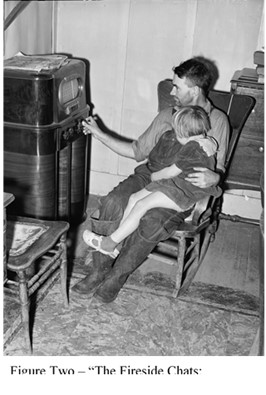
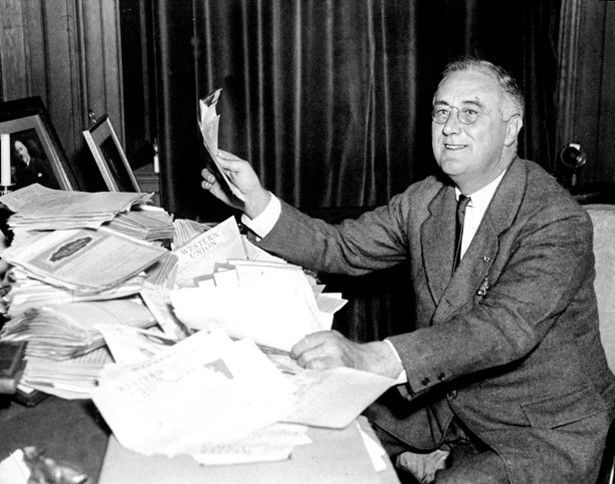


 njcssjournal