Cultivating Virtues and Reasoning about the Common Good
Roshni U. Patel
Before we delve into the realm of the common good, let us begin by looking at the overall matter of the common good. To promote the common good, individual interests need to be pushed aside for the well-being of society to create a more positive community. Michael J. Sandal’s literature expresses many concepts of the common good, society, and community. In order to get a sense of the common good we “…must find a way to cultivate in citizens a concern for the whole” rather than following individualism.[1] This leads us to the matter that more and more Americans move to gated communities and begin sending their children to private and boarding schools which defeats the purpose of the common good. These gated communities where the HOA (homeowners association) fees are ridiculously high, feature brand new and private amenities such as gyms, pools, parks, playgrounds, and literal gates to prevent outsiders from coming in. Some gated communities will have two security checkpoints and even a guard to make sure only residents of the community are entering. The need for “public” housing (I use quotes because it is open to anyone) is no longer desired as it used to be.
Homeowners used to crave land, yard space, and stand-alone houses with their own home gyms and pools but the craving has gone to housing communities. The desire to be in a gated community, with all these great amenities, has increased leaving more of these communities being built and nature destroyed. As for private and boarding schools, parents feel that their children need to be seeking a greater education when public schools can offer just that. Private schools can lead to diversity disasters and create social division and inequality.
Michael Sandel wrote a book titled Justice: What’s The Right Thing to Do? about three approaches to justice. Along with Sandel, I too agree with the third approach, “…justice involves cultivating virtue and reasoning about the common good,” nevertheless justice also includes freedom of choice and independence.[2] If people want to feel an extra sense of safety by living in a gated community, it is up to the homeowner but what is stopping someone from jumping the fence? Along with homeownership, families are moving to more affluent areas with great school districts to benefit themselves and their children or paying additional costs to send their children to private and boarding schools. Again, the common good focuses on community but at what cost if people are following the idea of individualism?
Public facilities such as pools, recreation centers, parks, libraries, and more would “…draw people out of their gated communities and into the common spaces” creating the sense of community that everyone was looking for.[3] Now, “The affluent send their children to private schools (or to public schools in wealthy suburbs), leaving urban public schools to the children of families who have no alternative. A similar trend leads to the secession by the privileged from other public institutions and facilities. Private health clubs replace municipal recreation centers and swimming pools. Upscale residential communities hire private security guards and rely less on public police protection. A second or third car removes the need to rely on public transportation. And so on. The affluent secede from public places and services leaving them to those who can’t afford anything else”.[4] It is as if the working class is left with leftovers and even less. Gated communities have created a space for the affluent to have no reason to leave unless they absolutely need to because of all the provided amenities.
Taking a look at private education, it is the root of many problems. Even though these private institutions are trying to work on solutions for racial, socioeconomic, and educational diversity and inequality, many schools still face a lack of diversity. Post-secondary education and even graduate schools face the issues of diversity. In the past, diversity rarely included race and ethnicity, it was mostly “…students from California, New York, and Massachusetts; city dwellers and farm boys; violinists, painters and football players; biologists, historians and classicists; potential stockbrokers, academics, and politicians,” it never included the physical and economic attributes of people.[5] Taking racial and ethnic backgrounds into consideration, students of color and ethnic diversity can bring what Caucasians and Whites can’t, which is diversity. When students share their experiences the audience can learn from others making an educational difference. Sharing stories from their past from cultures to religion, can educate others and create a more safe and comfortable environment.
Oral history is so powerful. Stories from the past are being preserved and told in a certain tone that impacts the audience making it stronger than reading text. Having students from all backgrounds can cultivate an enriching learning environment where everyone is learning the oral history of others which can also benefit them. These oral histories can prevent the audience from making mistakes made in the past, thus creating a learning and teaching moment.
Socioeconomic status has always been a barrier for children attending private institutions at all levels, leading to a lack of awareness of the different levels and situations people are in. Schools like Lawrenceville School require a tuition of seventy thousand dollars a year and for the average American, that is a yearly salary. If those who are sending their children to these exclusive schools are not going to be exposed to the variety of socioeconomic statuses that exist, and will only be mindful of their own. Having the privilege of attending a college preparatory school is not an option for everyone creating educational disparities. Some schools are trying to create more equal opportunities but that is not the case for everyone. A school in Texas named The Tenney School released a statement from the headmaster saying “The single biggest factor impacting diversity in private schools is tuition…it is very difficult to find diverse families who can afford private tuition…private schools do attempt to attract diverse students through scholarship programs, but at the end of the day, there will be some tuition to attend a private school,” meaning some type of tuition is always going to be on the invoice which only certain, most likely White, families can pay.[6]
College preparatory schools set children up for their future with a more advanced education that is catered to each child. Comparing this to a standard public school that is built around standards for the general population, these private schools give children a huge advantage when it comes to colleges and universities because of the institutions’ status, thus setting up the privately educated child to become successful in the future. Think of this like a chain of effects. If the parents make loads of money, they will live in a privileged area leaving them with two options; option one is to send the child to a very nice public school with everything that is possibly needed or send that child to a private school with everything and more. If option two is picked, the child will receive an education that is meant specifically for them, a higher chance of getting to an Ivy or public Ivy university, and lastly, a greater chance of a successful career and high salary. This chain of events will continue to this family’s future children and a never-ending cycle of private school privilege. From personal experience, where I went to school (South Brunswick, NJ), by the time some of my classmates reached sixth grade, they attended private schools, and for ninth grade, some went to boarding schools. Why? Because their parents felt that a private school would be needed to make their children more successful because of the advantages. The inequality margin is getting larger and larger every day because of the number of children attending private schools.
As I said previously, the common good is an independent choice, but why remove the concept when some are in need? Sandel agrees with his third reasoning for justice, “cultivating virtue and reasoning about the common good,” but the United States no longer fosters the same opinion.[7] Many in the US are fostering a more greedy mentality through actions like living in a gated community or sending their children to private schools. There is no longer a need for public facilities, but they can enhance the sense of community and create a place of belonging for children. Those who do not have access to private facilities could be going to public ones but that isn’t an option because the common good wasn’t kept up with and a fee is included with everything. An example of this would be the local dog park. In order to access, a high fee must be paid, but if you are not a resident of the town, you must pay an even higher one. Why have a park if you have to pay for it? The answer is easy. Greed. Towns need money and the only way to make it is through fees and payments. America needs to adopt a mentality that makes us think about others, not just ourselves. The only way we can better society is through working together but that is not possible if people are only looking out for themselves and how they can make it more luxurious.
Encouraging people to attend public schools and buy stand-alone housing not in gated communities is a start to increasing the sense of community and common good, but again, it is a choice and people have the freedom to do as they please. Taking that away from families is simply wrong, however, they should be aware of their actions and the consequences. Making the private school sector more available to all classes and providing information about the community can make everyone more aware. In gated communities, removing the facilities can increase families leaving and going to public ones, leading to fostering friendships and relationships with others. Asking the American people to do this after gated communities and private institutions are embedded in our society is a lot but the difference that can be made is even greater. I agree with Sandel and the concept of the common good, but asking the American people to believe in this when everyone has different values will be difficult, maybe even impossible.
Applying to Social Studies Education
Social Studies is such a broad subject where students learn about the various cultures, races, ethnicities, and so on. It is one of the only core subjects taught in schools where students can take the time and learn from each other. They can tell personal stories, explain their cultures and traditions, and most importantly, listen to each other. My paper above is about the common good, one of the goods being public education. Private institutions take away the learning opportunities that public schools have to offer. At these institutions, there is one kind of group of kids: those of a higher socioeconomic status. With that being said, many of these kids are White. There is no opportunity to learn about various backgrounds and ethnicities. With my experience in public schools, I learned so much about different cultures and people. It really influenced me to think deeper about what other hardships people face in their lives. While I don’t have first-hand experienced life in a private school, I can speak on behalf of the many people I know who attend private institutions for their K-12 education. It is so simple, it’s not diverse.
In order for students to be knowledgeable about the problems in this world, it is crucial they take the time to understand and learn from others. One student does not have the same life as another. Although they will never truly know what others have experienced, discussion is a great place to start. In high school, I took a sociology class that changed my perspective on life in general. We would discuss our backgrounds, cultural traditions, and our family and family life. This class allowed me to learn what true diversity is, in turn, making me want to expose my future students to each other. Not enough credit goes out to students. They are not only listeners but they are teachers. They teach what teachers can’t, cultures and traditions. We can only talk about what we know but it is more personal when it comes from a true place and narrator. There is nothing more valuable than students sharing their experiences with their classmates, it builds a community.
[1] Michael J Sandel, Justice: What’s the Right Thing to Do? (New York: Farrar, Straus and Giroux, 2009).
[2] Michael J Sandel, Justice: What’s the Right Thing to Do? (New York: Farrar, Straus and Giroux, 2009).
[3] Michael J Sandel, Justice: What’s the Right Thing to Do? (New York: Farrar, Straus and Giroux, 2009).
[4] Michael J Sandel, Justice: What’s the Right Thing to Do? (New York: Farrar, Straus and Giroux, 2009).
[5] Michael J Sandel, Justice: What’s the Right Thing to Do? (New York: Farrar, Straus and Giroux, 2009).
Engaging High School Students in Global Civic Education Lessons in U.S. History
The relationship between the individual and the state is present in every country, society, and civilization. Relevant questions about individual liberty, civic engagement, government authority, equality and justice, and protection are important for every demographic group in the population. In your teaching of World History, consider the examples and questions provided below that should be familiar to students in the history of the United States with application to the experiences of others around the world.
These civic activities are designed to present civics in a global context as civic education happens in every country. The design is flexible regarding using one of the activities, allowing students to explore multiple activities in groups, and as a lesson for a substitute teacher. The lessons are free, although a donation to the New Jersey Council for the Social Studies is greatly appreciated. www.njcss.org
Era 13 Postwar United States: Civil Rights and Social Change (1945 to early 1970s)
The postwar era marked the rise of America as a world power. The new world order established alliance and economic agreements that have led to unprecedented economic growth. However, this period also marks divisions between countries with democratic institutions, authoritarian governments following the ideology of Marxist communism, and developing countries with issues of poverty, disease, debt, and human rights abuses. The United States faced issues or racial segregation, a shrinking middle class, and the expansion of costly federal government programs and a large defense budget causing its national debt to increase. Technology and the media influenced social changes.
Activity #1: Federalism: Dixiecrats in the United States and the Swiss Cantons
Dixiecrats and the Authority of State Government in the United States
The principle of federalism is valued in the way the people of the United States govern themselves. There is a fine line between the division of powers between the states and the national government. The Tenth Amendment specifically protects the powers of the 50 states, and the Ninth Amendment protects the powers of individual citizens. The powers of the national government are carefully defined and limited.
“The enumeration in the Constitution, of certain rights, shall not be construed to deny or disparage others retained by the people.” (Ninth Amendment)
“The powers not delegated to the United States by the Constitution, nor prohibited by it to the States, are reserved to the States respectively, or to the people.” (Tenth Amendment)
“The President shall be Commander in Chief of the Army and Navy of the United States, and of the Militia of the several States, when called into the actual Service of the United States; he may require the Opinion, in writing, of the principal Officer in each of the executive Departments, upon any Subject relating to the Duties of their respective Offices, and he shall have Power to grant Reprieves and Pardons for Offences against the United States, except in Cases of Impeachment.” (Article 2, Section 2)
“He shall from time to time give to the Congress Information of the State of the Union, and recommend to their Consideration such Measures as he shall judge necessary and expedient; he may, on extraordinary Occasions, convene both Houses, or either of them, and in Case of Disagreement between them, with Respect to the Time of Adjournment, he may adjourn them to such Time as he shall think proper; he shall receive Ambassadors and other public Ministers; he shall take Care that the Laws be faithfully executed, and shall Commission all the Officers of the United States.” (Article 2, Section 3)
The Dixiecrats perceived the legislation passed by the national government (Congress and President Truman) to integrate American society as a threat to their liberty and authority as independent states. In the 1948 presidential election, Southern Democrats walked out of the Democratic National Convention because they disagreed with its civil rights platform. They formed a new political party with South Carolina’s Governor Strom Thurmond as their party’s presidential nominee. Their objective was to deny or ‘nullify’ laws passed by the national government to integrate schools and modes of transportation. Individual states wanted to continue with the 1896 “separate but equal” decision from the U.S. Supreme Court decision in Plessy v. Ferguson.
In 1798, Congress passed, and President John Adams signed into law, the Alien and Sedition Acts. The acts outraged Thomas Jefferson and Kentucky declared the Alien and Sedition Acts unconstitutional and “altogether void and of no force” in the state of Kentucky.
Kentucky held that our Constitution was a “compact” among the states that delegated a set of limited powers to the federal government. This meant that “every state” had the power to “nullify of their own authority” any violation of the Constitution. In 1832, South Carolina declared the Tariff of 1832 was unconstitutional, “null, void, and no law” because they disproportionately burdened southern states.
“This Constitution, and the Laws of the United States which shall be made in Pursuance thereof; and all Treaties made, or which shall be made, under the Authority of the United States, shall be the supreme Law of the Land; and the Judges in every State shall be bound thereby, any Thing in the Constitution or Laws of any State to the Contrary notwithstanding.” (Article 6)
Switzerland’s Government
Switzerland is governed under a federal system at three levels: the Confederation, the 26 cantons and the 2,131 communes. The Swiss Confederation of States and its current boundaries were agreed to in 1815 and its current constitution was adopted in 1848. Switzerland has a direct democracy with citizens voting on decisions at all political levels. Switzerland is governed by the Federal Council of seven members representing the different political parties and are elected by the two-house assembly or parliament. whose decisions are made by consensus. Switzerland has a two-house assembly, the National Council is the lower house and represents the people. The upper house is the Council of States and represents the individual cantons. Switzerland also has ten political parties. The powers of cantons include education, culture, healthcare, welfare, law enforcement, taxation, and voting. Cantons have their own constitutions, parliaments, and courts, which are aligned with the federal constitution.
An example of a conflict in Switzerland that challenged the authority of the individual cantons is the city of Moutier with a population of 7,500 in the canton of Bern. Since 1957, the Moutier committee wanted to secede from the canton of Bern and join the canton of Jura. The majority of people in Bern have voted to keep Moutier within its jurisdiction. Four out of the seven Jura districts narrowly rejected forming a new district. The three northern, majority Roman Catholic, districts voted in favor of a new district.
Since 2013, there have been peaceful protests and at times vandalism. The people of Moutier voted to join the Jura canton making it the second largest town in the canton of Jura. Although a majority, 51%, of the people voted to join, the government and people of Bern declared their vote to be invalid because some people voted whose residency could not be confirmed. There have been nine referendums in the past 70 years with the population voting to secede and join the Canton of Jura in 2021. The change to the canton of Jura took effect on January 1, 2026, granting Moutier the right to secede from one canton and join another.
Questions:
Should the national government of the United States be able to enforce common laws for holidays, the economy, schools, transportation, public health, and the environment in all 50 states and territories?
What are the advantages and disadvantages of the federal system of power between the individual states and the national government in the United States?
Does the Swiss government model have any advantages or disadvantages over the structure of government in the United States?
What would be the best way to resolve the conflict with the population of Moutier?
Will the decision allowing Moutier to secede establish a precedent for future towns or cities to secede in Switzerland?
Activity #2: Elementary and Secondary Education Act and Canadian Aid to Schools
Education is primarily a state and local responsibility in the United States. About 92% of the money for elementary and secondary education comes from local taxes and money from the individual states. The role of the federal government in education dates back to 1867 when Congress wanted information on teachers and how students learn. Over time this led to land-grant colleges and vocational schools After World War 2, the federal government enacted the “GI Bill” to provide college and vocational education to returning veterans.
In response to the Soviet launch of a satellite, Sputnik, into space in 1957, Congress passed the National Defense Education Act to provide funds for teachers in the areas of mathematics, science, world languages, and area studies to enable us to compete with the Soviet Union. Perhaps the most significant legislation to increase federal funds for schools came in response to the passage of civil rights laws in the 1960s and 1970s and the Great Society programs to reduce poverty. In 1980, Congress established the Department of Education as a position in the president’s Cabinet. In 2025, the Department of Education’s staff and budget was significantly reduced. The Department of Education before 2025 supported 50 million students in 98,000 public schools and 32,000 private schools. They also provided grants, loans, and work-study programs to 12 million students in colleges and vocational training programs. In addition, they administered $150 billion in loans.
The purpose of federal funds in the United States is to provide equality for disadvantaged students and to improve academic achievement. This is monitored through state assessments based on learning standards. Unfortunately, some states lowered their expectations for student achievement to qualify for the federal funds and the federal government is currently investigating fraud in how federal dollars are being spent.
In the United States, federal funds are designated for after school instruction, English language acquisition, preschools, nutrition, literacy, teaching American history and civics, charter, and magnet schools.
School Financing in Canada
School funding in Canada is primarily a responsibility of provincial and territorial governments. The federal government contributes money to ensure an equal education for its significant indigenous population. Most funding is from Canada’s 10 provinces. Some provinces provide public funding to private, charter, and religious schools.
The government of Canada views education as a public good from which everyone in society benefits. Education prepares students for jobs, higher education, lowers crime, and reduces poverty. Employers also benefit as educated workers are more productive leading to higher profits for businesses. The only province to fully embrace school choice is Alberta. Canadians fear that school choice may lead wealthier Canadians to benefit from independent, parochial, charter, or magnet schools and this would leave marginalized populations at a disadvantage. Equality and equity are two principles that Canadians value.
According to U.S. News & World Report, the United States is ranked #1 and Canada is ranked #4 in the world in education.
Questions:
Should local communities, states or provinces, or the national government decide the curriculum and funding for public schools?
To what extent should public tax dollars be used to support private or religious schools?
What is the best way to ensure an equal and equitable education for all students?
Should public tax dollars be used for extracurricular activities and sports in schools?
Do you consider education to be a public good that benefits all of society or is it a private good that benefits individual students?
To what extent should public tax dollars be used to support college and vocational education after completing elementary and secondary education?
Activity #3: Segregation by Race in the United States and by Religion in India
De facto Racial Residential Segregation in the United States
The United States ended racial segregation with the Brown v. Board of Education v. Topeka, Kansas decision by the U.S. Supreme Court in 1954, the Civil Rights Act of 1964, and the Voting Rights Act of 1965. However, the United States continues to be a place of segregation, not integration. Residential segregation exists through our zip codes and neighborhoods. Although our laws prohibit discrimination, differences in land use policies, wealth and income, contribute to what is called de facto racial residential segregation. Neighborhoods determine the quality of schools, public safety, quality of drinking water, opportunities for employment, strategies of law enforcement, rates of incarceration, and life expectancy.
A study by the University of California (Source) found that more than 80 percent of metropolitan areas were more segregated in 2019 than in 1990. In 2025, the United States government effectively ended support for DEI (Diversity, Equity, and Inclusion) programs. Racial residential segregation is difficult to address when resources are not equally available to all communities. The Kerner Commission wrote in its 1968 report that integration is “the only course which explicitly seeks to achieve a single nation” rather than a dual or permanently divided society.
Table 3: Top 10 Most Segregated Metropolitan Statistical Areas (2019, Minimum 200,000 people)
Segregation Rank
Metro
1
New York-Northern New Jersey-Long Island, NY-NJ-PA
2
Chicago-Joliet-Naperville, IL-IN-WI
3
Milwaukee-Waukesha-West Allis, WI
4
Detroit-Warren-Livonia, MI
5
Miami-Fort Lauderdale-Pompano Beach, FL
6
Los Angeles-Long Beach-Santa Ana, CA
7
Trenton-Ewing, NJ
8
Cleveland-Elyria-Mentor, OH
9
Philadelphia-Camden-Wilmington, PA-NJ-DE-MD
10 (tied)
Beaumont-Port Arthur, TX
10 (tied)
New Orleans-Metairie-Kenner, LA
Religious Segregation in India
India ended the caste system in 1947 and yet many Indians live in religiously segregated areas. One of the reasons for this segregation is that friendship circles are often part of the religious community and marriages are within the same faith community. People in southern India are most likely to live in integrated neighborhoods. Indians with a college degree are more accepting of people from other faiths living in their neighborhoods than those with less education.
Very few Indians say they are married to someone with a different religion. Almost all married people (99%) reported that their spouse shared their religion. This applies to Hindus, Muslims, Christians, Sikhs and Buddhists.
Indians generally marry within same religion
Religion, especially members of the Hindu faith, is closely connected with views on politics and national identity. Hindus make up 80% of India’s population. A Pew Research study found that 36% of Hindus would not be willing to live near a Muslim, and 31% say they would not want a Christian living in their neighborhood. Jains are even more likely to express such views:. 54% of people who identify with the Jainist faith would not accept a Muslim as a neighbor, and 47% say the same about Christians. People who identify as Buddhist tend to be the most accepting of people from other faith traditions. Eight-in-ten Buddhists in India say they would accept a Muslim, Hindu, Christian, Sikh or Jain as a neighbor.
Members of both large and small religious groups mostly keep friendships within religious lines
And Indians who live in the Central region of the country are more inclined than people in other regions to say it is very important to stop people from marrying outside of their religion. Among Hindus in the Central region, for instance, 82% say stopping the interreligious marriage of Hindu women is very important, compared with 67% of Hindus nationally. Among Muslims in the region, nearly all (96%) see it as crucial to stop Muslim women from marrying outside the faith, versus 80% of Muslims nationally.
The religious segregation also impacts the quality of education and employment. Muslim student enrollment is dropping. Some states in India are banning religious instruction even though it is protected by the national constitution.
Questions:
Are there common factors (geographic, social, economic, racial, educational, religious, etc.) causing different kinds of segregation in Indian and the United States?
How can countries best establish a social system of equality and integration?
Is segregation present in your school or community?
How do countries/societies unite or define their identity?
Is the problem of segregation about the same, more severe, less severe in India or the United States?
Activity #4: The Great Society Programs and The Marshall Plan for Europe
The Great Society Program in the United States
In 1965, according to the U.S. Census, the poverty rate in the United States was 13.3%. In 2024, it was 10.6%. However, poverty rates often provide mixed data because of inflation, income levels, race, and age. For examples in 1965 45% of the population in South Carolina was below the poverty line and in 2024 the poverty rate for Hispanic (15%), Black Americans (18.4%), and Native Americans (19.3%) is significantly higher than 10.6%. The definition is further complicated by the difference between absolute poverty (below an income of $31,200 for a four-person household) and relative poverty (the quality of life for people in a neighborhood or community).
Social Security and Medicare are for senior citizens who are eligible at age 65 for Medicare and age 67 for Social Security. There are 83 million people, including children, receiving Medicaid, about 25% of the population. The program is offered by the states and the services provided depend on the state. An average estimate for eligibility is an income that is about 140 percent above the federal poverty level ($30,000 for a family of two in New Jersey, as of 2026). In New Jersey, Medicaid costs about 23% of the state’s budget. Approximately 25% of the residents in New Jesey receive Medicaid at an average cost of $2,600 per enrollee. Amounts vary and are higher for families with children and pregnant women.
According to the Congressional Research Services, mandatory spending was only 30% of the federal budget. Today, it is 60%. Medicare and Medicaid together cost nearly $1 trillion annually. Medicare, Medicaid, and Social Security, are the main contributors to our national debt, which is now over $40 trillion (or roughly $59,000 per citizen). According to the Kaiser Family Foundation, Medicare provides health insurance coverage to 68 million Americans. Funding for Medicare is from government contributions, payroll tax revenues, and premiums paid by beneficiaries. Medicare spending is currently about 13.5% of the federal budget or roughly $1.1 trillion. The average cost is $17,000 per enrollee with a $12 billion shortfall in 2023, about $1,300 per enrollee. The administration of President Trump cut some of the Medicaid programs in 2025 and is negotiating lower prescription drug costs to reduce this shortfall. An aging population and higher health care costs are factors that are expected to continue. Even with these Great Society programs, poverty among the elderly is significantly high. According to USA Today,
“Based on the official measure, which is a simple calculation based on pretax cash income compared with a national threshold, the percentage of seniors in poverty rose to 9.9% last year from 9.7% in 2023, data showed. Using the more comprehensive supplemental measure, which includes noncash government benefits, accounts for taxes and essential expenses like medical care and work-related costs, and adjusts thresholds for regional differences in housing costs, senior poverty rose to 15% from 14.2% − and marked the highest poverty level among all age groups.”
Although these programs are not cost effective and are withdrawing funds from the Trust Fund, they are considered transfer payments because the money is spent at the local and state level which generates income and GDP growth in the economy. They are often referred to as entitlement programs because they were passed by Congress and have been in effect for 90 years (Social Security) and 60 years (Medicaid and Medicare) and revised and expanded over time.
Marshall Plan
In June 1947, Secretary of State George Marshall, announced the U.S. plan to give economic aid to Europe. The offer was made to all of Europe, including the U.S. wartime enemies and the communist countries of Eastern Europe. Sixteen European countries responded by cooperating on a plan that was accepted by the United States. The United States appropriated $13.6 billion (equivalent to $190 billion in 2026 money) was provided. By 1950, the economies of the participating countries returned to their prewar levels.
The Marshall Plan required the countries to stabilize their currency, reduce public spending, import goods from the United States and increase their exports to the United States. There were clear expectations that benefited the economy of the United States. The Marshall Plan established the U.S. as a dominant economic power, promoted open trade and prevented the return of economic depression. It was critical in forming NATO and a closer relationship between the United States and Europe.
Questions:
Given the fact that the Great Society programs of Medicaid and Medicare are not cost effective and that the poverty rate for people over the age of 65 has increased, should the United States continue with these programs?
What should the United States or the individual states do to lower the poverty rate among people over the age of 65?
Does the United States have a legal (constitutional) or moral responsibility to provide supplemental or full health care for its citizens, legal residents, and/or undocumented immigrants?
Was the Marshall Plan worth the investment by the United States?
What factors contributed to the success of the Marshall Plan?
Would a ‘Marshall Plan” to support the rebuilding of a sustainable infrastructure based on renewable energy be effective and accomplish similar outcomes within three to five years?
In August 2025, worried that WOKE educators from higher paying unionized states might move to Oklahoma to take jobs as teachers, Oklahoma implemented an “America-First Assessment” for new teachers. The assessment, created by the PragerU, a conservative group that is definitely not a university, was dropped three months later by a new state education superintendent.
As a WOKE teacher educator from a WOKE state with almost fifty years of teaching experience and indoctrination, I was interested to see if I could pass the “America-First Assessment” and qualify to teach in Oklahoma. But not to worry, it is much easier than the test immigrants take to become United States citizens, the New York State Teacher Certification Exam, and the United States History Regents Exam for 11th grade students in New York State.
A reporter for the Oklahoma Voice took the online test and intentionally picked the most ridiculous choices. It turns out that when you got a wrong answer, the test allowed you to try again and again until you picked the choice they wanted so it was impossible to fail. It makes you wonder about the poor quality of teaching and learning in the Sooner State.
The test has a number of questions about defining sex but no questions about Oklahoma history. Teachers don’t have to know about the Trail of Tears forcing East Coast Native American tribes onto Oklahoma Territory reservations or race riots that destroyed the Tulsa African American community.
Don’t be nervous. I highlighted the answers Oklahoma wants you to pick to prove you aren’t WOKE.
1. According to the Supreme Court cases Meyer v. Nebraska (1923) and Pierce v. Society of Sisters (1925), who has the ultimate right to direct a child’s education? a. The Superintendent of Schools b. The parents c. The Board of Education d. The federal Department of Education
2. What is the fundamental biological distinction between males and females? a. Height and weight b. Blood type c. Personal preference d. Chromosomes and reproductive anatomy
3. How is a child’s biological sex typically identified? a. Parental affirmation of child’s preference b. Personal feelings c. Visual anatomical observation and chromosomes d. Online registration
4. Which chromosome pair determines biological sex in humans? a. AA/BB b. XX/XY c. RH/AB d. XE/XQ
5. Why is the distinction between male and female considered important in areas like sports and privacy? a. For equity in minority communities b. To preserve fairness, safety and integrity for both sexes c. To increase participation in sports d. To enhance the self-esteem of transgender children
6. Should teachers be allowed to express their own political viewpoints in the classroom In order to persuade the students to adopt their point of view? a. Yes, teachers have freedom of speech, too, which does not stop at the classroom door b. No, once you become a teacher, your freedom of speech in and out of the classroom is restricted c. Yes, sometimes – when the issue includes civil rights or social justice d. No, the classroom is not an appropriate venue for political activism
7. What did the Supreme Court rule in the 2025 case of Mahmoud v. Taylor? a. Gender-affirming medical procedures are allowed in America b. Students must recite the Pledge of Allegiance in schools c. Religious schools must hire non-religious staff d. Public schools cannot require participation in LGBTQ-themed instruction without a parental opt-out
8. What are the first three words of the U.S. Constitution? a. In God We Trust b. We the People c. Life, Liberty, Happiness d. The United States
9. Why is freedom of religion important to America’s identity? a. It protects religious choice from government control b. It makes Christianity the national religion c. It bans all forms of public worship d. It limits religious teaching in the public square
10. What are the two parts of the U.S. Congress? a. The House of Lords and The House of Commons b. The judiciary and the Senate c. The Executive and the Legislative d. The Senate and the House of Representatives
11. How many total U.S. senators are there? a. 435 b. 535 c. 100 d. 50
12. Why do some states have more representatives than others? a. Representation is allocated by population b. They cover a larger geographic area c. They have held statehood for a longer period d. The number is determined by Congress
13. What is the primary responsibility of the president’s Cabinet? a. Approve Supreme Court justices b. Pass legislation c. Sign executive orders d. Advise the president
14. Who signs bills into law? a. The vice president b. The chief justice c. The president d. The speaker of the house
15. What is the highest court in the United States? a. The Federal Court b. The Court of Appeals c. The District Court d. The Supreme Court
16. In the United States, which of the following is a responsibility reserved only for citizens? a. Serve on a jury b. Own a home c. Pay taxes d. Possess a driver’s license
17. Which of the following are explicitly listed in the Bill of Rights? a. Freedom of speech and religion b. Voting and public education c. Reproductive rights and healthcare d. Freedom from data collection and surveillance
18. Which right does the Second Amendment protect? a. The right to hunt and fish b. The right to arm the military c. The right to restrict certain kinds of speech d. The right to keep and bear arms
19. What is the supreme law of the United States? a. Presidential Executive Orders b. Laws passed by Congress and signed by the president c. Laws passed by state legislatures and signed by state governors d. The Constitution
20. Who wrote the first draft of the Declaration of Independence? a. John Adams b. Thomas Jefferson c. John Hancock d. Thomas Paine
21. When was the Declaration of Independence adopted? a. July 4, 1778 b. July 4, 1787 c. July 4, 1776 d. July 4, 1619
22. What was the primary reason the colonists fought the British? a. To resist expansion of the British Empire b. To maintain slavery c. To resist taxation without representation d. To resist forced military service
23. Who were the first three U.S. presidents? a. George Washington, Benjamin Franklin, Alexander Hamilton b. George Washington, John Adams, Thomas Jefferson c. George Washington, Thomas Jefferson, James Madison d. George Washington, John Adams, Abraham Lincoln
24. Who is called the “Father of Our Country”? a. Benjamin Franklin b. Abraham Lincoln c. Martin Luther King Jr. d. George Washington
25. What did the Emancipation Proclamation do? a. Ended Prohibition b. Freed Confederate generals c. Freed the slaves in the North d. Ended slavery in the rebelling Confederate states
26. What was Abraham Lincoln’s primary reason for waging the Civil War? a. To preserve states’ rights b. To abolish slavery c. To preserve the Union d. To end the Union
27. What cause is Martin Luther King Jr. best known for? a. Advocating for segregation b. Advocating for the abolition of slavery c. Advocating for diversity, equity and inclusion d. Advocating for racial equality under the law
28. How did the Cold War end? a. The U.S. prevailed in the Cuban Missile Crisis b. Russia invaded and occupied Ukraine c. The Soviet Union Collapsed d. The U.S., the European Union, and the Soviet Union signed a peace treaty
29. Who was president during the Great Depression and WWII? a. Woodrow Wilson b. Harry S. Truman c. Franklin D. Roosevelt d. Theodore Roosevelt
30. What is the name of the national anthem? a. “The Star-Spangled Banner” b. “America the Beautiful” c. “This Land is Your Land” d. “God Bless America”
31. Why are there thirteen stripes on the American flag? a. One for each signer of the Declaration of Independence b. To honor the Thirteenth Amendment c. To commemorate America’s fallen soldiers d. To symbolize the original colonies
32. Which national holiday honors those who died while serving in the U.S. military? a. Armistice Day b. Memorial Day c. Veterans Day d. Flag Day
33. Which of the following is a phrase from the Pledge of Allegiance? a. Life, liberty and the pursuit of happiness b. Of, by and for the people c. One nation, indivisible, with liberty and justice for all d. One nation, under God, indivisible with liberty and justice for all
34. From what does the United States government derive its power? a. The Supreme Court b. The people c. The president
An Education: How I Changed My Mind About Schools and Almost Everything Else
by Diane Ravitch
Reviewed by Dr. Alan Singer, Hofstra University
According to Randi Weingarten, president of the American Federation of Teachers, “Diane Ravitch’s telling of her remarkable journey — from a child of working-class immigrants to one of the most vital national education treasures and leaders — tells us so much about her unwavering support for public education and its role in our society. That would be beautiful enough, but the second thrill is how she brings her curiosity — an essential trait we nurture in students — to question her own views and change her mind. The result is this clarion call to protect and strengthen public schooling in America as the foundation of our young people — and our democracy. If you care about the future, read this book.”
Diane Ravitch has spent five decades analyzing and advocating for national and state education policies designed to reform and reshape public schools. Her work supporting school choice made her the intellectual darling of the right. But when she renounced school choice as a failure, she was abandoned by many old friends and colleagues. Today she is a champion for public schools, a foe of standardized testing, and proclaims herself to be “woke.” Her latest book, An Education: How I Changed My Mind About Schools and Almost Everything Else is published by Columbia University Press
Ravitch was one of eight children from a Jewish family in Houston, Texas, where she grew up with no television, no air conditioning, and, often, no shoes. In college she met and married a man from a wealthy and connected New York City family, where they lived and raised a family. She began working for a socialist magazine, which led to writing about education and, eventually, a PhD in education history.
Ravitch’s writings favored strengthening and expanding school choice and rigorous testing, ideas that aligned well with conservative donors and think tanks who supported her work and led to positions in the George H.W. Bush and Clinton administrations. Meanwhile, a chance encounter at an education conference with a New York City high school social studies teacher, Mary Butz, led to a clandestine romance. Ravitch’s new relationship upended her previous “life of comfort and plenty” and led to her marriage to Mary.
New York Mayor Michael Bloomberg sought Ravitch’s support and counsel for the changes he and school commissioner Joel Klein instituted during his administration, but it was at this time that Ravitch began to question the results of standardized testing and school choice programs like charter schools. Improved test scores at lauded schools proved illusory and charter schools only seemed to thrive because they were able to weed out the most challenged pupils. Gradually, Ravitch abandoned her long-held views on the power of testing or the promise of choice. She began to write and speak out in favor of saving America’s besieged public schools.
Ravitch’s involvement in education idea and policy have earned her a reputation as education’s best-known living historian and its most controversial figure. An Education is the story of the making, unmaking, and remaking of a public intellectual and a remarkable testament to the importance of a mind open to truth and possibility in a world, she writes, “of masks and artifice”.
Twenty-five years before Frederick Douglass gave his famous “What to the Slave is the Fourth of July” speech in Rochester, the enslaved population of New York contemplated a similar question as they prepared to celebrate the abolition of slavery, on July 4, 1827.
As communities across the state decorated to honor the birthday of the new nation, it became increasingly clear to the state’s Black communities that perhaps parading and celebrating in public space to honor their own freedom, had the potential to not end well if they did so on the 4th, the official day of the legal end of slavery in the state. They feared being attacked and suffering other types of violence from the White community because they too would call upon the words their enslavers had shouted so long ago.
They had waited 28 years for legal slavery to end, the time clock started in 1799 with the passing of the Act of Gradual Abolition, which gave no end date for their emancipation, but bound their unborn children to their mother’s enslavers until they were in their mid to late 20s. The Act that opened the way for their children, but not for anyone else. Those who toiled inside and outside for the benefit of others, would be left behind, to continue raising other people’s children, while theirs, at some point in the future could walk unfettered by the unseen, but ever-present chains they wore.
Then came the 1810 law that required the people holding those born free to teach them to read and write. This law was largely ignored, in spite of the fact that not doing so would allow those born free to see emancipation earlier at 18. Something that the New York Manumission Society helped a number of them do, by taking their enslavers to court and proving that at 18, they could neither read nor write. Then it was seven more years to get to the 1817 Act relative to Servants and Slaves that actually set a date for abolition, even though it was ten years in the future. It also pave the way for those born before July 4, 1799, and called “slaves” to be released. Finally, there was more than just hope.
But things rarely play out as smoothly as we would like. Weeks before the day was to arrive the conversations started happening. I imagine them beginning as whispered conversations, shared on the fly, when they were out and about working. Then in a somewhat louder voice when they were alone. Their conversations grew until preachers began talking about it. Up and down the road as they moved about, between those enslaved and those already freed, they continued.
They found themselves debating if it was wise for them to celebrate in mass on the official day, because it was the new nation’s birthday, and racism was increasingly a cause for worry as more and more were manumitted, and the presence of free Blacks walking the streets, starting businesses, living their lives began to grind on people’s nerves. Not to mention it had been against the law from the early 1690s for enslaved people to make noise on Sundays. It even appeared in the nation’s first Black owned newspaper which was published in New York City.
These conversations about when to celebrate happened years after many of them had overheard their enslavers talking about obtaining their freedom from Britain in the years leading up to the Revolutionary War. Even as their enslavers tossed around words suggesting that they were being treated like slaves and would not have it, as if taxation without representation equaled being seen as property and not people. I imagine that many enslaved men who had replaced their enslavers on the battlefield thought about their own freedom for the eight years of the war. I’m sure they wondered if the promise of their own freedom given to them when they put on the uniforms, either red coats, or blue jackets, would truly play out.
During the war years as separation from Britain reigned supreme, the large population of enslaved had to manage not only their own lot in life, but the stress and anger of their enslavers who lost homes, crops, animals, stored food, family members, and even other enslaved as various parts of the state were burned out or stolen as troops from both sides, passed by or engaged in battle.
Years after in 1783, at end of the war when Loyalists and British troops were leaving New York, some enslaved may have begun grieving the loss of family or friends who did gain their freedom and may have been aboard one of the ships that took thousands of newly freed Black people from New York’s harbor to Nova Scotia and other ports on evacuation day. After all that time, the enslaved, longing to finally be free, found themselves debating whether it was safe for them to rejoice in their own freedom on the actual day it was given.
As we approach the 200th anniversary of the abolition of slavery in New York on July 4/5 of 2027, many of us find ourselves contemplating some of the same thoughts the waiting to be free people of Albany and New York in general, did. Thinking on some of the sentiments Douglass shared in his 4th of July oration. Asking ourselves, what does the 4th of July mean to us? As my colleagues and I delve deeper into the mountains of documents related to the long history of chattel slavery in New York, and the cumbersome process of dismantling a portion of the institution of slavery, we find ourselves constantly amazed that so many people are still unaware of the deep roots slavery has in our state’s history.
Every once in a while, I find myself thinking that surely it is not so. To figure it out I began talks on occasion with a short three to five question survey. Answers given simply by raising a hand. Unfortunately, when I did this recently before giving an overview of Slavery in New York at Riverbank State Park, the audience of fifty or so people proved that things remained the same. That no matter if the audience is Black or White, or a mixture of our state’s wonderful cultural rainbow, the awareness of New York as a place of enslavement remains too hidden.
I can ask about the 1619 Project and people are aware of it, even if they have not read it. But if I ask when the first enslaved arrived in New Netherland, there generally is silence. I have learned to also ask them if they know what the original colonial name of New York was. Then I generally get a few hands, but not many. So, we are all clear, for years we danced around the year, finally settling on 1626, but after years of wondering, we know now that on August 29, 1627, 22 African men and women arrived in New Amsterdam on a Dutch privateer and became the first of the Dutch West India company’s slaves. We know the name of the ship and the circumstance surrounding how they ended up on a Dutch privateer. Currently we are awaiting the publishing of a paper that will also give us the name of the Portuguese ship they were taken from. Those 22 were part of a larger cargo of over 200 people headed to Brazil. Those 22 men and women were the first, but they would not be the last.
From that day forward, for 200 years, West Central, West, and Malagasy Africans would become the dominant labor force in the colony of New Netherland that would ultimately become the state of New York. Although this truth has been shared for years, it is still too common for people to say that slavery was not part of our state’s history. Part of that is due to the use of the word servant(s) instead of slave(s). In document collections across the state, in maps referring to burial grounds, the servants take up a lot of space. And with our love of British history, we imagine programs like Upstairs, Downstairs, or more recently Downton Abbey, where the servants are White making a decent wage, not enslaved Africans or their descendants. So, we read or listen to Douglass’ speech and say, well…it didn’t happen here. New York was a place of freedom, or a landmass that needed to be crossed to take people to the freedom they’d find in Canada. But it did. And it happened in Canada too.
The enslavement of thousands is only one part of the institution of slavery that graced New York. During the 200 years of forced servitude and long after 1827 ended the law of holding people as property, wealth flowed into the state as it had for decades because of the multiple economic links to the transatlantic slave trade, the ties that bound New York to the rest of the world. The wheat economy that was birthed in the 1630s with the establishment of Rensselaerwijck would spread southward down the Hudson River Valley and out to Long Island, and thousands of tons of wheat would flow from the harbors of New York to the Caribbean and West Indies to feed those bound to sugar and salt plantations. Money from the coffers of New York’s elite families would purchase sugar plantations in Jamaica, Barbados, and on other islands, and that wealth would create beautiful homes well into the 19th century like Hyde Hall on Glimmerglass Lake. As the years rolled along, enslaved from those sugar plantations would flow in and out of New York to serve in one way or another their enslavers or their relatives. Or to be sold, bequeathed or rented out, depending upon the need.
The ties to Southern tobacco and later sugar plantations that began during the Dutch period would continue to grow throughout the 200-year history, as people were brought directly from Africa and sold in the South, leaving New York City with the legacy of being the second largest slave market in the 13 colonies. And later in the 19thcentury, Brooklyn would flourish as more of that sugar would arrive to be processed there. As southern cotton expanded, after slavery had ended here, New Yorkers would build factories up and down the Hudson River for processing it. Political dances would be done, to hide the collusions between a free state and southern slavery. Profits would not be forfeited.
Insurance companies based in New York would grow bigger to cover cargo on ships flowing in and out including slave ships. More slave traders would move to New York, the ancestral home of many, in the early 19th century, where ships were easier to get and sail from the state’s harbors to the coasts of West Africa and even though they could not bring Africans into the US any longer, they were fine taking them into Cuba. Fine, until Lincoln finally said no more and the last of New York’s slave traders was hanged in 1861.
The New York Stock Exchange would grow out of these economic links to slavery, and more money would be made. Continuing the process began by the Dutch of individual investors, buying stock in the shipments, just one of many commodities on the world market. The underbelly of slavery would continue to grow fat, well past the years of Douglass’ speech and eventually the history of New York slavery would try to be buried in the early 20th century as the colonial revival period saw many people rewriting their family’s early stories, removing the names of women who raised children, or men who plowed fields, or just burn the wills to hide the numbers of people passed on. But even as hard as they tried, the history of slavery would not be buried for long. Bones were unearthed as villages grew into towns, then into cities and land, once considered worthless was needed. In the expansion, the presence of unmarked graves sent people to maps, which showed African burial grounds or Colored or Negro ones. But that would not stop the desecration. The projects would just move on with remains being dug up and discarded or just covered over.
The legacy of 200 years of slavery has increasingly caught up with many, as more people delve into their family histories and find that their ancestors were not as pristine as once believed, and the money they bequeathed across the generations came tainted with blood, sweat and a lot of tears. Or they run into someone with the same last name but not the same color skin which has resulted in the messages on many DNA companies which inform people of that before they are shocked by the discovery of who they really are.
What to the slave is the 4th of July is a question that haunts us even today, as we are challenged by the rewriting of our nation’s history by those who live in a settler’s colonized world. The foundation of our nation did not bypass New York. And, it reminds us daily that our state was built on a slave society even as we try to pretend, we were a society with just a few slaves.
2027 is just around the corner, and July 4th will echo Douglass’ time, and fall on a Sunday. A day sacred in its own right. And like the ancestors, across the state, including the folks right here in Albany, many of us will bypass it as the day to honor the abolition of slavery in New York, because well…some history does seem to repeat itself. And like them, we will take to the streets on Monday, July the 5th, and we will listen as bells ring in the air and from our hands at 12:00 noon, for one minute, to remind those who know, and educate those who do not, that slavery was part of New York’s history, and it will never be forgotten again.
How Rightwing Money Tries to Shape the Teaching of American History
By Alan Singer
The Bill of Rights Institute sponsors events and provides scholarships for the annual conference of the National Council for the Social Studies. On the face of it, it seems innocuous, until you dig a little deeper. The NCSS sells sponsorships, display booths, and sessions that combined can cost a publisher or an organization almost $15,000 which it uses to cover the cost of the convention. At the 2024 NCSS National Conference in Boston, Bill of Rights Institute representatives conducted ten sessions. I have no idea what the Bill of Rights Institute actually pays, but I do know the money and their curriculum initiatives come from the rightwing Koch Foundation and its network of aligned organizations including Americans for Prosperity and the Stand Together Trust. In a 2017 interview with the conservative research group Accuracy in Academia, the President of the Bill of Rights Institute claimed it was working with “approximately one-quarter of the nation’s secondary school teachers in American history, civics, and social studies.”
Koch Industries, the second largest privately held company in the United States, is a $115 billion conglomerate that owns oil refineries and pipelines, markets oil, coal, and chemicals, wood pulp and paper. It uses the Koch Foundation and network to fund conservative causes including challenges to climate science, support for corporate tax cuts, and eliminating federal regulations and environmental controls. The Koch network channeled over $9 million to Project 2025 advisory groups. Other major financial backers of the Bill of Rights Institute include the Adolph Coors Foundation, the Lynde and Harry Bradley Foundation and the Bradley Impact Fund, and the Sarah Scaife Foundation, all donors to the Heritage Foundation for creation of Project 2025. Much of that money was channeled through and the Donors Capital Fund.
In 2014, Bill Bigelow, writing for the Zinn Education Project, accused the Koch Brothers of trying to shape social studies curriculum through their Arlington, Virginia-based Bill of Rights Institute, founded in 1999. According to Bigelow, the Bill of Rights Institute’s tactics to infiltrate social studies include presentations at conferences, essay contests for students, and free seminars for teachers on topics like “Being an American,” “Preserving the Bill of Rights,” and “Heroes and Villains: The Quest for Civic Virtue.” Bigelow argued that their curriculum material “cherry-picks the Constitution, history, and current events to hammer home its libertarian message that the owners of private property should be free to manage their wealth as they see fit.” In one lesson students learn, “The Founders considered industry and property rights critical to the happiness of society.” Of course in many cases their belief in individual property rights included the right to enslave Africans and confiscate land from North America’s indigenous population. In his review of Bill of Rights Institute curriculum and background material, Bigelow found “nothing that could help teachers show students how race and social class shaped the U.S. Constitution” and “nothing that invites students to think about the Constitution from the point of view of anyone other than the elites who drafted it,” including the new nation’s enslaved population.
I attended a regional social studies council conference where a representative from the Bill of Rights Institute made multiple presentations including one on African American participation in the American War for Independence. The lesson plan and supplementary material is available of the Bill of Rights Institute’s website (https://billofrightsinstitute.org/lessons/paths-to-freedom-african-americans-and-the-revolutionary-war). With the Trump administration’s war on museum displays and social studies curriculum that portray negative aspects of U.S. history like the brutality of chattel slavery, I think it is a good example of how the Bill of Rights Institute skews the teaching of American history in line with patriotic history as championed by Project 2025 and the Trump administration’s The 1776 Report. This lesson acknowledges slavery but emphasizes, I believe incorrectly, how the American Revolution was a significant step towards emancipation using isolated examples to support its contentions. The reality is that with the development of the cotton gin in the 1790s and the expansion of cotton production and textile manufacturing at the start of the 19th century slavery in the United States expanded exponentially.
Excerpts from a statement by the Bill of Rights Institute followed by my comments in italics.
The resistance against Great Britain and the Revolutionary War inspired American colonists to think about their natural and constitutional rights. The language and principles of liberty, equality, and self-governance led White and Black Americans to question the institution of slavery and to challenge it more directly. Their diverse efforts led to the largest emancipation in world history at that time and freed an estimated 100,000 enslaved people.
This is misleading. Neither the Declaration of Independence nor the Constitution challenged the existence of slavery in what would become the United States. A majority of the men who wrote both documents were slaveholders. A statement blaming the King of England for imposing the slave trade on British colonies was removed from the Declaration of Independence. The Constitution indirectly acknowledged the legitimacy of slavery with the three-fifth compromise and provisions for the capture and return of freedom-seekers.
Some colonists acknowledged the moral wrong of slavery while protesting British violations of their rights in the 1760s and 1770s. Pamphleteer James Otis wrote that, “The Colonists are by the law of nature free born, as indeed all men are, white or black.” Pennsylvanian Benjamin Rush wrote, “It would be useless for us to denounce the servitude to which the Parliament of Great Britain wishes to reduce us, while we continue to keep our fellow creatures in slavery just because their color is different from ours.” While some colonists addressed the contradiction of slavery and freedom, Black Americans challenged the institution.
Neither George Washington nor Thomas Jefferson freed enslaved Africans that they owned during their lifetimes. A 1773 letter written by Patrick Henry, who is remembered for declaring “Give Me Liberty Or Give Me Death,” is telling about the attitudes of white colonialists about the institution of slavery. In the letter, Henry wrote “Would any one believe that I am Master of Slaves of my own purchase! I am drawn along by ye. general inconvenience of living without them.”
Enslaved persons appealed to revolutionary ideals to argue for their natural rights. In 1773, four enslaved persons in Massachusetts petitioned the legislature for their freedom “which, as men, we have a natural right to.” The following year, a group of enslaved men presented a freedom petition claiming their natural rights and right to consent. “We have in common with all other men a natural right to our freedom without being deprived of them by our fellow men.” The legislature did not yet act upon the petitions, but Black Americans continued to petition for their freedom during the war as did Nero Brewster and 19 other enslaved individuals in New Hampshire in 1779.
The petitions were almost always unsuccessful.Only one of the original thirteen colonies, Massachusetts, outlawed slavery. Most of the enslaved Africans emancipated during the war were emancipated by the British.
Once the Revolutionary War began in 1775 at Lexington and Concord, free and enslaved Blacks joined both the patriot and British sides. Several Black patriots fought bravely at the Battle of Bunker Hill alongside White soldiers, but General George Washington forbade their service in the Continental Army that fall. However, dire manpower needs caused Washington and Congress soon to reverse that policy. The differing states had varied recruiting policies during the war: only South Carolina and Georgia prevented all Blacks from serving. A total of 5,000 free and enslaved Blacks fought for the patriot side throughout the war.
After Lord Dunmore offered freedom to any enslaved Africans who escaped to the British lines, an estimated 20,000 former slaves fought for their freedom by joining the British. The most famous of these was Titus Cornelius, Colonel Tye, who initially fought with Virginia’s Ethiopian Regiment and later led the New Jersey region’s Black Brigade.
Three Pounds Reward – Run away from the subscriber, living in Shrewsbury, in the county of Monmouth, New Jersey, a Negroe man, named Titus, but may probably change his name; he is about 21 years of age, not very black, near 6 feet high; had on a grey homespun coat, brown breeches, blue and white stockings, and took with him a wallet, drawn up at one end with a string, in which was a quantity of clothes. Whoever takes said Negroe, and secures him in any gaol, or brings him to me, shall be entitled to the above reward of Three Pounds, proc. And all reasonable charges paid by John Corlis. Nov. 8, 1775.
The British consistently encouraged enslaved persons to escape to support the British war effort and disrupt the American cause rather than out of a sincere desire for Black freedom.
During peace negotiations George Washington demanded that the British return formerly enslaved Africans including people he claimed to own as contraband. The British refused and evacuated as many as 20,000 Black Loyalists to Nova Scotia and other parts of the British empire.
During the war, General Washington’s aides, John Laurens and his friend Alexander Hamilton, developed an emancipation plan. In 1779, Congress endorsed their plan to raise a contingent of 3,000 enslaved men in South Carolina and Georgia who would be granted their freedom in exchange for military service. The legislatures of those two southern states rejected the scheme because of their opposition to emancipation and to arming enslaved persons.
In November 1775, George Washington issued an order barring both free and enslaved Black men from serving in the colonial army. In January 1776, Washington permitted the enlistment of free Black men who already were serving in the army and in 1777, all free Black men were permitted to join. Only Rhode Island offered freedom to enslaved men who joined the army. In a letter to Laurens’ father, Washington explained his fear that if the colonists did not arm enslaved Africans and offer them freedom, the British would and the war could be lost. Despite Washington’s pragmatic change of position, the plan was never implemented.
Bill of Rights Institute Guiding Questions:
How did African Americans participate in the Revolutionary War?
How did their actions reflect a desire to enjoy their natural rights?
Objectives:
Students will be able to connect actions taken by African Americans during the Revolutionary War to an understanding of natural rights of equality and justice.
Students will summarize the main ideas of historic texts.
Students will create an argument supported by evidence from primary sources. How did African Americans participate in the Revolutionary War? How did their actions reflect a desire to enjoy their natural rights?
These materials are missing from the Bill of Rights Institute’s suggested documents.
A. This charge against the King of England was removed from the original draft of the Declaration of Independence before it was signed on July 4, 1776:“He has waged cruel war against human nature itself, violating its most sacred rights of life and liberty in the persons of a distant people who never offended him, captivating and carrying them into slavery in another hemisphere, or to incur miserable death in their transportation thither . . . Determined to keep open a market where men should be bought and sold, he has suppressed every legislative attempt to prohibit or to restrain this execrable commerce.”
B. Boston King’s Escape to the British Lines (1779): “As I was at prayer one evening, I thought the Lord Heard Me, and would mercifully deliver me. [P]utting my confidence in him, about one o’clock in the morning, I went down to the river side and found the guards were either asleep or in the tavern. I instantly entered the water, but when I was a little distance from the opposite shore, I heard the sentinels disputing among themselves. One said, I am sure I saw a man cross the river. Another replied, there is no such thing. When I got a little distance from the shore I got down on my knees and thanked God for this deliver-ance. I traveled until five o’clock in the morning and then concealed myself until seven o’clock at night, when I proceeded forward thro’ brushes and marshes for fear of being discovered. When I came to the river, opposite Staten Island, I found a boat and altho it was near a whale-boat, I ventured into it and cutting the rope, I got safe over. The commanding officer, when informed of my case, gave me a passport and I proceeded to New York.”
C. Pennsylvania Gazette on April 12, 1780 reported on a Monmouth County raid led by Colonel Tye:On the 30th ult. a party of Negroes and Refugees, from the Hook, landed at Shrewsbury in order to plunder. During their excursion, a Mr. Russel, who attempted to make some resistance to their depredations, was killed, and his grandchild had five balls shot through him, but is yet living.” On September 9, 1780, Philadelphia Gazette reported: “One of these attempts (and one which very nearly proved successful) was made about the 1st of September, 1780, by a body of Refugees black and white, including among the former the mulatto leader known as “Colonel Tye.” The party made an unexpected attack on Huddy’s house, which was bravely defended by himself and a girl of about twenty years of age, named Lucretia Emmons. The house had been a station for a detachment of the militia, and fortunately the guard had left there several muskets, which the girl now loaded as rapidly as possible and handed to Huddy, who fired them successively from different windows, wounding several of the assailants and causing them to greatly overestimate the number of defenders. This caused them to shrink from further direct attack, and they then set fire to the house, which, of course, ended all hope of successful resistance on Huddy’s part, and seeing the flames beginning to spread, he, to save his house, agreed to surrender on condition that they would extinguish the fire, which terms they accepted.”
D. George Washington, while headquartered at Newburgh, New York, objected to British plans to evacuate formerly enslaved Africans as a violation of the provisional peace agreement and he sought to find and reacquire people he claimed as his own property. In an April 1783 letter to Benjamin Harrison, the Governor of Virginia, Washington wrote: “I transmitted the list of your Slaves to a Gentleman; a worthy active Man, of my acquaintance in New York and requested him to use his endeavors to obtain and forward them to you. All that can be done, I am sure he will do, but I have but little expectation that many will be recovered; several of my own are with the Enemy but I scarce ever bestowed a thought on them; they have so many doors through which they can escape from New York, that scarce any thing but an inclination to return, or voluntarily surrender of themselves will restore many to their former Masters, even supposing every disposition on the part of the Enemy to deliver them.”
E. Virginians Petition to Protect Slavery (1784):“Some men of considerable weight to wrestle from us, by an Act of the legislature, the most valuable and indispensable Article of our Property, our SLAVES by general emancipation of them. … such a scheme indeed consists very well with the principles and designs of the North, whose Finger is sufficiently visible in it. … No language can express our indignation, Contempt and Detestation of the apostate wretches. … It therefore cannot be admitted that any man had a right … to divest us of our known rights to property which are so clearly defined.”
F. Article in the New-York Packet, April 4, 1785:“It would be greatly injurous to this state if all the Negroes should be allowed the privileges of white men, unless there could be derived some possible means consistent with liberty, to separate them from white people, and prevent them from having any connection or intercourse with them . … [I]f they are emancipated on any other terms, it must be evident to the most common understanding, what will be the consequence in a short time; besides the shame we should most inevitably incur from a mixture of complexions, and their participating in government, … still greater consequence is to be dreaded, which is a total subversion of our liberties.”
G. Jupiter Hammon, poet and minister, was enslaved on Long Island. In 1786, he addressed this statement on slavery to the African population of New York State:“Now I acknowledge that liberty is a great thing, and worth seeking for, if we can get it honestly, and by our good conduct, prevail on our masters to set us free. That liberty is a great thing we may know from our own feelings, and we may likewise judge so from the conduct of the white people, in the late war. How much money has been spent, and how many lives have been lost, to defend their liberty. I must say that I have hoped that God would open their eyes, when they were so much engaged for liberty, to think of the state of the poor blacks, and to pity us. He has done it in some measure, and has raised us up many friends, for which we have reason to be thankful, and to hope in his mercy.”
H. According to the Mount Vernon library, seventeen members of the Mount Vernon enslaved population, fourteen men and three women escaped, many to a British warship anchored in the Potomac River. Hercules Posey, George Washington’s cook, and Ona Judge, Martha Washington’s personal servant successfully escaped bondage during Washington’s Presidency while the family was in Philadelphia. They fled to freedom when Washington tried to rotate them back to Virginia to avoid Pennsylvania’s emancipation laws. Posey was later sighted in New York City. Frederick Kitt, who oversaw the executive residence in Philadelphia, placed an advertisement in the Philadelphia Gazette and Daily Advertiser offering a $10 reward for Judge’s capture. In 1847, The Liberator published a letter from Reverend Benjamin Chase describing a visit with Ona Judge Staines who was now elderly where she recounted her escape. From Philadelphia Judge secured passage on a ship bound for Portsmouth, New Hampshire. A few months after arriving in Portsmouth, Judge was recognized by a friend of Martha Washington’s granddaughter and George Washington enlisted the customs collector there, a federal employee, in an unsuccessful effort to capture Judge. The runaway slave ad and The Liberator article are included on the Bill of Rights Institute web page as “Further Reading,” but not the letter from Washington to the Portsmouth Customs Collector.
I. Letter from President George Washington to Joseph Whipple, Customs Collector, Portsmouth, New Hampshire, November 28, 1796:I regret that the attempt you made to restore the girl (Oney Judge as she called herself while with us, and who, without the least provocation absconded from her Mistress) should have been attended with so little success. To enter into such a compromise, as she has suggested to you, is totally inadmissible, for reasons that must strike at first view: for however well disposed I might be to a gradual abolition, or even to an entire emancipation of that description of People (if the latter was in itself practicable at this Moment) it would neither be politic or just, to reward unfaithfulness with a premature preference; and thereby discontent, beforehand, the minds of all her fellow Servants; who by their steady adherence, are far more deserving than herself, of favor. … If she will return to her former Service, without obliging me to resort to compulsory means to effect it, her late conduct will be forgiven by her Mistress; and she will meet with the same treatment from me, that all the rest of her family (which is a very numerous one) shall receive. If she will not, you would oblige me, by pursuing such measures as are proper, to put her on board a Vessel bound either to Alexandria or the Federal City.”
Review of Student Research for Community Change: Tools to Develop Ethical Thinking and Analytic Problem Solving
by William Tobin and Valerie Feit, 2020. Teachers College Press, 127 pages.
Review by: Thomas Hansen, Ph.D.
This new text provides an explanation of a program – and a plan – for getting high school students involved in important hands-on research right in their communities. The two authors have become experts in encouraging young people to start on research early – not waiting for college. Despite more traditional approaches of letting students wait to become upperclassmen in college, the authors learned to forge ahead and assume students could do this work.
William Tobin is a research fellow with the Kenan Institute for Ethics at Duke University. The program explained in this book is an example of the community work Tobin and his students have been doing to help their neighbors. Valerie Feit is co-director of school counseling for Rye Neck, New York schools. This program has been used successfully in three different applications at Duke.
The authors talk in terms of “tools” for coming up with research problems and questions, plans for finding out information, and guidance in making recommendations to solve the problems (pp. 23-24). I think of this book’s content in terms of methods for approaching the work. This looks like a method, with many parts, with rules, with suggestions, and with potential.
The authors provide tools for this “method” of teaching and learning they hope will be applicable in other settings. They have already had students complete research projects using this method. They use a qualitative approach, overall, in their research. However, they do not stress this fact in the book. Interviews and protocols to conduct them ground us in qualitative approaches to getting information from people to help students – and the community ultimately — solve problems.
The method connects clearly (in terms of policy and application) to national standards in the different learning areas, plus Common Core college-ready and work-ready emphases. The method looks forward to more advanced levels of inquiry than the more traditional benchmarked studies of the past. It does this by assuming students can do more advanced and challenging work if they can see the purpose for it, the rewards for it, and the connections of it to real-life goals.
While I will not give away the content and all the goods here, I will say that this appears to be a good “method” for getting students working on purposeful projects earlier than traditionally done. Aspiring to more is always good, especially if there is a research basis telling us the method can work.
As an educator (and community member, advocate, and other roles) I have always been interested in the “why” of doing things in education. Do we respect different learning styles? Where did we as teachers “learn” to do xyz in classes? Is there a good research basis for using certain materials? Has anyone ever proven it makes sense to do abc this way? All of these kinds of questions enter my mind when I look at a new approach. I wonder if this book could work in my neighborhood. With students who need resources like a place to live? In a community not very interested in helping others in need?
The authors emphasize how they have already served communities and how they need partners and cooperation. They remind us that institutions of higher education are supposed to be helping with such endeavors (p. 111). Reminding the readers that IHEs have non-profit status because they are supposed to be assisting in important research projects in the community, the authors urge readers to seek faculty who will sign on and become excited to participate.
I would recommend this book for a couple different uses. First, I would encourage K-12 and college educators read it to see what is possible if we assume students can do more and can meet challenges. The book is important in that way. Second, I would encourage educators to attempt to use some of the tools in a mini-project to ascertain the value of the method. Then, if teachers and college researchers or others can come together to formulate a bigger project, more in-depth labor can be done. Students do the work and need guidance and advice. They need to learn about ethics and the role it plays in inquiry (pp. 12-13).
This method, overall, is another good example of the more mature and advanced kinds of ways of thinking about education for secondary students and underclassmen. As I said above, there is a clear connection to getting students ready for what comes at more advanced levels.
How to use the book in times of distance-learning? How would students find neighbors interested in participating? How would they work with other students to come up with questions? What about brainstorming? Planning?
This might be a method that calls for a hybrid approach. The majority of the discussions could occur online (p. xvii) because of the power of the Internet. This could be done especially during shared times – online meetings. Different teams of students and teachers could work on different steps or themes of the research project. However, it might be necessary to be out in the community to approach potential members and to set up some of the meetings (pp. 112-113) and the interviews. The teams could conduct the remaining work online, such as the interviews, the discussion of them and other input, the drawing of conclusions from the various input sources, the writing of recommendations for intervention (or similar activities), and the follow-up and assessment stages for the entire project.
Review of Teach, Reflect, Learn: Building Your Capacity for Success in the Classroom
by Pete Hall & Alisa Simeral. Alexandria, VA: ASCD. 2015, paper, 178 pages.
Reviewed by Thomas Hansen, Ph.D.
Hall and Simeral have set forth here three major stages to helping teachers reflect on what they are doing in an effort to improve the instruction in the classroom. The authors hope to help teachers learn how to reflect on a regular basis as part of the self-assessment process in which teachers should engage. Included are lots of scenarios of teachers and their comments about why things are working—or not—in their classrooms.
As in most of my reviews, I try to not give away all the content. Here, I will list the names of the nine main chapters of the book: If You Can Read This, Thank a Teacher; Reflections on Self-Reflection; Reflective Self-Assessment Tool; The Continuum of Self-Reflection; The Unaware Stage: What Does Unaware Mean, Anyway?; The Conscious Stage: Is the Knowing-Doing Gap Real?; The Action Stage: What Happens When Art and Science Collide?; and The Refinement Stage: Smoothing Out the Rough Edges.
Having attended a Jesuit institution for my Ph.D. in Education, I will have to admit I am fully aware of reflection as a major component of the teaching-improvement process. In most all of my courses, I had to reflect on what I had said, or written, or taught, or done. It was a very interesting reminder of the reflection process many successful and hard-working good educators already use in one form or another.
Most good teachers will admit they are always trying to improve their skills, whether it is coming up with better ways to explain a phenomenon or inventing better ways to let students come to their understanding of how a process works. Good teachers probably apply it to their writing and their research and their service, also. At least that is what the literature says.
Becoming more efficient is important, and this book does have some interesting hints about looking at learning situations with different lenses. I recommend the book as a sort of self-study book, especially for teachers who want to consider some alternatives to learning about new methods or new materials. Sometimes it has to do more with looking directly at how we as individuals do our work. Once we have considered that, we can look outward.
I would recommend this text also in group settings where there are several different short paperbacks and small groups get to choose a book to discuss. The readings in this and similar shorter texts can be a good starting point for considering what it is we are doing in the classroom. Enjoyable and fruitful also are the stories of what other teachers use for methods and materials.
In a recent professional development session I worked on, several of the teachers said, “We never have enough time to talk to each other, simply about what we are doing in our classrooms.” I think this is a good message for principals and others charged with PD and other sessions for teachers. Helping them to reflect can be facilitated by books like this one by Hall and Simeral.
In this lesson, students learn about the bonds that unite Jewish Americans as an ethnic group, and the rich diversity that exists within the community. In addition, students will deepen their understanding of the multifaceted nature of identity across groups.
Essential Questions
● How are Jewish Americans an ethnic group?
● What visible and invisible components make up each person’s unique identity?
● How do the multiple components that make up identity help us understand the diversity of Jewish Americans?
● What are key positive and negative experiences of Jewish Americans both historically and today?
Learning Outcomes Students will be able to:
● Explain how Jewish Americans are an ethnic group that is connected through a shared history, ancestry, culture, religion, sacred texts, and more.
● Understand that Jewish Americans are remarkably diverse in appearance, skin color, ethnic subgroup, and religious practice.
● Analyze the visible and invisible components of individual and group identities and make connections to their personal identities.
● Develop a better understanding of other people, cultures, and ethnic groups, how all groups have commonalities and differences within them, and the parallels that exist between Jewish Americans and other groups.
● Determine central ideas or information from primary and secondary sources.
● IAmJewish:PersonalReflectionsInspiredbytheLastWordsofDanielPearl, Ruth Pearl and Judea Pearl eds., Woodstock, VT: Jewish Lights Publishing, 2004. (9 excerpts)
HANDOUTS
Identity Iceberg document, availableonline
Jewish American Diversity Fact Sheet, availableonline
Jewish Americans: Identity, History, and Experience Fact Sheet, availableonline
Lesson Plan
1. INTRODUCTION
Introduce the topic and emphasize that this lesson examines what unites the Jewish American community, as well as its diversity. While individual identity is personal, Jewish American group identity is based on ties of history, culture, ancestry, religion, language, celebrations, communal and familial traditions, common values, and a sense of a common ethnic peoplehood.
Further explain that this lesson explains some of the challenges Jewish Americans faced historically and continue to face today, including prejudice, discrimination, and antisemitism. It also explains experiences of acculturation and assimilation, and associated benefits and losses. Ultimately, students will be introduced to Jewish American history to deepen understanding of Jewish American experiences over time and Jewish American contributions to American society.
2. IDENTITY ICEBERG ACTIVITY
Provide students with the identity iceberg worksheet and explain that only a small part of an iceberg is visible above the waterline, while most of the iceberg’s mass lies below the waterline and is invisible. Tell students, that like an iceberg, some parts of identity are visible to others, while other parts are invisible.
Watch the video: “Diverse Jewish Stories: Jonah” (3:08 minutes) and ask students what they can determine about Jonah’s identity from what they viewed.
Explain that they are going to investigate various components of an individual’s identity. For this activity, students may choose to focus on their own identity, an imaginary student identity, or a celebrity’s identity. Emphasize that it is optional to use themselves as the subject in this activity, and that no one should disclose private information unless they would like to do so.
Either in small groups or as a whole group, students can brainstorm categories that will be used on the identity iceberg worksheet, or you can share suggested categories below, that include visible, sometimes visible, and invisible aspects of identity.
Suggestedcategories:
● Gender
● Race
● Ethnic appearance
● Visible religious signs: religious head coverings (kippah, yarmulke, hijab, turban); tzitzit (Jewish ritual fringes); cross, Star of David necklace, kirpan (Sikh religious knife), other)
● Age (child, middle schooler, teen, young adult, middle age, elderly, etc.)
● Language(s) (accent, second language, regional dialect, formality of speech)
● Religion/level of religious practice/spirituality/philosophy
● Family’s national origin/immigrant/refugee/forced migration
● Nationality/citizenship
● Violence, trauma, or intergenerational trauma
● Activity, passion, or a job that is an important part of identity
● Other cultural or group or family aspect of identity
With the list of identities categories handy, ask students to write in categories of identity on a blank identity iceberg worksheet that are:
● usually visible to others above the water line, in the top third
● sometimes visible, and sometimes invisible, close to the waterline
● usually invisible to others, in the bottom third of the iceberg
Ask for student volunteers to share their identity icebergs with the class. Identify commonalities and differences across the student examples.
MakingConnections
Think about groups whose identities are sometimes visible and sometimes invisible. What happens when members of these groups publicly express their identities?
The following are two options for an activity centered on learning about Jewish American diversity.
Option A: Arrange students into small groups. Provide each group with the Jewish American Diversity Fact Sheet (2 pages) and review the contents together. Instruct the groups to cut the document so that each fact is its own strip of paper. Next, have the students put the facts into groupings that they think go together, encouraging them to have no more than six groups. Once the facts have been grouped, have the students provide a title for each of the groupings. They then should review each grouping and revise until they are satisfied with their sorting. Finally, have each group share the titles they came up with, the facts they included with that title, and explanation as to how they arrived at the title and the facts that they have associated with it.
Option B: Have students read the Jewish American Diversity Fact Sheet (2 pages).
In small groups or as a class, have students discuss and respond to the following questions:
● In what ways are Jewish Americans a diverse ethnic group?
o Suggestedresponses: racial and physical appearance, ethnic subgroup, language, food and cultural traditions, religious observance, origins, etc.
● What bonds Jewish Americans across diversity?
JEWISHAMERICANS:IDENTITY,HISTORY,ANDEXPERIENC
o Suggestedresponses: shared Jewish history, ancestry, values, sacred texts, religious rituals, traditions, celebrations, culture, and a sense of common peoplehood.
● What is meant by the term “Jewish peoplehood”?
o Suggestedresponses: Jewish peoplehood refers to the idea that all Jews are connected to one another across time and geography and share a common destiny. Other identity categories fail to capture the complexity of Jewish group identity.
● What did you learn that surprised you?
o Suggestedresponses:Jews are incredibly diverse and are multiracial. There is not one way of being Jewish, but many, and there is no single physical appearance that characterizes what Jews look like. At the same time, Jews feel a strong sense of common peoplehood.
● Where have Jewish Americans come from?
o Suggestedresponses: Jewish Americans have ancestry from many different countries, and some Jewish Americans have lived in the U.S. for centuries. Many Jewish Americans are of Eastern and Central European Jewish descent. There is a significant Middle Eastern Jewish population in many parts of the U.S. (from Iran, Iraq, Israel, Lebanon, Syria, Turkey, and Yemen). Jewish Americans also have roots in North Africa (Egypt, Libya, Tunisia, Algeria, Morocco), East Africa (Ethiopia), Central Asia (Bukharan Jews from Uzbekistan and Tajikistan), Central and South America, and beyond. Regardless of recent origins, Jewish Americans, like Jews everywhere, are connected to each other and to their ancestral homeland of Israel; Judaism highlights this connection in daily prayers and Jewish holidays.
MakingConnections
In what ways are other American ethnic groups diverse? Consider the diversity among other American ethnic groups and pan-ethnic groups (groups with origins in a large diverse region). Consider diversity among African Americans, Asian Americans, Latino/a Americans, and Native Americans.
o Suggestedresponses: racial and physical appearance, language, food and cultural traditions, religious observance, origins, ethnic subgroups, etc.
The following additional videos and texts can be viewed by students to provide examples of Jewish American racial, ethnic, and religious diversity, and may help to answer the previous questions on Jewish American diversity.
● Video Series on Jewish Americans: Faces of American Jewry, is a 2021 series of 2-3 minute long videos on Jewish Americans produced by the American Jewish Committee.
● Reading: “Being Jewish in the United States,” (2 pages), Facing History and Ourselves. Judaism’s religious diversity in three short readings by three teens on their relationship to Judaism with discussion questions.
4. I AM JEWISH: PERSONAL REFLECTIONS INSPIRED BY THE LAST WORDS OF DANIEL PEARL ACTIVITY
This activity is based on excerpts from the book, IAmJewish:PersonalReflectionsInspiredbytheLastWordsofDanielPearl.
Tell students that Daniel Pearl was a Jewish American journalist, raised in California. Pearl was working as the South Asia Bureau Chief of TheWallStreetJournal, based in Mumbai, India. In early 2002, soon after 9/11, he was kidnapped and later beheaded by terrorists in Pakistan for being Jewish. After losing their son, Daniel Pearl’s parents asked a diverse group of Jews to reflect on what being Jewish means to them in memory of Pearl, reflecting on Pearl’s last words which were: “My father is Jewish, my mother is Jewish, I am Jewish.”
Divide students into small groups and assign each group to read two or three brief excerpts from IAmJewish:PersonalReflectionsInspiredbytheLastWordsofDanielPearl. Provide them with the PDFs or digital versions so that they can respond to the following prompts on the excerpts regarding individual and group identity:
1. What elements of identity does the author stress? (culture, family, ancestry, history, religion, social justice, community, etc.)
2. Highlight or underline one key sentence or phrase from each excerpt to share with the class. 3. Why do Jews not fit neatly into racial and religious categories?
Ask students to share one word that jumps out on what being Jewish means to the writers and compile them in a shared visual medium for the class.
AdditionalResourceforIAmJewishActivity
The following additional video can also be viewed by students and used to answer the activity questions.
Video: “I Love Being Jewish,” (7:24 minutes) Jane Parven, high school student Jane Parven discusses her Jewish American identity, antisemitism, and goal of eliminating all forms of hate. 3/14/2018, Massachusetts
5. JEWISH AMERICANS: IDENTITY, HISTORY, AND EXPERIENCE ACTIVITY
Have students read the Jewish Americans: Identity, History, and Experience Fact Sheet (4 pages).
You may first want to explain and define the key terms from the Fact Sheet before students read it, or you may check comprehension of the following key terms during the discussion: acculturation,assimilation,racialization,WhiteSupremacy,andantisemitism.
Next, in small groups or as a class, ask students to discuss and respond to the following questions:
● What does acculturation and assimilation mean? Why do people acculturate or assimilate?
oSuggestedresponsestosecondquestion: To fit in, make friends, succeed in school, get a job, not feel different, or because after living and going to school in the new culture and language, they feel part of the dominant culture.
● What does a member of an ethnic group gain from assimilation? What does a member of an ethnic group lose from assimilation?
o Suggestedresponses: Gains: a sense of belonging, success in school and jobs, a new positive hyphenated culture and identity. Losses: lack of connection to their parents’ culture, gap between generations, loss of language, traditions, and religious practices.
● What are some of the ways Jews have been racially categorized? What does racialization mean? o Suggestedresponses: While Jews are not a racial group, they have been categorized as non-white, as the “Hebrew race,” seen by Nazis as an inferior race, seen by White Supremacists as non-white, as threatening to replace white people, and as a threat to racial purity. Racialization is when a dominant group decides another group is a separate lower race.
● What were some of the push factors for Jewish immigration in the 19th and 20th centuries? Why were Jewish refugees from Nazi Germany refused entry to the U.S.? How has immigration shaped the Jewish American experience?
o Suggestedresponses: Jews came to the U.S. as immigrants and refugees fleeing persecution, pogroms, poverty, war, and revolution in the 19th and 20th centuries. Anti-Jewish prejudice in the U.S. in the 1930s and U.S. immigration law prevented most Jewish refugees from being admitted during the Holocaust, dooming Jews to their deaths in Nazi-occupied Europe. Jewish immigration experiences and family histories of escaping persecution have made many Jewish Americans empathetic to the plight of other immigrant and refugee groups in the U.S. today.
● In what way(s) do you think the Holocaust shifted perceptions of Jews in American society?
o Suggestedresponses: Before the Holocaust, Jews experienced a lot of open discrimination. After learning how prejudice led to the genocide of the Holocaust, more overt forms of anti-Jewish discrimination decreased but hatred of Jews did not go away.
● Based on what we have learned about changes in how Jews have been racially categorized, what conclusions can we draw about race as a social construct?
o Suggestedresponses: If light-skinned Jews can be categorized as non-white or white, then racial categories and boundaries are socially constructed and can and do change.
● What are some of the noteworthy contributions Jewish Americans have made to American society?
o Suggestedresponses: Jews have been leaders in the labor, civil rights, feminist, and other rights movements; contributors and founders in the film industry, in American music, literature, and comedy, and in science, and medicine.
● What is antisemitism? How does anti-Jewish hate show up in different ways?
JEWISHAMERICANS:IDENTITY,HISTORY,ANDEXPERIENC
o Suggestedresponses: Antisemitism is anti-Jewish prejudice or hate. It often shows up through Holocaust or Nazi imagery that is used to intimidate or threaten Jewish students. It shows up with Jewish students being excluded from diversity discussions or allyship, or in being excluded for not disassociating themselves from Israel. It also shows up in accusations that the Jewish “race” threatens white purity. Historically, Jews faced discrimination in jobs, education, housing, and social acceptance.
MakingConnections
What parallels are there between Jewish Americans and other American ethnic groups?
o Suggested responses: Experiences of immigration and being refugees, prejudice and discrimination, assimilation and acculturation, connection to origins and traditions, contributions, and communal pride.
How have other groups responded to prejudice and discrimination?
o Suggested responses: Activism, legislation, education, ethnic pride, celebratory events, seeking representation, standing up for others experiencing discrimination.
6. CONCLUSION
In an Exit Slip, or as a group discussion, have students reflect on what they have learned in this lesson. The following questions can help guide the discussion:
1. Name some ways Jewish Americans are connected as an ethnic group, how are they internally diverse, and what you have learned about Jewish American history and experiences?
2. When you think about your individual and group identities, what are some things that connect the group, and some ways your identity reflects diversity within that group?
3. How are the experiences of Jewish Americans distinct from other groups’ experiences?
7. EXTENSION ACTIVITIES
1. Through the resources from this lesson and external research, students have been provided with detailed information on the positive impact Jewish Americans have made on society. To spotlight these contributions, have students create social media style posts that highlight three reasons Jewish Americans should be recognized and celebrated alongside other American ethnic groups, for example with Jewish American Heritage Month, celebrated in May (no actual social media accounts are needed, as this can be done using templates here , or use your own).
2. Have students conduct research about Jewish American contributions to American society and evaluate how these contributions have impacted their lives or the lives of others. Students could focus on contributions in particular fields, such as science, medicine, literature, art, music, politics, law, business, sports, entertainment, etc. Students can use people from the Jewish Americans: Identity, History, and Experience Fact Sheet or follow their own interests. Their research and discoveries can be presented in a variety of ways, such as a multimedia presentation, a digital or traditional poster, a speech, a written biography, etc. Students can use people from the Jewish Americans: Identity, History, and Experience Face Sheet, the Weitzman National Museum ofAmerican Jewish History Hall of Fame virtual exhibit, or follow their own interests.
3. Ask students to choose one aspect of their own identity and write a one-paragraph reflection on why that aspect of their identity is important to them. Please complete: “I am (chooseanaspectofidentity) because …, and it is important to me because ….”
Jewish Americans: Identity, History, and Experience Fact Sheet
Jewish American Diversity Fact Sheet
Jewish Americans have come to the United States from all over the world and have brought a rich variety of different Jewish cultural traditions with them.
The Jewish people originated about 3,000 years ago in Southwest Asia, in the land of Israel.
Jewish Americans, like Jews everywhere, feel a strong connection to each other and to the ancestral homeland of Israel. Jewish tradition and rituals reinforce these connections in many ways, from the content and direction of daily prayers to Jewish holidays. For example, Jews around the world conclude the Passover Seder with “Next year in Jerusalem.”
Jews are a distinct ethnic group connected by rich traditions, thousands of years of history, ancestry, language, and religion. Jewish American ethnic identity may be expressed through food, language, holidays, celebrations, a feeling of connectedness to other Jews (Jewish peoplehood), remembrances of historical and ancestral experiences, connections to Israel, a commitment to social justice, and cultural elements such as music, literature, art, and philosophy that are also part of Jewish life.
Jews do not fit exclusively into predefined categories, and frequently self-identify as both an ethnic group and a people.
o Jewish Americans are an ethnic group among diverse American ethnic groups.
o The concept of Jewish peoplehood means that Jews around the world are connected to each other across time and geography and share a common destiny.
There are several major Jewish ethnic subgroups:
o Mizrahi Jews are racially diverse Arabic- and Farsi-speaking Jews indigenous to the Middle East and North Africa for over 2,500 years.
o Sephardic Jews are originally Judeo-Spanish or Ladino-speaking Jews expelled from Spain and Portugal to North Africa, the Ottoman Empire, and Central and South America, beginning with Spain’s expulsion in 1492.
o Ethiopian Jews are Amharic-speaking Jews originally from Ethiopia.
o Ashkenazi Jews are or were Yiddish-speaking Eastern and Central European Jews.
Major languages and literature of Jewish expression include English, Hebrew, Arabic, Yiddish, Ladino, and Farsi. Hebrew, the language of Jewish scripture, is often a lingua franca that has united different Jewish ethnic subgroups.
The physical appearance of Jewish Americans is very diverse, and skin color can range from light skinned to dark skinned, and includes Middle Eastern Jews, African American Jews, Asian American Jews, Latino/a/x Jews, and Native American Jews. Jewish families include multiracial households and there are diverse appearances both within families and within communities.
The majority of Jewish Americans emigrated from Eastern Europe, and while their racial appearance often reflects this, there is a range of physical appearances, reflecting the movement of Jews over time and place.
For many Jews, Jewish identity is primary, but they may be classified by others based on their skin color. Therefore, Jews often experience a divergence between internal identity and external classification.
Other Jewish Americans or their families emigrated from the Middle East (Iran, Iraq, Israel, Lebanon, Syria, Turkey, Yemen), North Africa (Egypt, Libya, Tunisia, Algeria, Morocco), East Africa (Ethiopia), Central Asia (Bukharan Jews from Uzbekistan and Tajikistan), Central and South America, and beyond, and are of Mizrachi and Sephardic heritage.
American Judaism has a range of religious denominations, including Reform, Reconstructionist, Conservative, and Orthodox, with a range of observances and practices. At the same time, Jews
are united by shared sacred texts, like the Torah, by celebrations, traditions, and a feeling of connection to other Jews around the world.
Jewish Americans have a wide range of opinions and beliefs about what it means to be Jewish, how Jewish identity is defined, and the extent to which they identify with the religion of Judaism.
Across Jewish denominations, ancestry marks a person as Jewish regardless of the individual’s personal level of religious observance. Traditionally, a person is considered Jewish if born to a Jewish mother. Reform Jews among others consider a person with a Jewish father to also be Jewish.
Jews consider a person who converts to Judaism, without Jewish ancestry, to be as Jewish as any other Jew.
Jews are part of the Jewish American community by birth, adoption, marriage, and by throwing their lot in with the Jewish people through conversion or being part of a Jewish family
Douglas Rushkoff is a writer, journalist, and professor of media studies. “Jews are not a tribe but an amalgamation of tribes around a single premise that human beings have a role. Judaism dared to make human beings responsible for this realm. Instead of depending on the gods for food and protection, we decided to enact God, ourselves, and to depend on one another. So out of the death cults of Mitzrayim [Egypt] came a repudiation of idolatry and a way of living that celebrated life itself. To say “l’chaim [to life]” was new, revolutionary, even naughty. It overturned sacred truths in favor of sacred living.… It’s important to me that those, who throughout our history, have attacked the Jews on the basis of blood not be allowed to redefine our indescribable process or our internally evolving civilization. We are attacked for our refusal to accept the boundaries, yet sometimes we incorporate these very attacks into our thinking and beliefs. It was Pharaoh who first used the term Am Yisrael [People of Israel] in Torah, fearing a people who might replicate like bugs and not support him in a war. It was the Spanish of the Inquisition who invented the notion of Jewish blood, looking for a new reason to murder those who had converted to Catholicism. It was Hitler, via Jung, who spread the idea of a Jewish “genetic memory” capable of instilling an uncooperative nature in even those with partial Jewish ancestry. And it was Danny Pearl’s killers who defined his Judaism as a sin of birth. I refuse these definitions. Yes, our parents pass our Judaism on to us, but not through their race, blood, or genes — it is through their teaching, their love, and their spirit. Judaism is not bestowed; it is enacted. Judaism is not a boundary; it is the force that breaks down boundaries. And Judaism is the refusal to let anyone tell us otherwise.” (pages 90–91)
1. Highlight or bold/underline a sentence or phrase from the excerpt that leaves a lasting impression on you. Explain your selection.
2. What elements of their identity does the author stress (culture, family, ancestry, history, religion, social justice, community, etc.)?
3. What do you think being Jewish means to the person in the excerpt?
4. Why do Jewish Americans not fit neatly into racial and religious categories?
Justice Ruth Bader Ginsburg was a Justice of the U. S. Supreme Court from 1993 to 2020 and advocate for women’s rights. “I say who I am in certain visible signs. The command from Deuteronomy appears in artworks, in Hebrew letters, on three walls and a table in my chambers. “Zedek, zedek, tirdof,” Justice, Justice shalt thou pursue,” these artworks proclaim; they are ever-present reminders to me what judges must do “that they may thrive.” There is also a large silver mezuzah [Torah verses in a small case] on my door post… I am a judge, born, raised, and proud of being a Jew. The demand for justice runs through the entirety of Jewish history and Jewish tradition. I hope, in all the years I have the good fortune to serve on the bench of the Supreme Court of the United States, I will have the strength and courage to remain steadfast in the service of that demand.” (pages 201–202)
1. Highlight or bold/underline a sentence or phrase from the excerpt that leaves a lasting impression on you. Explain your selection.
2. What elements of their identity does the author stress (culture, family, ancestry, history, religion, social justice, community, etc.)?
3. What do you think being Jewish means to the person in the excerpt?
4. Why do Jewish Americans not fit neatly into racial and religious categories?
Naim Dangoor was a leader of Iraqi Jewry outside Iraq. The location of Babylonia is primarily modern-day Iraq. “When I was a young boy a teacher at school asked me, “Why are you a Jew?” I, with all the practicality of youth, replied, because I was born one!” There is, however, something in this sentiment that rings truer than one might think Judaism is a birthright, a glorious gift from one’s forefathers of faith, culture, and heritage. For me, it is this: my strong Babylonian heritage, the heritage that Daniel Pearl also shared, his mother having been born in Baghdad, that makes me so proud to be a Jew. Babylonia was one of the main birthplaces of the Jewish people, from where Abraham emerged as a founder, and later from where the Babylonian Talmud, forming the framework for Rabbinic Judaism, was created. Its glorious Jewish intellectual eminence fanned out across the known world for more than a thousand years. Currently the descendants of this tradition are spread throughout the globe.” (pages 97–98)
1. Highlight or bold/underline a sentence or phrase from the excerpt that leaves a lasting impression on you. Explain your selection.
2. What elements of their identity does the author stress (culture, family, ancestry, history, religion, social justice, community, etc.)?
3. What do you think being Jewish means to the person in the excerpt?
4. Why do Jewish Americans not fit neatly into racial and religious categories?
Norman Lear is a writer, producer, and social activist. “I identify with everything in life as a Jew. The Jewish contribution over the centuries to literature, art, science, theater, music, philosophy, the humanities, public policy, and the field of philanthropy awes me and fills me with pride and inspiration. As to Judaism, the religion: I love the congregation and find myself less interested in the ritual. If that describes me to others as a “cultural Jew,” I have failed. My description, as I feel it, would be: total Jew.” (page 34)
1. Highlight or bold/underline a sentence or phrase from the excerpt that leaves a lasting impression on you. Explain your selection.
2. What elements of their identity does the author stress (culture, family, ancestry, history, religion, social justice, community, etc.)?
3. What do you think being Jewish means to the person in the excerpt?
4. Why do Jewish Americans not fit neatly into racial and religious categories?
Rabbi Angela Warnick Buchdahl is an Asian American Rabbi ordained by Hebrew Union College. She spent her college summers working as head song leader at Camp Swig, a Reform Jewish camp in Saratoga, California. “My father is a Jew and my mother is a Korean Buddhist. As the child of a mother who carried her own distinct ethnic and cultural traditions — and wore them on her face — I internalized the belief that I can never be “fully Jewish” because I could never be “purely” Jewish. My daily reminders included strangers’ comments “Funny you don’t look Jewish”), other Jews’ challenges to my halakhic [Jewish law] status, and every look in the mirror. Jewish identity is not solely a religious identification, but also a cultural and ethnic marker. While we have been a “mixed multitude” since Biblical times, over the centuries the idea of a Jewish race became popularized. After all, Jews have their own language, foods, even genetic diseases. But what does the Jewish “race” mean to you if you are Black and Jewish? Or Arab and Jewish? Or even German and Jewish, for that matter? How should Jewish identity be understood, given that Am Yisrael [people of Israel] reflects the faces of so many nations? Years ago… I called my mother to declare that I no longer wanted to be Jewish. I did not look Jewish. I did not carry a Jewish name, and I no longer wanted the heavy burden of having to explain and prove myself every time I entered a new Jewish community. My Buddhist mother’s response was profoundly simple: “Is that possible?” At that moment I realized I could no sooner stop being a Jew than I can stop being Korean, or female, or me. Judaism might not be my “race” but it is an internal identification as indestructible as my DNA. Jewish identity remains a complicated and controversial issue in the Jewish community. Ultimately, Judaism cannot be about race, but must be a way of walking in this world that transcends racial lines. Only then will the “mixed multitude” truly be Am Yisrael.” (pages 19-20)
1. Highlight or bold/underline a sentence or phrase from the excerpt that leaves a lasting impression on you. Explain your selection.
2. What elements of their identity does the author stress (culture, family, ancestry, history, religion, social justice, community, etc.)?
3. What do you think being Jewish means to the person in the excerpt?
4. Why do Jewish Americans not fit neatly into racial and religious categories?
Rabbi Eric H. Yoffie is President Emeritus of the Union for Reform Judaism who focuses on interfaith relations and social justice. “I am Jewish. This means, above all else, that I was present at Sinai and that when the Torah was given on that mountain, my DNA was to be found in the crowd… A people is usually defined by race, origin, language, territory or statehood, and none of these categories is an obvious common denominator for the worldwide Jewish people. Peoplehood is a puzzling concept for modern Jews, particularly the younger ones, who often cannot understand what connects them to other Jews in Moscow, Buenos Aires, and Tel Aviv. But I am convinced, to the depth of my being, that Jewish destiny is a collective destiny… It is the covenant at Sinai that links all Jews, including non-observant ones, in a bond of shared responsibility. And if we hope to strengthen the unity and interdependence of the Jewish people, we will have to revive the religious ideas on which these notions are based.” (pages 114–115)
1. Highlight or bold/underline a sentence or phrase from the excerpt that leaves a lasting impression on you. Explain your selection.
2. What elements of their identity does the author stress (culture, family, ancestry, history, religion, social justice, community, etc.)?
3. What do you think being Jewish means to the person in the excerpt?
4. Why do Jewish Americans not fit neatly into racial and religious categories?
Sarah Rosenbuam is a 15 years old from Southern California. “When I say that I am Jewish, I am identifying myself as part of a tradition, connected to our foremothers and fathers, and carrying on to the future a culture, a religion, a way of life. I feel pride and am overwhelmed with joy when I declare that I am part of this incredible people, our people Israel.” (page 54)
1. Highlight or bold/underline a sentence or phrase from the excerpt that leaves a lasting impression on you. Explain your selection.
2. What elements of their identity does the author stress (culture, family, ancestry, history, religion, social justice, community, etc.)?
3. What do you think being Jewish means to the person in the excerpt?
4. Why do Jewish Americans not fit neatly into racial and religious categories?
Senator Dianne Feinstein is the senior US Senator from California since 1992. “I was born during the Holocaust. If I had lived in Russia or Poland — the birthplaces of my grandparents — I probably would not be alive today, and I certainly wouldn’t have had the opportunities afforded to me here. When I think of the six million people who were murdered, and the horrors that can take hold of a society, it reinforces my commitment to social justice and progress, principles that have always been central to Jewish history and tradition. For those of us who hold elected office, governing in this complex country can often be difficult. My experience is that bigotry and prejudice in diverse societies ultimately leads to some form of violence, and we must be constantly vigilant against this. Our Jewish culture is one that values tolerance with an enduring spirit of democracy. If I’ve learned anything from the past and from my heritage, it’s that it takes all of us who cherish beauty and humankind to be mindful and respectful of one another. Every day we’re called upon to put aside our animosities, to search together for common ground, and to settle differences before they fester and become problems. Despite terrible events, so deeply etched in their souls, Jews continue to be taught to do their part in repairing the world. That is why I’ve dedicated my life to the pursuit of justice; sought equality for the underdog; and fought for the rights of every person regardless of their race, creed, color, sex, or sexual orientation, to live a safe, good life. For me that’s what it means to be a Jew, and every day I rededicate myself to that ideal.” (pages 228–229)
1. Highlight or bold/underline a sentence or phrase from the excerpt that leaves a lasting impression on you. Explain your selection.
2. What elements of their identity does the author stress (culture, family, ancestry, history, religion, social justice, community, etc.)?
3. What do you think being Jewish means to the person in the excerpt?
4. Why do Jewish Americans not fit neatly into racial and religious categories?
Senator Joe Lieberman is a former U.S. Senator from Connecticut from 1989 to 2013, and a Vice-Presidential candidate in 2000. “What does being Jewish mean to me? To me, being Jewish means having help in answering life’s most fundamental questions. How did I come to this place? And, now that I am here, how should I live? My faith, which has anchored my life, begins with a joyful gratitude that there is a God who created the universe and then, because He continued to care for what He created, gave us laws and values to order and improve our lives. God also gave us a purpose and a destiny —to do justice and to protect, indeed to perfect, the human community and natural environment. Being Jewish in America also means feeling a special love for this country, which has provided such unprecedented freedom and opportunity to the millions who have come and lived here. My parents raised me to believe that I did not have to mute my religious faith or ethnic identity to be a good American, that, on the contrary, America invites all its people to be what they are and believe what they wish…. Jews around the world and all who love freedom— the freedom to think, to speak, to write, to question, to pray—will hold Daniel [Pearl] near to our hearts, and from his courage we will draw internal light and strength.” (pages 107-108)
1. Highlight or bold/underline a sentence or phrase from the excerpt that leaves a lasting impression on you. Explain your selection. 2. What elements of their identity does the author stress (culture, family, ancestry, history, religion, social justice, community, etc.)? 3. What do you think being Jewish means to the person in the excerpt? 4. Why do Jewish Americans not fit neatly into racial and religious categories?
Jewish Americans: Identity, History, and Experience Fact Sheet
● The first Jews to arrive in 1654 to what became the United States were Sephardic Portuguese Jews from Brazil, who fled the Portuguese expulsion and Inquisition. The American Jewish community was predominantly Sephardic through the first decades of the U.S.
● From 1840 to 1880, Jewish immigrants were primarily from Central Europe and Germany, fleeing poverty, persecution, anti-Jewish violence, and revolution. During this time, the Reform Movement transformed Jewish practice in America, created the first prayer book for Americans, and established a rabbinical school. By 1880, the majority of U.S. synagogues were Reform congregations.
● Between 1880 and 1924, 2 million Jewish immigrants came to the U.S. from Eastern Europe, pushed by persecution, pogroms, war, and poverty. White supremacist prejudice against Jews and Catholics from Eastern and Southern Europe motivated the passing of the Johnson-Reed Immigration Act of 1924, greatly restricting Jewish immigration through 1965.
● In official U.S. immigration and naturalization law from 1898 to 1941, Jews were categorized as part of the “Hebrew race.” This racialization deemed Jews non-white.
○ Racialization is when a group becomes categorized as a stigmatized group, and that group is seen as a separate lower race by another dominant group.
● Yiddish became a major language of Jewish newspapers, theatre, and culture, while at the same time public schools became the vehicle for acculturation, Americanization, and learning English, with many Jews entering teaching.
● American Judaism was changed by the large wave of Ashkenazi immigrants 1880-1924 from Eastern Europe, and in the next three decades, by the growth of the Orthodox (1920s-50s) and Conservative (1950s) movements. These movements established synagogues, rabbinical schools, seminaries, and universities. For many decades, American Judaism was defined by the Reform, Conservative, and Orthodox denominations.
● In addition to targeting African Americans, the white supremacist racism of the Ku Klux Klan (KKK) deemed Jews as non-white, a separate and lesser race that was a threat to American “racial purity,” and targeted Jews with exclusionary immigration legislation and intimidation in large marches on Washington, D.C.
○ White supremacy is the belief that white people are a superior race and should dominate society. White supremacists target other racial and ethnic groups, such as African Americans and Jews, who they view as inferior.
● In the first half of the 20th century, Jews were usually not considered white in American society and, as a result, experienced discrimination in employment, housing, education, and social acceptance.
● From the 1880s through the 1960s, antisemitic employment discrimination with overt and covert “no Jews allowed” notices often led Jews to enter new industries with less discrimination. Housing covenants prohibited Jews or “Hebrews” from purchasing houses in many areas. Elite universities also had quotas, limiting the number of Jews who could attend them until the early 1960s.
● Jewish American allies to the African American community played a significant role in the founding and funding of the NAACP, Rosenwald Schools, and the Southern Poverty Law Center. Julius Rosenwald partnered with Booker T. Washington to build over 5,000 schools for African American students between 1917 and 1932, and by 1928, one-third of the South’s rural Black school children and teachers were served by Rosenwald Schools. In 1931, lawyer Samuel Leibowitz defended the Scottsboro boys.
● Motivated by Jewish tradition’s concern for the worker, and oppressive working conditions for Jewish immigrants, the U.S. labor movement included many Jewish labor organizers, such as Samuel Gompers (founder of American Federation of Labor (AFL) and president 1886-1924); Rose Schneiderman (active 1904-1940s in the Women’s Trade Union League); and Pauline M. Newman (active 1907-1983), Clara Lemlich (active 1909-1951), and David Dubinsky (active 1932-1966 as president) in the International Ladies Garment Worker Union (ILGWU).
● Jews were pioneers in the new film industry in California in the early decades of the 20th century. This included studio heads Harry Cohn (Columbia Pictures 1919-1958), Samuel Goldwyn (active 1913-1959), Louis B. Mayer (active MGM 1915-1951), Carl Laemmle (Universal Pictures active 1909-1939), the Warner Brothers (active 1918-1973), and Adolph Zukor (Paramount Pictures active 1903-1959). Though there was less overt discrimination in California, anti-Jewish prejudice in the U.S. led many studio heads and producers to shy away from Jewish themes in movies for many decades.
● Jewish songwriters enthusiastically embraced American music and contributed to the Great American songbook (1911-1960), Tin Pan Alley (1885-1940), Broadway musicals (1949-2018), and folk and protest music (1930s-1970s). Among these were: George and Ira Gershwin, Irving Berlin, Rodgers and Hammerstein, Aaron Copland, Stephen Sondheim, Leonard Bernstein, Bob Dylan, Arlo Guthrie, Phil Ochs, Art Garfunkel, Paul Simon, Peter Yarrow, Carole King, Country Joe McDonald, and Ramblin’ Jack Elliott.
● In the 1920s and 1930s, anti-Jewish conspiracy theories (later used in Nazi propaganda) were openly distributed in the U.S., for example by Henry Ford’s newspaper (TheDearbornIndependent) and Father Edward Coughlin’s radio show.
● Drawing upon white supremacist ideas about Jews and pseudoscientific eugenics “theories,” Nazi racial theories deemed Jews a separate non-white race (racialization), and the lowest race in their racial hierarchy, leading to the genocide of the Holocaust.
● In the 1930s, growing anti-Jewish prejudice in the U.S. led to the U.S. government’s refusal of entry to Jewish refugees from Nazi Germany until 1944, after millions of Jews were already murdered.
○ Refugees are people with a history of persecution or a well-founded fear of future persecution on account of their race, religion, nationality, membership in a particular social group, or political opinion.
○ Immigrants are people who have left their country of origin and arrived in another country.
● Some Jews changed their Jewish sounding names to avoid discrimination, be more accepted by American society, not feel different or other, or because they had internalized other people’s negative attitudes about Jews. Starting with immigrants, and common with actors, this practice of name-changing continues to the present day. At the same time, today, many Jewish Americans proudly select Jewish ethnic names, as an expression of pride in their heritage.
● In the decades after the Holocaust, American attitudes toward Jews gradually changed, and overt anti-Jewish discrimination decreased. Descendants of light-skinned Jewish immigrants were able to acculturate or assimilate which brought gains and losses.
○ Acculturation refers to the adoption of many of the practices and values of the majority or dominant culture while still retaining a connection to one’s culture of origin, or a balance between cultures.
○ Assimilation is a process by which a minority group or culture comes to resemble that of the majority culture.
● Assimilation allowed the children of light-skinned Jewish immigrants to change their position on the racial hierarchy from their immigrant parents, though they remained vulnerable to antisemitism. Assimilation also brought loss of community, identity, cultural traditions, and practic
● During the civil rights movement, a large percentage of allies were Jewish activists, disproportionate to their small percentage in the U.S. population. Nearly half the country’s civil rights lawyers were Jewish, and more than half of the non-African American civil rights workers were Jewish, including two of the three men murdered during the 1964 Freedom Summer.
● Jewish women played critical roles in the second wave feminist movement in the 1960s and 1970s: Betty Friedan, Bella Abzug, Gloria Steinem, Letty Cottin Pogrebin, and Supreme Court Justice Ruth Bader Ginsberg when she worked for the ACLU.
● Jews have also been at the forefront of the LGBTQ rights movement, contributing to major milestones such as the advancement of marriage equality and the fight for HIV/AIDS recognition: Evan Wolfson, Edie Windsor, Roberta Kaplan, and Larry Kramer. Pioneering LGBTQ Jewish elected officials include Harvey Milk in California, and Barney Frank from Massachusetts.
● While anti-Jewish prejudice became less socially accepted over time, antisemitism persisted and persists in various forms today.
○ Antisemitism is hatred, discrimination, fear, and prejudice against Jews based on stereotypes and myths that target their ethnicity, culture, religion, traditions, right to self-determination, or connection to the State of Israel.
● Antisemitism is found across the political spectrum, and manifests differently. In schools, it often shows up through Holocaust or Nazi imagery that is used to intimidate or threaten Jewish students. It also shows up with Jewish students being excluded from diversity discussions or allyship, or for not disassociating themselves from Israel.
● Jews and Jewish institutions continue to be targets of anti-Jewish hate, which can include vandalism, bomb threats, harassment and bullying, physical assaults and violent attacks such as bombings and shootings. For example, in Pittsburgh, PA in 2018, and in Poway, CA in 2019, there were two synagogue shootings with a total of 12 fatalities.
● In different contexts, Jewish Americans may have very different experiences.
○ Light-skinned Jews may experience the benefits of conditional whiteness on the basis of their appearance, for example, in safer encounters with law enforcement. At the same time, they may experience antisemitic prejudice and discrimination on the basis of their Jewishness from people on both extremes of the political spectrum.
○ Jews of color, like all communities of color, face systemic racism, and also face antisemitic prejudice and discrimination on the basis of their Jewishness.
● Jews of all skin colors who are visibly Jewish, from their appearance, name, self-identification, or religious clothing or symbols, e.g., a Star of David necklace or kippah, experience more overt antisemitism.
● Reflecting Jewish tradition’s fondness for the written word, Jewish Americans have contributed extensively to American literature. Among these literary figures are:
○ poets Emma Lazarus, Allen Ginsberg, Adrienne Rich, and Louise Glück.
○ playwrights Ben Hecht, Lillian Hellman, Clifford Odets, Arthur Miller, Neil Simon, David Mamet, and Tony Kushner.
○ writers Mary Antin, Anzia Yezierska, Isaac Bashevis Singer, Isaac Asimov, Saul Bellow, Herman Wouk, Norman Mailer, Bernard Malamud, Elie Wiesel, Philip Roth, Cynthia Ozick, Judy Blume, Art Spiegelman, Anita Diamant, Faye Kellerman, Nathan Englander, Jonathan Safran Foer, and Dara Hor
● Jewish comedians have also played an important role in shaping American popular culture, drawing on their experiences as outsiders looking in on American society. Examples include: Groucho Marx and the Marx brothers, Three Stooges, Jack Benny, Sid Cesar, Mel Brooks, Joan Rivers, Jerry Seinfeld, Sarah Silverman, and Jon Stewart.
● Jewish Americans have made significant contributions to life saving medical advances that have saved millions of American lives including: chlorination of drinking water (Abel Wolman in 1918); polio vaccine (Jonas Salk in 1955, and Albert Sabin in 1961-64); measles vaccine (Samuel Katz in 1958); heart pacemaker and defibrillator (Paul Zoll 1956 and 1960); the mammogram (Jacob Gershon-Cohen in 1964); the Heimlich maneuver (Henry Heimlich in 1974); and identifying that virus genes can cause cancer (Harold Varmus in the 1970s).
This lesson plan on the History of European Antisemitism is a critical tool for social studies teachers, empowering students with the context and critical skills to analyze the evolution of deep-seated hatred. The lesson is indispensable for World History by demonstrating how the Holocaust was the result of centuries of cumulative antisemitism. Furthermore, it strengthens U.S. History curricula by providing the historical framework needed to study WWII and genocide.
Essential Questions
What is antisemitism?
What are four historical forms of antisemitism?
How have these four forms of antisemitism been expressed throughout history?
How can these four forms of antisemitism be expressed in modern times?
What does modern antisemitism, or anti-Jew hate look like?
Learning Objectives
Students will be able to:
Define antisemitism.
Identify four forms of antisemitism (religious, economic, political, and racial) which are interconnected and have manifested in various ways over time.
Trace the evolution of antisemitism from pre-Christian to modern times.
Understand that anti-Jew hate evolves and manifests in ways that don’t fit into the historical forms.
Materials Needed
PRIMARY SOURCES
This slide deck contains the nine primary source examples below. The speaker notes on each slide explain the type of historical form of antisemitism the source represents, as well as offer guides for analysis of each source. Additional context and suggested use for them can be found in the lesson plan, beginning at Section 4.
SOURCE 1: Ecclesia And Synagoga, 1300 CE
SOURCE 2: (optional) Excerpt from Law of Theodosius II, 438 CE
SOURCE 3: German depiction of Blood Libel and Judensau, 15th century
SOURCE 4: (optional) Excerpt from Solomon bar Simson Chronicle, 1140
SOURCE 5 Excerpt from Henry Ford’s The International Jew, 1920
SOURCE 6: Political cartoon “Metamorphosis” from Simplicissmus, 1903
SOURCE 7: Excerpt from a letter written by Hitler to Adolf Geimlich, 1919
SOURCE 8: Magazine cover of the French publication “La Libre Parole,” 1893
SOURCE 9: Excerpt from speech by Senator Ellison DuRant Smith of South Carolina in support of the 1924 Federal Immigration Act
This lesson contains information, images, and text that reveal the extensive discrimination that Jews have faced historically and continue to face in the modern world.
This information can be difficult; allow time to reflect and process.
The term “anti-Jew hate” is a synonym for antisemitism, and both terms are used throughout the lesson. Simply put, antisemitism is anti-Jew hate.
Education about history is key to learning from society’s past injustices and creating a more equitable society. By educating students about anti-Jew hate, we can help them understand the harmful effects of prejudice and encourage them to work towards creating a more tolerant and inclusive society. Here are some specific reasons why we should teach students about antisemitism:
To raise awareness: Many students may not know what antisemitism is or how it manifests in our society. By teaching them about anti-Jew hate, teachers can help raise awareness and encourage students to recognize and challenge instances of antisemitism when they encounter them.To encourage critical thinking: Learning about antisemitism can help students develop critical thinking skills. They can analyze the historical and cultural contexts that have contributed to anti-Jew hate and evaluate the different and evolving ways that it manifests in our society.To promote empathy: Learning about anti-Jew hate can help students develop empathy for those who have experienced discrimination and prejudice. This can help students better understand the experiences of others and become more compassionate and tolerant individuals.
To prevent hate crimes: Antisemitism is a form of hate that can lead to violence and discrimination. By teaching students about it, teachers and students can help prevent hate crimes and create a safer and more inclusive community.
Lesson Plan
1. INTRODUCTION
It’s important to learn about the wider context – the various historical events – which have influenced the evolution of antisemitism.
The following points may be helpful as you introduce the topic:
Today, we will be learning about the history of European antisemitism, including its origins in the ancient Mediterranean world, its evolution through European history, and its manifestations in modern culture. Many people think that antisemitism started with Hitler and the Nazis. However, antisemitism goes back to ancient times.
Unfortunately, antisemitism continues today – both abroad and in the United States. In fact, there are sometimes incidents of antisemitism in countries with very few or no Jews.
Antisemitism is complex and has a number of forms. Antisemitism cannot be properly understood without understanding its religious roots, which is where this lesson begins.
Understanding lesson structure: The following content of the lesson plan is directly mirrored in the presentation deck, which is available on the website. As you are reviewing this lesson plan, please make sure you are referring to the Google Slides Deck for Classroom Presentation to familiarize yourself with the full content and its presentation.
2. DEFINING THE TERM “ANTISEMITISM”
Before diving into the history of antisemitism, it’s important to first define the term and ensure that everyone has a clear understanding of what it means. You can begin by asking your students how they would define antisemitism. Then, ask them to consider their answers in light of the definition of antisemitism outlined below. You will find a slide with the definition in the Google Slides Deck for Classroom Presentationas well as the Antisemitism Glossary of Terms (PDF).
Definitions for antisemitism vary, but ultimately, they all come down to the same thing: Antisemitism is hatred, discrimination, fear, and prejudice against Jews based on stereotypes and myths that target their ethnicity, culture, religion, traditions, right to self-determination, or connection to the State of Israel.
The term Jew-hate can be used interchangeably with the word antisemitism, as they both mean the same thing.
To best communicate that antisemitism is a word for anti-Jew hate, ICS, along with the US Holocaust Memorial Museum, the Associated Press, and the New York Times all use the single-word spelling.
3. ASSESS PRIOR KNOWLEDGE
Before jumping into the history of antisemitism, begin with what students may already know about this particular type of hatred. Choose one of the following activities to introduce the topic:
Option 1: Using the Prior Knowledge Handout, assess prior knowledge and particular areas of interest among students.
Option 2: More informally, have a brief class discussion around the topic. Some possible questions for starting the conversation can include the following questions. You may want to consider allowing your students time to process these questions in writing first, so that they feel more prepared to share their thoughts.
How long do you think anti-Jew hate has been around?
Where have you learned about antisemitism or past antisemitic events?
Why do you think it is important to learn about antisemitism?
What does it mean for a group of people to feel “othered”?
What do you know about how anti-Jew hate looks today?
Next, explain to your students that you’ll be exploring the history of this hatred. As you go through the presentation, students will see how and why the various stereotypes and myths developed. Understanding this history will also help students to identify antisemitism in their own world, especially as they see the modern examples in the closing activity.
Note:As you go through the Google Slides Deck for Classroom Presentation, you can have your students take notes using the graphic organizers. There are two versions of the organizer – one that has specific prompts to help students look out for key information, and the other is open-ended and allows students to jot down whatever notes they feel are most important.
Judaism originated in the Land of Israel around the 12th century BCE.
Judaism’s notion of monotheism was seen as a radical departure from the polytheistic beliefs that were prevalent in ancient times. This difference in belief, as well as distinct religious practices, often set Jews apart, leading them to be viewed as “other” in the societies in which they lived.
The destruction of the Second Jewish Temple and the creation of the JewishDiaspora in 70 CE furthered the“othering” of Jews. Jews became viewed as outsiders, with their safety and well-being dependent on the tolerance of others.
Meanwhile, upon the Roman crucifixion of Jesus in 30 CE, Christianity began to spread. One of the ways that Christianity distinguished itself from Judaism was through the concept of replacement theology.
In 380 CE, Christianity became the official religion of Rome. In 438 CE, the Roman Empire codified anti-Jewish laws through the Theodosian Code, which established Christianity’s legal dominance over Judaism.
Even after the Roman empire dissolved in the 5th century, succeeding kingdoms and monarchs continued to use the anti-Jewish legal codes of the Roman Empire.
Tell students that this pair of figures personifies the Christian Church (Ecclesia) and Judaism (Synagoga). In the medieval period, they often appeared sculpted as large figures on either side of a church or cathedral entry, and still exist at some places like Notre Dame Cathedral in Paris. Use the “see-think-wonder” structure to have students analyze what these sculptures are communicating. Facilitation instructions for this primary source analysis discussion are included in the Google Slides Deck for Classroom Presentation.
Primary Source:
Step 1: SEE – What do you notice about the figures? Possible responses:
Ecclesia
Young, attractive, adorned with a crown
Holding a chalice and cross-topped staff
Looking confidently forward
Synagoga
Blindfolded and drooping/hunched over a bit
Carrying a broken lance (possibly an allusion to the Holy Lance that stabbed Jesus) and the tablets of Jewish Law that may be slipping from her hand
Step 2: THINK – What do these details suggest? What message do you think these details communicate?
Elicit student ideas and guide students in their thinking to understand that this is a visual representation of replacement theology. Judaism is being portrayed as an obsolete or flawed religion that is “blind” to the “true” revelation of Christianity.
Step 3: WONDER – What questions do you have?
Students may wonder about the objects in their hands, or they may wonder about the difference in dress. These are great opportunities for further student inquiry.
Optional: Share SOURCE 2: Excerpt from Law of Theodosius II
Context:
The Theodosian Code, which codified anti-Jewish laws, was adopted in 438 CE, roughly 60 years after Christianity became the official religion of the Roman Empire. The following excerpt reveals some of its concrete prohibitions against Jews, as well as some of the attitudes that formed their basis.
Primary Source:
“Wherefore, although according to an old saying ‘no cure is to be applied in desperate sicknesses,’ nevertheless, in order that these dangerous sects which are unmindful of our times may not spread into life the more freely, in indiscriminate disorder as it were, we ordain by this law to be valid for all time: No Jew – or no Samaritan who subscribes to neither religion – shall obtain offices and dignities… Indeed, we believe it sinful that the enemies of the heavenly majesty and of the Roman laws should become the executors of our laws – the administration of which they have slyly obtained… should have the power to judge or decide as they wish against Christians…, and thus, as it were, insult our faith.” [2]
First, consider guiding a discussion allowing students to again share what they see – what stands out to them from this quote. Then, ask students to more specifically identify:
How are Jews being described/perceived by Roman law?
sly/untrustworthy
dangerous
Where do you see elements of a Christian theological view?
Jews being described as “enemies of the heavenly majesty,” and “insult to our faith”
What are Jews prohibited from doing?
serving in public office, presiding in courts → in other words, having any kind of authority over Christians
Explain to students that the ancient origins of antisemitism laid the groundwork for the emergence and persistence of various forms of antisemitism throughout history. In the remainder of this lesson, we will explore four forms of antisemitism – religious, economic, political, and racial – and how they were expressed in the past. It’s important to note that, even though some forms developed earlier than others, there is often overlap or a combination of multiple forms.
5. HISTORICAL FORM OF ANTISEMITISM: RELIGIOUS
Guiding Questions: How did Christianity depict Jews as a threat? What are some historical examples of religious antisemitism?
The notes below, as well as additional content, are presented through correlating slides in the Google Slides Deck for Classroom Presentation. Please refer to the Antisemitism Glossary of Terms for additional definitions of the bolded words below.
● By the early medieval period, Christianity had emerged as the dominant force in both daily and political European life. This power structure reinforced the belief that Christians were superior to Jews. Depicting Jews as a threat to the social order became central to European culture, as the following examples illustrate:
Jews were accused of deicide
The deicide charge was used to justify the murder and forced conversion of Jews during the Crusades (1096-1272)
Jews were seen as a threat to Christian purity
Jews were forced to wear identifying markers (such as yellow badges or special hats) to ensure that a Christian would not accidentally marry a Jew (1215)
Jews were forced to live in segregated areas known as ghettos and were excluded from all activities in mainstream society (13th century)
Jews were associated with the devil and evil
Jews were commonly depicted as having devilish features (e.g., horns, forked tail); Judensau (pronounced you-den-saw) became a category of art portraying Jews engaging in derogatory interactions with pigs
Jewish customs were seen as nefarious, for example, Christians claimed Jews used the blood of Christian children in baking matzah for Passover
The blood libel accusation resulted in the blame and killing of Jews when a Christian child would go missing
Share SOURCE 3: German depiction of Blood Libel and Judensau.
Context:
The artwork below from Medieval Germany displays several of the elements of religious antisemitism described above, including blood libel, Judensau, associations with the devil and evil, and Jews being forced to mark their identity through their clothing. Ask students to carefully examine the visual and describe the connections they make to religious antisemitism.
*Important Teacher Note – Content Warning: Please note that the visual content in this source contains more mature elements. Please consider if this is appropriate for the age group and setting in which you teach. Consider using the alternate image provided below.
Questions for students: How are Jews being depicted in the image? What harmful myth about Jews is represented? How does an image like this reinforce religious antisemitic views?
Possible Responses:
On top is an image of Simon of Trent, reinforcing the blood libel myth
Below, Jews are depicted as being engaged in disgusting and lewd actions with a pig (considered an unclean animal in Jewish tradition) – this represents the idea of Judensau:
A Jewish man is placing his mouth on a pig’s anus
A Jewish child is suckling from the pig
A Jewish man is riding backwards on the pig, alluding to his “backwards” nature in his rejection of Christianity
Both the Jews and the devil are wearing circular badges (one of the identifying markers that Jews were forced to wear in parts of Europe)
Optional: Share SOURCE 4: Excerpt from Solomon bar Simson Chronicle[5].
Context:
By the 11th century, as a result of becoming a diaspora, Jews had settled across many regions of Europe and the Middle East. In 1096, Pope Urban II launched the First Crusade to regain the Holy Land from Muslim rule. Unfortunately, a number of Jewish communities lay en route to the Eastern Mediterranean and were attacked by the Crusaders. Many Christians viewed Jews negatively because they did not embrace Jesus. So, although the Crusaders set off to fight “enemy Muslims,” they quickly incorporated attacking “enemy Jews” as part of their mission. As the Crusaders made their way through France and Germany, they burned synagogues, forced conversions, brutally massacred Jews, and incited anti-Jewish riots.
The following excerpt is from a source known as the “Solomon bar Simson Chronicle.” The chronicle is a Jewish account of the First Crusade.
Primary Source:
“Now it came to pass that as they [the Crusaders] passed through the towns where Jews dwelled, they said to one another: “Look now, we are going a long way to seek out the profane shrine [Jerusalem] and to avenge ourselves on the Ishmaelites [Muslims], when here, in our very midst, are the Jews—they whose forefathers murdered and crucified him [Jesus] for no reason.” Let us first avenge ourselves on them and exterminate them from among the nations so that the name of Israel will no longer be remembered, or let them adopt our faith and acknowledge the offspring of promiscuity.”
First, consider guiding a discussion, allowing students to again share what they see – what stands out to them from this quote? Then, ask students to specifically discuss:
According to this quote, what did the Crusaders want to do to the Jews?
Kill them all (“exterminate them from among the nations”)
What religious antisemitic notions did the Crusaders use to justify their actions?
Deicide charge (“those whose forefathers murdered and crucified him for no reason”)
Jews being evil (“offspring of promiscuity”)
Optional: The graphic organizer gives students space to reflect after learning about each historical form of antisemitism. If time permits, give students a few moments to reflect, either through writing or discussion, about what they have learned in this part of the lesson.
Transition: Explain that the second form of antisemitism we will be discussing is economic antisemitism. The image of the “greedy Jew” may be the most enduring antisemitic stereotype of all. It is during the medieval period that economic antisemitism began to take on forms that are familiar to us today.
6. HISTORICAL FORM OF ANTISEMITISM: ECONOMIC
Guiding Questions: How did Jews first become associated with money/money lending? What are some historical examples of religious antisemitism?
● Starting in the 11th century, many medieval European legal systems prohibited Jews from owning land, farming, or joining craft guilds. These legal systems were based on the types of legal codes from the Roman period, like the Theodosian Code, which were designed to limit Jews religiously and economically.
● With few economic opportunities available, many Jews turned to marginalized occupations, such as tax/rent collecting and money lending on behalf of wealthier Christians. Many Christian lords would use Jews as middlemen to bypass the Christian religious prohibition on usury.
● As a result, the Christian populace depended on Jewish moneylenders, which resulted in resentment and hostility towards Jewish debt collectors (rather than the rulers who were enacting the taxes or charging high interest in the first place).
● Christian leadership exacerbated these tensions by positioning Jews as a scapegoat for the common person’s financial troubles. Though Jews were not the only ones involved in lending money at interest during the Middle Ages, eventually usury – and finance more generally – became identified as a “Jewish practice.”
● This association between Jews and money became deeply entrenched in Western society to the point where it is now a Jewish stereotype.
o Shylock – perhaps the most notorious Jewish moneylender – is a fictional character created by William Shakespeare. It’s important to note that Shakespeare debuted this play at a time when nearly no Jews were living in England – they had all been expelled 300 years earlier. However, the stereotype of the Jewish moneylender was so entrenched by this point that audiences didn’t need to have Jews around for the caricature to resonate.
o Hundreds of years later, Henry Ford, founder of the Ford Motor Company, propagated virulently antisemitic notions about Jews in his newspaper The Dearborn Independent, in the 1920s, drawing on medieval tropes that described Jews as ruthless, money-hungry, and in control of the world’s finances. The antisemitic content that was published in Ford’s newspaper had a significant impact because of its vast readership, with articles being picked up by other news outlets across America. Consequently, Ford’s published works played a role in the rise of antisemitism in the United States.
Share SOURCE 5: Excerpt from The International Jew.
Context:
The following excerpt is an illustration of the ideas propagated by Henry Ford in his newspaper, The Dearborn Independent. He collected and published his articles in a book entitled The International Jew: The World’s Foremost Problem. The book became widely read, was translated into several languages, and served as a point of inspiration for later Nazi leadership.
Primary Source:
“Business is to [a Jew] a matter of goods and money, not of people. If you are in distress and suffering, the Jewish heart would have sympathy for you; but if your house were involved in the matter, you and your house would be two separate entities…the Jew would naturally find it difficult, in his theory of business, to humanize the house…he would say that it was only “business.” (June 5, 1920)[6]
Ask students:
● How are Jews being portrayed in this quote?
o Cruel, heartless, entirely driven by greed
o Incapable of displaying “sympathy” or “humanizing” situations if money is involved
Optional: The graphic organizer gives students space to reflect after learning about each historical form of antisemitism. If time permits, give students a few moments to reflect, either through writing or discussion, about what they have learned in this part of the lesson.
Transition: Explain that the third form of antisemitism we will be unpacking is political antisemitism. To understand the roots of this kind of anti-Jewish thought, we need to go back to the French Revolution and the rise of the modern nation-state.
7. HISTORICAL FORM OF ANTISEMITISM: POLITICAL
Guiding Questions: What is the “Jewish Question”? How did the political situation differ for the Jews of Western and Central Europe compared to the situation of those in Eastern Europe? How did the backlash to Jewish emancipation in Europe contribute to political antisemitism? What are some historical examples of political antisemitism?
In the late 1700s and 1800s, the cultural and political status of Jews in Western and Central Europe would begin to change.
The French Revolution created a new category of “citizen” that granted equal rights to everyone (at least in theory). However, some French people wondered whether Jews were capable of really being “French enough” to be entitled to political rights like other citizens of France. This became known as the “Jewish Question.”
In the end, France decided to emancipate its Jewish population in 1791. However, in return, Jews were expected to make changes to various aspects of their cultural and communal life (e.g., stop using traditional Jewish names, refrain from using Hebrew/Yiddish in business transactions, keep their Jewishness private and out of the public sphere).
However, in Eastern Europe (where the majority of European Jews lived) the political situation was very different. Jews in Eastern Europe were not emancipated until 126 years later in 1917.
In Imperial Russia in the 19th and early 20th centuries:
Jews were only allowed to live in the so-called “Pale of Settlement.”
Russian authorities encouraged antisemitic violence and riots known as pogroms.
By the mid-19th century in Western and Central Europe, objections to emancipation began to grow. Resentment and fear helped fuel the prejudices that would manifest into political antisemitism.
Resentment of perceived economic success among Jews fueled false notions that Jews were stealing jobs from Christians and were over-represented in important fields.
As Jews became politically active, they were viewed as proponents of radical/dangerous political views – those held by whatever the powers that be feared.
For example, because figures like Karl Marx and Leon Trotsky were of Jewish descent, this led people to closely associate Jews with communism (even though most Jews were not communists).
More broadly, however, there were widespread conspiracy theories throughout Europe about Jewish governmental and economic control, which hinged on small numbers of Jews in positions of power.
The Protocols of the Elders of Zion, published in Russia in 1905, is one of the most widely cited pieces of political antisemitism to this day.
Despite efforts to assimilate and become part of their host societies, Jews continued to stay connected to their own communities and retain aspects of their cultural identities. This led critics to believe that Jews were benefiting from emancipation while remaining a separate group – a group whose loyalty would always be questioned. Jews, therefore, continued to be perceived as “other” and as a threat to European society.
Share SOURCE 6: Political Cartoon – “Metamorphosis”
Context:
The following political cartoon, printed in 1903, comes from a German weekly satirical magazine called Simplicissimus.[7] Explain that metamorphosis means a thing/person changing from one thing to something completely different (such as a caterpillar becoming a butterfly). Then have students take a look at the image below.
Primary Source:
First, consider guiding a discussion allowing students to share what they see – what do they notice when first examining this cartoon? Then ask students more specifically:
What is going on in this cartoon?
A Jewish immigrant is transforming himself from a pauper into a well-respected and affluent member of society
What about the way the Jewish man is portrayed stays the same throughout the three pictures? What changes?
The exaggerated and distorted features remain (hooked nose)
The clothes are more expensive and modern
The items he holds become more valuable and modern
What is this cartoon implying about Jewish emancipation?
That a Jew will always be a Jew – an “other” – no matter how much he changes externally and tries to assimilate
Reinforce the point that many in European society opposed emancipation because their prejudice against Jews led them to interpret Jewish efforts to join society as being motivated by ill intent. Additionally, the reference to the Jewish nose is based on pseudo-scientific notions of Jews being an inferior race, which will be addressed in the final form of antisemitism outlined in this lesson plan.
Optional: The graphic organizer gives students space to reflect after learning about each historical form of antisemitism. If time permits, give students a few moments to reflect, either through writing or discussion, about what they have learned in this part of the lesson.
Transition: Explain to students that the last form of antisemitism you’re going to examine is called racialized antisemitism. While political antisemites fear a “Jewish” political agenda for “world domination”, racial antisemites claim that there is a Jewish agenda for “racial domination.”
8. HISTORICAL FORM OF ANTISEMITISM: RACIAL
Guiding Questions: What term did Wilhelm Marr coin, and what did the term describe? How were the scientific concepts of natural selection and biological inheritance misappropriated by antisemites? What are some historical examples of racial antisemitism?
● In 1859, Charles Darwin debuted his theory of evolution and natural selection. In 1865, Gregor Mendel introduced the concept of biological inheritance – the basis for what we now call genetics.
● Racists and antisemites misappropriated these notions to support their beliefs in white superiority.
● In 1879, German journalist Wilhelm Marr introduced the term “antisemitism” to describe his opposition to Jews as a supposed inferior “race” (please reference the Appendix for more information). Soon, Marr’s new term was being used throughout Europe.
● Marr’s notion of Jews being an inferior race marked a dangerous turn. According to Marr, Jews were a problem because of innate and unchangeable biological differences.
● Racial antisemitism was the primary manifestation of antisemitism in Nazi Germany.
● According to Nazi racial theory, Jews constituted a biologically inferior race which was thought to corrupt the pure German-Aryan stock through “race-mixing” and intermarriage. It became extremely important to the Third Reich to distinguish between those with Jewish and “Aryan” ancestry.
● In 1935, the Nazi government passed the Nuremberg Laws, which legally made Jewish Germans different from non-Jewish Germans. They restricted marriages and sexual relations between those deemed racially German and those with Jewish backgrounds. Under the Nuremberg Laws, only “Aryans” were allowed citizenship. Jews were stripped of citizenship and denied their political rights, and their passports invalidated.
● Eventually, the Nazis passed more discriminatory laws that forced Jews out of many professions, severely limited their movements, and required them to self-identify in public with the infamous yellow stars.
● The Nazis made a great effort to define who was and was not racially acceptable. Their racialized understanding applied to: religious Jews, non-religious Jews, converts from Judaism to other religions, those who were not considered Jewish according to Jewish law but had some amount of Jewish ancestry.
Share SOURCE 7: Excerpt from a letter written by Adolf Hitler to Adolf Geimlich.[8]
Context:
In the politically unsettled period after World War I, the Bavarian state government in Germany established a group on May 11, 1919, to keep an eye on political groups and to carry out “educational work” in order to combat revolutionary activities among disgruntled army veterans. Adolf Hitler joined the “Information Department” as a propaganda writer and informant and participated in education courses organized by the department. Because of his noted rhetorical gifts, Hitler was appointed as a lecturer. He was asked to respond to Adolf Gemlich, a course participant, on September 16, 1919, on the government’s position on the so-called “Jewish Question.”
The letter is an early example of Hitler’s views on Jews before he became the leader of the National Socialist Democratic Party, also known as the Nazi Party, in 1921. The full letter builds on all of the types of antisemitism explored in this lesson. To analyze racial antisemitism, please examine the following excerpt with students:
Primary Source:
“Through a thousand years of inbreeding, often practiced within a very narrow circle, the Jew has in general preserved his race and character much more rigorously than many of the peoples among whom he lives. And as a result, there is living amongst us a non-German, foreign race, unwilling and unable to sacrifice its racial characteristics, to deny its own feeling, thinking and striving, and which nonetheless possesses all the political rights that we ourselves have. The feelings of the Jew are concerned with purely material things; his thoughts and desires even more so…His activities produce a racial tuberculosis among nations…”
Then, discuss the following questions with students:
Where do you see racialized antisemitism expressed?
“thousand years of inbreeding”, “the Jew has preserved his race and character”, “non-German, foreign race, unwilling and unable to sacrifice its racial characteristics”
reveals the thought that Jews are a ‘foreign race’ with undesirable traits, and that they cannot be changed
“the feelings of the Jew are concerned with purely material things”
claims that the so-called greediness of Jews is in fact an inalterable racial characteristic
“his activities produce a racial tuberculosis”
Jews are described as causing disease in society – something malignant and insidious
What other types of antisemitism does Hitler express in this passage?
“possesses all the political rights that we ourselves have”
Disturbed that Jews have equal political rights – echoes the idea that Jews use political rights for nefarious gain
“the feelings of the Jew are concerned with purely material things”
ties in racialized perception of Jews with economic antisemitism
Share SOURCE 8: Speech by Ellison DuRant Smith”[9]
Context:
The Jewish immigrant population in the U.S. significantly grew between 1880-1924. Fears that immigrants posed a threat to the racial and cultural makeup of the U.S. led to efforts to keep Jews out. As a result, America created a new federal law that primarily aimed to exclude Eastern European Jews and Southern Italian Catholics from immigrating to the country: the 1924 Immigration Act. Many of the arguments put forward in support of the law, like this one, were explicitly racist. While the text does not name Jews specifically (aside from Son of a German Immigrant), it’s important to note that this is the kind of thinking that went along with racialized antisemitism – a belief in white superiority above ALL other “races”.
Primary Source:
“Who is an American? … If you were to go abroad and someone were to meet you and say, ‘I met a typical American,’ what would flash into your mind as a typical American, the typical representative of that new Nation? Would it be the son of an Italian immigrant, the son of a German immigrant, the son of any of the breeds from the Orient, the son of the denizens of Africa? …Thank God we have in America perhaps the largest percentage of any country in the world of the pure, unadulterated Anglo-Saxon stock…It is for the preservation of that splendid stock that has characterized us that I would make this not an asylum for the oppressed of all countries, but a country to assimilate and perfect that splendid type of manhood that has made America the foremost Nation in her progress and in her power… [L]et us shut the door and assimilate what we have, and let us breed pure American citizens and develop our own American resources.”
Then, discuss the following questions with students:
How does DuRant Smith express racialized antisemitism?
That only true Americans should only come from “pure” Anglo-Saxon (meaning mostly English) families. They even want to “breed” more of these “pure” Americans.
This idea is part of a bigger way of thinking where people are judged and ranked based on their race. By saying what they think is the “right” race for America, they are automatically saying that other races are “wrong” or “less than.”
How do these ideas suggest a specific, and potentially harmful, vision for who should be considered truly “American” and how immigrants should be treated?
These ideas are harmful because they basically say that only people who are from a specific background (Anglo-Saxon) are truly American and valuable. Everyone else, especially immigrants, is seen as “less than” or a “problem” that needs to be changed.
Share SOURCE 9: Magazine cover of “La Libre Parole”[10]
As a final primary source analysis activity, ask students to look for the four forms of antisemitism they have learned about in a single source, which demonstrates the idea that these types of antisemitism are often interconnected and influence each other. Use the Library of Congress analysis method, “Observe, Reflect, Question,” to analyze the following magazine cover, which reflects many of the concepts from this lesson and can help students visually synthesize those ideas.
Context:
This magazine cover is from a French publication called La Libre Parole. It was printed on October 28, 1893 (just over 100 years after the emancipation of Jews in France).The editor and founder of this magazine was Edouard Drumont, who founded the Antisemitic League of France in 1889. Consider how this cover reflects antisemitic ideas held by parts of French society at the time.
Primary Source:
Step 1 – OBSERVE: Start by having students make observations, focusing on concrete details that they notice.
Observations may include: Tattered clothes, enlarged nose, animalistic/dehumanized features like claws, the money stuffed in his pockets and coming out of the world, he seems to be doing harm to the planet. He’s also in the dark – the sun is on the other side.
Step 2 – REFLECT: Next, ask students to reflect and use the prompt questions to help guide their thinking. What do the details suggest? What stereotypes are represented? In what ways are the four forms of antisemitism discussed in this lesson represented in this one image?
Reflections might include: If you recognize the stereotyped features, then we know this is a dehumanizing depiction of a Jew. Clearly, the illustrator believed that this man is harming the world in multiple ways. That he’s in the dark, along with the claw-like hands, suggests evil activity.
As for how the four types of antisemitism manifest in this image, here are some possible insights:
Political antisemitism. The figure appears to be maliciously grabbing onto the globe, eagerly climbing his way as far as he can go. This reflects a perceived threat of Jewish world domination.
Racialized stereotypes – the enlarged nose, the pointy beard, the beastly features – all exaggerated, and are reminiscent of the idea that Jews are less human and an inferior race trying to soil the purity of white Europeans.
Economic stereotype of the greedy Jew with money stuffed in his pockets echoes the idea that Jews perform harmful economic activities.
While not as overtly featured as the other forms of antisemitism, we can still see representations of religious antisemitism. First, there is the association between Jews and darkness, and therefore evil – a common trope in religious antisemitism. The man also covers his head, something that marks him as a religious Jew.
Step 3 – QUESTION: Finally, encourage students to ask additional questions to help further their learning. Possible questions might include: Why does the figure have exaggerated features? Why does he have on ragged clothes, while shown with an excessive amount of money in his pockets? Why is he illustrated as doing some sort of harm to the world?
Transition to Gallery Walk Activity: Explain to students that, like in the La Libre Parole image, the four forms of antisemitism continue to manifest in society, which will be demonstrated in the following activity. However, as important as it is to be able to recognize these influences, sometimes the way antisemitism is expressed in the current context does not fit neatly into the four historical forms. Today, we are seeing unprecedented levels of anti-Jew hate showing up in schools, sports, social media, and more, with the intent to hurt, intimidate, and marginalize Jews. In the following activity, we will refer to some examples as Evolving Anti-Jew Hate when they do not distinctly fit into the four categories we have learned about.
9. GALLERY WALK ACTIVITY
This activity may be used as a final assignment or as a lesson wrap-up. Students will apply what they have learned through direct instruction in the lesson to modern examples of antisemitism, or anti-Jew hate, that they will analyze independently.
Objective
Through close examination of primary source documents and collaborative group work, this activity will enrich student understanding of how the four forms of antisemitism have manifested in the past as well as the present.
Display the primary sources around the classroom. These primary sources should be displayed “gallery style,” at different stations in a way that allows students to disperse themselves around the room. The primary sources can be arranged in any order. They can be hung on walls or placed on tables. The most important factor is that the stations are spread far enough apart to reduce significant crowding.
There are 14 stations for this activity, so you may want to divide the class into groups and assign each group two or three stations, depending on the number of students in the class. Of course, you may decide to use fewer primary sources, depending upon the amount of time you have to spend on this lesson or what content you want to emphasize.
Instructions
Explain to the students that they will participate in a “gallery walk activity.” Students will move around from station to station, like in a museum or art gallery. They will review the source at each station and answer a few questions per station. Students should write their responses in the space provided on the Gallery Walk Note-Catcher (included in the PDF).
Alternative Gallery Walk Experience: Interactive Digital Gallery
Then, instruct students to click on each image to interact with it by reading an example, answering a self-assessment question about the form of historical antisemitism shown, and considering discussion questions. Teachers can further assess understanding through class discussions or by collecting individual responses to provided prompts. Note that student responses entered on the slide identifying the historical form of antisemitism will not be available to the teacher.
10. CONCLUSION
Have students fill out the exit slip (PDF | Google Doc) or use the questions to hold a class discussion.
Appendix: Race vs. Ethnicity
The term ‘ethnicity’ falls short when describing Jewish identity. The more fitting, ancient term is Am (people). This category predates and differs from later social constructs like race, religion, and ethnicity, explaining why Jewish people don’t fit neatly into any of them.
However, to help students better understand how to define Jews as a group of people, it can be helpful to understand the difference between race and ethnicity, since Jews are often classified as an ethnic and/or a religious group, but NOT a race.
Ethnicity refers to a people’s shared cultural identity, often based on factors such as ancestry, language, religion, customs, and a sense of common history or heritage. It distinguishes one group of people from another based on these cultural characteristics.
The term race is often used to categorize and differentiate people based on physical traits such as skin color, facial features, and hair texture. However, it’s important to note that the concept of race is a social construct and not a scientifically valid biological category. All people are part of the human race.
It’s inaccurate to call Jews a race because they come from a wide variety of backgrounds and exhibit significant physical and visible diversity. This is why ethnicity is the preferred term to describe the Jewish people.
[1] Statues of Ecclesia and Synogoga in Freiburg Germany Cathedral Entrance, c. 1300
[5] Source: Shlomo Eidelberg, The Jews and the Crusaders: The Hebrew Chronicles of the First and Second Crusades (Madison, WI: The University of Wisconsin Press, 1977), pg. 22.
[7] Harris, Constance. The Way Jews Lived: Five Hundred Years of Printed Words and Images. McFarland, 2008. p. 335.
[8] Source of English translation: Jeremy Noakes and Geoffrey Pridham, eds., Nazism 1919-1945, Vol. 1, The Rise to Power 1919-1934. Exeter: University of Exeter Press, 1998, pp. 12-14.
[9] Speech by Ellison DuRant Smith, April 9, 1924, Congressional Record, 68th Congress, 1st Session (Washington DC: Government Printing Office, 1924), vol. 65, 5961–5962. https://shec.ashp.cuny.edu/items/show/1249



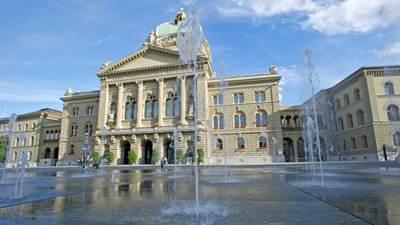

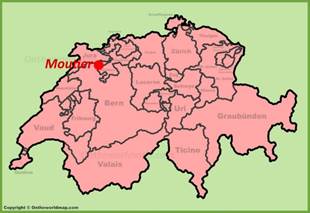

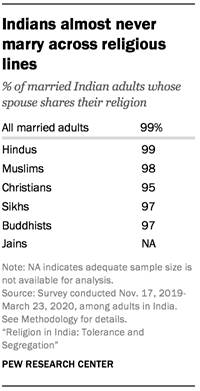
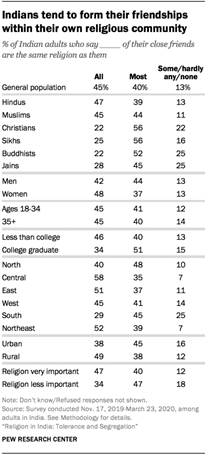

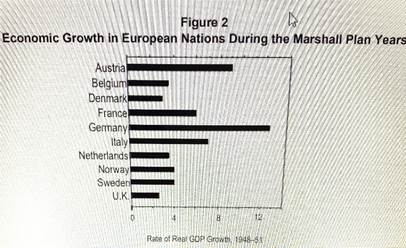




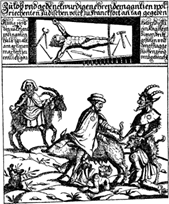


 njcssjournal
