A recent article by the editors of Rethinking Schools recalled an 1867 Harper’s Weekly editorial invoked the phrase: “The alphabet is abolitionist.” It meant that with the denial of literacy under the “slavocracy,” merely learning or teaching others to read and write was in itself an abolitionist act.
Educators have always been vulnerable to the threat of white nationalism, with their main duty being the enhancement and diffusion of knowledge, a great, if not the greatest, weapon of all. Just look at how fearful the idea of teaching formerly enslaved people to read made white supremacists during Reconstruction.
Now, 150 years later, white supremacism has evolved, not only as an intrusion to the way teachers relay facts or clarify concepts or ideas, but as a threat to the very stasis of the classroom, as kids are becoming influenced by back-alley online movements that promote nationalism, anti-Semitism, and misogyny. And so, while teachers don’t and shouldn’t create incognito accounts on 4chan, they should try to stay current with right-wing Internet trends, so that they’re able to catch things like hand symbols and disconcerting research paper citations.
One Chicago teacher created a toolkit for confronting white nationalism in the classroom, which offers various entry points for addressing whether or not and how a student may have become radicalized. In general, white nationalism has managed to creep its way back into the classroom in more ways than one can seemingly count. As a National Education Association article from earlier this year recalls, an Illinois high school teacher found himself, for the first time in his 32-year career, standing in front of his social studies class in 2017, reminding students that Nazis are not good people.
While this was a direct response on the part of the teacher to Donald Trump’s comments about the Charlottesville Nazis being “very fine people,” it was also a pretty abrupt shift for the teacher when it came to how he expressed his opinions of politicians’ statements in the classroom. The last six years have completely shattered the delicate walls that separate politics and everything else. For teachers, addressing the current state of politics is not a matter of grandstanding—it’s become a matter of human decency, of living up to their positions as presumptive role models and advocating for their students.
Laws around banning critical race theory — or worse, the bill introduced in Missouri which bans teaching that “identifies people or groups of people, entities, or institutions in the United States as inherently, immutably, or systemically sexist, racist, anti-LGBT, bigoted, biased, privileged, or oppressed” only serve to confuse young people. By banning educators from teaching about these systemic realities, and further, prohibiting them from even acknowledging that many systems are built upon “isms” and “antis,” politicians and their supporters deny young people the right to understand the very world they’ve inherited.
Denying this type of learning, and the civil discussion that accompanies it, is in itself a type of suppression. By prohibiting students the ability to learn the truth of their country’s history, lawmakers and the right-wing nationalists who today have emerged as a truly influential voting contingent in this country are disenfranchising young people. Despite this massive threat, teachers across the country are already fighting back, with many arguing that there is simply no way to stay neutral when not only our democracy but our ability to teach the truth is at risk.
If anything, schools should step up when it comes to bringing politics into the classroom—help teachers develop tactics and show support when necessary. As places that bring so many types of young people with so many different perspectives together, schools have a better opportunity than most institutions to help teachers develop a more human approach to viewing the world. Students, therefore, will be less susceptible to being radicalized by right wing forces online and will maybe even use their newfound knowledge to educate their parents and communities.
As educators, we must remember that staying neutral is perhaps more dangerous than any right-wing threat. Ignoring the recent explosion of right-wing nationalism and Nazi sentiments is not a way of staying out of politics, but a way of proliferating harmful politics. We cannot, in good conscience, become Adolf Eichmanns in the classroom. We must instead fight for what is just and for what betters our students and the world.
The Rethinking Schools article ended with a quote from Angela Davis. “I am no longer accepting the things I cannot change. I am changing the things I cannot accept.”
The teaching of history has become a political football in recent years, resulting in efforts by those on both ends of the political spectrum to regulate what appears in classrooms across the country. Lost in this legislation, grandstanding, and punditry is how the American public understands the past, a measurement that was last taken systematically by historians Roy Rosenzweig and David Thelen in their 1998 landmark study, The Presence of the Past. For that reason, the AHA and Fairleigh Dickinson University, with funding from the National Endowment for the Humanities, sought to take America’s historical pulse anew and assess the impact of the cultural changes over the intervening two decades.
In the fall of 2020, we conducted a national survey of 1,816 people using online probability panels. With approximately 40 questions, sometimes our poll results surprised us, but other times they confirmed what we had suspected. The following represents a sampling of what we learned, with the full data set available on the AHA website.
First, our respondents had consistent views on what history is—and those views often ran counter to those of practicing historians. Whereas the latter group usually sees the field as one offering explanations about the past, two-thirds of our survey takers considered history to be little more than an assemblage of names, dates, and events. Little wonder, then, that disputes in the public sphere tend to focus on the “what” of history — particularly what parts of history are taught or not in schools — as opposed to how materials can be interpreted to offer better explanations of the past and present. And even though 62 percent of respondents agreed that what we know about the past should change over time, the primary driver for those changes was believed to be new facts coming to light. In sum, poll results show that, in the minds of our nation’s population, raw facts cast a very long shadow over the field of history and any dynamism therein.
We also learned that the places the public turned to most often for information about the past were not necessarily the sources it deemed most trustworthy. The top three go-to sources for historical knowledge were all in video format, thus being a microcosm of Americans’ general predilection for consuming information from screens. More traditional sources, such as museums, nonfiction books, and college courses, filled out the middle to lower ranks of this hierarchy. (Note that respondents were asked to report on their experiences reaching back to January 2019, so these results are not simply artifacts of the pandemic.) Perhaps this helps explain why 90 percent of survey takers felt that one can learn history anywhere, not just in school, and why 73 percent reported that it is easier to learn about the past when it is presented as entertainment.
But while the most frequently consulted sources of the past were those within easy reach, views were mixed on their reliability to convey accurate information. Whereas fictional films and television were the second-most-popular sources of history, they ranked near the bottom in terms of trustworthiness. Although museums were of only middling popularity, they took the top spot for historical dependability (similar to the results in Rosenzweig and Thelen’s original study). College history professors garnered a respectable fourth position as reliable informants, even though the nonfiction works they produce, let alone the courses they teach, were infrequently consulted by respondents. Similar inversions occurred for TV news, newspapers and newsmagazines, non-Wikipedia web search results, and DNA tests. Social media, the perennial bête noire of truth aficionados, turned out to be a neither popular nor trusted source of historical information.
Some much-welcome news is that the public sees clear value in the study of history, even relative to other fields. Rather than asking whether respondents thought learning history was important—a costless choice—we asked instead how essential history education is, relative to other fields such as engineering and business. The results were encouraging: 84 percent felt history was just as valuable as the professional programs. Moreover, those results held nearly constant across age groups, genders, education levels, races and ethnicities, political-party affiliations, and regions of the country. Much has been written in Perspectives on History about the dismal history-enrollment picture at colleges and universities. Although we acknowledge that work and even see it manifested in our teaching experiences, our survey results suggest this is not for want of society’s value of understanding the past.
To better understand this apparent appreciation for learning history, despite the decline in college enrollments, we gathered a tremendous amount of data on the public’s experiences with learning history at both the high school and college levels. Society’s predominantly facts-centric understanding of history is perhaps partially explained by our educational findings. At the high school level, over three-fourths of respondents reported that history courses were more about names, dates, and other facts than about asking questions about the past. Despite that, 68 percent said that their high school experiences made them want to learn more history. Even for college courses, 44 percent of respondents indicated a continued emphasis on factual material over inquiry, but this was a turnoff to fewer than one-fifth of them. Not all data were so sanguine. One particularly sobering finding was that 8 percent of respondents had no interest in learning about the past.
Whether respondents’ classroom experiences emphasized history as facts turns out to be an important leading indicator in people’s interest in the past. Some of our more interesting cross-tabulations correlated respondents’ conceptions of history with their interest in learning about foreign peoples and places. Only 17 percent of those who viewed history as facts showed great interest in such matters, while double that number of history-as-explanation respondents did. Those trends held steady, though to somewhat lesser degrees, for curiosity about the histories of people perceived as different and about events from over 500 years ago. If wider interests and greater empathy are desired outcomes of history education, then educators might need to rethink the content-mastery versus inquiry environments they foster.
Yet historical inquiry of any quality cannot proceed without content. We therefore provided a list of topics and asked which ones were perceived as being over- or underserved by historians. Such traditional subjects as men, politics, and government were most likely to be seen as receiving too much attention, but they were joined in that sentiment by LGBTQ history. Interestingly, LGBTQ history also ranked third in needing more attention, and it had the fewest respondents indicating historians’ interest devoted to it was about right. This topic’s perception as both over- and underserved suggests that LGBTQ history remains a polarizing area of inquiry in the public’s collective mind. Respondents also said the histories of women and racial or ethnic minorities were most in need of greater consideration.
Furthermore, over three-fourths of respondents, regardless of age group, education level, gender, geographic location, or political affiliation, said it was acceptable to make learners uncomfortable by teaching the harm some people have done to others. The clear call for more investigation of racial and ethnic subgroups, as well as the acceptance of teaching uncomfortable histories, undercuts putative justifications for recent legislative efforts to limit instruction on these topics.
We understand that public perceptions might not be supported by other objective measures, but we argue that those in the historical discipline benefit from the knowledge of such public attitudes. Moreover, findings from our survey hint that approaching polarizing topics as a form of inquiry as opposed to a body of facts is more likely to resonate with learners.
Surveys like ours have their limitations. They are snapshots in time, they cannot easily answer logical follow-up questions, and they might sometimes elicit responses that are more aspirational than reflective of reality. This is why we hope AHA members will both explore and build on our data, contextualizing results for topics of special interest, convening focus groups to put flesh on our findings, and starting conversations about better education and engagement with the public. Let the joy of inquiry begin.
Students Taking Action Together: Strategies that Blend SEL with Civil Discourse for Democratic Change to Meet the NJSLS Social Studies Practices
Laura Bond and Lauren Fullmer
The racial reckoning of 2020, the COVID-19 pandemic, renewed focus on climate change and the Capitol insurrection have collectively revealed to youth that systematic change is needed to reduce structural inequities (Fullmer & Bond, 2021). With students back to in-person schooling, the eagerness for expression, social connection, and understanding how constructive social change is possible has never been greater than during the 2021-2022 school year.
Social Studies teachers stand in this rich moment in time, to teach civil discourse and citizenship in alignment with the new 2020 NJSLS Social Studies Standards. Students Taking Action Together (STAT), a project from Rutgers University’s Social-Emotional Character Development Lab, has developed five research-based strategies to equip teachers in grades five through twelve with the tools to integrate social-emotional competencies and academic standards with active practices to be explicitly taught and practiced in the classroom to foster citizenship skills. In this article, we illustrate how the five strategies embed SEL competencies required to meet the challenges of civic engagement and democratic change and then examine how each strategy delivers upon the NJSLS Social Studies practices so students are equipped to lead change in their schools and communities.
The Five STAT Strategies
STAT is a set of five SEL research-based strategies – Norms, Yes-No-Maybe, Respectful Debate, Audience Focused Communication (AFC), and PLAN, a social problem-solving framework – that scaffold the integration of active civics-based social studies practices for grades five through twelve using existing curricular content. The strategies explicitly promote social-emotional competencies, academic skills, dispositions, and actions required for an informed and engaged citizenry (Fullmer et al., 2022). In ready-made lesson plans, organized around the themes of race, class, and gender, students explore constructs of power, oppression, human rights, injustice, and inequality. The lessons showcase the use of a STAT strategy related to a historic event and/or relevant civic issues being addressed in national and local debates.
Each strategy builds upon the foundational SEL skills developed by the previous strategy and therefore, the strategies are meant to be taught in the sequence in which they are presented. By doing so, students have ample opportunity to practice explicit SEL competency skills and the academic standards to engage in civic dialogue and debate for democratic action.
Figure 1: The Five STAT Strategies
Norms
Engages students in developing ethical standards that lay the groundwork for a relationship-centered classroom community.
Yes-No-Maybe
Offers students opportunities for peer opinion sharing, in which they reflect on their views on an issue to take a stand and actively listen to the diverse perspectives of their classmates.
Respectful Debate
Encourages students to practice the skill of perspective taking by analyzing all sides of an issue, in order to gain an appreciation for diverse viewpoints and a level of comfort in modifying their original thinking.
Audience-Focused Communication (AFC)
Allows students opportunities to tailor their language and style of presentation to a specific audience with the goal of understanding the perspective and context of their audience and communication, toward optimally conveying their good ideas about changing a policy or practice for the greater good of their classroom, school, and society.
P.L.A.N.
Involves students in collaborative problem solving with action planning to make a change in policies and practices that maintain privilege and power and limit whose voices have input in key decisions.
The Norms Strategy
To engage the civil discourse skills of peer opinion sharing, perspective taking, social problem solving, norms nurture a safe, relationship-centered and open learning environment (Elias & Nayman, 2019). Unlike classroom rules, which are generally teacher constructed to establish an efficient and open environment, norms are co-created by students and the teacher. Through a discussion facilitated by the teacher, students decide upon desirable and undesirable classroom learning commitments and behaviors. Ultimately, students develop a list of affirmatively stated norms and discuss the rationale behind each norm and its impact on their well-being. Students also collectively determine ways to handle “norm-breaking” as a shared commitment to collective responsibility.
Engaging in the Norms strategy allows students to practice the SEL skills of self-awareness, self-management, relationship-building, and social awareness to form a safe and interdependent learning environment. Students practice how to recognize their feelings about working together within the classroom community, how to keep their impulsive behaviors in check, develop knowledge of the sensitivities and needs of their peers, and to communicate in a positive and constructive way with classmates and adults. Acting as a living class constitution, norms allow for students to rehearse the civic skills of respectful listening, peer opinion sharing, empathic debate, information gathering to shape arguments, and collaborative problem-solving required in the next four strategies. In this fashion, students build the competencies, both social-emotional and academic, to take informed action.
The Yes-No-Maybe Strategy
The Yes-No-Maybe strategy facilitates peer opinion sharing, which is the basis for genuine civic dialogue. This simple entry-level strategy allows students to express and share their opinions on historic or current issues, given their initial impressions and then after reading a source on the issue. This strategy supports students’ social-emotional skills of self-management, in which students have to withhold judgment, refrain from reacting, and the social awareness skills through perspective-taking and respectful listening.
Students reflect on several neutral statements related to a historic or current event inspired by a teacher-selected source. They take a stance on each statement by moving to a space in the classroom marked “yes”, “no” or “maybe” that reflects their opinion. They practice respectful listening by discussing their opinions in those small informal gatherings within those spaces, and sharing them out with the full group. Next, students read a background source directly related to the issue to inform their thinking. They are then given a second opportunity to change and/or share their opinions by moving to the appropriate location in the room on the same neutral statements provided the additional information from the source or from listening to their peers. Students reflect on if their opinions changed in the second round and if so, what inspired the shift in their opinion. The instructor facilitates these conversations, but does not seek to arrive at a consensus or other conclusion.
The Respectful Debate Strategy
Engaging in civic debate for understanding, rather than debate to win, is embodied in Respectful Debate (Civility and Society – A SmartBrief, 2019). With the skills of perspective-taking and respectful listening in place, this strategy introduces students to the more complex skill of establishing and defending an informed position on a topic while empathically listening to opposing views. Respectful Debates provide rich opportunities for students to practice their self-awareness and emotional regulation skills (Elias & Schwab, 2006). Students engage their social awareness by realizing the impact of their emotions on themselves and others, build confidence as they recognize their limitations and potential as they speak, and collaborate in teams. They self-regulate their emotions, thoughts, and behaviors as they dialogue with peers in preparation, present their argument and summarize the opposing side’s argument.
Students can be provided with or gather evidence for their assigned position on the debate statement or question. Students are assigned the stance of “pro” or “con” and work in small groups. Unlike traditional classroom debates, students are charged with arguing on both sides of the issue and intentionally reflecting on and accurately understanding the position of their opposition, allowing them to more objectively analyze the issue and broaden their perspectives. This poses a challenge when students strongly disagree with one side of the issue and find themselves dealing with strong emotions that they must regulate. This challenge presents opportunities for teachers to teach emotional regulation techniques, such as deep breathing, positive self-talk, and waiting before speaking.
Audience-Focused Communication (AFC)
Civic discourse is realized with Audience-Focused Communication (AFC), which is a stand-alone strategy to be implemented without the need to be taught in the sequenced order of the previous three strategies. It’s a deliberate and strategic focus on speaking and related skills that can be harnessed to present on academic topics, such as pivotal decisions or historic debates, as well as school-based issues, such as the inclusiveness of student government, bullying, and freedom of expression. With AFC, students are given a rich opportunity to find their stance and voice and to use media effectively in order to impact an audience to mobilize consensus-making or to excite change. AFC can also be used as a natural extension of PLAN (what we refer to as PLAN Integrative), in that it provides students with detailed guidance with regard to how to best present the solutions and action plans that they developed. Fundamental to AFC is asking students to put themselves in the shoes of the listener/receiver, and not assume that they always are speaking to people just like themselves. This is true for sharing work in a class, making an announcement over the loudspeaker, preparing a presentation for an assembly, or developing and delivering a petition to the Student Council.
The essence of AFC is that students exercise their social awareness and relationship skills working collaboratively to identify their audience, determine the format of their presentation, and take into consideration their audience’s background and prior knowledge to effectively craft their message and communicate it to influence the audience. Self-awareness and self-regulation skills are key to this strategy, which demands students self-assess and continually evaluate how to best present the information and craft their argument to have the maximum impact on the audience.
PLAN: A Problem-Solving Framework
The fifth and final strategy, PLAN, builds on the skills students practice in the preceding strategies and shifts the focus to social problem solving and action planning to prepare students to take civic action. PLAN stands for Problem definition, Listing options, Action plan, and Notice success and lessons learned for next time. With PLAN, students work in small groups to collaboratively examine and evaluate a historic or a current problem that has no obvious solution or perhaps revisit a past situation to better understand how different analyses or decisions might have led to different actions and outcomes.
Then, they consider the options to address the problem and weigh the pros and cons of each. Students work together to develop a SMART goal and related action plan to solve the problem. They also engage in perspective-taking to consider the impact of their action plan on the various stakeholders involved and look to implement when feasible (hence, the title, Students Taking Action Together). The process culminates with a reflection, in which students notice successes with their plan and possible revisions to their thinking to be more successful the next time around. In the spirit of John Dewey, as students apply PLAN to classroom and school-related problems, it will accelerate their ability to apply their skills to historic and civic issues.
How the STAT Strategies Align to the NJSLS Practices
The new Social Studies practices engender opportunities for students to practice civic discourse, dialogue, debate and action in the classroom. The STAT strategies guide Social Studies teachers to strike a balance between content acquisition and active practices that maximizes students’ ability to rehearse and transfer the skills they learn (Fullmer et al., 2022). STAT strategies are designed to accompany and supplement lesson content. They provide guidance on how teachers can integrate the active practices for civil discourse and action into existing curricula. In the crosswalk figure below, we’ll show how STAT coaches teachers to achieve this integration in meaningful and effective ways.
Figure 2: A Crosswalk of STAT’s Integration of the NJSLS Social Studies Practices
Y-N-M
RD
AFC
PLAN
Developing Questions & Planning Inquiry
Each lesson features an organizing question to foster thinking & support planning.
Students are given a debate question and assigned an initial side (they will ultimately take both sides) for which they must plan an approach to gather information and present it.
Students formulate inquiries to understand the context within which they will be presenting.
The first step in the PLAN process involved identifying the problem/ questions that will be the focus of inquiry.
Gathering & Evaluating Sources
Students read a central article/source and share their opinions before and after reading the article.
Students must review sources to prepare their positions for the debate.
Students must gather information from relevant and appropriate sources to determine presentation context and constraints.
PLAN works from the existing curriculum or school situations/contexts, so students must gather this information at the outset and value the information in proportion to the reliability of its sources.
Seeking Diverse Perspectives
Students express their opinions. Articles/sources offer multiple views on the issues.
Students must examine both points of view and argue both sides of the debate.
Students are encouraged to consider a range of presentation modalities and to gather perspectives from individuals with experience at presenting to the intended audience(s).
The second part of the PLAN process involves brainstorming a wide range of possible solutions to the problem. Prior to that, the problem is defined from the perspective of each of the groups involved.
Developing Claims and Using Evidence
Students respond to claims before and after reading the article/sources.
To be successful, students must bring forward credible sources of evidence to support their positions.
Students working in groups to finalize their presentation context and message must put forward their approaches using credible evidence.
Students will be expected to justify their claims based on evidence in textual and other sources.
Presenting Arguments and Explanations
Students read & draw on the source’s key arguments, supporting evidence to inform and express their opinions.
Students must refine, present, and defend their arguments within the constraints of the debate.
Students must justify their particular positions regarding how the presentation should be made to be appropriate to the audience and context.
The third step in the PLAN process involves presenting solutions and detailed plans, including anticipation of obstacles.
Engaging in Civil Discourse and Critiquing Conclusions
Students exhibit curious compassion towards those with divergent views and seek to understand them through inquiry, rather than judge them.
Students learn emotional regulation techniques to remain calm when involved in controversial discussions with their peers.
When students work collaboratively to plan a presentation, the process of civil discourse – when deciding upon the content that will be presented and the method of delivery – is more important than the product (i.e. choosing the “right” content or format).
The fourth step of PLAN involves critiquing the conclusions reached by those who dealt with the issue in history and the conclusions the students reached when implementing their action plan.
Taking Informed Action
Students gain the confidence and competence of developing informed opinions and expressing their opinions in social settings required to take.
Students consider the views of all relevant stakeholders by engaging in perspective-taking to ensure that their plan of action is inclusive.
Students will take action based on their plans and will gather feedback/debrief to inform their future action in similar situations.
The final step in PLAN involves reflecting on actions taken and identifying how things would be done differently in future situations; when applied to history, this includes projecting different outcomes if past decisions were different, including implications for the present and future.
Developing Questions & Planning Inquiry
Civic discourse often starts with asking questions of leaders and elected officials. The first Social Studies practice of Developing Questions & Planning Inquiry is explicitly integrated into STAT lessons. Each lesson features a core question to assist the teacher in organizing the lesson content and student thinking. Relevant issues are integrated into the lesson anchor question to promote student engagement. Students then use the question to dig deeper into exploring the issue.
For example, in a Yes-No-Maybe lesson, the statement, “The coronavirus has not fueled anti-Asian racism?” is presented to students to frame the development of neutral statements, shaping students’ thinking and questioning as they engage in dialogue with their peers. At the end of the lesson, students revisit the question and respond to the essential question. In this vein, students learn how the power of relevant questions can drive collective discussion and learning around the issue. The Yes-No-Maybe strategy demonstrates to students that civic discourse starts with asking questions. The table below indicates exactly how students engage the skill of planning for inquiry and developing questions across the STAT strategies, once Norms have been established. The practice necessary to spark civic discourse is scaffolded and spirals up through the strategies to PLAN.
Gathering & Evaluating Sources
The second practice, Gathering & Evaluating Sources, facilitates students’ inquiry by having them gather credible sources, given the framing statement or essential question to enhance their background knowledge and to consider all perspectives on the issue. With the STAT lessons, students are exposed to a wide range of primary and secondary sources, including podcasts, political cartoons, and newspaper articles and are equipped with the critical literacy skills needed for civic life, as well as to promote informed citizenship. Through repeated practice, students learn that words are a form of power and that no source is entirely neutral in nature.
In the Respectful Debate strategy, after the students are presented with a controversial statement that frames the debate, they are tasked with critically evaluating background sources on the topic to identify evidence in support of their position. For example, in a Respectful Debate lesson on racial equality, framed around the statement “In order to achieve racial equality, Blacks should separate from Whites”, students are provided with a blog post from the New York City Urban Debate League and an audio recording of the 1961 debate between Malcolm X and James Baldwin. Through the processes of deliberation, peer discussion, and reflection, students analyze the information from all angles and form new understandings by synthesizing it with their prior knowledge.
Seeking Diverse Perspectives
When building the muscle of evaluating background sources, students develop an understanding of their perspective on an issue, as well as an appreciation for the perspectives of others. Seeking Diverse Perspectives is a practice that allows students to see and connect with the authentic and genuine emotional reactions and thoughts of their peers. This allows them to develop empathy for individuals and groups of people of different backgrounds and experiences. The Yes-No-Maybe strategy teaches students to exercise compassionate curiosity over biased assumptions to better understand the other’s perspectives. Through respectful and empathic listening and peer opinion sharing, students become more open-minded and accepting of the notion that beliefs and opinions can change over time.
During a Yes-No-Maybe lesson on foot binding in China, students are invited to reflect on their views related to the statements: “Women, not men, perpetuate a society’s concept of what is beautiful” and “Expressions of beauty are typically crafted by the elite”. Students then engage in peer opinion sharing and a review of background sources to consider how what people think is beautiful has changed over the years and differs around the world. Through these experiences, students widen their perspectives and reevaluate their views about the meaning of beauty.
Developing Claims and Using Evidence
The fourth practice, Developing Claims and Using Evidence, equips students with the skills to engage in constructive and meaningful dialogue about important issues. Students consider an issue from all perspectives and take account of any biases they may have to formulate their own viewpoint on the issue and develop a logical argument supported with the best possible evidence. While all of the STAT strategies task students with exercising the skill of eliciting evidence from their analysis of background sources and engaging dialogue with peers (Fullmer et al., 2022), Respectful Debate really hones in on this practice. Provided with background sources on a controversial issue, students not only identify the most compelling evidence to support their “pro” or “con” argument, but also, reflect on any gaps in the reasoning and evidence presented by their opponent.
For example, in a Respectful Debate lesson, students must identify evidence and construct arguments to support the “pro” and “con” sides of “Is it possible for sports to be inclusive of the LGBTQIA+ community?”. Provided with a video, timeline, and two articles, students identify the authors’ respective claims and compare it to their own and pull out the best pieces of evidence to not only support their claim, but to challenge that of their opponents. By actively listening to both sides of the argument, students develop a collective understanding, as well as historical empathy for members of the LGBTQIA+ community.
Presenting Arguments and Explanations
While students are frequently asked to Present Arguments and Explanations in front of an audience, whether sharing the results of a science lab, describing why an invented algorithm works in math, or justifying the theme of a novel, they are rarely provided with the skills to do so with competence and confidence. Yet, being able to tailor their presentations to a specific audience and regulate their tone of voice, eye contact, and nonverbal communication accordingly are essential elements of the fifth practice. The Audience-Focused Communication (AFC) strategy equips students with the presentation literacy skills necessary to determine the appropriate format of a presentation (e.g., slideshow, song, video, speech) and the prior knowledge and views of their audience to most effectively present their argument in a way that makes sense and resonates with their audience.
Consider an AFC lesson at the end of a content-based unit, in which students are tasked with presenting on a topic or book that they recently learned about. Students learn how to focus their message, given a specific audience, and consider how it will be received through perspective-taking. Through deliberate planning and practice, students develop a step-by-step run-down of the flow of the presentation and rehearse SEL skills such as positive self-talk and deep breathing to be prepared to regulate their emotions. With AFC, students are furnished with the presentation literacy skills to be active members in a participatory democracy.
Engaging in Civil Discourse and Critiquing Conclusions
Building off the previous two practices, the skill of Engaging in Civil Discourse and Critiquing Conclusions excites opportunities for collective listening and assessing the reasoning which is central to sensemaking. In a Yes-No-Maybe lesson students present their opinions and listen to their peers express their opinion on statements related to a topic, prior to reading a source. After reading the source students move to a location in the room that reflects their opinion, even if it changed and discuss in small groups what argument shaped their opinions. At the end of the lesson the class reflects on whether their thinking changed or not and discusses what reasons may have caused them to change their original opinion on the topic. Thus, students learn the value of listening and reading diverse views on the topic and can refine their original thinking on the topic.
Respectful Debate lessons ask students to summarize the opposing sides argument and question if the summary was accurate. The process of summarizing the presented argument provides students real practice for active listening in debate to expand their thinking on the topic. When students switch sides to argue the opposing argument it exposes them to analyze the reasoning of a point of view they may not agree with. In this process they begin to organically critique the argument(s) by questioning their assumption and preconceptions on the topic. At the end of the lesson students reflect about whether summarizing what the other side said and/or switching sides changed their opinion, and what about the summary was helpful. The reflection is a potent opportunity to learn the value of listening to and standing in to argue for a contrary view can refine their own and the group’s concluding thinking as they strive towards collective understanding.
Taking Informed Action
The previous practices lay the groundwork for the final practice of Taking Informed Action, which is the very essence of democracy. With the PLAN problem-solving framework, students examine a problem of the present or the past and consider the options to solve it by engaging in inquiry and background research. Next, they consider the views and needs of all relevant stakeholders to develop an action plan. In the final step, they engage in a collaborative discussion in which they reflect on the successes of their plan and identify areas for growth moving forward. This encourages students to acknowledge that the problem-solving process is iterative in nature and requires constant revisions to be more inclusive and effective.
A PLAN exemplar lesson on Women’s Rights invites students to analyze how Elizabeth Cady Stanton and the women at the Seneca Falls Convention organized to address the issue of unequal social, civil, and religious rights. Students then engage in perspective-taking to put themselves in the position of disenfranchised women during the mid-19th century to generate alternative solutions and action plans. The hope is that students walk away from this lesson with a greater awareness of the social injustices in their communities and the skills to organize to take collective action.
Conclusion
The New Jersey Social Studies Standards are visionary. They seek to educate students in history and civics and prepare them for active citizenship in a global and interdependent society. Students Taking Action Together is a set of teaching strategies that are ideally matched to the NJSLS and the guiding practices articulated for attaining them. These strategies embolden students with the necessary skills that nurtures a sense of hope and optimism that they can lead the change they wish to see in the world.
References
Civility and Society: How to Boost Civil Discourse in K-12 Classrooms. (2019). Smartbrief.
Elias, M. J., & Nayman, S. (2019, October 28). Students taking action together (STAT). New Jersey Education Association.
Elias, M. J. & Schwab, Y. (2006). From compliance to responsibility: Social and emotional learning and classroom management. In C. M. Evertson & C. S. Weinsten (Eds.), Handbook of classroom management (pp. 94-115). Lawrence Erlbaum Associates.
Fullmer, L. M., Bond, L. F., Molyneaux, C. M., Nayman, S. J., & Elias, M. J. (2022). Students Taking Action Together: 5 teaching techniques to cultivate SEL, civic engagement, and a healthy democracy. ASCD.
“I love studying history because it’s nice reading about people who overcame a lifetime of difficulties against all odds.”
“Every Sunday, we walked together about five miles to church. We didn’t have a car, so we walked over an hour to arrive at Mass on time. We had the choice of going to 7:00 A.M. Mass at the monastery or walk in the opposite direction for 9:00 A.M. Mass at church in Shinrone. On rainy days, we ran while the rain soaked through our clothes. To this day, I never remember seeing an umbrella in Ireland.”(p. 29)
The Roman Catholic Church in Shinrone, built in 1860
The hidden stories of ordinary people are an essential part of the historical narrative. Unfortunately, these stories remain hidden. Everyone reading this book review has an important story – one related to triumph, tragedy, perseverance, culture, faith, and philosophy. The story of Peg Holland began on April 12, 1937. It was the age of the Zeppelins and there was a good chance that the giant German airship with 97 passengers passed over the farm house of the Hollands on its fateful voyage to Lakehurst, New Jersey in May of 1937. Peg will grow up during World War II and her life as a young adult at the age of 13 will begin in the middle of the 20th century. This is significant as immigrants from West Germany and Ireland came to America in the hope of a better life. The United States of America was a place of hope, liberty, and freedom from the traditions of Europe.
The story of Peg Holland is anything but ordinary as it reveals insights into Irish and American culture. Her story is powerful and very different from Life with Beaver or Father Knows Best. The story of history is the story of people. Through her experiences we learn about Elvis, Irish clubs, dating, conflicts, and hopes. The stories of ordinary people are valuable because they provide insights that are deeper than nostalgia. They reveal why liberty, equality, homeownership, education, and family are important and at times appear to be the ‘impossible’ dream. In this context we see how an immigrant woman comes to understand the purpose of the American Revolution for her. This is a story that prompts inquiry and discussion by students in a Sociology or history class, book club, or religious study group.
The design of this book is carefully planned for discussion and reflection as each chapter is less than ten pages taking less than 15 minutes to read. Each chapter includes a unique episode similar to binge watching a streaming movie. In fact, one might look at this book in terms of five seasons:
Season 1 (life in rural Ireland)
Season 2 (adoption of Mary and moving to New York)
Season 3 (married life)
Season 4 (unexpected situations)
Season 5 (reunion and optimism)
This memoir is an inspiring account of the discrimination of an unwed teenage mother experienced by the women in her community, a decision for adoption of her nine-month old daughter, working as a nanny, finding love in the Bronx, moving to the suburbs of New Jersey, the extended Irish family, and her reunion with her daughter 50 years later.
This historical narrative takes place over 70 years from 1950 through 2020 from the perspective of an immigrant woman from Ireland. It includes her memories of dating in the Sixties, apartment living in the largest city in the world and making the move to the suburbs, the influence of music, television, and the church in her life, returning to Ireland, and community social events. For teachers interested in using this memoir to help students understand culture, family, and faith, this book provides a sociological framework of American culture during the last four decades of the 20th century and the transition into the 21stcentury by a senior citizen and grandparent. The setting is Long Island, the Bronx and Bergen County, NJ.
The book will also prompt serious questions about how an immigrant teenage girl from Ireland entered the United States under the restrictions of the Immigration and Nationality Act of 1952 (McCarran-Walter Act), the role of Catholic Charities and other religious and private agencies with the relocation of people, commercial airline travel in the 1950s, the increased demand for parochial education, raising children, the baby boom generation, the influence of social clubs, the role of women in Irish and American culture, and how the American Dream of Peg Holland compares to the American Dream as defined by Betty Friedan:
“Each suburban wife struggled with it alone…they learned that truly feminine women do not want careers, higher education, political rights….” (Rudnick, 72). Friedan goes on to emphasize how societal views have caused women’s “greatest ambition” to be marriage and children. Her biggest point eludes that “it is easy to see the concrete details that trap the suburban housewife, the continual demands on her time.”American Dream Project
For members of a book club, the book provides opportunities for discussion about teenage pregnancy, resilience, perseverance, facing discrimination, gangs, the life of an unmarried woman, struggling with debt, coping with cancer, raising a family, the importance of faith and hope, and if our lives are predetermined by a higher force or subject to chance and luck. The characters are real and their stories are from their hearts. Even if the authors edited phrases or words, the primary source documentation and candid expressions will make your eyes water with sadness and happiness.
For members of a religious discussion group this memoir offers ten examples of situations that require us to hit the pause button and stop and think. For example, the circumstances of a virgin pregnancy, living away from home during her pregnancy, twists and turns of the decision to give a daughter up for adoption, working as a nanny, finding friends, falling in love, purchasing a home, facing devastating health issues, reunion in Ireland, and receiving an unexpected phone call.
For those who may read this book as an individual, I can only provide my perspective as a man, husband, and grandfather. I experienced emotions of sadness, helplessness, empathy, inspiration, encouragement, and thanks for my personal religious beliefs in reading Peg’s personal story. It made me think about the teenage mothers I knew, decisions about who to trust, personal hardships and triumphs, the power of forgiveness, and the challenges teenagers and parents face. The characters in this memoir are living examples of these experiences.
I also enjoyed the Irish culture and local color of Long Island, Valentine Ave. in the Bronx, and Hawthorne, NJ. These were all places where I lived but my experience was one of a middle-class man with a college education. To some extent my stereotypes of Irish culture found agreement and yet they were also proven wrong and my perspective of life and culture was broadened.
2314 Valentine Ave. Bronx, NY
“My prayers were always the same. I prayed to God to help me get over my guilt, and He answered my prayers. After each conversation with Mary, I could feel the healing continue. I began to feel like a person who was more sure of herself. I was no longer stuck beating myself up over something I have no control over anymore. I told myself Enough already, I cried so many nights after I gave Mary away and when I was by myself. Finally hearing Mary’s voice and everything she had accomplished in her life shot through me to my core and started to heal me within. It was confirmed I did the right thing.” (words of Peg Holland O’Hagan in her mid-70s)
The book is available on Amazon. It is written by a husband and wife with professional careers in education. I am honored that Thomas is my former student and years later became my colleague.
This excerpt from a longer article is reposted from History News Network with the author’s permission. The full article was published in the November 23, 2021 issue of The Atlantic Monthly.
Anti-Evolution: The Conservative War on Education that Failed
by Adam Laats
In the recent governor’s race in Virginia, Glenn Youngkin scored a huge upset win days after promising to ban critical race theory from Virginia schools. Youngkin is hardly the only Republican calling for school bans. In Texas, Representative Matt Krause sent a letter to school administrators about books in their district. Did they have Ta-Nehisi Coates on their shelves? Isabel Wilkerson’s Caste? How about LGBT Families, by Leanne K. Currie-McGhee? Or any of about 850 other books that might, in Krause’s words, “make students feel discomfort, guilt, anguish, or any other form of psychological distress because of their race or sex”?
Beyond Texas, beyond Virginia, the prospect of banning books and ideas from public schools has GOP strategists smelling electoral blood. House Minority Leader Kevin McCarthy vowed to turn school bans into a winning issue for Republicans in 2022, sketching a “parental bill of rights” to protect kids from troubling ideas about race and sex.
These efforts have a history. Back in the 1920s, the vague term that galvanized conservative angst was not critical race theory but evolution. Conservative pundits at the time seized on a cartoonish misrepresentation of evolutionary science and warned their fellow Americans that “evolution” was nothing less than a sinister plot to rob white American children of their religion, their morals, and their sense of innate superiority.
But although the school bans might have changed some school curricula in the short term, in the long run, they backfired. Telling parents you don’t want their kids to have the best possible public schools is never good politics. A full century ago, the most effective school-ban campaign in American history set the pattern: noise, fury, rancor, and fear, but not much change in what schools actually teach.
In the 1920s, the idea of evolution wasn’t new. Charles Darwin’s bombshell book about natural selection had been published 60 years earlier. The outlines of Darwin’s theory had become standard fare in school textbooks and curricula, even though the real scientific controversies about the mechanism of natural selection were by no means settled. But the furious campaign to ban evolution had nothing to do with those debates among scientists.
In 1923, T. T. Martin, the “Blue Mountain Evangelist,” preached that “evolution is being drilled into our boys and girls … during the most susceptible, dangerous age of their lives.” Evolution, Martin warned, was not good science but only a plot by “sneering” “high-brows” to inject mandatory atheism into public schools. Martin claimed to have “abundant evidence that the teaching of these text-books is unsettling the faith of thousands of students.”
“WHAT can be done? Where is our hope? The pussyfooting apologies for the Evolutionists will say “Don’t do anything drastic. Educate the people, and the thing will right itself.” Educate the people? How can we, when Evolutionists have us by the throat? When they have, while we were asleep, captured our tax-supported schools from primary to University, and many of our denominational colleges? “The Philistines be upon thee Samson !” But alas! We have been asleep upon the lap of this Delilah and. have been shorn of our strength-they have captured our schools. But “O Lord God, remember me, I pray thee, and strengthen me, I pray thee, strengthen me only this once, O God.” “And Samson took hold of the two middle pillars upon which the house stood, and on which it was borne up.” So could we. “And he bowed himself with all his might.” So can we. And the strength of God who “created man in his own image” will come into us, and we will slay these Philistines, the greatest curse that has come upon man since God created him in His own image. What is a war, what is an epidemic that sweeps people away by the hundred thousand, compared to this scourge that under the guise of “science,” when it is not science, at all, is sweeping our sons and daughters away from God, away from God’s word, taking from them their Redeemer and Saviour, to spend eternity in hell?”
New Jersey’s Climate Change Curriculum: An Important First Step for Social Studies Education
by Evan Saperstein and Daniel Saperstein
In a recent Intergovernmental Panel on Climate Change (IPCC) (2021) report, the United Nations (UN) scientific body confirmed what many leading scientists, activists, and public officials have known and warned for years: human activity is responsible for the climate change crisis. The sobering report (drafted by 234 scientists representing 66 nations) is nothing short of a code red, concluding that greenhouse gas (e.g., carbon dioxide, methane) emissions are causing rising temperatures and more frequent heatwaves, as well as worsening floods, droughts, and hurricanes (Intergovernmental Panel on Climate Change, 2021). To stem the tide requires immediate and sustained action across the globe (e.g., through a net zero emissions coalition) (Intergovernmental Panel on Climate Change, 2021). The UN General Assembly (2015) at large has recognized this dire imperative for years, and other multinational institutions and organizations (e.g., Climate Action Network) have worked tirelessly to bring attention to this heightening threat.
With each passing year, however, the stark consequence of failing to take action has become more painfully evident. Indeed, only three weeks after the release of the IPCC report, Hurricane Ida wreaked havoc in the South and then, to the surprise of forecasters, across much of the Northeast, particularly in New Jersey (Porter & Scolforo, 2021). The torrential downpour and instant flash flooding of streets and homes resulted in swift and seismic destruction (Porter & Scolforo, 2021). In response, New Jersey Governor Phil Murphy issued a state of emergency, and promised grants to help rebuild and guard against future devastation (Arco, 2021; Porter & Scolforo, 2021). And, while touring the aftermath, President Joe Biden (2021) cautioned that: “weather would be more extreme and climate change was here, and we’re living through it now. We don’t have any more time.”
Hurricane Ida is just the latest example of extreme weather events in New Jersey and across the United States (Freedman & Samenow, 2020; Pershing, 2021). Indeed, the United States recently experienced its warmest summer in history (previously set in 1936) (Chow, 2021). In fact, this past decade was the Earth’s warmest to date (and since 2005, there have been the 10 hottest years on record) (Borunda, 2020; Lindsey & Dahlman, 20021; Milman, 2020). In light of these troubling trends, New Jersey has taken steps to address climate change.
For instance, in 2020, Governor Murphy signed the Food Waste Recycling Law to reduce greenhouse gases by requiring large generators of food waste to recycle unused and wasted food (Munoz, 2020). Later that year, the New Jersey Department of Environmental Protection published the Global Warming Response Act Report, detailing the steps needed to reduce climate pollutant emissions (Barr et al., 2020). This past year, the New Jersey Department of Environmental Protection (2021) also developed its first statewide Climate Change Resilience Strategy. The strategy outlines six overarching priorities: “build resilient and healthy communities,” “strengthen the resilience of New Jersey’s ecosystem,” “promote coordinated governance,” “invest in information and increase public understanding,” “promote climate-informed investments and innovative financing,” and a “coastal resilience plan” (New Jersey Department of Environmental Protection, 2021).
Notably, New Jersey’s climate change initiative and action also has extended to education. Recently, New Jersey became the first U.S. state to add climate change across its K-12 curricular standards (Fallon, 2020; Warren, 2020; Williams, 2020); full implementation will take effect by the following academic year due to delays resulting from the pandemic (New Jersey Department of Education, 2021). Various stakeholders, including K-12 educators and administrators, participated in this historic initiative. New Jersey’s first lady Tammy Murphy helped lead the effort (Warren, 2020), with the goal of providing younger generations “an opportunity to study and understand the climate crisis through a comprehensive, interdisciplinary lens” (Cruise, 2020). The first lady cast the initiative as “much more than an added educational requirement; it is a symbol of a partnership between generations” (Cruise, 2020). Governor Murphy himself acknowledged the significance of the curricular standards “to reestablish New Jersey’s role as a leader in the fight against climate change” (Warren, 2020). Former Vice President and environmental activist Al Gore also praised the state for its commitment to prepare future leaders able to confront climate change and prescribe solutions (Warren, 2020).
The incorporation of climate change related content into the state’s K-12 curriculum is far-reaching (Fallon, 2020; Warren, 2020; Williams, 2020). The new curriculum will result in material changes to Social Studies, as well as several other content areas of the 2020 New Jersey Student Learning Standards (NJSLS) ranging from Career Readiness, Life Literacies, and Key Skills to Comprehensive Health and Physical Education; Computer Science and Design Thinking; Science; Visual and Performing Arts; and World Languages.
For Social Studies in particular, climate-related content has been added to U.S. and world history, encompassing economics, geography, civics, government, and human rights (New Jersey Department of Education, 2020e). The social studies standards speak to “leveraging climate change as an area of focus” through “authentic learning experiences” and the “use of disciplinary literacy skills to communicate . . . solutions for change” (New Jersey Department of Education, 2020e, p. 21). This includes “students asking their own questions,” soliciting “diverse points of view,” and “using geospatial technologies to gather data” (New Jersey Department of Education, 2020e, p. 21).
The social studies standards from the New Jersey Department of Education (2020e) set “performance expectations” specific to climate change, including to “evaluate the impact of individual, business, and government decisions and actions on . . . climate change” (p. 66); “assess the efficacy of government policies and agencies in New Jersey and the United States in addressing these decisions” (p. 66); “investigate . . . climate change, its significance, and share information about how it impacts different regions around the world” (p. 86); “develop an action plan . . . related to climate change and share with school and/or community members” (p. 87); and “plan and participate in an advocacy project . . . about the impact of climate change at the local or state level and propose possible solutions” (p. 87). These curricular changes go well beyond Social Studies, as noted above. For Career Readiness, Life Literacies, and Key Skills, climate-related content cuts across topics in creativity and innovation; critical thinking and problem-solving; digital citizenship; global and cultural awareness; and information and media literacy (New Jersey Department of Education, 2020a). Comprehensive Health and Physical Education ties climate-related content with community health services and support (New Jersey Department of Education, 2020b). Computer Science and Design Thinking fuses climate-related content with data and analysis, as well as the effects of technology on the natural world (New Jersey Department of Education, 2020c). For Science, naturally, climate-related content covers earth and human activity, engineering design, and earth’s systems (New Jersey Department of Education, 2020d). For Visual and Performing Arts, climate-related content is part of dance, media arts, theatre, and visual arts (New Jersey Department of Education, 2020f, p. 4). And, for World Languages, climate-related content runs the gamut of interpretive, interpersonal, and presentational modes of communication (New Jersey Department of Education, 2020g).
Educating the next generation about the effects of climate change is fundamental to the future of social studies education and across disciplines. During the September 2019 global climate strikes, students around the globe (led by Greta Thunberg) left class and took to the streets to protest politicians’ inaction on climate change (Huish, 2021; Sengupta, 2019). While the pandemic served to stall momentum (Berwyn & Erdenesanaa, 2021), youth activists are once again holding in-person (albeit much smaller) protests as part of Thunberg’s Friday for Future movement (Adam & Noack, 2021). But youth activists can only achieve so much on their own, and climate change education is a necessary predicate to prepare the next generation to address this challenge.
New Jersey’s climate change curriculum is a critical first step, and it should become a blueprint for other states in this country as well as other countries abroad. Climate change education will provide students with a baseline of knowledge to understand and confront the negative impacts of this threat. As the NJSLS show, these are interdisciplinary issues that cut across social studies, as well as the sciences and the arts, to name a few. It is imperative that students with varying backgrounds, educational levels, and areas of interest become well-versed in these issues, and take the lessons learned through further education, into their professions, and as part of their lives as citizens.
Yet, New Jersey should not stop with climate change education. New Jersey K-12 schools can and should take the lead in teaching about other critical issues—be they about public health, economic inequality, or social justice. The UN has outlined a number of these global challenges that have become better known as the 17 sustainable development goals (SDGs), of which climate action is but one. Others include: no poverty; zero hunger; good health and well-being; quality education; gender equality; clean water and sanitation; affordable and clean energy; decent work and economic growth; industry, innovation and infrastructure; reduced inequalities; sustainable cities and communities; responsible consumption and production; life below water; life on land; peace, justice, and strong institutions; and partnerships (United Nations General Assembly, 2015). To groom well-rounded citizens, New Jersey K-12 schools must once again take the reins and incorporate such issues into various content area standards. Students need to learn about the impact of climate change and other global issues to successfully navigate through the many challenges facing today’s world. Given the scope and scale of the risk, the stakes could not be greater.
Barr, H., Orlando, P., Kettig, R., Barry, R. C., Karmarkar-Deshmukh, R., & Kamel, M. (2020). New Jersey’s Global Warming Response Act 80×50 Report. New Jersey Department of Environmental Protection. Retrieved from https://www.nj.gov/dep/climatechange/docs/nj-gwra-80×50-report-2020.pdf
Berwyn, B., & Erdenesanaa, D. (2021, September 24). A Friday for the future: The global climate strike may help the youth movement rebound from the pandemic.
Huish, R. (2021). Global citizenship amid COVID-19: Why climate change and a pandemic spell the end of international experiential learning. Canadian Journal of Development Studies, 1-18. Intergovernmental Panel on Climate Change (2021). AR 6 climate change 2021: The physical Science basis. Retrieved from https://www.ipcc.ch/report/ar6/wg1/
New Jersey Department of Education. (2020e). 2020 New Jersey Student Learning Standards – Social Studies. New Jersey Department of Education. (2020f). 2020 New Jersey Student Learning Standards – Visual and Performing Arts.Retrieved from https://www.nj.gov/education/cccs/2020/2020%20NJSLS-VPA.pdf
Is it possible to build social solidarity beyond the state? It’s easy to conclude that it’s not. In 1915, as national governments produced the shocking carnage of World War I, Ralph Chaplin, an activist in the Industrial Workers of the World, wrote his stirring song, “Solidarity Forever.” Taken up by unions around the globe, it proclaimed that there was “no power greater anywhere beneath the sun” than international working class solidarity. But, today, despite Chaplin’s dream of bringing to birth “a new world from the ashes of the old,” the world remains sharply divided by national boundaries—boundaries that are usually quite rigid, policed by armed guards, and ultimately enforced through that traditional national standby, war.
Even so, over the course of modern history, social movements have managed, to a remarkable degree, to form global networks of activists who have transcended nationalism in their ideas and actions. Starting in the late nineteenth century, there was a remarkable efflorescence of these movements: the international aid movement; the labor movement; the socialist movement; the peace movement; and the women’s rights movement, among others. In recent decades, other global movements have emerged, preaching and embodying the same kind of human solidarity—from the environmental movement, to the nuclear disarmament movement, to the campaign against corporate globalization, and to the racial justice movement.
Although divided from one another, at times, by their disparate concerns, these transnational humanitarian movements have nevertheless been profoundly subversive of many established ideas and of the established order—an order that has often been devoted to maintenance of special privilege and preservation of the nation state system. Consequently, these movements have usually found a home on the political Left and have usually triggered a furious backlash on the political Right.
The rise of globally based social movements appears to have developed out of the growing interconnection of nations, economies, and peoples, spawned by increasing world economic, scientific, and technological development, trade, travel, and communications. This interconnection has meant that war, economic collapse, climate disasters, diseases, corporate exploitation, and other problems are no longer local, but global. And the solutions, of course, are also global in nature. Meanwhile, the possibilities for alliances of like-minded people across national boundaries have also grown.
The rise of the worldwide campaign for nuclear disarmament exemplifies these trends. Beginning in 1945, in the aftermath of the bombing of Hiroshima, its sense of urgency was driven by breakthroughs in science and technology that revolutionized war and, thereby, threatened the world with unprecedented disaster. Furthermore, the movement had little choice but to develop across the confines of national boundaries. After all, nuclear testing, the nuclear arms race, and the prospect of nuclear annihilation represented global problems that could not be tackled on a national basis. Eventually, a true peoples’ alliance emerged, uniting activists in East and West against the catastrophic nuclear war plans of their governments.
Much the same approach is true of other global social movements. Amnesty International and Human Rights Watch, for example, play no favorites among nations when they report on human rights abuses around the world. Individual nations, of course, selectively pick through the findings of these organizations to label their political adversaries (though not their allies) ruthless human rights abusers. But the underlying reality is that participants in these movements have broken free of allegiances to national governments to uphold a single standard and, thereby, act as genuine world citizens. The same can be said of activists in climate organizations like Greenpeace and 350.org, anticorporate campaigns, the women’s rights movement, and most other transnational social movements.
Institutions of global governance also foster human solidarity across national borders. The very existence of such institutions normalizes the idea that people in diverse countries are all part of the human community and, therefore, have a responsibility to one another. Furthermore, UN Secretaries-General have often served as voices of conscience to the world, deploring warfare, economic inequality, runaway climate disaster, and a host of other global ills. Conversely, the ability of global institutions to focus public attention upon such matters has deeply disturbed the political Right, which acts whenever it can to undermine the United Nations, the International Criminal Court, the World Health Organization, and other global institutions.
Social movements and institutions of global governance often have a symbiotic relationship. The United Nations has provided a very useful locus for discussion and action on issues of concern to organizations dealing with women’s rights, environmental protection, human rights, poverty, and other issues, with frequent conferences devoted to these concerns. Frustrated with the failure of the nuclear powers to divest themselves of nuclear weapons, nuclear disarmament organizations deftly used a series of UN conferences to push through the adoption of the 2017 UN Treaty on the Prohibition of Nuclear Weapons, much to the horror of nuclear-armed states.
Admittedly, the United Nations is a confederation of nations, where the “great powers” often use their disproportionate influence—for example, in the Security Council—to block the adoption of popular global measures that they consider against their “interests.” But it remains possible to change the rules of the world body, diminishing great power influence and creating a more democratic, effective world federation of nations. Not surprisingly, there are social movements, such as the World Federalist Movement/Institute for Global Policy and Citizens for Global Solutions, working for these reforms.
Although there are no guarantees that social movements and enhanced global governance will transform our divided, problem-ridden world, we shouldn’t ignore these movements and institutions, either. Indeed, they should provide us with at least a measure of hope that, someday, human solidarity will prevail, thereby bringing to birth “a new world from the ashes of the old.”
What a difference Six Hours Made in My Life as a History Teacher! Reflecting on more than five decades of teaching
During my first twelve years as a teacher in Queens, New York, I remember taking the subway to find information in the New York Public Library, museums, the Bobst Library at NYU, the Butler Library at Columbia, Queens Public Library, United Nations, and discussions with scholarly professors. My toolbox included filmstrips, textbooks, college notes, newspapers, and periodicals. During my next ten years as a teacher at Ridgewood High School, I would drive to the Newark Law Library, Paterson Public Library, Firestone Library at Princeton, Library of Congress in Washington, D.C., and walking to the Ridgewood Public Library to photocopy documents relating to the courses I was teaching.
Since 1995, I became more dependent on digital research and helped with digitizing manuscripts, identify maps and print resources, and introducing teachers and students to digital search tools. With the speed of the internet, research became efficient, accurate and productive. When my son and daughter worked on their college thesis papers, I would tell them of my experience with the hunt and peck method of a typewriter, correcting tape, and that when I found a mistake or made a change, my entire paper had to be retyped from the beginning. In many ways, the digital revolution changed the way we do research.
Six Hours on November 5 Changed the Way I Think about History
On Friday, November 5, 2021 I visited the Dey Mansion in Wayne with Jessica Bush and six educators from Passaic, Vineland, Parsippany-Troy Hills, Hillsborough, Immaculate Conception R.C. MS, Southern Regional, and Dr. Lucia McMahon from William Paterson University. This was the first time in a long time that I experienced going back in time to the 18th century. The experience was transformative as my eyes visualized what my brain knew from reading very descriptive accounts by distinguished historians.
Dey Mansion is located on the Passaic County Golf Course making it easy to visualize 300 year old trees, winding roads, water from a stream, farm animals, crops, a visit from George Washington, the living quarters for enslaved persons, pillaging of farms by Hessian mercenaries, and people fearing for their lives. The transformational effect for me as an educator came with ducking my head under the beams, walking on the wide floor planks where George Washington and his advisors walked, thinking about 30 or more people staying at the Dey home in the presence of several young and active children, and what it was like to use the ‘outhouse’ in the middle of the night in January! I started thinking about the different styles of candle holders, how long it took for a candle to burn out, the number of candles that had to be made or purchased, the darkness that appears by 5:00 p.m. in December, the smoke from the many fireplaces, washing laundry, getting dressed and undressed, visits with neighbors, the spread of disease in a home, having enough food supplies, worshiping in a church, several miles away.
It was difficult for me to remove the 21st century images of the Willowbrook Mall, warehouses, corporations, traffic lights, etc. from my brain. However, the detail of old maps, understanding that Passaic County was part of Bergen County at this time, visualizing that the Passaic River and its ‘little falls’ (Little Falls, NJ) was about one-half mile down the road, that from Route 3 and Route 46 I could see Hackensack and Manhattan, were all reminders to me about living in 1770.
360 Minutes on November 6 Changed the Way I Think about Teaching History
On Saturday, November 6, 2021, I met with my team of educators in Freehold researching the lives of ordinary people living in New Jersey during the time of the American Revolution. Their stories were waiting to be discovered and in some cases our eyes may have been the first to read some of the letters in the collections at the Monmouth County Historical Association.
With a warm welcome and friendly greeting by Dana Howell, we went back in time as the Monmouth County Historical Association home is across the street from one of the bloodiest and fiercest battles in the American Revolution. It is the stories of enslaved persons running away to freedom if they could escape to a British ship in the Atlantic at night, the emptiness that comes from a home pillaged or burned by Hessians, and the ever-present fear of skirmishes, the knock on the door by soldiers, and the imprisonment of a husband or son.
James and Steve on December 4 Changed What I Thought my Students Needed to Know
On Saturday, December 4, 2021, our team spent time with James Amenasor and Steve Tettamanti at the New Jersey Historical Society in Newark. The collections of records, manuscripts, letters, diaries, and published books includes information in every county (and perhaps every community) in New Jersey. My observation of our team was how engaged they were in reading about the local experience of ordinary people. I was reminded that learning involves personal connections to experiences and that the experiences of people in the 1770s might be different from mine but also quite similar!
In my own research experience about the county jail in Hackensack, I was surprised to learn that the Puritan values were more extensive than Sunday blue laws and involved time in jail for playing games of chance and horse racing. The experience in areas near the Delaware River influenced by Quaker beliefs used fines to deter many crimes.
Although my students are engaged with determining the causes of the American Revolution, the turning points in the conflict, the heroic efforts of generals, the mistakes of others, the human cost of the conflict, they are missing the experience of ordinary local people who lived day-by-day in a state that was devastated by fighting, victimized by raids from the British base in New York, shot and killed in their homes, and making amazing sacrifices that contributed to our independence and personal liberty.
This is what I want my students to know in addition to the content of learning standards and textbooks. I am looking forward to sharing the amazing research for our team in March. Email me at hb288@sasmail.rutgers.edu for additional information.
“I now understand that schools are designed for someone like me, but schools are not designed well for the majority of the population. This is deeply concerning…and it impacts every facet of our society.
School should work well for everyone, but it doesn’t. Our country’s acute focus on grades pushes students to lose their motivation, enthusiasm, and confidence.”(Preface)
I became a teacher a half century ago to make a difference in the lives of my students by using simulation games to engage students in problem solving and decision making as part of their education in world and United States history. In my tenure as a teacher and administrator, I taught numerous classes on learning styles, differentiated learning, and assessments.
Unlearning the Ropes provides substantial evidence and a new perspective for bringing about change in the culture of the local school district. There are 1.28 million students in public schools in New Jersey and 57,486 in charter schools. Source With a dropout rate of 1%, there are approximately 13,000 students who drop out of school each year. There is an annual income gap of $10,000 between a student with a high school diploma and one without one. With two million high school dropouts in the United States in 2019, the amount of lost revenue is $20 billion and $400 million in lost taxes at 20%. Source Our goal is to educate productive citizens.
Dr. Bressler provides a fresh perspective on the chronic problems of the rigid culture in most schools and local districts, the decision-making process for determining what to teach and how to teach it, and the blind acceptance of the cookie-cutter model of grade-based education. The debates over cognitive and affective learning, cultural literacy and discipline-based literacy, and the authority of the teacher’s grade book over differentiated instruction continue to be the victim of educational gridlock even though the educational research definitively supports choice and activity-based instruction.
The call to action is in Chapter 2: “Instead of focusing on performance, we can help them concentrate on mastery and developing a more positive reaction to failure”. To place this in the context of a meeting of the faculty, department, or Principal’s Cabinet, I will focus my application to the teaching of social studies. The impact of Covid-19 and virtual learning environments is exponentially decreasing student motivation, cognitive abilities, and test scores. While this is an immediate cause the long-range causes of this trajectory are in the rapid cultural and technological developments of the 20th century, which are currently at a heightened level of visibility.
As teachers deemphasized papyrus in favor of video, digital, and oral platforms over the past two decades, the process of transforming information into deep memory was diminished. The steps to thinking involve gathering and organizing information, making notes, and converting text to visual memory to stimulate thinking and deeper memory. Education is not a strategy for memorizing information and performance is not an assessment with letter or number grades. It is about thinking, experiencing, and solving. Educators teach students how to learn and the historical content in the learning standards becomes the catalyst for learning.
Dr. Bressler in Unlearning the Ropes directly addresses the benefits of ‘games’ as part of the learning process. The benefits of collaboration, decision-making, problem solving, engagement, and scaffolding learning at higher levels of cognition are clearly explained. My thesis was in simulation games in 1969 and I have observed the benefits of them with my students, children, and grandchildren over five decades. My grandchildren look forward to Fridays when their teacher engages them in Kahoot! Although I believe their teachers use this as a diversion from the structured curriculum activities, my grandchildren are engaged because the activity is competitive, collaborative, and challenging.
Although games work, students cannot play games in school every day and in the six or seven classes they are taking. If they did, games would have diminishing returns. However, teachers should be mindful of the benefits of physical education, art, music, and electives where they are standing, participating in movement, and processing information. For social studies teachers, it is essential to plan a variety of differentiated instructional activities. Activity-designed instruction includes the familiar strategies of cooperative learning, student presentations, structured debates, independent research, cross-disciplinary activities, partnerships with discipline-based resources (colleges, local museums, virtual field trips, experts, civic leaders, senior citizens, etc.) and simulations, educational games, and virtual reality experiences.
Unlearning the Ropes helped me to realize that teachers know what works effectively and they have access to excellent resources. The missing links are the current limitations of how we assess what students are learning, parental or community understanding and support for active and engaged learning, and leadership from school administrators. Our current culture in most schools prevents teachers and departments from implementing differentiated instruction, academic literacy, and what I am suggesting is activity-designed learning.
How to Begin?
For educators who are serious about implementing the evidence-based changes proposed by Dr. Bressler, let me suggest the following:
An audit of student grades on report cards, state assessments, and national tests. This needs to be done K-12 with an independent analysis of skills, performance-based assessments such as essays, research papers, and presentations. If this cannot be conducted as a school or district, begin the audit in the social studies department.
Gather and organize data on what students are doing with problem solving, decision-making, and thinking. Collect anecdotal evidence from teachers and students, in addition to the evidence of rubrics.
Conduct professional development with experts in the field through professional learning communities, staff development, or a consortium of social studies departments in schools in your area.
Identify schools which have previously implemented (or are in the process of considering) differentiated and active learning lessons and performance-based assessments.
Develop a model curriculum in core courses (K-12 if possible) that includes engaging activities, observations by other teachers or independent consultants (retired teachers and supervisors, instructional coaches, etc.), and alternative and performance-based assessments.
Educate parents and stakeholders in the community on what is being considered, provide support from local college professors and admission counselors from local, state, regional, and ivy league colleges and universities, reveal your plan for quality control and continuing evaluation, and examples of performance-based assessments. If possible, include the voices of your students and teachers.
It is best to move in this direction incrementally. Unlearning the Ropes presents examples of what meaningful learning is and how and why it is effective. In some ways this is ‘old school’ and yet educators, who are convinced that learning needs to be enjoyable and collaborative, need revolutionary steps to overcome the inherent barriers in their school district. The lesson learned in Malcolm Gladwell’s The Tipping Point is that the first 20% of schools embracing the new direction will be the most difficult.
“As a graduate student and an educational researcher, I have seen the standard lecture format prevail in teacher education. If preservice teachers are trained in settings that don’t promote agency, how are they supposed to know how to support agency in their classrooms? In-service teachers realize they lack these skills citing professional development as essential to learning to promote agency.” (page 98)
Pre-service teachers should also read this book and become familiar with strategies that effectively measure learning rather than teaching. Consider the example below asking students to analyze the Battle of Long Island from the perspective of different choices. This was the first and largest battle in the Revolutionary War involving more than 40,000 soldiers. The date is August 27, 1776.
Could General Washington and the Continental Army have won the Battle of Long Island?
How would each of these strategies change history?
Washington should have attacked General Howe immediately after the signing of the Declaration of Independence on Staten Island. Washington had an army equal to or perhaps greater than that of the British in July. (Offense was the preferred option.)
Washington should have negotiated an agreement with General Howe realizing that the 20,000 British and Hessian forces were stronger and better equipped than the Continental Army. (Fighting was not an option.)
Washington’s decision to position some troops on Long Island (Brooklyn Heights), maintain a reserve force along the East River in Manhattan, and station backup forces in New Jersey along the Hudson. (Defense was the preferred option.)
Let the British take New York and control the New England colonies while regrouping and defending Philadelphia and the Middle and Southern colonies. Use the area of New Jersey to gather intelligence and monitor the British forces. Blockade New York Harbor and cut off supplies to the British army. (Creating a new scenario.)
“When students are given control over their learning, the outcomes range from improved achievement to enhanced motivation, enthusiasm, and confidence.” (page 95)
Research the experts! Which interpretation do you think caused the American Revolution?
Democratic Movement (Robert Brown, Michigan State Univ.)
Ideological Influences (Bernard Bailyn, Harvard)
Economic Causes (Andrew Hacker, Queens College)
Class Struggles (Merrill Jensen, Univ. of Wisconsin)
The models above allow students to ask questions, investigate the geography, engage with research, learn from each other, make a claim, and understand the historical account of what actually happened and why it happened. Similar options for learning other issues and events can follow this general model. For example, in Civics, engage students with Project Citizen, in U.S. History, use a Model Congress or press conference, in World History, consider the Model UN or creating a tapestry of social and cultural history.
The advice of Albert Einstein supports problem solving and decision-making lessons, “I never teach my pupils. I only provide the conditions in which they can learn.” (page 85) The conditions for student engagement and thinking include taking risks and learning from mistakes, the independence to be creative, collaboration with peers and adults, and learning by enjoying. Schools and classrooms do not need to provide the magical kingdom of a Disney World but they should provide the differentiated experiences of animal kingdom, Epcot, the wild west, and the Hall of Presidents! The ‘Disney experience’ provides differentiated activities with lots of fun.
In addition to providing explicit insights into differentiated learning experiences, Unlearning the Ropes provides personal reflections about parenting, school culture, and adolescent psychology. The book is easy to read and prompts serious discussion about student productivity, the efficient distribution of academic content, and redesigning the traditional model of cultural literacy into academic literacy.
For commercial products on simulations and engaging activities for students in K-12, visit these resources:


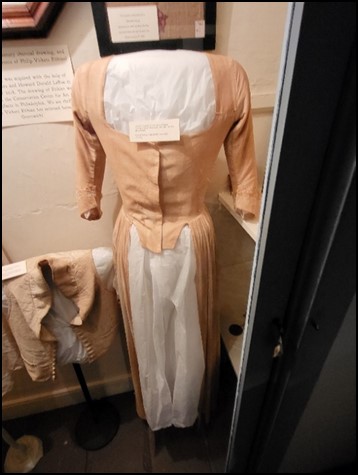
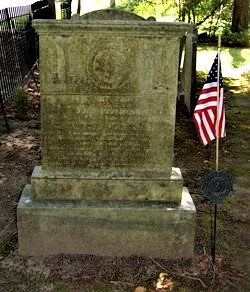

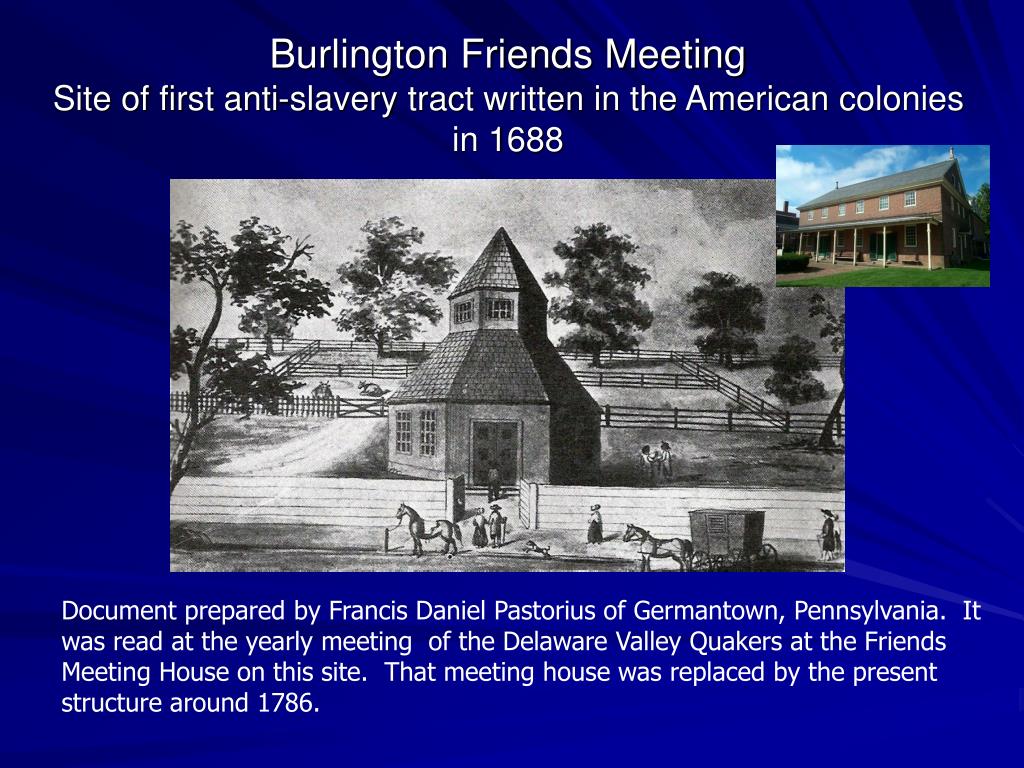
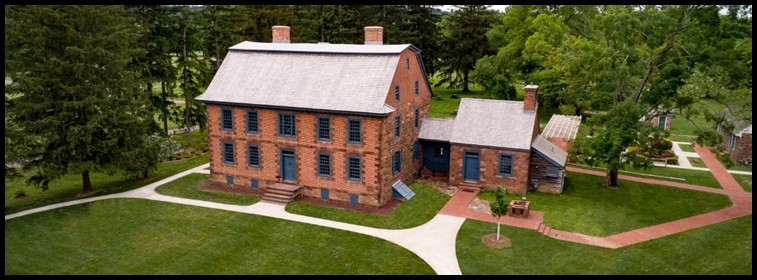


 njcssjournal