Sheena Jacobs Coordinator for Social Studies, Glen Cove School District
“I, too, sing America. I am the darker brother. They send me to eat in the kitchen when company comes, but I laugh, and eat well, and grow strong. Tomorrow, I’ll be at the table when company comes. Nobody will dare say to me, “Eat in the kitchen,” then. Besides, they’ll see how beautiful I am and be ashamed—I, too, am America” (Hughes, 2012).
James Mercer Langston Hughes was a
famous American writer who was known best for being a leader of the Harlem
Renaissance in New York City. Through his writings, he spoke about the
inequalities that Blacks faced in our nation. He wrote and talked about the
trials and tribulations that society has put on Blacks, and he questioned all
aspects that are a nation is derived from, which are political, social, and
economic. Reflecting on Langston Hughes poem, “I, Too,” and in the current
political and social climate that we are living in, we are reminded that now more
than ever, schools must embrace diversity and become culturally responsive. We
are currently living in a society where the haves are at an advantage point,
and the have-nots are at a disadvantage. For social mobility, we must provide
equal and quality education for all children.
Unfortunately in the 21st century,
we still face segregation and inequalities within schools from various regions,
such as rural, urban and suburban areas. According to Leonard Valverde article
titled, “Equal Educational Opportunity Since Brown: four major development”
(2004) research has indicated the following implications are all steps to
assist the segregation, promotion of equality and quality of education for all
children.
Implication #1: Compensatory Education for Equal Treatment Programs stimulated and encouraged by federal funding
Implication #2: School Financing: Equity and Adequacy—Includes facilities, equipment, and personnel; inclusion and access using affirmative action
Implication #3: Multicultural Curriculum: An Accurate Account—A balance and true representation of contributions made by populations in America’s development
These strategies are targeted to
address four basic concepts necessary to eliminate school segregation: promote
equality in treatment, equity in resources, equal opportunity, and cultural
democracy (Valverde, 2004). When researching responses to diversify and provide
equal and quality education, author Ezella McPherson states the following
points in “Moving from Separate, to Equal, to Equitable Schooling: Revisiting
School Desegregation Policies,” (2011)
“…to diversify schools, housing
policies need to be implemented to end racial discriminatory housing practices
while integrating neighborhoods so that children and parents can interact with
people from different racial backgrounds. By doing so, parents may be able to
build racial tolerance and acceptance of their neighbors, which will place them
in a better position to feel more comfortable to send their children to
racially integrated schools. Besides neighborhoods, schools may need to be
reformed to provide equitable learning environments for students regardless of
their racial and/or socioeconomic class background. By equitable learning
environment, I am suggesting that schools provide students with the opportunity
to learn through providing an equitable education to students through quality
teaching, school resources (e.g., books, materials), in-school tutoring for
students with special needs or who have challenges in a particular subject.
More importantly, in building racial tolerance and acceptance for people from different
racial backgrounds, community members (e.g., school teachers, parents, local
community members) should consider working together to provide a quality
education for students” (2011, p.479).
Reflecting on my personal story, my
parents migrated to the United States of America in the 1970s, looking for a
better opportunity in three aspects of life, political, social and economic.
They left their family and possessions behind and started in this country with
a clear motivation, “to provide a better opportunity and lifestyle for their
children and extended family.” I grew up in a household with strong cultural
ties to the Indian culture and the Christian faith. My siblings and I were
consistently reminded of the struggles that my parents and their ancestors
endured and faced as they lived in India. They told us their hardships if it
dealt with socioeconomic status, race, equality, or gender relationship, that
they dealt with as they started and continued to live in America. The challenge
of living in a traditional household that focuses on culture and religion is
when you are living in a different culture besides the one that you are growing
up in. Living in a household and trying to find an even balance between the
American culture and Indian culture was challenging because there were ideology
differences in culture, achievement, motivation, and gender. As I entered the
elementary school, I thought that all children are equal and viewed the same;
however, I soon came to realize how different I was even though I was born in
the United States of America. I saw that I was not a part of the same culture,
in fact, I was a minority looking into a culture that I had no idea about.
At an early age, I found myself
making decisions and understanding perspectives that differed from mine; I look
at the content in multiple ways because I was exposed to understanding how the
world can be complicated, unjust, and unfair. My parents instilled in us that
one should not allow being conquered by the injustices or unfairness that we
might receive, one should look at these trials and tribulations and overcome
them by continuing to follow their aspirations, advancing to become educated
and eventually empowering oneself and making the change he or she wishes to
see.
Looking at my parents starting
point as they entered this country in the 1970s and comparing to where we are
as a family now is remarkable, considering the strides that they made with the
limited resources and support at their disposal. My parents eventually moved
out to the suburbs on Long Island. They were adamant about providing us a
quality education, and as a result, they uprooted their family to a new
location where they were the only minority family. I can remember racial
tension stories, an unfair treatment that my parents endured as they lived in the
United States. I remember entering school and seeing racial injustices amongst
my siblings and I. However, the one thing I remembered is that my parents
consistently demonstrated that the culture that they have raised us was a
culture that entailed language, knowledge, history, morals, and values that we
should be proud of. We were taught not to back down and continue to strive. My
parents equipped us with ideas that when we face injustices, we must be
prepared with words, education, knowledge, and understanding and only then can
we achieve equality.
In a traditional Indian household
males and females are distinctly different. Being the youngest and a female, my
gender defined my family responsibilities, social behavior, and thought
process. For instance, I was expected to learn how to cook and clean, prepare
meals and serve, be submissive and inferior to the males. However, living in a
western culture and growing up in a traditional Indian household, my
environment did not allow me to accept and practice any of these expectations.
In fact, with the combination of the American and Indian culture intertwined,
the two cultures combined empowered me to become a stronger individual that was
aspiring to be a change agent for future minority youths, adults and especially
minority females.
As an educator, administrator, and
a doctoral student, I can emphatically say and agree with Ezella McPherson; it
is time for schools to support children that come from diverse background, it
is imperative that we as leaders provide professional development to our
teachers who are in the frontline to help children who may differ from the
majority, it is time for local and state officials to make culturally
responsiveness a priority and not a checklist of things to get done within the
educational system. The racial segregation and intolerance I felt in my life
was strikingly turning points in my life, however the people that I came
across, my family who was my foundation, and my loved ones who continue to
support me were all factors why I keep staying on a path where I can be a
change agent for schools to become culturally responsive.
References:
Hughes, L., Collier, B., Linn, L., & Simon and Schuster
Books for Young Readers (Firm),. (2012). I,
Too. New York: Simon & Schuster Books for Young Readers.
Kozol, Jonathan (1991). Savage Inequalities: children in America’s schools. New York:
Broadway Paperbacks.
McPherson, Ezella (2011). Moving from Separate, to Equal, to
Equitable Schooling: Revisiting School Desegregation Policies. Education and Urban Society, 46(3),
465-483.
Valverde, Leonard (2004). Equal Educational Opportunity Since Brown: four major developments. Education and Urban Society, 36(3), 368-378.
A southern city has now become
synonymous with the ongoing scourge of racism in the United States. A year
ago, white supremacists rallied to “Unite the Right” in
Charlottesville, protesting the removal of a Confederate statute. In the days
that followed, two of them, Christopher C. Cantwell and James A. Fields Jr.,
became quite prominent. The HBO show “Vice News Tonight” profiled Cantwell
in an episode and showed him spouting racist and anti-Semitic slurs and
violent fantasies. Fields gained notoriety after he plowed a car into a
group of unarmed counterprotesters, killing 32-year-old Heather Heyer.
Today this tragedy defines the
nature of modern racism primarily as Southern, embodied in tiki torches,
Confederate flags and violent outbursts. As historians of race
in America, we believe that such a one-sided view misses how entrenched,
widespread and multi-various racism is and has been across the country.
Jim Crow
born in the North
Racism has deep historic roots in
the North, making the chaos and violence of Charlottesville part of a national
historic phenomenon. Cantwell was born and raised in Stony Brook, Long
Island, and was living in New Hampshire at the time of the march. Fields was
born in Boone County, Kentucky, a stone’s throw from Cincinnati, Ohio,
and was living in Ohio when he plowed through a crowd.
Jim Crow, the system of laws that
advanced segregation and black disenfranchisement, began in the North, not the
South, as most Americans believe. Long before the Civil War, northern states
like New York, Massachusetts, Ohio, New Jersey and Pennsylvania had legal
codes that promoted black people’s racial segregation and political
disenfranchisement.
If racism is only pictured
in spitting and screaming, in torches and vigilante justice and an
allegiance to the Confederacy, many Americans can rest easy, believing they
share little responsibility in its perpetuation. But the truth is,
Americans all over the country do bear responsibility for racial segregation
and inequality. Studying the long history of the Jim Crow North makes
clear to us that there was nothing regional about white supremacy and its
upholders. There is a larger landscape of segregation and struggle in the
“liberal” North that brings into sharp relief the national character of
American apartheid.
Northern
racism shaped region
Throughout the 19th century, black
and white abolitionists and free black activists challenged the North’s
Jim Crow practices and waged war against slavery in the South and the
North. At the same time, Northerners wove Jim Crow racism into the fabric of
their social, political and economic lives in ways that shaped the history
of the region and the entire nation.
There was broad-based support,
North and South, for white supremacy. Abraham Lincoln, who campaigned to stop
slavery from spreading outside of the South, barely carried New York State in
the elections of 1860 and 1864, for example, but he lost both by a landslide in
New York City. Lincoln’s victory in 1864 came with only 50.5 percent of
the state’s popular vote. What’s more, in 1860, New York State voters
overwhelmingly supported – 63.6 percent – a referendum to keep universal
suffrage rights only for white men.
New York banks loaned Southerners
tens of millions of dollars, and New York shipowners provided southern cotton
producers with the means to get their products to market. In other
words, New York City was sustained by a slave economy. And working-class
New Yorkers believed that the abolition of slavery would flood the city
with cheap black labor, putting newly arrived immigrants out of work.
‘Promised
land that wasn’t’
Malignant racism appeared
throughout Northern political, economic, and social life during the 18th and
19th centuries. But the cancerous history of the Jim Crow North
metastasized during the mid-20th century. Six million black people moved
north and west between 1910 and 1970, seeking jobs, desiring education for
their children and fleeing racial terrorism.
The rejuvenation of the Ku Klux
Klan in the early 20th century, promoting pseudo-scientific racism known
as “eugenics,” immigration restriction and racial segregation, found supple
support in pockets of the North,
from California to Michigan to Queens, New York –
not only in the states of the old Confederacy.
The KKK was a visible and overt
example of widespread Northern racism that remained covert and insidious. Over
the course of the 20th century, Northern laws, policies and policing
strategies cemented Jim Crow. In Northern housing, the New Deal-era government
Home Owners Loan Corporation maintained and created racially
segregated neighborhoods. The research of scholars Robert K. Nelson,
LaDale Winling, Richard Marciano and Nathan Connolly, through their valuable
website, Mapping Inequality (http://dsl.richmond.edu/mappinginequality.html),
makes this history visible and undeniable. Zoning policies in the
North preserved racial segregation in schools. Discrimination in jobs
contributed to economic underdevelopment of businesses and
neighborhoods, as well as destabilization of families. Crime statistics
became a modern weapon for justifying the criminalization of Northern
urban black populations and aggressive forms of policing.
A close examination of the history
of the Jim Crow North – what Rosa Parks referred to as the “Northern
promised land that wasn’t”—demonstrates how racial discrimination and
segregation operated as a system. Judges, police officers, school board
officials and many others created and maintained the scaffolding for a
Northern Jim Crow system that hid in plain sight.
New Deal policies, combined with
white Americans’ growing apprehension toward the migrants moving from the South
to the North, created a systematized raw deal for the country’s black people.
Segregation worsened after the New Deal of the 1930s in multiple ways. For
example, Federal Housing Administration policies rated neighborhoods
for residential and school racial homogeneity. Aid to Dependent Children carved
a requirement for “suitable homes” in discriminatory ways. Policymakers and
intellectuals blamed black “cultural pathology” for social disparities.
Fighting
back
Faced with these new realities,
black people relentlessly and repeatedly challenged Northern racism, building
movements from Boston to Milwaukee to Los Angeles. They were often met with the
argument that this wasn’t the South. They found it difficult to focus
national attention on northern injustice. As Martin Luther King Jr. pointedly
observed in 1965, “As the nation, negro and white, trembled with outrage at
police brutality in the South, police misconduct in the North was rationalized,
tolerated and usually denied.”
Many Northerners, even ones who
pushed for change in the South, were silent and often resistant to change at
home. One of the grandest achievements of the modern civil rights movement –
the 1964 Civil Rights Act – contained a key loophole to prevent school
desegregation from coming to northern communities. In a New York Times poll in 1964, a majority
of New Yorkers thought the civil rights movement had gone too far.
Jim Crow practices unfolded
despite supposed “colorblindness” among those who considered themselves
liberal. And it evolved not just through Southern conservatism but New Deal and
Great Society liberalism as well. Understanding racism in America in 2018 means
not only examining the long history of racist practices and ideologies in the
South but also the long history of racism in the Jim Crow North.
e 6 Col
A problem framing the economics curriculum is disagreement about what should be included and even when there is a consensus on topics and themes, how they should be presented. The Business Dictionary, the NCSS C3 Framework, New York Times columnist Paul Krugman, and the New York State 12th Grade Social Studies Framework even offer very different conceptions of what economics is. In Social Studies for Secondary Schools (Routledge, 2014) I provide teachers with a very simple definition. “Economics examines how societies produce and distribute the goods and services that people, communities, and nations need to survive.” But of course, it is really complex, because how societies “produce and distribute the goods and services” involves individual, business, social, and political decisions, and competition between different interests, as does defining what “people, communities, and nations need to survive.” A good example is the debate over the regulation of industry to protect the environment and human civilization from the negative effects of climate change.
Business Dictionary: “The theories, principles, and models that deal with how the market process works. It attempts to explain how wealth is created and distributed in communities, how people allocate resources that are scarce and have many alternative uses, and other such matters that arise in dealing with human wants and their satisfaction.” Their focus is on the market process and does not include the role of labor in production or government regulation.
NCSS C3 Framework: “Effective economic decision making requires that students have a keen understanding of the ways in which individuals, businesses, governments, and societies make decisions to allocate human capital, physical capital, and natural resources among alternative uses. This economic reasoning process involves the consideration of costs and benefits with the ultimate goal of making decisions that will enable individuals and societies to be as well off as possible. The study of economics provides students with the concepts and tools necessary for an economic way of thinking and helps students understand the interaction of buyers and sellers in markets, workings of the national economy, and interactions within the global marketplace.” Their focus is on economic decision-making and cost benefits. They recognize the role of multiple forces in the process, but don’t specifically cite workers or unions, or discuss how programs that benefit one group can be catastrophic for another.
Nobel Prize winning economist and New York Times columnist Paul Krugman: “The economy is everything that involves making or using goods and services . . .Self-interest is still the best motivator we know – or more accurately, the only consistent motivator. So I’m for market economies. But I’m for market economies with strong safety nets, with adult supervision in capital markets, with public provision of goods the private sector does badly. An idealized New Deal is about as far as I go.” Krugman is a left-Keysnian who supports an active role for the government in regulating markets and meeting human needs, but he still relies on market solutions.
NYS 12th Grade Framework: “Economics, the Enterprise System, and Finance” examines the principles of the United States free market economy in a global context. Students will examine their individual responsibility for managing their personal finances. Students will analyze the role of supply and demand in determining the prices individuals and businesses face in the product and factor markets, and the global nature of these markets. Students will study changes to the workforce in the United States, and the role of entrepreneurs in our economy, as well as the effects of globalization. Students will explore the challenges facing the United States free market economy in a global environment and various policy-making opportunities available to government to address these challenges.”
This is the worst of the definitions. First, the United States does not have a free-market economy and never has. Second, the stress on individual responsibility ignores the broader forces shaping our lives. Individuals, especially children, do not choose to be poor, unemployed, or homeless. Third, nothing is mentioned about competing interests or economic inequality. Good points are recognition of global forces and a role for government, but these are secondary in the,curriculum.
The
idea of free markets is generally associated with 18th century Scottish
Enlightenment thinker Adam Smith and his notion of an “invisible hand”
self-regulating markets. Smith actually only mentioned the “invisible hand”
once in “The Wealth of Nations,” his signature work. The idea was actually
promoted by 20th century economists, including F.A. Hayek who described it as
“spontaneous order” and Joseph Schumpeter who called it “creative destruction.”
As a result of Smith, Hayek, and Schumpeter, free-market economists often
describe the “invisible hand” and the supply/demand curve as “economic law.” According to Smith: “Every individual necessarily labors to render
the annual revenue of the society as great as he can … He intends only his
own gain, and he is in this, as in many other cases, led by an invisible hand
to promote an end which was no part of his intention … By pursuing his own
interests, he frequently promotes that of the society more effectually than
when he really intends to promote it. I have never known much good done by
those who affected to trade for the public good” (https://www.investopedia.com/terms/i/invisiblehand.asp).
Economists
from Karl Marx through John Maynard Keynes and contemporary Nobel Prize winners
Joseph Stiglitz and Paul Krugman argue that political policies and government
decisions actually play a much more important role in shaping modern economies
than hypothesized economic laws. Most political economists argue that
government intervention in modern economies is a positive benefit to society
although they disagree on how active the government’s role should be.
This series of activities are
designed to involve economics students in discussion of whether “economic law”
or political policy should govern modern economies. The articles are edited
down to less than 500 words to meet the standard for fair-use replications.
They were also selected as challenging, but within the literacy expectations of
students who are ready to do college-level work.
Aim: Does economic law or political
policy govern modern economies?
Do Now: Read the definition of the “Invisible Hand,” examine the
cartoons, and answer questions 1-4.
Invisible Hand: The term “invisible hand” was introduced by
Adam Smith in his book An Inquiry into the Nature and Causes of the
Wealth of Nations
(1776).
It describes unobservable, or
invisible, market forces that help the demand and supply of goods in a free
market capitalist economy to automatically reach equilibrium (balance) at the
most productive or beneficial level. – https://economictimes.indiatimes.com/definition/invisible-hand.
Questions
What
is the origin of the term, the “invisible hand”?How
is it supposed to operate?How
are the depictions of the “invisible hand” in the cartoons similar and
different?In
your opinion, which cartoonist has a more accurate view of how the “invisible
hand” of free market capitalism actually works? Explain.
Introduction (Modeling — Reading
with video): Tax
policies are definitely government decisions and affect people and industries
differently. Donald Trump argues that cutting taxes on the wealthy and on
corporations will unleash productivity and create new jobs. He is generally
supported by free-market advocates, primarily members of the Republican Party.
This chart is drawn from an article from Time
magazine (http://time.com/5030731/the-republican-tax-bills-winners-and-losers/).
The page also includes a video presenting multiple views on tax cuts.
The
Republican Tax Bill’s Winners and Losers
The
ultra-wealthy, especially those with dynastic businesses — like President
Donald Trump and his family — do very well under a major Republican tax bill
moving in the Senate, as they do under legislation passed this week by the
House . . . On the other hand, people living in high-tax states, who deduct
their local property, income and sales taxes from what they owe Uncle Sam, could
lose out from the complete or partial repeal of the deductions. And an
estimated 13 million Americans could lose health insurance coverage over 10
years under the Senate bill.
Winners
Losers
* Wealthy individuals and their heirs win big. The hottest class-warfare debate around the tax overhaul legislation involves the inheritance tax on multimillion-dollar estates. The House bill initially doubles the limits — to $11 million for individuals and $22 million for couples — on how much money in the estate can be exempted from the inheritance tax, then repeals it entirely after 2023. The Senate version also doubles the limits but doesn’t repeal the tax. Then there’s the alternative minimum tax, a levy aimed at ensuring that higher-earning people pay at least some tax. It disappears in both bills. The House measure cuts tax rates for many of the millions of “pass-through” businesses big and small — including partnerships and specially organized corporations — whose profits are taxed at the owners’ personal income rate. The Senate bill lets pass-through owners deduct some of the earnings and then pay at their personal income rate on the remainder.
* Corporations win all around, with a tax rate slashed from 35 percent to 20 percent in both bills — though they’d have to wait a year for it under the Senate measure.
* U.S. oil companies with foreign operations would pay reduced taxes under the Senate bill on their income from sales of oil and natural gas abroad. Beer, wine and liquor producers would reap tax reductions under the Senate measure. Companies that provide management services like maintenance for aircraft get an updated win. The Senate bill clarifies that under current law, the management companies would be exempt from paying taxes on payments they receive from owners of private jets as well as from commercial airlines.
* An estimated 13 million Americans could lose health insurance coverage under the Senate bill, which would repeal the “Obamacare” requirement that everyone in the U.S. have health insurance. The projection comes from the nonpartisan Congressional Budget Office. Eliminating the fines is expected to mean fewer people would obtain federally subsidized health policies. * People living in high-tax states would be hit by repeal of federal deductions for state and local taxes under the Senate bill, and partial repeal under the House measure. That result of a compromise allows the deduction for up to $10,000 in property taxes.
* Many families making less than $30,000 a year would face tax increases starting in 2021 under the Senate bill, according to Congress’ nonpartisan Joint Committee on Taxation.
* By 2027, families earning less than $75,000 would see their tax bills rise while those making more would enjoy reductions, the analysts find. The individual income-tax reductions in the Senate bill would end in 2026.
Questions 1. Based on this report, who benefits the most from tax reform proposals?
2. Based on this report, who loses the most from tax reform proposals?
3. In your opinion, are these proposals fair? Explain.
4. Does government tax policy support the idea that the “invisible hand” is operating or that economies are driven by political decisions? Explain.
Questions 1. Based on this report, who benefits the most from current economic policies?
2. Based on this report, who loses the most from current economic policies?
3. In your opinion, are these policies fair? Explain.
4. Does government policy support the idea that the “invisible hand” is operating or that economies are driven by political decisions? Explain.
The Republican tax bills moving through
Congress could significantly hobble the United States’ renewable energy
industry because of a series of provisions that scale back incentives for wind
and solar power while bolstering older energy sources like oil and gas
production.
The possibility highlights the degree to
which the nation’s recent surge in renewable electricity
generation is still sustained by favorable tax
treatment, which has lowered the cost of solar and wind production while provoking
the ire of fossil-fuel competitors seeking to weaken those tax preferences.
Whether lawmakers choose to protect or
jettison various renewable tax breaks in the final bill being negotiated on Capitol Hill could
have major ramifications for the United States energy landscape, including the
prices consumers pay for electricity.
Wind and solar are two of the fastest-growing
sources of power in the country, providing 7 percent of electricity last year.
Sharp declines in the cost of wind turbines and photovoltaic panels, coupled
with generous tax credits that can offset at least 30 percent of project costs,
have made new wind and solar even cheaper than running existing fossil-fuel plants in
parts of the country.
In different ways,
direct and indirect, the House and Senate bills each imperil elements of that
ascension. A Senate bill provision intended to stop multinational companies
from shifting profits overseas could unexpectedly cripple a
key financing tool used by the renewable energy industry, particularly solar,
by eroding the value of tax credits that banks and other financial institutions
buy from energy companies.
The House bill’s effects
would be more direct, rolling back tax credits for wind farms and electric
vehicles, while increasing federal support for two nuclear reactors under construction in Georgia. Fossil
fuel producers are under little pressure in either bill and some would stand to
benefit: The Senate legislation would open the Arctic National Wildlife Refuge in Alaska to oil drilling,
while a last-minute amendment added by Senator John Cornyn, Republican of Texas,
would allow oil and gas companies to receive lower tax rates on their profits.
The tension between new and old energy was on
display this week at a White House event to promote the Republican tax
legislation, where a coal plant employee from North
Dakota thanked President Trump for a provision in the House bill that would
drastically reduce the value of the production tax credit for wind.
“The production tax credit has destroyed the
energy market, especially in the Midwest,” the employee, Jessica Unruh, who is
also a state representative, told the president. “Wind production has really
eroded our state tax base and replaced coal production when it comes to
electricity production.”
The wind industry has warned that
the House language, which would reduce the wind tax credit to 1.5 cents per
kilowatt-hour, from 2.4 cents, and change eligibility rules, could eliminate
over half of the new wind farms planned in the United States.
Questions 1. Based on this report, who benefits the most from current economic policies? 2. Based on this report, who loses the most from current economic policies? 3. In your opinion, are these policies fair? Explain. 4. Does government policy support the idea that the “invisible hand” is operating or that economies are driven by political decisions? Explain.
An
insidious trend has developed over this past third of a century. A country that
experienced shared growth after World War II began to tear apart, so much so
that when the Great Recession hit in late 2007, one could no longer ignore the
fissures that had come to define the American economic landscape. How did this
“shining city on a hill” become the advanced country with the greatest level of
inequality?
Our
current brand of capitalism is an ersatz capitalism. For proof of this go back
to our response to the Great Recession, where we socialized losses, even as we
privatized gains. Perfect competition should drive profits to zero, at least
theoretically, but we have monopolies and oligopolies making persistently high
profits. C.E.O.s enjoy incomes that are on average
295 times that of the typical worker, a much higher ratio than in the past,
without any evidence of a proportionate increase in productivity.
If
it is not the inexorable laws of economics that have led to America’s great
divide, what is it? Part of the answer is that as World War II faded into
memory, so too did the solidarity it had engendered. As America triumphed in
the Cold War, there didn’t seem to be a viable competitor to our economic model
. . . Ideology and interests combined nefariously. Some drew the wrong lesson
from the collapse of the Soviet system. The pendulum swung from much too much
government there to much too little here. Corporate interests argued for
getting rid of regulations, even when those regulations had done so much to
protect and improve our environment, our safety, our health and the economy
itself. But this ideology was hypocritical. The bankers, among the strongest
advocates of laissez-faire economics, were only too willing to accept hundreds
of billions of dollars from the government in the bailouts that have been a
recurring feature of the global economy since the beginning of the
Thatcher-Reagan era of “free” markets and deregulation.
The
American political system is overrun by money. Economic inequality translates
into political inequality, and political inequality yields increasing economic
inequality . . . So corporate welfare increases as we curtail welfare for the
poor. Congress maintains subsidies for rich farmers as we cut back on
nutritional support for the needy. Drug companies have been given hundreds of
billions of dollars as we limit Medicaid benefits. The banks that brought on
the global financial crisis got billions while a pittance went to the
homeowners and victims of the same banks’ predatory lending practices.
The
problem of inequality is not so much a matter of technical economics. It’s
really a problem of practical politics. Ensuring that those at the top pay
their fair share of taxes — ending the special privileges of speculators,
corporations and the rich — is both pragmatic and fair . . . Widening and
deepening inequality is not driven by immutable economic laws, but by laws we
have written ourselves.
Questions 1. Based on this report, who benefits the most from current economic policies? 2. Based on this report, who loses the most from current economic policies? 3. In your opinion, are these policies fair? Explain. 4. Does government policy support the idea that the “invisible hand” is operating or that economies are driven by political decisions? Explain.
Some
15 years ago, searching for a consistent way to compare wages of equivalent
workers across the world, Orley Ashenfelter, an economics professor at
Princeton University, came upon McDonald’s. The uniform, highly scripted
production methods used throughout the McDonald’s fast-food empire allowed
Professor Ashenfelter to compare workers in far-flung countries doing virtually
the same thing. The company also offered a natural index to measure the
purchasing power of its wages around the world: the price of a Big Mac. Some of
his findings are depressing. Real wages — measured in terms of the number
of Big Macs they might buy, declined over the first decade of the millennium
widely across the industrialized world.
Even
before the financial crisis struck, the wages of McDonald’s workers in the
United States, many Western European countries, Japan and Canada went nowhere
between 2000 and 2007, a period of steady, though unspectacular, economic
growth in most of the developed world. In the United States, real wages
actually declined . . . Faced with a tightening labor market and besieged by a
vocal, combative movement demanding higher wages for America’s worst-paid
employees, McDonald’s, Walmart and other large employers of cheap labor have
offered modest raises to millions of workers scraping the bottom of the job
market.
The
battle for public opinion is fought mostly on ethical grounds — pitting the
healthy profits of American corporations and the colossal pay of their
executives against bottom-end wages that force millions of workers to rely
on public assistance to survive. But what is often overlooked in the
hypercharged debate about corporate morality is how a similar dynamic is taking
hold around the industrialized world.
Lane
Kenworthy, a professor of sociology at the University of California, San Diego,
has disentangled the evolution of household incomes over the last three or four
decades. The wages from work, he found, are playing a diminishing role for a
growing swath of the labor force . . . A combination of sluggish employment and
stagnant wages has forced more families to rely on the public purse in many
developed nations.
In
Canada, for example, labor market earnings for the bottom fourth of the income
ladder grew by roughly $25 a year between 1979 and 2007. Government transfers
increased by $78. For Canadian households one rung higher — between the 25th
and the 50th percent of the earnings distribution — there were no increases in
labor market compensation. All gains came from the government. In Germany —
often portrayed as the gold standard of the postindustrial labor market — the
entire bottom half of households experienced shrinking earnings from work. They
only got ahead because of rising government benefits.
Perhaps
it is simply that the demand for skill in the modern job market has grown
faster than its supply. The United States, notably, hasn’t increased
educational attainment at the rate the labor market requires. And the economy
simply doesn’t need as many less-educated workers as it once did.
Team D: Top 10% Took Home Half Of U.S. Income in 2012 by Annie Lowrey, NYT, September 11, 2013, B4
Questions 1. Based on this report, who benefits the most from current economic policies? 2. Based on this report, who loses the most from current economic policies? 3. In your opinion, are these policies fair? Explain. 4. Does government policy support the idea that the “invisible hand” is operating or that economies are driven by political decisions? Explain.
The
top 10 percent of earners took more than half of the country’s total income in
2012, the highest level recorded since the government began collecting the
relevant data a century ago, according to an
updated study by the prominent
economists Emmanuel Saez and Thomas Piketty. The top 1 percent took
more than one-fifth of the income earned by Americans, one of the highest
levels on record since 1913, when the government instituted an income tax. The
figures underscore that even after the recession the country remains in a new
Gilded Age, with income as concentrated as it was in the years that preceded
the Depression of the 1930s, if not more so.
High
stock prices, rising home values and surging corporate profits have buoyed the
recovery-era incomes of the most affluent Americans, with the incomes of the
rest still weighed down by high unemployment and stagnant wages for many blue-
and white-collar workers.
The
income share of the top 1 percent of earners in 2012 returned to the same level
as before both the Great Recession and the Great Depression: just above 20
percent, jumping to about 22.5 percent in 2012 from 19.7 percent in 2011 . . .
[R]icher households have disproportionately benefited from the boom in the
stock market during the recovery, with the Dow Jones Industrial Average more
than doubling in value since it bottomed out early in 2009. About half of
households hold stock, directly or through vehicles like pension accounts. But
the richest 10 percent of households own about 90 percent of the stock,
expanding both their net worth and their incomes when they cash out or receive
dividends.
The
economy remains depressed for most wage-earning families. With sustained,
relatively high rates of unemployment, businesses are under no pressure to
raise their employees’ incomes because both workers and employers know that
many people without jobs would be willing to work for less. The share of
Americans working or looking for work is at
its lowest in 35 years. There is a glimmer of good news for the 99
percent in the report, though. Mr. Piketty and Mr. Saez show that the incomes
of that group stagnated between 2009 and 2011. In 2012, they started growing
again — if only by about 1 percent. But the total income of the top 1 percent
surged nearly 20 percent that year. The incomes of the very richest, the 0.01
percent, shot up more than 32 percent.
Questions 1. Based on this report, who benefits the most from current economic policies? 2. Based on this report, who loses the most from current economic policies? 3. In your opinion, are these policies fair? Explain. 4. Does government policy support the idea that the “invisible hand” is operating or that economies are driven by political decisions? Explain.
Thirty years ago, Bonnie Svarstad and Chester
Bond of the School of Pharmacy at the University of Wisconsin-Madison
discovered an interesting pattern in the use of sedatives at nursing homes
in the south of the state. Patients entering church-affiliated nonprofit homes
were prescribed drugs roughly as often as those entering profit-making
“proprietary” institutions. But patients in proprietary homes received, on
average, more than four times the dose of patients at nonprofits. Writing about
his colleagues’ research, . . .the economist Burton Weisbrod provided a
straightforward explanation: “differences in the pursuit of profit.” Sedatives
are cheap, Mr. Weisbrod noted. “Less expensive than, say, giving special
attention to more active patients who need to be kept busy.”
This behavior was hardly surprising.
Hospitals run for profit are also less likely than nonprofit and
government-run institutions to offer services like
home health care and psychiatric emergency care, which are not as profitable as
open-heart surgery. A shareholder might even applaud the creativity with which
profit-seeking institutions go about seeking profit. But the consequences of
this pursuit might not be so great for other stakeholders in the system —
patients, for instance. One study found that patients’ mortality rates spiked
when nonprofit hospitals switched to become profit-making, and their staff
levels declined.
These profit-maximizing tactics point to a
troubling conflict of interest that goes beyond the private delivery of health
care. They raise a broader, more important question: How much should we rely on
the private sector to satisfy broad social needs? From health to pensions to
education, the United States relies on private enterprise more than pretty much
every other advanced, industrial nation to provide essential social services.
The government pays Medicare
Advantage plans to deliver health care to aging Americans. It provides a tax
break to encourage employers to cover workers under 65. Businesses devote
almost 6 percent of the nation’s economic output to pay for health insurance
for their employees. This amounts to nine times similar private spending on
health benefits across the Organization for Economic Cooperation and
Development, on average. Private plans cover more than a third of pension
benefits. The average for 30 countries in the O.E.C.D. is just over one-fifth.
Our reliance on private enterprise to provide
the most essential services stems, in part, from a more narrow understanding of
our collective responsibility to provide social goods. Private American health
care has stood out for decades among industrial nations, where public universal
coverage has long been considered a right of citizenship. But our faith in
private solutions also draws on an ingrained belief that big government serves
too many disparate objectives and must cater to too many conflicting interests
to deliver services fairly and effectively.
Our trust appears undeserved, however. Our
track record suggests that handing over responsibility for social goals to
private enterprise is providing us with social goods of lower quality,
distributed more inequitably and at a higher cost than if government delivered
or paid for them directly.
Questions 1. Based on this report, who benefits the most from current economic policies? 2. Based on this report, who loses the most from current economic policies? 3. In your opinion, are these policies fair? Explain. 4. Does government policy support the idea that the “invisible hand” is operating or that economies are driven by political decisions? Explain.
At the Philips Electronics factory on the
coast of China, hundreds of workers use their hands and specialized tools to
assemble electric shavers. That is the old way. At a sister factory here in the
Dutch countryside, 128 robot arms do the same work with yoga-like flexibility.
Video cameras guide them through feats well beyond the capability of the most
dexterous human. One robot arm endlessly forms three perfect bends in two
connector wires and slips them into holes almost too small for the eye to see.
The arms work so fast that they must be enclosed in glass cages to prevent the
people supervising them from being injured. And they do it all without a coffee
break — three shifts a day, 365 days a year. All told, the factory here has
several dozen workers per shift, about a tenth as many as the plant in the
Chinese city of Zhuhai.
This is the future. A new wave of robots, far
more adept than those now commonly used by automakers and other heavy
manufacturers, are replacing workers around the world in both manufacturing and
distribution. Factories like the one here in the Netherlands are a striking
counterpoint to those used by Apple and
other consumer electronics giants, which employ hundreds of thousands of
low-skilled workers.
Many industry executives and technology
experts say Philips’s approach is gaining ground on Apple’s. Even as Foxconn,
Apple’s iPhone
manufacturer, continues to build new plants and hire thousands of additional
workers to make smartphones, it plans to install more than a million robots
within a few years to supplement its work force in China. Foxconn has not
disclosed how many workers will be displaced or when. But its chairman, Terry
Gou, has publicly endorsed a growing use of robots. Speaking of his more than
one million employees worldwide: “As human beings are also animals, to manage
one million animals gives me a headache.”
Take the cavernous solar-panel factory run by
Flextronics in Milpitas, south of San Francisco. A large banner proudly
proclaims “Bringing Jobs & Manufacturing Back to California!” Yet in the
state-of-the-art plant, where the assembly line runs 24 hours a day, seven days
a week, there are robots everywhere and few human workers. All of the heavy
lifting and almost all of the precise work is done by robots that string
together solar cells and seal them under glass. The human workers do things
like trimming excess material, threading wires and screwing a handful of
fasteners into a simple frame for each panel.
Such advances in manufacturing are also
beginning to transform other sectors that employ millions of workers around the
world. One is distribution, where robots that zoom at the speed of the world’s
fastest sprinters can store, retrieve and pack goods for shipment far more
efficiently than people. Robots could soon replace workers at companies like C
& S Wholesale Grocers, the nation’s largest grocery distributor, which has
already deployed robot technology.
Questions 1. Based on this report, who benefits the most from current economic policies? 2. Based on this report, who loses the most from current economic policies? 3. In your opinion, are these policies fair? Explain. 4. Does government policy support the idea that the “invisible hand” is operating or that economies are driven by political decisions? Explain.
The
metro areas that offered the highest pay in 2000 have grown by some of the
slowest rates since then, while people have flocked to lower-wage metros like
Las Vegas, Phoenix and Charlotte, N.C. Similarly, the metros with the highest
G.D.P. per capita are barely adding workers relative to much less productive
areas. Some people aren’t moving into wealthy regions because they’re stuck in
struggling ones. They have houses they can’t sell or government benefits they
don’t want to lose. But the larger problem is that they’re blocked from moving
to prosperous places by the shortage and cost of housing there. And that’s
a deliberate decision these wealthy
regions have made in opposing more housing construction, a prerequisite to make
room for more people.
Compare
that with most of American history. The country’s economic growth has long
“gone hand in hand with enormous reallocation of population,” write the
economists Kyle Herkenhoff, Lee Ohanian and Edward Prescott in a recent studyof what’s hobbling similar
population flows now. Workers moved north during the Great Migration and west
out of the Dust Bowl. The lure of the Gold Rush made San Francisco a boomtown
after the 1850s. The rise of the auto industry helped triple the size of Detroit
between 1910 and 1930. Other northern cities like Cleveland similarly swelled
as they became manufacturing hubs. Los Angeles grew to a city of more than a
million in the 1920s as film sets, oil wells and aircraft manufacturing
promised opportunity. Seattle boomed after World War II, as Boeing did. Houston’s
population took off as it became the center of the country’s energy economy.
Michael Pezone is a retired social studies teacher who taught at the High
School for Law Enforcement and Public Safety in Jamaica, Queens. He organized
his classes around research and writing projects for teams and individuals,
oral presentations, class discussion, and civic action. This project was
developed for Participation in Government classes. Many of his students had
difficulty presenting their ideas in writing and supporting them with evidence.
This project was designed to support students who will be taking the New York
State English/Language Arts Regents Exam. Many of the students in his classes
took the exam more than once so they can earn a diploma.
Introduction:
While changes in the larger society are needed to address
problems like poverty and homelessness, there are things schools can do to help
students affected by these issues. Your group is tasked to write a practical
and reasonable proposal to the principal to suggest a school wide homework
policy that might better serve all students, including our most needy students.
(“No more homework, ever!” is NOT a practical proposal). Use information from
the documents below as well as outside information to complete the project.
Requirements
A. A written
recommendation addressed to the principal (see suggested outline below). Your
group’s proposal must:
Be
150 words that are extremely well written. Your proposal must be typed in
friendly letter format (the format will be projected on the smart board during
class).
Explain
how poverty and homelessness in NYC affect the ability of many children to do
homework. Use statistics and other evidence to support your explanation. Use
information from the documents and from your own research. Cite your source(s).
(See how to cite the documents below)
Propose
a practical and reasonable school wide homework policy to address these issues
B. A poster
that will be presented in class along with the proposal and may be selected to
present to the principal. The poster should contain: A title and student names
on the front of the poster; Chart(s), graph(s), and photo(s) that support your
proposal, along with captions that explain what each chart, graph, photo shows.
The poster should be EXTREMELY attractive with accurate information.
C. Presentations.
Each group will present their proposals and posters to the class. All proposals
will then be combined into one final proposal. Students will choose a team (two
or three students from each class) to present the proposal to the principal. One
poster will be chosen for use in the presentation to the principal.
How to Cite the Documents
(Singer,
“Children Need Homes, Not Charter Schools Or Standardized Tests, And Definitely
Not Tax Cuts For The Wealthy,” Huffington post, 12/14/2017)
(“Homelessness
in New York State,” NYSTeachs, nysteachs.org/info-topic/statistics, 2017)
(“Figure 1:
Time high school students spend on homework by race and parent’s income,”
Brookings Institute, brookings.edu, 2017)
Suggested Paper Outline
I. First
paragraph: Explain the problem of poverty and homelessness and how it affects
NYC students, using statistics and evidence to support your explanation
II. Second
paragraph: Present your proposal for a school wide homework policy
III. Brief
concluding paragraph: Thank her for her consideration of the issue and ask her
to meet with a team of students to discuss your proposal
Directions:
Read the key term and documents and then complete the group assignment below.
Key Term: “Gentrification” – process of
renovation of deteriorated urban neighborhoods by means of the eviction of poor
residents to make way for an influx of more affluent residents.
Document 1 – Article: “Children Need Homes, Not Charter Schools or Standardized Tests, and Definitely Not Tax Cuts for the Wealthy,” by Alan Singer, Huffington Post, 12/14/2017
(1) Over 1.1 million children and teens attend more than 1,800 New York City public schools. About one-third of these children live in poverty. In addition, 111,562 students were homeless at some point during the 2016-2017 school year. They are assigned homework, but they have no homes. It is as if these children are trapped in a 19th-century Charles Dickens novel about London’s poor.
(2) New York City is not a Third World country, but 10 percent of its registered students live on the street, in cars, in shelters, in abandoned buildings, in public housing double-ups, and in over-crowded deteriorating tenements with people they do not know. They often don’t have basic food, clothing, and health care, or heat in the freezing winter and air-conditioning in the sweltering summer. They don’t do homework and they don’t do well on standardized tests. Over 60 percent are chronically absent from school.
(3) Homeless children are the collateral damage of gentrification in New York City. Between 2000 and 2015 the Hispanic population of Washington Heights in Manhattan declined by over 10,000 people. There were double-digit percentage declines in Hispanic population in the gentrifying Brooklyn neighborhoods of Greenpoint, Williamsburg and Bushwick. The African American population sharply declined in Harlem and the Brooklyn neighborhoods of Crown Heights and Bedford-Stuyvesant. No one is asking what happened to the children who used to live in these communities.
(4) During his reelection campaign, Mayor Bill de Blasio claimed great advances in addressing homelessness and school performance. These children don’t see it. The governor and his appointees on New York State school accrediting agencies push for more charter schools and lowering teacher qualifications. It is not clear how this will make a difference in the lives of these children. The City Council is discussing a bill that will ensure families applying for places in homeless shelters receive school information. They must be kidding, but the kids don’t get the joke.
(5) Mayor De Blasio, Governor Cuomo and President Trump need to know this: Schools and teachers can do just so much to help homeless children. Children need homes. Their parents need jobs. Authorizing additional charter schools and standardized testing and AP classes are pretend solutions to very real and pressing social problems.
(6) Expect the situation to grow worse. The Trump tax scam will force cuts in a range of federal programs including medical care. Such cuts in social services will be done so that tax breaks for the rich will not increase the national debt too much. Under Trump’s plan, loss of tax breaks for state and local governments will squeeze middle-class taxpayers and force state and local governments to lower taxes and cut spending on vital social services. Already two New Jersey towns have rejected school spending increases that were expected to pass. Children from the poorest families will be amongst the hardest hit.
Document
2: Data on Homelessness in New York State
(NYSTeaches – Chart shows growing homelessness from the 2009-2010 school year to the 2016-2017 school year)
Document
3: “Time high school students spend on homework by race and parent’s income.”
Content of Proposal (0-3) Is your explanation of the problem of poverty and homelessness and their effects on homework completion well organized and logical? Is your explanation supported by statistics and other evidence? Is your proposal for a school wide homework policy reasonable and practical?
Quality of Writing (0-4) Is your writing of high quality, typed, with no errors? Do you follow a simple paragraph format? Do you properly cite your sources?
Quality of Poster (0-4) Is the information presented accurate? Is the poster extremely attractive? Does the poster present graph(s), chart(s), and photo(s) with titles and captions for each that explain what they are showing? Does the poster contain a title and student names on front?
Presentation and Teamwork (0-4) Do all group members contribute to the proposal and poster? Do all group members come on time and follow school rules? Do all group members behave in a mature manner? Do all group members take turns presenting their proposal and poster to the class?
As United States citizens we are given the right to vote. This opportunity allows our country to be a democracy and gives people a voice in the government. As a young adult, one would think that our generation would choose to voice their opinions for the future, since it will affect our lives immensely. Unfortunately, many individuals among my generation do not see this as a priority. Young adults, from the ages eighteen to twenty-four have the lowest voting participation rates out of everyone who is eligible to vote. This is due to the Presidential Election in 2016 between Donald J. Trump and Hillary Rodham Clinton. Young adults share their voice and opinions on politics, but when it comes to the polls, they do not vote. Many young adults also believe that they do not have to go and vote because they believe that their voices will not be heard. In this article, I discuss the reasons behind this lack of commitment to the polls. What is the reason that young adults right out of high school do not vote? Is it the lack of teaching politics in social studies classrooms? Or, is the focus of social studies classrooms too dedicated to teaching the same past events? Furthermore, could this turn out be evidence that social studies needs to be renovated? Maybe there needs to be a class that is dedicated to current events and individual responsibility as a citizen that all students must take. I can recall when I was a student in high school, my teachers never fully expressed the importance of voting because we were not old enough to vote at that point in our lives. The presidential election of 2016 should be a warning for adolescents and young adults that our votes, in fact, do matter. All votes matter, but when it comes to the future of the United States, the younger Americans need to vote so our concerns can be handled properly.
I remember, too, when I was in high
school four years ago and all my social studies teachers never emphasized the
importance of voting. Teachers always briefly stated the importance of the
rights that we have, one being the right to vote. Before the 2016 election,
there was not a recent election where the younger generation believed that they
had to vote. Since the outcome of the election, this was a wakeup call to many
people. Many people just believed that the person that they wanted to win,
would. When the outcome was the presidential candidate that they did not want,
they were the first people to complain all over social media. How can someone
complain if they did not actively practice their right to vote? From my past
experiences in the field at Ewing High School, my cooperating teacher expressed
to the students how important it is to vote. We collaborated on a lesson about
Andrew Jackson and tracing his presidency from his actions as a common man to
his actions as having “king-like qualities”. Our students were curious on our
views on the past election and what we believed. Together, we were honest with
them. We expressed how significant it is to do your research, hear everyone’s
side, and develop your own beliefs. We discussed the voter turnout and why
their vote will matter someday. It is important for students to be taught that
when they are of age to go out and make their voices heard.
After researching why, it is that
the younger generation does not vote, I found out that the average age that
voted in the 2016 election was fifty-seven (Strauss, 2018). These means that
all the reforms and laws that the younger generation wants to be passed, will
not. All new laws, reforms, acts, will be towards what the older generation
needs. Carolyn DeWitt and Maureen Costello state
that, “If there is one thing we believe in America, we believe in government of
the people, by the people, for the people.” and later explain that American
citizens, “…haven’t learned how to register to vote. They haven’t learned the
best way to influence their elected representatives. They haven’t learned that
they have power.” (Strauss, 2018). How can we be a democracy that
countries want to mimic if we cannot get our own to get up and vote? Have
Americans stopped caring or are we too lazy to vote? Joel Stein explains the millennial turnout
and states that he, “calls millennials the “narcissistic generation,” and Jean Twenge says they are
the “me generation,” stuck to their phones and uninterested in politics.”
(Dalton, 2016). I do believe that millennials and people who are younger are
addicted to their phones. Social media overtakes people’s lives, day to day.
Instead of going out to make sure their vote counts, they will voice their
opinions on Twitter or Facebook hoping that by posting their opinion it will
help the vote. I agree, it is essential to voice your opinions, but if you are
not going to act, then why are you choosing to not vote?
I always ask my peers why they do
not bother to go vote because I understood the importance of this aspect my
whole life. The answer I frequently receive is, “Because my vote won’t make a
difference”. This answer, I personally feel is a selfish statement. Every vote
matters no matter who you are or what you believe. If everyone who did not
believe in their vote, voted, then the voter turnout would be completely
different. Health care is so prominent because it is what most older people
want for themselves. If the younger generation would go out and vote we could help
our education systems and our futures. Caroline Beaton expresses that, “In 2016, we view engaging in politics
as a personal choice, not a civic obligation.” (Beaton, 2016). This is accurate
because many younger people see voting as an option and not an obligation. They
believe it is not their civic duty to express what they want. If people were
educated more on voting and constantly informed on the importance of it, I
believe that they would go out and exercise
their right to vote.
I have hope for my generation in the
2020 election. The past election was, without a doubt, a wakeup call. This
article is not intended to bash the younger generation, however, to express my
aspiration for them to be more active participants in the future of our
country. We are the future and I believe that we will come together as one
fighting for what we believe.
On the night of October 4, 1957, Americans could tune in on their radios to hear a small sphere floating in orbit sounding off beeps as it goes along. Sputnik was the first human-made object to go into an orbit around Earth, and thus start something called the Space Race. For such a breakthrough technological achievement, however, it was somewhat limited in its own performance. It could orbit and transmit radio signals back to earth, but beyond that, Sputnik was practically useless except for its role in Cold War Symbolism. It is this symbolism that is thought more often than not, then the education reform that comes after it. The launch of Sputnik is much more than the start of the Space Race; it was a catalyst for education reform and by my calculations, it will take another Sputnik to launch another wave of widely accepted reforms instead of the patchwork introduction of fixes like SGOs, Common Core, and PARCC.
“It is essential to examine the America school system before the launch of Sputnik in 1957. Before 1947 and stemming out of World War Two American schools were still primarily influenced by Progressivist school of ideas and practices from John Dewey. Progressivism emphasized the concept that students could only learn when they had “internalized what they had gained through experience and practiced in their own lives.” (Olson, 2000) In the mid-1940s, a new group called the ‘Life-Adjusters’ began to challenge the progressivist idea and thus began to change them. The main reason being that progressive education failed the majority. This so-called failure along with these new ideas for education and its purpose were based in the 1918 study titled Cardinal Principles of Secondary Education. The goal of this new educational philosophy entitled ‘Life-Adjustment’ was to change the fundamental practices of the school. What fundamental practices did this study mean, it was no other than the core academic classes. By disregarding traditional academics, this meant that history, languages, science, and mathematics were less valued to instead focus on the concept of ‘fundamental processes.’ The fundamental process was the curricula and activities for the general student and would thus be the considerations for vocational education, use of leisure time, and other wholesome topics that would improve the capability of a student to live a good and productive life. What supported this study was a national education conference in 1945. From its findings, the committee has found that no more than 20% of students could be reasonably expected to ever attend college, with another 20% destined for a vocational program. This means that only 40 percent of students can further their education and contribute to society; the other problem becomes the other 60%. The obvious recommendation was the adoption of the previously mentioned Life Adjustment education model. It, however, was not going to be all in favor of the Life Adjusters, as these beliefs were incorporated with some progressive concepts. The most important being the concept of tracking students by ability level on every topic. This meant that higher achieving college-and vocational school-bound kids could still get the same education while the other students can get a more general track in which they can succeed. In 1951 the Life Adjustment approach was formalized in the Educational Policy Commission’s report, Education for All American Children. (Bybee, 1997) Life-adjustment education was more utilitarian when compared to the previous progressive practices of earlier education models. The reason for this utilitarian nature is that schools were failing in preparing a majority of its student population for its future so this model instead focused on the needs of the general student. Its proposed curriculum was on functional experiences in areas such as arts, family living, and civic participation. This kind of curriculum was more about preparing an active citizen instead of an educated academic.
Now, when you examine these tracks based on the ability for the student you can draw a comparison to the modern day with Special Education with the process of inclusion and mainstreaming. The method of mainstreaming and inclusion is the result of placing students in the Least Restrictive Environment as a part of the requirements of the IDEA act. (Morin) Mainstreaming is the process of taking your kids with disabilities and putting them in a general classroom, hence the mainstream. This typically comes with some form of help for the student or that the student spends time in special education or resource classes. Without the IDEA act, special education would not have advanced as quickly as it did which thus leads us to why Sputnik was so important.
The National Defense Education Act was spurred into creation off the impact of the Sputnik launch. The overall goal of this specific legislation was to change the country’s educational system to meet the standards of the national government concerning the nation’s defense. Regarding the national defense that meant the subject thought and focused on would have a direct benefit to those job fields. Thus, by increasing the standards of education, the United States hoped the changes would help them either compete or pass the Soviet Union. The importance of the NDEA, much like IDEA, is in the acceleration for reform it caused. The overall effects of NDEA are grants and federal aid for higher education and also a restructuring of school curriculum around that funding. Because of the scientific nature and international significance of Sputnik, the course requirements for students became aligned toward national security and jobs of that nature. Thus, the standard course load stiffened away from Life-Adjustment and added more Math and Science classes. If The Association of American Universities described the NDEA as “inspiring generations of U.S. students to pursue study in fields vital to national security and aide.” (American Association of Universities, 2006) Then it was effective in changing education as they knew it. And when you examine education curricula today, you see that the impact clear as day as almost every high school student for graduation shall have four years of math and 2-3 years of science by the time they do so.
The apparent result of Sputnik is not just in the historical context of historians of Devine and Dickson who propose a situation of American paranoia in retrospect to their calm leader, but rather the impact on education reform that we can see in the foundation of today’s schools. (Divine, 1993; Dickson, 2001) In an interesting article by a psychologist, he recognizes that there is a problem with modern educational reform. At the national level, the federal government spending on education has skyrocketed, with no comparable improvement in educational outcomes in such programs like Head Start, New Math, Nation at Risk, Goals 2000, Race to the Top, No Child Left Behind, charter schools, Next Generation Science Standards, and Common Core? (Klemm). We have had little to show in terms of the results of these programs as we keep trying to create better-standardized tests and are even thinking of replacing the common core in many states even though it only came out in 2009. The problem with modern education reform may not be with the program, but with the implementation. If states are allowed to pick and choose on adopting or adapting these reforms based on the fear of losing government spending, then the speed and acceptance rate would be relatively minor and too late before it impacted most of the nation. Klemm later states in the previous article “I think the real problem is that students generally lack learning competencies. Amazingly, schools tell students more about what to learn than how to learn” (Klemm, 2014). This is something that can have a much more lasting impact because it is on the level of teacher adaptation. If we are teaching these competencies instead of solely content, we can make sure that students can turn into these lifelong learners. It is effortless for a teacher to teach Organization, Understanding, Synthesis, Memory, Application, Creativity because it involves no money, but instead an adaptation of a lesson plan. Organization can be as simple as upgrading our technology to a cohesive system like Google Classroom where students can access all work and assignments and the same can be said for teachers. Creativity can be new ways to teach a lesson or new activities.
It’s important to touch on memory, which is commonly related to tests. Instead of teaching kids to take these tests, let’s make them create better mental connections for better learning. If students can connect historical themes to present day events than they can more easily recall this knowledge for other subjects. The problem with social studies is the idea that we teach to one test, and then the student can forget that knowledge. If we work on creating these connections, they can easily recall this knowledge in other classes or everyday life. Instead of a focus on a national reform movement that is bogged down by politics, let’s do something that only teachers have control over, which is how we teach students.
If we want to change education before national reform is ever sufficient, we as teachers must be proactive and as Social Studies teacher that may be the essential part of our jobs. If we can get tour students to transfer the Think like a Historian skill to other subjects, we can change their mind on the value of history. So until we have another Sputnik, we are stuck in the process of revolution. (Kuhn 1962) We had Sputnik in 1957, We had The Nation at Risk in 1983, what is the next event to revolutionize education? The next logical step is the quick improvement in technology, which may drastically change how and where we teach. Whatever the next Sputnik is, to make sure it is a more effective reform like NDEA it takes us as Teachers to be open-minded and accepting to the changes. Because, whatever reform or new ideas are thrown our way, we still need to be ready to change for the sake of our students.
References:
American
Association of Universities. (2006). A National Defense Education Act for the
21st century: Renewing our commitment to U.S. students, science,
scholarship, and security.
Bybee, R. (1997). The Sputnik era: Why is this educational
reform different from all the others? Center
for Science, Mathematics, and Engineering Education Symposium “Reflecting on Sputnik: Linking the Past,
Present, and Future of Educational Reform.” Washington, DC.
Dickson,
P. (2001). Sputnik: Shock of the Century.
New York, NY: Walker Publishers.
Divine, R.A.
(1993). The Sputnik Challenge. New
York: Oxford University Press.
Olson, L. (2000). Tugging at tradition. In V. Edwards (Ed.), Lessons of a Century: A Nation’s Schools Come of Age (94-118). Bethesda, MD: Editorial Projects in Education.
Instead of looking at a history textbook, or studying an event like the Great Depression, one could look through the lens of the great boxer, Joe Louis, to get an invaluable historical experience. Louis’ career undermined some of the major problems in America at the time, and also highlights how sports ties into everyday life in America. ‘The Brown Bomber’ becomes the second ever, African American heavyweight champion when he dismantles the German, Max Schmeling, in less than two minutes. The implications of the ring becomes more than just a symbol of two men imposing their will on one another. It became an international struggle for power: in politics, culture, and society. Joe Louis and boxing came to represent something far greater than just sports. Ultimately, White America used boxing and Joe Louis as a tool for political and cultural manipulation; and Joe Louis’ career exposes the racism so deeply embedded in American society.
The
discussion of using Joe Louis in the high school social studies classroom is
one you would not anticipate as being part of a history lesson. Despite this
common thought, the boxer’s career is in the backdrop of World War I, fascism,
Nazism, Jim Crow laws, the Great Depression, socioeconomic status, World War
II, all leading up to the Civil Rights era in the U.S. Analyzing sport and race
in America is a huge topic that I feel many history teachers glaze over rather
precariously. This goes back to education in America and the current system
that we are in; many professionals believe that teaching controversial topics is
part of the job. For example, Matt Soley, who is a senior program officer in
the Education and Training Division at the United States Institute of Peace in
Washington, D.C., gave a strong outlook on teaching controversial topics in the
classroom (Soley, 2006, 10). His article, “If It’s Controversial, Why Teach It?”,
presents the idea that there are many positive benefits with bringing
controversial topics to the forefront of the classroom. The same can be said
about Joe Louis and his career. Although it is controversial in terms of how
you could show the facts, aside from that, the historical themes are vast: the
discrimination he faced, racism in America that is infused by the dominant
culture, and how much sports can connect to society at the time.
I propose that the
historical value provided in a boxing fight between Joe Louis and Max
Schmeling, or the rise of sports in America during the 1920s, can be an
exciting and unique resource for students to learn. At the high school many
students are involved with extracurricular activities or sports. Providing
several lessons about Joe Louis and his boxing career, or examining along the
lines of race and sport in America, can be a refreshing topic of discussion.
When you think back to high school, and covering U.S history in the 20th
century, students often conceive of the following: World 1, the stock market
crash, Great Depression, World War II, Civil Rights, and Cold War. It is a
stagnant chronological order that may provide a few lessons that generate excitement
from students, but presents little else. If one were to sit back and question
how a lesson about Joe Louis and boxing does not fit into this agenda, you may
want to reconsider.
Historians have
often examined Joe Louis’ fights with Max Schmeling in a way that could
generate awesome classroom lessons, divergent discussions, projects,
presentations, and create a refreshing new way to teach the 1920s, 30s, and 40s
in America. Lewis Erenberg’s The Greatest
Fight of Our Generation: Louis vs Schmeling argues that “the boxers carried
some of the deepest political and social tensions of a period wracked by
political, racial, and national conflicts. They moved the racial basis of
American and German nationalism to the forefront of American politics and
national identity” (2006, 10). David Margolick, another historian, has stated
that “The fight implicated both the future of race relations and the prestige
of two powerful nations. Each fighter was bearing his shoulders more than any
athlete ever had” (2005, 6).
Gathering these
arguments, a teacher can discuss the importance of sport in America during the
1930s, and show how sport and race were deeply embedded in our country. This is
a very intense study, but it can be simplified for any high school grade level
because you can draw parallels to sports today in America and look at how
certain issues about race or culture in America have been brought up through
the nation’s best athletes. For example, years later with Muhammed Ali refusing
to go into the draft, or even more recent, Colin Kaepernick’s decision to not
stand for the national anthem. The career of Joe Louis, and boxers even earlier
than his time can highlight the impact sports have on race, and the people of
this country.
Using Joe Louis as
a topic for classroom discussion does not only relate to the struggle African
Americans had with gaining equal opportunity, or his giant fights with Max
Schmeling; you can look at print culture from the time period to also identify
with different concepts. To further students’ engagement, you can look at
various cartoons and pictures of Joe Louis to help elicit more of a response
from your class. Analyzing pictures from World War II and how Joe Louis fought
in the war, becoming known as “G.I Joe” Louis is a great way to talk about how
he was portrayed during the time period, what American culture was really
looking at with these images, and how this may relate to the Civil Rights era.
There are so many different ways to use Joe Louis and sports in the 20th
century for your classroom benefit. This multifarious figure pulls out both
controversial and very important lessons that students should know. For
example, Rebecca Sklaroff, another historian who studied Louis’ career, said it
is important to understand why Joe Louis—as the predominant black figure in all
sectors of war propaganda—held such meaning both for those who developed the
iconography and for those who received it” (2002, 963). This notion goes back
to how Joe Louis and the pictures or cartoons constructed of him, can be seen
as a defining moment in American culture during this time. This would be a very
cool and interactive way of getting students engaged and to think critically.
Louis’ career also
represents the Civil Rights movement, in which he is leader for his time
period. For the topic of race in America, a social studies class should know
what type of black figures were present during the early 20th century. Joe
Louis is absolutely one of them, for his dominance in the ring expressed
equality that did not promote a violent response (Margolick, 2005, 81). Going
back to my high school experience, seldom was their ever discussions about key
black leaders during the 1920s, 30s, and 40s, it is not until the Civil Rights
era that we got into black history more critically. Using Joe Louis’ career and
sports in America before his time, as well as print culture from the period,
you can dig very deep into so many themes that tie into the Civil Rights
discussion. The foundation of Jim Crow laws, as well as the way dominant
culture, who is predominantly white men, actively controlled the narrative in
society, is something that students should know. Whether his story, and sports,
connects to race may be controversial or an intense discussion, it is something
students need to know when covering the 20th century in American history.
To be considered a
successful teacher, you must get your students engaged, asking questions,
problem solving, and being able to critically think. Joe Louis, who represents
a multifarious figure in American history, can hit all of these aspects of
getting your students to critically think and ask questions. The historical
significance of his career is like walking into a minefield, everywhere you
step you are hitting material that can be excellent for your classroom! What
are you waiting for as a teacher? You have to go out and find historically
relevant material for your class, no student is going to want to discuss the
Great Depression via PowerPoint, just so you can outline all of the hardships.
Rather, discuss the rise of urbanization through the lens of sports,
celebrities, and race in America. Instead of showing some of the hardships
outlined in a PowerPoint, you can dive into cartoons and images that the
popular culture embraced from the time. History can be exposed in the most
subtle ways. The career of Joe Louis provides a wealth of significance topics
in the high school social studies classroom: Jim Crow, Americanism with sports
and race, print culture, and what a African American leader looked like at the
time. There are so many options to choose from, digging deeper into the career
of Joe Louis would be a valuable topic for examining 20th century America.
References:
Erenberg, L. (2006). The
greatest fight of our generation: Louis v. Schmeling. Oxford University
Press.
Margolick, D. (2006). Beyond Glory: Joe Louis vs. Max
Schmeling, and a World on the Brink. New
York: First Vintage Books Edition.
Sklaroff, L.R. (2002. Constructing G.I. Joe Louis: Cultural
Solutions to the “Negro Problem” during World War II, Journal of American History, 89 (3), 958-983.
Soley, M. (1996). If It Is Controversial, Why Teach It. National Council for the Social Studies.
Social Education 60 (1).
For most students social studies may never be the most exciting topic in this day and age, but that doesn’t mean we should stop trying to engage them with new material. It seems that most of the content in European and World History classes focuses on broad themes over a significant amount of time. Issues like the French Revolution and imperialism take up large portions of curricula, and there is little time left to look into more specific events that could be just as valuable in affecting the learning experience of students. In my middle and high school experience Russia and the states it governed before and during the Soviet era were rarely ever touched upon. By giving students the opportunity to examine the history of Crimea and its relationship to Russia they could learn about the impact a relatively small area could still have on a nation’s sense of history.
Crimea is a peninsula along the
northern coast of the Black Sea in Eastern Europe, roughly 200 miles from where
the 2014 Olympic games took place, and is home to a variety of multi-ethnic
groups. Currently the area is under Russian authority but the relationship
Russia has with Crimea has not always been clear. To put it mildly, Crimea has
a rich history and has bounced around in terms of who governs the territory a
multitude of times. In 2014, Russia forcibly took back the Crimea under the
direction of President Vladimir Putin, an event that sparked widespread
criticism in the Western press for a few years. Students normally would have no
understanding of an event like this and why Russia would take such swift
action. However, by explaining the significance Crimea has in the hearts of
Russian people, students gain the ability to make their own observations on the
situation and other events down the road.
The Crimean Tatar Khanate, a break
off from the Mongol emperor Genghis Khan’s empire was a predominate power for
nearly 300 years in European affairs, but even most secondary level students
have never heard anything about it. They were vastly successful in trading
goods with Italians and raided Russia for years without any consequences. The
Khanate existed under the authority of the Ottoman Empire until Russia went to
war against the Ottomans in 1768 and subsequently defeated them six years
later. The 1774 Treaty of Kuchuk-Kainardzhi did not immediately hand over the
Crimean Tatar Khanate to Russia, but rather gave them a chance for
independence. The independence would be short lived however.
Catherine II, the Tsarina of the
Russian state upon the signing of Kuchuk-Kainardzhi, took the opportunity of
the Crimean Tatar Khanate’s independence to place a ruler of her choosing on
the throne. It may be confusing for students to see how a state could be
independent but still have their ruler chosen from the outside. However, the
ruler Catherine II chose was Sahin Giray, a well-educated Muslim man who
descended from the Giray dynasty that had ruled over the area for prior
centuries. Catherine thought she gave Crimea the best shot it could have at
independence by picking Giray, however he could not keep stability among the
various groups of people living under his reign. Crimean independence lasted a
brief nine years before it was time for big brother Russia to step back in the
picture again.
In 1783 Russia officially annexed
the territory known as the Crimea. Alan Fisher, a historian from Michigan State
University, asserts that “It was only after every possible means of
establishing Sahin Giray as an autocratic and independent sovereign had been
exhausted that Catherine carried out “the final solution” to the Tatar Problem”
(Fisher, 1967). Of course, the “final solution” that Fisher was alluding to is
that Russia takes over predominant control and authority of Crimea. It is
important for students to have the background on the time that Crimea was not
under Russian authority to see that maybe there was a slight chance for
independence prior to Catherine the Great’s annexation.
Students should also get to see how
important the Crimea was to the Russian state as a whole to further explain
their annexation effort. While traveling through the Crimea in 1787 Catherine
referred to the area as “Paradise on Earth” (Schonle, 2001). Catherine was
enthralled by the beauty of the peninsula and made it an effort to rebuild the
war-torn parts of Crimea into Russia’s own personal Garden of Eden. This wasn’t
an effort overtly forced on the Crimean people because she enlisted the help of
the local nobles and princes in reforming the land.
One major area of study for world
history students at the secondary level is the Enlightenment. They could
connect that to the Crimean issue as well. Catherine the Great considered
herself a significant contributor the Enlightenment and wrote over hundreds of
pieces and exchanged correspondence with great minds of the period like
Voltaire. The Enlightenment connects with Russia’s annexation of the Crimea in
1783 because it was considered (still is by some) to be an act of enlightened
despotism. Was Catherine trying to do what she thought was generally right for
the people of the Crimea or was she acting in her own self-interests? These are
the kinds of procedural knowledge questions that force students to think
critically about issues and come up with their own responses.
Studying a specific area rather than
a large general theme allows students the opportunity to examine cultural
aspects that are too often overlooked. The Crimea became so enriched in the
hearts of Russians for a number of religious and nationalistic claims.
Vladimir, a Kyivan Prince was supposedly baptised around Crimea in the area of
Chersonesos. This notion was later supported by the touring of the Crimea and
respects paid to these sights by Tsar Alexander I (Kozelsky, 2014). Russians
also have strong ties to the Crimean peninsula because of Sevastopol, the largest
city. In a 2014 address Vladimir Putin stated “This is also Sevastopol-a
legendary city with an outstanding history, a fortress that serves as the
birthplace of Russia’s black sea fleet” (Putin 2014). Sevastopol is home to
Russia’s main fleet along the Black Sea as Putin stated, so they feel a sense
of pride in knowing that this area belongs to them.
Knowing how valuable the Crimea is
to the people of Russia is important for students to understand because they’ll
see the effect losing a meaningful territory can have. In February of 1954 the
colorful Soviet leader Nikita Khrushchev was concerned with the heavy amount of
suffering placed on the people of Ukraine by World War II. He took it upon
himself to gift the territory of Crimea to the Ukraine as a penance for their
sacrifices. Although authority was transferred to Ukraine, Russians still
accessed the Black Sea fleet at Sevastopol and most citizens consider
themselves part of the Russian state. There was no real need for Russians to
get involved until 2014 when massive protests over a corrupt regime under
Ukrainian leader Viktor Yanukovych emerged. In February of 2014 “little green
men” or disguised Russian soldiers infiltrated Crimea and forcibly seized the
territory back as their own. The swift re-annexation of the Crimea can seem
harsh, but referendums were put out that consistently approved of Russian
authority in Crimea. These kinds of quick turbulent political events can be
hard to grasp without a detailed background.
So where does this leave Crimea
today and why is it important for students to have the opportunity to learn
about it in a social studies classroom? Russia has split Crimea into two
separate entities consisting of the Republic of Crimea and the Federal City of
Sevastopol. Investments in schools and hospitals and the creation of the
world’s second longest bridge have all been started in the time since
re-annexation. The five-year anniversary of the re-annexation will be
approaching within the next few months (February 2019). This means that the
event will probably pick up speed in the media again and give students
background on current events that tie in to history.
Studying
the Crimea can be difficult because of the many shifts in leadership that occurred
over the past few centuries, however it is worth the effort to take on a
difficult task to challenge students to form their own opinions. I would love
to have a class and teach them about the rich history of a smaller part of a
much broader region because it’s something even most historians could overlook.
Teaching students about the Crimea gives them insight into a rich history,
geographical issues, culture, and aids in the development of their critical
thinking skills.
Integration is still sought out and remains a goal of the educational system. Diversity is something that schools want because of its positive outcomes. New Jersey is one of the most diverse states but also one of the most segregated in the nation (Clark, 2018). So how is it possible that integration is not achieved? Matt Delmont’s book titled Why Busing Failed gives a general clue as to why integration hasn’t been achieved. Many may argue that busing failed, the argument has been made repeatedly, each time looking at different reasons, typically political. However, the first proponents of busing desired it because they believed it was their moral duty and that it would improve the condition of predominantly black schools. The opponents of integration through busing believe that it is not necessary and ineffective and as a result continue to uphold segregation.
To this day
opinions of busing are mixed. There are individuals who wished more would be
done about the situation; some think that there is unfinished business. Then
there are those that are happy that it got done away with in the 1990s
beginning with the Missouri v. Jenkins
case. The primary result of this case was that the court ruled that a unitary
education system had been achieved, therefore the state did not need to fund
programs that were typically used to achieve integration. The attitude shifted
due to “a lack of rising test scores” (Missouri
v. Jenkins, 2018). The test scores not increasing meant that the integrated
schools had done all that they could. This court decision would act as a domino
effect around the country Busing was the primary method of integration in the
past. It became nationally accepted in 1971 with the Supreme Court ruling that
districts do indeed have the right to bus students to different schools to
achieve racial integration. Despite that the decision, years later it became
acceptable to take away funding from busing and integration programs once
“unitary status” had been achieved. This is where busing began to be seen as a
failure. Delmont argues: “Anti bussers and politicians succeeded in stopping
full scale busing” (Cornish, 2016). Others were upset that busing
had been done away with because they thought it was a great cause. “Busing was
a major success” (Lang, Erdman, & Handley, 2016). a quote by Arthur
Griffin, a former superintendent of Charlotte schools in North Carolina. He said
in a documentary that he was one of the students that experienced integration
and that he was thankful for it. People like him are not rare cases. There are
as many people who speak fondly of busing as there are those who opposed it.
The truth is that the causes for failed busing are strongly linked to people’s
opinions. There are many opinions that will continue to be studied by
historians to provide different narratives as to why true integration failed.
“Society in general expected school desegregation to solve too many things”
(Tilove, 1992).
Based on
research from busing and integration in the 1970s, this paper focuses on how in
the modern United States, specifically New Jersey, there are still examples of
segregation. It is common knowledge that the United States values equality,
especially in education. This means that there should be equal opportunity.
After all, in America if you work hard enough you can succeed. This belief
however was not always around. It became cemented into American society when
with a set of court decisions in the twentieth century. The most recognizable
decision is Brown v. Board of Education
of Topeka, KS. The decision most remembered for stating that schools cannot
be separate but equal.
The most memorable
piece of legislation when it comes to integration of the school system is Brown v. Board of Education, it was the
foundation of the values of education in America and the first proponent of
integration. Its importance cannot be denied when discussing reform to the schools.
It laid down the foundation for what would be motivation to improve all schools
(Wraga, 2006). The Supreme Court’s reasoning for ruling the way it did also
established a set of beliefs about the American education system that would
serve for the coming years as goals to be achieved and beliefs to live by. It
would take many years before the nation would collectively start working to end
segregation. After the civil rights act, and five more court cases, the
government issued an ultimatum due to the delay in desegregation plans. The
importance is that this could not have been possible without Brown v. Board of Education. The values
were summarized by a Princeton newspaper article written in the twilight of
busing, “It put forth a vision based on the highest principles and ideals this
nation had to offer. These aimed to create a better America, a better society,
by improving education for all children and by relieving both whites and blacks
of their senses of guilt and inferiority, respectively” (Adieh, 1993).
Brown’s
decision created values and from that point on the goals of
reformers would be drawn to not only change the school system, but society. We
first must look at the beginning of the movement towards school integration.
Brown versus the Board of Education of Topeka; It is an argument in the
historiography that has been beaten on society over and over, but nonetheless
will forever hold importance in our nation, and especially in education. This
court decision was truly meaningful to society. It was just supposed to be
about reform, about education, but the court’s decision on the issue led to
values and implications that changed the nation. If the schools were not to be
segregated then why would anything have to be segregated? William G. Wraga wrote
a short excerpt titled The Heightened
Significance of Brown v. Board of Education in our Time. In this he argued
what most historians have been arguing for the sixty plus years since the
ruling; that Brown v. Board of Education was
more than just a school ruling. “By insisting that all students attend school
under the same roof, the high court affirmed both the importance of the concept
of equal educational opportunity and, implicitly, the unifying function of public
education in a Democracy” (Wraga, 2006). This was indeed the start of an
affirmation by the government of the value of equality in which education was
seen in many areas of the world throughout history to carry.
From the
time between Brown v. Board of Education
and the court decision of Alexander v.
Holmes County Board of Education there were other decisions in the fifteen
year span. It wasn’t until the Alexander v. Holme’s decision that the
government called for immediate action (Lang, Erdman, & Handley, 2016). There
would be no more stalling. The Supreme
Court having to make decisions after Brown
proved that the latter was not enough to fix the segregation problem. The cases
had to be brought to court by people who were demanding their rights since the
court themselves can’t create cases. The opposition to integrated schools was
prevalent throughout the twentieth century.
Busing was
opposed even by presidents, Nixon was a key example. “the integration of
schools, so that they will be racially balanced. This is a policy that requires
busing, and it is this policy that Mr. Nixon and the Republican platform oppose
when they oppose busing” (Bickel, 1972, p. 21). The Republican party gained a lot of support
because of their open disapproval of busing. This meant that there was a large
number of individuals out there that was not for having black and white
students go to school together. The reasons varied, but generally they believed
the government was wrong for imposing integration on the people. “Forced busing
is depriving 90% of the American people of their civil rights and its
unconstitutional” (Ruffra, 1974, p. 122).
White
Americans do not support busing or school reforms that involve integration to
this day. The source What Americans Think
about Their Schools is a compilation of research that was put together
through surveys. The survey would ask different Americans of various
backgrounds questions on what they thought about the school system and the
schools their children attended. What was found was that Americans generally
wanted change in education. Americans both care
about their schools and want them to improve. Though adults give the nation’s
public schools only mediocre grades—a plurality confer a “C”—they are willing
to invest more money in public education and they are reasonably confident that
doing so will improve student learning” (Howell, 2017). Everyone
seems to want the education system to improve, and are willing to pay to make
those changes.
There is a
reform that is being proposed to improve the education of low income students.
Since typically low income students come from schools that are typically
minorities, the schools that are generally attended by a majority of white
students have higher incomes, thus better opportunities, and as a result better
education. An example of this is
Hopewell Valley Central High School which is ninety percent white as opposed to
Trenton Central High school which was majority black with a very small white
population. The reform calls for, “proposals to enable parents, especially
low-income parents, to exercise greater choice over their children’s education through
school vouchers, tax credits, charter schools, or home schooling” (New Jersey
Department of Education, 2017). These reforms are trying to be introduced with
the goal of creating equal opportunities for all students despite their
background. Reforms like this have the values of Brown v. Board of Education in mind.
It seems that a lot of Americans,
especially white Americans, still don’t want reforms that include the
government intermingling the races. This attitude is the same as it was when
busing first began in the 1990s. One argument against busing that many would
probably still agree with today, from a Kentucky organization in the 1970s to
oppose busing: “It is true, some districts are rich in
children, but poor with poverty, but because some of our children must suffer
from poverty–should we insist the rest suffer along with them?” (Ruffra, 1974,
p. 122). Integration and plans that involve the education system being
equitable. Are often seen as negative by White Americans, because they feel that
their children’s level of education should not be reduced to aid the education
of others. This has not changed, and is evident that it has not changed when
going back to look at the research data on what parents think about education
reform. “A plurality of the general public supports
choice initiatives. African Americans and Hispanics express more support for
school choice than do white Americans”. The fact that the African American and
Hispanic population are more willing to reform the system means that they are
not content with it. A majority of white Americans however want to keep things
the same. This means that they think their educational system should not be
tampered with as they are satisfied. “Few education reforms inspire as much
debate as do proposals to provide low-income families with vouchers that would
allow them to send their children to private schools” (Howell, 2017). This is
yet another example of a group of privileged individuals wanting to keep others
out.
Since the early days where the
government proposed desegregation there had been individuals that were against
the idea. When there was no more legally mandated segregation but instead
segregation by the people, the idea of integration was introduced. Though
integration became enforced by law, many found ways to oppose it. “Forced busing has created an economic
segregation…Parents who could afford to have enrolled their c0hildren in
private schools to avoid crosstown busing, thereby segregating the
underprivileged from the more affluent” (Ruffra, 1972, p. 122). This then
becomes an issue that is beyond the power of the government. Private schools
are not illegal, but they’re existence harms the cause of integration. That is
one reason why New Jersey is still very segregated. Most of the schools in
America are as well, but there is one example of reintroduced busing in Boston
that might spark a movement to busing a second chance. “But while integration is still a process, METCO has made a big
difference in education. The most recent research of the program shows that
nearly 90 percent of METCO’s black and Latino students graduate from high
school on time, and they score higher on state achievement tests than their
peers in Boston Public Schools” (Cornish, 2016). The METCO program acts much in the same way
that busing did. It takes students away from schools in their neighborhood and
sends them to majority white schools in a different area. The program cites
success in improving the education of minority students and thus fulfilling the
values of educational equality of Brown
v. Board of Education. We are still nowhere near an equal educational state
but perhaps we can give integration a second chance and change that.
Lang, D., Erdman, A., and Handley, M. (2016).
“‘Lion leadership lessons video series: Delivering engineering leadership
lessons to a broad audience. 2016 ASEE
Annual Conference & Exposition Proceedings. Retrieved from https://www.asee.org/public/conferences/64/papers/15222/view
Jiwon Kim and Christine Grabowski Monmouth University
We live in one world. What we do affects others, and what others do affects us, now more than ever. To recognize that we are all members of a world community and that we all have responsibilities to each other is not romantic rhetoric, but modern economic and social reality (McNulty, Davies, and Maddoux, 2010). If our neighborhoods and nations are both affecting and being affected by the world, then our political consciousness must be world-minded (Merryfield and Duty, 2008). A sense of global mindedness or global awareness must also be promoted in elementary school, but many educators still find it challenging. The purpose of this article is to explore how we engage elementary students in learning global issues and to examine how introducing United Nations Sustainable Development Goals to the elementary classroom helps young students develop their interest and understanding of current issues in the world and become active citizens.
Global
Citizenship Education and the United Nations
Sustainable Development Goals
Scholarship on
globalization suggests that new forms of democratic citizenship and politics
are emerging (Andreotti, 2011; Davies, 2006; Gaudelli, 2016; Myers,
2006; Oxley & Morris, 2010; Parker, 2011; Schattle, 2008), and this demands
critical and active global citizenship education. As Myers
(2006) indicates, however, “while
a global perspective is often incorporated into the curriculum and courses, the
concept of global citizenship, suggesting a commitment and responsibility to
the global community based in human rights, is less coherent” (p. 389).
Citizenship is a
verb – learning about our nation and the world, thinking about dilemmas of
equality and equity, and acting on issues of collective concern (Boyle-Base and
Zevin, 2009). Therefore, Global citizenship relates to important concepts such
as awareness, responsibility, participation, cross-cultural empathy,
international mobility, and achievement (Schattle, 2008). From this perspective, global education
should be global citizenship education. Understanding and concern for such
issues should lead to action, and local, state, and global studies should be
used as a “springboard for deliberation, problem-solving, and community action”
(Boyle-Base, et al. 2011). Boyle-Base and Zevin (2009) propose a three-part
framework of citizenship: Young citizens of the world (and their teachers)
should be informed, reflective, and active. This model means (1) becoming
informed (about ideas, events, and issues); (2) thinking it through (presenting
fair and balanced views), and (3) taking action (teaching deliberation,
decision-making, and civic action) (Boyle-Base, et al., 2011).
We adopted this
model in order to engage elementary students in global issues, by introducing
the United Nations Sustainable Development Goals (UN SDGs) to an elementary
classroom. The Model United Nations is well known with many students
participating in this program, but few realize that the UN SDGs are designed to
educate our society and transform the world.
The UN
SDGs, officially known as ‘Transforming our World: the 2030 Agenda for
Sustainable Development’ is a set of 17 Global Goals around world issues. On
September 2015, countries adopted the 2030 Agenda for Sustainable Development
and its 17 Sustainable Development Goals. In 2016, the Paris Agreement on
climate change entered into force, addressing the need to limit the rise of
global temperatures. Governments, businesses, and civil society together with
the United Nations, are mobilizing efforts to achieve the Sustainable Development
Agenda by 2030. Universal, inclusive and indivisible, the agenda calls for
action by all countries to improve the lives of people everywhere. Each goal
has specific targets to be achieved. The 17 goals are as follows:
The UN and UNESCO
explicitly support these goals and resources that are useful materials for
global citizenship education. While global citizenship is geared towards older
students, there are many ways that elementary school teachers can apply these
goals and resources within their classroom. For example, the World’s Largest
Lesson, which is a website created in partnership with UNICEF and UNESCO, introduces the
Sustainable Development Goals to children and young people everywhere and
unites them in action through various projects. If educators are planning an
assembly or a lesson to introduce the Global Goals, there are a lot of
resources listed on the website and educators can choose them based on the
specific goal (http://worldslargestlesson.globalgoals.org/). These resources include
training courses, activities, books, films, games, lesson plans for each grade
level, decorations and posters, as well as support for students’ action and
change project. Materials are available in English and nine other languages. Students
can share their work online and help create a map of the world, for instance,
that reflects why Goal 5, Gender Equality, is so relevant worldwide today.
Context
Mrs. G, an
elementary school teacher leads a multi grade third and fourth grade class of
sixteen students. This unique style of teaching embodies project-based learning
with one to one Chromebooks for the students.
They are not seated at traditional desks; instead students are seated at
whiteboard tables with rolling chairs for flexible collaboration and learning.
Self-driven students who take initiative in their own learning, had become
integral parts of how this exciting project about the UN SDGs had grown and
developed.
The UN SDGs
lessons started out as requirement for the preservice teachers of Monmouth
University that were presented in the third and fourth grade classroom. As the
interest piqued in the classroom, Mrs. G decided to capitalize on students’
enthusiasm and design classroom activities to address the UN SDGs at their
developmental level. The goal was for the students to become more globally
aware about issues in the world, while honing their reading, writing, research,
and presentation skills. This unit project addressed multiple NCSS standards
and C3 Framework.
Table 1: Social
Studies Standards Addressed in This Unit Project
Social Studies Standards Addressed in This Unit Project
NJCSS
C3 Framework
1. CULTURE
2. PEOPLE, PLACES, AND ENVIRONEMNTS
3. INDIVIDUAL DEVELOPMENT AND IDENTITY
4. INDIVIDUALS, GROUPS, AND INSTITUTIONS
5. POWER, AUTHORITY, AND GOVERNANCE
6. PRODUCTION, DISTRIBUTION, AND CONSUMPTION
7. GLOBAL CONNECTION
8. CIVIC IDEALS AND PRACTICES
D1.2.3-5. Identify disciplinary concepts and ideas associated with a compelling question that are open to different interpretations. D2.Civ.2.3-5. Explain how a democracy relies on people’s responsible participation, and draw implications for how individuals should participate. D2.Civ.6.3-5. Describe ways in which people benefit from and are challenged by working together, including through government, workplaces, voluntary organizations, and families. D2.Civ.7.3-5. Apply civic virtues and democratic principles in school settings. D2.Civ.10.3-5. Identify the beliefs, experiences, perspectives, and values that underlie their own and others’ points of view about civic issues. D2.Soc.3.9-12. Identify how social context influences individuals. D2.Soc.6.9-12. Identify the major components of culture. D2.Soc.7.9-12. Cite examples of how culture influences the individuals in it. D2.Soc.13.9-12. Identify characteristics of groups, as well as the effects groups have on individuals and society, and the effects of individuals and societies on groups. D2.Soc.16.9-12. Interpret the effects of inequality on groups and individuals. D2.Soc.18.9-12. Propose and evaluate alternative responses to inequality. D4.3.3-5. Present a summary of arguments and explanations to others outside the classroom using print and oral technologies (e.g., posters, essays, letters, debates, speeches, and reports) and digital technologies (e.g., Internet, social media, and digital documentary) D4.6.3-5. Draw on disciplinary concepts to explain the challenges people have faced and opportunities they have created, in addressing local, regional, and global problems at various times and places. D4.7.3-5.Explain different strategies and approaches students and others could take in working alone and together to address local, regional, and global problems, and predict possible results of their actions. D4.8.3-5. Use a range of deliberative and democratic procedures to make decisions about and act on civic problems in their classrooms and schools.
This was accomplished through a multifaceted project that
included learning about the UN Sustainable Development Goals through reading,
research, presenting a goal, and sharing. Additionally, there was discussing
information through a class blog, and leading and participating in service
projects. This project continued in the successive school year due to the
success and interest in the project.
Part I: Becoming Informed
Reading
and Research
While introducing the UN Sustainable Development Goals, one
challenge was to ensure that elementary students could understand these complex
concepts. In the beginning, students were introduced to two brief videos that
gave an overview of the UN Goals in terminology that was easier for them to
understand. Next, each of the sixteen students was assigned one of the goals to
research in depth. They were given a rubric with specific items that needed to
be included in their presentation. The students were required to include: the
name of the goal, the definition of the goal, why the goal is important, and
three interesting facts.
The next step was to research the goals to truly understand
the meaning, decide why it would be an important goal for citizens to be aware
of and potentially take action. The UN website offers articles, video clips,
facts and a plethora of additional information about the goals, but can be
difficult for elementary students at various reading levels. The
paraprofessional and teacher engaged individual conferences for each student to
ensure that there was an understanding of what the student was reading, as well
as recommendations of particular parts of the site to focus on for their
research. The seventeenth goal, which was not assigned to a student, was
completed together as a group. Using the classroom SMART board, Mrs. G led the
class in modeling how to find appropriate research, navigate the United Nations
website, and make decisions about information that was pertinent to present on
the visual document.
To further develop their reading and research skills, Mrs. G
used Newsela, a large database of current events articles that are written at
specific Lexile levels. Articles that related to the UN Goals were assigned to
the students. They decided which articles to read to assist in gaining more
knowledge and understanding of their specific goal. This platform worked well,
because it is tailored to the student’s independent reading level, which aids
in comprehension of the material. Some students worked with partners to help
mitigate difficulties in reading articles and participated in discussions
together, in order to better understand the topic of study. Individual
conferences with partners and the teacher or paraprofessional were essential in
supporting the students in tackling very advanced concepts. Goal 9- Industry, Innovation, and
Infrastructure was an especially challenging concept for a young elementary
student and required a good deal of discussion with the teacher to ensure
understanding of a complicated topic.
Reading informational text in social studies is the perfect
way to enhance learning. However, when the vocabulary and content was above
level for many of the students involved in the project, the teacher and
paraprofessional met individually to read with students to ensure comprehension
of the literature regarding the goals on the UN website. This one on one time
was helpful in making sure the elementary school students understood their
goal, and were equipped with the knowledge to become experts and explain it to
others.
Part II: Thinking It Through
Presenting,
Sharing and Discussing Information about the Goals
Next the students created a visual product to communicate
the required information about their goal using what they have learned through
reading and researching their assigned goal. The students created posters in
the first year when the project was implemented, and in the next year they used
Google Slides to present information about the goal. The expectations on the
rubric were the same for both the poster and the digital presentation.
Figure 2: Sample Article from Newsela Website- www.newsela.com
Table 2: UN SDGs Google Slides Rubric
Please include the following
on your slide:
Name of goal
Definition of goal
Why important
3 Interesting facts
UN SDGs Google Slides Rubric
3
2
1
Name & Definition
The correct name and an accurate definition is present
The name or definition may be correct
The name and definition are not correct
Why Important
A clear and accurate explanation of why the goal is important in the world
Attempts to write an explanation of why the goal is important in the word. May have some ideas that are correct
Does not include why it is important or it does not make sense
3 Interesting Facts
3 appropriate facts about the topic are present
3 facts that are not relevant or just 2 facts are present
Did not include three facts
Design of Slide
The pictures and design are related to and represent the goal. Is well organized
The pictures make an attempt to represent the goal. Shows some organization
The design does not relate to the goal, is disorganized
The students reflected upon their presentations and
completed the rubric self-assessing their work. The expectation was to either
draw or find photos that represented the theme of the goal. When making
posters, the required information was verbally presented in a recording that
eventually was combined with other students using the DoInk app. They used the
green screen to record and uploaded the recordings to the app to create a
video. The other option was to use a shared Google Slides presentation where each
student created one slide to represent their goal and provided the required
information.
Figure 3: Examples of Posters
Figure 4: Examples of Google Slide Presentation
Each student took a turn presenting their visual poster or
Google Slide to explain and teach the class about their specific goal. They
utilized speaking and listening skills to effectively communicate the
information that they researched and engaged in question and answers from their
classmates. Mrs. G could also further assess their learning by observing how
well they could answer questions about their assigned goal.
Deliberation
through Blog Session
Next, the students participated in blog sessions to further
discuss the goals, their thoughts and opinions.
The blog is an effective tool and another way of assessing the students’
critical thinking skills, knowledge of content, and how they communicate.
Google Classroom has a feature to “Create a Question” that allows students to
respond to each other. These questions were posed to the sessions:
List your goal and write an
interesting fact that you learned about your goal.
Explain something that surprised you
about the goals. Why did it surprise you?
What can you do to help achieve the
UN goals?
The explanation of something surprising from the students
was enlightening in providing a student perspective at their developmental
level. The following is a sample entry with responses:
Student “O”:
1. My goal is
Quality Education. One interesting fact about my goal is more than half of
children that have not enrolled in school live in sub Saharan-Africa.
2. Something
surprising I learned from this lesson is that, Goal 16 Peace, Justice, and
Institutions is that people all over the world do not have the freedom of
speech for their rights. I feel that is devastating to live under rules that
are hardly even thought about just made a law. They live under circumstances
that are very sad, and that is very careless of people.
3. To help these
goals we need to supply things that are needed. Americans can provide books all
over the world for Quality Education, We can provide vaccines to needed, we can
give food and vitamins needed to people in need.
Student “C”: Also, for every 100 boys enrolled in school
in Sub-Saharan Africa, there’s only 74 girls!
Student “A”: Where
is Saharan-Africa? What is it?
Student “J”: Who tells them that they can’t go to school
and why don’t they?
Student “O”: Saharan is basically all the countries of
Africa except the three at the top.
Student “O”: They can’t’ go to school because some people
(dictators, presidents, kings or queens) think that school is a waste of time.
They rather kids go and work the fields and harvest crops
Student “J”: Thanks for the answer
Student “S”: It is very sad that people don’t get to go
to school, but at the same time it might be fun to not go to school for a
couple of days but never going to school would be hard. But everybody needs
education.
Student “C”: It’s not fun. The reason they avoid school
is to make the kids do work. And they have to work on the fields, harvesting,
growing, and taking care of crops ALL DAY, until night!
Student “E”: How many
school houses are in Africa?
Student “O”: Would it really be fun not to be able to
read, write, and say the right words in a sentence? What would you do if you
couldn’t read or anything? Would you ask your mom to teach you? What if you
don’t have a mom? Put yourself in other people’s shoes.
Student “C”: It wouldn’t be fun at all not to be able to
read or write. If we couldn’t read or write, we couldn’t blog now!
Reading the responses of
the students allowed Mrs. G to capture a conversation that the students might
have in a group discussion in the classroom. It was determined that
Student “O” understood that students in Africa and other parts of the world do
not have the same opportunity for education that children in the United States
are afforded. The student expressed empathy for children who cannot
attend school, and Student “C” even responds stating that they would not be
able to blog if they did not have an education.
When the students blogged, there was silence in the classroom because
they were all actively engaged using the technology in a meaningful manner.
Mrs. G expected the students to answer the three questions and then
thoughtfully responded to at least five students in the class with comments and
insight. She accessed all of this and could comment on Google Classroom to
leave feedback for students. The use of
technology like Google Classroom allowed the class activity to become more
student-focused. By assigning students different UN goals, the students were
able to take ownership of their own topic and became the class expert who is
accountable for discussion on the goal. This enabled the teachers to see the
student’s ability to comprehend the UN goals as well as to apply that knowledge
gained to form a discussion with their fellow peers. This deliberation process
helped students think about higher-order thinking questions beyond immediately
noticeable facts. Students sometimes left with some simplistic and
self-oriented/US-centric views of the world. Therefore, it was important for
Mrs. G. to capture a troubled conversation and follow up as a group discussion
in the classroom.
Part III: Taking Action
Leading and Participating in Service
Project
Each year of
implementation of this project has led to the students taking action to address
the UN SDGs. In the first year, the class was saddened and upset to see the
prevalence of poverty and hunger in the world. Through a class discussion, they
decided to take action and have a food drive to support a local food pantry.
Mrs. G led a discussion on local organizations that helped the poor, and
ultimately the students decided to support St. Vincent de Paul Pantry at a
church that some students attend. They gathered information from the church
bulletin, organized a collection based on the pantry’s needs, created flyers
and made announcements daily to the school promoting the food drive and giving
the school community facts about hunger and poverty. The students used Google
Sheets to collect data and provided updates to the school community about the
number of items collected. The young learners took ownership of the whole
project and completed it to its final steps of packing the donations and
sending thank you notes to the St. Vincent de Paul members for their service to
the poor. The class felt proud of themselves for spearheading this project that
would align with the UN SDGs.
In the following school
year, the service project that the class decided to organize was related to
recycling and saving the environment. The students collected plastic film to be
sent to the Trex Company, which uses recycled materials to make composite
lumber. Many schools compete against each other to recycle the most plastic
film and Mrs. G’s multi grade class took a leadership role with this contest.
The students created a Google Slides presentation, developed flyers to be sent
home with students in the school, and visited all of the classes in the school
to explain what can be recycled, where the collection bins were placed and all
of the details about the project. They weighed and packaged the plastic, as
well as recording the data for the competition. The students were proud of
their contribution to the UN SDGs and helping the environment.
Service projects such as these were a
wonderful way for students to feel empowered as elementary students. It started with one student stating in class,
“People are hungry, we have to do something to help!” Through this experience,
they realized that their small contribution to helping the poor and hungry, or
recycling to help the environment were ways that they could join people all
over the world to obtain the UN SDGs. They were able to recognize their power
as citizens of a global community. It was important to reflect and determine if
there was a lasting impression made by studying the UN Goals.
Results: Impact of the Project on the Students
Mrs. G polled her
students with Google Forms at the end of the school year to assess the impact
that this project had on the students. There were seven questions ranging from
how important are the goals to written responses about how they can be global
citizens. One student wrote, “The food drive helps the people that are starving
and have no money so they get food that is donated from other people. Then they
can have food to fill their stomachs.” Another
student commented, “Doing Trex made us global citizens because we helped by
recycling. So the world won’t be filled with plastic. Also because we can reuse
it.” Some even commented about the
Marker Recycling Program that was underway in the school, or about the garden
at their school. They were applying the knowledge that they had gained from the
project and analyzing how activities conducted by other organizations relate to
the UN SDGs.
By exposing the
elementary students to the UN SDGs, they were given an awareness of the world
around them, beyond their community, state, and country. While engaged in this
project, most of the students were shocked to hear some of the statistics.
Student “S” wrote in her blog post that some people in the world live on $1.25
a day and it elicited quite a discussion. One response from Student “G” was
that “People in North Korea and most of Africa live a daily life of poverty.”
The class discussion was facilitated by the teacher to assist in explaining
different cultures, religions, governments and such in terms that were on the
developmental level of the children, including censoring material that would
not be appropriate for discussion at their age. Students were more interested
and empathetic towards the issues that were associated with their age group children,
such as not going to school, than other issues, like living with little money
and resources. Also, their understanding of those problems and causes were
sometimes limited. This confirms that the blog session is a good tool to
promote students’ learning, to assess their understanding, and to inform
teachers what they need for the next instruction.
These UN SDGs are global
objectives that are being addressed by corporations, governments and even
students. By teaching the children as
young as elementary school, they are being provided with information, facts and
statistics that reach beyond “their world”.
One young lady wrote a very impactful statement, “We can make our world
a better place to be by making these small donations and commitments, but in
reality, that can make a lifetime difference.” Empowering young children to
believe that they can have an impact will cultivate adults and forward thinking
global citizens.
Conclusion
The project can be easily adaptable for multiple grade
levels to provide elementary school students a creative and interesting way to
learn about global issues and give them a lens into other countries and ways of
life. Any classroom with Internet access and devices to utilize Google
Classroom or other online program such as Otus, Kiddom, or Edmoto can apply the
principles of this multifaceted project.
The three-part framework: (1)
becoming informed (about ideas, events, issues); (2) thinking it through
(presenting fair and balanced views); and (3) taking action (teaching
deliberation, decision-making, and civic action) effectively engaged elementary
students in learning global issues. The UN SDGs were a good source and tool in
carrying out this model.
While there are few studies and practices of teaching the United
Nations and global issues in elementary level, this classroom practice provides
a good example of how it can be successfully done and build young learners’
global awareness and active citizenship. ELA, science, math, and the arts can
be integrated in addition to Social Studies as well as the skills of reading,
interpreting, and presenting can be taught in this unit project learning.
Because it deals with subject matter that is of immediate interest and bridges
school learning with life outside school, it is highly motivating to critically
think and take action. It provides elementary school students with information
that they have not been exposed to and helps them build a knowledge base for
understanding current and future problems.
References
Andreotti, V. O. (2011). (Towards) decoloniality and
diversality in global citizenship education, Globalisation, Societies and Education, 9(3-4), 381-397.
Boyle-Base, M. & Zevin, J. (2009). Young citizens of the world: Teaching elementary social
studies through civic engagement. New York, NY: Routledge.
Boyle-Base, M., Bernens-Kinkead, D., Coake, W., Loudermilk, L., Lukasik, D. & Podany, W. (2011). Citizenship
as a verb teaching students to become informed, think it through, and take
action, Social Studies and The Young
Learner, 24(1), 5-9.
Davies, L. (2006). Global citizenship: Abstraction or framework for action?, Educational
Review, 58(1), 5-25.
Gaudelli, W. (2016). Global
citizenship education: Everyday transcendence, New York, NY:
Routledge.
Mcnulty, C. P., Davies, M. & Maddoux, M. (2010). Living
in the global village: Strategies for teaching mental flexibility, Social Studies and The Young Learner, 23(2), 21-24.
Merryfield, M. M. & Duty, L. (2008). Globalization. In J. Arthur, I.
Davies, &
C. Hahn (Eds.), The sage handbook of education
for citizenship and democracy (pp. 80-91). Los
Angeles, CA: Sage.
Myers, M. P. (2006). Rethinking the social studies
curriculum in the context of globalization: Education for global citizenship in
the U.S., Theory & Research in Social
Education, 34(3), 370-394.
Oxley, L. & Morris, P. (2013). Global citizenship: A
typology for distinguishing its multiple conceptions, British Journal of Educational Studies, 61(3), 301-325.
Parker, W.C. (2011). ‘International education’ in US public
schools, Globalisation, Societies and
Education, 9(3-4), 487-501.
Schattle,
H. (2008). The practices of global citizenship, Lanham, MD: Rowman &
Littlefield Publishers





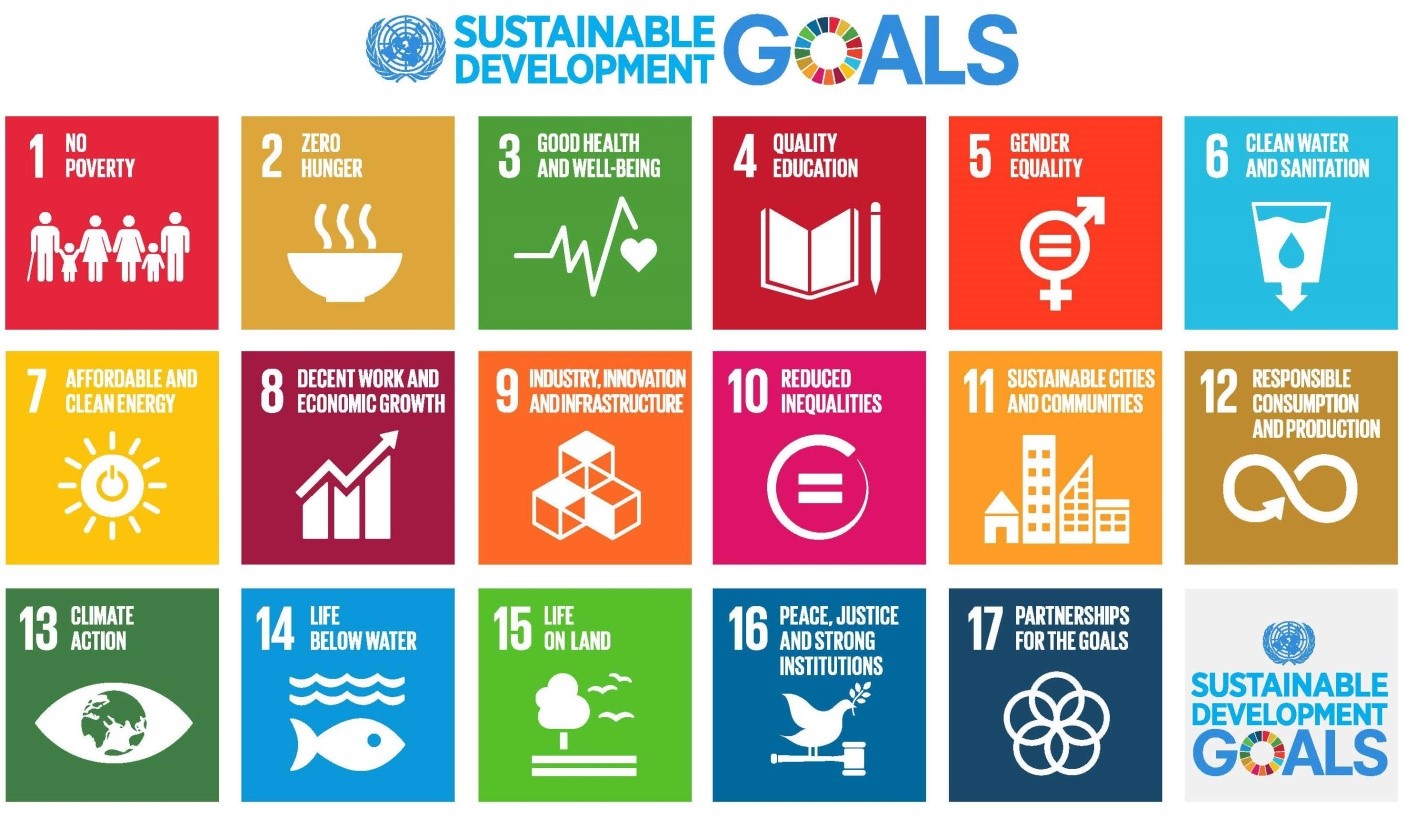


 njcssjournal