A Millionaire’s Tax for New Jersey

A Millionaire’s Tax for New Jersey

Allan Lichtenstein

In September 2020, the New Jersey legislature approved higher taxes on the wealthy to support state programs like road repair and education. The author of this essay, Allan Lichtenstein, worked for the Poverty Research Institute at the Legal Services of New Jersey and served on the Board of the RCHP Affordable Housing Cooperation that provides affordable housing and supportive services to low-income families in central New Jersey. In the essay, which originally appeared in NJ Spotlight, Lichtenstein made the case for the “millionaire’s tax.” Allan Lichtenstein died in August 2020 at the age of 71. 

In 2018, income inequality in New Jersey intensified. The rich, high-earning households grew richer, benefiting from larger gains in income than the poorer households with low incomes. My analysis of the recent U.S. Census Bureau American Community Survey release of income inequality data reveals a process of widening income inequality in New Jersey in recent years. It stresses five aspects of exacerbating income inequality, certainly a disturbing direction for New Jersey’s future socioeconomic development, suggesting remediation is urgently warranted.

First, although the average income for each household group surpassed their 2017 levels in 2018, households in the high-income brackets enjoyed substantially larger income gains than households at the bottom end of the income scale. Moreover, the percentage increases in average household income were larger at the top end than at the bottom end of the income scale.

The average income of the top 5% of households jumped by far the most — more than $22,000 in 2018 inflation-adjusted dollars to climb to more than half a million dollars (using a New Jersey-specific inflation index that combines the CPI-All Urban Consumers Current Series for New York-Newark-Jersey City, NY-NJ-PA and for Philadelphia-Camden-Wilmington, PA-NJ-DE-Md). The top 20% of households too benefited significantly, with an almost $10,000 gain, growing from about $290,000 to almost $300,000. By contrast, the average income of the bottom 20% of households rose only by about $300 between 2017 and 2018.

Second, one method to ascertain the magnitude of income inequality is to compute the difference between the average income of the top 20% of households and the average income of the bottom 20% of households over time. A comparison of each year between 2007 and 2018, shows the divergence widening each year after 2014, reaching a maximum disparity of almost $280,000 between the two ends of the income scale in 2018.

After the Great Recession

Third, although the Great Recession concluded nine years prior, households in the bottom two quintiles have yet to enjoy the benefits of the ongoing economic expansion. They, in fact, were worse off in 2018 than in 2007. While households in the top income groups have not only recouped the income losses they suffered as a result of the Great Recession, they have raised their income levels. By contrast, the average income of households in the bottom two quintiles has contracted. The average income of these households lingers below their 2007 level.

Fourth, by far most of the household income is held by the high-income earners. In 2018, more than half of all household income accrued to the top 20% of households, while the top 5% of households amassed almost one quarter of aggregate income. By contrast, just 3% of aggregate income accrued to the bottom 20% of households.

Finally, overall, New Jersey is among the most unequal states in the country. It placed 40th among all states when comparing income inequality rankings using the Gini Coefficient, a common measure of income dispersion. Only 10 states had a larger Gini Coefficient than New Jersey, with Puerto Rico topping the list, followed by the District of Columbia, New York, Connecticut and Louisiana. The Gini Coefficient ranges from a low of zero when there is perfect equality with all households having the same income to a value of 1, which is maximum inequality when all the income is held by a single household.

The intensifying income inequality in New Jersey underscores a tendency toward increasing concentration of income among the higher income groups. It reiterates and re-emphasizes the need to impose higher tax rates on high-earning households to stem the growing income inequality and to gain a more fair and equitable distribution of income. As Emmanuel Saez and Gabriel Zucman, economists at the University of California, Berkeley and among the foremost researchers in income inequality recently demonstrated in a New York Times op-ed, “the working class is now paying higher tax rates than the richest people in America.”

Given these deteriorating trends in income inequality, the time is ripe for the New Jersey state Legislature to assert itself and not allow another year to pass in which it does not impose a millionaires tax on New Jersey’s wealthy residents. These additional monies could be well invested to improve the lives of people of low income, providing resources to the programs they urgently need to help them make ends meet.

Black and White: War and Race in the United States

Black and White: War and Race in the United States

Steven Braverman

Racial divide has existed since the creation of the United States.  It is especially evident in the military during both World War II and the Vietnam War. This will be a race and class analysis of soldiers’ experiences of war in WWII versus Vietnam.  The Vietnam War is tough to quantify as to the backgrounds and historical connotation of these men. “Though the military made endless, mind-numbing efforts to quantify virtually every aspect of its venture in Vietnam, it did not make (so far as anyone has discovered) a single study of the social backgrounds of its fighting men. Quantitative evidence must be gathered from a variety of disparate studies.”(Appy, 2000, p. 36).   This can be interpreted as the true impact of Vietnam and social endeavors were not thoroughly being researched.

This is an important historical information to consider in terms of relevance toward racial minorities as soldiers during the Vietnam War. Important questions that will be addressed include: how did working-class and black soldiers experience fighting in/returning from WWII?   How did working-class and black soldiers experience fighting in/returning from Vietnam?  These important questions will be answered by a variety of sources and authors.  This will be a race analysis of soldiers’ experiences of war in WWII versus Vietnam in terms of impact on culture and social depictions for minorities. Soldiers’ experiences will be discussed in order to show how race and class has a big impact on relations and soldier interactions during both wars.

Racial gap leading up to WWII for soldiers

Racial treatment and inequalities of African Americans during WWII was a very prevalent matter. Hubner, a leading historian claimed, “People who endeavored to portray a “typical” American GI or veteran faced an impossible task. More than 16 million men and women served in the armed forces between 1941 and 1945. The vast majority were white males (of various ethnic backgrounds), but there were nearly a million African American troops, mostly in service units but some fighting in segregated combat outfits. The famed Ninety-ninth Fighter Squadron, or Tuskegee Airmen, for instance, flew missions over North Africa and Europe.” (Huebner, 2008, p. 30). This probably means that majority-black soldiers were forced to do the brunt of physical combat. Segregation was prevalent even for soldiers, willing to lay down their life for the cause.    

Propaganda and racial tropes affect African Americans during World War II. Huebner expresses in his book that, “Road to Victory was one of the first expressions of that effort, representing obvious, uncomplicated propaganda. It suggested that American soldiers were capable, proud, eager participants in a conflict strangely devoid of bloodshed. The exhibit gave viewers no reason to think, moreover, that combat would have any negative effect on American servicemen, boys reared in the heartland and steeled by a mighty resolve.” (Huebner, 2008, p. 28). This can show that the “Road to Victory” is a propaganda implementation that allowed the public to censor the harsh realities of war.

Denial is prevalent in the United States as to the toll that battle can take on service men during the war. Hubener (2008) claims on Paul Fussell’s behalf: “The radio and film industries, for instance, cooperated readily with government officials in packaging the conflict and GIS for the public; they showed little blood, little psychological breakdown, and plenty of patriotism, good will, teamwork, and camaraderie” (p. 28). 15 various critics have similarly charged the press corps of World War II with willingly delivering a sanitized version of combat to the public.” (Hubener, 2008, p. 32). This can show that soldiers are in a lower bracket in terms of race than the everyday person because rather than the public making an attempt at understanding their struggles they did not do anything to help them.  Radio and film industries seem to be largely a byproduct of the government.  This is a brainwashing of sorts, showing the public what they should believe rather than what is actually happening during these battles and events from World War II.

African Americans in particular advocate for increasing military presence and want to start fights with Japan. “Soon after the attack on Pearl Harbor, as the United States joined the war that has been raging for so long, the largest circulation African American newspaper in the country called for a Double V campaign: Victory over our enemies at home and victory over our enemies on the battlefields abroad. The editor of the Pittsburgh Courier wrote: We call upon the president and congress to declare war on Japan and against racial prejudice in our country. Certainly, we should be strong enough to whip both of them.” (Bailey & Farber, 1993, p. 817).  This showed that African Americans supported this country wide propaganda campaign. African Americans want to take this a step farther by also declaring war on Japan to conserve democracy. This shows the pride that is taken in war efforts and the willingness by the black community to increase its presence and soldiers in foreign wars.

Segregation of the armed forces in America is prevalent during World War II in terms of representation and leadership in the Army. Dwight Eisenhower, a General and President describes the treatment and separation of soldiers and minority leaders in terms of infantries during World War II. Eisenhower claims regarding this issue, “Now, it is perfectly true the problem of segregation in the service has been discussed, to my certain knowledge, for 45 years, because I was in the Army that long” (Eisenhower, 1956). Eisenhower was a veteran of war and as such he saw the racial divide first hand during World War II. “I organized them into squads, and some of them had Negro squad leaders, some white squad leaders. But they all got along together. They lived together in the same camping grounds, ate at the same messes. And General Patton, who, at first, was very much against this, became the most rabid supporter of the idea, he said, this way. Some of these white units, by the way, were southern units; this was the thing that convinced me that the thing could be done” (Eisenhower, 1956). Eisenhower, largely on the basis of this quote, seems to disagree with the notion that there was severe racial disparity. And yet, he proceeds to show that he had two squads he seems to have the “separate but equal” mentality which is anything but what it may seem. He has two racial leaders representing their groups that in it of itself being needed is racist in terms of the breaking up of the platoon. 

Propaganda is a prominent source during World War II for depictions of soldiers. Huebner (2008), a specialist on “Road to Victory” claims that “the photographs for Road to Victory had been selected from a limited and censored body of images and included no pictures of combat, wounded soldiers, or the dead. During World War II federal and military authorities exerted tight control over the dissemination of photographs, making what one scholar has called “the most systematic and far-reaching effort in its history to shape the visual experience of the citizenry” (p. 29).  This can be used to show the manipulation by the government to show the appropriate gender and race to the public. This can show manipulation by the U.S government over how certain soldiers are to be portrayed and thought about in terms of the everyday person.

Racial inequities during WWII

Fear among the public over veterans coming back with mental hardships is prevalent during World War II. Sharon Raynor (2018), who studies societal effects on soldiers claims:

In 1945, Harold Wilke, a journalist for the Baltimore Afro American newspaper, provided a socio-political commentary on both the pity and fear that the nation exhibited toward veterans with disabilities by stating: When you greet your wounded friend or relative for the first time, use your intelligence and imagination. Greet him as your friend, who was away and has now returned. Letting horror spread over your features and get in your voice because of his crutches or empty sleeves or sightless eyes will make him realize that you think of him, not as a personality, but as a cripple. Greet the Man, not the wound (p. 207).

 This claim can mean that socioeconomics is a huge factor in treatment of individuals with disabilities. Rather than making an attempt at empathy, the public relishes in their ignorance toward soldiers returning home from battle.

Masculinity is another factor in the public view of military personnel. The image of the white, strong, soldier based on propaganda, previously stated in section 2, was prevalent throughout the United States. Christina Jarvis claims, “The creation and maintenance of a hegemonic militarized masculinity that emerged in and across U.S. institutions…as America engaged in a global war.” (Jarvis, 2005, p. 4). This can be interpreted that America had a preconceived bias towards the military, making them out as superior super soldiers. The goal was to look confident and to look like a champion for the military.

Leadership and being a minority soldier is of great importance to the NAACP in terms of providing and advocating for power for black people. The NAACP was instrumental in advocating for the advancement of blacks in positions of national defense. The letter in 1941 by A. Phillip Randolph claims, “Now I have been thinking about the Negro and national defense and have come to the conclusion that something drastic has got to be done to shake official Washington and the white industrialists and labor forces of America to the realization of the fact that Negroes mean business about getting their rights as American citizens under national defense. To this end I have decided to undertake the organization of a march of ten thousand Negroes or more upon Washington” (Randolph, 2014). This could mean that there were organized protests for soldiers and military similar to the Vietnam War protests. There are racial injustices being fought from World War II which parallels Vietnam and their protests against the war in the 1960s.

Nazis in some ways are treated with more respect than black American soldiers in the mid- 1940’s. Huebner does a good job displaying this by stating, “In early 1945 Lena Horne performed before Nazi prisoners in Arkansas, while African American troops were excluded from the show. Meanwhile, near St. Louis a white lieutenant ordered several black soldiers to give up their seats—in the front of the black car—for fifteen Italian POWS being transported by rail” (Hubener, 2008). This can be interpreted as African Americans are not able to enjoy the fruits of their labor. The Nazis who commit genocide and crimes against humanity were able to bask in the entertainment. This shows that even though they committed heinous acts, they were almost given a free pass because they were the right color. Reverse logic is being shown because the people that should be able to enjoy the music and festivities cannot enjoy them, while the Nazis are being treated with a modicum of respect that is not deserved or earned by their actions.

Racial inequalities from economically disadvantaged communities

Class divide in terms of race for Vietnam soldiers is immensely vast for the black community in terms of racial relations. Christian G. Appy can show the racial divide in terms of economics, “Poor and working class soldiers whether black or white were more likely to be trained for combat than were soldiers economically and educationally more advantaged. While enlisted men from both races were primarily from the bottom half of the social structure, blacks were considerably poorer. One study found that 90 percent of black soldiers in Vietnam were from working class and poor backgrounds” (Appy, 2000, p. 35). This can mean that economic backgrounds can be of great consequence in war and especially during the Vietnam War. Those who enlisted in the Vietnam War tended to come from economically disadvantaged areas.

The Veterans Bureau of Physicians shows racial bias towards veterans of different races. Sharon Raynor (2018) contends that, “Historian Robert F. Jefferson contends that the history of the development of service-related disability policies in the twentieth century often reflected nonclinical evaluative practices couched in cultural and racial values. For example, Veterans Bureau physicians and administrators defined disability with reference to medical characteristics they thought innate to each race and that distinguished racial groups of veterans from one another” (p. 211). This can be interpreted as racism that blinds the public from characterizing disabilities for military personnel. Innate traits is the attempt at biological racism which has been completely disproven but shows the racial division in the thinking of this country. This type of racial superiority is what the Nazis advocate for and try to determine if one being is worth the right to live.

Vietnam War soldiers statistics of Racism

The racial gap during both wars can be shown through the numbers of soldiers that may be of a poorer class. Blacks were excluded in the military, although on paper this was not to be the case. Appy points this out claiming, “For blacks, whatever their economic standing, to become a reservist or guardsman was nearly impossible. In 1964 only 1.45 percent of the Army National Guard was black. By 1968 this tiny percentage had actually decreased to 1.26. Exclusion of blacks was especially egregious in the South” (Appy, 2000, p. 50). This can be taken as reality is skewed on the basis of not being taken at face value this idea of racial equality is something that only exists on paper because society seems to largely not be ready to integrate blacks into certain sections of the military during this time of the mid-1960s. In the 1960s, the number of people in the guard positions actually went down as time went on the opposite of the intention of allowing integration into the military for Reserve positions.

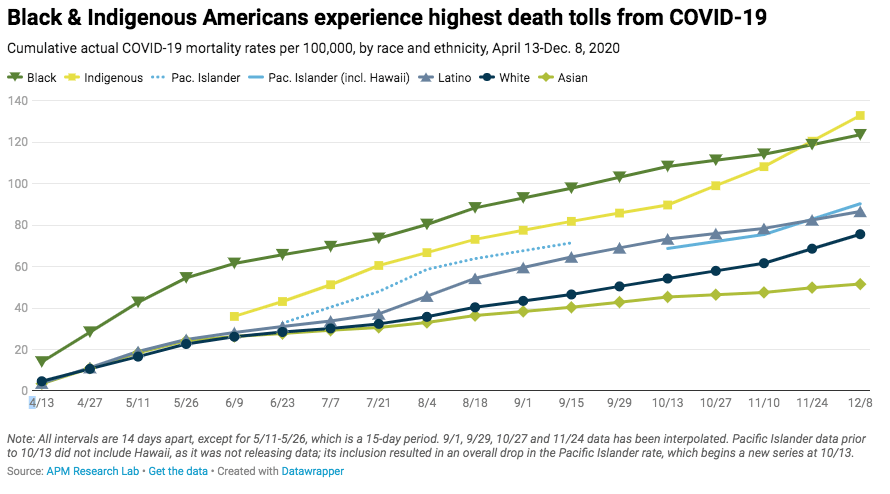
Blacks seem to almost always get the short end of the stick when it comes to their population of soldiers in heavy duty combat. Raynor (2018) shows just how disproportionate these percentages are in terms of the amount of people who could actually serve in the Vietnam War.  Some of Raynor’s statistics from the war include:

86.3% of the men who died in Vietnam were Caucasian (includes Hispanics); 12.5% (7,241) were African American; 1.2% belonged to other races. 86.8% of the men who were killed as a result of hostile action were Caucasian; 12.1% (5,711) were African American; 1.1% belonged to other races. 14.6% (1,530) of non-combat deaths were among blacks. 34% of African Americans who enlisted volunteered for the combat arms. Overall, African Americans suffered 12.5% of the deaths in Vietnam at a time when the percentage of African Americans of military age was 13.5% of the total population (p. 207).

  This can lead one to believe that, although a vast majority of White Americans served during the Vietnam War, African Americans lost 13.5 percent of their total military age population and have over 12.5 percent of their soldiers die. This means that very little to any African American soldiers survive during the Vietnam War.  This could also be telling, by the fact that most African American soldiers have some of the most demanding jobs and death tolls. They are clearly the most expendable soldiers because of their race, hence the extremely high death rate among their community.

Conclusion

There is the establishment of racial disparity when it comes to soldiers from WWII to the Vietnam War. Race is indeed a problem for soldiers as to how they were depicted in the public. There seems to be a glossing over in terms of war and facts as to what really happens in terms of race relations by the media during both wars. The legacy of these soldiers that they leave behind is hidden by the world because the United States likes to support their vision and not the reality for these black soldiers.  The racial divide seems to be on three fronts, from the media, the government and the military itself. This was shown that the laws in place do not fully represent the actual positive consequences of these minority soldiers in terms of agency that they actually had in their environment.

Minority soldiers are largely a representation of a bigger issue in society in terms of their treatment and their lack of respect from a military standpoint from the United States. Minorities are often the first to die and to see battle in both of these wars. During the Vietnam War there are numbers disproportionate to the number of Caucasian soldiers that died and were willing to serve, sacrifice for the country. There seems to be a census of glossing over battles and wars in order to depict an America that never exists in terms of African American soldiers being erased from battles. The reality is that America repeatedly uses African Americans in a way that treats them as lesser citizens, in terms of the military and being forced to segregate from the white soldiers during World War II. The experiences of these minority soldiers is an important and often overlooked factor in racial equality and can be branched alongside the civil rights movement. This paper has proven that there are many racial factors that decide a lot of the military tactics and treatment of soldiers in terms of racial relations in the United States. Overall, it seems that roles are being played by the Government, Movies and the Civil Rights Movement. Each of these factors are quintessential in determining race relations and how they evolve in the United States from World War II to the Vietnam War.

References

Appy, C.G. (2000). Working-class war: American combat soldiers and Vietnam. The University of North Carolina Press: Chapel Hill, NC.

Bailey, B., and Farber, D. (1993). The ‘Double-V’ campaign in World War II Hawaii: African Americans, racial ideology, and federal power. Journal of Social History, 26 (4), 817.

Eisenhower, D. (1956, October 5). The President’s news conference. The American Presidency Project. Retrieved from https://www.presidency.ucsb.edu/documents/the-presidents-news-conference-315.

Hubener, A.J. (2008). The warrior image soldiers in American culture from the Second World War to the Vietnam era. The University of North Carolina Press: Chapel Hill, NC.

Jarvis, C.S. (2004). The male body at war. Northern Illinois University Press: Dekalb, IL.

Randolph, A.P. (2014). “The Civil Rights Act of 1964: A long struggle for freedom/World War II and Post War (1940–1949).Library of Congress. Retrieved from https://www.loc.gov/exhibits/civil-rights-act/world-war-ii-and-post-war.html Raynor, S.D. (2018). “The double consciousness and disability dilemma: Trauma and the African American veteran.” Word & Text: A Journal of Literary Studies & Linguistics, 8, 207–21

Pull Down the Statues, and Pull Down the Social Studies Curriculum, Too

Pull Down the Statues, and Pull Down the Social Studies Curriculum, Too

Jack Zevin

“In a country that cannot come to a consensus on fundamental questions — how restricted capitalism should be, whether immigrants are a burden or a boon, to what extent the legacy of slavery continues to shape American life — textbook publishers are caught in the middle. On these questions and others, classroom materials are not only shaded by politics, but are also helping to shape a generation of future voters.” – Dana Goldstein (2020, January 12). “Two States. Eight Textbooks. Two American Stories,” New York Times.

“PULL DOWN THE STATUES” is becoming something of a national pastime these days. Americans are suddenly discovering that many, maybe most of our historical honors expressed as statues and streets have been awarded to racist, sexist, militaristic, and anti-progressive figures in our shared history. These folks, largely of monochromatic hue, were previously were seen as ‘important people’; heroines and heroes for a hundred or more years. (Well, very few heroines, alas but lots of great guys.)

It is rather amusing, and frightening, to think that the realization of moral error, street renaming, and statue destruction, is taking place in a highly contentious atmosphere of competing parties, philosophies, politics, marches, and culture wars during a worldwide major pandemic of epic proportions!

While destroying statues or defacing them or tossing them into the river {warning: possible pollution!) people are lining up to demand dramatic changes in who and what statues represent now and historically.

There is only a little talk on using suddenly ‘defrocked’ statues as educational tools, and taking aim at more than breaking a few former heroes’ necks. The statues represent ‘other times’ in our history, when slavers, fornicators, capitalists, and imperialists were given positive treatment and raised up on pedestals because we the people of that time saw these folks in a very positive light, asked few questions, and easily received government funding to build the things. Worse yet, we enshrined many in our collective historical memories, suppressing all negative input about their lives and morals, forgetting all were no more than mere mortals.

There are (and were) many juicy examples, like Robert E. Lee, the rebel commander sitting at the entrance to the Virginia State Assembly, Teddy Roosevelt on the steps of the Museum of Natural History in New York accompanied by a Native American and African American subject at either side. Christopher Columbus astride a horse was toppled recently outside the Minnesota state capitol in protest of racism against Native peoples.

A lot of the statues have delicious ironies since Lee, a slave-owning hero of the South and a “great” general actually lost the war with the North; while Teddy Roosevelt, an exciting President and world traveler (as well as proud imperialist) thought he was advancing the “lesser” peoples to greater recognition, while these people remained politically and socially inferior. Columbus statues were put up to recognize contributions by Italian Americans after decades of immigration to the USA at the expense (though they may not have recognized it) of Native Peoples. Who is in power gets to build the statues they like, until the politics shift at later times. Context should not be underrated!

Maybe we need lighter wheeled and movable statues to push in and out of warehouses, as needed, to satisfy the shifting political issues of the time?

Yet these bronze pigeon-bearing structures were often ignored, or got just a glance of admiration or condemnation, from ordinary folk brought up on a social studies curriculum of state sponsored and purchased textbooks that have supported and personalized the exact same people now toppled from their pedestals, figuratively and literally. After all, every nation needs its heroines/heroes to be proud of in shared worship. But if we dump them that means we need to rethink new candidates and push up a lot of new expensive statues.

As a workaday social studies teacher starting out in Chicago Public Schools I remember being handed my textbook by my social studies chairman, a book, History of the American People, by David Muzzey, An American History textbook for schools, first published in 1911 and a best seller into the 1950s. I rapidly discovered that I was teaching from a volume very sympathetic to the South in the Civil War, offering anti-immigrant and occasional blatant racism, so much so I was embarrassed to present it to my mixed multitude class of students, and deeply suspicious of its motives. Women were rare, mostly the wives of Presidents, with African-American’s problems ignored, Native Americans rarer still with a few feather bonnets noted, and Ethnics nearly non-existent. Most of these people were NEVER heard from in their own voices, only through the historian.

From a Chicagoan’s point of view, those gathered before me and those offered in the text most definitely struck a discordant note. It was time to cheat and create a new underground curriculum of inquiry! I had some real work to do not only to teach, but to defeat the textbook itself…so I became a lover of original sources, presented just as they were, warts and all, and that was a lot of serious work suited to inquiry and frank debate.

It is easy to tear down statues and give rise to new people on pedestals but the big question is what images, which values, whose stories, determine who shall be heroines/heroes in our minds and hearts and history.

After a couple of centuries of building allegiances and admiration for very flawed leaders, this form of socialization is much harder to change as part of cultural heritage, our inner realm of tokens, symbols, and identifications.

Much of this biased story was what we learned in school from state and city textbooks accompanied by enthusiastic teacher exponents of great leaders and country/men (a lot) and country/women (a few) plus a few troublemakers. But the big questions include: why do we need pedestals at all, why either raise up, or pull down, statues? Why not reform the content and meaning of what we learn in school and home histories?

Amidst cries for social justice, Black Lives Matter, the end of racism, fairness in economic sharing of the nation’s wealth, all while dealing with a devastating pandemic, the curriculum continues to wander along in its patriotic fervor, with rather gentle treatments of great leaders many of whom were slaveowners, warmongers, and suppressors of civil rights. Andrew Jackson comes along as a fine example open to questions of patriotism, racism and betrayal of the Constitution.

The entire curriculum, from important characters, and stories, to periodization, from before the beginning of the Republic, to current times, from foundation to towering international power, from inhabitants excluded or included like dancers and singers and playwrights and novelists, we desperately need a makeover.

That makeover, should be honest and forthright, neither conservative, nor liberal, not middle of the road, just honest and forthright about disagreements (extremely difficult because we desperately want those statues and personalities to stand in the curriculum without any tarnishing.) We like our heroines/heroes varnished and standing, maybe on rearing stallions, super-duper characters standing for our best founders’ policies, like ‘life, liberty, and the pursuit of happiness’. Perhaps this is why Americans are so prone to celebrate superheroes and a few superheroines?

If we cannot decide on a single acceptable narrative for everyone right now, how about side-by-side competing narratives on each side of a page facing each other? Let us see the clashing views right out in the open. Or let’s use our modern technology to meet-and-greet clashing views of “great” and “ordinary” people.

A great inquiry lesson comes to mind: does Jefferson stand up as a great man after careful scrutiny, or does his statue and status go down? Does Andrew Johnson deserve a statue at all? Who really does deserve a statue? How about reserving statues for ordinary heroines and heroes outside of war and politics? How about cultural people in the arts and humanities, music and architecture, medicine and science, etc.? How about the firemen and police who risked their lives on 9/11? How about less emphasis on GREAT MEN and more on stuff that really matters like food, inventions, economics, gender, and moral philosophy, taking issues and problems seriously without necessarily solving anything?

How about a new diet of people and events that includes the views and stories of Native Americans, African-Americans, Ethnics and immigrants, Asians and Pacific Islanders, and all the peoples and characters pretty much underprivileged in U.S. history textbooks and classrooms? How about a new diet across genders, LGBTQ rainbows, and especially fairer treatment for women, more women, even troublesome examples. Where are the women other than Presidents’ wives and suffragettes?

Where are the writers, journalists, artists, musicians, entertainers, dancers, and scientists? Where are the women?

Where are ethnics and newcomers? Where are some great villain? Does our history have to be “whitewashed?”

Why don’t we write a fairer and more open, more troublesome, more challenging, and more entertaining curriculum? Multisided? Real inquiry aiming at reaching at least tentative truths, and decision-making, albeit tentative?

So, let’s tear down the curriculum right now. Let’s do it overall, not piece by piece, fight by fight, but overall, the whole thing from new perspectives. Let’s revise the periodization, the cast of characters, the favorite stories, the underlying philosophies of national and international history, (sorry, but the U.S.A. is part of world history, too, very much so, but a long story only solved by a new curriculum). For example, in U.S. history, maybe we can give the Moundbuilders a bit of time at the beginning, maybe note that the colonies had European aid in the Revolution, that the second revolution failed in Reconstruction so we had to try again in the 60s with the Civil Rights movement as a third revolution, and we may have to try again.

Let’s opt for structural changes, historical philosophies, and embed the story in a global narrative so everything is not always about, ‘us’ but ‘them’, others, all.

Let us battle with our statues, our heroes, and a few heroines, facing up to the 7 sins of history (you come up with your own list):

  • Ethnocentrism: The sin of thinking that everything should be seen from ‘our’ point of view and not others.
  • Egoism: The sin of thinking that the story is always about us, never them.
  • Nationalism: The sin of thinking our nation is the greatest, right or wrong.
  • Sexism: The sin of thinking that gender is neutral in history and daily life.
  • Racism: The sin of thinking that there are ‘races’, and that one is superior or inferior when we can all interbreed as one species.
  • Imperialism: The sin of thinking and celebrating sometimes violent real estate grabs without a contract or compensation as something wonderful.
  • Official Story: The sin of promulgating and authorizing a single story of any period of history, any people or nation, any great leader as if this existed without any contrary views from ‘the other’.

I rest my case (for now).

Her Name is Woman…in 45 Minutes

Her Name is Woman…in 45 Minutes

June White

In education, it is our job to inspire leaders and movers and shakers. Some students will strive to change the world in any aspect and they will achieve it. Other students don’t want to run the world but will eventually need the skill of advocating for themselves at work or elsewhere. It is our job then, as the educator, to give them these skills and help them connect the dots of inequality and injustice. In recent years, we’ve seen teachers shy away from reactive topics in fear that they’ll say the wrong thing or use the wrong activity and the message of “stand up for change” will be lost to the hordes of angry people. I challenge that here and say that even the wrong activity with the right intentions can be another motivator for change and another way to continue to encourage students to be the ones to stand up when everyone else lays down.

This article will use the historical research of connections between the increased workforce participation of women in World War II and the second-wave feminist movement of the 60s to detail a lesson in which to inspire change.

The general storyline goes along these lines. In 1941, when Japan bombed Pearl Harbor and the US entered World War II, the US workforce was left seriously depleted. Most of the men were shipped to boot camp and then overseas. Women stepped in to fill the numerous job openings left behind. They built tanks and planes and put together guns and trucks. The entire nation held to rations and scavenged for anything to help the war effort. 

Once the war was over, many of the young women went home to start families but many stayed in the workforce; they only had to find new jobs now that the men had returned home to reclaim their former positions. To try and keep the country’s positive momentum of an upbeat attitude and growing economy, there was a push to return to normalcy. This normalcy was in the papers but the proof wasn’t there. Despite the iconic American 50s housewife, plenty of women worked! In fact, most of the statistics reporting women’s participation in the workforce stayed the same. Women had joined the workforce and they were here to stay.

As racial tensions rose in the late 1950s and early 1960s, so did a woman’s desire to achieve more than the perfect housewife in a magazine. Women started going to college to get degrees instead of marrying husbands. They pushed out into the workforce and found themselves dealing with bigots and discrimination. They realized that they were treated as second-class citizens just as much as Black Americans were and entered second-wave feminism. This was a movement focused on equal pay for equal work. At this time, the two-income, middle-class household was on the rise and not only do they want the money, they want the respect. If they were doing the work, they should get just as much recognition. With the historical context established, the lesson can move onto what it’s really about: standing up for change.

While history is bursting with examples of people standing up for what they believe, the same examples of famous people or larger than life figures can be intimidating to a young mind. How can anyone compare themselves to Dr. Martin Luther King Jr. or Rosa Parks? Instead of the typical examples, this is an opportunity to discuss and really focus on the grassroots movements or movements that weren’t even movements at the time. Relating these events and people to the very students in your classroom whether they identify with the marginalized group at hand or not. 

For example, during WWII, amongst the many women who went to work in factories, there was a group of women allowed into the United Auto Workers Union and their story is a great example of people making a difference without even knowing it. These women began working at the factory and were allowed into the UAW since they worked and mostly deserved the same rights that the men who worked in the factories had. All was well, these women were paid good wages and had a good amount of work to do but these women knew that the end of the war was coming and they wanted to keep their jobs. In response, the union created a women’s department within their war department to handle women for the duration of their work with the factory. The women’s department was created to handle what were considered “special employment problems” that came with women: childcare, workplace harassment and discrimination, federal regulations regarding how many hours women were allowed to work and so on. Even though this doesn’t seem like much, it was in fact a huge step. The American Federation of Labor was openly biased against women at the time claiming them to be “unorganizable and unworthy of organization”. The UAW persevered and moved the women’s department to the jurisdiction of the Bureau to the Fair Practices and Anti-Discrimination Department within the UAW and they continued to fight for women to be treated fairly and equally in the workplace.

Another example is a woman named Lousie Bushnell. For the sake of this article, it is not known if Louise Bushnell did anything spectacular in her life. However, she did deliver a speech to the American Business Women’s Association on Boss’s Night, September 10th, 1970. In her speech, she calls women to action. She explains that their past relatives in the early 1900’s didn’t finish the job of equality and now they must continue the fight. She called for women to participate in government and to lift each other up to success. While this speech is nothing out of the ordinary or particularly special, it is a woman fighting for what she believes. She addresses a group of men and women and speaks her mind in a professional and dignified manner while demanding the equality she knows she and other women deserve.

This is where the “so what?” comes in. Use these examples to your advantage. “Look at this woman who spoke up for what she believed in!” “Look at what these women ask for what they want and pursue whatever steps necessary to fight for what they want!” The key here is this: “you have no idea who they are”. The point here is that just because you are one person or “just” you, you still have immense power to spark, create, or advocate for change. You only need to want it.

The best way to encourage students to be active in their own community through choice is to give them practice. For this, a worksheet was designed to help break down the different parts of being an activist with the four key steps of: identify a problem in your community, think of a solution, find peers to support your cause, spread the word. This activity, whether they work in pairs or groups or individually, helps them practice questioning issues they disagree with and being productive in their resolution. Too often we see a problem and don’t say anything or help resolve it and this activity can put them into the proper mindset of finding solutions instead of just accepting a reality that doesn’t have to be so.

From practice, this activity would work best if given more than one class period to work on it and start small, think inside the school community first and then branch out. Small groups can be good practice for collaboration, respect, and compromise when working with peers. You can have them make posters and take this as far as you want. Have them design a class issue and present it to the principal. Have them focus on the rest of the community and write a letter to the mayor. Have them mobilize on social media and create a hashtag or twitter page. The idea is to get them to act on their ideas and principles.

The big idea here is to use examples from past leaders, regardless of name recognition, to inspire a future generation of activists and advocates for change and a better world. They may not remember that the UAW instituted the women’s department under the war department. They may not care about second-wave feminism or the booming economy of the 60s. They may not like your class at all but what matters is what they walk away with and this is a skill for life that could inspire who knows countless others. If one student walks away and creates the next big advocacy group, you helped a grassroots organization. If one student walks away and only dvocates for her/himself, and her/his coworkers, you helped mold a leader. 

References

Bushnell, L. (1970, September 10).  “What Happened to Eve?” Speech presented at American Business Women’s Association (Boss’s Night)

Gabin, N. (1979/1980). “Women workers and the UAW in the post-World War II period.” Labor History, 21 (1), winter 1979/1980.

Women’s Rights and the Potential of the 1920s

Women’s Rights and the Potential of the 1920s

Kathleen Maniace

Gender equality: A term that has become more and more prominent within the national community in the United States over the past few decades. The desire for women to be seen as equals to men has been a topic of conversation for as long as many of us can remember, but how has this discussion brought us any closer to closing the gap in equality between genders in our country? Most would look to the 19th Amendment as the turning point in closing the gap, saying that legally, by gaining the right to vote in 1920, women received the rights they were fighting for and equality was theirs! But the question here is not if the 19th Amendment helped to close the gap between men and women in this country, but if that is what we are teaching our students.

The 1920s can be viewed as an age of opportunity and scandal in the United States. With the prohibition, gang violence, and changes in appearances, the decade could be seen as a critical change for the American people. When many look at gender equality for the time period, the 19th amendment brings a sense of relief that Elizabeth Cady Stanton’s Declaration of Rights and Sentiments (Elizabeth Cady Stanton, 2015) was not all for nothing. With the right to vote, women were granted the ability to voice their opinions and work for equality. In our classrooms, not only do we teach the success of the Women’s Rights Movement at this time but there is also a focus on the changing views of women and the ‘Flapper’ Lifestyle. As quoted by one teenage flapper, “In this ‘age of specialists’ as it has been called, there is less excuse than ever for persons being shoved into niches in which they do not belong and cannot be made to fit. The lives of such people are great tragedies.” (Ellen Welles Page, 1922). The time period leaves the impression that the 1920s provided the gender gap a chance to decrease in size and bring equality to men and women who would not take no for an answer. With the time period’s lasting impression of opportunity, the question is was there more left in the decade than just simply the chance for equality?

The reality of the 1920s is not necessarily what many recall when it comes to how the 19th amendment truly impacted women in America. For starters, the right to vote politically did not work as well in the favor of women’s rights as much as expected. With the ability of a woman’s right to vote, came an important piece of legislation that split political ideals down the middle, the Equal Rights Amendment, or ERA. Considered in 1920, this amendment would ensure that laws punishing women, denying women from office or ignoring the financial contributions from women in the nation did not continue past the 1920s (Norton and Alexander, 2003, pgs. 260-261). The arguments of the ERA were spearheaded by two major figures who were fighting for women’s rights: Alice Paul and Florence Kelley. The decision to be made here was clearly biological: should women have exactly the same rights as men (Sally Hunter Graham, 1983, pgs. 665-79)? Or should they have rights similar to that of men but more protective of women’s abilities to bear children (Norton & Alexander, 2003, pg. 262)? These two perspectives of women who were activists of the period shows that there was still a long way to go when approaching women’s rights and a lot more discussion and legislature was going to be necessary in order to close the gap in equality between men and women.

The biological difference between men and women did not only play a role in the ways that women were seen politically but it also greatly impacted the social perspective on women in the 1920s. For a time period focused on the equal rights of women, the gender was still greatly viewed as “eye-candy” rather than another human being deserving of equality in a land advertising freedom and natural rights. While women were granted voting rights, there was still an image that women were meant to ‘ “ Unless she is a woman of more than ordinary ability and energy,  she will elect to do what all her neighbors are busy doing: bridge, tea, gossip… such women have built a complicated system of social rank to which they have become slaves’” (Johnson, 1925, pg. 614). There was this idea at the time that women were so caught up with maintaining social status and appearance that they were not as willing to work and therefore ‘slaves’ to their own social calendars. Not only would this hurt the view that the population had on women from the social perspective, but it would also force dependence on men in a more impactful way.

 The views of women in the early Twentieth century highly influenced the occupations that were available for women during the time period. This impacted the financial status of women who were trying to get a job and greatly influenced the opportunities for work that a woman had access to. Many companies at the time “ … continued to affirm personality patterns and social roles consistent with home, reinforcing the occupational stereotypes that divided administrative and professional networks in those that threatened to negate house roles and those that did not” (Kessler-Harris, 2007, p.126-127). The opportunities for women to succeed were limited and without funding or being able to financially support themselves, women were reliant on men to support them if they were unable to find a job with a proper income. The period left more space for the success of women without the drive or preparedness from women to come together and fight together for what early activists had strived to attain.

Why does this matter? The question we are asked to answer every day to get our students to connect to the material and explain why the information being taught is important. You could make the argument that it matters for context and acknowledging the rights granted by the Constitution. You wouldn’t be wrong. But would you be connecting the material? Would YOU find this to be a truly impactful message that you can now vote if you’re a woman in today’s world? At this day and age, most students might not completely understand how important that right is. It is OUR JOB to explain not only its importance but the impact as well. The ways something so seemingly ‘right’ could be split in the eyes of politics, ignored from the perspective of society, and discriminated against in the realm of independent financial success and occupational opportunity. Students deserve to know why a hundred years after the 19th Amendment was enacted, gender equality and equal pay are still very much a part of the conversation our country is having.

Teaching about women’s history is such a vital part of our job as educators. From just this topic, our students will be able to understand how our nation has kept its people from gaining rights deserving of each individual, how rights are so much more than a choice but the process to enact a right can be multi-faceted, and the ways that perspective and bias play a role in the abilities of individuals to gain equality in a society that preaches equality and freedom for the people by the people. The theme of inequality can be connected to women’s rights in America and tie into various other periods in history that have displayed the ways our nation has pushed individuals away and avoided the idea of equity and equality for copious amounts of citizens throughout the nation’s existence. This cannot be a topic that is ignored. When we see a problem that has impacted a group of people in our nation deeply, as social studies teachers, we must address not only the problem but its effect on the population, nation, and the world around us. The prospect of women’s rights addresses a multitude of issues that our nation continues to face to this day, as we prepare future generations for the world they are going to be living in. They deserve to know what they are inheriting so they can work to make our world a more accepting and understanding world. Teaching the truth behind topics like women’s history and the work behind the societal change towards gaining equality is what we are expected to do to help our students work to build a nation that accepts and fights for everyone’s natural rights.

National History Day: A Partnership Between the David & Lorraine Cheng Library and the Paterson Public Schools – A Tale of Three High Schools

National History Day: A Partnership between the David and Lorraine Cheng Library and the Paterson Public Schools—A Tale of Three High Schools

Neil Grimes and Vincent Giardina

Introduction 

National History Day (NHD) is an academic competition for middle school and high school students that is based on a different theme annually, for which students find, evaluate, and use primary and secondary sources to create and present documentaries, plays, papers, websites, and exhibits. Participation in the NHD competition is a unique opportunity to engage students in hands-on learning experiences about many different aspects of history and enables them to engage in research activities.  It allows for partnerships with academic libraries, local libraries, historical societies, and archival repositories. These organizations assist students with their NHD research.  The NHD competition provides the opportunity to foster information literacy and critical thinking skills among students while also developing skills in historical research. 

A partnership to support students’ NHD projects was established in 2020 between the Paterson Public Schools and the David and Lorraine Cheng Library at William Paterson University. The university is a Hispanic-serving Institution as designated by the U.S. Department of Education whose vision, mission, and values align to support the academic library outreach provided by the Cheng Library to support the faculty and students of the Paterson Public Schools, the 4th largest school system in New Jersey. The goal of this partnership was for the Paterson social studies teachers and students to have academic library support in the form of library instruction sessions from the David and Lorraine Cheng Library as well as access to primary and secondary resources, and project-based learning resources that would support the completion of student NHD projects. 

Originality/value 

National History Day participation by higher education librarians, collaborating with their K‐12 counterparts, can be a powerful means for secondary students to learn historical content knowledge, historical analysis skills, and information literacy skills.  The partnership between the David and Lorraine Cheng Library and the Paterson Public Schools began during the 2019-2020 school year.  It allowed for collaboration between librarians from the Cheng Library and social studies teachers in the Paterson Public Schools, one of the largest and most diverse schools systems in New Jersey. 

Background on Paterson Public Schools 

The Paterson Public Schools, an urban school system, is the 4th largest school system in the state of New Jersey (Niche 2020). There are more than 40 languages spoken in its classrooms which makes the Paterson Public Schools is among the most diverse in the state. Close to 57 percent of all students in Paterson speak a primary language other than English” (Paterson Public Schools, District Profile 2020). The rich cultural and linguistic diversity in the district is an educational asset (Delpit, 2006; Nieto, 1992). It enables students to learn firsthand about other cultures and develop an appreciation for cultural similarities and differences as they prepare for success in a multicultural world.

New Jersey public schools are categorized based on District Factor Groupings (DFGs), a single measure of socioeconomic status (SES) for each district based on the percent of adult residents who failed to complete high school, along with income, unemployment, and the percentage of residents below the poverty level. From the lowest SES to the highest, the categories are A, B, CD, DE, FG, GH, I, and J. The Paterson Public School falls within the lowest SES category of eight groupings, grouping A (State of New Jersey – Department of Education 2019).  

Paterson Public Schools are home to 23,756 students, of which all students are eligible to receive free and reduced lunch and roughly 89% of students are minorities (16,760 students from Latino and Hispanic households, 5,209 Black students, 1,252 White students, and 1,448 Asian students). There are 5,814 students that are classified as having Limited English Proficiency, with Spanish, Arabic, and Bengali being the home languages most frequently spoken (Paterson Public Schools 2020).

Background on David and Lorraine Cheng Library 

“The David and Lorraine Cheng Library is the academic knowledge center of William Paterson University. The Library advances the University’s mission and core values of academic excellence, creation of knowledge, student success, diversity and citizenship” (William Paterson University – David and Lorraine Cheng Library – Mission, Vision, & Goals 2020). The Library serves more than 10,000 students who are enrolled in undergraduate and graduate degree programs. (William Paterson University, 2020). Academic libraries should engage in library outreach to increase their involvement in the implementation of collaborations and the establishment of partnerships in the greater region in which it serves (Salamon, 2016). Library outreach can take many forms in the region that an academic library serves. A partnership with the Paterson Public Schools in support of the teachers and students involved in the National History Day competition fulfills the university and library’s mission of providing community service to K-12 schools in the northern New Jersey region. This library partnership with Paterson Public Schools adds to the established relationship that was already in place between the College of Education and Paterson Public Schools. 

Historical Context of the National History Day Competition 

In 1974, History Day was established by David Van Tassel, a professor of history at Case Western Reserve University in Cleveland, Ohio.  The event quickly spread, first across Ohio, then across the nation as it developed into a national organization. Today, History Day is a very popular event with more than 500,000 students, Grades 6-12, along with 30,000 teachers, participating each year in the United States (National History Day, 2018). The competition is based on a different theme annually, for which students find, evaluate, and use primary and secondary sources to create and present documentaries, plays, papers, websites, and exhibits.  Students enter their projects into local and state History Day competitions, with the national contest held in June at the University of Maryland (National History Day, 2018). 

Rationale

By requiring that student participants do in‐depth research using primary source materials, NHD encourages partnerships between social studies teachers and librarians.  The need for these resources have led academic librarians to offer research instruction with high school students (Manuel, 2005). The partnership between the David and Lorraine Cheng Library and the Paterson School District gave high school students access to the additional primary and secondary resources needed for the NHD competition. The Cheng Library also provided research instruction to support teachers and students participating in the NHD competition. The NHD competition highlighted commonalities between NHD learning goals, the National Standards for History: Historical Thinking Standards (Grades 5‐12); the American Association of School Libraries’ Information Literacy Standards for Student Learning; and the Association of College and Research Libraries’ Information Literacy Competency Standards for Higher Education

Thinking like a Historian – Rethinking History Instruction

History is an important discipline that encourages students to analyze historical evidence, evaluate it, and demonstrate their understanding of the evidence (Mandell & Malone, 2013).  Participation in the National History Day (NHD) competition allows students to engage in a project-based learning activity individually or in groups while undertaking in historical research and analysis as part of the historical literacy process which “incorporates the historical process (the disciplinary skills and procedures that historians use to study the past) and historical categories of inquiry (the conceptual patterns that historians use to make sense of the past)” (Mandell & Malone. 2013, p. 11).  Engaging students in historical literacy through the NHD competition allowed them to become historians as they explored a topic and specific research question relating directly to the annual theme.  By doing their own project-based research on a historical topic of their choice and making decisions about how best to formulate their own interpretations and present evidence, students benefit from a more active learning experience than reading about history from a textbook and being told by the historians and publishers what is most important to learn about any given topic or period in history. Participation in NHD gives students an authentic purpose for learning while providing opportunities for both collaboration and competition (Vandenberg-Daves, 2006).

Leadership and Communication

The author began working with the Paterson Public Schools in December of 2019 when Library Dean Edward Owusu-Ansah formalized a partnership with the Paterson Public Schools led by International High School Principal Rita Routé. Routé was able to connect the Cheng Library librarians with the Paterson Public Schools Social Studies Coordinator, Gloria Van Houten who helped to coordinate some of the efforts to support teachers and students involved in the National History Day competition at Eastside High School and J.F.K. High School.  Rita coordinated all visits made to International High School in support of the NHD competition.   

Beyond support for NHD, the author provided a professional development session on the topic of project-based learning for all of the social studies teachers.  Scheduling the outreach visits through Routé and Van Houten made the visits more manageable.  Teachers and students benefited from research instruction and support provided by the Cheng Library.  Librarians that provided instruction and support included author, [title] Librarian [Name], Outreach and Instruction Librarian Gary Marks, and Electronic Resources Librarian Richard Kearney. The sharing of instructional materials before and after our sessions via Google Drive with coordinators and teachers was an essential step in the collaborative process.  At the three individual high schools that competed in the NHD competition, the co-author Vinnie Giardina took on a large leadership role at International High School where he had one-hundred twenty-five 9th grade students, eighty 10th grade students, and five 10th grade students work on projects for a more schoolwide approach to the NHD competition.  

Collaboration/NHD Support within the Paterson School District International High School Collaboration

Acting IB Principal Routé arranged for select teachers from International High School to meet the Librarian and the Dean of the Cheng Library.  These would be the teachers who would be working the Librarian as a result of the academic library partnership. The initial in-person meeting at International High School took place on 12/6/19. This meeting led to the scheduling of three library instruction dates (1/7/20, 1/14/20, and 2/25/20) where the Librarian would provide research and NHD specific instruction in support of the students working on NHD projects. The school administration wanted as many students from the school to participate in the NHD competition as possible. In total, 210 students attempted NHD projects which resulted in 76 projects which were judged at International High School by teachers at International High School.  From those 76 projects, 10 projects (4 group exhibit boards, 1 individual exhibit board, and 5 group documentaries) competed at the Regional competition. Moving forward to the state competition were 10 students comprising 3 projects (2 group exhibit boards and 1 group documentary). Both the regional and state NHD competitions were held online as a result of the pandemic. This limited the students’ ability to interact with the NHD judges to explain how their projects specifically aligned with the theme of “Breaking Barriers in History” and why they included specific primary or secondary sources for their NHD projects. 

Through the course of the library instruction sessions, student feedback was positive and students felt empowered as they began to build confidence in their historical research, MLA citation, and historical annotation skills. As the NHD Advisor at International High School, arrangements were made to have all library instruction sessions in the seminar room where as many as 50 students were able to attend at one time. Beginning in October of 2019 IB Social Studies Teachers Matthew Caruso and Christopher Wirkmaa along with Social Studies Teacher William Towns introduced the Freshman and Sophomore Students to National History Day (NHD). International High School (IHS) had competed in NHD many times in previous years. In 2017, IHS had a team compete at the National Competition. In 2019, the school by way of IB Principal Catherine Forfia-Dion and Acting IB Principal Rita Routé wanted the freshmen and sophomores to learn different research techniques with assistance from William Paterson University. IHS is an International Baccalaureate (IB) School. The IB program is the single most rigorous college preparatory program where the students have to complete multiple research-based essays. Their hope was that with the introduction of school-wide NHD Competition that the freshmen and sophomores would learn the skills needed to complete these assignments.  

By November 1, the students competing in the School Competition had created their groups and narrowed in a topic to research. Many of the students chose to research topics like; The first African-American Women in Space, Jackie Robinson, President Barack Obama, the civil rights sit-ins, the 21st Amendment, In vitro fertilization the Transcontinental Railroad, and others.  

During the week of January 20, teachers set up a NHD base camp in the Seminar Room for the students to complete their Exhibit Boards, Websites, Documentaries, and Skits for the competition that was being held the next week. Teachers housed all of his classes in the Seminar Room and volunteered his prep time and lunch to ensure that the students would have a place to complete their projects. The school wide competition took place between January 27 and January 30at International High School. There were a total of five internal teacher judges for the in-house competition.

For this school year, teachers and students in the Paterson Public Schools are engaged in teaching and learning in the virtual environment through Google Classroom.  This presents challenges and opportunities for teachers and students. It may be difficult to get as many teachers and students at International High School to participate in the NHD competition as last year. Library instruction sessions will be limited to providing support to one teacher and one class at a time. Leading the coordination of these efforts this year will be IB Principal Catherine Forfia-Dion. Despite the challenges of scheduling and limited class sessions, having the partnership with William Paterson University will lead to successful outcomes for the teachers and students involved in the NHD competition at International High School. 

JFK High School Collaboration

At JFK High School, one in-person visit was made in support of the two NHD advisors who had fifteen students that planned on competing in the NHD competition.  This visit allowed the presentation to focus on how to find primary and secondary sources, how to evaluate sources, how to take research notes, and how to engage in historical analysis.

Eastside High School Collaboration

At Eastside High School, Social Studies coordinator, Gloria Van Houten arranged for every Social Studies class to attend an in-person introduction to NHD and NHD resources in the school library led by librarians, Neil Grimes and Richard Kearney.  An NHD Library Guide was created and updated to reflect collections of digital resources available for student use.  The resources on the NHD Library Guide were highlighted.  Students were also engaged in database searching and advanced search strategies were shared with all of the student researchers. Students were engaged in researching their historical topic that related directly to the NHD annual theme.

Findings

Through the partnership between the Paterson Public Schools and William Paterson University’s Cheng Library, students that competed in the NHD competition were able to engage in historical research, learned historical analysis, and how to format their NHD project to fit the requirements of their selected NHD competition category. Through feedback shared from the Social Studies teachers in the Paterson Public Schools, it was found that students had a greater interest in history and increased their ability to conduct research, as well as historical analysis, through the work completed during the NHD competition. At International High School, the co-author became the new NHD advisor during the 2019-2020 school year and had every social studies class participate.  In the previous school year, one group participated at the regional level and in the 2019-2020 school year ten groups participated at the regional level with 3 groups moving onto the statewide competition.

As a result of this partnership, students learned how to formulate a research question, and unique search terms that related to their topics, and learned the difference between primary and secondary resources. This partnership helped students to learn how to conduct, annotate, and use their historical research in composing their individual and group projects for the New Jersey National History Day competition.

Future Directions

Given the current COVID-19 pandemic, virtual library instruction and support will be provided to the teachers and students in the Paterson Public Schools that are engaged in the 2021 National History Day competition.  This will be provided through Google Meets which allows for presenters to share their screen and record sessions for students to re-watch. There are limitations to providing this type of support as class sessions are limited to 30 minutes.  A virtual professional development session on NHD was held in October 2020 for all of the social studies teachers in the Paterson School District to be conducted by the author and Electronic Resources librarian Richard Kearney. The scheduled visits will be emailed to each school building’s principals throughout the 2020-2021 school year within the Paterson School District. 

References

Delpit, L. (2006). Other People’s Children: Cultural Conflict in the Classroom

Mandell, N., & Malone, B. (2013). Thinking like a historian: Rethinking history instruction. Wisconsin Historical Society. 

Manuel, K. (2005). National History Day: an opportunity for K‐16 collaboration. Reference services review

National History Day (2018, January 1) David Van Tassel & the origins of National History Day. National History Day. https://www.nhd.org/nhd-origins  

Niche. (2020) Largest school districts in New Jersey. Niche.com. Retrieved from https://www.niche.com/k12/search/largest-school-districts/s/new-jersey/ 

Nieto, S. (1992). Affirming diversity: The sociopolitical context of multicultural education

Paterson Public Schools (2020). District profile. Paterson Public Schools. http://www.paterson.k12.nj.us/11_pages/backgrounder.php 

Paterson Public Schools (2020). Promising Tomorrows: Annual Report July 2018 – September 2020 (pp. 1-2, Rep.). Paterson, NJ: Paterson Public Schools. 

Salamon, Anaïs. 2016. “Benefits and Challenges of Outreach in Academic Libraries: A Case  

Study at the McGill Islamic Studies Library.” MELA Notes 89: 1–14. 

State of New Jersey – Department of Education (2019). District Factor Groups (DFG) for School Districtshttps://www.state.nj.us/education/finance/rda/dfg.shtml  

Vandenberg-Daves, J. (2006). Making history : a guide to historical research through the National History Day program. ABC-CLIO. 

William Paterson University (2020, January 31) Factbook 2019. William Paterson University.  Retrieved from https://www.wpunj.edu/institutional-effectiveness/factbooks/fb19/FactBook2019.pdf?language_id=1

William Paterson University – David and Lorraine Cheng Library (2020) Mission, Vision & Goals. Retrieved from https://www.wpunj.edu/library/about/mission.html 

Teaching the History of the AIDS Crisis: 40 Years of HIV/AIDS in American Life

Teaching the History of the AIDS Crisis: 40 Years of HIV/AIDS in American Life

Mark Helmsing and Andrew Porter

In 1981, the U.S. Center for Disease Control (now called the U.S. Center for Disease Control and Prevention) published details about a rare lung infection in its weekly report on morbidity and mortality trends in the United States. The details focused on five young, white men in Los Angeles who were healthy and identified as gay men. The report discussed how all five of these men presented the rare lung disease (called Pneumocystis Pneumonia, or PCP) along with other infections that seemed to indicate their immune systems were not functioning. All five men were dead soon after the report was published, sparking what would become known as the AIDS epidemic, part of what was to become a global AIDS pandemic (amfAR, 2020).

            As referenced and used in this article, this portion of the epidemic is often referred to historically as the AIDS crisis, referring to responses to the epidemic in the U.S. beginning with the founding of the Gay Men’s Health Crisis in 1981 and continuing through the 1990s and early 2000s (amfAR, 2020). The AIDS crisis has not ended, despite major advances in the treatment and management of HIV/AIDS. However, the scope of this article considers what is historically viewed as the “height” of the AIDS crisis in the U.S. Our choice in framing the history of the AIDS crisis this way is due to the high priority of periodization in U.S. History courses in which units on the 1980s and/or the 1990s are taught as discrete decades. In this sense the history of the AIDS crisis as it unfolded in the 1980s and 1990s is of most relevance for social studies educators despite the important recent history of the crisis from 2000 through the present.

            This article presents a number of primary source texts middle and high school social studies can consider using when teaching the history of the AIDS crisis, particularly in U.S. History courses, but also in courses that relate to sociology, psychology, civics/government, and social problems or social issues. Further, this topic can be a rich topic for shared interdisciplinary inquiry amongst social studies educators, science educators, and language arts educators searching for topics that can be studied and taught across the disciplines. Before exploring the primary sources, we will briefly offer with social studies educators with three rationales for teaching the history of AIDS crisis.

Rationale for HIV/AIDS in the History Curriculum

Four decades later, the current moment in which we are living and teaching is an important time for history and social studies educators to reflect on and consider how they teach the AIDS crisis. We argue social studies educators need to rethink how they frame and teach about the AIDS crisis, isolated less as a current event topic, which is how we, the authors, learned about the epidemic in school, and instead framing and teaching the AIDS crisis as an historical event necessary for understanding the history of American life in the twentieth century.      

            For most veteran teachers in their fifties and sixties, their teaching careers began in the beginning of the AIDS crisis. Most of their teaching career has run parallel to the AIDS crisis unfolding in ‘real time’ and not as ‘history.’ For some mid-career teachers, those in thirties and forties, their teaching career began during the shift of the AIDS epidemic from a full-blown public health crisis to a more controlled public health risk. These educators grew up in the 1980s and 1990s as children and adolescents whose experiences were shaped by some of the strongest and most combative public responses to the AIDS crisis. For the newest ranks of our profession, many novice teachers completing teacher preparation programs are in their early to mid-twenties, having been born in the mid to late 1990s, such as 1997, the year in which AIDS deaths in the U.S. declined by 42% once anti-HIV therapies known as HIV drug “cocktails” became widely used and demonstrably effective (amfAR, 2020). These newly emerging teachers did not live in a time when an HIV diagnosis was seen as a ‘death sentence’ and accompanied by fear, shame, and discrimination as was prevalent for many people in the U.S. in the 1980s and 1990s. As a result, early career educators, mid-career educators, and late career educators each have distinct orientations to the AIDS crisis and must learn from each other collectively towards creating usable social studies curriculum on HIV/AIDS. To make the case for why this is necessary, we provide three compelling rationales.

            A different time. First, the AIDS crisis is no longer as dominant in the public sphere’s attention as it once was. In the mid-to-late 1980s and all through the 1990s, the AIDS crisis “was impossible to overlook” as HIV/AIDS awareness permeated most “shared spaces, from policy to popular culture” throughout public schools, public health, and everyday life (Finkelstein, 2018, p. 1). Today there are few if any special programs aimed at discussing HIV/AIDS like the ones I grew up watching on the portable television set in my elementary and junior high schools, such as the made-for-television specials In The Shadow of Love: A Teen AIDS Story (González, 1991), or The Ryan White Story (Herzfeld, 1989), about teenager Ryan White, who died from complications of AIDS in 1990 after captivating national attention for his mistreatment by his hometown and high school in Indiana. There are few storylines in film, television, and popular literature that spotlight HIV/AIDS as singular and central issues in our present moment compared to films such as Longtime Companion (René, 1989) and Philadelphia (Demme, 1993). This is due in part to how the AIDS epidemic in the U.S. began to shift from a crisis that was difficult to manage and contain to a disease that scientists and medical experts began to better understand and better treat.

            The past is present. The presence of the AIDS crisis in our cultural memory leads to a second reason social studies educators should consider teaching about the history of AIDS. Whereas there are a few examples of HIV/AIDS featuring in a storyline in contemporary popular culture, there abounds in recent years numerous examples of popular culture that foreground the history and memory of HIV/AIDS. Examples of this history-in-use range from films such as The Normal Heart, based upon Larry Kramer’s 1985 play of the same name (Murphy, 2014) and the Oscar-nominated documentary How to Survive a Plague (France, 2012) to young adult literature, such as the massively popular novels Like a Love Story (Nzemian, 2019), which features young people living with AIDS in New York City in the 1980s, and We are Lost and Found (Dunbar, 2019), which also spotlights youth living in New York City on the eve of the AIDS crisis. These and other books and films offer contemporary audiences an opportunity to contemplate how HIV/AIDS have been understood and experienced throughout U.S. history.

            The 1980s are history. A third reason relates to U.S. history as an academic subject in schools. As each year passes by, the chronology of recorded history expands and the academic subject of history races to keep up, expanding its scope annually. Despite this expansion of what becomes historical, there is still deep immobility on the timeline of history taught in U.S. History courses. By this we mean how time somewhat stops in U.S. History courses with units and lessons on the long Civil Rights Era of the 1960s and 1970s, the conflict in Vietnam, and some scant coverage of the nation’s history as the 1970s morphs into the 1980s. For us, the authors, this is as far as our U.S. History courses covered when we were students in the 1990s, and, as teachers in the 2000s and 2010, our own courses we taught stopped at this point in the timeline. Yet within the past decade, the 1980s and the 1990s are increasingly becoming properly historical in the sense that many history curriculum standards and textbooks include content from these decades. In a study we conducted of U.S. History curriculum standards and textbooks, we found conclusive evidence that the 1980s are historically significant enough to receive dedicated instruction within U.S. History contexts. Indeed, released exams from the Advanced Placement U.S. History course over the past few years show questions that require student knowledge of the 1980s within the context of U.S. history. If the 1980s and 1990s continue to be increasingly taught as history instead of recent events in social studies courses, then teachers and students should develop content knowledge on the AIDS crisis and how the crisis and the broader epidemic changed American life during this time.

Historical Inquiry into the AIDS Crisis

Through using digitized primary source texts to investigate responses to the AIDS epidemic, students can examine different facets of public and private life in the United States. Below we organize a sampling of various digitized primary sources into four different thematic foci: (1) newspapers and magazines; (2) digital memories of public memorials; (3) public service announcements; and (4) opinions and editorials. These are only four of many different possible ways teachers can help students engage in inquiry to interpret the historical significance of the AIDS crisis.

Newspapers and magazines. First, students can analyze primary source material, including newspaper articles and magazine covers, to understand the widespread uncertainty and confusion surrounding HIV/AIDS in the early 1980s. The picture that emerges from primary source material is one of a wary nation trying to understand the science and epidemiology of HIV/AIDS and how it was transmitted to individuals. The first major news article to reference AIDS (although not directly by name) was printed in the New York Times on July 3rd 1981 (Blakemore, 2017). The article was titled: “Rare Cancer Seen in 41 Homosexuals” (Altman, 1981). A year later on July 18th in 1982, the New York Times published a story titled: “Clue Found on Homosexual’s Precancer Syndrome” (Altman, 1982). Teachers can elicit students’ historical thinking through methods of comparison between the framing used in these headlines from the early 1980s and what was later learned as new and better information was shared with the public. For example, HIV and AIDS are not a form of “cancer,” but in the absence of more accurate scientific knowledge in the early 1980s, this is how the viral infections we now know as HIV and AIDS was first described. Students can see how the immediate framing of this scientific discovery foregrounded LGBTQ communities by using the then-acceptable term “homosexuals” as a designated group, a term and framing no longer acceptably used by medical communities in the present. Similarly, students can analyze the visual imagery of a TIME Magazine cover from July 4th 1983 that presents cover stories such as: “Disease Detectives,” “Tracking the Killers,” and “The AIDS Hysteria” (Pierce, 1983). Reading an article from an Indiana newspaper, the Kokomo Tribune published on August 31, 1985 titled “School bars door to youth with AIDS” (MacNeil, 1985) helps students understand how Ryan White was officially banned from attending public school as a result of contracting HIV/AIDS through a blood transfusion.

Digital memories of public memorials. Using digital video source material, students can examine news broadcasts chronicling the first unveiling of the AIDS Memorial Quilt on the National Mall on October 11, 1987 and listen to emotional interviews where survivors memorialize lost loved ones. Teachers can encourage students to critically analyze the video in order to investigate the importance of the AIDS Memorial Quilt and the significance of the Quilt being displayed on the National Mall in Washington, D.C. for the first time. The NAMES Project Foundation’s website affords students the opportunity to view the entire AIDS Memorial Quilt. While on the website, students can “search the quilt” in order to view images of specific panels that memorialize individuals who died from HIV/AIDS. Each three-foot by three-foot panel in the quilt is different, and tells a distinctive story about a unique individual who died from HIV/AIDS.

Public service announcements. One thematic focus of students’ historical inquiry can examine how public perceptions of and responses to HIV/AIDS evolved throughout the 1980s. A New York Times article published on July 24, 1987 titled “Reagan Names 12 to Panel on AIDS” (Boffey, 1987), and the TIME magazine cover story for February 16th 1987 which reads “The Big Chill, How Heterosexuals are Coping with AIDS” (Brosan, 1987), illustrate a growing public realization that AIDS was becoming a legitimate health crisis that demanded attention. Students can compare and contrast these two sources with source material from the early 1980s to investigate why and the public perception of HIV/AIDS had changed and why it was increasingly impacting the country as a whole. Students can also analyze public service announcement (PSA) posters such as one created by Jack Keeler in 1987 that depicts a crayon drawing of a frowning child with outstretched arms, stating “I have AIDS please hug me, I can’t make you sick” (Keeler, 1987). Through examining the origins and purpose of the PSA, students can recognize how discrimination beginning in the 1980s (and continuing through the present) often robbed people living with HIV and AIDS of their dignity and humanity. The U.S. National Library of Medicine hosts a digital gallery online titled “Surviving & Thriving: AIDS, Politics, and Culture” that has digitized 42 PSAs surveying a wide array of health and social issues related to the epidemic.

Opinions and editorials. Finally, a fourth theme for historical inquiry can explicate how political and social beliefs contributed to a negative stigma surrounding HIV/AIDS during the 1980s, helping students establish historical causation on the rise of legal discrimination towards people living with HIV and AIDS. Political cartoons from influential newspaper cartoonist Daniel Sotomayor (who died from AIDS-related complications in 1992) illustrate the growing frustration to the U.S. federal government’s slow response in addressing the AIDS epidemic (Sotomayor, 1989). In the cartoon, a turtle labeled “Too little Too Late” (symbolizing the U.S. government’s inadequate response to the AIDS epidemic) is slowly climbing a mountain of caskets. Teachers can have students examine the cartoon in order to determine the authors perspective, the overall message of the cartoon and any elements of symbolism. In order to understand how the HIV/AIDS epidemic became a controversial social and political issue, students can read The Moral Majority Report from July, 1983 which cover story is titled: “Homosexual Diseases Threaten American Families.” Furthermore, students can watch Rev. Jerry Falwell (leader of the Moral Majority group) debate “The Morality of AIDS” with reverend Troy Perry (a leader in the fight against AIDS) on a live television broadcast from the Canadian Broadcasting Corporation in 1983.  Through the tense exchanges in the debate, students can see that Rev. Falwell and those aligned with the “Moral Majority” generally lacked empathy for AIDS victims, considered AIDS to be gods judgment against the sin of “homosexual promiscuity” and believed that the cure for HIV/AIDS was traditional family values. Conversely, in the video Rev. Perry argues for an end to the politicization of HIV/AIDS in order to provide compassionate support the victims and stem the loss of life.

Conclusion: Lessons for a new health crisis.

When the COVID-19 pandemic gripped the United States in the spring of 2020, many wanted to make comparisons between the COVID-19 public health crisis and the AIDS crisis of the 1980s and 1990s. To be sure, there are some areas of comparison, especially in terms of shifting knowledge and public awareness to both outbreaks as well as missteps in governmental responses to both (in addition to the leading roles both Dr. Anthony Fauci and Dr. Deborah Birx have played in both). And yet there are numerous distinctions that are important to point out, such as the fact that “financial collapse, massive unemployment, and daily White House briefings” did not take place during the AIDS crisis, nor did a race to find a vaccine take off in the first year of the disease’s discovery (Page, 2020, n.p.). One of the main history lessons students can take away from studying the history of the AIDS crisis is that tireless activism and civic protest, along with hundreds of thousands of deaths in the U.S., all took place before a light began to appear in the AIDS crisis. We hope this sample of primary source resources will enable social studies educators to consider with their students “the multiple and contested discourses around HIV/AIDS circulating in news coverage, public policy statements, health initiatives” and other sources of public life that can enrich learning about HIV/AIDS (Lesko, Brotman, Agwal, & Quackenbush, 2010, p. 826). This work is what Finkelstein (2018) terms “AIDS 2.0,” the work ahead of “a new generation of historians, archivists, artists, and activists, who were born in the midst of HIV/AIDS and are struggling to make sense of the worlds they both inherited and missed” (p. 1). We hope social studies educators will be a part of this work as well.

References

Altman, L. K. (1981, July 3). Rare cancer seen in 41 homosexuals. The New York Times. https://www.nytimes.com/1981/07/03/us/rare-cancer-seen-in-41-homosexuals.html

Altman, L. K. (1982, June 18). Clue found on homosexuals’ pre-cancer syndrome. The New York Times. https://www.nytimes.com/1982/06/18/us/clue-found-on-homosexuals-precancer-syndrome.html

amfAR. (The Foundation for AIDS Research). (2020). HIV/AIDS: Snapshots of an epidemic. https://www.amfar.org/thirty-years-of-hiv/aids-snapshots-of-an-epidemic/

Blakemore, E. (2017, July 3). This was the first major news article on HIV/AIDS. Smithsonian Magazine. https://www.smithsonianmag.com/smart-news/was-first-major-news-article-hivaids-180963913/

Boffey, P. M. (1987, July 24). Reagan names 12 to panel on AIDS. The New York Times. http://movies2.nytimes.com/library/national/science/aids/072487sci-aids.html

Brosan, R. (1987, July 24). Cover image. TIME, 129(7). http://content.time.com/time/magazine/0,9263,7601870216,00.html

Butler, P. (2004). Embracing AIDS: History, identity, and post-AIDS discourse. JAC, 24(1), 93-111.

Demme, J. (Director). (1993). Philadelphia [film]. TriStar Pictures.

Dunbar, H. (2019). We are lost and found. Sourcebooks.

Finkelstein, A. (2018). After silence: A history of AIDS through its images. University of California Press.

France, D. (Director). (2012). How to survive a plague [film]. IFC.

González, C. (Director). (1991). In the shadow of love: A teen AIDS story [made-for-television film]. ABC.

Herzfeld, J. (Director). (1989). The Ryan White story [made-for-television film]. ABC.

Keeler, J. (1987). I have AIDS, please hug me. [Still image]. U.S. National Library of Medicine, Digital Collections. https://collections.nlm.nih.gov/catalog/nlm:nlmuid-101451779-img

Lesko, N., Brotman, J. S., Agrwal, R., & Quackenbush, J. L. (2010). Feeling jumpy: Teaching about HIV/AIDS. International Journal of Qualitative Studies in Education, 23(7), 823-843.

MacNeil, C. M. (1985, August 31). School bars door to youth with AIDS. Kokomo Tribune. https://www.hemophiliafed.org/news-stories/2014/03/1985-ryan-white-banned-from-school-because-of-aids/

Murphy, R. (Director). (2014). The normal heart [made-for-television film]. HBO.

Nazemian, A. (2019). Like a love story. Balzer + Bray/HarperCollins Publishers.

Page, A. (2020, May 12). I’m an AIDS survivor and COVID-19 is giving me flashbacks. HuffPost. https://www.huffpost.com/entry/aids-epidemic-covid-19-pandemic_n_5eb441ccc5b6b92917060e77

Pierce, B. (1983, July 4). Cover image. TIME, 122(1). http://content.time.com/time/magazine/0,9263,7601830704,00.html

René, N. (Director). (1989). Longtime companion [film]. Samuel Goldwyn Company.

Shahani, N. (2016). How to survive the whitewashing of AIDS: Global pasts, transnational futures. QED, 3(1), 1-33.

Sotomayor, D. (1989). America responds to AIDS [Illustrated cartoon]. http://www.windycitymediagroup.com/images/publications/wct/2011-04-13/Sotomayor1989_AmericNumber70085.jpg

The Journal. (1983, July 6). Jerry Falwell and Troy Perry debate morality of AIDS. [Video]. https://www.cbc.ca/archives/entry/ministers-debate-aids-and-the-politics-of-plague

U.S. National Library of Medicine. (n.d.). Surviving & thriving: AIDS, politics, and culture [Digital gallery]. https://www.nlm.nih.gov/exhibition/survivingandthriving/digitalgallery/america-responds-to-AIDS.html

Walker, L. (2017). Problematising the discourse of ‘post-AIDS.’ (2020). Journal of Medical Humanities, 41, 95-105.

YesterGayTV. (2013, June 24). First unveiling AIDS Quilt 1987. . YouTube. https://youtu.be/lrVzjJ2e4hU

Caste and the Origins of Our Discontent

Caste and the Origins of Our Discontent

Isabel Wilkerson

Book Review by Hank Bitten, NJCSS Executive Director

I decided to read Caste in my search for new perspectives for information and resources to guide teachers with the teaching of ‘hard history’ about institutional racism in our country. From the events in my lifetime (since the civil rights movement) and more specifically the events of the past few years, I was skeptical of the claim of systemic racism in America. Isabel Wilkerson’s Caste convinced me that the problem is real and needs to be addressed by social studies teachers K-12.

My Personal Perspective

First, allow me to comment on my perspective which is reflected in my experiences as a white citizen and teacher.  My experience in Paterson as a teenager and student at Eastside High School in 1960 reflected fear of the black community which is based on two unprovoked attacks on public transportation and theft of our family’s car. My experience in college was positive and some of my closest friends were black. As a first-year teacher in New York City in 1969, when busing was instituted to integrate schools, my experience was also positive.  I introduced an African American history course and was the advisor to the Harambay or diversity club for students. My black students were very successful even though they were victims of harassment on their route to school on public transportation.  I even rode the B52 bus to school for several weeks during a time of increased racial tension in Queens to offer protection and security to students in our school. Many, perhaps all, of the black high school students I taught over 46 years, were successful in their dreams of attending the colleges of their choice and in their careers.

I recognize that my perspective is influenced by the zip codes of the districts where I taught, the ability level of the students in my classes, and the faculty in the schools and departments in the three districts where I taught. Your experience is likely different than mine and the events of the past four years have motivated me to reflect on what I taught, how I taught, what my students may have remembered, and the importance of teaching about the African American experience with empathy and problem-solving strategies in addition to historical documents and videos. My students learned history in teams and I listened to what they were telling me. I want to think that I contributed to their self-esteem and gave them confidence to make smart decisions in their interactions with people.

My Great Awakening

In my research for this book review, I participated in a Zoom with my New York City students from 45-50 years ago. Both black and white students commented that the racial issues of 2020 were greater than what they experienced in the 1970s. I have very little to offer about this observation except to say that the lessons I taught about Emmett Till, the Starpower simulation game I used to teach about privilege, the movie Roots, and the discussions motivated by current events in those years gave my students an understanding about the power of individuals to abuse, the inequalities of wealth, respecting authority, and the importance of education.

Caste is a valuable resource for teachers and students based on the voices of victims, citizens, leaders, and historical examples.  The information in each chapter is authentic and provided me with new insights into America’s past.  In my reading of Caste, I found myself repeatedly saying “I wish I had known this” or “why didn’t I know this?” The three resources below are reasons to read Caste and supplement the way you are likely teaching United States or World History.

The first resource is the metaphor of an old house.  I have used this metaphor to illustrate the need for reform or renovation in my teaching of the Protestant Reformation and progressive reforms in the 19th and 20th centuries.  I have also used the metaphor of tearing down an old house to teach the concept of revolution.  Isabel Wilkerson’s use of the metaphor reflects on the generations who occupy the house and the need for each occupant to look at what is behind the paint or wallpaper on the walls.

She uses this metaphor to present the idea of the architecture of caste or our place in society. Through this metaphor I have come to understand that the problem is deeper than race and it is the way all of us dehumanize individuals, use stereotypes, and forget that we are all the same. In Caste, we are confronted with the framework of joists, beams, and headers in the way the colonial era used labor, viewed property, and labeled indigenous populations, people from Africa and the Caribbean, and individuals from the Middle East, Far East, and South Asia by the color of their skin.

The new owners of this house in 1776 wanted to end the importation of slaves and offer liberty to those who fought in the American Revolution.  But the framework of caste, race, inequality, and social injustice remained as some of the occupants from the Enlightenment generation owned slaves and supported segregation.

The occupants of the antebellum generation were more radical in their renovations of this house through abolition and voices to end slavery. Unfortunately, others sold slaves breaking up families, captured fugitives, and exploited cheap labor.  After the Civil War, part of the house was replaced with constitutional amendments while the other half of the house added structural supports to the foundation of segregation, racial tension and lynching.

The 20th century generation, including the 30 years I was a teacher and administrator, saw significant renovations to the architecture of ‘this old house’ through the civil rights movement, educational opportunities, and Supreme Court decisions.  Unfortunately, the problems present since 1619 continued as black populations had the highest rates of high school dropouts, incarceration in prisons, divorce, health problems, lower life expectancy, targets of racial profiling, and the list continues.

Even with the appointment of black justices to the Supreme Court, the election of President Barack Obama, and notable leaders of color in every sector of the economy, the problems of race, injustice, violence, fear, and discrimination are continuing and escalating. Isabel Wilkerson explains this as evidence of the caste system in American society.

As a grandparent, I observed the questions our grandchildren asked in their discovery of people of color around the age of three. This is why education in the home and in pre-school is essential.  Parents and educators, siblings and peers, have the ability to rebuild ‘the house’ in this generation. 

My Epiphany Experience

The second resource is how the book presents the claim or argument of caste in America and the evidence used to present this argument. I had the opportunity to listen to Isabel Wilkerson in a presentation about Caste, and was intrigued by her response that she does not present an argument in her book but instead presents a ‘prayer’ for going forward. This is a powerful and inspiring statement!  However, my review found powerful examples documented in history, by historians, and from the news in support of her thesis that systemic racism in inherent in the way we think and behave.

Although there are excellent comparisons to Nazi Germany and India, it is the examples provided in the book that haunted me and convinced me that social injustice exists in schools, neighborhoods, government, business, and within me. Here are just a few examples:

Forest Whitaker, and Academy Award-winning actor walked into a gourmet deli in his Manhattan West Side neighborhood and was frisked in front of other customers.  The incident occurred in 2013. Whitaker said, “It’s a humiliating thing for someone to come and do that. It’s attempted disempowerment.” (p. 107)

“In 2015, the members of a black women’s book club were traveling by train on a wine tour of Napa Valley. When their laughter caused some white passengers to complain, the police were called and the women were told to leave the train.” (p.293 and The Guardian, September 13, 2015)

“In 2018, the owner of a Pennsylvania golf club ordered black women, who were members of the club, to leave because they were not moving along fast enough on the course.” The police were called. (p. 293 and CNN, April 25, 2018)

The unnamed college professor who picked up his mail in his luxury apartment opened one of his letters and was told by the man next to him in the elevator that “You’re supposed to be delivering the mail, not opening it.” (p. 213.)

At Yale University in New Haven, Connecticut, a woman called campus police on a female graduate student who had fallen asleep while studying in a common area of her dormitory, Officers demanded her identification even after she unlocked the door to her room. She was told, “You’re in a Yale building and we need to make sure you belong here.” (p. 217)

Sgt. Isaac Woodard, Jr. was riding a Greyhound bus after he was honorably discharged in February 1946. The bus driver called the police at the next stop in Aiken, South Carolina where Sgt. Woodard, still in uniform, was arrested for disorderly conduct.  The police chief beat him with a billy club which left him blind. The NAACP brought this to the attention of President Truman who ordered an investigation.  The local prosecutor did not accept the testimony of Sgt. Whittaker and he was found guilty.  His defense attorney spoke racial epithets to his face. (p. 227-228)

“Offenders in Georgia were eleven times more likely to get the death penalty if the victim was white than if the victim was black.” (p. 241)

The examples of social injustice are carefully documented from multiple states and over three centuries.  It is painful to read these examples even though as a history teacher I am aware of the violence against Americans of color and women.  The evidence is overwhelming when presented in each chapter and on almost every page. Although I did not want to accept the claim that a caste system based on color is in the America where I live and teach, I became convinced and humbled by my guilt and silence that institutional racism is real.

My Call to Do Something

These factual observations opened my eyes to and ‘ugly America’ that I was not addressing with my circle of family and friends. The documented reports in Caste are not only discussion starters for a class in Sociology but a call for action to a five-alarm fire in K-12 social studies classes. As we learned in the 1968 Kerner Commission Report, we are living in two Americas.  Every history and social studies teacher and department needs to address the problem of injustice and unequal treatment in the curriculum. Behaviors are more likely changed by education than by legislation!

Conclusion

The first action I took while I was reading this book was to develop a comprehensive resource for teachers in middle school and high school on African Americans and Latinx Americans. The second step I took was to identify best practice curriculums on African American history. These are posted on the Links page of the NJCSS website, www.njcss.org  The third action I took was to write this book review and publish it. I am aware that I need to do more regarding human rights education, racial and social injustice, environmental sustainability, LGBTQ awareness, and teaching world religions.

In a webinar sponsored by Facing History and Ourselves, Isabel Wilkerson made the statement that she intended her book as a prayer for the future. I did not grasp the meaning of her statement until the Epilogue where she wrote, “Every spiritual tradition says love your neighbor as yourself not tolerate them.” (p. 387).  We must teach students how to live with courage in a dangerous world.

At the end of 2020, 335,000 Americans have died as a result of the Covid-19 virus. The death rate for African Americans is 2.7 times that of white Americans. What is not documented is the number of minorities, with health care insurance, who are not able to have a conversation with their doctor about how to get tested, the care they will be receiving, and the options for medications and treatment available to them.

Caste is written in 31 chapters over approximately 400 pages which allows for a debate in class or a faculty book discussion. This is a book that needs to be discussed and debated. Teachers are the catalyst for curriculum reform in social studies and English Language Arts. A thread is needed to weave the political, social and economic events between 1619 and the present with the horrific accounts of injustice, slavery, discrimination, and abuse.  The positive accounts of contributions to America’s stories of industrialization, democracy, service to country, are critical to ending the legacy of caste in America’s social and cultural history.

Perhaps this is best told through the voices and stories of natives, slaves, abolitionists, sharecroppers, immigrants, voters, athletes, entrepreneurs, and the families of victims. An interesting story that I enjoyed is the one on pp. 379-80. About Elsa and Albert Einstein opening their home to Marian Anderson who was denied a room at the Nassau Inn in Princeton, NJ after singing to an overflow crowd at the McCarter Theatre. For the Einstein’s this was not a one-time act of hospitality but an action of loving one’s neighbor as one’s self. This is how educators change the stubborn behaviors of caste and privilege.

Censorship and the First Amendment by Richard F. Flaim & Harry Furman

Introduction

Censorship and the First Amendment: Should We Shield Citizens from Unpopular Ideas, or Is ‘Sunshine the Best Disinfectant’?

by Richard F. Flaim & Harry Furman

The First Amendment to the U.S. Constitution in its entirety reads as follows:

            Congress shall make no law respecting an establishment of religion,

            or prohibiting the free exercise thereof; or abridging the freedom of

            speech, or of the press; or the right of the people peaceably to assemble,

            and to petition the Government for a redress of grievances.

Throughout our history, issues related to freedom of speech, or of the press, have been debated, and both judicial rulings and various laws of Congress have attempted to further refine the manner in which these freedoms can be exercised or restricted.  Generally, the courts, including the U.S. Supreme Court, have interpreted the Constitution in a manner that protects all kinds of speech, including speech that is commonly considered hate speech. 

With the advent of the Internet and tech platforms such as Facebook and Twitter, a virtual explosion of information and opinion-based comments inundate us on a daily basis.  While much of what appears on the Internet is useful, allowing instantaneous access to information on virtually any topic of interest to us, it also is a source for a great deal of unfiltered, false and misleading information as well as downright hateful and potentially dangerous ideas.  Unless citizens consciously apply the skills of critical thinking to what they access, their subsequent beliefs and actions can be guided by such false, misleading or hateful information.  

Recently, the CEOs of Facebook and Twitter were among those who were asked to appear before a committee of Congress to explain and defend their platforms’ policies regarding what is allowed on their sites.  These platforms have recently taken increasingly aggressive steps against posts that present false or misleading claims about the voting process, especially as they relate to voting-by-mail, which became, and continues to be, a politically-charged issue in regard to the 2020 Presidential election.  Warning labels were actually posted by the platforms on some remarks that they considered inflammatory.  On December 9, 2020, YouTube announced it would start removing newly updated material that falsely claims the outcome of the Presidential election was influenced by widespread voter fraud or errors. (Ortutay)

The law that applies to this issue is Section 230 of the Communications Act of 1996, which is currently being attacked by both Republicans and Democrats, but for different reasons.  Republicans claim that platforms like Facebook and Twitter are using the law to stifle the views of conservatives.   Democrats claim the platforms must assume more responsibility for false information, hate speech and other potentially harmful content that appear on their sites.  Both President Trump and President-Elect Biden believe the law should be removed and replaced with updated legislation.  House Democrats have introduced a bill that will hold the platforms liable if they amplify or recommend “harmful radicalizing content that leads to violence.”  In their defense, the CEOs of Facebook and Twitter expressed their support for the current law, and reminded the Congressional Committee that the law provides First Amendment protection of free speech on the Internet. (Bond)  In a small step toward dealing with the concerns, the Judiciary Committee in Congress passed a bill this year to amend Section 230, which would allow federal and state claims against social media platforms that allow content that sexually exploits children.  However, as of this writing, the politicization of the issue has prevented any agreement on more substantial modifications of the law.

In recent years, controversies have occurred over decisions at a relative handful of college campuses to “disinvite,” or prohibit, certain speakers from appearing because of serious disagreement with their ideas, which were deemed offensive or dangerous.  In some cases, such decisions followed demonstrations in support of and/or in opposition to the appearance of certain speakers.  Some have viewed this with deep concern about restricting freedom of expression at our centers of learning that historically have been open to all ideas.   Others fear that some ideas pose a danger to society and should be restricted.  Interestingly, “…according to a Knight Foundation survey, 78 percent of college students reported they favor an open learning environment that includes offensive views….the U.S. adult population as a whole lags well behind, with only 66 percent of adults favoring uninhibited discourse.”  (Bollinger) 

The debate regarding whether further limitations on the guaranteed right of free speech are necessary or wise will likely outlive us all.  Over the years, such debates have involved issues such as flag burning, athletes “taking a knee” during the playing of the National Anthem, and the denial of the Holocaust.  At what point does one’s right of free speech violate the common good?  Who decides what constitutes the common good?  What are the dangers of allowing hate speech or hateful comments on the Internet or on college campuses?  What are the dangers of suppressing such expressions?  What are the limitations of suppressing free speech in a democracy?  The debate is a healthy one for our democracy, as it represents an ongoing process that has enabled our country to continue to refine the meaning of the First Amendment and its importance to all of us. 

These are questions that play out in real life.  One such instance occurred in the Vineland (NJ) Pubic Schools in 1994, while this writer was assistant superintendent of schools.  A community group approached the Vineland Board of Education with a request to rent the auditorium at Vineland High School for the purpose of having a controversial speaker, Khalid Abdul Muhammad, deliver an address to the public.  Muhammad was a provocative Black Nationalist leader who espoused hateful ideas toward Jews and the white establishment, among others.  He was a prominent leader in the Nation of Islam, and later the New Black Panther Party.  In a speech at Kean University in New Jersey in 1993, Muhammad made inflammatory remarks toward Jews, the Pope, and even advocated the murder of South African whites.  This address led to his removal from the Nation of Islam, and a resolution passed by both houses of the U.S. Congress condemning his speech.  Muhammad died of a brain aneurysm in 2001 at age 53.

The issue in the Vineland case was complicated by the fact that the Board President at the time was Harry Furman, the son of Holocaust Survivors, a former history teacher at Vineland High School, and a practicing attorney in the community.  Furman had to make the recommendation to the Board regarding whether to honor the community group’s request.  Furman had to consider a range of issues:  (1) the implications of the First Amendment right to free speech; (2) the existing Board policy that allowed the rental of the VHS auditorium to community groups; (3) the potential negative reaction from those in the community who supported the appearance of Muhammad, and from those who were vehemently opposed to the potentially hate-filled speech to be delivered in our community; and (4) whether the appearance of Muhammad could lead to violent confrontations.  What was the Board President to do?

Years later, Furman and this writer collaborated on the writing of the book The Hitler Legacy: A Dilemma of Hate Speech and Hate Crime in a Post-Holocaust World (N.J. Commission on Holocaust Education, 2008, available free on the Commission’s website. See below for address.)  The book, written for high school students, challenges students to confront the various dilemmas involved in reconciling the Constitutional right of free speech with the potential implications of allowing speech that is hateful and potentially dangerous.  In addition to numerous articles that relate to different aspects of these issues, we wrote a number of “moral dilemma stories” that challenge students to deal with some very difficult issues regarding free speech, issues that pose a conflict of values.  One such moral dilemma story was based upon Furman’s decision as Board President back in 1994.  It is entitled Up Against the First Amendment: The School Board President’s Dilemma (Flaim and Furman).  This dilemma story is presented below.  While the dilemma story is fictionalized, it is loosely based upon the Vineland example.  Thus, the names of individuals and school are not real. 

Up Against the First Amendment: The School Board President’s Dilemma

by Harry Furman and Richard F. Flaim

Harry Sendin is the President of the Seneca School Board of Education.  A former teacher and now an attorney, Sendin is sensitive to the needs of a very diverse school system in which almost one-half of the students are African-American and Latino.  The community is also the home of approximately 200 families of Survivors of the Holocaust.  Indeed, Sendin himself is the son of Holocaust Survivors.   As a practicing lawyer, he is aware of the potential legal implications of Board of Education actions. 

The Board maintains a policy that members of the public may rent a school facility such as an auditorium for the purpose of promoting a public or community interest.  Sendin learns that a local organization has rented the high school auditorium and has invited Khalid Abdul Muhammad to be the featured speaker for an evening event.  A fiery orator, Muhammad is known for his alleged anti-Semitic and anti-white positions as to the state of current American society.

After the invitation becomes public knowledge, some members of the community strongly suggest that what they describe as demagogues like Muhammad have no right to speak in the public schools.  They argue that every legal step should be taken to block Muhammad from appearing at Seneca High School.

The Board’s solicitor advises Sendin that the Board President alone makes the decision as to whether the Board should take any action about Muhammad’s visit.  Sendin knows that regardless of what he decides to do, there will be people who will be critical of his action or inaction.  Sendin speaks with other members of the school board and many other persons in the community, but he realizes that he alone must make this decision.

Questions for Discussion (Revised 12-13-20)

  1. Why is Mr. Sendin’s decision a difficult one?  What values come into conflict for him?  What choices are available to him?  What are the probable consequences of each of these choices?
  2. Should Sendin’s ethnic or religious heritage influence his decision?
  3. Should Sendin make this decision based upon the law, community response, personal interest or any other criteria?
  4. What should be the reaction of Muhammad if he is barred from speaking?  Does Sendin have any sound reason for doing this?  Is there any legal basis upon which Muhammad can be stopped from speaking?
  5. If the speaking engagement is not stopped, should Sendin and members of the school board attend the speech?  Why or why not?
  6. How should the community respond to the presence of such a speaker in their community?  What options are available?
  7. To protect the public peace at such an event, should the community provide additional security?  Who should be responsible for the cost of such security?
  8. Explain whether or not your advice to Sendin would have been different if the intended speaker:
  • was a neo-Nazi leader
  • a national leader of a LGBTQ rights organization?
  • a “right-to-life” speaker?
  • a “pro-choice” advocate?
  • a member of a militia group?
  • a proponent of Black Lives Matter?
  • a sympathizer with the Taliban?
  • an advocate of QAnon?

9. Do you believe there should be restrictions on the expression of potentially dangerous ideas, misinformation, or lies on social media platforms, such as Facebook, Twitter, or Google?  Explain.  If so, who should decide?  Could such restrictions be reconciled with the guarantees of freedom of speech in the First Amendment? 

10. Several countries in Western Europe have passed laws prohibiting the display of the Nazi swastika and prohibiting the expression of ideas that claim the Holocaust did not occur.  How do you view such prohibitions?

11.Would there be any change in your point of view if the issue is free speech involving a teacher in a public school classroom making anti-Jewish or anti-White comments similar to those of Muhammad?  Is there a difference between speech in a classroom and speech in the “public square”? (For a recent federal case, in part about speech in the classroom, see Ali v. Woodbridge Township School District.)

12. To what extent does the desire to constrain speech under certain circumstances intersect with what has recently been labeled as “cancel culture”?  Explore what is meant by this phrase and whether it has implications for the future expression of speech.

13. In 2014, Condoleezza Rice, the former U.S. Secretary of State, was invited to be the commencement speaker at Rutgers University.  In the face of student protest, Rice declined the invitation.  Conduct research into the nature of the objections to having Rice serve as commencement speaker and whether there is any merit to such objections.

14. Underlying the willingness to constrain speech in a democratic society, whether on Facebook, Twitter, Instagram or in the “public square”, is an assumption that many people are vulnerable to being manipulated by speech, and that such manipulation could have dire consequences.  This is a very different point of view than that expressed by Justice Louis Brandeis when he asserted in 1913 that “sunlight is the best disinfectant”.  Discuss.

15. Research:  What restrictions on the freedom of speech have been upheld by the U.S. Supreme Court, or enacted into law?  What rationales underlie such restrictions?  Explore several recent issues related to the guarantee of freedom of speech and discuss how they are being resolved. 

————————————————–

Furman’s Actual Decision, and Concluding Comments

As stated above, this dilemma story is loosely based upon the appearance of Khalid Abdul Muhammad at Vineland (NJ) High School in 1994, and co-author Harry Furman’s own involvement in the dilemma.   Furman’s decision was to allow Muhammad to speak, and he and several other members of the Board of Education attended the event.  While Muhammad’s speech was typical of his hate-filled blasts, there were no incidents before, during or after his appearance.  Furman based his decision on numerous factors:  (1) the Constitutional guarantee of free speech; (2) the Board policy that provided for the rental of school facilities by community groups which, if an exception were made for this particular community group, would have been deemed discriminatory; (3) his personal belief that in a democratic society, even unpopular ideas should be open for discussion.

In discussing issues related to free speech, Furman has often quoted the former U.S. Supreme Court Justice Louis Brandeis who, in defense of the protection of even hateful speech, proclaimed “…sunshine is the best disinfectant.”  Brandeis believed that if we prohibit the expression of hateful speech, such views would simply go “underground” and fester out of public view, making it more difficult for citizens to become aware of them and work to challenge such views.  The guarantee of free speech, even that which is unpopular or hateful, makes it incumbent upon all citizens to be critical consumers of the explosion of information and misinformation that bombards us daily.  In the months and years ahead, citizens’ application of the skills of critical thinking may very well help determine the degree to which our democracy will either thrive, or decline.

Sources:

Bollinger, Lee C.  “Free Speech on Campus Is Doing Just Fine, Thank You.”  The Atlantic. June 12, 2019.

Bond, Shannon. “Day Before Election, Tech CEOs Defend Themselves from GOP Accusations of Censorship.”  NPR. October 18, 2020. https://www.npr.org/2020/928702931/days-before-the-election-tech-Ceos-defend-themselves-from-accusations-of-censorship  

Flaim, Richard F. and Harry Furman, Co-Eds.  The Hitler Legacy: A Dilemma of Hate Speech and Hate Crime in a Post-Holocaust World.  N.J. Commission on Holocaust Education, Trenton, NJ. 2008.  (Available free viewing: https://www.nj.gov/education/holocaust)

Ortutay, Barbara.  “Weeks after election, YouTube cracks down on misinformation.” Associated Press. December 9, 2020. https://apnews.com/article/youtube-election-misinformation- removal-74ca3738e2774c9a4cf8fbd1e9771of

About the Authors

Richard F. Flaim is a Past-President of NJ Council for the Social Studies; former Executive Director of the N.J. Association for Supervision and Curriculum Development; and retired teacher of history, Social Studies Supervisor, and  Assistant Superintendent for Curriculum and Instruction in the Vineland (NJ) Public Schools.  He is co-editor of The Hitler Legacy: A Dilemma of Hate Speech and Hate Crime in a Post-Holocaust World; and The Holocaust and Genocide: A Search for Conscience.  He served as Chairman of the Curriculum and Education Committee of the N.J. Commission on Holocaust Education.

Harry Furman is a practicing attorney in Vineland, NJ; former teacher of history in the Vineland Public Schools; Part Time Lecturer (PTL) at Rutgers University; Editor-in-Chief of The Holocaust and Genocide: A Search for Conscience; and co-editor of The Hitler Legacy: A Dilemma of Hate Speech and Hate Crime in a Post-Holocaust World.  He serves as Chairman of the South Jersey Holocaust Coalition, and has spoken on topics related to the Holocaust and genocide and related issues of conscience throughout the United States and in Israel. He is a past member of the N.J. Commission on Holocaust Education.

December 2020

Academic Literacy – The Conclusion

Conclusion

Dr. Harry Stein, Manhattan College

     Academic Literacy is not only an idea it is a series of social studies teaching and learning activities for our classrooms, assignments, and evaluations.  We need to link these activities to four other mandated ideas that affect teachers and students.  These are school district mandated planning procedures, the mandated observation and evaluation of teachers, required teacher professional development, and the general philosophies that guide education in the fifty states and 12,000 public school districts.

This image has an empty alt attribute; its file name is conclusion-1.jpg
Illustration #1 – Weekly Academic Literacy Chart

     Illustration #1 is a weekly Academic Literacy Planning chart.  It is a supplement to normal district plans that call for the identification of State standards, content teaching/learning objectives, selection of materials, and assessment.

     This planning chart identifies the four major elements in Academic Literacy, gathering and organizing information (I and II) critical thinking (III and IV) memory (V) and Writing (VI).  Using the Activities Handbook teachers can identify which activities they might use as students interact with content materials.

      At the bottom of the chart is a section showing how social studies teachers might coordinate with other faculty members.  Some students also go the remedial reading and writing teachers. NCLB, NO Child Left Behind or Title I) staff.  Some go to ELL staff, English language literacy.  If they know what content is being taught in a social studies class they can find similar content and use it for their skill objectives.  The inclass support teacher is assigned to be with special education students mainstreamed in a social studies class.

This image has an empty alt attribute; its file name is conclusion-2.jpg
Illustration #2 – Charlotte Danielson Framework for Teaching Theory

      Illustration #2 shows the commonly used Danielson theory for teacher observation and evaluation.  Academic Literacy activities are part of Domain 3 Instruction.  

      Illustration #3 is a framework for creating a permanent professional learning community in a school or district.

This image has an empty alt attribute; its file name is conclusion-3b.jpg
Illustration #3 – Professional learning Communities in Schools

      Finally, Academic Literacy is always a tool in carrying out an educational belief.  The Aims of Education thinking of Eugene Maleska offers a wide variety of choices.    

This image has an empty alt attribute; its file name is conclusion-3-good.jpg
Illustration #3 – Framework for Professional Learning Communities in Schools
This image has an empty alt attribute; its file name is conclusion-4.jpg
Aims of Education
This image has an empty alt attribute; its file name is conclusion-4d.jpg
  • Post
  • Block
  • Document