Election 2024: The Dilemma for Teachers

A major goal of teachers, especially secondary school social studies teachers, is to help students learn to evaluate multiple perspectives on issues by weighing supporting evidence, separating fact from fiction, examining underlying assumptions, and then developing their own informed opinions. As a teacher, I generally withhold my opinion on a topic, however, I have no problem asserting that slavery, genocide, racism, dictatorship, and antisemitism are bad. There are no upsides. When we
consider multiple perspectives, the question we should address is why they happen, not whether they happened in the past or should happen again.

On a variety of topics, I provide students with a package of documents to evaluate that includes things I agree with and things that I don’t. During class, my primary role is to ask questions that promote discussion about the document package and the issues and moderate respectful student to-student conversation. I use this teaching approach whether we are discussing issues from the past such as the causes of the American Revolution, or the present, such as the role of human action in climate change, whether a particular military campaign constitutes war crimes, or if a groups behavior should be identified as terrorism. Important topics for discussion when schools reopen in the fall will be evaluations of the Biden administration’s record on foreign policy, the economy, climate, and the migrant/refugee “crisis.” It will also be legitimate to discuss whether Joseph Biden’s
age and physical and mental condition should be an issue in the election whatever your evaluation of his first administration.

The big problem in September will be what to do about Donald Trump. How do you organize a balanced unbiased discussion and evaluation of a candidate who makes outrageous, hateful, blatantly false statements? He is a candidate convicted of 34 counts in a New York trial and who faces three other criminal cases, who has been found guilty of defamation in a civil suit, who tried to overturn the results of the 2020 Presidential election, who continues to claim the 2020 election was stolen, who dismisses any accusation against him as politically motivated, and who demands total immunity against prosecution as a former President.

The November election is going to be a major focus in middle school and high school social studies classes. I am not neutral about slavery, genocide, racism, dictatorship, and antisemitism and I am not
neutral about the threat Donald Trump poses to the future of democracy in the United States and the constitutional foundations of American government and society. I will not use unsubstantiated conspiracy theories, propaganda websites, and Trump sycophantic reports in document packages and pretend students are evaluating legitimate sources.

Even a fact-check exercise of Trump statements leaves a teacher open to charges that they are injecting their opinions into class and trying to influence the ideas of their students. But of course, the job of the teacher is to influence the ideas of their students. Our responsibility to promote civic
discourse supported by evidence and advocate for democracy means we have to influence students to critically think about the campaign and candidates and if that means presenting an accurate picture of the threat posed by Donald Trump, we will have to live with the consequences.

Every teacher will almost definitely have students in their classes who support Donald Trump and the Republican Party, which is their right. They should be welcomed into discussion and encouraged to find evidence to support their positions, but they cannot be permitted to shout down or intimidate other students, things that I witnessed in 2016 and 2020. Donald Trump has continually said scary things, some of which he has backtracked on, and some of which he has not. In my opinion, any one of them should disqualify him to be President of the United States. He told American Jews, already
subject to a rising tide of antisemitism, that “Any Jewish person that votes for Democrats hates their religion. They hate everything about Israel and they should be ashamed of themselves.” He described some immigrants as “not people,” “animals,” and “snakes,” accused them of “poisoning the blood of our country,” a statement that echoed the ideas of Adolf Hitler, and is promising mass deportations in violation of constitutional guarantees of due process, guarantees that in the 14th amendment are not limited to citizens. He asserted without evidence that other countries are emptying their prisons and sending criminals across the border. Trump wants “strong ideological screening of immigrants” because if “you don’t like our religion . . . we don’t want you in our country.” He is apparently unaware or does not care that the United States does not have an official religion.

Trump continually berates the American legal system and undermines public confidence in the law, the courts, and the government. He describes people tried and convicted of crimes during the January 6, 2021 violent invasion of the United States Capitol as “unbelievable patriots” being held as hostages and promises to offer these convicted criminals mass pardons if he is elected. Trump dismisses legal charges against his former aides Peter Navarro and Paul Manafort who were convicted, Navarro of contempt of Congress and Manafort of bank and tax fraud, and claims they were “treated very badly.”

Trump lowers the character of political speech as he raises the level of hostility. He denounces Joseph Biden as “Crooked Joe” and as a stupid President and uses vulgar and offensive language to describe other opponents, especially Black women. At campaign stops, Trump warns that if he is not elected, “It’s going to be a bloodbath for the country,” something he later tried to explain away, and that if he does “not win this year’s presidential election, I don’t think you’re going to have another election, or certainly not an election that’s meaningful.” He says he wants to be a dictator, but only on day one.

If elected, Trump says he would support a nationwide ban on terminating a pregnancy after 15 weeks, severely limiting the reproductive rights of women. A rightwing Supreme Court with three members, I hesitate to call them justices, appointed by Trump the last time he was President may well approve such a ban. If Trump is elected President, he threatens to withdraw the United States from the NATO alliance that has helped prevent broader European wars since tens of millions of people died in World War I and World War II or at a minimum sharply reduce U.S. financial support and to once again withdraw the United States from global efforts to minimize climate change because he does not believe in science. At a time when rightwing anti-democratic political movements are gaining followers and threatening to take power in many European countries, Trump has repeatedly expressed admiration for authoritarian leaders like Vladimir Putin of Russia, Xi Jinping of China, Recep Tayyip Erdoğan of Turkey, Viktor Orbán of Hungary, and Kim Jong Un of North Korea. He praised the Lebanese-based armed group Hezbollah even though they are listed as a terrorist group by the United States State Department. Trump claims, without evidence, that the war in Ukraine and the Hamas attack on Israel would somehow not have happened if he were President.

In his speeches, Trump continuously lies or exaggerates about his own prowess and record as President. Trump didn’t create the greatest economy or pass the biggest tax cut in U.S. history. He didn’t do more for African Americans than any president since Abraham Lincoln. He didn’t defeat ISIS or increase government revenue and he wasn’t reelected in 2020.

Teachers should not tell students who to vote for or tell them how they are voting, but you are remiss if you do not help them understand who Donald Trump is and what he represents. If you are unsure how to do this, you can have students read and debate the points raised in this essay. Students can evaluate whether it raises legitimate concerns, or it is just anti-Trump propaganda.

Einstein’s Postwar Campaign to Save the World from Nuclear Destruction

Lawrence S. Wittner

This article appeared originally in Foreign Policy in Focus. It is reprinted with permission.

Although the popular new Netflix film, Einstein and the Bomb, purports to tell the story of the great physicist’s relationship to nuclear weapons, it ignores his vital role in rallying the world against nuclear catastrophe. Aghast at the use of nuclear weapons in August 1945 to obliterate the
cities of Hiroshima and Nagasaki, Einstein threw himself into efforts to prevent worldwide nuclear annihilation. In September, responding to a letter from Robert Hutchins, Chancellor of the University of Chicago, about nuclear weapons, Einstein contended that, “as long as nations demand unrestricted sovereignty, we shall undoubtedly be faced with still bigger wars, fought with bigger and technologically more advanced weapons.”

Thus, “the most important task of intellectuals is to make this clear to the general public and to emphasize over and over again the need to establish a well organized world government.” Four days
later, he made the same point to an interviewer, insisting that “the only salvation for civilization and the human race lies in the creation of a world government, with security of nations founded upon law.”

Determined to prevent nuclear war, Einstein repeatedly hammered away at the need to replace international anarchy with a federation of nations operating under international law. In October 1945, together with other prominent Americans (among them Senator J. William Fulbright, Supreme
Court Justice Owen Roberts, and novelist Thomas Mann), Einstein called for a “Federal Constitution of the World.” That November, he returned to this theme in an interview published in the Atlantic
Monthly. “The release of atomic energy has not created a new problem,” he said. “It has merely made more urgent the necessity of solving an existing one…As long as there are sovereign nations possessing great power, war is inevitable.” And war, sooner or later, would become nuclear war.

Einstein promoted these ideas through a burgeoning atomic scientists’ movement in which he played a central role. To bring the full significance of the atomic bomb to the public, the newly-formed Federation of American Scientists put together an inexpensive paperback, One World or None, with individual essays by prominent Americans. In his contribution to the book, Einstein wrote that he was “convinced there is only one way out” and this necessitated creating “a supranational organization” to “make it impossible for any country to wage war.” This hard-hitting book, which first appeared in early 1946, sold more than 100,000 copies.

Given Einstein’s fame and his well publicized efforts to avert a nuclear holocaust, in May 1946 he became chair of the newly-formed Emergency Committee of Atomic Scientists, a fundraising and
policymaking arm for the atomic scientists’ movement. In the Committee’s first fund appeal, Einstein warned that “the unleashed power of the atom has changed everything save our modes of thinking, and thus we drift toward unparalleled catastrophe.” Even so, despite the fact that Einstein, like most members of the early atomic scientists’ movement, saw world government as the best recipe for survival in the nuclear age, there seemed good reason to consider shorter-range objectives. After all,
the Cold War was emerging and nations were beginning to formulate nuclear policies. An early Atomic Scientists of Chicago statement, prepared by Eugene Rabinowitch, editor of the Bulletin of the Atomic Scientists, underscored practical considerations. “Since world government is unlikely to be achieved within the short time available before the atomic armaments race will lead to an acute danger of armed conflict,” it noted, “the establishment of international controls must be considered as a problem of immediate urgency.” Consequently, the movement increasingly worked in support of specific nuclear arms control and disarmament measures.

In the context of the heightening Cold War, however, taking even limited steps forward proved impossible. The Russian government sharply rejected the Baruch Plan for international control of
atomic energy and, instead, developed its own atomic arsenal. In turn, U.S. President Harry Truman, in February 1950, announced his decision to develop a hydrogen bomb―a weapon a thousand times as powerful as its predecessor. Naturally, the atomic scientists were deeply disturbed by this lurch toward disaster. Appearing on television, Einstein called once more for the creation of a “supra national” government as the only “way out of the impasse.” Until then, he declared, “annihilation beckons.”


Despite the dashing of his hopes for postwar action to end the nuclear menace, Einstein lent his support over the following years to peace, nuclear disarmament, and world government projects. The most important of these ventures occurred in 1955, when Bertrand Russell, like Einstein, a proponent of world federation, conceived the idea of issuing a public statement by a small group of the world’s most eminent scientists about the existential peril nuclear weapons brought to modern war. Asked by Russell for his support, Einstein was delighted to sign the statement and did so in one of his last actions before his death that April. In July, Russell presented the statement to a large meeting in London, packed with representatives of the mass communications media. In the shadow of the Bomb, it read, “we have to learn to think in a new way…Shall we…choose death because we cannot forget our quarrels? We appeal as human beings to human beings: Remember your humanity, and forget the rest.”

This Russell-Einstein Manifesto, as it became known, helped trigger a remarkable worldwide uprising against nuclear weapons in the late 1950s and early 1960s, culminating in the world’s first
significant nuclear arms control measures. Furthermore, in later years, it inspired legions of activists and world leaders. Among them was the Soviet Union’s Mikhail Gorbachev, whose “new thinking,” modeled on the Manifesto, brought a dramatic end to the Cold War and fostered substantial nuclear disarmament. The Manifesto thus provided an appropriate conclusion to Einstein’s unremitting campaign to save the world from nuclear destruction.

The Atomic Bomb: Albert Einstein’s Letter to President Franklin D. Roosevelt
Digital History ID 1184
Author: Albert Einstein
Date:1939
https://www.digitalhistory.uh.edu/disp_textb
ook.cfm?smtID=3&psid=1184

Annotation: In August 1939, six months after physicists Otto Hahn and Fritz Strassman had demonstrated the process of nuclear fission, Albert Einstein, at the urging of physicist Leo Szilard, wrote to President Franklin D. Roosevelt about the danger of Nazi Germany creating an atomic bomb.


Document: Sir:
Some recent work by E. Fermi and L. Szilard, which has been communicated to me in manuscript, leads me to expect that the element uranium may be turned into a new and important source of energy in the immediate future. Certain aspects of the situation which has arisen seem to call for
watchfulness and, if necessary, quick action on the part of the Administration. I believe therefore that it is my duty to bring to your attention the following facts and recommendations:


In the course of the last four months it has been made probable-through the work of Joliot in France as well as Fermi and Szilard in America-that it may become possible to set up a nuclear chain reaction in a large mass of uranium, by which vast amount of power and large quantities of new radium like elements would be generated. Now it appears almost certain that this could be
achieved in the immediate future.

This new phenomenon would also lead to the construction of bombs, and it is conceivable-though much less certain-that extremely powerful bombs of a new type may thus be constructed. A single bomb of this type, carried by boat and exploded in a port, might very well destroy the whole port
together with some of the surrounding territory. However, such bombs might very well prove to be too heavy for transportation by air.


The United States has only very poor ores of uranium in moderate quantities. There is some good ore in Canada and the former Czechoslovakia, while the most important source of uranium is the Belgian Congo.


Yours very truly,

In view of this situation you may think it desirable to have some permanent contact maintained between the Administration and the group of physicists working on chain reactions in America. One possible way of achieving this might be for you to entrust with this task a person who has your confidence and who could perhaps serve in an inofficial capacity. His task might comprise the following:


a) to approach Government Departments, keep them informed of the further development, and put forward recommendations for Government action, giving particular attention to the problem of securing a supply of uranium ore for the United States:


b) to speed up the experimental work, which is at present being carried on within the limits of the budgets of University laboratories, by providing funds, if such funds be required, through his contacts with private persons who are willing to make contributions for this cause, and perhaps also by obtaining the co-operation of industrial laboratories which have the necessary equipment.


I understand that Germany has actually stopped the sale of uranium from the Czechoslovakian mines which she has taken over. That she should have taken such early action might perhaps be understood on the ground that the son of the German Under-Secretary of State, von Weizsacker, is attached to the Kaiser-Wilhelm-Institute in Berlin where some of the American work on uranium is now being repeated.
[signed] Albert Einstein


The secret of the bomb should be committed to a World Government, and the United States should immediately announce its readiness to give it to a World Government. This government should be
founded by the United States, the Soviet Union, and Great Britain —the only three powers with great military strength. All three of them should commit to this World Government all of their military strength.


The fact that there are only three nations with great military power should make it easier rather than harder to establish such a government . . . Since I do not foresee that atomic energy is to be a great boon for a long time, I have to say that for the present it is a menace. Perhaps it is well that it should
be. It may intimidate the human race into bringing order into its international affairs, which, without the pressure of fear, it would not do.
https://www.theatlantic.com/magazine/archive/1945/11/einstein-on-the-atomicbomb/656626/

Russell-Einstein Manifesto (London, July 9, 1955)
https://ahf.nuclearmuseum.org/ahf/keydocuments/russell-einstein-manifesto/

In the tragic situation which confronts humanity, we feel that scientists should assemble in conference to appraise the perils that have arisen as a result of the development of weapons of mass destruction, and to discuss a resolution in the spirit of the appended draft. We are speaking on this occasion, not as members of this or that nation, continent, or creed, but as human beings, members of the species Man, whose continued existence is in doubt. The world is full of conflicts; and overshadowing all minor conflicts, the titanic struggle between Communism and anti-Communism.

Almost everybody who is politically conscious has strong feelings about one or more of these issues; but we want you, if you can, to set aside such feelings and consider yourselves only as members of a
biological species which has had a remarkable history, and whose disappearance none of us can desire.

We shall try to say no single word which should appeal to one group rather than to another. All, equally, are in peril, and, if the peril is understood, there is hope that they may collectively avert it.
We have to learn to think in a new way. We have to learn to ask ourselves, not what steps can be taken to give military victory to whatever group we prefer, for there no longer are such steps; the question we have to ask ourselves is: what steps can be taken to prevent a military contest of which the issue must be disastrous to all parties?


The general public, and even many men in positions of authority, have not realized what would be involved in a war with nuclear bombs. The general public still thinks in terms of the obliteration of cities. It is understood that the new bombs are more powerful than the old, and that, while one A
bomb could obliterate Hiroshima, one H bomb could obliterate the largest cities, such as London, New York, and Moscow. No doubt, in an H-bomb war, great cities would be obliterated. But this is one of the minor disasters that would have to be faced. If everybody in London, New York, and Moscow were exterminated, the world might, in the course of a few centuries, recover from the blow. But we now know, especially since the Bikini test, that nuclear bombs can gradually spread destruction over a very much wider area than had been supposed.


It is stated on very good authority that a bomb can now be manufactured which will be 2,500 times as powerful as that which destroyed Hiroshima. Such a bomb, if exploded near the ground or under water, sends radio-active particles into the upper air. They sink gradually and reach the surface of the earth in the form of a deadly dust or rain. It was this dust which infected the Japanese fishermen and their catch of fish. No one knows how widely such lethal radio-active particles might be diffused, but
the best authorities are unanimous in saying that a war with H-bombs might possibly put an end tothe human race. It is feared that if many H-bombs are used there will be universal death, sudden only for a minority, but for the majority a slow torture of disease and disintegration.


Many warnings have been uttered by eminent men of science and by authorities in and both sides would set to work to military strategy. None of them will say that the worst results are certain. What they do say is that these results are possible, and no one can be sure that they will not be realized. We have not yet found that the views of experts on this question depend in any degree upon their politics or prejudices. They depend only, so far as our researches have revealed, upon the extent of the
particular expert’s knowledge. We have found that the men who know most are the most gloomy.

Here, then, is the problem which we present to you, stark and dreadful and inescapable: Shall we put an end to the human race; or shall mankind renounce war? People will not face this alternative because it is so difficult to abolish war. The abolition of war will demand is tasteful limitations of national sovereignty. But what perhaps impedes understanding of the situation more than anything else is that the term “mankind” feels vague and abstract. People scarcely realize in imagination that the danger is to themselves and their children and their grandchildren, and not only to a dimly apprehended humanity. They can scarcely bring themselves to grasp that they, individually, and those whom they love are in imminent danger of perishing agonizingly. And so they hope that perhaps
war may be allowed to continue provided modern weapons are prohibited. This hope is illusory. Whatever agreements not to use H-bombs had been reached in time of peace, they would no
longer be considered binding in time of war, manufacture H-bombs as soon as war broke out, for, if one side manufactured the bombs and the other did not, the side that manufactured them would inevitably be victorious.

Although an agreement to renounce nuclear weapons as part of a general reduction of armaments would not afford an ultimate solution, it would serve certain important purposes. First, any agreement between East and West is to the good in so far as it tends to diminish tension. Second, the abolition of thermo-nuclear weapons, if each side believed that the other had carried it out sincerely, would lessen the fear of a sudden attack in the style of Pearl Harbor, which at present keeps both sides in a state of nervous apprehension. We should, therefore, welcome such an agreement though only as a first step.

Most of us are not neutral in feeling, but, as human beings, we have to remember that, if the issues between East and West are to be decided in any manner that can give any possible satisfaction to anybody, whether Communist or anti-Communist, whether Asian or European or American, whether White or Black, then these issues must not be decided by war. We should wish this to be understood, both in the East and in the West.

There lies before us, if we choose, continual progress in happiness, knowledge, and wisdom. Shall we, instead, choose death, because we cannot forget our quarrels? We appeal as human beings to human beings: Remember your humanity, and forget the rest. If you can do so, the way lies open to a new Paradise; if you cannot, there lies before you the risk of universal death.

Resolution:
We invite this Congress, and through it the scientists of the world and the general public, to subscribe to the following resolution: “In view of the fact that in any future world war nuclear weapons will
certainly be employed, and that such weapons threaten the continued existence of mankind, we urge the governments of the world to realize, and to acknowledge publicly, that their purpose cannot be furthered by a world war, and we urge them, consequently, to find peaceful means for the settlement of all matters of dispute between them.”

Teaching with Documents: Did George Washington Burn New York City?

After the battle, Washington wrote John Hancock, President of the Second Continental Congress, sounding him out on the idea of burning the city on the southern tip of Manhattan Island to deny the British winter quarters. From Philadelphia, Hancock responded that the Continental Congress, meetings as a Committee of the whole house, decided, “that no Damage should be
done to the City of New York.” The letter exchange between Washington and Hancock
are included below.

One month later, on September 20, 1778, a fire broke out in New York City that
destroyed as much as 25% of the buildings including Trinity Church, the largest
building in the city. The British accused the colonists of starting the fire, the Americans
blamed the British, while historians are largely undecided. However Benjamin Carp,
author of The Great New York Fire of 1776 (Yale University Press, 2023), believes it
was George Washington who ordered New York City burned to the ground as his troops
retreated despite the Continental Congress denying him authorization.

American colonists possibly burning New York City under orders from George Washington offers a very different picture of both Washington and the rebellion. In addition, the letter highlights the dire situation faced by the American forces with entire regiments abandoning the army with the goal of returning home. Even if Washington did not specifically order the arson in defiance of the Second Continental Congress, his request to burn the city, lack of confidence in his troops, and despair at
the situation should change the way we teach about Washington and colonial defiance of the British.

Please note Washington, and probably also his aide at the time, were not great spellers and had a
limited command of English grammar.


Document A. George Washington to John Hancock, September 2, 1776
Source: https://founders.archives.gov/documents/ Washington/03-06-02-0162
Questions

  1. Why is George Washington writing to John Hancock after the Battle of Brooklyn?
  2. Do you agree with Washington’s proposals? Why?
  3. What problems face the colonial troops?
  4. What does Washington propose?
  5. What does Hancock write in his reply to General Washington?
  6. What alternative does Hancock offer?
  7. Do you agree with the 2nd Continental Congress’s decision? Why?
    I do myself the Honour to enclose you sundry Resolves, by which you will perceive that Congress having taken your Letter of the 2d Inst. into Consideration, came to a Resolution, in a Committee of the whole House, that no Damage should be done to the City of New York.
    I have sent Expresses to order the Battalions up to Head Quarters agreeably to the Resolves herewith transmitted; & likewise to the several States to the Northward of Virginia to send all the Aid in their Power to the Army. I have the Honour to be, with perfect Esteem & Regard,
    Sir your most obed. & very hble Servant

    John Han⟨cock⟩

Once We Were Brothers: A Novel, by Ronald H. Balson, Reviewed by Thomas Hansen, Ph.D.

Review by Thomas Hansen, Ph.D.

This is yet another wonderful book with great writing and captivating action—but it is a book  about a terrible story.  It describes the close friendship between a German/Polish Christian boy who is raised by a Jewish family in a small village in Poland.  The time is World War II, and the story is based on–and connects to–historical points of the time.

It is said to be a book that is “hard to put down.”  Indeed it is.  Balson’s first novel, this book contains good writing, suitable pacing and forward movement, plus a lot of information about what was happening in rural Poland in that period.  There is also some direct teaching involved, with characters explaining what certain terms meant and what various Nazi policies entailed.

The book consists mainly of flashbacks to what was happening in Poland among the families and friends of Ben Solomon, the Jewish boy whose life is at the center of the story.  Chicago readers will be interested to know that the modern-day sections include scenes from Winnetka, the Loop, and the lakefront also.  

The book is a novel, with a huge amount of factual and historical foundation.

It dovetails into Common Core Standards college-readiness levels and college-use levels also.

I will recommend the book, but I remind readers that many of the scenes described and the action discussed will not be at all pleasurable.  Like many stories of the Holocaust, this one is very disturbing yet one which we must read, discuss, and remember.  

The book should be required reading for college students–in any major–and good for educators to read also.  As always, educators should read the book closely to see if there are passages inappropriate for younger readers.

Review by Thomas Hansen, Ph.D.

This is yet another wonderful book with great writing and captivating action—but it is a book  about a terrible story.  It describes the close friendship between a German/Polish Christian boy who is raised by a Jewish family in a small village in Poland.  The time is World War II, and the story is based on–and connects to–historical points of the time.

It is said to be a book that is “hard to put down.”  Indeed it is.  Balson’s first novel, this book contains good writing, suitable pacing and forward movement, plus a lot of information about what was happening in rural Poland in that period.  There is also some direct teaching involved, with characters explaining what certain terms meant and what various Nazi policies entailed.

The book consists mainly of flashbacks to what was happening in Poland among the families and friends of Ben Solomon, the Jewish boy whose life is at the center of the story.  Chicago readers will be interested to know that the modern-day sections include scenes from Winnetka, the Loop, and the lakefront also.  

The book is a novel, with a huge amount of factual and historical foundation.

It dovetails into Common Core Standards college-readiness levels and college-use levels also.

I will recommend the book, but I remind readers that many of the scenes described and the action discussed will not be at all pleasurable.  Like many stories of the Holocaust, this one is very disturbing yet one which we must read, discuss, and remember.  

The book should be required reading for college students–in any major–and good for educators to read also.  As always, educators should read the book closely to see if there are passages inappropriate for younger readers.

Human Geography: A Concise Introduction, by Mark Boyle. Reviewed by Thomas Hansen, Ph.D.

This is a very interesting book because it is not from mainstream sources and is not a traditional format text.

This is a textbook meant for college and university courses within the United Kingdom, but the book can be used as a textbook anywhere, good background reading, and interesting data for writing social studies units and lessons in K-12 classrooms.  Meant for a semester-long course, the book includes major points in history to illustrate what human geography is.

As in most of my reviews, I try not to give away all of the content and key ideas in the review.  I talk more in this particular review about the overall approach of the book, some interesting features and themes, my personal reaction, and some possible uses for the book.  I begin here by discussing how the book’s author sets up the discussion.

The author uses a historical approach in discussing human geography and this is mirrored in the way the book is organized—from the beginnings of civilization and the notion of what geography is.  The vocabulary and basic concepts of the subject are presented in the first chapter.  

There are 12 chapters, including a wide range of watershed events, natural disasters, migration, changing economies, and our current understanding of geography.  Each chapter begins with a table of contents and a list of learning objectives.  Each chapter ends with a conclusion of the most important points made, a bank of three essay questions, and references for further reading of what was found in the chapter.  The format of the chapters could be helpful for students seeking lots of clarity in their reading. 

One thing that really stands out in the book is the use of the “zoom-in boxes.”  These are similar to sidebars, but they take up sometimes a full page or more than one page of text, stories and examples related to whatever the information is they interrupt.  The problem is, there are so very many of them that they are aggravating.  Right in the middle of a section on a given topic or subtopic, there is some discussion of how something is an example of X.  When faced with these,

I did not know if I should stop reading the chapter and read the zoom-in box instead, or read for a while and come back to it.

The zoom-in box phenomenon was a very strange aspect of the book for me.  Perhaps this sort of zoom-in box is a tradition in some fields, or in some lands, but it was something I did not ever get used to.  I did not know how to incorporate them into the flow of what I was reading.  Maybe the use of the zoom-in box is aimed at readers with short attention spans?

Another noticeable aspect of the book for me was the persistent theme of the West having imposed its will so strongly worldwide that this has resulted in a strong and pervasive clash of cultures noticeable around the globe (e.g., p. 99).  This sentiment appears throughout the book and is also spelled out at several points.  Readers will see it early on, and they will draw their own conclusions from it.

In responding to this text, I must admit I enjoyed very much the topics and discussion of the different themes and components of what makes geography work.  Aside from the strange tone of the book, and the zoom-in boxes, I got a great deal out of reviewing this topic—one I have always felt is greatly slighted in schools. 

I remember in my own case studying geography in elementary school—we had a book on it one year!  In high school, I took a course on physical geography—in addition to taking French, German and Spanish language courses.  A survey course on cultural geography was one of the very first electives I took in college.  I went on to study several other world languages in college. 

Of course, in studying about other languages and cultures, a knowledge of geography is essential.  Therefore, I do not need to be convinced it is an important topic for study.   

I would recommend the book to give teachers of social studies, world languages, and other subjects a different perspective and a way to connect history and geography.  It is always interesting to me to see how books are laid out in other countries and learn from different points of view.  This is good material for a teacher’s professional library, and the book can also be used to help inform and design units for the classroom. 

Because the book is too long for a short professional development session, it fits more in the category of resource and reference material for teachers of cultural and world-focused subjects. 

The Children of Willesden Lane: Beyond the Kindertransport—A Memoir of Music, Love, and Survival, by Mona Golabek & Lee Cohen

by Mona Golabek and Lee Cohen, 2002.

New York: Grand Central, Paper, 272 pages.

The Children of Willesden Lane is based on the true story of the pianist Lisa Jura, a Jewish girl from Vienna, who was sent by her parents to England where she was supposed to be assisted by a cousin there during the time of the Kindertransport, the program sending children out of Austria and Germany to safety. The book is written by her daughter, Mona, who reports on what was happening in Vienna after the Annexation.

When Lisa arrives in England, the cousin who is supposed to house and feed her reneges on the agreement. This leads her to the hostel on Willesden Lane where she and a score of other Jewish children from various countries in Europe form bonds, become strong, and face with dignity and perseverance a very uncertain future.

Lisa fights hard to get her older sister to England, enlisting the help of the other children in the facility to find a sponsor for her. Lisa herself is protected by the woman running the hostel, and Lisa becomes a leader of the other youngsters. Lisa’s father is a tailor, and he has taught her how to use a sewing machine. Because of this, she is hired right away to work in a factory making trousers. Her income helps support the hostel.

A musician, Lisa is faced with a lifetime of servitude until she has some decent breaks because of the woman in charge of the hostel and others who are pulling for her. She is allowed to audition for a scholarship to study classical music.

Teachers, writers, and musicians will appreciate this book because it tells of worlds that sometimes can only be imagined. I was able to understand most (not all!) of the technical information about music here because of my mother filling our home with melodies—and constant discussion of music theory. I too studied the piano, but alas I was not meant to be a pianist!

Lisa perseveres in the story. She fights hard to practice for the scholarship, at the same time she works making uniforms in the factory.

The human spirit is so strong. I am always amazed by this fact.

Lisa’s story is a beautiful one. It includes such hope and so much good news. The story also includes some bad news, however, because of what is happening in Europe with the war and all of Hitler’s policies uprooting and destroying entire threads of history, family ties, destiny of entire peoples, and freedom.

It is freedom itself that is at the core of the themes in this book. Losing freedom and gaining freedom are two of the biggest events we can experience as thinking persons.

Era 9 The Great Depression and World War 2

The relationship between the individual and the state is present in every country, society, and civilization. Relevant questions about individual liberty, civic engagement, government authority, equality and justice, and protection are important for every demographic group in the population.  In your teaching of World History, consider the examples and questions provided below that should be familiar to students in the history of the United States with application to the experiences of others around the world.

These civic activities are designed to present civics in a global context as civic education happens in every country.  The design is flexible regarding using one of the activities, allowing students to explore multiple activities in groups, and as a lesson for a substitute teacher. The lessons are free, although a donation to the New Jersey Council for the Social Studies is greatly appreciated. www.njcss.org

See the source image

The Great Depression brought about significant changes in the regulatory power of the federal government of the United States. The reforms of the New Deal were to stabilize the capitalistic economics system of the United States and they also imposed a mild form of welfare state capitalism that was prevalent in European countries. As a result, this era provides students with several opportunities to test their analytical skills regarding presidential power, the effectiveness of a democracy in addressing a major crisis, and the effect of the reforms of the New Deal on racial minorities, women, children and other groups.

The Constitution does not stipulate the number of Supreme Court Justices; the number is set by Congress. There have been as few as six, but since 1869 there have been nine Justices, including one Chief Justice. All Justices are nominated by the President, confirmed by the Senate, and hold their offices under life tenure. Justices may remain in office until they resign, pass away, or are impeached and convicted by Congress.

After winning a landslide election in 1936, President Franklin D. Roosevelt introduced the Judicial Procedures Reform Act which would allow the president to nominate an additional judge to the Court for every sitting judge who had served at least ten years and reached the age of 70. The initial reason that was explained by President Roosevelt was that the aging justices could not keep up with their caseload. Roosevelt changed his reasoning when this argument appeared flawed because the additional judges would likely increase deliberations and delay the time to make a decision. The new argument that the appointed justices did not reflect the will of the people at a time when the United States faced unprecedented economic problems was explained to the people in a Fireside Chat.

President Roosevelt continued to advocate for the Judicial Procedures Reform Act until the Senate voted 70-20 to send the bill back to committee in July, 1937. It was never passed.

The individual states determine the number of judges on their state supreme courts. The number varies between five and nine justices. The Supreme Court of New Jersey has seven judges.

The Supreme Court of Ghana

The Supreme Court is the highest Court in the administration of justice in Ghana.

The Court is presided over by the Chief Justice and in his absence the most senior of the Justices of the Supreme Court, as constituted shall preside. Judges who sit in the Supreme Court are referred to as Justices of the Supreme Court.

The Supreme Court consists of the Chief Justice and not less than nine Justices. It has exclusive original jurisdiction in all matters relating to the enforcement or interpretation of the 1992 Constitution. It also has supervisory jurisdiction over all the Courts in Ghana. It is located only at the Headquarters in Accra.

Questions:

  1. In the United States, should the final decision on legislation be made by non-elected judges on the U.S. Supreme Court?
  2.  If the United States Congress was to reform the U.S. Supreme Court, what changes would you recommend they consider?
  3. Does the Tenth Amendment best serve the interests of representative democracy by allowing the individual states to make decision on issues not specifically delegated to Congress or is popular sovereignty served through the popular vote of the election of congressional representatives and senators?
  4. Do you prefer the structure of the Supreme Court in Ghana, which establishes a minimum number of judges, to be a better plan for decision making than how the United States structures its Supreme Court?
  5. Can Ghana prevent a president from adding judges with a similar political philosophy?

National Constitution Center

Information on State Supreme Courts

The Structure and Jurisdiction of the Courts of Ghana

To Cap or Not Cap the Justices on the Supreme Court of Ghana

The right of parents to take advantage of the productive capacity of their children was long recognized both in the United States and abroad. The perceived value of the child can be viewed through how the legal system treated the wrongful death of a child and the damages the parents could hope to recover. Courts of that period usually found that the proper amount due was “the probable value of the services of the deceased from the time of his death to the time he would have attained his majority, less the expense of his maintenance during the same time.” The courts recognized that the parent naturally benefited from the productive labors of his child until the child reached the age of majority.

The wages the child earned served the common purpose of supporting the family. The wages of a child generally became the property of the parents and often were the key to survival for many working-class families. Rather than the wife being the secondary wage earner, as became the case in the 1970s, for many families the child performed this role in American history.

Today, states have moved to extending working hours for children, eliminate work permit requirements and lower the age for teens to handle alcohol or work in hazardous industries. At the same time, there has been a 69% increase in children employed illegally by companies since 2018, according to the U.S. Department of Labor.” Source 

New Jersey: 34:2-21.2. Minors under 16 not to be employed; exceptions; nonresidents.

“No minor under 16 years of age shall be employed, permitted, or suffered to work in, about, or in connection with any gainful occupation at any time; provided, that minors between 14 and 16 years of age may be employed, permitted or suffered to work outside school hours and during school vacations but not in or for a factory or in any occupation otherwise prohibited by law or by order or regulation made in pursuance of law; and provided, further, that minors under 16 years of age may engage in professional employment in theatrical productions upon the obtaining of a permit therefor and may engage outside school hours and during school vacations in agricultural pursuits or in street trades and as newspaper boys as defined in this act, in accordance with the provisions of section 15 of this act.”

Except as to the employment of a minor for whom a theatrical employment permit has been issued, no minor under 16 years of age not a resident of this State shall be employed, permitted or suffered to work in any occupation or service whatsoever at any time during which the law of the state of his residence required his attendance at school, or at any time during the hours when the public schools in the district in which employment in such occupation or services may be available are in session.

NLS data show that 52 percent of 12- and 13-year-olds in its 1997 cohort had paid work experience. The work performed at these ages was found to be freelance in nature. Babysitting and yardwork accounted for more than 70 percent of the work they performed.  For 14- and 15-year-olds, the dominant form of work remains freelancing. When children do work, it is most commonly when school is out of session. Children have largely shifted to the service industries.

Child Labor in Côte d’Ivoire

Due to security issues in both Mali and Burkina Faso, Côte d’Ivoire has an estimated 13,214 refugees (2,489 households), of which an estimated 59 percent are children. Children are also brought to Côte d’Ivoire from those countries for commercial sexual exploitation and forced labor, including in begging, cocoa production, and mining. Children from Côte d’Ivoire are also subjected to human trafficking for forced labor in domestic work within the country and North Africa. Although the minimum age for a child to work is 16, this law lacks enforcement.

School is mandatory for children ages 6 to 16 in Côte d’Ivoire. Although the Law on Education provides for free education, students are often required to pay for textbooks and uniforms, which may be prohibitive to some families. A shortage of teachers, poor school infrastructure, lack of transportation systems in rural areas, and inadequate sanitation facilities have negatively impacted children’s ability to attend school.  Research also suggests that some students are physically and sexually abused at school, which may deter some students from attending school. Because of this, roughly one in four girls (25%) in Côte d’Ivoire are not able to attend primary school.

The UN Special Rapporteur, Tomoya Obokata, reported in November 2023 on the progress the government is making:

“I commend Côte d’Ivoire for its solid legal and institutional architecture on child labor and trafficking in persons. But the Government needs to do more to lift people, including in rural areas, out of poverty, promote the economic empowerment of women and ensure access to decent work, particularly for young people,” the expert said.

“Despite the efforts undertaken, I was informed that instances of child labor persist in various sectors of the economy including agriculture, domestic work, street vending and in artisanal gold mining. I am also concerned about the fate of girls who have either been trafficked from countries in the region for the purpose of sexual exploitation or who are subject to forced and early marriage in the country,” Obokata said.”

Questions:

  1. Should the state or federal government regulate child labor laws?
  2. Should the government have any authority over parental decisions regarding child labor?
  3. Should children be protected from working in unhealthy or dangerous occupations? (serving alcohol, casinos, nail salons, landscaping, etc.)

History of Child Labor in the United States (Part 1, Bureau of Labor Statistics)

History of Child Labor in the United States, (Part 2, Bureau of Labor Statistics)

Child Labor in America, 1920 (NPR)

The Unjust Cost of Child Labor (Roosevelt Institute)

Hammer v. Dagenhart (U.S. Supreme Court, 1918)

Child Labor and Forced Labor Reports in Côte d’Ivoire  (U.S. Department of Labor)

Child Labor Rises to 160 Million-First Increase in Two Decades (UNICEF)

The U.S. government influences private business through compulsory taxes by spending the tax revenues on public functions such as parks, roads and other infrastructure, schools, law enforcement, homeland security, and scientific research, as well as welfare and social insurance programs such as Social Security, Medicare, Medicaid, food stamps, and unemployment assistance. The federal government also issues and enforces standards ranging from environmental quality, to consumer protection, business and banking practices, nondiscrimination in employment, Internet privacy, and safety for food, drugs, manufactured products, and the places where people work.

Chinese tech giant ByteDance, in 2017, purchased the popular karaoke app Musical.ly and relaunched the service as TikTok. Since then, the app has been under the microscope of national security officials in Washington fearing possible influence by the Chinese government.

Government Regulation of Private Enterprise in India

India began its regulatory reforms in the early 1990s, reducing state involvement through the privatization of companies, by putting in place independent regulatory mechanisms to boost competition and private-sector-led growth, and to strengthen consumer protection. But the reform efforts lacked coherence and have stalled. Even though the economy grew rapidly over the past decade, the slowing-down of reforms created an image of a country where doing business is difficult.

India lacks a modern regulatory governance regime. Based on the Constitution, all levels of government can regulate, including the Central Government and 29 state governments. Regulatory barriers to competition are high and rule-making in India is complex due to the different layers of government.

India needs to further strengthen the governance of state-owned enterprises, simplify regulations, and reduce administrative burdens on firms. India should develop and implement a regulatory governance system following international good practices such as regulatory impact assessment, public consultation, and administrative simplification. The creation of national Regulatory Commissions since 2005 was a positive move, but there is lack of accountability and consistency of the overall regulatory system.

Establishing a whole-of-government approach to regulation, using international best practice tools and systems such as regulatory impact assessments and public consultation, and building effective institutions for regulatory quality management, are key. In this sense, India needs to catch up with other emerging economies such as China, Mexico and Vietnam, which have already taken important steps in that direction, in line with the OECD’s 2012 Recommendation on Regulatory Policy and Governance.

In 2019, India passed a new Consumer Protection Act which streamlined all methods of exchanges relating to the purchase of merchandise and e-commerce. It also expanded the protections for deceptive trade practices and introduced product liability laws for the first time.

Questions:

  1. Should governments encourage or restrict startup businesses?
  2. Is it possible for governments to regulate the safety of products manufactured and sold withing their country?
  3. Are government requirements for minimum wage, social security, safety, equal opportunity in hiring, necessary or should they be optional?

Examples of Government Regulation of Business in the United States

The Role of the U.S. Government in the Economy

Consumer Protection Act of 2019 in India

Consumer Handbook in India

OCED Regulatory Reform in India

The Roosevelt Corollary signaled an important shift in the economic and diplomatic policy of the United States in Latin America at the beginning of the 20th century. In its efforts to ensure that Latin and Central American governments repaid their debts, the United States also used its military power to protect its hegemony or interests. By doing this the Roosevelt Corollary also negatively affected our diplomatic relations with Europe and set a precedent for the foundation for the Fourteen Points after World War I.

There are different perspectives about the impact of the Roosevelt Corollary in policy regarding its history of imperialism, limitations on self-government, and the impact it had on the social order and culture in Latin and Central America.  The U.S. Constitution is silent on a president acting as the international policeman to correct wrong behaviors in another country. President Roosevelt changed the original interpretation of the Monroe Doctrine from keeping foreign powers out of the western Hemisphere to justifying America’s intervention in independent countries in Latin America.

This set a precedent for future presidents who sent American troops into Latin American countries eight times.

China’s Hegemony in the South Pacific

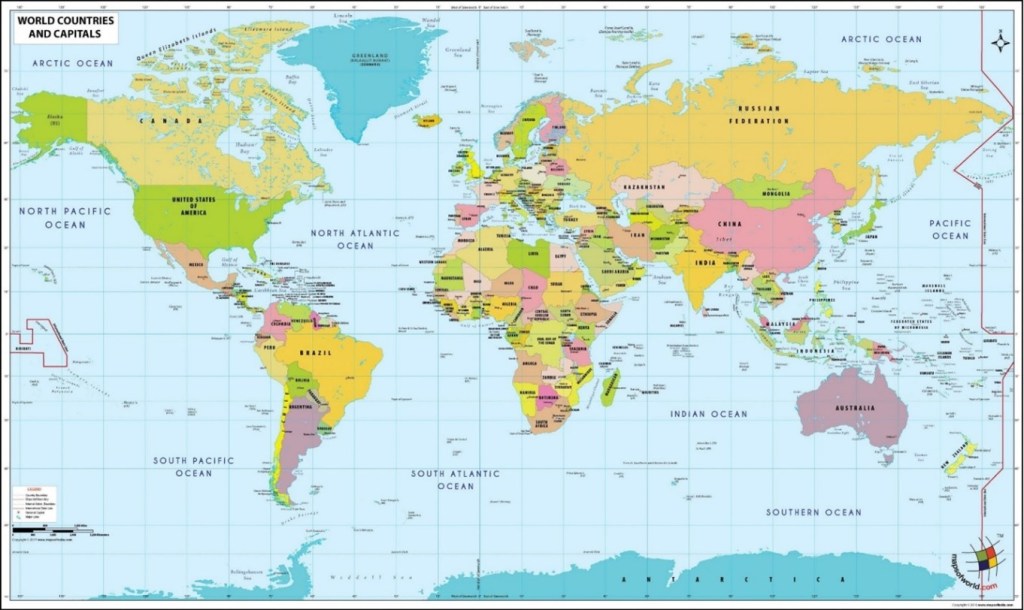
In the beginning of the 21st century, China expanded its naval power and influence in the Pacific and Indian Oceans. Since 2016, China has constructed naval ports in an around the Spratly Islands. China’s actions impinge in the maritime entitlements and legal claims of Malaysia, the Philippines, and Vietnam for fishing and oil exploration. The South China Sea may have billions of barrels of untapped oil and trillions of cubic feet of natural gas.

China should consider the economic cost of its investments in these small islands as the impact of rising sea levels is likely to limit their economy and increase their debt. Will the economic costs weaken instead of strengthening China in the future?  The security of Australia, Taiwan, and Japan is a concern as military support from the United States may be limited by China’s presence in this area. The distance from the United States to Japan, Taiwan, and Australia is much further than it is for its rivals of North Korea, Russia, and China.

The novel legal argument is that under the Belt and Road Initiative, China is providing economic assistance to these small island in exchange for a ‘good neighbor’ policy with Beijing.

Questions:

  1. Does the Roosevelt Corollary set a precedent for giving the president of the United States too much authority in foreign affairs?
  2. How should situations of violations of international laws regarding financial matters and human rights be addressed in the 21st century?
  3. Is China’s policy of expanding its military and economic influence into the South China Sea a violation of the UN’s Law of the Sea?

President Theodore Roosevelt’s State of the Union Address: The Roosevelt Corollary (1904)

How Theodore Roosevelt Changed the Way America Operated in the World

Council of Foreign Relations Perspective on the Roosevelt Corollary to the Monroe Doctrine

Book Review: The Day the Markets Roared

The lessons of history are very important for students to understand. The laws of economics and the functionality of markets are essential for understanding our current troubled century. Students taking U.S. History in New Jersey are required to learn the following in their study of the post-World War II economy.

The Day the Markets Roared is a concise economic history of the last 45 years. It is a personal account and perspective written by one of America’s top researchers on the economy with an understanding of the role of stocks and bonds in a dynamic global economy. In 1982, the American economy was faced with unprecedented debt, an unemployment rate of 10.8%, a double-digit rate of inflation, a strong dollar, and high-income tax rates.

“The economy entered 1982 in a severe recession and labor market conditions deteriorated throughout the year. The unemployment rate, already high by historical standards at the onset of the recession in mid-1981, reached 10 .8 percent at the end of 1982, higher than at any time in post-World War II history.

The current recession followed on the heels of the brief 1980 recession, from which several key goods industries experienced only limited recovery. Housing, automobiles, and steel, plus many of the industries that supply these basic industries, were in a prolonged downturn spanning 3 years or more and bore the brunt of the 1981-82 job cutbacks.

Unemployment rose throughout 1982 and, by September, the overall rate had reached double digits for the first time since 1941. A total of 12 million persons were jobless by yearend-an increase of 4.2 million persons since the prerecession low of July 1981.’ Unemployment rates for every major worker group reached postwar highs, with men aged 20 and over particularly hard hit.” Bureau of Labor Statistics

The book begins on a cloudy, humid Tuesday morning, August 17, 1982, in Wyckoff, New Jersey. As Henry Kaufman enters the Lincoln Town Car at 6:30 a.m. he is traveling to a meeting of the Salomon Brothers Executive Committee at the Waldorf Astoria Hotel on Park Avenue in Manhattan. In the hour-long ride to the meeting, he is editing a memo to his office secretary, Helen Katcher that will be released to clients and the press shortly after 8:30 a.m. and before the opening of the bond markets at 9:00 a.m. and the stock markets in New York at 9:30 a.m.

The Reagan Recession of 1981-82

The first years of the Reagan presidency faced global insecurity with a Soviet arms buildup in Eastern Europe, Soviet invasion of Afghanistan, conflicts in Lebanon and the Middle East, Falkland Islands, Nicaragua, and Grenada, an unpopular grain embargo from the Carter Administration, and a rising federal deficit and debt due to military spending.  These were difficult challenges requiring the monitoring of the M1 and M2 money supply accounts, bank balance sheets, and revolving credit expenses.

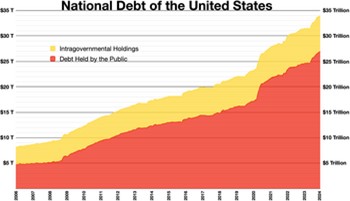
The current challenges for our economy and financial stability are the validity of information, the dependency of the federal government on the Federal Reserve System as either the lender of ‘last resort’ or ‘first resort,’ declining credit ratings of governments and corporations, and the fact that short-term liabilities are rarely paid off.  The federal deficit of the United States government is 33 trillion dollars and increased borrowing for social security, Medicare, infrastructure improvements, and assistance from extreme weather events are hurricane force winds facing our economy.

As of June 2024, the federal debt is $34.55 trillion dollars and between 110% and 117% of our annual GDP with full employment and moderate inflation.

It is critical that social studies teachers integrate economic history into their lessons, encourage problem-solving and decision-based case studies, engage students in discussions with local financial experts in your community, an understanding of where money comes from, and the differences between the tax and money multipliers.

  1. What are the effects of a 10% protective tariff?
  2. How does a 1% change in the rate of inflation affect the federal budget?
  3. How do changes in the federal income tax structure affect the national economy?
  4. What are the implications of a decrease in the credit rating of the United States?  Why does a credit rating change?
  5. Will the increased demands of the federal government to finance its debt through bonds lead to ‘crowding out’ for municipal, state, and private corporations?
  6. Who will be the effective borrowers in the next decade?

Students will also gain valuable lessons through engaging conversations through their analysis of excerpts from the classical economists of Adam Smith, David Riccardo, and Thomas Malthus.  Perspectives of Karl Marx, Joseph Schumpeter, Frederick Hayek, Milton Friedman, Paul Samuelson, and others are important. Consider a dinner conversation, Madame Tussauds Wax Museum Hall of Fame, Press Conference, or digital video production. Here is an example of a reference in the book.

“Adam Smith remains a useful guide to the hallmarks of capitalism.  In The Wealth of Nations (1776), he argued that humans innately strive for material progress, and the best way to get there is through unfettered competition, the division of labor, and free trade.  Smith argued that the state should play a limited role in economic affairs.  Governments should be properly confined to national security, the rule of law-including the protection of private property – and the provision of a few public goods which as education.  He also cautioned against sharp class divisions that might idle rich people and exploit workers.  ‘No society can surely be flourishing and happy, of which the far greater part of the members is poor and miserable.’” (Kaufman, Page 167)’

One final observation about The Day the Markets Roared is the insights into the internal operations of businesses before the age of social media.  The lessons of power, leadership, profit motive, media image, responding to a crisis, understanding how financial markets react to political changes are revealed in Chapters 3-7.

The book is easy to read, includes interesting insights and perspectives, and is one of the few books I am aware of that provide a concise and accurate economic history of the 1970s and 1980s.

Era 8 The Twenties (1920–1930)

New Jersey Council for the Social Studies

www.njcss.org

The relationship between the individual and the state is present in every country, society, and civilization. Relevant questions about individual liberty, civic engagement, government authority, equality and justice, and protection are important for every demographic group in the population.  In your teaching of World History, consider the examples and questions provided below that should be familiar to students in the history of the United States with application to the experiences of others around the world.

These civic activities are designed to present civics in a global context as civic education happens in every country.  The design is flexible regarding using one of the activities, allowing students to explore multiple activities in groups, and as a lesson for a substitute teacher. The lessons are free, although a donation to the New Jersey Council for the Social Studies is greatly appreciated. www.njcss.org

The Twenties were the first time that more Americans lived in cities than on farms. It was a decade of social, economic and political change following the devastating effects of World War I, the mass production of the automobile, and the radio brought news, sports, and entertainment into the homes of people. The way people understood information was changing as newspapers and advertisements supported a “consumer culture.”  It was also a time when many people were uncomfortable with the secular lifestyle and attitudes rejected alcohol, even though it was the fifth largest industry in the country and restrictive laws were passed regarding immigration as the country favored isolationist policies.

Education in the United States is under the control of local communities and each of the 50 states. The federal government tries to influence education with financial assistance and has authority to enforce national laws that apply to civil and human rights. In 1923, Tennessee became the first state to ban the teaching of evolution. Tennessee had the legal authority to determine the content of the curriculum in public schools. The legal issues would test the freedom of speech for teachers and the right of the state to respect the views of many citizens and state legislators, regarding their understanding of the Holy Bible.

Fundamentalism represented the literal interpretation of the Holy Bible and had been gaining popularity in American culture for 40 years before the Scopes Trial. The philosophy of communism in the Soviet Union opposed the freedom of religious expression and the unprecedented death in World War I prompted many to question the existence of God. It was also a time of spiritual evangelism when people used the teachings of the Holy Bible to counter the modern ideas of jazz music, sexual promiscuity, and secularism.

The jury found Scopes guilty of violating the law and fined him $100. Bryan and the anti-evolutionists claimed victory, and the Tennessee law would stand for another 42 years.  The ACLU publicized scientific evidence for evolution. The verdict did have a chilling effect on teaching evolution in the classroom, however, and not until the 1960s did it reappear in schoolbooks. It continues as an issue in some states today.

Kenya has an educational system that is considered one of the best in the world. Education is controlled by the government and changes take time to make. Recently, Kenya made significant changes in the curriculum with a vision to make Kenya a leader in Africa by 2063, the next 40 years. “The overall aim of the new curriculum is to equip citizens with skills for the 21st century and hinges on the global shift towards education programs that encourage optimal human capital development. Education should be viewed in a holistic spectrum that includes schooling and the co-curriculum activities that nurture, mentor, and mold the child into productive citizens.”

There are advantages and disadvantages to both a national and federal system of education. Canada, Australia, and Germany have federal systems of education that might be compared to the United States. The majority of countries in the world have a national system similar to the one in Kenya.  U.S. News & World Report published a study of the education in 87 countries. For discussion, consider if the goal of a well-developed educational system is to prepare students for higher education, support employment, educate citizens, teach values, access, efficiency of costs, etc.  Another area for discussion could be if the purpose of education is the focus on the well-being and development of the individual or if the emphasis is on subject matter content.

  1. Who should decide matters of content in the curriculum?
  2. Should parents have the authority to ‘opt out’ of lessons?
  3. Should teachers or assessments determine what is taught?
  4. What is the purpose of education?
  5. Is the primary purpose of education to teach skills, content, or to prepare children to be citizens?
  6. Should the U.S. government limit or empower the U.S. Department of Education in the area of curriculum?

The Scopes Trial (National Constitution Center)

The Scopes Trial (History Channel)

The Scopes Trial (Bill of Rights Institute)

On the evening of the president’s death, Herbert Hoover sent out the official news that the president had died of “a stroke of cerebral apoplexy.” But it was most likely a heart attack, that ended Harding’s life at the age of 58, two years more than the average life span for an American male in 1923 (56.1 years).

President Harding’s Vice President was Calvin Coolidge. He was from Massachusetts and at the time of Harding’s death he was visiting his family at their home in Plymouth, Vermont. He issued the following statement:

“Reports have reached me, which I fear are correct, that President Harding is gone. The world has lost a great and good man. I mourn his loss. He was my chief and my friend.

It will be my purpose to carry out the policies which he has begun for the service of the American people and for meeting their responsibilities wherever they may arise. For this purpose I shall seek the cooperation of all those who have been associated with the President during his term of office. Those who have given their efforts to assist him I wish to remain in office that they may assist me. I have faith that God will direct the destinies of our nation.

It is my intention to remain here until I can secure the correct form for the oath of office, which will be administered to me by my father, who is a notary public, if that will meet the necessary requirement. I expect to leave for Washington during the day.”


CALVIN COOLIDGE

Calvin Coolidge’s father was a notary public and administered the Oath of office at 2:47 a.m. in the middle of the night in his home. President Coolidge addressed Congress for the first time when it returned to Washington D.C. on December 6, 1923, expressing support for many of Harding’s policies and he continued with most of Harding’s advisors. The transfer of political power was orderly.

Vladimir Lenin died at age 58 on January 21, 1924, less than six months after President Harding. He had suffered from three strokes and his death was expected. Lenin did not name a successor and the transition to power was contentious between Joseph Stalin and Leon Trotsky.

Alexsei Rykov and V.M Molotov were technically the leaders of the Soviet Union. Joseph Stalin was the General Secretary of the Central Committee of the Communist Party and Leon Trotsky was the Minister of War. As party secretary Stalin controlled appointees and used the position to install people loyal to him. Trotsky represented the faction that favored the spread of socialism in a world revolution. He believed this was necessary for the Soviet Union to develop a stronger economy. In contrast, Stalin did not see a world revolution as probable and favored the gradual economic development through a series of five-year plans with quotas and state ownership of land. Leon Trotsky was exiled to Mexico in 1928 and Josef Stalin became the de facto leader of the Soviet Union.

  1. Is it likely that the death of an American president in this decade would result in an orderly transfer of power or would it be contentious between leaders within the Democratic and Republican Party?
  2. Should the successor of an American president be expected to continue with the appointed advisors and policies of the Administration, or should the new president be encouraged to develop policies consistent with his or her political views?
  3. Is Russia at risk of a contentious transition to a new government in the event of the unexpected death of Vladimir Putin?
  4. Is a parliamentary system of government more effective and efficient in the transfer of political power than the government of the United States, Russia, or China?

How does a government protect the equality and presumed innocence of individual citizens and also protect the general welfare and safety of the public?  On May 1, 1919 (May Day), postal officials discovered 20 bombs in the mail of prominent capitalists, including John D. Rockefeller and J. P. Morgan, Jr., as well as government officials like Supreme Court Justice Oliver Wendell Holmes. A month later, bombs exploded in eight American cities. In 1919 and 1920, President Wilson’s attorney general, A. Mitchell Palmer, led raids on the Communist Party and the International Workers of the World.

In November 1919, Palmer ordered government raids that resulted in the arrests of 250 suspected radicals in 11 cities. The Palmer Raids reached their height on January 2, 1920, when government agents made raids in 33 cities.  More than 4,000 alleged communists were arrested and jailed and 556 immigrants were deported.

The secret police in the Soviet Union is sometimes called or associated with the Checka, Red Terror, Gulag, KGB, or state police.  The Bolsheviks formed the Cheka when Vladimir Lenin was wounded in an assassination attempt in 1918. After the October Revolution in 1917, Russia was in a civil war. The OGPU was commissioned in November 15, 1923 and conducted mass shootings and hangings without trials. It is estimated that the revolutionary tribunals executed 100,000.  The tribunals sanctioned purges of everyone including Russia’s imperial family, land-owning peasants, journalists, priests, scholars, and the homeless.  

The operations of the OGPU reflected decisions of the Party leadership. It was directed to check on church activities, foreigners, and members of opposition parties. It supervised kept a watchful eye on the morale, loyalty, and efficiency or workers.

  1. Do governments have a responsibility to secretly observe the activities of any of its people?
  2. How can a government responsibly protect its citizens from terrorist or subversive activities?
  3. Is the suspension of habeas corpus and individual liberties justified in times of war or civil unrest?
  4. In the United States does the federal government (President) have the authority to send the National Guard or armed forces into a city or state without the approval of the governor or state government?

Palmer Raids (Chronicling America)

The Red Scare (Digital History)

Bombing on Wall Street (You Tube, American Experience, PBS)

Authority of the President to Use the National Guard and Army to Control the Border (CRS)

Establishment of the OGPU (November 15, 1923)

In 1965, the United States passed the Immigration and Nationality Act ending all quotas based on national origin and replacing them with a system of preferences based on family relations to US residents and labor qualifications. Total immigration was limited to 170,000 annually for the Eastern Hemisphere; and 120,000 for the Americas.  The flow of immigrants to the southern border of the United States has exceeded this number for decades. It is now almost one million a year, with about 40% of this number coming from Central America and Mexico. It is also difficult to hire border patrol officers to process the requests for asylum and legal entry. The population of the United States is declining and immigration is the reason for the small increase.  Immigrants also fill needed jobs. Most of the migrant population is living in six states.

In 2021, political tensions between Lithuania and Belarus flared, precipitating a crisis at the borders during which more than 4 000 migrants largely from the Middle East and South Asia were stranded facing inadequate food, water, clothing, or shelter.  Lithuania is a country of about 4 million people and the government did not welcome the surge of immigrants The Lithuanian Red Cross provided humanitarian assistance in the form of non-food items, medicine, and food, as well as mental health care. Since 2021, Lithuanian border guards have prevented around 20,000 people from crossing the border from Belarus. They check the documents of each individual and have permitted asylum seekers to enter.

“The protection of the right to life and the prohibition of torture or inhuman or degrading treatment or punishment provide the cornerstones of any human rights compliant response to border crossing and must be fully upheld at all times, including in emergency situations. I have received consistent worrying reports of patterns of violence and other human rights violations committed against migrants, including in the context of pushbacks at Lithuania’s border with Belarus. Parliament should contribute to putting a stop to these human rights violations and take the lead in guaranteeing a human rights compliant migration policy.” (European Union Commissioner on Human Rights, 2023)

The Lithuanian parliament adopted a law on Tuesday (25 April, 2023) legalizing the turning away of irregular migrants at the border under a state-level extreme situation regime or a state of emergency.

  1. Do nations have the right to stop people from entering their country or does the need to provide humanitarian care take precedence?
  2. Many countries are facing large numbers of immigrants for economic and political reasons. How can countries manage this population movement?
  3. How would you define a humanitarian immigration policy?
  4.  Which countries have the most humane and effective immigration policies?

https://www.cgdev.org/blog/which-countries-have-best-migration-policies

Era 7 The Emergence of Modern America: World War I (1890–1930)

New Jersey Council for the Social Studies

www.njcss.org

The relationship between the individual and the state is present in every country, society, and civilization. Relevant questions about individual liberty, civic engagement, government authority, equality and justice, and protection are important for every demographic group in the population.  In your teaching of World History, consider the examples and questions provided below that should be familiar to students in the history of the United States with application to the experiences of others around the world.

These civic activities are designed to present civics in a global context as civic education happens in every country.  The design is flexible regarding using one of the activities, allowing students to explore multiple activities in groups, and as a lesson for a substitute teacher. The lessons are free, although a donation to the New Jersey Council for the Social Studies is greatly appreciated. www.njcss.org

The beginning of the 20th century marks the foundation of the transformation of the United States into a world power by the middle of the century. In this era industrialization, urbanization, and rapid immigration changed America from an agrarian to an urban society as people lived and worked in cities. The development of the new technologies of electricity, transportation, and communication challenged our long-held traditional policies of limited government, neutrality, and laissez-faire capitalism.

President Theodore Roosevelt’s foreign policy was popularized with a 20th century interpretation of the Monroe Doctrine. The Roosevelt Corollary (1904) stated that the United States would intervene as a last resort to ensure that other nations in the western Hemisphere fulfilled their obligations to international creditors and did not violate the rights of the United States or invite foreign aggression to the detriment of the entire body of American nations.  The expansion of our navy changed the Monroe Doctrine from a passive to an assertive policy that justified the intervention of the United States in Cuba, Haiti, Nicaragua, and the Dominican Republic, as well as an American presence in Panama, China, and the Philippines. When President William Howard Taft became president in 1909, his foreign policy substituted dollars for bullets. He formalized his vision in his 1912 State of the Union Address:

“The diplomacy of the present administration has sought to respond to modern ideas of commercial intercourse. This policy has been characterized as substituting dollars for bullets. It is one that appeals alike to idealistic humanitarian sentiments, to the dictates of sound policy and strategy, and to legitimate commercial aims.”

President Taft focused on trade and he refinanced the debts of several countries in Central America who were at risk of default. He supported private economic investment in China to counter the aggression of Japan and maintain the balance of power in East Asia.

Taft’s policy led to the rise of nationalist movements who opposed the influence or interference of the United States and in China where the investments in infrastructure by Americans and American companies led to mistrust.  His successor, President Wilson introduced “Moral Diplomacy” as his vision for diplomatic leadership, which included sending American troops to Haiti, Nicaragua, the Dominican Republic, and Mexico.

Dollar Diplomacy in Qatar

Qatar is a small Persian Gulf state with a population of less than 3 million and one of the highest per capita GDPs in the world at $85,500 USD. It is about half the size of New Jersey and close in size to Connecticut. It is the richest country in the world and most of its wealth comes from natural gas and petroleum.

In 2017 Saudi Arabia, Egypt, the United Arab Emirates, and Bahrain imposed a blockade on Qatar because of their support for the Muslim Brotherhood and Iran. Qatar is currently using its wealth to promote international relations and trade and investment agreements with Russia, Central America, South Africa, Europe, and several U.S. energy companies. Qatar produces Liquefied Natural Gas (LNG) which is becoming more popular to offset carbon emissions. In 2021, the blockade ended.

Qatar has hosted the Doha trade talks, the World Cup, pledged $500 million to the United Nations’ programs, and has been central to the negotiations between Israel and Hamas on the release of hostages and humanitarian supplies.

  1. Is there a difference between Dollar Diplomacy and economic imperialism?
  2. Why did Dollar Diplomacy fail in the Taft Administration and is it likely to meet with failure in Qatar?
  3. What is the most effective way to change the position of a country that supports terrorist organizations?
  4. Does the richest country in the world have more power than the country with the strongest military?
  5. Should the United States become less trustworthy of Qatar or does pragmatism suggest that by increasing our economic agreements we will attain more benefits than disappointments?
  6. Is it the role and responsibility of the Legislative or Executive Branch to decide foreign policy in the United States?

William Howard Taft’s Dollar Diplomacy

Dollar Diplomacy

The Qatar Blockade is over but the Gulf Crisis Lives On

U.S. Relations with Qatar

From a Civics perspective, the issue of child labor is about the amount of regulation by the federal and state government that is necessary to protect children from exploitation under the Commerce Clause. The United States v. Darby decision by the U.S. Supreme Court (1941) is a landmark case that supports federal regulation of child labor.

Food insecurity is a problem for more than 10% of American families who might benefit from additional income. The historically low unemployment rate of 4% or less in the United States also creates demand for additional workers. National Labor Statistical (NLS) data show that 52% of 12 and 13-year-olds have paid work experience. The work performed at these ages was found to be freelance in nature. Babysitting and yardwork accounted for more than 70 percent of the work they performed. For 14 and 15-year-olds, the dominant form of work is also freelancing.  It is estimated that 153,600 children are employed at an activity in violation of the FLSA or state law on a weekly basis. Many are children of migrant families whose labor may be exploited. The most common violations entail working excessive hours or engaging in a hazardous occupation before the age of 18.

Child Labor in the Ivory Coast

Children in Côte d’Ivoire are subjected to the worst forms of child labor, including in the harvesting of cocoa and coffee, sometimes as a result of human trafficking. Children who work in cocoa production are often deprived of adequate schooling. Children who carry heavy loads of cocoa are exposed to pesticides, insect and snake bites, machete wounds, fatigue and leg and back problems.

In 2016, in light of the Harkin-Engel Agreement, the National Plan for fighting Against Child Labor and Child Trafficking, numerous Government, NGO and private sector initiatives and projects were being implemented in Cote d’Ivoire to improve productivity, community development and child rights in cocoa producing areas.

  1. Should states be allowed to make their own laws about child labor laws when work is being done only withing their state?
  2. Should parents be empowered to make the decisions regarding employment for their children under age 16 or another age?
  3. Do you agree with the federal District Court or the U.S. Supreme Court’s decision on Darby?
  4. Should volunteer work under the supervision of a nonprofit organization be exempt from child labor law requirements? (soccer referee v. construction of affordable houses)
  5. Should there be a requirement by the government for employers to monitor and report child employment?

History of Child Labor in the United States

Child Labor Laws are Under Attack in the United States

United States v. Darby

New Jersey Child Labor Laws

Child Labor in the Côte d’lvoire

U.S. State Department Report on Trafficking in Cote  d’Ivore in 2022

Harkin-Engel Protocol

The Framework for Private Enterprise in the United States

The government of the United States regulates businesses by taxing them. There are income taxes, employment taxes, excise taxes, and local and state taxes. The government also offers tax incentives for businesses to locate in areas of poverty and to hire veterans, women, minorities, and individuals with disabilities.  The federal and state governments also regulate price increases for public utilities, credit and have laws to prevent monopolies or price-fixing.  Health and safety regulations are regulated to protect workers from injury, toxic substances, excessive noise, and a safe and clean environment. There are also regulations on equal pay for jobs with the same or similar skills and the hours worked. The government requires retirement programs for larger businesses and has laws to protect consumers.

The Framework for Private Enterprise in India

In India, it is in the interest of the government and private sector to improve the productive capacity of the country and its citizens. This improvement leads to real wage growth, more competition and increased consumption.

The top 5 companies in India have a total market value of 20% of India’s GDP.  The government needs these industries to create jobs.

Chips were originally developed for the American government and then were licensed out to benefit consumer technology products, Mobile networks were originally built for the defense need in America and Finland, and GPS was broad based by President Clinton after Russia shot down a Korean 747 for straying into their airspace.

India needs to further strengthen the governance of state-owned enterprises, simplify regulations, and reduce administrative burdens on firms. India should also review its institutions responsible for regulation and compliance.

  1. Should the primary focus of government regulation emphasize the protection of workers and consumers or to increase innovation and economic growth?
  2. Does the cost of regulation through the payment of taxes limit economic growth or is it necessary to develop a balanced economy?
  3. Investigate areas in public education that are regulated by the local, state, or federal government and identify which regulations are helpful and which are harmful to students and teachers?

Examples of Government Regulation of Business in the United States

Where does the Public Sector End and the Private Sector Begin?

Regulatory Reform in India

The Roosevelt Corollary (1904)

The Roosevelt Corollary of December 1904 stated that the United States would intervene as a last resort to ensure that other nations in the Western Hemisphere fulfilled their obligations to international creditors. The United States was concerned that other nations might take advantage of the default on debts by some countries in the Caribbean.  The United States considered the islands in the Caribbean to be of strategic commercial and military importance.  President Roosevelt’s position justified U.S. intervention in Cuba, Nicaragua, Haiti, and the Dominican Republic.

The United States is concerned about the increased economic investment by China in several countries in the South Pacific and the diplomatic changes by these island countries ending their support for Taiwan and agreements with China.

Since World War II the Pacific has largely enjoyed independence from foreign influence. There are 14 independent island countries in this area and although they are at risk of rising sea levels and natural disasters, they also have strategic military importance. This has all changed with China’s growing presence in the region.

Australia is an ally of the United States through the Southeast Asia Treaty Organization (SEATO). A military base by China would present a serious threat to its security. However, China’s interests may also be economic. China is investing in infrastructure projects in the South Pacific with investments on an equal level with Australia and the United States.

In 2022, China entered into a security agreement with the Solomon Islands. This agreement provides China with an operational military base about 2,000 miles from Australia. There is no definitive understanding of why China is increasing its presence in this region and the risks may be minimal. The importance for a conversation about civics is about  the right of a major global power to enter into secret or public diplomatic, military, or commercial agreements with other nations. For the United States, should our foreign policy regarding South Korea, Japan, Taiwan, Guam, and Australia be determined by the Executive or Legislative Branch in our government?

China needs to consider the economic cost of its investments in these small islands that are in debt as the impact of rising sea levels is likely to limit their economy and increase their debt. Will the economic costs weaken instead of strengthening China in the future?

Australia also needs to re-evaluate its objectives for security as naval and air support from the United States and other countries may be limited by China’s presence in this area. The distance from the United States to Japan, Taiwan, and Australia is much further than it is for its rivals of North Korea, Russia, and China.

  1. Do countries have the right to extend their economic, military, or diplomatic influence to advance their own security or objectives? (Israel, Russia, China, Iran, United States, etc.)
  2. How should the United States determine its foreign policy when Congress and the President cannot agree?
  3. How important is geography in developing a country’s foreign policy?
  4. Does an authoritarian government have an advantage or disadvantage in developing its foreign policy?
  5. Do the foreign policies and laws for countries change as the 21st century military utilizes artificial intelligence and space?

President Theodore Roosevelt’s State of the Union Address: The Roosevelt Corollary (1904)

The Roosevelt Corollary (1904)

The Roosevelt Corollary to the Monroe Doctrine

China’s Security Agreement with the Solomon Islands

U.S. and China Security Review Commission Report